



Medium hair has a sneaky advantage. It can hold shape without collapsing under its own weight, and it’s long enough to show off movement without swallowing the face.
That’s why feathered layered haircuts for medium hair can look sharp, soft, and expensive-looking when the cut is balanced well. They can also go sideways fast. A few layers cut too high and the crown pops out like a triangle; too little face-framing and the whole style turns into a shoulder-length block with a polite wave.
Feathering is not just “more layers.” It’s about where the weight gets removed, how the ends are softened, and whether the shape moves away from the face or just sits there. The best versions on medium hair usually start around the cheekbone, lip line, or collarbone, then taper so the ends feel light without looking thin.
These 25 ideas lean into that balance. Some are polished and blowout-friendly. Some are built for air-drying. Some are better for thick hair that needs bulk removed, and some are the kind of cuts that make fine hair look like it has twice the body it actually does.
Why These Feathered Cuts Earn Their Spot
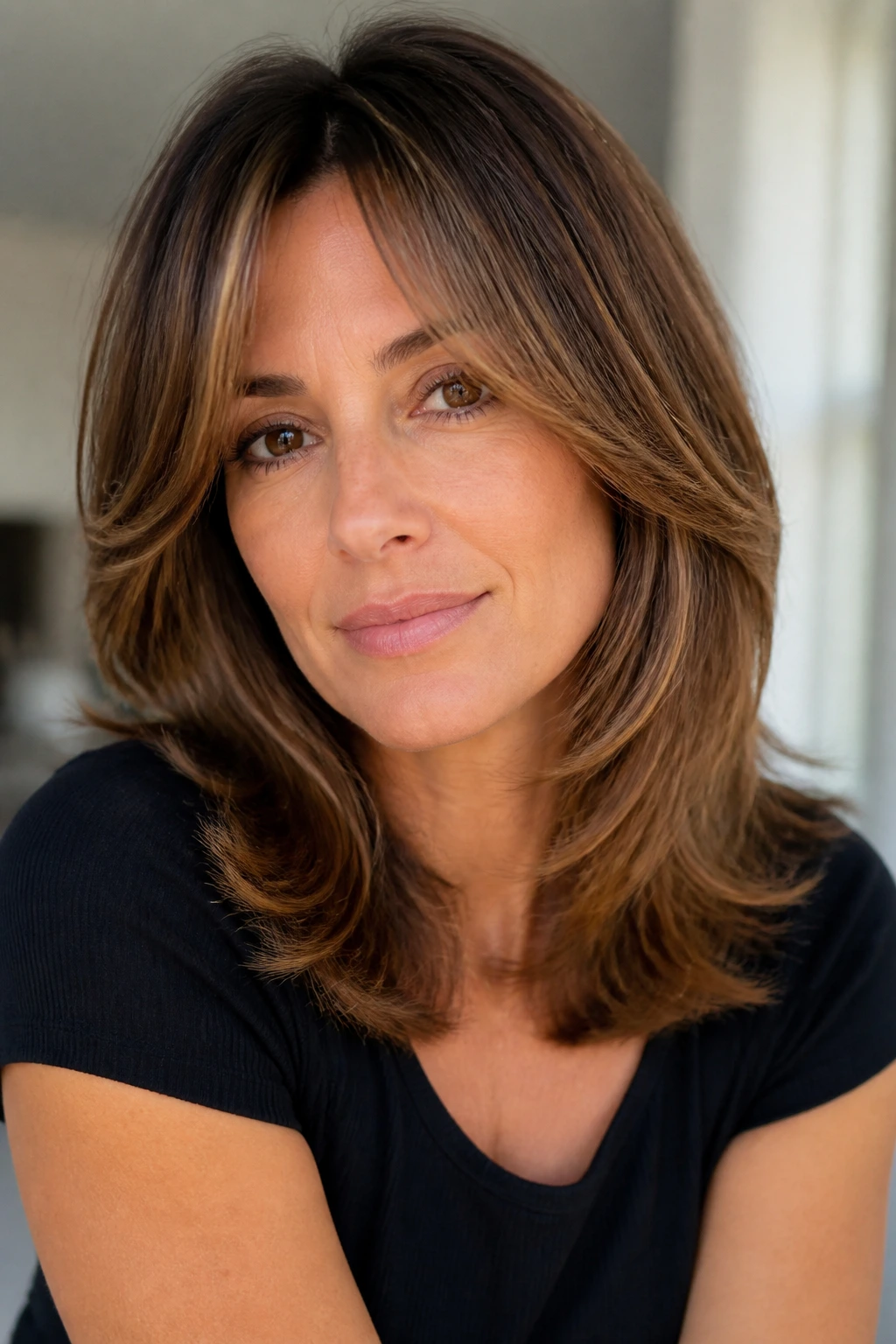
- Movement Without Losing Length: Medium hair keeps enough weight to stay sleek at the ends, so feathering adds swing instead of frizzing the whole outline.
- Face Framing That Actually Does Something: The shorter front pieces can soften a strong jaw, lengthen a round face, or break up a high forehead without looking like accidental bangs.
- Better Shape on Grow-Out: A good feathered cut grows into itself instead of growing into a blunt shelf, which means fewer awkward weeks between trims.
- Works With More Textures Than People Think: Straight hair gets lift, wavy hair gets motion, and dense hair gets relief where it matters most.
- Easier Styling on Busy Mornings: A quick bend with a round brush, a little mousse at the roots, and the cut already looks intentional.
- Less Helmet, More Air: The right feathering keeps medium hair from sitting heavy around the neck and shoulders, which is where a lot of shoulder-length cuts go dull.
1. Collarbone Feathering with Curtain Bangs
This is the cut I reach for when someone wants softness without losing the clean line of medium length. The layers start low enough to keep the shape believable, then the curtain bangs open the front so the hair doesn’t sit like a curtain of one solid thickness.
The sweet spot here is the collarbone. That length gives the face frame room to bend outward with a round brush, and it keeps the ends from flipping in a stiff, dated way. If your hair has a little natural bend, this cut picks it up fast.
What to ask for
Ask for long face-framing layers that start around the cheekbone and feather down to the collarbone. If you want the bangs to sit softly, tell your stylist you want them blended, not blunt.
2. Soft Butterfly Layers That Brush the Shoulders
Why do butterfly layers keep showing up in medium hair? Because they remove weight where hair tends to puff out, then leave enough length below to keep the outline calm. That’s the whole trick.
On medium hair, the shorter top layers create lift around the face and crown, while the longer bottom section still lands on the shoulders with a little swing. It gives you that airy, blown-out look without needing extreme length. If your hair is thick, this is one of the few cuts that can make it feel lighter without making the ends look wispy.
Best for
- Hair that goes flat at the crown
- Oval and heart-shaped faces
- Anyone who likes a round brush finish
3. Side-Part Feathered Lob with a Clean Sweep
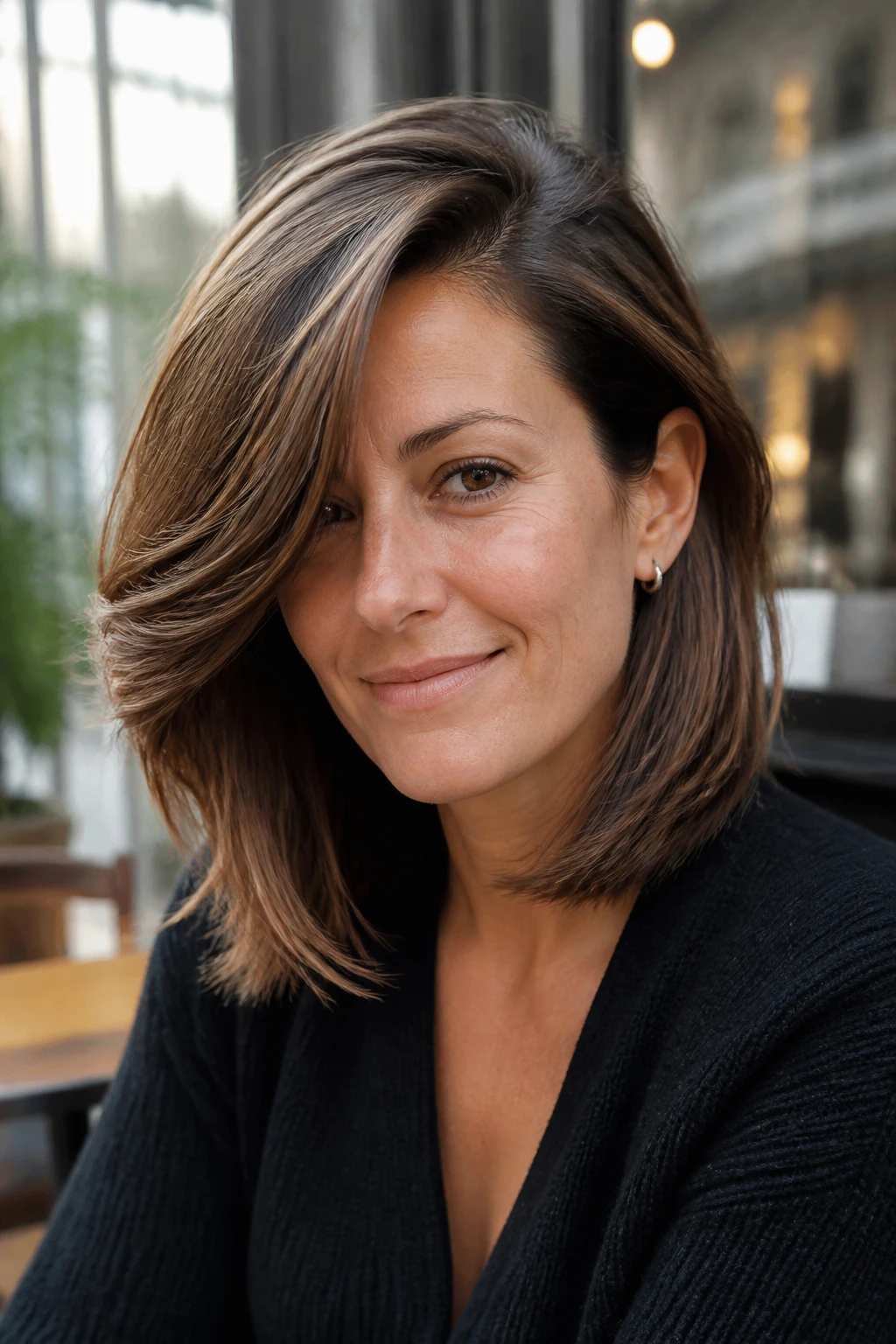
A deep side part changes the whole personality of feathered layers. Instead of spreading volume evenly, it pushes the weight over to one side and lets the front pieces fall in a more dramatic sweep.
I like this on medium hair because the length still sits below the jaw, which keeps the side part from looking too old-school. The feathers near the front should be soft enough to move, but not so short that they stick out at the temple. That balance matters.
If you want a cut that looks good with one tucked side and one loose side, this is a strong choice. It feels finished even when you’ve only rough-dried it.
4. Rounded C-Cut Layers That Tuck Under
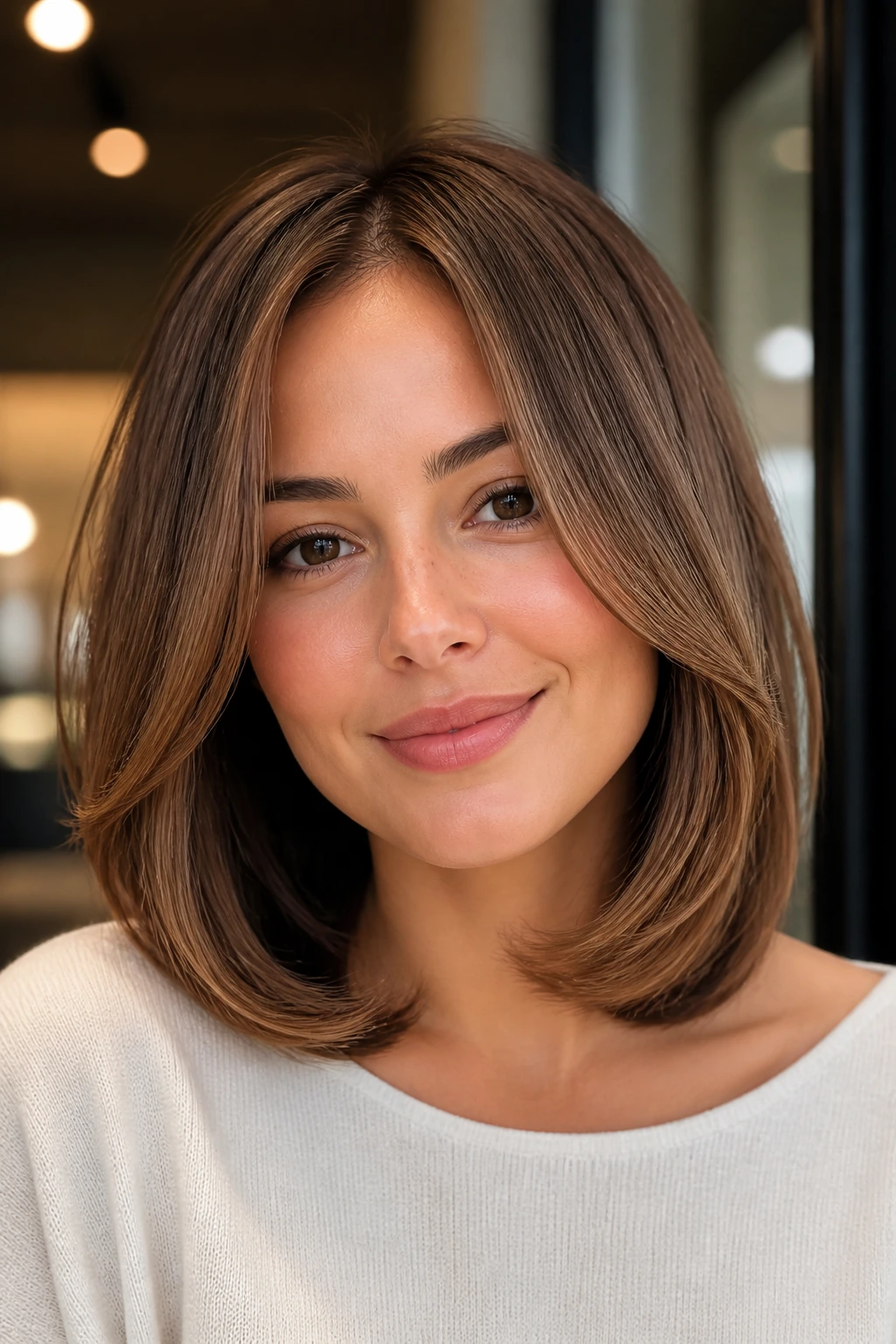
The rounded C-cut is one of those shapes that looks simple until you realize how carefully it’s built. The hair curves in toward the face, then back under at the ends, so medium hair gets a smooth frame instead of a flat wall.
This version is especially good if you like a softer silhouette around the jaw and neck. The curve keeps the ends from sticking out at the shoulders, which can happen with blunt mid-length cuts. And yes, it also looks better after day two.
The best part is the way the face frame echoes the shape of the rest of the hair. It all feels connected. Nothing hangs there by accident.
5. Airy Layers for Fine, Straight Medium Hair
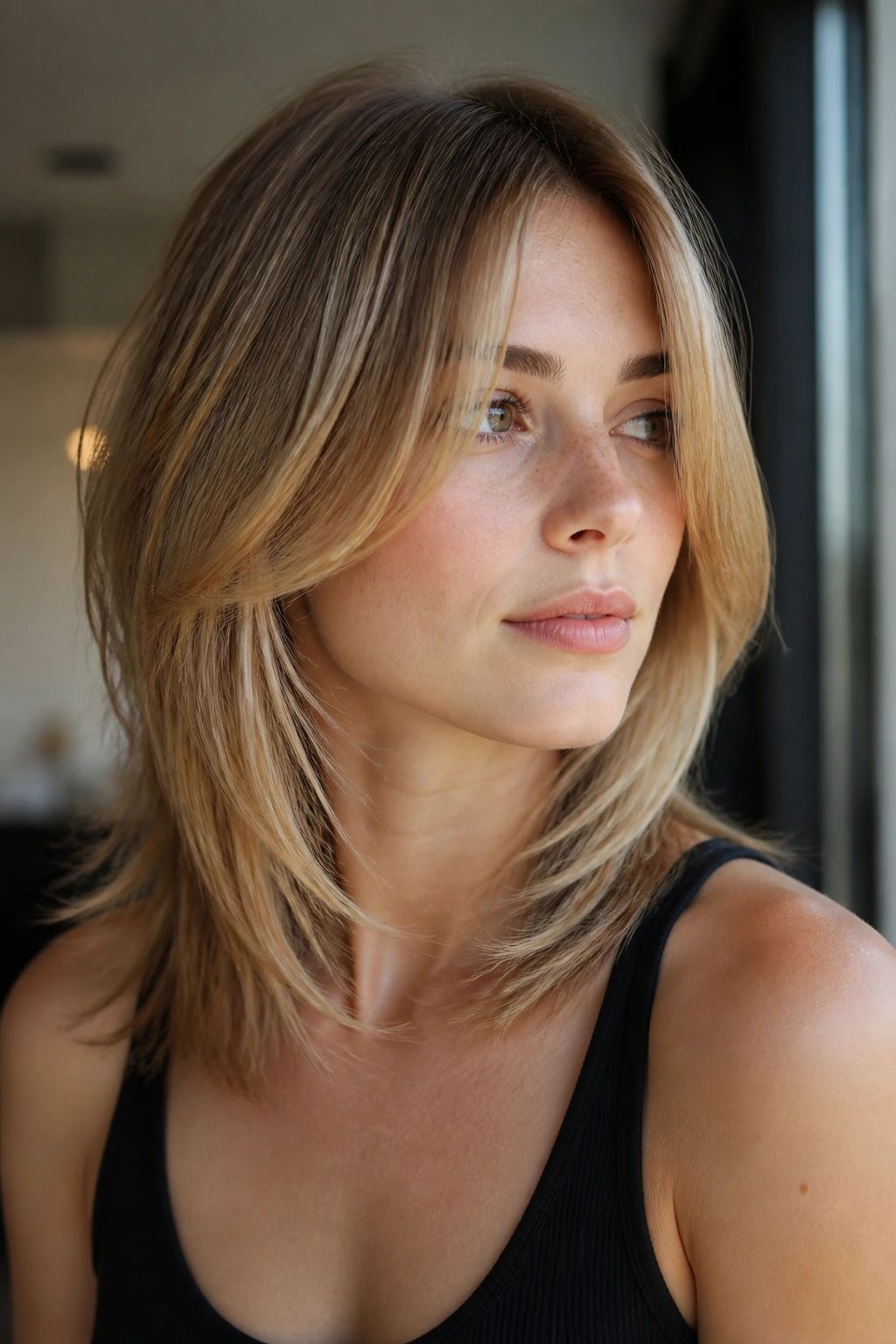
Fine hair needs a careful hand. Too many short layers and you get see-through ends; too little layering and the hair lies flat against the scalp like it’s tired of the effort.
That’s why airy feathering works so well. The layers should be long enough to preserve density at the bottom, but light enough to create bend when you blow-dry with a round brush. Keep the shortest pieces around the cheekbone or lower, not high at the crown.
If your hair is fine and slippery
Ask for long internal layers and a soft perimeter, not heavy texturizing. Razor cutting can help in the right hands, but too much of it can make fine hair look frayed at the ends.
6. Feathered Shag with Wispy Fringe
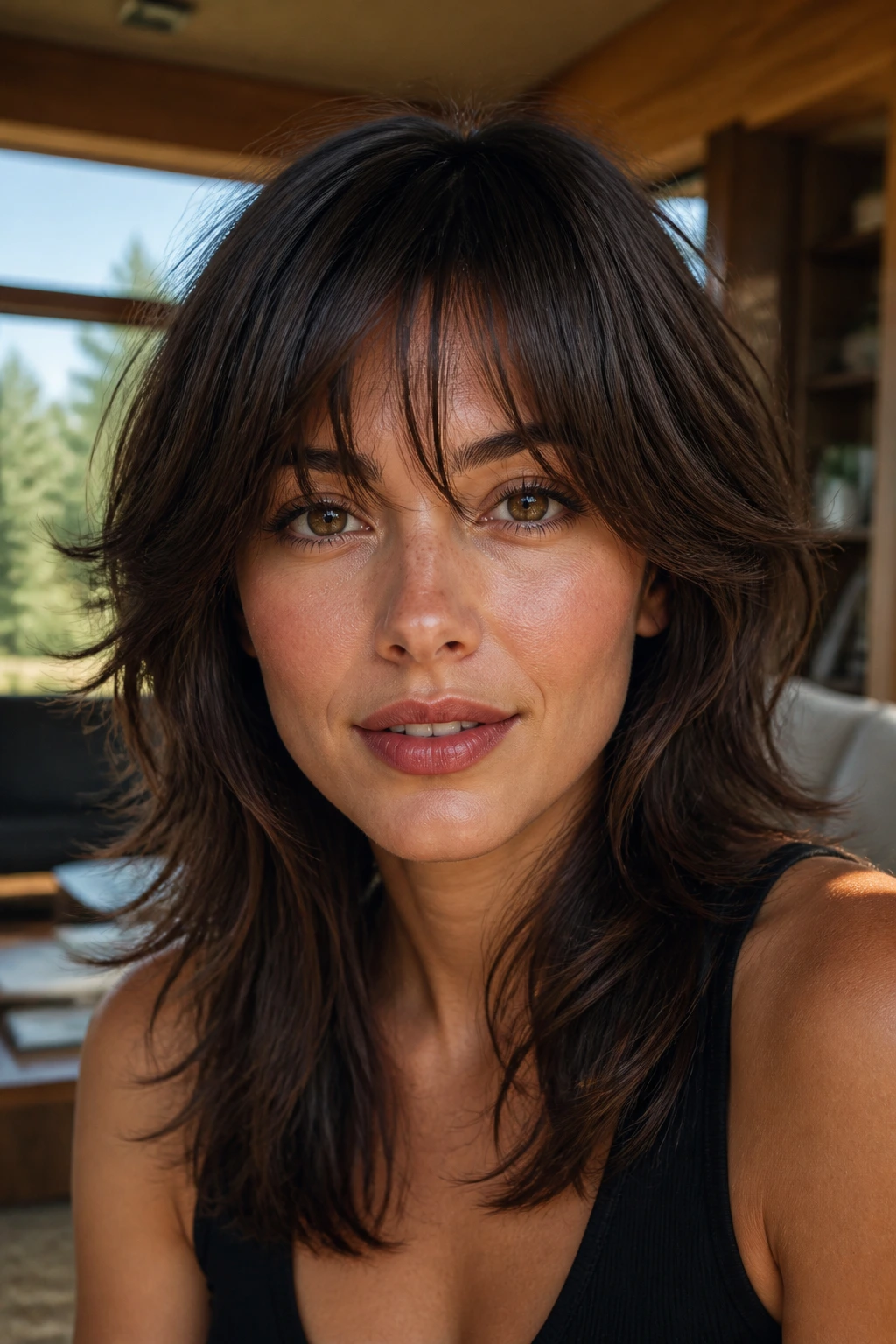
This is the looser, more lived-in cousin in the group. It keeps the medium length, but the layers are more piecey and the fringe is lighter, so the shape feels casual rather than polished.
A feathered shag works best when the stylist leaves enough length around the face to avoid a mullet effect. The goal is movement around the eyes, cheekbones, and collarbone — not a bunch of disconnected chunks. On wavy hair, it can look almost effortless. On straight hair, it needs a quick bend from a flat iron or medium barrel curling iron.
If you like hair that looks better after it gets a little messy, this one belongs in the stack.
7. Jawline-Opening Face Frame for Round Faces
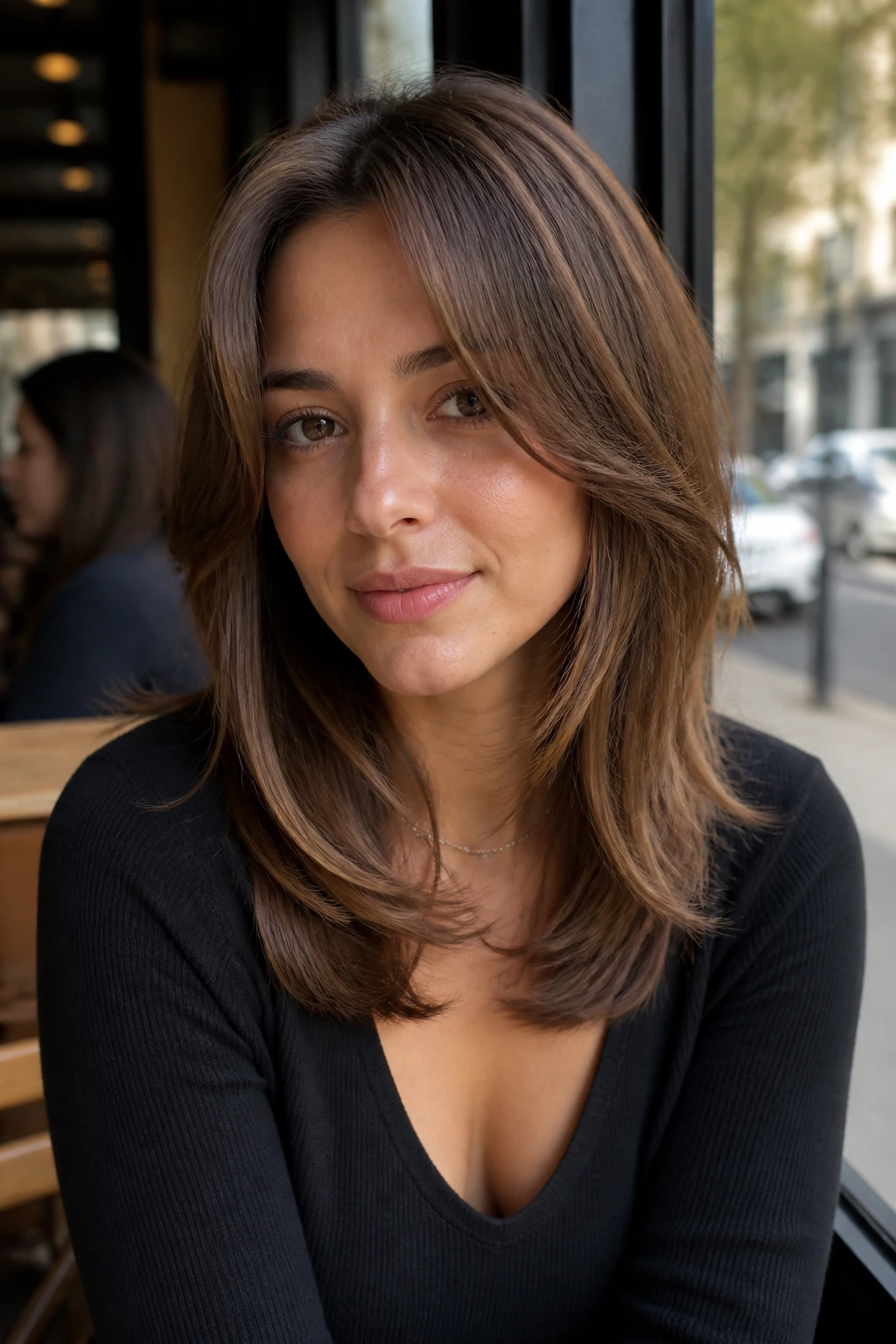
Here’s the thing: not every feathered cut needs to be full of layers everywhere. Sometimes the smartest move is to keep the body of the hair fairly simple and let the front do the work.
That approach is especially useful for round faces. The face-framing pieces should start below the cheekbone and fall past the jaw so they create a vertical line instead of a circle. Keep the top layers soft, not choppy, so the style doesn’t balloon out at the sides.
That extra length in front can make medium hair feel sleeker instantly. No drama. Just shape.
8. Razor-Soft Lob with Piecey Ends
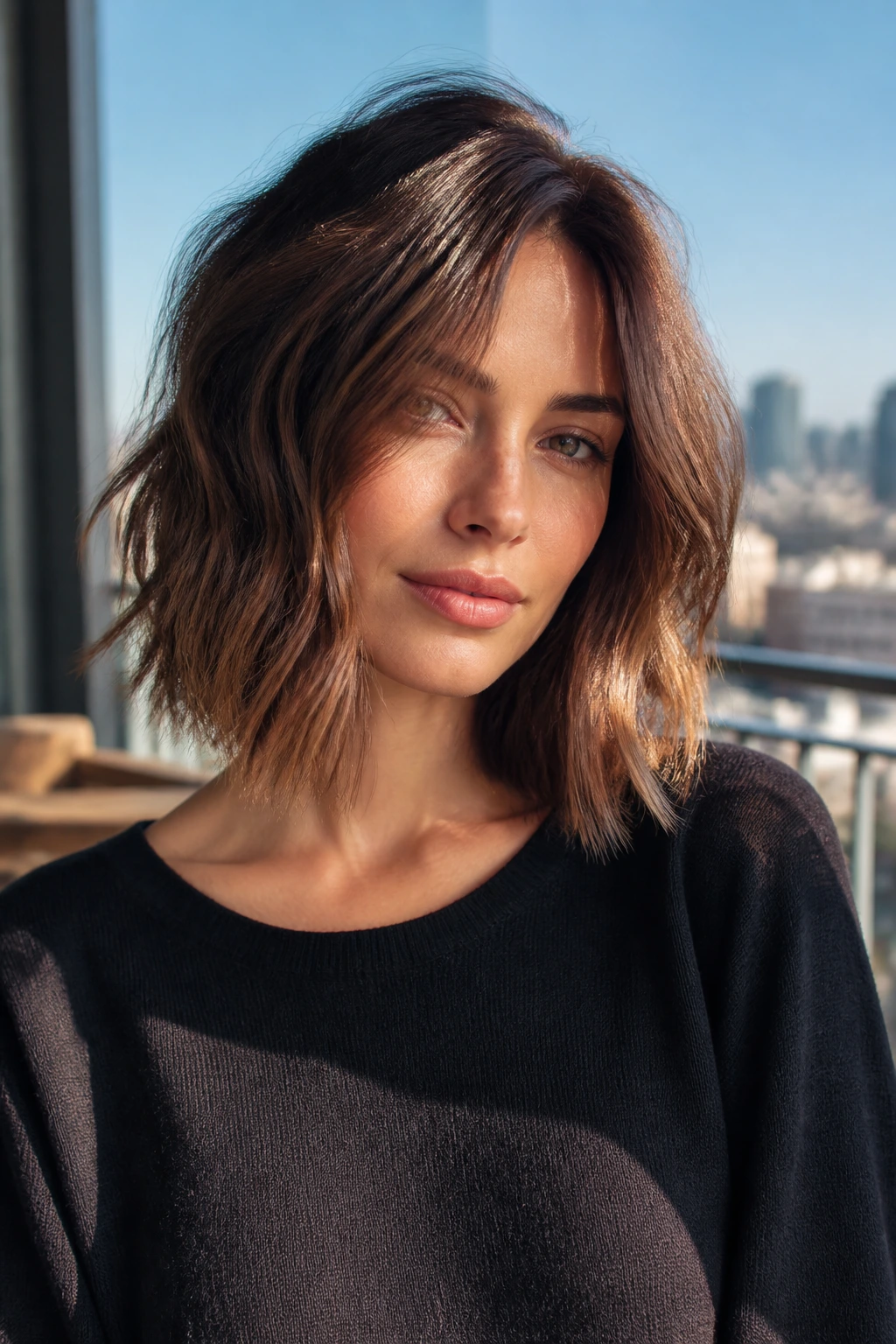
A razor-soft lob has a different feel from scissor-cut layers. The edges are broken up a little more, which gives the whole haircut that airy, separated texture people usually chase with styling products later.
On medium hair, this works best when the razor is used to soften the ends, not thin the whole head. If the blade goes too high, the shape can turn fuzzy. If it stays low and controlled, the cut moves like a clean sheet of fabric that’s been lightly shaken out.
This one loves a little serum and a light bend through the mid-lengths. Too much polish kills the point.
9. Dense-Hair Feathering That Removes Bulk
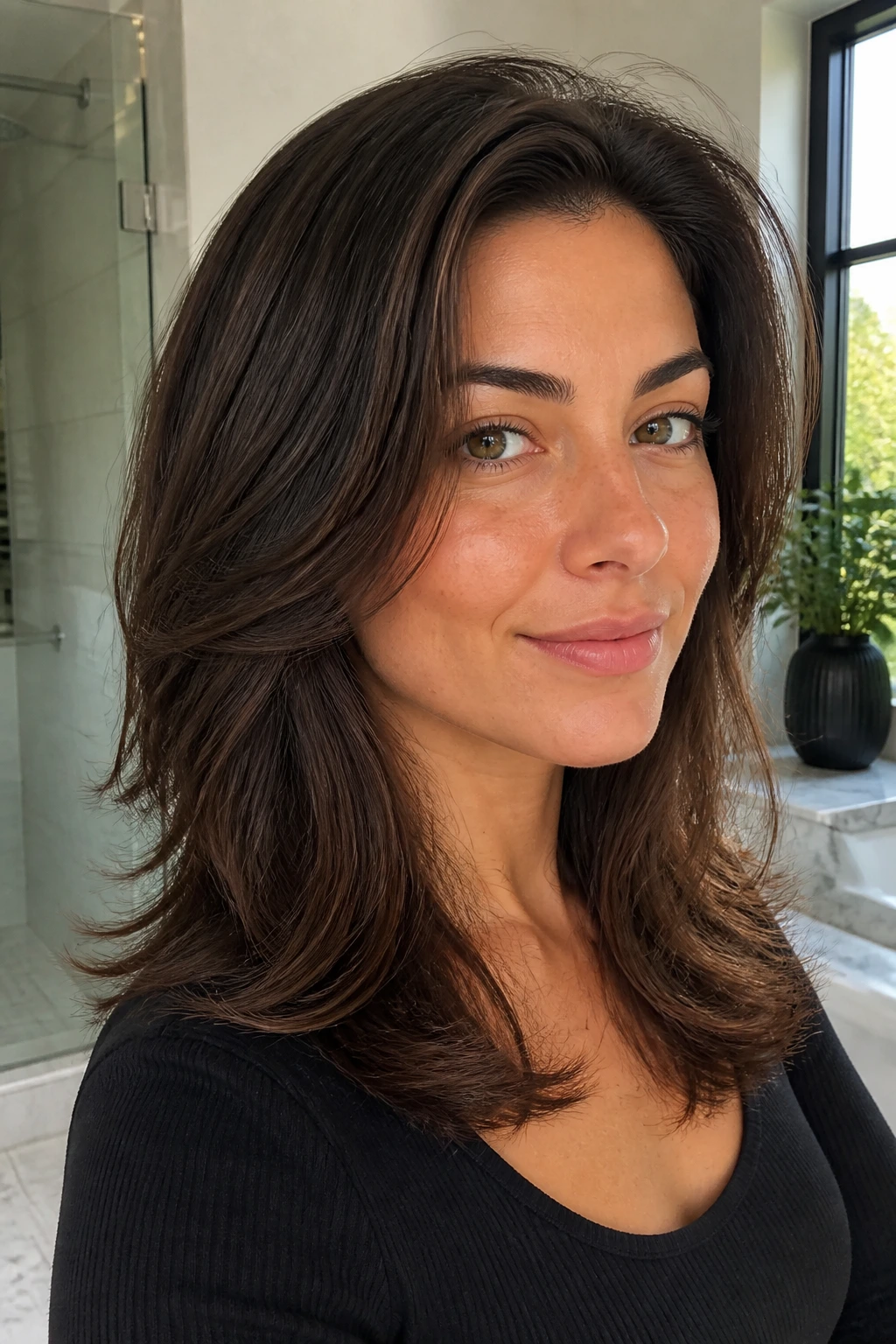
Thick medium hair often looks heavy at the bottom before it looks long. That’s not a flaw. It’s just gravity doing its thing.
A bulk-removing feathered cut changes the internal structure so the outside still looks full, but the inside stops fighting itself. The best version uses slide cutting or point cutting through the mid-lengths and underlayers, which makes the hair sit closer to the head without flattening the surface.
I’m picky about this one. If the stylist only nibbles at the ends, you’ll still have a dense shelf. The real payoff comes from removing weight in the middle of the shape.
10. Invisible Interior Layers for a Polished Finish
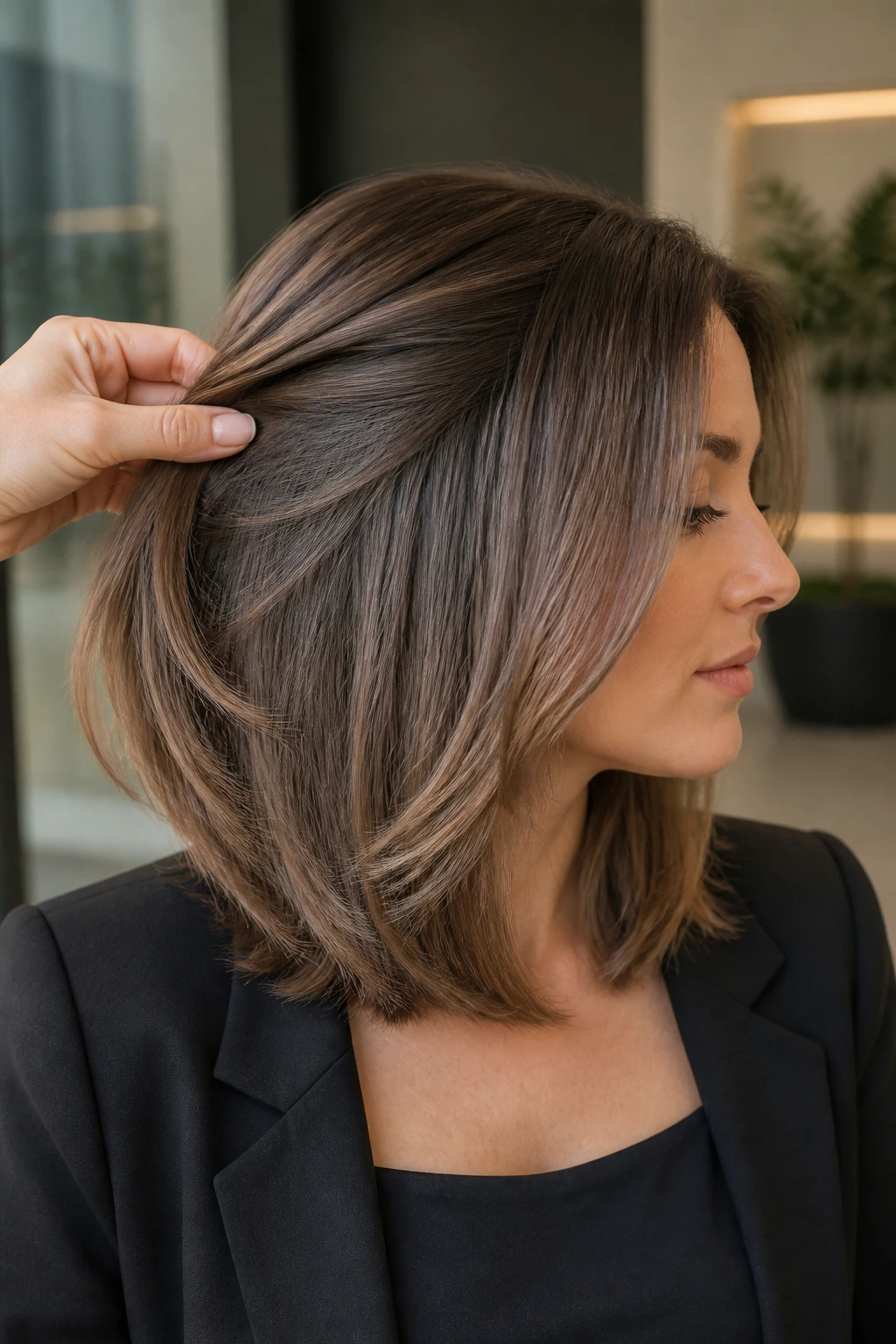
This is the haircut for someone who wants movement but doesn’t want the layers to announce themselves. From the outside, it still reads as sleek and smooth. Underneath, the internal layers are doing the lifting.
Medium hair is a good canvas for this because there’s enough length to hide the structure. The result is a shape that bends under with a blow-dry, but doesn’t split into obvious steps. It’s one of the best choices if you wear your hair straight most days and only wave it now and then.
The quiet advantage
The shape stays more professional-looking between washes. Even when the roots get a little flat, the layers keep the mid-lengths from sticking out at odd angles.
11. Bottleneck Bangs with Soft Feathering
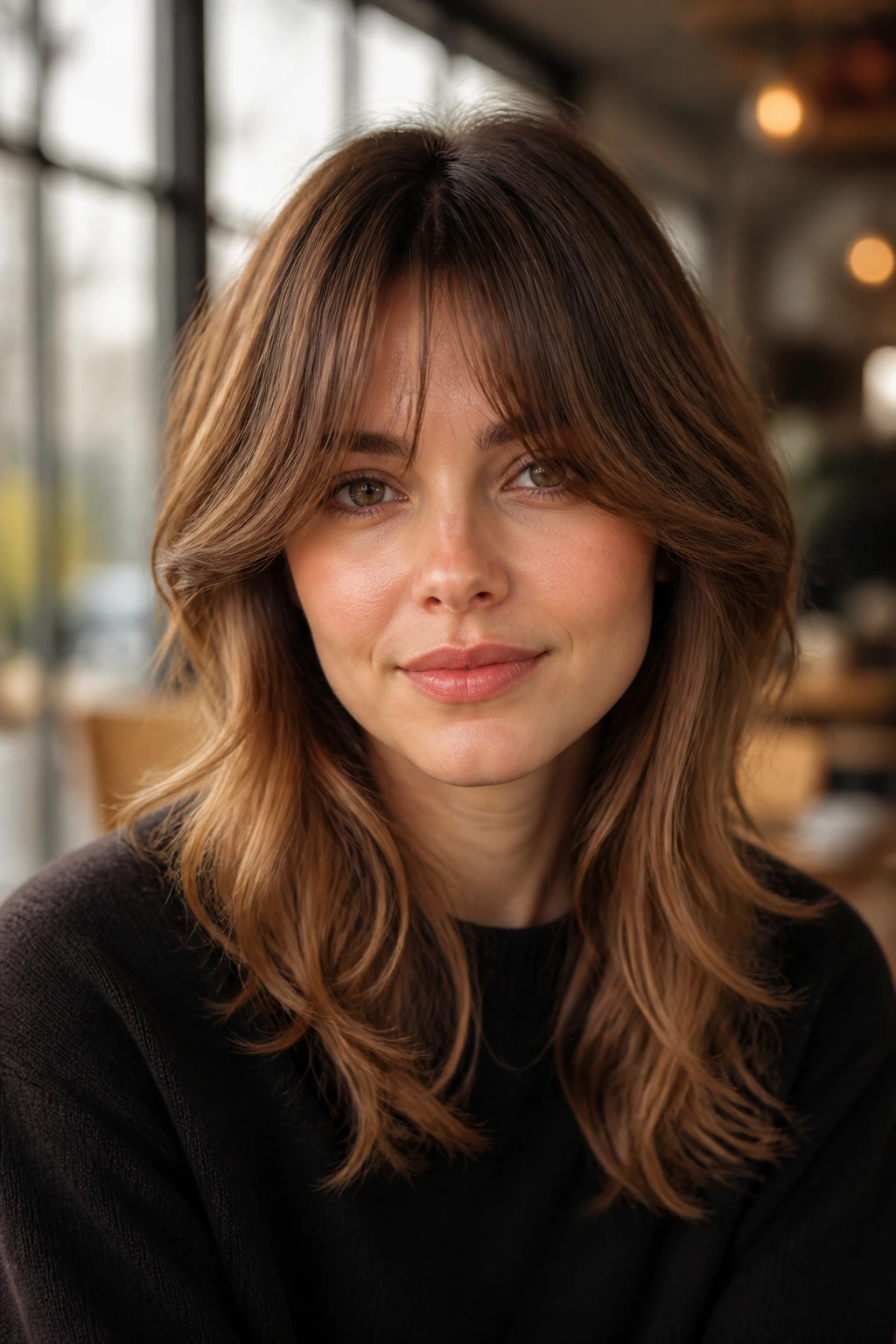
Bottleneck bangs are cut narrow near the center and wider toward the sides, which makes them a surprisingly good partner for feathered medium layers. They frame the eyes without boxing the face in.
The feathering behind them should be soft and gradual. If the layers around the face are too short, the bangs start fighting the rest of the haircut. Keep the transition smooth, and the whole front section feels expensive without being fussy.
This is one of those cuts that looks best when the fringe is styled with a small round brush and a little patience. Rush it, and you get cowlick drama. Take 90 seconds longer, and it sits properly.
12. Wavy Medium Cut with Tapered Ends
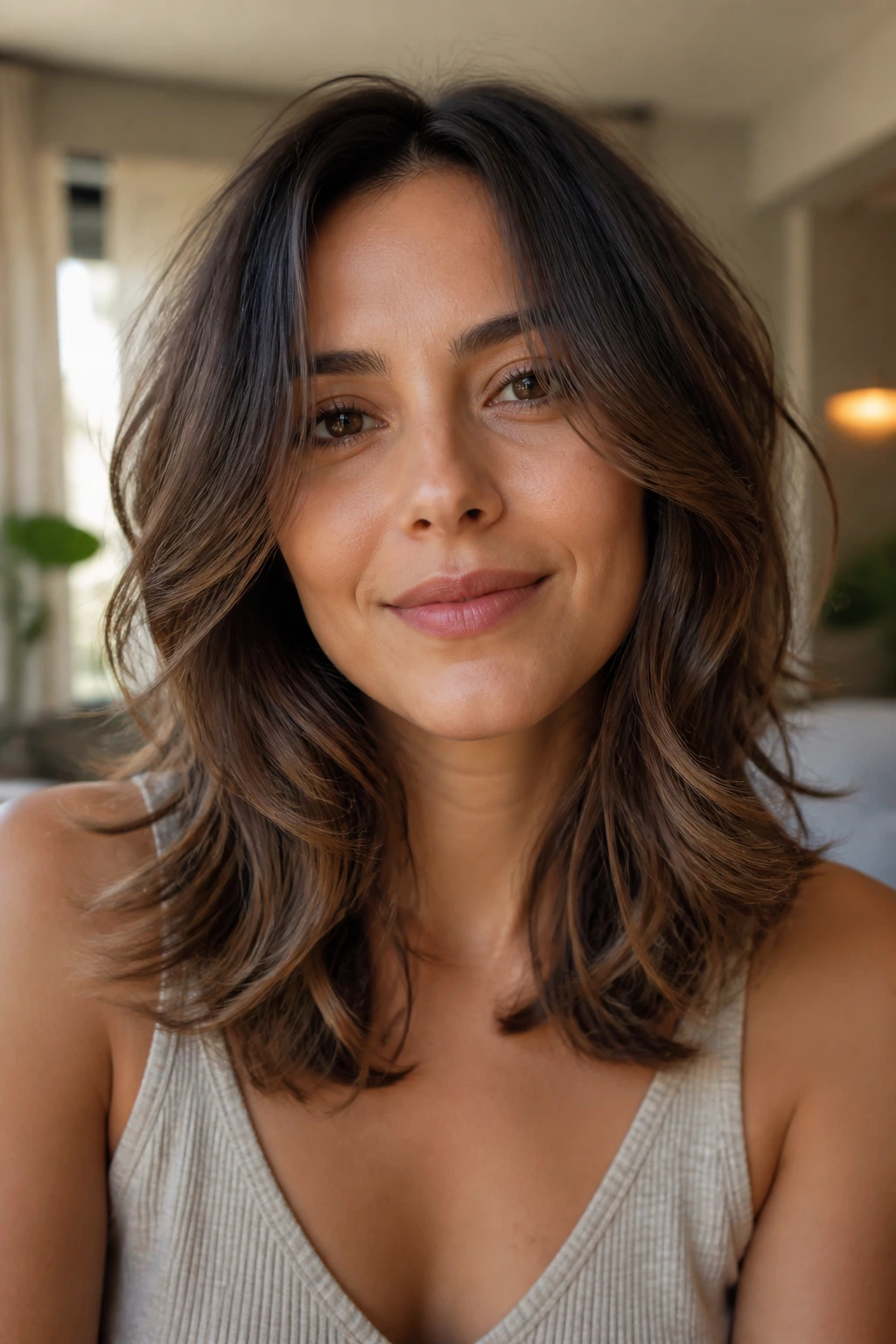
Wavy hair and feathering can be a great match, but only when the ends are tapered with restraint. Too much texturizing and the wave pattern gets frayed. Not enough, and the hair forms a solid triangle.
The tapered version keeps the movement concentrated where it looks nicest: around the cheekbones, collarbone, and the first few inches below the face. The ends remain soft enough to catch the wave pattern, but not so light that they poof up in humidity.
A diffuser helps, but so does a hands-off air dry. Sometimes the best styling move is to leave the shape alone and let the cut do the talking.
13. Soft Wolf Cut for Medium Hair
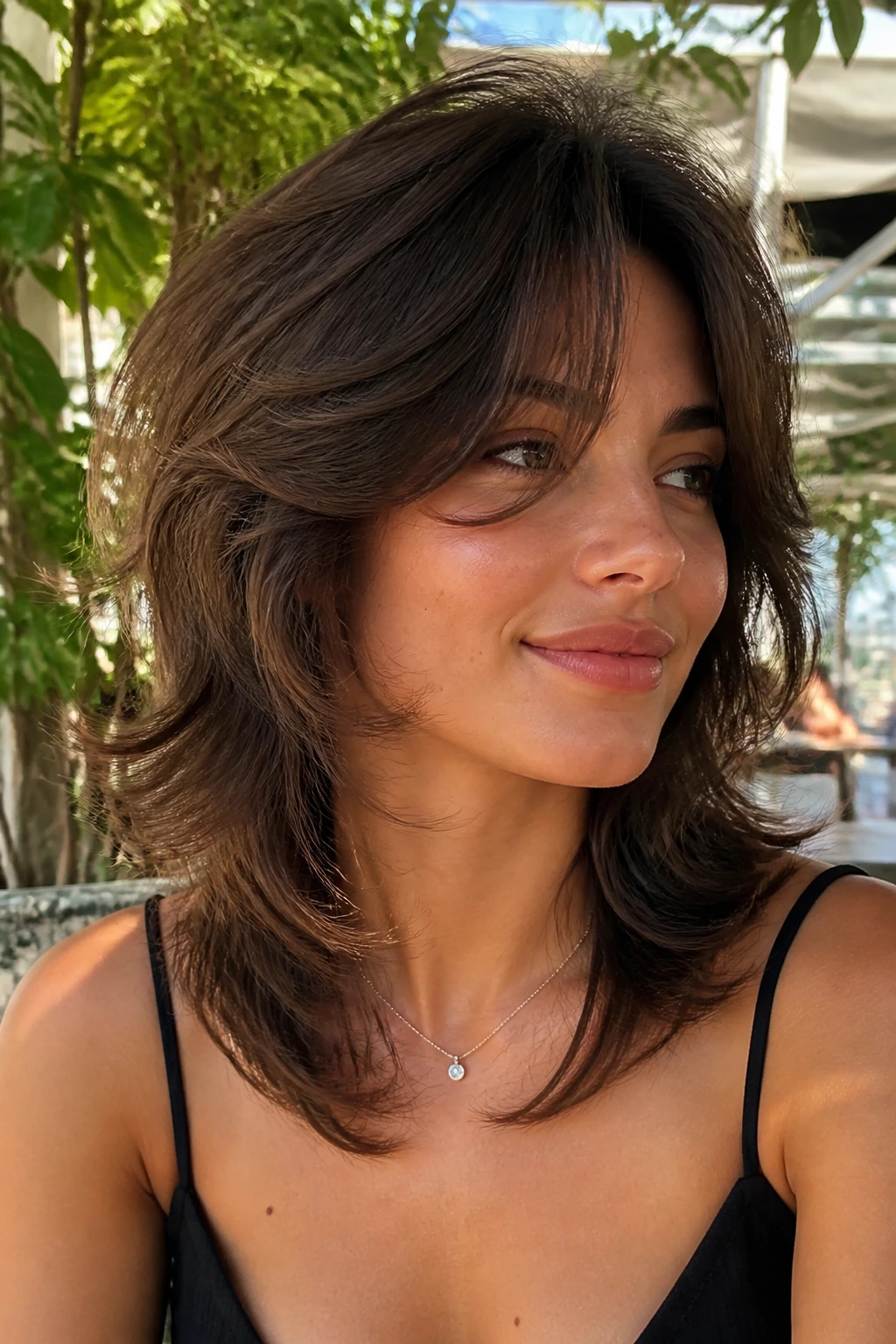
A soft wolf cut sounds rebellious, but the medium-hair version can be quite wearable. The crown has more lift, the front is more layered, and the overall silhouette keeps some edge without turning into a full shaggy statement.
What makes it work is restraint. The top layers should be shorter, yes, but the bottom length still needs enough weight to keep the cut from looking flimsy. On straight hair, it reads modern and piecey. On wavy hair, it gets a little wild in a good way.
When the crown needs movement
Ask for height at the top and softness around the jaw, not a blunt separation between the two. That difference is what keeps the cut flattering rather than costume-like.
14. Blunt-Plus-Feather Hybrid
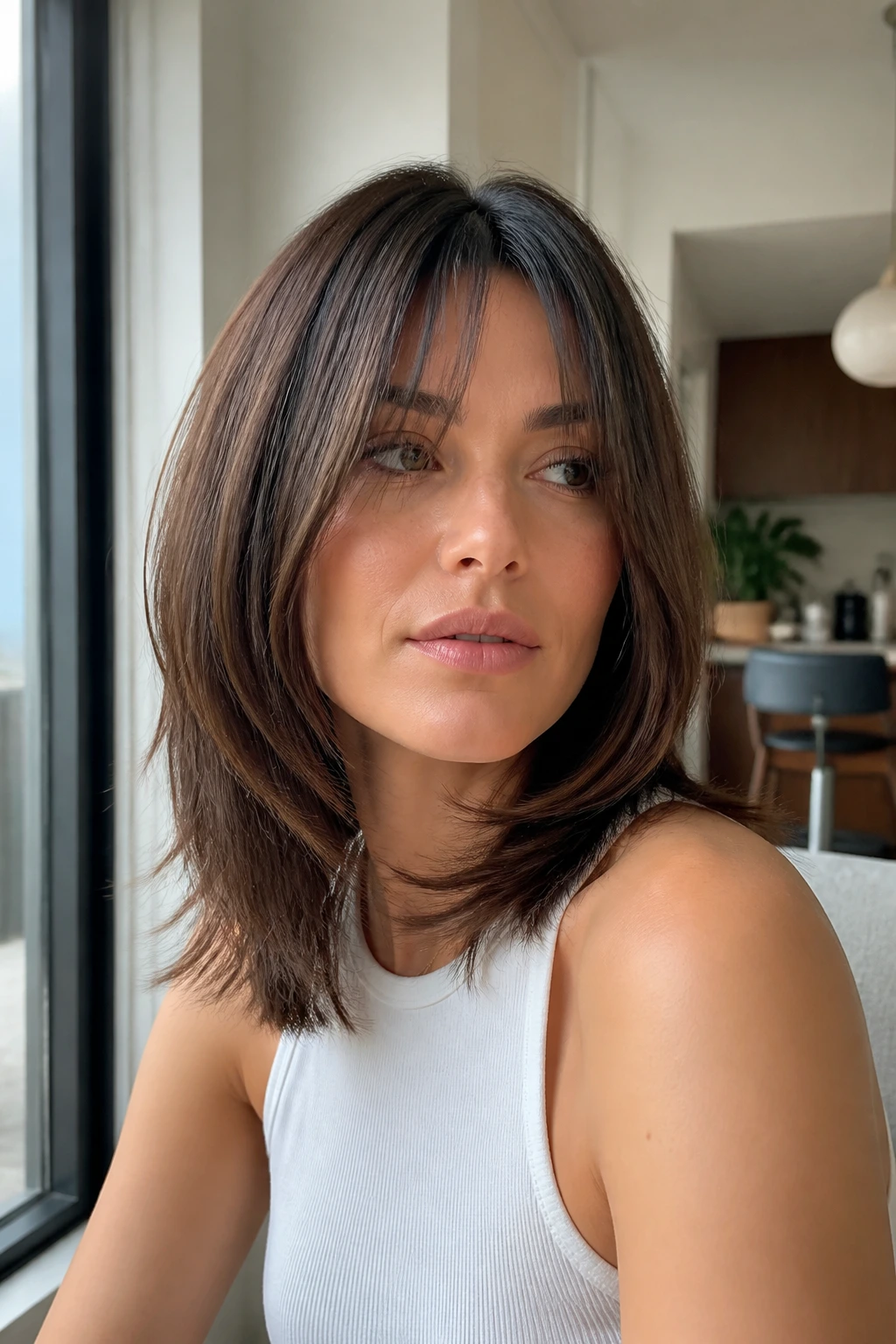
I have a soft spot for this one because it solves a problem a lot of medium-length cuts have: they either go too blunt or too layered. The hybrid keeps a clean perimeter, then uses feathering inside the shape so the ends still move.
That means the haircut looks calm from the outside and lively when you turn your head. It’s especially useful if you wear your hair down at work but want it to look less heavy when you clip it back later. The blunt edge gives structure. The feathering keeps it from sitting like a shelf.
If you want modern without losing polish, this is a smart middle road.
15. Big-Blowout Feathered Layers
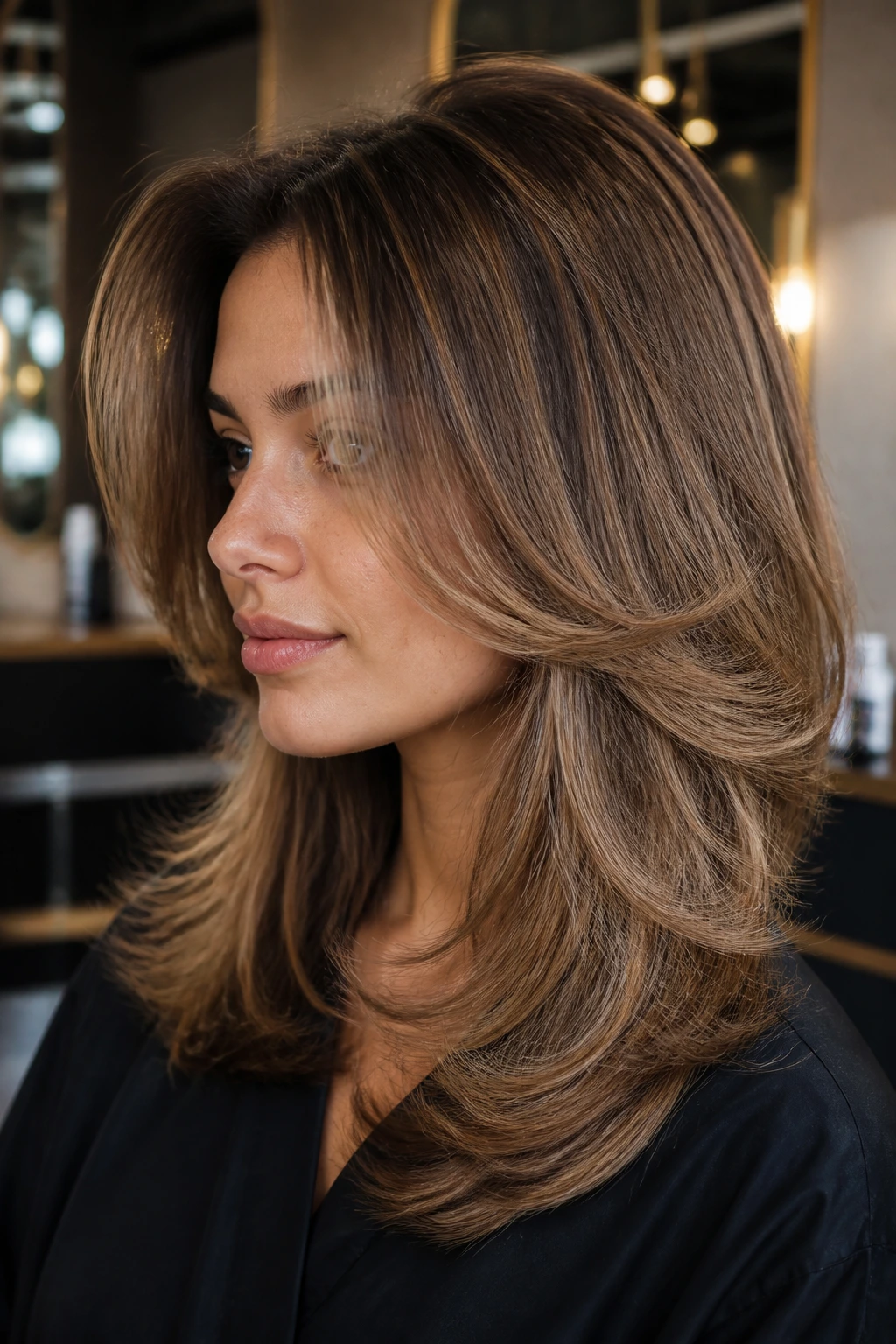
Some cuts are built for air-dry life. This is not one of them.
Big-blowout feathered layers are all about swing, volume, and that soft bend you get when the brush travels under the hair while the ends roll away from the face. Medium hair is ideal here because the length is long enough to hold the shape, but short enough that the blowout doesn’t droop before lunchtime.
The layers should be obvious enough to move, but not so short that the style turns fluffy. If you’ve ever loved the way salon hair feels the day it’s blown out, this is the cut that keeps chasing that effect.
16. Choppy Feathering for Thick Ends
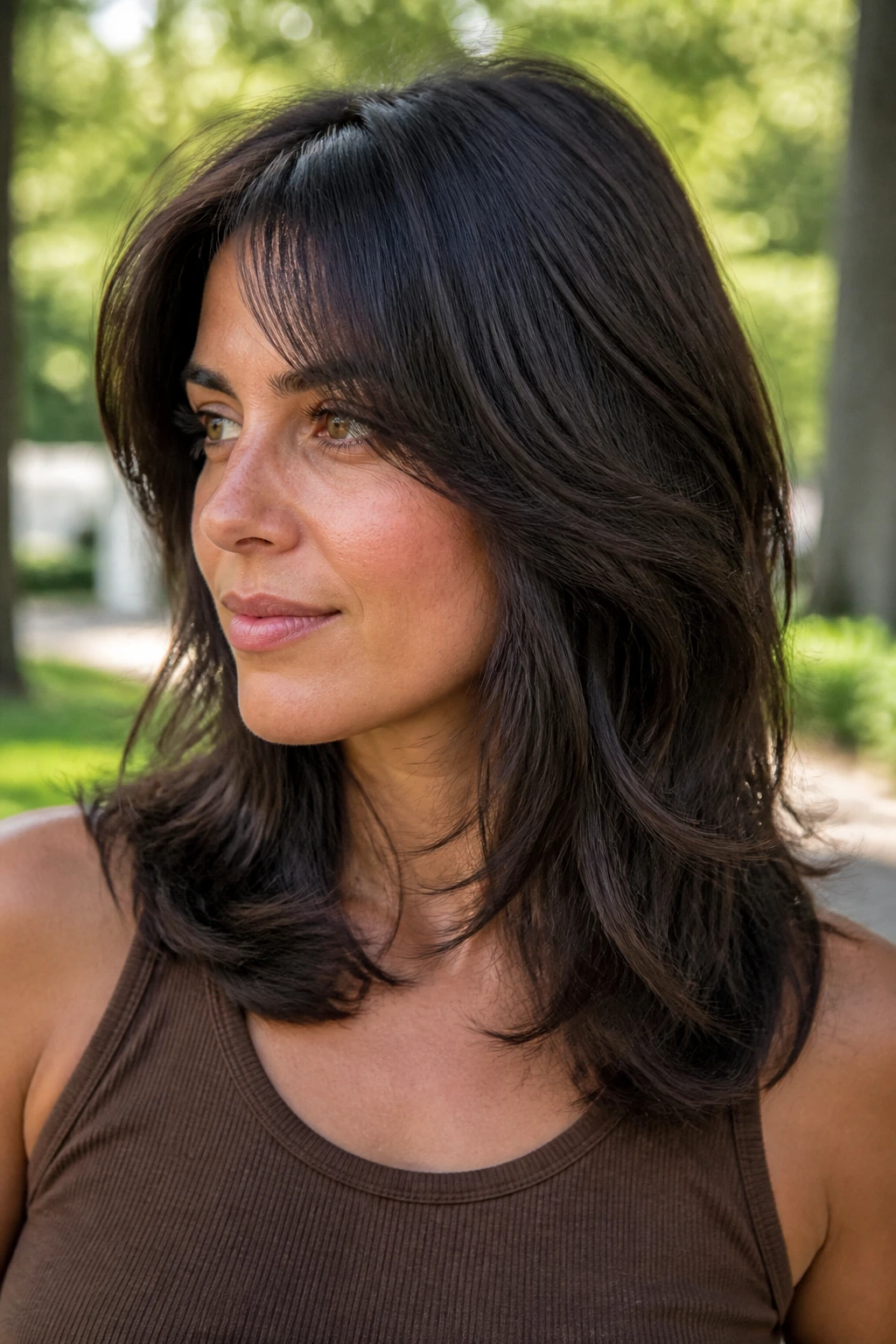
Choppy doesn’t have to mean harsh. On dense medium hair, it can just mean the ends are broken up enough to stop the whole shape from looking like one solid block.
The key is control. Use feathering to separate the mass into lighter sections, especially toward the lower third of the hair. That makes the silhouette kick a little and keeps the hair from sitting too straight at the bottom.
This works especially well if your ends tend to flip outward in a heavy way. A little texture at the bottom changes the whole mood.
17. Cheekbone-Grazing Fringe and Long Layers
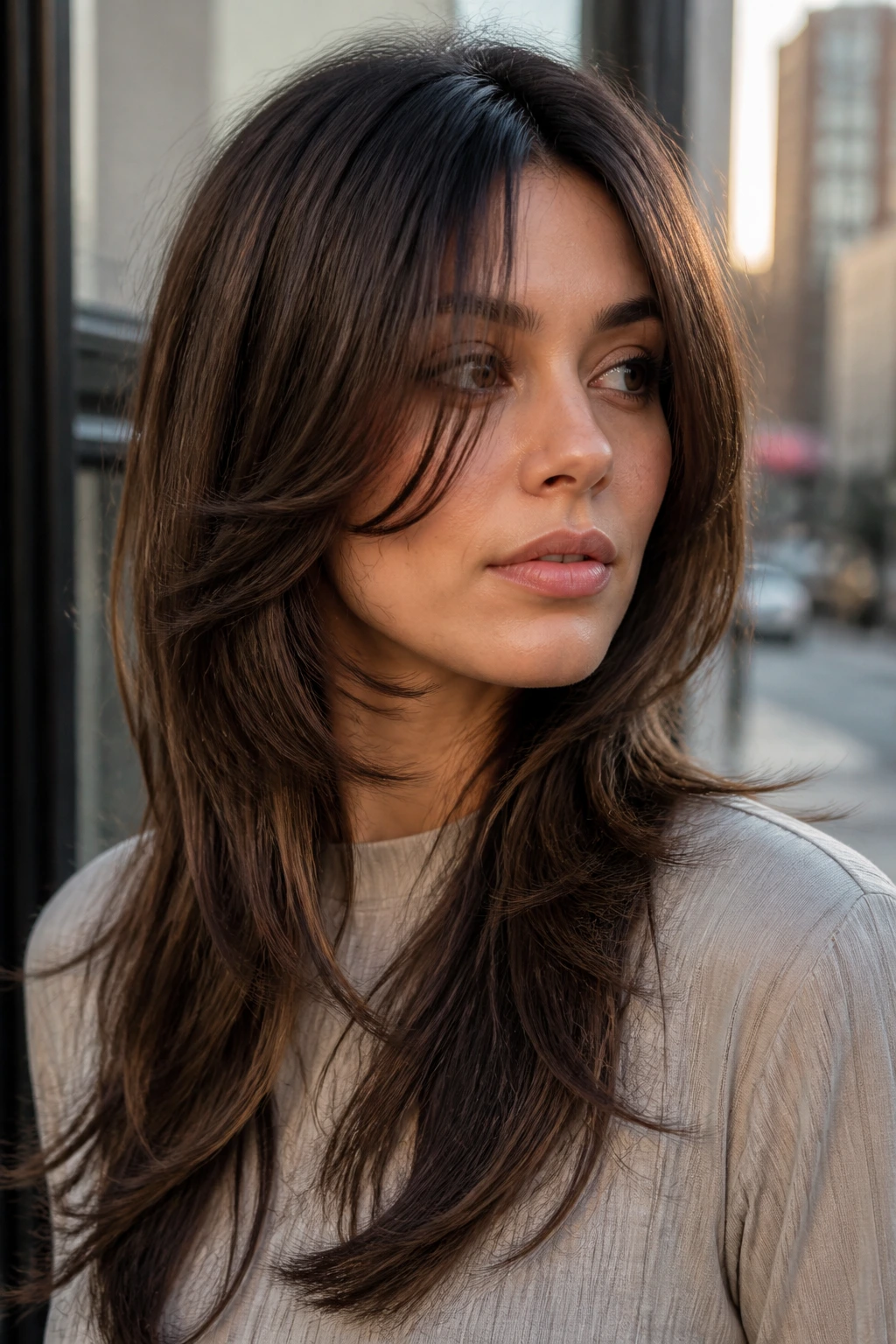
This version is all about architecture around the face. The fringe lands right where the cheekbone starts to show, then the longer layers trail down so the cut keeps its shape without crowding the eyes.
It’s a nice choice if you want softness but don’t want to commit to full bangs. The front pieces can be pushed aside, tucked behind the ear, or blown back into a sweep. Medium hair gives those front pieces enough body to stay visible.
The result is flattering in motion. That matters more than people admit. A haircut that only works in one exact pose is not doing enough.
18. Tapered Nape Feathered Cut
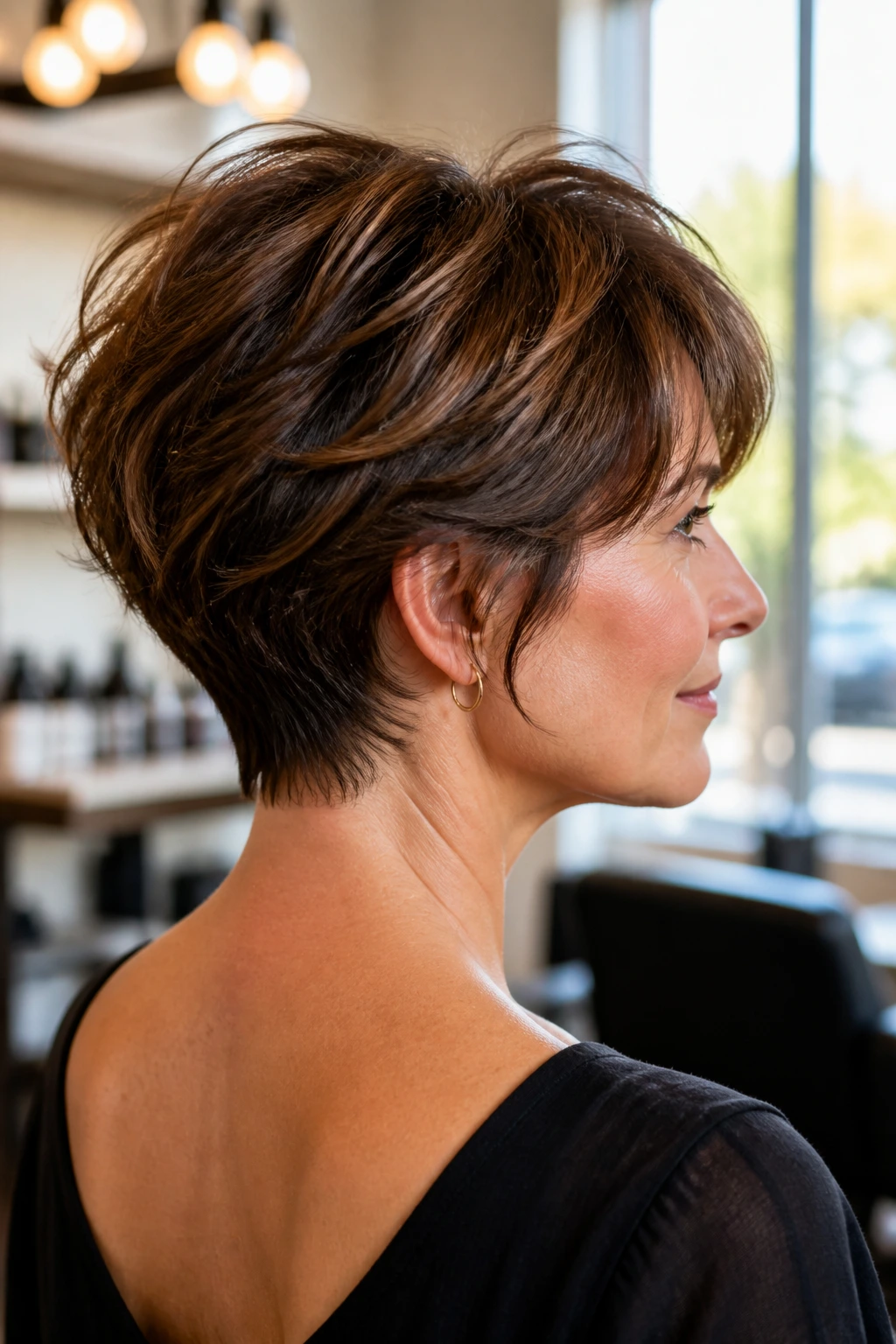
The nape gets neglected in a lot of medium-length cuts, and that’s a shame. A tapered back can make the whole haircut sit closer to the neck, which sharpens the outline and keeps the ends from looking boxy.
This is a smart option if your hair grows outward at the back or feels bulky under collars and jackets. The soft feathering around the perimeter lets the hair curve in rather than puff out. It’s subtle, but subtle is often the point.
If you tie your hair back a lot, this shape also tends to behave better. Less bulk at the neck. Less fighting with clips.
19. U-Shape Layers with Floating Ends
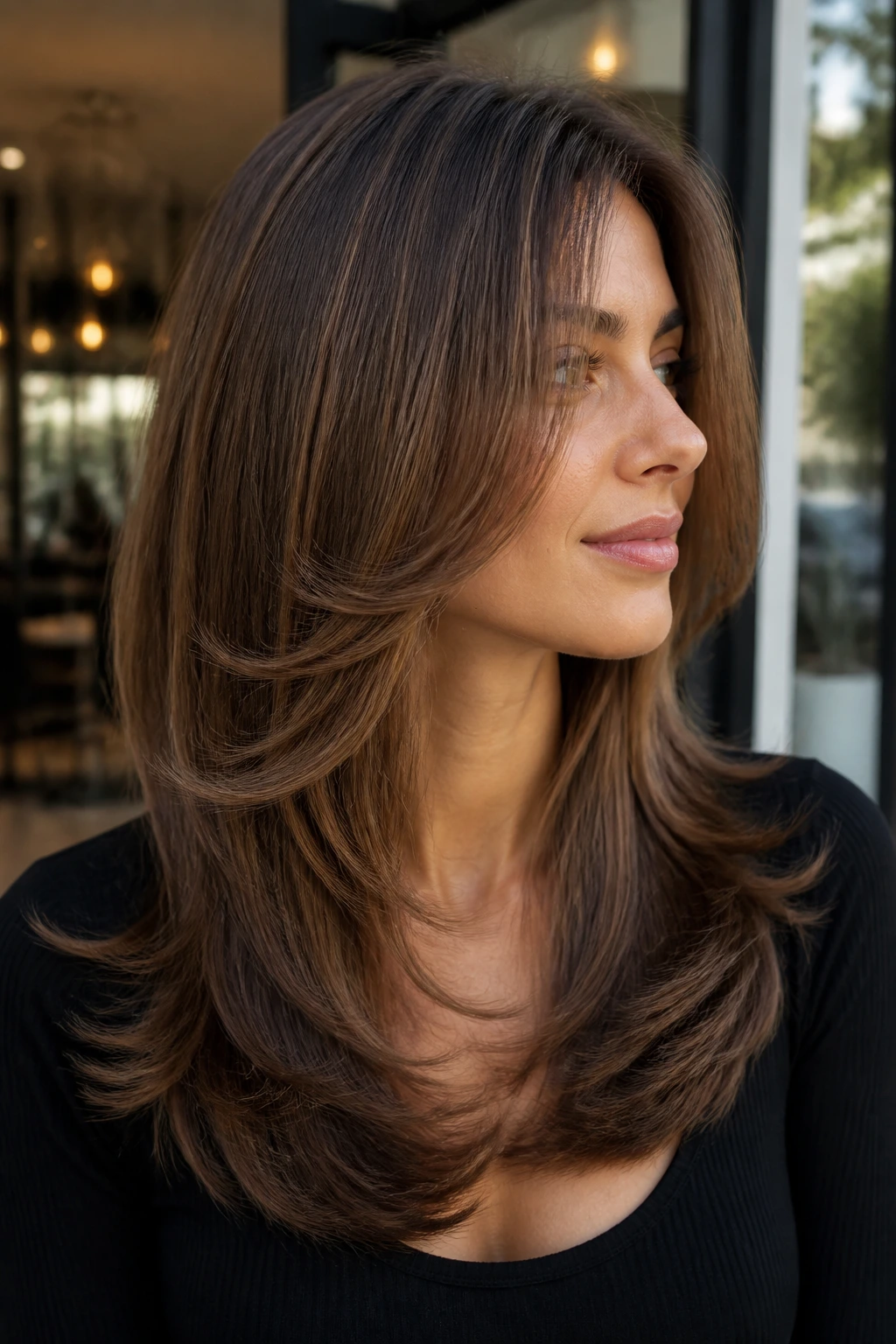
A U-shape is one of the easiest ways to keep medium hair from feeling too square. The center length stays the longest, the sides curve upward slightly, and the ends float instead of sitting on one hard line.
With feathering, the shape becomes even softer. The front pieces can skim the chin or collarbone, while the back keeps the overall length grounded. It’s a nice option if you want hair that still looks full from behind.
The cut is not loud. That’s the charm. It quietly improves the outline.
20. Air-Dry Feathering for Natural Texture
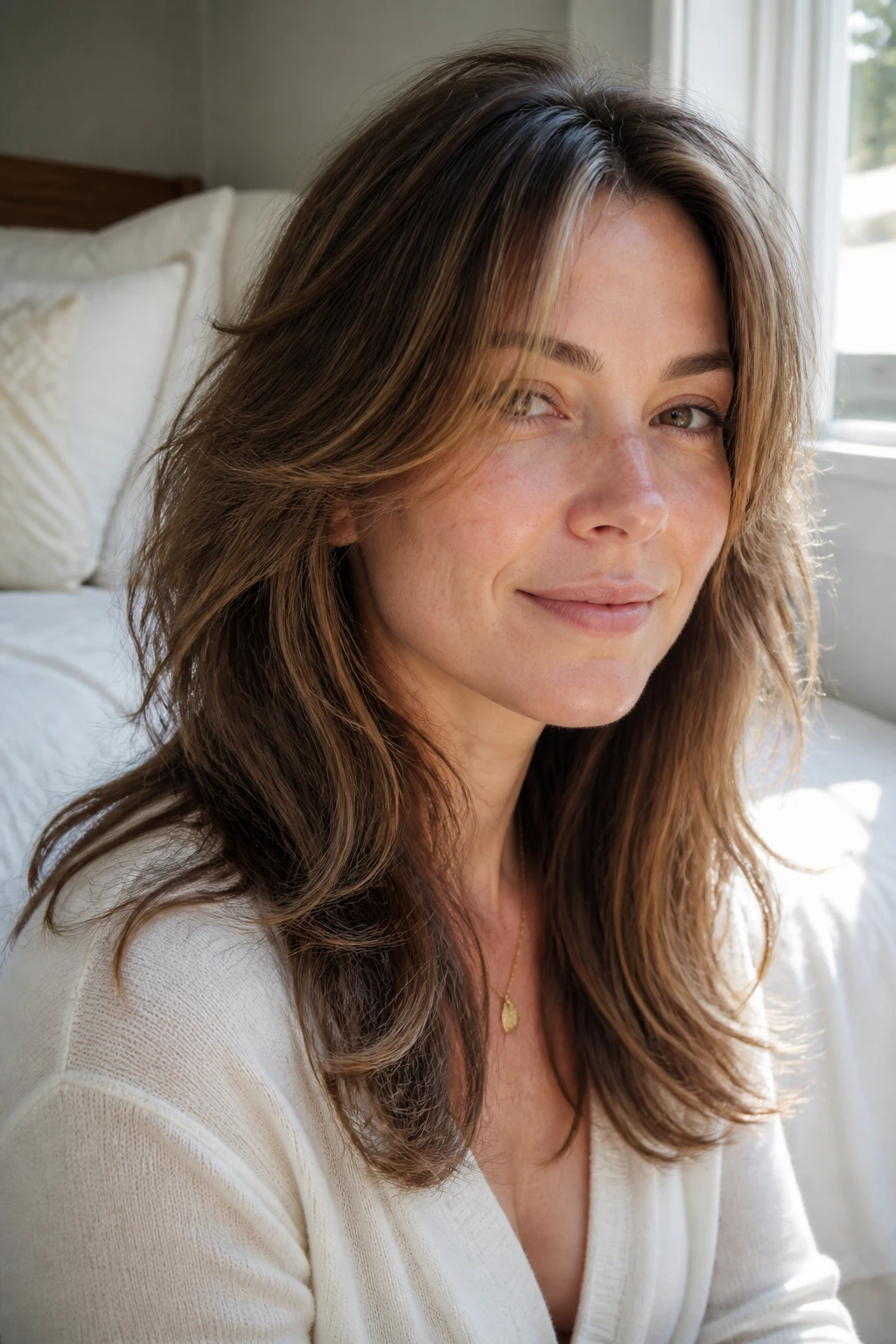
Some layered cuts are only as good as the styling tool in your hand. This one is built to survive a little chaos.
For air-dry feathering, the layers need to be long enough to let the natural bend show through without separating too much. On medium hair, that usually means keeping the face frame soft and the ends lightly textured rather than heavily razored. It’s a gentler shape, and that gentleness helps when you don’t want to spend twenty minutes with a brush.
The air-dry rule
Leave the front pieces alone until they’re mostly dry, then twist or tuck them as needed. Touching them too much while wet can make them bend in odd directions.
21. Short Face Frame with Long Body Layers
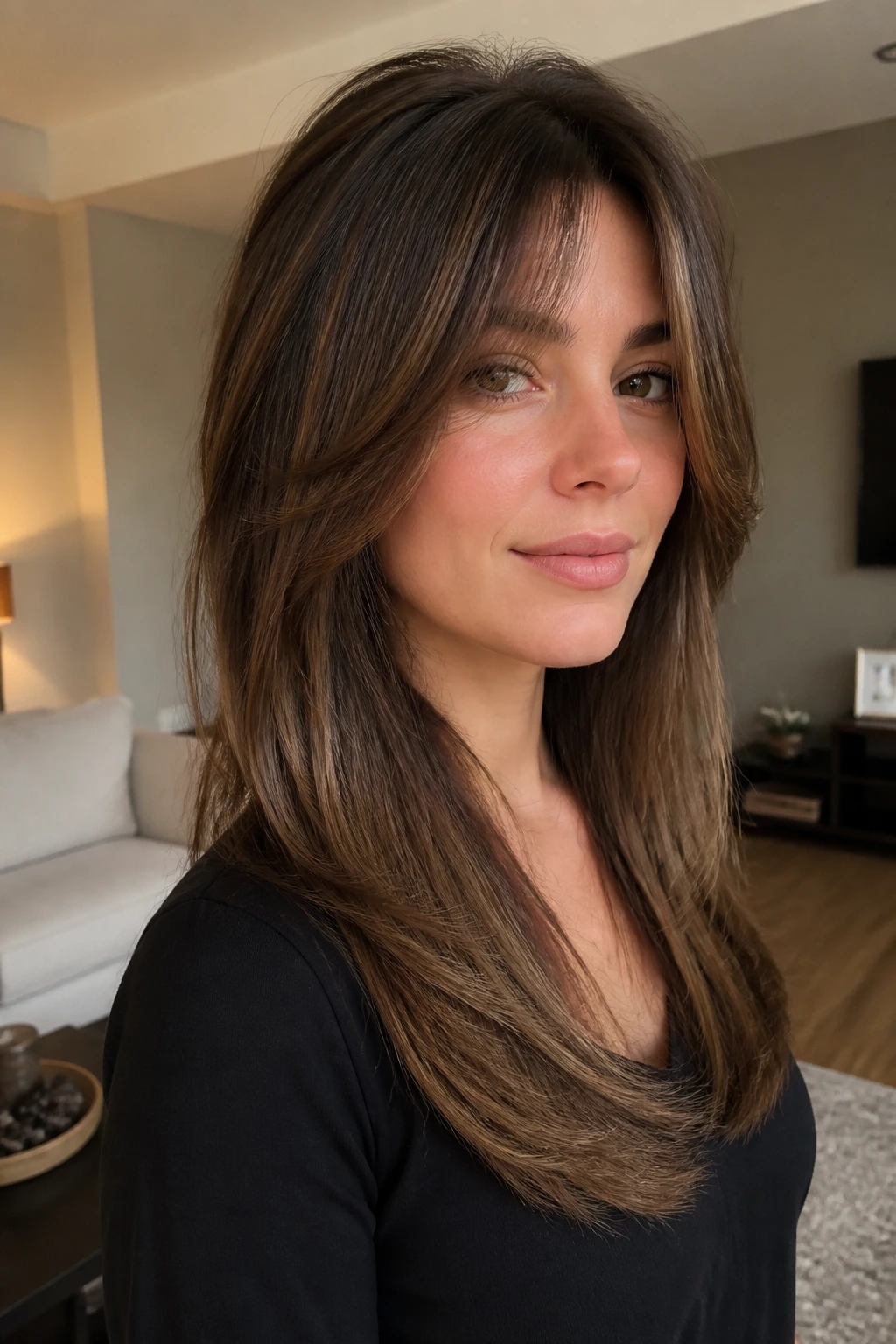
This is a favorite of stylists who like clean contrast. The front has a shorter frame that pulls attention toward the eyes and cheekbones, while the body of the hair stays longer and smoother.
Medium hair handles that contrast well because the length below the frame keeps the haircut from feeling chopped up. The longer layers also help the shape travel well when you move, which is why this cut looks nice in motion and not just in a mirror.
If you want a haircut that photographs nicely without needing much product, this is a strong one. The front does the work.
22. Low-Maintenance Grow-Out Feathering
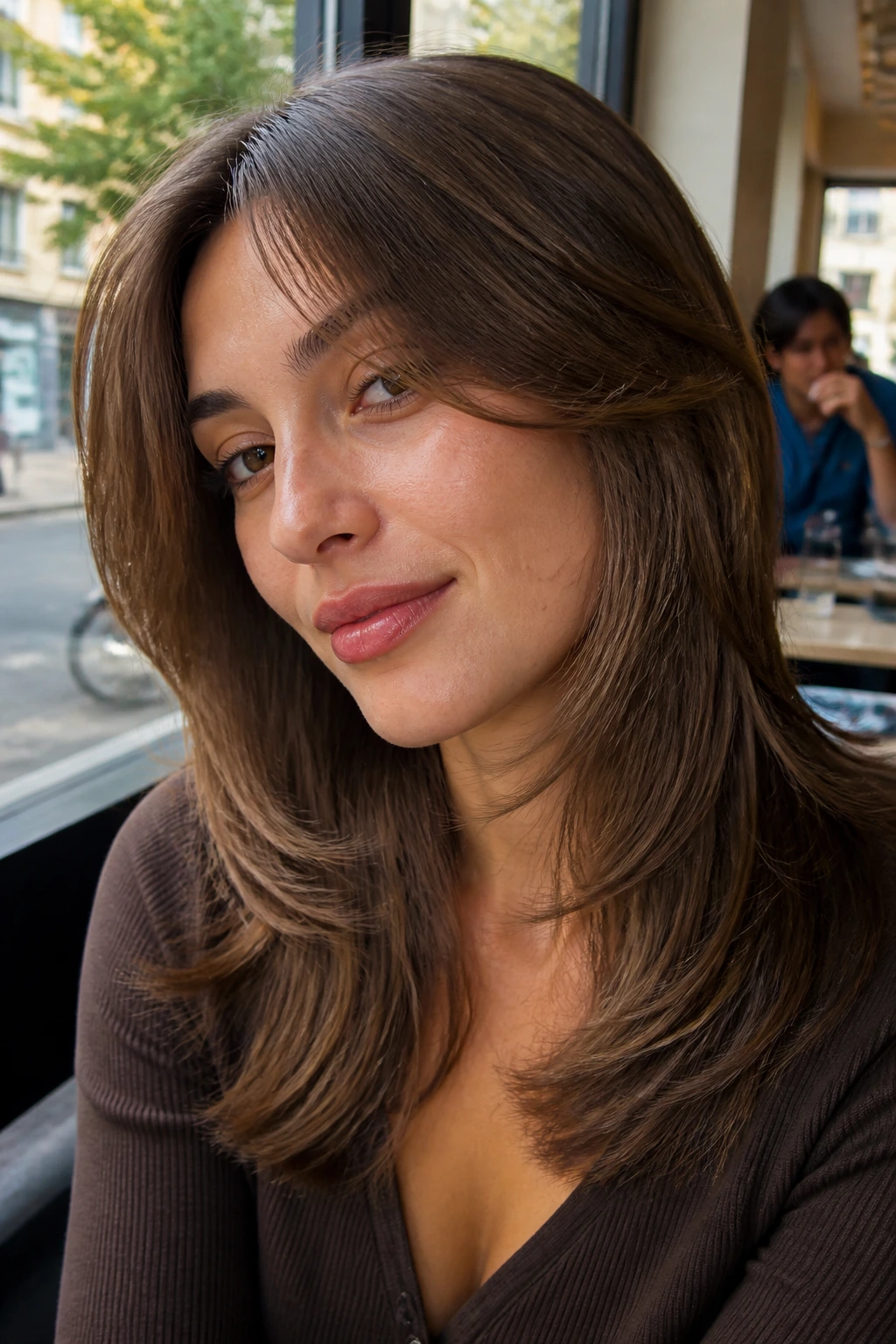
Grow-out matters. A lot. Some feathered cuts look amazing on day one and annoying by week six. This one tries to avoid that trap.
The trick is keeping the shortest pieces long enough to blend into the rest of the haircut as they grow. That usually means a softer face frame, fewer abrupt steps, and no aggressive thinning at the ends. Medium hair is a good fit because the length gives the layers room to soften instead of sticking out.
If you hate frequent salon visits, tell your stylist you want the shape to stay readable for at least two trim cycles. That one sentence saves a lot of regret.
23. Retro Flicked-Out Layered Lob
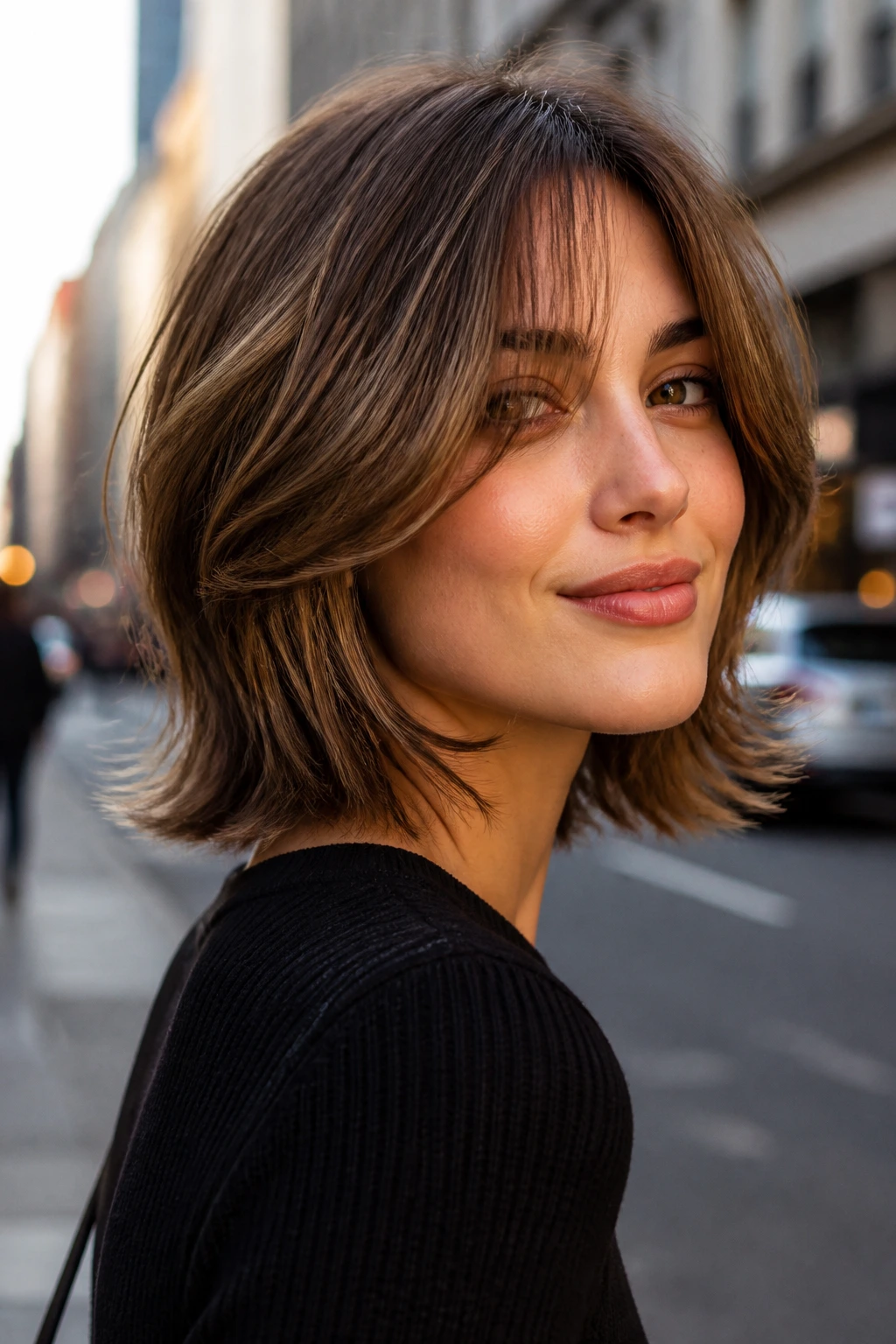
There’s something fun about a flicked-out end on medium hair. Done well, it feels playful and a little retro, like the haircut wants to move when you turn your head.
The layers need enough softness to let the ends kick out without turning into a pyramid. A round brush or medium curling iron can create that outward bend, especially around the front and jaw. It’s one of the few feathered styles that looks deliberately styled even when it isn’t perfect.
This is the kind of cut that likes a little personality. If you prefer hair with a tiny bit of attitude, this is your lane.
24. Curly-Wave Feathered Layers
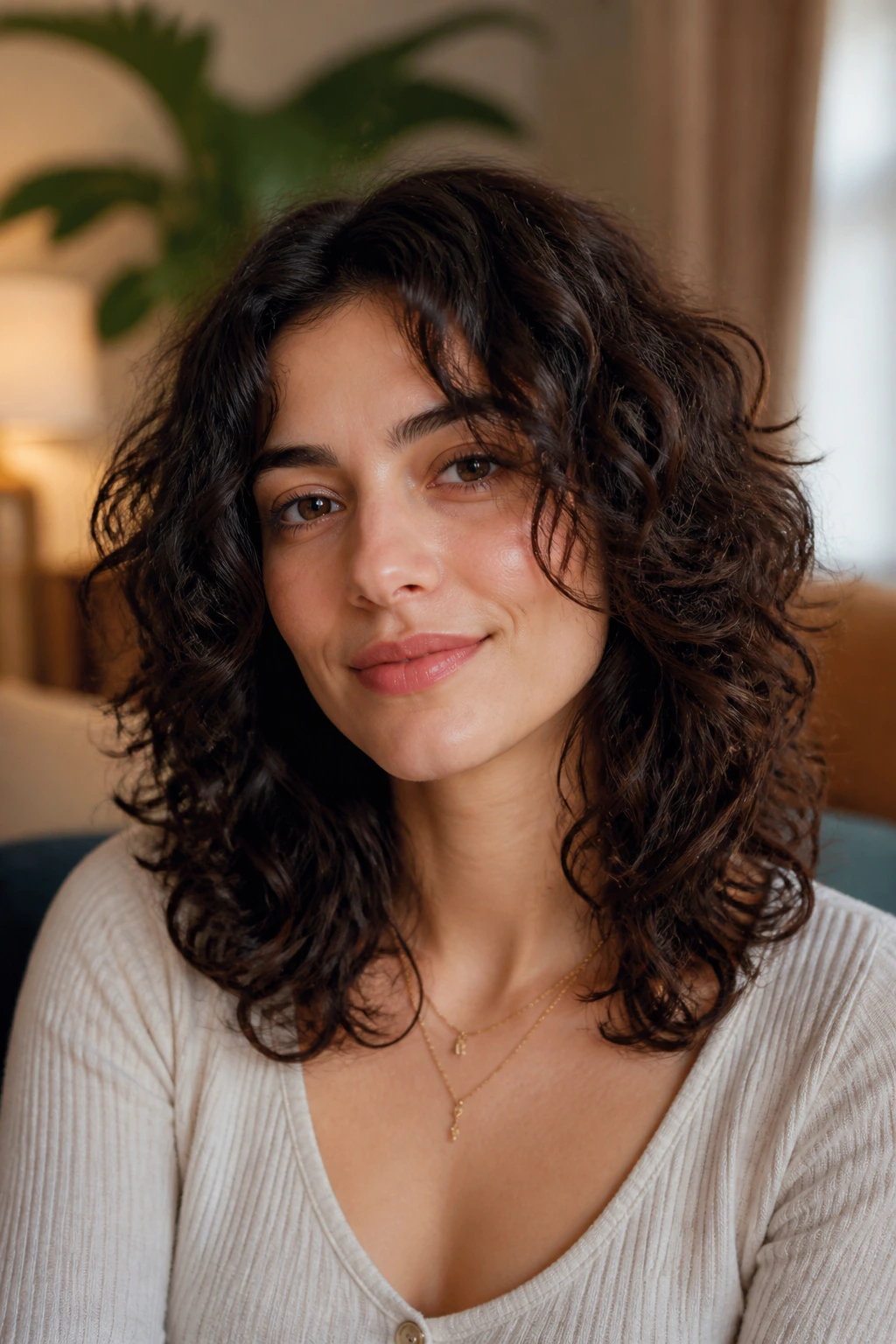
Curly and wavy textures need a different rulebook. Feathering on this texture should respect shrinkage, because a layer that looks conservative when wet can spring up much shorter once it dries.
The best version keeps the shortest face-framing pieces long enough to blend as they curl, then shapes the rest so the layers fall in a spiral or wave instead of separating into shelves. On medium hair, that gives definition without losing fullness.
What to watch for
Dry-cutting helps here. Wet curls can lie and make the cut look longer than it really is. A stylist who understands your natural pattern will usually leave more length than your first instinct expects.
25. Soft Swoop Layers with a Deep Side Part
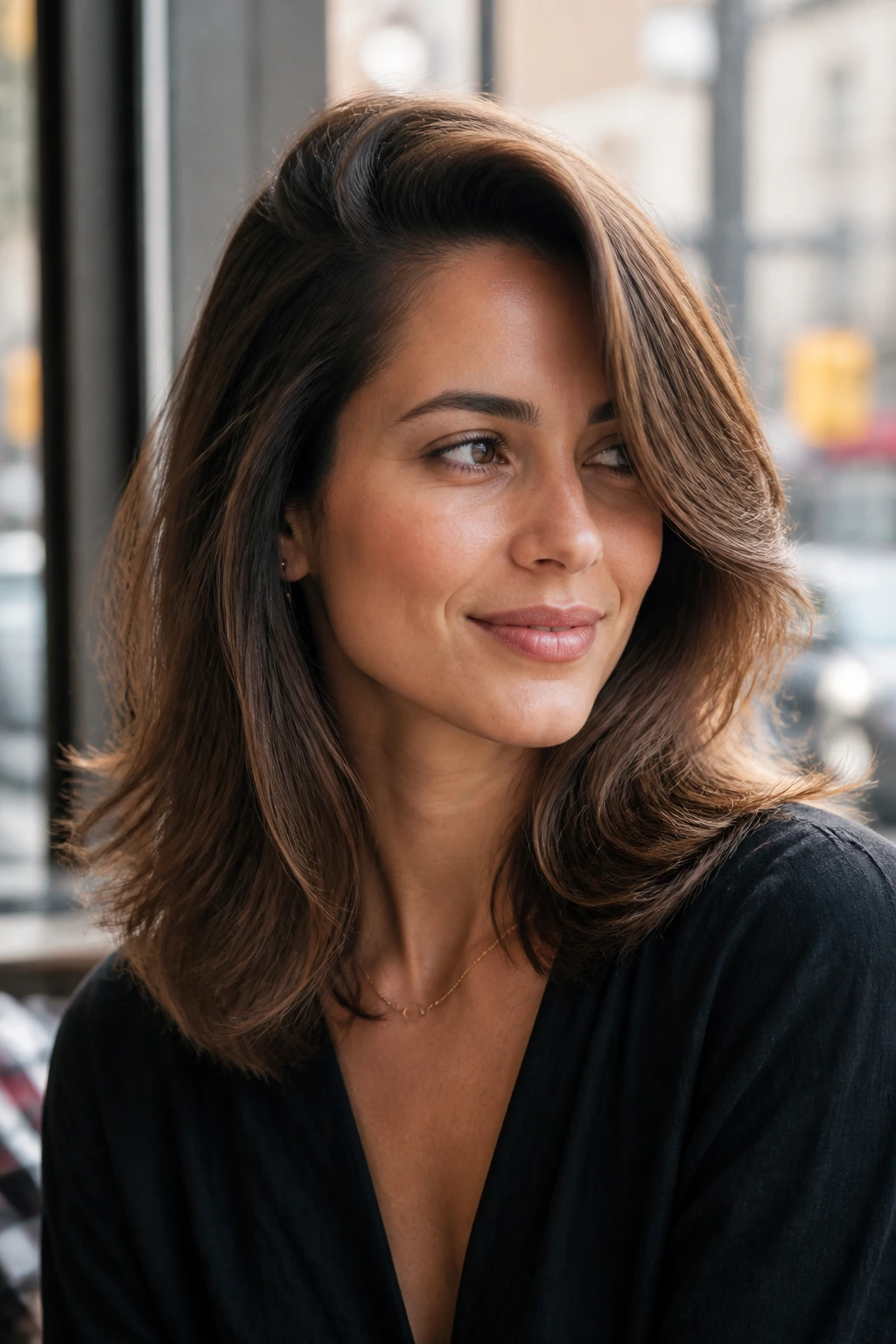
The deep side part comes back one more time, because it’s just that useful. Paired with soft swoop layers, it gives medium hair lift at the root and a gentle bend through the front without needing dramatic bangs.
What I like here is the asymmetry. One side gets more face-framing, the other side stays cleaner and longer, so the style has a little motion even when it’s fresh out of the shower. It’s polished, but not stiff.
This cut is especially good when you want a change that people notice without immediately being able to name. That’s often the best kind.
Why Feathering and Medium Length Work So Well Together
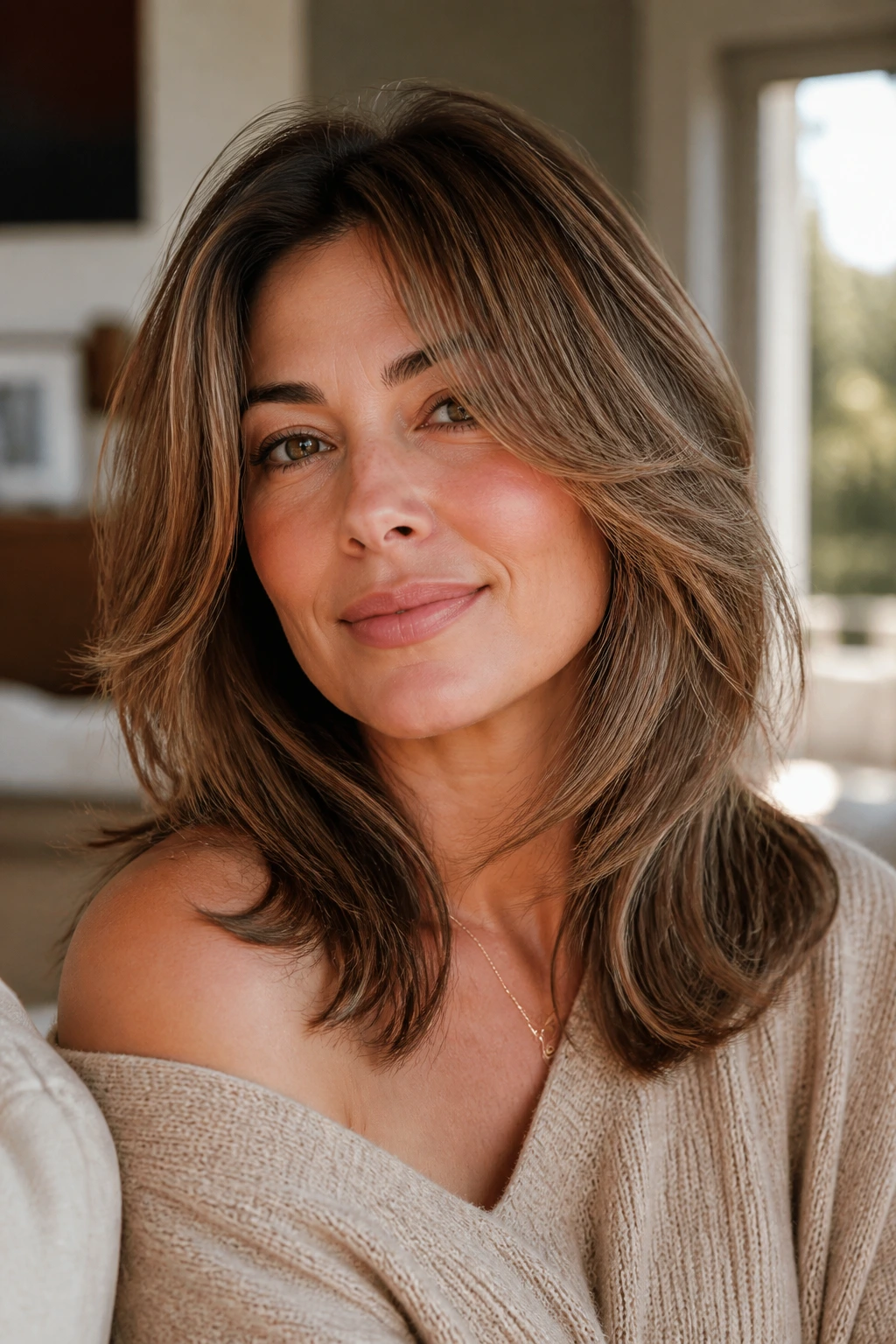
Medium hair sits in the sweet spot between too short to soften and too long to manage easily. That makes it the ideal length for feathering, because the cut can remove bulk without stripping away the shape. The weight still anchors the ends, and the layers can move without floating off into fluff.
The other advantage is face balance. On medium hair, the shortest layers can land exactly where they need to: cheekbone, lip line, chin, or collarbone. Those points matter more than most people think. A layer that starts two inches higher can change the whole mood of the haircut, especially if your hair is dense or your face is already fairly angular.
The weight is doing half the styling
That’s the part people miss. Feathering is not magic. It works because medium hair has enough length to keep the silhouette grounded while the layers create motion around it.
Where the layers should start
For fine hair, keep the shortest pieces lower and softer. For thick hair, you can go a little higher with the face frame or add internal layers. For wavy hair, the layers need to respect the bend pattern so the ends do not kick up in odd spots.
Essential Tools for Styling the Shape
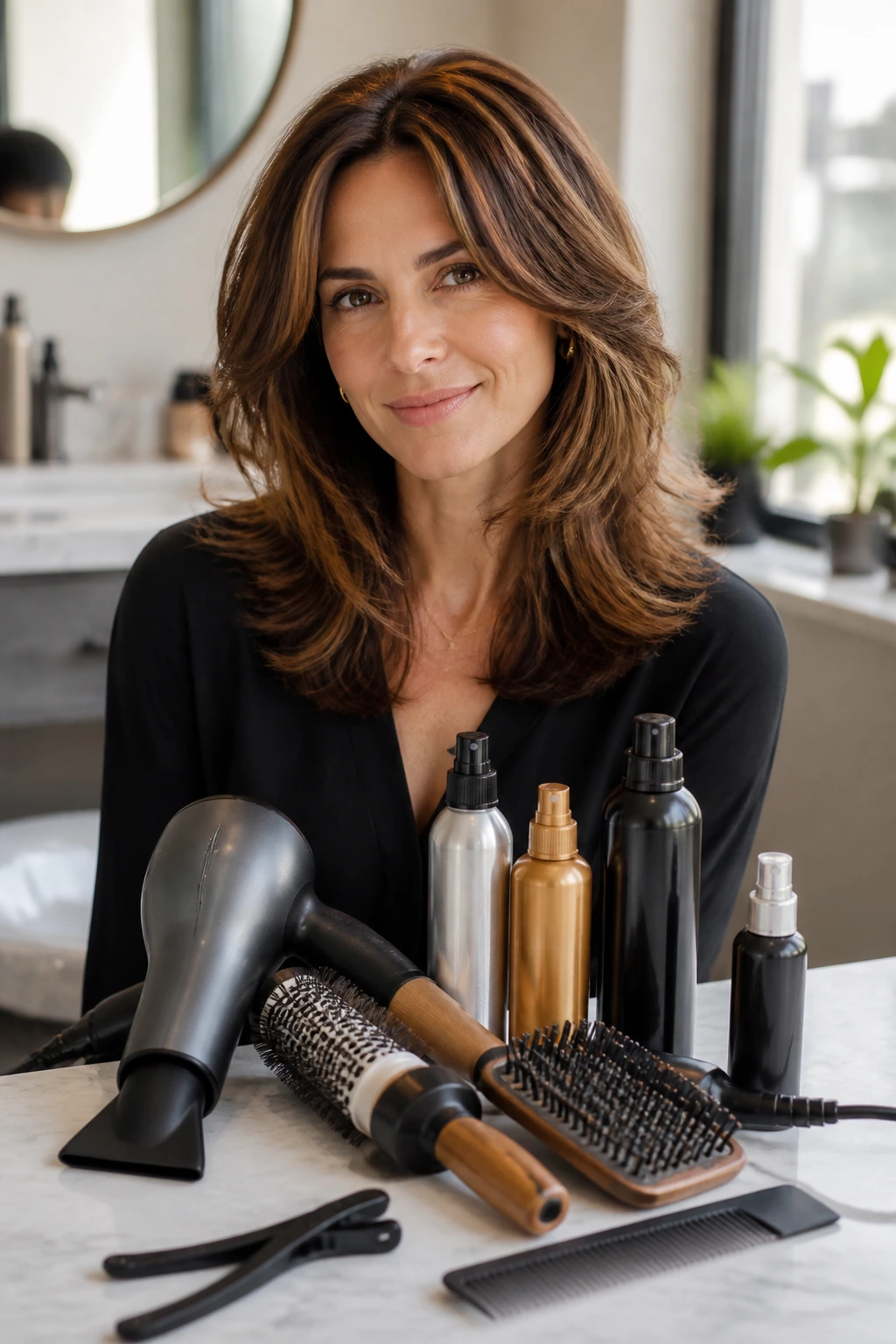
You do not need a salon cart at home, but a few tools make feathered layers behave much better.
- Blow dryer with a nozzle attachment: Directs the airflow so the layers dry in the direction you want instead of puffing out randomly.
- Round brush, 1¼ to 2 inches: The best size for medium hair because it bends the ends without making them curl too hard.
- Vent brush: Good for rough-drying the roots fast before you go in with the round brush.
- Heat protectant spray: Keeps the ends from getting dry and rough if you style with heat more than once a week.
- Lightweight mousse: Gives fine and medium hair some grip at the roots without making the lengths sticky.
- Texturizing spray: Useful on piecey cuts, shaggy layers, and flicked-out ends.
- Wide-tooth comb: Helps wavy and curly hair keep its pattern while detangling.
- Hair clips: Sectioning matters. Feathered cuts are much easier to style in halves or thirds.
- 1-inch curling iron or flat iron: Handy for quick bends on the front pieces if your natural wave doesn’t show enough shape.
- Shine serum or light oil: One or two drops on the ends stops the layers from looking dry.
What to Ask Your Stylist and Which Products to Pick
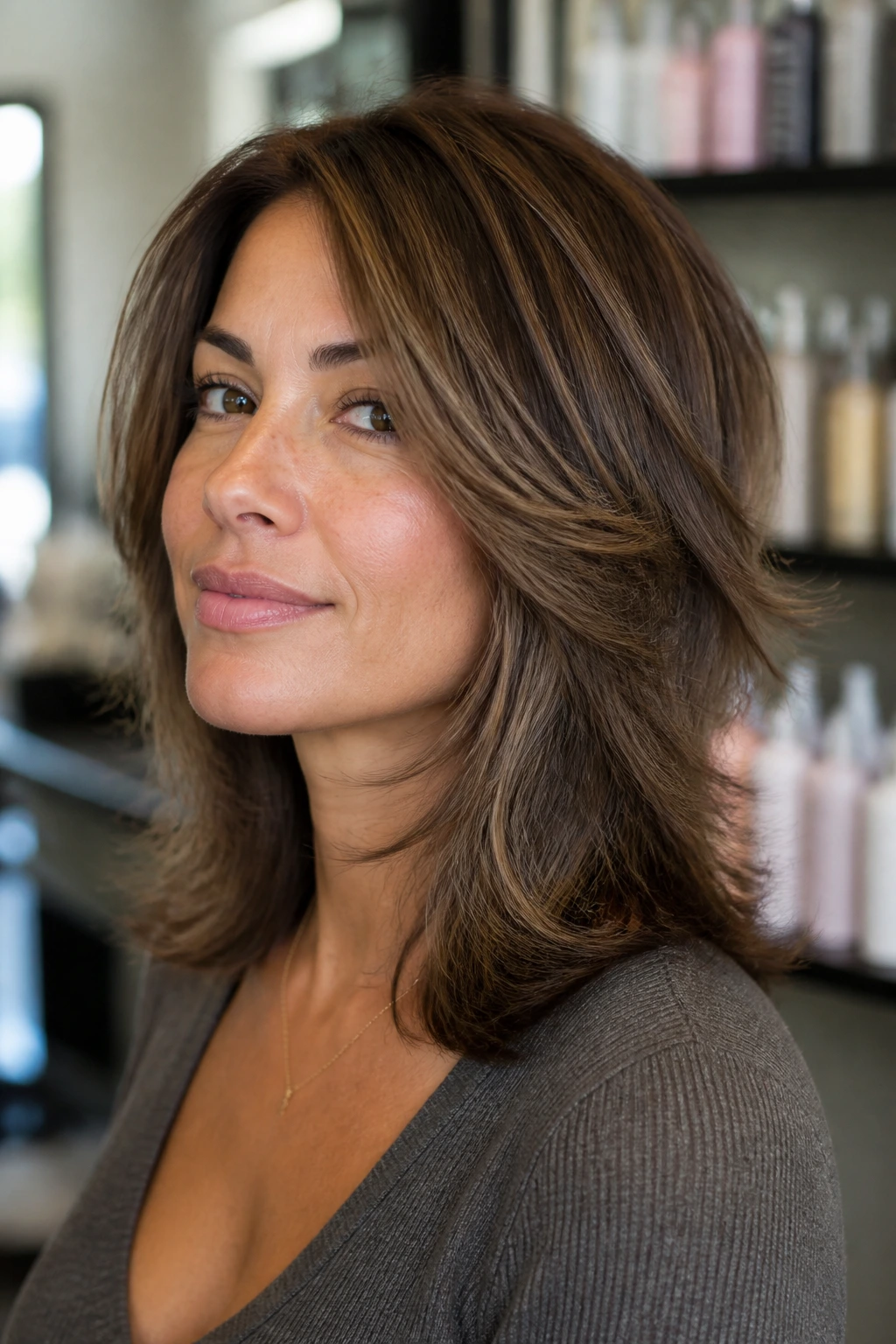
Photos help, but the right words help more. If you want feathered layered haircuts for medium hair to work on your texture, tell your stylist where you want the shape to open up and where you want to keep weight. That detail changes everything.
Bring at least two photos: one from the front and one from the side. Front shots show the face frame. Side shots show whether the layers are long and blended or short and choppy. I’d also point out the length you want the shortest layer to hit — cheekbone, jaw, or collarbone — because “soft layers” means almost nothing without that reference.
For products, start simple. Fine hair usually needs mousse or root spray before a blow-dry, plus a light texture spray at the end. Thick hair tends to behave better with smoothing cream and a small amount of oil on the ends. Wavy hair often needs less product than you think; a light curl cream or leave-in conditioner can be enough if the cut itself is balanced.
How to Style Feathered Layers Without Flattening Them
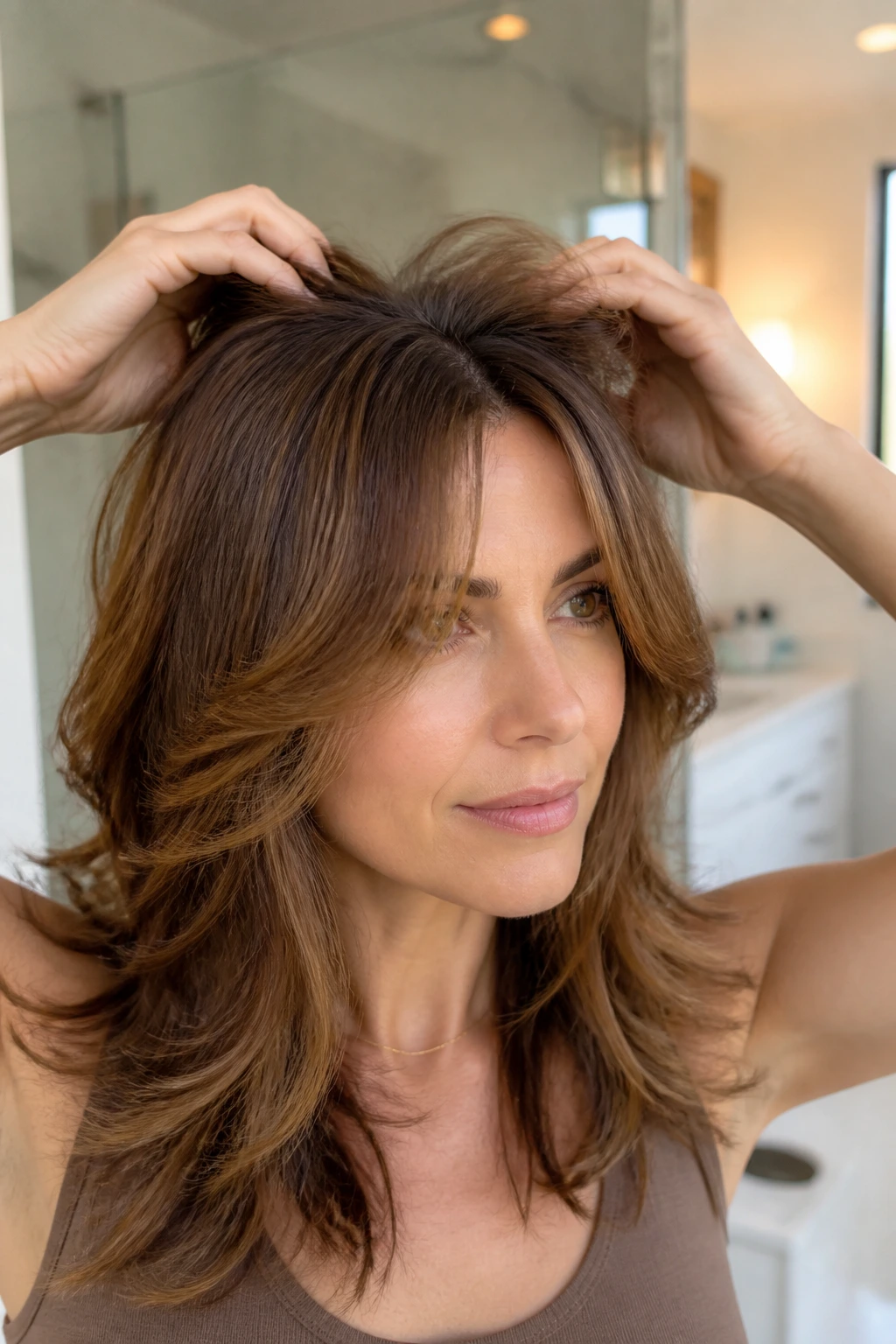
Start at the roots. Always. If the crown dries flat, the rest of the cut has to work twice as hard to look alive.
Rough-dry until the hair is about 70% dry, lifting the roots with your fingers or a vent brush. Then switch to the round brush and bend the front sections away from the face first, then inward or under at the ends depending on the shape you want. That small direction change matters. It keeps the face frame from looking stiff.
For wavy hair, skip overstyling the top layers. A little scrunching and a diffuser can be enough. For straight hair, one or two bends through the mid-lengths usually beat a full curl. Too much curl makes feathering disappear. Too little styling makes it look like a blunt cut with opinions.
Small Styling Moves That Make the Layers Sing
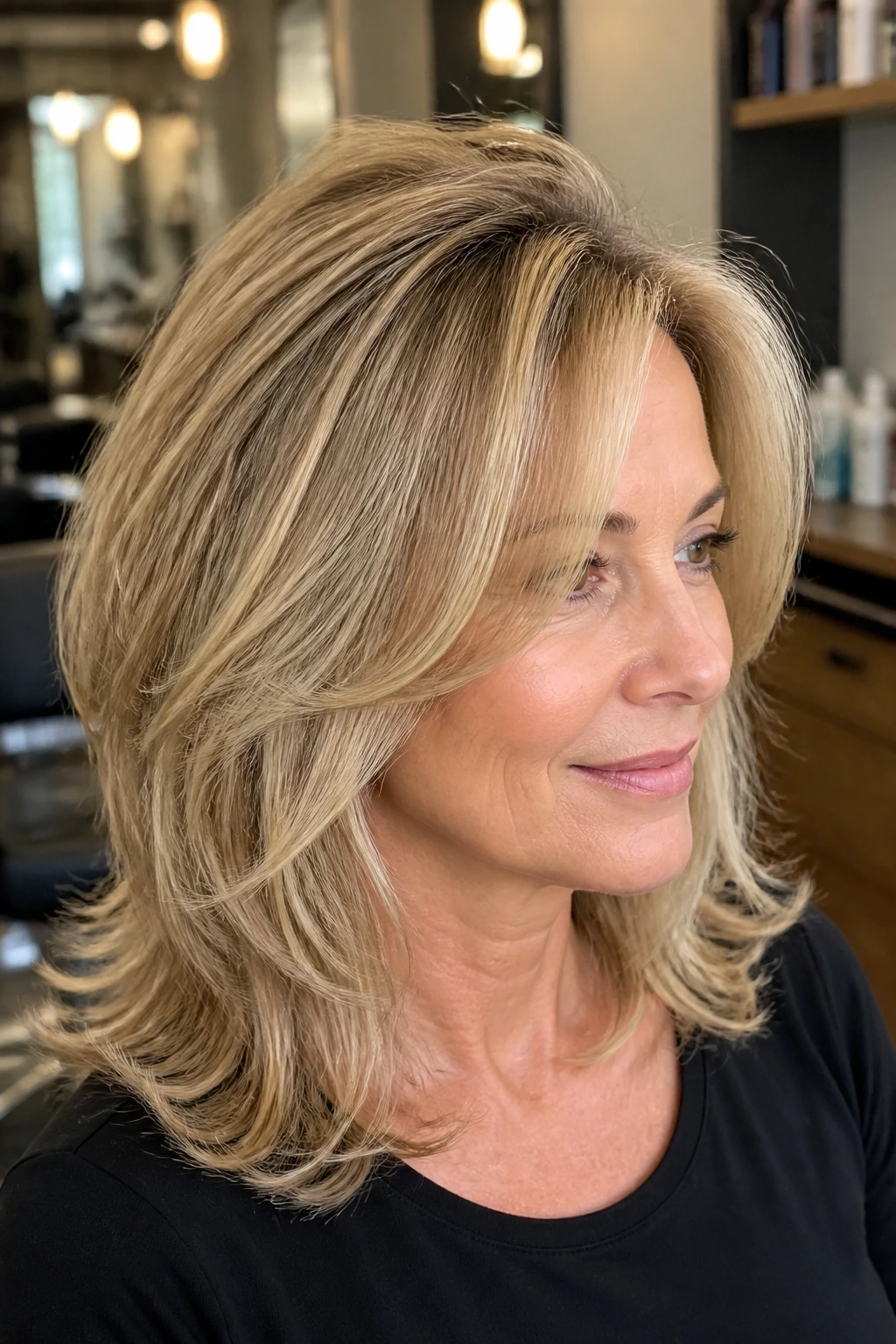
Root Lift: Flip the top section side to side while blow-drying, or clip the crown up for 5 to 10 minutes after styling. That tiny pause helps the shape set instead of settling flat against the scalp.
Texture Boost: Use a texturizing spray only on the mid-lengths and ends. If you spray the roots, medium hair can get dry and puffy in the wrong places.
Polish Move: Wrap the front pieces once around a round brush or 1-inch iron, then let them cool in your hand before touching them. Cooling is what locks the bend in. People skip that part and then wonder why the shape disappears.
Make-It-Yours: If your hair is fine, keep the layers long and the finish soft. If your hair is thick, ask for internal weight removal and a cleaner perimeter. If your hair is wavy, leave some roughness in the finish; over-brushing kills the whole point.
Common Mistakes That Flatten a Feathered Cut
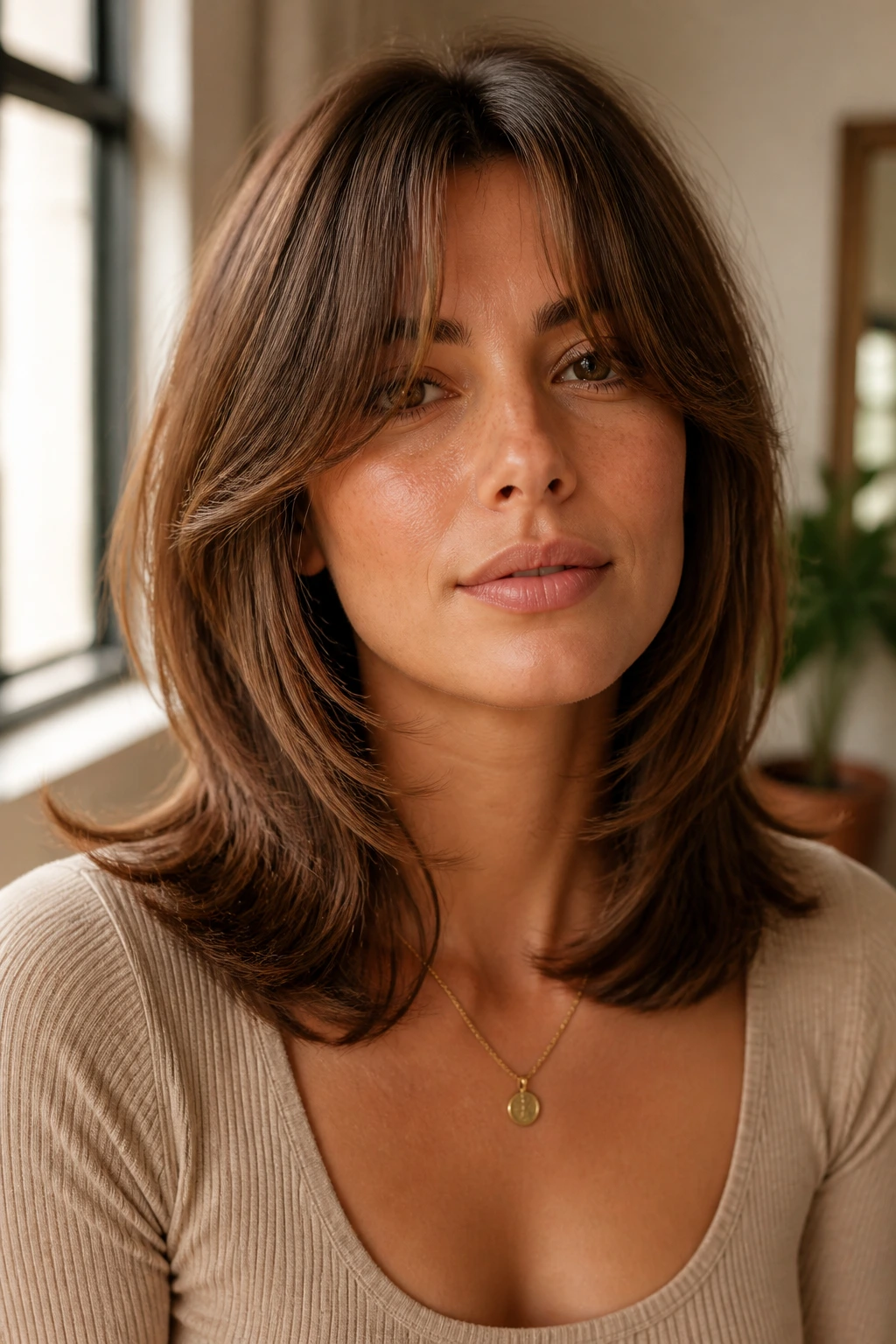
The first mistake is starting the layers too high. That’s how medium hair turns into a puffy pyramid or a shape that looks shorter than it is. The fix is simple: keep the shortest face-framing pieces below your strongest facial feature, usually around the cheekbone or jaw.
Another one is thinning fine hair too aggressively. The cut may feel lighter for a day, but the ends start looking see-through fast. Ask for soft layering or point cutting instead of heavy texturizing if your hair already feels delicate.
A third problem is ignoring your natural part. Feathered layers look different on a center part than on a deep side part, and if the cut is balanced only for one of them, the other side can feel lopsided. Wear your usual part when you get the haircut. That sounds obvious, but it gets missed constantly.
And then there’s overstyling the face frame. If the front pieces are curled, sprayed, and blown apart every morning, they stop looking feathered and start looking stiff. A light bend is usually enough.
Variations and Adaptations to Try
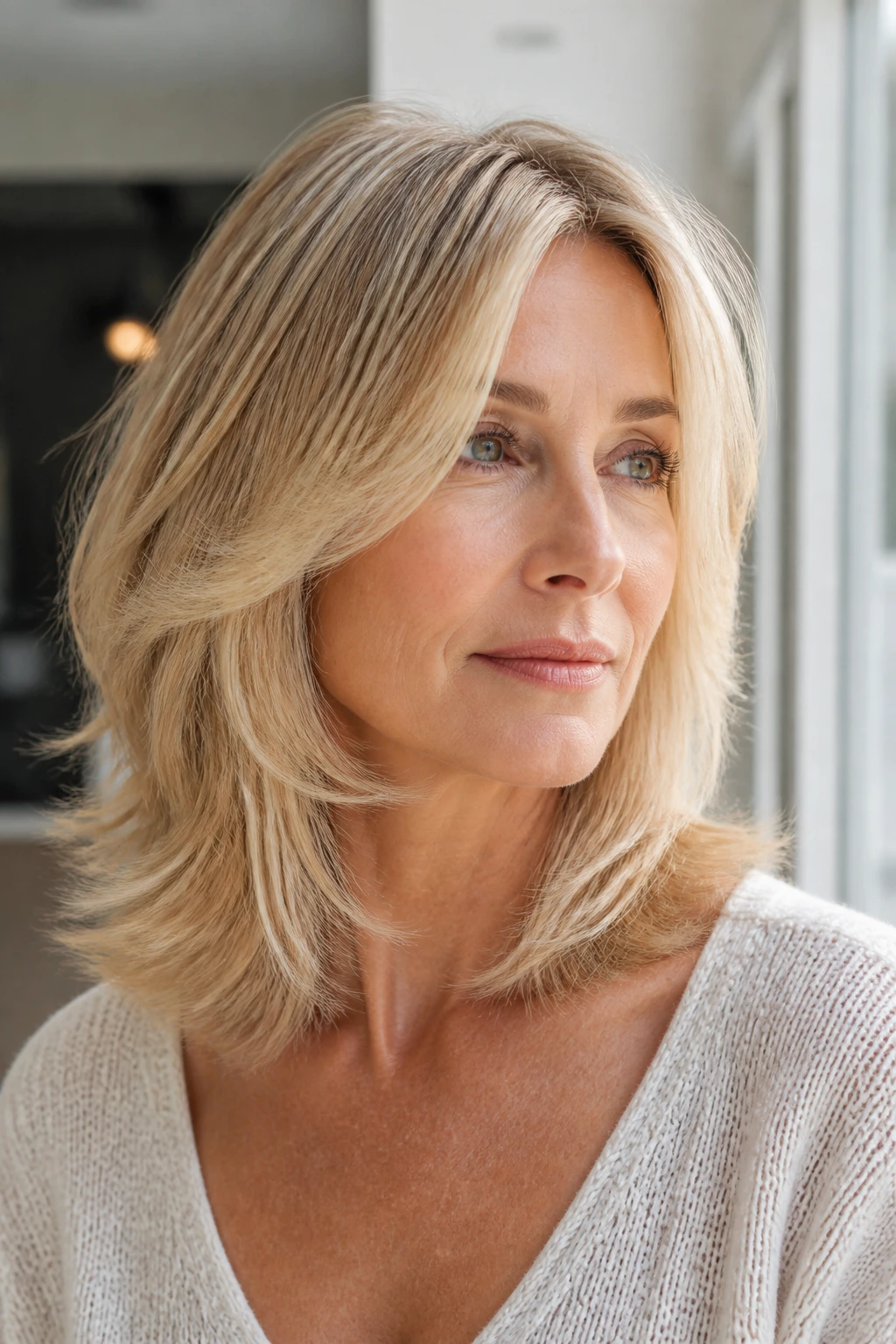
The Fine-Hair Flutter: Keep the layers long, soft, and close together so the hair looks fuller at the ends. This works best when the shortest pieces barely reach the cheekbone and the finish stays smooth rather than piecey.
The Thick-Hair Breeze: Add internal layering and a little more weight removal through the mid-lengths. This version is built for hair that feels heavy in a ponytail and stubborn at the ends.
The Curly-Wave Feather: Let the stylist cut with shrinkage in mind, then shape the layers so they fall in natural groups. Dry cutting often gives a better read on where the curls will land.
The Grow-Out Easy Edit: Keep the front frame long enough to tuck behind the ear and avoid too many short layers at the crown. This one keeps its shape even after several weeks.
The Bang-Friendly Version: Curtain bangs or bottleneck bangs soften the front without taking over the whole haircut. Great if you want face-framing but not a full fringe commitment.
How to Keep the Shape Between Trims
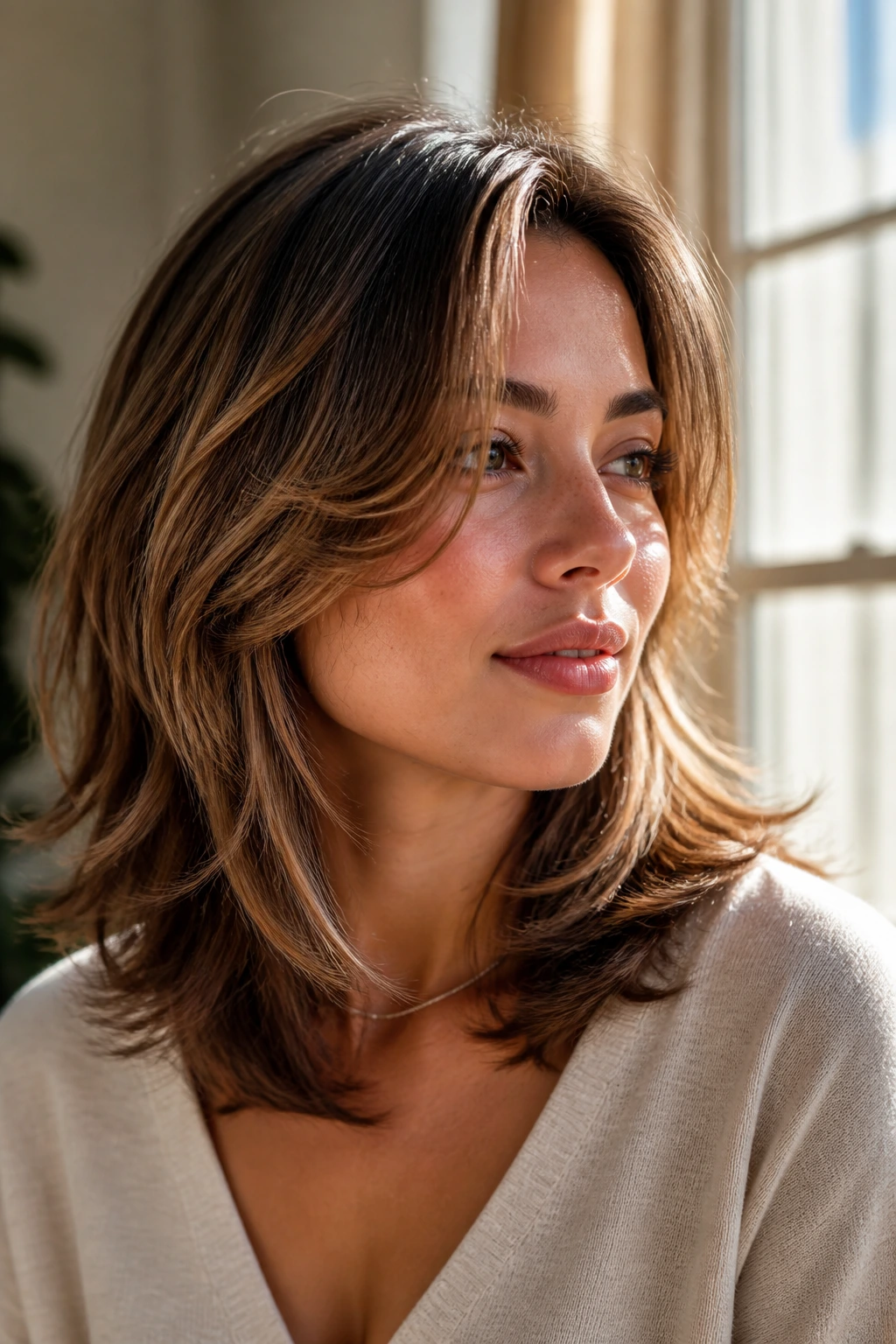
Feathered layers hold best when you respect the cut instead of overworking it. If you want the outline to stay sharp, plan on a trim every 8 to 10 weeks. If you prefer a softer grow-out, 10 to 12 weeks is often enough, especially on medium hair that isn’t heavily razored.
Sleep matters more than people admit. A loose silk scrunchie, a claw clip, or a silk pillowcase can keep the front pieces from getting bent into weird angles overnight. If you wake up with a flat crown, mist the roots lightly with water and re-dry the top section for 2 or 3 minutes. You usually do not need to start from scratch.
Wash frequency depends on your scalp, not the haircut. But if product buildup starts weighing down the layers, a gentle clarifying shampoo every 2 to 4 weeks helps the movement come back. That one step can make a tired feathered cut look newly cut again.
Frequently Asked Questions
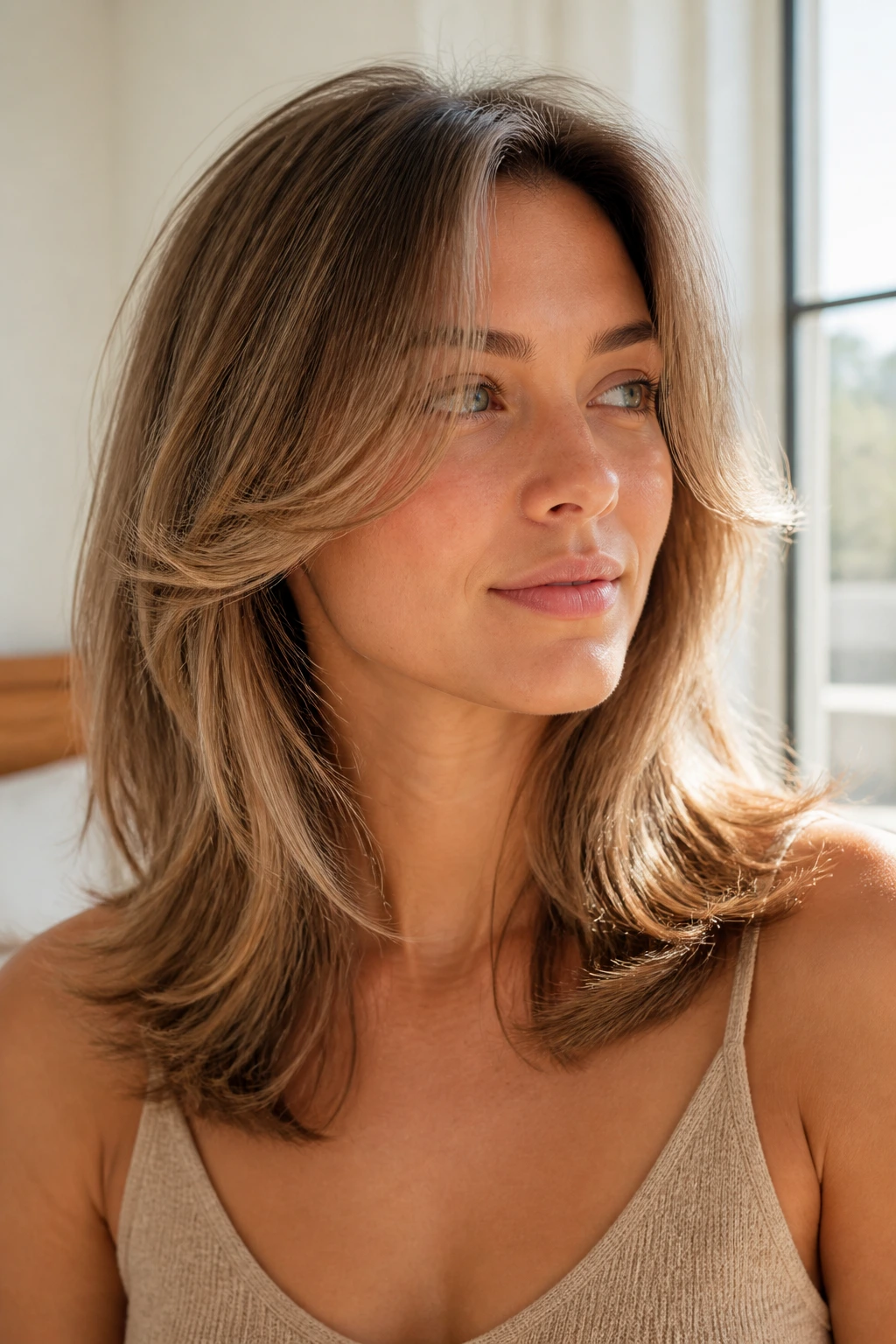
What is the difference between feathered layers and regular layers?
Regular layers remove length in steps. Feathered layers are softened at the ends so the cut feels lighter and more airy, especially around the face. The shape usually looks less choppy and more brushed-out.
Will feathered layers work on fine medium hair?
Yes, but they need a lighter hand. Ask for longer layers and avoid too much thinning, or the ends can start to look sparse. The goal is movement, not removal of all the density you have.
Are feathered layers good for thick hair?
Very good, as long as the stylist removes bulk in the right places. Thick hair often needs internal weight removal, not just shorter ends. Otherwise the outline stays heavy even after the haircut.
How often should I trim a feathered medium-length cut?
Every 8 to 12 weeks is a solid window. If your face frame is the main feature of the cut, stay closer to 8 weeks. If you like a softer grow-out, you can stretch it a bit longer.
Can I air-dry feathered layers and still keep the shape?
Yes, especially if your hair has natural wave. The trick is to keep the front pieces from drying in awkward bends and to avoid brushing the hair once it starts setting. A little leave-in or curl cream helps the shape stay visible.
What should I tell my stylist if I want movement but not too many short pieces?
Say you want the layers to start low, around the cheekbone or collarbone, and that you want the ends softened rather than chopped. That usually gets you a feathered result without the over-layered look.
Do feathered layers make hair look thinner?
They can, if the cut is too aggressive or the hair is already fine. On dense hair, though, feathering often makes the hair look healthier because it removes bulk without taking away the whole silhouette.
What if my stylist cuts the layers too short?
You can usually let the front pieces grow while trimming the rest into a cleaner shape. The quickest fix is often a blunt-ish reset around the perimeter so the layers stop announcing themselves so loudly.
The Cut That Keeps Its Shape
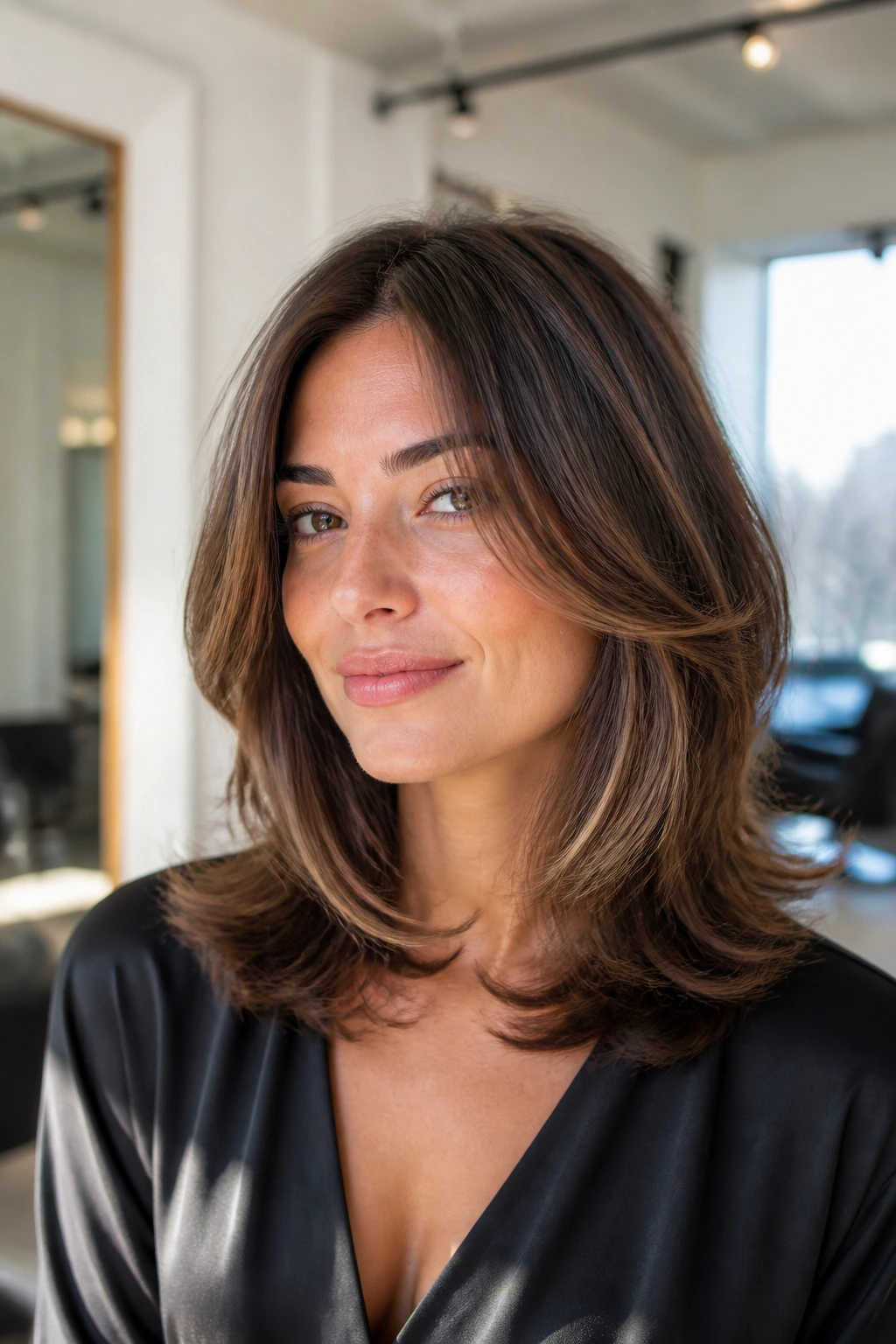
Medium hair gives feathered layers room to breathe. That’s why the good versions feel so alive: the shape still has weight, but it never feels stuck. The hair can bend, tuck, swing, and settle without turning into a heavy block.
The biggest difference is restraint. The best feathered layered haircuts for medium hair don’t shout from every strand. They move because the shape was placed well, the ends were softened with care, and the face frame was designed to work with your features instead of fighting them. That is the whole game.
Pick the version that matches your texture and your daily routine, then keep the styling simple enough that you’ll actually repeat it. That’s where the cut starts earning its keep.