



Thick hair has a way of looking rich and unruly in the same breath. Add a round face, and the wrong cut can make the sides puff out like a bell while the front sits heavy and stubborn around the cheeks. Textured layers for thick hair and round faces fix that by doing something simple and very smart: they move weight away from the widest points, keep the eye traveling downward, and leave enough softness around the face that the whole shape feels lighter.
Round faces are not the problem. A blunt perimeter is. A layer that starts too high can make the crown too airy and the rest of the hair explode sideways. A layer that starts too low can turn the whole cut into a box. The sweet spot lives somewhere in the middle, usually with face-framing pieces that drop below the cheekbone, internal debulking where the hair is thickest, and ends that still have enough substance to swing instead of frizzing apart.
That balance is why this kind of cut matters so much. Dense hair can look luxurious, but it can also swallow bone structure if the shape is too blunt or too wide. The right textured shape shows cheekbones, lengthens the face a little, and gives the hair room to move without turning it into a puffball the minute humidity shows up.
Some of these looks are soft and polished. Some are shaggy enough to feel a little cool. A few lean into feathering, side parts, or cheekbone-grazing front pieces. All of them are built for the same job: make thick hair behave, and make a rounder face look more sculpted without sacrificing fullness.
Why These Cuts Earn Their Keep
-
They remove bulk where thick hair needs it most. The best versions keep weight away from the sides of the face and out of the bottom edge, so the haircut moves instead of sitting like a block.
-
They create vertical lines. Longer front pieces, collarbone lengths, and tapered layers pull the eye up and down, which is exactly what helps a round face feel more elongated.
-
They still leave the hair looking full. You do not have to strip out half the density to get movement. The right cut keeps the body, just not the bulk.
-
They play well with real-life styling. Air-dried waves, a brushed-out blowout, or a quick round-brush bend all work when the layers are placed well.
-
They grow out with less drama. A smart layered cut usually softens as it grows instead of turning into a blunt shelf at the cheek.
-
They make heavy hair easier to finish. Thick strands respond better when the shape already has some internal movement built in. That saves time on every wash day.
1. Long Butterfly Layers with Curtain Pieces
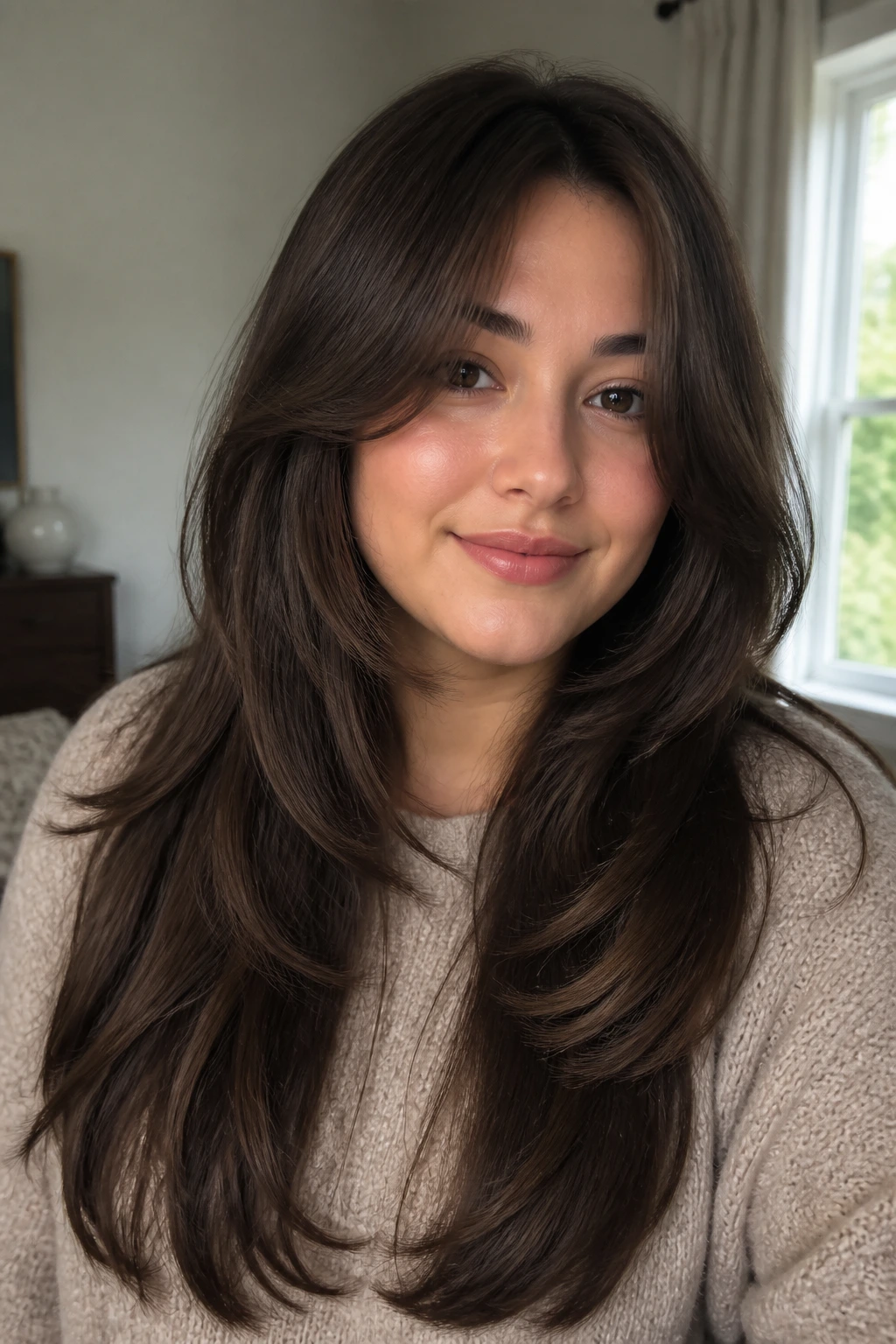
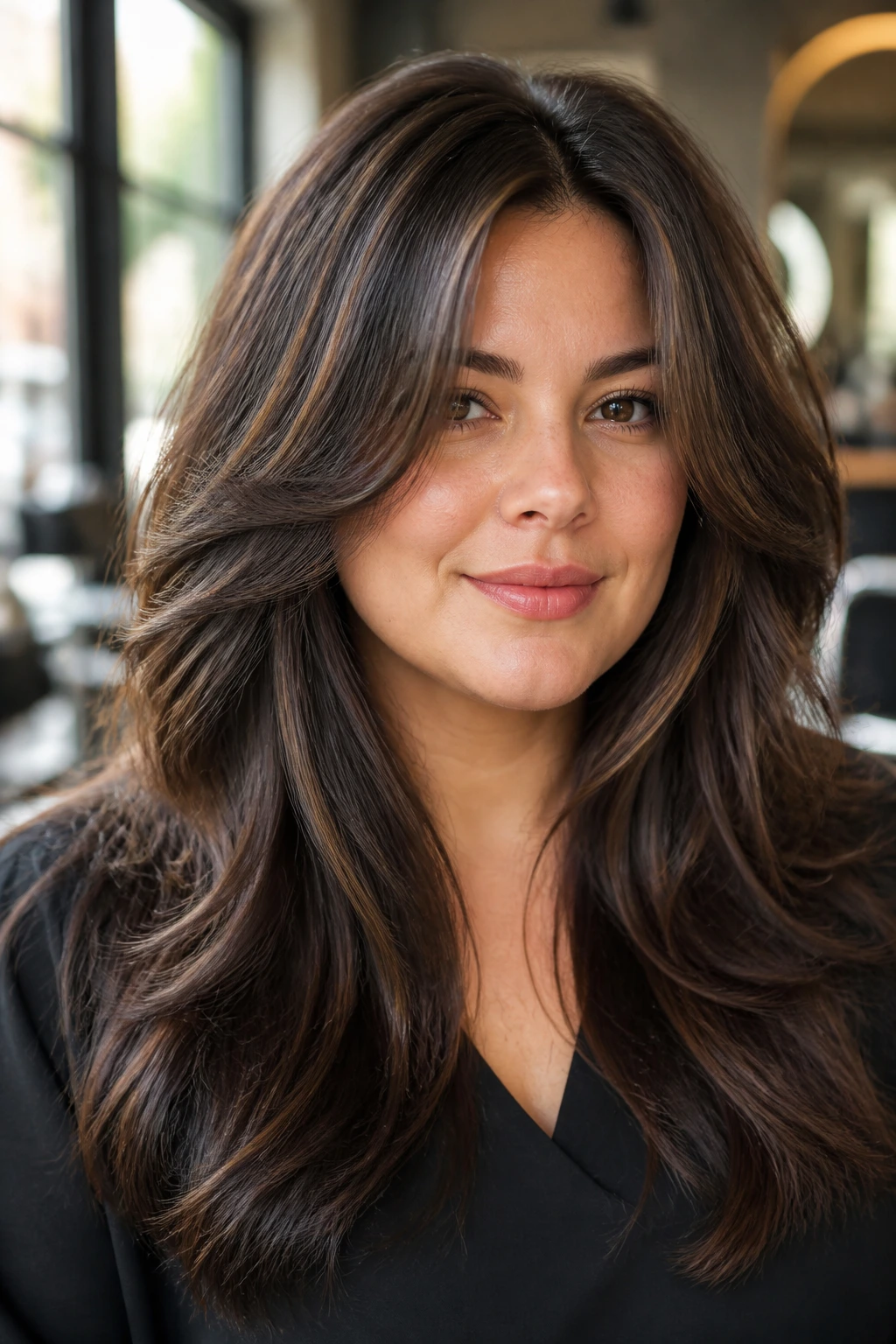
Butterfly layers are one of those cuts that sound trendy and then, annoyingly, turn out to be useful. On thick hair, they let you keep the length while lifting the front and mid-lengths just enough to stop the hair from hanging like a curtain wall. The curtain pieces are the part I care about most here. If they start around the cheekbone or just below it, they guide the eye inward and down instead of out to the side.
This version is especially nice for round faces because the shortest visible pieces sit high enough to frame, but not so high that they widen the cheeks. Ask for the back to stay long and the front to feather away from the face. If your stylist starts the face frame at the jaw or lower, the whole thing feels softer and less obvious.
Best Styling Move
A large round brush or a 1.5-inch curling iron gives the front pieces that soft bend away from the face. Keep the ends a little loose. Stiff curls defeat the point.
2. Chin-Starting Face Frame with Long Length
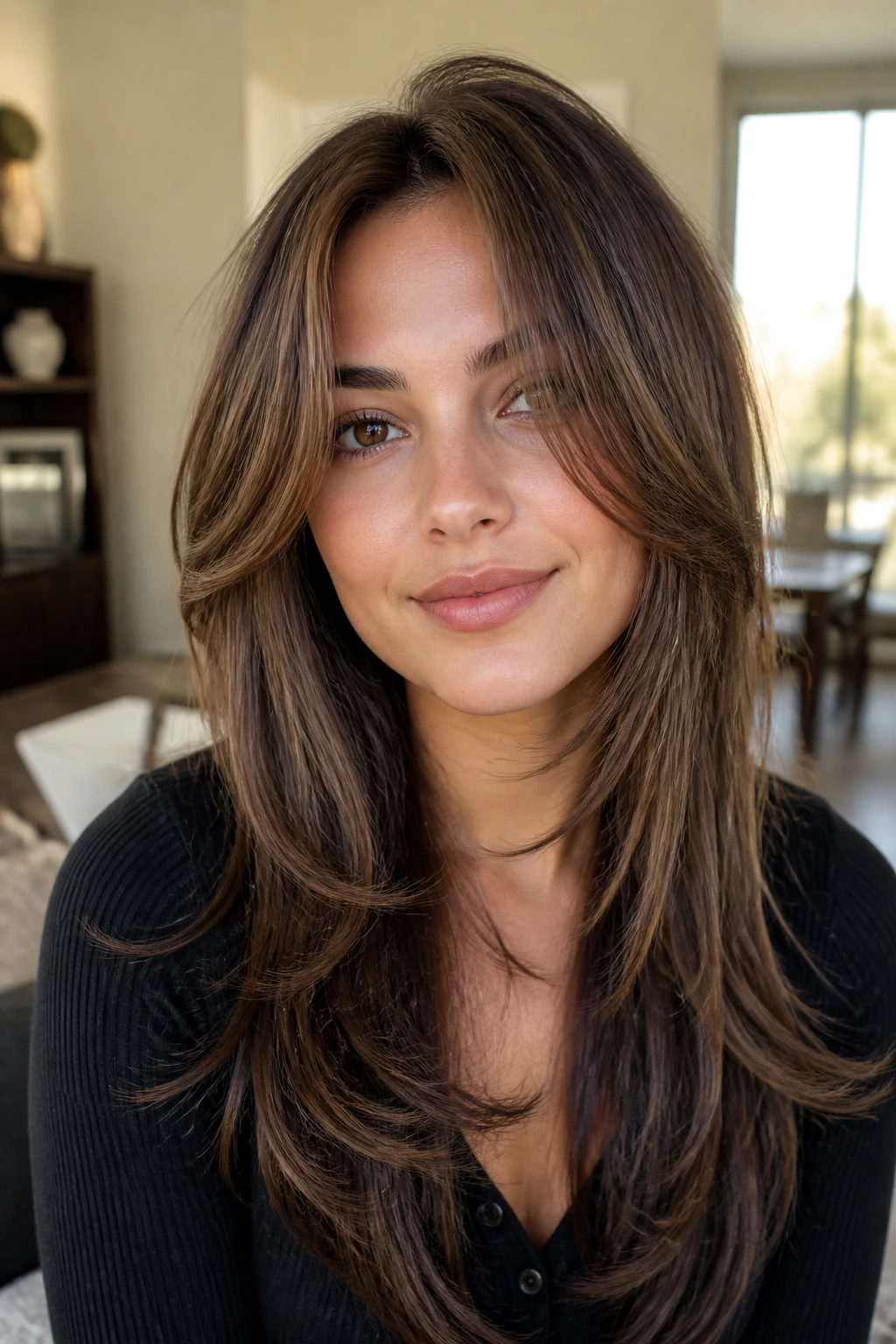
This is the safe bet when you love length and do not want your hair to feel chopped up. The face-framing layers begin around the chin, then angle longer as they move into the sides, which keeps the cheeks from becoming the loudest thing in the room. Thick hair holds this shape beautifully because there’s enough weight in the back to keep it from feeling wispy.
I like this cut when a client says they want “something lighter” but panic the second the scissors come near the shoulder line. Fair. Chin-starting face frame gives movement without a dramatic change in overall length. It also works if your hair flips outward at the bottom; those longer front pieces help pull the silhouette down.
The key is restraint. Too short, and you lose the lengthening effect. Too much layering, and the face frame starts competing with the rest of the haircut.
3. Collarbone Shag with Soft Ends
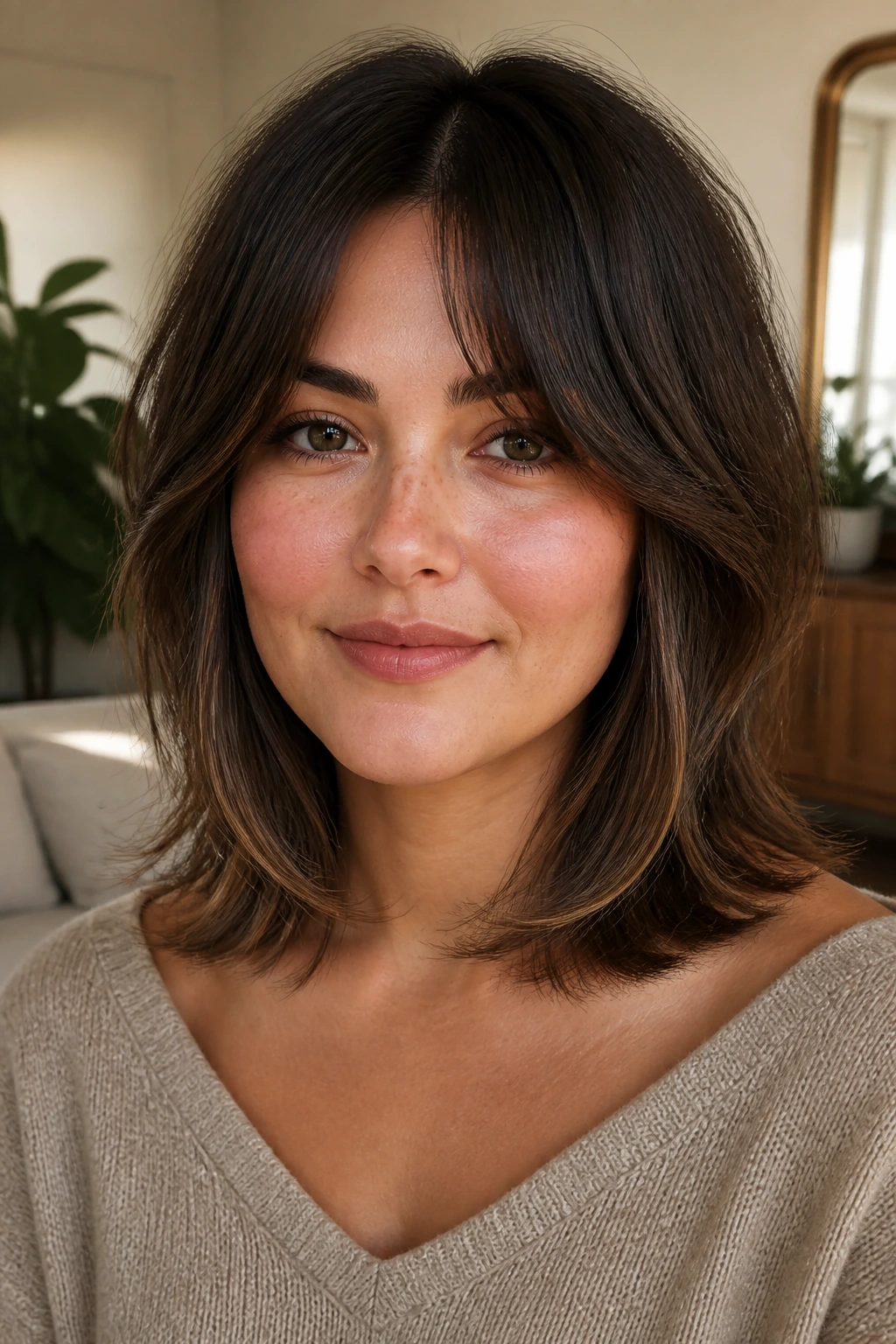
A shag on thick hair can go charming fast or mushroom-shaped fast. The difference is the ends. Keep them soft, and this cut becomes one of the easiest ways to take bulk out of a rounder face shape without making the hair look thin. The collarbone length matters too, because it gives the whole cut a long line right where thick hair likes to widen.
This version works best when the layers are textured, not shredded. You want movement around the crown and cheek area, but not a million short pieces kicking out in every direction. If your hair has a natural wave, even better. The cut will do half the work for you.
What to Ask For
- Soft internal layers, not aggressive razoring
- Fringe that blends instead of sitting as a separate block
- Ends that stay a little blunt so the hair still has weight
4. U-Shaped Layers with Cheekbone Ribbons
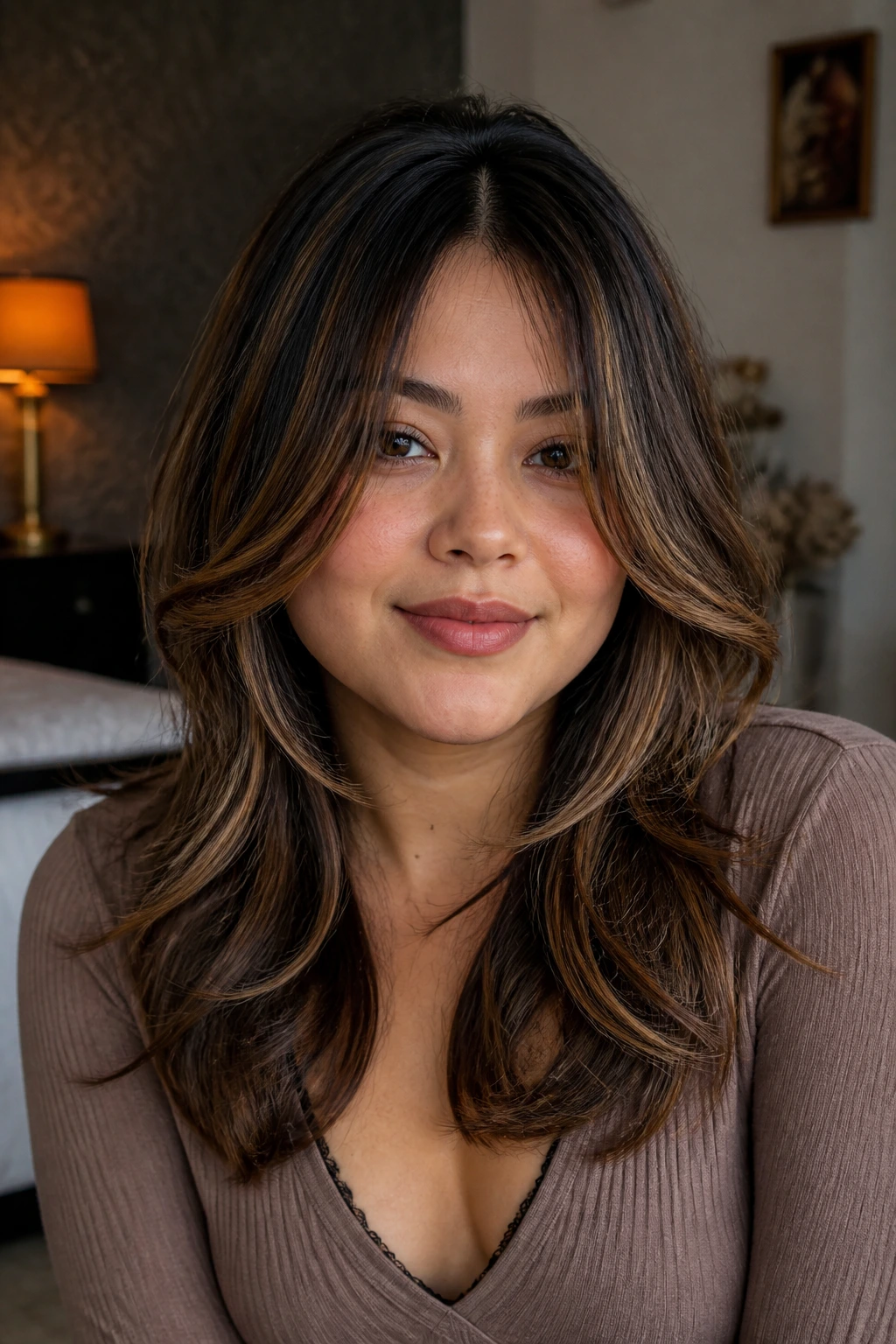
A U-shape sounds subtle, and that’s the point. The back keeps a gentle curve instead of a hard line, while the front pieces fall in ribbons around the face. On thick hair, this shape stops the perimeter from looking too wide. On a round face, it quietly stretches the whole silhouette.
The trick is where the front pieces land. I prefer them to hit somewhere between the cheekbone and the top of the collarbone, depending on hair density and neck length. Shorter than that, and they can puff out right at the widest part of the face. Longer than that, and they start to lose their job.
This cut is a good fit if you like your hair to look polished with almost no styling. A quick blow-dry with a paddle brush, then a soft bend on the front ribbons, usually does enough.
5. Soft Wolf Cut with Rounded Edges
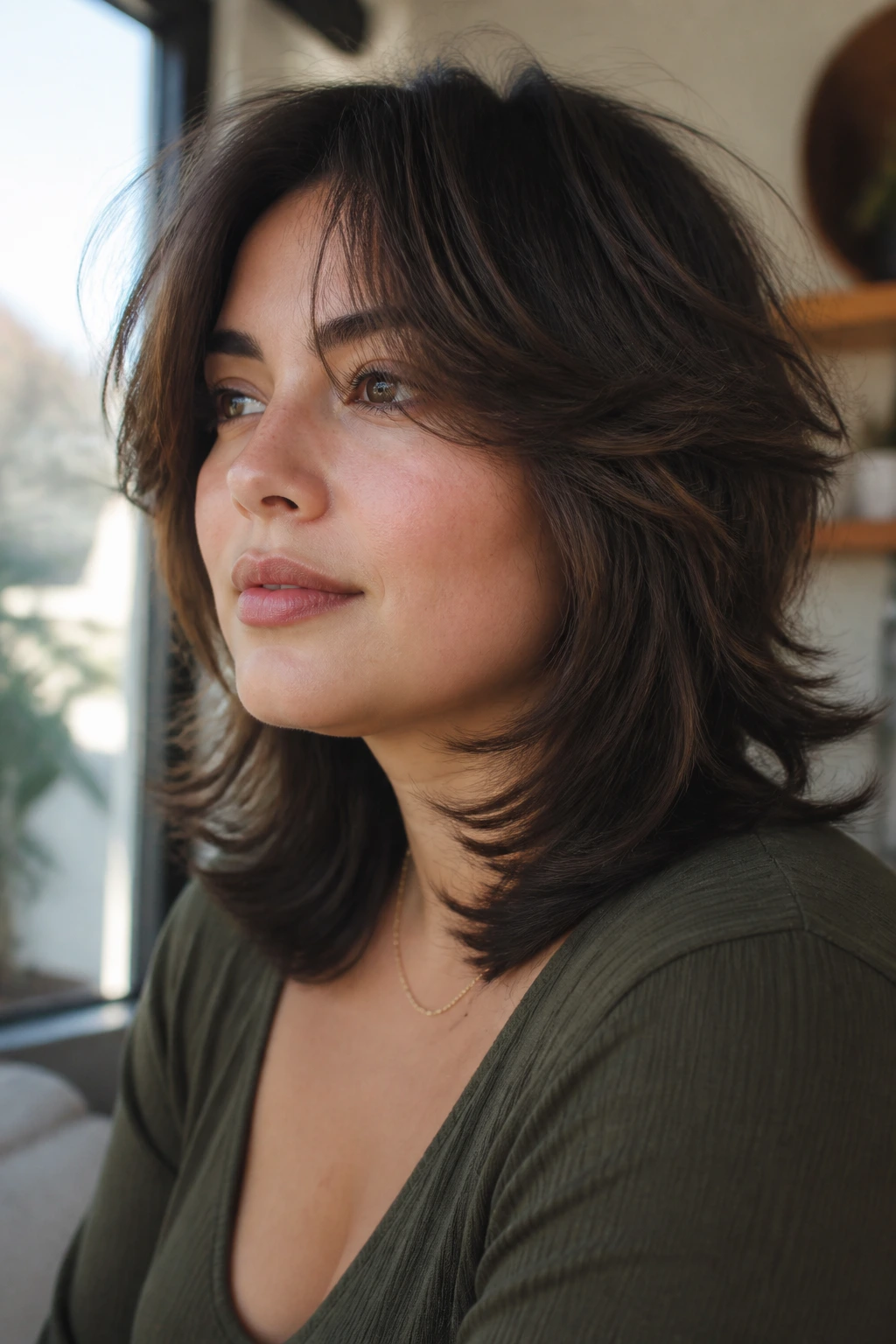
A wolf cut gets a bad reputation because people picture a choppy, over-textured mess. I’m not talking about that version. The soft wolf cut keeps the playful shape — crown volume, cheeky layers, a little edge — but rounds off the roughness so thick hair doesn’t explode outward. That matters on a round face, because a harsh wolf cut can widen everything if the layers are too short at the sides.
This one works best when the stylist keeps the top pieces controlled and leaves the bottom with some length. Thick hair gives the cut enough body to look full, not stringy. Wavy and curly textures are especially good here, because the haircut follows the natural bend instead of fighting it.
Best For
- Hair that already has bend or wave
- Anyone who wants movement without a polished blowout every day
- Faces that can handle a little edge around the cheek line
6. Mid-Length Lob with Invisible Internal Layers
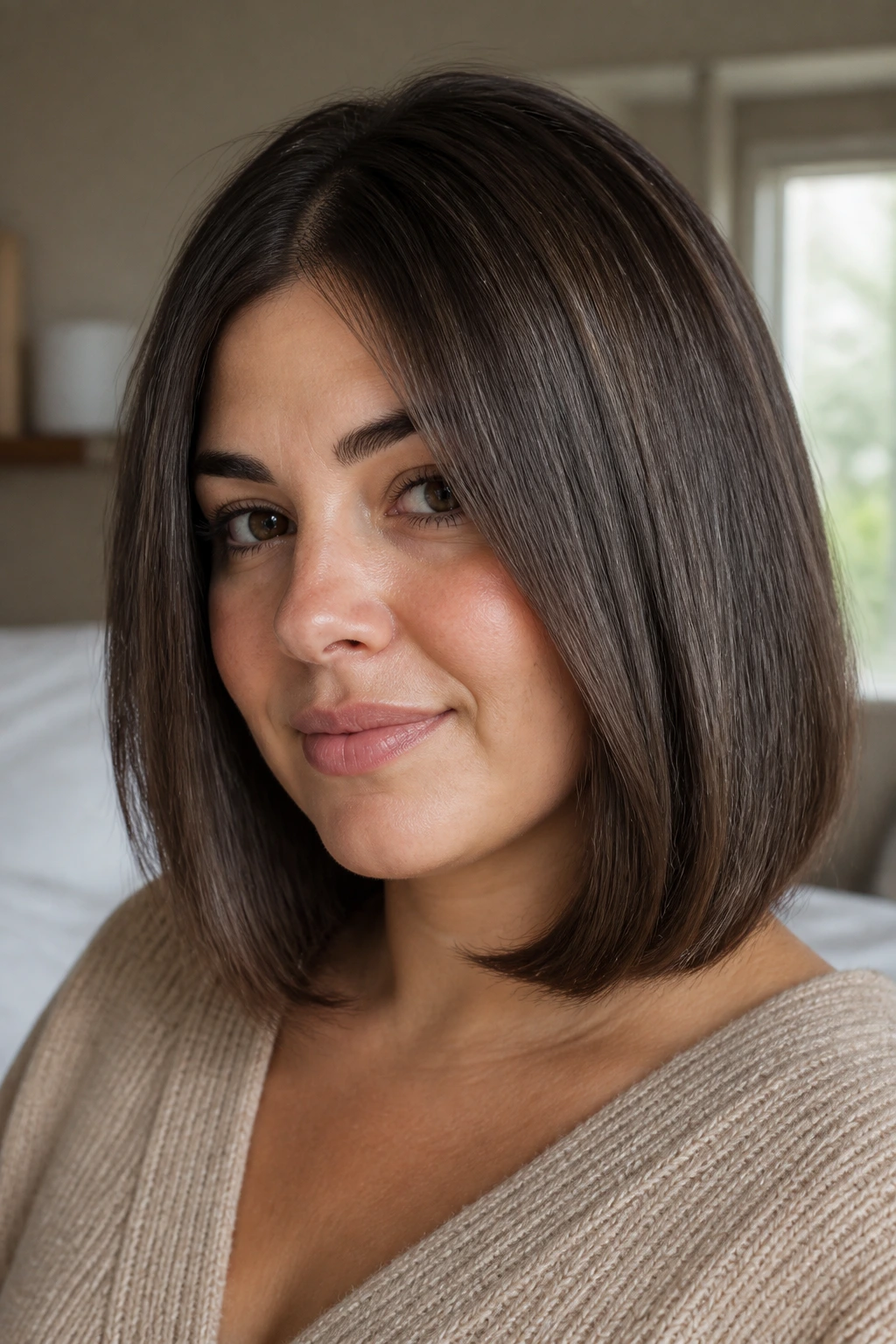
Invisible layers are the quiet fix for people who like a clean surface but hate the bulk that thick hair brings. From the outside, the cut still reads like a sleek lob. Underneath, weight has been removed in the places where thick hair usually swells out around the cheeks and ends. That makes it one of my favorite choices for a round face.
The lob length sits in that useful zone between chin and collarbone. It adds a vertical line right where you need one, and because the layers are hidden, the shape doesn’t get too piecey or messy. If you wear your hair straight, this is a strong option. If you wear it with a slight bend, even better.
It’s not flashy. Good. Flashy is not the goal here. Shape is.
7. Deep Side-Part Layers with Swooping Fringe
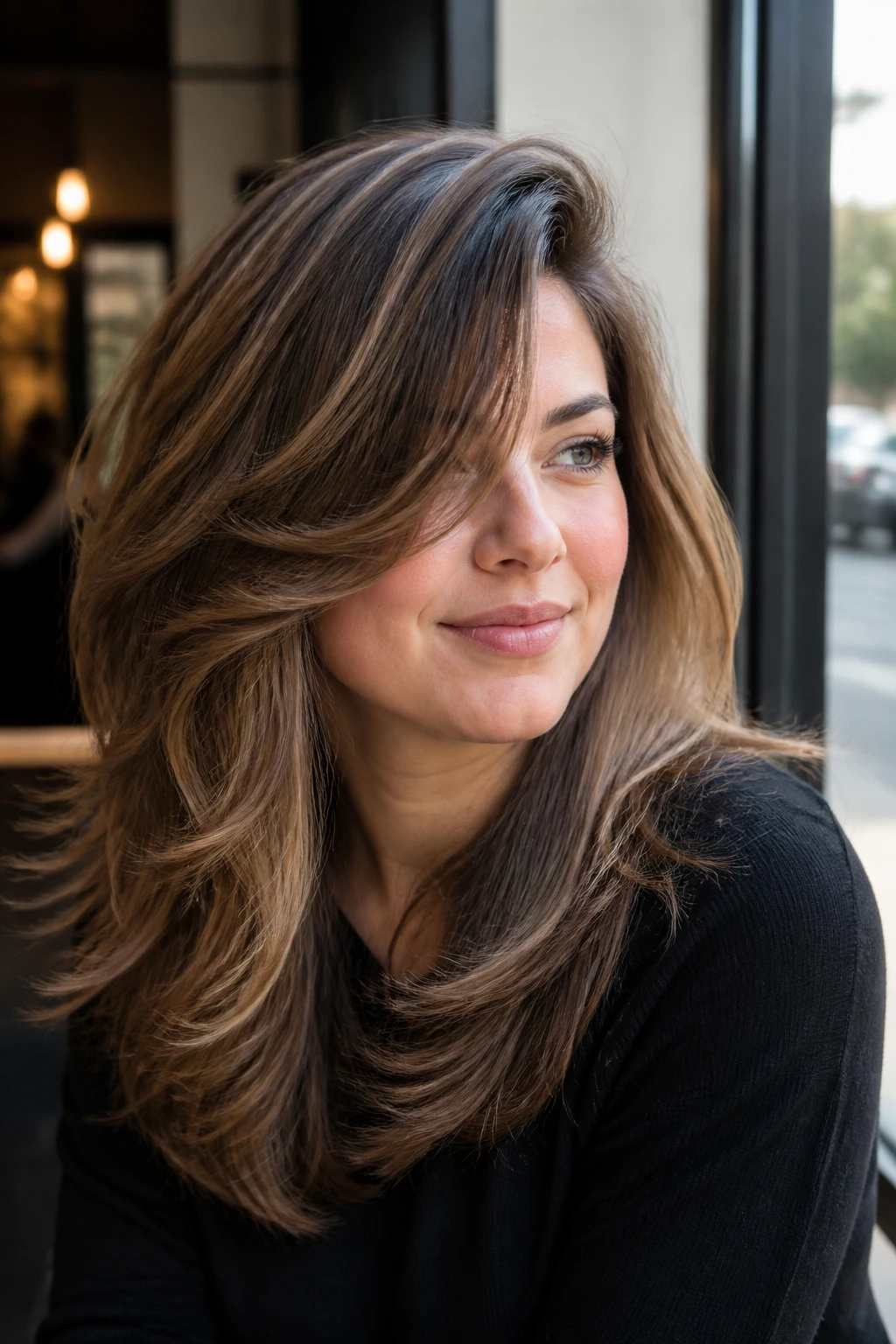
A deep side part changes the whole conversation. It breaks up the symmetry of a round face and creates a diagonal line that feels sharper without looking severe. Thick hair tends to hold a side part better than fine hair, which means you get real lift at the root instead of a sad little wobble that falls after ten minutes.
The layers should follow the direction of the part. If the top is swept left, the front pieces need to cooperate and fall in a long arc. That gives the cut some drama, but the useful kind — the kind that narrows the face a touch and makes the cheek area look less wide.
This is the haircut I reach for when someone wants a change without losing softness. It has polish. It has movement. And it doesn’t scream for attention the second you walk into a room.
8. V-Cut Layers That Keep Length in the Back
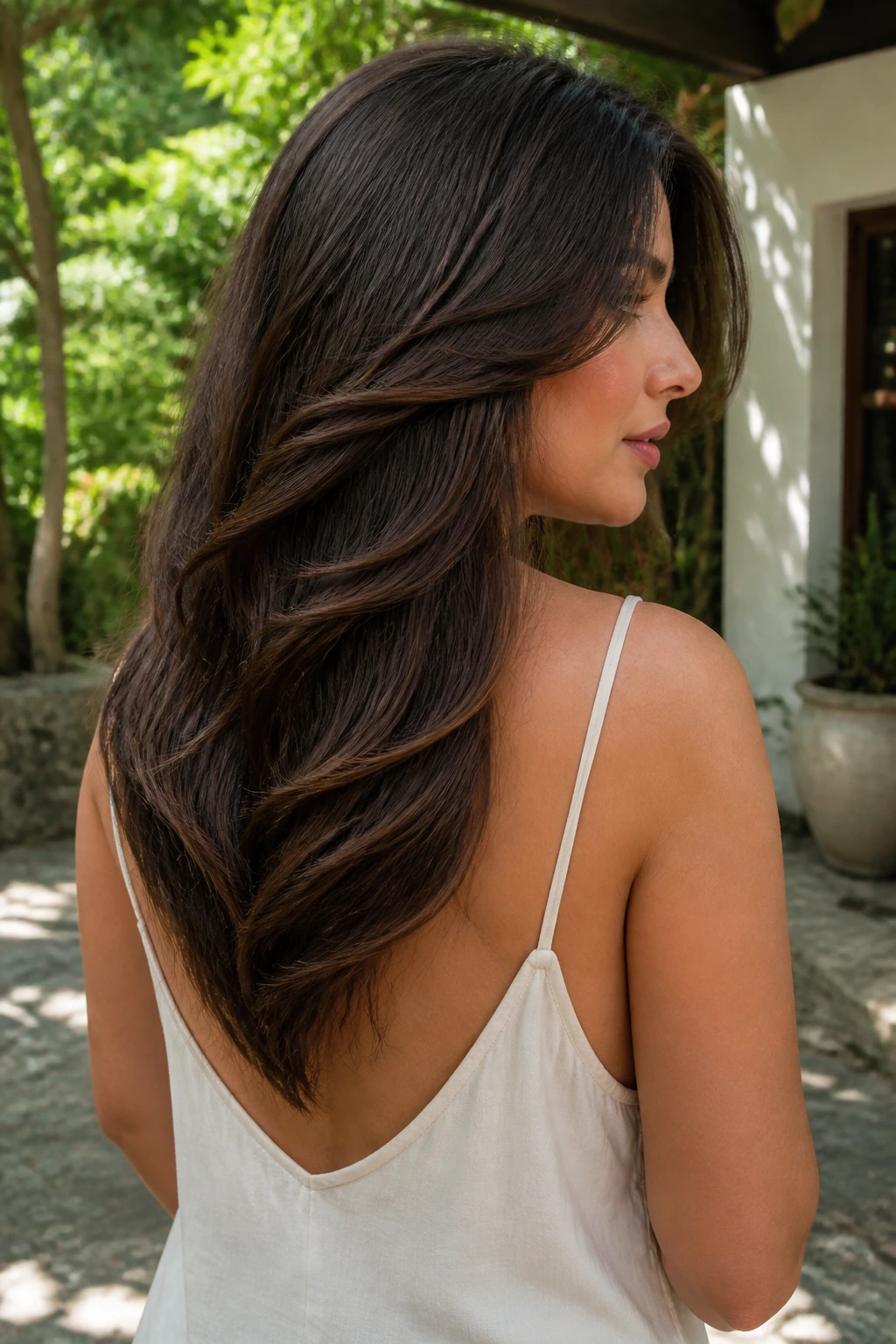
If thick hair tends to sit like a heavy sheet at the back, a V-cut can be a relief. The shape tapers toward the center back, which removes that blunt curtain effect and gives the hair a pointed finish. On round faces, the visual pull downward helps. A lot. The eye follows the line, not the cheeks.
What I like here is the contrast: the front can stay face-framing and soft, while the back gets a bit of shape and release. The cut works best when the ends are still healthy enough to show the point. If your hair is heavily damaged, the V can look stringy, and no one needs that.
Styling Note
Wear it with a middle part if you want the longest, leanest line. Wear it with a side part if you want a little more lift at the crown.
9. Feathered Blowout Layers for Full Hair
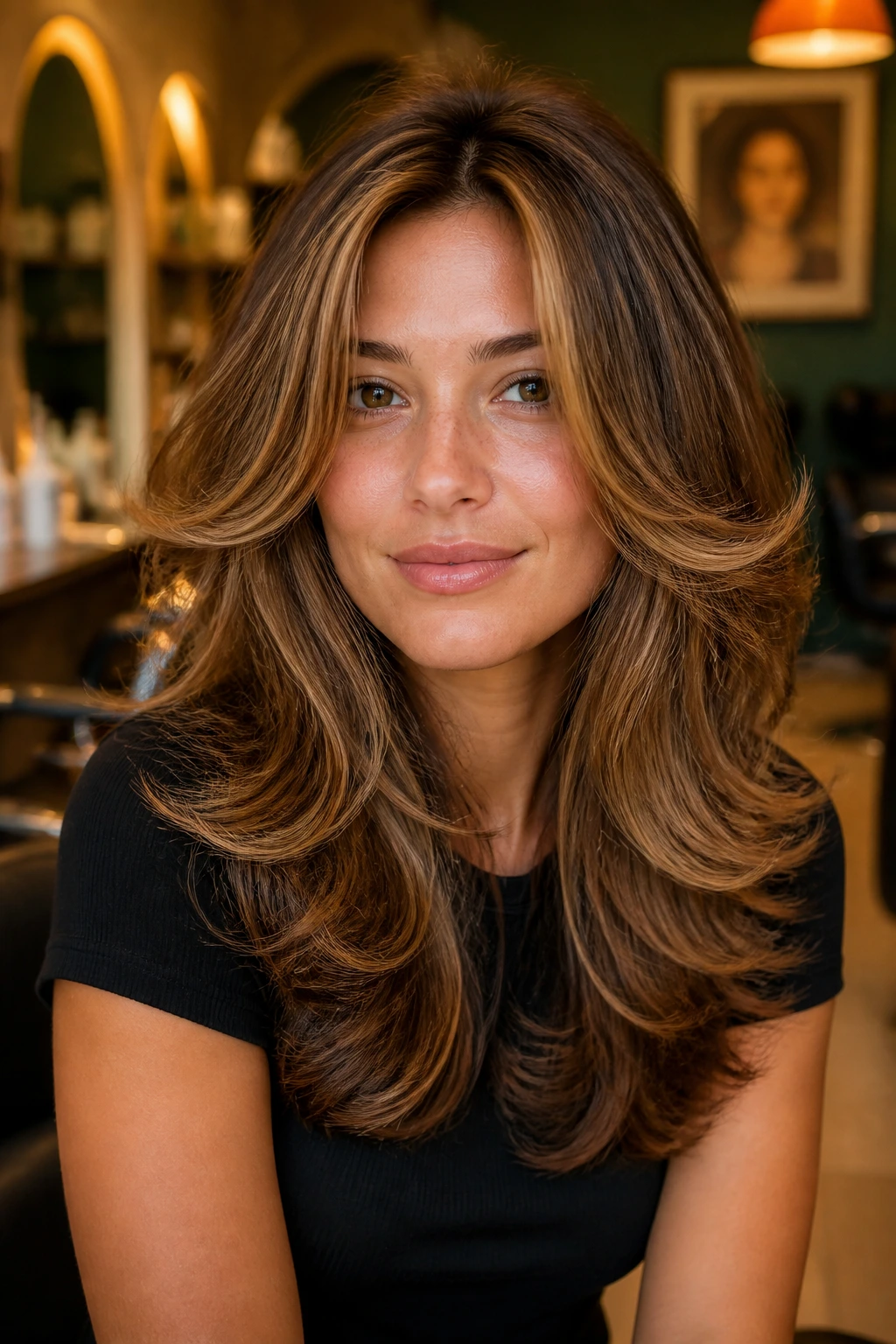
This is the old-school salon blowout look, updated so it doesn’t feel frozen in time. Feathering gives thick hair movement at the edges, especially around the face and through the lower half of the cut. On a round face, that soft sweep makes the cheeks look less dominant without scraping away the fullness that makes thick hair shine.
The front pieces should flip away from the face, not curl under it like a helmet. That detail matters more than people think. Under-flipped hair can sit right on the widest point of the face and make everything look more circular. A loose outward bend changes the line immediately.
This cut is a happy place for people who still like a brush-and-blow-dryer finish. It rewards the effort. A cheap, flat blow-dry won’t do it justice.
10. Rounded Layers with Tapered Front Pieces
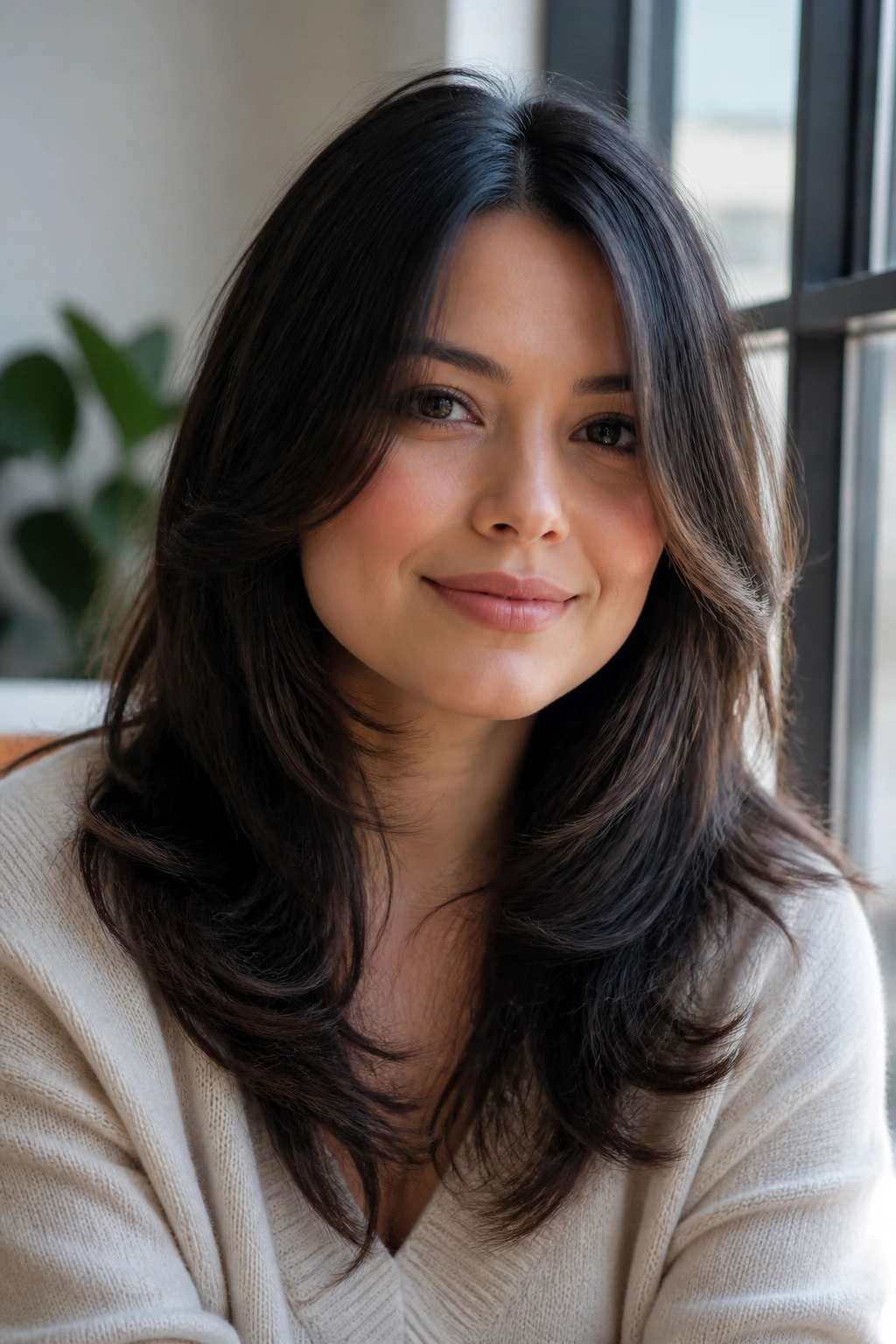
Rounded layers can sound risky on a round face, but the shape lives in the ends, not the framing. The perimeter stays soft and curved, while the front pieces taper longer so they don’t widen the cheeks. That balance makes the cut feel polished rather than puffy.
This is especially good for dense straight hair that wants to sit in a single thick block. The rounded end shape stops the haircut from looking too sharp, while the tapered front keeps the face from feeling boxed in. If you like a smoother silhouette and do not want visible choppiness, this is one of the best options in the whole group.
Best Styling Move
Use a flat brush or paddle brush to dry the hair smooth, then bend only the face frame with a round brush. You want motion at the front and calm everywhere else.
11. Bottleneck Bangs with a Light Layered Body
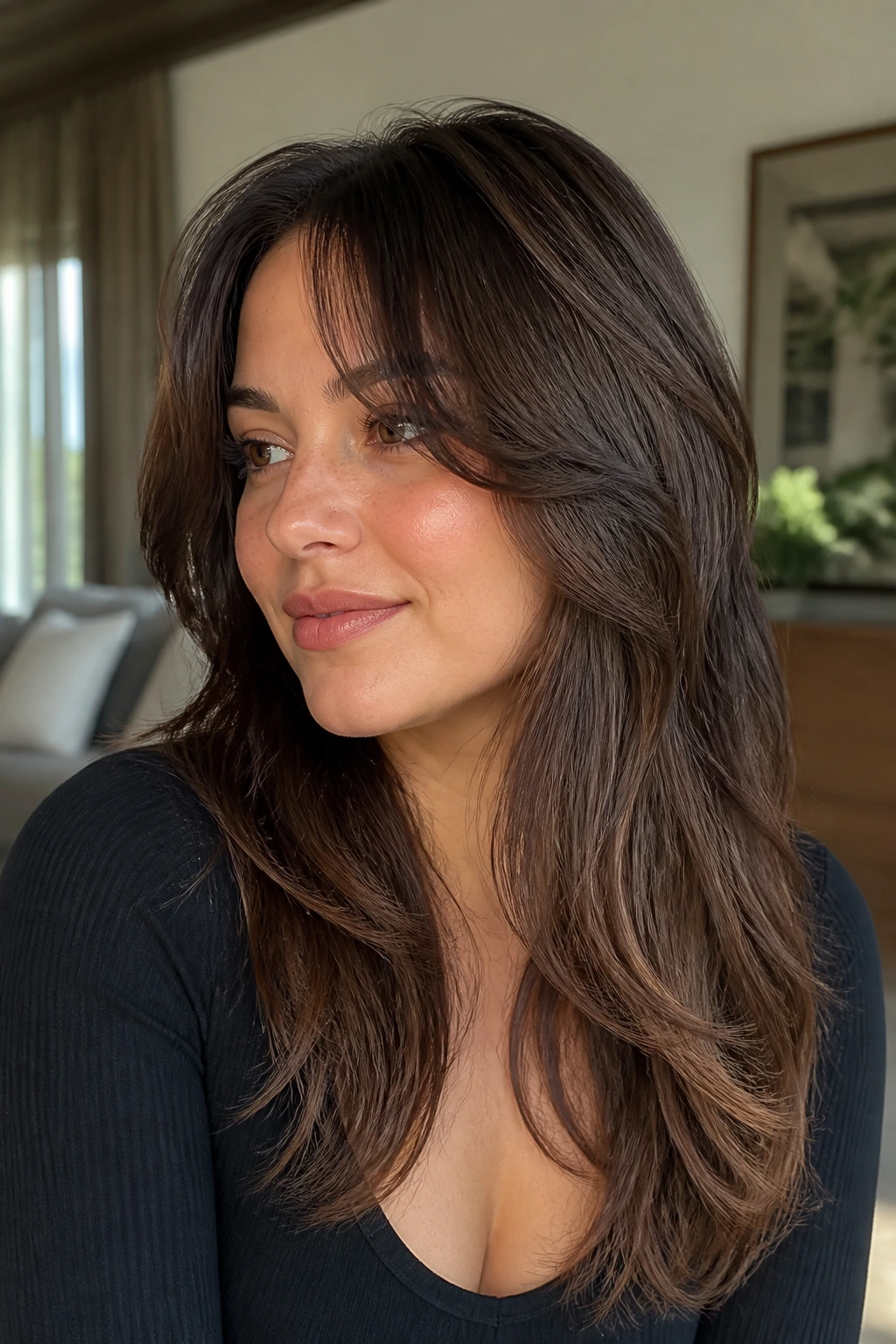
Bottleneck bangs work because they’re narrow at the top and wider as they open toward the cheekbones. On a round face, that shape gives you framing without a hard horizontal line across the forehead. Thick hair has enough density to support the fringe, which means the bangs sit better than they do on wispy hair.
The rest of the cut needs to stay light and layered so the bangs don’t end up carrying the whole hairstyle. If the body is too heavy, the fringe gets swallowed. If the layers are too short, the whole thing feels overly busy. The sweet spot is a collarbone-grazing shape with movement through the mid-lengths.
I like this look for people who want bangs but do not want to commit to a blunt block. It’s softer, easier to grow out, and less likely to fight a rounder face shape.
12. Razored Midi Layers with Airy Ends
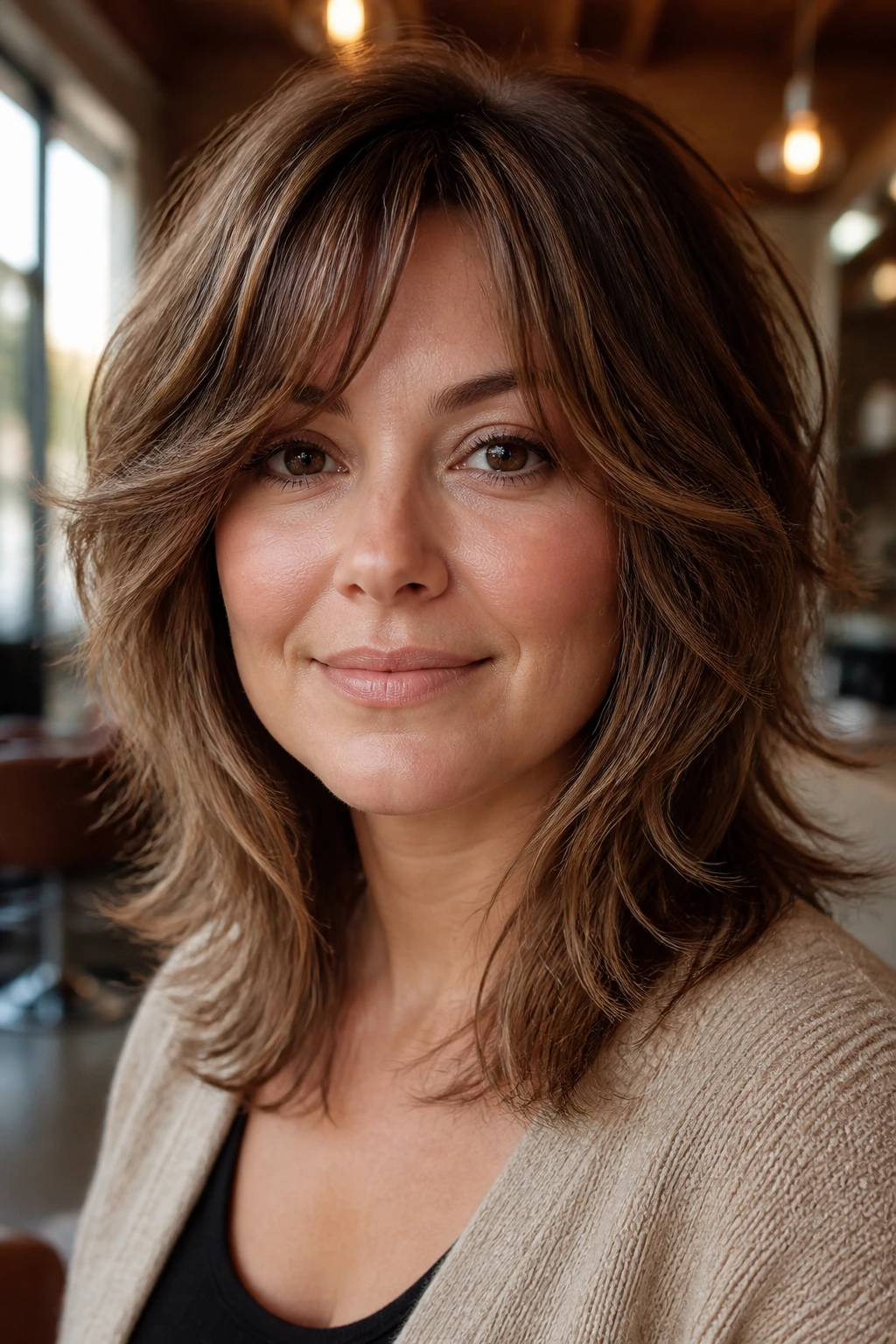
Razor cutting can be lovely on thick hair when the ends can handle it. The finish is airy and piecey, which helps dense strands stop behaving like a single heavy mass. For round faces, the key is keeping the layers below the cheekbone and letting the movement live in the mid-lengths and ends, not right at the widest part of the face.
This cut works best on hair that already has some strength and a bit of bend. On fragile or bleached ends, razoring can make the finish fray. I’d avoid it there. But on healthy thick hair, the razor gives a looseness that scissors sometimes can’t match.
What Makes It Different
The shape looks lighter, not thinner. That distinction matters. You still want the hair to feel abundant, just less bulky at the edges.
13. Curly Layers Cut Dry for Shape and Spring
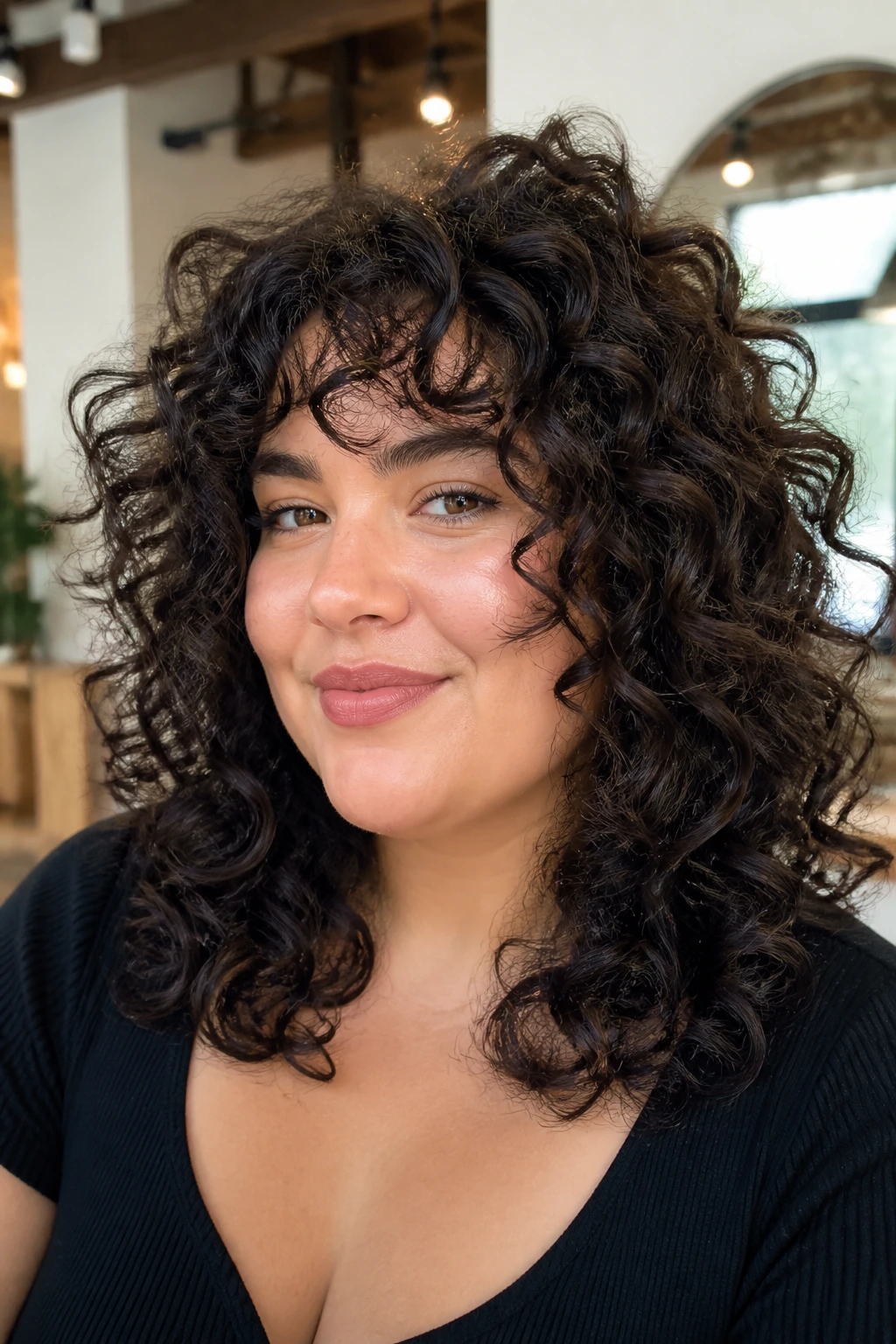
Curly thick hair should not be guessed at when wet. Dry cutting lets the stylist see the curl pattern, the shrinkage, and the places where the hair stacks up around the cheeks. For a round face, that matters even more, because a curly layer that starts too high can balloon out around the widest point and hide the jaw completely.
The best curly layers remove bulk where the curls pile up and leave enough length to show the shape. Think of it as sculpting the outline, not carving the hair apart. A good dry cut keeps the curls in clumps, which is what gives the style that springy, defined finish.
How to Wear It
Use a leave-in conditioner, a curl cream, and then a gel or strong-hold foam. Diffuse until the roots are set, then leave the curls alone. Touching them while they’re drying is a fast way to invite frizz.
14. Long Layers with a Heavy Crown and Soft Perimeter
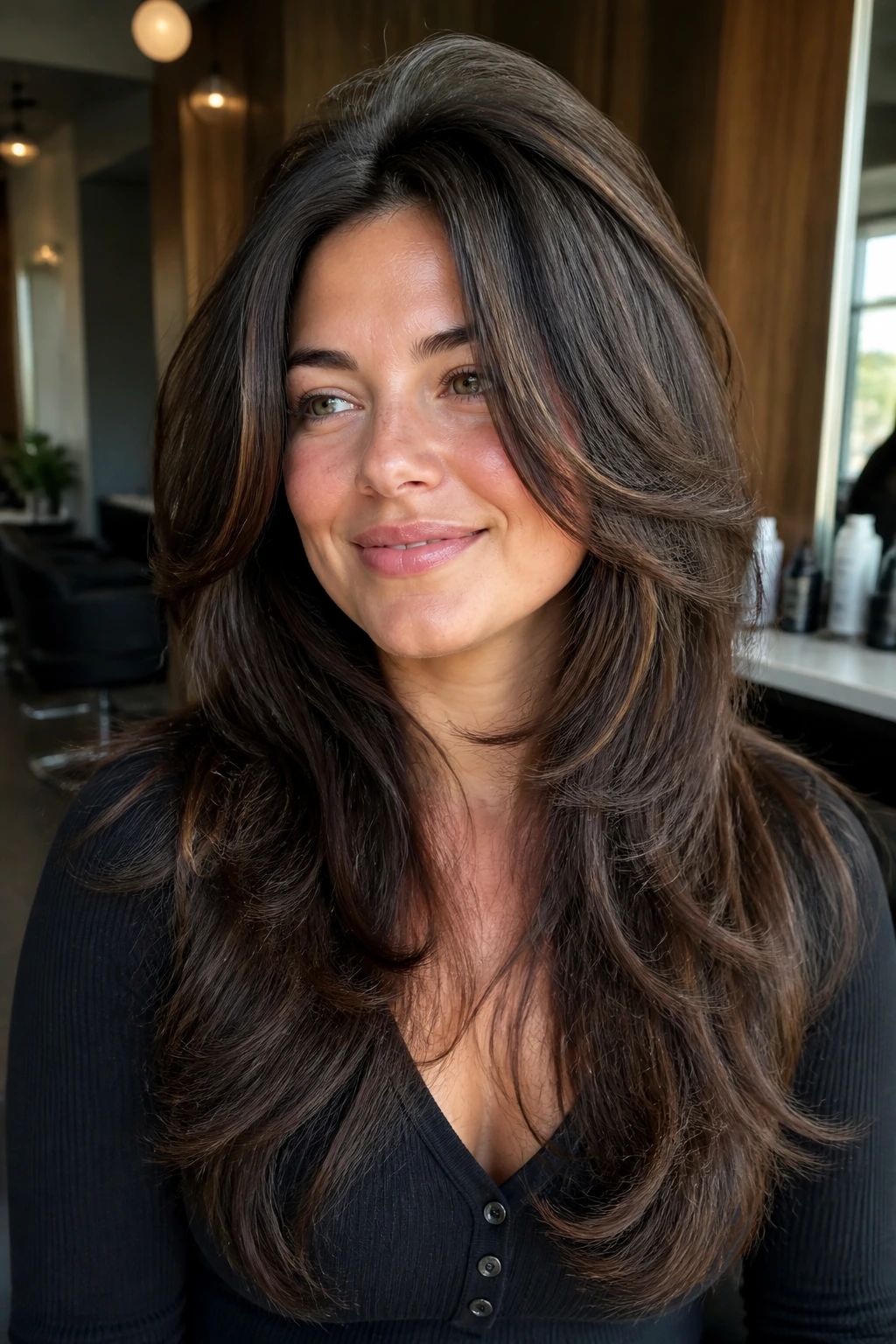
This one sounds subtle because it is. The crown keeps a bit more fullness so the hair has lift at the top, while the perimeter softens and releases around the shoulders. On a round face, that extra crown height is useful. It adds a little vertical line and keeps the face from looking widest exactly where the hair starts to flare out.
Thick hair can handle this shape without looking limp. In fact, it needs the weight balance. If the ends are too heavy, the cut pulls the face down. If the crown is too light, the sides win and the face looks wider. This shape keeps the proportions in check.
It’s a solid choice if you like long hair but want it to look intentional instead of simply “long.”
15. Layered Cut with Internal Debulking
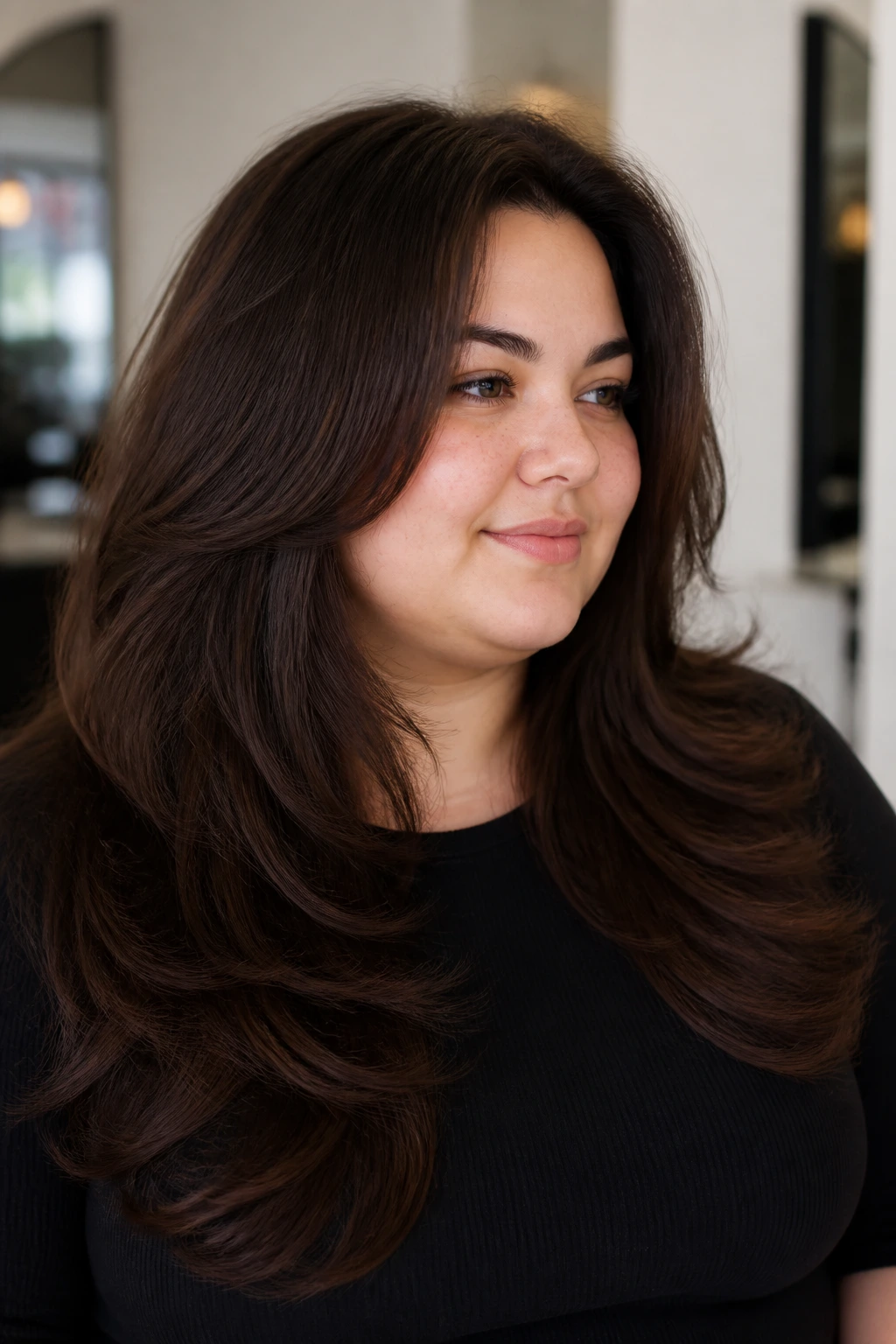
Internal debulking is the unsung hero of thick-hair haircuts. You don’t see it at a glance, which is exactly why it works so well. The outer line stays smooth, but the hidden weight gets removed in the middle and lower sections where thick hair usually puffs out. That makes the face look less crowded.
On round faces, this cut gives you shape without obvious steps. The hair still looks plush, just not heavy at the sides. If you’ve ever had a haircut that looked fine in the chair and then grew into a triangle by the second week, this is the fix.
Ask For
- Weight removal in the bulkier interior sections
- A clean outer line
- Longer face-framing pieces that fall below the cheekbone
16. Modern Rachel-Style Layers with a Softer Line
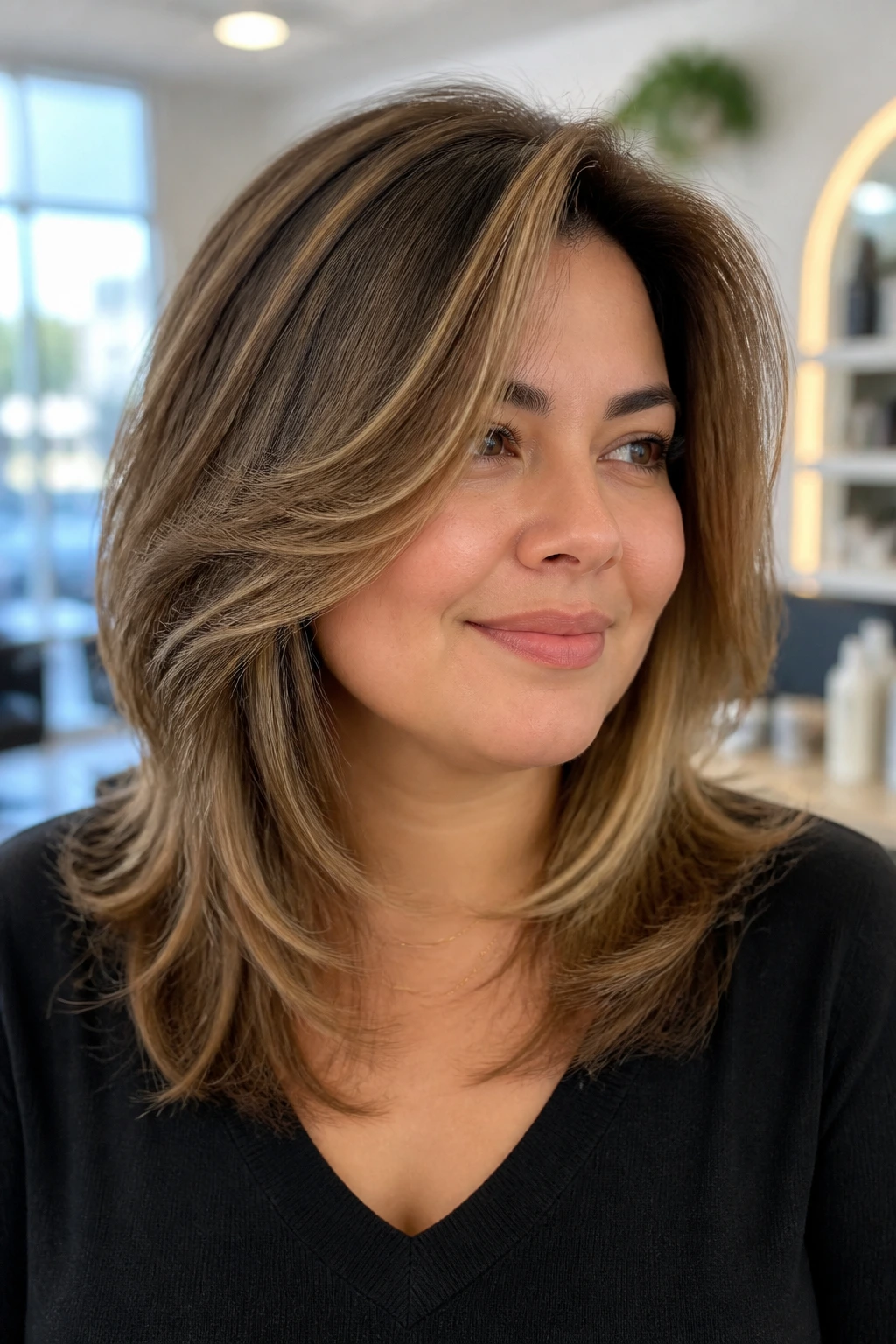
The Rachel-inspired cut still has a hold on people for a reason: the front movement works. For thick hair and round faces, the updated version is softer and less choppy, with longer layers that begin lower and blend better. You get bounce near the face, but not that heavy 90s shelf that can make thick hair look overdone.
What makes this version better is restraint around the top. The crown should have lift, not a hard stack. The front should sweep, not stop. And the ends should keep enough density to feel modern rather than retro costume.
If you love a blowout and want a haircut that looks polished with a round brush, this is a strong one to show your stylist.
17. Collarbone Cut with Face-Framing Angles

A collarbone cut earns its keep by sitting exactly where thick hair can show shape without overwhelming the neck and jaw. Add face-framing angles, and the haircut starts doing real work for a round face. The front pieces should angle down past the cheeks, not stop right at them.
This is the kind of cut that looks simple until you see it move. Then it makes sense. The collarbone length gives the hair a long, clean line, while the angled front pieces create a softer border around the face. It’s one of the easiest styles to wear straight, wavy, or lightly curled.
No drama. Just good geometry.
18. Shaggy Lob with Piecey Ends
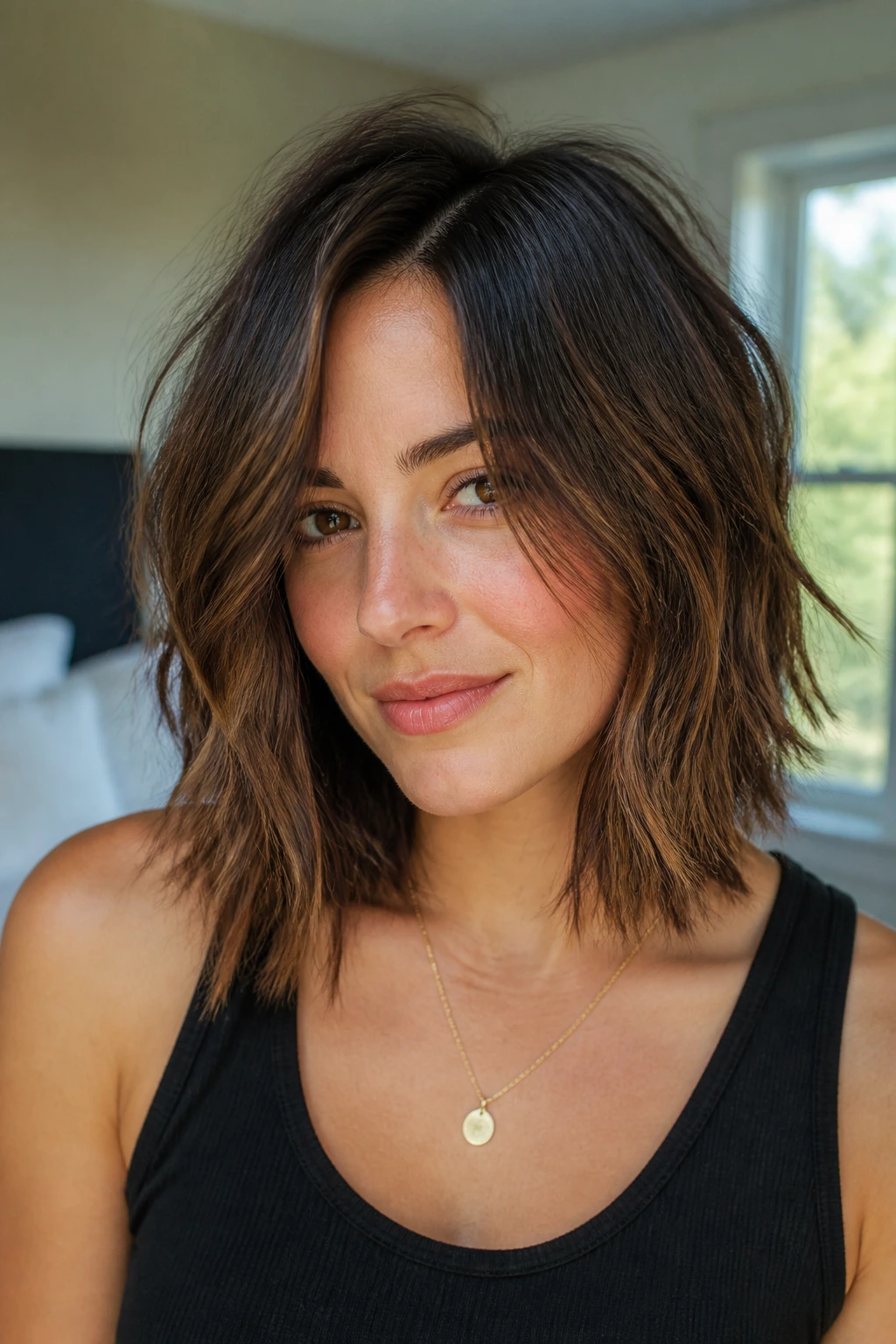
A shaggy lob is for the person who likes their hair to have a little attitude without looking messy on purpose. The piecey ends help thick hair separate instead of fusing into one wide shape, which is useful on round faces because the cut starts to read as movement rather than width.
I like this when the hair has a natural bend. It is less helpful on very pin-straight hair unless you’re willing to add some styling. The lob length keeps the shape anchored, and the shag texture breaks up the density around the chin and neck.
If your hair tends to get heavy by midweek, this cut can stretch the time between washes a little because the texture keeps it from looking flat all at once.
19. Cascading Layers with a Center Part
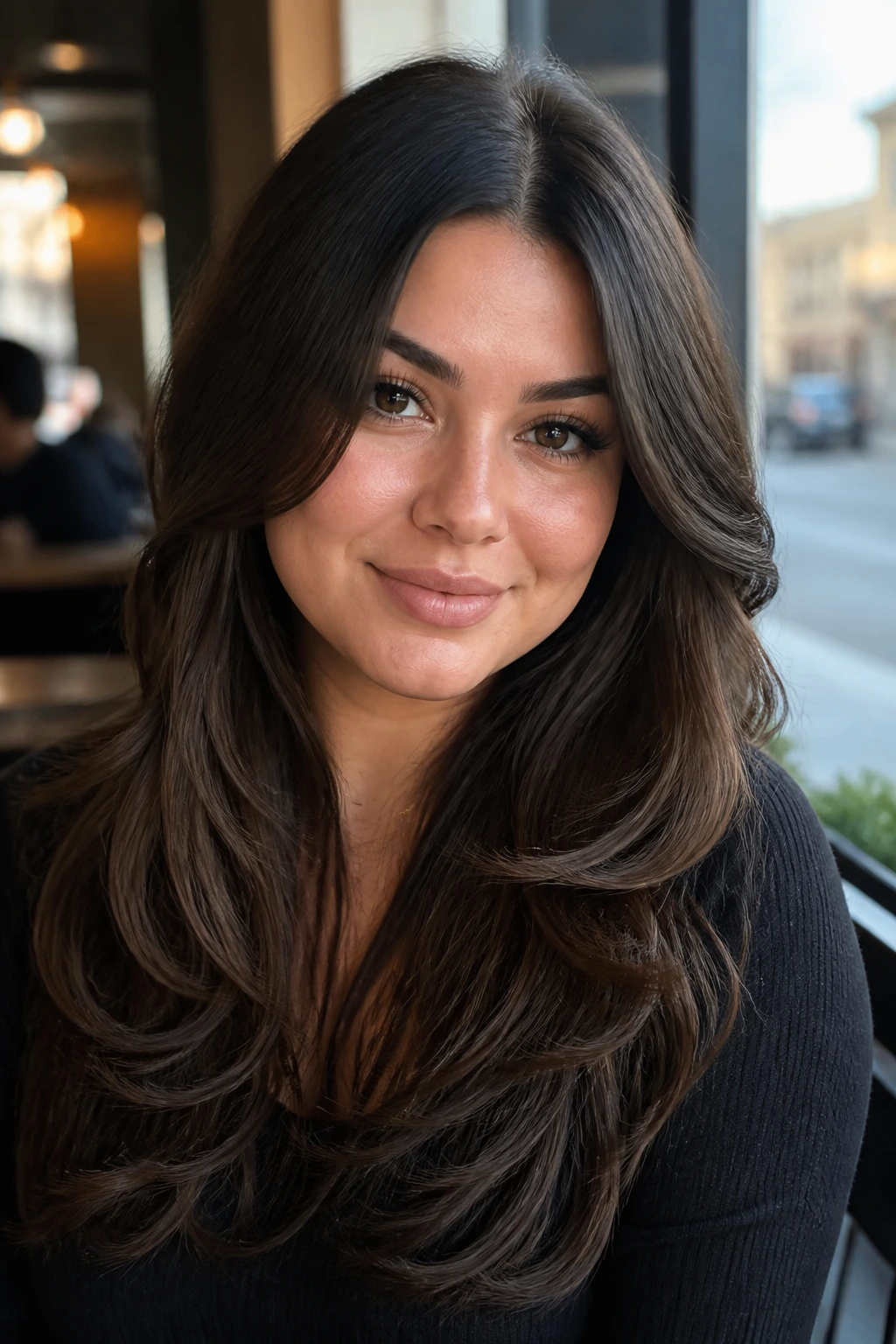
A center part can work on a round face, but only when the layers do their job. The pieces need to cascade from below the cheekbone so the line runs long and narrow instead of widening the face right at its fullest point. Thick hair gives you enough substance to keep the middle part from collapsing.
This style is cleaner than a shag and softer than a full blowout. The cascade gives the cut motion, but the shape still feels calm. If your face is round and your hair is dense, this is a very wearable way to keep the balance without leaning on bangs.
Styling Move
Keep the roots smooth with a light mousse or blowout spray. Then add a bend only through the lower lengths so the part stays clean and the ends stay alive.
20. Long Cut with Side-Swept Fringe and Movement
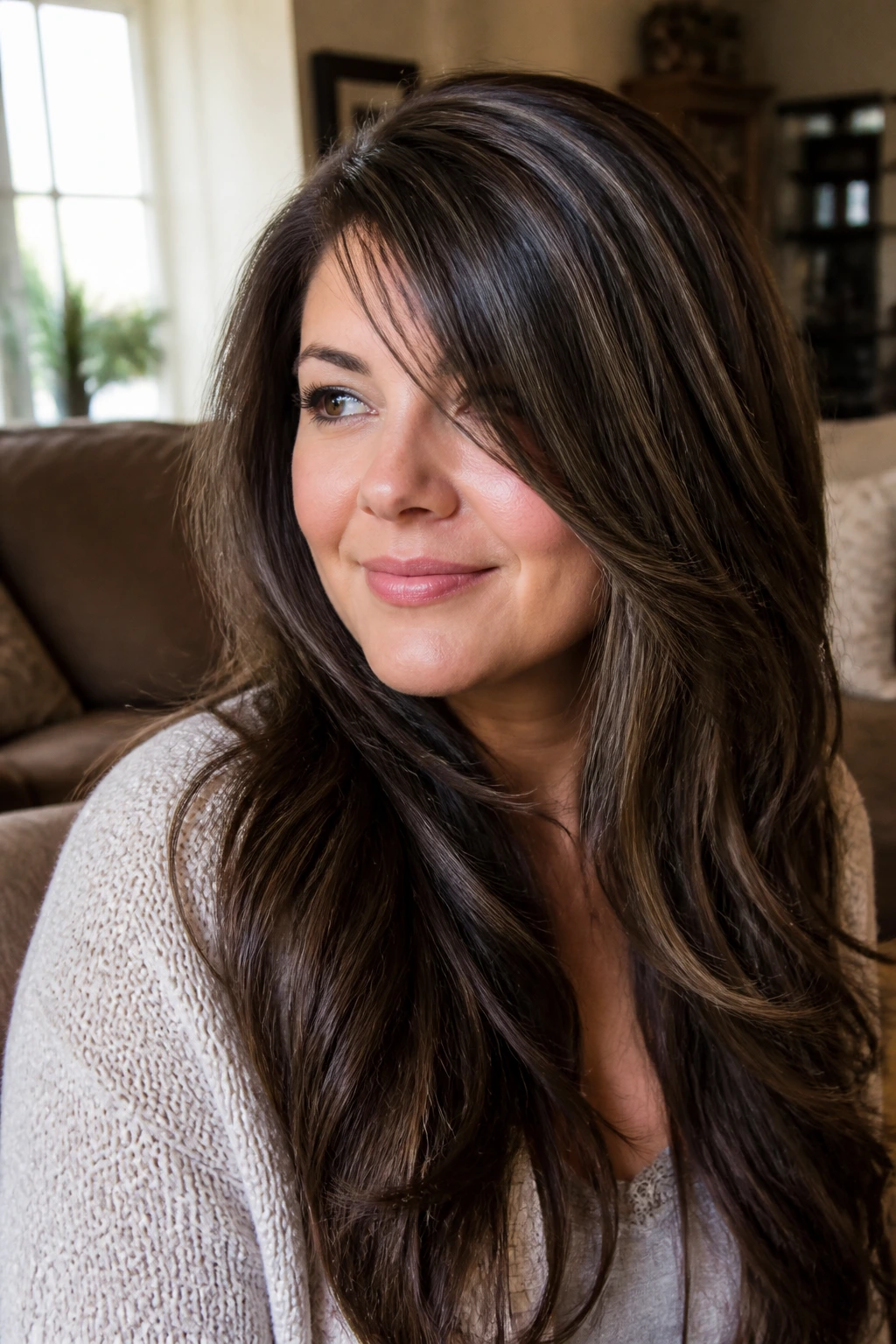
Side-swept fringe has a useful job: it cuts diagonally across the forehead and keeps the face from reading too wide. On thick hair, the fringe has enough weight to sit properly, which means it won’t separate into little strings unless you overload it with product. The rest of the layers can stay long and movable.
This cut suits people who want softness without the center-part curtain effect. The sweep draws attention to the eyes and away from the cheeks, which is exactly the kind of visual trick that matters on a round face. It also grows out well, which I appreciate. Bangs that grow out ugly are a tax on everyone’s mood.
21. Tapered Layers for Extra Dense Hair
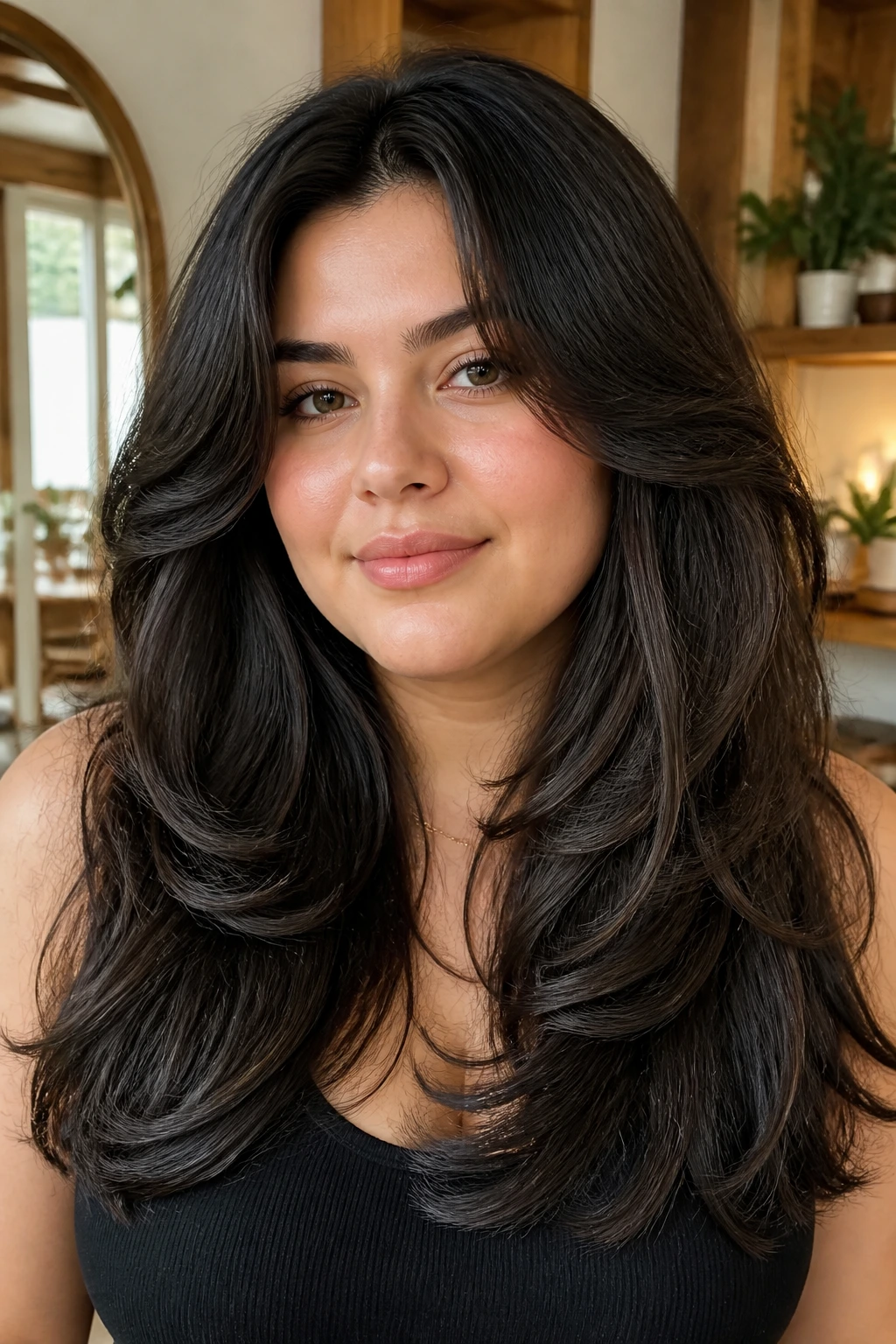
Some thick hair is merely thick. Some is dense enough to feel like you’re carrying a second head. Tapered layers help with the second category. They remove weight gradually, so the bottom edge doesn’t become a heavy shelf and the top doesn’t float away.
The taper is especially helpful for round faces because it keeps the outline from widening at the jaw. Instead of a blunt line that sits straight out from the face, the layers shift inward and soften the silhouette. Ask your stylist to thin the bulk with shape in mind, not with a random pair of thinning shears.
Pro Note
If the ends look see-through after the cut, the taper went too far. Thick hair needs movement. It does not need to look scared.
22. Invisible Layers for Straight, Thick Hair
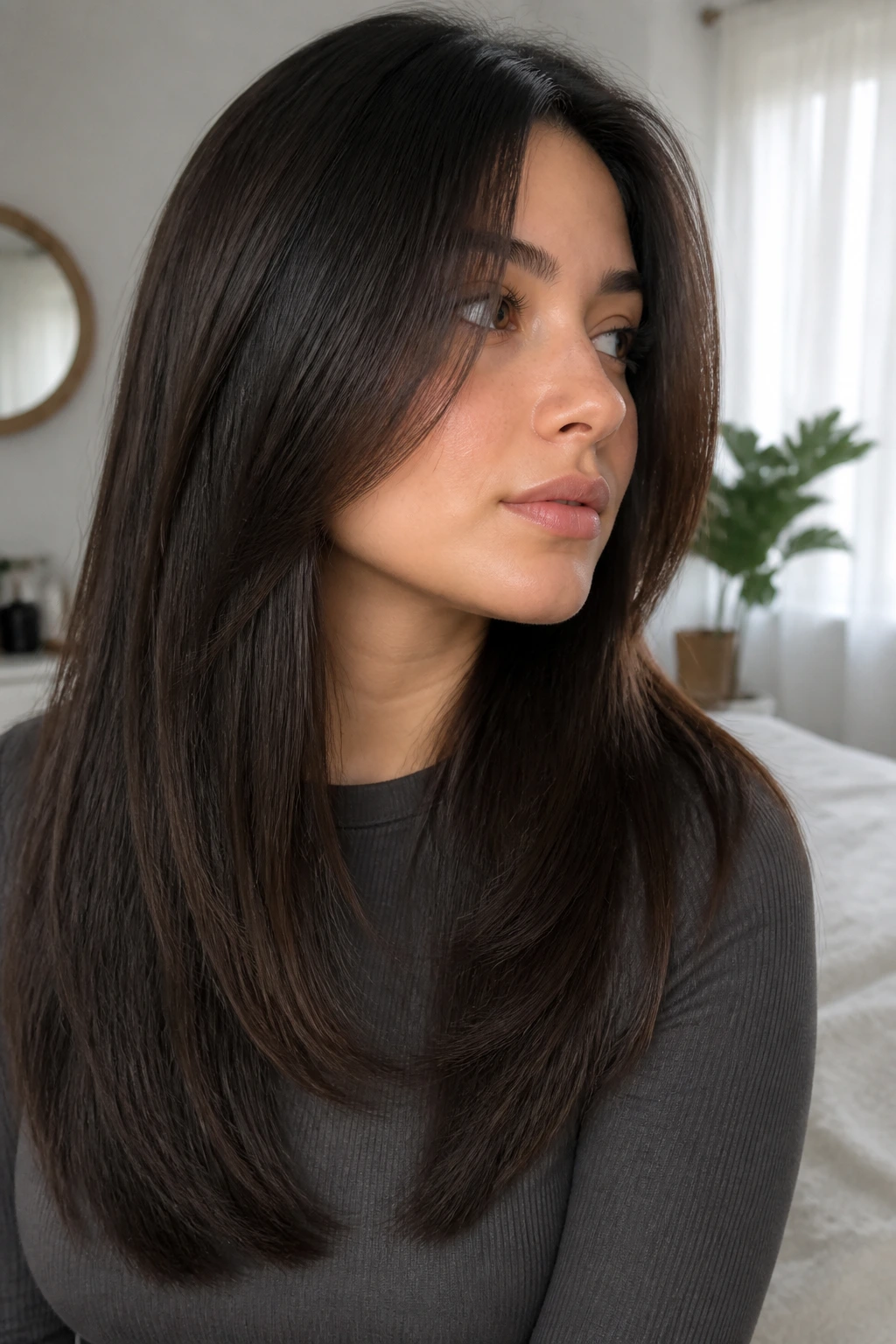
Straight thick hair exposes every mistake. One bad line and the whole cut reads as a shelf. Invisible layers solve that by building movement inside the shape instead of cutting obvious steps into the outer layer. The result is smoother, cleaner, and less puffy around the cheeks.
This is a smart pick if you like a polished finish and don’t want to spend half your life curling pieces into submission. The length stays sleek, but the inside has enough release that it won’t sit like a board. On a round face, that softness matters because it keeps the sides from bulging.
I’d choose this over a dramatic shag for anyone who wants the haircut to behave in a ponytail, a bun, and a straight blowout.
23. Textured Bob with Elongated Front Pieces

A bob can work on a round face. It just needs to be designed with discipline. The front pieces should be longer than the back, landing below the jawline so the face doesn’t feel boxed in. Thick hair is what makes this possible; it gives the bob enough body to look intentional instead of puffed out.
The texture should be internal and selective. Too much choppiness, and the bob starts to kick away from the head. Too little, and it turns into a blunt wall. The elongated front pieces do the heavy lifting here, drawing the eye down and slightly forward.
This is one of the sharper options in the list. It looks clean, modern, and a little bit fearless.
24. Long Feathered Layers with Minimal Bulk
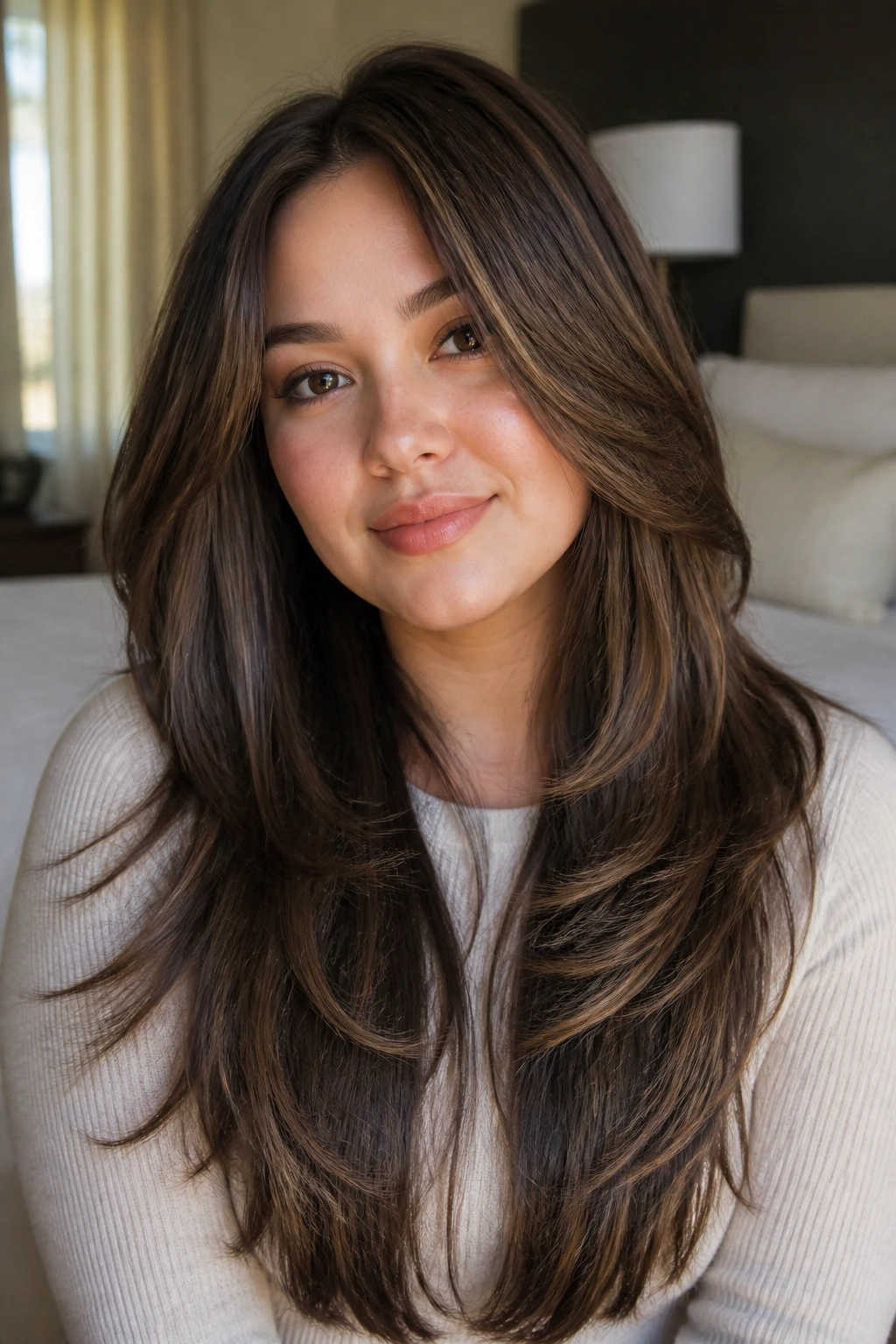
This is the softest route in the whole bunch. The layers are feathered enough to create movement, but not so chopped that they fight the hair’s thickness. On a round face, that softness helps the cut hug the cheeks lightly without widening them. The silhouette stays long and elegant. Yes, I said elegant. Sometimes the plain word is the right one.
Long feathering works when you want your hair to feel lighter but still full. It’s especially good if you like wearing your hair down often and don’t want the ends looking blunt or stiff. The style doesn’t demand much, which is part of why I keep coming back to it.
25. Soft Cascading Layers with a Low-Maintenance Grow-Out
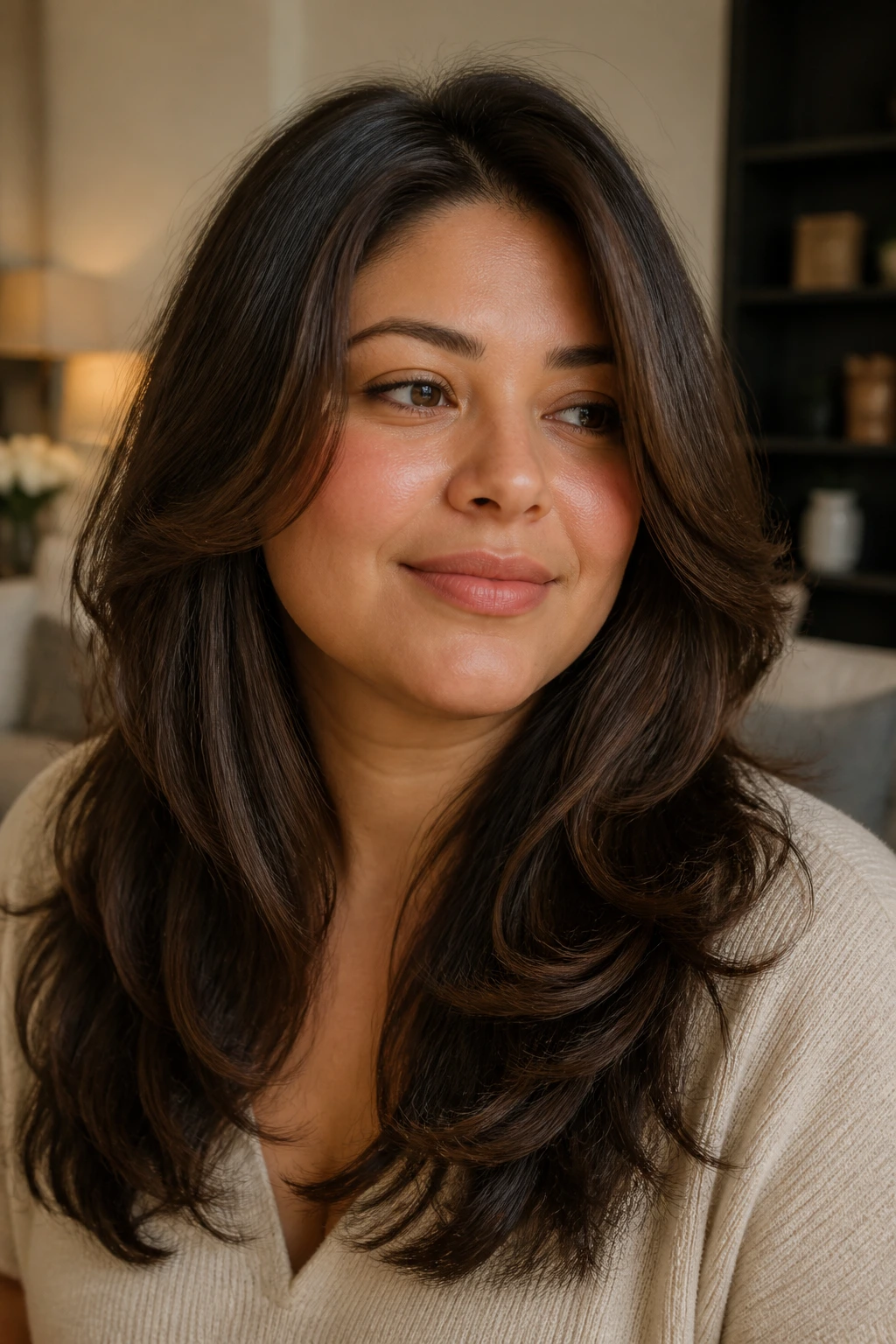
If you hate touching up your haircut every few weeks, this is the version to keep in your back pocket. The shortest layers stay long enough to blend as they grow, so the shape doesn’t collapse into a strange shelf or a random flip. Thick hair helps because it keeps the overall body alive even as the layers settle.
For a round face, the cascade matters more than the exact length. The front pieces should still fall below the cheekbone, and the back should keep enough length to pull the eye downward. That keeps the haircut flattering long after the salon visit starts to feel like a distant memory.
This is the one I’d pick for someone who wants movement, softness, and less maintenance. That combination is hard to beat.
Why Textured Layers Work Better Than a One-Length Shape
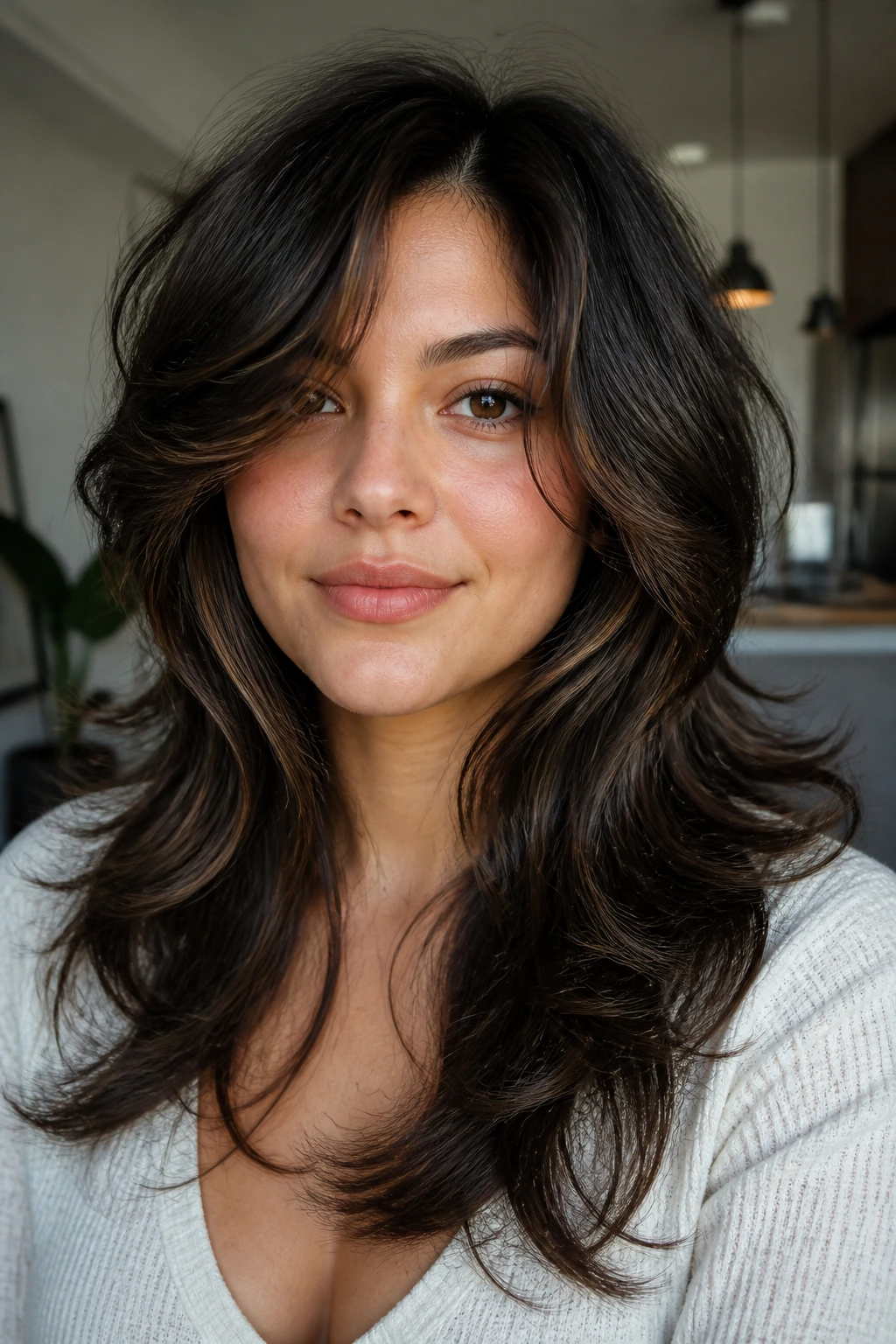
Thick hair loves a strong structure, but it does not love a heavy wall. One-length cuts on dense hair often swell at the sides and sit flat at the crown, which is a frustrating combination on a round face because it makes the face look wider while the hair itself looks bigger. Textured layers change the geometry. They break up the outline, lighten the bulk, and create places for the eye to move.
The best part is that the cut does not have to look obviously layered to work. Hidden internal layers, long face framing, and tapered ends can do most of the job without showing off every scissor line. That matters if you want a polished finish. It also matters if you wear your hair in a ponytail half the week and down the other half.
Round faces benefit from anything that adds length and a little asymmetry. Thick hair benefits from anything that redistributes weight instead of merely removing it. When those two needs meet, the haircut starts behaving like it was planned by someone who has actually lived with dense hair for more than one wash day.
The Tools That Keep Thick Hair From Puffing Out
-
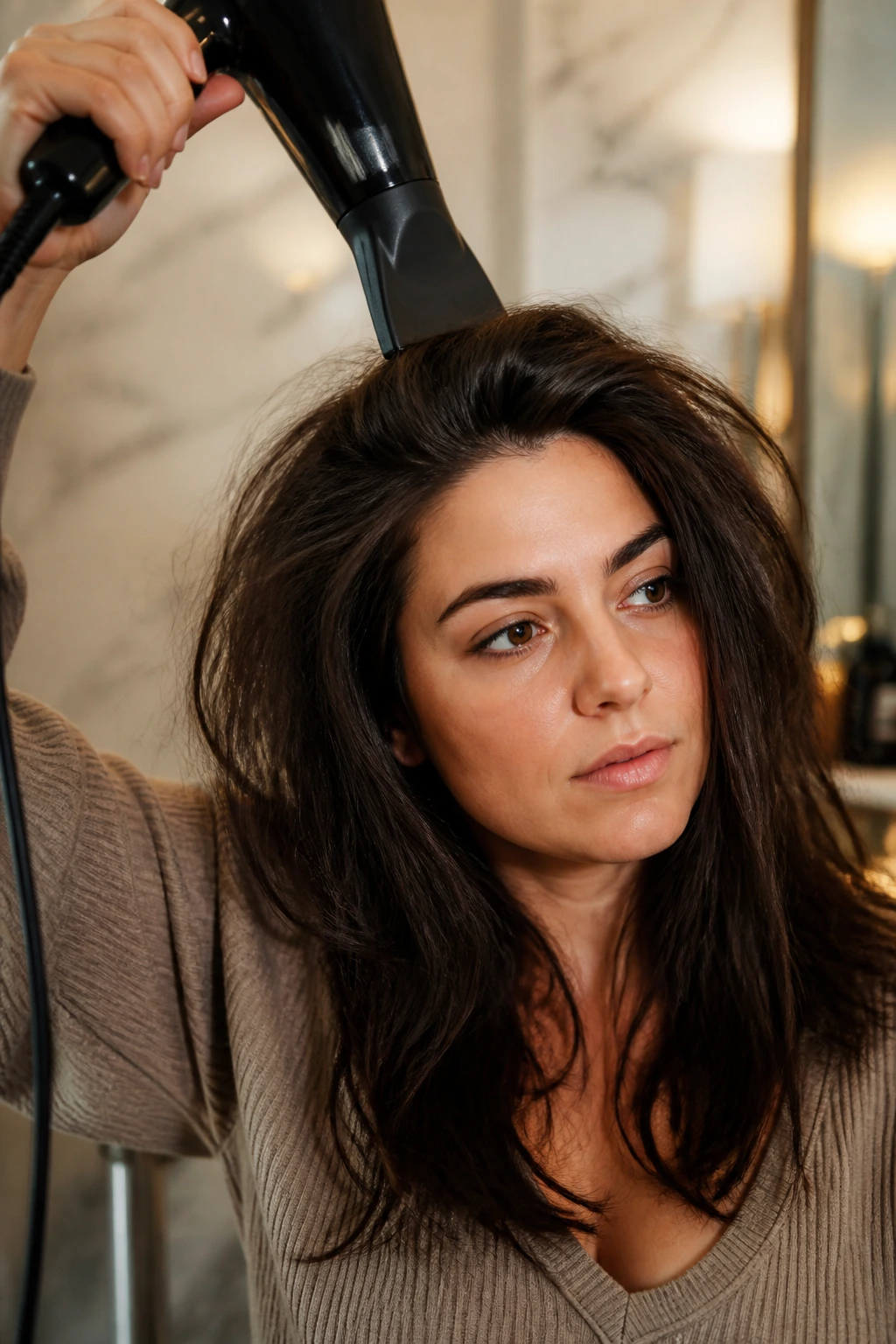
Hair dryer with a concentrator nozzle — Directs airflow so the cuticle lies flatter, which matters a lot when thick hair wants to frizz and widen.
-
Medium round brush, 1.5 to 2 inches — The sweet spot for bending face-framing layers without creating a pageant curl.
-
Paddle brush — Best for smoothing the main body fast when you want the style to look polished but not blown out.
-
Sectioning clips — Thick hair needs sections. If you try to dry everything at once, the underlayers stay damp and the top gets overworked.
-
Heat protectant spray or cream — Use it before blow-drying or curling. Thick hair can take heat better than fine hair, but it still burns.
-
Lightweight mousse — Adds root support without making the layers collapse into grease by noon.
-
Texturizing spray — Gives the ends separation and grip, especially on shaggy or feathered shapes.
-
Large-barrel curling iron or flat iron — Useful for adding a soft bend to curtain pieces and long front layers.
-
Diffuser — Essential for waves and curls. It lets the layers dry without blasting them into a halo.
-
Wide-tooth comb — Better than yanking a brush through wet thick hair and breaking the ends.
How to Ask for the Right Cut and Product at the Salon
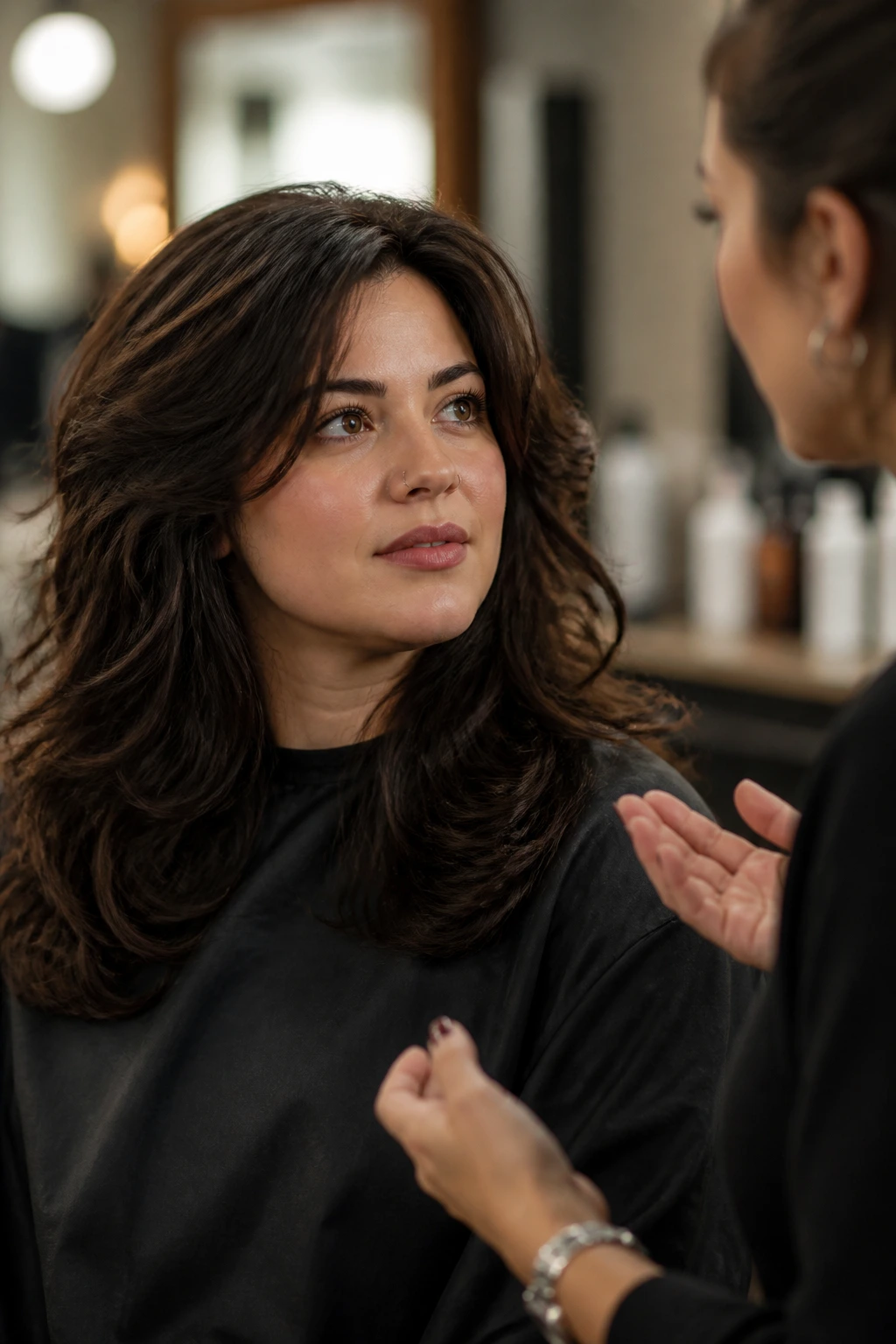
Bring photos, yes, but bring the right kind. The best reference is not a celebrity with a different texture and a face shape that pulls the whole haircut in another direction. Show your stylist the length you want, the amount of face framing you like, and whether you want soft movement or a more textured edge. That saves a lot of awkward chair-side translation.
Say the part out loud that usually gets skipped: you have thick hair, and you want to keep fullness without the width. That sentence matters. A good stylist will think in terms of internal layering, weight distribution, and where the shortest face pieces should land. If they immediately reach for thinning shears like they’re opening a can, pause.
At home, shop for formulas that support the cut instead of fighting it. Lightweight mousse, blowout cream, flexible hold spray, and a heat protectant with a little slip are the usual winners. Heavy oils can be useful on the ends, but if you put them near the roots of dense hair, the cut can go flat in the middle and bulky at the edges. Not cute.
If your hair is coarse, look for smoothing ingredients like silicones, panthenol, and a little glycerin in damp-weather friendly formulas. If your hair is thick but soft, choose lighter textures and skip the rich creams that make layers stick together in clumps.
How to Wear the Shape From Wash Day to Day Two
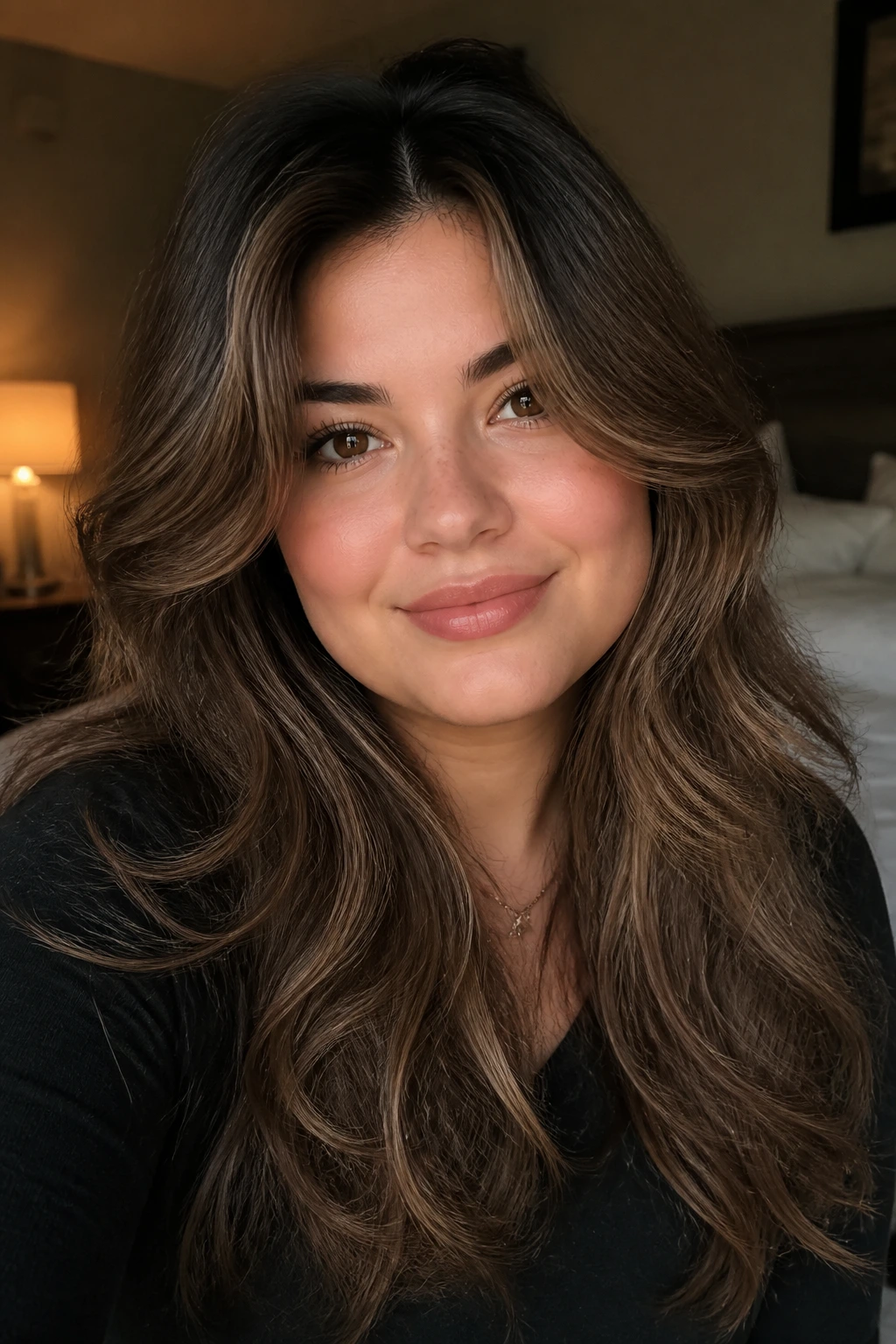
Parting: A center part gives the longest line, which helps a round face feel a touch leaner, but a deep side part creates more lift and asymmetry. If your hair naturally parts crooked, do not fight it too hard; use the part that sits closest to your cowlick and shape the layers around that.
Finish: A soft bend through the front pieces is usually enough. You do not need every strand curled. In fact, too much curl can turn thick hair into a ball. Keep the crown smoother and let the ends do the talking.
Accessories: Clips, headbands, and barrettes should sit above or beside the face frame, not bury it. A chunky claw clip can work beautifully on layered hair, but leave a few front pieces out so the shape does not vanish.
Best Settings: These cuts read well at work, on errands, at dinner, and on day two hair if you wake up with the front pieces flattened. That is a good sign. A haircut that survives real life without looking like it needs a full reset is doing its job.
Extra Lift and Personalization
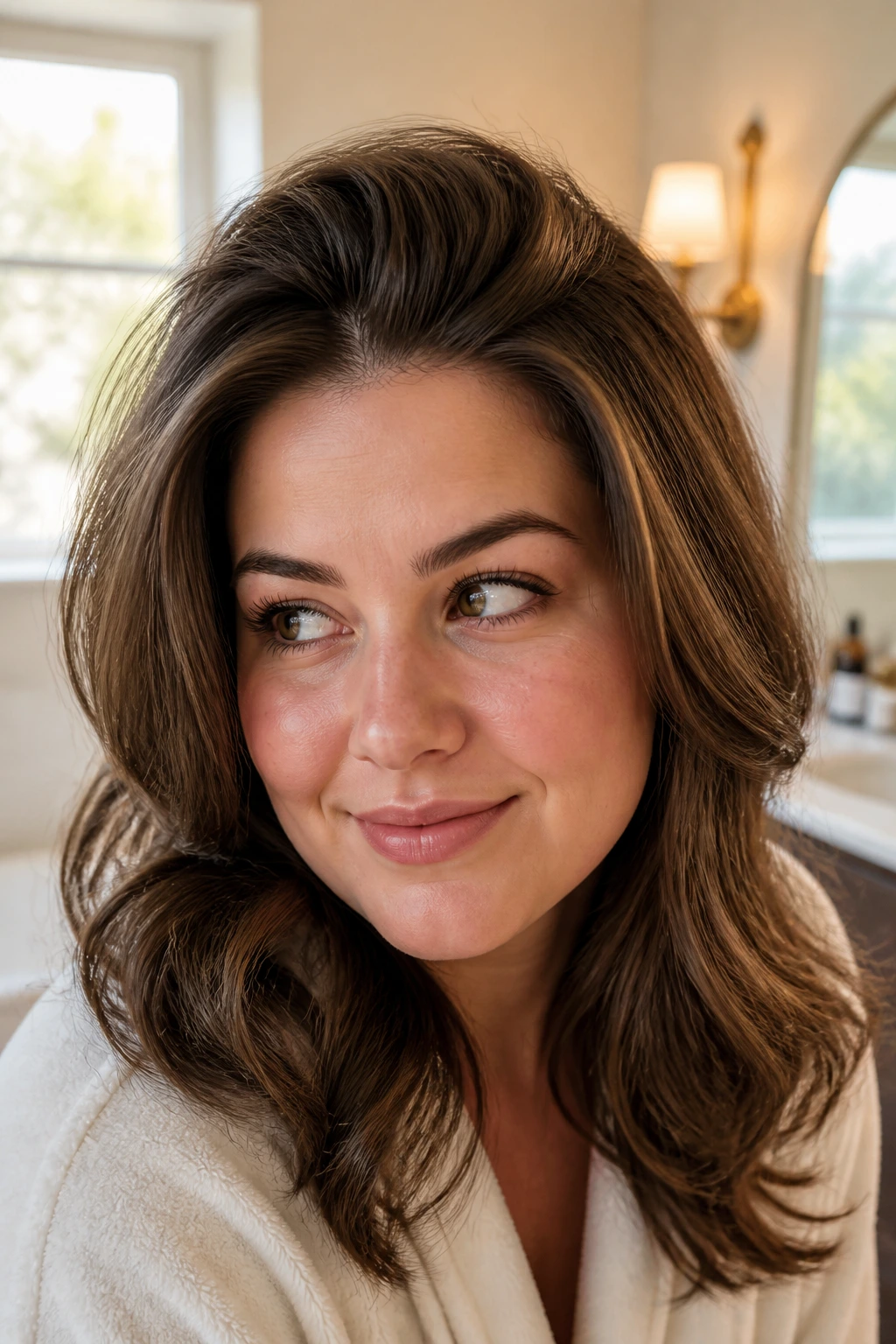
Root Lift: A walnut-sized amount of mousse at the roots, applied before blow-drying, can keep thick hair from flattening at the crown and exploding at the sides. Focus it on the top three inches, not the ends.
Face-Framing Lift: Curl the front pieces away from the face for a softer, more open look. That one move can make a round face look more elongated without changing the cut at all.
Texture Boost: A small spray of dry shampoo at the roots and a texturizing spray through the mid-lengths can make layered thick hair look separated in a good way, not stringy in a bad way. Use less than you think. Thick hair can take more product, but it does not always need it.
Make-It-Yours: If you like a little edge, add a shaggy fringe. If you want polish, keep the layers longer and the perimeter smoother. If you wear glasses, longer front pieces usually sit better than short choppy bangs, which can fight the frames.
Wash-Day, Sleep, and Trim Timing
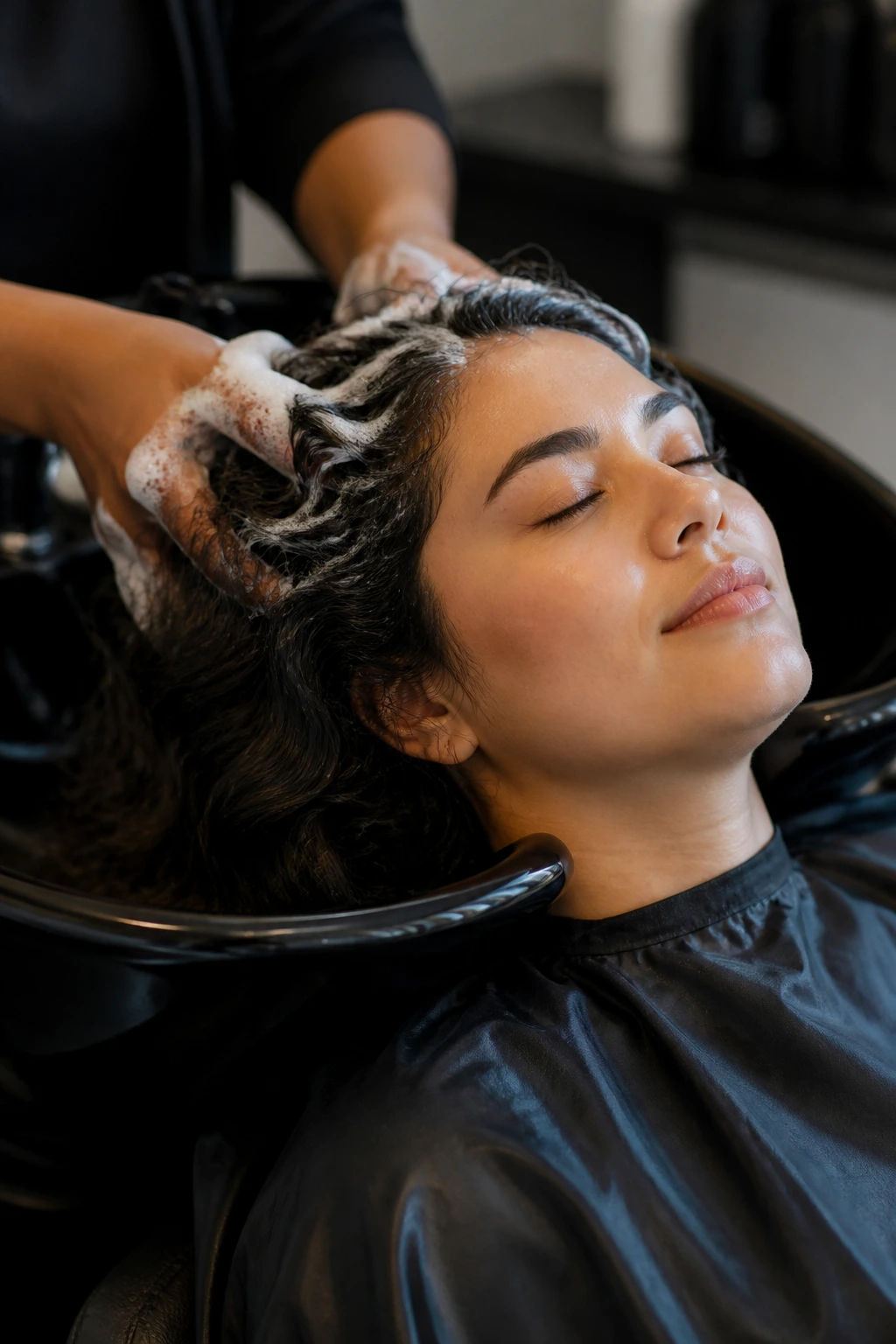
Thick layered hair usually behaves best when it isn’t overloaded with product buildup. For most people, washing every 2 to 4 days keeps the roots from getting heavy and the face frame from sticking flat to the cheeks. If your scalp gets oily fast, don’t stretch it just for the sake of it. Heavy roots make layered cuts look thicker in the wrong places.
Trim timing depends on the shape. Shorter, more textured cuts usually need a cleanup every 8 to 10 weeks. Longer soft layers can go 10 to 14 weeks before they start losing their shape. If the front pieces are no longer skimming the cheekbone or collarbone the way they did in the chair, the haircut is telling you it’s time.
Sleep on a silk pillowcase if your hair frizzes easily, or gather the lengths into a loose, high scrunchie ponytail so the layers don’t kink hard overnight. For curly hair, refresh the front with a water spray and a little leave-in conditioner. For blowout styles, use dry shampoo at the crown in the morning and re-bend only the front pieces. You do not need to re-style the whole head every day. Nobody has time for that.
Variations and Adaptations to Try
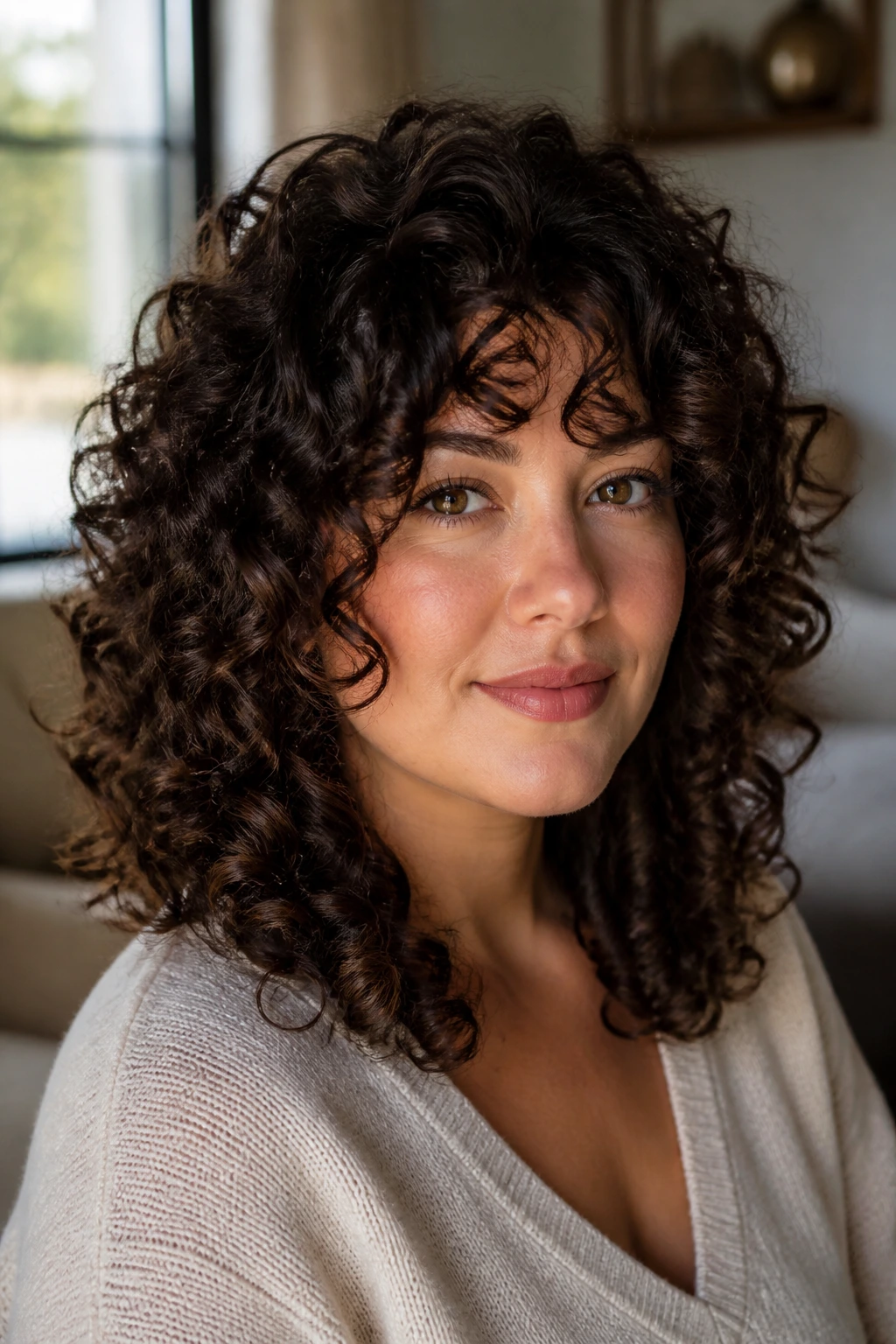
The Curly Lift-Off: Keep the shortest layers long enough to respect shrinkage, then cut them dry so the curls fall where they’re supposed to. This is the best route when you want shape without triangular bulk.
The Straight-Hair Sweep: Use invisible layers and a deep side part if your hair is naturally straight and dense. The result is smooth, subtle movement that doesn’t depend on heavy curling.
The Low-Maintenance Grow-Out: Choose long face-framing pieces and soft internal layers, then avoid anything too high around the crown. This grows out cleanly and won’t betray you six weeks later.
The Fringe Switch: Curtain bangs work if you want softness around the center of the face. Side-swept fringe works better if you want less upkeep and a little more asymmetry. Both can flatter a round face if the shortest point doesn’t sit right on the cheekbone.
The Ultra-Dense Reset: If your hair is so thick it feels architectural, ask for internal debulking plus a collarbone-length perimeter. That combination removes the shelf effect without making the ends look thin.
The Polished Blowout Version: Keep the layers longer and the ends feathered, then style with a round brush. This version gives you movement and shine with less visible texture.
Common Mistakes That Make the Shape Wider
-
Starting the shortest layers at the cheeks. That’s the fastest way to widen a round face. Move the shortest visible pieces a little lower unless you specifically want more width there.
-
Over-thinning the ends. Thin ends on thick hair can look frayed and puffy at the same time. Ask for weight removal inside the cut, not a shredded hemline.
-
Stacking too much volume at the sides. Thick hair can balloon near the ears if the layers are placed poorly. The fix is longer side pieces and less aggressive texturizing near the outer edge.
-
Choosing blunt bangs that stop high on the forehead. Thick hair bangs can work, but heavy straight-across bangs often shorten the face. Softer fringe usually behaves better.
-
Skipping the crown. If all the movement lives at the bottom, the top can fall flat and make the sides seem wider. A little lift at the crown changes the whole silhouette.
-
Using too much oil or cream. Heavy products pull the layers together and make the haircut lose its separation. Use the rich stuff on the ends only, and go light.
Questions People Ask Before They Book
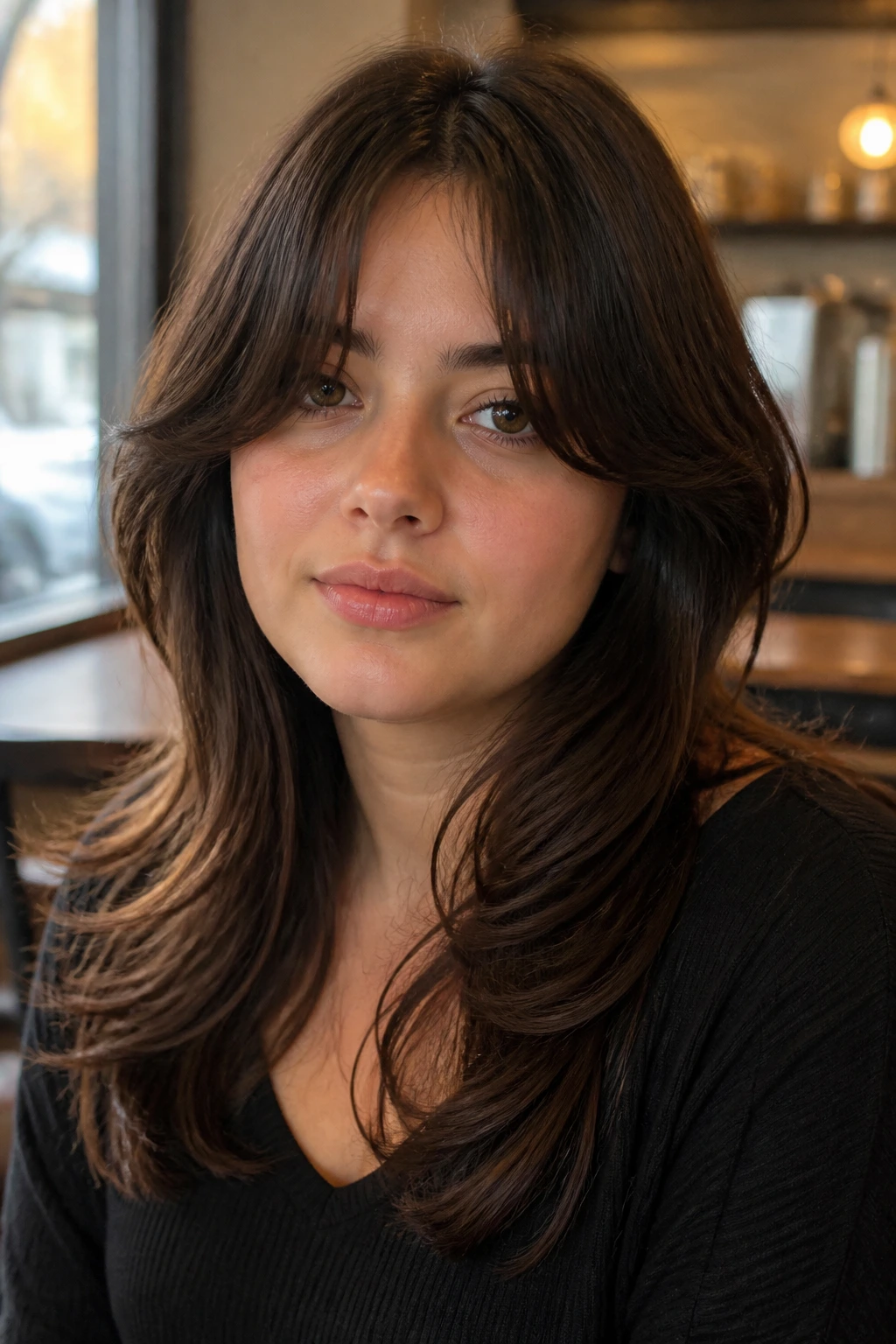
Will textured layers make my thick hair look thinner?
Not if the cut is done well. The goal is to redistribute bulk, not strip away density. Your hair should still feel full; it should just move more and sit closer to the head in the right places.
Are curtain bangs good for a round face?
Yes, as long as they open below the cheekbone and blend into longer layers. If they’re cut too short or too wide, they can make the face look broader.
Can I get layers if I wear my hair straight most of the time?
Absolutely. Straight thick hair often benefits the most from invisible layers, tapered ends, or a smooth collarbone cut with face framing. Those shapes keep the surface clean while removing the bulk underneath.
What if my thick hair is curly?
Ask for a dry cut or a curl-by-curl approach if your stylist offers it. Curly thick hair needs the shape built around shrinkage, or the layers can end up far shorter than you expected.
How often should I trim this kind of cut?
Shorter, sharper shapes usually need trimming every 8 to 10 weeks. Longer layered cuts can stretch to 10 to 14 weeks, but the front pieces should still sit where the shape was designed to sit.
Will a side part help my round face more than a center part?
Usually, yes, because it adds asymmetry and lift. That said, a center part can work if the front pieces are long enough and the layers create a vertical line instead of a wide one.
What if my hair turns poofy after the cut?
That usually means the layers started too high or the ends were thinned too much. Use a smoothing cream on the mid-lengths, blow-dry with tension, and go back to the stylist if the shape is still ballooning at the cheeks.
Can I keep the length and still get movement?
Yes. That’s one of the best things about textured layers. You can keep the perimeter long, remove weight inside the cut, and still get bend around the face.
A Cut That Moves With You
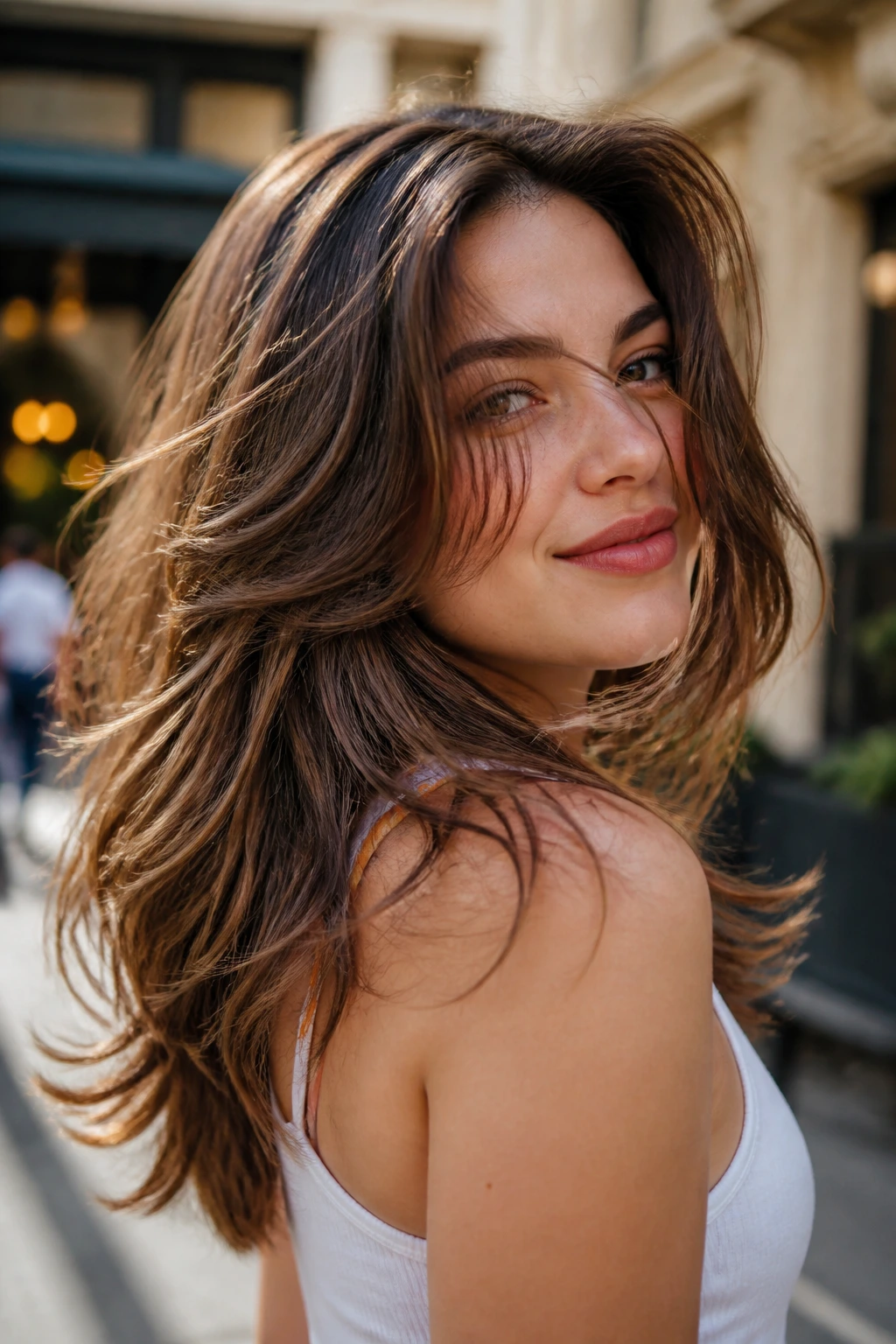
The smartest textured layers for thick hair and round faces do not try to fight the hair into submission. They give it structure, direction, and a little breathing room. That is the whole trick. Once the bulk sits in the right places, the face frame can do its job, the crown gets a bit of lift, and the ends stop acting like a wall.
If you’re heading to the salon, bring one photo for length and another for texture. That tiny bit of extra direction can save you from getting the right mood and the wrong shape. And if you already have one of these cuts, the fastest upgrade is usually not a new haircut at all — it’s better product placement and a cleaner blow-dry around the front.
The right layered shape should make thick hair feel like a feature, not a fight.