



Tousled layers for round faces and thick hair can be a gift or a headache, and the difference usually comes down to placement. Put the shortest pieces too high and the sides puff out. Start them too low and the haircut loses its shape before it reaches the mirror.
The sweet spot is a cut that breaks up bulk without building more width at the cheeks. That’s the whole game. Thick hair needs weight removed in the right places, while a round face usually looks better when the eye moves vertically instead of getting stuck on the widest part of the face. You want swing, not a helmet. Movement, not a mushroom.
I’ve always liked layered cuts that look a little undone but still feel deliberate when the hair moves. The best ones don’t scream “I got a haircut.” They just make the face read longer, the hair fall cleaner, and the whole shape feel easier to live with on a damp morning when your roots are doing their own thing. Keep that in mind as you scroll, because the best version for you is probably the one that works with your density instead of fighting it.
Why This Collection Works for Round Faces and Thick Hair
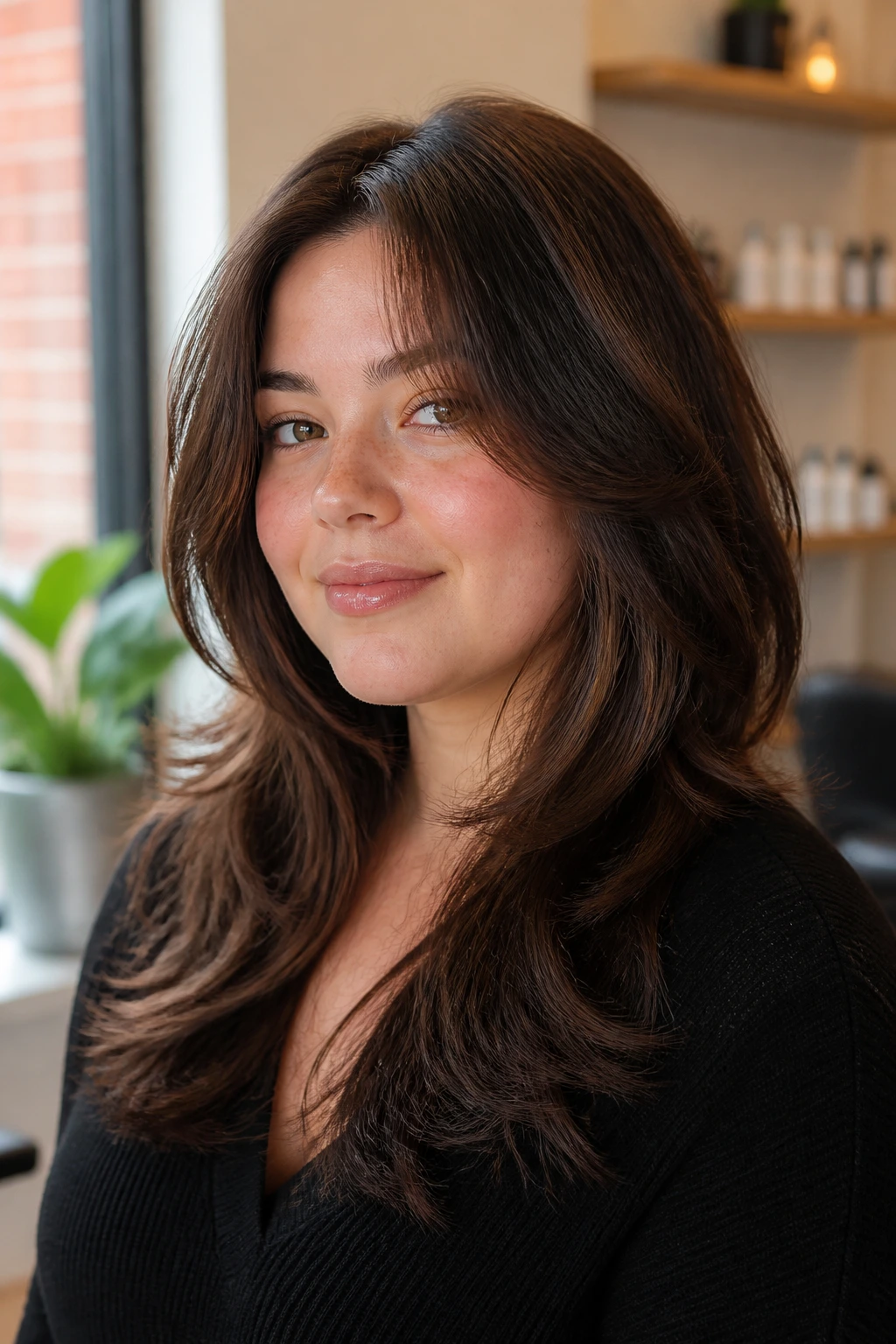
Vertical movement: Every look here pushes the eye downward with front pieces, length, or a strong center line, which helps a round face read a little longer.
Bulk control: Thick hair gets the weight removed where it piles up — usually around the sides, under the crown, or in the interior — so the cut moves instead of sitting like a block.
Soft edges: The best tousled layers are never chopped into hard shelves. The ends stay soft enough to bend, flip, or air-dry without turning fuzzy.
Low-stress grow-out: A good layered shape should still look intentional six weeks later, not leave you counting the days until your next appointment.
Styling flexibility: Some of these cuts want a round brush. Others look better with a little air-drying paste and a scrunch. That range matters, because not everyone wants to blow out every strand on a Tuesday.
Face-framing without widening: The right front pieces start below the cheekbone or travel diagonally past the jaw, which gives you shape without parking volume right at the widest part of the face.
1. Collarbone Curtain Layers
This is the cut I reach for when someone wants movement without drama. The collarbone length gives thick hair a clean landing point, and the curtain pieces open away from the face instead of sitting like a blunt shelf across the cheeks. On a round face, that little bit of drop makes a bigger difference than people expect.
Why It Works
The front layers should start around the lip or just below the cheekbone, not right at the cheek. That keeps the width from clustering in the middle of the face. Ask for soft internal layers through the mid-lengths so the ends don’t balloon out.
A slight off-center part helps here, too. It breaks up the symmetry just enough to make the whole shape feel longer.
Styling Note
Blow the front pieces away from the face with a medium round brush, then pinch the ends with a dab of cream or lightweight wax. You want a bend, not a curl. If the ends look too neat, the whole cut can turn formal in a hurry.
2. Butterfly Layers with Chin-Long Fronts
Butterfly layers can be very flattering on thick hair because they create lift through the crown while keeping the lower lengths long and smooth. The trick for a round face is to let the shortest visible pieces stay long enough to clear the cheeks. Chin-length is the floor here, and collarbone is safer if your face is especially full through the middle.
These layers look best when the top section has some bounce and the bottom section stays glossy. That contrast is the point. It gives you a haircut that looks dressed up even when it’s only been rough-dried.
- Best for: people who like a salon blowout but don’t want a rigid shape.
- Avoid if: you hate styling the front sections every morning.
- Ask for: short crown layers with long face-framing pieces that start below the cheekbone.
- Style with: a 1.25-inch curling iron or a round brush, always directing the front pieces away from the face.
A butterfly cut on thick hair can get puffy if the top layers are taken too short. Keep the crown airy, not fluffy. That’s the line.
3. Soft Shag with a Tapered Fringe
Why does the shag work so well here when a blunt cut often doesn’t? Because it takes all that heavy thickness and breaks it into movement. A soft shag is one of the few layered styles that can make thick hair feel lighter without making it look thinned out.
The word soft matters. I would not ask for a choppy, over-textured shag on a round face unless you enjoy fighting volume around the jawline. Instead, keep the fringe light and the side layers long enough to sweep past the cheeks. The crown gets the lift, the sides get the stretch.
How to Style It
Use a mousse at the roots and air-dry about 70 percent of the way, then finish with a diffuser or a few bends from a curling iron. The fringe should land with some separation, not sit in one solid line. If it starts to puff, a tiny amount of serum on the ends usually calms it down.
4. Polished Wolf Cut
A wolf cut can go wrong fast on thick, round-faced hair if it gets too short around the top. Too much height at the crown plus too much fullness at the cheeks is a bad combination. But a polished version — longer, cleaner, and less extreme — can be excellent.
Think of it as a shag with a better haircut underneath. The perimeter stays long enough to keep the shape narrow, while the layers are broken up just enough to create that slightly undone, piecey finish. It’s a good choice if you like a little attitude in the cut but don’t want the hair to look wild by lunchtime.
This cut works best when the ends are left a bit feathered rather than razor-slashed. Thick hair already has structure. It does not need to be shredded.
5. U-Shape with Floating Ends
A U-shaped cut is one of the safest bets for round faces because it keeps the silhouette long and smooth instead of wide and boxy. On thick hair, the rounded back gives weight where you actually want it, while the interior layers stop the body from collecting around the sides.
I like this shape for anyone who wants a layered cut that still looks expensive when it’s just air-dried and half obedient. The front pieces can be kept long, then softly graduated so they skim the jaw instead of stopping there. That small detail matters more than most people realize.
The ends should move when you walk. If they sit flat, the layers were probably too cautious. If they fan out at the sides, the perimeter needs more length.
6. Deep Side-Part Swoop Layers
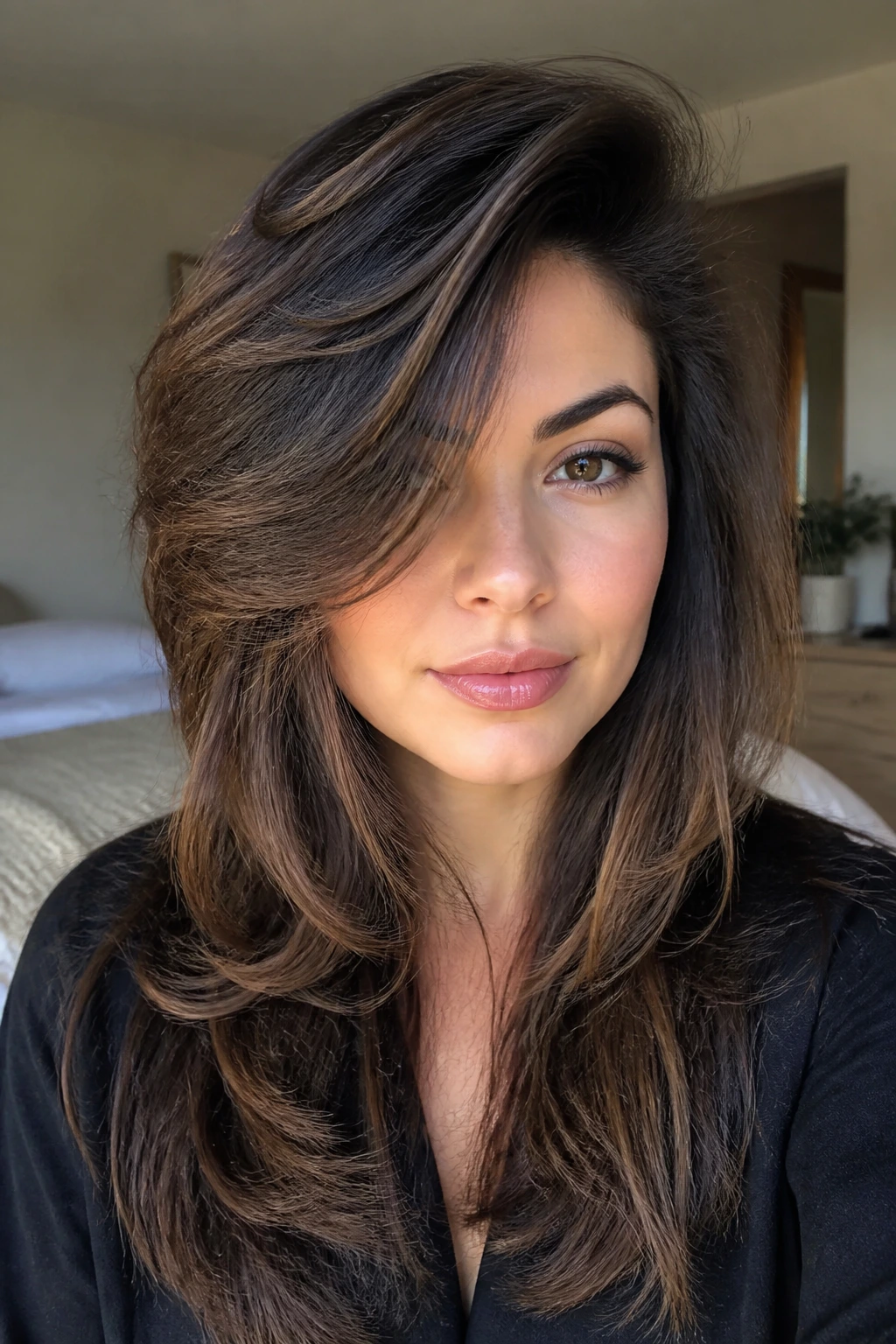
A side part is one of the easiest ways to make a round face look longer, and thick hair usually holds the shape without fighting you. The trick is not the part alone. It’s the swoop. You want the front section to travel diagonally across the forehead and over the temple, which softens the width at the center of the face.
This is the cut for someone who likes a little old-school polish. It can look glamorous, but it also works on a regular workday with nothing but a dryer and a paddle brush. The side layers should be long enough to skim the cheekbone and then fall past the jaw. Shorter than that, and you’re back in width territory.
A deep side part also gives thick hair a cleaner root lift without making the whole head bigger.
7. Invisible Layers for Thick Straight Hair
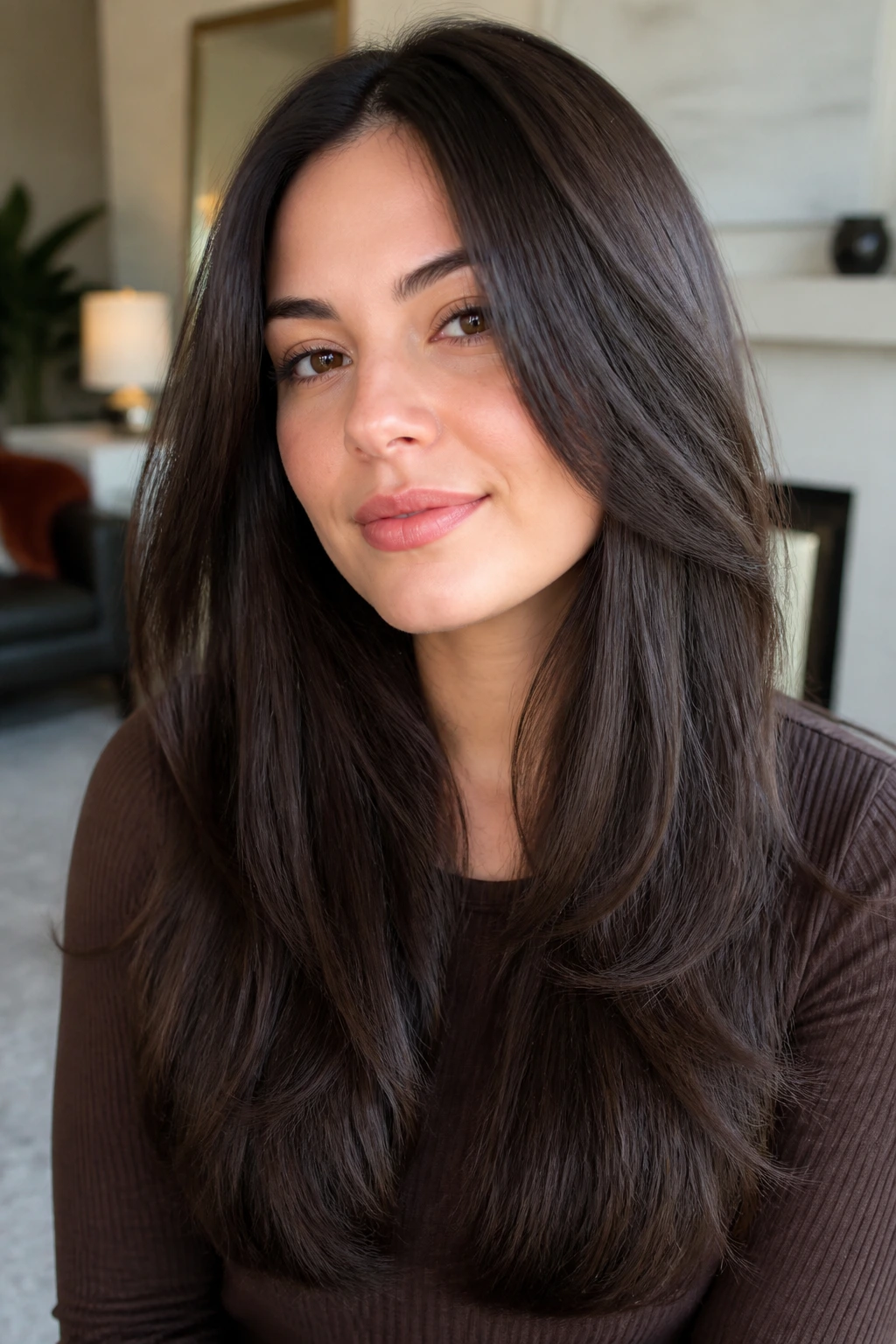
Straight thick hair has a nasty habit of looking blunt in the wrong way. Not sharp. Heavy. That’s where invisible layers earn their keep. The outer shape stays smooth and full, but the interior loses enough weight to let the hair bend instead of hanging like one solid sheet.
I like this cut when someone wants movement without obvious steps. From the outside, it can look almost one-length. Then you turn your head, and the hair shifts. That’s the magic.
It also keeps the face from getting swallowed by width. Because the layers are hidden, the front still reads clean, and the ends don’t get frayed. If you style with a slight bend from mid-shaft down, the cut looks polished without turning into a salon-only haircut.
8. Bottleneck Bangs and Shoulder Layers
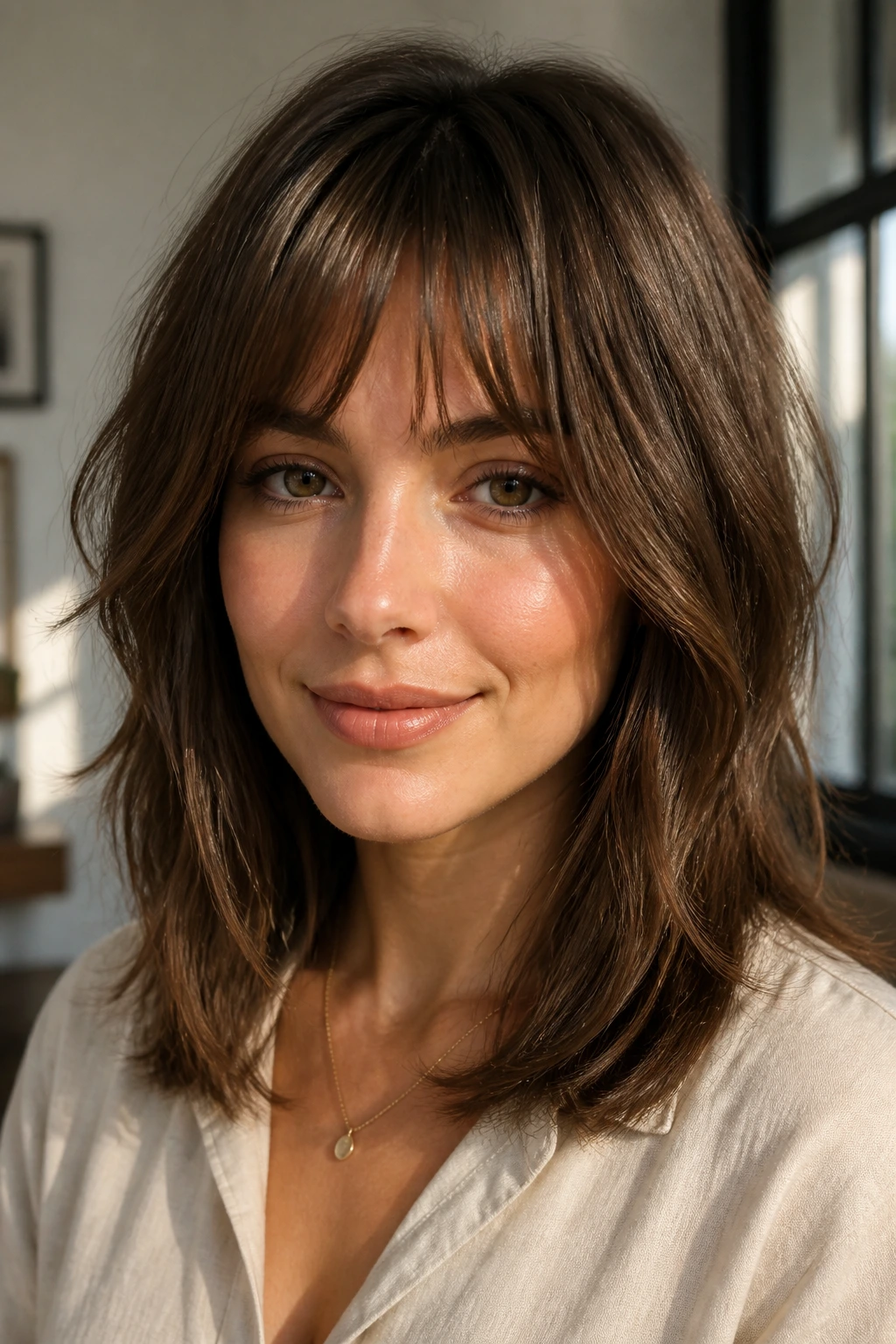
Bottleneck bangs are useful because they give you a center opening at the forehead and then soften outward toward the temples. On a round face, that shape can be a lot gentler than a straight fringe. The bangs create focus up top, while the shoulder-length layers keep the sides from puffing around the jaw.
Ask for the shortest point of the bang to stay airy, not dense, and for the side pieces to blend into the longer lengths. If the transition is too abrupt, the bangs can box in the face. That’s what you do not want.
- Best if: you want bangs but worry about losing face length.
- Style cue: blow the bangs side to side with a small round brush so they separate, not clump.
- Caution: if your hair grows fast at the temples, book trims sooner than you think.
This one can look soft and slightly French, which is a nice bonus. It’s also easy to tuck behind the ears when you want less face-framing for the day.
9. V-Cut Mermaid Layers
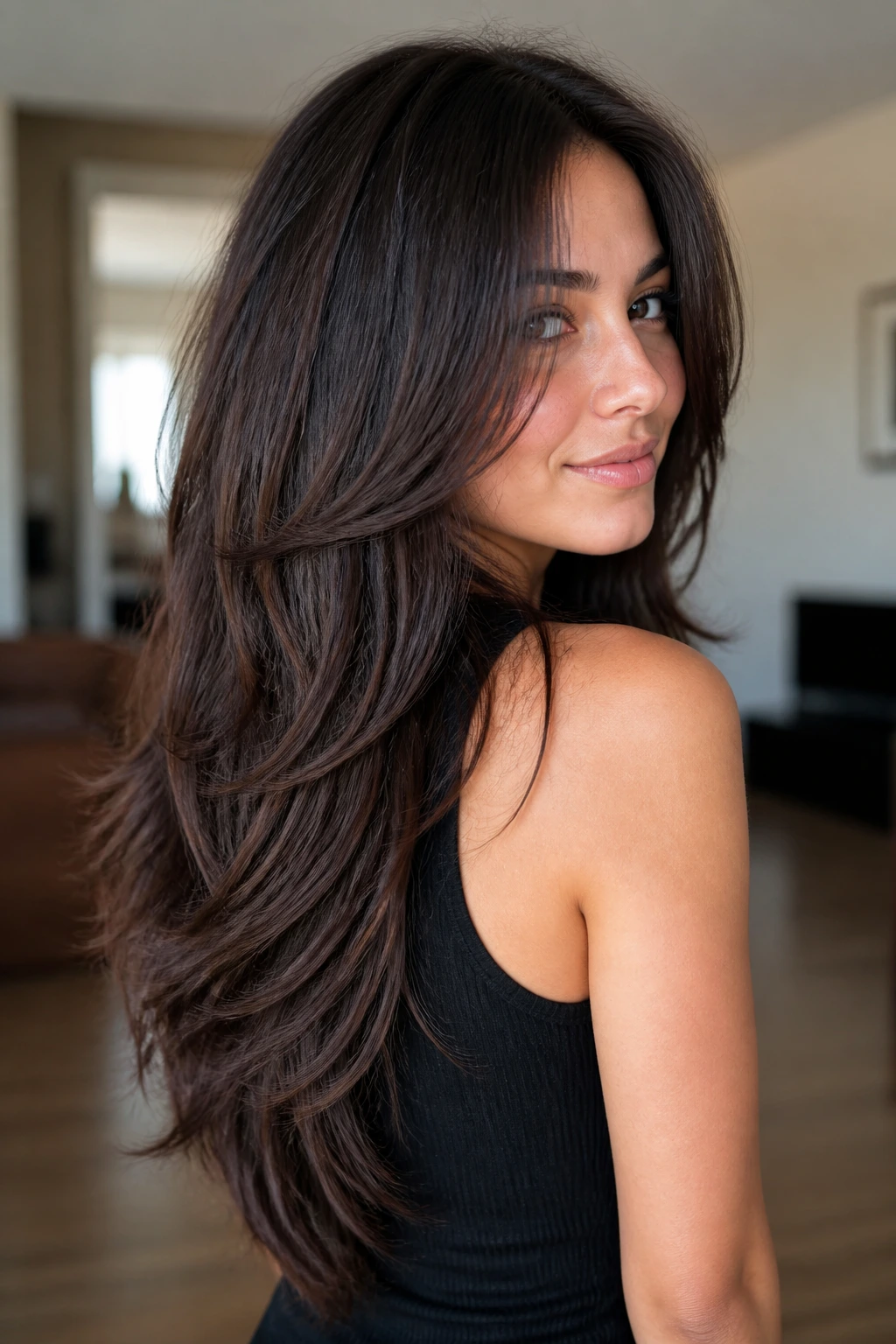
A V-cut is bluntly good at elongating thick hair. The back point pulls the eye downward, and the long front pieces do the same job from the sides. On a round face, that vertical line matters. It gives all that hair somewhere to go.
This works best if the shortest face frame starts below the jaw, not at it. You want movement that begins low and travels down. Thick hair holds the V shape well because the weight keeps the point from collapsing into a fuzzy triangle.
The cut is especially good if you wear your hair long and hate feeling like the shape disappears into a wall of hair. A V-cut gives long hair a map.
10. Choppy Lob with Piecey Ends
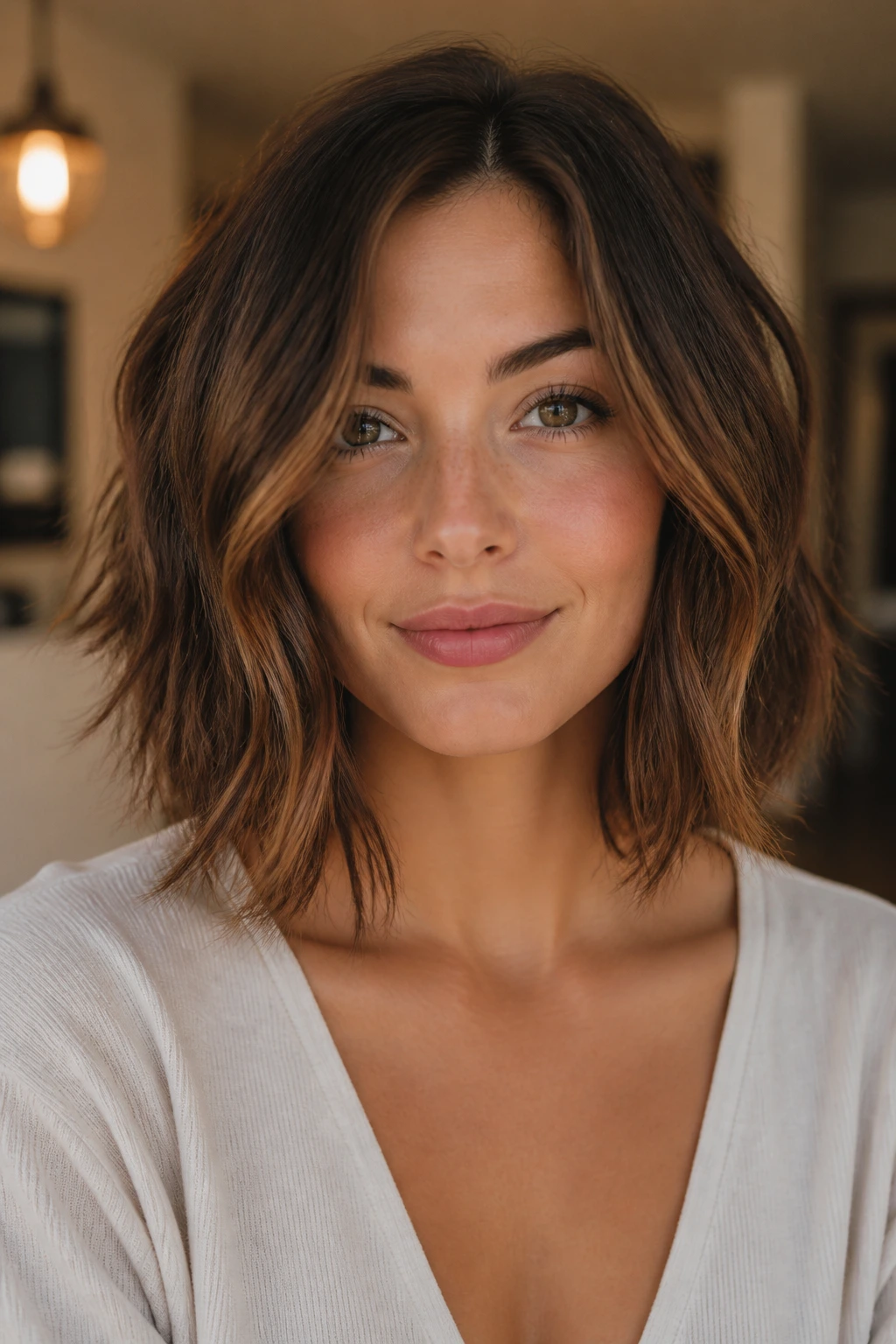
A lob can be flattering on a round face, but only if the shape stays a little jagged and not too tidy. A choppy version works because the ends break up the width and the collarbone length keeps the line from stopping right at the cheek.
The piecey ends are what keep this from feeling heavy. Thick hair loves a lob that’s cut with movement at the perimeter and softness through the interior. If the bottom line is too clean, the cut can become boxy fast.
I like this one with a center or slight off-center part, plus a few bends from a flat iron to keep the whole thing from looking too set. It’s a good middle ground between polished and easy.
11. The Soft Octopus Cut

The octopus cut has a weird name and a good result. The crown gets a bit of lift, the ends stay wispy, and the overall shape looks like it’s moving even when you’re standing still. On thick hair, that’s useful. On a round face, it works only if the top layers stay soft enough not to build extra width.
What Makes It Different
Unlike a hard shag, the soft octopus cut keeps the outer line longer and more fluid. The “tentacles” are more about movement than drama. That means the cut can frame the face without crowding it.
Best Styling Move
Use a diffuser or a rough-dry with a little mousse, then pinch a few face-framing pieces with a curling wand. Don’t curl every section. Two or three bends around the front are enough. If you over-style it, the shape gets busy and loses that airy feel.
12. C-Shaped Face Frame
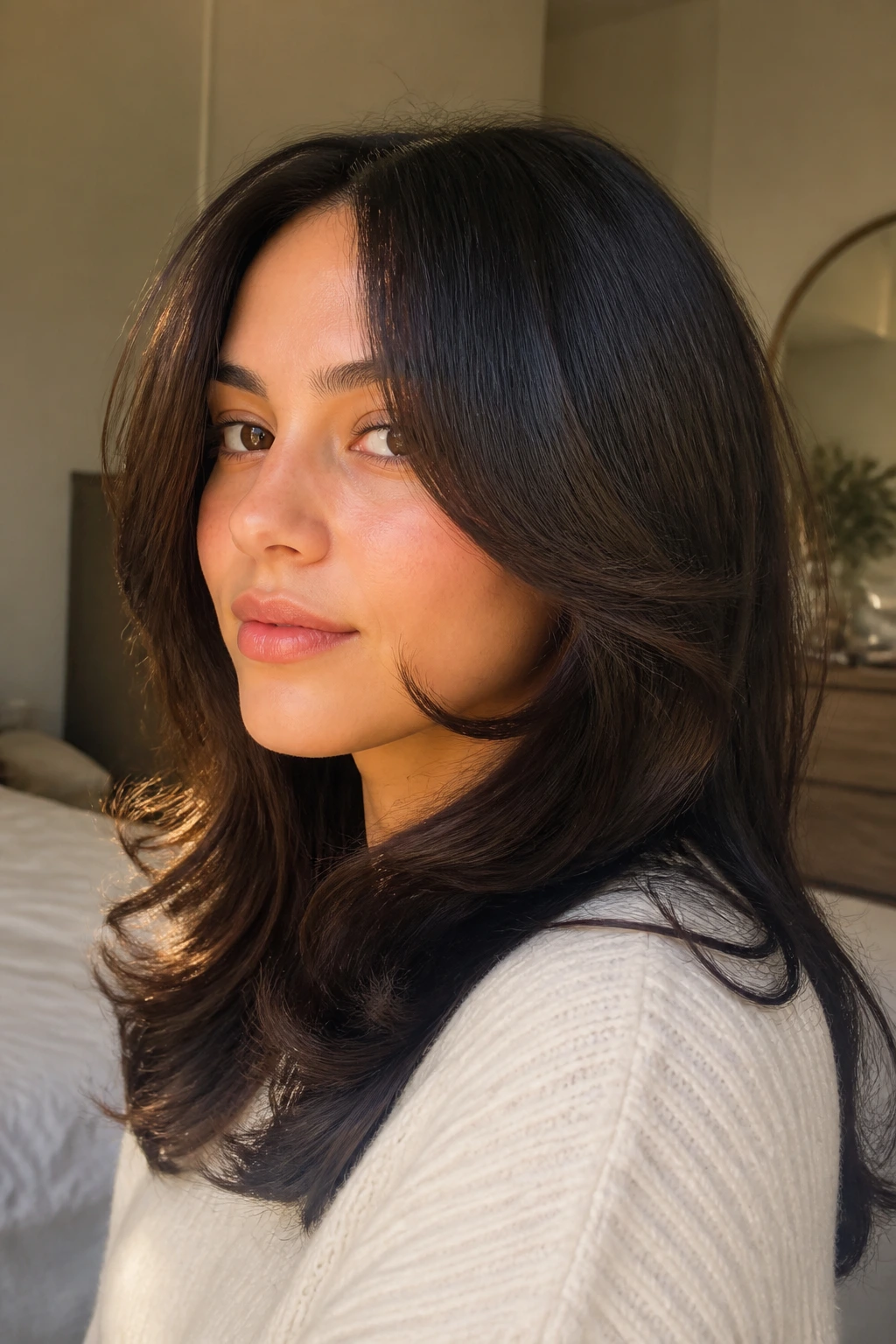
A C-shaped face frame sounds simple, and that’s part of why it works. The curve starts near the temple, dips past the cheekbone, and tucks back in near the jaw or collarbone. On a round face, that downward flow is gold. It nudges the eye along a curved path instead of locking it into the widest part of the face.
Thick hair benefits because the front sections can be carved without taking huge chunks off the length. You keep the density, but the face gets a little more room. It’s a good choice if you want visible framing without a shaggy finish.
- Ask for: a long C-shape that begins below the cheekbone.
- Avoid: short curved pieces that stop right at the cheek.
- Style with: a round brush or a hot brush to keep the curve smooth.
This one wears well with glasses, too, because the shape stays soft instead of crowding the frames.
13. Waterfall Midback Layers
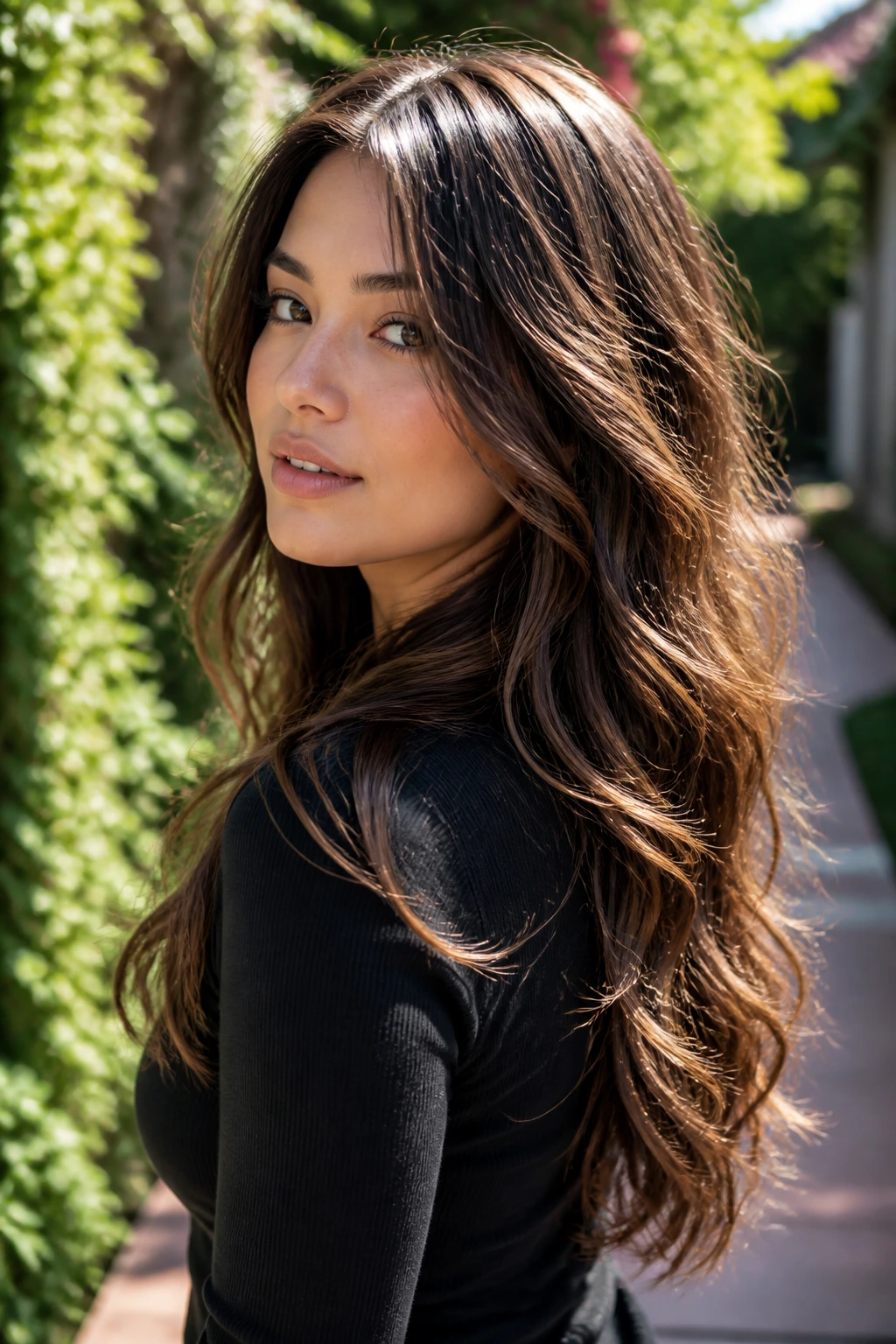
If you like long hair but hate when it hangs like a curtain, waterfall layers are the elegant answer. The trick is to keep the layers long enough that they cascade instead of break apart. On thick hair, this removes weight in a way that still feels lush.
The look is especially nice when the hair is waved rather than curled. A soft bend lets the layers separate just enough to show off the movement. For round faces, the long front pieces stretch the silhouette and avoid that blunt, horizontal line that can make the face look wider.
This is one of those cuts that doesn’t need a lot of styling to look intentional. A center part, a bend through the mid-lengths, and a little serum on the ends usually does it.
14. Flipped-Out Shoulder Layers
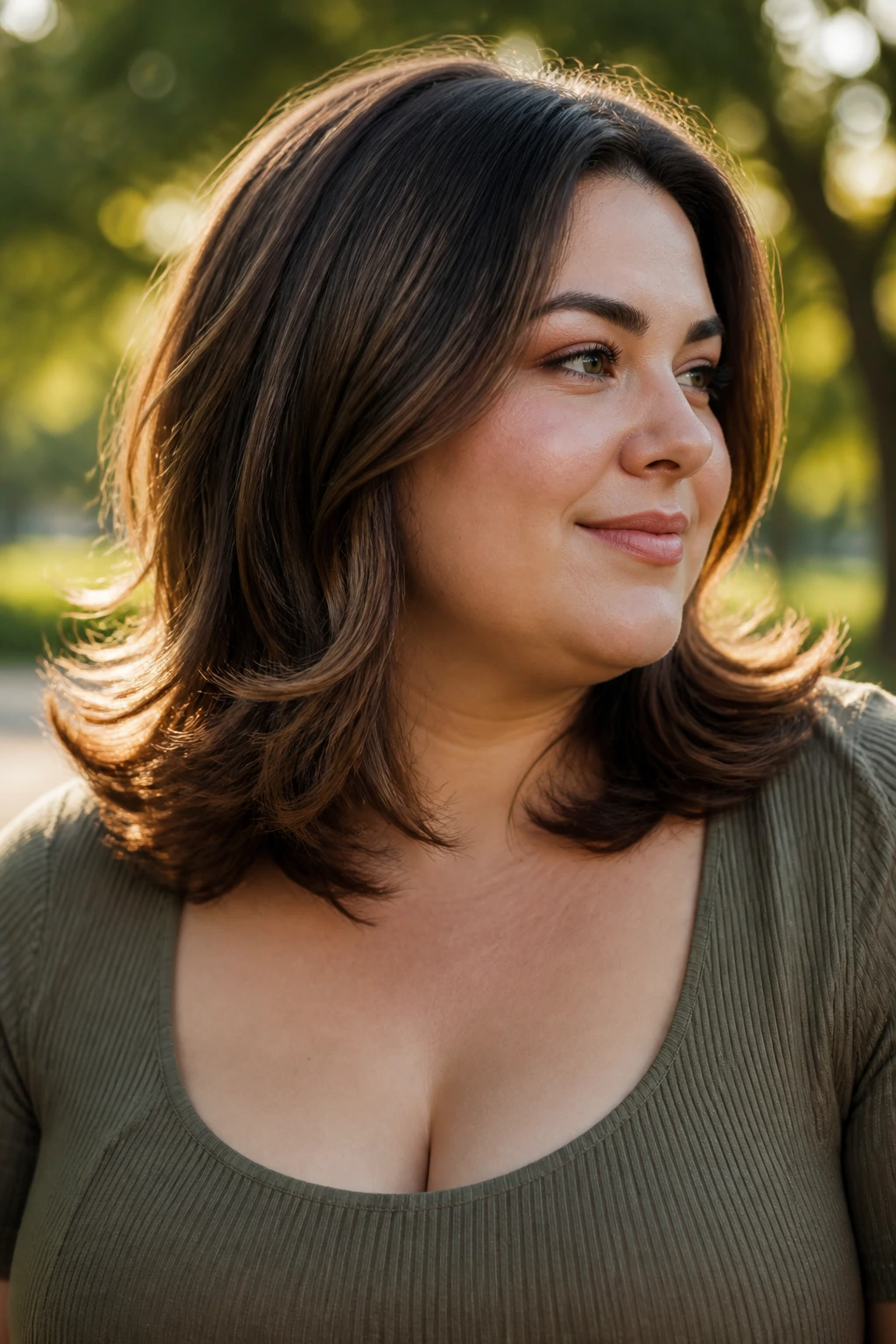
A flipped-out shoulder cut has a bit of attitude, and I mean that in the useful sense. The ends kick away from the neck and collarbone, which keeps thick hair from clinging too close to the cheeks. On a round face, that outward motion at the bottom works better than a puff at the sides.
It’s also a cut that likes styling, which is fine if you enjoy a brush-and-dry routine. A medium round brush or hot brush gives the ends their outward flip. If you’re lazy about it, the cut can look limp.
The best version keeps the top smooth and the sides controlled, with the action happening lower down. Think movement near the shoulders, not volume near the ears.
15. Heavy Fringe and Long Side Pieces
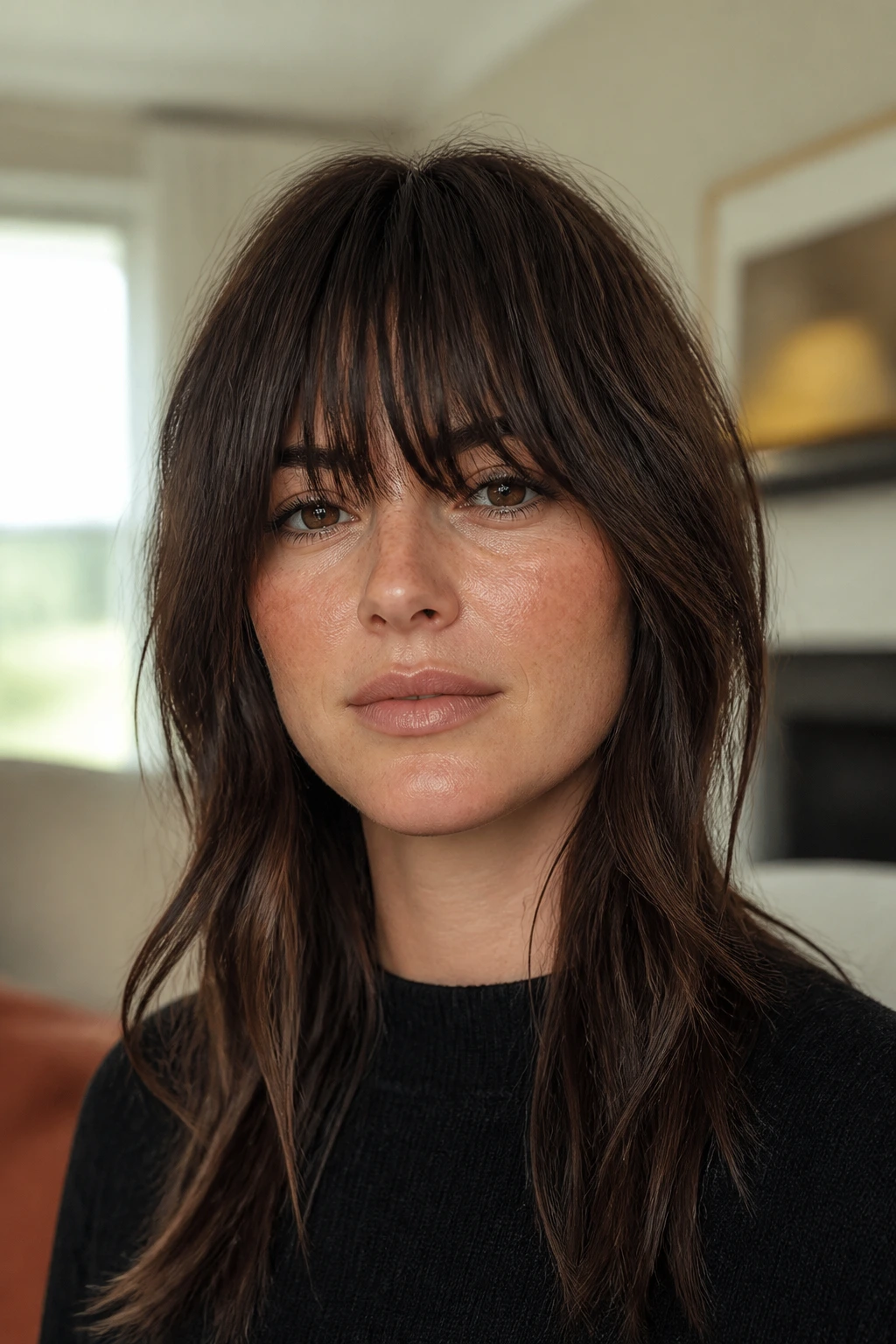
A heavy fringe can work on a round face, but only if the rest of the haircut is doing the balancing act. The fringe should have texture and separation, not one solid wall. And the side pieces need to stay long, because that’s what keeps the cut from flattening the face.
This is a stronger look, not a subtle one. If you have a short forehead or you already feel crowded through the center of your face, I’d be careful. But if your features can handle it, a thick fringe can create a nice contrast against long, layered sides.
The key is to keep the fringe light enough that it moves. If it sits stiffly across the forehead, the cut loses the softness that makes tousled layers work in the first place.
16. Curly Deva Layers
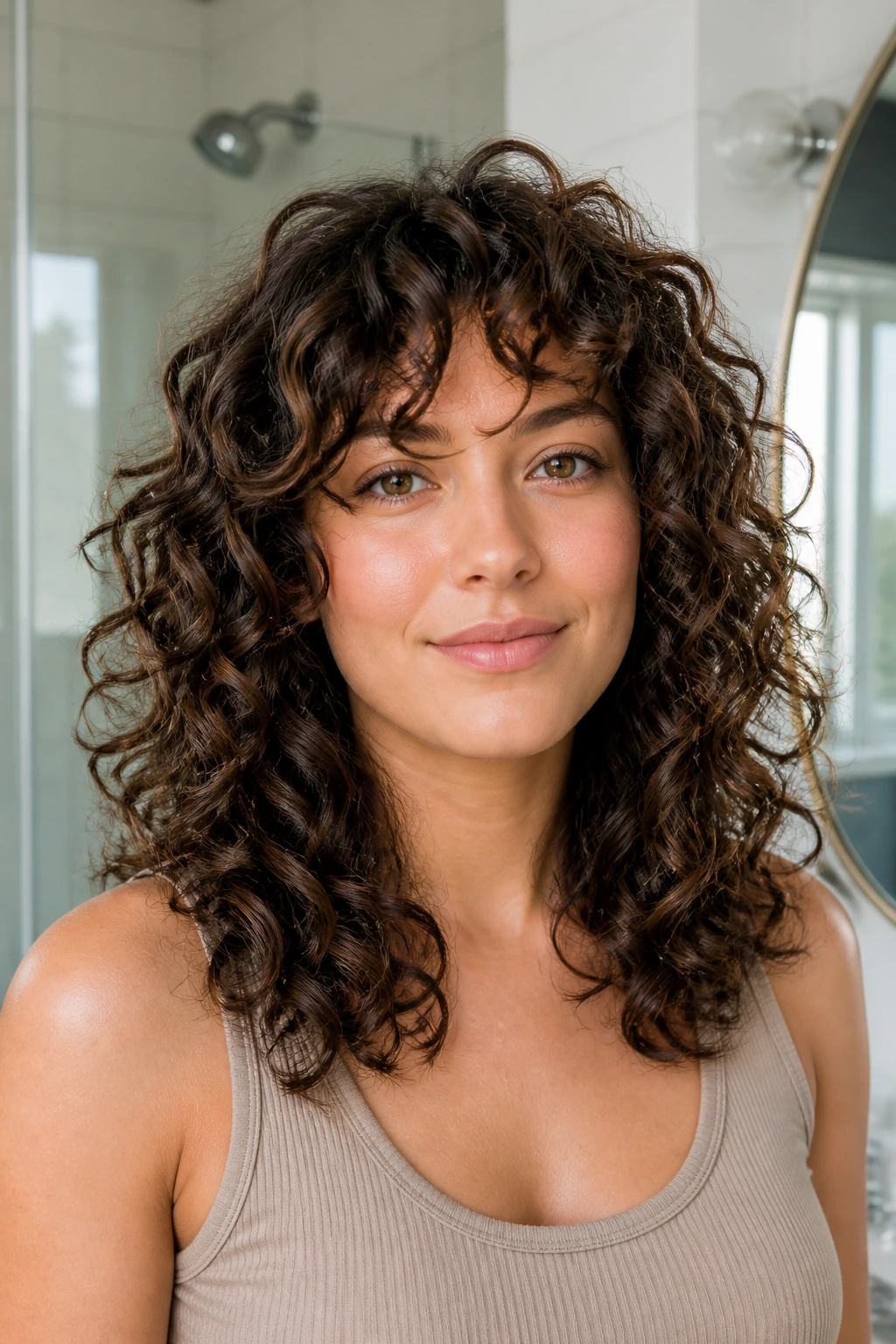
Curly hair needs a different rulebook. If your hair is thick and curly, the goal is shape, not thinness. A Deva-style layer cut is useful because it’s usually cut curl by curl or at least with the curl pattern in mind, which keeps the clumps intact and prevents the triangle effect.
How It Helps a Round Face
The longest face-framing pieces should fall below the cheekbone and often near the jaw or upper neck. That keeps the fullness from bunching right beside the face. You still get volume, but it’s distributed with more intention.
What to Ask For
- Dry cutting or a curl-by-curl approach if the stylist knows it well.
- Long front pieces that don’t stop at the cheek.
- Minimal thinning near the crown unless the hair is extremely dense.
A diffuser is your friend here. So is patience. Curly layers look best when they’re allowed to settle into their own shape instead of being brushed into a cloud.
17. Razor-Textured Midi
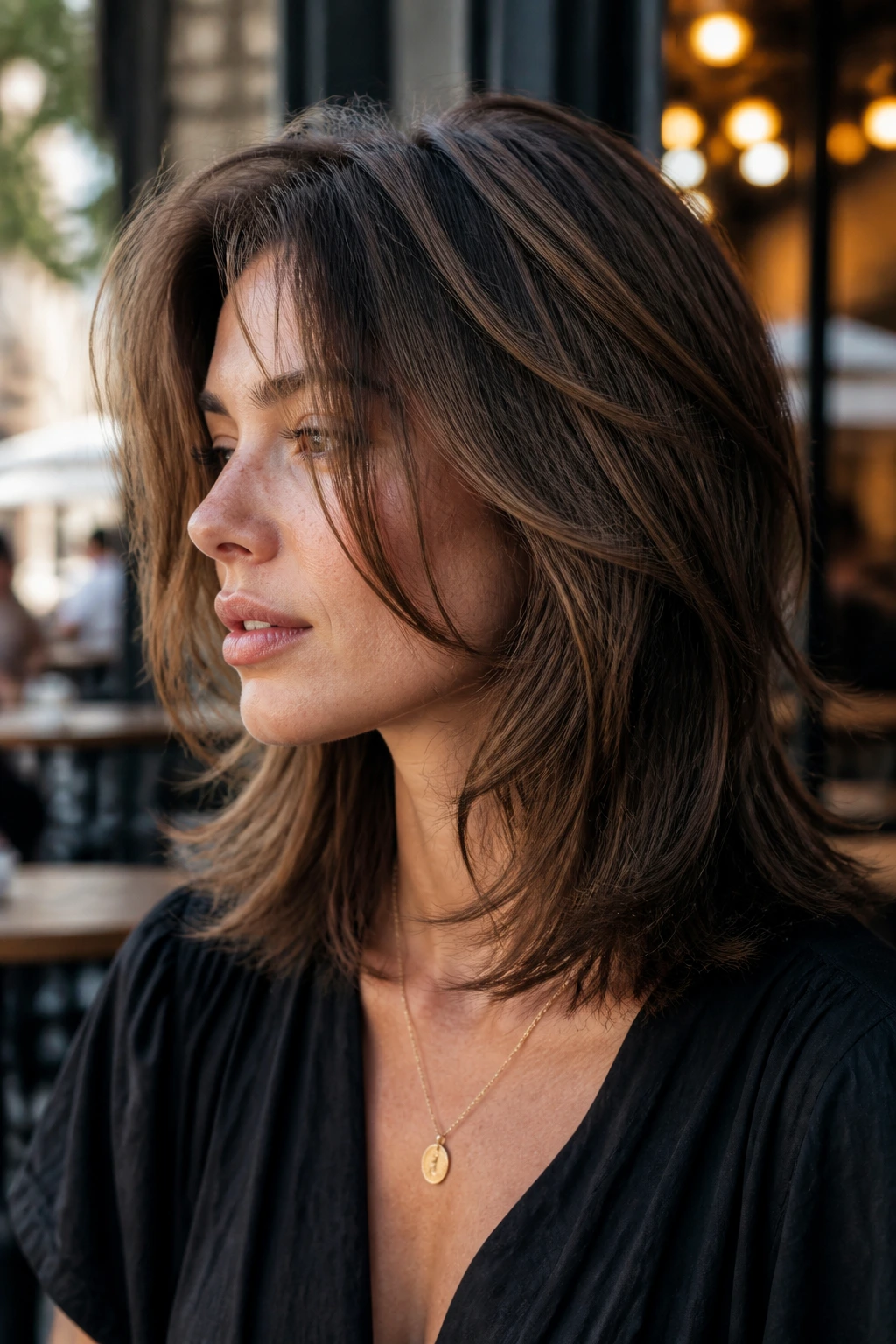
A razor-textured midi can look beautiful on thick hair, but it needs the right texture and the right hand. The razor softens the edges and gives the cut movement, which keeps a round face from getting boxed in. Used badly, it can fray the ends. Used well, it gives you that airy, lived-in finish people always try to fake with spray.
This cut is best for straight to wavy hair that has enough health to handle a softer edge. The front pieces can travel past the jaw, while the interior takes on more shape. It’s especially nice if you want a cut that moves when you tuck it behind one ear.
I’d skip this one if your hair tends to frizz easily. Razor cuts and frizz can become friends in a way you did not ask for.
18. Side Bangs with Hidden Debulking
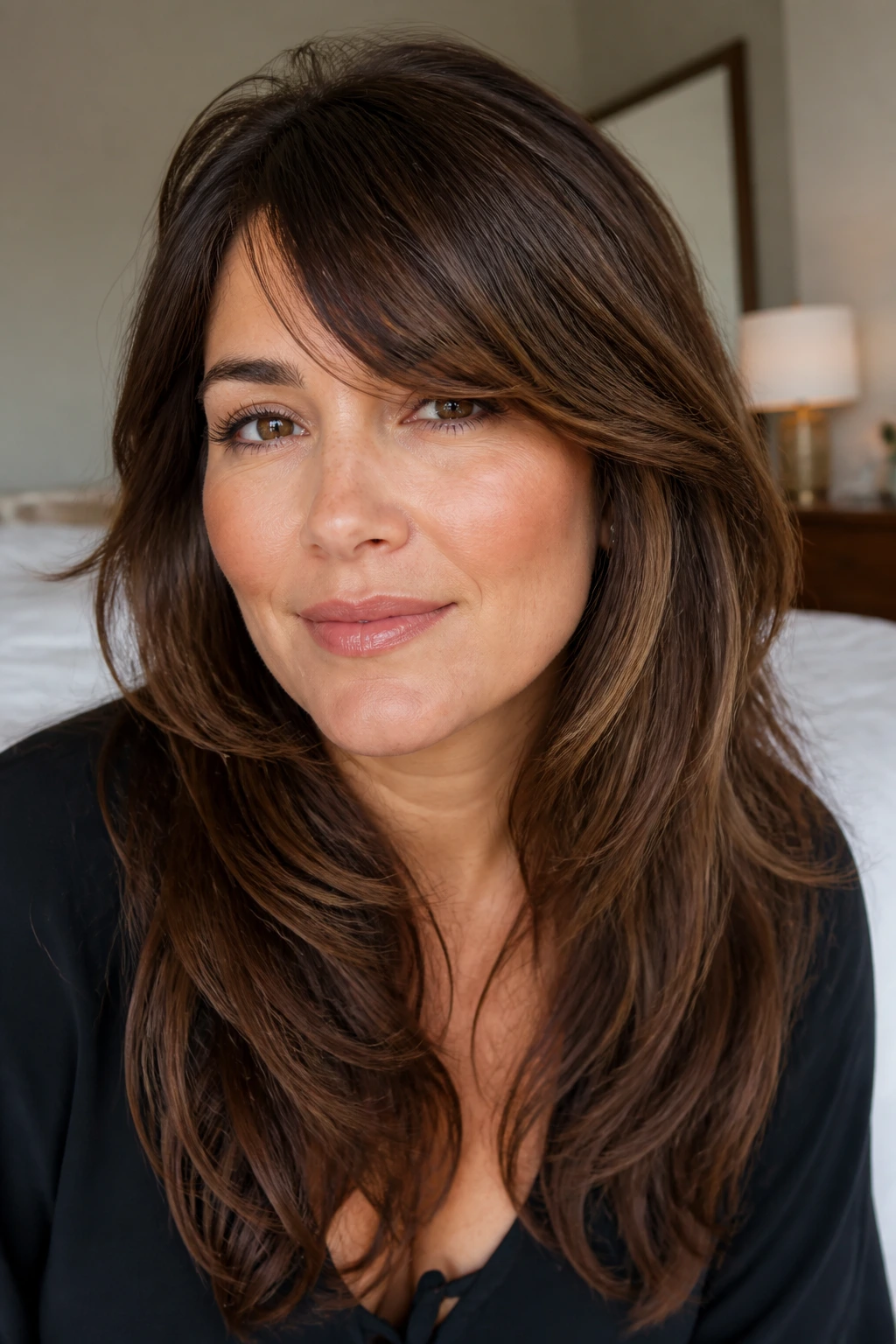
Side bangs are underrated. They don’t ask for as much maintenance as curtain bangs, and on a round face they can create a nice diagonal line across the forehead. Pair that with hidden debulking in the interior, and thick hair suddenly behaves better without losing its body.
The interior layers should live under the top layer, where they can take weight out of the middle without advertising themselves. That matters if you like a smoother surface. The side bang, meanwhile, keeps the front from feeling boxy.
This is a good choice if you wear your hair down most days but still want the option to pin the bang back or sweep it behind the ear. Flexible cuts are underrated. They make life easier.
19. Hidden-Weight Lob
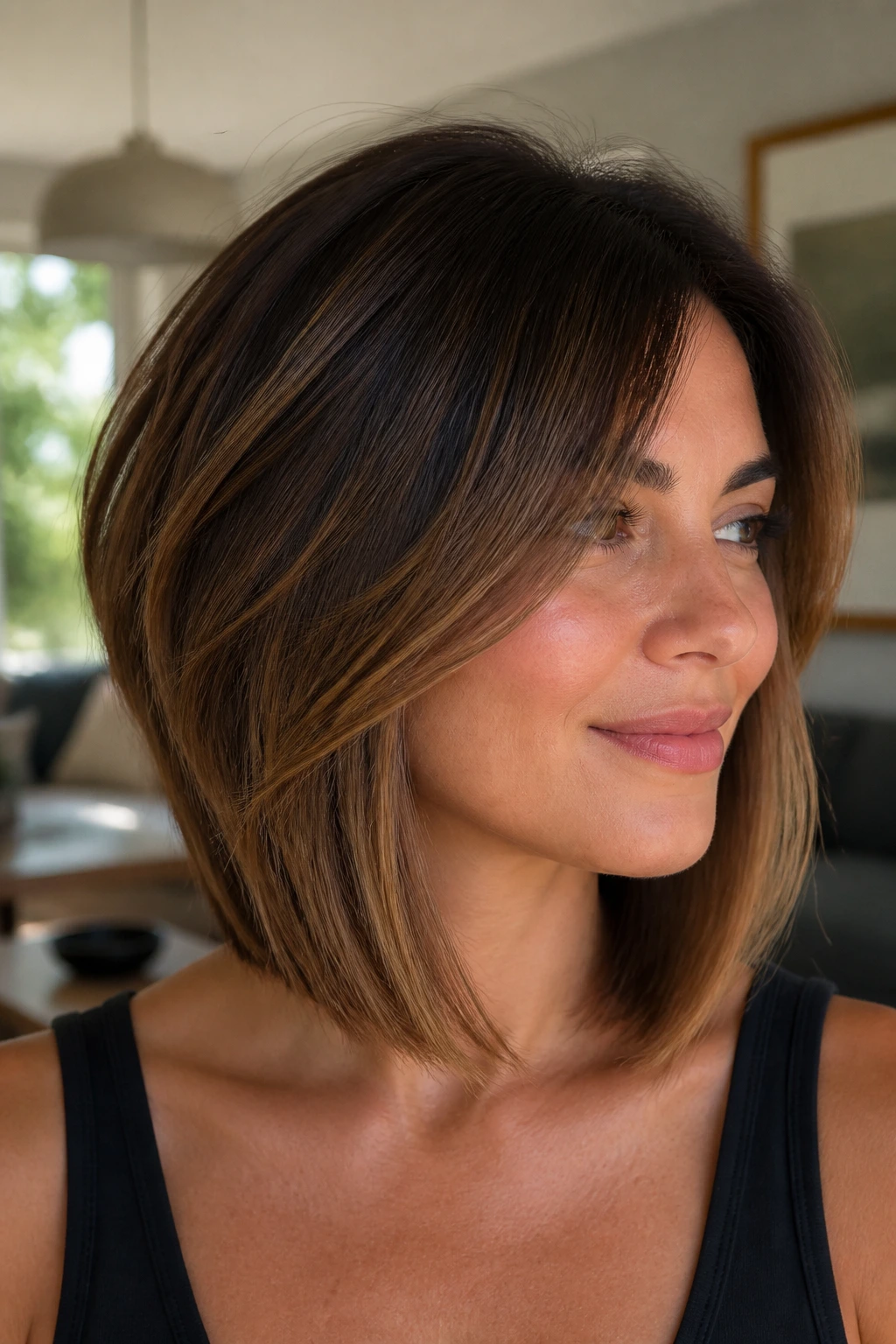
This is the polished cousin of the choppy lob. From the outside, it looks clean and simple. Underneath, the bulk has been reduced just enough to make the hair swing instead of sitting heavy at the shoulders.
For round faces, the outer line should stay a little longer in front than in back. That gentle angle stretches the face without turning the cut into a dramatic A-line. Thick hair likes this shape because it holds its structure even after a long day in humidity.
A hidden-weight lob is one of the easiest styles to wear to work, to dinner, or to the gym if you throw it into a low clip. It doesn’t try too hard. I appreciate that.
20. Soft Center-Part Layers
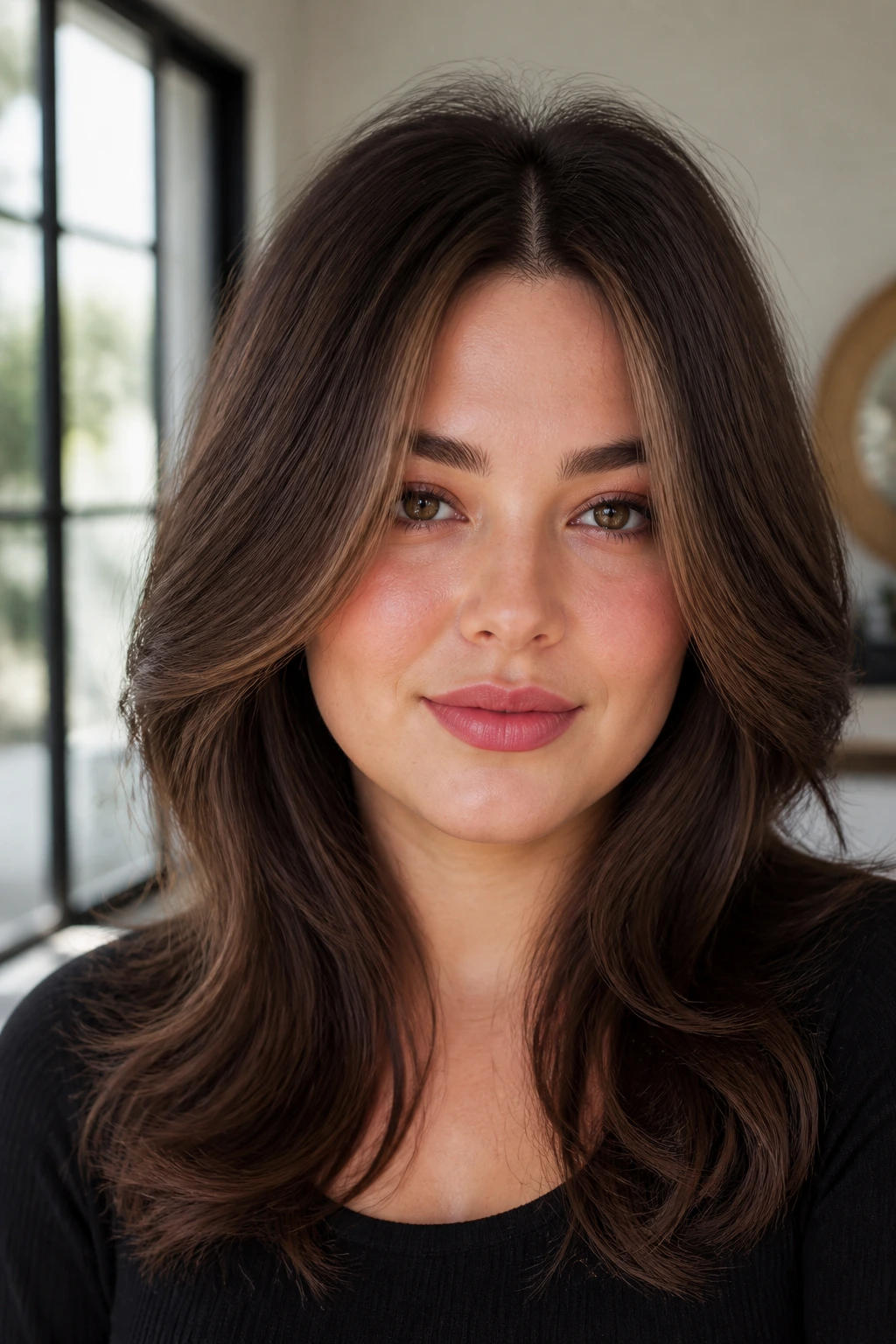
A center part is not the enemy. A bad center part is the enemy. If the face frame is long enough and the crown has some lift, a soft center-part layered cut can actually make a round face look longer, because the part creates a straight line down the middle and the layers fall away on both sides.
The part needs support. That means a little root volume at the crown and face-framing pieces that don’t stop high on the cheeks. Thick hair helps because it holds the symmetry without collapsing. But if the front is cut too short, the center part will feel severe.
This one is for people who like balance. It looks calm, clean, and slightly airy when the layers are soft rather than choppy.
21. Layered Blowout Cut
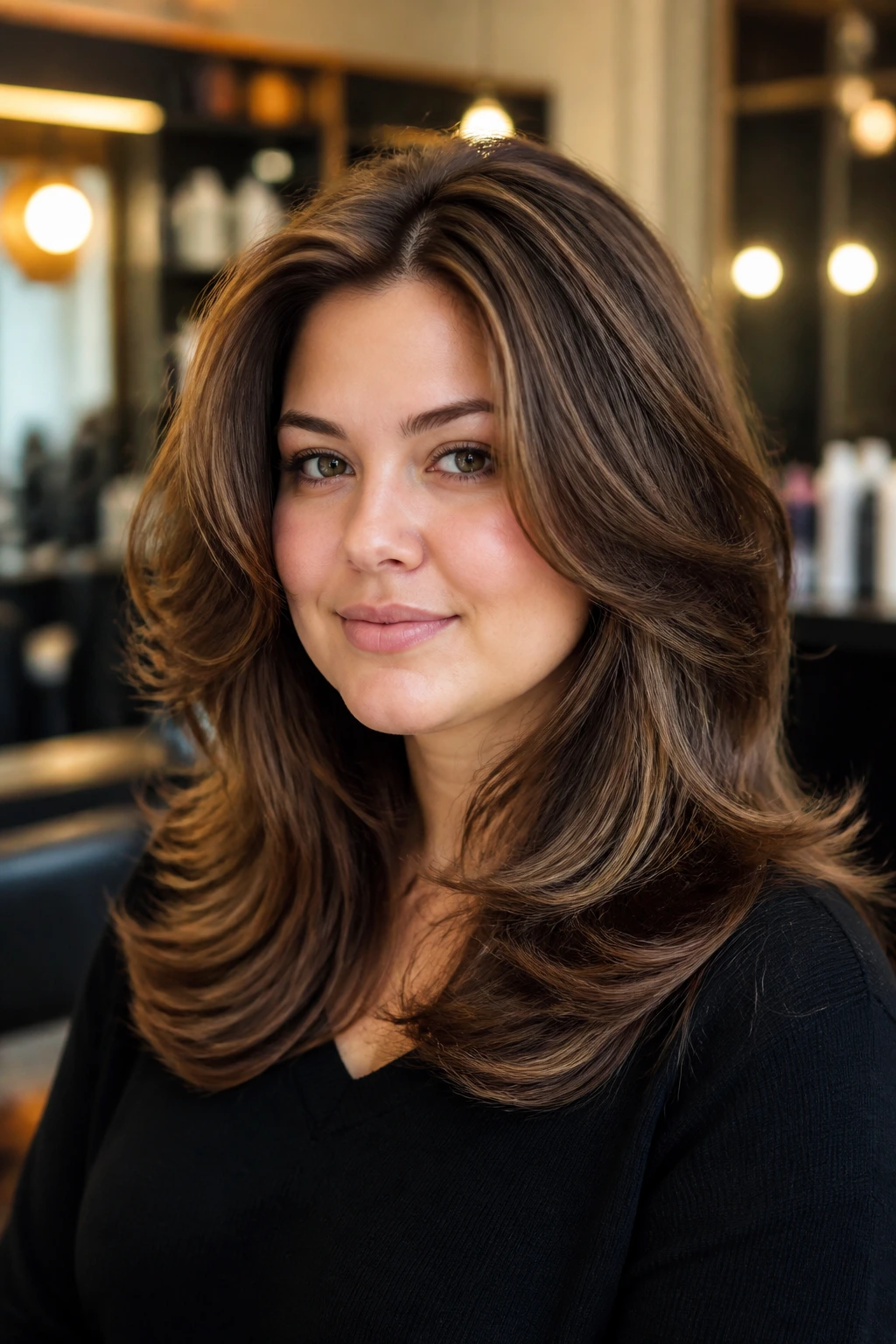
Some cuts are designed to be air-dried. This one wants a brush. A layered blowout cut gives thick hair a smooth, lifted shape that curves away from the cheeks and flips lightly at the ends. It’s a classic for a reason: the movement is controlled, and the finish is clean.
The reason it flatters a round face is simple. The hair gets height at the roots, flow through the mid-lengths, and motion below the jaw. That combination stretches the face without looking severe. It’s a very practical shape if you like things tidy but not flat.
Ask for layers that work with a round brush, not against it. If the cut depends on a very specific salon finish, it’ll be annoying at home. The best blowout cuts still look good after a rough sleep and a dry shampoo rescue.
22. Curly Shag with Airy Fringe
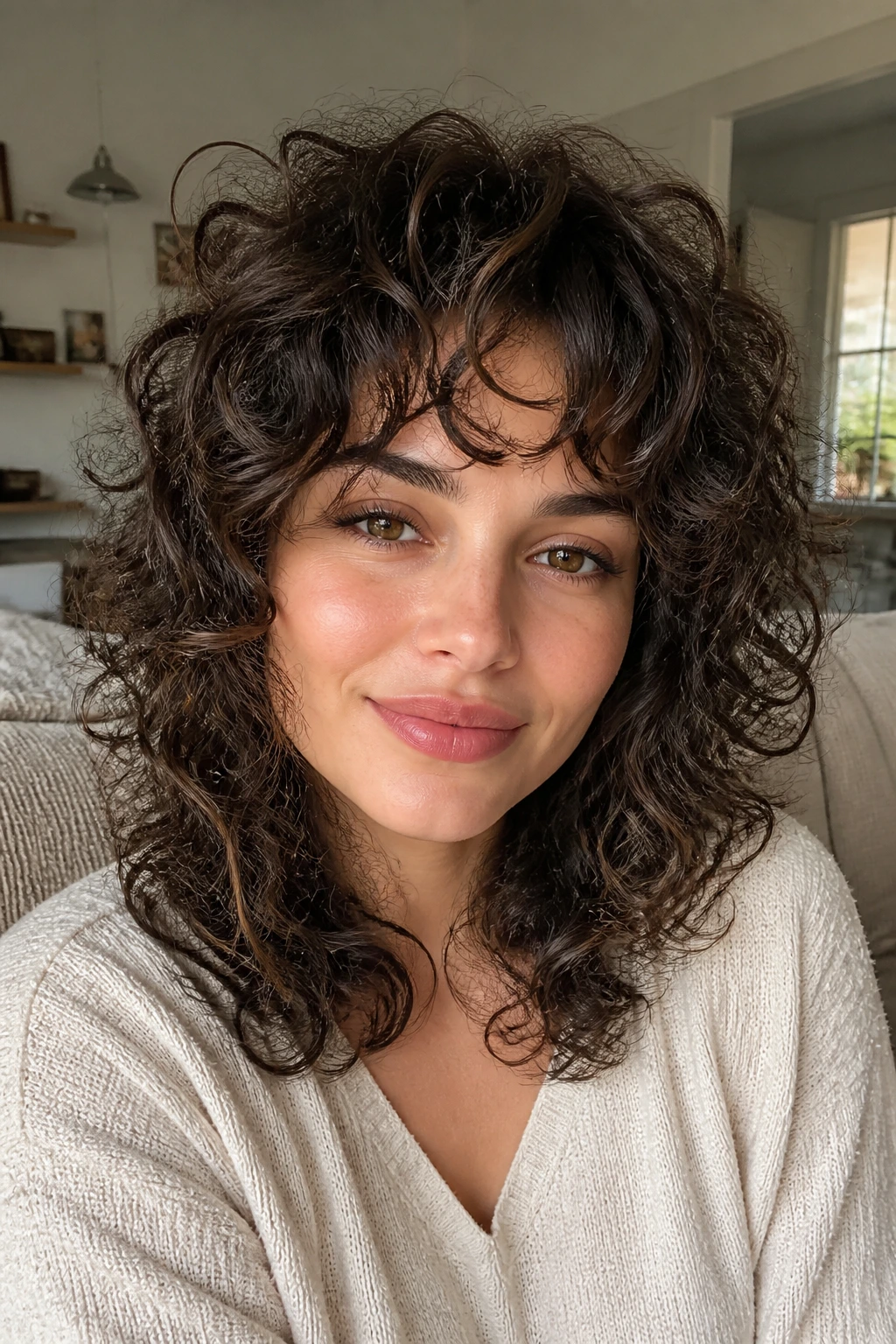
A curly shag can be a disaster if it’s too short or too full at the wrong spot. But with the right hand, it gives thick curls a bit of lift and keeps the face from getting buried. The fringe should stay airy, not dense, and the side pieces should travel down rather than out.
I like this when the curls have a clear pattern and enough spring to create shape. The layers need to respect the curl clumps. If the cut slices too much into the pattern, the hair can expand sideways — the exact opposite of what a round face needs.
Diffusing helps, but so does not over-touching the hair once it dries. Curly shag cuts look best when they’re a little imperfect.
23. Shoulder Cascade with Ribbon Layers
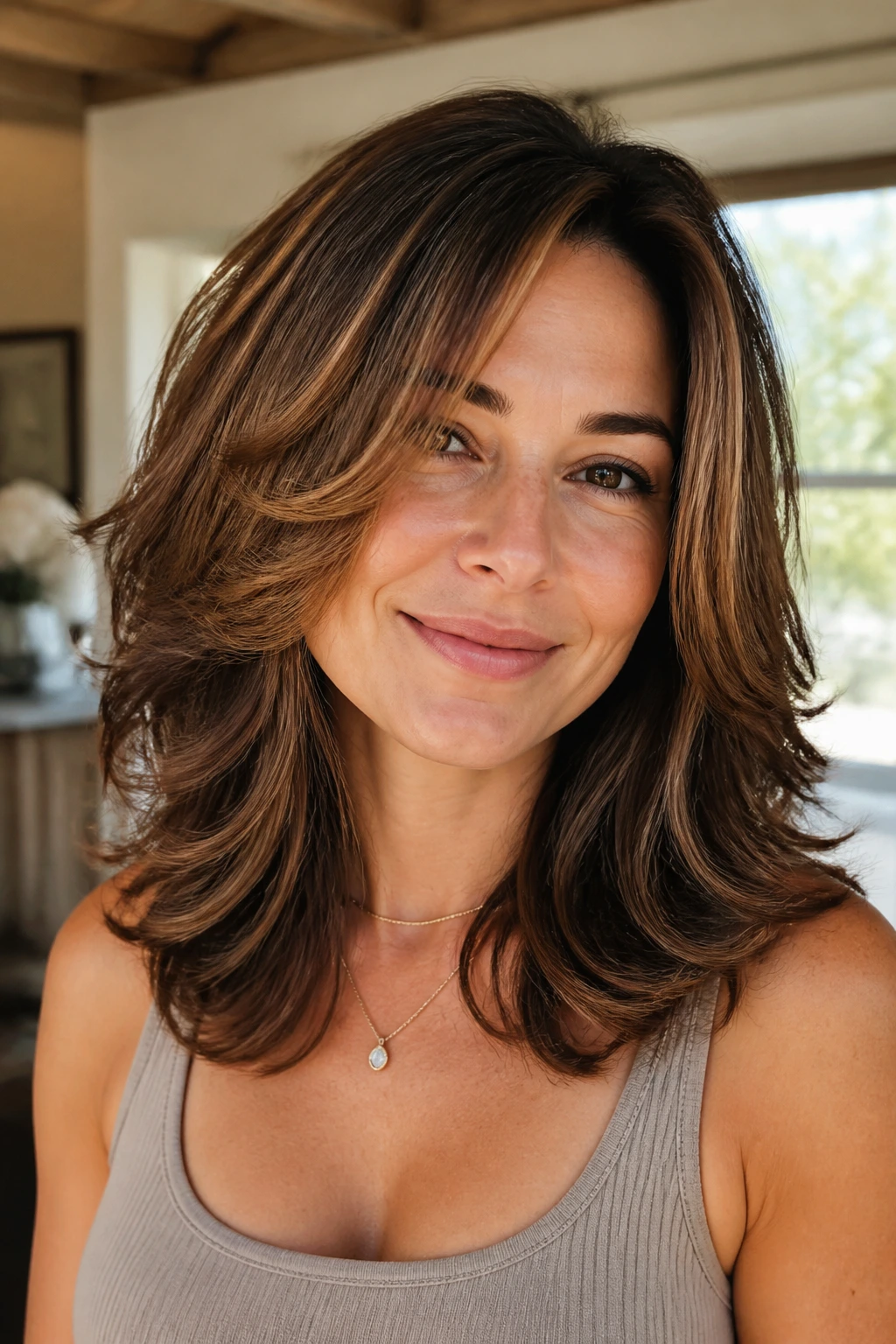
Ribbon layers are softer than choppy layers. They thread through the thickness instead of carving big gaps into it. On a round face, that softness matters because it avoids extra width while still giving the cut movement.
Shoulder length is a good landing point if you want a style that doesn’t feel too long or too short. The layers fall in ribbons around the face and shoulders, which gives thick hair some swing without making the ends fray. It’s a nice option for people who want layered texture but don’t want to look like they’re wearing a “style.”
This cut usually works best with a loose bend. One or two waves through the front pieces are enough. More than that and it starts looking overdone.
24. Long Perimeter with Minimal Face Shortening
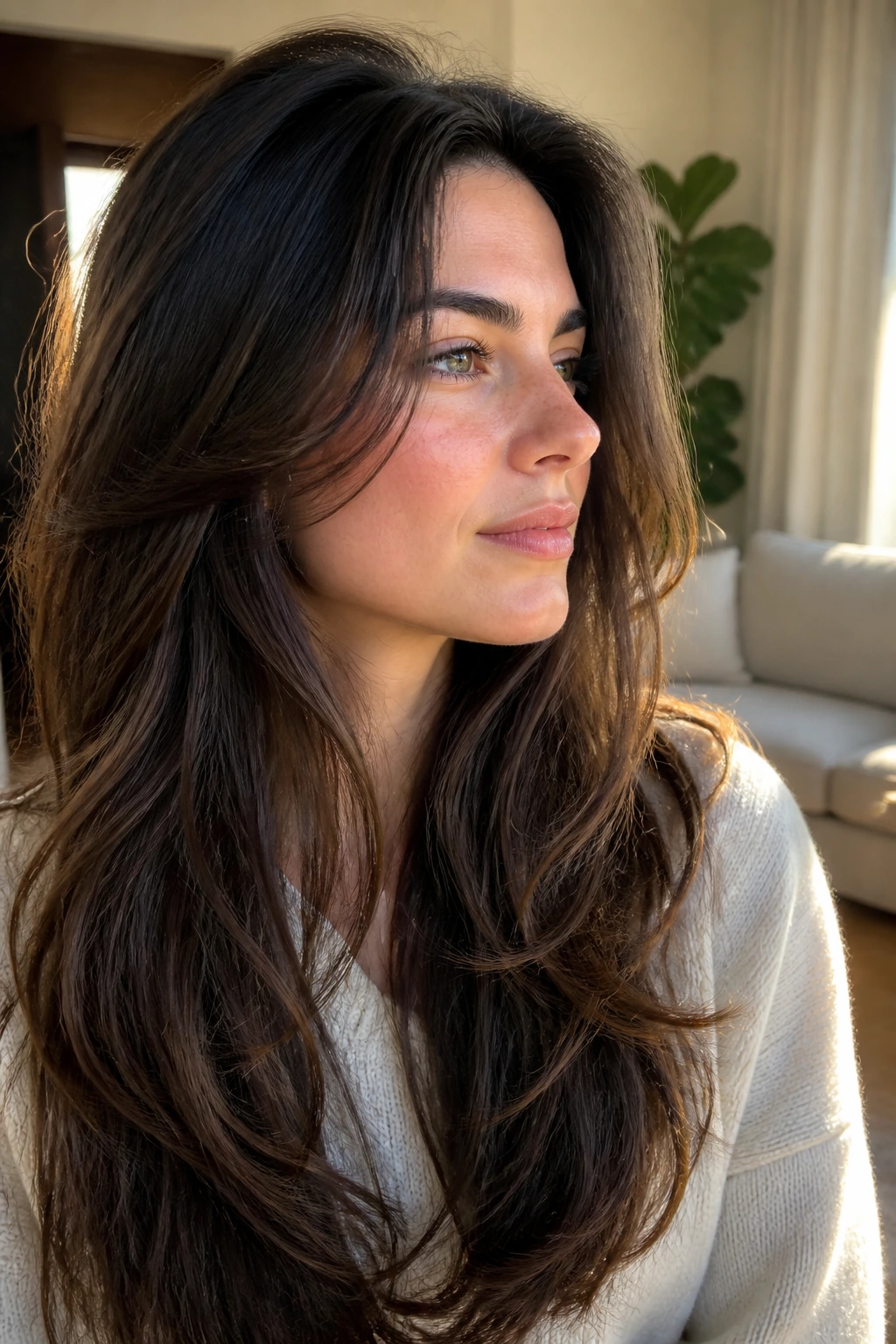
Not everyone wants a dramatic face frame. Some people want their hair to stay long and thick and still look shaped. This cut keeps the perimeter heavy and the front shortening minimal, which is a smart move if you’re nervous about layers getting too high.
For round faces, the shaping comes from a subtle angle around the front and a bit of internal movement through the sides. You still get elongation, but it’s quiet. Thick hair benefits because the density stays in the ends, which gives the hair a luxe feel even when it’s air-dried.
I’d recommend this if you’re growing your hair out, or if you’re the kind of person who gets annoyed when the front pieces spend half their life in your mouth.
25. Off-Center High-Movement Cascade
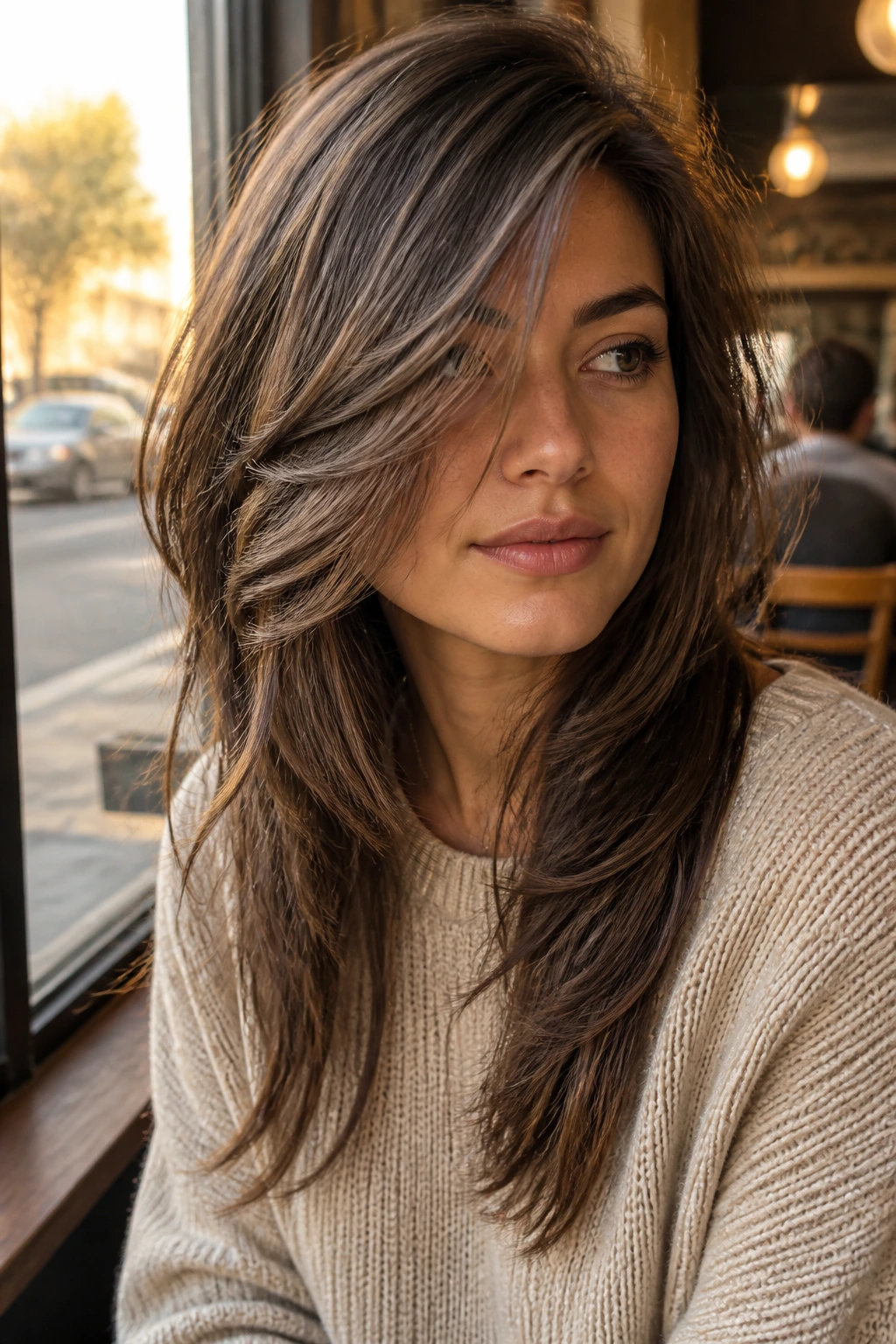
This is the cut I’d put at the end of the list because it borrows the best parts of several others and makes them work together. The part sits off-center, the front pieces travel low and long, and the layers move through the mid-lengths with enough separation to keep thick hair from turning blocky.
The off-center part is the quiet hero. It breaks up the symmetry of a round face without looking dramatic. The cascade of layers keeps the silhouette narrow enough to elongate the face, while still giving the hair a lot of swing.
If you want one layered shape that feels flattering from almost every angle, this is a strong place to land. It’s especially good when you want the hair to look polished in photos and still move in real life, which, honestly, is the part that matters.
Why Tousled Layers Change the Shape of the Cut
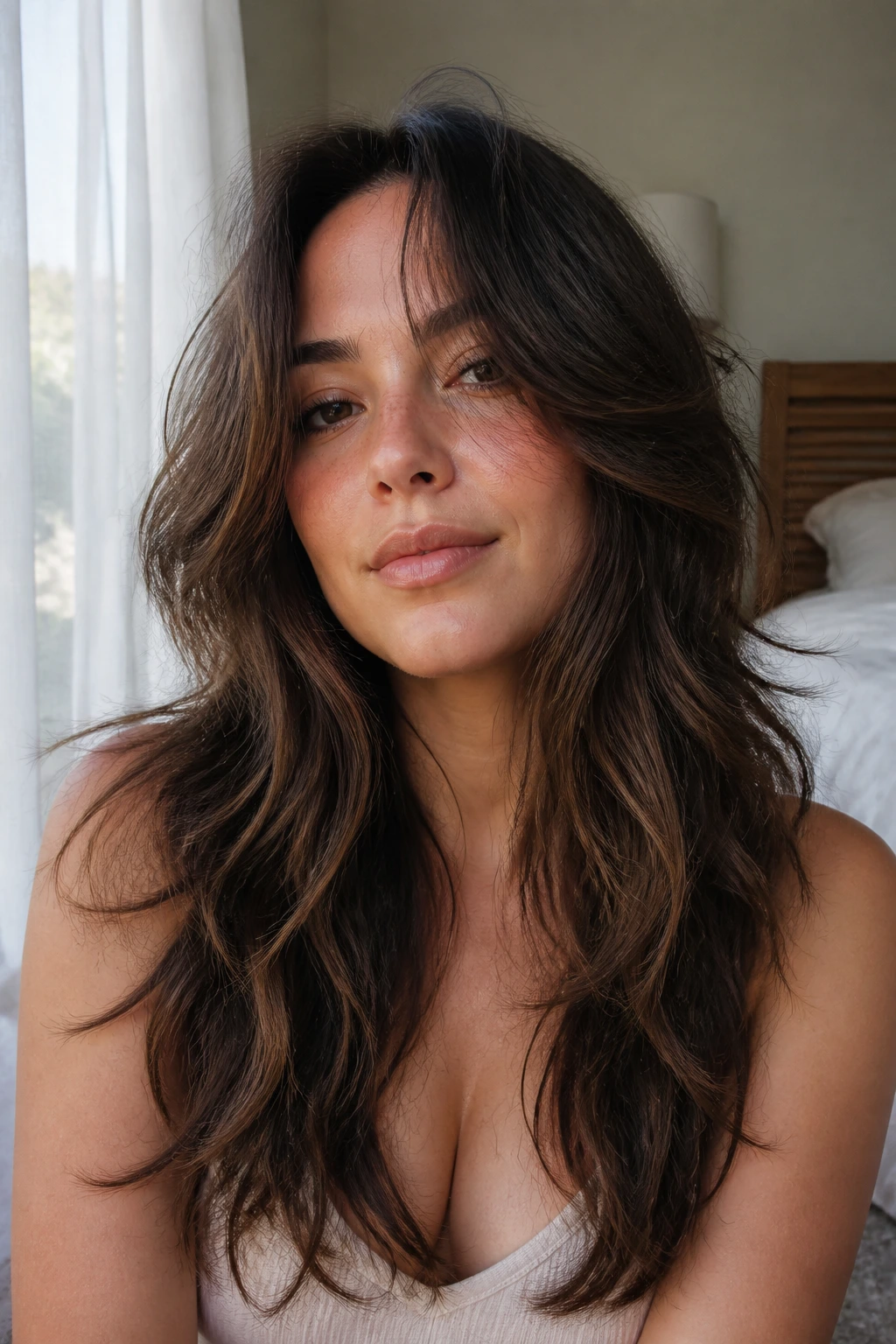
A round face and thick hair can be a tricky pair because both tend to widen a haircut if nobody keeps an eye on the balance. Thick hair pushes outward by nature. A round face already has soft width through the cheeks. Put those together in a blunt cut, and you get a shape that feels heavier than it needs to.
Tousled layers solve that by changing where the eye goes. The best versions create vertical movement through the front and crown, then let the length taper or cascade below the widest part of the face. That means the style can still be full — nobody wants limp thick hair — but the fullness sits lower and moves more freely.
I also like how forgiving these cuts are when they’re grown out a little. A perfectly fresh layered cut is nice. A good tousled cut is better. The second one looks lived-in instead of over-managed, and thick hair tends to hold that shape longer than fine hair does.
How to Talk to Your Stylist Without Getting a Boxy Result
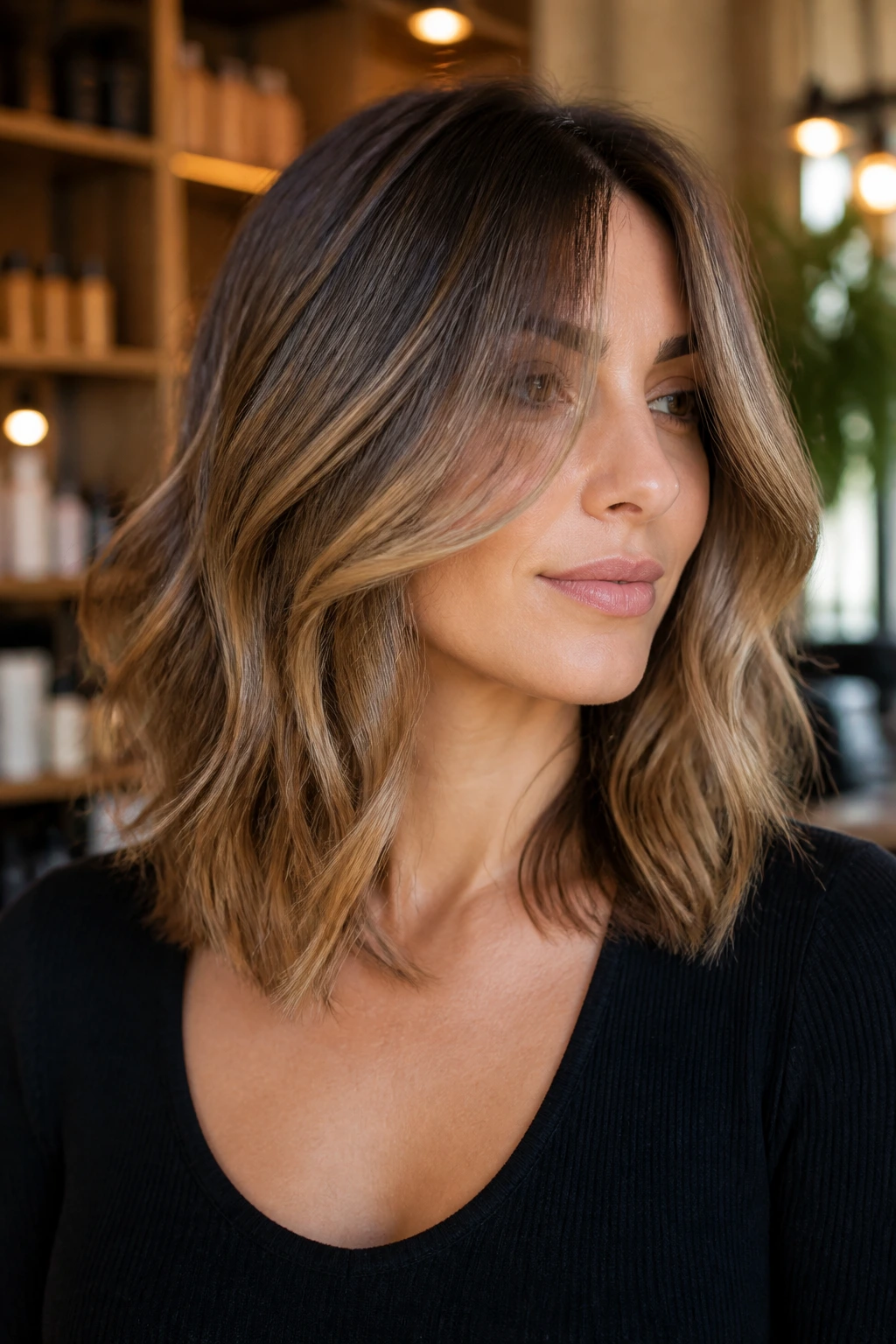
Bring more than a vague request for “layers.” That word can mean almost anything, and on thick hair it often means the wrong thing. Tell your stylist where you want the shortest face-framing pieces to land. If you have a round face, below the cheekbone is usually safer than at cheek level.
Say you want movement through the interior and less bulk at the sides, not just shorter pieces everywhere. Those are different jobs. If the stylist understands that, you’re far more likely to leave with a shape that falls the way you imagined.
A photo helps, but only if you point to the details that matter: the part, the front length, the crown lift, the end finish. The same haircut can look completely different on a person with dense hair versus someone with medium density, so don’t rely on the picture alone.
Essential Equipment for These Looks
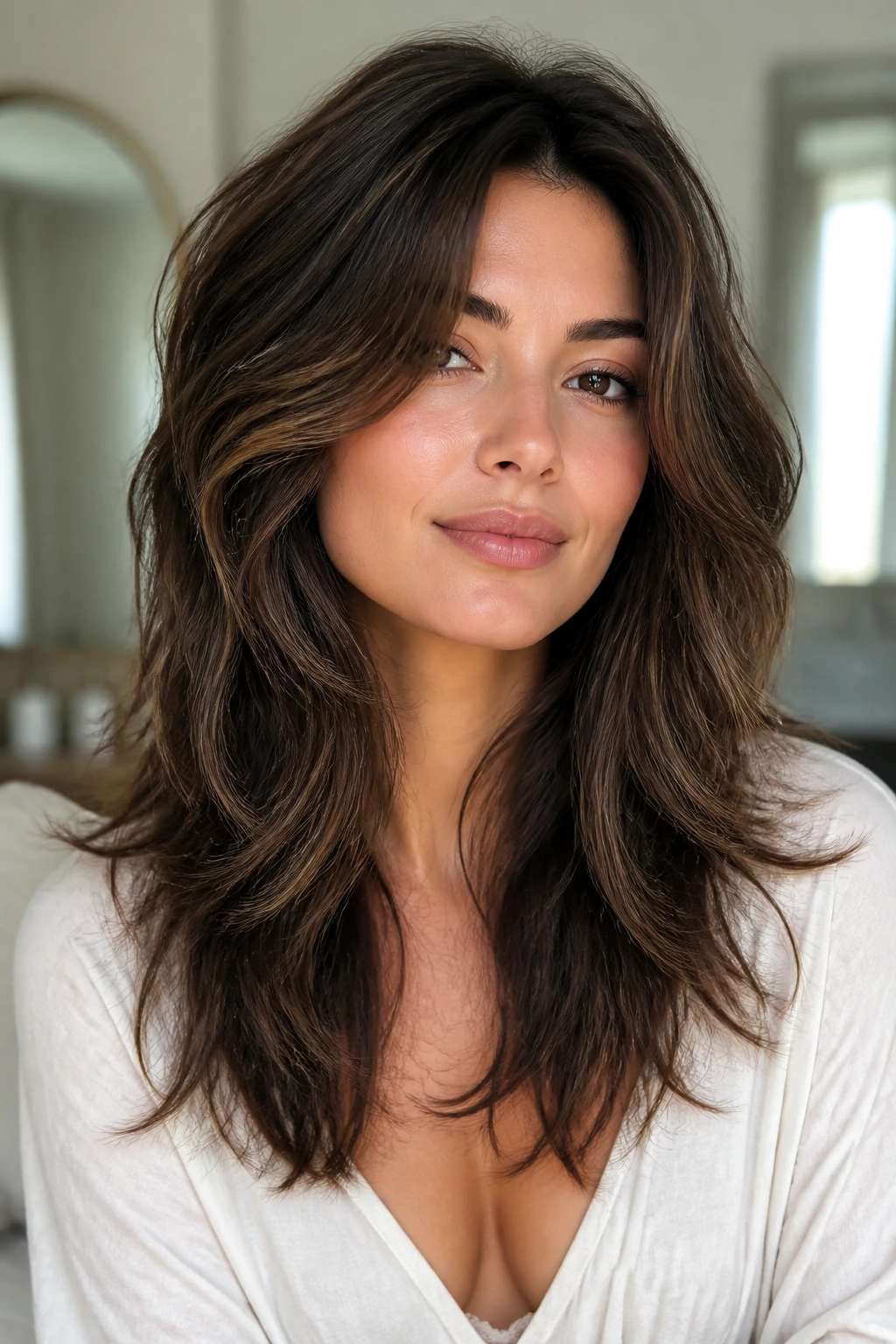
- Blow dryer with a concentrator nozzle: Helps direct the front pieces away from the cheeks instead of blasting them into frizz.
- Medium round brush: Useful for collarbone layers, blowout cuts, and anything that needs a soft bend.
- 1.25-inch curling iron or wand: Creates loose waves that show off layers without turning them into ringlets.
- Paddle brush: Good for rough-drying thick straight hair and smoothing the perimeter.
- Sectioning clips: Thick hair needs sections, or you’ll end up steaming the underlayers while the top stays damp.
- Heat protectant spray: Non-negotiable if you’re using heat on the front pieces often.
- Mousse or root-lift spray: Gives crown height without stiffness.
- Texturizing spray: Works best on the mid-lengths and ends, not the roots.
- Diffuse attachment: Very helpful for curly or wavy textures that need shape without frizz.
- Lightweight serum or cream: Keeps the ends soft and stops them from looking rough after styling.
How to Pick the Right Version for Your Texture
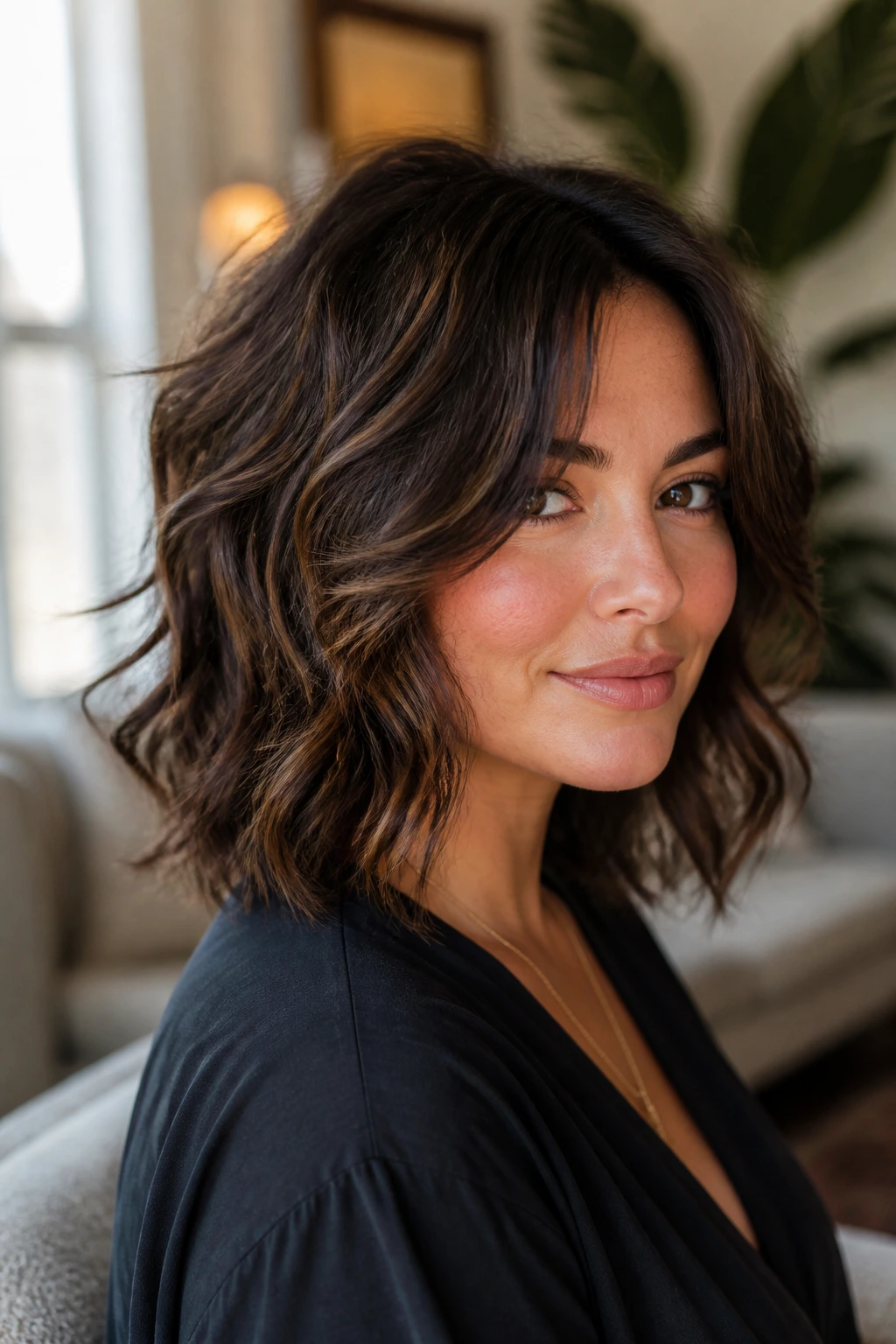
Straight thick hair usually benefits from hidden layers or a soft V shape because the goal is movement without a jagged edge. If you ask for too many visible layers, the hair can puff outward at the ends and feel wider than before.
Wavy hair can carry a little more texture. Soft shag, butterfly layers, and ribbon layers tend to work well because the wave pattern hides the cuts and gives the shape some natural bend. The front pieces still need to start low enough to avoid crowding the cheeks.
Curly hair needs the most respect. Dry cutting, curl-by-curl shaping, and long face-framing pieces usually beat aggressive thinning every time. If a stylist wants to take heavy texture out of curly hair with a razor and no plan, I’d be cautious.
Practical Styling Moves That Make the Layers Behave
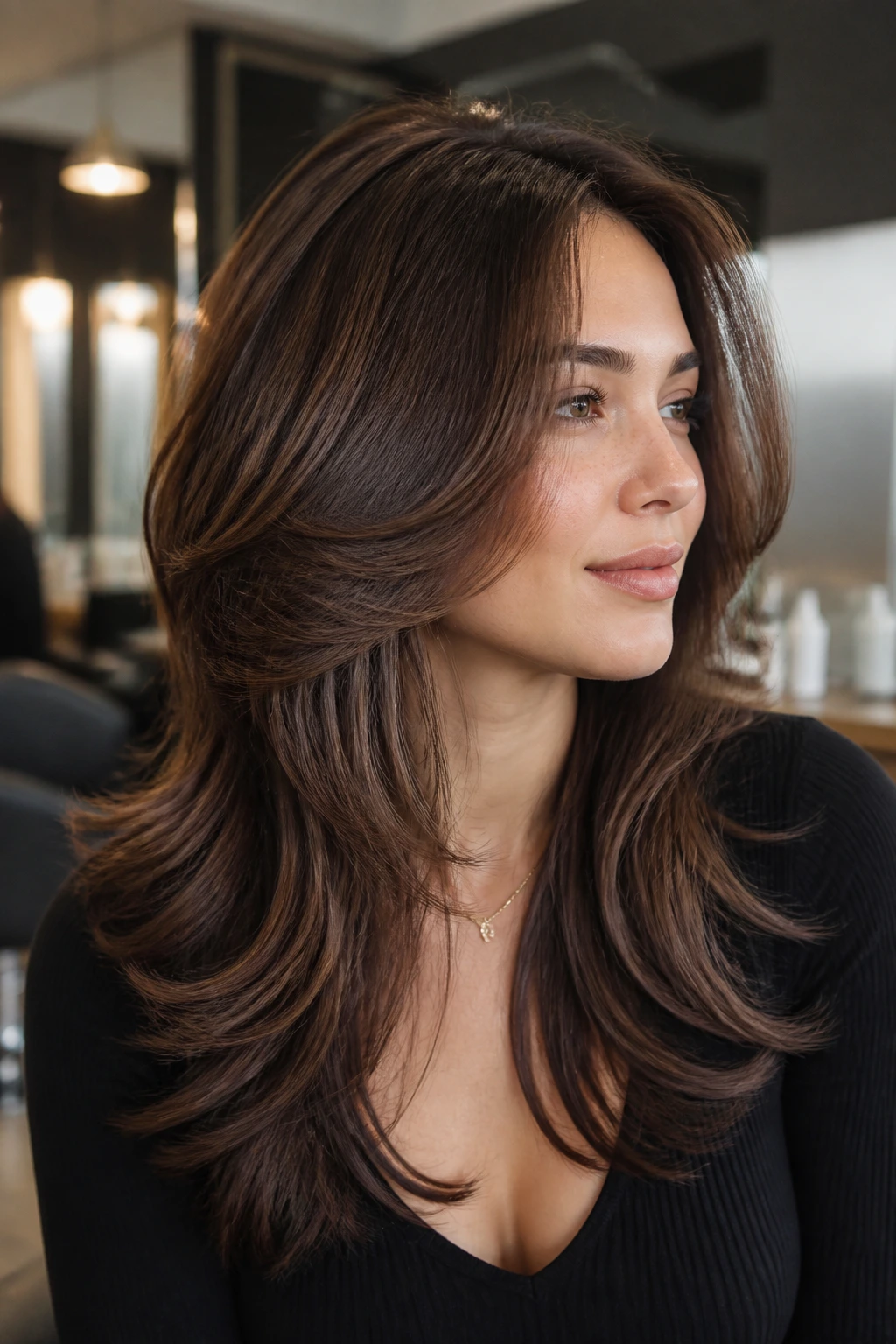
Root Lift: Put mousse or root spray at the crown and part line while the hair is still damp. Thick hair can support the shape, but you still need lift at the roots so the sides don’t feel heavy.
Face-Frame Bend: Curl the front pieces away from the face with a 1.25-inch iron, then let them cool in your hand before touching them. That pause helps the bend last longer.
Bulk Control: Use one smoothing cream in the mid-lengths and stop there. Thick hair gets greasy fast if you stack serum, cream, and oil all in the same section.
Day-Two Reset: Mist the front lightly with water, twist the pieces around your fingers, and hit them with a few seconds of heat. It’s quicker than redoing the whole head.
Glasses-Friendly Trick: If you wear frames, keep the shortest front pieces below the frame line. That keeps the hair from competing with your glasses every time you turn.
Common Mistakes That Make the Cut Puff Out or Fall Flat
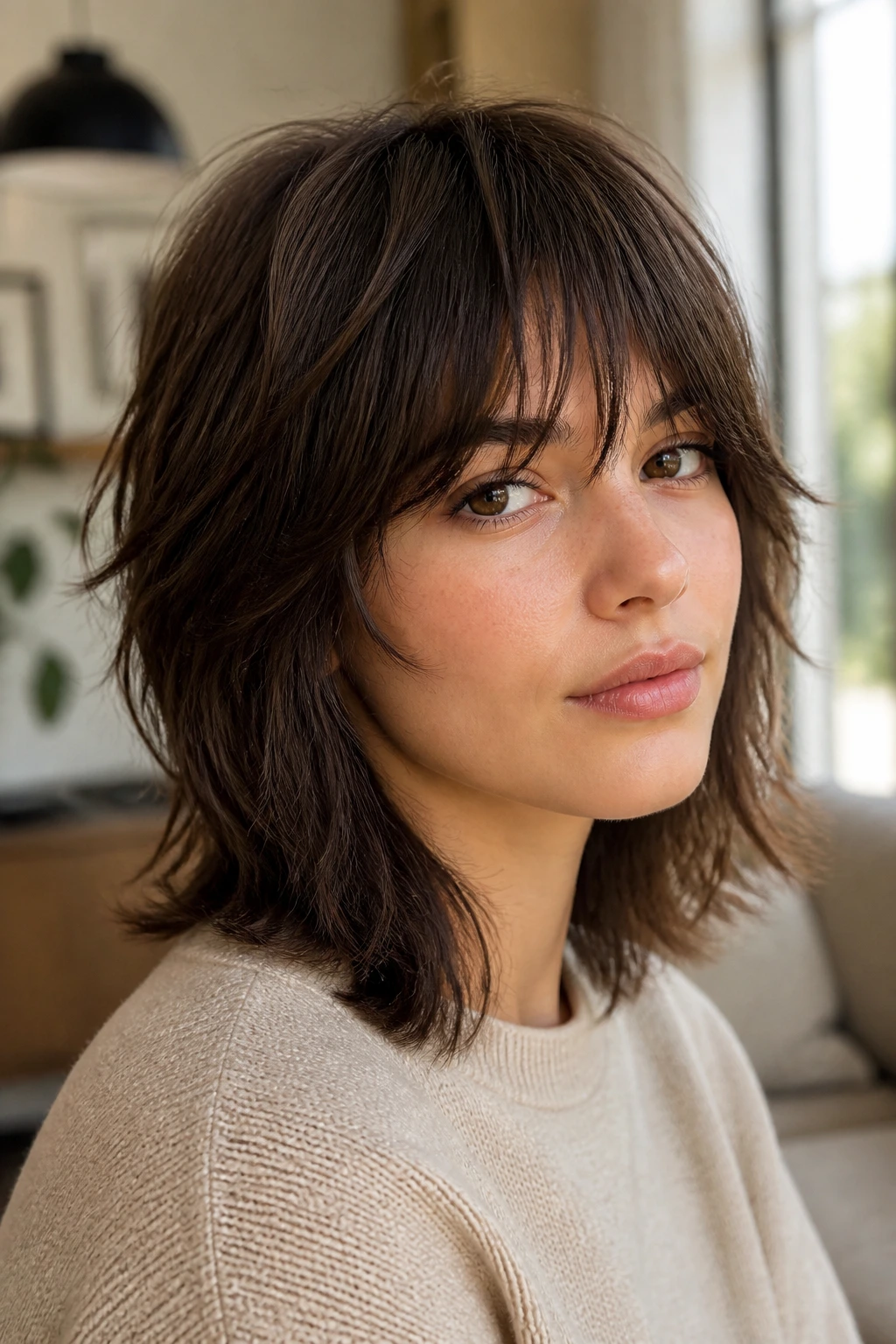
Starting the shortest layers too high. That’s the fastest way to widen a round face. Keep the face frame low enough to travel past the cheeks.
Over-thinning thick hair. The result can look stringy at the ends and frizzy by noon. Ask for weight removal, not a shredded finish.
Cutting the bangs too blunt. Dense bangs can make the forehead and cheeks feel boxed in. A softer fringe or side sweep usually works better.
Ignoring the part. A center part without crown lift can flatten the face shape. A deep side part can overdo it if the rest of the cut is already asymmetric. The part and the layers need to agree with each other.
Styling every wave into a tight curl. That can make the whole cut look wider. Loose bends and directional movement are usually better for round faces.
Variations and Alternatives to Try
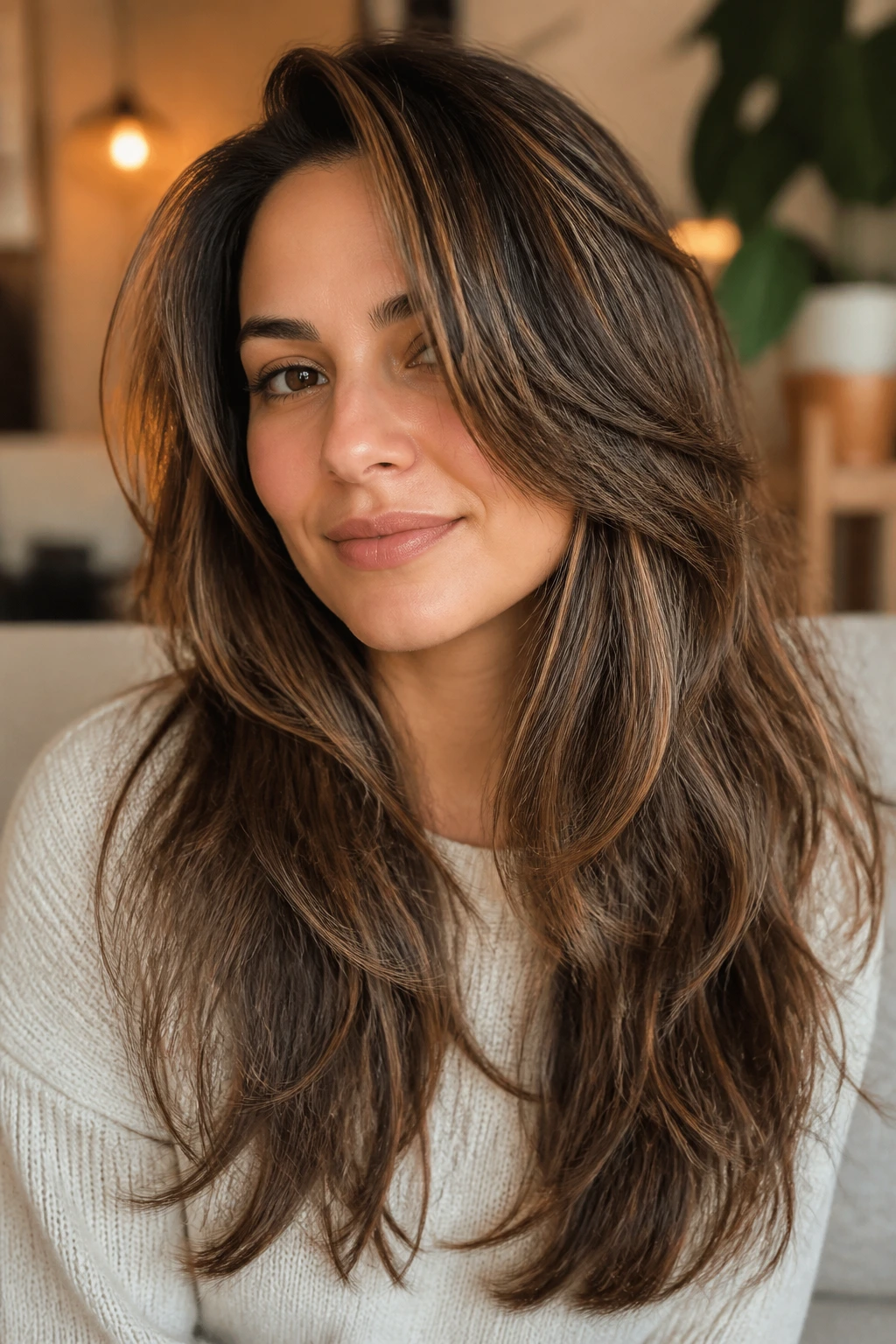
Air-Dry Friendly Layers: Keep the front pieces long and let the interior layers do the work. This version is better if you hate heat styling and don’t mind a more relaxed finish.
Blowout-Ready Layers: Shorten the crown a touch more and keep the ends smooth. This one is made for round-brush styling and a little lift at the roots.
Curly-First Shape: Cut dry, preserve the curl clumps, and keep the face frame long. It’s the best pick if your curls expand sideways when they’re cut too short.
Low-Commitment Lob: Stay at collarbone or just above it with soft internal layers. If you want movement without a big change, this is the cleanest route.
Long-Length Cascade: Keep almost all the length and add only long front layers plus a soft V at the back. Good if you want to keep growing your hair but need it to move.
Side-Part Version: Shift the part and keep the face frame diagonal. This is one of the simplest ways to change the look without changing the length.
Keeping the Shape Between Washes
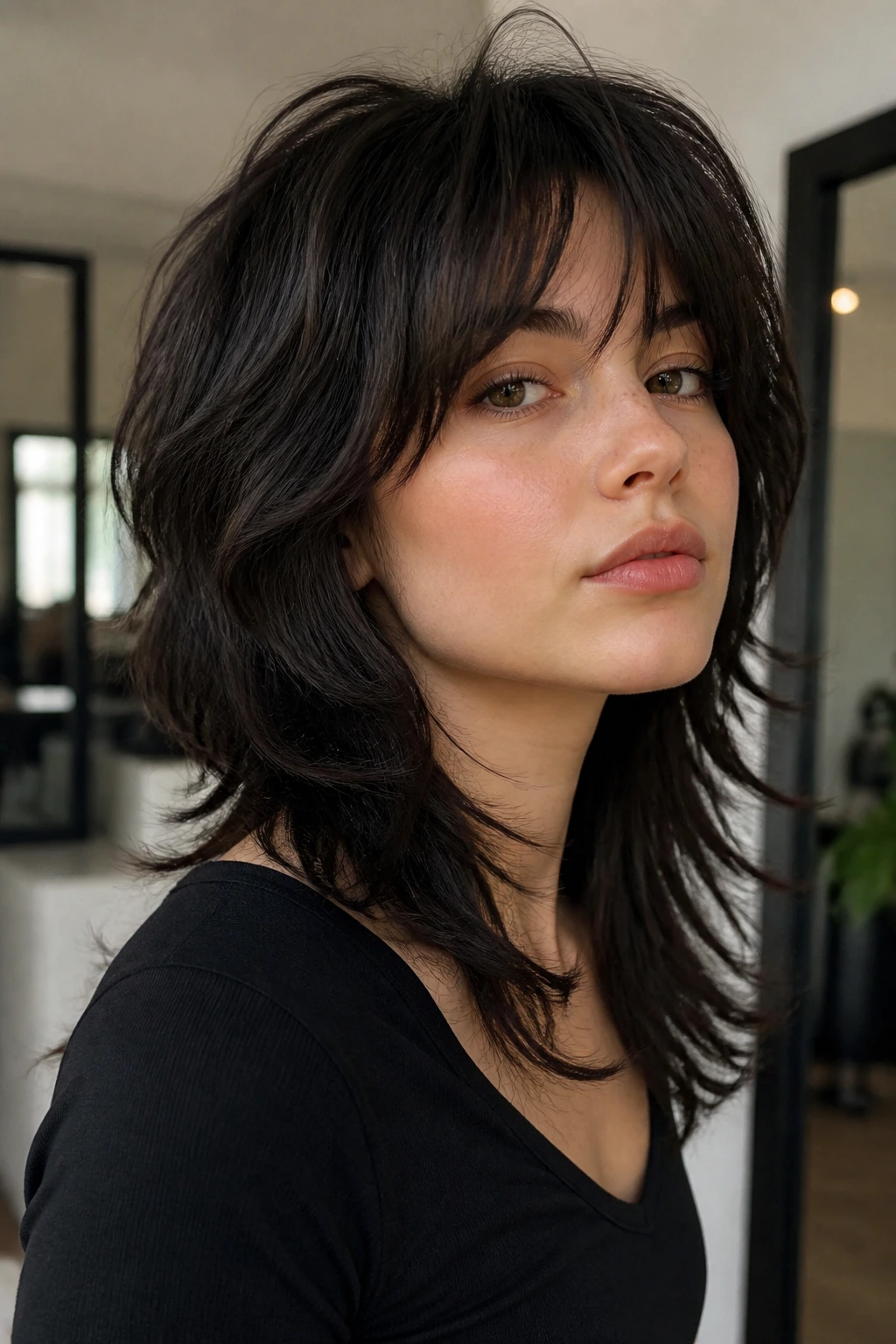
Thick hair usually doesn’t need daily washing, and these cuts often look better on day two anyway. A little oil at the ends and a spritz of dry shampoo at the roots can keep the shape from collapsing. If the front pieces start to flip the wrong way, a quick blast of heat on a round brush fixes more than a full restyle.
For shorter layered lobs, plan on trims every 8 to 10 weeks if you want the shape to stay crisp. Longer cuts can stretch to 10 to 12 weeks, but the face frame still needs attention before it drops past the point where it flatters the cheeks.
Sleep matters more than people admit. A loose clip at the crown or a silk scrunchie can keep the top from getting crushed flat. If you wake up with the sides puffed out, a little steam from the bathroom mirror and a few finger-combed waves usually bring the cut back to life.
Frequently Asked Questions
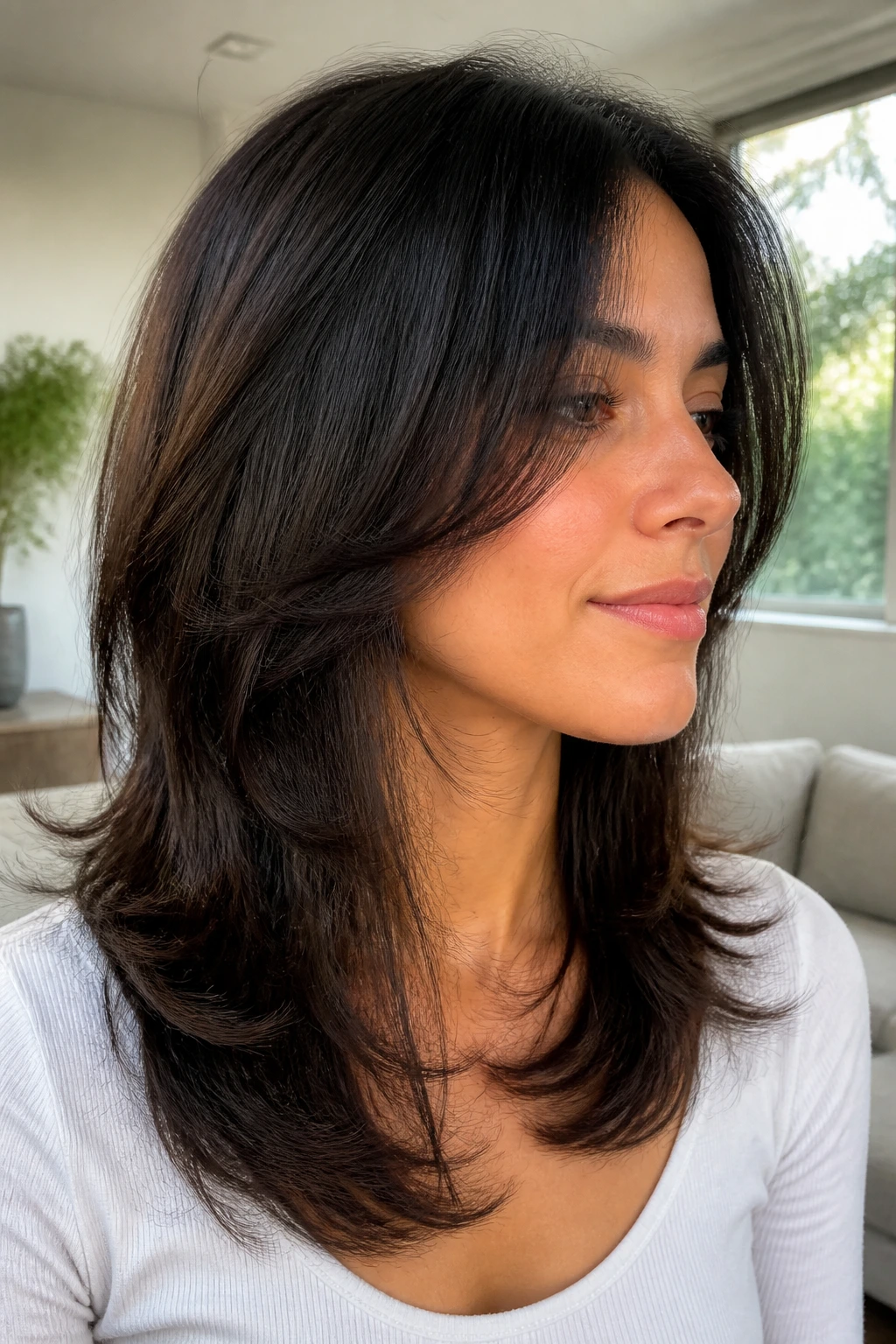
Do tousled layers make a round face look wider?
They can, if the shortest pieces land at cheek level or if the sides get overfilled. The safer version keeps the front pieces long, adds lift at the crown, and lets the movement fall below the widest part of the face.
What length is best for thick hair and a round face?
Collarbone, shoulder, and long layered cuts usually give the most flexibility. Very short cuts can work too, but they need a sharp shape and a stylist who knows how to remove bulk without expanding the sides.
Can I wear curtain bangs with a round face?
Yes, if they’re soft and long enough to open at the center and sweep past the cheeks. Curtain bangs that stop too high can make the face feel wider, so ask for longer side pieces.
Is a center part a bad idea?
Not at all. A center part works when the crown has lift and the face frame is long enough to stretch the shape downward. Without that, it can flatten the haircut.
How do I keep thick hair from looking puffy after layering?
Use less volume product on the sides and more control in the mid-lengths and ends. The haircut should remove bulk in the interior, and your styling should keep the sides from expanding outward.
Are razor cuts safe for thick hair?
Sometimes. Razor texturizing works well on healthy straight or wavy hair, but it can fray rough, porous, or curly hair. If your strands already frizz easily, scissors and point-cutting are usually kinder.
How often should I trim this kind of haircut?
Every 8 to 10 weeks for lobs and shorter layered shapes, and every 10 to 12 weeks for longer cuts. The front pieces usually need attention first because they grow into the cheek line faster than the rest.
What if I wear glasses?
Keep the front pieces longer and softer so they don’t crowd the frames. A piece that lands just below the glasses line looks more intentional than one that keeps flipping into the lenses.
The Shape That Keeps Working
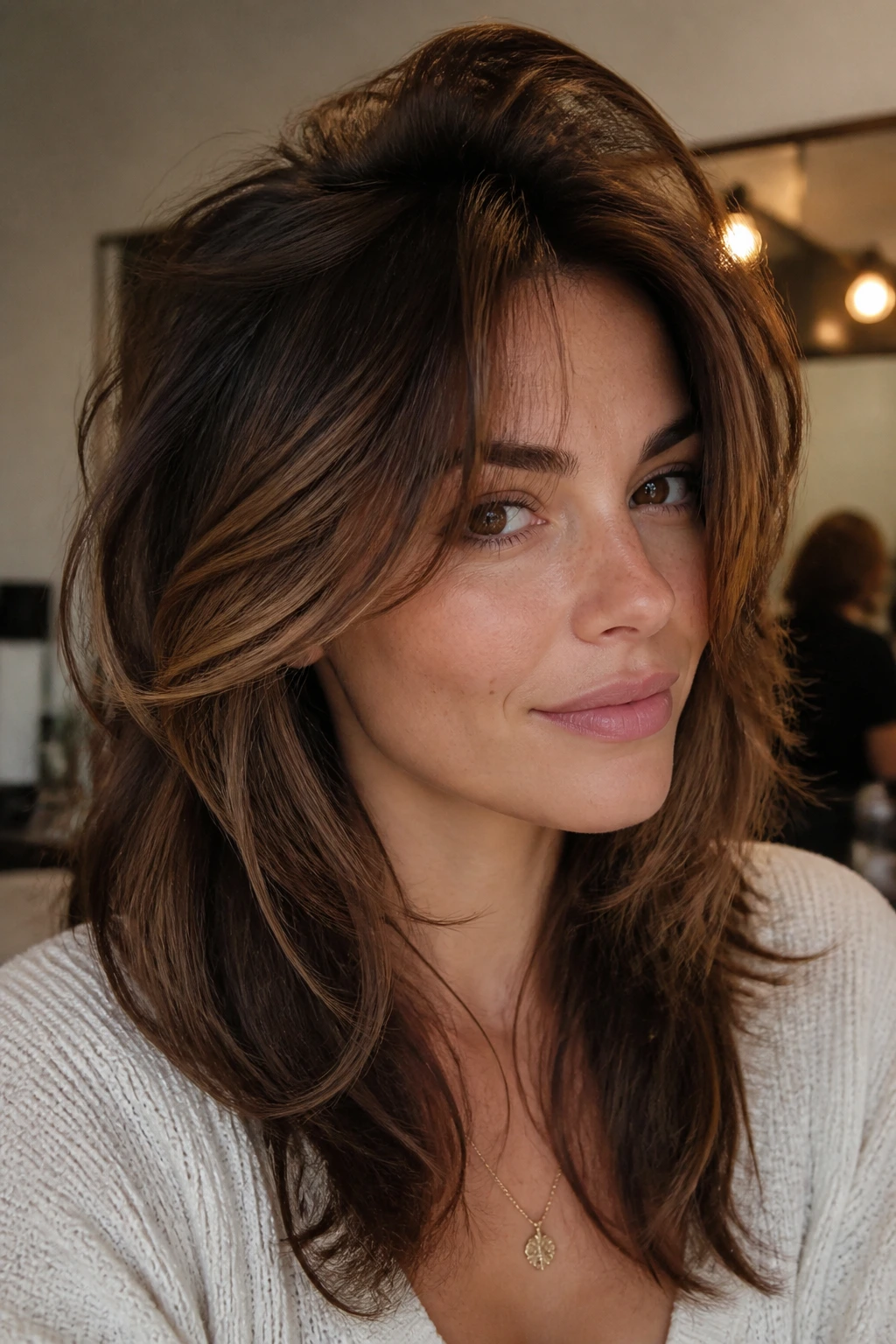
The best tousled layers for round faces and thick hair do something very plain and very useful: they make the hair easier to wear without taking away its body. That’s a better result than chasing drama for its own sake. Thick hair already has presence. It usually needs direction more than volume.
If you choose the right face-framing length, keep the bulk under control, and give the front pieces a little bend, the haircut starts doing the heavy lifting for you. And that’s the part worth paying attention to the next time you sit in a salon chair.