



Thick hair can look luxurious on a heart-shaped face, but only when the layers are doing real work. Otherwise, the whole cut can tip into that familiar heavy shape at the bottom, wide at the top, and oddly flat through the middle — the haircut equivalent of a coat that fits in one place and fights you everywhere else. The sweet spot for blonde layers for thick hair and heart-shaped faces is a cut that removes weight in the right spots, keeps movement around the cheekbones, and leaves enough density at the ends so the hair still feels full.
Bluntness is the enemy here.
A heart-shaped face usually carries more visual width through the forehead and cheekbones, then narrows toward the chin. Thick hair adds its own drama, because it doesn’t just lie there politely; it wants to expand, swing, and sometimes puff out in humidity like it has opinions. The right layer pattern solves both problems at once. It softens the top, adds a little width lower down, and lets blonde placement do the polishing work that bad layering can’t.
I’m partial to blonde cuts that have some shadow at the root and brightness around the front. That contrast gives the layers shape even when the hair is worn loose on a rushed morning, and it keeps thick hair from reading as one big gold block. The styles below cover soft, blown-out, shaggy, sleek, long, midlength, and fringe-heavy versions so you can choose the kind of movement that matches your hair instead of fighting it.
Why These Layers Earn Their Keep
-
Bulk comes down without losing body: These cuts take weight out of thick hair where it piles up, especially through the mid-lengths and sides, so the ends don’t flare out like a bell.
-
The face frame does real balancing work: Front pieces that start around the cheekbone or lip area help a heart-shaped face feel more even, because they put a little softness near the jaw.
-
Blonde placement makes the shape visible: Bright pieces around the front, temples, and ends catch light on the moving parts of the cut, which is why these styles look better than a one-tone blonde with the same layer pattern.
-
Most of them grow out with manners: Longer layers, rounded shapes, and rooted blondes keep their outline longer, so you’re not trapped in the salon every few weeks.
-
They’re flexible on styling days: You can blow them out, rough-dry them, add a bend with a curling iron, or leave them loose and slightly undone. The cut still carries the shape.
-
They don’t flatten the face: Thick hair can swallow features if the front is too heavy. These looks keep the eye moving downward instead of letting all the width sit up top.
Why Layer Placement Matters More Than Length
A lot of people ask for “layers” and stop there, which is how thick hair ends up with a vague shaggy outline that never sits quite right. Length alone doesn’t solve anything. A one-length cut to the ribs can still look bulky, and a chopped-up cut at the shoulders can still balloon if the weight was removed in the wrong places.
For heart-shaped faces, the layer map matters more than the overall length because the goal is balance, not just movement. You usually want softness near the temples, cheekbones that don’t get swallowed, and a lower visual line near the jaw so the face doesn’t feel top-heavy. That’s why face-framing pieces, curtain sections, and longer side layers show up so often in this list. They don’t just “frame” the face. They redirect it.
Blonde color can either help or wreck that effect. Bright money pieces can open the face beautifully, but if the whole head is over-lightened and over-layered, the style loses structure. The best blonde layers have a little depth at the root, enough tone variation through the mids, and a few lighter strokes where the eye should land first. That’s the difference between hair that looks shaped and hair that looks merely colored.
1. Curtain Layers with Honey Blonde Ribbons
Curtain layers are one of the safest bets for thick hair because they split the front of the cut without stealing all the density. The shortest pieces usually start around the cheekbone or just below it, then drift into longer lengths near the mouth and collarbone. That soft diagonal matters on a heart-shaped face. It pulls attention away from the widest part of the forehead and eases it downward in a way that feels natural, not obvious.
Honey blonde ribbons make the whole thing look warmer and less severe. I like these with a soft center part, because the split at the front gives the hair somewhere to fall instead of sticking out from the head. If your thick hair tends to expand at the sides, ask for long internal layers through the back so the shape stays supple, not puffy.
What makes it work on thick hair
- The front has movement without turning wispy.
- The back keeps enough weight to avoid frizzing out.
- The honey tone adds dimension without making the cut look streaky.
A small bend through the front with a 1.25-inch iron is enough. Don’t overwork it. The whole point is that this cut looks polished even when it isn’t trying hard.
2. Butterfly Layers with a Bright Money Piece
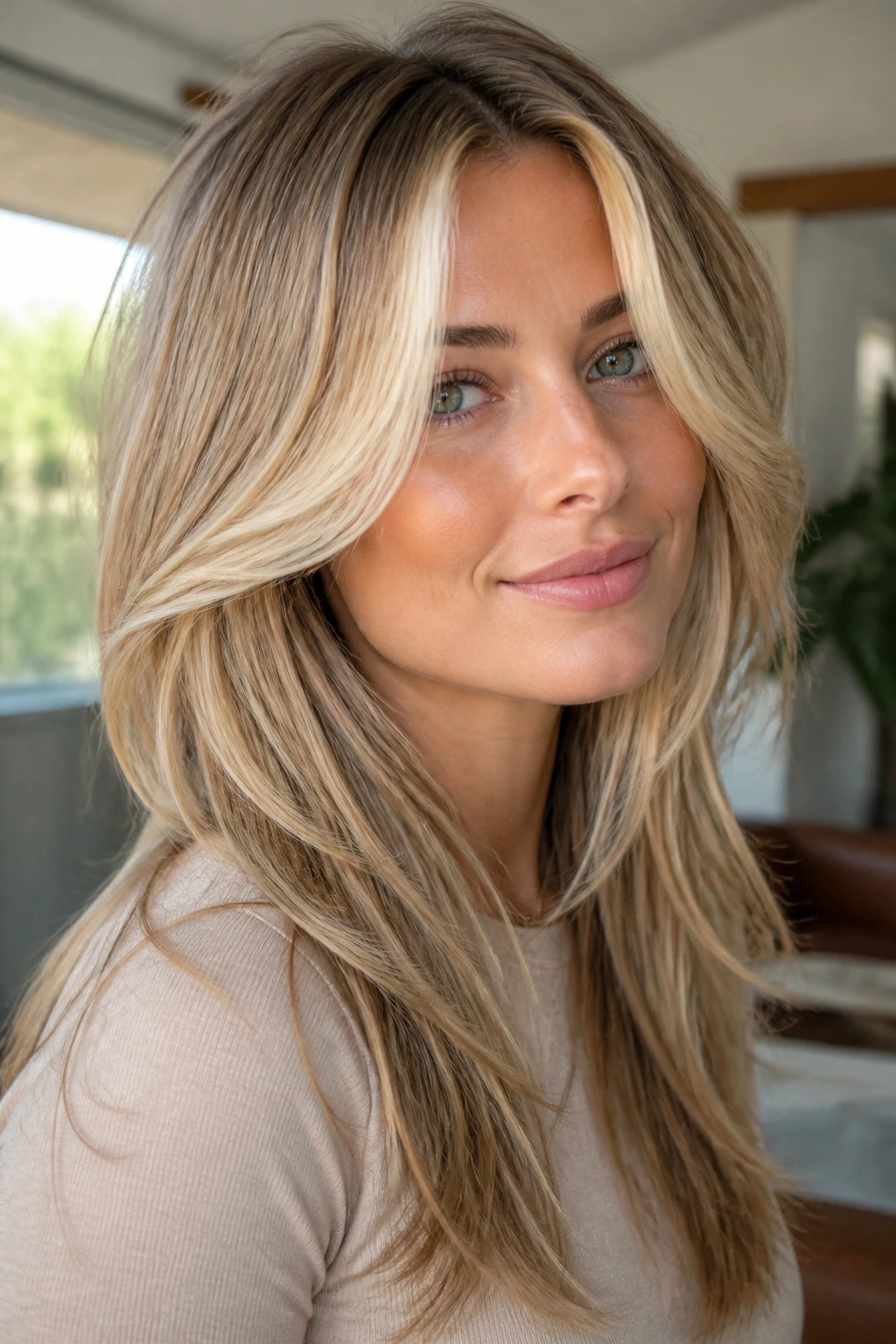
This is the cut that makes thick hair feel lighter without sacrificing the drama that thick hair is good at. Butterfly layers keep the top layer shorter and airier, usually around the collarbone or upper chest, while the lower layer stays long. On a heart-shaped face, that structure keeps volume from sitting only at the crown and gives the lower half of the face a little more visual support.
The bright money piece in front is the part that wakes everything up. A beige, champagne, or soft platinum panel near the face can make the layers read immediately, even when the rest of the hair is tucked behind an ear. I’d keep the money piece a shade or two lighter than the surrounding blonde, not a harsh stripe. You want brightness, not a traffic cone.
If your hair is dense enough to hold big bends, this cut gives you that airy salon blowout look with less daily effort. It’s a strong choice for people who like wearing their hair down and want the front to do more of the balancing work.
3. Long U-Shaped Layers in Beige Blonde
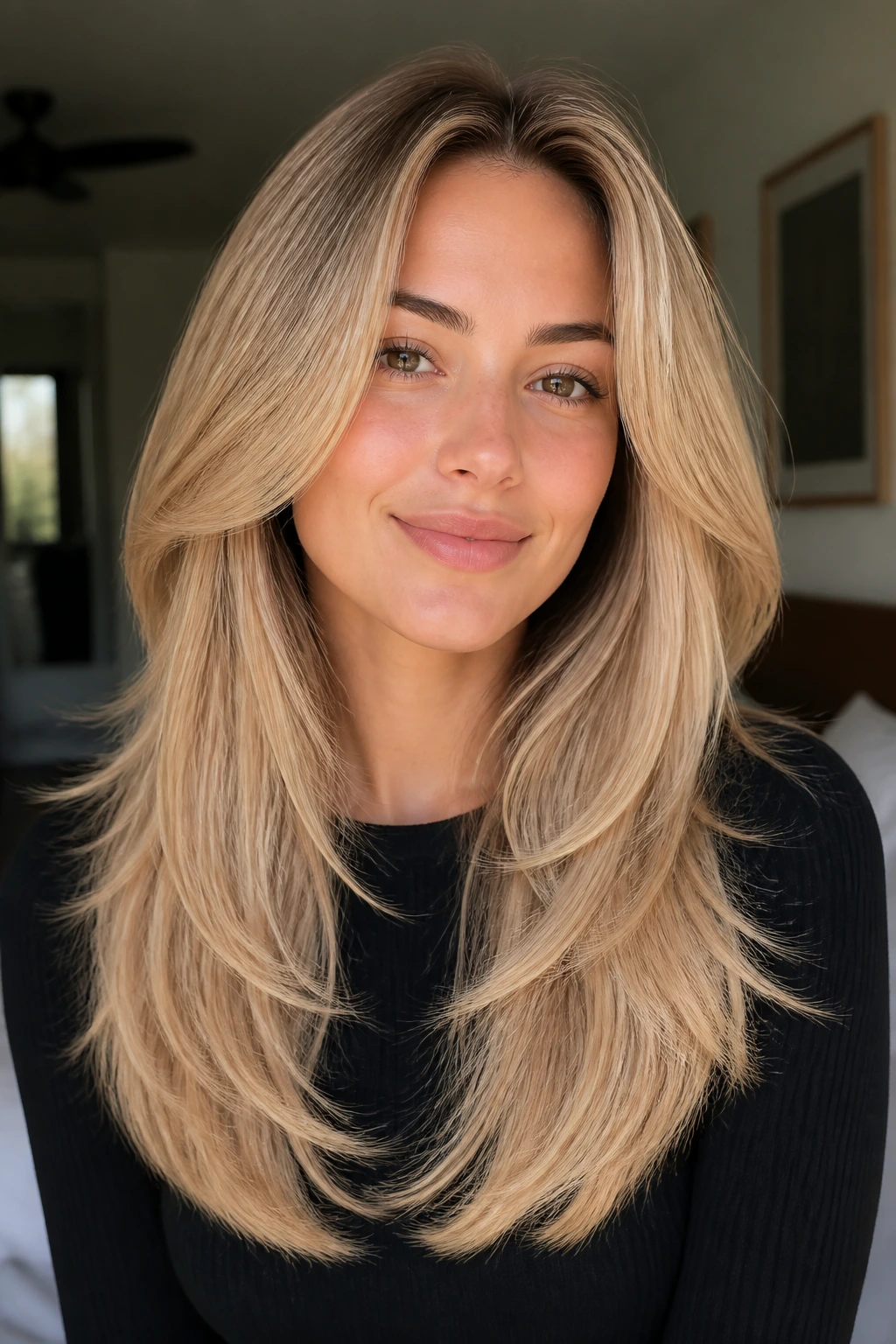
Want to keep the length but stop the ends from dragging? A long U-shape is usually the cleanest answer. The perimeter curves gently at the back, which lets thick hair keep its fullness while taking some of the boxiness out of the silhouette. The layers inside the shape should stay long and blended, not chopped, so the hair falls like a sheet with movement instead of a stack of pieces.
Beige blonde is the right kind of quiet here. It softens thick hair without making every strand look highlighted to death, and it gives the cut a smoother finish than a high-contrast blonde would. For heart-shaped faces, the U-shape is especially useful because it keeps the lower half of the hair fuller and rounder, which balances the narrower chin.
Ask for
- Long face-framing pieces that begin around the cheekbone.
- A curved perimeter, not a blunt straight line.
- Soft beige dimension through the mids and ends.
This one is for the person who likes hair that looks expensive from the back. It behaves beautifully in a low bun, too, which is never a bad thing.
4. Collarbone Shag with Rooted Champagne Blonde
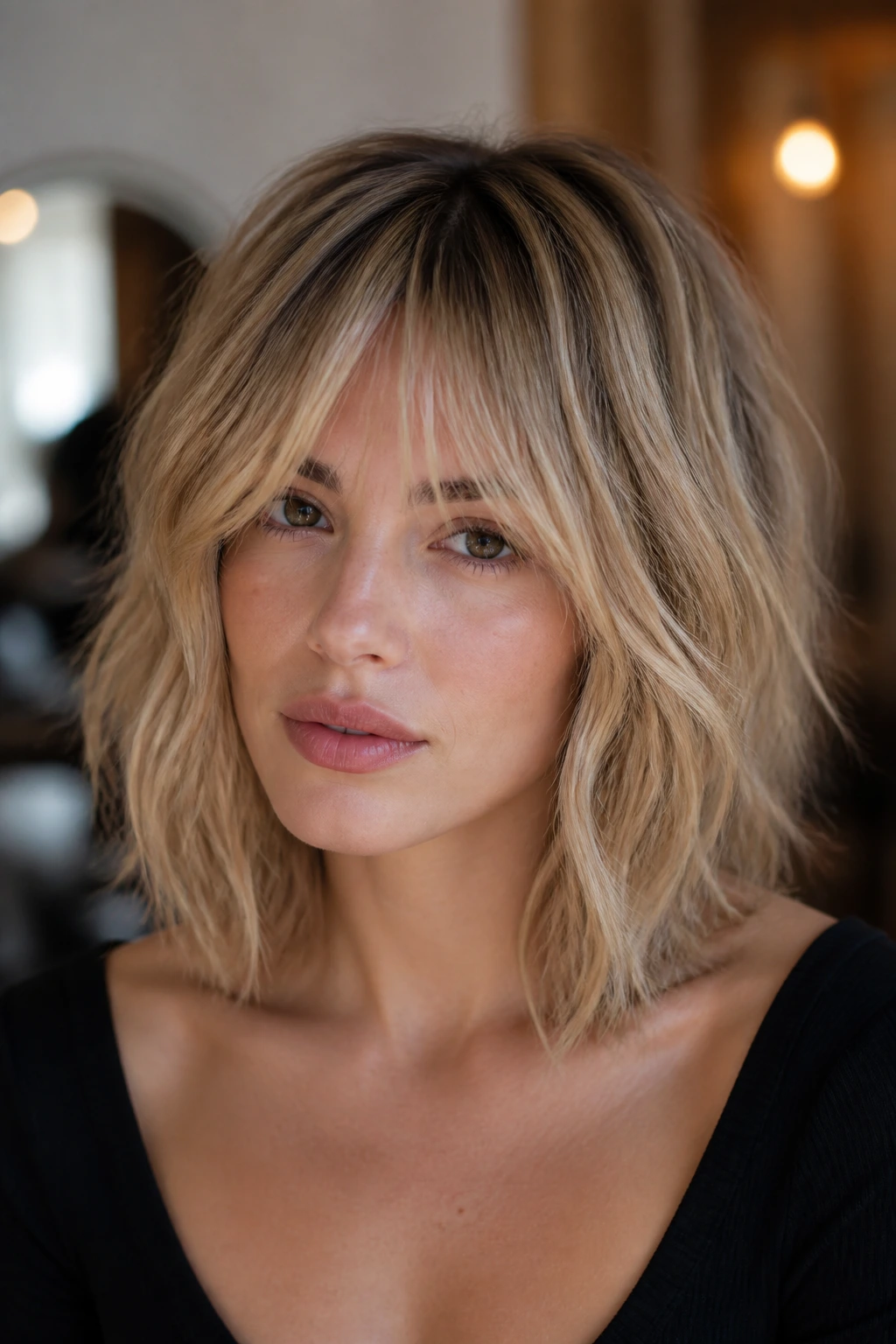
If your thick hair has a little wave in it, this is where things get interesting. A collarbone shag uses choppy but controlled layers to remove weight and create movement right where the hair tends to stack up. The layers are shorter than a U-shape, but not so short that the hair turns fluffy. The collarbone length matters because it gives the cut a landing spot — enough length to swing, enough shape to stay lively.
Rooted champagne blonde is what keeps the style from looking overdone. The darker root gives the shag a little depth and makes the lighter lengths stand out, especially when the hair moves. On a heart-shaped face, I like this cut with a slightly longer fringe or curtain section, because a blunt short fringe can fight the face shape and make the top feel too busy.
If you air-dry a lot, this one pays you back. A little mousse, a scrunch, and a soft bend are usually enough. Not perfect. Better than perfect.
5. Cheekbone Face-Framing with Buttery Babylights
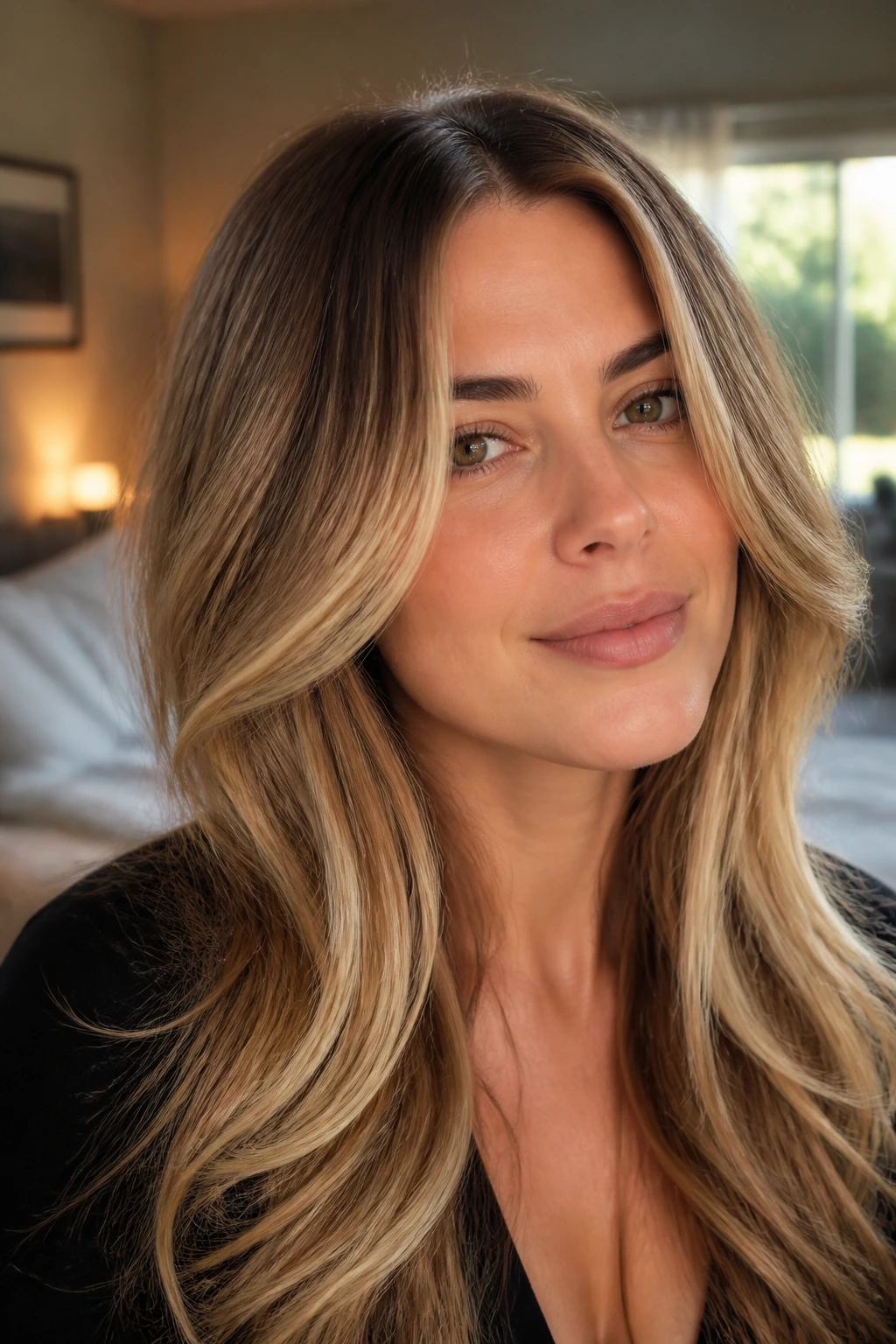
Sometimes the smartest cut is barely a haircut. If you already like your length but want it to flatter a heart-shaped face better, this is the move: long hair with precise face-framing layers that start near the cheekbone and slide down to the jaw and collarbone. Thick hair gets just enough shaping to move, but not so much that it loses the weight that keeps it sleek.
Buttery babylights are the color piece that makes this feel fresh instead of flat. Fine highlights around the front and surface catch the light without turning the whole head into a stripey mess. I prefer babylights on thick hair because they soften the look of density. You can still feel the fullness, but it reads lighter.
This style is especially good if you wear your hair straight or in soft bends and don’t want a lot of visible choppiness. It’s neat, but not stiff. That’s a useful distinction.
6. Modern Rachel Layers with Wheat Blonde Dimension
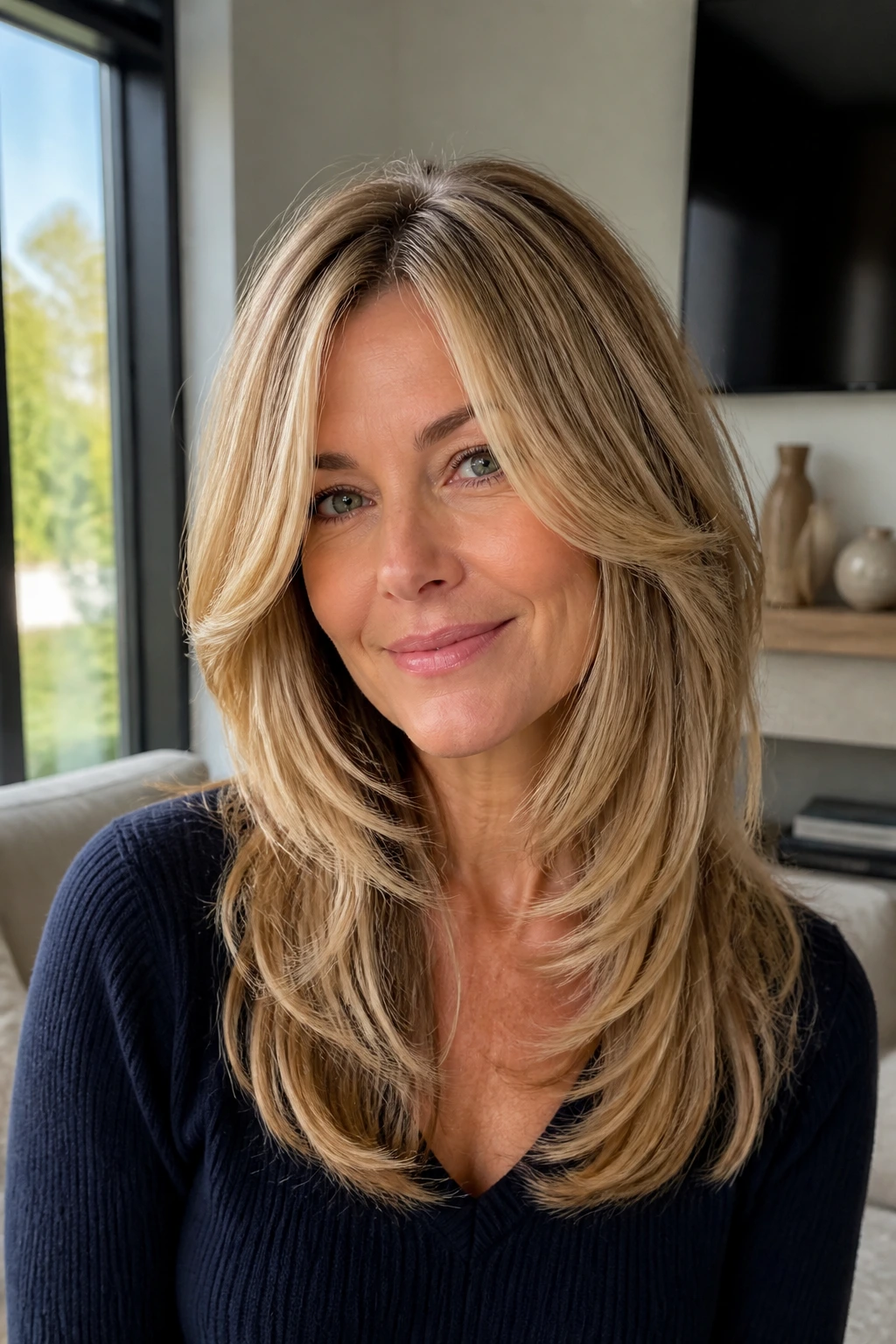
The modern Rachel works because it understands one basic truth: thick hair looks good when it has direction. The layers are cut to fall inward, usually with the front pieces curving around the face and the longer lengths moving away from the chin rather than flaring out. On a heart-shaped face, that inward motion is gold. It makes the jaw feel a little fuller without building too much volume at the forehead.
Wheat blonde dimension keeps the style from reading like a throwback costume. A few warmer ribbons through the mids, a deeper root, and softer ends make the whole cut feel grown-up rather than nostalgic for the sake of nostalgia. If you blow it out with a round brush and keep the ends rounded under, it has that polished, expensive shape that thick hair does so well when it’s cut with restraint.
Best if you want
- A medium-to-long cut with visible movement.
- A smooth blowout shape.
- Blonde that looks dimensional, not streaky.
This one is for someone who likes hair with a little personality but not too much chaos.
7. Rounded Layers with Vanilla Blonde Ribbon Highlights
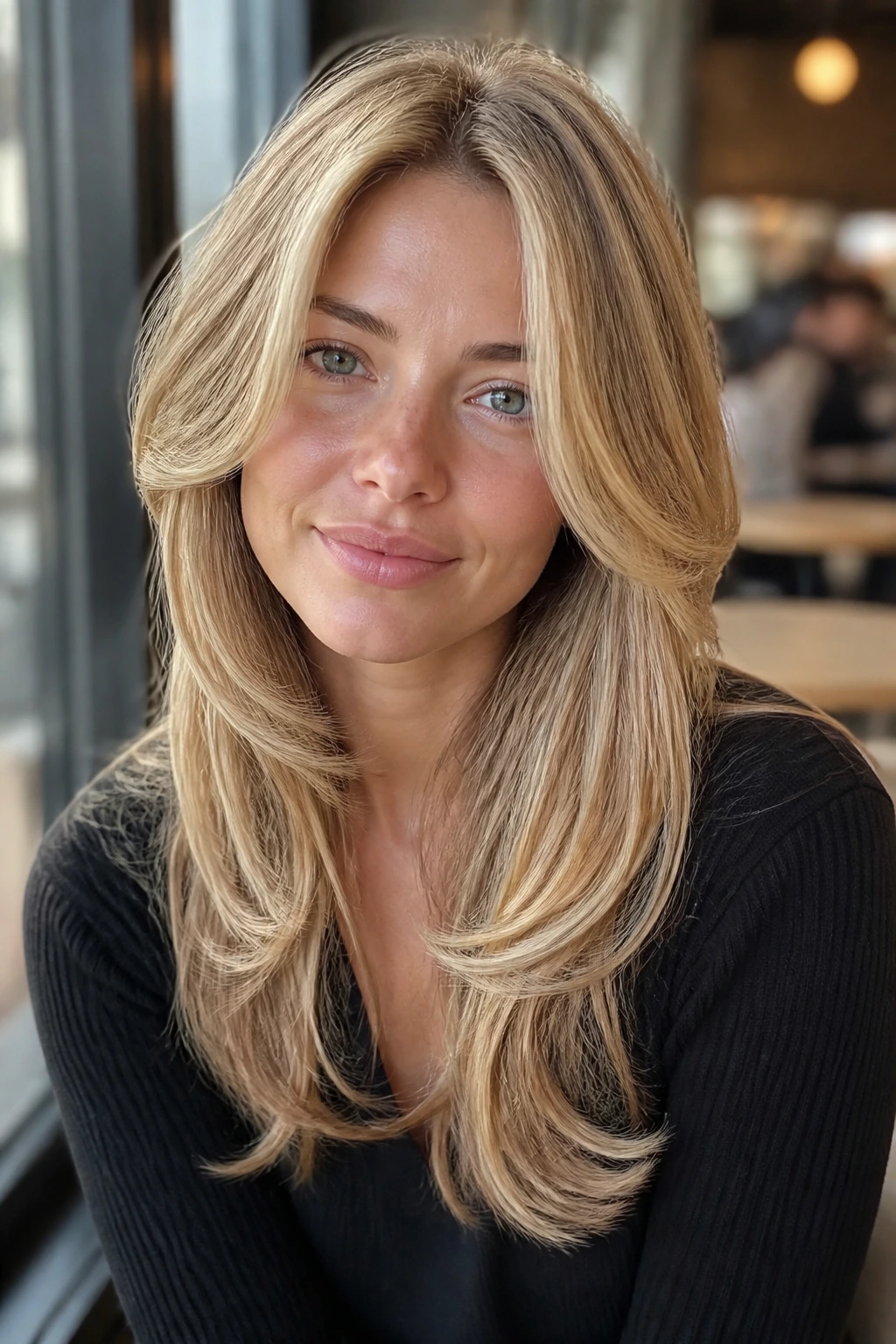
Rounded layers are underrated. Instead of building the shape with hard angles, the cut curves around the head and gently tucks under at the ends. Thick hair loves that because it reduces the “triangle” effect — the wide lower shape that appears when dense hair is left to its own devices. The roundness also plays nicely with a heart-shaped face, because it softens the sides and keeps the overall outline balanced.
Vanilla blonde ribbon highlights work well here because they can be placed through the curving layers, not just on top of them. The result is a softer kind of brightness. Not loud. Just enough contrast to keep the layers visible as the hair swings.
If you usually hate how your thick hair hangs when it’s straightened, try this shape. It needs a good cut, yes, but it doesn’t need constant coaxing. A large round brush or a blowout brush can bring it to life in under 20 minutes if the cut is done right.
8. Invisible Internal Layers with Ash Beige Dimension
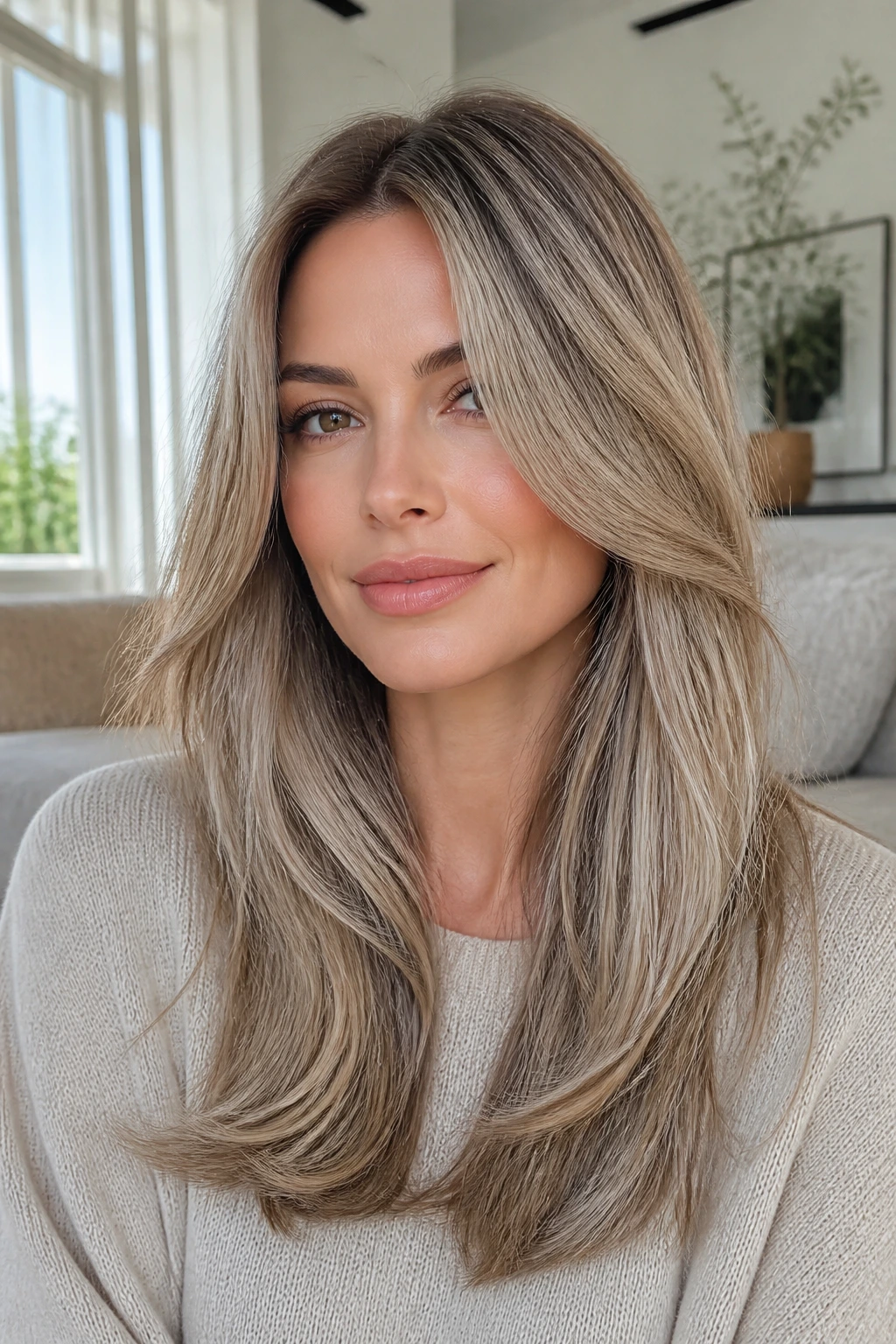
This is the cut for anyone who wants the hair to look smooth on the surface and lighter underneath. Invisible layers are tucked into the interior of the haircut, so the perimeter still looks full and clean. Thick hair benefits from that because you remove bulk without shredding the outline. If your hair gets poofy when too much surface texture is added, this is the safer path.
Ash beige dimension keeps the color cool and refined, which is useful if you want the layers to show without turning bright blonde into a halo. On a heart-shaped face, this style keeps the eye moving down through the lengths instead of getting stuck at the width of the forehead. The front can still be softly framed, but the real work is happening inside the cut.
Why I like it
- It stays sleek longer between washes.
- It works well on straight or slightly wavy thick hair.
- It doesn’t rely on choppy ends to create movement.
A good stylist will understand the difference between taking bulk out and thinning the life out. Ask for the first one.
9. Feathered Blowout Layers with Golden Blonde
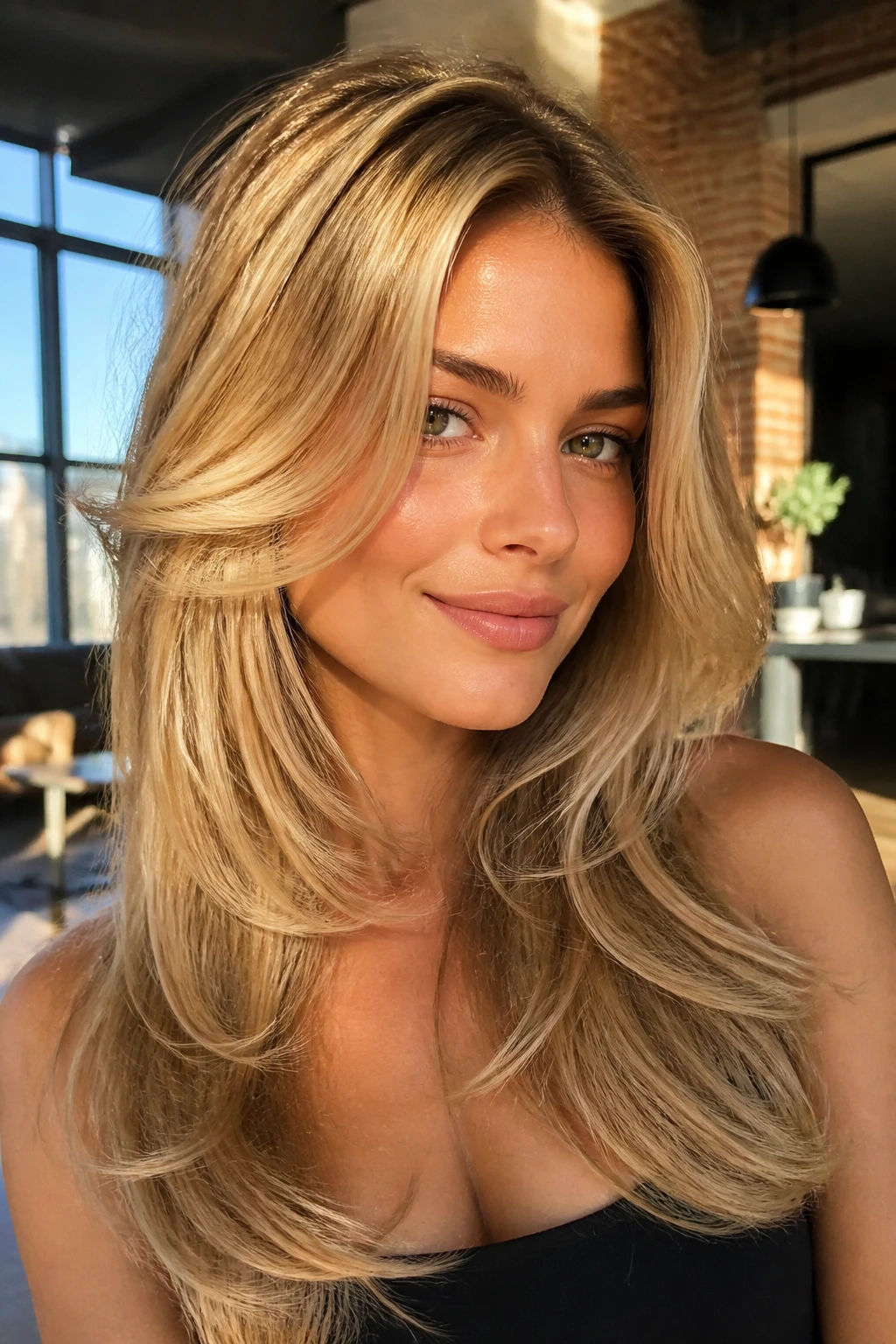
Feathered layers are back for a reason: thick hair looks fantastic when it has lift and direction instead of just raw mass. The shape is built to flip away from the face, with the shortest layers through the front and crown blending into long, brushed-out ends. On a heart-shaped face, that feathering creates width around the cheekbones and lower face without overloading the forehead.
Golden blonde suits this cut because it brings warmth to all that movement. There’s something a little glamorous about the way these layers catch the light after a round-brush blowout. If you’ve got dense hair that tends to sit heavy around the shoulders, this shape gives it a cleaner swing.
What to ask for
- Soft feathering, not razor-thin ends.
- Layers that sit above the collarbone in front.
- Golden dimension with a little root shadow.
This isn’t a lazy haircut. It looks best when there’s some styling involved. But the styling is predictable, and that’s half the charm.
10. Soft Wolf Layers with Pearl Blonde Tips
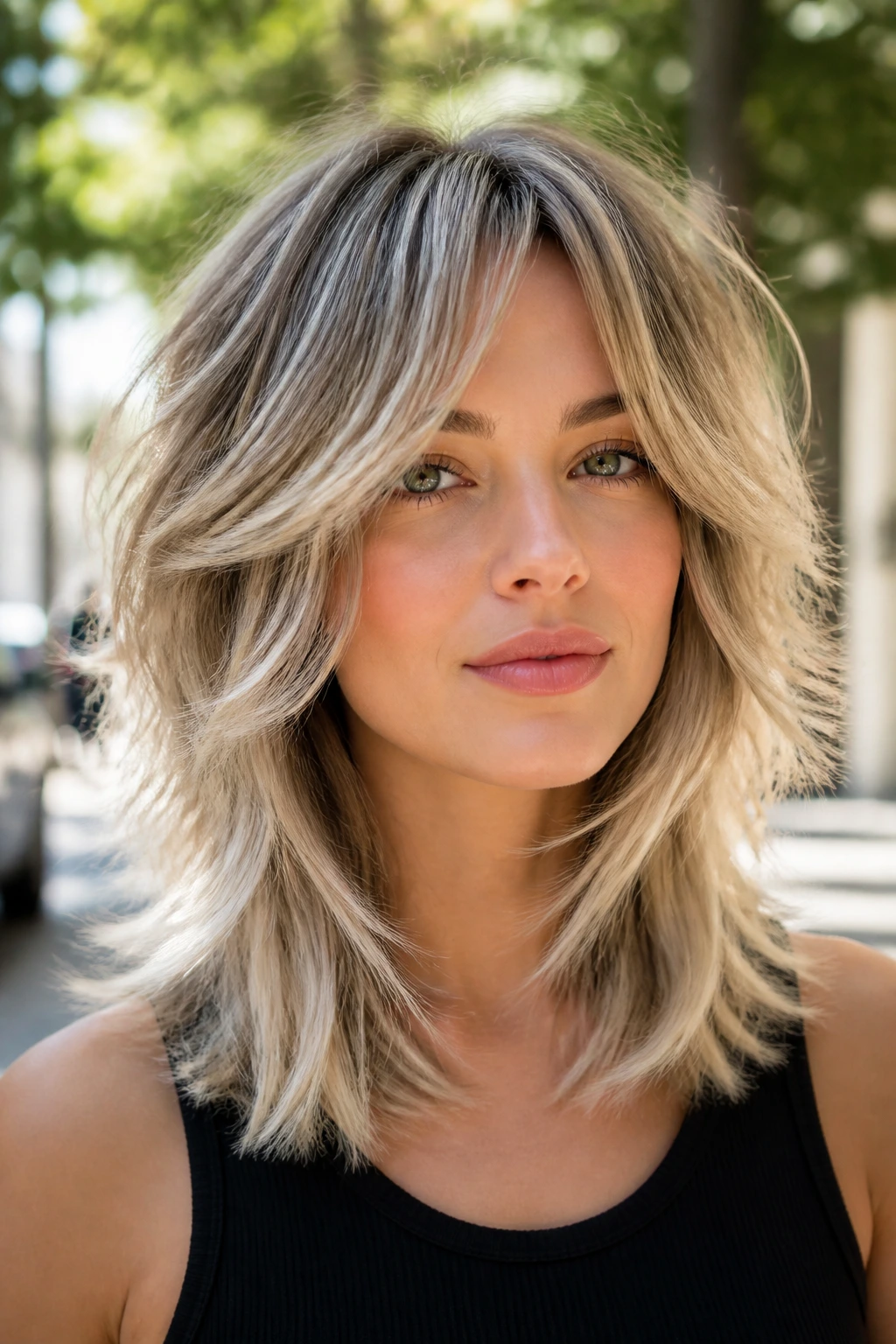
A wolf cut does not have to scream. The softer version keeps the crown a little airy, the lengths a little shaggy, and the overall shape a little untamed without going full punk. Thick hair can carry this kind of texture well because there’s enough density to support the choppy structure. If your hair is fine, it can go stringy fast. If it’s thick, the cut has room to breathe.
Pearl blonde tips help the shape feel lighter at the ends, which matters when the top is already built with volume. For a heart-shaped face, the trick is to keep the fringe area longer and the temple pieces soft. You want edge, not extra width at the forehead. That’s the line.
This style looks best when you let it miss perfection by a little. That’s not a flaw. It’s the point.
11. Long Mermaid Layers with Sunlit Blonde
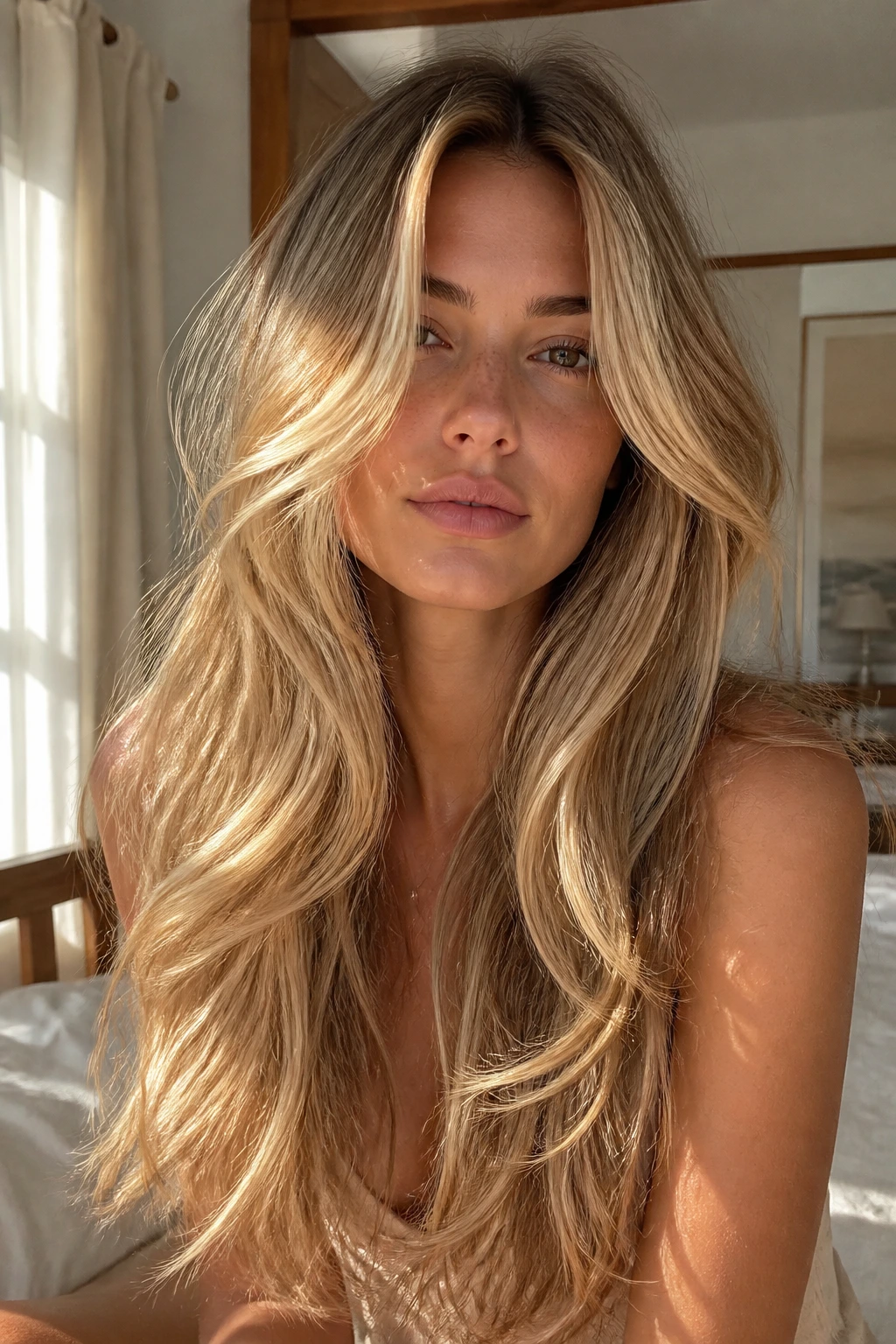
Mermaid layers are what happen when someone with thick hair refuses to give up length, which I respect. The layers are long, flowing, and mostly there to make sure the hair doesn’t turn into one giant curtain. The front pieces should start low enough to soften the cheeks and jaw, but not so high that the cut loses its drama. On a heart-shaped face, that lower frame is what keeps the shape from feeling top-heavy.
Sunlit blonde works because it makes long layers look even more fluid. Think soft balayage and gentle brightness through the mids and ends, not a one-note pale sheet. Thick hair holds this kind of color beautifully because there’s enough surface for the light to play across.
If you wear your hair mostly down and like a center part, this is one of the most forgiving choices. The color and length do most of the styling before you touch a brush.
12. Midlength C-Cut Layers with Ribbon Highlights
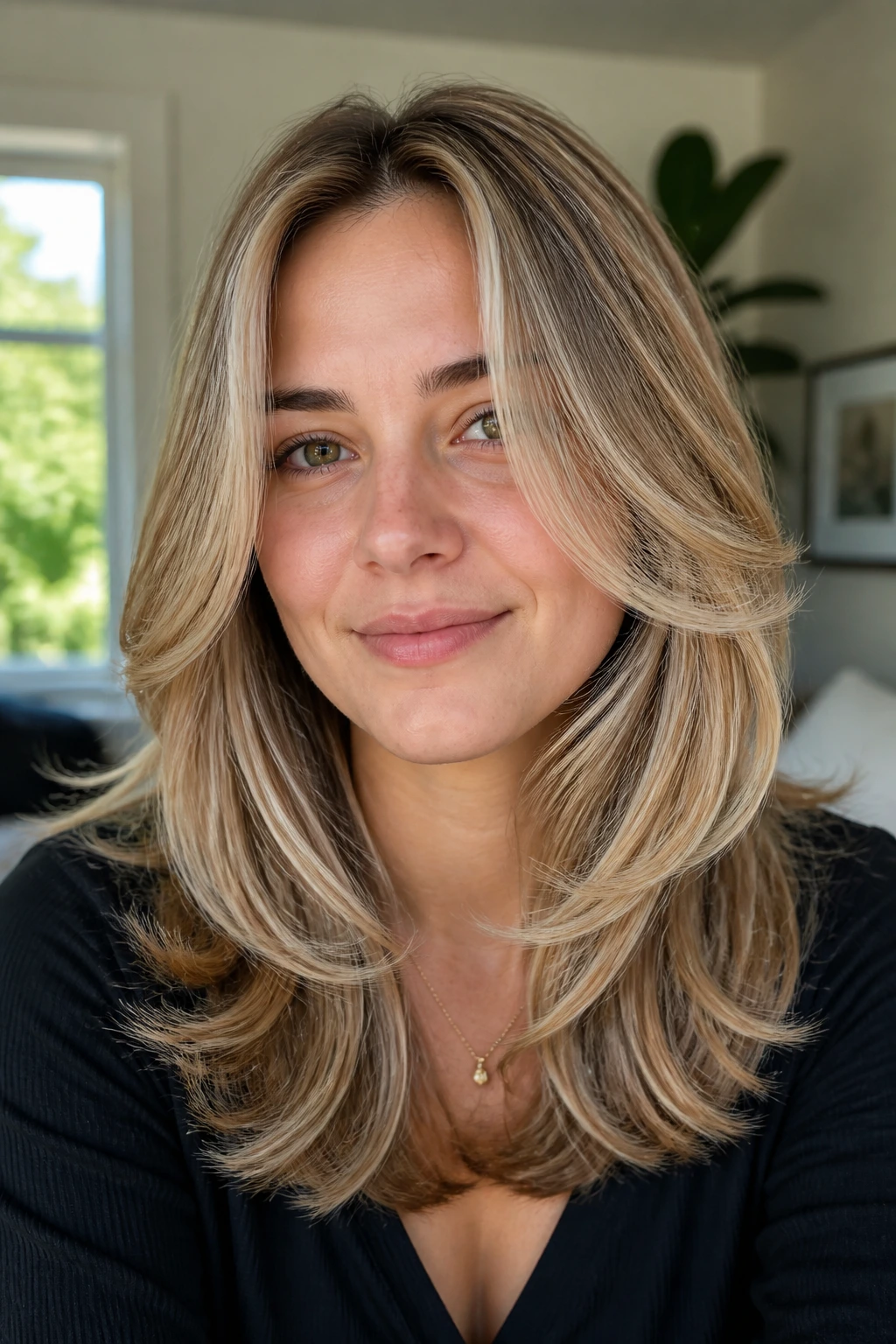
A C-cut is one of those haircuts that sounds subtle until you see what it does. The front curves inward in a soft letter-C shape, which makes the layers feel hugged around the face instead of shoved away from it. On a heart-shaped face, that’s useful because the curve helps settle the visual width and adds a little softness near the chin.
Midlength hair is often the sweet spot for thick textures because it’s long enough to feel full and short enough to stay mobile. Ribbon highlights keep the movement visible. I like them placed in longer vertical strokes rather than chunky blocks. The result is cleaner, especially if your hair is dense and likes to collapse under heavy color.
What to watch for
- The shortest front pieces should not stop at the chin if your forehead feels wide.
- The lower curve should be soft, not flipped out aggressively.
- Highlights should follow the bend of the layers.
This is the kind of cut that looks better every time you tuck one side behind your ear.
13. Side-Swept Layers with Caramel Blonde Melt
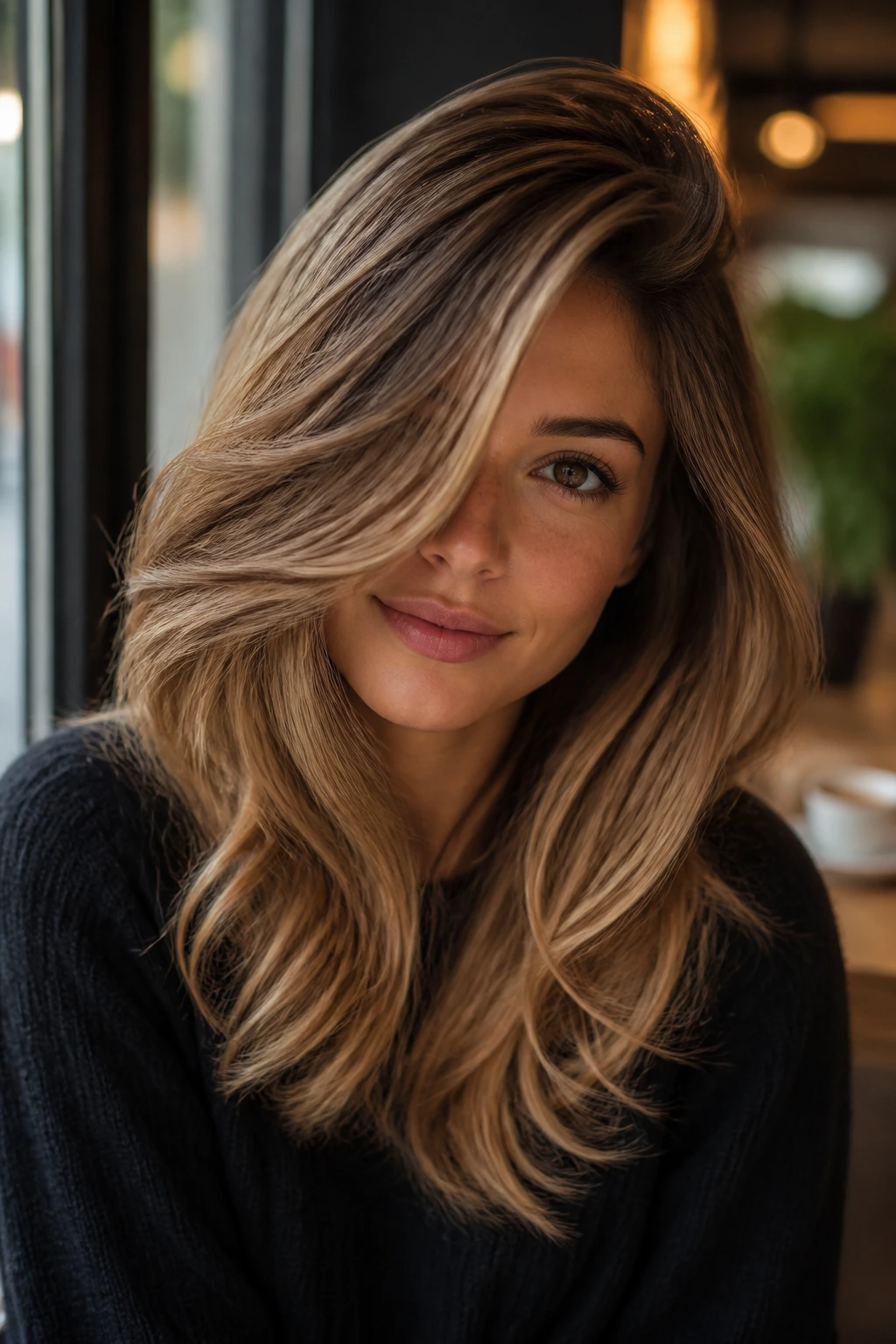
A deep side part can do more for a heart-shaped face than a dozen vague styling tricks. It shifts some of the visual weight away from the forehead and gives thick hair a sweeping direction that feels elegant without being fussy. When the layers are cut to follow that side sweep, the whole shape looks longer and less top-heavy.
Caramel blonde melt adds the right kind of warmth. The darker root and softer midtones let the sweep look dimensional instead of flat, and the lighter ends stop the hair from feeling too heavy at the bottom. If your hair is thick and straight, this can be one of the easiest ways to keep it from sitting like a helmet.
This style does best when the front isn’t too short. Leave room for the layers to drape. That’s the whole game.
14. Layered Lob with Icy Temple Pieces
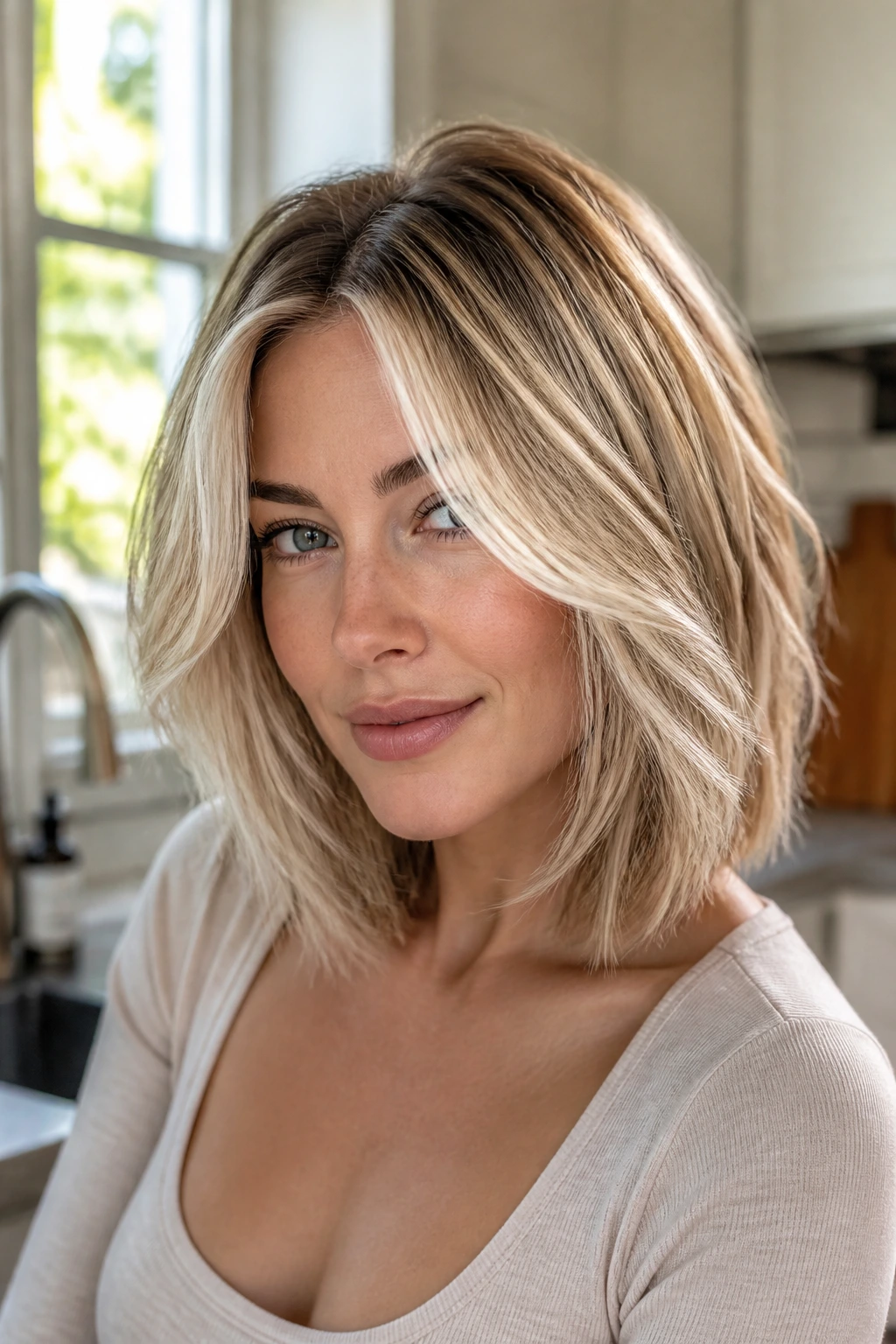
A lob gives thick hair a chance to behave without asking you to sacrifice all your length. The trick is to keep the perimeter around the collarbone or just below it, then add long layers through the interior so the shape doesn’t widen at the ends. On a heart-shaped face, a lob can be very flattering because it brings the hair’s visual weight closer to the jawline.
Icy temple pieces are a sharp little detail that change the whole mood. They brighten the sides of the face and keep the cut from feeling too heavy or dark near the front. If your natural texture is thick and smooth, this is a strong choice because it holds its line without getting bulky.
The best version isn’t super short. If the lob lands right at the chin, it can exaggerate the width of the face. Let it graze lower, and the balance gets much better.
15. Curly-Friendly Blonde Layers with Honey Beige Dimension
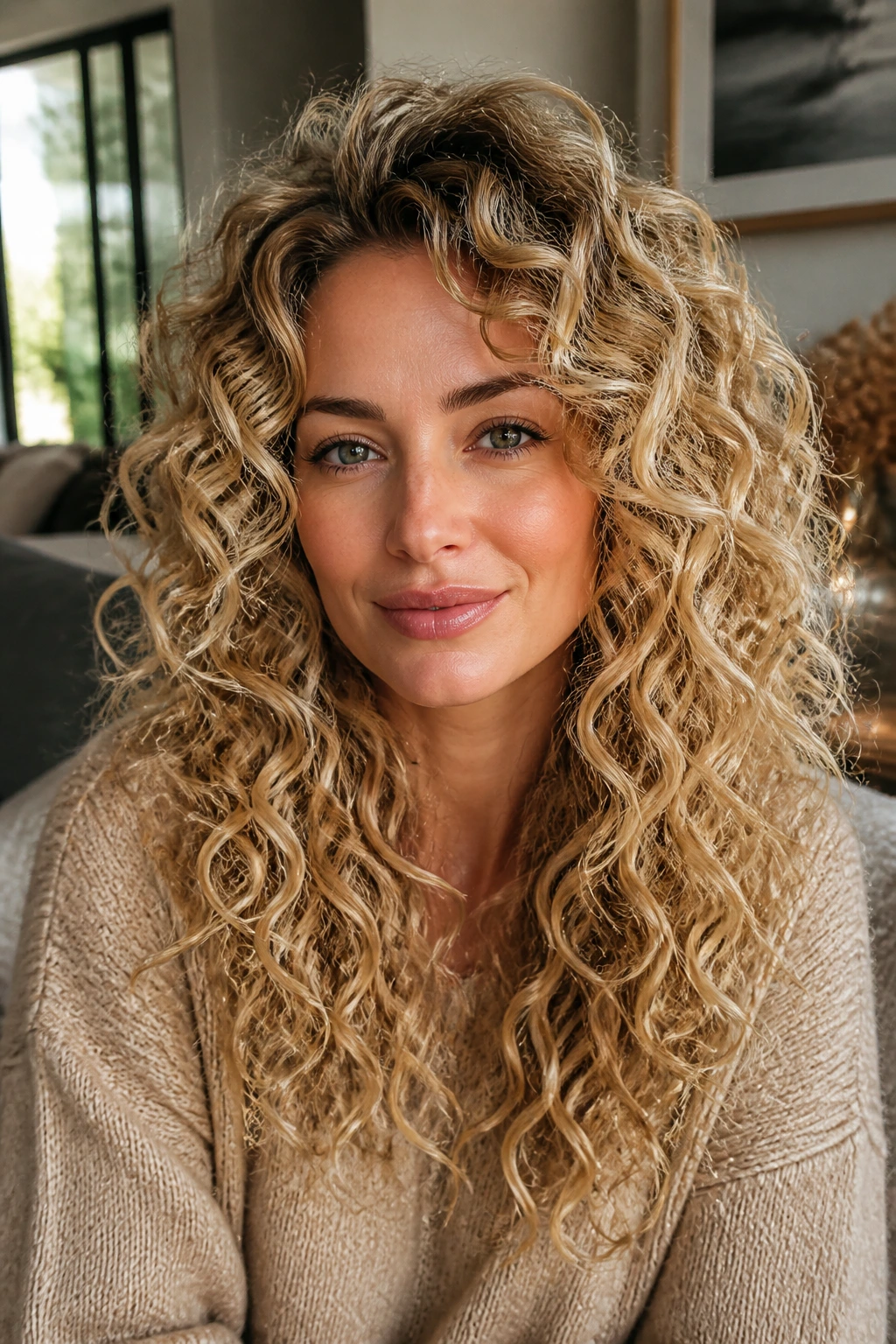
Curly and thick is a powerful combination, but only if the layers respect the curl pattern. The front pieces should be shaped to sit where the curls naturally spring — usually around the cheekbone, lip, or chin depending on curl size — and the back should stay long enough to avoid a lopsided mushroom shape. For a heart-shaped face, keeping too much width at the temples is the mistake to avoid.
Honey beige dimension makes curls look expensive instead of frosted. The warmer tone keeps the texture soft, and the multi-tonal color helps the curl pattern show up without needing a lot of heat styling. This is one of those cuts that should be trimmed dry or at least with the texture visible, because thick curls shrink and lie differently when wet.
If your hair is wavy rather than curly, the same shape still works. It just reads a little looser, a little beachier, and that’s not a problem.
16. V-Cut Layers with Toffee Blonde
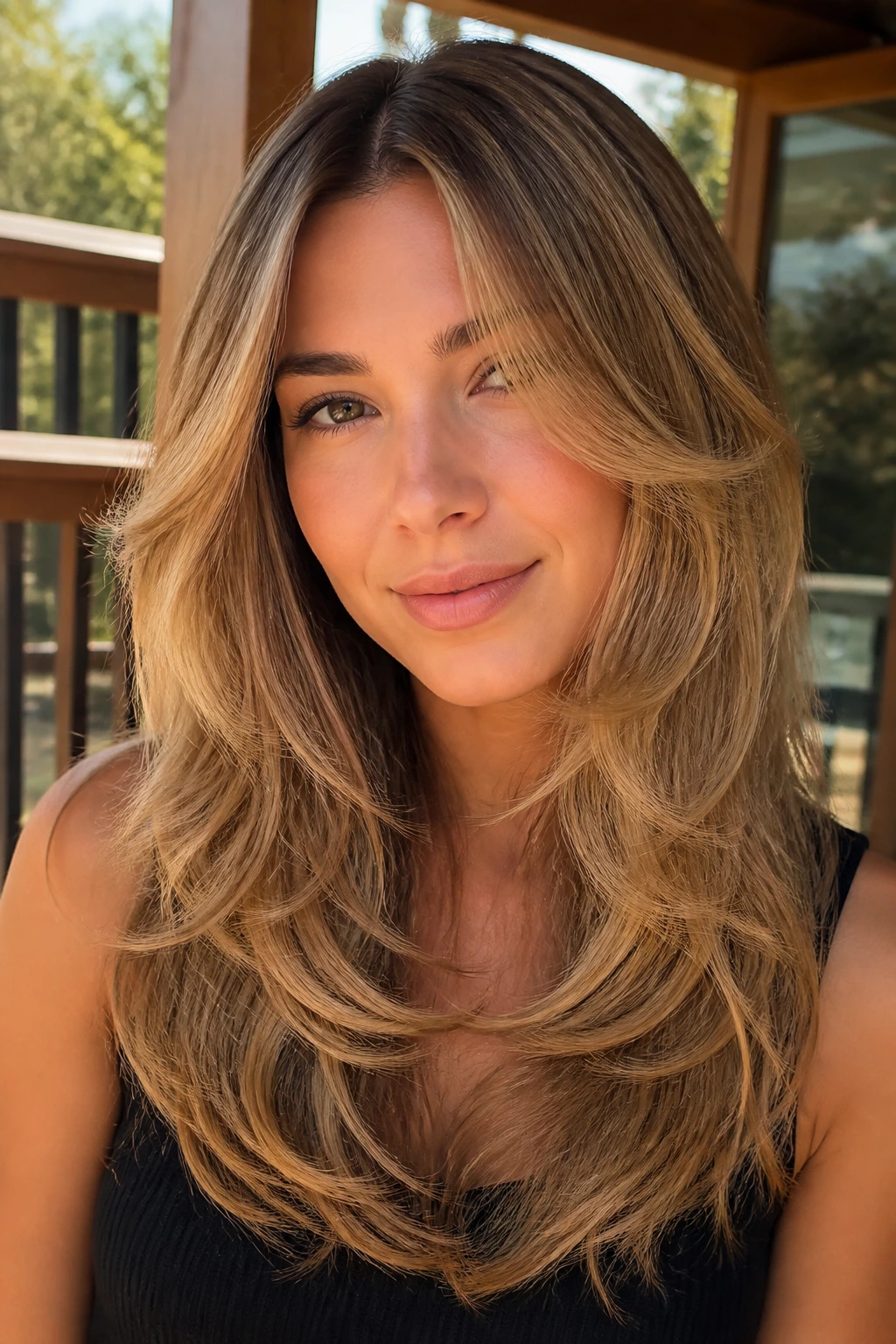
A V-cut brings the back of the hair to a soft point, which sounds dramatic but is actually practical when the hair is thick. It removes some of the visual mass at the ends and creates a long, tapering shape that feels lighter than a blunt finish. For heart-shaped faces, the front pieces should still be fuller and longer, so the cut doesn’t pull all the attention upward.
Toffee blonde gives the style depth. The warm lowlights and softer caramel notes help the V-shape read as intentional rather than over-processed. I like this one for people who wear their hair down most of the time and want it to look like it has motion even when they’ve done almost nothing to it.
This is not the cut for someone who wants a lot of short face-framing chatter around the forehead. It works best when the front stays graceful and the drama lives in the lengths.
17. Sleek Blowout Layers with Smoked Vanilla Blonde
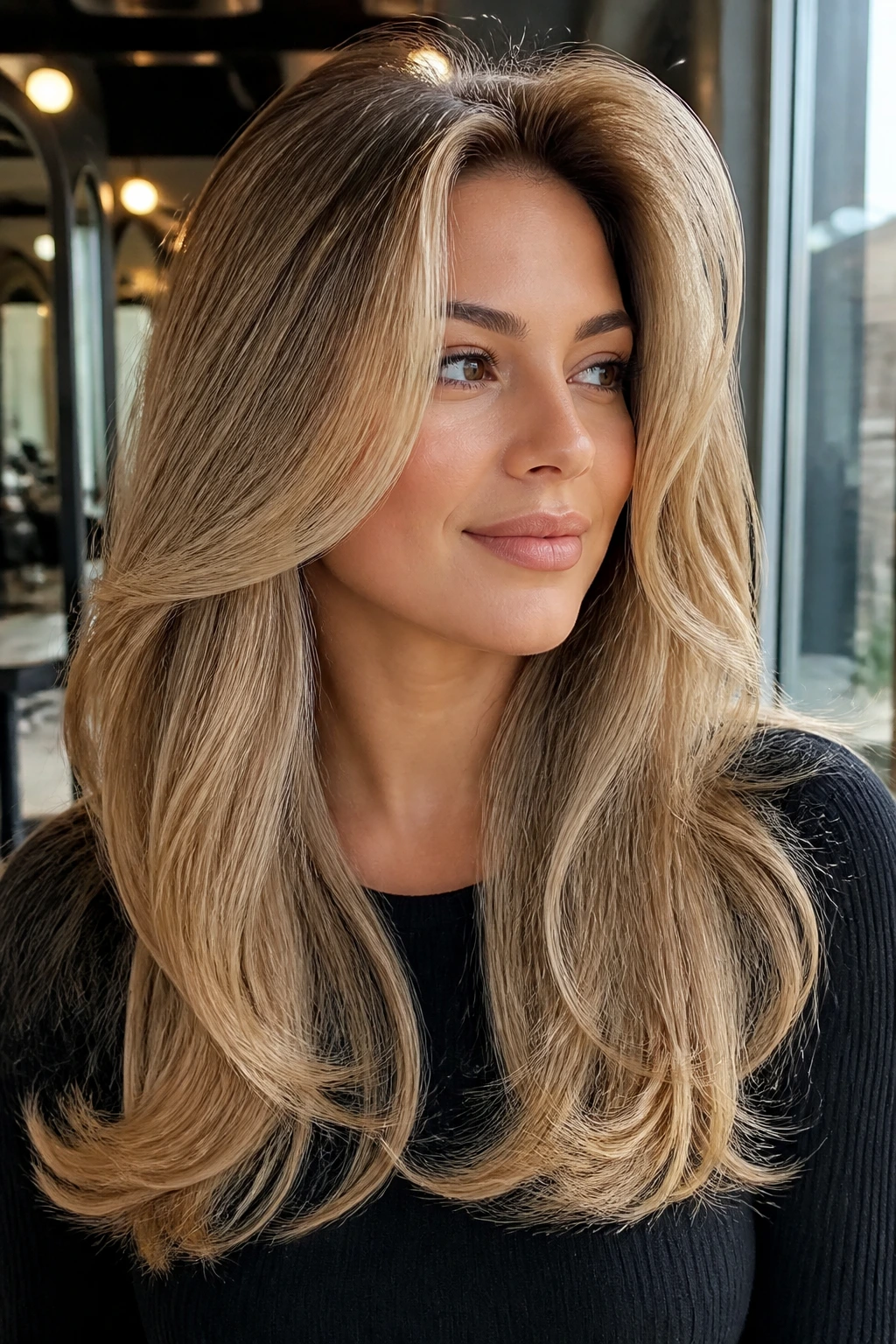
Some haircuts are made for the blow dryer, and this is one of them. Sleek blowout layers on thick hair are usually long and blended, with enough shaping to let the front sweep away from the face but not so much that the ends break apart. On a heart-shaped face, that smoothness helps keep the forehead area from feeling too wide while still giving the lower face a little softness.
Smoked vanilla blonde is a nice middle ground between warm and cool. It keeps the hair from looking flat in indoor light and stops the blonde from going chalky at the ends. If your thick hair tends to hold shape once styled, this is a great option because it looks expensive with a clean finish and no visible damage lines.
The whole effect depends on polish. A round brush, a nozzle, and a little patience. Not exciting. Effective.
18. Bottleneck Bangs with Layered Blonde Lengths
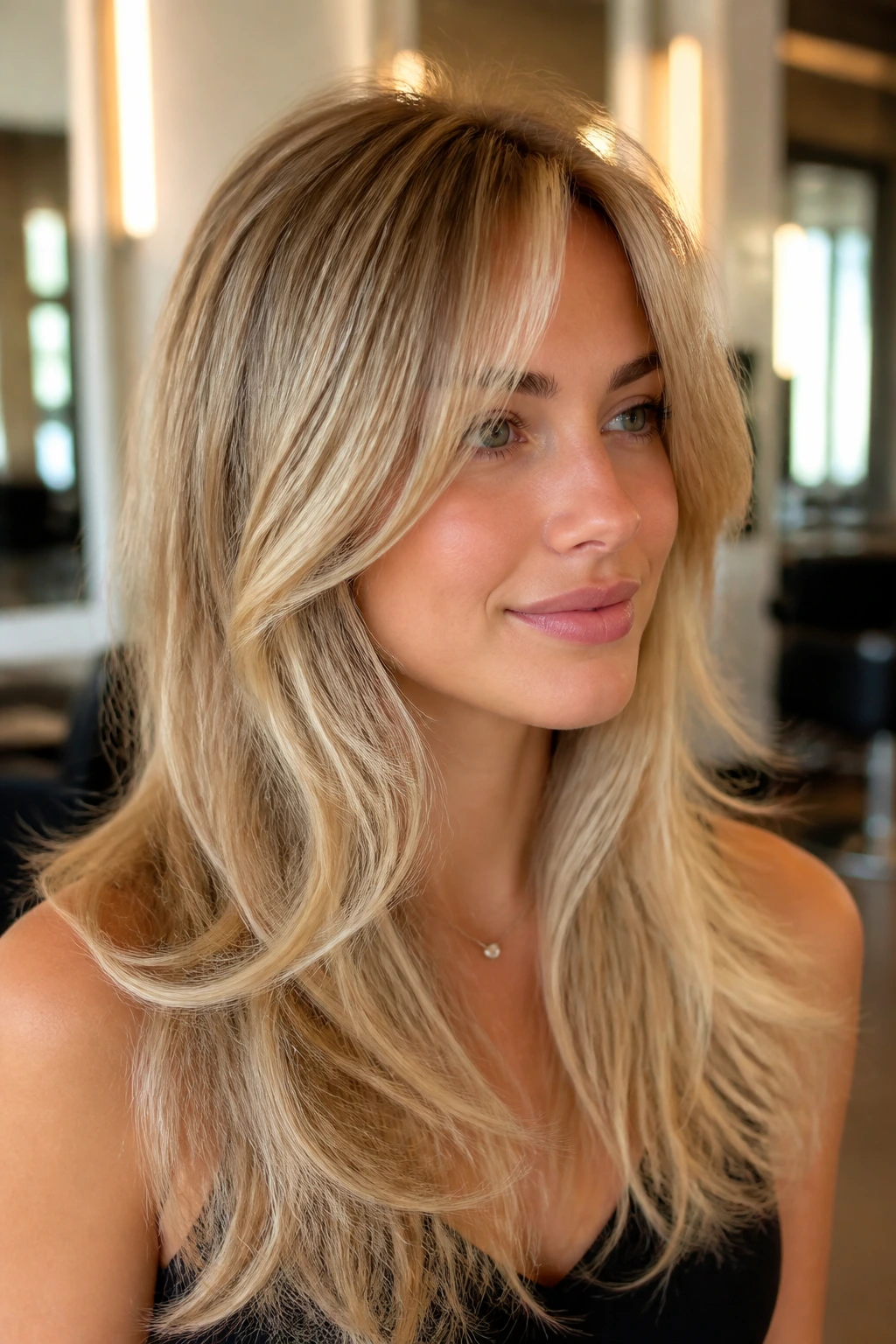
Bottleneck bangs are one of the smarter fringe choices for a heart-shaped face because they’re narrow in the center and longer at the sides. That shape softens the forehead without boxing it in, and it lets thick hair carry a fringe without turning the front into a heavy block. The longer temple pieces also connect nicely with the face-framing layers, which keeps the whole haircut from feeling disconnected.
The blonde should be a touch brighter through the bangs and front pieces, but not so light that the fringe loses texture. A soft cream or champagne tone works well. I’d keep the length below the brow at the center and sweep the sides into the rest of the cut. Too short, and the balance gets strange fast.
Best if you want
- A fringe that opens the face, not closes it.
- A cut that still works when the bangs are grown out a bit.
- Some shape up front without a lot of styling fuss.
This is one of the few bangs styles I’d call friendly. That matters.
19. Midi Shag with Honey Beige Blonde
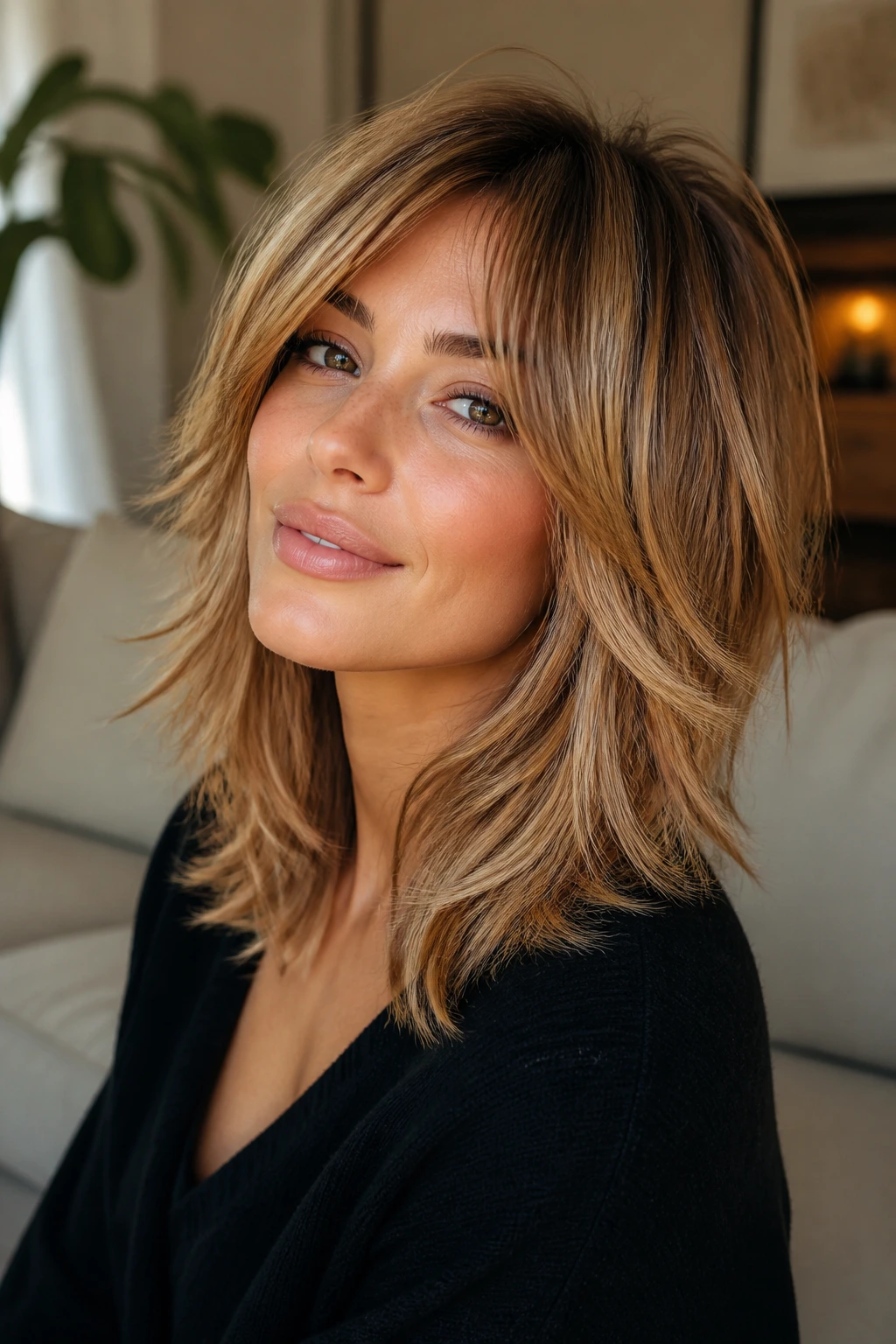
The midi shag lives in that useful middle zone between a full-on shag and a more polished layered cut. It’s textured enough to keep thick hair from sitting heavy, but not so broken up that the ends feel thin or scraggly. For a heart-shaped face, the best version keeps the strongest layers around the cheekbones and lets the lower lengths stay a little fuller.
Honey beige blonde makes the texture softer. It has enough warmth to keep the cut from feeling harsh, yet enough neutrality that it doesn’t tip into brass. If you like air-drying, this is a very forgiving shape because the texture does half the work for you. If you blow it out, the shape still holds.
It’s the haircut equivalent of a jacket that looks better once it’s been worn a few times. Not sloppy. Just lived-in.
20. Jaw-Balancing Layers with Bright Ends
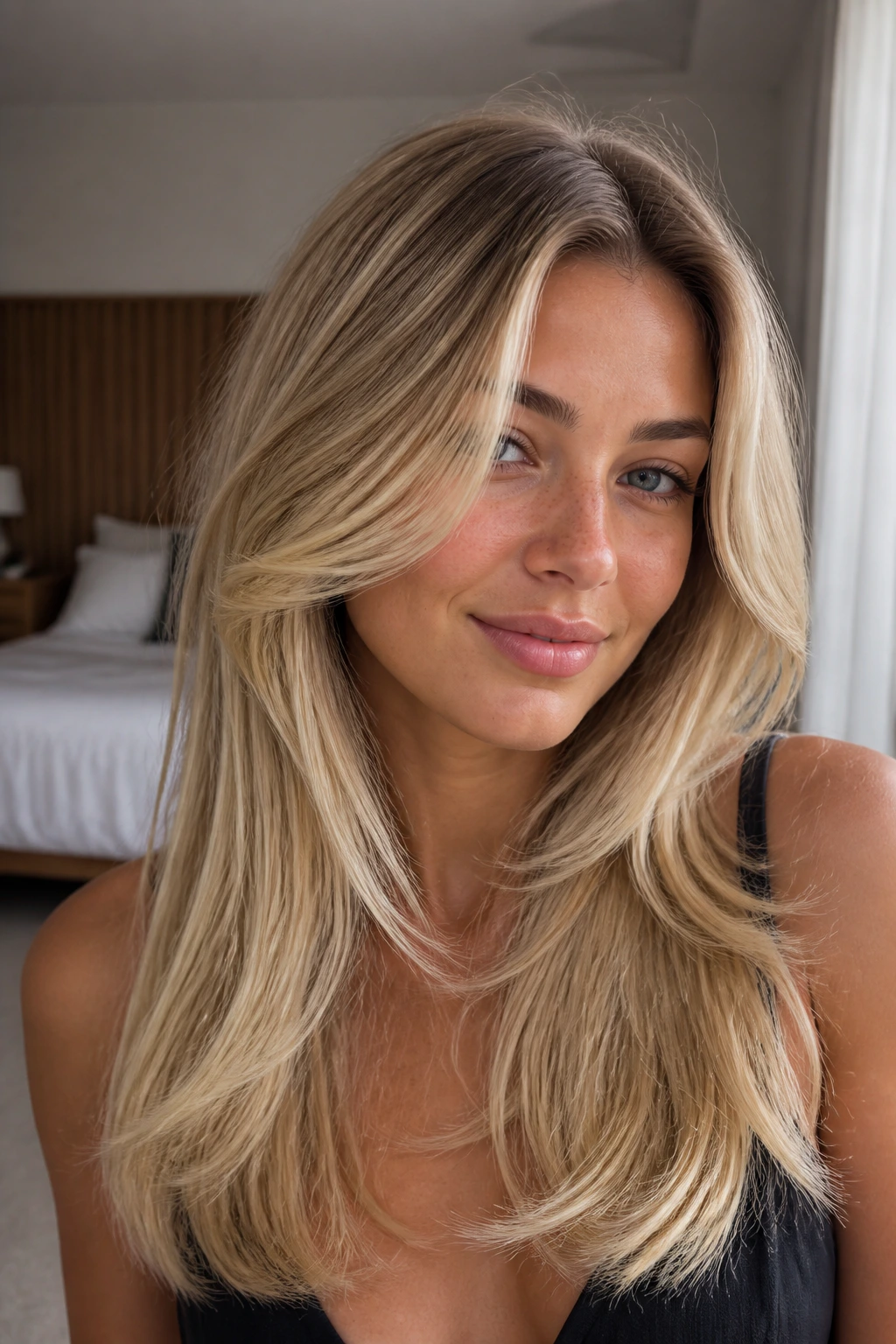
This is a quieter kind of correction cut, and I like it for heart-shaped faces that need a little more visual weight lower down. The layers are long and controlled, but the brightest blonde is pushed toward the ends and the lower face-framing pieces. That shifts the eye downward, which helps balance a narrower chin and keeps the forehead from dominating the whole look.
Thick hair benefits because the style keeps enough length to feel full while still removing bulk through the mids. The front should brush the jaw or sit a little below it, not end right at it. That small difference matters more than people think.
If you want the face to feel softly widened at the bottom rather than lifted at the top, this is a useful shape. It’s subtle, but subtle is often the point.
21. Airy Midlength Layers with Wheat-to-Cream Melt
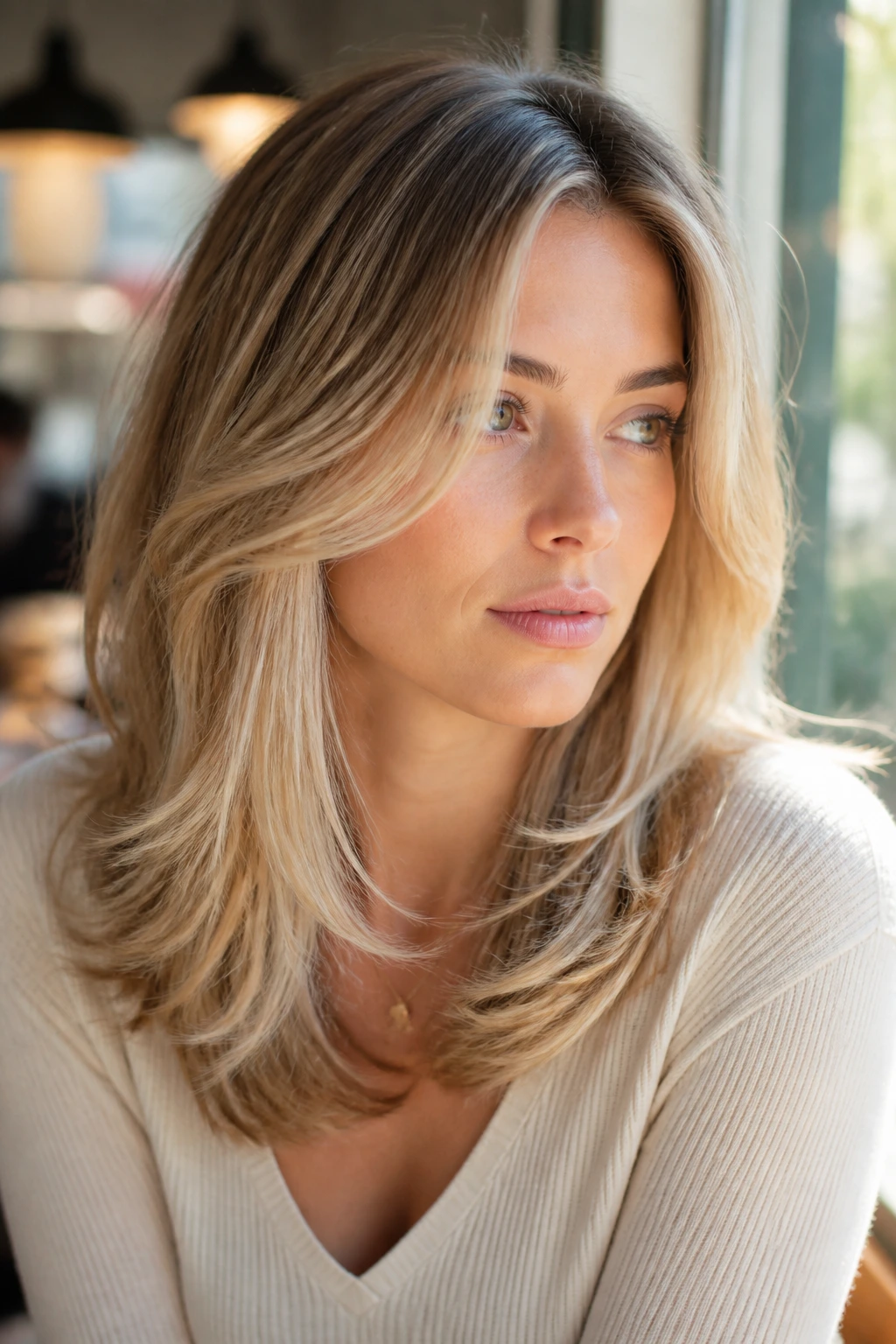
A wheat-to-cream melt gives thick hair a softer finish than high-contrast highlights, and midlength layers keep the shape from dragging. The transition from warmer wheat tones near the root to creamier ends makes the cut look sunlit, but not striped. On a heart-shaped face, midlength layers that start below the cheekbone are especially useful because they keep the sides from becoming too puffy.
I like this cut for people who want movement, but not a lot of obvious styling marks. The layers are there, but they’re quiet. If you part the hair in the center, the front opens the face cleanly; if you go slightly off-center, it softens the forehead a touch more.
There’s a nice honesty to this one. It doesn’t pretend to be edgy. It just works.
22. Razor-Textured Layers with Sandy Blonde
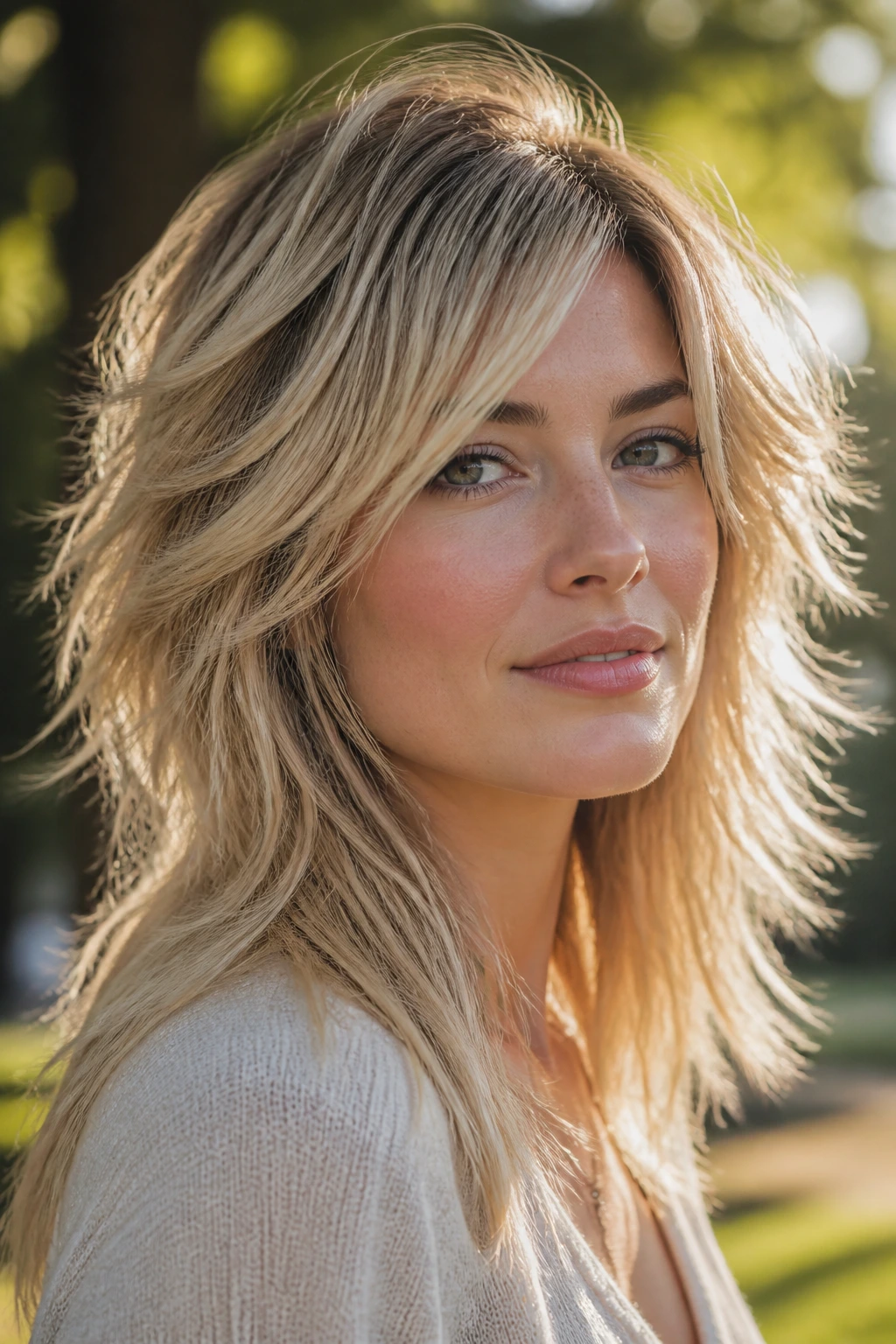
Razor texture can be risky on thick hair, and I’m not going to pretend otherwise. If the hand doing it isn’t careful, the ends can fray and the shape can go fuzzy in humidity. But when it’s done well, razor-cut layers create a light, airy finish that thick hair sometimes desperately needs. The key is keeping the ends soft rather than thinned to death.
Sandy blonde pairs well because it has that dry, beachy look already built in. The tone takes some of the visual weight out of the texture, which helps the layers look intentional instead of scratched up. On a heart-shaped face, this cut works best when the shortest bits live around the cheekbones and the temples stay gentle.
Use this if
- Your hair is dense and straight with a little bend.
- You like texture that reads modern, not polished.
- You’re okay with a slightly undone finish.
It is not the easiest haircut in the world. It’s just a very good one when the details are right.
23. Long Layers with Peekaboo Platinum
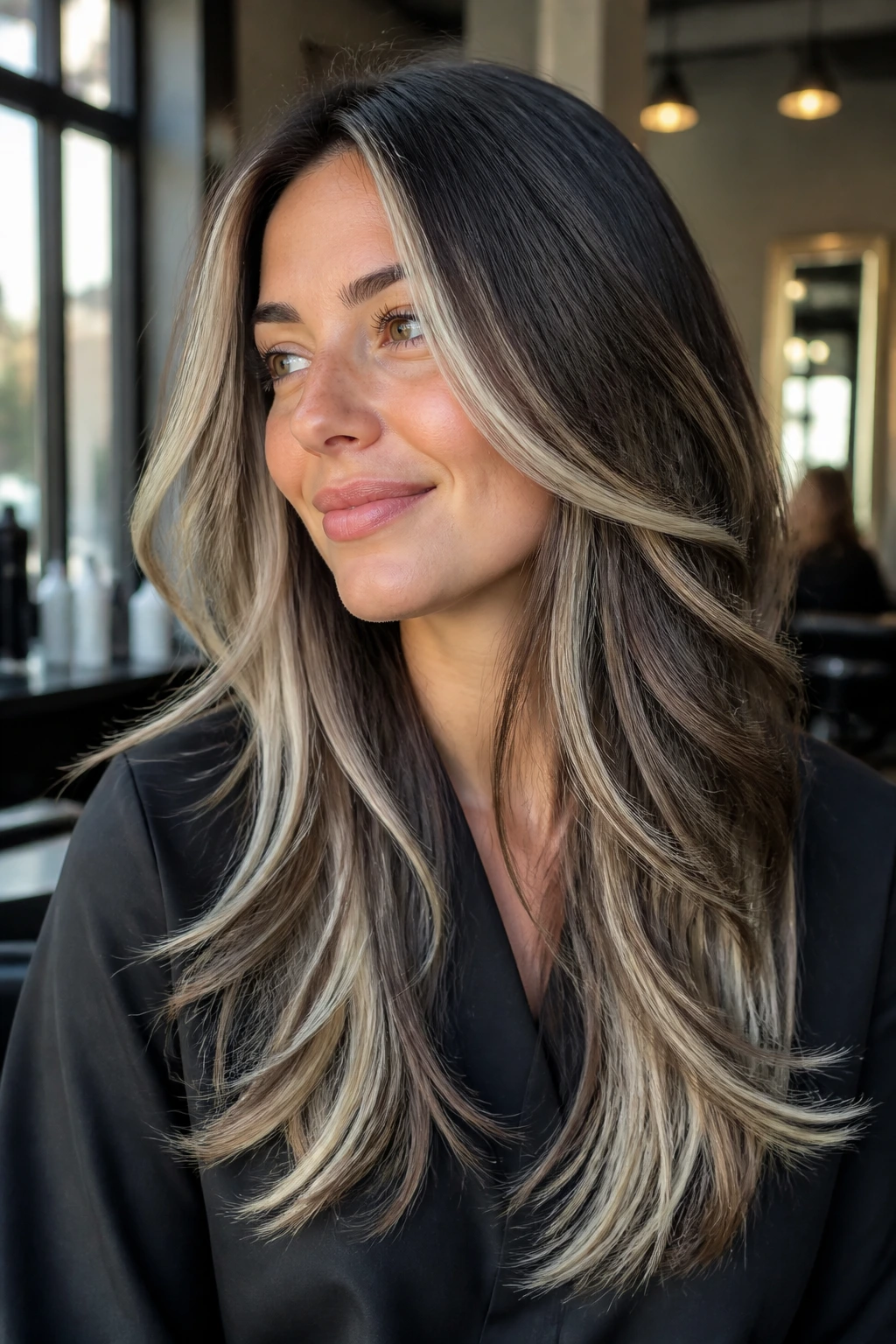
Peekaboo platinum is for the person who wants dimension without committing to a full head of bright blonde. The lighter pieces sit underneath or around the face in controlled sections, so the hair moves and reveals brightness only when it swings. Thick hair is a natural fit for this because it has enough body to hide and reveal those tones in a really satisfying way.
The long layers keep the cut from feeling heavy, especially through the mid-lengths. For a heart-shaped face, the best placement is around the face and the lower lengths, not just the crown. That avoids the top-heavy effect that can happen when all the brightness lives high up.
This style has a bit of drama, but it’s a useful kind of drama. You get movement, contrast, and a little surprise when the hair shifts.
24. Sliced Layers with Sun-Kissed Beige Blonde
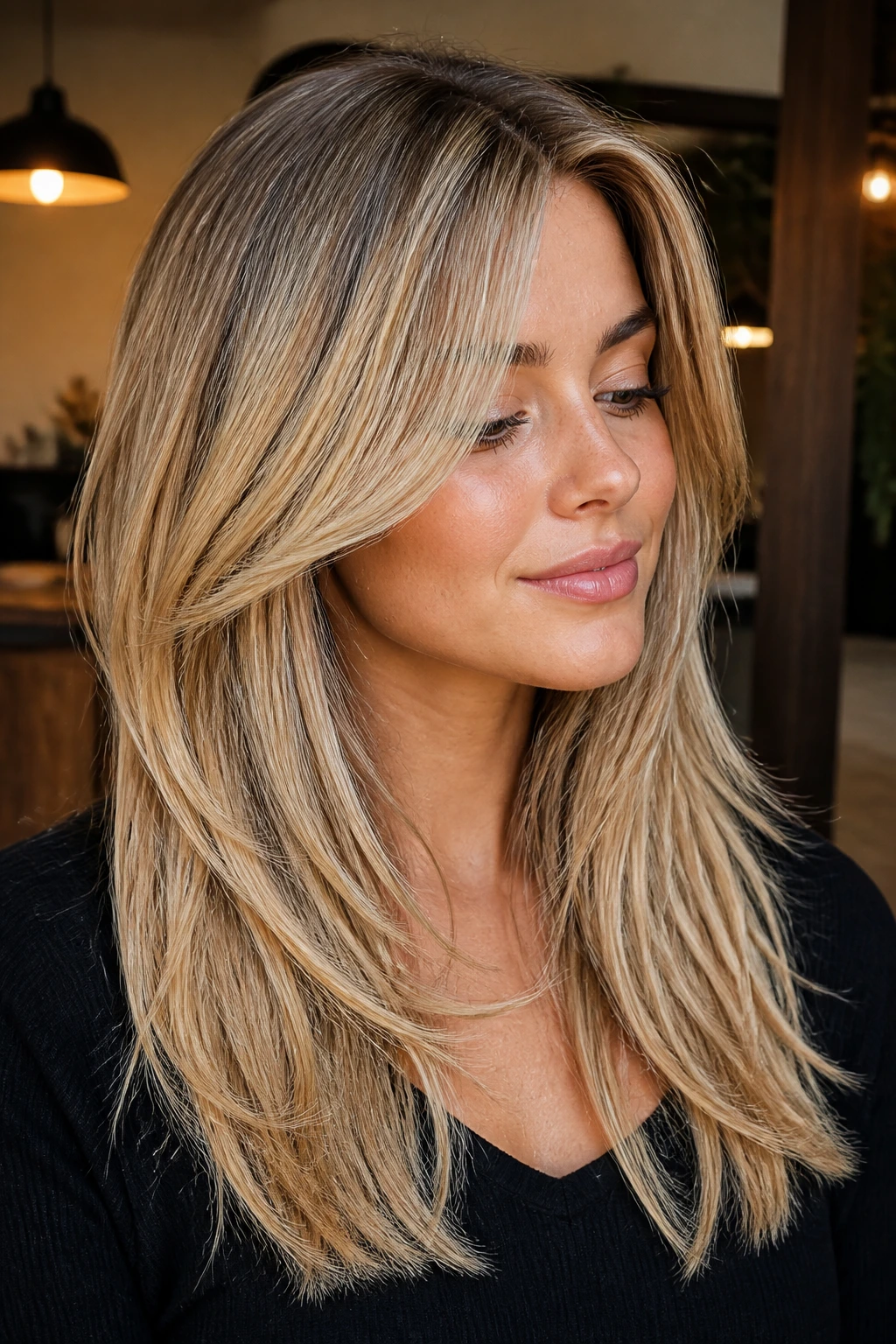
Slicing removes weight in cleaner sections than chunky chopping, which makes it a smart choice for thick hair that needs shape more than attitude. The result is a smoother fall and a more polished outline. On a heart-shaped face, sliced layers can be tuned to start around the cheekbone or just below it, so the front opens without widening the forehead.
Sun-kissed beige blonde is a safe middle tone that doesn’t shout for attention. It’s soft enough to blend into the layers, but bright enough to show the movement. If you’re trying to keep the cut refined rather than shaggy, this combination is worth looking at.
This is one of those styles that looks expensive when it’s simply brushed through and left alone. That’s not a small thing. It means the haircut is doing its job.
25. Polished Face-Framing Layers with Champagne Ends
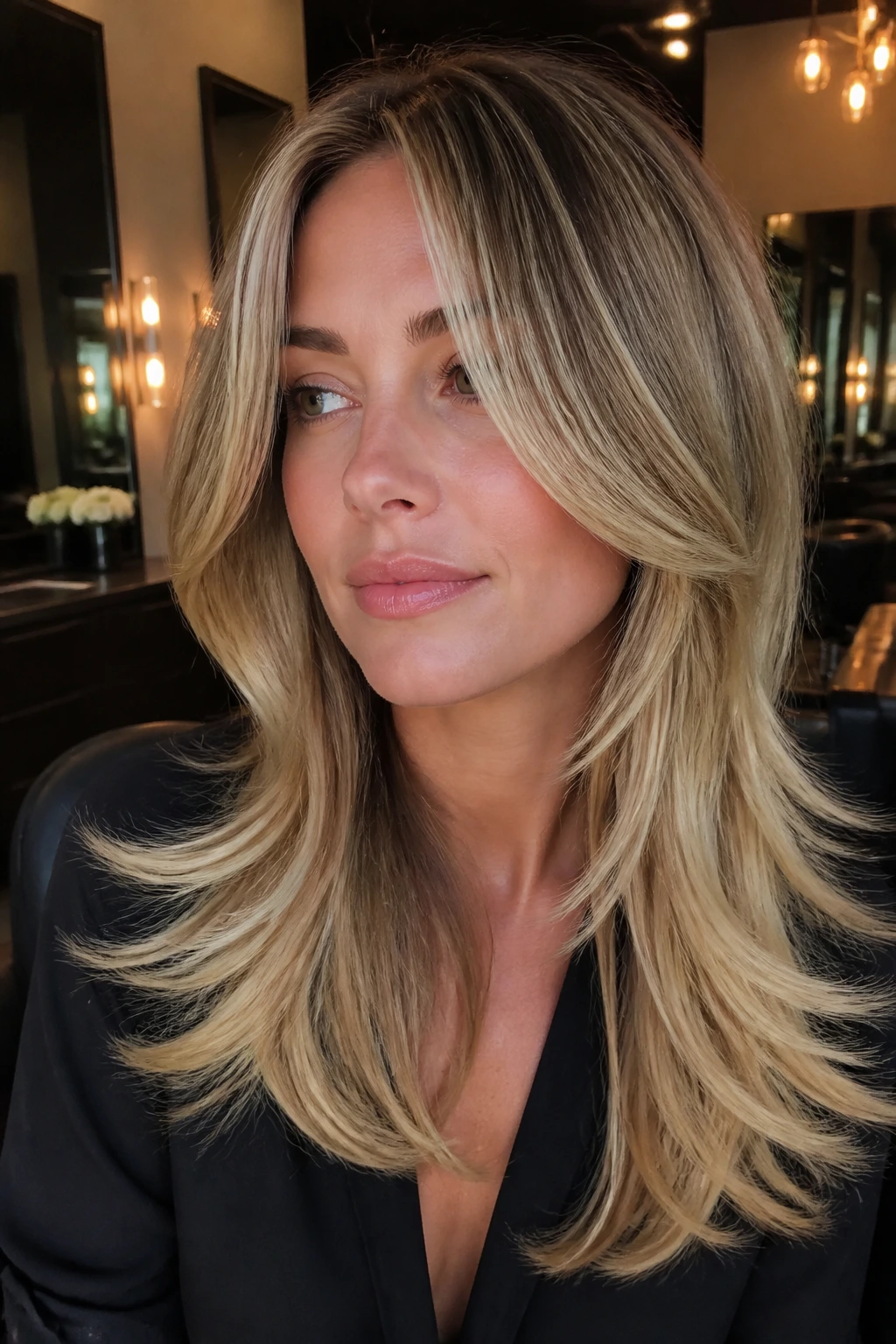
Champagne ends have a way of making thick hair look lighter without stripping away all the fullness. In this cut, the face-framing layers are precise, smooth, and a little longer than people often expect. That’s what makes them flattering on a heart-shaped face. They soften the upper width, skim the sides of the face, and keep the eye moving down toward the jaw and shoulders.
The polished part matters. This is not about visible chop or wild texture. It’s about control. The layers should blend, the ends should stay healthy-looking, and the blonde should glow rather than flash. If you want a cut that feels elegant in a very practical way, this is the final place I’d point you.
It’s the kind of style that can look fresh with almost no drama. And honestly, that’s the nicest thing a haircut can do.
How Thick Hair and Heart-Shaped Faces Change the Layer Rulebook
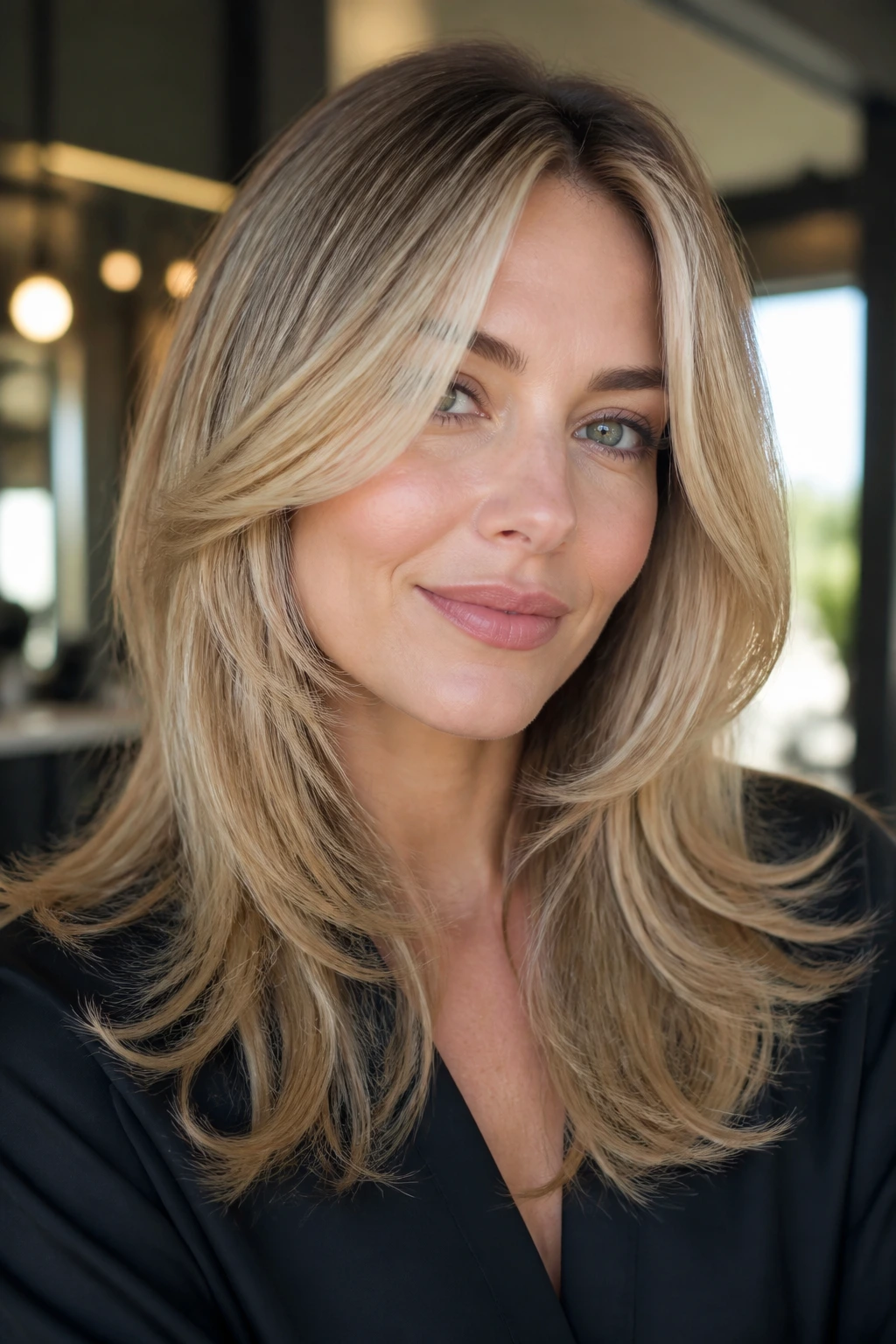
Thick hair needs a shape plan, not just thinning. If the layers are too short or too high, the top half balloons and the bottom half goes stringy. If the layers are too long and timid, the whole head turns into a heavy block. The best blonde cuts here take weight out from the inside, keep the outline readable, and use the front pieces to guide the face downward in a softer line.
A heart-shaped face has its own little puzzle. The forehead and cheekbones usually carry more visual width than the jaw, so you want the haircut to add softness around the sides of the face and a bit of presence lower down. That’s why cheekbone grazing pieces, curtain sections, and longer temple layers show up so often in strong cuts for this face shape. They’re not decorative. They’re structural.
Blonde placement is the last piece that ties it together. Brighter panels around the front can open up the face, but a rooted blonde or lowlight keeps the thick hair from becoming a single bright block. I prefer a little shadow at the root every time. It gives the layers a place to start and keeps the color from looking sprayed on.
Essential Tools for These Looks
-
Heat protectant spray: Use this before any blow-dry or iron work; thick hair can take heat well, but blonde hair gets tired fast when it’s cooked every day.
-
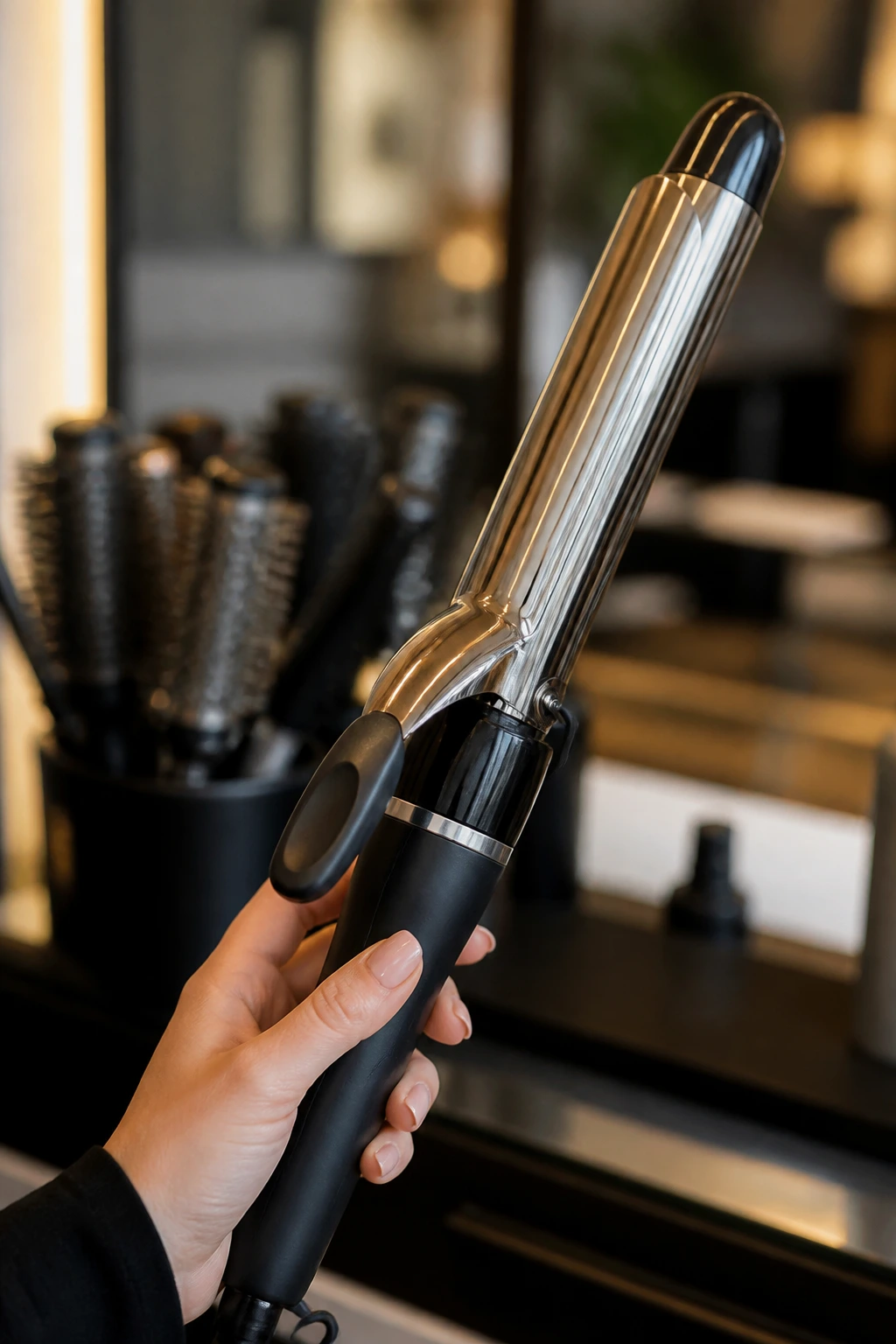
1.25-inch curling iron or wand: This size creates a bend that shows off layers without making tight curls that fight the cut.
-
Round brush, 1.5 to 2 inches: Ideal for flipping the front pieces away from the face and shaping the ends under or out, depending on the style.
-
Blow dryer with a concentrator nozzle: The nozzle matters. It keeps the airflow controlled so the cut doesn’t blow into a puffball before it dries.
-
Sectioning clips: Thick hair needs real sectioning. Trying to style all of it at once is how you end up frustrated and sweating.
-
Smoothing cream or lightweight leave-in: Use a small amount through the mids and ends if your hair frizzes or expands in humidity.
-
Root-lift mousse: Best for butterfly cuts, feathered blowouts, and any style that needs the crown to move.
-
Texturizing spray: Good for shaggy, wolf, and layered lob styles when you want separation without stiffness.
-
Purple shampoo or violet conditioner: Useful for cooler blondes, but don’t overuse it. Thick hair can get dry and dull if you strip too much warmth.
-
Wide-tooth comb: Safer than a brush on wet, layered hair, especially if the ends are bleached.
How to Brief Your Stylist on Cut and Blonde Placement
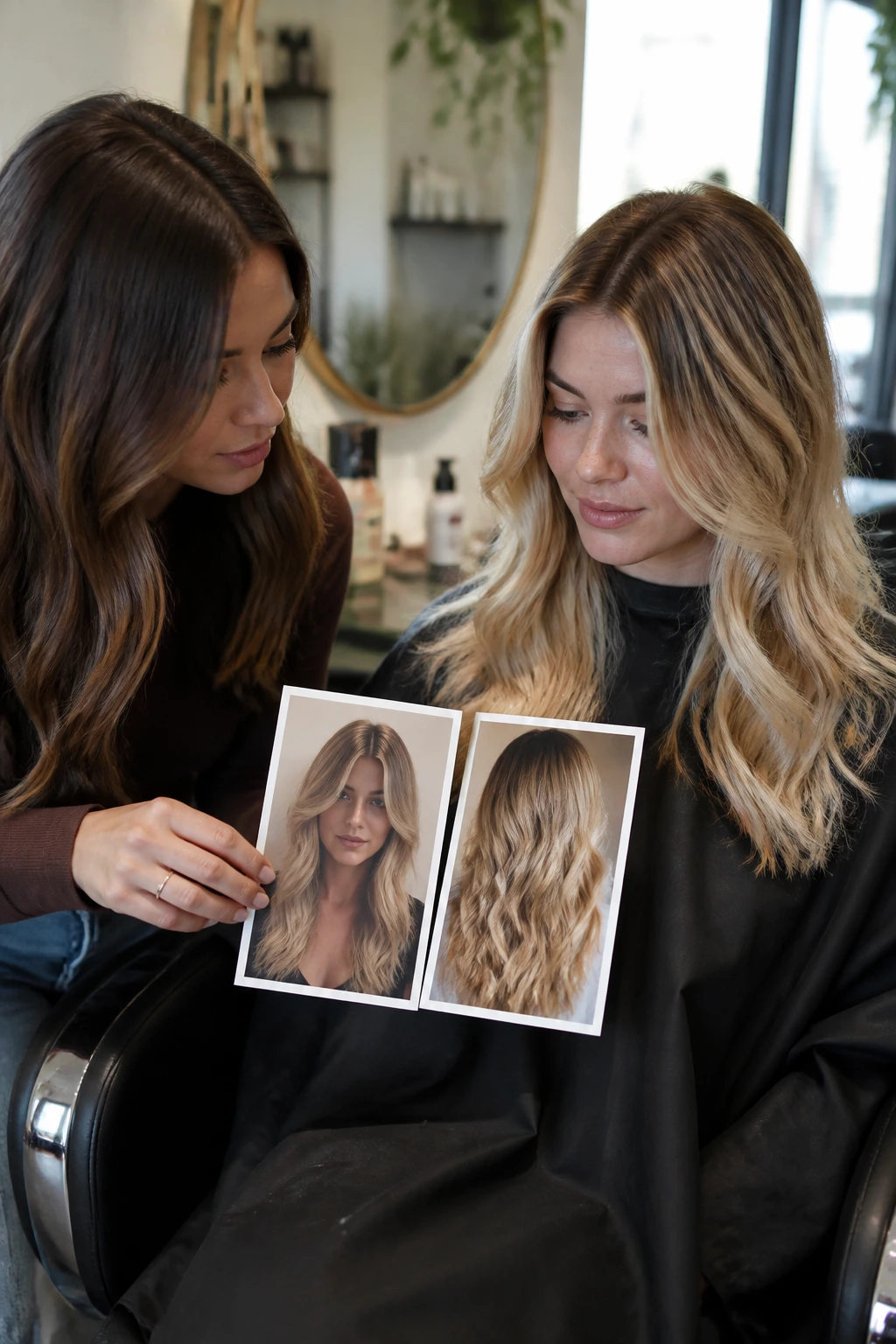
Bring two photos. One should show the cut shape, and the other should show the blonde tone. That sounds obvious, but people mix the two constantly and then wonder why they got the wrong thing. A photo of a style on pin-straight fine hair will not behave the same way on thick hair, so point out the parts you actually want: the front shape, the length, the amount of layering, the amount of brightness around the face.
Tell your stylist where you want the shortest front layer to land. On thick hair and a heart-shaped face, that detail matters more than saying “face-framing layers.” If you want softness, cheekbone or lip level is usually safer than chin level. If you want more edge, the layer can sit a little higher, but it should still connect to the rest of the cut. Choppy isolation up front can look disconnected fast.
Color matters just as much. Ask for a rooted blonde if you want the color to grow out in a controlled way. If you want the cut to look brighter around the face, ask for lighter pieces at the temples and through the first few layers around the front, not just on top. And if your hair is coarse or frizz-prone, say so. That one sentence can save you from a razor-happy cut that looks good for one wash and annoying after that.
Small Styling Tweaks That Change the Whole Look
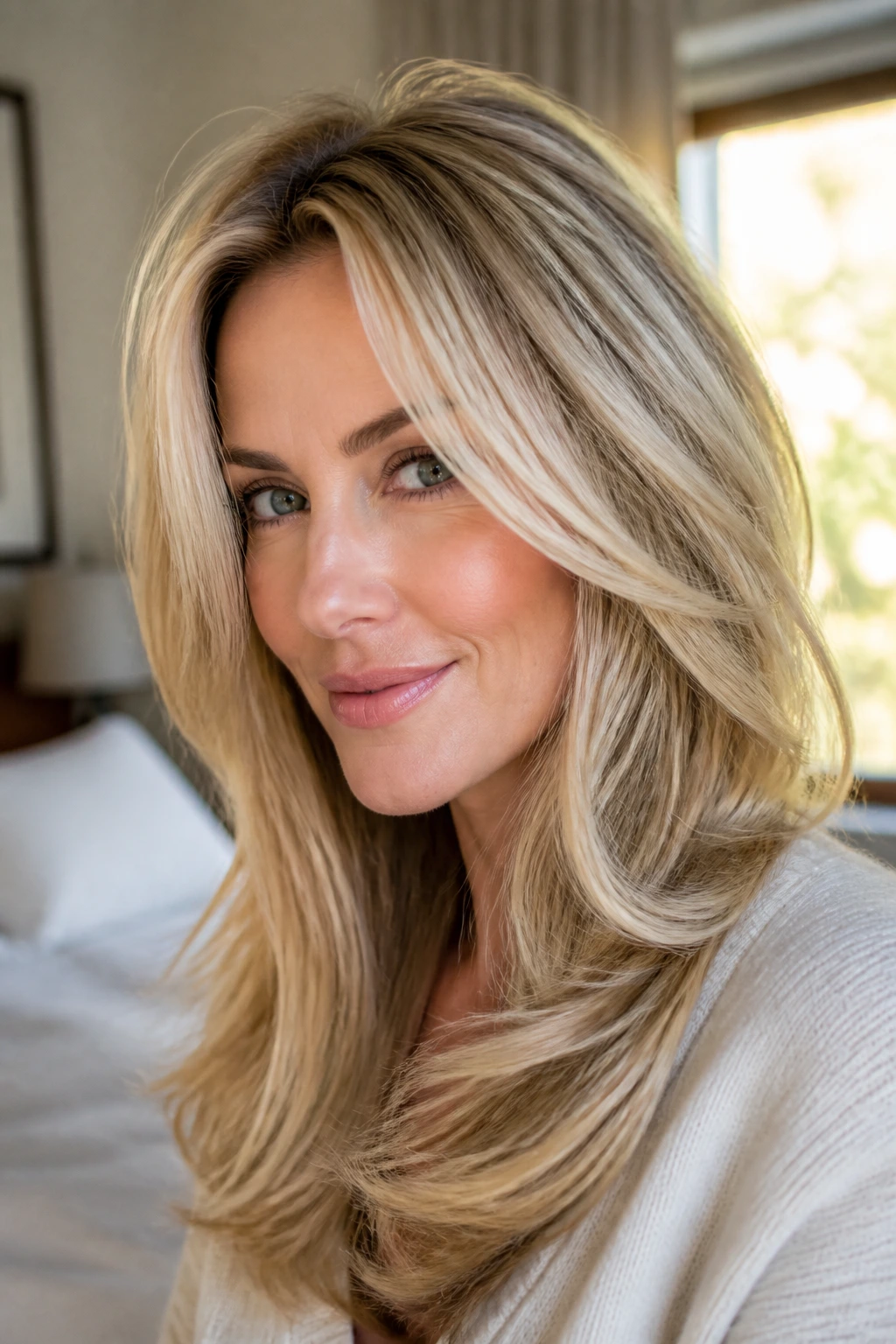
Root Lift: A little mousse or volumizing spray at the roots changes the whole silhouette on thick hair. Blow-dry the crown first, then the rest, because once heavy hair dries flat at the roots, it stays there longer than you want.
Face Bend: The front pieces should usually bend away from the face, not curl into it. That small direction change makes curtain layers, butterfly cuts, and face-framing pieces open the heart shape instead of crowding it.
Color Pop: If the blonde looks dull, a clear gloss or a subtle toner refresh can bring the dimension back without a full color service. That matters on layered cuts because shine shows the shape.
Part Shift: A center part is lovely on curtain layers and butterfly cuts, but a deep side part can instantly help if the forehead feels too broad that day. Hair changes with growth, humidity, and time. The part is a small tool with a lot of power.
End Polish: Thick hair looks best when the ends are either neatly beveled under or softly textured with purpose. Random dry ends are different from intentional texture. You can feel the difference when you touch them, and you can see it from across the room.
Common Mistakes That Make Thick Hair Puff or Collapse
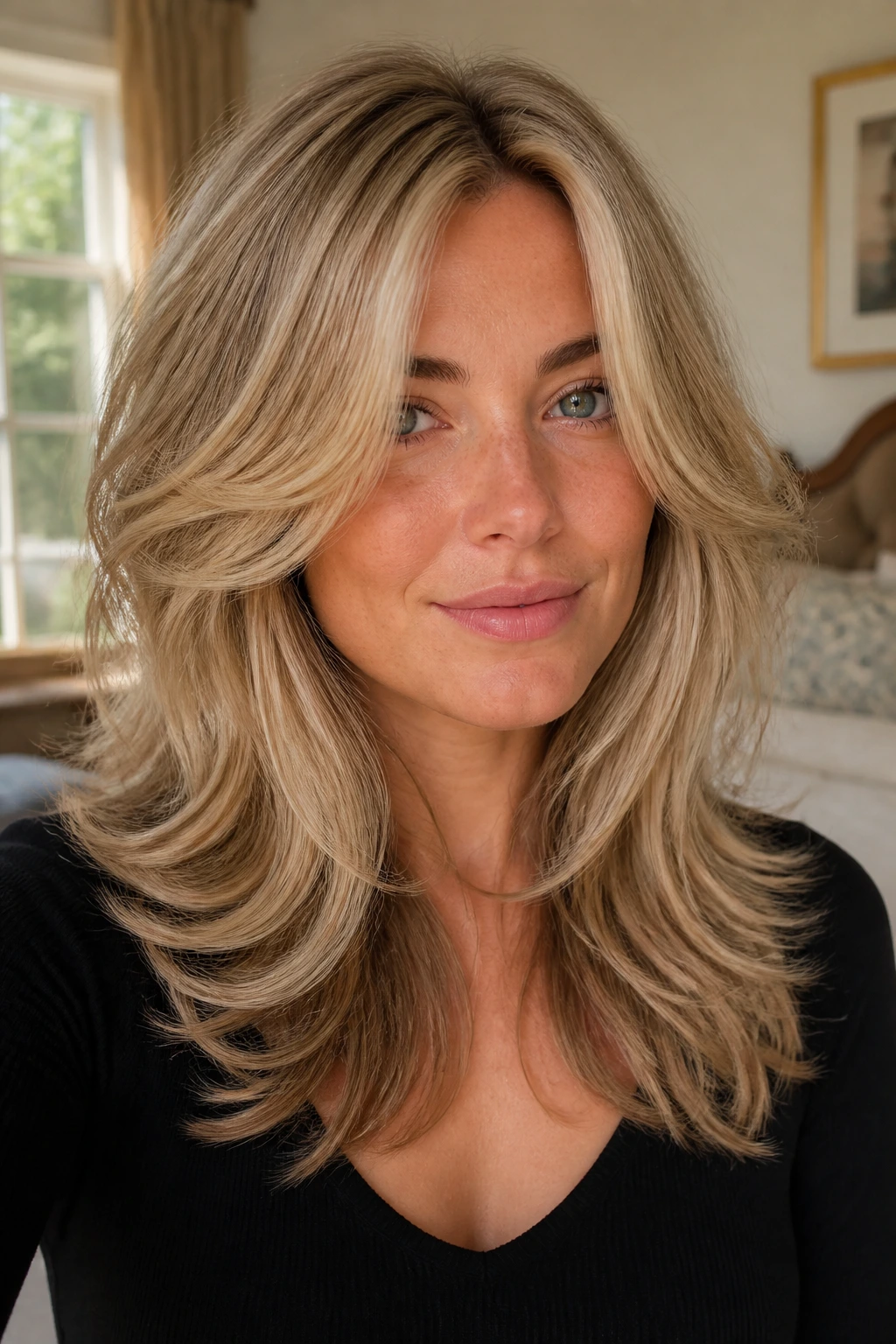
Layers that start too high: The cut gets fluffy at the crown and too thin through the mids. You’ll know this happened when the top looks busy but the ends look tired. Fix it by asking for longer layers and more weight left through the perimeter.
Short front pieces that stop at the wrong spot: If the face frame ends right at the chin on a heart-shaped face, it can exaggerate width at the forehead and make the jaw seem smaller. The fix is usually a longer curve that drapes past the chin or begins higher at the cheekbone, depending on the cut.
Too much texturizing on coarse hair: This is the one that turns thick hair fuzzy. It may look airy for a day, then the ends start spreading in every direction. Ask for shape removal instead of aggressive thinning, especially if your hair is dry or color-treated.
One-tone blonde with no depth: Thick hair can eat up a flat blonde shade and make the cut look dull. A root shadow, lowlight, or a few brighter face pieces creates depth and shows the layer pattern.
Ignoring the natural part: Forcing a center part on every face shape or every cut is lazy styling. If the part makes your forehead look wider or flattens the front pieces, shift it a half inch. That tiny move can save the whole look.
Variations and Adaptations to Try
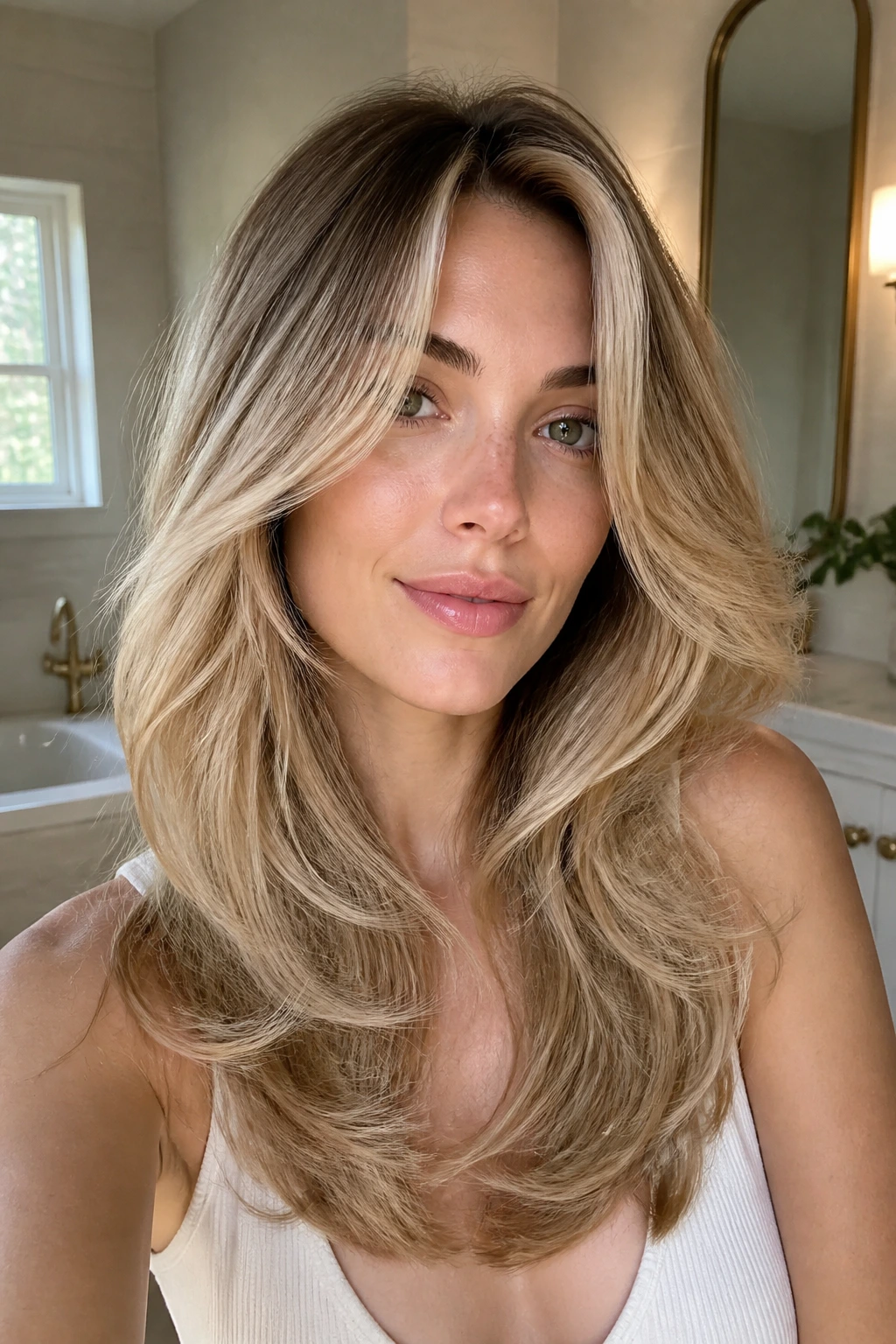
The Low-Maintenance Rooted Blonde: Ask for a deeper root and softer balayage through the ends. This works if you like the shape of the cut but don’t want obvious regrowth every few weeks.
The Glossy Blowout Version: Keep the layers long and blended, then finish with a round brush and a soft curve under the ends. This is the polished route for people who want thick hair to look controlled, not shaggy.
The Air-Dry Version: Choose curtain layers, a midi shag, or a soft wolf cut, then style with mousse and a little leave-in. The idea is to let the natural bend show while the layer map keeps the silhouette tidy.
The Fringe-Forward Version: Add bottleneck bangs or a long curtain fringe if your forehead feels especially wide. Keep the fringe textured enough to move, because thick hair bangs can turn into a block if they’re cut too blunt.
The Softer Platinum Version: Use platinum only around the front and top surface, then keep the rest beige or champagne. This gives brightness without turning thick hair into one bright sheet.
The Longer Grow-Out Version: Keep the face frame long and the interior layers low. It’s the best choice if you know you’ll stretch visits between trims and want the haircut to still make sense as it grows.
Care, Washing, and Grow-Out Rhythm
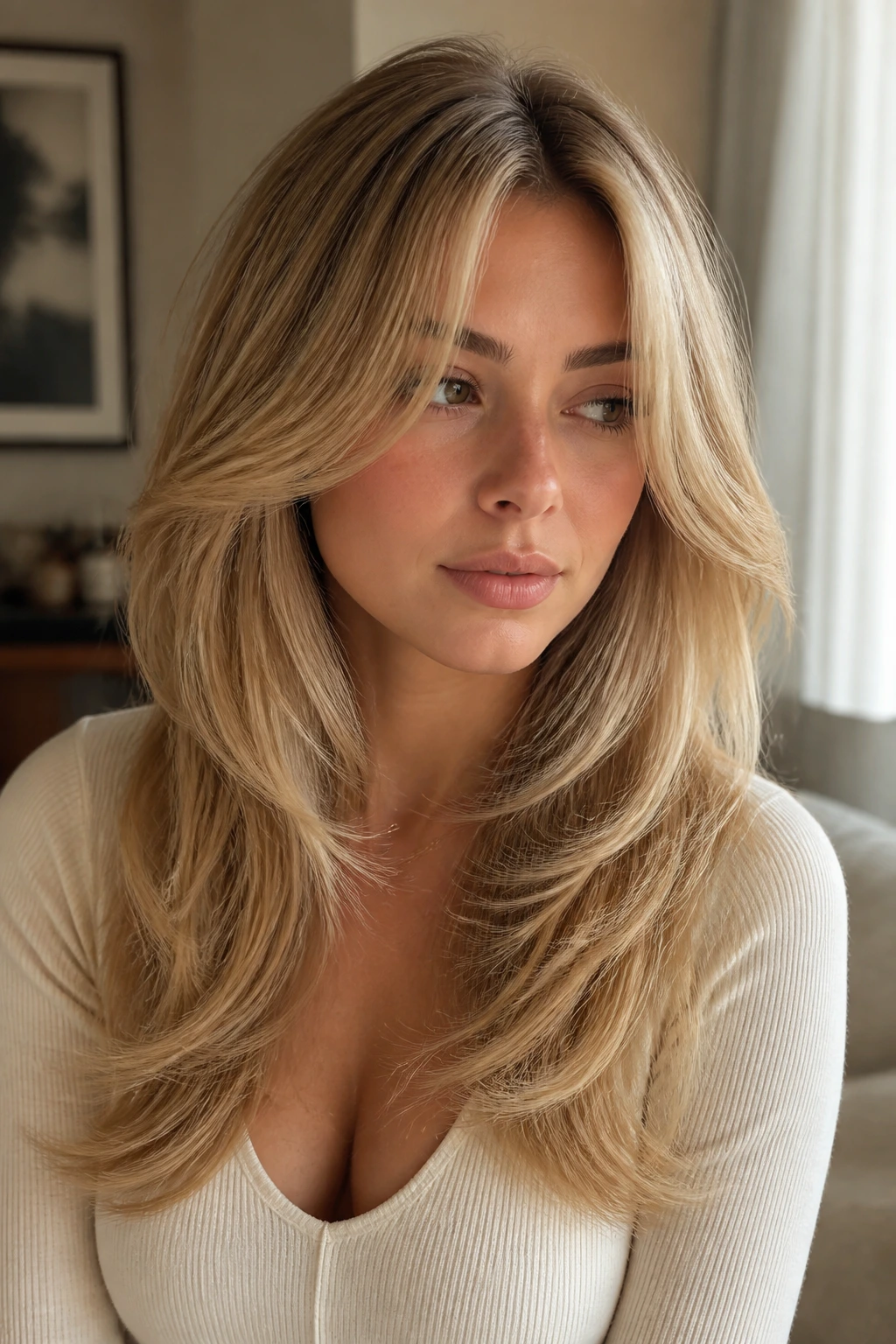
Thick hair with blonde layers usually behaves best on a steady routine, not a chaotic one. If the cut has fringe or shorter face-framing pieces, plan on a trim every 8 to 10 weeks. If the layers are long and blended, 10 to 12 weeks is usually enough to keep the shape from sliding down your face. Letting it go too long doesn’t just lengthen the hair; it erases the architecture that made the cut flattering in the first place.
Blonde care needs its own rhythm. Purple shampoo once every 4 to 7 washes is plenty for cooler blondes. Use it too often and thick hair can go flat, dry, and a little chalky at the ends. A nourishing mask once a week helps a lot, especially if the hair was lightened with highlights or balayage. If your hair is coarse, a cream mask on the mids and ends is usually better than a super-light conditioner that disappears before it does anything.
For styling longevity, let the hair cool completely before you brush it out. Thick hair holds shape better once it has set. If you’re sleeping on it, a loose braid or a silk scrunchie keeps the front from kinking badly, and a silk pillowcase doesn’t hurt either. Small habits. Big difference.
Frequently Asked Questions
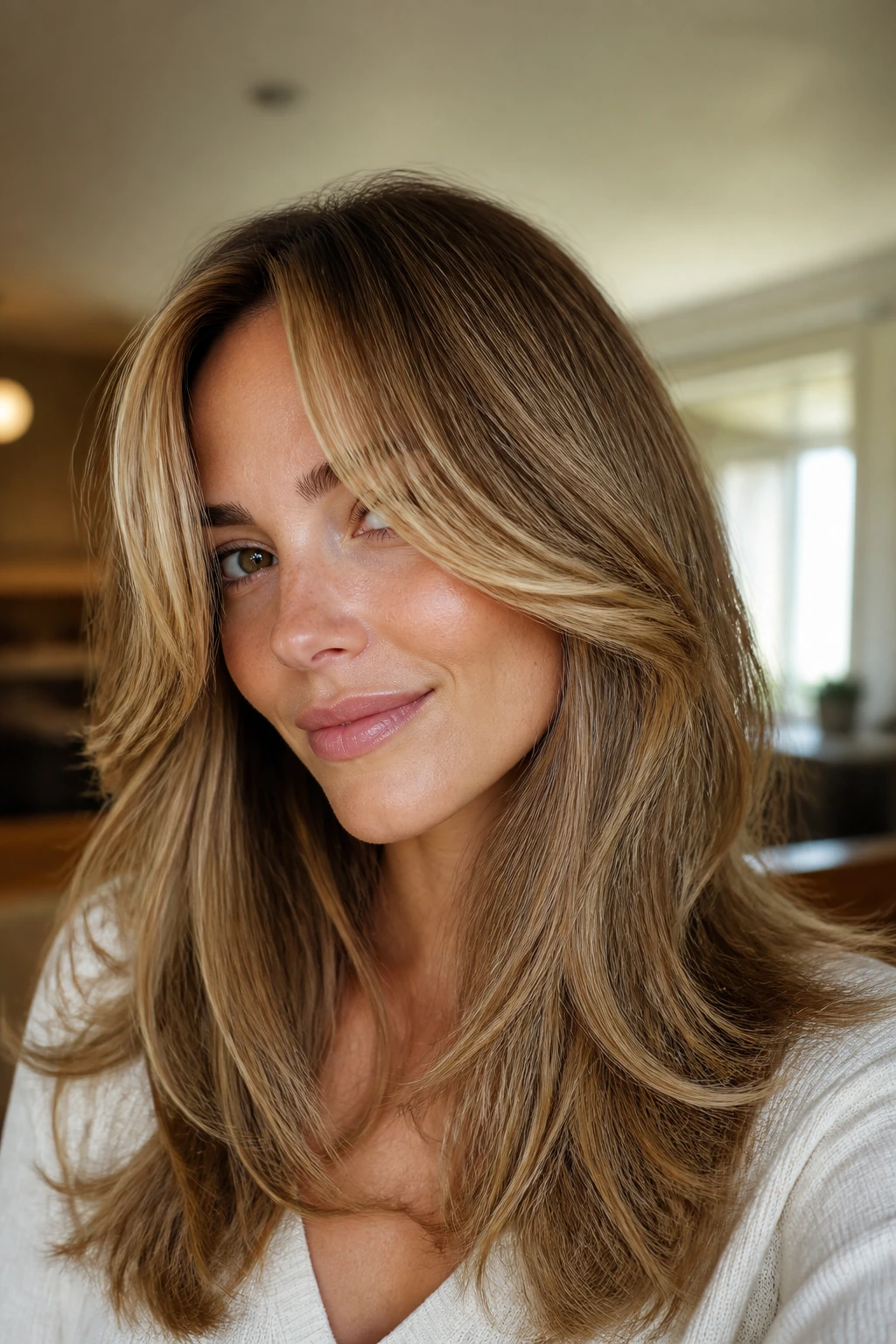
What layer length is most flattering on a heart-shaped face?
Usually the safest starting point is around the cheekbone, lip, or just below the jaw, depending on the rest of the cut. That range softens the wider upper half of the face without making the jaw disappear.
Do curtain bangs work on thick hair?
Yes, and they can work very well if they’re cut with enough texture and kept a little longer at the sides. The center should not be so blunt that it behaves like a shelf.
Will layers make thick hair frizzier?
They can, if the cut is over-texturized or the stylist removes too much internal weight with a razor. The fix is usually longer blended layers and a cleaner perimeter, not more thinning.
Is balayage better than foils for these styles?
Balayage gives a softer grow-out and usually looks better on layered thick hair if you want dimension without harsh lines. Foils can still work if you want brighter face-framing pieces or more contrast.
Can I keep my length and still get movement?
Absolutely. Long U-shapes, invisible internal layers, and face-framing cuts keep most of the length while making the hair fall better. You do not need to chop it all off to get shape.
Which styles are easiest to air-dry?
The collarbone shag, midi shag, soft wolf, and curly-friendly layered cuts usually air-dry with the least fuss. They’re built to look better with a little natural bend and a bit of texture.
How often should blonde thick hair be toned?
That depends on how cool or warm you want the blonde to stay, but a gloss or toner refresh every 6 to 8 weeks is a solid rhythm for many people. Cooler blondes usually need more attention than beige or honey tones.
What if my thick hair looks wide at the sides after the cut?
That usually means the layers are too short or the front is ending at the wrong spot. Ask for longer face-framing pieces and more weight left through the lower perimeter so the shape falls downward instead of outward.
The Shape That Does the Balancing
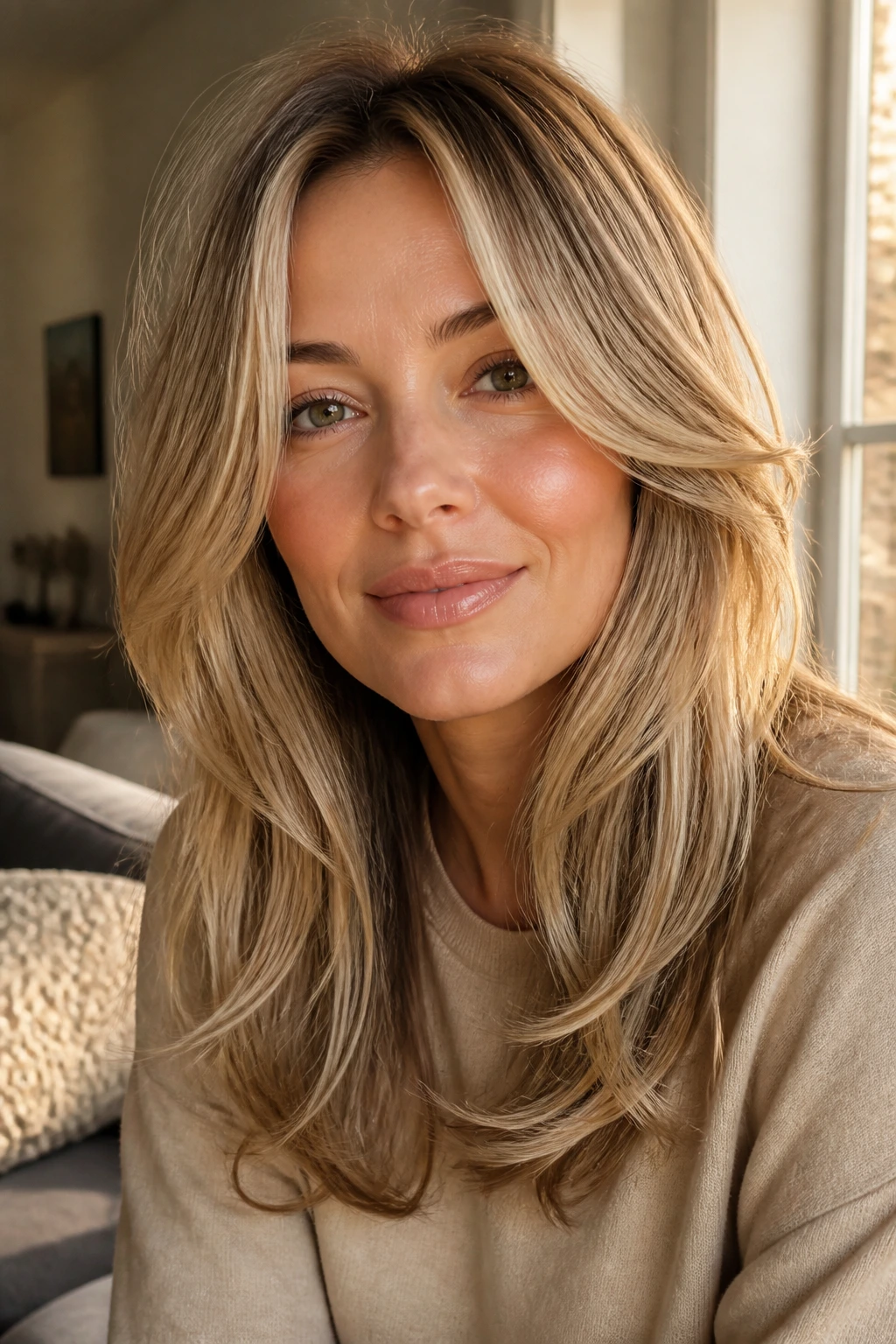
The best blonde layers for thick hair and heart-shaped faces don’t just add movement. They change where the eye goes. That’s the whole trick. They soften the forehead, bring some attention lower through the cheeks and jaw, and let thick hair keep the richness that makes it worth having in the first place.
I like cuts that look good on a normal Tuesday, not just after a salon blowout. That usually means the layers were placed with discipline, the blonde has depth, and the front pieces were cut to frame the face rather than fight it. Get those three things right, and the haircut starts doing the balancing work for you.
Pick the version that matches how you actually wear your hair, not the one that looks loudest in a chair. That choice tends to age better, grow out better, and make you happier every time you catch your reflection sideways.