



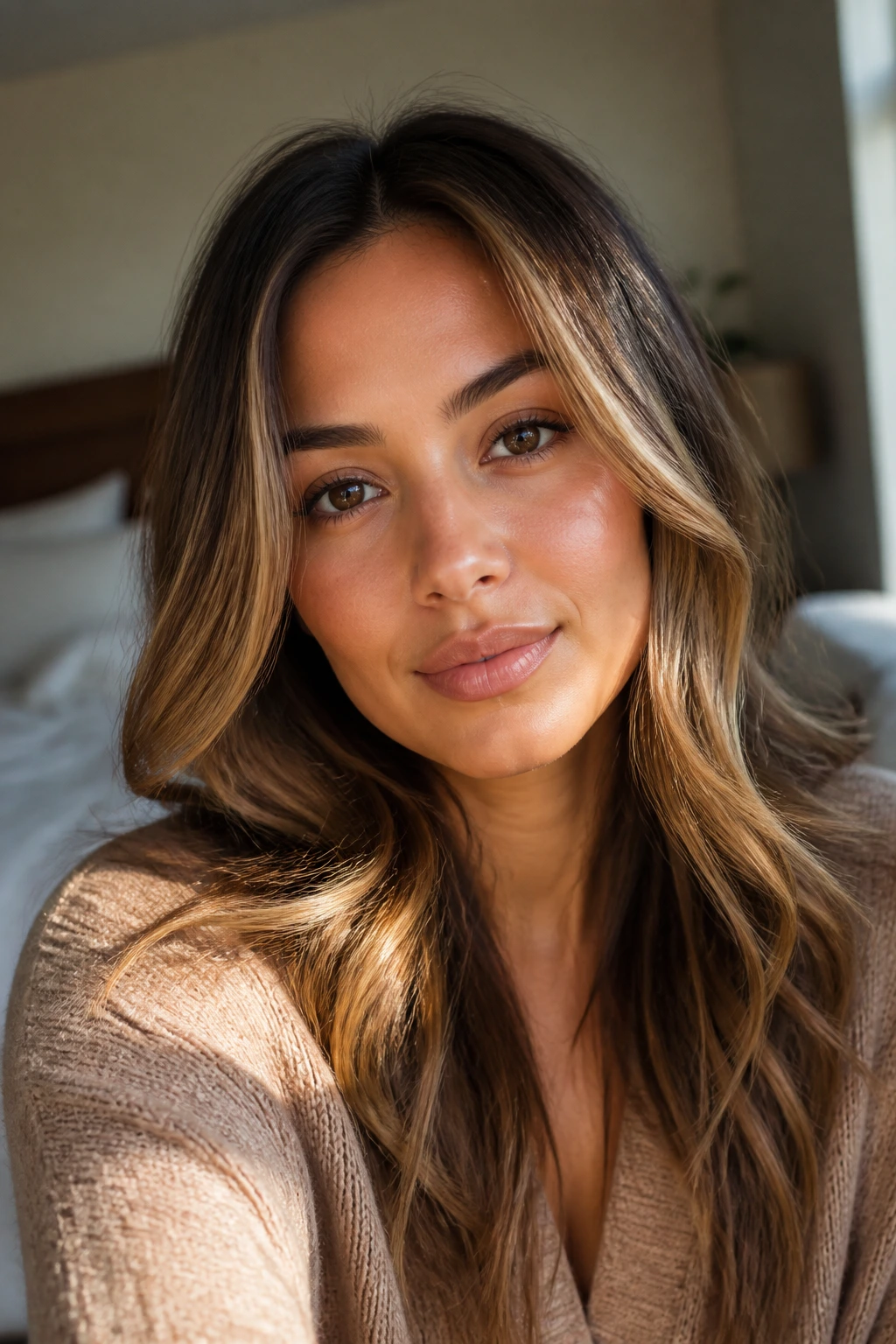
Caramel all-over highlights do one thing most lighter color jobs forget: they keep the hair looking rich while still giving the face a lifted, sunlit edge. On warm skin tones, that matters a lot. A golden or peachy undertone can handle warmth in the hair better than a cool, icy blonde ever will, and when the caramel sits in the right range — usually somewhere between honey, toffee, and soft amber — the whole look feels connected instead of pasted on.
The trick is placement as much as shade. A few thick face-framing pieces can look pretty under salon lights, then flat in daylight. An all-over weave of caramel foils, babylights, or painted ribbons gives the color movement from crown to ends, which is why it reads as expensive even when the cut is simple. You get dimension, not stripes. That distinction matters.
I also think warm skin tones have been underserved by the usual “go lighter” advice. Sometimes lighter is the wrong move. A level 8 beige blonde can wash out golden skin in a way that’s hard to fix with makeup or styling. Caramel, on the other hand, can sit right beside your undertone and make the whole face look softer, healthier, and a little more awake. Not louder. Just better balanced.
Why These Caramel Looks Feel So Wearable
-
Warmth Matches Warmth: Golden caramel, toasted toffee, and honeyed beige echo the undertones already in the skin, so the hair looks like it belongs there instead of fighting the face.
-
All-Over Placement Adds Depth: Fine foils and babylights spread the brightness through the mid-lengths and ends, which keeps the hair from looking like it has two hard color bands.
-
The Shade Range Is Bigger Than People Think: Caramel can lean deep and earthy or light and syrupy, which means it can work on dark brunette bases, medium brown hair, and even some dark blonde shades.
-
Grow-Out Can Be Softer: Root smudges, teasylights, and melted highlights blur the line between regrowth and color, so you’re not staring at a hard stripe six weeks later.
-
Texture Changes Everything: Waves, curls, and even a blunt straight blowout will show caramel in a different way; the same color can look subtle one day and dimensional the next.
1. Honey Ribbon Layers
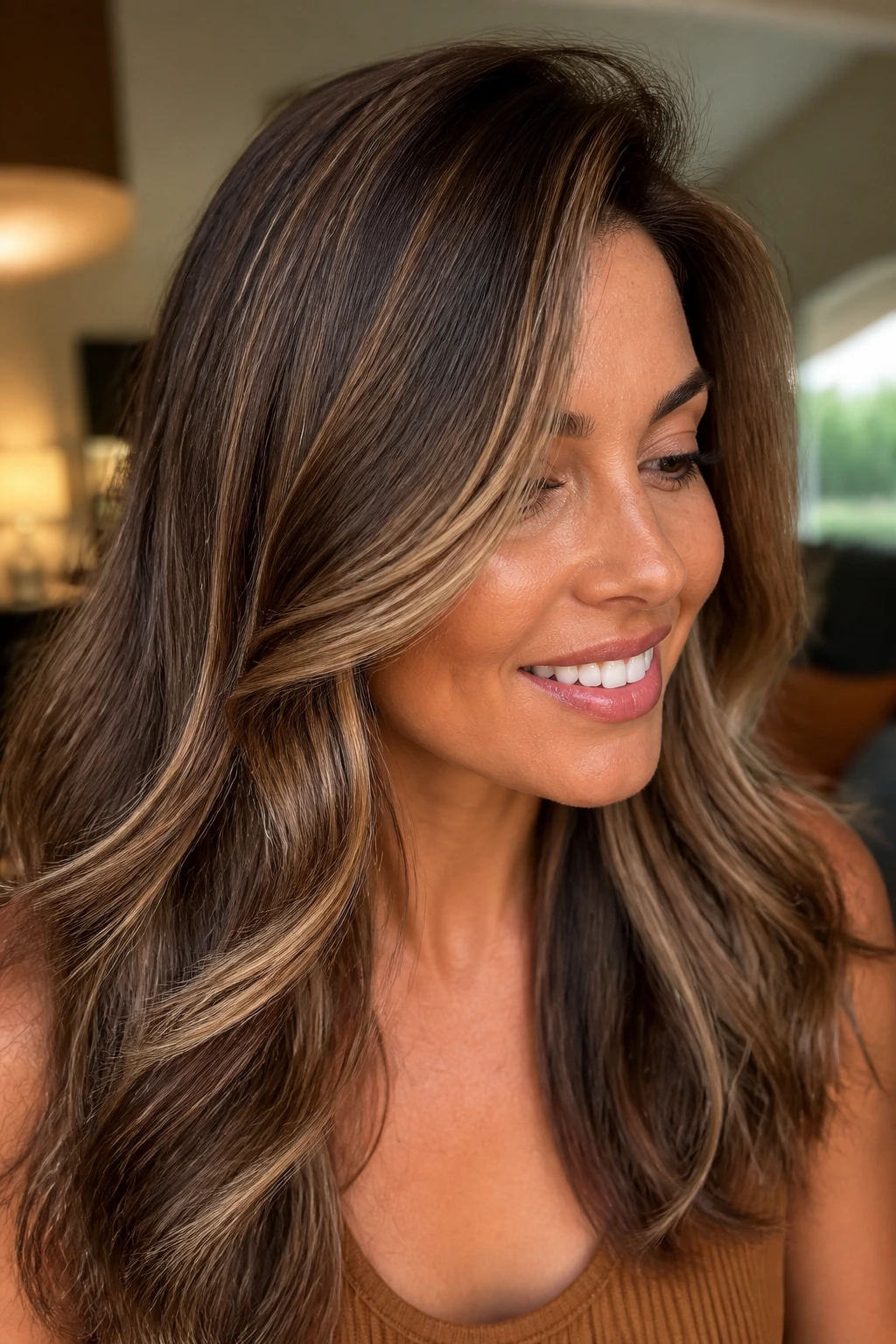
Honey ribbon layers are the look I reach for when someone wants warmth without a loud color shift. The highlights sit like thin ribbons through the mid-lengths and ends, usually on a medium brunette or chestnut base, and the result is soft enough to pass as natural sunlight. It’s one of those colors that keeps revealing itself as the hair moves.
The best version keeps the ribbons fine around the crown and a touch thicker toward the bottom third of the hair. That gives the cut some lift without turning the top section pale. On warm skin, the honey tone should stay golden, not yellow. If the hair starts reading banana-blonde, the toner has gone too far.
Best for: medium brown hair, layered cuts, and people who want visible brightness without a heavy contrast line.
Ask for: fine foils or babylights with a honey-caramel gloss, plus a soft root melt if you want the grow-out to stay tidy.
My take: this is one of the safest caramel highlight choices for warm undertones. It flatters peachy skin especially well.
2. Butterscotch Money Pieces
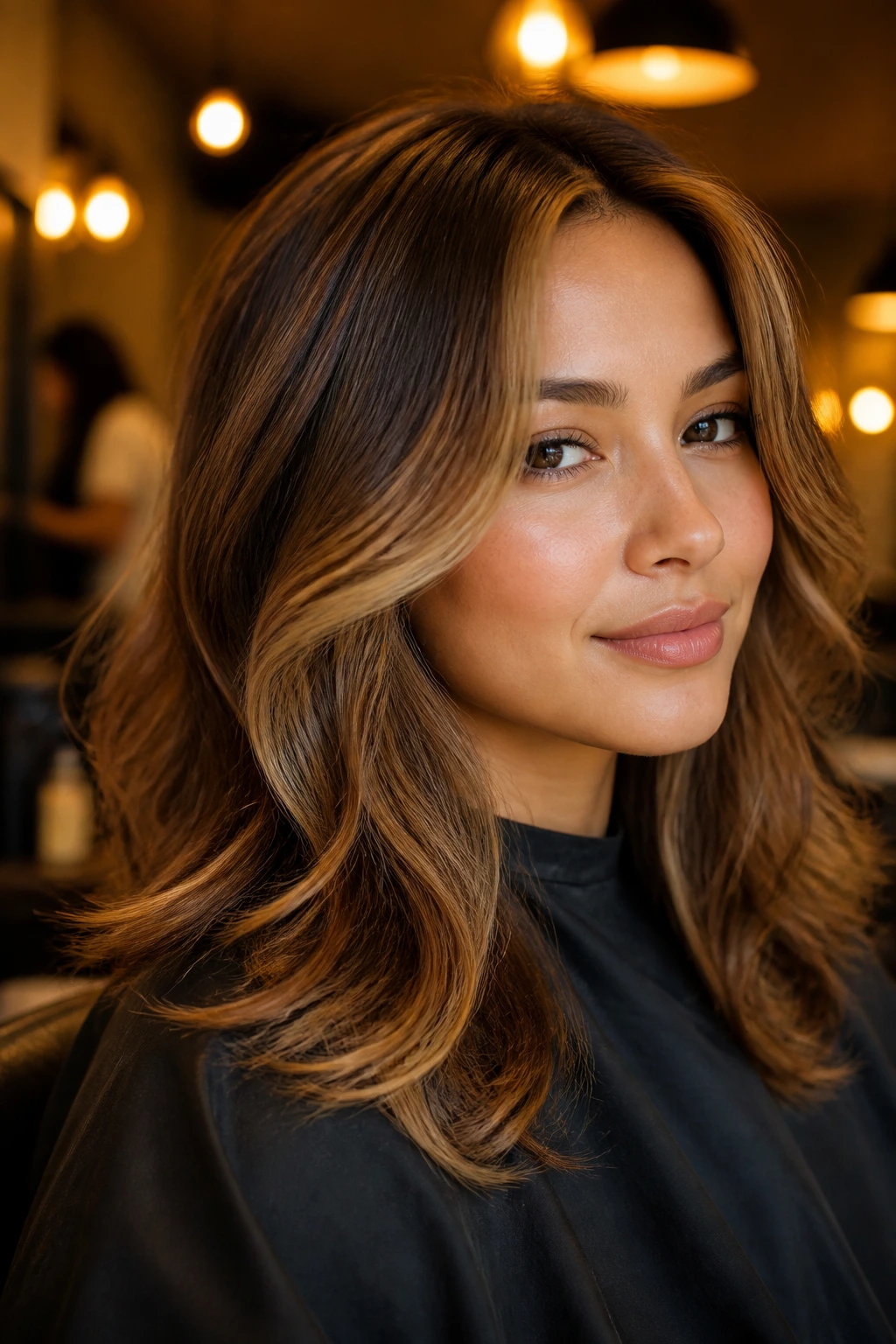
Why do money pieces work so well with caramel? Because they put the brightness exactly where the eye lands first: the cheekbone, the temple, the edge of the fringe. A butterscotch version keeps that framing warm instead of icy, which is the whole point for warm skin tones. It brightens the face without making the hair look disconnected from the rest of the head.
I like this look on layered lobs, curtain bangs, and longer cuts that already have some movement near the face. If the pieces are too thick, they can look blocky. If they’re too light, they steal attention from the rest of the color. The sweet spot is a soft, creamy caramel that’s one to two levels lighter than the base.
That balance matters even more if your skin has golden or olive undertones. Too much beige can flatten the complexion. Butterscotch, when toned right, gives you that easy lift near the eyes and keeps the rest of the head rich.
3. Toffee Babylights
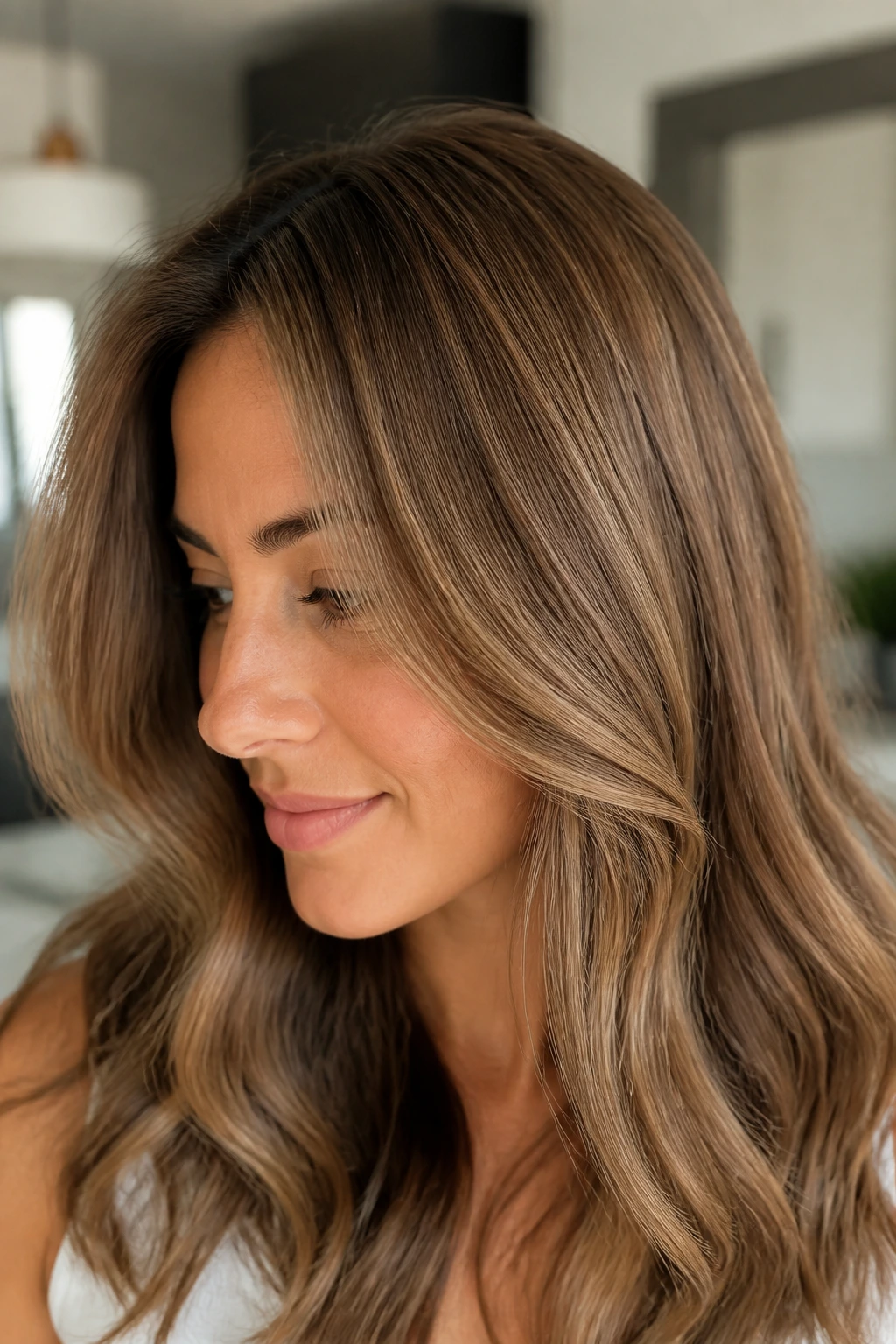
Toffee babylights are the quietest color on this list, and I mean that in the best way. They’re tiny, close-set, and woven through the hair so finely that the effect reads as shimmer more than streaks. On warm skin tones, that matters because the hair gets lightened without losing the darker, grounding base.
This look is especially good on fine hair. Big ribbons can overwhelm a smaller strand pattern, while babylights build the illusion of thickness and movement. The toffee tone should sit warm and soft, somewhere between light brown and caramel blonde. If your colorist lifts too far, the whole thing starts looking sandy instead of rich.
Why It Stays Pretty
- The highlight density is high, but the contrast is low.
- It grows out with less drama than chunky foils.
- It gives straight hair a lifted look that doesn’t rely on curls.
Pro tip: ask for a gloss after the highlights are rinsed. That extra tone is what keeps toffee from going flat.
4. Chestnut Veil Highlights
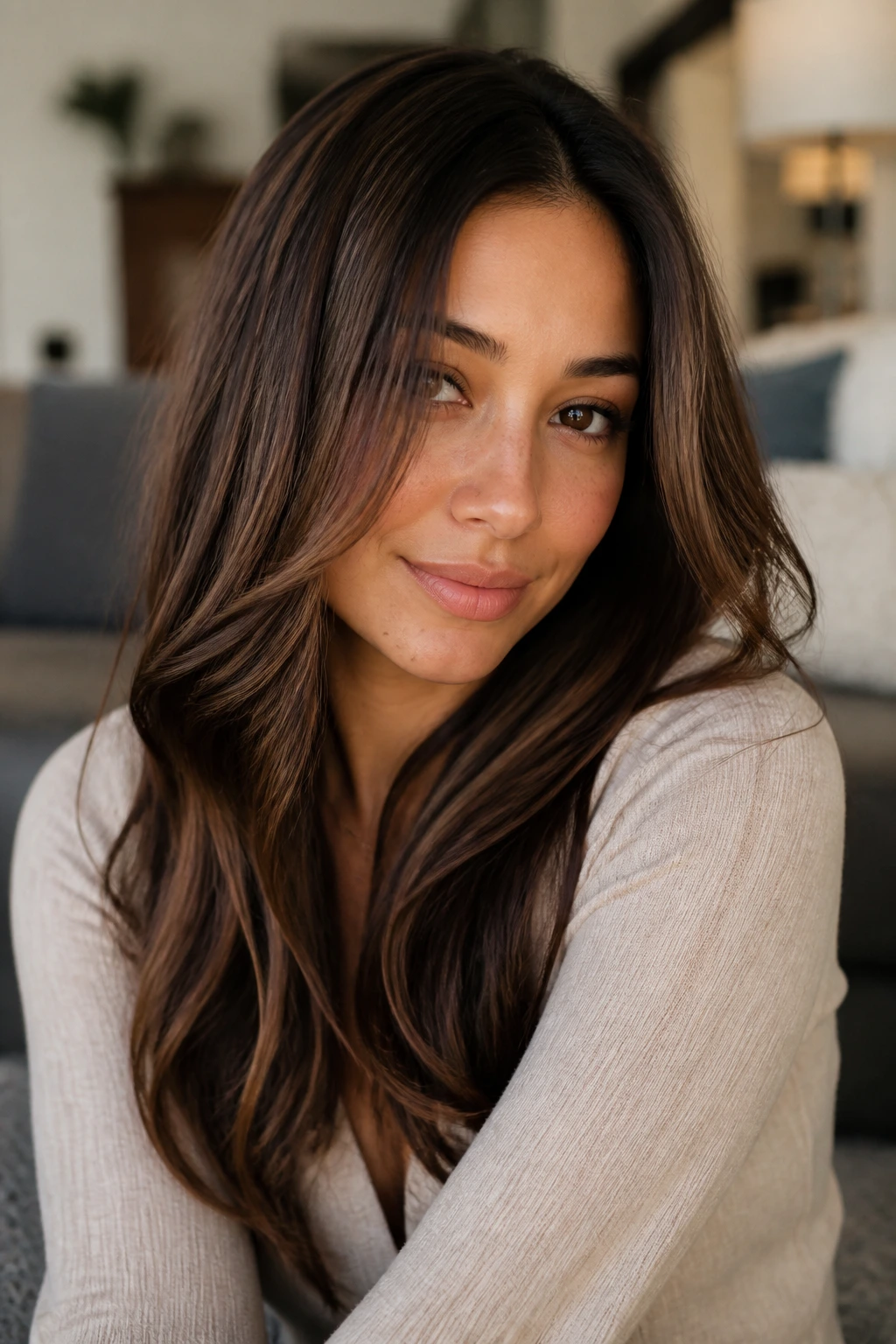
Chestnut veil highlights are the answer for anyone with darker hair who wants dimension without a dramatic jump. The color sits under a veil of depth rather than shouting from the top of the head. On warm skin, chestnut-caramel reads expensive because it keeps the warmth in the brown family instead of drifting into pale blonde territory.
This look depends on restraint. A little brightness around the front and through the top layers goes a long way. The rest of the pieces should be diffused enough that the hair still looks like one color from across the room. That’s the charm here: the movement appears when the light hits, not before.
I especially like it on dense, straight hair or medium-textured waves. The veil effect gives the style a polished finish and keeps the base from looking too heavy. If you want something that plays nicely with warm skin and doesn’t demand constant tonal upkeep, this is one of the smartest choices in the lineup.
5. Cinnamon Swirl Waves
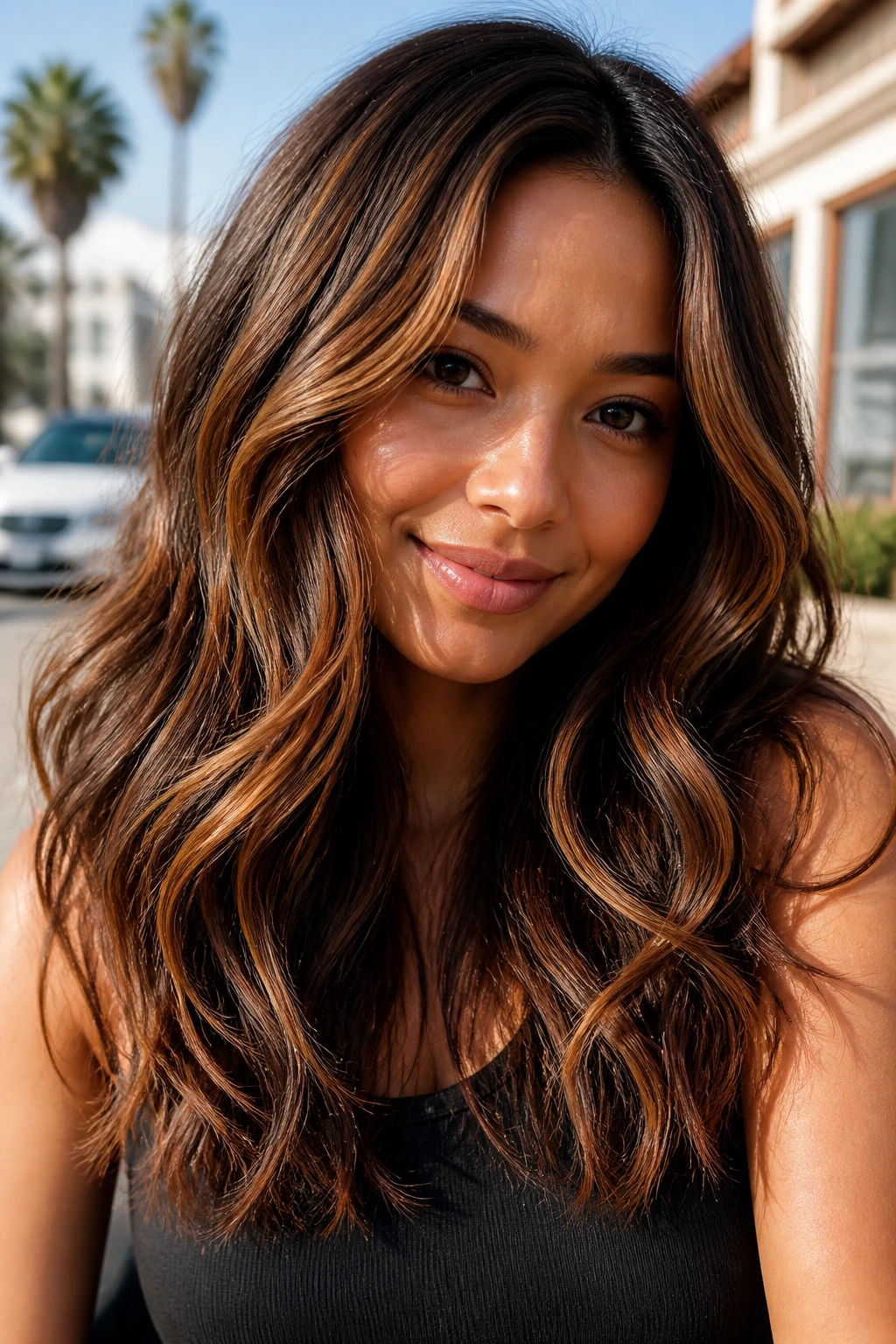
Cinnamon swirl waves have more personality than the softer caramel looks, and I’m not sorry about that. The color mixes golden caramel with a whisper of spice — not red, not copper, just enough warmth to make waves look animated. Warm skin tones can carry that extra heat beautifully, especially when the base is a medium brunette or dark blonde.
The style works because the waves break up the color. A straight finish can make cinnamon highlights look more obvious than intended, but loose bends let the caramel and brown mix together in layers. That’s why this look feels good on shoulder-length cuts and long hair with soft layers. The movement is doing half the work.
If you want it to stay elegant, not orange, keep the cinnamon piece placement mostly mid-length and below the face frame. That way the warmth glows instead of dominates. It’s a subtle difference, but you can see it immediately when the hair moves in daylight.
6. Curly Caramel Halo
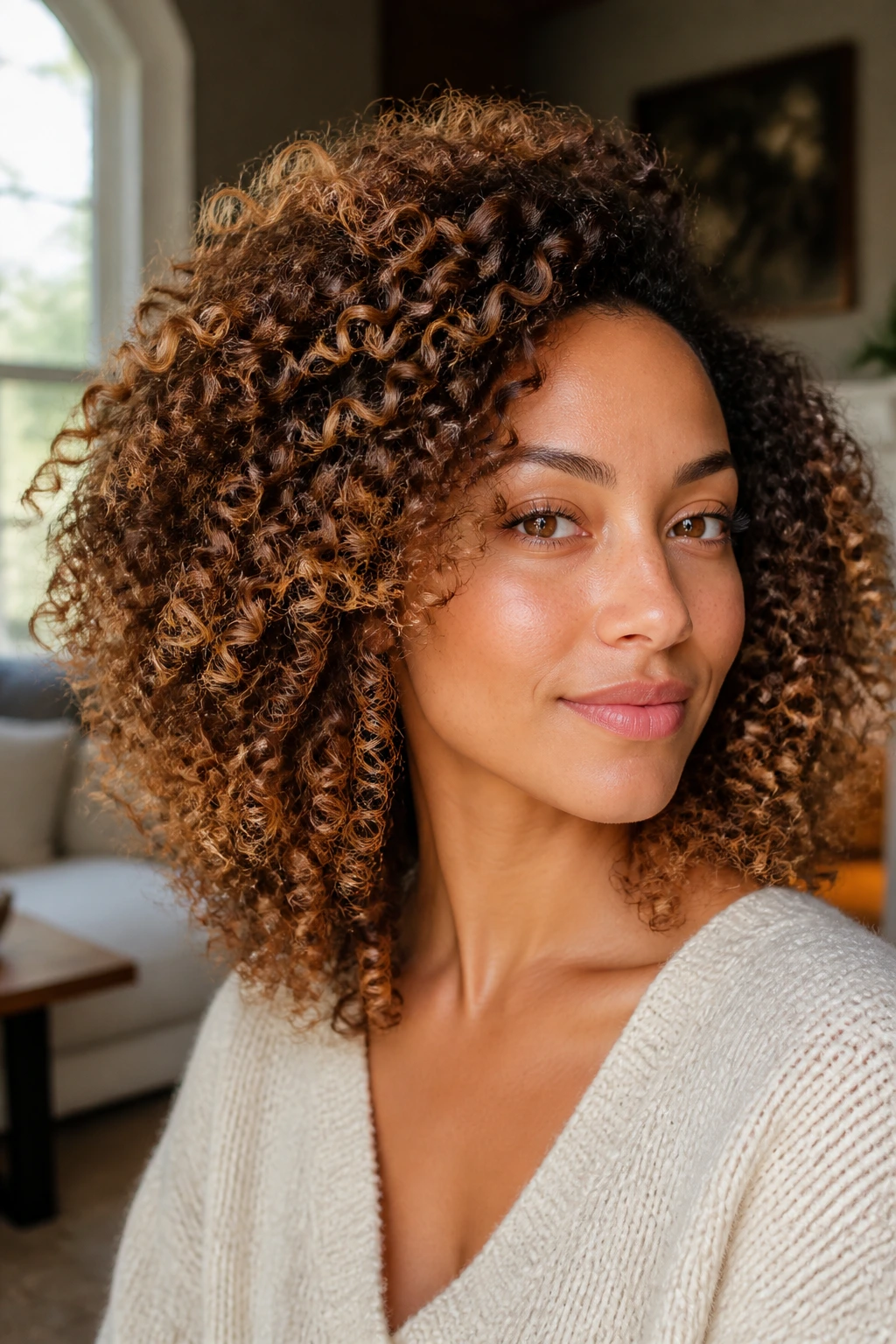
Curly hair loves caramel when the placement is mapped to the curl pattern, not just painted across it. A halo of warm highlights around the outer layer of curls gives the hair that lifted, dimensional look that warm skin tones can wear so well. The color catches on the curves of the curl, which is where the eye naturally goes.
A curl-by-curl approach is the right move here. If someone lightens the hair with broad, even sections, the highlights can disappear inside the curl mass or, worse, break up the curl shape. Tiny painted panels near the crown and outer perimeter keep the shape intact while still bringing in brightness. That’s the difference between thoughtful color and random light spots.
What to ask for
- Painted placement around the outside curl layer
- Warm caramel or honey-caramel, not ash
- A gloss that keeps the curl surface shiny, not dry-looking
A good curly caramel halo should look fuller, not frizzier. If it does the opposite, the placement was too aggressive.
7. Espresso Contrast Ribbons
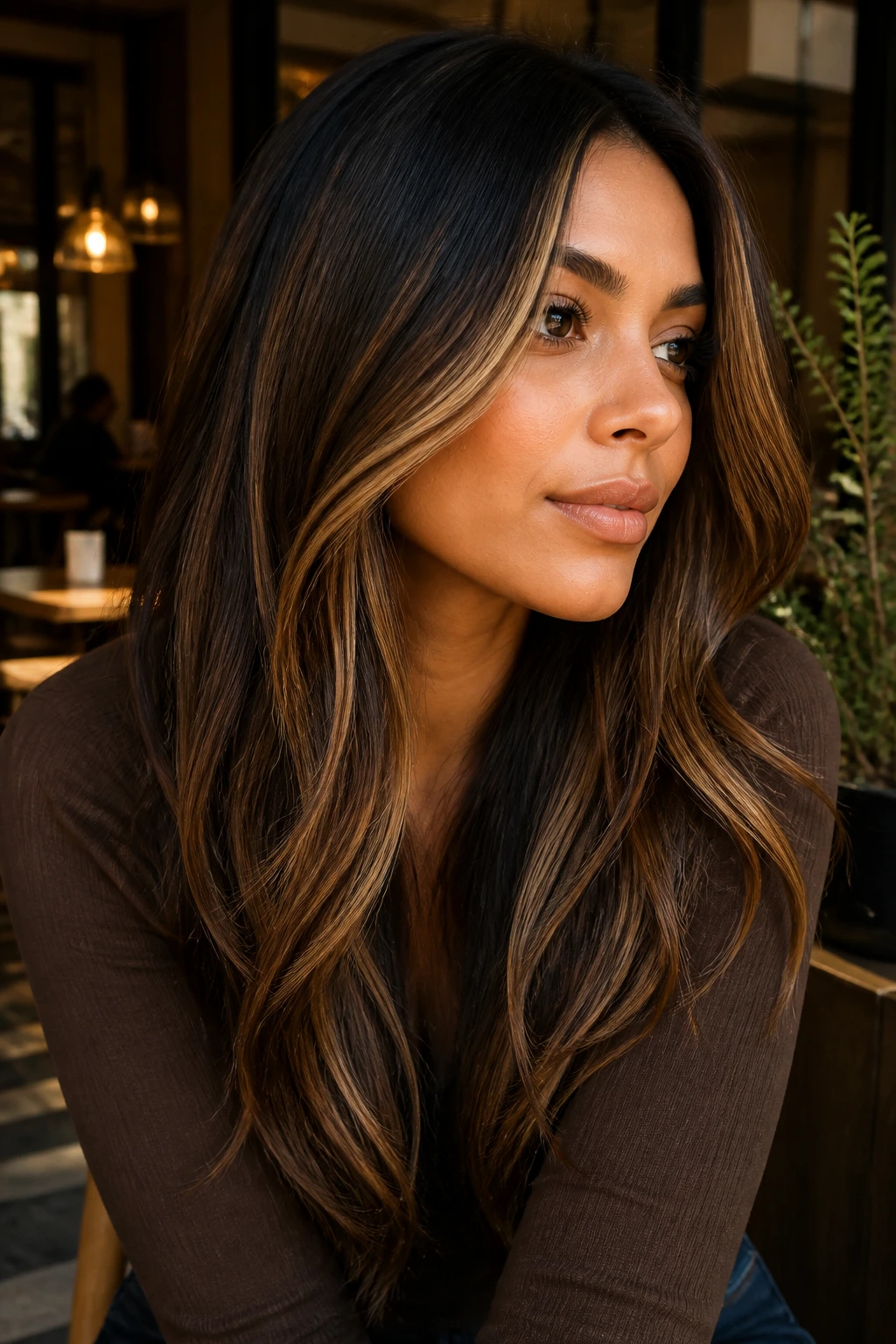
Some people want subtle. Others want the color to announce itself from across the room. Espresso contrast ribbons are for the second group, and warm skin tones can absolutely wear them if the caramel stays rich and golden. The dark base gives the highlights somewhere to land, and the contrast makes the caramel look even warmer.
The key is to keep the ribbons ribbon-like. Broad, chunky panels can look dated fast. Slimmer sections, placed through the top and around the face, create the same visual contrast without turning the hair into blocks. I like this best on long layers or medium-length cuts where the movement can break up the contrast.
This look is especially effective when the caramel leans toasted rather than pale. Too light, and the contrast feels sharp in the wrong way. Keep it warm, and the whole thing looks glossy, almost lacquered. That shine is doing a lot of heavy lifting here.
8. Bronde Lob Brightening
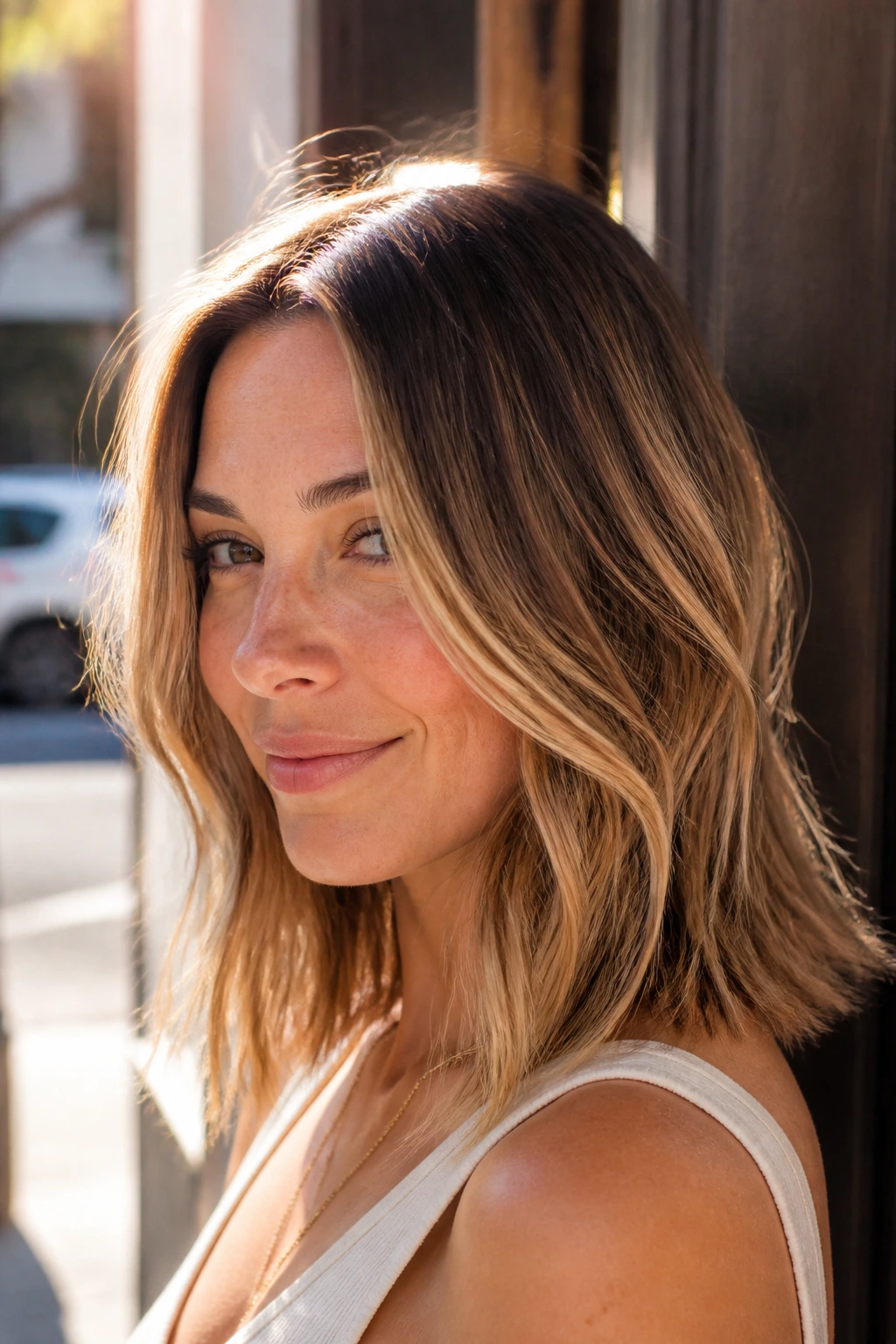
A bronde lob is one of the easiest places to wear caramel highlights because the cut already has shape. Add warm caramel through the mid-lengths and ends, and the lob stops reading as one flat brown helmet. It gets air. It gets motion. It gets a little more bite.
This is a good choice for warm skin tones that sit between brunette and dark blonde. The bronde zone is flexible, but the caramel should still stay on the warm side. If the highlights lean beige-cool, the whole effect starts looking accidental. Keep the tone golden, and the cut looks expensive in that quiet, not-at-all-fussy way.
I like this especially with a blunt edge or a barely layered lob. The shape keeps things neat while the caramel breaks up the surface. It’s a solid option if you want color that feels modern without chasing a super-light result.
9. Amber Threads Bob
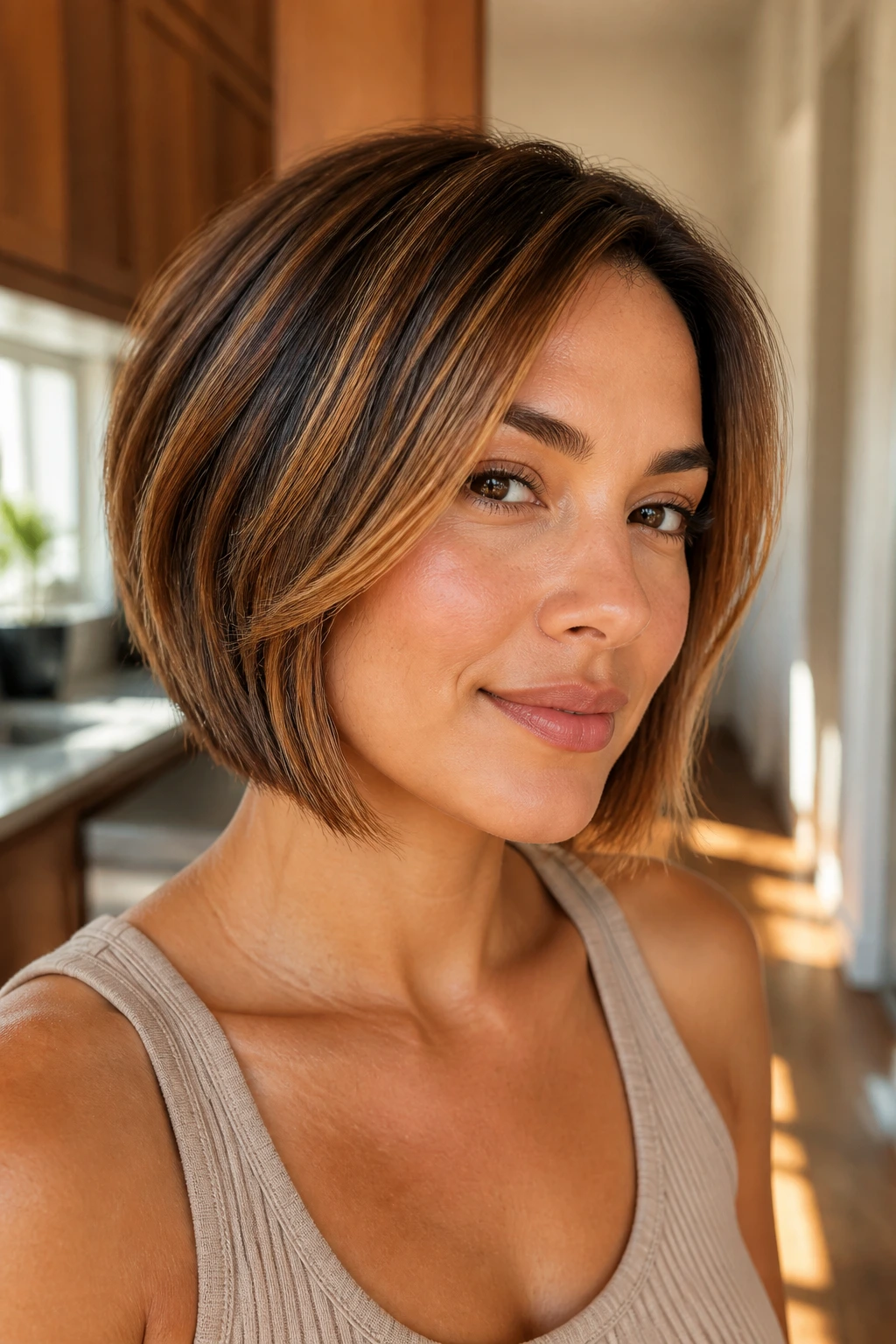
A bob doesn’t need a lot of help, which is exactly why amber threads work so well in it. Tiny highlights placed through a short cut can make the shape look sharper, cleaner, and more dimensional. On warm skin tones, amber is a strong choice because it brings warmth without turning brassy.
The placement should be delicate. Too many bright pieces in a bob can make the haircut feel busy. A few threads through the top layer, the sides, and the ends are enough to catch light when the head turns. Straight hair shows it cleanly. Wavy hair makes it softer.
A bob is one of the few cuts where a little highlight goes a long way. If you’re keeping the length at the jaw or just below, think precision, not saturation. The result should look tailored, not striped.
10. Rooty Caramel Melt
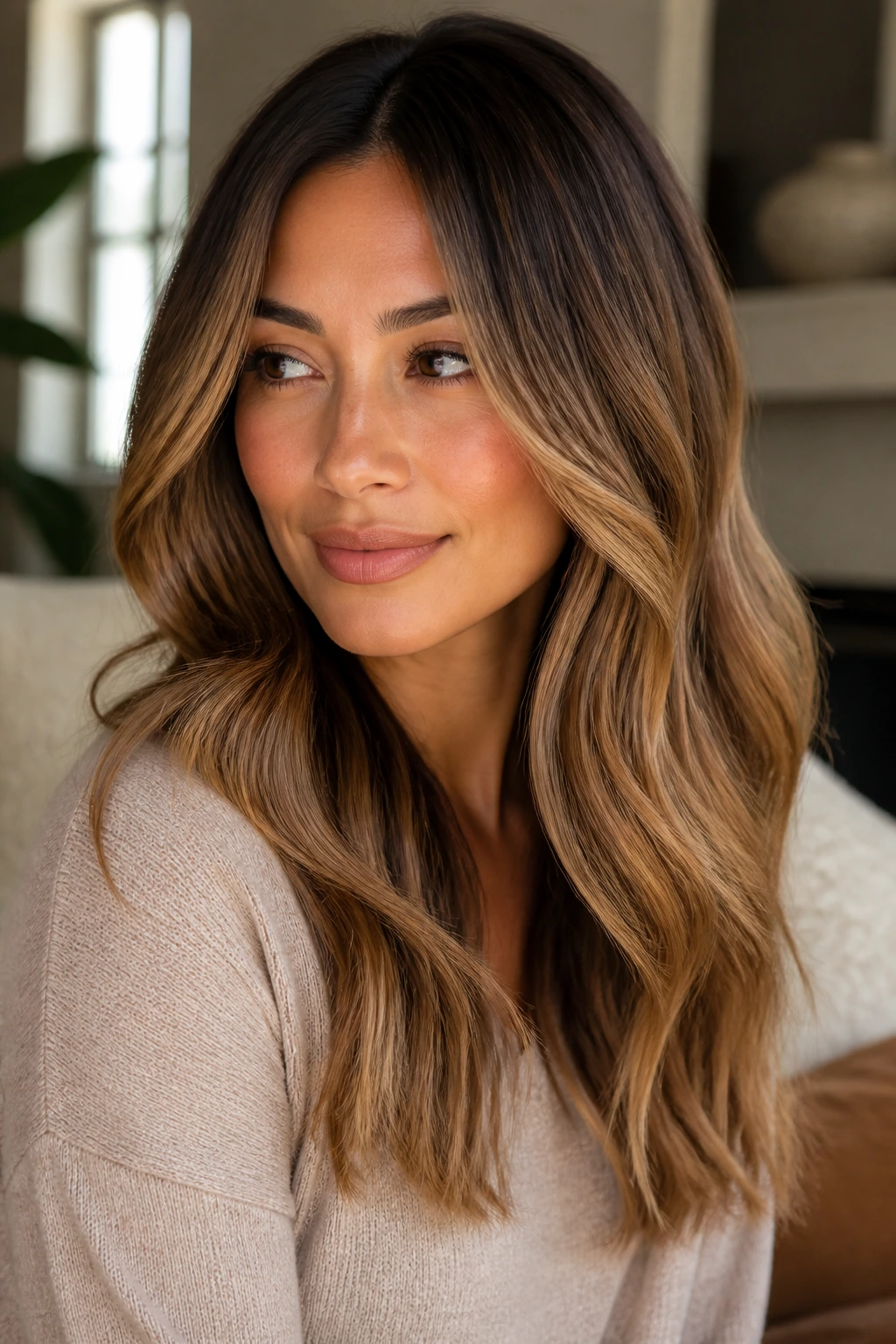
Rooty caramel melt is the low-maintenance friend in the group, and honestly, it earns that reputation. The root stays deeper — espresso, mocha, chestnut — while the color melts into caramel through the mid-lengths and ends. Warm skin tones tend to love this because the root shadow gives the face structure and the caramel still brings light where it counts.
The grow-out is the reason people keep coming back to this look. A soft root means you don’t get that hard strip of regrowth so quickly, which is useful if you don’t want to sit in a chair every few weeks. It also makes the hair look thicker at the root, which is a nice side effect on finer strands.
If you’re asking for this, ask for a blur rather than a line. A good root melt should feel like a gradient, not a dip-dye. When it’s done right, the hair looks like it was always meant to sit this way.
11. Chunky Ribbon Highlights
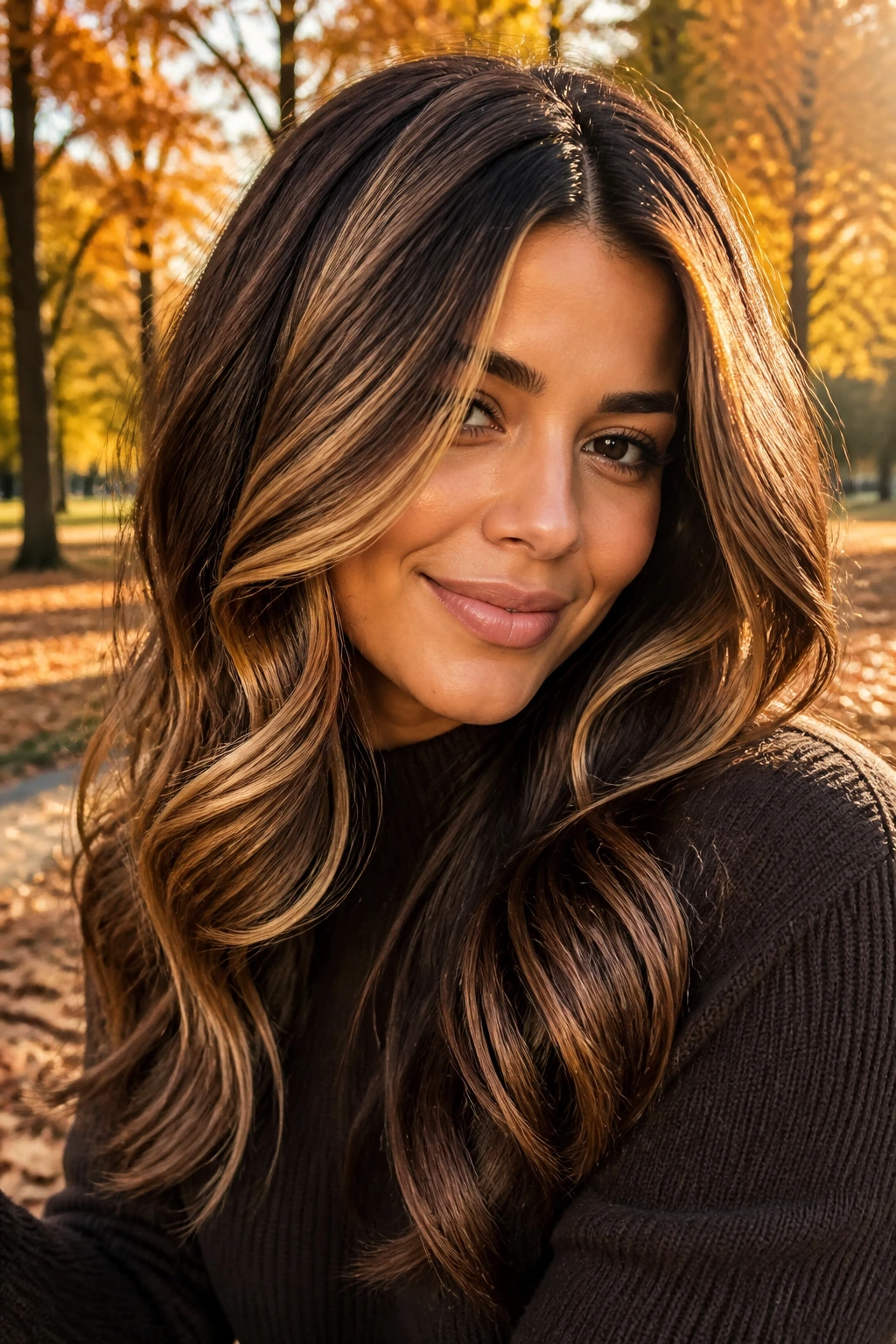
Chunky ribbon highlights can be tricky, because they either look deliberate or they look like a time capsule. The difference is tone and softness. On warm skin tones, caramel ribbons need to stay toasted and blended at the edges so the look feels bold rather than harsh.
I like this version best on thick hair, where a few larger ribbons can actually show up instead of disappearing into the density. The highlights should be placed with enough spacing to let the base breathe. If they’re packed too closely together, the result turns flat fast. If they’re too sparse, the color reads as stripes.
A good colorist will soften the highlight edges with a gloss or low-level toner so the ribbons fade into the base a little. That’s the move. It keeps the chunkier placement from looking rigid, which is the thing that usually dates this style.
12. Shag Cut Flickers
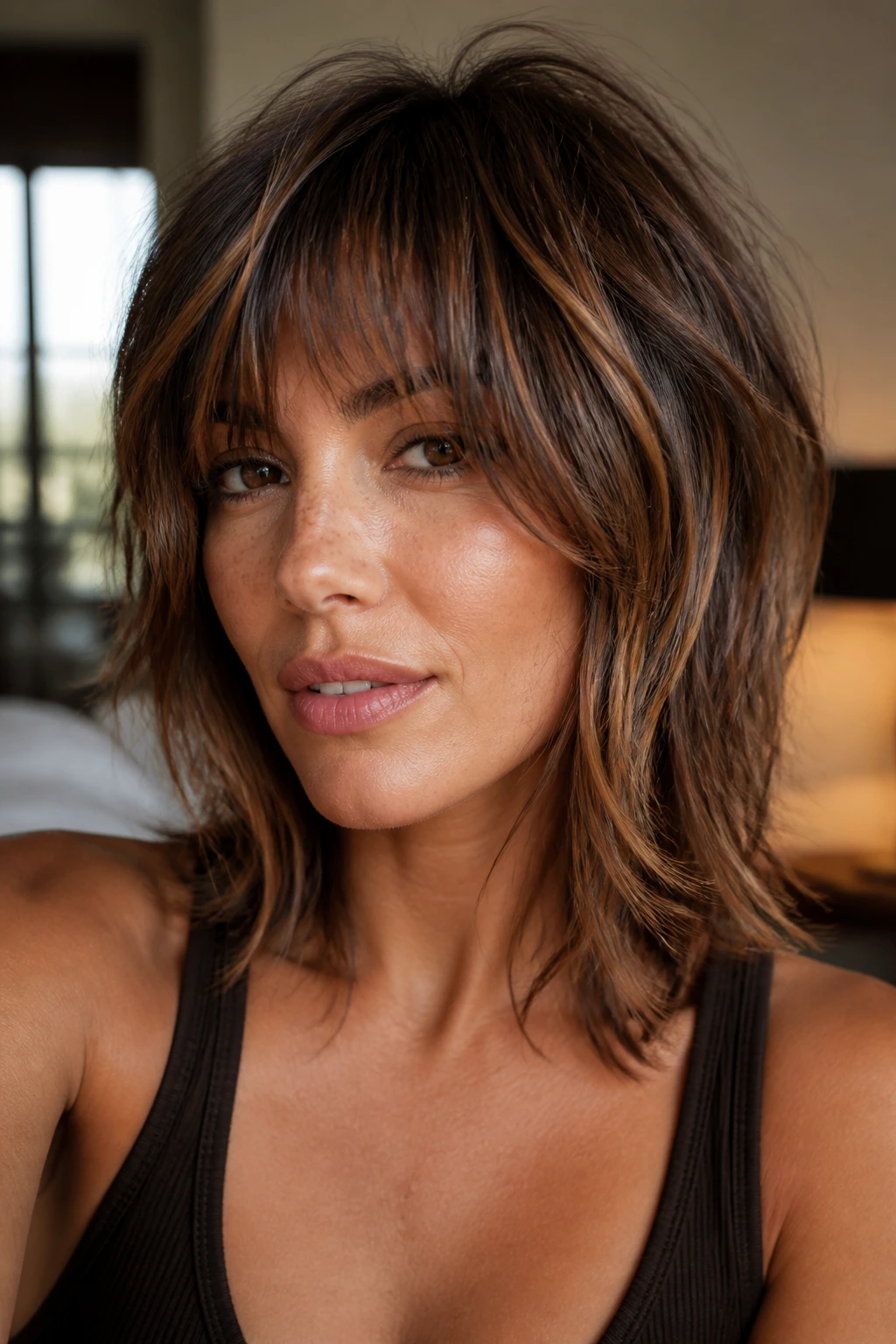
A shag cut wants movement, and caramel flickers give it exactly that. The layers, bangs, and broken ends make the color look scattered in the best possible way. On warm skin tones, a flicker of golden caramel through the fringe and outer layers keeps the whole haircut from disappearing into one brown mass.
This is one of those styles where irregular placement helps. You don’t want every bright piece in a neat line. A slightly messy distribution across the fringe, around the cheekbone, and through the ends makes the haircut feel lived-in rather than overworked. The color should look accidental, even though it absolutely isn’t.
What makes it work
- Layered ends catch light faster than blunt ones.
- Fringe pieces frame the face without stealing the whole show.
- Warm caramel keeps the shag soft, not gritty.
If you wear texture spray or air-dry a lot, this look has even more life to it. The bends and flips do the rest.
13. Golden Ends on Long Layers
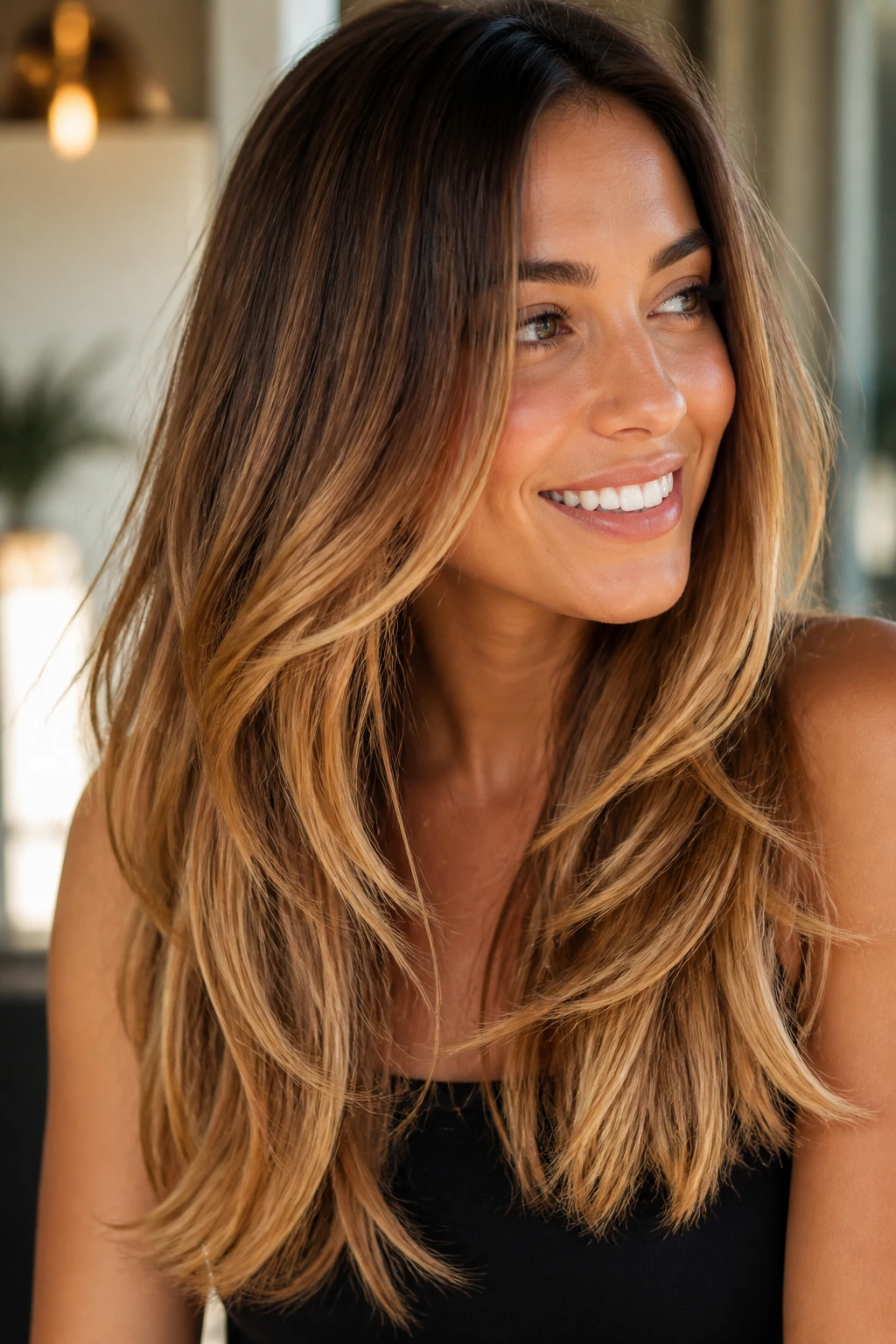
Long layers can carry a lot of color, which is both a gift and a warning. Golden ends work when the top stays deep enough to hold the base, and the lower lengths gradually brighten into caramel. On warm skin, the result feels airy without going too pale.
I like this on hair that has enough length for the color to move. A long, straight sheet of hair can make the ends look heavy if the transition is too abrupt. Layers help the gold catch on different planes, so the bright pieces don’t just sit at the bottom like leftover bleach. The color should feather down, not stop.
If your hair tends to look flat at the ends, this is a good trick. The lighter color gives the tips a bit of lift, while the deeper root keeps the whole thing grounded. That balance matters more than people think.
14. Warm Beige Lightening
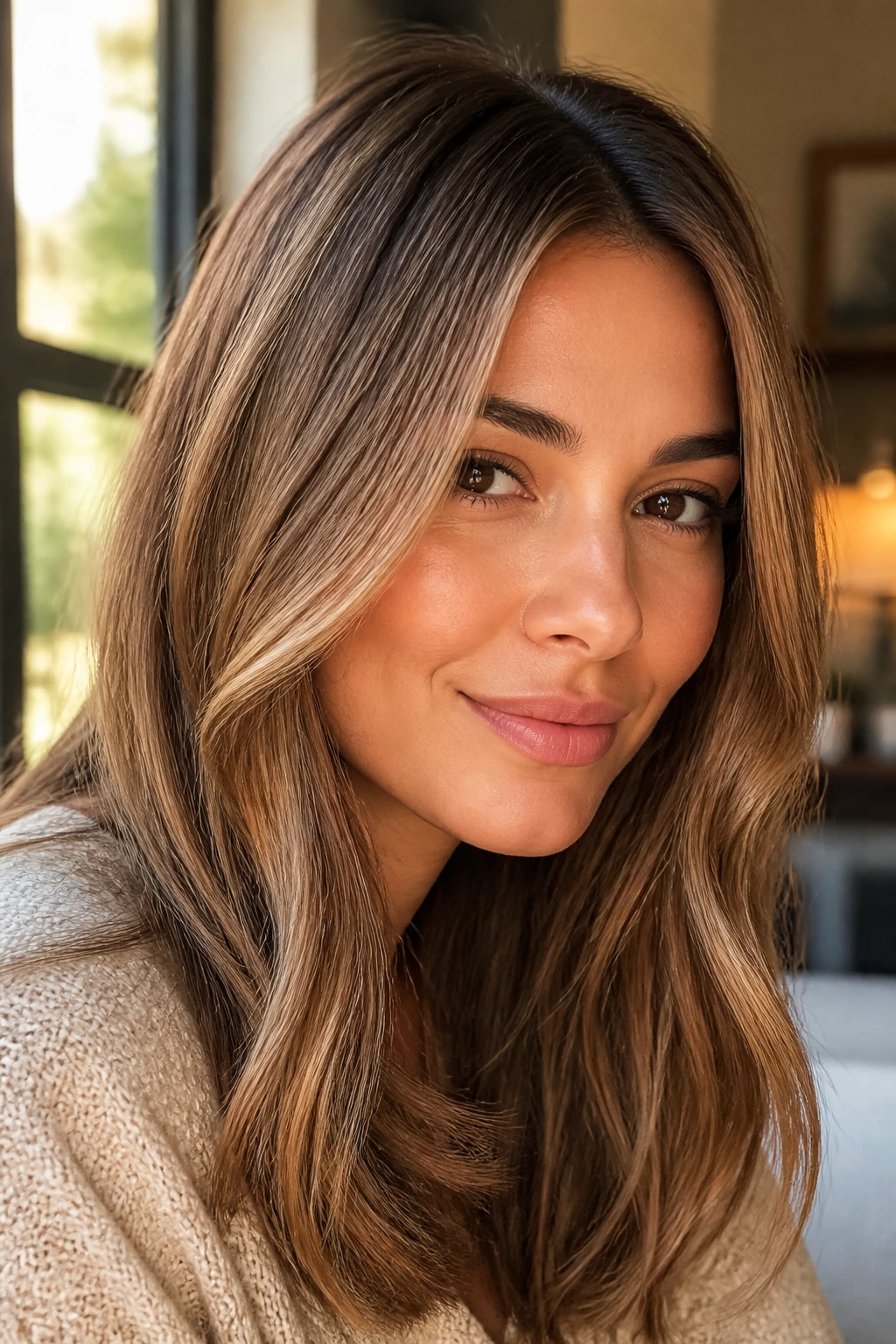
Warm beige caramel is the softer cousin in the family. It’s lighter than chestnut and less golden than honey, which makes it a good bridge for warm skin tones that can handle brightness but don’t want a syrupy finish. The look sits somewhere between brunette and dark blonde, and that in-between quality is the point.
This version is a smart choice if your natural hair already has some warmth. It won’t fight your undertone; it’ll echo it. The beige should still feel warm, though. Once it goes too cool, the face loses some of that easy glow and the color starts looking dusty.
I’d use this on medium-length cuts, especially if the hair is straight or loosely waved. The shade has enough subtlety to hold up in a polished blowout, but enough warmth to stay interesting in sunlight. It’s understated without being dull.
15. Copper-Kissed Caramel
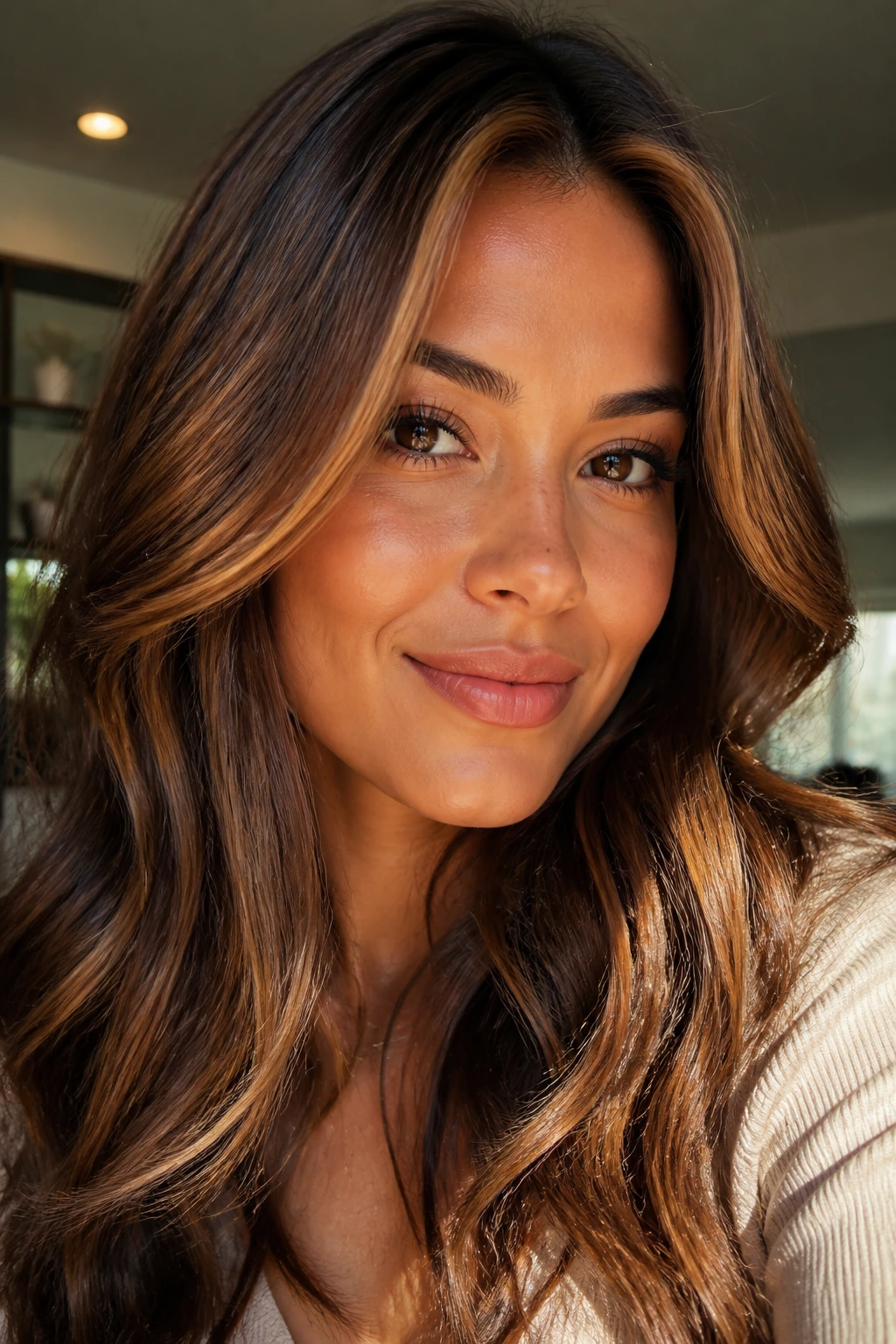
Copper-kissed caramel is for the person who doesn’t mind a little spark in the hair. The copper note should be tiny — a kiss, not a takeover — but it gives caramel a more vivid edge. Warm skin tones can handle it well, especially if the complexion already leans golden, peachy, or olive.
The best placement is near the face and through the top layers, where the warmth catches light first. Too much copper at the ends can drift into red territory and narrow the look. Keep it mixed through the caramel instead, so the color feels lifted rather than fiery.
If you want this look, ask for:
- Caramel highlights with a copper-gold gloss
- Brightness concentrated around the face and crown
- A tone that stays warm, not red
This is a good option if plain honey highlights feel too safe. It still reads refined, but with more energy.
16. Mocha Base with Fine Foils
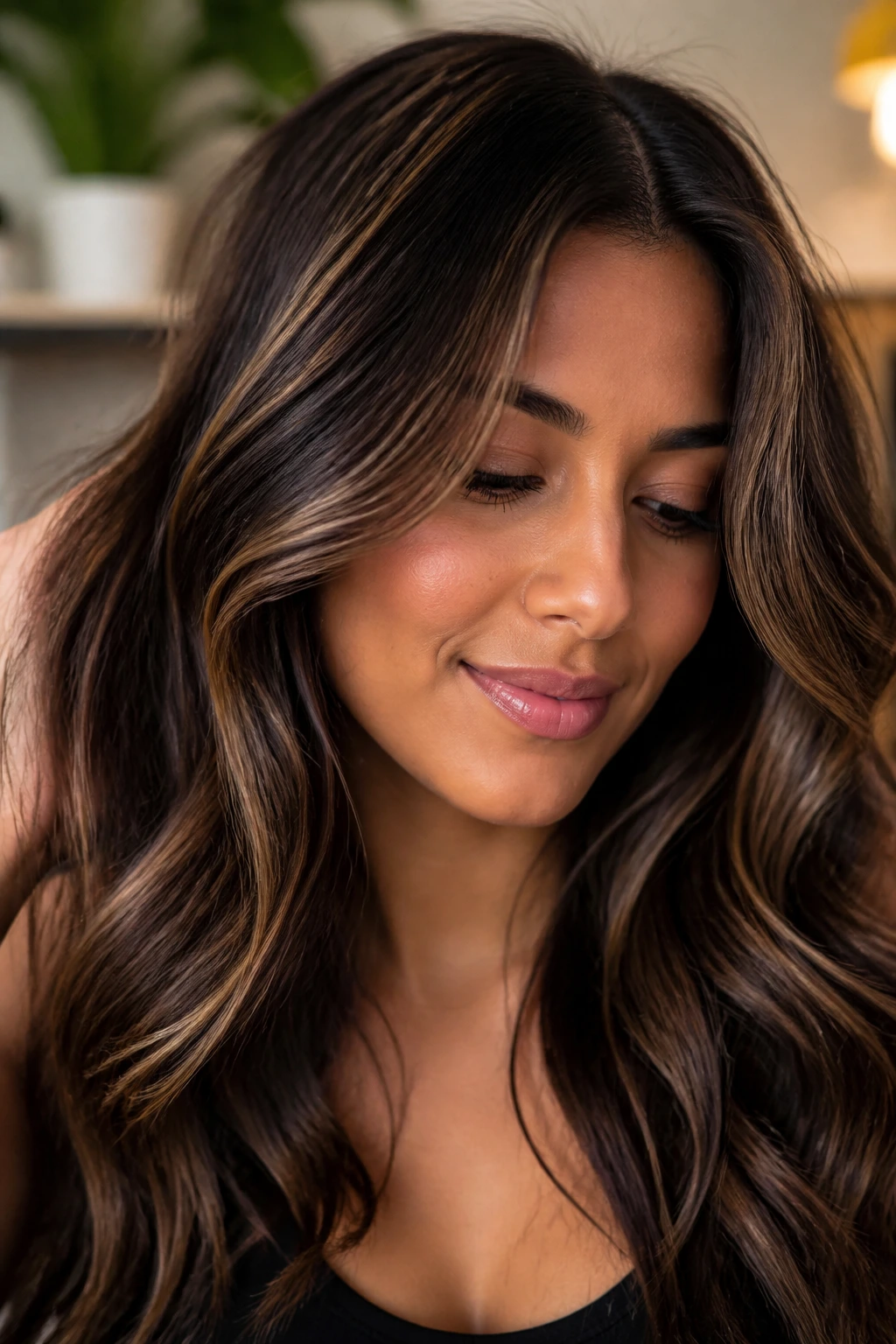
Mocha base hair with fine caramel foils is one of my favorite ways to add dimension without touching the integrity of the brunette. The base stays deep and cool enough to hold contrast, while the foils bring in warmth through tiny flashes. For warm skin tones, that mix is easy on the eyes because the highlight doesn’t overpower the face.
This look works especially well if you live in straight styles or sleek waves. The foils show through as thin lines rather than broad sections, which gives the hair a cleaner, more polished appearance. It’s also a strong choice for someone who wants color that can pass quietly in a work setting but still looks deliberate when the hair moves.
The important thing is spacing. Fine foils need to be dense enough to show dimension, but not so dense that the mocha disappears. Think shimmer, not spotlight.
17. Buttercream Crown Brightness
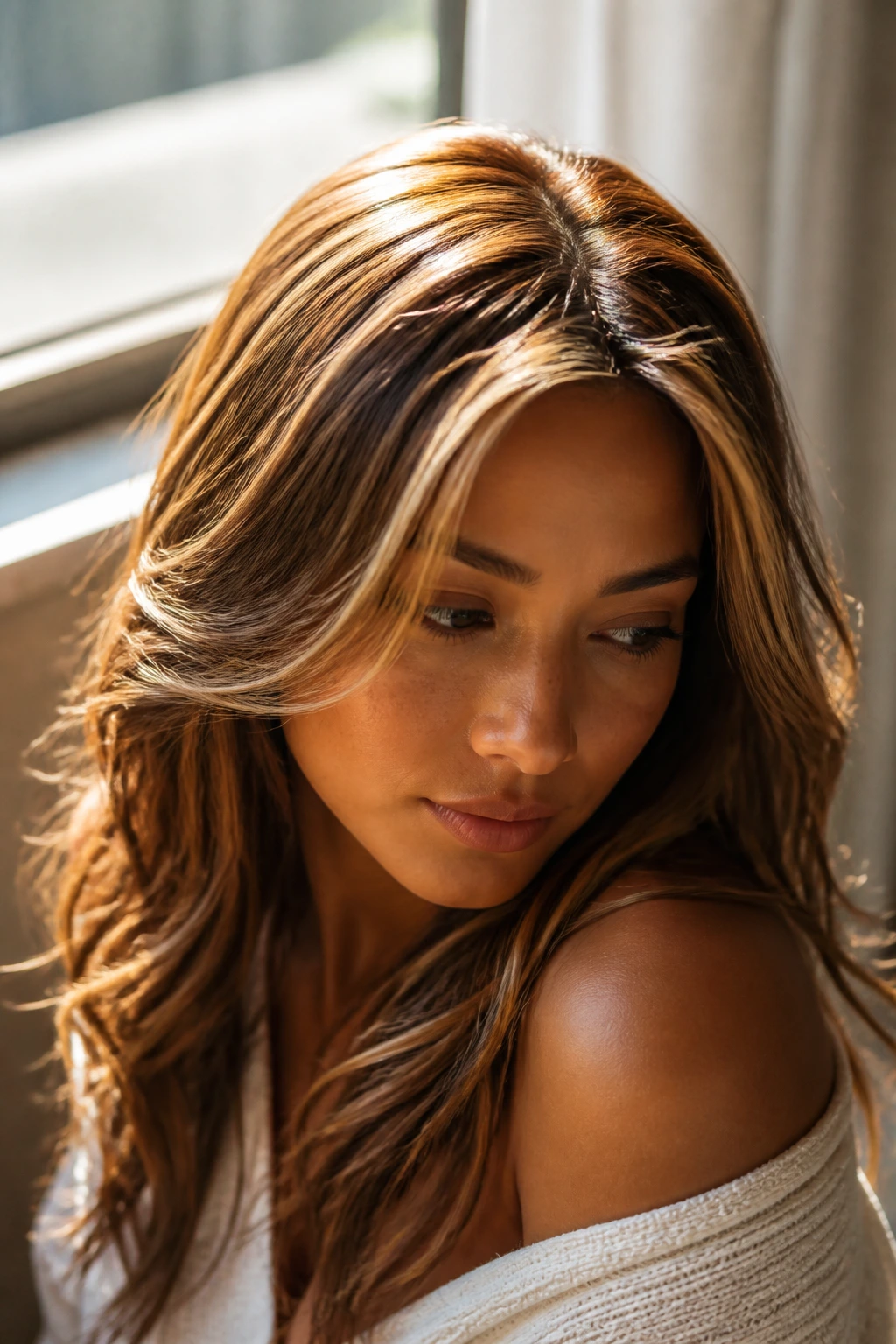
Why put the brightest pieces at the crown? Because the top of the head is where flat color shows first. Buttercream crown brightness lifts that area with warm caramel tones while keeping the ends richer and deeper. The result is a little taller, a little brighter, and a lot less heavy.
I like this on people whose hair tends to sit flat at the roots. A brighter crown creates the illusion of lift without teasing or heavy product. On warm skin, the buttercream tone should stay soft and golden, not pale. If it goes too light, the crown can look disconnected from the rest of the hair.
This is also a useful style if you wear your hair back a lot. A ponytail or half-up style shows the crown and top layers immediately, so the brightness does something even when the hair is not down. That’s a nice bit of color efficiency.
18. Micro Caramel Pixie Lights
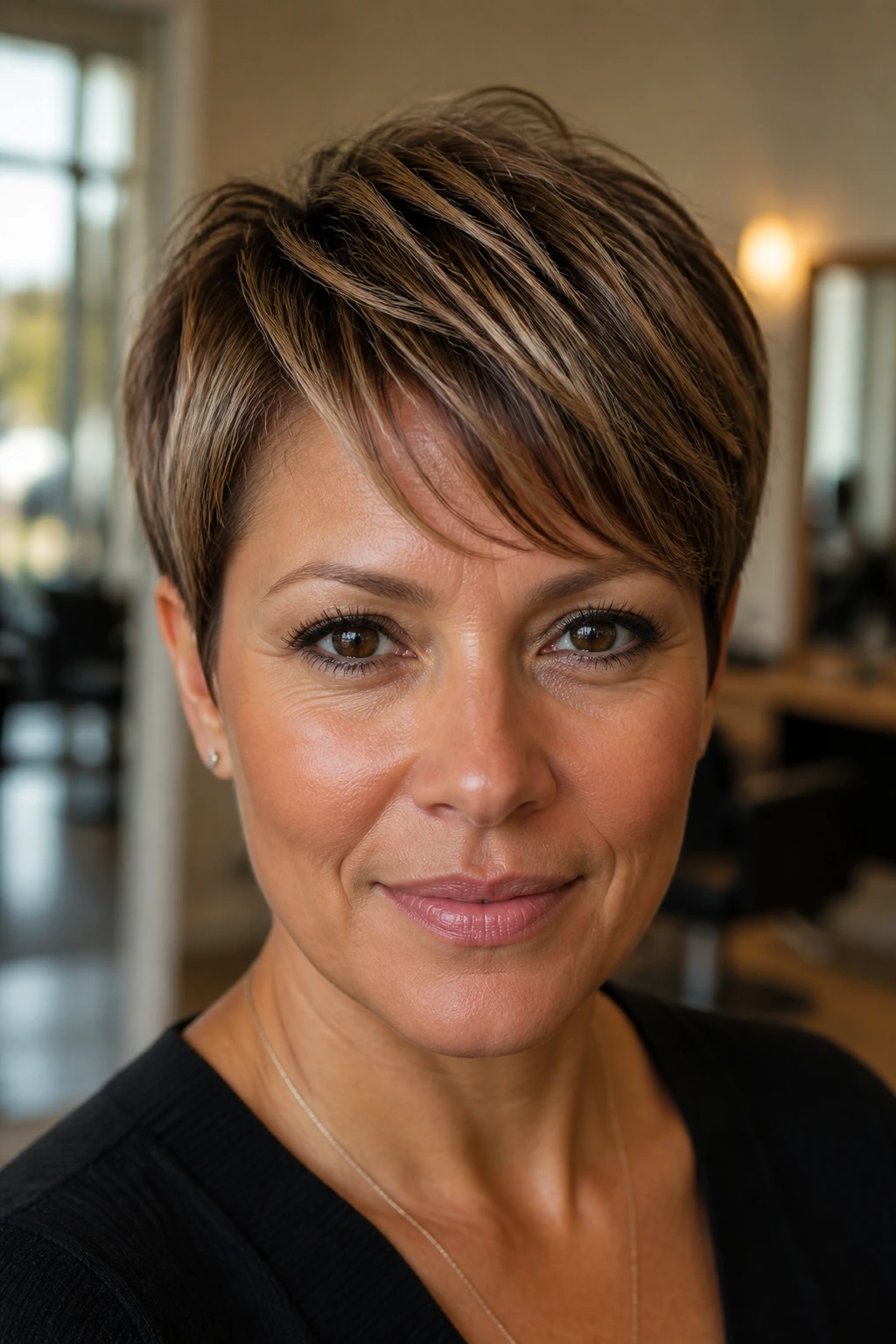
Short hair is often treated like it doesn’t need much color, which is a mistake. A pixie with micro caramel lights can look sharper, richer, and more tailored than a plain solid shade. Because the hair is short, the highlights should be tiny and strategic — around the fringe, top ridge, and edges where the light lands first.
Warm skin tones pair especially well with this kind of lightness because the color stays close to the face. If the caramel is too bright, it can overpower the cut. Keep it soft, more like glow than contrast. The goal is to give the pixie dimension as it moves, not to build stripes.
Best details to ask for
- Micro foils or fine hand-painted slices
- A golden caramel tone one level lighter than expected
- A gloss that keeps the hair shiny after the lift
This is a neat, confident look. It doesn’t ask for attention; it earns it.
19. Honey Balance with Lowlights
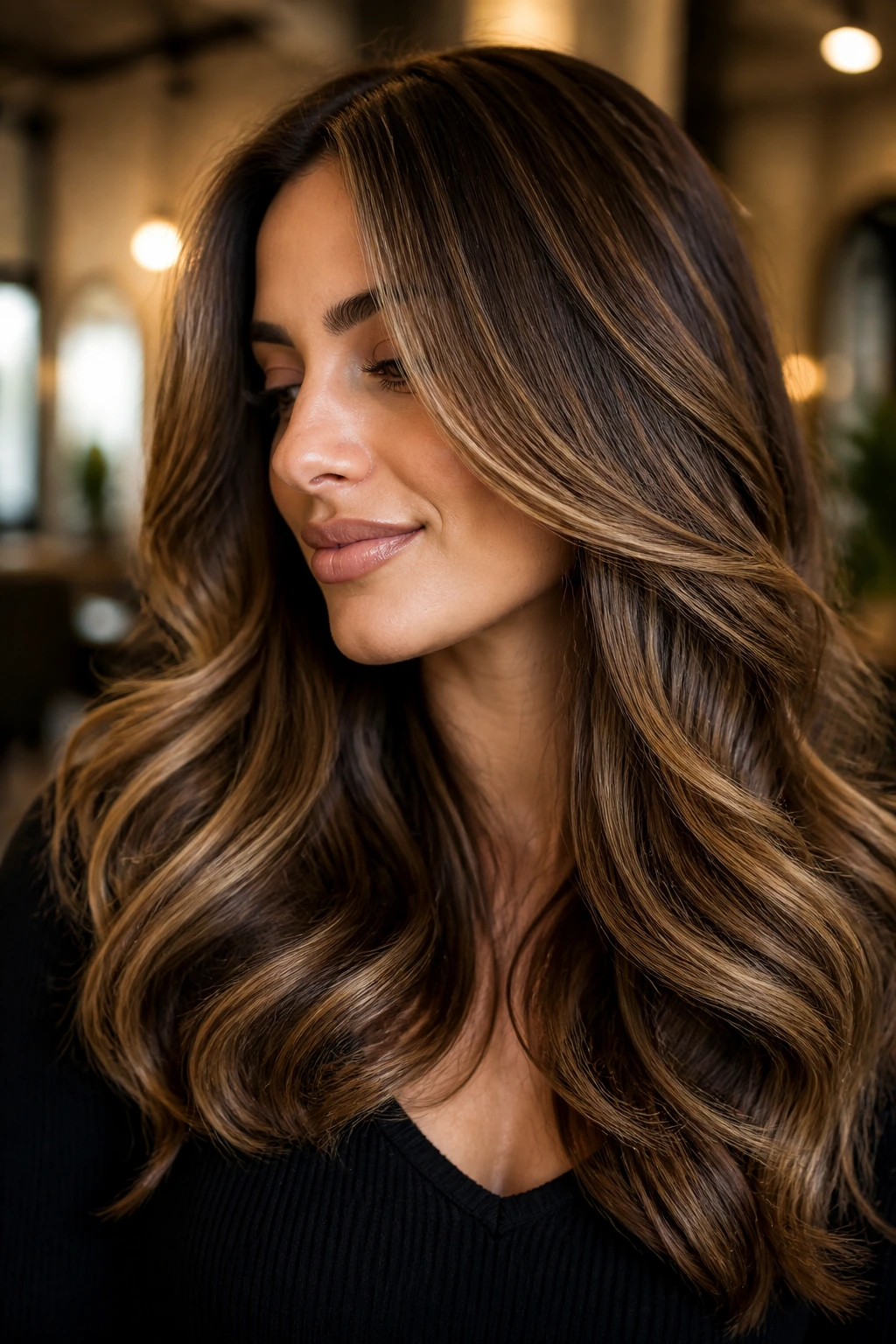
A warm highlight job can get too flat if every strand moves in the same direction. That’s where lowlights come in. Honey highlights paired with a few deeper caramel or mocha lowlights create that thicker, fuller look people usually want from all-over color. Warm skin tones benefit because the color stays dimensional instead of drifting into one flat bright mass.
This mix is especially useful on thick hair. Dense hair can swallow light, and a little extra darkness between the bright pieces gives the highlights somewhere to pop. The lowlights also make the honey pieces feel warmer. Weirdly enough, more depth can make the hair look lighter where it counts.
I’d use this when a client says they want brightness but also wants the hair to look rich. Those two things are not opposites. You just need both ends of the contrast.
20. Soft Ombré Caramel Fade
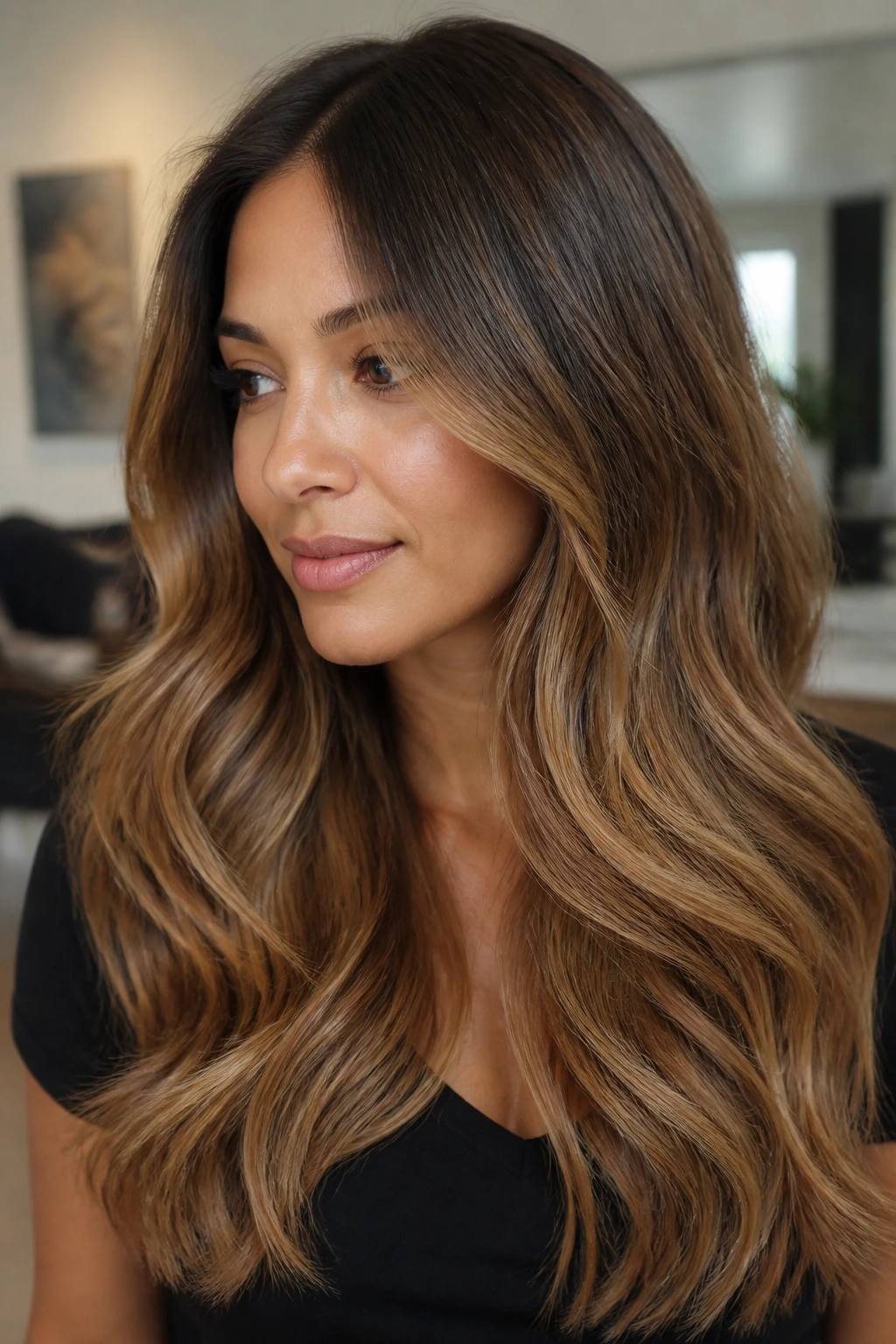
A soft ombré fade is the version I’d recommend for someone who wants a little less maintenance and a little more softness at the ends. The root stays deep, the mid-lengths warm up, and the caramel gets brighter only near the bottom. On warm skin tones, this can look especially flattering because the warm ends echo the face without pulling attention away from it.
The line between root and lightness has to be blurred. A hard ombré stripe is the thing to avoid. The fade should feel gradual enough that you can’t point to one exact stop where the color changes. That’s the part that makes it look expensive.
This style works beautifully on wavy and curly hair because the bend of the hair hides the transition. Straight hair can wear it too, but it needs a very careful melt. If you want warmth without constant root fuss, this is a strong candidate.
21. Curled-Under Lob Depth
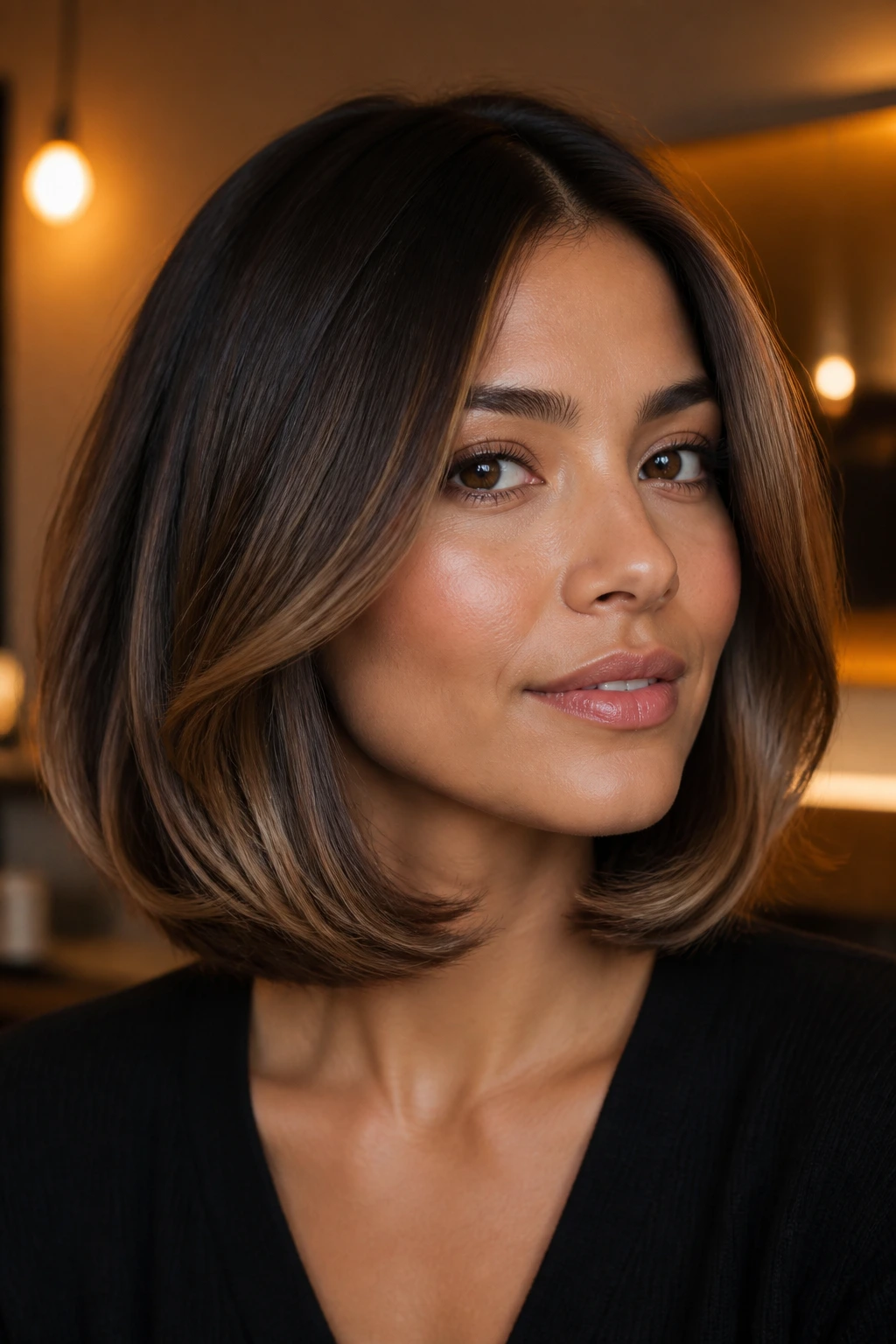
A curled-under lob changes how the color reads because the ends tuck in and show off the highlight pattern differently. Caramel ribbons placed through the lower half of the hair become more visible when the lob curves under at the jaw or collarbone. Warm skin tones get a soft frame around the face without the look feeling heavy.
This is a style that rewards clean placement. The front sections should carry enough brightness to make the face glow, while the back can stay deeper for balance. If the whole head is equally light, the lob loses some of its shape. The haircut needs contrast to stay crisp.
I think this is a good choice for someone who likes a polished blowout but still wants movement. The curled-under finish is neat, but the caramel prevents it from reading as stiff. Small detail. Big difference.
22. Sun-Kissed Coils
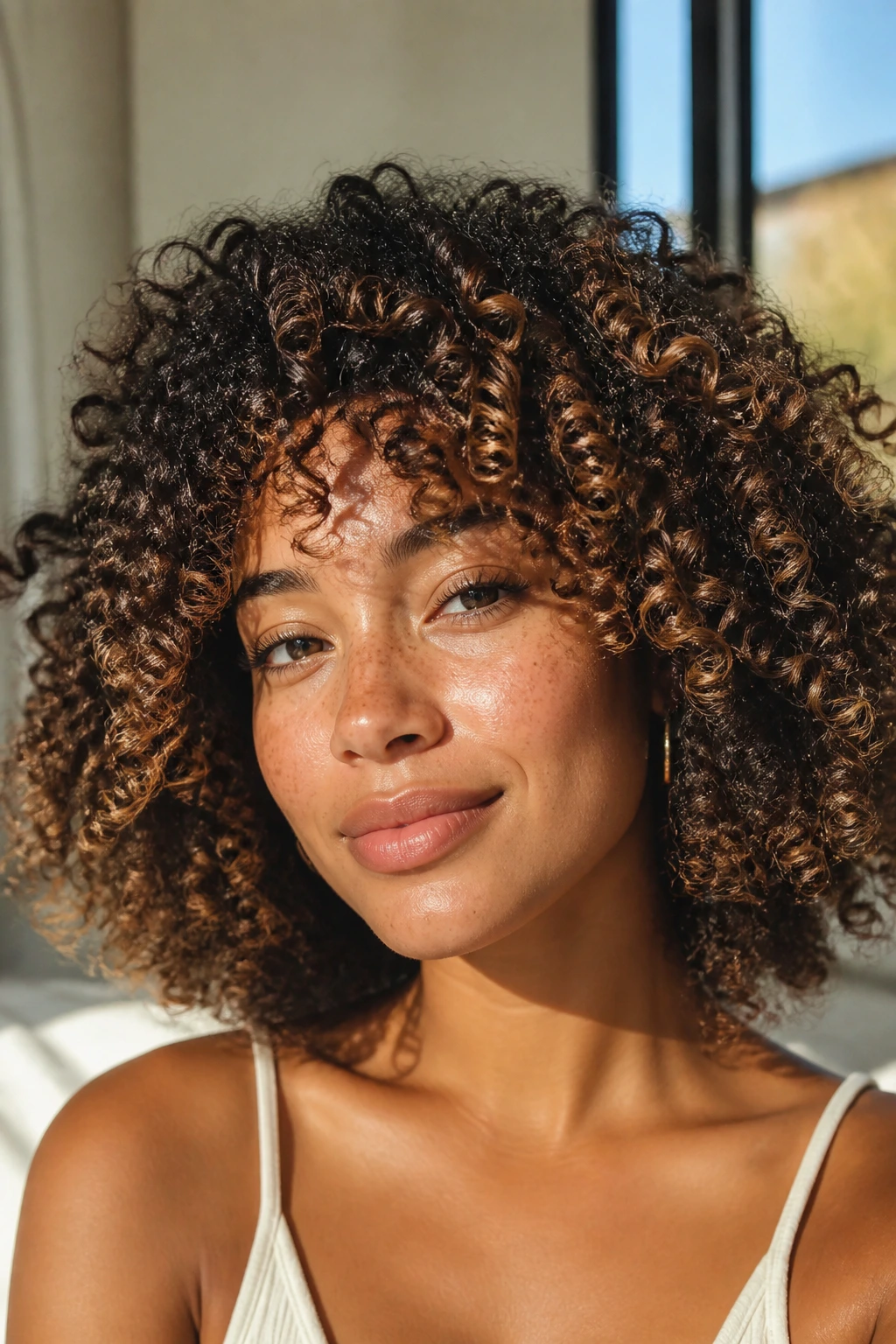
Coily hair doesn’t need to be flooded with highlights to get dimension. A few warm caramel placements on the outer coil groups can give the whole head more light and shape. Warm skin tones benefit because the color stays in the golden family and sits naturally against the face.
The safest approach is curl-focused, not pattern-focused. That means picking curls that sit on the outside of the shape and painting them so the light appears where the curl naturally opens. Too much saturation can dry out the look and make the coils lose their spring. You want pop, not patchiness.
A good coily highlight job should do three things:
- Keep the curl pattern intact.
- Brighten the perimeter and crown.
- Leave enough depth inside the shape for contrast.
That’s the sweet spot. Anything else is just bleach with good intentions.
23. Warm Beige Brunette Lift
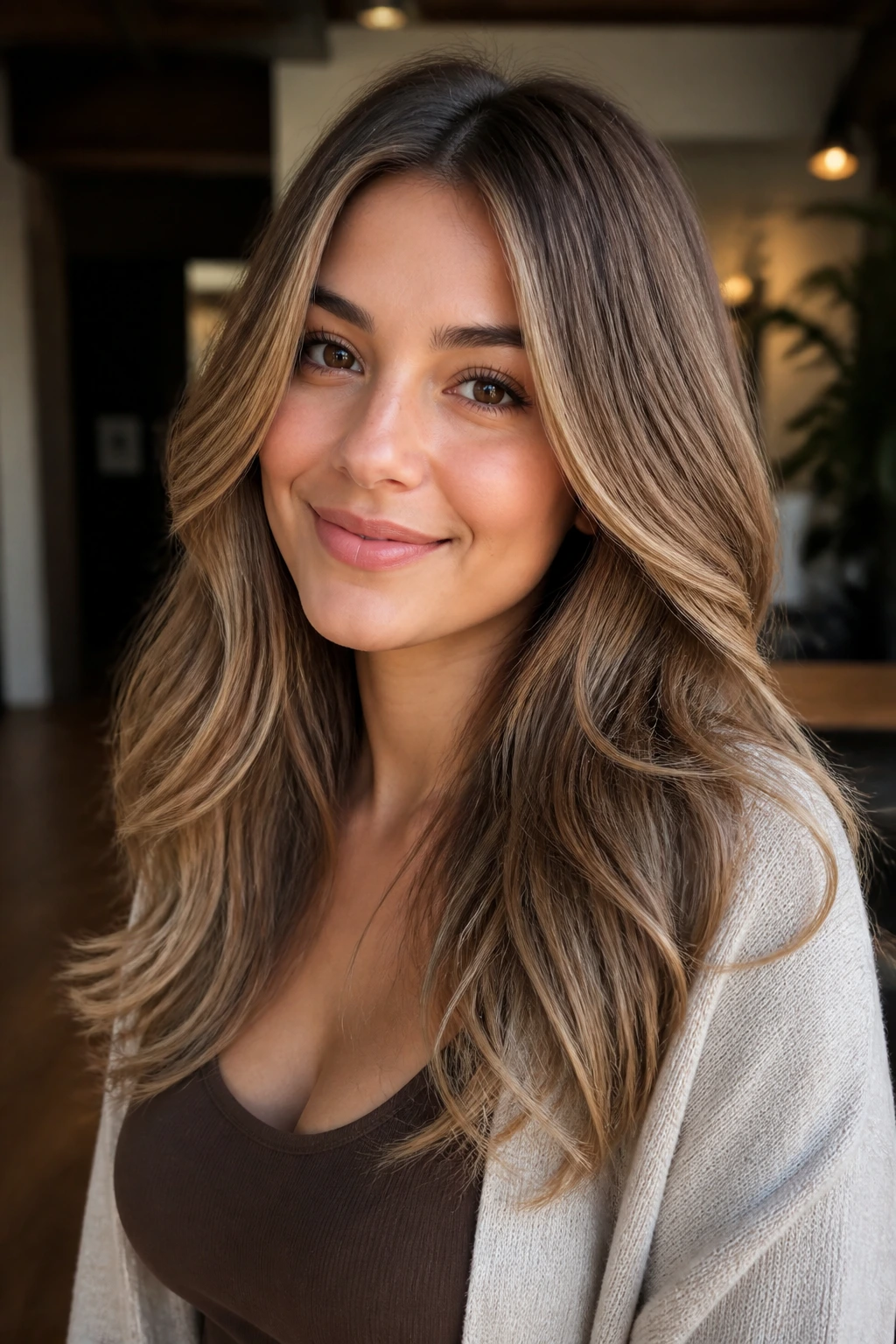
Warm beige brunette lift is the option for the person who wants caramel, but only a whisper of it. The highlights stay close to brunette depth, with just enough beige warmth to soften the whole look. On warm skin tones, that restrained brightness often looks more flattering than a dramatic jump to blonde.
The lift should happen through the top layers and around the face, not just the ends. That keeps the color from feeling lopsided. I like this shade when the goal is polish. It gives the impression of better light, not obvious coloring.
If your hair is naturally dark brown, this can be a very practical place to start. You can always add more brightness later. Going the other direction is annoying and expensive, and no one needs that kind of drama.
24. Maple Ribbon Highlights
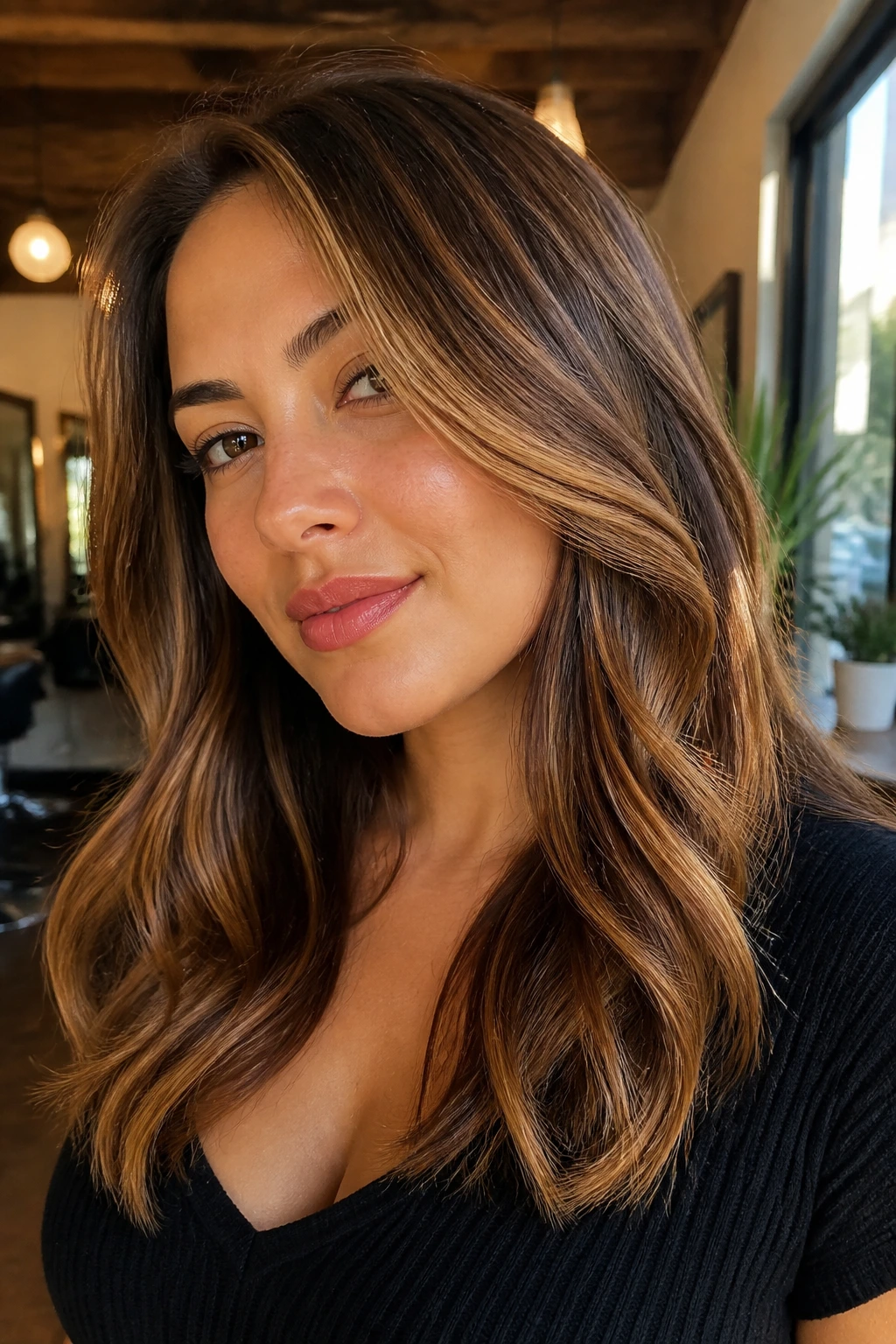
Maple ribbon highlights sit right in the rich, glossy middle of the caramel family. They’re a little deeper than honey and a little softer than copper, which makes them a nice match for warm skin that doesn’t need a lot of contrast to glow. The overall read is syrupy, dimensional, and grounded.
I like maple tones on mid-length hair and long layers because the ribbons can travel through the shape without getting lost. Straight styles show the color as clean lines. Waves soften it into a more blended look. Either way, the tone stays warm and edible-looking — not literal syrup, obviously, but you know the feeling.
This is a good choice if you want a color that looks expensive in indoor light and still has enough warmth outdoors. That’s not as easy to pull off as people think. The wrong caramel goes orange; the right maple tone just looks rich.
25. Deep Espresso Sheet Lights
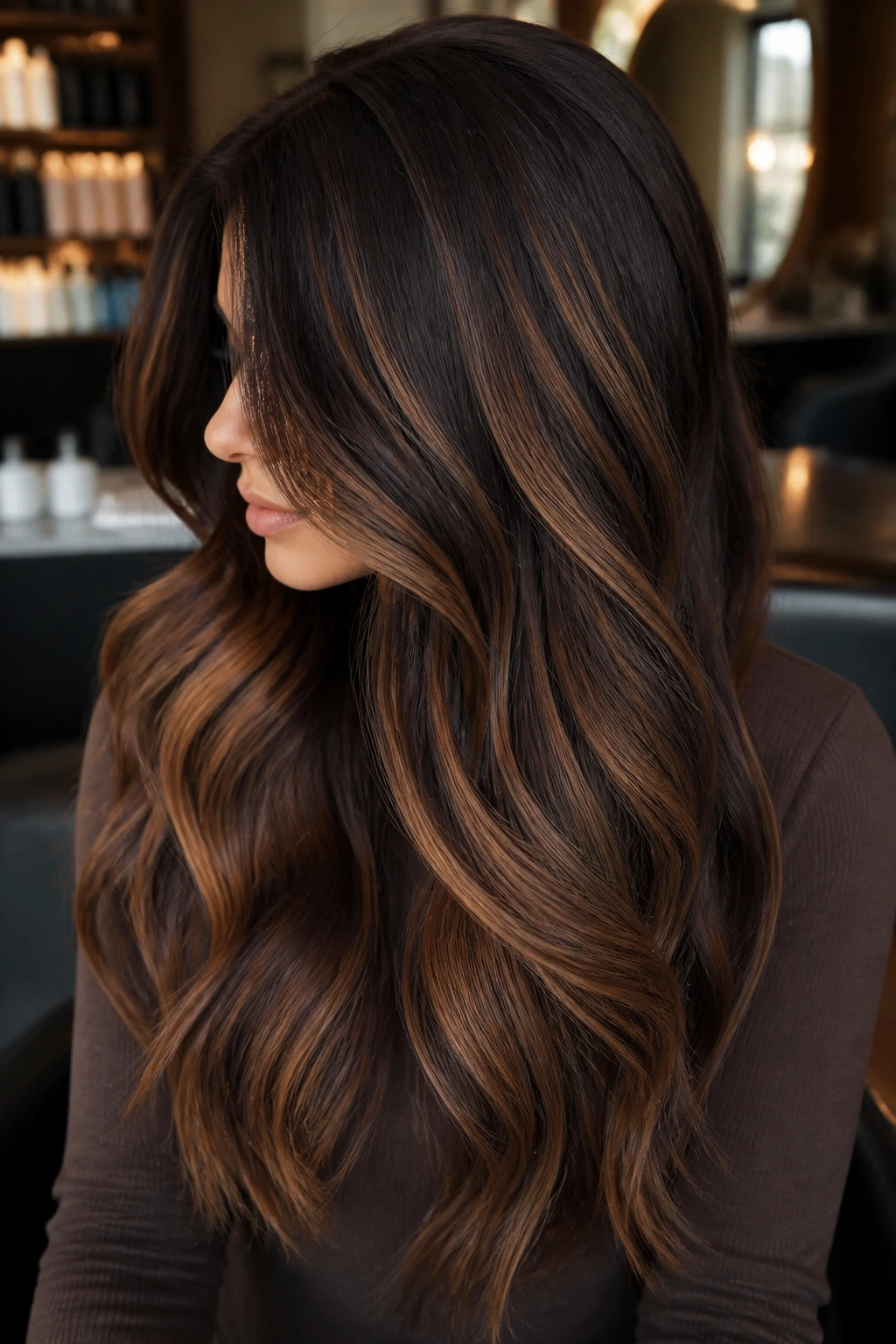
Deep espresso sheet lights are for the person who wants commitment. The base stays dark and substantial, while broader sheets of caramel are placed with enough space to read clearly. It’s a bolder version of caramel all-over highlights, but warm skin tones can wear it well because the caramel still stays in the golden-brown lane.
The sheets need to be placed with care. If they’re too wide or too evenly spaced, the hair can look blocky. If they’re too narrow, the whole effect disappears. The point is to create visible planes of light that move when the hair swings. That’s why this looks so good on longer cuts and dense hair.
Best when you want:
- Strong contrast with a warm finish
- Highlights that show from a distance
- A color job that still looks rich in a ponytail or braid
It’s a strong final note on the list because it doesn’t apologize for being visible. Some hair color should whisper. This one speaks up.
Why Caramel Highlights Play So Well with Warm Skin Tones
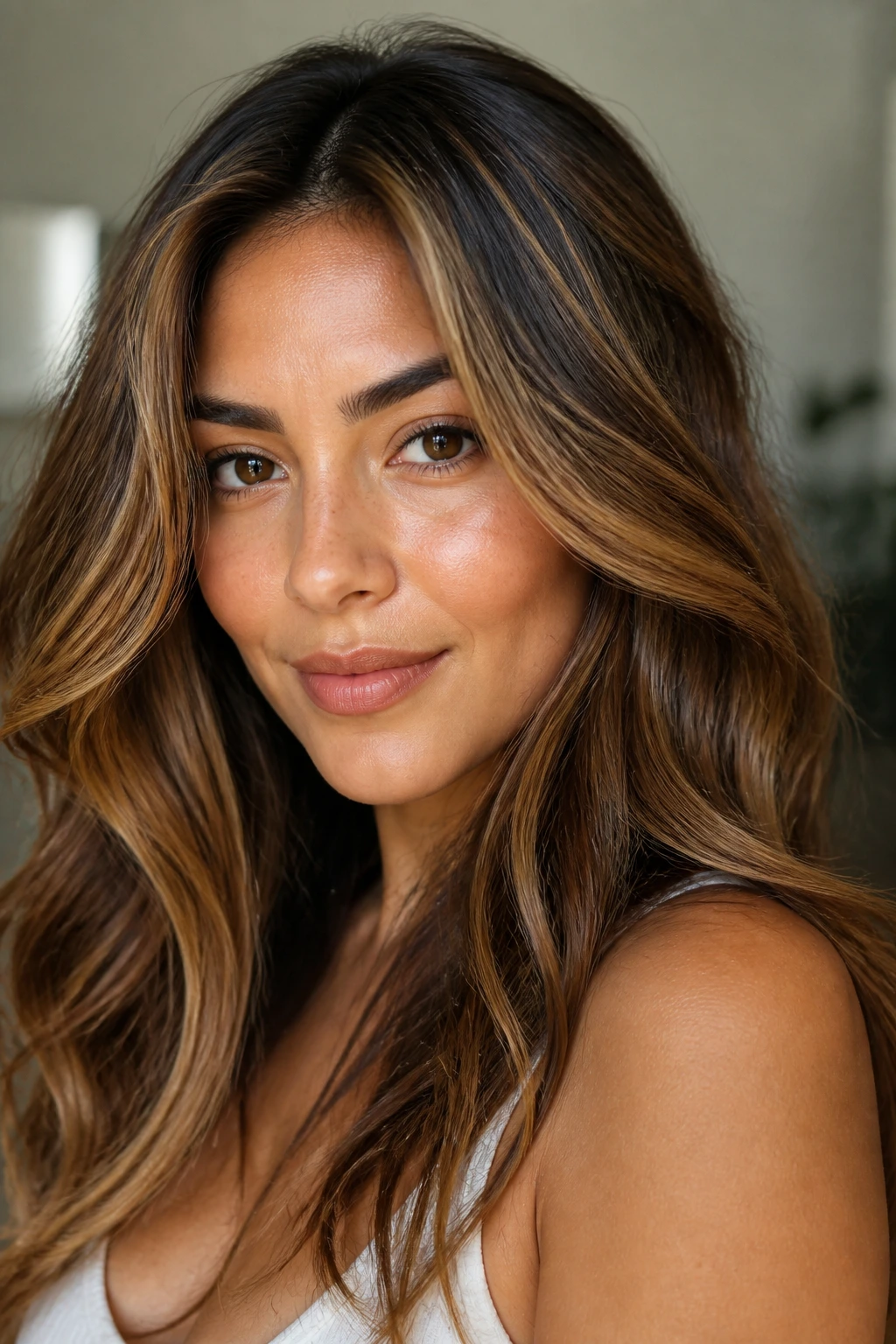
Warm skin tones usually carry gold, peach, olive, or a mix of those undertones, and caramel highlights sit in that same neighborhood. That shared warmth is why the color looks cohesive instead of muddy. A cooler ash blonde can fight the skin and make it look washed out. Caramel does the opposite. It gives the face some of the light the skin already wants to hold.
Level matters, too. Caramel at a level 6, 7, or 8 tends to be the sweet spot for most brunettes with warm undertones. Go much lighter, and the warmth can turn brassy faster than you’d like. Stay too dark, and the highlights stop reading as highlights at all. The best color jobs sit in the middle and use gloss to keep the tone clean.
Placement changes the mood just as much as the shade. Fine babylights create shimmer. Ribbon highlights make the color obvious. A root melt softens everything and buys you more time between appointments. I’m a fan of all three, but not in the same way. The cut, the texture, and how much upkeep you can tolerate should steer the choice.
The Salon Language That Saves the Appointment
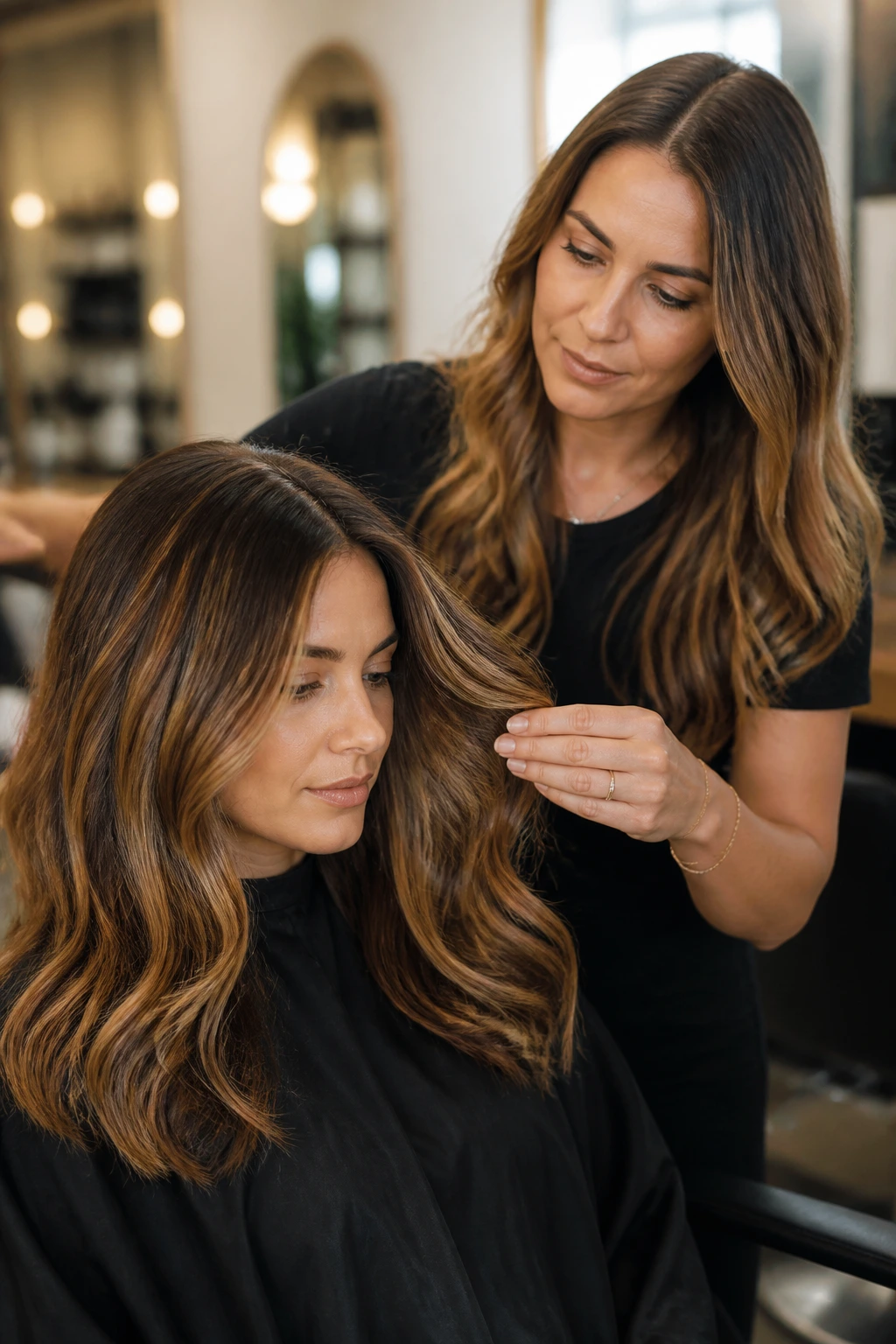
A lot of bad highlight jobs start with vague words. “Caramel” means one thing to you and something else to a colorist who’s used to a hundred interpretations. Bring photos, yes, but also use the words that tell them where the color should live and how strong you want the contrast to be. That saves the whole conversation.
Talk in placement, not just shade. Ask for babylights, fine foils, ribbon highlights, or painted panels, depending on the effect you want. If you want brightness near the face and a softer crown, say that. If you want all-over shimmer with less contrast, say that too. The details matter more than the label on the color chart.
Know the tone family. Golden caramel, honey caramel, toffee, maple, and amber all lean warm, but they do different things on the head. Golden reads brighter. Toffee reads deeper. Amber carries more spice. If you know which one you like in the mirror, the appointment gets easier fast.
Ask about gloss. A demi-permanent gloss or toner is often the difference between warm and brassy. It settles the highlights after lifting and helps the caramel stay rich for a few weeks longer. That small finishing step is not optional in my book.
How to Choose the Right Caramel Shade for Your Base Color
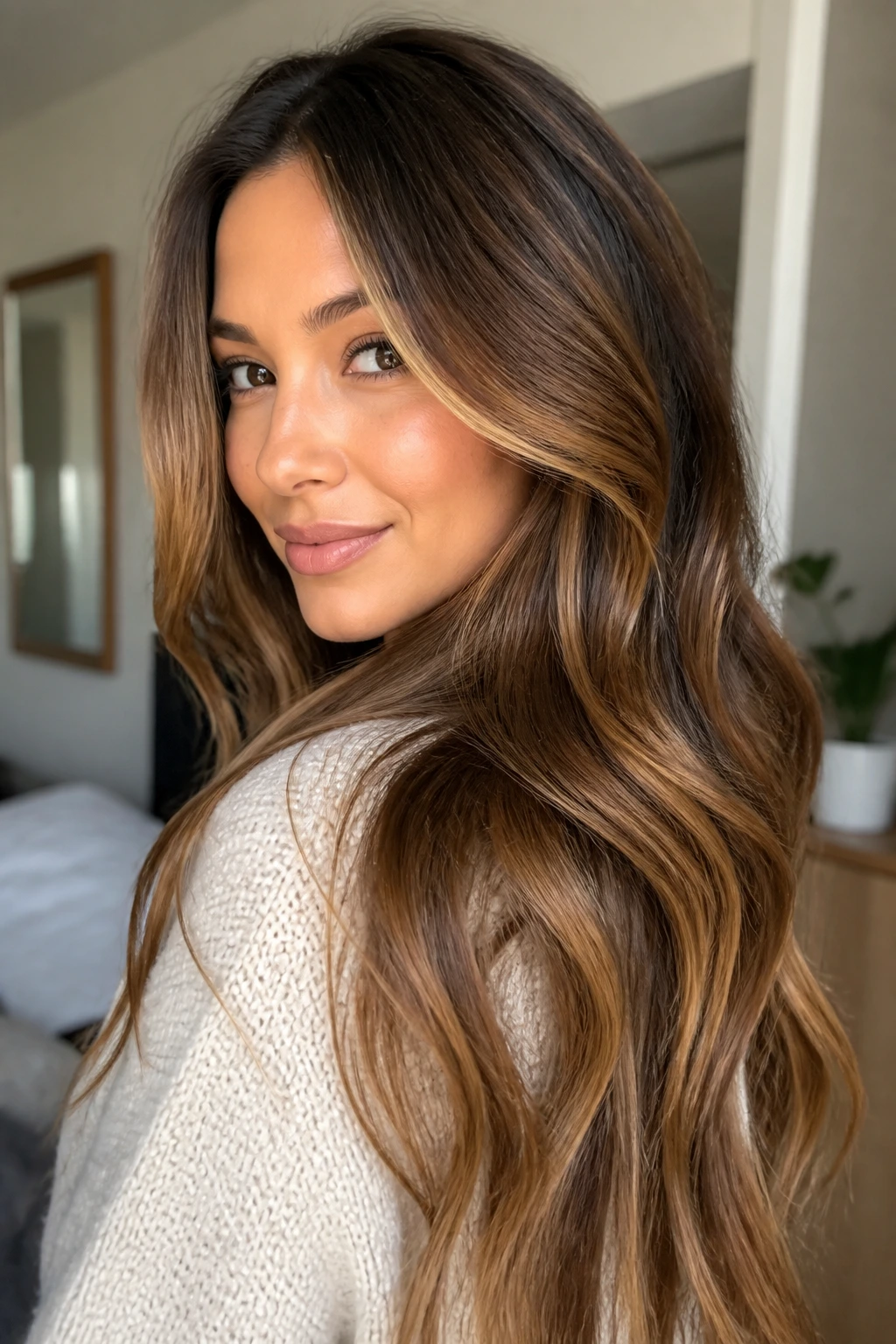
Start with your natural level, not the photo you saved on your phone. Dark brunette, medium brown, dark blonde, and black hair all take caramel differently. On a deep base, caramel needs more contrast to show up. On a lighter base, it needs more tone so it doesn’t disappear into a washed-out blonde blur.
If your skin is golden or peachy: lean toward honey, butterscotch, and warm beige caramel. Those shades keep the face lively and don’t throw a cool shadow next to the skin.
If your skin is olive: go for toffee, amber, and deeper caramel with a root shadow. Olive undertones can handle richness, but they don’t always love pale, yellow-heavy blonde pieces.
If your skin is deeper and warm: chestnut-caramel, maple, bronze, and espresso contrast ribbons can look striking without needing a lot of lift. The color should stay rich and dimensional, not washed thin.
The easiest rule
Choose a caramel that looks like it belongs to the brown family first and the blonde family second. That’s the cleaner way to keep warmth without looking orange.
How to Style the Color So the Dimension Shows
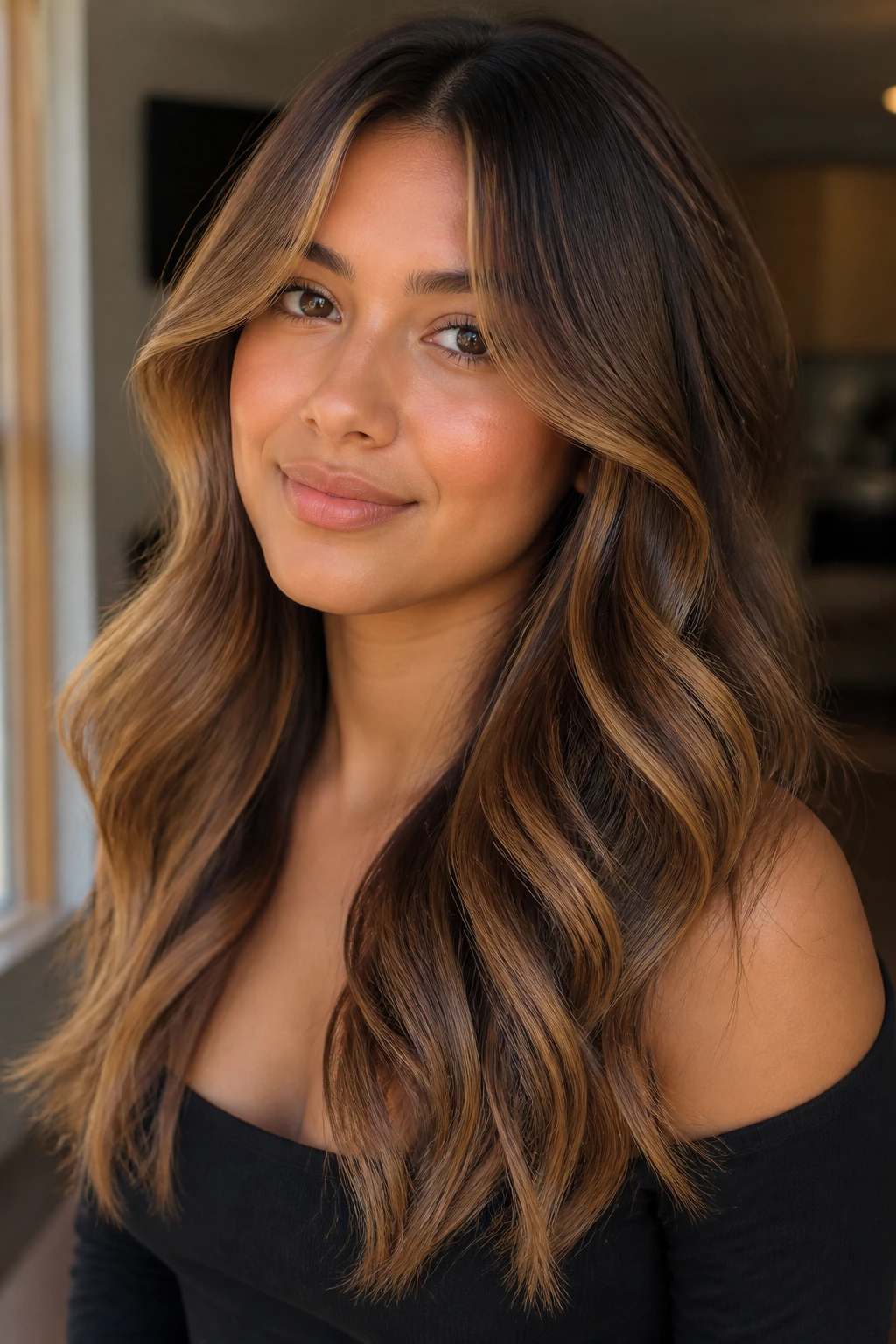
Caramel can be gorgeous in a quiet way, which is fine until you want people to actually notice it. Styling brings the highlights into the light. Loose bends, a smooth blowout, or a tucked-under finish can show the ribbon pattern much better than hair left half-damp and air-dried into a triangle.
Soft waves are the safest bet. A 1-inch curling iron or wand, used away from the face on alternating sections, makes ribbons and babylights move. Don’t overcurl the ends into little corkscrews. That hides the color. A few bends are enough.
Straight styles work best when the hair has a sleek, glossy finish. Caramel highlights reflect light along the length of the hair, so a flat, frizzy blowout will swallow the effect. Use a round brush or smoothing brush, then finish with a drop of shine serum from mid-length to ends.
Curly and coily textures need definition, not force. The highlights show best when the curl clumps are separated cleanly with a leave-in or cream and the hair is dried with minimal disturbance. The color lives on the curve, not in the chaos.
Salon Tools and Product Labels That Matter
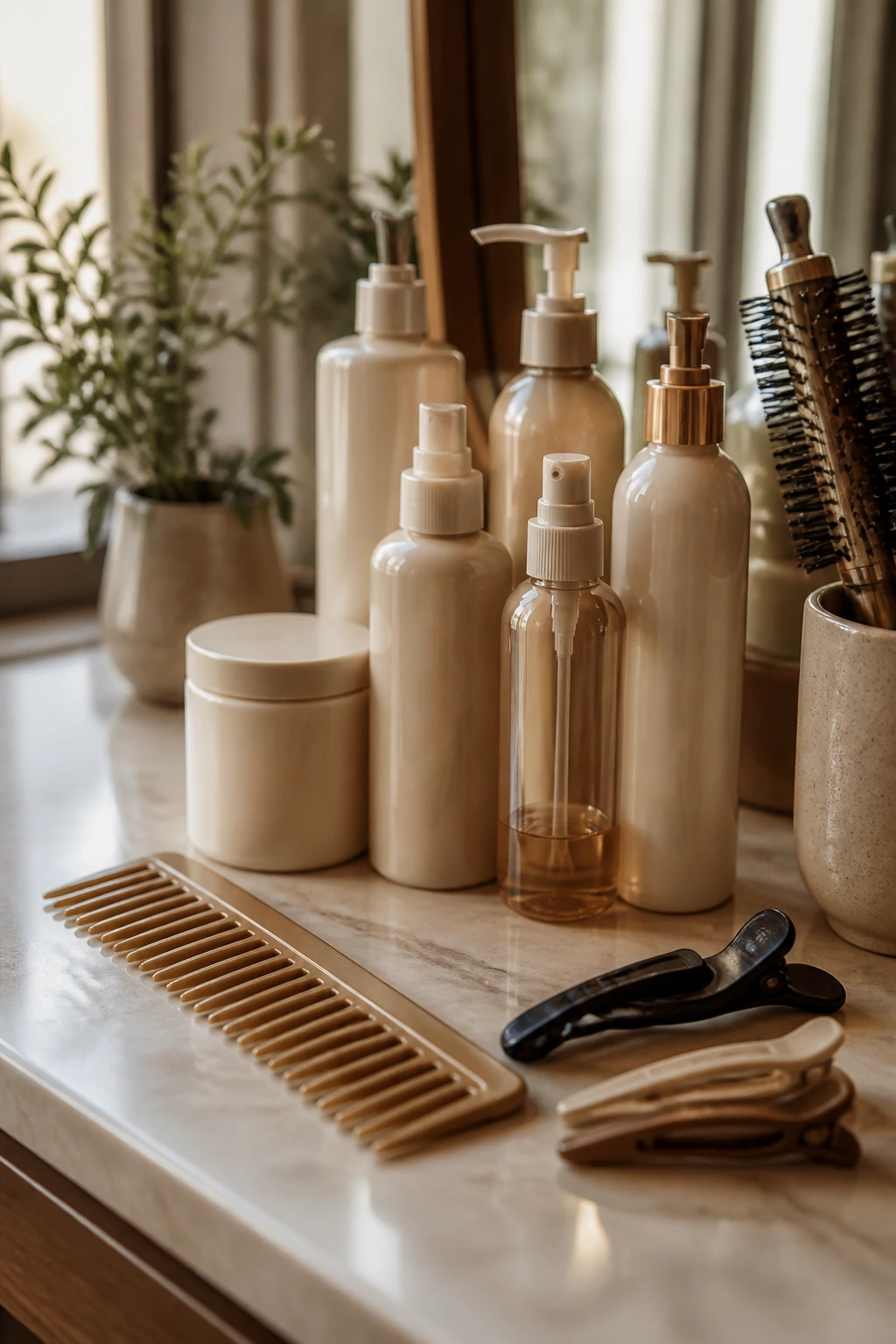
You do not need a bathroom full of tools, but a few things make maintenance and styling easier.
- Color-safe shampoo: gentler cleansing keeps the caramel from fading dull after a few washes.
- Sulfate-free conditioner: helps the ends stay soft, especially if the hair was lifted more than one level.
- Heat protectant spray: use it before blow-drying, curling, or straightening. Every time.
- Shine serum or gloss spray: a light finish helps caramel reflect light instead of looking matte.
- Wide-tooth comb: better than yanking through wet hair with a brush.
- Sectioning clips: useful if you style with a blow-dryer or set loose waves at home.
- Purple or blue shampoo: only if the highlights drift too yellow or orange; use it sparingly, not as your main wash.
- Deep-conditioning mask: one weekly mask keeps lightened ends from feeling rough.
A few salon words are worth knowing too: babylights means very fine highlights, teasylights means the section is gently teased before lightening for a softer root, and a root smudge blurs the base color into the highlights. Those three terms can save a lot of confusion at the chair.
Additional Tips and Shine Boosters
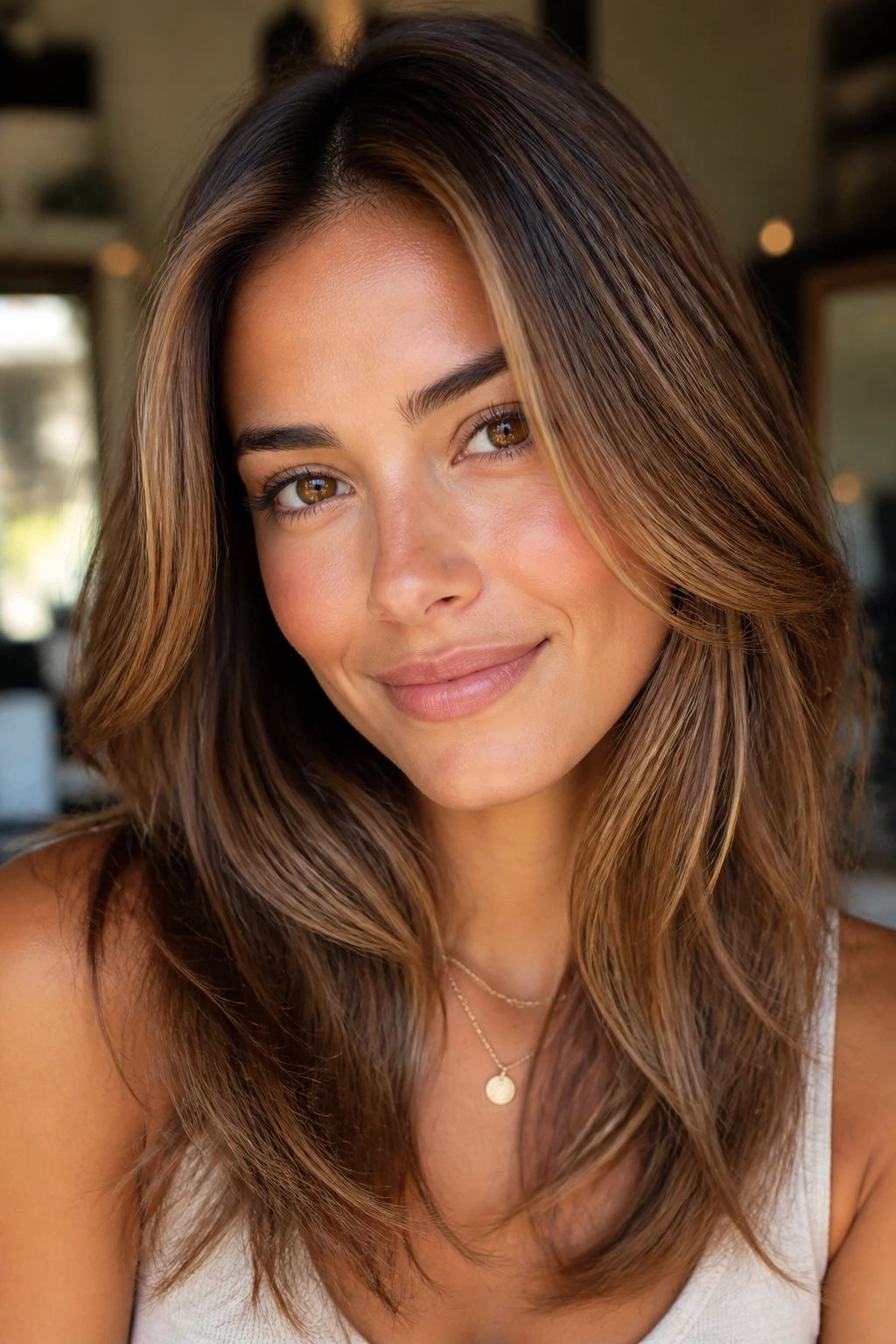
Shade Booster: If your caramel looks a touch flat after a few washes, ask for a beige-gold gloss rather than making it lighter. A tone refresh usually fixes the issue without overprocessing the hair.
Placement Trick: The brightest pieces should often live near the hairline, temples, and the top layer around the part. That’s where the color gets seen first in real life, not just in a selfie.
Customization: If you want more drama, add a few thicker ribbons underneath a finer highlight weave. The contrast appears when the hair moves, so the whole head doesn’t need to be uniformly bright.
Make-It-Yours: Curly hair usually benefits from more intentional placement and less saturation. Straight hair can take denser foils because the pattern shows cleanly. Thick hair often needs both highlights and a few lowlights to keep the finish from looking overly pale.
Serving Suggestion: A clean blowout, a center part, and a little serum at the ends can make caramel read more expensive than another round of highlighting ever will. Sometimes the styling matters as much as the tone.
Maintenance, Grow-Out, and At-Home Care
Caramel highlights are easier to live with than platinum, but they still need maintenance if you want the tone to stay warm instead of muddy. Most people do well with a gloss or toner refresh every 4 to 6 weeks, especially if the highlights are fine and warm. Foil-heavy looks may need attention sooner than balayage or root-melt styles.
Washing less often helps. Two or three washes a week is usually enough for colored hair, especially if you use a color-safe shampoo and lukewarm water. Hot water opens the cuticle too much and can drag warmth out of the tone faster than you expect. A weekly mask helps the ends stay soft, which matters because lightened hair loses moisture quicker than untouched brown hair.
Purple shampoo is not a daily companion here. Use it only when the highlights start drifting yellow or orange, and keep it to once every 1-2 weeks unless your colorist tells you otherwise. Overusing cool-toned shampoo can mute the caramel and make it look dusty. That’s the opposite of what most people want.
If your color is rooted or melted, the grow-out can look good for 6 to 10 weeks depending on how fast your hair grows and how contrasty the initial highlight job was. Direct sunlight, heat tools, and rough towels will shorten that window. A microfiber towel and heat protectant are not glamorous, but they do the work.
Variations and Adaptations to Try
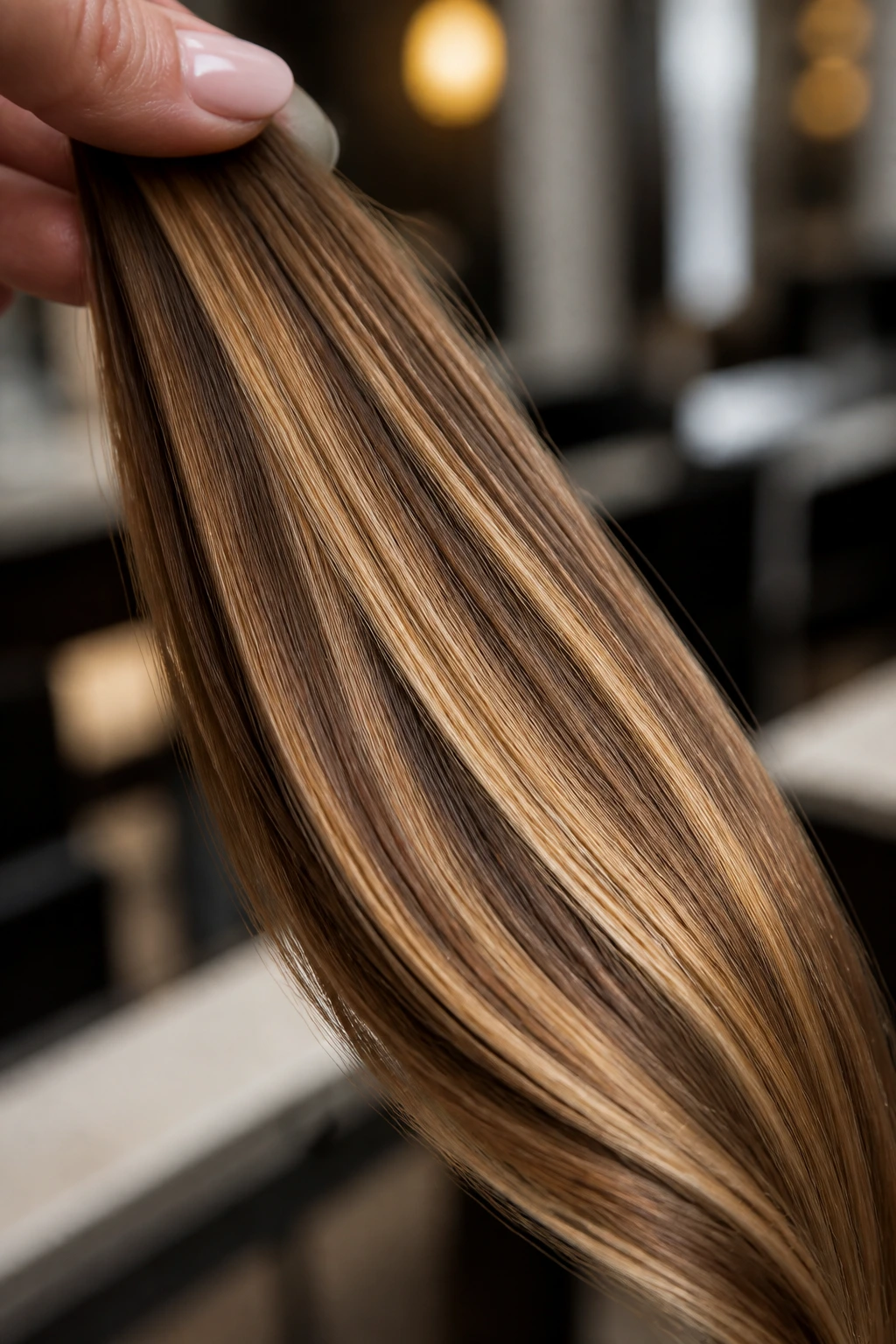
Golden Honey Veil: If you want the softest version, keep the highlights fine and the gloss golden. This is the easiest choice for peachy or golden skin because it adds light without changing the base color much.
Toasted Toffee Contrast: This version uses deeper caramel ribbons on a brunette base. It’s a cleaner pick if you want dimension you can see from across the room, but you still want warmth instead of ash.
Copper-Edge Caramel: Add a whisper of copper near the face and crown. That tiny shift gives the whole head more energy, especially on skin that already has golden warmth.
Babylight Blanket: Ask for very fine highlights spread densely through the hair. The effect is soft and seamless, and it’s a good fit for finer textures or anyone who wants low drama.
Chunky Statement Ribbons: Use wider pieces with a strong gloss to soften the edges. This works best on thick hair or layered cuts that can handle a bolder pattern.
Low-Maintenance Melt: Keep the root deeper and let the caramel appear mostly from the mid-lengths down. It grows out cleanly and gives the hair a softer outline around the scalp.
Common Mistakes to Avoid
The first mistake is going too light. Warm skin tones usually look better with caramel that stays in the brown-to-golden family, not pale blonde that starts shouting. If the highlights are several levels lighter than the base, the face can lose some of its natural warmth. The fix is simple: stay one or two levels softer and use gloss to brighten, not bleach alone.
The second mistake is ignoring the root. A highlight job without a root smudge or melt can look harsh after a few washes, especially on dark bases. The line grows out fast and makes the hair feel dated before the color has had a chance to settle. A blurred root buys you time.
Third, too much cool shampoo can wreck the tone. Purple shampoo has a job, but it is not there to replace proper toning. If the caramel starts looking dusty or beige in a dull way, scale back and switch to a hydrating color-safe cleanser.
Another common problem is stripey placement. Big, evenly spaced highlights tend to sit on top of the hair instead of moving through it. The fix is a finer weave, more varied sectioning, and a few lowlights to break up the pattern.
Frequently Asked Questions
Will caramel highlights suit olive skin tones?
Yes, especially when the caramel leans golden, toffee, or amber rather than pale beige. Olive skin usually looks best with warmth that has depth, so a root shadow or chestnut base often helps the color feel balanced.
How dark can my natural hair be and still wear caramel highlights?
Pretty dark, as long as you’re willing to lift the hair enough for the caramel to show. On very deep brunette or black hair, the highlights usually need careful foiling and a warm gloss afterward so they don’t turn patchy or orange.
Are caramel highlights easier to keep up than blonde highlights?
Usually, yes. Caramel sits closer to brunette, so regrowth is softer and toner jobs often hold up better. You still need maintenance, though; warm tones can fade or turn brassy if they’re ignored.
Can I get caramel highlights without bleaching my whole head?
Yes. In many cases, only the highlighted sections are lifted, not the entire head. Balayage, foils, and teasylights all let you keep most of your natural color while adding the lighter pieces where they matter.
How often should I refresh the tone?
A gloss every 4 to 6 weeks is a good target for many highlight jobs. If the caramel starts looking too yellow, too orange, or just a bit tired, a toner or demi-permanent gloss can bring it back without redoing the whole service.
What if the highlights turn orange?
That usually means the lift exposed too much underlying warmth or the toner faded out. A beige-gold or cooler caramel gloss can calm it down, but the exact fix depends on how orange the hair is and how porous it feels.
Do curls need a different highlight placement than straight hair?
Absolutely. Curls need color placed with the curl pattern in mind, or the highlights disappear into the shape. The outer curl layer, crown, and perimeter usually carry the color best, while the inner mass should stay richer for depth.
Should I ask for lowlights too?
If your hair is thick, very bright, or prone to looking flat, yes. A few lowlights can give the caramel pieces more contrast and keep the whole thing from turning washed out. It’s a small move with a big payoff.
Warm Light, Soft Dimension
Caramel all-over highlights work because they understand the face before they chase the trend. They add light where warm skin wants it, keep the hair rooted in its natural depth, and leave enough dimension that the color still looks alive a few weeks later. That’s a rare combination. Most highlight jobs only get one of those things right.
The best version is the one that fits your base color, your texture, and your tolerance for upkeep. Fine babylights, chunky ribbons, a soft root melt, or a glossy bronde veil all tell a slightly different story. The shade name matters less than the way the color is built.
Bring photos. Bring a little honesty about how often you want to come back for glossing. And ask for caramel that flatters your skin in daylight, not just under the salon mirror — that’s where the good color proves itself.