



Thin hair punishes bad layering fast. One blunt cut in the wrong place, and the ends start looking see-through by the time you leave the salon chair. Long Korean layers dodge that problem by keeping the outline long, soft, and deliberate, then building movement through the middle instead of carving up the perimeter like a hedge. Add caramel highlights in the right places, and the whole shape starts to read fuller, warmer, and a lot more expensive-looking than flat one-length hair ever does.
The part people miss is this: thin hair does not need a dozen short pieces hacked around the crown. It needs weight in the right places, soft graduation where the eye looks first, and color that breaks up the surface without turning into chunky stripes. Caramel works because it gives depth without screaming for attention. It sits in that sweet spot between brunette and blonde, which is exactly where a lot of fine hair looks its best.
And Korean layers are built for that quiet kind of help. They curve, float, and bend instead of shouting for volume that isn’t there. The best versions keep the longest length intact, use face-framing pieces like architecture, and treat highlights like brushstrokes instead of ribbons of caution tape.
Why This Mix Works Better on Thin Hair
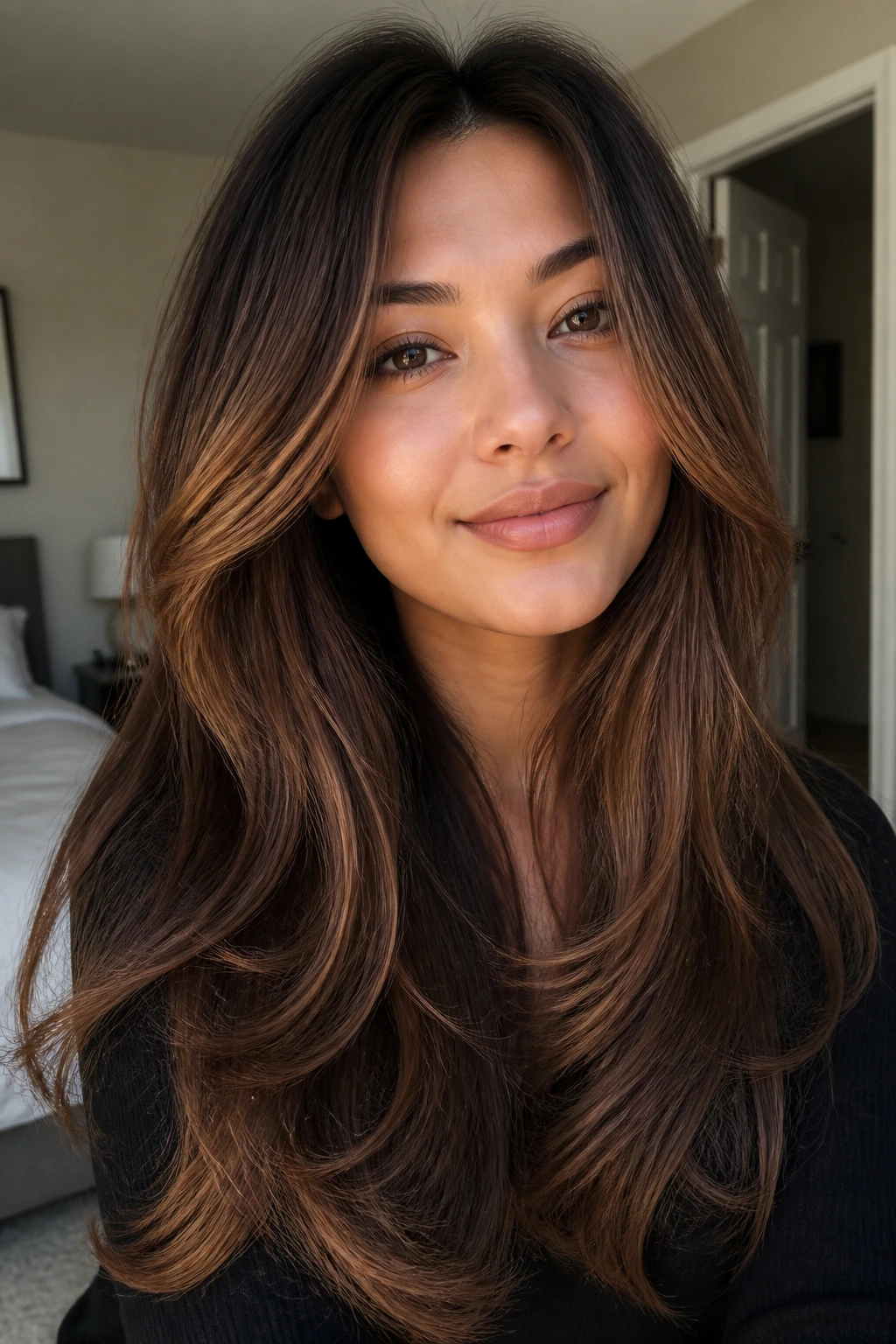
Length and lift can live together. That’s the whole reason long Korean layers are such a good match for thin hair. The cut keeps enough weight at the hem to stop the ends from going wispy, while the inner layers create movement so the hair doesn’t hang like a curtain.
Caramel highlights help for a different reason. Fine or low-density hair looks flatter when the color is too solid, especially at the crown and along the part. A few warm ribbons—placed around the face, through the mids, and under the top layer—catch the eye in bands instead of one flat sheet. That visual break is doing a lot of work.
The Shape Matters More Than the Drama
A lot of people ask for “more layers” when what they really need is better placement. On thin hair, too many short layers eat up the bottom line and leave the ends looking scraggly by the second week. Korean layering tends to be softer, with curves and longer transitions. That’s the part that keeps the cut looking expensive instead of accidentally airy in the wrong way.
If your hair is fine but plentiful, you can push the layering a little more. If your density is genuinely low, keep the shortest face frame below the cheekbones and let caramel do some of the lifting. That’s the smarter trade.
Why Caramel Beats Harsh Blonde Here
Caramel sits in a usable range for brunette hair. It warms the cut without creating big contrast lines that make the hair look thinner at the roots. On deep brown bases, it also plays well with subtle lowlights, which are the unsung hero here. A few darker strands underneath can make the lighter pieces on top look fuller. Strange, maybe. Effective, absolutely.
- Longer perimeter: keeps the ends looking solid instead of stringy.
- Soft internal layers: add motion without hollowing out the bottom.
- Caramel ribbons: create the look of density by breaking up flat color.
- Subtle lowlights: stop the highlights from floating on top like separate pieces.
- Face framing: draws attention where the hair is strongest.
1. Soft Korean C-Cut with Narrow Caramel Veils
A clean C-cut gives thin hair a better outline than a bunch of choppy snips ever will. The curve hugs the jaw and neck line, so the shape feels polished even when the hair is only lightly styled. The caramel should stay narrow and deliberate here—think soft veils near the front, not bold streaks that start shouting at the crown.
Ask for the longest pieces to stay near bra-strap length, with the face frame starting below the cheekbone and curving inward as it falls. That little bend keeps the front from collapsing into the rest of the cut. If your hair is straight, this one looks best with a quick bend at the ends from a round brush or a flat iron turned just enough to make the edge roll under.
Salon note: tell your stylist you want the perimeter to keep weight, not feel shredded. Thin hair needs a line. It does not need holes.
2. Curtain Bangs and Airy Face-Frame Layers
Why do curtain bangs help thin hair so much? Because they change where the eye goes. Instead of looking straight at a flat part and a limp top section, the gaze moves to the split fringe and the cheekbone pieces, which makes the whole style feel fuller and more alive.
The bangs should be long enough to part cleanly, usually around cheekbone to lip length when dry. Short curtain bangs can be cute, sure, but on thin hair they can also make the front look sparse if the density isn’t there. Pair them with caramel highlights that start at the temple and drift into the front layers. That gives the fringe a little warmth without turning it into a lighter patch that announces itself from across the room.
What to ask for at the salon
- Keep the fringe soft and split, not blunt.
- Start the face frame low enough to avoid exposing the temples.
- Use caramel mainly in the front pieces and mid-lengths.
- Leave the ends darker if you want the hair to look thicker.
This cut is a good one if you like a little softness around the face but don’t want to spend twenty minutes styling bangs every morning. A quick round-brush pass is enough.
3. Butterfly Layers with Toffee Ends
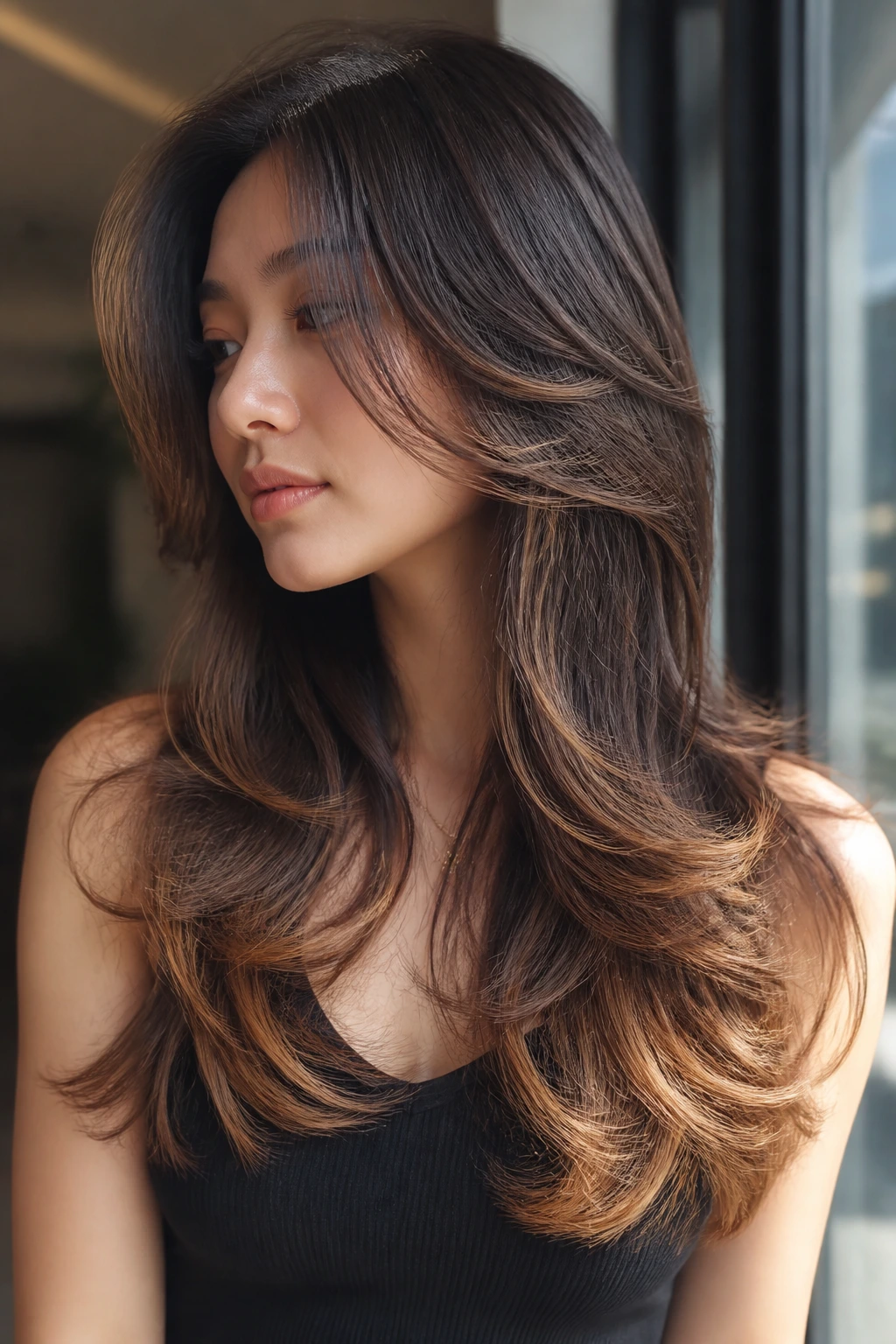
Butterfly layers are the right move when you want movement up top but refuse to sacrifice length. The top section lifts around the cheekbones and collarbone, while the lower length stays long and visible. On thin hair, that split is useful because it creates the impression of volume without making the bottom look abandoned.
Toffee-toned ends help here. They sit a touch warmer and deeper than a bright caramel blonde, which keeps the lower half from going stringy in daylight. If your base is medium brown, this is one of the smartest ways to add contrast without making the hair look fragile. The trick is to keep the top layers soft enough that they swing, not flap.
This style is best if you wear loose waves or a bouncy blowout. Straight and limp, it loses some of the charm. Curved and airy, it looks like the hair has more moving parts than it really does. Which, frankly, is the point.
4. Korean Hush Cut with Seamless Caramel Ribbons
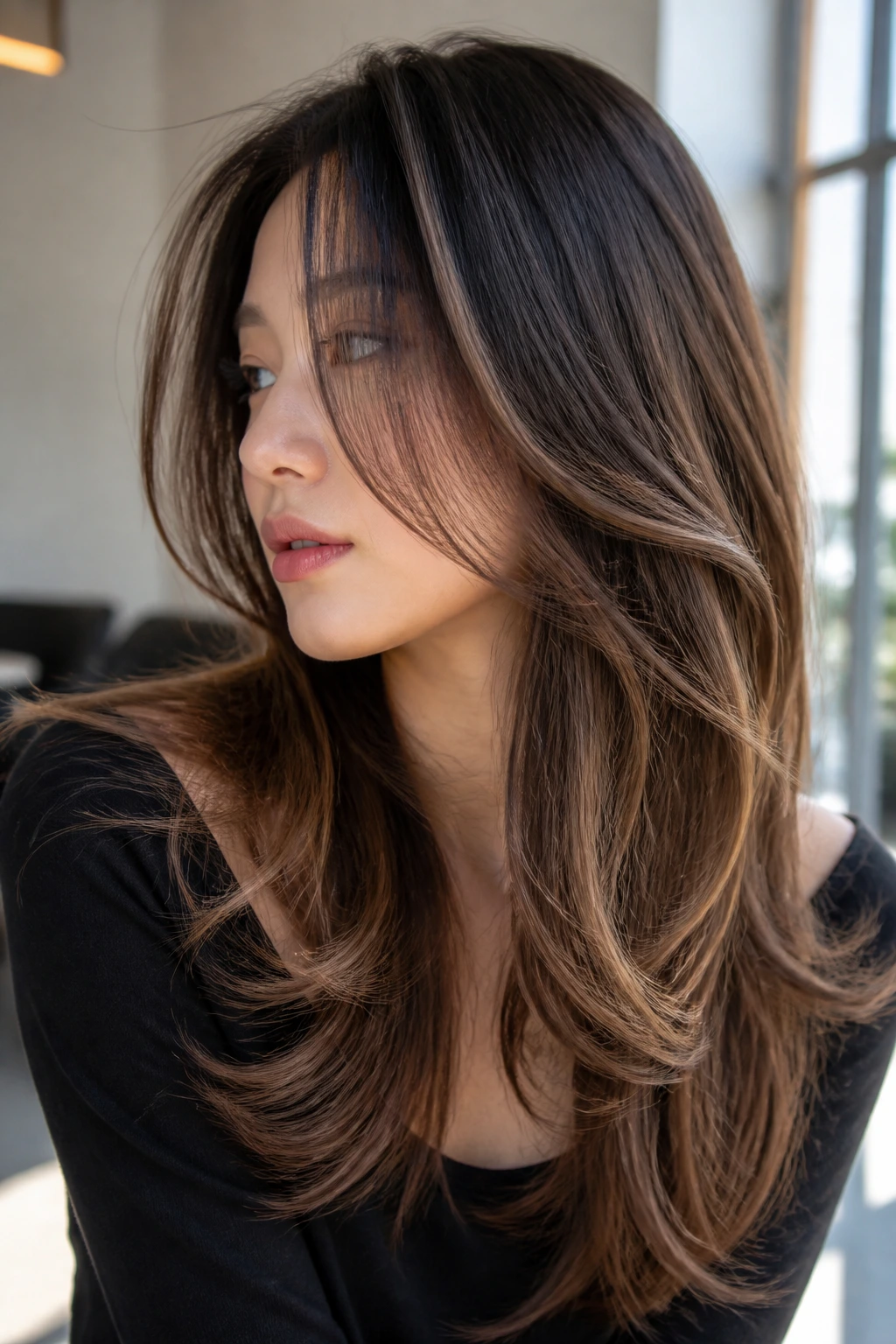
Not every thin-haired client needs drama. A hush cut is the quieter answer, and I like it for people who want movement but get nervous the second a stylist reaches for thinning shears. The layering is subtle, almost hidden, and the effect comes from shape, not from obvious steps in length.
Caramel ribbons should be feather-light here. I’d keep them around the front, the crown, and just enough through the mids to make the hair shift when it moves. Chunky color would ruin the whole idea. This cut works because it looks like your hair was born with that bend and depth, not because it was turned into a striped project.
It’s a good choice for air-dryers. A small amount of mousse at the roots and a little scrunching at the ends can be enough. If your hair is fine and prone to looking overstyled, this one stays on the right side of relaxed.
5. U-Shape Layers and Soft Side Bend
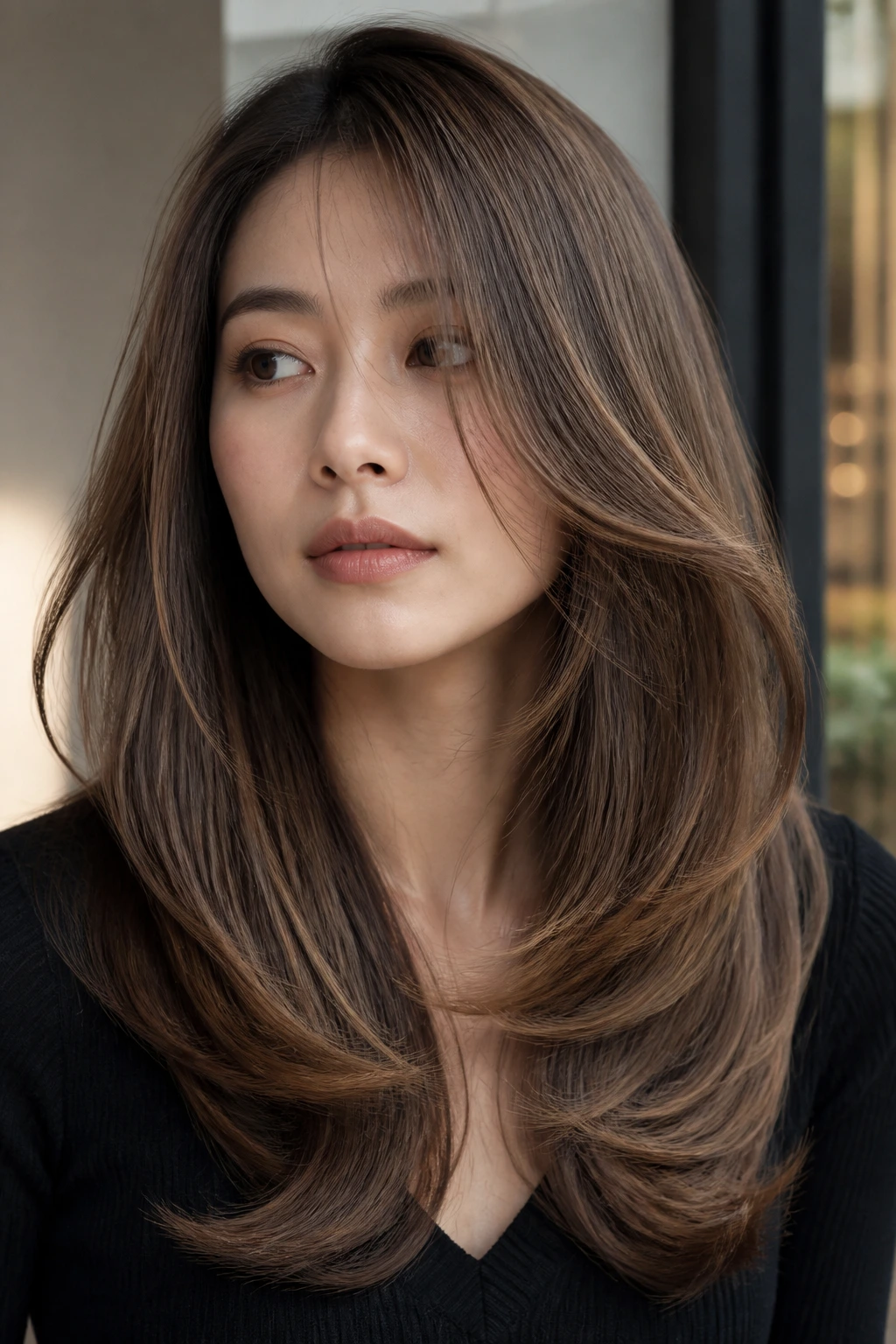
A U-shaped hemline keeps thin hair from losing its tail. That matters more than people think. When the cut ends in a blunt or steep V, fine strands can look thinner at the tips than they actually are. A rounded U gives the illusion of fullness all the way across the back.
The side bend in the front softens the line and makes the layers feel less symmetrical, which is nice if your face is round, square, or broad through the jaw. Caramel highlights look best when they follow that curve—slightly brighter around the front edges, then softer through the sides. That way the color supports the shape instead of fighting it.
If you wear your hair half up often, this is an easy one to live with. It holds a clean outline in ponytails, and the front pieces still fall in a way that makes the style look finished even on lazy mornings.
6. Long Korean Wolf Layers with Toned-Down Texture
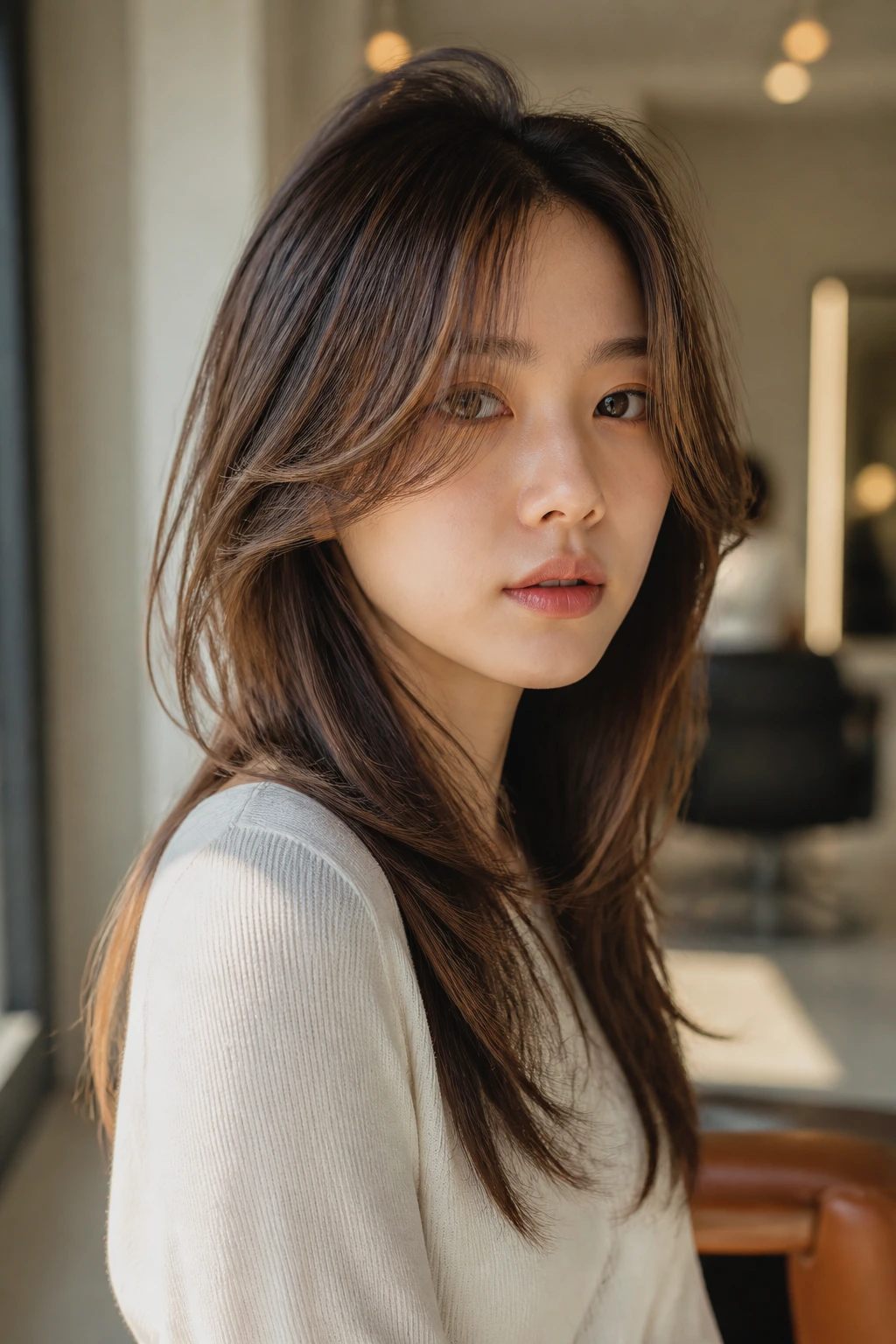
A wolf cut on thin hair can go wrong fast. Too much texture, and you’re left with a soft mullet situation nobody asked for. But a long Korean wolf version, kept restrained, can work beautifully because it gives just enough movement to stop the hair from lying flat against the head.
The keyword is restraint. The top should be lifted, yes, but the ends need enough density to stay present. Caramel highlights keep the layers from disappearing into each other, especially if your base color is dark brown. A few brighter pieces around the face and through the upper mids stop the style from reading as one dark mass.
Best for
- Hair that’s naturally straight to slightly wavy
- People who like a little edge without heavy shag texture
- Anyone who wants movement on top and length below
Skip if
- Your ends are already fragile or bleach-dry
- You hate any sense of texture near the crown
This one needs a good stylist. Not the kind who reaches for texture spray before the cape is off.
7. Feathered Blowout Layers with Glossy Caramel Panels
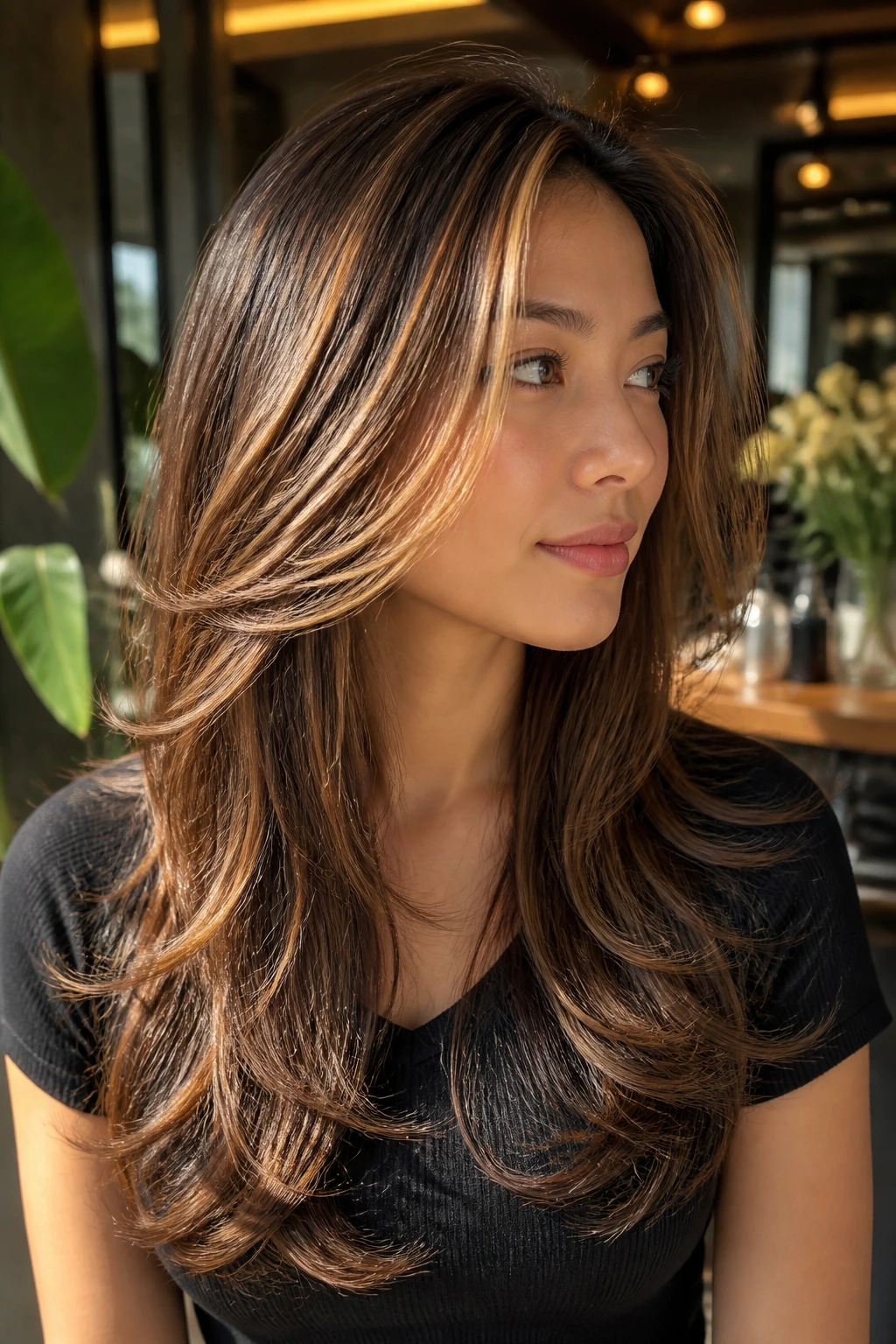
If you like a full blowout, this is where thin hair can cheat a little. Feathered layers give the hair lift through the mids and a soft flip at the ends, which means the cut looks airy without feeling stripped. The caramel can be placed in broader but still fine panels here, especially around the front and the top layer, so the movement shows when the hair sways.
I’m not a fan of overdoing this look with too many hot tools. One round-brush pass, maybe a 1.25-inch curling iron on just the front pieces, and you’re done. The more you fuss, the more the ends start to separate into wisps. Keep the finish glossy, not crunchy.
This style is especially good if your hair naturally falls flat at the root and you need a little theater without a lot of styling time. It has that soft salon blowout feel even when the rest of your look is jeans and a black tee.
8. Side-Part Sweep with One-Sided Face Framing
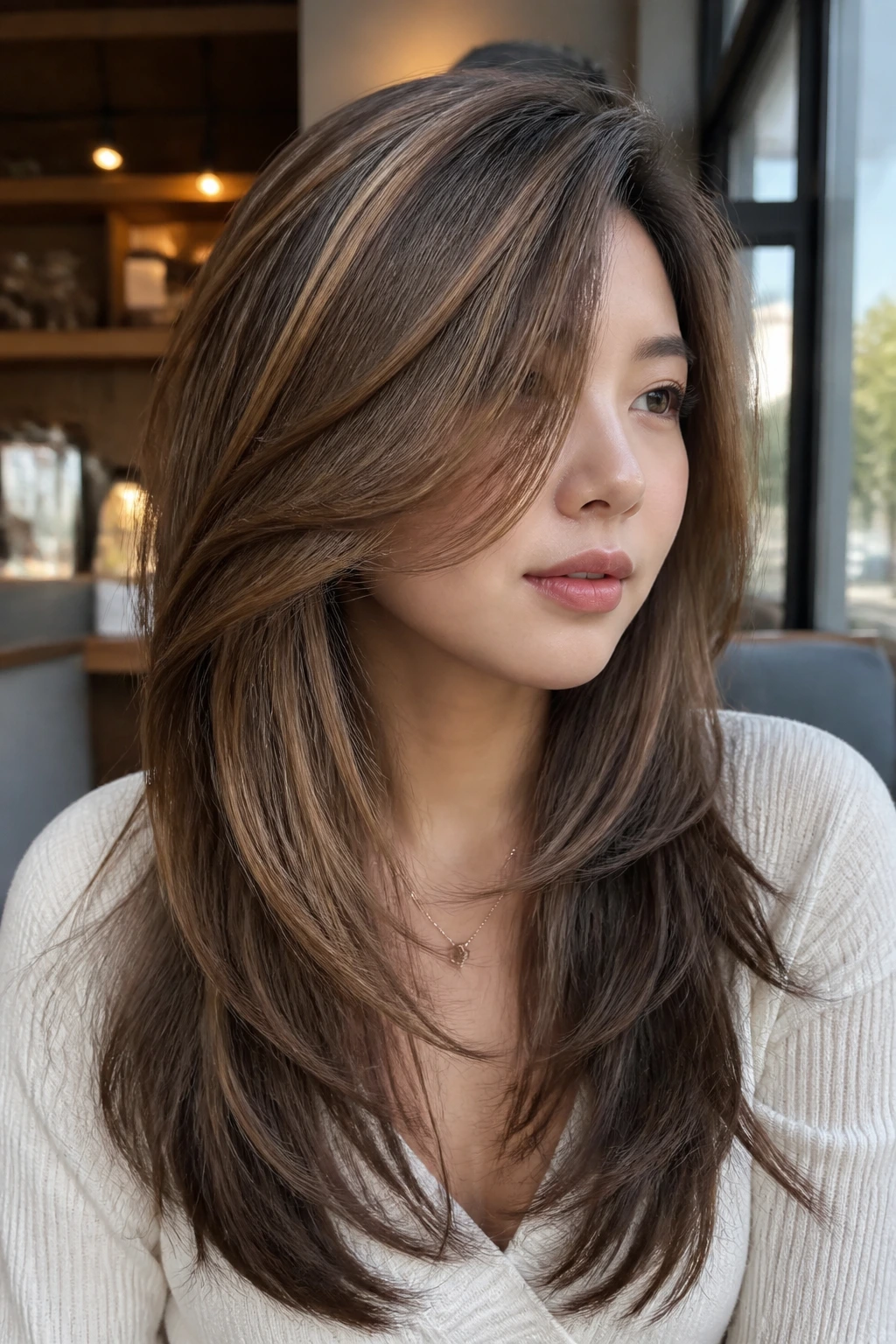
A side part can rescue thin hair in a heartbeat. It gives you built-in lift at the crown, breaks the symmetry that makes hair look sparse, and lets the front fall into a more dramatic sweep. Pair that with long Korean layers, and the result feels intentional without looking stiff.
The face-framing pieces should be a little stronger on the heavier side of the part. That’s the side that gets the movement, the light, and the visual weight. Caramel highlights can follow that same logic. Put a brighter ribbon around the part line and through the sweeping front section, then keep the opposite side a touch deeper. The imbalance makes the style look fuller.
This is a good option if your face is long or your crown always collapses. It also photographs well in real life, which is not a phrase I use lightly. The line of the hair actually has somewhere to go.
9. Bra-Strap Cascade with Subtle Lowlights
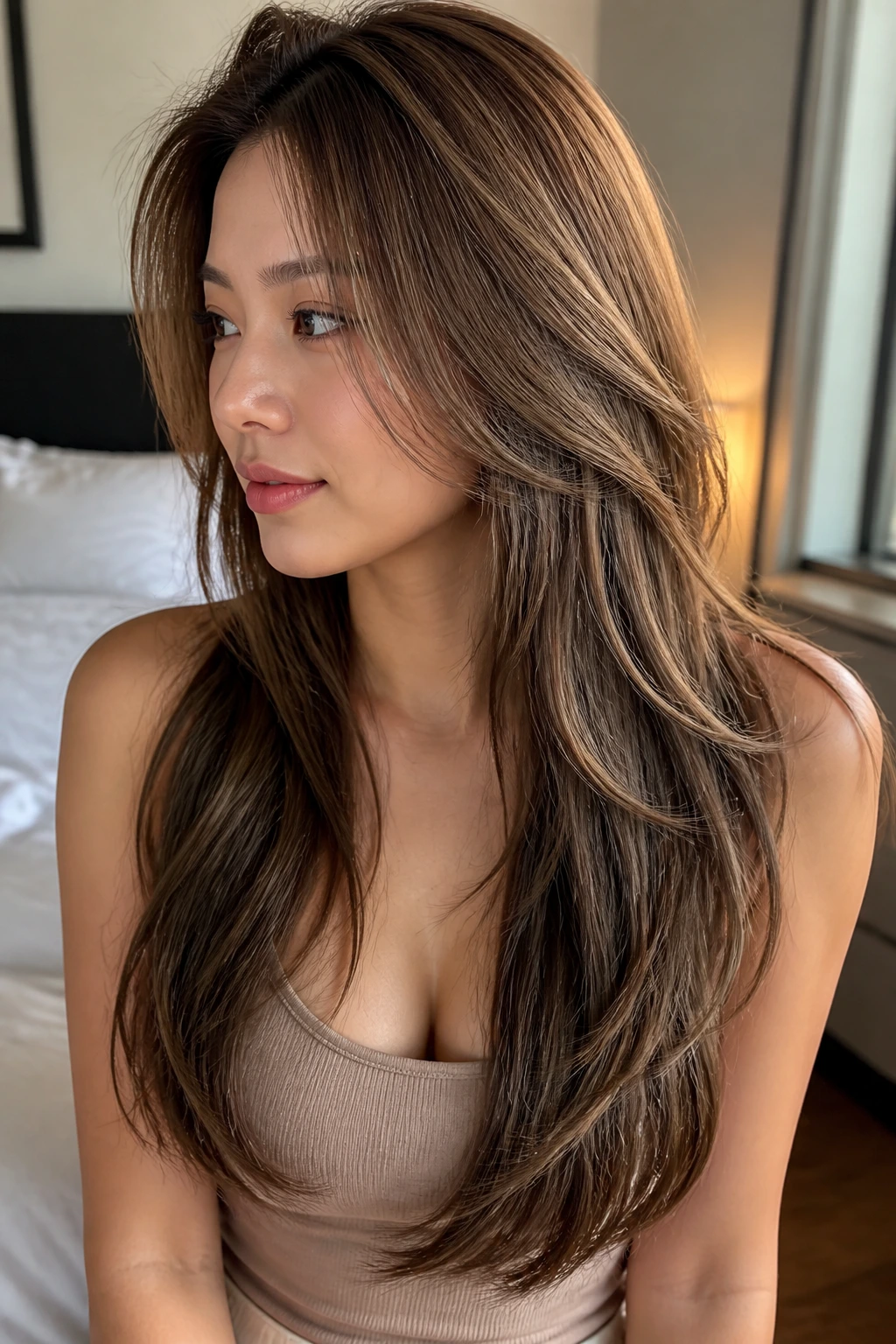
Bra-strap length is a sweet spot for thin hair. Long enough to feel feminine and versatile, short enough that the hair can still hold shape. Long Korean layers at this length work best when the perimeter stays soft but not shredded, and when the color underneath is doing some of the visual heavy lifting.
That’s where subtle lowlights come in. A few deeper strands under the top layer make the caramel on top look richer, not flatter. If the whole head gets lightened to the same warm level, the ends can start to look see-through. But if the base color remains anchored, the highlights sit against something solid.
This style is especially good for people who wear hair down most days and want movement without constant curling. The cascade should fall in clean sections, not in a million tiny broken pieces. Thin hair always looks better when it moves as a whole.
10. Wavy Mermaid Layers with Rooty Dimension
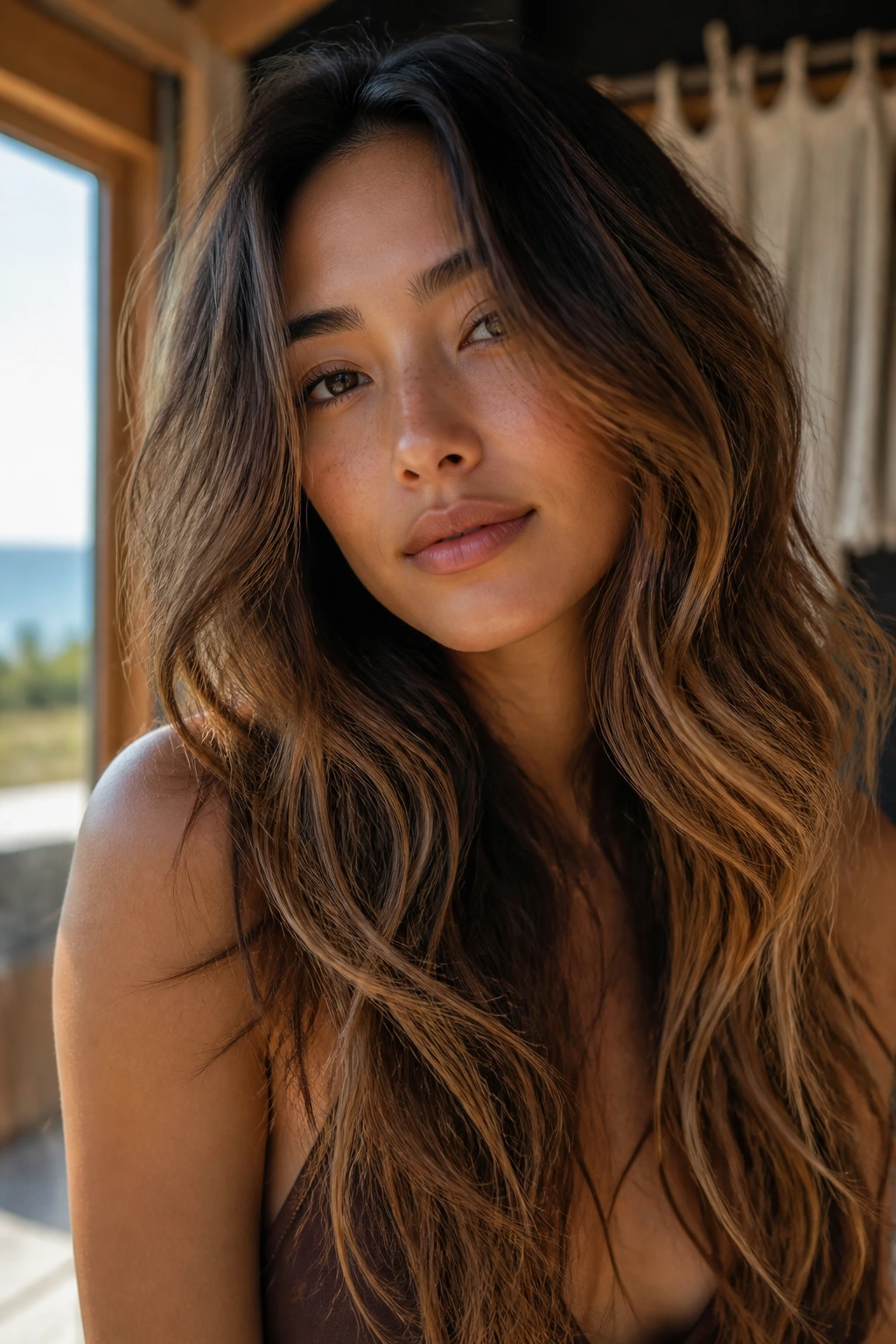
Natural waves change the game. If your hair bends on its own, long Korean layers can work with the wave pattern instead of against it, which is a relief because over-layered wavy hair can look puffy at the wrong spots and flat at the ends. Keep the layers long and let the wave create the body.
Caramel balayage should start a little away from the root here. A rooty base keeps the scalp area from looking thin, and the warmer color through the mids and ends gives the wave something to catch. I like this with a soft shadow root in a deeper brown, especially if the base color is naturally dark.
A curl cream or light gel on damp hair is enough. Scrunch, diffuse if you want more lift, or let it air-dry and separate it with your fingers once it’s fully dry. Don’t rake through it while it’s still damp. That’s how you end up with frizz and no shape.
11. Rounded Volume Layers with Crown Lift
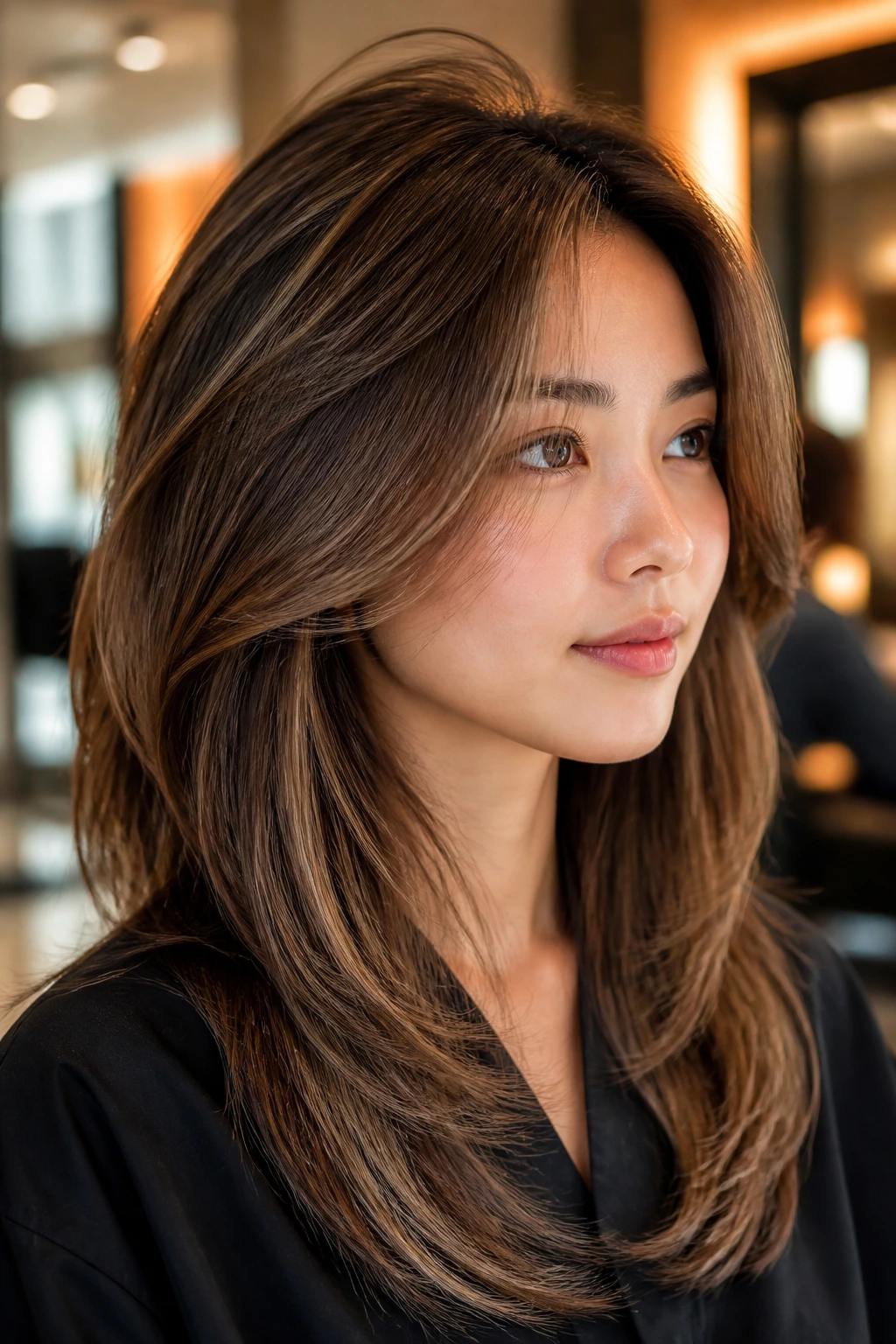
Rounded layers are underrated for thin hair. The shape sounds old-school, but it works because the hair falls in a soft oval instead of hanging straight down with no help. That rounded edge makes the ends look denser, which is exactly what fine hair needs.
The crown lift should be subtle, not stacked. You want hidden shorter pieces near the top to create a little rise, then a smooth transition into the longer lengths. Caramel highlights around the crown and upper sides make that shape more visible, especially when light hits the top of the head. It’s a small trick that changes the whole read of the cut.
Use this if:
- Your hair gets flat by lunchtime
- You like a round brush blowout
- You want fullness without a shaggy finish
A tiny root-lift spray before blow-drying helps. Nothing heavy. Heavy products at the roots are the enemy here.
12. Sleek Straight Layers with Tapered Ends
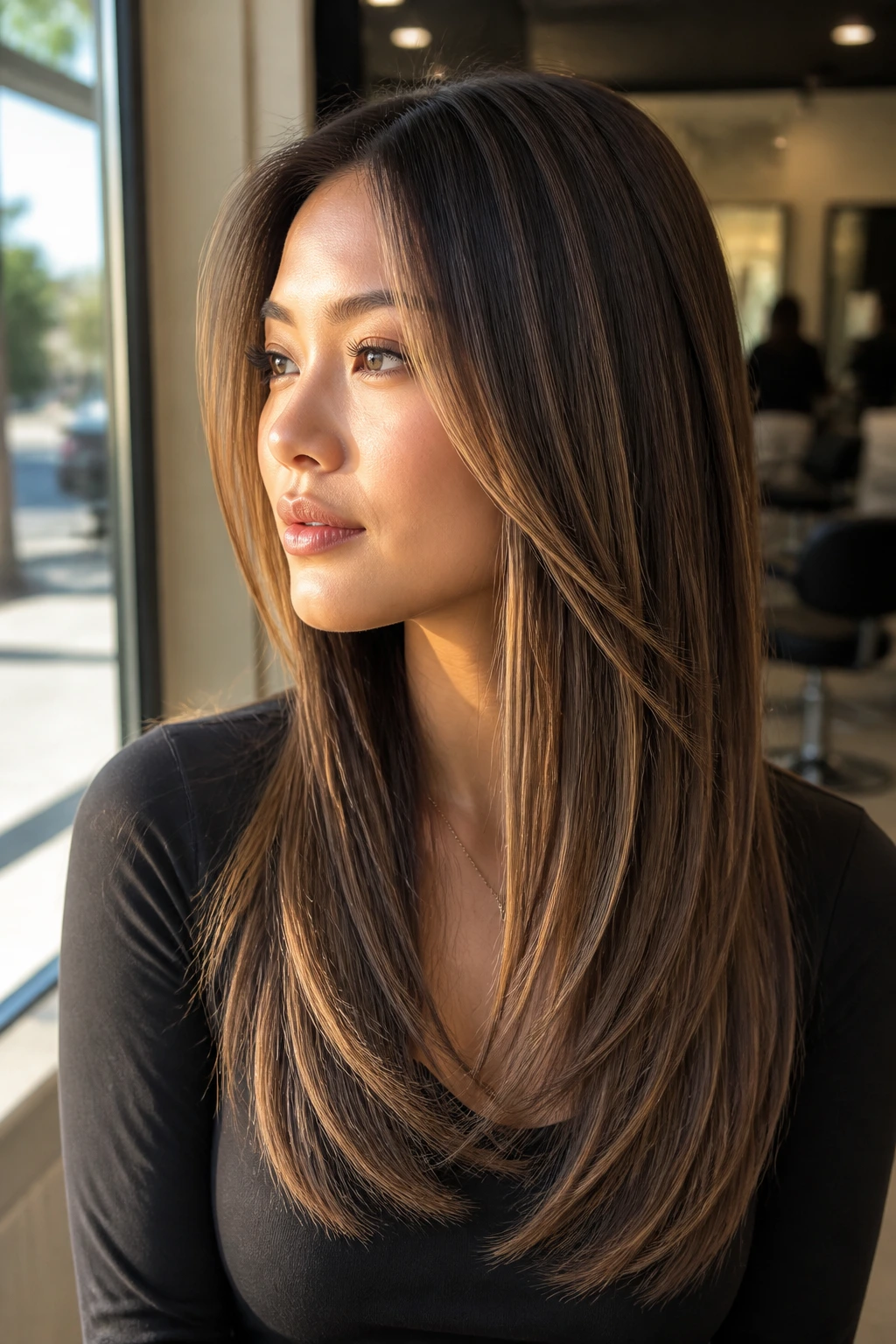
Some people want movement, not fluff. For them, sleek straight layers are the answer. The cut keeps the lines long and smooth, then tapers the ends just enough so the hair doesn’t feel blocky. On thin hair, that can be much more flattering than big obvious layers.
Caramel highlights should be fine and controlled here, almost like threads running through the surface. Bright streaks would break the sleekness. If you like a glassy finish, keep the color in thinner ribbons and focus it around the face and lower mids. That gives the length a little shimmer without upsetting the shape.
This is a good style if you wear your hair pin-straight or with a soft bend, not curls. A flat iron pass with a slight inward turn at the last inch keeps the end from looking blunt in a bad way. Think polished, not pin-straight and stiff.
13. Soft Korean Shag with See-Through Bangs
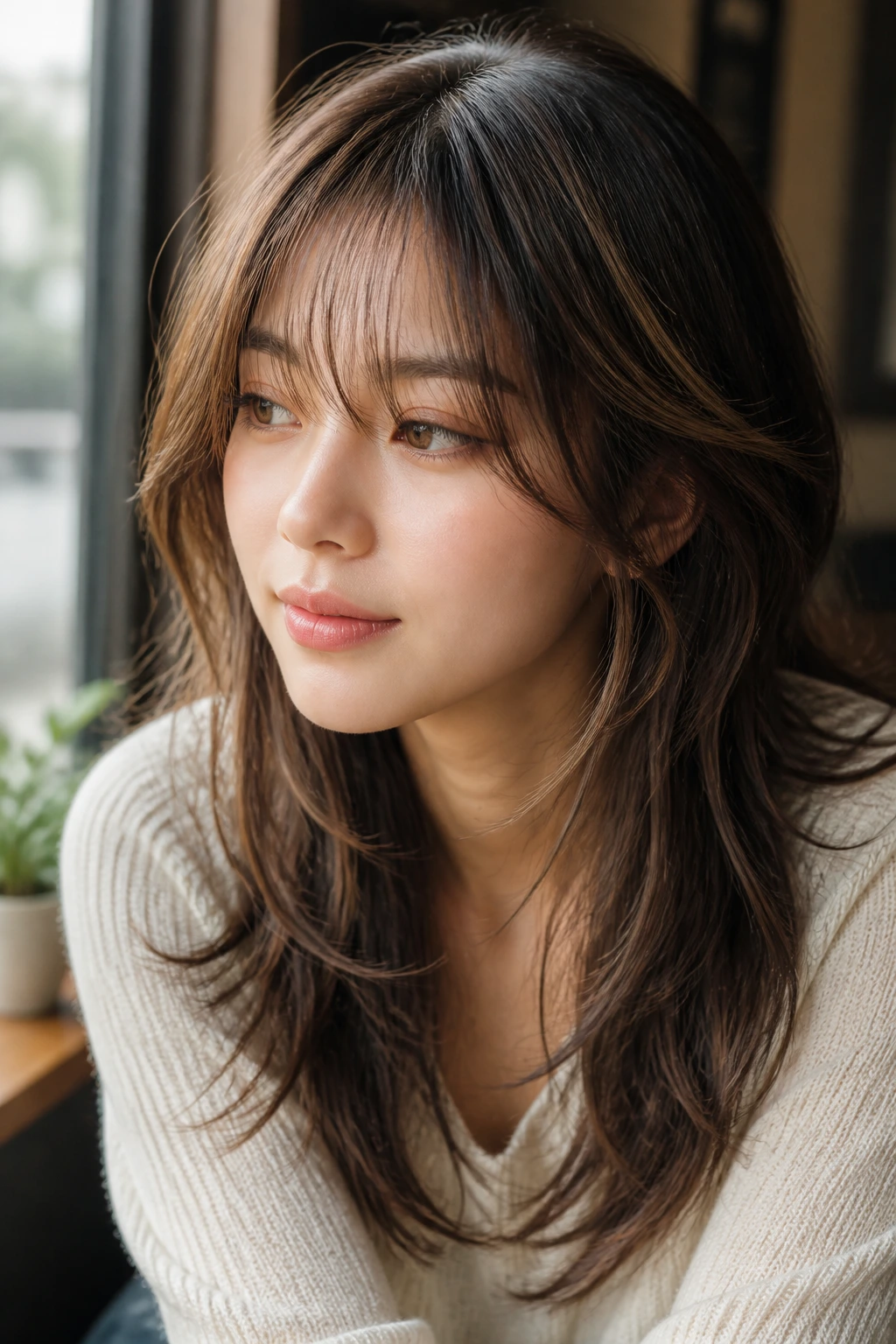
A shag can help thin hair, but only when it’s softened. A harsh shag on fine density is a mess. A Korean take—lighter, airier, with see-through bangs—gives you texture without stripping the cut down to scraps.
The bangs matter more than you’d think. See-through fringe lets the forehead breathe and keeps the front from looking heavy. Caramel highlights should scatter through the fringe, temple pieces, and outer layers, with a little more depth underneath. That mix gives the cut movement when it shifts but keeps the top from looking too transparent.
If your hair gets oily at the root but dry at the ends, this style can feel easier to manage than a smooth layered cut. It likes texture spray, finger-styling, and a bit of imperfection. Very neat hair can make it feel too calculated. Slight mess. Better.
14. Deep Side Fringe with Long Diagonal Layers
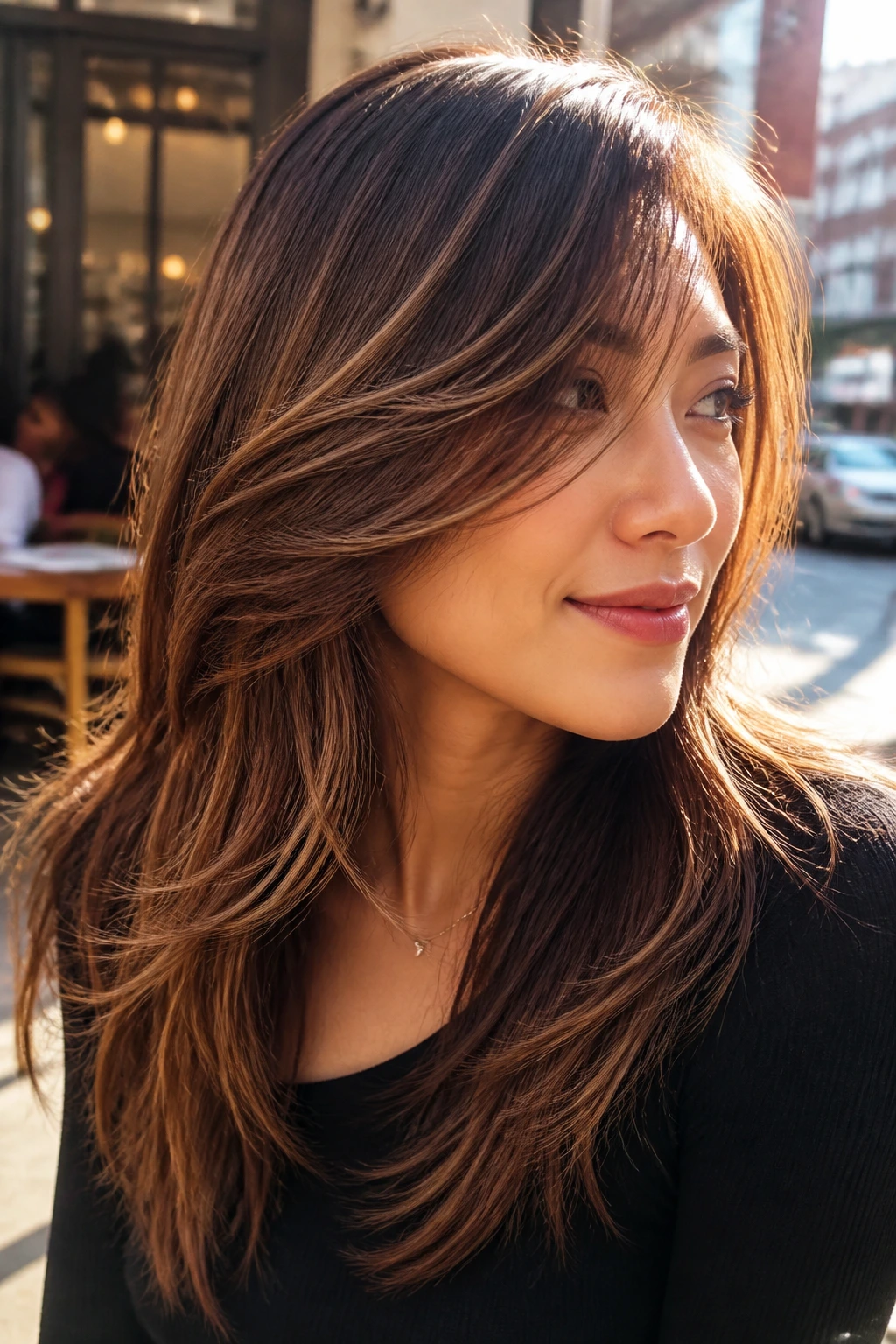
A deep side fringe gives thin hair an instant visual line, and that line does a lot of work. It draws attention diagonally across the face, which makes the hair feel thicker because the eye keeps moving. Long diagonal layers beneath it reinforce that same direction.
Caramel highlights should follow the sweep of the fringe and the front sections. If the color is concentrated along the diagonal line, the cut looks more alive than if the light pieces are sprayed all over. It also flatters square and broad faces, because the angle softens the width.
This one’s a sleeper hit for people who’ve been wearing the same center part forever. It feels different without needing a dramatic chop. And if you decide you hate it, the fringe can be tucked, pinned, or pushed back without much drama.
15. V-Cut Length with Toasted Almond Balayage
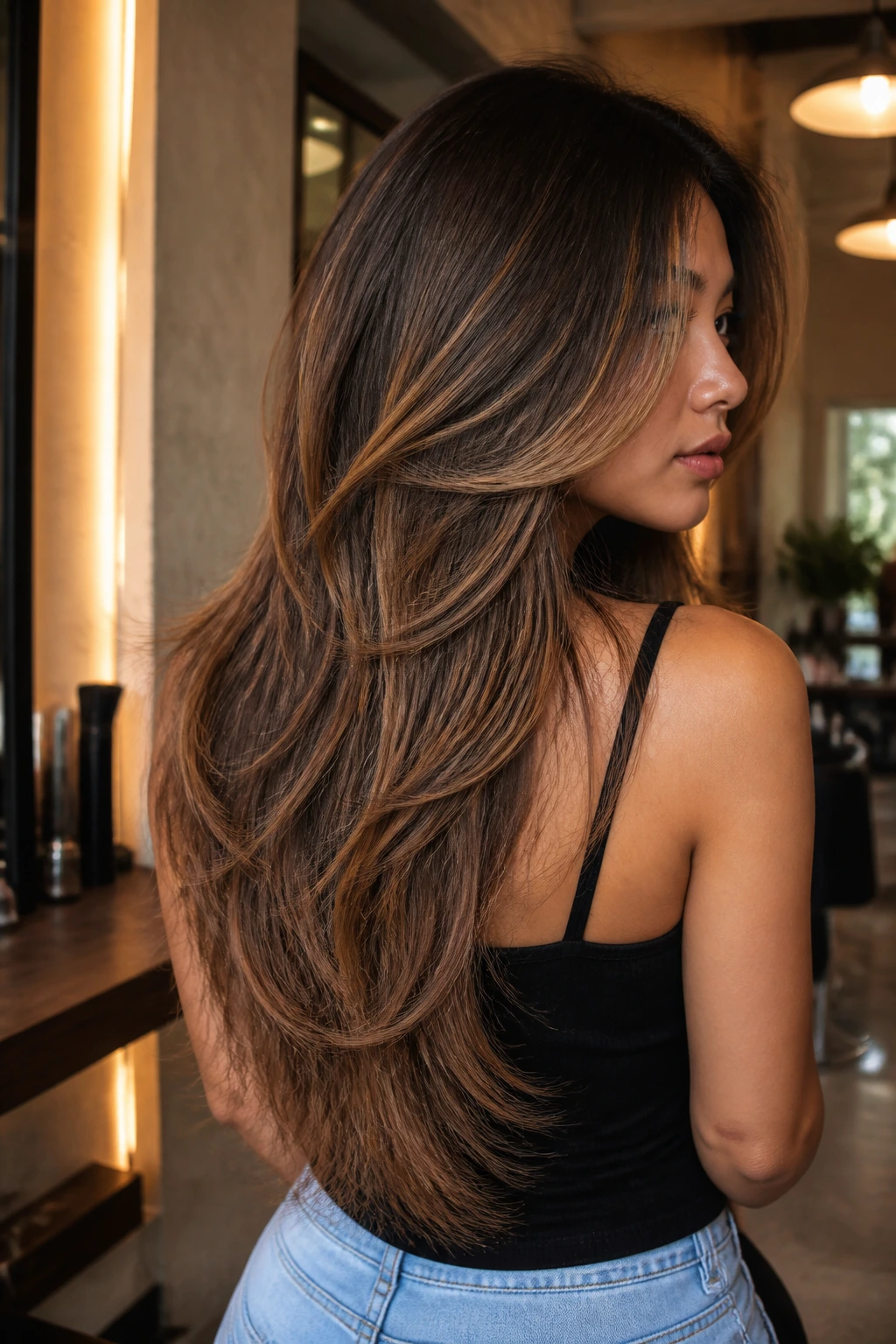
A V-cut sounds dramatic, but on thin hair it needs a gentle hand. Keep the angle soft enough that the back still feels full. If the point gets too sharp, the ends can look stringy and the whole cut loses the density it was supposed to protect.
Toasted almond balayage gives the style a warmer, more dimensional look than a bright gold blonde. I like it on medium brunettes who want lightness without losing the richness at the root. The highlights can sit a little higher through the sides and lower through the back so the V shape reads clearly when hair is down.
This style works best with loose waves or a smooth bend. Straight, it’s elegant. Curled, it feels softer. Either way, the angle at the back gives the hair a clear finish, which is a nice change from cuts that just disappear at the hem.
16. Minimal Layers with a Highlighted Perimeter
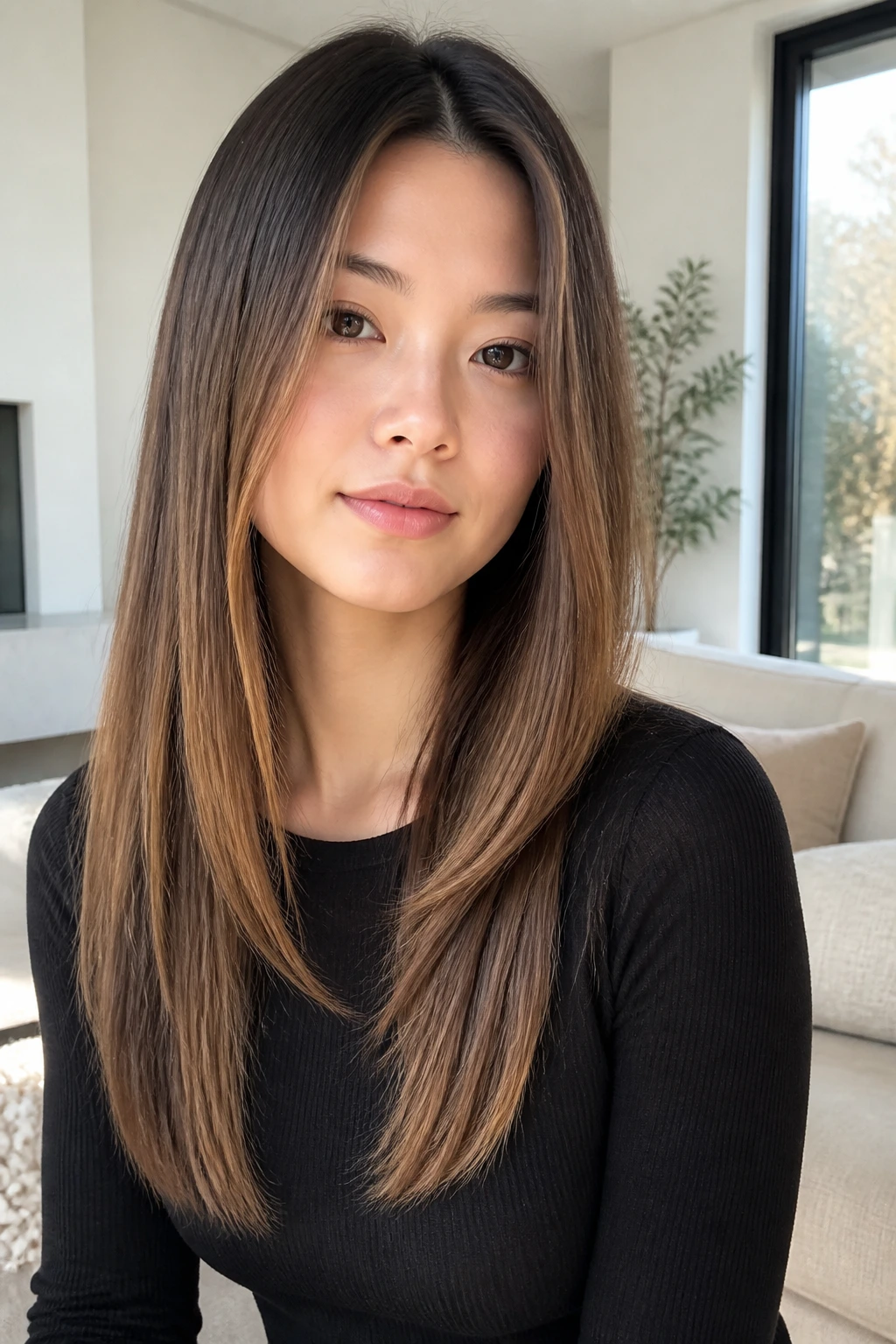
Sometimes the smartest move is not to layer much at all. Minimal layers keep the hair’s weight intact, which thin hair often needs more than another texture trick. The visual interest comes from a highlighted perimeter—fine caramel along the edges, the front, and a few lower pieces.
That perimeter color makes the cut look fuller because the eye follows the outline first. If the ends are the lightest point, they can start to look thinner, so keep the lightness soft and avoid pushing it too pale. Think warm caramel, not pale blonding.
This is the version for people who are nervous about losing density or who have brittle ends. It gives enough shape to stop the hair from hanging flat, but it doesn’t overwork the strand. I wish more people chose this one first. It’s one of the few low-risk cuts that still looks like a style.
17. Air-Dried Bend Layers with Subtle Lowlights
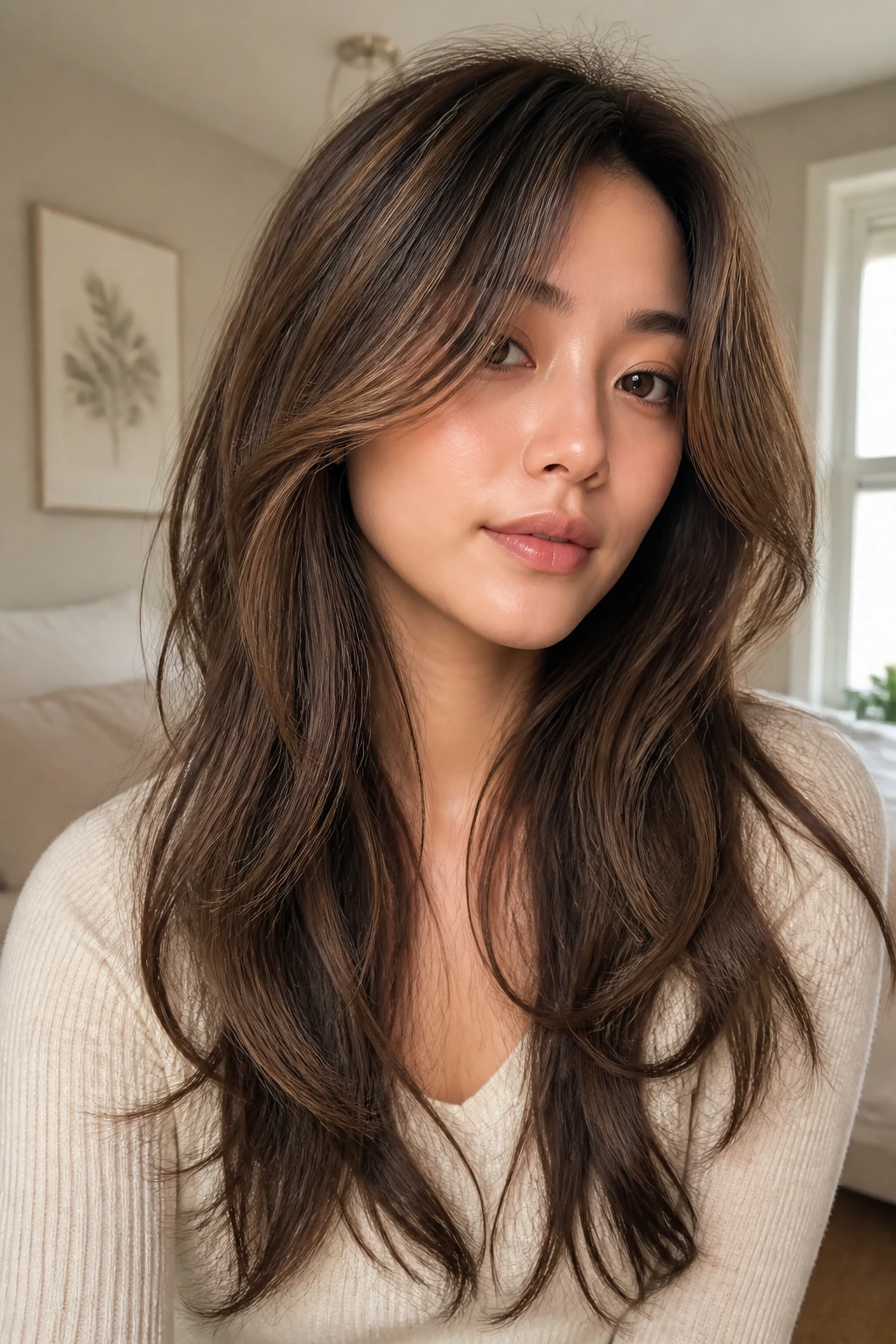
If you like air-drying, the cut has to do the work. Air-dried bend layers are shaped to follow the natural movement in the hair instead of forcing a blowout shape. That matters on thin hair because overworking it with heat can flatten the root and rough up the ends.
Subtle lowlights underneath stop the caramel from floating on top. The base stays grounded, the mids get a little warmth, and the whole style reads as thicker when it dries. I’d keep the finish very light—curl cream or mousse, then hands off until the hair is fully dry.
This is a good choice if you don’t want to spend fifteen minutes every morning getting your hair to behave. The tradeoff is that the shape depends on a decent cut. If the layers are off, air-drying will expose it fast. No mercy there.
18. Ponytail-Friendly Long Layers
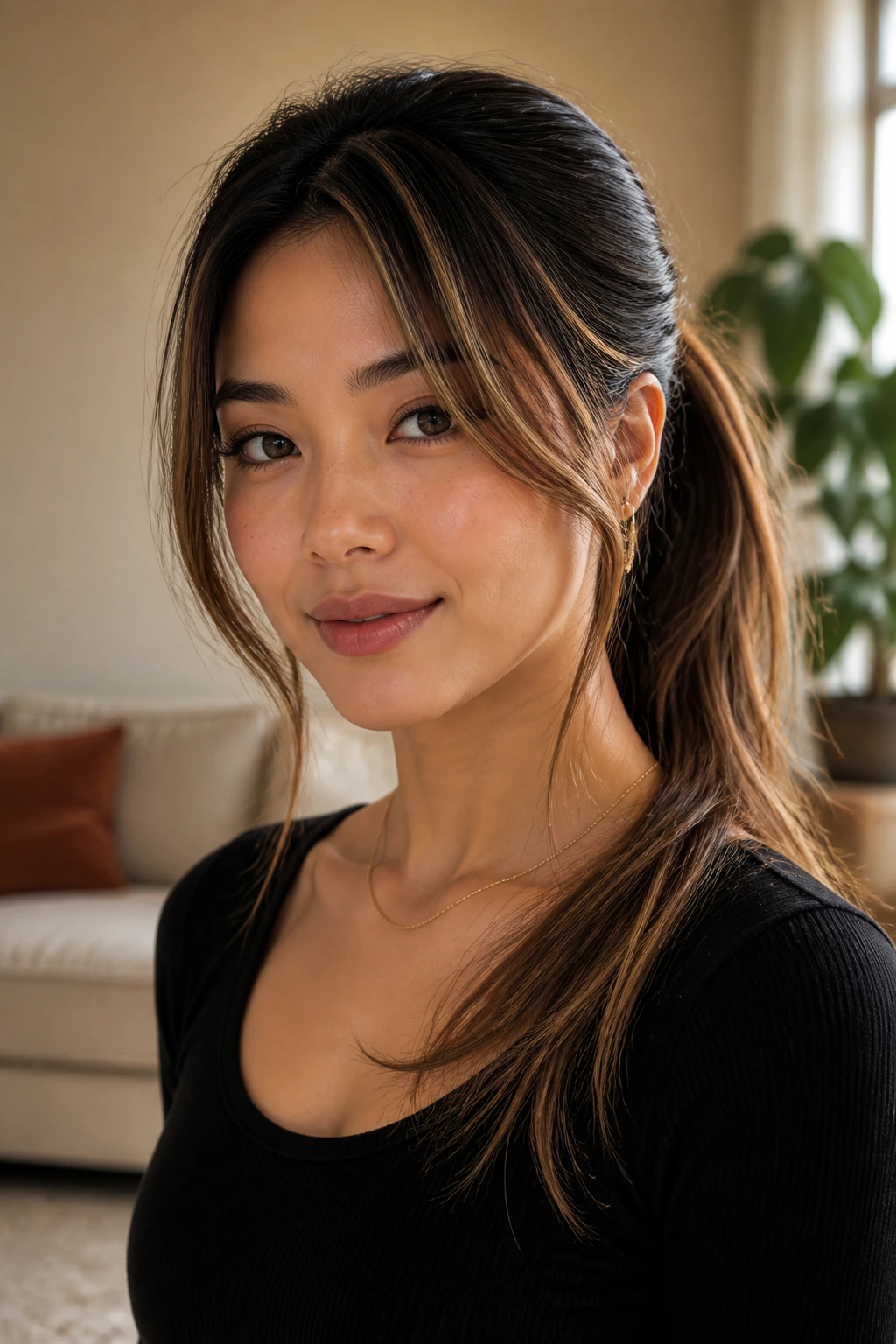
This is the practical girl’s cut, and I mean that as a compliment. Long layers that still pull into a clean ponytail are a gift if you work out, drive with your hair tied back, or simply wear it up half the week. The shortest pieces should be long enough to stay in the tail instead of poking out like baby hairs.
Caramel highlights should live mostly in the mid-lengths and around the face so the hair still has dimension when it’s down, but the color shouldn’t break into too many short sections that vanish in a tieback. That’s the trick. You want the style to look intentional both up and down.
A lot of layered cuts fail here because they’re cute loose and terrible in a clip. This one remembers real life. Which is more useful than a lot of salon trends would like to admit.
19. Hidden Underlayers for Extra Lift
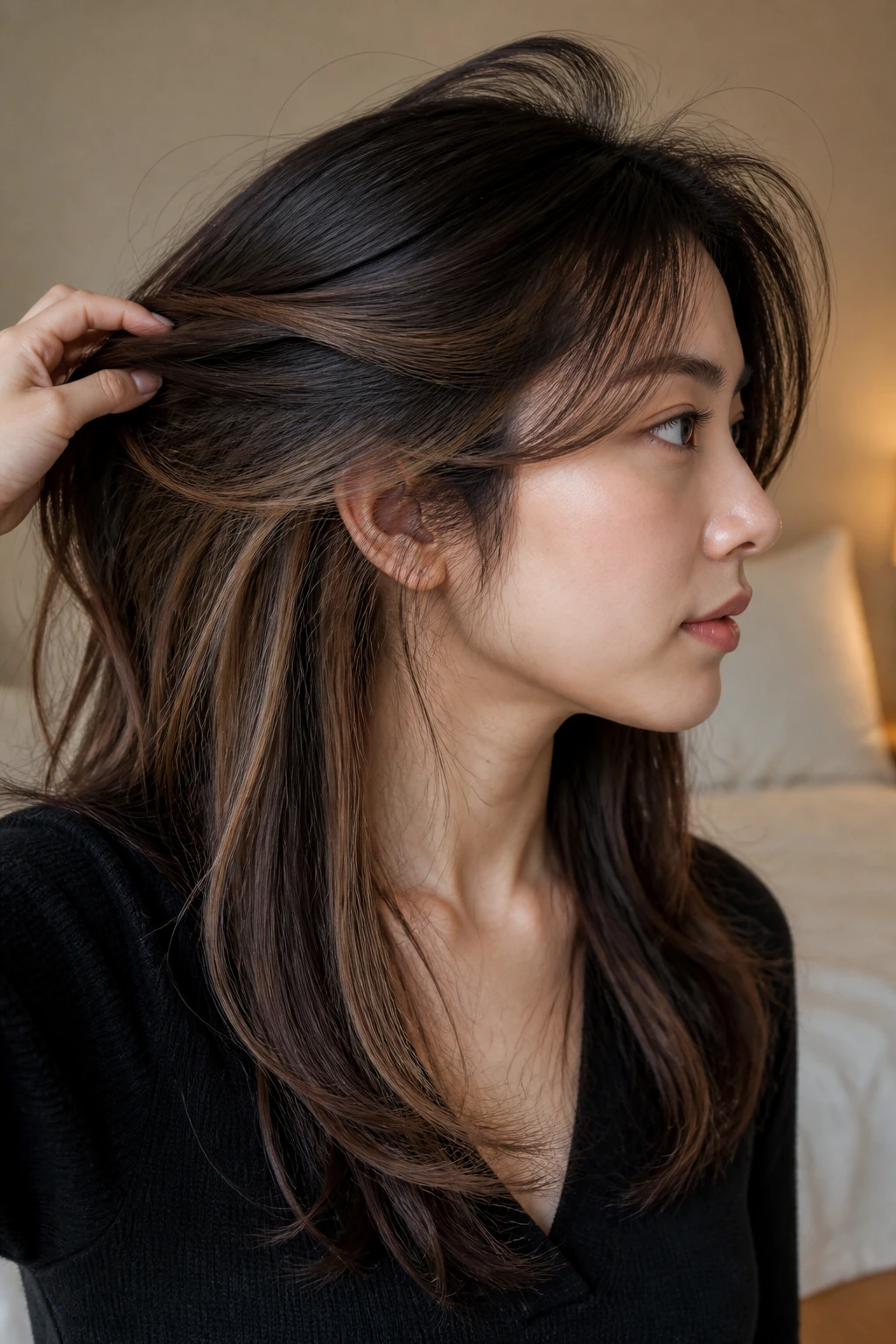
Hidden underlayers are one of my favorite fixes for thin hair because they give shape without advertising themselves. The top layer stays smooth and relatively long, while the movement lives underneath, where it creates lift and swing every time the hair moves.
Caramel can be placed on those underlayers so the color flashes when the hair opens up. That’s a neat trick on straight or slightly wavy hair. From the front, the cut looks clean. From the side, you get depth. From the back, it doesn’t go flat and dull.
If your hair always looks better in motion than in the mirror, this is a good route. It’s subtle enough for a conservative dress code, but it still has personality. Not bad for a cut no one can quite pinpoint.
20. Brunette Balayage Layers with Cinnamon-Caramel Mix
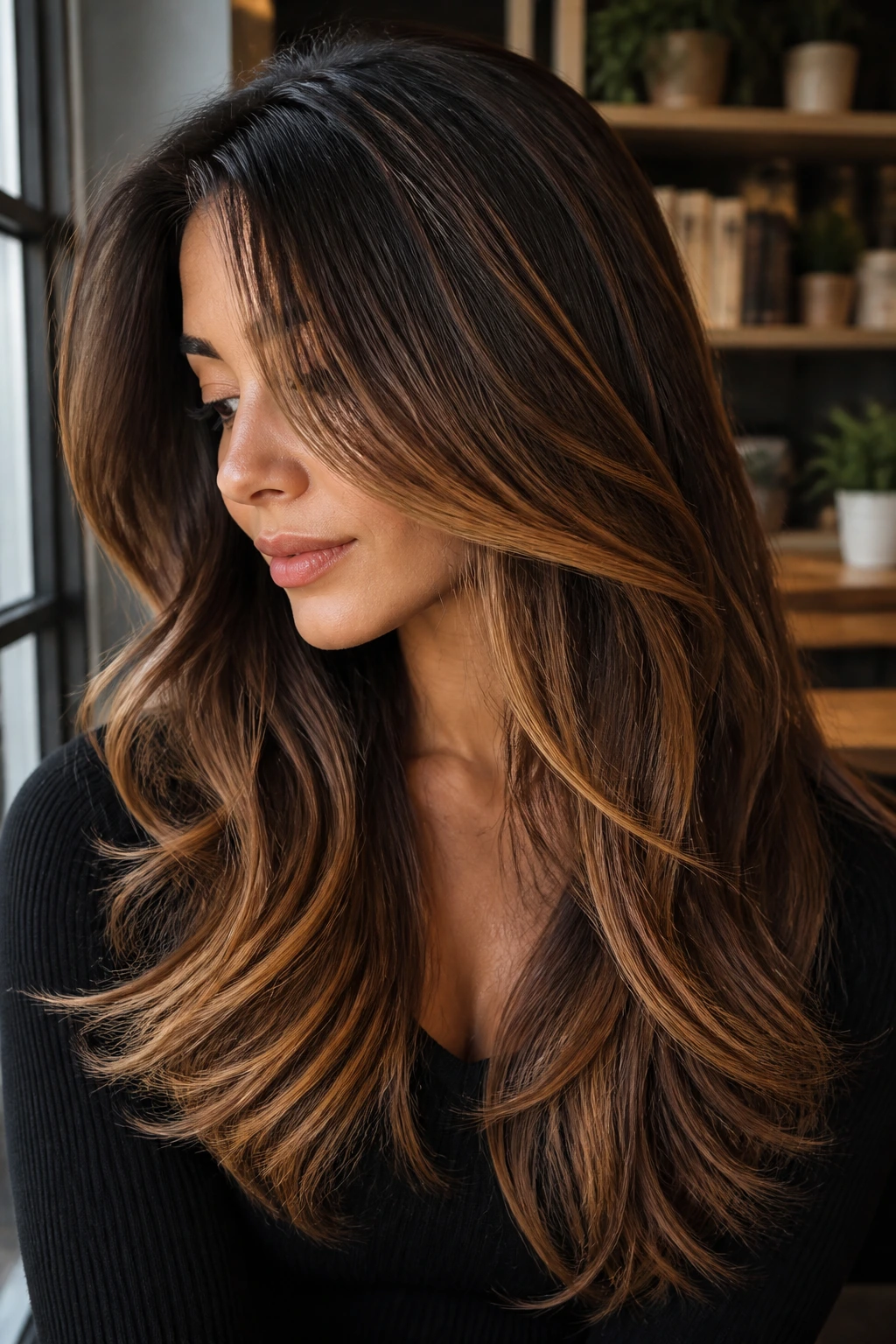
Not all caramel has to lean golden. On darker brunettes, a cinnamon-caramel mix can look richer and more believable, especially when the hair is thin and doesn’t have the density to carry bright blonde pieces. The warmth sits inside the brown instead of sitting on top of it.
Long Korean layers support that color by giving it places to move. The balayage should follow the layers, not fight them. I’d keep the highlight ribbons fairly fine and add a few deeper lowlights near the nape and underneath the crown. That keeps the whole head from looking too light and flat at once.
This is a strong choice if you want warmth but hate obvious highlight maintenance. It grows out softer than a blonde-heavy look and still gives the hair more shape in photos and in real life. Yes, those two are different.
21. Glass-Hair Korean Layers with Soft Internal Texturing
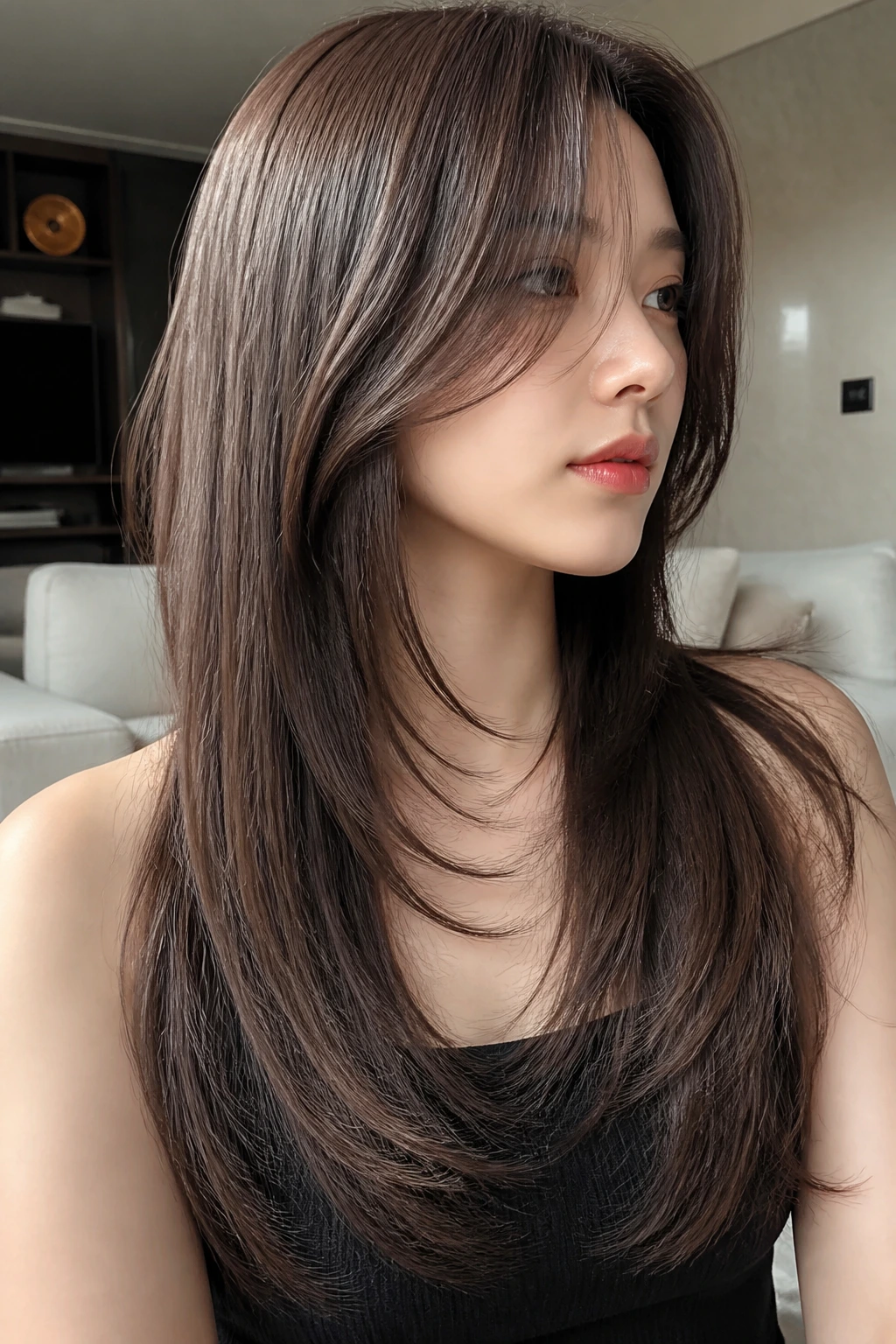
Glass hair and thin hair can get along, as long as the cut is precise. The surface stays smooth and reflective, while the internal texture keeps the hair from collapsing into one strip. That’s why the Korean approach works: the layers are hidden enough to preserve the sleek finish.
Caramel highlights should stay close in tone to the base, just one or two levels brighter, so they read as sheen rather than streaks. This is not the place for heavy contrast. A gloss or toner helps keep the color looking clean, and a shine serum on the ends can make the whole thing feel sharper without weighing it down.
This cut needs healthy ends. If the hair is dry, glass hair looks tired fast. But when it’s in good condition, the result is crisp and flattering, with just enough movement to keep it from feeling stiff.
22. Wispy Razor Layers for Fine Density
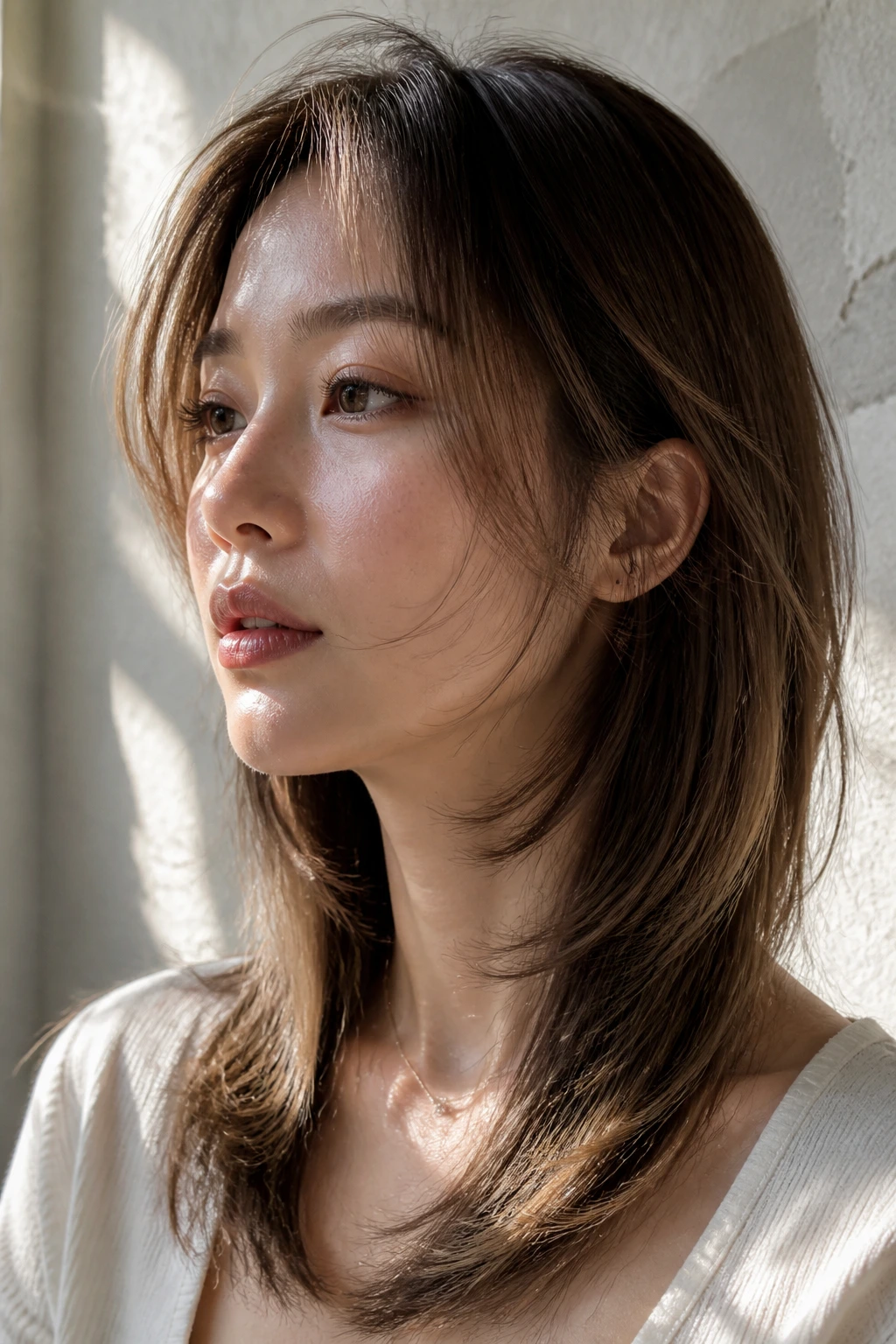
A razor cut on thin hair is a gamble. Done well, it creates soft, wispy movement that keeps the hair from looking blocky. Done badly, it frays the ends and makes fine strands look even lighter than they are. So this one depends heavily on the stylist’s hand.
If your hair is straight, healthy, and not overly porous, wispy razor layers can work with caramel highlights to create a lighter, airier feel around the face. The key is to keep the razor work at the very ends or on selected face-framing sections, not to shred the whole head. Thin hair needs shape, not damage.
I’d skip this one if your ends already feel fragile or if you live in a humid climate and hate frizz. Sometimes scissors are the better tool. That’s not a fun answer, but it’s the honest one.
23. Center-Part S-Curve Layers
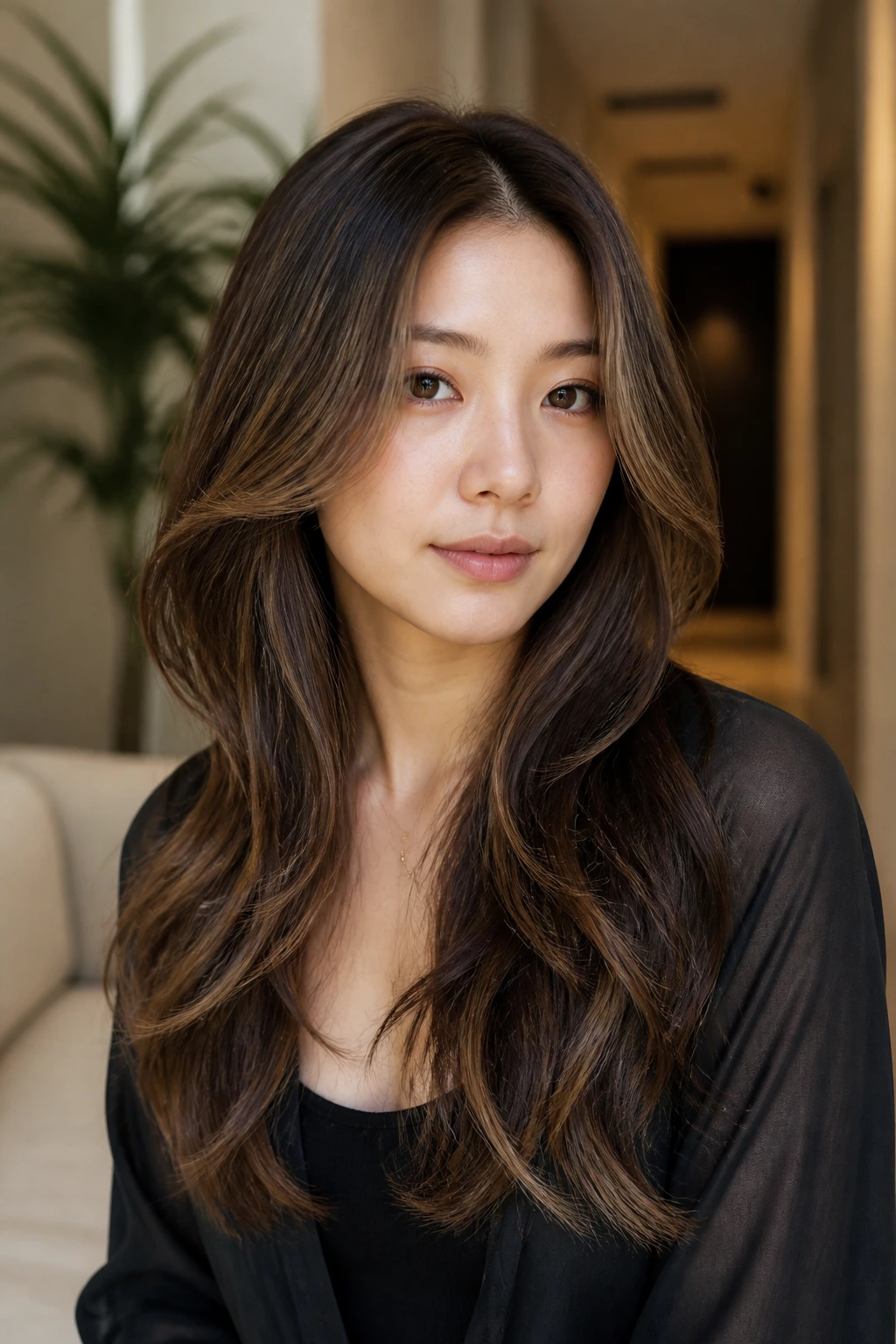
A center part can make thin hair look sharper or flatter, depending on the cut. S-curve layers fix that by bending the front pieces away from the face and back in again, which adds motion to a part that would otherwise feel very straight and exposed.
Caramel highlights around the center and front sections help the part feel softer. A little brightness near the temples and mid-lengths keeps the hair from looking like two flat curtains pulled apart. If your face is oval or heart-shaped, this is especially flattering because the lines stay clean without feeling severe.
This style is best when you want balance. Not too much drama. Not too much softness. Just enough movement to make a simple center part feel finished.
24. Half-Up Ready Crown Layers
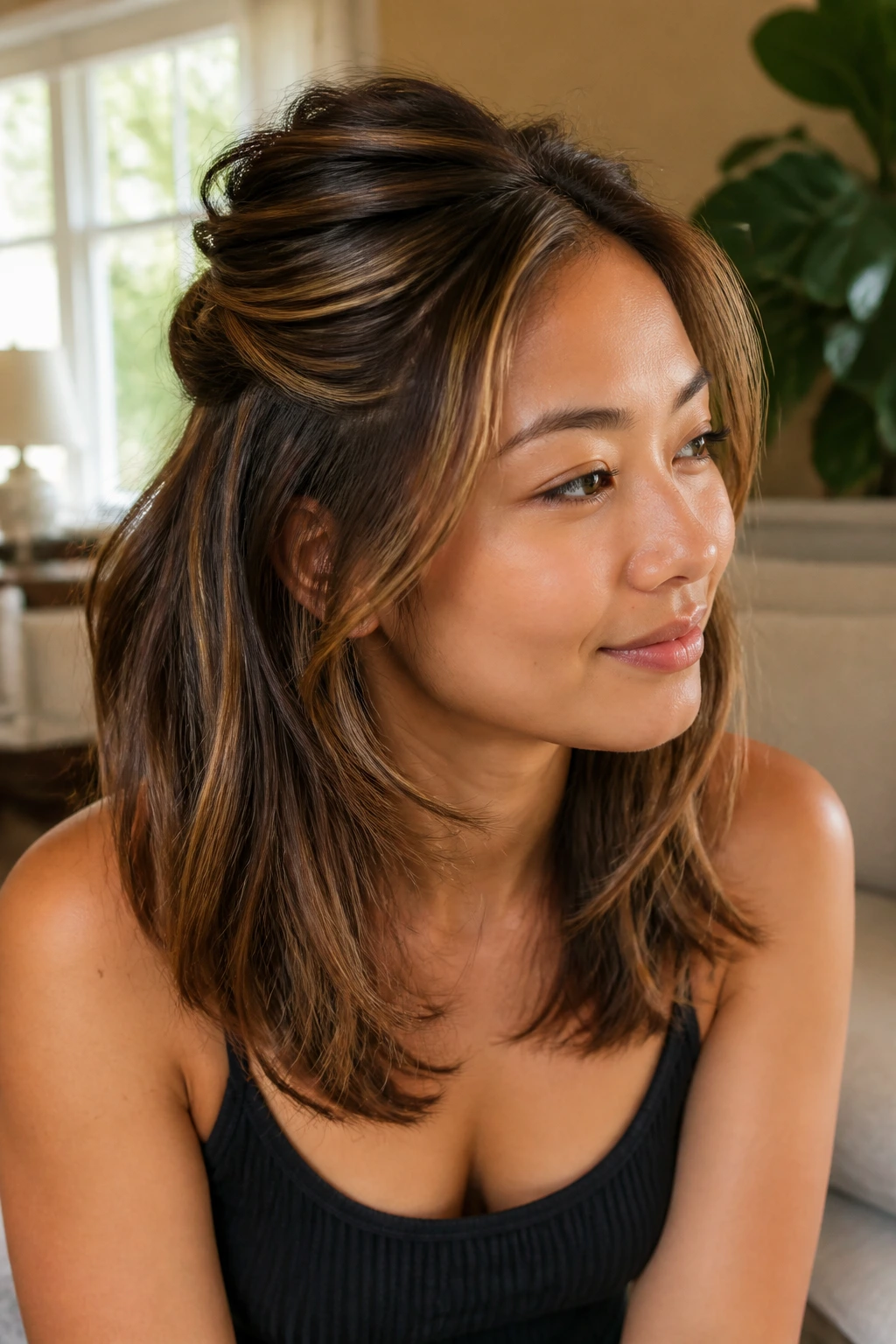
Some cuts are made for the way people actually wear their hair. Half-up ready layers are one of them. The crown has enough hidden lift to keep the top from collapsing when you pull the upper section back, and the lower lengths stay soft and visible so the style still feels long.
Caramel highlights should live through the upper mids, temples, and front pieces so they still show when the top half is clipped away. If all the brightness sits low, the half-up version can look dull from the front. A smart placement plan solves that before it starts.
This is a good option if you alternate between polished and casual without changing your cut every six months. It looks tidy in a clip, loose in waves, and decent on day two, which is more than most hairstyles can say.
25. Low-Maintenance Rooty Caramel Layers
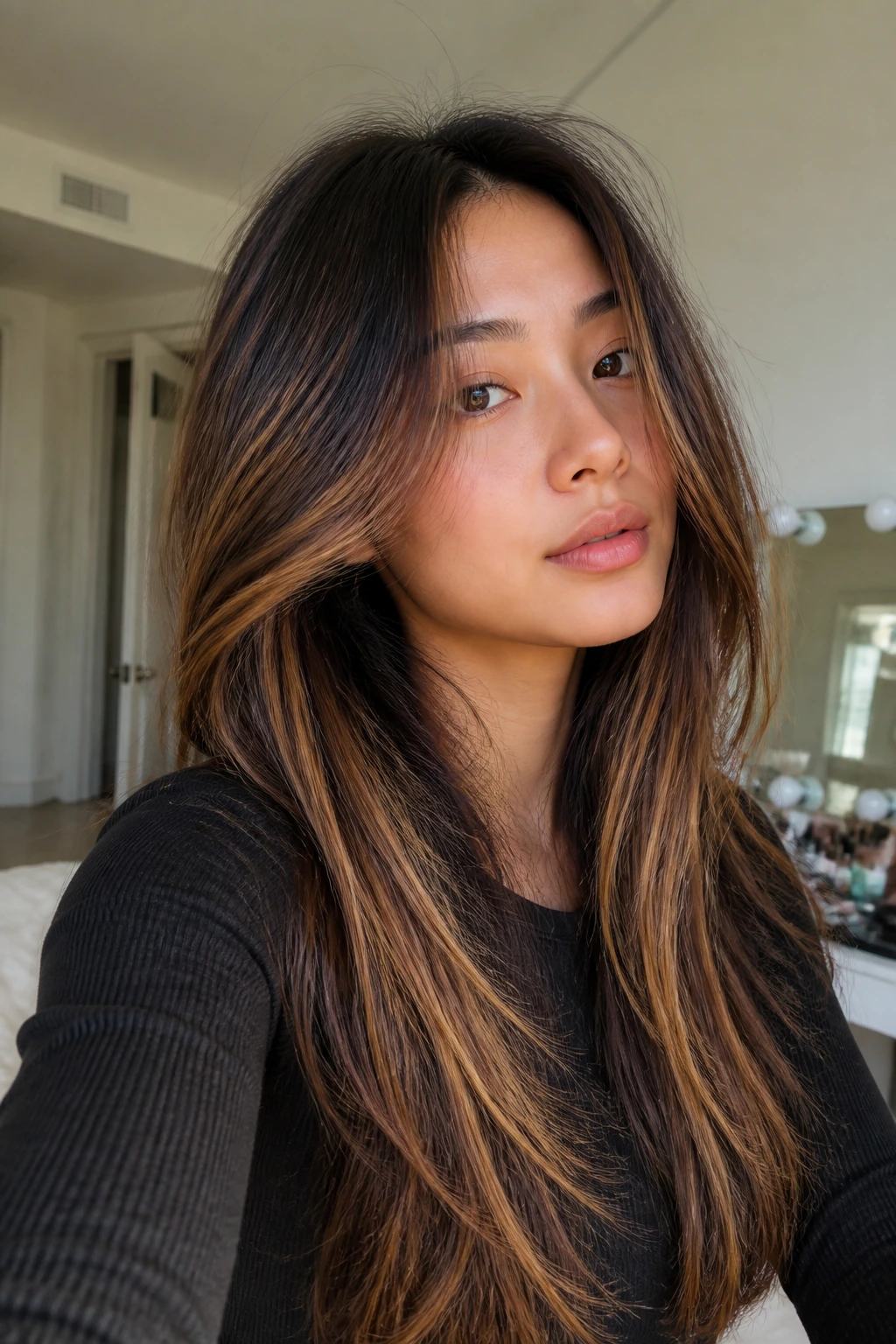
If you don’t want to babysit your hair, start here. Rooty caramel layers keep the base deeper near the scalp and brighten only as the color moves down the hair shaft. That makes regrowth softer and gives thin hair a darker anchor where it needs one most.
The layers stay long and airy, but not so airy that the ends vanish. That’s the balance. You still get movement, just with fewer salon touch-ups and less stress over every inch of grow-out. Caramel works here because it looks warm against brunette roots rather than fighting them.
This is the version I’d point to for busy schedules, because the shape still holds when the color starts to soften. A style that looks better with some growth? That’s worth paying attention to.
How Long Korean Layers Add Shape Without Eating the Ends
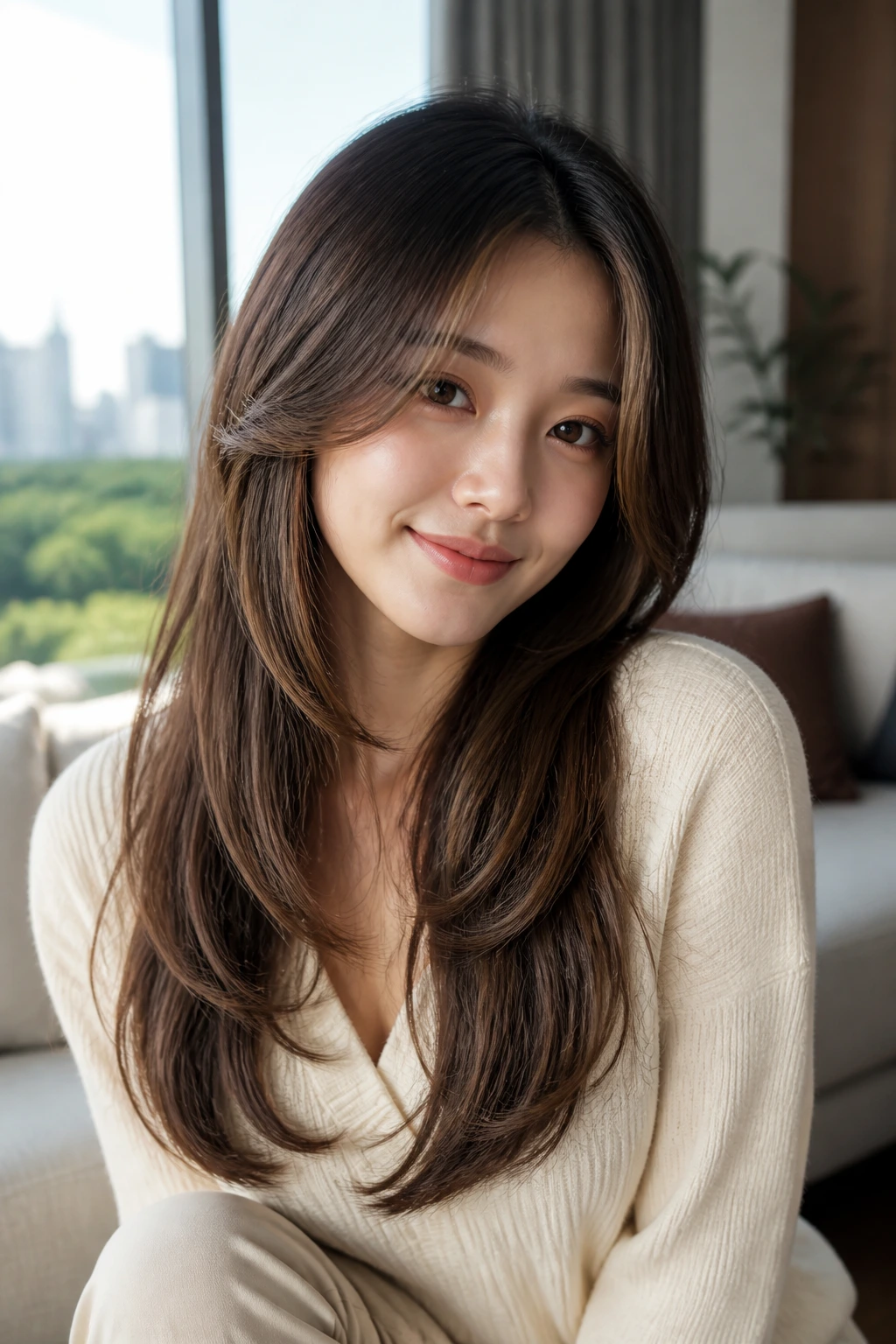
The smartest long layers on thin hair do one thing very well: they protect the outline. That means the ends stay present, the silhouette still has weight, and the hair doesn’t look like it was chewed through with a razor comb. Korean layering tends to respect that line. It adds motion in a controlled way.
Color placement matters just as much. A few caramel ribbons around the face and through the mids can make fine hair look fuller because the eye reads texture where there wasn’t any before. If you also tuck in a couple of deeper lowlights underneath, the top pieces stop floating alone. That’s the trick a lot of flat hairstyles never quite get right.
Fine strands and low density are not the same thing
Fine hair means each strand is small in diameter. Low density means there are fewer strands on the head. You can have one without the other, and the styling choice changes a bit depending on which one you’re dealing with. Fine strands usually need gentler layering and less heat. Low density needs the illusion of fullness, so color placement and a stronger outline matter even more.
How to Ask for the Cut and Color Without Guessing
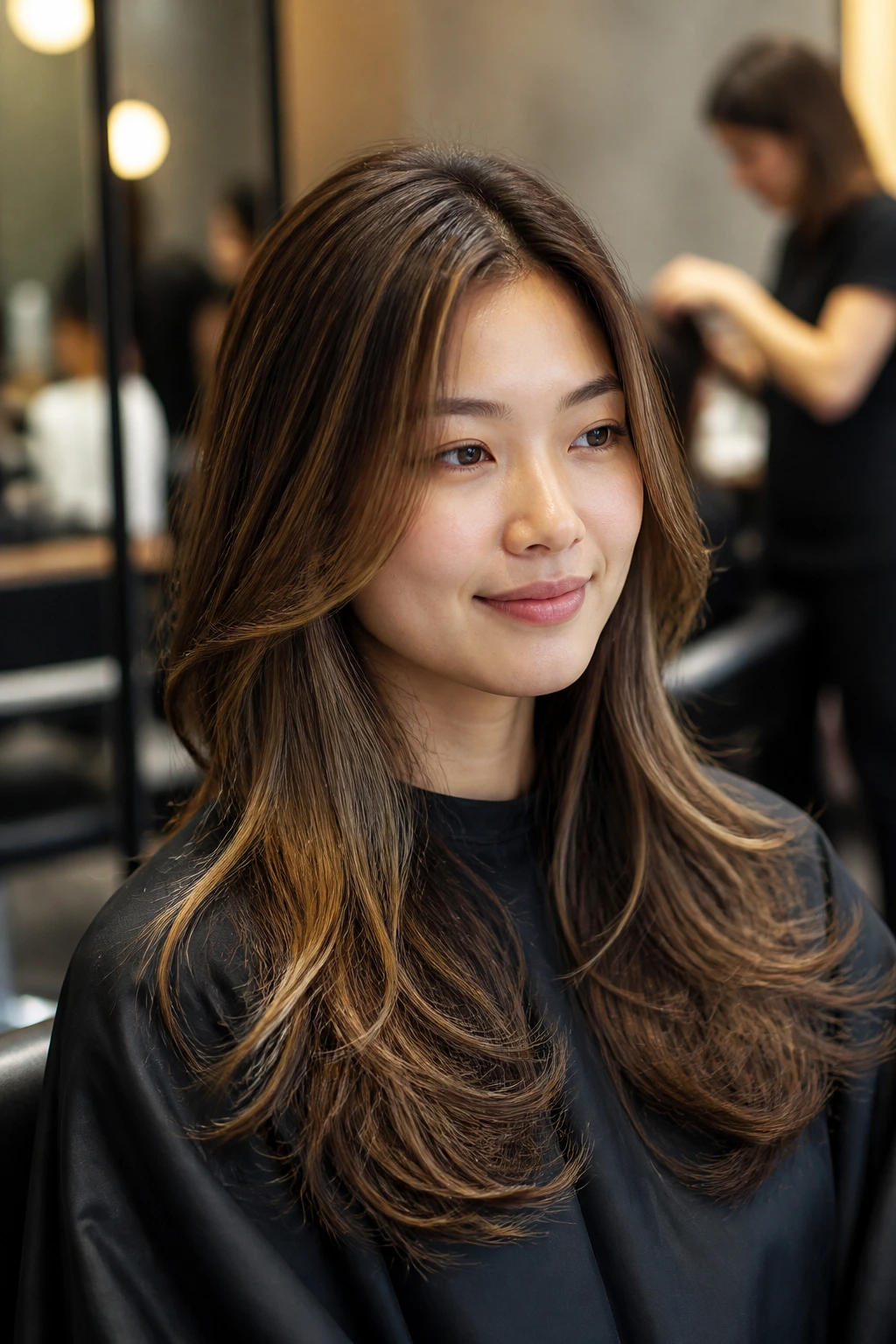
The cleanest salon language is the best language. Tell your stylist you want long Korean layers that keep the perimeter full, not a chopped-up shag that eats the ends. If you like face framing, mention where you want the shortest piece to start—cheekbone, lip, or chin—and where you want it to land when the hair is dry.
For the color, ask for fine caramel ribbons, not chunky highlights, and say whether you want the warmth to lean golden, honey, or toasted beige. On dark brunette hair, a slight root shadow or soft lowlights underneath can make the caramel look thicker and more expensive. If the hair is very thin, keep the light pieces one to two levels lighter than the base. That’s enough contrast.
A good salon brief sounds like this
- Keep the bottom line full.
- Start face framing below the cheekbone if possible.
- Blend caramel through the mids and front, not just the top.
- Add a little depth underneath so the light pieces don’t float.
- Leave the ends healthy and thick-looking.
If you can say that in one breath, you’re already ahead of most people in the chair.
Essential Tools for Styling These Layers
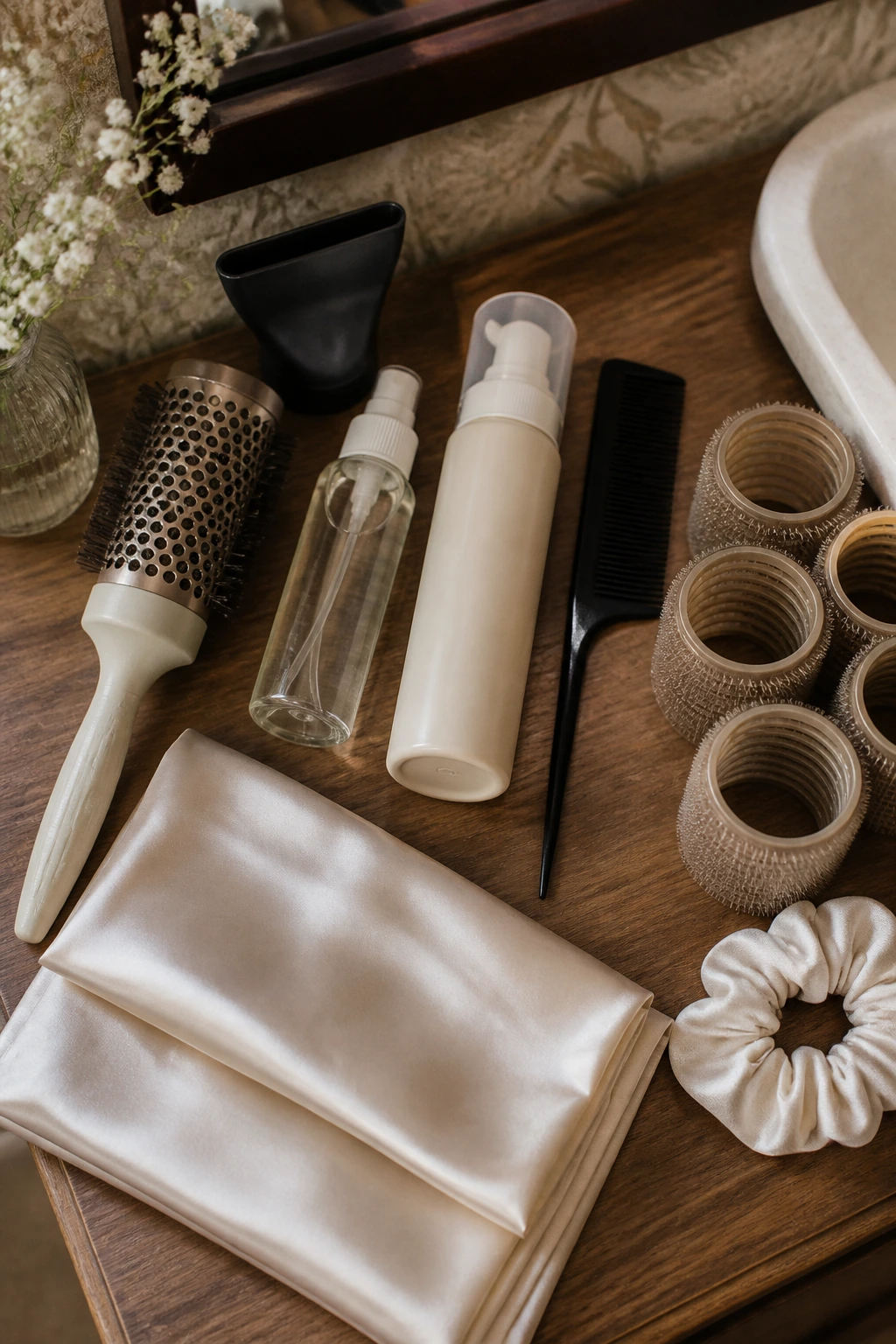
- A medium round brush, 1 to 1.25 inches: Good for turning the ends under and giving the front pieces a soft bend.
- A blow dryer with a nozzle attachment: Helps control the airflow so the roots lift instead of puffing out.
- Heat protectant spray: Thin hair shows heat damage fast, especially around caramelized ends.
- Volumizing mousse or root spray: Best used sparingly at the crown and underlayers for lift.
- Tail comb: Useful for clean parting and lifting the root section without making it messy.
- Large Velcro rollers: Handy for setting face-framing layers while you do makeup or get dressed.
- Lightweight serum: A drop or two on the ends only; too much will flatten the cut.
- Color-safe shampoo and conditioner: Keeps caramel tones from turning dull and muddy.
- Silk or satin pillowcase: Reduces friction, which matters more when the ends are lightened.
Daily Styling Moves That Keep the Layers Soft
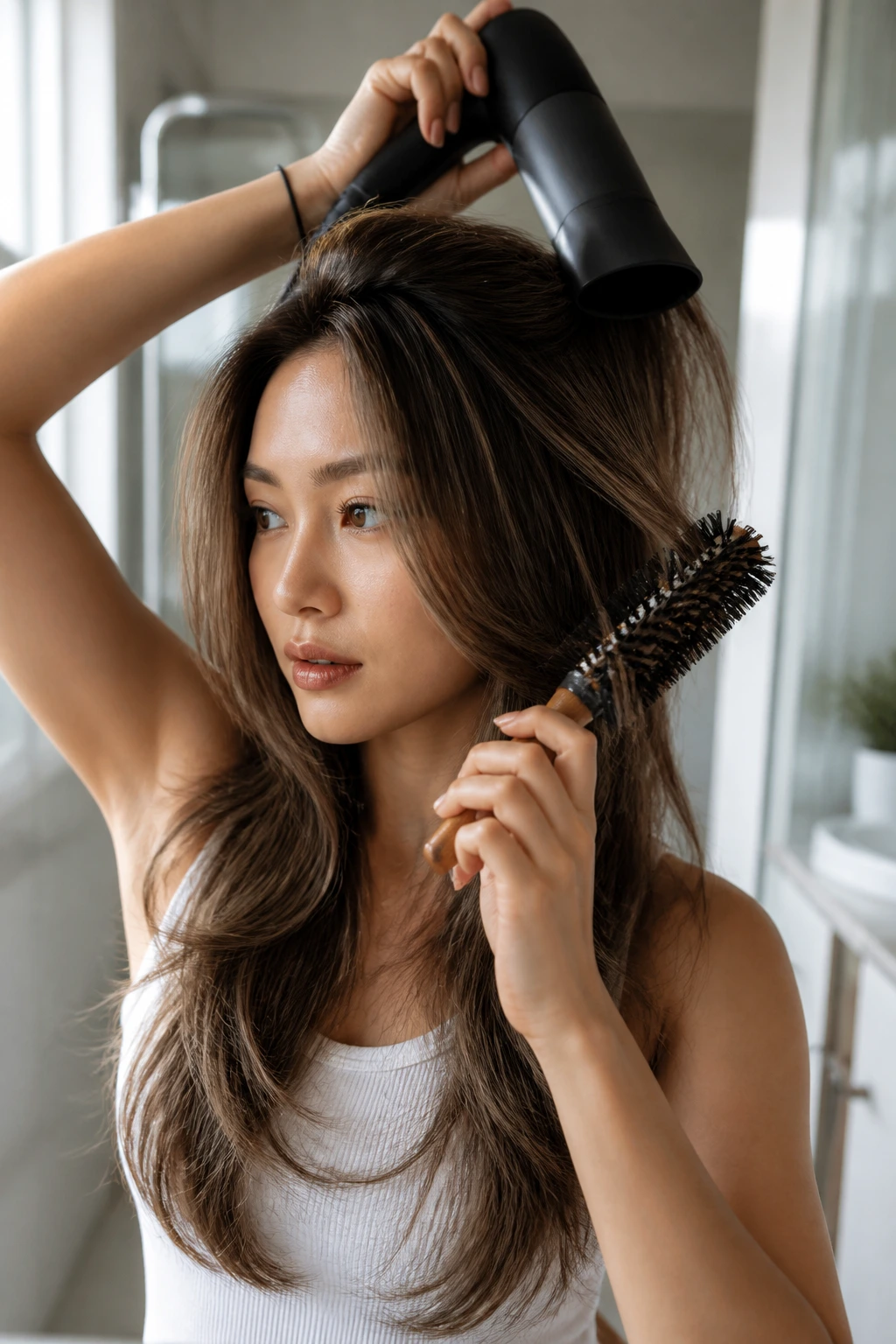
Thin hair likes small, repeatable habits. Big routines usually end in flat roots or overworked ends. Start with a light volumizing product at the root only, then rough-dry until the hair is about 80 percent dry. That saves time and keeps the roots from getting slick before you’ve even begun.
Root lift: Flip your part while the hair is still warm, then clip the crown for five to ten minutes. That little pause helps the base cool in a lifted position.
Face frame: Wrap the front pieces around a round brush or bend them with a flat iron for three to five seconds per section. The goal is a soft curve, not a curl you can bounce a quarter off.
Finish: Use a pea-sized amount of serum on the very ends, never the crown. If you can feel the product on your fingers, you’ve probably used too much.
One more thing. Fine hair gets tired fast when you keep touching it. Pick the shape, leave it alone, and let the cut do its job.
Common Mistakes That Flatten Thin Hair
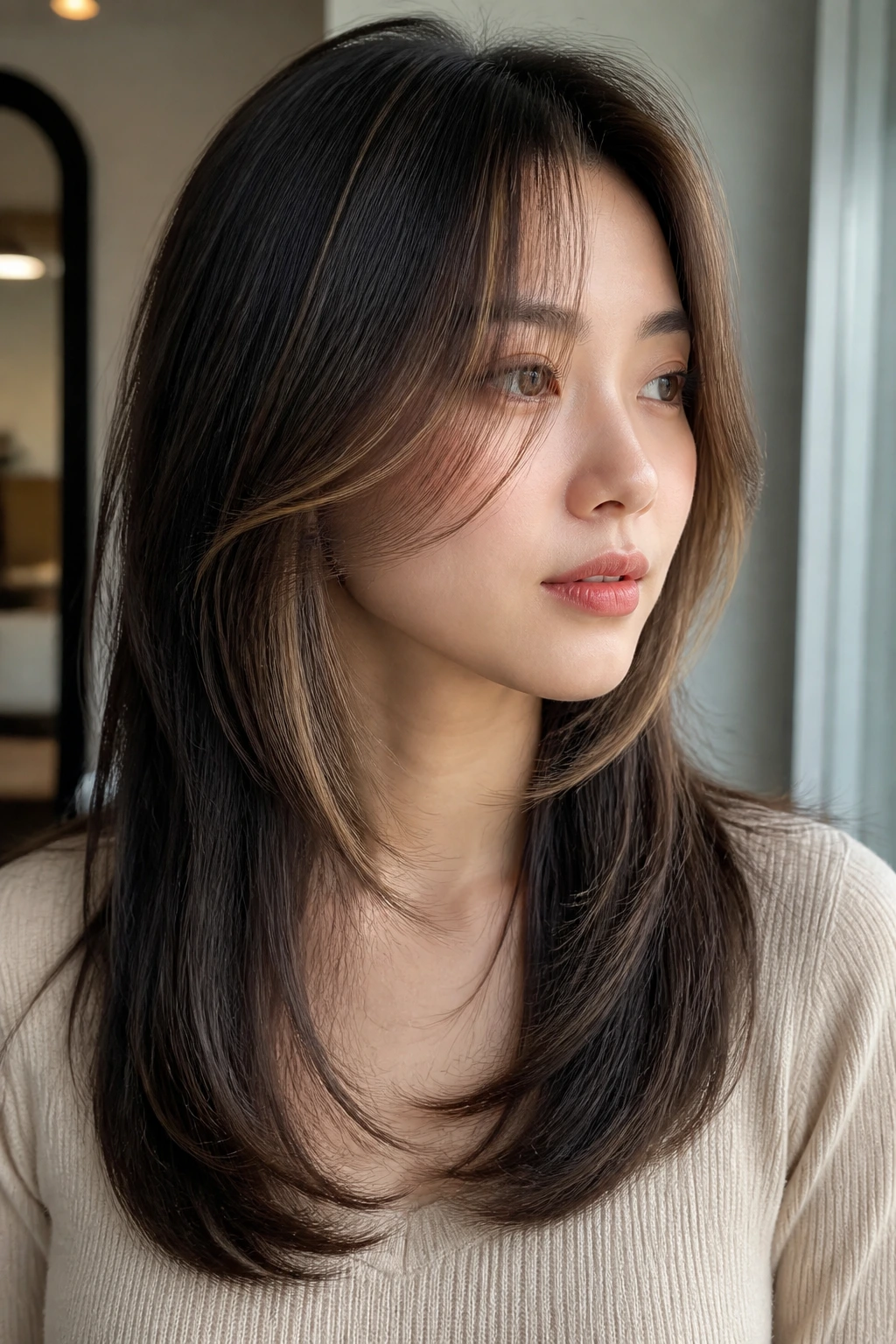
Starting the shortest layer too high. The hair may look “layered” in the chair, but once it settles, the bottom goes wispy. The fix is simple: keep the shortest face-framing layer low enough that it doesn’t expose the crown or hollow out the ends.
Going too chunky with caramel highlights. Big streaks on thin hair can look stripy and expose gaps between sections. Fine ribbons, a soft root shadow, and a few lowlights underneath create more depth with less visual noise.
Overloading the roots with product. Mousse, cream, oil, and dry shampoo all piled together can make the hair collapse by noon. Use one root product, then keep the rest off the scalp.
Skipping trims for too long. Thin ends split quickly and start looking stringy. A trim every 8 to 12 weeks keeps the shape from fraying away.
Using heavy oils on the mid-lengths. They sound nourishing, but they often make fine hair look limp and dirty. Stick to lightweight serum or mist, and keep it to the last inch or two.
Variations and Color Swaps Worth Trying
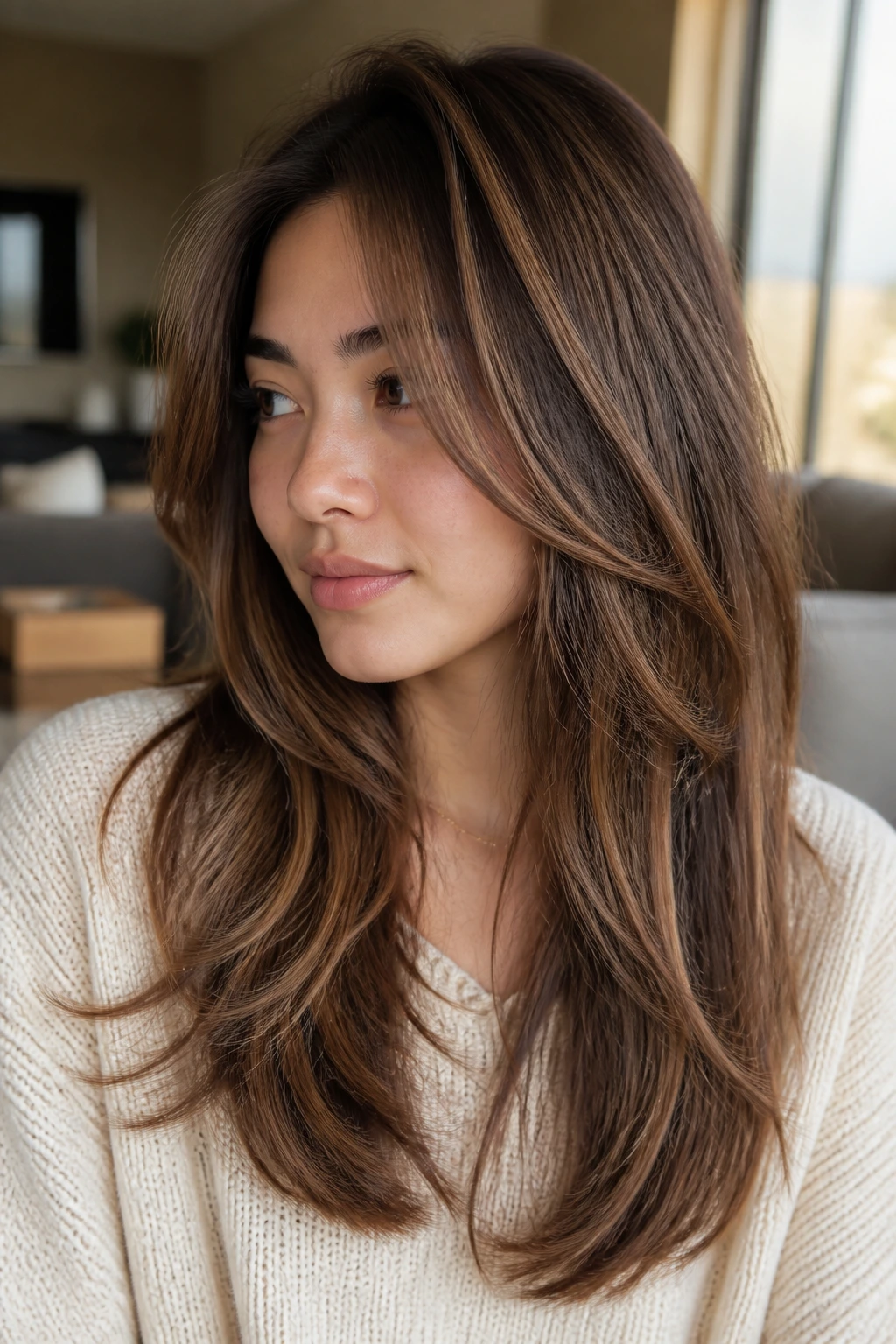
Golden Mocha Caramel: This version leans warmer and richer, with a mocha base and soft gold-caramel ribbons. It’s a good fit if your skin has warm or neutral undertones and you want the hair to look sunnier without going blonde.
Cool Beige Caramel: If bright warmth makes your hair look orange, ask for beige caramel with a soft ash-brown root. The result is gentler and flatter in a good way, especially under indoor lighting.
Honey Money-Piece Version: Keep most of the hair softly dimensional, then brighten the front two face-framing sections a touch more. That gives the illusion of density near the face, which is where thin hair needs help most.
Deep Brunette Lowlight Blend: This one uses more depth than lightness. Caramel still shows through, but the lowlights do a bigger job, which is smart if your hair is fine and very dark.
Soft Air-Dry Version: Keep the layers longer and the highlights softer, then style with mousse and hand-scrunching instead of heat. It’s a calmer version for people who want movement without daily tools.
Keeping the Cut Fresh Between Trims
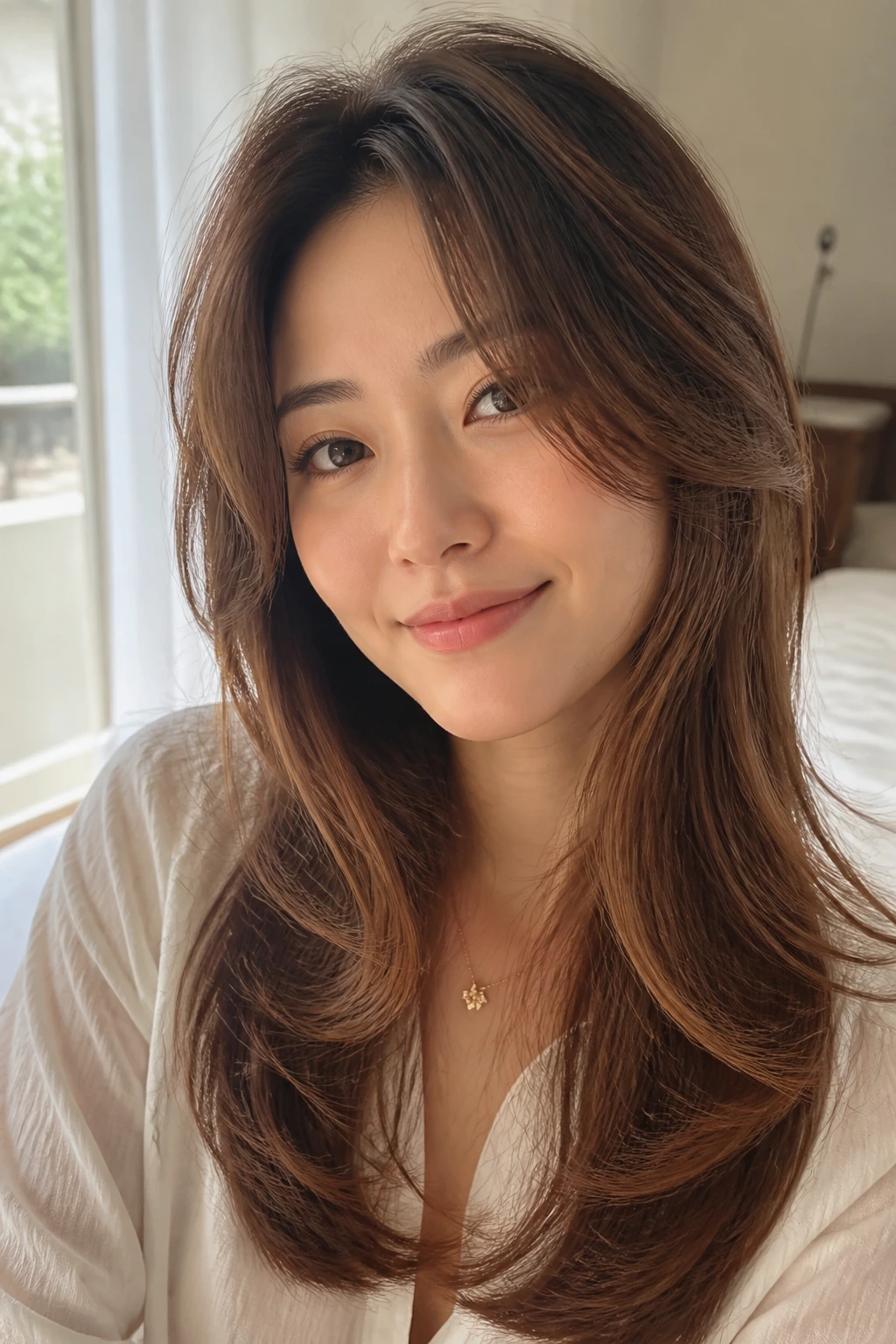
Long Korean layers can look good for a while, but thin hair tells the truth faster than thick hair does. Once the ends start to fray, the whole shape looks tired. For most people, a trim every 8 to 10 weeks keeps the perimeter from getting too see-through. If your hair grows slowly and the shape is soft, you can stretch closer to 12 weeks. Don’t push it much past that if the ends already look fragile.
Color needs a rhythm too. Caramel highlights usually stay nicest with a gloss or toner every 6 to 8 weeks if they start to go brassy. If the shade is meant to be warm, you may only need a color-refreshing shampoo and a salon gloss now and then. Use a deep conditioner on the mids and ends once a week, but keep heavy masks away from the roots unless your scalp is very dry.
Sleep matters. A silk or satin pillowcase cuts down on friction, which keeps the layers from roughing up at the tips. And if you tie your hair up at night, use a loose scrunchie. Tight elastics bend the front pieces in weird places and flatten the whole silhouette by morning. Little things. They add up.
Frequently Asked Questions
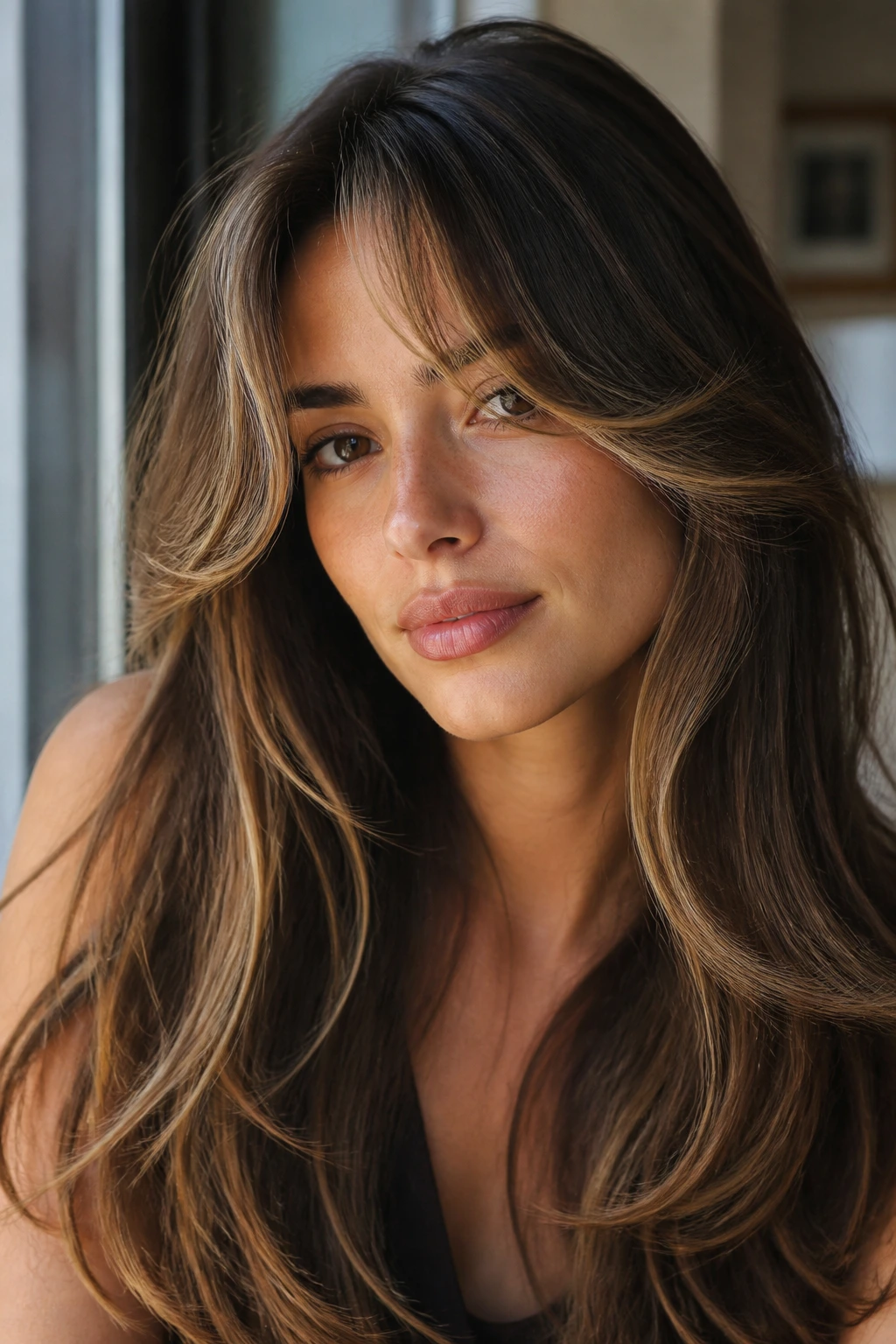
Will long Korean layers make thin hair look thinner?
Not if the layering is done with restraint. The problem usually comes from taking too much weight out of the ends or cutting the shortest pieces too high. A soft perimeter, subtle internal layers, and caramel placement that breaks up flat color usually do the opposite.
Are caramel highlights good for dark brown thin hair?
Yes, especially when they stay one or two levels lighter than the base. That gives warmth and dimension without creating big contrast lines that make the hair look sparse. Add a few lowlights underneath if you want the color to feel denser.
Should I get curtain bangs with this style?
Only if you like the idea of styling the front a little. Curtain bangs can be flattering on thin hair because they add shape around the face, but they should be long enough to part cleanly. Short fringe can expose density issues if the hair is very fine.
How often should I trim long Korean layers?
Most thin hair benefits from a trim every 8 to 12 weeks. If the ends start to look stringy or the layers lose their curve before that, go sooner. Waiting too long makes the style look tired in a way no blowout can fix.
Can I air-dry this cut and still keep the shape?
Yes, if the layers were cut with your natural bend in mind. Use a small amount of mousse or curl cream, scrunch lightly, and leave the hair alone while it dries. The cut should do most of the work.
Do I need balayage, or are foils better?
Balayage usually looks softer on long Korean layers because the color melts into the movement instead of creating obvious lines. Foils can still work if you want a more defined ribbon of caramel near the face. The choice depends on how bold you want the contrast to be.
What if my ends are already dry from color?
Keep the lightest pieces away from the very bottom inch, and ask for a slightly deeper caramel instead of pushing to blonde. Dry ends on thin hair fray fast, so the smartest look is the one that keeps the bottom line healthy enough to hold its shape.
Can this style work without bangs?
Absolutely. In fact, some of the best versions are bang-free because they let the face-framing layers do the job without crowding the forehead. If you don’t want fringe, ask for movement around the cheeks and a clean center or side part.
The Shape That Keeps the Length
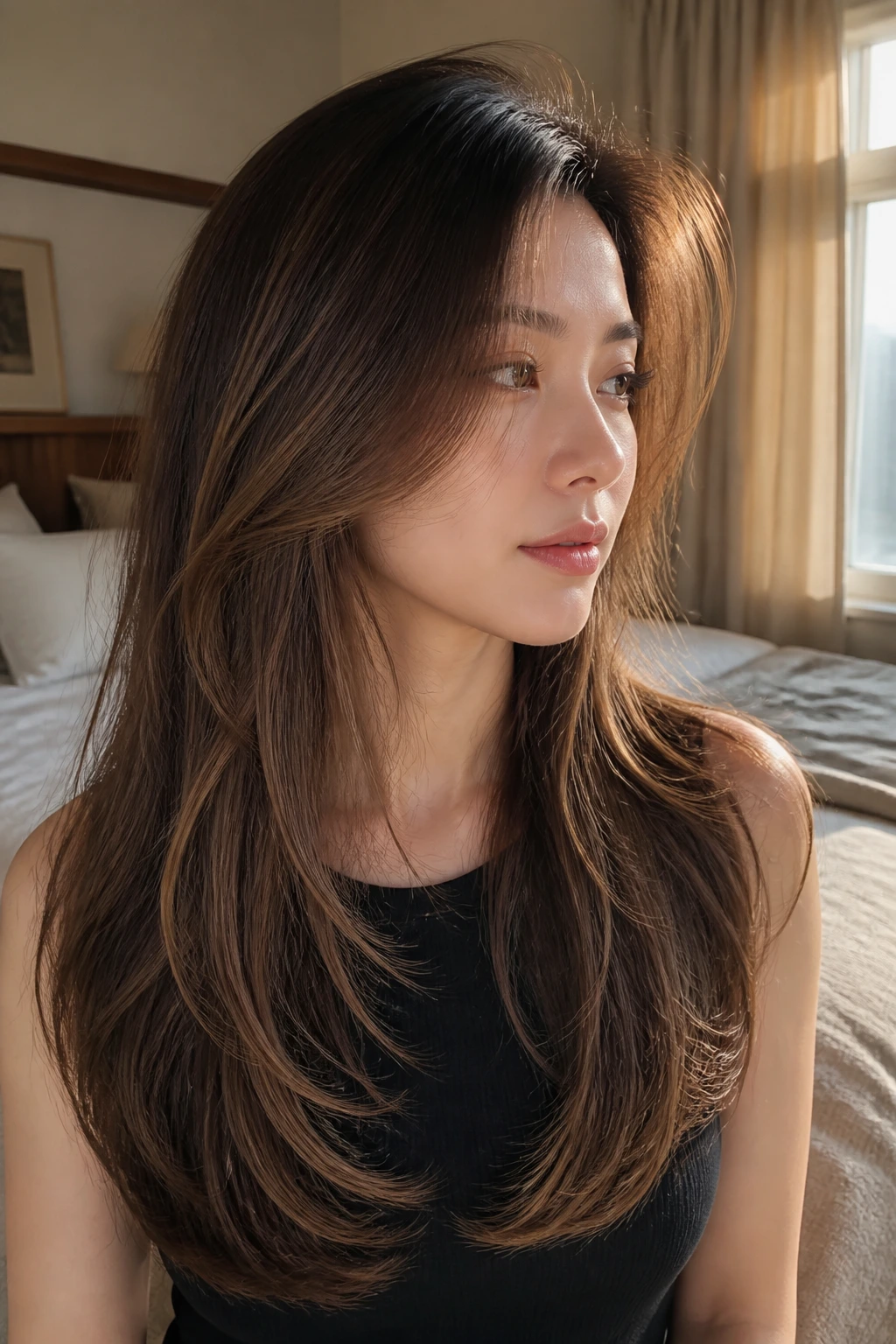
Long Korean layers with caramel highlights work because they respect the two things thin hair needs most: weight at the bottom and movement where the eye lands. That balance is what stops the cut from collapsing into flatness or fraying into nothing. When the layering is soft and the color is fine-grained, the whole style feels fuller without looking overdressed.
The nicest part is how adaptable it is. You can keep it sleek, bend it softly, wear it in a clip, or air-dry it and still get a decent shape. That kind of flexibility matters more than any flashy before-and-after photo ever will.
If your hair has been stuck between “too flat” and “too chopped,” this is the lane worth testing next.