



A bob can look expensive on 2B hair or like it got into a fight with humidity. Fine strands give you almost no margin for sloppy layering, and oval faces are forgiving in a way that can make people lazy with the cut. The right shape matters because 2B waves bend, not curl; they need a perimeter that gives them somewhere solid to sit.
That is why type 2B bobs for fine hair and oval faces are a little different from the bob photos that float around salon walls. The best ones keep enough weight at the ends to look full, leave enough softness around the face to avoid a hard box, and respect the wave pattern instead of flattening it into submission. Dry cutting helps. So does cutting with the way the hair moves, not against it.
If you’ve ever watched a fresh bob turn fuzzy and limp by the end of lunch, you already know the problem. It usually isn’t the idea of a bob that fails. It’s the wrong bob: too much thinning, too many layers, too much product, or a length that sits in the narrowest or widest part of the face and makes everything look off. Oval faces can wear a lot, but fine 2B hair still has rules.
Why These 25 Cuts Earn Their Keep
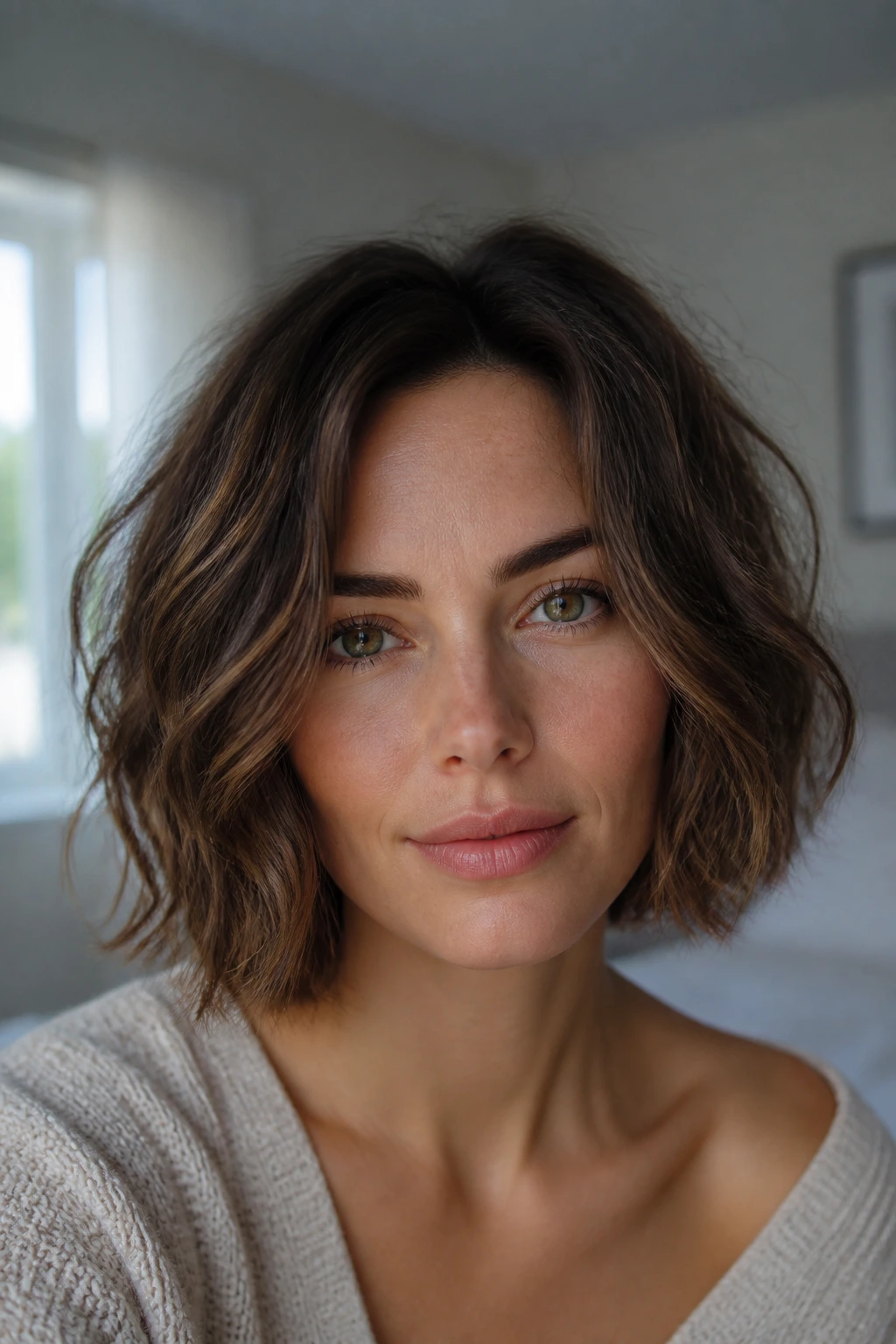
- 2B waves need structure: A bob gives the wave a clean edge, so the bend reads as intentional instead of half-styled.
- Fine hair likes density at the perimeter: Blunt or softly curved ends make the hair look thicker than it is.
- Oval faces can handle range: Chin length, jaw length, and collarbone length all work here if the balance stays right.
- Styling stays lighter: Most of these cuts need mousse, a round brush, or a diffuser — not a shelf full of heavy creams.
- Grow-out is more forgiving: Several of these shapes keep their line for weeks, which matters when your hair grows a little unevenly.
What Makes a Type 2B Bob Look Full Instead of Thin
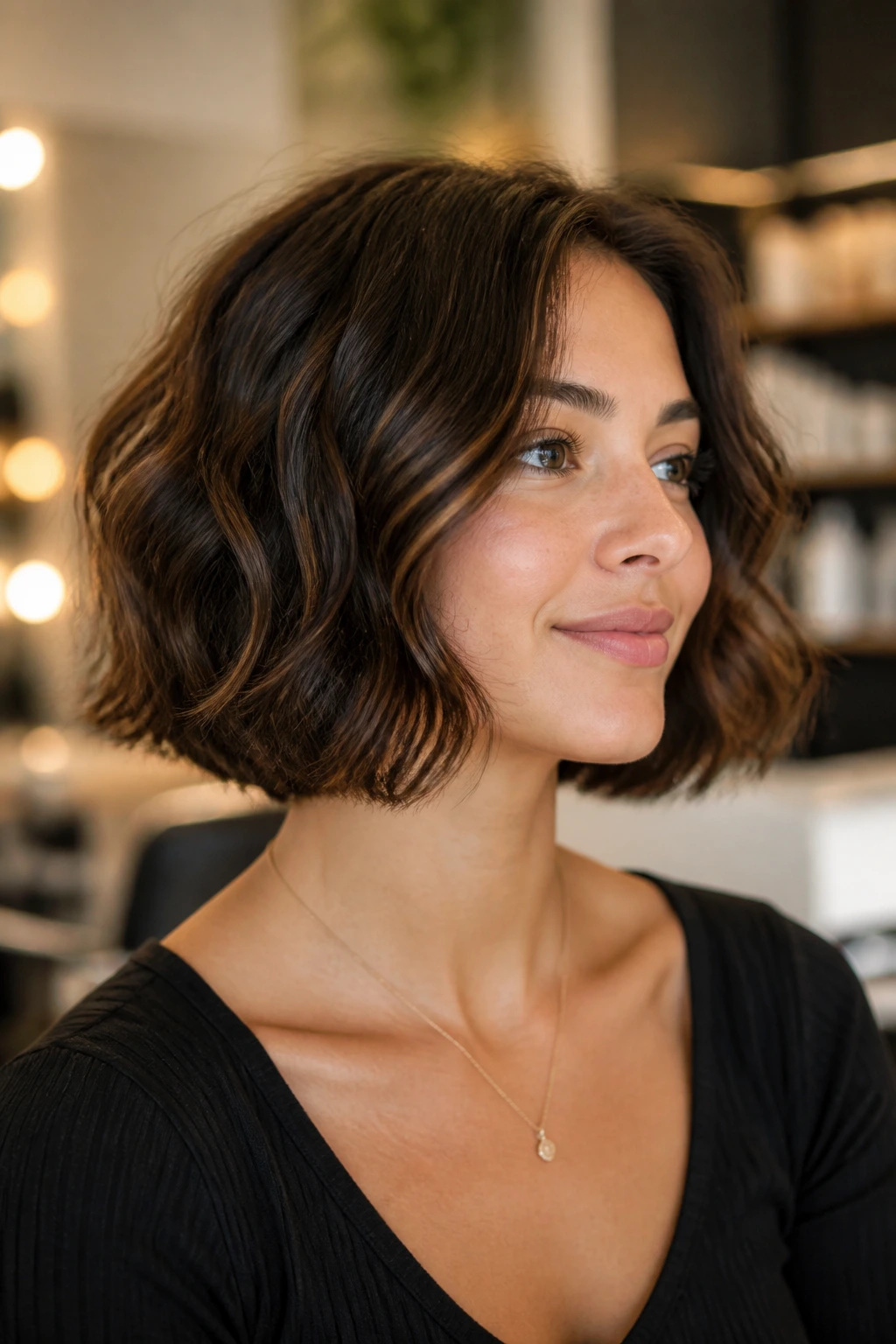
The difference between a bob that looks airy and one that looks stringy is usually not the cut length. It’s the weight distribution. Fine hair needs a strong outline at the bottom, and 2B waves need enough room to bend without getting smashed by over-layering.
A clean perimeter is the first line of defense. When the ends are blunt or only lightly point-cut, they catch the eye as one shape. When the ends are shredded too much, every wave clump looks separate, and the whole head starts to look smaller than it is. That’s why a careful bob often works better than a “textured” one for this hair type.
Blunt edges make the strand count look higher
A blunt or softly bevelled edge keeps light from slipping through the ends. You do not need a poker-straight helmet line, but you do want the bottom to feel dense. On fine hair, that dense edge is doing a lot of cosmetic work.
Oval faces need balance, not correction
Oval faces are the easy ones to cut, but easy can be misleading. You still need to think about where the bob lands: chin, jaw, or collarbone. Too short, and the face can look longer than you want. Too wide at the sides, and the whole silhouette goes boxy fast.
2B texture likes a cut that bends with it
Type 2B hair usually carries a gentle S-wave, often with flatter roots and more movement from mid-length downward. If the cut is built around that pattern, the wave shows up cleanly. If the cut ignores it, you spend your mornings fighting either limpness or puff.
1. The Chin-Grazing Blunt Bob That Makes Fine Hair Look Denser
This is the simplest answer, and honestly, one of my favorites. A chin-grazing blunt bob gives fine 2B hair a solid visual base, so the wave lands on a clean line instead of scattering into wisps. On an oval face, it sits right where the jaw starts to matter, which gives the whole look a little more bite.
Why it works: The length is short enough to build body, but not so short that the wave springs into a halo. Ask for a perimeter that kisses the chin and only the lightest point-cutting at the ends. If your hair is very fine, I’d keep layers almost nonexistent.
If you style it with a small round brush or a 1-inch bend at the ends, the shape holds. Air-dried, it still works, though it will look softer and a touch less polished.
2. The Soft A-Line Bob With Longer Front Corners
If you want movement without losing the clean outline, this is the one. The A-line keeps the back a little shorter and the front a little longer, which makes the hair swing instead of sitting flat against the neck. Oval faces usually wear this well because the longer front pieces frame without dragging the face down.
What makes it different: The front corners create a subtle diagonal that breaks up any roundness from the cheek area. On fine 2B hair, that diagonal is gold. It gives the illusion of more hair in the front where people actually notice it.
I like this cut best when the front lands just below the jaw, not halfway down the neck. Too long, and it stops reading as a bob. Too short, and you lose the whole point.
3. The French Bob With a Small Fringe and Airy Bend
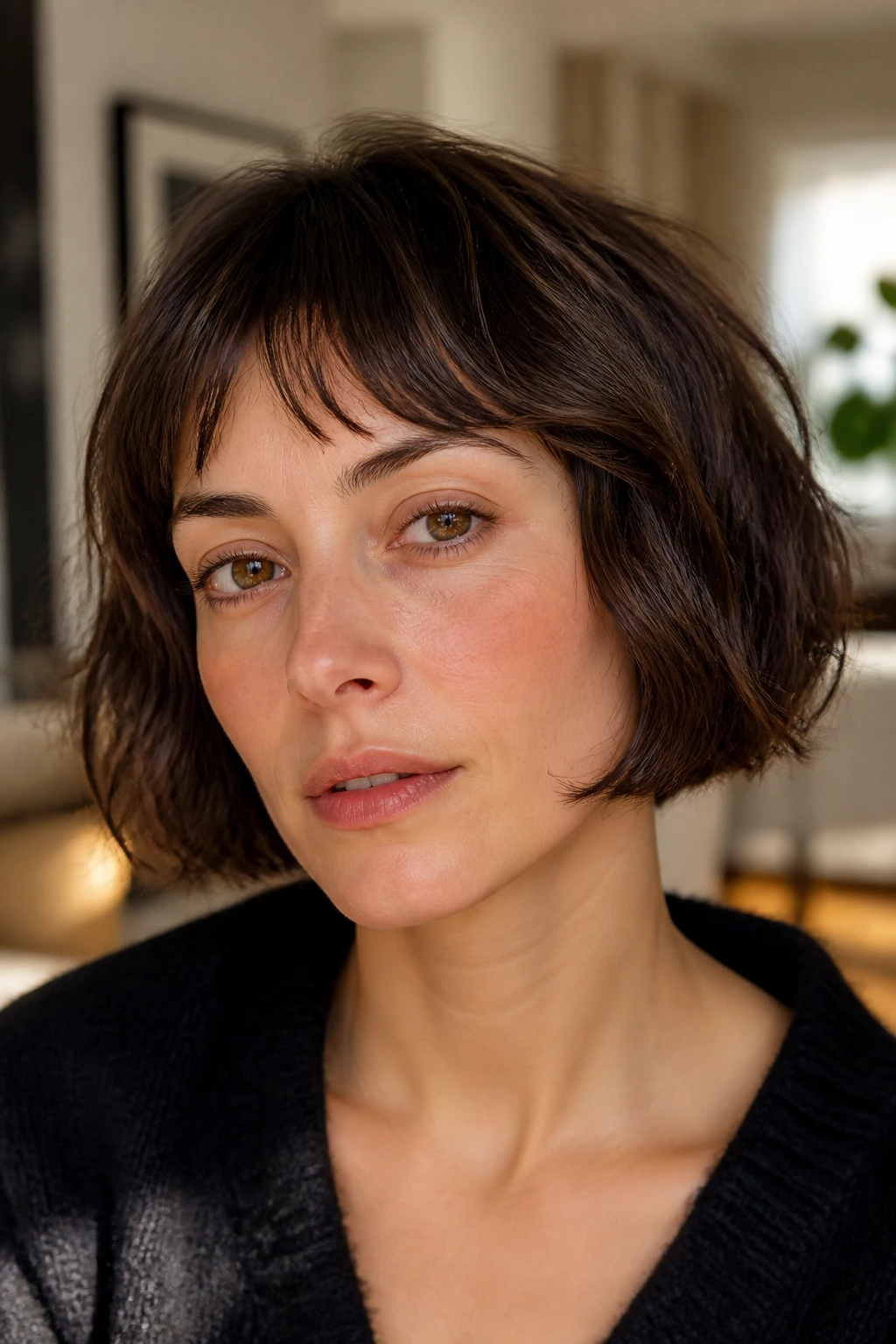
A French bob can be charming or too precious; the difference is usually the fringe. Keep it small and slightly broken up, not dense and heavy. Fine 2B hair benefits from that little bit of forehead coverage because it lets the top look intentional while the rest of the wave stays soft.
The length usually sits around the cheekbone or just above the jaw. That works well on oval faces because it keeps the silhouette compact without crowding the features. The trick is to avoid over-styling the ends. A tiny bend with a flat iron or round brush is enough.
Best if you want a little attitude
This cut has personality. It looks better with a natural bend and a little frizz than with hard, glossy precision. If you like hair that looks as if it dried well instead of being labored over, this is a strong pick.
4. The Collarbone Bob That Lets 2B Waves Stretch Out

Some people think a bob has to be short to count. Not here. The collarbone bob gives 2B waves room to settle into their S-shape without dragging fine hair down. It’s a smart length when the ends get wispy faster than you’d like.
On an oval face, collarbone length creates a clean vertical line, which is useful if you want to keep the face from reading too wide at the sides. It also grows out gracefully. That matters more than people admit. A lot more.
If you air-dry, this cut often looks better the second day than the first, once the wave has clumped and relaxed. A little mousse at the roots and a touch of serum at the ends is usually enough.
5. The One-Length Bob With a Deep Side Part
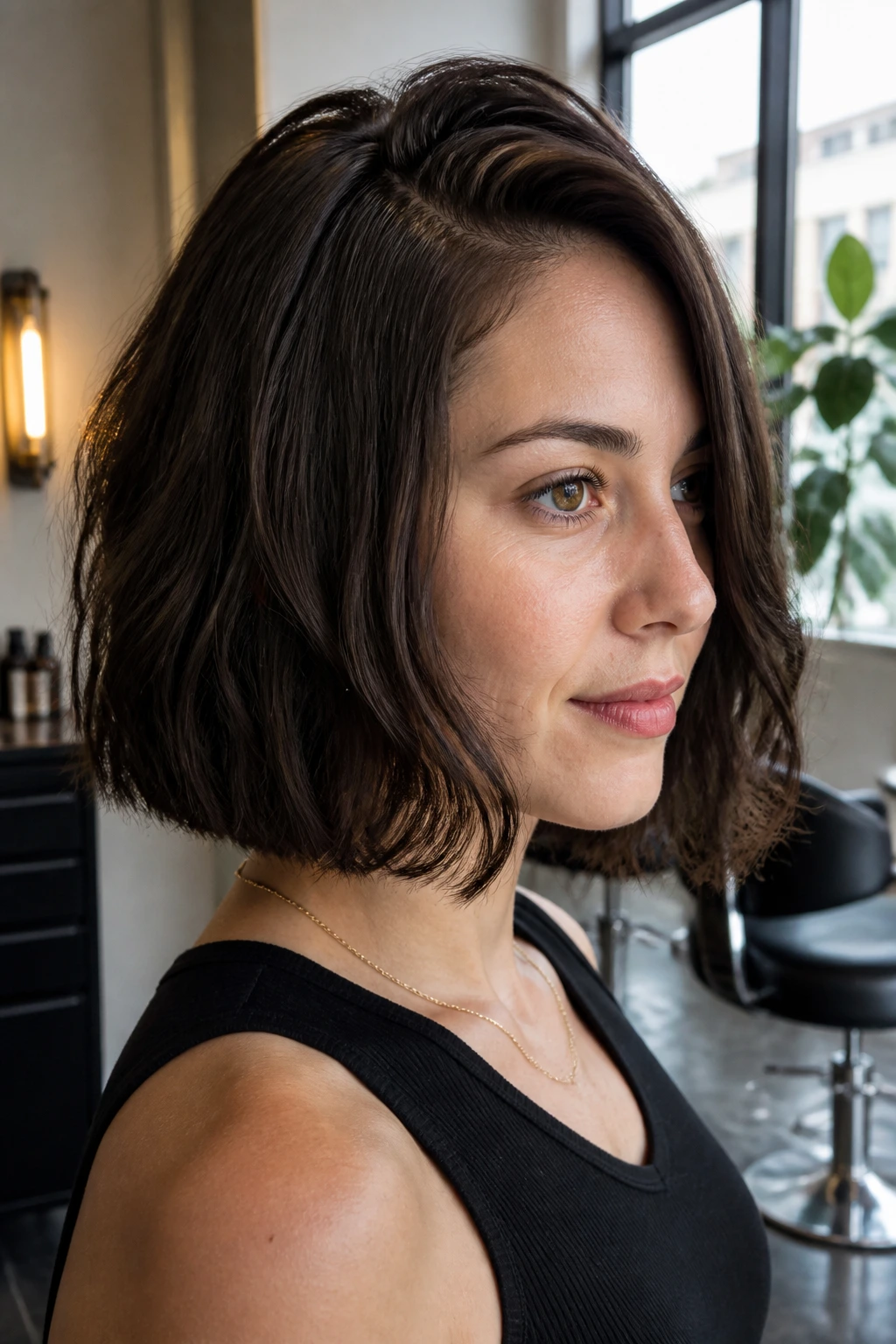
If your hair is fine, one-length is not boring. It’s strategic. A single-length bob keeps the outline dense, and a deep side part creates lift at the crown without asking the hair to do too much. That matters on 2B hair, which can go limp at the roots if you pile on heavy product.
A deep side part also gives an oval face some edge. It shifts the symmetry just enough to make the cut feel modern instead of safe. I like this one when the client wants polish without obvious layering.
Why it looks fuller
The side part changes where the volume sits. Instead of spreading it evenly and flattening the top, you get lift on one side and a cleaner fall on the other. That little asymmetry makes fine hair look more deliberate.
6. The Italian Bob That Sits Full at the Ends
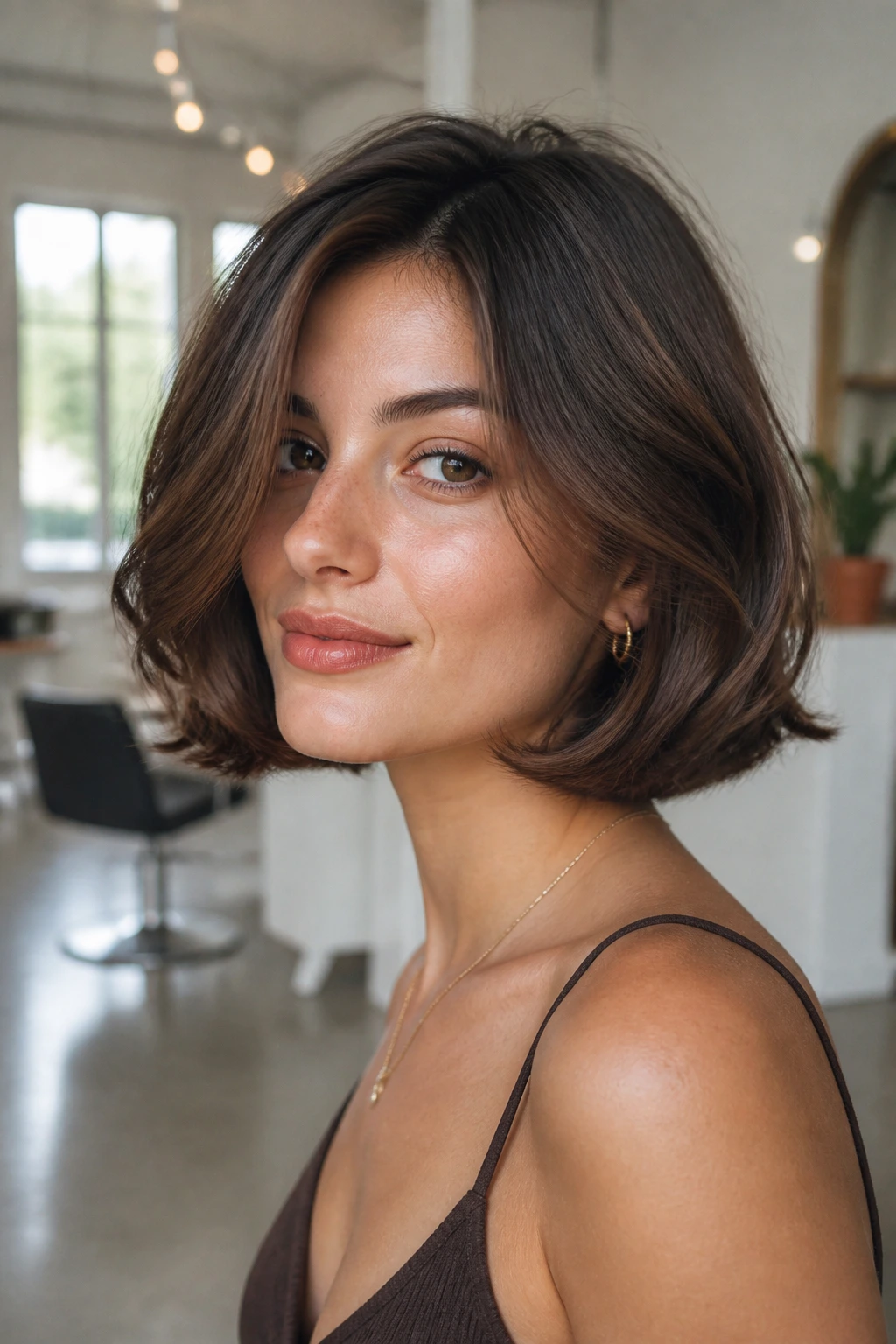
The Italian bob tends to look plush at the bottom, and that is exactly why it works here. Fine hair needs that sense of cushion. The shape usually has a little extra width through the ends and not much visible layering, so the whole thing feels expensive without trying too hard.
On 2B hair, the style benefits from a blow-dry that bends the ends inward just a touch. Not a tight curl. Just enough curve to keep the perimeter from kicking out in odd places. Oval faces can handle the fullness as long as the hair doesn’t stop too high on the cheek.
I’d choose this cut for someone who likes a bob that still feels like hair, not just geometry. It has weight. It has swing. It does not collapse on day two the way heavily thinned cuts often do.
7. The Curved-In Bob That Hugs the Jaw
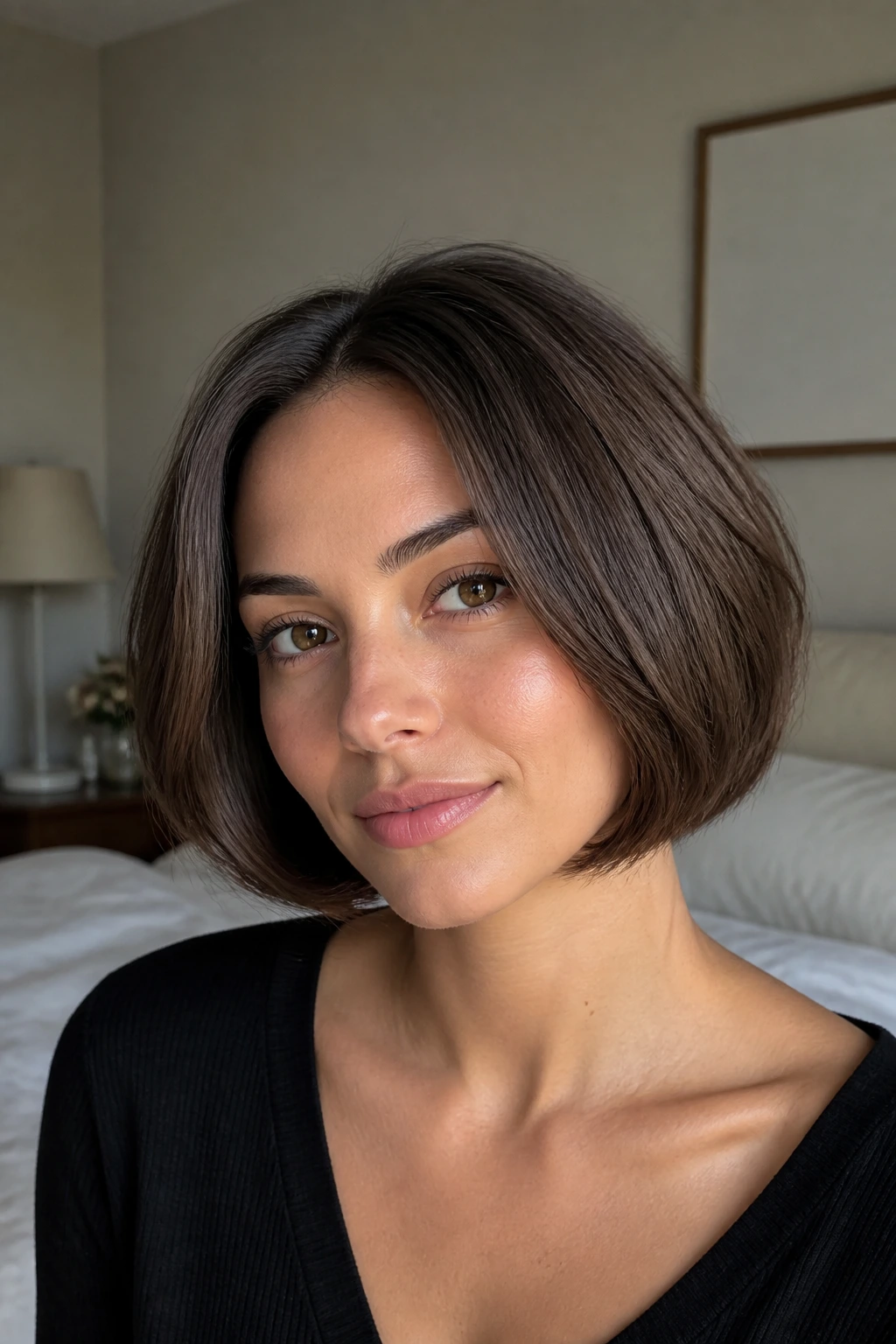
This is the bob for people who want the jawline to do the talking. The curved-in shape hugs the lower face softly, which makes fine hair appear more compact and controlled. It’s especially nice on oval faces because it keeps the line from drifting outward at the cheeks.
Ask for a rounded perimeter rather than a hard corner. A hairdresser who over-texturizes this cut will steal the density you need. The curve should be visible, but subtle — more like a cup shape than a helmet.
It works well with a center part or a slight off-center part. If your waves kick out at the ends, a quick pass with a round brush on the final inch usually fixes it.
8. The Inverted Bob That Lifts the Back
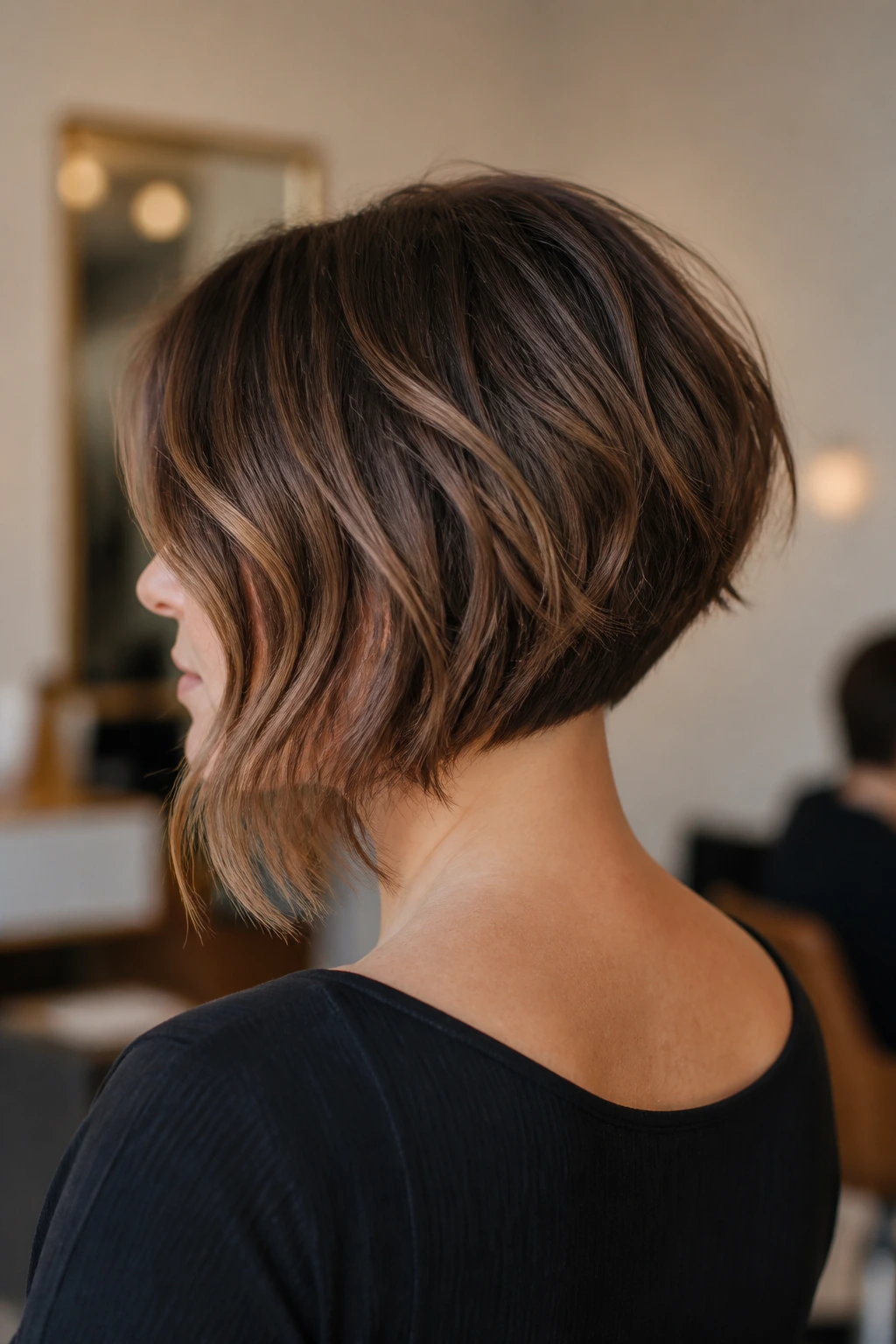
The inverted bob gives you movement through the nape and a little more length in front. On fine 2B hair, that back lift can be useful because it builds the illusion of volume where hair often lies flat. The front pieces keep the shape from looking too stacked or severe.
Oval faces do well with this because the longer front corners soften the cheek area while the shorter back keeps the neck visible. It’s a crisp look, but it still has softness if the angle isn’t too aggressive. I would not push the angle hard on very fine hair. Mild is better.
If you like a cut that looks good from the side, this is one of the strongest options on the list. The silhouette has motion even before you style it.
9. The Stacked Bob for a Fuller Crown
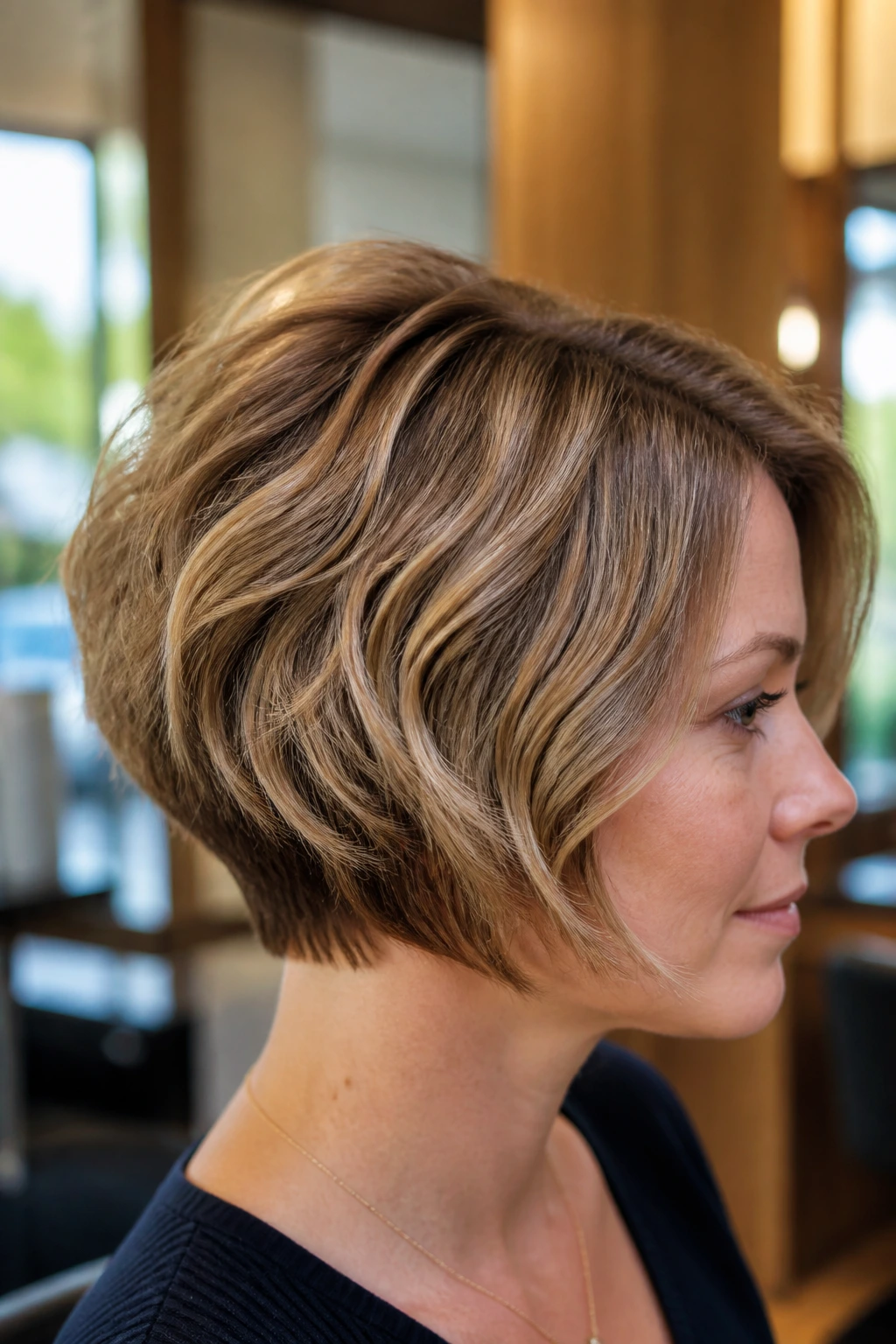
A stacked bob is a strong choice when the crown goes flat the second you leave the house. The back is built with more internal structure, so the hair lifts itself a little. On fine 2B hair, that can feel like a miracle, because the cut is doing part of the styling for you.
The catch is restraint. Too much stacking and too much thinning make the back puff while the ends go see-through. That’s a bad trade. The clean version keeps the shape close to the head and lets the wave soften the edges.
Ask for this if your roots collapse
If you spend half your life trying to raise the crown with spray and a round brush, a modest stack can save time. It’s not for everyone, though. If you want a loose, beachy outline, this may feel too structured.
10. The Textured Bob With Invisible Internal Layers
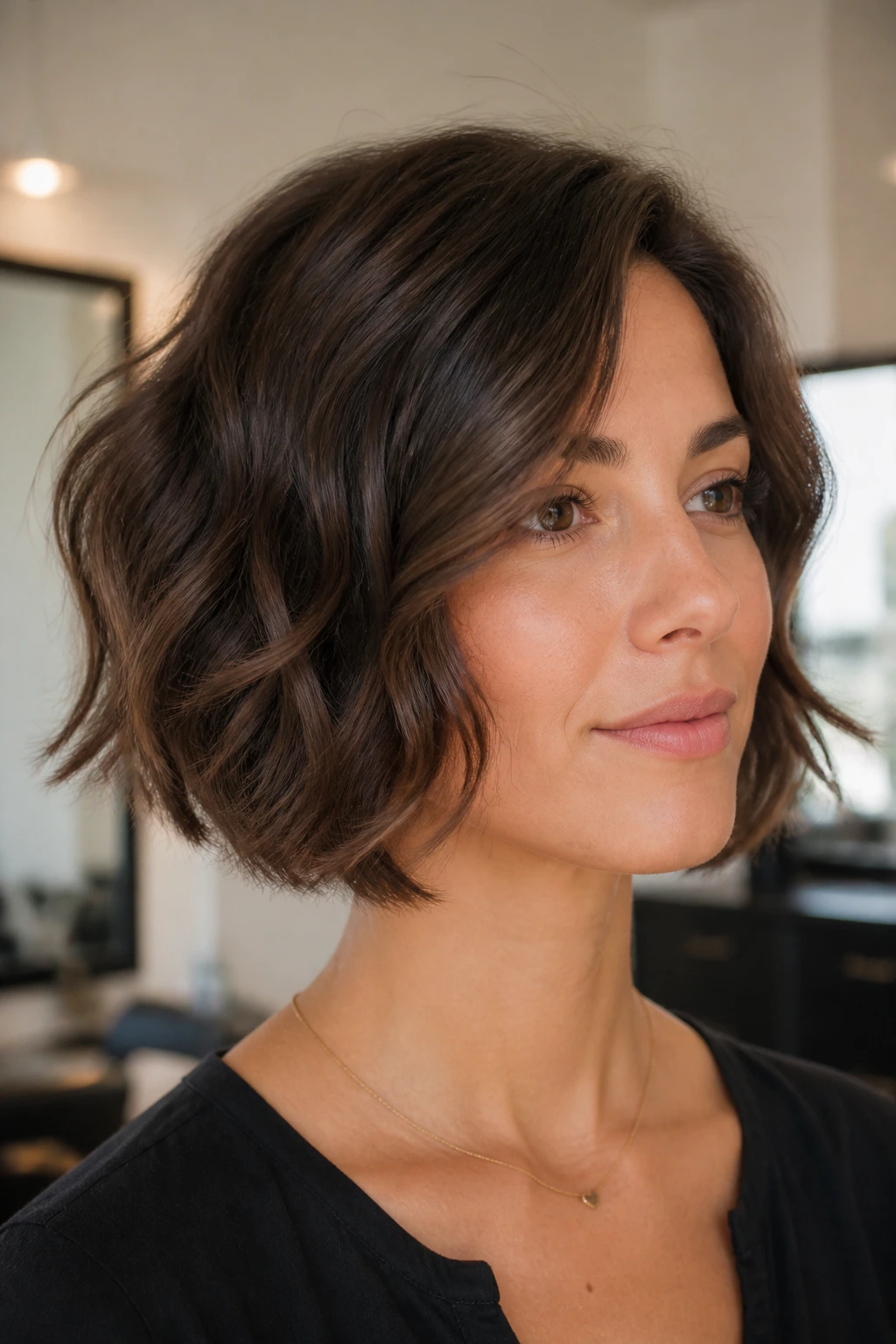
This is the version people ask for when they want movement but are scared of a wispy outline. Invisible internal layers sit inside the shape rather than chopping up the outside line. That matters on fine hair, because the perimeter stays strong while the inside can still move.
2B waves like this cut because the texture has somewhere to separate without looking shredded. On an oval face, the shape usually lands best between the jaw and the top of the collarbone. Too short and the texture can puff. Too long and the benefit disappears.
I like this cut for someone who wants a bob that can be air-dried with mousse and still look like a plan. It is not a “wash and pray” haircut. It needs a bit of product. But it gives back more than it asks for.
11. The Wavy Shag Bob for Piecey Movement
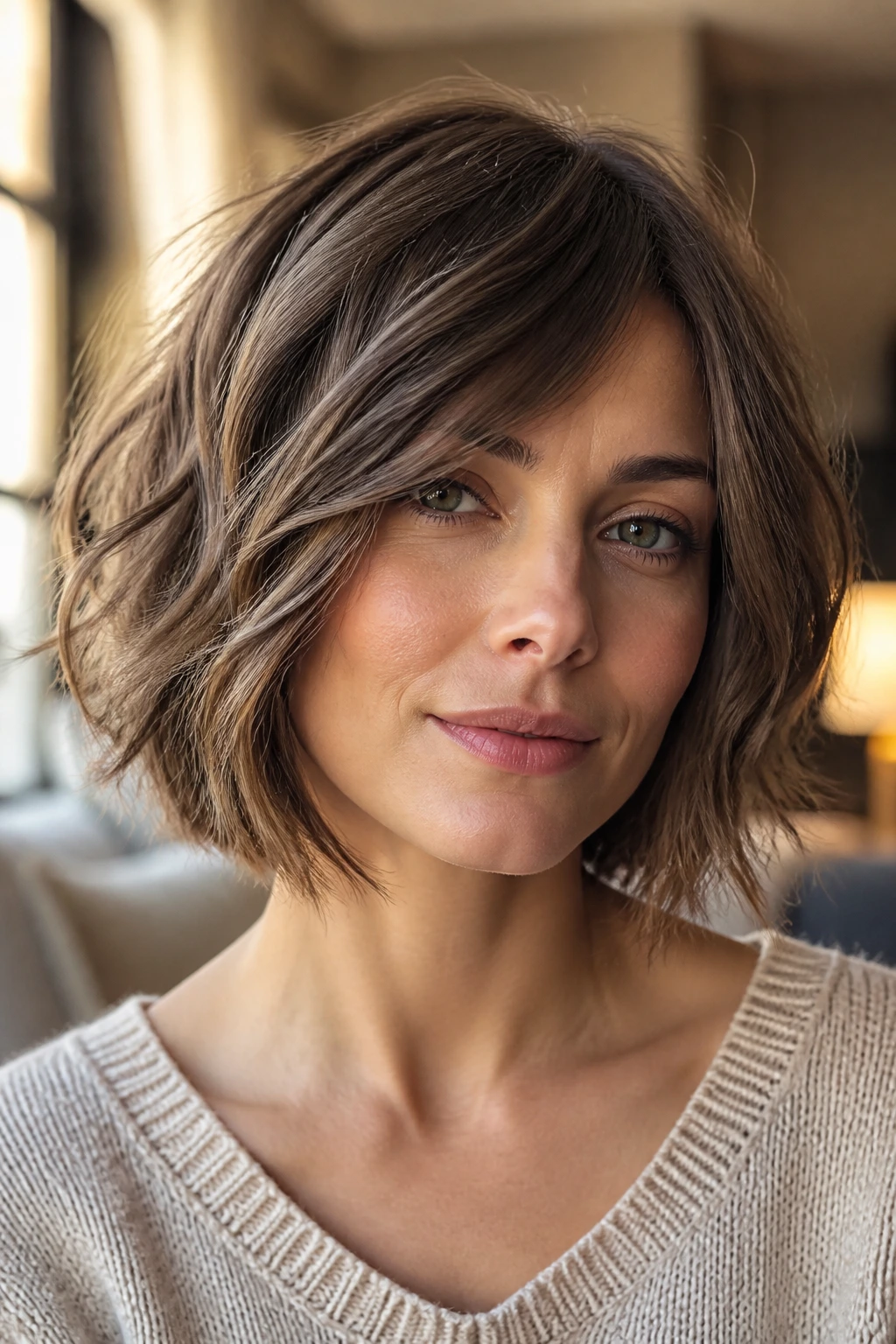
A shag bob can work on fine hair if the layers are handled with care. The goal is not to strip the cut bare. The goal is to create bends that separate into pieces, especially when your 2B pattern already has that natural S-wave.
This version sits well on oval faces because it keeps the width soft and the movement low around the cheeks. I’d avoid over-fringing the front. Too much fringe plus too much layering can make the whole thing feel flimsy.
Best when you want a little mess. Not chaos. Just a touch of edge. If you use mousse and scrunching cream lightly, the wave shows up nicely without turning the ends fuzzy.
12. The Curtain Bang Bob That Softens the Forehead

Curtain bangs are one of the easiest ways to make a bob feel less severe. On an oval face, they can soften the forehead while leaving the rest of the face open. With 2B fine hair, the trick is keeping the fringe light enough to separate.
The bob underneath can stay quite simple. That’s the nice thing here. The fringe does the framing, so the length doesn’t need to work as hard. I usually prefer this with a chin-to-jaw length cut rather than a very short bob, because the bangs and the length need room to breathe.
If you hate bangs once they’re heavy, ask for a longer curtain shape that blends into the front corners. It grows out better and sits more naturally with wave.
13. The Box Bob for a Sharp, Clean Outline
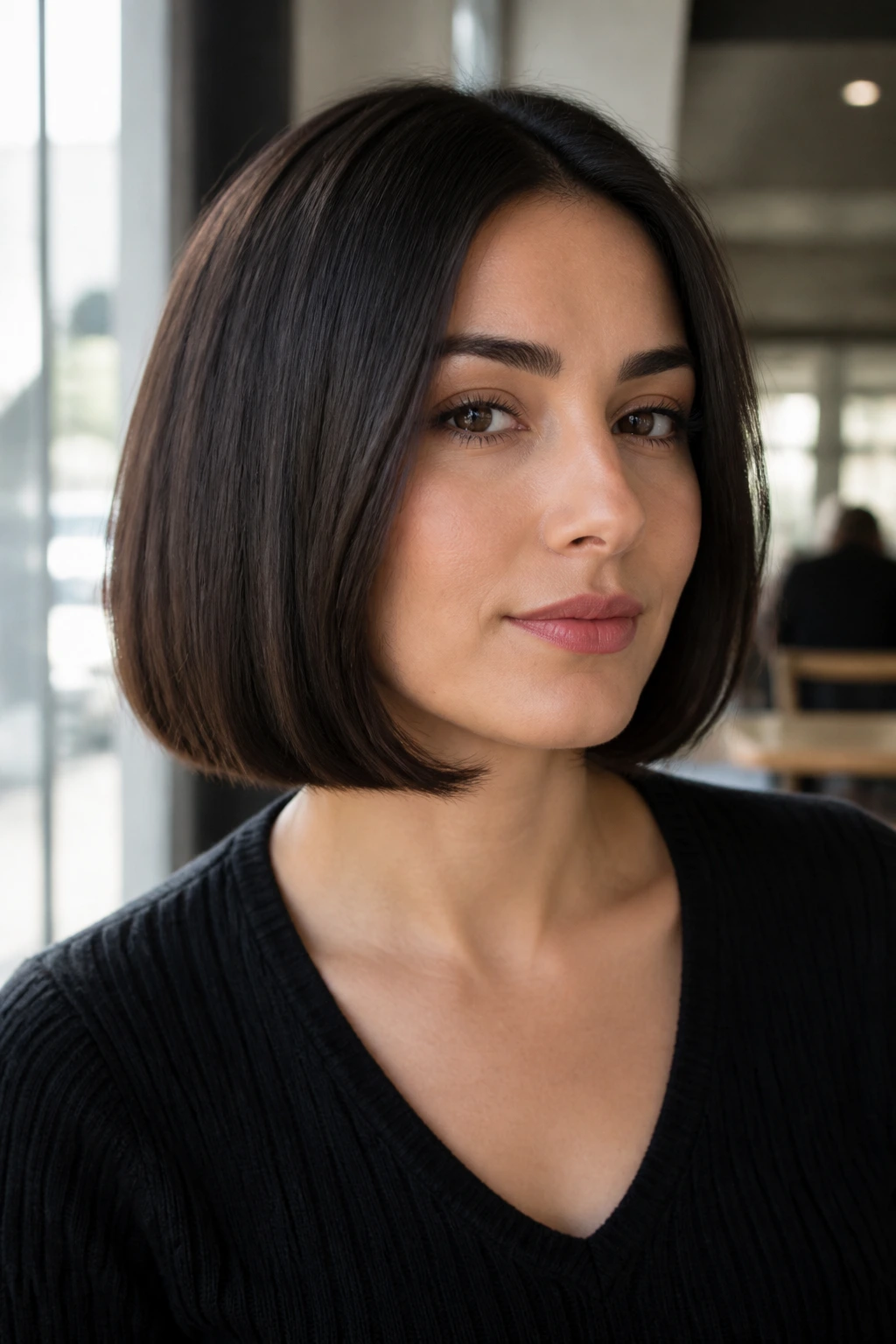
The box bob is not soft, and that’s the point. The outline stays square and the corners stay visible, which makes fine hair look denser at the edges. On 2B texture, it can be a sharp, clean shape if the wave is controlled with a light smoothing cream or a bend at the ends.
Oval faces can wear this surprisingly well because the face shape can handle geometry. The danger is making it too wide at the jaw. Keep the sides tidy and the line deliberate. A little rounding at the very ends helps.
This is the cut I’d choose for someone who likes clothes with structure — crisp shirts, neat collars, low-key minimal styling. It looks best when the hair itself doesn’t compete.
14. The Razored Bob for Airy Ends
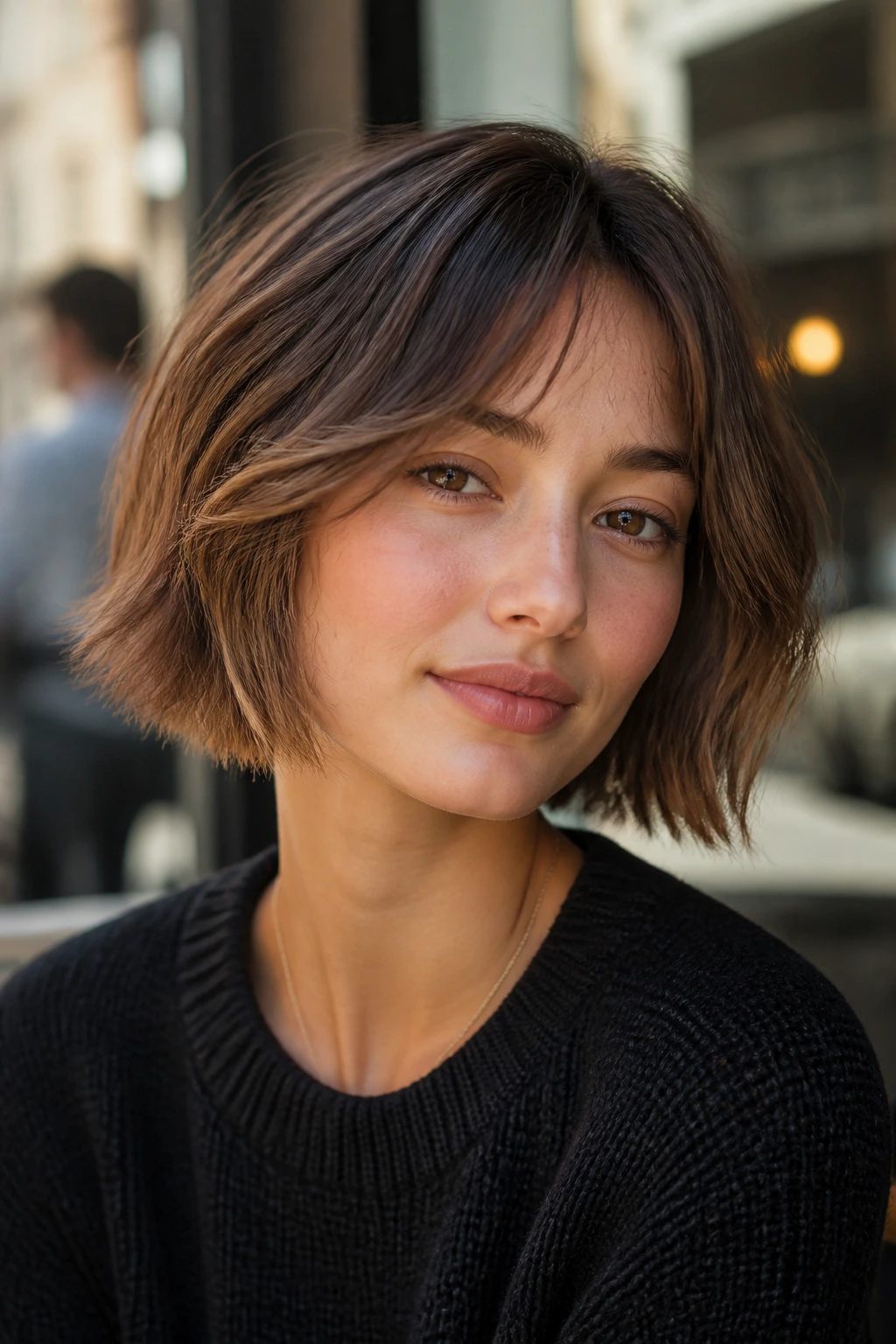
Razoring fine hair is tricky, and I don’t hand it out casually. But a light razor finish, used only at the ends and never through the whole shape, can give 2B hair a softer fall. The bob moves a little more and does not feel blunt in a heavy way.
The key is keeping the density. If the razor goes too far, the ends get thin and translucent. That’s where this cut goes wrong. Used carefully, though, it gives the bob a less rigid outline and lets the wave break into soft pieces.
Use this only with a stylist who knows fine hair
I’d be picky here. A stylist who razors every head the same way is not the one you want. Fine hair needs a delicate hand, not enthusiasm.
15. The Asymmetrical Bob That Changes the Face Angle

An asymmetrical bob gives one side a little more length, which creates motion and a strong face frame. On an oval face, that can be fun without being fussy. Fine 2B hair benefits because the off-balance shape makes the hair look fuller through contrast.
This cut works best when the longer side is only subtly longer, not cartoonishly uneven. The difference should be visible when you look in the mirror, not shocking from across the room. That kind of restraint keeps it wearable for work and weekends.
If your hair naturally parts off-center, an asymmetrical bob can feel very easy to live with. The shape almost wants to fall that way anyway.
16. The Tucked Bob That Shows Off the Jawline
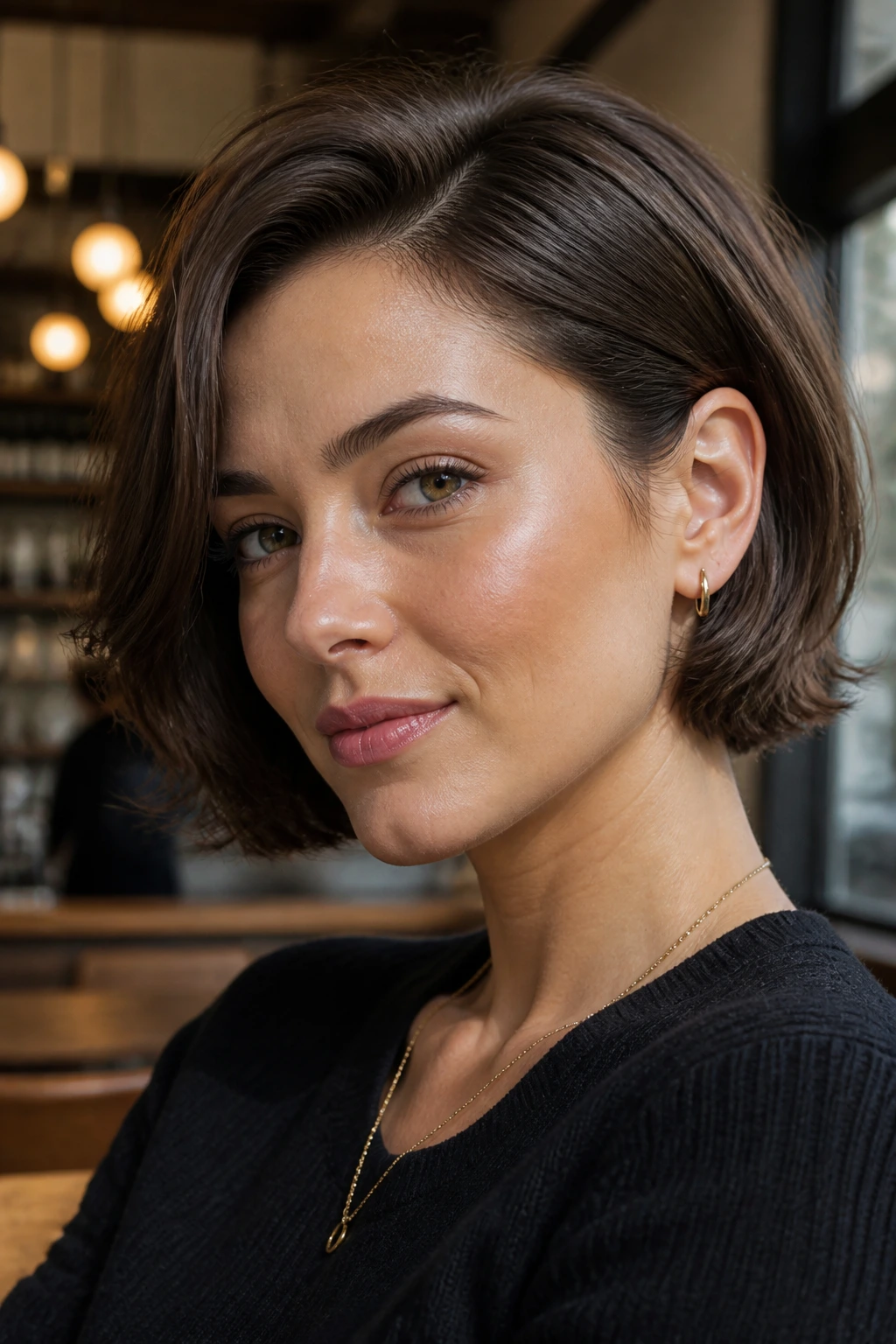
Sometimes the best bob is the one that lets your jaw and ears help. A tucked bob sits around chin length or slightly longer and works especially well when one or both sides are tucked behind the ear. Fine hair gets a lift from that little asymmetry, and 2B waves keep the look from going too stiff.
This is also one of the easiest cuts to style fast. A bit of smoothing cream at the front, a bend through the middle, and you’re done. Oval faces look good with it because the tuck opens the side of the face without leaving the hair empty.
It’s simple. Maybe a little too simple for people who like drama. But if you wear hoops, glasses, or bold collars, this cut has a nice practical charm.
17. The Feathered Bob That Keeps Fine Hair Light
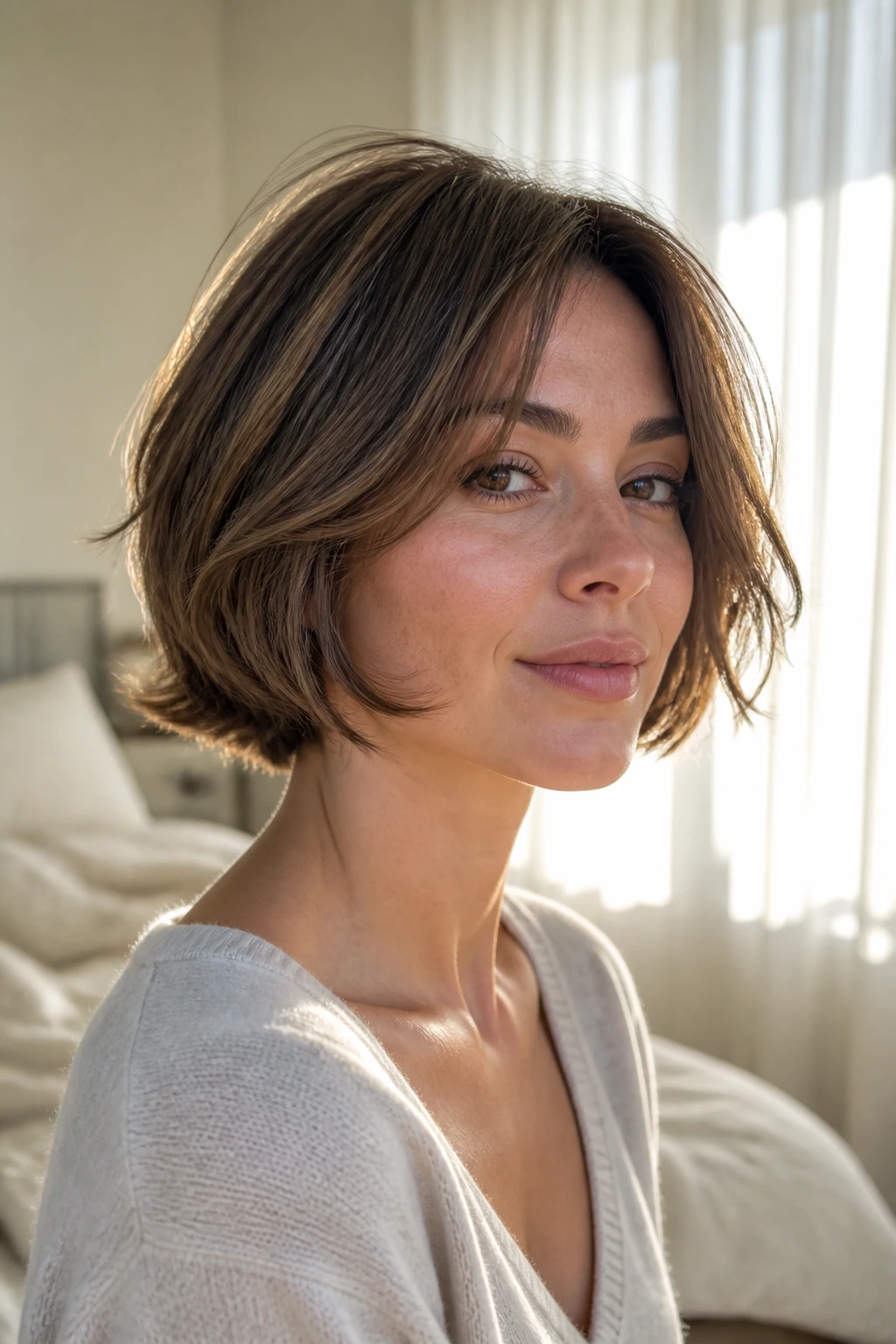
Feathered does not have to mean wispy. On fine 2B hair, feathering works when it’s used to break up the weight lightly, not to shred the perimeter. The result is a bob that moves and flips softly without losing all its substance.
Oval faces like the softness around the cheek line. The ends should feel a little mobile, almost like they want to turn on their own. If the feathering is done well, the cut dries quickly and sits well with a diffuser or a quick round-brush pass.
I’d choose this version for someone who finds blunt cuts too strict but still wants the hair to look like a bob, not a layered medium cut.
18. The Jaw-Length Bob With a Sweepy Side Fringe

This is one of the most face-flattering cuts on the list when the jawline is worth showing off. Jaw length gives the eye a firm stopping point, and the side fringe keeps the forehead from feeling open and flat. On fine hair, that combination often reads fuller than a pure center-part bob.
The fringe should sweep, not hang. If it hangs, it starts competing with the rest of the cut. A soft diagonal line through the front keeps the style moving and makes 2B texture behave a little better on humid days.
A good pick if your hair grows a little irregularly
The side fringe hides small growth differences well. That’s useful when your hair parts itself in the morning and refuses to be reasoned with.
19. The Bubble Bob With Rounded Volume
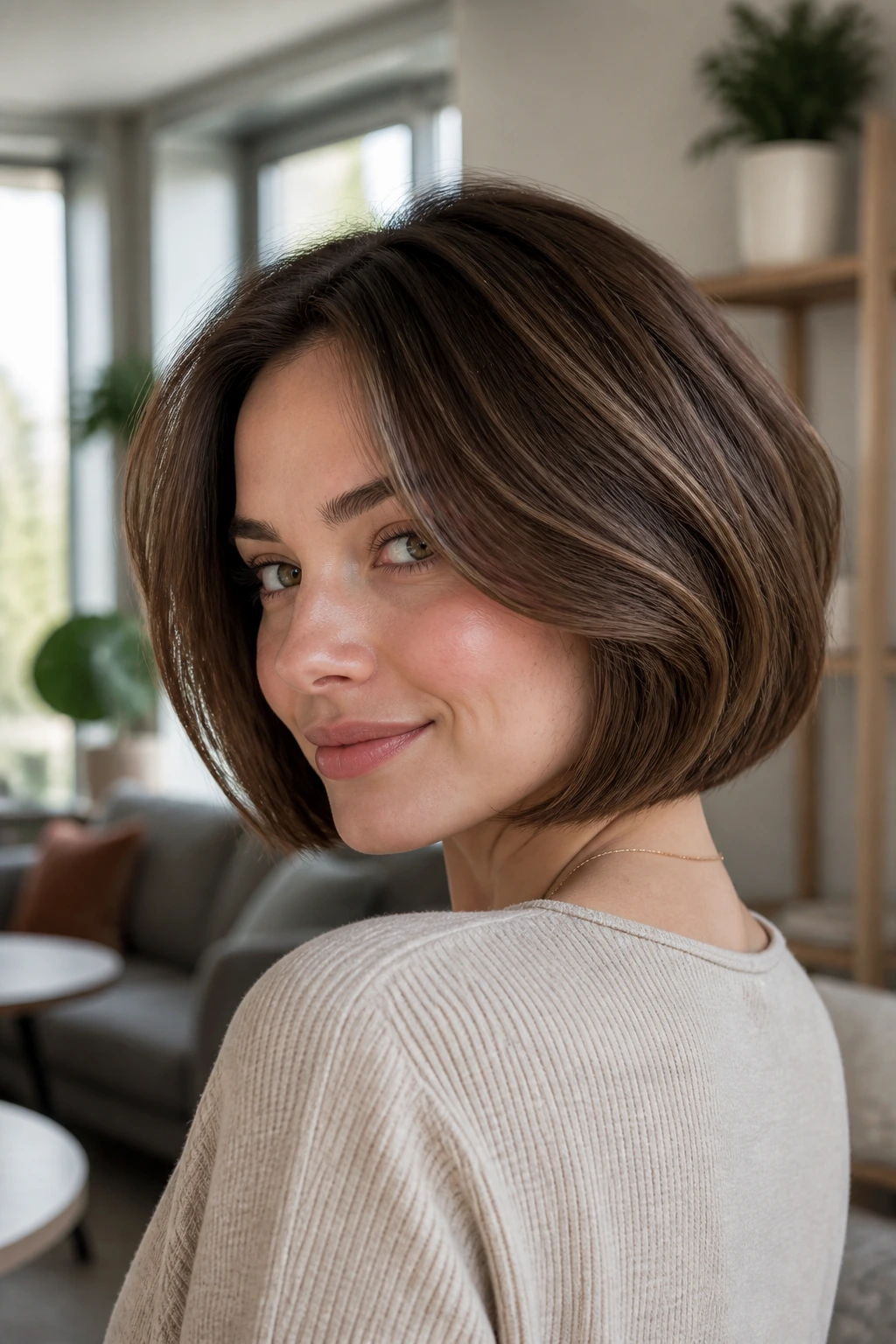
The bubble bob has a rounded outline that sits fuller at the sides and slightly lifted at the ends. For fine hair, that rounded silhouette can be a gift. It gives the illusion of a thicker mass without adding heavy layers that collapse later.
On an oval face, the shape works best when the width stays controlled. You want bubble, not puffball. That means soft internal shaping and a careful blow-dry that rounds the perimeter inwards just enough.
It’s one of the more styled-looking bobs here, but it doesn’t need huge effort once the cut is right. A round brush, a little root spray, and a cool shot at the end are usually enough.
20. The Graduated Bob That Keeps the Neck Slim
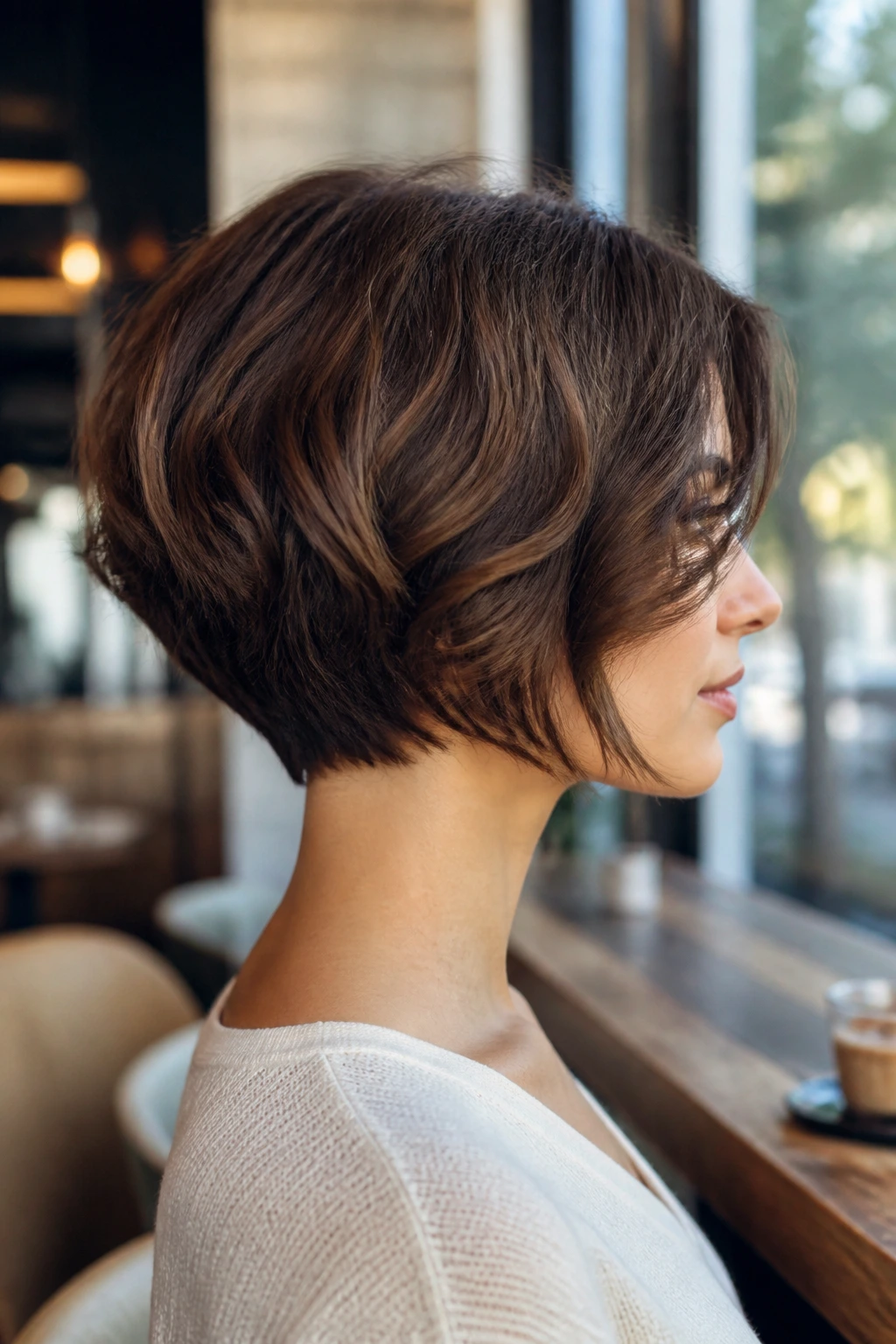
A graduated bob builds up gradually from the nape toward the front, which creates a clean neck line and a little lift. Fine hair often benefits from the structure because the cut itself supplies shape. On 2B hair, the wave softens the graduation so it does not feel rigid.
Oval faces can wear this very well if the front pieces don’t get too long. The back should feel neat and the side view should show the angle. This is a polished haircut, not a sloppy one, and that is part of the appeal.
If you wear scarves, blazers, or collared shirts a lot, this shape sits neatly around them. It doesn’t fight your clothes.
21. The Face-Framing Lob With Longer Front Corners
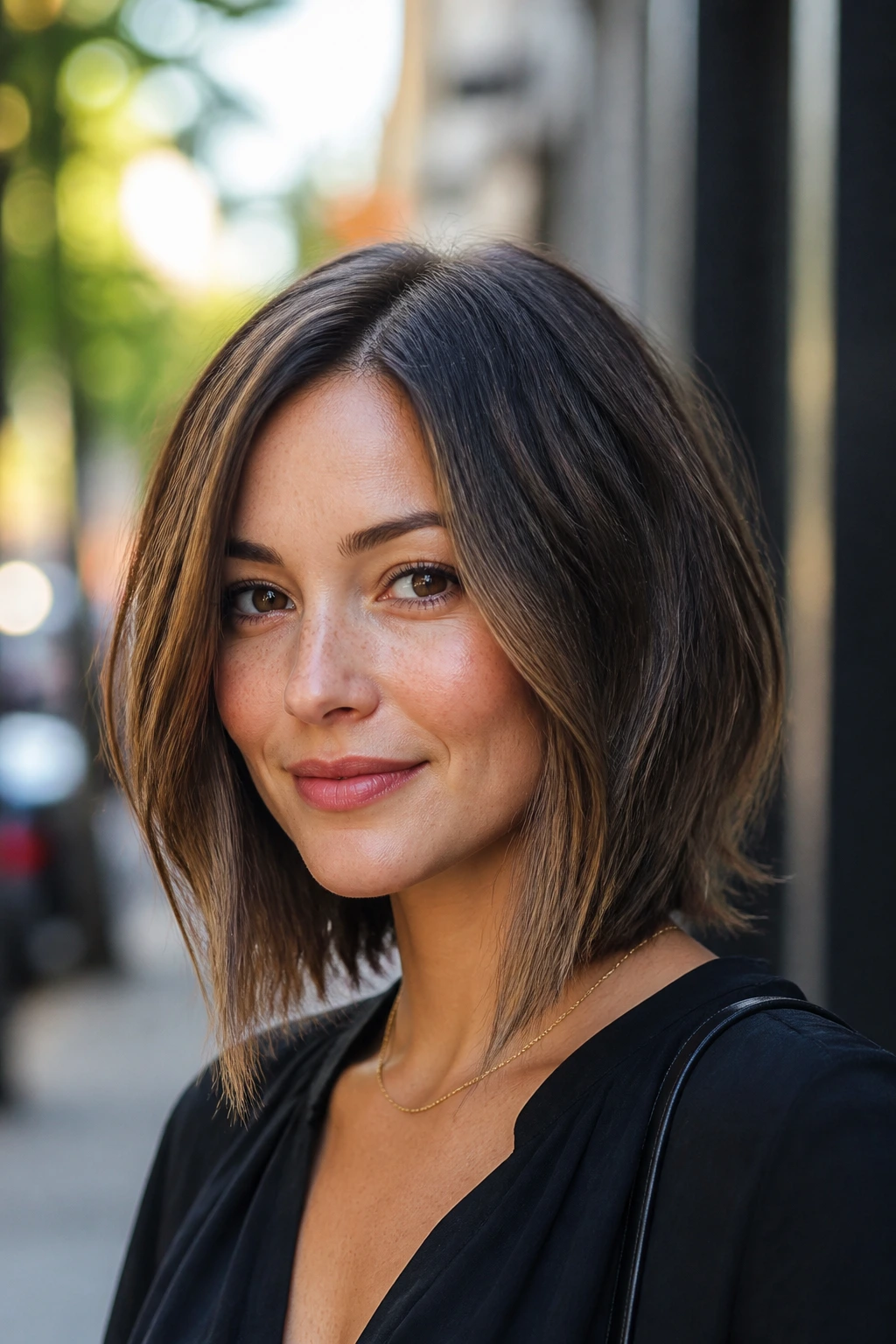
The lob is the safer cousin of the bob, but “safe” is not the insult people think it is. On fine 2B hair, a longer bob gives the wave more room and keeps the ends from looking ragged. The longer front corners frame an oval face without squeezing it.
This is the cut I’d suggest for someone who wants the bob effect but isn’t ready to lose much length. It often works best at the collarbone or just above it. That length gives you enough hair for a bend, a wave, or a low pony when you need one.
It also grows out in a way that doesn’t look accidental. That matters more than trendiness. More useful, too.
22. The Micro-Layer Bob for Movement Without Frizz
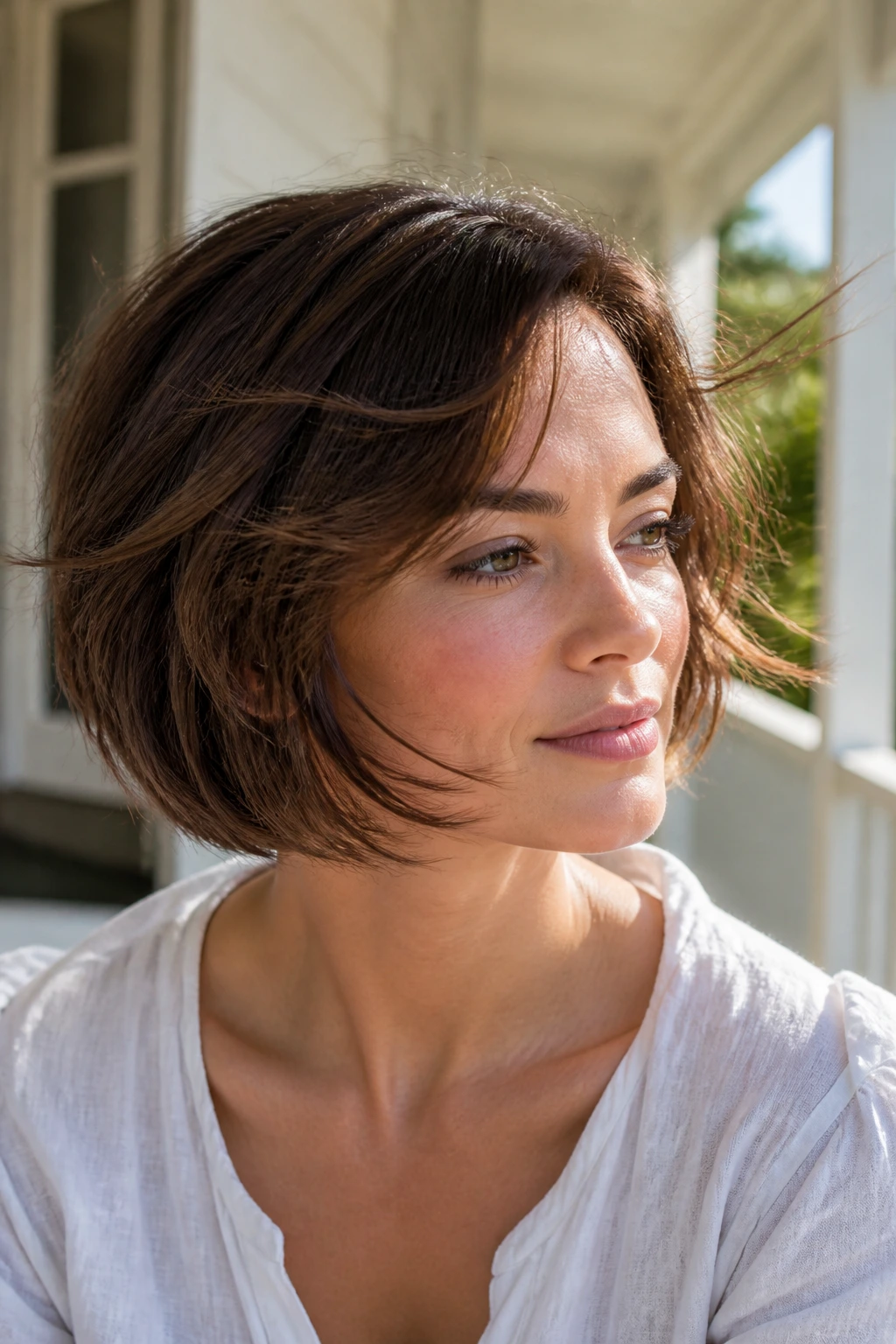
Micro-layers are tiny. That’s the whole point. They create internal lift in fine hair without turning the ends into a fringe of little broken pieces. On 2B texture, those small layers let the wave separate just enough to move.
This cut is particularly good when the roots are flat but the mid-lengths have life. It balances both. Oval faces benefit because the shape stays soft and close, not wide and puffy. I’d keep the layers subtle and the perimeter clean.
If you want a bob that behaves well after a quick air-dry, this is worth looking at. It’s not flashy, but it is practical in the way good haircuts usually are.
23. The Undercut Bob That Removes Bulk From Below

An undercut bob sounds dramatic, and it can be. But on fine hair, a small undercut or hidden internal removal under the nape can help the top layers lie cleaner. The cut feels lighter at the neck and can make 2B waves sit with more lift above.
The key is not taking too much. Fine hair does not have spare volume to lose. A subtle undercut, especially if the underside tends to puff or tangle, can make the outer shape look sharper without stealing from the overall silhouette.
This is best for someone who likes a little edge and wears the hair down most of the time. If you need a very conservative office shape, skip it. If you want the bob to feel modern and a bit sly, keep reading.
24. The Deep Side-Part Bob for Instant Root Lift
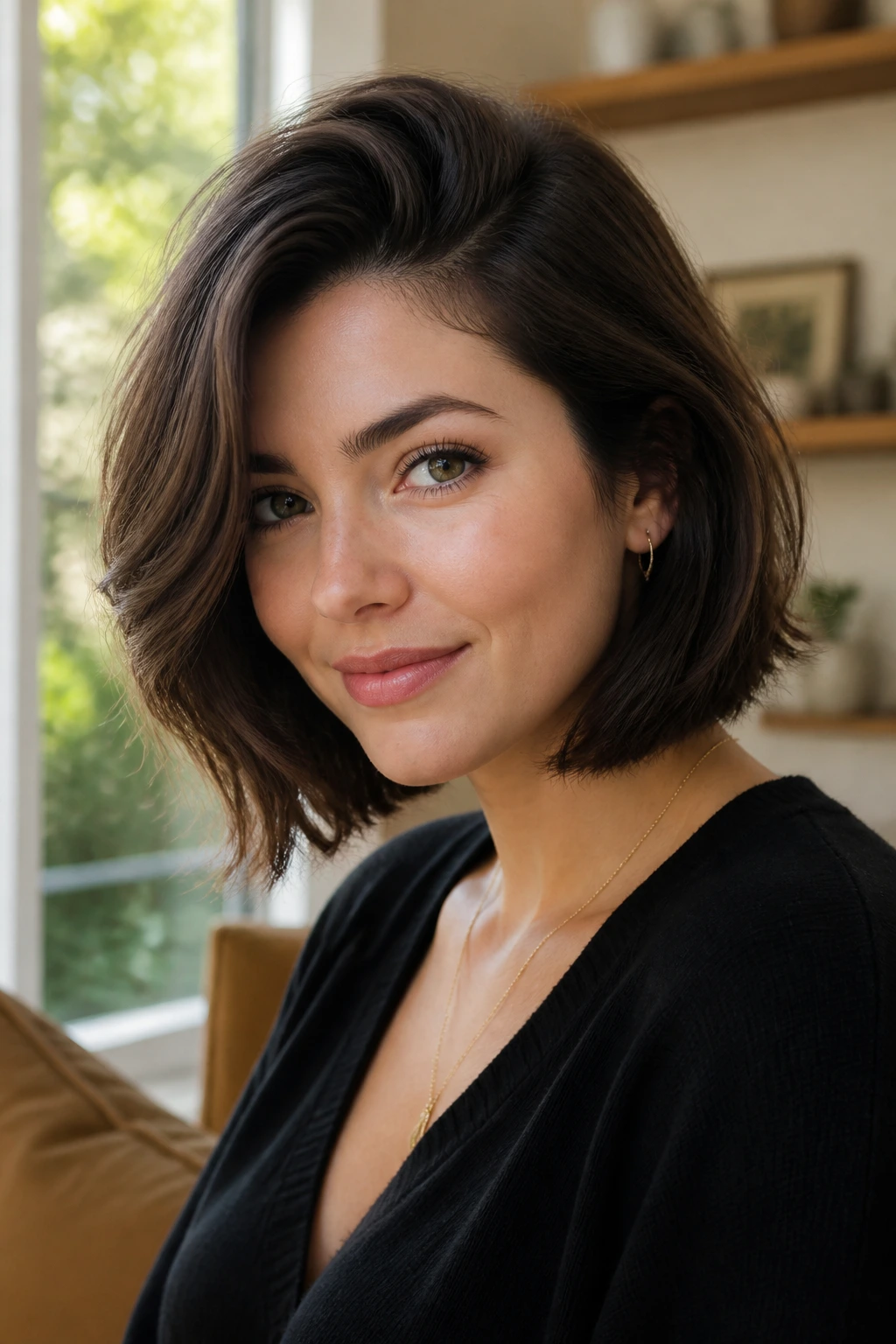
A deep side part changes everything on fine 2B hair. It lifts the roots, gives one side more presence, and lets the wave fall in a more flattering curve. On an oval face, it can also tilt the whole look just enough to feel styled without extra tools.
The bob itself can be simple — chin length, jaw length, or collarbone length. The part is what makes it interesting. I like this best when the hair is cut so the dominant side has a clean sweep and the shorter side still carries enough weight to stay full.
If your hair has a stubborn flat spot at the crown, this is a low-effort fix. A root spray and a side flip go a long way.
25. The Air-Dry Bob That Lets 2B Texture Lead
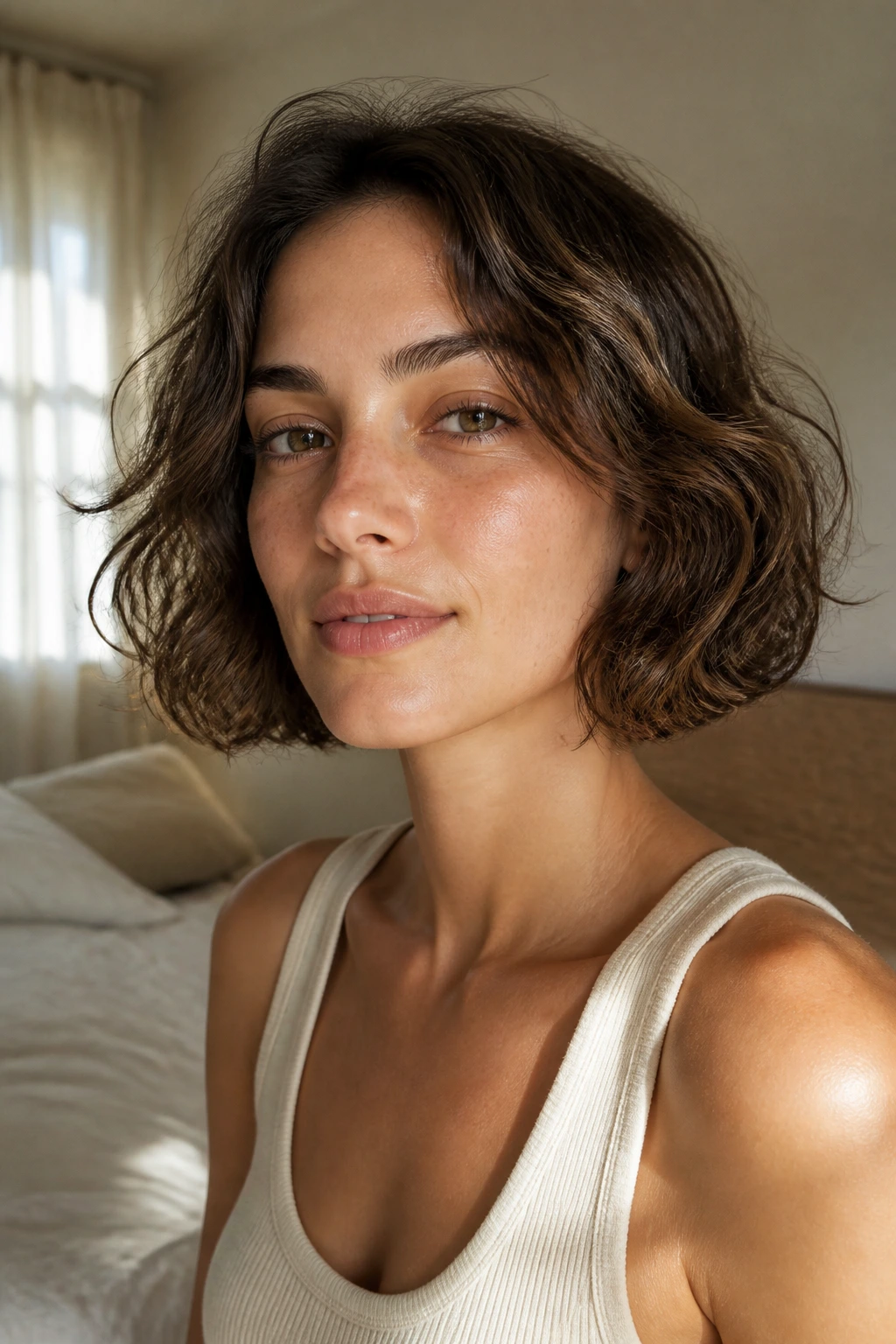
Some cuts are built to be blown out. This one is built to be left alone. The air-dry bob usually sits just below the jaw or around the collarbone and uses minimal layering so the natural wave can form cleanly. Fine hair benefits because it doesn’t have to survive much mechanical styling.
The trick is cutting the shape so it looks intentional when it dries naturally. The perimeter still needs to be strong. The wave pattern needs space. And the face shape needs some framing, which oval faces get easily if the front isn’t taken too short.
If your routine is low-effort, start here. Add a light mousse, scrunch once, and stop touching it. The less you fuss with it, the better it usually looks.
The Cutting Logic Behind the Best 2B Bobs
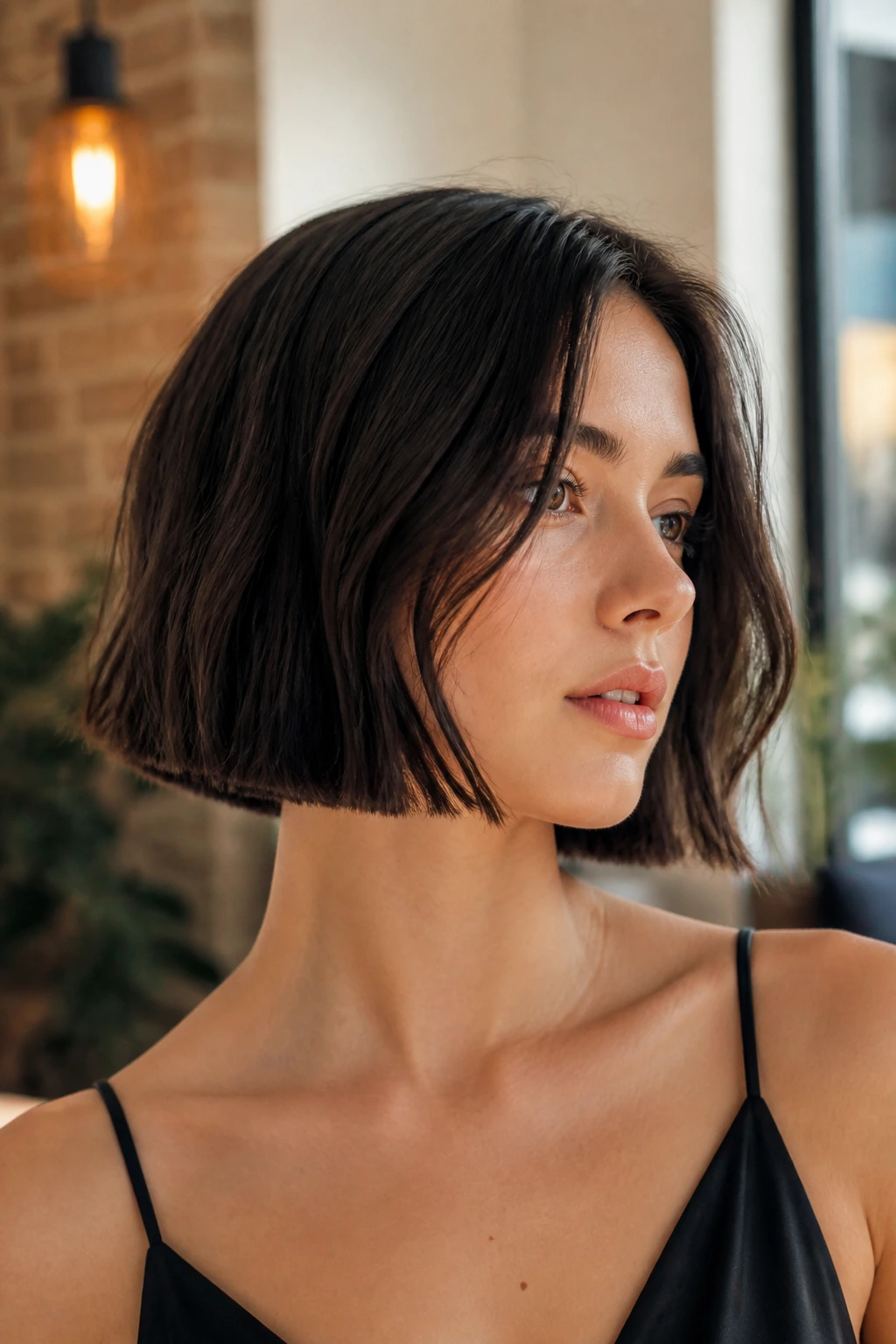
The best versions of these cuts have one thing in common: they keep the bottom line honest. Fine hair cannot hide a ragged perimeter, and 2B waves do not need to be buried under a pile of layers. A good bob gives the wave a frame and gives the eye a place to land.
That means asking for shape, not just length. A chin-length blunt bob, a soft A-line, a collarbone lob, or a jaw-skimming curved cut all do the same basic job in different ways. They hold weight where fine hair needs it. They keep the face open where an oval shape can wear structure. And they save you from the “why does this look flat already?” moment by lunch.
Styling Tools That Earn Their Drawer Space
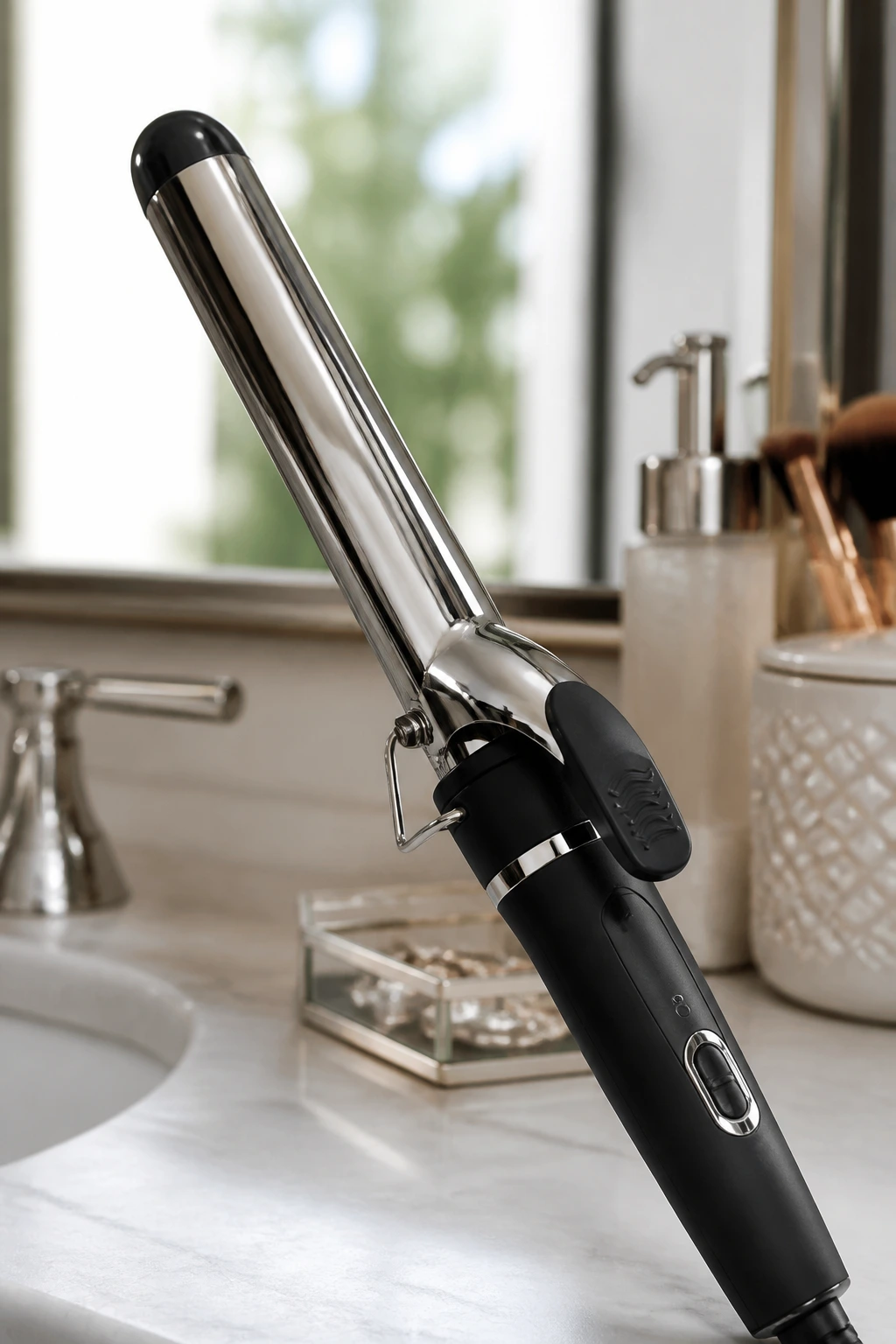
- 1-inch curling wand or flat iron: Use this to add a soft bend at the ends, especially on the front pieces.
- Blow dryer with a nozzle: The nozzle keeps the airflow controlled so fine hair doesn’t puff into a halo.
- Small round brush: Best for lifting the crown and curving the ends under by a half-inch or so.
- Diffuser: A good diffuser keeps 2B wave clumps intact when you air-dry or partially dry.
- Clips: Sectioning clips make it easier to build shape without overworking the whole head.
- Lightweight mousse: Fine hair often does better with mousse than cream because it adds hold without greasing the roots.
- Texturizing spray: Use sparingly on the mid-lengths and crown for day-two lift.
- Heat protectant: Non-negotiable if you use any hot tool, even briefly.
- Dry shampoo: Helpful at the roots, but use only enough to freshen, not cake the scalp.
What to Tell Your Stylist When You Have Fine 2B Hair
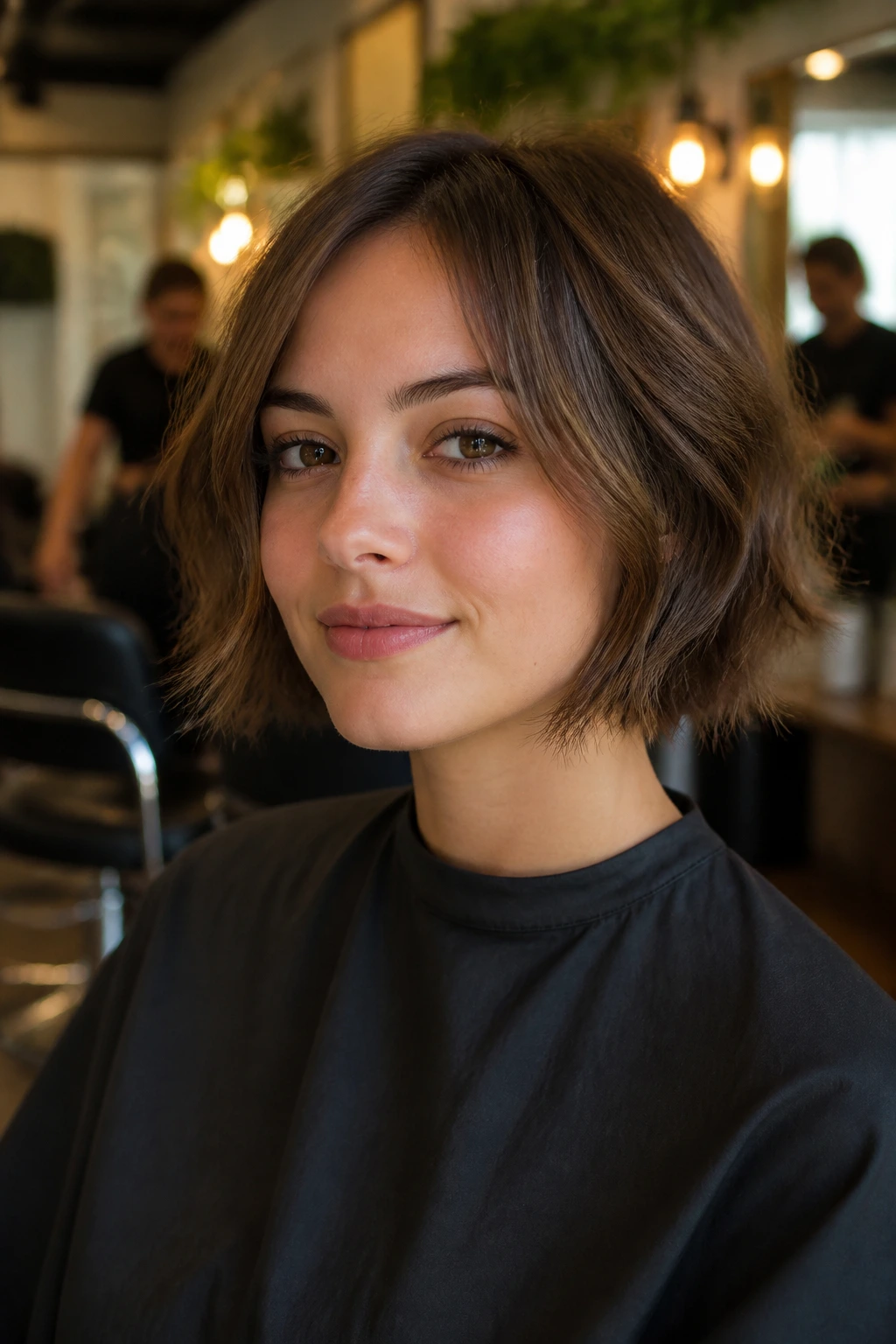
Bring photos, yes, but bring the right ones. Show one photo for the silhouette you want and another for the texture finish. Those are not the same thing, and mixing them up is how people end up with a cut they like in theory but never wear.
Say you want the perimeter to stay dense. Those words matter. If you say “a little texture” without context, some stylists will reach for thinning shears like they’re seasoning salt. For fine hair, that can backfire fast. Ask for minimal internal thinning, controlled point-cutting, and a cut that respects where your wave naturally bends.
If your hair dries with flatter roots and stronger mids, ask whether the cut can be made slightly shorter in the back or slightly longer in the front to keep the line balanced. If your face is oval and the hair is very fine, a length that lands at the jaw or collarbone is often easier to wear than something chopped too high at the cheek.
How to Wear These Bobs on Busy Mornings
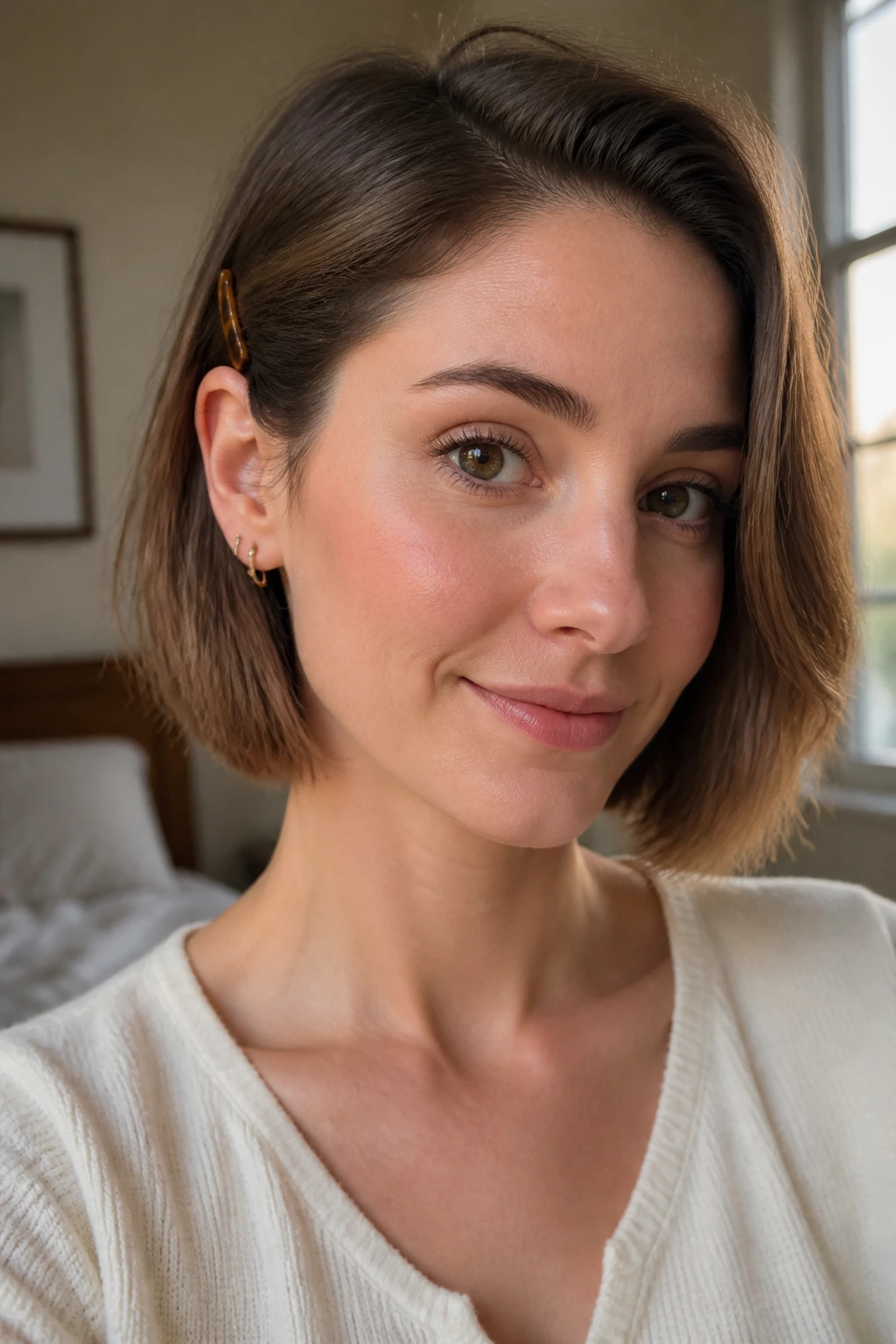
Presentation: Keep the outline clean and the finish soft. A bob looks fuller when the top is smooth and the ends have a slight bend, not when every strand is trying to do its own thing.
Accompaniments: A side part, a tucked-behind-the-ear side, or a small clip near the temple changes the mood fast. Pair the cut with simple necklines, hoops, or a sharp collar if you want the haircut to stay front and center.
Portions: For fine hair, shorter bobs around the jaw or chin create the strongest sense of thickness. If your face feels narrow, stop just below the jaw. If your hair is sparse at the ends, move toward the collarbone.
Beverage Pairing: A pea-sized amount of finishing serum or a light flexible-hold spray is the best match. Use enough to tame frizz, not so much that the wave goes greasy and stuck together.
Additional Tips and Finishers
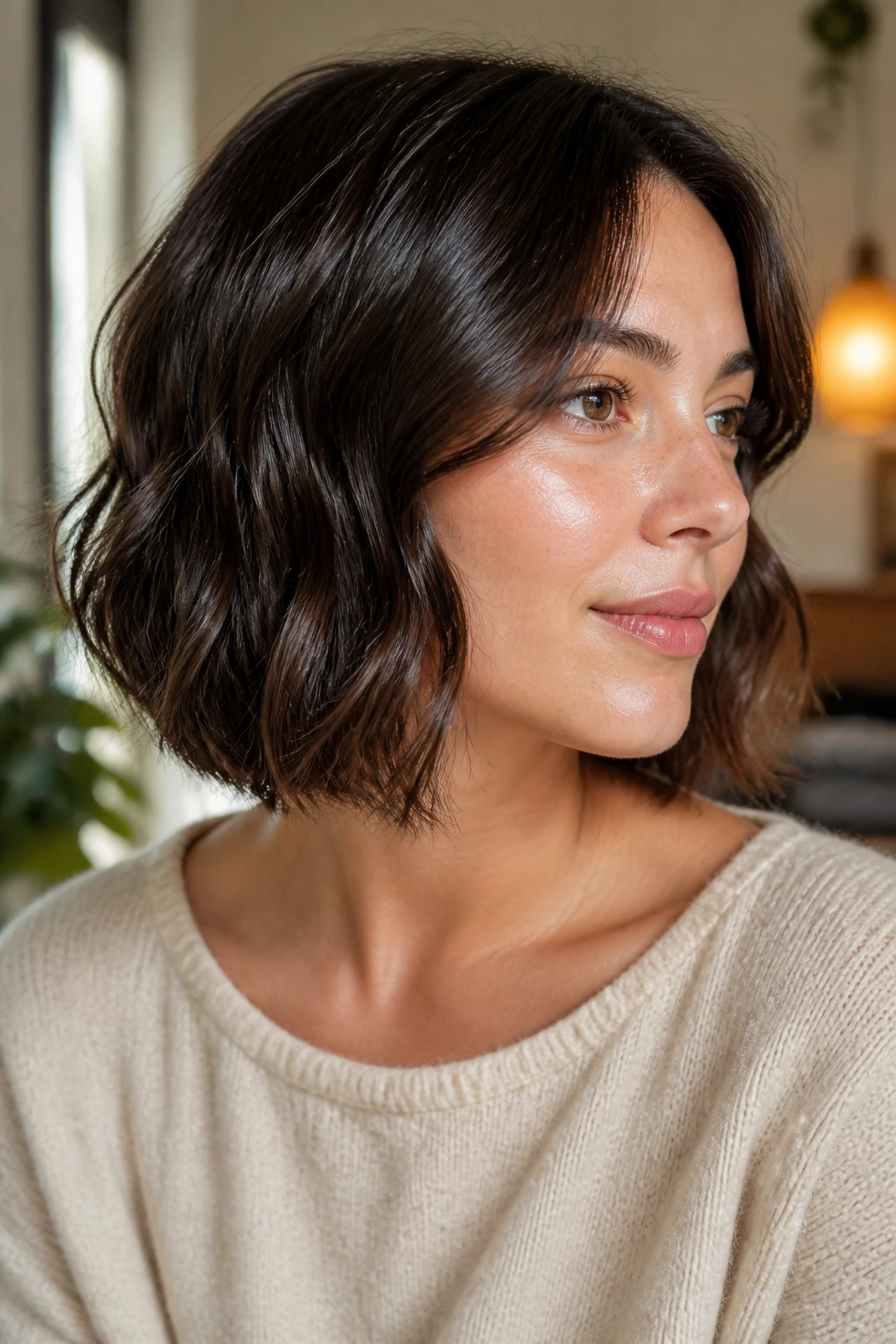
Texture Boost: Put mousse in at the roots while the hair is still damp, then scrunch the mid-lengths with your hands. If you diffuse, stop when the hair is about 80 percent dry and let the rest air-dry. That keeps the wave from getting frizzy at the very end.
Customization: Ask for a longer front corner if you want more face framing, or keep the front blunt if you want more density. Curtain bangs soften the look, while a deep side part adds lift without changing the cut itself.
Serving Suggestions: A tiny bit of pomade on the last inch of hair can keep the ends tidy, especially on chin-length bobs. If you wear glasses, earrings, or strong collars, keep the haircut a little simpler so the shape doesn’t compete with the rest of your look.
Make-It-Yours: If you hate heat, lean into air-drying and use clips at the roots for 10 to 15 minutes while the hair sets. If you like polish, round-brush only the top layer and leave the underside alone so the texture still feels like yours.
Common Mistakes to Avoid With Fine 2B Bobs
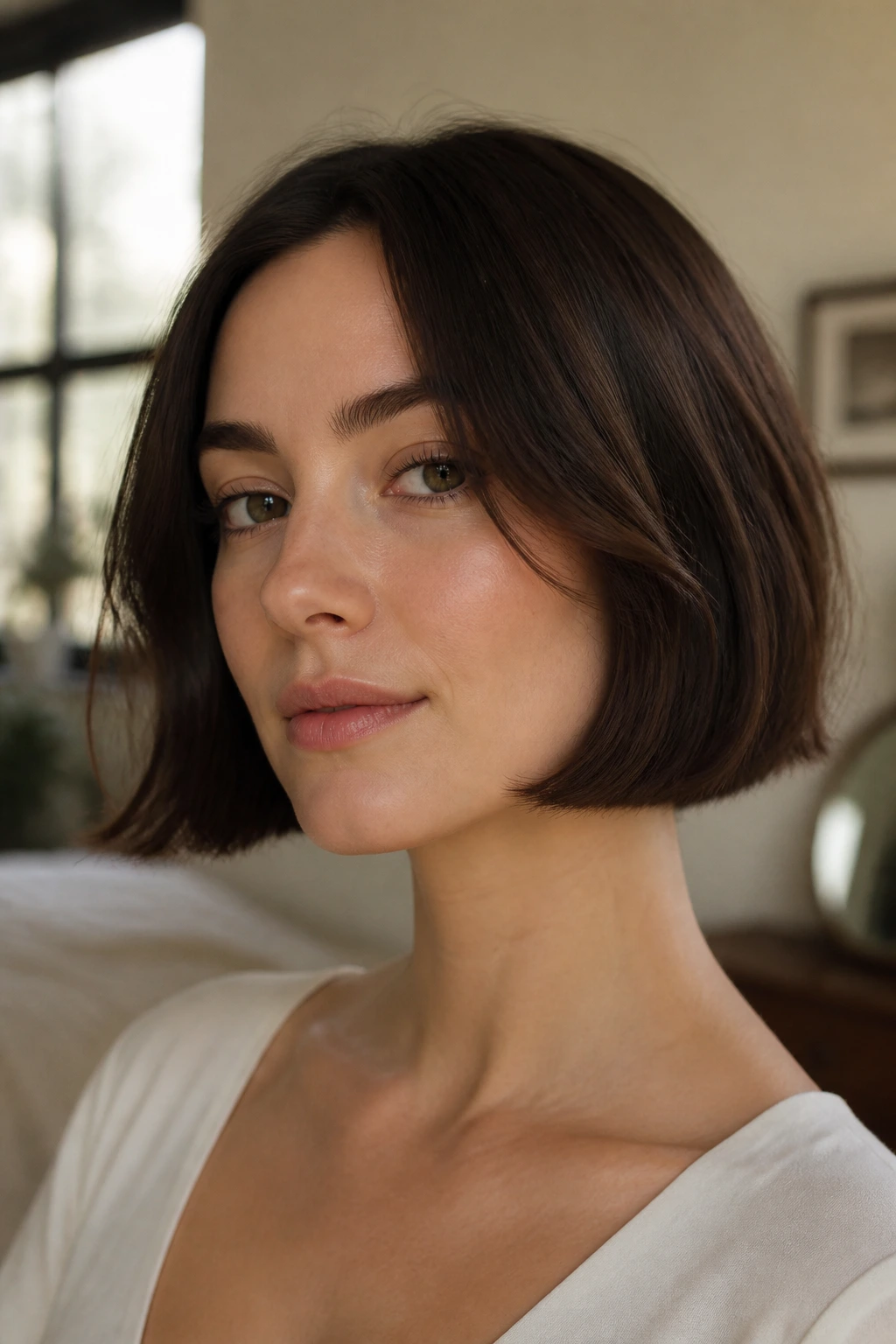
- Over-thinning the ends: Fine hair looks airy fast. If the ends get sliced up too much, the bob turns stringy and loses its edge. Ask for density to stay at the perimeter.
- Chasing too many layers: Layers can help movement, but too many remove the weight that makes a bob look like a bob. The symptom is a fluffy crown with transparent ends. The fix is a stronger outline and fewer internal cuts.
- Using heavy creams on damp hair: Heavy cream can drag 2B waves down and make fine strands separate in sad little pieces. Swap to mousse or a very light leave-in.
- Cutting too short at the widest point of the face: If the bob lands exactly where your face is broadest, it can widen the look. Move the length up to the jaw or down to the collarbone so the line feels intentional.
- Straightening the wave flat every day: You can do it, but the hair usually looks thinner when the 2B shape is ironed out. A slight bend reads fuller and is easier to keep.
Variations and Adaptations to Try
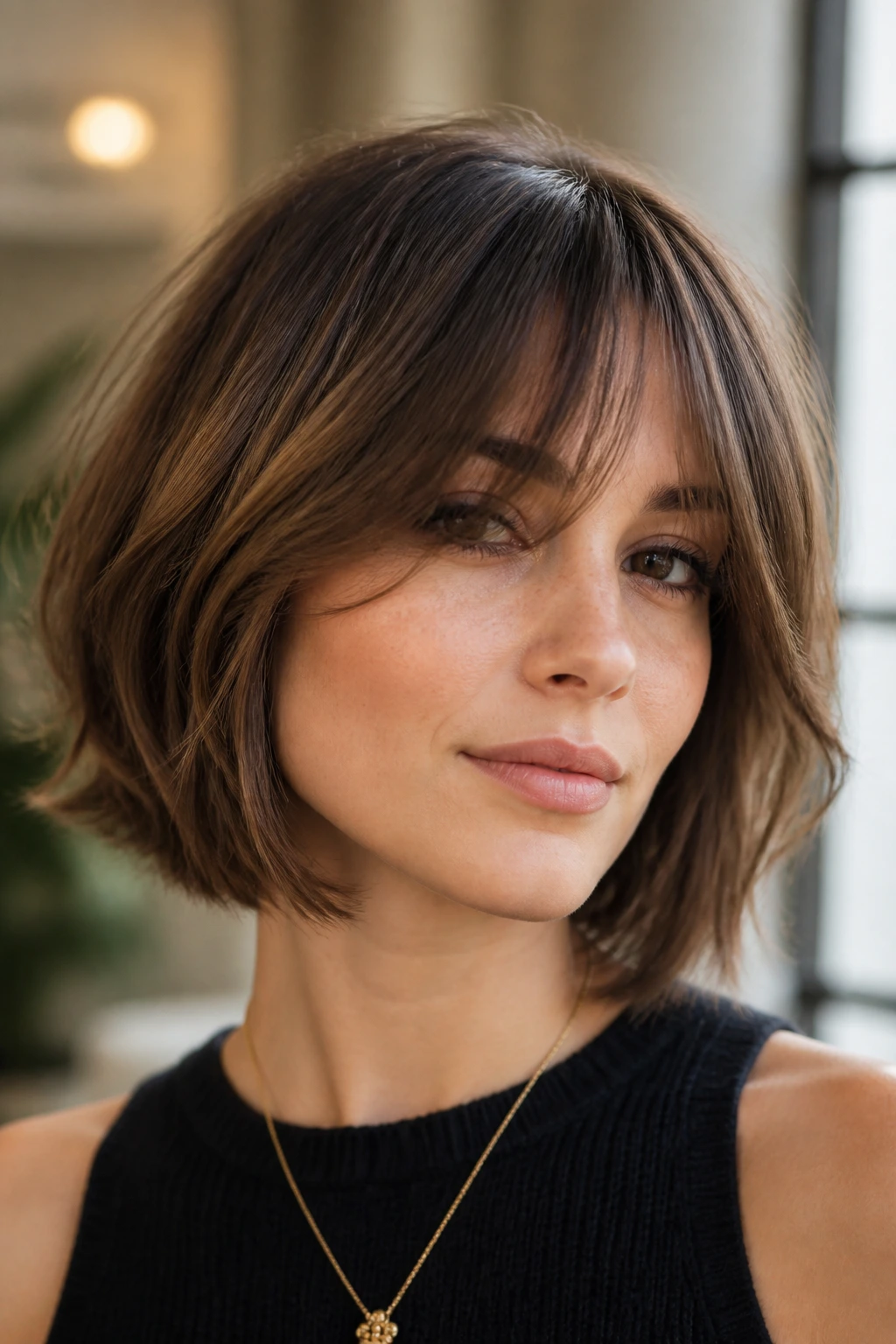
The Air-Dry Minimalist: Keep the perimeter blunt, avoid heavy layers, and use mousse plus a diffuser only if needed. This version is ideal if you hate standing in front of a mirror with a brush for 20 minutes.
The Soft Blowout Bob: Choose a chin or jaw-length cut and round-brush the ends under just enough to create a plush edge. It looks especially good when you want the hair to feel finished for work or dinner.
The Fringe-Forward Bob: Add curtain bangs or a tiny French fringe to shift attention upward. This helps balance a wider forehead and gives oval faces a little extra character without changing the bob length.
The Grow-Out Lob: Move the length to the collarbone and keep layers minimal. This is the version I’d choose if you like the idea of a bob but want room to tuck it up, clip it back, or let it grow without panic.
The Edgier Texture Bob: Use subtle razoring, a side part, and a piecey finish spray. It’s a good fit when you want the bob to look a little lived-in rather than neat.
Maintenance and Grow-Out Rhythm
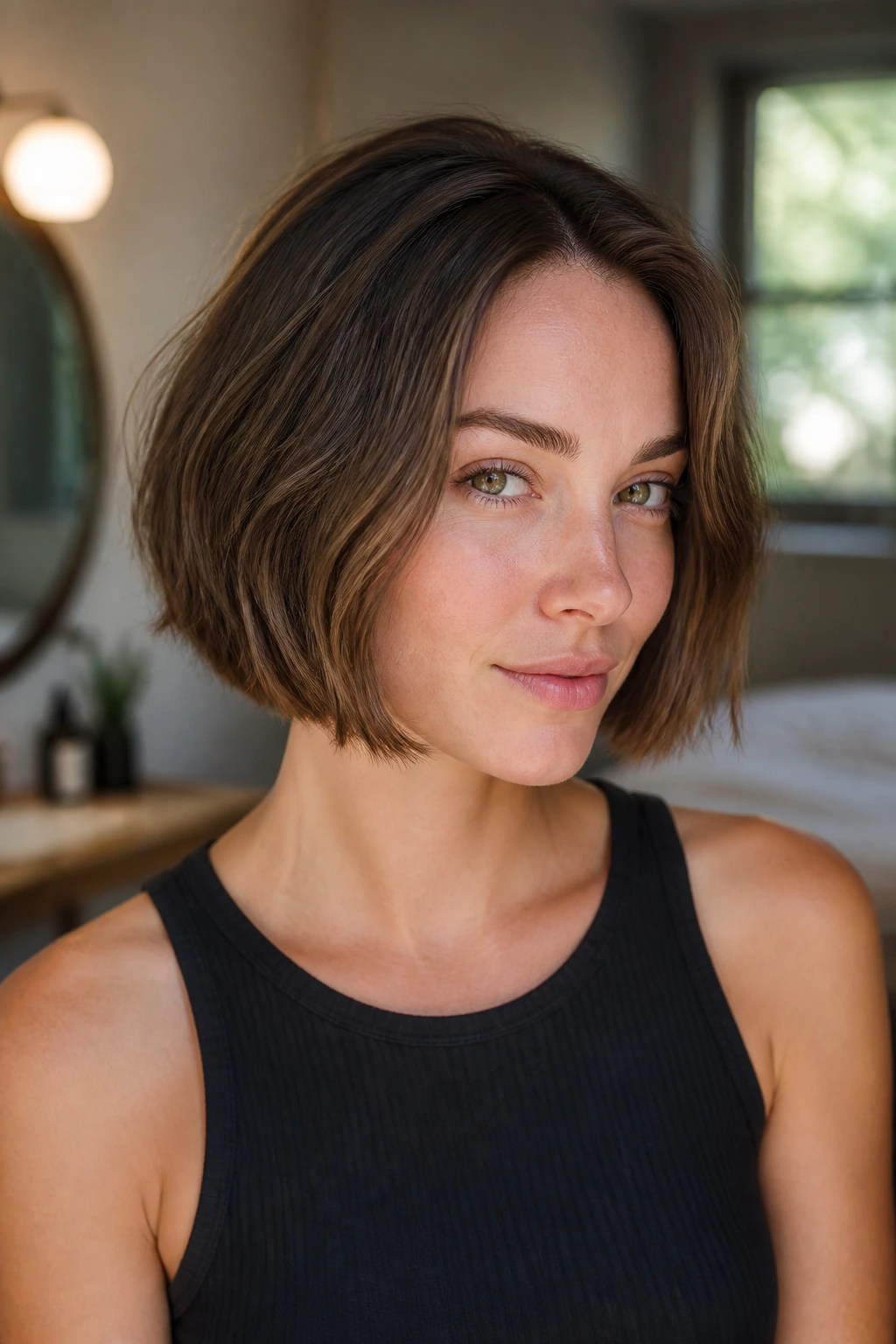
Fine 2B bobs do best with a trim schedule that respects the shape. Chin and jaw-length bobs usually need reshaping every 6 to 8 weeks if you want the outline to stay crisp. Collarbone lobs can stretch to 8 to 10 weeks, sometimes a touch longer if the ends are dense enough to hold.
At home, keep the styling light. A wet root with a little mousse and a quick diffused dry is usually enough for the wave to reset. If you use heat, finish with a cool shot so the bend holds instead of drooping once the room warms up. A satin pillowcase helps more than people think. It cuts down on friction, which means fewer frizzed-out ends and less morning re-styling.
Second-day hair often looks better than first-day hair on 2B texture, especially with a bob. A mist of water, a dab of mousse, and a quick scrunch can revive the wave in under 5 minutes. If the ends kick out, wrap only the bottom inch around a wand for a few seconds. Don’t redo the whole head unless you have time to burn.
Frequently Asked Questions
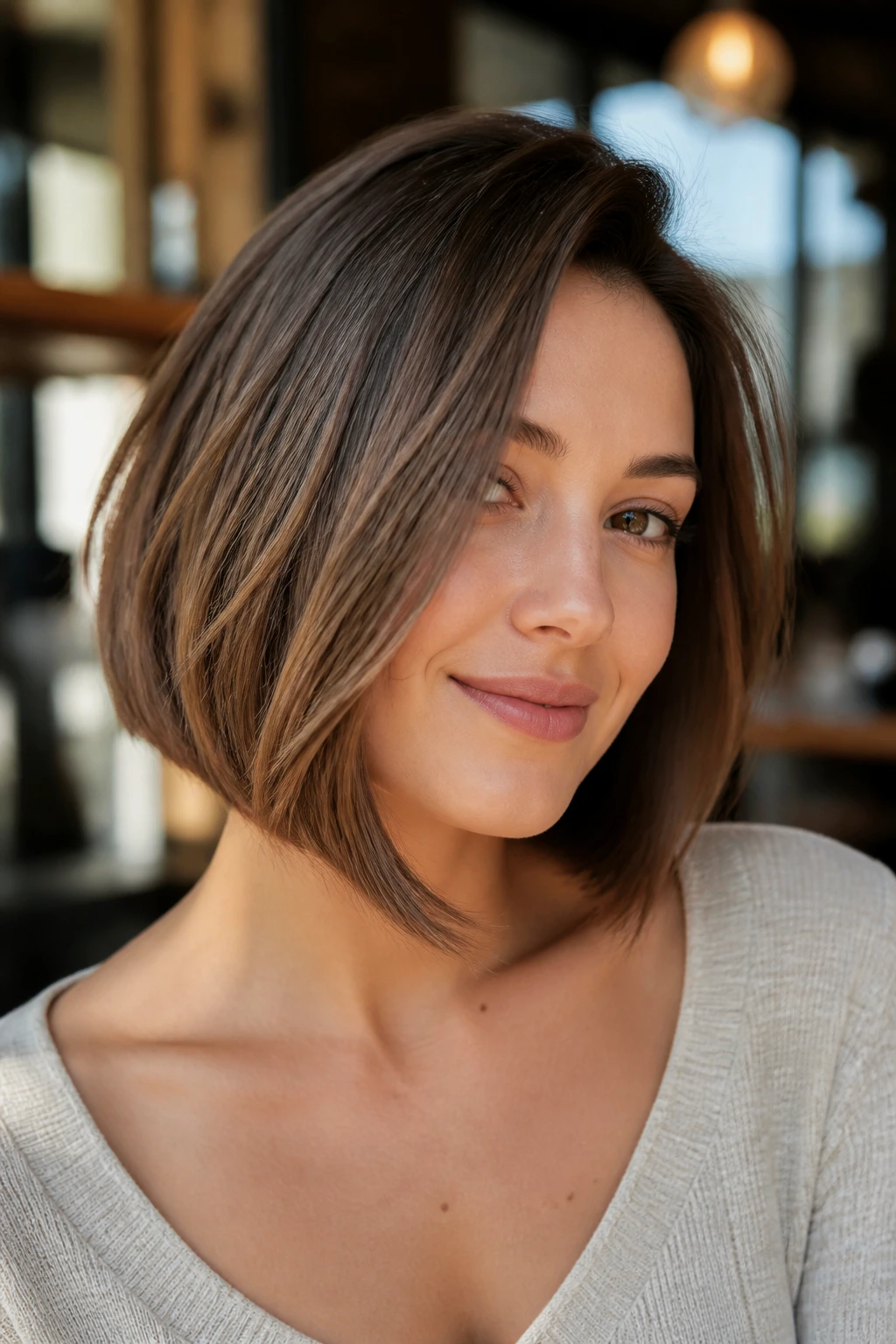
Will a bob make my fine hair look thinner?
Not if the cut keeps enough density at the perimeter. Fine hair usually looks thinner when it’s over-layered or thinned out, not when it’s cut into a strong shape. A blunt or softly curved bob often makes the hair appear fuller than a longer cut with sparse ends.
Is a blunt bob or a layered bob better for 2B hair?
For fine 2B hair, blunt usually wins. Layers can help if they’re subtle and hidden inside the shape, but too many layers steal weight from the ends and make the wave look broken up. If you want movement, ask for light internal shaping instead of obvious chopping.
What length is most flattering on an oval face?
Chin, jaw, and collarbone all work well. The best choice depends on how much fullness you need at the ends and how much of the neck you want to show. If your hair is very fine, jaw or chin length often gives the strongest visual density.
Can I air-dry a bob and still get a good shape?
Yes, if the cut is built for it. A good air-dry bob usually has a clean perimeter, minimal layering, and enough length for the wave to form without springing too high. A little mousse or light leave-in helps the pattern settle instead of frizzing.
Should I get bangs with a 2B bob?
You can, but keep them light. Curtain bangs or a soft fringe usually work better than a heavy blunt bang on fine hair because they break up the face without stealing too much hair from the front. Heavy bangs can flatten the top and make the rest of the bob look thinner.
What if my ends flip out instead of turning under?
That usually means the cut angle, your blow-dry direction, or your natural bend is pushing the ends outward. A round brush or a quick pass with a flat iron on just the last inch can calm them down. If it happens every day, ask your stylist to soften the perimeter slightly.
How do I get more volume at the crown without teasing?
Use a root spray or mousse at the crown, then blow-dry that section with your head tipped to the side or upside down for a short stretch. A deep side part can also shift volume upward without making the hair look stiff. Fine hair usually prefers lift from the cut plus product, not from aggressive backcombing.
How often should I trim my bob?
Shorter bobs usually need a trim every 6 to 8 weeks to keep the line sharp. Longer bobs can stretch a bit longer, especially if you like a softer grow-out. Once the outline loses its weight at the ends, the whole haircut starts looking less deliberate.
The Shape That Does the Work for You
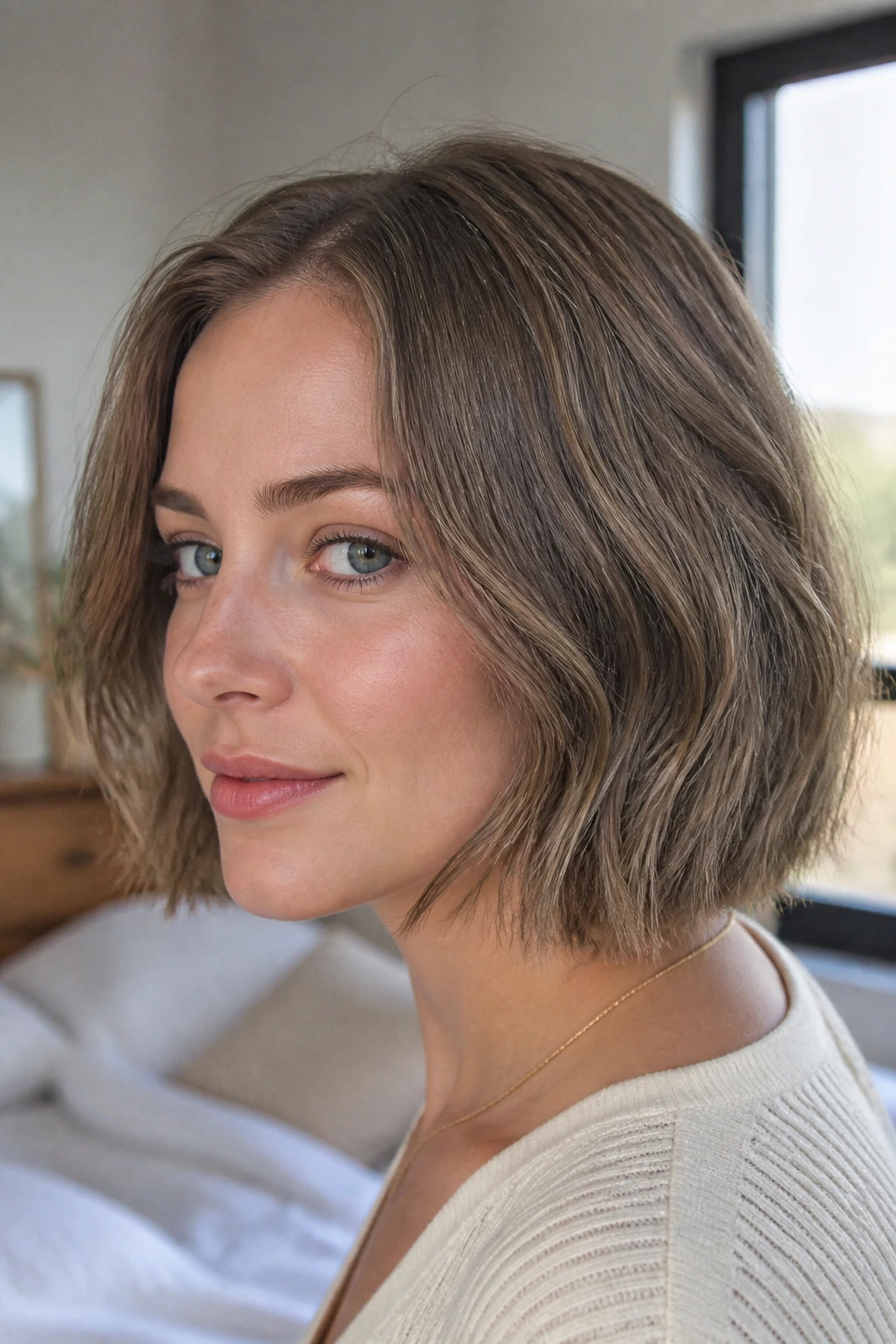
The nicest thing about a good bob on 2B fine hair is that it stops asking you to fight your texture every morning. The cut gives the wave a lane, the ends keep their weight, and the face shape gets balance without looking overworked. That’s the whole trick, really.
Pick the version that matches your routine, not the version that only looks good in a salon mirror after forty-five minutes of styling. A strong bob should still make sense when you air-dry it, tuck one side back, or skip the round brush because you’re late. When a cut can handle those days, that’s when it starts earning its keep.