



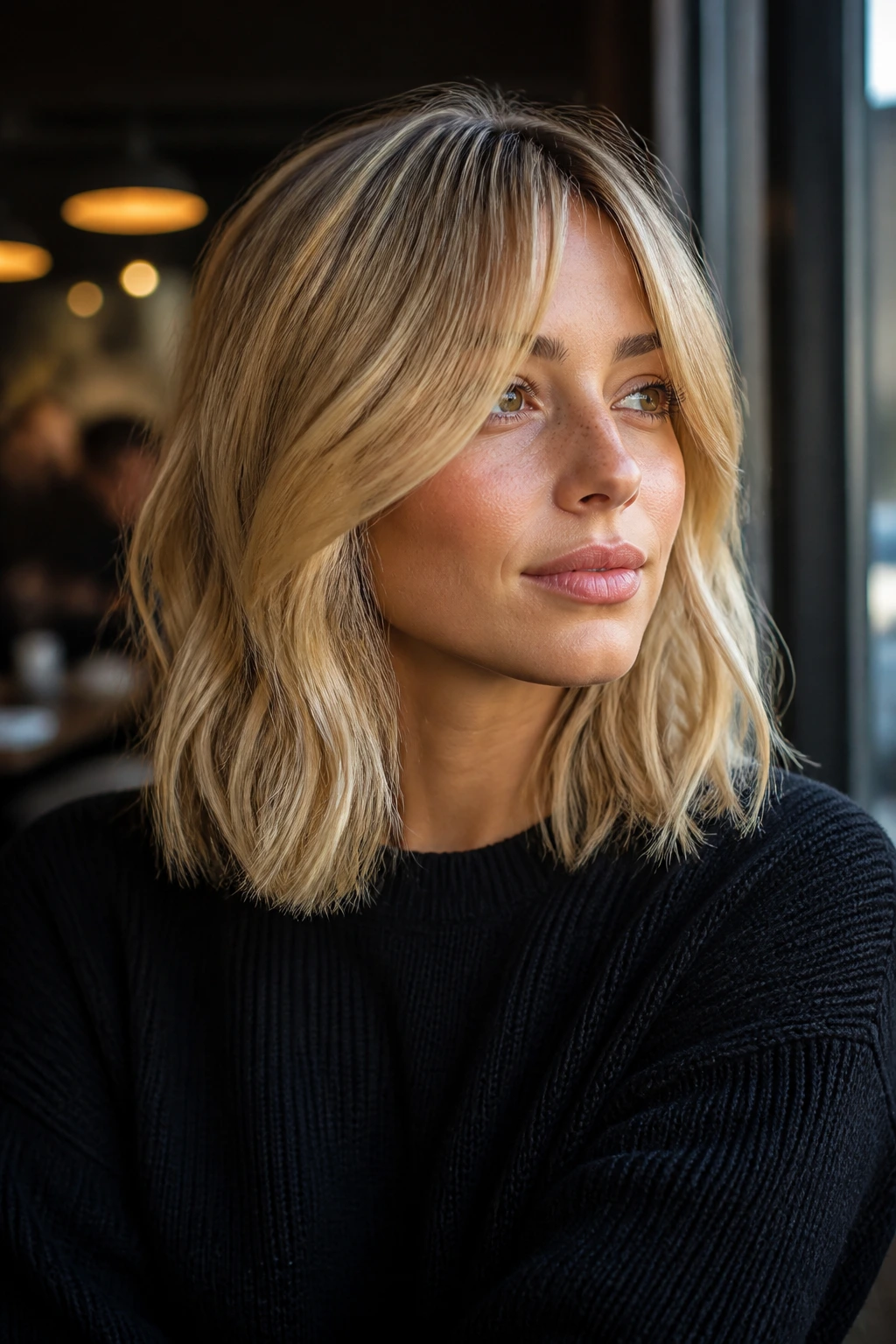
Fine hair can look delicate in the wrong cut and strangely bulky in the wrong wave pattern. Put the two together badly, and the whole thing turns soft in a way that does nobody any favors. Put them together well, though, and a medium-length lob gives you something rare: shape, movement, and enough visual weight at the ends to keep the hair from disappearing into air.
That’s why medium length lobs for fine hair keep showing up in salon chairs. The length sits in a sweet spot between the collarbone and the top of the shoulders, which is long enough for beachy bends to fall nicely but short enough that the ends don’t get dragged down and stringy. A little wave goes a long way here. Too much wave, too much layering, or too much product, and the whole effect collapses into fluff.
The best versions aren’t trying to make fine hair look like thick hair. That’s the trap. They work with the hair’s real texture instead of fighting it, which is why a blunt edge, a soft bend, and a smart part can do more than a bathroom shelf full of styling clutter. Some of these cuts lean polished, some lean relaxed, and a few lean a bit cooler and rougher around the edges — but all of them keep the outline believable.
Why These Lobs Look Fuller Instead of Flatter
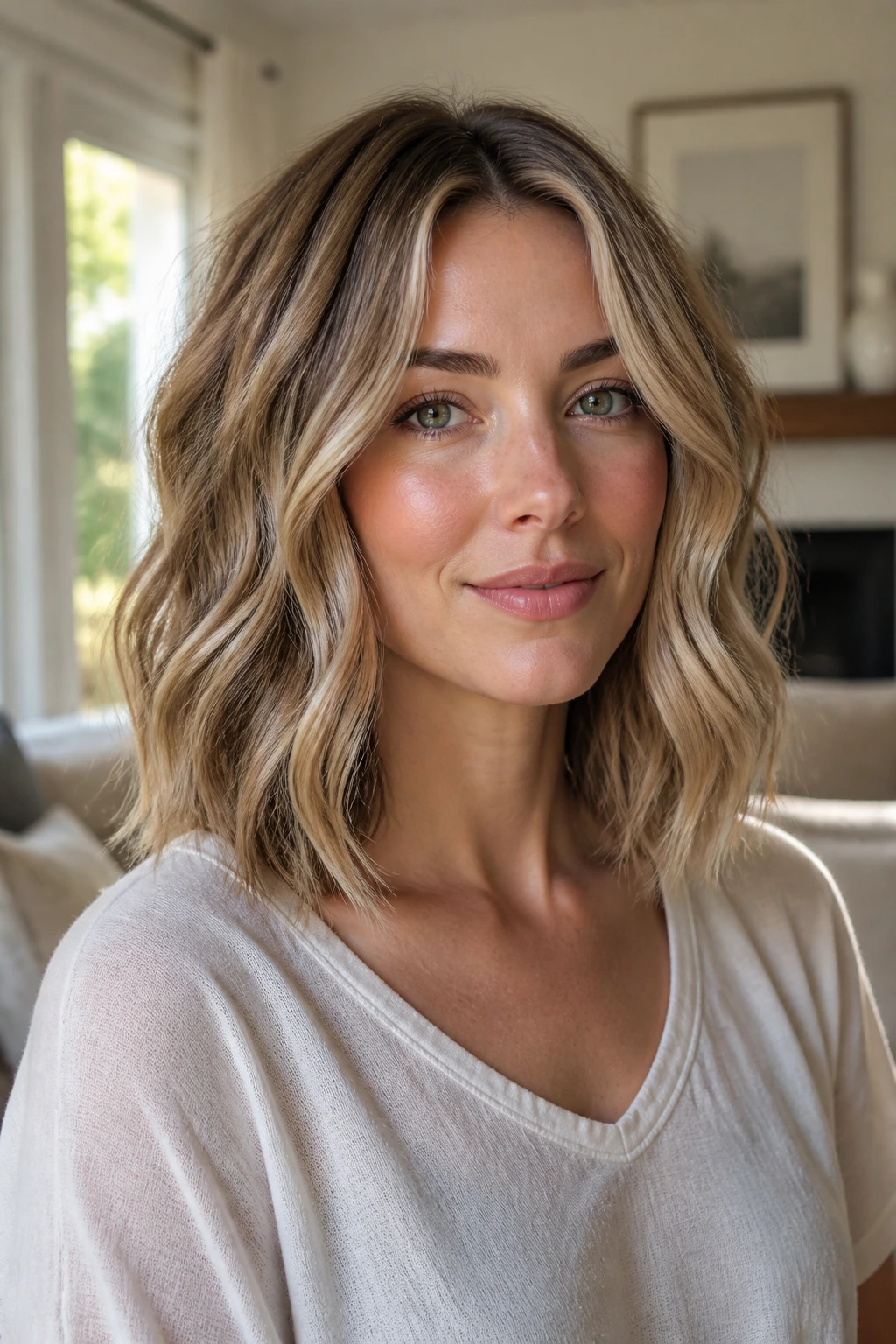
Why the length matters: A lob that lands near the collarbone gives fine hair enough swing to move, but not so much length that the ends go sparse and transparent.
Why the edge matters: A blunt or softly rounded perimeter reads denser than a heavily thinned-out bottom line, especially once the waves are brushed apart.
Why the wave pattern matters: Loose S-bends widen the silhouette without shrinking the hair into tight curls that show every missing bit of density.
Why the part matters: A middle part can keep things symmetrical, while a deep side part gives the crown more lift and the whole style more shape.
Why the finish matters: The best beachy lob looks a little touched, not overworked; the texture should live in the mids, not sit like dry grit at the roots.
1. Collarbone Lob with Center-Part Waves
A collarbone-length lob is the safest place to start when you want movement without stringiness. The ends land where the hair still has enough weight to hold a line, and the loose bends start low enough that the crown doesn’t puff up like a triangle.
Why It Stays Full
A center part keeps the shape balanced and lets both sides carry the same amount of visual weight. I like this cut when the hair is fine but not especially sparse, because the blunt hemline does the heavy lifting while the wave pattern sits in the middle third of the hair.
- Ask for the hemline to fall 1 to 2 inches below the collarbone.
- Keep the ends blunt, with only a tiny bit of point-cut softness.
- Use a 1-inch wand and wrap the hair away from the face in alternate sections.
- Stop curling about 1 inch before the ends so the outline stays solid.
Best detail: mist texture spray through the mids, then finger-comb once. More than that and the shape starts to fray.
2. Blunt Lob with Soft Bends
A blunt hemline does more for fine hair than ten extra products. One clean line makes the whole cut read denser before you even touch a wave iron.
You do not need heavy layers here. In fact, I’d skip them unless the hair is unusually dense at the crown. Let the perimeter stay solid, bend the bottom 2 to 3 inches with a 1.25-inch iron, and brush the wave out so it settles into a loose ripple instead of a curl.
The trick is restraint. Curling too close to the root makes the silhouette look smaller; curling all the way to the ends makes the lob look soft in the wrong way. Keep the roots smooth, the mids loose, and the edges tidy.
That combo looks clean on day one and still holds shape on day two.
3. Choppy Lob with Invisible Internal Layers
Can fine hair wear layers without going wispy? Yes — if the layers stay hidden inside the cut instead of carving the outline to pieces.
The goal here is movement, not subtraction. Ask for internal layers through the crown and upper sides, then keep the hemline blunt enough to anchor the shape. That lets the waves break up a little while the ends still look solid from across the room.
How to Wear It
Dry with a mousse at the roots, then add a few loose bends with a wand. I like to twist only the middle of each section and leave the ends straighter, which keeps the finish from looking too curled. If your hair is naturally limp at the crown, clip the top section up while it cools; the lift matters more than another pass with the iron.
This version suits hair that already has a touch of bend or body. On stick-straight strands, you’ll get the shape, but you may need more product to keep the texture from disappearing by lunch.
4. Deep Side-Part Lob with Crown Lift
You know the day: roots lie flat, the part keeps drifting, and the whole head looks smaller than it should. A deep side part fixes that faster than almost anything else.
The side sweep creates a diagonal line that makes the crown feel higher and the front pieces feel thicker. For fine hair, that diagonal does more visual work than another layer ever will. Keep the waves loose, start them below eye level, and clip the heavier side up for a minute while you finish getting ready. That little pause lets the bend cool with extra lift at the root.
- Blow-dry the part opposite the way you plan to wear it, then flip it back.
- Use dry shampoo at the crown before the hair gets oily.
- Curl the front sections away from the face to open the shape.
- Keep the wave loose near the roots so the part does not collapse.
Small change. Big payoff. Very little fuss.
5. Curtain Bang Lob with Loose Waves
Curtain bangs can make a lob look fuller around the face, but only if they stay soft and a little long. A fringe that hits around the cheekbone or just below it draws the eye upward, which helps when the rest of the hair is fine and needs a stronger outline.
The mistake people make is cutting the bangs too short and too wispy. That turns them into little curtains with nothing behind them. Better to keep the fringe broad enough to split naturally in the middle, then blow-dry it with a small round brush so it bends away from the face instead of sticking flat to the forehead.
The waves should stay loose and low on the head. If the bangs are full of movement and the rest of the hair is curled too tightly, the front takes over and the cut starts looking busy. A softer wave through the mids keeps the whole thing in the same family.
It’s a good look, but it asks for a little attention. Not much. Just enough.
6. Airy Face-Framing Lob
A full fringe can be a lot on fine hair. Face-framing pieces are easier to live with.
This version keeps the main lob one length or nearly one length, then adds two deliberate face-framing sections that start around the cheekbone and taper toward the jaw. That gives the haircut shape without stripping density out of the back. The result is less “styled to death” and more “this just falls well.”
It works especially well if your hair sits fine around the temples but has decent density through the back. The front pieces pull the eye toward the face, while the beachy waves fill out the sides. I’d ask for the framing to stay long enough to tuck behind the ears; that little option matters on days when you want the style to look less formal.
If you like your hair to move when you turn your head, this is the one.
7. French-Girl Lob with Tucked Ends

This version has a little attitude, and that’s part of the appeal. The cut sits just above or right at the collarbone, the ends are softly tucked under, and the waves are more bent than curled.
It flatters fine hair because the outline stays close to the head. No big, fluffy shape. No overbuilt volume at the sides. Just enough wave to suggest texture and enough smoothness at the roots to keep the style looking deliberate.
I also like how it behaves with earrings and glasses. Tuck one side behind the ear, leave the other side loose, and the shape suddenly feels finished without trying too hard. It’s one of those cuts that can look casual in a T-shirt or sharp with a jacket, which is a useful range when your hair tends to do one thing and one thing only.
Keep the texture spray light. Heavy spray turns this into sticky business fast.
8. Slightly Angled Lob with a Clean Edge
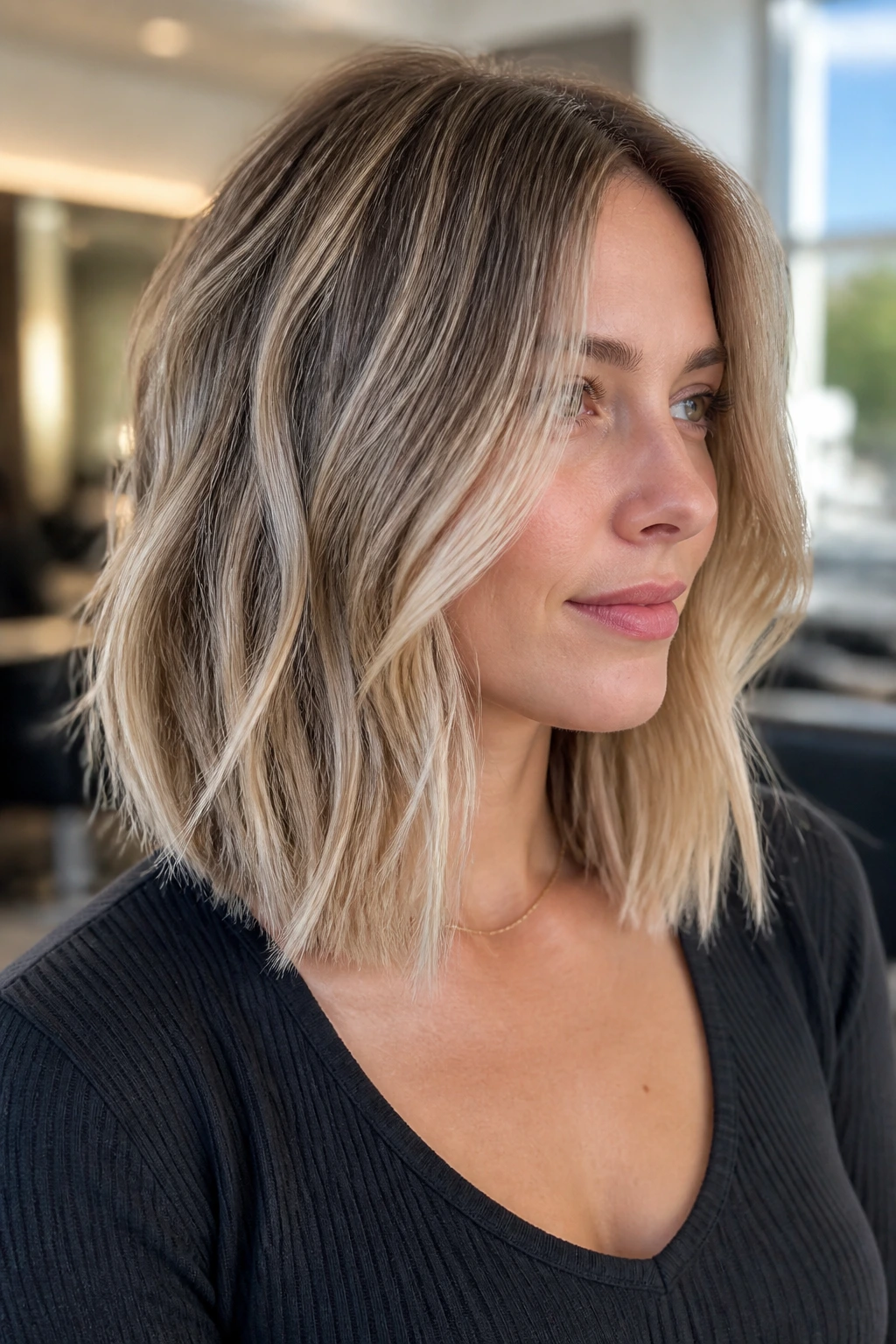
A tiny angle can help fine hair; a steep one usually can’t. That’s the line I keep coming back to.
A slightly shorter back gives the cut lift, while the front stays a bit longer so the hair still feels like a lob instead of a chopped bob. On fine hair, that angle can make the neck look longer and the whole shape look cleaner, especially when the waves are loose and the ends stay blunt.
The mistake is overdoing it. Push the front too far forward and the cut starts looking thin at the bottom, which is the opposite of what you want. Keep the difference subtle — maybe an inch or so between the back and the front — and let the beachy bend blur the transition.
This cut is best if you like a neat outline but still want some movement around the face. It feels a little more tailored than the softer lob shapes, which is exactly why it works.
9. Balayage Lob with Ribbon Dimension
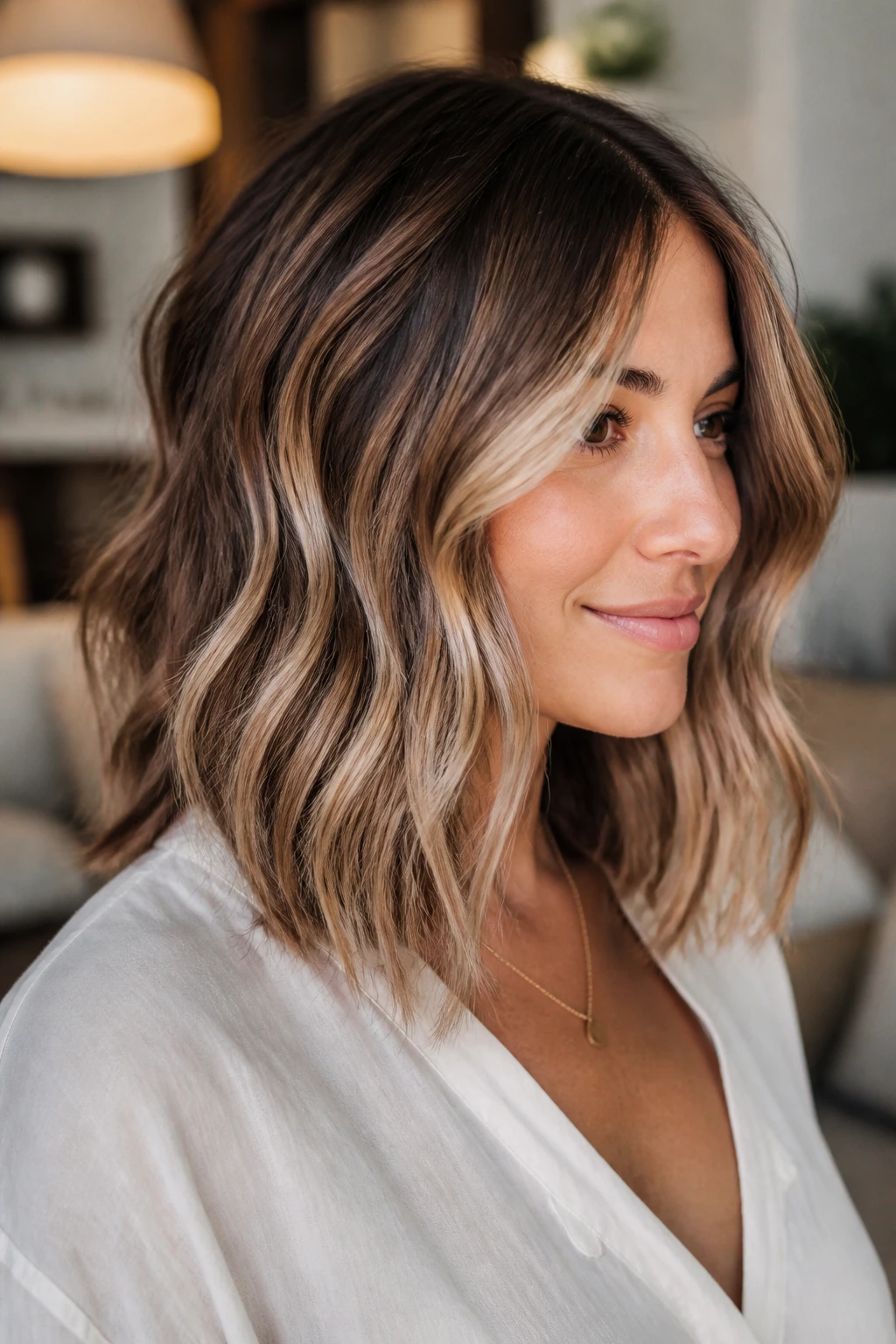
Color matters more on fine hair than people like to admit. A flat color can make a good cut look flatter than it is, while a few ribbon highlights can break up the surface and make every wave show up more clearly.
Balayage works here because the lighter pieces are blended, not striped. That means the hair keeps its soft outline while the bends pick up light in different places. I prefer low-contrast ribbons that sit only a shade or two lighter than the base, especially around the face and top layers. Chunky highlights can overpower fine strands and make the whole thing feel busy.
This is not about going bright for the sake of brightness. It’s about creating the illusion of depth where the hair doesn’t naturally give you much. If your waves keep disappearing in photos or under indoor light, subtle dimension can fix that in a way product never quite does.
A gloss afterward doesn’t hurt either. Fine hair likes shine.
10. Razor-Soft Lob with Feathered Ends
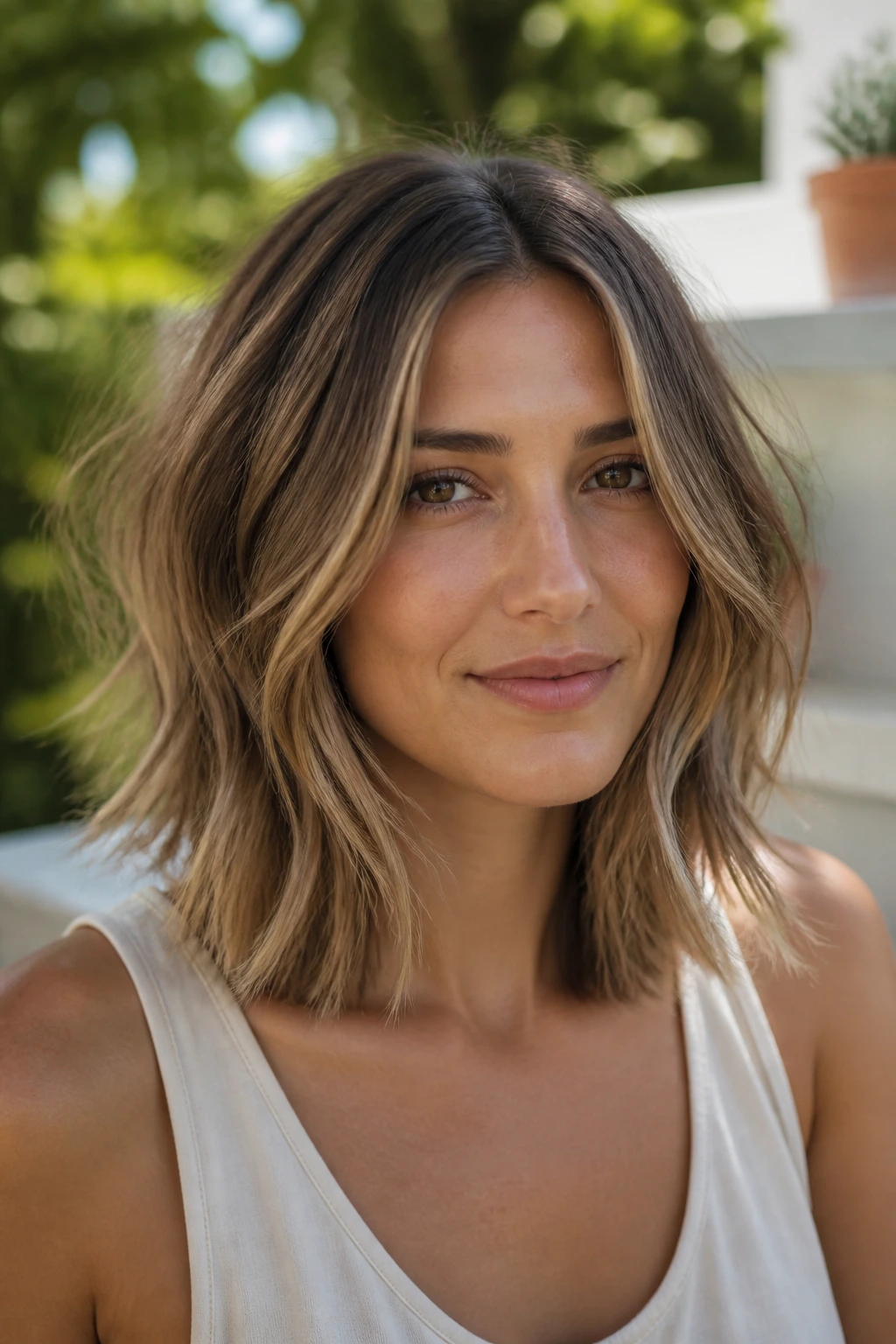
A razor-soft lob is not a cut I’d hand to everyone with fine hair. Done badly, it turns the ends fragile. Done well, it creates movement that scissors sometimes can’t.
The key is to keep the perimeter strong and let the razor only kiss the last bit of the line, softening the edge without shredding it. That gives the beachy waves a slightly feathery fall, which can be beautiful on hair that’s fine but still fairly dense. If your ends already look thin or frayed, skip this one.
Styling should stay loose. A 1.25-inch wand, a few bends around the face, and a brush-out with fingers is enough. No need to force the shape into perfect waves; the point is a little air between the pieces. The overall effect is softer and less polished than a blunt lob, but not messy.
I’d call this a stylist’s cut. It rewards a careful hand.
11. Shoulder-Grazing Lob with Diffused Waves
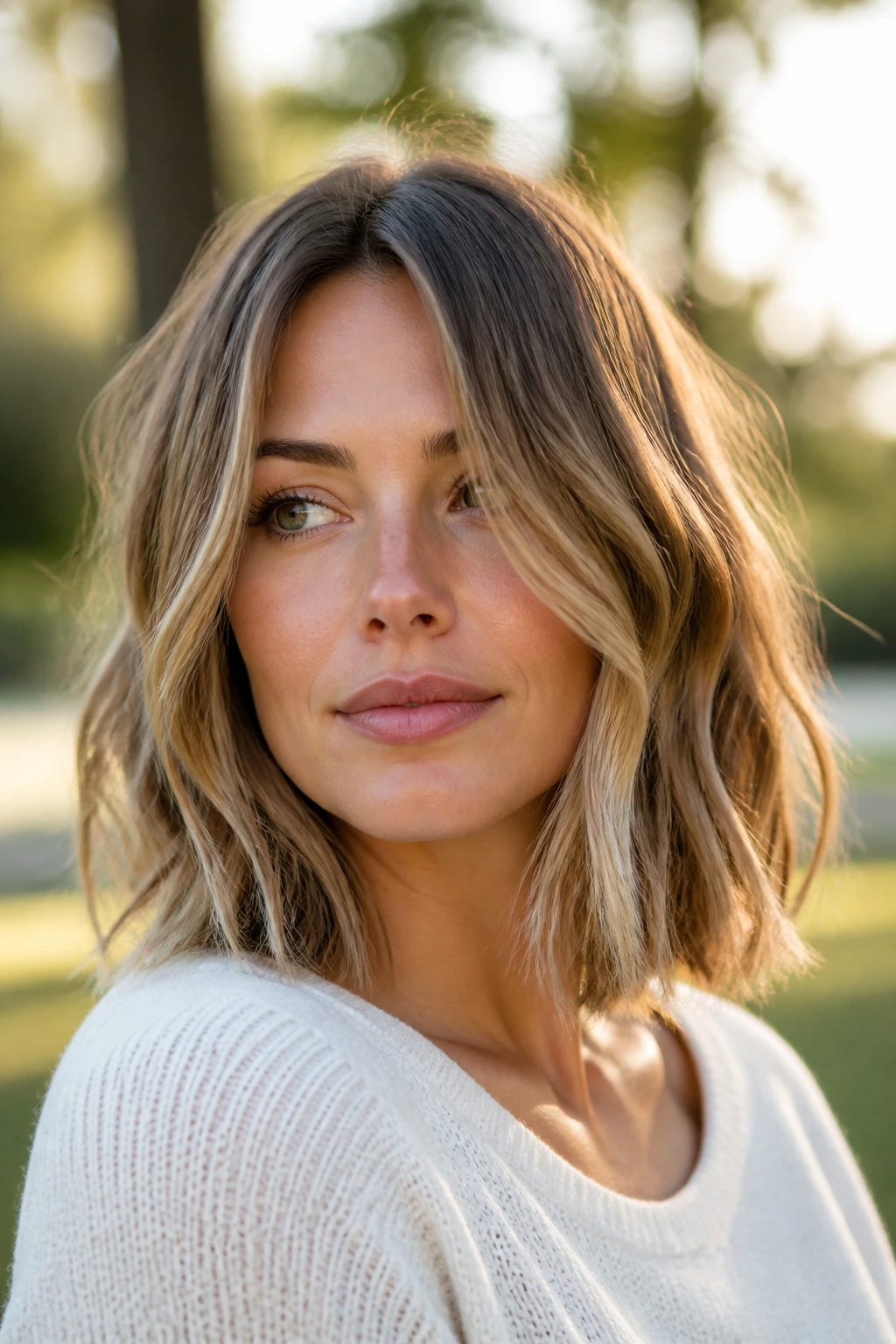
When a lob gets right to the shoulders, the wave pattern starts to matter even more. Hair that lives at this length can kick out at the ends if the cut is too heavy, or collapse if it’s too thin.
A shoulder-grazing lob works well when the hair has a natural bend or a little body already. Diffusing the waves instead of smoothing them into place keeps the texture airy, and that is half the point. Apply mousse to damp hair, scrunch with a microfiber towel, then diffuse on low heat until the roots are dry and the mids still have some shape.
The nice part is how little precision it asks for. Fine hair often looks best when it isn’t overcontrolled. A soft, broken wave near the ends and a little lift at the crown can do more than a full curl set ever could.
This is also one of the easiest cuts to wear when you want a little more length without losing the lob shape.
12. Off-Center Part Lob with Polished Roots
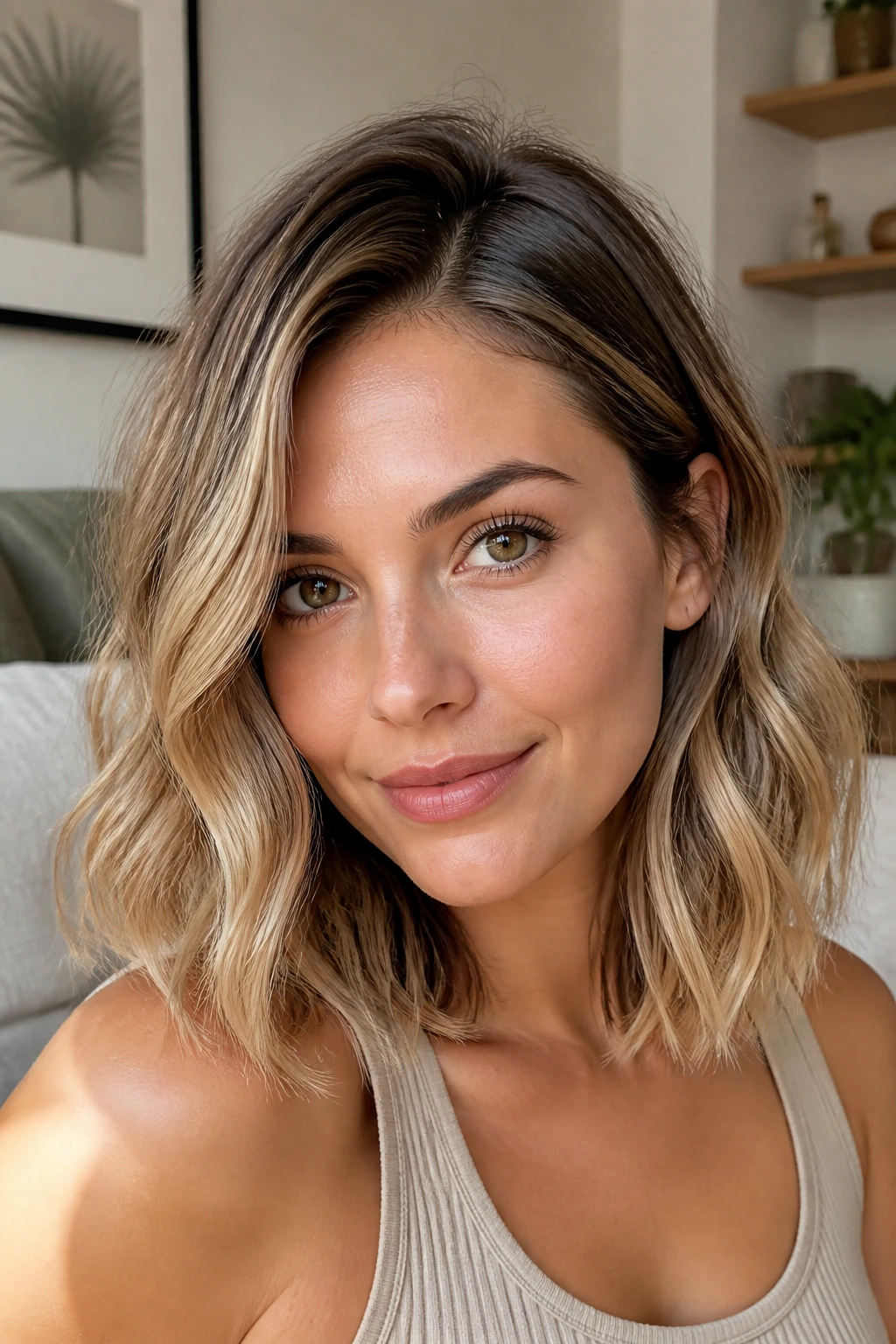
A middle part is not the only way to make a lob look balanced. An off-center part can soften the face and keep the root area from going too flat.
I like this shape when a strict center part makes the hair cling to the scalp. Moving the part just an inch or two off center gives the crown a lift while still keeping the style orderly. The waves then fall in a way that looks relaxed, not accidental.
The roots should stay smoother than the mids. That contrast is what keeps the style from becoming puffy. Use a blow dryer and brush at the roots, then add loose bends through the ends so the polished top and textured bottom meet in the middle.
It’s a small adjustment, but it changes the whole read of the haircut. Less symmetry. More life.
13. Grown-Out Bob with Micro-Layers
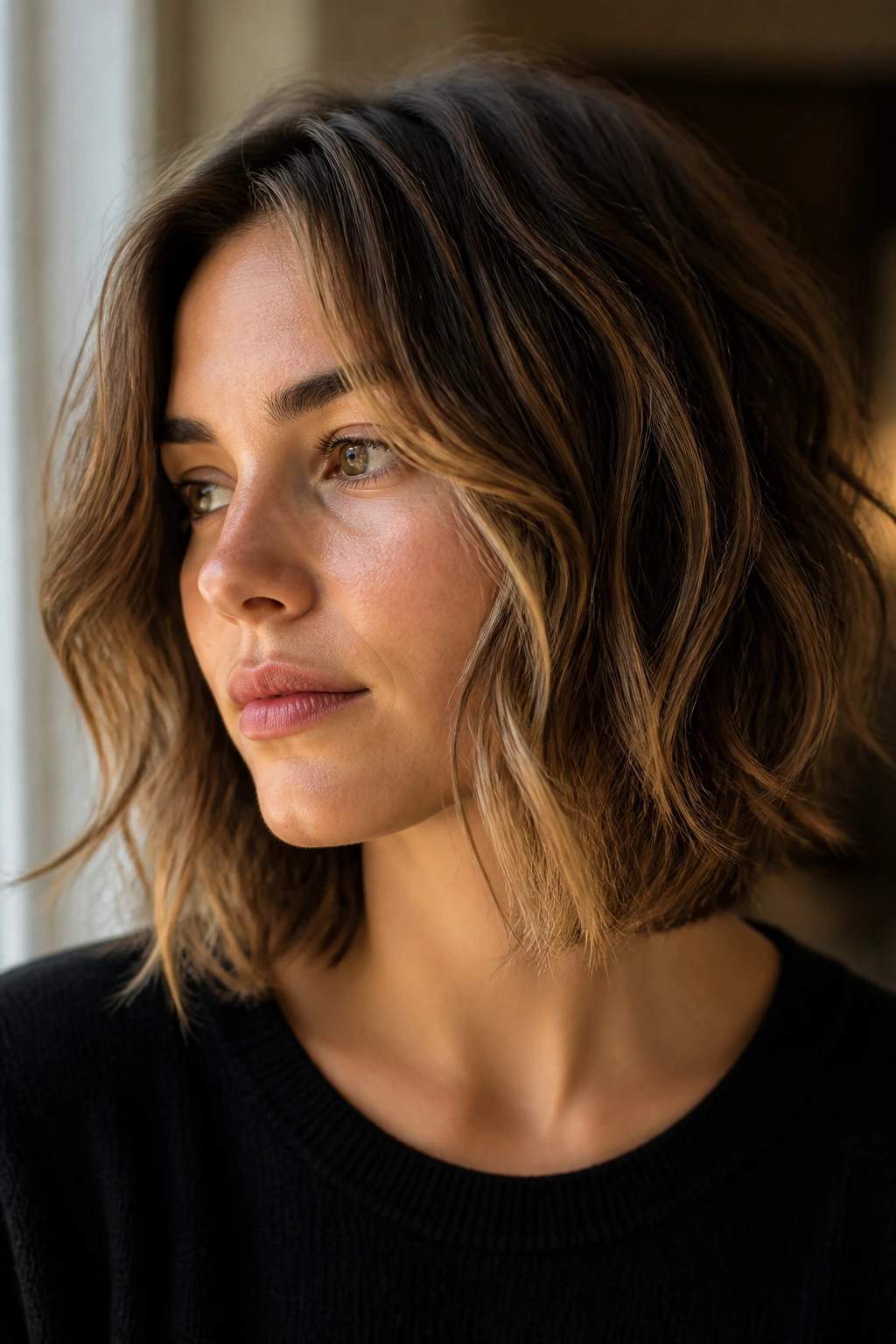
This is the lob for anyone growing out a bob and refusing to look awkward in the middle. It sits just a touch longer than chin length in the back, reaches into lob territory in the front, and uses tiny internal layers to stop the ends from flipping out like a helmet.
Micro-layers are the quiet part of the cut. They live inside the shape, not on the surface, which means the hair gets movement without losing the edge that makes fine strands look thicker. Beachy waves soften the transition between the short back and longer front so the whole thing feels intentional.
If you’ve been living with a shorter crop and want something in between without a dramatic jump, this is a smart landing place. It grows out gracefully, which matters more than people think. A cut that survives the grow-out phase saves you money, frustration, and a lot of mirror checking.
You still need trims. Just not as often.
14. Crown-Lift Lob with Root-Clip Volume
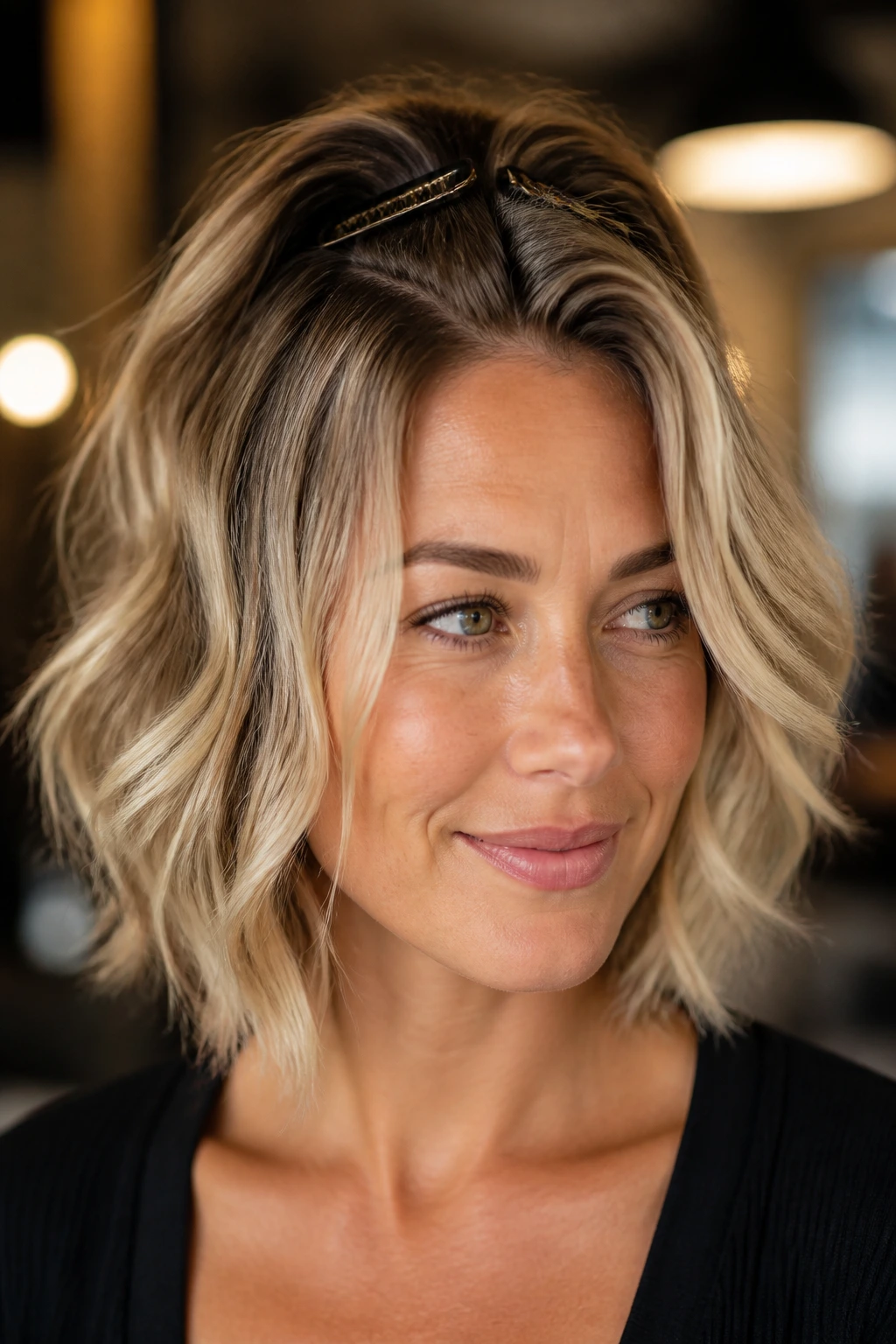
If the crown collapses, stop fighting the ends and work the top. Fine hair often needs help where the eye lands first.
This version uses a strong root lift at the crown and a simple, clean lob line through the bottom. The style depends on volume right at the root, so duckbill clips or velcro clips become part of the routine. Set the crown while it’s warm, let it cool, and you’ll get a lift that lasts longer than a quick blast of dry shampoo.
The waves should stay loose and secondary to the shape. If the top is full and the ends are tidy, the whole cut reads denser. That’s the trick. You do not need a lot of curl; you need enough support to keep the top from folding in on itself.
This one suits hair that goes flat within an hour of styling. If that sounds familiar, the crown deserves more attention than the curl pattern.
15. Piecey Lob with Dry Texture Spray
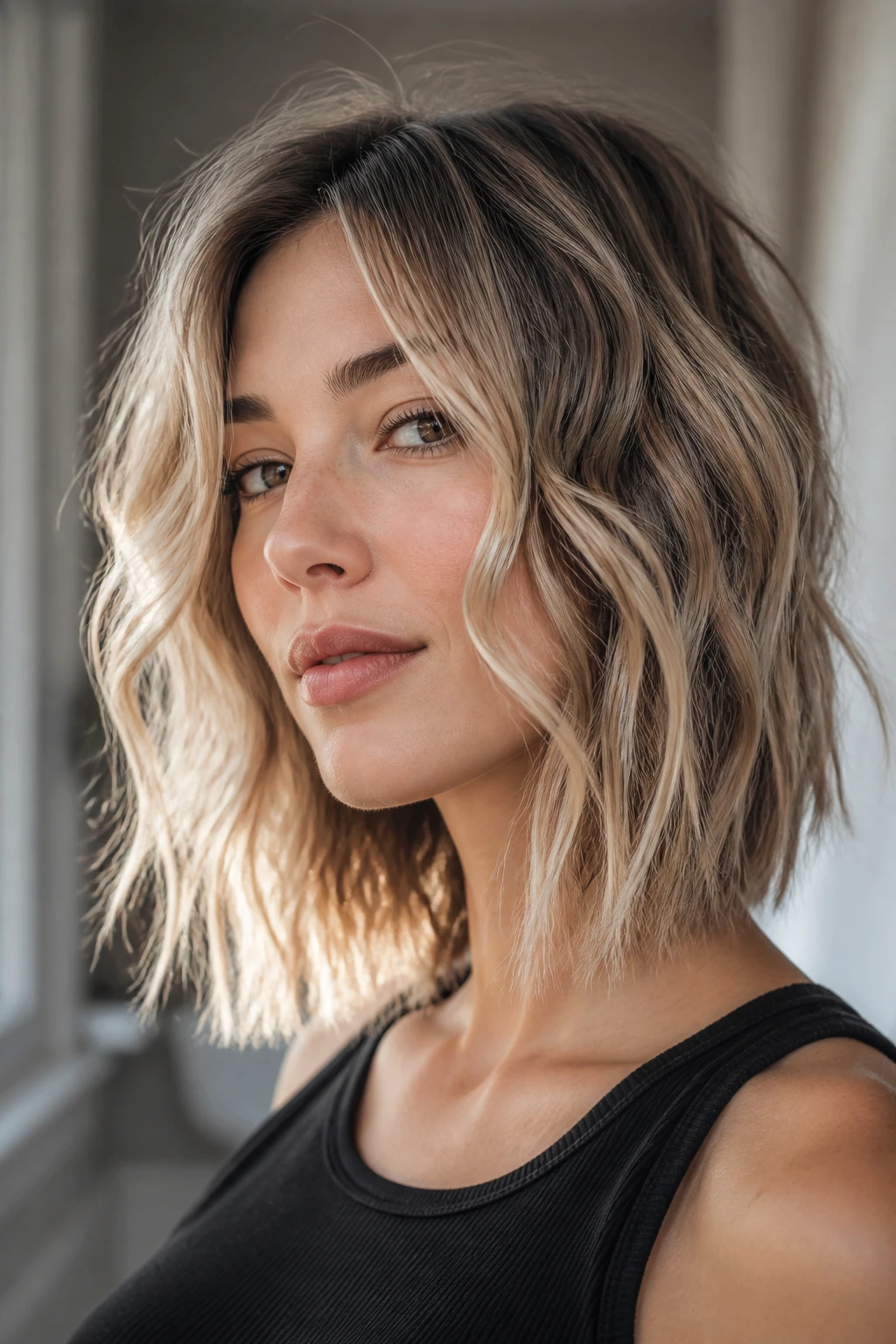
A piecey lob is not about looking messy. It’s about separating the hair in a controlled way so the waves show up as individual bends instead of one big soft cloud.
That matters on fine hair because too much softness can erase the shape. Start with a bend created by a wand or flat iron, let it cool, then mist a dry texture spray from mid-length to ends. Use your fingers — not a brush — to split the waves just enough that they stand apart.
I like this look when the hair has a bit of natural density but needs help looking more lived-in. It’s also one of the better options for second-day hair, since the texture spray gives the strands some grit and makes them easier to reshape. Too much, though, and the ends start to feel dusty. Go light.
The style should look touchable, not crunchy. That line matters.
16. Rounded Lob with a Soft Perimeter
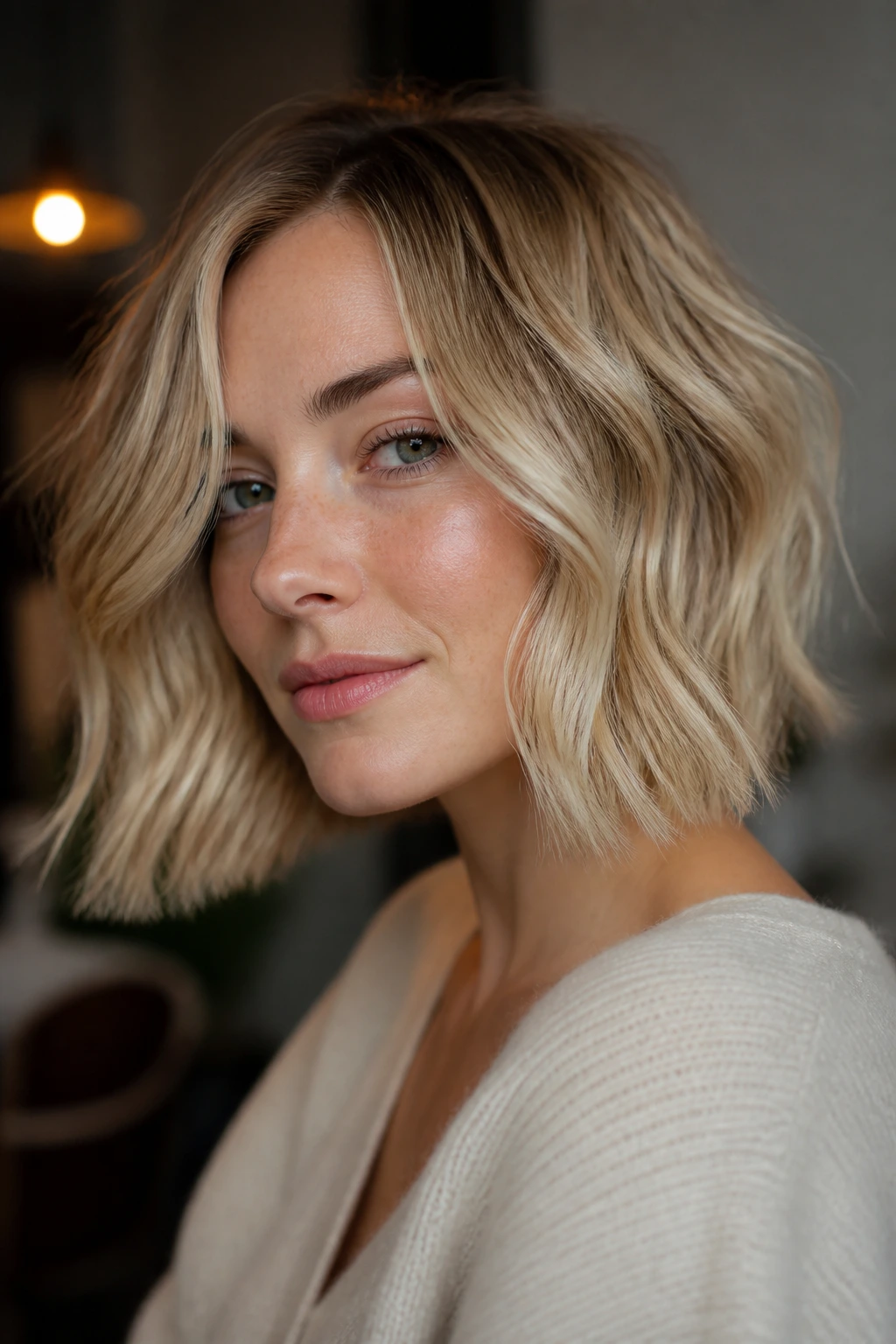
A rounded lob is useful when straight, boxy edges make the hair look sparse at the sides. By keeping the perimeter softly curved, the cut wraps around the jaw and neck in a way that feels fuller.
This shape avoids the harsh corners that can happen with an aggressive blunt bob. It still keeps enough of a line to hold density, but the rounded finish makes the wave pattern feel smoother and less chopped. I’d choose this if your hair naturally flips outward at the ends or if your jawline is narrower and you want the cut to feel a bit more balanced.
Styling is straightforward. Create loose beach waves, brush them apart, then let the front pieces fall forward and the back tuck in slightly. The roundness comes from the haircut, not from overstyling.
That’s the good part. The cut does the work while the waves stay relaxed.
17. Long Lob with Internal Layers
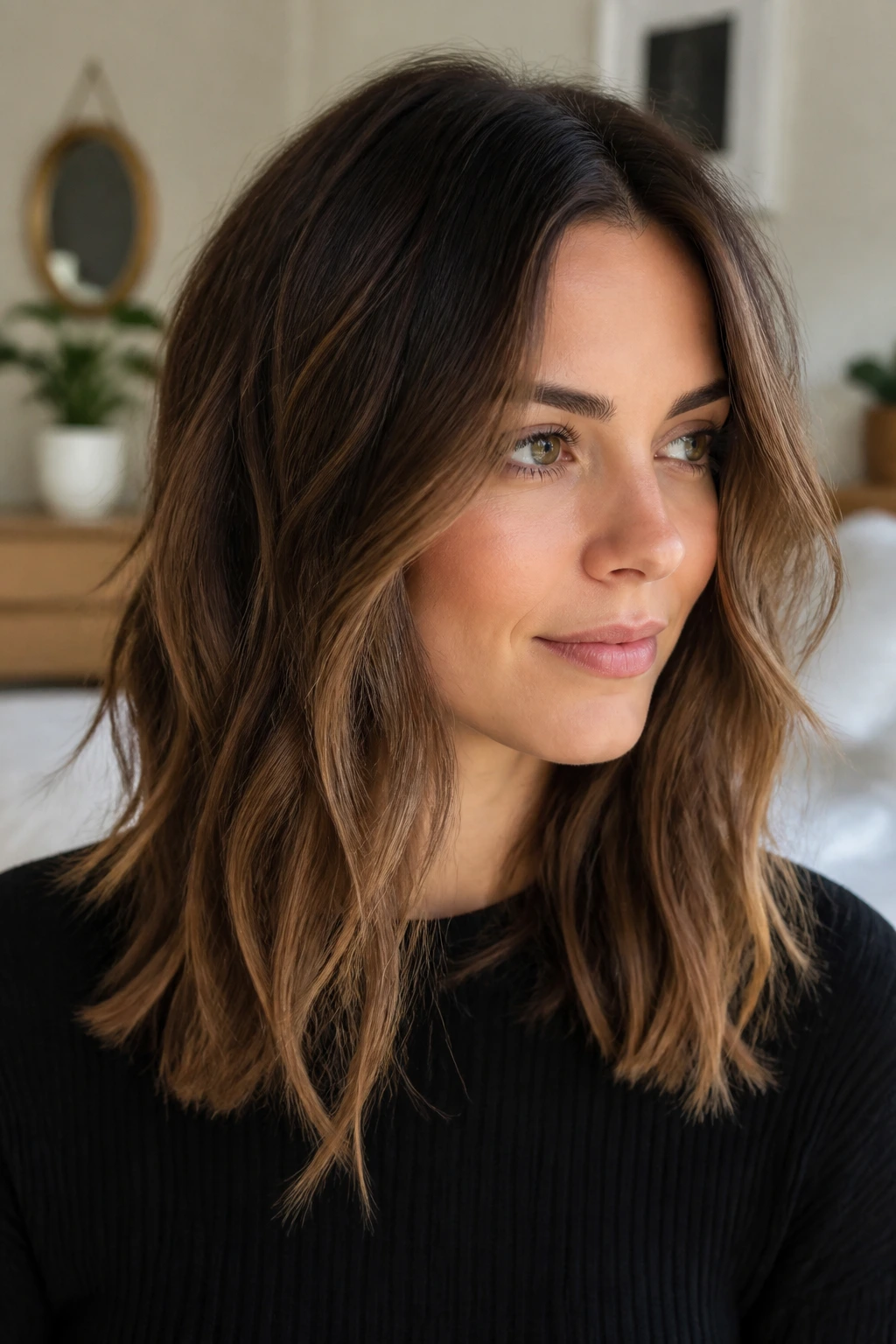
This is the long side of the lob family — the version that brushes the shoulders or lands just below them, but not so long that it stops reading as a lob. On fine hair, the extra inch or two can be useful if you want movement without sacrificing your ability to tuck, clip, or braid it.
Internal layers keep the shape from feeling heavy. They let the beachy waves fall in a softer pattern while the outer line stays intact. I prefer this approach if the hair has enough density to handle the length but starts to look limp when it gets too short.
The one catch is maintenance. Once the ends start to fray, a long lob can tip into stringy territory fast. Keep the ends clean, and the style stays polished. Let them go, and the whole shape sags.
It’s a low-drama cut for people who like options. That’s probably why it keeps hanging around.
18. Cheekbone-Fringe Lob with Tousled Waves
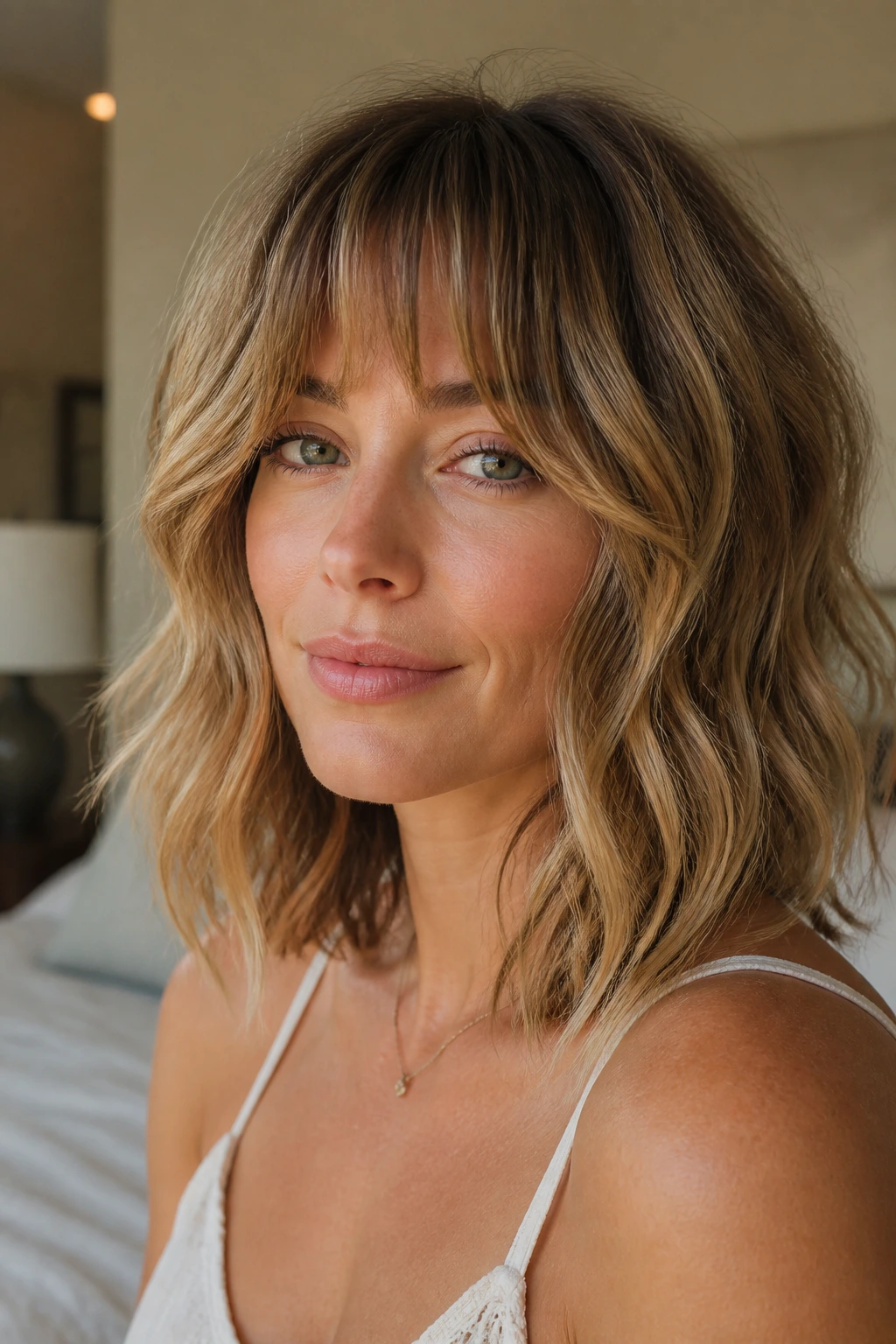
A cheekbone-framing fringe is a little less committed than full curtain bangs and a little more interesting than no fringe at all. That makes it useful on fine hair, where too much bang can eat up density.
The front pieces should graze the cheekbone or the top of the jaw, then melt into the rest of the wave pattern. I like this on faces that benefit from a bit of vertical framing, because the fringe draws the eye upward before the eye notices the hair’s thickness. It also softens a high forehead without closing the face in.
Do not air-dry the fringe and hope for the best. It usually separates too quickly. Hit it with a small round brush or a quick bend from a flat iron, then let the rest of the lob stay loose and tousled. That contrast keeps the fringe from looking like an afterthought.
This style has personality. A little edge, a little softness, no fussing around.
19. Warm Balayage Lob with Shine
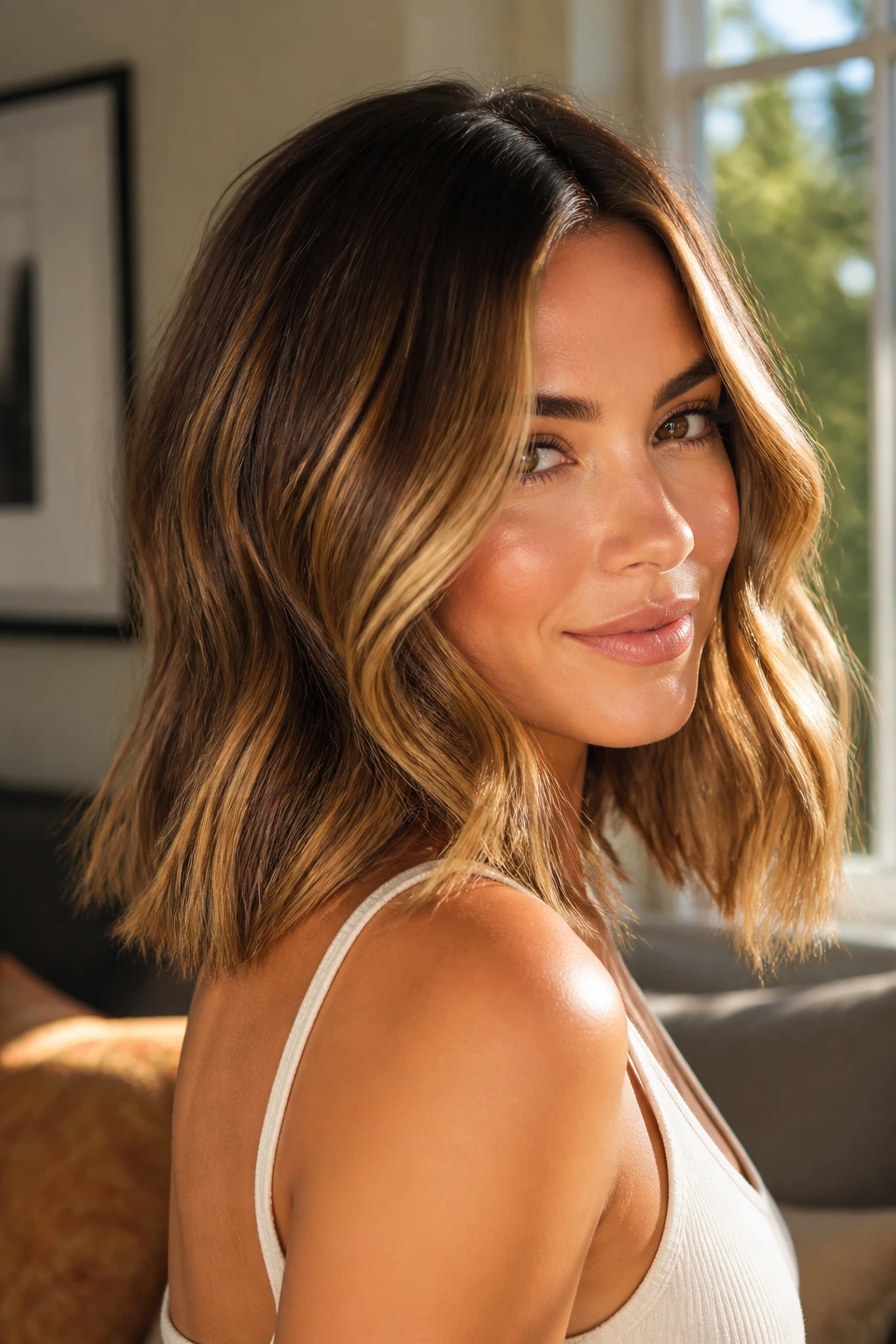
Warm tones do a lot of work for fine hair. Honey, caramel, and soft beige pieces catch light in a way that makes the wave pattern easier to see, especially when the hair is cut in a clean lob shape.
This is not the place for chunky contrast. Keep the balayage soft and blended so the color supports the cut instead of shouting over it. Warm dimension can make the hair look thicker because it creates little shifts in tone across the bend of each wave. That’s the whole trick: shadow, shine, shadow again.
A gloss finish helps here. Fine hair can lose its sheen quickly, and when that happens, even a good cut starts to look tired. A clear or warm gloss keeps the surface reflective without weighing it down.
If your hair is naturally flat in pictures, warmer dimension can change the read of the style more than another round brush ever will.
20. Flat-Iron Wave Lob with Gentle Kinks
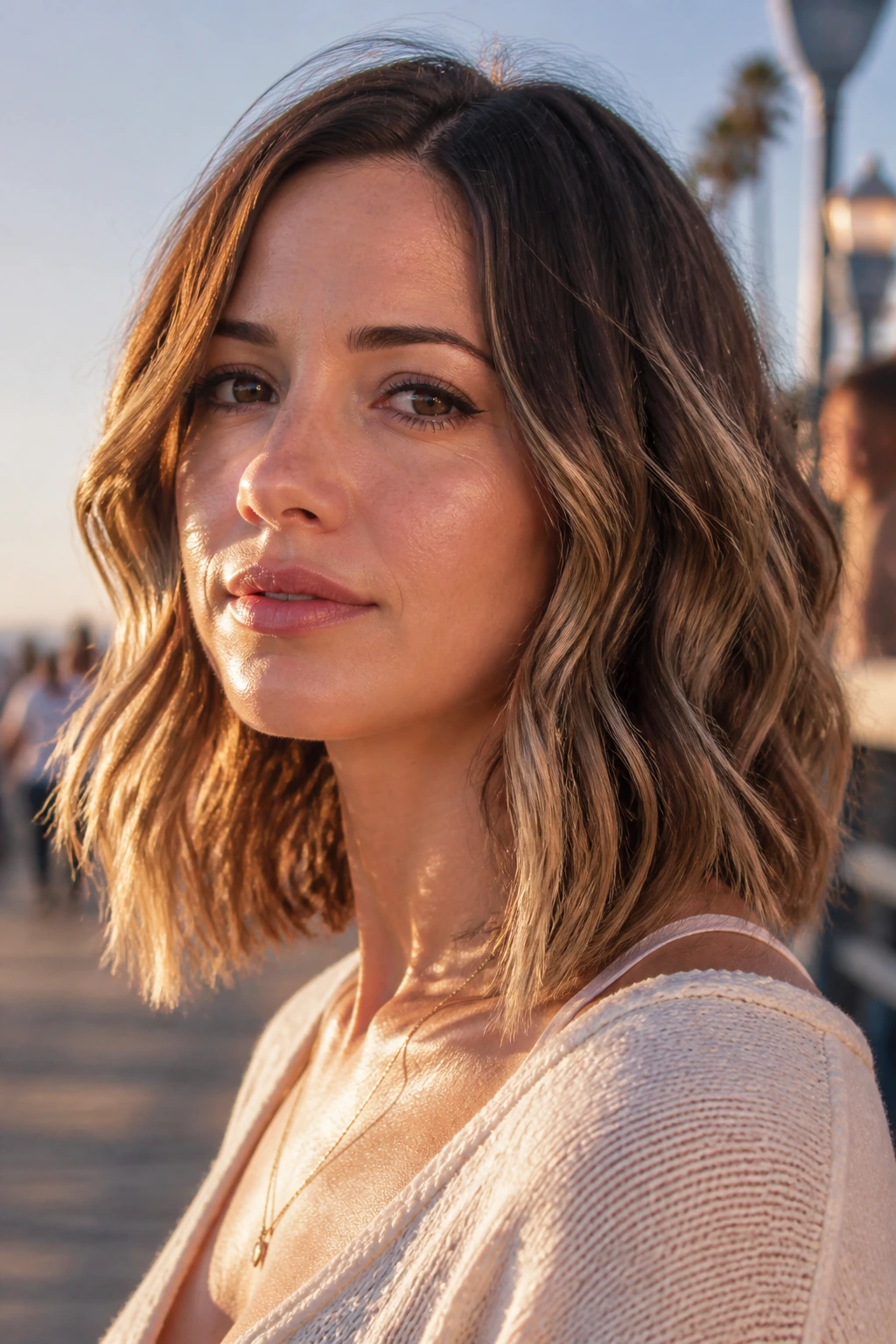
Some fine hair refuses to hold a traditional curl. A flat iron wave solves that by creating a softer, more broken bend that feels less precise and often lasts a little better.
The movement comes from subtle wrist turns, not from wrapping the hair into a full curl. Clamp, bend, release, move down the section, bend again. The result is a loose S-shape that looks beachy without going frizzy. Leave the ends slightly straighter so the lob keeps a dense outline.
I like this method for hair that falls flat under a wand or gets too soft after brushing. The flat iron gives a bit more control over the shape, especially around the face. It also makes it easier to work on second-day hair because you only need to touch a few pieces, not the whole head.
Gentle kinks. That’s the whole move.
21. Money-Piece Lob with Bright Face Framing
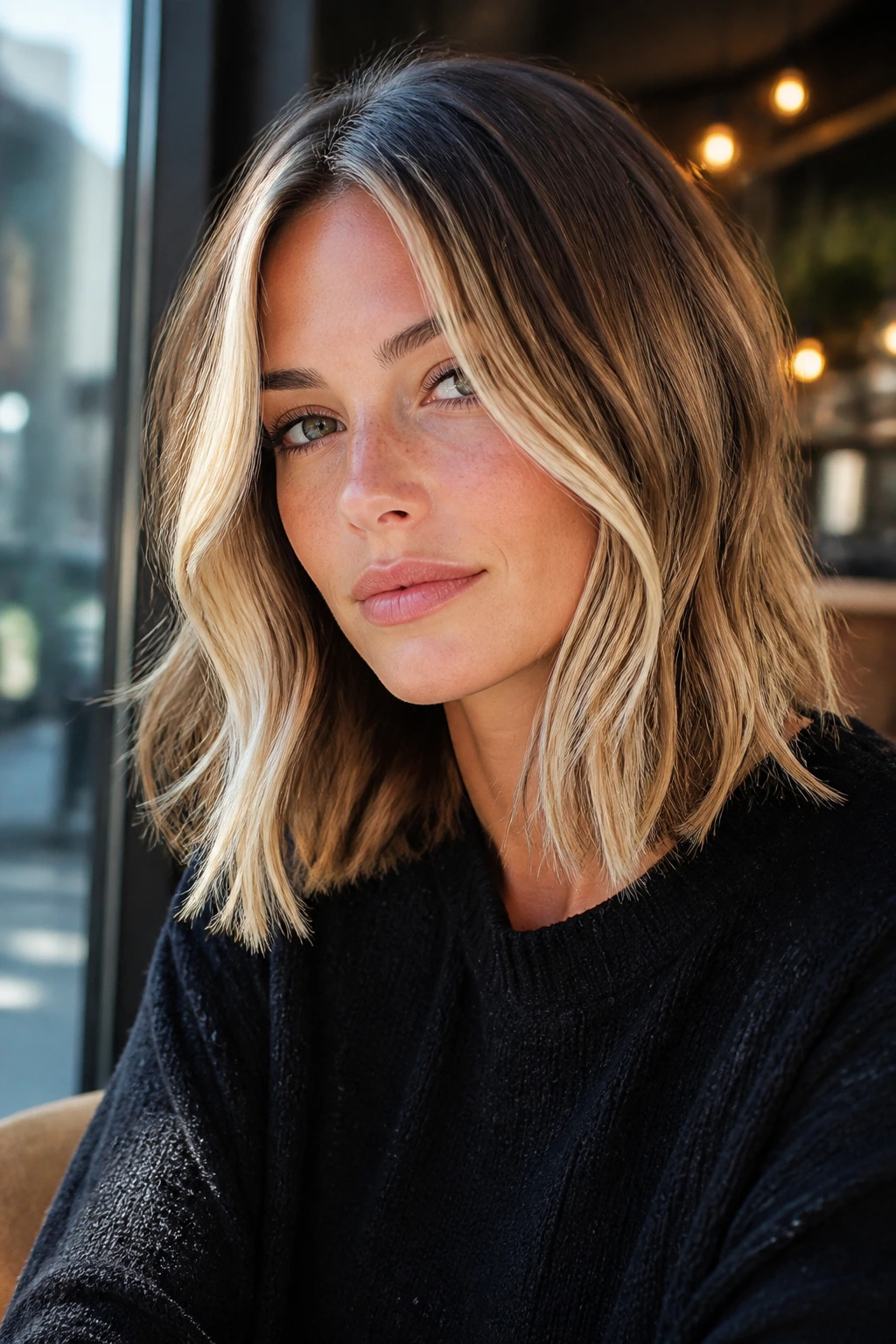
A bright face-framing piece can do a lot for a fine-hair lob, as long as the rest of the cut stays calm. The lighter front sections pull the eye to the face and make the wave pattern show up more clearly around the perimeter.
The trick is restraint. Keep the brightness concentrated at the front and let the base color stay closer to your natural shade. That contrast adds depth without needing a lot of layered haircutting, which is useful when the hair already feels light at the ends. If the highlights are too bold everywhere, the cut can start to look broken up instead of full.
This version looks especially good with soft beach waves and a clean center or off-center part. The face gets a bit of brightness, the rest of the lob keeps its structure, and the shape reads polished without being stiff.
It’s a good one if you like a little drama without constant styling.
22. Low-Maintenance Lob with Day-Two Texture
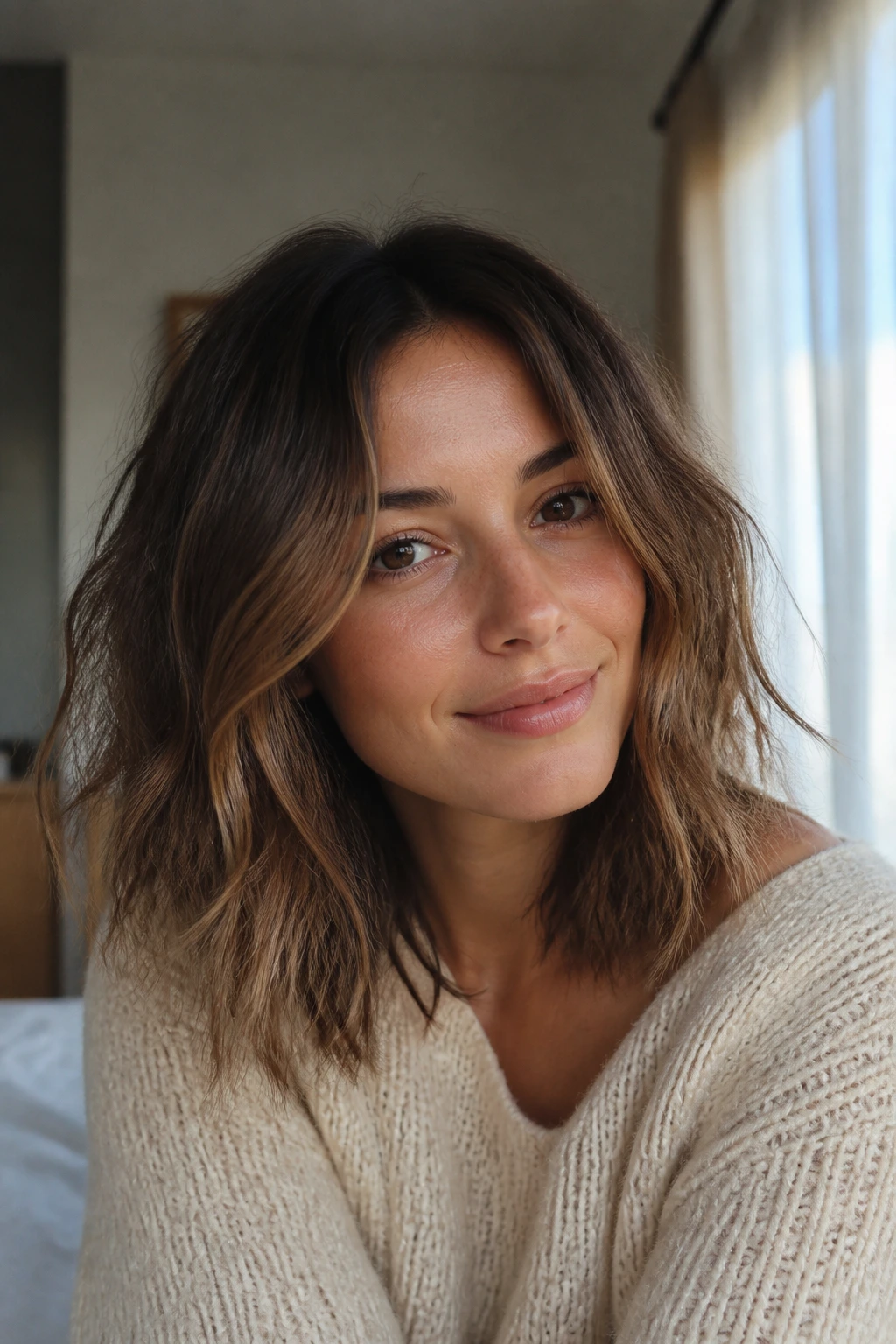
A low-maintenance lob is not the same as a lazy cut. It’s a shape built to look better after it has settled.
This version sits slightly longer, keeps the layers minimal, and relies on the way fine hair loosens overnight. The beachy waves are softer on day two, the root lift settles into a more natural bend, and the ends stop looking freshly styled in a good way. I prefer this when a person does not want to rebuild the style every morning.
The key is not to overdo day one. If the first styling pass is too perfect, the second day gets weird fast. Give the hair room to bend, sleep on a silk pillowcase, and refresh only the face-framing pieces and crown with a little water and texture spray.
This is the version for real life. Not a photo shoot. Real life.
Why Medium-Length Lobs Work So Well on Fine Hair
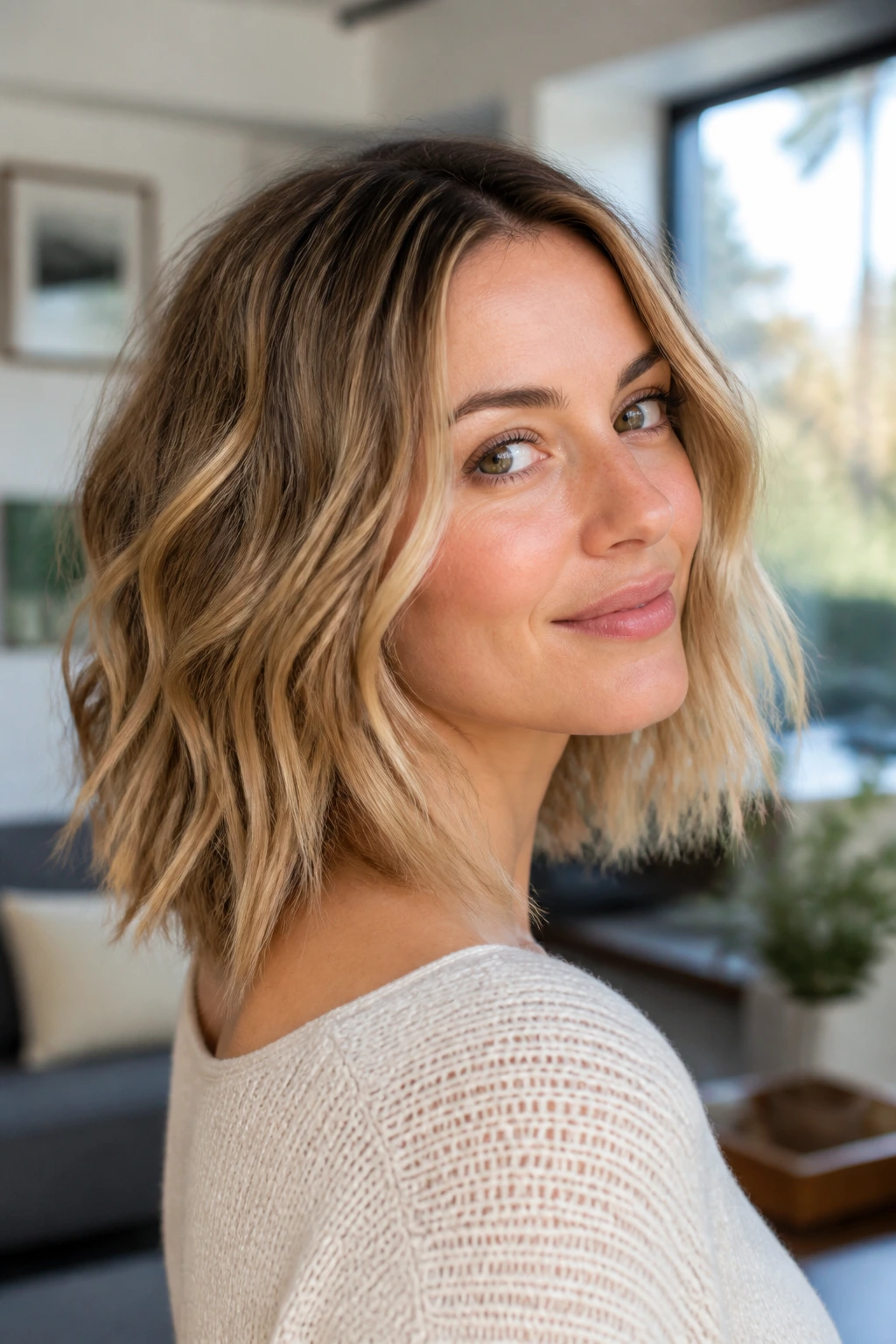
A medium-length lob works on fine hair because it respects how fine strands behave. Once the hair gets much longer than the collarbone, the ends start to look lighter, the wave pattern stretches out, and every little gap shows. Go much shorter than that, and you can lose the swing that makes beachy waves look relaxed rather than stiff.
The sweet spot is usually somewhere between the collarbone and the top of the shoulders. That gives the hair enough length to bend, but not enough length to get dragged into a flat curtain. A blunt bottom line matters here. I’d take a clean edge over a shredded one almost every time, because the outline is what tricks the eye into seeing density.
Beachy waves help by widening the shape, not by piling on volume. Loose bends create little pockets of shadow between strands, and those shadows make the hair feel fuller. Tight curls can do the opposite. They can expose the fact that there isn’t much hair to work with, which is why the best lobs stay soft and loose at the mids, with the roots left calm.
One more thing. Fine hair often looks better when it is touched less. That sounds almost too simple, but it matters. The more you poke, brush, and over-spray the style, the more the hair separates. A good lob gives you structure first and styling second. That order is the whole game.
Essential Tools for These Looks
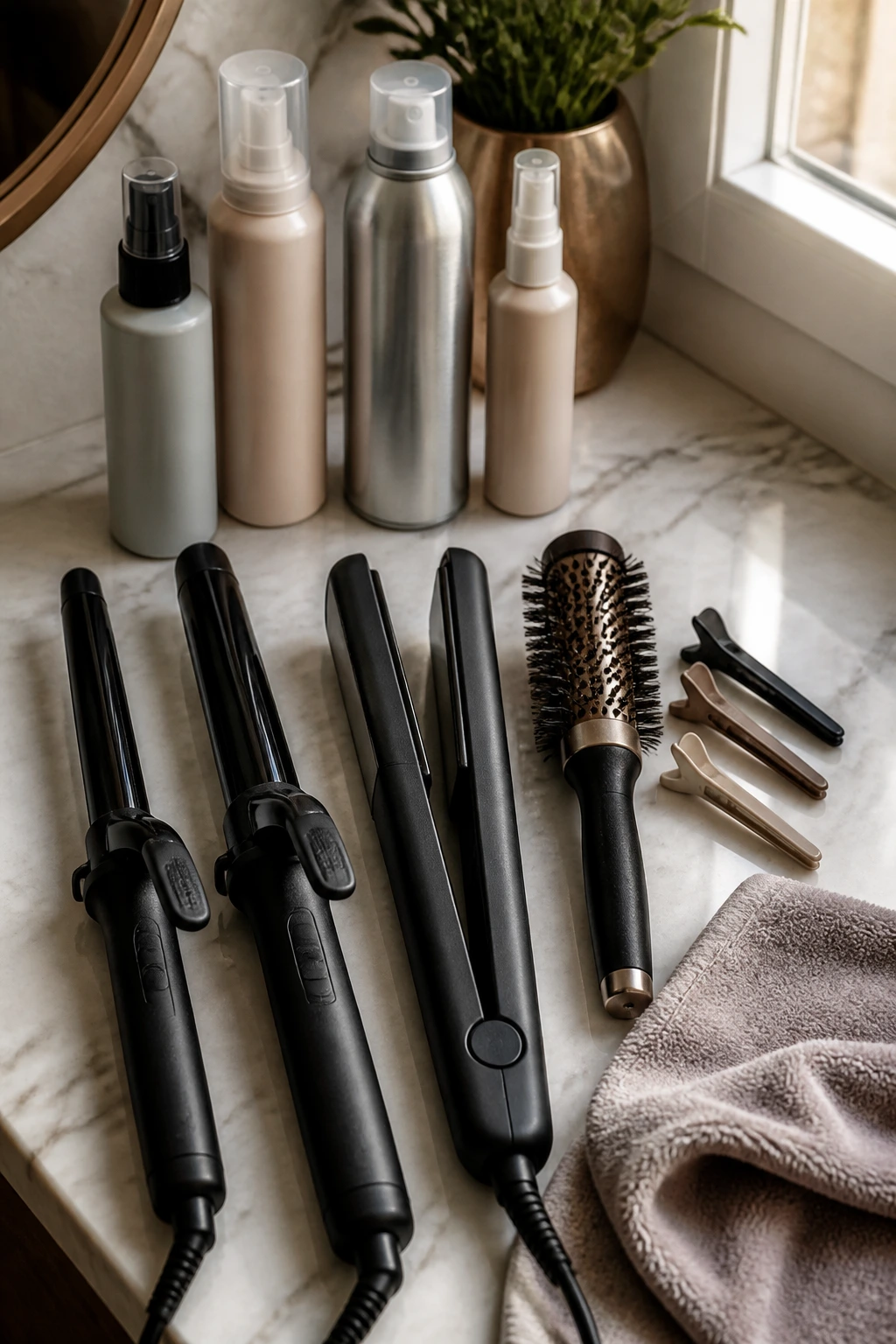
- 1-inch curling wand or iron: Best for collarbone-length lobs and tighter beach bends; wrap for 6 to 8 seconds, then let each section cool.
- 1.25-inch curling wand: Better for longer lobs and softer, more relaxed movement that won’t shrink the cut.
- Flat iron with rounded edges: Useful for S-waves and gentle kinks when fine hair refuses to hold a classic curl.
- Heat protectant spray: Use it every time; fine hair shows heat damage fast, especially at the ends.
- Volumizing mousse: A golf-ball-sized amount at the roots gives lift without the greasy collapse that creams can cause.
- Dry shampoo: Pick one with a light finish for root lift and a little grip on day two.
- Light texture spray: This adds separation through the mids; go easy or the hair gets dusty and dull.
- Duckbill clips or velcro rollers: Handy for cooling the crown with extra lift after blow-drying.
- Small round brush: Helps shape curtain bangs, face-framing pieces, and polished roots without flattening them.
- Microfiber towel or T-shirt: Removes water without roughing up the cuticle, which matters when the hair is fine and easy to frizz.
What to Ask for at the Salon
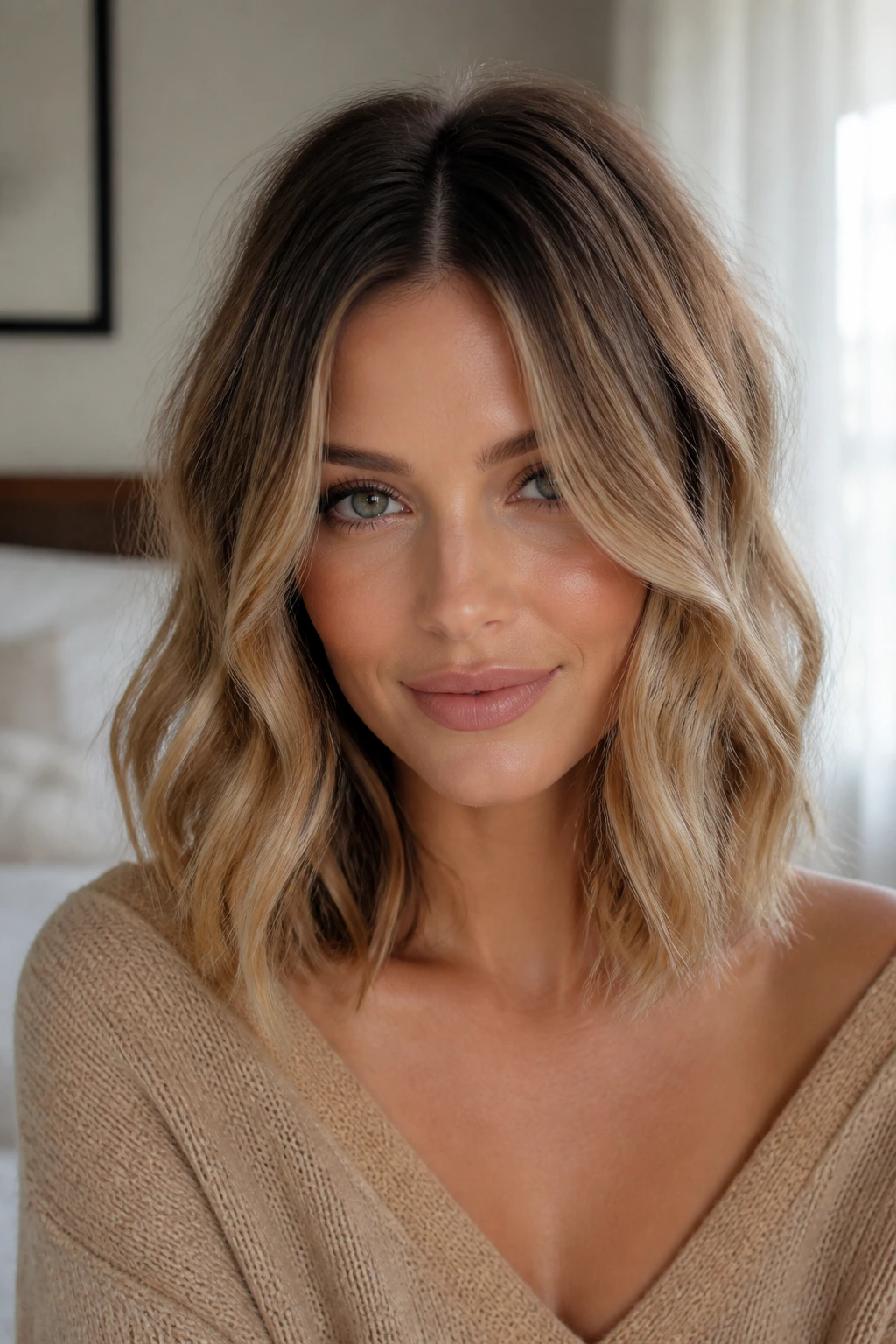
Length: Ask for the hemline to land at the collarbone or a touch above it when the hair is dry. Wet hair stretches, then springs back, and that little bit of shrinkage can turn a good lob into a too-short bob.
Perimeter: Say you want a blunt or softly rounded bottom edge. If the stylist starts talking about heavy texturizing or thinning shears at the bottom, push back a little. Fine hair needs a line that holds.
Layers: Ask for invisible internal layers or very light crown-only movement. The layers should help the waves sit better, not take chunks out of the outline.
Face framing: Decide whether you want curtain bangs, cheekbone pieces, or nothing at all. If you do want framing, keep the shortest pieces long enough to tuck or bend; ultra-short fringe can vanish into the face.
Color: If you color your hair, request low-contrast dimension instead of chunky highlights. Subtle ribbons or a soft money piece usually help fine hair look more alive without breaking up the ends.
Bring photos that show the front, side, and back. One picture of a pretty wave is not enough. I’d rather see how the cut sits around the neckline and whether the outline is clean, because that’s what matters once the novelty wears off.
How to Style Beachy Waves Without Flattening the Crown
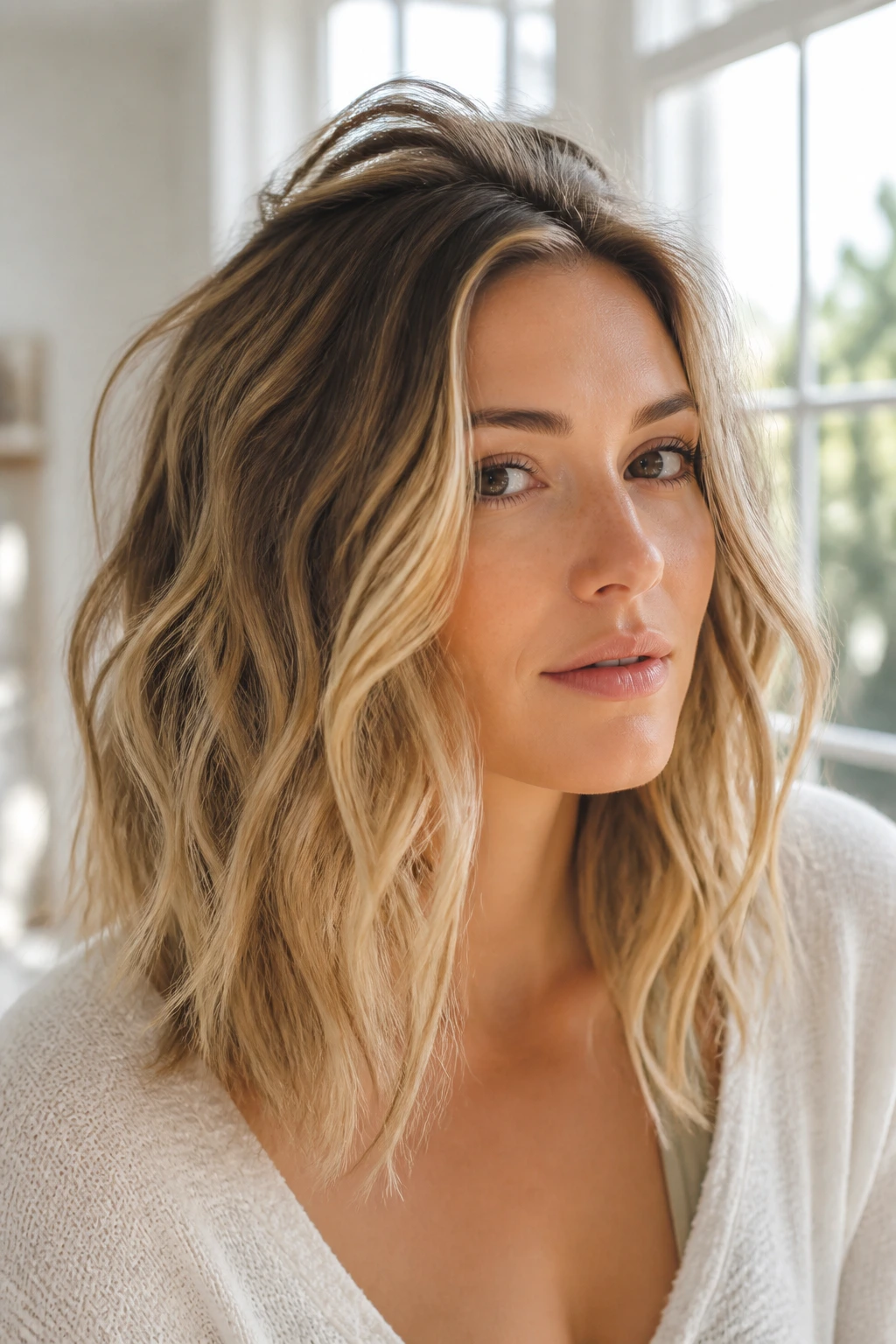
Prep: Start with a lightweight mousse at the roots on damp hair and a heat protectant through the mids and ends. Skip heavy creams unless your hair is oddly dry; on fine strands, they can kill the lift before you even start.
Dry: Rough-dry the roots until they’re about 80% dry, then use a brush or diffuser to direct the crown up and away from the scalp. If you let the crown dry flat, the rest of the style spends the whole day trying to recover.
Wave: Use a 1-inch wand for shorter lobs and a 1.25-inch wand for longer ones. Alternate directions through the back sections, but keep the front pieces going away from the face so the lob opens up instead of closing in.
Set: Let each wave cool before you touch it. Clip the top section if you need extra lift. Heat sets shape. Touching it too soon ruins the point.
Finish: Separate the waves with fingers, not a brush, and finish with a light mist of texture spray through the mids. Put serum only on the ends — a drop, not a pour.
Extra Volume Tricks and Finish Ideas
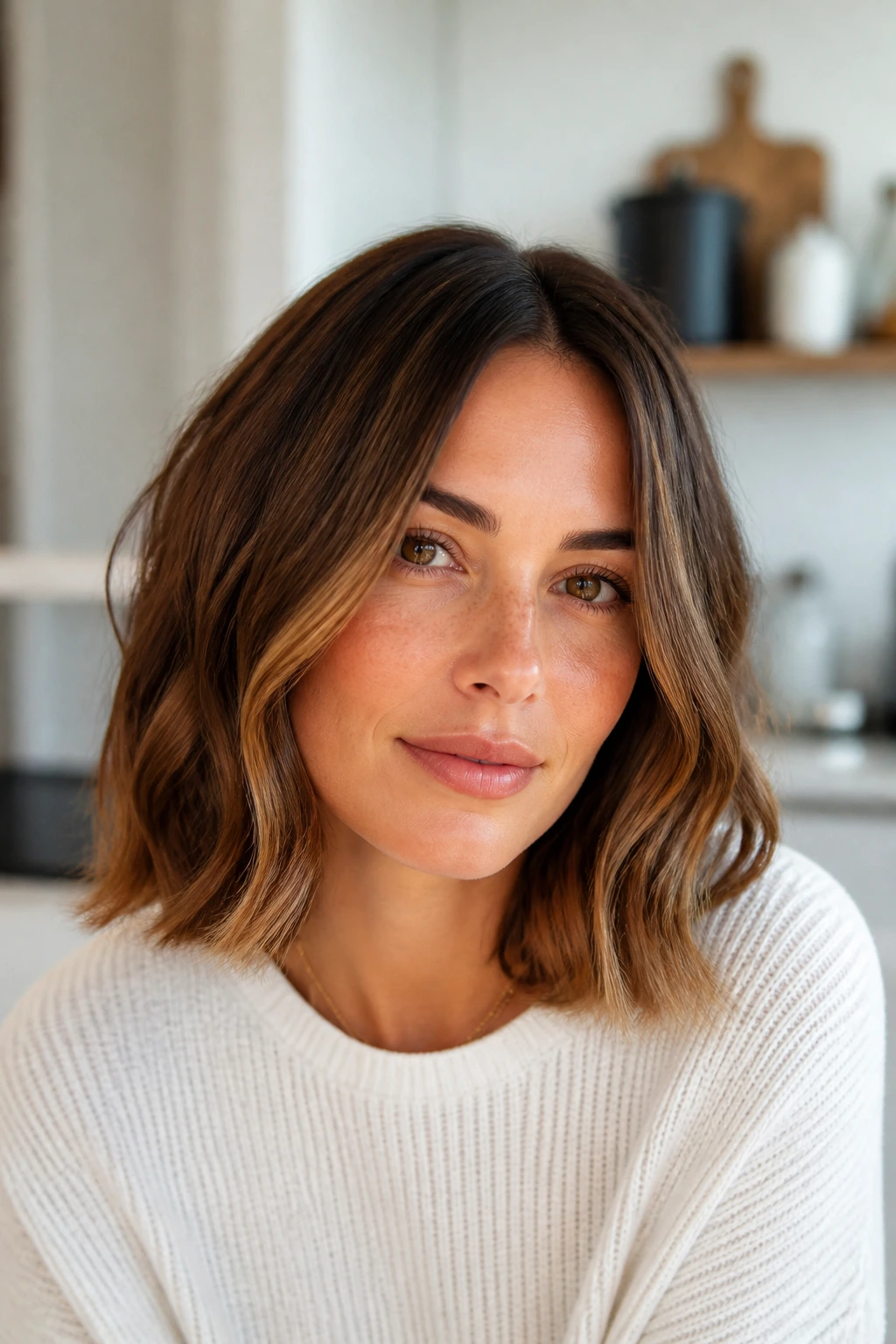
Root Lift: Blow-dry the crown in the opposite direction of your part, then flip it back once it’s mostly dry. That tiny reversal gives the roots a bend that lasts longer than a quick blast of product.
Wave Direction: Keep the front pieces moving away from the face and let the back alternate. That pattern opens the shape and keeps the style from turning into one big curl helmet. Not cute. Never cute.
End Density: If the ends look too thin, leave the last inch out of the iron. A straighter finish at the perimeter makes the whole cut read thicker, especially in bright light.
Color Boost: Subtle ribbons around the face or a soft money piece can create the illusion of more movement. Fine hair often needs contrast to show the wave pattern, but the contrast should stay blended.
Emergency Fix: If the style falls flat by midday, mist the crown with water, clip two top sections up for 10 minutes, then release and finger-rake a little texture spray through the mids. That usually wakes it back up without restarting the whole process.
Common Mistakes That Make a Lob Look Thinner
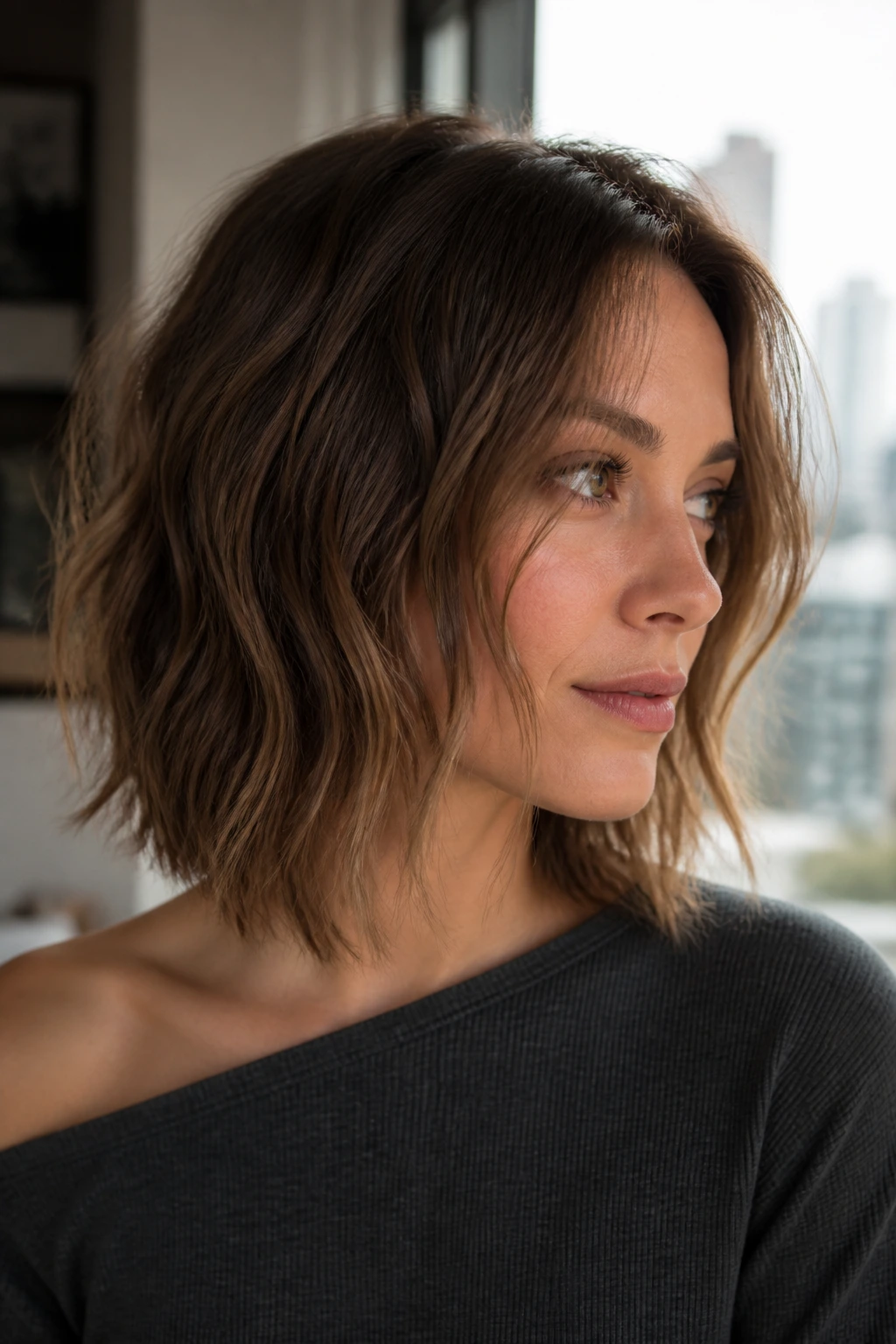
- Over-layering the bottom line: Too many layers at the perimeter make the ends look see-through, especially in daylight. Keep the shape blunt or softly rounded and let movement live inside the cut.
- Curling too close to the roots: Waves that start at the scalp shrink the length and make the style feel puffier than full. Leave the top inch smooth and build bend lower down.
- Using heavy creams on the crown: Rich products flatten fine hair fast. Put them only on the mids and ends, and use far less than you think you need.
- Skipping the cool-down: Hot waves look good for about five minutes and then fall apart. Clip them, pin them, or at least leave them alone until they set.
- Choosing a lob that sits too long for the density: When the ends get dragged below the sweet spot, the cut starts to look narrow and tired. If your hair is very fine, keep the length closer to the collarbone.
- Over-brushing after styling: Brushing a beachy lob too much turns separation into frizz. Use fingers or a wide-tooth comb only if the hair is already smooth.
Named Variations and Adaptations to Try
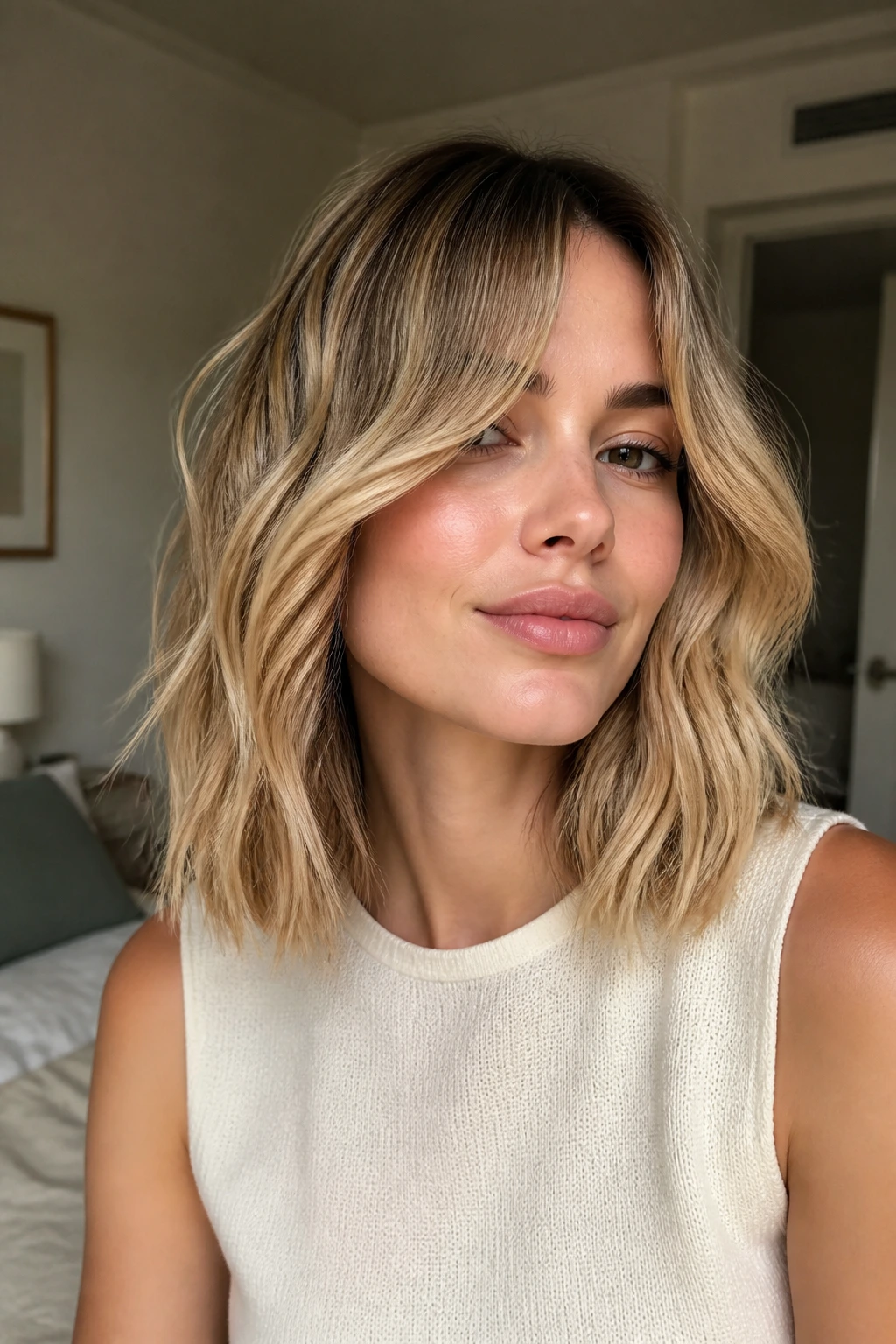
The Air-Dry Lob: Work mousse through damp roots, scrunch the mids, and let the hair dry with a few tucked clips near the crown. This version is good when you want texture without heat, but it needs a clean perimeter so the ends don’t look blurry.
The Blowout-Lite Lob: Use a round brush just at the roots and top layer, then add soft bends through the mids with a wand. The finish feels a little more polished and a little less beach-holiday, which is useful if you want the lob to work for office days too.
The Fringe-First Lob: Add curtain bangs or cheekbone pieces, then keep the rest of the cut simple and one-length-ish. This works when your face needs framing more than your hair needs layers.
The Color-Boost Lob: Add a soft balayage, a money piece, or a few ribbon highlights to break up the surface. Fine hair often looks denser when light and shadow move through it in small pieces instead of one flat sheet.
The Grow-Out Lob: Let the length sit a touch longer and trim the perimeter only every 8 to 10 weeks. This version is for people who want a cut that still looks decent when they miss a salon visit. Rare luxury, honestly.
Keeping the Shape Between Cuts
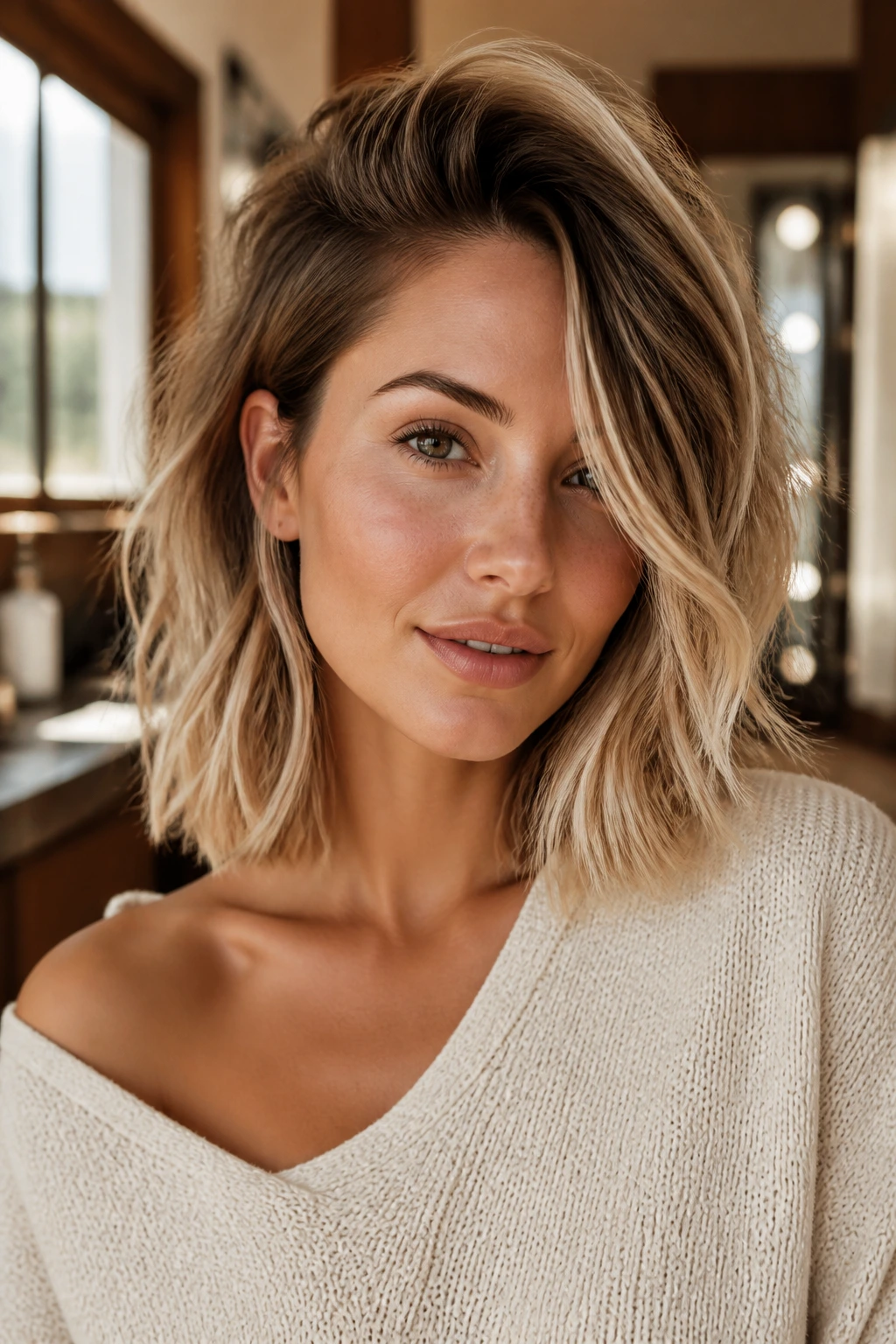
Fine hair can lose its lob shape faster than thick hair, so the maintenance schedule matters. If the ends start to look fuzzy or the wave pattern slides into stringy territory, the cut is asking for a trim.
Between Washes: Use dry shampoo at the roots before the hair gets greasy, not after. That gives the strands grip and helps the waves hold a little longer. A quick mist of water at the mids can wake up day-two bends without soaking the whole head.
Trim Schedule: Blunt versions usually need a clean-up every 6 to 8 weeks. Softer or longer lobs can stretch to 8 to 10 weeks if the perimeter stays healthy. Once the ends get wispy, the whole style reads thinner.
Night Care: A silk pillowcase helps, but I care more about not sleeping on damp hair. Go to bed with the roots dry, and if the waves need protection, clip the top section loosely instead of twisting the whole thing into a tight knot.
Product Reset: Clarify every 2 to 4 weeks if you use a lot of texture spray or dry shampoo. Fine hair gets weighed down fast, and buildup makes a decent lob look dull and flat.
If your lob starts collapsing at the top, the problem is usually not the cut alone. It’s sleep friction, product buildup, or too much moisture left near the root. Those are fixable.
Frequently Asked Questions
What length lob is best for very fine hair?
The safest place is usually the collarbone or just above it. That length gives the hair enough weight to keep a shape without dragging the ends so far down that they look sparse.
Are layers a bad idea for fine hair?
Not always, but heavy layers at the perimeter are usually a bad trade. Fine hair tends to look better with hidden internal layers or crown-only movement, while the bottom line stays blunt.
Should I use a wand or a flat iron for beachy waves?
A wand gives a softer, rounder bend, while a flat iron creates more uneven S-waves and gentle kinks. If your hair is stubborn or very straight, the flat iron often lasts better because the shape is less uniform.
How do I keep the waves from falling flat?
Set the waves while they’re still warm, clip the crown for extra lift, and keep heavy products away from the roots. The strongest hold usually comes from mousse at the base plus a light texture spray through the mids.
Can I wear a lob like this if my hair air-dries straight?
Yes, but the cut needs more shape at the perimeter. Ask for a blunt or softly rounded edge, then use a few face-framing bends with heat so the hair gets movement where it counts.
Is a middle part or side part better for fine hair?
A middle part gives symmetry and works well when the hair has enough density to sit evenly. A side part often gives more crown lift and helps if one side lies flatter than the other.
How often should I trim a fine-hair lob?
Every 6 to 8 weeks if the line is blunt, or 8 to 10 weeks if the shape is softer. Once the ends start looking airy and transparent, the cut has already gone past its best point.
Can color make fine hair look fuller?
Yes, if it stays blended and low-contrast. Soft balayage, ribbon highlights, or a bright front piece can create depth and movement without forcing the haircut to do all the work.
Why This Length Keeps Winning
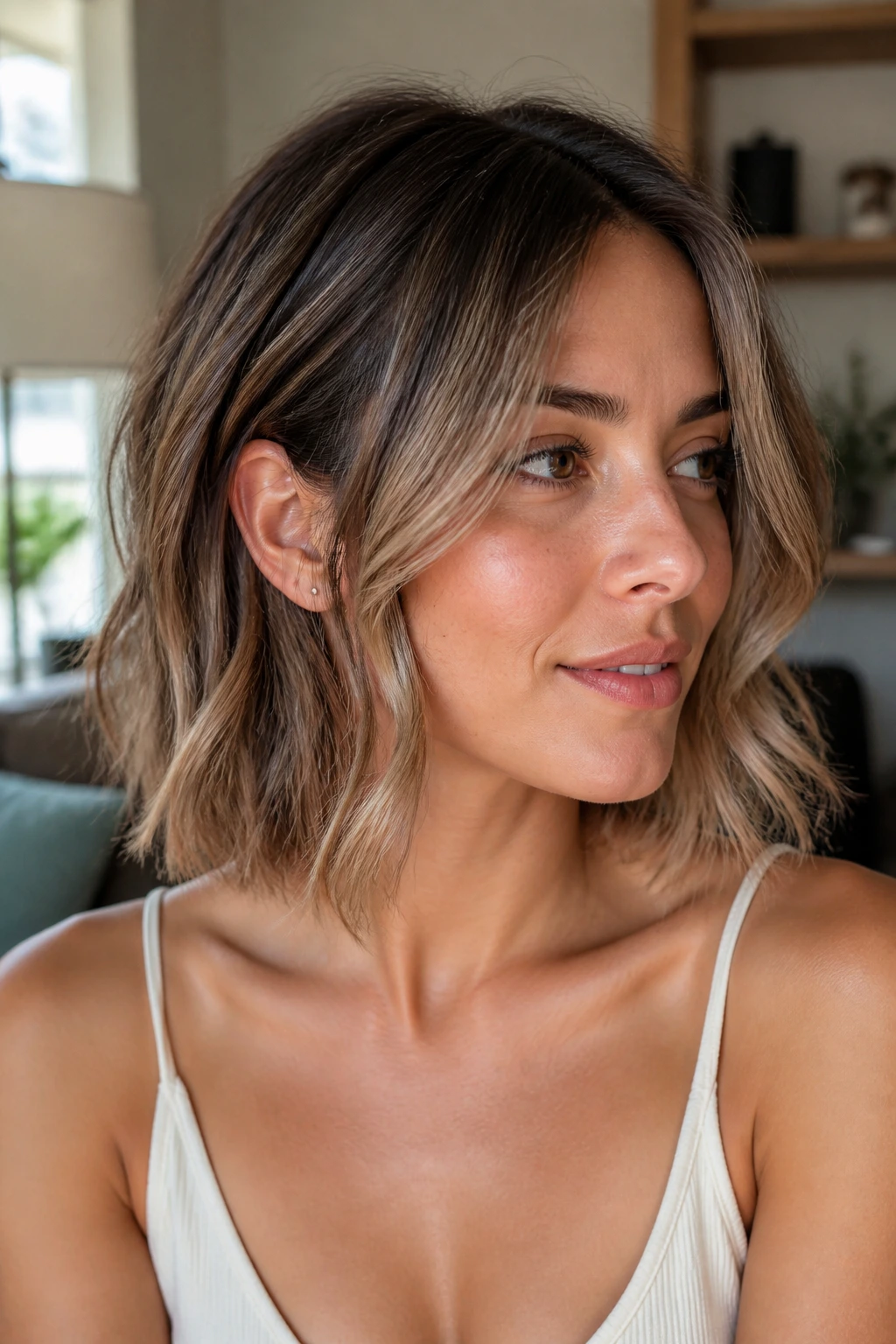
A good lob gives fine hair something it can actually hold onto: a clean edge, a manageable length, and waves that widen the shape instead of swallowing it. That combination is why so many of these cuts feel flattering in motion and steady when the weather turns rude or the day runs long.
The smartest versions don’t chase volume for its own sake. They keep the outline honest, let the texture live in the mids, and leave enough structure at the bottom that the hair still looks like hair — not mist with a part in it. Bring that idea to a stylist, and you’ll end up with a cut that works hard without looking like it tried too hard.