



A bob wig can sharpen a heart-shaped face in a hurry if the line lands in the wrong place. Too much height at the crown, and the forehead starts shouting. Too much bluntness at the jaw, and the whole thing goes square.
Wavy texture helps, but only when the bend starts low enough to soften the cheeks and the ends don’t stop dead at the chin. The sweet spot is usually a side or off-center part, a little movement at the cheekbone, and a length that slips just below the jawline instead of parking on it.
That is why bob wigs for wavy hair and heart-shaped faces need more than a cute cut. They need shape logic. The good ones make the top half look lighter and the lower half look fuller, and that tiny difference changes the whole read of the face.
The 15 picks below all solve that balance in a different way, and the differences matter more than the label suggests.
Why These Bob Wig Picks Work for Heart-Shaped Faces
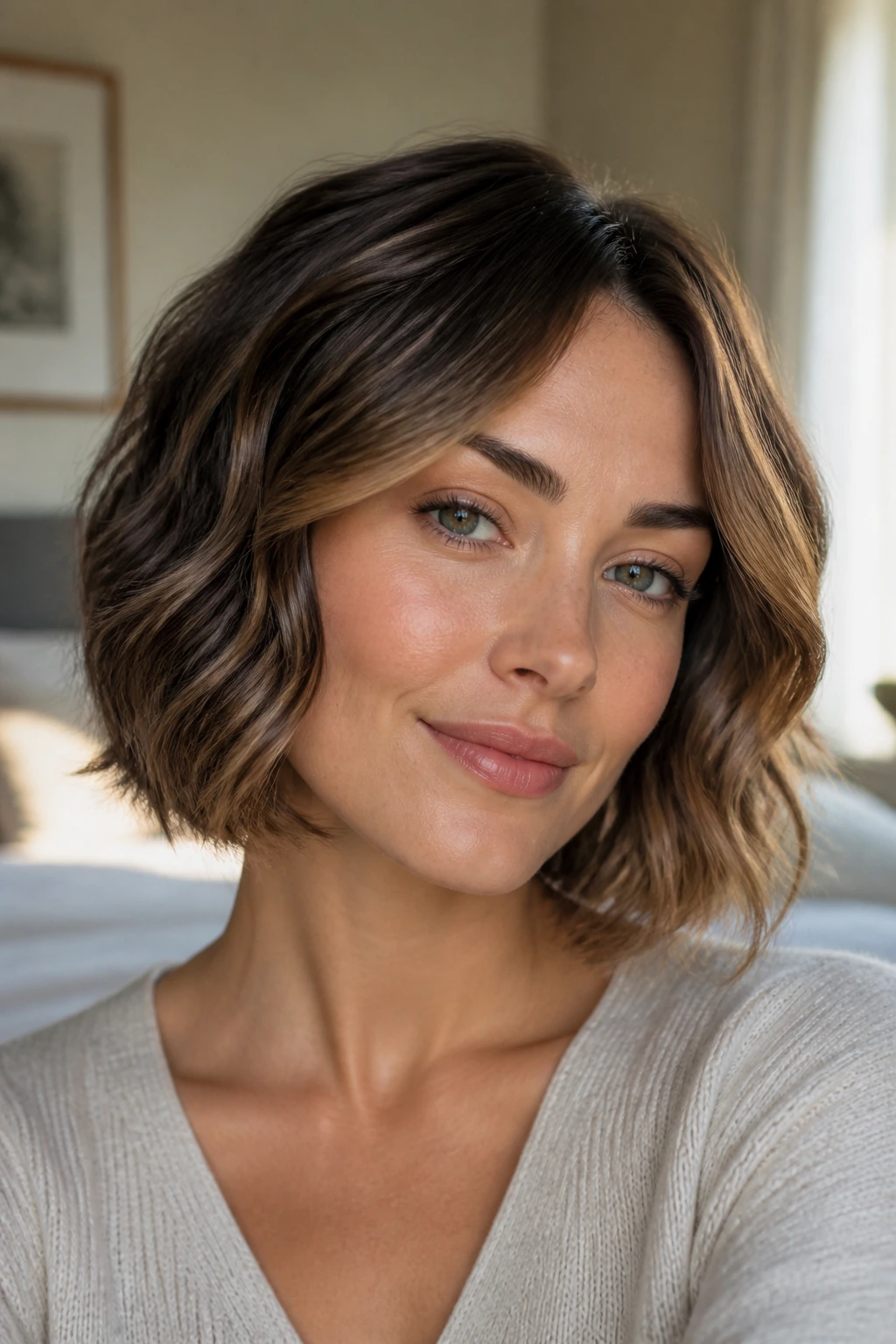
- Jawline Softness: The best cuts here do not end exactly at the chin, because that’s where a heart-shaped face can look narrowest and a blunt edge can feel harsh.
- Wave Placement: Loose waves that start below the cheekbone keep the top from puffing up and let the lower half of the face look calmer.
- Parting Flexibility: Side and off-center parts take pressure off the forehead, which is usually the widest point on a heart-shaped face.
- Texture Control: Wavy hair reads best when it has movement, not volume for volume’s sake. Big, fluffy crowns can work against the face shape fast.
- Wearable Lengths: Chin, jaw, and collarbone lengths each do a different job, so this collection gives you options instead of pretending one length fits every face.
- Easy Styling: These bob wig shapes look good with very little hand work, which matters if you want a wig that doesn’t turn into a morning project.
The Face-Frame Rules That Matter Most
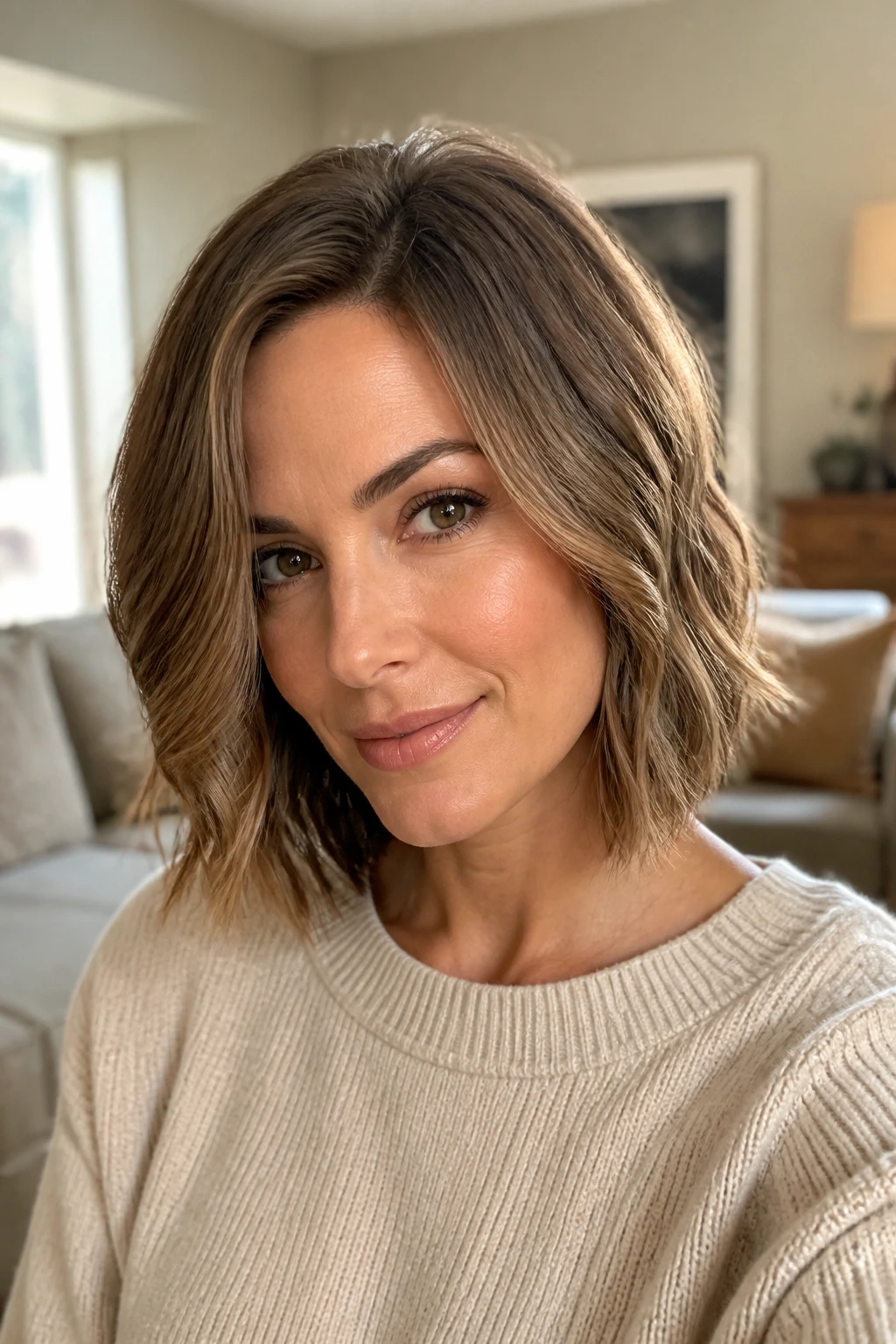
A heart-shaped face usually carries more width at the forehead and temples, then narrows toward the chin. That means the wig has to do one of two things: either soften the top half or build a little visual weight lower down. The wrong bob does neither. It just sits there, drawing a hard line across the widest and narrowest parts of the face at the same time.
I’m suspicious of any bob wig that piles height on top and then ends in a blunt shelf at the jaw. That combination can make the face feel top-heavy. A better cut usually keeps the crown flatter, lets the part fall off-center, and uses the wave to blur the cheek line without turning the whole thing into a triangle.
Where the Ends Should Land
The safest landing zones are just below the jaw or around the collarbone. Chin length can work, but it needs movement, angle, or fringe to keep the line from feeling boxy. If the wig is wavy, the bend should begin low enough that the ends do some of the softening work for you.
Why the Part Matters More Than Most People Think
A side part is not a random styling choice on a heart-shaped face. It changes the visual balance immediately. Even a one-inch shift can pull focus away from the forehead and toward the eyes and cheeks, which is where most people want the eye to land first.
The Wave Pattern That Flatters Instead of Fluffing
Loose waves, body waves, and soft S-waves tend to behave better than tighter bends. Tight texture can widen the sides of the wig in a way that makes the face look narrower by comparison. That can be pretty on a mannequin head. On a real face, it often looks a little loud.
1. The Chin-Skimming Side-Part Bob

A chin-skimming bob with a soft side part is the safest place to start, and I mean that in the best way. The length lands just below the jaw, so it doesn’t sit right on the chin line where a heart-shaped face can get pinched. The wave should be loose enough to bend around the cheekbone, not so tight that it balloons outward.
Why It Works
A side part steals some visual width from the forehead, which is where heart-shaped faces usually carry their broadest line. If the wave starts around the cheek and the ends curve under, the face reads softer without losing shape. Ask for 8 to 10 inches overall length, a slight off-center part, and 120% to 130% density if you want the cut to stay close to the head instead of puffing out.
- Best if: you want one bob that can handle workdays and weekend errands without a lot of restyling.
- Avoid if: you love a lot of crown lift or a sharper, more dramatic silhouette.
- Look for: a lace front with enough parting space to shift the part half an inch if needed.
Small move, big payoff: tuck one side behind the ear. It breaks up the symmetry and keeps the line from feeling too tidy.
2. The French Bob With Curtain Fringe

The French bob can absolutely work here, but only if it stays soft. A blunt, thick version can make a heart-shaped face look top-heavy in a blink. The better version uses curtain fringe, airy edges, and wave that starts near the cheekbone instead of at the root.
Why It Works
Curtain fringe splits the forehead in two, which is handy when the brow area is the widest part of the face. It also keeps the wig from looking like one solid block of hair across the front. I like this shape best at jaw level or just above it, with a lightly shattered perimeter so the ends don’t read as a hard line.
The trick is restraint. Too much curl, and the French bob turns puffy. Too much density, and it looks like the wig is wearing you. Keep the wave relaxed, and let the fringe fall a little unevenly so it doesn’t act like a curtain wall.
How to Wear It
A center part is usually too exact for this one unless the fringe is long and broken up. A slight off-center part makes the whole thing easier. If you want this bob to look less costume-like, let a few shorter face-framing strands sit near the temples.
3. The Collarbone Lob With Loose S-Waves
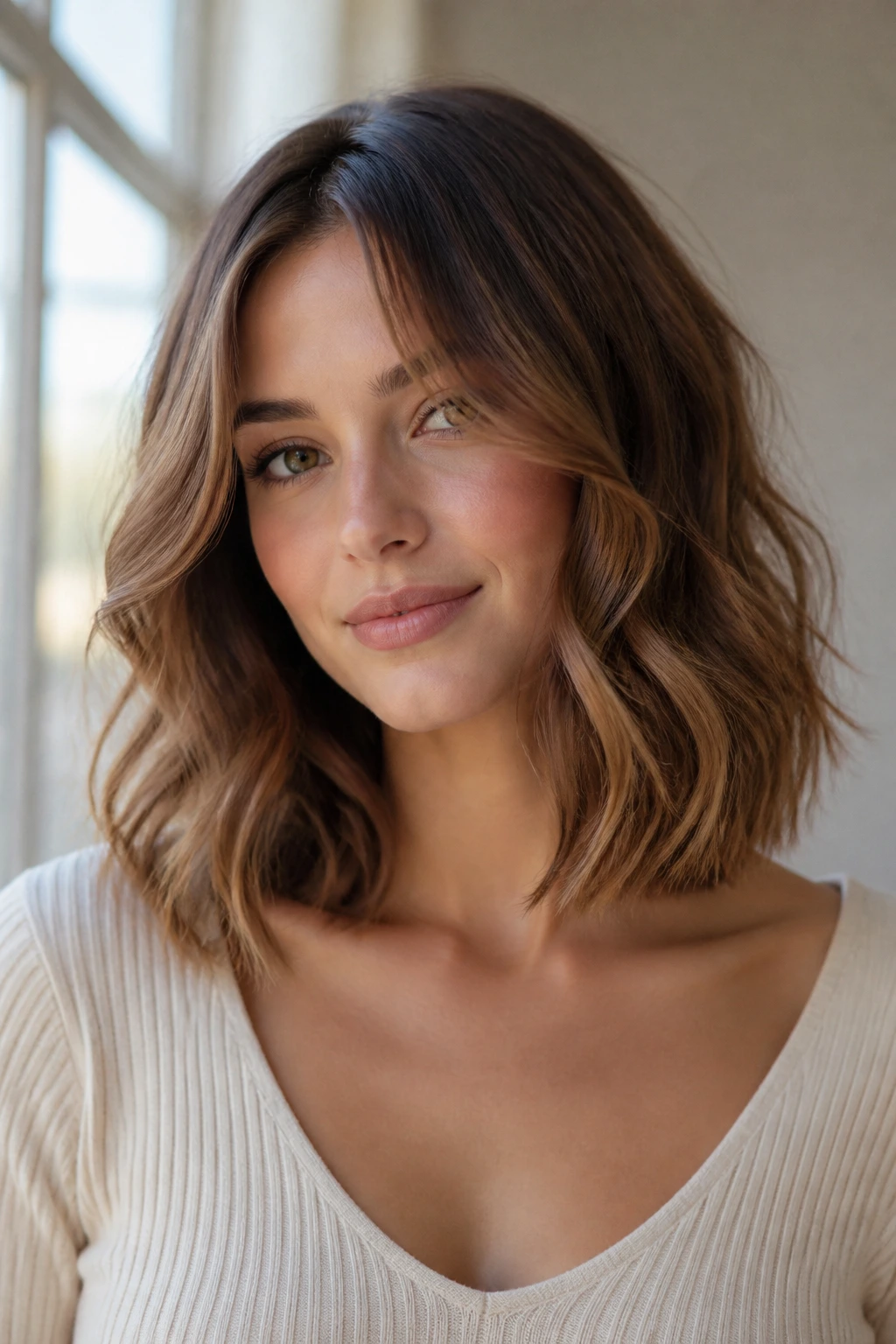
Can a lob count as a bob wig? On a heart-shaped face, yes, and sometimes it’s the smarter choice. The extra length gives the chin some company, which matters when the lower half of the face is narrower than the upper half.
Loose S-waves make this cut feel easy rather than formal. The bend should be wide and lazy, not tight and springy. If the wig hits just above the collarbone, you get movement without the line collapsing into the jaw.
What Makes It Stand Out
This shape is the one I recommend to people who are nervous about going too short. It gives you the bob family’s neatness without forcing the ends to stop at the most sensitive point on the face. Choose a 10- to 12-inch length, a soft middle-to-side part, and a low-density wave pattern if you want the finish to look believable.
If your natural hair is wavy and you want to blend edges or side pieces, this length is forgiving. It also handles glasses better than shorter bobs, because the front doesn’t crowd the temples as much.
Best For
This is the quiet overachiever of the group. It works if you want softness first, shape second, and drama nowhere near the top of the list.
4. The Angled Bob With Longer Front Pieces
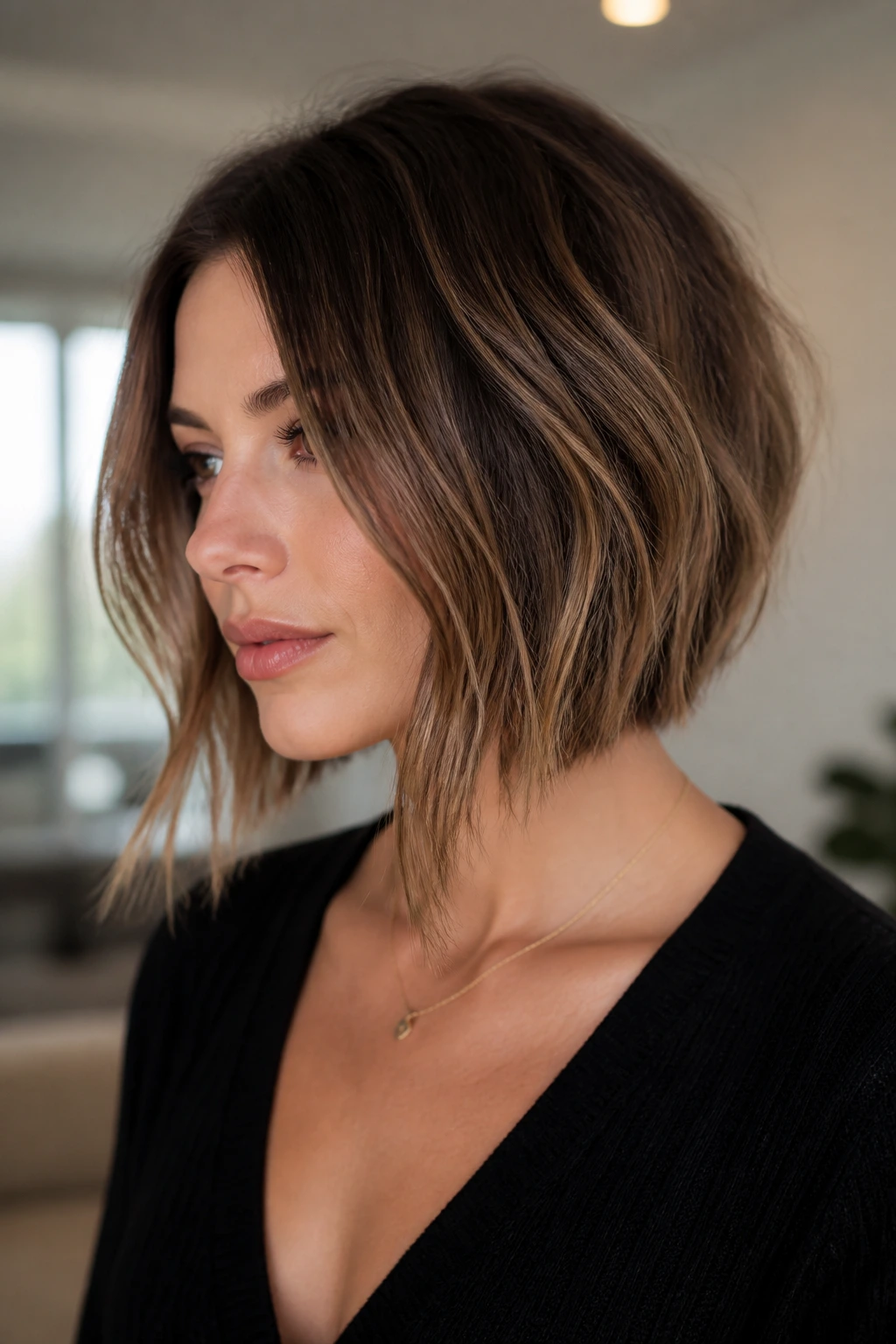
An angled bob is one of the cleanest ways to handle a heart-shaped face because it gives the jawline a little architectural help. The back stays shorter, the front drapes lower, and that forward angle pulls the eye down instead of leaving it stuck at the forehead.
Why It Flatters
The longer front pieces create a diagonal line from temple to chin, which makes the face feel less top-heavy. That diagonal is doing real work. It shifts attention from width to length, and it does it without needing a big side bang or heavy styling.
I prefer this with subtle waves rather than a full curl pattern. The front pieces should graze the jaw or collarbone, depending on how much length you want to keep. If you choose a human-hair unit or a heat-friendly fiber, a light bend at the ends is enough. You do not need a lot of wave to make the cut read correctly.
A Good Ask for This Style
Ask for the front to be 1 to 2 inches longer than the back, with soft interior layering so the wig does not flip out like a helmet. That’s the difference between an angled bob that looks expensive and one that just looks unfinished.
5. The Airy Layered Bob With Feathered Ends
This is the bob I reach for when the goal is softness, not sharpness. Feathered ends break up the edge so the wig doesn’t sit like a single line around the face. On a heart-shaped face, that matters. You want movement at the cheek and jaw, not a blunt stop.
Why It Works
Layers take weight out of the sides, which keeps the top of the face from feeling crowded. The wave can then sit in little pieces instead of one thick shell. That’s a nicer look on a heart-shaped face because it lets the eye move around the whole face instead of stopping at the widest points.
A light layer map around the cheekbone and below is enough. You do not want choppy layers that spring out all over the place. You want ends that feel lightly broken, almost brushed apart, so the bob moves when you turn your head.
The Detail I Like Most
The feathered finish gives you room to wear smaller earrings and a cleaner neckline without the wig looking stiff. It has a softer, more lived-in line than a blunt cut, and that’s where the charm is. Not flashy. Just easier on the face.
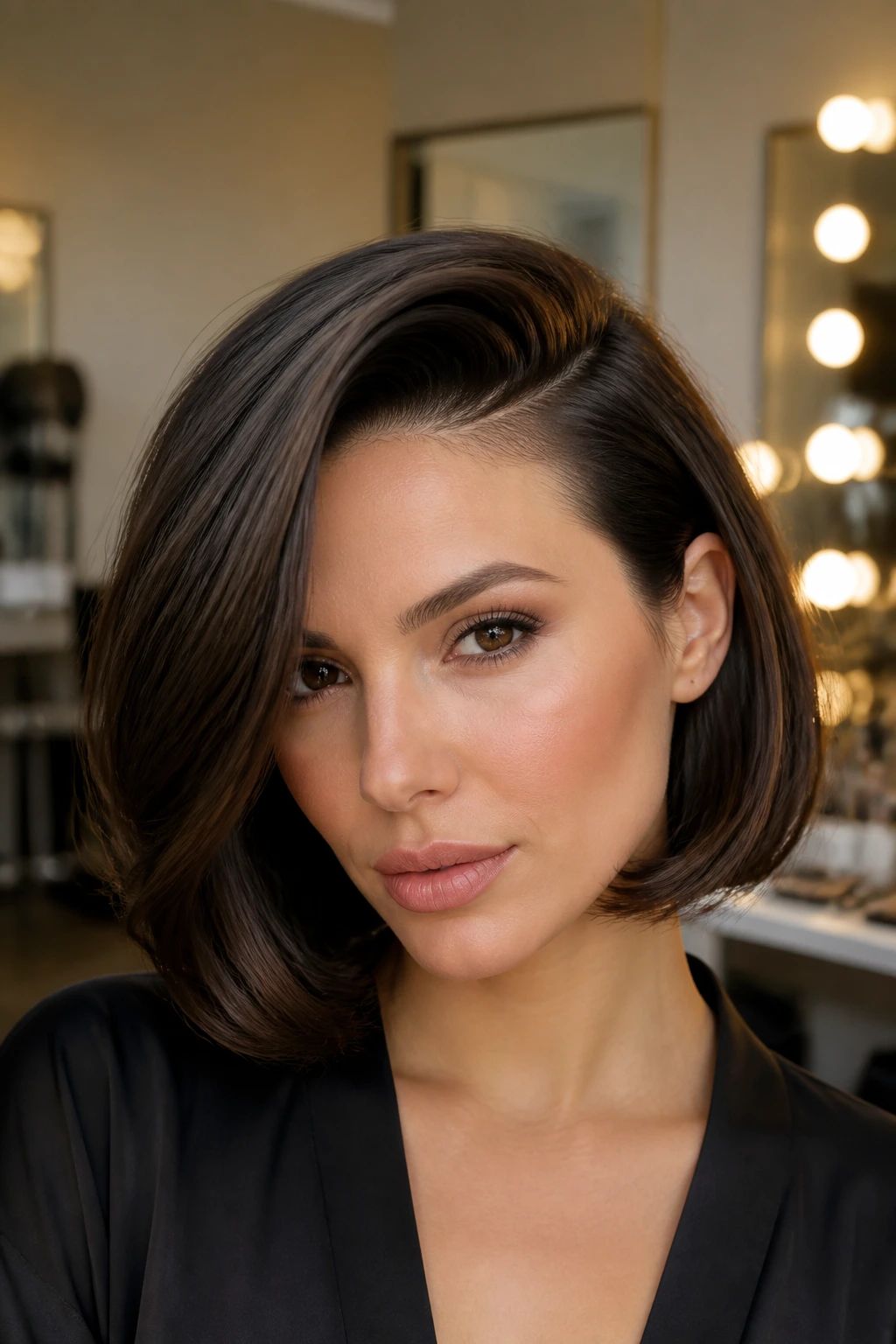
6. The Deep Side-Part Glam Bob
A deep side part changes everything. It cuts across the forehead, adds a little drama, and lets one side of the bob sit lower so the face reads less symmetrical. On a heart-shaped face, that asymmetry is useful. It keeps the forehead from dominating.
This style works best when the wave is polished and the ends turn under just enough to stay neat. Think of it as controlled glamour, not red-carpet volume overload. Too much lift at the crown and too much flip at the ends, and you lose the face-balancing effect.
What to Ask For
A 13×4 lace front helps here because you need parting room. A 150% density unit can work if the fiber is soft and the wig cap sits flat, but I would not go much higher unless you want a bigger, more dramatic look. Keep the part deep enough that one brow is more visible than the other.
Best use case: if you want the wig to read polished in photos and slightly cooler in person. It has attitude, but not chaos.
7. The Tucked-Under Wave Bob

This one is neat, and that neatness is the point. The ends are softly tucked under, which makes the bottom edge feel rounded instead of boxy. That rounded finish is flattering on heart-shaped faces because it gives the lower half a little shape without adding bulk.
Why It Works
The tucked-under curve keeps the wig close to the neck, so it doesn’t flare out at the jaw. If you’ve ever put on a bob that made your face seem narrower by comparison, you already know why this matters. The gentle inward bend balances the taper of the chin.
A bob like this looks best with low to medium density and a slightly beveled perimeter. If the wig is too dense, the tuck disappears. If the ends are too layered, the shape loses that clean shell effect.
Use It When
You want the wig to look deliberate without looking over-styled. It’s one of the easiest shapes to wear with a blazer, a high neckline, or anything that already has a strong line at the collar.
8. The Shattered Blunt Bob

Blunt does not have to mean harsh. A shattered blunt bob keeps the straight perimeter but uses texture to break up the line. That little bit of roughness is what makes it usable on a heart-shaped face, because the edge does not sit like a ruler across the chin.
Bold Look, Softer Finish
The key is keeping the perimeter even while softening the interior. You still get the crispness that makes a blunt bob feel modern, but the wave prevents it from looking blocky. If the cut ends right at the jaw, the texture has to be loose and airy. If it falls lower, you have a little more room.
I like this style for people who want a sharper silhouette but don’t want the face to feel cramped. It’s the bob equivalent of wearing a clean jacket with broken-in shoes. The shape is precise. The feel is not.
Best If You Like Contrast
Pair this one with a side part or a very slight off-center part. A dead-center part can make the blunt edge feel even firmer, and that’s usually not the move on a heart-shaped face.
9. The Asymmetrical Sweep Bob
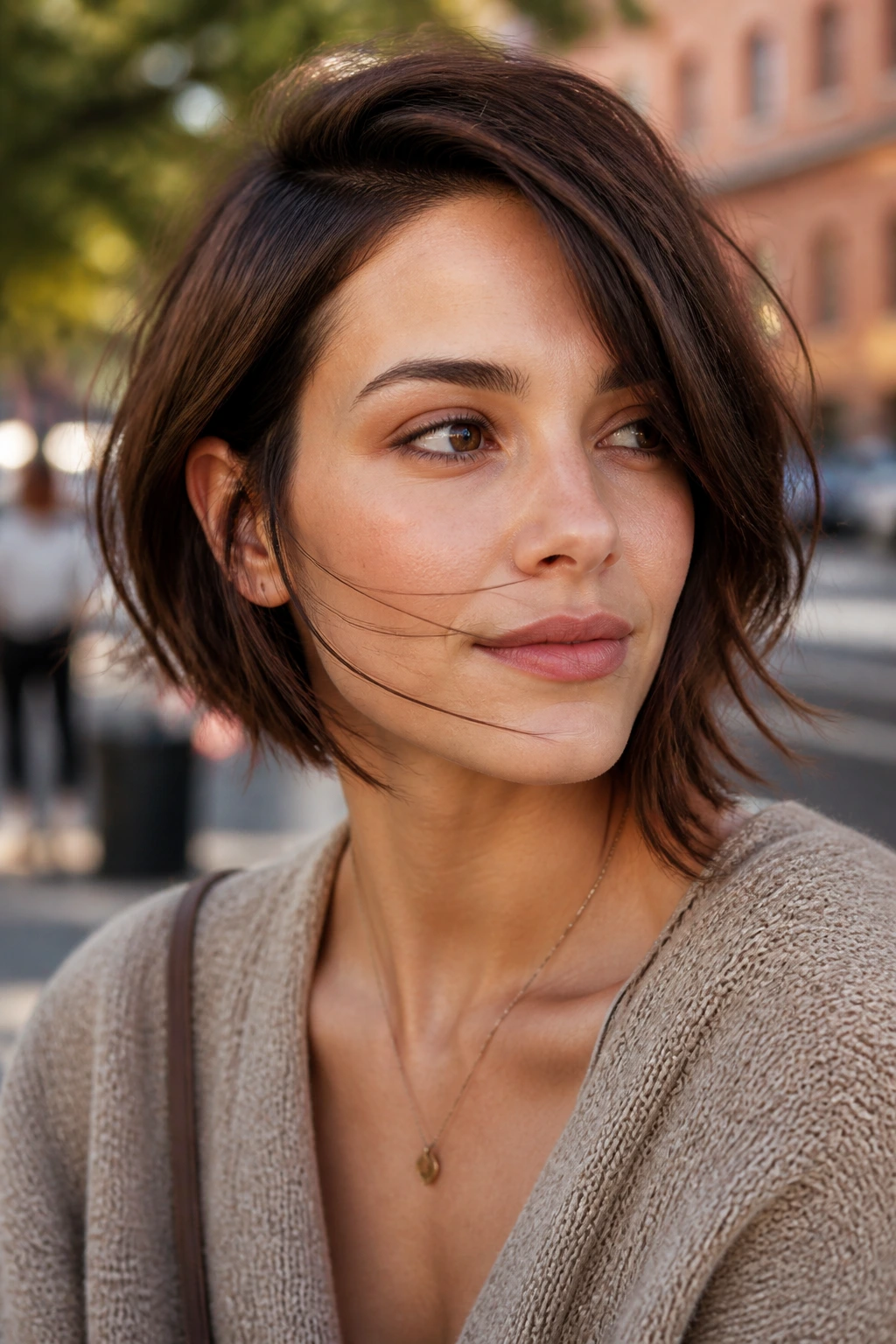
An asymmetrical bob gives the face a built-in diagonal, and diagonals are your friend here. One side is a little longer, one side a little shorter, and the whole shape avoids the “everything is ending in the same place” problem. That problem is what makes some bobs feel boxy on a heart-shaped face.
This style has a slightly editorial feel, but it doesn’t need to be loud. The wave can be soft and brushed, with the longer side grazing the jaw or collarbone. The shorter side can skim the cheek just enough to keep the top half from feeling wide.
Why It’s a Smart Pick
It’s especially useful if one side of your face looks stronger than the other or if you like tucking one side behind the ear. The asymmetry makes the wig look more natural when it shifts during the day. It also gives the lower face a little extra visual weight without needing a lot of volume.
Tiny warning: if the difference between sides is too dramatic, the style can start to wear the face instead of balancing it. Keep the variation subtle.
10. The Center-Part Lob With Face-Framing Layers

A center part is a riskier move on a heart-shaped face, but it can work when the rest of the cut does the balancing. The trick is face-framing layers that begin around the cheekbone and continue lower, so the wave is not dragging attention straight to the forehead.
When It Works Best
This style shines if your forehead is broad but not tall, and if you want a cleaner, calmer look. The center part creates a straight vertical line, which can lengthen the face visually. The layers stop that line from becoming too severe.
Choose a lob length, not a short chin bob, because the extra drop keeps the lower face from disappearing. If the waves are soft and the ends are slightly brushed apart, the effect is neat rather than severe.
Who Should Skip It
If you love a lot of root lift or you tend to wear heavy brow makeup, this style can feel a little too structured. It is a better match for soft makeup, natural brows, and minimal teasing at the crown.
11. The Lifted-Crown Bob
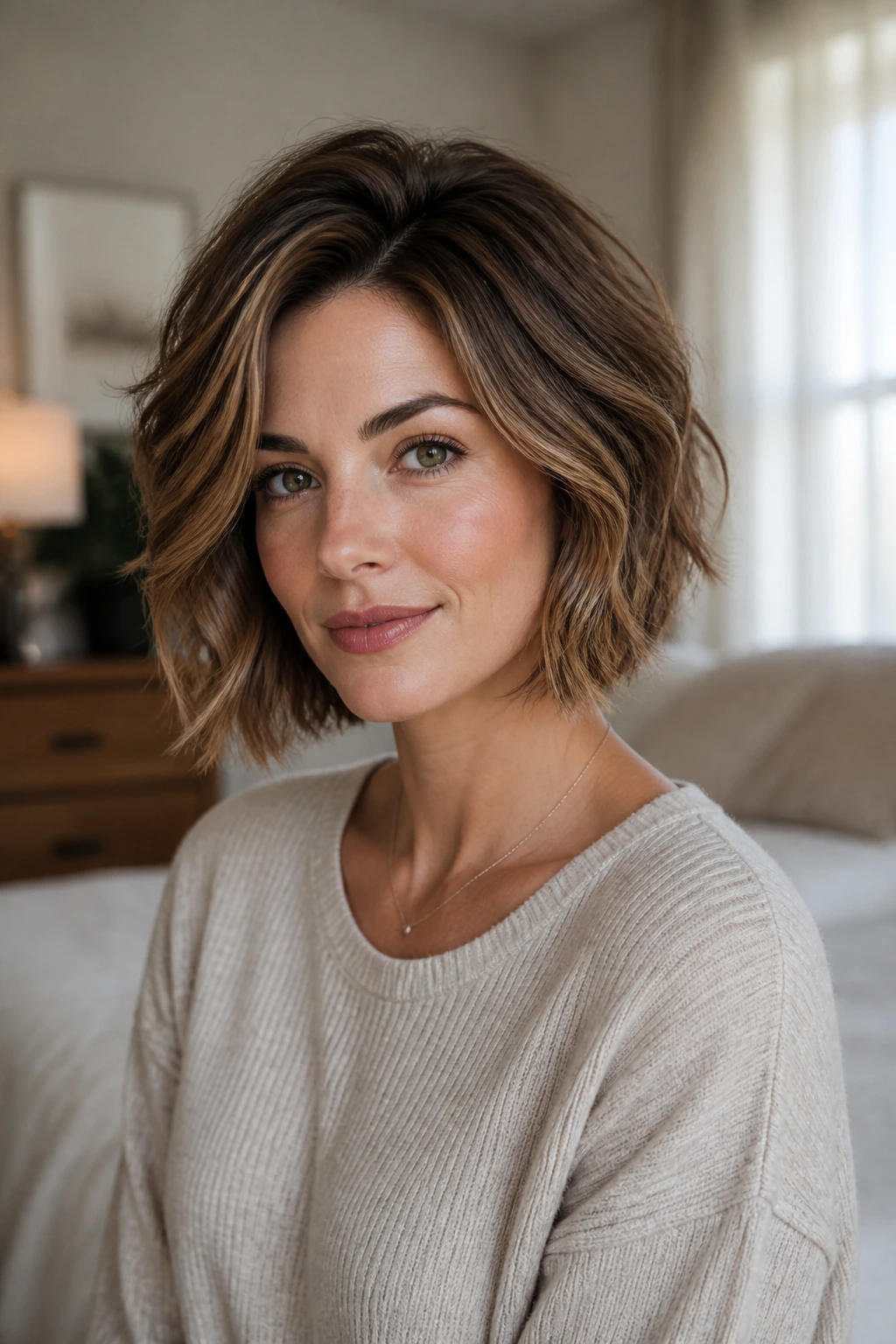
This is the one place where crown lift can help, but only in moderation. A lifted-crown bob is about balance, not drama. A little volume at the top can keep the wig from collapsing against the head, which is useful if your face is narrow through the chin and you want the silhouette to feel more complete.
Why It Works
The lift should be concentrated at the roots, not teased into a pouf. That matters. Too much height at the forehead turns the face into a triangle in the wrong direction. The goal is a little airy space above the part, then a smooth fall through the sides.
This shape works best with light layers, a soft side part, and a density that stays around 130% to 150%. If the wig is too full, the crown and the sides start fighting each other. If it’s too flat, the face can look longer than it is.
A little lift. Not a lot. That’s the whole game.
12. The Feathered Fringe Bob

A feathered fringe can be a very good answer for a heart-shaped face because it breaks the forehead line without boxing it in. The fringe should be wispy, almost floaty, and sit a little unevenly so it doesn’t create a hard curtain across the front.
What Makes It Different
Unlike curtain fringe, which opens from the center, feathered fringe scatters the front a little more. That helps if you want your eyes and cheekbones to stay visible. The bob underneath can stay simple: chin length, jaw length, or just a touch longer, as long as the fringe does not sit too thick.
This one is especially nice on wavy textures because the fringe can stay lighter while the ends carry the movement. That keeps the top of the wig from feeling heavy. It also helps if you wear glasses, since the fringe can sit above the frame line instead of crashing into it.
Best For
People who want face coverage without a blunt bang. If you’ve ever tried a dense fringe and felt like the wig took over your forehead, this is the cleaner answer.
13. The Wet-Texture Wave Bob

A wet-texture bob is slick at the root and separated through the ends, which means the shape stays close to the head while the lower half still has movement. On a heart-shaped face, that combination can be excellent. It keeps the forehead from looking wider and lets the wave live lower, where it softens the jaw.
This is not a fluffy look. That’s the point. The shine and piecey ends make the bob feel modern, while the compact root keeps it from spreading sideways. If you’re choosing a synthetic unit, this style is often easier to maintain because it does not rely on a big, round curl pattern.
How to Wear It Well
Keep the top controlled with a light mousse or wig-safe styling gel, then separate the ends with your fingers. Don’t rake a brush through the whole thing once it’s styled. You’ll pull out the shape and end up with frizz or a random puff around the ears.
This is a good pick if you want the wig to look intentional without looking stiff.
14. The Sleek-Root, Wavy-Ends Bob
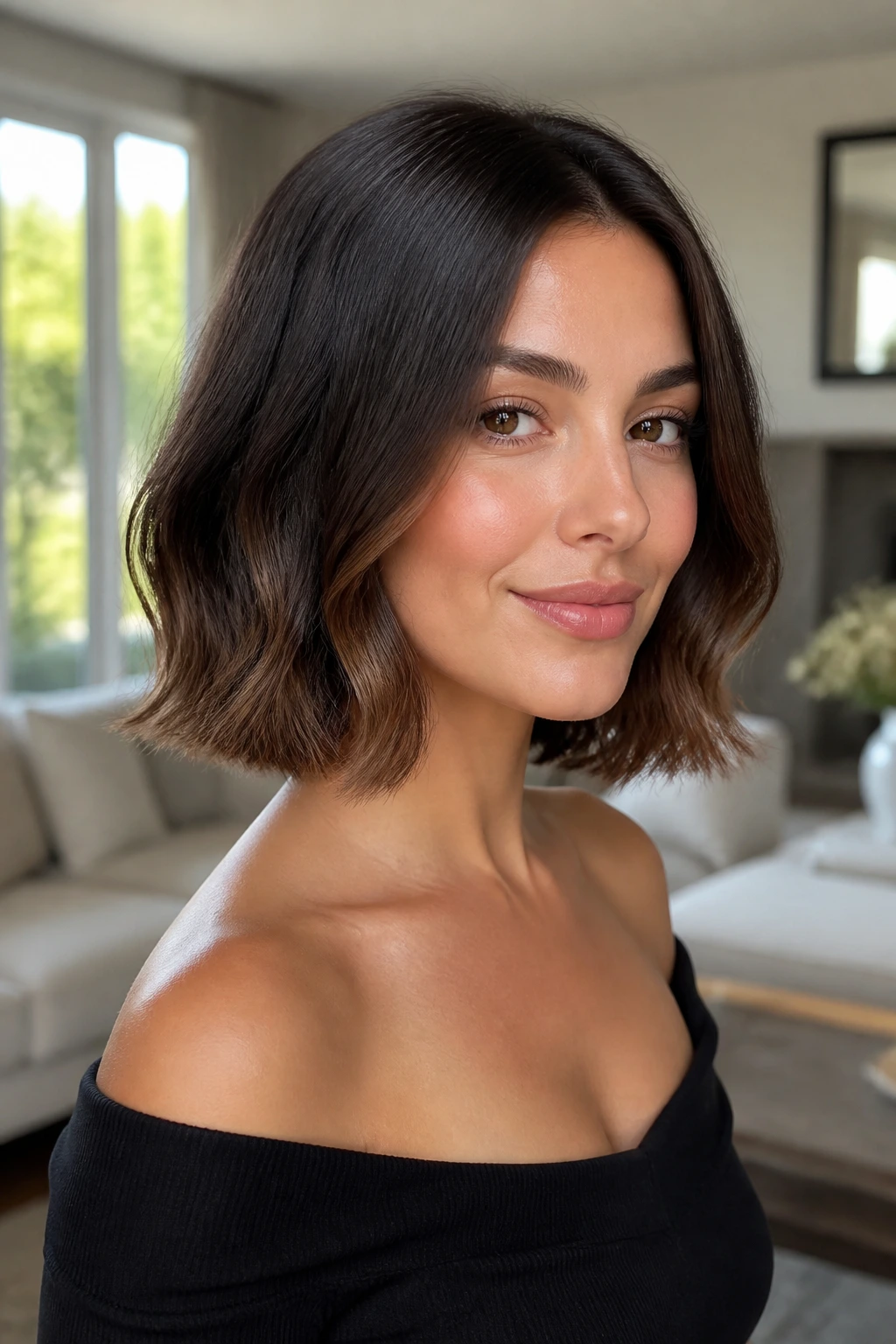
This one is one of my favorites because it understands restraint. The root stays smooth, the mid-lengths hold a loose bend, and the ends do the visual work. That keeps the top of the face calmer and lets the wave finish the job around the jaw and collarbone.
Why It Flatters
The sleek root reduces bulk where heart-shaped faces already carry width. Then the wave kicks in lower, which creates a softer edge around the lower half of the face. The result is balanced rather than loud. Nothing screams.
Ask for a subtle body wave, not a big curl pattern. The wave should read as movement, not as a separate style on top of the cut. If the wig is human hair or heat-friendly synthetic, a quick bend with a medium barrel tool at the lower third is enough.
Best Pairing
This cut looks especially good with clean brows and a slightly open neckline. It likes simplicity. It does not need extra noise.
15. The Flip-Out Hollywood Bob
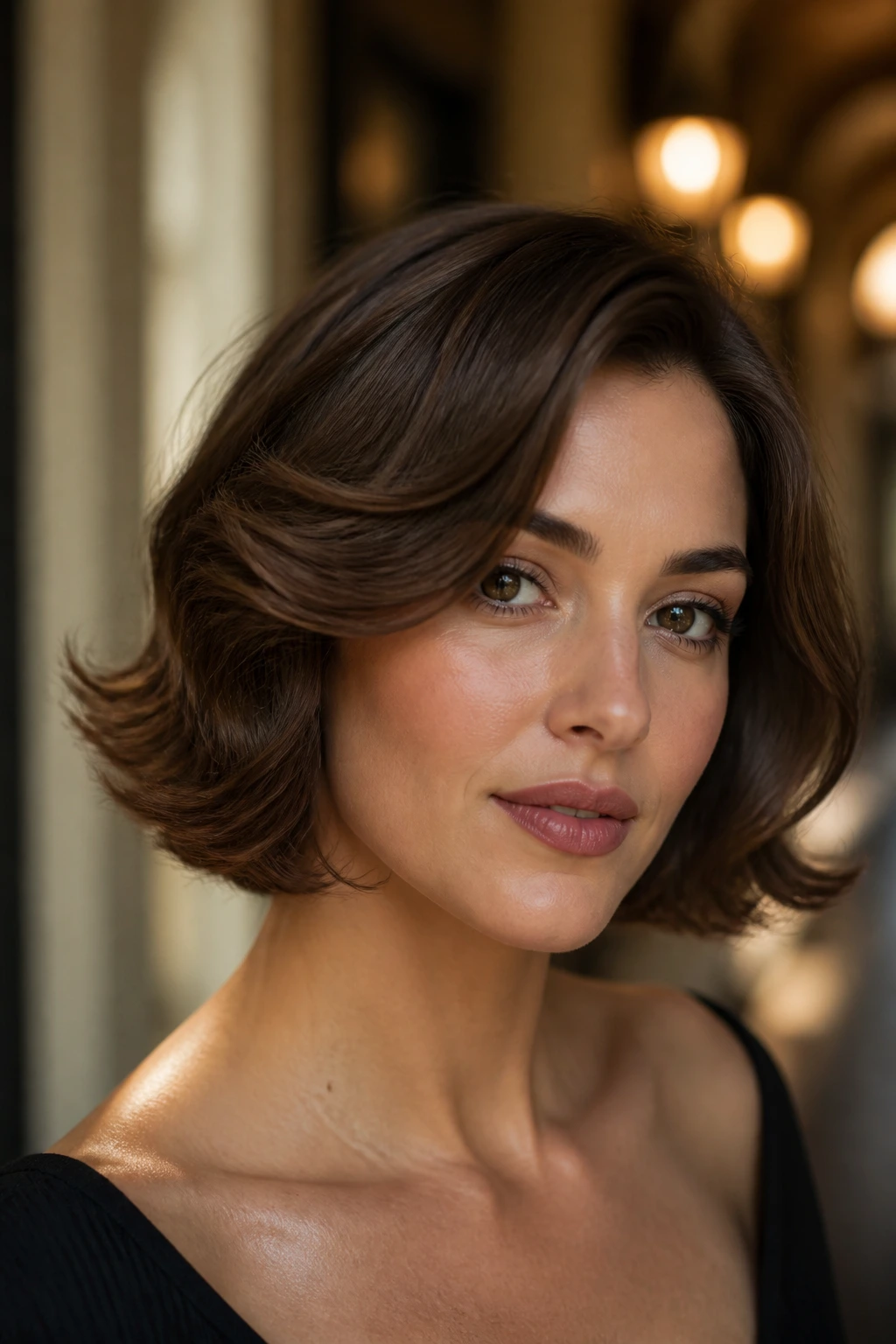
A brushed Hollywood bob with soft flip-out ends can be gorgeous on a heart-shaped face when the front pieces are long enough to carry the shape downward. The flip should happen near the ends, not at the root. That keeps the movement low and stops the top from getting too wide.
Why It Works
The outward turn at the bottom adds a little width near the jaw, which is useful when the chin is narrow. It also gives the face a more lifted feel without relying on crown height. The whole trick is keeping the flip delicate. If it gets too big, it starts to feel costume-like.
I like this best with a side part and a touch of face-framing wave around the cheek. That combination keeps the glamour from swallowing the face. It’s a dressed-up bob, not a pageant wig.
The Short Version
If you want polish, movement, and a line that makes the lower face feel a little fuller, this is the one to try.
What Makes the Right Bob Wig Sit Naturally on a Heart-Shaped Face
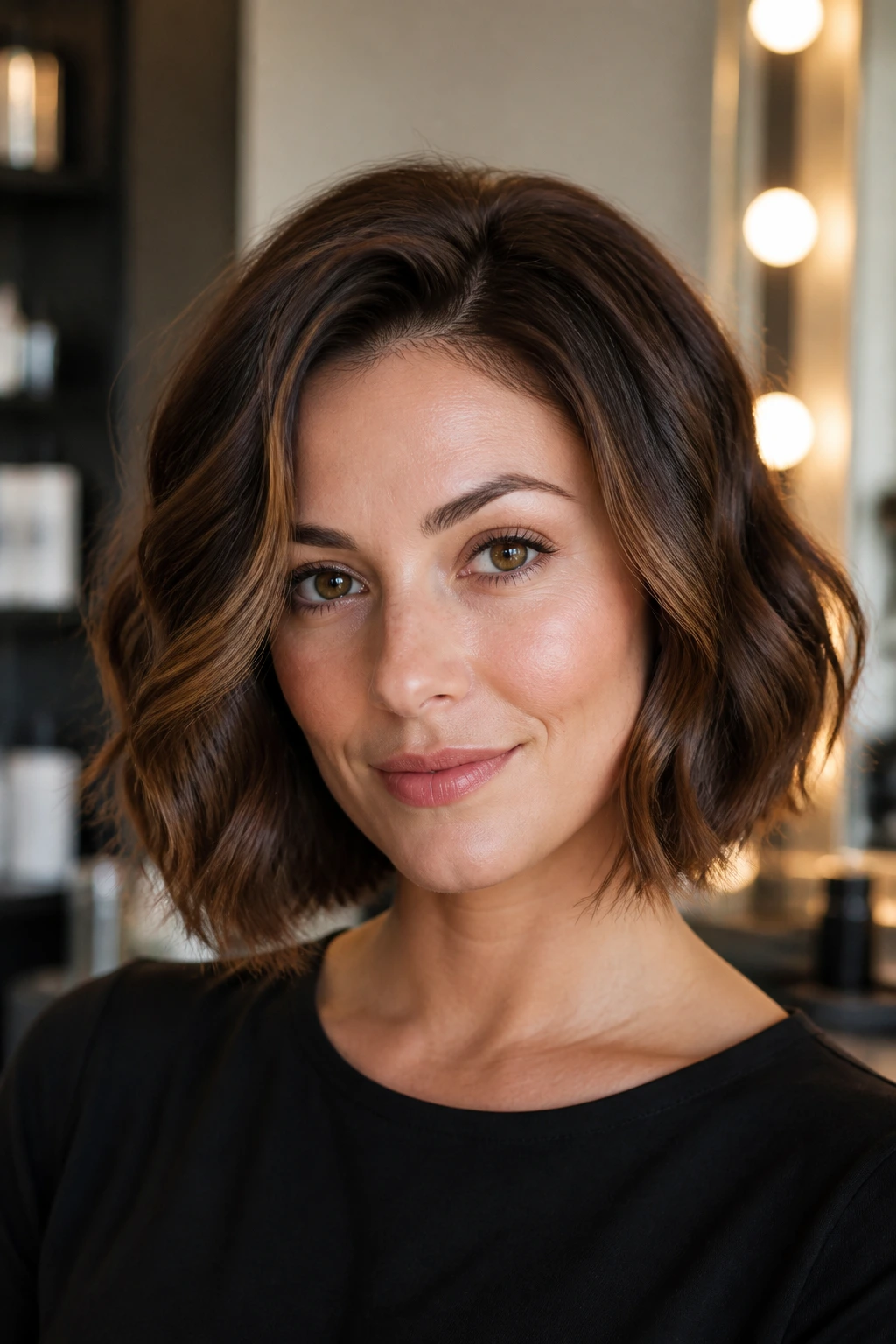
A good bob wig does not just look cute on the hanger. It has to land in the right place once it’s on a real head, under real light, with real cheekbones and a real chin line. That’s why the cap details matter almost as much as the cut itself.
The first thing I check is the parting space. A 4×4 closure can work if you know you’ll wear the same part every time, but a 13×4 or 13×6 lace front gives you more room to shift the hairline and move the part off-center. That flexibility matters on a heart-shaped face because even a small part change can soften the forehead instantly.
Density changes the read too. A bob at 120% to 130% density usually looks cleaner and less bulky. Move up to 150% if you want more glam or you naturally like a fuller silhouette, but once you get much higher, the wig can start widening the face instead of framing it. That is the line I keep coming back to. Volume is useful only when it’s in the right place.
Knot work and hairline prep matter if you want the wig to disappear into your face instead of sitting on top of it. Pre-plucked hairlines, lightly bleached knots, and a little lace tint go a long way. None of that is flashy. It just keeps the front from looking like a cap with hair attached.
Essential Wig Tools and Shopping Checklist
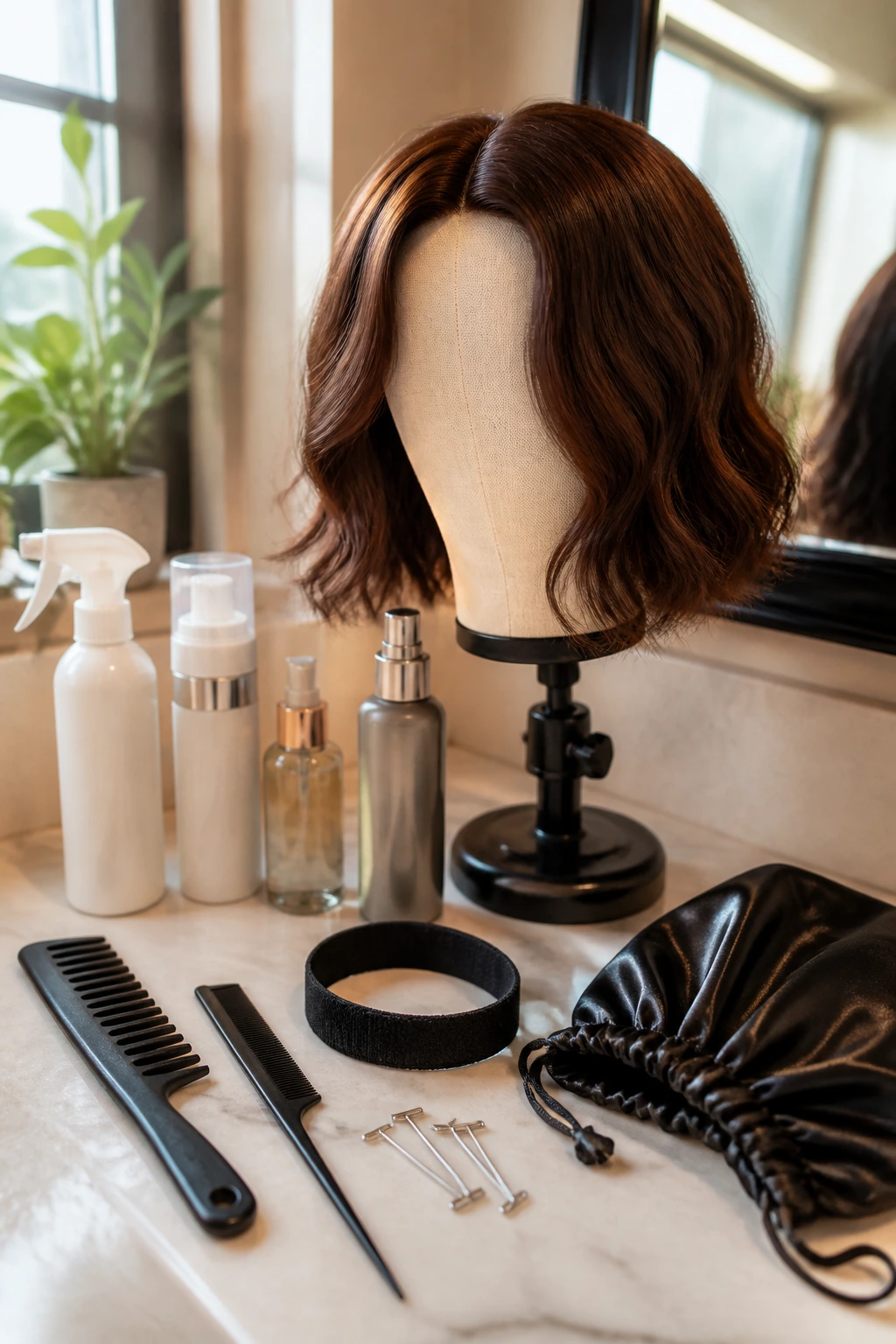
- Wig stand or canvas block head: Keeps the bob’s shape while you dry, part, or store it.
- Wide-tooth detangling comb: Best for loosening wavy ends without dragging out the pattern.
- Tail comb: Useful for moving the part a half inch or teasing out baby hairs with control.
- Wig grip or elastic band: Helps glueless bobs sit flat, especially if your natural hair is thick.
- T-pins: Hold the wig steady on a stand while you style or air-dry it.
- Spray bottle with water: Helps reset wave pattern without soaking the whole unit.
- Wig-safe mousse or light styling foam: Gives soft hold to loose waves without turning them crunchy.
- Silicone-free serum: Tames flyaways on human hair or heat-friendly wigs without coating the fiber too heavily.
- Heat protectant: Only for human hair or heat-friendly fiber; ordinary synthetic wigs can melt fast under hot tools.
- Travel bag or satin storage bag: Keeps the wig from getting crushed between wears.
Smart Shopping Tips for Length, Fiber, and Wave Pattern

Shopping for a bob wig is part taste test, part measurement problem. Ignore the marketing language on the box for a second and look at where the hair will actually hit your face. If the wig lands at the chin, ask yourself whether you want to emphasize the narrowest point of the face. If the answer is no, move longer.
The safest lengths for a heart-shaped face are usually jaw-skimming to collarbone, depending on how much softness you want. Chin length can still work, but it needs layers, wave, or a side part to keep it from reading hard. If you’re petite, even half an inch changes the whole shape. If you have a long neck, a slightly longer bob often looks more balanced.
Fiber matters more than people admit. Human hair gives you the most freedom with parting and heat, but it asks for more upkeep. Heat-friendly synthetic holds a wave pattern well and usually costs less, though it needs lower heat and gentler handling. Basic synthetic can look fine in a bob if the wave is already the one you want. The shorter the cut, the less room there is for sloppy fiber. A bad fiber choice shows faster in a bob than in long hair.
Wave type is the last big decision. Body wave and loose wave usually flatter heart-shaped faces better than deeper curl patterns because they soften without spreading outward too much. If you like a stronger texture, keep the density lower so the wig doesn’t become a puffball around the cheeks.
How to Style a Wavy Bob Wig Without Flattening the Shape

The easiest way to ruin a wavy bob is to brush it like it’s straight hair. Don’t. You’ll pull the wave apart, create frizz, and make the cut sit wider than it should. Start with the part, not the ends. Once the part is settled, the rest of the shape has a place to fall.
Root Control: Keep the crown close to the head. A light mist of water or a tiny amount of wig-safe mousse at the roots is usually enough. You want lift, not a dome.
Wave Reset: Scrunch the mid-lengths with damp hands, then let the ends dry on their own shape. If the wig is human hair or heat-friendly, a low-heat bend at the lower half is enough. The wave should move, not inflate.
Face-Frame Finish: Tuck one side behind the ear or leave two small face-framing pieces out near the cheekbone. That one detail changes the read of a heart-shaped face more than most people expect.
Little Habit That Helps: Store the wig on a stand instead of stuffing it flat into a drawer. Wavy bobs pick up dents fast, and once the bend gets smashed, you spend the next wear fixing it.
Common Mistakes That Throw the Balance Off

The first mistake is ending the bob exactly at the chin and calling it a day. On a heart-shaped face, that landing point can make the jaw look sharper and narrower than it already is. Move the length either slightly above or slightly below that line if you can.
The second mistake is loading the crown with volume. A lot of wig wearers do this because they want body, but body at the root can widen the forehead and make the face look top-heavy. Keep the lift low and the part slightly off-center.
Another one: choosing waves that are too tight. Tight texture can puff out around the cheek line, which makes the lower half of the face look even smaller. Loose S-waves or soft bends are usually the safer bet.
Heavy bangs are tricky too. A thick straight fringe can look striking in a photo and then feel overpowering in daylight. If you want fringe, keep it wispy, curtain-style, or feathered enough that the forehead still breathes.
Last, people buy the wrong density because they think fuller is always better. It isn’t. On a bob, too much hair can make the wig sit like a cap instead of a haircut. If the unit starts feeling bulky the minute you put it on, the issue may be density, not styling.
Variations and Adaptations to Try
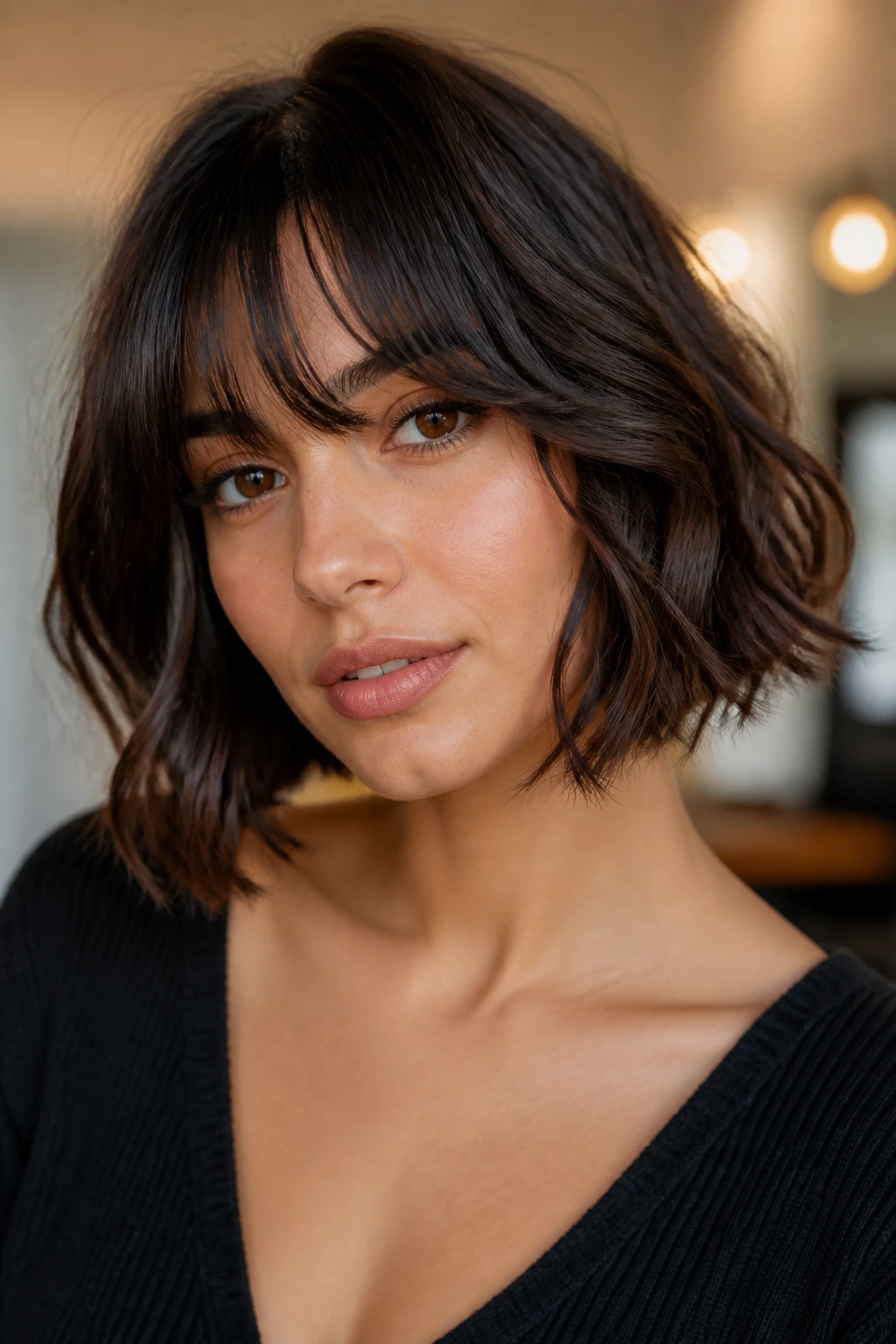
Soft Everyday Edit: Choose a side-part bob at 120% density with loose waves and minimal layering. This is the version that disappears into daily life and doesn’t ask for much fuss.
Glam Side-Sweep Version: Push the part deeper, raise the density a little, and keep the front pieces long enough to brush the cheekbones. This one looks sharper under evening light or in photos.
Glueless Comfort Fit: Pick a lace front with an elastic band and pre-plucked hairline so you can wear it without adhesive. It’s the easiest route if you hate spending time on the front edge.
Fringe-Forward Adaptation: Swap in curtain fringe or feathered bangs if you want more forehead coverage. Keep the fringe light, though, or you’ll lose the balancing effect the bob is supposed to create.
Low-Maintenance Heat-Free Option: Go with a synthetic body-wave bob that already has the bend you want. That saves time, as long as you accept that the pattern needs gentler care and less hot-tool tampering.
Care, Storage, and Wave Refreshing
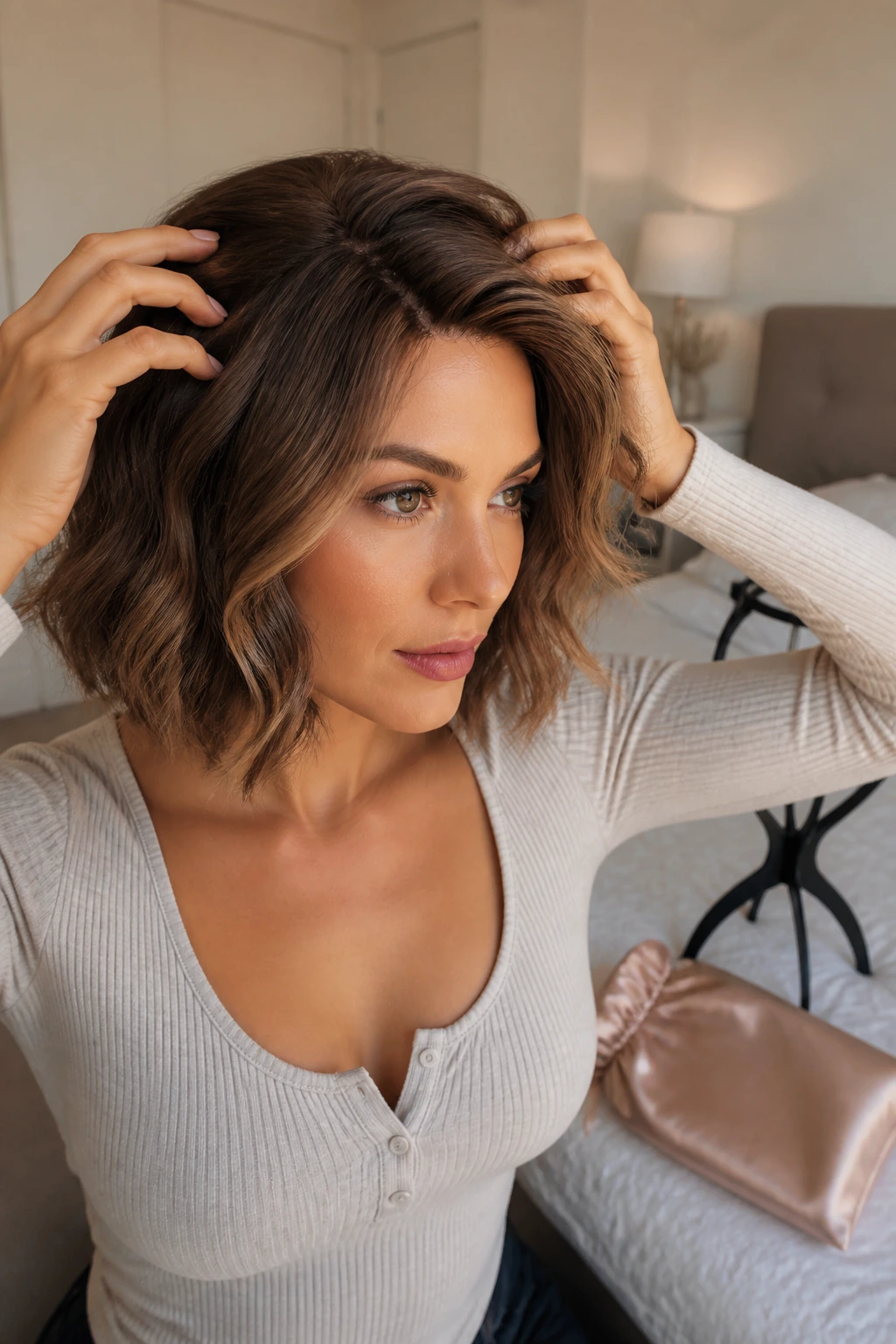
A wavy bob keeps its shape better than longer hair, but it also shows dents faster because there’s less length to hide them. After each wear, let the wig air out on a stand for at least 15 to 20 minutes before putting it away. If you store it while damp from sweat or product, the fiber can pick up a dull smell and the wave can go flat at the root.
For synthetic bob wigs, a wash every 6 to 8 wears is usually enough unless you’ve used a lot of product. For human hair, washing every 8 to 12 wears is a fair starting point, depending on how much heat, dry shampoo, and styling foam you use. If the wave starts to look stringy, that’s your cue before the cap does any complaining.
Wash gently. No rough scrubbing. Use cool or lukewarm water, smooth the shampoo down the fibers, and press moisture out with a towel instead of twisting. Then let the wig dry on a stand. A bob dries faster than long hair, which is one of the few small mercies in wig care.
To refresh the wave, mist lightly and scrunch with your hands. Don’t soak the front unless it really needs it. A little water near the ends usually restores the bend more cleanly than a full wet-down. If the lace front needs a reset, clean it separately so buildup doesn’t harden at the hairline.
Frequently Asked Questions
What bob length is best for a heart-shaped face?
The most reliable lengths are just below the jaw or around the collarbone. Chin length can work if the wig has enough movement, but it can also make the lower face feel too narrow. If you’re unsure, start a little longer rather than shorter.
Are bangs good on a heart-shaped face?
Yes, but the kind of bang matters. Curtain fringe, side-swept fringe, and feathered bangs soften the forehead without boxing it in. A dense straight fringe can work, but it needs to be balanced with a lighter bob shape underneath.
Should I choose a side part or a middle part?
A side part is usually easier on a heart-shaped face because it reduces the visual width at the forehead. A middle part can still work if the bob has long face-framing layers and the wave starts lower down. If the wig feels too symmetrical, shift the part off center.
How much wig density looks natural in a bob?
For most people, 120% to 130% density looks believable and keeps the bob from puffing out sideways. If you want a glam finish, 150% can work, but it needs a good cut and careful styling. Above that, short wigs can start looking bulky fast.
Can I wear a bob wig if my own hair is very wavy?
Yes, and it can actually blend well if the wig texture matches your natural bend. The key is keeping the root flat and choosing a wig that doesn’t fight your own hairline. If you leave out a little hair around the temples, match the wave from mid-length down.
What if the bob looks too boxy on me?
Move the part slightly to one side, soften the ends with a bit of water or low heat, and tuck one side behind the ear. If the wig is still too square, the density may be too high or the cut may be ending too close to the chin. Length and density solve more problems than people think.
Do lace fronts matter for bob wigs?
They do if you want the part to look natural. A lace front gives you more freedom to shift the hairline and avoid that hard, straight edge across the forehead. For a heart-shaped face, that flexibility can be the difference between “cute bob” and “why does this look stiff?”
Can I wear a bob wig without adhesive?
Yes, especially if the cap has a good elastic band and the wig grip fits well. Glueless bobs are easier to adjust during the day and faster to remove at night. If the wig slides or lifts at the temples, the cap size may be off.
The Bob That Balances the Whole Face

The best bob wigs for wavy hair and heart-shaped faces do a small job very well. They shift attention away from the widest point at the forehead, give the jaw a little more visual company, and let the wave soften the whole line instead of fighting it. That’s not flashy work. It’s smarter than flashy work.
I keep coming back to bobs because they expose bad shape fast, but they also reward good shape fast. Choose the right length, keep the part a touch off center, and let the texture fall where the face needs it most. The wig stops looking like a wig at that point. It starts looking like the haircut that was meant to be there all along.