



An undone bob looks easy until curly hair gets involved. Then the length jumps, the sides swell, and a cut that seemed neat in the chair can land in a very different place once it dries. That’s the whole trick with an undone bob for oval faces and curly hair: you are not cutting for the mirror at the salon. You’re cutting for the way the curl pattern actually behaves at home, in daylight, after a little movement and a little humidity.
Oval faces get a useful amount of freedom here. The shape can take a chin-length bob, a collarbone lob, a side part, or a fringe without fighting the proportions. Curly hair changes the math. A blunt edge can turn boxy fast. Too many short layers can puff out around the cheeks. Too little layering, and the whole thing can sit like a triangle with good intentions.
The cuts below live in the space between polished and messy. Not sloppy. Not overworked. Just soft enough to move, sharp enough to hold shape, and loose enough that the curls do their own thing without looking like they escaped a more careful haircut.
Why These Cuts Work So Well Together
-
Oval-face balance: Oval faces already carry even proportions, so these bobs can sit at the jaw, chin, or collarbone without making the face look shortened or dragged down.
-
Curl shrinkage accounted for: A good curly bob is planned with dry spring in mind, which is why the length often needs to land a little lower than you expect in the chair.
-
Undone shape, not messy hair: The point is movement in the perimeter, broken-up ends, and soft layers — not frizz pretending to be texture.
-
Low-fuss styling: These cuts do the heavy lifting early, so you are not building a perfect curl pattern every morning with six tools and a prayer.
-
Room for density changes: Fine curls, thick curls, loose waves, and tight spirals can all live in bob territory if the layers and weight line are chosen with some care.
-
Face-framing without crowding: The best versions leave the cheekbones visible and keep the hair from sitting like a curtain over the whole face.
1. Jaw-Grazing Curly Bob With a Soft Side Part
A jaw-grazing bob does one job very well: it sits right where the face still wants breathing room. On an oval face, that landing point makes curls look intentional instead of random. The soft side part keeps the top from reading flat, which matters more than people think.
Why it works
Ask for the cut to be checked on dry curls, with the front pieces landing just under the jaw and the nape kept soft rather than stacked. If your curls spring up a lot, leave the length a touch longer than you think you want. The side part gives one cheekbone a little lift and lets the curl pattern fall in a more relaxed way.
- Keep the perimeter clean.
- Leave the layers subtle.
- Use a light mousse at the root for lift.
Best move: tuck the shorter side behind one ear and let the longer side frame the cheekbone.
2. Chin-Length Rounded Bob With Soft Ends
This is the one that looks calm from a distance and alive up close. The rounded outline follows the curve of the jaw instead of sitting straight across it, which makes curly hair feel softer and less boxy. Oval faces can wear this length without losing the vertical line of the face.
The difference is in the ends. Ask for soft point cutting or gentle texturizing at the perimeter so the curls do not pile into one heavy line at the chin. That little bit of breakup keeps the shape from turning stiff. If your hair is thick, keep the interior light; if it is fine, do not over-thin it or the bob will lose its shape by lunch.
3. Collarbone Lob With Shattered Layers
Why does a collarbone lob work so well on curls? Because the extra inch or two gives the curl pattern room to contract without making the whole cut feel too short. On an oval face, the longer line keeps the neck open and the face balanced. It is the safest place to start if you are bob-curious but not ready to go fully short.
Ask for shattered layers that begin below the cheekbones, not at them. That way, the curl pattern gets movement at the ends without breaking up the silhouette around the face. The result is more air around the hair, less bulk on the sides, and a shape that still looks good two days after wash day.
How to wear it
Air-dry if your curls are loose and cooperative. Diffuse if they need a bit of lift at the roots. Either way, keep the finish soft, not crispy.
4. French Bob With a Curly Micro Fringe
Short bangs on curly hair can go wrong fast, which is exactly why this version needs a little respect. A French bob with a micro fringe is cheeky, sure, but on an oval face it can look sharp without feeling harsh if the fringe is cut longer than it appears wet.
The trick is shrinkage. Curly fringe should usually sit below the brow at the salon chair, because it will bounce up once it dries. Keep the bob itself close to the cheekbone or just under it so the fringe and the perimeter feel connected. This works best on looser curls or waves that form small, distinct clumps instead of exploding outward.
5. Side-Swept Bob With a Tucked Nape
This cut has a little drama, but not the theatrical kind. One side carries more length, the nape is tapered softly, and the whole shape leans in one direction, which makes curly hair look lighter. Oval faces can handle the asymmetry without getting visually thrown off.
A side-swept bob is useful if your curls tend to bunch up around the back of the head. The tucked nape removes some of that weight, while the longer front lets the hair skim the jaw and neck. Ask the stylist to keep the weight line smooth rather than choppy if you want the bob to look grown-in instead of broken apart.
6. Curly Shag Bob With Face-Framing Layers
If your curls have attitude, this is a good place to put it. A shag bob gives the perimeter a little roughness, the crown some lift, and the face a few layers that start around the cheekbones. On an oval face, that framing can sharpen the features without pinning anything down too tightly.
This cut works best when the layers are cut to the curl pattern instead of against it. A dry cut helps. So does a stylist who knows not to hollow out the sides too much. The whole point is movement that looks accidental but is actually carefully placed. That distinction matters.
7. A-Line Bob With Longer Front Pieces
A mild A-line bob gives curly hair a clear shape without making it severe. The back sits a little shorter, the front drops longer, and the diagonal line keeps the face open. Oval faces wear this beautifully because the angle adds structure where curls sometimes blur it.
Ask for a soft A-line, not a sharp wedge. Sharp wedges can look dated fast and they tend to exaggerate density on the sides. A softer slope lets the curls fall forward just enough to slim the face and keep the neckline visible. It is a quiet haircut, which is its own kind of confidence.
8. Blunt Lob With Hidden Internal Layers
A blunt lob can be a little dangerous on curly hair if the edges are too heavy, but hidden internal layers fix that. The outline stays clean, which keeps the shape from looking too wide, while the inside loses enough weight to let the curl clumps separate. Oval faces usually like the longer line because it keeps the features in balance.
This one is good for looser curls and denser waves that want a shape without too much choppiness. The outer line should look neat. The interior should do the messy work. If you want the bob to look polished for work but still feel relaxed when it dries naturally, this is one of the better choices.
9. Deep Side-Part Bob With Crown Lift
A deep side part can save a bob that feels too centered and too symmetrical. Push the part over, add a little lift at the crown, and the whole cut wakes up. On an oval face, that shift gives the cheekbones a little more presence and the eyes a cleaner frame.
This style is especially useful for fine curly hair that collapses at the top. A few root clips while the hair cools can change the shape more than another ounce of product. Ask for layers that support the lift, not layers that only thin the sides. One is structure. The other is a shortcut to frizz.
10. Rounded Cloud Bob With Soft Volume

This cut is all about soft volume around the head, not flat sides and not a hard line. Think rounded silhouette, airy curl clumps, and enough shape to keep the bob from puffing out in odd places. Oval faces can carry the fullness without looking crowded, which is why this style feels so easy.
The cloud shape works best when the ends are lightly texturized and the weight stays even through the sides. Too much thinning makes curls fray. Too little makes the bob go triangular. The right version looks like the hair decided to take up space on purpose.
- Ask for a rounded outline.
- Keep the perimeter touchable, not razor-thin.
- Diffuse with the head tilted slightly forward for lift at the crown.
11. Bixie-Bob Hybrid With Loose Curls
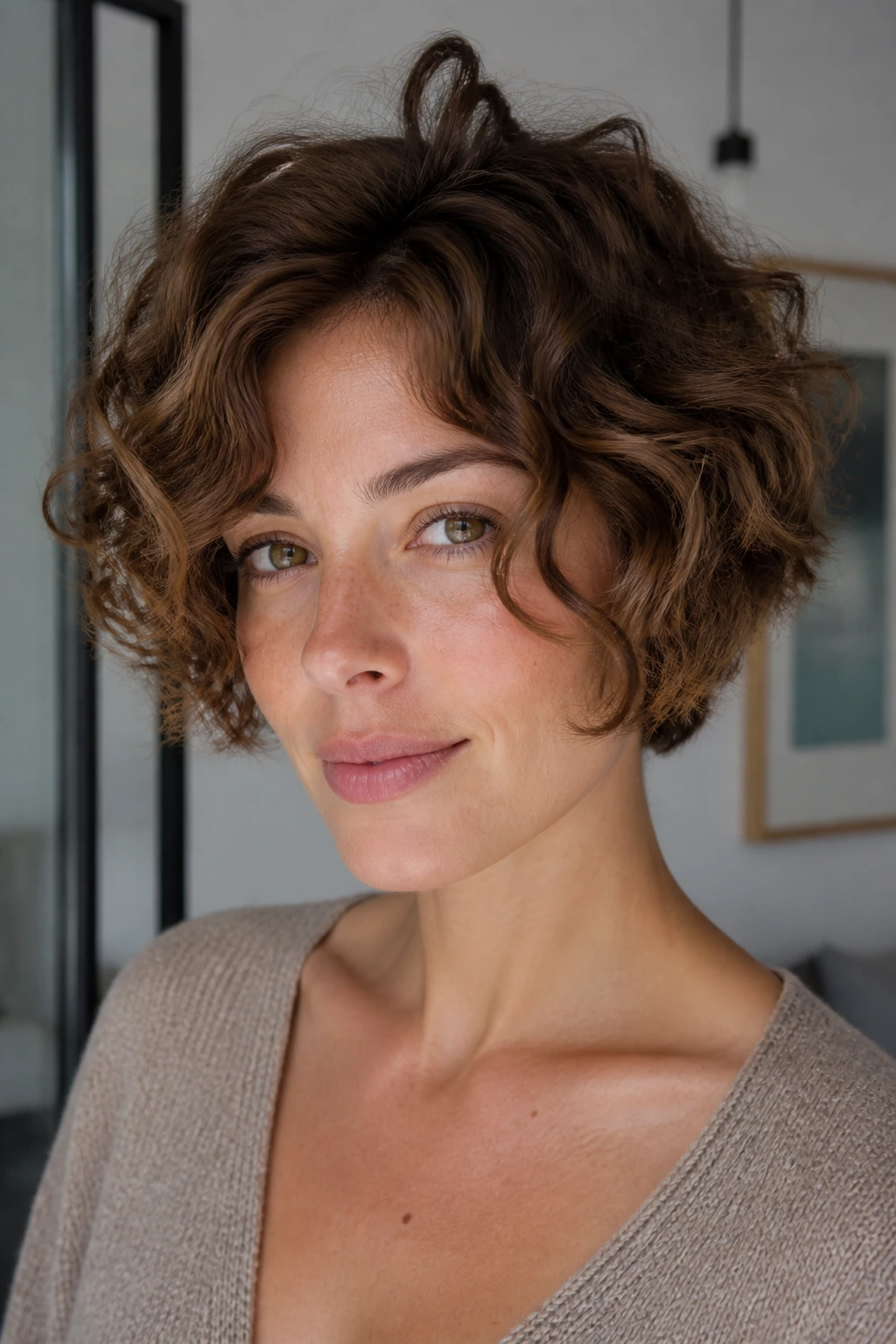
This is the cut for the person who likes short hair but does not want a full pixie. A bixie-bob hybrid sits between the ears and the jaw, with enough length to show off curl definition and enough lift in the back to keep the profile clean. Oval faces can wear the shorter edges without losing softness.
The shape works because the crown is a little lighter and the perimeter is a little broken up. That gives the curls a place to spring without becoming a rounded helmet. If your hair grows bulky at the ears, this is a good place to use careful debulking. Not too much. Just enough to let the curls breathe.
12. Airy Mini Lob With Bottleneck Bangs
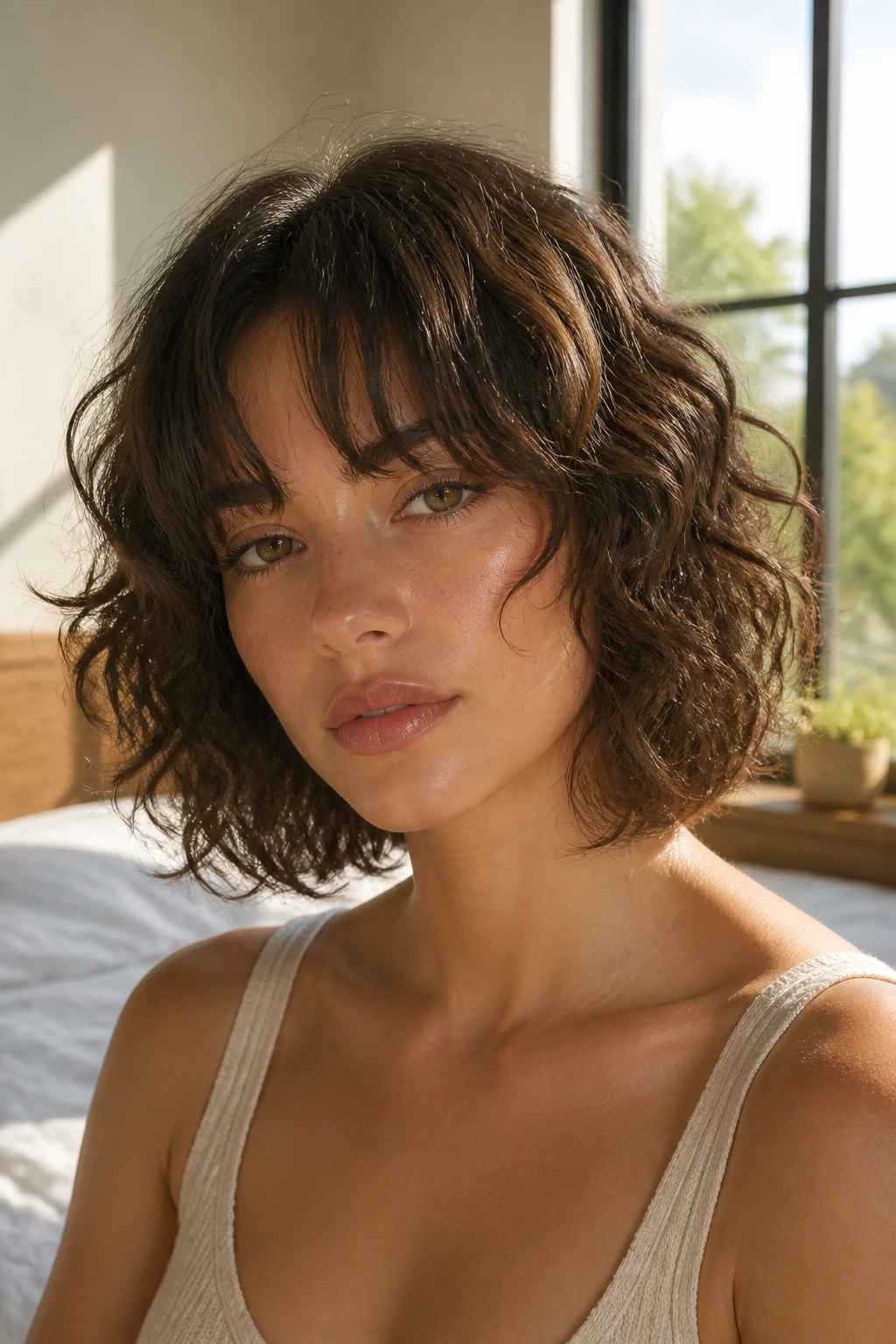
Bottleneck bangs look especially good with curly hair because they start narrow and open out around the cheekbones. Pair them with a mini lob that sits just above the collarbone, and you get a shape that feels open around an oval face without losing much length.
The fringe needs to be cut longer than it appears, especially if your curls are springy. The sides should not stop abruptly at the chin; they should melt into the rest of the cut. That soft transition is what keeps the style from looking chopped up. It reads relaxed, but there is some real geometry behind it.
13. Asymmetrical Curly Bob With One Longer Side
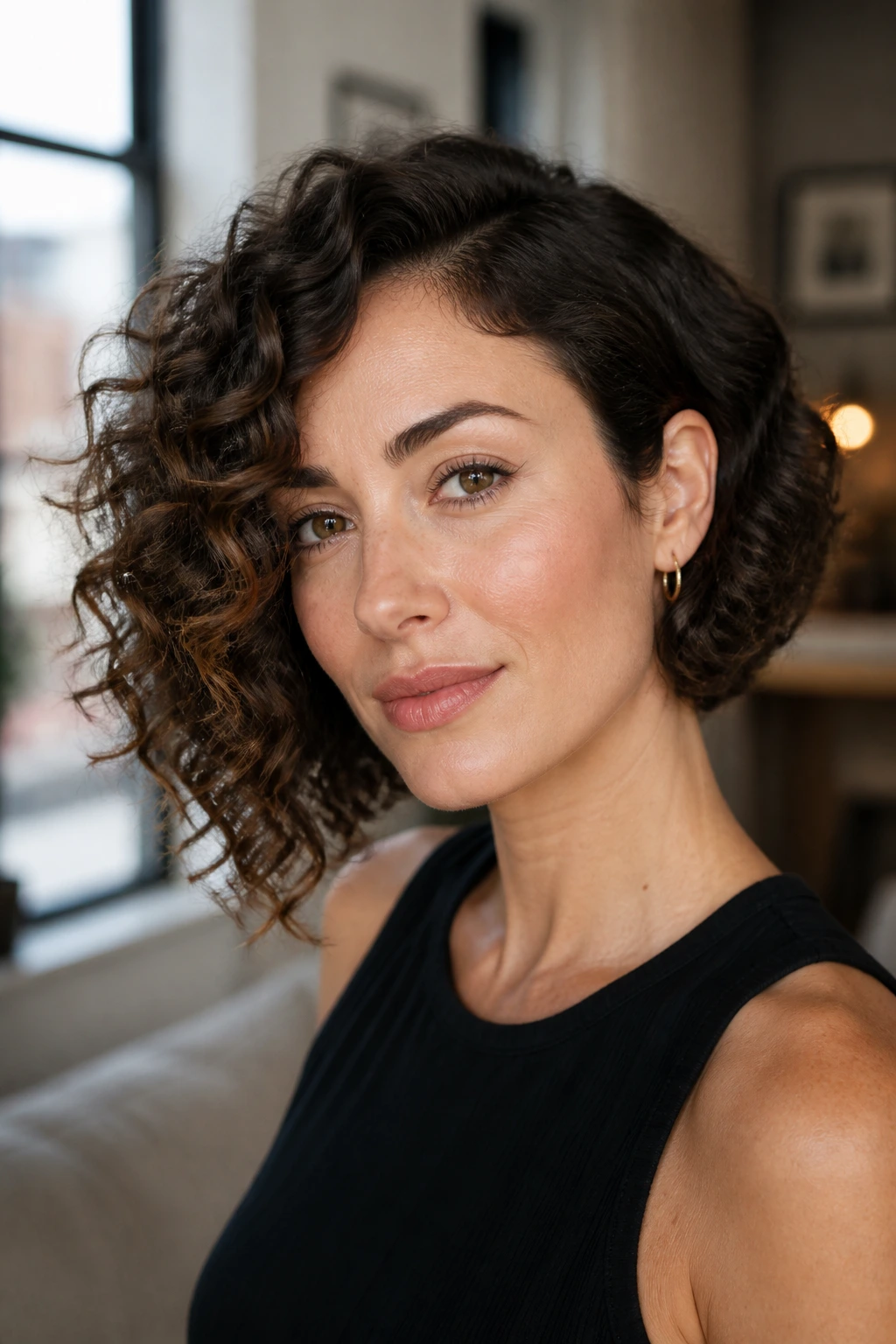
A one-side-longer bob can be surprisingly flattering on an oval face because it breaks the symmetry just enough to keep the eye moving. Curly hair makes this even better; the different lengths show up as texture instead of feeling severe. It is a smart choice if you want a little edge without going full editorial.
Keep the difference subtle — maybe an inch or two, not a dramatic drop. That keeps the haircut wearable and helps the curls fall into each other instead of fighting the shape. The asymmetry should look like it belongs there, not like somebody got distracted halfway through the cut.
14. Tapered Nape Bob With a Full Crown
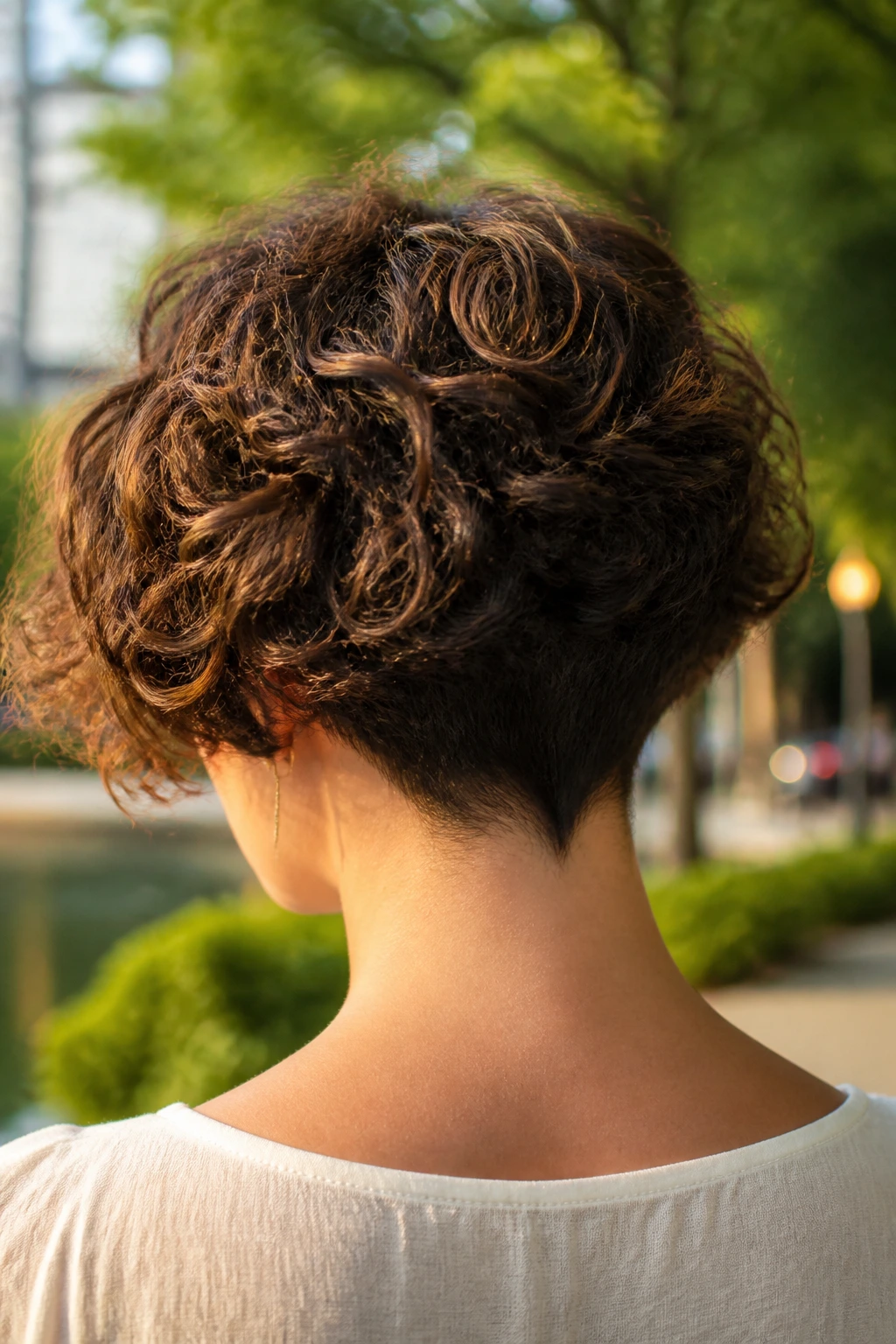
If your curls bunch at the back and puff at the nape, this is the cut that fixes the problem. A tapered nape removes bulk where the head curves in, while the full crown keeps the top from going flat. Oval faces benefit because the hairstyle keeps length around the face while staying neat in profile.
This one is especially good for thick curls that need a little internal weight removal. The goal is not shortness for its own sake. The goal is to stop the back of the bob from fighting the rest of the shape. Once that part is right, the whole cut feels lighter.
15. Center-Part Lob With Cheekbone Layers
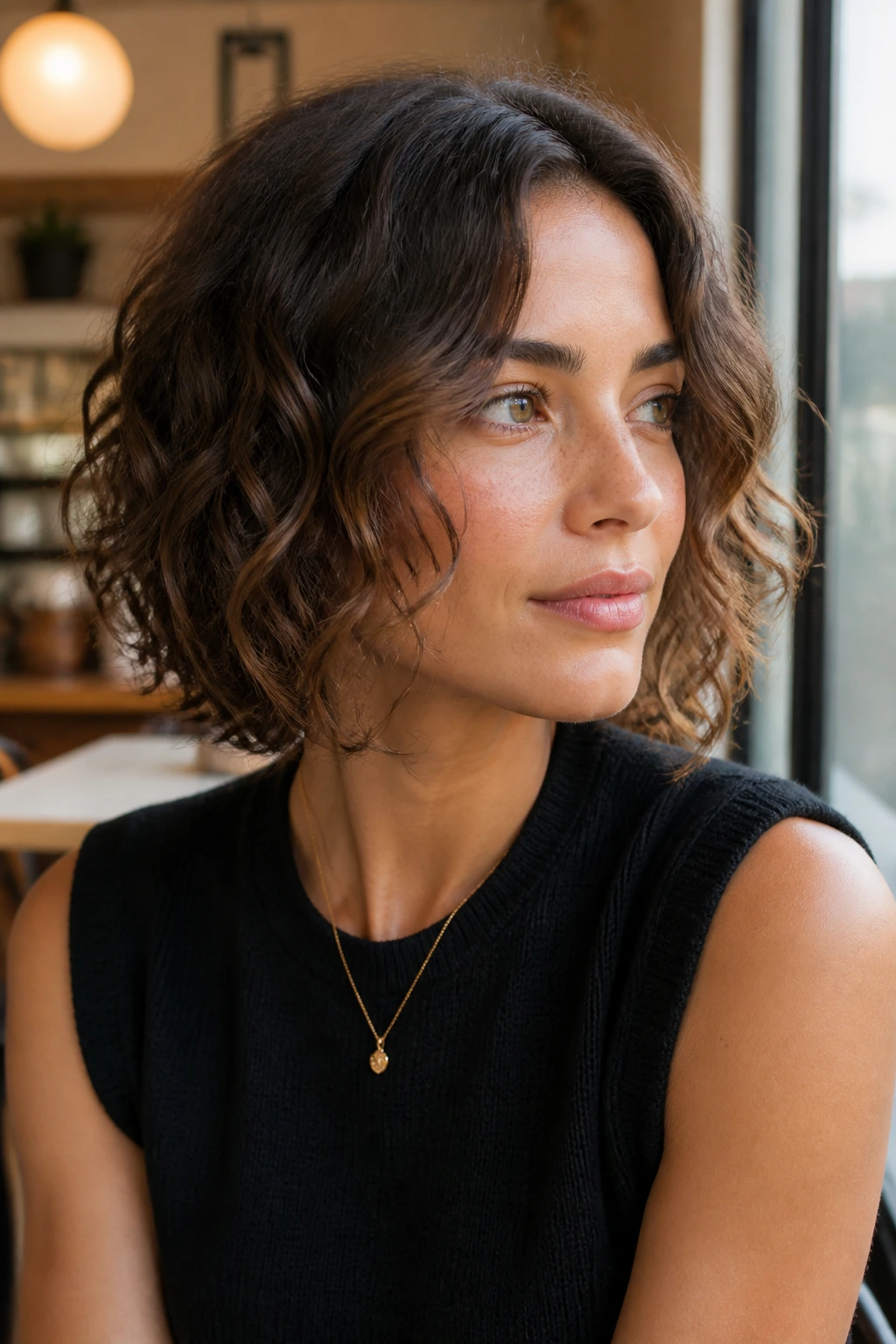
A center part can be a little unforgiving if the haircut is wrong. In a good lob, though, it brings out the symmetry of an oval face and makes the curls fall in two soft curtains. Cheekbone layers keep the front pieces from hanging like ropes and give the style a more tailored feel.
This cut usually works best when the front layers start no higher than the cheekbones. Anything shorter can push the shape too far up the face. If you want a style that feels calm, balanced, and easy to reset after a messy day, this is one of the most dependable options in the bunch.
16. Curly Bob With a Curved-Under Shape
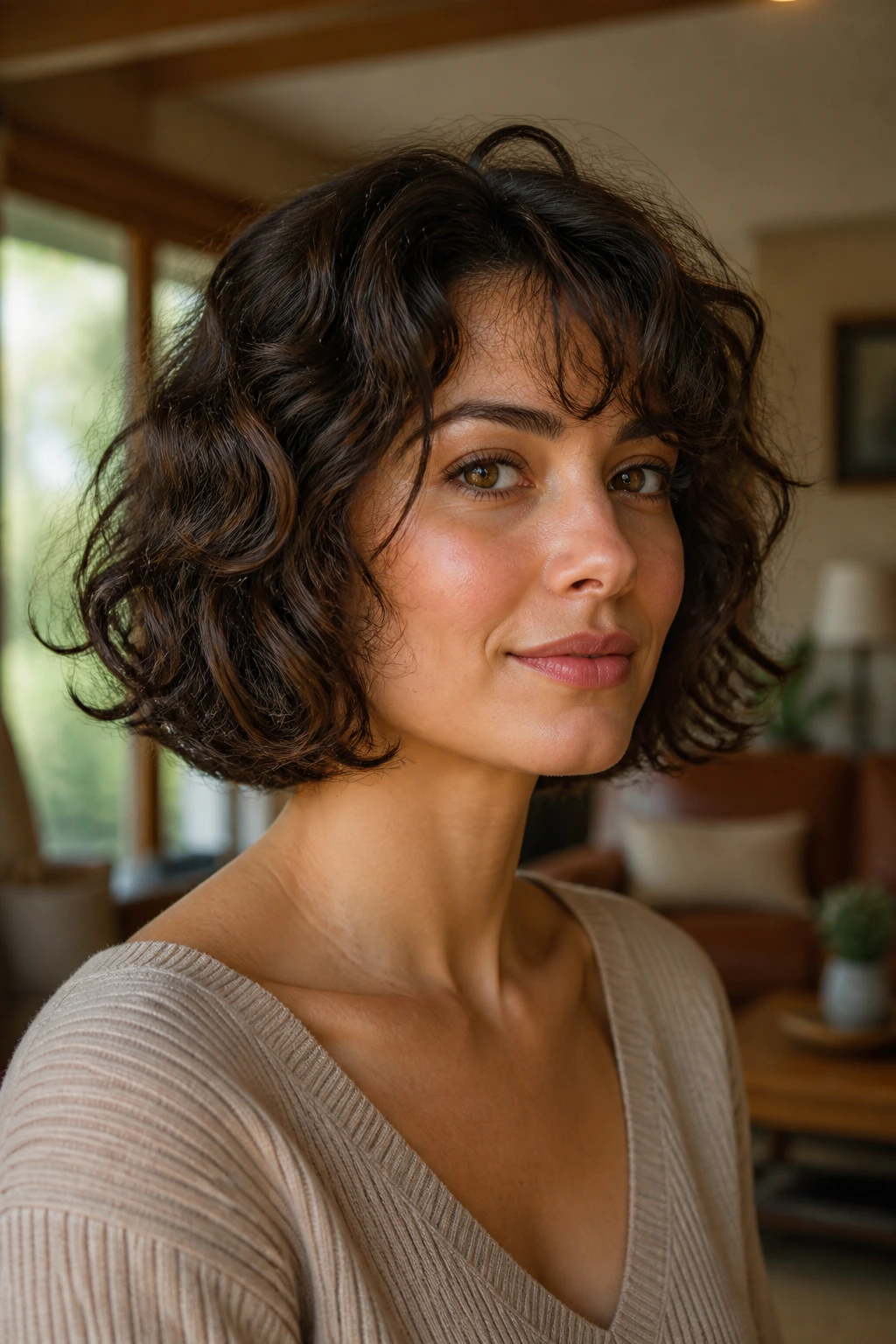
A curved-under bob sounds more polished than undone, but on curly hair it can still look relaxed if the ends are left soft. The bend under the jaw keeps the width in check and gives oval faces a clean frame. It is useful when your curls spread out sideways instead of dropping down.
This shape depends on weight control. Too much product and the ends collapse. Too little and the curve never shows up. The cut should guide the curl, not force it. That is the difference between a shaped bob and a puffy one.
17. Deconstructed Bob With Piecey Ends
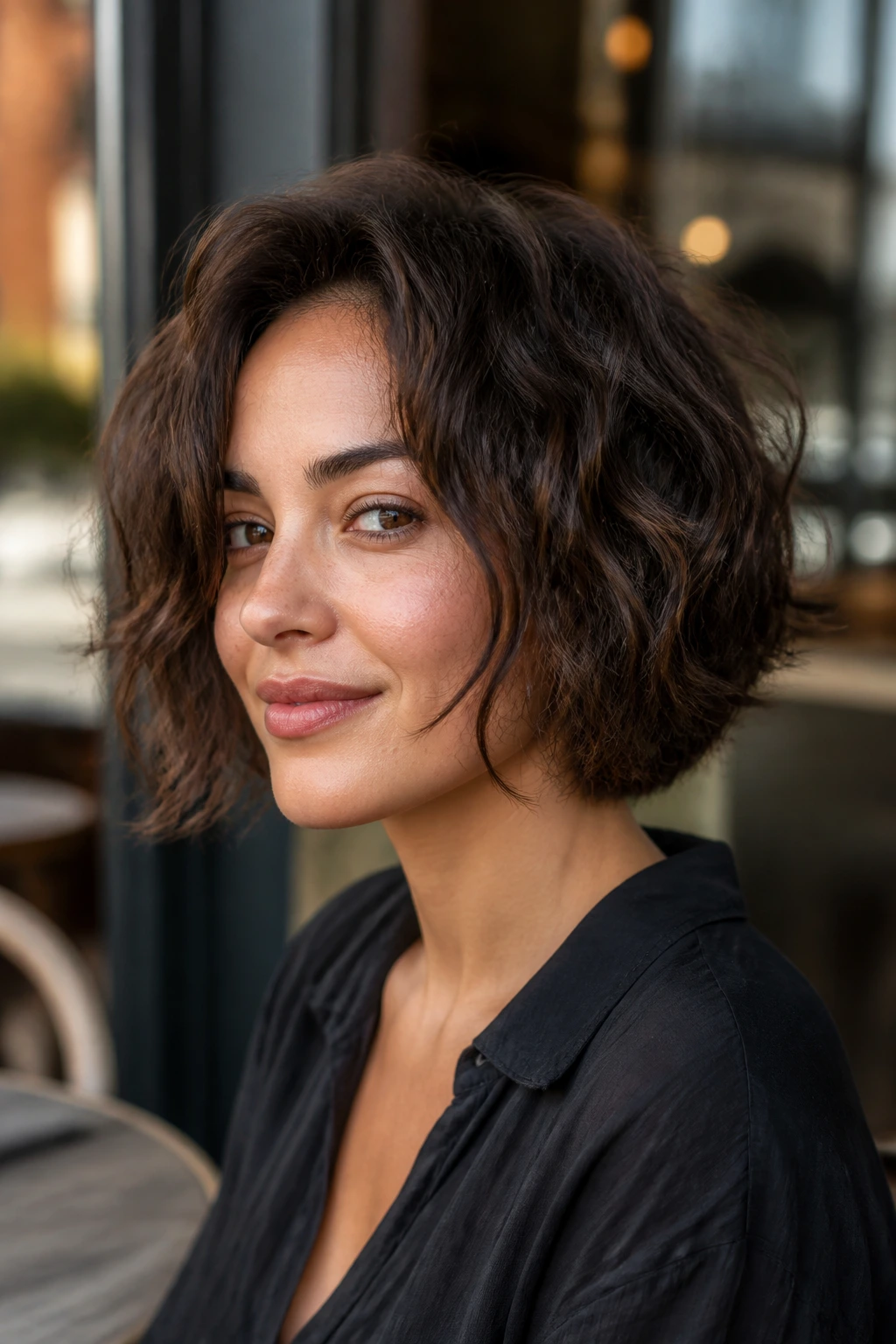
This one likes a little rebellion. The perimeter is broken up, the ends are piecey, and the texture is kept airy instead of smooth. On curly hair, that gives the bob a lived-in feel that works especially well on oval faces because the looseness keeps the features visible.
Ask for point cutting rather than heavy thinning if your curls are already fine. If your hair is dense, a little interior weight removal can help, but the stylist should stop before the shape gets wispy. The beauty of this cut is that it looks less “done” from a distance and more interesting when you get closer.
18. Long Curly Bob With Curtain Bangs
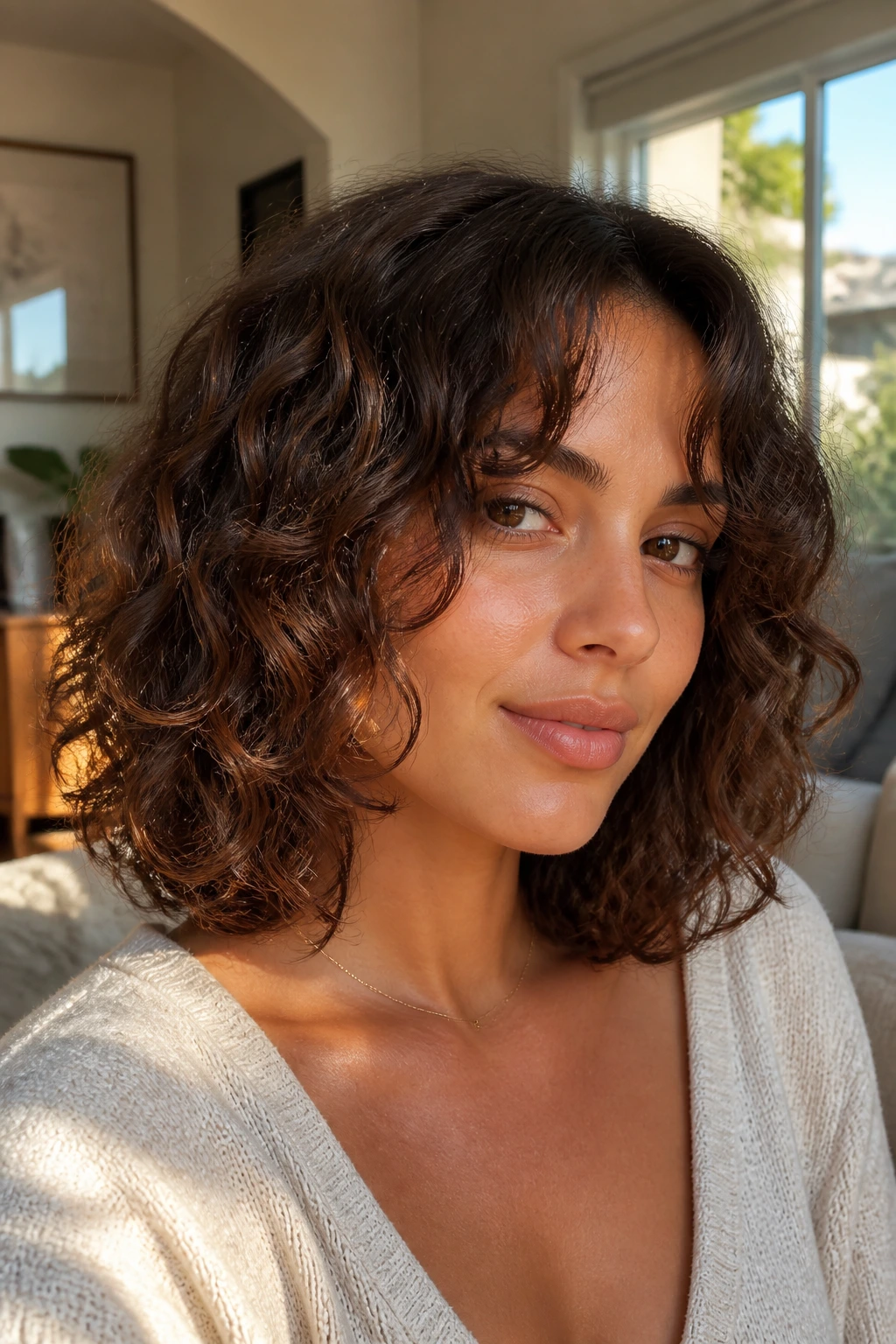
Curtain bangs and a longer bob are a good match because both rely on soft movement instead of hard lines. The bangs open the face at the center and fall away toward the cheekbones, which suits oval faces very naturally. The rest of the length keeps the haircut from feeling too top-heavy.
With curly hair, curtain bangs need patience and a little extra length. They usually dry shorter than expected, and if they are cut too high, they can sit awkwardly above the face. Ask for them to be shaped while dry or at least checked dry before anything gets too short. That one step saves regret.
19. Stacked Bob With Soft Graduation
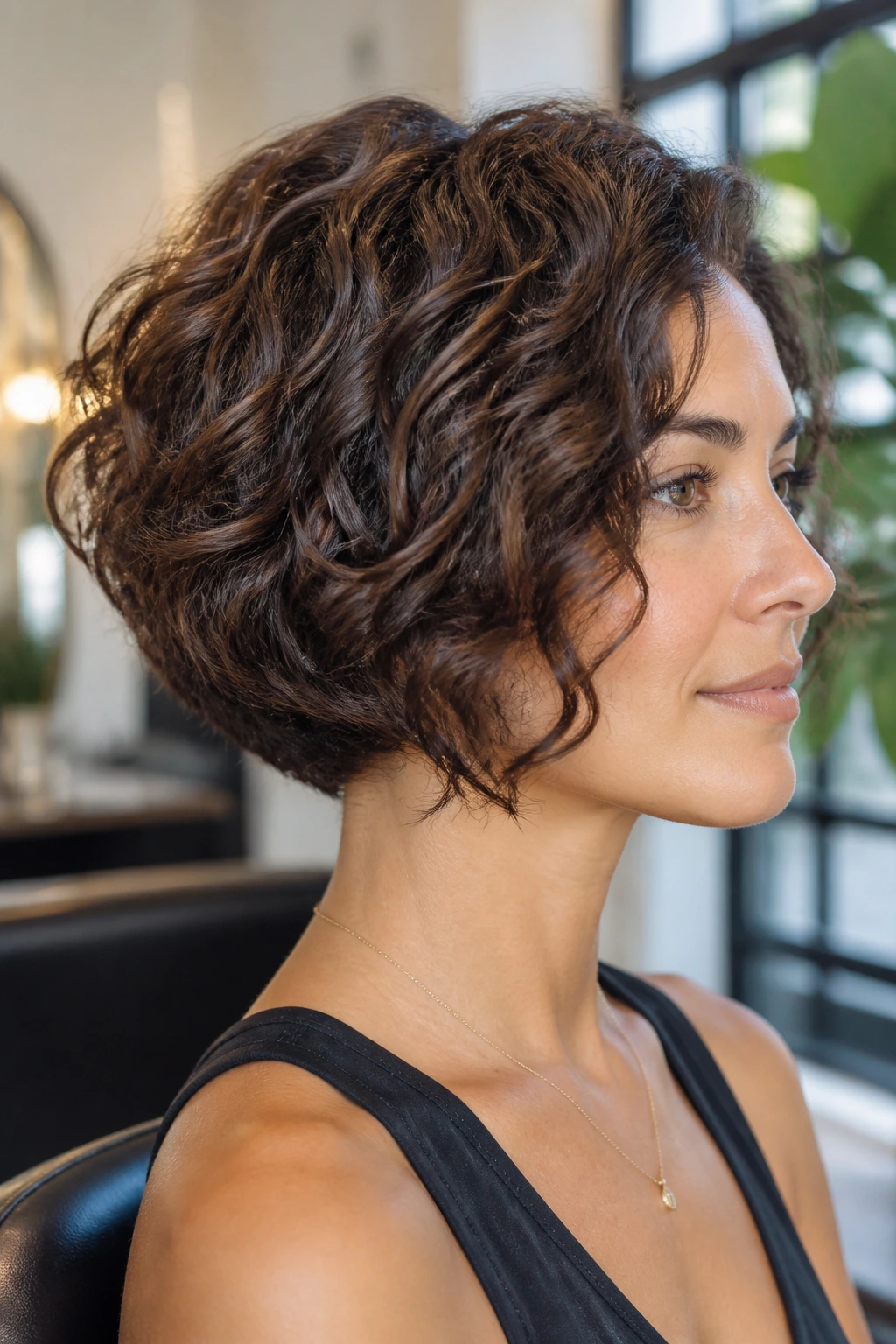
A stacked bob can be a lifesaver for thick curls, as long as the graduation stays soft. The back gets enough lift to stop the silhouette from collapsing, and the front stays long enough to flatter an oval face. The result is shape without bulk.
The mistake people make here is going too steep in the back. That creates a hard shelf and makes curls sit on top of each other in the wrong way. A softer stack gives the cut movement from the nape to the crown, which is what you want if your hair naturally has weight.
20. Wash-and-Go Lob With No-Fuss Layers
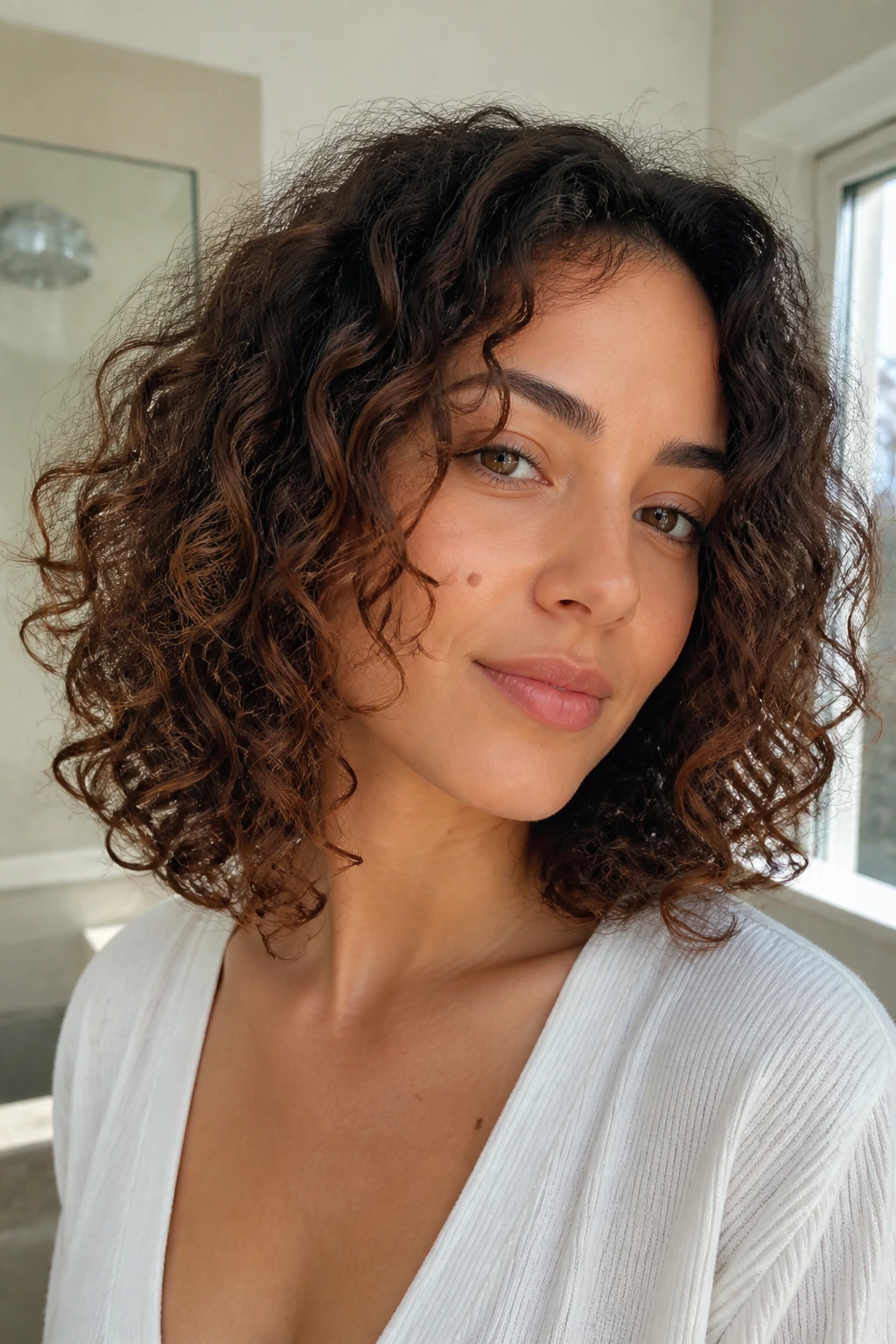
This is the haircut for people who want the wash day to be short and the styling to be even shorter. The layers are cut to follow the curl pattern, so the hair can air-dry with little intervention. Oval faces get a soft frame, and curly hair gets room to do its thing.
Do not ask for random layers here. Ask for layers that match where your curls bend and where they need to lose weight. That makes the lob behave better on day one and day three. If you want a haircut that survives a loose routine, this is a strong candidate.
21. Halo-Shape Bob With Rounded Volume
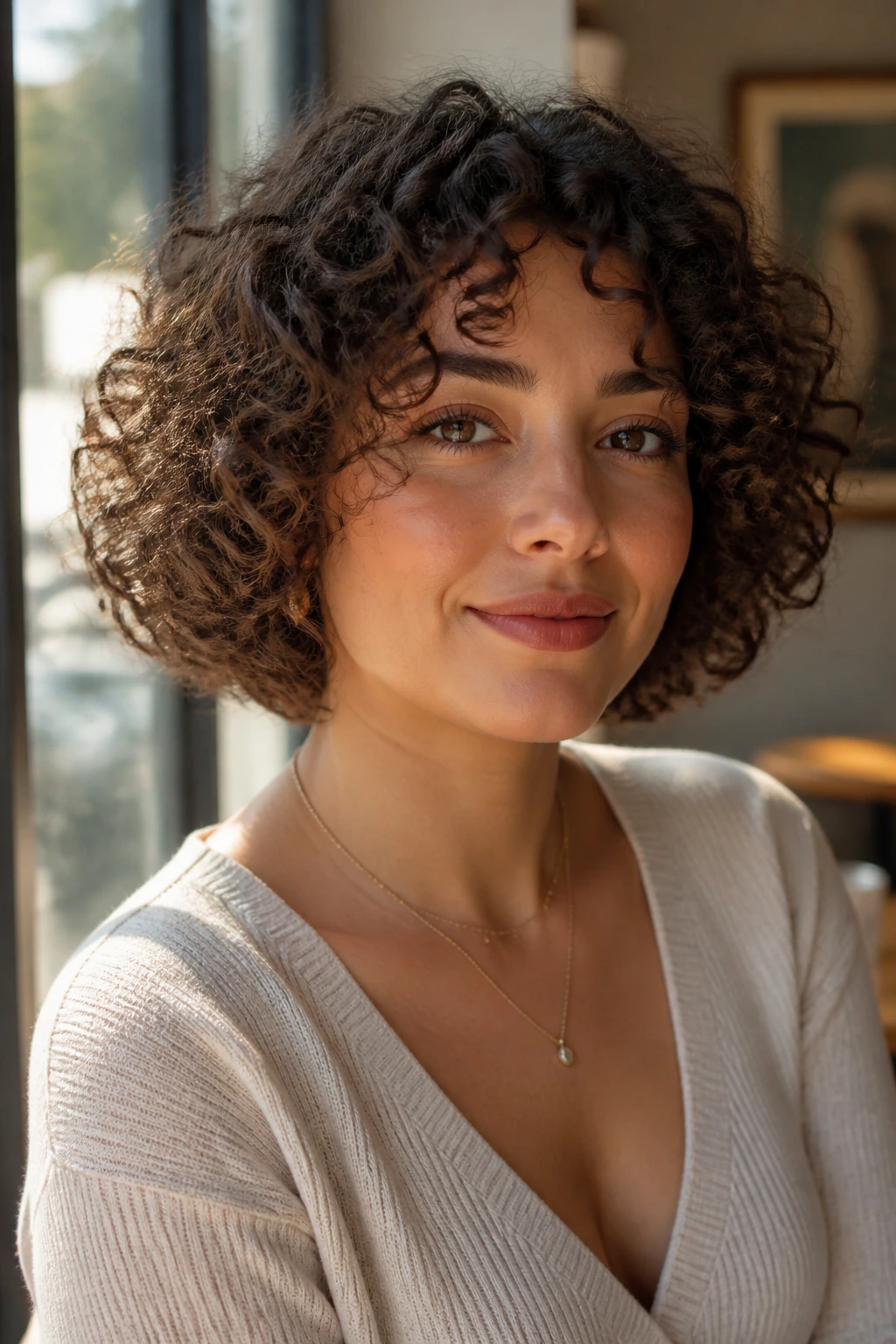
A halo bob puts the volume where it belongs: around the head, not stuck in the wrong corners. The shape is rounded, soft, and a little buoyant, which makes curls look full without turning into a triangle. Oval faces can wear the rounded outline without losing definition.
This cut tends to work well with tighter curl patterns and medium density hair. The crown should not be flattened with heavy product, and the sides should be shaped so the silhouette stays smooth. A halo bob can look very sweet in photos, but more importantly, it holds together in real life.
22. Flipped-End Lob With a Retro Edge

A flipped-end lob adds movement at the bottom instead of building all the interest at the top. On curly hair, the ends can bend out naturally or with a little diffuser help, which gives the haircut a relaxed, slightly retro edge. Oval faces like the length because it keeps the line long and open.
This style works best when the interior layers are light and the ends are not too blunt. If the perimeter is too heavy, the flip disappears. If the cut is too chopped, the shape loses its clean line. A gentle flip is enough. It does not need to shout.
23. Voluminous Bob With Underlayers
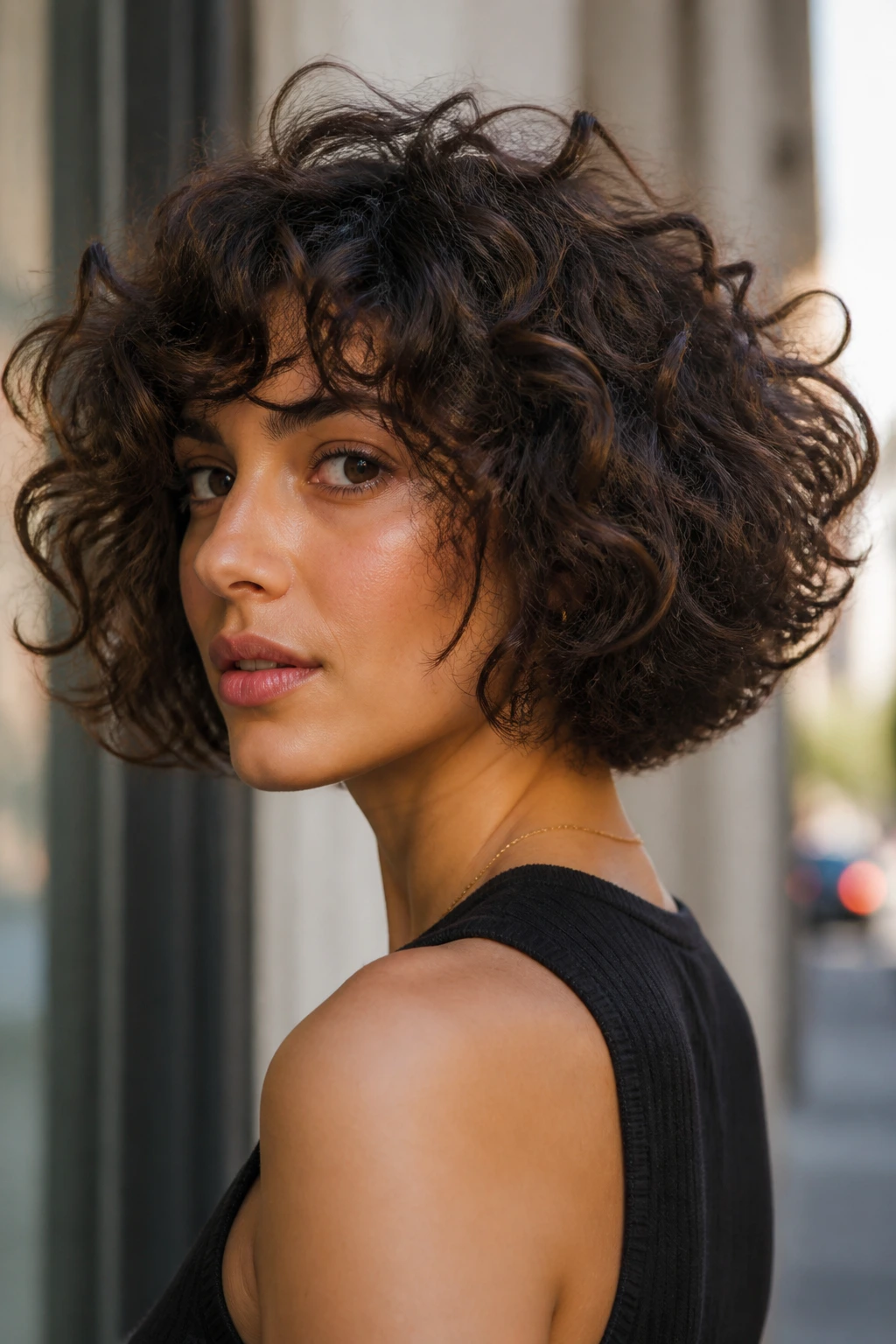
The visible shape of this bob stays full, but the hidden underlayers keep the bulk under control. That matters for curly hair, especially if the density is high and the hair swells around the cheeks. Oval faces benefit because the length keeps the features open while the underlayers stop the shape from ballooning.
This is one of those cuts where the inside matters more than the outside. A stylist who understands curl density can remove weight under the top layer without making the surface look thin. If your bob has ever gone from “nice” to “too much” by noon, this structure can help.
24. Soft Wolf-Bob With Grown-Out Texture
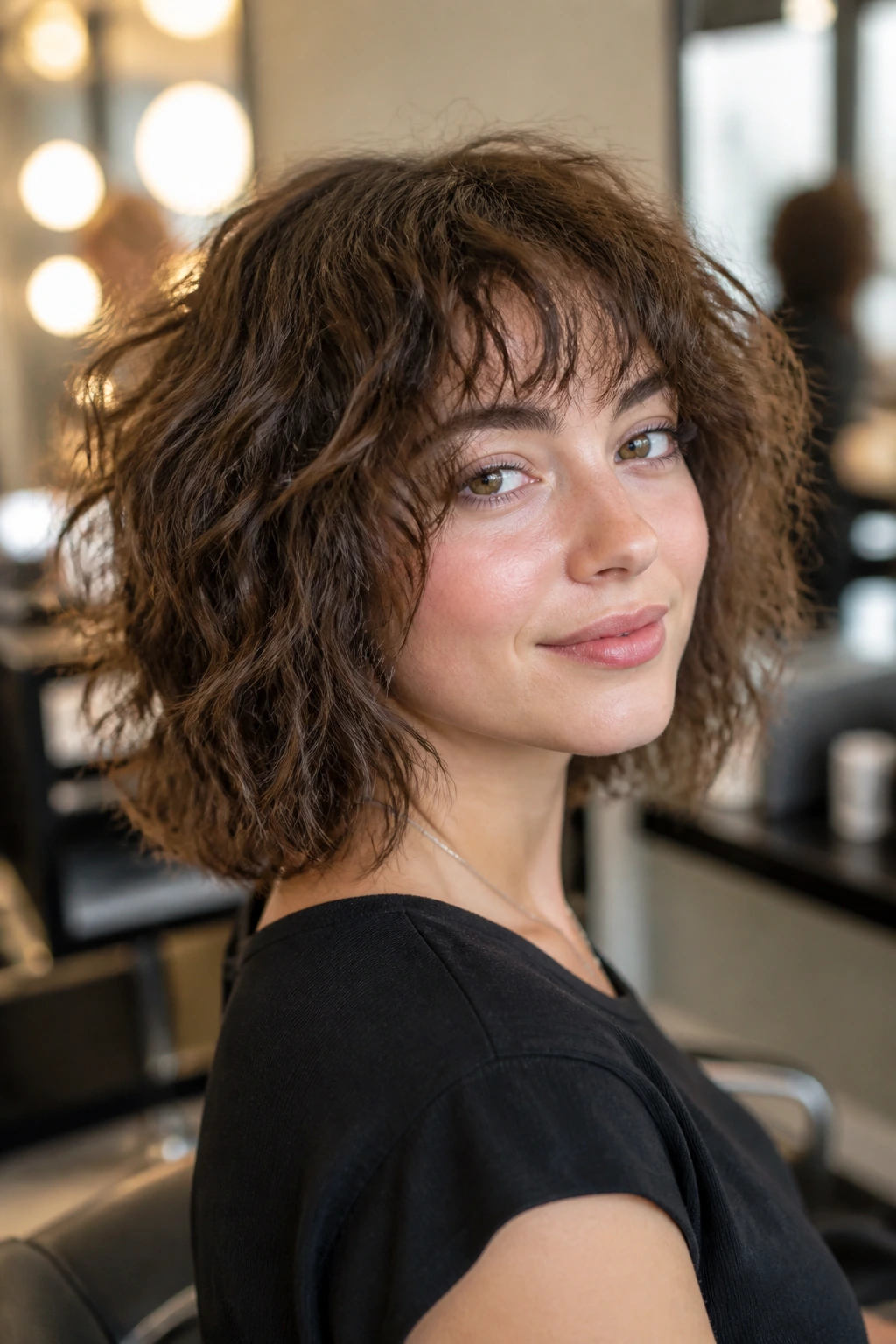
The soft wolf-bob borrows from the shag but keeps a bob’s shorter perimeter. That makes it a good match for curly hair that likes texture and a little disorder. Oval faces can wear the shorter crown layers without losing balance, especially if the front pieces stay soft.
The word “soft” matters here. A hard wolf cut can overpower curls fast. A softer version keeps the movement at the crown, allows the ends to stay loose, and avoids the choppy, over-razored look that can age a haircut in a hurry. It is a better fit if you want edge without chaos.
25. Sleek-Undone Bob With Airy Curl Separation
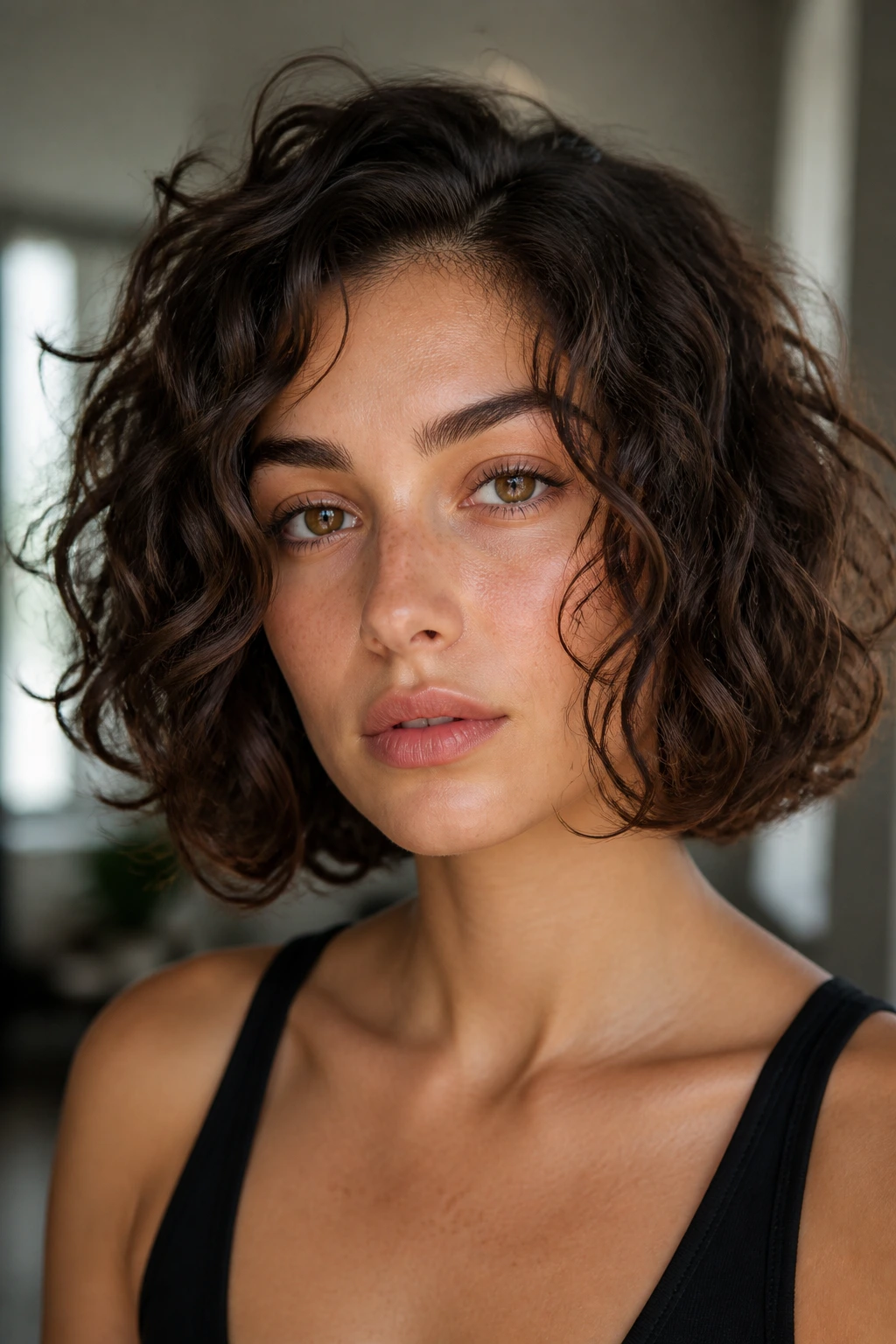
Not every undone bob needs a shaggy finish. A sleek-undone bob keeps the outline smooth and the curl clumps separated, so it reads a little more refined while still having movement. Oval faces can wear the simplicity well, because the face shape already carries the balance.
This version works especially well for looser curls and waves that respond to a light gel cast. The ends should not be over-layered, and the surface should stay glossy enough to show the curl pattern without freezing it. If your idea of undone still leans tidy, this is the one to keep near the top of the list.
Why These Cuts Work on Real Hair, Not Just in a Chair

Oval faces give the stylist room. That is the quiet advantage here. A bob can stop at the jaw, sit under the chin, or stretch to the collarbone without making the face look cut off or crowded, which means the real decision comes down to curl behavior, density, and how much neck you want to show.
Curly hair changes everything in the best and most annoying ways. A cut that looks balanced when wet may spring up, widen out, or collapse at the crown once it dries. That is why these undone bobs lean on soft edges, gentle layering, and weight control instead of hard lines. The goal is shape with movement, not a perfect outline that falls apart the first time you bend over to tie a shoe.
The part nobody likes to hear
You usually need a little more length than you think. A bob that lands right at the jaw when it is damp can pop up a half inch to an inch once the curl settles. Sometimes more. That is why a stylist who knows curly hair will keep checking the cut in its dry state and refuse to trust one single wet mirror moment.
What to Bring to the Salon and What to Keep at Home
-
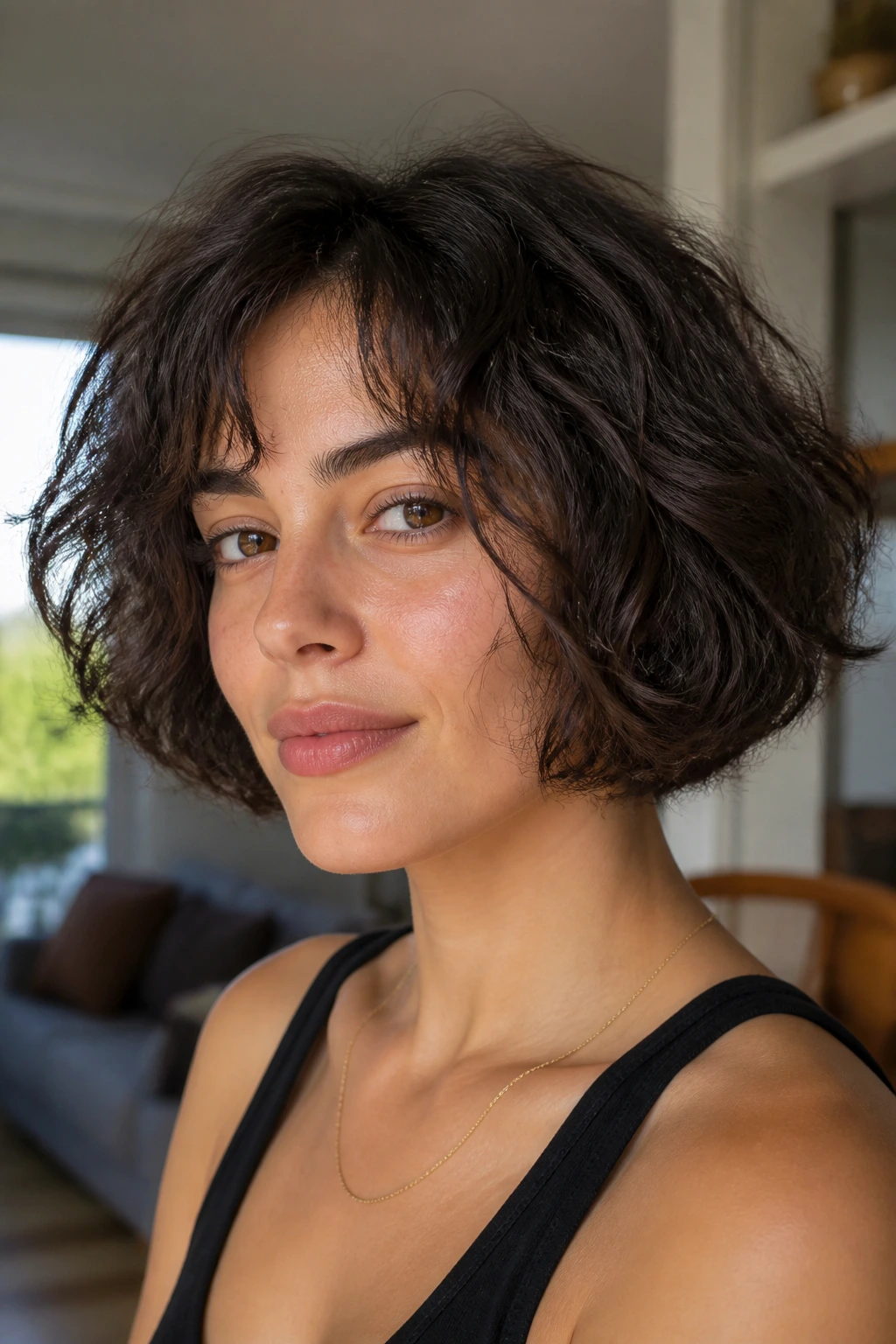
Reference photos of the same curl pattern: Bring photos of people whose curls and density look close to yours, not just a pretty shape on straight hair.
-
A stylist who cuts curls dry or checks them dry: That matters more than the salon chair decor. Dry checking shows the real perimeter and where the curls spring.
-
A microfiber towel or cotton T-shirt: Regular terry cloth roughs up the curl surface and can make the bob frizz faster around the jaw.
-
A diffuser with a wide bowl: Small diffusers can take forever on dense curls and leave the roots half-dried. A wider bowl moves faster and gives better lift.
-
Lightweight curl cream, mousse, or gel: The product should support the curl, not coat the bob into a heavy helmet.
-
Duckbill clips or root clips: These are useful for keeping the crown lifted while the hair cools and sets.
-
A wide-tooth comb or detangling brush: Use it when the hair is wet and coated with slip. Dry brushing is where bobs start to puff in all the wrong places.
Picking the Right Cut and Product Before You Chop It
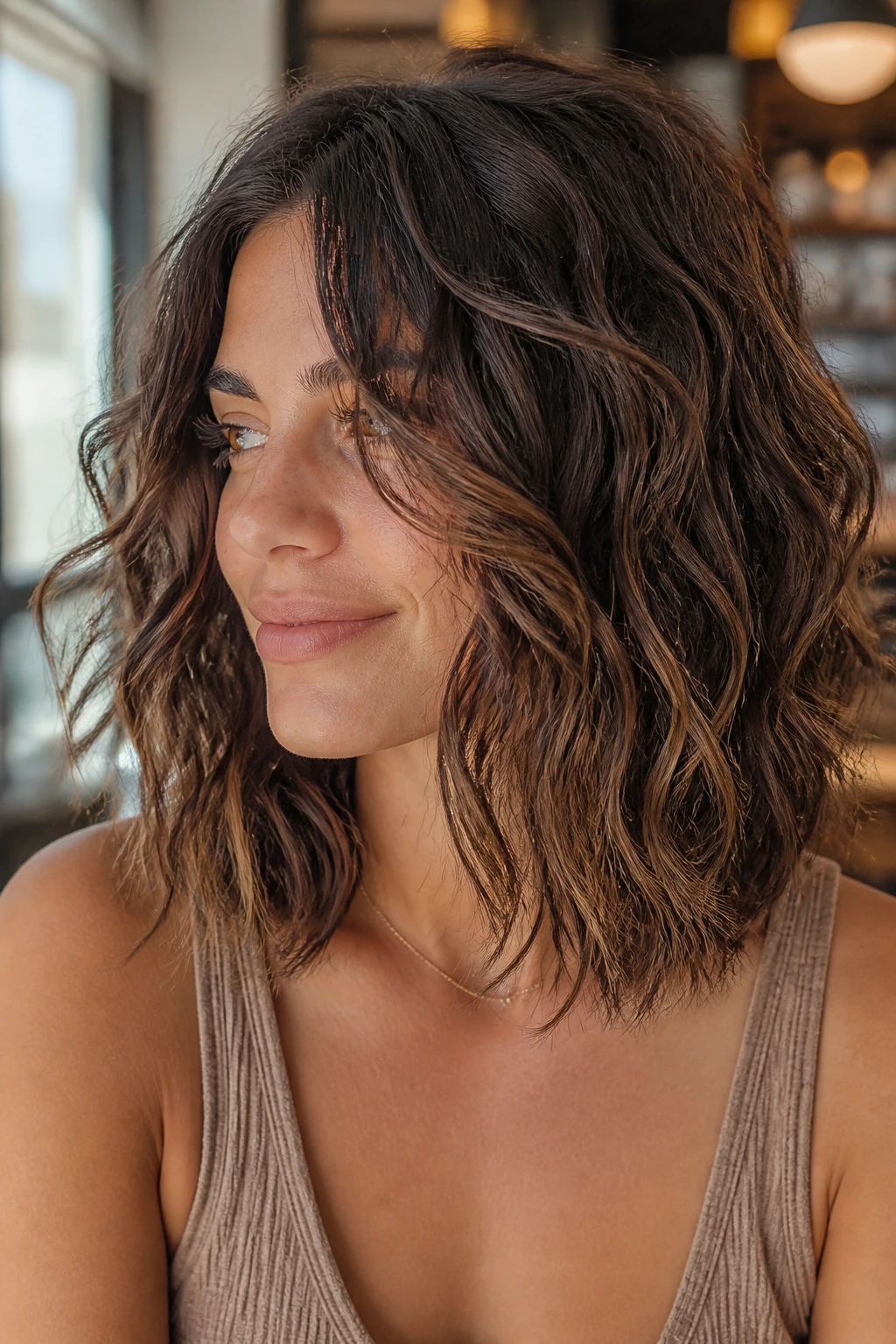
A bob on curly hair is one of those places where the consultation matters almost as much as the cut itself. If the stylist only talks about inches, walk through another sentence or two and make them talk about curl shrinkage, density, and how the hair behaves at the back of the neck. That tells you whether they are thinking about shape or just length.
Ask for the cut to be mapped to your curl pattern. Loose curls usually tolerate a cleaner perimeter and slightly longer layers. Tighter curls often need more room in the front and a softer edge through the nape so the shape does not stack up. If your hair is dense, the stylist should remove weight where it sits heavy, not just slice layers into the top and hope for the best.
Product choice matters too. Heavy cream can drag a bob down. A mousse at the roots and a light gel through the mid-lengths often gives better movement, especially for undone styles. If your curls are fine, use less cream than you think. If they are coarse or thirsty, start with water, then add product in small amounts. Hair absorbs in layers. Treat it that way.
How to Wear an Undone Bob Without Fighting the Shape
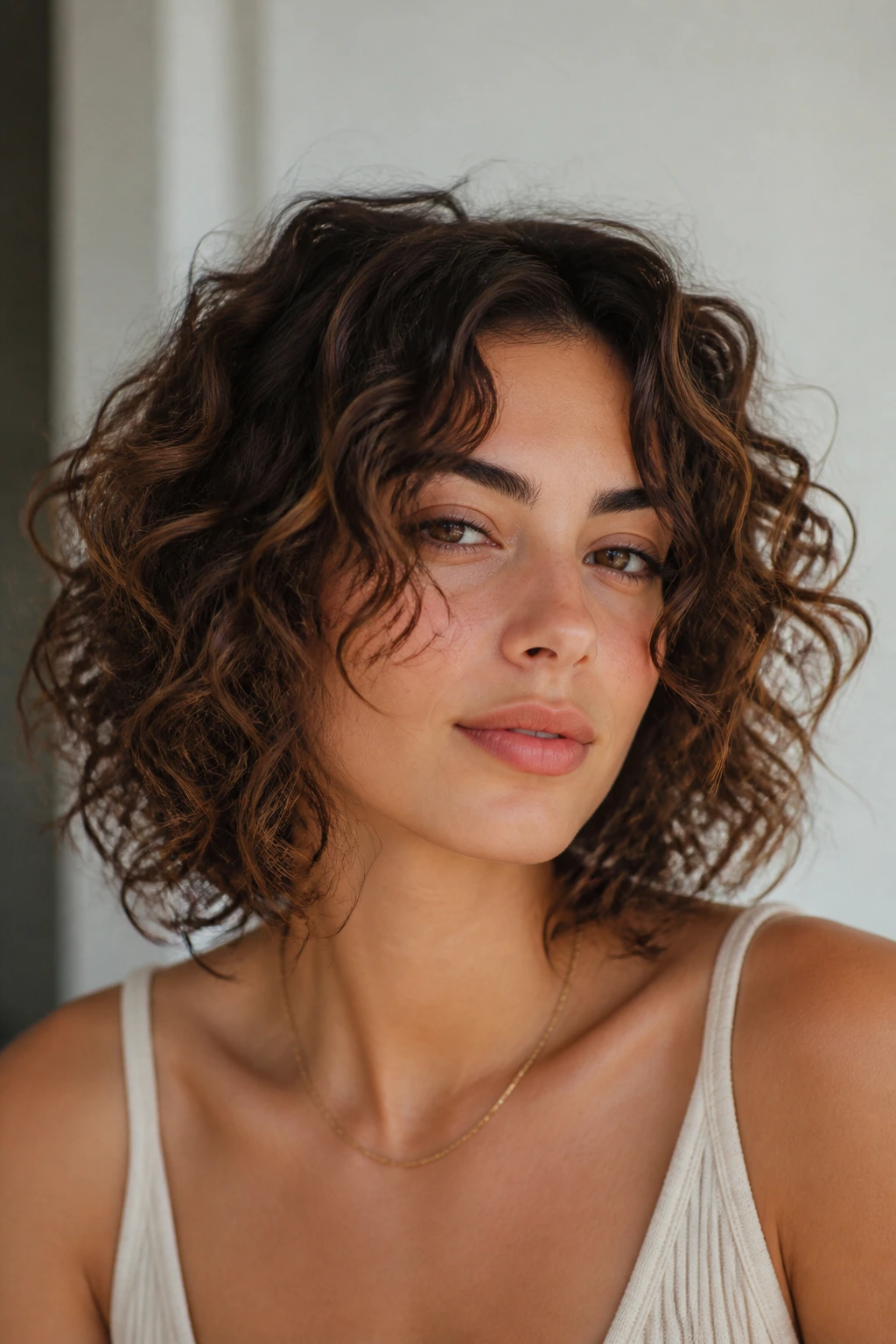
Presentation: A center part works when you want the haircut to feel calm and balanced, while a soft off-center part gives the face a little lift and keeps the bob from looking too symmetrical. On oval faces, both can work, but the part should match the place where your curls naturally fall instead of forcing a straight line through the middle.
Accessories: Thin hoops, small clips at one temple, and narrow headbands all make sense with these cuts because they do not compete with the perimeter. Heavy barrettes or wide bands can push the curls into a lump right at the cheek. That is not the look. If you wear glasses, leave the front pieces slightly softer so they do not bunch at the frames.
Balance: A jaw-length bob looks clean with open collars and simpler necklines. A lob can handle sweaters and higher necks because the length keeps the hair from disappearing into the fabric. If your curls are big, let one side tuck behind the ear. It breaks the outline in a good way.
Finish: Air-dry if your curl pattern settles neatly on its own. Diffuse if you need more lift at the root or if the bob tends to flatten at the crown. Stop touching it once the cast sets. That little rule saves more styles than a dozen fancy products.
Additional Texture Tricks That Actually Help
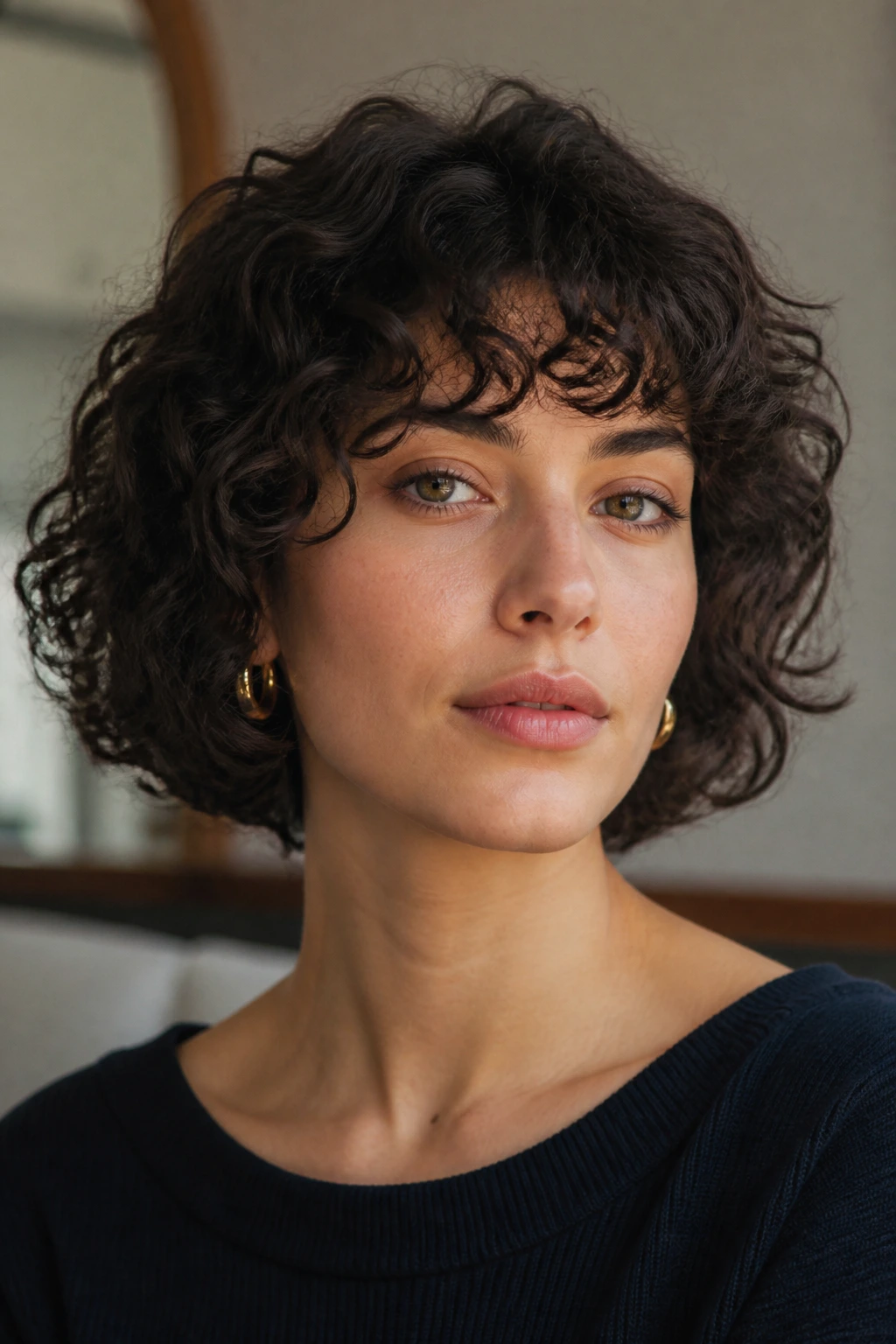
Root Lift: Clip the top sections at the crown for 10 to 15 minutes after diffusing. The hair cools in a lifted position, which helps a bob keep its shape instead of sinking flat against the head.
Curl Separation: Wait until the hair is fully dry before scrunching out any gel cast. Use one or two drops of lightweight oil on your fingertips only if the ends feel dry. Too much oil makes the haircut collapse.
Frizz Control: Fight frizz with better drying, not with more product. A bob that is over-creamed often looks shorter and wider by afternoon, which is the opposite of what most people want.
Make-It-Yours: Fine curls usually do better with mousse and light layers. Thick curls often need a little more internal weight removal and less product. Tight curls may need the perimeter left slightly longer so shrinkage does not pull the shape above the jaw.
Common Mistakes That Change the Whole Shape
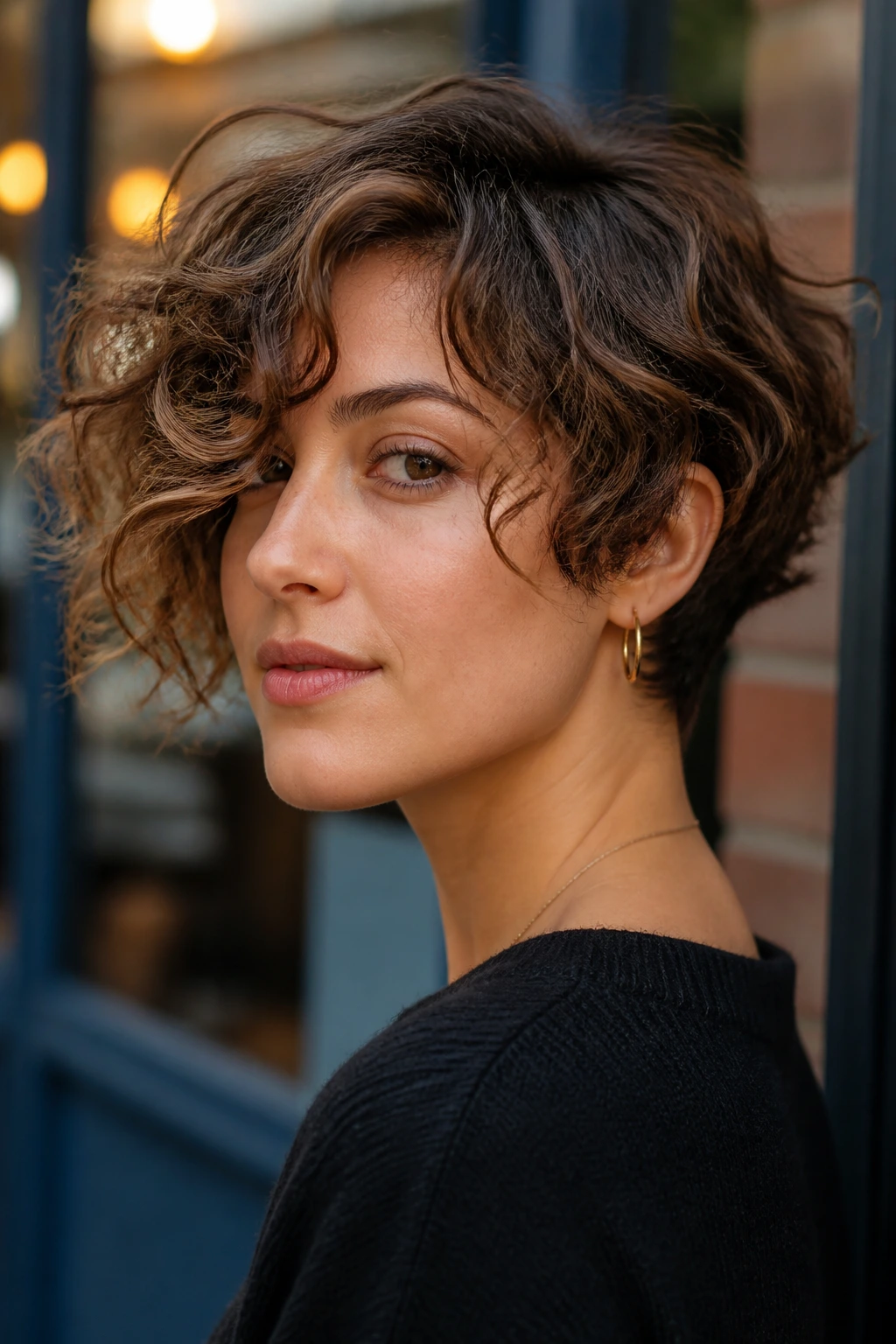
-
Cutting to the wet curl length only: Wet hair lies. If the bob is cut exactly where it looks good dripping wet, it may jump too high once it dries. The fix is simple: check the shape dry and leave room for spring.
-
Chopping too many short layers around the cheeks: That can make the sides puff out and turn the bob triangular. Keep the cheekbone layers soft unless the hair is very dense and truly needs the weight removed.
-
Using heavy cream on a shorter bob: Short curly cuts do not have much room for product buildup. If the hair starts looking greasy or limp by midday, switch to a lighter hold and use less of it.
-
Ignoring the nape: A bulky nape can make the whole bob look wider and less polished. Ask for cleanup at the back so the shape curves cleanly under the head.
-
Forcing the wrong part: A part that fights the curl pattern often leaves one side flat and the other side wild. Follow the natural fall as a starting point, then adjust from there.
Variations and Adaptations to Try
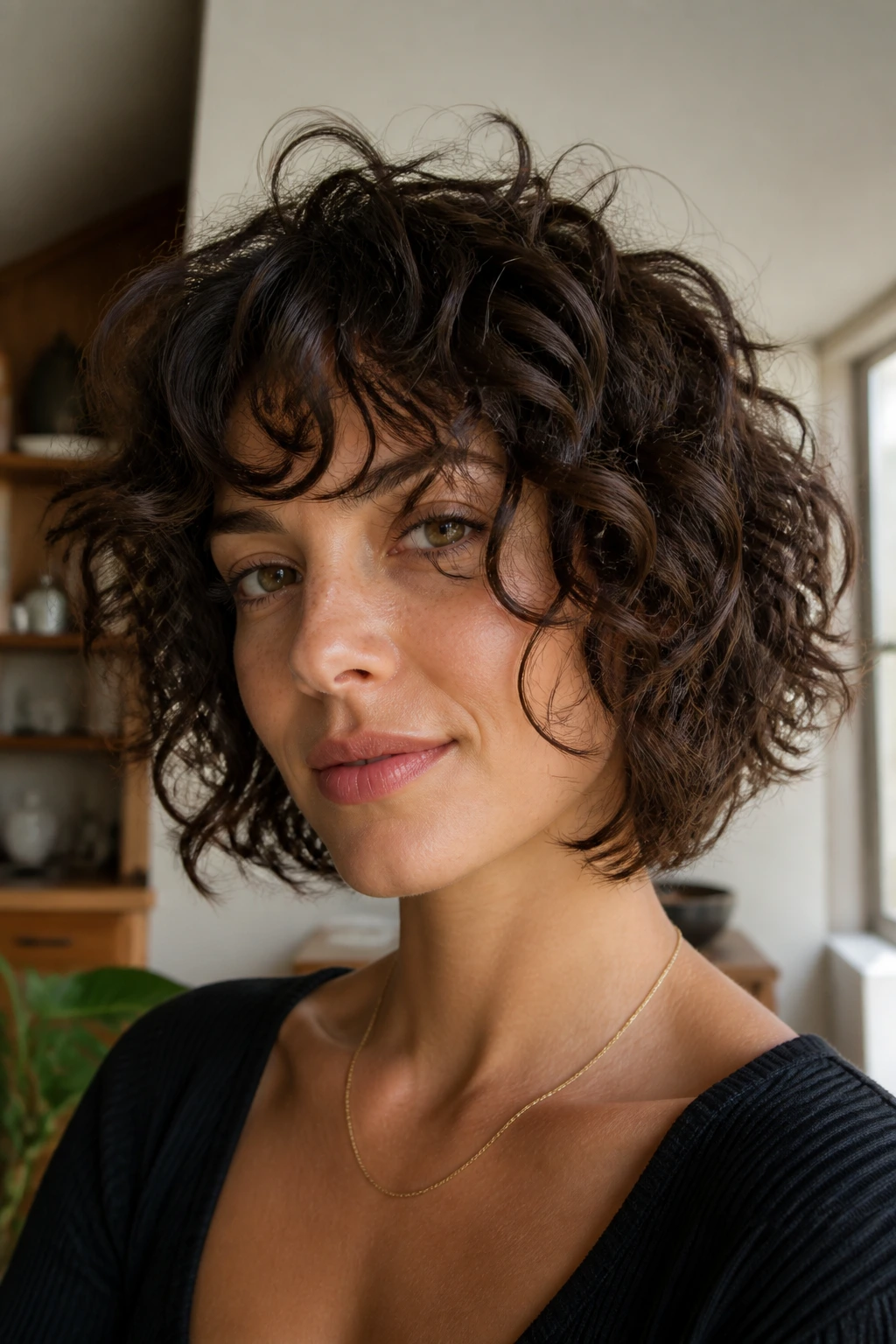
The Soft Office Bob: Keep the perimeter just below the jaw and use only light shaping around the face. It is neat enough for a blazer, but the curls still move instead of sitting in place like a helmet.
The Air-Dry Lob: Let the length fall to the collarbone, keep the layers long, and skip anything that demands heat every morning. This works well if you want a cut that still looks presentable on day three.
The Fringe-Forward Bob: Add bottleneck or curtain bangs and keep the rest of the bob clean and slightly longer. The fringe does the framing work, so the rest of the cut can stay quieter.
The High-Volume Halo: Ask for crown lift, rounded sides, and a perimeter that stays soft. This suits denser curls that need shape at the top more than they need extra length at the bottom.
The Soft Wolf-Bob: Bring in more movement at the crown and mid-lengths while keeping the outer line bob-like. It is the better choice if you like texture with a little edge and do not mind more shape around the face.
Keeping the Shape Between Wash Days
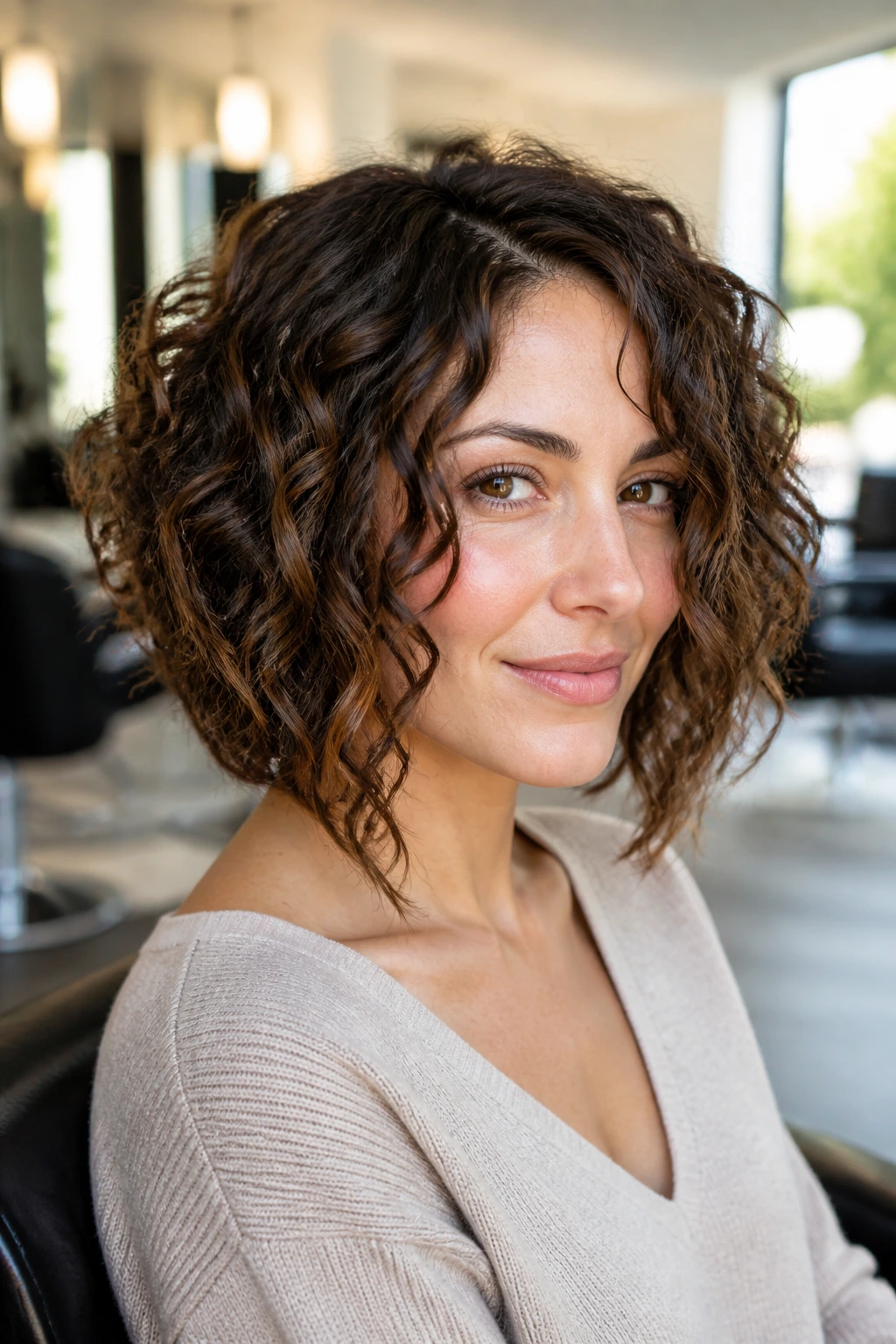
A curly bob shows growth faster than longer hair, especially around the nape and jaw. For chin-length cuts, a trim every 6 to 8 weeks usually keeps the outline from drifting into awkward territory. Lobs can stretch a bit longer, often 8 to 10 weeks, because the extra length hides the first inch of growth better.
Sleep protection matters more here than it does on a longer cut. A satin bonnet, loose pineapple, or satin pillowcase keeps the curl clumps from flattening against the collar and pillow. If you wake up with one side smashed, dampen it lightly, finger-shape it back into place, and let it sit for a few minutes before touching it again.
For refresh days, use a small spray bottle with water and a little leave-in — about 1 cup of water with a pea-sized amount of leave-in if your hair is fine, a touch more if it is dense. Mist the flattened sections, scrunch once or twice, and stop there. Too much water can make a bob frizz and expand. If a section has gone limp, re-wet only that part and add a trace of mousse at the root.
Frequently Asked Questions
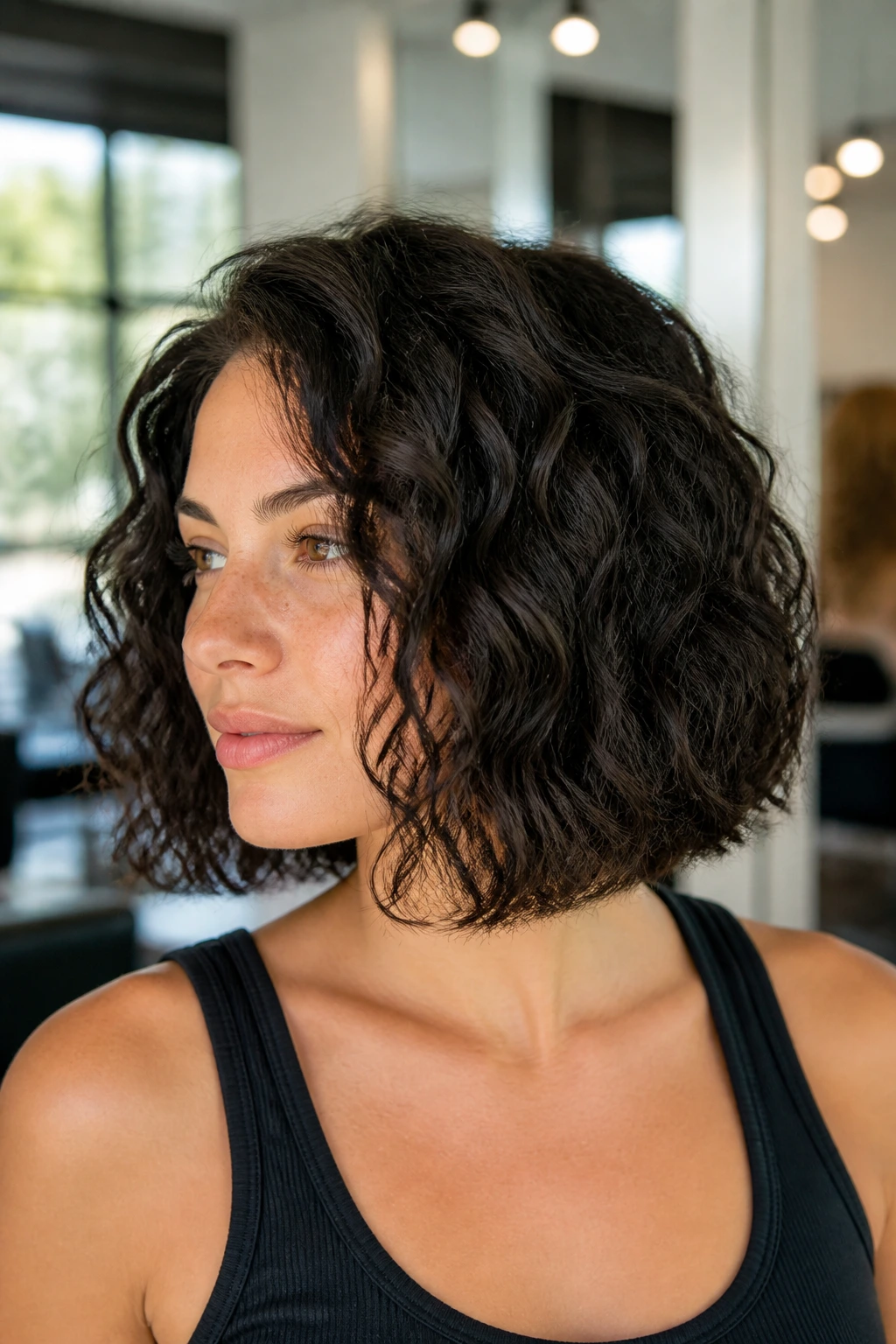
How short can a curly bob go on an oval face?
Shorter than most people think, but the dry curl length matters more than the wet one. A jaw-grazing or chin-length bob usually feels safest if you want a clean outline without risking a mushroom shape.
Should curly bobs be cut dry or wet?
Dry cutting or dry checking is usually better because it shows the real spring of the curls. A wet cut can work if the stylist is experienced with curl shrinkage and keeps checking the shape as it dries.
What if my curls shrink a lot?
Leave more length at the outset, especially at the front and around the jaw. Shrinkage is not a flaw to hide; it is a measurement to plan for, and the haircut should account for it from the first snip.
Do bangs work with an undone bob?
Yes, but they need room. Curtain bangs, bottleneck bangs, and soft fringe tend to behave better than blunt short bangs because they can move with the curl pattern instead of fighting it.
Is a bob or a lob better for thick curly hair?
A lob is easier if you want more length and less maintenance, while a bob gives stronger shape and more lift around the face. Thick hair often benefits from a lob first, then a shorter shape once the weight is understood.
How do I stop my curly bob from turning triangular?
Triangle shape usually comes from too much weight at the bottom and not enough structure through the crown or interior. Ask for weight removal in the right places, not just random layers, and keep the ends soft.
Can fine curly hair wear an undone bob?
Absolutely, but the cut should stay lighter and the product should stay lighter too. Fine curls often do best with a clean perimeter, subtle layers, and a root-friendly mousse instead of heavy cream.
How often should I trim it?
Every 6 to 8 weeks for shorter bobs, a little longer for lobs. Bangs or fringe may need a quick touch-up sooner if they sit in your eyes once the curls dry.
What if the shape looks flat after sleeping?
Mist the flattened sections with water, lift the roots with your fingers, and give the hair 2 to 3 minutes to reset before adding more product. If the bob still looks tired, a quick diffuse at the crown usually brings it back faster than rewetting the whole head.
The Shape That Moves With You
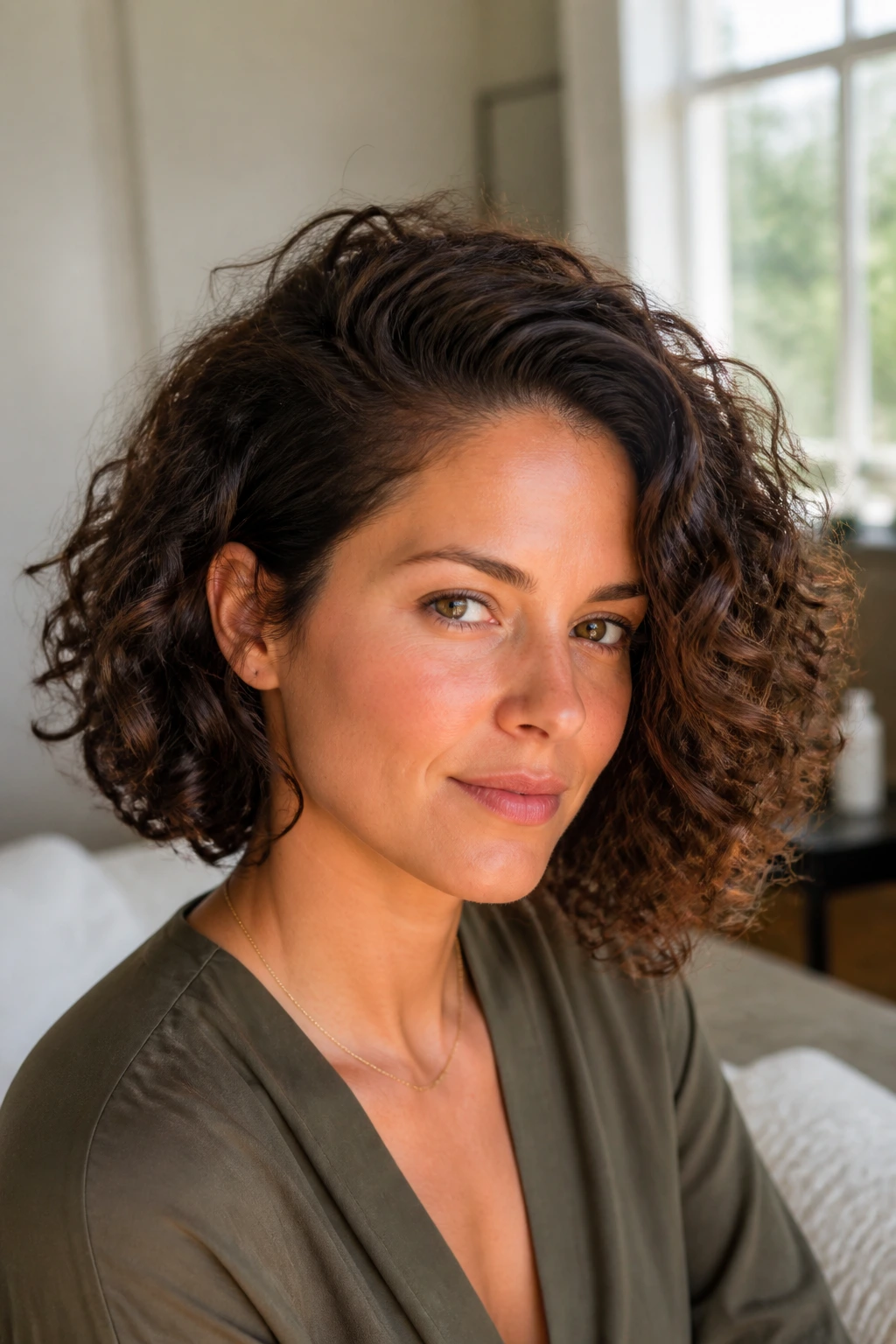
The best undone bob for oval faces and curly hair does not fight the curl pattern, and it does not overcorrect the face shape either. It leaves room. For the jaw. For the cheekbones. For the curl to spring, soften, and settle into something with a little life in it.
That’s why these cuts age well from wash day to day three. They are built around movement, not control. Bring the right length reference, respect the shrinkage, and keep the product light enough to let the haircut show itself. The rest tends to fall into place, which is about as close to easy as curly hair ever gets.