



A super short bob on an oval face can look almost unfairly good when the wave pattern lines up with the cut. The shape sits close to the head, the ends swing, and the whole thing has that crisp, expensive-looking finish that only happens when the length lands in the right spot. But wavy hair changes the game. If the weight line sits too high or the perimeter is thinned in the wrong place, the bob can puff at the sides and lose its shape by lunchtime.
That’s why 25 super short bobs for oval faces with wavy hair is not really about “the bob.” It’s about where the bob ends, how the wave bends, and what kind of edge you want near the jaw, cheekbone, or nape. Oval faces can wear a lot of lengths, which sounds easy until you realize that too much choice can turn into a bad haircut disguised as a safe one. The good ones make the face look cleaner and the hair look more deliberate. The bad ones look like they were cut without a mirror.
The best short bob feels alive. It should move when you turn your head, keep its line when it dries, and frame the face without swallowing it. And with wavy hair, the trick is never to fight the bend. Work with it, clean up the perimeter, and leave enough structure that the wave reads as texture instead of chaos.
Why These Short Bobs Work So Well on Oval Faces
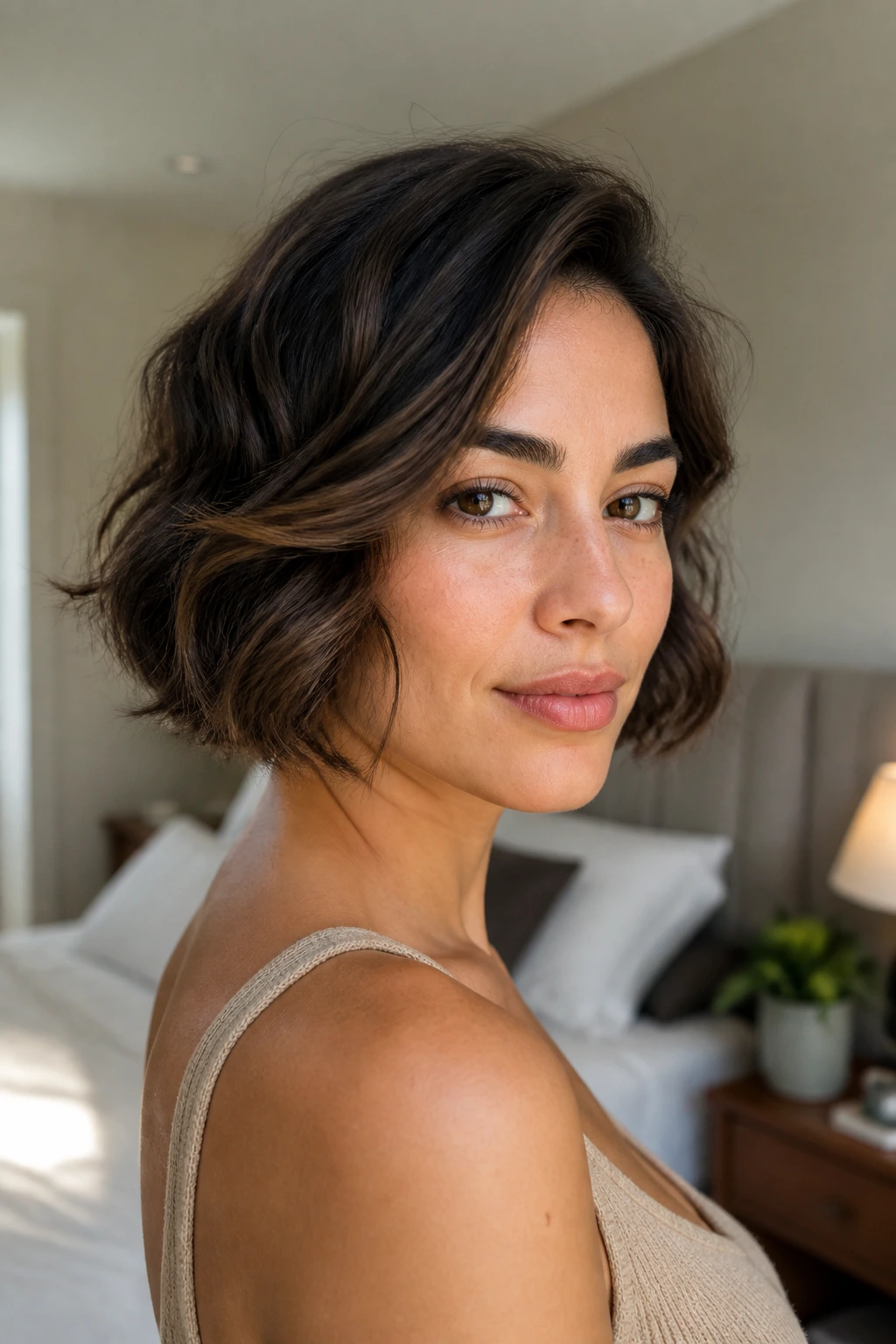
Balanced proportions: Oval faces already carry a lot of visual balance from forehead to chin, so a shorter bob can sit higher without throwing the face out of proportion.
Wave-friendly shape: Wavy hair likes a cut that gives the bend somewhere to land. A blunt edge, a soft stack, or a slight A-line keeps the wave from blooming outward in the wrong spots.
Cheekbone emphasis: A bob that stops near the jaw or cheekbone pulls attention to the middle of the face, which is usually where an oval face has the most definition anyway.
Less daily wrestling: Super short lengths dry faster and need less reshaping. If your routine is built around a diffuser, a little mousse, and five minutes with your fingers, these cuts fit that rhythm.
Better control over bulk: With short wavy hair, the right perimeter matters more than extra layers. Too many layers can make the sides puff; the right shape keeps the outline clean.
1. The Jaw-Grazing Blunt Bob
This is the cut that makes a clean argument for itself. The line sits right at the jaw, so the bob sharpens the lower half of the face instead of sitting lower and getting mushy. On wavy hair, the blunt edge keeps the movement from fraying out into a triangle. That edge matters. A lot.
Why It Stands Out
When the length lands precisely at the jaw, the face looks framed rather than covered. Oval faces can take that bluntness because the proportions are already even, and the hair doesn’t need extra tricks to “fix” the shape. I like this version on medium-density hair best, especially when the wave pattern is loose enough to swing but not so strong that it kicks outward.
- Best when the hair has a natural bend that starts below the cheekbone.
- Works well with a center part or a slight side part.
- Needs a clean trim every 5 to 7 weeks to keep the line crisp.
- Looks sharp with a light mousse and a quick rough-diffuse.
Small tip: Ask for the perimeter to be cut dry if your wave is unpredictable. You’ll see the actual shape instead of guessing at it.
2. The French Bob with Airy Ends
A French bob does not need to be fussy to look polished. The shorter length, usually just below the ear or brushing the upper cheek, gives the hair a little attitude without going full helmet. On wavy hair, the airy ends stop the cut from feeling heavy, and that softness is the whole point.
The version I like for oval faces keeps the fringe optional and the sides soft. If you add a tiny bend at the ends with a 1-inch iron, the bob turns from neat to a little mischievous. It’s a good cut when you want movement around the mouth and cheekbones instead of a heavy line near the jaw.
3. The Soft A-Line Bob
Why does this shape work so often? Because it cheats in the right direction. The back sits a touch shorter, while the front slides forward just enough to skim the jaw. That tiny angle gives wavy hair a place to settle, and it keeps the cut from widening at the sides.
Think of it as the polite cousin of the sharper angled bob. It still has structure, but it doesn’t shout. If your wave pattern is a bit uneven from side to side, the A-line helps disguise that by letting the front pieces do more visual work than the back. Ask for the front to stay only 1 to 1.5 inches longer than the nape; more than that can start to look like an outdated wedge.
Best For
A little front length if you want to tuck one side behind the ear, and enough back lift so the silhouette doesn’t drag.
4. The Stacked Nape Bob
The first thing you notice is the back. It lifts. That’s the whole point. A stacked nape bob removes weight through the back interior, then lets the top layer fall over it in neat steps. On wavy hair, that gives the short cut shape without making the sides bulky.
I love this on finer wavy hair that tends to collapse flat at the crown. The stacked back gives the illusion of density, while the oval face gets a nice clean frame at the sides. If the stack is too aggressive, though, it starts to look dated fast. Keep it soft. The best version has a visible lift at the nape and a smooth transition into the side length.
- Ask for soft graduation, not a hard shelf.
- Keep the side length near jaw level.
- Use a round brush only at the crown and nape.
- Finish with a touch of texture spray, not heavy cream.
5. The Rounded Bubble Bob
This one has shape in the best old-school way. The rounded outline curves under slightly, which works beautifully when the wave needs direction. It’s a good choice if your hair tends to kick out at the ends, because the curve tells the wave where to go.
On oval faces, the rounded bob can feel almost tailored. The silhouette hugs the sides without squeezing them, so the face still breathes. The trick is not to over-round it. Too much bevel, and you get that stiff, mushroomy finish nobody wants. Keep the curve soft, and leave a little movement around the temples so it doesn’t turn formal.
6. The Choppy Razor Bob
A razor cut changes the whole mood. The ends break up, the line gets air, and the bob looks lighter even when the hair is dense. On wavy hair, that broken edge can be a gift or a problem. Use it wisely.
For oval faces, the choppy razor bob keeps the center of the face visible while softening the outline just enough to avoid harshness. It works best when the layers are minimal and the texture is focused around the perimeter, not carved all the way through the head. If you like a piecey finish with a little grit, this is the cut. If you prefer a smooth, tidy bob, skip it. Razor texture has opinions.
7. The Center-Part Piecey Bob
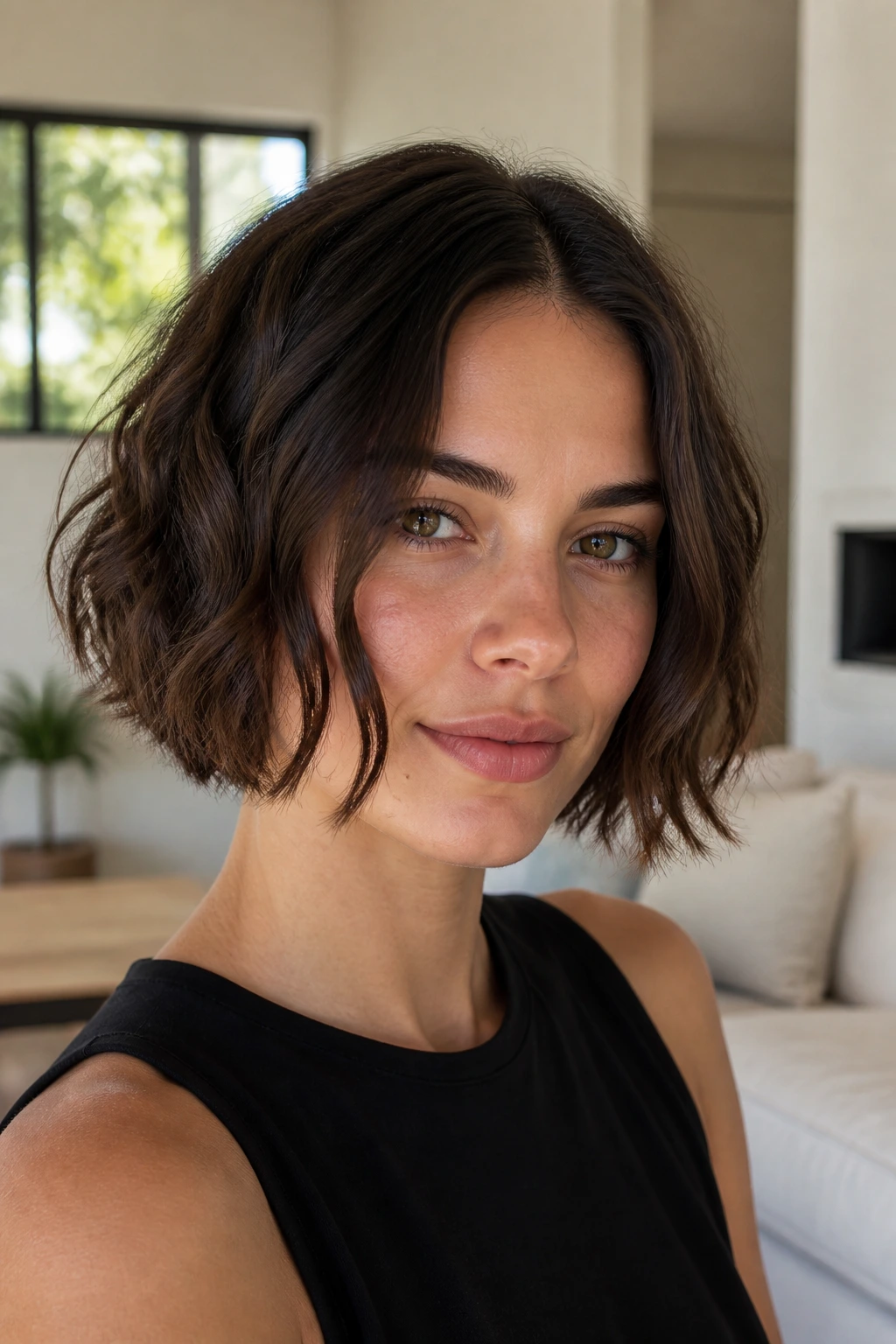
A center part gives this cut a quiet symmetry that suits oval faces without making them look longer than they are. The bob itself stays short, usually around the cheekbone or just below the jaw, and the pieces around the face stay separated enough to show the wave pattern.
This is one of those cuts that looks simple until you notice how much it depends on control. A little mousse at the roots, a scrunch through the mid-lengths, and a few finger-defined clumps at the front are enough. Too much brushing and it loses the point. Too much product and it turns stringy. The sweet spot is soft separation, not crunchy definition.
What makes it different: The center part turns the bob into a frame instead of a sweep. That matters when you want the cheekbones to do the talking.
8. The Side-Swept Tuck Bob

One side tucked. One side loose. That’s the whole mood, and it works because it plays with asymmetry without actually changing the haircut. On an oval face, a side-swept bob can sharpen the cheekbone line and make the jaw look a little more sculpted.
This style is especially useful if one side of your wave pattern always falls better than the other. Instead of fighting the “better” side, lean into it. Tuck the flatter side behind the ear, leave the fuller side to fall forward, and let the shape do its own quiet thing. I’ve always liked this on second-day hair, when a little natural bend makes the tuck look intentional rather than fussy.
9. The Micro Bob with Soft Fringe

Shorter than a classic jaw bob, this one sits up near the cheek or just under the ear. The soft fringe keeps the cut from feeling severe, which matters because a micro bob can get sharp fast on wavy hair. The fringe should move, not sit like a strip of paper.
Oval faces can handle the shorter length easily, but the fringe placement matters. Keep it wispy or slightly parted in the middle, and let the sides stay fuller. That balance stops the cut from looking top-heavy. If your waves are loose, this is a fun shape. If your waves are tight and springy, ask for a bit more length than you think you need. Short hair shrinks in all the annoying ways.
10. The Wavy Bob with Curtain Bangs

Curtain bangs on a super short bob sound dramatic until you see how well they open up the face. The bangs split near the center, drape out toward the temples, and leave the oval face looking open instead of boxed in. On wavy hair, they also soften the forehead line, which can make the whole haircut feel less rigid.
I like this cut when the bob itself stays clean and the bangs carry the movement. It’s a smart way to get texture near the eyes without flooding the sides with layers. If the bangs are too thick, they become the focus. Keep them airy, and let the bob stay the star.
11. The Bottleneck Bang Bob

This version is a little more tailored than curtain bangs. The fringe starts narrower at the center, then opens up gradually through the temples, which gives the face a gentle lift. On oval faces, that shape is flattering because it doesn’t cover the balance you already have.
Wavy hair loves this if the fringe is cut with enough softness to move. A dry cut often helps here, because you can see where the bangs bend and where they split. The bob underneath can stay short and blunt, or it can be slightly textured. Either way, the bottleneck fringe keeps the front from looking flat.
How it reads: less heavy than full bangs, softer than a curtain fringe, and easier to grow out than both.
12. The Asymmetrical Bob

A small length difference between the two sides changes the energy instantly. One side can hit the jaw, while the other skims a little lower, and suddenly the bob feels modern instead of safe. On an oval face, that asymmetry adds interest without fighting the natural balance of the face shape.
This is one of the best cuts if your hair has a stubborn flip on one side or if your part always falls a little off-center. Instead of pretending the hair is symmetrical, the cut uses that imbalance on purpose. Keep the difference subtle if you want longevity. A dramatic angle can look cool in a photo and annoying in real life.
13. The Undercut Bob
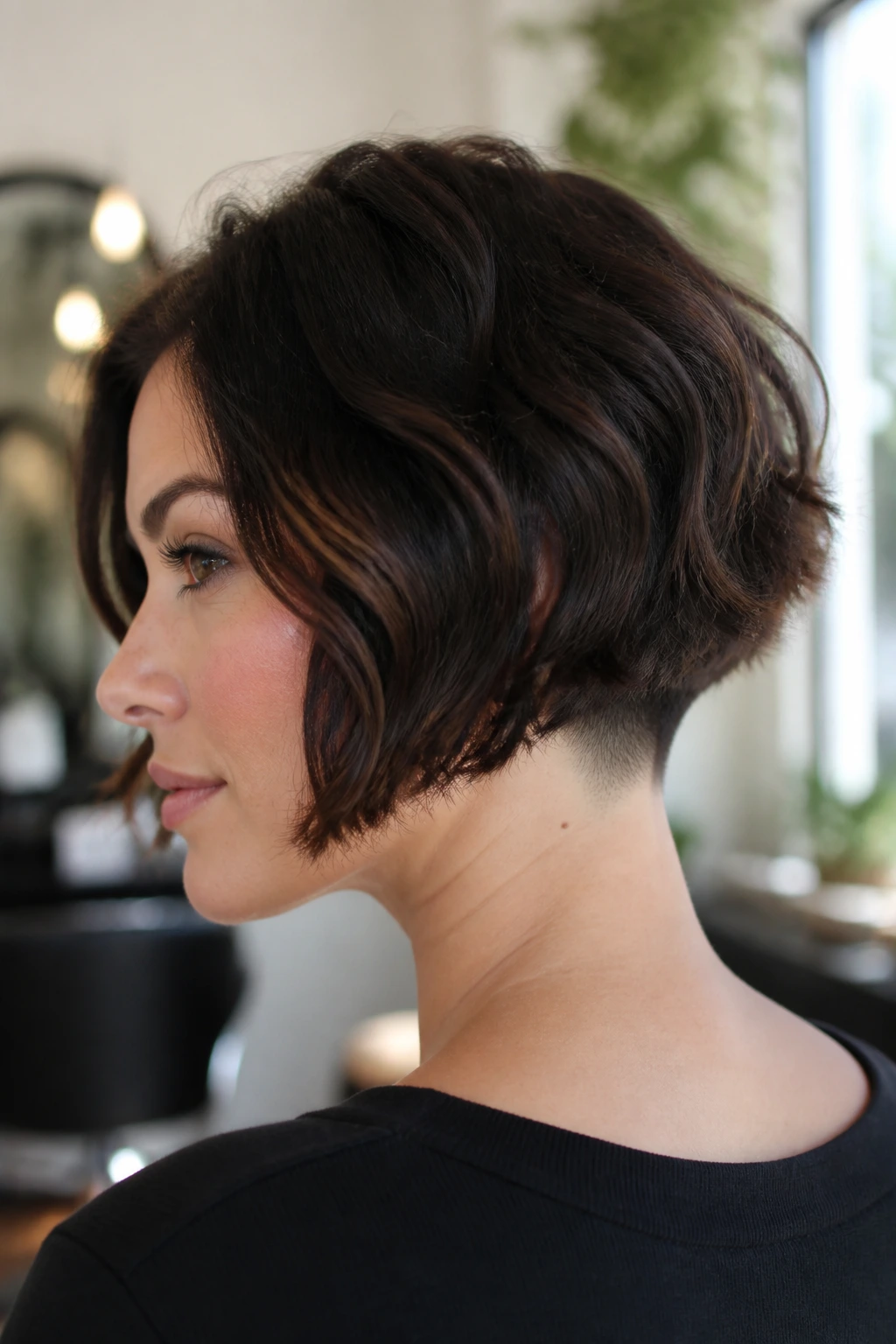
Here’s the blunt truth: thick wavy hair sometimes needs less hair, not more layering. An undercut removes bulk underneath the top layer, which helps the bob sit close to the head and keeps the sides from puffing out. On an oval face, that tighter shape can look very clean.
You do not have to shave half your head to get the benefit. Even a hidden undercut at the nape or behind the ears can remove enough weight to change the silhouette. This cut is best if your waves are dense and your hair takes forever to dry. It also makes hot weather styling less annoying, which I say as someone who has seen enough fluffy bobs to know the difference.
- Good for heavy, coarse, or dense wavy hair.
- Needs a stylist who understands sectioning.
- Looks best with a smooth top layer and a controlled outline.
- Grows out more gracefully if the undercut stays hidden.
14. The Rounded Bob with Soft Underlayers
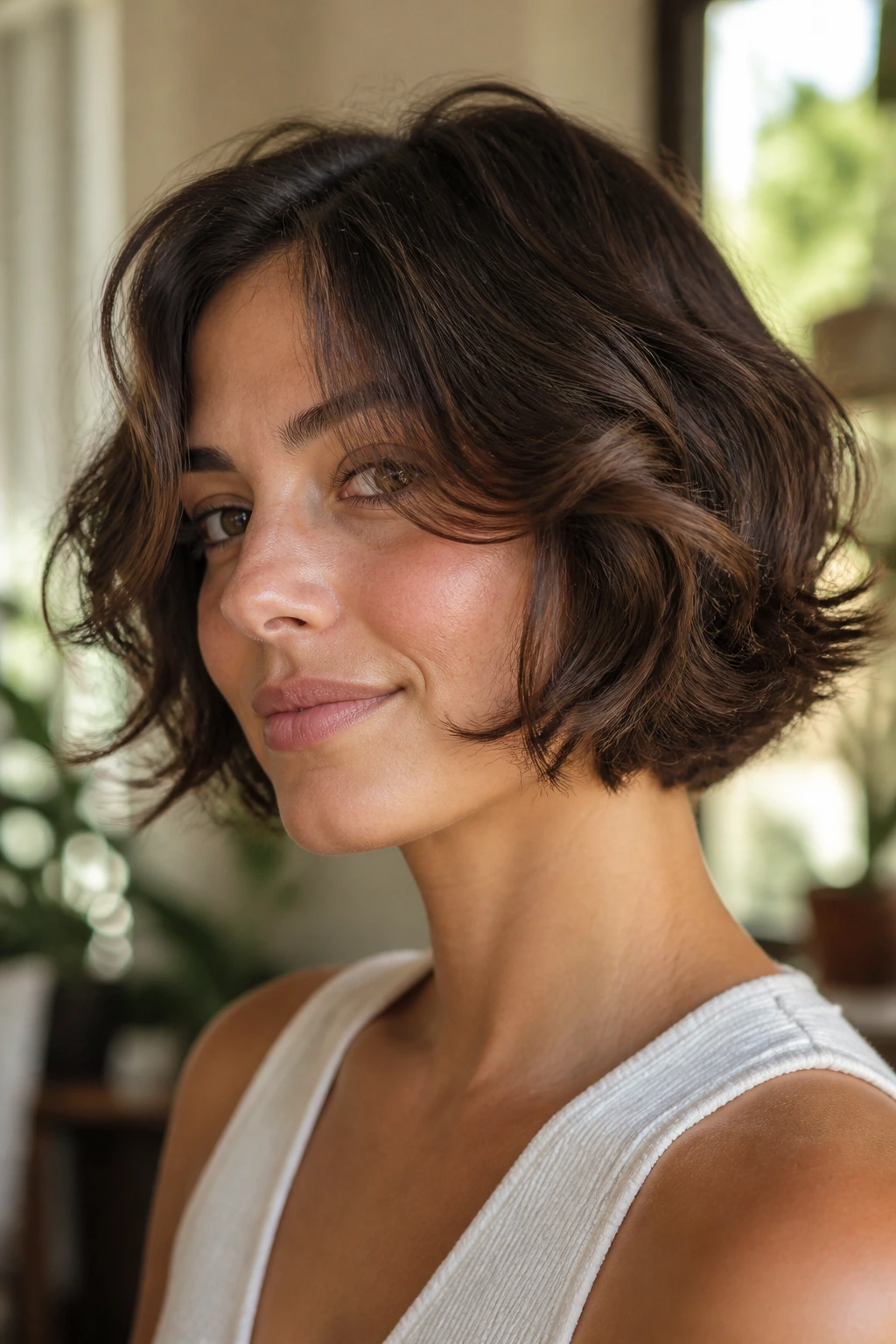
This one is softer than the bubble bob and more lived-in than the blunt jaw cut. The interior gets a little removal of weight, but not enough to make the shape lose its body. The result is a rounded bob that still has movement at the ends, especially when the hair dries with a bend.
Oval faces tend to do well with this because the curve follows the natural line of the cheek and jaw without hard edges. If you’re the kind of person who likes hair that looks brushed but not perfect, this is the cut. It holds its shape nicely, but it never feels stiff.
15. The Flippy Bob

A flip at the ends can look retro or fresh, depending on how controlled it is. In this cut, the bob stays short and the ends flick out just enough to show movement. Wavy hair does this on its own sometimes, which is why the cut should work with the flip instead of pretending it doesn’t exist.
I like the flippy bob for oval faces because it keeps attention on the lower half of the face without dragging everything straight down. The key is restraint. If the ends are too aggressively curled outward, the cut starts looking costume-y. A soft bend with a round brush or a quick pass of a curling iron is enough.
16. The Wet-Look Bob
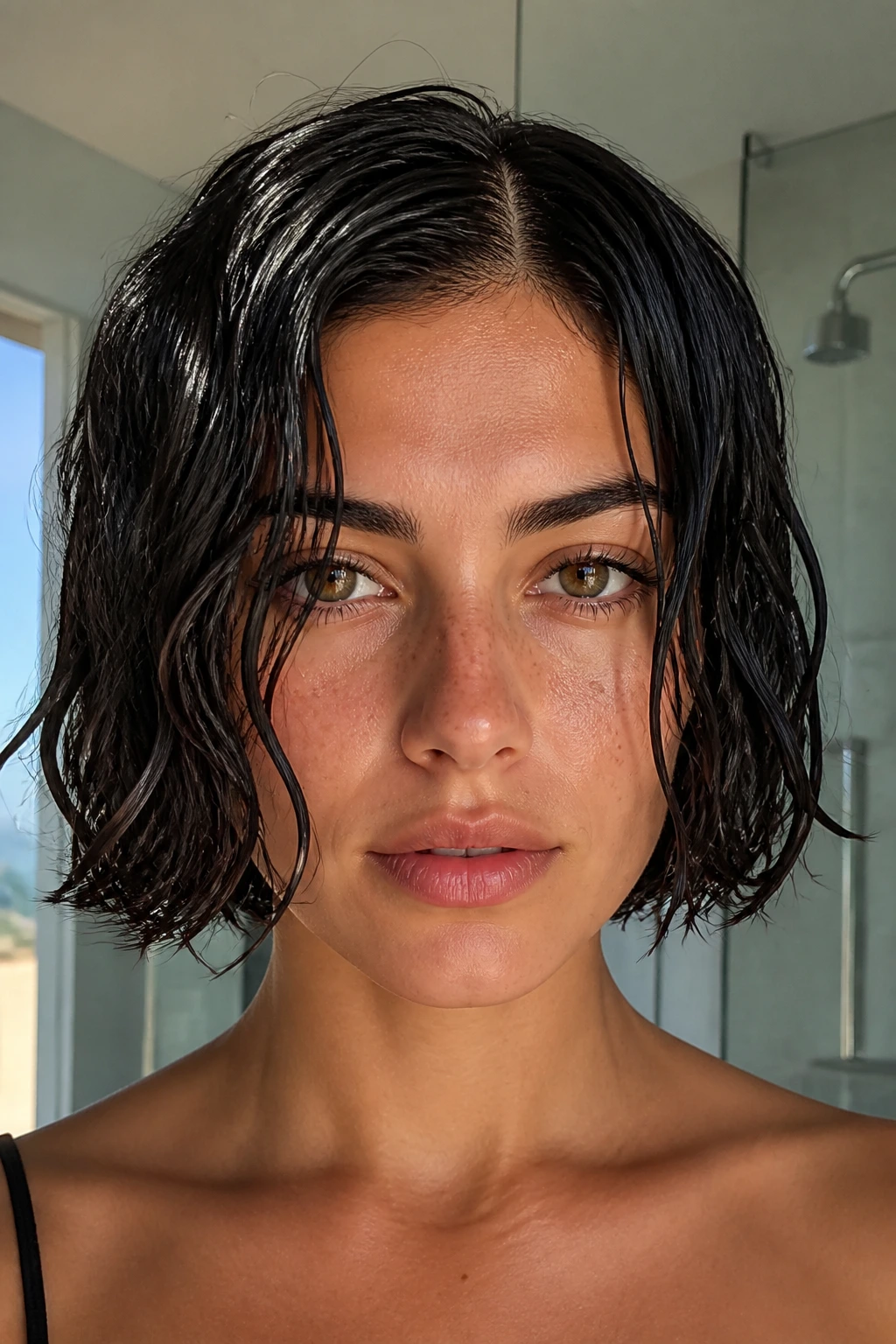
Sleek hair changes the mood of a short bob fast. A wet-look finish gives the cut a polished, editorial feel, and on wavy hair it can be a smart way to control volume at the sides. The perimeter stays visible. The wave still peeks through. Nothing gets puffy.
This style works best when the haircut itself is clean and simple. If the shape is too layered, the gel or cream can make it look stringy. I’d pick this on a bob with a blunt edge or a soft A-line, then use a light gel or styling cream on damp hair and comb it through with fingers rather than a fine comb. You want shine and separation, not helmet shine.
17. The Salt-Spritz Beach Bob

Some bobs want polish. This one wants air. A salt-spritz beach bob keeps the cut short and loose, with a bit of grit in the finish so the wave looks sunlit instead of styled within an inch of its life. Oval faces do well with that kind of looseness because the hair moves away from the cheeks instead of sitting flat against them.
The trick is not to drown the hair in salt spray. A few pumps on damp hair, a scrunch, and a quick diffuse is enough. Too much product makes the ends rough and thirsty. I prefer this cut on hair that already has a soft bend, because the natural movement saves you from overworking it.
18. The Fine-Hair Blunt Bob
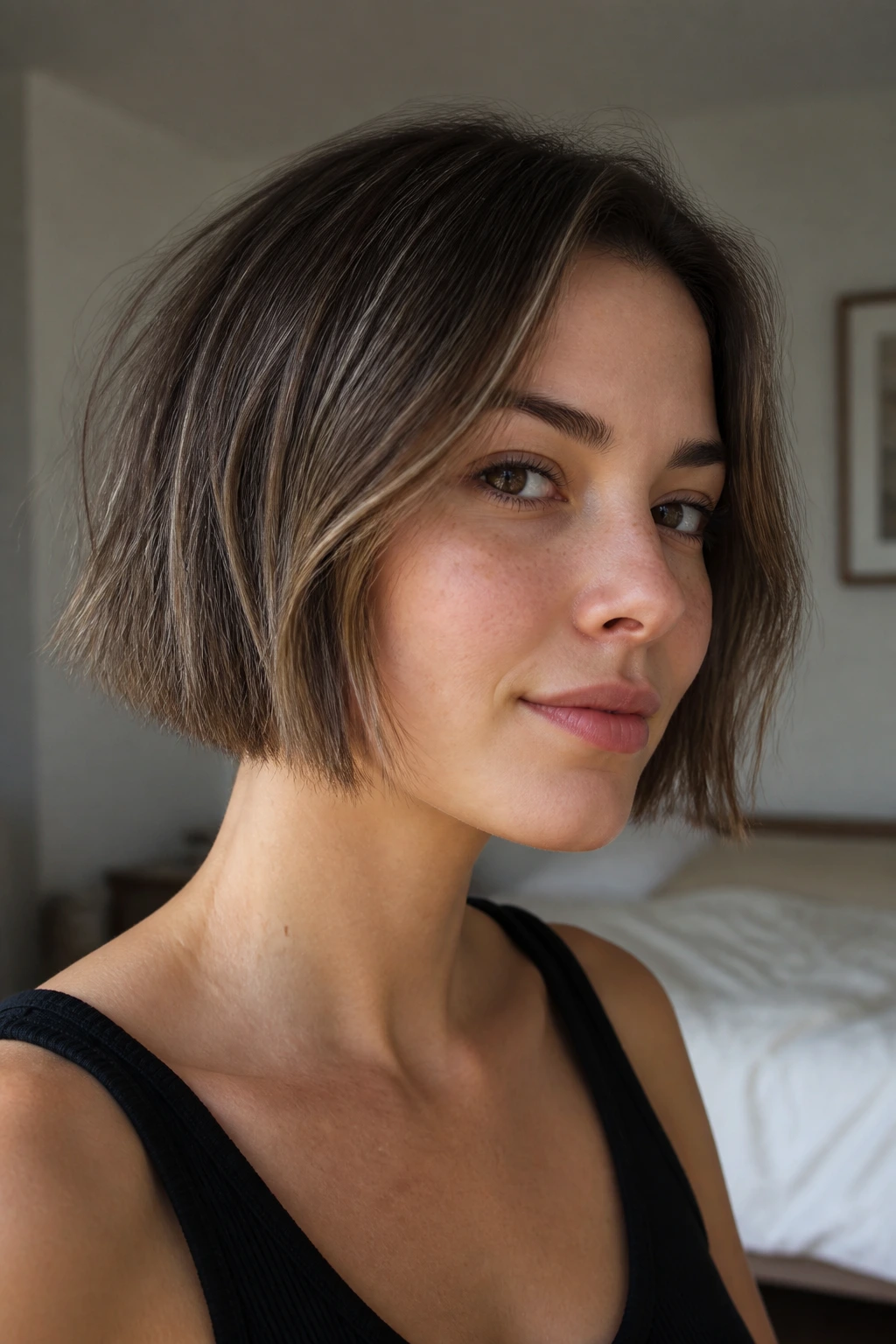
Fine hair and a short bob are a good match when the cut stays blunt. The density sits at the edge, not spread out through too many layers, and that makes the hair look fuller. On oval faces, the blunt outline sits cleanly around the jaw and keeps the shape from looking see-through.
This is one of the few times I’ll argue for less texturizing. Fine wavy hair can lose its body fast if the ends are thinned too much. Ask for a solid perimeter, a soft interior at most, and products that lift at the root without making the hair sticky. A pea-sized amount of mousse can do more here than a whole handful of cream.
19. The Thick-Hair Weight-Removed Bob
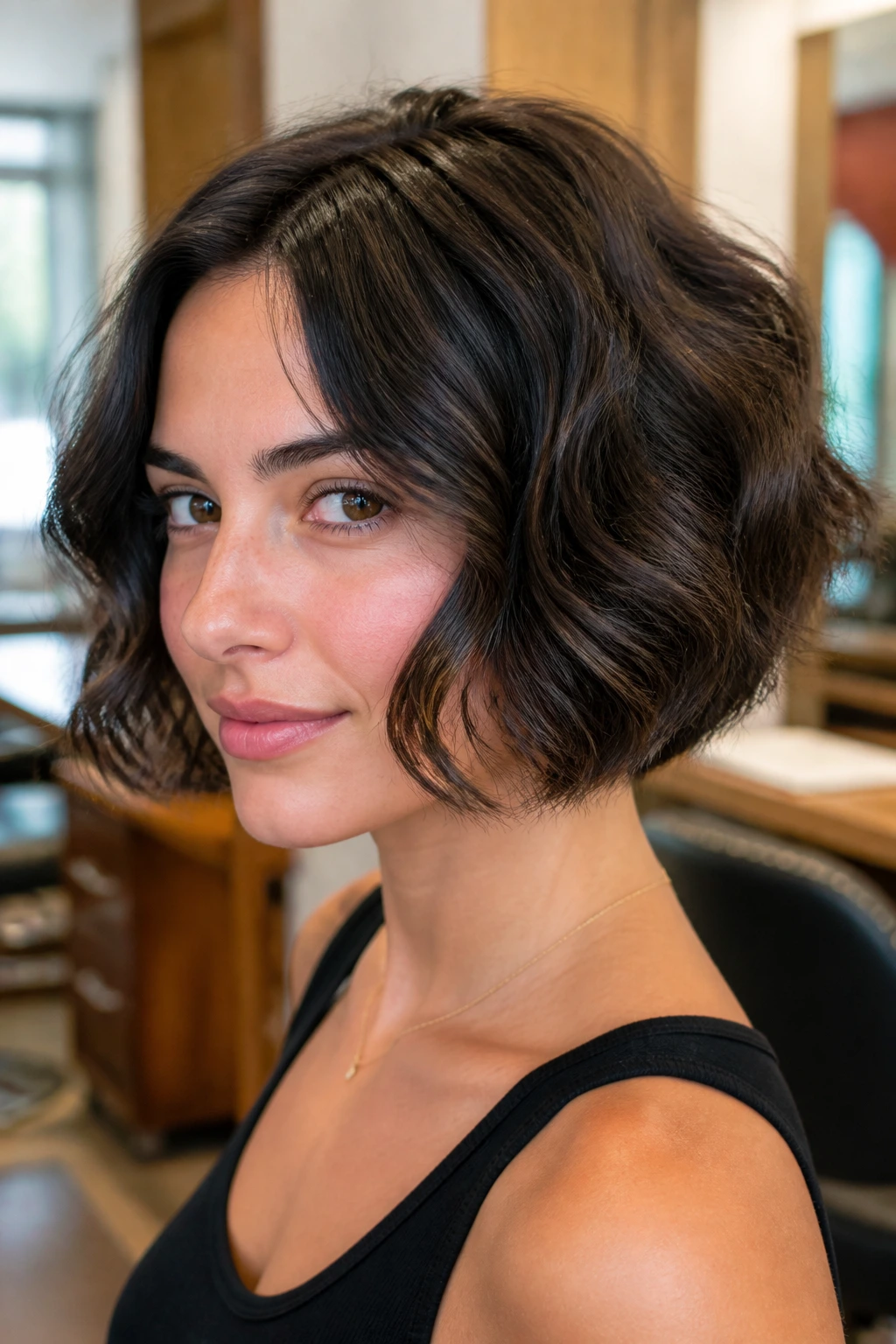
Thick wavy hair needs structure, not surrender. If the cut is too blunt all the way through, it can swell at the sides and sit like a box. If it’s thinned badly, it gets fuzzy. The sweet spot is weight removal where the hair can expand, not where it needs support.
This bob works by cleaning out the interior while keeping the edge visible. The result is a shape that hugs the face better and dries faster. Oval faces benefit because the haircut still reads as a bob, not as a puffball pretending to be one. Ask your stylist to remove bulk under the top layer and around the nape, then keep the perimeter solid.
20. The Deep Side-Part Bob

A deep side part can make a short bob look taller and a little more dramatic without adding length. The lifted side gives volume at the crown, which is handy if your wave tends to fall flat on top. On an oval face, that extra height does not overwhelm the shape; it just gives it presence.
This is one of the easiest styles to wear when you want a quick shift without a haircut. Change the part, add a bit of root lift spray, and tuck the lower side behind the ear. The bob suddenly feels sharper. It’s also a good fix for hair that refuses to behave symmetrically, because the side part turns imbalance into style.
21. The Soft Shag Bob

A shag-bob hybrid can sound messy, but when it’s done well it has a useful kind of looseness. The top keeps some lift, the sides stay short, and the interior layers give the wave room to move. Oval faces can wear this well because the face-framing pieces don’t close off the features.
The danger is over-layering. If the cut turns into a full shag, it stops reading as a bob and starts eating the jawline. Keep the perimeter visible, and ask for soft, blended layers rather than chunked-out pieces. This cut is especially good if you like your hair to look a little undone even after you’ve styled it.
22. The Ear-Length Mini Bob

This is the shortest version that still feels like a bob rather than a pixie in disguise. It sits close to the ear, just enough to show the neck and the jaw. On oval faces, that shortness can look clean and bright, especially if the hair has a gentle wave instead of a strong spring.
I would not call this low-maintenance in the lazy sense. It’s short, which means every bend matters. But it’s quick to dry and easy to refresh with a spray bottle and a dab of styling cream. If you like the feeling of hair off your face and you don’t mind frequent trims, this is a strong pick.
23. The Tapered Nape Bob
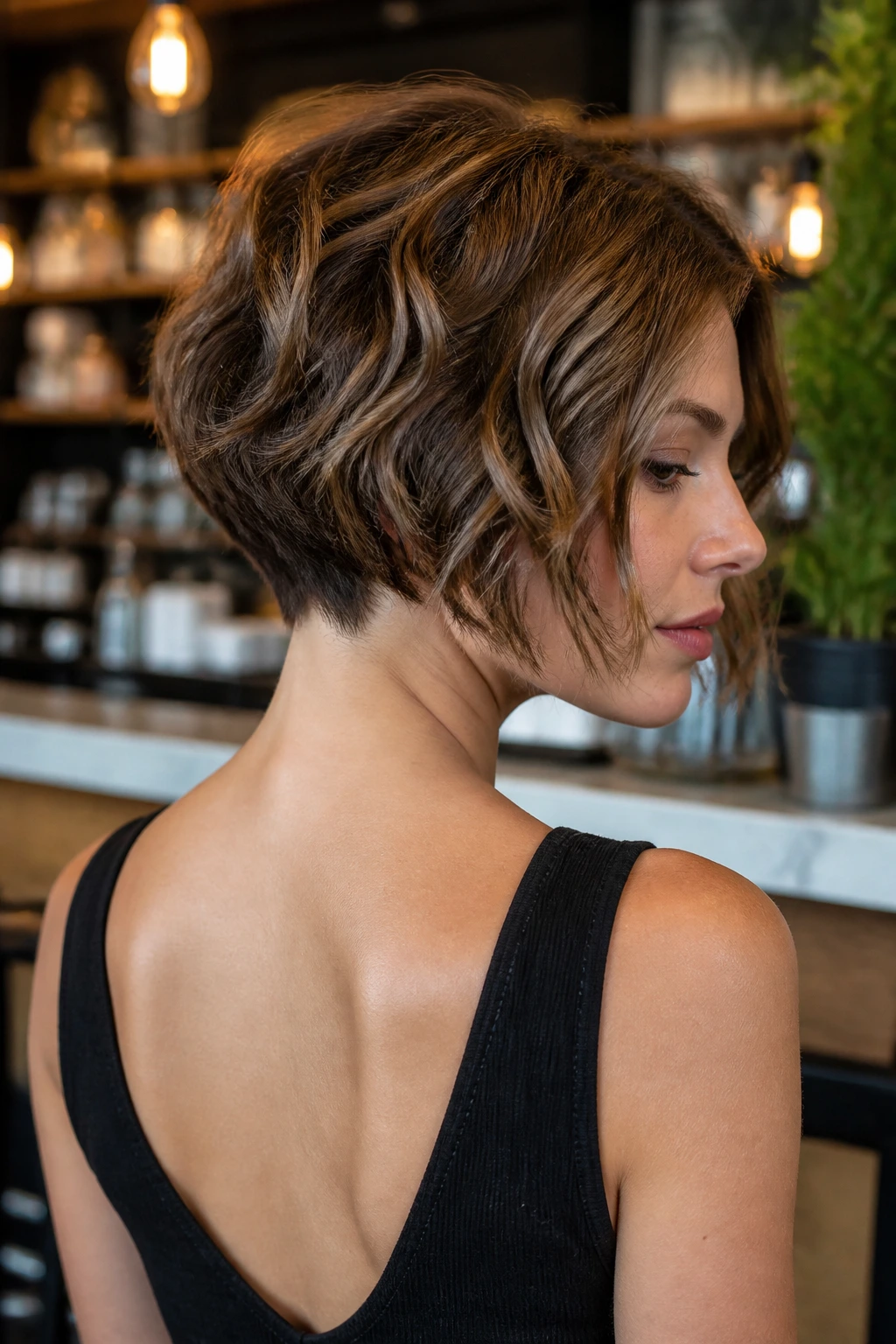
A tapered nape gives the back a neat finish while the front stays a little softer and longer. The contrast keeps the cut from feeling heavy at the neckline, which is useful when wavy hair likes to puff there. On oval faces, the taper makes the jaw look cleaner without stealing too much attention.
The taper should be subtle. Too much shortening at the back can make the crown look flat and the front look separate. What you want is a quiet graduation that helps the hair lie down. This is one of those cuts that looks better when the stylist respects the natural growth pattern at the nape instead of forcing it into a hard line.
24. The Glossy Straight-to-Wave Bob
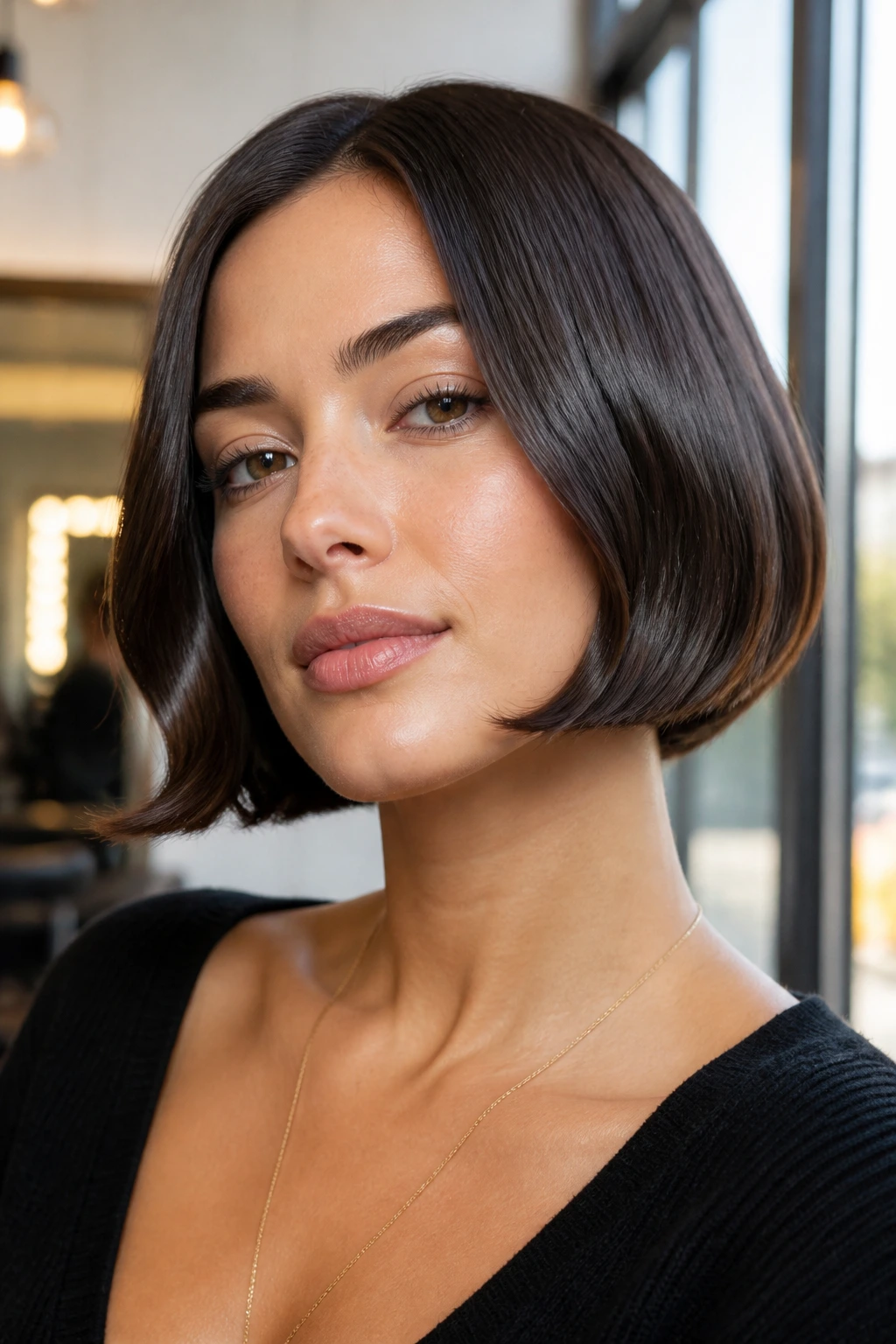
Some short bobs look best when they start smooth and then bend just a little at the ends. That glossy finish gives the haircut a sharper outline, and the wave keeps it from feeling stiff. It’s a useful middle ground if you like some polish but don’t want pin-straight hair.
On oval faces, the smooth top and soft bend around the jaw keep the eye moving downward without adding bulk. A round brush or flat brush blow-dry works well here, followed by a tiny bend at the ends with a curling wand if the hair needs help. The point is not perfection. It’s a controlled swing.
25. The Face-Framing Wave Bob
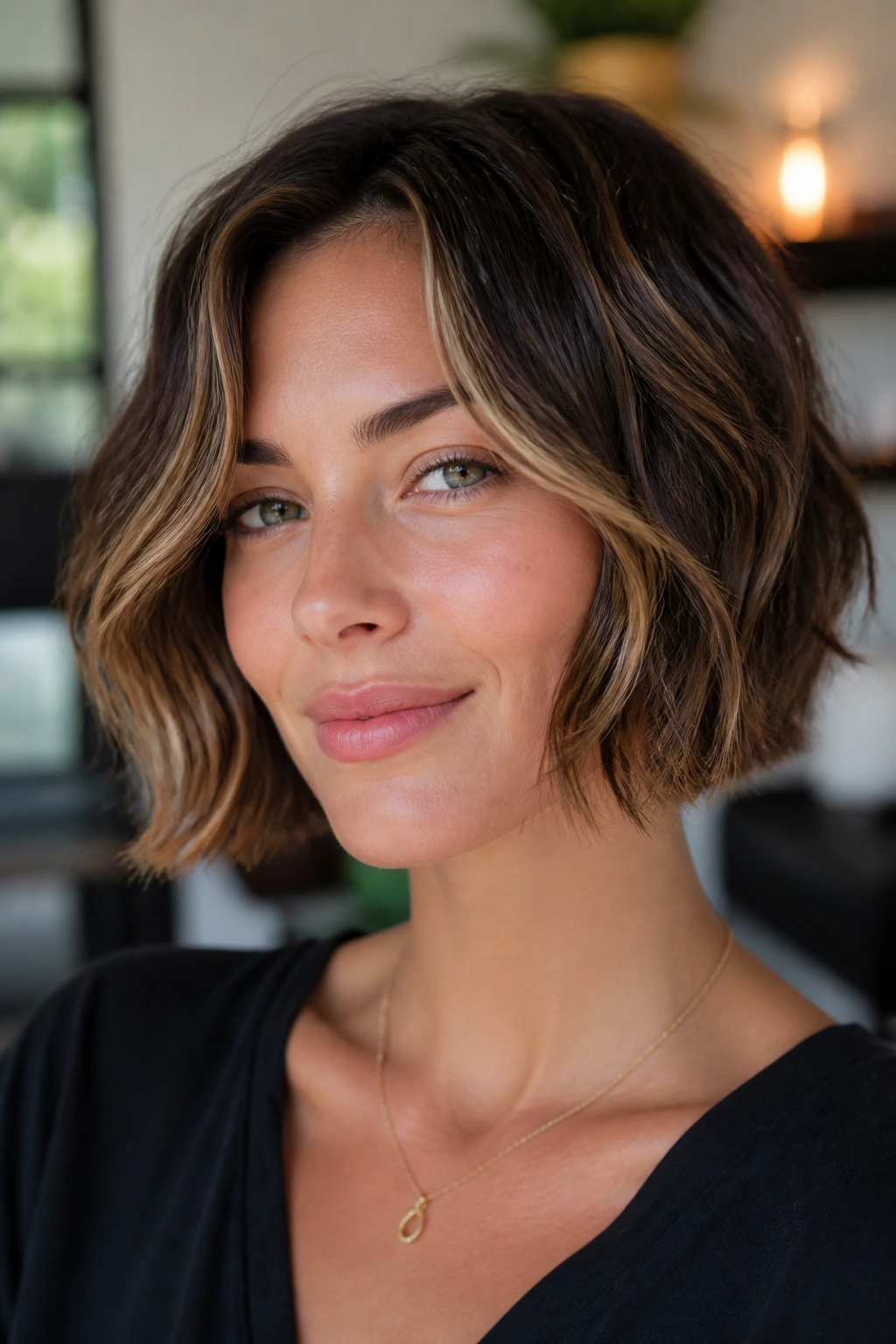
This last one is the most forgiving of the bunch, and probably the easiest to wear if your wave pattern changes from day to day. The cut keeps the sides close enough to frame the face, then lets a few front pieces sit a touch longer so the wave has somewhere to fall. On an oval face, that framing can be subtle and still do a lot.
I like this when a client wants short hair but doesn’t want the haircut to feel severe. The front pieces soften the cheekbones, the back stays tidy, and the overall shape feels relaxed without getting shapeless. It’s the kind of bob that looks good on day one and still makes sense on day three, which is not nothing.
What to Ask for at the Salon
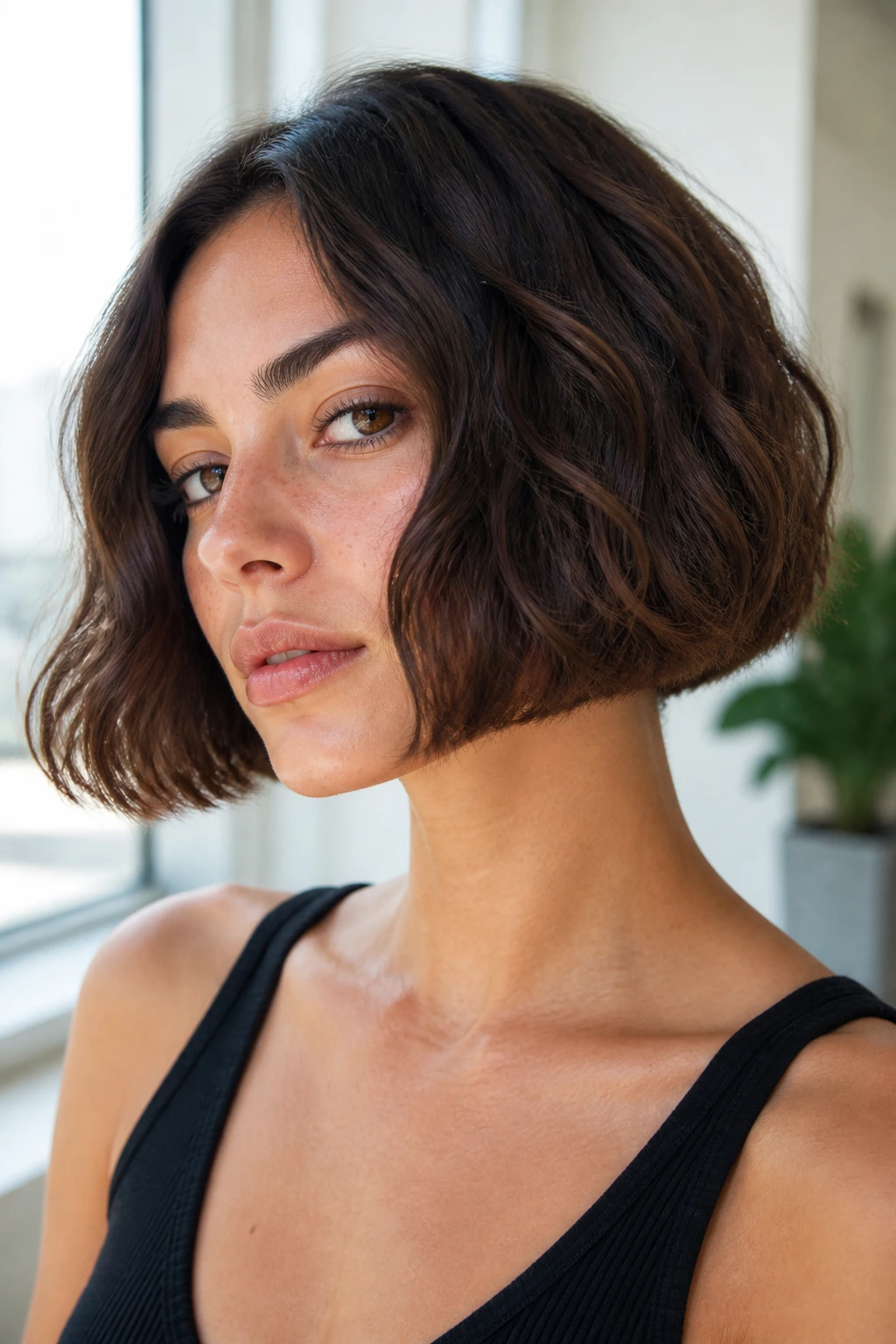
The fastest way to ruin a short bob is to ask for “something short and cute” and leave it there. Cute is not a haircut plan. Length, weight, parting, and texture all matter, and on wavy hair each one changes how the bob sits once it dries.
Bring photos, but bring the right kind. One photo should show the overall length you want. Another should show the texture or finish you like. A picture of a sleek bob and a picture of a fuzzy wave-bob are not the same request, and too many people mix those up. If your stylist knows where you want the line to land—jaw, cheekbone, ear, or nape—you’ll get a much more useful result.
A few useful phrases help:
- Perimeter: the outer edge of the bob.
- Weight line: where the hair looks heaviest.
- Graduation: shorter layers that build shape in the back.
- Internal texture: removal of bulk inside the cut.
Also tell the stylist how your hair behaves when it dries. If one side flips, say it. If the nape sticks out, say that too. Haircuts get better when the annoying details are spoken out loud.
Styling Tools That Pull the Shape Together

You do not need a drawer full of gadgets to wear a short bob well. You do need a few things that keep the wave from getting soggy or frizzy.
- Light mousse: Adds root lift and a little memory without making the hair sticky.
- Sea salt spray: Good for airy texture, especially on loose waves; use a light hand.
- Heat protectant: Non-negotiable if you blow-dry or bend the ends with a hot tool.
- 1-inch curling iron or wand: Small enough to shape short pieces without making giant loops.
- Diffuser: Helps preserve the wave while drying the cut close to the head.
- Round brush: Best for adding a little bevel at the ends or lift at the crown.
- Wide-tooth comb: Easier on wet waves than a fine brush.
- Texturizing spray: Useful for piecey finishes and second-day shape.
- Light cream or balm: Good only if your hair is coarse enough to handle it; fine hair can get flattened fast.
How to Style a Super Short Wavy Bob Without Fighting It

Start with damp hair, not soaking wet hair. That one detail saves time and keeps product from diluting before it has a chance to work. Work a golf-ball-sized amount of mousse through the roots and mid-lengths, then add heat protectant if you’re using a dryer or iron.
Dry the roots first. Not the ends. If the roots stay flat, the whole bob collapses, and then you’re spending the rest of the morning trying to rescue volume that should have been there from the start. Use the diffuser on low heat, or rough-dry with your fingers until the hair is about 80 percent dry.
Once the shape is set, bend only the pieces that need help. A few quick touches with a curling iron can sharpen the front sections or tuck the ends under slightly. Finish with a light mist of texture spray, then separate the wave with your fingers. Don’t overcomb it. Short wavy hair gets unhappy when you keep messing with it.
Common Mistakes That Make the Cut Look Boxy
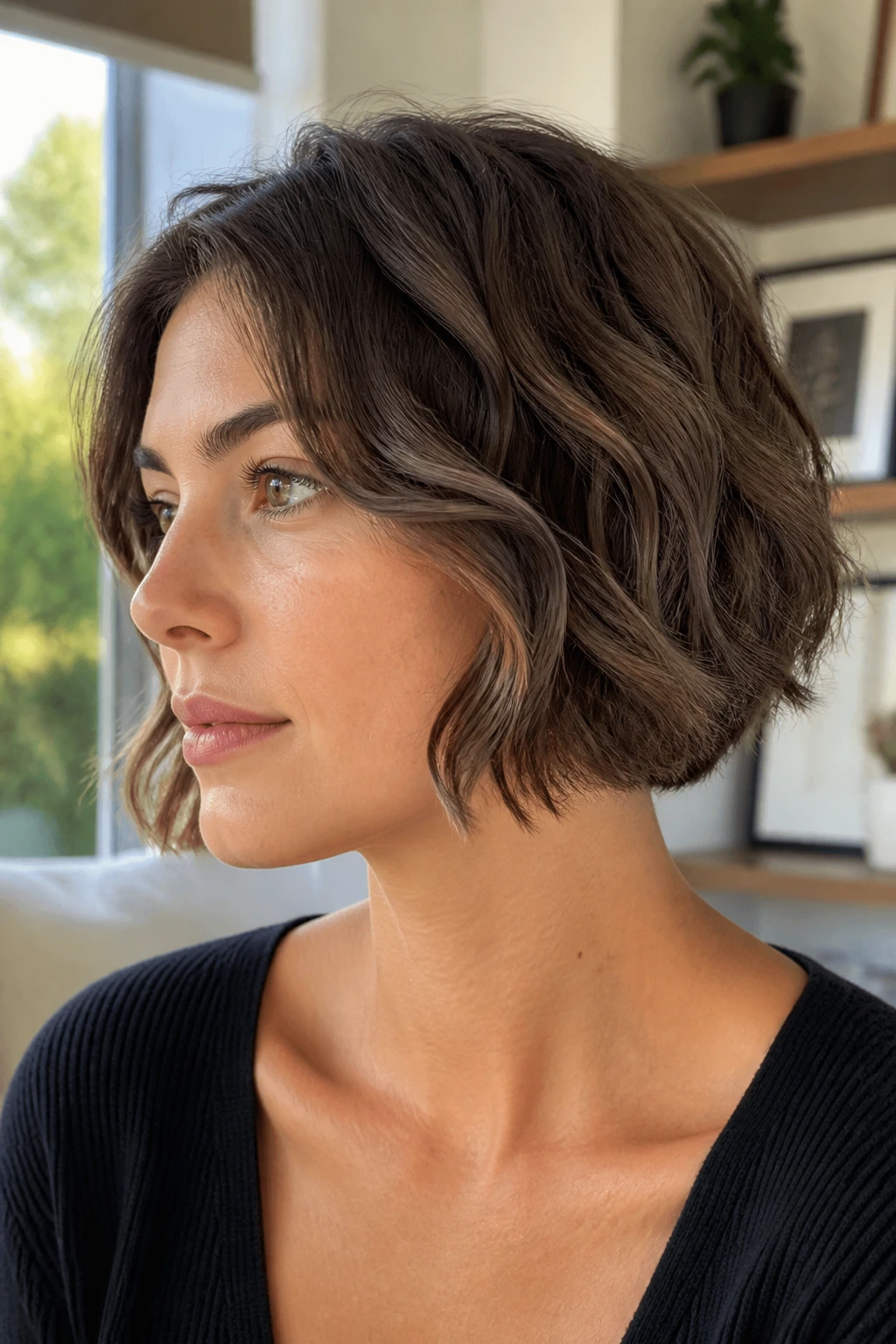
Cutting too much weight at the sides: The hair puffs outward and turns into a triangle. The fix is to keep the perimeter solid and remove bulk underneath, not on the outside edge.
Going too short at the nape without checking the growth pattern: Cowlicks and swirls at the neckline can kick the hair out like little springs. A good stylist will leave enough length to settle, then taper carefully.
Using heavy cream on fine waves: The bob goes flat, the roots collapse, and the shape disappears. Swap to mousse or a lighter spray product.
Thinning the ends too much: The outline gets wispy and the bob loses its body. Ask for soft movement, not shredded ends.
Blowing it straight every time: Wavy hair that’s flattened every day starts to look stiff and lifeless. Let some bend stay in the cut. That’s why you picked it.
Ways to Change the Mood Without Changing the Length
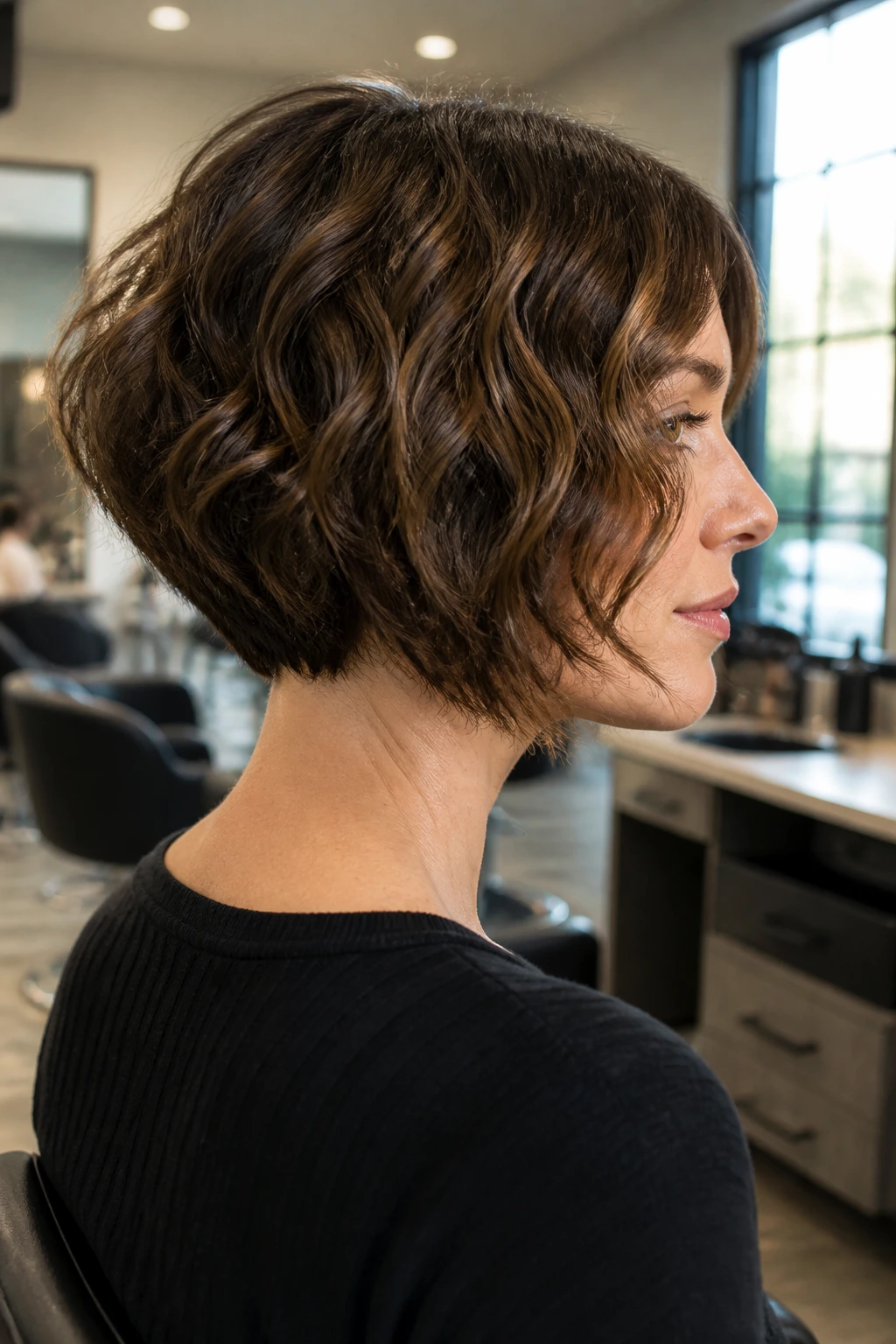
The Polished Office Bob: Keep the line blunt, blow-dry smooth, and add a tiny bend under the ends. It reads neat, tidy, and a little serious.
The Piecey Weekend Bob: Use salt spray and a diffuser, then separate the front pieces with a touch of wax. The cut looks looser and more relaxed without losing shape.
The Fringe-Forward Bob: Add curtain bangs or a bottleneck fringe to shift attention upward. This works well if you want more face framing without longer sides.
The Bold Edge Bob: Ask for an asymmetrical line or a hidden undercut. It’s a sharper choice, especially if your hair is thick and you want the sides to sit closer.
The Soft Air-Dry Bob: Keep the cut layered only where it needs movement, then let the wave dry naturally with a small amount of cream. It’s the least fussy version and probably the one you’ll reach for most often.
Keeping a Super Short Bob Sharp Between Trims
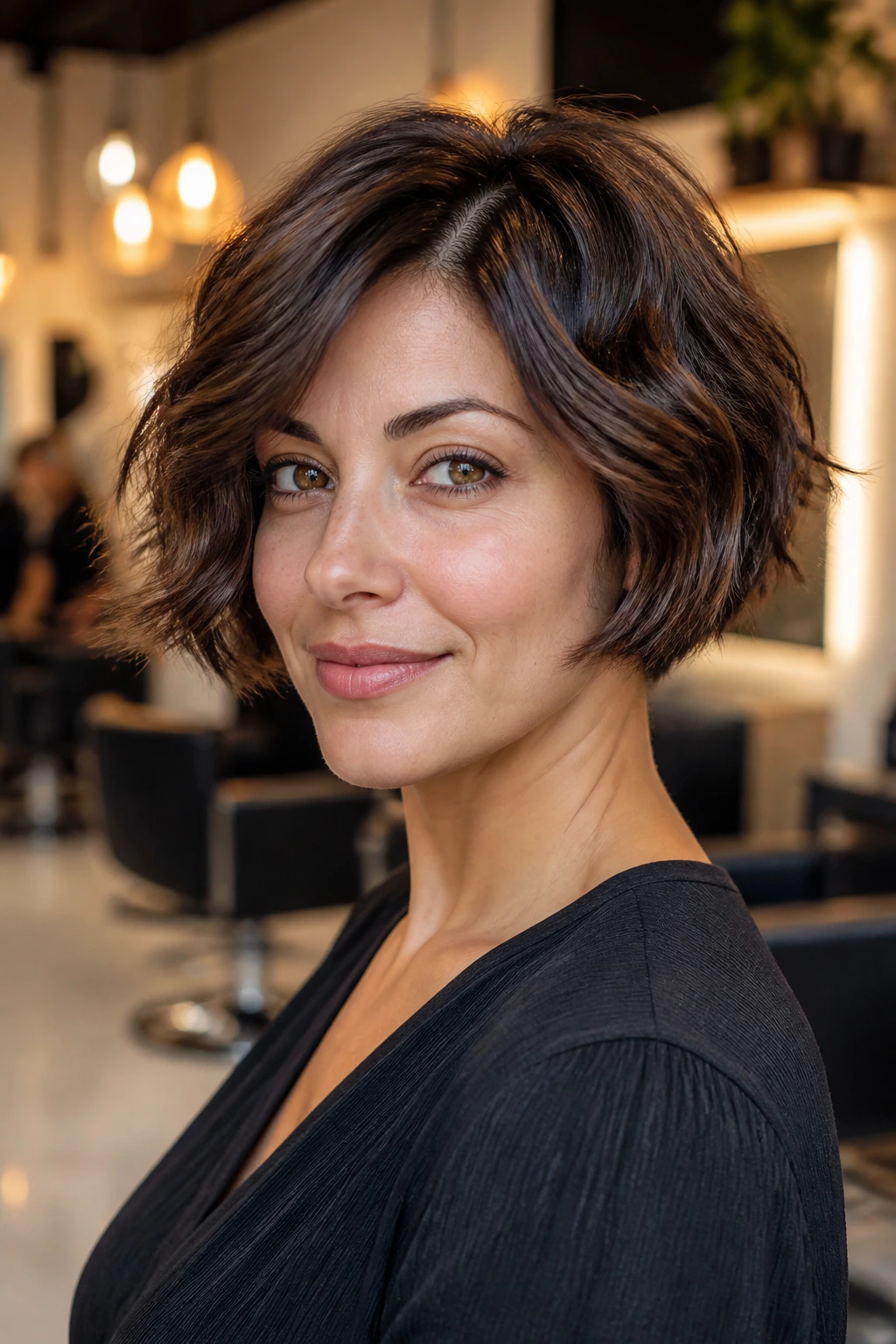
Short bobs show every inch of growth. That’s the deal. Once the perimeter starts dropping or the back gets fuzzy, the whole haircut changes shape, and not in a charming way. For most wavy hair, a trim every 5 to 7 weeks keeps the outline where it should be. If the nape grows fast or the undercut starts peeking through, you may want a tidy-up sooner.
Between trims, the real job is keeping the wave from stretching out. Sleep on a silk or satin pillowcase if you can. It cuts down on the frizz halo that appears around the hairline by morning. If the bob gets flattened overnight, mist the roots lightly with water, add a pea-sized bit of mousse, and reshape with your fingers. You do not need a full wash every time the shape gets lazy.
Washing rhythm matters too. If your hair is fine, too much conditioner can kill the lift. If it’s thick, skipping conditioner can make the wave rough and puffy. Keep conditioner off the roots, use a light hand, and refresh the ends with a tiny amount of cream only when they look dry. A short wavy bob likes clean roots and a little slip through the middle. That’s the balance.
Frequently Asked Questions

Will a super short bob make an oval face look longer?
Usually not, unless the cut is too narrow at the sides and too flat on top. A bob that adds width at the cheekbone or a little lift at the crown tends to keep the proportions balanced.
Can wavy hair handle a jaw-length bob without frizzing out?
Yes, if the perimeter is clean and the weight is placed well. The biggest mistake is thinning the ends too much, which leaves the wave with nothing to hold on to.
What if my waves are uneven from side to side?
That’s more common than people admit. A slight side part, a soft asymmetrical line, or a few face-framing pieces can disguise the difference without making the haircut look lopsided.
Are bangs a bad idea with an oval face?
Not at all. Curtain bangs, bottleneck bangs, and soft fringe all work well because they break up the vertical line without hiding the face shape. Heavy blunt bangs are the only style I’d approach more carefully, especially on very wavy hair.
How often do I need trims for a super short bob?
Every 5 to 7 weeks is the sweet spot for most people. If your hair grows fast or you want a very precise line, closer to 5 weeks keeps the shape cleaner.
Can I air-dry this kind of bob?
Absolutely, and many wavy cuts look better that way. Use a light styling cream or mousse, scrunch the hair, and leave the perimeter alone while it dries so you don’t disturb the shape.
What should I do if the ends flip out too much?
Use a round brush or a curling iron to guide the ends under for 10 to 15 seconds, then let them cool before touching them. If the flip keeps happening, the cut may need a little more weight left in the perimeter.
Is a super short bob good for thick wavy hair?
Yes, but only if the bulk is handled properly. Thick hair usually needs internal weight removal or a hidden undercut so the sides do not balloon outward.
The Shape That Keeps Its Own Line

A short bob on oval faces with wavy hair works when the cut respects the wave instead of trying to iron it into obedience. That sounds simple, and maybe it is, but simple does not mean careless. The best versions have a clear perimeter, the right amount of lift, and enough softness around the face to keep the whole thing from feeling severe.
The nice part is that you have room to play. You can go blunt, airy, stacked, fringed, glossy, or piecey and still land in the same family of shapes. Pick the one that matches how much styling you actually want to do, not the one that only behaves in a salon mirror. That is the real test.
Bring the length you want, bring the texture you want, and ask for the details that make the cut honest. A good bob will hold its own.