



Thick hair and a round face can fight each other in a straight lob. Cut it too short and the ends balloon at the cheeks; leave it too long and the shape starts to drag instead of skim. The sweet spot is a straight lob that sits with intent — below the jaw, through the collarbone zone, and with enough shape control that the cut still looks tidy when your hair decides to have opinions.
Straight lobs for thick hair and round faces work because they do three jobs at once. They use length to stretch the face visually, they use a clean edge to keep dense hair from looking bulky, and they use just enough interior shaping to stop the whole cut from turning into a box. That last part matters. A lot.
I’ve always thought the best lob is the one that looks simple from across the room and carefully engineered up close. The line should be clean. The front pieces should know where they’re going. And the hair should fall with that heavy, glossy swing thick hair does so well when it’s cut with restraint instead of enthusiasm.
Why These Straight Lobs Work So Well on Thick Hair and Round Faces
-
They add length where round faces need it most: A lob that lands at or below the collarbone pulls the eye downward instead of stopping right at the widest part of the face.
-
They keep thick hair from puffing out at the sides: A blunt edge or a controlled bevel gives the hair somewhere to sit, which matters more than heavy layering.
-
They let you keep density without looking bulky: Thick hair can feel like a triangle if it’s cut carelessly. A good lob uses shape, not thinning shears abuse, to keep the outline clean.
-
They work with a straight finish more easily than longer hair: Straightening a mid-length cut takes fewer passes, less time, and less arm fatigue. That counts.
-
They grow out with less drama: A lob can move from polished to slightly longer without hitting the awkward “why does my hair look like it’s expanding?” stage that some shorter cuts hit hard.
-
They give you styling choices without demanding them: Center part, side part, tuck, bend, flat iron, air-dry and smooth — the cut can take it, which is half the point.
1. The Center-Parted Blunt Lob That Stops at the Collarbone
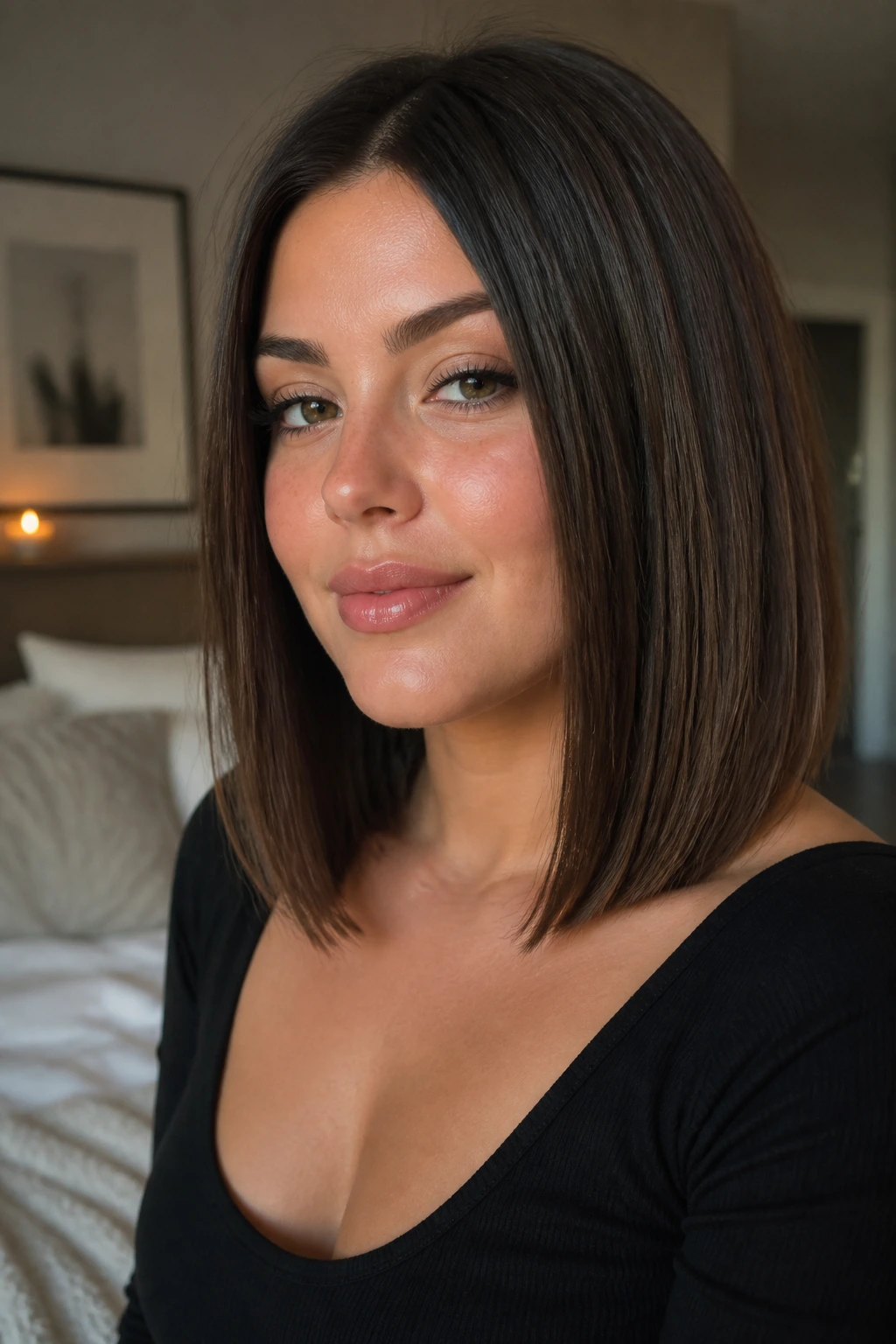
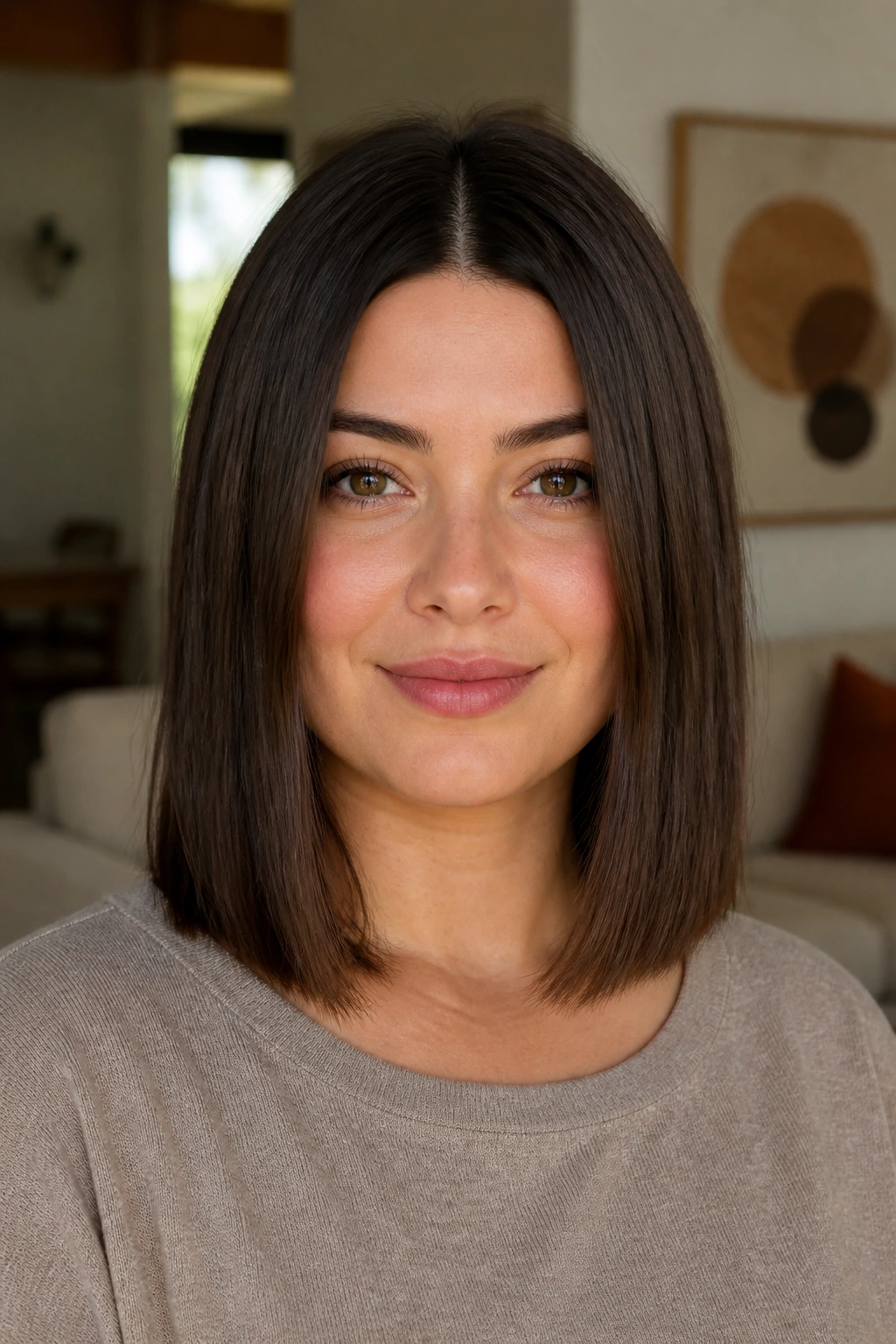
The cleanest version of a straight lob is also one of the smartest for thick hair. A blunt perimeter that lands right at the collarbone creates a hard line at the bottom, and that line keeps the hair from fraying outward into a wide triangle. On a round face, the center part helps pull everything vertically, which is doing real work here.
Why the center part matters
A middle part can feel severe on paper, but on a round face it’s often the easiest way to stretch the shape. The hair falls in two neat curtains, and that symmetry keeps the cheeks from feeling like the widest point in the room. The collarbone length helps too. It sits below the jaw, which is where a lot of round faces need the extra space.
Use this cut if your thick hair likes to swell when it’s layered too much. Keep the ends blunt, the part precise, and the finish smooth. That combination is the whole trick.
A tiny bevel at the ends is fine. A choppy edge is not. The sharper the perimeter, the more controlled the silhouette looks.
2. The Off-Center Lob with a Soft Bend
A center part is not mandatory, and honestly, I don’t blame anyone who wants a little less symmetry. An off-center part moves the weight just enough to soften the face without wrecking the straight, sleek feel. The bend through the ends should be gentle — not curled, not flipped, just a small inward turn that keeps the shape from looking boxy.
This version works well when thick hair has a strong natural fall but you still want the cut to look polished. The off-center part breaks up roundness at the cheeks, and the soft bend at the bottom keeps the line from feeling too hard against the face. It’s one of those cuts that looks casual until you notice how carefully it’s doing its job.
I like this one for people who wear glasses or who tuck one side behind the ear often. The asymmetry feels natural there. And because the length stays in that collarbone zone, you get the visual stretch without sacrificing the heavier, fuller look thick hair does best.
3. The Angled Lob That Drops Longer in Front
This cut is the bluntest answer to a round face — in a good way. The back sits a touch shorter, while the front pieces drop longer toward the collarbone or just past it. That angle gives the eye a path to follow downward and forward, which is exactly what helps a round face look less wide.
A strong angle can go wrong fast if it starts too high. You do not want a dramatic wedge that screams “2010 haircut.” You want a quiet slope. The back should still feel like part of a lob, not a stacked bob with a travel plan.
Where the angle should begin
Start the angle low, around the bottom of the ear or just behind it. From there, let the front drift longer in a smooth line. On thick hair, that shape keeps the bulk in check because the front pieces don’t all sit at the same exact point.
It’s a tidy cut. That’s the charm.
The best version looks almost too simple until the light hits it and you notice how the hair falls forward instead of spreading sideways.
4. The Airy Layered Lob with a Clean Bottom Line
This is the cut for thick hair that gets heavy, not just full. The perimeter stays neat, but the inside gets small, thoughtful layers that remove weight where the hair tends to sit too dense — usually through the crown and upper sides. The bottom line stays clean so the lob still reads as a lob.
The mistake with thick hair is usually overdoing layers in the name of “movement.” Movement is fine. Shelf-like pieces that kick out at every angle are not. The interior shaping here should be quiet enough that only you and your stylist know it’s there.
The trick is inside, not on top
Ask for weight removal under the surface rather than visible choppy layers. That keeps the silhouette smooth when you straighten it. If you have a round face, the cleaner perimeter stops the cut from widening at cheek level, while the internal shaping keeps the hair from feeling helmet-like.
This cut shines when you want your lob to swing but not puff. There’s a difference. A big one.
5. The Chin-Skimming Lob with Long Internal Layers
Here’s the risky one — and I mean that in the best way. A chin-skimming lob can work on a round face if the front pieces do not end exactly at the chin. They need to fall just below it, with the rest of the cut staying sleek enough to keep the face open. Thick hair gives this cut some needed body, but it also means you have to be precise.
Long internal layers are what save it. Without them, this length can balloon around the cheeks and make the face feel wider. With them, the cut becomes leaner and more controlled, and the whole thing looks deliberate rather than short.
I’d only pick this if your hair is dense enough to support the shape without collapsing. Fine hair would struggle here. Thick hair? It can hold the line.
A collarbone-length finish is safer, but this shorter version has attitude. It just needs a steady hand.
6. The Sleek Tucked-Behind-Ear Lob
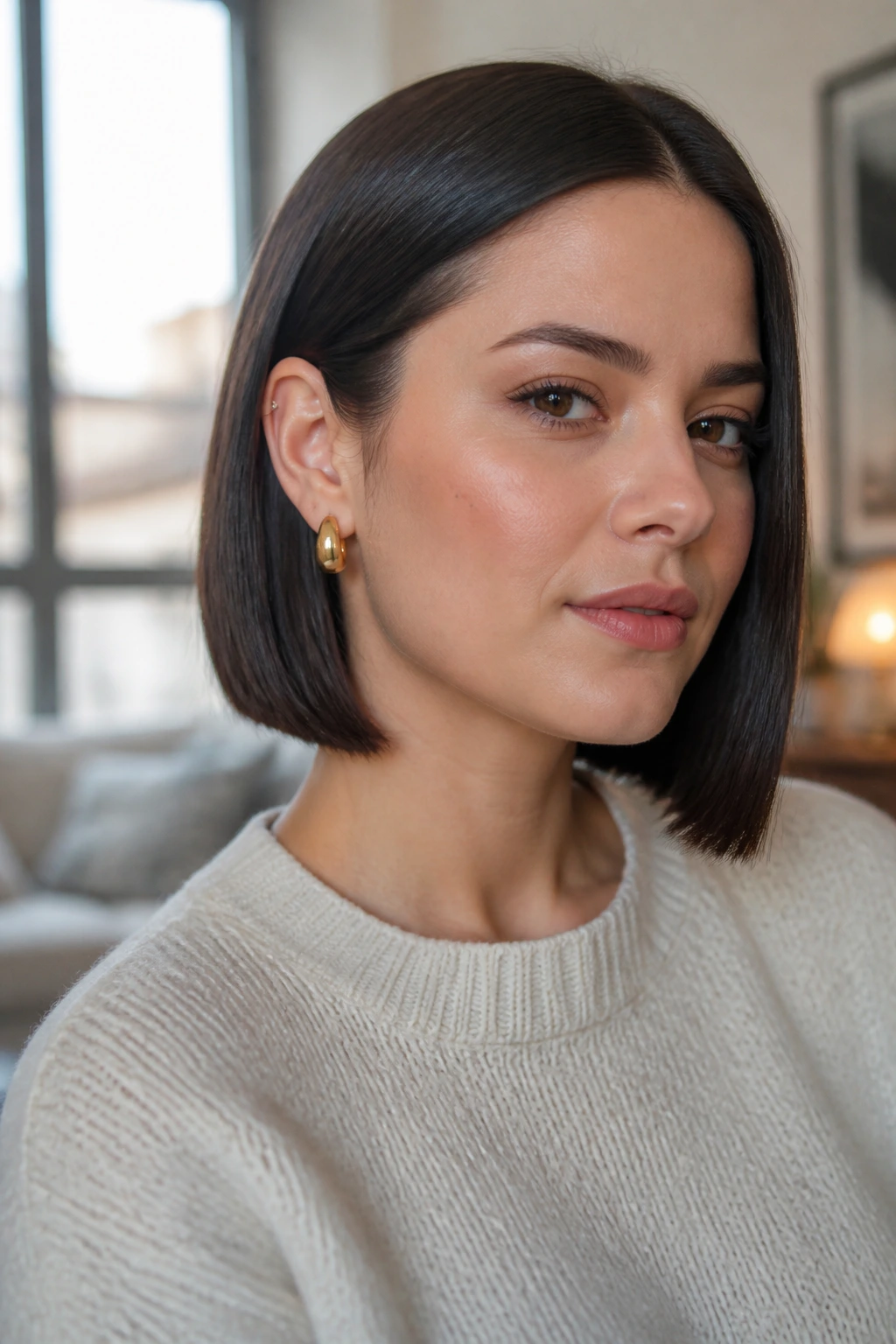
The tuck behind the ear is not a styling afterthought. It changes the geometry of the cut. One side gets exposed, the jawline shows a little more, and the face stops reading as a full circle of hair. On thick hair, that tucked shape keeps the sides from feeling too wide.
This is a good lob when you want clean lines and low fuss. The hair can stay straight from roots to ends, and the tuck adds shape without needing extra layers or volume tricks. On a round face, the exposed ear and visible cheekbone edge create a break in the width. Small thing. Big effect.
It also works beautifully with a side part if you want even more narrowing through the front. I like this version for workdays and for hair that resists holding curls anyway. The tucked side gives you structure even when the rest of the cut stays plain.
7. The Deep Side-Part Lob with a Narrowing Front

If a center part feels too symmetrical for your face, this is the move. A deep side part sends most of the hair to one side, which creates a stronger vertical line and pushes the eye away from the widest part of the cheeks. On thick hair, that extra weight on one side looks rich, not messy, as long as the ends stay straight.
The front should still be long enough to skim below the cheekbone. That’s the line I keep coming back to because it works. Pieces that stop right at the cheeks make the face read wider. Pieces that drop past them do the opposite.
This lob looks especially good when the side with less hair is tucked behind the ear. You get contrast. You get shape. And you avoid the flat, over-symmetrical look that can make round faces feel boxed in.
A little root lift on the heavier side helps too. Nothing dramatic. Just enough to keep the top from collapsing.
8. The Glass-Hair Lob That Makes Thick Hair Look Intentional
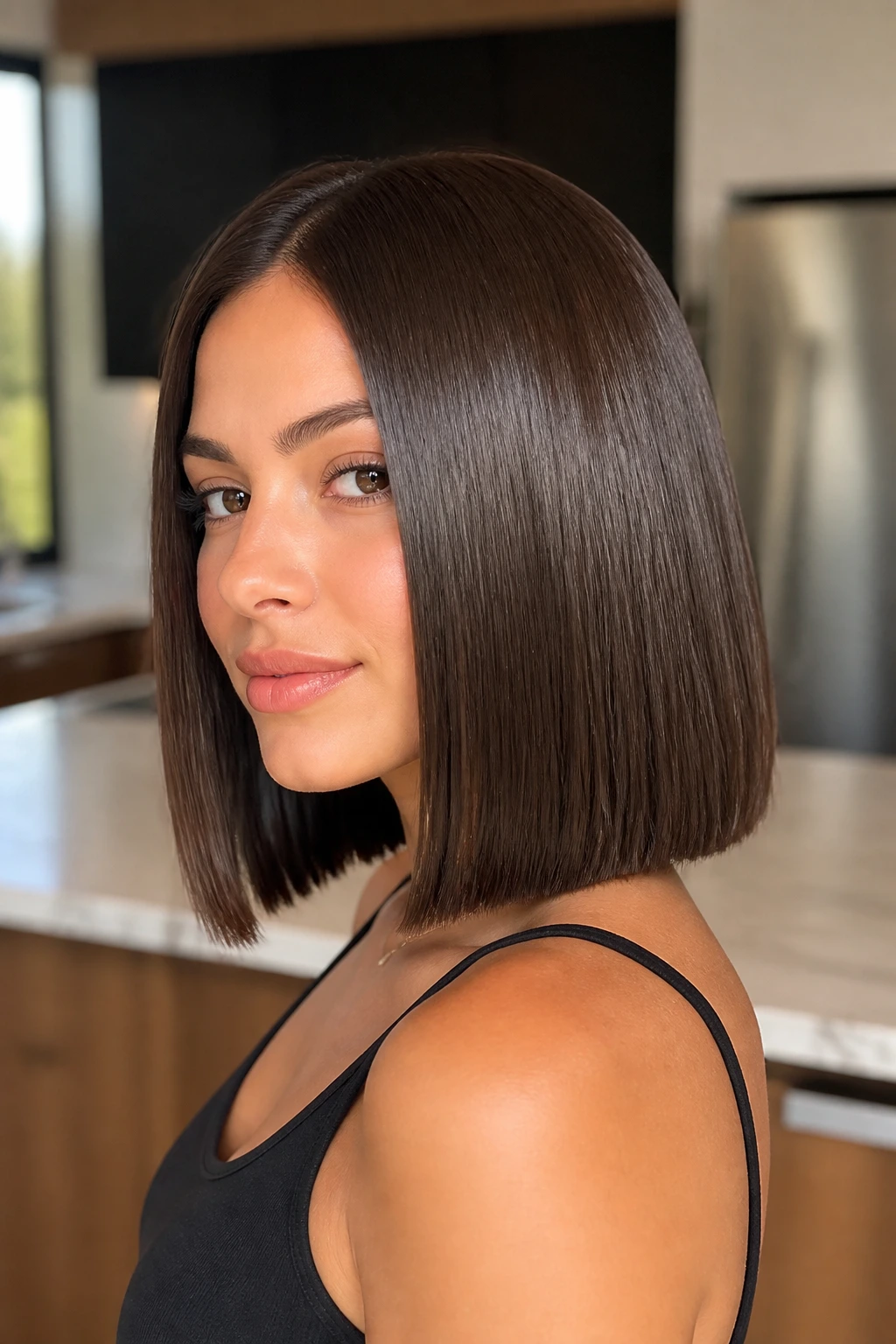
Glass hair sounds fussy until you see how good it looks on thick hair. Then it makes sense. Thick hair has the density to look like a single polished sheet when the cut is right and the finish is smooth. A straight lob is the perfect length for that because it’s long enough to drape and short enough to keep under control.
This version leans into the shine. The ends should be blunt or nearly blunt, the surface should be smoothed with a flat iron in small sections, and the whole shape should sit close to the head without being plastered down. That’s a narrow lane, but thick hair can live there nicely.
What makes it work
The round face benefit comes from the straight vertical line from part to shoulder. There’s no puff at the cheeks, no extra width from curls or bends, and no soft layering to fan things out. It’s sleek. Almost stark. That’s the point.
Use a heat protectant with slip, not a sticky one that makes the hair snag. Then finish with a tiny amount of serum through the midlengths and ends. Tiny. Too much and the cut goes limp.
9. The Feathered Lob with a Quiet Under-Bevel

Some thick hair needs a little air around the edges, but not a lot. A feathered lob uses soft internal cutting and a very mild under-bevel so the ends sit in instead of jutting outward. The perimeter still reads as straight, which matters for round faces. But the weight feels lighter.
This cut is useful when thick hair looks too blocky in a blunt shape. A little feathering at the ends softens the edge without turning it fluffy. That distinction matters. I’m not talking about wispy razor layers that frizz the second humidity shows up. I’m talking about a controlled softening of the line.
The under-bevel helps the ends turn under slightly when you blow-dry or flat iron. That inward movement narrows the silhouette just enough to flatter the face. It also keeps the style from feeling heavy at the shoulders, which is where longer thick hair can start to drag.
10. The One-Length Lob with Jaw-Framing Pieces
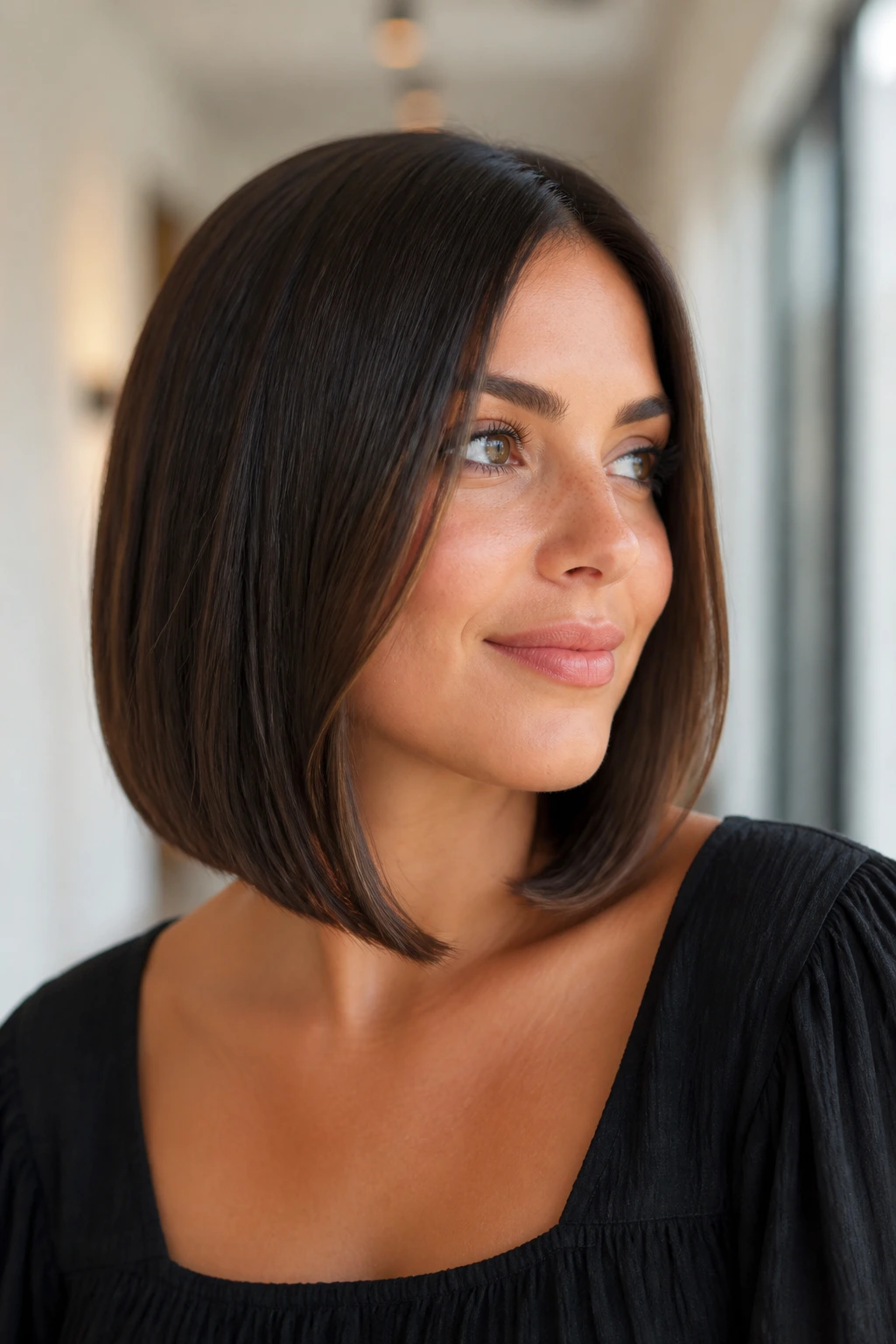
There’s something refreshing about a one-length cut when everybody is trying to talk you into more layers than you asked for. A one-length lob keeps the perimeter strong, which thick hair absolutely loves. Then, just around the front, a couple of carefully placed pieces angle down below the jaw to soften the face.
The jaw-framing detail matters because it breaks the width right where round faces often need help. But the cut doesn’t lose its backbone. You still get the dense, full finish thick hair gives when it’s left mostly intact.
This is a good choice if you want a lob that looks expensive in a quiet way. No choppiness. No drama. Just a strong line with a little give around the front.
It also grows out well. That’s not a small thing. When the shape stays mostly one length, trims are easier to manage and the cut keeps its outline longer between salon visits.
11. The Shoulder-Skimming Lob with Minimal Layers

Shoulder-skimming can sound a little ordinary, but on thick hair and a round face it’s often the safest smart cut. The length lands just past the widest part of the cheeks and near the tops of the shoulders, which gives the face room to breathe. Minimal layers keep the bottom from puffing out, while the extra length helps the cut fall in a longer line.
This is the lob I’d suggest to someone who wants their hair to stay put. If you’re tired of cuts that demand constant styling, this one is more forgiving. Thick hair has enough weight at this length to behave, but not so much that it turns into a blunt shelf.
The best version is slightly textured at the ends, not choppy. You want movement when the hair swings, but you do not want visible gaps inside the shape. That’s where a lot of shoulder-length cuts go wrong.
A simple side part can make this one even better. The extra line on top helps the face look longer without changing much else.
12. The Collarbone Lob with a Soft Curve In
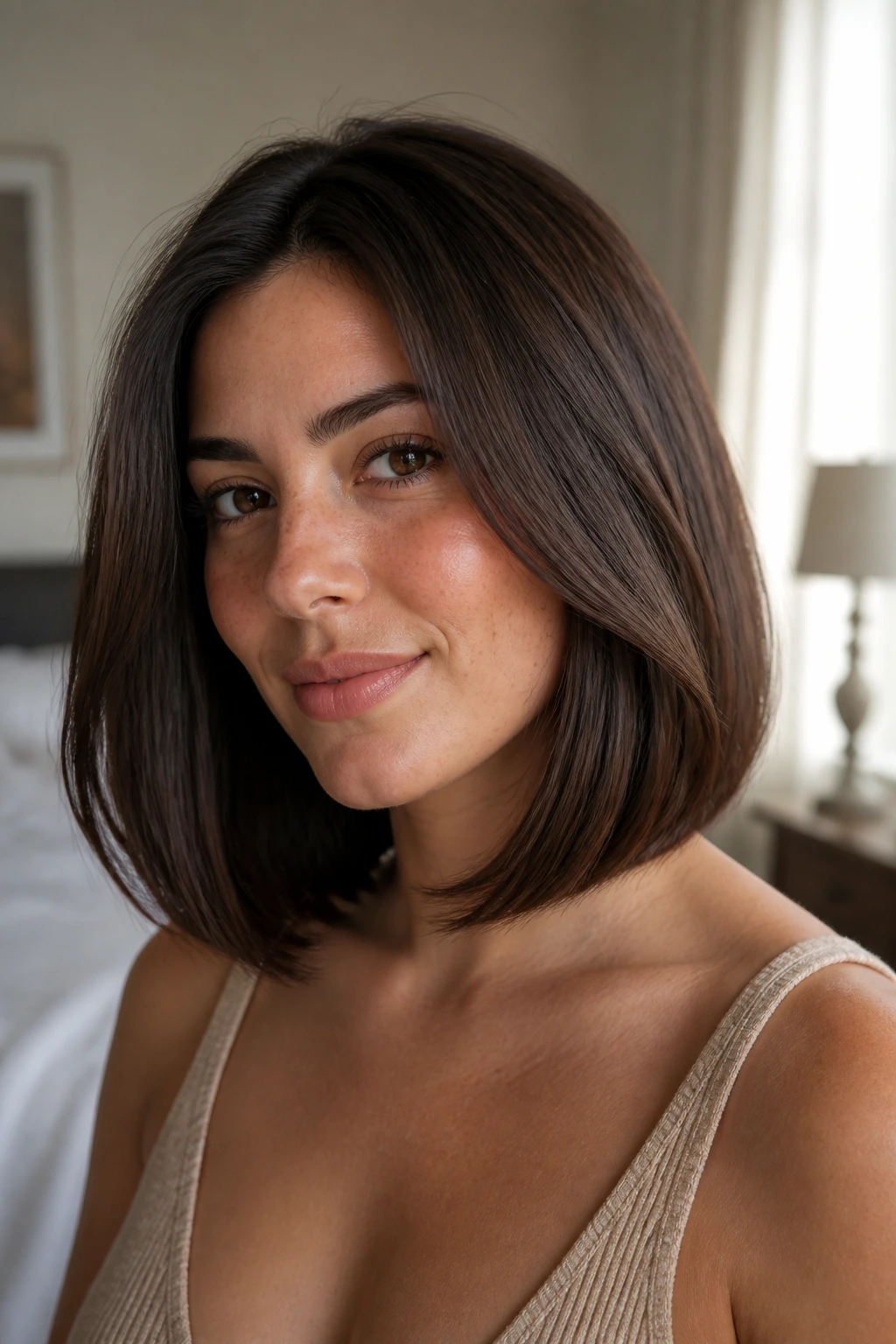
This might be the most dependable cut in the bunch. The collarbone is a useful landing place because it sits below the chin and below the cheek width, which gives a round face cleaner lines. A slight curve inward at the ends keeps thick hair from flaring out and makes the whole cut feel finished.
The curve should be subtle. No old-school round brush helmet. Just enough bend that the ends sit close to the neck and shoulders instead of pointing away from them. If your hair has a stubborn outward flip, this shape is a lifesaver.
I like this one because it behaves in almost every setting. Smooth it for a polished look, air-dry it and then flatten the ends for something looser, or tuck one side and let the front pieces do the shaping. It’s not flashy. It just works.
13. The Blunt Lob with Hidden Internal Weight Removal
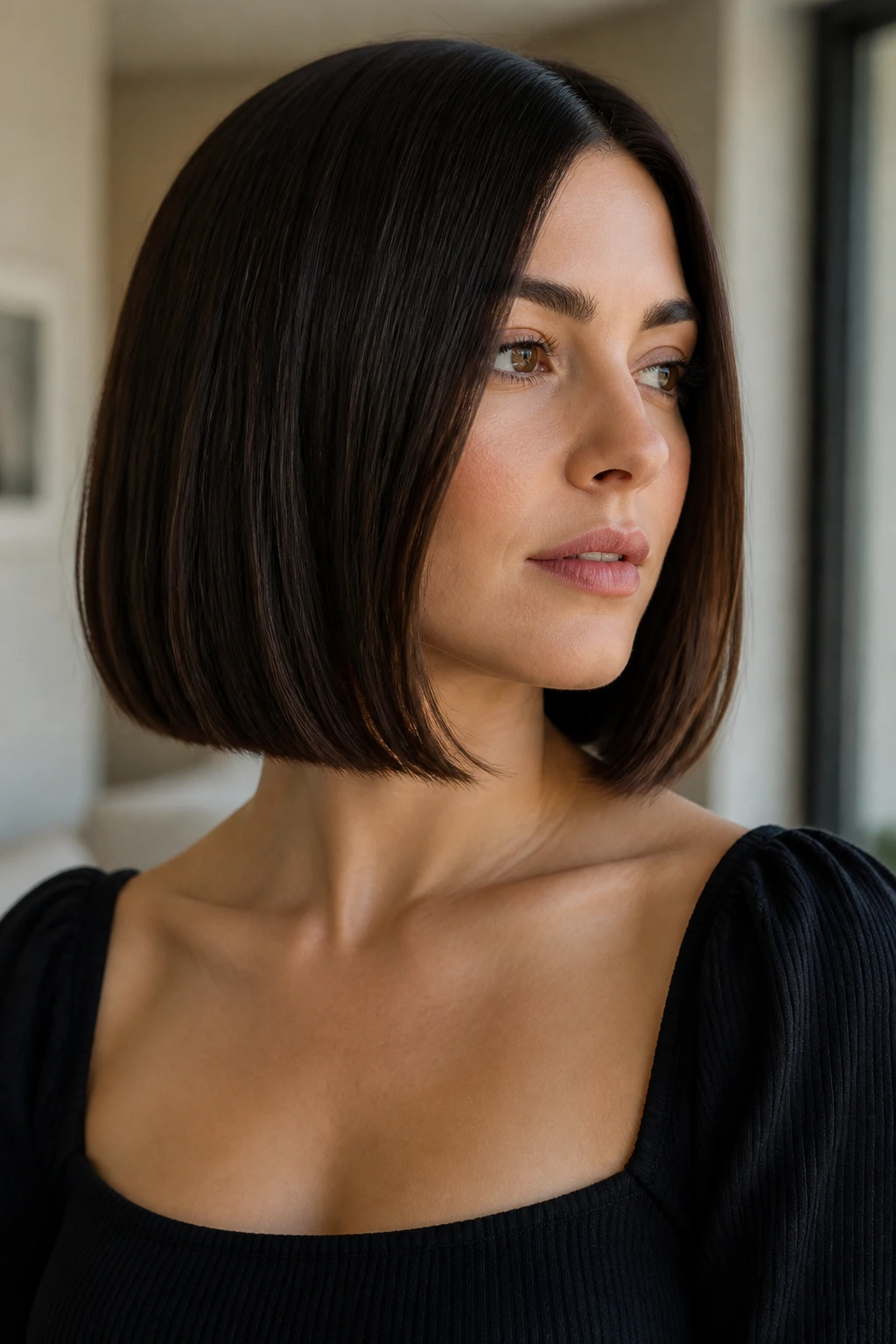
A blunt lob sounds like a one-note cut until you see it on thick hair. Then the hidden work becomes obvious. The exterior line stays clean and heavy, but the inside gets enough weight removal to stop the hair from swelling into a block. That balance is the whole point.
For a round face, the strong perimeter is useful because it keeps the eye moving straight down. For thick hair, the internal removal keeps the shape from feeling too solid. You get the look of fullness without the bulk. That’s a much better deal than thinning the ends to death and hoping for the best.
Ask for this, not that
Ask your stylist to remove weight inside the shape, not by razoring the ends into see-through pieces. A blunt finish with hidden shaping is much cleaner when straightened. And because the line stays intact, the cut holds up longer between trims.
This is a favorite of mine for dense hair that still needs elegance. It’s precise without being delicate.
14. The Long Lob with Curtain Bangs

Curtain bangs can be tricky on a round face, but the right version opens the face instead of boxing it in. The bangs should start around the cheekbone or just below it, then split softly into the lob so the front does not stop at the widest part of the cheeks. Thick hair helps here because it gives the bangs enough body to drape properly.
The lob itself should stay straight and steady. That contrast — soft face frame up front, clean line through the rest — keeps the cut from feeling too busy. If the bangs are blunt and short, the face can look wider. If they’re longer and blended, they help guide the eye downward.
This is a good cut for someone who wants movement near the face but not all over the head. Curtain bangs can soften a strong center part, which is useful if you love symmetry but need a little more shape around the cheeks.
15. The Sleek Lob with Cheekbone-Grazing Pieces
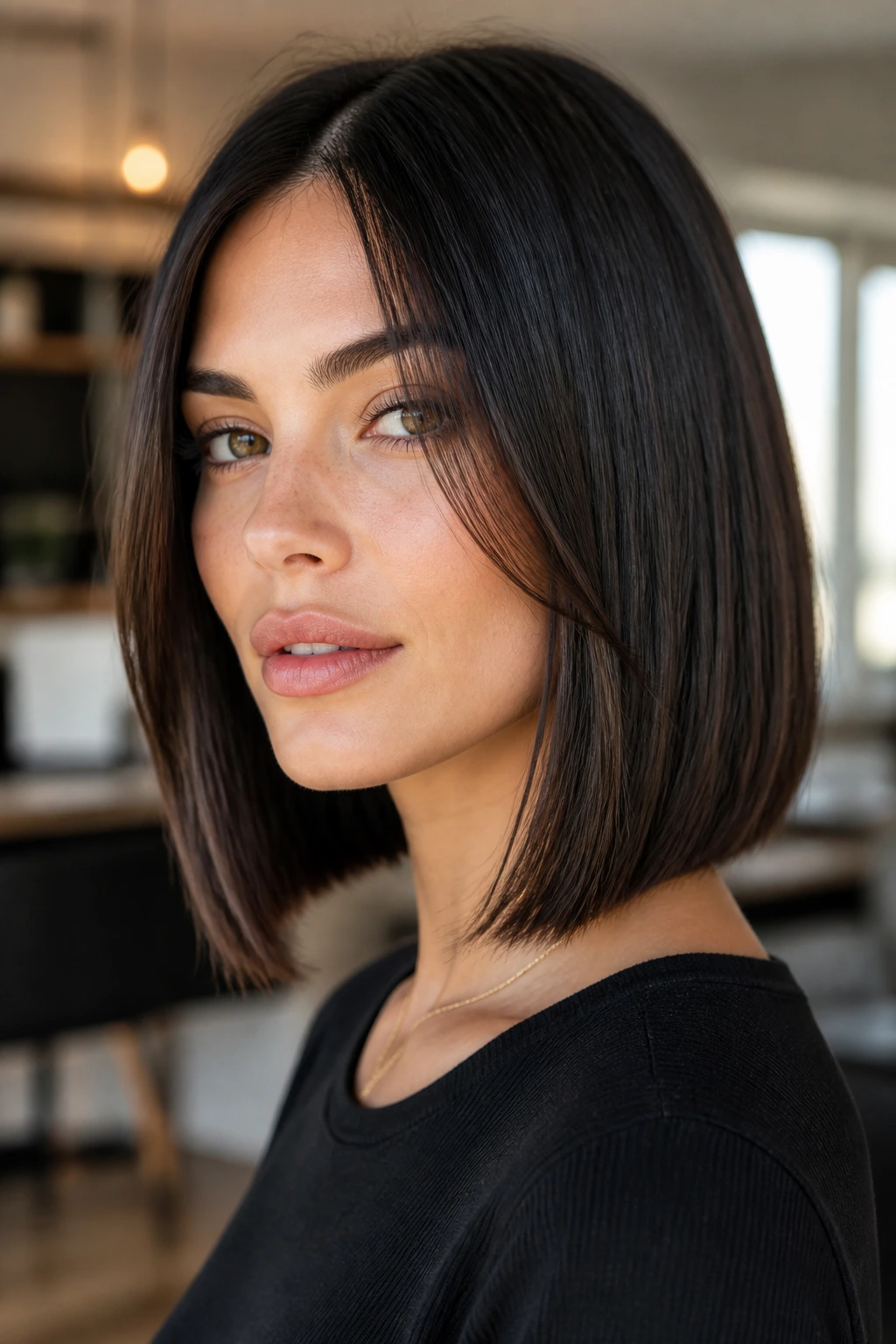
Cheekbone-grazing pieces can do a lot with very little effort. They break up the side of the face without adding bulk at the jaw, which is exactly where a round face needs help. On thick hair, those front pieces should stay sleek and intentional — no fluffy graduation, no random short bits floating around.
The rest of the lob should stay straight and fairly clean. This isn’t a cut that wants layers everywhere. The front pieces are the detail, and the perimeter is the anchor. If the face frame is too high, it widens the face. If it’s too low, it loses the effect. That narrow window matters.
I like this version because it gives the haircut personality without sacrificing structure. The face frame catches the eye first, then the blunt length underneath settles the whole thing down.
One flat-iron pass through the front pieces usually does the job. Keep them smooth, and they do the work for you.
16. The U-Shaped Lob That Leaves More Length Around the Face
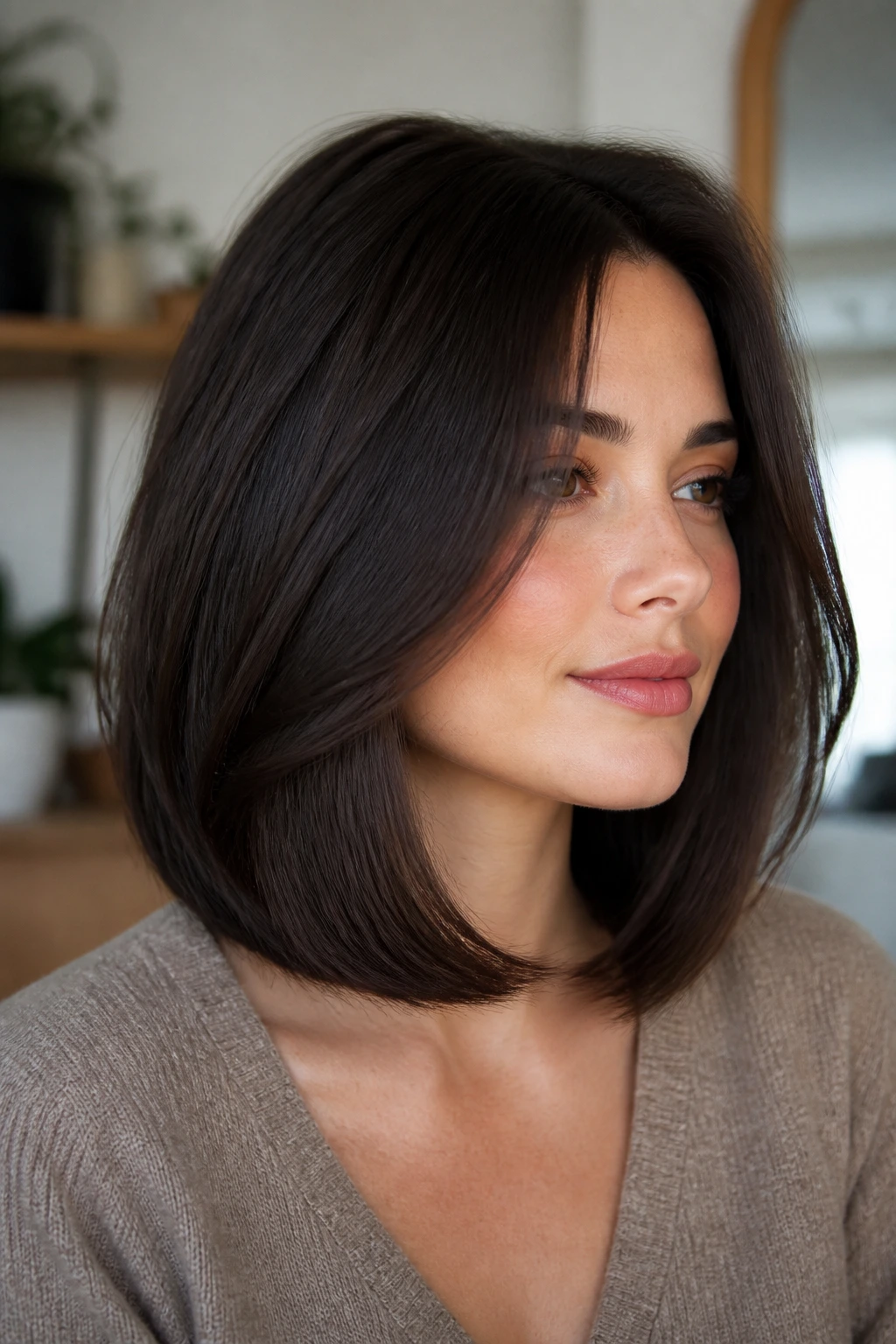
A U-shape is softer than a hard angle, which makes it useful if you want the lob to feel feminine without going wispy. The back sits a touch shorter, and the front curves longer around the face. On thick hair, that shape can keep the cut from feeling square.
Round faces often do well with this because the longer front panels help narrow the cheeks while the back keeps the outline neat. It’s less dramatic than an angled lob, but that’s not a weakness. Some hair needs quieter shaping to look right.
The U-shape also keeps the hair from looking like one heavy slab. That can happen fast with thick, straight texture. The curved edge softens it just enough.
This is a cut I’d put in the “wears well in real life” category. It doesn’t fight your hair. It just gives it a better route to fall.
17. The Side-Swept Lob with a Low-Frizz Finish
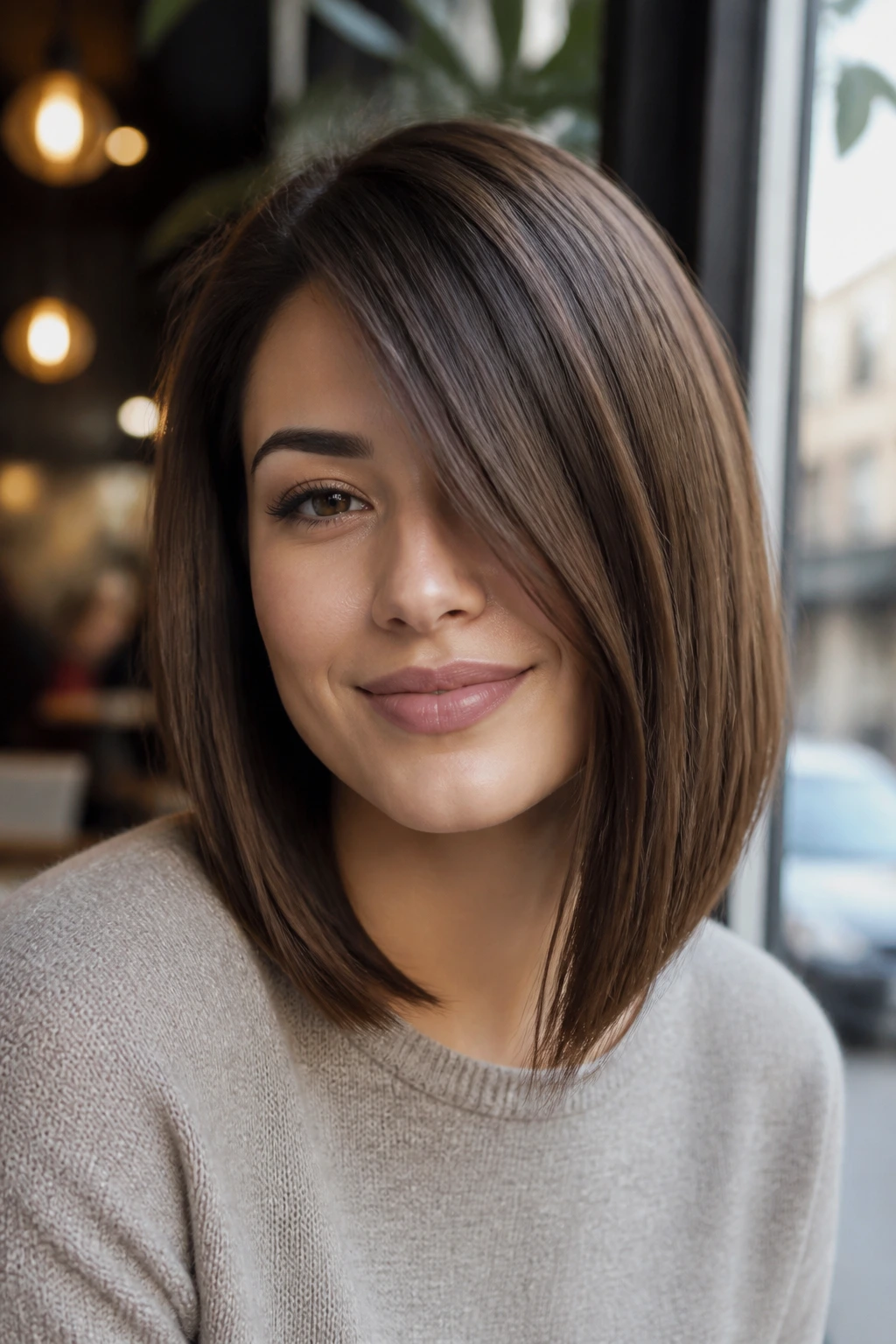
If your hair has a stubborn cowlick or you simply hate the way a center part sits on your head, go side-swept. The side sweep moves volume off the center line and gives the cut a longer look through the face. On thick hair, that sweep feels deliberate instead of flimsy.
The finish should stay low on frizz. A little movement is fine. A halo of poof around the top is not. Use a smoothing cream or lightweight serum, then guide the front section across the forehead and down toward the opposite cheek. That diagonal line is doing more visual work than people give it credit for.
This cut looks especially good when the ends are flat and straight. The top gets the shape, the bottom stays calm. Nice split of labor.
It’s also one of the easiest lobs to dress up or down. The part can be deeper for a night out, softer for everyday wear, and the cut still holds its frame.
18. The Rounded-Under Lob for Heavy Density
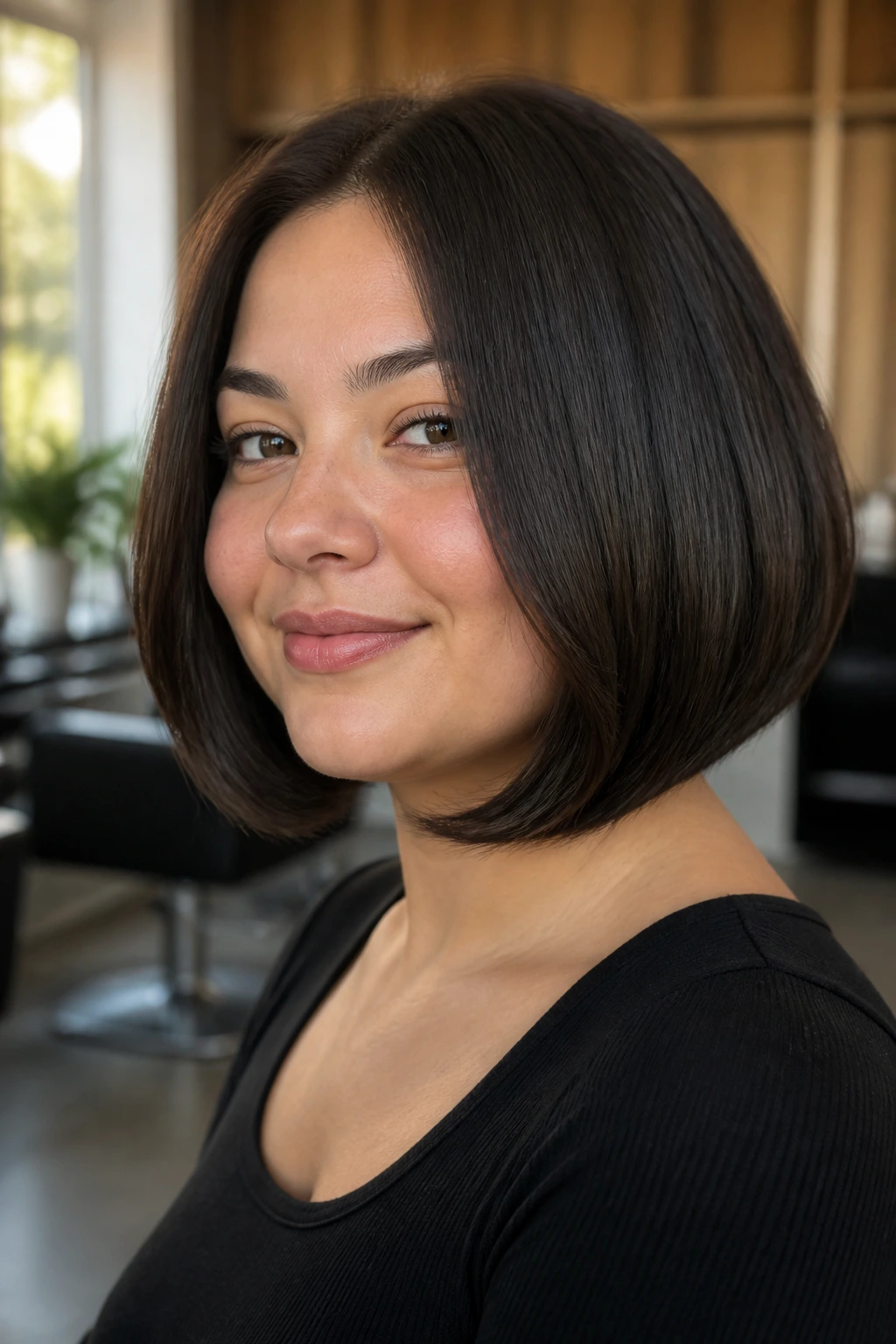
Heavy density needs direction, not just removal. A rounded-under lob uses thick hair’s own weight to curve the ends inward so the outline feels tucked and controlled. For round faces, that inward bend matters because it keeps the sides close to the head instead of adding width.
This is one of the most practical cuts on the list if your hair is coarse and stubborn. The weight at the bottom helps it sit properly, and the round-under finish stops it from flaring out at the collarbones. You can do this with a round brush blowout or with a flat iron by nudging the ends under at the very last inch.
The cut is clean, but not severe. That balance is useful. Too much bluntness can look heavy; too much texture can look frizzy. A rounded-under finish sits in the middle.
I’d choose this for hair that feels too big when left straight and too flat when over-layered. It gives the hair a shape it can actually hold.
19. The Sharp-Edge Lob with a Barely There Angle
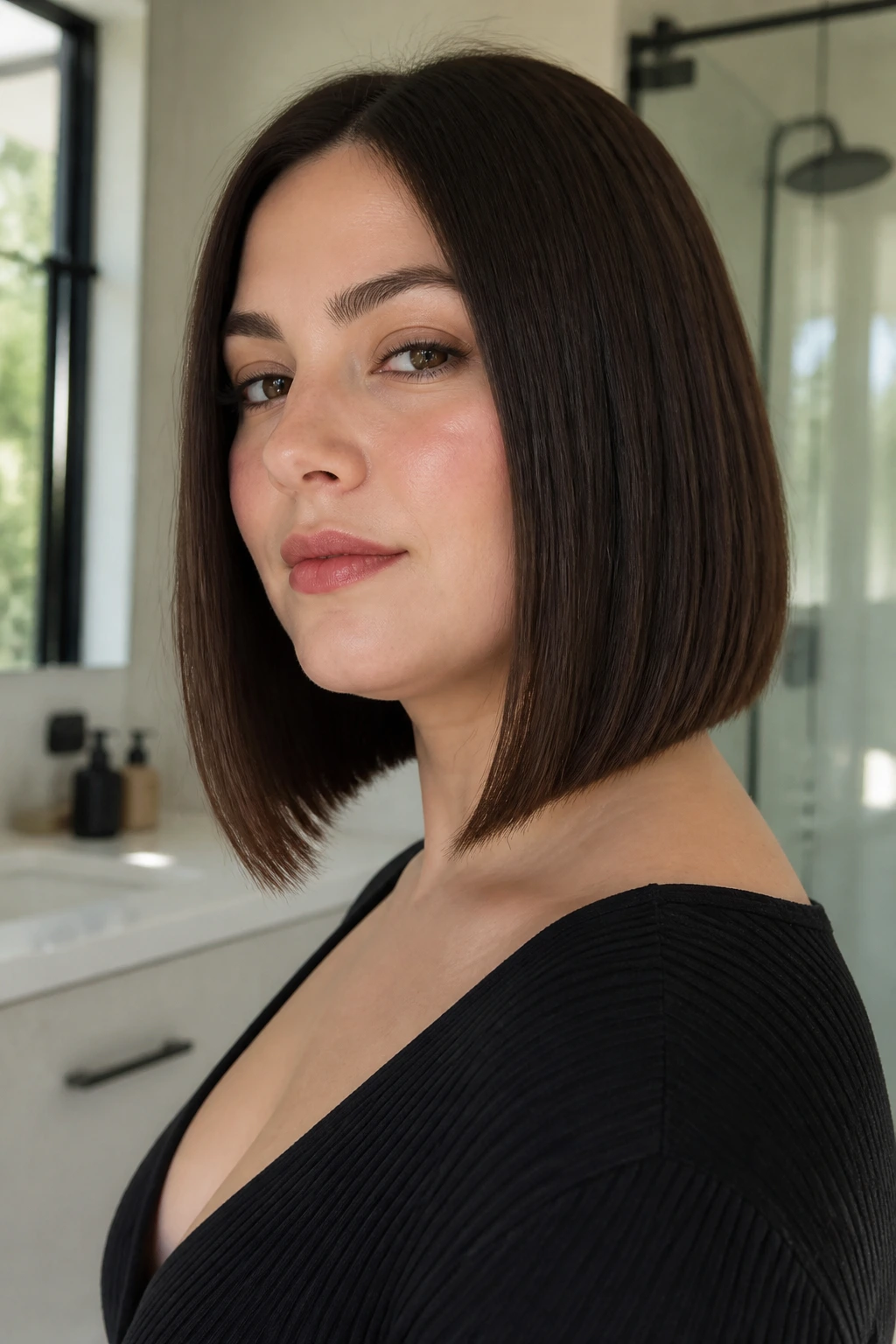
This is for someone who likes a crisp line and doesn’t mind a haircut that looks a touch architectural. The edge is blunt, but the front is just a fraction longer than the back. That tiny angle keeps the face from looking wide without turning the lob into a full-on angled cut.
A round face benefits from the straight, narrow line through the sides. Thick hair benefits from the blunt edge because it prevents the bottom from looking frayed or separated. The barely there angle is what makes the cut feel modern without turning obvious.
It’s also a good option if you wear your hair pin-straight most of the time. The line shows best when the surface is smooth and the ends are clear. If you want an easy air-dry style, this is probably not your cut. If you like a polished finish, it earns its keep.
20. The Straight Lob with a Piecey Money Piece
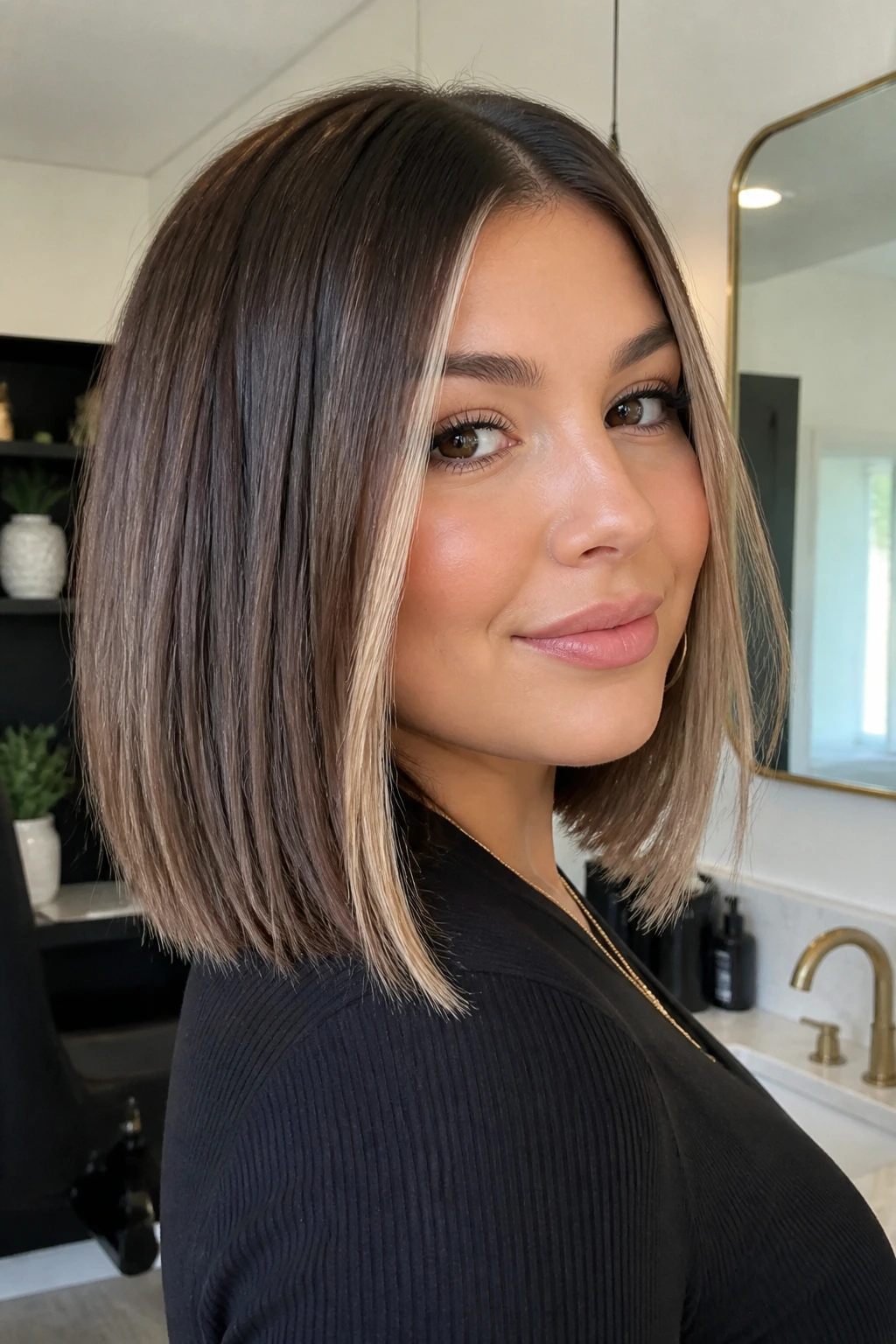
A bright money piece or a lighter front section can change how a lob reads on the face. The eye goes straight to the front, which distracts from width at the cheeks and adds a vertical pull. On thick hair, this works best when the highlight placement is kept narrow and the rest of the cut stays clean.
The pieces around the face should still be straight and controlled. You want dimension, not a ring of fluffy brightness around the cheeks. Keep the lightest strands a little lower than the cheekbone if you want the face to look longer.
This style gives you the most visual movement without changing the haircut itself much. That’s useful if you already have a lob you love but want a sharper frame. It’s also one of the easiest ways to make thick, straight hair look intentional on a busy day.
I’d call this the “small change, big effect” option.
21. The No-Layer Lob with a Strong Middle Part
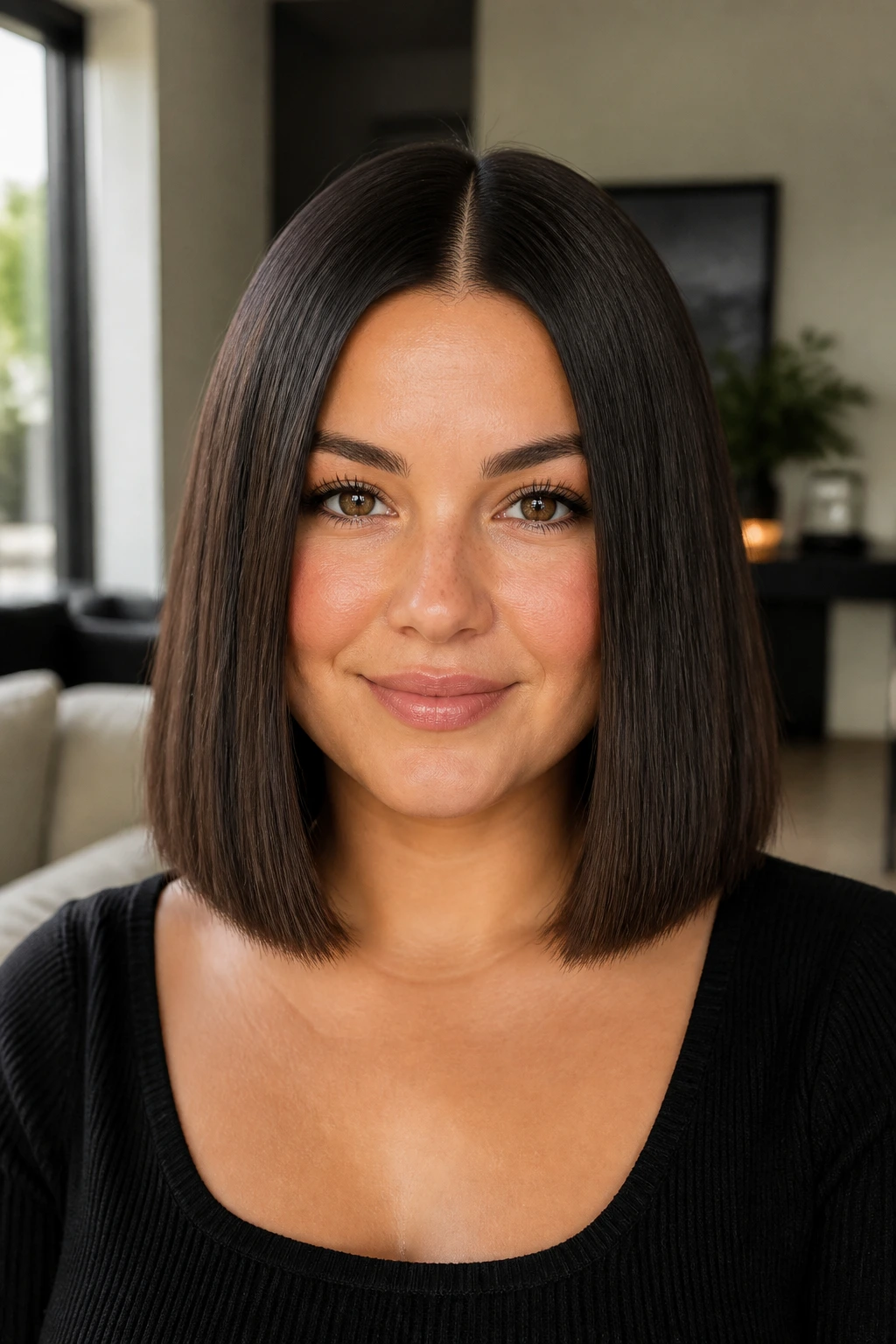
There’s a lot to be said for leaving thick hair alone, but leaving it alone properly. A no-layer lob with a middle part gives the hair a solid outline and keeps the density visible all the way through. On a round face, the center part helps extend the face, while the blunt bottom prevents the shape from turning mushy.
This cut does ask one thing in return: the ends need to be cut with precision. If the line is sloppy, the whole shape looks thick in the wrong way. If the line is clean, the result is sleek and grounded.
I like this cut for coarse hair that already has enough natural lift at the root. It doesn’t need help from layers. It needs restraint. And maybe a good serum.
The best part is how stable it looks. Even when the hair grows a little, the shape holds.
22. The Softly Graduated Lob for Grow-Out Ease
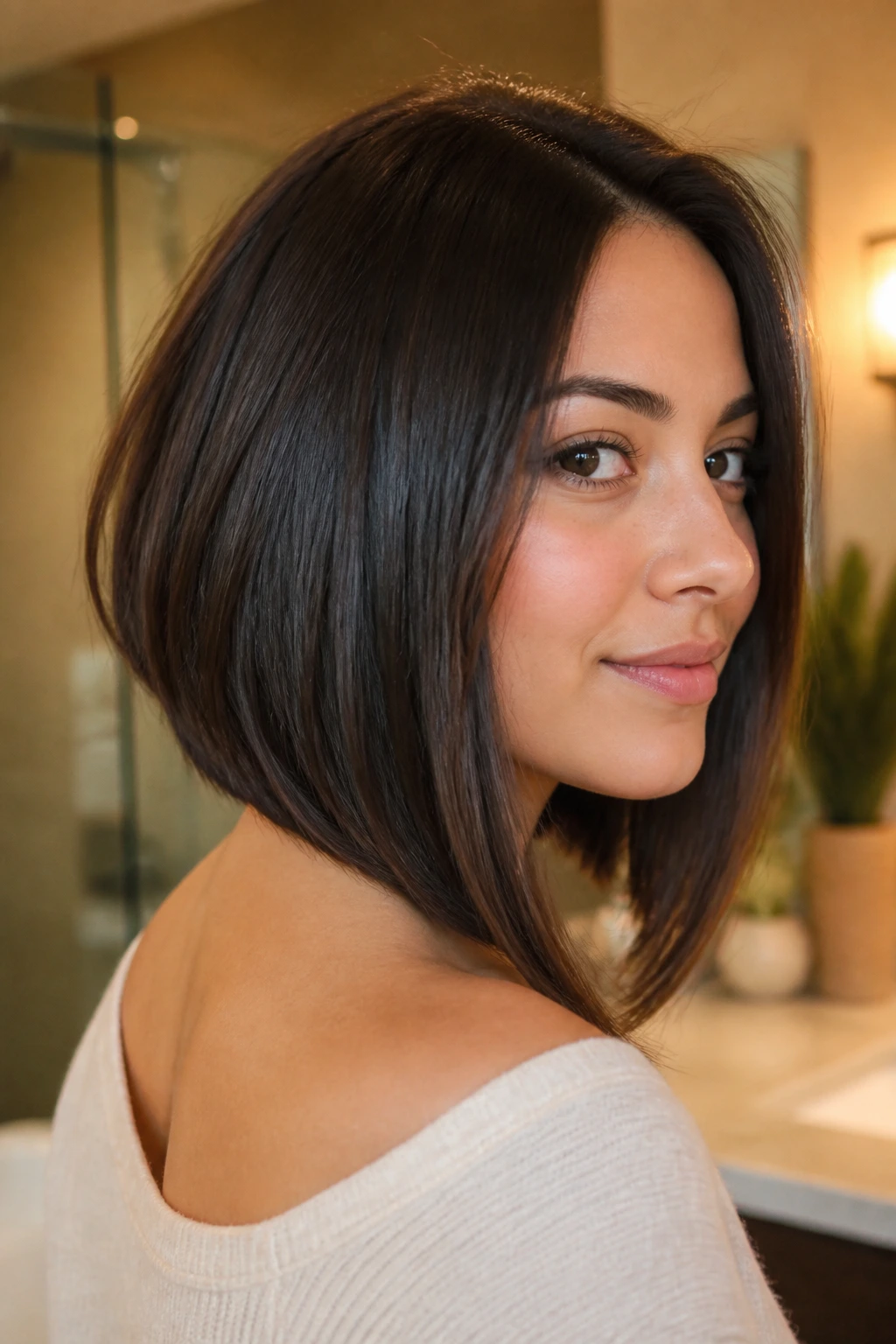
A softly graduated lob is the most forgiving version if you don’t want to think about trims every six weeks. The back has just enough graduation to keep the hair from collapsing, while the front stays long enough to flatter a round face. Thick hair likes this because the cut keeps some structure at the nape without building a heavy shelf.
The graduation should be subtle. Not stacked. Not obvious. Just enough to help the back sit neatly and the front fall forward in a longer line. That makes the lob easier to wear on good hair days and less annoying on the rest.
This one is useful if you know your haircut will need to survive a long grow-out. It keeps shape longer than a pure blunt cut and still reads as straight and polished. If you like getting your hair done and then ignoring it for a while, this is a sane choice.
What Makes a Straight Lob Behave Better Than Longer Hair

The short answer? Weight. Thick hair has a lot of it, and a lob gives that weight somewhere to sit without dragging the whole style down your back. Once the length gets too long, the ends start competing with the roots. You get bulk at the bottom, flatness at the crown, and a silhouette that looks more heavy than sleek.
A straight lob solves that by trimming the excess length while keeping enough heft to hold shape. That’s especially useful for round faces. Long, heavy hair can hang straight down and still widen the face if the front sections are cut wrong. A collarbone-length lob creates a cleaner frame around the jaw and gives the stylist a better chance to place the line where it helps rather than hurts.
The best part is how much control you get back. You can straighten a lob in fewer passes. You can tuck it. You can part it off-center without fighting a ton of hair. And because thick hair has natural body, the cut still looks full even when it’s kept sleek. That’s the sweet spot: controlled, not flimsy.
Tools That Make Styling These Cuts Easier
-
1.25-inch flat iron: Small enough to work through thick sections without leaving dents, and large enough to smooth a lob in a handful of passes.
-
Heat protectant spray or cream: Use one with a light, slippery feel so the iron glides instead of snagging on coarse ends.
-
Blow-dryer with a nozzle attachment: The nozzle helps direct airflow downward, which keeps the cut smooth and stops the ends from puffing out.
-
Sectioning clips: Thick hair moves better in neat sections. Four clips is enough for a lob, and more if your hair is extra dense.
-
Tail comb: Handy for clean parts and for making the front sections symmetrical when you want a precise center line.
-
Paddle brush or smoothing brush: Good for rough drying and guiding the hair straight before you flat iron.
-
Lightweight serum: A half-pump through the ends can calm frizz without making the cut limp. Go easy.
-
Root-lift spray: Useful only at the crown. Don’t spray it all over or the lob will lose its clean shape.
-
Microfiber towel or soft T-shirt: Cuts down on roughing up the cuticle after washing, which helps thick hair smooth faster.
What to Tell Your Stylist Before the First Snip
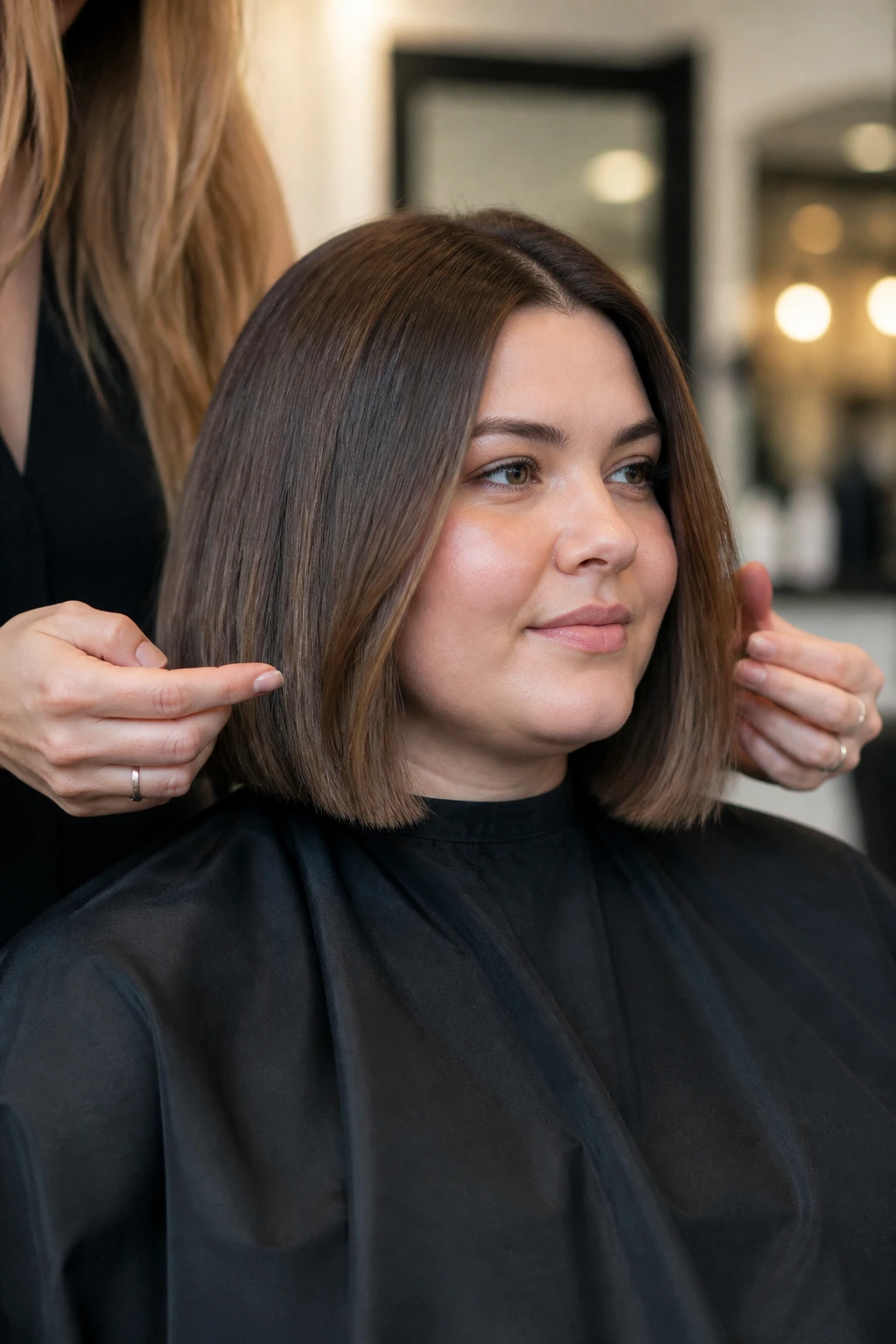
The words “lob” and “shorter” are not enough. They’re a starting point, not a haircut brief. Bring the conversation down to where the hair hits your face. Tell your stylist whether you want the front to land below the cheekbone, at the collarbone, or closer to the shoulder. That one detail changes the whole result.
Say whether you want the perimeter blunt, slightly angled, or softly beveled. Thick hair can handle a blunt edge better than most textures, but it still needs some internal weight control if it tends to explode outward. Ask for that directly. “Keep the outside line clean, but take weight out from underneath” is a very normal thing to say in a good salon.
Round faces usually benefit from either a center or off-center part, plus front pieces that fall below the widest part of the cheeks. If you want layers, keep them long and quiet. Short layers at the chin are the fastest way to make a round face look broader and thick hair look messy.
Bring photos, but not just one. Bring two or three with the same length and different finishes. That helps your stylist see whether you want polished, soft, or sharp. I’d also mention how often you actually style your hair. If you don’t reach for a flat iron often, don’t let anyone sell you a cut that only works with a full blowout.
How to Style It So It Stays Sleek, Not Flat

Start with hair that’s about 80 to 90 percent dry. Soaking wet thick hair takes forever to smooth, and blasting it dry first usually creates frizz. Use a nozzle on the dryer and brush the hair downward as you work. That alone makes a big difference.
For a straight lob, the flat iron should do less work than people think. Smooth each section once, maybe twice if the hair is coarse, and keep the plates moving. If you pause too long, the ends start to bend in weird ways and the whole line loses its clean edge. A 1.25-inch iron is the sweet spot for most lobs because it can still get close to the roots without making the ends too curled.
Parting choice: A center part gives the most length through the face. A soft off-center part is easier if your hair falls flat at the crown. Deep side parts are the strongest move when you want to break up roundness fast.
Finish: Put a tiny bit of serum on your palms, rub it until warm, then press it onto the midlengths and ends. Do not drag product through the roots unless you want the cut to collapse.
Volume control: If the crown goes flat, lift the section at the root with a round brush while blow-drying. That little bit of height keeps the lob from looking too helmet-like.
Small Tweaks That Change the Whole Finish
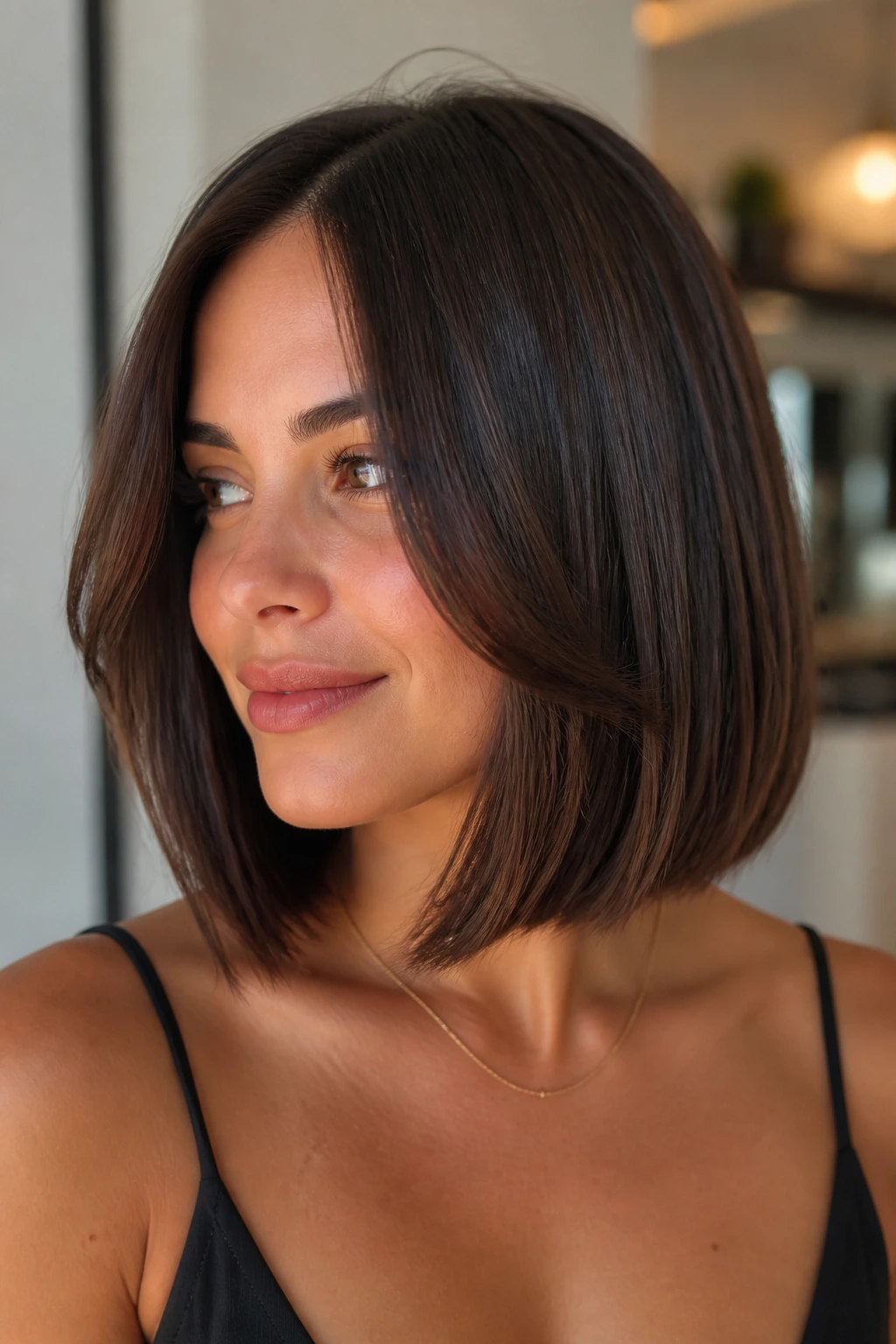
Flavor Enhancement: A drop of shine oil mixed with your leave-in cream can make thick hair look smoother through the ends, especially on blunt cuts. Use barely enough to coat your fingertips.
Customization: If you like movement, ask for a hidden bevel instead of visible layers. If you like structure, keep the perimeter blunt and let the front pieces do the softening.
Serving Suggestions: Tuck one side behind the ear, clip the front with a minimalist barrette, or leave a single face-framing piece loose. Those tiny choices change how wide the face reads.
Make-It-Yours: For low-maintenance wearers, choose a collarbone lob with minimal layering. For heat-styling fans, a sharper blunt edge or glassy finish gives more payoff because the cut responds cleanly to smoothing.
One more thing. Thick hair tends to look best when the ends are clean and the surface is calm. Skip the urge to pile on texture spray everywhere. A little bit of control is more flattering here than a lot of “piecey” chaos.
Trim Timing, Wash-Day Habits, and Grow-Out
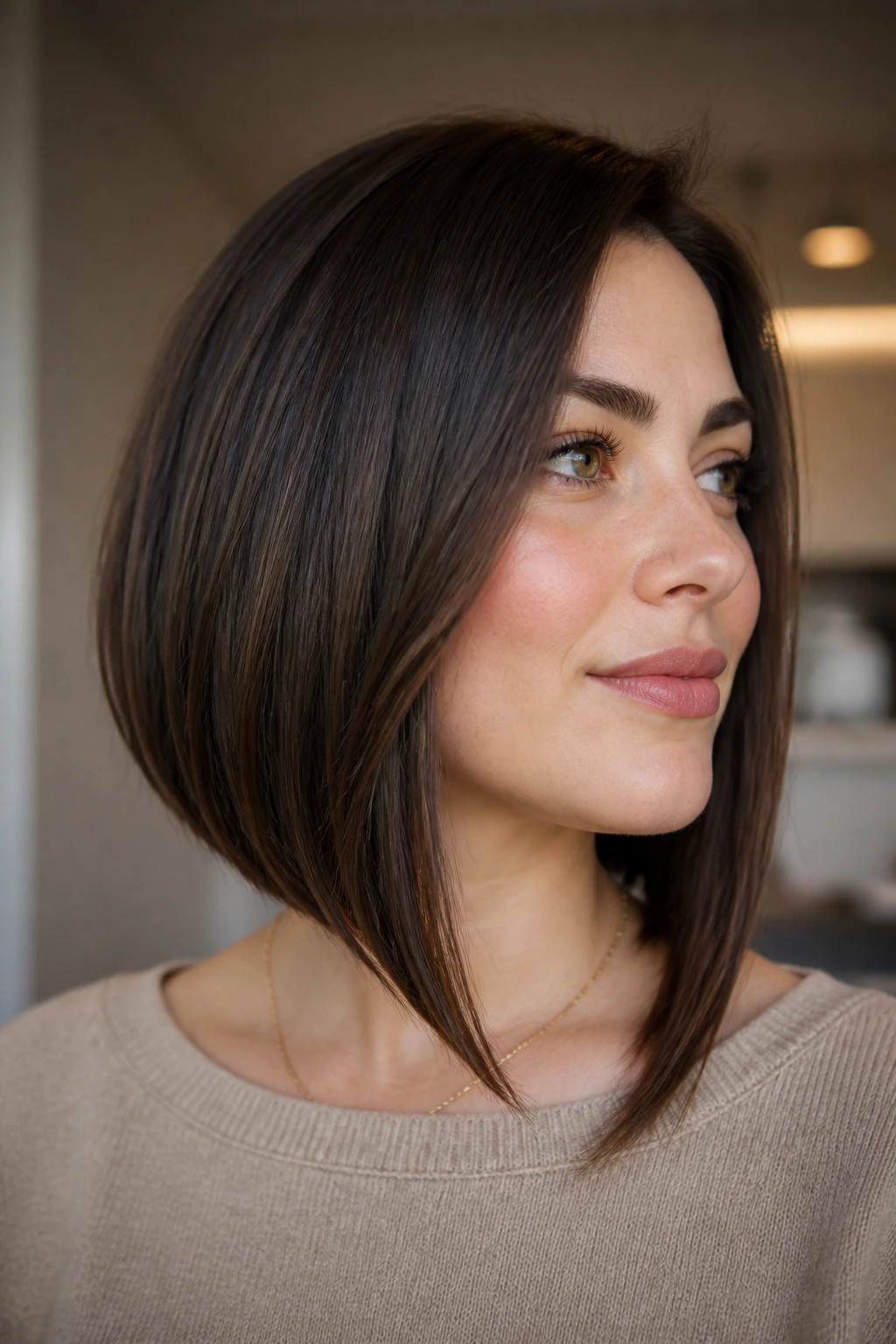
A straight lob on thick hair usually needs a trim every 8 to 10 weeks if you want to keep the line crisp. If you don’t mind a softer edge, you can stretch that a bit longer, but the silhouette will start to widen at the ends. That’s the first sign the cut wants attention.
Wash-day habits matter more than people admit. Conditioner should stay from midlengths down, not packed into the roots, or the crown goes flat and the lob loses shape. If your hair is coarse, a weekly mask can help the ends stay smooth enough to straighten without extra heat. If it’s heavy but not dry, a lighter conditioner is usually better.
Air-drying thick hair into a straight lob can work, but only if the cut is forgiving. A softly graduated lob or a blunt collarbone cut is easier to air-dry than a sharp angled style. If you want glassy results, rough-dry first, then smooth. Going straight from soaking wet to flat iron is a fast route to puff and frizz.
Grow-out is where this haircut earns trust. It doesn’t turn useless after three weeks. The line softens, the front gets a little longer, and you still have shape. That’s one reason I keep coming back to lob lengths for thick hair: they age better than shorter bobs and need less emotional support than longer cuts.
Common Mistakes That Make a Lob Look Wider

Cutting it too high at the jawline: That’s the fastest way to make a round face look broader. If the shortest pieces sit right at the cheek or jaw, they widen the face instead of lengthening it. Push the length lower.
Over-layering thick hair: People hear “remove bulk” and think layers. Then the lob turns into a stack of flippy pieces with no line. Ask for internal weight removal and keep the outside clean.
Using too much round-brush volume at the sides: Big side volume can make the face read wider, especially on a round shape. If you want lift, keep it at the crown, not the cheeks.
Flat ironing the ends into a hard flip: The tiniest bend is fine. A pronounced kick out at the bottom makes thick hair look wider and less controlled. Keep the finish straight or only slightly curved in.
Ignoring the part: A center part isn’t required, but a part that sits exactly where the hair wants to fall can still widen the face. Shift it a half inch and see what happens. Tiny changes matter more than people think.
Thinning the ends too aggressively: Thinning shears can make thick hair frizzier at the perimeter and leave the cut looking see-through in the wrong places. You want managed weight, not shredded ends.
Variations and Adaptations to Try

The Glassy Office Lob: This version keeps the line blunt, the finish polished, and the part clean. It works when you want the haircut to look sharp in low light and under fluorescent office lights that show every uneven strand. Use a smoothing cream, then one pass with a flat iron.
The Soft-Flip Lob: Keep the cut straight, then bend only the last half-inch of the ends inward. It softens the look without adding real curl, and it’s useful if your hair flips out naturally at the shoulders.
The Curtain-Frame Lob: Add longer curtain bangs that start near the cheekbone and blend into the front. This keeps the face open while still giving you that little bit of face framing around the eyes.
The Cowlick-Friendly Lob: If your part never sits where you want it, choose a soft side part and a slightly longer front. The haircut works with the growth pattern instead of fighting it, which saves you from daily wrestling matches with a comb.
The Low-Heat Lob: For people who don’t want to flat iron every day, choose a softly beveled collarbone cut. It air-dries better and still looks deliberate after a light smoothing pass.
The Glass-and-Movement Lob: Keep the surface sleek but leave a little more length in the front pieces. The contrast makes thick hair look expensive in the simple sense: controlled, shiny, and not overworked.
Questions People Ask Before They Book
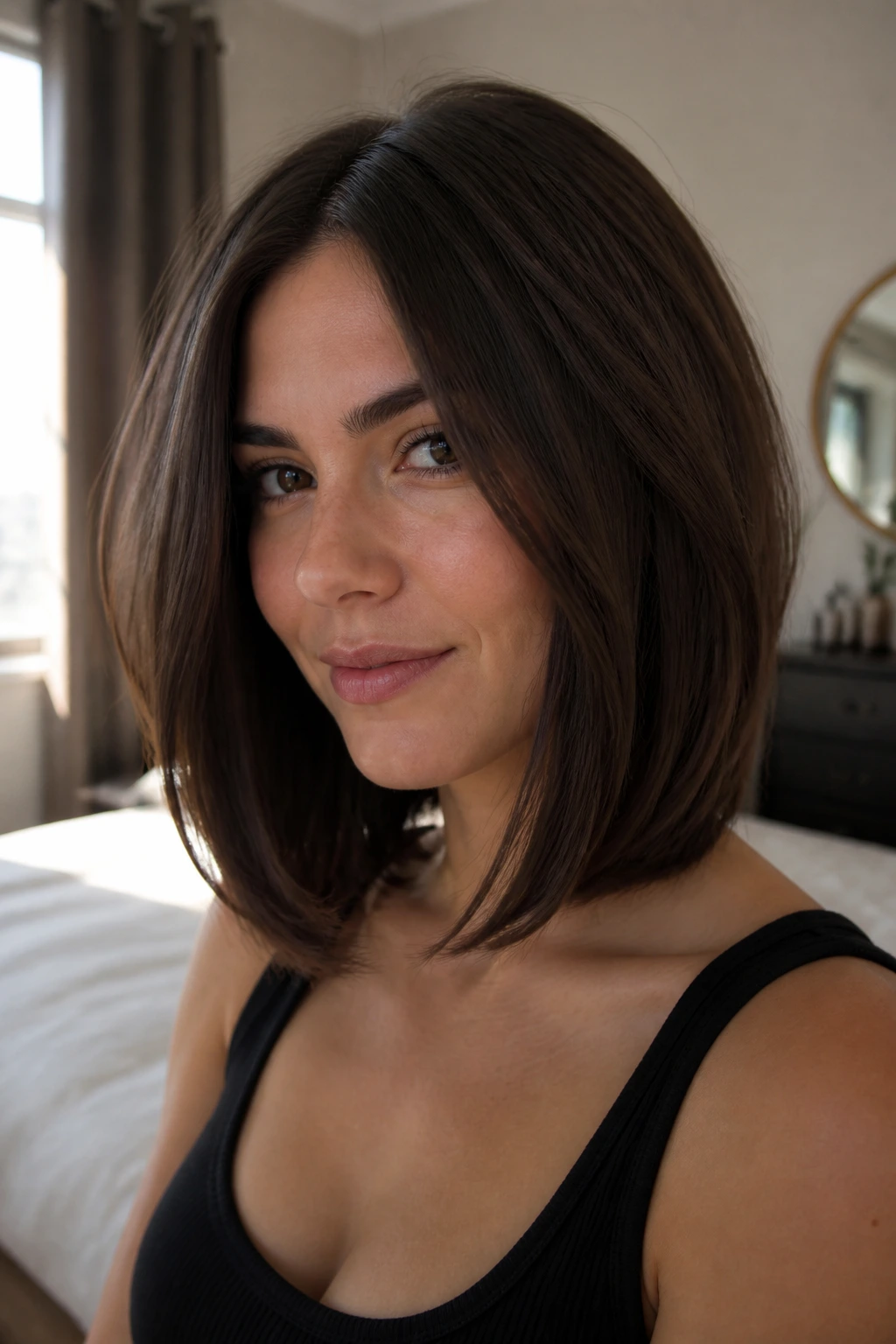
Will a straight lob make a round face look wider?
Not if the length is placed well. The problem is usually a lob that stops at the jaw or has too much side volume. Once the front falls below the cheekbone and the bottom stays clean, the cut tends to narrow the face instead of widening it.
How short can thick hair go before it starts puffing out?
For most thick textures, just below the jaw is safer than right at it. Collarbone length is even easier to manage. Shorter than that can work, but only if the styling and weight removal are handled carefully.
Do I need layers in a lob if my hair is thick?
Not always. Some thick hair behaves better with a blunt perimeter and only hidden internal shaping. If your hair already has movement, too many layers can make it spread out at the sides.
Is a middle part the only good choice for a round face?
No. A middle part stretches the face, but an off-center or deep side part can work just as well, especially if the front pieces are long enough to fall below the widest part of the cheeks.
What if my hair flips out at the ends?
Ask for a softer bevel or a rounded-under finish. Then smooth the last inch with a blow-dryer brush or flat iron. If the ends still kick out, the cut may be landing too high on the shoulders.
Can I wear a lob like this without heat styling every day?
Yes, if the cut is soft and the length is right. A slightly graduated or collarbone-length lob can air-dry neatly with a little leave-in and serum. A glassy blunt lob asks for more styling.
Should I bring photos to the salon?
Absolutely. Bring photos of the same length in different finishes — sleek, side-parted, tucked, and softly beveled. That helps a stylist see the shape you want instead of guessing from one image.
How often should I trim a straight lob on thick hair?
Every 8 to 10 weeks keeps the line crisp. If you like a softer grow-out and don’t mind a less exact edge, you can stretch a little longer, but the ends will start to widen.
The Cut That Keeps Its Line
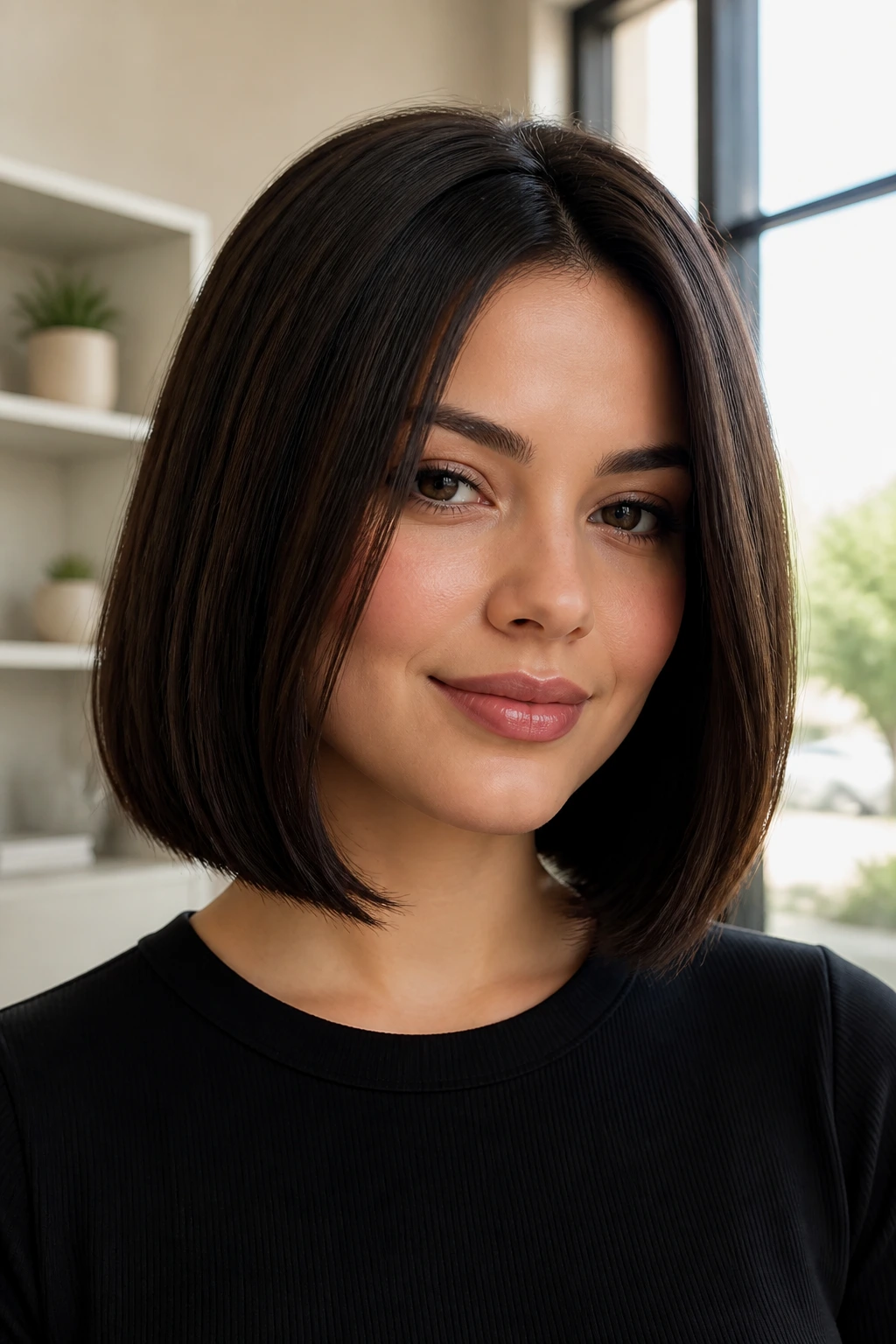
A good straight lob on thick hair and a round face doesn’t fight your hair’s density. It uses it. That’s why the best versions feel calm instead of fussy: the line is clean, the length sits in the right place, and the face gets a little more shape without looking over-styled.
The cuts above aren’t all the same, and they shouldn’t be. Some are blunt and polished, some are softly beveled, and some lean on parting tricks or front pieces to do the face-shaping work. But they all share the same basic promise: keep the outline controlled, keep the front below the widest part of the cheeks, and let thick hair look deliberate instead of oversized.
Pick the version that matches how you actually wear your hair. That’s the one you’ll keep liking after the salon mirror stops being flattering and real life starts.