



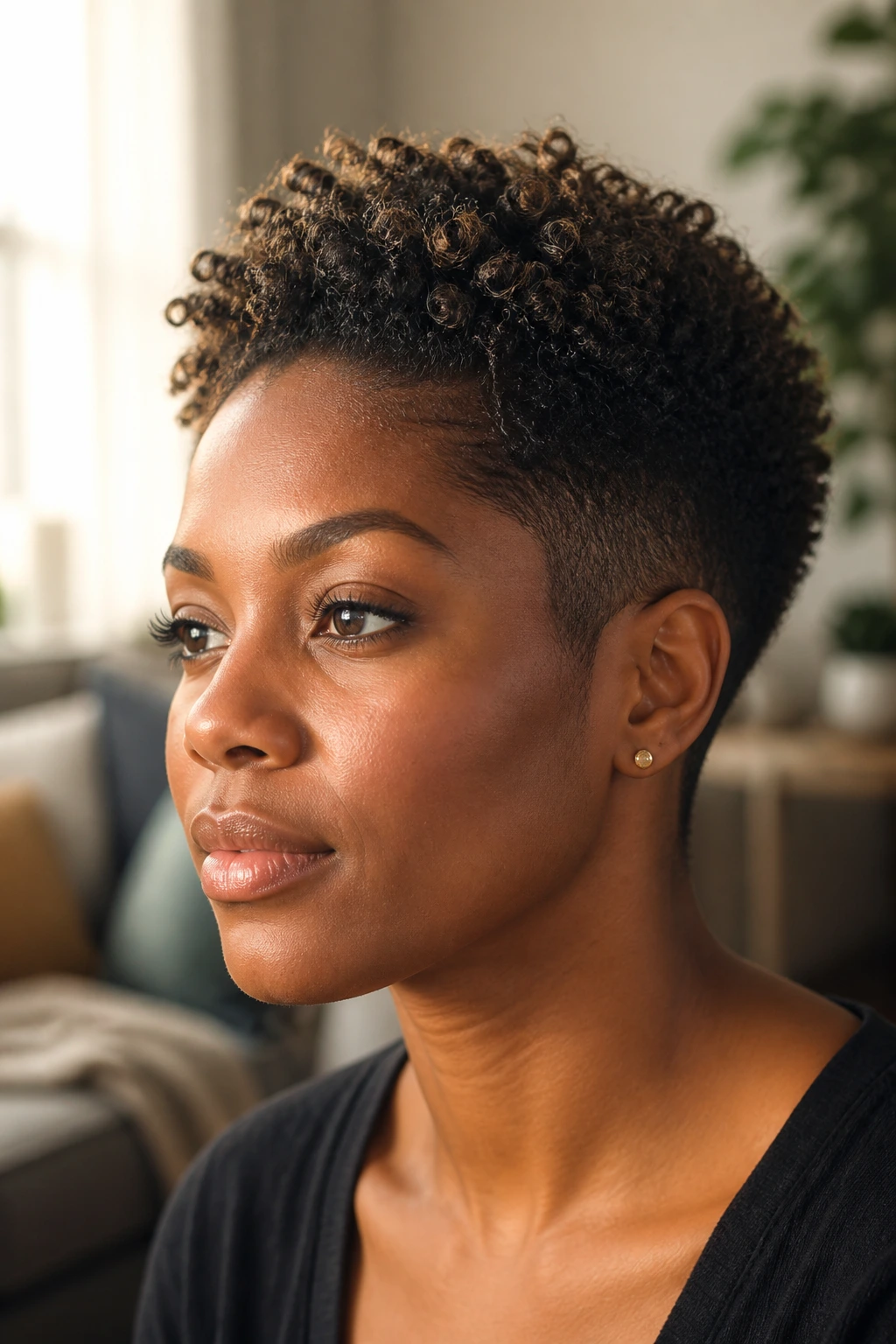
A two-block haircut can do something fine Black hair often needs and too many cuts ignore: it gives the crown room to look fuller while the sides stay clean and light. The shape is the point. When the top is left with enough length to bend, coil, or sweep, and the back and sides are clipped down with a soft taper, the hair stops fighting itself.
Fine hair on Black women is its own thing. The strands may be delicate, the density may be high, the shrinkage may be dramatic, and the wrong cut can make all of that look even more obvious. That is why blunt weight, careful layering, and a smart disconnect matter more here than flashy clipper work. A two-block cut can look airy and sharp at the same time — if the top is protected from over-thinning.
Some versions lean polished. Others look better a little wild, with a fluffy crown, a curved fringe, or a nape that sits close to the neck. The 25 cuts below are not copies of the same idea with different names. Each one solves a different shape problem: narrow temples, flat crowns, shrinkage, grow-out, or the simple wish to stop spending half an hour coaxing hair into place.
Why These Two-Block Haircuts Work on Fine Hair
-
Crown Lift: Keeping length on top lets the eye land on the fullest part of the head, which makes fine strands look denser without needing a mountain of product.
-
Less Side Weight: Cleaning up the nape, temples, and lower sides stops the outline from ballooning into a triangle, which is where fine hair can look limp or patchy.
-
Shrinkage Room: Black hair can shrink hard, so a two-block shape gives the top enough real length to survive that shrinkage and still read as a hairstyle, not a buzzed blur.
-
Better Grow-Out: The sides can grow out softly while the top keeps doing the work, which buys you more time between cleanups than a uniform crop ever will.
-
Texture Flexibility: The same cut can sit under a silk press, a twist-out, a wash-and-go, or a stretched blowout, as long as the top length matches how you actually wear it.
Fine hair gets misunderstood all the time. People hear “fine” and picture something sparse, but that is not always the case with Black hair at all. Strand width and density are separate things, and the cut should respect that difference. A head of fine, dense coils needs a shape that removes bulk in the right places, not a heavy-handed thinning that leaves the ends see-through.
The other big win is contrast. A one-length crop can flatten out fast, especially if the hair lies close to the head on day one and even closer by day three. Two-block haircuts create visible contrast between top and sides, and that contrast does half the styling for you. A good cut should look intentional before you touch a brush.
How to Ask for a Two-Block Cut That Fits Your Hairline
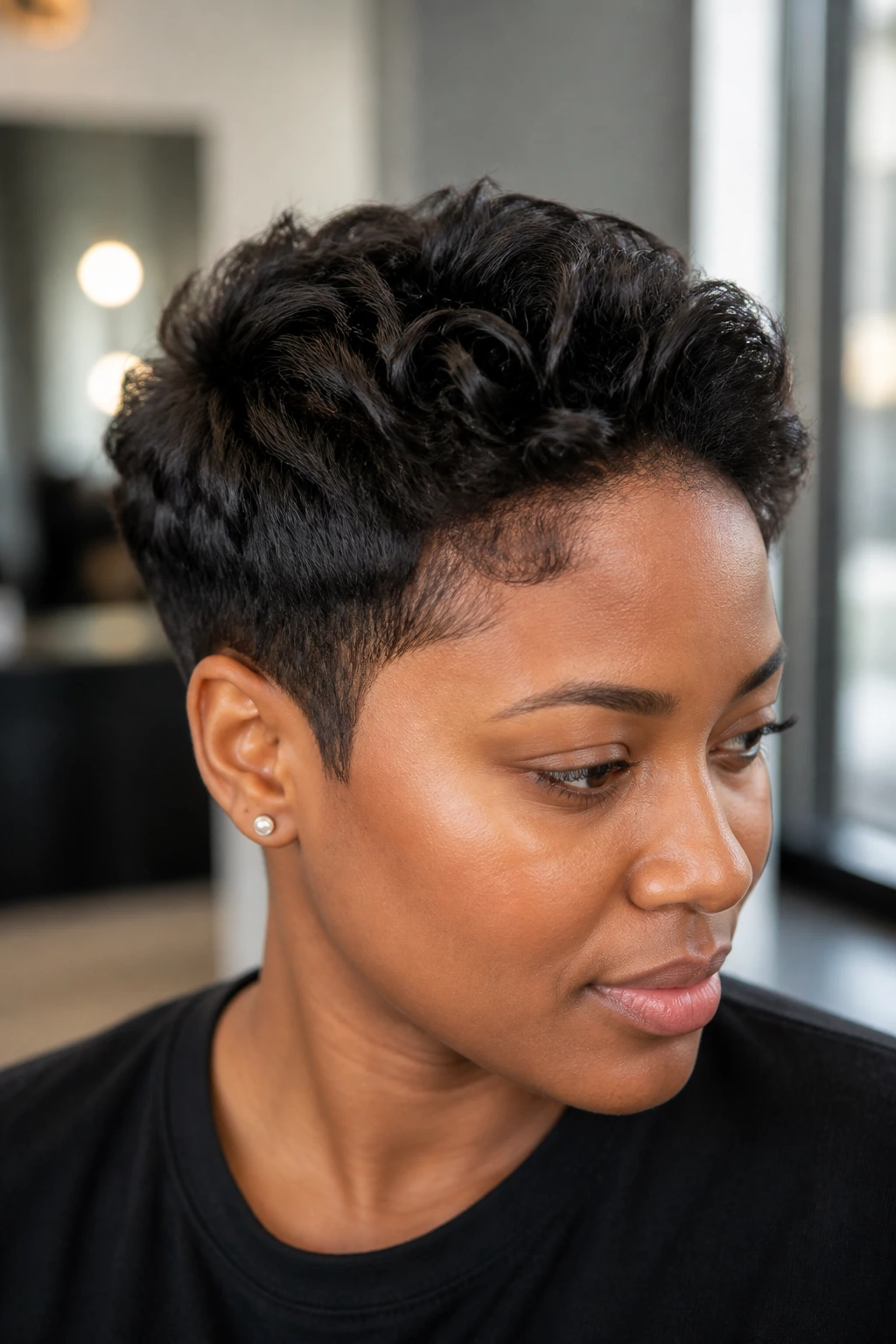
Bring more than one photo. One front shot is never enough for this shape, because the back and sides do a lot of the heavy lifting. You want to show your stylist the silhouette you want from the front, the amount of side exposure you can live with, and whether you want a soft taper or a sharper disconnect at the nape.
Say the length in plain terms. If you want the top to sit at 3 inches when stretched, say that. If you wear wash-and-gos and want enough room for shrinkage, say that too. Stylists can work with inches, finger widths, and finish style much more easily than with words like “short but not too short,” which usually means nothing after the cape goes on.
- Ask for the top to stay heavy enough to cover the scalp when it shrinks. That one sentence saves a lot of regret.
- Tell them whether you want a low taper, temple fade, or a deeper undercut. Those three things do not look the same once the hair is dry.
- Mention how you wear your hair most often. Pressed, blown out, natural, twist-outs, finger coils — the cut should fit your real life, not your best hair day.
- Be clear about your edges. If your temples are delicate, say you want softness there instead of a crisp line-up that eats the hairline.
A lot of bad two-block cuts happen because the stylist guesses the finish. Don’t let that happen. If you wear coils, the top should be cut with shrinkage in mind. If you wear a silk press often, the top needs a different length than if you never use heat. Same haircut, different math.
1. Soft Curved Two-Block Bob
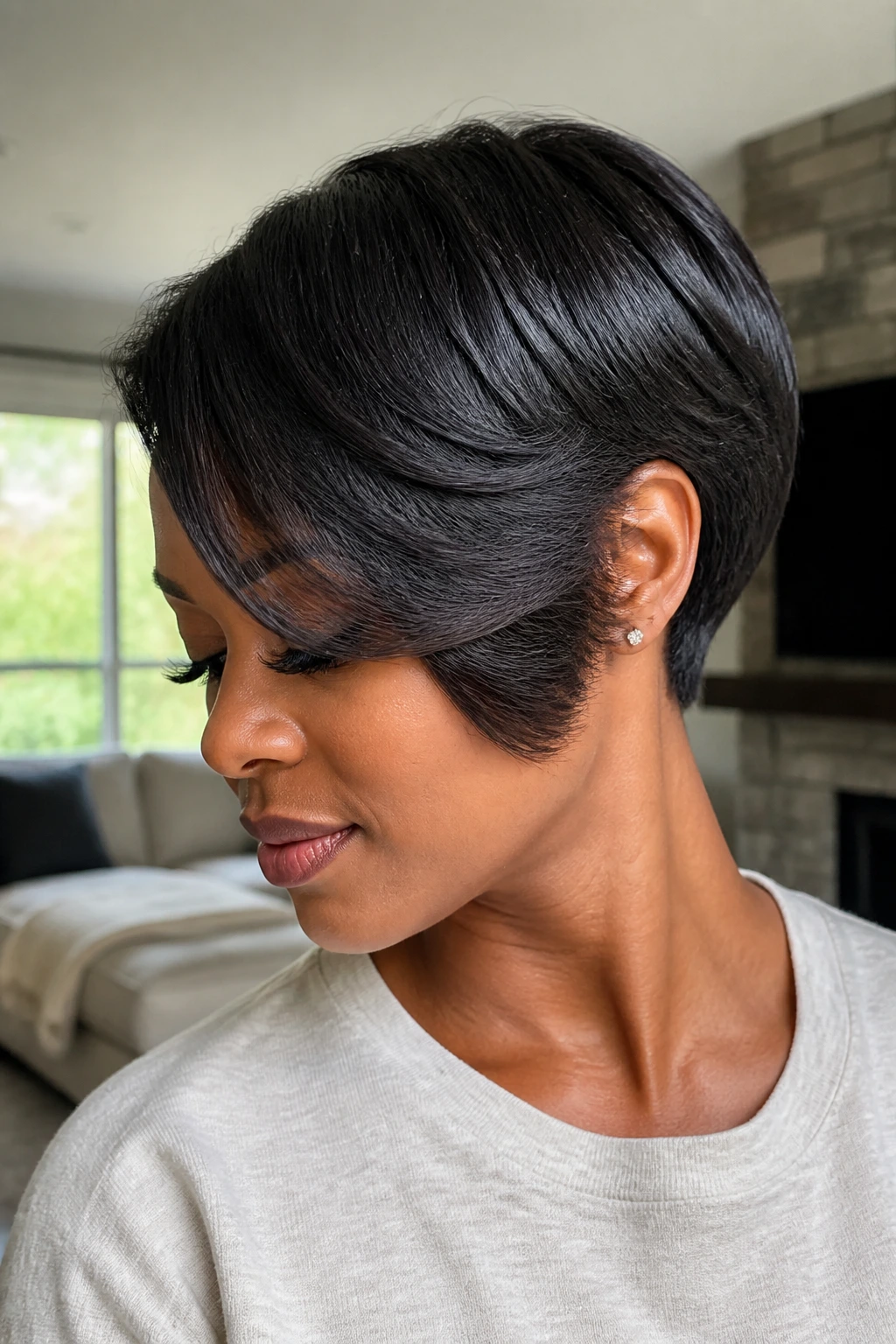
A soft curved bob gives fine hair a shape that reads fuller at once. The sides hug the head, the top bends gently around the cheekbones, and the bottom line stays clean enough to keep the style from looking stringy. I like this version when someone wants polish without stiffness. It feels neat, but not severe.
The trick is in the curve. Ask for the top to stay long enough to brush over the front plane, then let the nape taper down gradually instead of chopping it off hard. That keeps the silhouette round, which matters more than extra volume mousse ever will. A twist-out or roller set shows the curve best, but a wrapped blowout works too.
If your strands are fine but your density is decent, this is one of the safest first tries. The perimeter gives the style a clean outline, while the top holds enough length to move. No frizz cloud. No see-through ends.
2. Side-Swept Two-Block Pixie
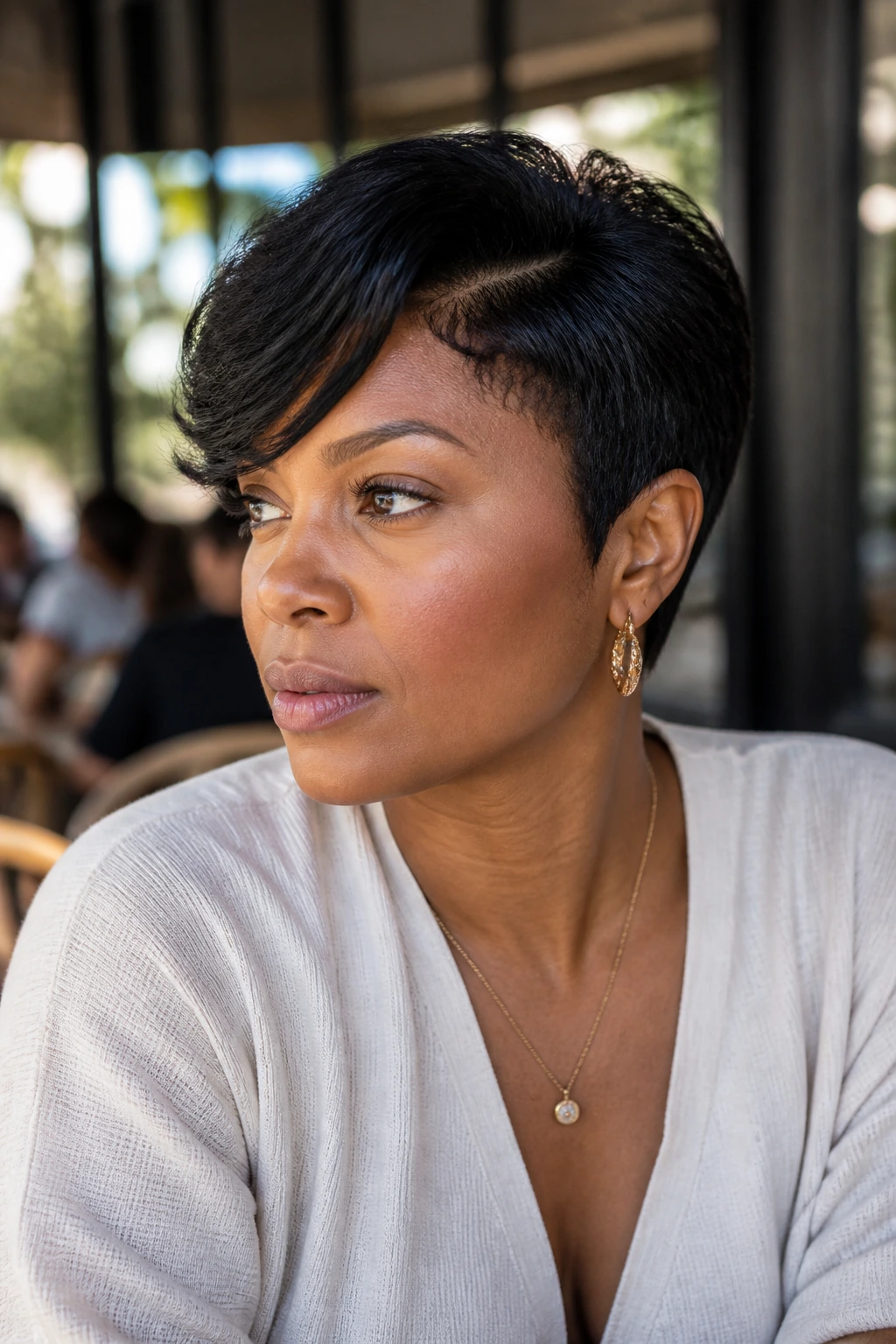
Why does a side-swept pixie do so much work on fine hair? Because the diagonal line pulls attention across the face instead of straight down the scalp, and that makes the hair look denser where it counts. The longer side also gives you a place to build lift without teasing the roots into a messy halo.
This cut works best when one side is naturally stronger or when your part always falls the same way anyway. Keep the top long enough to sweep over one eye or tuck behind the ear, and keep the sides clipped low enough that the sweep has contrast. A light foam on damp hair and a wrap at night are enough for most days.
I’d choose this over a blunt short crop if your crown tends to lie flat. The sweep gives you movement. The low sides give you structure. Together, they stop the cut from disappearing into the head.
3. Tapered Crown Two-Block Crop
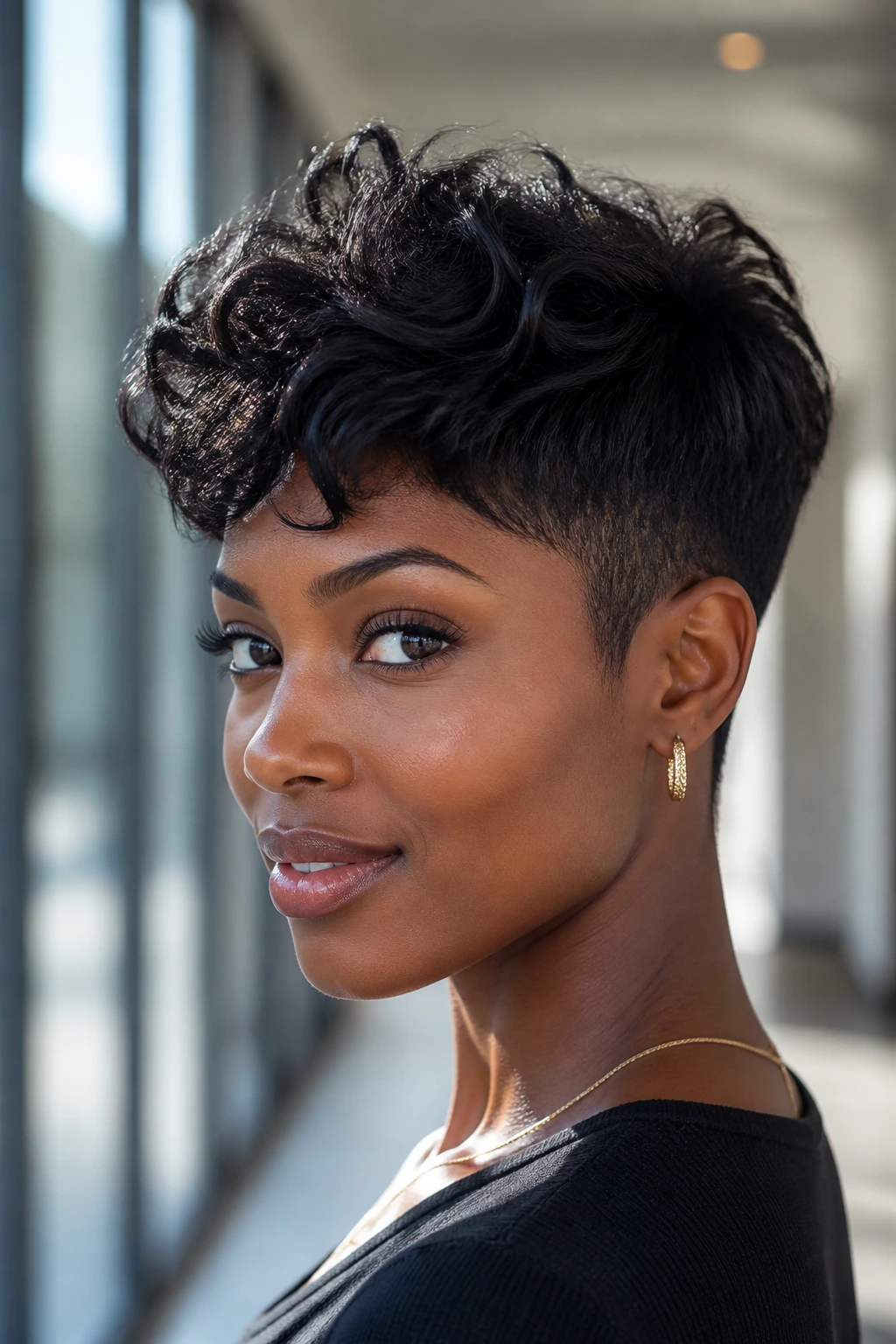
A tapered crown crop is the version I’d hand to someone whose fine hair needs lift more than length. The sides and nape stay low, while the crown keeps a little more height and a touch of layering so the shape can rise instead of collapsing. It is a small cut with a big silhouette.
The crown should not be shredded. That is where people get this wrong. Ask for enough internal shaping to let the top move, but keep the ends solid so the hair does not start looking wispy after the first wash. If your hair is coily, cutting it in its stretched state or lightly dry-cutting the crown helps keep the true length intact.
This one is especially good when the back of your head tends to sit flat. The tapered sides create a frame, and the crown does the visual lifting. A diffuser on low heat or a hood dryer with a setting lotion is usually enough to set it.
4. Curly Fringe Two-Block Cut
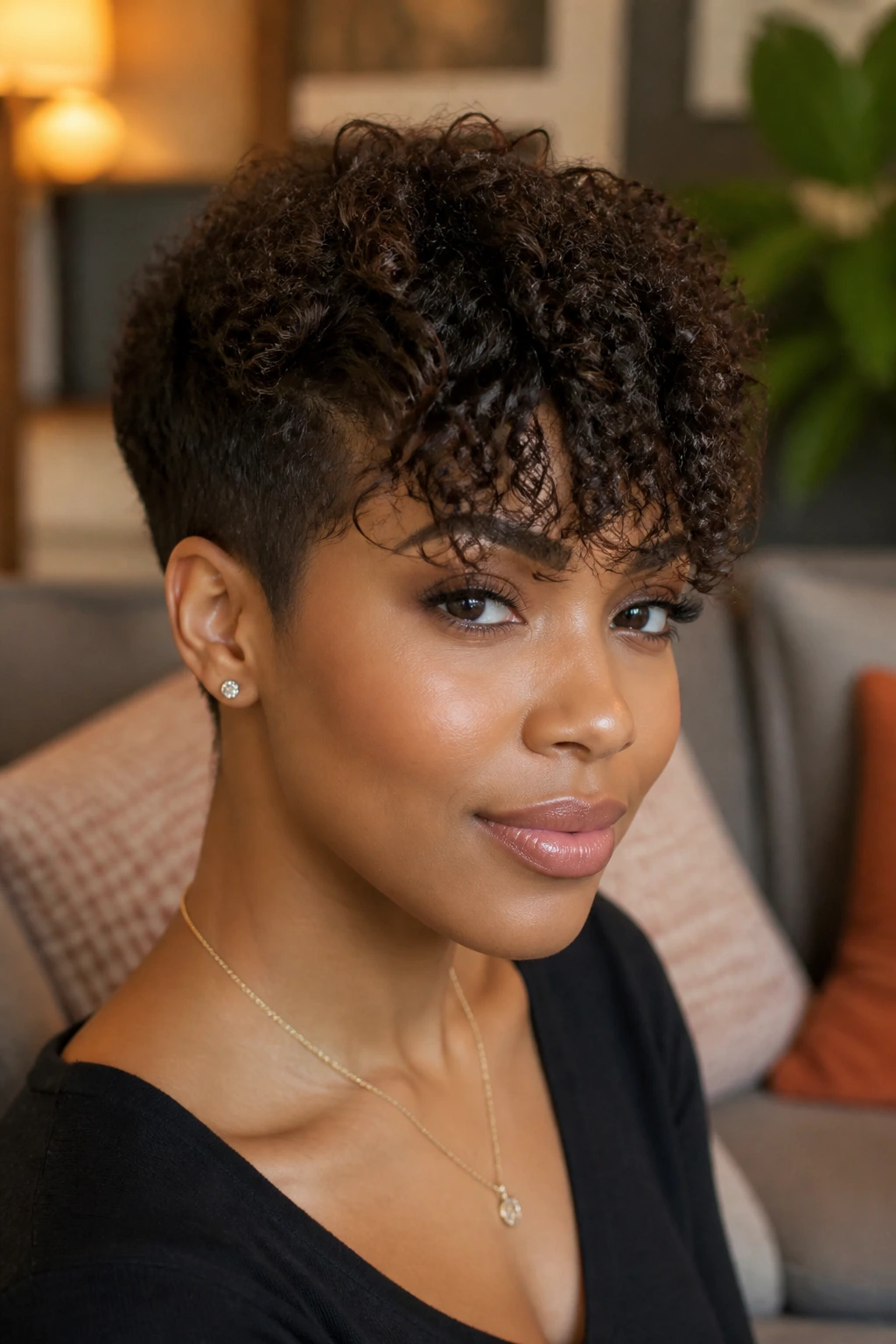
A curly fringe can save the whole front of the haircut. Fine hair around the forehead often needs help because it shrinks faster, frizzes faster, and can look sparse if it is cut too short. A fringe that sits a little longer than you think gives you breathing room when the curls dry.
Keep the front section soft, not chopped into tiny pieces. Tiny pieces pop up and expose scalp. A longer fringe can bend, curve, or split a little and still look intentional. This version is good if you want a frame around the eyes without committing to blunt bangs that fight your shrinkage.
I’d ask for this with the top cut to fall forward slightly, not straight up. That small angle helps the fringe settle instead of sticking out. A curl cream plus a light gel cast works better here than heavy butter, which can drag the front down and flatten the shape.
5. Rounded Wash-and-Go Two-Block
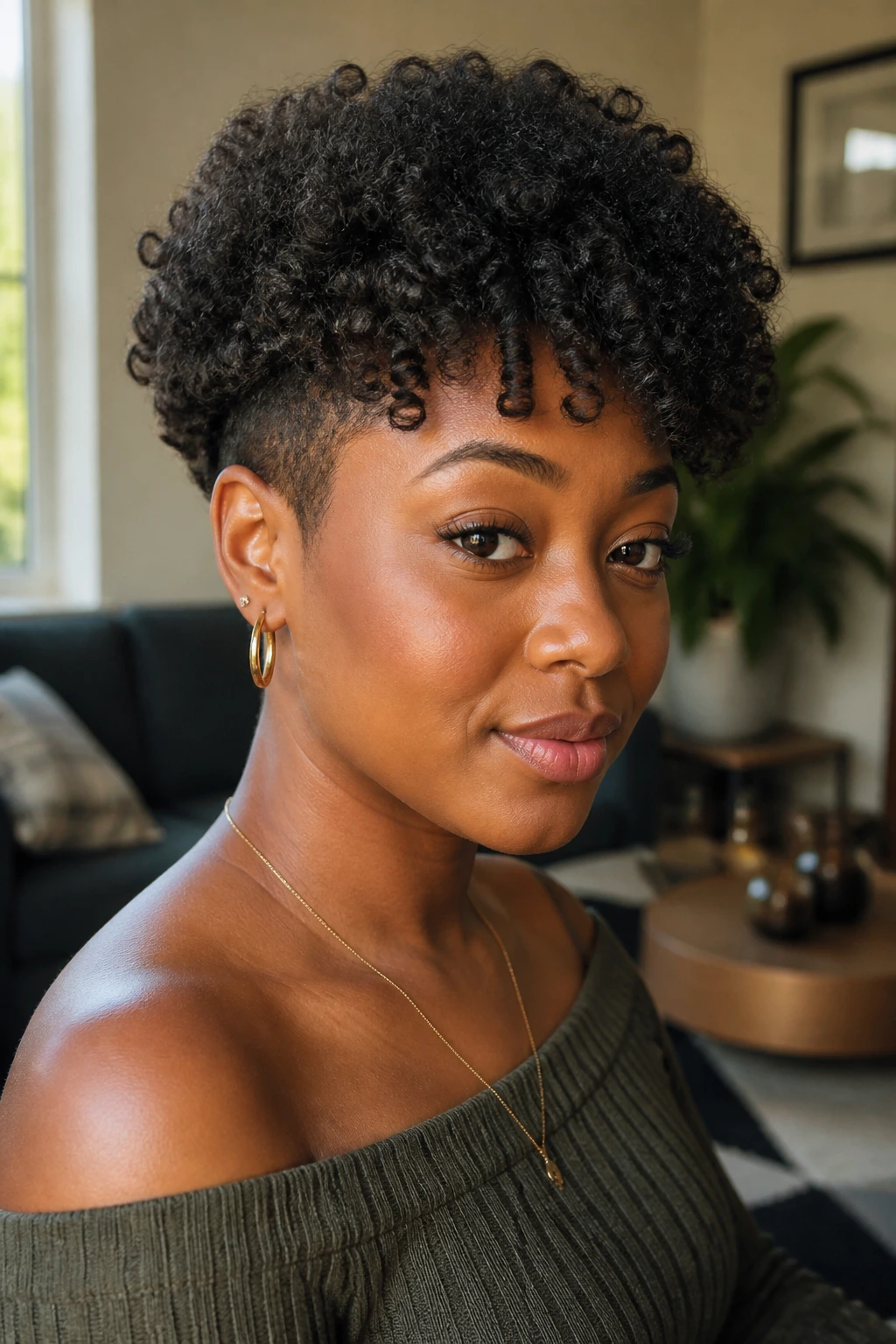
The rounded wash-and-go two-block is what happens when the haircut follows the coil pattern instead of fighting it. The top is shaped into a dome that holds the eye, while the sides and nape stay shorter so the outline doesn’t spread out into a wide box. On fine hair, that rounded center mass is the whole point.
This cut wants clean curl definition. It looks best when the coils are set with a foam, mousse, or a light gel that gives hold without coating the strands in grease. If your strands are fine, go easy on heavy creams; they can make the crown collapse by noon. A microfiber towel and a diffuser on low heat make the finish cleaner.
The best part is how little coaxing it needs on day two. Once the shape is cut well, you’re mostly maintaining the roundness. If you like a no-drama routine, this one has real staying power.
6. Asymmetrical Two-Block Shape
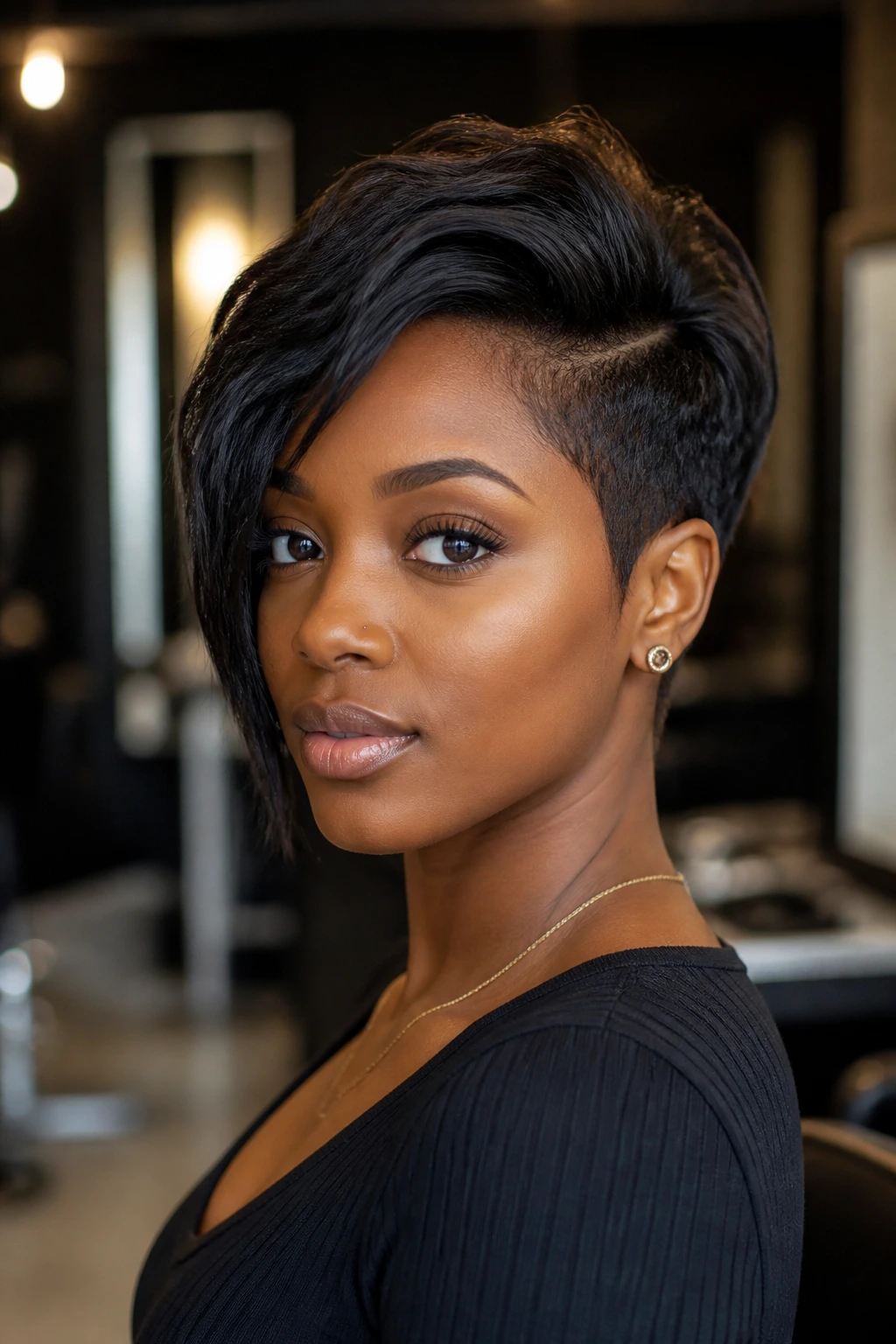
An asymmetrical cut gives fine hair movement even when the actual density is modest. One side stays slightly longer, the other side is clipped a bit closer, and that difference makes the whole shape feel deliberate instead of safe. It is the haircut version of a sharp side glance.
This is a smart choice if one temple lies flatter than the other or if your part always favors one side. The longer side can skim the jaw, while the shorter side opens up the face and keeps the nape light. Ask your stylist to keep the disconnect subtle if you want it wearable every day, or push it more dramatic if you like a stronger line.
The danger with asymmetry is overdoing the difference. A huge imbalance can make fine hair look patchy. A small, clear difference — maybe half an inch to an inch and a half — usually reads cleaner and easier to style.
7. Mini Frohawk Two-Block
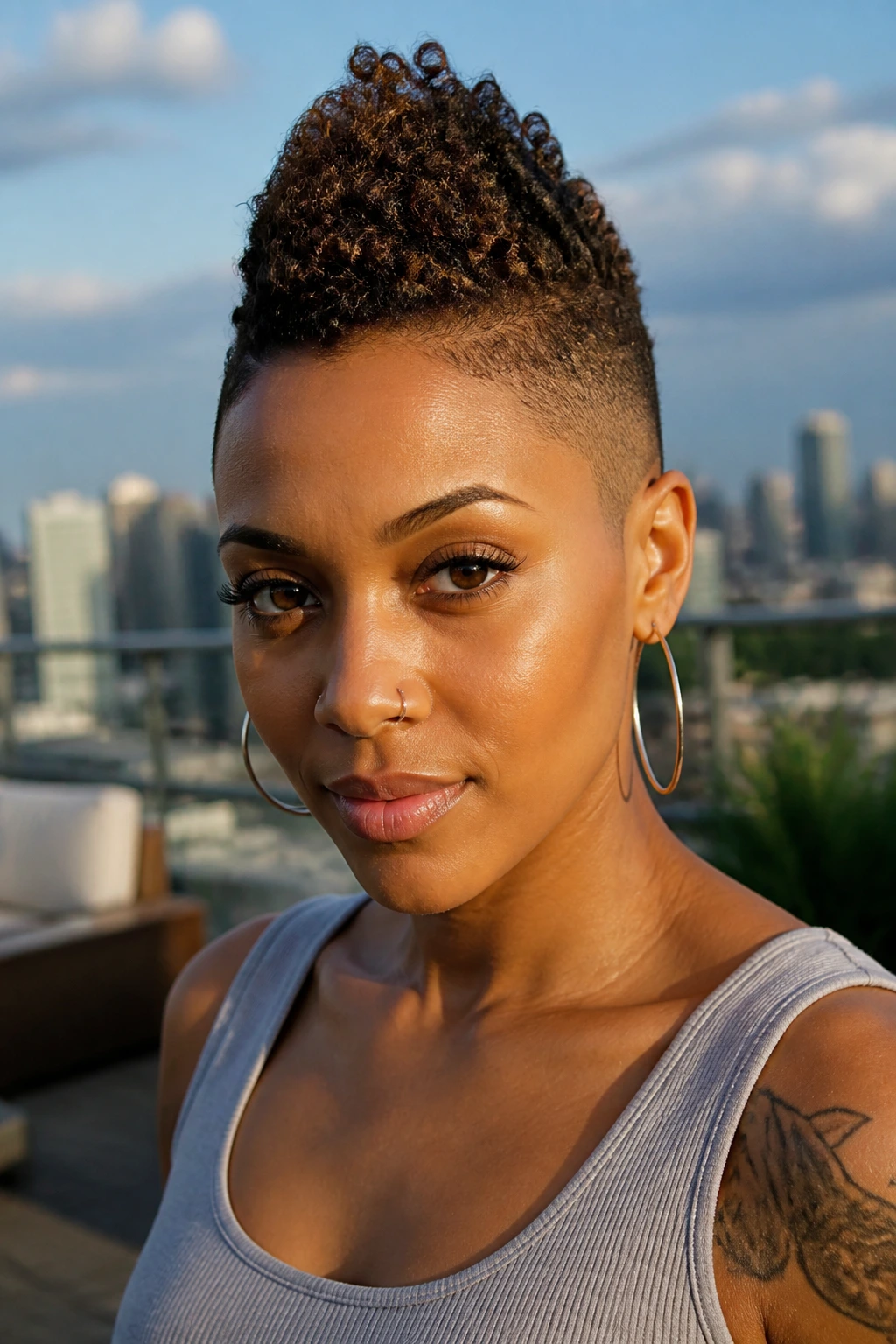
A mini frohawk is one of those cuts that looks bigger than it is. The center ridge stays fuller, the sides are trimmed low, and the whole shape rises up the head instead of spreading outward. For fine Black hair, that vertical line is useful because it makes the crown look intentional and full without needing extra bulk.
Keep the ridge narrow if your hair is light in density. A wide ridge can look floppy; a narrower one reads sharper. You can style it with sponge coils, a twist-out, or just a bit of finger shaping and a diffuser. The goal is height with control, not a spiky strip that looks unfinished.
This cut is not shy. It has presence. Still, it can be softer than people expect if the sides are tapered instead of shaved all the way down. That softness keeps the style from looking harsh against delicate strands.
8. Tapered Nape Two-Block Bob
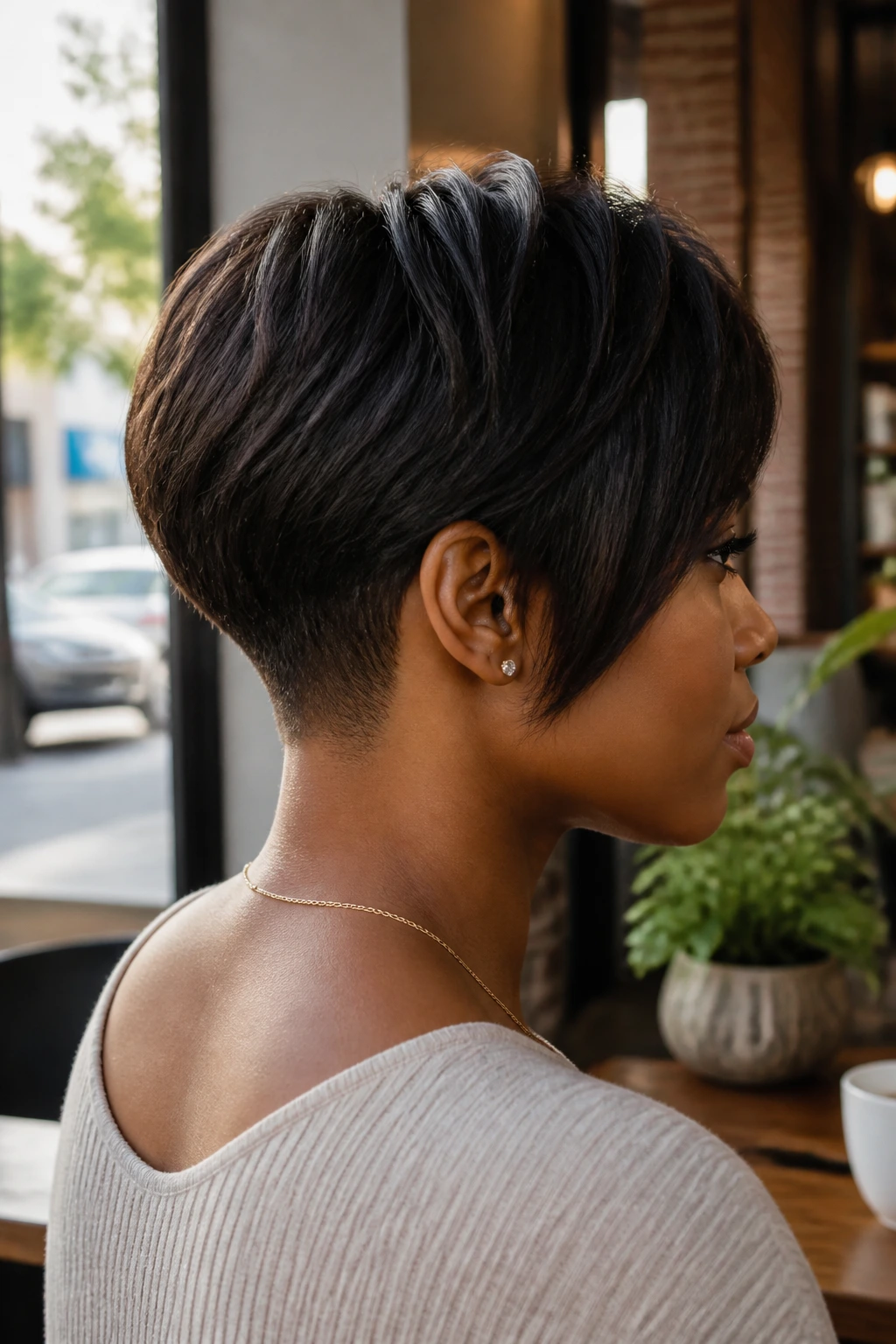
A tapered nape bob is for anyone who wants the neck to feel clean without losing the bob shape. The back hugs in close, the top keeps more length, and the transition between the two is gentle enough that fine hair doesn’t look chopped up. It has a tidy finish that works well under scarves, collars, and winter hats.
The cut should not sit too high in the back. If the nape gets taken up too far, the bob starts floating and the top can look disconnected in a bad way. Leave enough weight through the crown so the back has something to balance against. A soft roller set or a bent-under blowout shows this shape best.
I like this version for people who want a short haircut without exposing a lot of scalp. The taper keeps the back neat, but the bob gives the front some length to frame the face. That balance matters more than a dramatic clipper line.
9. Feathered Two-Block Pixie
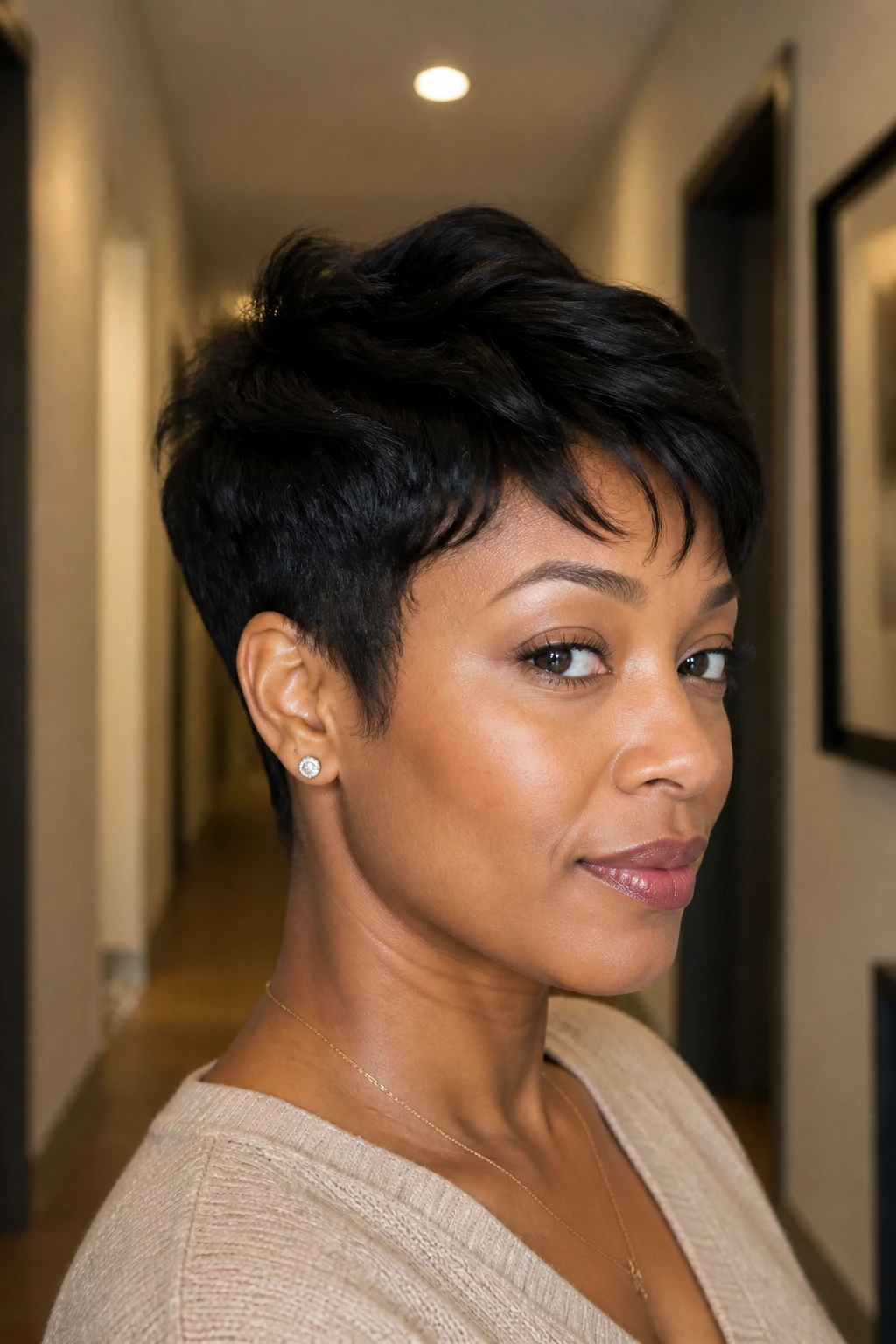
Feathering can be lovely on fine hair when it is done with restraint. This pixie keeps the top light and wispy at the edges while the sides stay low and close. The result is airy, not fluffy, and that is a useful distinction. A feathered finish gives movement without making the hair look overprocessed.
What to ask for
- Keep the crown long enough to bend forward or to the side.
- Ask for soft shears or careful point cutting, not aggressive razor work.
- Leave the perimeter clean so the feathering doesn’t turn frayed.
- If you heat-style, ask where the longest layer should hit on your face.
This one shines on silk presses and stretched natural hair. The lighter ends catch movement nicely, but the cut still needs a firm outline so the whole thing doesn’t vanish by day three. If your hair is fine and porous, use less product than you think. Feathered hair and heavy cream do not get along.
10. Defined Twist-Out Two-Block
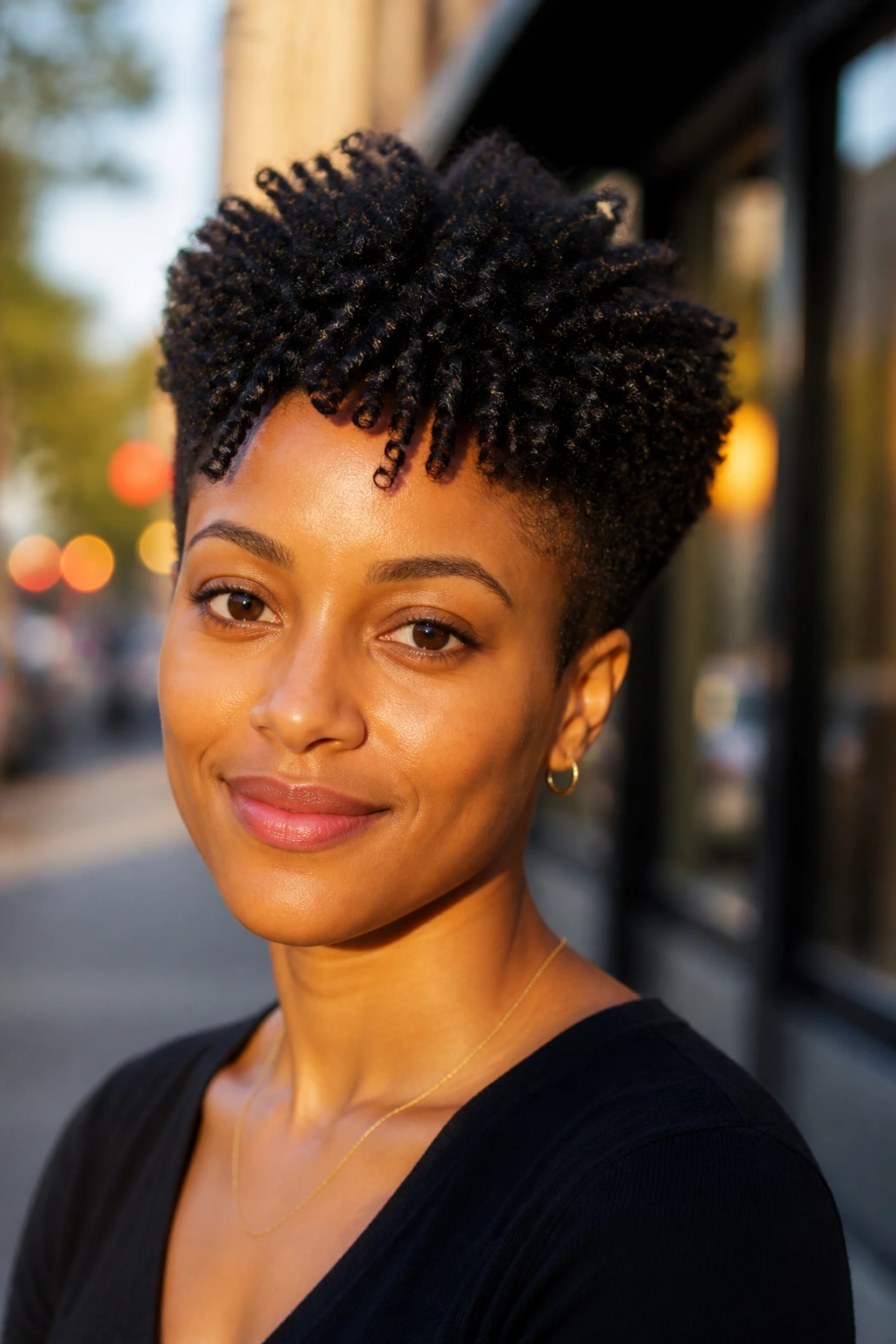
A twist-out cut should be planned around the shape of the twist-out itself, not just the shrinkage. That means the top needs enough length to show the twist pattern, while the sides are trimmed close enough to let the definition sit up and out. On fine hair, this is a much better move than cutting everything to the shortest curl when it is dry.
Ask the stylist to consider how long your twists are when stretched. If your hair shrinks hard, a dry cut or a stretched cut can keep the final look from coming up too short. The top can be shaped into a gentle arc so the twist-out lands in a rounded silhouette instead of a flat shelf.
This version is for people who like texture with a little order. The twists give you body, the two-block cut gives you line. Together, they make the hair look fuller without needing a lot of product buildup.
11. Sleek Silk-Press Two-Block
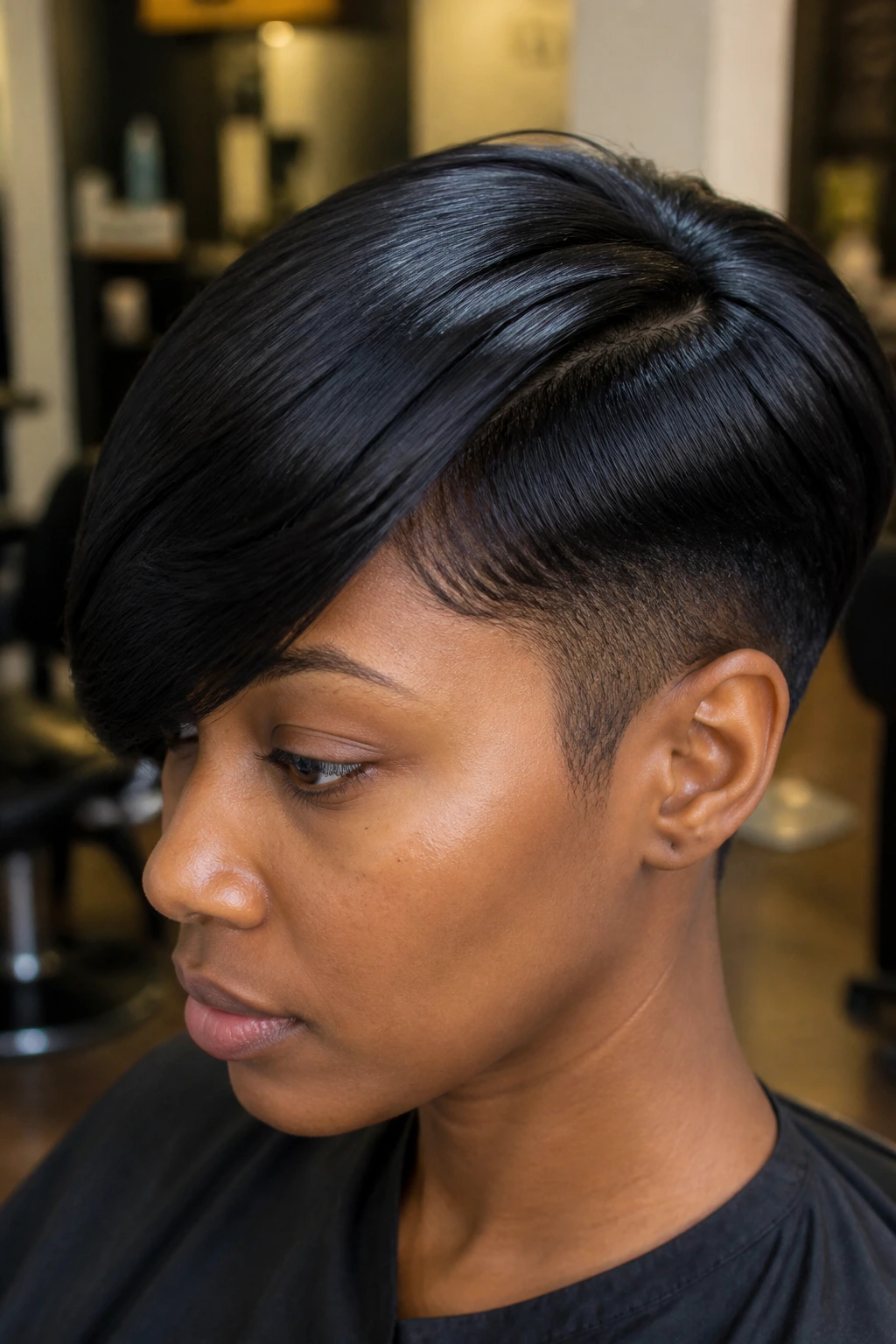
A sleek silk-press two-block is a clean, sharp choice when you want the cut to look smooth and deliberate. The sides stay shorter, the top is left long enough to fall in a neat sweep, and the disconnect becomes visible because the pressed texture reflects light differently from the clipped areas. It is a crisp look when the shape is done well.
The key is length. If the top is cut too short in its natural state, the press can come out skimming the scalp instead of sitting with a little movement. Ask for the cut to account for shrinkage and for your usual flat-iron finish. Fine hair also does better at lower heat, so there is no need to chase a bone-straight look that leaves the ends dry and rough.
I’d choose this if you like the polish of a silk press but don’t want a one-length press that hangs limp. The cut gives the style some architecture. That makes the straight finish feel sharper, not flatter.
12. High-Volume Picked-Out Two-Block
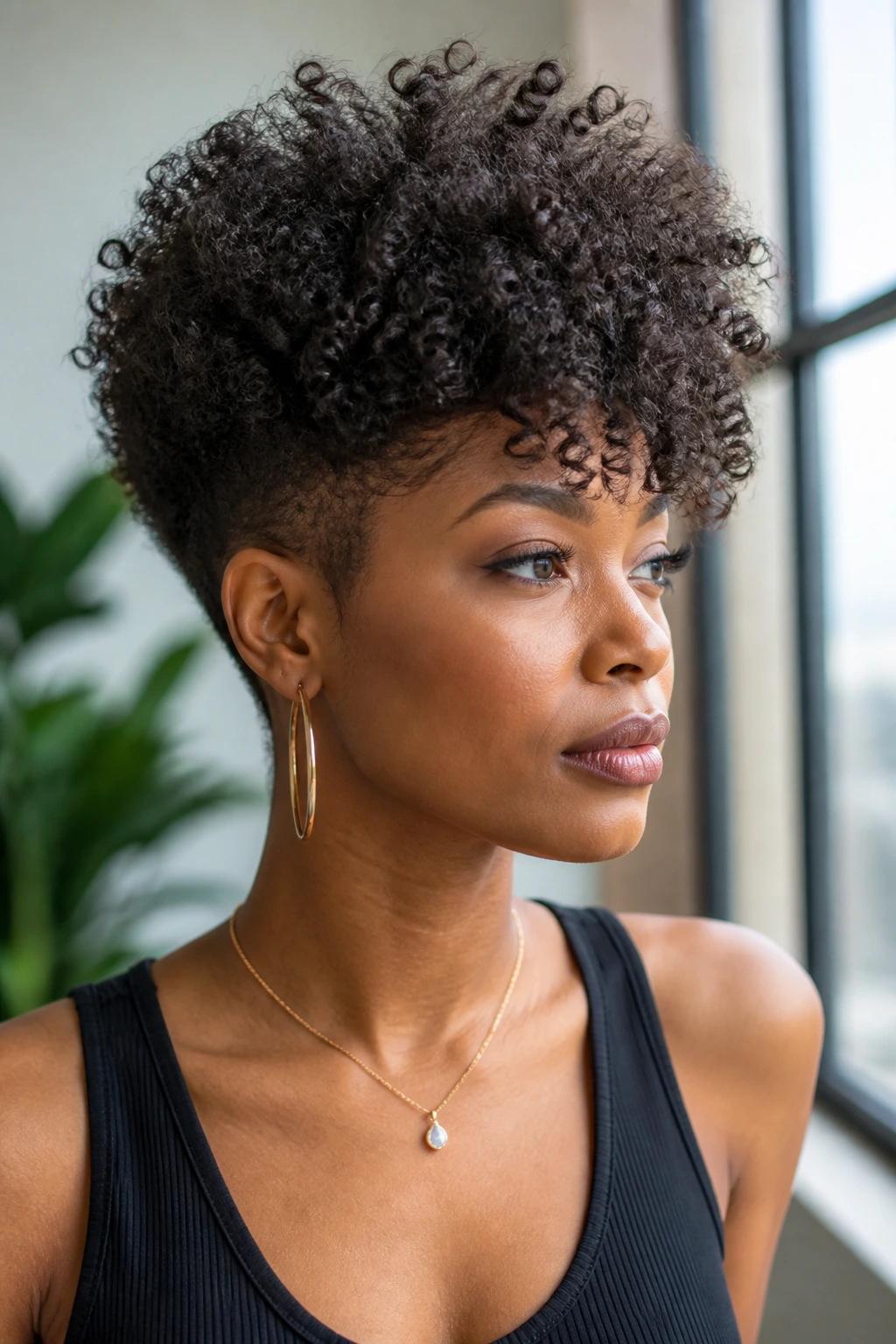
If you want the biggest visual payoff from fine hair, this is the one that leans hardest on shape. The top is left long enough to be picked out at the roots, while the sides and back stay tight. The result is a lifted crown that reads fuller from across a room.
The trick is timing. Pick the hair only when it is dry or nearly dry. If you pick damp coils, they stretch weakly and frizz in odd places. A wide-tooth pick at the roots, not through the ends, gives you lift without breaking up the curl pattern completely.
This version is strongest on hair with decent density and fine strand width. The top needs enough length to move; if it is too short, the pick just makes it look fuzzy. Used right, though, it gives that airy, soft fullness people usually try to fake with too much product.
13. Temple-Fade Two-Block Crop
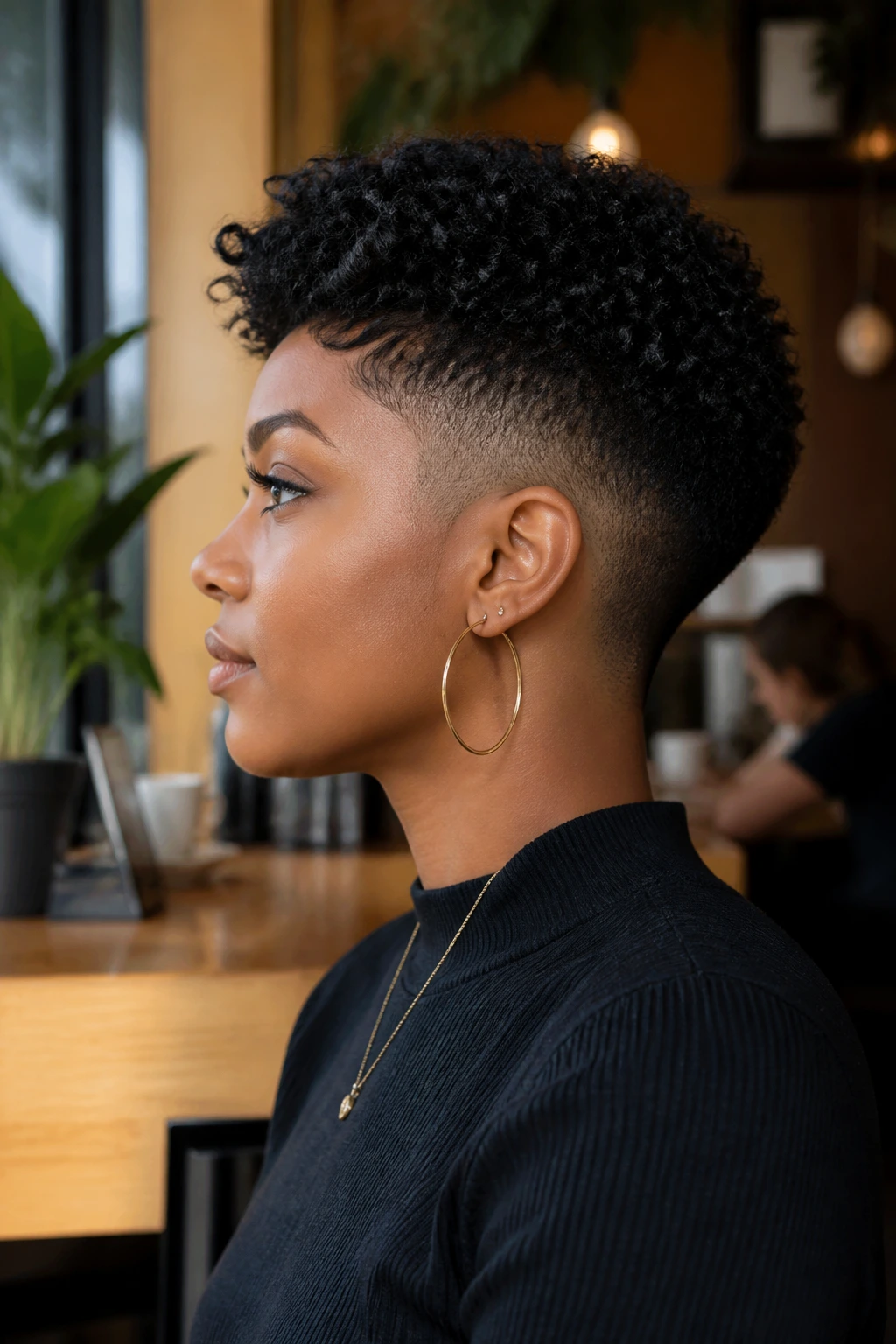
A temple fade is a cleaner choice when the sides need to look lighter without disappearing. The fade sits around the temples and blends into the nape, while the top keeps more body. That small shift around the face can make the haircut look more tailored and less severe.
This is a good option if your hairline is precious. I mean that literally. A temple fade lets the cut breathe near the face without scraping the edges too hard. Keep the top textured but not over-layered, and ask for a soft transition rather than a hard skin fade if your strands are delicate.
It also plays well with glasses, hoops, and bold brows. The face has room to show up. The haircut doesn’t steal the whole frame.
14. Chin-Length Two-Block with Soft Bangs
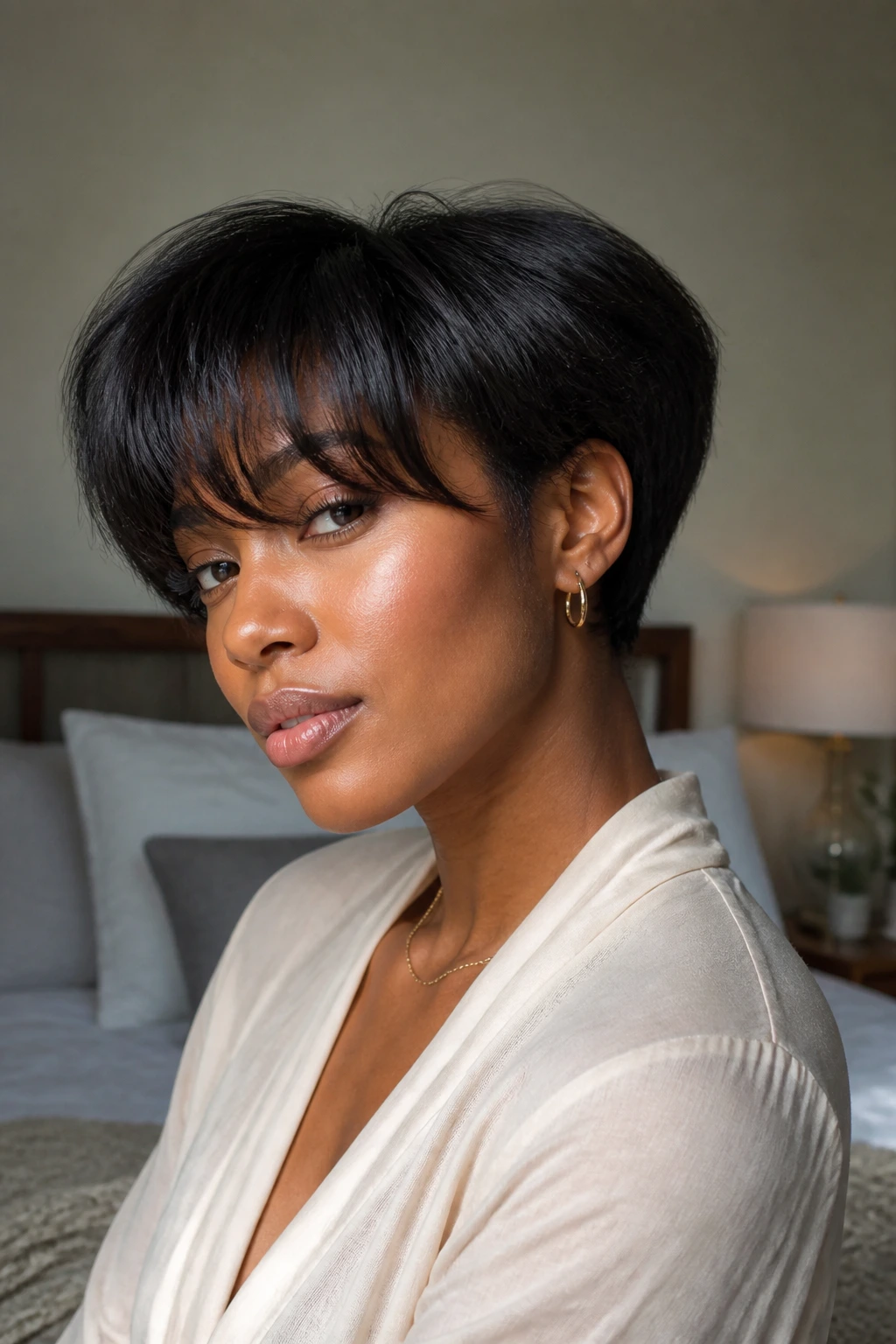
A chin-length two-block with soft bangs is a nice middle ground for someone who wants more length than a pixie but less bulk than a shoulder cut. The sides are still cleaned up, the top carries the weight, and the bangs soften the front so the whole style feels less boxy. On fine hair, that softness helps the shape sit better.
The bangs should be cut longer than you think, especially if your hair shrinks. Chin-length in curly hair often ends up shorter than people expect once the pattern springs up. Ask for the fringe to graze the brow or sit just above the eyes when dry, then adjust from there. A blunt fringe can work, but only if your hairline is full enough to carry it.
This version is good when you want face framing and a little drama without going fully short. It looks especially nice when the bangs are allowed to separate slightly instead of sitting as one solid curtain.
15. Coily Halo Two-Block
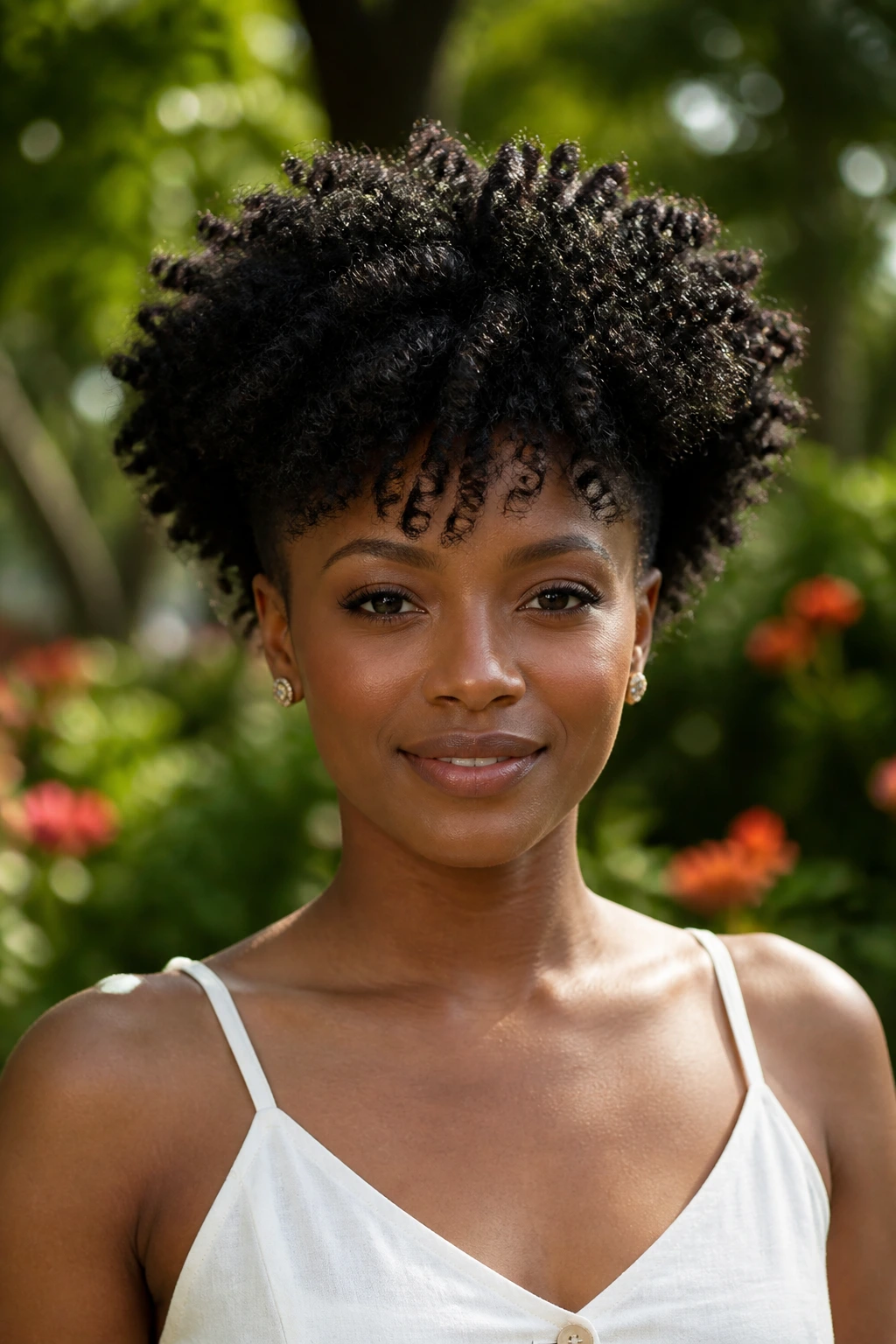
A halo shape wraps around the head in a round, even line, which is useful when fine coils tend to disappear at the edges. The top is kept full enough to form that halo, while the lower sides and nape are kept shorter so the silhouette doesn’t sag. It feels balanced and soft at the same time.
This cut works best when the curls are defined but not overcontrolled. A small amount of cream and a foam layer will usually do more than heavy butter or oil ever could. If the hair is fine, too much product makes the halo droop and lose its outline. A diffuser helps the top settle into a round shape without a crunchy finish.
The halo shape is flattering because it doesn’t depend on extreme height. It relies on roundness. That’s a smarter bet for fine hair than trying to build a giant crown that collapses by lunchtime.
16. Tucked-Behind-the-Ear Two-Block
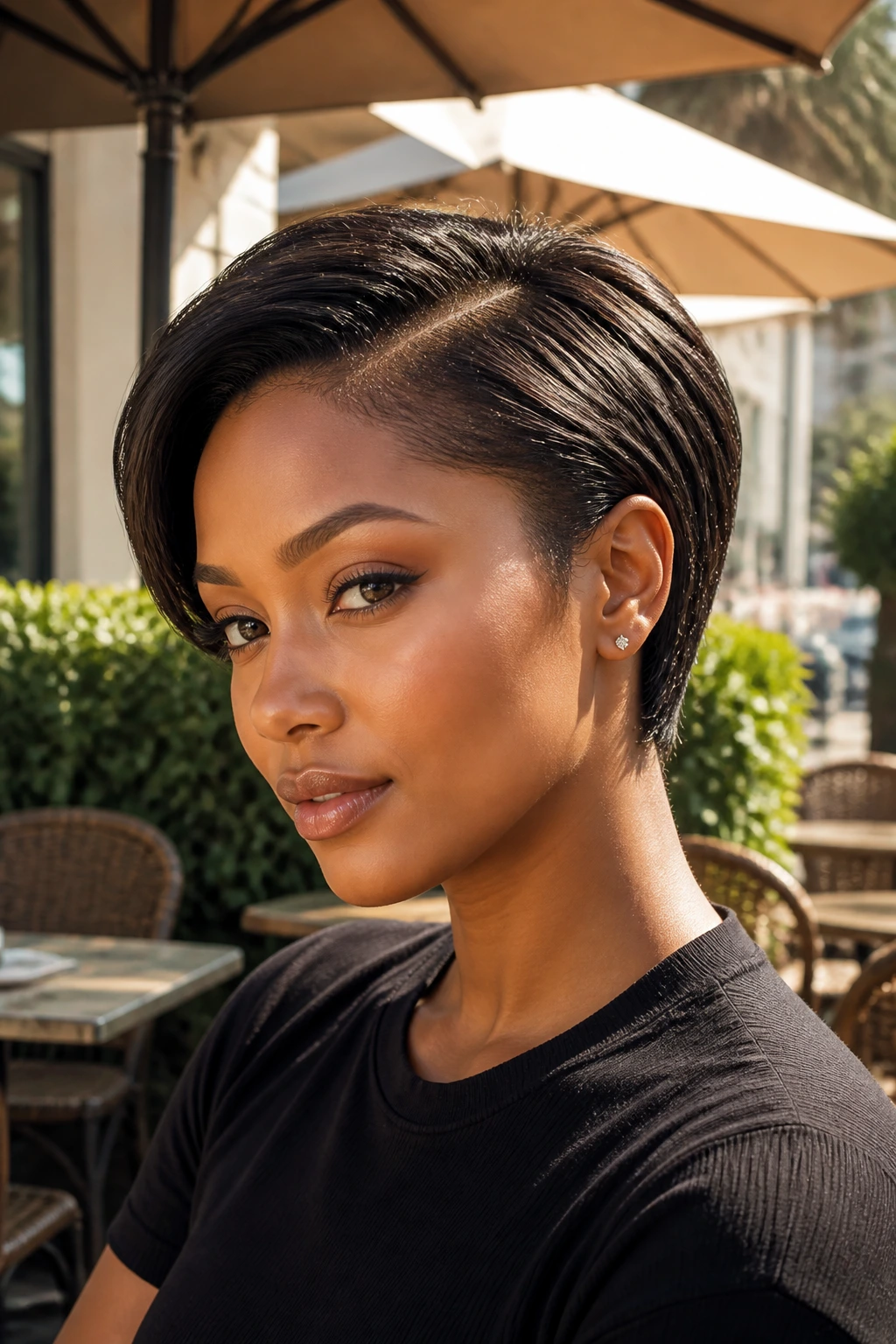
The tucked-behind-the-ear version is one of my favorites for clean lines and easy wear. The front and sides are left long enough to sweep back behind the ears, while the lower section stays trimmed down. The cut looks neat, but it still has movement when the hair shifts.
If you wear earrings, this is especially useful. The haircut opens the face without stripping away the softness around it. Ask for a front length that sits just below the cheekbone if you want a little bend, or slightly longer if you need more tuck room. On fine hair, those extra half-inches matter.
This style also grows out well because the tuck keeps working even when the sides start to get fuzzy. It doesn’t depend on a sharp line every single day. That is a mercy.
17. Micro Fro Two-Block
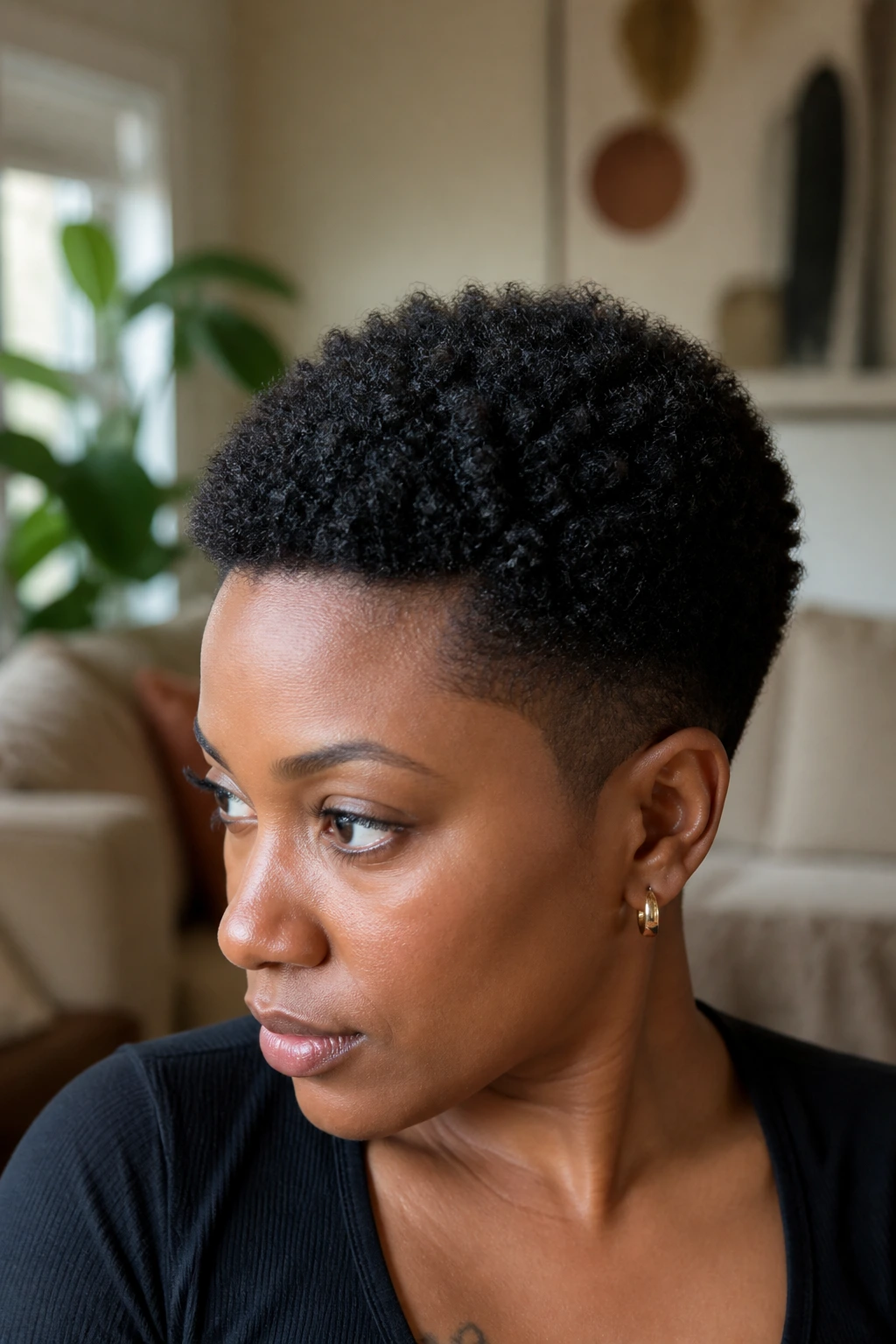
A micro fro can be gorgeous on fine hair, but only if it is shaped with care. The top stays short, the sides are clipped low, and the silhouette sits close to the scalp without exposing every inch of it. It is the haircut for someone who wants almost no styling time and still wants a clear shape.
The main risk here is going too short. Fine coils can vanish fast when cut down without enough length left on top. Ask for a soft round profile and keep enough crown length to see the texture once it dries. Even a half inch can change the whole feel of the cut.
This version is low-maintenance in the best sense. It does not ask for much more than moisture, a bit of shape-up work, and a satin bonnet at night. When it is cut well, that is enough.
18. Line-Up Two-Block with Sharp Edges
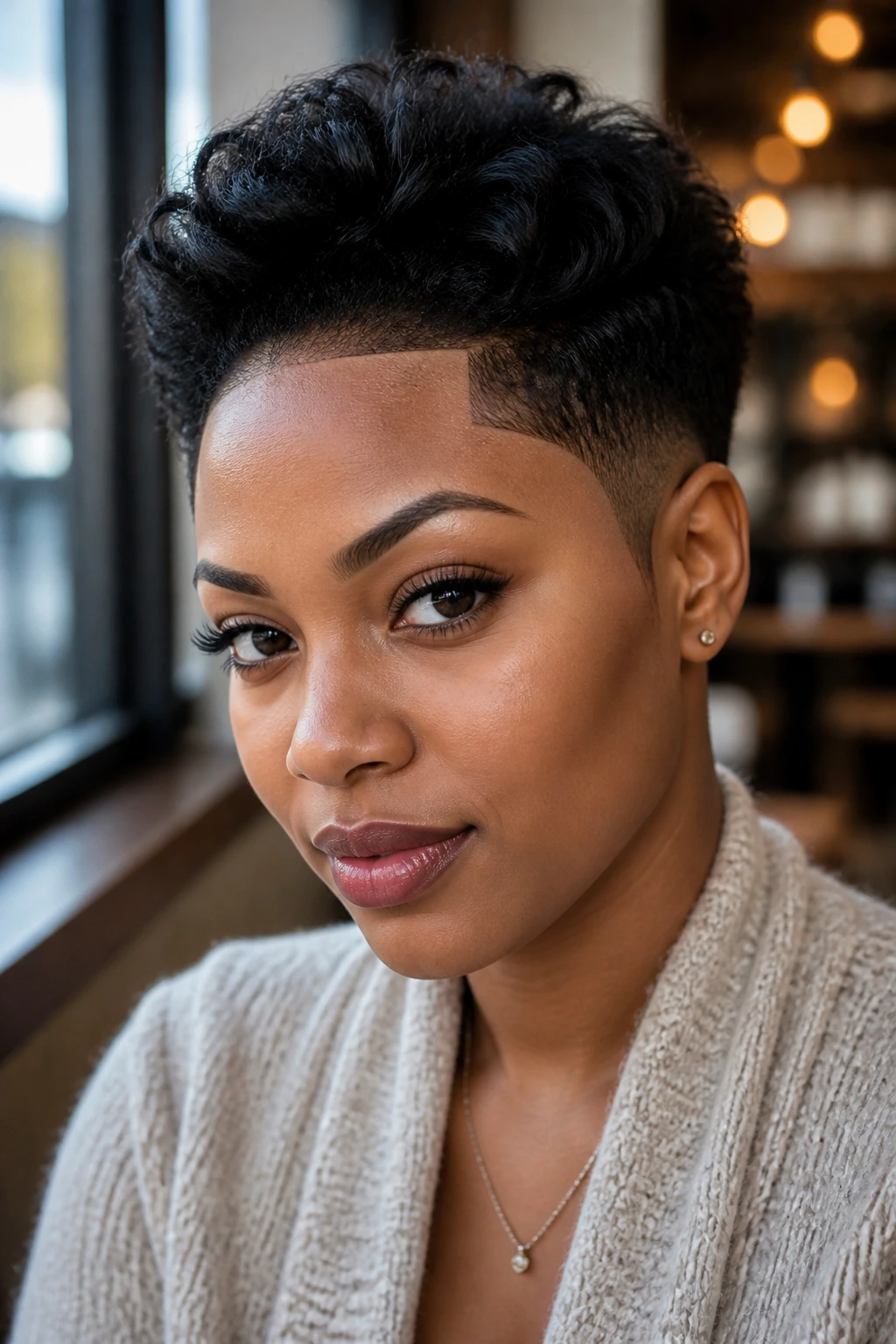
A sharp line-up makes a strong statement, but it also demands healthy edges. The top stays fuller, the sides are controlled, and the hairline is edged into a crisp frame. On the right face, it looks clean and intentional. On a fragile hairline, it can be too much.
That is why the request has to be precise. If your temples are sparse or you’ve had tension there before, ask for a soft edge instead of a hard blade line. A defined but not overcut front can still give the haircut structure. The point is to frame the face, not carve it up.
This style works best when you like contrast and you’re willing to maintain the line regularly. Let it grow out too far and the whole look loses its sharpness fast. If you want strong geometry, this is a good fit.
19. Layered Two-Block Mullet
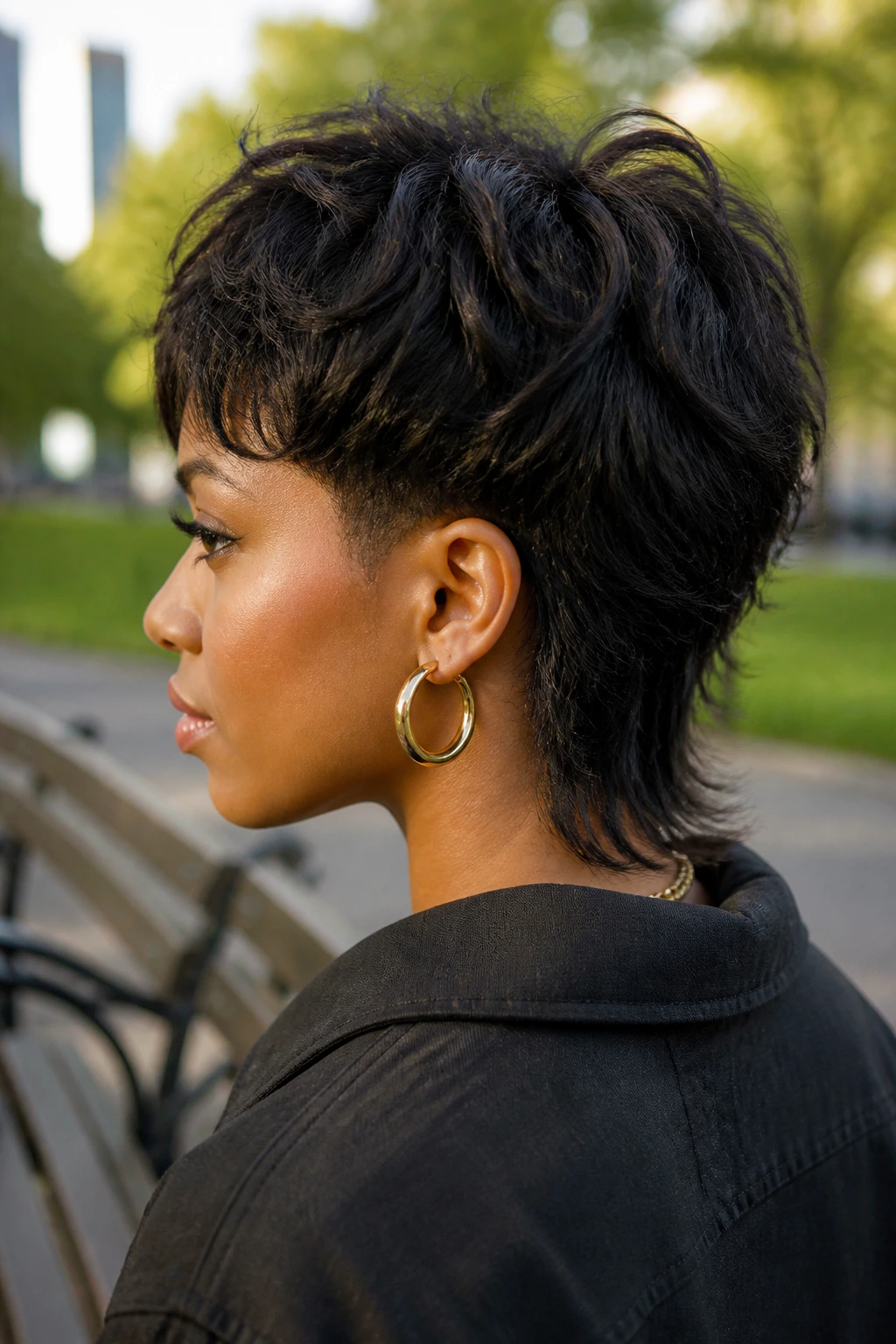
A layered mullet sounds louder than it looks. On Black hair with fine strands, the right version is all about keeping the nape slightly longer while the top and sides stay shorter and shaped. The layers help the back move, which keeps the hair from sitting like a solid block.
This cut is useful if your hair looks thin when everything is the same length. The extra nape length creates the illusion of density, while the upper section keeps the face open. Ask for the layering to be soft, not choppy. Choppy layers on fine hair can turn into frayed ends faster than you’d expect.
It has attitude, yes, but it also has logic. The longer back adds shape where fine hair often needs it most, and the shorter top keeps the silhouette from getting too heavy.
20. Braid-Set Ready Two-Block
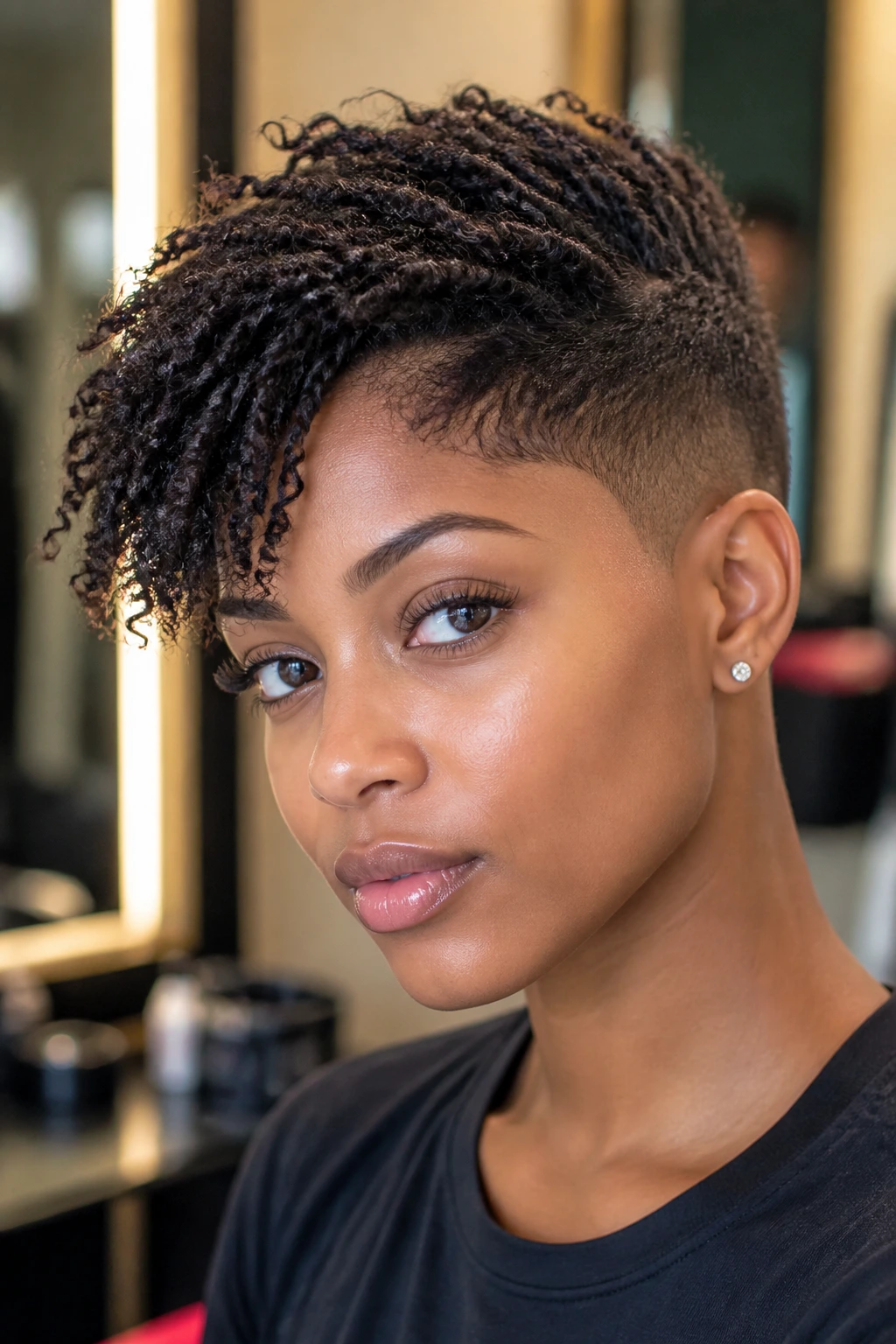
A braid-set friendly cut is about planning ahead. The top stays long enough to take small braids or flat twists, the sides are shorter for shape, and the overall cut supports texture once the set comes down. For fine hair, this is a smart way to get fullness without heat.
The lengths need to be consistent enough for the braid pattern to land evenly. If one area is cut much shorter than the rest, the set can dry unevenly and pull the shape out of balance. Ask your stylist to leave a little more room on top than you think you need, especially if shrinkage is high.
This one is a good bridge between protective styling and a shaped cut. You can wear it braided, then take the set down and still have a haircut that looks deliberate rather than random.
21. Finger-Coil Two-Block Shape
Finger coils bring out the structure in fine coils instead of hiding it. The top is long enough to coil cleanly, the sides stay lower, and the finished shape gets a neat, polished outline. This is one of the better choices if you like definition more than fluff.
Why It Stays Put
The coils need length to hold their own. If the top is too short, each coil looks tiny and the overall shape disappears. Leave enough room for the coil to form and then spring back. A lightweight gel or coil cream can help, but the cut does most of the work.
This style also lets you control the front line more easily. Coils can be directed forward, to the side, or slightly upward depending on how the cut is shaped. That makes the haircut feel customized instead of generic.
22. Side-Part Two-Block Lob
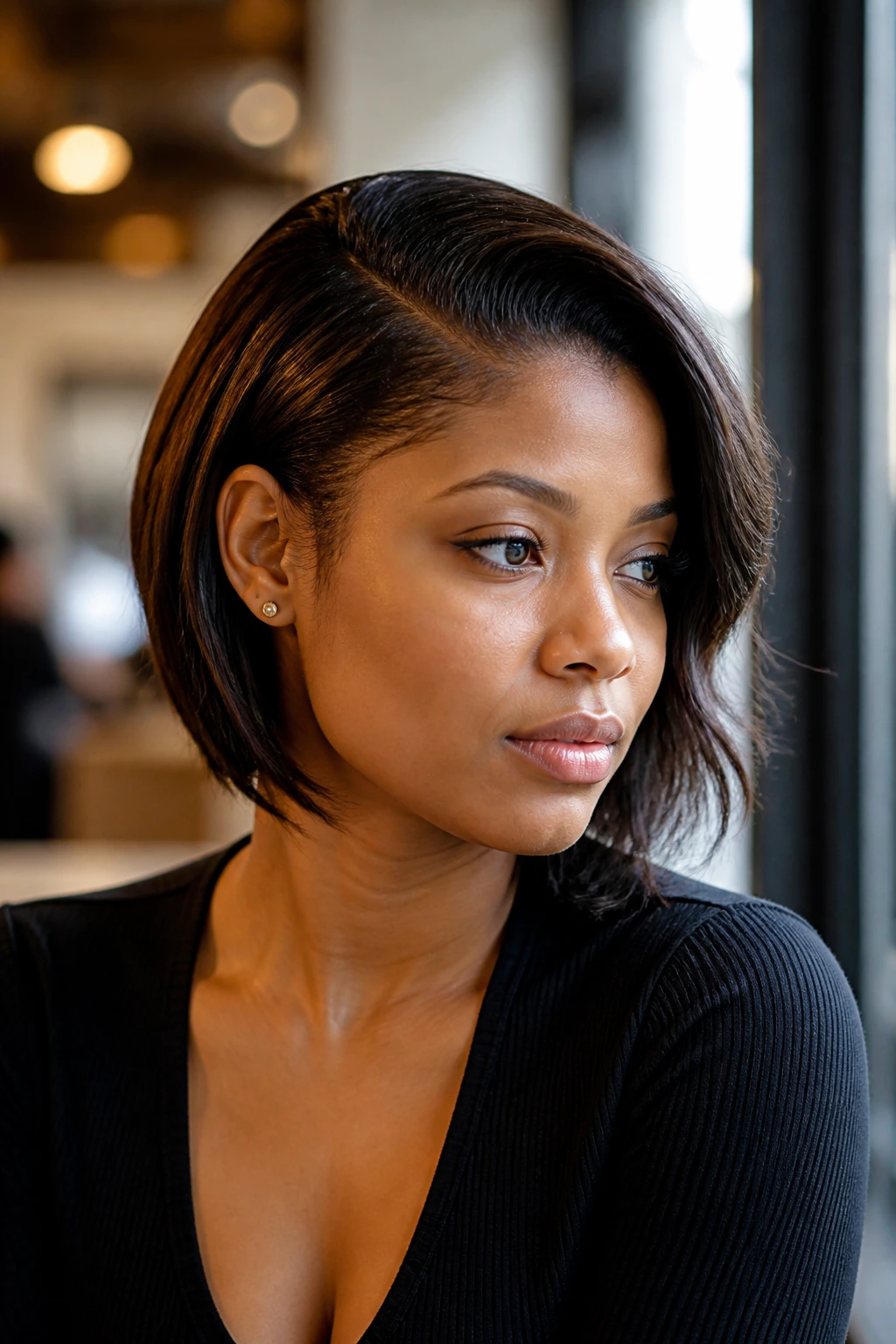
A lob gives you room to keep some length while still using the two-block structure to lighten the sides and nape. The side part creates a stronger front line, which can help fine hair look thicker where it meets the face. It feels grown-up without being stiff.
The key is keeping enough weight in the perimeter so the ends do not look wispy. That matters more with a lob than with a pixie because the length can betray thinness faster. Ask for the top and front to be longer enough to tuck, bend, or blow out cleanly. A side part also helps disguise any slight unevenness in density.
I’d pick this if you are not ready to go very short but you still want the clean outline that makes two-block cuts work. It is one of the easiest versions to wear straight, curled, or stretched.
23. Low-Taper Two-Block with Rounded Top
The low-taper version is probably the most conservative option in the whole group, and that’s not a bad thing. The taper sits low at the nape and temples, the top stays rounded, and the shape reads clean without exposing much scalp. Fine hair often looks better with this kind of restraint.
A rounded top keeps the haircut from feeling flat. Ask for the crown to stay a bit heavier than the sides so the outline has a gentle dome. If you go too aggressive with the taper, the cut can start to feel narrow and unfinished, especially when the hair is freshly washed.
This is a good office-safe, day-to-day shape. It won’t scream for attention, but it also won’t disappear. That balance is harder to get than people think.
24. Sleek Curly Bob Two-Block
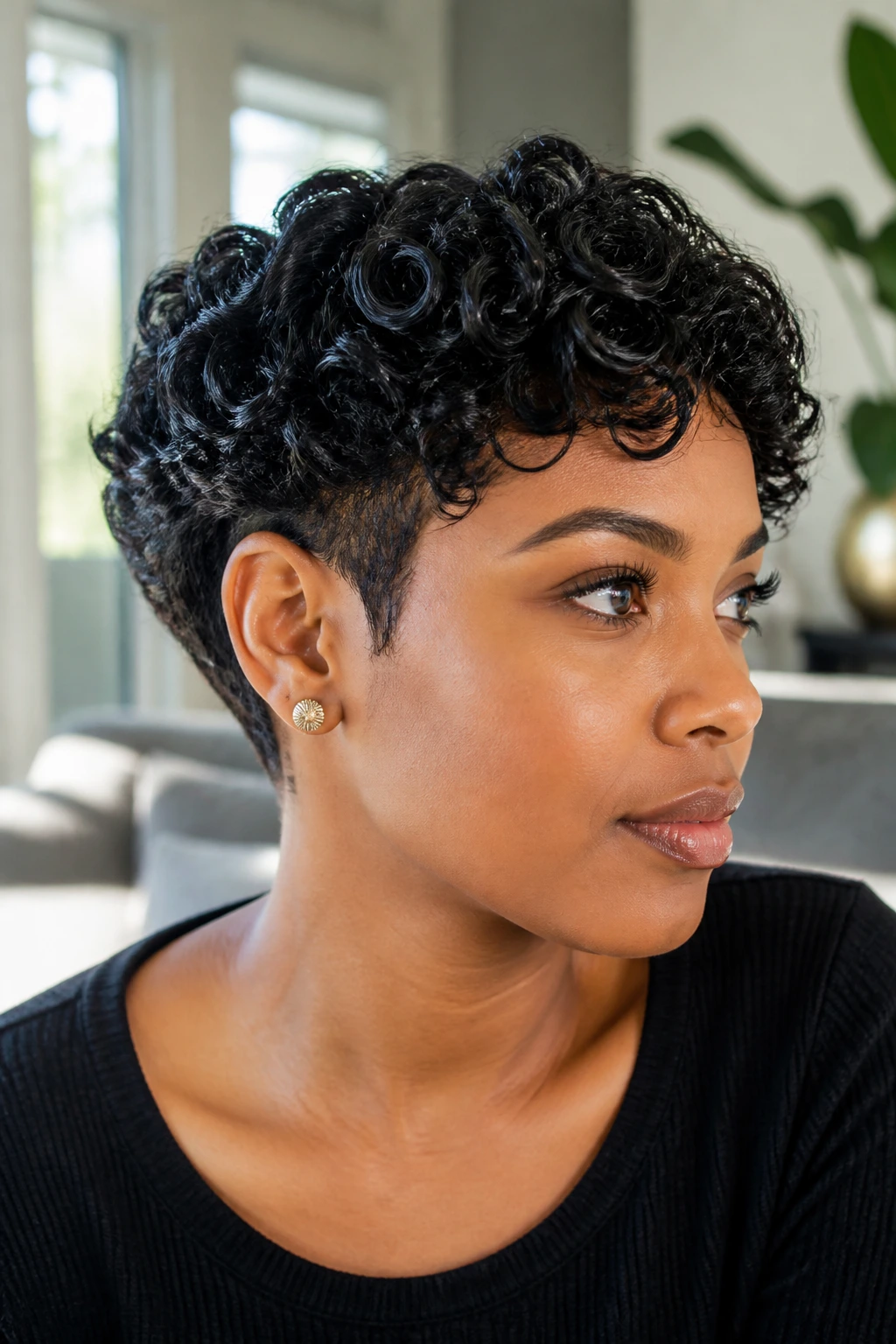
A sleek curly bob sits between a pressed bob and a natural curl cut. The sides are neat, the top keeps enough length for soft bends or defined curls, and the overall shape stays close enough to the head to avoid bulk. It is tidy, but it still moves.
This version works when you want the bob line without the blocky feel. Ask for the top to be cut with your usual styling pattern in mind, not just your wet texture. If you mostly wear curls, the top should be long enough to keep the bob from jumping too high once it dries. If you press it sometimes, leave a little extra length for shrinkage and reversion.
The clean perimeter is what sells it. Without that line, fine hair can start to look unanchored. With it, the style looks finished even on a simple day.
25. Airy Defined-Curl Two-Block
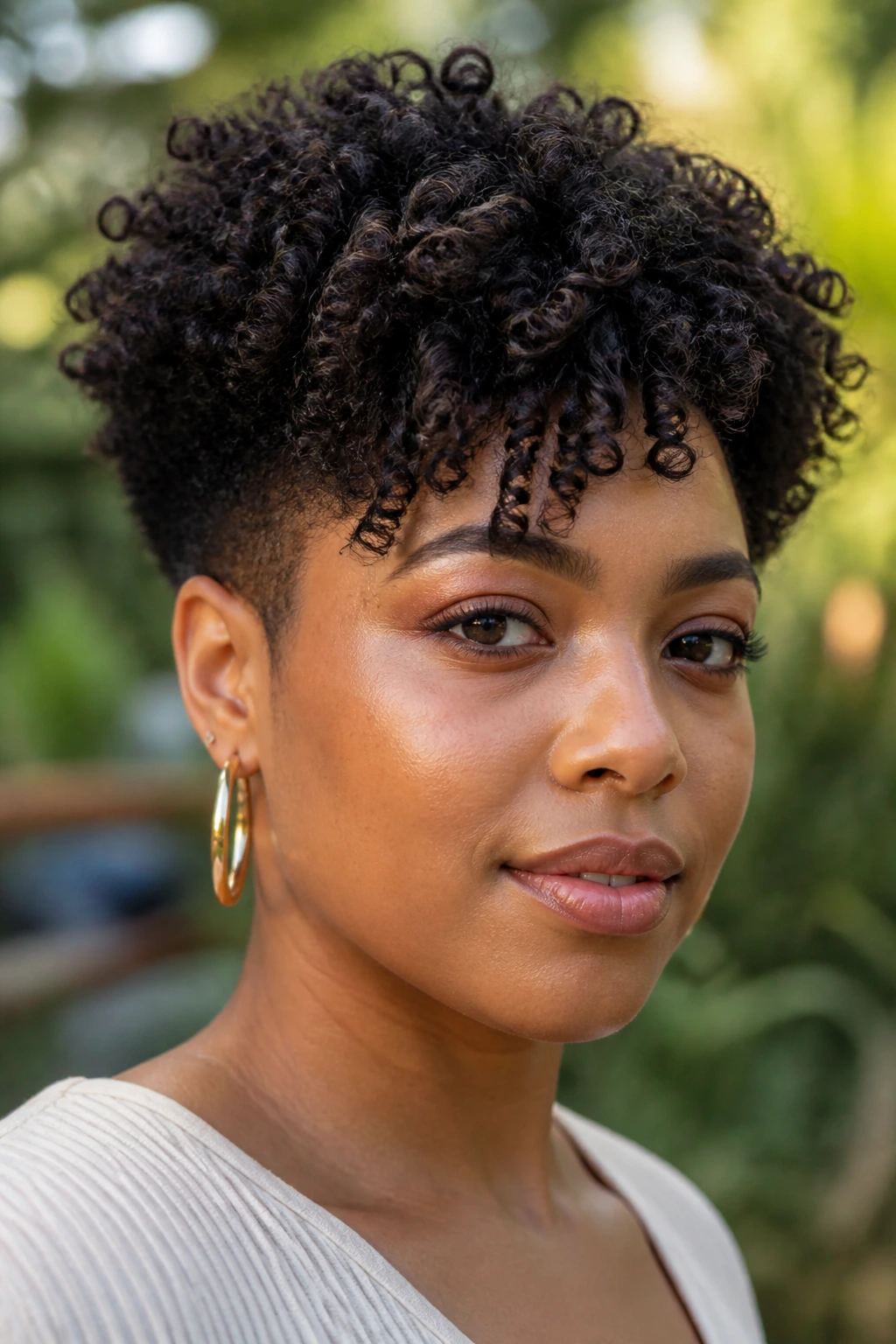
This is the version for people who want curl definition and a little lift without a helmet effect. The top keeps enough length for the curls to cluster and show off shape, while the sides stay shorter so the overall silhouette stays light. It is probably the most balanced of the bunch.
The finish matters here. A diffuser on low heat, a foam at the roots, and a tiny bit of gel on the ends usually give enough hold without turning the hair stiff. If your curls are fine, the biggest mistake is overloading them with product to chase shine. Shine is nice. Collapse is not.
The cut should let the hair read as airy but controlled. That combination is the sweet spot for a lot of women with fine Black hair — enough shape to feel styled, enough looseness to feel like hair and not a helmet.
Styling Moves That Keep the Crown Full
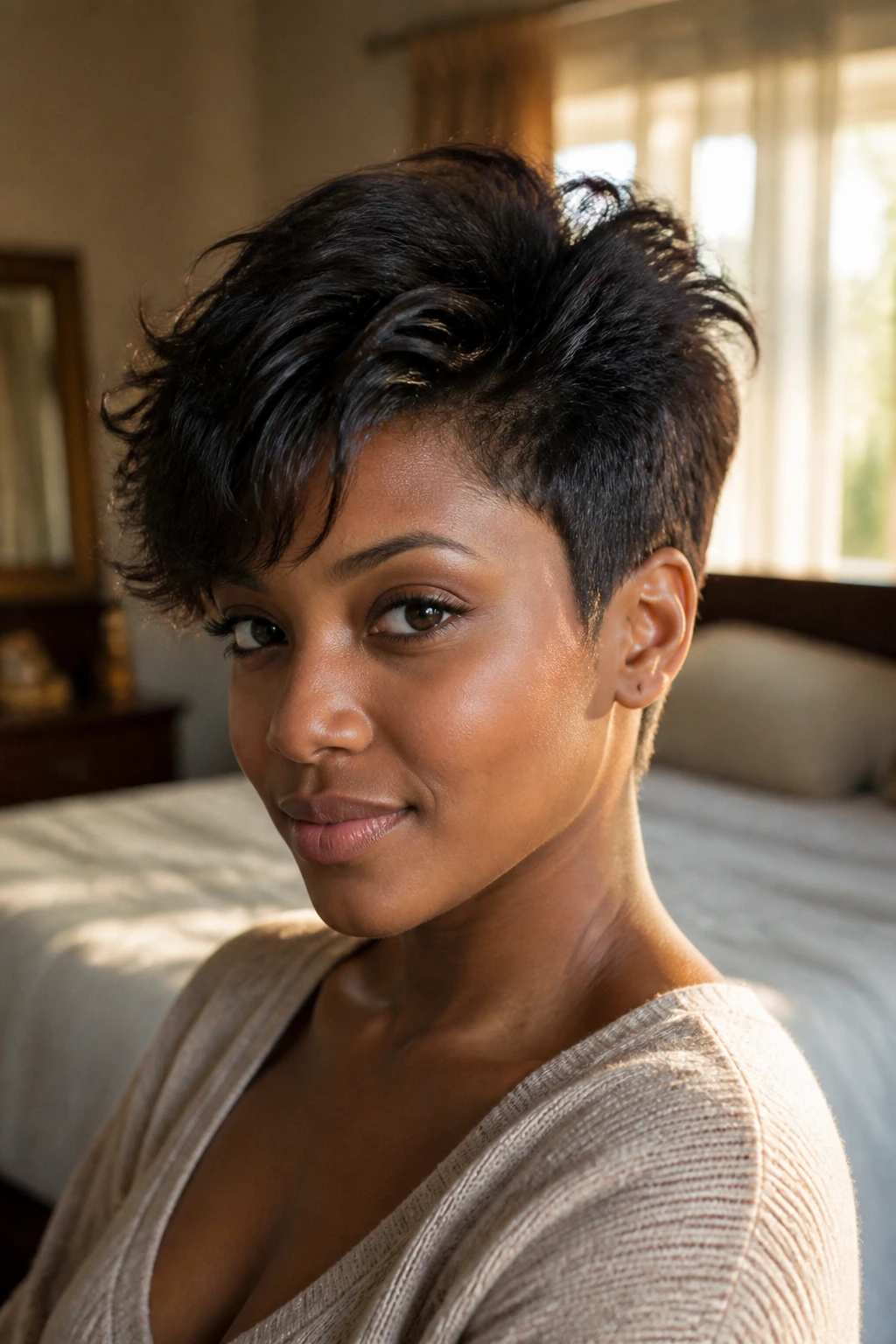
Root Lift: Put lightweight mousse or foam at the roots while the hair is still damp, then use a diffuser or hood dryer to set the crown upward. If you wait until the hair is half dry, the lift usually sits on top instead of underneath where it helps.
Shape Control: Dry the top in the direction you want it to live. If the part falls left, don’t fight it with a brush that drags the hair straight back. Let the cut follow the natural fall, then tidy the outline.
Night Protection: A satin bonnet or a satin scarf keeps the fine ends from roughing up overnight. For very short versions, a loose scarf is often better than stuffing the whole cut into a tight bonnet that crushes the crown.
Product Load: Use less than you think. Fine strands get soggy fast, especially on the top section where you need movement. A pea-sized amount of cream is usually enough for the front; the rest of the style should come from the cut and the drying pattern.
Reset Habit: If the shape starts to sit flat, a quick mist of water at the roots and a minute with a diffuser can bring it back. You do not need to start from scratch every morning.
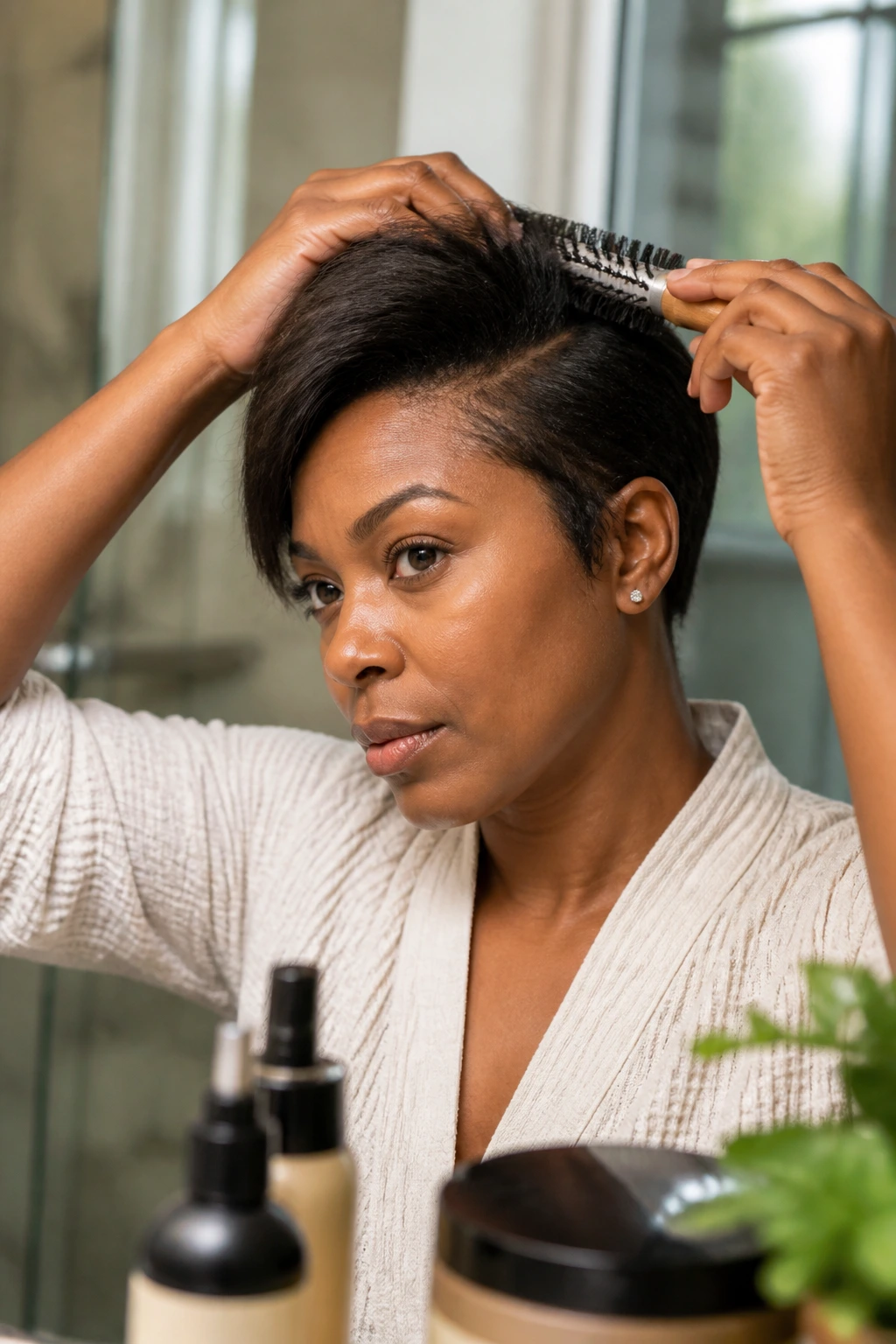
Tools, Brushes, and Products That Help
- Sharp haircut shears: Helpful for keeping the top line clean if you trim at home between appointments; dull shears chew the ends.
- Clippers with guard sizes or a trusted taper tool: Useful for nape and temple cleanup, especially if you like a low fade or soft taper.
- Rat-tail comb: Good for clean parts, sectioning, and lifting the crown before drying.
- Small round brush: Handy for blowouts and silk-press versions where you want a gentle bend at the ends.
- Wide-tooth pick: Best for fluffing the roots on picked-out or frohawk styles without tearing through the curls.
- Diffuser: The safest way to dry natural textures without flattening the top or blasting the curl pattern apart.
- Lightweight mousse or foam wrap: Gives hold without the heavy buildup that fine hair hates.
- Curl cream or setting lotion: Useful for wash-and-go, twist-out, or finger-coil versions; choose lighter formulas if your strands collapse easily.
- Heat protectant: Non-negotiable if you press the hair. Fine strands burn faster than thick ones.
- Satin bonnet or scarf: Keeps the shape from getting roughed up overnight.
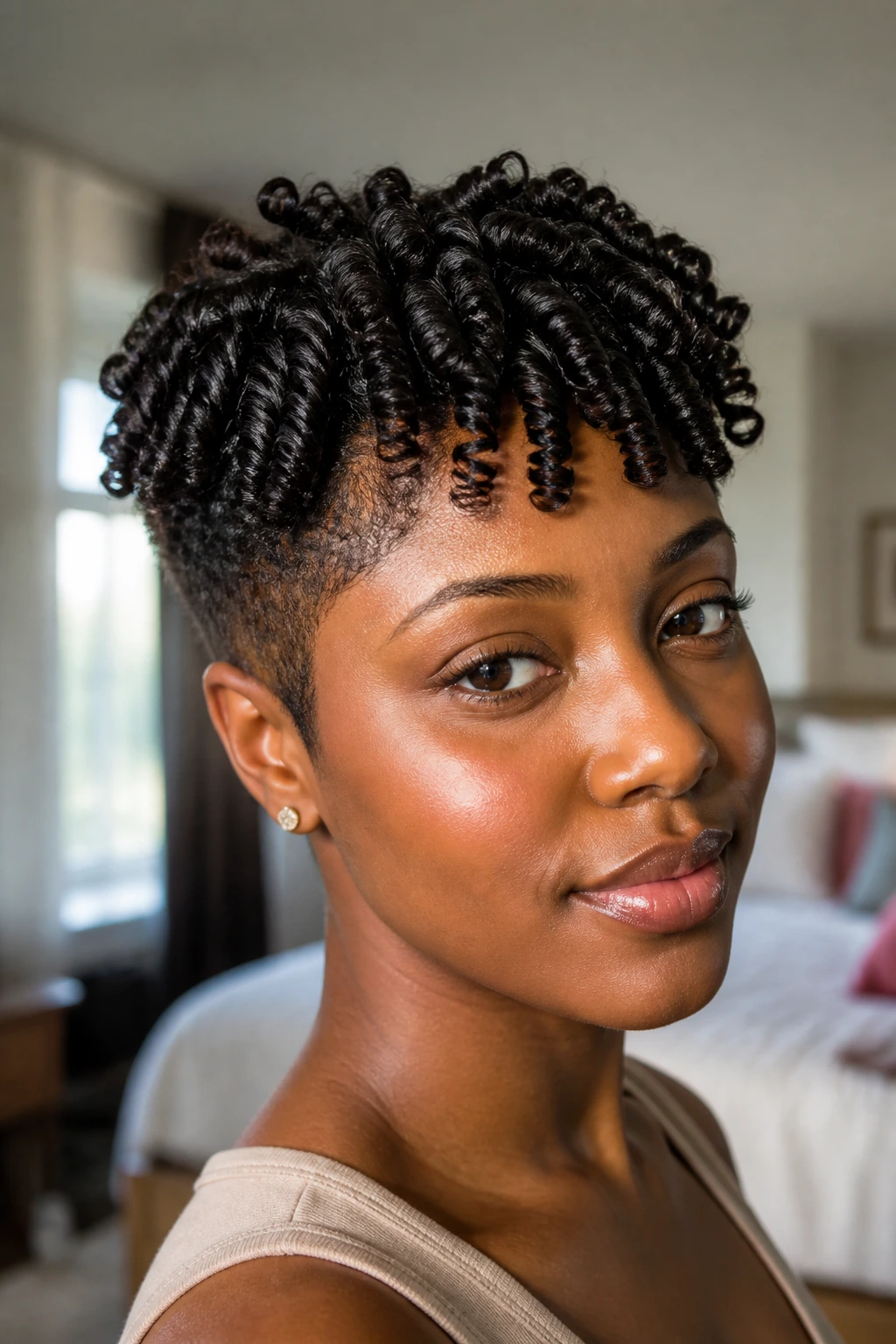
Common Mistakes That Flatten the Shape
-
Taking the sides too high: When the taper climbs too far up the head, the top starts floating awkwardly and the haircut loses balance. Keep the fade low unless you want a very dramatic look.
-
Thinning the crown too much: Fine hair does not need to be shredded to have movement. If the top looks see-through after the cut, it was taken too far. Ask for controlled layering, not aggressive texturizing.
-
Cutting for wet length only: Coils shrink, and they can shrink enough to erase an inch or more of shape. If the cut is meant to live natural, it should be planned in a stretched or dry state.
-
Using heavy creams everywhere: Fine strands go limp fast under heavy butters and oils. Use lighter stylers at the roots and reserve richer products for the ends only if they truly need them.
-
Ignoring the hairline: A hard line-up can look great on a strong hairline and rough on a fragile one. If your edges are delicate, ask for softness at the temples and a cleaner nape instead.
Variations and Adaptations for Different Routines
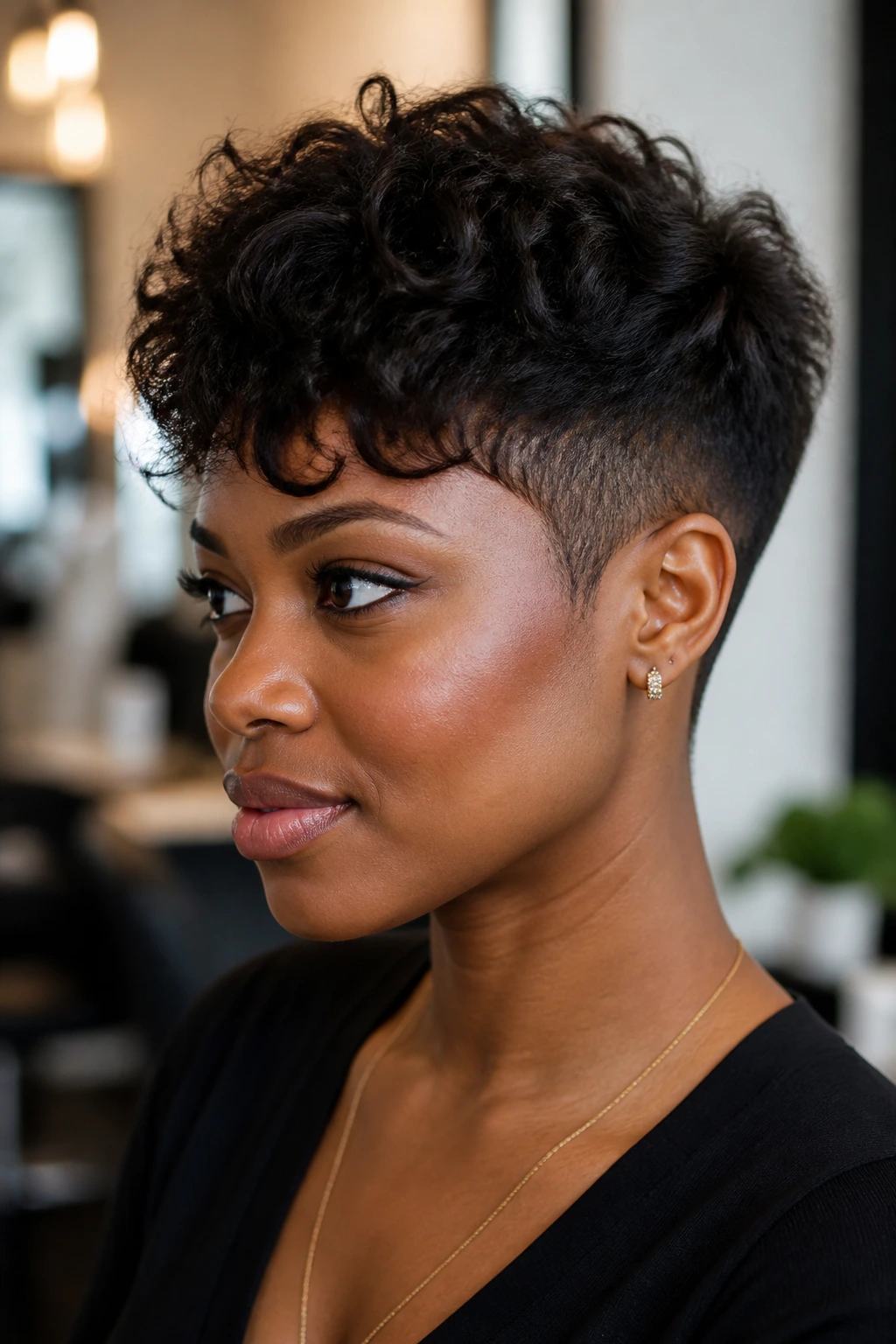
Silk-Press Clean Cut: This version is shaped for straight styling, with the top left long enough to fall neatly when pressed. It works if you wear heat often and want the disconnect to look crisp rather than fluffy.
Wash-and-Go Cloud: Keep the top rounded and curl-friendly, then shape the sides low so the curls can puff out without losing the outline. This is the best route for people who want the haircut to cooperate with their natural pattern.
Protective-Style Friendly Version: Leave a touch more length at the top and around the hairline so the cut still makes sense after braids, twists, or wigs come out. That extra room helps the shape survive the in-between stage.
Soft Temple Taper: If your edges are sensitive, go softer at the temples and keep the nape clean. The haircut still reads two-block, but it won’t chew up your hairline.
Grow-Out-Friendly Shape: Ask for a rounded top and a low taper that can blur as it grows. This is the version that looks decent even when you miss a salon visit by a week or two.
Keeping the Cut in Shape Between Salon Visits
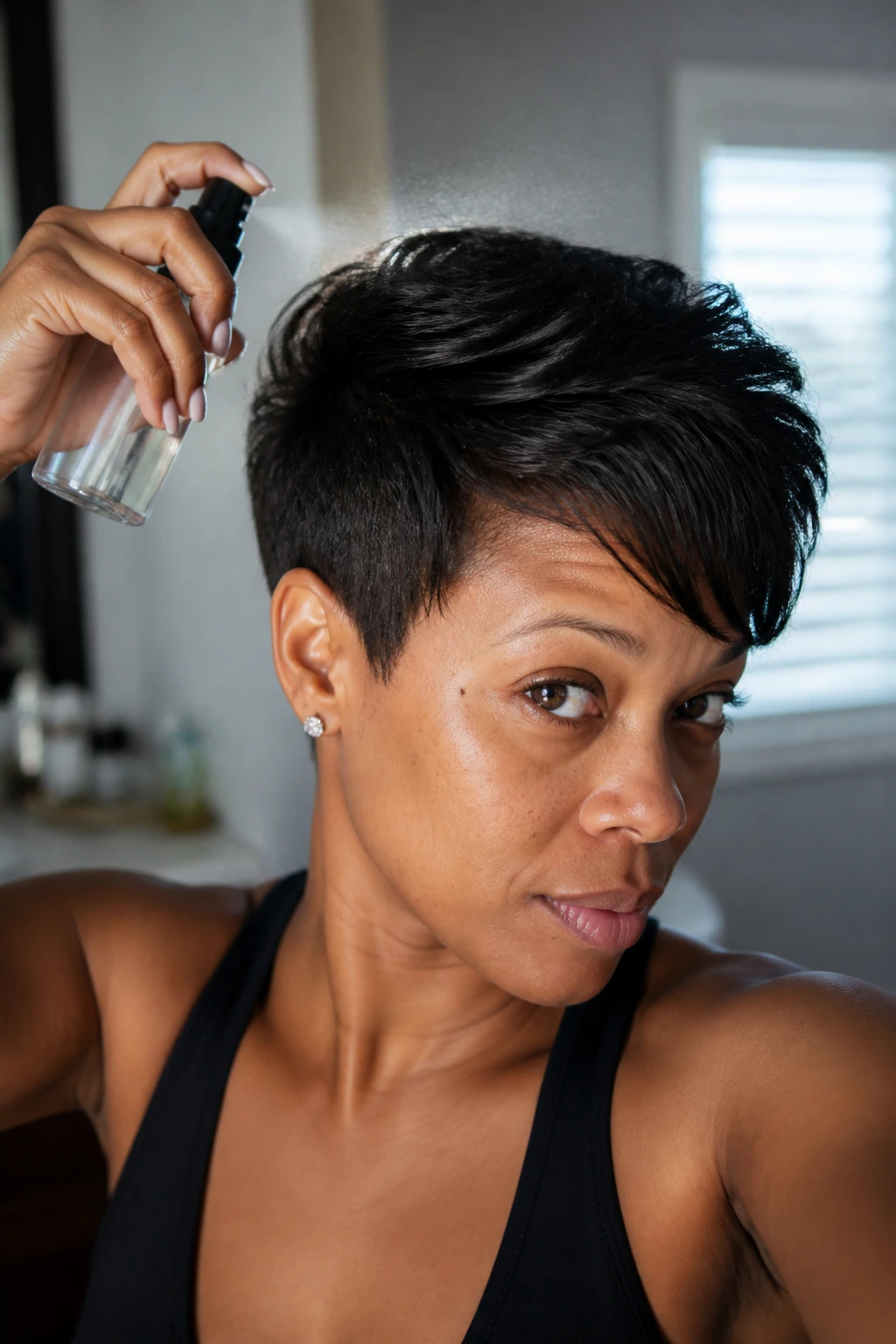
The cleanest maintenance schedule is boring in the best way. Clean the nape and temples every 2 to 3 weeks if you like a crisp outline, then go back for a fuller shape refresh about every 4 to 6 weeks. If you wear your hair very short, the grow-out shows faster, so the sides may need attention sooner than the top.
For natural textures, refresh the crown with a mist bottle, a little foam, and a diffuser instead of piling on product every day. For pressed versions, avoid re-flattening the same sections with hot tools every morning; that is how fine strands get tired and frayed. If the top starts collapsing, the problem is usually buildup, not lack of effort.
At night, keep the shape with satin. Short cuts can flatten under rough cotton pillowcases in a single night, and that is enough to make the whole silhouette look older than it is. If you have a line-up, avoid scrubbing the hairline hard when you wash. Gentle cleansing keeps the shape neat longer.
Questions People Ask About Two-Block Haircuts for Fine Hair
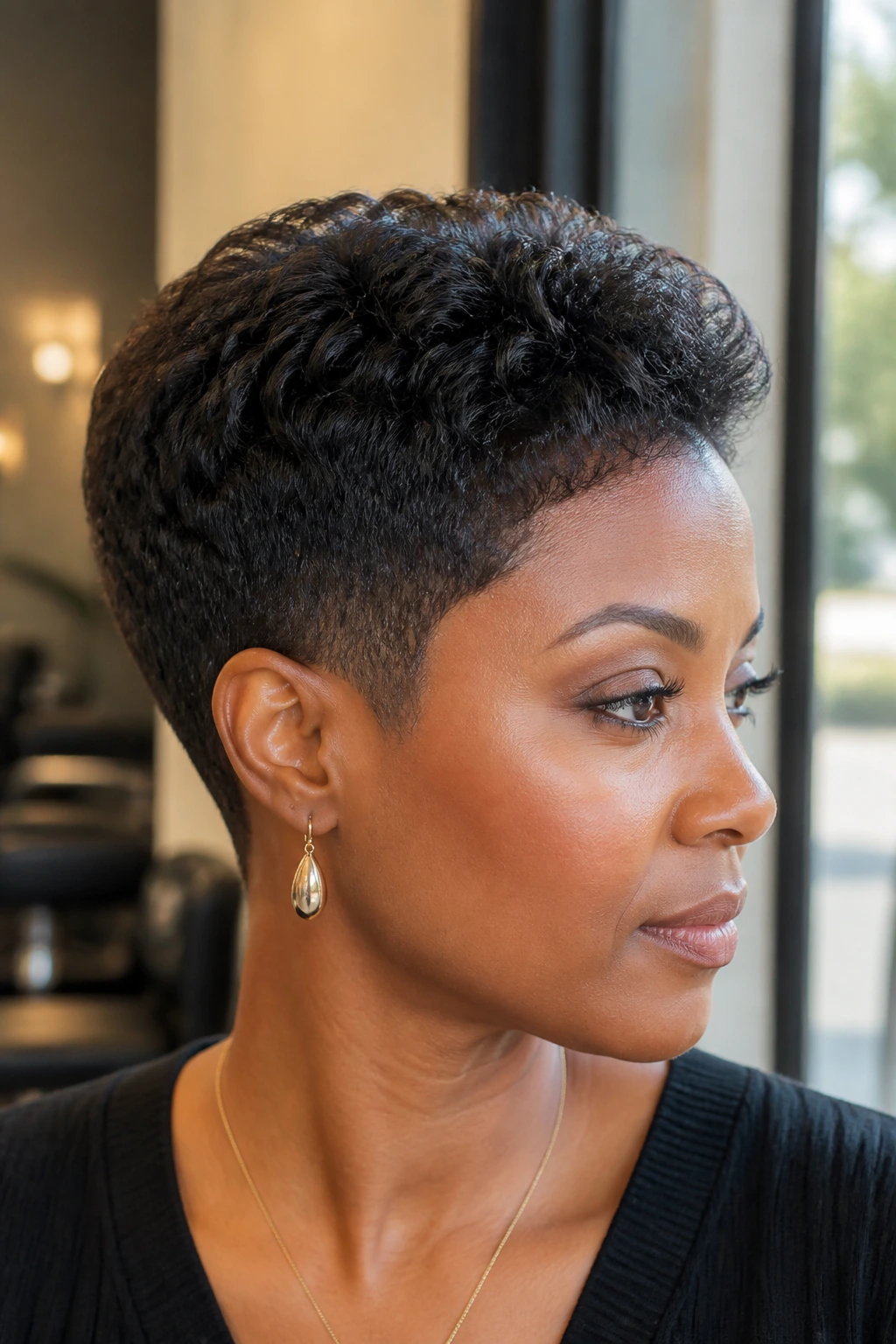
Is a two-block haircut the same as an undercut?
Not quite. A two-block cut keeps the top visibly separate from the sides and back, while an undercut usually pushes the shorter section lower and deeper. On fine Black hair, a softer two-block shape often looks more natural than a very deep undercut.
Does this haircut make fine hair look thinner?
Only if it is cut too aggressively. The point is to keep weight where it counts — usually the crown and front — while cleaning up the sides so the hair reads fuller overall. A bad cut exposes scalp; a good one frames the shape.
Should I get it cut wet or dry?
For curls and coils, dry or stretched cutting is usually safer because shrinkage changes the final length so much. If you wear a silk press most of the time, a wet cut can work, but the stylist still needs to think about how the hair behaves once it’s pressed.
How much length should stay on top?
Enough to support the style you actually wear. For a curly finish, that may mean 3 to 5 inches stretched; for a shorter crop, less can work. If the top is too short, the disconnect loses its purpose fast.
Can I still wear twist-outs or braid-outs with a two-block cut?
Yes, and some versions are better for that than others. Ask for the top to keep enough room for the set to shrink into shape, and keep the sides low enough that the texture on top stands out.
What if my edges are fragile?
Ask for a low taper and a soft temple finish instead of a hard line-up. That keeps the haircut neat without making the hairline the main event, which is a bad place to put stress.
How often should I trim it?
Most versions need a shape refresh every 4 to 6 weeks, but a very short crop may need cleaner edges sooner. The top usually grows out more forgivingly than the sides, so don’t chase the crown with scissors too often.
Can this work if my hair is very dense but the strands are fine?
Yes, and that’s actually one of the best cases for it. Dense fine hair often has too much weight in the wrong places, so a two-block shape can lift the crown and remove the bulk that makes the outline look heavy.
A Clean Shape That Still Moves
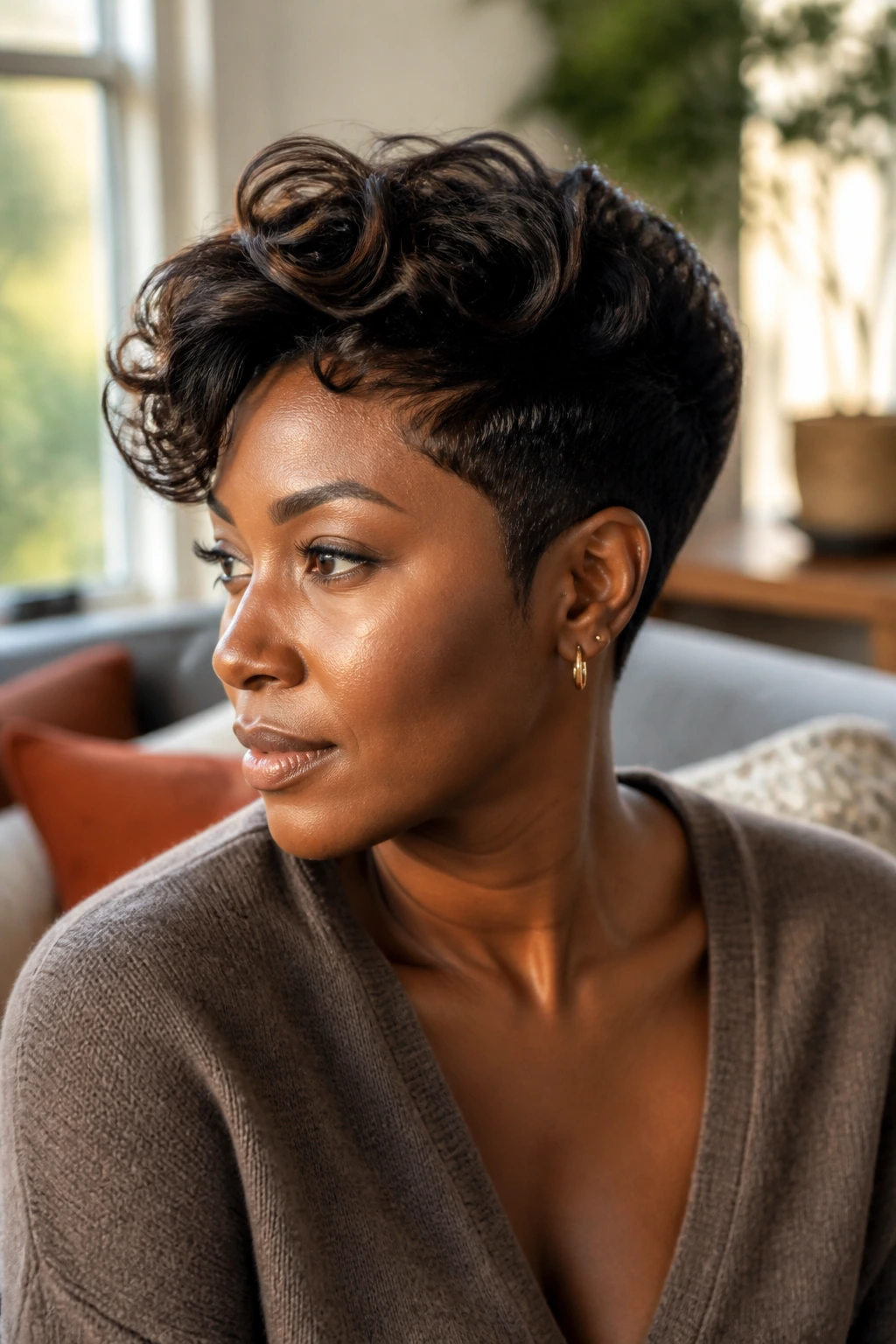
The best two-block haircuts for fine Black hair do one simple thing well: they give the top enough room to look alive while the sides stop stealing the show. That is why the shape feels sharper than a uniform crop and easier to live with than a style that depends on daily rescue work. The haircut does the first round of the work. You just keep it honest.
What matters most is choosing the version that matches your real routine. If you live in twist-outs, build the shape around stretch and shrinkage. If you love a silk press, ask for enough top length to hold movement when the hair is straight. If you want low drama, keep the taper low and the crown rounded. The shape should serve the way you wear your hair, not the other way around.
Pick the version that gives your crown a little room and your sides a little discipline, and the haircut will keep paying you back every time you look in the mirror.