



The best haircuts for women with fine hair are the ones that stop fighting the hair you actually have. Fine strands can look airy and elegant one day, flat and see-through the next, which is why the wrong cut can feel like a bad investment from the first wash. A smart shape does more than “take weight off” or “add layers.” It gives the hair a clean outline, a little lift where the head naturally goes flat, and enough structure that you do not spend twenty minutes trying to fake volume.
That matters even more after 60, when hair often changes in two ways at once: the strands can get finer, and the overall density can shift too. Those are not the same thing. A person can have a decent amount of hair and still need a cut that respects the smaller strand diameter, because flimsy layers and shredded ends make fine hair look thinner than it is. I’m not a fan of over-thinned cuts for this reason. They look airy for about a week, then they start to collapse.
What works instead is a mix of blunt edges, careful layering, and smart placement around the crown, temples, and cheekbones. Some of the styles below are short and crisp. Some keep more length. All of them are built to do one thing well: make fine hair look intentional instead of apologizing for itself.
Why These Cuts Earn Their Keep
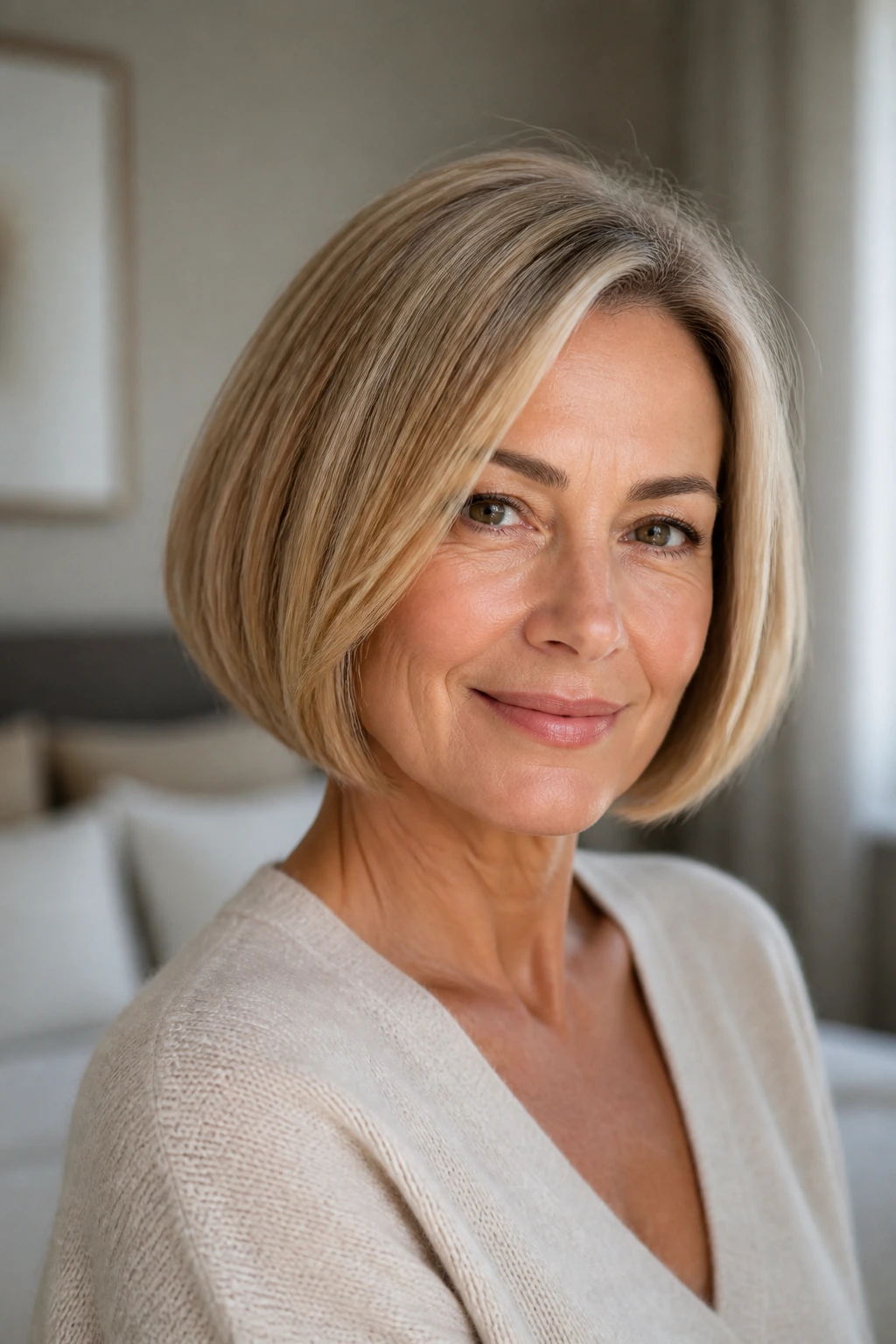
- They build a fuller outline: A clean perimeter at the bob, lob, or pixie line gives fine hair a stronger edge, which makes the whole style look denser.
- They control crown collapse: Shorter layers at the top, when placed carefully, keep hair from lying flat against the scalp by noon.
- They work with real life: Most of these cuts can be styled with a round brush, a blow dryer, and one lightweight product, not a cabinet full of sprays.
- They grow out in a sane way: A good shape still looks deliberate at six weeks, not like you missed an appointment and hoped for the best.
- They play nicely with gray or silver strands: Fine gray hair can get wiry or soft depending on the person, and these cuts keep that texture looking polished instead of fuzzy.
- They do not rely on over-thinning: That matters. Fine hair needs smart removal of bulk, not a barber’s version of a hedge trim.
1. Soft Layered Pixie With Lift at the Crown
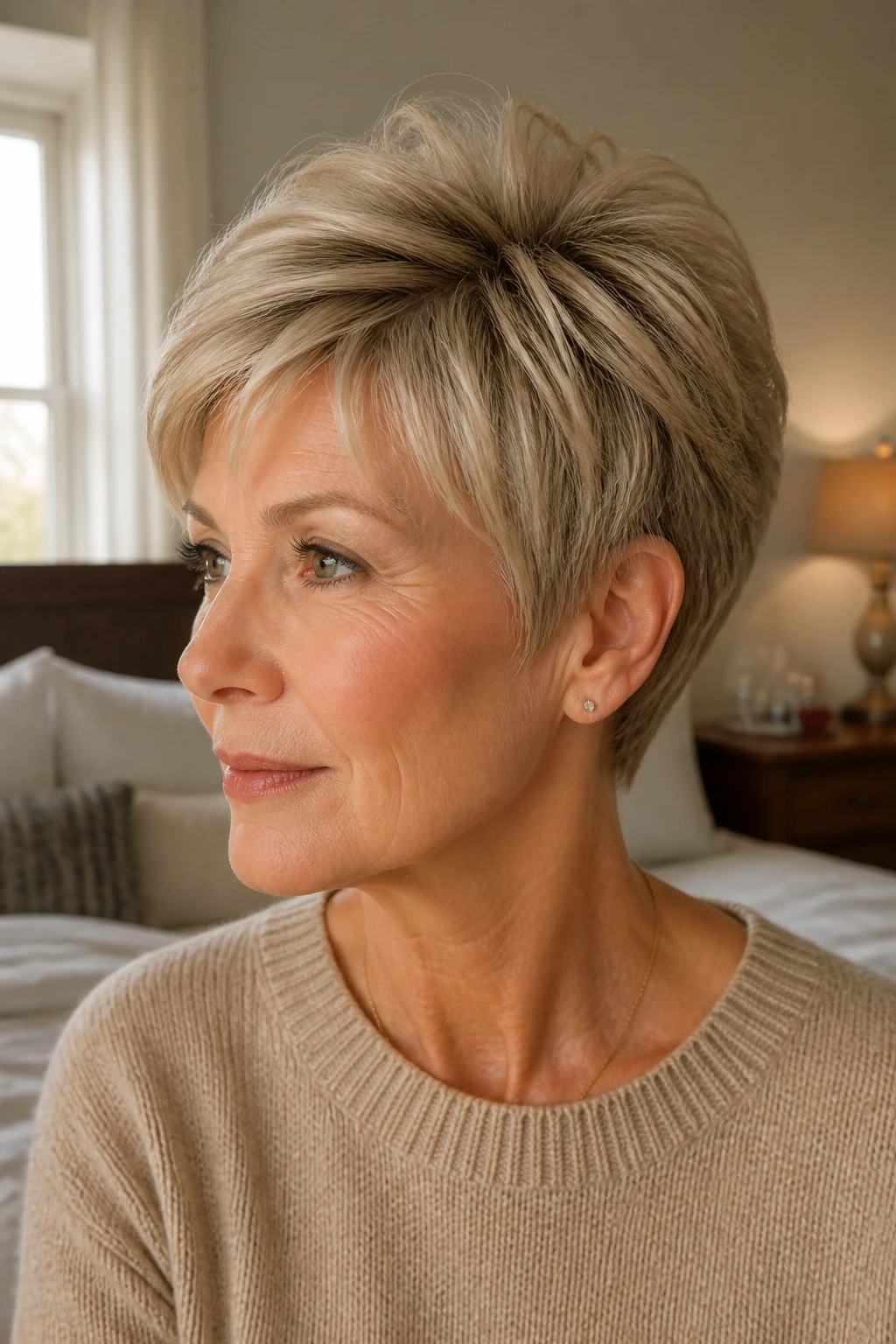
A soft pixie is one of the easiest places to start if you want fine hair to look thicker without giving up movement. The trick is in the crown: a little lift up top, tapered sides, and enough length on the top to sweep rather than spike. Too much razoring is where this cut goes wrong. Too much, and the ends look feathery in the bad sense.
Why it works
The short length keeps the hair from dragging itself down. Fine strands lose volume fast when they get too long, especially around the back of the head. A layered pixie fixes that by taking the weight off the ends while leaving just enough top length to create a shape you can style with your fingers.
If your hair flattens at the crown, this cut handles it better than a one-length crop. A quick blow-dry with a vent brush and a dab of mousse at the roots is usually enough. You want the hair to move, not stand in stiff little spikes. Softness is the point.
Best styling move
A pea-sized amount of lightweight cream at the ends keeps the top from looking dry. Push the crown up with the dryer for 30 seconds, then switch the part a touch off-center. That tiny shift does more than people expect.
2. Chin-Length French Bob

Why does a chin-length bob keep showing up in this conversation? Because it gives fine hair a hard edge right where the face can use one. The line lands at the jaw, which creates the feeling of density even when the actual strand count is modest. It looks especially good when the ends are left blunt and the layers are kept quiet.
Fine hair loves a bob that knows exactly where it stops. A French bob works because it doesn’t smear shape across too much length. The result is neat, slightly chic, and much easier to air-dry than a longer cut that wants constant coaxing.
Best when: your hair is straight or only lightly wavy, and you want a cut that still looks good after a quick round-brush pass.
Watch for: too much texturizing through the ends. That can make the bob look wispy instead of full. If you want a little bend, ask for soft internal shaping, not shredded ends.
3. Jaw-Skimming Blunt Bob
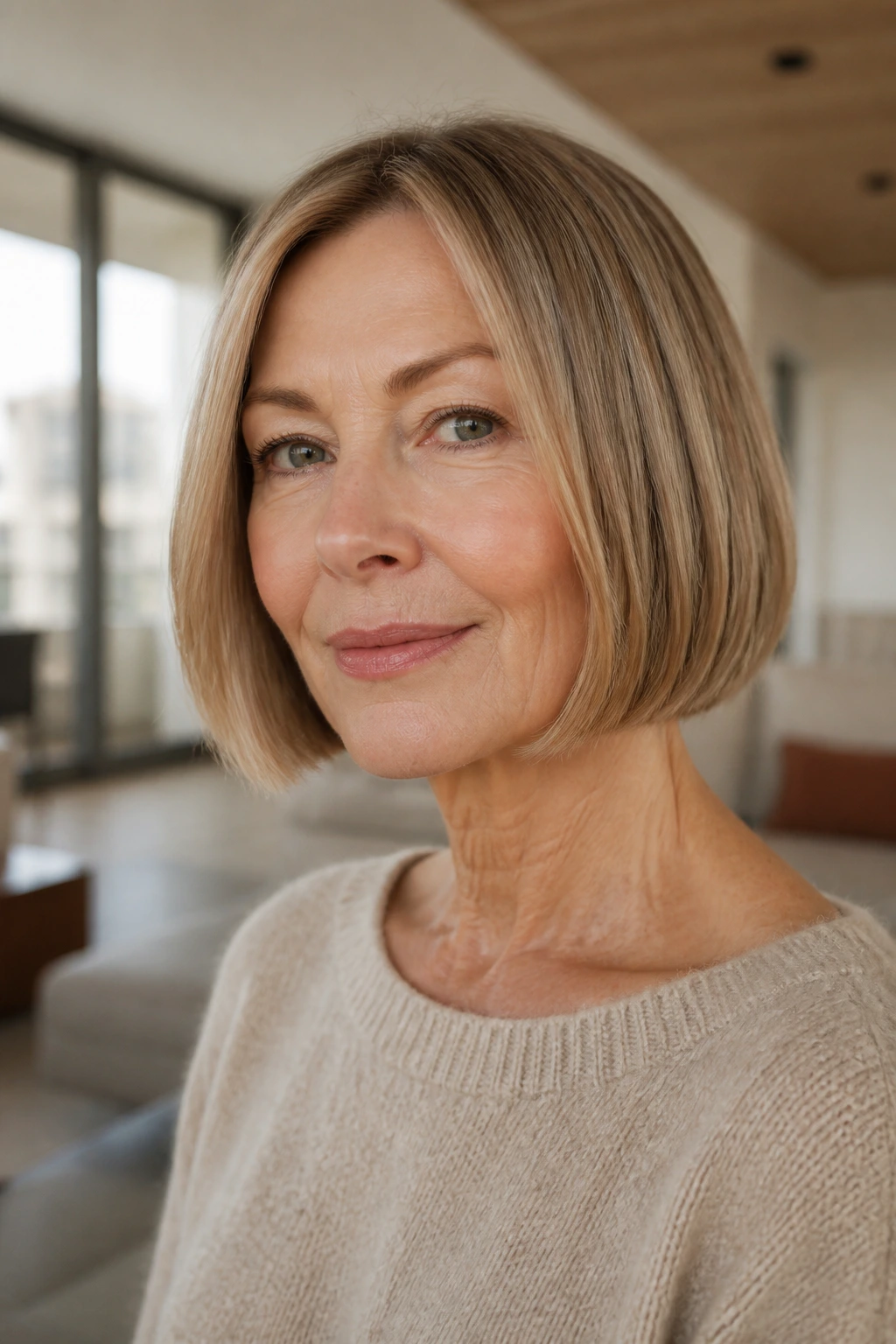
A blunt bob that hits just at the jaw can make fine hair look denser than it really is. That sounds like a trick, and it is, but a useful one. The blunt line gives the eye a clear place to stop, so the hair reads as thicker from a distance and in photos.
This cut is a favorite when someone wants polish without fussy styling. It can be tucked behind one ear, worn with a middle part, or pushed slightly forward for a softer frame around the mouth and cheeks. The bluntness does the heavy lifting.
If you have a narrow face, this shape can add a bit of width right where you want it. If your jawline is strong already, keep the front a hair longer than the back so the line doesn’t feel too boxy.
Small styling note
A flat brush and a blow dryer with a nozzle are enough. Turn the ends under just a little — not a big curl, just a polite bend. That bend keeps the outline from looking too rigid.
4. Long Pixie With Side-Swept Fringe
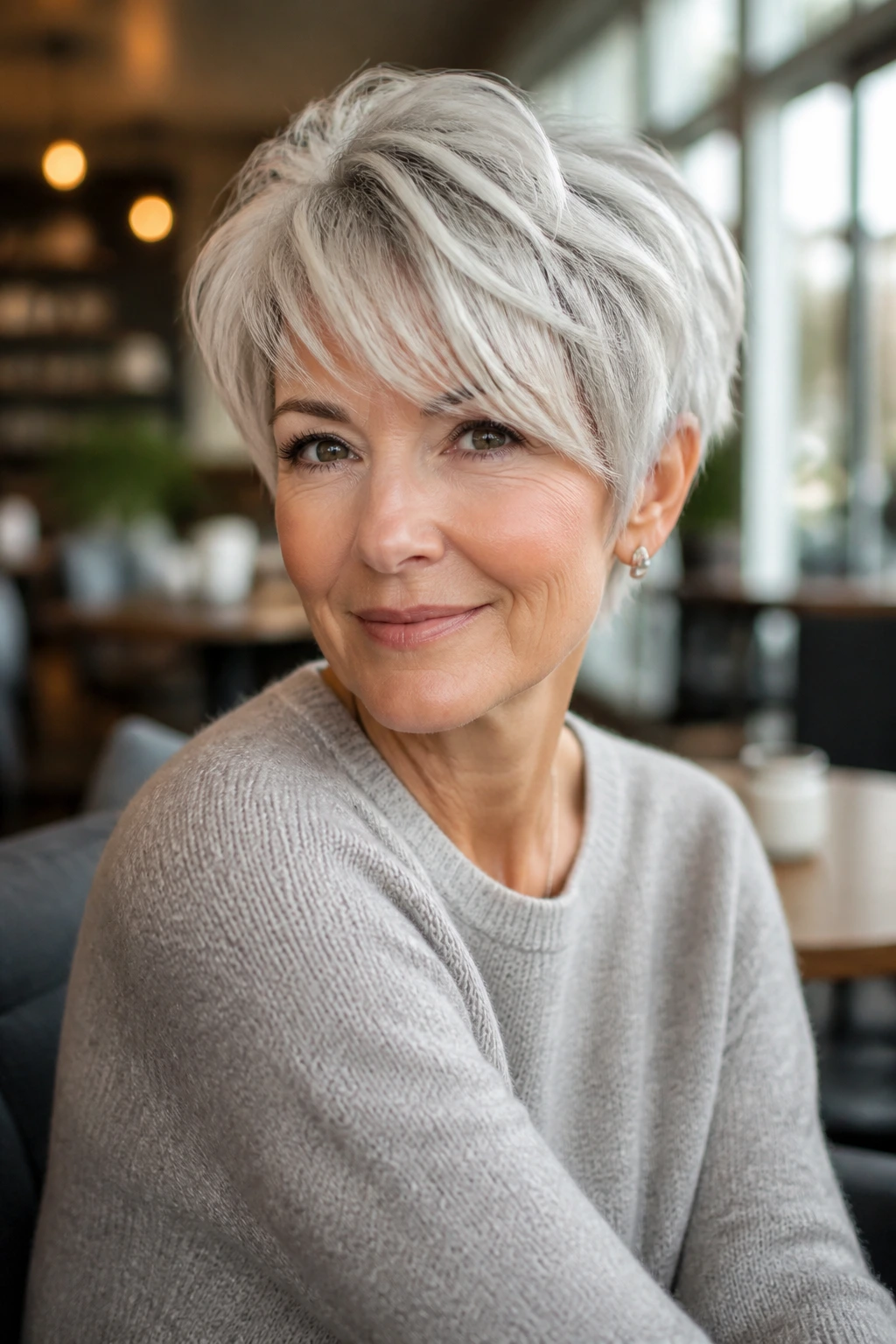
A long pixie is the cut for anyone who wants short hair but not a severe short haircut. The fringe is the main event here. Side-swept bangs soften the forehead, help disguise a flatter crown, and bring attention to the eyes rather than to thinning around the hairline.
The best version keeps the top long enough to piece out with a touch of styling cream, while the sides stay neat and close. That balance matters. If the whole cut gets too fluffy, it can start to look soft in an unstructured way. If it gets too tight, it loses the gentle feel that makes it flattering.
A side fringe also gives you a useful off-switch on bad hair days. You can redirect the front, pin one side, or tuck it behind the ear. That flexibility is worth a lot when hair is fine and doesn’t always wake up cooperative.
5. Collarbone Lob With Invisible Layers
If you want to keep some length, the collarbone lob is one of the smartest haircuts for women with fine hair. Collarbone length gives you movement without letting the ends get so long they look stringy. The layers should be quiet here — almost hidden — because the whole point is to keep the perimeter looking full.
Invisible layers are the part people often miss. They remove just enough bulk inside the shape to keep the hair from hanging like a sheet, but they do not break up the outline. That matters. Fine hair needs a defined edge more than it needs a dramatic haircut story.
This cut works well if you air-dry most days. A little mousse at the roots, a quick scrunch at the ends, and a center or off-center part can be enough. If you blow-dry, keep the brush movement gentle so the hair doesn’t stretch too flat.
6. Feathered Crop With Crown Lift
Feathered cuts get a bad reputation when they’re done too hard. On fine hair, though, a feathered crop can be smart if the feathering is concentrated near the crown and kept soft through the ends. You want lift, not fray.
This style suits hair that naturally lies close to the scalp. A little height at the crown opens up the face and makes the whole shape feel lighter. The sides should stay compact so the top can do the visual work. If the sides puff out too much, the crop loses its clean line.
A good feathered crop also moves well with glasses. That sounds like a small thing until you’ve had a haircut that fights your frames every morning. This one usually behaves.
7. Stacked Bob That Stays Full in Back
A stacked bob is one of those cuts that looks much more expensive than it is, mostly because the graduation in the back gives the illusion of thickness. The shorter layers at the nape support the top layers, so the back doesn’t collapse into a flat curtain.
For fine hair, the key is moderation. You want stacking, not a dramatic shelf. Too much graduation can look dated fast and can make the top seem disconnected from the rest of the head. Keep the back clean and rounded, then let the front soften slightly toward the jaw.
What makes it different
The shape does the volume work for you. You are not relying on product to fake fullness all day, which is a relief if your hair gets weighed down by anything richer than a light mousse.
8. Shoulder-Length Cut With Curtain Bangs
Curtain bangs can save shoulder-length fine hair from looking all one note. They open the face, give the front some motion, and create a break in the outline without sacrificing length. The trick is to keep them airy, not dense. Heavy bangs on fine hair can swallow the face and make the rest of the hair look thinner by comparison.
This cut suits women who like the feel of longer hair but want a little more shape around the eyes and cheekbones. Shoulder length can be tricky on fine hair because it’s the zone where many styles start to go limp. Curtain bangs pull the attention forward and give the cut a reason to exist.
A center part with a small amount of bend in the front pieces works well here. So does a soft blowout with a round brush just at the fringe. You do not need a full salon finish every day. Two minutes at the front can change the whole look.
9. Soft Shag With Wispy Layers
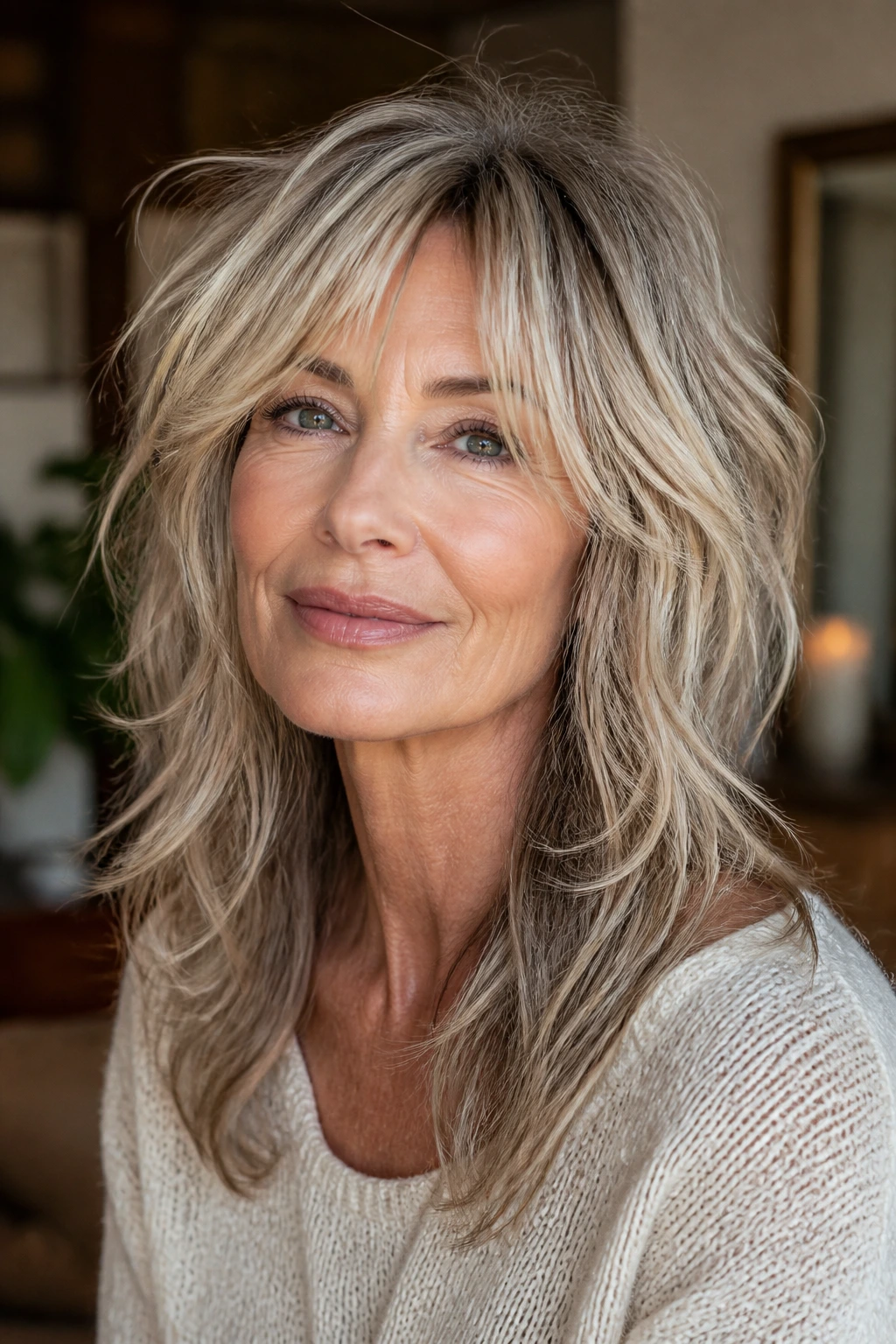
A shag on fine hair can be brilliant or a total mess. There is no middle ground. The difference is in the layer placement. A soft shag keeps the layers long enough to maintain shape and movement, while wispy face-framing pieces give the style some air around the cheeks and jaw.
This cut is best when your fine hair has some natural wave. Straight hair can wear it too, but the styling has to be a little more deliberate. If the layers are too short, the ends start to fray and the shape goes fuzzy. If they’re too long, you lose the shag effect and just end up with a tired mid-length cut.
A salt-free texturizing spray can help here, but lightly. A spritz at the mid-lengths and a rough dry with your fingers is enough. I would skip heavy creams; they drag the whole thing down.
10. Tapered Crop With Longer Top
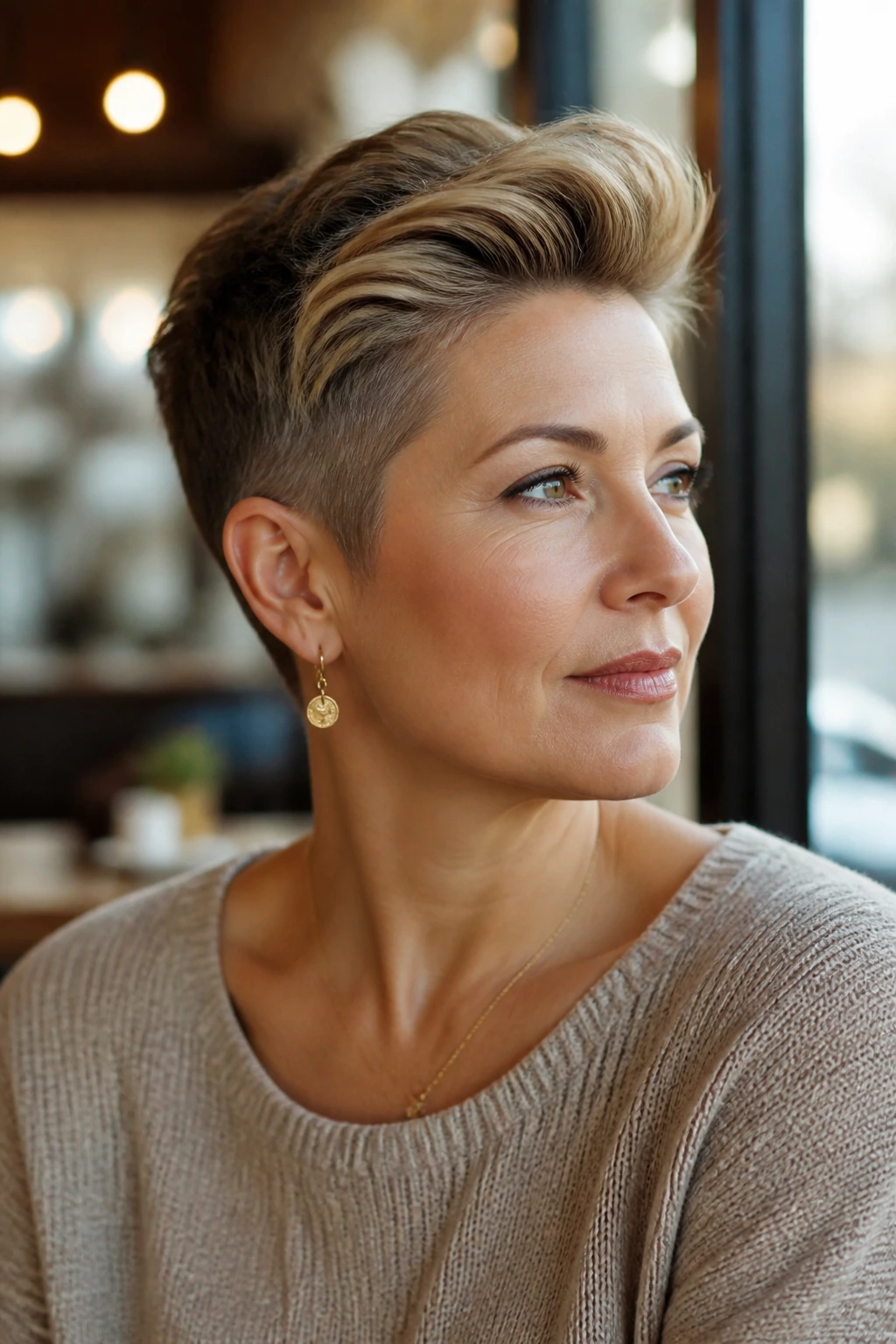
A tapered crop keeps the sides close and neat while leaving enough length on top to create direction. That difference matters when you want fine hair to look purposeful. The longer top can be swept back, pushed to one side, or worn with a little lift at the front, while the tapered sides keep the cut from looking puffy.
This is one of the better options if you wear glasses or like a sharper neckline. It frames the face cleanly, and the short sides stop the style from spreading outward in that “my hair used to be shorter” way.
The cut also makes the most of good bone structure. If you like a style that shows your ears, your cheekbones, and your frames, this is a strong pick. It’s tidy, but not dull.
11. Angled Bob With Subtle Graduation
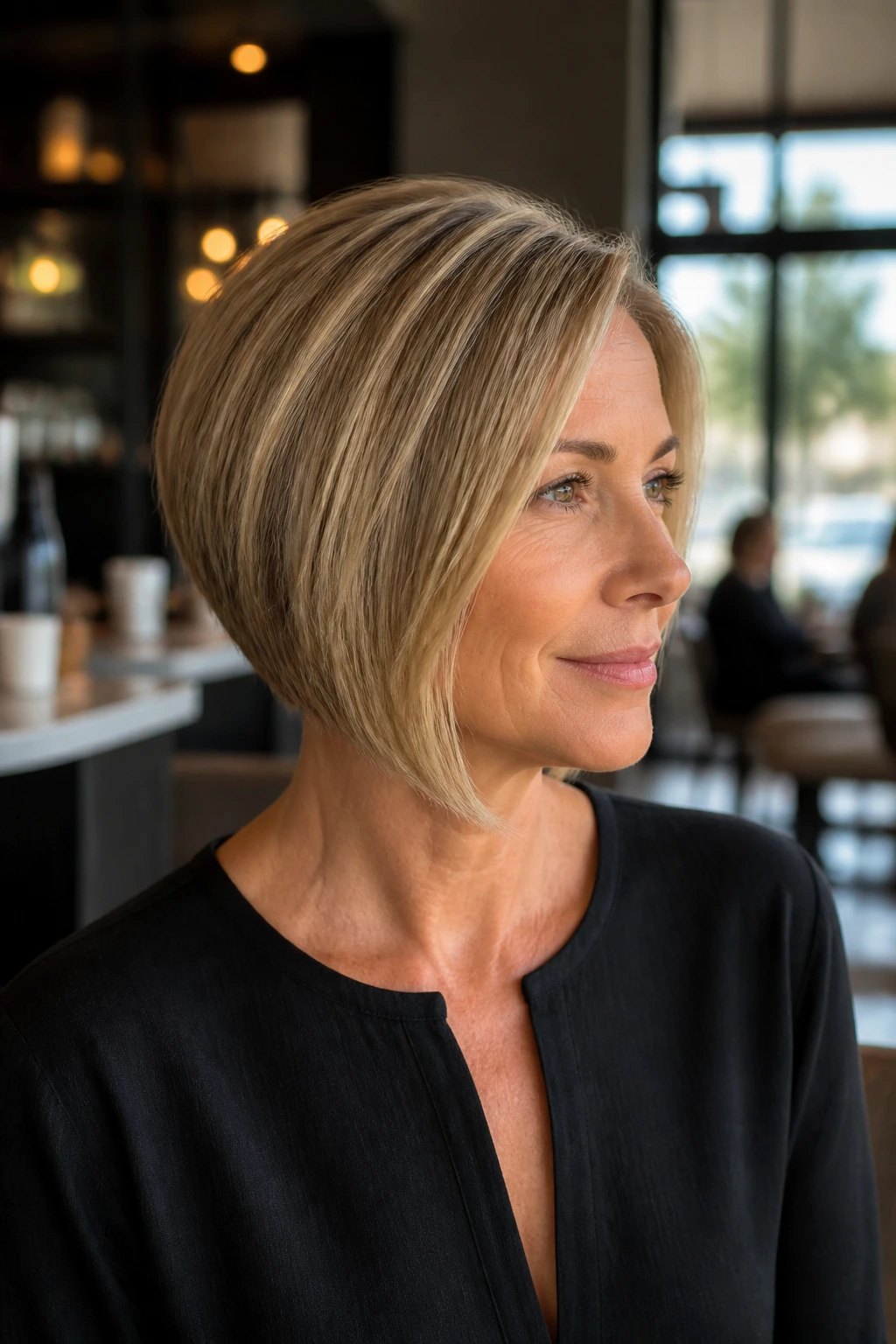
An angled bob works because the eye follows the longer front pieces, which creates length without weighing the hair down at the back. For fine hair, that front-to-back slope gives the cut movement and makes the perimeter look more alive. The graduation should be subtle; this is not the haircut that needs a dramatic stack.
The angle can be gentle or more noticeable, depending on how much length you want to keep near the collarbone. I prefer the softer version for mature faces because it doesn’t pull everything forward too hard. The lines stay clean, but the effect is easier to wear.
Best for
Women who want a bob with a little swing and a little edge, especially if straight hair tends to fall flat the minute it dries.
12. Wavy Lob With Internal Layers
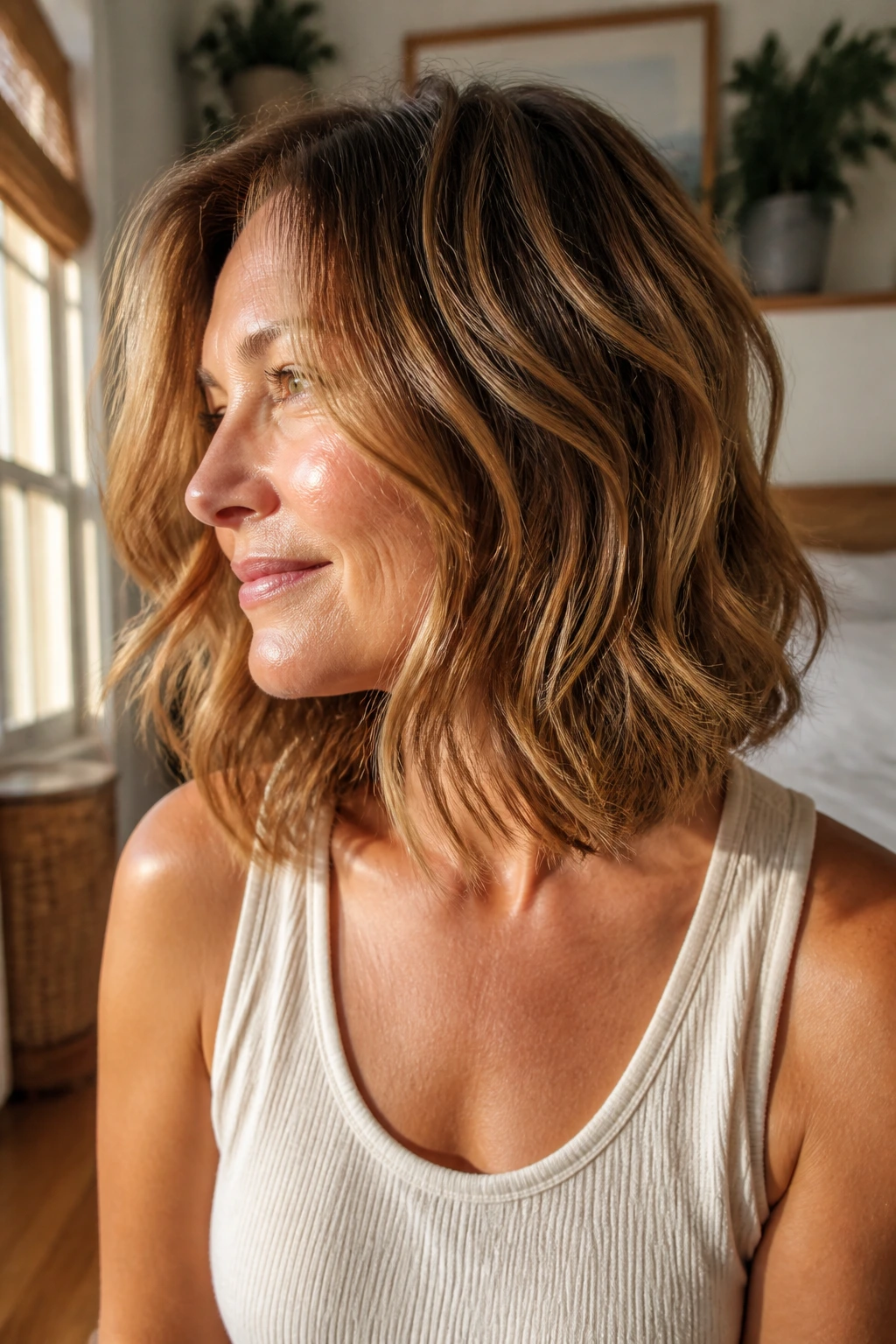
If your fine hair has natural wave, an internal-layer lob can be a gift. The secret is keeping the outer line full while taking some weight out from the inside. That lets the wave show up without turning the ends stringy.
This cut works best when the hair is cut with your natural texture in mind, not stretched straight and then guessed at. A good stylist will look at how your wave falls when it’s damp and dry, which sounds small but changes everything. Wavy fine hair can lie to you in the chair.
You can wear this cut air-dried or with a soft blowout. Either way, the hair should look touchable, not crunchy. A tiny bit of cream at the ends is enough. Too much product and the wave loses its shape.
13. Bixie Cut
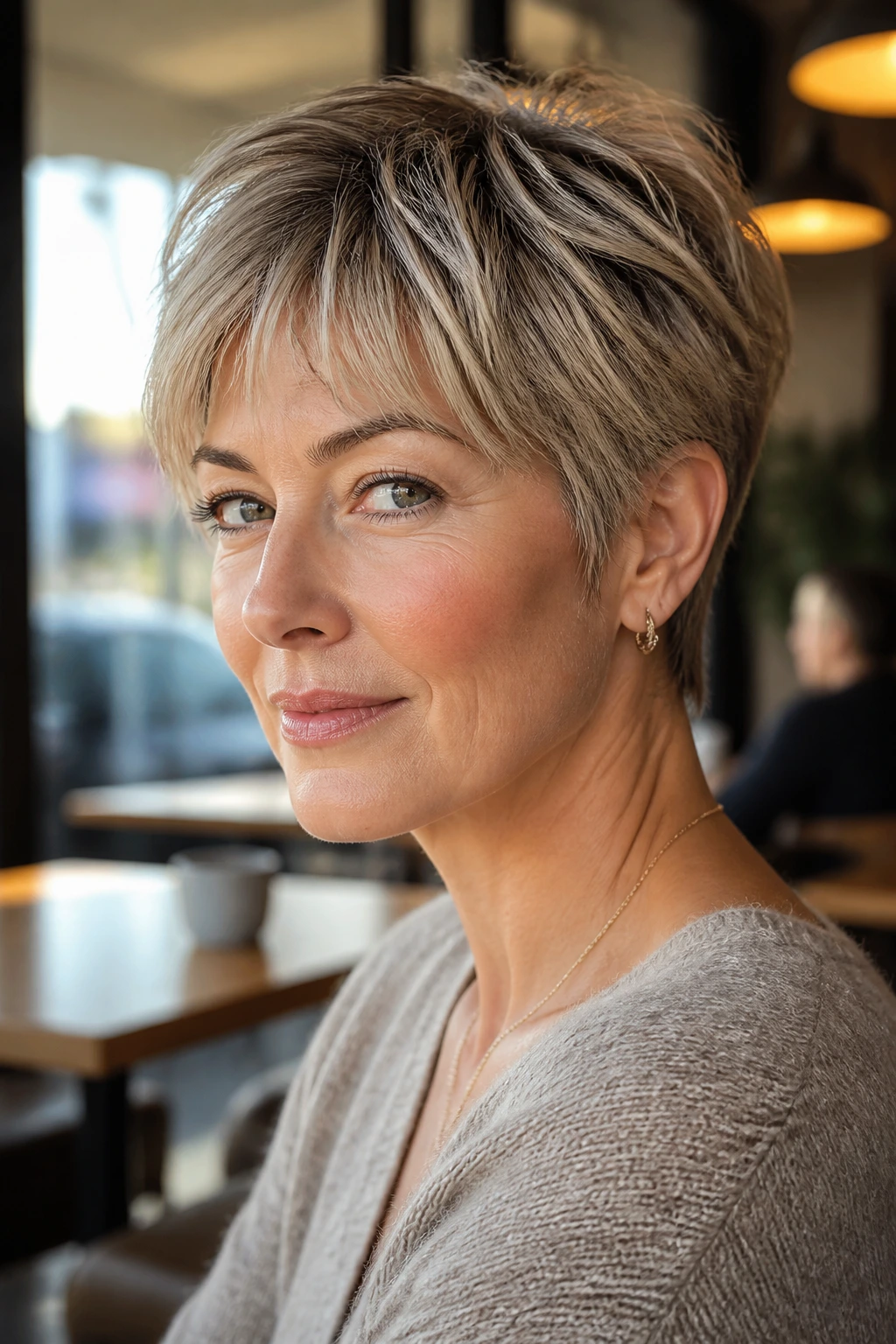
A bixie is the in-between cut that has the spirit of a bob and the ease of a pixie. On fine hair, it’s useful because it creates a lot of shape without requiring much length. The sides stay soft, the top stays a little longer, and the overall outline feels modern without trying too hard.
This cut tends to flatter people who want their hair off the neck but don’t want the severity of a very short crop. It can be swept forward, tucked behind the ears, or worn with a side part. The best version keeps texture light and controlled.
How to think about it
A bixie is not a “messy” cut. It needs a clean shape first. Then you can add a little piecey separation with product if you want movement.
14. Sweeping Side-Part Bob
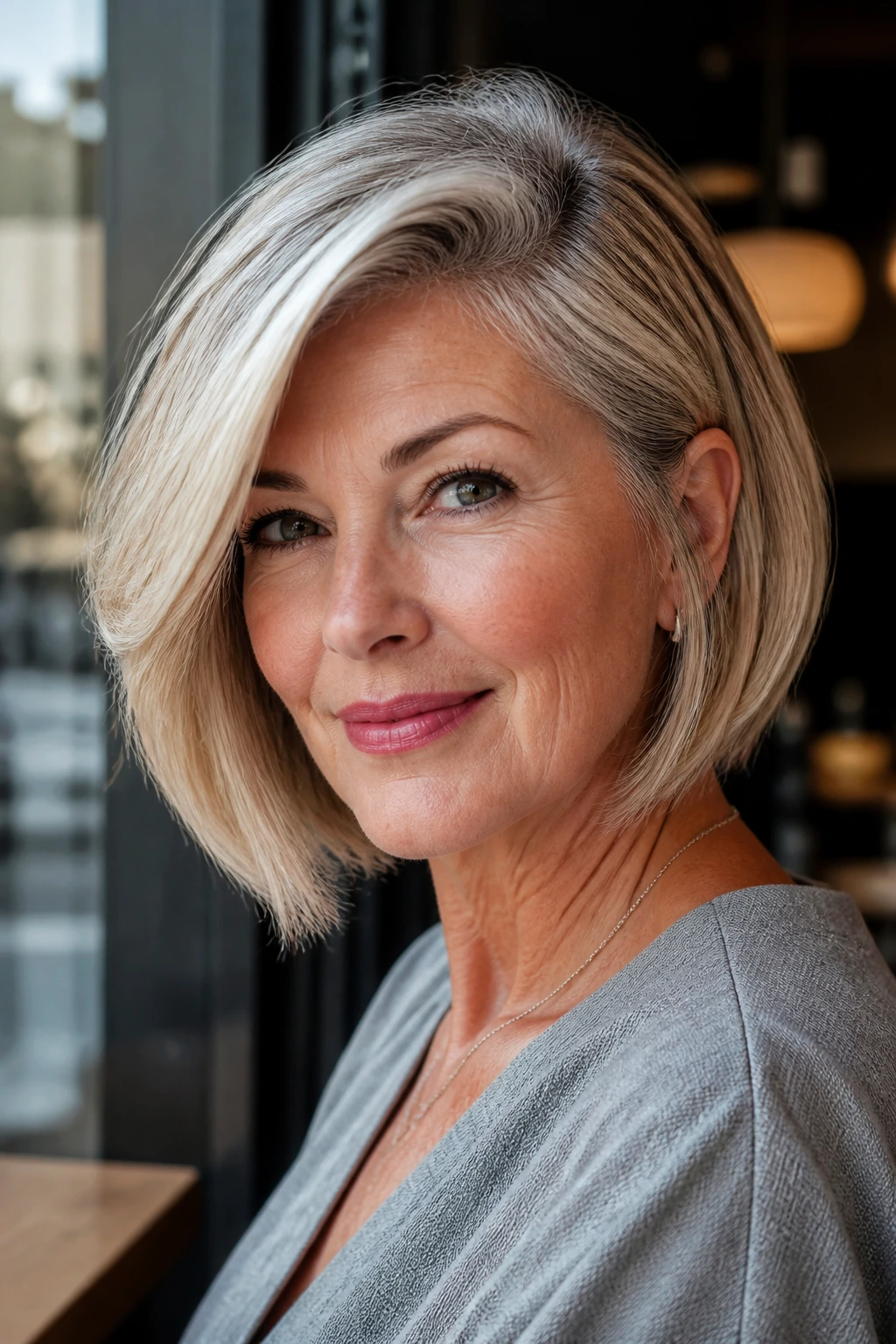
A deep side part can wake up a bob fast. It creates lift at the roots where fine hair often needs it most, and the asymmetry gives the style a little drama without adding length. This is one of the easiest changes to make if you already have a bob and it feels too flat.
The cut itself can be blunt or softly layered, but the part is what changes the mood. A side part shifts volume to one side, which can help if one side of the hair naturally falls flatter than the other. It’s also useful for hiding a stubborn cowlick near the crown.
If you want more movement without committing to a new haircut, start here. Sometimes a part change is enough to make the whole cut look freshly done. That sounds too simple. It isn’t.
15. Face-Framing Mid-Length Cut
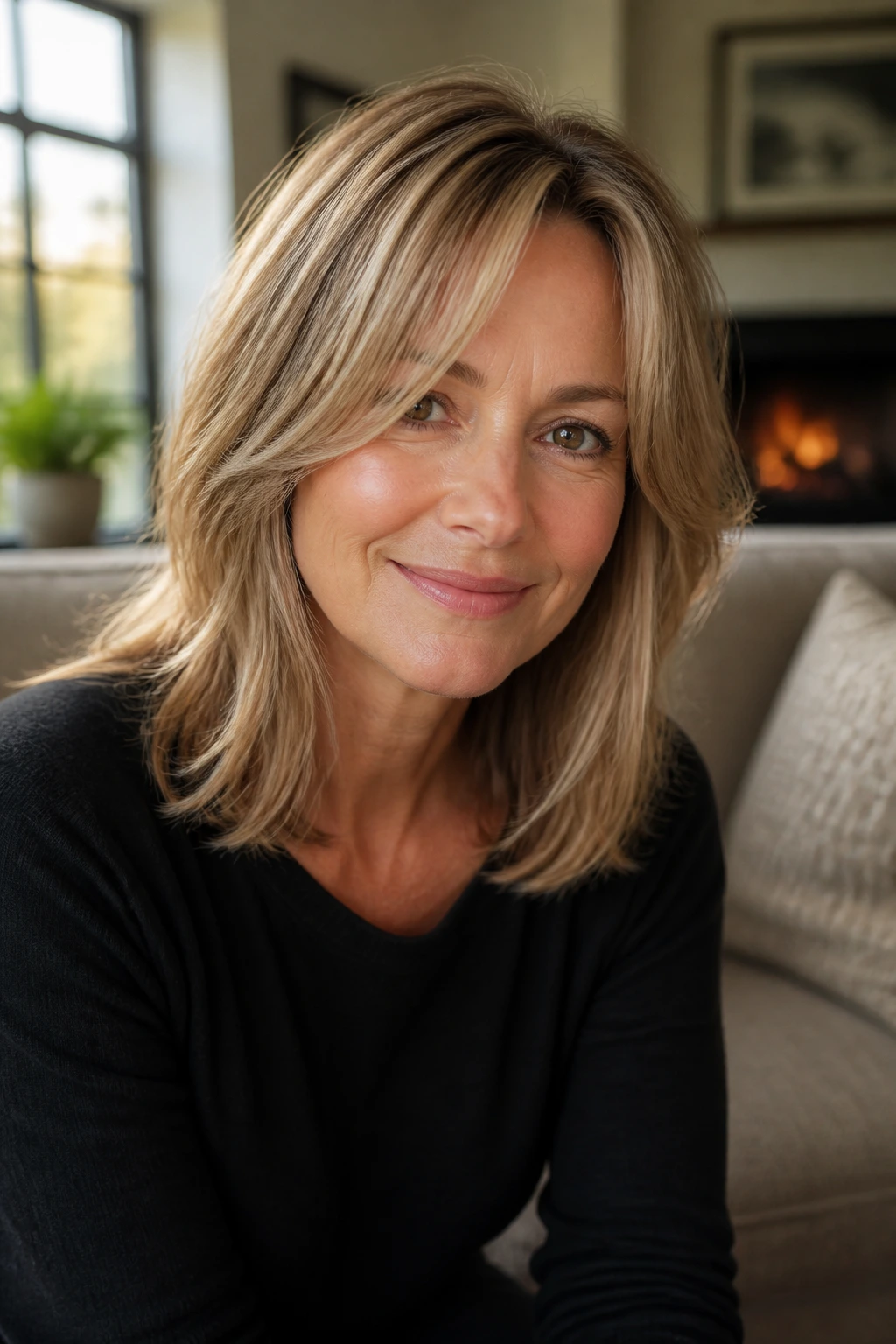
A mid-length cut around the shoulders can still work beautifully on fine hair if the perimeter is kept full and the front pieces do the shaping. Face-framing layers around the cheekbones and chin keep the style from looking heavy, while the length gives enough weight that the ends don’t fly away.
This cut is for someone who likes hair that can go up, down, half-up, and clipped back with a barrette. It’s flexible. That matters more than people admit. A flexible cut gets worn more often because it fits the day you’re having, not the day you planned.
The safest version keeps the longest pieces strong and avoids over-texturizing. If the layers start too high, the cut can go see-through at the ends. Keep the shape anchored, then let the front pieces soften the face.
16. Short Crop With Piecey Fringe
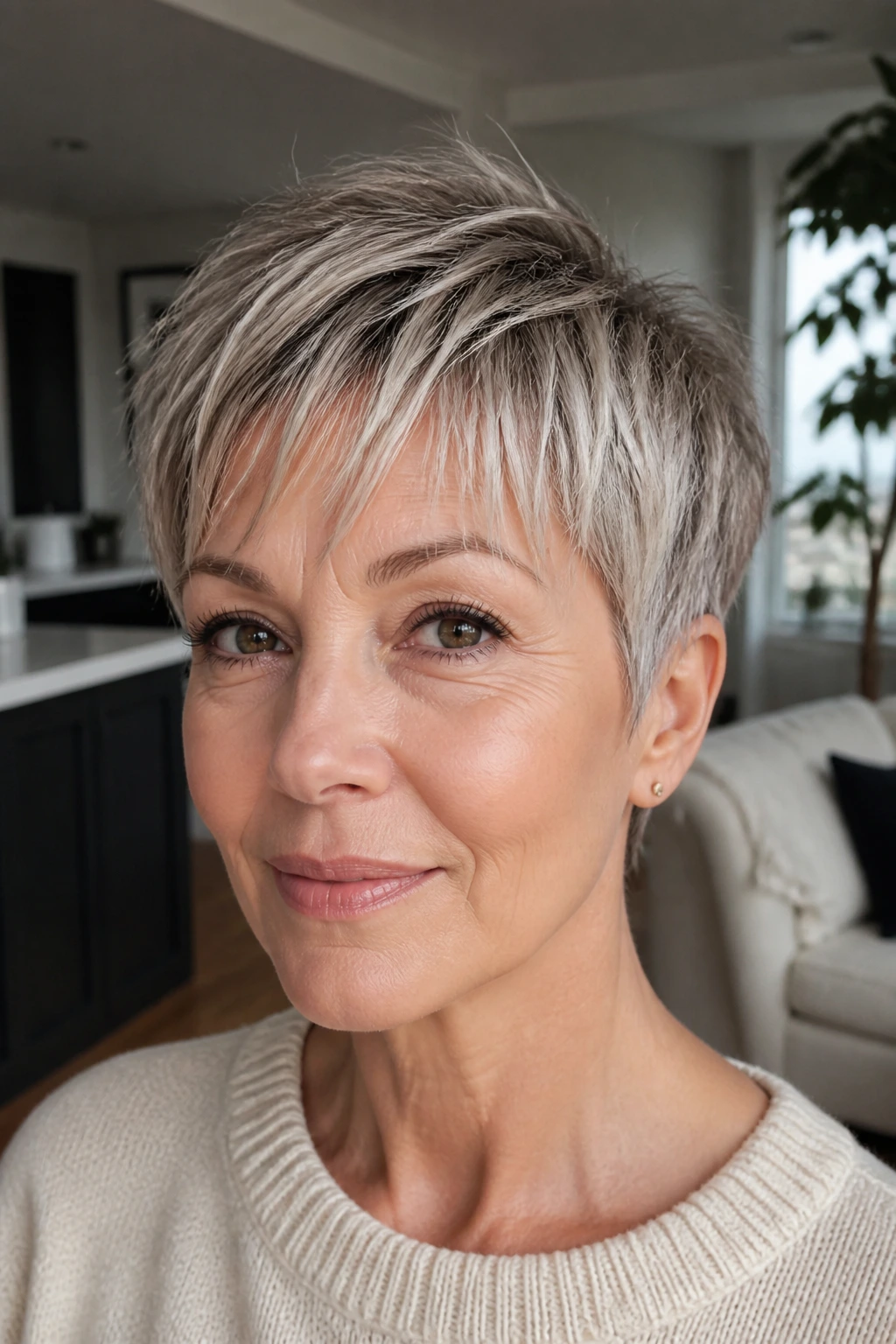
A short crop with piecey fringe brings texture to the front without making the whole head look busy. The fringe breaks up the forehead line, and the short length removes the weight that often drags fine hair down. It’s a smart choice if you want a lively cut that still feels neat.
The fringe should be separated, not thick and solid. That separation is the whole point. It keeps the front soft and helps the cut move instead of sitting like a helmet. I like this one best when the top is cut with a little irregularity, because that gives the hair enough variation to look fuller.
A tiny dab of wax or pomade can help define the pieces. Use less than you think you need. Fine hair goes greasy fast, and once it’s greasy, the shape disappears.
17. Layered Shoulder Cut With Full Ends
There’s a persistent myth that fine hair must always go short. Not true. A shoulder-length cut with long, low layers can keep enough weight at the ends to look thicker while still adding movement through the mid-lengths. The perimeter stays strong, which is what keeps the style from collapsing.
This is one of the best options for someone who wants to keep hair around, but not drag it past the point where it starts to look stringy. The ends should feel full in the hand. If a stylist starts carving too deeply into the lower half, the cut loses that fullness and begins to fray.
Who it suits
Women who like a softer frame around the face and don’t want the upkeep of a bob or pixie. If you also pull your hair back often, this length gives you room to do that without fighting the cut.
18. Textured Bob With a Tapered Nape
A textured bob can work on fine hair when the texture is placed where it helps, not everywhere. A tapered nape keeps the neckline clean and removes the bulk that can make a bob sit oddly against the neck. The rest of the shape stays fuller through the sides and crown.
This cut is especially useful if your hair grows in a way that makes the back puff slightly while the top lies down. That happens more often than people think. The tapered nape fixes the silhouette and makes the bob look intentional from every angle, not just the front.
Keep the texture soft. I’m repeating myself because it matters. Too much roughing up through the ends and you’re back to wispy territory.
19. Rounded Bob With Volume at the Temples
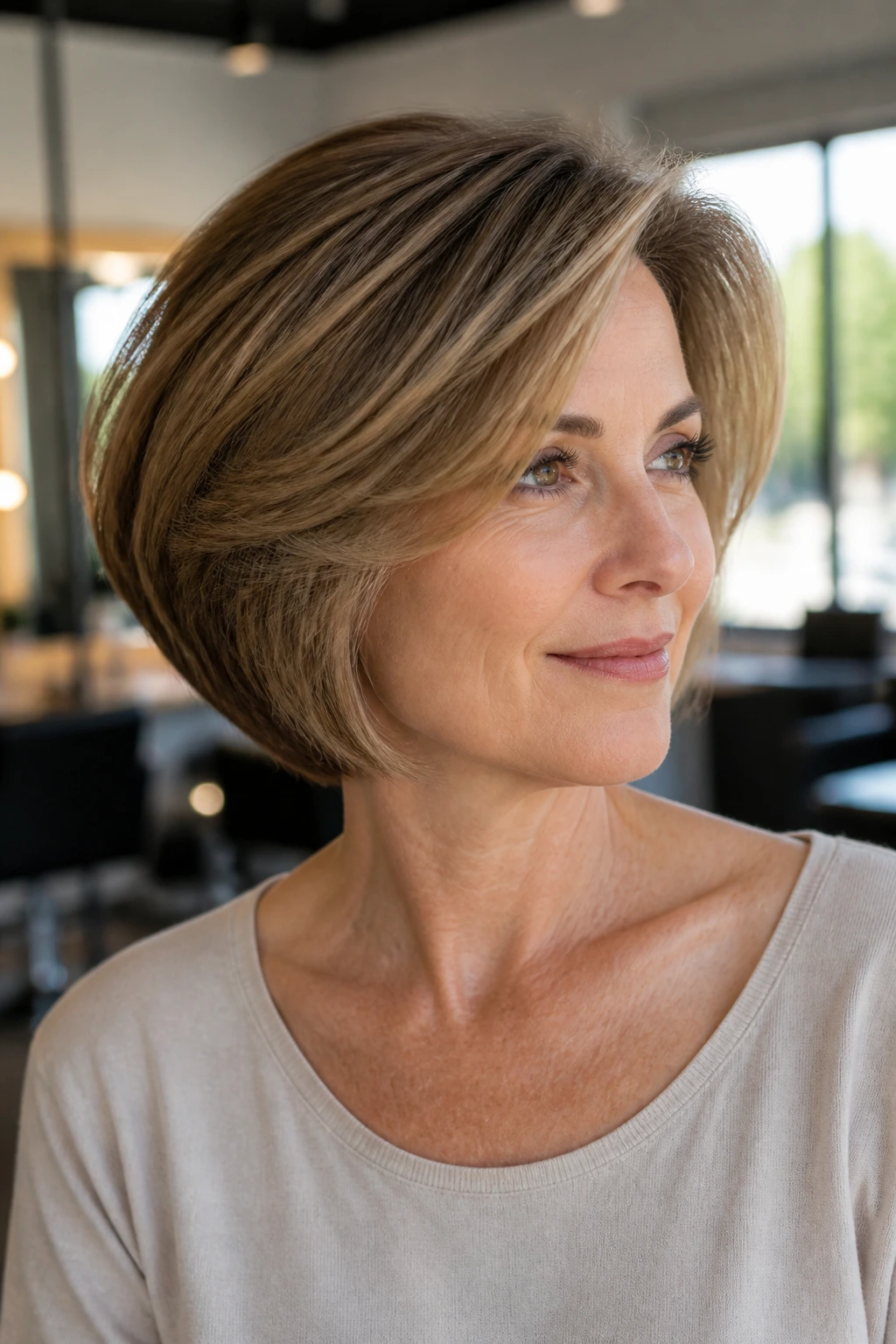
A rounded bob gives fine hair a curved silhouette, which helps the style feel fuller at the sides and around the temples. That can be a smart choice if the hairline is starting to look lighter there, because the shape directs the eye outward instead of inward.
The rounded shape should feel gentle, not puffed-up or shell-like. The line around the head should be smooth, with just enough bend to keep the outline from going pin-straight and flat. A round brush and a little root lift are enough to build it.
If you wear glasses, this style can sit nicely with the frames. The temples of the hair and the temples of the face end up working together, which sounds odd and looks good.
20. Choppy Pixie With Silver-Friendly Separation
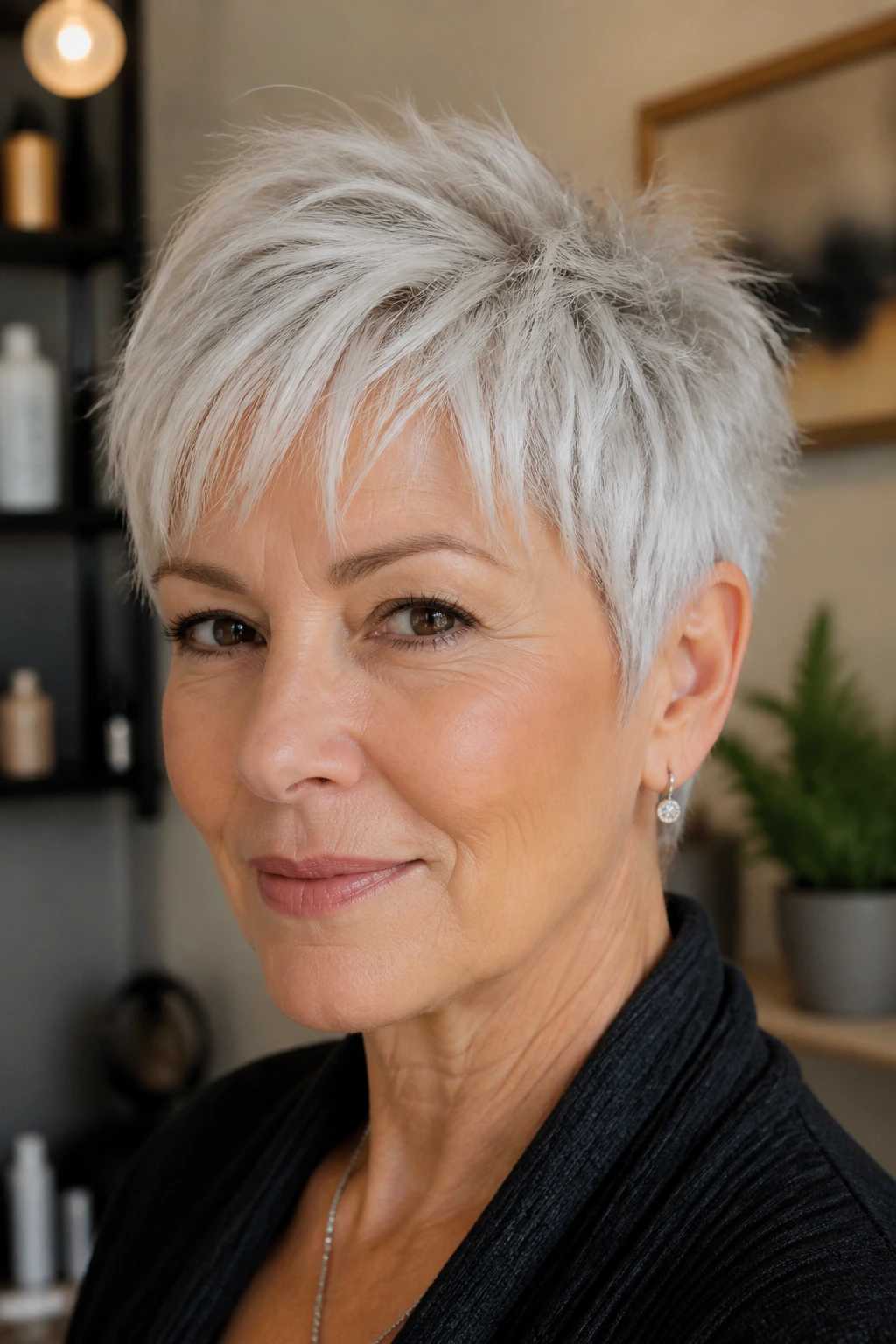
A choppy pixie is a strong finish to this list because it gives fine hair texture without pretending it has more density than it does. The choppiness creates little shadows and highlights through the cut, which is especially nice on silver, white, or salt-and-pepper hair. Those colors show detail fast.
This cut works when the pieces are defined, not shredded. You want separation, not frizz. A light paste or cream can help you pinch out the top and fringe into soft points. The shape stays modern because the edges remain neat.
It’s also one of the easiest cuts to live with if you don’t want to blow-dry every morning. Air-dry it with a little root lift, then touch the front with your fingers. Done. That’s not lazy. That’s smart.
Why Fine Hair Changes the Shape Game
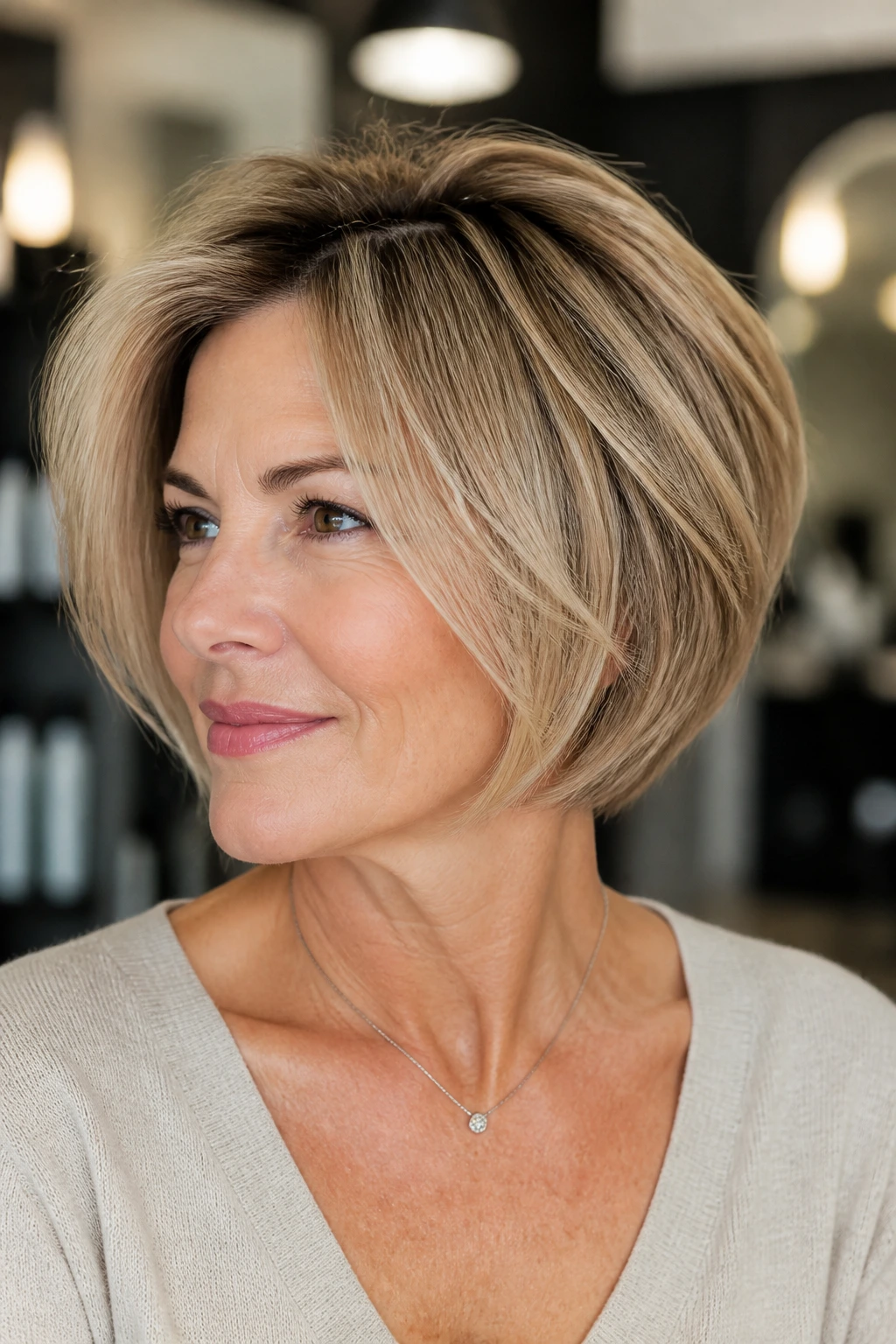
Fine hair gets misunderstood all the time. People hear “fine” and assume it means “thin,” but the two things are not the same. Fine hair refers to the diameter of each strand. You can have fine hair with a decent amount of density, and you can have coarse hair that still looks sparse if there isn’t much of it. That’s why the same haircut can look full on one person and stringy on another.
The biggest mistake is over-layering. Fine hair does not need to be shredded to move. It needs a perimeter that holds, plus layers placed where they support the shape instead of breaking it apart. When the ends get too wispy, the eye reads the whole head as less full, even if the amount of hair hasn’t changed at all. That’s the sneaky part. The cut changes the perception.
Crown placement matters more than people think. A little lift at the top can make the face look brighter and the haircut look newer. Too much height, though, and the style starts to feel dated or overdone. The sweet spot is a shape that bends around the head without hugging it flat. That usually means shorter lengths, clean edges, and controlled layering.
Fine hair also shows product mistakes fast. Heavy creams, thick oils, and sticky sprays drag the hair down within hours. Lighter formulas — mousse, root spray, a touch of styling lotion — tend to hold up better. Less drama. Better shape.
The Tools That Make Styling Easier
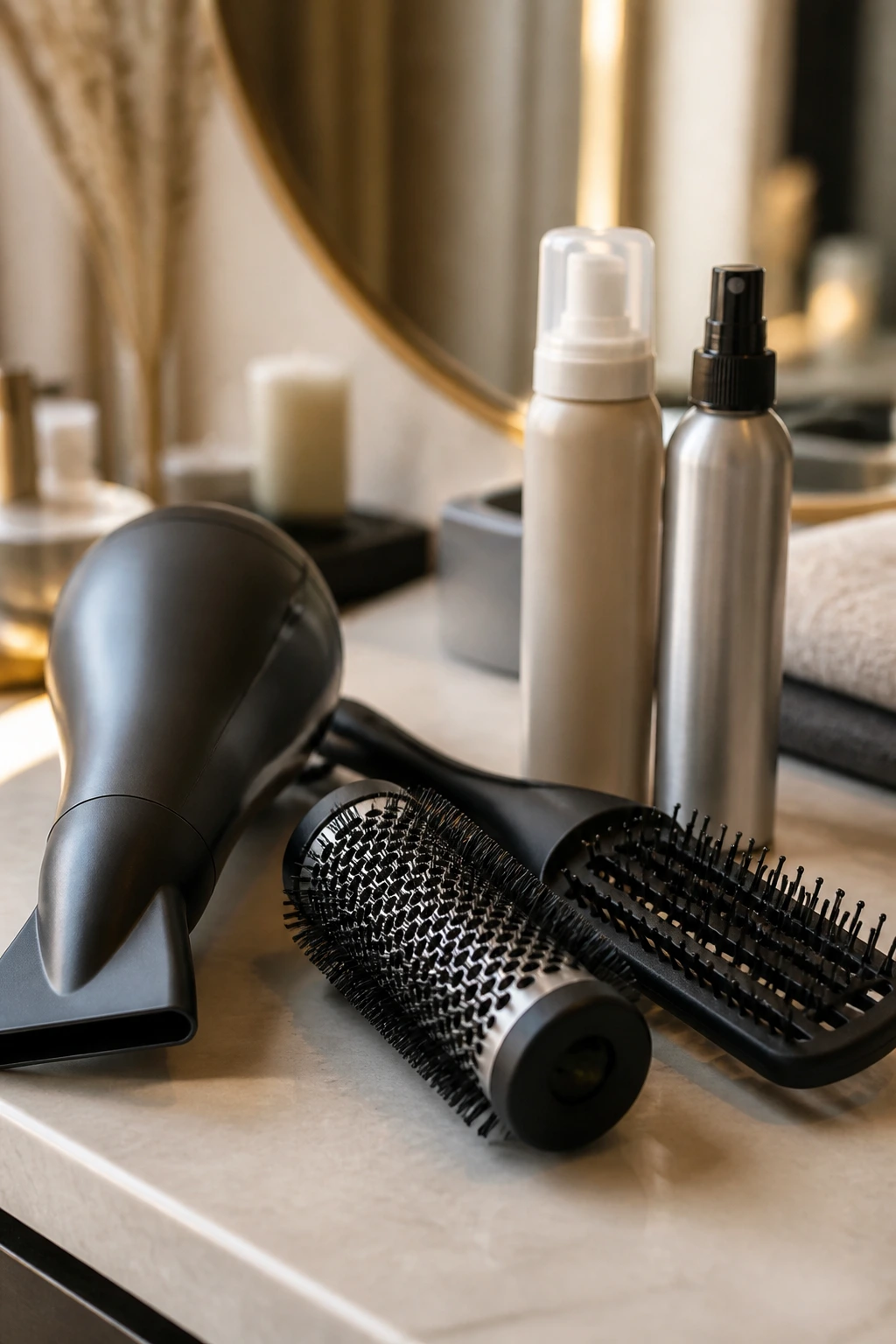
- Blow dryer with a narrow nozzle: The nozzle directs airflow at the roots, which helps lift fine hair instead of blasting it all over the place.
- Small to medium round brush: A 1.5-inch brush is usually the sweet spot for bobs and lobs; a smaller one gives more bend on pixies and shorter crops.
- Vent brush or paddle brush: Good for quick rough-drying when you do not need a polished blowout.
- Root-lift mousse or spray: Apply it at the scalp before drying. A little goes a long way on fine hair.
- Lightweight texturizing spray: Use this at the mids and ends if you want separation without stiffness.
- Dry shampoo: Not only for greasy roots. It also adds a bit of grip, which helps flat hair hold shape.
- Fine-tooth comb or tail comb: Useful for parting the hair cleanly and directing the front pieces where you want them.
- Small flat iron or mini styler: Handy for refining a bend in bangs or smoothing a stubborn piece at the nape.
- Clips: Sectioning clips make blow-drying much easier, especially if your hair slips out of your hands while it’s still damp.
How to Ask for the Cut You Actually Want
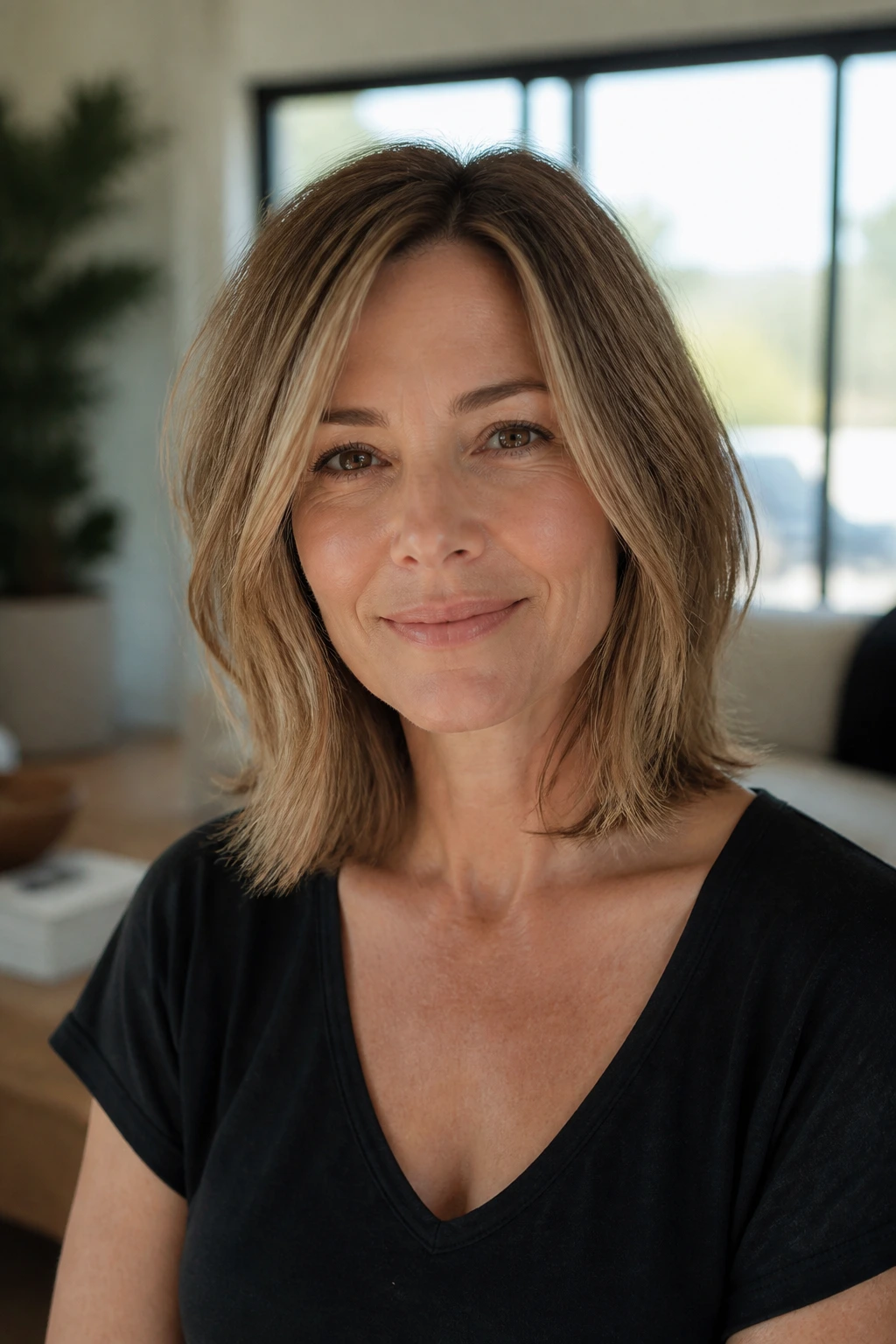
Bring photos, yes, but bring the right kind. One or two pictures of the same shape from different angles are better than ten random bobs pasted together. A stylist needs to see the perimeter, the crown, and the fringe in one visual conversation. Otherwise you end up describing a chin-length bob while showing a layered lob and wondering why the result feels off.
Say what you do with your hair on a regular Tuesday. Do you air-dry? Do you blow-dry once and then leave it alone for three days? Do you tuck it behind your ears, wear glasses, clip one side back, or fight a cowlick on the right temple every single morning? That matters more than the name of the haircut. A cut can look gorgeous in the chair and still be a nuisance at home if it ignores your routine.
Be specific about what you do not want. If your fine hair turns see-through when it’s thinned too much, say so. If you hate a flat crown or a big helmet shape around the jaw, say that too. A good stylist can work with words like “blunt perimeter,” “soft internal layers,” “light fringe,” or “tapered nape.” Those are useful phrases. “I want volume” is not enough on its own.
And if your hair has a tricky growth pattern — cowlicks, a strong side part, a crown swirl, an uneven fringe line — tell the stylist before the cutting starts. Fine hair gives up its secrets after the first snip. Better to start with the map in hand.
How to Style These Cuts Without Spending Forever
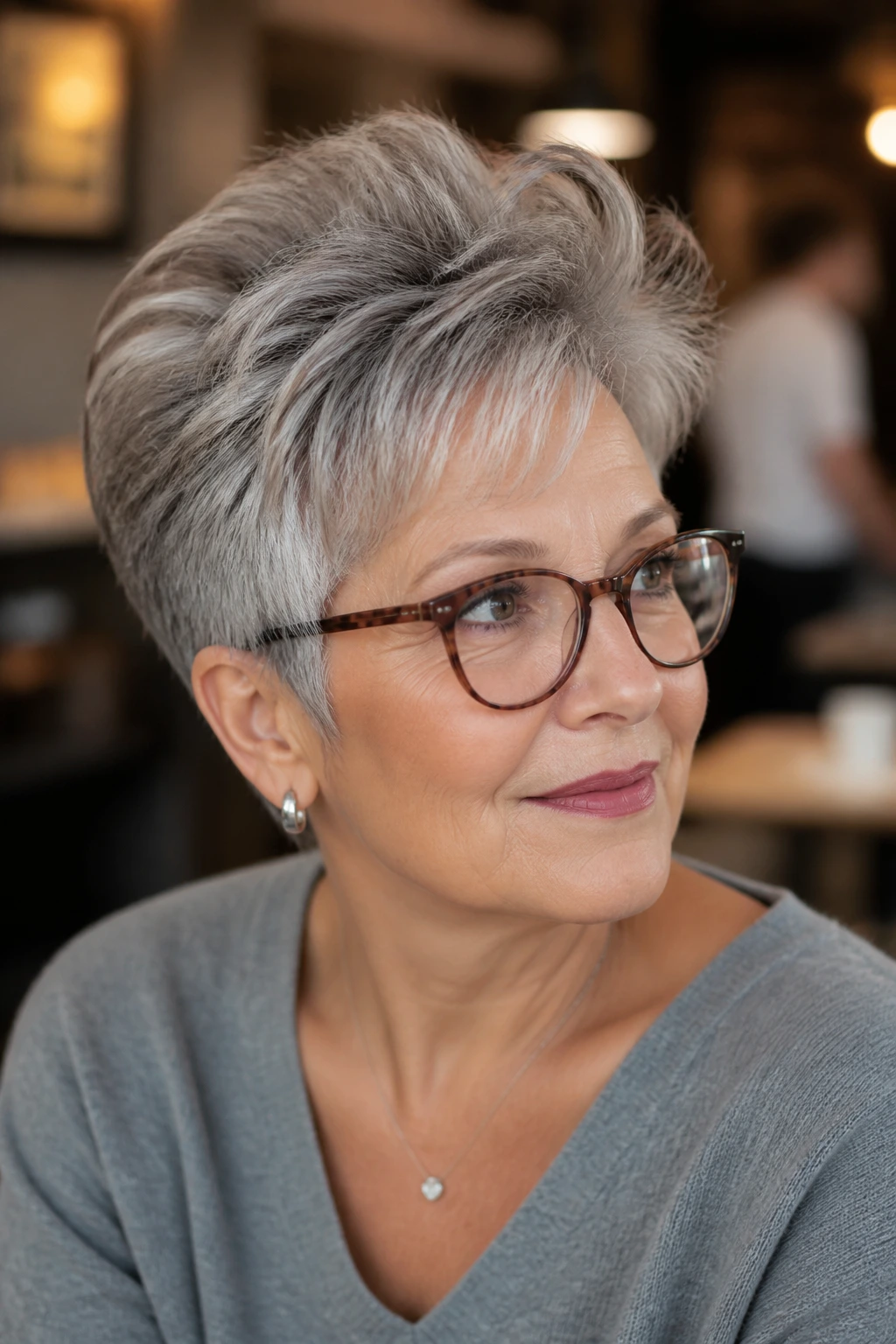
Silhouette: Start by deciding where the hair should have the most life: crown, cheekbones, jaw, or nape. That one choice keeps you from blowing every section in different directions and ending up with a shape that looks accidental.
Finish: A matte, slightly piecey finish usually looks fuller on fine hair than a slick one. That does not mean rough or dry. It means the hair has a bit of separation so the outline reads clearly instead of clumping into a flat sheet.
Accessories: Small clips, a narrow headband, or a simple tuck behind one ear can make a haircut feel finished in about ten seconds. With fine hair, accessories should support the cut, not hide it. A big claw clip can work, but a small barrette often looks more deliberate.
Fast routine: Dry the roots first. Always. If the roots dry flat, the rest of the style has to work twice as hard. Then use the brush only where the haircut needs help — often the crown, the front corners, or the ends. That’s the part people skip, and it’s why their hair looks polished for a minute and tired by lunch.
Day-two rescue: A little dry shampoo at the part and a few seconds with a round brush on the front pieces can bring a fine-hair cut back to life. You do not need to restart the whole style.
Small Tweaks That Add Volume Without Making Hair Look Puffed
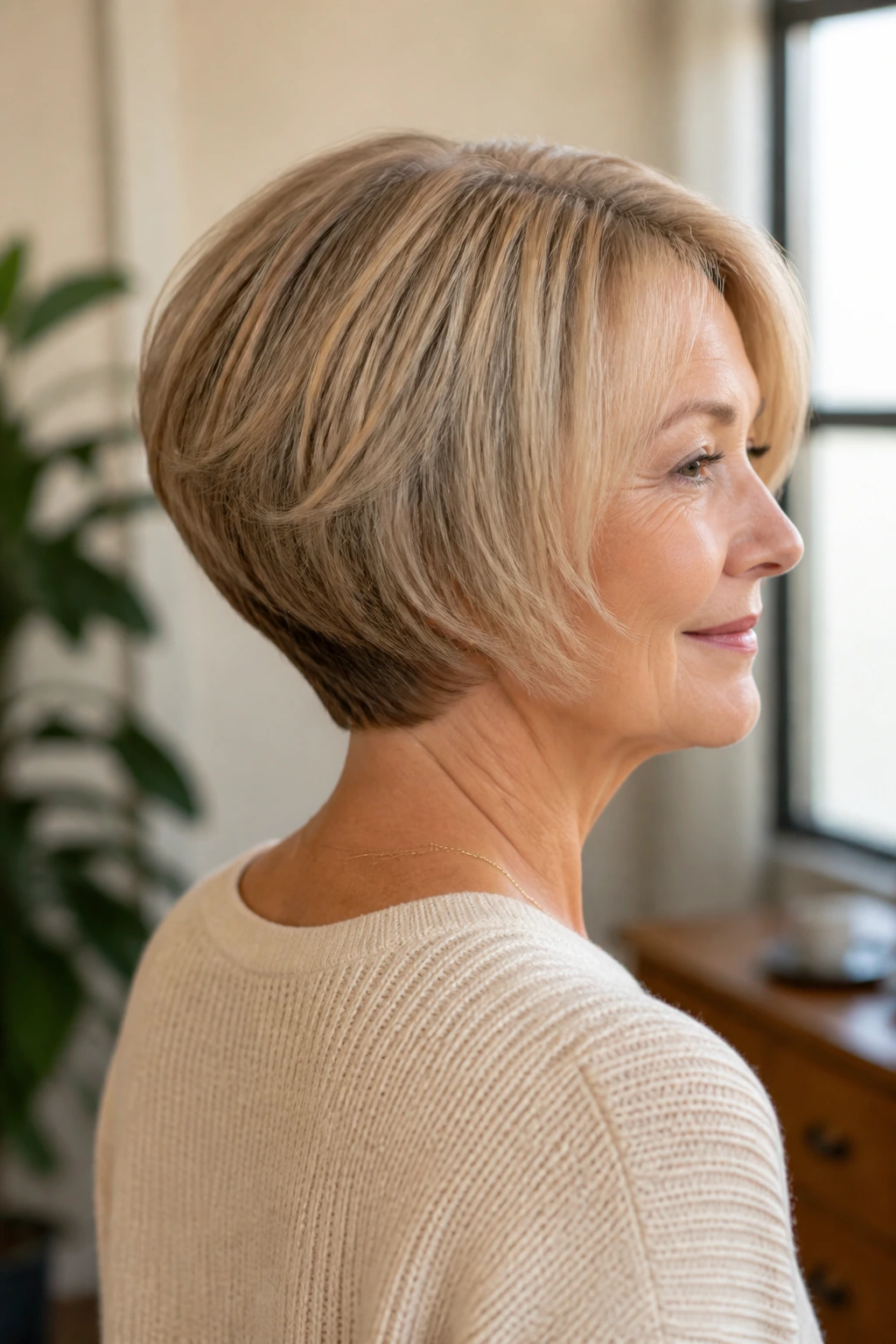
Root Lift: Apply mousse or root spray only at the roots, then blow-dry the hair in the opposite direction of its natural part for the first minute. That tiny detour helps the root stand up instead of settling into the scalp. Switch the part back once the roots are mostly dry.
Face Framing: Ask for soft pieces that start around the cheekbone or chin, not high up near the temples unless you want more movement. On fine hair, strategic face-framing can make the haircut feel lighter without exposing too much scalp through the top layers.
Color Depth: A few lowlights or a slightly deeper root color can make fine hair look fuller because it reduces the contrast between scalp and strand. This is especially useful if your hair is very light or very silver and tends to show every flat spot. It’s a visual trick, but a useful one.
Texture Control: If your hair gets frizzy at the ends, use a light cream only on the last inch or two. If the crown gets flat, skip the cream up top and keep the product concentrated where you need definition. The wrong product in the wrong place can erase a good cut fast.
Make-It-Yours: Straight hair usually looks best with cleaner lines and less shattered layering. Wavy fine hair can handle a softer shag or lob. If your hair is coily or curly and fine, the shape needs to be built around curl pattern and shrinkage, not around the idea of a classic bob from a magazine. That part matters more than people think.
Maintenance, Grow-Out, and Between-Cut Care
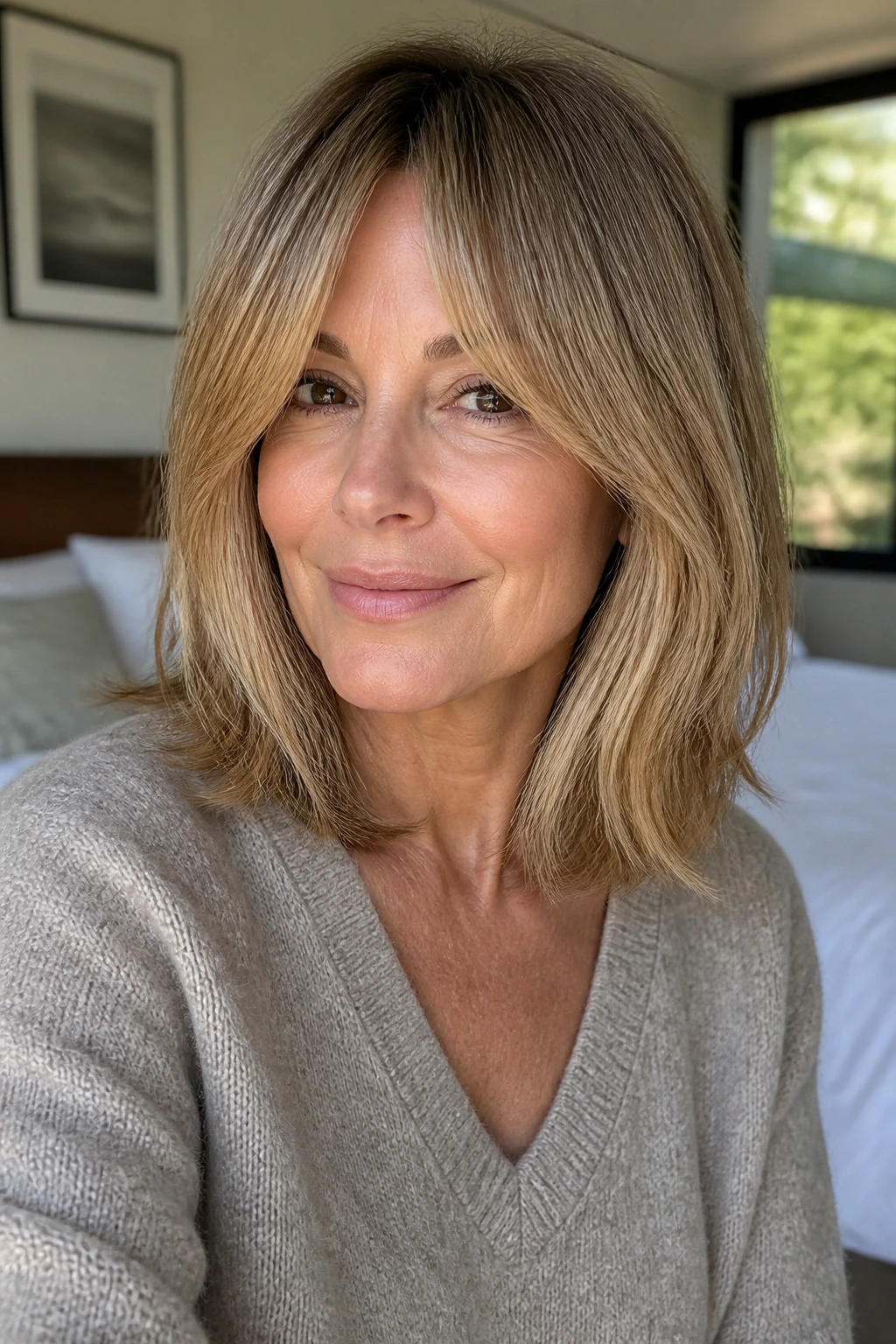
Fine hair shows grow-out sooner than thicker hair does. A tidy pixie can start losing shape in about four to six weeks, especially around the ears and nape. Bobs and lobs usually stretch a little longer — six to eight weeks before the ends begin to look tired. Shoulder-length cuts can go longer if the line stays strong, but even there, a trim keeps the perimeter from going wispy.
If you color your hair, especially if you have highlights or silver blending, the cut and color should be refreshed together when possible. A blunt line with faded color can still look elegant, but brittle ends are another story. Fine hair does not forgive split ends kindly. They show fast, and they make the whole style look older than it is.
Between appointments, keep shampoo gentle and conditioner light. You want the hair clean enough to move, not coated enough to sit down and nap. A weekly clarifying wash can help if products build up at the roots, but do not overdo it. Too much clarifying and the hair can feel squeaky and fragile.
For heat styling, keep the temperature moderate and use protection every time. Fine hair burns faster than people expect. A lower heat setting with a slower pass is usually smarter than blasting the hair hot and hoping for the best. If you grow a cut out, ask for shaping trims instead of full reshapes. That keeps the line from turning awkward while you wait for length.
Variations and Adaptations to Try

The Soft Silver Blend: Keep the cut simple and add silver-friendly dimension with a gloss, toner, or subtle lowlights near the roots. This works especially well on bobs and pixies because the cut lines stay clean while the color adds depth.
The Air-Dry Shape: Ask for longer internal layers and a softer perimeter if you prefer to skip blow-drying. This version works best on wavy fine hair and on straight hair that still has a little bend after washing.
The Glasses-Friendly Fringe: Keep bangs lighter and a bit longer at the corners so they sit around frames instead of fighting them. A side-swept or curtain fringe is often easier than a dense blunt bang when you wear glasses daily.
The Rounded Volume Cut: Emphasize fullness at the temples and crown while keeping the nape neat. This adaptation suits hair that goes flat at the top but still has enough movement at the sides to hold a shape.
The Minimal-Product Crop: Choose a pixie or bixie with strong structure so it looks good with almost no product. This is a good fit if your scalp gets oily fast or you dislike the feel of styling cream on your hands.
The Softer Shoulder Cut: Keep the length around the shoulders but reduce weight only through the interior, not the ends. That version gives you the feel of longer hair without the floppy finish that can happen when fine hair gets too long.
Common Mistakes That Flatten Fine Hair
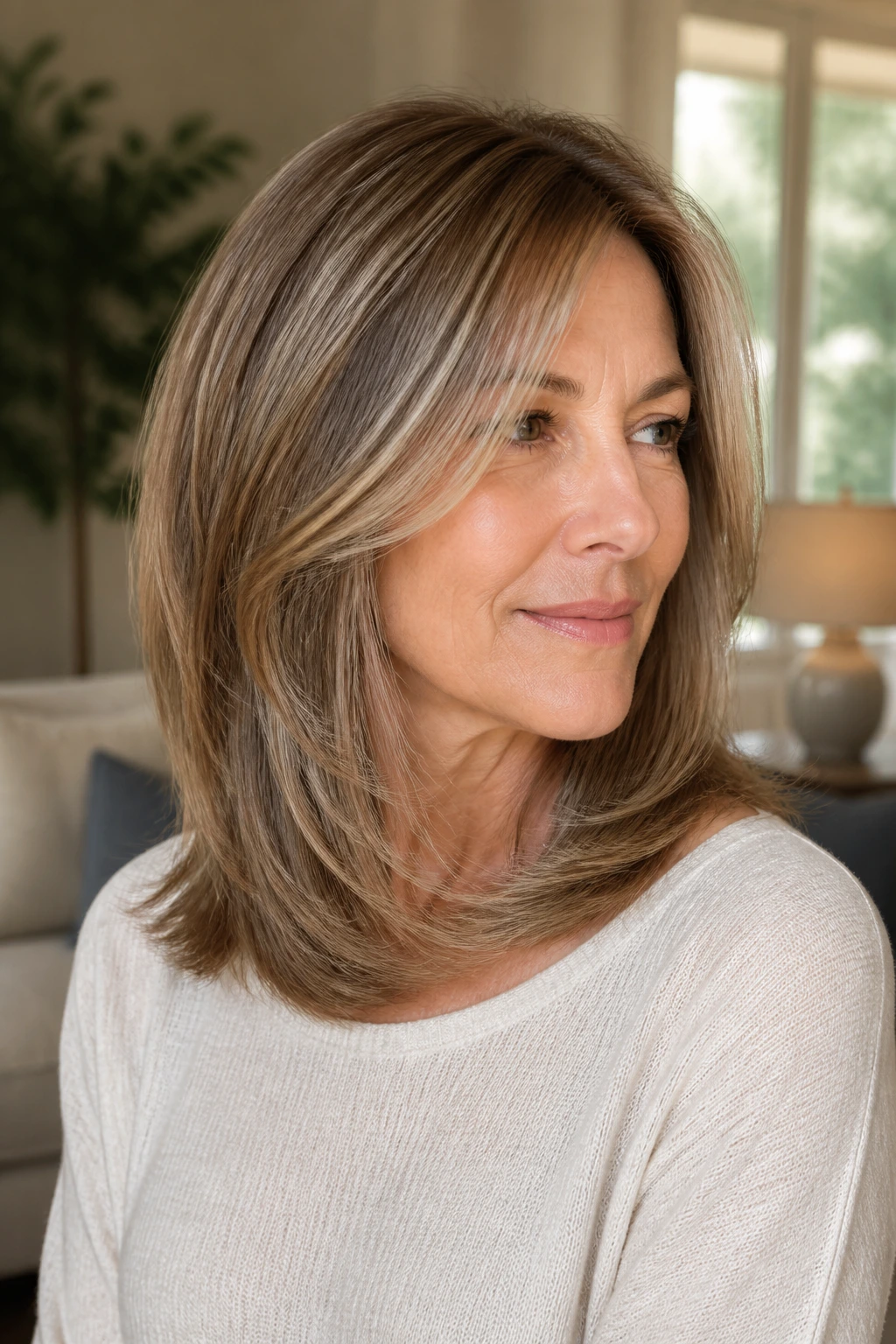
Over-layering the ends: This is the big one. When the bottom of the haircut gets too wispy, fine hair loses its outline and starts looking thinner than it is. The fix is simple: keep the perimeter stronger and let the layers do their work higher up or inside the shape.
Using heavy products: Thick creams, oils, and rich leave-ins can make fine hair collapse before lunchtime. If the hair looks greasy at the roots and stringy at the ends, the product is too heavy or in the wrong place. Switch to mousse, root spray, or a light mist.
Cutting bangs too dense: Heavy bangs can swallow the face and make the rest of the hair look sparse. Fine hair usually does better with airy fringe, side-swept bangs, or curtain pieces that leave some skin showing through.
Ignoring the natural part and cowlicks: A cut that fights the scalp’s growth pattern will misbehave every morning. If one side wants to stand up and the other lies flat, the solution is not more product. It’s a shape that respects the way the hair grows.
Letting it go too long: Fine hair often looks best a little shorter than people expect. Once the ends get too far past the shoulders, they can start to hang in a thin line. That doesn’t mean you have to go short. It means the length should be chosen on purpose, not by default.
Over-styling the crown: Too much teasing or hot air can make the top look stiff and dry. Aim for lift, not height for its own sake. A touch of root spray and a few seconds of directional drying usually do the job better.
Questions People Ask Before the Chop
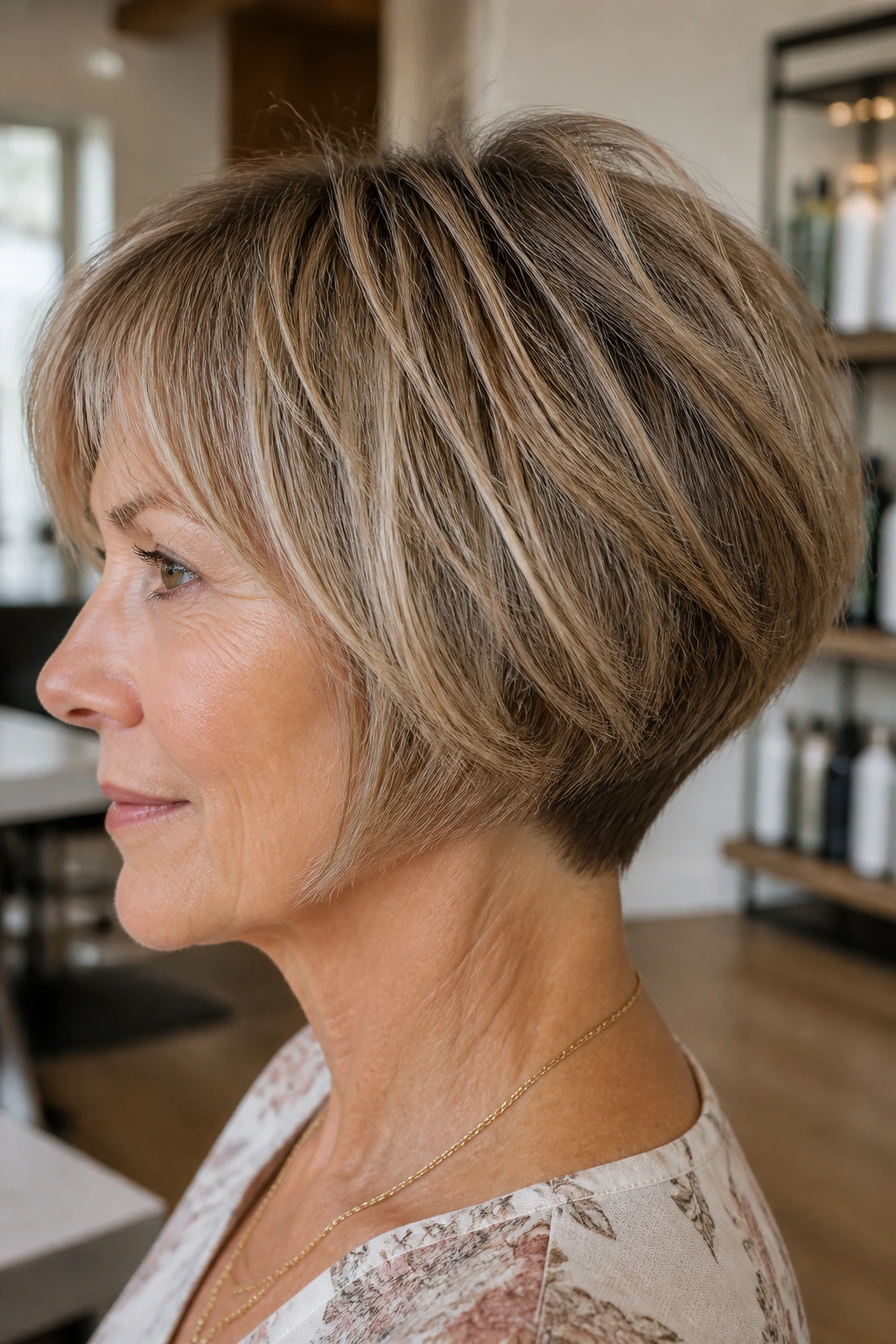
What haircut makes fine hair look thicker?
Blunt bobs, chin-length cuts, and pixies with a controlled crown usually create the strongest illusion of fullness. The common thread is a clear outline. Fine hair often looks denser when the perimeter is clean and the layers are placed with restraint.
Are bangs a bad idea for fine hair?
Not if they’re cut with care. Heavy, thick bangs can overwhelm fine strands, but wispy fringe, side-swept bangs, and curtain bangs can add shape without stealing volume from the rest of the cut. The fringe should support the haircut, not become the entire event.
Can women in their sixties wear long hair if it’s fine?
Yes, but the length has to be chosen with real attention to the ends. A shoulder-length cut with a strong line often looks better than very long hair that hangs thin and flat. If you like length, keep the perimeter full and avoid too many short layers.
Is layering always a mistake on fine hair?
No. The problem is not layers themselves. The problem is too many of them, or layers placed so low that the ends go wispy. Fine hair often looks best with internal layers or soft face-framing pieces rather than a heavily chopped outline.
What if my hair is fine and wavy?
That’s a useful combination if the cut respects the wave pattern. A soft shag, wavy lob, or layered bob can help the wave show up without puffing out at the sides. The biggest mistake is cutting it as if it were straight and then wondering why it sits oddly.
How often should fine hair be trimmed?
Short styles usually need attention every four to six weeks. Bobs and lobs can stretch to six to eight weeks, and longer shoulder-length cuts can go a little beyond that if the ends stay healthy. Once the outline starts looking frayed, the cut has lost its job.
Should fine hair be cut dry or wet?
Either can work, but dry cutting helps a stylist see how the hair actually falls and where it collapses. Wet cutting is still useful for clean lines and precision, especially on bobs. The best choice depends on texture, cowlicks, and how honest the hair is about its shape.
Can color make fine hair look fuller?
Yes. A bit of depth at the root, lowlights, or a subtle gloss can make the scalp less visible and the hair look richer. Color won’t replace a good cut, though. It works best when the haircut already has a strong outline.
The Shape That Holds Up Best
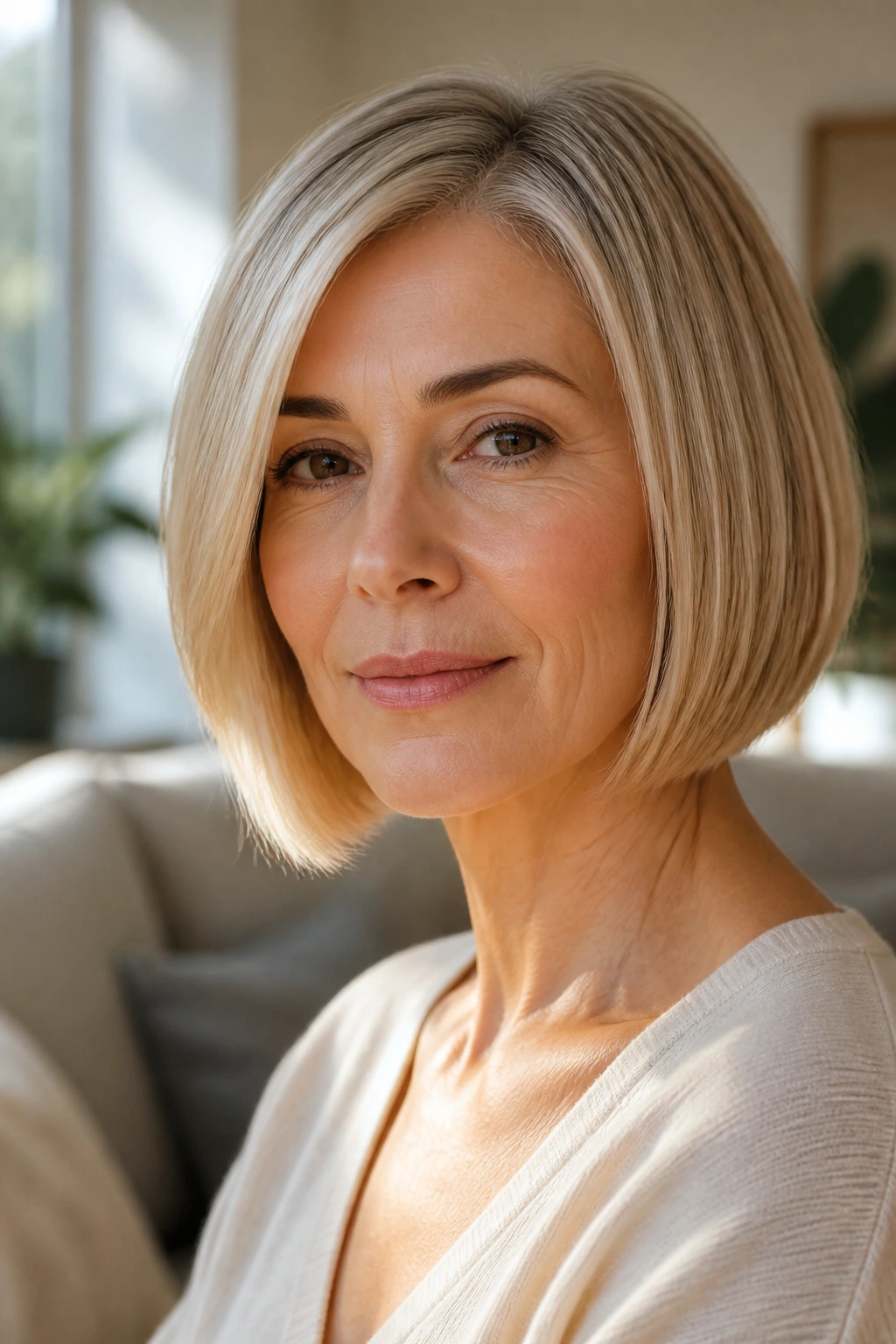
Fine hair does not need to be rescued. It needs a haircut that respects what it already does well. The right shape can make a small amount of hair look polished, airy, and deliberate, which is a much better goal than chasing fake fullness that falls apart after the second rain shower.
If there’s one thread running through all twenty cuts here, it’s this: keep the outline clean, keep the layers controlled, and keep the styling simple enough that you’ll actually do it. That combination beats overworked volume every time. It also grows out with less drama, which is worth a lot when you’d rather spend your morning living than wrestling with a round brush.
The best haircut is the one that makes your hair look like itself on a good day. Pick the shape that matches your routine, your face, and the way your strands behave when nobody’s trying to boss them around.