



Waves can be a little mischievous on a round face. They soften everything, then puff out in exactly the places you’d rather keep quiet. Get the cut wrong, and the whole shape can feel wider through the cheeks. Get it right, and the same texture looks airy, long, and deliberate.
The sweet spot for long hairstyles for wavy hair and round faces is not mystery-meat salon talk. It comes down to where the length starts, where the weight sits, and how much volume you park near the temples. Long pieces that fall below the jaw, a part that breaks the face cleanly, and layers that travel downward instead of out to the sides can change the silhouette in a single mirror glance.
That’s why some long cuts look sharp and expensive on wavy hair while others just look big. A blunt line at the cheekbone can make the face read broader. A soft diagonal in the front, a little crown lift, and the right kind of texture keep the eye moving vertically. Small thing. Big difference.
Why These Styles Earn Their Keep
-
They stretch the face visually: The best versions keep the shortest pieces below the widest point of the cheeks, so the eye drops instead of stopping at the center of the face.
-
They work with wave, not against it: Wavy hair already has movement built in, so these styles use that bend to create shape instead of fighting for pin-straight polish.
-
They give you options for cut or styling: Some looks need a salon cut, while others are mostly about parting, pinning, or a smart product choice on wash day.
-
They are kinder to day-two hair: Waves that loosen a little overnight often look better, not worse, once a touch of mist and scrunching brings them back.
-
They can shift the balance fast: A deep side part, a crown lift, or a face-framing piece that starts lower than the cheekbone can change how a round face reads in real life.
-
They suit different densities: Fine waves, thick bends, and coarse texture all show up here, just with different layering and product needs.
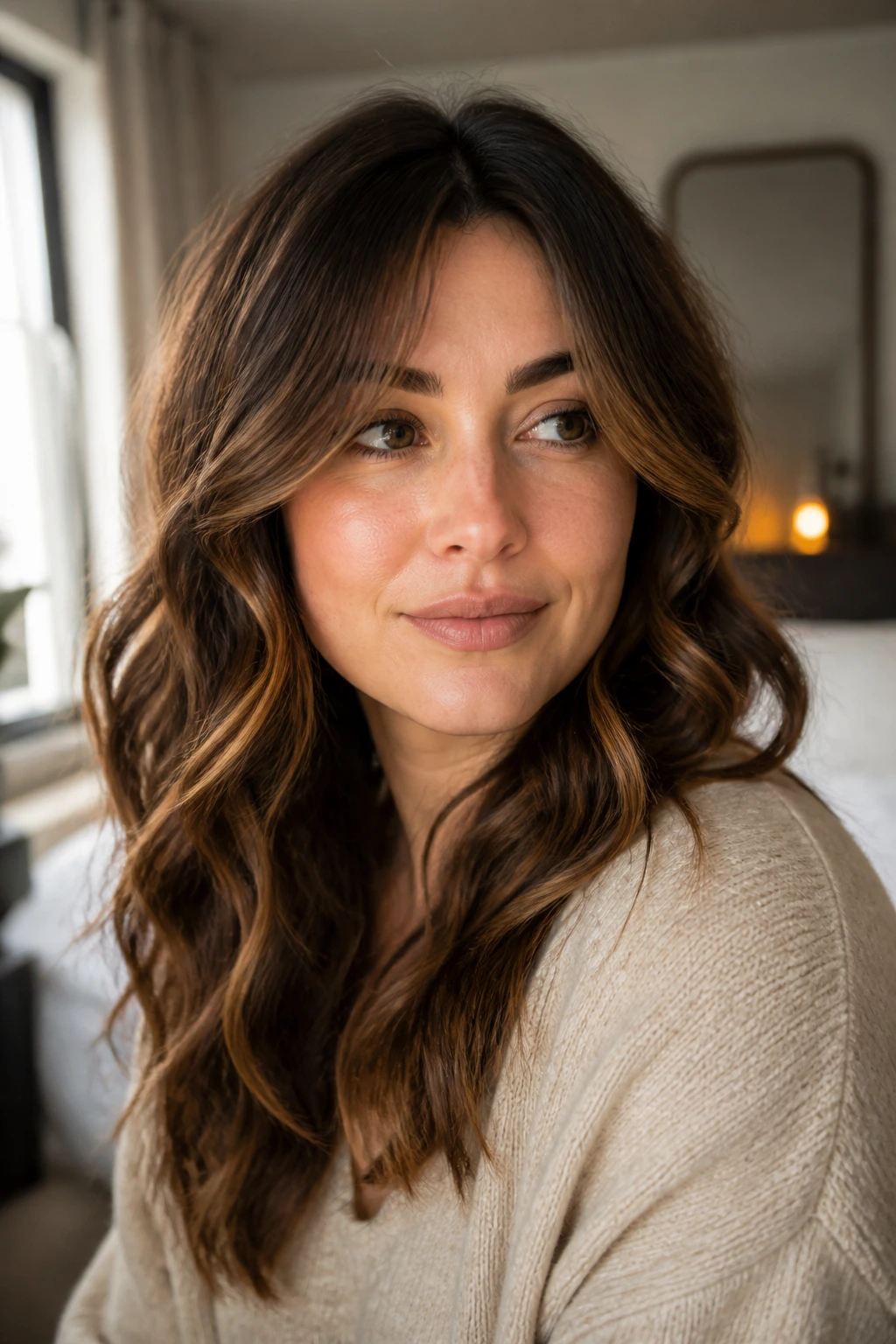
1. Long Face-Framing Layers
A good face-framing layer should feel like a quiet correction, not a loud statement. On wavy hair, the best pieces start below the cheekbone and fall toward the jaw or collarbone, where they soften the outline without sitting on the face’s widest point.
Why It Works on a Round Face
The shape is doing two jobs at once. It keeps the length long, which stretches the silhouette, and it breaks up the width at the sides, which keeps the face from reading too circular.
- Ask for the shortest front piece to land at least an inch below the cheekbone.
- Keep the interior layers soft so the wave does not spring out into a shelf.
- Let the front bend slightly away from the face when you dry it.
Best move: tell your stylist you want the front pieces to slim the sides, not shave off length for drama.
2. Curtain Bangs That Drop Past the Cheekbones
Curtain bangs are not the problem. Short, blunt fringe is. When the center is kept a little longer and the sides sweep down past the cheekbones, the bangs become a soft frame instead of a horizontal line.
The trick is length. You want the shortest point to open near the bridge of the nose or upper lip, then let the outer pieces blend into the rest of the cut. That little diagonal keeps the eye moving downward and stops the forehead from becoming the only thing people notice.
For styling, blow-dry the bangs away from the face with a medium round brush or a large roller, then let them cool before you touch them. If you go at them too soon, they collapse into a flat curtain and lose the lift that makes this shape work.
3. Deep Side-Part Waves
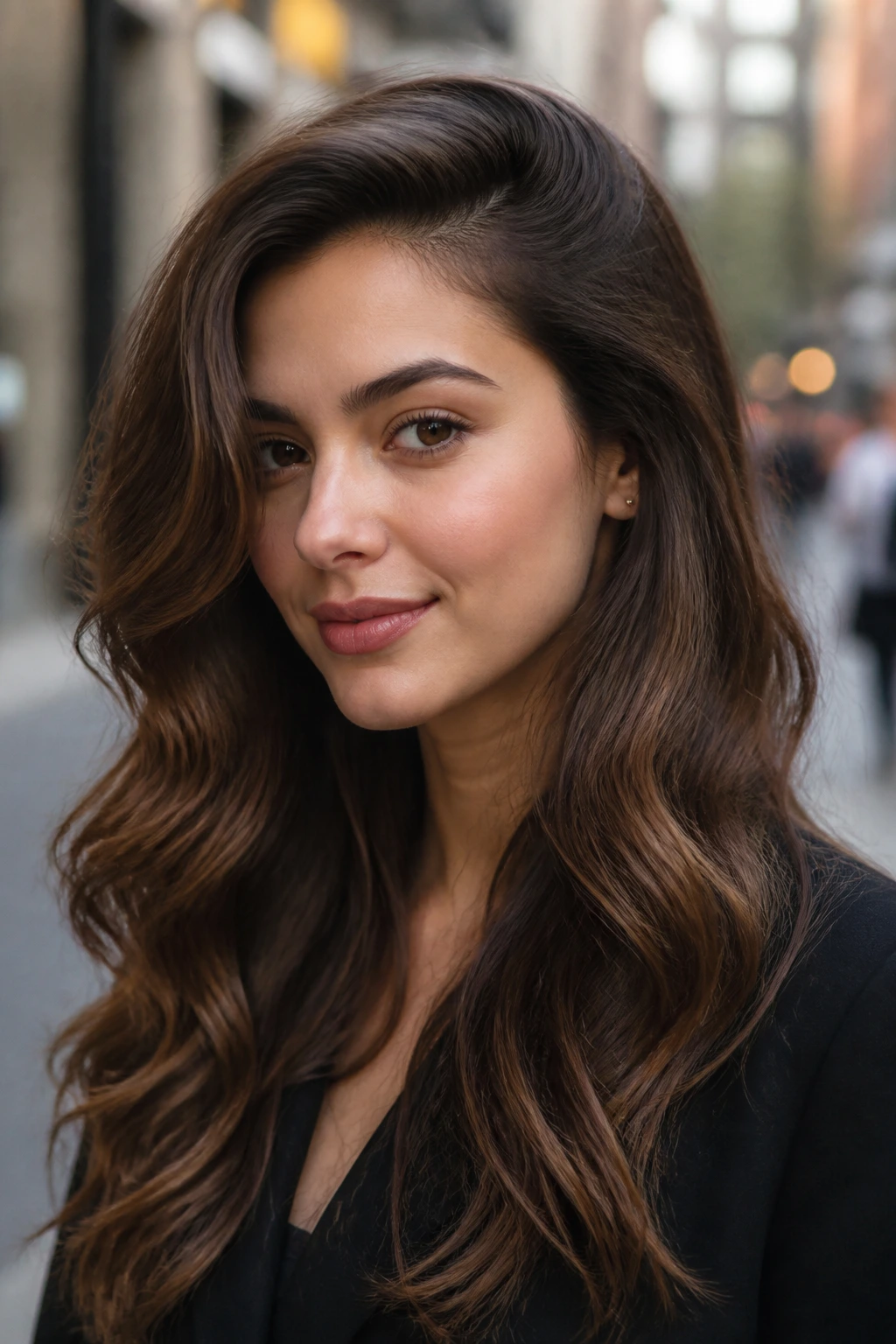
Why does a side part change the whole mood? Because symmetry has weight. A deep side part creates a longer line on one side of the face and gives the crown enough lift to make the head read taller, not wider.
The best version starts about two to three inches off center, not way over at the ear. Push the heavier side across the forehead, then tuck the smaller side behind the ear or pin it lightly at the temple. That tiny asymmetry matters more than people think.
How to Style It
Use a little mousse at the roots while the hair is damp, then rough-dry the top for lift before you define the waves. If the side part flops flat, clip the root at the part line while the hair cools. It sounds fussy. It works.
4. The U-Cut With Soft Ends
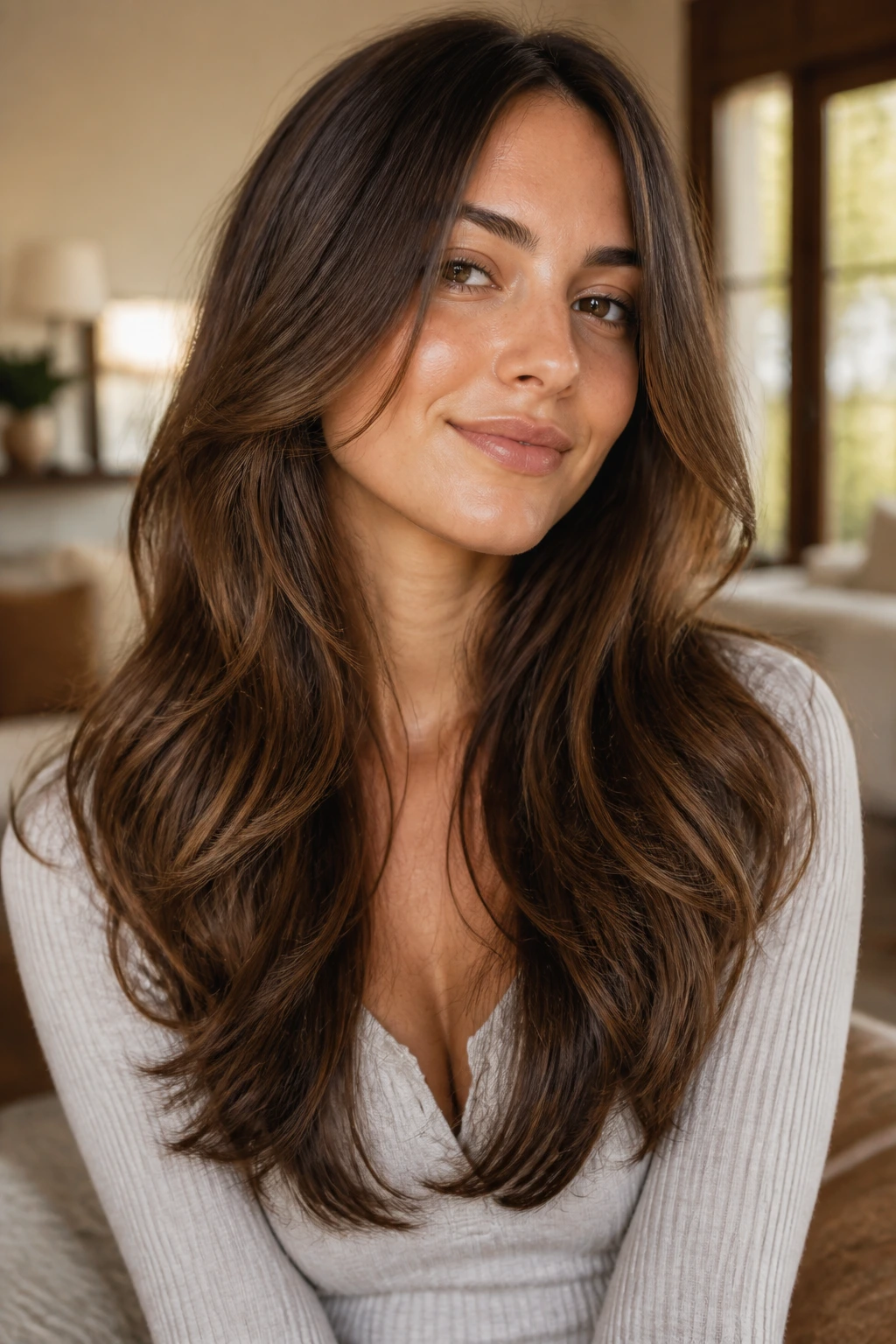
Picture a long line that dips gently in the back instead of being chopped straight across. That’s the U-cut, and on wavy hair it keeps the ends from looking heavy while still preserving enough bulk to stop the sides from puffing out.
This cut is especially useful if your wave pattern gets bigger toward the bottom. A blunt hem can make the hair feel boxy. A soft U shape keeps the finish round, but not in the face-width sense that round-faced people are trying to avoid.
A few stylists like to keep the side pieces slightly shorter than the center, then blend them with slide-cutting or point-cutting. That gives the front some movement without turning the whole cut into layers for the sake of layers. Good haircuts always look like they had a plan.
5. Butterfly Layers
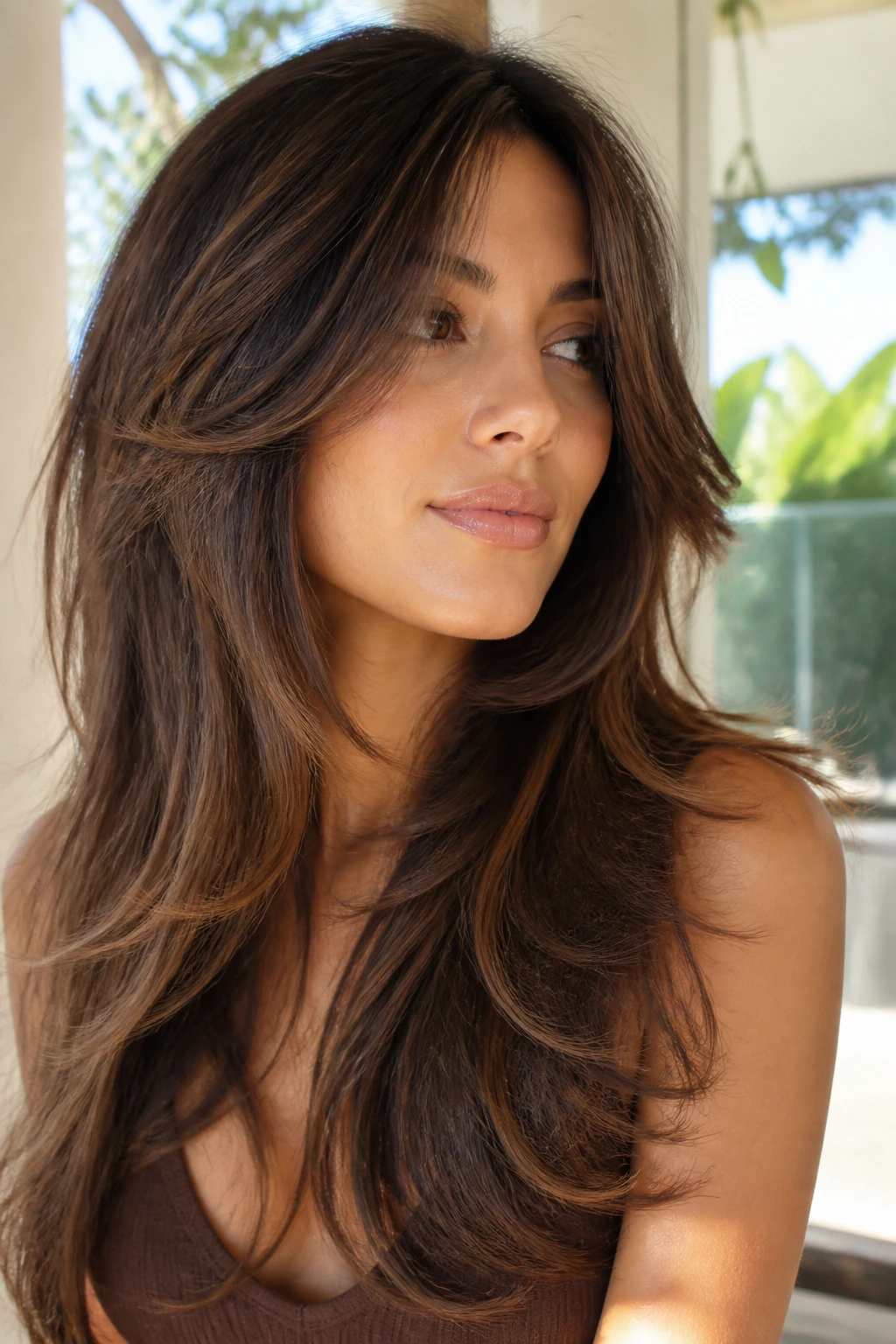
Butterfly layers are one of those cuts that looks dramatic on paper and surprisingly wearable in a mirror. The top layers are shorter and more active, while the bottom length stays long and obvious, so you get movement near the top without sacrificing the long line that flatters a round face.
The thing I like about this cut is the separation. It gives wavy hair a little lift through the crown and upper sides, then lets the lower lengths hang in a cleaner vertical fall. That balance keeps the face from getting swallowed by fluff.
If your wave is loose, this cut can still work, but the styling matters. A light mousse at the roots and a curl cream through the mids is usually enough. If your hair is thick, ask for the layers to be soft rather than heavily chopped; otherwise the ends can puff out like a bell.
6. A Soft Shag With Controlled Frizz

A shag can be a gift or a mess. The difference is whether the cut respects the face shape. On a round face, the shag should build texture higher up and keep the length long enough that the sides do not flare at the widest point.
Compared with classic long layers, a shag brings more crown lift and more separation through the mids. That makes it a better fit if your waves are thick, heavy, or prone to collapsing by noon. It also keeps the hair from sitting flat against the head, which can be the fastest way to make round features feel broader.
I’d choose this version if you like a little edge and do not want perfect symmetry. It looks best when the front fringe stays long enough to hit around the cheek or lower, not chopped short in a way that makes the face feel boxed in.
7. Half-Up Crown Lift
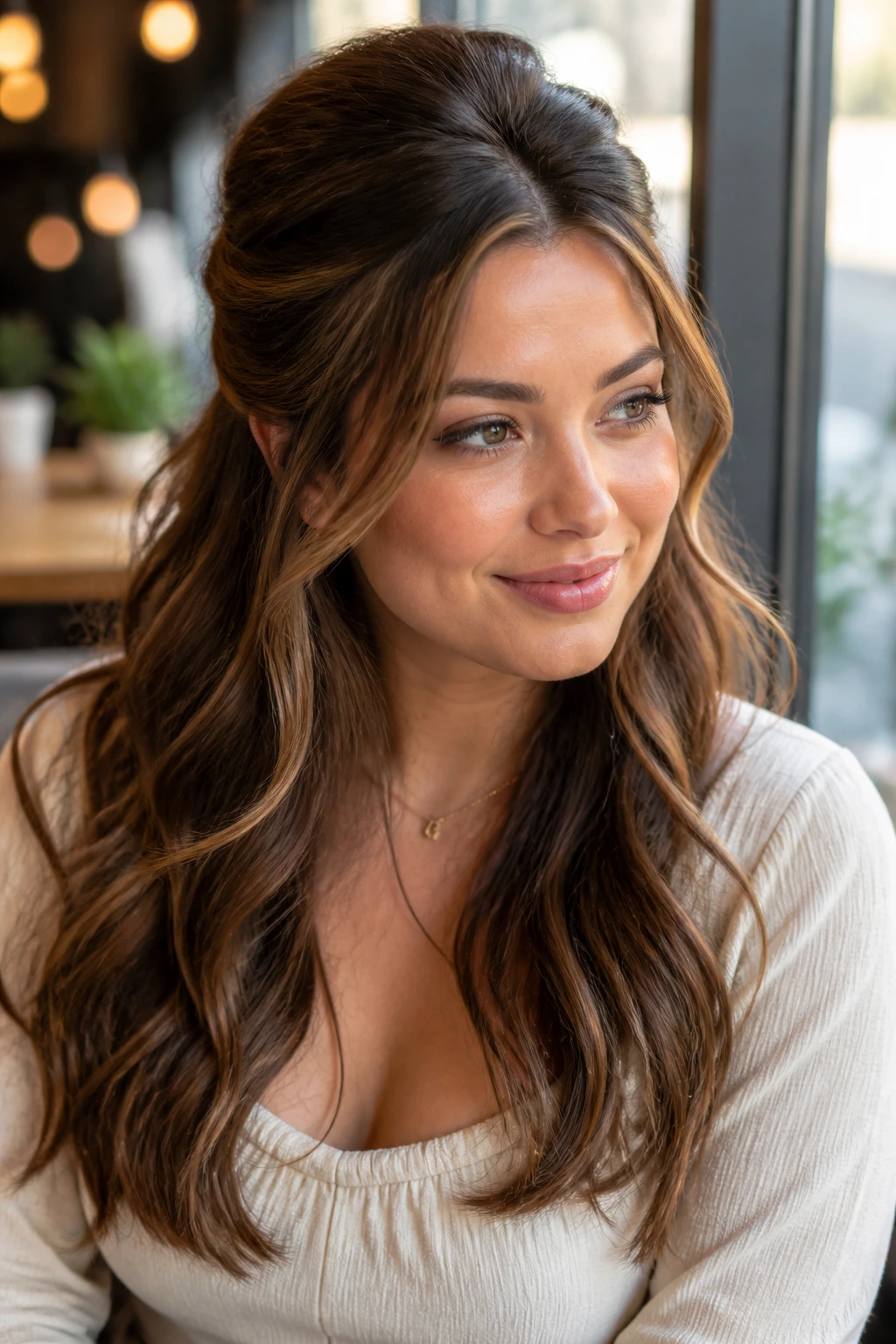
This is the hairstyle for days when your waves are behaving, but not beautifully enough to leave everything down. Pulling the top half back adds height at the crown, and height is the quiet trick that makes a round face look longer.
The lower half stays loose and wavy, so you still get movement around the shoulders. That’s what keeps it from feeling severe. If you twist or clip the back section instead of tying it flat, the lift at the top stays visible for longer.
A few practical details help a lot:
- Gather the top section from temple to temple, not from ear to ear.
- Secure it loosely so the crown keeps its lift.
- Leave a few face-framing pieces out so the sides do not look bare.
Best version: pinch the crown with your fingers before clipping, then let the top settle naturally instead of smoothing it hard.
8. Side-Swept Front Pieces
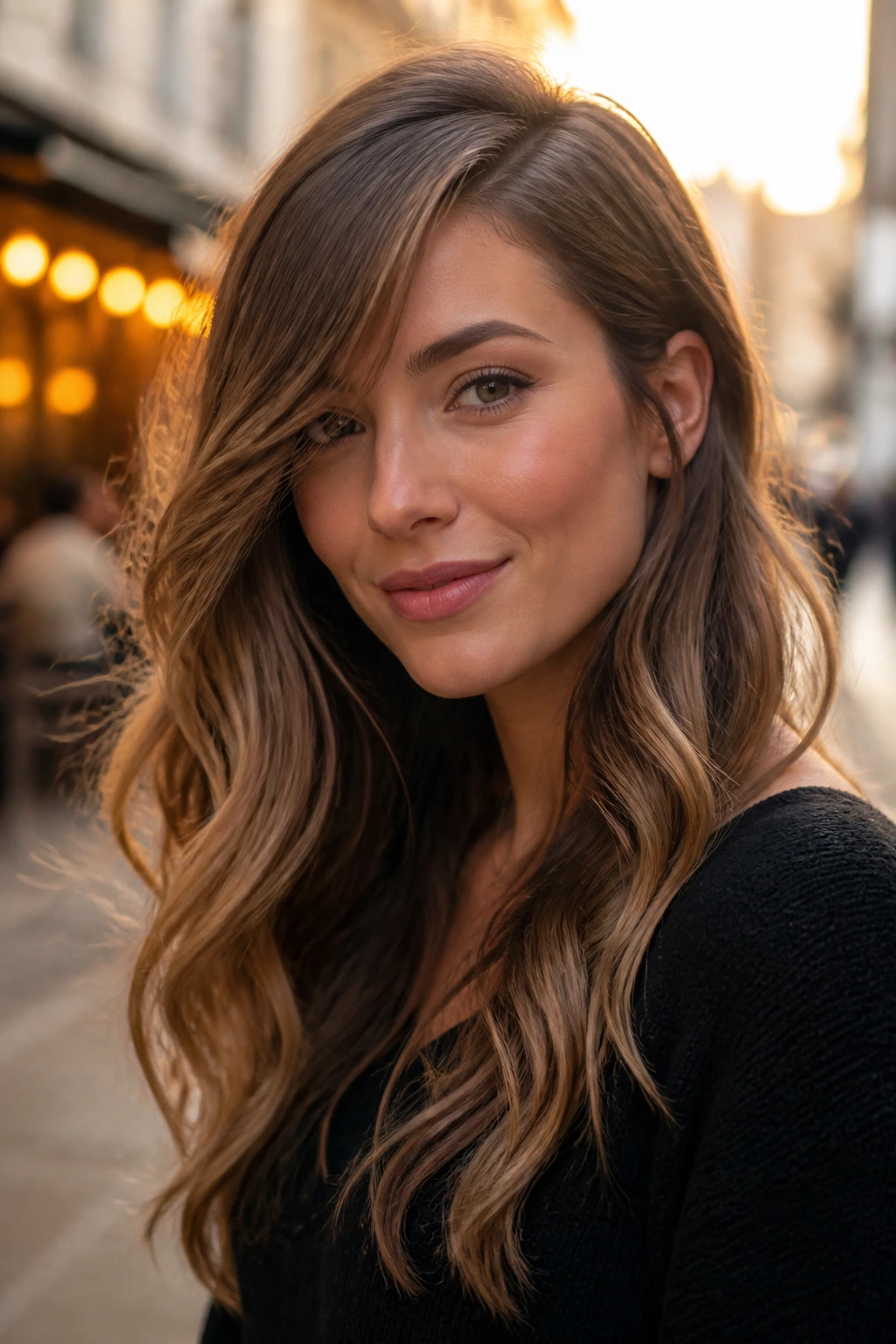
A side-swept front can do more than a full haircut sometimes. It gives the face a diagonal line, and diagonal lines are your friend when the goal is to keep a round face from reading too wide.
The beauty of this look is that it does not need a huge cut change. Even long waves can gain shape if the front is tucked, swept, or clipped so one side falls forward while the other opens up. That asymmetry is subtle, but it changes the way the whole head shape sits.
I like this for hair that is already long and healthy but feels a little too evenly distributed. Add a touch of root lift on the heavier side, then sweep the front across the forehead and secure it with one hidden bobby pin if needed. It’s quick. It also survives a normal day better than people expect.
9. Bottleneck Bangs With Length
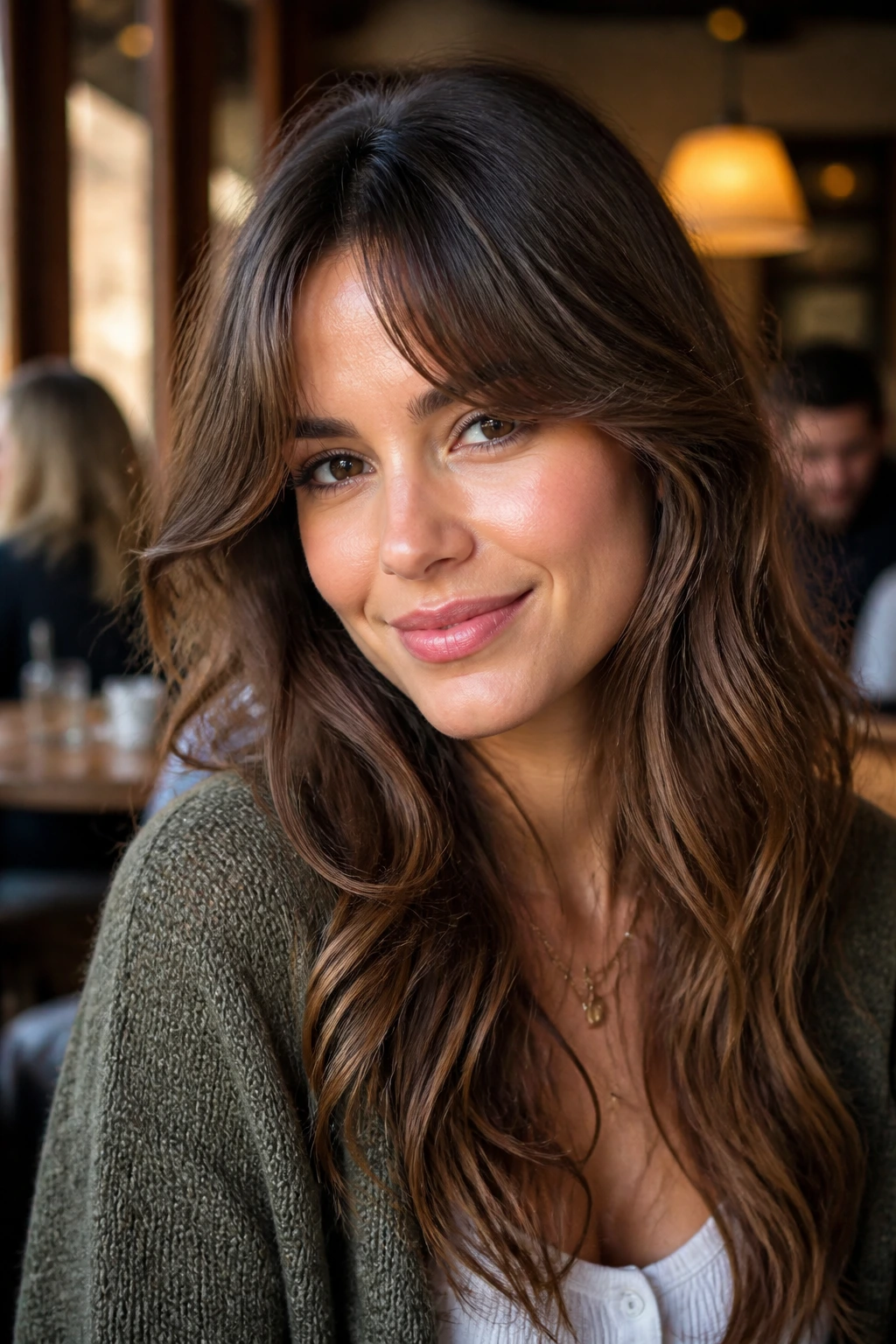
Bottleneck bangs sit in the middle ground between curtain bangs and a full fringe. The center stays narrower, then the sides open outward as they grow down, which gives a round face some framing without chopping a hard line across the forehead.
The shape matters because it avoids the obvious horizontal cut that can make the face look shorter. Instead, the eye follows the soft spread of the fringe into the rest of the waves. That’s a prettier route, and usually a better one for people who want fringe without the maintenance of a strict bang.
How to Wear It
Blow-dry the center section first, then direct the sides away from the face with a round brush. If the fringe gets oily fast, keep dry shampoo at the roots, not through the lengths. Bangs do not need volume everywhere. They need the right volume in the right spot.
10. Waterfall Braid Accent
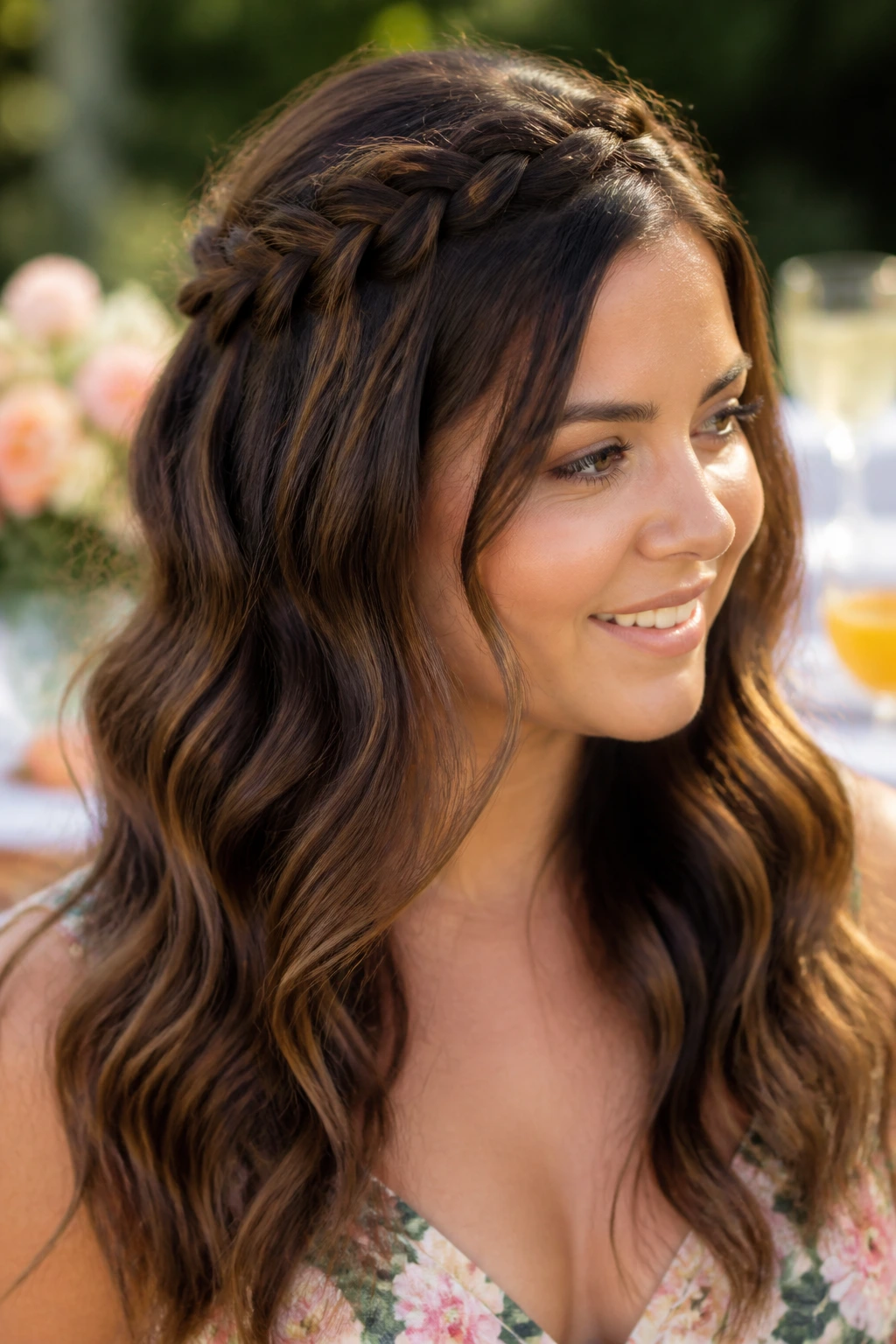
A waterfall braid is one of those details that looks more complicated than it is. On long wavy hair, it works especially well because the braid gives the top section structure while the loose pieces keep the style soft around a round face.
The braid sits high enough to pull attention upward, and the dropped strands create movement without adding width at the cheeks. It’s a neat trick when you want a little occasion hair but do not want a stiff updo. The overall effect is lighter than a tight braid pulled straight back.
Use this with hair that has a bit of grip — second-day waves, a light texture spray, or a tiny touch of mousse near the roots. Too-silky hair slides apart fast. If that happens, nobody wins, and the braid starts looking loose in the wrong way.
11. Invisible Layers and a Middle Part
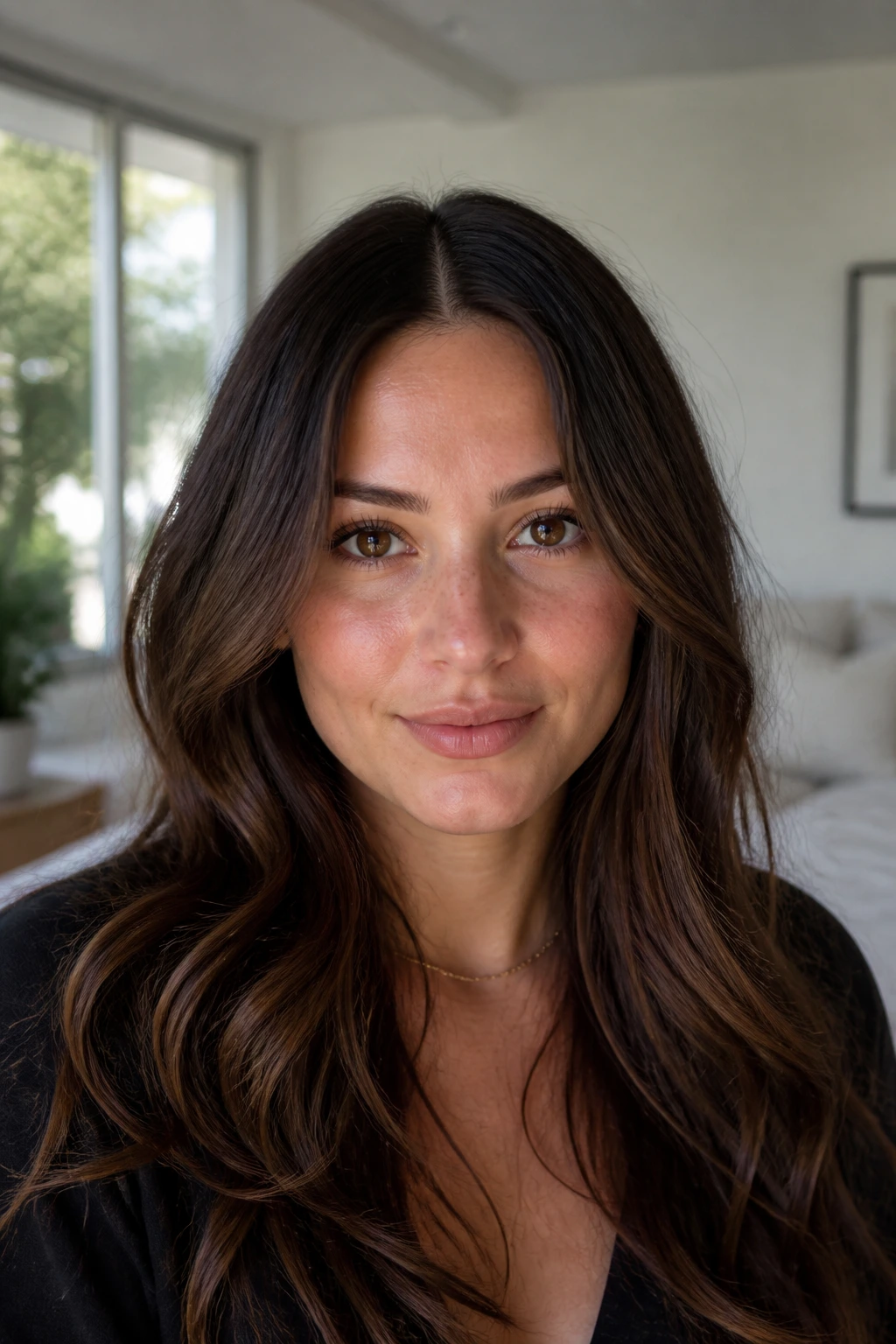
Invisible layers are the sneaky cousins of the layered cut. You still get movement, but the steps between lengths stay hidden, so the hair falls in a smooth line that does not jump out at the sides.
That matters on a round face because visible choppy layers can land right where you do not want extra width. Invisible layering keeps the wave pattern alive while protecting the outer shape. The result is softer, cleaner, and easier to wear with a center part.
The center part works here because the cut itself is doing enough work. If you want the face to read longer, add a little root lift at the crown and keep the front pieces from flipping outward too much. A drop of serum on the ends helps the line stay sleek without killing the wave.
12. Old Hollywood Waves With a Side Sweep
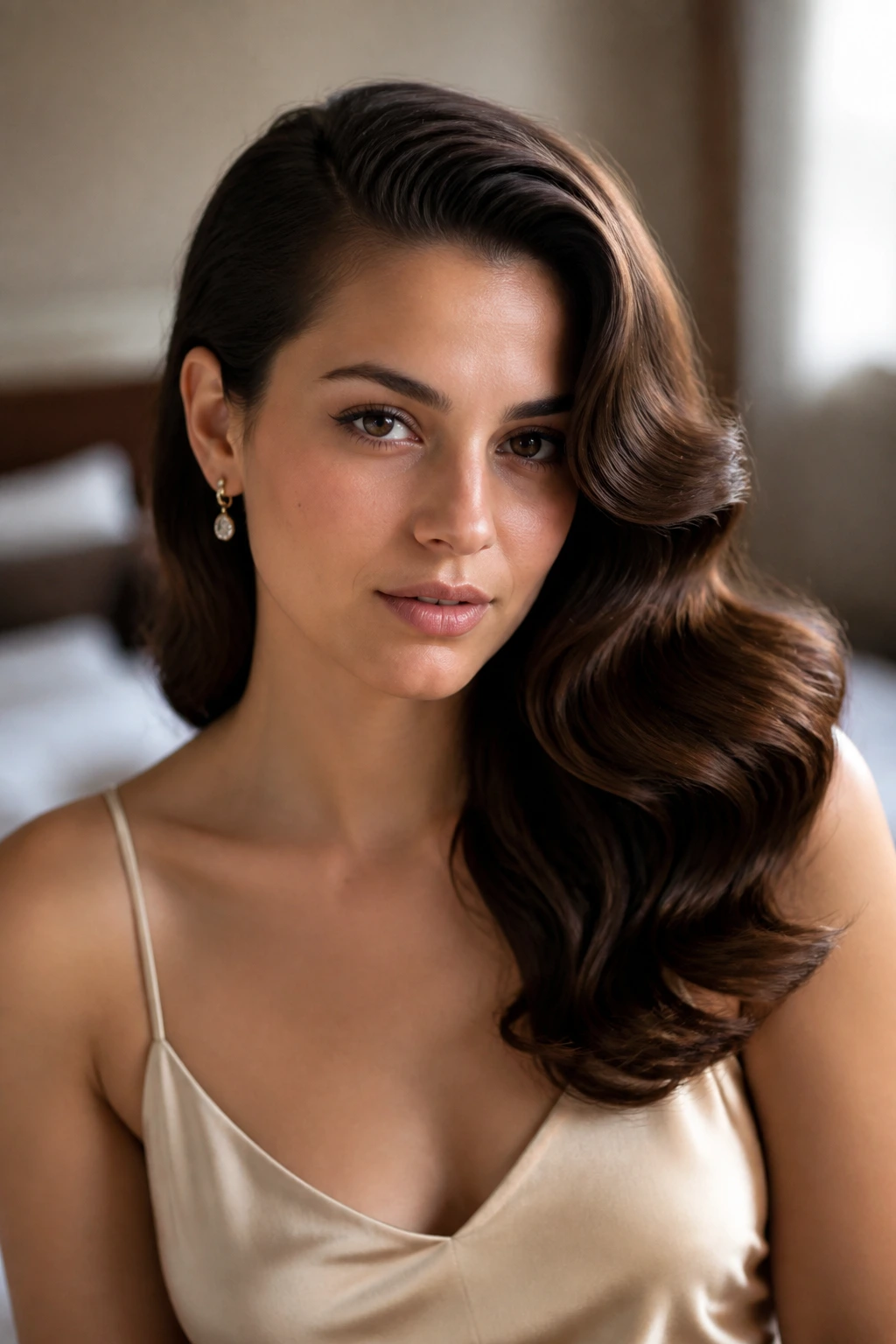
Old Hollywood waves are not just for red carpets and vintage photos. On a round face, a polished side sweep can create one long, uninterrupted curve that draws the eye from the temple down past the shoulder.
Unlike beach waves, which scatter movement everywhere, this style keeps the bends more uniform. That makes the shape feel controlled. The soft side sweep also clears one side of the face, which is handy if you want the features to read a little narrower through the middle.
I’d reach for a 1.25-inch iron, wrap the hair in the same direction, then pin the curls until they cool. After that, brush them into a single wave and pin one side back behind the ear or temple. It takes longer than a casual wave. It also looks like you meant it.
13. Tucked-Behind-Ear Waves
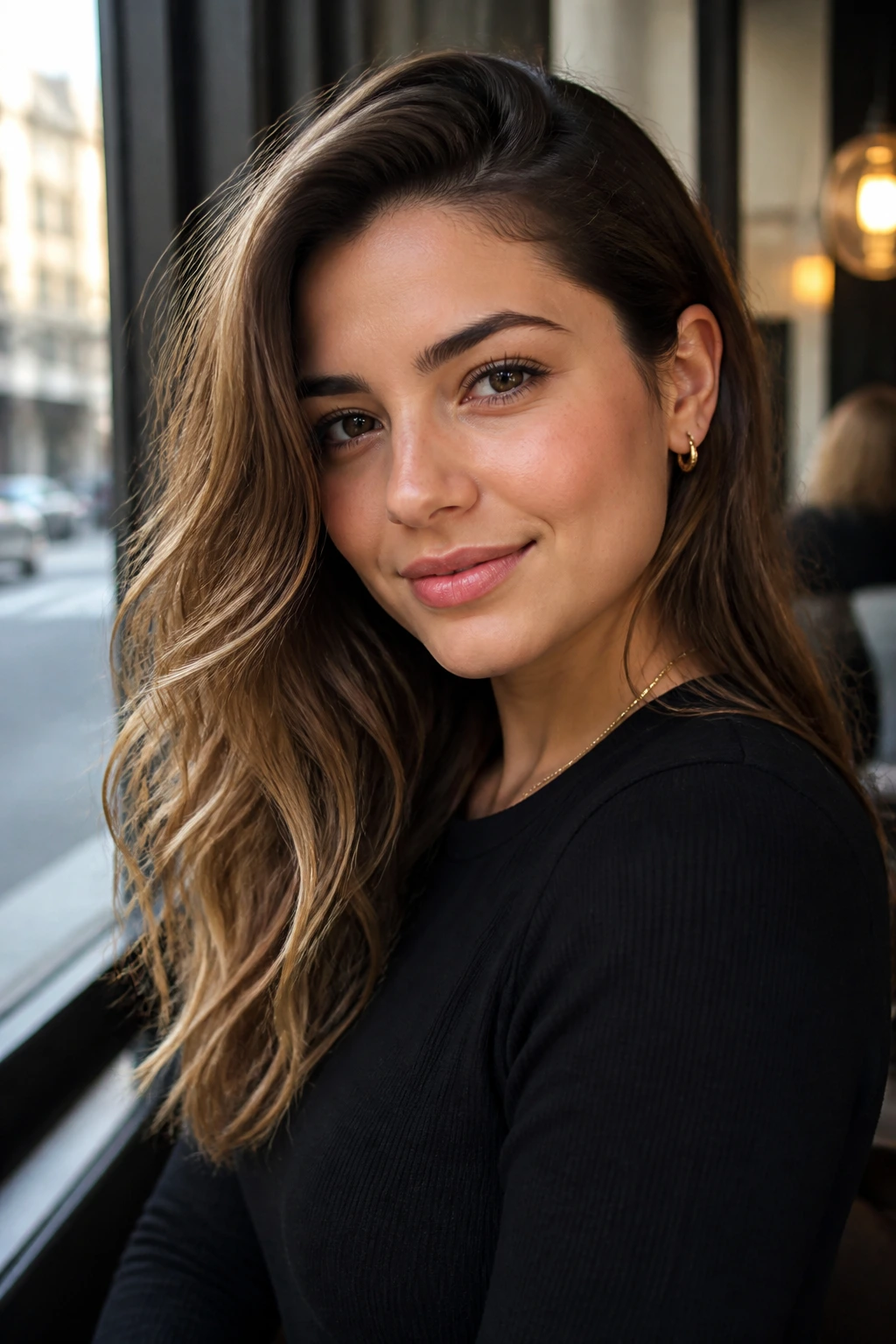
This is the simplest trick on the list, and I love it because it costs nothing. Tucking one side behind the ear opens the face and creates a tiny asymmetry that helps a round shape read longer.
Why the Asymmetry Helps
If both sides are equally full, the silhouette can spread out sideways. When one side is tucked and the other hangs loose, the eye follows the open line down the neck instead. That changes the whole feel of the style.
- Best with mid-to-long waves that have enough bend to hold shape.
- Works well when the ear tuck hits a layer, not a blunt edge.
- A small clip behind the ear can keep the tuck from falling out.
My opinion: this is one of the best tricks for busy mornings because it looks intentional even when the rest of the hair is only half-styled.
14. Braided Crown Detail
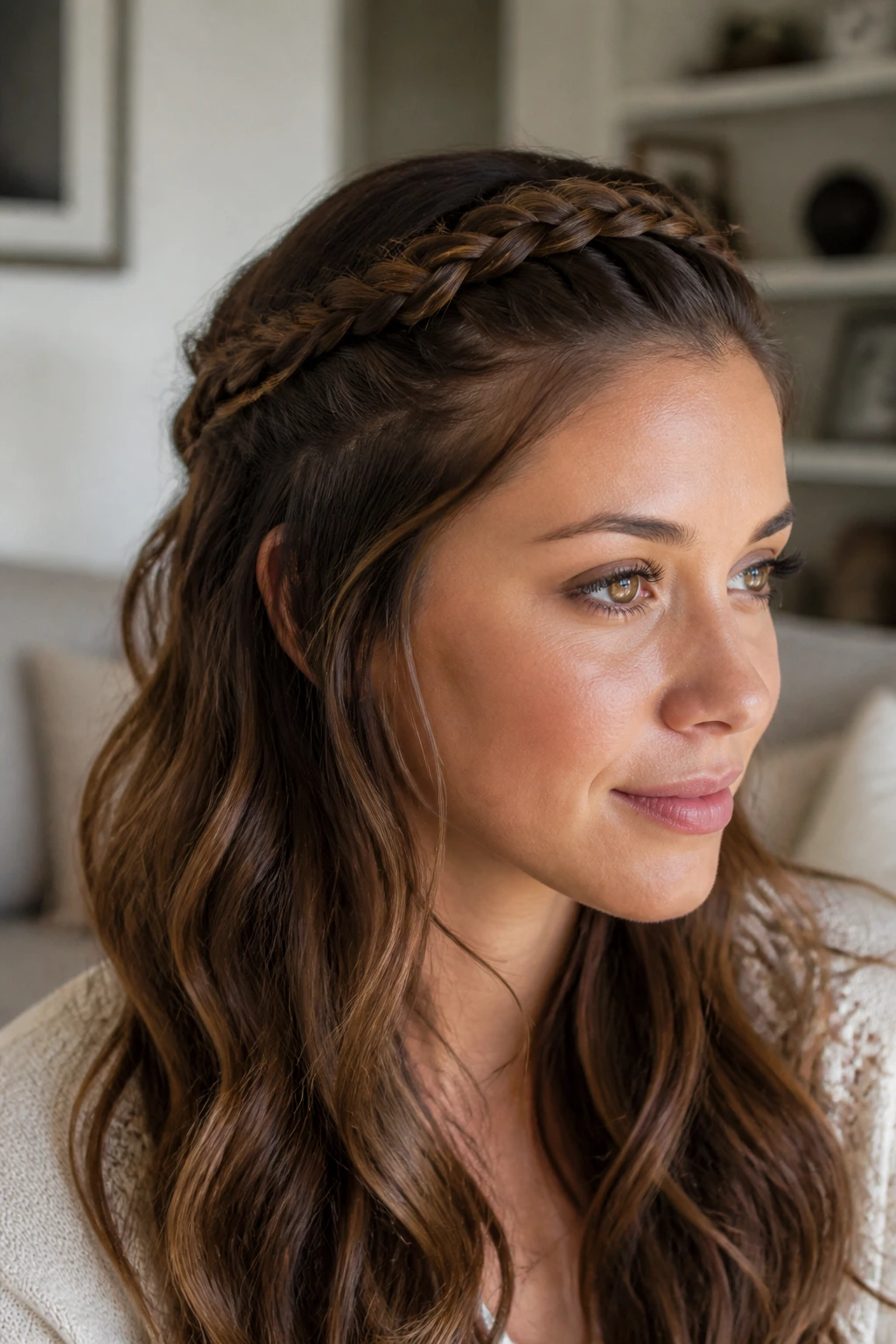
A braided crown does something smart: it puts shape and interest higher on the head, not wider at the cheeks. That’s the part of the equation people miss. The braid becomes a line that sits above the face’s widest point, while the waves stay loose underneath.
Use a thin braid along the hairline or a small braided section swept back from one temple. I would not overbuild it. A huge milkmaid braid can start to feel heavy, especially on round faces. A slimmer crown detail stays lighter and gives the face room.
This works best when the rest of the hair has loose, imperfect waves. Too-perfect curls make the braid compete with the rest of the head. A little softness wins here.
15. Long V-Cut
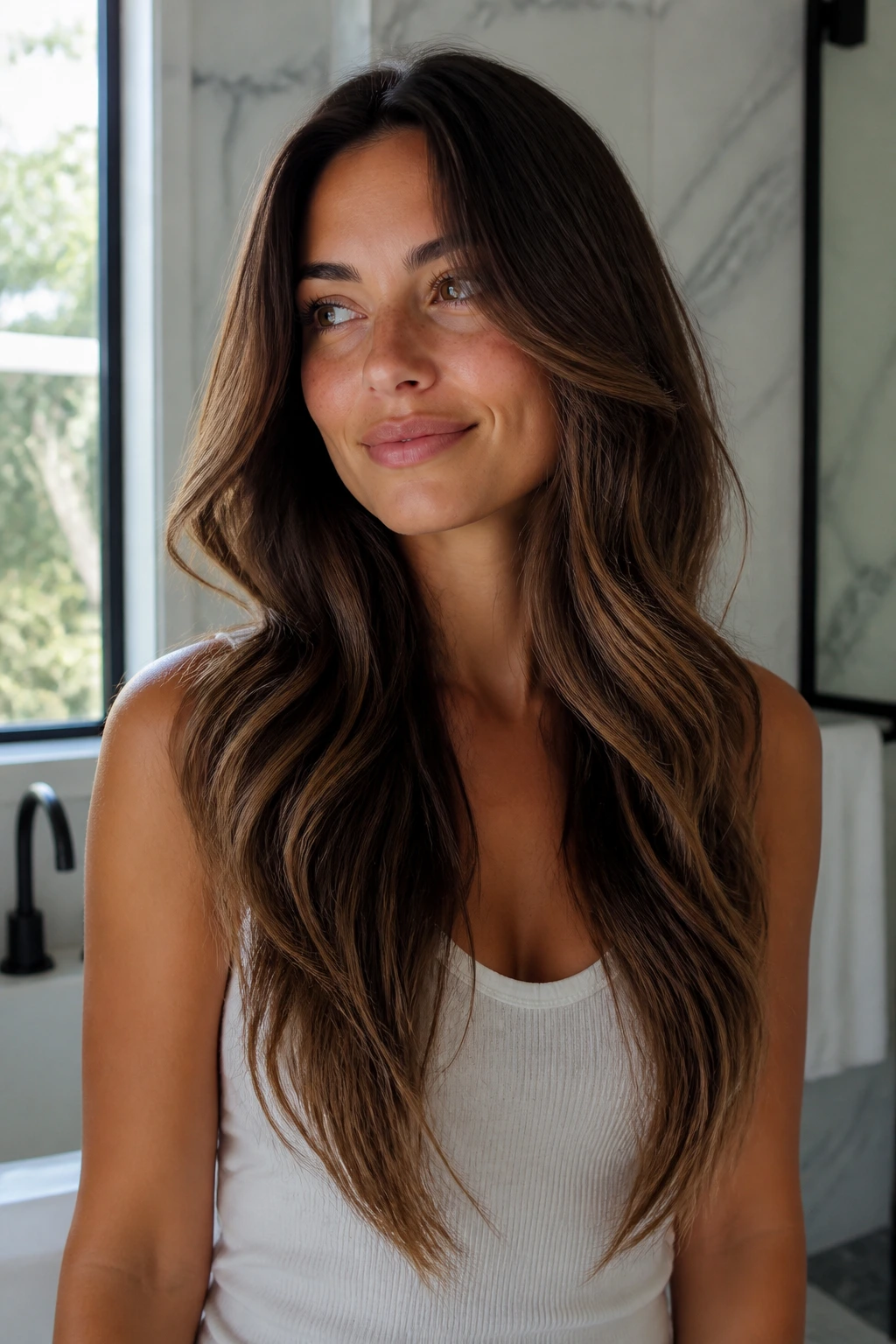
If the U-cut is a soft dip, the V-cut is a sharper point. It keeps the longest length in the center and tapers the sides more aggressively, which can be a very good thing for thick wavy hair that tends to balloon out.
How to Ask for It
Tell the stylist you want the center length preserved and the side lengths shaped into a gentle point, not a harsh triangle. The goal is movement, not a fashion-school geometric statement.
The cut works because it gives the hair a direction. Instead of spreading outward at the lower edges, the ends guide the eye down. That helps a round face look longer, especially when the waves fall over the shoulders instead of resting at chin level.
16. Loose Low Ponytail With Volume at the Temples
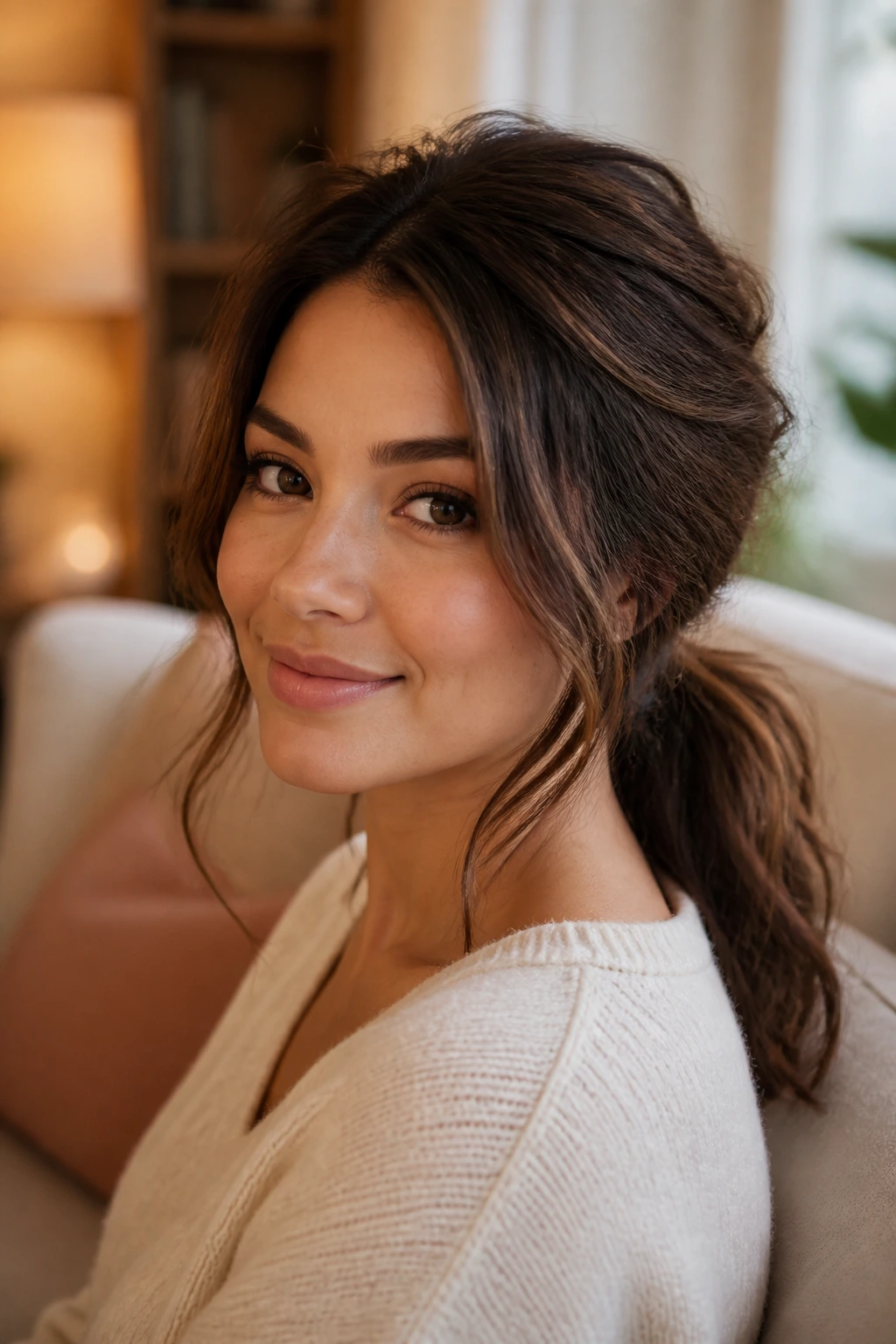
A low ponytail can flatter a round face if you stop treating it like an afterthought. The trick is to keep a little lift at the crown and leave soft volume around the temples, so the face doesn’t get compressed into a flat oval.
Think of it as a controlled, loose gather rather than a tight pullback. The pony should sit at the nape, and the top should have enough air that the head still looks tall. Pull out a few front pieces if needed, but keep them long. Short face-framing bits can turn this into a wider look than you want.
Quick Shape Notes
- Tease the crown lightly before tying.
- Use a satin scrunchie or a small elastic that does not dent the hair.
- Wrap a strand around the tie if you want it to look finished.
The ponytail is practical. It just needs a little shape discipline.
17. Mermaid Waves
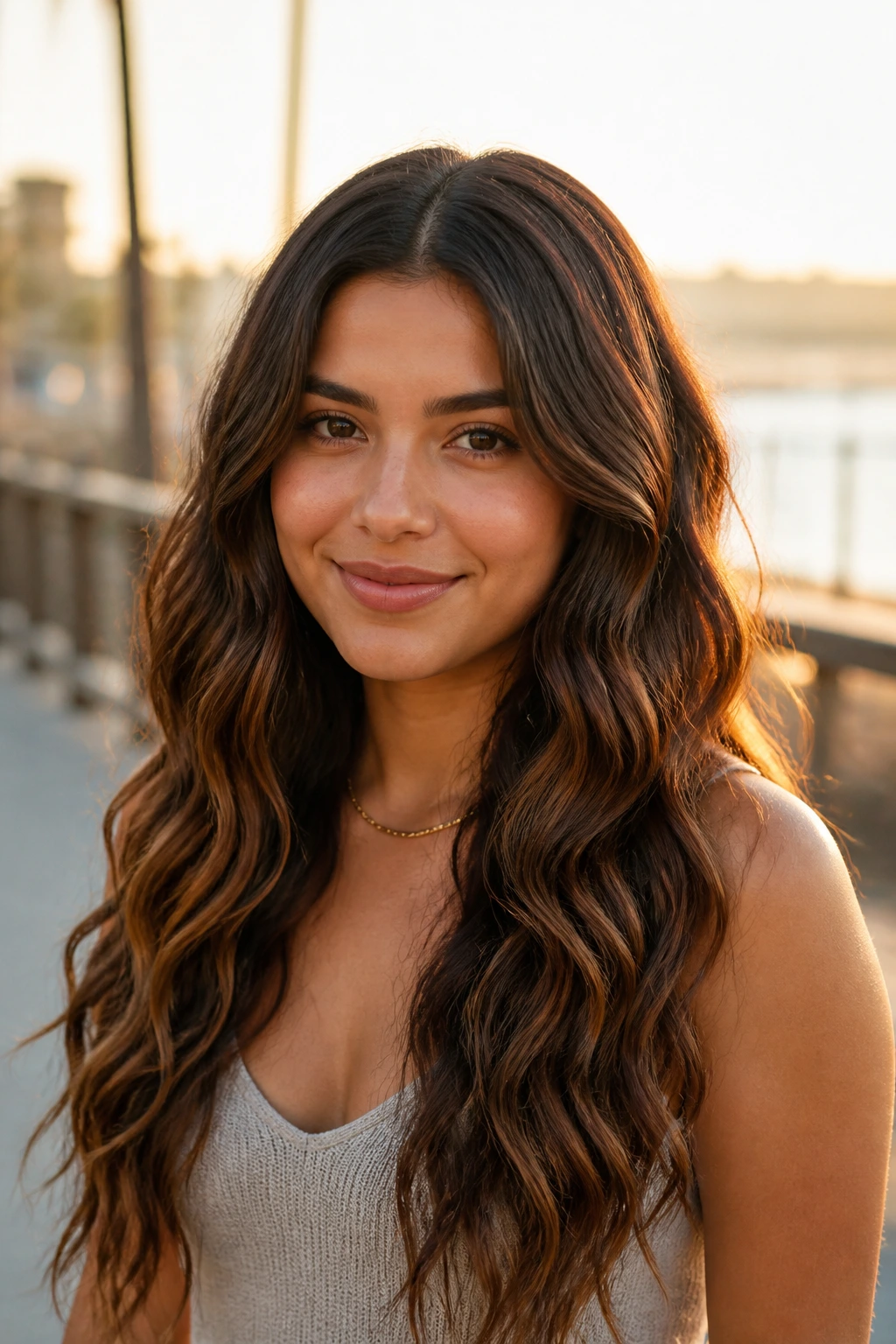
Mermaid waves are long, glossy, and a little more uniform than beach waves. They work on round faces because the pattern reads as length first, movement second. The wave falls in long vertical ribbons instead of flaring out in a loose cloud.
The key is where the wave starts. If the bend begins near the cheekbone, the sides can look fuller than you want. If it starts lower, around the jaw or below, the face stays open and the hair keeps that long, almost liquid line.
I like this best on thicker wavy hair or on hair that holds heat styling well. Use a large-barrel iron or a deep waving tool, then brush the pattern out just enough to soften the lines. Too much brushing, and the wave disappears. Too little, and the style starts looking costume-y.
18. A Grown-Out Shag With a Long Fringe
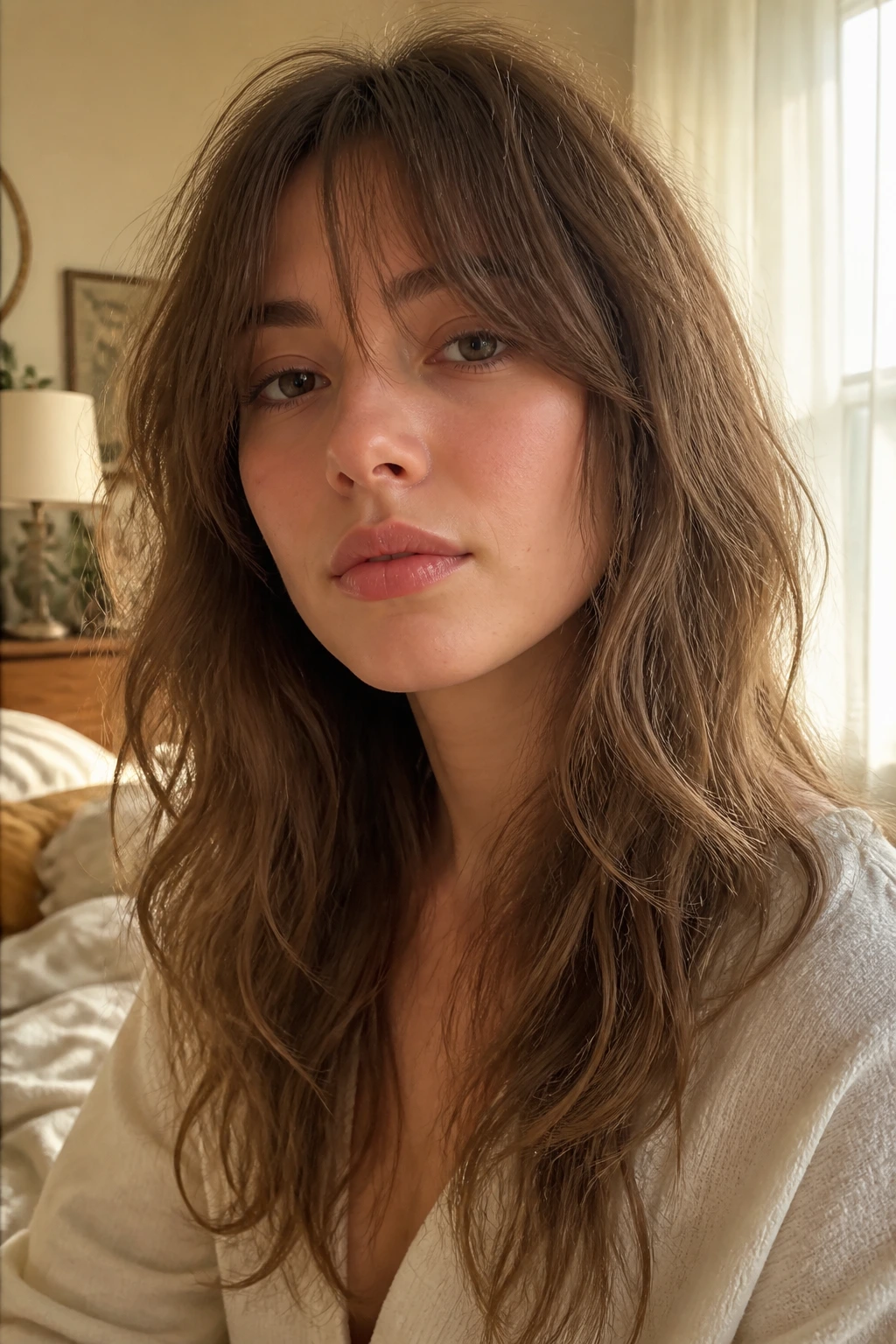
A grown-out shag can be a gift if you like wavy hair with a little edge but not a haircut that screams for daily styling. The long fringe softens the forehead, the layers create movement, and the grown-out edges keep the face from getting boxed in.
Compared with a fresh shag, this version feels calmer. The fringe is longer, the layers are less abrupt, and the overall effect is more flattering for a round face because it keeps the width scattered instead of concentrated. If your hair is thick, this is a good place to stop overthinking it.
I’d recommend it for people who want a lived-in look and do not want to spend ten minutes making every wave look perfect. It handles a bit of mess better than polished cuts do.
19. Twisted Half-Up Knot
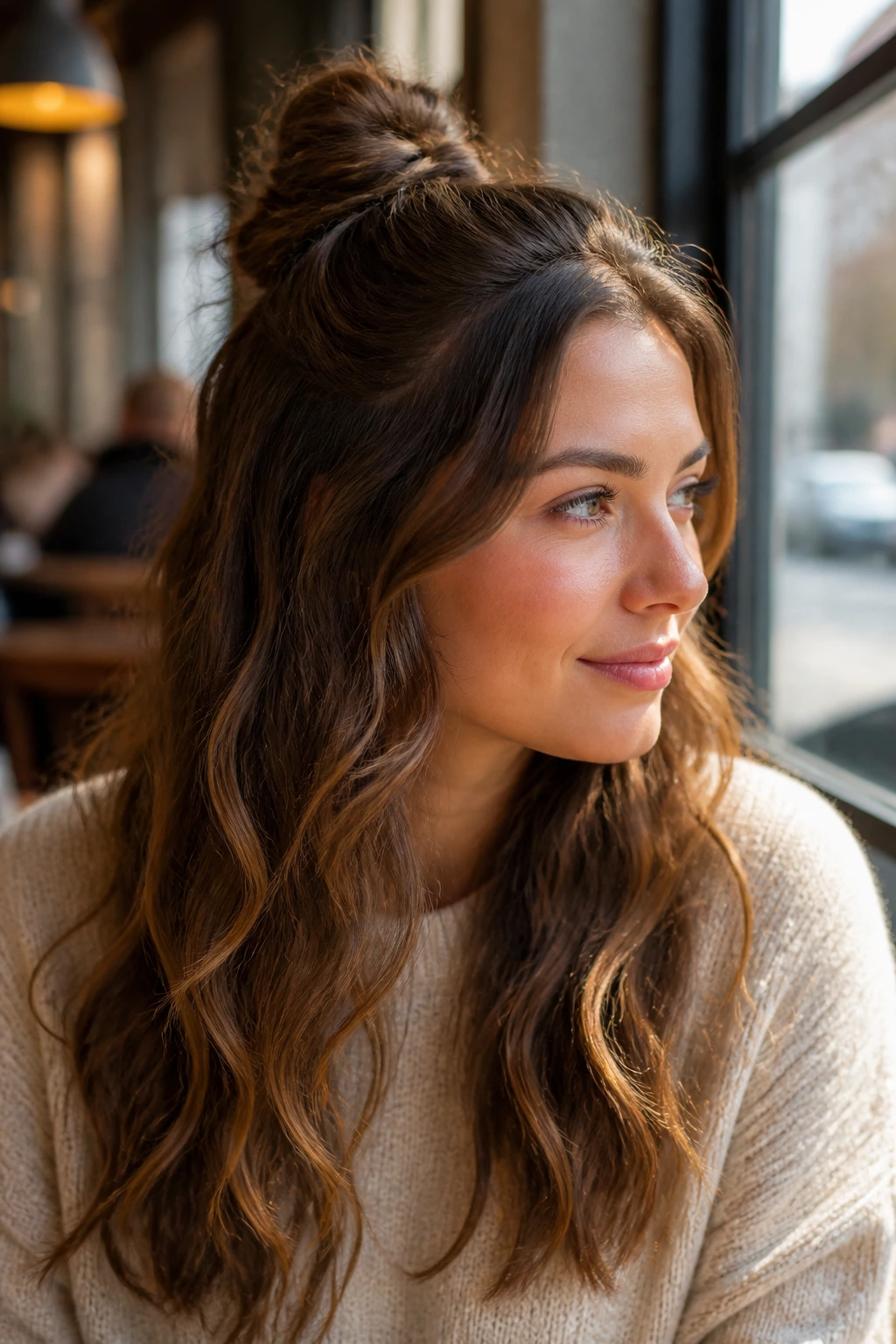
This is the half-up style’s more casual cousin. Instead of a neat clip or barrette, you twist the top section into a small knot or loop at the crown, which gives the head some height and leaves the rest of the waves free.
Why It Balances the Face
The knot pulls the eye upward. The loose lengths keep the lower half soft. That combination matters on a round face because it adds vertical energy without squeezing the sides.
- Keep the knot small and a little loose.
- Leave the front pieces soft rather than slicked back.
- Pin the twist with two bobby pins if the hair is thick.
Tiny warning: if you twist too much hair into the knot, it starts to look bulky fast. Small is better here.
20. Long Layers With Glossy Blowout Ends
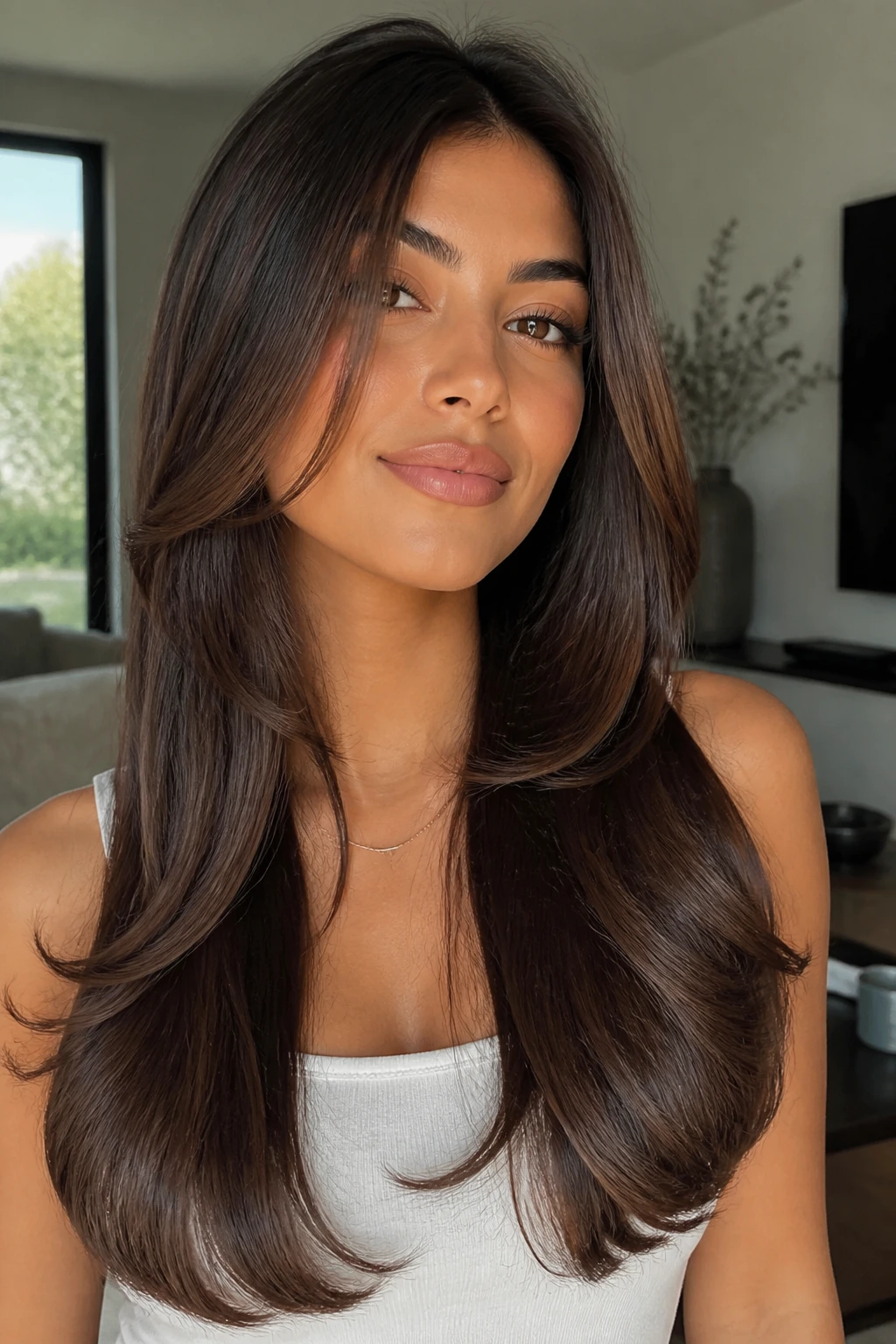
This is the cleanest-looking option on the list. The roots stay smooth, the mids stay controlled, and the ends have just enough bend to keep the hair from falling flat. On a round face, that smooth top line can make the whole head feel taller and leaner.
A polished blowout does not mean pin-straight hair. It means the crown sits neatly, the layers fall in a long line, and the ends curve in a way that does not spread sideways. Wavy hair can absolutely do this if you work with a round brush on the top section and leave the wave a little looser through the ends.
I’d pick this if you like a finished look more than a beachy one. It does take some heat styling, but not absurd amounts, and the result tends to hold shape better through the day than a fully undone wave.
21. Halo Braid Over Loose Waves
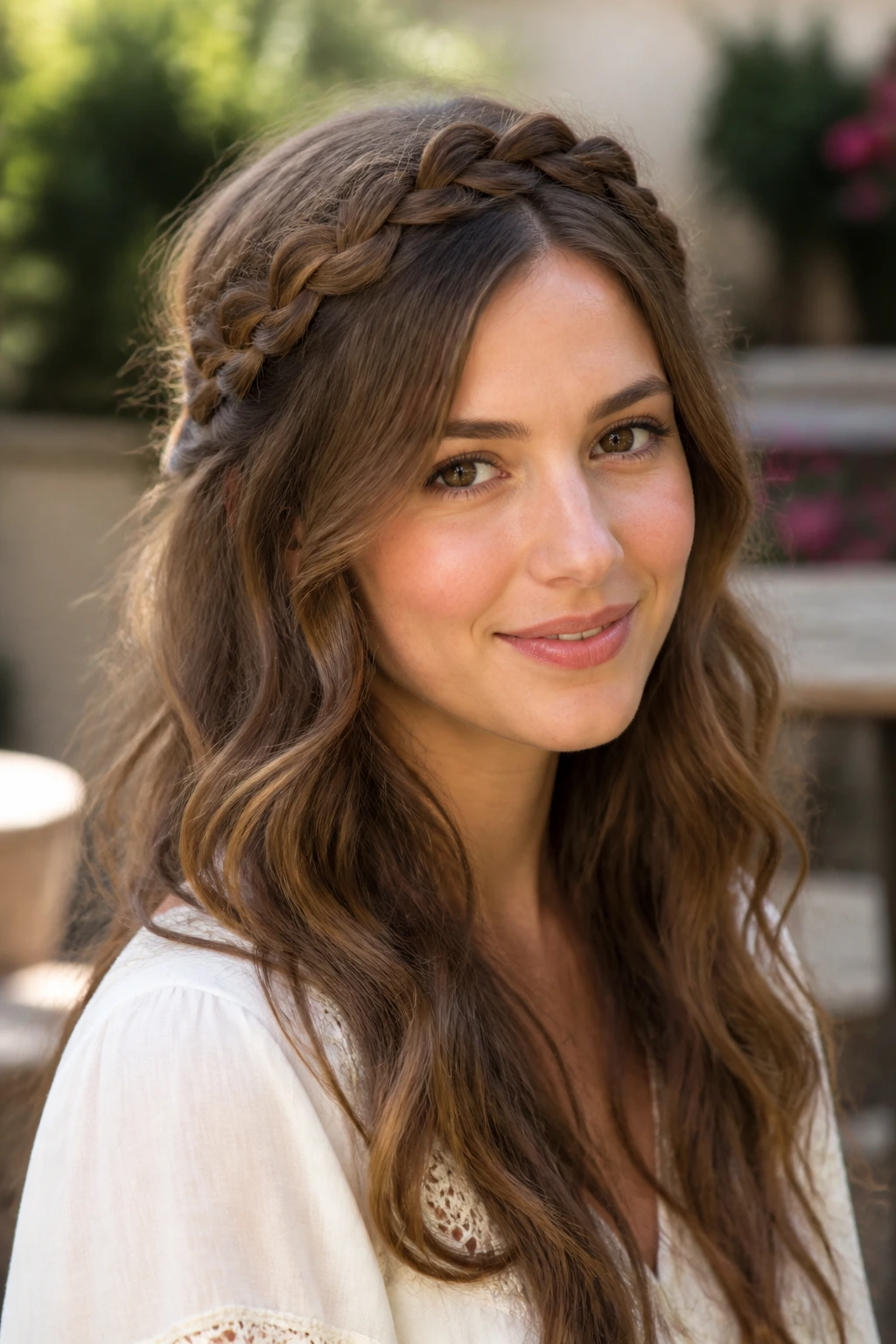
A halo braid gives you a frame, but not the heavy kind. It sits above the face and across the top of the head, which draws attention upward and away from the widest part of a round face.
The rest of the hair stays loose underneath, so you still get the long wave line that keeps the look soft. That contrast is why it works. High detail, low visual bulk. The braid can be thin or medium, depending on how much hair you want to take up top.
How to Keep It From Feeling Stiff
Leave the braid slightly loose and pull a few wispy strands around the temples. If you slick it down too hard, the style can feel severe fast. A little softness keeps it wearable, even with long hair.
22. Minimalist Center-Part Waves With Strategic Volume
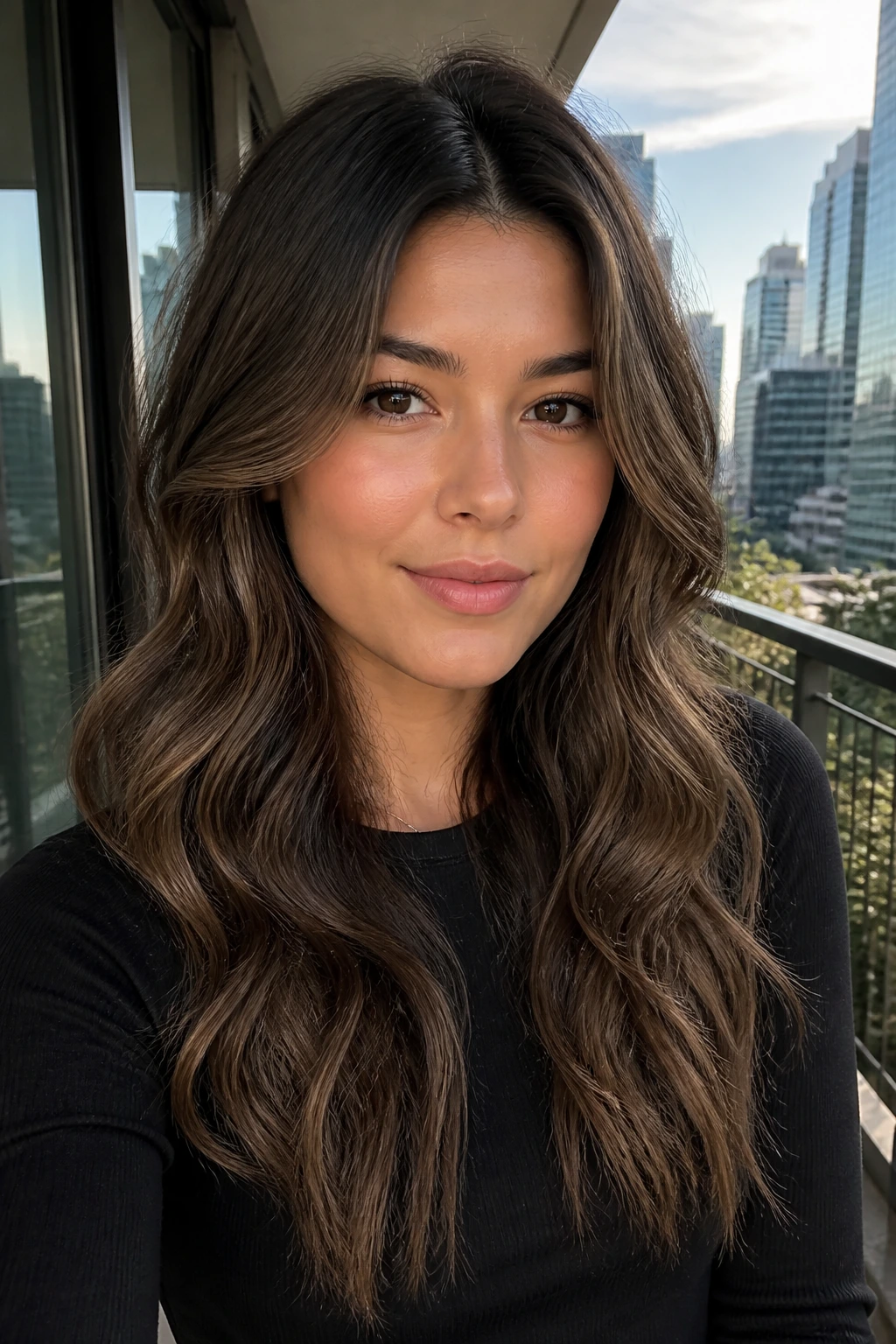
A center part can work on a round face. It just needs help. The trick is to keep the volume at the crown and through the lengths, not at the sides of the cheeks, so the face still reads long rather than wide.
This style is for people who like a clean, calm look. The waves should be loose enough to move, but not so fluffy that they expand outward. If your hair is fine, use mousse at the roots and a light texturizer through the mids. If your hair is thick, use a cream that controls puff without flattening the bend.
The clean middle line gives the face structure, and the wave pattern does the softening. That combination can be prettier than a side part when the cut underneath is already doing the shaping.
Why Long Waves and Round Faces Need the Right Balance
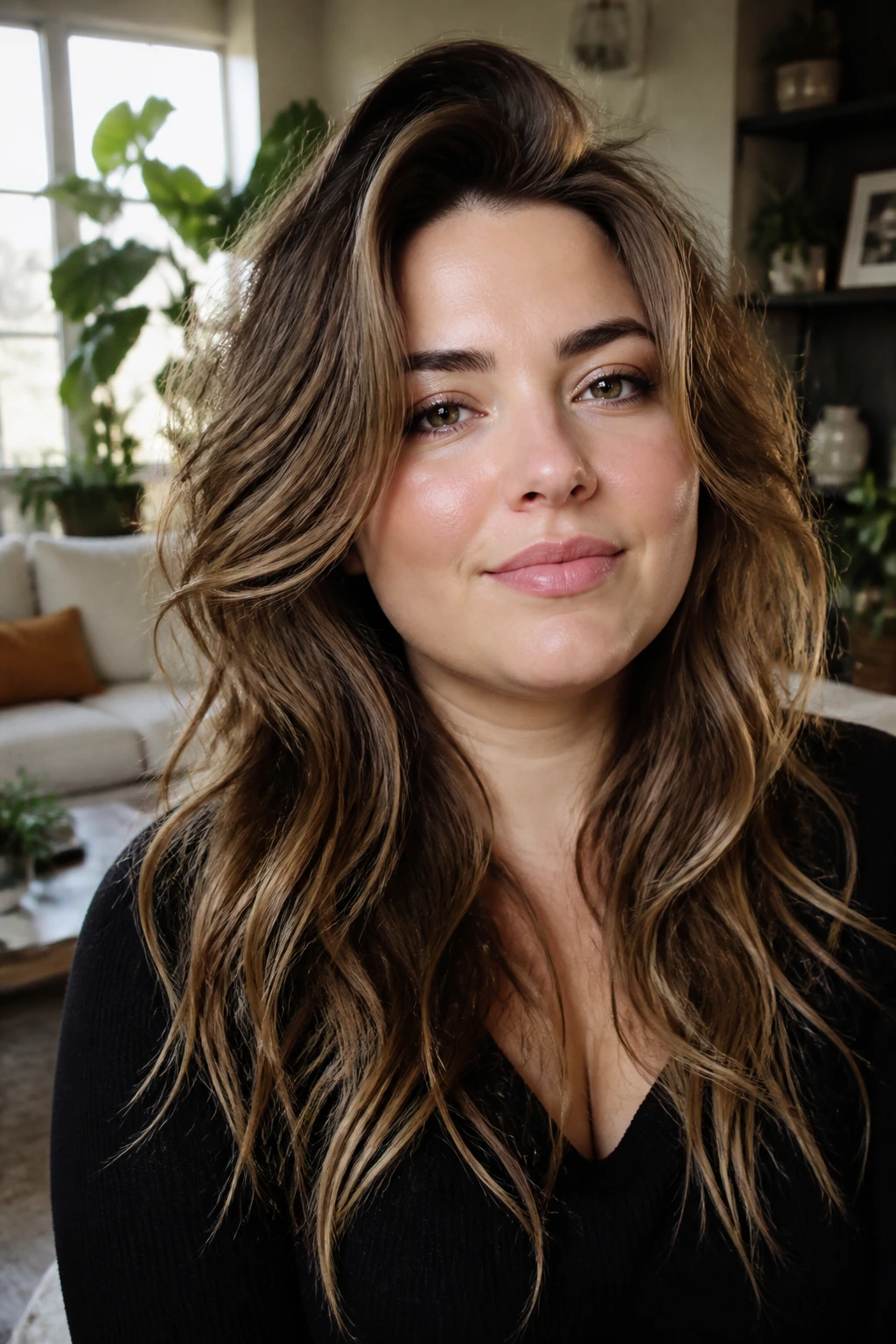
Long hair is not automatically flattering on a round face. If the weight lands at the cheeks, the style can spread sideways and make the face feel fuller than it is. The goal is to guide the eye down the center line of the body, or at least down the length of the hair, instead of parking all the movement at the outer edges.
That is why the best long hairstyles for wavy hair and round faces usually share a few habits. They keep the shortest front pieces below the cheekbone. They let the crown rise a little. They build shape with diagonal lines, side parts, or soft layers that fall toward the collarbone. The exact style can change, but the geometry stays the same.
I also think people overdo the idea that round faces need to hide behind hair. Not true. They need shape, not camouflage. A good cut can show off the wave pattern, keep the face open, and still make the proportions feel longer. That’s a much better deal than dragging everything straight down and hoping for the best.
If you have thick hair, ask for interior weight removal below the cheeks, not a lot of chopping around the temples. If your waves are loose, keep the layering gentler so the ends do not fray. If your hair is dense and springy, a clean outline matters even more than the exact bang choice.
The Tools That Make Styling Easier
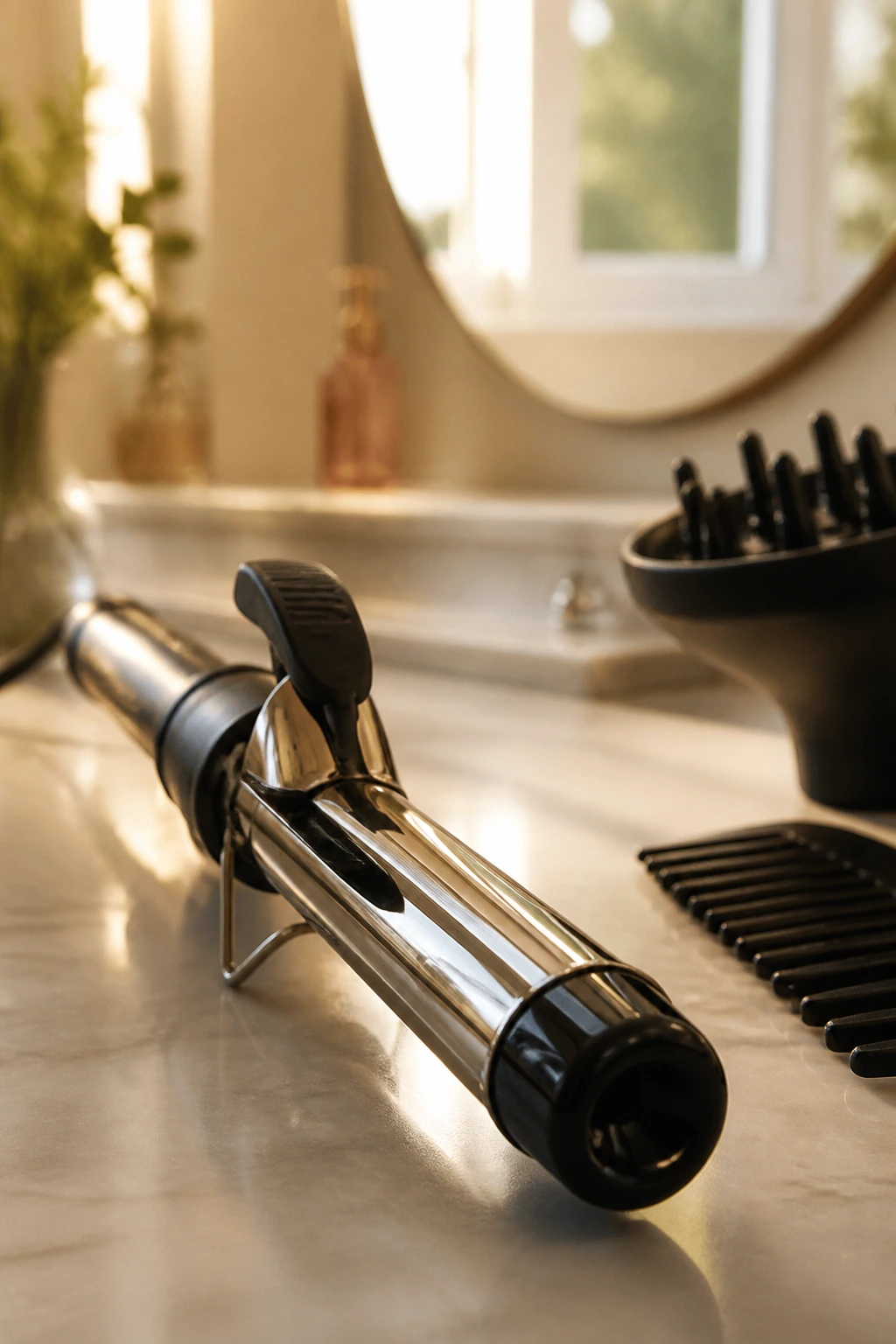
Some of these looks are pure cut. Others need a few tools to behave. None of them require a suitcase full of gadgets, but the right kit makes the difference between hair that settles and hair that fights you all morning.
- Wide-tooth comb: good for detangling wet waves without ripping the bend apart.
- 1.25-inch curling iron or wand: useful for shaping loose waves or refreshing the front pieces.
- Diffuser attachment: helps wavy hair dry with lift instead of the top getting smashed flat.
- Medium or large round brush: helpful for curtain bangs, side sweeps, and blowout ends.
- Duckbill clips: perfect for clipping the crown while it cools, which helps hold lift.
- Velcro rollers: excellent for setting front pieces away from the face.
- Heat protectant spray: non-negotiable if you touch hot tools.
- Light mousse: adds root support without turning wavy hair crunchy.
- Curl cream: useful for wave definition, especially on thicker hair.
- Texture spray or dry shampoo: good for second-day shape and a little grit near the roots.
- Silk scrunchie: kinder than a tight elastic for half-up styles and low ponytails.
- Bobby pins: handy for tucks, twists, and fixing one side back.
If you only buy three things, make them a diffuser, a mousse, and a clip set for the crown. That trio covers more ground than a lot of expensive drawers do.
How to Get the Most Out of These Styles
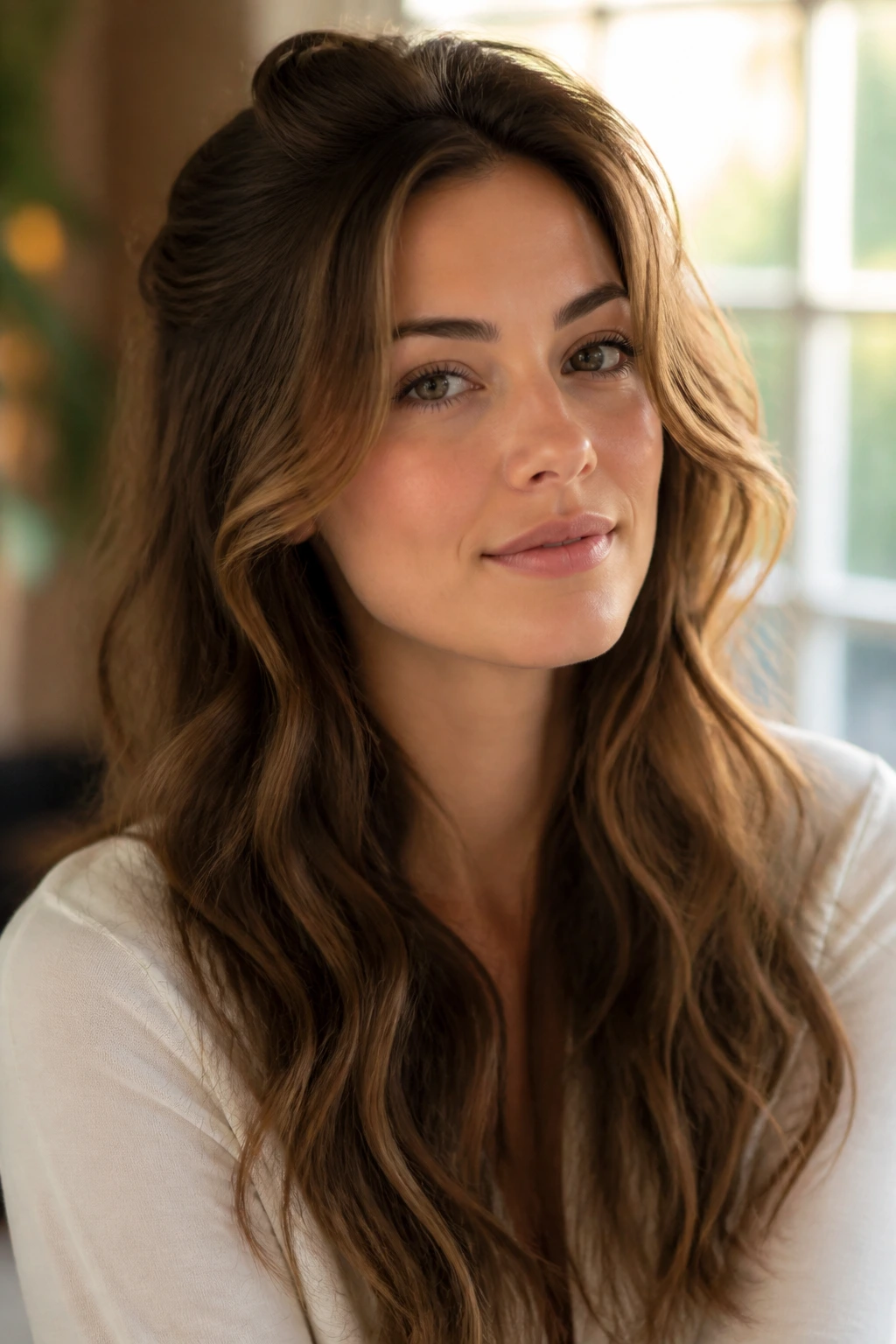
Root Lift: Wavy hair on a round face usually looks better with some height at the crown. Clip the roots at the part while the hair cools, or use a diffuser to dry the top section first so it does not collapse.
Wave Direction: For the front pieces, bend the hair away from the face. That one move can stop the cheeks from feeling boxed in. A lot of people curl everything the same way and then wonder why the sides look bulky.
Product Load: Use less product than you think near the roots. A golf-ball amount of mousse can be too much on fine hair. Thick hair can take more, but even then, keep heavy cream and oil on the mids and ends.
Day-Two Refresh: Mist the hair lightly with water, scrunch in a pea-sized bit of leave-in conditioner, and diffuse for a few minutes. You do not need to start over every morning. Usually you just need to wake the wave pattern back up.
Salon Photo Rules: Bring two photos, not fifteen. One should show the cut shape, the other should show the finish you want. That keeps the conversation honest, because the cut and the styling are not always the same thing.
A little blunt truth: if the shortest layer hits the widest point of your face, the whole cut is working against you. Move that piece lower. Problem solved.
The Mistakes That Make a Round Face Look Wider
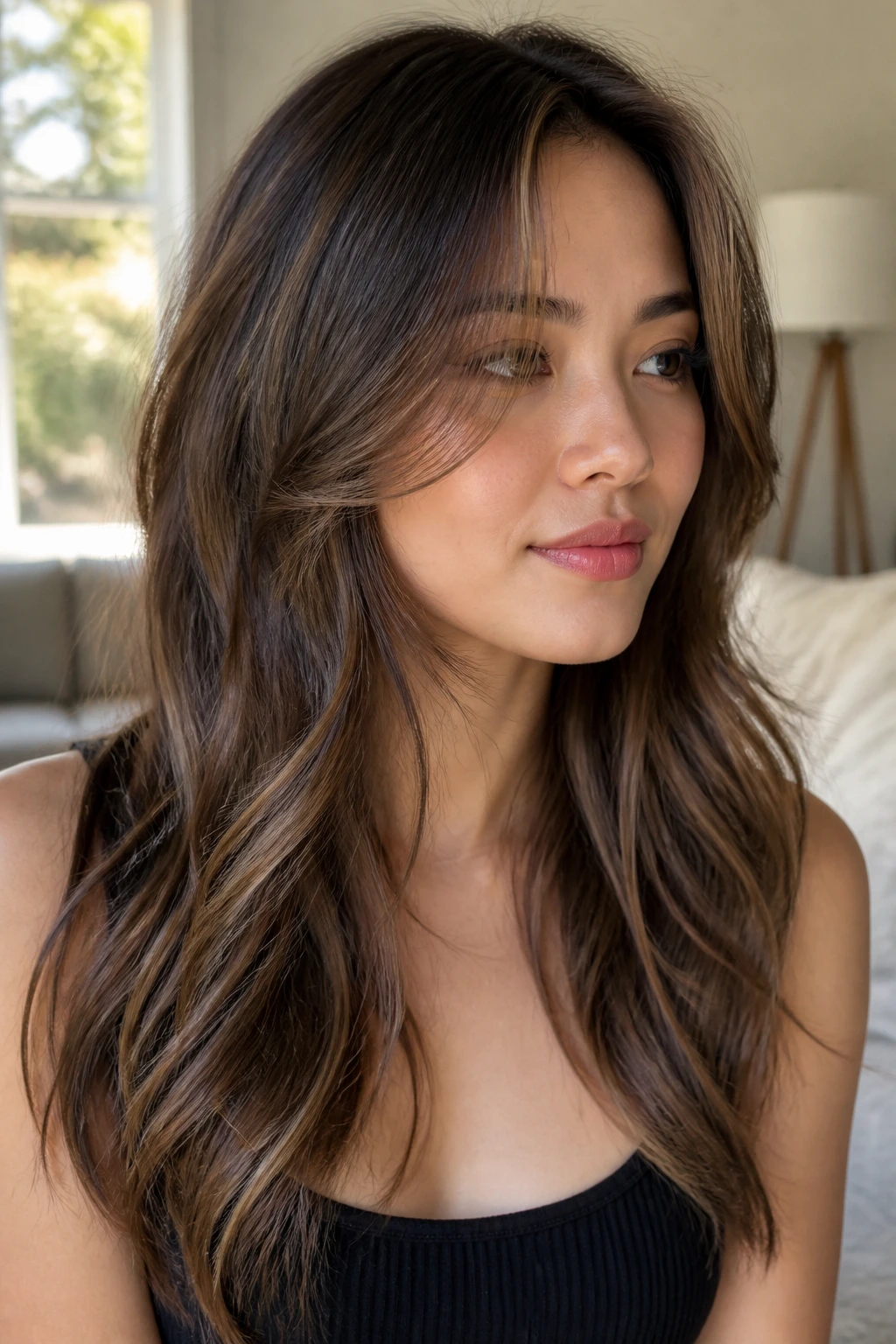
The most common mistake is placing the shortest layer at the cheekbone. That seems harmless in the chair, but once the hair dries and bends, the wave often blooms right where the face is widest. The fix is simple: push the shortest front piece lower, usually to the jaw or below.
Another one is too much side volume. People love lift, which is fair, but if all the height sits at the temples, the face can look broader instead of longer. Build lift at the crown, not at the outer edges. That keeps the top tall and the sides cleaner.
Brushing out every wave is a third problem. On some hair, brushing creates fluff, not softness. If the wave pattern starts to spread, use your fingers or a wide-tooth comb on damp hair, then stop touching it once it’s dry.
Heavy oil near the roots is sneaky. It can make the top lie flat and push the body of the hair outward, which is the wrong trade on a round face. Keep heavier products on the ends and use only a little at the front.
The last mistake is using a chin-length blunt edge and calling it a long style. It is not. It’s a broad line at exactly the wrong spot. If you want length, show length.
Variations Worth Trying When You Want a Different Mood
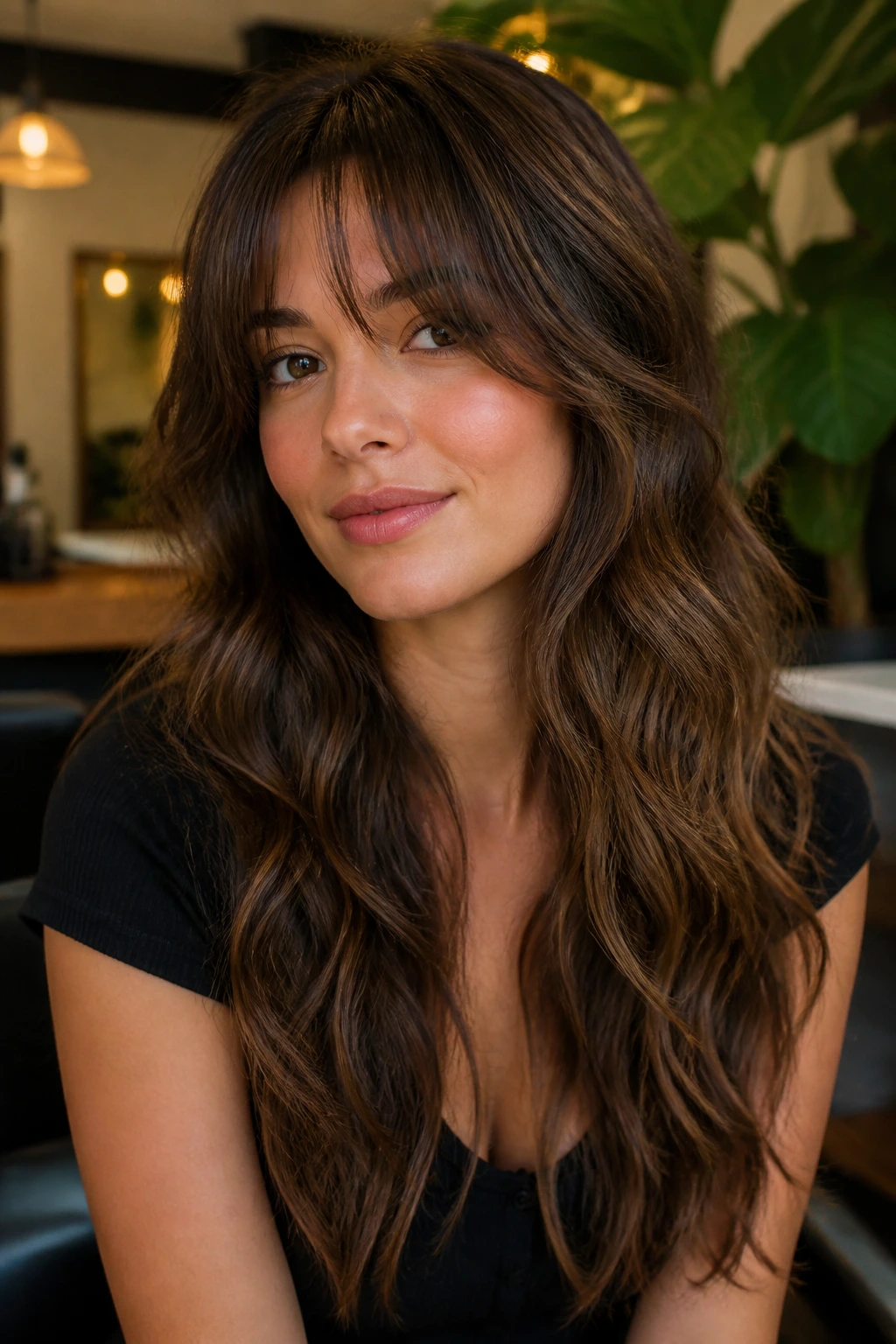
Soft and Romantic: Keep the waves loose, pair them with curtain bangs, and let the front pieces fall just past the cheekbones. This version is gentle and easy to wear when you want movement without a lot of structure.
Polished and Event-Ready: Go for old Hollywood waves or long layers with blowout ends. The cleaner line and smoother finish make the face read longer, and the style holds up well for dinner, photos, or any place where you want the hair to behave.
Low-Effort Air-Dried: Ask for invisible layers and keep the part slightly off center. Add a bit of mousse and let the wave dry on its own. This is the least fussy option, and it’s good for people who do not want to fight their texture every morning.
Thick-Hair Controlled Shape: Choose a U-cut or a V-cut with interior weight removal. Thick waves need room to move, but they also need a cleaner outline so the sides do not puff out.
Fine-Hair Boosted Crown: Keep the layers softer and rely on root lift, not heavy chopping. Fine waves can go limp fast if the cut gets too broken up, so a little volume at the crown goes further than aggressive layering.
Wash Days, Refresh Days, and Trims
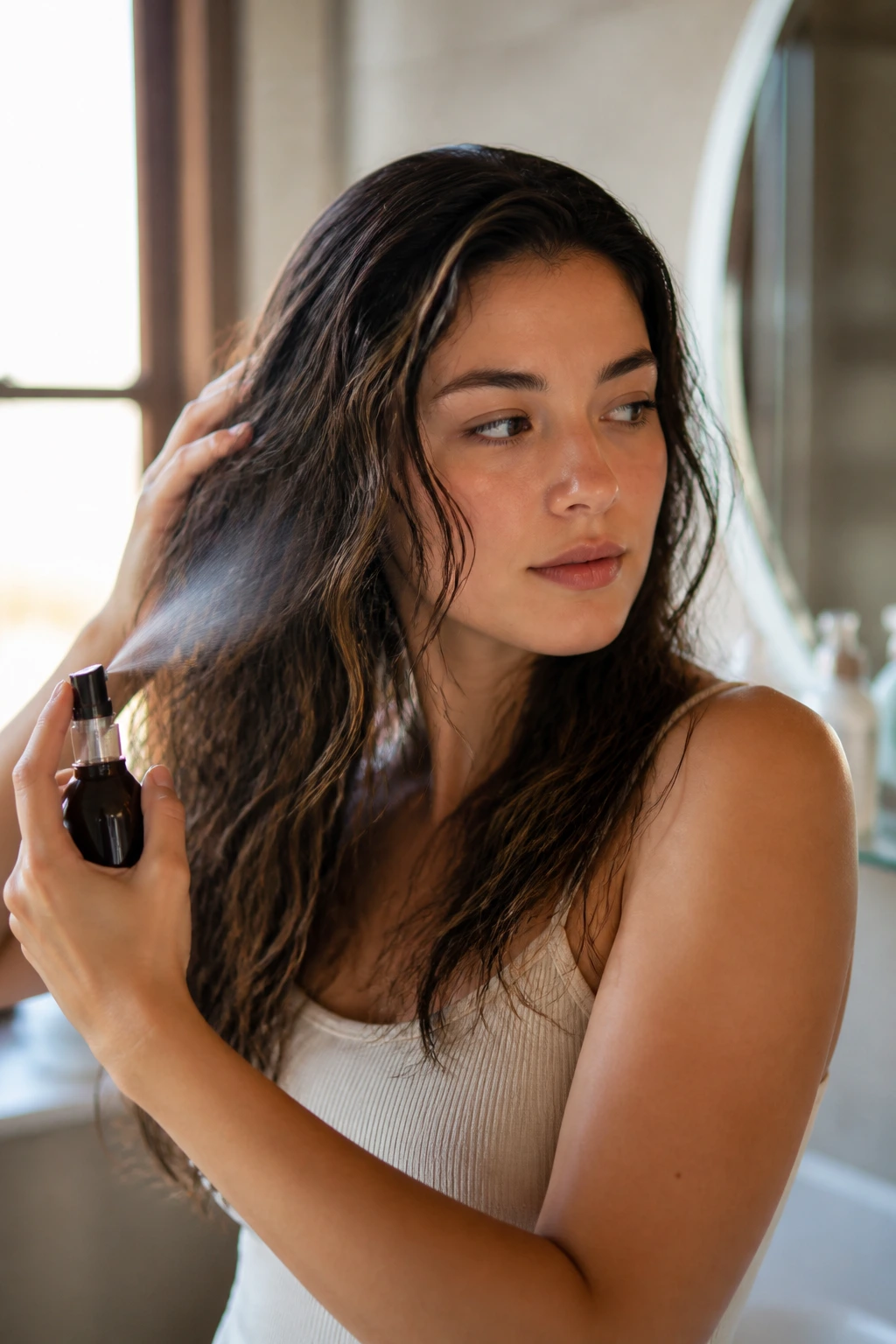
Long wavy hair usually behaves best when you stop treating every day like a full wash day. For many heads of hair, washing every two to four days gives the wave time to settle without the scalp getting greasy. If your roots get oily faster, use dry shampoo on day two, not after the hair has already collapsed.
Refreshes are simpler than people think. Mist the mids and ends lightly, scrunch in a touch of leave-in conditioner or curl cream, and diffuse for three to five minutes. If you need more shape in the front, rewrap just those face-framing pieces around a large brush or roller for a few minutes while you get dressed.
Trims matter more than people admit. Long layers can start looking blunt or triangular if they go too long between cuts. A trim every eight to twelve weeks usually keeps the outline clean, while curtain bangs or bottleneck bangs may need a cleanup every four to six weeks if you want them sitting in the right place.
At night, a loose silk scrunchie or a silk pillowcase can keep the wave from getting crushed. A high pineapple is fine for some hair, but on round faces I often like a looser, lower gather because it avoids creating too much top bulk by morning.
Questions People Actually Ask Before Choosing a Cut
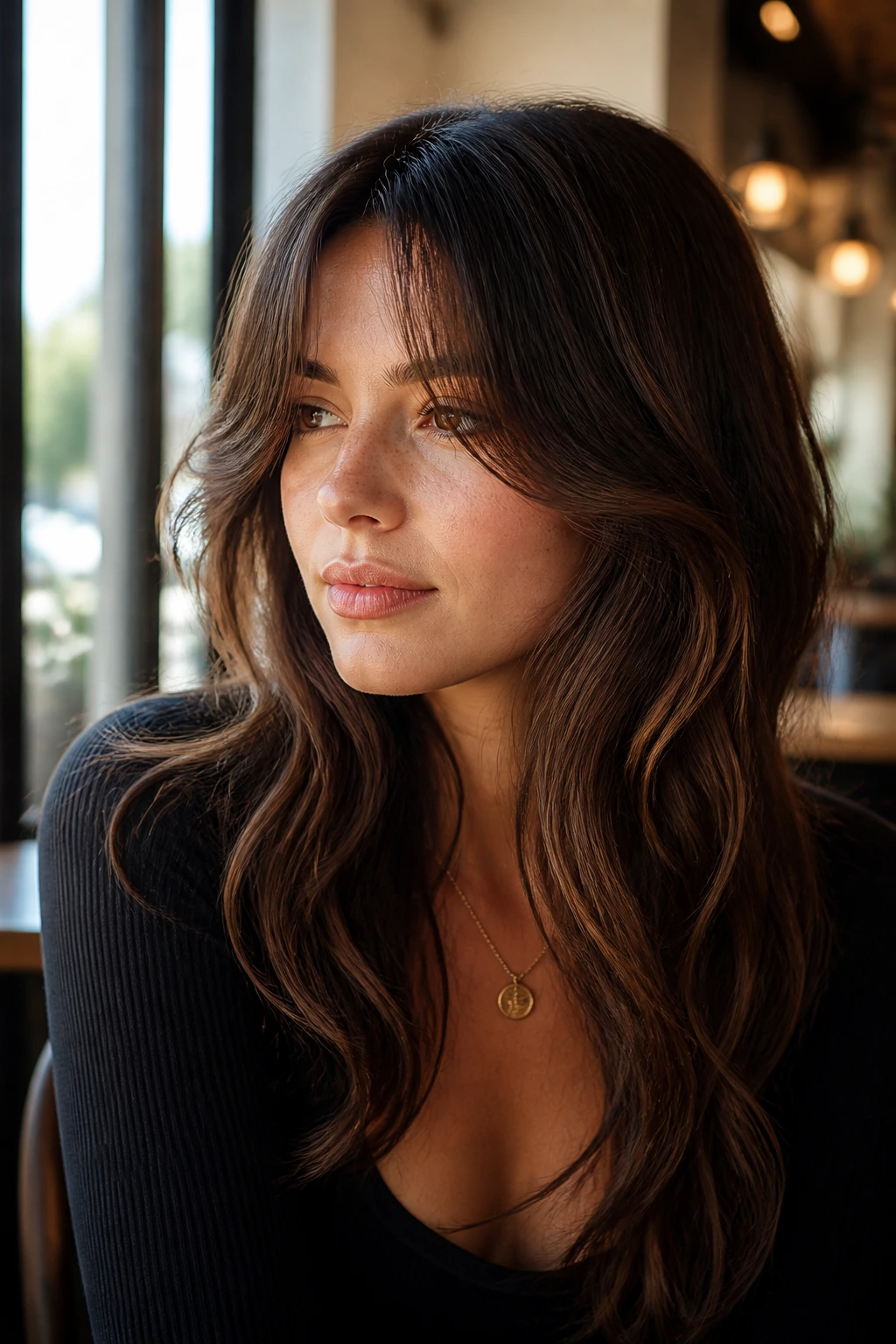
What length looks best on a round face?
Usually the sweet spot is below the chin, and often closer to the collarbone or longer. Once the shortest visible pieces sit above the jaw, the face can start to read wider. Length below the jaw gives you room to work with the wave without crowding the cheeks.
Are curtain bangs safe for round faces?
Yes, if they are long enough to blend into the sides. A short curtain fringe can stop the eye too high and too wide, but a longer version that opens below the cheekbone helps guide the face downward.
Should I use a center part or a side part?
Both can work. A side part gives the fastest slimming effect because it creates asymmetry and root lift. A center part works better when the cut has enough internal shape and the crown is not flat.
Do long layers make wavy hair frizzy?
They can, if the cut is too choppy or if the hair is over-brushed. Softer layers paired with a light mousse or curl cream usually keep the wave defined without turning it fuzzy.
What if my waves are loose and fine?
Keep the layers soft and avoid too many short pieces near the face. Fine waves often need more root lift and less shredding through the ends, or they lose their body fast.
Can I wear these styles without heat?
Absolutely. Half-up styles, side tucks, braids, and air-dried layered cuts all work without hot tools. You may need a little mousse or texture spray to help the shape hold, but that’s a product problem, not a heat problem.
How often should I trim long wavy layers?
Most people do well with a trim every eight to twelve weeks. If you have bangs or a very shaped front, you may want a small cleanup sooner so the face-framing pieces do not drift into your eyes.
What if my hair puffs out at the sides no matter what I do?
That usually means the cut has too much width through the cheekbone area or the product is too heavy in the wrong place. Ask for more weight removed below the cheeks, then keep oil and cream off the roots so the top stays lifted.
The Cuts I’d Hand to a Stylist First
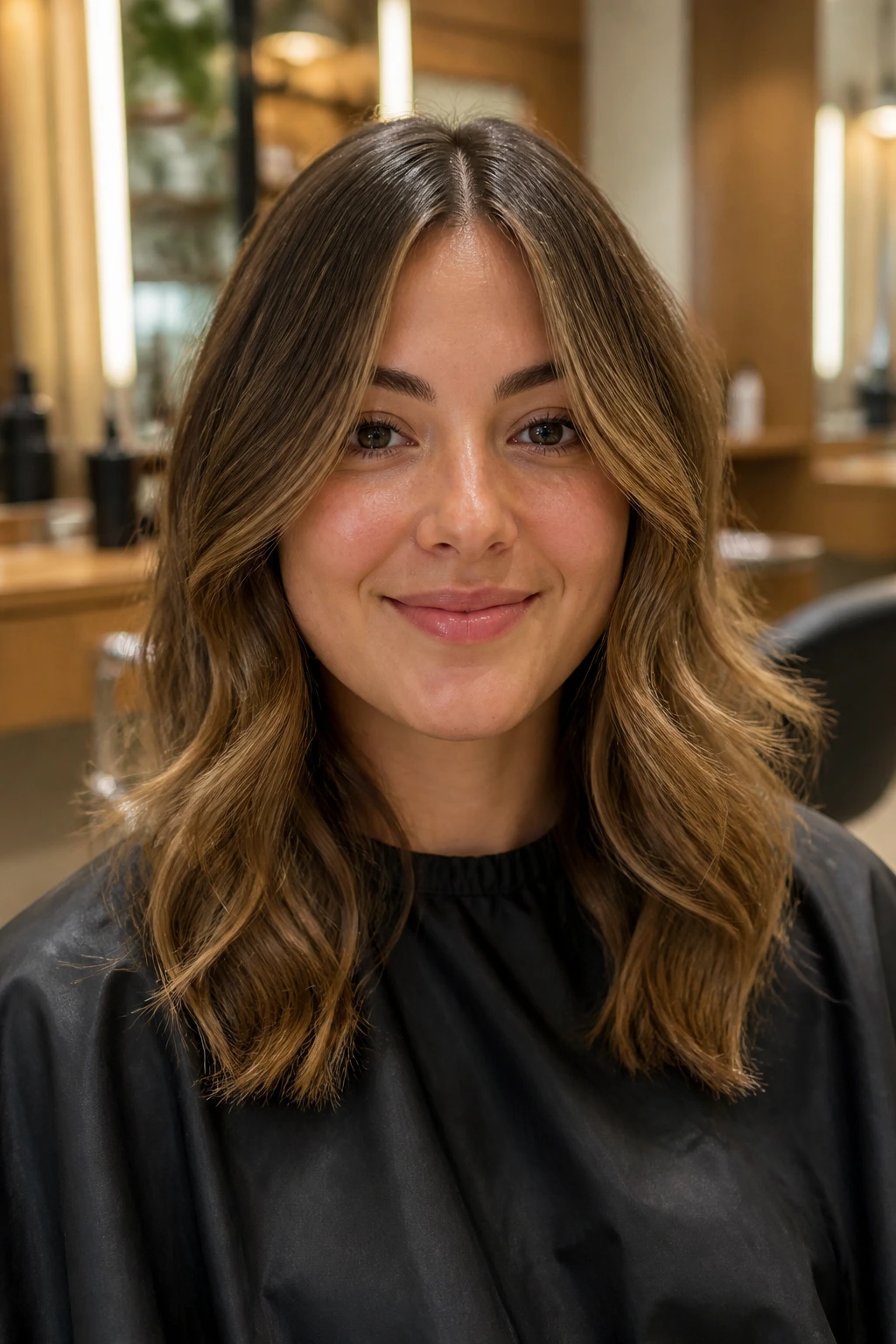
If you’re standing in a salon chair with a round face and wavy hair, I’d start with the versions that keep the shortest pieces lower than the cheekbone and the crown a little taller than feels natural. That simple combination does a lot of work. It keeps the width moving downward, which is the whole game.
I also think people underestimate how much parting changes the final look. A center part with good layers can look clean and modern. A deep side part can instantly add shape. Neither one is magic on its own, but both are powerful when the cut underneath respects the face.
Pick the version that fits your texture first, then your mood. Long face-framing layers for ease. Curtain bangs if you want softness. A shag or butterfly cut if your waves need more motion. A polished side sweep if you want a cleaner line. Bring that logic into the chair, and the haircut starts doing the heavy lifting before you ever reach for a brush.