



Fine hair has a short fuse. Give it too much layering, too much oil, or too much length with no shape, and it sinks like a wet ribbon by noon. Add yellow undertone skin into the mix, and the wrong tone can make everything look a shade duller than it should.
The fix is not mysterious. It’s a matter of choosing styles that do two jobs at once: they keep the hair looking fuller at the roots and they sit cleanly against warm, golden skin instead of fighting it. Honey, caramel, bronze, copper, warm beige, and soft chestnut all have a different effect than flat ash or muddy brown. The right haircut and the right finish can make fine hair look denser before you even touch a curling iron.
I’ve always liked styles that look deliberate without acting fussy. Fine hair does not need a thousand moving parts. It needs a shape with enough structure to hold, enough softness to avoid looking helmet-like, and enough warmth around the face to make yellow undertones glow instead of blend into the background. The picks below do exactly that.
Why These Styles Pull Their Weight
-
Warm color harmony: Honey, caramel, copper, and bronze shades sit neatly against yellow undertone skin, so your complexion looks brighter without fighting the hair color.
-
Density where it counts: Blunt ends, controlled waves, and smart parting tricks make fine hair read thicker at the eye line, which is where most people notice volume first.
-
Low-drama styling: Most of these looks work with a round brush, a 1-inch iron, or a quick dry-shampoo refresh. No marathon morning routine required.
-
Flexible for everyday life: You can wear the same cut sleek for work, piecey for dinner, and a little messier on the weekend without changing the whole shape.
-
Better than over-layering: The styles here avoid the common fine-hair trap of shredding the ends until there’s nothing left to hold a bend or a braid.
-
Easy to explain at the salon: A clear length, a part, and a finish are easier to ask for than vague words like “volume” or “texture,” which usually mean different things to different stylists.
1. Chin-Length Blunt Bob With a Deep Side Part
A blunt bob at the jawline is one of the few cuts that can make fine hair look honestly fuller, not just teased-full for ten minutes. The clean edge gives the ends some weight, and a deep side part adds lift where the hair usually lies flat. That little shift changes the whole face shape.
If your skin leans yellow-gold, this cut shines with a honey brown glaze, caramel ribbons, or a soft beige blonde that still reads warm. I’d skip icy tones here; they tend to flatten the whole look and make the bob feel stricter than it needs to be.
Styling Notes That Matter
- Blow-dry with a 1.5-inch round brush and lift the root on the heavier side of the part.
- Tuck one side behind the ear to show the blunt line.
- Finish with a pea-sized amount of shine cream on the ends only.
The best thing about this cut is that it looks expensive even when the styling is simple. That’s rare. And useful.
2. Collarbone Lob With Soft S-Waves
The collarbone lob is the safest bet if you like length but hate seeing your hair go limp by lunchtime. It sits just long enough to feel soft, yet short enough that fine strands still have some swing and body. A loose S-wave, not a tight curl, keeps it from turning puffy at the bottom.
Warm undertone skin does especially well with this shape when the color has some depth: toffee blonde, warm beige brunette, or a soft cinnamon balayage. You want light that bends around the face, not a single flat color from roots to ends.
This is the cut I’d hand to someone who wants to air-dry part of the week and still look put together. A little mousse at the roots, a bend through the mid-lengths, and a finger rake after it cools—done. Fine hair tends to lose polish fast when it’s overworked, so resist the urge to curl every piece.
3. French Bob With Airy Fringe
Why does this one work so well on fine hair? Because it keeps the perimeter short and compact, which makes the hair look denser, while the fringe breaks up the forehead without swallowing the face. A French bob should feel light, not wispy. That’s the distinction.
On yellow undertone skin, the bob looks best with warm copper, chestnut, or brunette shades that have a soft gold reflection. Even if you stay brunette, ask for a warm gloss around the front. A tiny shift in tone can do more than a drastic cut.
How to Style It
A small round brush is enough. Blow the fringe forward, then bend the ends of the bob under just a touch so the line stays clean. If you curl it too much, the shape loses that neat, clipped feel that gives the bob its charm.
The fringe can get greasy faster than the rest of the cut. Dry shampoo at the roots and a quick brush-through are part of the deal.
4. Curtain Bangs on a Soft Midi Cut
Curtain bangs are one of the few bang shapes that can help fine hair instead of eating it alive. They open the face, they split the weight at the front, and they give you movement without chopping the whole front section off. Paired with a midi length that ends around the shoulders, the result feels soft but not stringy.
The color story matters here. Honey beige, golden brunette, or warm chestnut keeps the face frame from going muddy against yellow undertone skin. Cool ash bangs can look oddly gray at the front, and that’s a hard no if you want brightness near the eyes.
I like this cut because it’s forgiving. Let it air-dry a bit, then bend the bangs away from the face with a round brush or a large roller. The rest of the hair can stay straight, wavy, or barely curved at the ends. That asymmetry reads deliberate.
5. Sleek Low Ponytail With a Wrapped Base
Some days, fine hair needs to stop pretending it’s having a “big hair” day. A sleek low ponytail does the opposite of hiding fine texture—it uses it. Clean roots and a low placement make the ponytail look tidy, and wrapping a strand around the elastic turns a basic style into something with a bit more polish.
This works especially well with warm skin when the color has a glossy finish: golden brown, soft mocha, caramel-tipped ends, or even a warm black-brown instead of a blue-black. Yellow undertone skin can look washed out beside cold black hair. Warm depth is kinder.
A little root powder at the crown helps, but don’t go overboard. If the ponytail is too tight or the crown too slick, fine hair can start looking scalp-heavy. Leave a tiny bit of softness around the hairline and it feels better immediately. Also, this is one of those styles that looks much better when the hair is freshly brushed and the elastic sits exactly where you want it. Sloppy ponytails are a different animal.
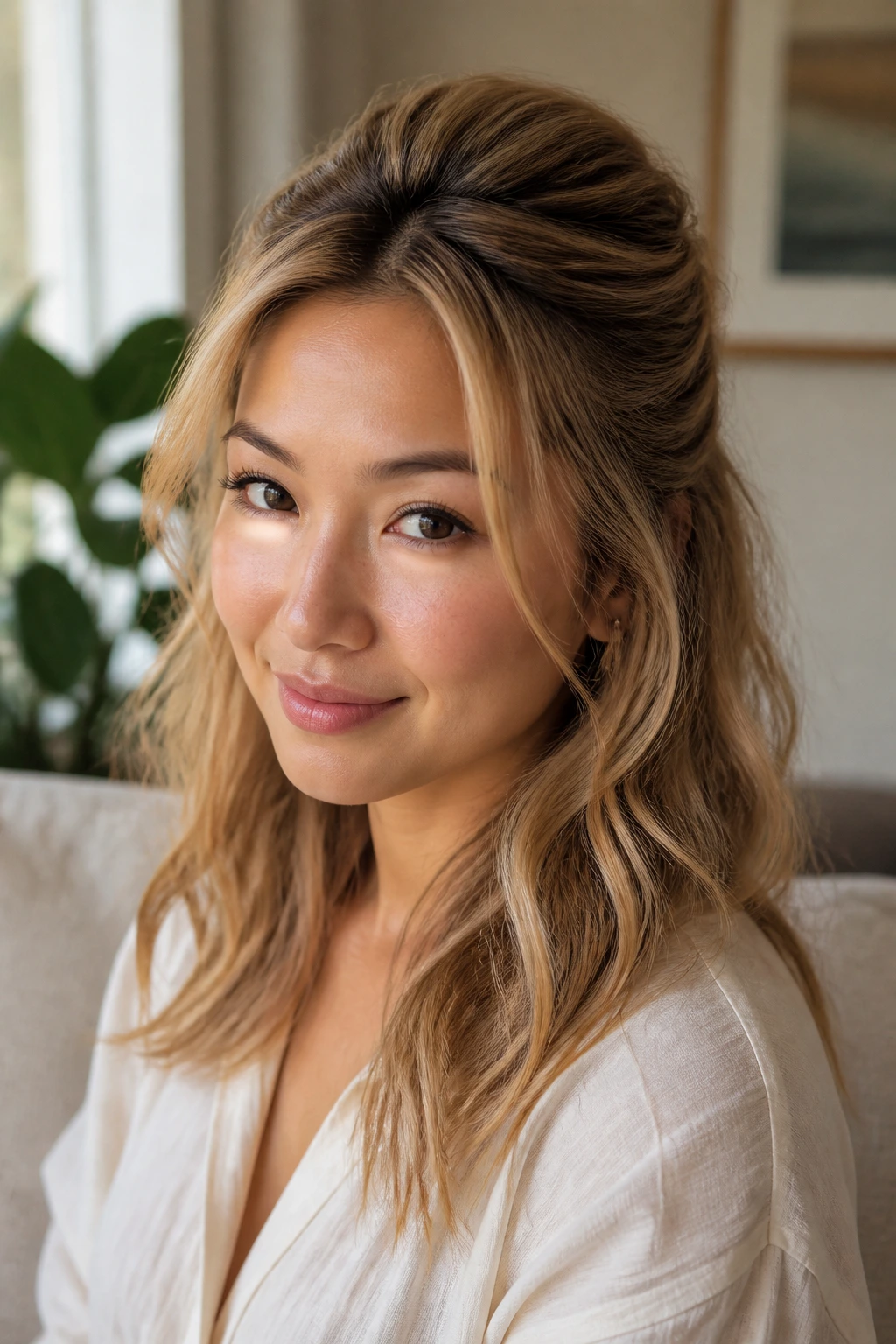
6. Half-Up Crown Lift With Loose Ends
Half-up styles are almost unfair on fine hair, in a good way. They give you instant lift at the crown while leaving the lower half free to look soft and full. When the top section is pinned a little high and the bottom stays loose, the whole head reads wider and fuller than it is.
That matters for warm complexions too. With yellow undertone skin, a half-up style gives room for face-framing highlights—honey, apricot blonde, or caramel streaks—to do the work near the cheeks. The lift at the top and warmth at the front are a strong combination.
A tiny claw clip or two pins is enough if you don’t want visible hardware. Tease only the top inch at the crown, then smooth the outer layer over it. Keep the lower half in loose waves or a soft blowout. Tight curls can make the ends look thin, which is exactly what you’re trying to avoid.
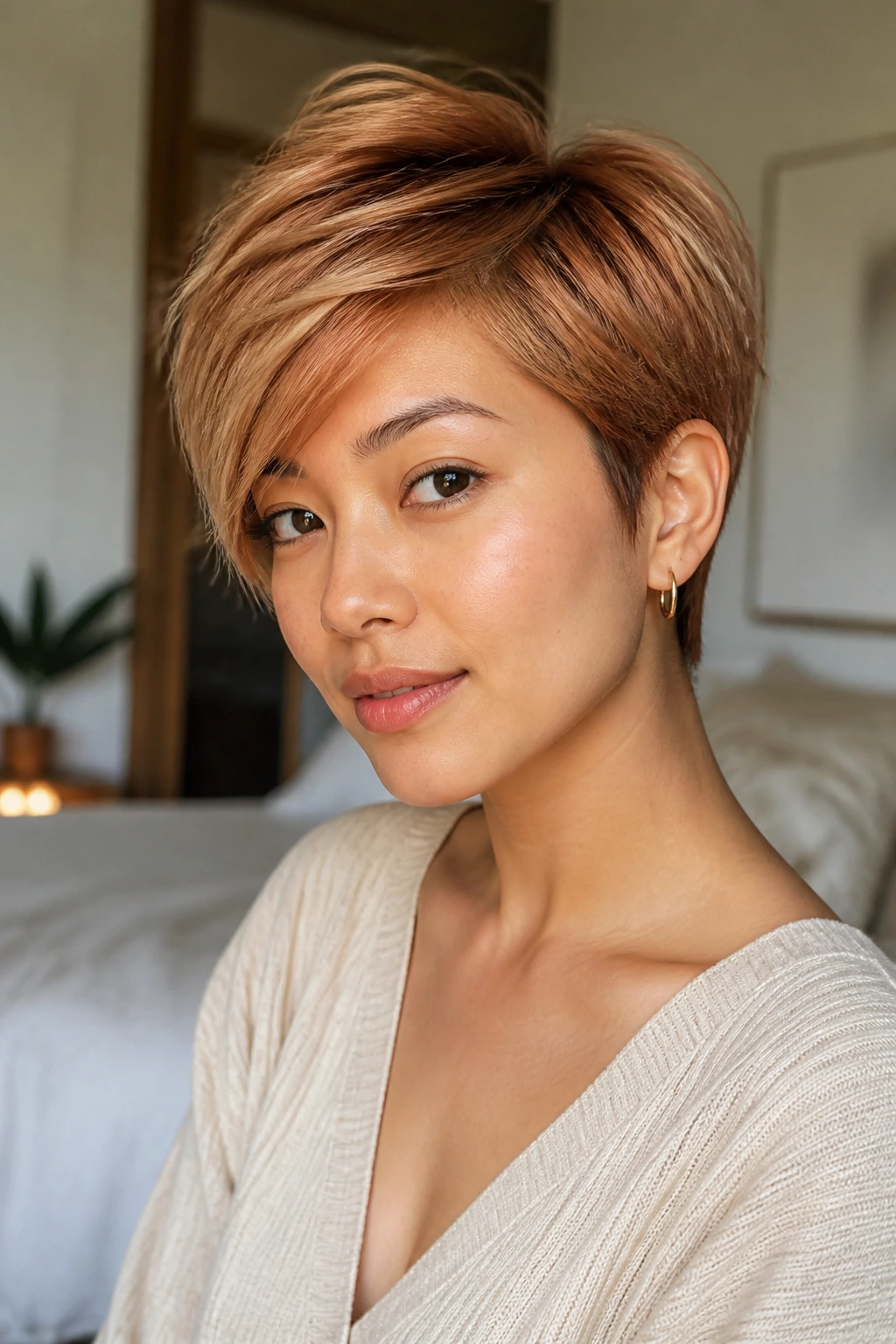
7. Pixie Cut With Longer Top Layers
A pixie is not a surrender. For fine hair, it can be the cleanest, sharpest answer in the room. The secret is length on top—enough to push forward, sweep to the side, or lift with your fingers—so the style has shape instead of looking chopped off.
Yellow undertone skin handles warm pixies beautifully: copper, strawberry blonde, toasted gold brunette, or a sandy brunette with amber pieces. These tones keep the short cut from feeling severe. They also bring light to the face in a way that short hair often needs.
Best Features to Ask For
- A longer crown so the hair can move.
- Soft edges around the ears, not a harsh box.
- Light texture through the top, not shredded ends.
I’m a fan of this cut for people who want less styling, not more. A dab of matte paste or lightweight cream is enough. Heavy wax is too much for fine hair; it clumps the strands together and steals the airy lift that makes a pixie work.
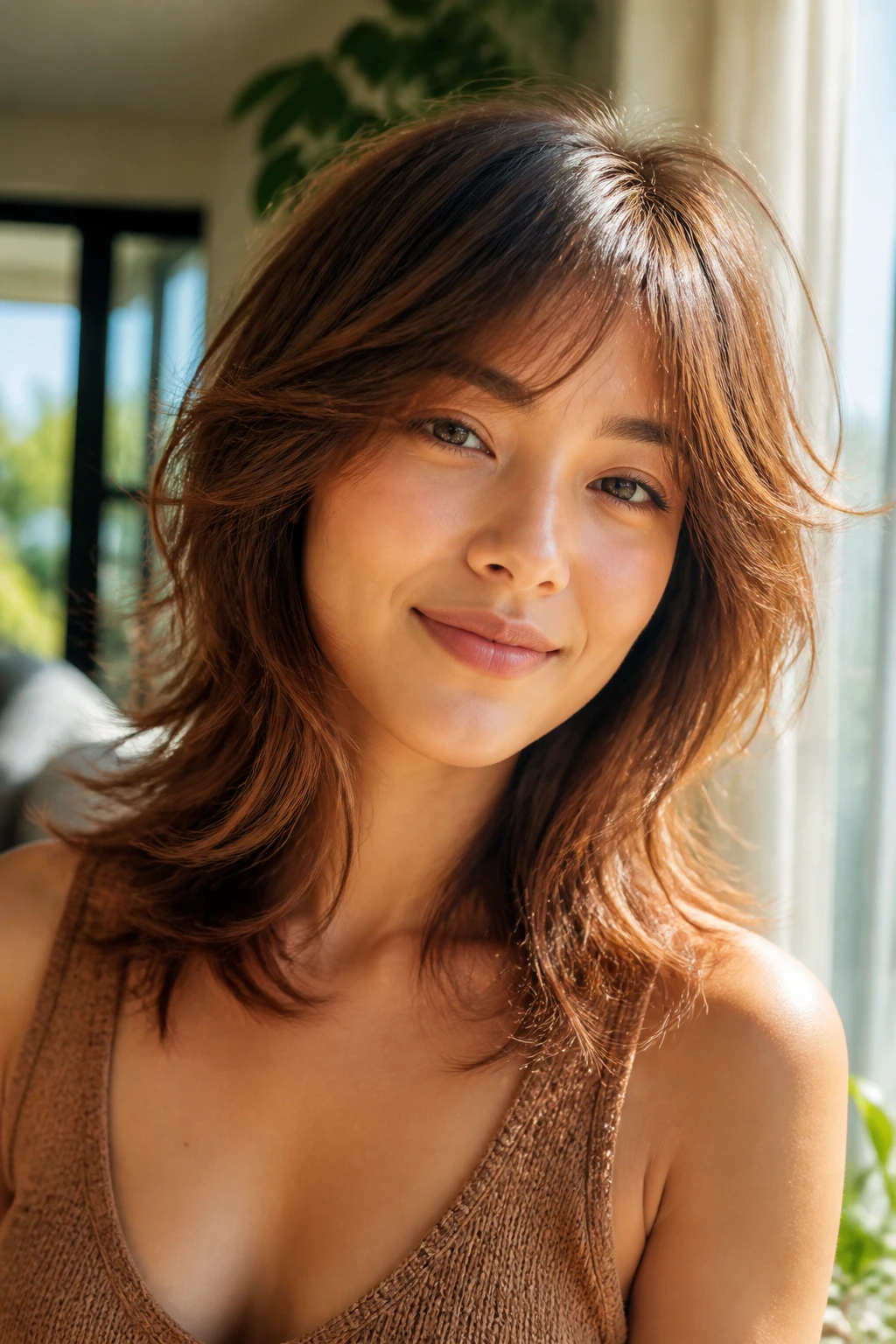
8. Feathered Shag With Soft Layers
Not every shag works on fine hair. The shredded, ultra-choppy kind can leave the ends looking see-through. A feathered shag is different. It keeps the layers soft and blended, with movement around the cheekbones and collarbone instead of chipping away at the whole head.
On warm undertone skin, this cut loves cinnamon, amber, soft copper, and light brown with bronze pieces. Those shades keep the texture from looking dry or dusty. A bit of shine at the ends helps too. Fine hair can lose richness fast if the color is too cool or the finish too matte.
This style looks best when air-dried halfway and finished with a diffuser or a large curling wand. You do not need perfect curls here. The point is lift and irregular movement. If every bend is equal, the cut loses its energy. One slightly flatter piece at the front? Fine. That’s what makes it feel lived-in rather than staged.
9. Deep Side-Part Hollywood Waves
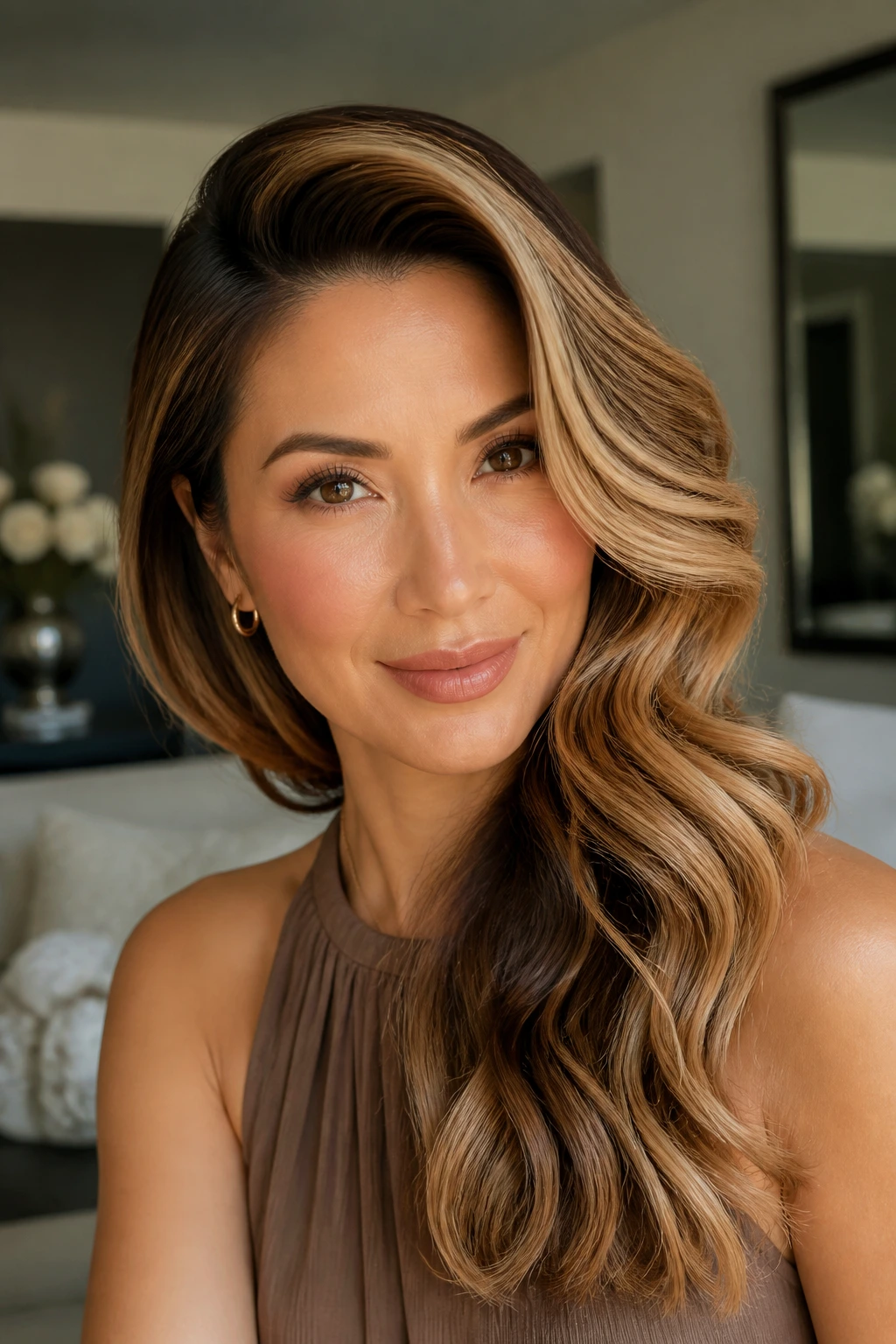
A deep side part is a cheat code. It creates instant root lift, which fine hair rarely offers on its own, and it gives polished waves a bit of drama without needing tons of product. Hollywood waves can look heavy on thick hair; on fine hair, they often look cleaner and more controlled.
This is also one of the easiest ways to flatter yellow undertone skin with hair color. Warm blonde, beige caramel, chestnut brown, or bronze balayage all catch the light in those side-swept curves. The shine lands where the eye naturally goes.
Set the waves with a 1-inch iron or hot rollers if you want them to last longer. Then brush them out gently once they’ve cooled. Don’t touch them too early. Fine hair drops curl shape faster when it’s still warm, and you’ll spend twice as long fixing what patience would have solved in the first place.
10. Textured Cropped Bob With Micro Layers
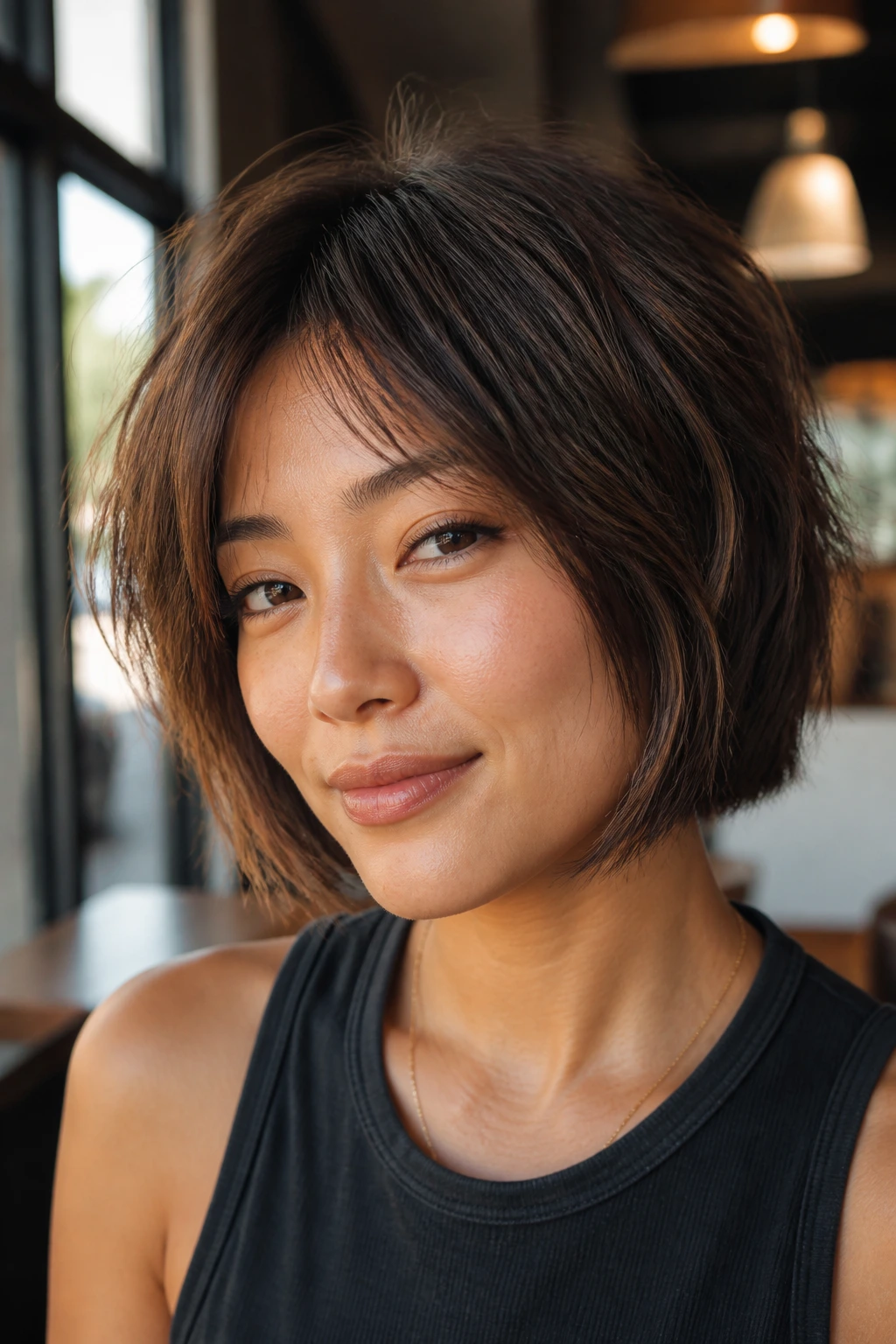
This one is for people who like a little edge. A cropped bob that sits near the jaw, with tiny internal layers and a slightly piecey finish, can give fine hair the look of movement without swallowing it in bulk. The trick is restraint. Micro layers, not shredding.
Warm skin looks especially good with espresso brown and bronze, dark blonde with a honey wash, or a muted copper-brown. Those tones keep the cropped shape from looking flat under indoor light. There’s a reason this cut often looks better with a little warmth around the face.
Use a lightweight texture spray and pinch the ends with your fingers once the hair is dry. That’s enough. If you use too much cream, the cropped bob collapses and starts to look greasy by midday. A little grit is the point.
11. Face-Framing Layers on Long Hair
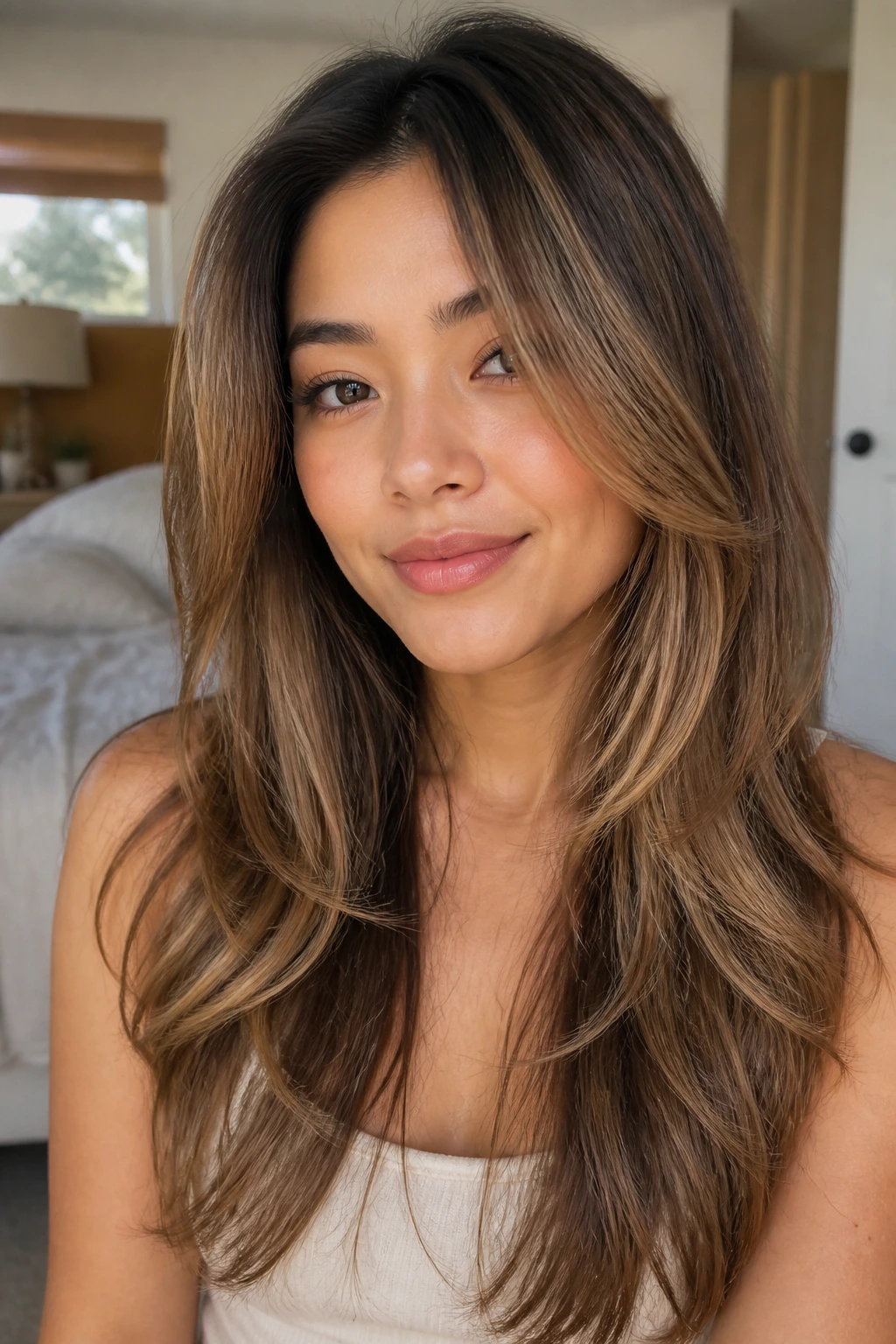
If you want to keep your length, this is the safest move that still does something useful. Long hair with no shape can hang like a curtain, especially when the strands are fine. Face-framing layers break that up without stealing density from the rest of the length.
Ask for the first layer to start below the chin, not at the cheekbone if your hair is very fine. That keeps the hair from looking threadbare near the front. Honey balayage, caramel ribboning, or a warm brunette gloss around the face keeps yellow undertone skin bright and alive.
A Useful Rule
The longer your hair, the less aggressive the layers should be.
That line saves a lot of bad cuts. Long fine hair does not need a dramatic staircase. It needs a soft bend around the front, a healthy perimeter, and enough length at the ends to keep the whole thing from fraying visually.
12. Claw-Clip Twist With Pillow-Soft Volume
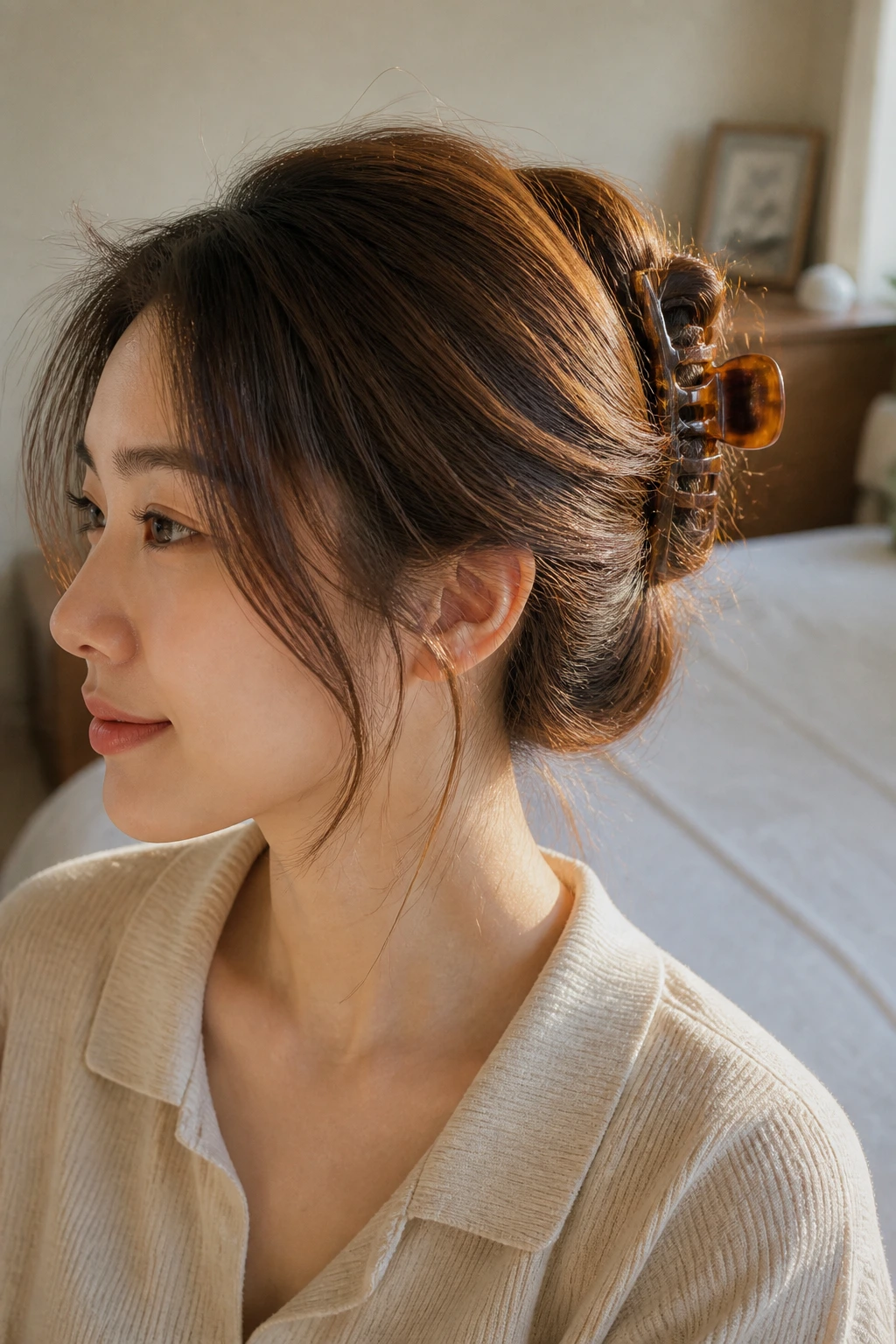
A claw-clip twist is the kind of style that looks casual but still has a little shape to it. Fine hair can struggle with bulky updos, so a loose twist at the back, with the ends tucked rather than jammed in, keeps the style light and flattering. Leave a few shorter pieces around the ears. That softness matters.
Warm undertones pair nicely with this look when the color has dimension: vanilla highlights on brunettes, caramel strands around the temple, or a soft golden gloss over natural brown. The exposed pieces do more for the face than a full head of curls would.
I like this style on second-day hair because the tiny bit of texture helps the clip hold. If the hair is freshly washed and slippery, add a mist of dry texture spray first. And don’t clamp the twist too tight. Tension flattens fine hair in the same spot every time, which is how a cute clip style turns into a dent.
13. Shoulder-Length Flip-Out Ends
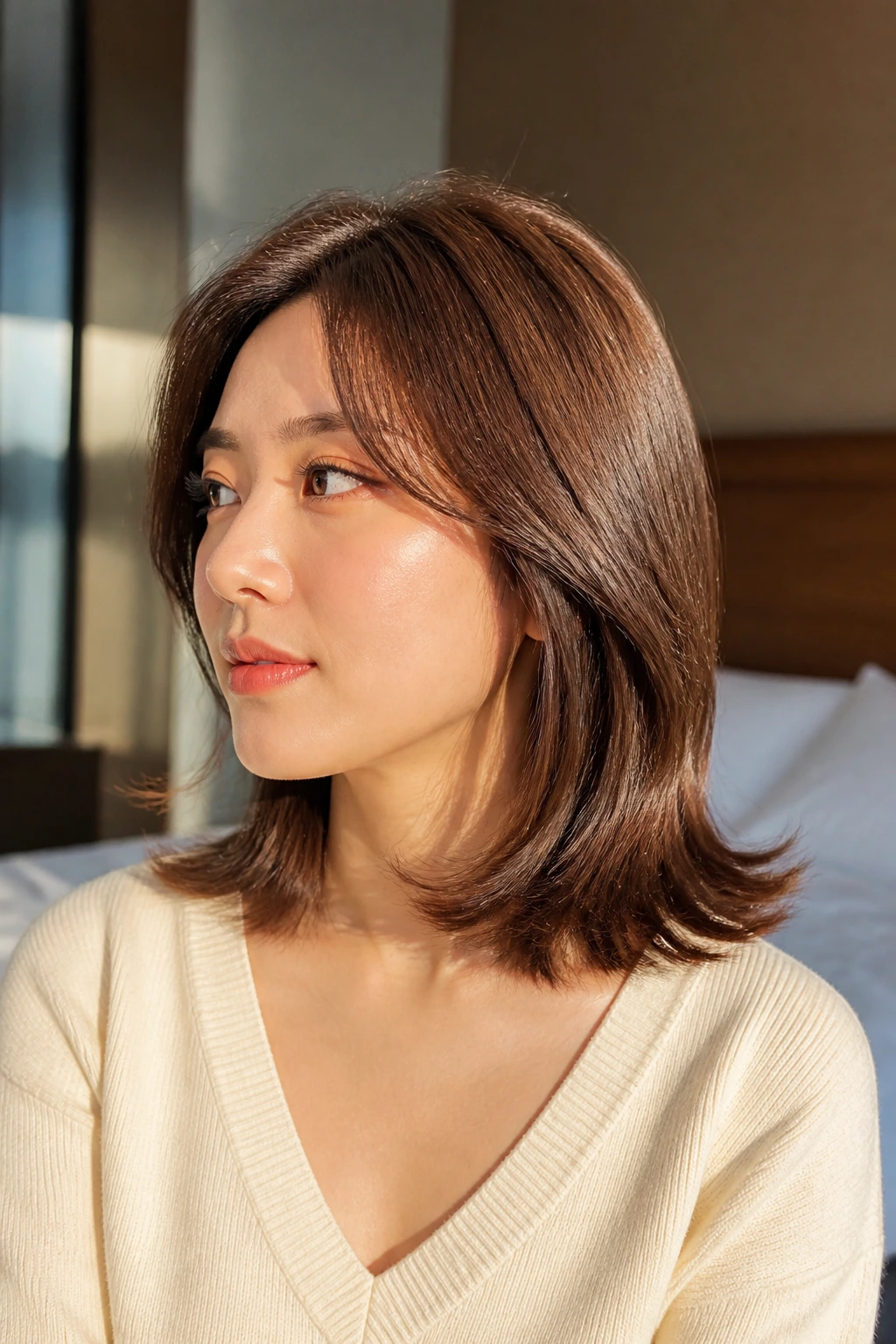
Shoulder-length hair with ends flipped outward has that slightly retro feel that keeps coming back because it works. Fine hair often behaves better when the line is not too long, and the outward flip gives the ends some visible movement. It’s playful without becoming fluffy.
For yellow undertone skin, a warm brunette or golden blonde with a cinnamon glaze keeps the style from looking too cool or washed out. The flip catches light at the perimeter, which is where fine hair usually needs the most help.
How to Get the Flip
Use a round brush or a flat iron bend at the last 1-2 inches of the hair. The move should be gentle, not a hard curl. If the end flips too sharply, it starts to look dated in a bad way. Soft and loose is the better lane here.
This is a solid everyday cut because it can be worn smooth, tucked, or waved with almost no change to the shape.
14. Braided Crown With Loose Tendrils
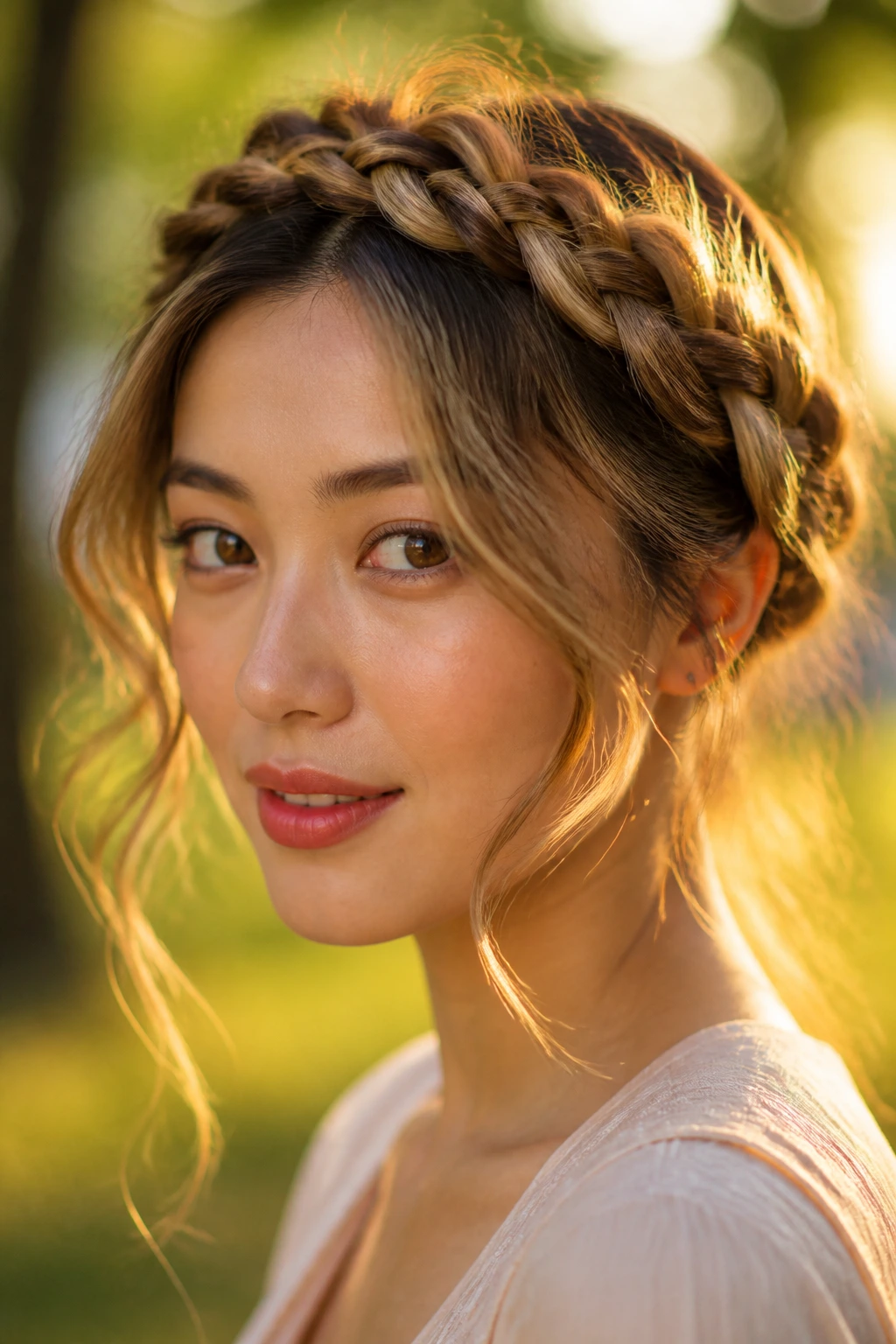
Braids are useful on fine hair because they create their own texture. A braided crown pushes the eye upward and around the face, which can make the hair look fuller at the hairline. It also gives warm skin a soft frame, especially when the front pieces are left out in tiny, wispy tendrils.
The color note here is subtle but important. Honey streaks, bronze lowlights, or golden brown highlights help the braid show up instead of disappearing into the rest of the hair. Fine hair can make braids look narrow unless there’s some dimension in the strands.
This is one of those styles that looks more complicated than it is. A little texture spray, a loose Dutch or French braid along the hairline, and a few pins will do it. Pull the braid apart slightly with your fingers once it’s secure. That’s where the fullness comes from.
15. Bubble Braid Ponytail
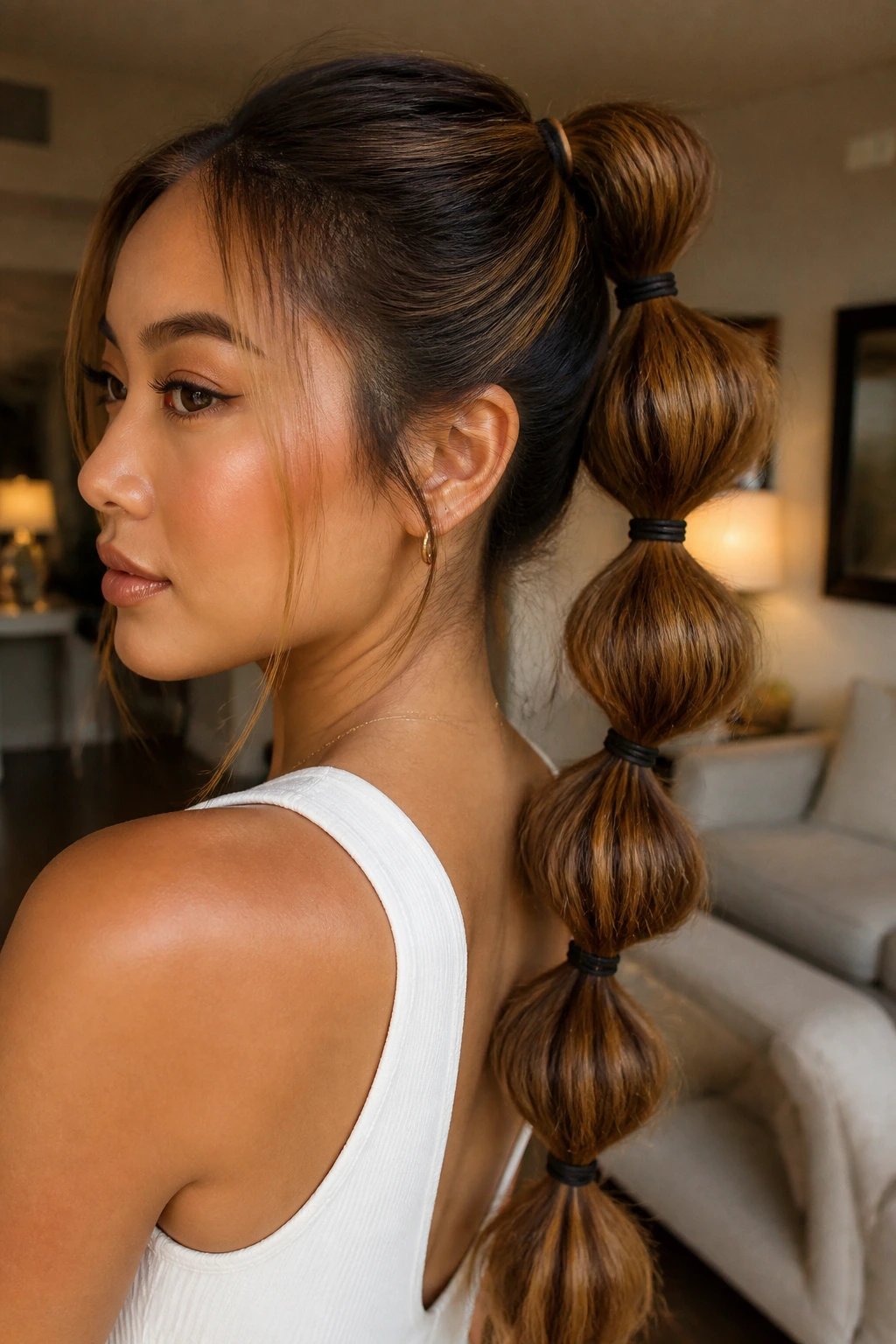
Bubble braids are a gift to fine hair. Each elastic creates a puffed section, so the style reads thicker than a single flat ponytail ever could. The shape is playful, easy to adjust, and surprisingly good at disguising thinness at the ends.
Warm undertones like this style best when the hair has a glossy caramel or honey finish. The bubbles catch the different tones as they curve, which gives the ponytail a little depth. Dark, flat color can make the sections look smaller than they are.
A neat trick: gently tug each bubble outward after securing it with a clear elastic every 2-3 inches. Don’t pull so hard that the braid slips. The goal is roundness, not chaos. This one works especially well when the hair is not freshly squeaky clean; a bit of grip helps the sections hold their shape.
16. Polished High Ponytail With Lifted Crown
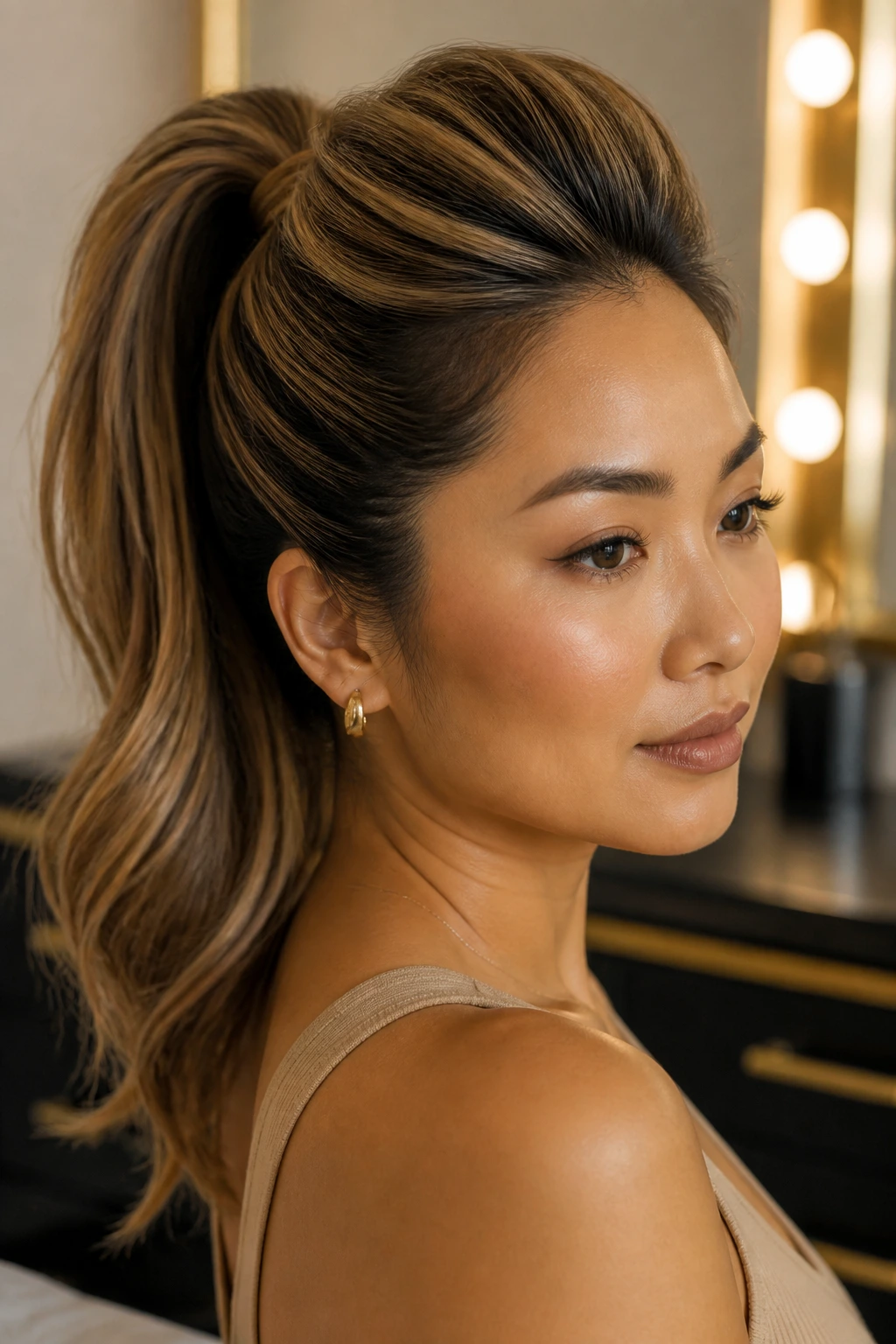
A high ponytail can look thin if it sits low and slick, but a lifted crown changes the whole thing. By raising the anchor point and adding a little root lift at the top, fine hair suddenly has more presence. The ends swing better too, which helps the ponytail feel full rather than flat.
This style loves warm dimension near the face—golden blonde, chestnut, caramel brunette, or softly bronzed highlights. Yellow undertone skin usually looks better with that kind of warmth than with a stark ashy shade, especially when the hair is pulled away from the face.
The ponytail should be firm but not tight enough to flatten the scalp. Wrap a small strand around the elastic to hide it, and leave the tail slightly brushed out so it doesn’t look stringy. If you want extra lift, tease the crown with a fine comb before smoothing the top layer back over it.
17. Soft Wolf Cut With a Longer Bottom Line
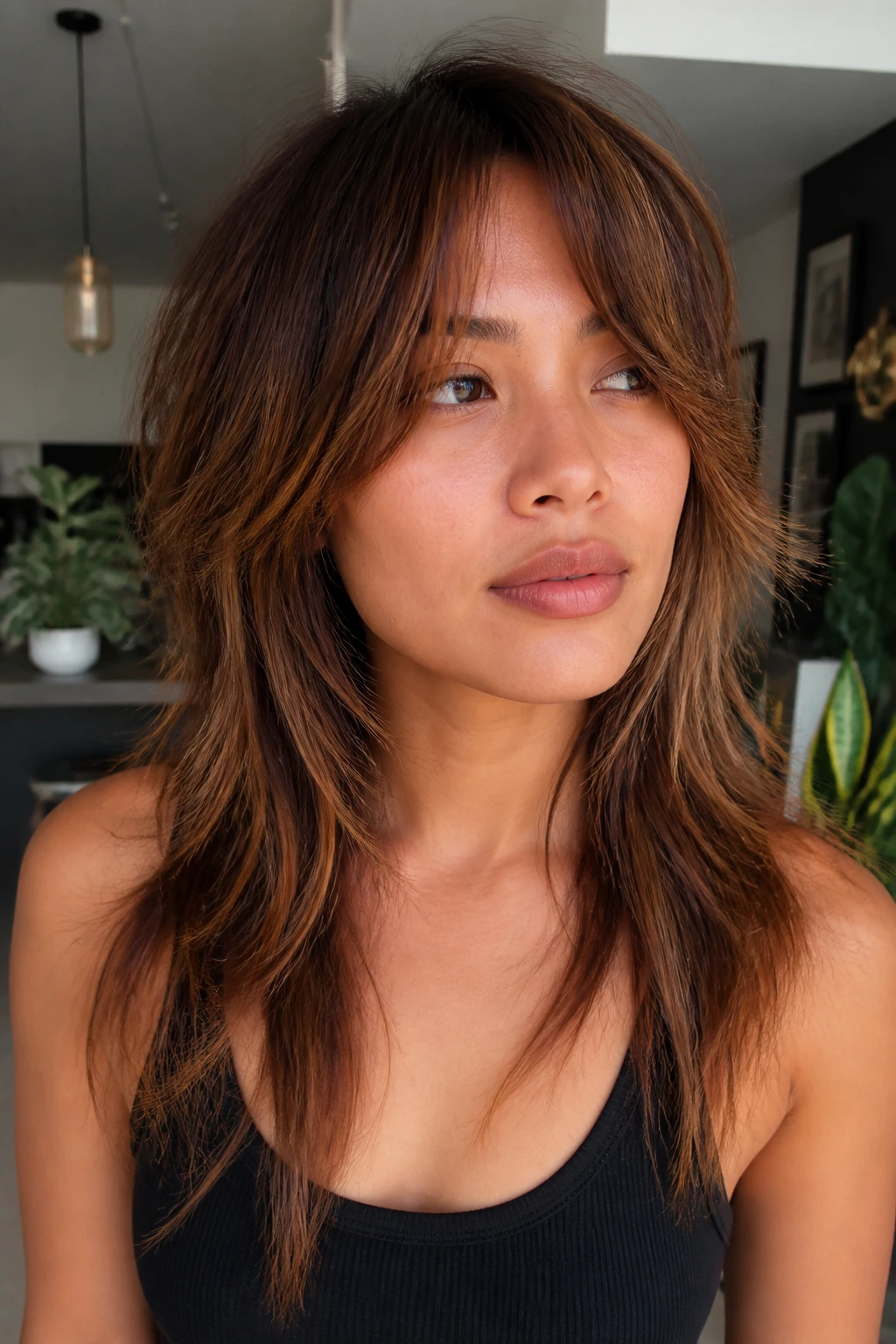
A wolf cut can be a mess on fine hair if it’s too shaggy. But a softer version, with a longer bottom line and controlled layers through the crown, can give you movement without leaving the ends sparse. The look is a little edgy, a little undone, and still wearable.
Warm tones help here more than people think. Copper, amber brunette, or dark blonde with honey pieces keeps the texture from looking dusty. Yellow undertone skin tends to like that warmth because it gives the face a lived-in glow instead of a flat frame.
What to Keep in Mind
- Keep the bottom line long enough to hold weight.
- Avoid over-thinning the top.
- Use a diffuser or a rough-dry finish, not a perfect blowout.
The style works best when the layers are visible but not jagged. Think movement, not shredded ends.
18. Tucked-Behind-Ear Glossy Straight Lob
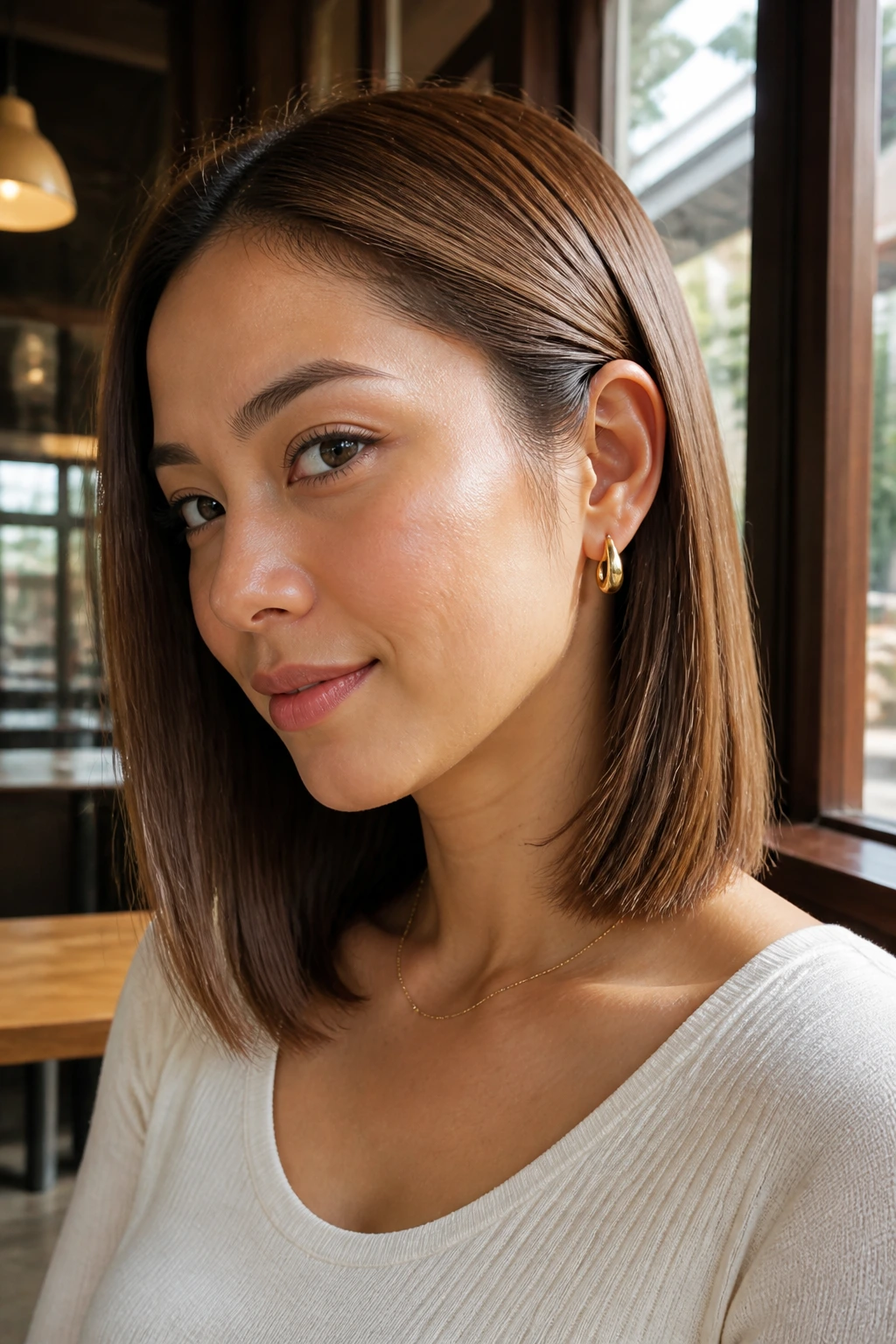
Straight hair can be beautiful on fine strands when the cut is clean and the finish is shiny. A glossy lob that tucks neatly behind one ear gives you a neat edge without needing volume everywhere. Fine hair often looks better in this kind of precise shape than in a style that’s trying too hard to be “big.”
Warm undertone skin looks especially good with a beige brunette, golden brown, or soft honey blonde that sits close to the face. A mirror-like finish on warm color reads smoother and richer than an icy sheen.
This is one of the easiest styles to live with. Blow-dry it straight, add a drop of serum to the ends, and tuck one side back. That’s it. If you want more polish, make the part slightly off-center so the crown has a touch more height. Tiny changes matter with fine hair.
19. Low Chignon With Face-Framing Pieces
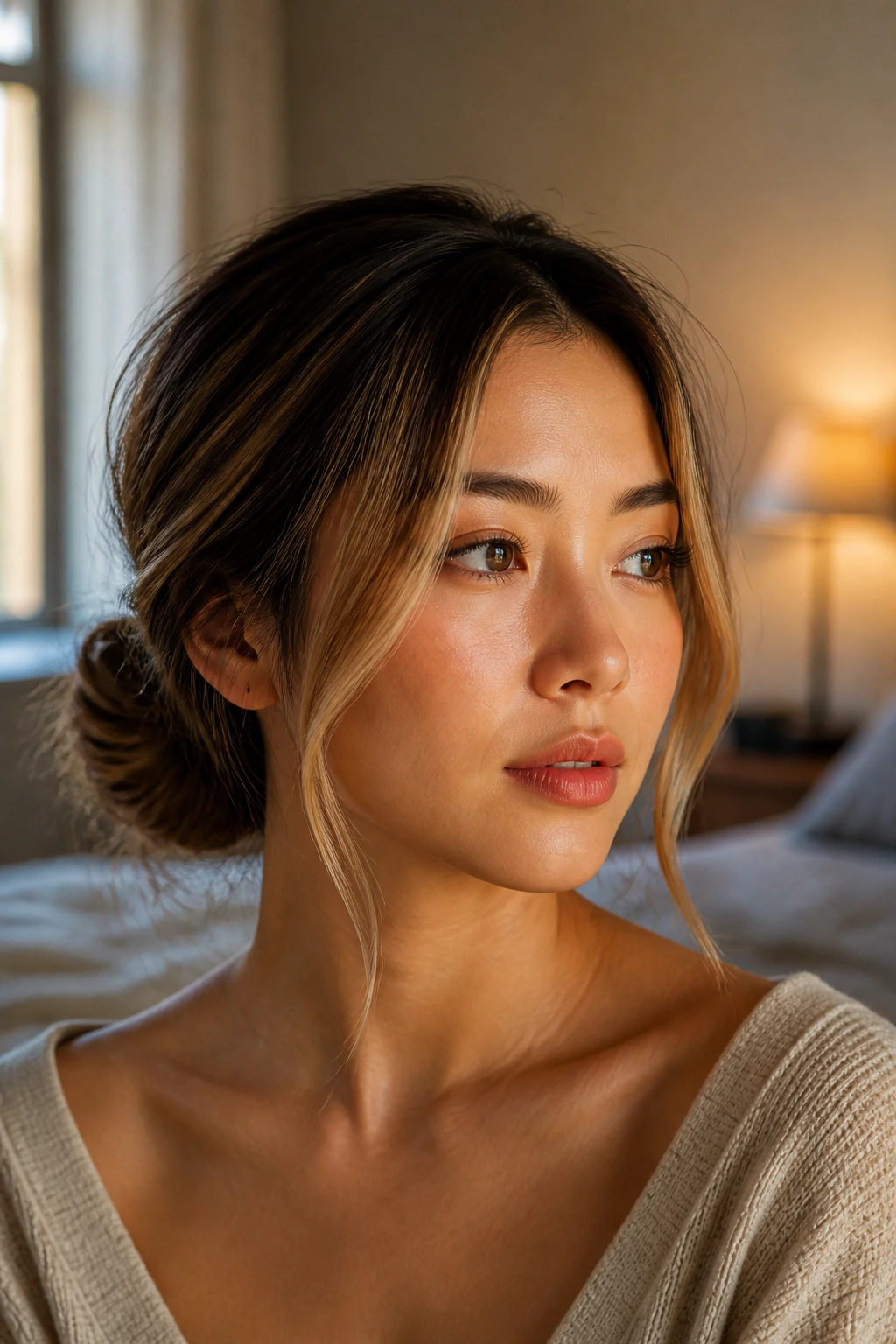
Fine hair can do formal, but it usually does it best when the bun is kept low and loose. A low chignon at the nape avoids the tiny-ball-of-hair problem that happens when fine strands are twisted too tightly. Leaving out two face-framing pieces softens the shape and keeps it from looking severe.
Warm highlights near the front—honey, apricot, bronze, or caramel—help a chignon feel lighter against yellow undertone skin. That little halo around the face is especially useful if the rest of the hair is pulled smooth. Without it, the style can feel too stark.
Pin the bun in place with crossed bobby pins instead of stuffing it with one giant clip. That gives the shape more control. And if you need padding, use a tiny bun cushion, not a heavy insert. Fine hair can’t always hide bulky helpers.
20. Soft Asymmetrical Bob
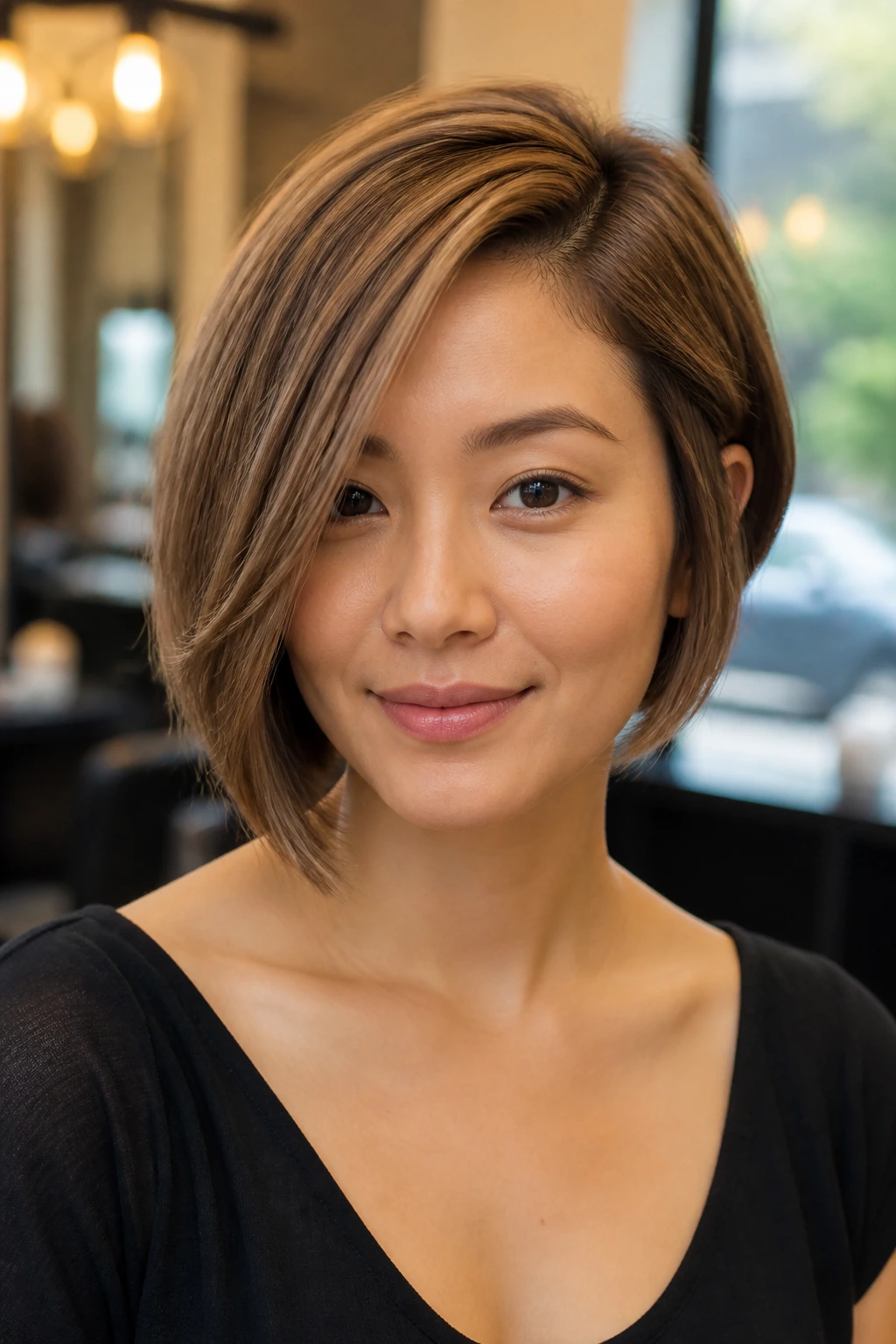
A slight asymmetry can do more for fine hair than another round of layers. When one side is just a bit longer, the cut gets movement and direction, and the eye reads the shape as more intentional. It’s subtle. That’s the point.
On yellow undertone skin, this cut loves warm chestnut, toffee brunette, or a golden blonde that isn’t too pale. The shape itself does the work; the color just keeps it from going flat at the edges.
You don’t need dramatic contrast here. In fact, too much asymmetry can make the style feel like a stunt. Keep the difference small—maybe half an inch to an inch—and let the blowout or straight finish sharpen the line. Fine hair usually prefers a clean contour over a busy one.
21. Long Layers With a Rounded Blowout
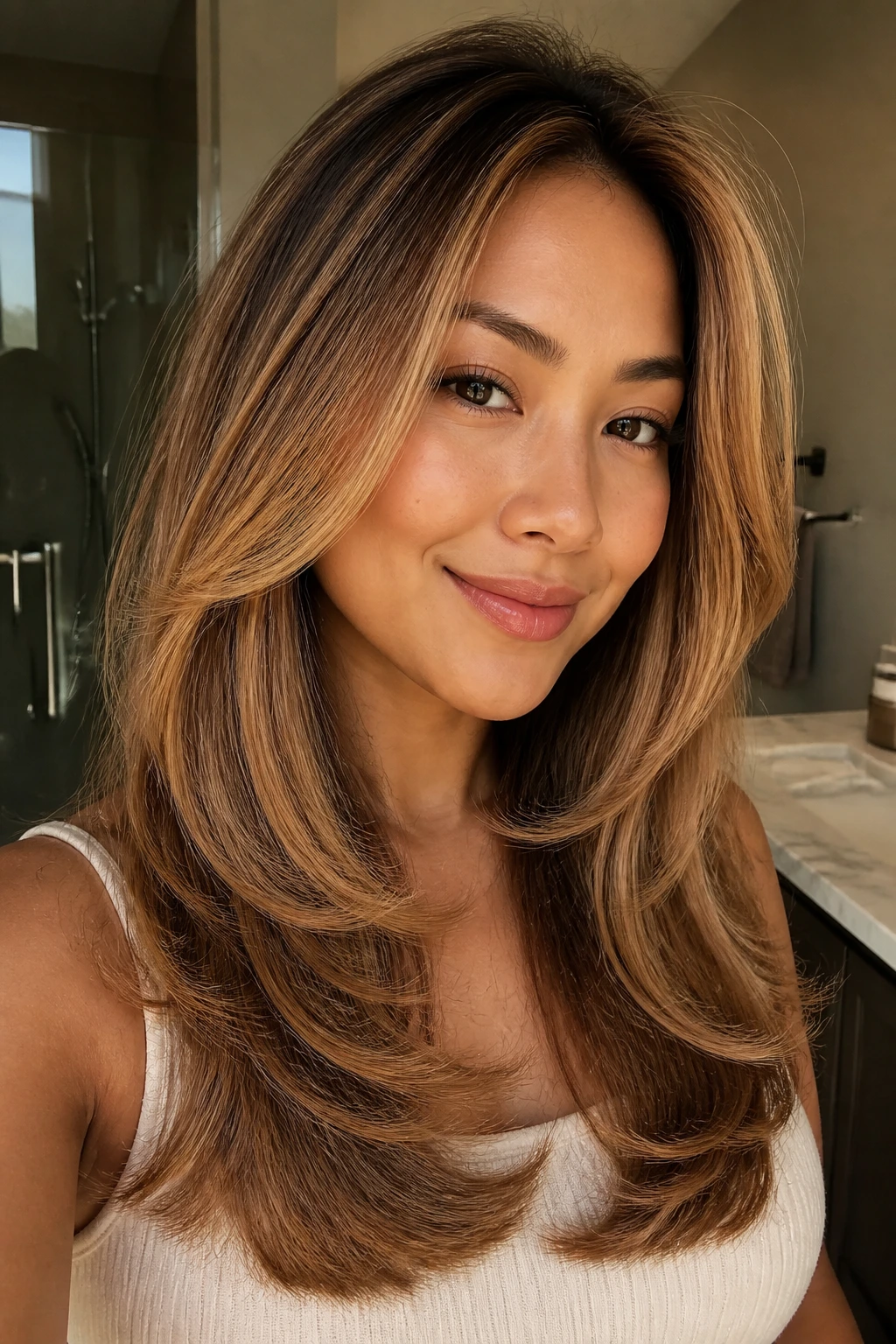
Long hair can still look full if the layers are placed with a light hand and the blowout has a soft round shape. This is the style for someone who loves length but wants the ends to feel alive instead of limp. A 2-inch round brush and a little tension at the root go a long way.
Warm skin gets a strong lift from honey ribbons, caramel balayage, or a bronze gloss through the mid-lengths. The rounded blowout makes the color move, which matters because fine hair can look one-dimensional when it hangs straight.
The Practical Part
Dry the roots first. Then work the brush through the mid-lengths. Let the ends bend inward or outward just slightly—your choice.
The shape should feel bouncy, not lacquered. If you load the hair with too much cream, the blowout collapses before dinner. Keep the product light and the sections small.
22. Mini Space Buns With Loose Face Pieces
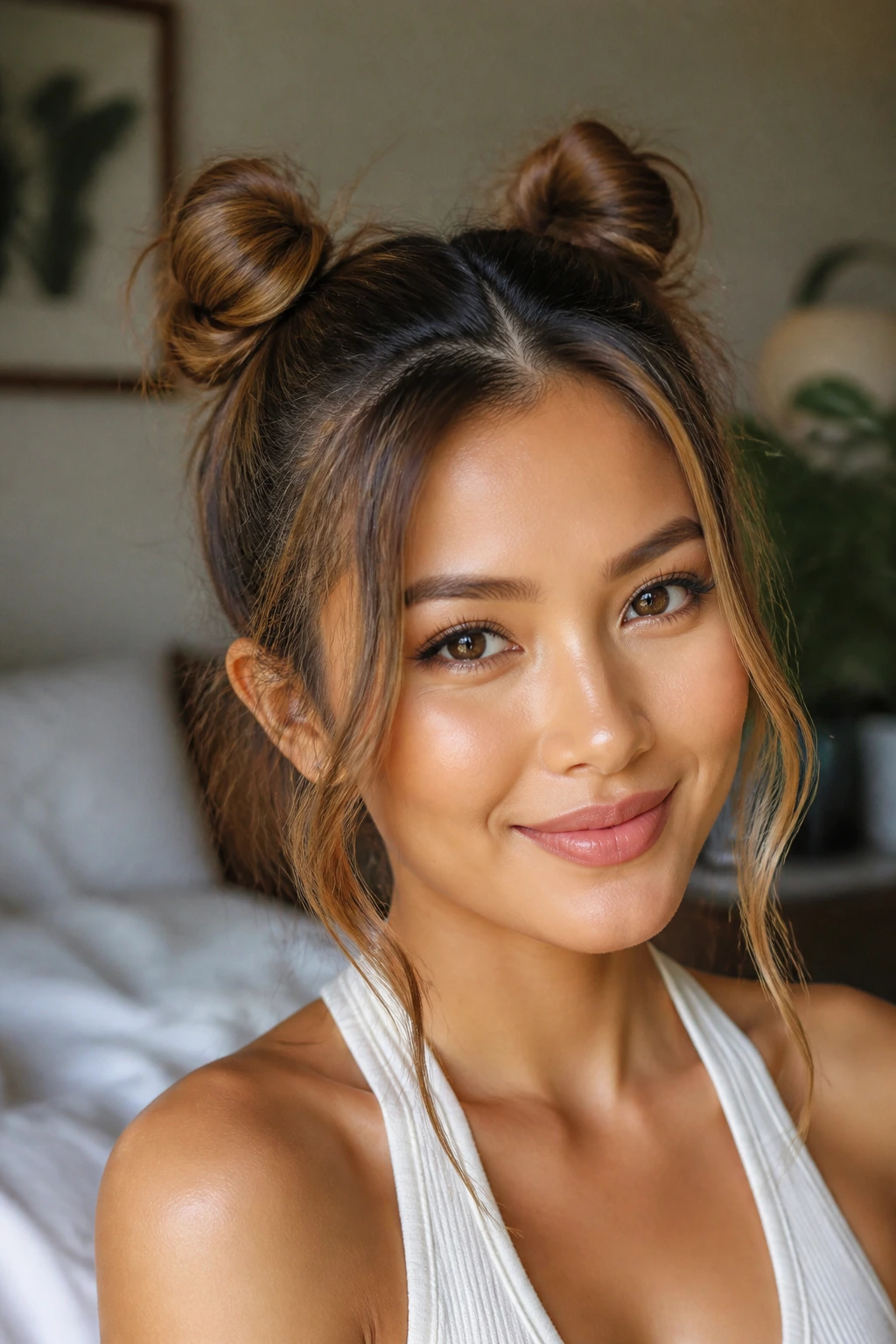
Two small buns can look playful rather than juvenile when they’re placed high and a little loose. Fine hair benefits from the division because each section has less weight to carry, and the looseness around the face keeps the style from looking severe. If your hair is too slippery, a mist of texture spray before sectioning helps a lot.
Warm undertone skin looks especially good with face pieces that carry honey or soft copper tones. Those little strands draw attention to the cheekbones and soften the whole shape. The buns themselves don’t need to be perfect. A tiny bit of asymmetry is actually more flattering.
I like this style for days when you want to keep the hair up but still show some movement. Pull the buns apart gently after pinning them. Leave the face pieces curved rather than straight. Tiny bends near the cheeks make the style feel intentional instead of accidental.
What Makes Warm Shades and Fine Hair Work Together
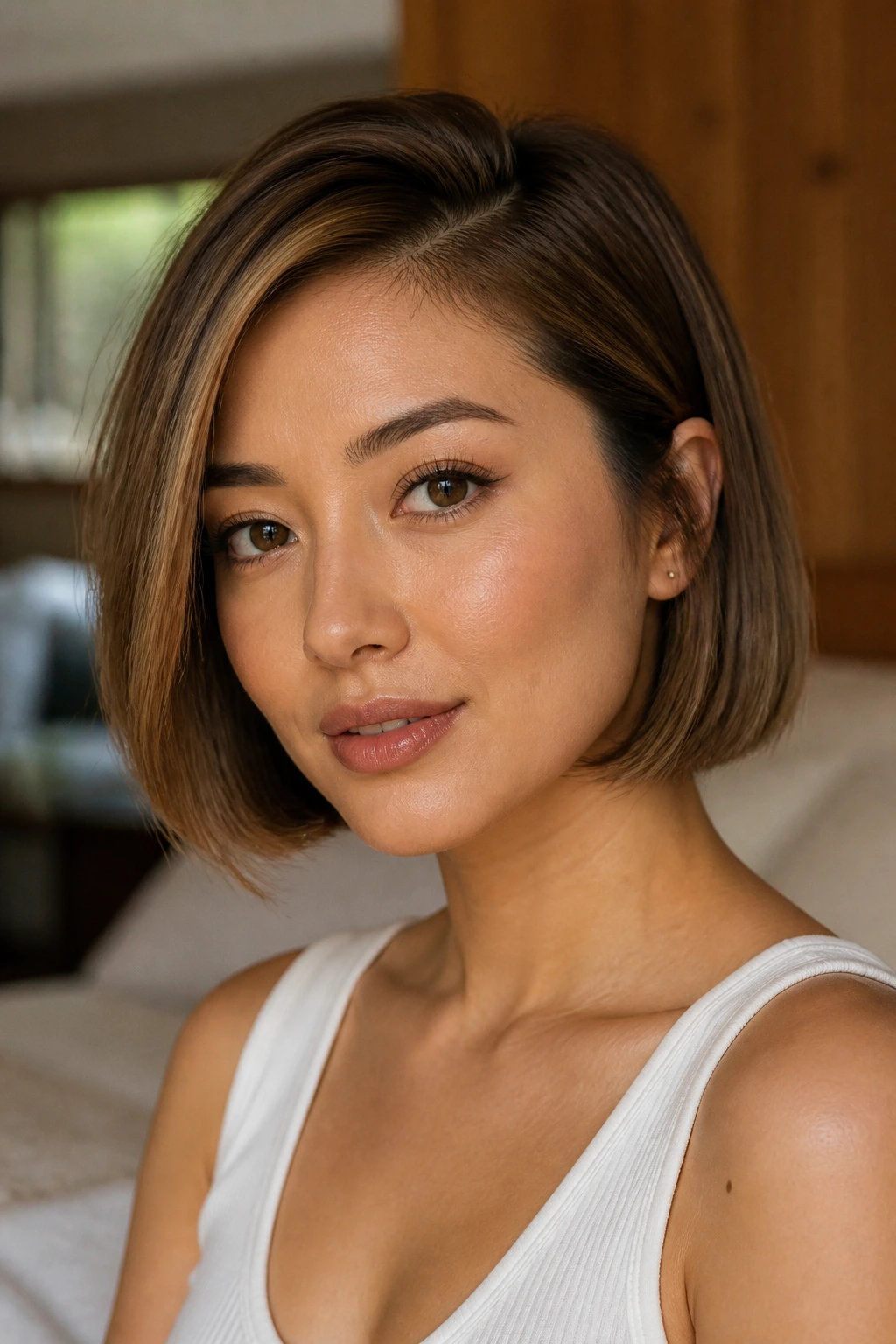
Yellow undertone skin tends to look best beside hair colors that repeat that warmth back to the face: honey, caramel, bronze, copper, apricot blonde, warm beige, or chestnut with gold in it. The effect is subtle but real. The skin looks brighter because the hair isn’t fighting its base tone.
Fine hair has a different problem. It often needs visible structure because every strand is light and can go flat fast. That’s why blunt edges, rooted lift, and controlled bends matter so much here. A style with too many shattered layers removes the weight that fine strands need to hold shape.
The overlap between the two concerns is where the good styles live. Warm color gives the face life. Shape gives the hair body. When both happen at once, the whole head reads fuller and more alive, even if the actual hair count hasn’t changed one bit.
The Tools and Products That Actually Help
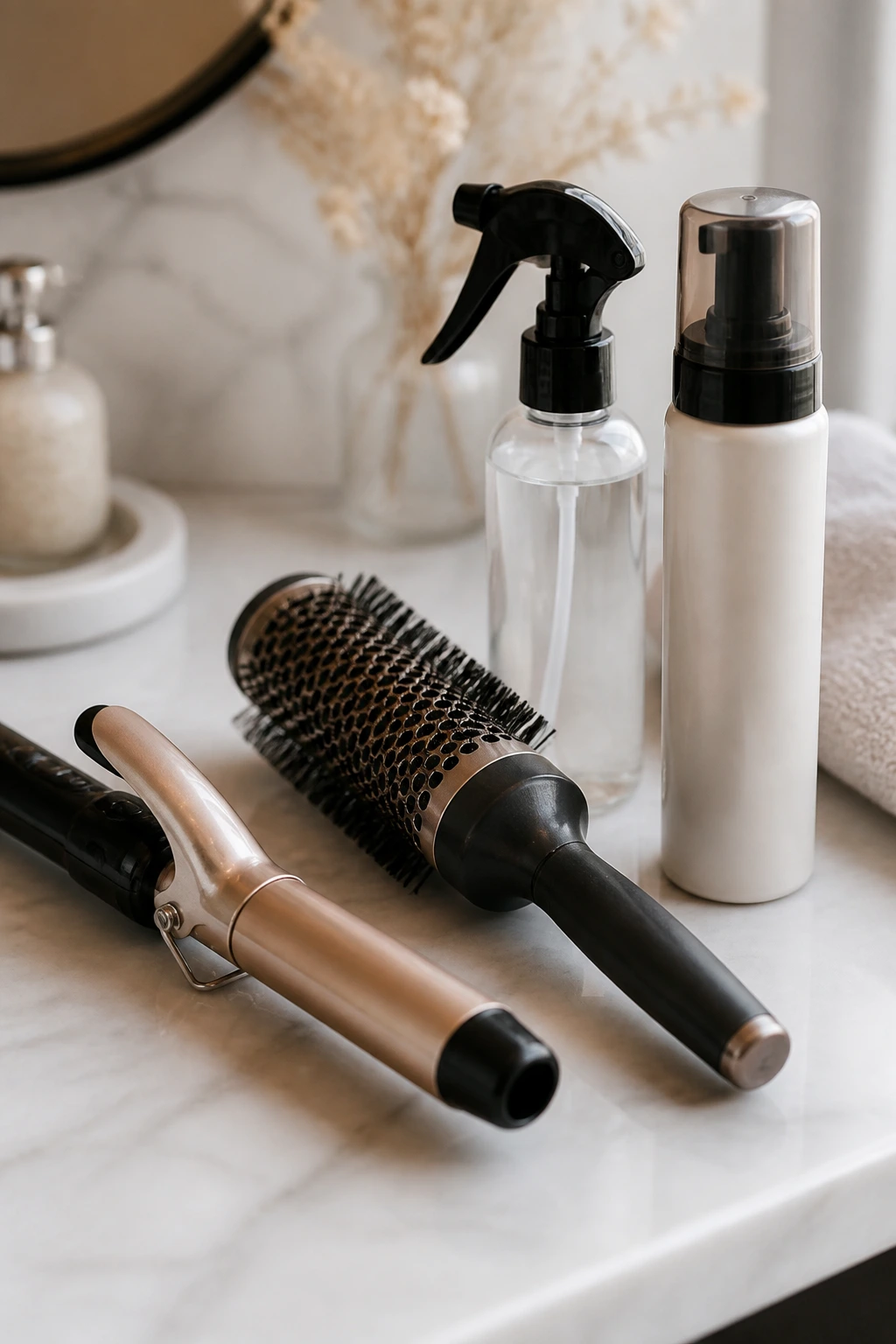
- 1-inch curling iron or wand: Best for soft bends and waves that don’t overwhelm fine hair.
- 1.5-inch round brush: Useful for blowouts, bob shaping, and lifted roots.
- Blow dryer with a concentrator nozzle: Keeps the air focused so the cuticle lies flatter and the shape stays cleaner.
- Lightweight volumizing mousse: Gives fine hair some grit at the root without turning it crunchy.
- Dry texture spray: Adds grip to braids, clips, ponytails, and soft updos.
- Heat protectant spray: Non-negotiable if you use hot tools; fine hair burns faster than thicker hair.
- Fine-tooth teasing comb: Handy for root lift, but use it lightly. A small lift is enough.
- Flexible-hold hairspray: Holds the shape without making the ends feel stiff.
- Bobby pins and small clear elastics: Good for half-up styles, braids, and wrapped ponytails.
- Claw clip with a strong spring: Better for fine hair than flimsy clips that slide out by lunchtime.
What to Ask Your Stylist for and What to Buy
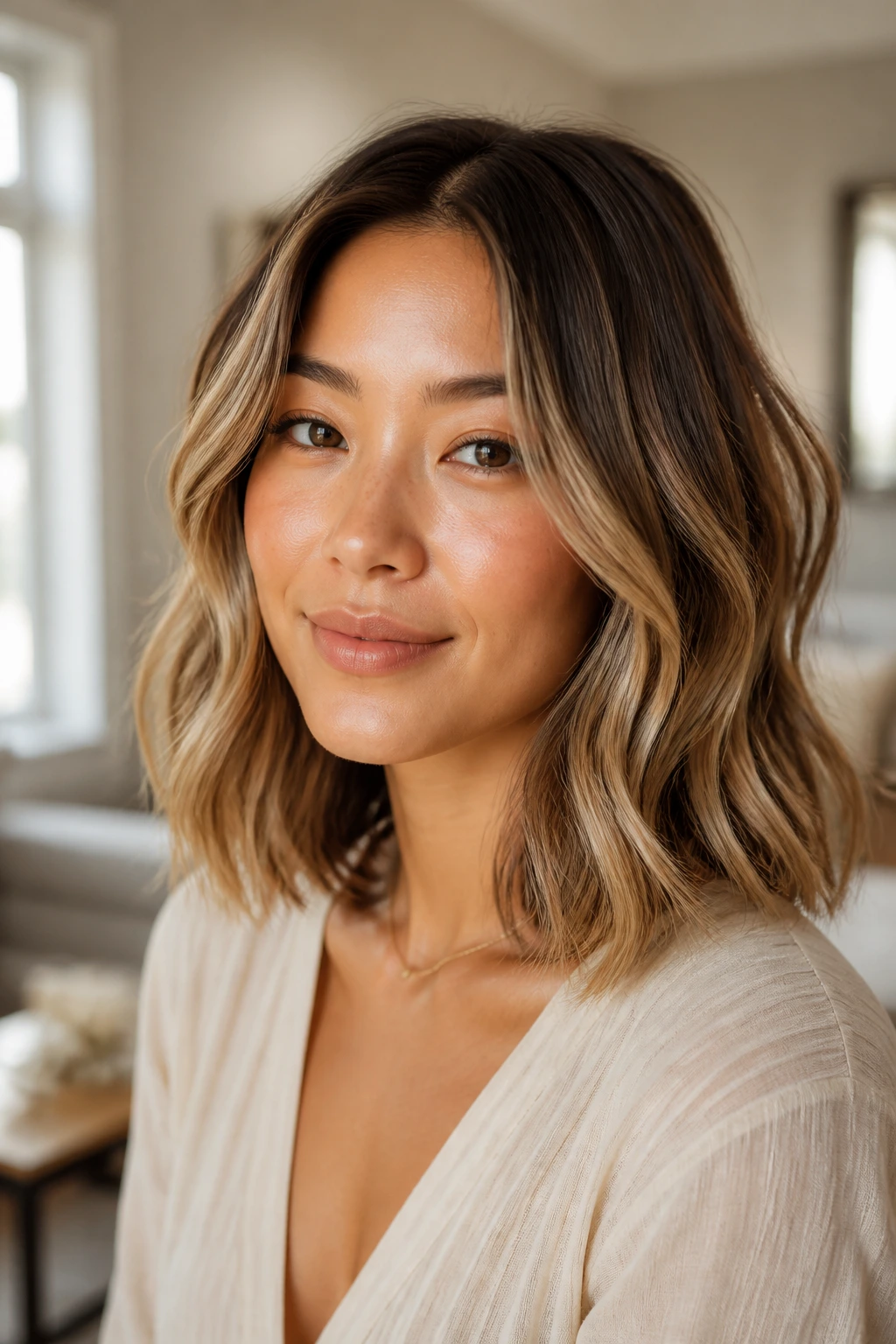
The salon conversation goes better when you talk about shape, not vague volume. Say where you want the hair to sit—jaw, collarbone, shoulder, nape—and whether you want the ends blunt, softly layered, or feathered. If you have very fine hair, ask them to avoid heavy texturizing through the ends unless you’ve seen that cut work on your own texture before.
Color matters just as much. On yellow undertone skin, warm glosses and highlights tend to be kinder than ash-heavy formulas. Ask for honey, caramel, beige-gold, bronze, amber, or soft copper around the face. If you like brunette, a chestnut or mocha base often gives more life than a smoky brown.
At home, buy the lightest products that still do the job. Heavy creams and thick oils can flatten fine hair in a few hours. A mousse at the root, a dry spray for grip, and a flexible hairspray are usually enough. If a product claims to “nourish” but leaves your hair shiny in a slippery way, it may not be the friend you think it is.
How to Wear These Looks Without Flattening the Shape

Everyday: Keep the finish loose. A low ponytail, a lob with bends, or a blunt bob with a side part can all look good with minimal effort if the roots have a bit of lift and the ends aren’t overloaded with product.
Work or errands: Choose the styles that stay neat after a long day—tucked lob, low chignon, soft curtain bangs, or a polished ponytail. These hold their shape better when you’re not fussing with them every hour.
Evening: Add a little more shine and definition. Brush out waves, deepen the side part, or pin one side behind the ear so the haircut has a cleaner line. Fine hair often looks richer under controlled light than under a style that’s been raked apart too much.
If your hair goes flat fast: Refresh only the roots with dry shampoo or texture spray. Don’t pile more product onto the mids and ends. That usually makes the collapse worse, not better.
Practical Styling Tricks That Make Fine Hair Look Fuller
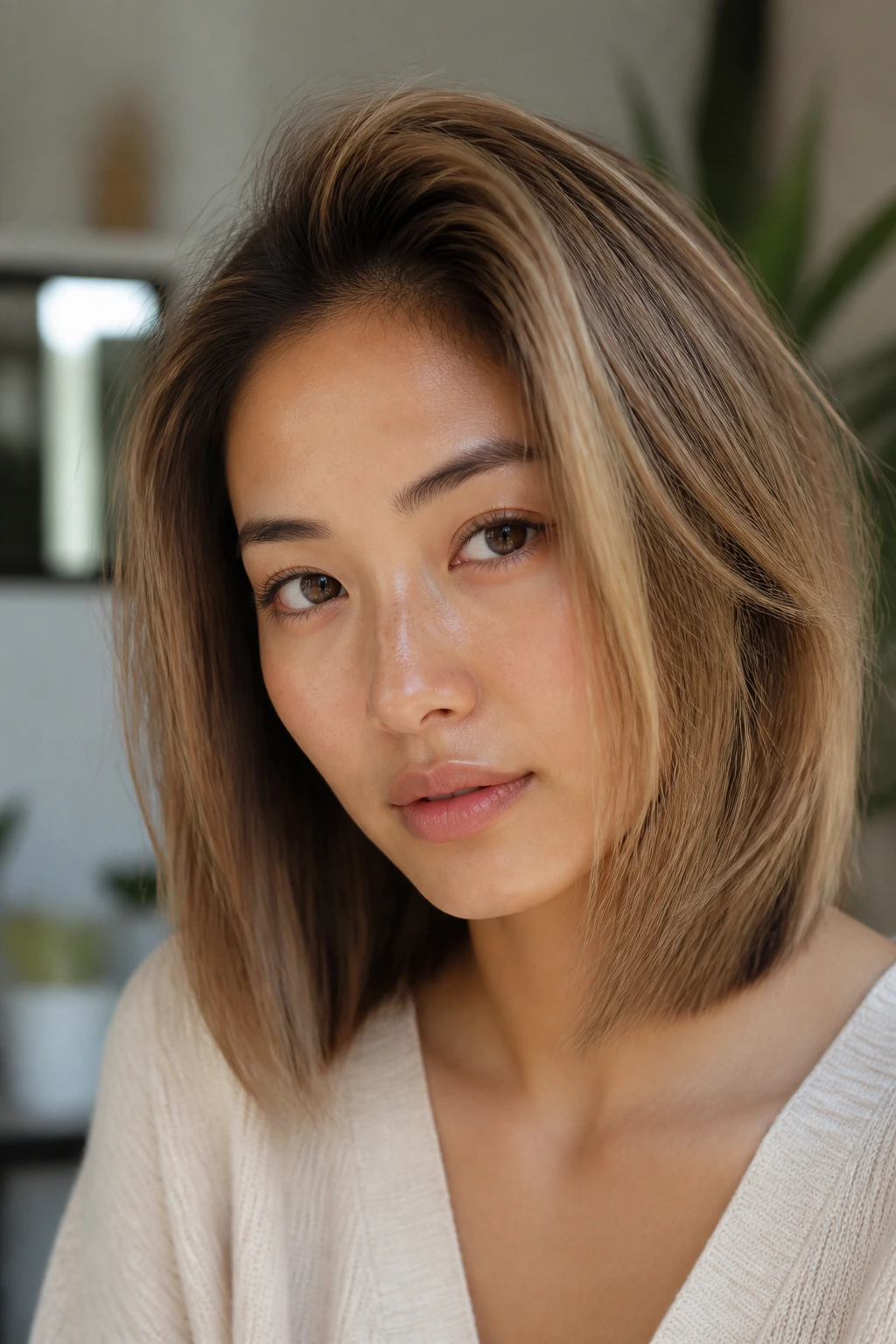
Root Lift: Blow-dry the first 2 inches at the scalp in the opposite direction of your part, then flip the hair back. That tiny bit of lift changes the whole silhouette.
Controlled Texture: If you’re using a curling iron, stop curling an inch or two before the ends on lobs and long layers. Fine hair often looks thicker when the perimeter stays a little blunt.
Color Placement: Warm highlights around the face do more visual work than scattered light pieces everywhere. That’s especially true on yellow undertone skin, where a soft honey frame can brighten the complexion fast.
Product Amount: Use less than you think. A dime-sized amount of mousse, a few sprays of texture mist, and a light mist of hairspray usually beat a heavy cocktail of creams and oils.
Part Changes: Switching from a center part to a deep side part can create instant lift without cutting a thing. It’s one of the easiest volume tricks in the book, and people still overlook it.
Common Mistakes That Flatten Fine Hair or Clash With Warm Skin
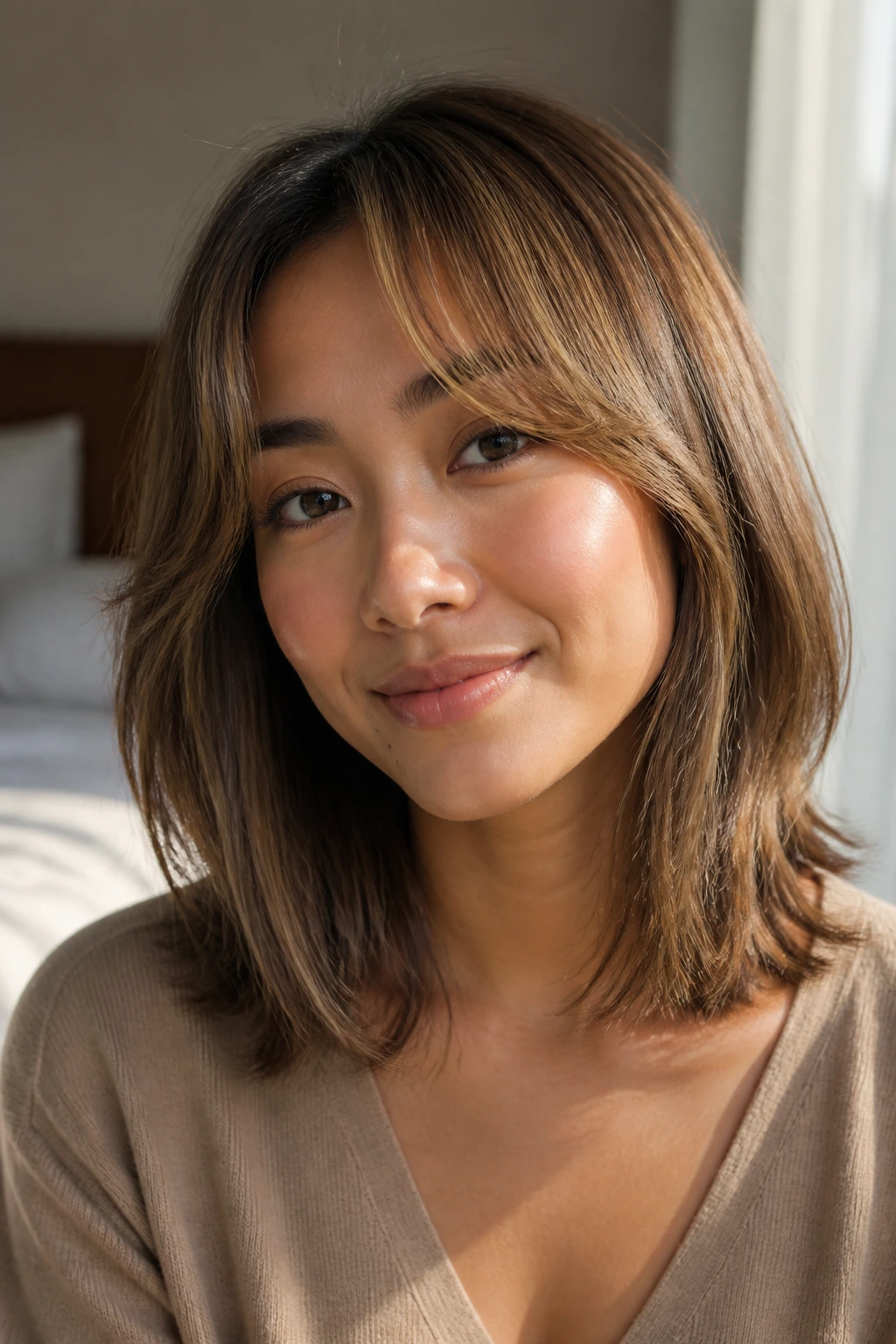
The first mistake is over-layering. Fine hair with too many short layers starts to look airy in the bad sense—thin at the ends, not light and full. The fix is a stronger perimeter and softer internal layers, especially if you want the style to last more than an hour.
Another big one is choosing ash-heavy color on warm skin. Smoky beige and cool blonde can look chic in a photo, but on yellow undertone skin they sometimes turn the face gray or tired. Warm up the formula with honey, beige-gold, copper, or caramel instead.
Too much oil near the roots is a classic fine-hair problem. It feels safe to use more conditioning product when the hair is delicate, but the result is usually collapse at the crown. Keep rich masks off the scalp and stick them to the mid-lengths and ends.
People also make waves too tight. Tight curls look smaller as they fall, which leaves fine hair frizzy or stringy by evening. A looser bend holds the illusion of fullness longer.
And then there’s ignoring trim schedules. A blunt bob that’s grown out for five months loses its edge fast, and a lob with frayed ends stops looking dense. Fine hair likes a clean line more often than thick hair does.
Variations and Adaptations to Try
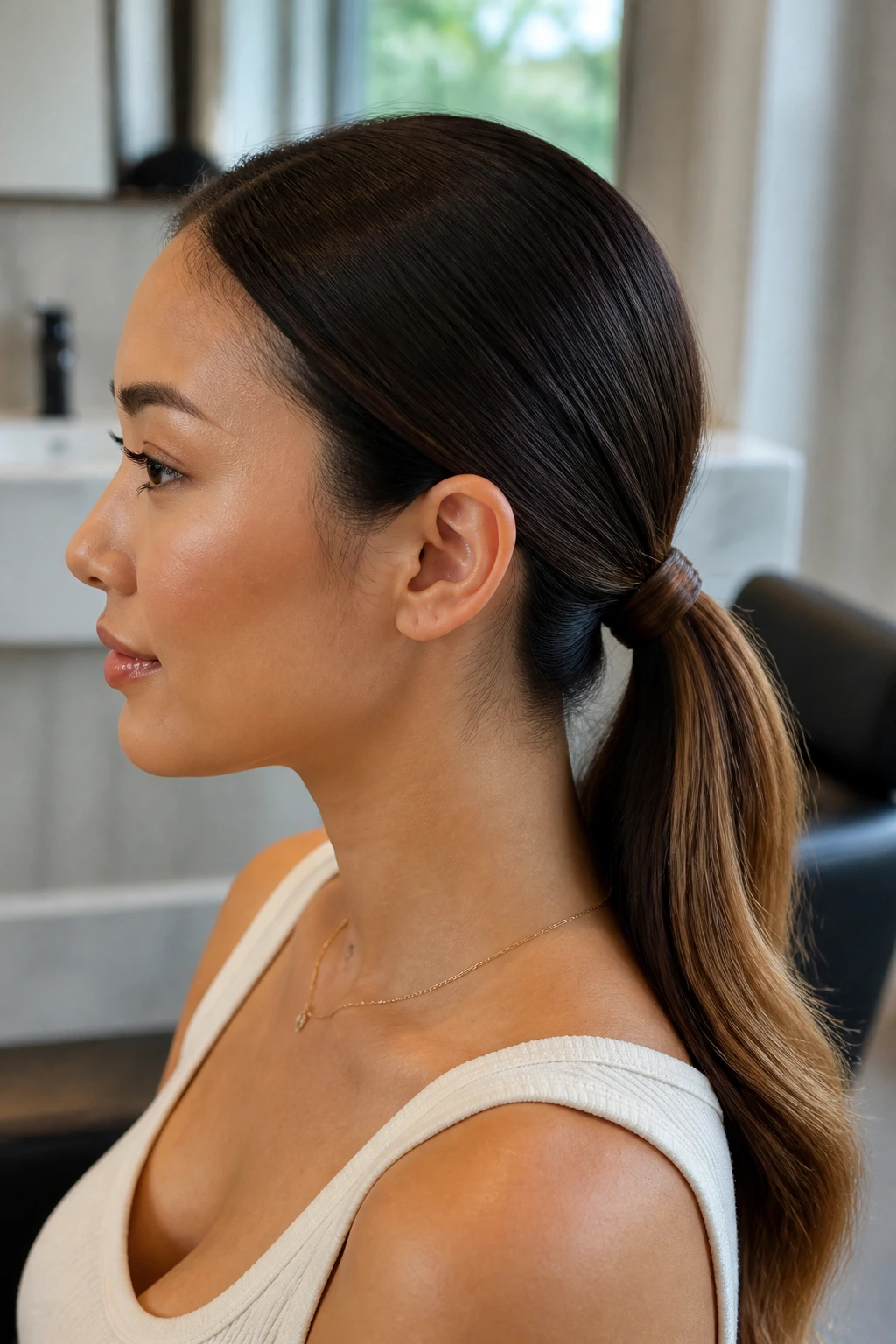
Honey-Gloss Swap: If your current color is cool or flat, ask for a warm gloss over the top or a few honey ribbons around the face. It’s a small change, but it can make yellow undertone skin look more awake.
Heatless Texture Version: Braid damp hair in two or four loose sections before bed, then shake it out in the morning. Fine hair usually picks up shape fast, and you don’t need a heavy iron every day.
Office-Polished Version: Take any of the loose styles here and smooth the crown with a touch of styling cream, then tuck one side behind the ear. That keeps the shape neat without killing the movement.
Short-and-Chic Version: If you like low maintenance, trim the length to bob or pixie territory and keep the line blunt. Fine hair often looks healthier when it stops pretending to be heavier than it is.
Glam Night-Out Version: Add a side part, a few polished waves, and a sheen spray on the mid-lengths only. Warm skin loves that glossy finish because the light bounces off the golden tones instead of sitting dull on top.
Grow-Out Version: If you’re between cuts, keep the front pieces long enough to frame the face and trim the ends every 8-10 weeks. That keeps the style from slipping into the awkward, stringy stage.
Wash Days, Trims, and Between-Appointment Care
Fine hair usually needs more frequent washing than thick hair because the roots show oil faster. A lot of people do best with washing every 1-2 days, though some can stretch a bit longer if the scalp runs dry. Dry shampoo works best when you apply it before the hair looks greasy, not after it’s already collapsed.
For trims, short bobs and pixies usually need attention every 6-8 weeks. Lobs and layered mid-length cuts can go 8-10 weeks, sometimes a little longer if the shape is forgiving. Long layers can stretch to 10-12 weeks, but the ends still need regular cleanup or the fullness disappears.
If you color your hair warm, a gloss refresh every 4-8 weeks can keep the tone from going flat or brassy. Keep conditioning masks on the mid-lengths and ends, and use a clarifying wash once every 2-4 weeks if texture sprays and dry shampoo start building up. Fine hair is not the place to let residue stack up. It shows.
Frequently Asked Questions
What haircut makes fine hair look the thickest?
A blunt bob or a collarbone lob usually gives the strongest density illusion because the ends keep a clean line. Too many short layers tend to split the shape and make the hair look wispy.
Are bangs a bad idea for fine hair?
Not if they’re chosen carefully. Curtain bangs or airy fringe can work well, but heavy, blunt bangs often need more density than fine hair can comfortably give.
Should yellow undertone skin avoid ash blonde?
Not always, but ash-heavy shades can look flat against warm skin if they aren’t balanced with some gold or beige. A warmer blonde, or ash softened with honey at the front, usually sits better.
Is a center part or side part better for fine hair?
A side part tends to give more lift at the crown, which helps fine hair look fuller. A center part can still work if the cut has strong shape and some face-framing movement.
Can I keep long hair if it’s fine?
Yes, but the cut needs a plan. Long hair should keep a strong perimeter and controlled layers so the ends don’t look stringy.
What product gives volume without making hair stiff?
A lightweight mousse at the roots and a flexible-hold hairspray at the end usually do the job. Heavy gels and sticky creams often drag fine hair down.
How do I keep curls from falling out by midday?
Set the curl, let it cool fully, then brush it out only after it’s cold. A small amount of texture spray before curling also helps the shape hold.
What if my hair gets oily fast?
Keep conditioner off the scalp, use dry shampoo before the roots turn greasy, and avoid piling on rich styling cream. Fine hair usually does better with lighter products and more frequent scalp cleansing.
The Shape That Does the Heavy Lifting
The nicest thing about these styles is that none of them depends on fake volume or a mountain of product. They rely on shape, placement, and warm color that sits cleanly against yellow undertone skin. That’s a much smarter way to work with fine hair.
If you keep one rule in your pocket, make it this: protect the perimeter, lift the crown, and stay warm around the face. That one habit will do more for your hair than a dozen random styling tricks.
Pick the cut that matches how much time you actually want to spend styling, then lean into honey, caramel, bronze, or copper where the light hits your face. That’s where these looks start to earn their keep.