



The best 60+ hairstyles for women with wavy hair do one smart thing: they let the wave do part of the work. Not all of it. Just enough. The shape still needs a haircut, a plan, and a little discipline at the crown, because wavy hair can go from soft and breezy to puffed-out and stubborn in about ten minutes if the cut is wrong.
That’s the part too many generic haircut lists miss. Mature wavy hair usually isn’t asking for drama. It’s asking for balance. A bit of lift at the roots, some movement around the cheekbones, and ends that don’t look hacked at with a dull kitchen knife. If you’ve ever left a salon with hair that looked great for two days and then fell into a weird triangle, you already know why the details matter.
These styles lean into what wavy hair does best: bend, soften, and move. They also respect the realities that come with age — drier ends, finer strands at the crown, a face that looks better with shape around it rather than a solid wall of hair hanging straight down. Some of these looks are sharp and tidy. Some are loose and airy. A few are elegant enough for a dinner out, and a few are the kind you can fix with water, mousse, and your fingers.
Why These Styles Work So Well on Wavy Hair After 60
-
They keep the wave from getting heavy: Wavy hair can droop fast when the ends are too blunt and the layers are too long, so these cuts leave room for bend without making the shape collapse.
-
They soften the face without hiding it: The best cuts here place movement near the cheekbones, jawline, or collarbone, which gives shape without covering everything up.
-
They’re friendlier to drier hair: Less heat, fewer harsh layers, and smarter length choices mean you’re not fighting frizz every morning with a flat iron and a prayer.
-
They grow out better than a strict haircut: A clean bob, a shag with purpose, or a layered lob can keep looking intentional for weeks, not days.
-
They work with glasses, earrings, and scarves: A lot of these shapes leave space around the ears and temples, which makes them easier to wear in real life, not just in a salon mirror.
-
They can be styled fast: A spray bottle, a little mousse, and five minutes of scrunching is enough for several of these looks. That matters.
1. Soft Shoulder-Length Layers
This is the haircut I recommend first when someone says, “I want something flattering, but I do not want to fuss.” The length hits around the shoulders, which gives the wave enough room to form without dragging the whole shape down. Soft layers keep the ends from looking bulky, and the cut has enough swing to feel polished even when you air-dry it.
The trick is keeping the layers soft, not choppy. Too many short pieces around the crown and you get fluff. Too little layering and the wave bunches into a block. Ask for movement that starts below the cheekbones, then gets lighter through the lower half of the hair. That keeps the top from going puffy while preserving the bend through the ends.
A cream blush in the hair? No. A little mousse at the roots and a leave-in through the mids is usually enough. If your hair is silver, white, or salt-and-pepper, this cut looks especially good because the movement shows off the different tones instead of hiding them under a heavy sheet of hair.
Best for: women who want a low-drama shape that still looks finished.
Watch for: layers that start too high. That’s the shortest path to a triangle.
2. Chin-Length French Bob

A chin-length bob with a soft wave has a kind of stubborn charm. It sits close to the face, shows off the neck, and makes glasses look intentional instead of like an afterthought. The French bob version keeps the edge clean but not severe, so the wave can fold in slightly at the ends instead of sticking out like a helmet.
Why it works
The chin line is useful because it gives the haircut a built-in frame. If your hair is fine, this length can make it appear denser. If your hair is thick, a bit of internal shaping keeps it from ballooning out at the sides. The wave gives it life; the cut gives it structure.
I like this one with a slightly off-center part. Dead center can be too neat, too static. A small shift to one side makes the wave fall more naturally and softens the face. If you want a little extra polish, tuck one side behind the ear and leave the other loose. Very little effort. Big payoff.
How to style it
- Mist damp hair with water and a lightweight mousse.
- Scrunch, then air-dry or diffuse on low.
- Smooth only the top layer if needed; don’t flatten the whole thing.
The beauty of this cut is that it does not need to be perfect. If the ends bend a little differently from day to day, that only adds character.
3. Collarbone Lob with Curtain Bangs

This is the haircut people keep coming back to because it works in nearly every direction. The collarbone length gives enough hair to pull back, twist, or tuck, while curtain bangs break up the forehead line and lead the eye right into the wave. It is soft, but not vague. That matters.
Curtain bangs on wavy hair need a hand that knows when to stop. Too short and they spring up like punctuation marks. Too long and they fall into your eyes. The sweet spot usually lands around the cheekbones, with a gentle taper toward the sides. That way the fringe opens up the face instead of sitting like a curtain rod.
What I like most here is the way it handles grow-out. Even if the bangs start to lose their exact shape, they blend into the layers and still look deliberate. Not every haircut does that. Some go from chic to awkward in one shampoo.
If your hair tends to frizz around the front, dry the bangs first with a round brush or your fingers and a dryer on low. The front section sets the mood for the whole cut.
4. Soft Shag with Curtain Fringe
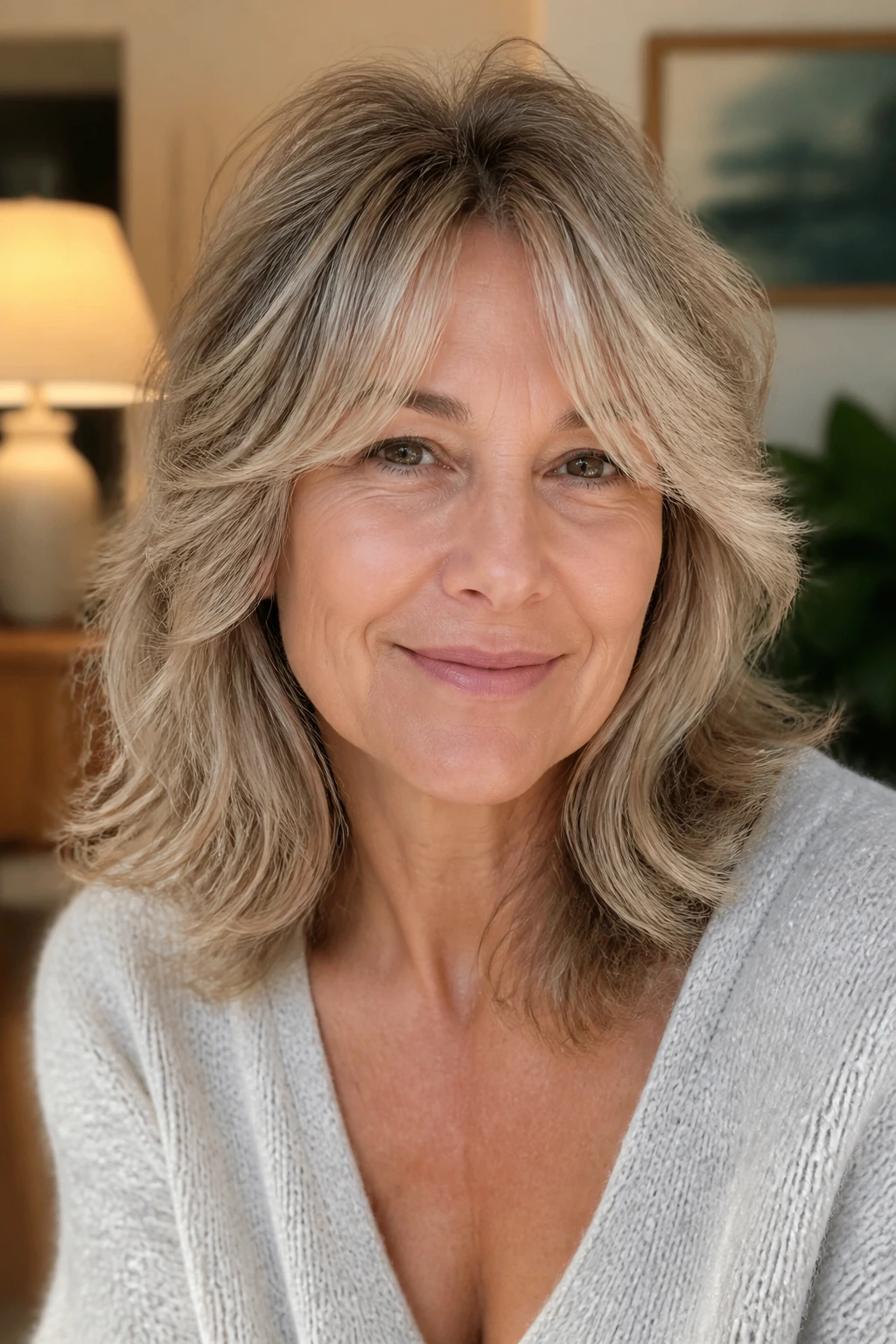
The shag gets a bad reputation when people picture the old version — too many sharp layers, too much volume, too much “I woke up like this” theater. A soft shag is different. It uses layered movement to keep wavy hair lively and lift the face a little, especially when the hair at the crown has started to get flatter.
This is a strong choice if your natural wave pattern is loose but uneven. The shag makes that irregularity look intentional. Some pieces bend more, some less, and the cut still works because the shape is built for motion. Curtain fringe softens the front so the style doesn’t feel too edgy or too young-for-no-reason.
A good soft shag should feel feathered, not shredded. The ends should separate a little when you run your fingers through them, but the outline still needs to read as a haircut, not a pile of pieces. I’d ask for face-framing layers that start around the cheekbone and longer internal layers through the back.
This one loves a diffuser. It also tolerates air-drying if you scrunch in mousse and leave it alone. That said, don’t keep touching it. Wavy shag hair gets bigger every time you mess with it.
5. Side-Parted Pixie with Longer Top
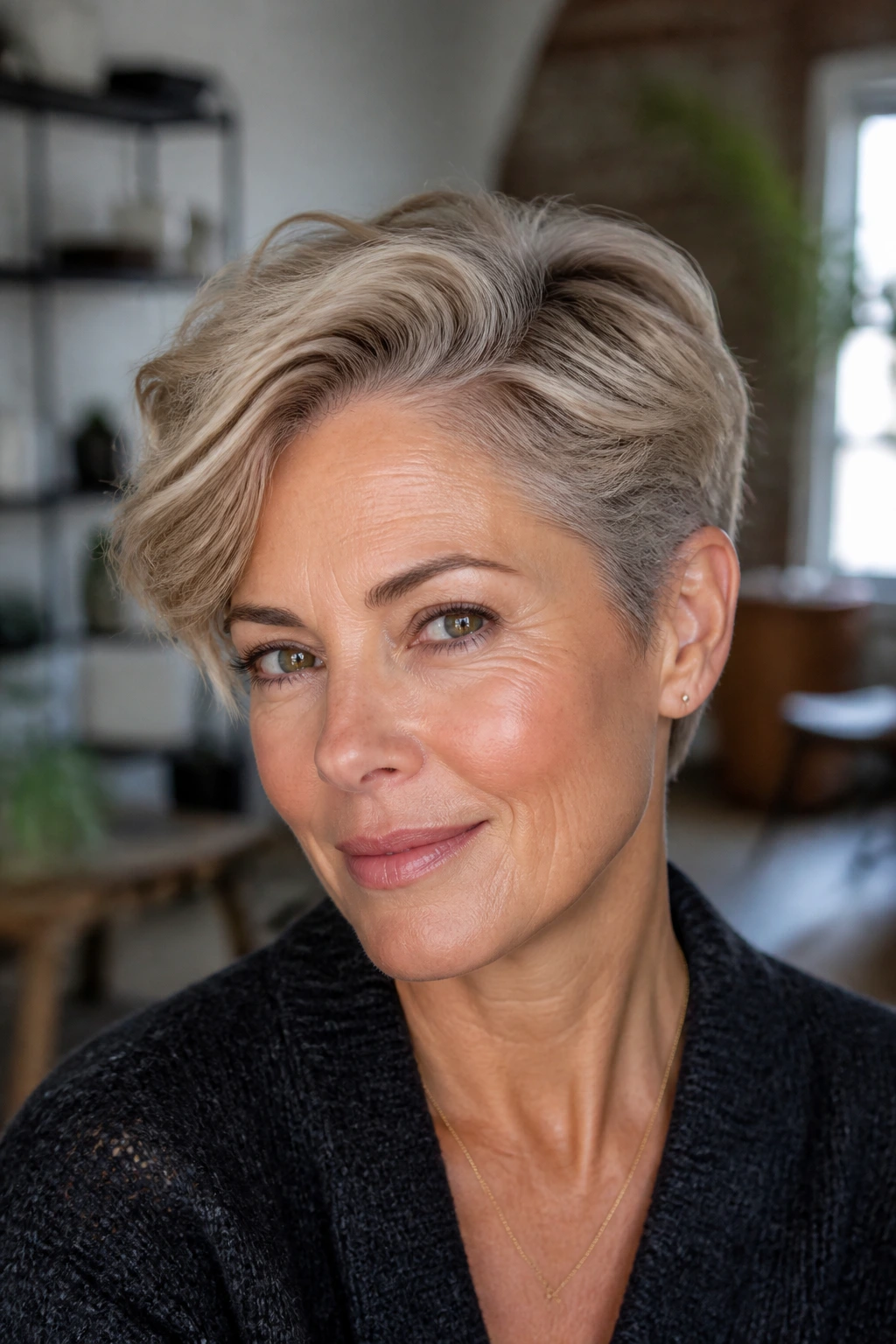
Short hair and wavy hair can be a glorious combination when the cut respects the bend instead of trying to scrub it away. A side-parted pixie with a longer top keeps things light around the ears and neck, while the extra length on top lets your wave show instead of sitting flat to the scalp.
This cut is especially useful if your hair is fine or if the back of your head tends to lose shape fast. The side part gives instant lift. The longer top gives you a little room to push, sweep, or separate the hair with your fingers. You’re not trapped in one shape. That’s the real win.
A pixie like this looks best when the top is textured, not chopped into tiny spikes. Ask for softness at the ends, and keep the nape tidy. The contrast between a clean neckline and a looser top section is what makes the cut feel fresh. If the top is too short, the wave disappears. Too long, and it turns into a floppy crop.
Use a pea-sized amount of styling cream, not a heavy wax. The goal is movement with control. Sticky hair is not the goal. Never was.
6. Rounded Graduated Bob
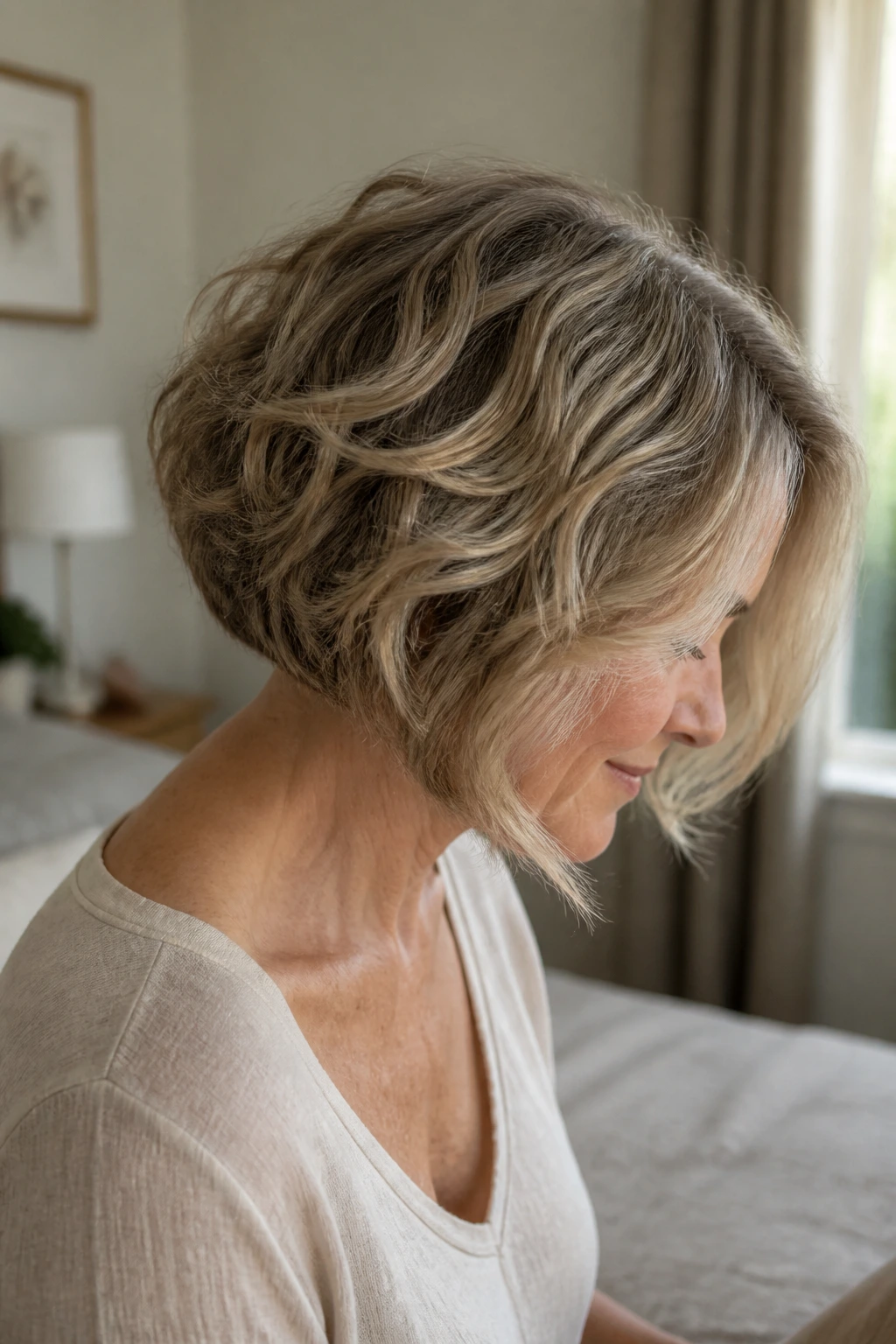
A rounded graduated bob is one of those haircuts that sounds formal and can actually be very easy to live with. The back sits a little shorter, the front edges are slightly longer, and the overall outline curves gently around the head. On wavy hair, that rounded shape keeps the cut from puffing out in the wrong places.
It’s a smart move when the back tends to look flat and the sides go wide. The graduation builds lift in the nape while the front pieces stay soft enough to frame the face. The result is tidy without feeling stiff. That matters more than people think.
I especially like this cut for women whose hair has a mix of textures — maybe a stronger wave under the surface and looser strands on top. The shape helps unify the whole thing. You don’t have to force every section into the same pattern. Thank goodness.
A rounded bob looks best when it’s dried with the head slightly tilted forward and then smoothed at the top with your fingers. You want the curve to show. Not a hard shell. A curve.
7. Feathered Mid-Length Cut
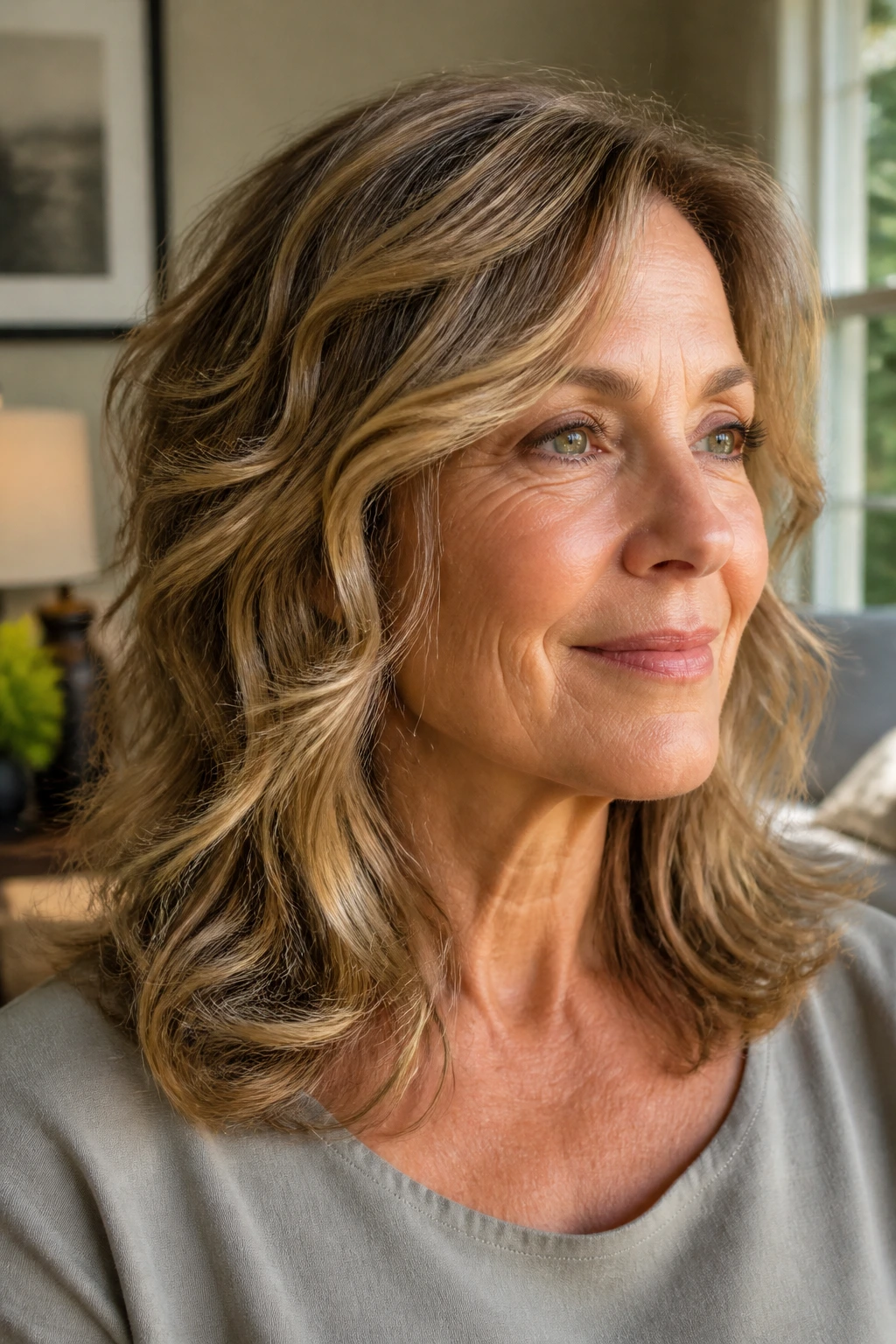
Feathering is one of those old-school haircut moves that still earns its keep when it’s done with restraint. On mid-length wavy hair, feathered layers help break up bulk and let the hair move around the shoulders without hanging like a curtain. The ends get soft, the shape gets air, and the whole style feels lighter.
This cut is useful if your hair is thick enough to overwhelm your face but not so thick that it needs serious carving. The feathering thins the visual weight without making the hair look sparse. That’s the key. Too much thinning and you end up with frayed ends and odd gaps. The better version keeps the perimeter full.
I’d pair this cut with a side part or a slightly off-center part. It helps the layers fall in a more flattering way, especially if one side of your face feels stronger than the other. Most faces do. Hair can help balance that.
The styling is gentle: a touch of leave-in, a little mousse, and a wide-tooth comb to distribute the product. Then stop. The shape does the rest.
8. Half-Up Twist with Soft Volume
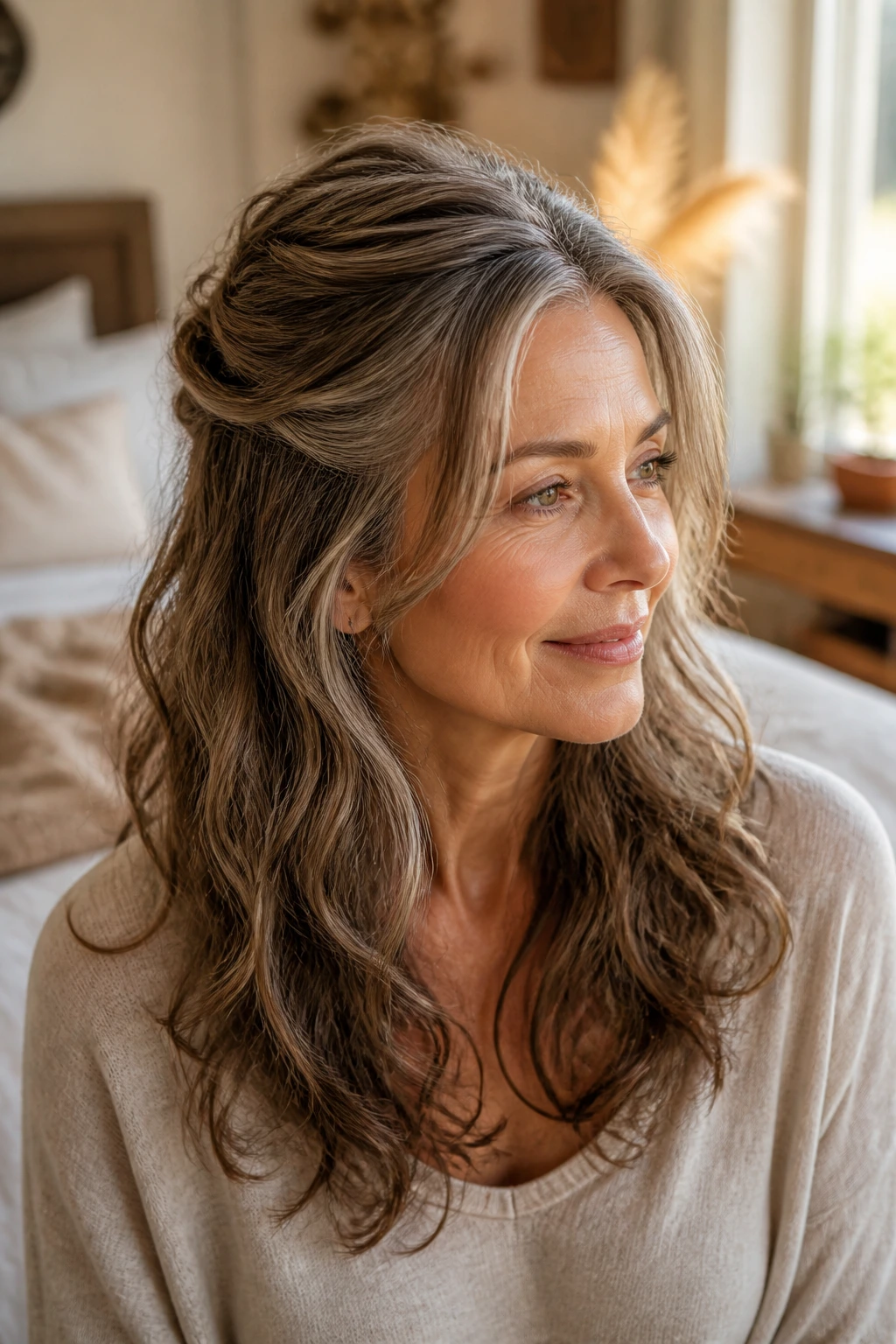
Sometimes the best hairstyle is not a cut at all, but a smart way to pin up what you already have. A half-up twist gives wavy hair some lift at the crown while leaving the ends loose and visible. It’s tidy, but not severe. Casual, but not sloppy. That balance is harder than it looks.
For this style, the trick is volume at the top, not tightness. Pull back just enough hair from each temple to create a soft twist or small clip at the back of the head. Leave a little lift above the part, then let the remaining wave fall around the shoulders. If the front is flattened too much, the whole style loses energy.
This works especially well on second-day hair. Actually, it often looks better then. A bit of texture gives the twist something to hold onto, and the loose ends look fuller. Clean, slippery hair can make the clip slide, so a little dry shampoo at the roots helps.
Use a decorative pin if you like, but choose one that grips. Beautiful and useless is a bad combination.
9. Low Chignon with Loose Tendrils
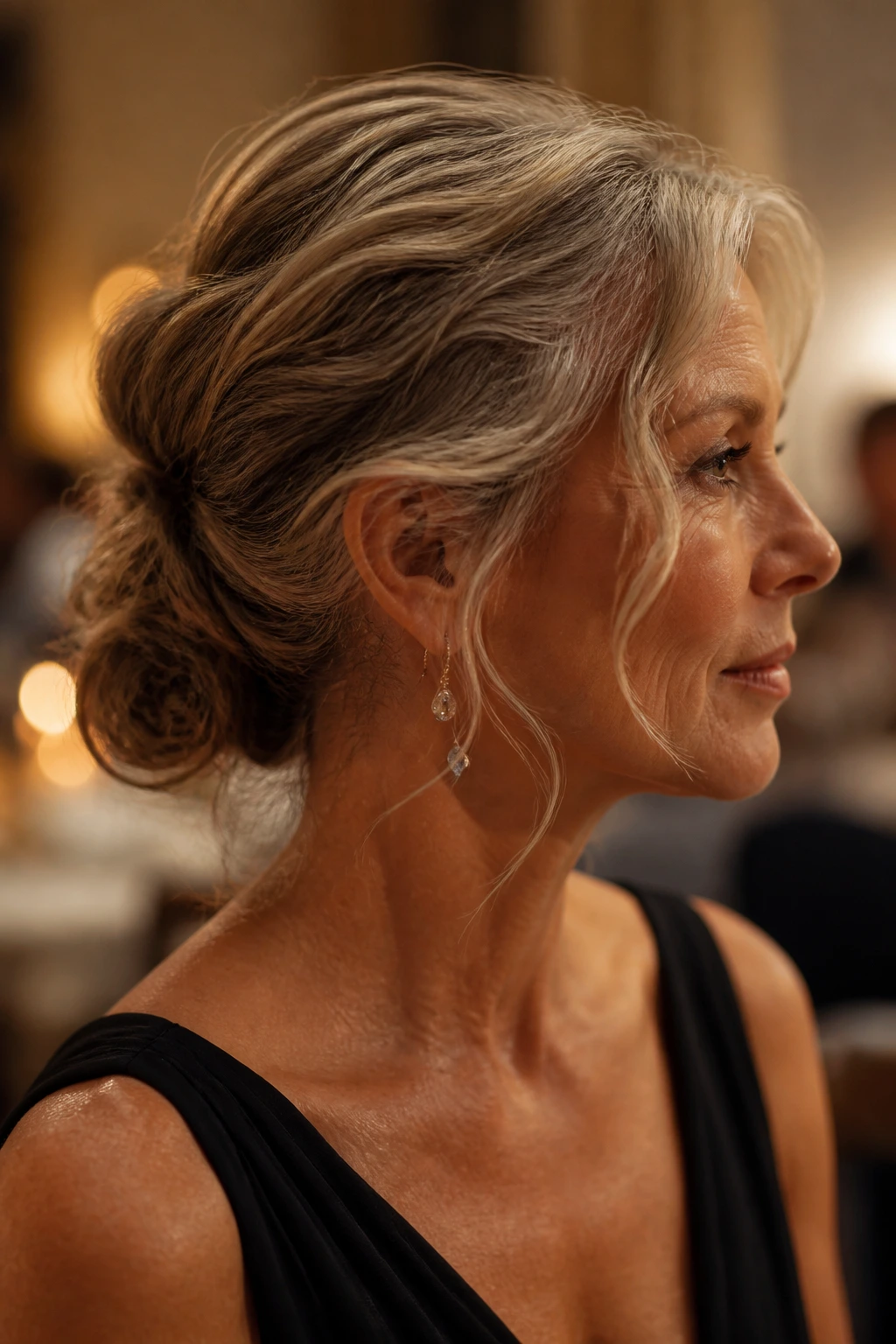
A low chignon can look severe if it’s pulled tight, but with wavy hair, it usually looks better when it’s a little softer and less sculpted. Leave two or three face-framing tendrils out around the temples and jawline, then twist the rest into a low knot or folded bun at the nape. That softens the whole thing.
This style is excellent when you want your hair off your neck without losing the shape that waves bring. The tendrils are not decoration. They’re the part that keeps the style from feeling too formal. A tiny bend at the temple, a loose piece near the cheek, and the whole look relaxes.
A quick note on hold
You do not need a can of stiff hairspray here. In fact, too much will make the tendrils look crunchy and obvious. Use a few pins, mist lightly, and let the hair keep some movement. That’s the point. If a chignon looks too perfect, wavy hair starts to feel trapped.
This is one of my favorite choices for dinners, events, or any day when you want to look deliberate without spending 45 minutes on your hair.
10. Tucked-Behind-Ears Long Bob

The tucked-behind-ears lob is simple in the best way. The length usually falls between the jaw and the collarbone, which keeps the wave visible but not overwhelming. Tucking both sides behind the ears gives the face a cleaner frame and puts attention on the eyes, the glasses, or a pair of earrings.
It sounds almost too plain, and that’s why it works. The shape depends on cut and texture, not on a lot of styling tricks. A small bend at the ends is enough. If the hair is cut with a slight angle, the tucked sides create a nice line along the jaw without dragging the face down.
I like this one when someone wants to look neat without looking overdone. It’s the haircut equivalent of a crisp white shirt with sleeves rolled once. Effortless? No. More like quietly controlled.
A few seconds with a flat brush or your hands is enough to reset it in the morning. If the wave has gone sideways, dampen the front pieces and scrunch them back into place. Usually that’s all it takes.
11. Asymmetrical Bob
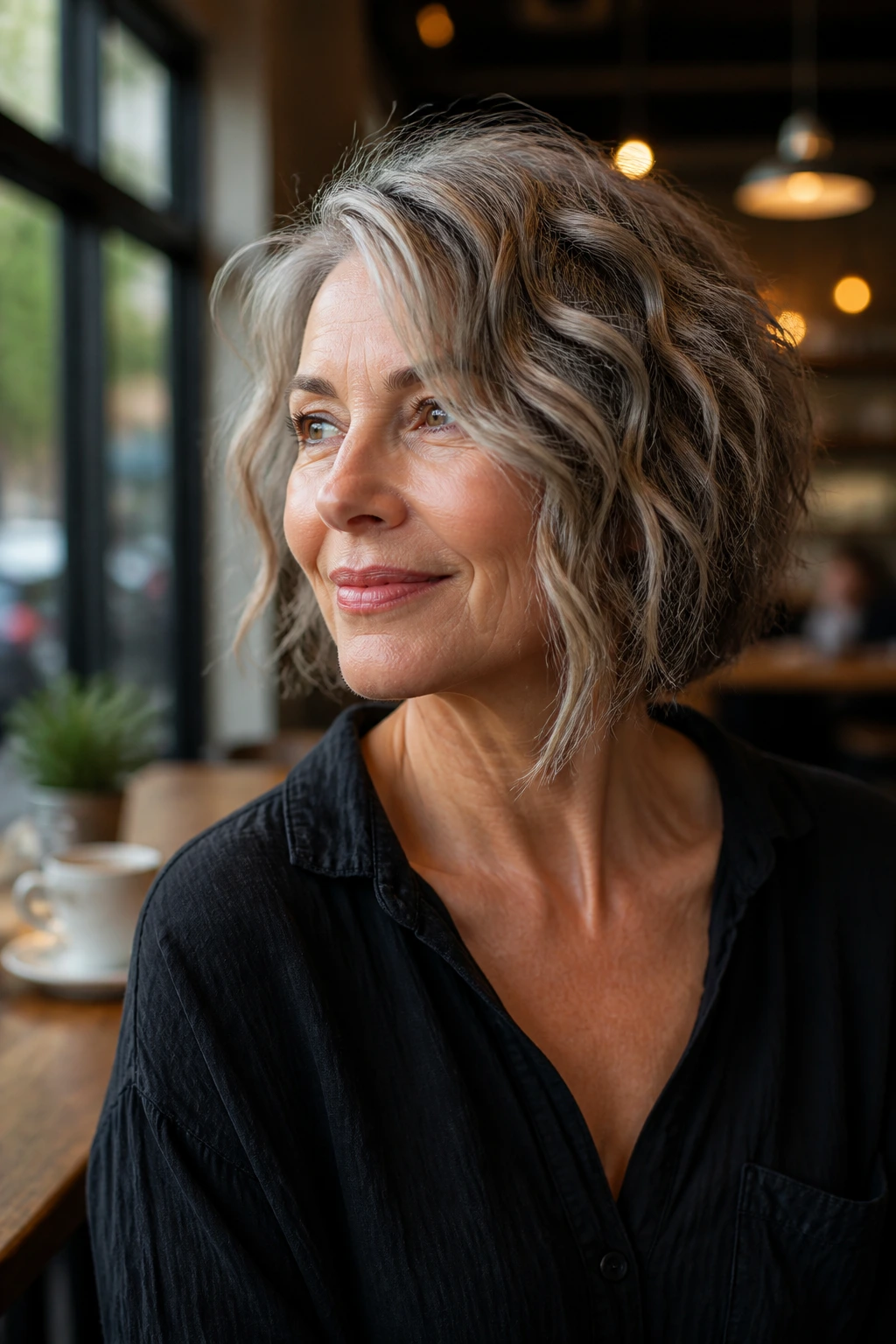
An asymmetrical bob gives wavy hair a little edge without asking for a dramatic personality change. One side is slightly longer than the other, which creates motion even when the hair is still. On wavy strands, that uneven line feels lively and modern without being fussy.
The cut is at its best when the difference is subtle. You want asymmetry you can notice, not asymmetry that shouts at everyone in the room. A small length difference can make the wave fall in a more interesting way, especially if one side naturally grows flatter or denser than the other.
This style suits women who like a clean shape but don’t want a cookie-cutter bob. It also helps if your hair tends to flip out on one side more than the other. Instead of fighting that habit, the cut borrows it.
Wear it with a deep side part for extra drama, or keep the part softer if you want it to look less angular. The nice thing about a wavy asymmetrical bob is that it can lean polished or playful depending on how much product you use.
12. Long Layers with Face-Framing Pieces
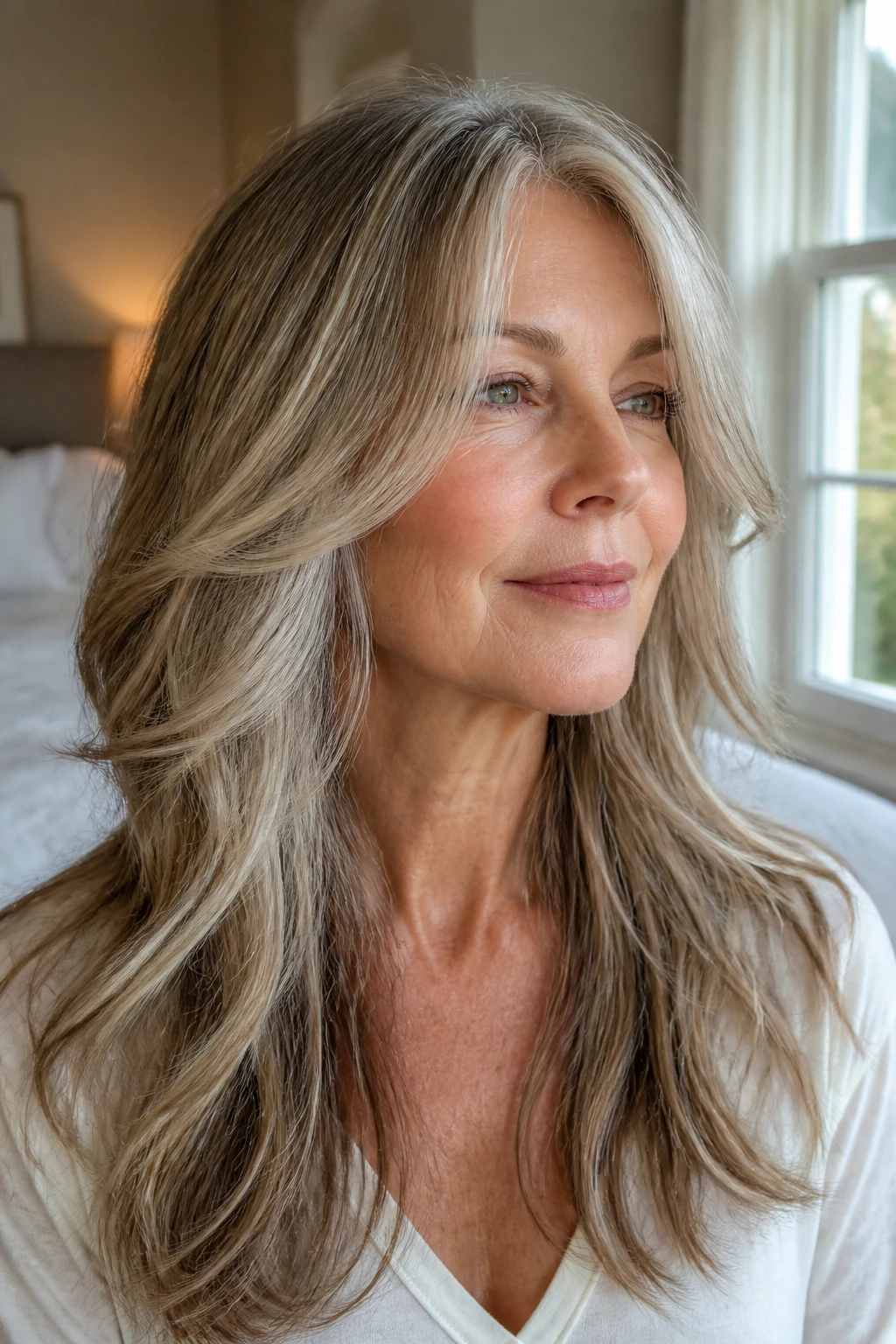
If you like your hair longer, keep it — but give it a shape that understands wave. Long layers stop the ends from getting heavy, and face-framing pieces break up the width around the cheeks and jaw. Without those pieces, long wavy hair can settle into one big shape that feels broad and flat.
This cut is useful when you want length for ponytails, clips, or updos, but you do not want to carry a heavy sheet of hair around all day. Long layers create movement while preserving the length that many women prefer. It’s a compromise, sure. A good one.
The face-framing pieces should start somewhere around the chin or cheekbone, not at the nose. Shorter pieces near the nose can get awkward fast as they grow out. The better version blends more gracefully and works whether you wear glasses or not.
Air-drying works well here, especially if you scrunch in a little curl cream or light mousse. Let the wave make its own decisions. That’s often the cleanest result.
13. Textured Crop with Tapered Nape
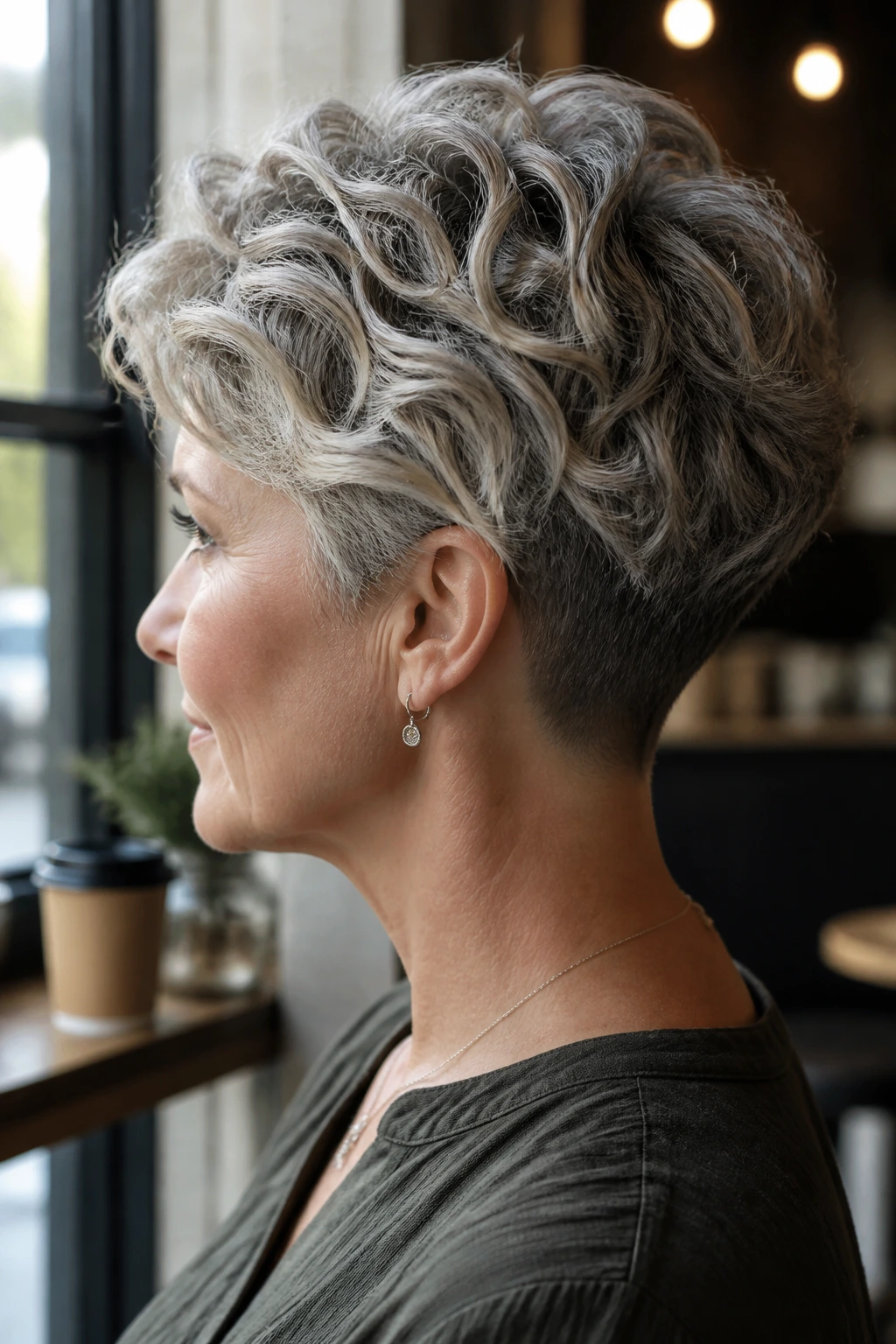
A textured crop is not the same thing as a pixie. It’s a little fuller on top, tighter at the nape, and slightly more casual around the edges. For wavy hair, that texture on top is the whole reason the cut works. The waves get to rise and separate instead of lying flat against the scalp.
The tapered nape keeps the neckline neat, which makes the style look intentional even when the top is a little messy. That contrast is useful. It gives the haircut a shape you can feel from the side and the back, not just the front. A good crop should look good turning your head.
This is a smart pick for hair that has lost some density through the sides but still has enough texture on top to play with. It also dries fast, which matters more than people admit. If a haircut can save you ten minutes every morning, that’s not a small thing.
A dab of paste or matte cream is enough. Spread it on your fingertips first, then press the top pieces up and forward. No need to work every strand. Let some chaos stay.
14. Braided Crown with Wavy Ends
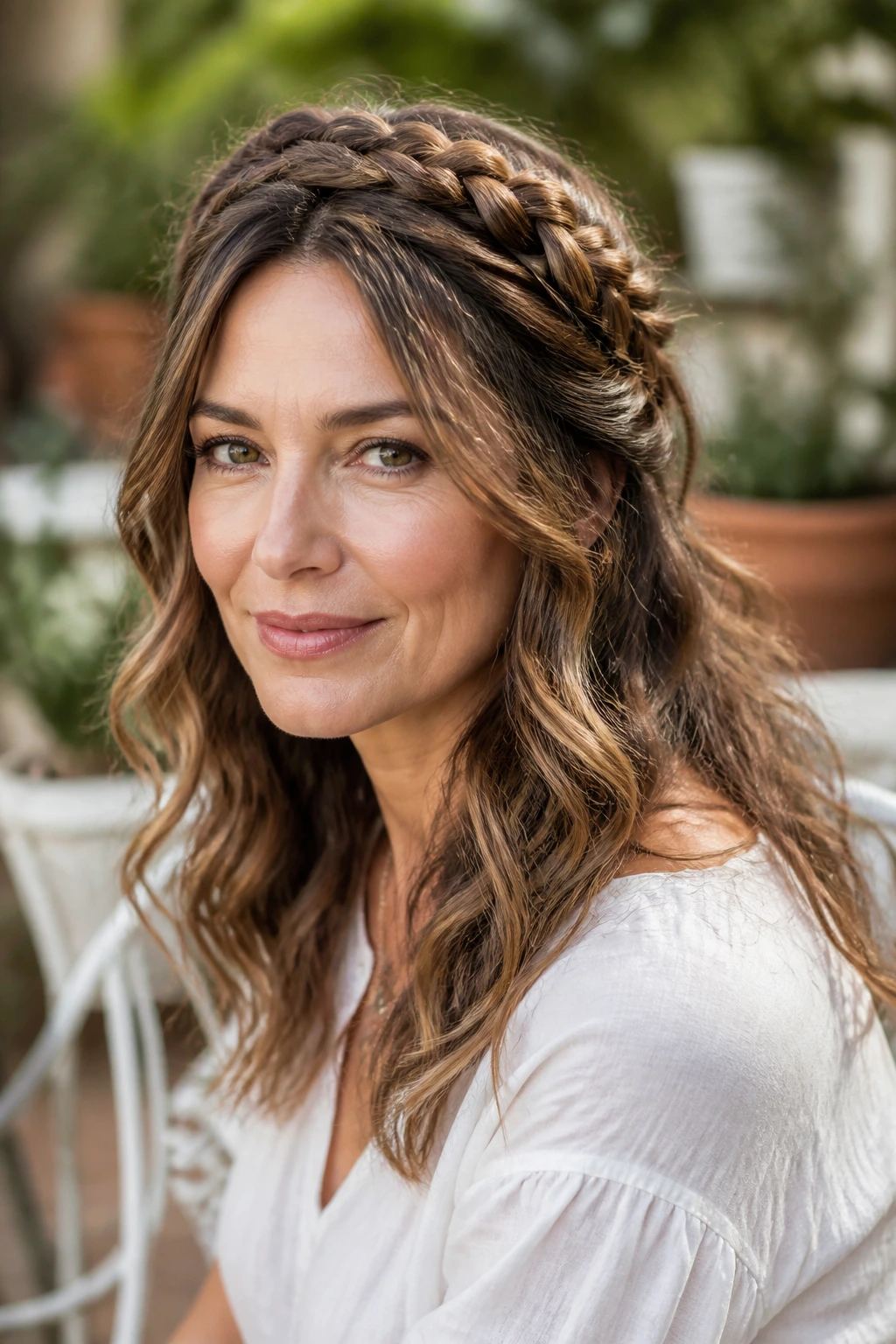
A braided crown is a lovely way to use wavy hair when you want something a little special but still soft. The braid lifts hair away from the face and turns the wave into texture rather than volume. Leave the ends loose, and the look stays relaxed instead of bridal-costume territory.
I like this style best when the braid sits just above the temples and sweeps back toward the crown. It does not need to be tight. In fact, a slightly loose braid looks better with wavy hair because it blends into the natural texture instead of fighting it. Pull the braid apart a little after pinning it so it has width.
If your hair is layered, the braid may drop a few shorter pieces. Fine. That adds softness. Pin them down if they annoy you, or let them live if they frame your face nicely. Not every loose piece is a problem.
This style works beautifully for family events, weddings, or any day when you want the hair off your forehead and the rest of it still visible. It has a little romance to it, but not the precious kind.
15. Wavy Ponytail with Volume at the Crown
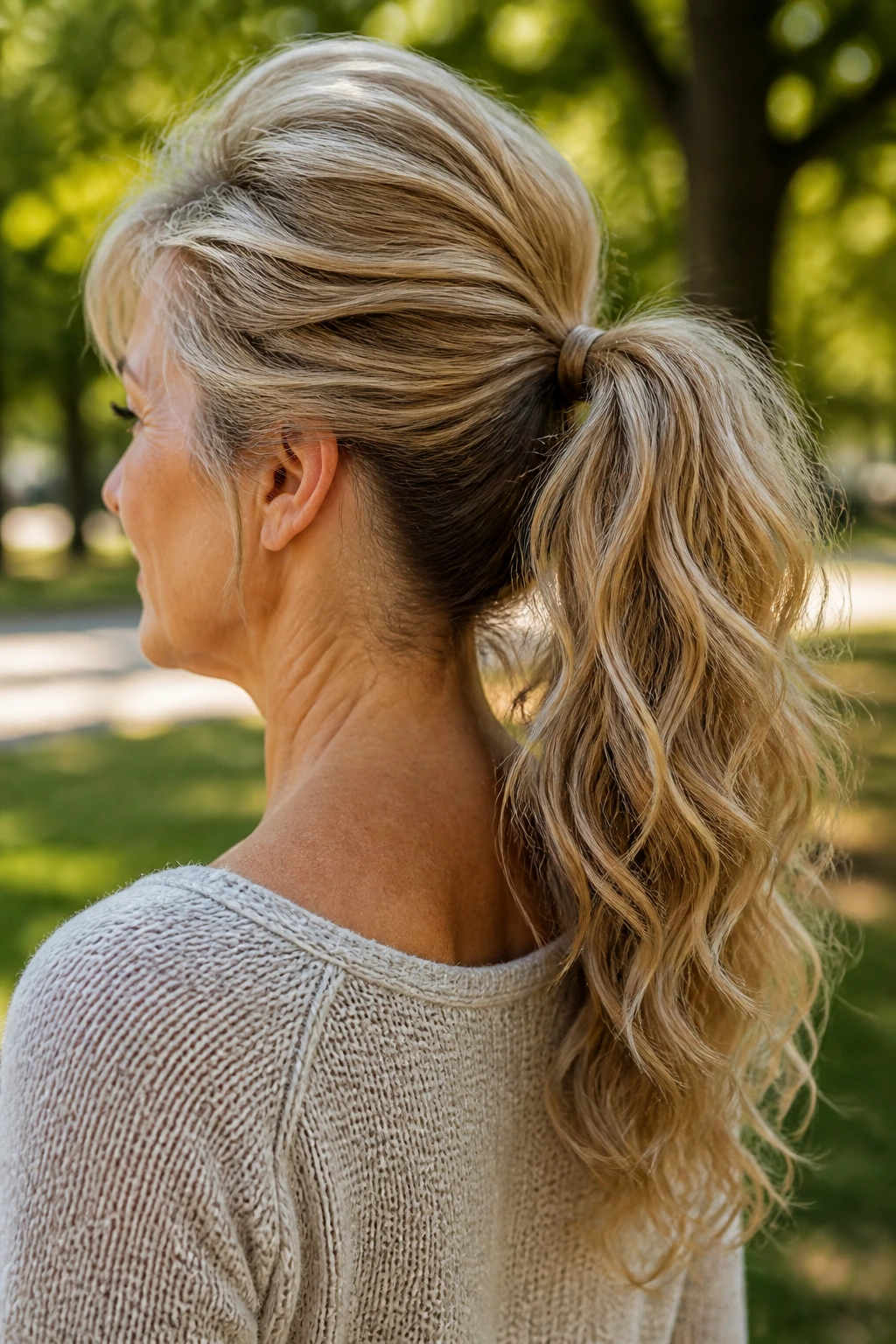
A ponytail gets a bad rap because people picture the tight, flat version that pulls the face down and makes the back look severe. A wavy ponytail with height at the crown is different. It keeps the lift, keeps the movement, and lets the wave make the tail itself look fuller.
The crown lift matters. Tease lightly at the roots or use a bit of dry shampoo for grip before you gather the hair. Then secure the ponytail at a middle or low position, depending on how much neck you want to show. If the hair is too slick at the top, the whole style can look tired.
I’d leave out one small section near the temples if you want more softness around the face. Just one or two pieces. Too many and the style loses its shape. The ponytail should still feel like a ponytail, not a half-up mishmash.
Wrap a thin strand of hair around the elastic if you want it to look cleaner. That tiny move makes a surprising difference. It’s a simple detail, but the eye notices it immediately.
16. Razored Lob with Broken Waves
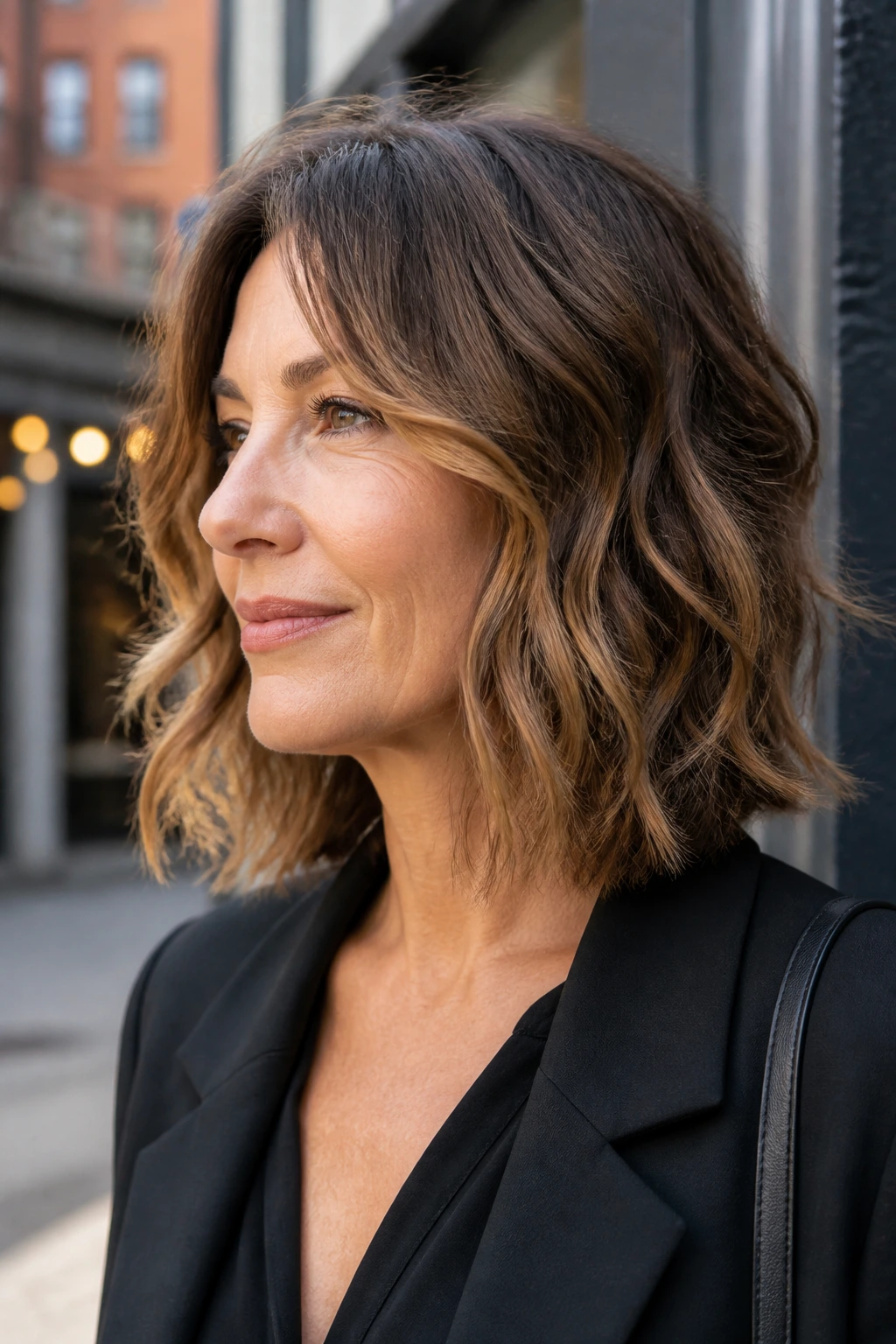
A razored lob has a looser, more piecey finish than a blunt or heavily layered cut. On wavy hair, that can be a gift. The razor softens the ends so they separate a little instead of sitting in one hard line, which gives the whole style a broken, lived-in texture.
This is a good option if your wave pattern is irregular and you want the hair to look a little lighter. The trick is moderation. Too much razor work can leave the ends wispy or frayed, and mature hair does not need extra fragility. You want piecey, not threadbare.
I like this cut for shoulder length or just above the collarbone. That length gives the razor-cut ends room to move without making the hair look too thin. If you wear it with a side part, the texture reads even better because the hair falls in different directions instead of sitting in one mass.
A bit of texturizing spray on dry hair can sharpen the separation. Use a light hand. A little grit goes a long way.
17. Blunt Bob with Soft Ends
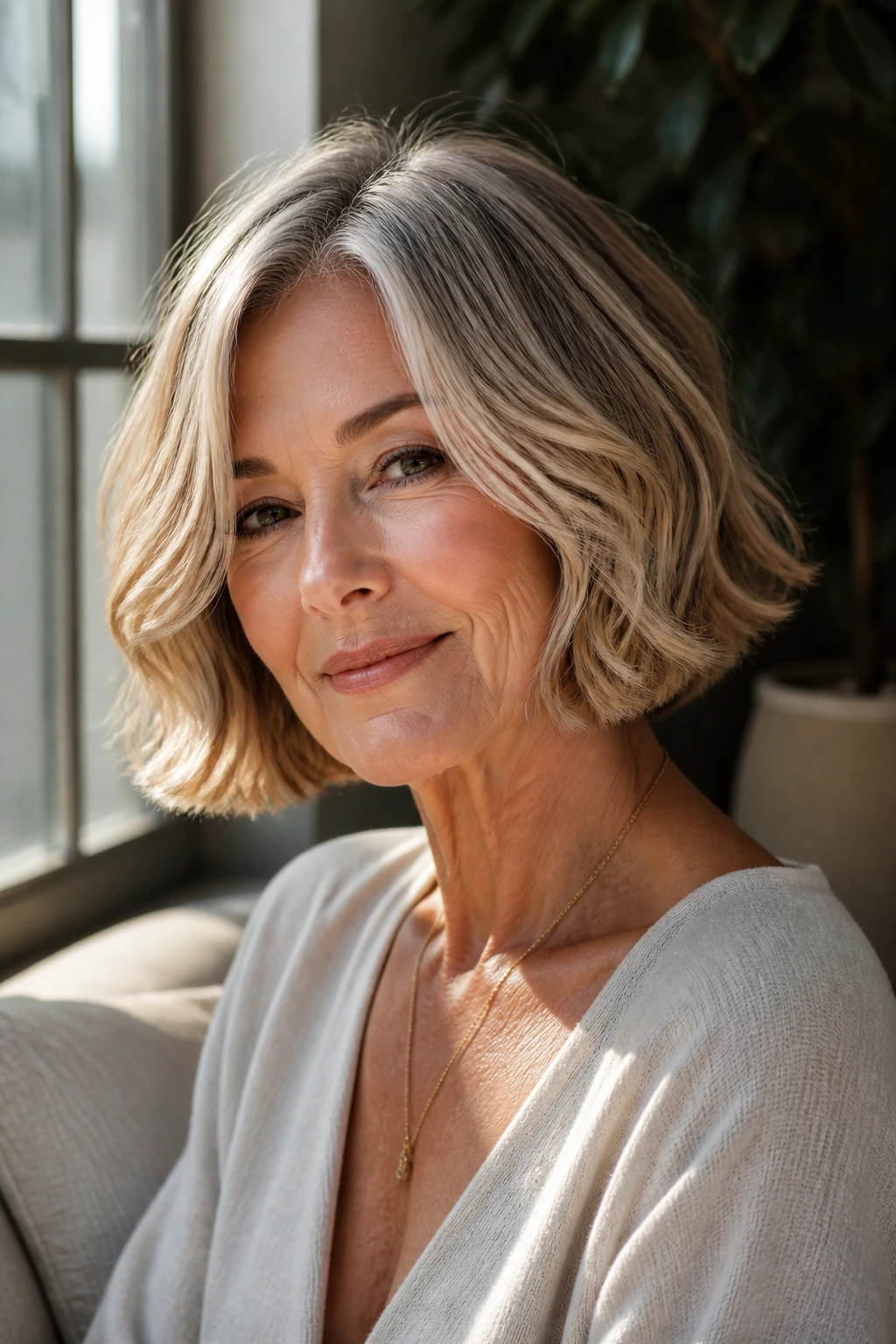
A blunt bob is not automatically harsh. On wavy hair, especially if the ends are softened just enough to bend, it can look rich and full. The solid outline gives the eye a clean shape to follow, while the wave keeps it from feeling severe.
This works particularly well for finer hair that needs the appearance of density. A blunt line creates that density at the perimeter. If you cut too many layers into fine hair, you lose the weight that makes it look thicker. The wave then does the rest by giving the style texture.
The key is not to make the ends look chopped straight across like cardboard. Ask for a blunt shape with soft internal movement, or a point-cut finish at the very end. That keeps the edge from looking too heavy.
This style is a good match for someone who likes clean lines, neat necklines, and a haircut that does not need much interpreting. It says what it is. No fuss.
18. Bottleneck Bangs with Shoulder-Length Waves
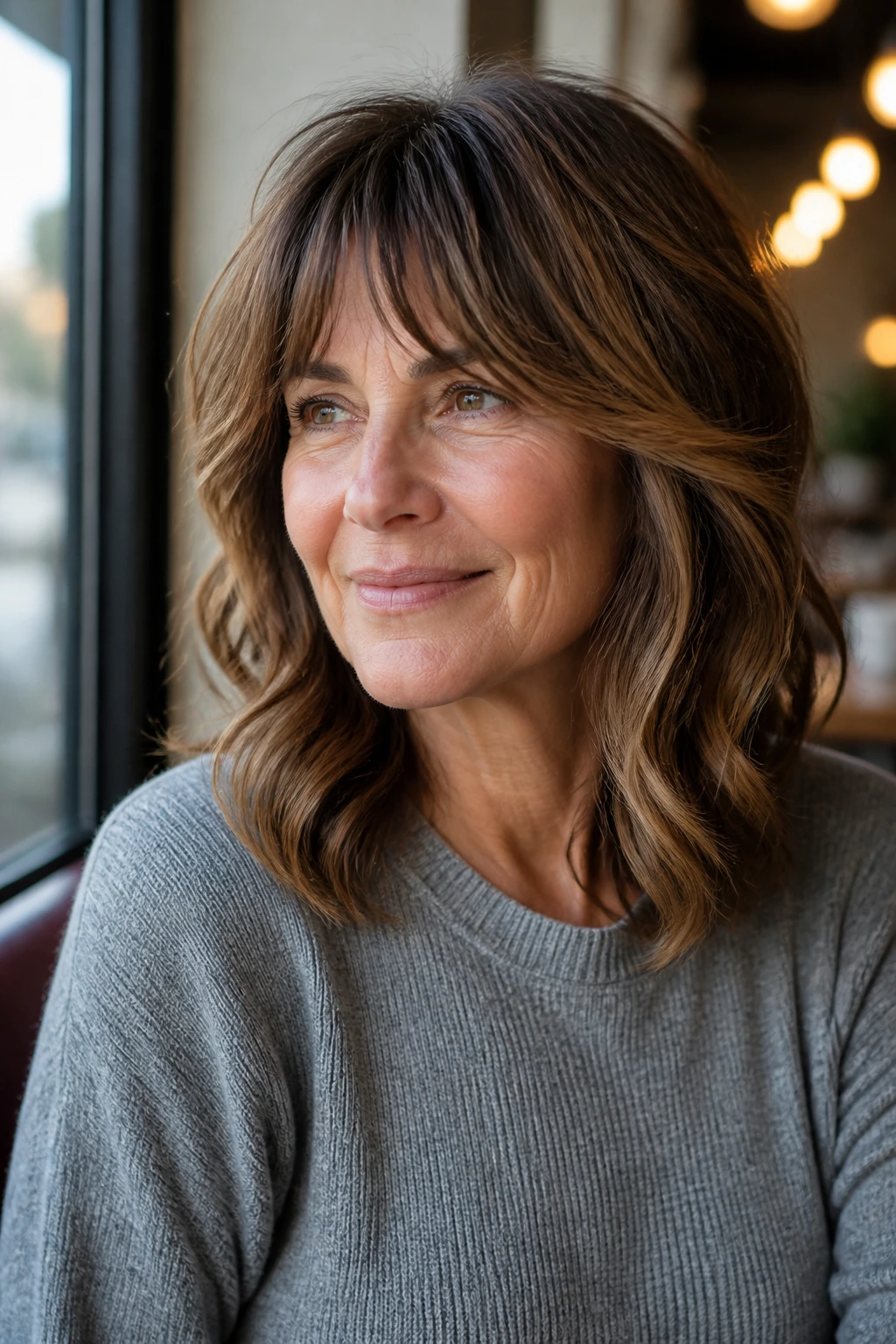
Bottleneck bangs are one of the best fringe choices for wavy hair because they open up the face without creating that heavy, straight-across curtain that can feel too much. They start a little narrower at the center and get wider toward the sides, which gives the forehead some coverage without boxing it in.
On shoulder-length waves, the effect is soft and flattering. The bangs blend into the side layers, so the haircut feels connected from front to back. That matters. A disconnected fringe can look like it belongs to a different head. This version does not have that problem.
These bangs do need a bit of styling. Not a lot. A quick blow-dry with your fingers or a small round brush can help them sit where you want them, especially if your wave likes to spring in odd directions. Use a touch of heat protectant and keep the dryer moving.
I like this cut for women who want a fresh front edge without a dramatic chop. It gives shape near the eyes and cheekbones, which is where a lot of faces benefit from a little action.
19. Side-Swept Glam Waves
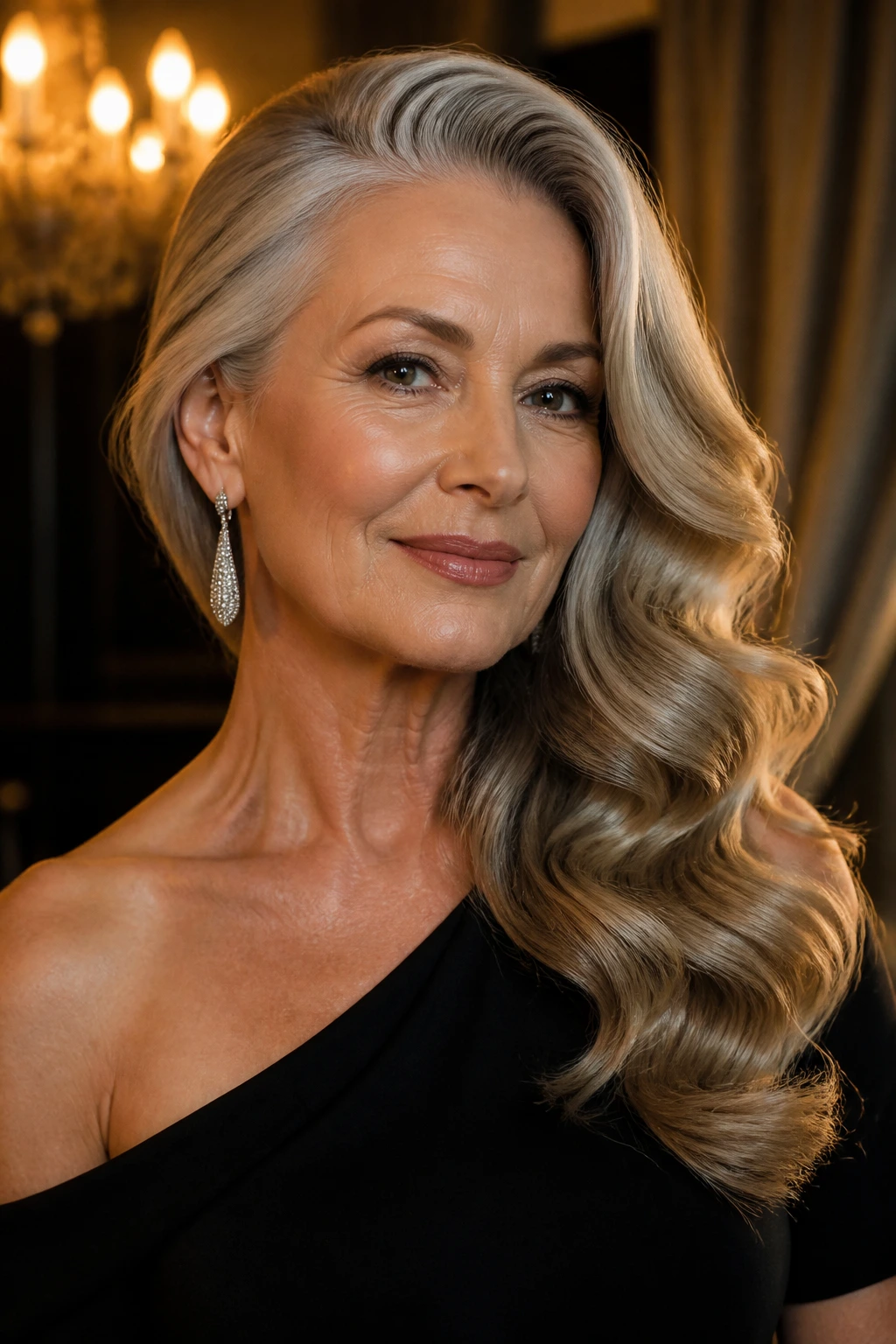
Sometimes a hairstyle is about the finish more than the cut. Side-swept glam waves take wavy hair and turn it into something smoother, shinier, and more deliberate for evenings or events. The side part creates height, and the sweep across the forehead makes the whole face look longer and softer.
This style works best on medium to long hair with enough length to hold a wave pattern. Use a large-barrel curling iron or a wide flat iron bend if your natural wave needs help. Then brush it out lightly so the curls collapse into broad waves instead of tight ringlets. The result should look airy, not set.
A touch of shine spray at the ends helps here. Not too much near the roots, or the style falls flat. The goal is a smooth surface with movement, not a greasy finish. There’s a difference, and a big one.
If you have a side that tends to feel stronger or fuller, this style lets you use that to your advantage. Sweep the hair in the direction that gives the most lift around the face and the least drag at the jaw.
20. Clipped-Back Wave Sweep
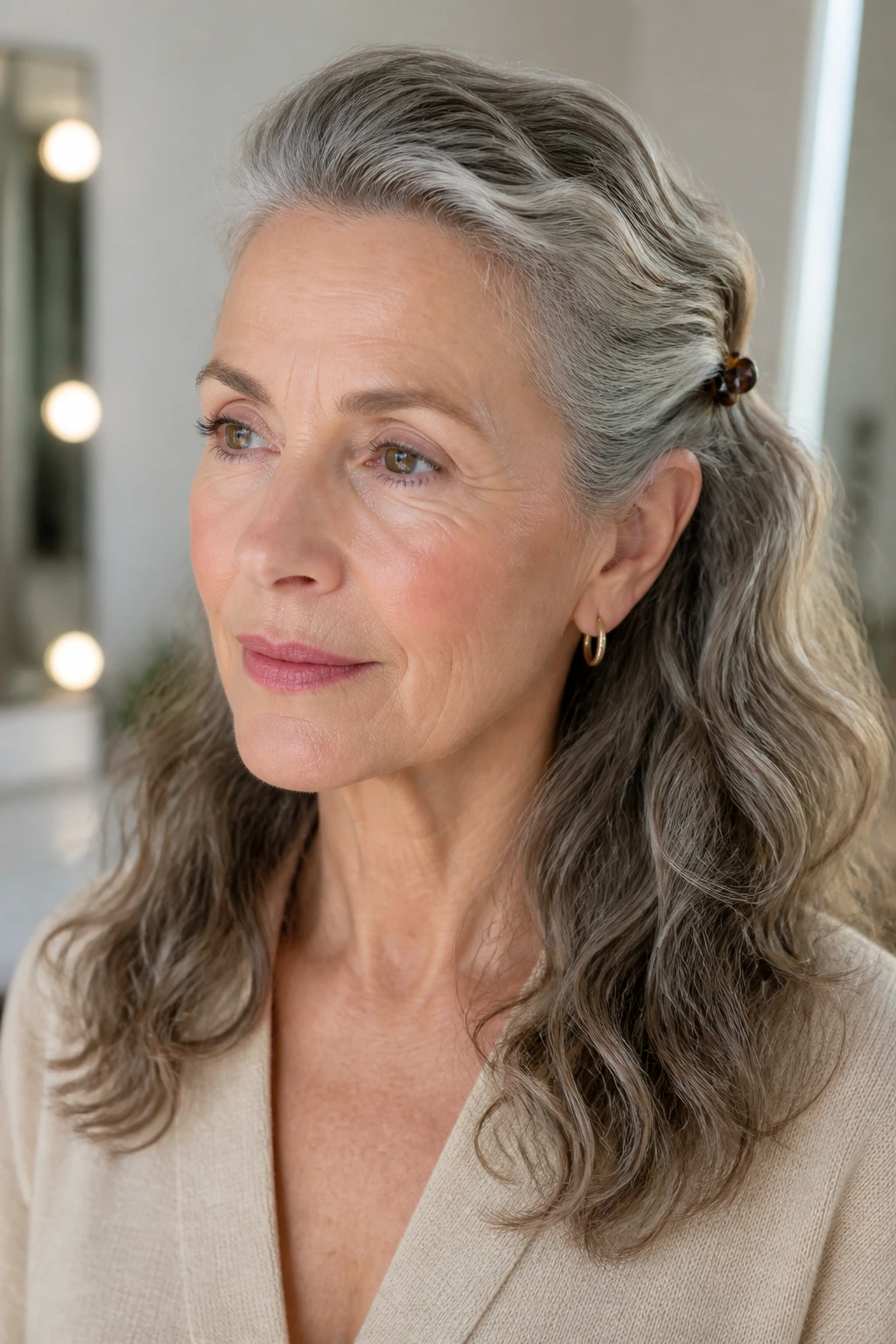
A clipped-back wave sweep is one of those quietly useful styles that looks more styled than it really is. You part the hair, smooth back one side or both sides, and pin it just above the temple or behind the ear with a decorative clip. The wave stays visible through the lengths, but the face gets a cleaner frame.
It’s a good choice for days when your front sections are behaving badly. Rather than battling them, pin them back and move on. I like that attitude. Hair should work for you, not make you late.
The clip matters more than people think. A flimsy one slips. A clip with a decent grip holds the hair without pulling. If the clip is too ornate for the outfit, the whole style starts to feel costume-y. Pick one that fits the mood.
This is especially nice with silver or white waves because the clipped section creates a visible line and lets the texture show. The style looks deliberate from the front and easy from the side. That’s a good combination.
21. Halo Layers with Light Fringe
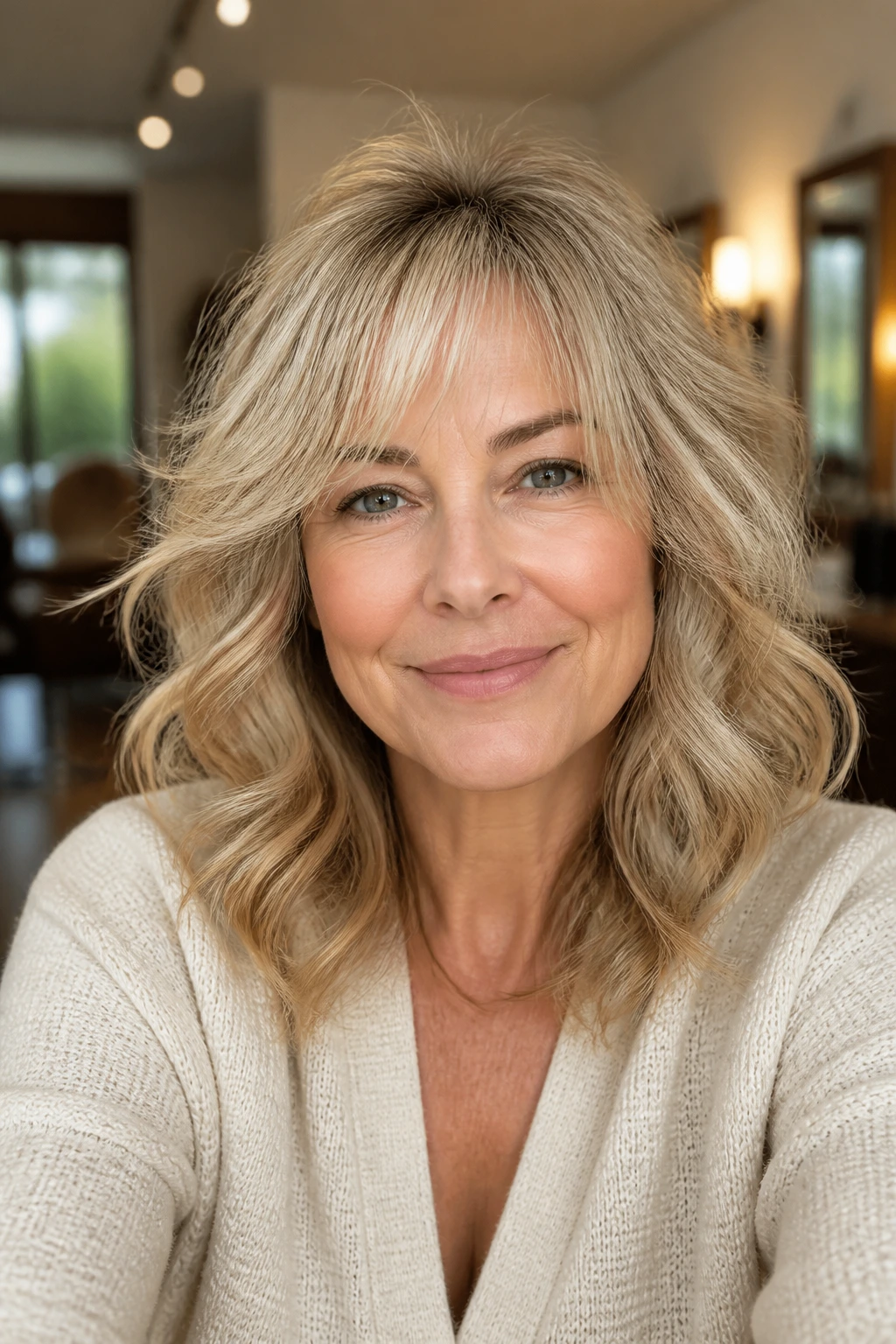
Halo layers are the softer cousin of heavily layered cuts. The shorter pieces live around the crown and upper sides, creating a light frame that lifts the face without making the ends look thin. On wavy hair, they create a sort of floating outline around the head. Not fluffy. Floating.
A light fringe helps balance the look. It can be wispy, swept, or softly broken in the middle, as long as it does not sit like a solid strip across the forehead. The goal is air, movement, and a little lift where the hair needs it most.
This cut is good for hair that has lost some volume near the temples. A halo shape brings the attention upward, which is one reason it tends to flatter mature faces so well. The eye moves to the eyes and cheekbones first, which is where most people want it anyway.
Use a root-lifting spray or mousse at the crown, then dry the top section with your fingers lifted away from the scalp. That tiny step changes the whole mood of the haircut.
22. Chin-Grazing Flip Bob
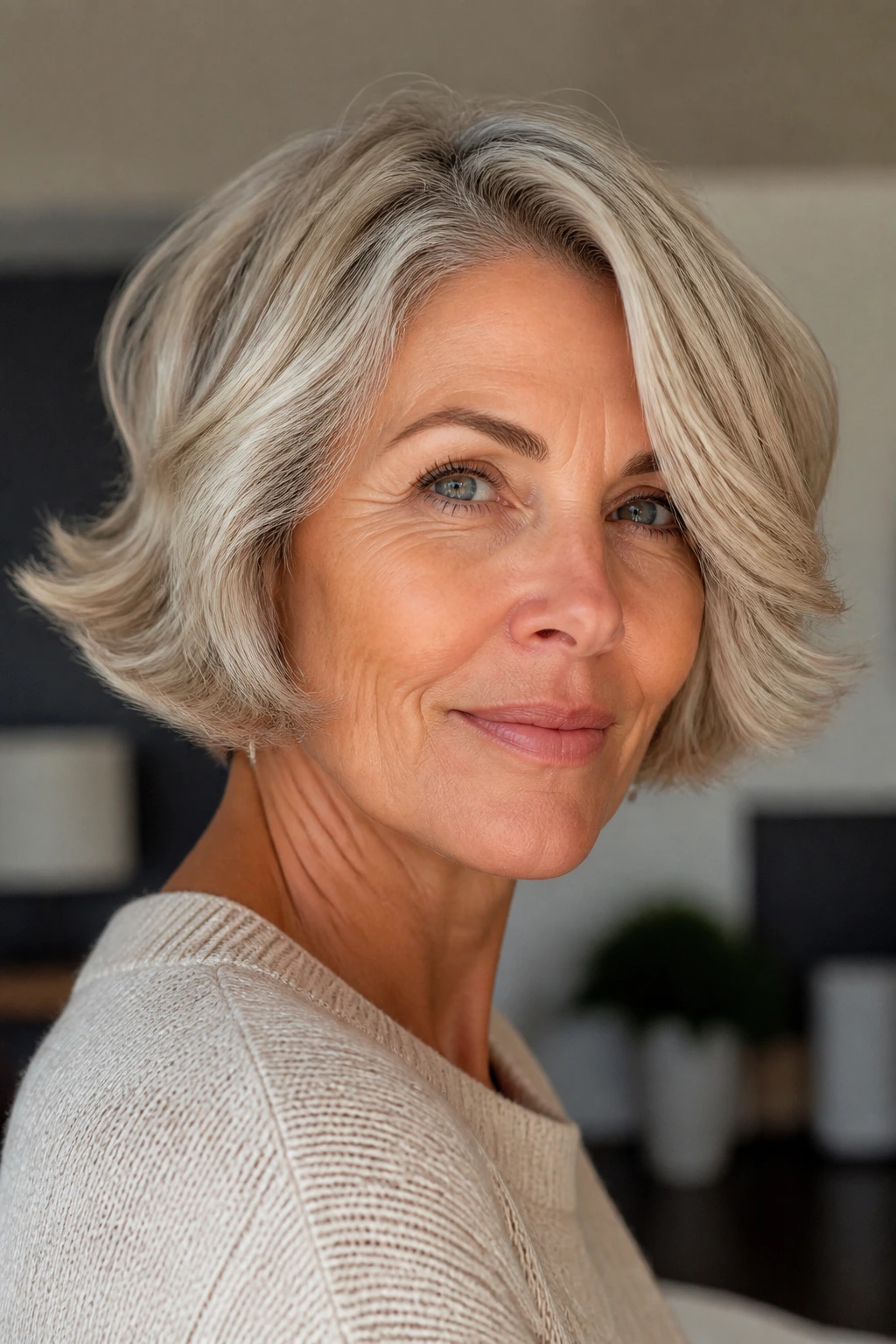
A chin-grazing flip bob has a playful edge without crossing into cartoon territory. The length skims the jawline, and the ends turn slightly under or out depending on your natural wave and how you dry it. That little flip keeps the haircut from sitting heavy against the face.
This one works because the line is short enough to feel lively but long enough to move with the wave. It’s especially nice when the jawline is an area you want to frame rather than expose completely. The bob makes a neat shape, and the flip keeps it from looking stiff.
I prefer this cut with a side part or a soft diagonal part. It gives the hair a path to follow and prevents the flip from becoming symmetrical in a boring way. A round brush can help, but your fingers often do the job faster.
If you like a style that feels a little polished without looking like you spent all afternoon on it, this is a strong finish to the list. It’s tidy. It sways. It knows what it’s doing.
What Wavy Hair Wants From a Cut After 60
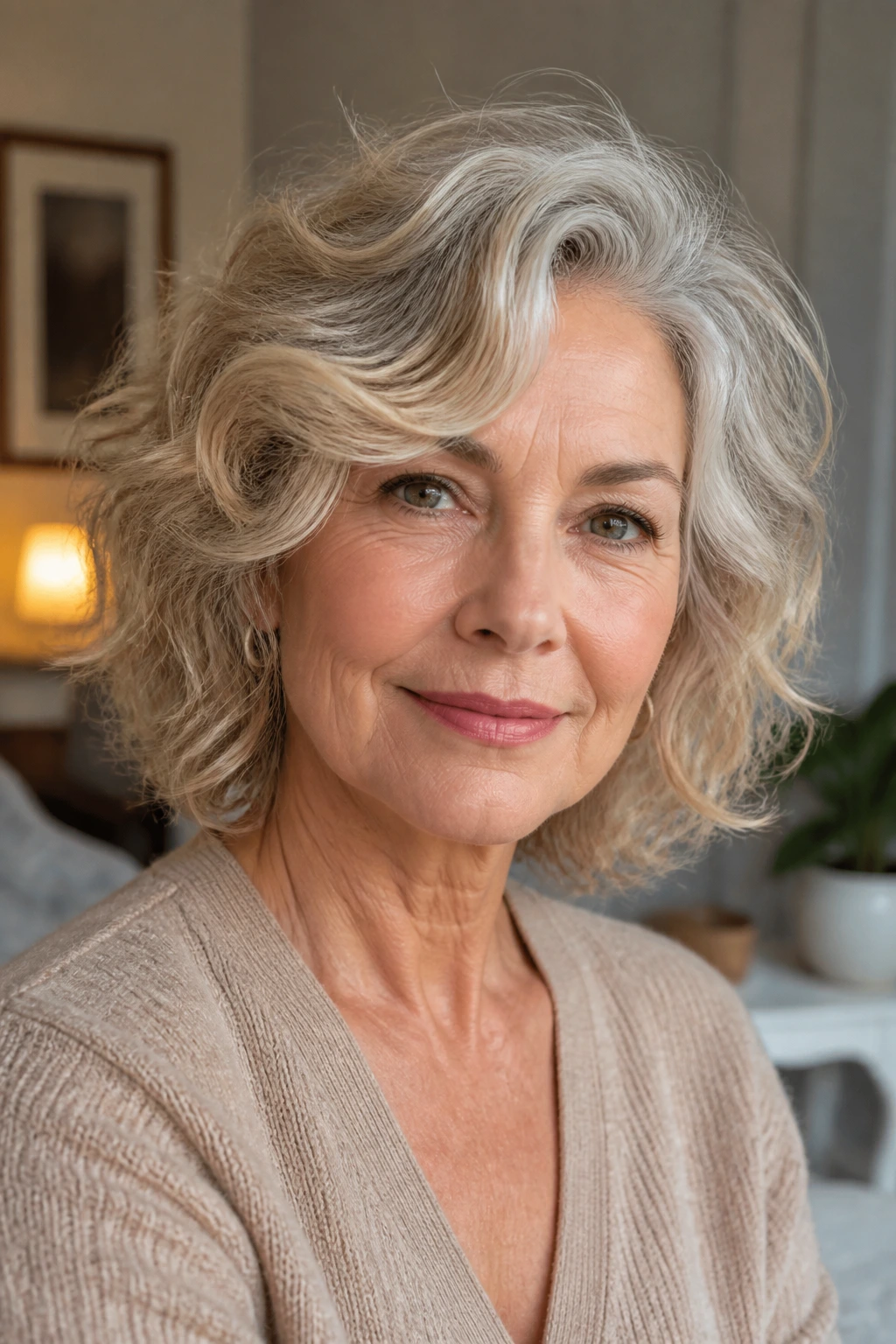
Wavy hair after 60 usually wants three things: shape, softness, and room to move. That’s it. Not a giant transformation. Not a stiff blowout that fights every bend. A cut that respects the wave pattern will almost always look better than one that tries to force the hair into submission.
The biggest thing I notice with mature wavy hair is the change in density. The crown often gets a little flatter, the ends get drier, and the wave can show up unevenly. A good haircut works with that reality instead of pretending it does not exist. That’s why blunt lines, careful layers, and strategic parts matter so much.
Think in zones, not just length
The crown needs lift. The sides need shape. The ends need enough weight to keep the cut from turning puffy. When you look at a hairstyle that way, it becomes easier to understand why one person can wear a layered lob beautifully while another needs a blunt bob or a short crop.
Wave pattern matters more than age
Loose waves usually like softer layers and a little root lift. Stronger waves can handle more texture and slightly shorter shaping. If your hair bends inconsistently, choose a cut that looks good when some pieces do more than others. That’s normal. It’s also usually more flattering.
A haircut that leaves room for movement tends to look fresher longer. That is the practical win, and I think it matters more than chasing some imaginary idea of perfect hair.
Essential Tools for These Styles
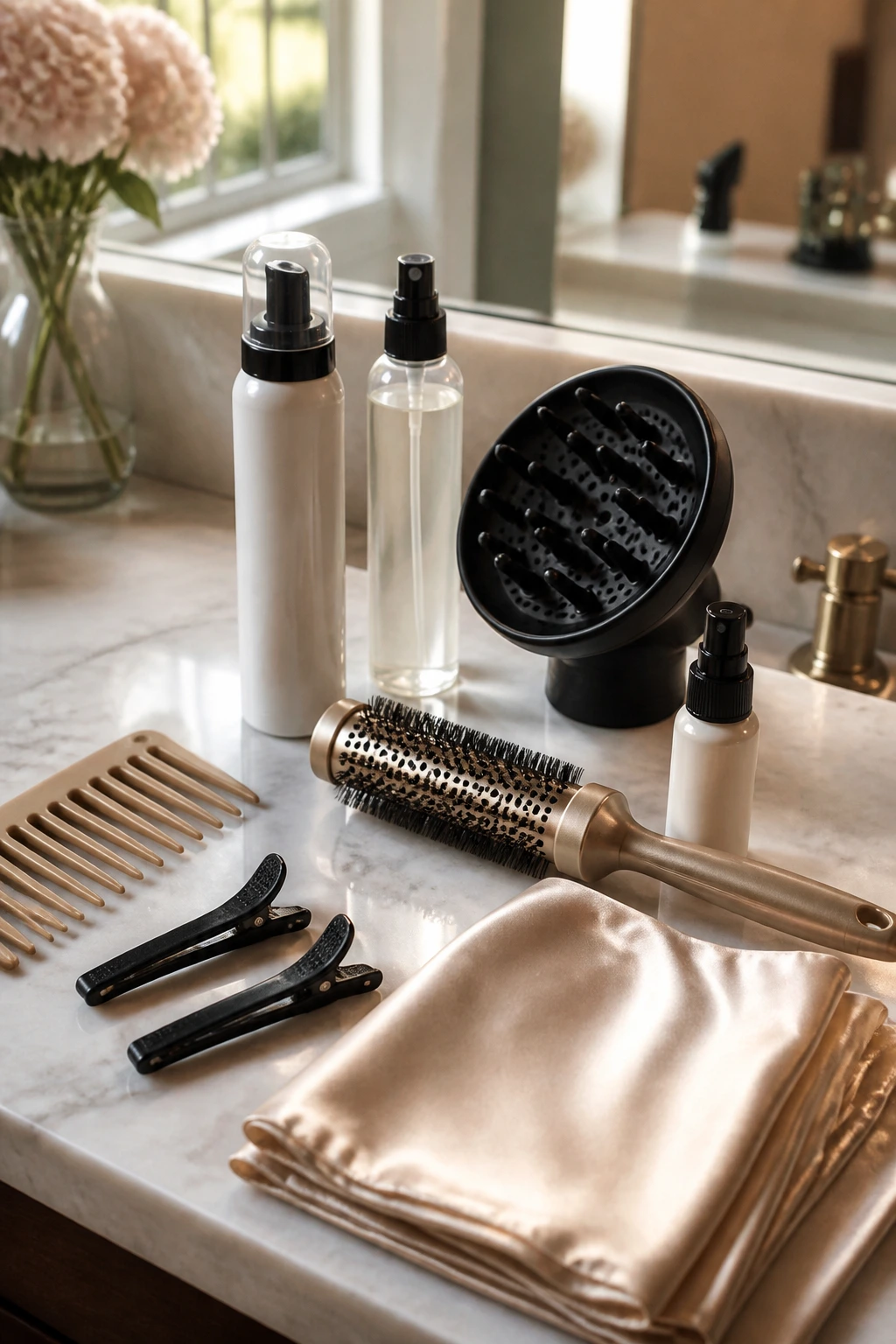
You do not need a bathroom cabinet packed with gadgets. You do need a few things that work together without turning styling into a project.
- Wide-tooth comb: Good for detangling wet wavy hair without pulling the wave apart.
- Light mousse: Adds lift at the roots and gives loose structure without the stiffness of old-school gel.
- Leave-in conditioner spray: Helpful for dry ends, especially on silver or color-treated hair.
- Diffuser attachment: Great if you want to dry waves without blasting them into frizz.
- Small round brush: Handy for curtain bangs, fringe, and polishing the front sections.
- Flexible-hold hairspray: Keeps shape in place without turning the hair crunchy.
- Texturizing spray: Useful on lobs, shags, and short cuts that need a little separation.
- Duckbill clips or sectioning clips: Make styling easier when you want lift at the crown or a neat side part.
- Satin pillowcase or bonnet: Helps the wave hold its shape overnight and keeps ends from rubbing dry.
- Root-lift spray: Worth keeping if your crown tends to collapse by lunch.
How to Ask for the Right Shape at the Salon
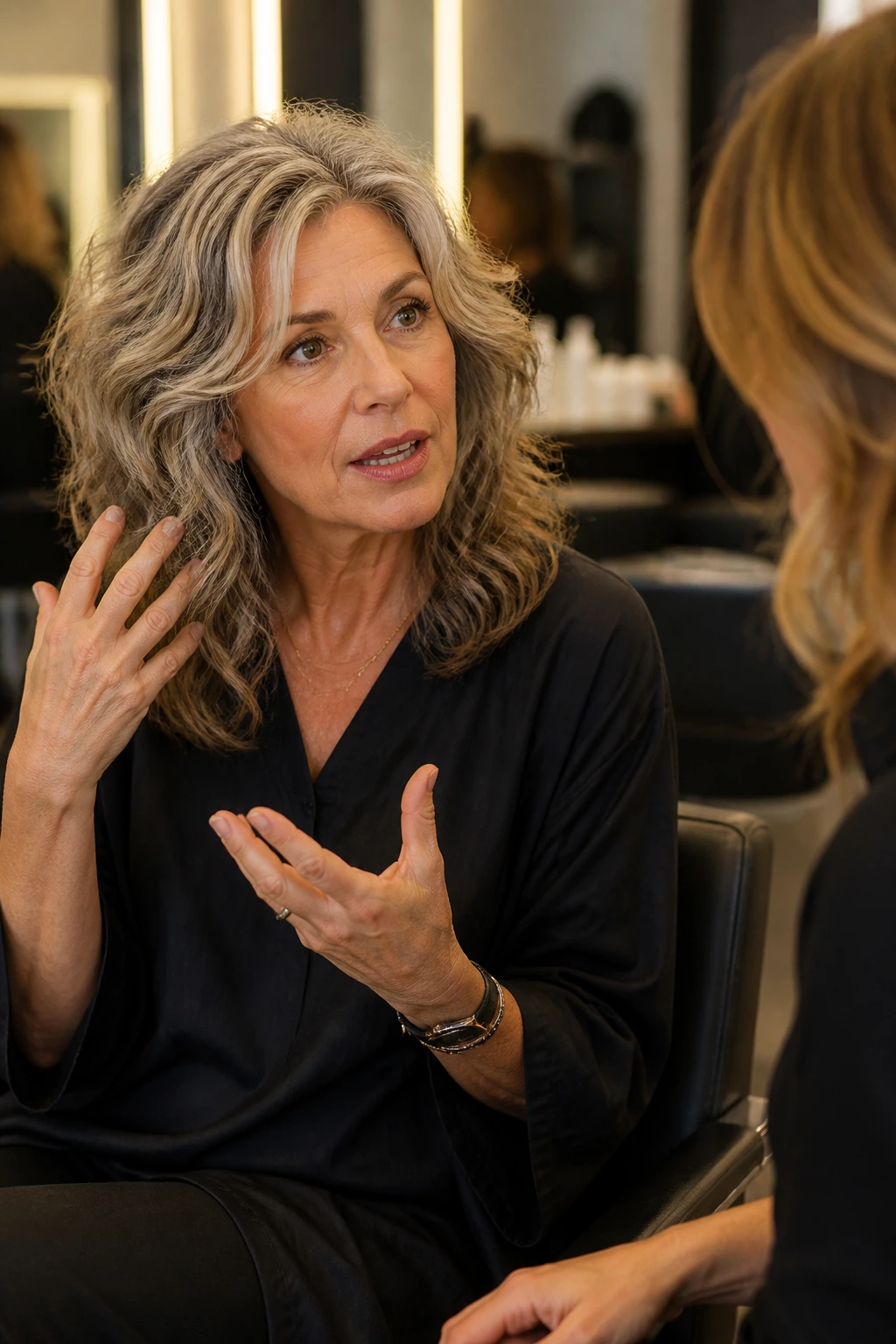
“Take a little off” is not enough. A good wavy haircut starts with a few specific sentences.
Bring a photo, yes, but also say what you want the hair to do. Do you want lift at the crown? Do you want the sides to sit closer to the face? Do you want to be able to tuck it behind your ears? Those are better instructions than “something youthful,” which can mean anything from a layered bob to a haircut that makes you feel like you borrowed your granddaughter’s scarf.
Say where the wave misbehaves
If one side goes flat and the other side flips out, tell the stylist. If the crown collapses but the ends get bulky, say that. If your bangs separate in strange places, say that too. The more precise you are, the less likely you are to leave with a cut that looks fine in the chair and wrong at home.
Ask for softness where you need it
The words that help most are usually the plain ones: soft layers, face-framing pieces, lift at the crown, clean neckline, blunt perimeter, light fringe, movement through the mids. Those descriptions give a stylist room to build a shape that actually fits your hair.
If you’re nervous, ask for a haircut that can be worn two ways: tucked and loose, or smooth and messy. That flexibility is worth more than some dramatic one-look haircut that only works if your humidity levels behave.
Daily Styling That Keeps Waves Soft and Lifted
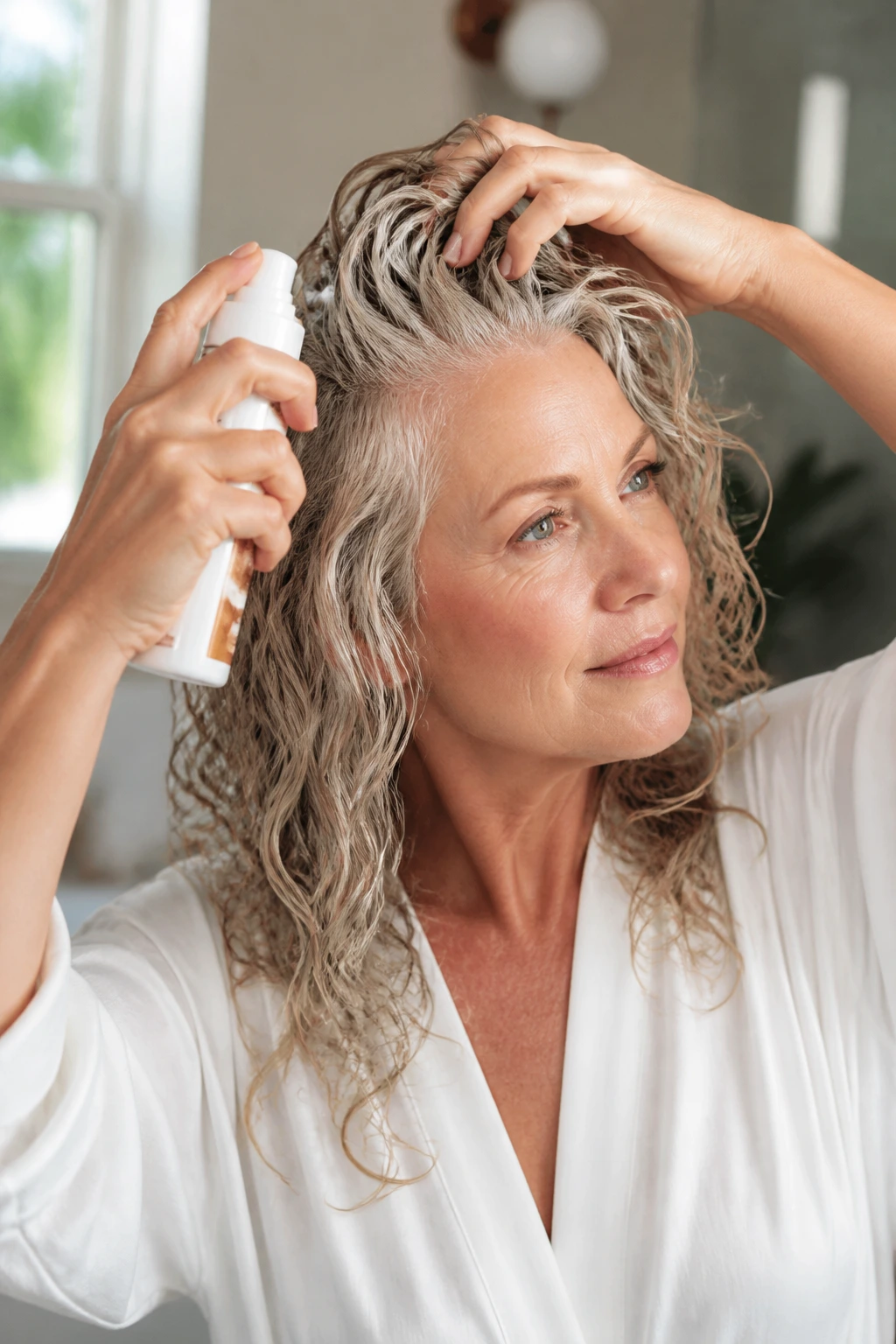
Wavy hair looks best when the styling is light-handed. Heavy products flatten the crown. Too much heat makes the ends brittle. Too much touching creates frizz. The sweet spot is somewhere in the middle, and it’s smaller than most people think.
Start with damp hair, not soaking wet hair. That gives your product a chance to spread evenly without being diluted. Use a mousse or light cream at the roots and mids, then scrunch from the bottom up with your hands. If you’re blow-drying, keep the dryer on low with a diffuser and tip your head slightly to one side to keep the roots from lying flat.
A simple routine that works
- Spray or dampen the hair lightly.
- Work in a mousse or leave-in product.
- Flip the part where you want it before drying.
- Dry the crown first if you need lift.
- Leave the ends alone once they start forming shape.
You do not need to finish every strand. That’s the mistake. Wavy hair looks better when it keeps a little irregularity. The odd bend. The loose corner at the temple. The section that falls a bit differently. That’s the stuff that makes it look like hair, not a sculpted object.
A tiny amount of serum on the ends can help if they feel dry, but keep it off the roots. Roots like air. Ends like a little help.
How to Wear These Looks with Glasses, Earrings, and Scarves
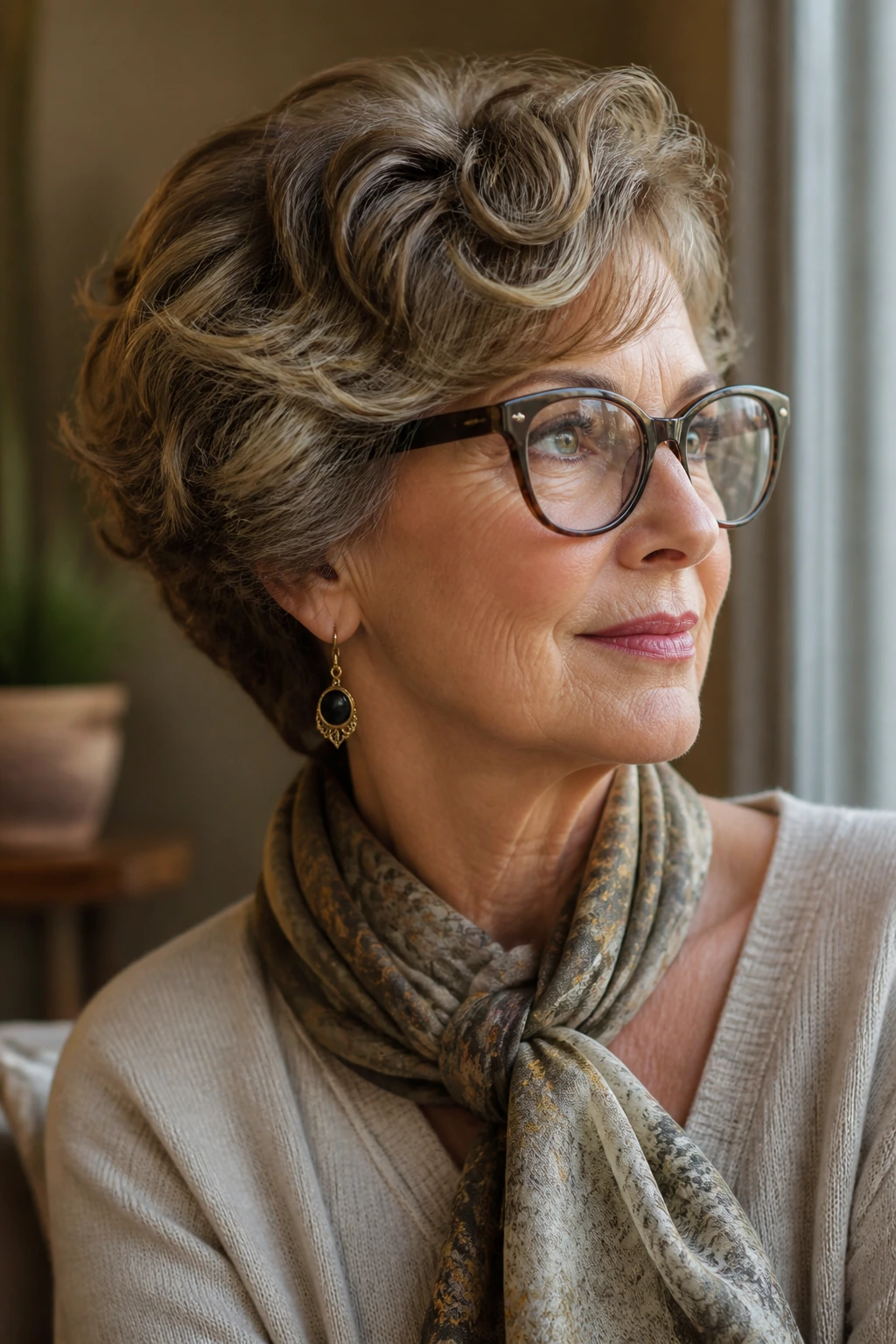
Hair does not sit in isolation. Glasses, earrings, scarves, and collar lines all change how a cut reads.
Frames: If you wear glasses, cuts with clean sides — the French bob, tucked-behind-ears lob, soft pixie, or chin-length flip bob — tend to work well because they don’t crowd the temples. Curtain bangs and bottleneck bangs can also be excellent, as long as they’re not cut straight into the frame line.
Earrings: Shorter cuts and tucked styles make earrings visible. That sounds obvious, but it matters. A bob that shows the neck or a pinned-back wave sweep gives a nice line for hoops, drops, or studs.
Scarves and collars: If you wear scarves a lot, choose a cut that sits above the fabric or one that can be clipped back easily. Collarbone and shoulder-length cuts are usually the most flexible here. Very long layers can get trapped and flattened under scarves, which is annoying fast.
Dress-up vs. everyday: The same haircut can do both if it has enough movement. A soft shag can be air-dried casually or smoothed at the front for dinner. A blunt bob can look crisp with a side part or more relaxed with a gentle bend. That flexibility is the real luxury.
Mistakes That Flatten Wavy Hair or Make It Puff

The biggest mistake is assuming more layers always means more shape. Sometimes it just means more puff. If the top is too shattered and the ends are too light, the hair balloons out around the sides and loses its line. The fix is a more balanced cut: keep some weight at the perimeter and layer with restraint.
Another common problem is using products that are too heavy. Thick oils, rich creams, and butter-like leave-ins can crush the crown and make fine wavy hair look limp by noon. If your hair is fine or medium, start with mousse, not cream. You can always add a tiny bit more on the ends later.
A third issue: cutting bangs too short against a natural wave. They spring up, split, or sit too far above the eyebrows. For wavy hair, fringe usually needs a little extra length so the bend has somewhere to go. It will not stay the same length it looked in the chair.
Watch the part
Wavy hair gets used to one side. If you never change the part, the roots can flatten in a groove. Switching sides once in a while can wake the crown up. It also changes the way the hair falls around the face, which is often enough to make an old cut feel newer.
And please, do not chase every frizz halo with a hot tool. A little softness is part of the charm. Hair that moves looks better than hair that has been ironed into obedience.
Variations and Adaptations to Try
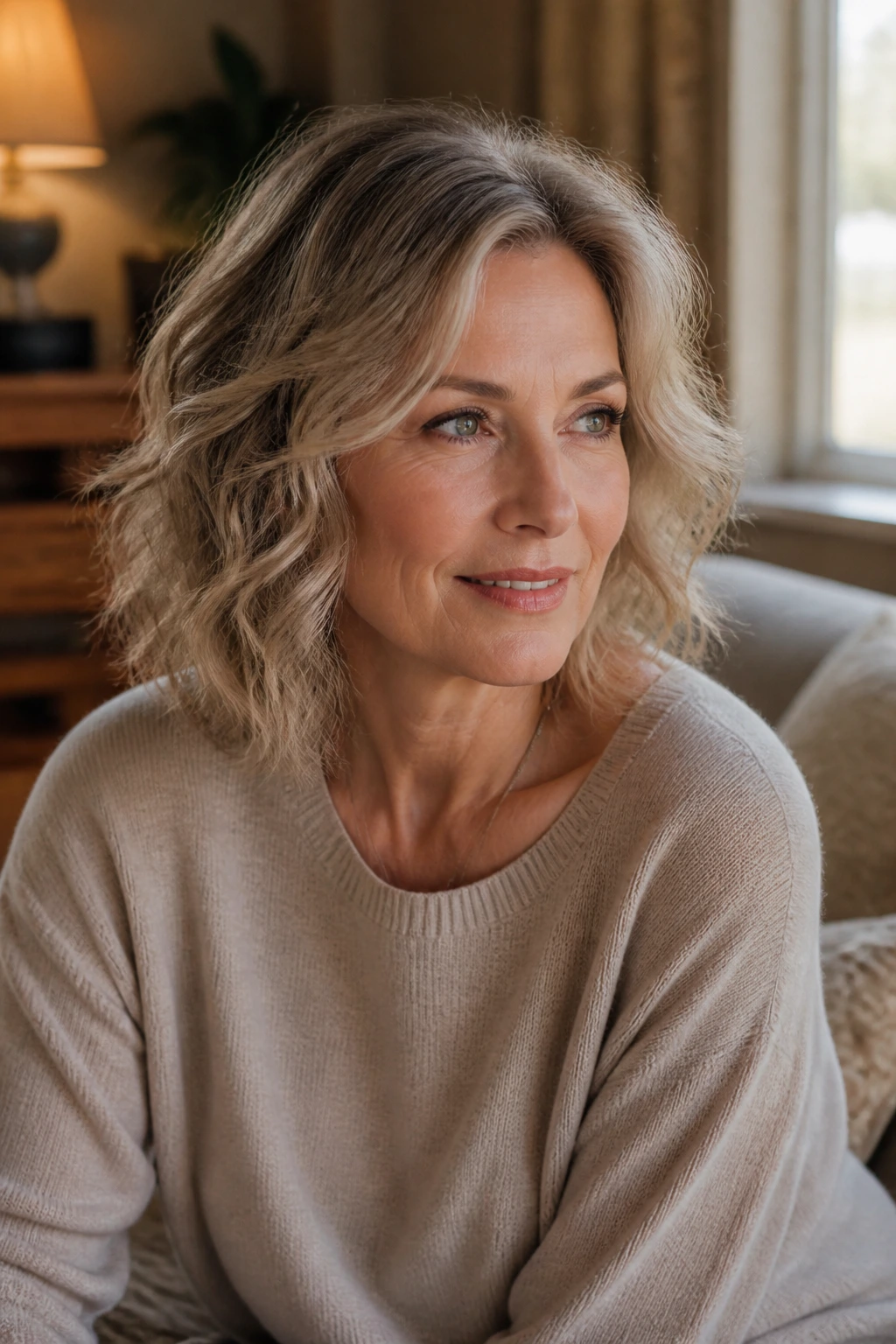
The Fine-Hair Edit: Choose a blunt bob, a chin-grazing flip cut, or a collarbone lob with minimal layers. These shapes keep the perimeter fuller, which helps fine waves look thicker without leaning on heavy product.
The Thick-Hair Edit: Go for feathered layers, a soft shag, or a razored lob with controlled separation. Thick hair needs room to breathe, but it still needs an edge so the silhouette does not widen too much.
The Glasses-Friendly Edit: Try tucked-behind-ear styles, a soft pixie, or bottleneck bangs that open at the center. These choices keep the temples clear and prevent hair from sitting right on top of the frames.
The Low-Maintenance Edit: Shoulder-length layers, a rounded bob, or a wavy ponytail with volume are the easiest to live with. They look fine with air-drying and only need a quick refresh at the crown.
The Dress-It-Up Edit: Side-swept glam waves, a low chignon, or a braided crown are the easiest ways to make wavy hair feel polished for a night out. You’re working with the same texture, just directing it more carefully.
The Silver-Glow Edit: Salt-and-pepper, white, and silver strands show movement better than most people expect, so favor cuts with clean lines and soft shine. A little gloss spray can help, but the real lift comes from shape, not shine alone.
Trim Schedule, Sleep Care, and Between-Wash Refreshing
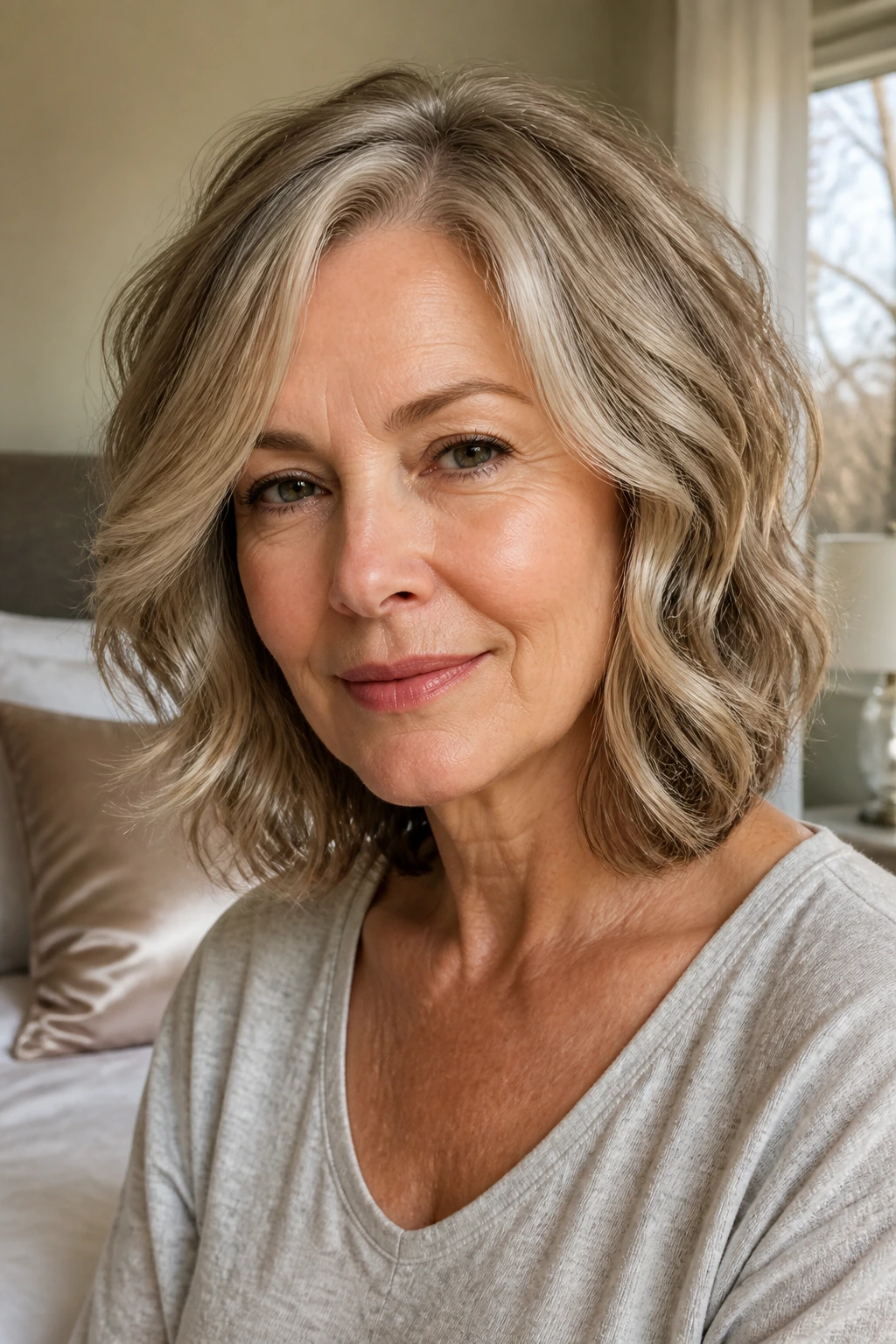
The best haircut in the world still goes weird if you never trim it. Short bobs and pixies usually need a trim every 4 to 6 weeks if you want them to hold their shape. Lobs and shoulder-length cuts can usually go 6 to 10 weeks, depending on how fast your hair grows and how neat you like the outline.
Sleep care matters more than most people admit. Wavy hair gets flattened, bent, and roughed up on cotton pillowcases. A satin pillowcase helps. So does loosely tying hair in a low pineapple or soft clip if it’s long enough. For shorter cuts, the pillowcase alone can be enough.
Between-wash refresh routine
- Mist the hair lightly with water.
- Work in a drop of leave-in on the ends if they feel dry.
- Scrunch the mids to reactivate the wave.
- Add a touch of mousse only where the roots have gone flat.
- Hit the crown with cool air for 30 to 60 seconds if needed.
If the style is short, sometimes all it needs is your fingers and a little dry shampoo. If it’s longer, twist the front pieces for a few minutes while they’re damp and let them set. That small habit can save a haircut that would otherwise look tired by day two.
Frequently Asked Questions
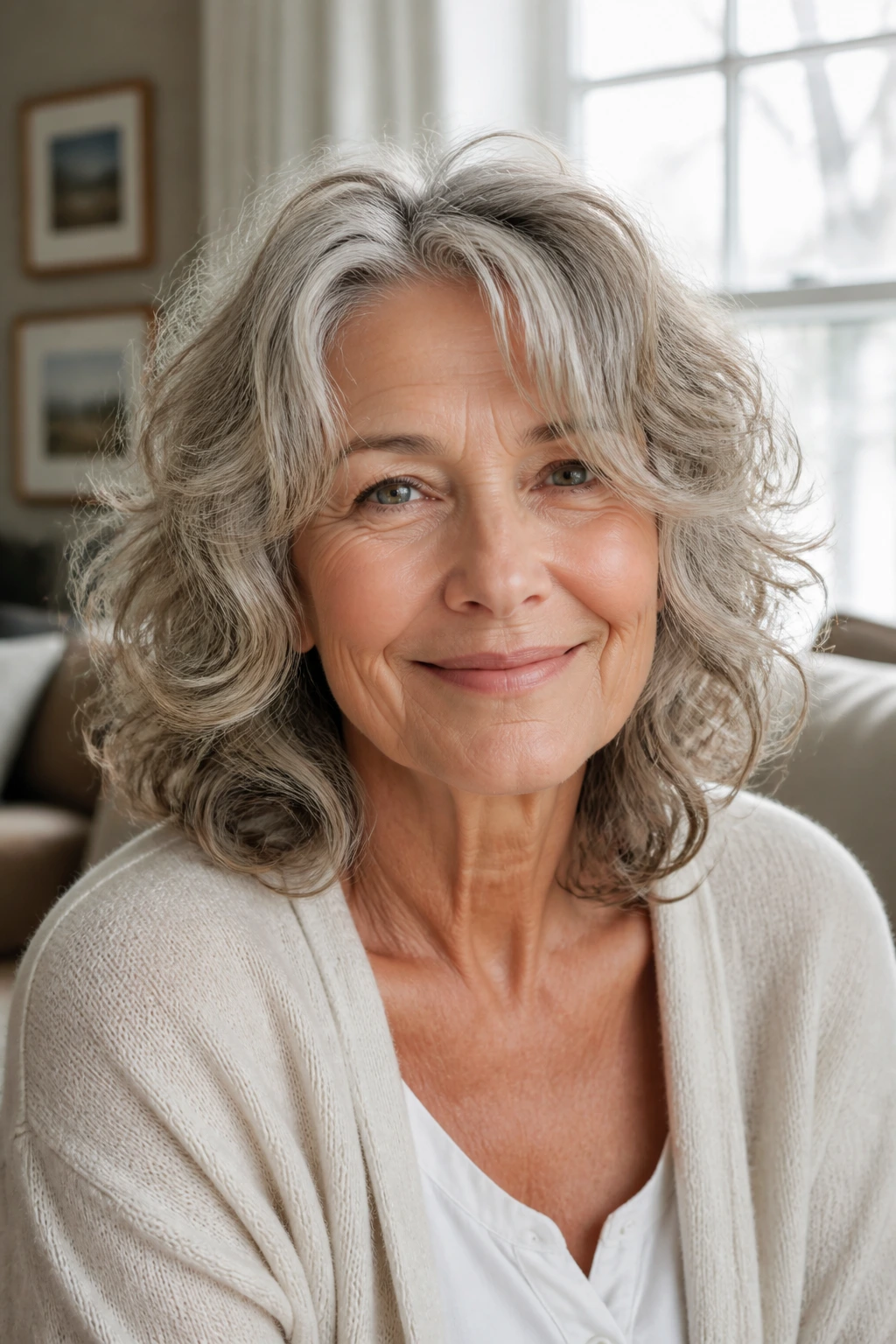
What is the best haircut for fine wavy hair after 60?
A blunt bob, a chin-length French bob, or a collarbone lob with soft layers usually works best. Those shapes keep the ends dense enough to look fuller while still allowing the wave to move.
Are bangs a bad idea for wavy hair?
Not at all, but they need the right shape. Curtain bangs and bottleneck bangs are usually safer than blunt, straight-across fringe because they bend with the wave instead of fighting it.
Can short hair work with wavy texture?
Yes, and sometimes it works better than long hair. A pixie with a longer top or a textured crop can give you lift and movement without the bulk that longer wavy hair can build up.
How do I stop wavy hair from frizzing at the crown?
Use a lightweight mousse at the roots, dry with a diffuser on low, and avoid touching the hair once it starts to set. Frizz often comes from overhandling, not from the hair itself.
Should I air-dry or blow-dry wavy hair?
Both can work. Air-drying gives a softer finish, while a diffuser helps control the shape and add lift at the crown. If your roots go flat fast, a little controlled blow-drying usually helps.
What if my waves are uneven or patchy?
Pick a cut that looks good with irregular movement: a shag, a lob, a feathered mid-length style, or a tucked bob. Uneven waves are not a flaw; they just need a haircut that leaves room for different patterns.
How often should I trim a bob or pixie?
Short bobs and pixies usually need trimming every 4 to 6 weeks if you want the lines to stay crisp. If you’re fine with a softer grow-out, you can stretch that a little, but the shape will change faster than you think.
Can I wear these styles with glasses?
Absolutely. In fact, several of them work especially well with glasses: the French bob, side-parted pixie, tucked lob, and bottleneck fringe all leave room around the frames instead of crowding them.
The Styles That Age With You

The best part of wavy hair is that it does not need to be forced into one shape forever. A good cut can bend with your life, your face, your glasses, your energy level, and the amount of patience you have on a given morning. That’s the real reason these styles hold up.
Choose the one that matches how you actually live. Not the version of yourself that gets ready for a glossy photo. The real one. The one who wants shape, movement, and a haircut that still looks like itself after the day has happened to it.