



French hairstyles for girls with fine hair work best when you stop asking the hair to be big and start asking it to be clever. Fine strands can go flat fast, especially at the crown, but they also take to clean shapes, tucked ends, tiny braids, and low knots in a way heavier hair sometimes can’t. The trick is not brute force. It’s placement, light texture, and a little bit of restraint.
That’s why a loose French bob can look sharper than a teased cloud, and why a ribbon-tied ponytail often feels more finished than a huge, overworked updo. Fine hair has a small diameter, so one heavy product or one too-tight style can drag everything down. A light mist of root lift, a few well-placed pins, and a part that isn’t fighting the hair’s natural fall often do more than an hour with a curling iron.
There’s also a practical bonus here: French styling tends to be soft by design. It doesn’t need a ton of density to read well. A braid can be thin and still look intentional. A chignon can be small and still feel polished. A half-up twist can be barely there and still change the whole shape of the face. That is the real advantage, and it’s why these looks keep coming back.
Why These French Looks Work on Fine Hair
Low tension helps the hair stay put. Styles that sit at the nape, wrap around the crown, or tuck close to the head are less likely to slide than high, heavy shapes. Fine hair likes structure that follows the head, not styles that fight gravity.
Texture beats bulk. A little grit from dry shampoo, a soft bend through the ends, or a narrow braid creates more visible shape than big curls that fall out in 20 minutes. That is especially true if the hair is very silky.
The cut does half the work. Chin-length bobs, lobs, and airy layers give fine hair a cleaner outline, so even a quick blow-dry looks deliberate. If the shape is good, you do not need to pile on accessories.
Accessories can do the heavy lifting. A silk ribbon, a small claw clip, or a pair of slim barrettes adds focus without weighing the hair down. Large clips can tilt and slide; smaller ones often hold better.
Day-two hair is not the enemy. On fine hair, a little natural oil or last night’s texture can make braids, twists, and pinned styles behave better. Freshly washed hair is often too slippery.
1. The French Bob with Airy Ends
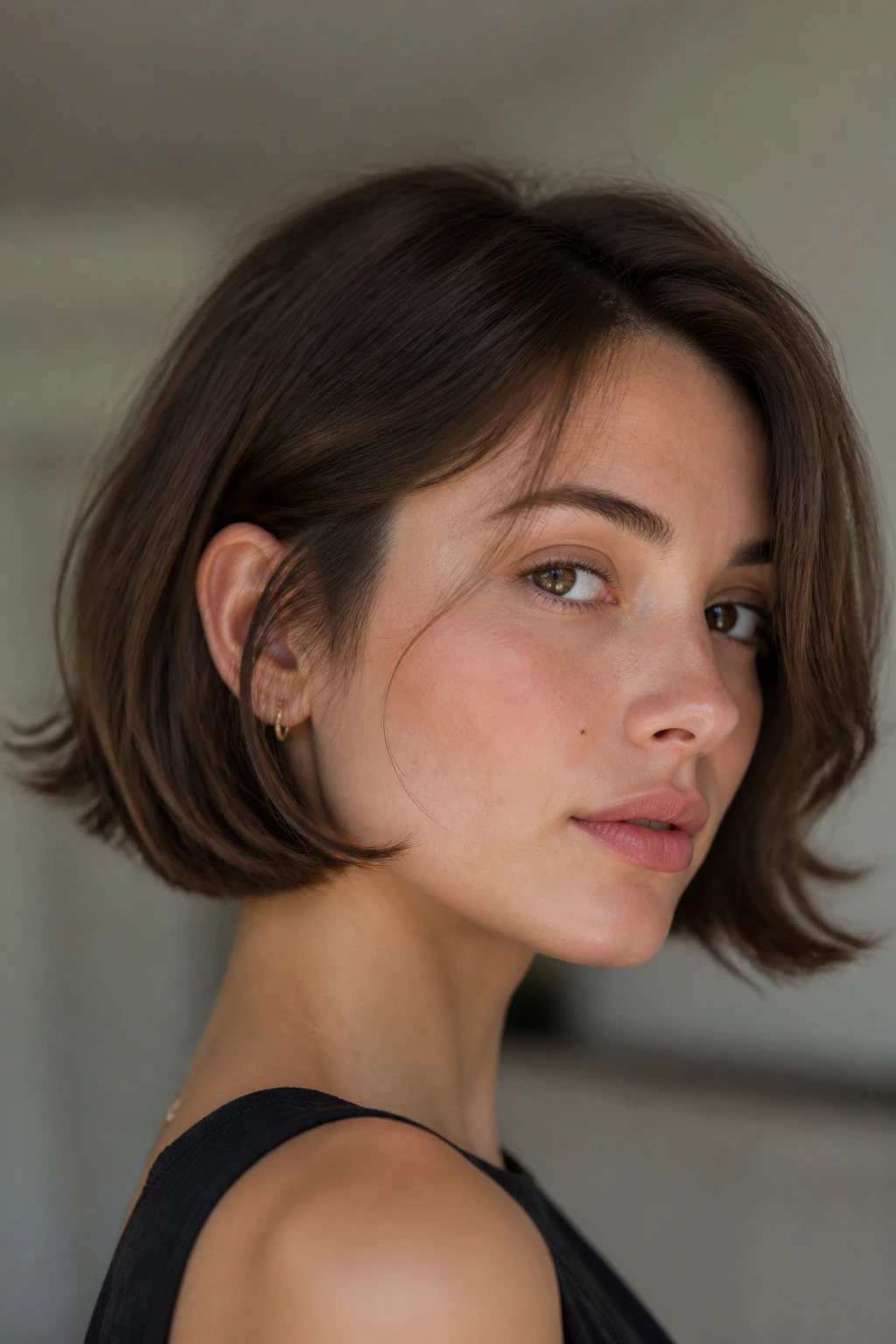
The French bob is the style that makes fine hair look like it has a stronger edge than it really does. The cut usually sits around the jawline, sometimes a touch shorter, with ends that are blunt enough to read full but soft enough to move. On fine hair, that balance matters. Too many layers and the ends start to look wispy; too blunt and the whole thing can feel heavy.
A quick blow-dry with a round brush is usually enough. Bend the ends slightly under or out, but do not curl them into a round ring. You want a line, not a helmet. A root-lift spray at the crown and a small drop of cream on the ends keep the shape neat without turning the hair limp. I’d skip thick oils here. They flatten the jawline fast.
This one works especially well if the hair is naturally straight or only a little wavy. If the front pieces fall into your face, tuck one side behind the ear with a slim clip. That tiny shift makes the whole style look more intentional. It also gives the illusion that there’s more hair because the shape is cleaner at the sides.
2. Soft Curtain Bangs and a Tucked Lob
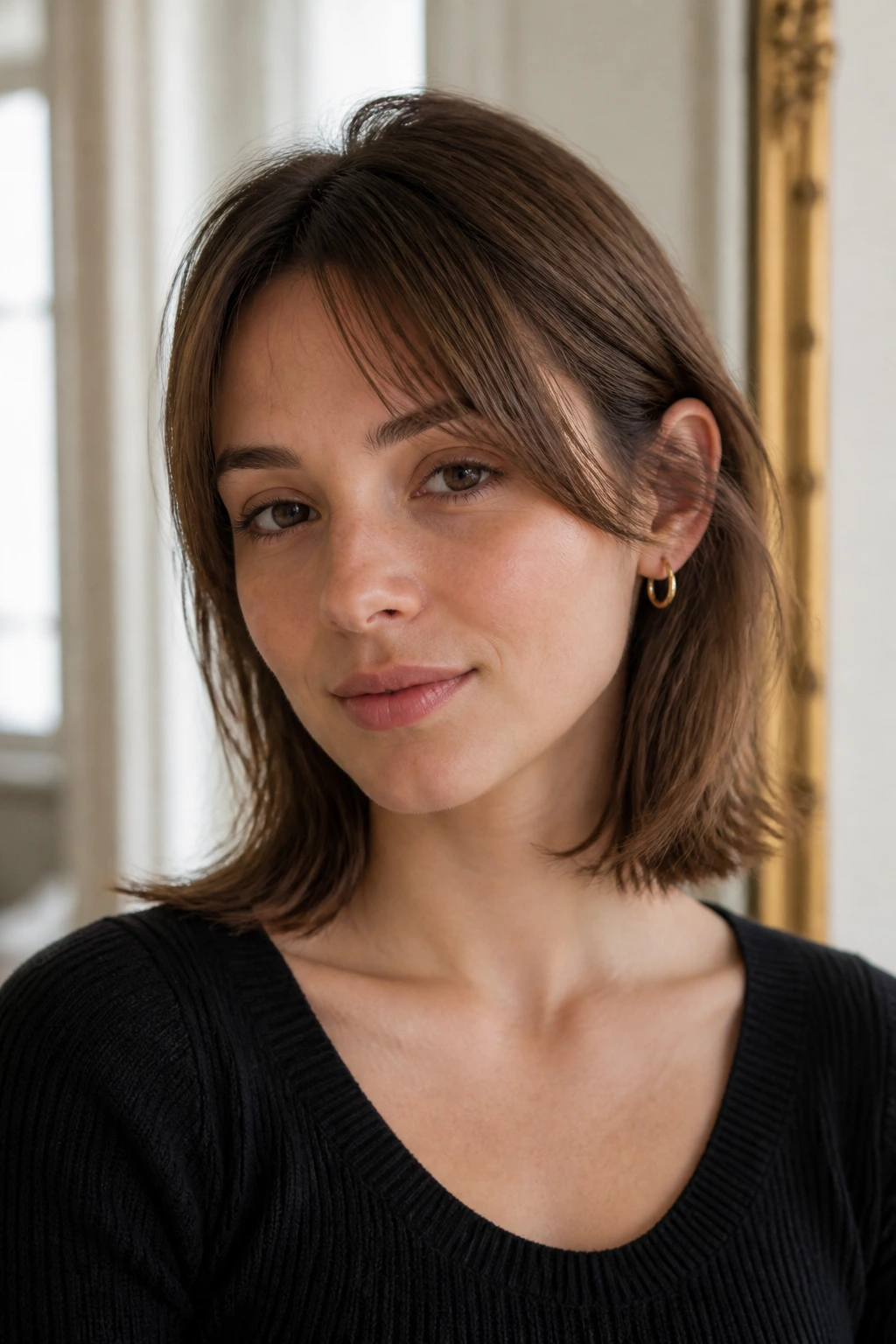
Can fine hair pull off bangs? Yes, if the bangs are soft and the rest of the cut keeps the weight where it belongs. A lob that grazes the collarbone with curtain bangs in front gives the face shape without demanding a lot of density. The bangs should part gently at the center and sweep away from the eyes, not sit in a heavy curtain that exposes the scalp.
This is one of those styles that looks good even when the hair is not freshly washed. The faint grip from day two helps the bangs hold their bend. I like a one-inch curling iron or a flat iron with rounded edges for the front pieces, then a quick tuck behind one ear so the line breaks up a little. It keeps the style from feeling too neat.
The nicest part is how forgiving it is. If the ends go flat, nobody notices because the frame in front is doing the talking. If the bangs separate a little, that can actually help. Fine hair often looks better with some space between strands rather than one solid sheet.
3. The Low Chignon at the Nape
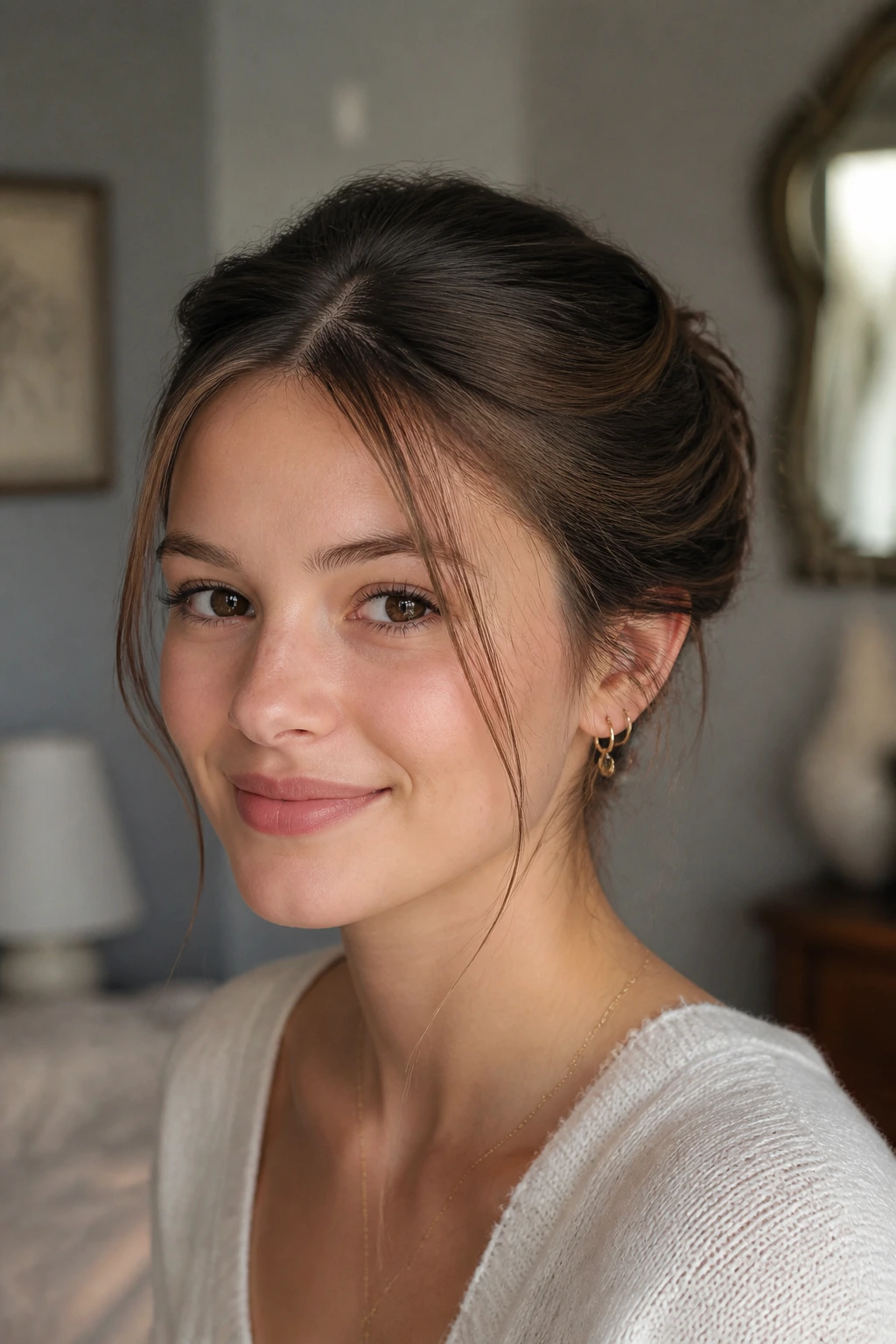
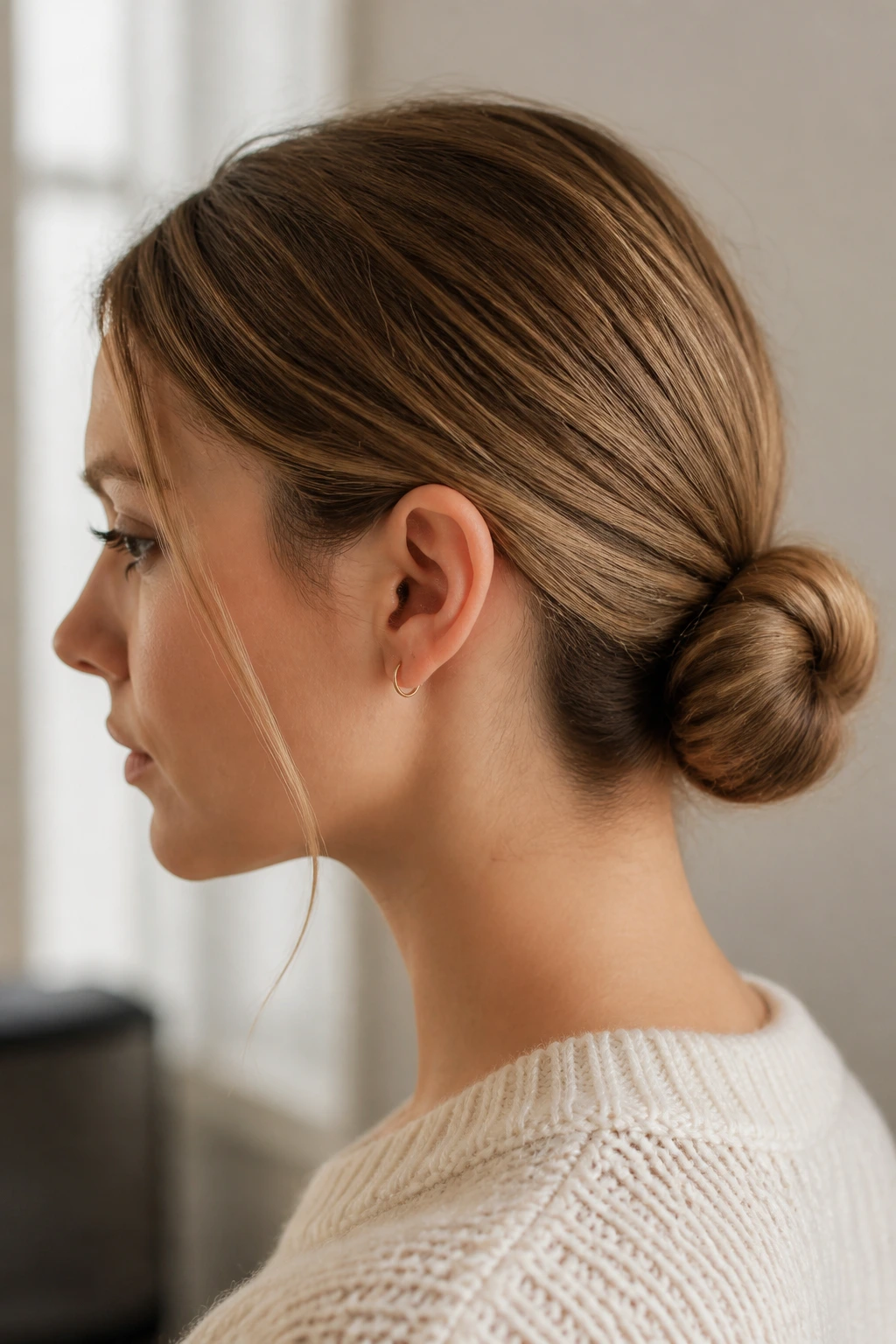
A low chignon is a quiet little cheat code for fine hair. It sits at the nape, stays close to the head, and does not depend on volume you do not have. The bun itself should be small. That is the point. A giant bun made with a hair donut usually looks padded and a bit obvious on fine strands.
Start by smoothing the top lightly, then gather the hair low and twist it once or twice before coiling it into a knot. Use U-pins or bobby pins that match your hair color. If the bun feels slippery, rough up the roots with a little dry shampoo first. A loose side part can also help give the crown a soft lift before you pin everything in place.
This style is good when you want the neck and jawline to look clean. It also works well with a few face-framing pieces left out in front. Those tiny loose strands keep the bun from looking severe, which matters a lot with fine hair because too much polish can make the head shape look smaller.
4. The Messy French Twist
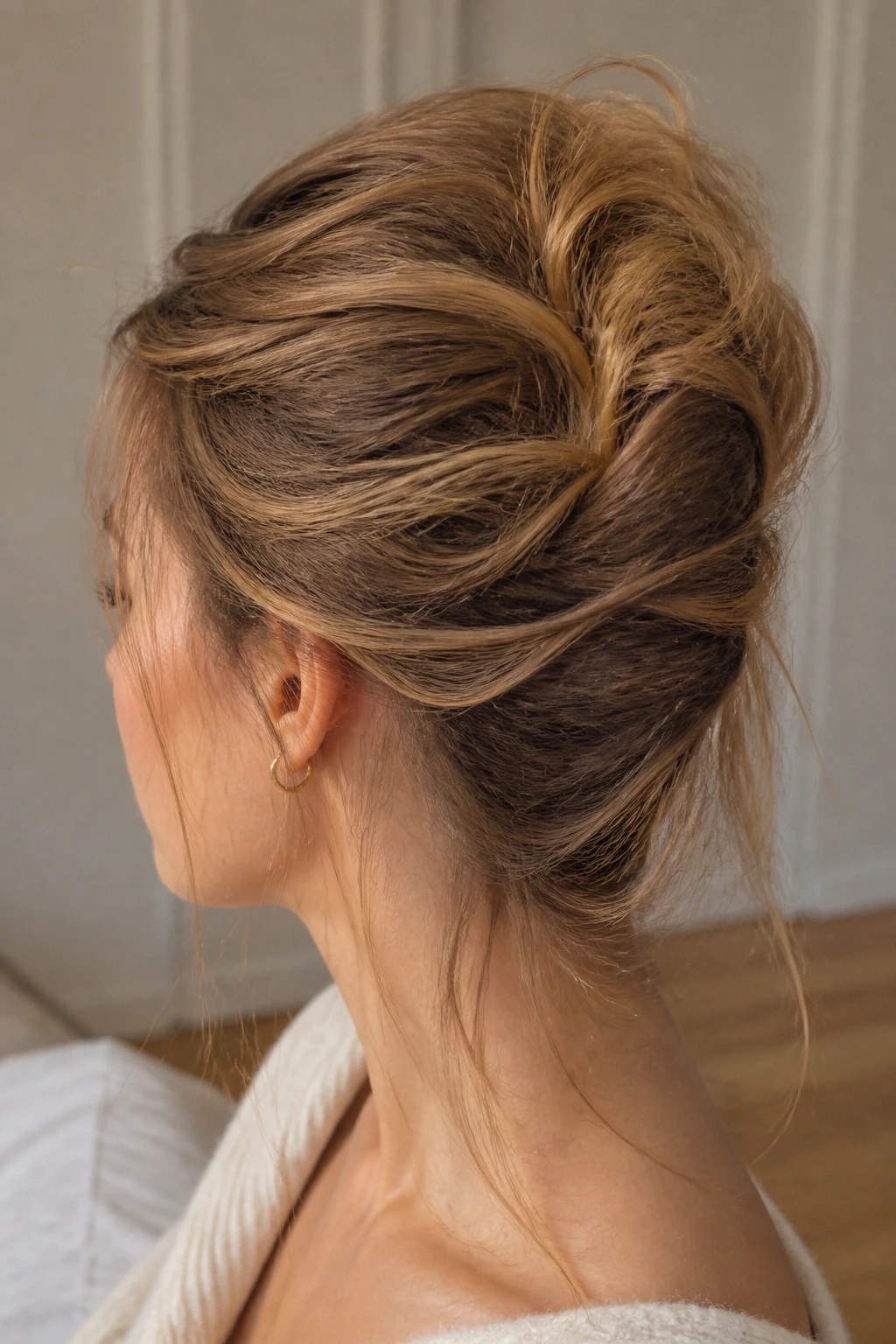
A French twist sounds formal, but on fine hair it can be surprisingly relaxed. The trick is to make the twist tall enough to show shape, then keep the ends tucked loosely so it does not look stiff. I prefer a slightly imperfect version with a little lift at the crown and one or two pins hidden along the seam.
Fine hair actually benefits from this style because the twist creates its own architecture. You do not need a lot of length or density; you need enough grip for the roll to hold. A light texturizing spray before pinning helps, and so does a tiny bit of backcombing right at the crown. Tiny. Not a rat’s nest. Just enough to stop the hair from sliding back.
Leave one side softer than the other if you want the look to feel less rigid. That asymmetry is what keeps a French twist from reading like a wedding updo. On a normal day, with a knit sweater or a crisp button-down, it feels more modern than people expect.
5. The Ribbon-Tied Low Ponytail
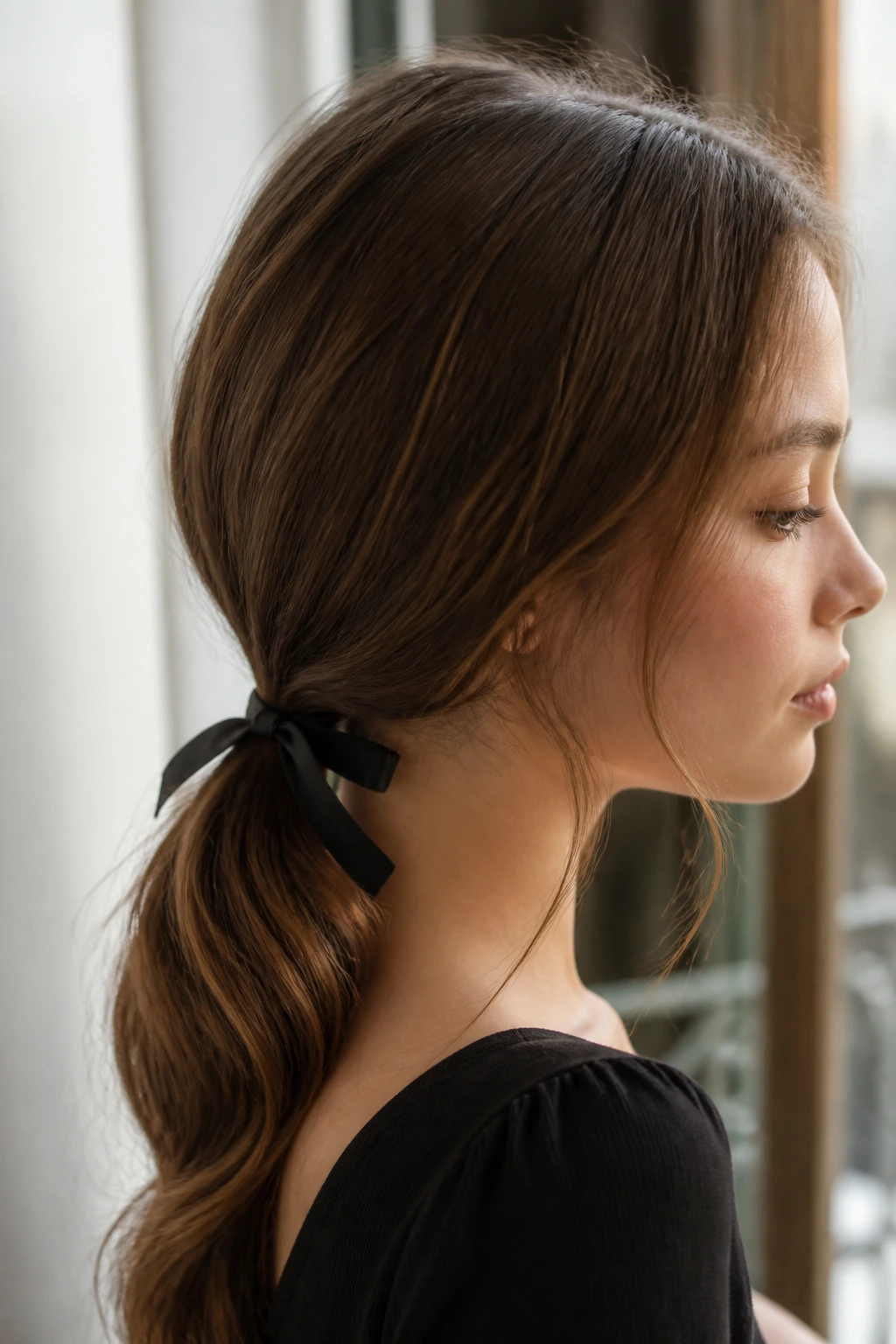
A low ponytail sounds ordinary until you tie it with a narrow ribbon and place it just right. On fine hair, the ribbon is not decoration. It is camouflage. It hides the elastic, makes the base look fuller, and adds enough visual weight that the ponytail stops looking thin at first glance.
Choose a ribbon that is narrow, soft, and not too slippery. Satin works if you tie it securely, but a matte grosgrain or velvet ribbon grips better. Keep the pony low at the nape or just below it. A high ponytail often exposes how little hair there is at the root. A low one feels more French, anyway.
If the tail is straight, that is fine. If you want more shape, bend the last few inches with a flat iron so the ends do not hang like a straight line. One small wave near the bottom is enough. You are not trying to create a curl set. You are trying to give the ponytail a little swing.
6. The Braided Headband
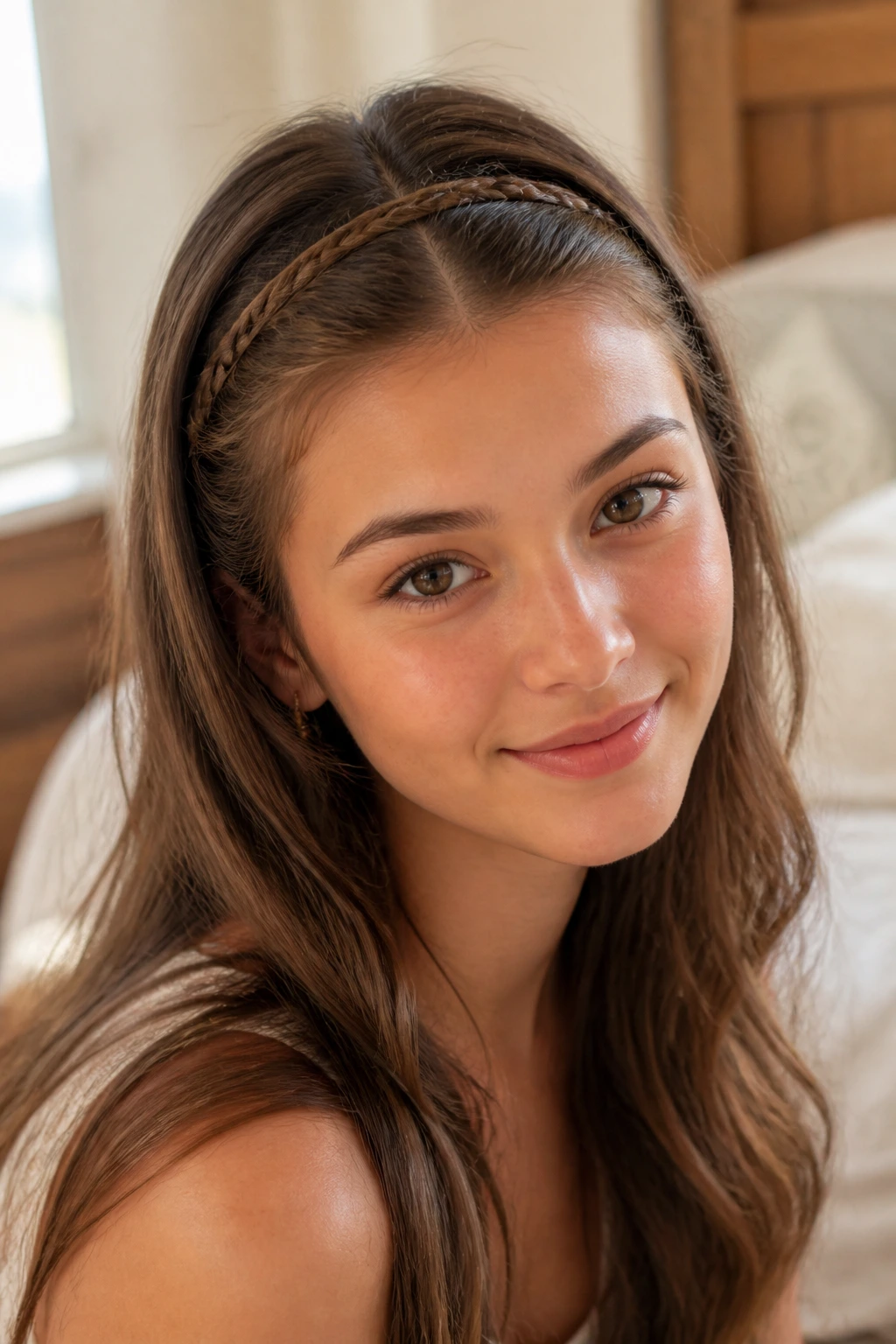
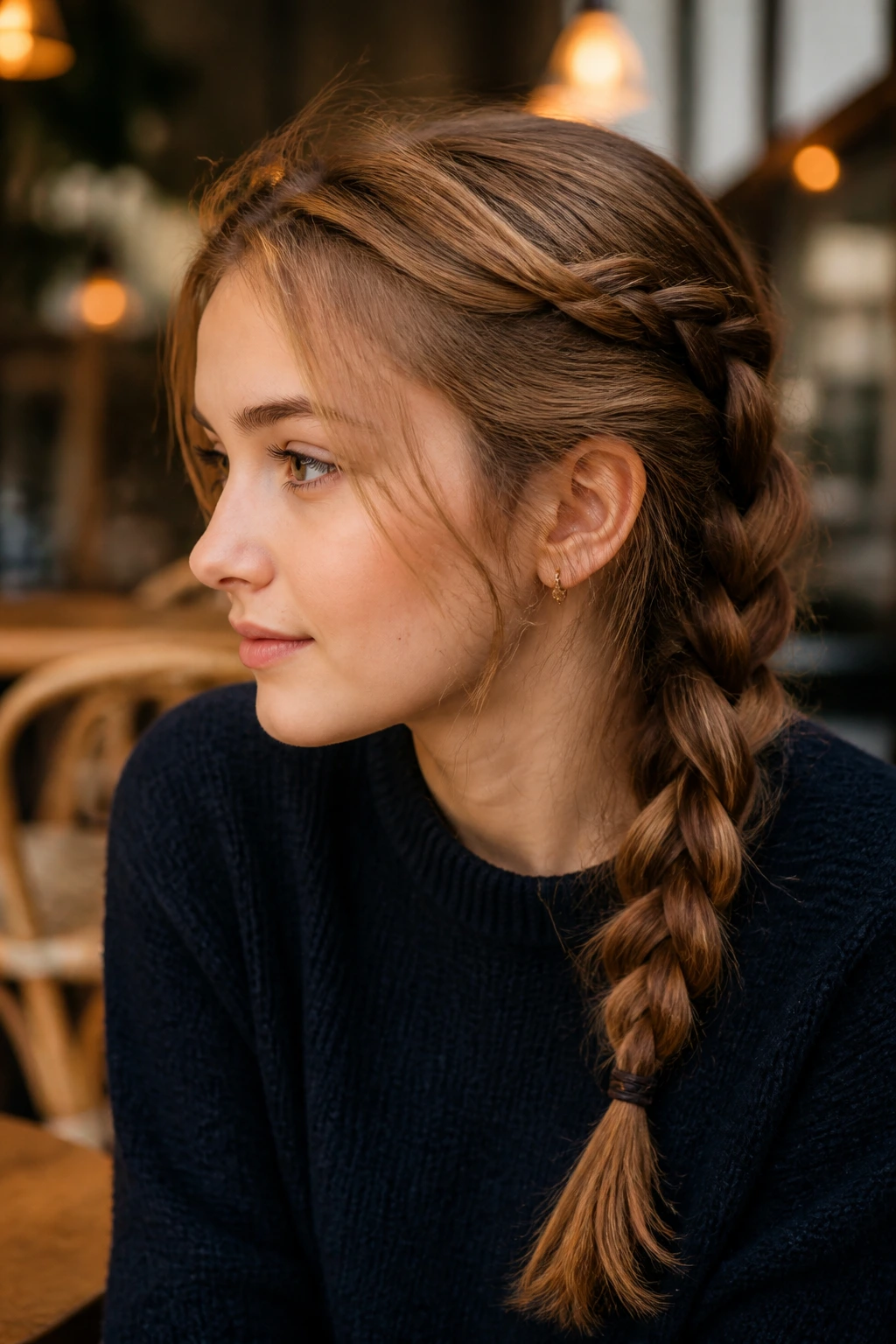
This is one of my favorite tricks for fine hair because it uses a small section of hair to create a much bigger effect. Take a narrow section near one temple, braid it, and pin it across the crown like a headband. The rest of the hair can stay down, tucked, waved, or even straight.
The braid does two useful things. It frames the face without stealing much hair from the rest of the style, and it creates a line across the head that makes the whole shape feel fuller. Fine hair sometimes looks sparse when everything is pulled back too tightly. This fixes that by keeping most of the hair loose while still controlling the front.
If your hair is slippery, rough the section lightly before braiding. If the braid looks too skinny after you pin it, gently tug the outer edges to widen it. Do not pull so hard that it falls apart. A little widening is enough to make it read as intentional instead of accidental.
7. The Loose Side Braid
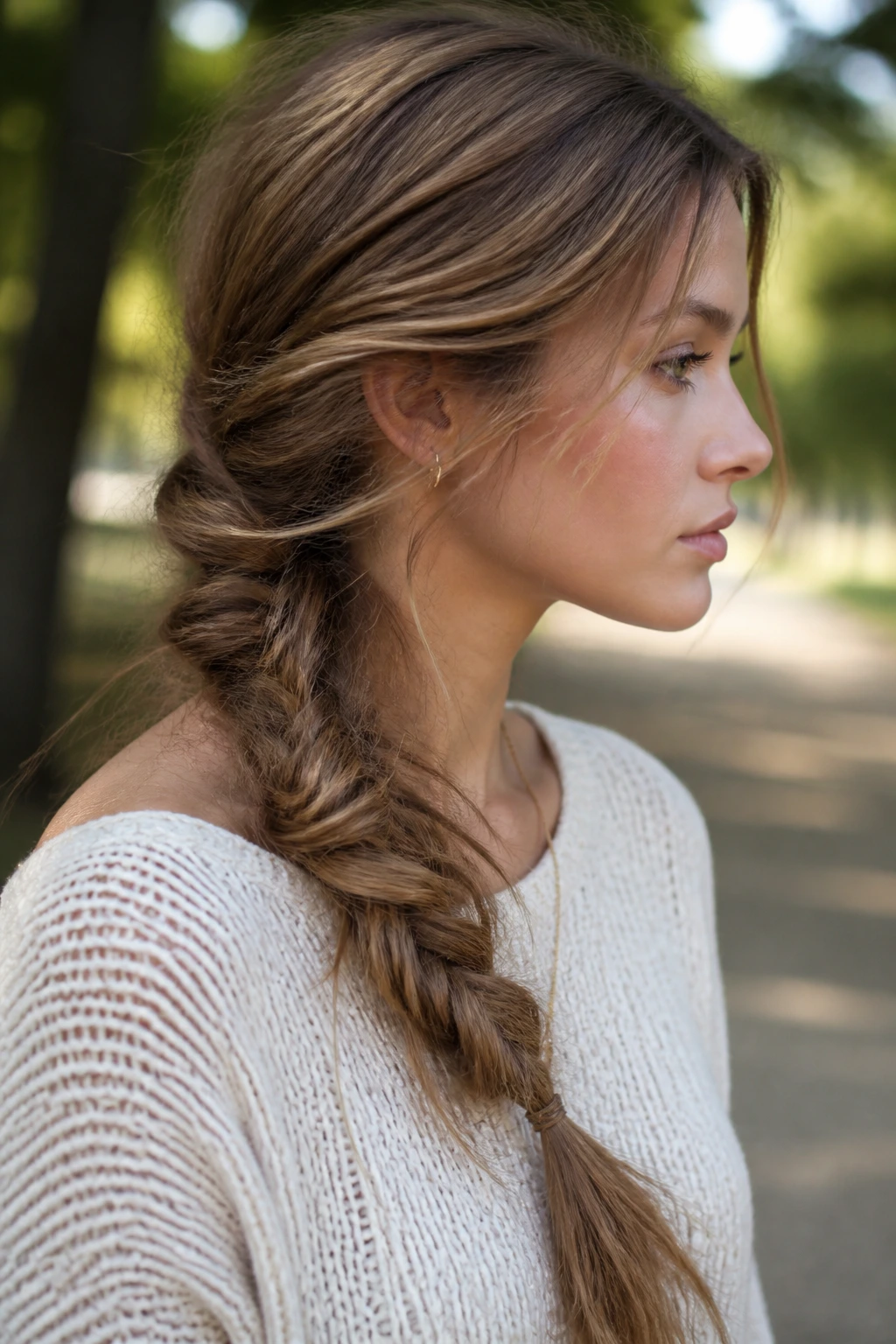
A side braid has a softness that suits fine hair better than a tight school braid ever will. Pull the hair to one side, braid it loosely, and stop before the tail turns into a stiff rope. The goal is a braid with a bit of slack and a little air between the strands.
Fine hair needs that slack because a tight braid can look skinny in a bad way. Once it is tied off, pinch the outer edges of each braid section and gently widen them. That creates width without making the braid frizzy. A little texture spray first helps the braid hold shape, especially if the hair is freshly washed and slippery.
This style works best with hair that falls past the shoulders, but it can work at lob length too if the braid starts low. It feels easy, but not lazy. That is the sweet spot. If you want it to look more finished, leave a soft face-framing piece out on the braid side.
8. The Half-Up Mini Knot
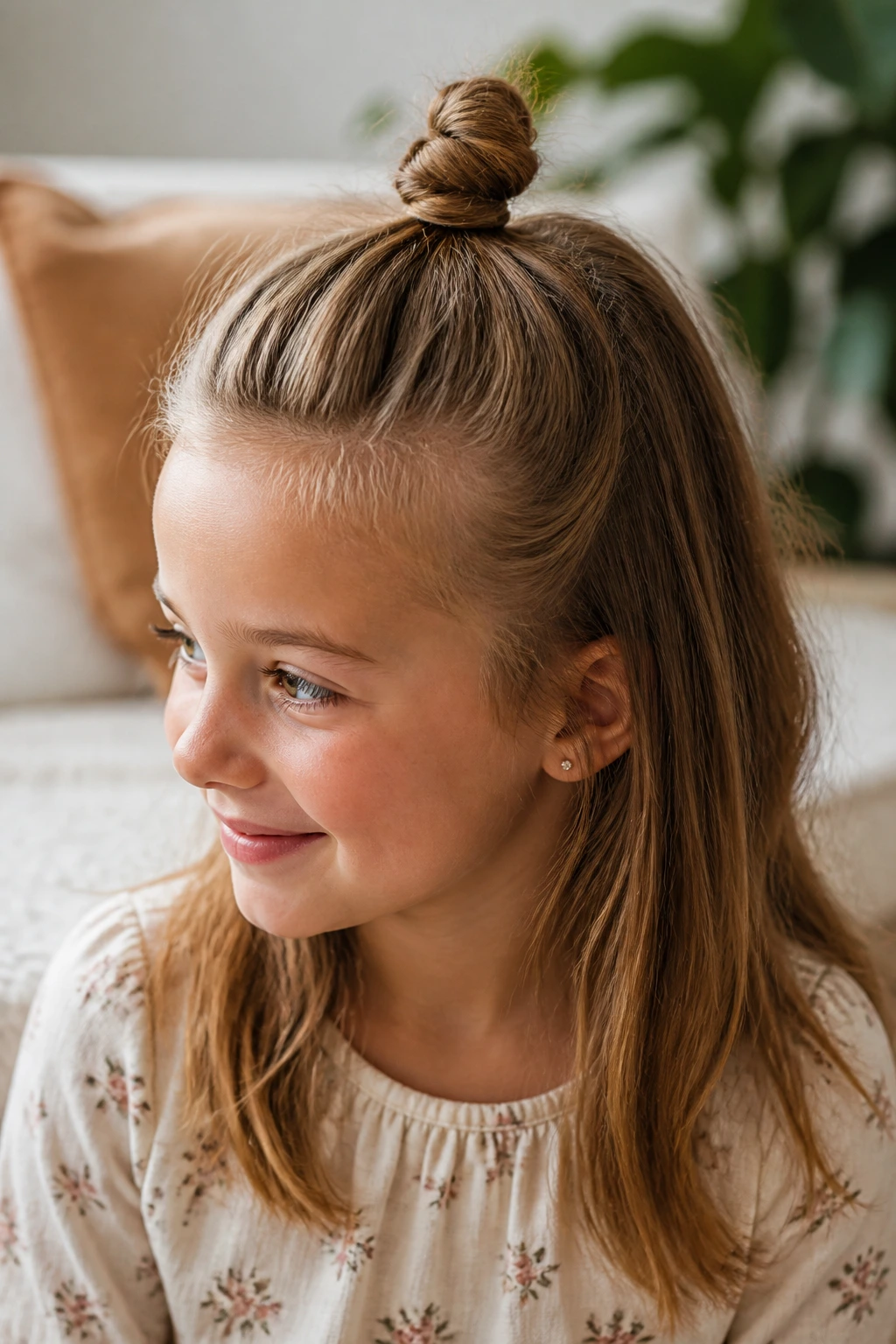
The half-up mini knot is the kind of style that saves a flat crown in under two minutes. You gather the top section, twist it once, and secure it into a tiny knot or top twist while the rest of the hair stays down. On fine hair, that small lift can make a big difference.
The knot should stay small. If you stretch it into a huge lump, it starts to look forced and can show scalp through the twist. A clear elastic helps hold the base before you pin it. Two bobby pins crossed in an X usually grip better than one lonely pin.
What I like most here is the flexibility. You can wear it with air-dried waves, a smooth blowout, or even second-day hair. It gives the top of the head a bit of height without asking the rest of the hair to do more than it can. For school, work, or a quick errand run, it is a very good answer.
9. The Scarf-Wrapped Ponytail
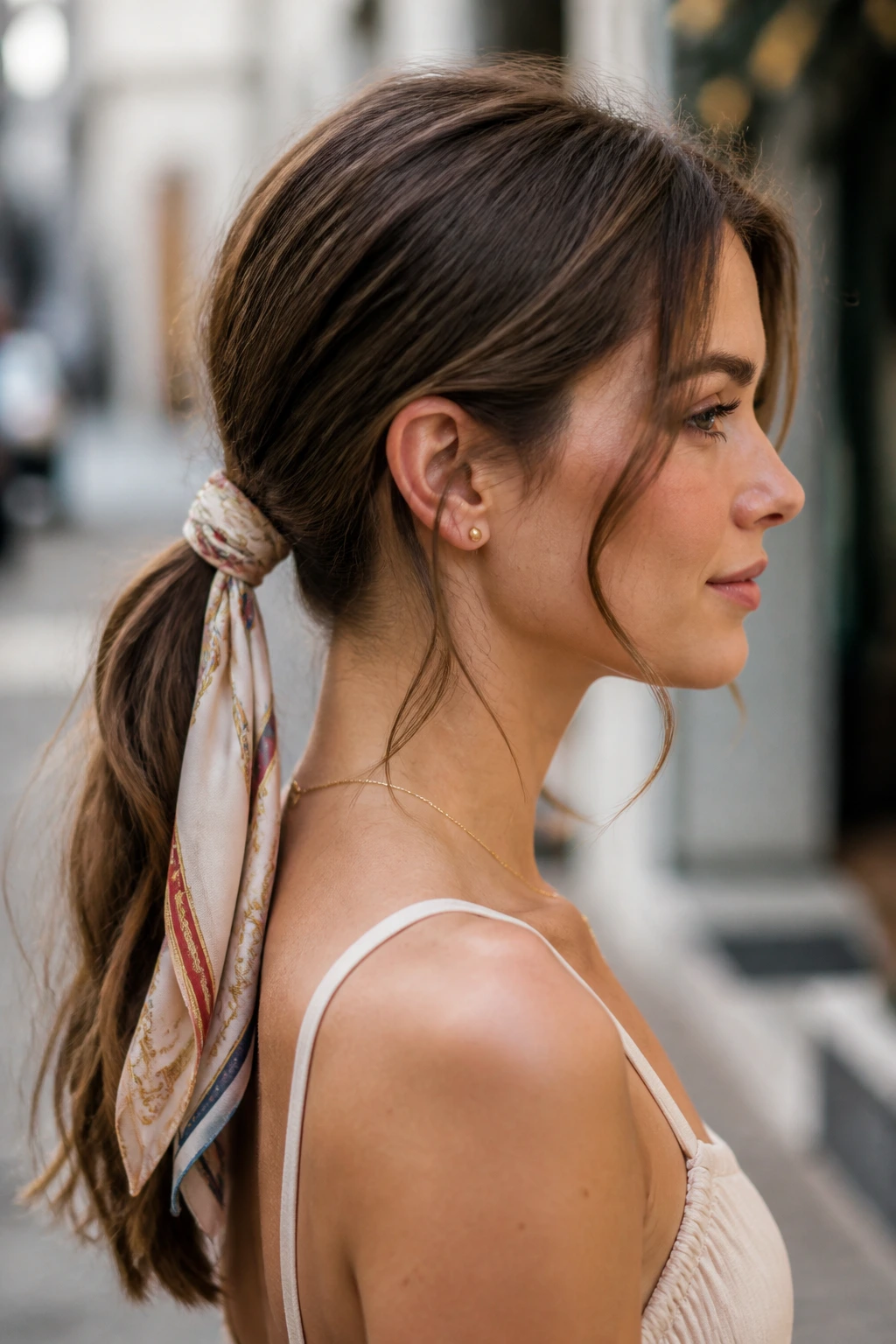
A scarf wrapped around a ponytail does a lot of heavy lifting for fine hair. It gives the eye something to focus on besides the width of the ponytail, and it adds movement around the face and neck. That matters when the ponytail itself is slim.
Keep the base low or mid-height so the scarf sits well. Fold the scarf into a narrow band, wrap it around the elastic, and tie it into a simple knot or bow. If the fabric is too wide, it can swallow the ponytail. A slim silk or cotton scarf works better. It needs to frame, not dominate.
This style looks especially good with slightly bent ends. A straight tail is fine, but a small wave at the bottom makes the whole look feel softer. If the scarf is patterned, let that be the statement. If it is plain, use the texture of the fabric to keep things from looking flat.
10. The Sleek Center-Part Tuck
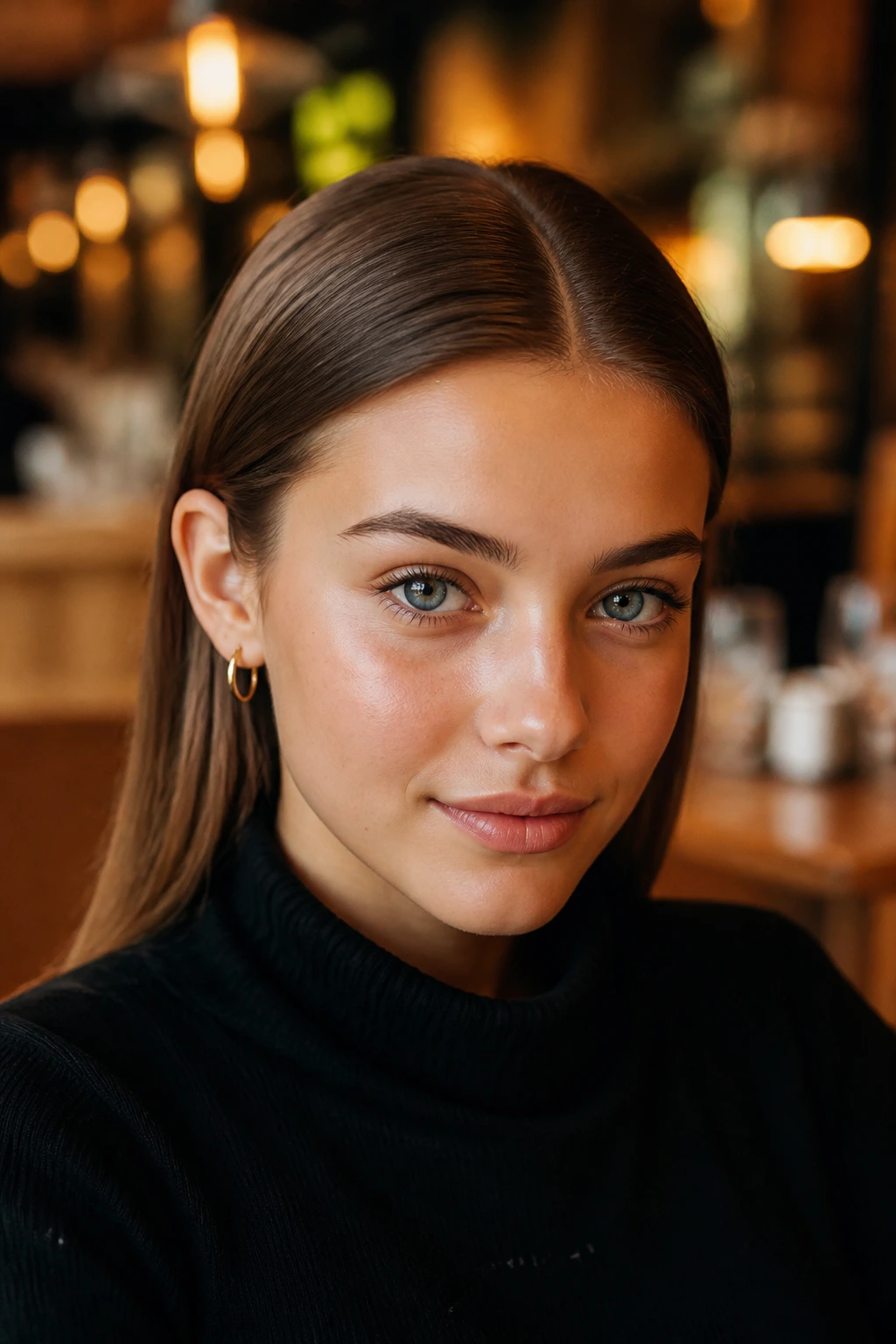
A clean center part and a simple tuck behind the ears can look sharper on fine hair than a lot of people expect. Fine hair often shines nicely when it is smoothed down, and that shine helps the style read polished rather than limp. The trick is to keep the ends neat and the crown controlled.
Use a light serum only on the mid-lengths and ends. Put too much at the roots and the hair goes flat fast. Then make a crisp center part with the tail of a comb and tuck each side behind the ears. A slim clip on one side can keep the tuck from sliding.
I like this look when the hair is long enough to skim the collarbones. Shorter lengths can work too, but the tuck reads best when there is a little movement at the ends. A soft bend at the bottom keeps the style from feeling severe. It is simple. That’s the point. And on fine hair, simple often looks more expensive than busy.
11. The Loose Halo Braid
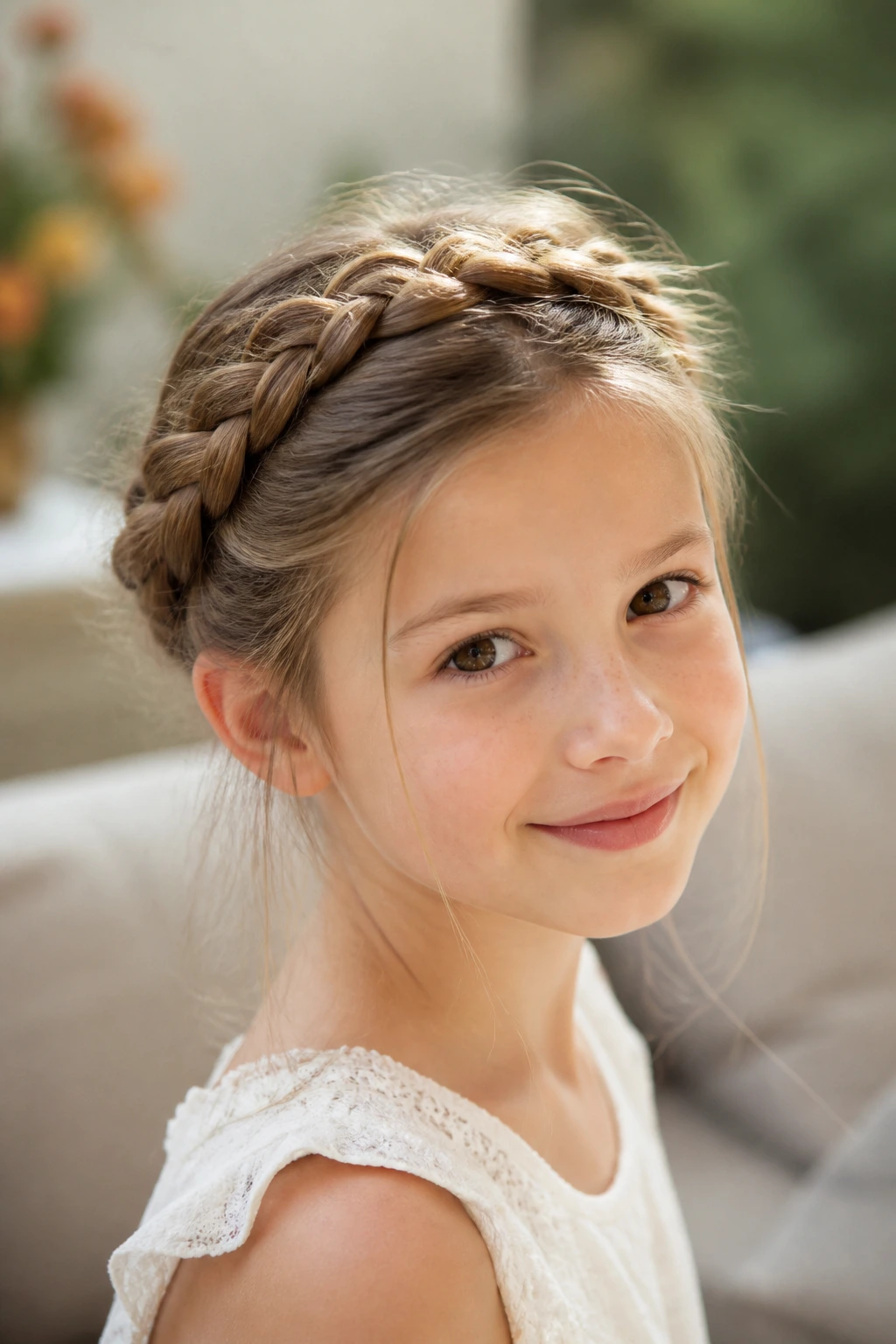
The halo braid is delicate in the best way on fine hair. Because the braid wraps around the head, it creates a crown line that gives the eye a sense of width. The braid itself does not need to be thick. It just needs to be even and softly pinned.
Start with hair that has some grip. Day-two hair works well, or use a light mist of texturizing spray before you braid. If your hair is freshly washed and too silky, the braid will slide and loosen before you finish pinning it. Keep the braid a little looser than you think you should. Then gently widen the outer edges once it is secured.
This one takes a steady hand, but not a lot of hair. It is a good option for medium to long lengths, especially if you want a style that keeps everything off the face without looking strict. A few small pins hidden under the braid make a huge difference. Use enough of them. Thin hair shows every shortcut.
12. The Mini Claw-Clip French Twist
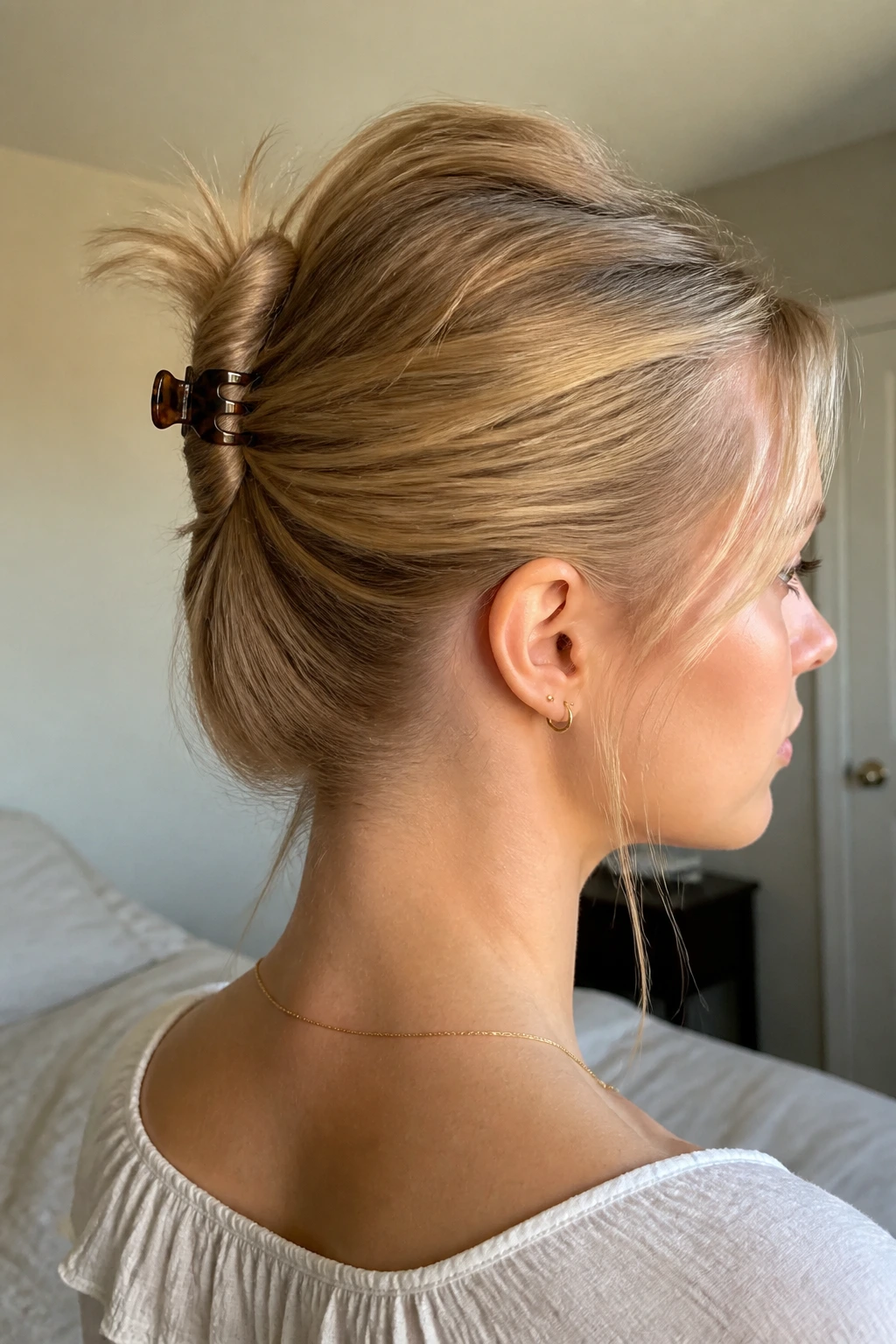
A mini claw clip can do what a large clip often cannot on fine hair: hold the twist without crushing it. A full-size clip usually feels too heavy and can slide off the smooth surface of fine strands. A small clip grips better and keeps the shape closer to the head.
Twist the hair upward or inward, fold the length once, and secure it with the clip. If the hair is shoulder length, leave the ends peeking out a little. That slight messiness is what makes the look feel French instead of overly tidy. You can also use this as a half-up style if your hair is too short for a full twist.
This is one of the fastest looks in the group, which matters on days when the roots are flat and the schedule is worse. A pinch of dry shampoo at the crown before clipping can help the twist stay in place. If the clip keeps slipping, the hair probably needs more texture, not more force.
13. Soft Waves with a Deep Side Part
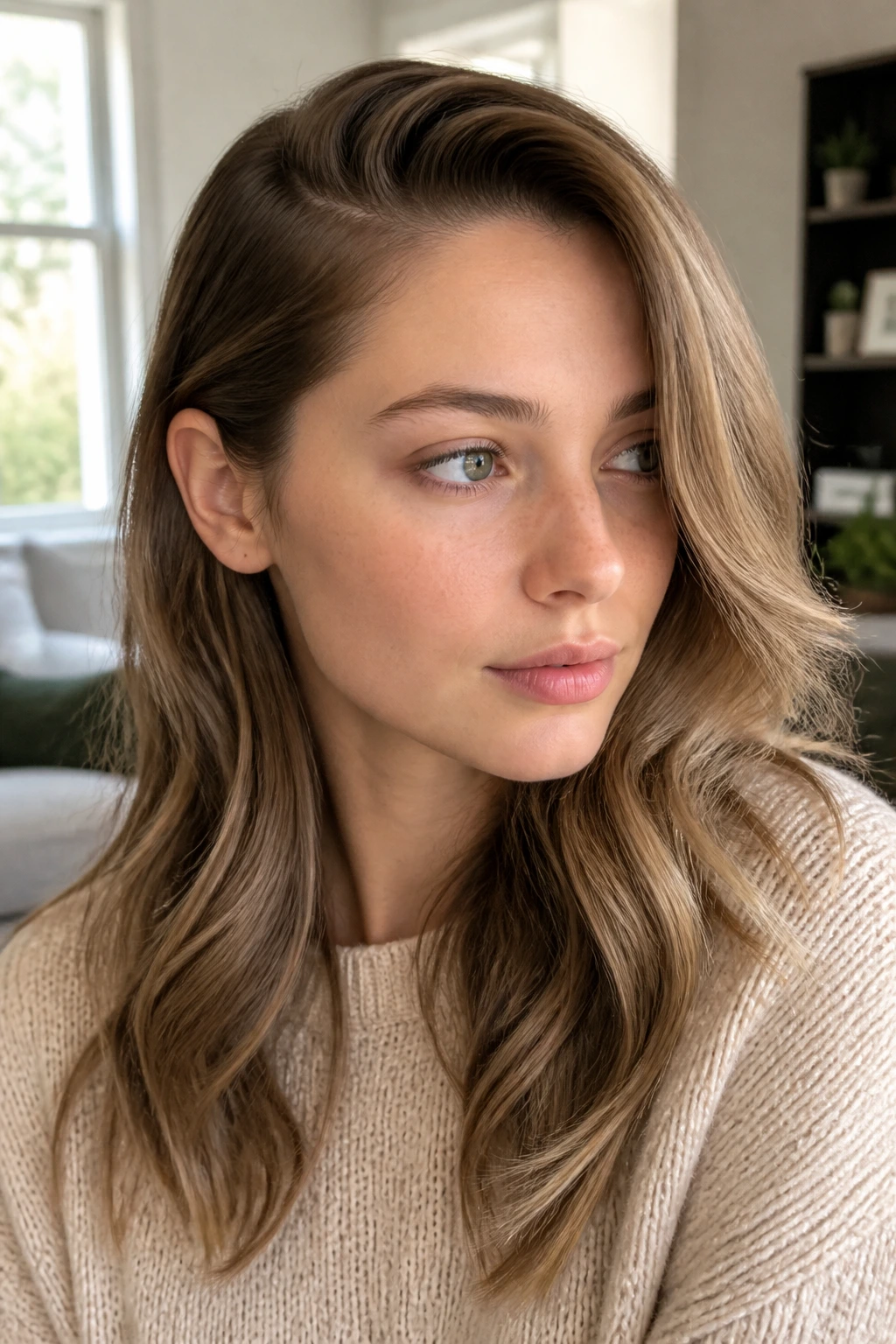
A deep side part can change fine hair more than a full curl set ever will. It shifts weight to one side, creates a little lift at the roots, and makes the hair look less like one flat sheet. Add soft waves, and the whole thing turns into a very wearable French-girl style.
The waves should be loose. Think bends, not spirals. A one-inch curling iron is usually enough, and you only need to wrap the mid-lengths for a few seconds before sliding the iron out. Then brush the waves out lightly with your fingers. If you use a brush, keep it soft. Aggressive brushing wipes the shape away.
What makes this work so well on fine hair is the contrast between the lifted root and the relaxed ends. You get movement without losing the line. A small barrette on the heavy side of the part can keep hair from falling into the face and gives the style a little extra polish.
14. The Low Bubble Braid
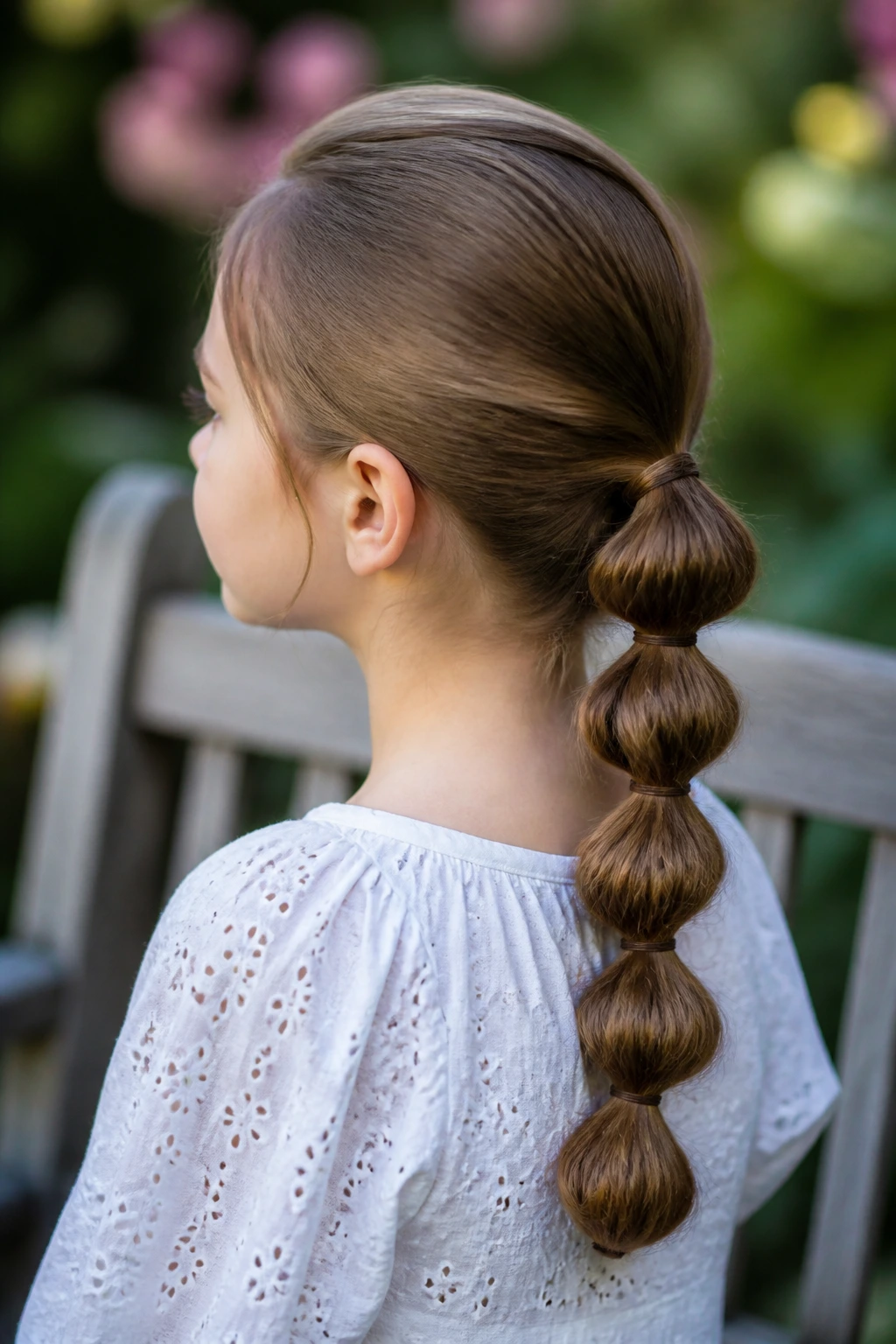
The bubble braid is one of those styles that looks more complicated than it is, which is always useful. On fine hair, the bubbles create the illusion of fullness because each section puffs out a little between elastics. You are not pretending the hair is thicker. You are giving it a better silhouette.
Start with a low ponytail. Add small clear elastics every two to three inches, then gently tug each section outward to form the bubbles. The tugging has to be soft. If you overdo it, the sections collapse or look frayed. A little fullness is enough. You want rounded shapes, not loose loops that fall apart.
This style works well for long hair, but medium length can manage it too if the sections are not too long. It also pairs nicely with a center part and a smooth crown. That combination gives you the French softness up top and the playful texture in the tail. It is tidy, but not fussy.
15. The Polished Bun with Face-Framing Pieces
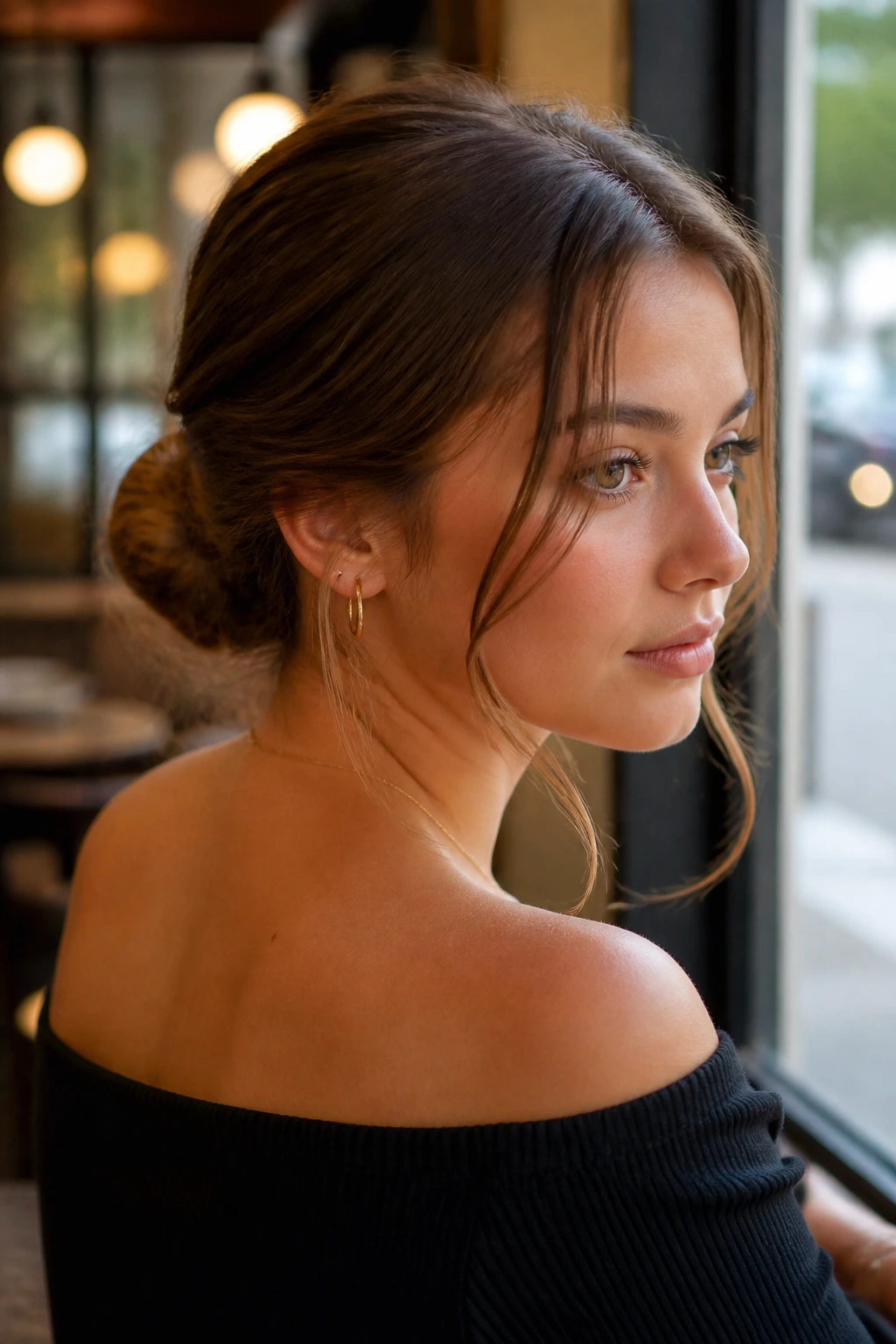
A polished bun can be very kind to fine hair if you keep the bun small and the front pieces soft. The mistake people make is trying to build a giant bun that the hair simply cannot support. Better to make a compact knot and let a few strands around the face loosen the outline.
Brush the hair back smoothly, gather it low or mid-height, and twist it into a neat bun. Use gel or a light styling cream only where you need control. Then pull out two thin face-framing pieces and curl or bend them slightly. Those pieces break up the severity of the bun and make the style look softer.
This is the look I reach for when fine hair is behaving itself and I want it to look deliberate. It reads clean. It also keeps the neck clear, which matters on warm days or with high collars. If the bun starts to look skinny, that is usually because the base is too wide. Tighten the knot, not the front.
16. The Piecey French Pixie
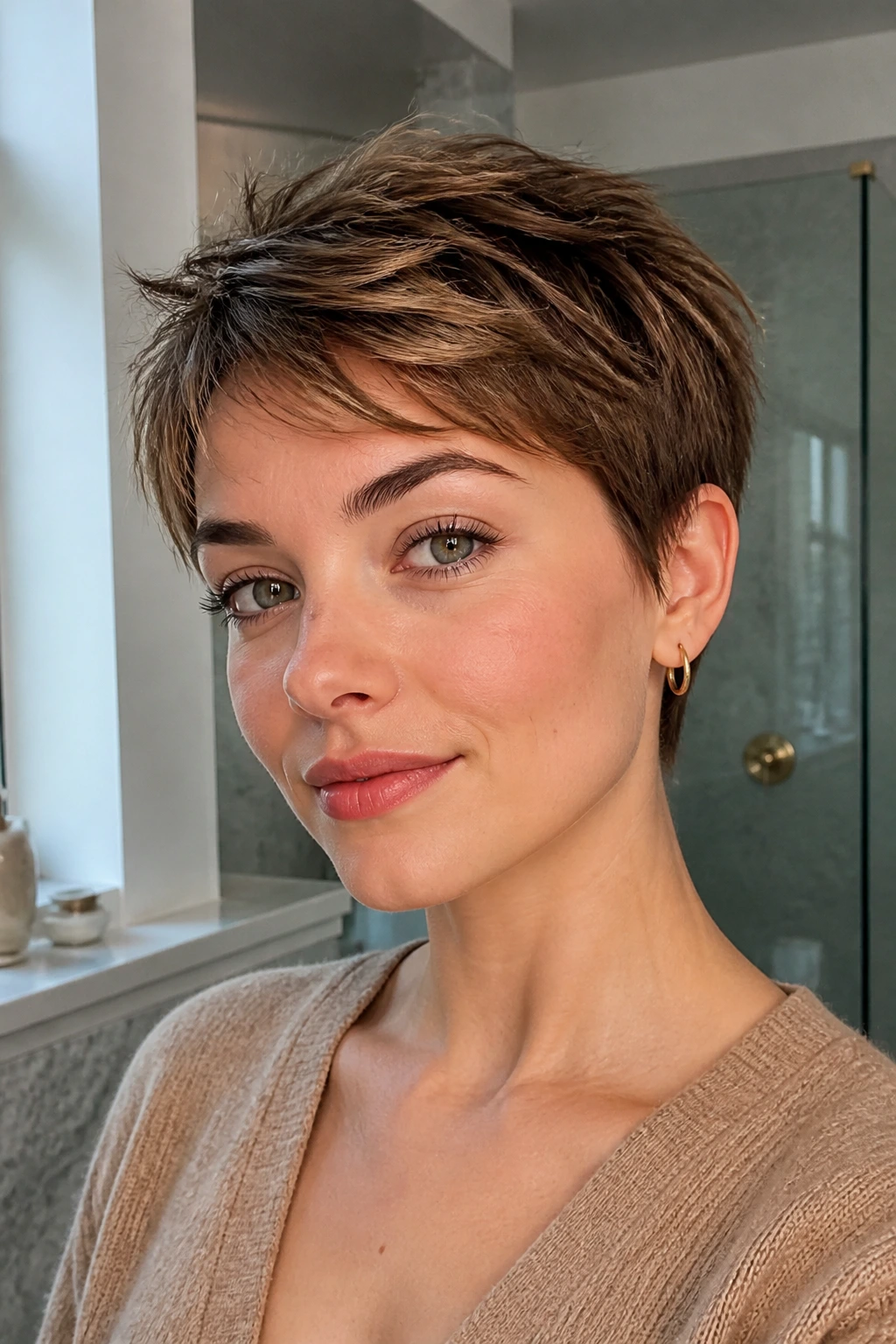
A pixie cut is almost unfairly good on fine hair. The short length removes the weight that drags strands down, and the piecey texture gives the hair a sense of movement it might not naturally have at longer lengths. A French version keeps the edges soft, with a little side sweep or a small fringe.
Work a pea-sized amount of paste between your fingertips and pinch the ends into little sections. Do not smooth everything into one shape. Fine hair looks best when the pieces are separated just enough to catch light and show movement. Too much product turns it greasy fast.
The pixie also has one big advantage: it is fast. A quick blow-dry, a tiny bit of lift at the roots, and a few finger-shaped pieces around the forehead are often enough. If you want it to feel more French, keep the sides a touch softer and let the top fall a little loose instead of spiking it up.
17. Double Braids with a Soft Finish
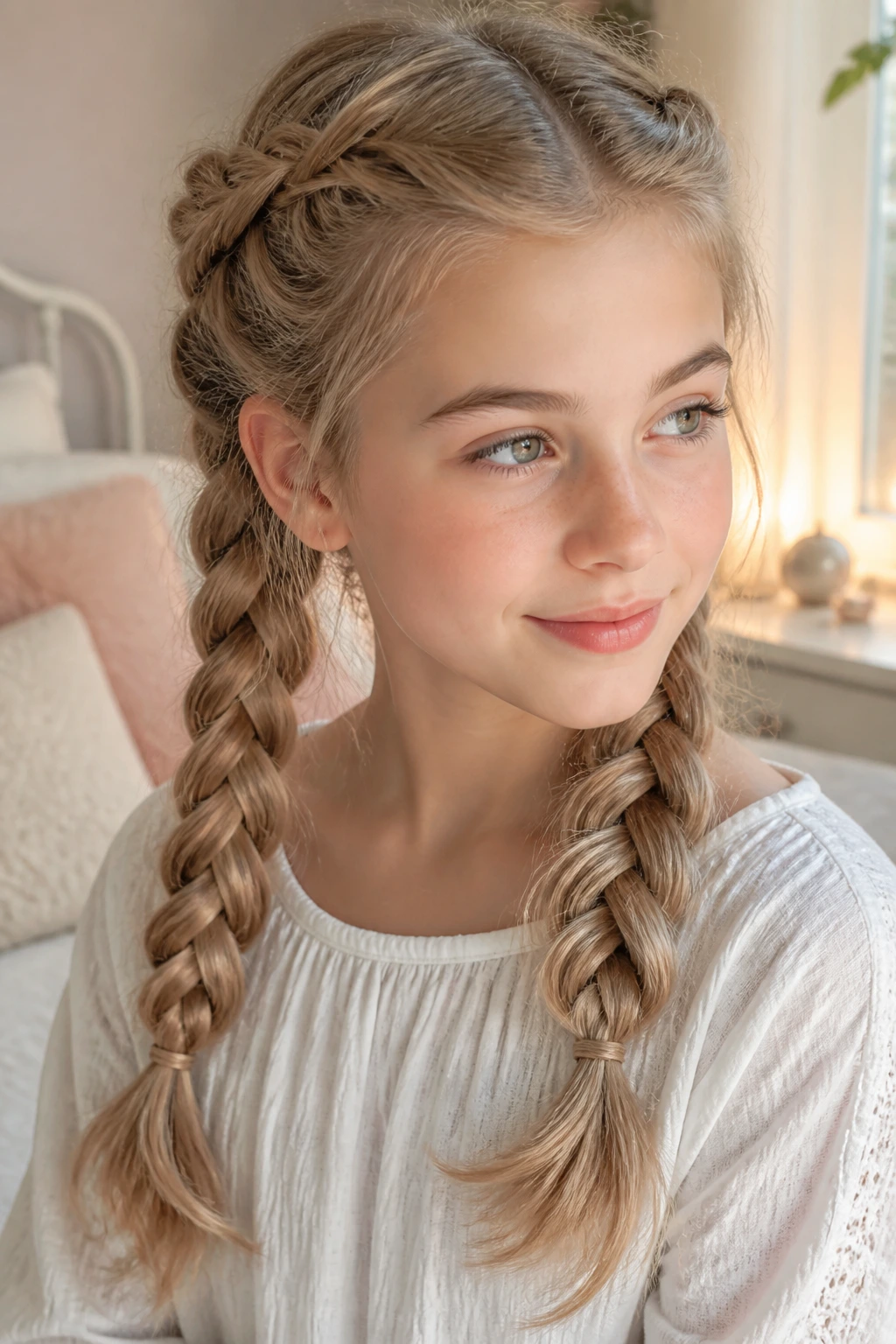
Double braids are not just for kids’ playgrounds, and on fine hair they can be surprisingly chic when they are done loosely. The key is to keep the center part clean and the braids soft enough that they do not look severe. Each braid ends up thinner than a single braid would, but together they create a fuller frame.
Start the braids slightly behind the hairline so the front does not look scraped back. Braid down on each side, then gently widen the outer sections with your fingers. A ribbon or tiny elastic at the end keeps the look neat. If you want a softer finish, tug a few small pieces near the temples and let them fall.
This style is useful when the hair is flat but you still want it controlled. It also works well on day-two hair, which gives the braid some grip. If the braids look too thin, that is usually a parting or texture issue, not a failure of the style. A bit of dry shampoo at the roots helps.
18. The Airy Shag with Flip Ends
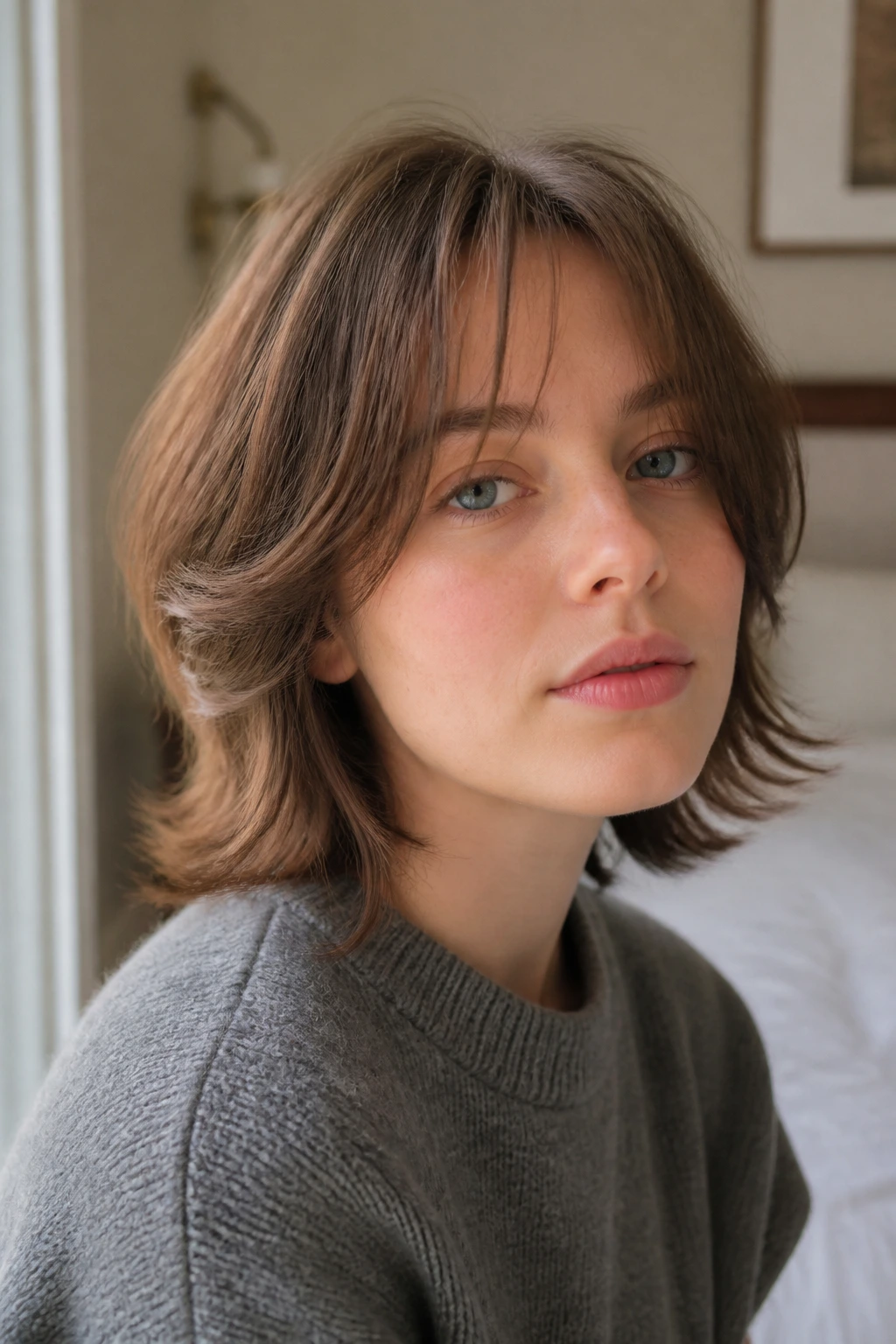
An airy shag can give fine hair a lot of movement without requiring a lot of styling effort. The layers are the point here, but they need to be cut and styled with restraint. If the layers are too short or too aggressive, the ends can go see-through fast. A French version keeps the shape loose, with soft flips at the ends and a little body around the cheekbones.
A round brush, a blow-dryer, and a light mousse are enough for most days. Focus on lifting the roots just enough to stop the hair from lying like paper against the head. Then flip the ends slightly inward or outward. Not both. Pick one direction and keep it simple.
Fine hair likes this shape because it shows movement even when the hair is not heavily styled. If you air-dry it, scrunching a tiny bit of mousse into damp lengths can help the layers settle without frizz. The shag should feel airy, not shredded. There’s a difference, and you can see it immediately.
19. Tiny Accent Braids in Loose Hair
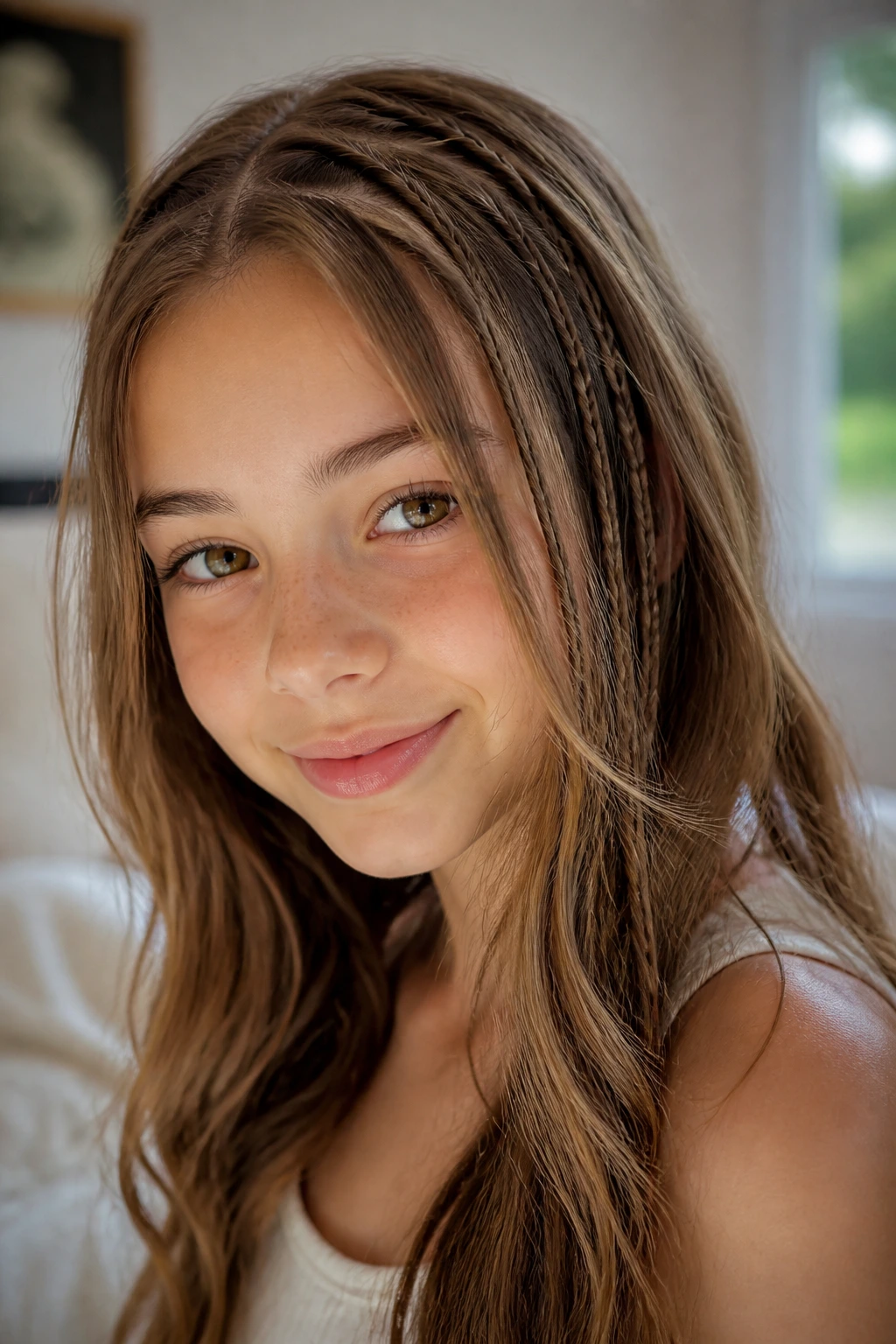
Tiny accent braids are the easiest way to add detail without taking a lot of hair out of play. That matters on fine hair. Two or three thin braids placed near the face or through the top layers can create texture and make the whole style feel more considered.
Keep the braids pencil-thin. If they get too wide, they start competing with the rest of the hair and the effect gets busy. A small clear elastic or a tucked-under end usually works. You can leave the hair straight, bend the ends slightly, or wear loose waves under the braids. All three work.
I like this style when the hair is in that awkward in-between place: not clean enough for a sleek tuck, not textured enough for a full updo. The braids act like punctuation. They do not need to dominate. They just need to be there.
20. The Parisian Top Knot
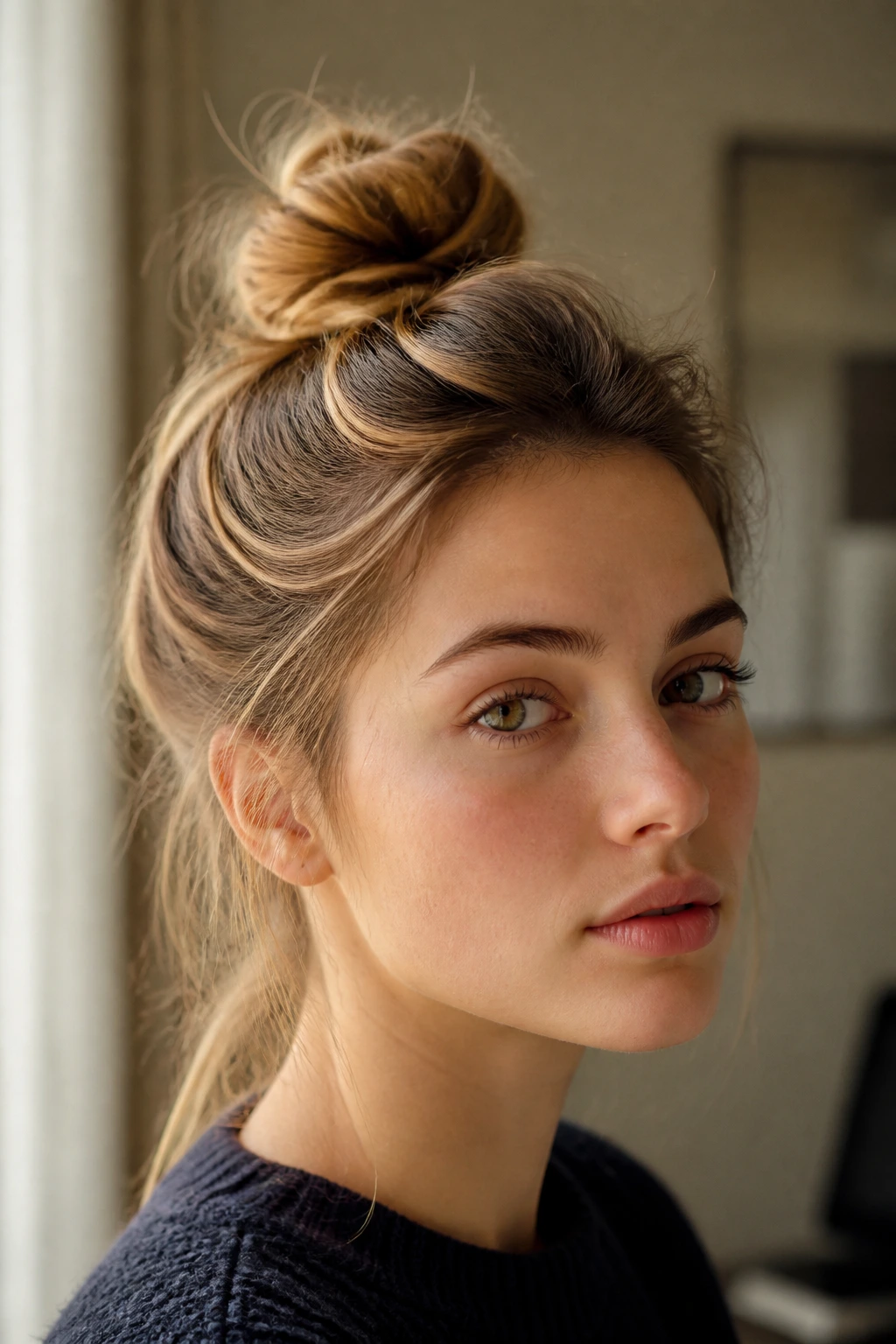
A Parisian top knot should look like a knot, not a balloon. That distinction matters on fine hair. If you try to build too much height with a donut, the hair often looks sparse around the edges. A looser, smaller knot at the crown reads better and feels lighter.
Gather the hair high, twist it, and wrap it into a compact knot. Pin it so it sits securely but not painfully tight. A little lift at the front can help keep the knot from pulling the face back. If the ends poke out, leave them. That looseness is part of the charm. It looks more natural than a polished bun that has been scraped too hard.
This is a useful style when you need the hair off your neck and off your face but still want a bit of character. Pair it with dry shampoo and a quick shake at the roots. If the knot looks too small, resist the urge to stuff it with more hair. The smaller shape is what makes it work on fine strands.
How French Styling Works on Fine Hair
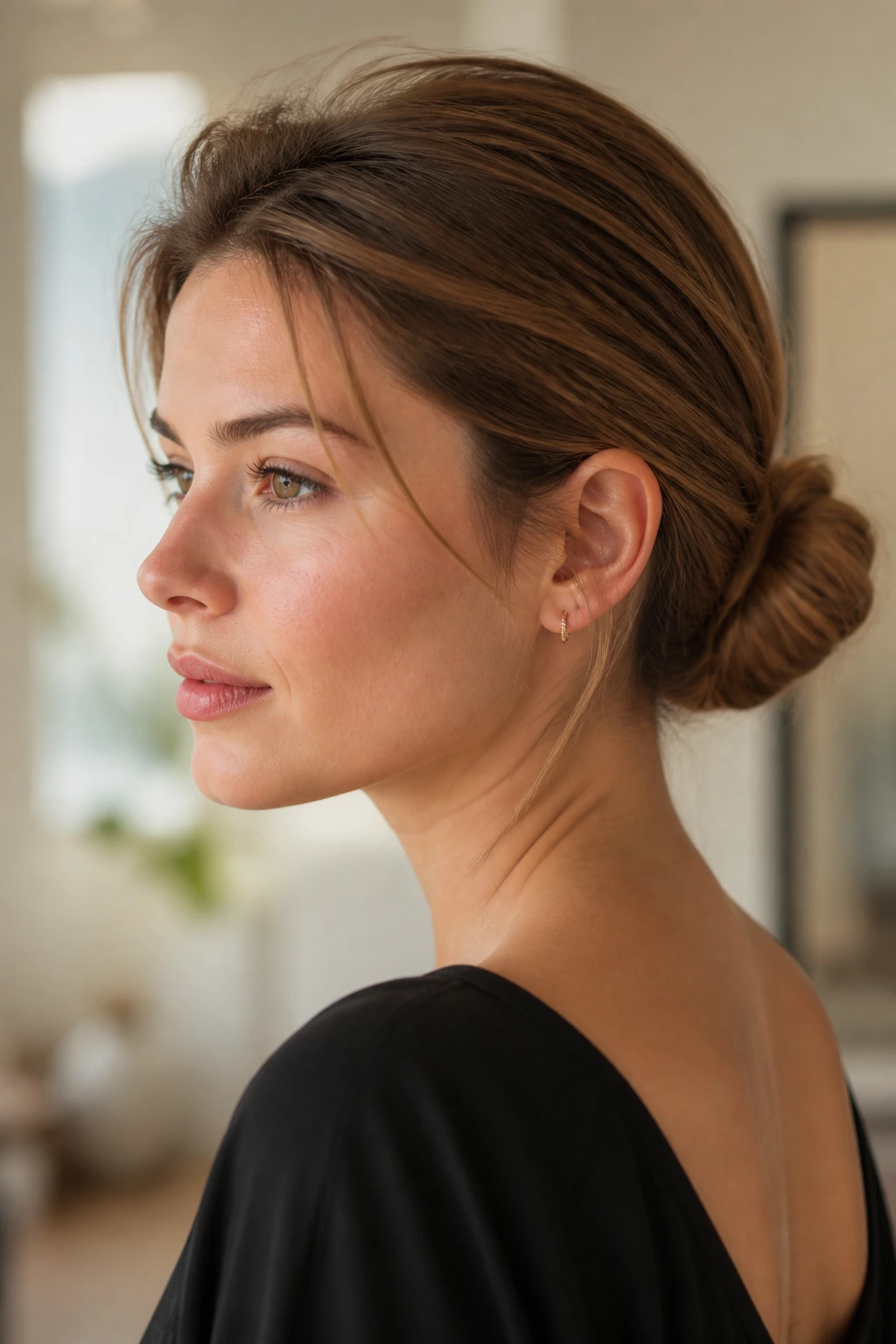
Fine hair usually needs two things most people forget to give it: grip and shape. Grip keeps pins, clips, and braids from sliding out. Shape gives the eye something stronger than the width of the hair itself. French styling leans into both. It uses low buns, soft tucks, and small accessories to make the style feel finished without demanding fake volume.
That is why these looks are often better on day-two hair than on freshly washed hair. Fresh hair can be too slick, especially if your conditioner is rich or your shampoo leaves a smooth finish. A little texture, even from overnight wear, helps a braid hold its braid and a twist stay twisted. If you need help, dry shampoo at the roots and a mist of texturizing spray through the lengths can change the whole afternoon.
There is also a practical reason French shapes suit fine strands: they do not ask the hair to support a lot of weight. A giant bun, a huge claw clip, or a thick curl set can drag fine hair down by lunch. A small chignon, a ribbon tied around a low ponytail, or a narrow braided headband spreads the visual work around without stressing the hairline. That is the quiet genius of it.
Essential Tools That Keep These Looks Light
- Tail comb: Helps you make a clean center part, pick up small sections, and neaten braids without tugging too hard.
- Small clear elastics: These hold tiny ponytails, braids, and bubble sections without showing through fine hair.
- Bobby pins in hair-matched shades: A few well-placed pins hold more reliably than one big pin that slips.
- U-pins: Useful for low chignons and French twists when you want less bulk at the base.
- Mini claw clips: Better than oversized clips for fine hair because they grip more easily and do not drag the style down.
- 1-inch curling iron or flat iron with rounded edges: Gives soft bends and face-framing movement without giant curls that collapse.
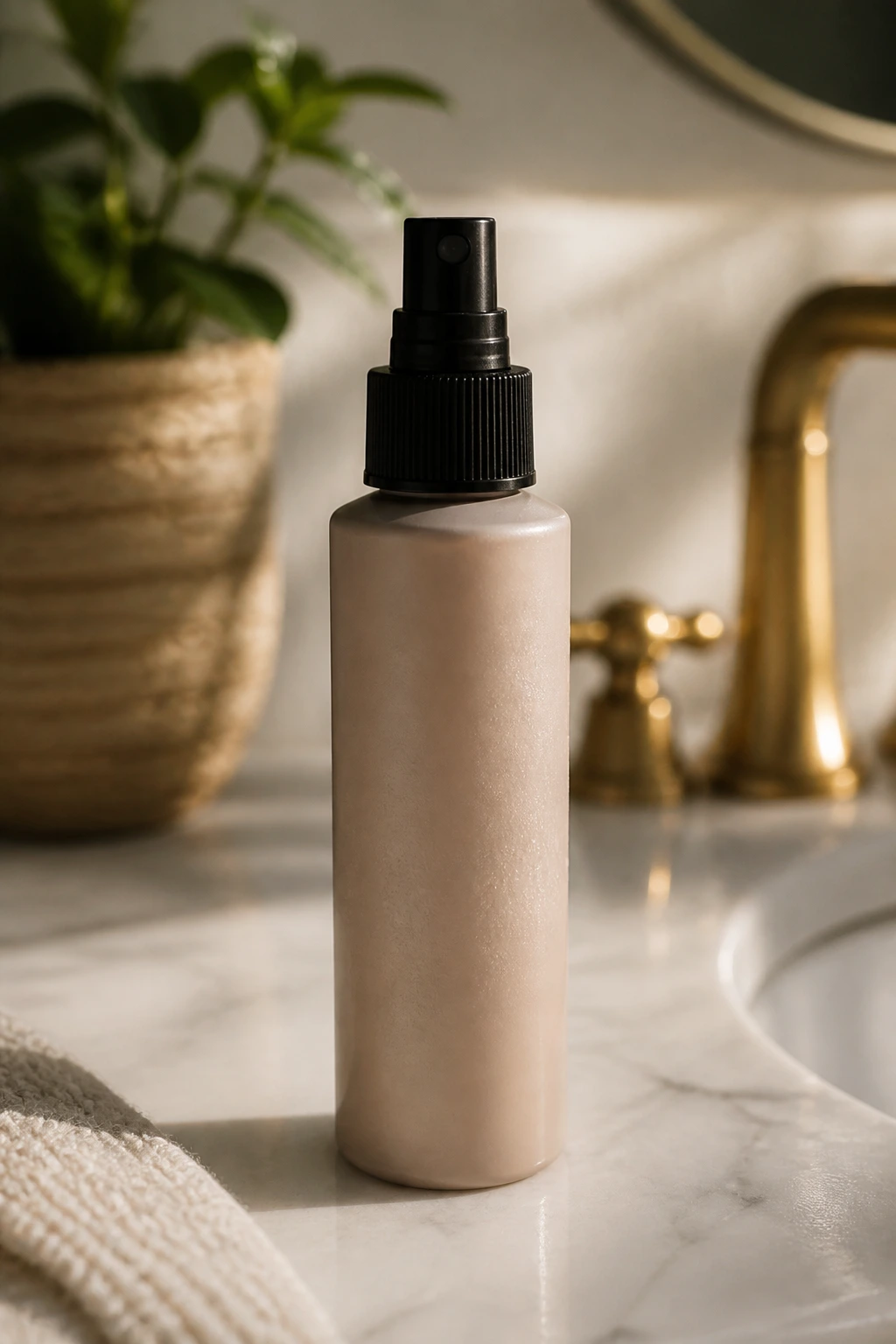
- Texturizing spray: Adds grip for braids, twists, and pinned styles without making the hair sticky.
- Dry shampoo: Best at the roots when the hair needs lift and a little roughness to hold shape.
- Light mousse: Good for damp hair before blow-drying if you want lift without heavy residue.
- Silk or satin ribbon: Holds a ponytail or bun in place while adding a softer finish than a bulky tie.
Smart Product Picks for Slippery Strands
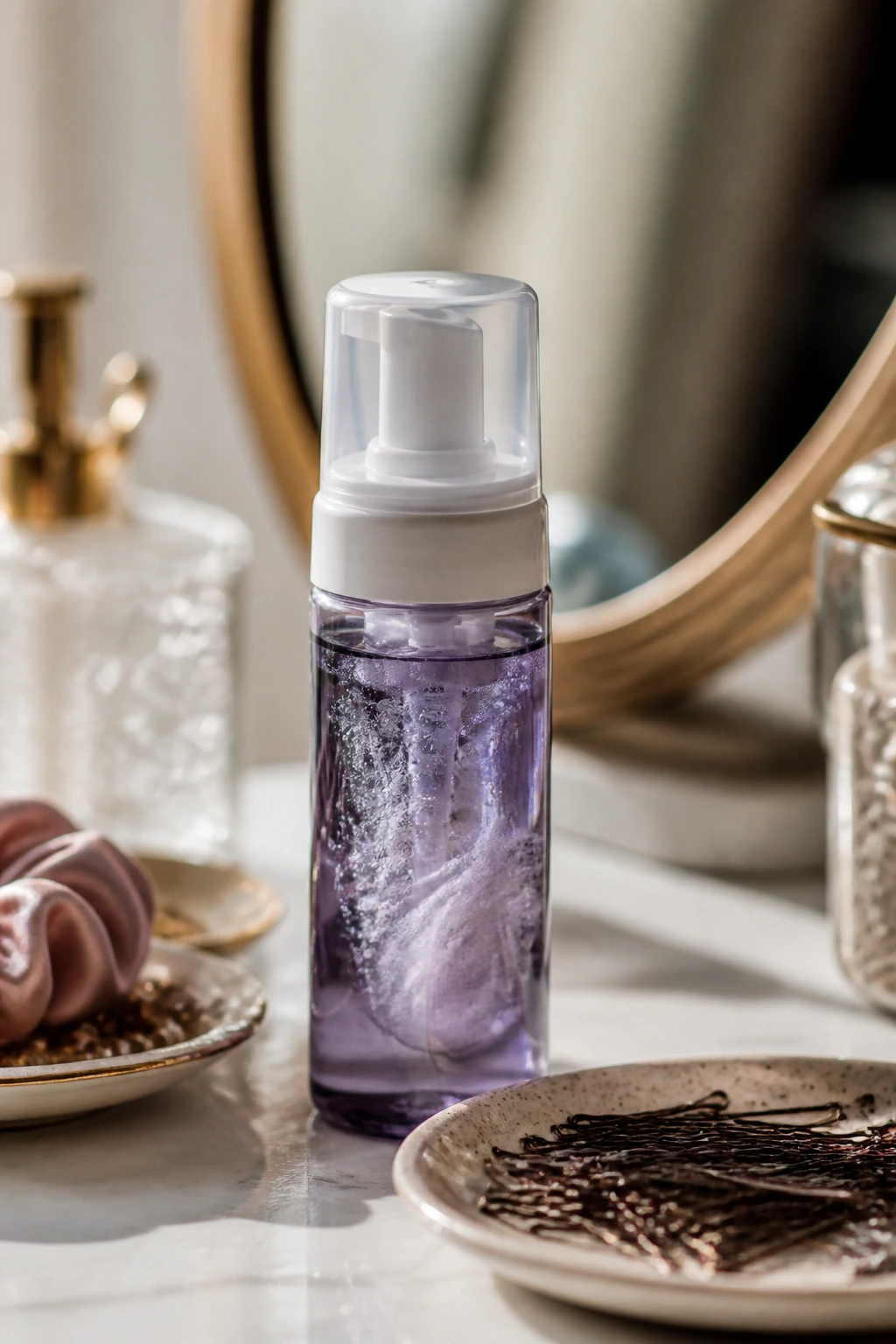
Fine hair usually looks best when the products stay light and specific. Heavy creams, thick oils, and oversized leave-ins tend to sit on top of the hair instead of helping it. They make the roots collapse. They also turn braids and twists into little slides. I’d rather use a small amount of mousse at the roots and a touch of serum only on the ends than coat the whole head and hope for the best.
If your hair is very smooth, look for a volumizing mousse or a root-lift spray rather than a smoothing cream. The smoothing products can be nice on coarse hair, but on fine strands they often make everything too sleek to hold. A texturizing spray with a fine mist is also useful because it gives grip without making the hair feel dusty. The cheap, gritty sprays work, but use them sparingly. A little goes a long way.
Accessories matter as much as product here. A tiny clip with teeth that actually close, a ribbon that is not too slippery, and bobby pins that match the hair color will do more for the style than a drawer full of decorative junk. If a clip is heavy in your hand, it will probably be heavy in the hair too. That weight shows up fast on fine strands.
How to Make These Styles Last All Day
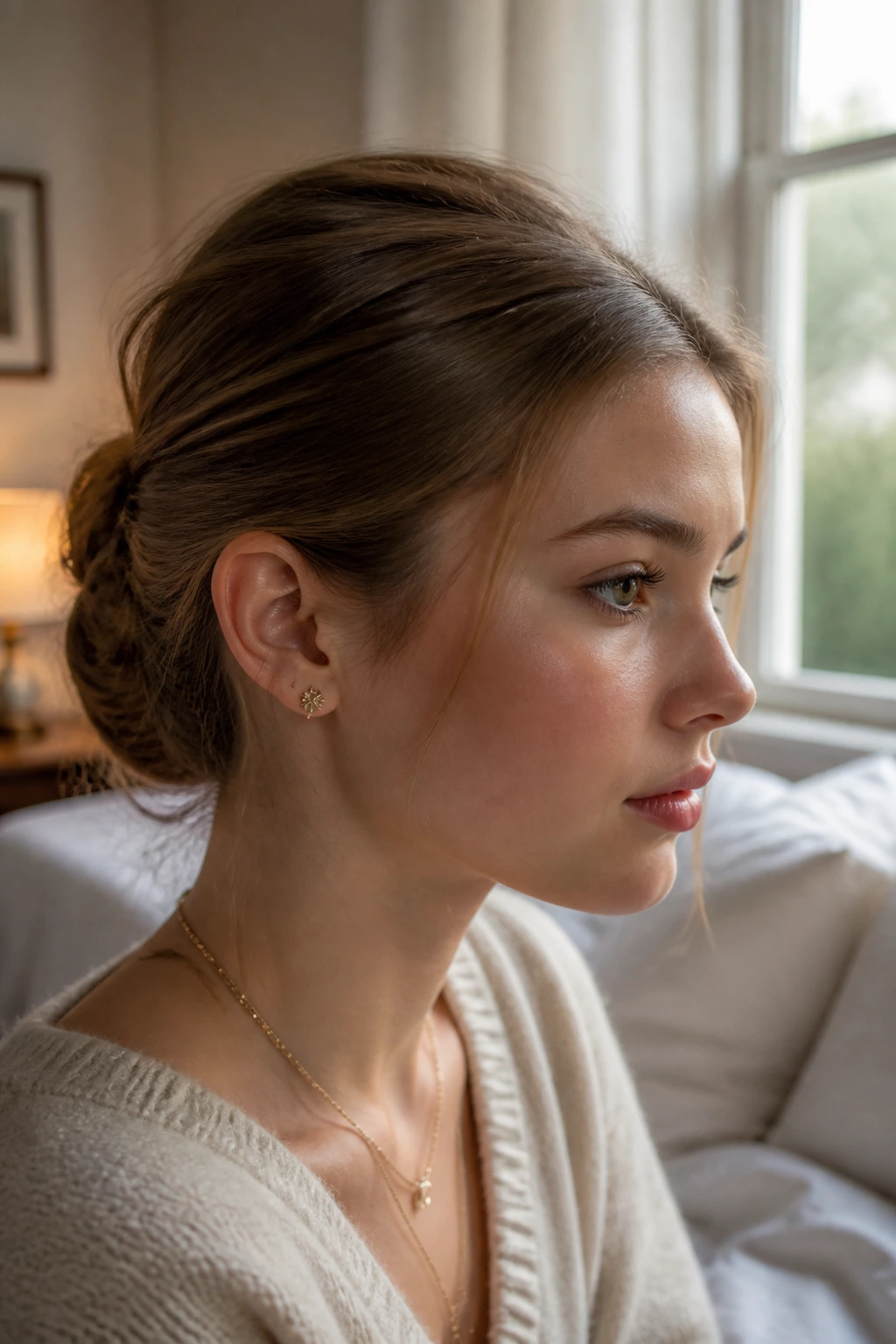
Start with the right level of clean. Freshly washed hair can be too soft for braids, knots, and twists. If you are planning a French braid, a low chignon, or a claw-clip twist, hair that was washed the day before often holds better. If your hair is oily, though, skip the second-day plan and clean the roots enough that the style doesn’t slide.
Use heat, then let it cool completely. If you are bending the ends or adding face-framing waves, pin the shape for a few minutes while it cools. Fine hair forgets heat fast. Cooling in place helps the bend stay visible longer. That matters more than using a bigger iron.
Pin the structure, not the decoration. Bobby pins should sit where the twist changes direction or where the braid crosses. Don’t hide them where they can’t do any work. A pin that only looks neat is useless by noon.
Quick Day-Of Rules
- Spray roots first if the hair is too soft.
- Use smaller sections than you think you need.
- Stop adding product once the hair feels lightly coated, not sticky.
- Keep a travel-size dry shampoo for the crown and a couple of pins in your bag.
Night-Before Help
If you want waves or a braid the next day, a loose braid or two at night can give the hair enough bend to hold a style. A silk pillowcase helps too. It cuts down on friction, which fine hair hates more than people realize.
Small Tweaks That Add Lift and Polish
Texture Enhancement: A tiny amount of dry shampoo or root powder at the crown can make a flat style behave, especially if your hair is freshly washed. Put it in before the pins go in, not after, so the grip has something to work with.
Accessory Choice: A narrow ribbon, pearl pin, or slim barrette can sharpen a simple style fast. Fine hair gets lost under bulky accessories, so smaller pieces usually look better and stay put longer.
Shape Change: Move the part half an inch off center if your hair lies too flat in the middle. That small shift changes the whole balance of the style without asking the hair to do more work.
Softness at the Face: Leave two thin face-framing strands out of buns and twists. That little break in the outline keeps fine hair from looking over-styled and helps the rest of the hair seem fuller by contrast.
Color and Finish: Matte pins disappear well in dark hair, while polished gold or pearl clips can give light hair a little lift. If the style needs a cleaner edge, smooth only the top layer and leave the ends a bit softer.
Common Slip-Ups That Flatten Fine Hair
- Using too much conditioner at the roots. The hair feels silky in the shower, then goes flat by lunchtime. Keep conditioner from mid-length to ends only, and rinse the roots well.
- Teasing the hair hard. Fine strands can fray fast, and the top can end up looking dusty instead of full. Use a small root-lift product or a clipped crown set instead.
- Choosing oversized accessories. Big clips and heavy barrettes pull down on the style and can slide out. Smaller clips and matched pins usually hold better.
- Pulling braids too tight. A tight braid shows scalp, which makes fine hair look thinner, not fuller. Braid softly, then widen the outer edges with care.
- Using curls that are too large. Big waves drop out quickly on fine hair. A smaller iron and a shorter wrap time hold better.
- Starting with hair that is too soft. If the hair is silky-clean, braids and twists may unravel. Add texture first or wait until the next day.
Variations to Match Length, Mood, and Routine
School-Day Softness: Keep the style low and quick: a tiny half-up knot, a ribbon ponytail, or a side braid with one loose face frame. These take under five minutes and do not need a lot of heat.
Rainy-Day Reset: Choose a low chignon, a mini claw-clip twist, or a sleek center-part tuck. These stay closer to the head and are less likely to puff up when the air gets damp.
Dress-Up French: Add pearl pins, a velvet ribbon, or a small barrette to a French bob, twist, or polished bun. The outfit does not need much else when the hair has one strong detail.
Short-Length Shortcut: For chin-length or pixie hair, go for side tucks, mini clips, piecey texture, and a headband braid that only uses a narrow strip of hair. Trying to force a long-hair style onto short fine hair usually backfires.
Curly-Fine Version: If your fine hair has a natural wave or curl, do not brush it into submission. Define the texture lightly, then use half-up styles, soft buns, or accent braids so the natural bend can do the work.
Frequently Asked Questions
What French hairstyle works best for very fine hair?
The low chignon, ribbon ponytail, and mini claw-clip twist are the most forgiving because they stay close to the head and do not depend on bulk. If your hair is especially slippery, start with a little dry shampoo at the roots.
Can fine hair hold braids without falling apart?
Yes, but it usually needs a bit of texture first. Day-two hair, texturizing spray, or a light dusting of dry shampoo gives the braid more grip, and loose outer edges make it look fuller.
Should I curl fine hair before doing a French style?
Only if the style needs a bend. Soft waves help with ponytails, half-up knots, and loose buns, but a sleek bob, tucked lob, or French twist can look better straight and smooth. Big curls are usually overkill.
How do I stop a French twist from slipping?
Use more pins than you think you need and place them where the twist changes direction. A little texture spray or a rougher base helps too. Smooth hair needs grip before it needs more force.
Are bangs a good idea for fine hair?
Soft curtain bangs usually work better than blunt, heavy bangs because they do not eat up too much hair in one place. They also help the front look fuller without making the rest of the style collapse.
What should I avoid if my hair is really flat?
Heavy oils at the root, giant accessories, and oversized curls are the usual culprits. They weigh the hair down fast and make the crown look smaller than it is. Light product and smaller shapes usually fix the problem faster.
Can I do these styles without heat?
Absolutely. Braids, twists, ribbons, and clips are the backbone here. If you want more movement without heat, braid damp hair loosely overnight or set the front pieces in a twist while they cool.
What is the easiest style for short fine hair?
The French bob, side tuck, mini claw-clip twist, and piecey pixie are the easiest. They use the cut you already have instead of trying to manufacture volume that is not there.
The Styles You’ll Reach For Again
Fine hair does not need to be forced into bigger, louder shapes to look good. That is the mistake. The French looks that work here are the ones that respect the hair’s size, use its shine, and keep the lines clean enough to read from across the room.
A small ribbon, a neat tuck, a soft braid, a little lift at the crown — those details do more than a heavy hand ever will. Pick the style that fits the hair’s mood that day, not the one that demands a miracle. That is where the French look stops being a reference point and starts becoming part of your real routine.