



Fine hair has a way of exposing every lazy haircut. Leave the ends too wispy, and the whole shape starts looking tired before you’ve even left the house. Keep the outline too soft, and the hair goes flat in a way that feels almost personal.
The best heavier hairstyles for women with fine hair do not chase fake volume. They build a firmer outline, keep the ends blunt, and let the cut carry more of the load. I trust a clean edge more than a mountain of product, every time.
That’s the real trick here. You want styles that look denser from three feet away, hold their shape through a normal day, and don’t depend on a heroic amount of teasing that collapses by lunch. Some are cuts, some are styling moves, and a few are borrowed from the old-school playbook because old-school often survives for a reason.
Why Heavier Hairstyles for Women with Fine Hair Hold Up Better
Blunt edges matter more than people think. When the bottom line is clean, the eye reads the whole head as fuller. Once the ends get shredded into too many soft pieces, fine hair starts to look like it’s evaporating at the hem.
A little structure beats a lot of fluff. Root lift at the crown, a controlled part, and a style that sits close to the head in the right places give the hair more presence than loose spray-and-pray volume ever will. Fine hair usually needs direction, not chaos.
These looks survive the day better. A blunt bob, a tucked-under lob, or a low bun with a lifted crown tends to keep its shape after commuting, sitting, talking, and walking into dry indoor air. That matters if you are not planning a full salon reset at 3 p.m.
They work with normal styling tools. You do not need a chest full of gadgets. A round brush, a tail comb, a couple of pins, and the right lightweight product can do more than a cabinet full of heavy creams.
They give you options. Some days you want polished. Some days you want a quick clip-up that still looks intentional. This collection leans into both, because fine hair usually behaves better when you stop asking one hairstyle to do every job.
What Makes Fine Hair Look Denser at the Salon Chair
The cleanest answer is shape. Fine hair usually looks thicker when the cut leaves a solid perimeter, because that perimeter acts like a frame. The frame is what your eye catches first, not the tiny gaps between strands.
A stylist who knows fine hair will often keep the bottom line blunt and use restraint with layers. A few invisible internal layers can help movement, but long feathered pieces around the ends are where density goes to die. I am suspicious of any cut that promises “more texture” before it promises a better outline.
Parting plays a bigger role than most people admit. A deep side part adds immediate height at the crown, while an off-center part can keep the top from lying dead flat against the scalp. That one shift can change the whole mood of the style.
Product matters, but less than the cut. Fine hair likes lightweight mousse, root spray, and flexible hold. It usually does not love thick oils at the root or dense creams that make the strands stick together in sad little ropes.
A good heavy-looking style is not about hiding fine hair. It is about giving it a shape that reads stronger than the raw strand count. That is a much smarter goal, and a much calmer one.
1. Blunt Chin-Length Bob
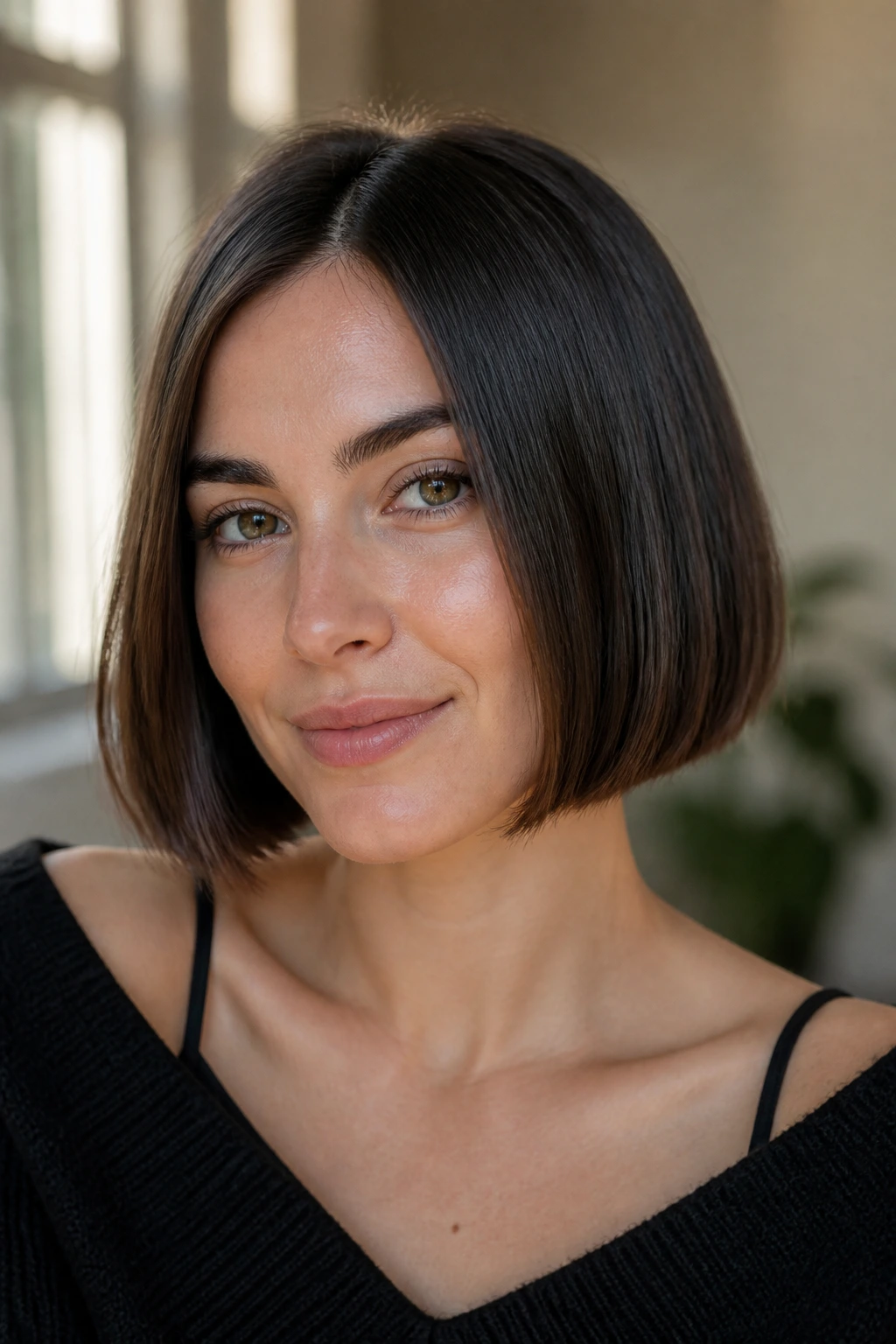
A blunt chin-length bob is the haircut I trust when fine hair has started to look stringy at the bottom. The line sits right around the jaw, where the eye catches the shape immediately, and the ends land in one firm row instead of scattering into wisps. Clean. Solid. No apology.
Why It Feels Fuller
Ask for a perimeter that stays blunt and resist the temptation to chip away at the bottom with thinning shears. A little movement near the crown is fine, but the edge should feel intentional, almost architectural. On fine hair, that single line gives more visual density than layers ever will.
How to Style It
Blow-dry with a small round brush, lifting the roots first and turning the ends just under at the very last second. If your hair is pin-straight, a quick pass with a flat iron that curves the ends inward can make the cut look heavier without making it stiff. One light mist of flexible hairspray is enough.
- Best length: jaw to just below the jaw
- Best part: slightly off-center
- Best product: root mousse, not heavy cream
A chin bob is blunt in the nicest possible way. That is why it works.
2. Collarbone Lob with Tucked-Under Ends
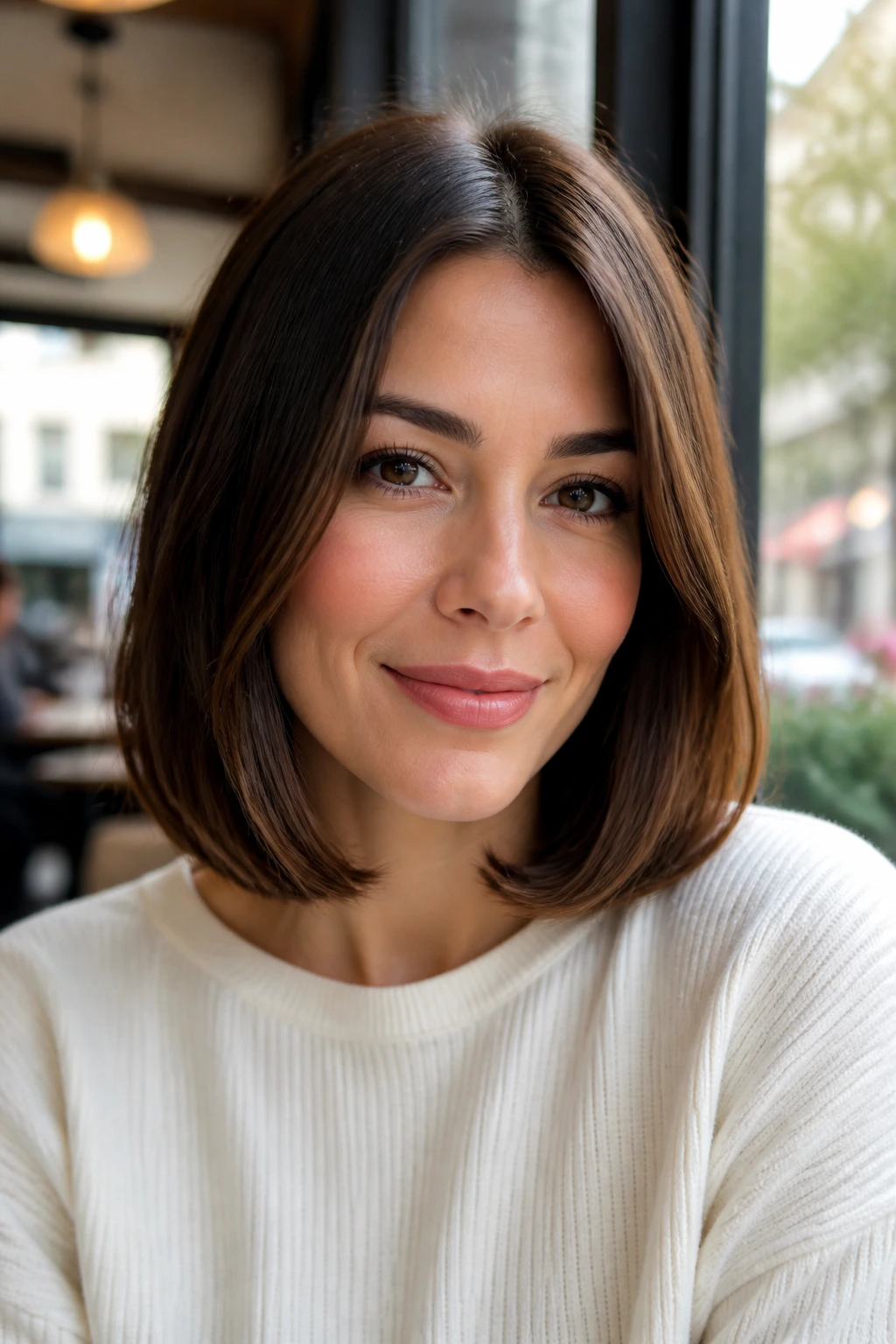
What if you want a little more length without letting the ends go see-through? The collarbone lob is the answer I reach for. It sits right where hair can still swing, but not so long that the bottom starts to look tired and thin.
How It Keeps Its Weight
The collarbone gives the hair a natural stopping point, and tucked-under ends make the shape read thicker. Use a round brush or a 1.25-inch iron to bend the last inch inward. That tiny curve changes everything, because the eye sees a stronger edge instead of a loose curtain.
Best Way to Wear It
A soft side part keeps the crown from lying flat, and a little lift at the roots helps the length feel intentional instead of heavy in the wrong way. If you like polished hair, this cut can go sleek. If you like movement, it can take a few soft bends and still keep that fuller outline.
This is one of those cuts that behaves well on ordinary days. It still looks put together after a scarf, a jacket collar, or a long afternoon at a desk.
3. Deep Side-Part Blowout
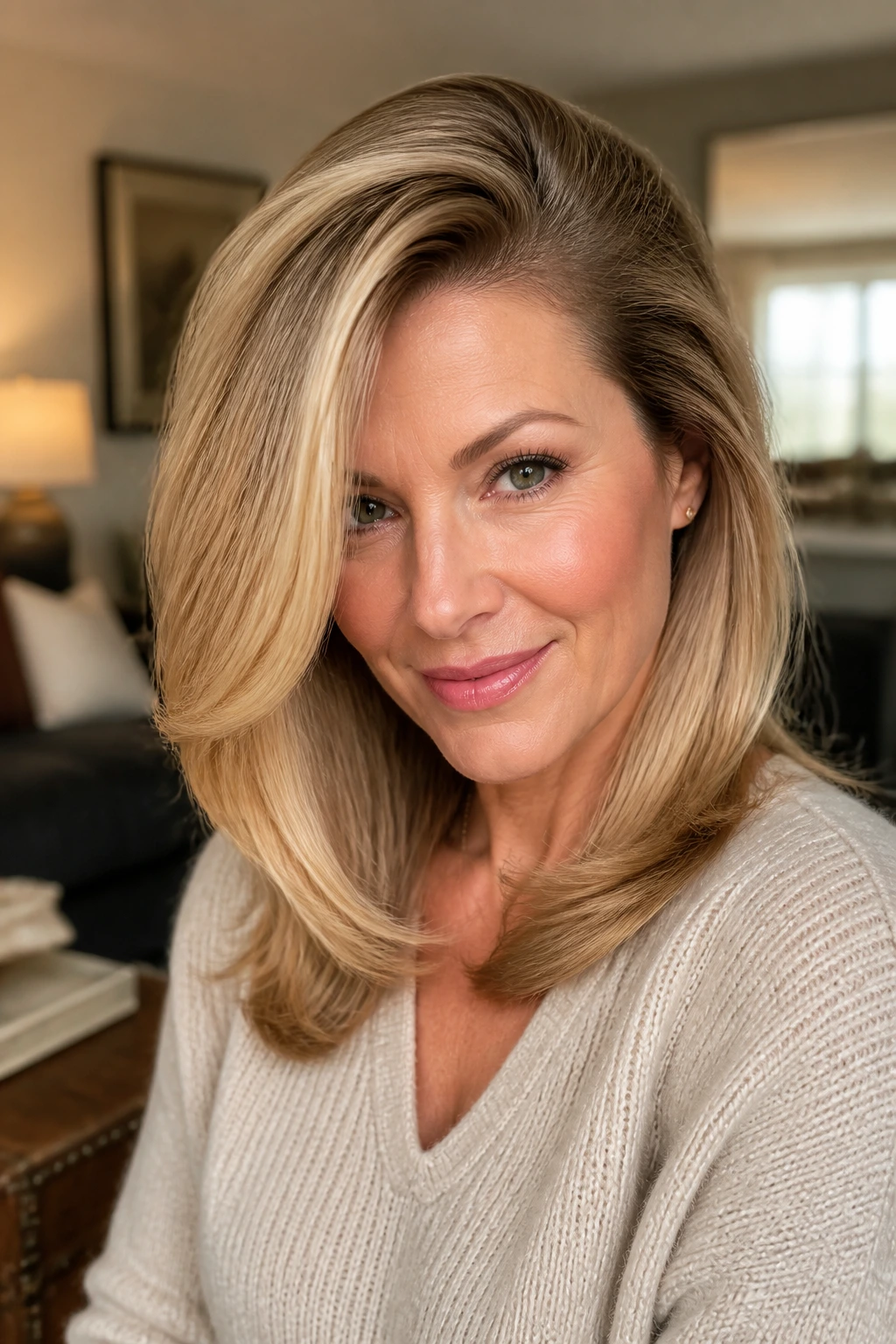
A deep side-part blowout is one of the quickest ways to make fine hair look denser without changing the cut at all. The part creates immediate lift on one side, while the other side falls into a heavier-looking sweep that feels full rather than fluffy.
The Small Mechanics That Matter
Dry the hair in the opposite direction first, then flip the part back once the roots are warm and mostly dry. That little trick trains the base to stand up instead of settling into the scalp. A medium round brush and a nozzle on your dryer help keep the cuticle smooth, which makes the finish look more expensive than it really is.
Where It Works Best
This style loves shoulder-length hair, but it also works on a chin bob if the ends have enough length to swing. It’s especially useful if your hair gets flatter on one side from sleeping on it. The deep part gives the style a built-in asymmetry that reads like volume, not effort.
I like this look because it does not pretend fine hair is something it isn’t. It simply uses direction, shine, and weight in the right places.
4. Curtain Bangs with a One-Length Shoulder Cut
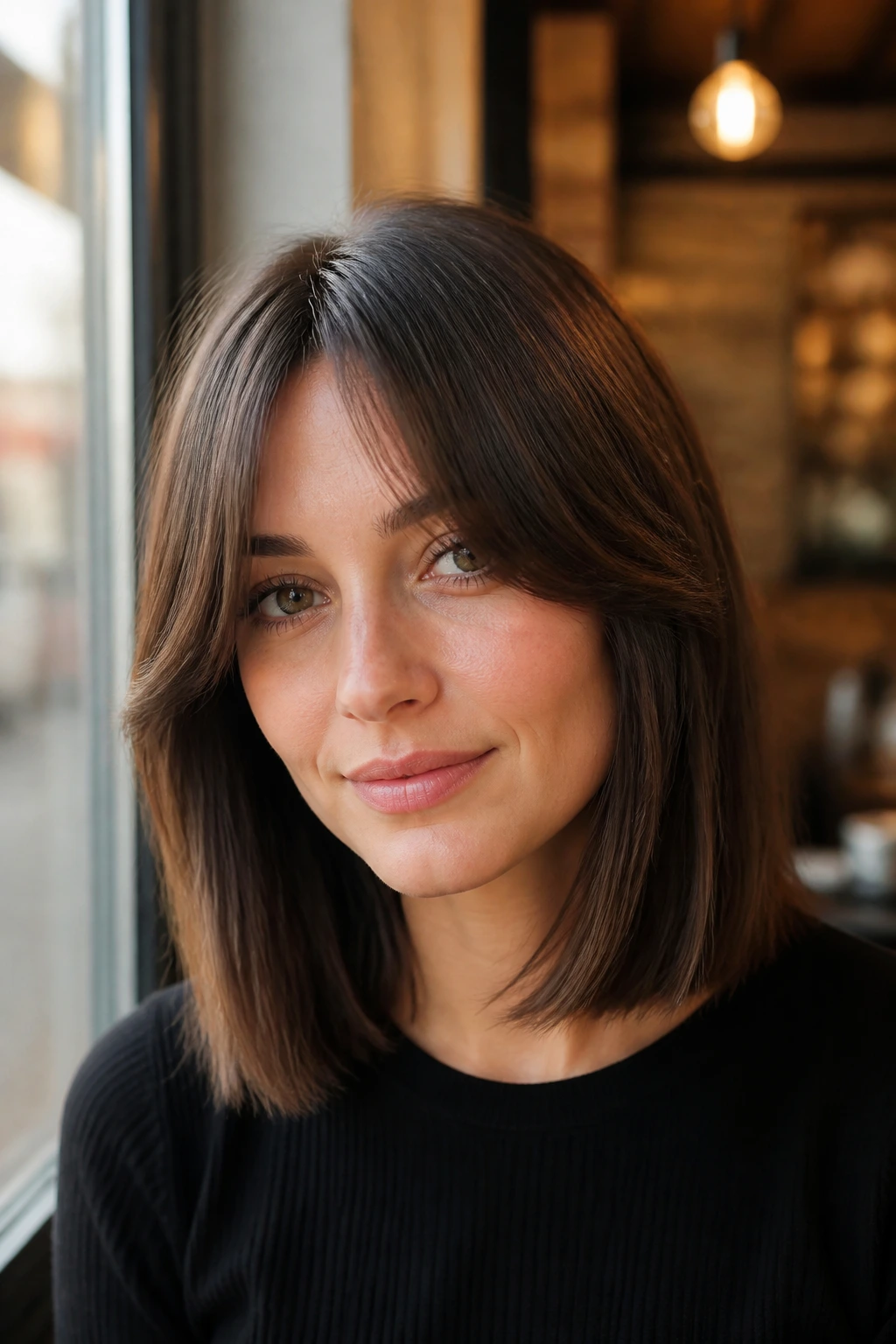
Curtain bangs can work on fine hair, but only when the rest of the cut stays disciplined. Pair them with a one-length shoulder cut, and you get softness around the face without shredding the whole head into pieces that disappear.
Why It Works
The bangs draw attention upward, which helps fine hair feel fuller at the front, where the eye lands first. Keep the curtain pieces long enough to graze the cheekbones and avoid a thin, whispery fringe. Too short, and they start to look separated instead of plush.
How to Style the Fringe
Wrap each side of the bangs around a large round brush or Velcro roller while they are still warm. A quick clip while cooling helps the bend stay. The rest of the hair should stay mostly one length so the ends keep a heavier line.
This is a nice middle ground if you want face framing but do not want the ends of your hair to look picked over. The haircut gives you shape, and the bangs give you motion. That balance is the whole point.
5. French Bob with a Soft Bevel
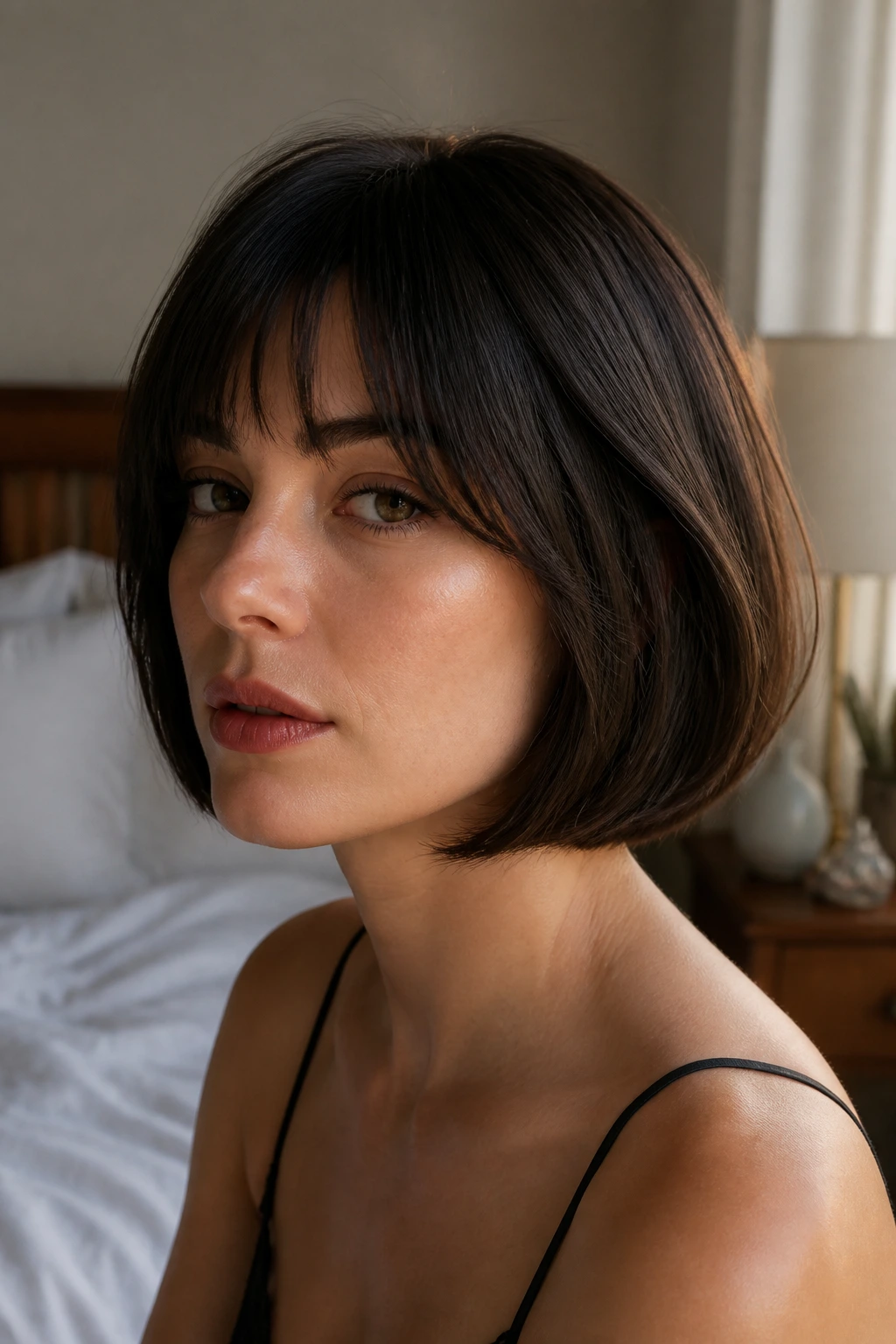
The French bob is short enough to feel fresh and long enough to keep some weight at the bottom. On fine hair, that matters. A chin-grazing cut with a soft bevel at the ends can look denser than much longer hair that’s been layered to death.
What Makes It Different
Unlike a choppy pixie or a shag, the French bob keeps its outline tidy. The ends usually turn under just a touch, which creates a rounder silhouette at the jaw. If your hair is straight, this shape looks especially good because it keeps the line crisp.
Styling Notes
A touch of root spray at the crown and a quick rough-dry with fingers is often enough for day-to-day wear. For a more polished finish, use a small brush to bend the ends under and keep the top smooth. Skip heavy styling paste unless you want the hair to look separated and piecey.
This cut has a little attitude, but not the high-maintenance kind. It looks like you know exactly what your hair is doing, even when you got ready in ten minutes.
6. Sleek Low Bun with a Lifted Crown
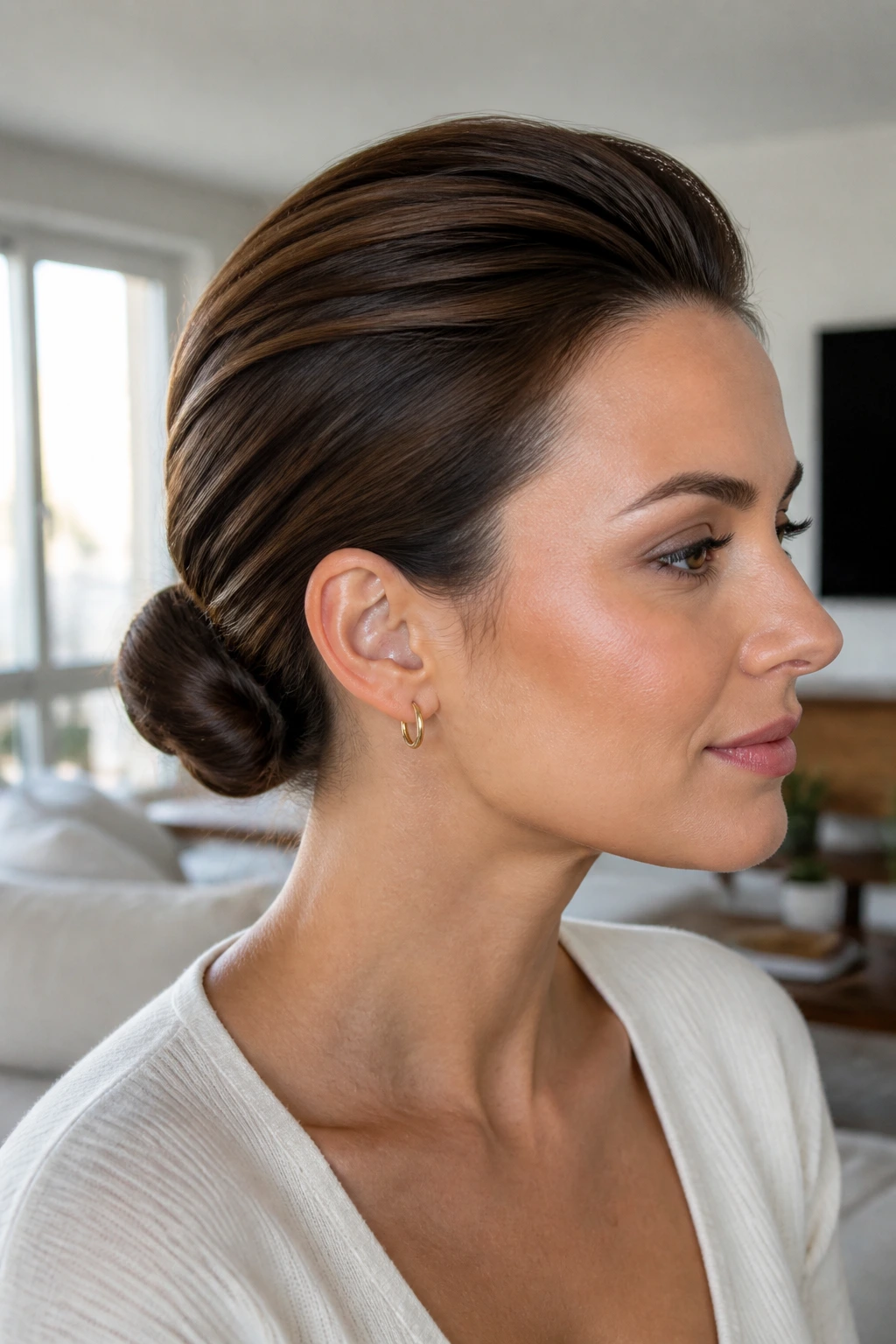
Fine hair can look unexpectedly full in a low bun if the crown is handled well. That is the part people miss. A flat crown makes the bun look smaller and the hair look thinner. A lifted crown gives the whole style more body before the bun even starts.
Building the Shape
Use a tail comb to create a clean part, then add a small amount of root powder or dry shampoo at the crown. Gently backcomb the roots only where the hair will sit under the top layer. Gather everything at the nape, twist into a bun, and secure with pins crossed through the base.
Why It Works on Fine Hair
The bun itself concentrates the hair into one compact shape, which reads as denser than loose lengths. A wrap of hair around the elastic hides the fact that the ponytail may be small. If your hair is very fine, this style actually benefits from being neat rather than messy.
I like this one on days when hair has a little oil at the roots. It turns that into polish instead of panic.
7. Half-Up Twist with Loose Length Below
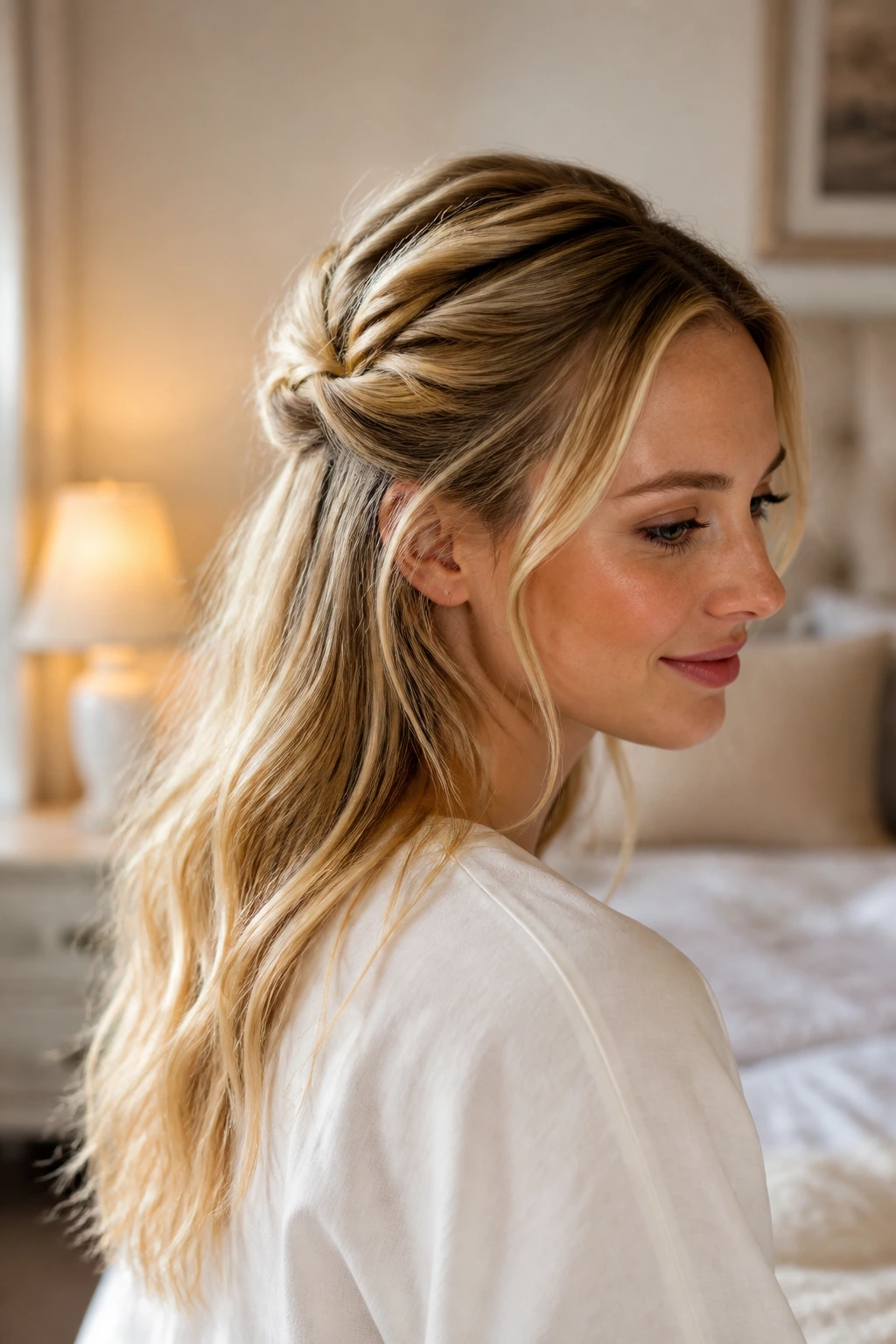
A half-up twist is a smart compromise when you want the crown to look fuller but you do not want to lose the weight of the lengths. Pulling only the top section back leaves the lower half free to hang with more presence.
The Shape Trick
Take the section from temple to temple, twist it back loosely, and pin it just above the occipital bone. That placement lifts the crown without crushing the front. The loose hair underneath should stay smooth or lightly waved so the bottom half keeps the visual mass.
Best Use Case
This style works especially well on second-day hair. The roots have a little memory, which helps the twist hold, and the lower section usually has enough texture to stay put. If your ends are thin, a soft bend with a curling iron keeps them from looking frayed.
A half-up twist is one of those looks that feels casual but still has structure. That matters more than people think.
8. Large-Wave Shoulder Style
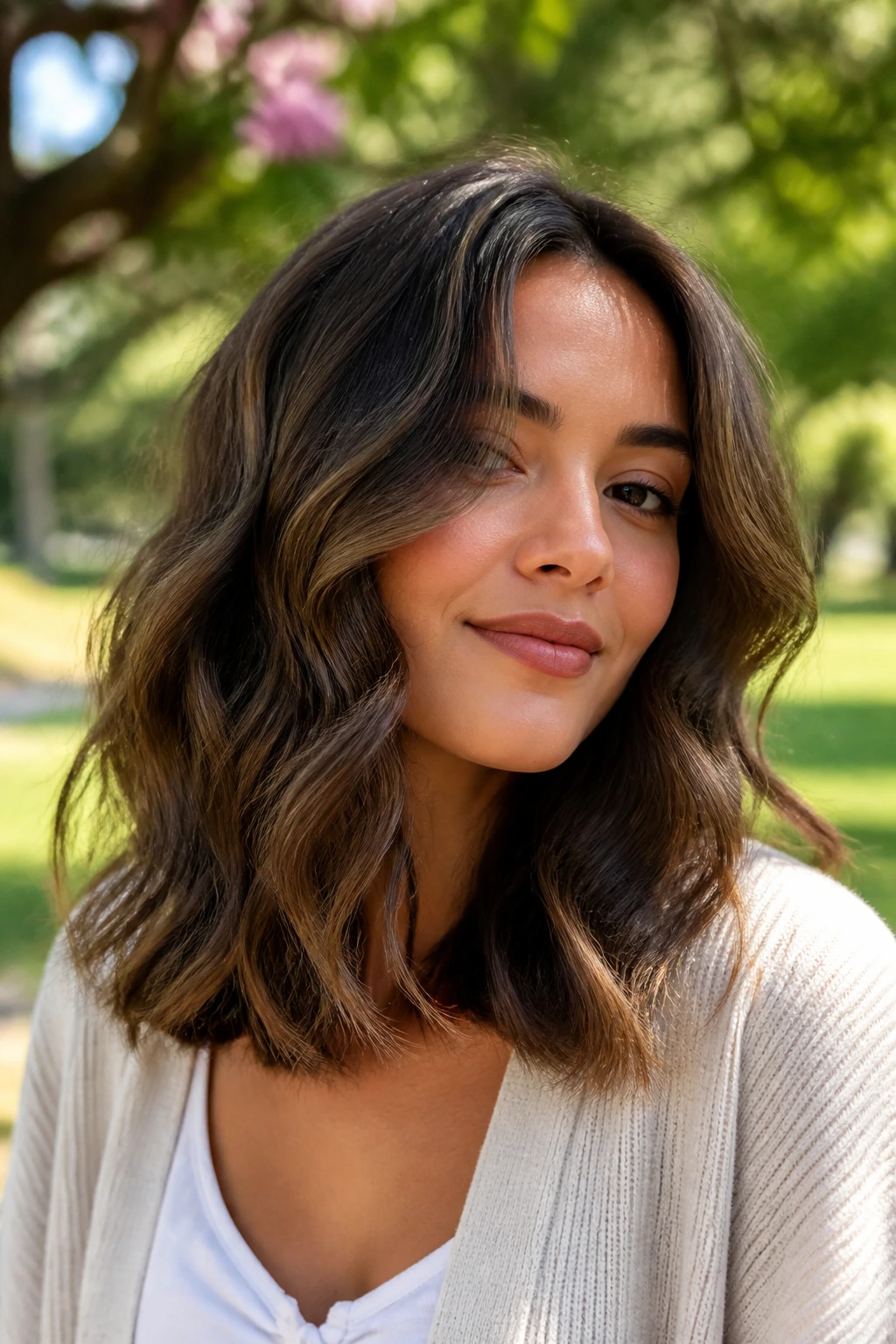
Big waves done on shoulder-length fine hair can look rich rather than airy, but only if the waves are broad and brushed through. Tiny beach waves are where fine hair starts to look scattered. Larger waves, with ends left a little straighter, keep the silhouette heavier.
How to Set It
Use a 1.25- to 1.5-inch curling iron and wrap hair away from the face in medium sections. Leave the last inch or two out on each section so the ends do not fray into a halo of curls. Once everything is cool, brush the waves out with a paddle brush or wide-tooth comb.
What to Avoid
Too much texture spray will make the waves look dry and puffy instead of full. You want movement, not fluff. A little shine serum on the mids and ends can help the hair look thicker because the strands sit together instead of scattering light in ten directions.
This style works best on hair that is already at least shoulder length. Anything shorter and the wave starts to eat the length you were trying to keep.
9. Polished Low Ponytail with a Wrapped Base
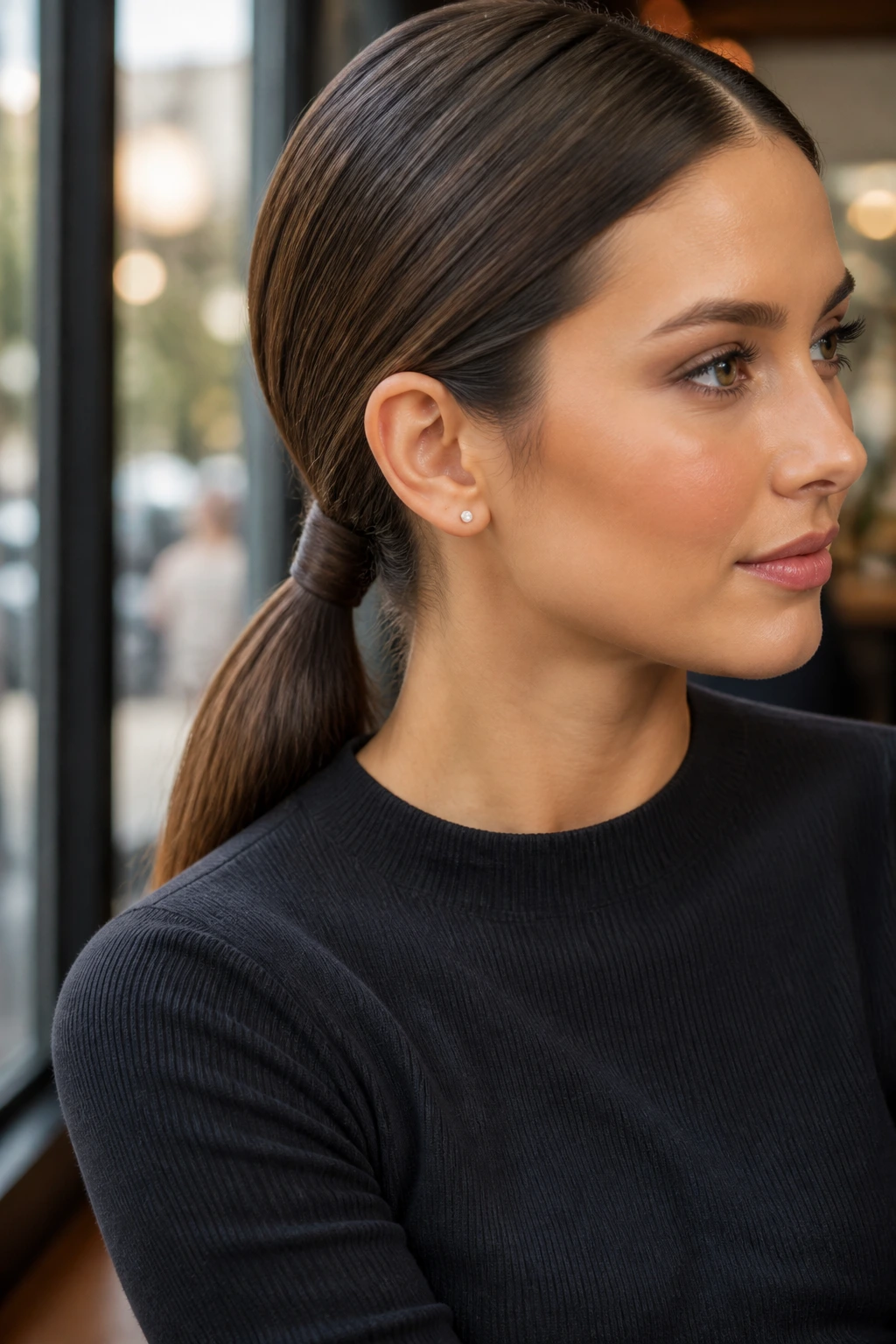
A polished low ponytail is one of the most underrated heavy-looking styles for fine hair. The trick is not to make the ponytail big by force. The trick is to make it look compact, smooth, and intentional.
Why It Reads Denser
A low placement at the nape keeps the hair from collapsing at the crown, and a wrapped base hides the elastic while creating one strong focal point. If the ponytail is pulled tight enough to sit cleanly, the eye sees a solid column of hair instead of loose strands flying apart.
Styling Details
Use a smoothing brush or paddle brush to direct the hair back, then secure it with a snag-free elastic. Take a small strand from underneath, wrap it around the band, and pin it under the ponytail. Finish with a mist of flexible hairspray, not a sticky shell that makes the hair look stiff.
This is a style I like when the weather is humid or the day is long. It stays decent longer than loose curls, and it never looks like you gave up.
10. Bubble Ponytail
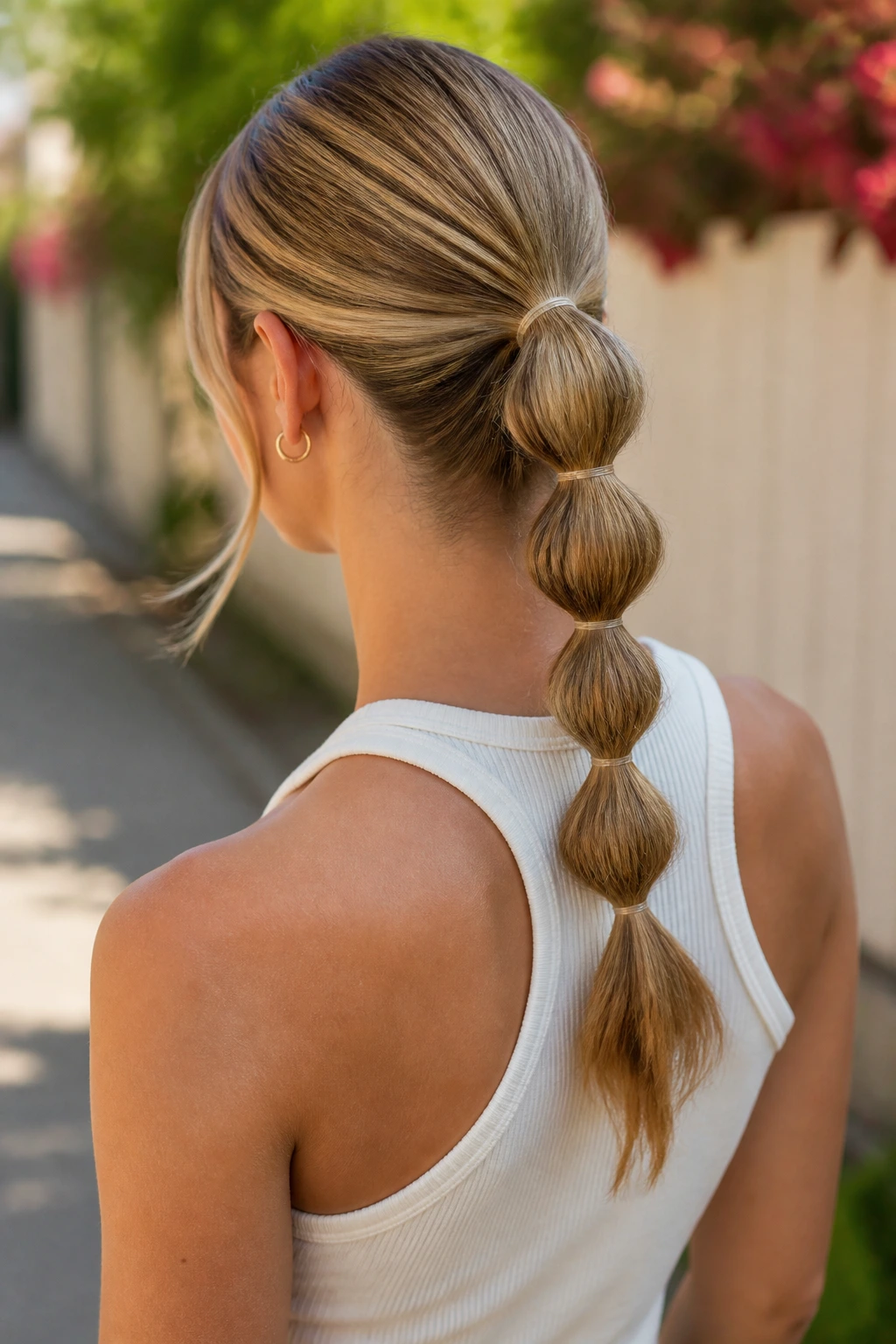
A bubble ponytail is a cheat code for fine hair, and I mean that in the best way. The sections between elastics puff outward, so the hair reads thicker than it really is. The style creates its own shape.
How to Build It
Start with a low or mid-height ponytail. Add clear elastics every two to three inches down the length, then gently pull each segment outward until it forms a rounded bubble. Do not yank so hard that the elastic digs in; you want volume, not dents.
Why It Works So Well
Fine hair often struggles in a single long ponytail because the tail narrows too much. The bubble structure breaks up that taper and gives the illusion of fullness from top to bottom. It also works nicely on hair that is one day past wash day, when the strands have a little grip.
If you like accessories, this style plays well with a slim ribbon or a matte clip at the base. Keep the finish smooth at the crown and let the bubbles do the visual work.
11. Claw-Clip French Twist
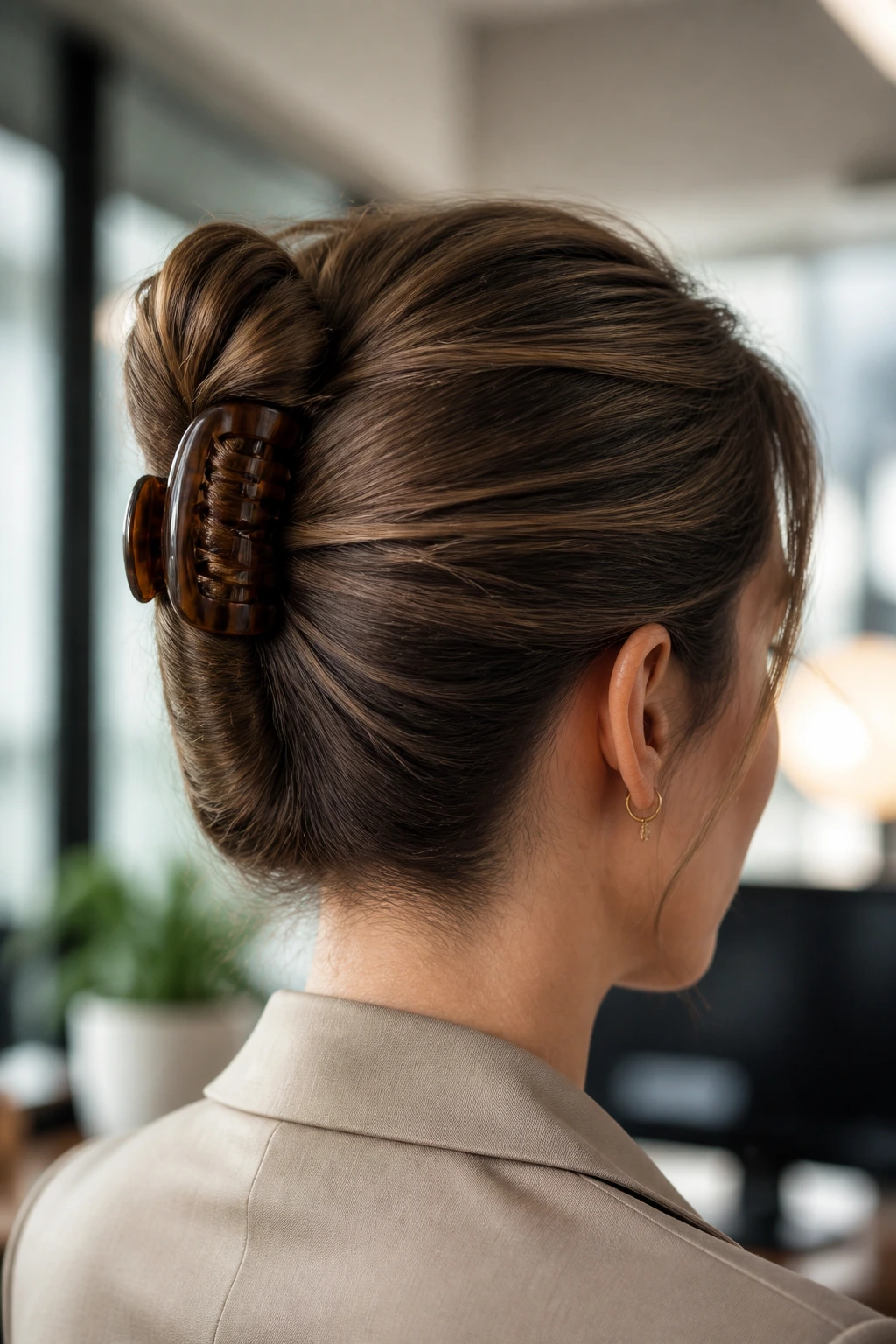
A claw-clip French twist is one of my favorite ways to make fine hair look more substantial without a lot of fuss. The twist gathers the hair into one thicker-looking line, and the clip gives the whole thing height without flattening the crown.
The Shape That Helps
Sweep the hair back, twist it upward, then fold the tail under itself before clipping. A medium or large claw clip works better than a tiny one because it holds more hair and creates more visual mass. Leave a few pieces loose at the temples if you want a softer finish.
Where It Fits
This style is excellent for office days, dinner plans, or any time you want your hair up but not severe. It can also rescue hair that is a little oily at the roots, because the gathered shape disguises flatness better than a loose blowout does.
One note: if your hair is very slippery, mist the lengths with texture spray before twisting. Otherwise the style can slide, and nobody enjoys babysitting a clip all afternoon.
12. Side-Swept Pixie with a Longer Top
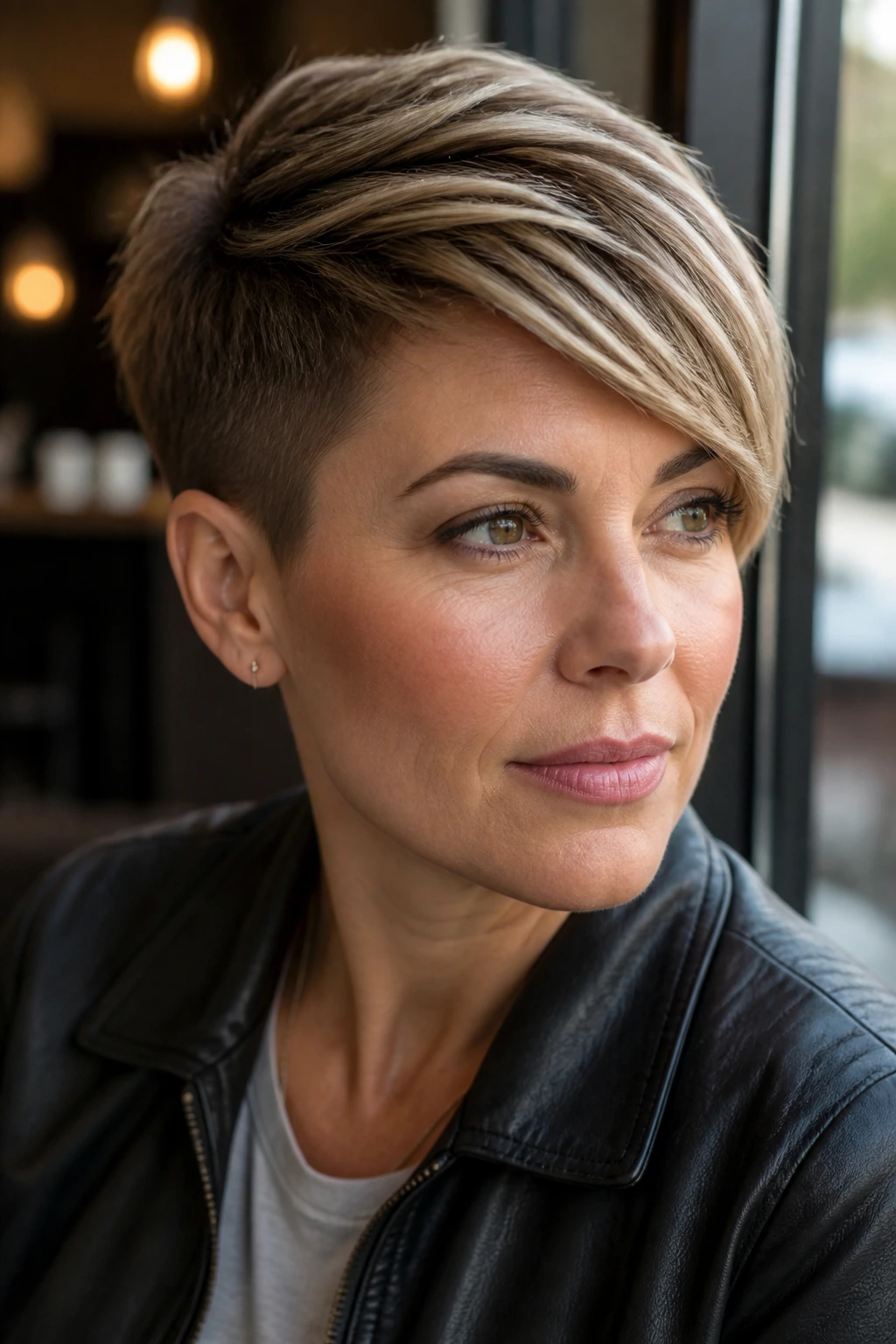
A side-swept pixie gives fine hair the kind of shape that looks deliberate from every angle. Short sides remove weak, see-through length, while the longer top keeps enough substance to sweep across the forehead and create a fuller-looking front line.
Why It Flatters Fine Hair
Fine hair often looks better when it is cut into a small, controlled shape rather than dragged down by length. A pixie does that quickly. The top can be blown forward or swept sideways, and either move helps the hair appear denser where the eye notices it first.
Styling Notes
A pea-size amount of lightweight cream or paste is enough. Work it through the top only, then use fingers to direct the hair to one side. If you want extra lift, blow-dry the roots in the opposite direction first, then push them back once the hair cools.
This cut is not for someone who wants to hide behind hair. It is for someone who wants shape, speed, and a style that does not need constant negotiation.
13. Pageboy with Curved Ends
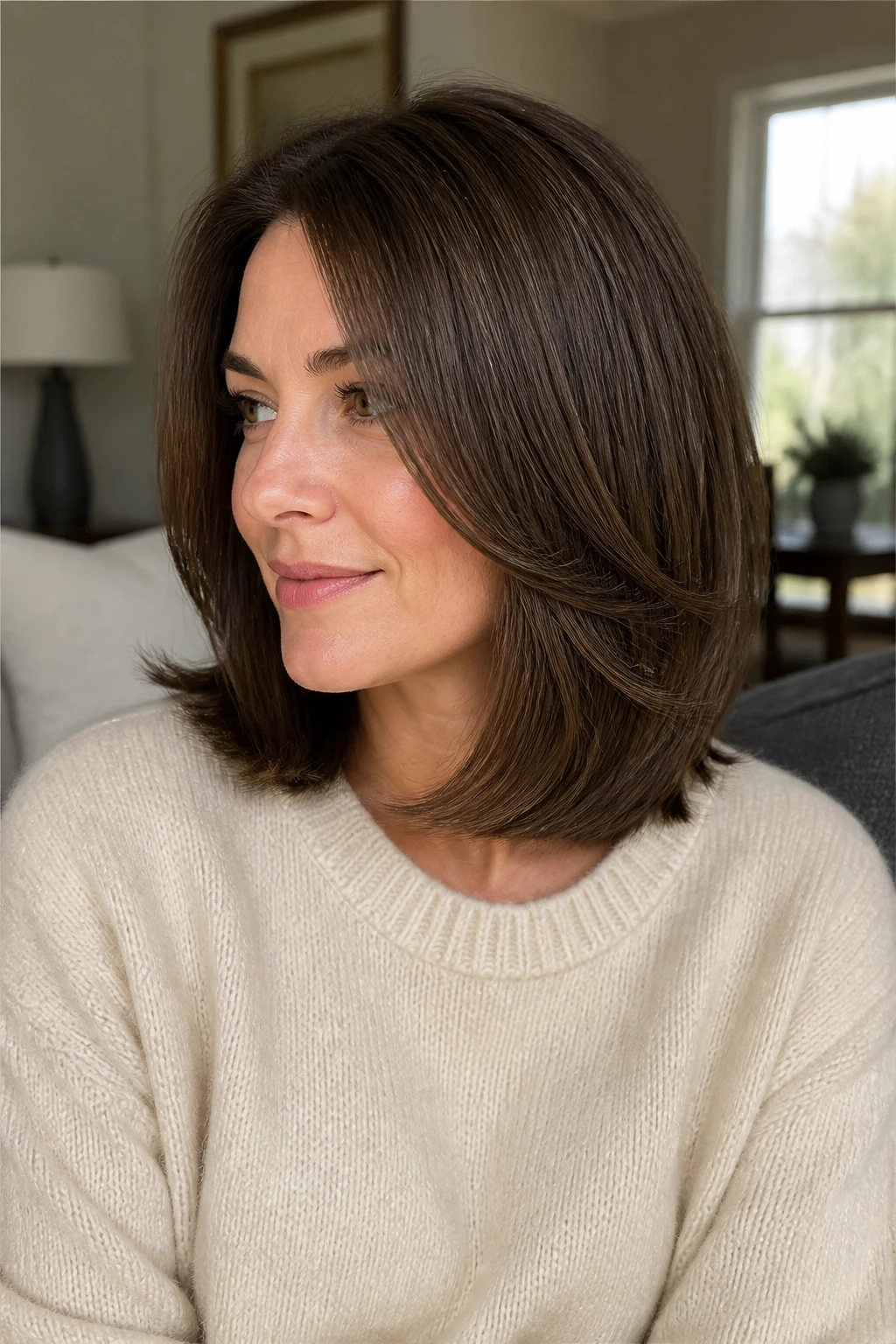
A pageboy has a heavier feel than a lot of modern cuts because the curve at the ends creates a solid, rounded outline. Fine hair likes that. It gives the impression of fullness without needing lots of layering or teasing.
The Difference Is in the Edge
The pageboy usually sits around the jaw or just below it, with the ends turned under more noticeably than a standard bob. That soft curve creates a dense-looking border. If the cut is too choppy, it stops being a pageboy and starts looking thin.
Styling It for Everyday Wear
Blow-dry with a round brush, keeping the tension smooth and the ends tucked inward. If your hair bends oddly at the nape, clip it in place while it cools. A side part or a slightly off-center part keeps the top from looking too helmet-like.
This is one of those retro shapes that works because it understands structure. Fine hair needs a shape it can occupy, not a shape it has to fill.
14. Glass-Hair Straight Lob
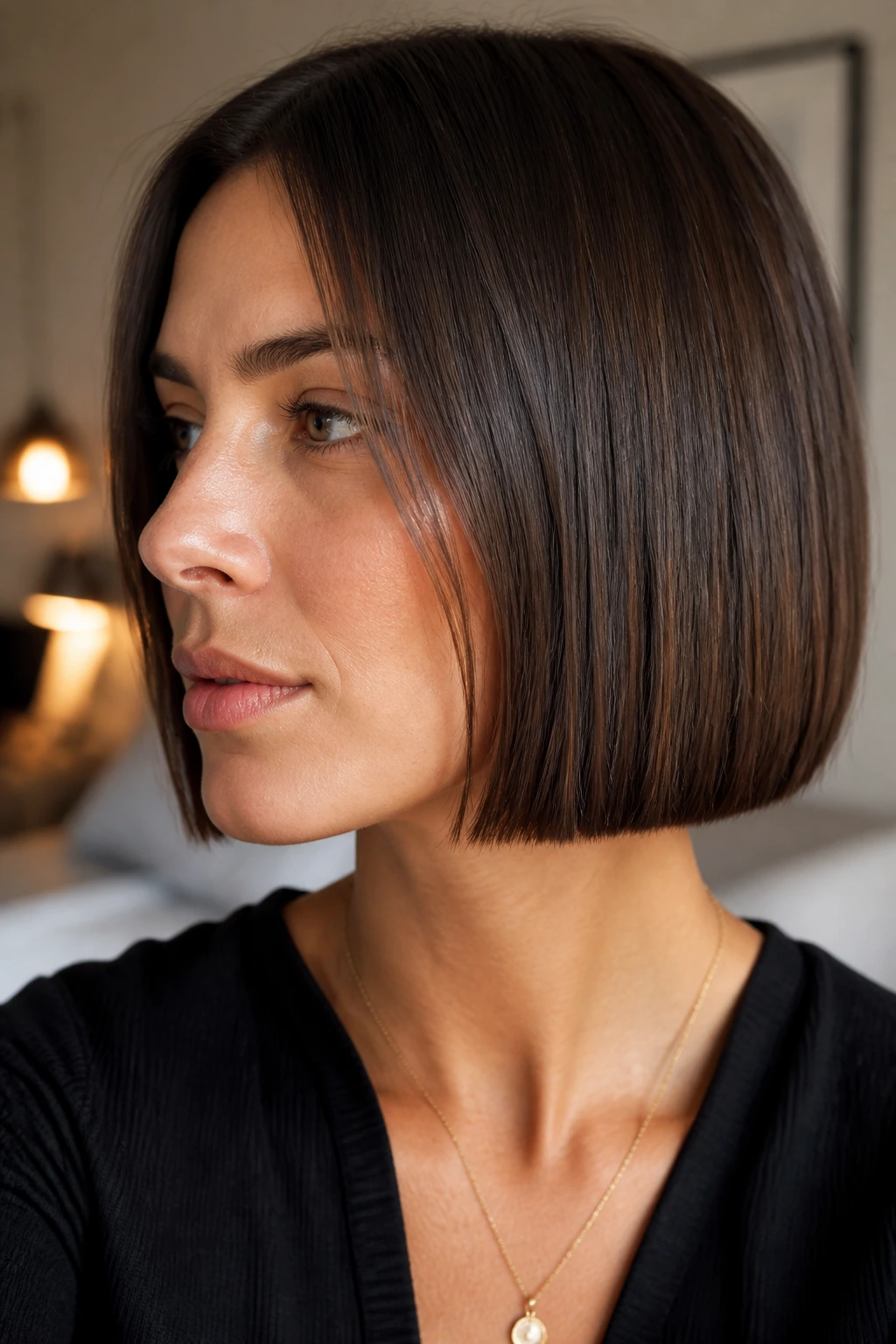
The glass-hair lob sounds sleek for a reason. Fine hair often looks thicker when every strand lies in the same direction and the ends line up cleanly. Shine does the rest.
What Makes It Heavier
The key is a blunt lob that stops around the collarbone and a very controlled finish. Straightening the hair in small sections, with one pass of a flat iron and a heat protectant, keeps the cuticle smooth. That smoothness helps the hair look denser because the surface reflects light in one clean sheet instead of scattering it.
How to Wear It
Keep the ends blunt and skip anything that breaks up the line too much. A middle part can work here if your hair naturally falls evenly, but a soft off-center part often gives more movement without losing the sleek feel. Use a tiny amount of serum on the mids and ends only.
This style is not about volume in the casual sense. It is about precision. That precision reads as thickness, especially on fine hair that tends to fray when overworked.
15. Crown Braid into a Low Ponytail
A crown braid gives the top of fine hair more visual structure, and the low ponytail underneath keeps the length from disappearing completely. It is a smart mix of control and softness.
Why It Works
The braid adds texture right where the eye looks for lift, while the ponytail keeps weight at the bottom. If the braid is too tight, it can expose the scalp, so leave it a little relaxed and pancake the outer edges gently after braiding. That makes the braid look broader.
Best Way to Finish It
Secure the braid into a low ponytail at the back, then smooth the rest of the hair so it falls in one continuous line. If the tail feels thin, a soft wave or a loose bend through the ends gives it more presence. A small ribbon or clear elastic can hide the join if you want the style to feel polished.
This is a nice one for second-day hair or hair that has lost some lift at the crown. The braid gives it a second life.
16. Hidden-Pin Faux Bob
A faux bob is one of the most satisfying tricks for shoulder-length fine hair. You tuck the length under, pin it close to the nape, and suddenly the hair looks shorter, denser, and more contained.
Why It Works on Fine Hair
Fine hair can look richer when the ends are hidden instead of hanging visibly past the shoulders. By folding the length under, you remove the see-through tail and replace it with a heavier-looking silhouette around the neck. The style has a bit of old-Hollywood neatness, which suits fine hair well.
How to Make It Stay
Curl the bottom of the hair slightly first, because straight ends are harder to tuck cleanly. Pin the folded sections in layers, starting low and working upward so the hair lies flat at the nape. A few hidden pins crossed in an X hold better than one lonely pin fighting gravity.
This is the kind of style that looks more complicated than it is. That is a good thing. Let people think you spent longer on it than you did.
17. Off-Center Low Knot
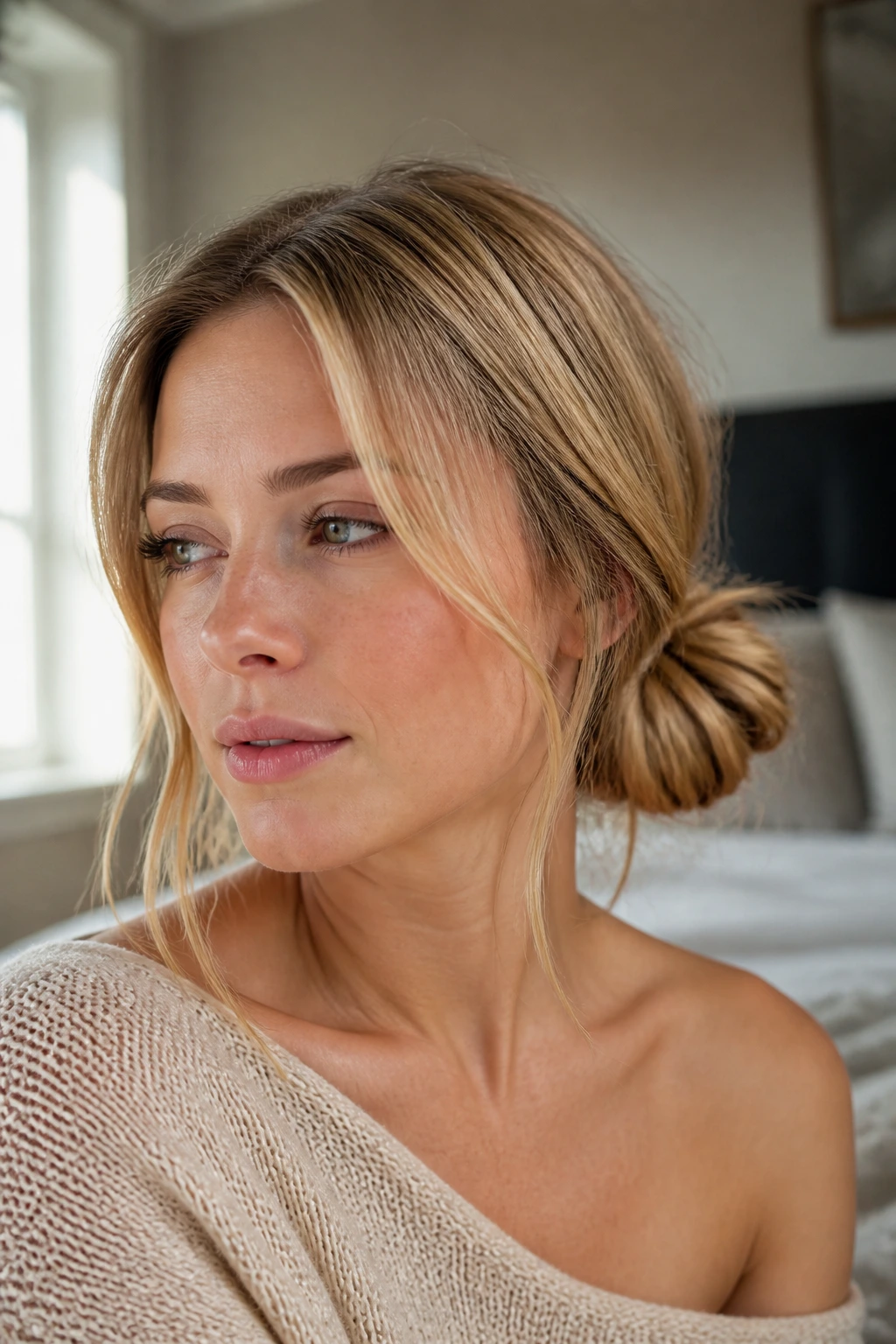
An off-center low knot gives fine hair a little asymmetry, which makes the style feel fuller and less strict. A centered knot can sometimes look too small on narrow hair, especially if the ponytail is thin. Shift it slightly to one side, and the shape gains more visual presence.
The Small Fix That Helps
Before tying the hair, create a soft off-center part and smooth the hair down toward the nape. Twist it into a knot slightly behind one ear line rather than in the exact middle. That tiny shift changes the silhouette more than you’d think.
When to Choose It
This works well on hair that’s too short for a big chignon but too long to feel like a simple bun. A few loose face pieces can soften the style, though I would keep them restrained. Too many flyaways and the knot loses its heavier feel.
A low knot is not about volume in the obvious sense. It is about making the hair seem gathered and deliberate. That is often enough.
18. One-Length Midi with Face Framing
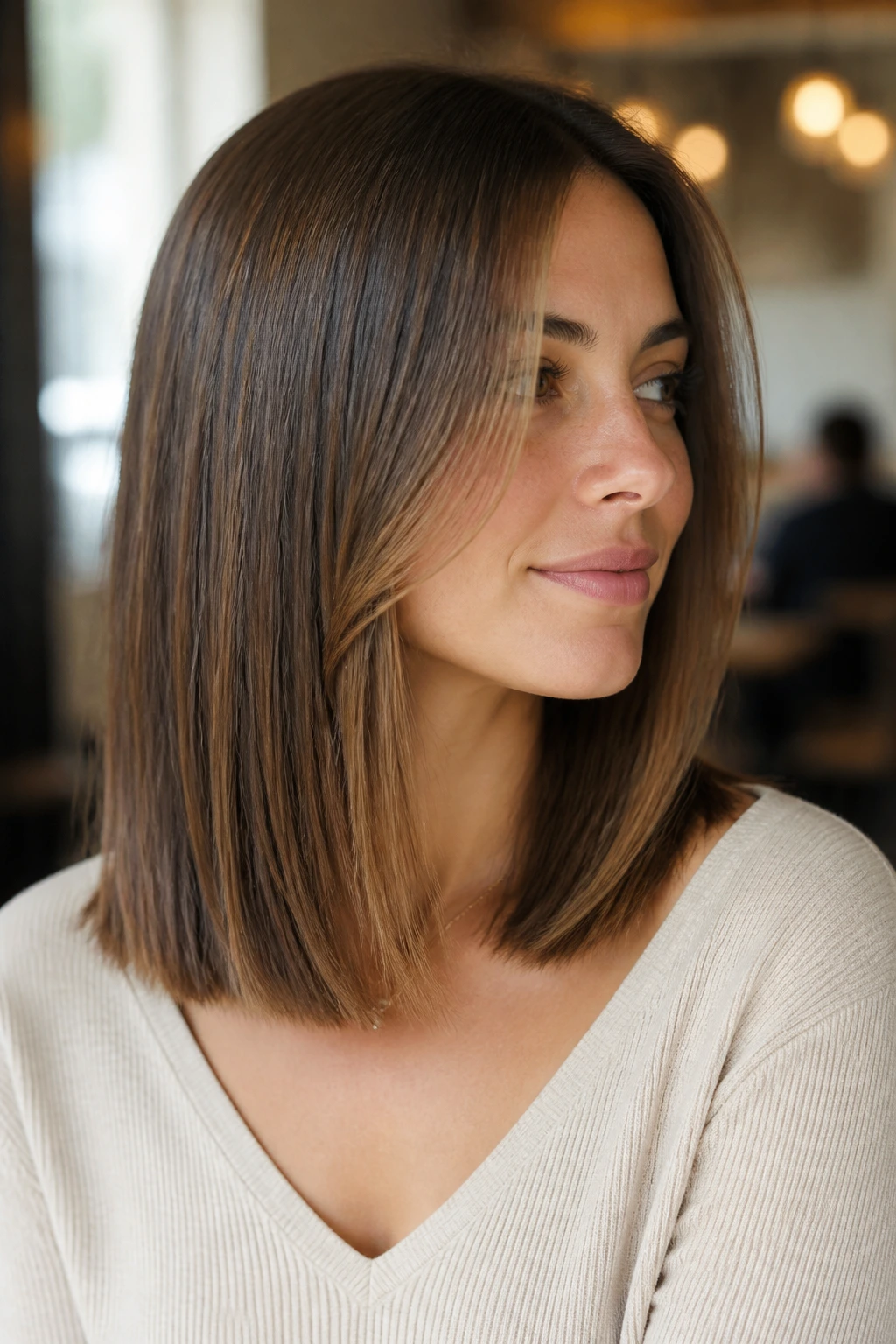
A one-length midi cut is the quiet powerhouse of fine hair. The length usually lands somewhere between the collarbone and upper chest, and the lack of heavy layering keeps the ends from going sparse. A little face framing is fine, but the body of the haircut should stay mostly one line.
Why It Holds Up
Fine hair needs length that does not collapse into a feathered triangle. This cut avoids that by keeping the perimeter intact. The small face-framing pieces add softness around the jaw and cheekbones, but they do not chew up the density at the bottom.
Styling Notes
You can wear it straight, bent, or in loose waves, and it still keeps a heavier outline than many layered cuts. A large round brush or wide curling iron gives the mids a little bend without making the ends look separated. If your hair tends to split at the bottom, this is a good haircut to trim regularly, because the shape depends on clean ends.
This is the style for someone who wants hair that looks full without looking short. That is a narrower category than people think.
19. Soft Angled Bob
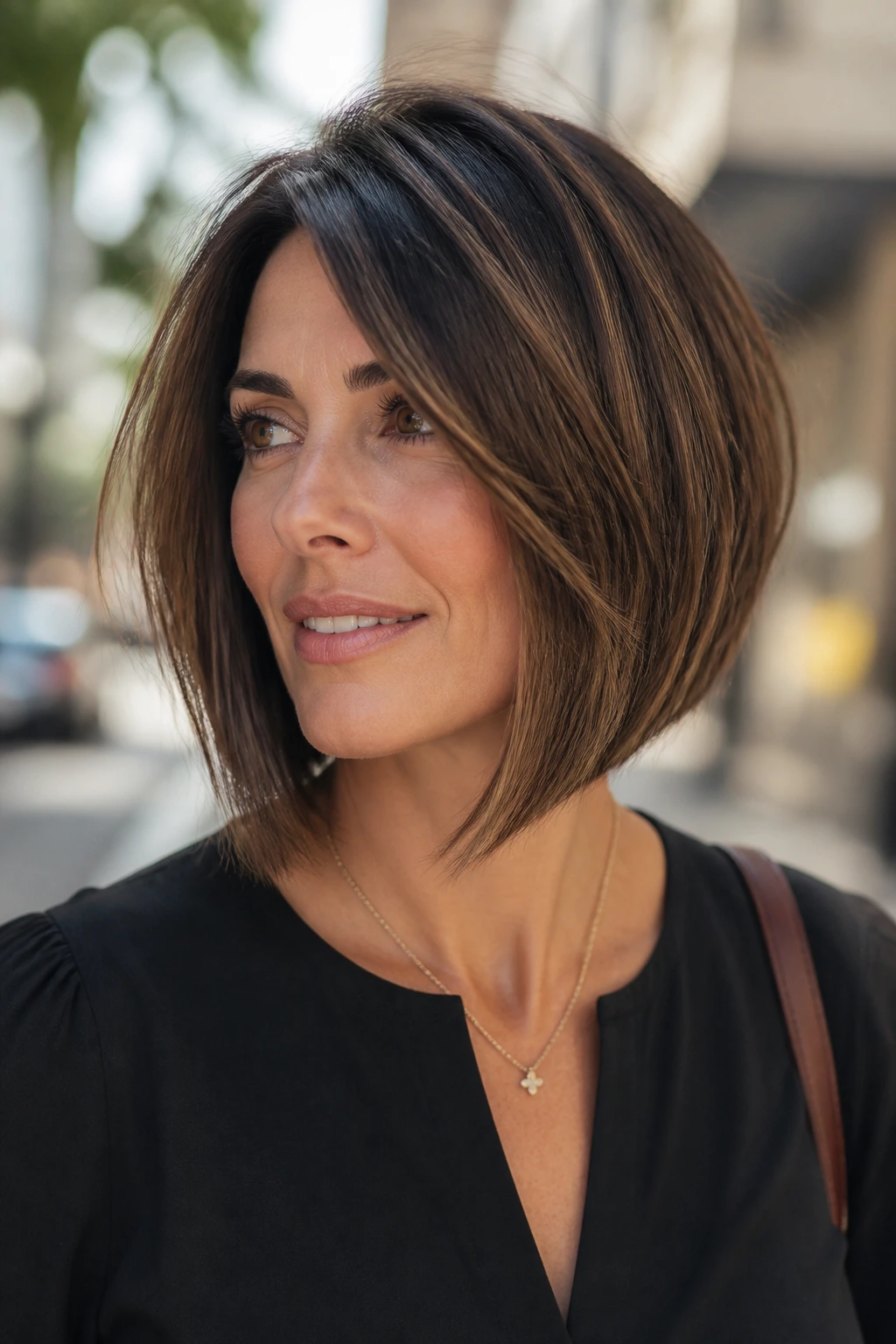
A soft angled bob gives fine hair movement toward the face while keeping the back compact. The slight angle makes the front look fuller because the eye follows the longer line forward, and the back stays neat enough to keep the whole shape from drifting.
Why It Looks Denser
Unlike a stacked bob, which can get too airy at the crown, a soft angle keeps weight in the perimeter. The front pieces should only be a little longer than the back. Enough to swing. Not enough to thin out.
Styling It
Blow-dry the back under first, then direct the front pieces forward with a round brush so they curve around the jaw. If the cut is too flat, a quick root lift at the crown fixes the problem fast. A small amount of shine spray on the ends helps the hair look like one continuous surface.
This is a useful cut if you want shape without the harshness of a full blunt bob. It feels a little less strict, but still grounded.
20. Scarf-Tied Low Chignon
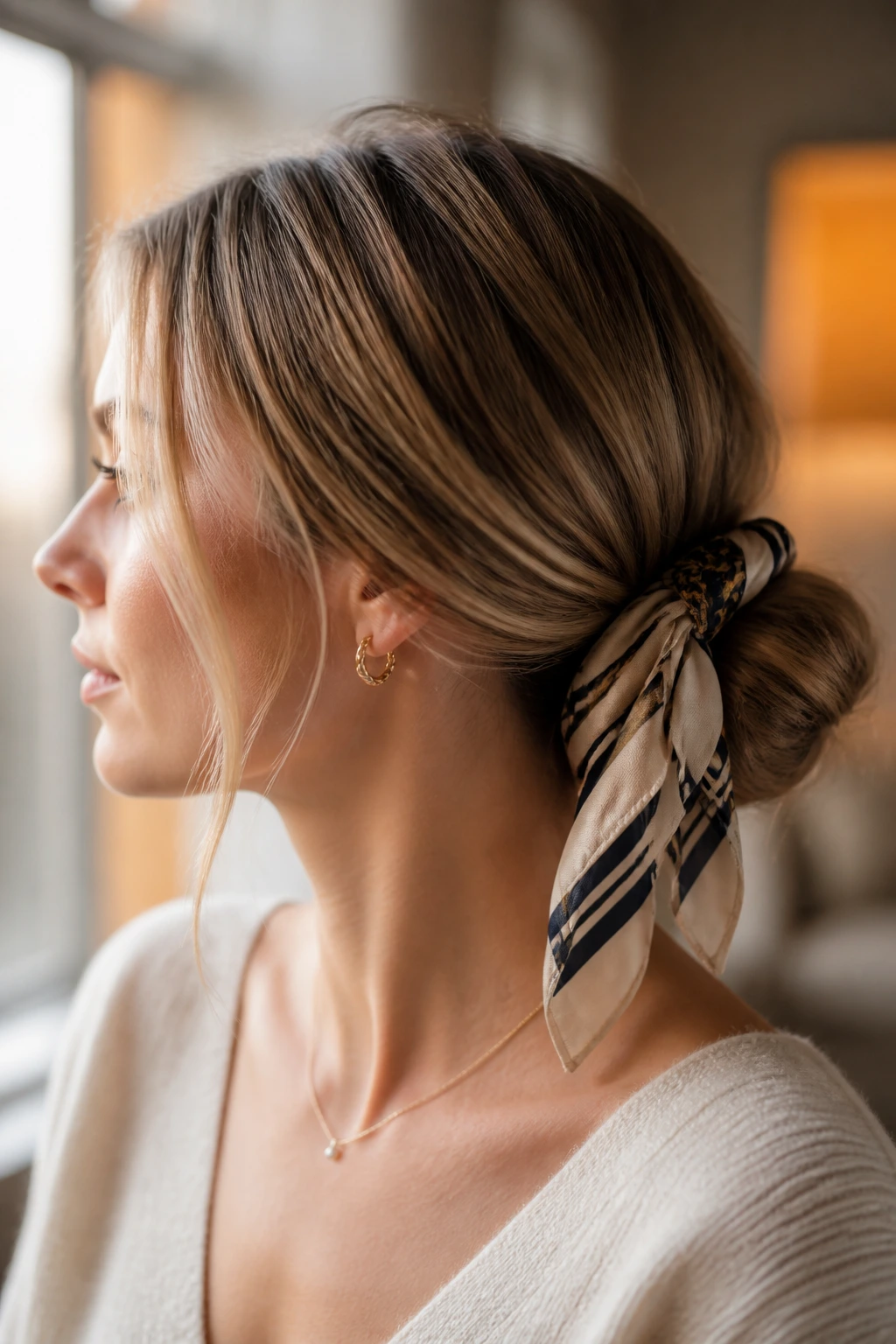
A scarf-tied low chignon is one of those styles that quietly solves more than one problem. It gathers fine hair into a compact knot, hides the smaller size of the bun, and adds a bit of visual bulk right where the scarf sits.
Why It Works
The scarf gives the eye something to focus on besides strand count. That matters. A plain bun can sometimes look too tiny on fine hair, but a tied scarf adds width and makes the style feel finished. Choose a silk or cotton scarf that is not too slippery, or the knot will wander.
How to Wear It
Twist the hair into a low chignon at the nape, pin it securely, then wrap the scarf around the base and tie it off to one side or at the back. Keep the knot compact so it does not swallow the bun. A few face pieces or soft bangs can keep the style from looking severe.
This is one of my favorite solutions for mornings when the hair looks thin, the weather is weird, and you need something that looks like you planned it.
Why These Styles Read Fuller in Real Life
Fine hair is not the problem. Bad geometry is.
A hairstyle looks heavier when the outline is clear, the ends are not shredded into dust, and the crown has enough lift to keep the shape off the scalp. That is why the blunt bob, the tucked-under lob, the low ponytail, and the compact bun keep showing up in real life. They do not rely on miracles. They rely on structure.
The other thing these styles do well is hide the weak spots. Thin ends disappear inside a chignon. A lifted crown makes a ponytail look stronger. A side part covers flatness in a way that feels natural, not forced. Once you start paying attention to that, you stop asking your hair to become something it is not.
Essential Tools for These Looks
- Tail comb: Clean parts and tidy sections matter more on fine hair than on thick hair, because messy sectioning shows fast.
- 1.25-inch curling iron or wand: This gives a soft bend without turning the hair into tiny curls that look sparse.
- Small round brush: Useful for lifting roots and turning ends under on bobs and lobs.
- Paddle brush: Good for smoothing ponytails, blowouts, and glass-hair finishes.
- Light root-lifting mousse: Apply at the roots before blow-drying; this adds body without weighing the mids down.
- Dry shampoo: A little at the roots can create grip and extend styles into day two.
- Flexible-hold hairspray: Keeps movement while stopping the style from collapsing.
- Bobby pins and mini pins: Fine hair often needs more pinning than people expect, especially for faux bobs and twists.
- Clear elastics: Better for bubble ponytails, low ponies, and hidden bases because they stay discreet.
- Claw clip: A medium or large claw clip can hold a French twist or partial updo without flattening the crown.
- Heat protectant: Fine hair can scorch quickly, and once the ends look fried, they look thinner.
- Silk scrunchie or scarf: Useful for overnight preservation and softer ponytails that do not leave a crease.
What to Ask for at the Salon and What to Leave Out
The salon chair is where most fine-hair problems get created or fixed. Ask for a blunt perimeter first. That is the line that gives the hair its weight. If you want layers, keep them long and soft, and ask where they start; around the cheekbone or collarbone is usually safer than near the ends.
Leave out aggressive thinning shears at the bottom unless your hair is truly bulky and hard to shape. On fine strands, that kind of texturizing can make the ends look hollow. Razor cuts can also soften the outline too much if they are used everywhere, which is why I like them only in very controlled spots, if at all.
Bring a photo that shows the silhouette you want, not just the front view. Hair that looks full from the front can be thin at the back if the cut is wrong. And if you style your hair with a side part, say so out loud. A cut made for a center part can fall apart when you move the parting over even an inch.
How to Wear These Styles Without Losing the Lift
Parting: A deep side part gives instant height, while an off-center part can keep the top from lying too flat. If your hair has a stubborn sleep dent, switch the part before you dry it.
Finish: Sleek styles need smoothing cream on the mids and ends only; fuller styles need root spray or mousse at the base. The root is where the style lives or dies.
Accessories: Claw clips, pins, and scarves should hold the shape, not crush it. If the accessory is so tight that the crown goes flat, pick a larger one.
Texture: A small amount of bend in the mids makes fine hair look thicker than pin-straight lengths that separate into thin ribbons. Brush the curl out, though. Hard curls can expose the lack of density.
Mood: Choose the style that matches your day, not the one that sounds glamorous on paper. A low knot, a tucked lob, or a blunt bob all look better when they are worn with a bit of intent.
Additional Tips and Volume Boosters
Root Lift: Flip the part to the opposite side while blow-drying, then switch it back once the roots cool. That one move gives the crown more lift than another round of spray ever will.
Thickness Trick: Keep the bottom edge blunt and schedule trims before the ends start to look stringy. Fine hair can lose a lot of visual density from just half an inch of split ends.
Time Saver: If your hair takes forever to look finished, pick one tool and commit to it. A large Velcro roller at the front or a quick round-brush blowout at the crown often does more than overworking the whole head.
Polish Move: Run a tiny drop of serum over the palms and smooth only the mids and ends. Skip the roots. Fine hair near the scalp needs air, not shine grease.
Make-It-Yours: Straight hair usually looks best in clean shapes like the bob, lob, or glass-hair finish. Wavy hair can take more bend and still keep the heavier outline. If your hair is very fine and very soft, keep texture controlled instead of chasing big, loose waves that collapse by dinner.
Common Mistakes to Avoid
Too many short layers: The hair may move more at first, but the ends lose their line and the whole style starts looking thinner. If you want movement, keep the layers longer and more hidden.
Heavy conditioner at the root: This flattens the crown and makes the hair slip out of ponytails, clips, and twists. Use conditioner from mid-length to ends only, and rinse well.
Teasing the wrong section: Backcombing the whole head can make fine hair frizzy without actually looking fuller. Keep the lift at the crown or the top of a ponytail where it will be seen.
Skipping the part change: Fine hair gets used to the same part and starts laying down in a groove. Shift it slightly every few washes or blow-dries so the roots do not go limp in the same place.
Choosing tiny accessories: A small clip or narrow elastic can pinch fine hair into an even thinner-looking bundle. Go one size up if the style allows it; the extra grip usually helps.
Overloading on product: Too much mousse, cream, or spray makes the hair stick together and flatten under its own weight. Fine hair usually looks best with less product than you think, applied more carefully.
Variations and Adaptations to Try
The Soft Office Version: Keep the bob, lob, or ponytail smooth and close to the head, then add a faint bend at the ends. It looks neat, lasts through meetings, and does not need a full reset at lunch.
The Day-Two Rescue: If the roots are oily and the mids are flat, go for the claw-clip French twist or the low bun with a lifted crown. A little dry shampoo at the scalp gives the style enough grip to hold.
The Air-Dry Version: For naturally wavy fine hair, skip the round brush and let the hair dry in a loose wave pattern, then polish only the ends. This keeps the texture soft while avoiding the frizzy triangle that can happen when fine waves are overhandled.
The Short-Hair Version: If your hair is too short for a ponytail or bun, the side-swept pixie and French bob carry the most weight with the least fuss. Both depend on shape, not length.
The High-Polish Version: The glass-hair lob and wrapped low ponytail are your best bets if you want sleekness. They work well with straight hair and a good blow-dry, especially when the ends are trimmed often.
The Soft Romance Version: Curtain bangs, a crown braid, and a scarf-tied chignon add shape without making the hair look stiff. That is useful if you want movement but still need the style to read full.
Keeping Heavier Hairstyles for Women with Fine Hair Full by Day Two
Fine hair usually tells the truth overnight. If you sleep on it wrong, the crown goes flat and the ends lose whatever shape they had. That does not mean the style is ruined. It means it needs a better overnight routine.
For bobs and lobs, wrap the hair loosely with a silk scarf or sleep on a silk pillowcase. If the ends bend awkwardly, clip them under before bed and release them in the morning. A quick mist of water mixed with a little leave-in on the mids can reset the shape, but use only enough to dampen, not soak.
Updos and ponytails can often make it through a second day if the scalp stays comfortable. Re-pin anything that has shifted, tighten the elastic only if it is actually slipping, and add a dusting of dry shampoo at the roots. If the style has gone limp, pull it into a low knot or claw-clip twist rather than trying to force it back into the exact same shape.
Heat-styled waves usually need the fastest refresh. A few curls at the front and crown are usually enough; the rest can stay lived-in. Fine hair often looks better with a controlled refresh than with a full redo.
Frequently Asked Questions
What haircut makes fine hair look thickest?
A blunt bob or blunt lob usually does the heaviest visual lifting because the ends form one clean line. If you want to keep length, a one-length midi cut can do the same job with less drama.
Are layers bad for fine hair?
Not always, but too many short layers can strip away the weight that makes hair look full. Long, subtle layers can work if they are placed high enough to add movement without shredding the ends.
Should fine hair be shorter?
Not automatically, but shorter or mid-length cuts often hold shape better because the hair is not dragging itself flat. If your longer hair looks thin at the bottom, a collarbone lob or blunt midi usually reads denser.
Can fine hair hold curls?
Yes, if the curl is large, set properly, and brushed out after cooling. Small curls tend to fall and separate, while broader waves keep more surface area together and read as fuller.
Is a middle part better than a side part for fine hair?
A middle part can work on symmetrical faces and smooth textures, but a side part usually gives instant lift at the crown. If your hair collapses quickly, the side part is often the easier fix.
What products should I avoid on fine hair?
Heavy oils at the root, thick creams, and too much smoothing serum can flatten the hair fast. Fine strands usually do better with lightweight mousse, root spray, dry shampoo, and flexible hairspray.
How do I keep my hair from going flat by noon?
Start with lift at the roots while blow-drying, not after the style is finished. A clean part, a little dry shampoo at the crown, and a cut with a stronger outline will last longer than trying to rescue flat hair once it has already collapsed.
Can these styles work on second-day hair?
Yes, and some of them work better then. Low buns, bubble ponytails, claw-clip twists, and crown braids usually grab onto hair that has a little natural grit from day two.
Are curtain bangs a bad idea for fine hair?
Not if they are kept long and blended with a one-length cut. Short, wispy fringe can look sparse fast, but longer curtain pieces can frame the face without making the rest of the hair look thinner.
The Shape That Does the Work
Fine hair needs more structure than volume products can fake. That is the part people keep relearning the hard way. A clean edge, a smart part, and a style that keeps its shape around the crown will usually beat a pile of teasing and spray.
The nice thing is that you do not need to choose between polished and full-looking. A blunt bob can do both. So can a low ponytail with a wrapped base, a tucked-under lob, or a faux bob pinned close to the nape. Once you start looking for weight in the outline instead of size in the puff, the good options get a lot easier to spot.
And that’s the real win here: styles that make fine hair look like it has more of itself. Quietly. Reliably. Without asking for a full-time styling job.