



A good poof can rescue a flat morning fast, but thick hair makes the whole thing a little more complicated than the old sitcom version. Too little lift and the front drops into your eyes. Too much teasing and the style starts to look stiff, heavy, and oddly old-fashioned. The sweet spot is somewhere in the middle: enough crown height to shape the face, enough softness around the temples and jaw to keep the whole thing flattering.
That balance matters even more on a heart-shaped face. You’re working with a broader forehead, a narrower chin, and cheekbones that usually deserve a little room to breathe. The best poof hairstyles don’t fight that shape. They guide the eye down and outward with side pieces, movement, and a little vertical lift where it actually helps. Thick hair is a gift here, because it holds structure better than fine hair ever will. It’s also unforgiving, so lazy sectioning or weak pins will show up before lunch.
The styles below lean into what thick hair does best: hold shape, keep body, and stay up when you’d rather not think about it again. Some are polished enough for a night out. Some take five minutes and a claw clip. A few are the kind of hair ideas that look far more complicated than they are, which is always a nice surprise.
Why Poof Hairstyles Work So Well on Thick Hair and Heart-Shaped Faces
-
The lift sits where it matters most: A little height at the crown balances a wider forehead without making the face look top-heavy.
-
Thick hair keeps the shape longer: Dense strands hold teasing, pins, and curls with less slippage, so the style doesn’t collapse by noon.
-
Soft side pieces do real work: A few loose sections near the temples or cheekbones break up the width at the top of the face and make the whole look feel gentler.
-
You can go polished or messy: The same basic crown lift can turn into a sleek ponytail, a twisted bun, or a wavy half-up style depending on how much shine and control you want.
-
It saves you from overstyling the length: Sometimes the smartest move is putting the drama up top and letting the rest of the hair stay simple.
1. Teased Crown with Side-Swept Layers
Start with a deep side part and keep the lift focused just behind the front hairline. That’s the part that makes this style work. A few backcombed sections at the crown create a soft bump, while the side-swept layers skim across the forehead instead of cutting it off.
For thick hair, this looks best when the top layer stays smooth and the volume lives underneath. Tease in 1-inch sections, then lightly brush the surface once so it doesn’t look frayed. Pull the rest of the hair loose or tuck it behind one ear if you want a cleaner line.
Why it flatters a heart-shaped face
The side sweep shifts attention away from a broad forehead and gives the chin area a little more visual weight. That’s the whole trick. The shape feels intentional, not stuffed.
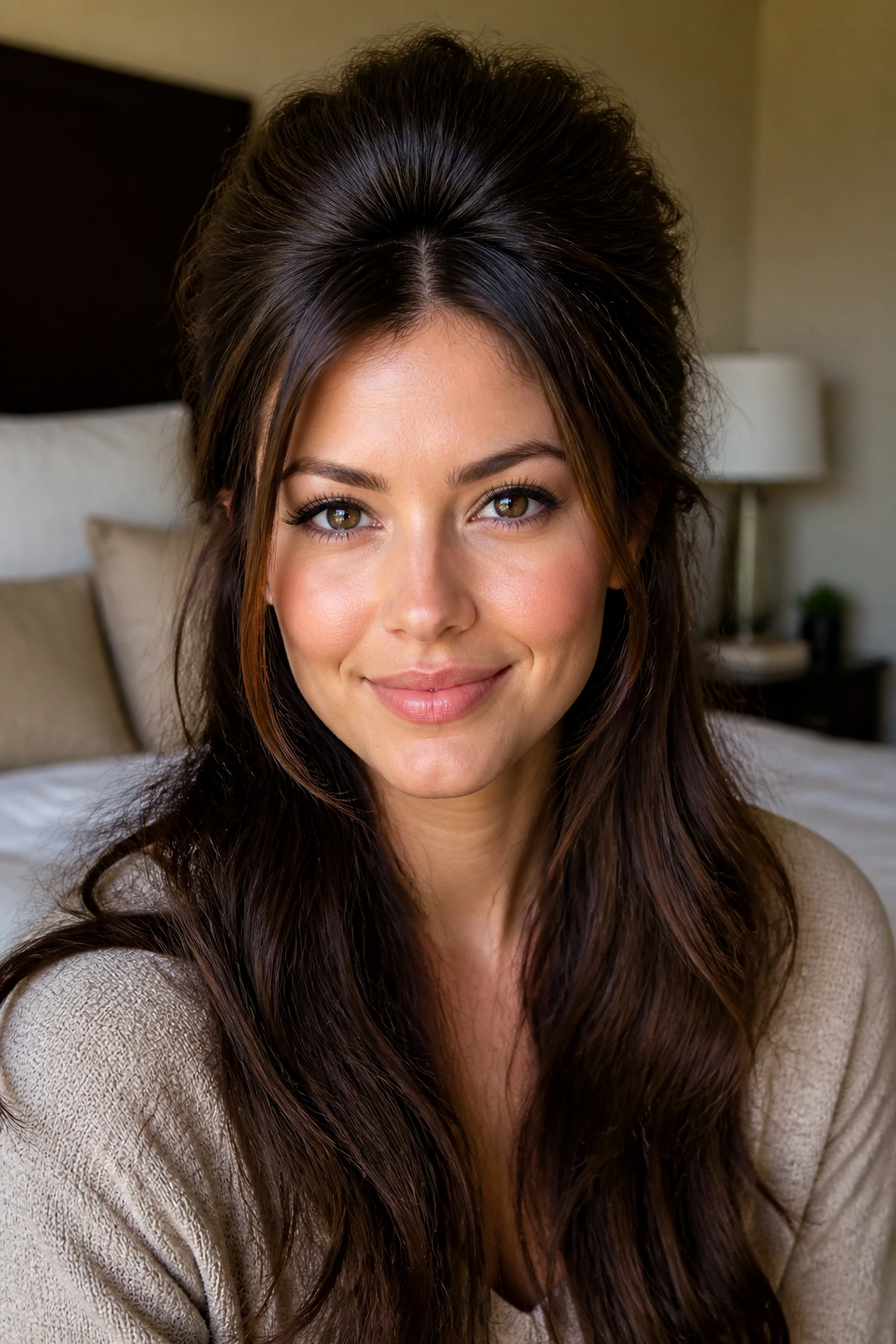
2. Half-Up Bouffant with Soft Ends
This is the style for when you want the crown to do the talking and the rest of the hair to stay relaxed. Gather the top half from temple to temple, tease just the underside, and pin it back into a little bouffant ridge. Leave the ends down in loose bends or soft waves.
The easiest way to keep thick hair from fighting you is to secure the half-up section before you curl the lower half. Once the top is anchored, the rest of the style feels easier. A 1.25-inch curling iron gives thick hair that loose bend without turning the ends into spirals.
Quick styling note
Keep the bouffant small enough to sit above the cheekbones, not above the entire head. That smaller lift is more flattering on a heart-shaped face and much less likely to fall forward.
3. Low Ponytail with a Lifted Front
A low ponytail sounds plain until you give the front a little height. Then it turns into one of the most useful poof hairstyles for thick hair. Create a soft bump at the crown, smooth the top layer over it, and tie the pony at the nape or just above it.
The face shape part matters here. A heart-shaped face usually looks best when the front isn’t pulled flat and severe. Leave a few wisps near the temples, or let a side part fall naturally into the lift. Thick hair gives this look a nice weight in the ponytail itself, which keeps it from looking thin or awkward.
One small thing: wrap a narrow strand around the elastic. It makes the style look finished in about ten seconds.
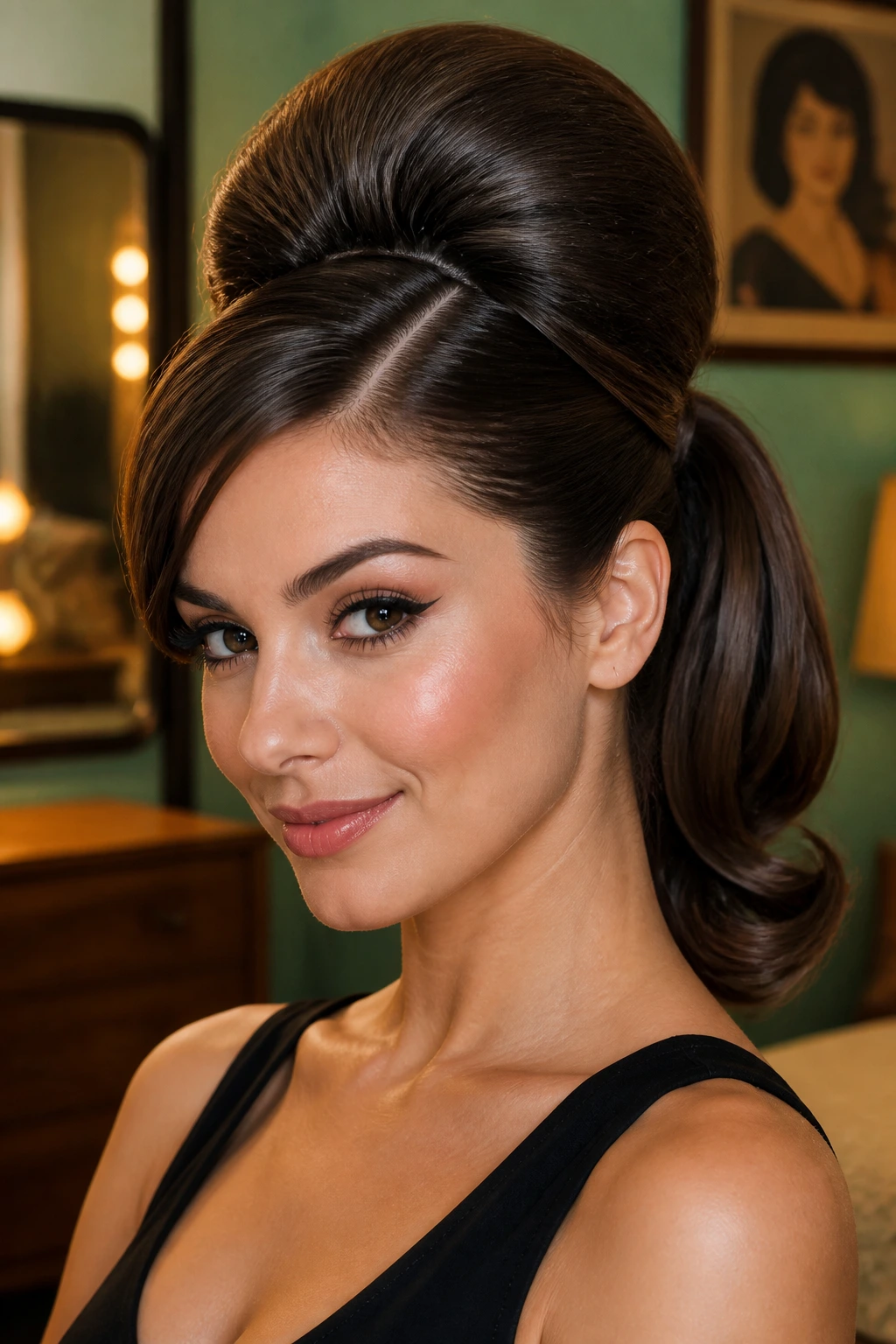
4. Retro Beehive Ponytail
The beehive is not subtle, and that’s exactly why it still works. You build a rounder, higher crown, smooth the surface carefully, then gather the hair into a ponytail or low tail at the back. On thick hair, the shape has enough density to hold without looking flimsy.
This is one of those styles that looks better when the crown is shaped in layers rather than teased all at once. Build the base in two or three sections, spray each one lightly, and press the top smooth with a brush instead of your hands. Hands leave too much texture. Thick hair keeps texture anyway.
Wear this with a side part if your forehead feels like the widest part of your face. It softens the line and keeps the height from feeling too centered.
5. Deep Side-Part Blowout
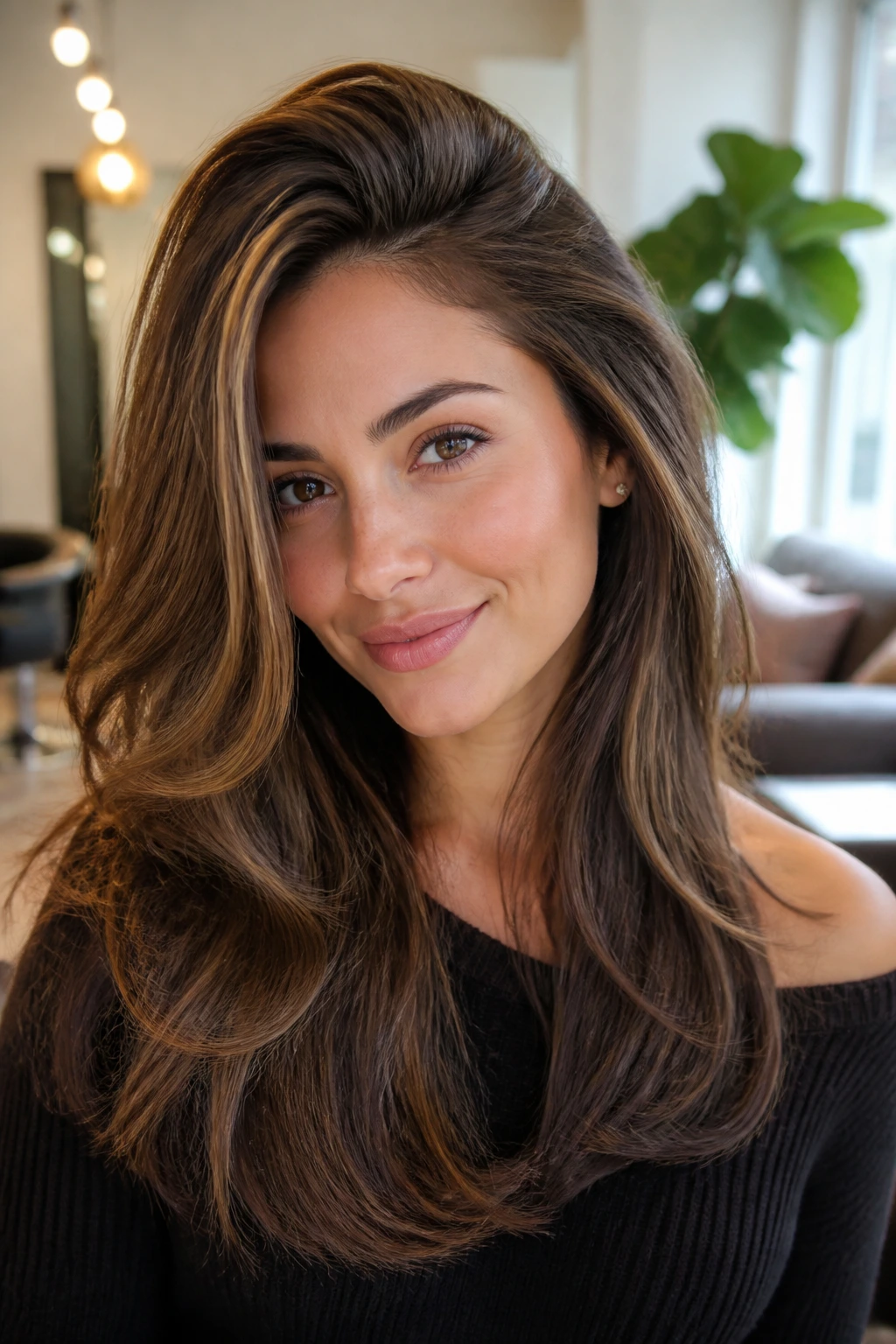
A deep side part with a big blowout is one of the easiest ways to make thick hair behave without taking all the volume away. You’re not forcing the hair into a rigid poof; you’re letting the front rise naturally while the ends fall with movement. The result feels cleaner than a teased style, but it still gives the face shape enough lift.
The round brush matters here. Dry the roots up and back first, then roll the front section away from the face and clip it while it cools. That little cooling pause locks in the lift better than people expect. If your hair is very thick, blow-dry in sections no wider than the brush head, or you’ll end up with flat roots and puffy ends.
This one works especially well when you want the hair to look expensive without looking overdone. Quiet, but not boring.
6. Braided Crown Poof
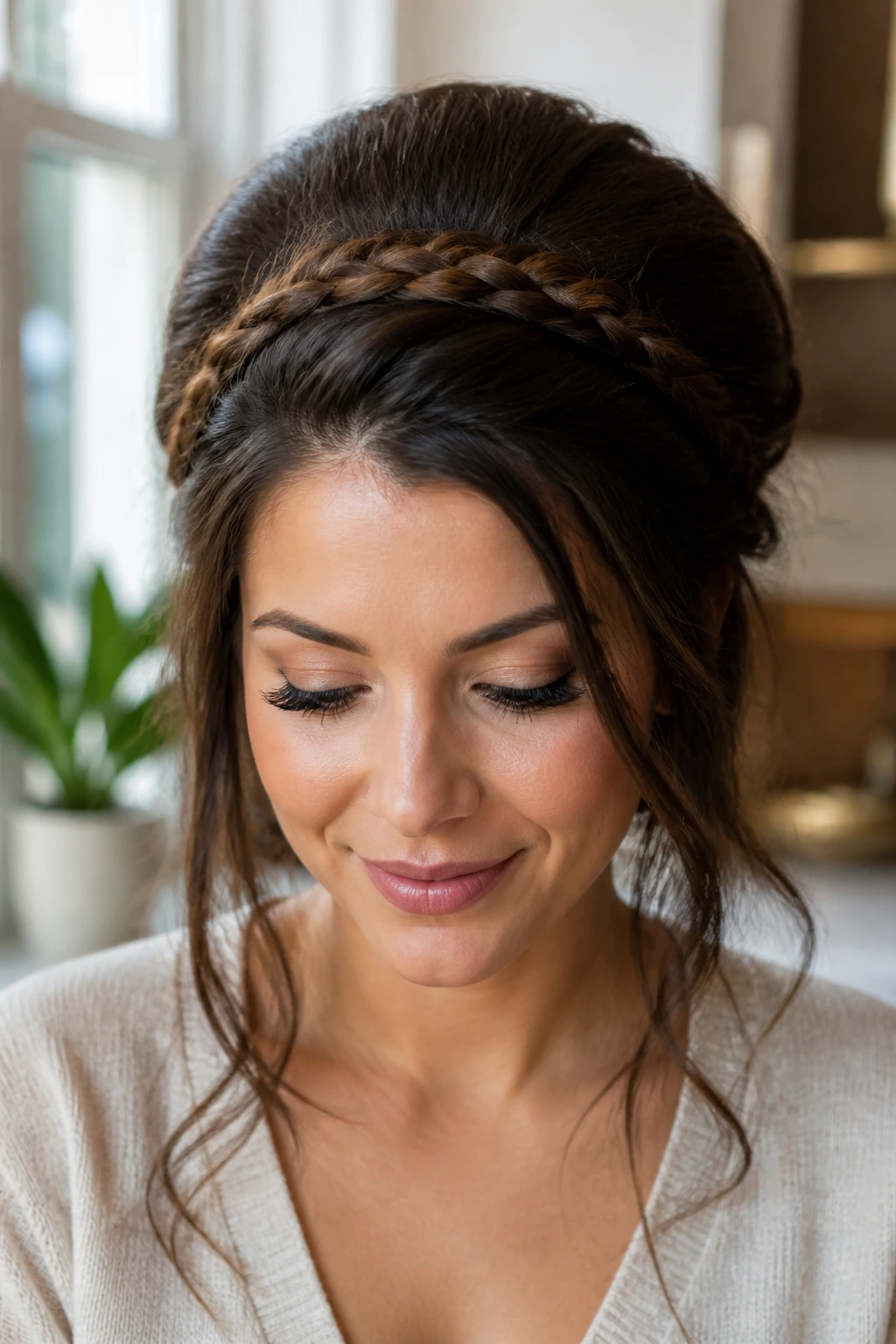
Braids are underrated for thick hair because they hold the top in place while the crown keeps its shape. Start with a small braid or twist along the hairline, then create a lifted section right behind it. The braid acts almost like a frame, which is useful when you want the poof to look controlled instead of wild.
What to watch for
Don’t braid so tightly that it pulls the whole front back flat. That ruins the point. Keep the braid loose enough that the crown can still rise, and leave a few strands around the temples if your face needs softness.
This style is especially good for humid weather or long days, because the braid gives the poof something to anchor against.
7. Messy Top Knot with Pillow-Soft Crown
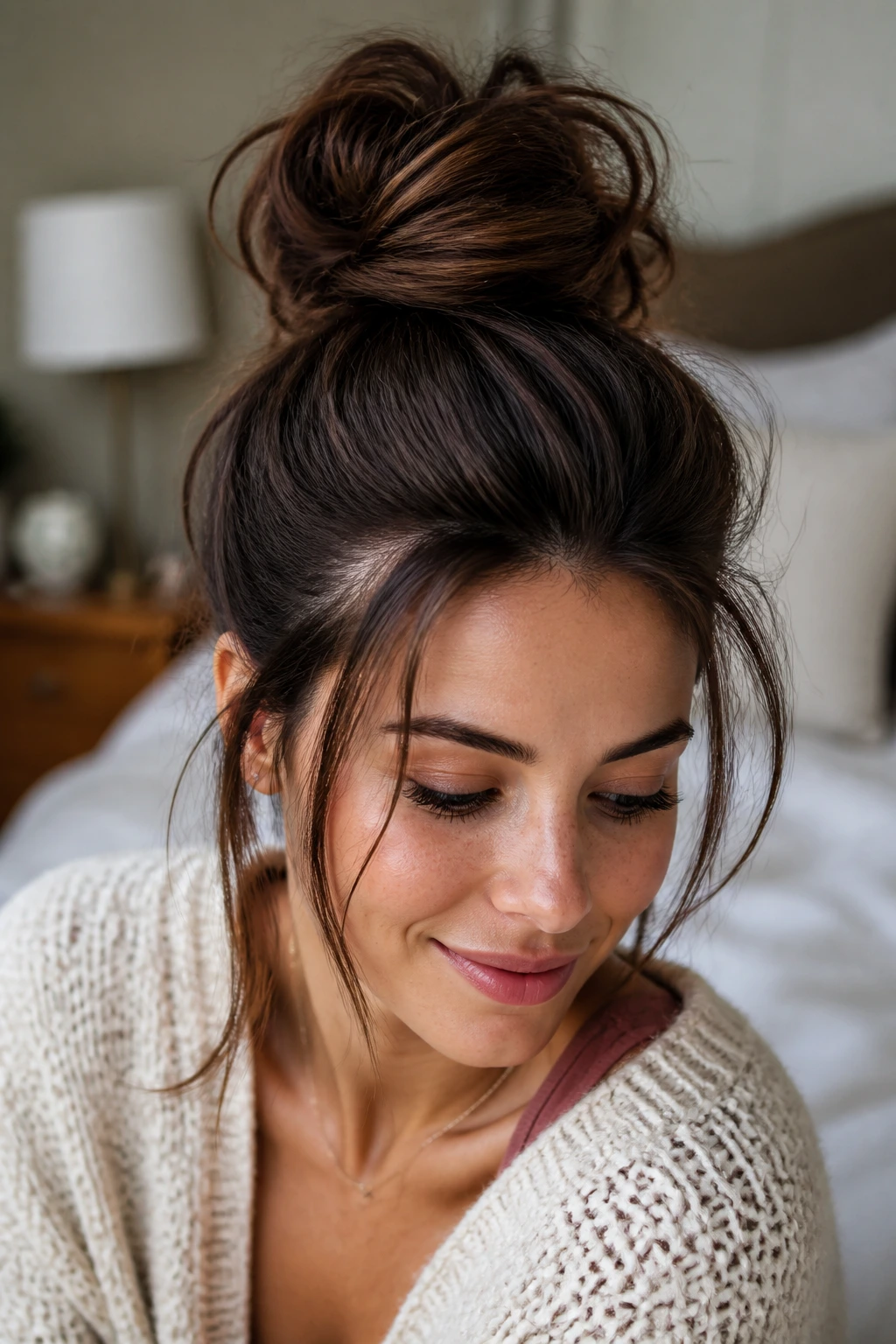
Messy top knots can look lazy. Or they can look expensive in that slightly undone, lived-in way. The difference is the crown. On thick hair, build a small poof before you gather the knot, then twist the ends into a loose bun high on the head.
The trick is not to scrape every strand backward. Leave the front a little loose, tease the roots lightly, and use two bobby pins crossed in an X under the knot if it feels heavy. Thick hair has weight, so the knot needs a real base or it will sag.
A one-sentence truth: this style is better on day-two hair.
That tiny bit of natural grip makes the poof hold without needing half a can of spray.
8. French Twist with Crown Height
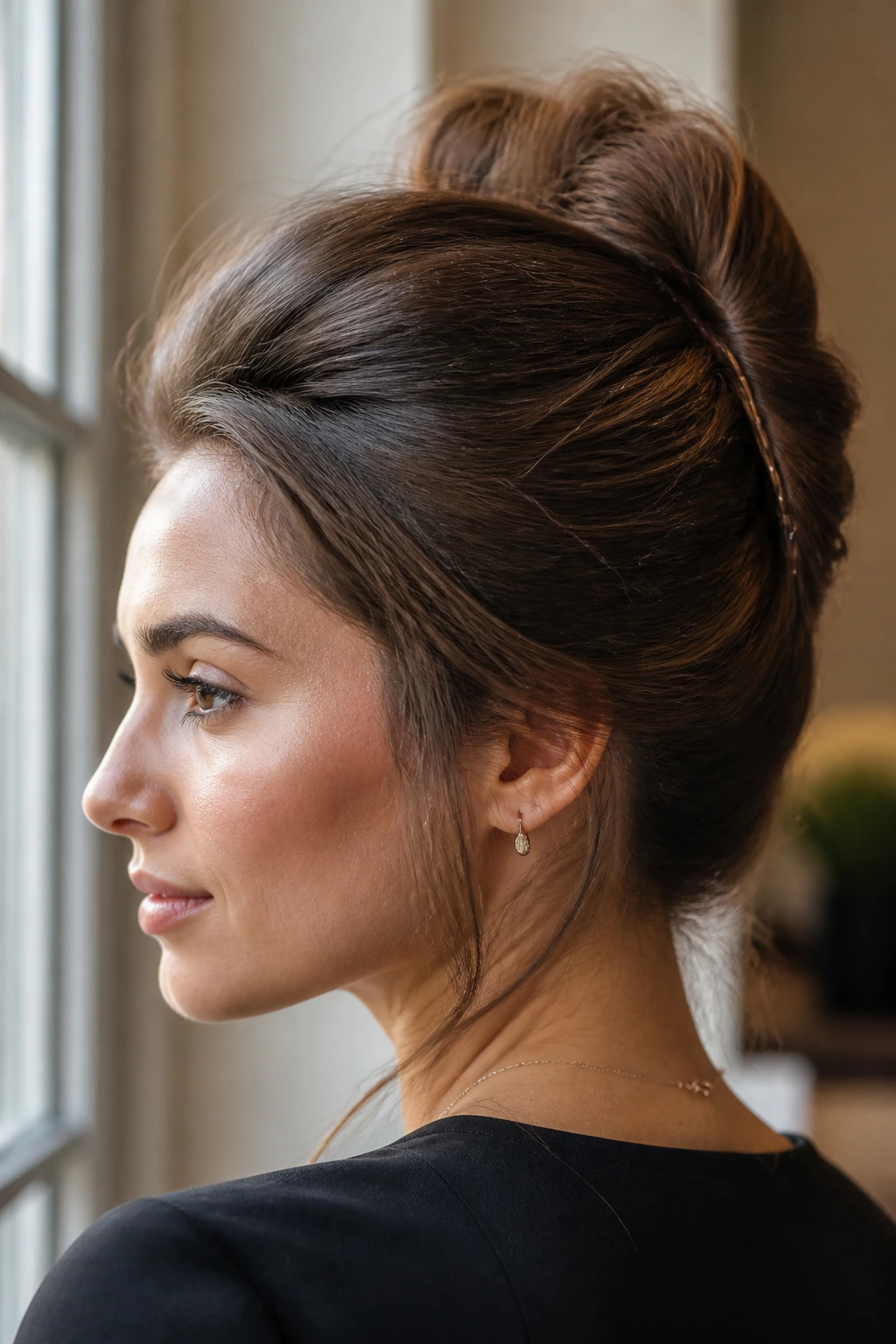
A French twist on thick hair can look too severe if the top is flat. Give the crown a soft bump first, then twist the hair up vertically and tuck it in with long pins. The lift keeps the style from feeling pulled tight against the scalp.
I like this one when the event calls for structure but not stiffness. Thick hair gives the twist substance, which makes it hold well, but it also means the surface has to be smoothed carefully before you pin. Use a brush, not a comb, for the top layer. A comb can make the hair look too neatly packed, and that’s not the same thing as polished.
Leave one or two slim pieces around the ears if you want the style to feel less severe. That small softness matters on a heart-shaped face.
9. Claw-Clip Twist with Face-Framing Strands
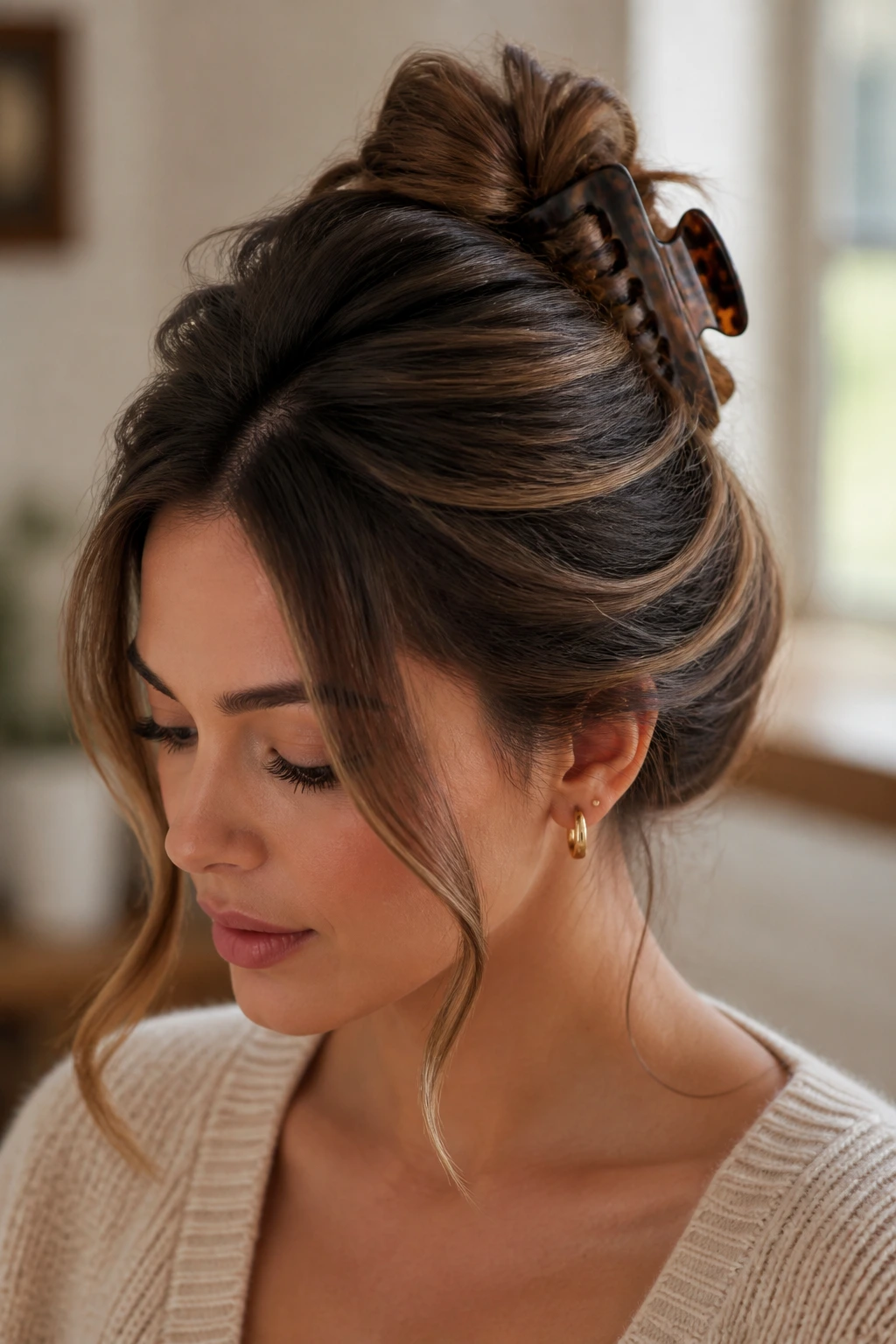
A claw clip gives you instant lift, but only if the twist starts high enough. Pull the hair into a loose twist, fold it upward, and let the crown puff slightly before the clip grabs it. The front should have some height; otherwise, the whole thing just looks like a rushed office twist.
The face-framing pieces do half the work here. Keep them narrow and a little curved, not heavy and curtain-like. That helps soften the forehead without dragging the whole style down. Thick hair can look bulky in a clip, so choose one with teeth long enough to bite through the hair instead of skating over it.
This is a fast style, but it shouldn’t look like a fast style.
10. Bubble Ponytail with Root Lift
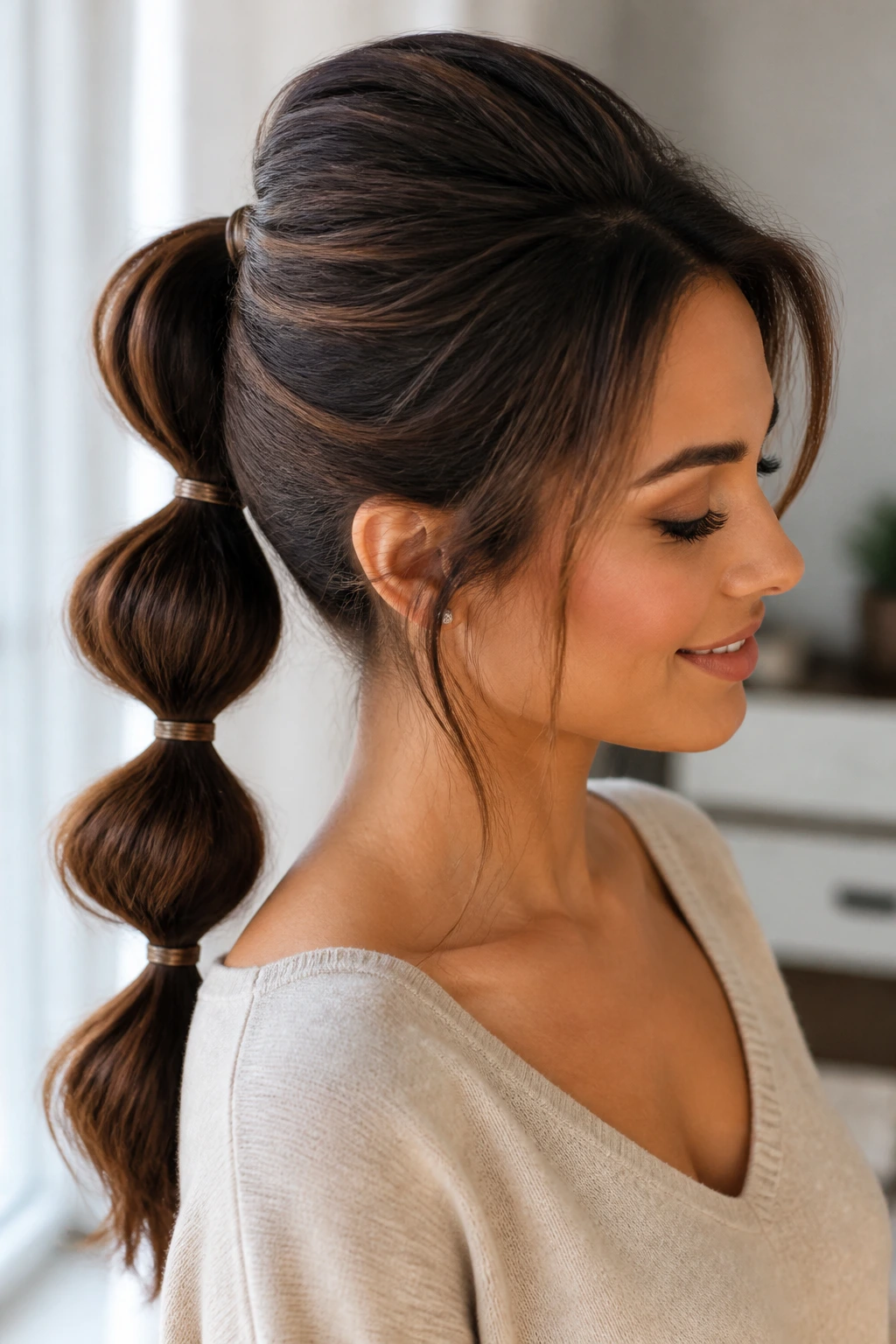
Bubble ponytails are basically sculpted volume, which makes them a nice fit for thick hair. Start with a lifted crown, secure a ponytail, then add small elastics every 2 to 3 inches down the tail. Tug each section outward until it forms a rounded bubble.
The crown lift is what keeps the look from turning childish. Without it, the ponytail sits too flat on top and the bubbles feel disconnected. With it, the whole shape reads as intentional and balanced. Use clear elastics if you want the structure to be the point, or wrap a thin strand of hair around each elastic if you want a cleaner finish.
This style can handle a little mess. It can’t handle limp roots.
11. Curly High Puff with Sleek Edges
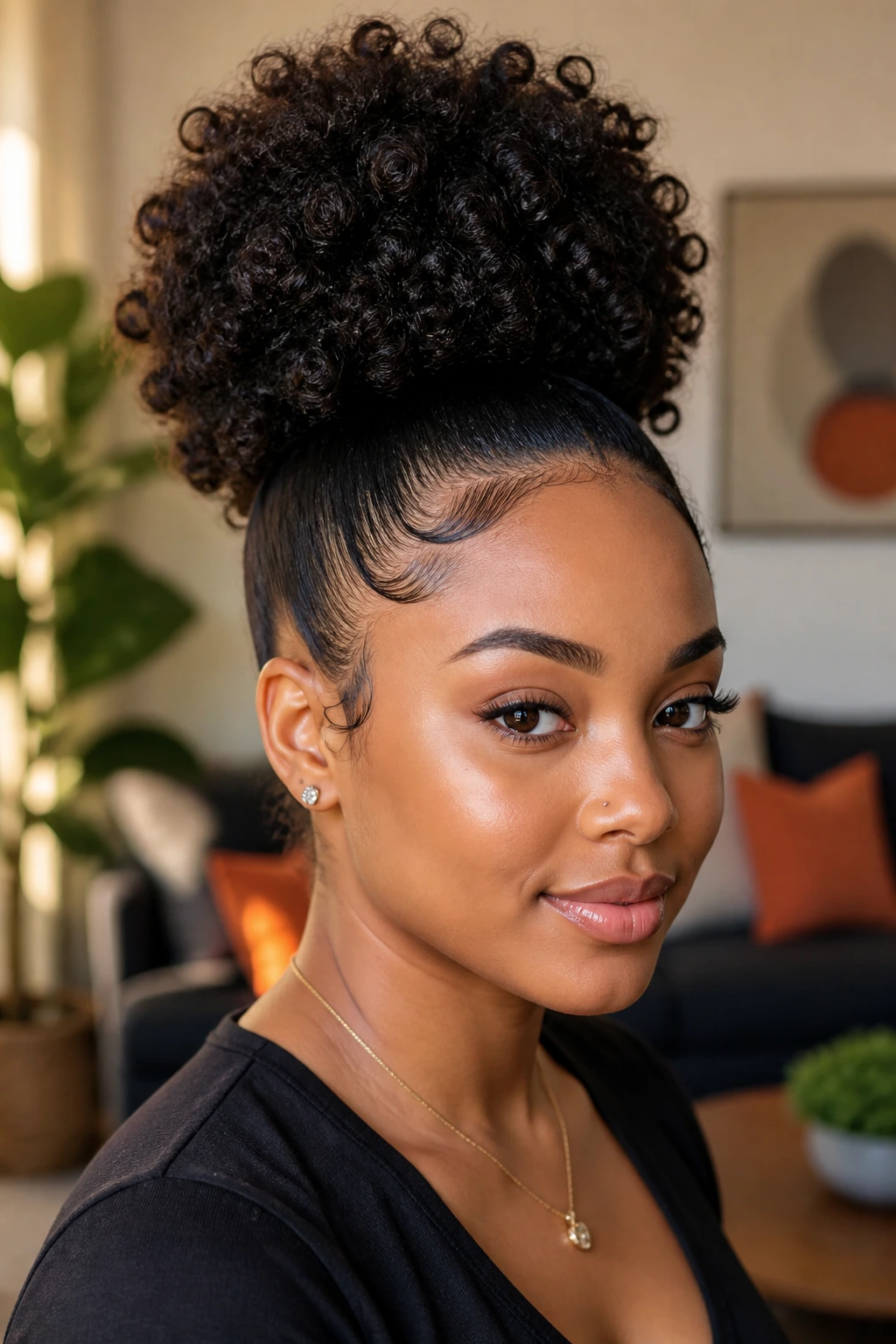
Curly and coily hair doesn’t need to be flattened to fit a poof theme. A high puff uses the hair’s own body and puts the height at the crown where it belongs. Smooth the sides with gel or cream, gather the puff high or mid-high, and let the texture bloom upward.
Heart-shaped faces usually look good with this shape because the height balances the forehead while the puff itself adds width above the cheekbones. Just keep the front edges neat. A little shine at the hairline and a few soft side pieces make the style feel finished instead of rushed.
No need to overthink this one. The puff should look full, not pressed into a ball. That difference matters a lot.
12. Faux Hawk Poof
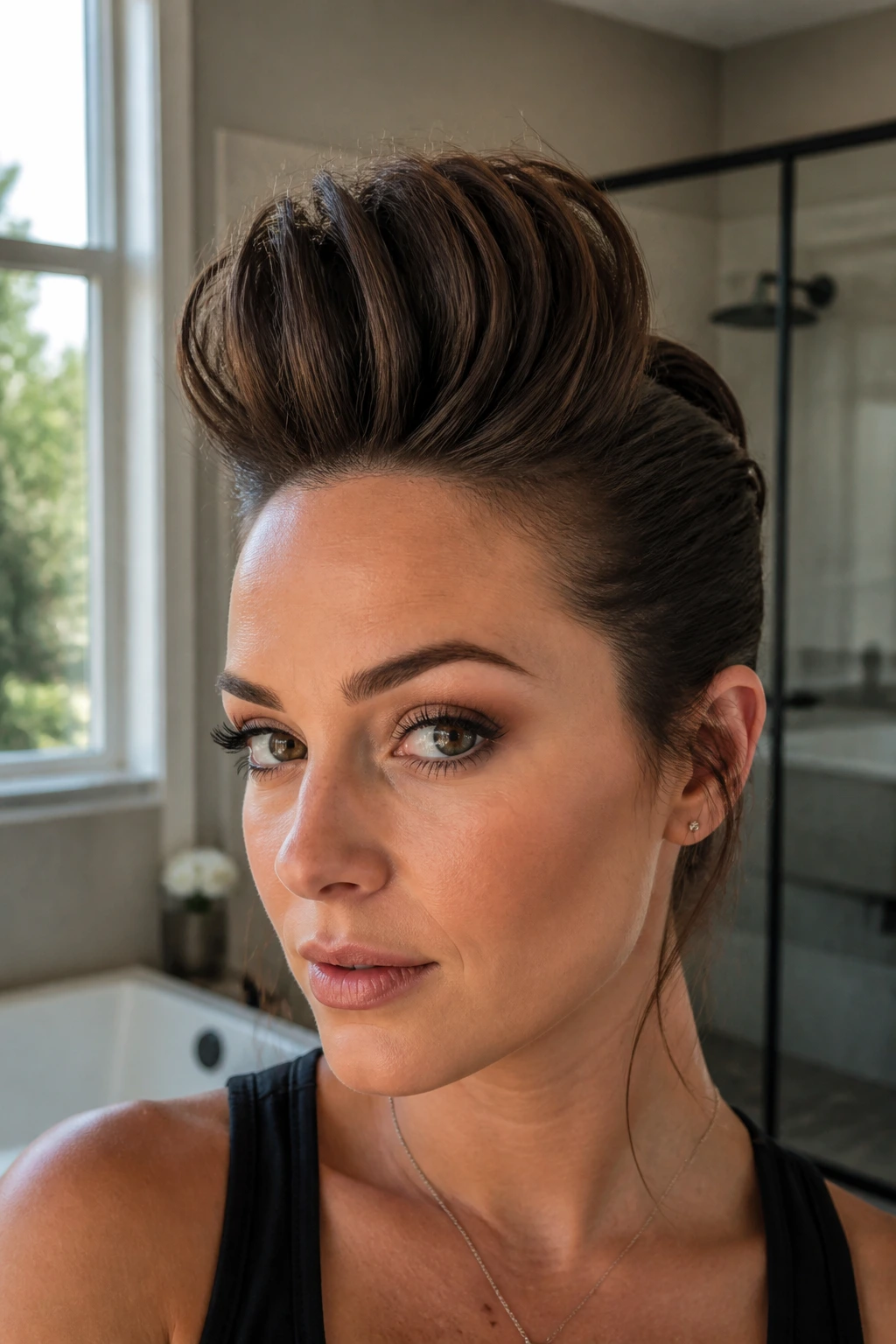
The faux hawk poof is the boldest style in the bunch. It takes the crown height and runs with it down the center line while keeping the sides controlled or pinned back. On thick hair, this can look fierce without needing extreme teasing, because the density gives the ridge real shape.
The reason it works on a heart-shaped face is simple: the eye follows the center line instead of getting stuck at the width of the forehead. That vertical pull can be flattering when you want something sharper than a soft side-swept style. Leave a few loose pieces near the ears if the shape starts to feel too severe.
This one looks best when the texture is clean at the roots and a little rough through the crown. Too smooth, and it loses its edge.
13. Low Chignon with Front Pompadour
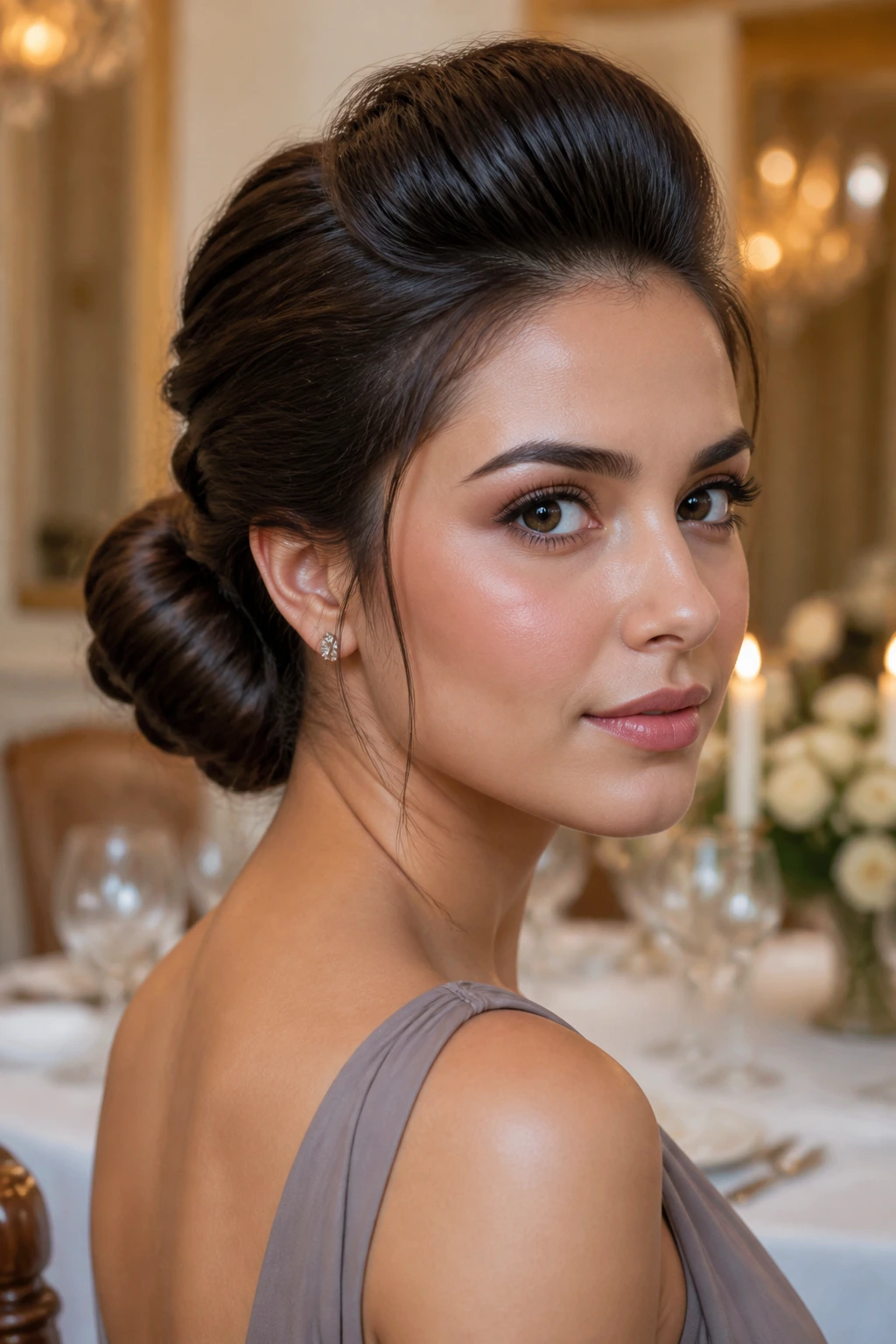
A low chignon gets much more interesting when the front has a pompadour lift. Build a small bump above the forehead, smooth the top, and twist the rest of the hair into a bun at the nape. The front lift stops the style from looking too tight or too formal.
Thick hair is useful here because it makes the bun look full even when it’s compact. Use a handful of long pins to anchor the chignon from different angles. One pin rarely handles dense hair on its own. If the bun feels heavy, split it into two smaller loops before tucking the ends under.
This is one of the best dinner-party styles on the list. Calm from the back, flattering from the front.
14. Half-Up Top Knot with Curtain Pieces
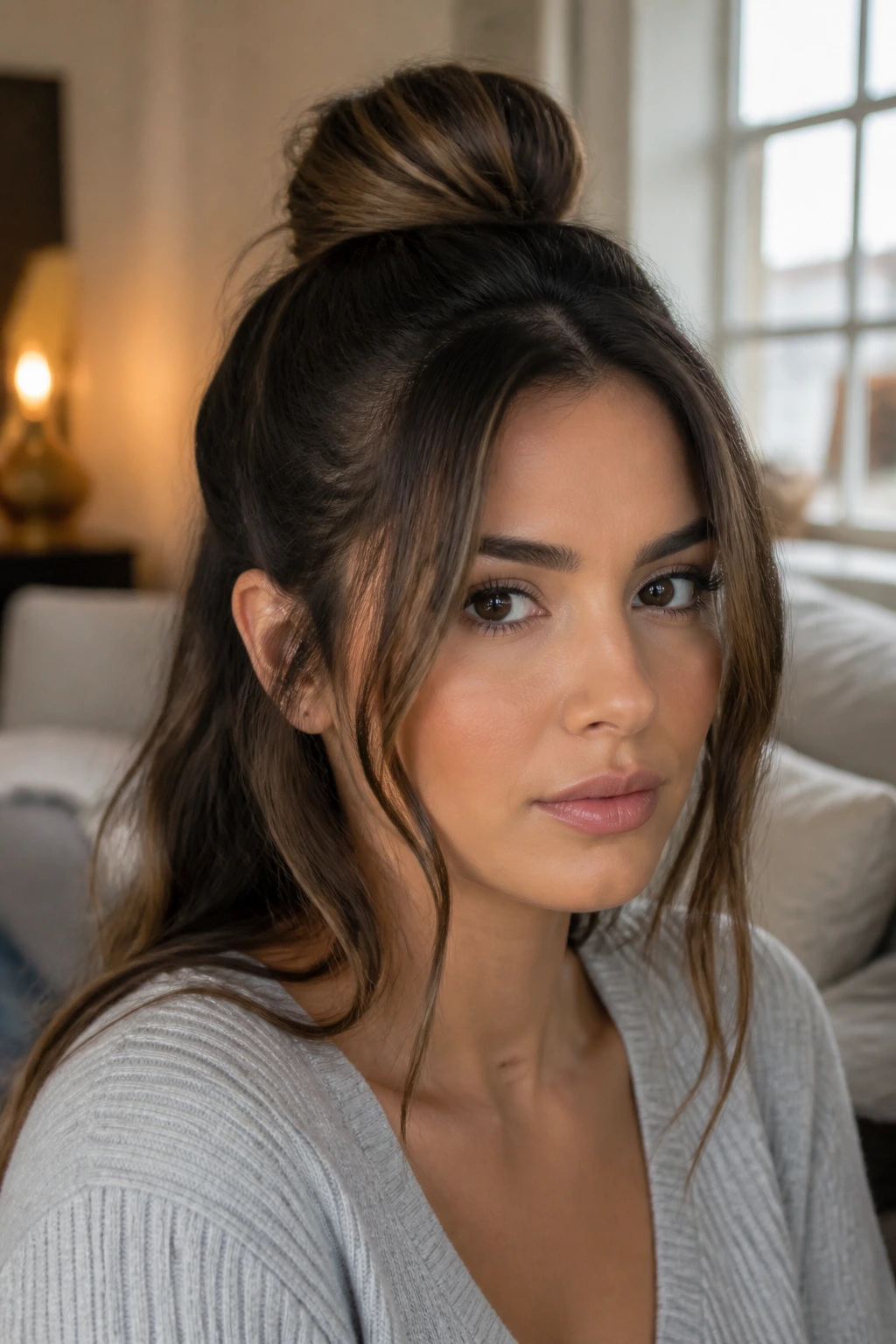
A half-up top knot gives you crown lift without committing the whole head to an updo. Gather the top section from the temples back, tease the base a little, then twist it into a compact knot. Leave the rest of the hair down, and keep the curtain pieces soft around the cheeks.
Those front pieces are the difference between cute and awkward. On a heart-shaped face, they soften the forehead and draw the eye downward. Thick hair makes the knot feel substantial, so don’t make it too large or it starts to dominate the face.
If you want this style to last, secure the knot with two pins through the base rather than one elastic alone. Dense hair will try to pull a single tie loose.
15. Side-Swept Curly Cascade
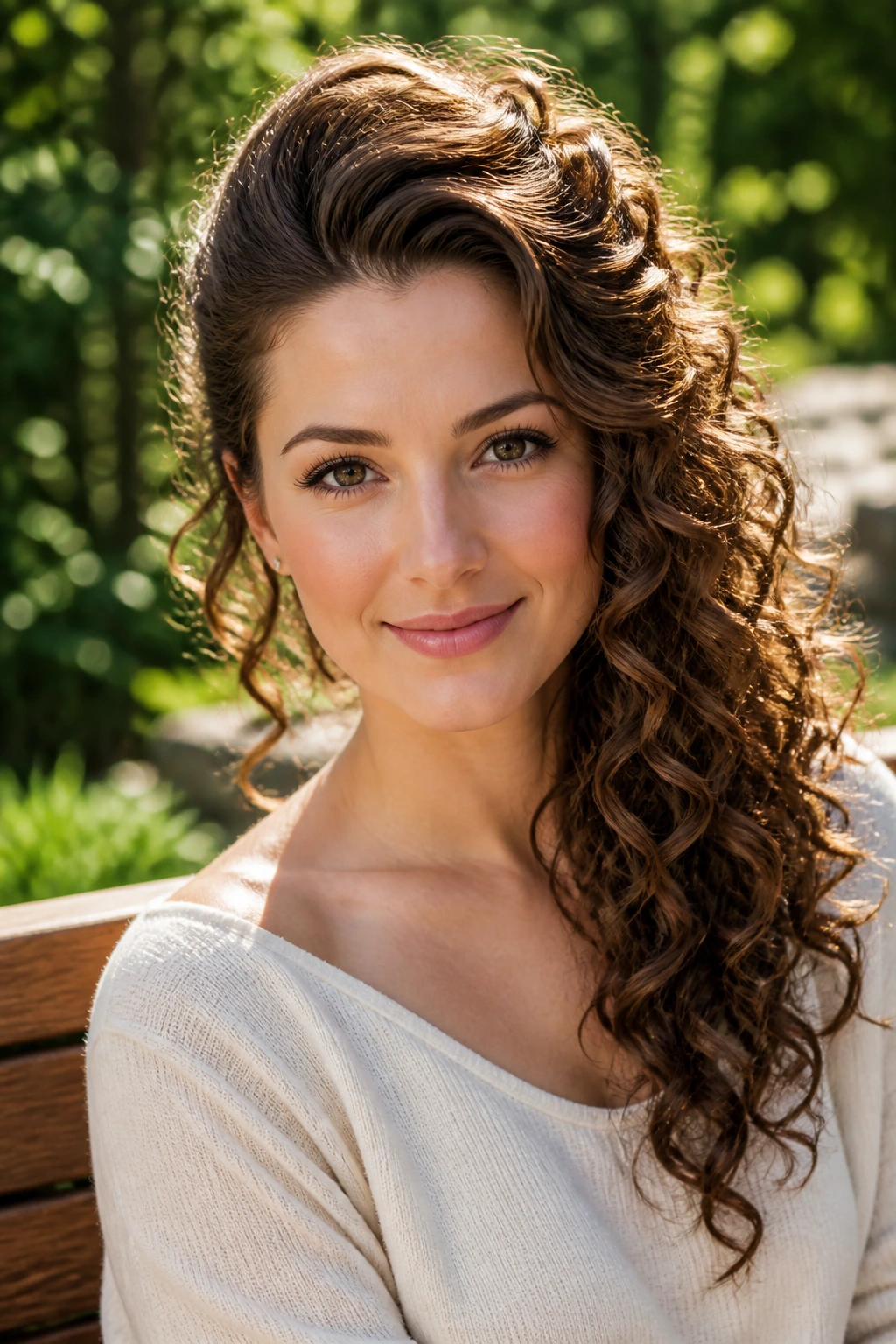
A side-swept curly cascade is all about movement. Create lift at the roots, sweep the curls to one side, and let the volume fall over one shoulder. The poof lives at the crown and part line, while the curls do the rest of the work.
This is one of the prettier options for a heart-shaped face because it breaks up the width at the top and adds softness near the jawline. Thick curls need room, so don’t overpin the side. Let the shape breathe a little. If the root area feels flat, clip the lifted section while it cools after drying. That tiny cooling step can keep the side part from collapsing.
A little asymmetry goes a long way here.
16. Rolled Half-Up Bouffant
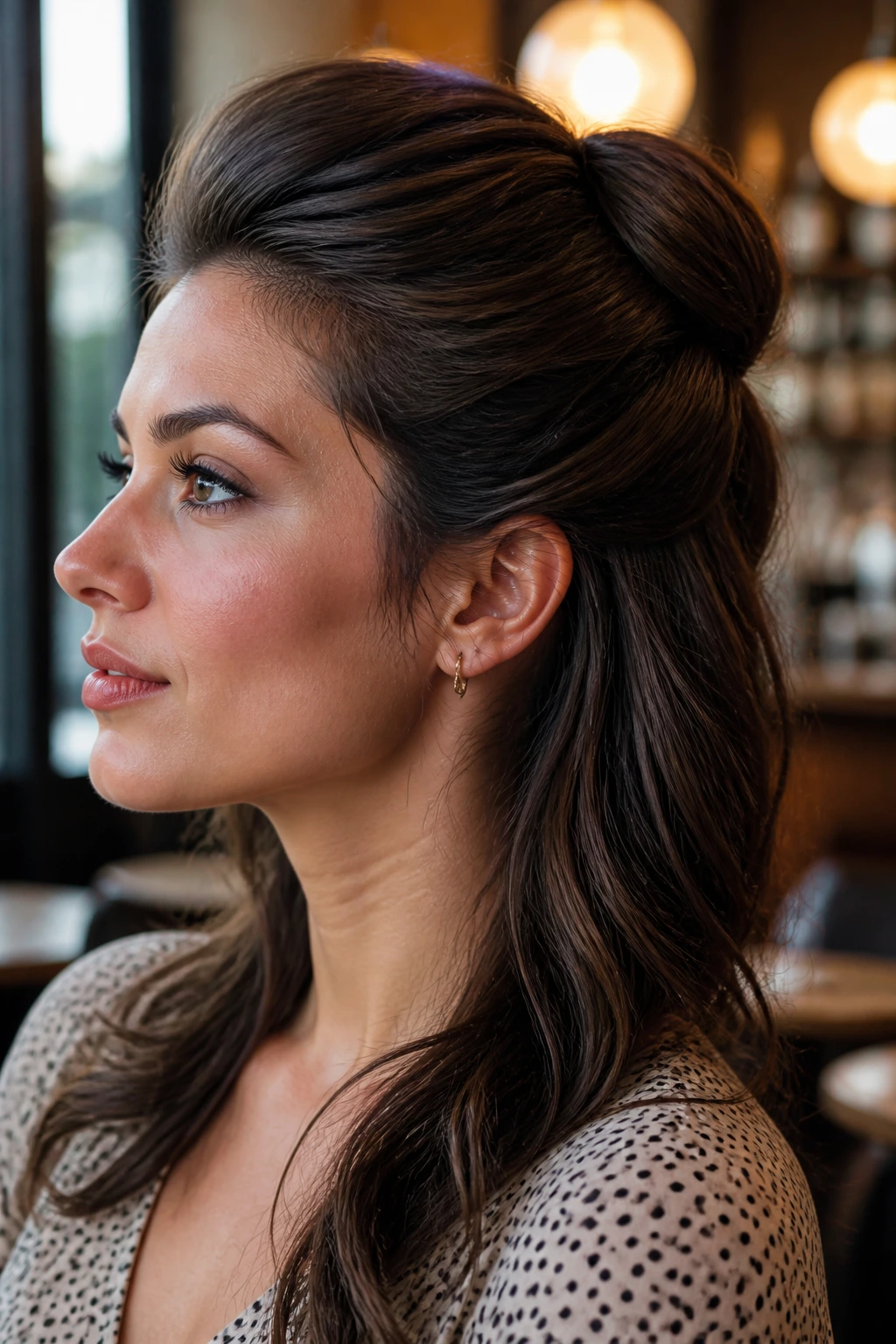
Think of this as a more polished cousin to the half-up bouffant. Instead of simply pinning the top section back, roll it slightly before securing it so the lift has a curved shape. The style has a vintage feel, but it doesn’t need to look costume-like.
Thick hair is useful because the roll has enough body to hold its shape. The key is keeping the roll narrow and centered just behind the front line. If it gets too wide, the style starts to crowd the face. A heart-shaped face usually looks better when the lift sits high and soft, not broad and blocky.
A few loose ends or waved lengths finish the look. Clean, but with some softness.
17. Crown-Volume Lob with Flipped Ends
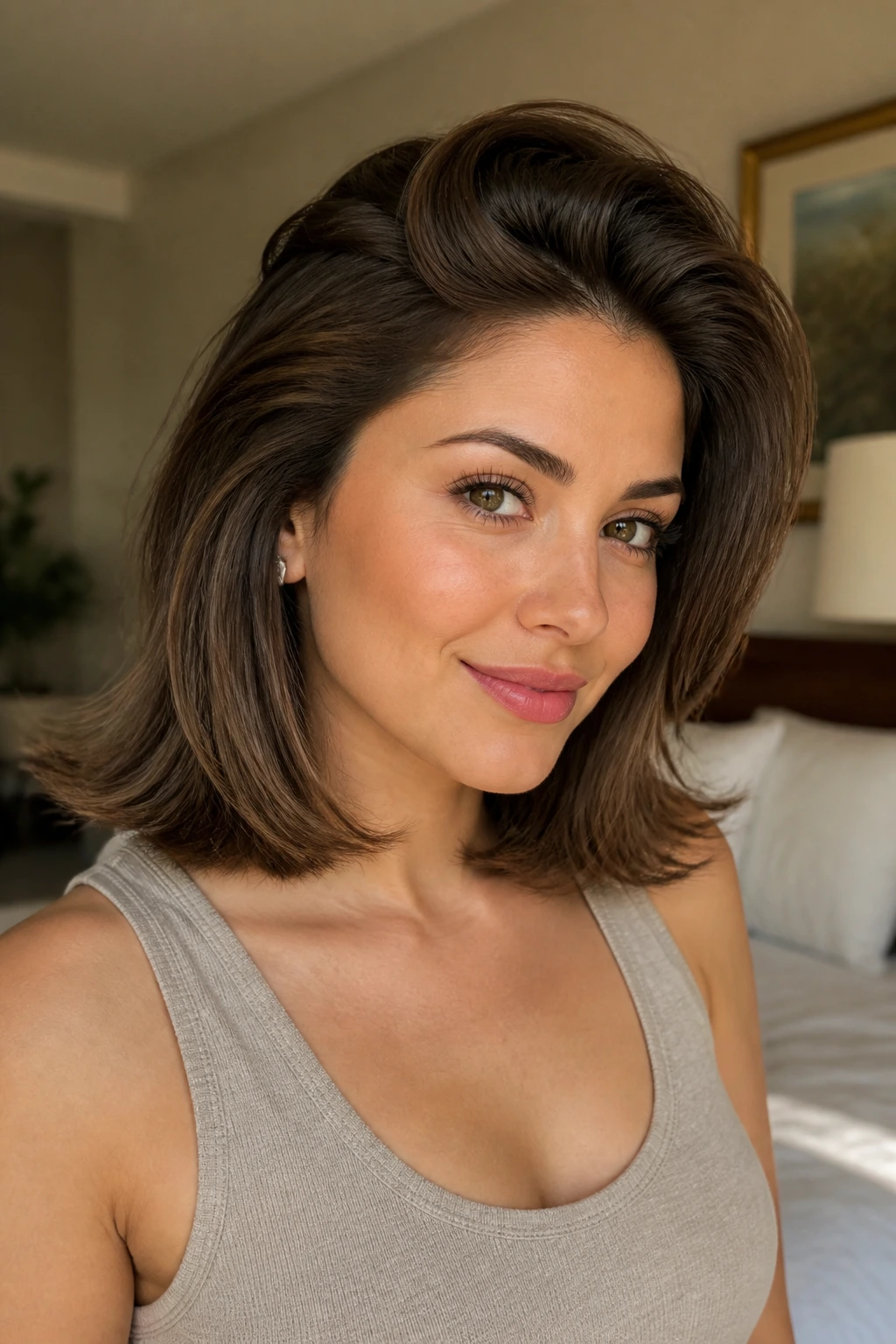
A lob can absolutely do poof hair, even if it doesn’t have a lot of length to work with. Build lift at the roots with a round brush or velcro rollers, then flip the ends outward for movement. The result is lighter and less formal than a full bouffant, which is part of the appeal.
This style is especially good when thick hair starts to feel heavy around the jaw. The lifted crown opens the face, while the flipped ends keep the silhouette from dropping straight down. If the top is stubborn, mist the roots with dry shampoo before blow-drying. It gives the hair more bite and saves you from having to tease too much.
Shorter hair needs cleaner execution. Otherwise, every bump shows.
18. Headband Lift with Loose Lengths
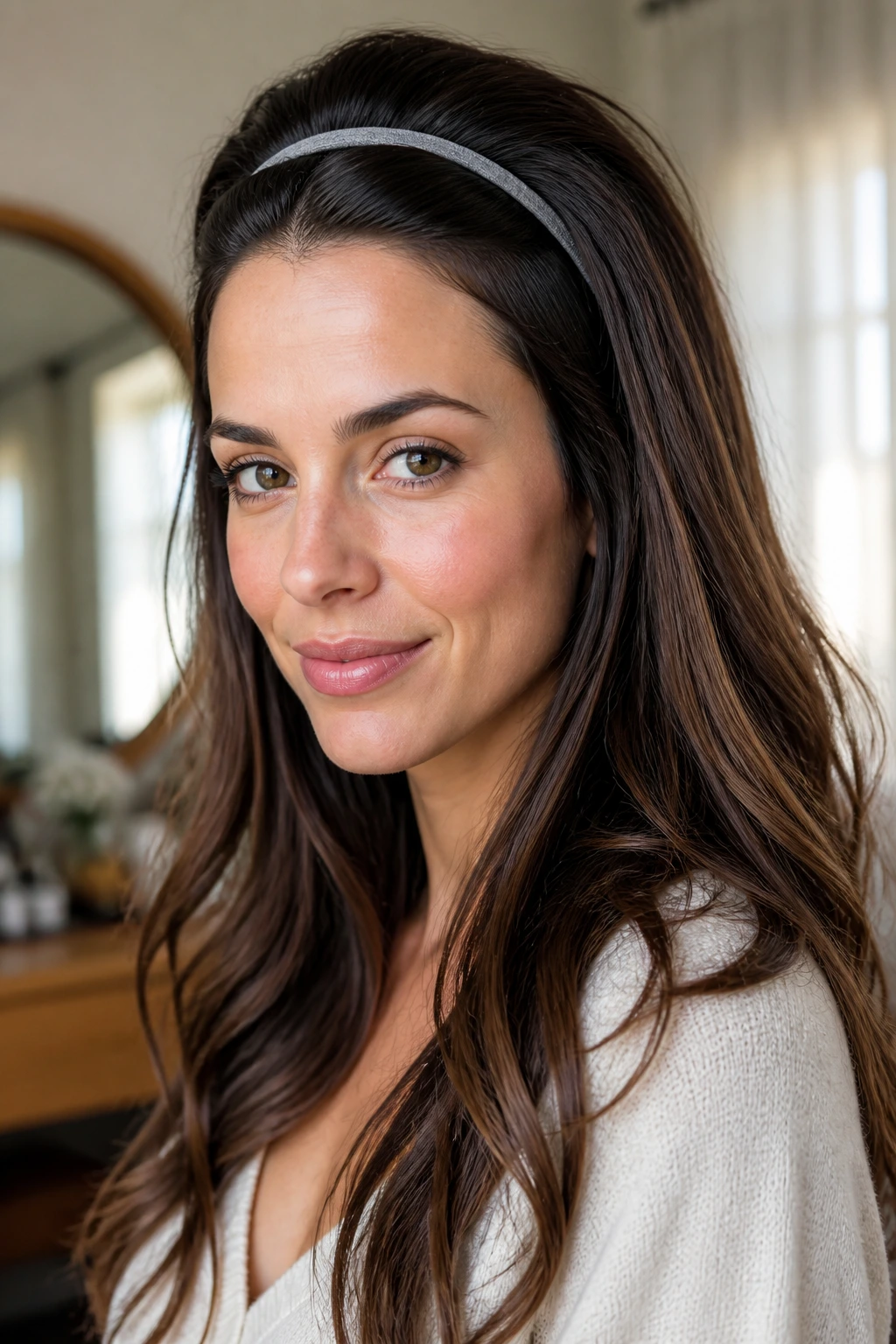
A headband can create a surprising amount of height if you place it a little behind the hairline and gently pull the crown upward over it. Thick hair loves this trick because the band gives the top a shelf to rest on. The loose lengths stay down, so the style keeps movement.
The best headbands for this are narrow enough to disappear a bit into the hair but sturdy enough not to slide. Fabric bands are softer, but they can flatten the roots if they’re too wide. A slim padded band gives lift without squeezing the whole front flat.
On a heart-shaped face, this style keeps the forehead open while adding shape right above it. Simple. Very usable.
19. Pin-Back Waves with a Hidden Bump

This is one of the quieter styles on the list, which makes it useful when you want poof hair without obvious teasing. Add a hidden bump at the crown, wave the rest of the hair, and pin back the sides loosely so the lift stays visible.
The bump should be felt more than seen. That’s the trick. Thick hair can carry a lot of body, so a small lift often reads better than a huge one. If you have a broad forehead, let the waves start a little lower near the temples. It gives the face a softer frame without burying the crown.
This style works when you want control but not drama. There’s a place for that.
20. Twisted Half-Up Crown Puff
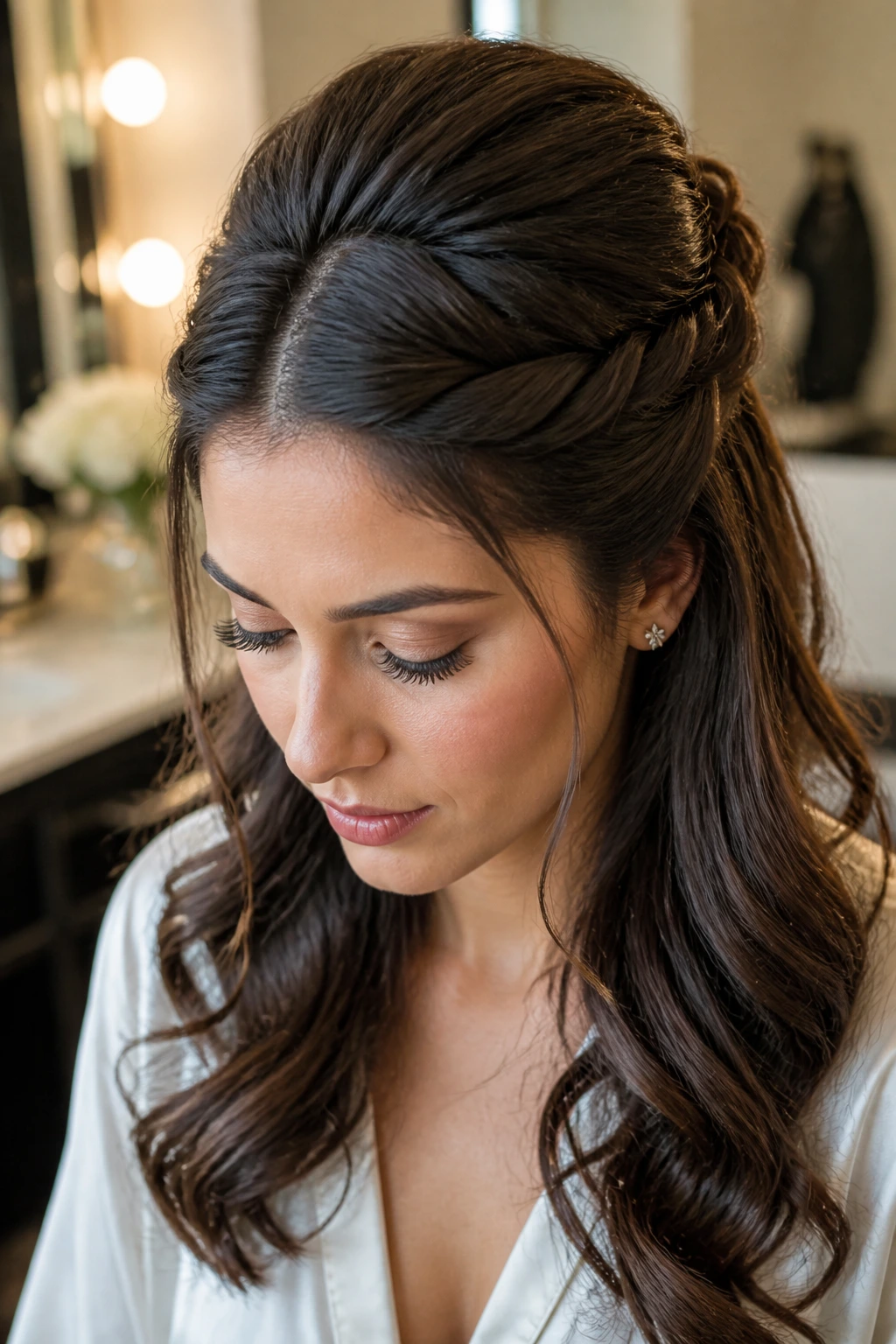
Twists give the poof a cleaner edge than teasing alone. Take two sections from each side, twist them backward, and pin them at the crown so they create a little puff between them. The center rises, the sides stay soft, and thick hair gives the shape enough weight to feel solid.
This is a good choice if you like half-up styles but want them to look more finished. The twists keep hair off the face, while the crown puff brings the height. For a heart-shaped face, that combination is useful because it adds balance without making the forehead look crowded.
A small curl at the ends helps a lot. Straight, blunt ends can make the style feel too stiff.
21. High Ponytail with Wrapped Base
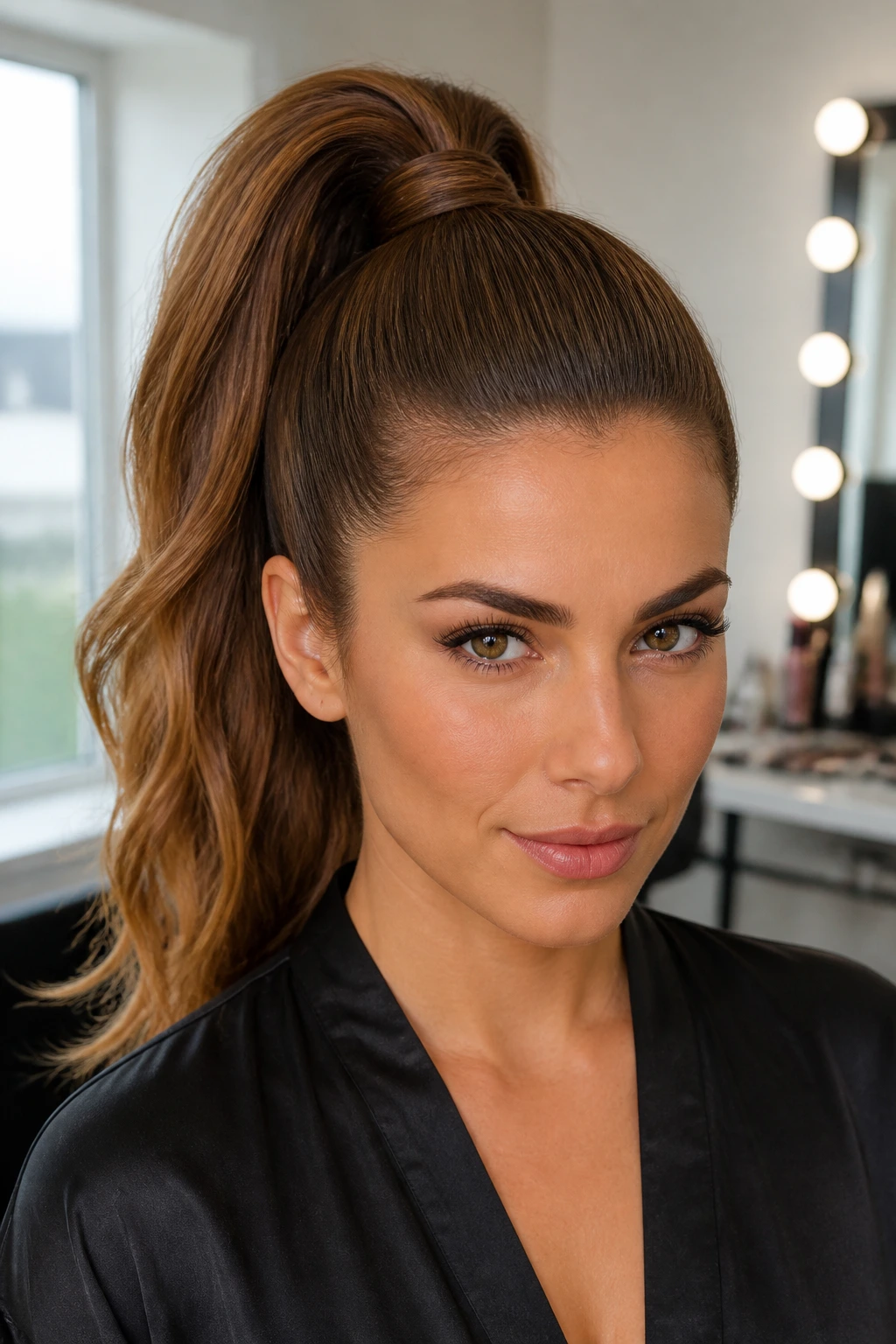
A high ponytail is never just a high ponytail when the crown has lift. Tease the root area first, smooth the top layer, and tie the tail high enough to create a clean upward line. Wrap a strand around the elastic so the base doesn’t look unfinished.
Thick hair can handle a high pony with real presence, which is why this one works so well. The ponytail should swing with weight, not stick out like a brush. If the top feels too tight, loosen a few strands near the temples and gently tug the crown up with your fingers.
It’s a polished gym-to-dinner style when it’s done right. And that’s a useful thing to have in your pocket.
22. Mini Beehive with Soft Tendrils
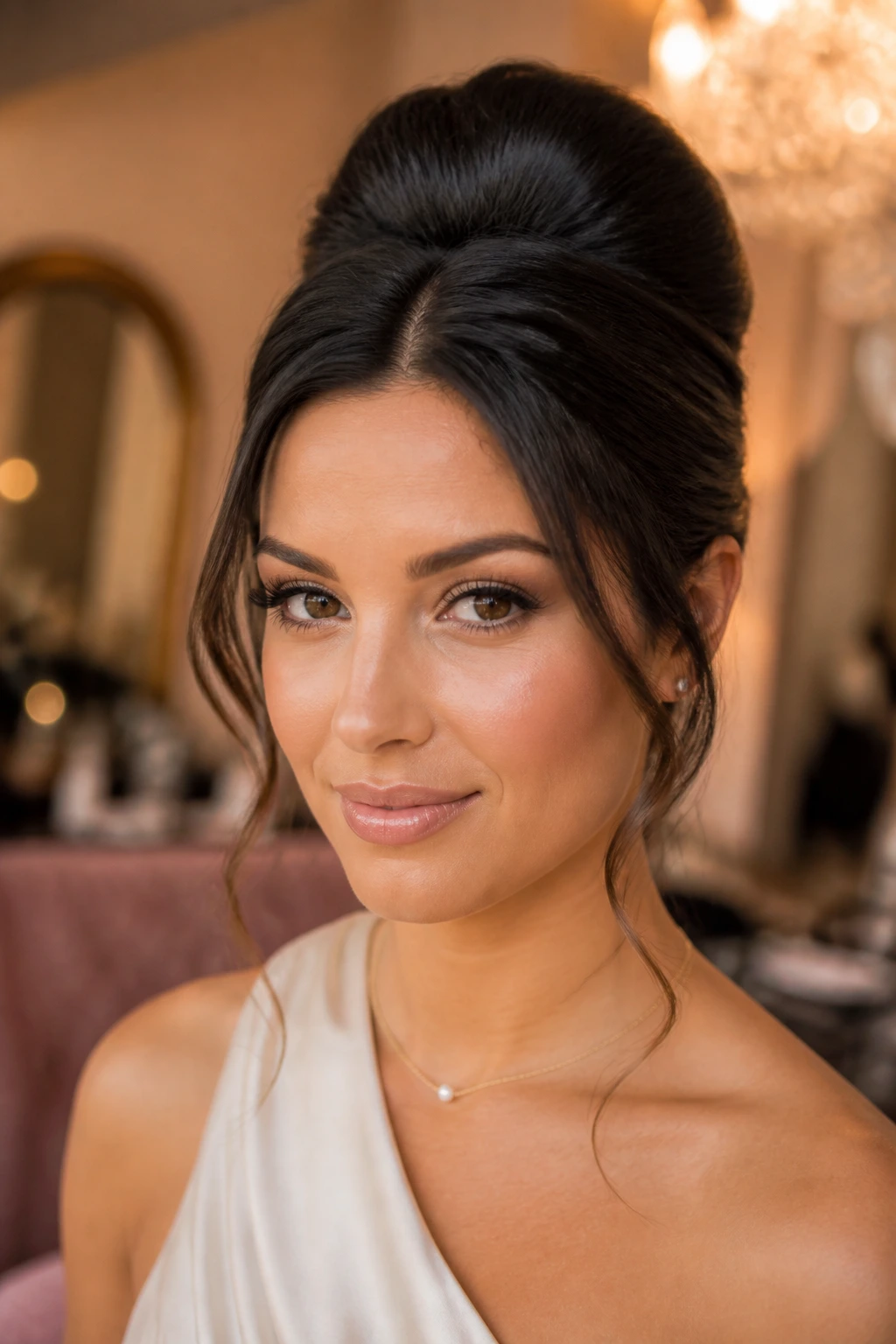
The mini beehive is the most formal-looking option here, but it doesn’t need to feel heavy. Keep the height compact, pin the back securely, and leave a pair of soft tendrils near the cheeks. Thick hair gives the shape enough density, so you can keep the beehive smaller than you think.
For a heart-shaped face, those tendrils matter. They stop the style from feeling all forehead and no softness. Use a light spray on the crown before teasing, then smooth the outside layer once the shape is pinned. That keeps the poof from getting frizzy on the surface.
This style has a little drama, but it stays wearable. That’s the sweet spot.
Why Crown Height Matters More Than Big Volume Everywhere
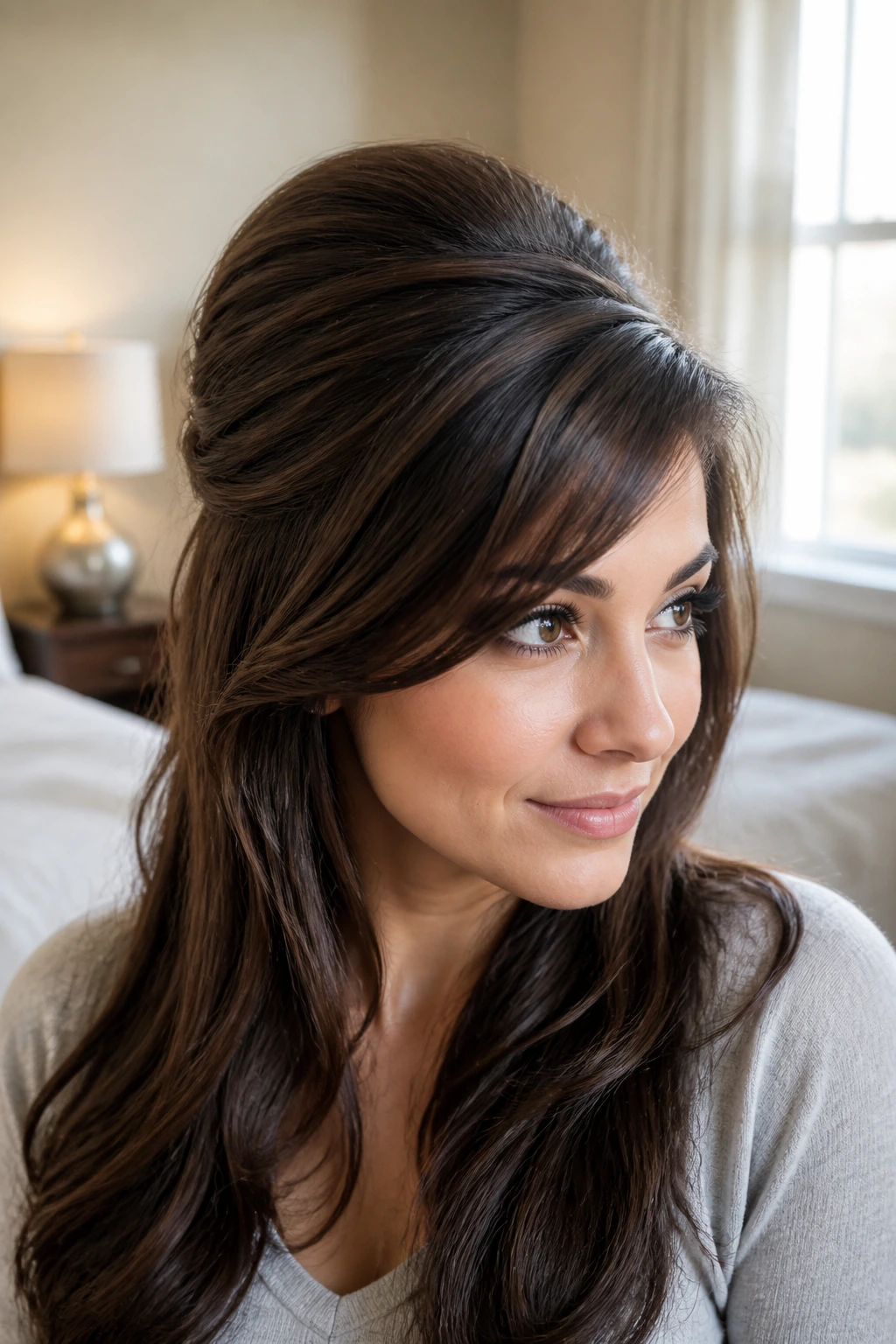
A poof hairstyle works best when the lift is placed with a purpose. Thick hair can hold a lot of shape, but if all that shape spreads sideways, the face can look wider up top and heavier overall. Crown height gives you direction. It pulls the eye up, then lets the rest of the hair fall where it should.
That matters on a heart-shaped face because the forehead already carries more visual width than the chin. A little height at the crown balances that without hiding your features. What you do not want is a poof that sits too far forward, because then it starts competing with your eyes and brows instead of framing them.
The small details are what make the difference. A side part changes the mood. A few loose pieces near the cheeks soften the line. A smooth top layer keeps the style from looking frizzy. None of that is dramatic on its own. Put together, it’s the whole shape.
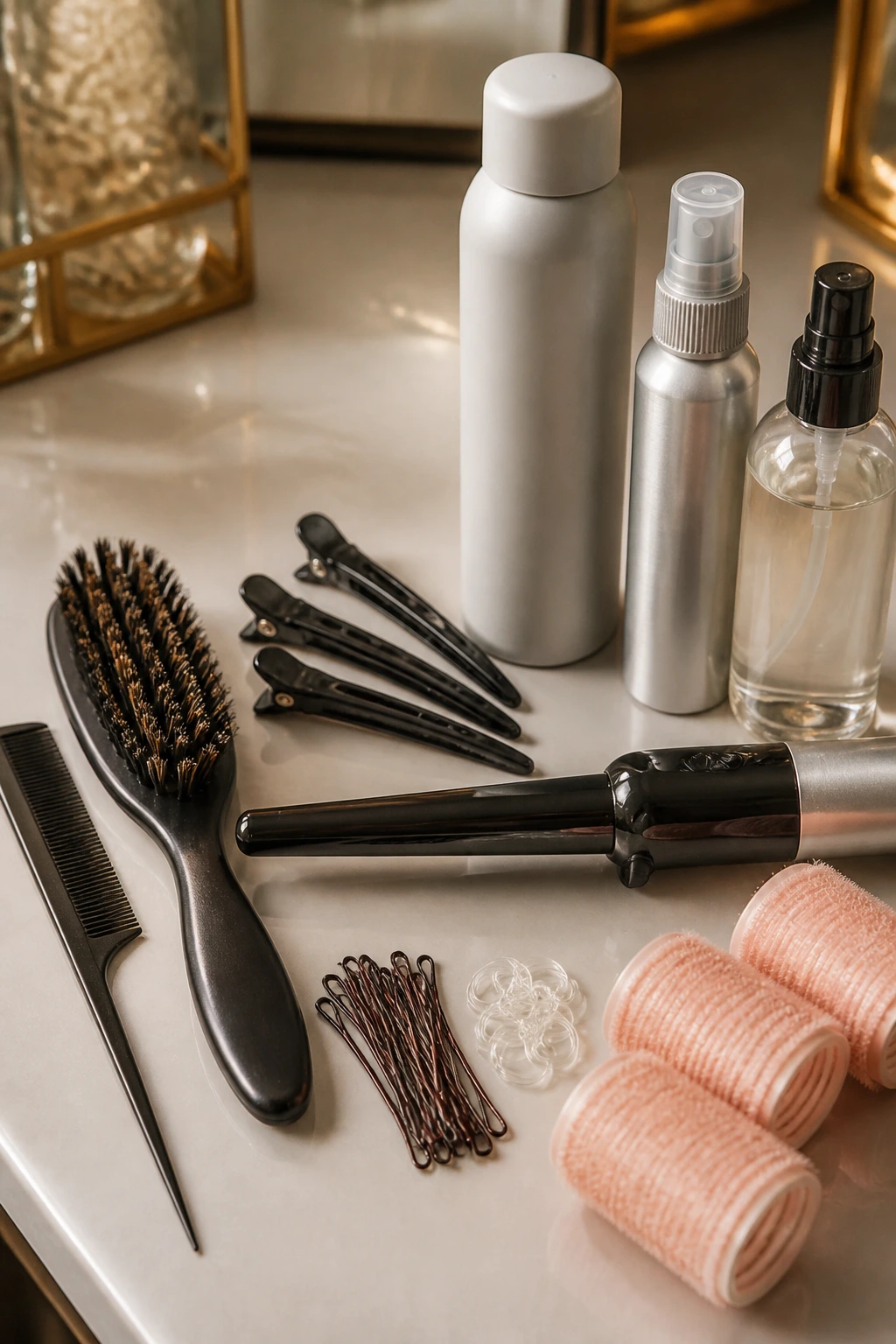
Tools That Make Crown Lift Easier to Build
-
Rat-tail comb: Good for clean parting and for sliding under the crown when you want to tease only a small section.
-
Boar-bristle brush: Best for smoothing the top layer after teasing without flattening all the height you just made.
-
Sectioning clips: Thick hair behaves better when it’s divided into small parts; these keep the top separate while you work.
-
Dry shampoo or texture spray: Gives roots grip before teasing and helps the style hold on smoother hair.
-
Strong-hold hairspray: Use it in light layers, not one heavy blast, or the crown can feel sticky and stiff.
-
Bobby pins with a grippy finish: Essential for thick hair; smooth pins tend to slide right out.
-
Clear elastics: Handy for ponytails, bubbles, and half-up styles when you want the tie to stay hidden.
-
1.25-inch curling iron or wand: A good middle size for adding bend and soft waves to thick lengths.
-
Heat protectant spray: Worth using any time you bring hot tools near the hair, even if you only touch the front sections.
-
Velcro rollers: Great for setting the crown while it cools and for creating lift without heavy teasing.
Smart Ways to Build Lift Without Overteasing
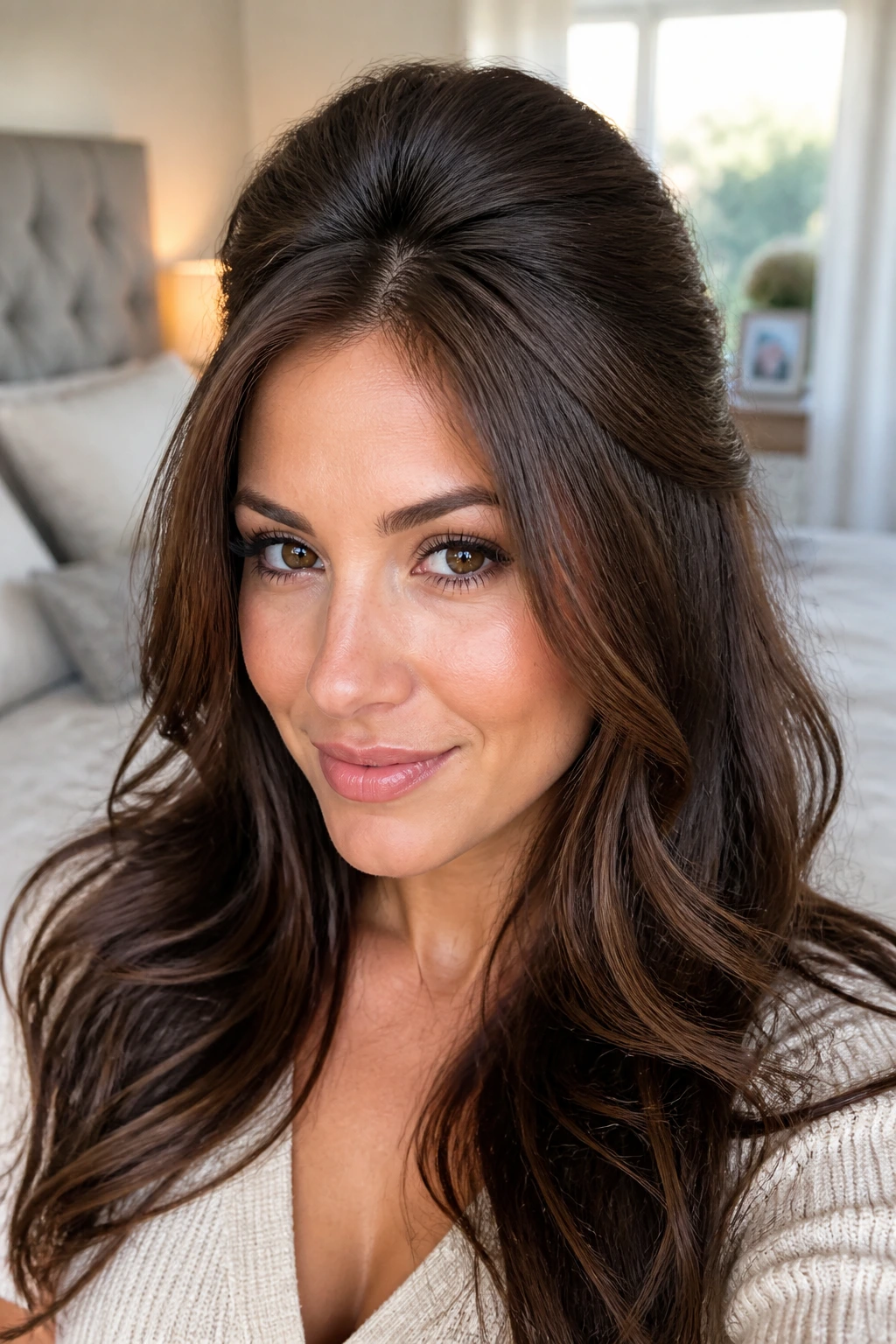
Teasing is useful. Overteasing is a mess. The sweet spot is a few short strokes on the underside of the crown section, usually in 1-inch slices, then a gentle smooth-over on top. You want the hair to feel cushioned, not knotted. If the comb drags badly, stop and add a little dry shampoo or texture spray first.
Work from the back of the crown toward the front. That keeps the shape round instead of stacked in a little ridge near the hairline. And use less force than you think you need. Thick hair already has body, so the job is more about directing it than forcing it.
One thing I always tell people: do not press the top flat with your palm after you tease it. Use the side of a brush or your fingertips, very lightly. Pressing with your palm warms the hair and can collapse the air you just built into it.
If you want the style to last, pin the base before you add final spray. The pins hold the shape. The spray just helps it stay there.
Common Mistakes That Make a Poof Look Stiff or Flat
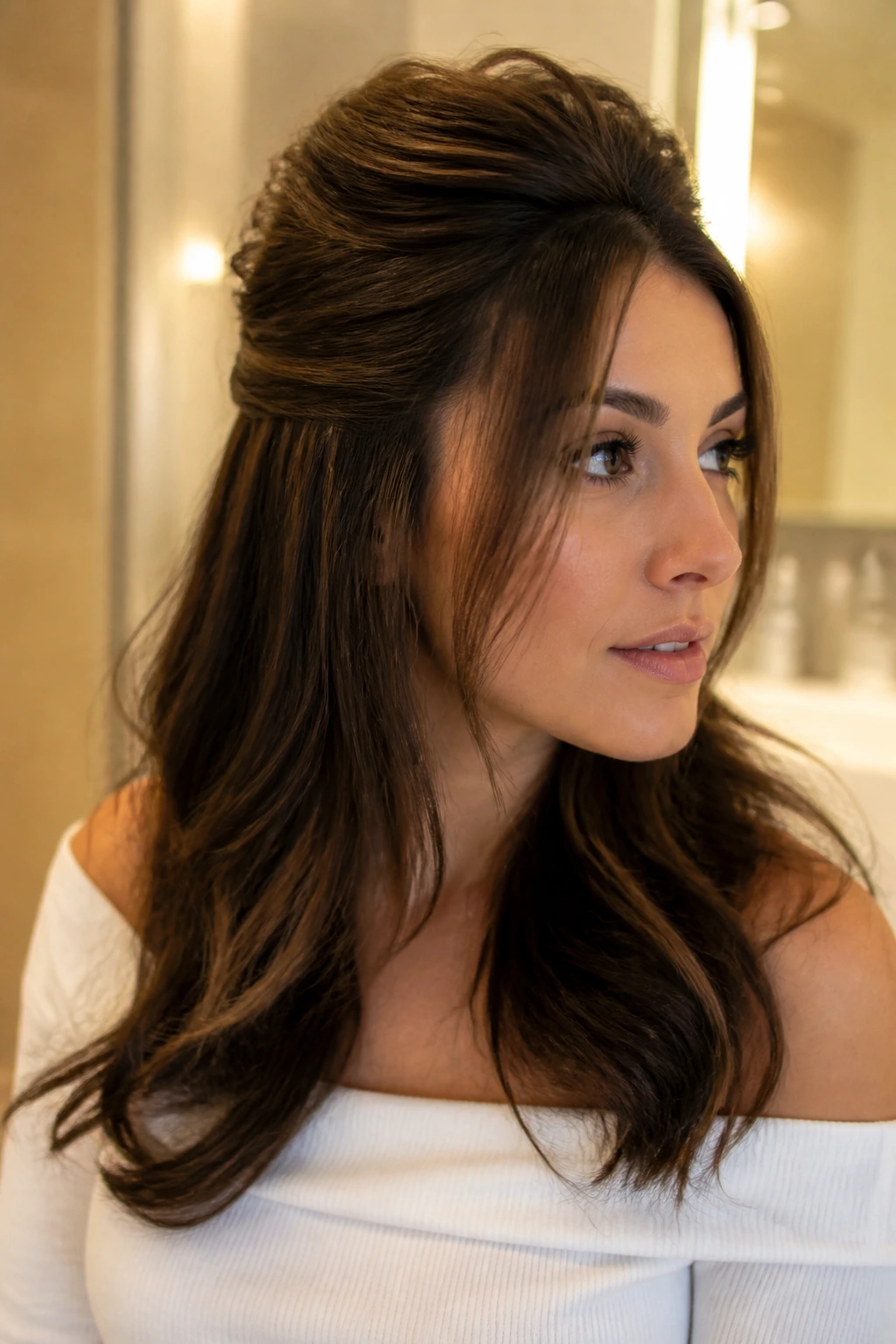
The easiest mistake is making the poof too tall and too narrow. That gives you a strange cone shape at the crown, which rarely flatters a heart-shaped face. Keep the lift broader and softer, then let the sides stay a little more relaxed.
Another issue is teasing the surface instead of the underside. When the top layer gets roughed up, the style looks dry fast. The fix is simple: isolate the section, tease beneath it, and smooth the outside only once.
Pins are another weak point. Thick hair needs more than one lonely bobby pin tucked in at the edge. Cross the pins, hide them under a layer of hair, and anchor them close to the base of the style so the weight has somewhere to sit.
And yes, too much hairspray can ruin the whole thing. The hair should still move a little. If it sounds crunchy when you touch it, you’ve gone past the line.
Variations for Different Textures, Lengths, and Dress Codes
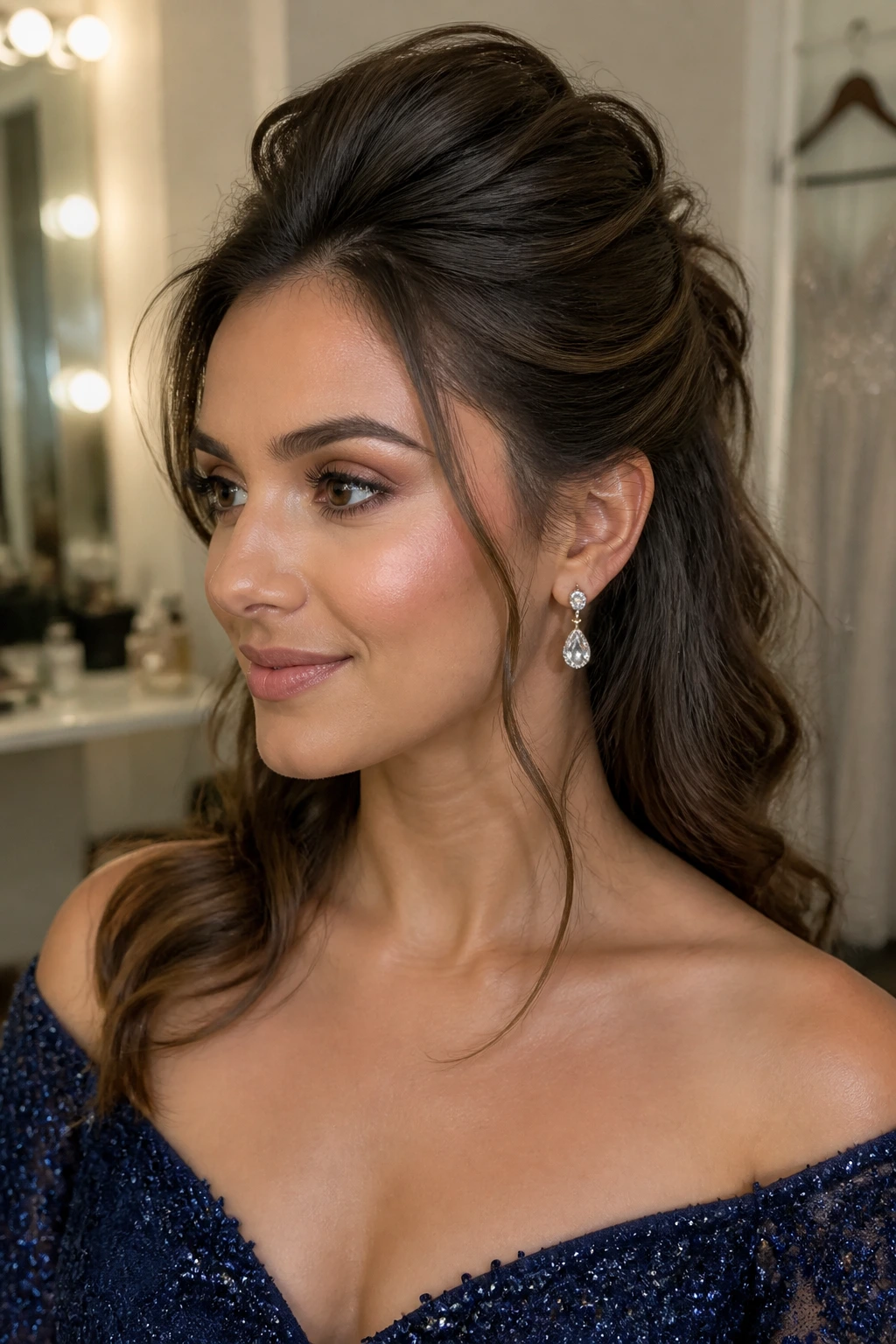
Soft Heatless Lift: Skip hot tools and set the crown with velcro rollers or large pin curls while your hair dries. This works best when you want volume without roughing up the cuticle.
Curly Crown Puff: Keep the curls intact and place the height at the roots instead of breaking up the curl pattern. A little gel at the edges keeps the style clean.
Short-Hair Mini Bump: For lobs and shorter layered cuts, keep the poof small and pair it with flipped ends or tucked sides. A giant crown bump on short hair can look disconnected.
Formal Evening Twist: Smooth the crown, build a gentle bump, and tuck the rest into a bun or French twist. This version reads dressier and holds well through a long night.
Off-Duty Claw-Clip Version: Pull the hair back loosely, create a soft lift at the front, and secure the twist with a clip. It’s fast, and it keeps thick hair from swallowing the whole look.
How to Keep the Style Fresh All Day and Into Tomorrow
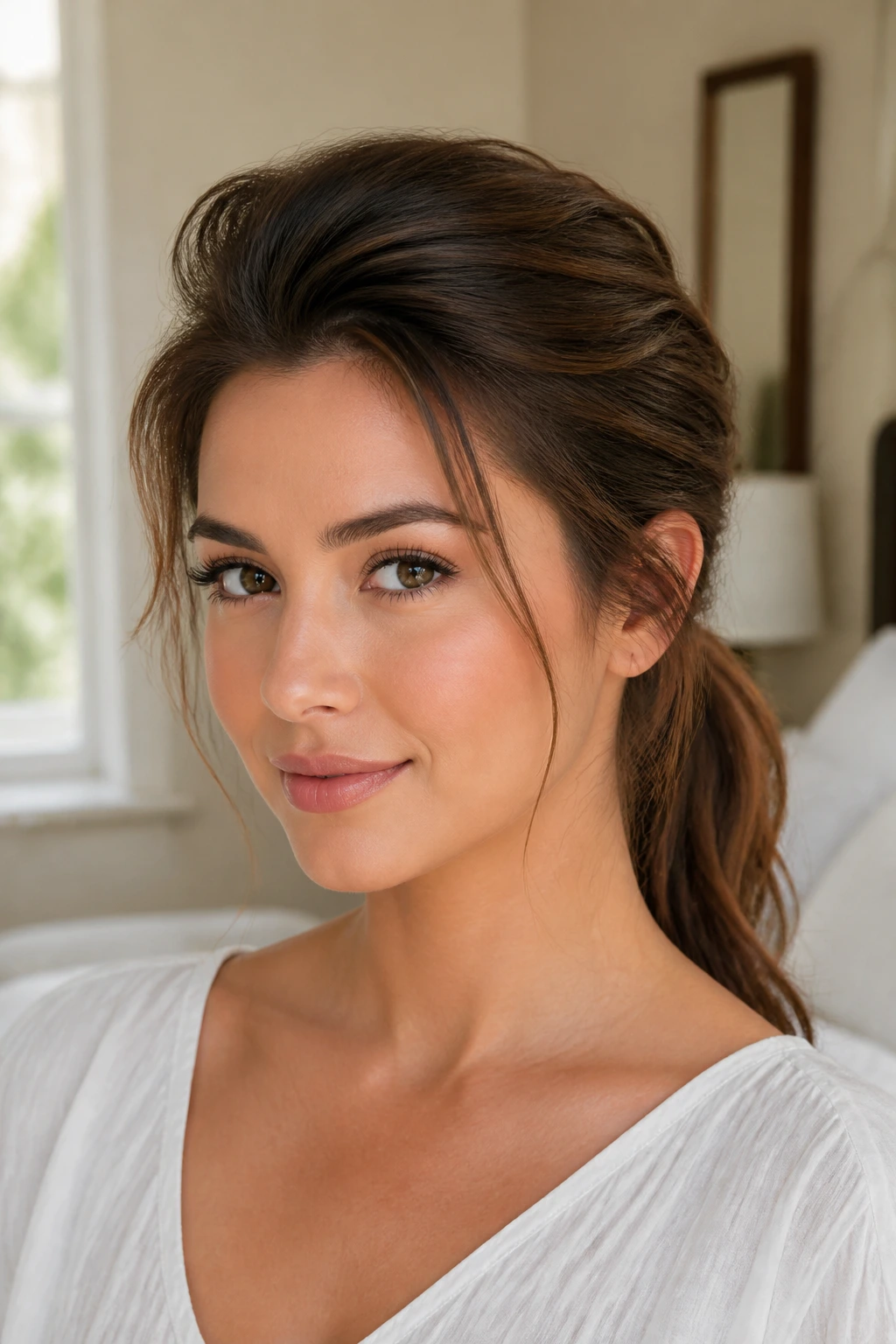
Poof hairstyles usually look best the day you make them, especially if you’ve used heat or a fair bit of teasing. That said, thick hair can carry a style into the next day if you give the roots some support. A light mist of dry shampoo at the crown helps. So does sleeping on a silk pillowcase or wrapping the top section loosely in a silk scarf.
If you’re wearing a half-up style, clip the crown lightly before bed instead of trying to sleep with it pinned tightly. Tension bends the root in awkward ways. For ponytails and buns, take them down, shake out the ends, and re-pin only the front lift the next morning. That saves time and keeps the shape from getting crushed.
Humidity is the quiet enemy here. A little anti-frizz cream on the surface of the hair helps, but don’t load it onto the roots or the poof will slide. Keep the product away from the crown unless your hair is very dry and coarse.
If the front starts to fall, don’t rebuild the whole style. Just lift the base, add one hidden pin, and move on.
Frequently Asked Questions
What exactly counts as a poof hairstyle?
It’s any style with deliberate lift at the crown or front, usually created with teasing, root support, or a bit of backcombing. The shape can be soft and modern or much more dramatic; the difference is how much height you build and where you place it.
Do poof hairstyles flatter heart-shaped faces?
Yes, when the lift sits at the crown and the sides stay soft. The added height balances a broader forehead, while loose pieces around the cheeks and jaw keep the face from looking too top-heavy.
How much teasing is enough on thick hair?
Usually less than people think. Two or three small sections at the crown are enough for most styles, especially if you’re also using dry shampoo or texture spray. Thick hair already has built-in volume, so you’re shaping it more than creating it from scratch.
Can I do these styles on curly or coily hair?
Absolutely. The high puff, half-up twists, faux hawk poof, and textured buns work especially well. The only real adjustment is to keep the curl pattern intact where you want softness and use gel or cream at the edges where you want control.
How do I keep the crown from flattening after an hour?
Set the roots while they cool, pin the base securely, and use spray in layers instead of one heavy coat. If the style still collapses, the bump is probably sitting too far forward or the section is too wide to hold.
What if my thick hair keeps slipping out of bobby pins?
Use pins with a rougher coating, cross two pins instead of one, and anchor them in the direction opposite the pull of the hair. Pins work better when they grab a small section close to the base, not a big chunk of loose length.
Can I make a poof look modern instead of retro?
Yes. Keep the lift softer, avoid overly tight sides, and add movement in the lengths. A deep side part, loose wave, or slightly undone finish usually keeps the style from drifting into costume territory.
Do I need heat tools for these styles?
No. You can get a lot of shape with teasing, clips, braids, and rollers. Heat helps on some styles, especially blowouts and smooth ponytails, but it is not required for the basic shape.
A Shape That Works With You
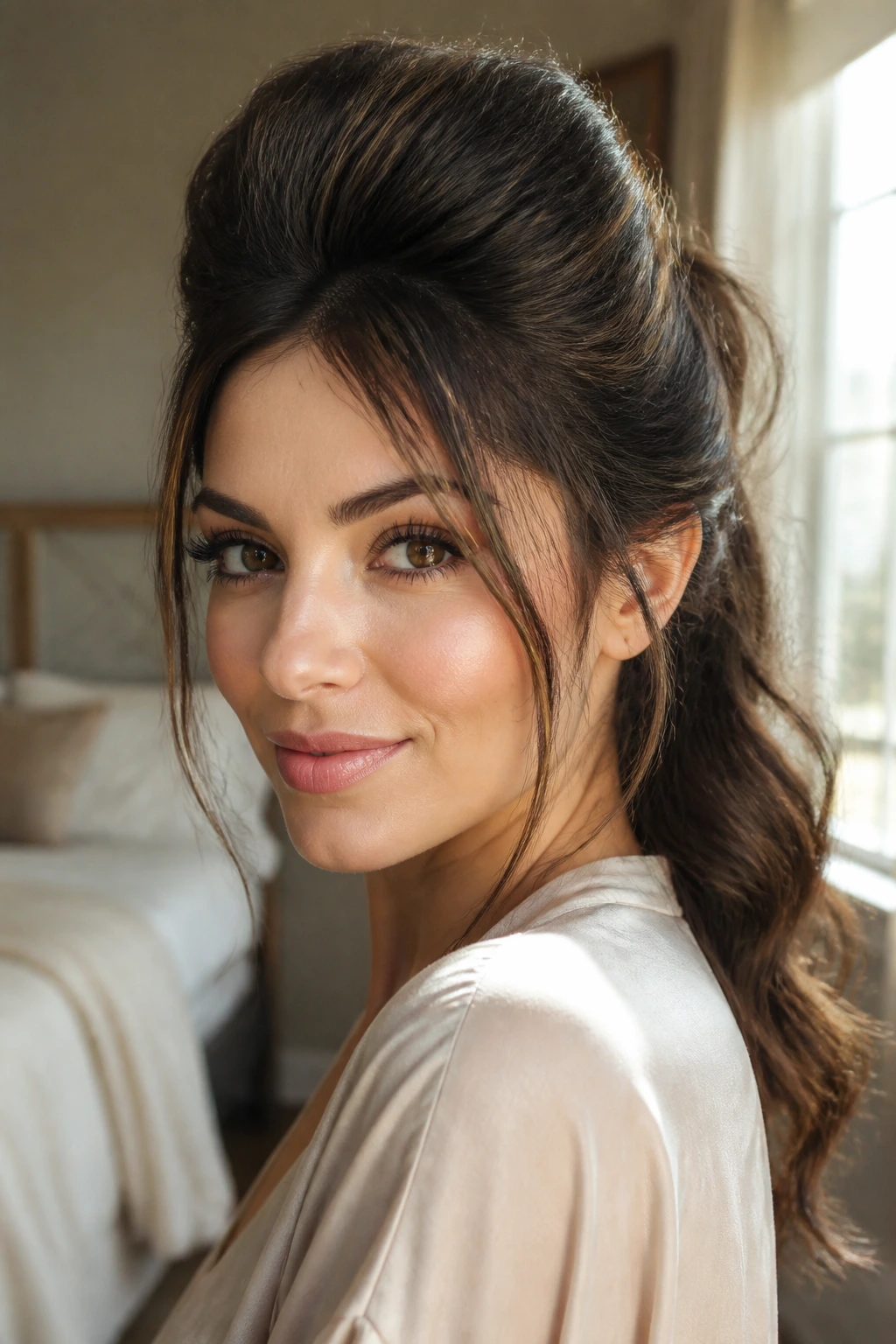
The best poof hairstyles don’t scream for attention. They make the rest of the haircut make sense. On thick hair, that often means less fighting and more directing; on a heart-shaped face, it means giving the crown a little height while keeping the forehead and cheeks soft enough to breathe.
That’s the part I like most about this kind of styling. It isn’t about making the hair bigger just because you can. It’s about placing the volume where it changes the whole silhouette. Try one version with a side part, one with a softer crown, and one that leans all the way into the drama. The right one usually feels obvious the moment you see it in profile.