



Twists for short natural hair and oval faces work because the face shape already gives you room to play. You can go center part, side part, crown height, tucked ends, or a little asymmetry, and the style still reads balanced instead of fussy. The trick is less about chasing length and more about placing the twists where they make your features look intentional: a little lift at the crown, a soft line across the cheekbones, or a clean frame around the jaw.
On short natural hair, twists live or die by section size, product load, and tension. Too much cream and the roots slip. Too little moisture and the twists puff up by lunch. Pull the hairline tight and the style may look neat for ten minutes, then your temples start talking back. I’d rather see a small, clean twist set that sits comfortably than a bigger style that feels like it’s auditioning to become a headache.
The best part is how much range you get from a short base. A two-inch coil can look polished, edgy, soft, or playful depending on parting and finish. Oval faces can carry a lot of that variation without the geometry getting weird, which is why this collection keeps circling back to balance, direction, and shape rather than length alone. Some of these twists are barely there. Others make a statement. All of them are built for the same reality: short hair that deserves to look fully styled, not merely managed.
Why This Collection Feels So Wearable
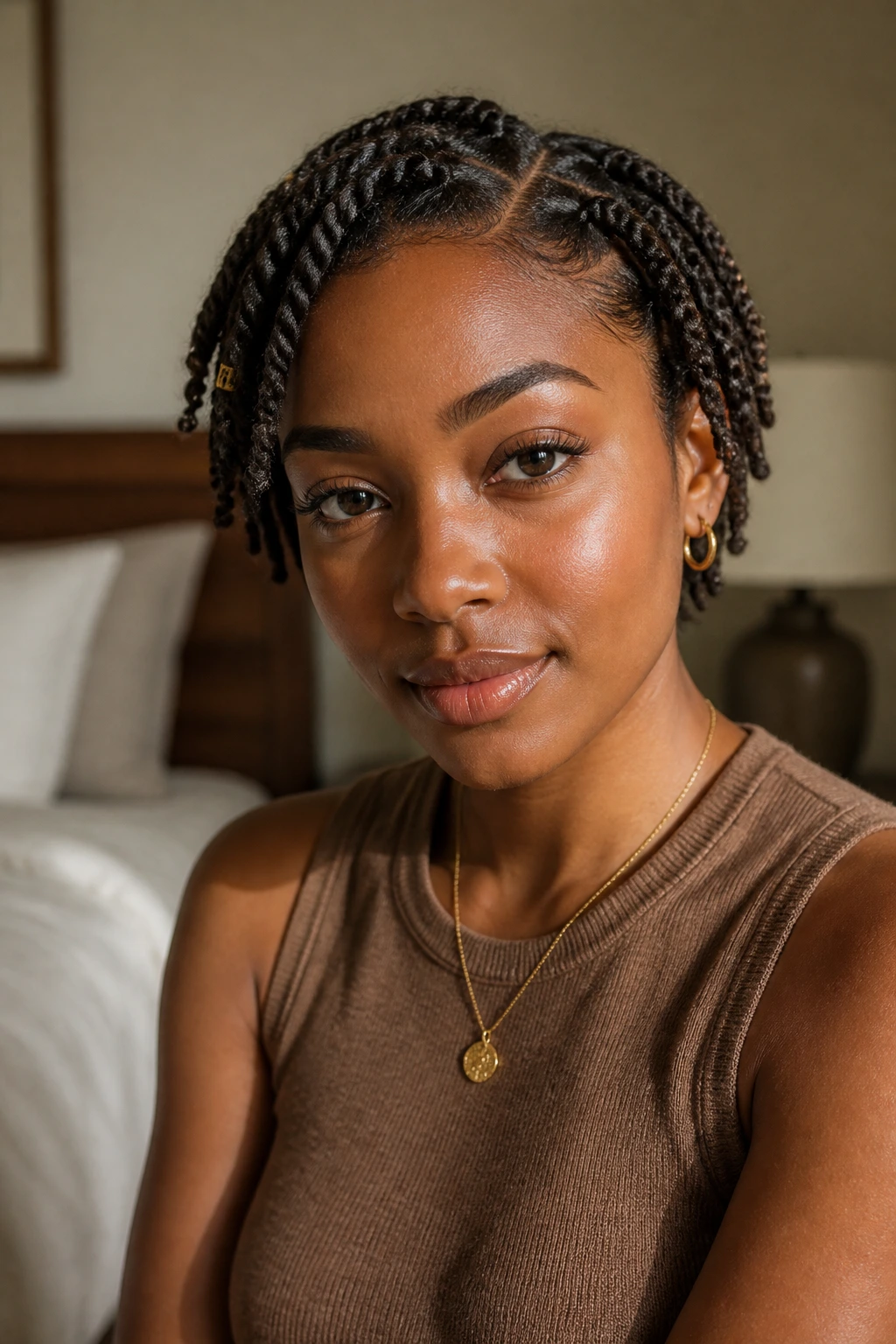
-
Face balance is on your side: Oval faces can take center parts, side parts, height, and width, so the styling choice is about mood, not damage control.
-
Short length works with twists, not against them: On a TWA or cropped natural hair, small sections grip better and hold their shape longer than oversized pieces.
-
The front can do most of the talking: A clean hairline, a twisted fringe, or a side sweep changes the whole read of the style without asking for extra length.
-
Low manipulation is the real win: Once the twists are set, you can leave your strands alone for days, which matters when your hair gets dry fast.
-
Accessories actually make sense here: Beads, cuffs, clips, and scarves do not fight short twists the way they sometimes do on bulkier styles.
-
You can keep it soft or sharp: The same base technique can look polished for work, relaxed for a weekend, or dressed up for an event just by changing the part and finish.
1. Tiny Starter Twists
These are the workhorse version, and I mean that in the nicest way. Tiny starter twists sit close to the scalp, hug short coils well, and make an oval face look tidy without flattening it into boredom. On hair that’s only an inch or two long, small sections have better grip at the root, so the style stays cleaner and unravels less at the ends.
Why They Earn Their Keep
The smaller the section, the easier it is to keep the twist neat on short natural hair. That matters because short lengths can puff fast once product gets absorbed. A tiny twist also gives you a lot of parting control; you can leave the front soft and keep the back closer, which usually flatters an oval face more than one uniform block of twists.
A side part makes this style read less severe. A center part works too, but I like it best when the twists are sized consistently and the finish is smooth at the roots.
Best for: TWA lengths, wash-day freshness, and anyone who wants a style that looks organized without trying too hard.
2. Center-Part Mini Twists
A sharp center part gives mini twists a clean line right down the middle, and oval faces can take that symmetry without looking boxed in. The style has a neat, almost tailored feel, especially when the twists fall evenly on both sides of the face. On short hair, that center line does a lot of visual work.
The part should be crisp, but not so deep that it exposes fragile scalp along the line. Keep the sections small enough that the twists stay close to the head, then let the front pieces taper naturally around the temples. That little taper keeps the style from feeling severe.
I like this one when the goal is polish. It’s the kind of twist style that looks good with a plain T-shirt and still makes sense with a blazer.
3. Side-Part Rope Twists
Side parts do something interesting on oval faces: they break the length of the face just enough to soften the vertical line. Rope twists lean into that by creating a tighter, more spiraled look than a loose two-strand twist. The result is compact, neat, and slightly dressy without becoming stiff.
What Makes It Work
A rope twist pulls the eye diagonally, which is exactly why it looks good on short hair. The diagonal movement keeps the style from sitting flat across the forehead. If your face already has balanced proportions, the side part gives you a little asymmetry without throwing off the overall shape.
Use a bit less product than you would for a thicker twist set. Rope twists can look greasy fast on short lengths, and a heavy cream will make the roots collapse.
4. Flat Twist Crown
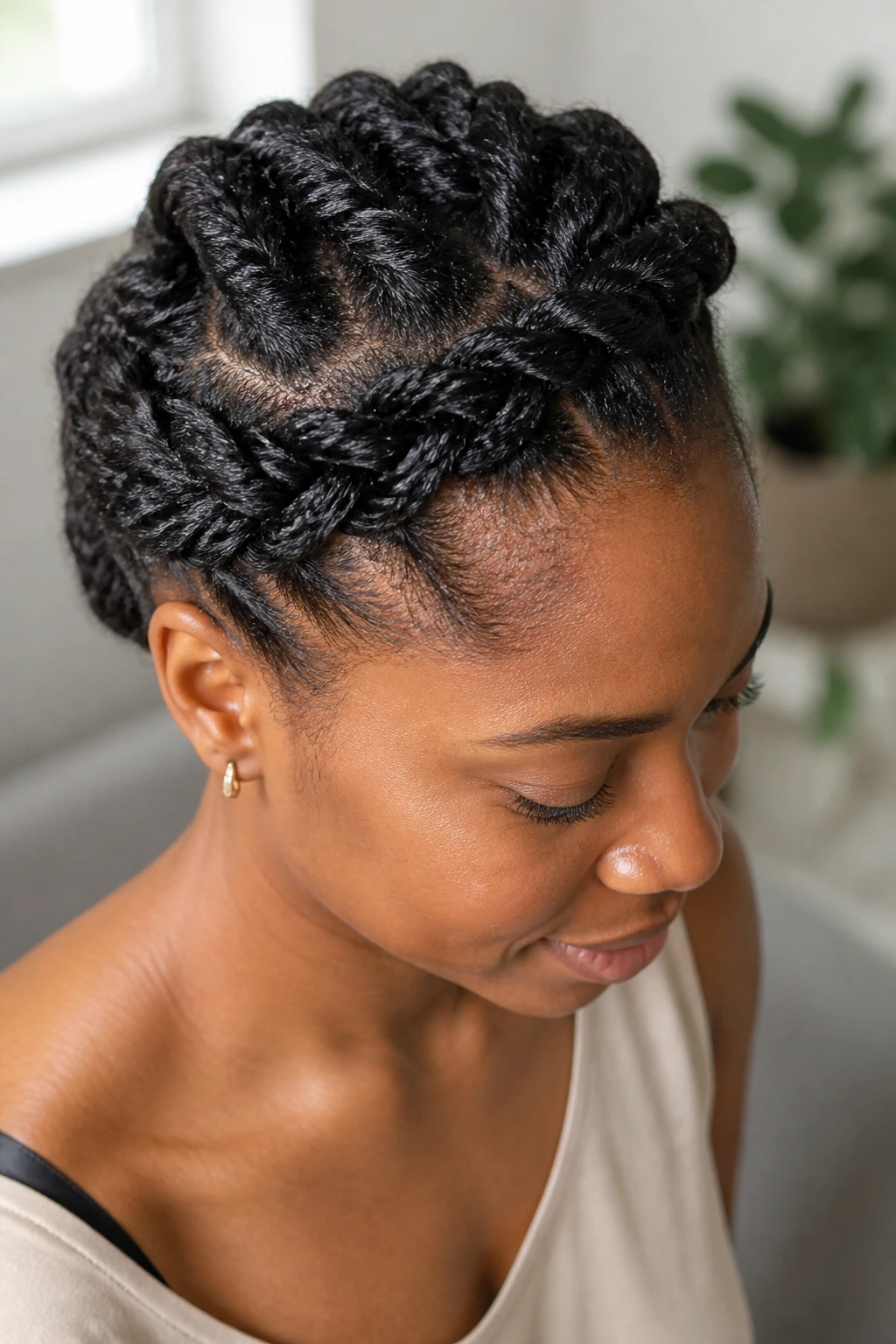
This is the style I reach for when short hair needs structure. A flat twist crown moves across the head instead of hanging down, so it works even when your lengths are not cooperating with a lot of vertical drop. On an oval face, that crown line opens the features and keeps the style from crowding the cheeks.
A good crown starts with a clean part around the perimeter, then two or three flat twists working toward the back or around the head. It’s one of those styles that looks more complicated than it feels once it’s in place.
The beauty of it is that it protects the front and still gives you shape. If your hairline is fragile, keep the tension soft at the temples and let the front edges lie naturally.
5. Tucked-End Twist Bob
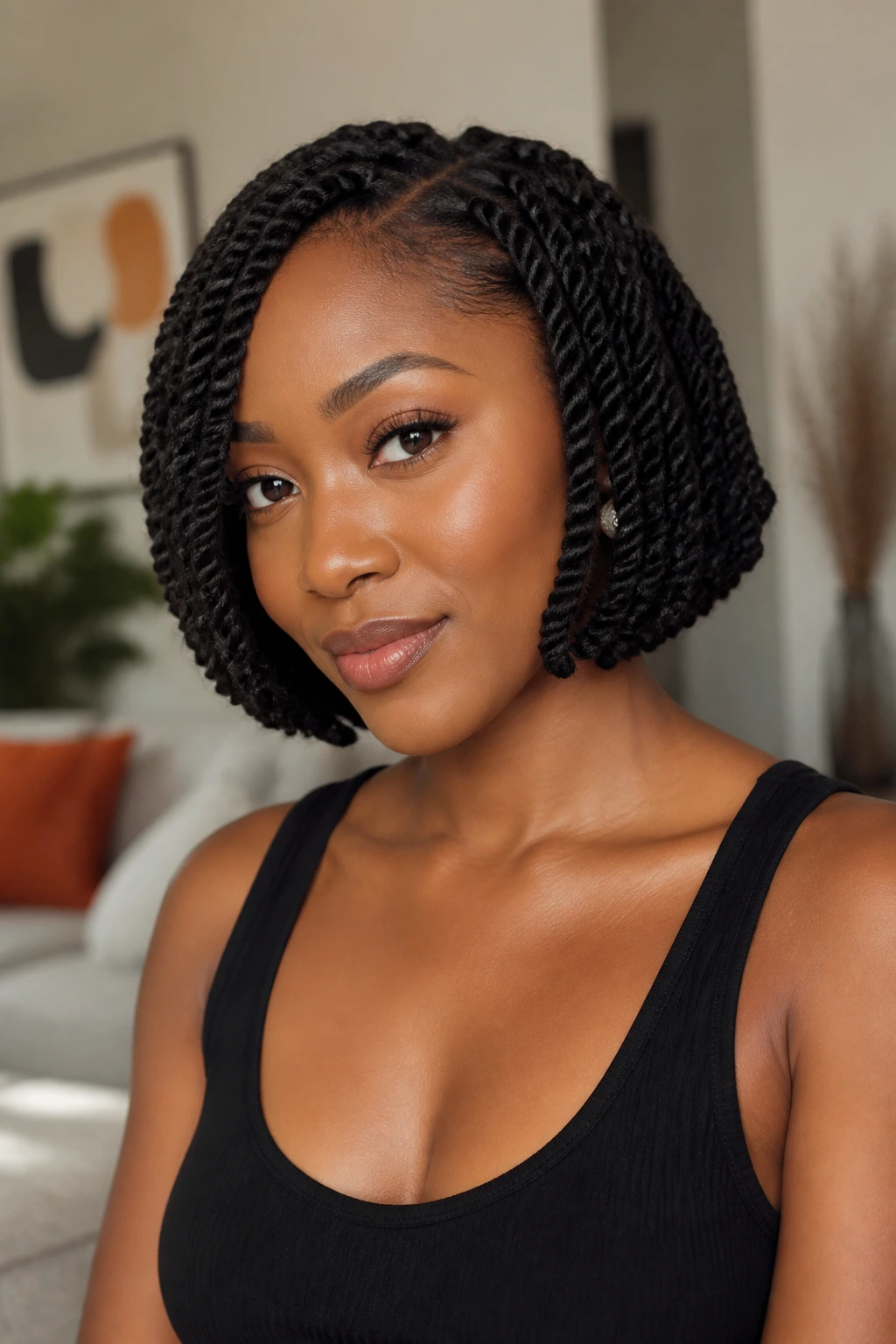
Short natural hair does not need to hang long to read as a bob. Tucked-end twists fake the silhouette in the smartest way possible: you twist the hair down, then fold or pin the ends back under so the shape lands around the jawline. On an oval face, that creates a clean frame without dragging the eyes too far downward.
The trick is to keep the ends consistent. If some pieces are tucked and others are left to flare out, the bob loses that crisp line and starts looking unfinished. I prefer a few discreet pins rather than a pile of them.
This one feels especially good when the hair has a soft bend at the ends. It turns short twists into something that looks deliberate, almost sculpted.
6. Half-Up Twist Puff
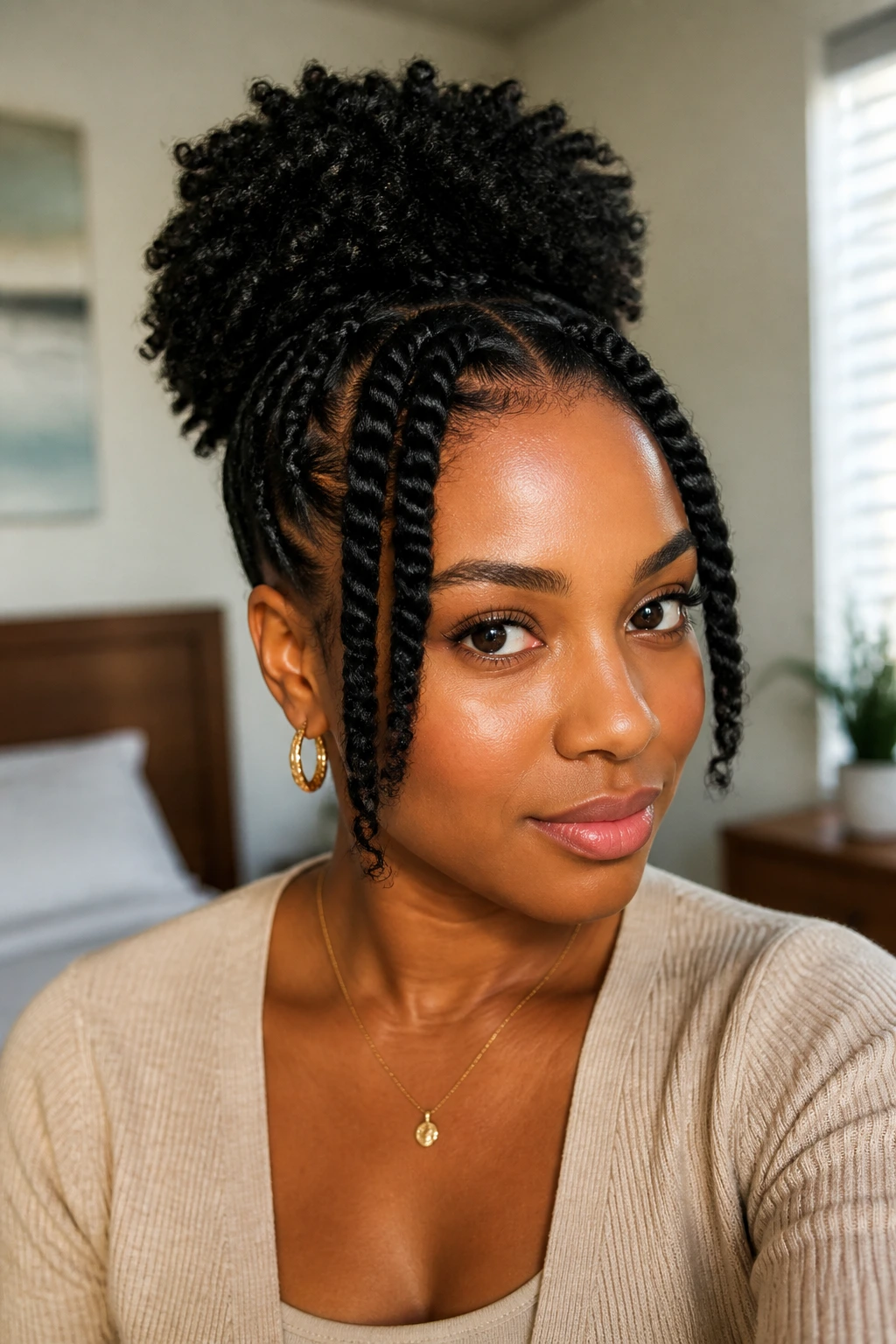
The half-up twist puff gives you a little lift without asking the whole head to go up. The front and sides stay twisted, while the top section gathers into a puff or small knot. Oval faces usually handle that height well because the shape doesn’t fight the balance of the face.
Best When You Want Some Height
If you want a style that pulls the eye upward but still leaves some softness around the cheeks, this is a strong choice. The front twists frame the face, and the puff gives the crown a bit of air. Short natural hair often looks fuller this way than when it’s forced into a strict updo.
Keep the tie loose. If the puff is dragged too tight, you’ll feel it at the roots within an hour, and there’s no reason to put up with that.
7. Twist Hawk
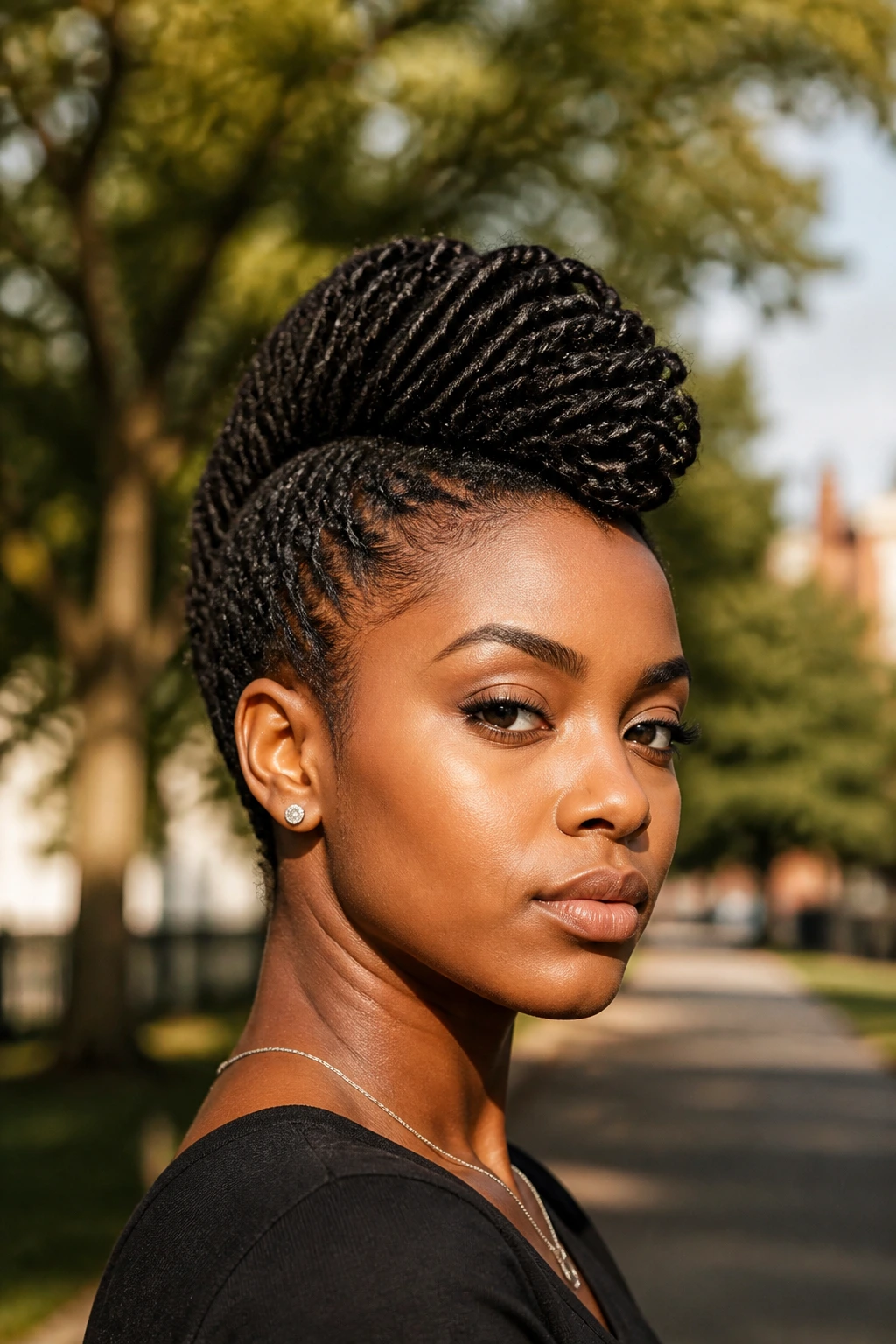
A twist hawk has attitude. The sides stay flat or close to the head, while the center ridge builds height and texture. On an oval face, that vertical line can be dramatic without making the face look too long, because the face shape already balances strong styling choices better than many others.
The center section should be the star. The sides can be smooth flat twists, pinned back, or slicked with light gel if your hair tolerates it. What you don’t want is bulky sides that compete with the mohawk shape.
This style works best when the twists are compact and the ridge is neat. Loose, fuzzy pieces at the center can make it look unfinished fast, so I’d rather see a smaller hawk done cleanly than a huge one with no shape.
8. Asymmetrical Side Sweep Twists
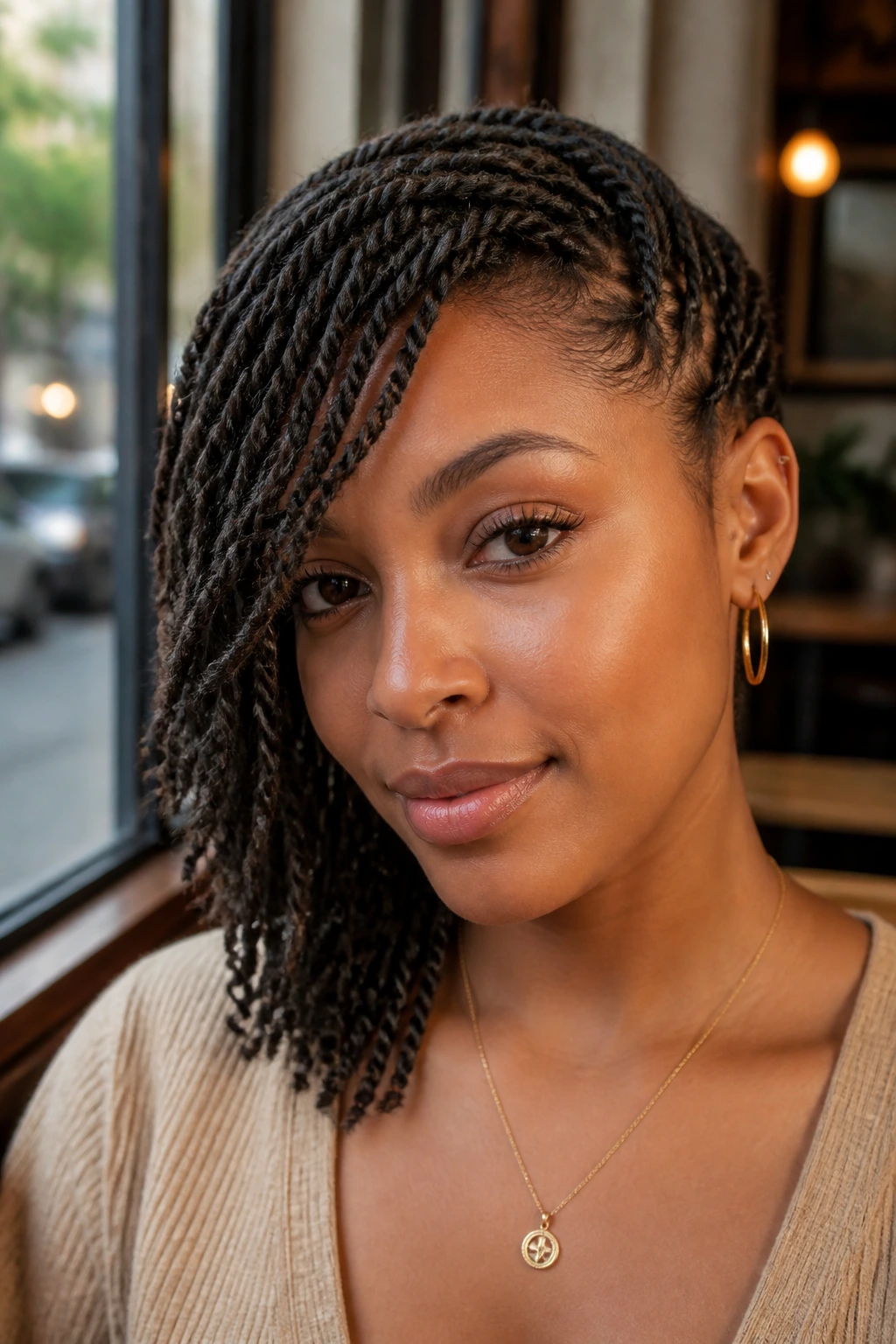
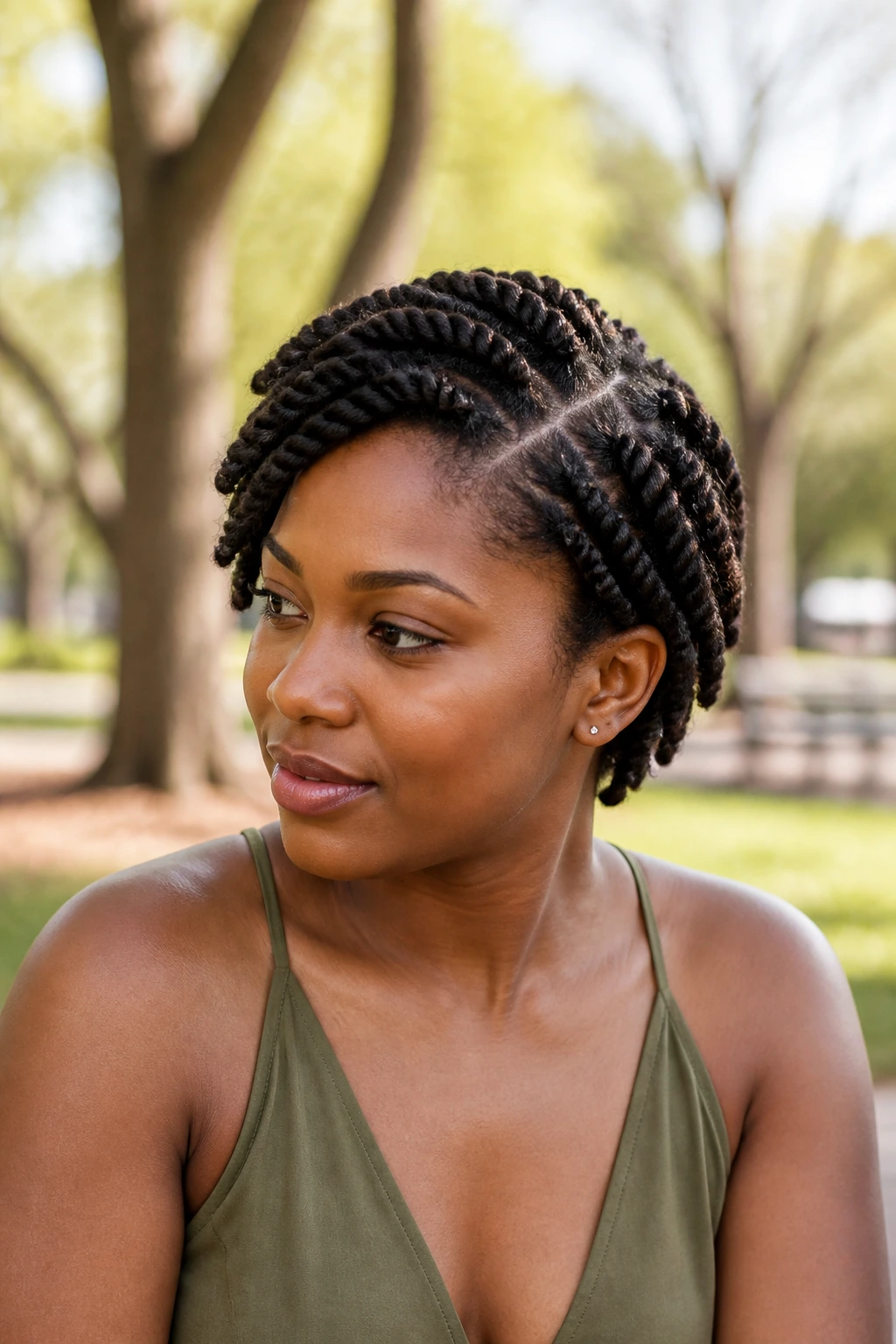
Asymmetry is one of the easiest ways to make short twists feel fresh. Instead of letting the hair fall evenly on both sides, sweep the majority of the twists to one side and tuck the other behind the ear or along the temple. Oval faces usually wear this well because the face shape already has enough balance to absorb the imbalance.
The side sweep works best when the twist direction follows the line of the cheekbone. That gives the style movement without making the forehead feel crowded. If your hair is very short, use a little more hold at the part so the sweep does not collapse after half an hour.
I like this look because it feels styled on purpose. No one mistakes it for a quick fix.
9. Twisted Bangs and Short Back
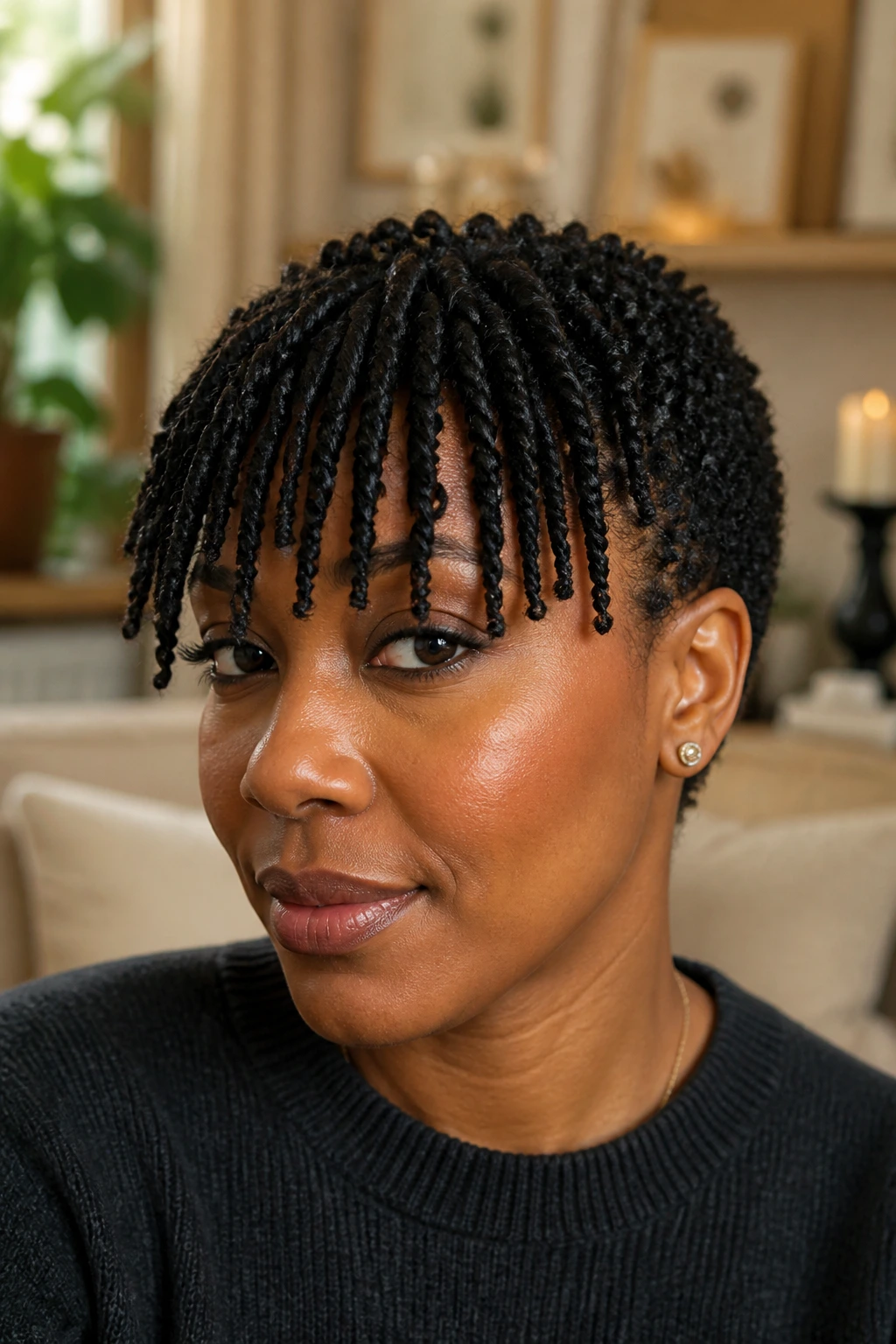
Twisted bangs can change a whole short cut. A fringe of small twists across the forehead softens a high forehead, breaks up length, and gives the style a bit of movement right where people look first. On oval faces, that front detail can make the proportions feel softer without hiding the bone structure.
The back stays close and neat, which keeps the bangs from feeling top-heavy. If the back gets too bulky, the fringe loses its point. I’d keep the back tighter and let the bangs hold the volume.
This is one of those styles that looks better when the twists are not too polished. A little texture at the front reads relaxed and modern.
10. Beaded Micro Twists
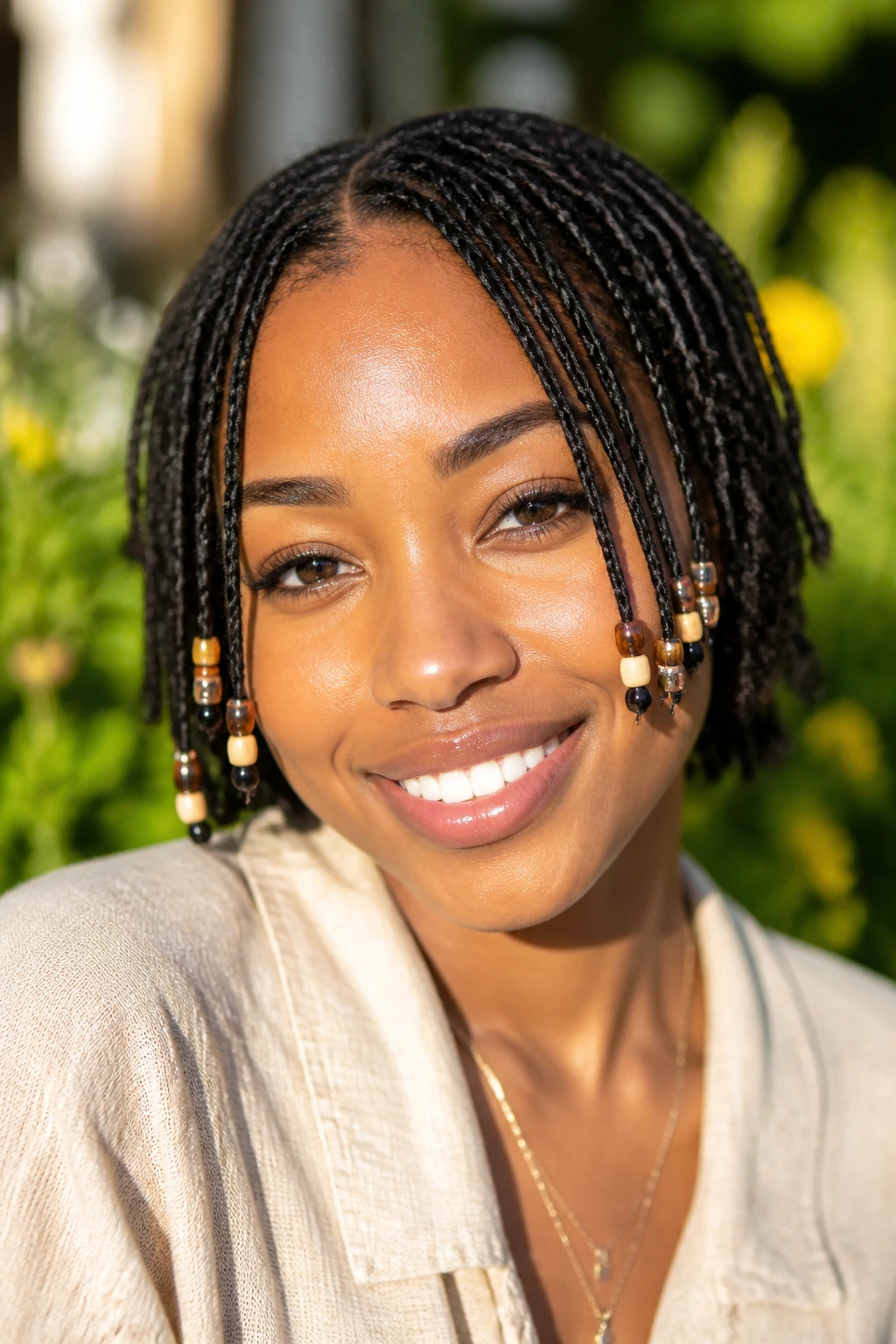
Beads on short twists can go two ways: either they sharpen the whole look, or they turn it into a cluttered mess. The difference usually comes down to restraint. On an oval face, a few beads near the front or ends can emphasize the shape without overwhelming it.
Keep the Accessories Light
Tiny twists and micro beads work best together because the style already has fine lines. If you load the ends with heavy beads, the twists can droop and lose their shape. I usually like just one or two bead accents near the face, then leave the rest plain.
This is a good choice if you want the style to feel playful. It also helps short hair look finished when the lengths are just long enough to support a little weight.
11. Curved-Part Twists
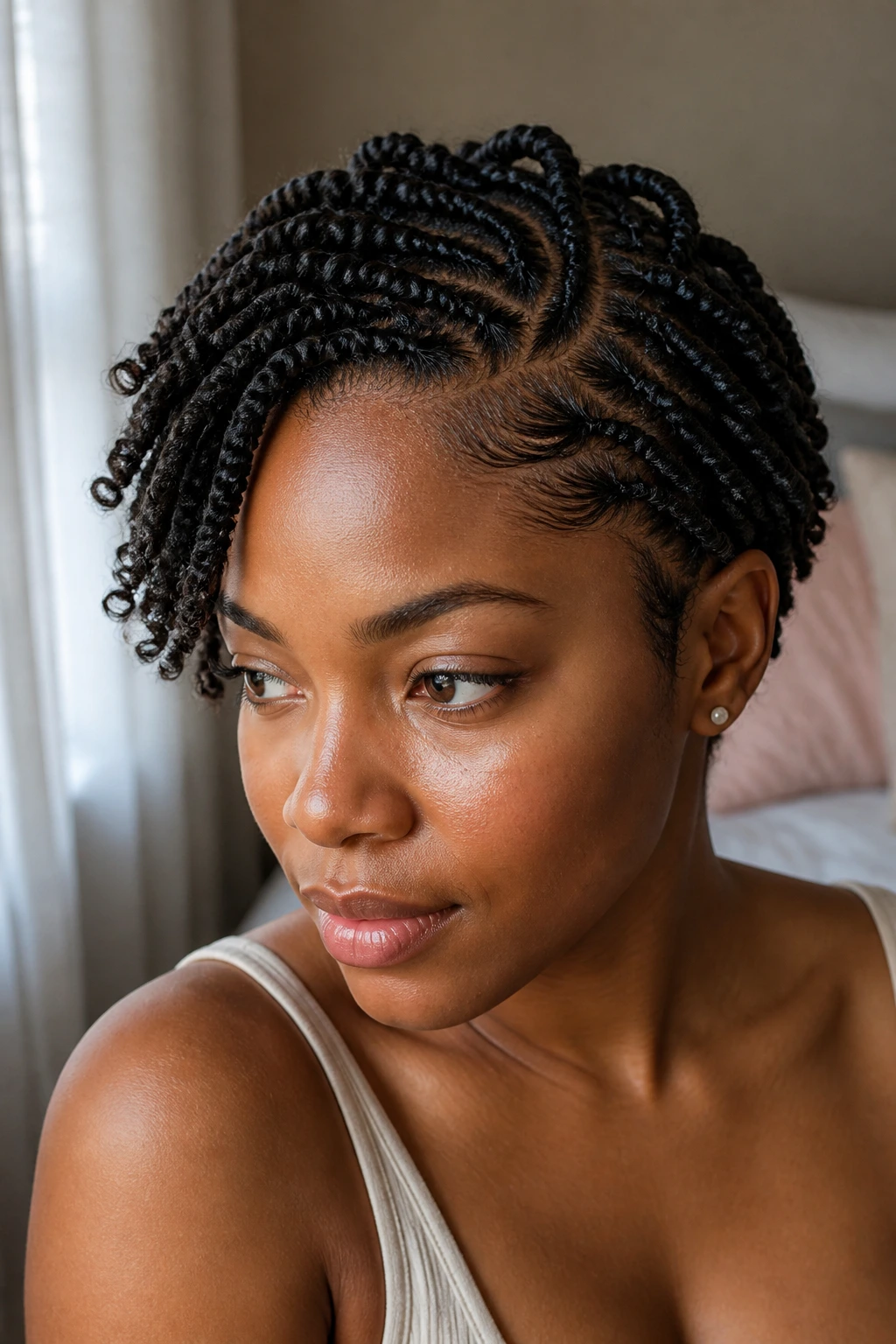
Straight parts are clean. Curved parts are interesting. That’s the whole appeal here. A curved part draws the eye in an arc instead of a hard line, and that soft movement suits oval faces especially well because it keeps the style from feeling too rigid.
The part can start near the temple, sweep over the crown, and settle into a gentle bend instead of a dead-straight row. Once the twists are in, that curve becomes part of the hairstyle itself rather than just a styling trick.
I like curved parts on short natural hair because they make the style feel custom. It’s a small detail, but it changes the mood of the whole head.
12. Double Flat Twist Rows
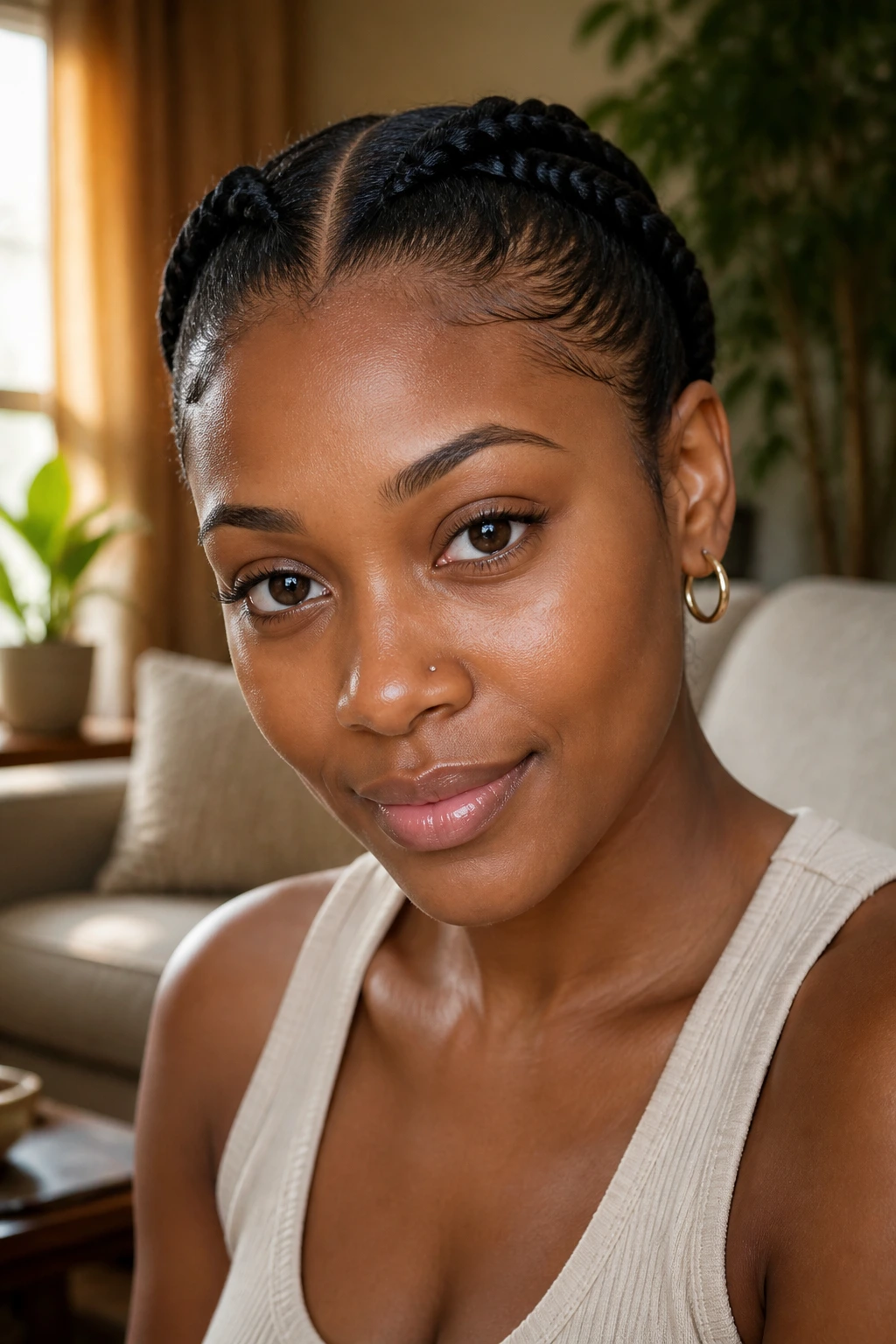
Two flat twist rows on each side can make short hair look incredibly tidy. The rows hug the scalp, leave the center visible, and keep the face open. Oval faces can carry this kind of balance well, especially when the rows stop short of pulling the hairline tight.
The look is clean enough for work but not so plain that it disappears. If your hair is dense, the rows give you control without forcing every strand into a single direction. That matters when you want order but still want the twists to show.
The best version has a little lift near the crown. Too flat and it can start looking severe; a touch of height keeps it alive.
13. Twist-and-Tuck Nape Style
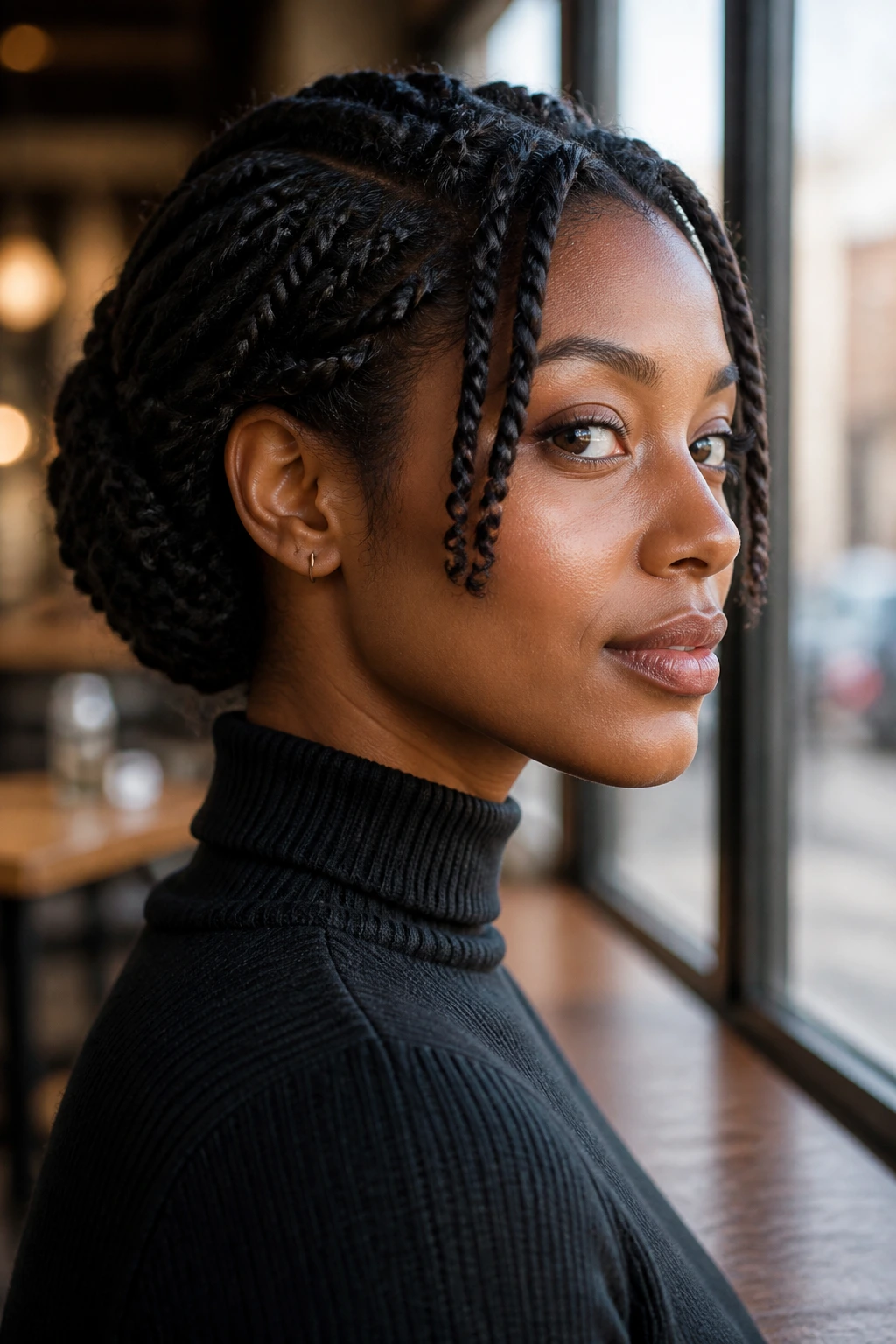
Twists that end low and tuck into the nape have a quiet elegance to them, even if I dislike that phrase. What I mean is simple: the style looks neat, close, and deliberate. On short natural hair, it gives you the illusion of more length without needing a full bob shape.
The front stays open, which flatters oval faces by keeping attention on the cheekbones and eyes. The tucked nape also keeps the neckline clean, which is useful when you want the style to sit under collars or sit well with earrings.
Use pins that match your hair color. Contrasting metal sticks out fast on short styles, and there’s no reason to let a bobby pin become the main character.
14. Halo Twist with Face-Framing Pieces
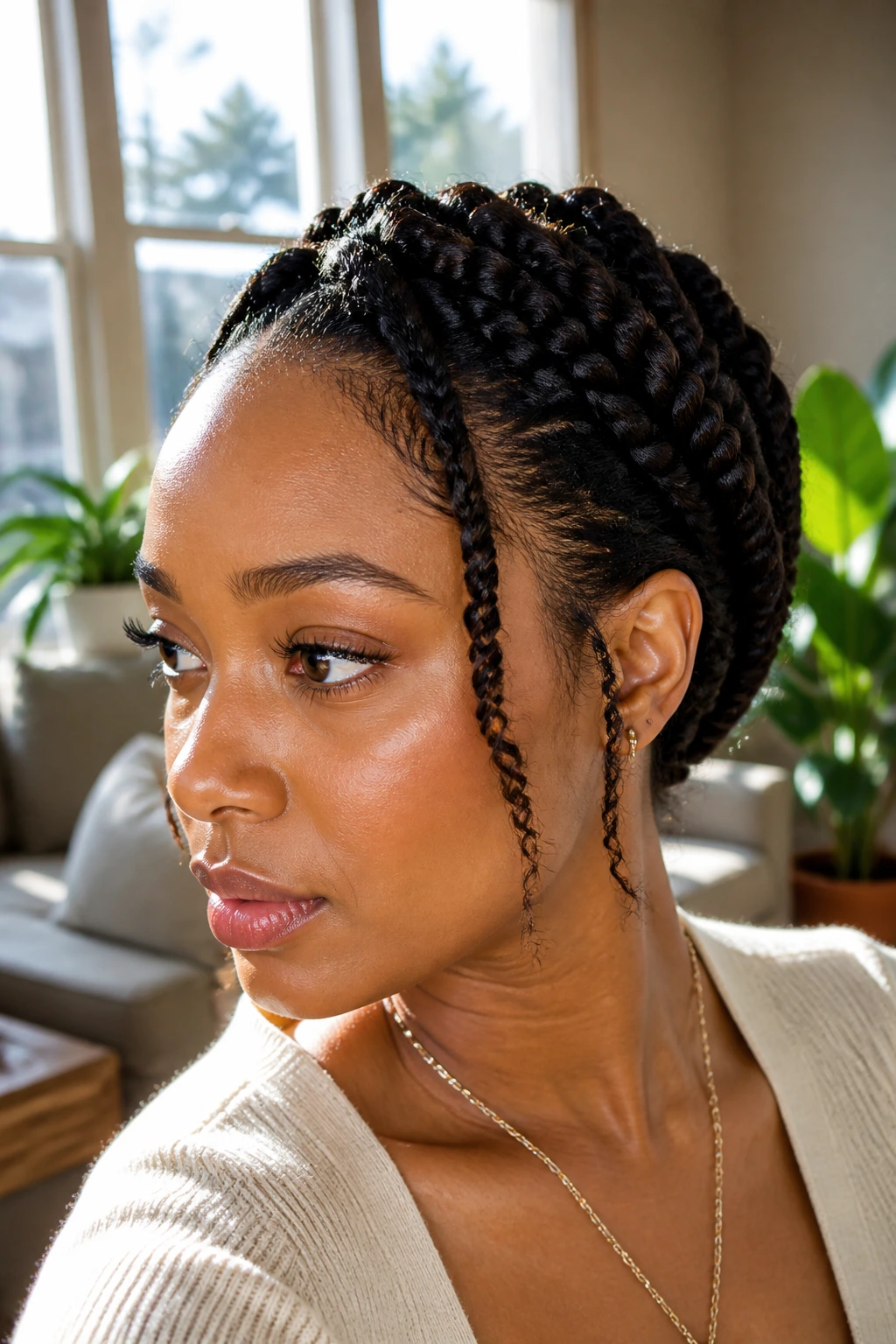
A halo twist circles the head and leaves a couple of front pieces free to soften the face. That mix of structure and softness works beautifully on oval faces, because you get the open crown line without losing movement around the eyes.
The halo itself should stay low-tension. If it feels like a headband trying to hold back a storm, it’s too tight. Short natural hair often behaves better in a looser halo than in a hard, pulled-back version.
The face-framing pieces matter more than people think. Even a pair of tiny twists falling near the temples can soften the look and keep the halo from reading too formal.
15. Chunky Crown Twists
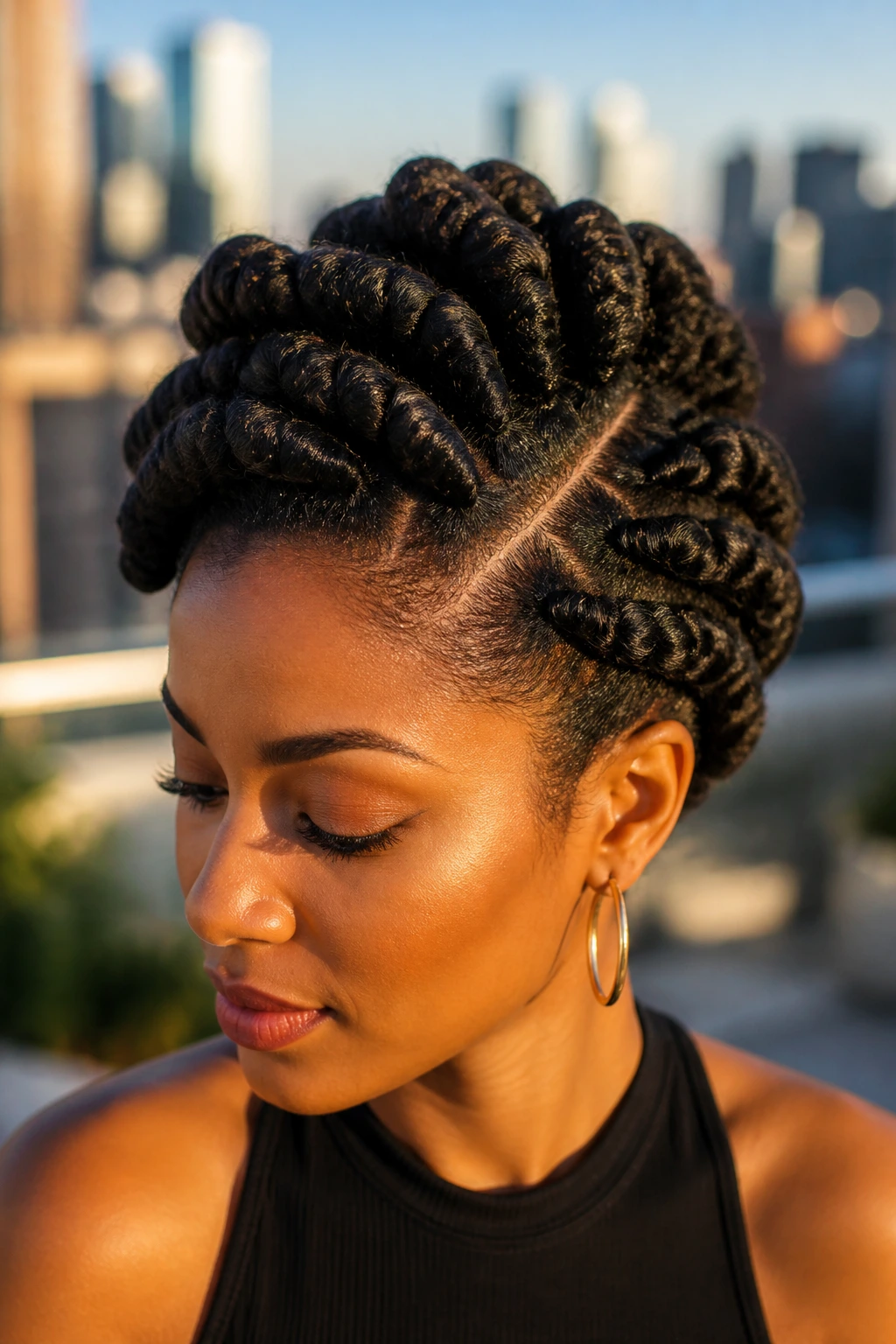
Chunky twists are not for every short length, but when the hair is dense enough, they look clean and bold in a single pass. The larger sections reduce styling time and give the crown more weight, which can balance an oval face nicely if you want width rather than extra height.
When Bigger Is Better
If your strands are thick and your shrinkage is real, chunky twists keep the style from disappearing into the scalp. The tradeoff is that they usually need a bit more tension control, because big sections can tug if they start too close to the hairline.
I like them with a side part and minimal accessories. Too much decoration can make the style feel busy, while the twist size already does the talking.
16. Loose-End Accent Twists
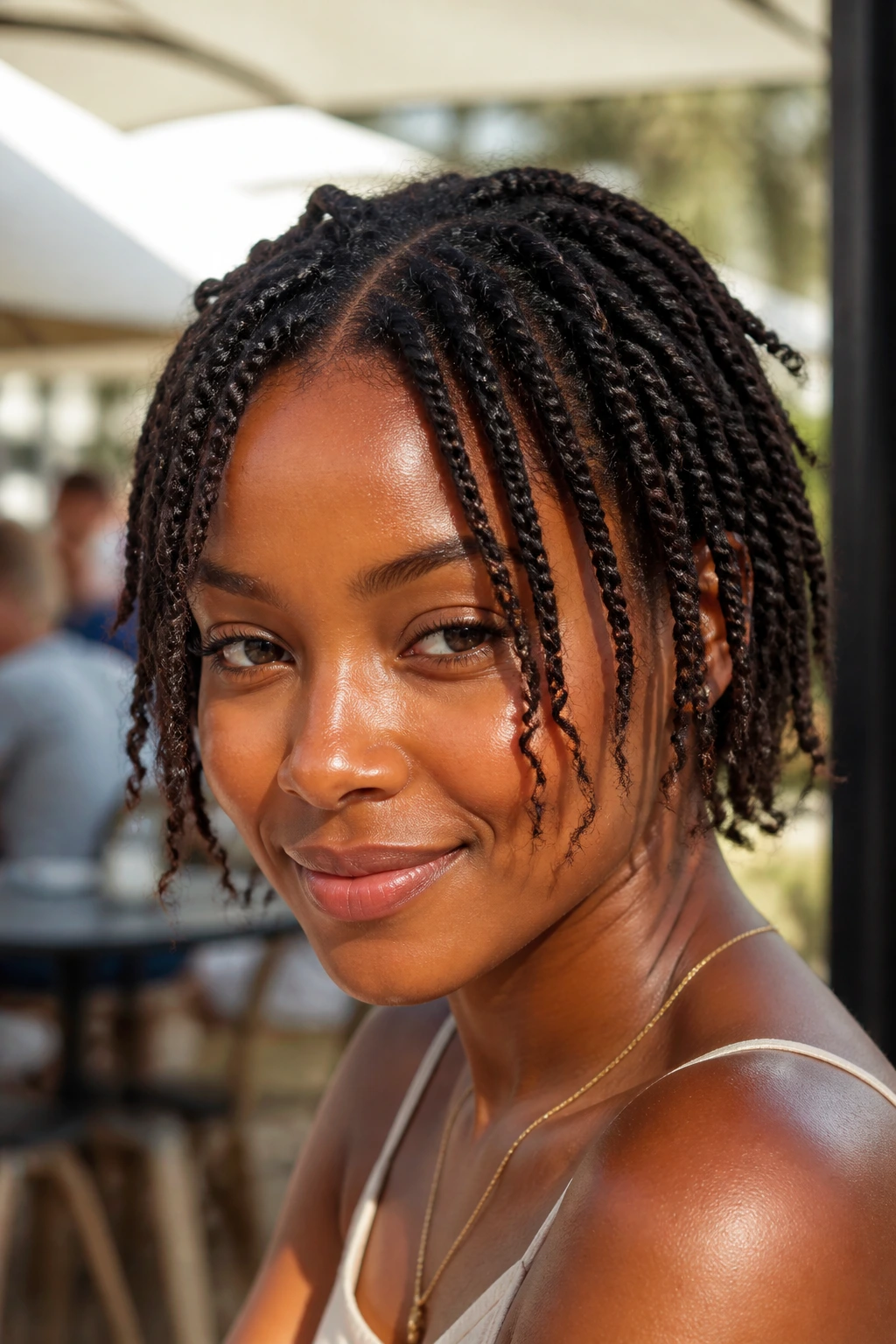
Not every twist has to end in a hard stop. Loose-end accent twists leave the tips a little softer, which gives short hair movement and avoids that stiff, overworked finish. Oval faces can wear this easily because the softer ends blur the outline a bit instead of boxing it in.
The loose ends work best when the twists are still clean near the root. That contrast is the point. Crisp at the scalp, relaxed at the tips. If every part is fuzzy, the style loses its shape.
This is a good option for people who want the front to feel less formal. A little looseness around the cheekbones can make the whole style breathe.
17. Rope Twists with Decorative Cuffs
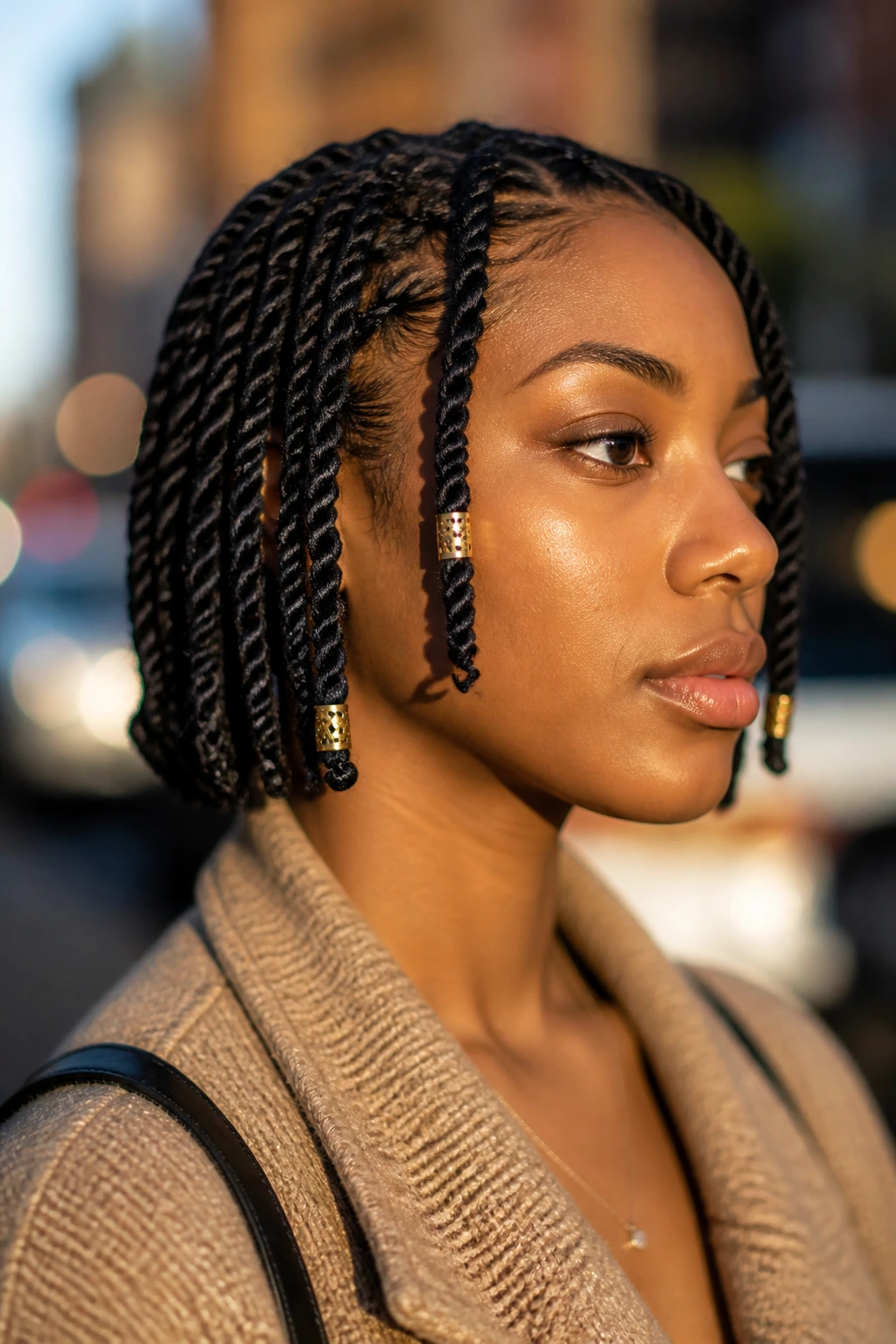
Rope twists already have a neat spiral pattern, and cuffs turn them into a focal point without needing much length. A few small cuffs placed near the ends or at the face-framing pieces can pull the eye downward in a controlled way, which oval faces often wear well.
The cuffs should not be heavy enough to stretch the twists. That sounds obvious, but a metal cuff can pull more than you expect on short hair. I prefer lightweight cuffs or hollow rings when the hair is cropped close.
Use them sparingly. One or two well-placed cuffs read intentional; ten of them can start looking like the style is carrying jewelry instead of shape.
18. Short Twist Bob with Blunt Ends
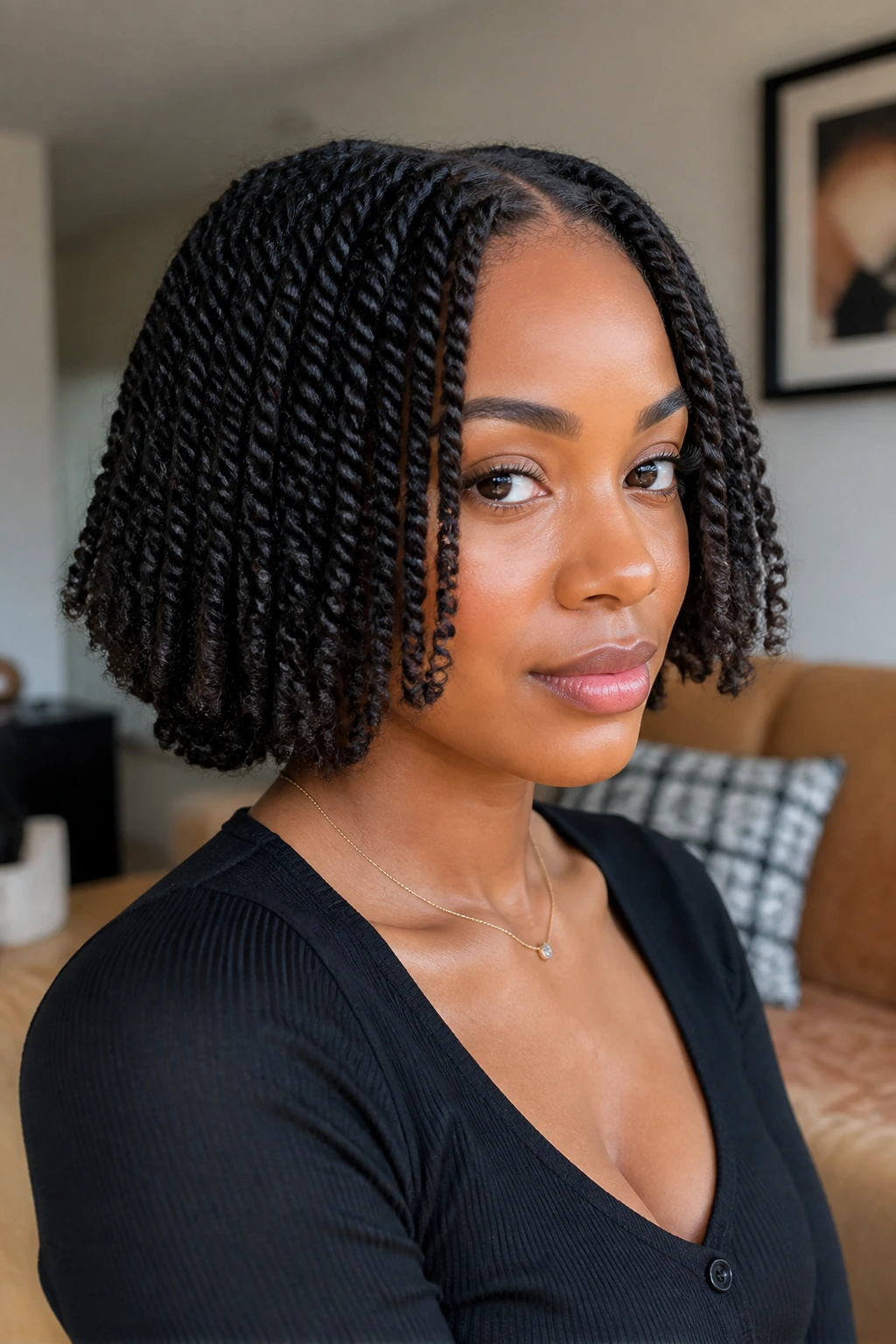
This version is all about line. The twists are trimmed or styled to land around the jaw in a blunt, even shape, which gives short natural hair a clean bob silhouette. Oval faces can handle that blunt edge nicely because it emphasizes the bone structure rather than hiding it.
The key is consistency. If one twist sits longer than the rest, the bob outline gets choppy. Keep the section sizes even, and if needed, pinch the ends in a little product so they sit together instead of splaying out.
I like this style when I want something sharp but not severe. It has enough edge for a statement and enough shape to feel polished.
19. Faux Side Shave Twists
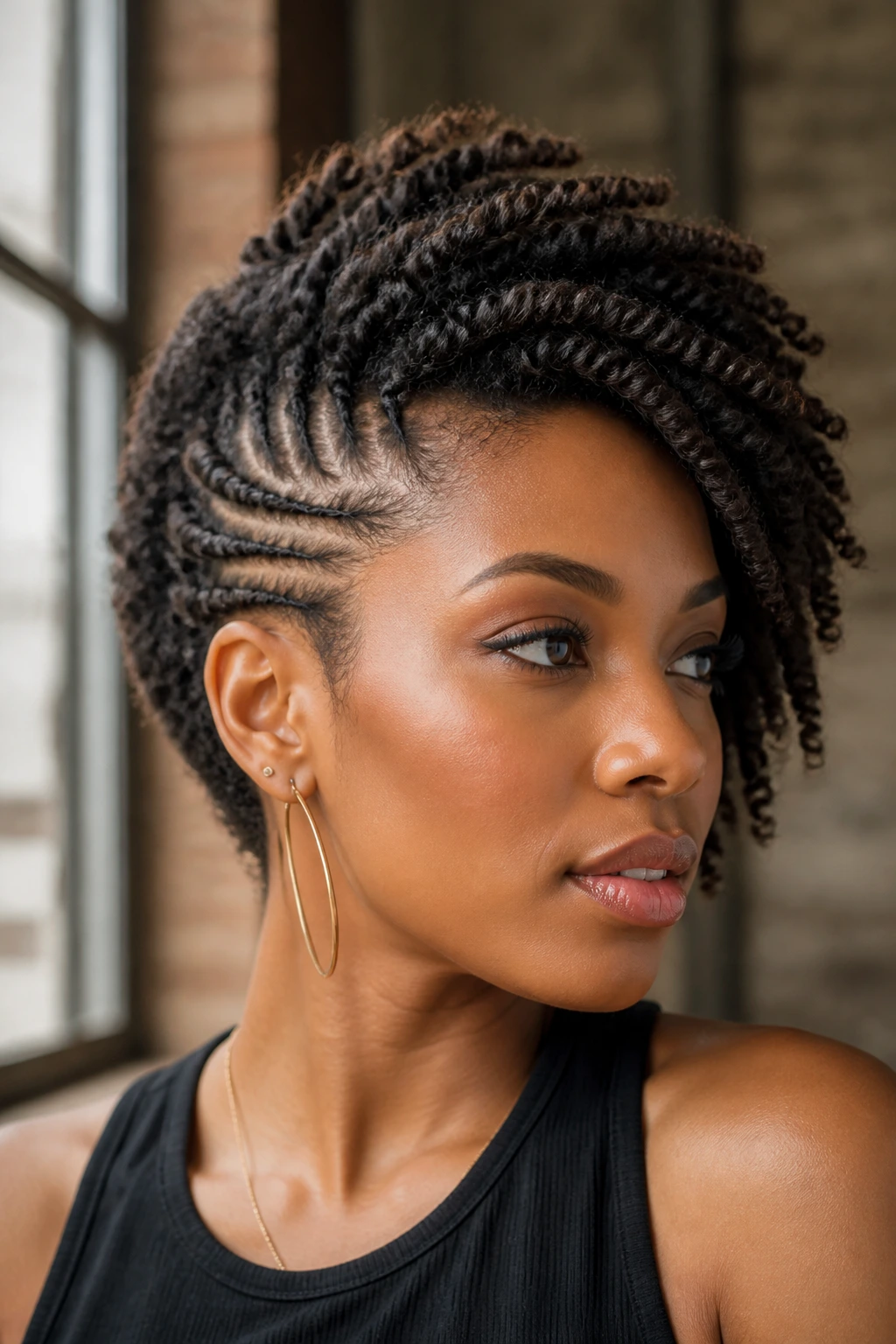
A faux side shave is one of the boldest ways to style short natural hair without actually cutting anything. One side stays flattened or tightly twisted close to the scalp, while the other side carries more volume. On an oval face, that contrast usually lands well because the shape can handle dramatic asymmetry.
The flat side needs to be soft enough to avoid tension headaches. Don’t pull it so tight that it turns into a helmet. The volume side can be rope twists, mini twists, or even a twisted puff shape if your hair allows it.
This style is a mood. Sharp, a little rebellious, and far more wearable than it looks in a mirror at first glance.
20. Pineapple Twists
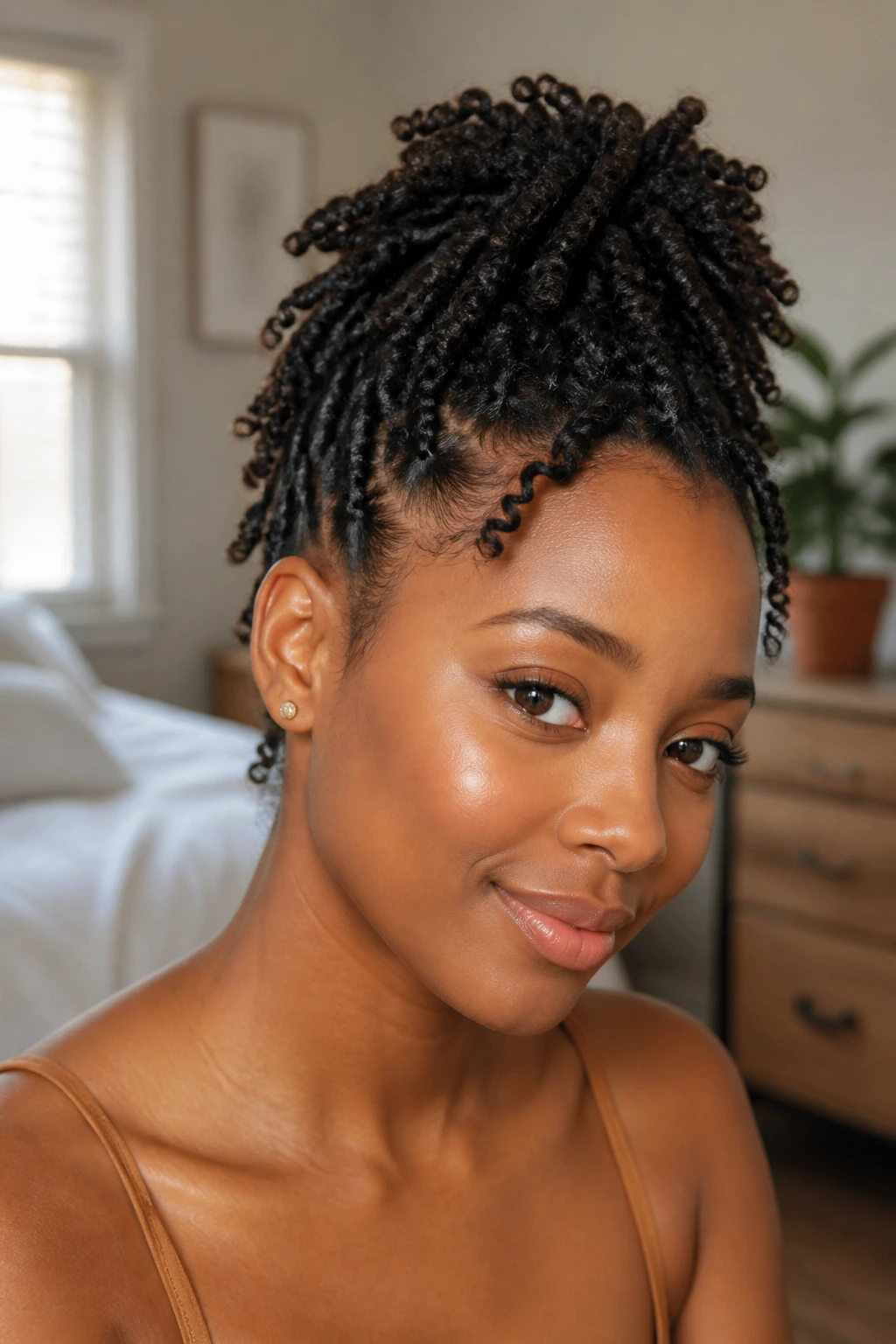
Short pineapple twists gather upward in a loose, high shape that keeps the sides visible and the top lifted. It’s not the same as a full pineapple on longer hair; on short natural hair, it reads more like a compact top lift with twists still doing the work.
That upward shape suits oval faces because it adds height without crushing the sides. The face stays open, and the style keeps a playful outline. If the hair is too short to hold a full lift, use a satin scrunchie and let the front twists frame the forehead.
I like this for days when you want your hair off your neck but still want the twist pattern to show. It’s practical, and it has a little energy.
21. Wrapped Low Bun Twists
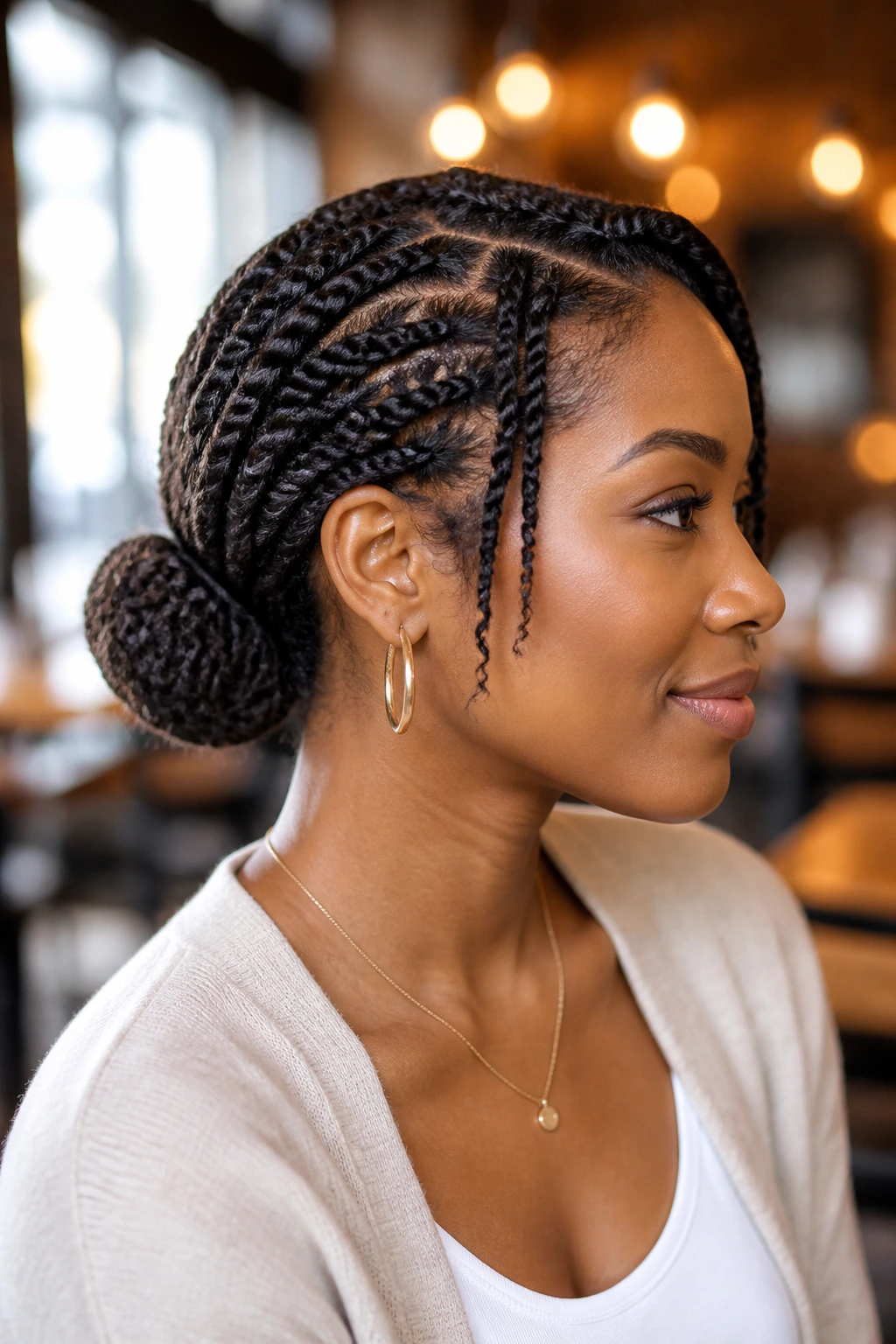
A wrapped low bun makes short twists feel formal without demanding long lengths. The twists gather at the nape, coil into a small bun, and sit close to the head. Oval faces usually look balanced with this because the open top and clean sides keep the focus on the face instead of the hair mass.
It helps to leave a few front pieces slightly softer. Too slick and the style can look severe. A little movement at the temples makes the bun feel more natural.
This is one of the better choices when you need a style that survives a long day. It stays contained, and the shape remains readable even if the bun gets a little smaller by evening.
22. Twist-Out Prep Twists
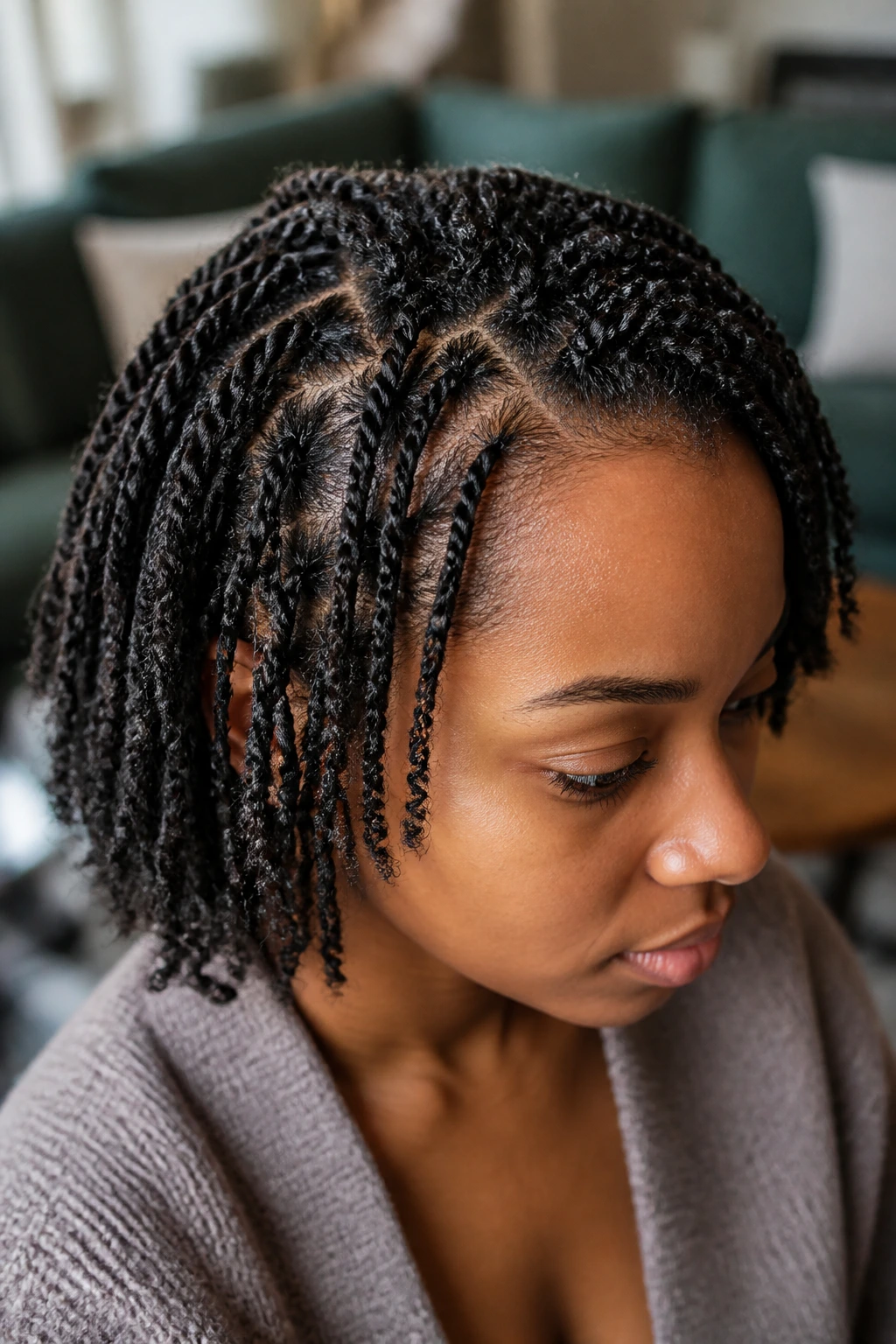
Some twists are meant to stay twists. These are meant to become something else. Twist-out prep twists on short hair give you a set that can be unraveled later for extra width and texture, which oval faces often wear well when they want more fullness around the cheeks.
The twist size matters here. Smaller twists give tighter definition; bigger ones give more stretch and a softer cloud at the end. If your hair shrinks hard, the prep twists can keep the final twist-out from turning into a dense little ball.
I usually recommend this when the goal is a two-stage style. Wear the twists for a day or two, then release them when you want a fuller shape.
23. Mohawk with Side Flat Twists
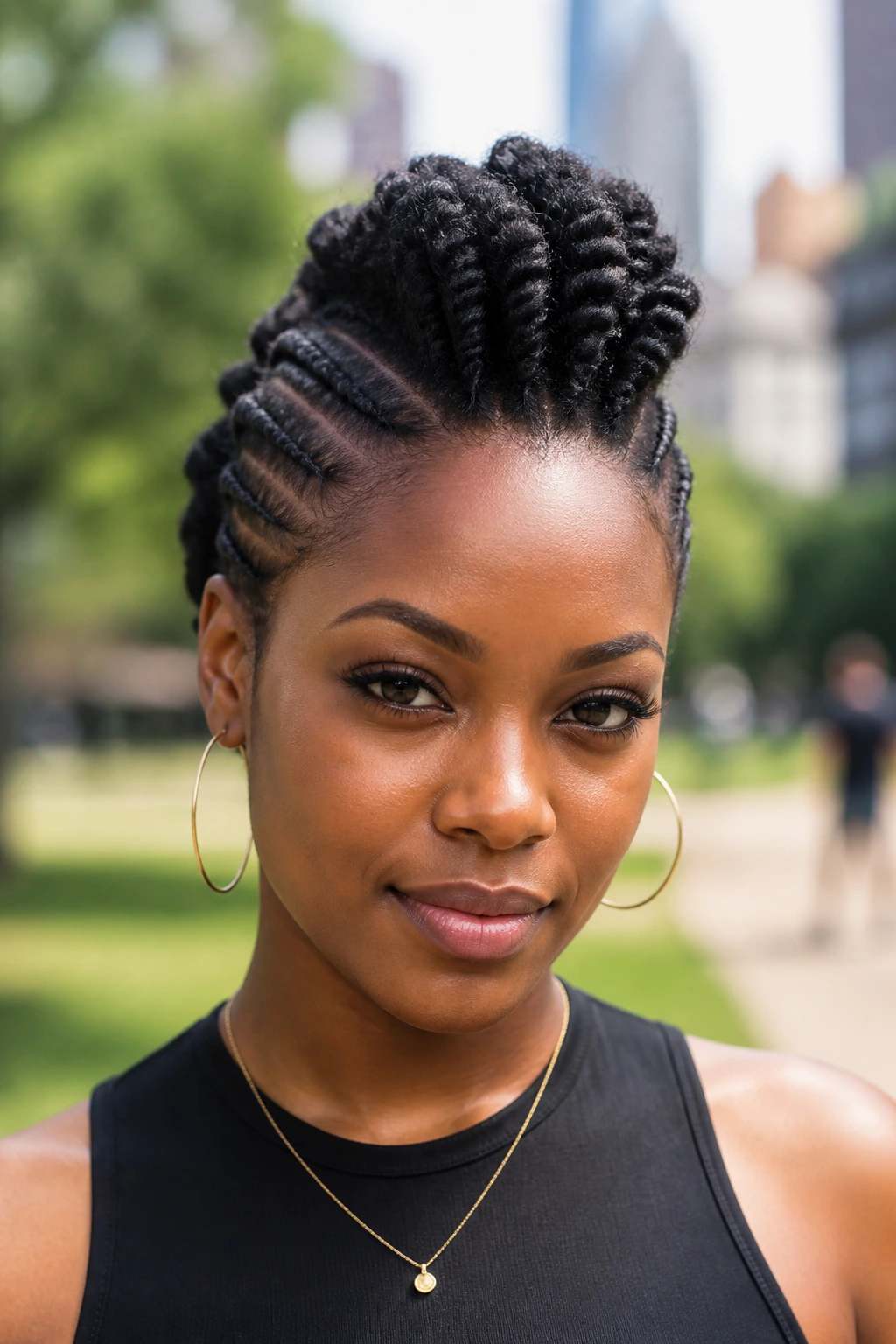
A mohawk shape built from side flat twists gives short natural hair a strong center line and clean sides. The oval face shape can take that height in the middle without looking top-heavy, especially if the sides stay neat and low.
The sides should feel secure, not pinched. That line between “flat” and “tight” matters more than people admit. A good mohawk twists the eye upward while keeping the temples calm.
It’s a strong choice for events or days when you want the style to have some bite. I would not use heavy accessories here; the silhouette already does enough work.
24. Twists with Coiled Fringe
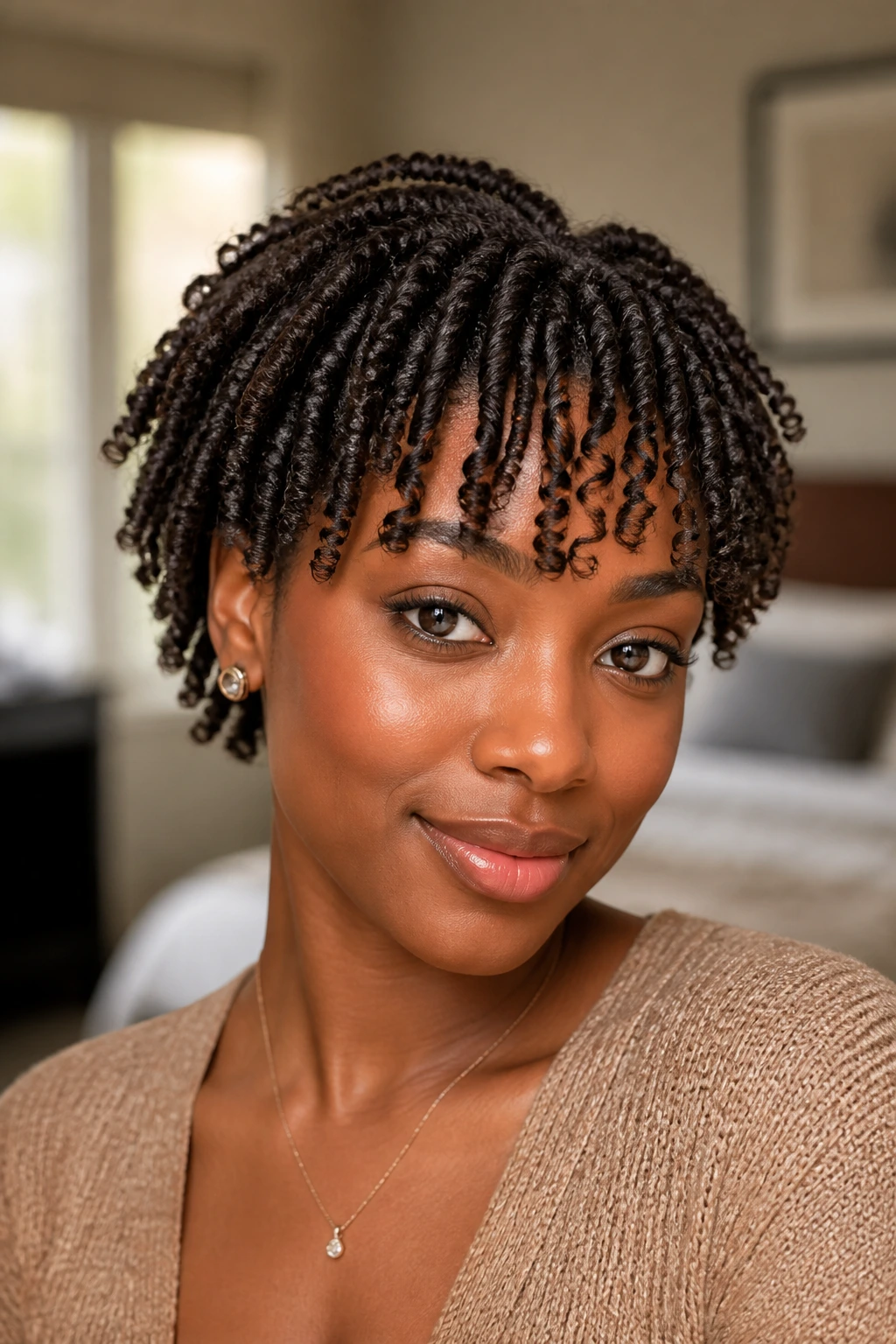
A coiled fringe across the forehead softens short twists fast. The front coils can act like a short bang, which helps if you want to shorten a high forehead or add a softer line to an oval face. The rest of the hair can stay in smaller twists so the contrast feels clean.
This is a nice option when you want the style to look intentional from the front without needing a lot of length. The fringe does need moisture, though. Dry front pieces frizz first, and once they frizz, they stop looking like a fringe and start looking like a problem.
Keep the coils smaller than the rest of the twists. That difference gives the style its shape.
25. Ribbon-Wrapped Short Twists
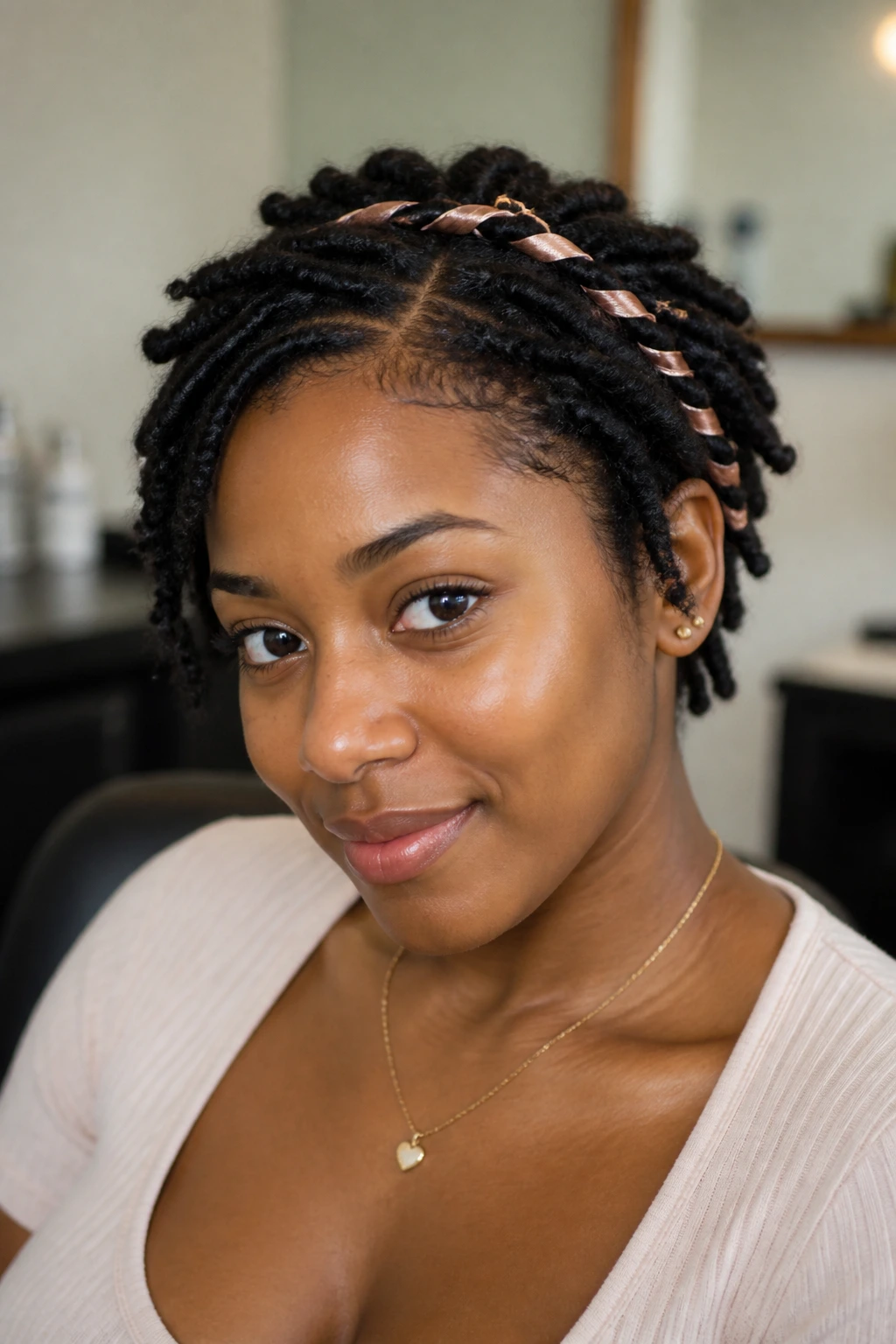
Ribbon-wrapped twists turn a simple set into something more finished. A narrow satin or cotton ribbon can wrap around one side, the crown, or a front section, giving short natural hair a soft accent without hiding the texture. Oval faces wear this well because the ribbon can guide the eye where you want it: upward, across, or slightly off-center.
This is the style I’d choose when the base twists are already good and you just want one extra detail. One ribbon is enough. More than that and the hair starts competing with the accessory, which is a waste.
If you want the cleanest look, match the ribbon to one color in your outfit. If you want contrast, keep the ribbon matte so it doesn’t look like holiday wrapping.
Why Twists for Short Natural Hair and Oval Faces Work So Well
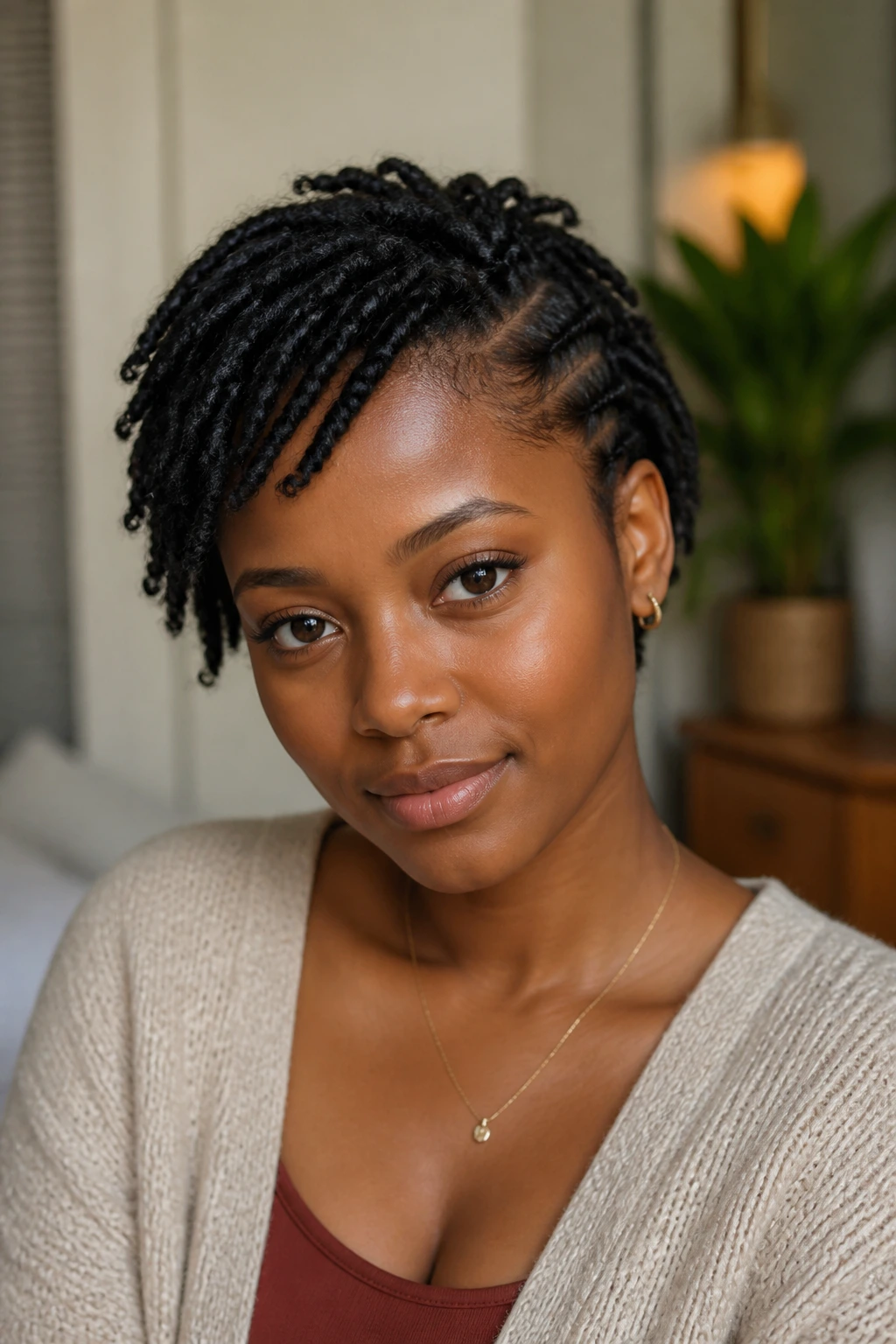
Oval faces have a useful kind of freedom. The forehead, cheekbones, and jaw are already in balance, so twist styles can shift the emphasis without making the face look off. A side part can widen the look across the cheeks. A crown twist can lift the eye upward. A flat twist row can lower the visual weight and let the eyes, brows, and cheekbones do the talking.
Short natural hair adds a second advantage: it makes the style feel close and precise. Long twists can be beautiful, sure, but short lengths show the parting, the root texture, and the direction of the twist more clearly. That means a clean section map matters more than sheer length. If the parts are tidy and the tension is low, the whole style reads intentional in a way that shorter hair often does better than people expect.
The other reason these styles work is plain practicality. The American Academy of Dermatology has long emphasized gentle handling, low tension, and protection for natural hair because pulled edges and constant manipulation wear hair down fast. Twists fit that advice well when they are not too tight and when the scalp is kept comfortable. Good styling should feel snug. It should not feel like you are bargaining with your temples.
Essential Tools for Clean Parts and Neat Ends
-
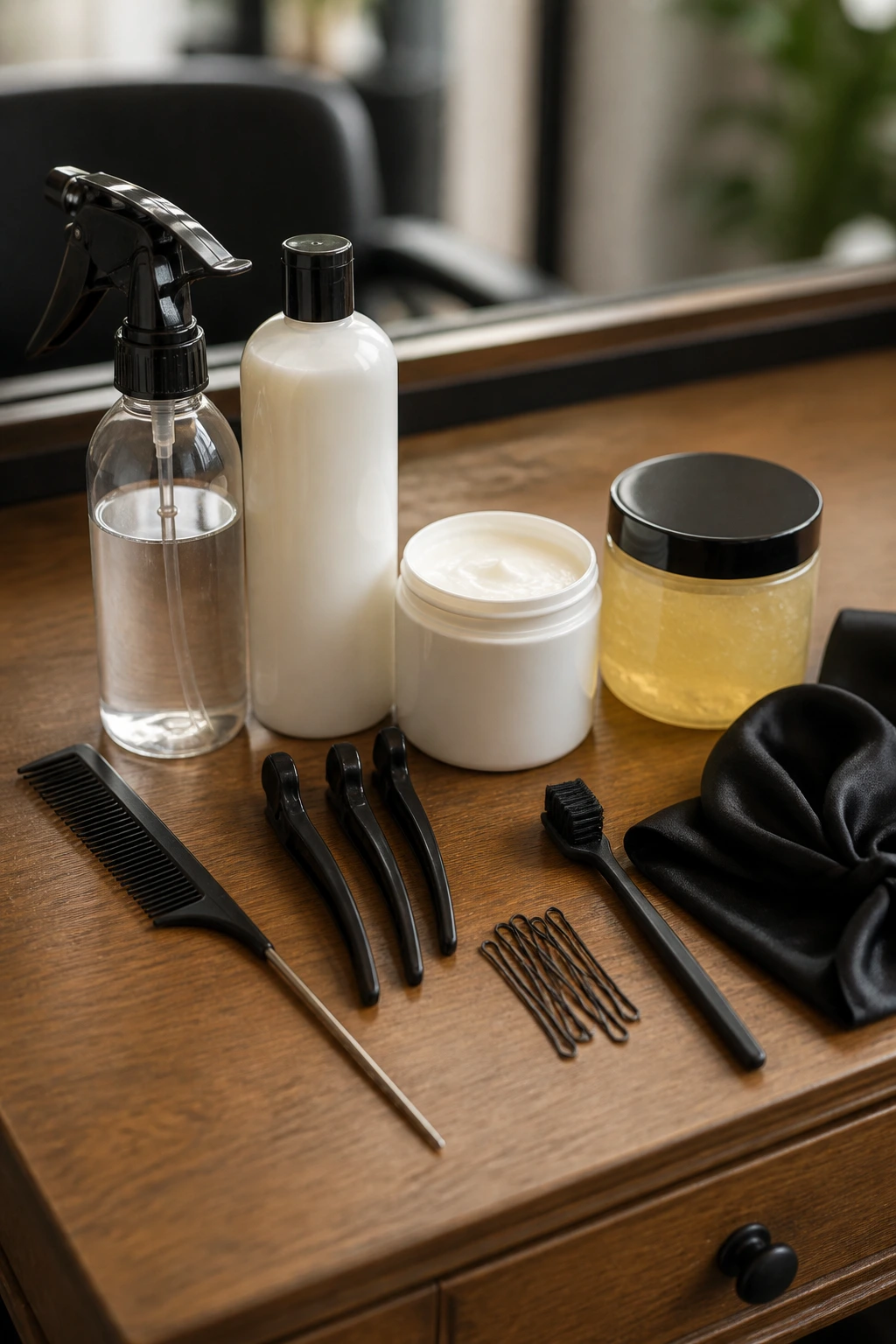
Rat-tail comb: The tail gives you crisp parts, especially if you’re working with short coils that like to shift under the comb.
-
Fine mist spray bottle: Damp hair twists more cleanly than dry hair, but soaking wet hair can turn slippery and slow you down.
-
Leave-in conditioner: A light, water-based leave-in helps short hair stay pliable before you add cream or gel.
-
Twisting cream or styling butter: Use a small amount for grip and softness; too much turns short twists mushy fast.
-
Light-hold gel or mousse: This helps the roots stay put and gives the finished style a cleaner edge.
-
Duckbill clips or small sectioning clips: They keep the hair out of the way while you work one row at a time.
-
Edge brush: Helpful for smoothing the perimeter without dragging product all over the hairline.
-
Satin scarf or bonnet: Non-negotiable if you want the twists to last longer than one sleepy night.
-
Small bobby pins or snag-free elastics: Useful for tucked ends, buns, and crown styles.
-
Hand mirror: Short hair hides the back of the head at the worst possible time. A second mirror saves you from guessing.
Product and Prep Rules That Keep Short Twists Tidy
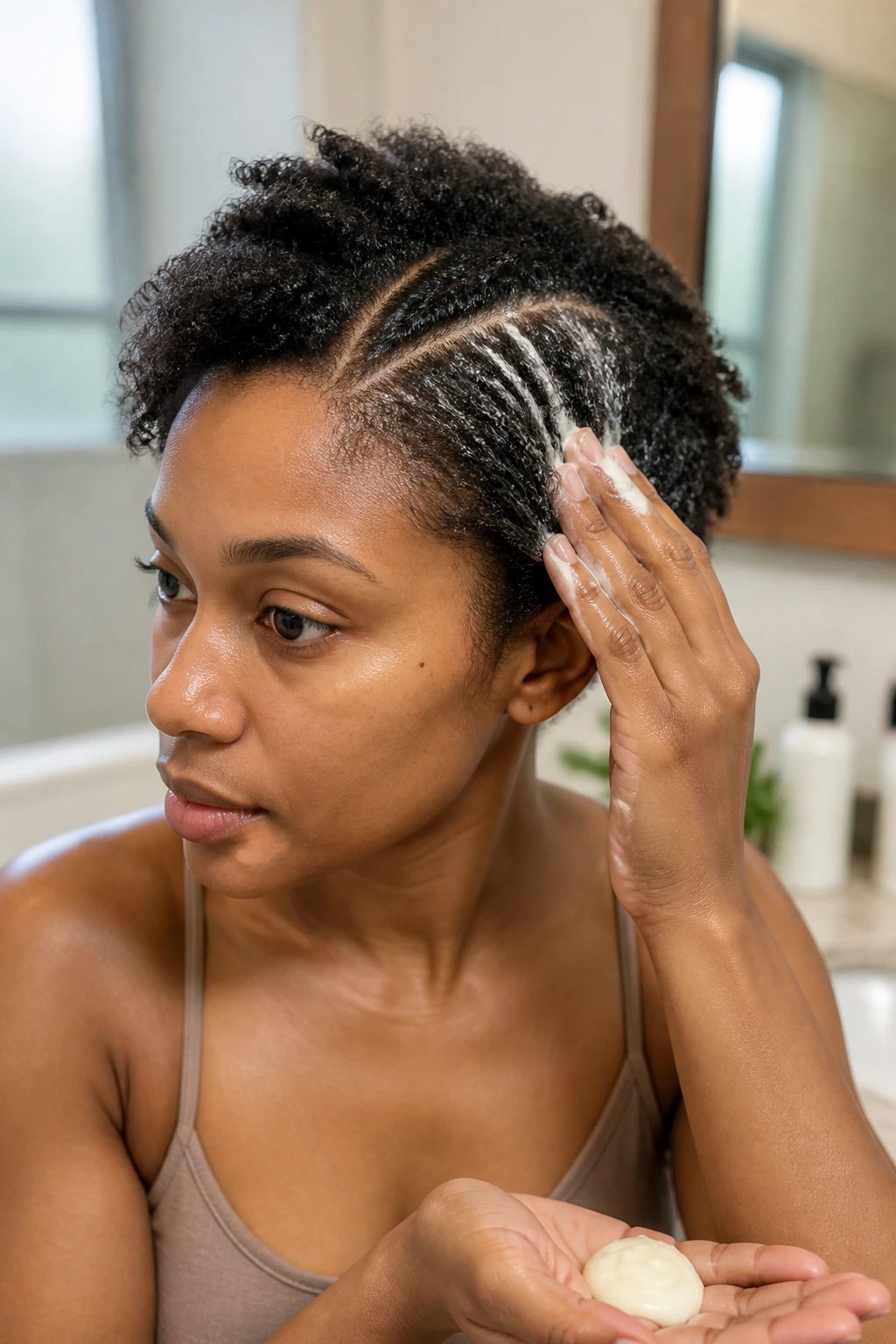
The cleanest short twist sets start with damp, detangled hair. Not wet. Damp. That difference matters because soaking hair stretches too much and can make the roots slip before you finish a row. A light mist of water or leave-in conditioner gives enough glide for sectioning, but you still want the strands to hold some memory of the part.
For product, I’m picky about weight. Fine short hair often looks best with leave-in plus mousse or a thin cream, while dense or coarse hair can handle a cream-and-oil combo without going flat. If your product sits on the surface like frosting, it’s probably too heavy for this length. Short hair shows buildup faster than long hair, and white residue around the roots ruins an otherwise good set.
Drying is part of the prep, not an afterthought. If you twist and leave the hair too wet, the roots can swell, the parts blur, and the style smells off if it stays damp too long. A hooded dryer on low heat for a short stretch, or even a couple of hours of air-drying with the parts exposed, makes the finished twists sit cleaner.
How to Wear These Twists Without Losing Face Balance
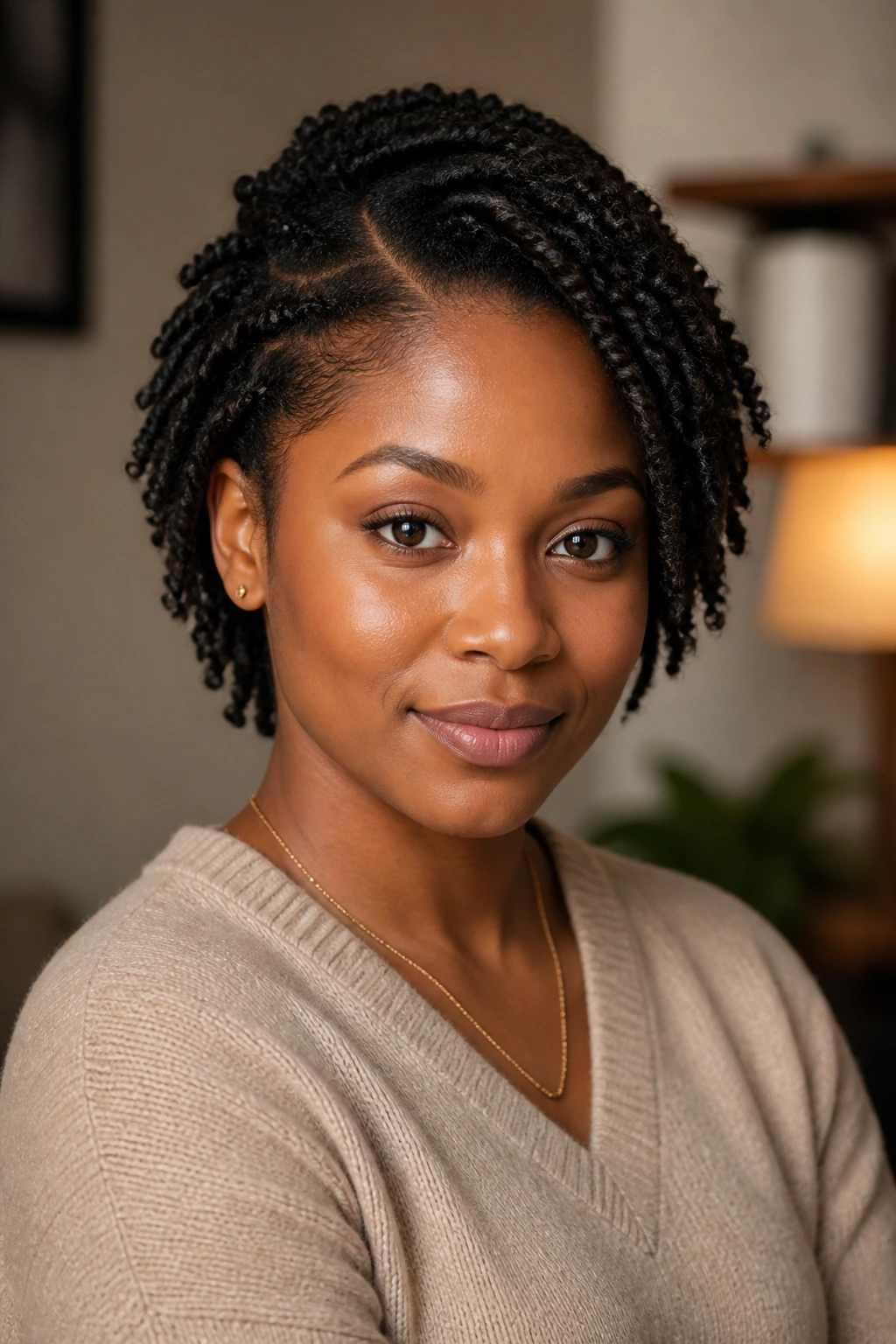
Presentation: Keep the part clean and the hairline calm. On an oval face, the style looks strongest when the outline is clear, not when every twist is competing for attention. A crisp side part, a curved part, or a controlled center line gives the style its shape.
Accessories: Use them like punctuation, not wallpaper. A few cuffs, one scarf, or a pair of beads near the front can sharpen a short style, but scattering accessories everywhere usually makes the look noisy. Short natural hair has enough texture on its own.
Face Balance: If you want more width, keep volume near the temples and cheeks. If you want more length, lift the crown a little and keep the sides closer to the head. Oval faces can wear both, so the goal is deciding what you want people to notice first.
Occasion: Smaller, cleaner twists read polished for work and formal settings. Bigger parts, cuffs, and side sweeps feel more relaxed. Same head of hair. Different story.
Extra Tips for More Definition, Lift, and Wear Time
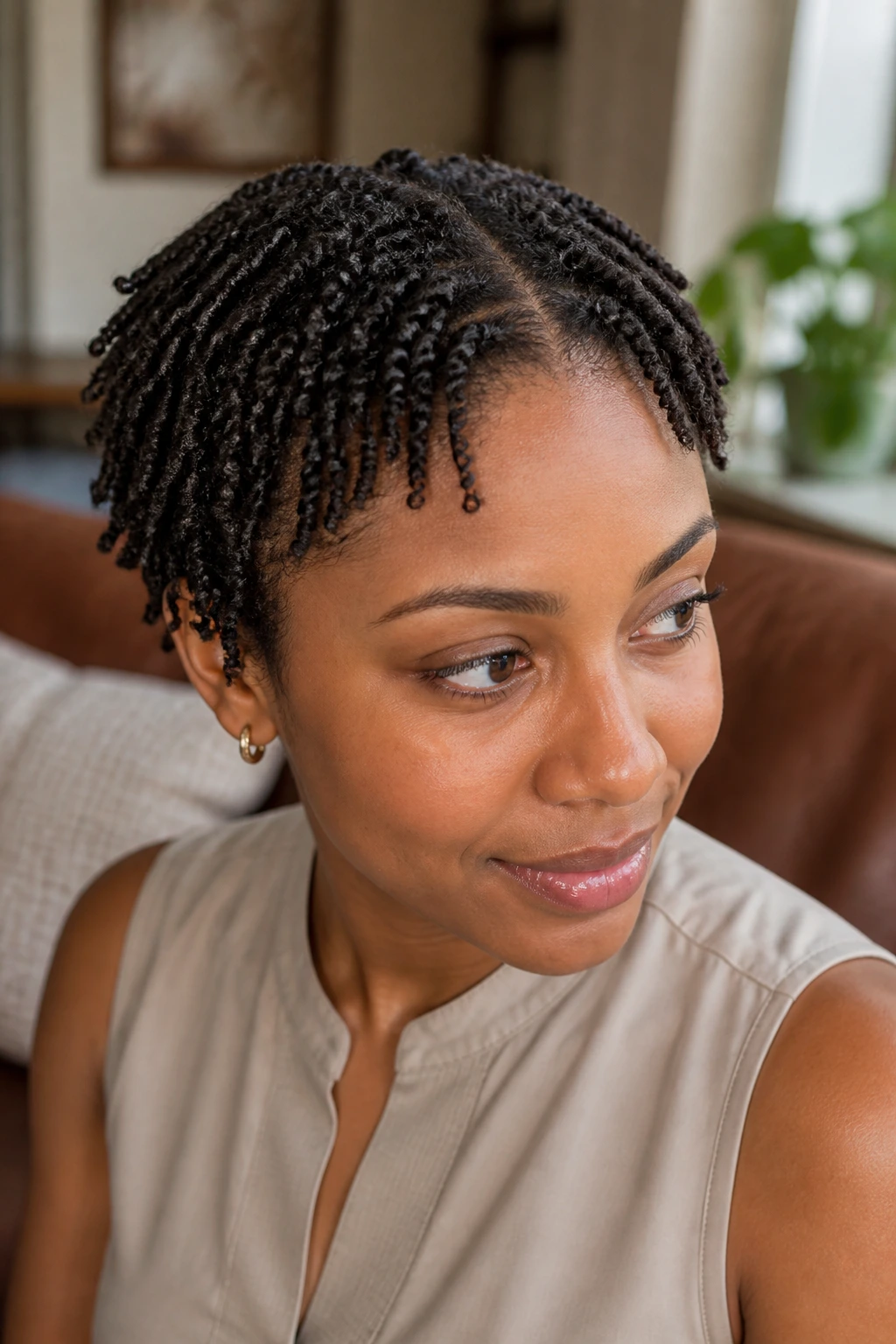
Moisture Boost: Start with a water-based leave-in and seal with a small amount of cream only where the hair feels rough. Short twists can drown in product fast, so I like to use the lightest layer that still gives slip.
Definition: Twist smaller near the hairline and slightly bigger toward the back if you want the front to look neat and the overall shape to feel fuller. That tiny change keeps the face frame crisp while the rest of the hair has a little body.
Longevity: If the twists keep unraveling at the ends, use a touch of mousse or gel on the final inch only. That helps the tips lock without making the whole style stiff. A satin scarf overnight makes a bigger difference than one more product layer.
Make-It-Yours: Fine hair usually likes less cream and more foam; coarse hair often needs a bit more moisture to stay smooth. If your edges are delicate, choose styles that keep the front soft and skip any look that pulls straight back from the temples.
Night Care, Refreshing, and How Long the Styles Last
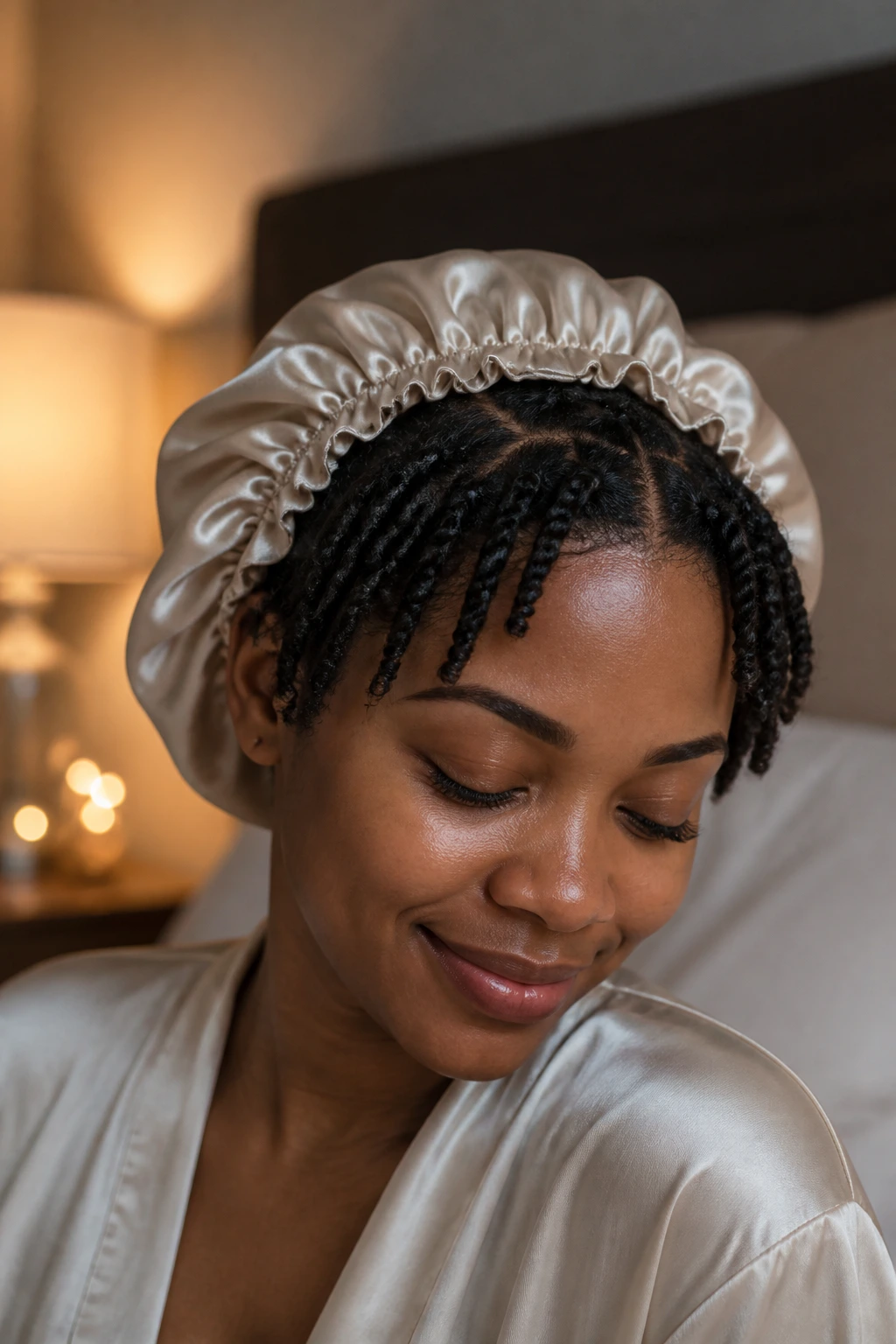
Short twists last longer when you treat the night routine like part of the style. A satin bonnet or scarf keeps the twists from rubbing apart at the roots, and a satin pillowcase helps if the scarf comes off in your sleep. For most short sets, that one habit does more for the finish than any product you could add on day three.
The refresh schedule depends on twist size. Tiny twists can hold for one to two weeks if the product load is light and the scalp stays comfortable. Bigger or chunkier twists may start loosening sooner, sometimes around five to seven days. If the perimeter gets fuzzy before the rest of the style, re-twist the front only. Don’t redo the whole head unless you need to. That just adds manipulation for no reason.
Washing is possible, but be smart about it. If the style is fresh and the scalp is clean, wait. If product buildup or itchiness shows up, use a diluted shampoo on the scalp and rinse carefully so the twists are not drenched. Dry them fully afterward. Damp twists hidden under a scarf are a fast route to a sour smell, and nobody wants that.
Variations and Adaptations to Try
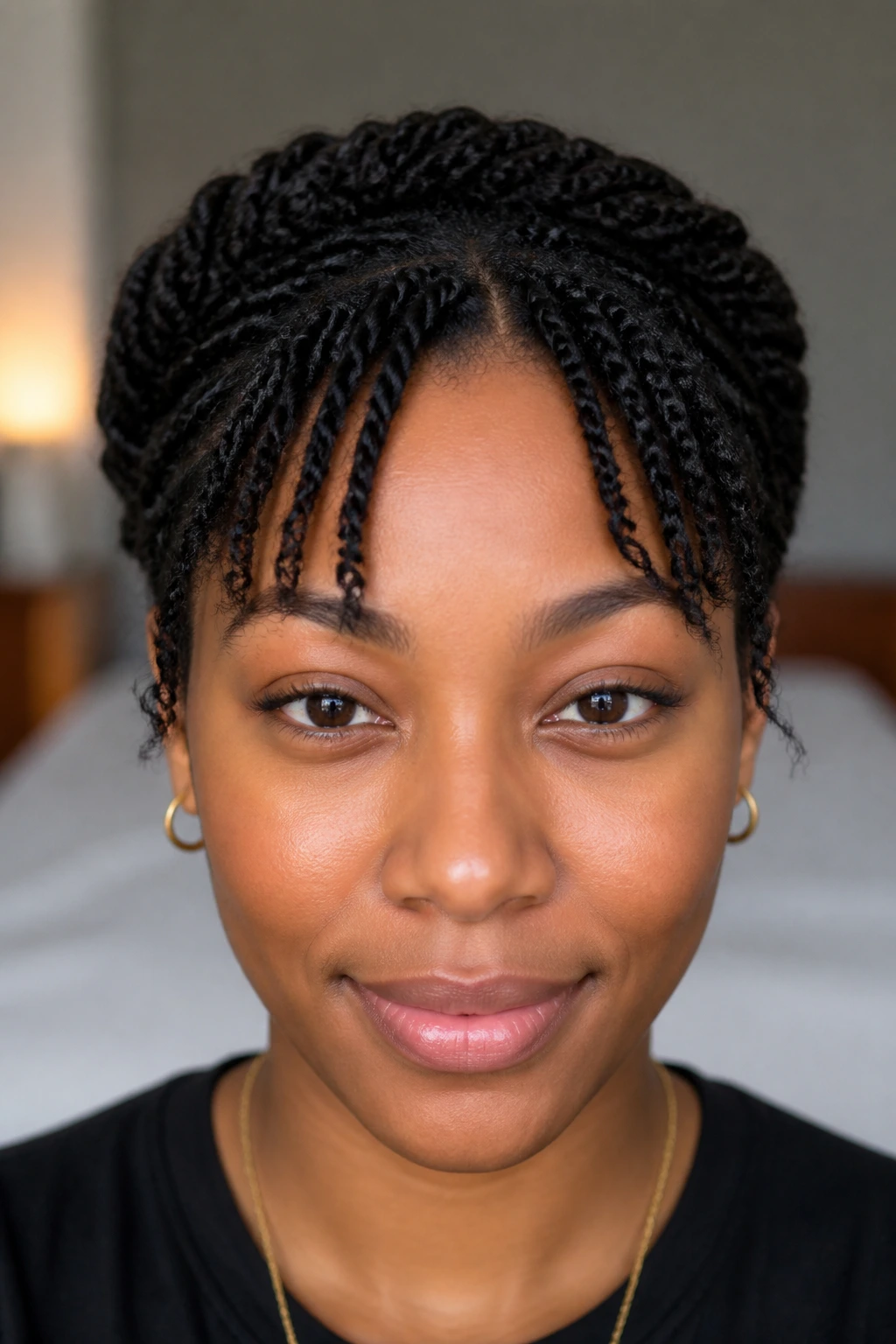
Fine-Hair Friendly Mini Twists: Use smaller sections, a light leave-in, and a foam or mousse finish instead of thick butter. Fine hair usually looks cleaner with less product and tighter parting, because heavy creams make the roots collapse.
Low-Tension Temple Softening: If your edges are sensitive, choose styles that keep the first inch around the hairline loose. A soft side part, a halo twist, or a face-framing fringe gives you shape without pulling the temples hard.
Event-Ready Jewelry Twists: Add one or two cuffs, a slim ribbon, or a small bead cluster near the front. The key is placement: decorate where the eye lands first, not every twist on the head.
Wash-Day Twist-Out Prep: Set the twists a little smaller and let them dry fully before separating. That gives you a second style later, with more volume and a softer outline around the face.
Short Hair Faux Bob: Tuck the ends under and pin them at the nape, then loosen the crown just enough to keep the bob shape visible. It works best when you want short hair to look more structured without adding hair.
Common Mistakes That Make Short Twists Fall Flat
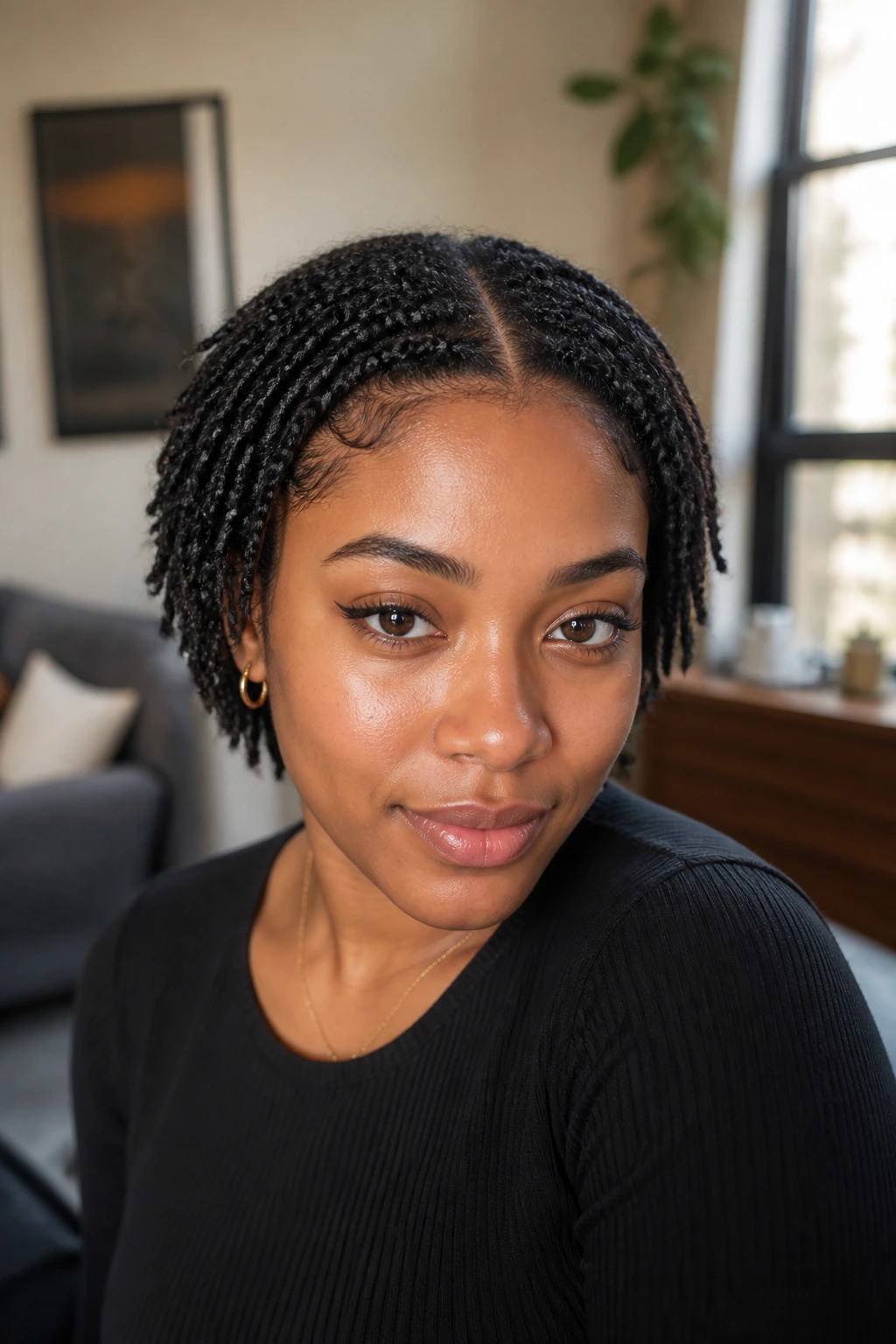
The first mistake is twisting sections that are too large for the length. On short hair, oversized sections slip, puff up, and leave the ends looking fuzzy before the day is over. Smaller sections solve most of that. They also give you cleaner parting, which matters more on cropped lengths than people think.
Another common problem is too much product. Short hair does not hide buildup. If the roots feel slippery and the twists never set, the cream is doing too much. Use less, and work it through with your fingers before you twist so it coats the hair instead of sitting in a blob on top.
Tight hairlines are another trap. If your scalp hurts when you lift your eyebrows, the style is too tight. That soreness may show up as bumps along the perimeter or a flattened front that never relaxes. Keep the tension soft at the temples and let the style be secure, not aggressive.
Last, don’t ignore the drying step. Twists that stay damp too long frizz fast and smell off. Air-dry fully or use a hooded dryer on low heat. Half-dry is the enemy here.
Questions People Ask Before They Twist
How short is too short for twists on natural hair?
If the hair cannot grip at least a tiny coil at the root, traditional two-strand twists will struggle. In that case, finger coils, flat twists, or a slightly stretched base usually work better until you get a little more length.
Will twists make an oval face look longer?
They can, if all the volume sits at the crown and the sides are pulled flat. Keep some width near the temples or add a side part if you want to keep the proportions balanced.
Should I twist on damp or dry hair?
Damp hair is the sweet spot. It has enough stretch to section cleanly, but it still holds shape better than soaking wet hair, which tends to slip and puff later.
Why do my twists unravel at the ends?
Usually the sections are too big, the product is too light, or the ends were not twisted tightly enough. A tiny bit of gel on the last inch can help, but the real fix is smaller sections and cleaner grip.
Can I wash my hair with short twists installed?
Yes, but keep it gentle. Focus the shampoo on the scalp, rinse carefully, and dry the twists fully afterward so the style does not stay wet under the bonnet.
What product combo works best on short natural hair?
A light leave-in plus a small amount of cream or foam is a good starting point. If your hair is coarse, you may need a bit more moisture; if it is fine, lighter products usually keep the twists cleaner.
How do I keep twists from looking puffy after one day?
Use smaller sections, smooth the roots while twisting, and wrap the style at night. Puffiness usually comes from loose sectioning or too much friction while sleeping.
Do twists help with length retention?
They can, mostly because they reduce daily combing and handling. The style itself does not make hair grow faster, but it can help you keep the hair you already have from breaking off at the ends.
A Shape That Still Has Room
Short natural hair does not need to look limited, and oval faces do not need to play it safe. The whole point of these twists is that you can move in any direction—clean, bold, soft, sculpted, playful—without having to fight the proportions you already have. That’s a nice problem to have.
If you keep the tension low, the parts clean, and the product light enough for your length, these styles will do more than sit there. They’ll frame your face, protect your hair, and give you enough room to switch moods without starting from scratch every morning.