



Tan skin can take more color than people give it credit for. A medium brown base with soft blonde ribbons doesn’t need to shout to register as bright; it just needs the right warmth, the right placement, and a little restraint at the roots. When those three things line up, the whole head starts to look sun-touched instead of processed, which is a very different thing.
The sweet spot for brown blonde medium summer highlights for tan skin is usually somewhere between honey and beige, with enough brunette left behind to keep the hair grounded. Push the blonde too pale and the skin can look flat. Keep it too muddy and the face loses that lifted, reflective finish that makes medium-length hair feel alive around the jaw, collarbone, and shoulders.
What makes this color family so useful is how forgiving it is on a lob, shag, layered cut, or shoulder-grazing wave. Medium hair shows contrast quickly. You don’t need giant streaks to get movement; a few well-placed ribbons around the face and through the mid-lengths can do the heavy lifting. That’s where these looks start to earn their keep.
Why These Shades Sit So Well on Tan Skin
- They warm the face without turning it orange: Honey, caramel, and bronze tones add shine around tan skin instead of fighting it.
- They keep medium-length hair from looking heavy: Blonde pieces break up brown hair fast, so a lob or layered cut moves more when it catches light.
- They grow out with less drama: A rooted balayage or soft foil placement leaves room between salon visits without a harsh line at the part.
- They let you choose your level of brightness: You can stay soft with beige babylights or go bolder with a brighter money piece and still keep the base wearable.
- They work with waves, curls, and straight blowouts: The bend in the hair changes how the color reads, which means the same formula can look subtle one day and vivid the next.
How Tan Undertones Change the Blonde You Should Ask For
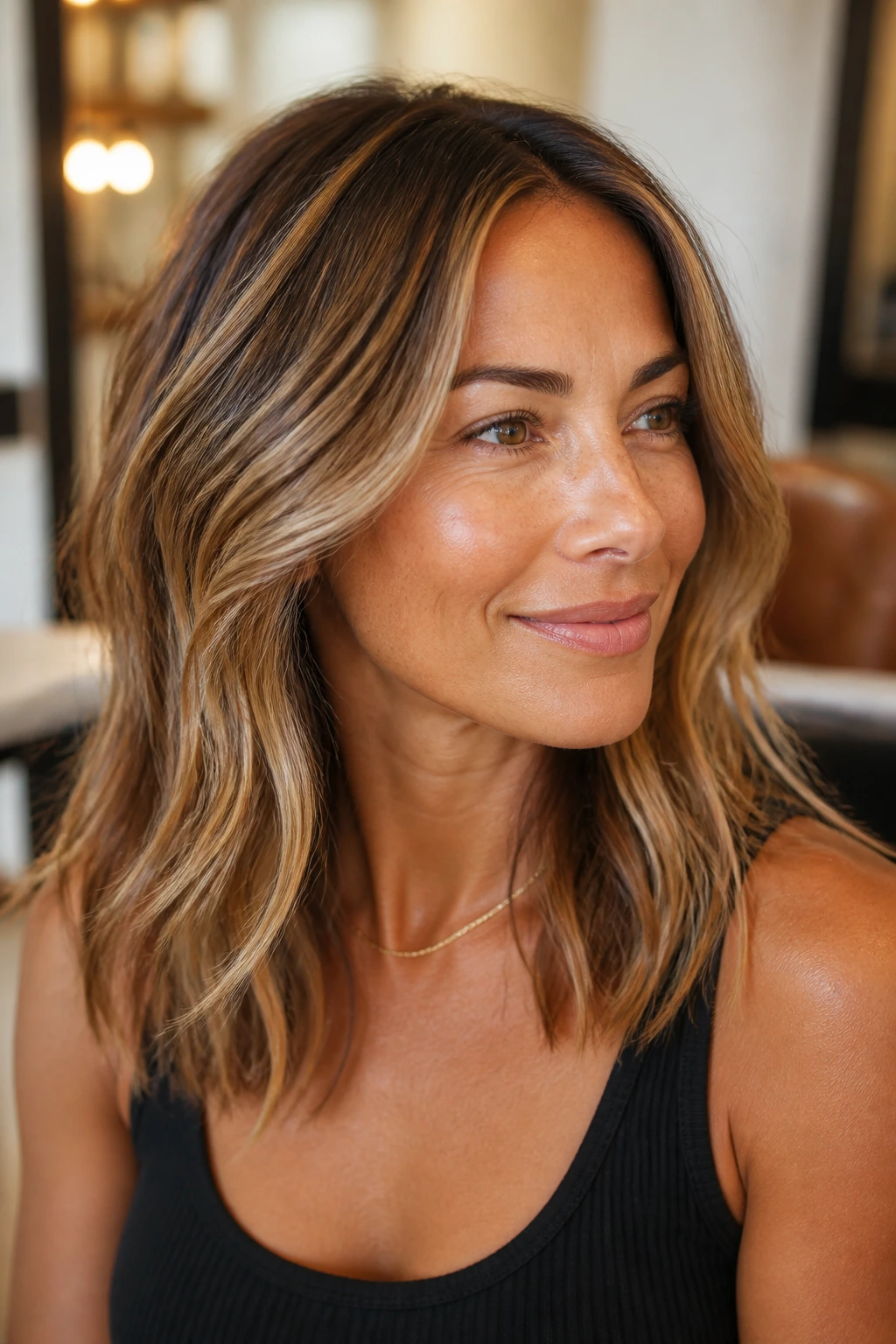
Tan skin is not one thing. Some tans lean golden, some lean olive, and some sit in that neutral middle where warm and cool both work if the balance is right. That matters more than most salon consults admit out loud. A honey gloss on golden tan skin can look rich and glossy. Put the same formula on a greener olive tan and it can read too orange if the blonde is lifted too far.
The trick is to match the highlight tone to the way your skin catches light. If your skin looks best beside gold jewelry, caramel, honey, and bronze usually behave well. If silver and rose gold both work, beige, mushroom, and soft ash-bronde can be cleaner around the face. Neither camp is better. They just pull the eye in different directions.
Medium-length hair gives you a nice middle ground. You can keep depth at the nape, lift the crown, and brighten the front without needing an all-over blonde overhaul. That’s the part many people miss. The most flattering brown blonde medium summer highlights for tan skin are usually the ones that leave enough brunette behind to frame the face instead of washing it out.
1. Honey Bronde Balayage
Honey bronde sits in that easy zone between brunette and blonde where tan skin looks warmed through instead of overpowered. The balayage placement keeps the brighter pieces soft at the ends and a little lighter around the face, which is especially nice on a medium-length cut that hits the shoulders or collarbone. It reads like sunlight, not stripes.
Ask for a level 6 or 7 brown base with honey-toned ribbons lifted to a level 8. The goal is not pale blonde. It’s that glossy, sticky-sweet middle ground where the hair still looks like hair, just more reflective. A loose wave makes the whole thing behave better, because the bends separate the ribbons and show off the tone changes.
This is one of those looks I reach for when someone wants brightness but hates obvious maintenance. The grow-out stays soft, and a beige gloss every so often keeps the honey from drifting brassy.
2. Caramel Ribbon Highlights
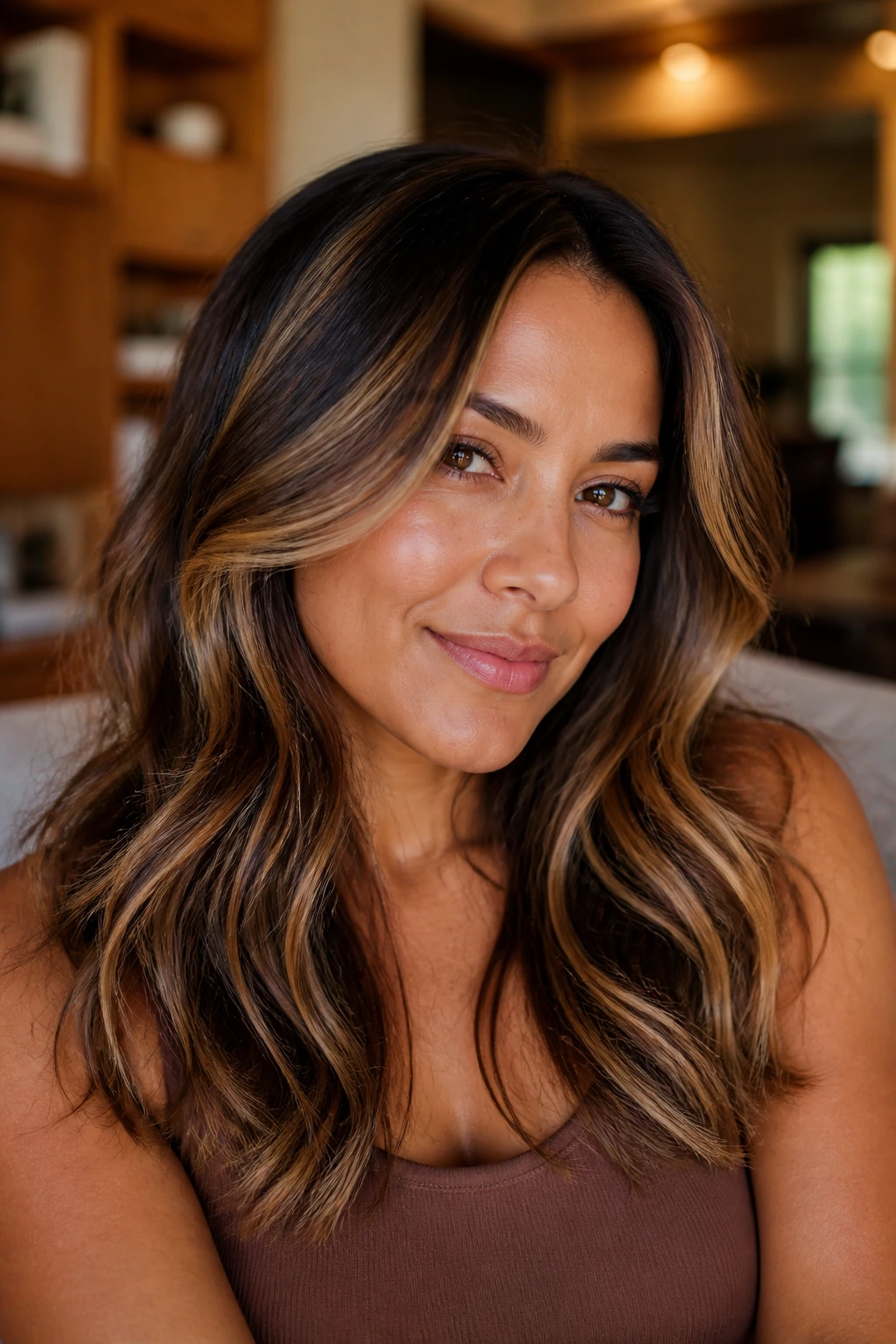
Caramel ribbon highlights work because they have shape. Instead of scattering tiny strands everywhere, the colorist paints wider ribbons through the mid-lengths and around the perimeter, so the light actually has somewhere to land. On tan skin, that warmth looks lush rather than orange, especially if the caramel is kept buttery instead of coppery.
Medium hair loves this placement. The ribbons move when you tuck the hair behind one ear, flip it over a shoulder, or wrap it into loose bends with a curling iron. Straight hair gets a clean line. Wavy hair gets dimension. Either way, the color feels deliberate.
If you wear layered cuts, this is a strong choice because the ribbons can sit on top of the layers instead of disappearing into them. Just keep the tone in the caramel family, not the chestnut-red family. That small shift changes everything.
3. Sandy Beige Face Frame
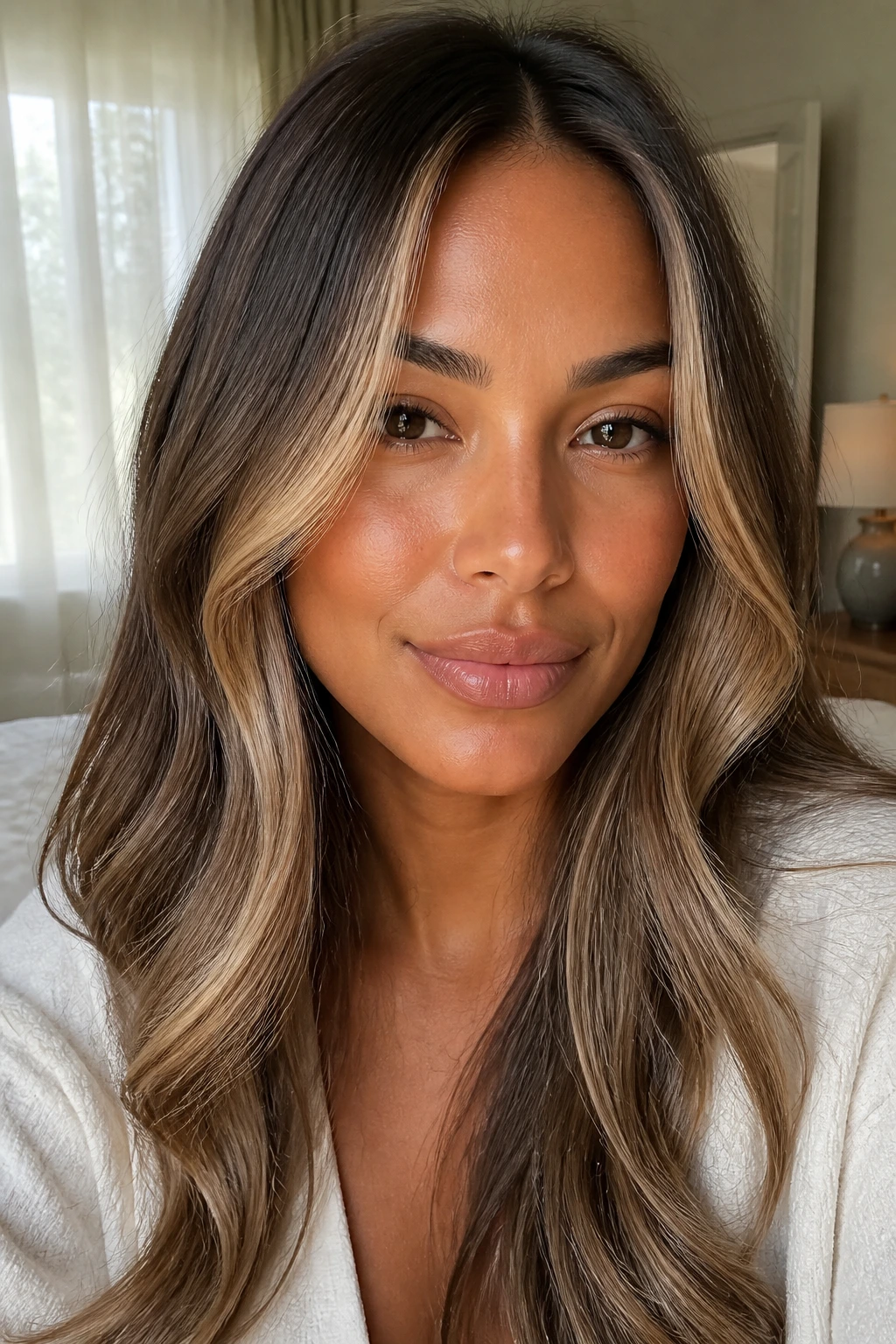
A sandy beige face frame is quieter than honey, and that’s the point. If your tan leans neutral or olive, a beige front section softens the face without pulling the skin too warm. It’s the kind of placement that looks simple from a distance and more layered when someone stands close enough to catch the subtle shift from brunette to beige blonde.
I like this on medium cuts with a middle part or a loose curtain bang. The face-framing pieces should start a little lower than the hairline, not right at the roots, unless you want a stronger contrast. Keeping the beige soft also means the grow-out looks cleaner for longer.
This is one of the easier looks to wear if you’re nervous about blonde. It brightens the eyes, shows off cheekbones, and stays within the brown-blonde family instead of veering into high-maintenance territory.
4. Toffee Money Piece
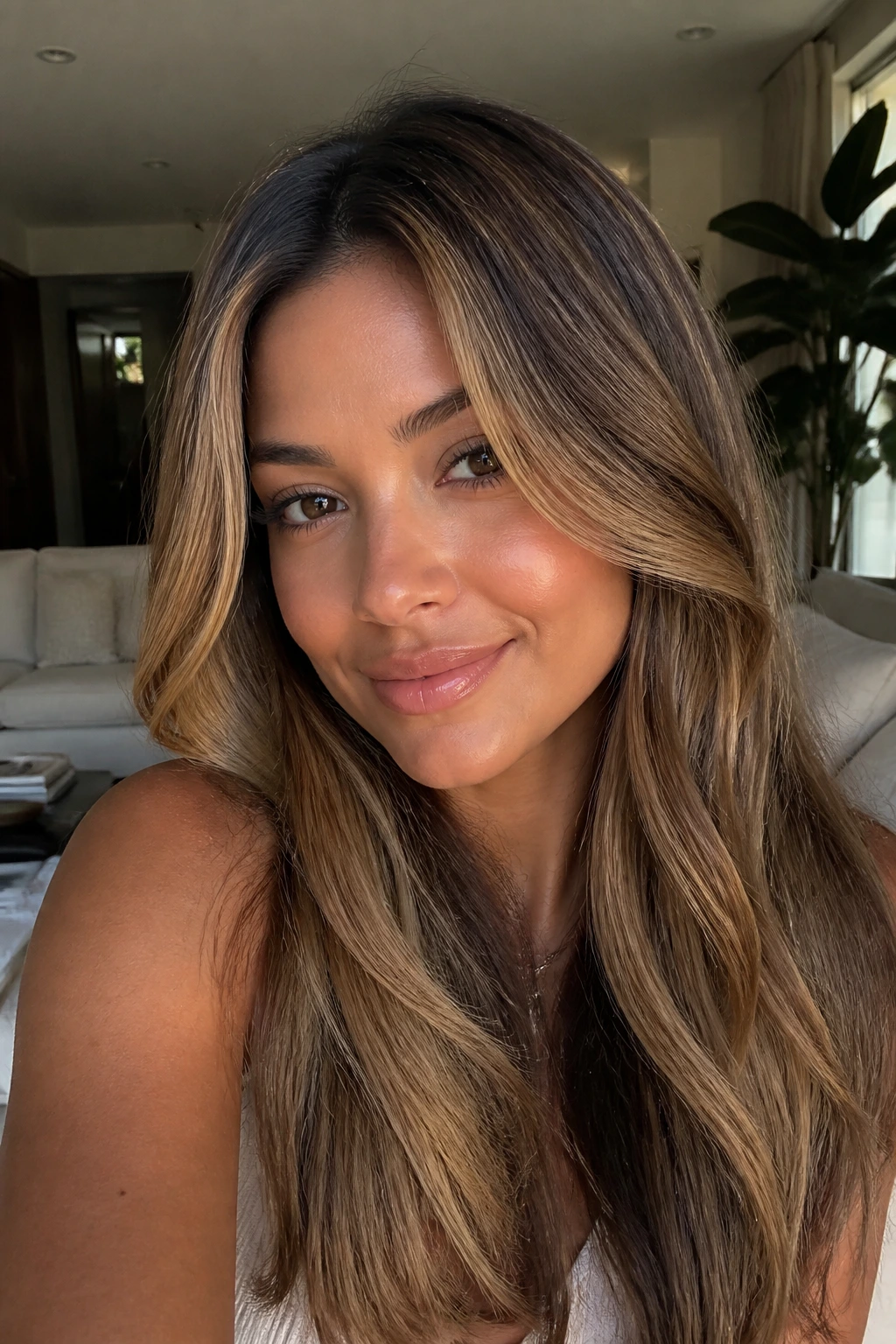
The toffee money piece is brighter than a face frame, but not so bright that it takes over the whole head. It works especially well on tan skin with golden undertones, because the warm toffee tone gives the front sections enough lift to stand out without looking bleached. On medium hair, it can be the one detail that changes the whole mood of a cut.
I’d ask for a brighter section around the face, then softer toffee and brown blending into the sides. If you have curtain bangs, this gets even better, because the blonde can fold into the movement of the fringe instead of sitting there like a block. That little bit of motion matters.
The downside? It asks for upkeep sooner than a soft balayage. Still, if you want a clear summer feel with one strong focal point, this is the move.
5. Mushroom Bronde Melt
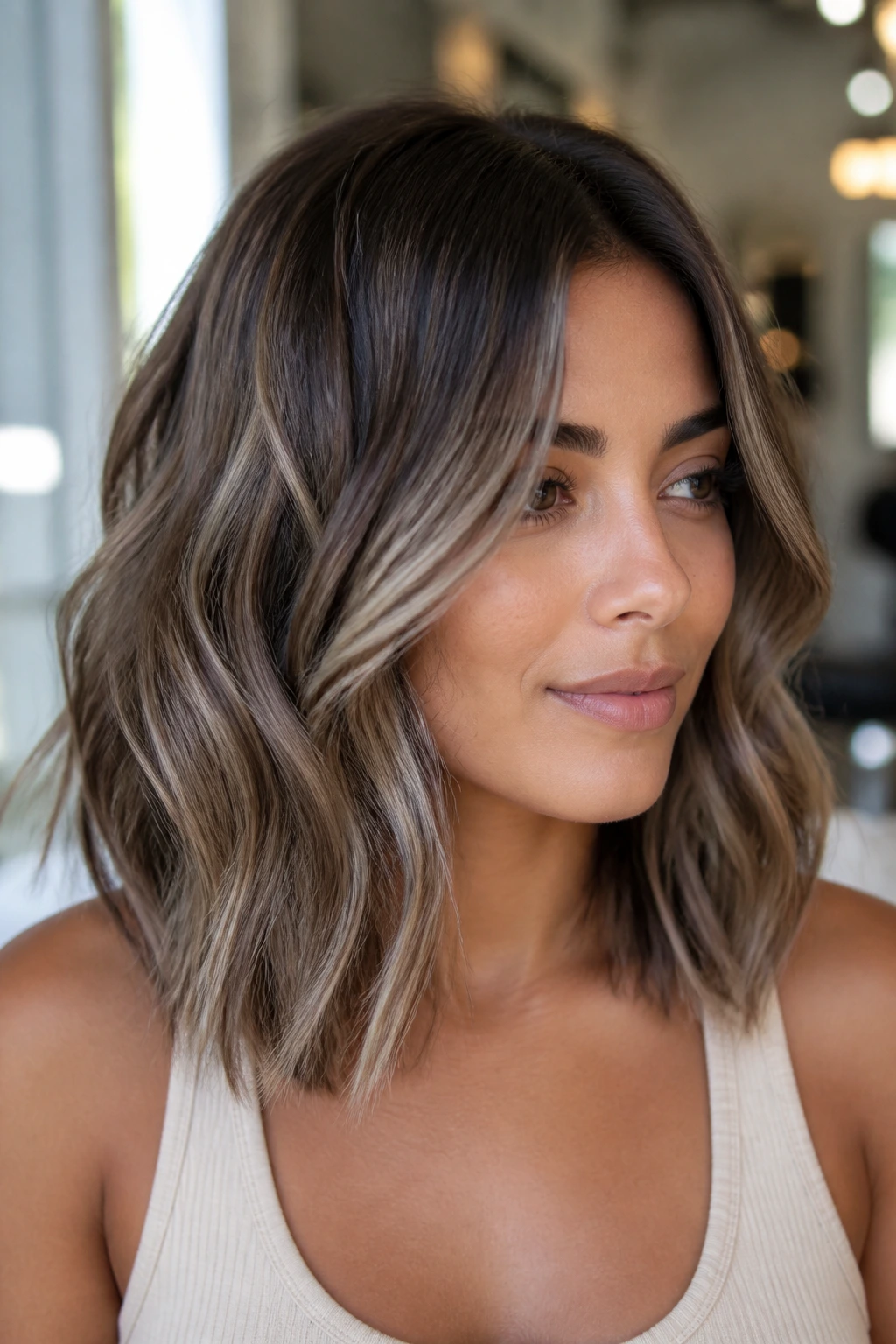
Mushroom bronde is for the person who wants blonde, but not warmth for warmth’s sake. It uses taupe, beige, and muted brown to build a cooler melt that still sits well on tan skin, especially when the tan has an olive cast. Done right, it looks expensive in the plainest sense of the word: calm, dimensional, and not trying too hard.
The base stays dark enough to anchor the style. The lighter pieces move through the mid-lengths and ends in a way that softens the transition, so you don’t get the harsh line that can happen when brunette hair is forced too pale. On medium hair, that blurred zone is the whole point.
This is a strong choice if your wardrobe leans black, white, linen, denim, and muted neutrals. Warm honey can look too sunny against that palette. Mushroom bronde keeps the tone cooler and more balanced.
6. Cinnamon Swirl Lights and Lowlights
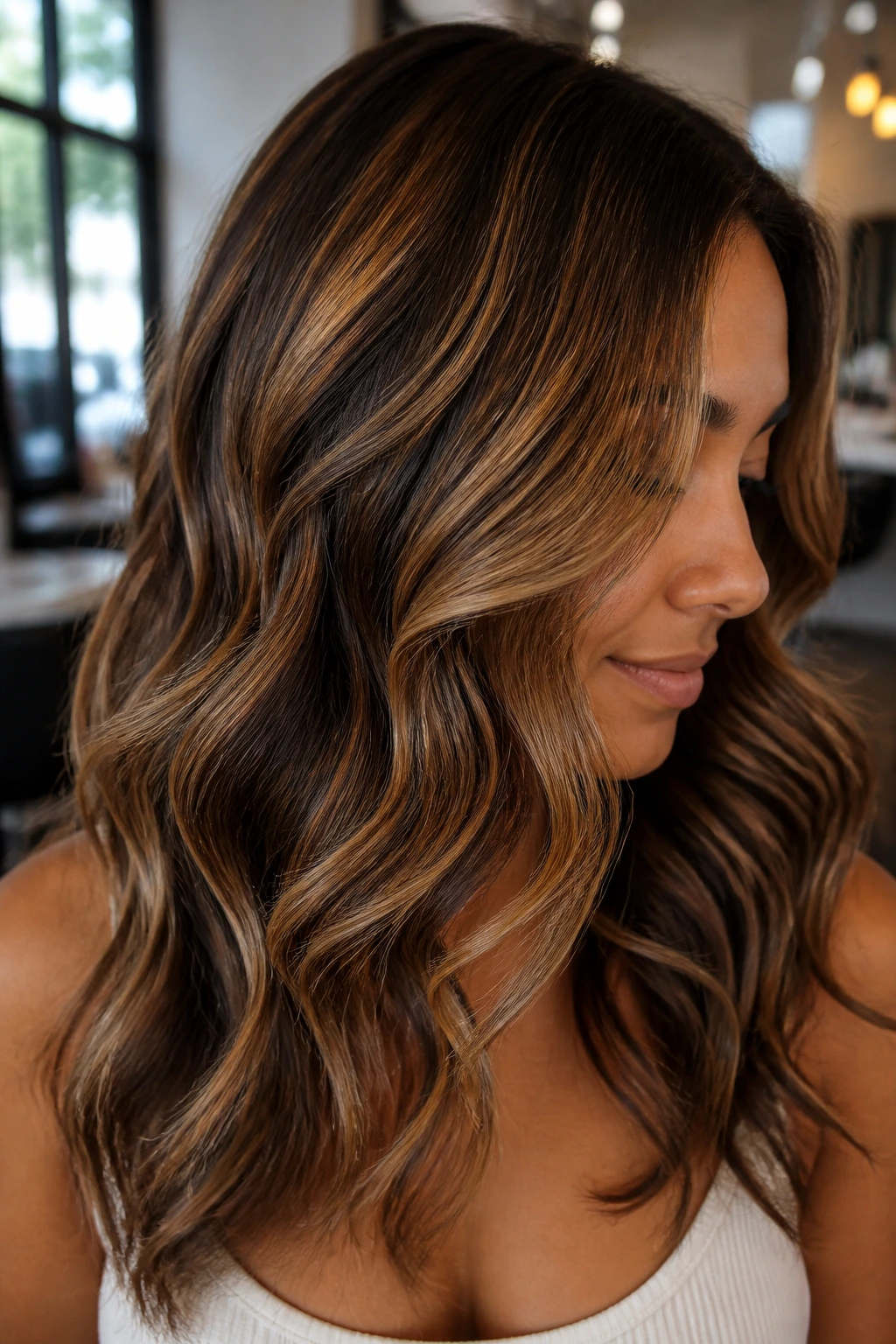
Cinnamon swirl highlights and lowlights are one of my favorite fixes for medium brown hair that needs depth as much as brightness. The highlights bring in soft golden-copper warmth, while the lowlights keep the base from looking thin or washed out. Tan skin, especially on curly or wavy textures, tends to wear this color well because the warmth echoes the skin without making the face look flat.
The key is contrast control. Too many cinnamon pieces and the hair starts reading red. Too many lowlights and the style goes dark. The sweet spot is a soft swirl where lighter ribbons sit beside deeper brunette strands, especially through the outer layer and around the face.
This is a smart pick if your hair has a lot of movement already. Curls and bends make the lowlights disappear just enough that the highlights pop when the light hits them. That’s the magic here. Depth first, shine second.
7. Sunlit Foilayage
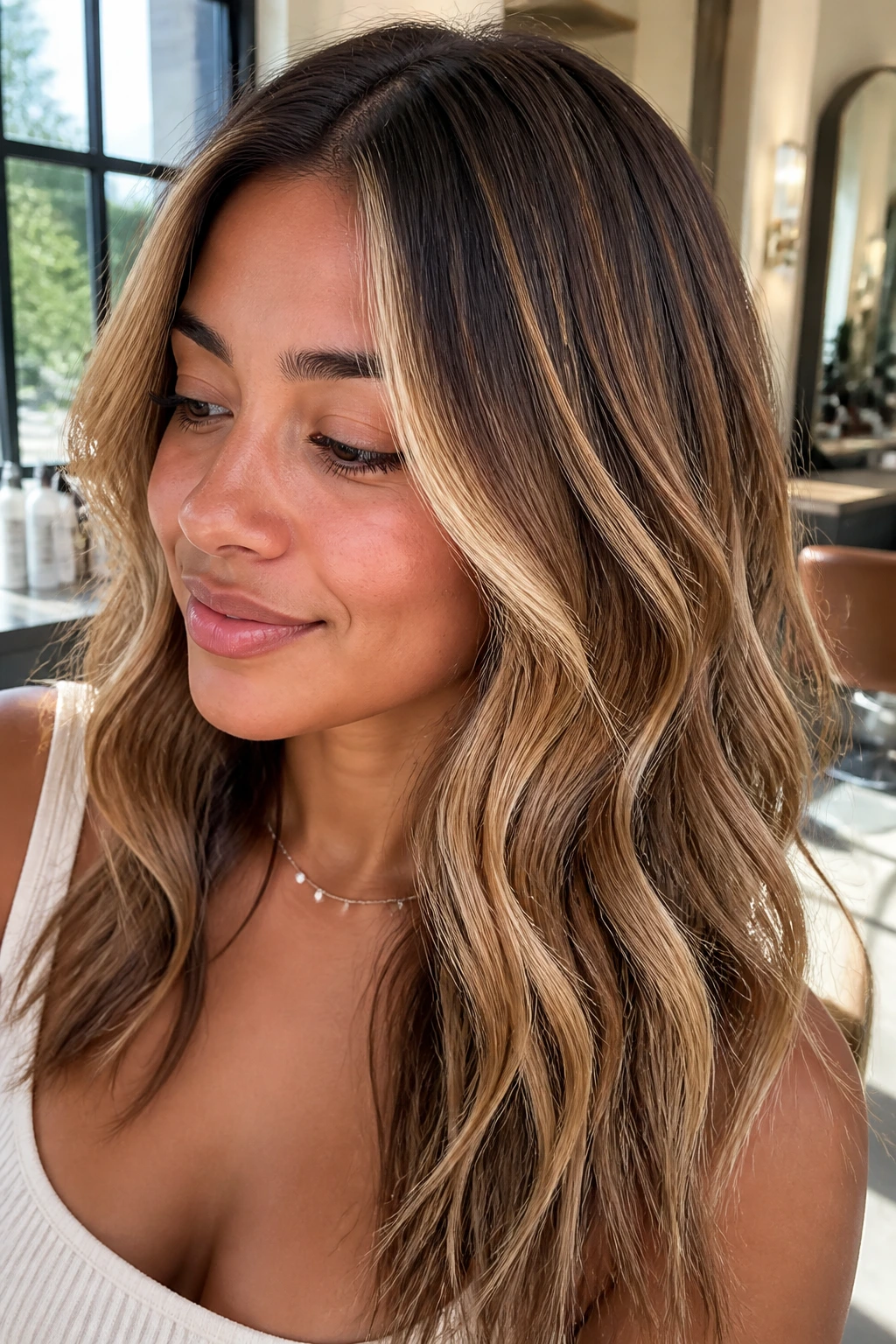
Foilayage gives you the freer look of balayage with a little extra lift from the foil, which means more brightness without turning the whole head stripey. For tan skin, that matters because the highlight can reach a clean beige or honey blonde while still blending softly into the brown base. On medium-length hair, the technique really shows off layers and blunt ends alike.
This is a good choice when the goal is dimension with a little more punch at the crown and around the face. The foil helps the color lift higher, while the hand-painted sections keep the transition softer than classic foils from root to tip. You get both: brightness and blur.
I’d choose this if you want the hair to read sunnier in daylight and more polished indoors. It’s a little more work than a mellow balayage, but the payoff is worth it if you like seeing the blonde from across the room.
8. Creamy Beige Babylights
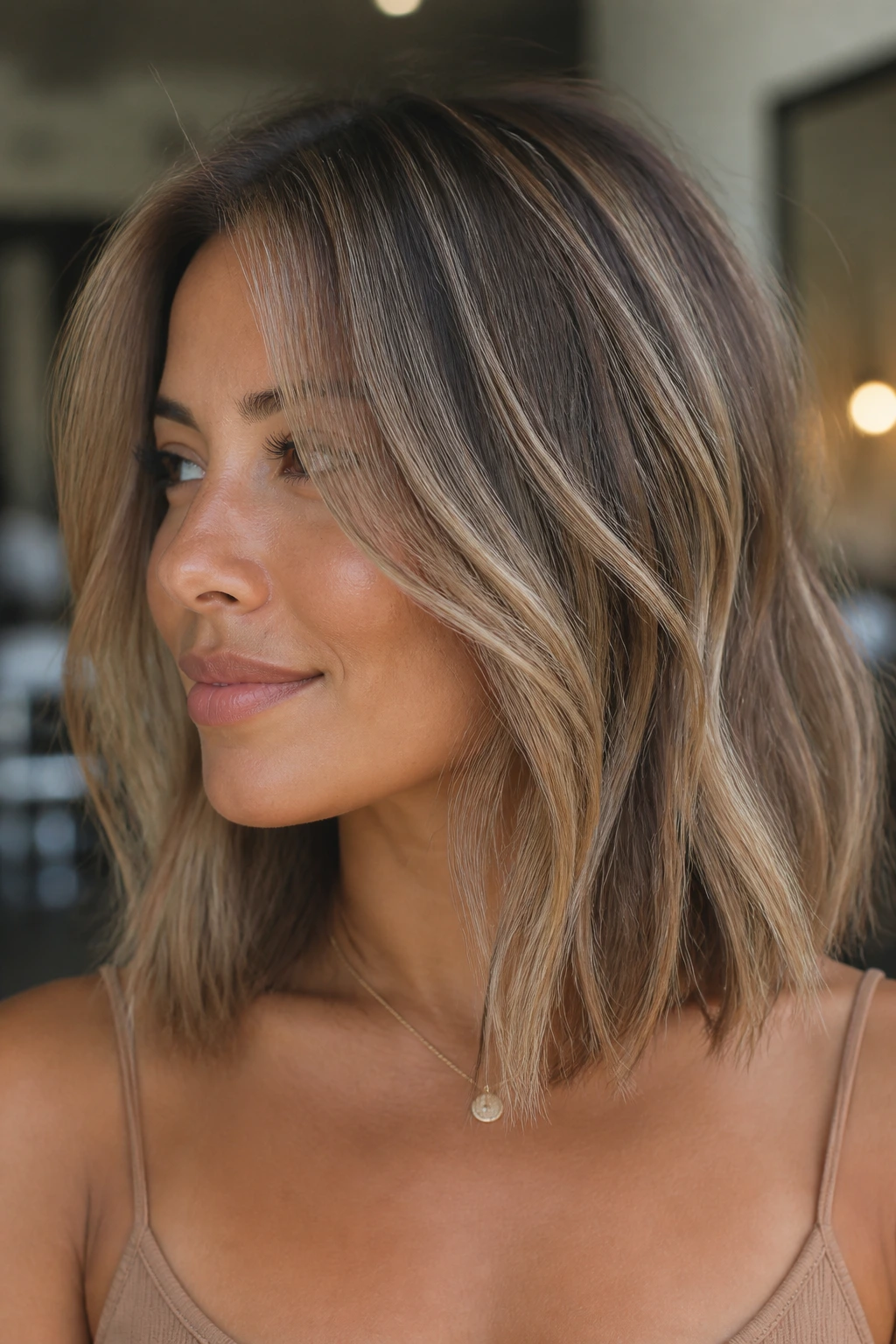
Babylights are tiny. That’s the whole appeal. Creamy beige babylights weave through the top layers like a fine thread, so the brown base still does most of the talking while the blonde acts like a soft shimmer. On tan skin, beige is the sweet spot when you want brightness without a heavy golden cast.
Because the pieces are so fine, this style works especially well on medium hair that’s worn straight or in polished bends. You won’t get giant color blocks. You get a delicate glow that changes as the hair shifts. That makes the style feel expensive without being loud.
It also grows out with a softer line than chunkier highlights, which matters if you don’t want to live in a salon chair. If you like a controlled, subtle finish, this is one of the best ways to keep the brown-blonde range refined.
9. Espresso-to-Honey Gradient
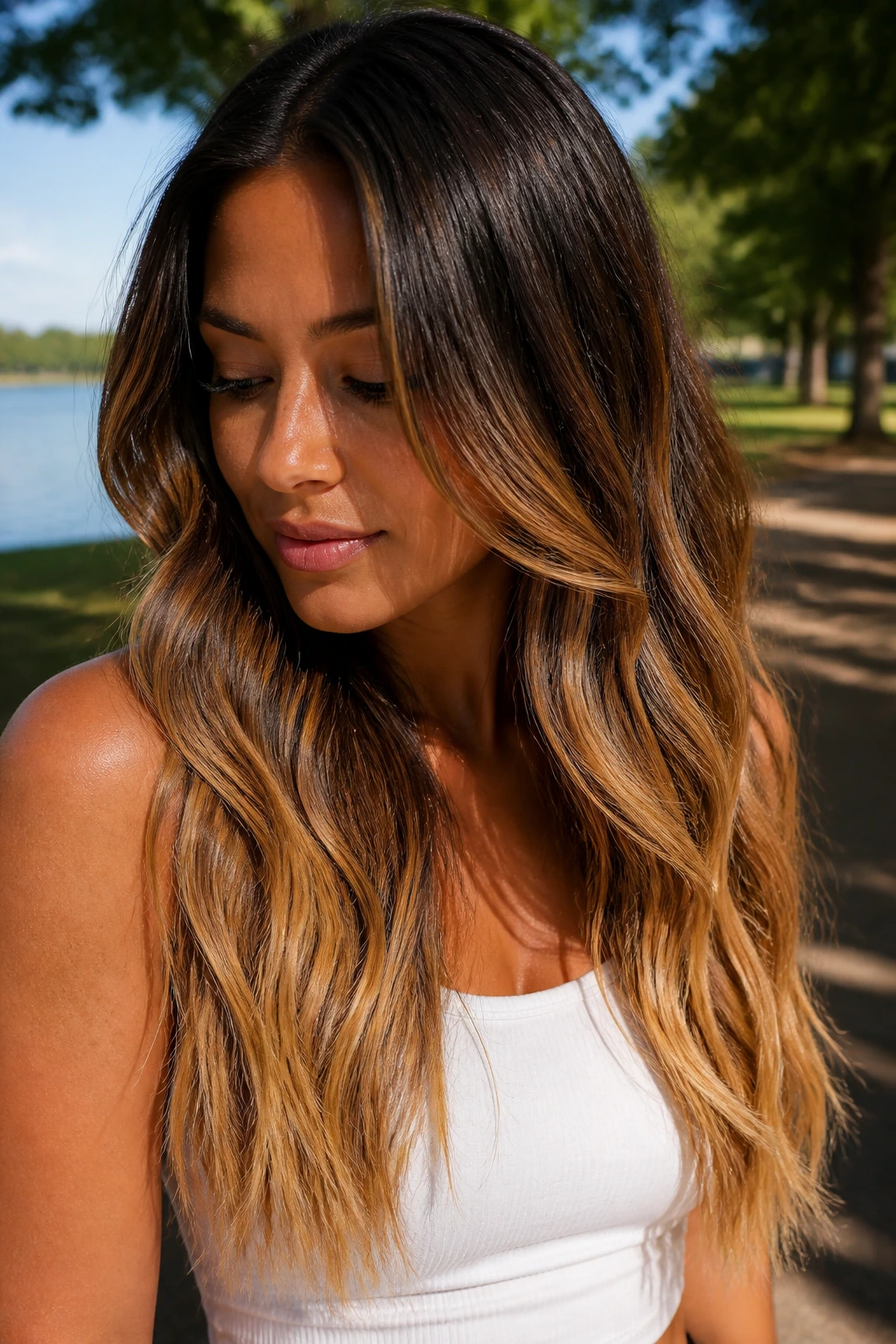
An espresso-to-honey gradient has more drama than the softer looks above, but it still sits inside a wearable lane. The roots stay deep espresso, then the mid-lengths warm into brown, and the ends drift toward honey blonde. On medium-length hair, that fade is clean and easy to read, especially when the cut has a slight taper at the ends.
Tan skin handles this well when the honey is kept rich, not icy. The deeper root gives the complexion something solid to sit against, while the honey ends add motion and lightness. It’s the sort of look that makes hair swing a little more when you walk.
If you like ombré but don’t want a harsh dip-dye look, this is the smarter version. The transition should be gradual enough that you can’t point to one exact line where brown stops and blonde starts.
10. Golden Cocoa Ribbons
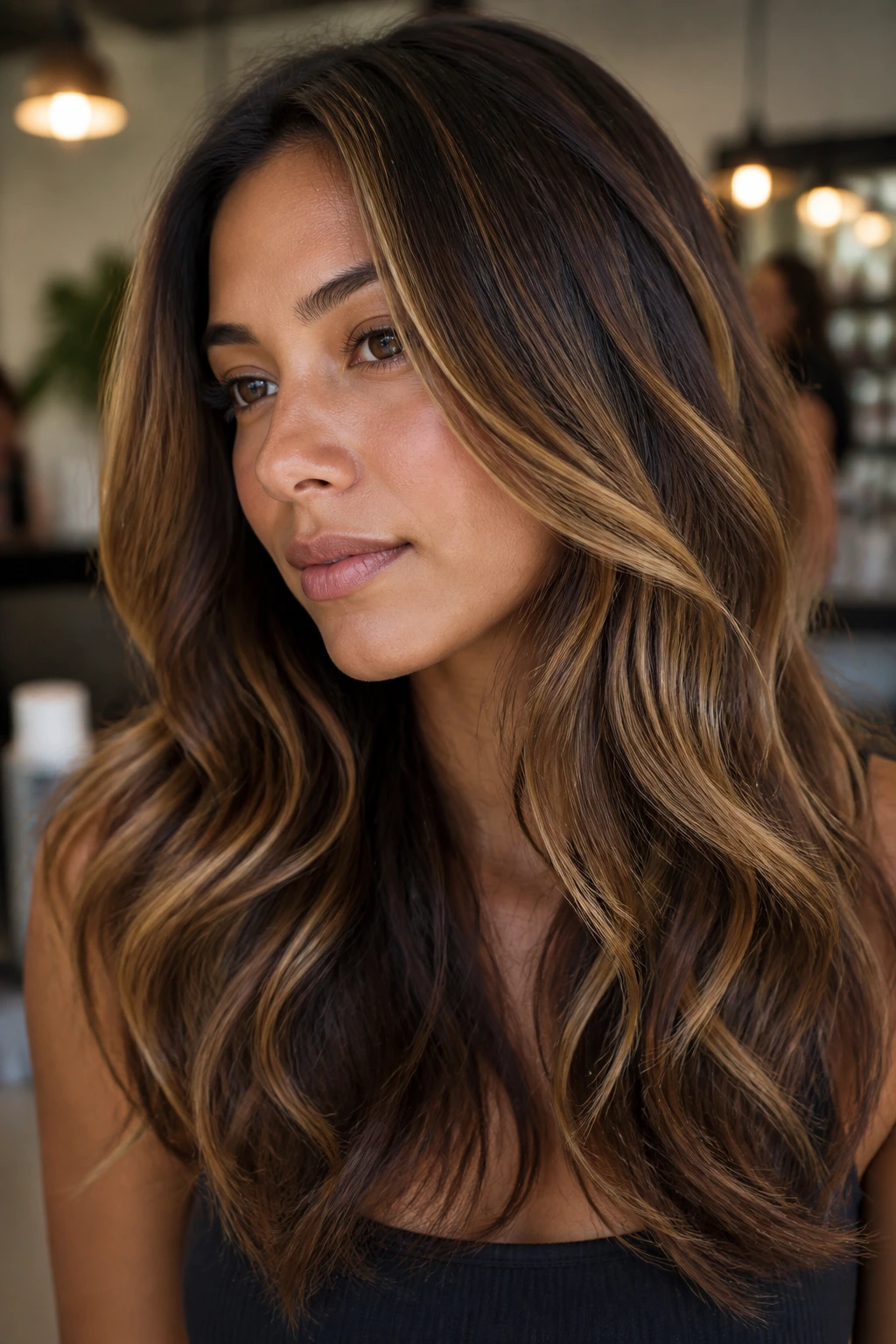
Golden cocoa ribbons are exactly what they sound like: deep cocoa brown threaded with warm, golden-toned highlights. The contrast is moderate, not extreme, which makes it easy to wear on tan skin without looking over-lightened. It’s a rich, glossy color family, and it works especially well on thicker medium hair that can hold some visual weight.
The ribbons should be placed where the light naturally catches the cut: the outer surface, the face frame, and the ends that brush the collarbone. If the highlights sit only on top, the look can feel flat. If they’re hidden too deep, you lose the whole point. A little weaving goes a long way here.
I’d call this a strong everyday option. It looks polished in a ponytail and still gives you movement when the hair is down. Not every highlight set needs to be bright. Some need to look expensive from the start.
11. Chestnut with Champagne Ends
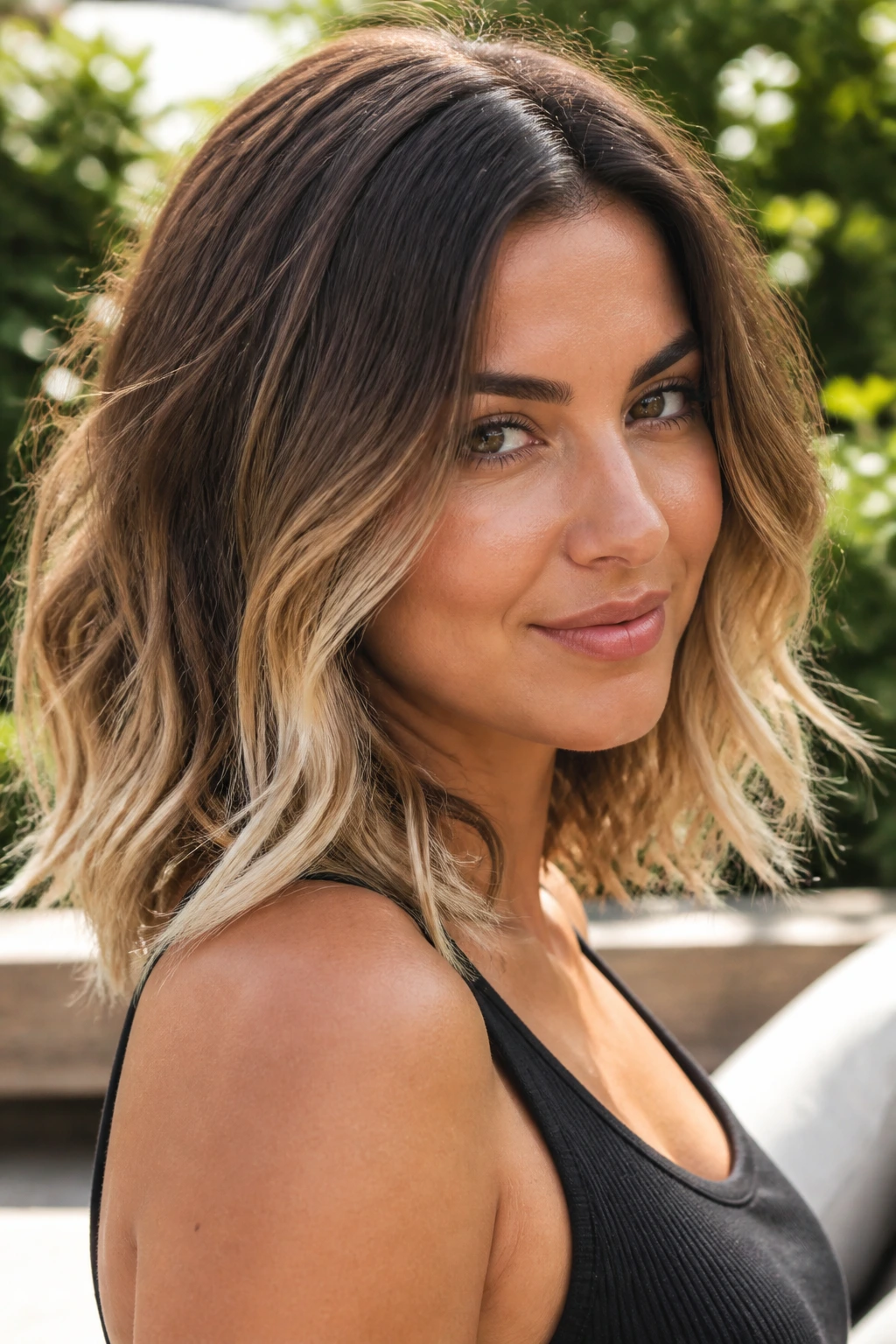
Chestnut with champagne ends gives the hair a richer midsection and a lighter finish around the perimeter. That champagne tone is cleaner and cooler than honey, which can be helpful if tan skin has a neutral base and you don’t want extra warmth around the jaw. The chestnut root keeps the style grounded.
On medium hair, this works best when the ends are slightly textured, not blunt and stiff. A little layering lets the champagne pieces peek through instead of sitting as one flat block. The result looks lighter on the move than it does in a static mirror.
This is one of the few brown-blonde combos that can feel dressy without being formal. It has enough brightness for warm weather, but the chestnut keeps it from drifting into beachy cliché. Good color always has a reason.
12. Bronzed Layered Highlights
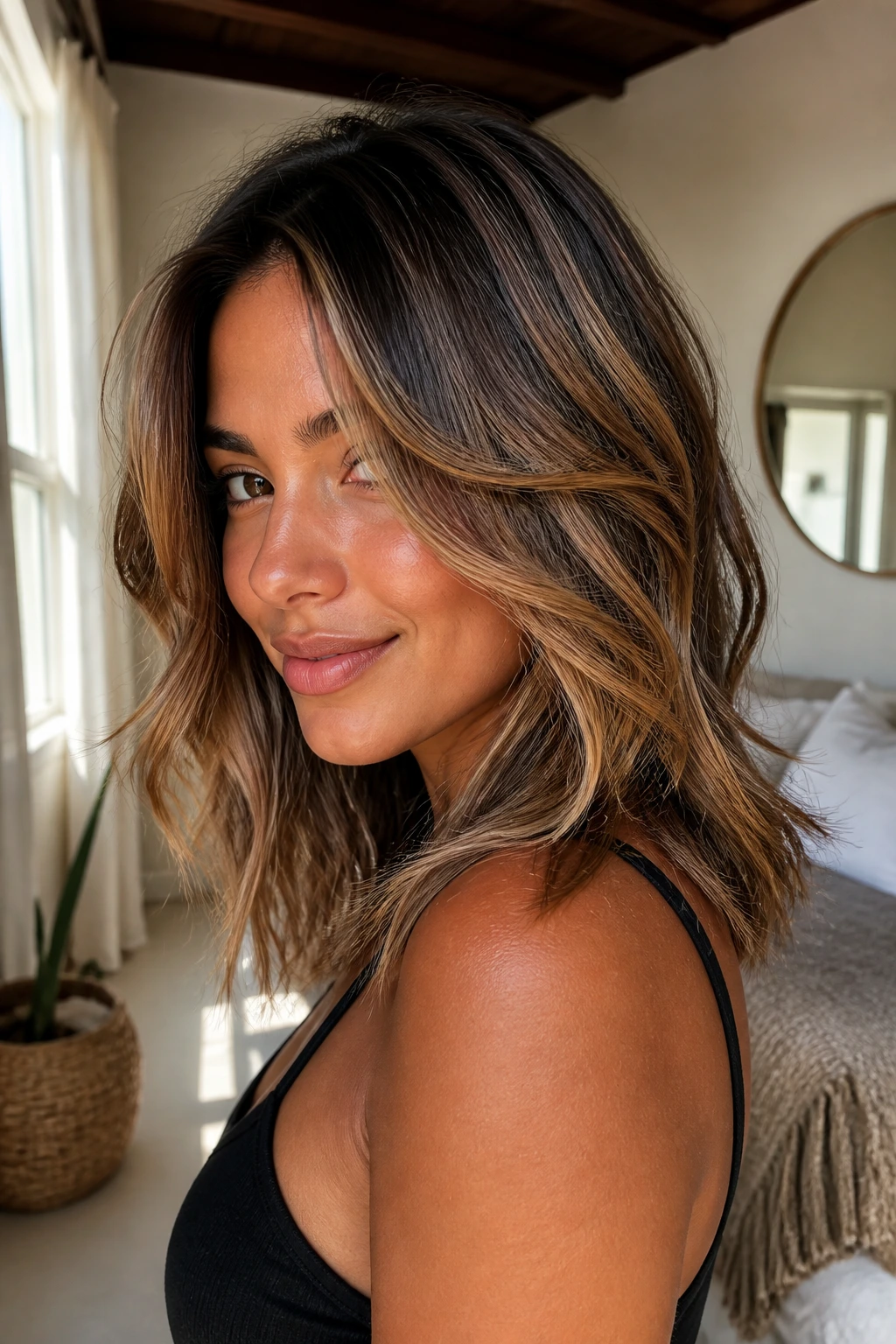
Bronzed layered highlights are built for movement. Bronze sits in that middle zone between brown and blonde, so it flatters tan skin by echoing the warmth already in the complexion. On medium-length layered cuts, the bronzed pieces fall at different levels, which makes the whole shape feel fuller.
The color should land more amber than copper, more brown than gold. That keeps it from tipping too red. If the haircut has feathering or soft ends, the highlights can follow those lines and make the layers look even more separated.
This is the look I’d choose for someone who wants the color to do some of the styling work. Even a quick blowout starts to look more intentional when bronzed pieces are placed along the bends of the cut. No fuss, better payoff.
13. Maple Glaze Balayage
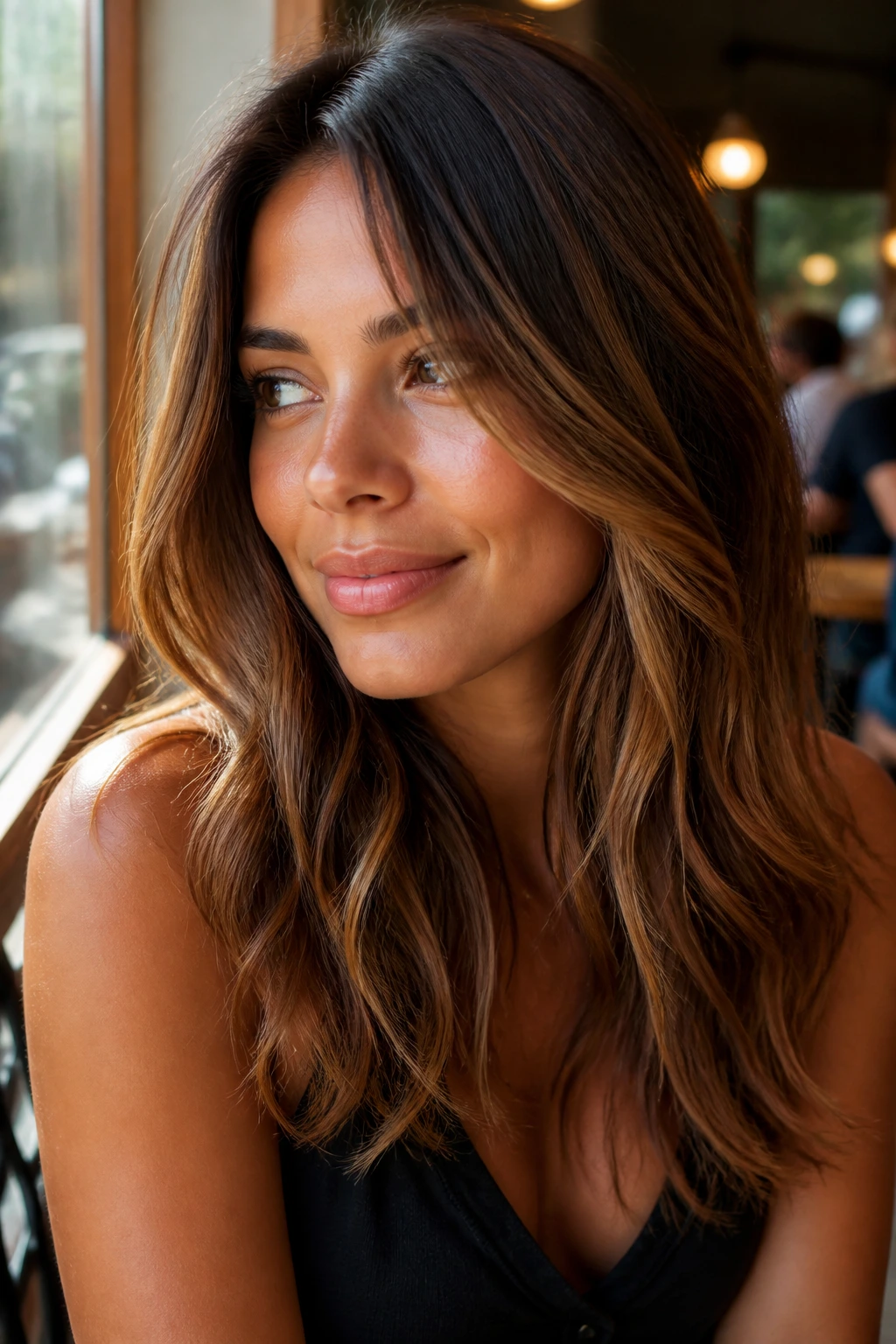
Maple glaze balayage brings in a hint of red-brown warmth, which can be fantastic on tan skin with golden or olive undertones. The maple tone gives the hair a richer finish than honey, but it’s still softer than copper. That middle ground is where it gets useful. Too much red can take over. A glaze keeps it under control.
I like this on medium hair with movement at the ends, because the glaze catches light in a way that makes the hair look glossy, not flat. The balayage keeps the placement soft, while the maple tint gives the color some depth that a plain blonde highlight would miss.
If your natural brown runs a little warm already, this is one of the easiest ways to nudge it brighter without a big shift. It’s subtle until the light hits it. Then it changes.
14. Dirty Blonde Lived-In Lightening
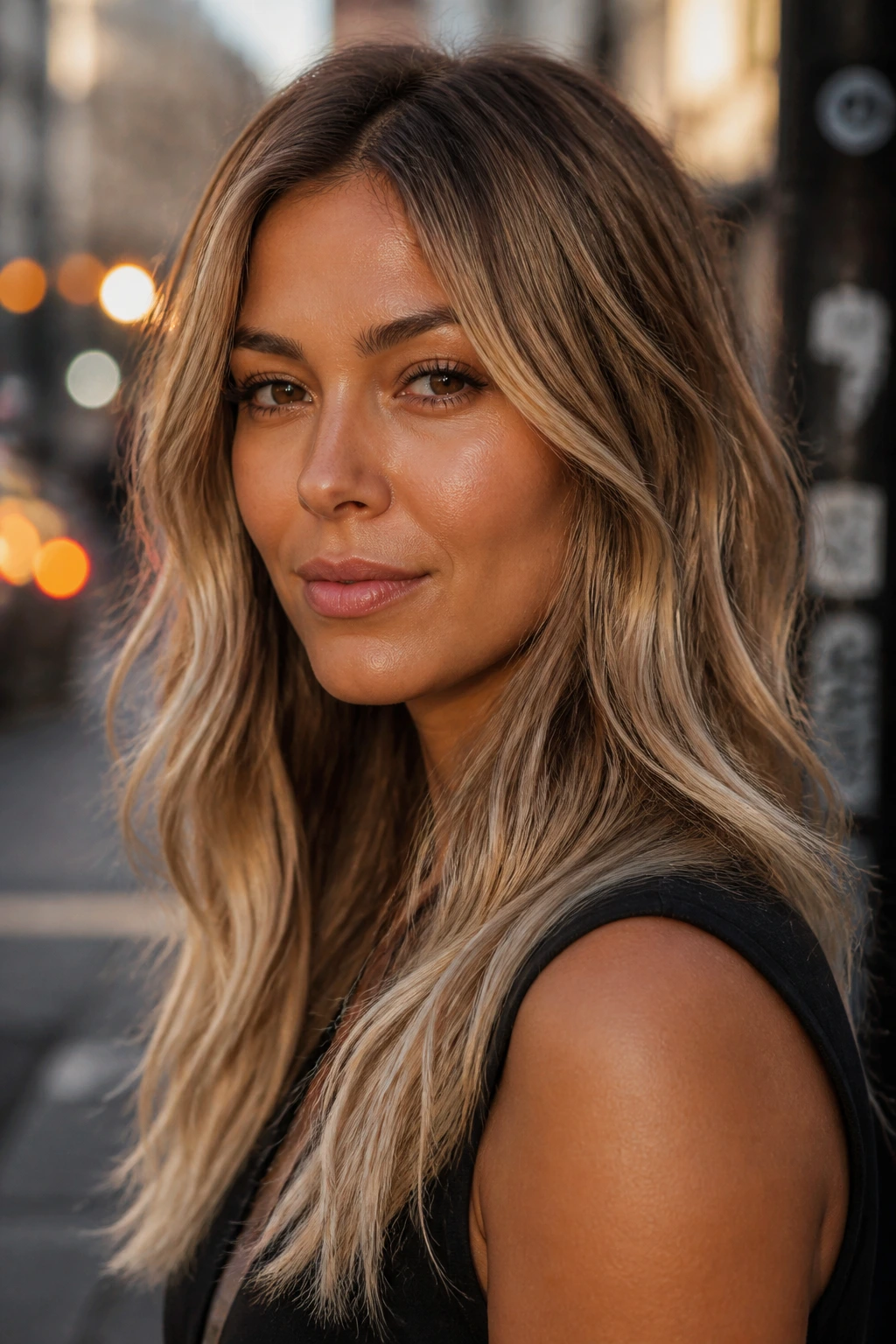
Dirty blonde isn’t dirty in the bad sense. It’s just rooted, muted, and a little bit smoky, which makes it one of the better choices for tan skin that leans neutral. The color softens the base and adds a washed-beige finish through the mid-lengths, so the hair feels lived-in from the first day instead of waiting for the grow-out phase to get there.
On medium-length hair, this color works well when the ends are lightly brightened and the roots are left alone. You want that worn-in transition. If the blonde gets too pale, the whole thing can drift into a yellow zone that fights the skin tone. Keep it beige and rooty.
This is the kind of look that suits someone who likes their hair to look a little effortless, but not messy. It’s controlled. The challenge is avoiding too much ash, because that can make tan skin look tired if the formula gets heavy-handed.
15. Buttery Face-Framing Panels
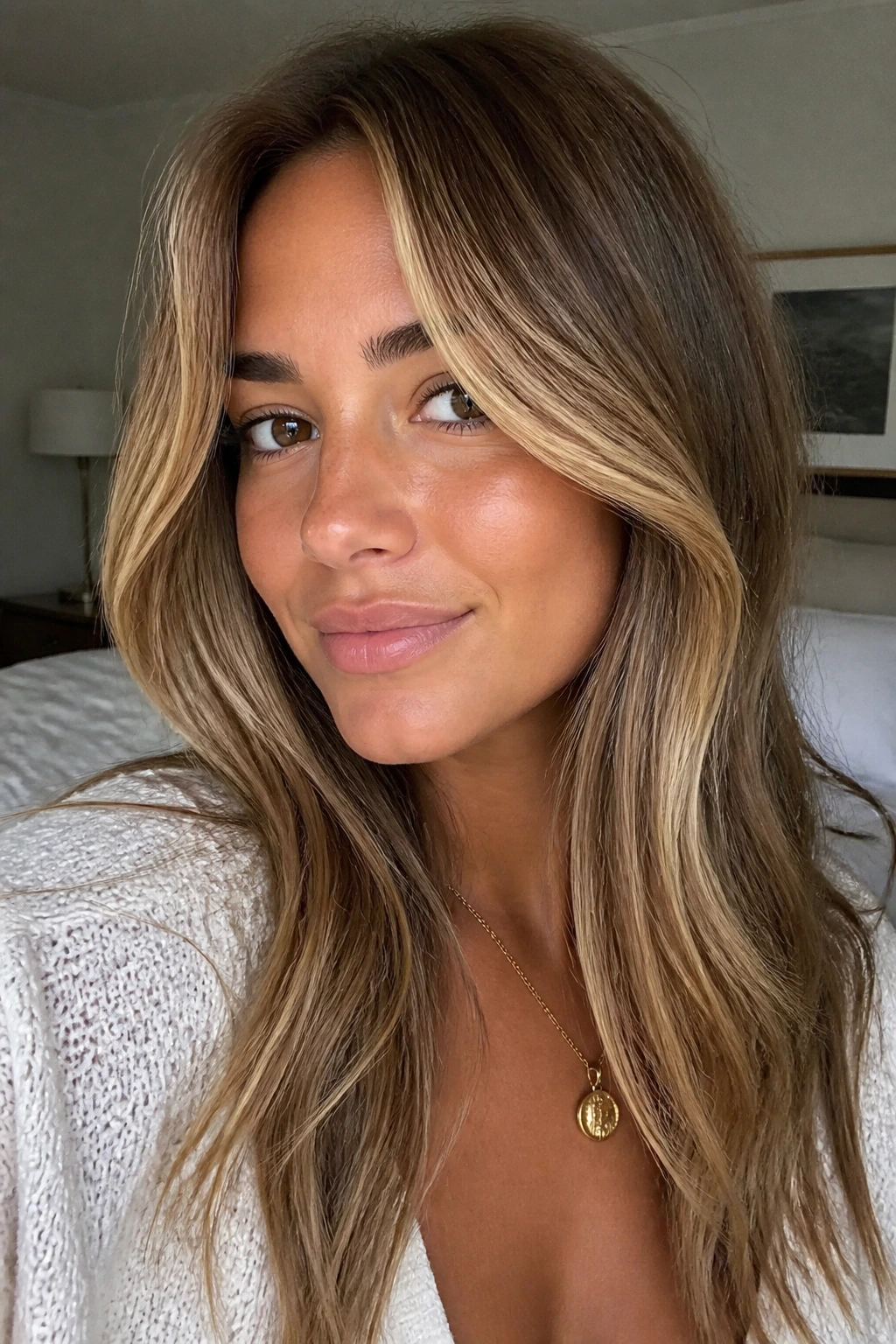
Buttery face-framing panels are brighter than a soft beige frame and warmer than an icy blonde streak. They sit right in the sweet spot for tan skin that wants a fresh lift around the face without losing the brown base everywhere else. On medium hair, the panels can start at the cheekbone and drift down through the front layers, which gives the cut a real focal point.
I like this when the haircut has a side part or curtain bangs, because the blonde can move with the shape of the fringe. The butter tone softens the complexion and gives a warm reflection to the skin. It’s one of the fastest ways to make a medium cut look more finished.
If you’re unsure about going lighter overall, this is the compromise. You keep the brunette depth, but the front opens up. That matters more than people think.
16. Cocoa and Pearl Dimension
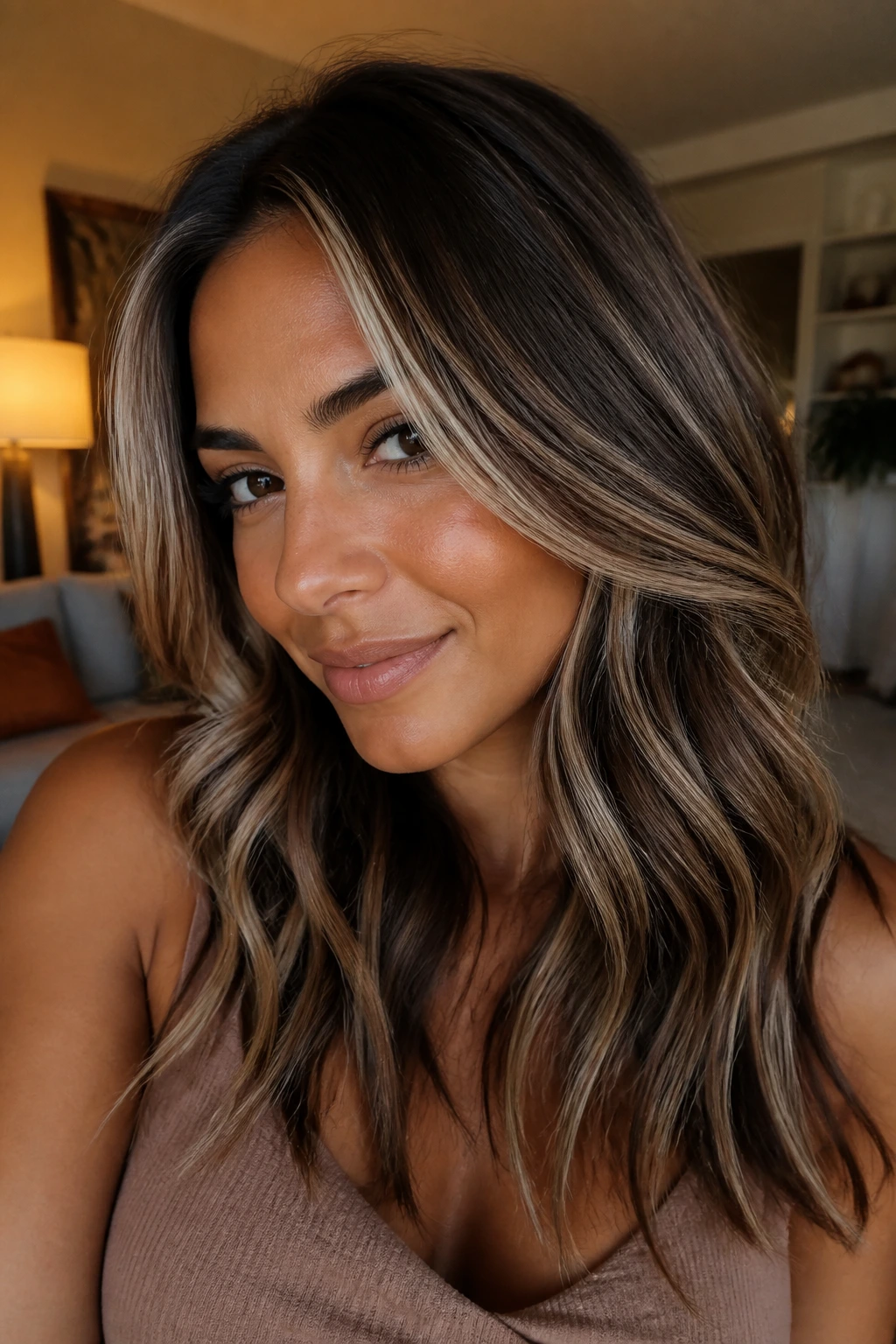
Cocoa and pearl dimension pairs dark, chocolatey lowlights with light pearl-beige pieces, and the contrast is what makes it work. Tan skin can handle that split if the pearl is kept soft rather than icy and the cocoa stays glossy rather than flat. The result feels layered, almost like the hair has built-in shadow and shine.
This style is especially good for medium hair that has some natural thickness. The lowlights prevent the ends from looking see-through, while the pearl strands catch light around the top and face. If your hair tends to look one-note when it’s all the same shade, this combination fixes that fast.
It’s not the warmest look on the list, but it may be one of the most balanced. A small amount of pearl near the front goes a long way. Too much, and it loses the point.
17. Soft Ash-Bronde Blend
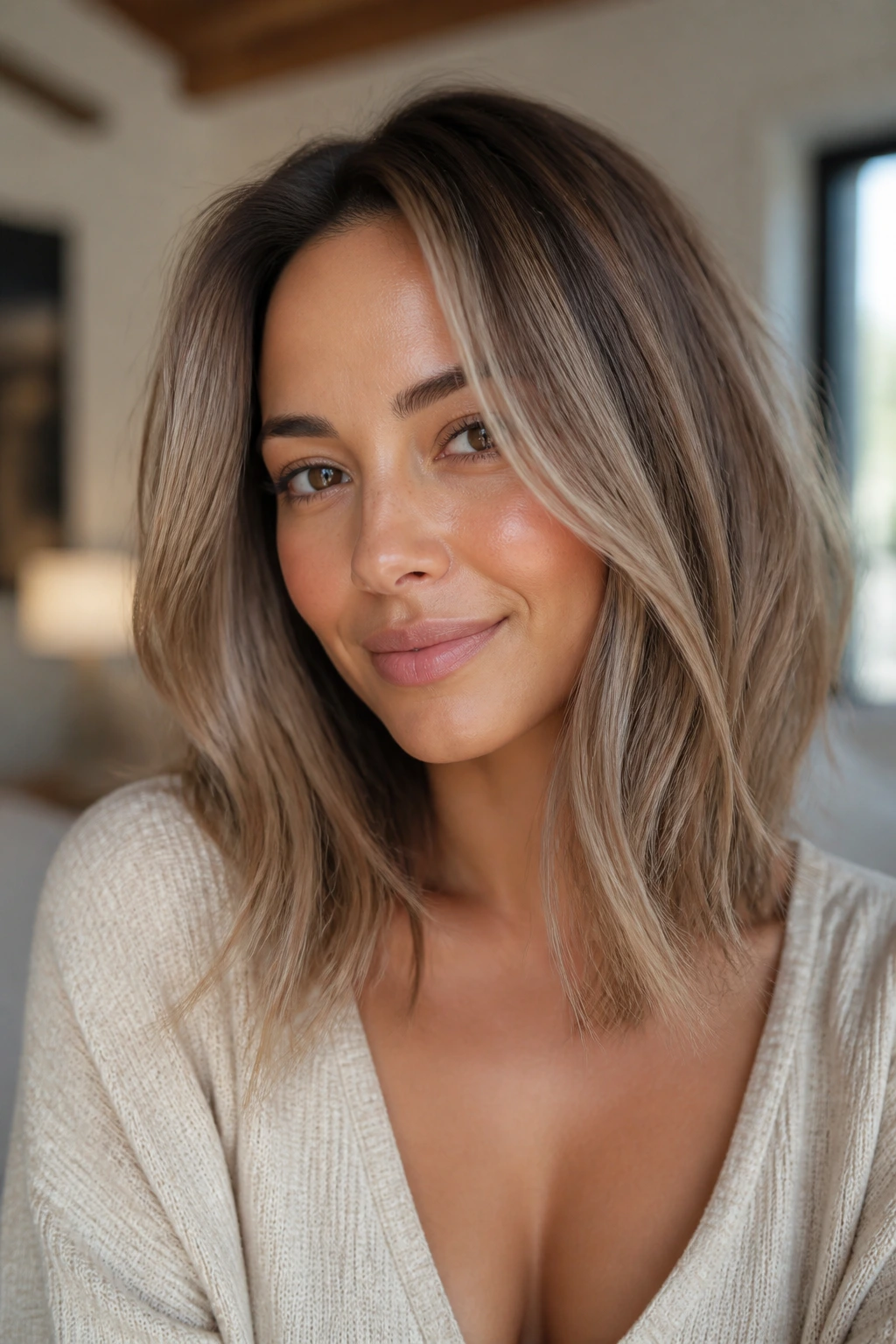
Soft ash-bronde sounds cooler than it actually wears. The base stays brown, the blonde leans beige-ash, and the whole finish lands in that neutral zone that works well on tan skin with an olive or muted undertone. The important word here is soft. If the ash gets too strong, the face can look dusty instead of defined.
Medium hair is a good canvas for this because the blend doesn’t need heavy contrast to show up. A few brighter pieces around the face and through the top layer are enough. The brown and blonde should blur together rather than sit in separate bands.
I’d choose this if golden highlights make your skin look too yellow or your hair tends to pull orange easily. It has a calmer effect. Not sleepy. Just measured.
18. Mocha Melt with Warm Glints
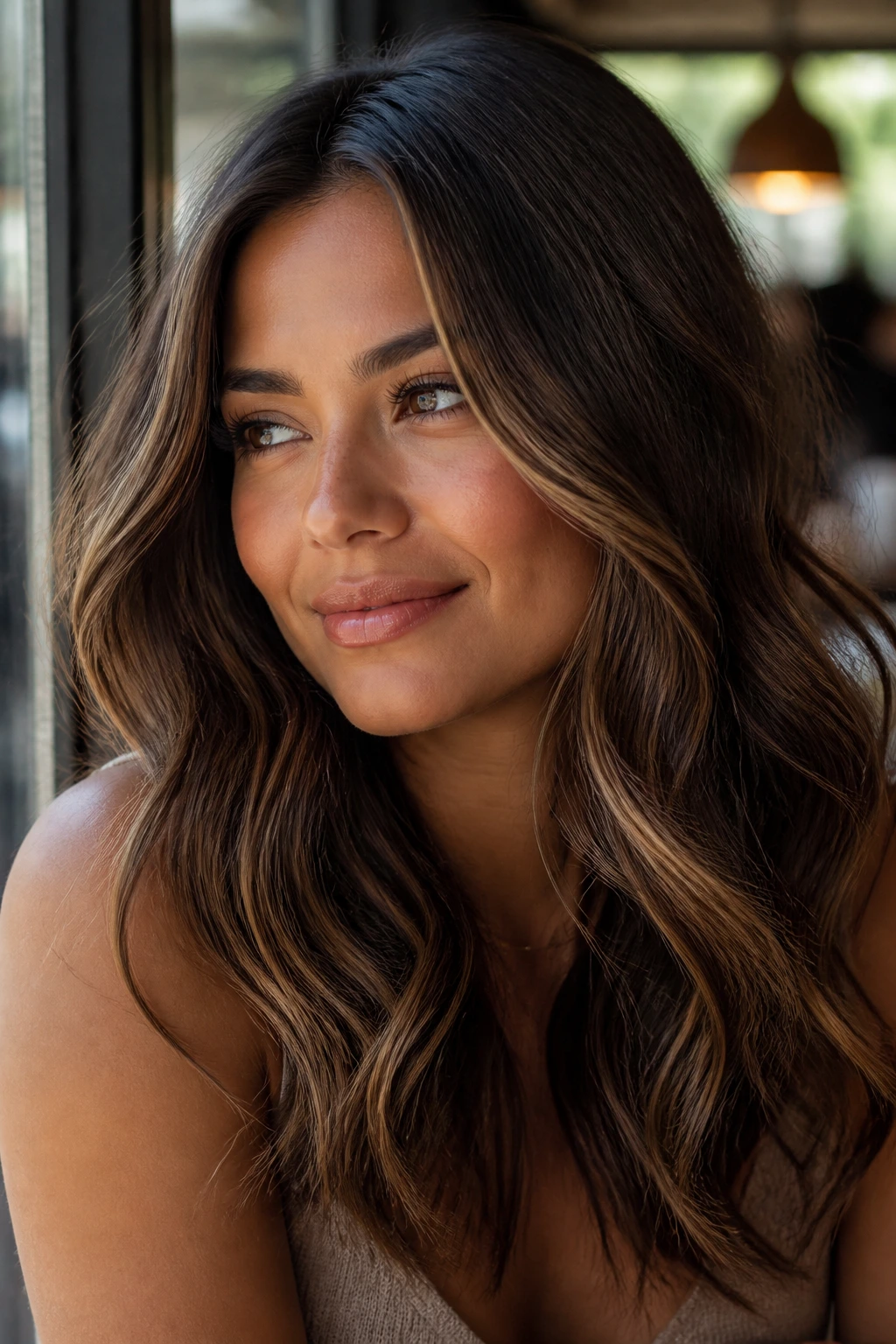
A mocha melt gives you a dark, polished base with tiny warm glints tucked through the ends and around the face. It’s one of the most wearable options if you want the hair to stay mostly brunette but still reflect light. Tan skin benefits from those warm flashes because they keep the complexion from looking washed out beside a deep base.
This isn’t a chunky highlight look. It’s softer, with the brightness appearing in pieces when the hair moves. On medium-length cuts, that subtlety can be a virtue. The shape of the cut stays visible, and the color adds sheen instead of weight.
If you wear your hair straight most of the time, the glints still show. They just read more like shine than streaks. That can be a better fit if you want polish over drama.
19. Beach-Glass Bronzed Ends
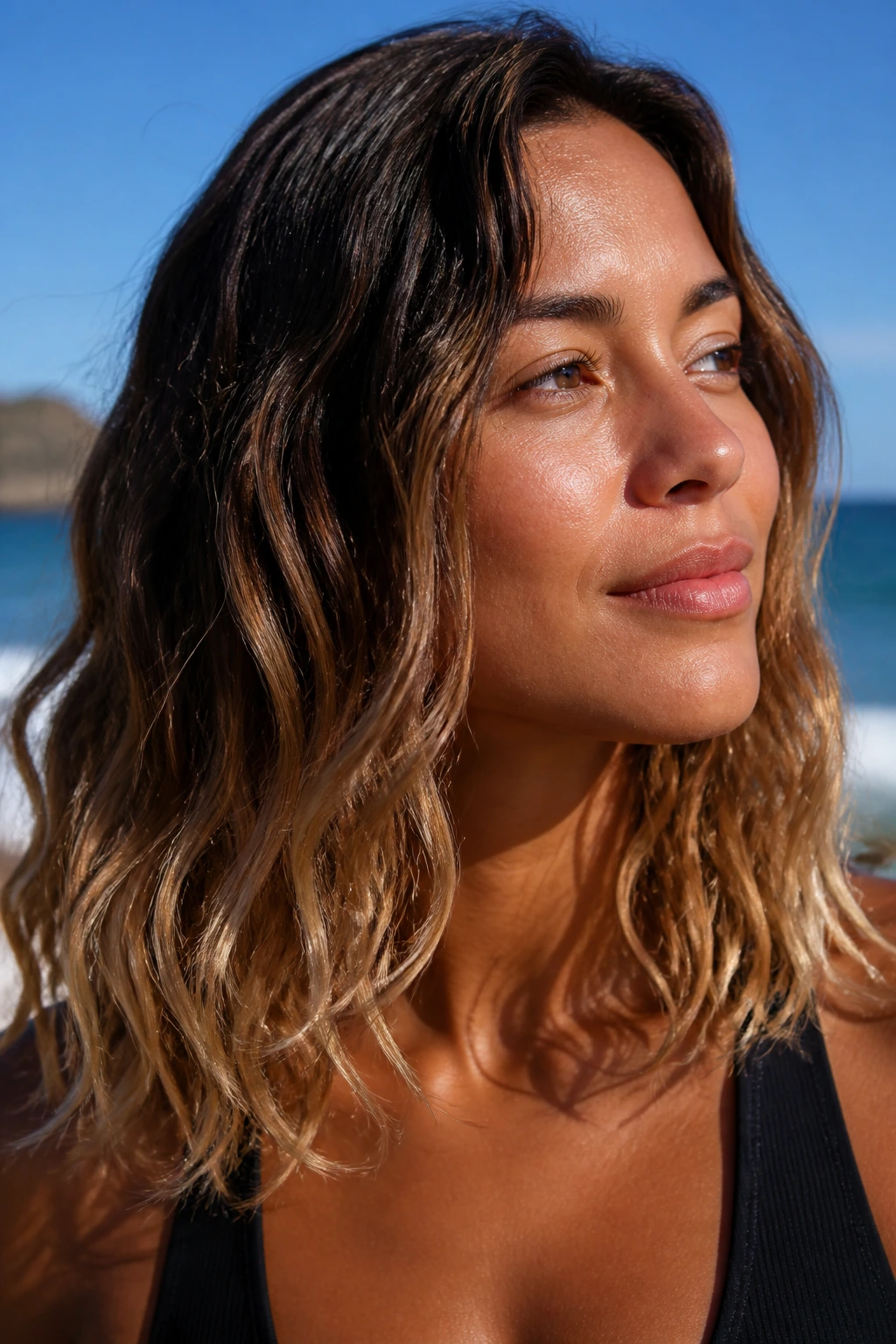
Beach-glass bronzed ends have a smooth, light-catching finish that sits somewhere between beige, bronze, and pale brown. The effect is soft and translucent rather than bright white-blonde. On tan skin, that makes the ends feel sun-kissed without looking bleached out. The color should feel worn by light, not attacked by it.
I like this for wavy medium hair because the texture breaks up the ends enough that the bronze tones read as movement. The root can stay a shade or two deeper, which keeps the style from becoming too light overall. That depth at the top matters a lot.
This is one of the easier looks to grow out because the highlights live mostly where the hair naturally thins toward the ends. If you want something airy and relaxed, this has the right mood.
20. Toasted Almond Highlights
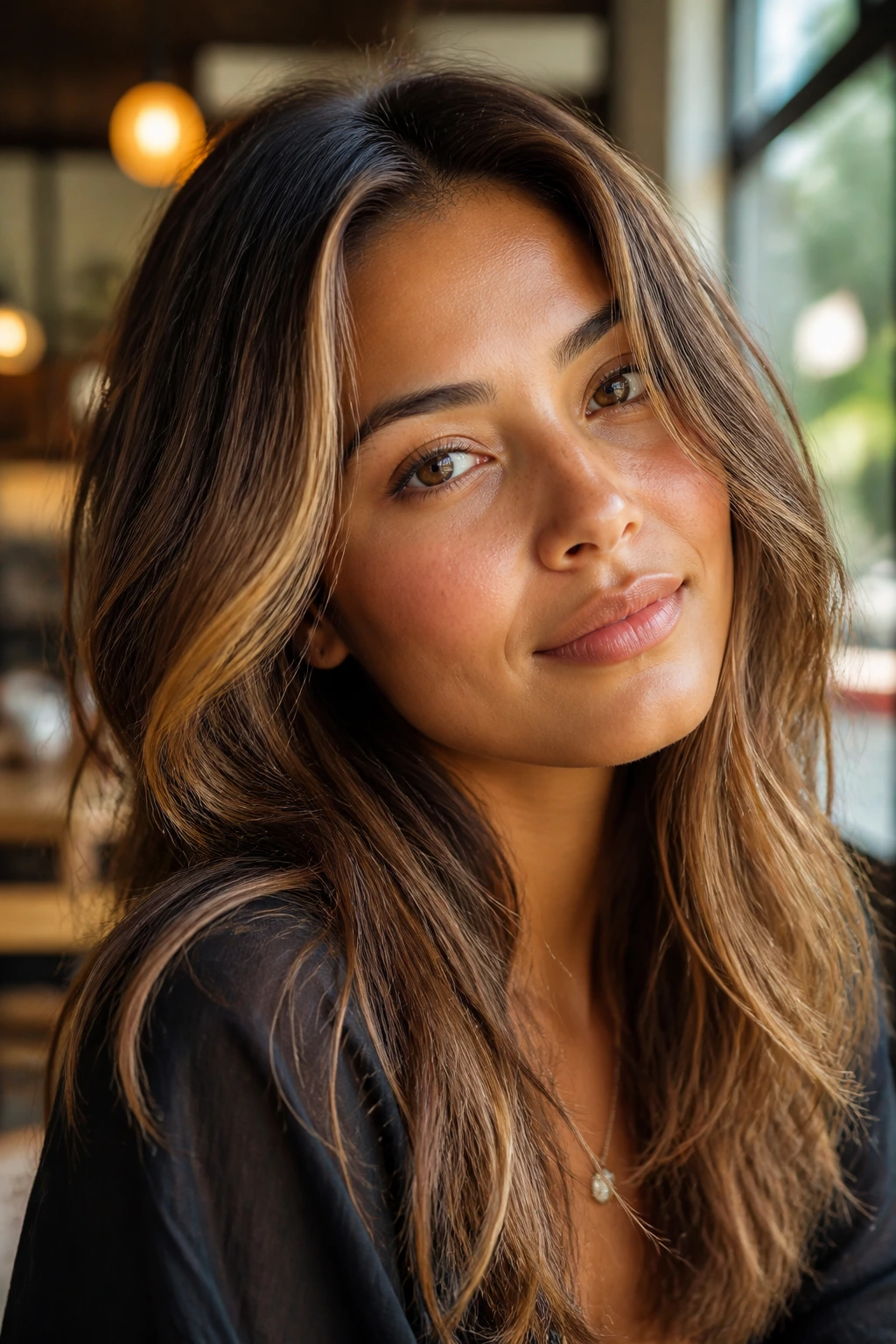
Toasted almond highlights bring a soft beige-brown warmth that feels gentler than classic gold. They’re excellent on tan skin that wants brightness but not a strong yellow cast. The tone has enough warmth to flatter, yet it stays delicate enough to look clean near the face.
On medium hair, toasted almond pieces can sit through the mid-lengths and tips in a loose pattern. You don’t need a lot of contrast to get the effect. In fact, too much contrast can flatten this tone. The prettiest version is barely loud at all, which is probably why it works so well.
If your skin gets deeper in warmer weather, this shade adapts easily. It doesn’t fight the tan. It grows with it.
21. Dimensional Curly Bronde
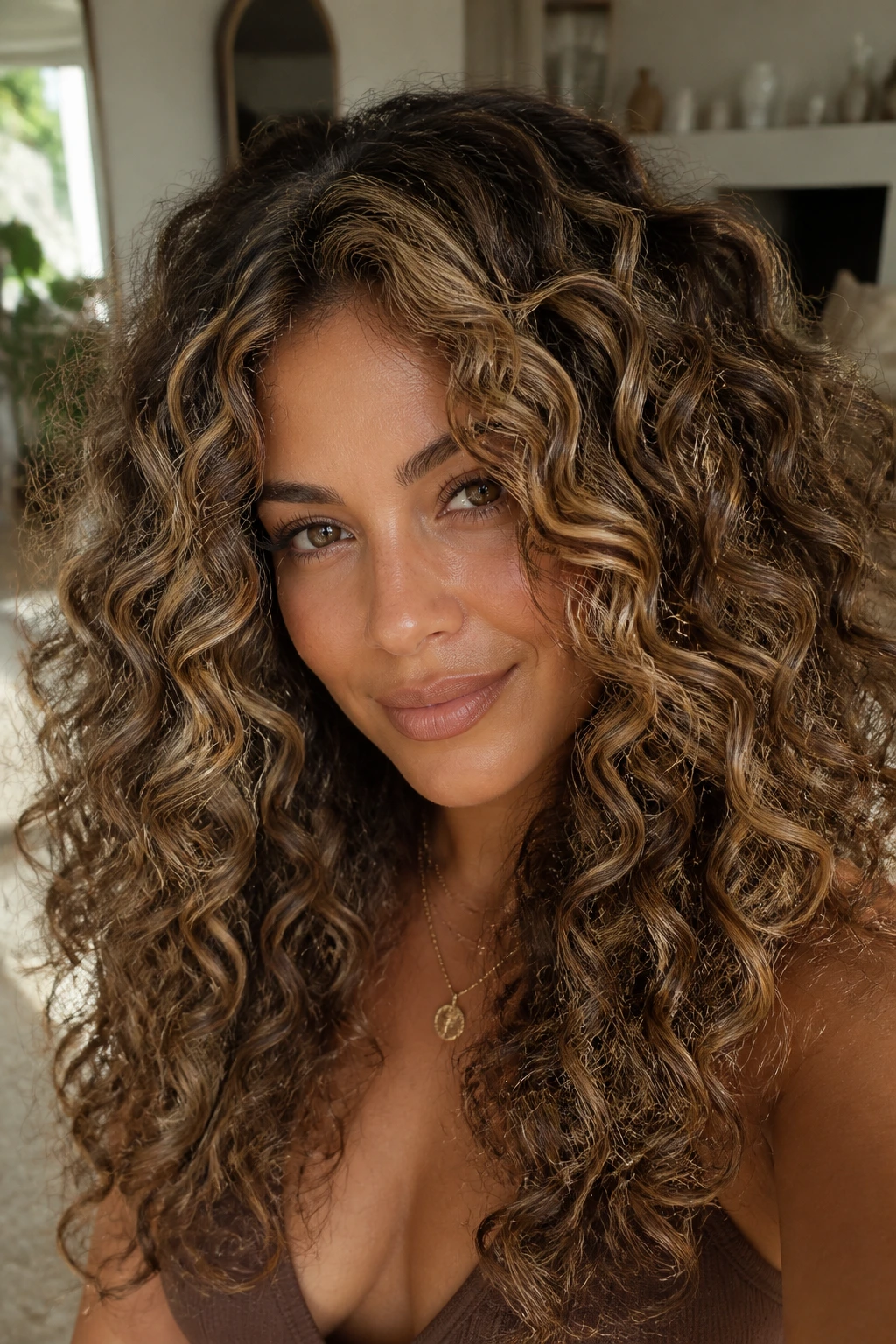
Curly hair changes everything. Highlights sit on the outer curve of the coil, so a curly bronde needs placement that respects the shape instead of fighting it. A few honey and beige ribbons on the crown, mid-lengths, and front pieces can make tan skin glow while keeping the curl pattern visible and not fried-looking.
The best version keeps the roots a little deeper and the lighter pieces staggered, not linearly striped. Curls need shadow. They also need enough brightness that the pattern doesn’t collapse into one dark mass. Bronde gives you both, which is why it holds up so well.
If your hair shrinks or expands a lot, ask for placement based on how your curls wear in their natural state. A color that looks perfect when stretched flat can land in the wrong place once the curls spring back.
22. Micro-Lights for a Sunlit Halo
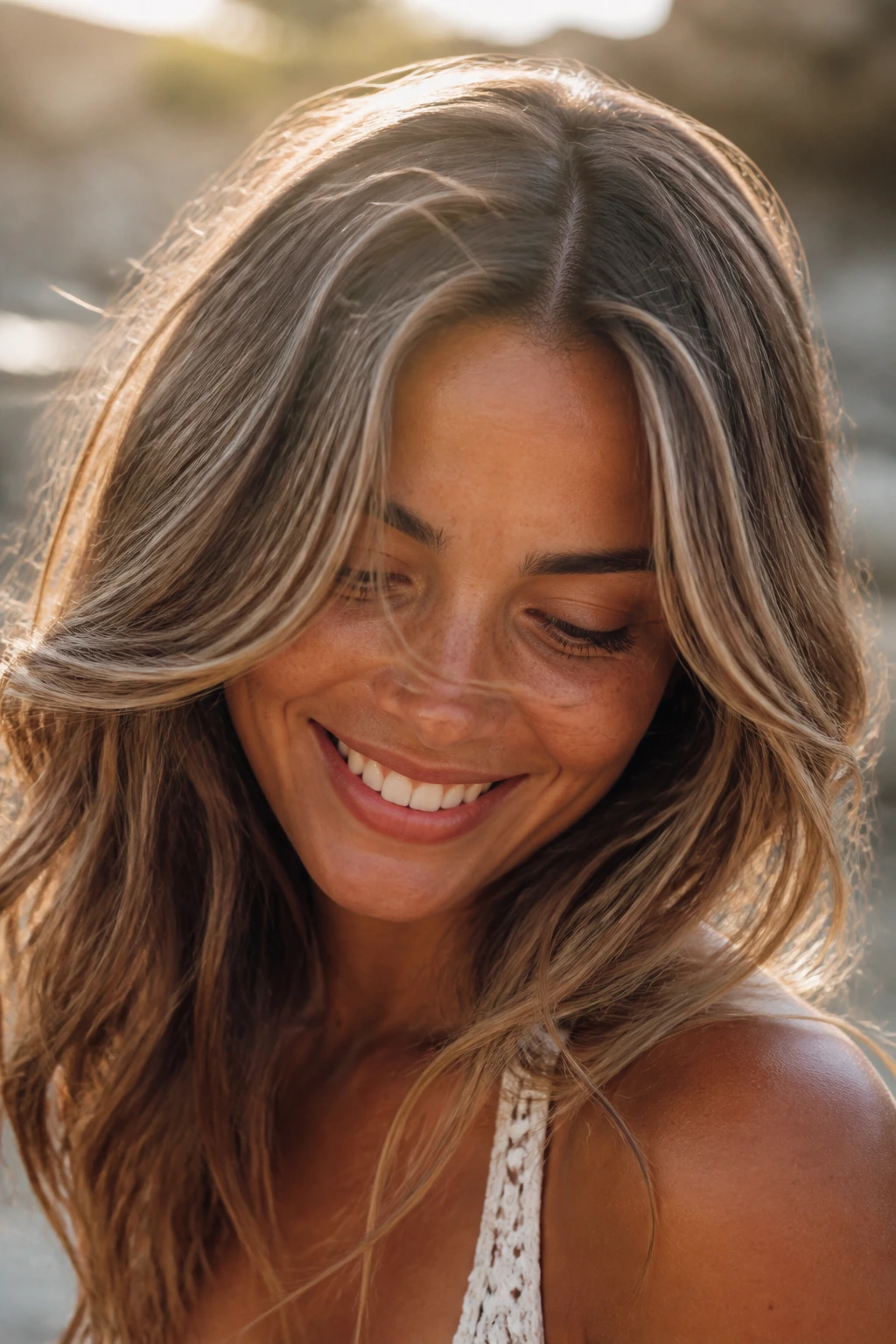
Micro-lights are tiny, whisper-thin highlights that create a halo instead of a pattern. Around tan skin, they’re a smart move when you want the face to look brighter but don’t want obvious chunks of blonde. The effect shows up most around the part line, crown, and the top layer where the light hits first.
This works well on medium hair that’s worn loose and tucked and flipped around during the day. The smaller the pieces, the softer the grow-out. You can also refresh the tone with a gloss rather than a full color service, which keeps the maintenance lighter.
It’s a quiet look, not a boring one. There’s a difference. Micro-lights change the feel of the hair without announcing themselves from across the room.
23. Smoky Beige Contour Highlights
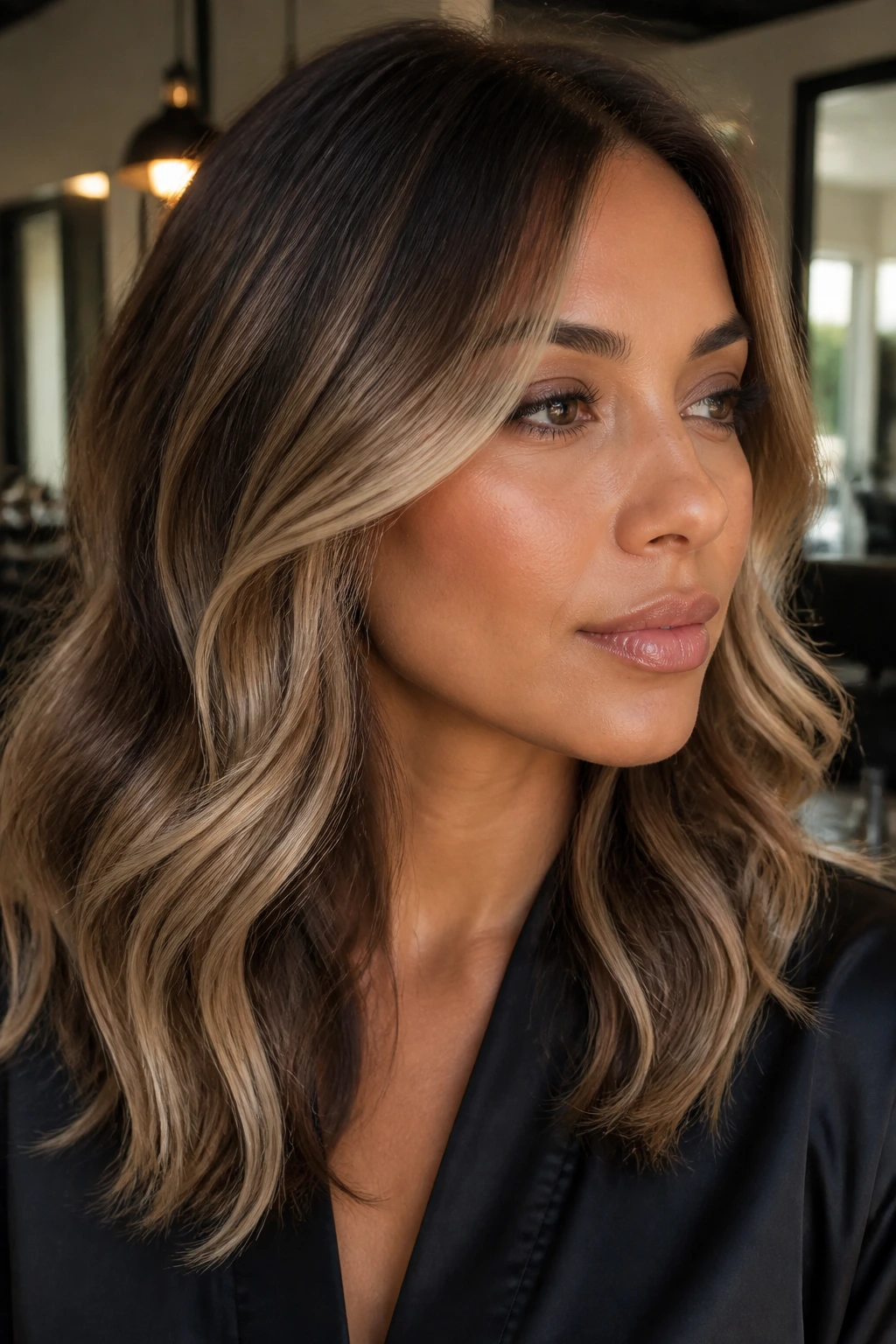
Smoky beige contour highlights are placed the way makeup contour would be: around the face, at the temples, and sometimes just under the surface near the jawline. The beige keeps the blonde from going too warm, while the smoky tone gives tan skin a softer edge. On medium-length hair, the face framing and outer layers do most of the visual work.
I like this for people who want definition more than brightness. The color creates a slimmer-looking frame around the face without relying on a heavy money piece. That makes it especially handy if your hair is cut in a blunt lob or lightly layered shape.
The tone should sit between ash and beige. If it goes too gray, the face can look dull. If it goes too gold, the contour effect gets lost.
24. Honeyed Root Stretch
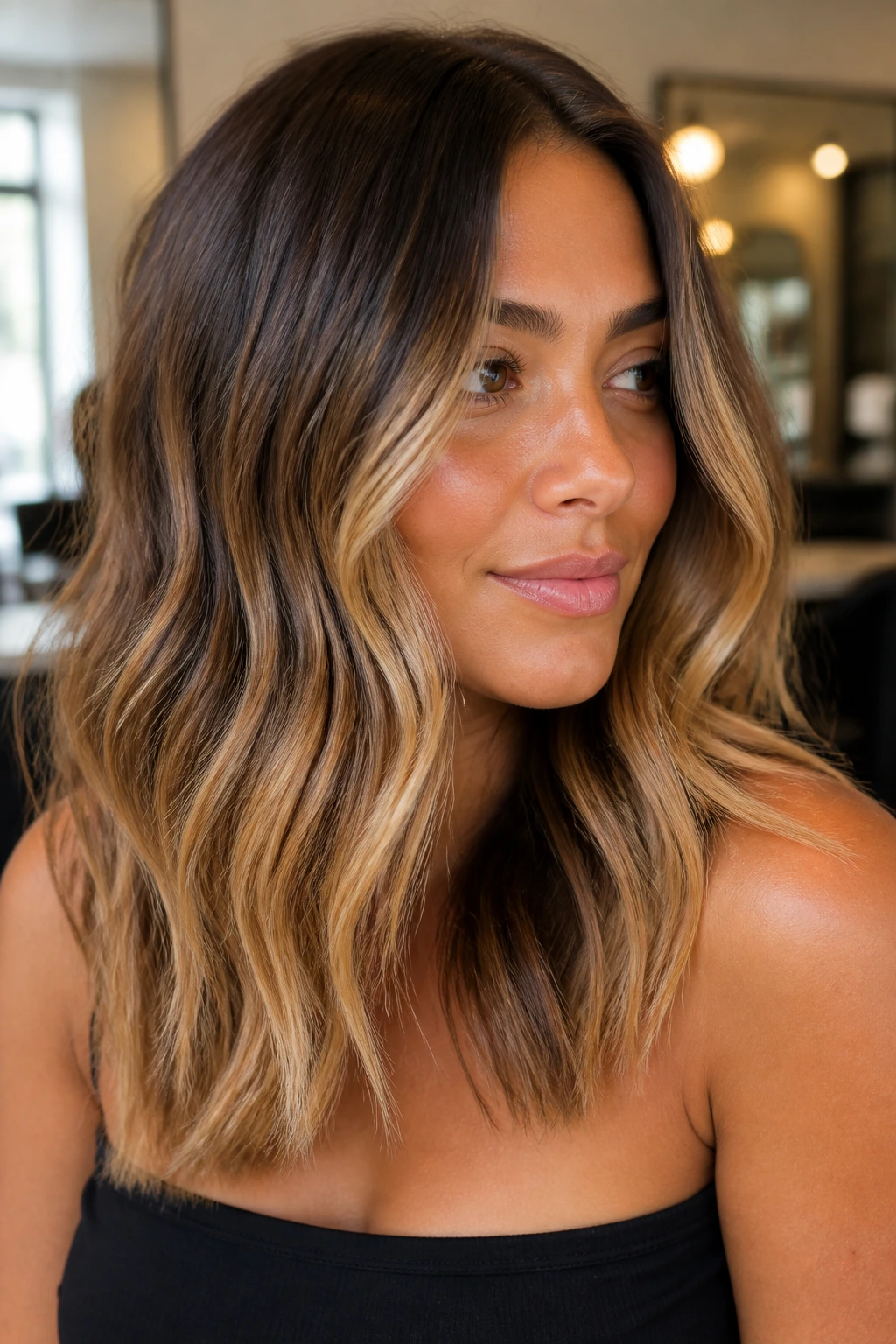
A honeyed root stretch is one of the easiest ways to make blonde work harder for you. The root stays a little deeper, then melts into honey mid-lengths and lighter ends. Tan skin usually likes this because the darker root keeps the hair from floating away from the face, while the honey pieces add warmth where you need it.
This is a practical color choice as much as an aesthetic one. The grow-out is soft, the upkeep is lower, and the contrast stays gentle on medium-length cuts that need movement more than brightness. It’s a useful option if you do not want to think about your roots every five minutes.
The best version has enough shadow at the top that the blonde feels earned, not sprayed on. That’s the line to watch.
25. Full Summer Bronde Reset
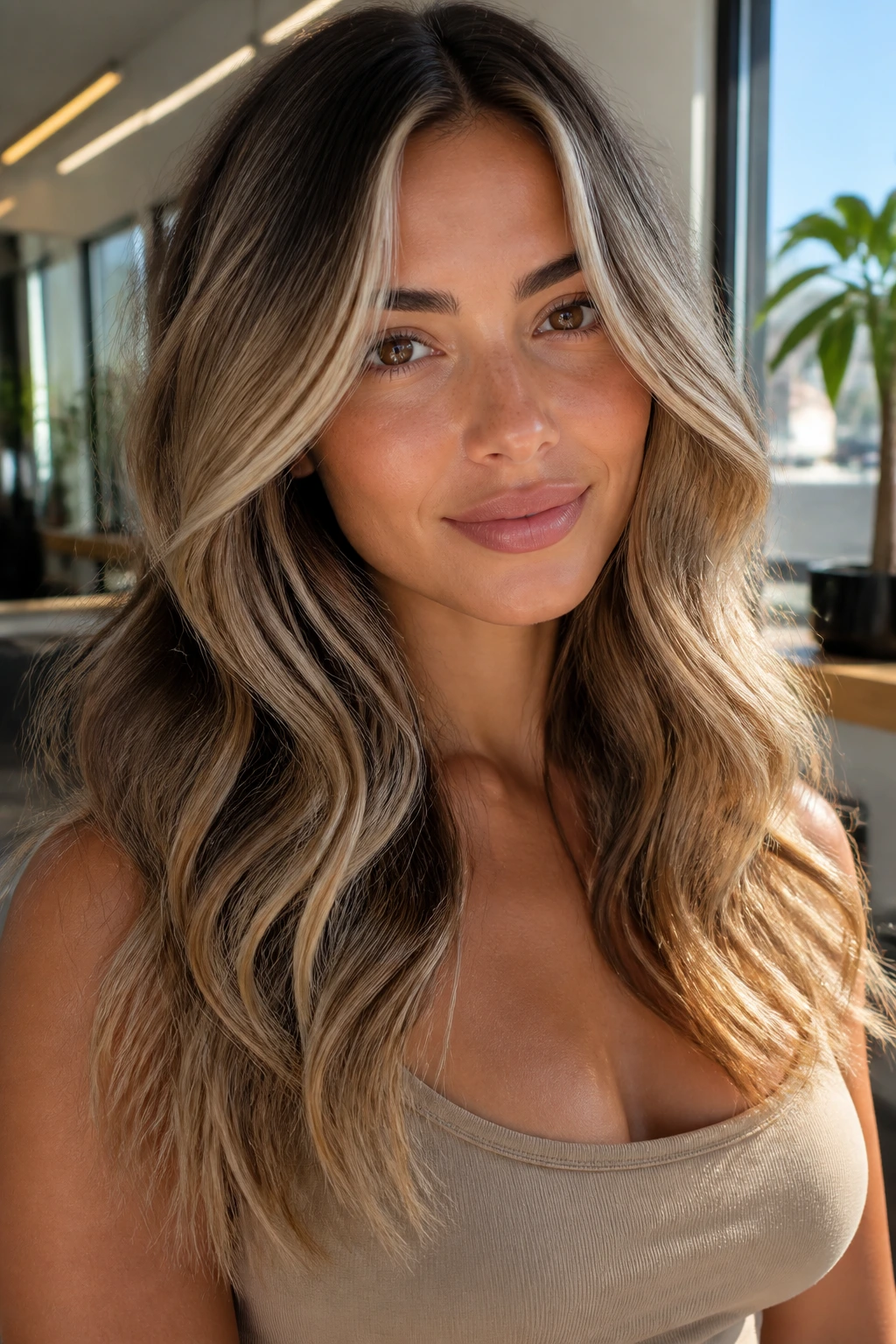
A full summer bronde reset is the boldest option here. It blends several levels of brightness, a brighter face frame, and deeper lowlights underneath so the whole head feels lighter, not just the top layer. Tan skin can handle this well if the blonde is kept within honey, beige, or bronze rather than pushed into icy territory.
This is the move when the hair has gone too dark, too flat, or too one-note over time. Medium-length hair benefits because the shape gives all those tones a place to live. The ends can stay lighter, the root can stay grounded, and the front can do the brightening.
It’s the most salon-time-heavy look on the list, but it also gives you the widest range of styling options. Curly, straight, waved, pinned back — it all works.
How to Ask for the Right Tone at the Chair
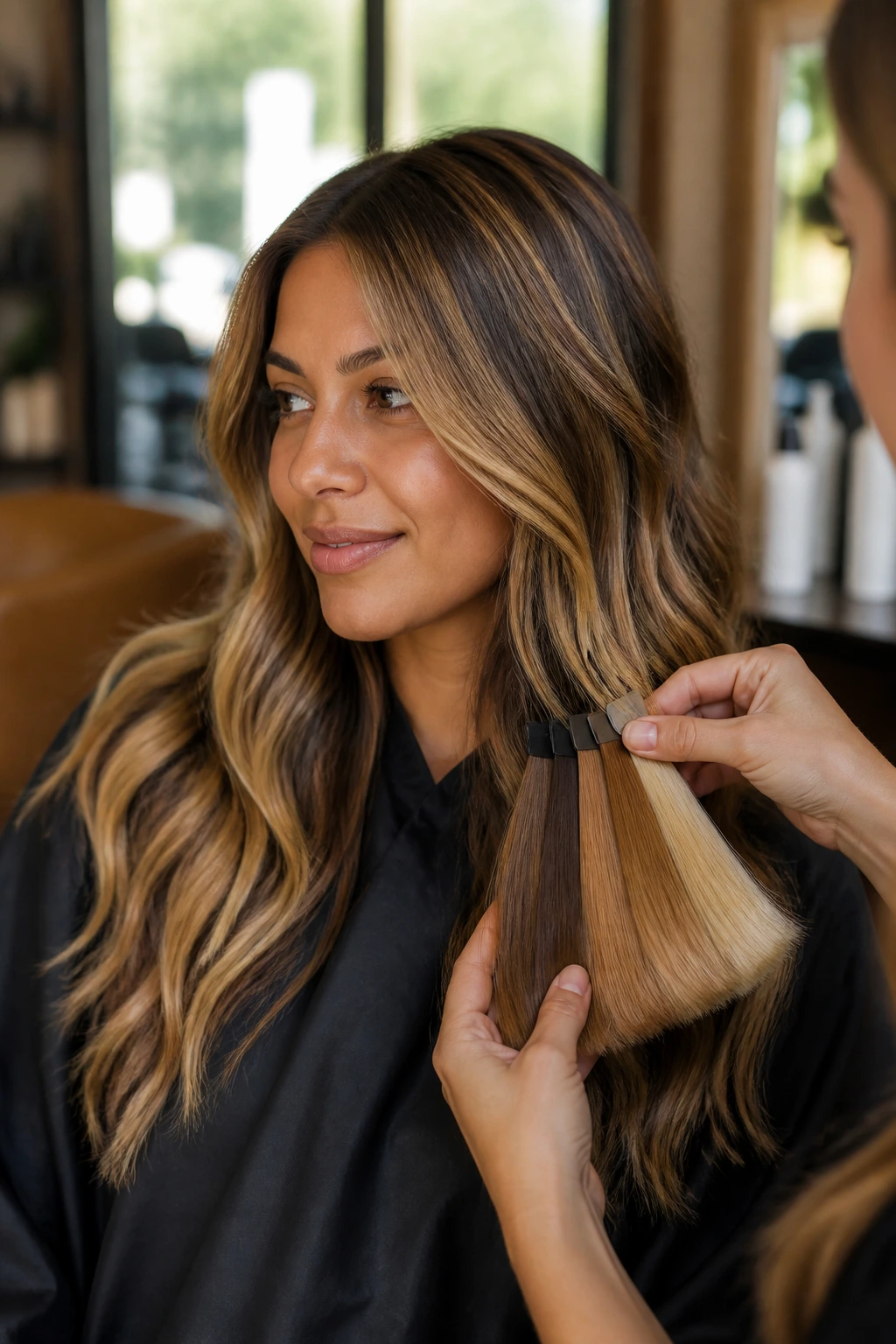
A good color appointment starts with one honest sentence: how warm do you want the blonde to feel? That question does more work than a dozen screenshots copied from random lighting. On tan skin, warmth can mean honey, caramel, bronze, beige, or a soft mushroom tone. Those are not interchangeable. They each land differently once the hair hits daylight.
If your skin looks best in gold jewelry and warm makeup, ask for honey, caramel, or bronze ribbons with a soft root melt. If your tan leans olive or neutral, ask for beige, mushroom, or smoky-bronde pieces with just enough warmth to keep the hair from going dull. And if you want a stronger contrast around the face, bring that up before the foils go on. The front pieces need to be planned, not rescued later.
Photos help, but only if they show the real tone. Screenshots shot in bright sun can lie to you. Ask for a tone that looks good indoors and outside, because that’s where you’ll live with it.
Practical Placement Tips for Medium-Length Hair
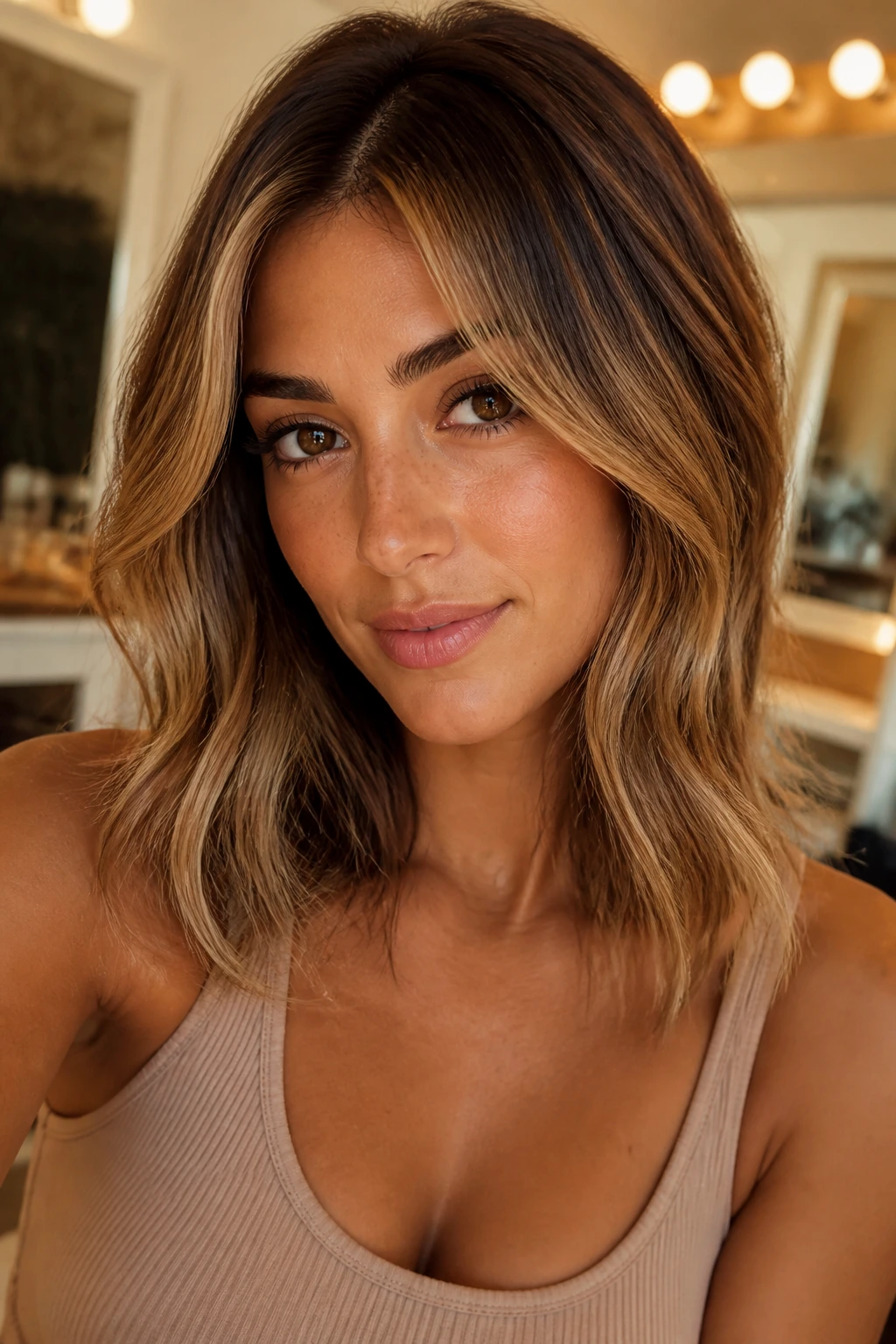
Medium-length hair gives you room to place color where it actually matters. Start by thinking in zones, not in stripes. The front pieces near the cheekbones, the top layer near the part, and the ends that brush the shoulders each need a slightly different level of brightness. If all three zones are the same, the hair can look stiff.
Face frame first: Brighten the pieces that sit around the eyes and cheekbones, because those are the spots tan skin benefits from most. Keep them a level lighter than the rest of the highlight set if you want a clean lift.
Mid-length movement: Ribbon placement through the middle of the hair matters more on medium cuts than it does on very long hair. It prevents the style from reading heavy, especially if your natural base is dark brown.
Ends with restraint: The ends should look kissed by light, not dipped in paint. Too much blonde at the bottom can make the cut lose shape.
Skip the urge to highlight every inch. A few smart placements beat a busy head of color, every time.
Common Mistakes That Make Tan Skin Look Flat
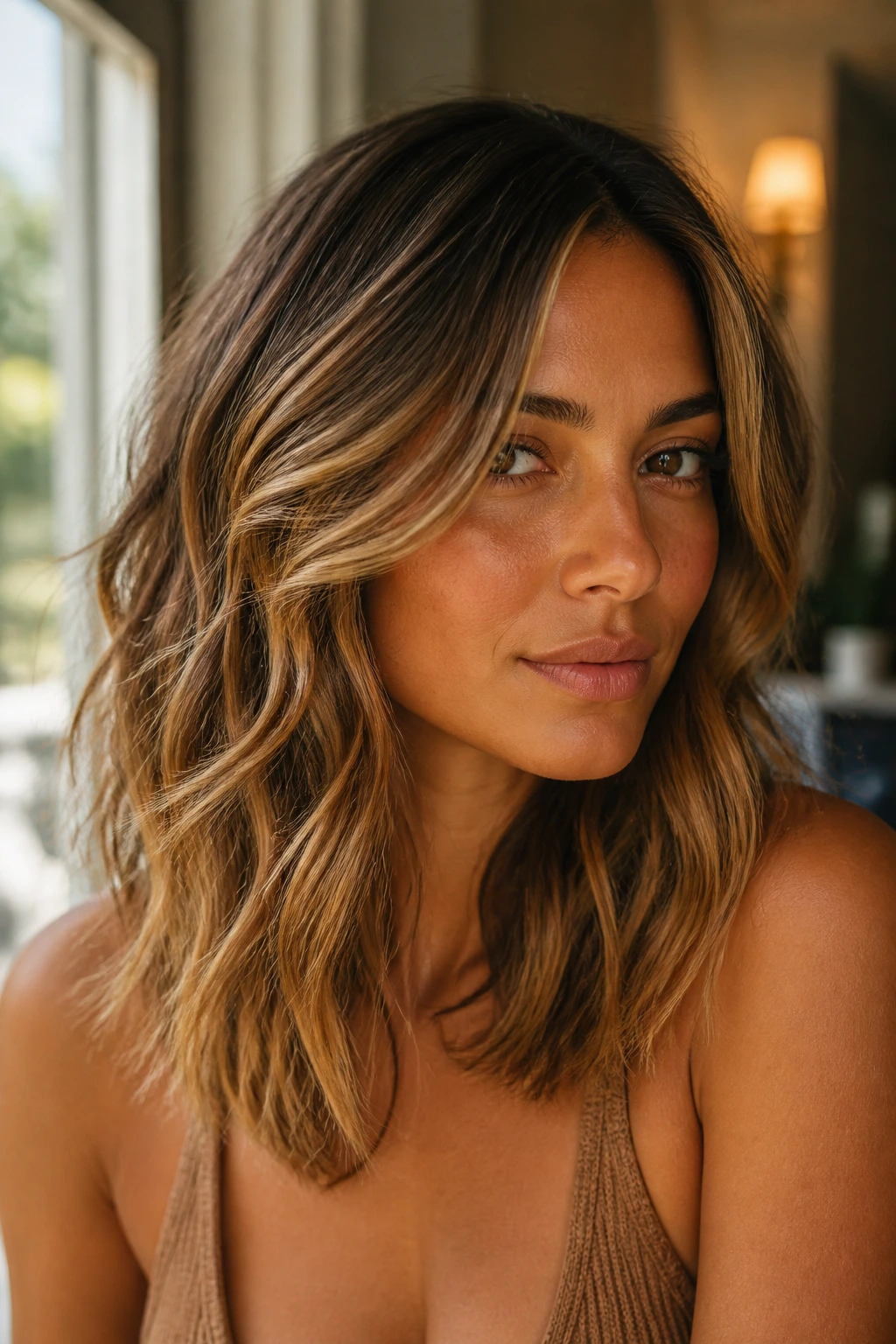
The biggest mistake is chasing blonde that’s too pale. Tan skin often needs warmth or neutrality close to the face, not a strip of high-lift yellow-white that throws the rest of the complexion off balance. The fix is simple: keep the front pieces softer and let the lightest blonde live farther away from the skin if you want a brighter finish.
Another trap is going too ash. A little beige or smoky tone can look clean, but too much cool pigment can leave tan skin looking tired, especially when the hair is paired with warm makeup or gold jewelry. If the color starts to look dusty, a warmer gloss usually brings it back.
People also overdo the money piece and leave the rest of the hair untouched. That creates a front-heavy look with no movement through the mids. Better to distribute a few lighter strands through the top and sides so the color breathes.
Variations and Alternatives to Try
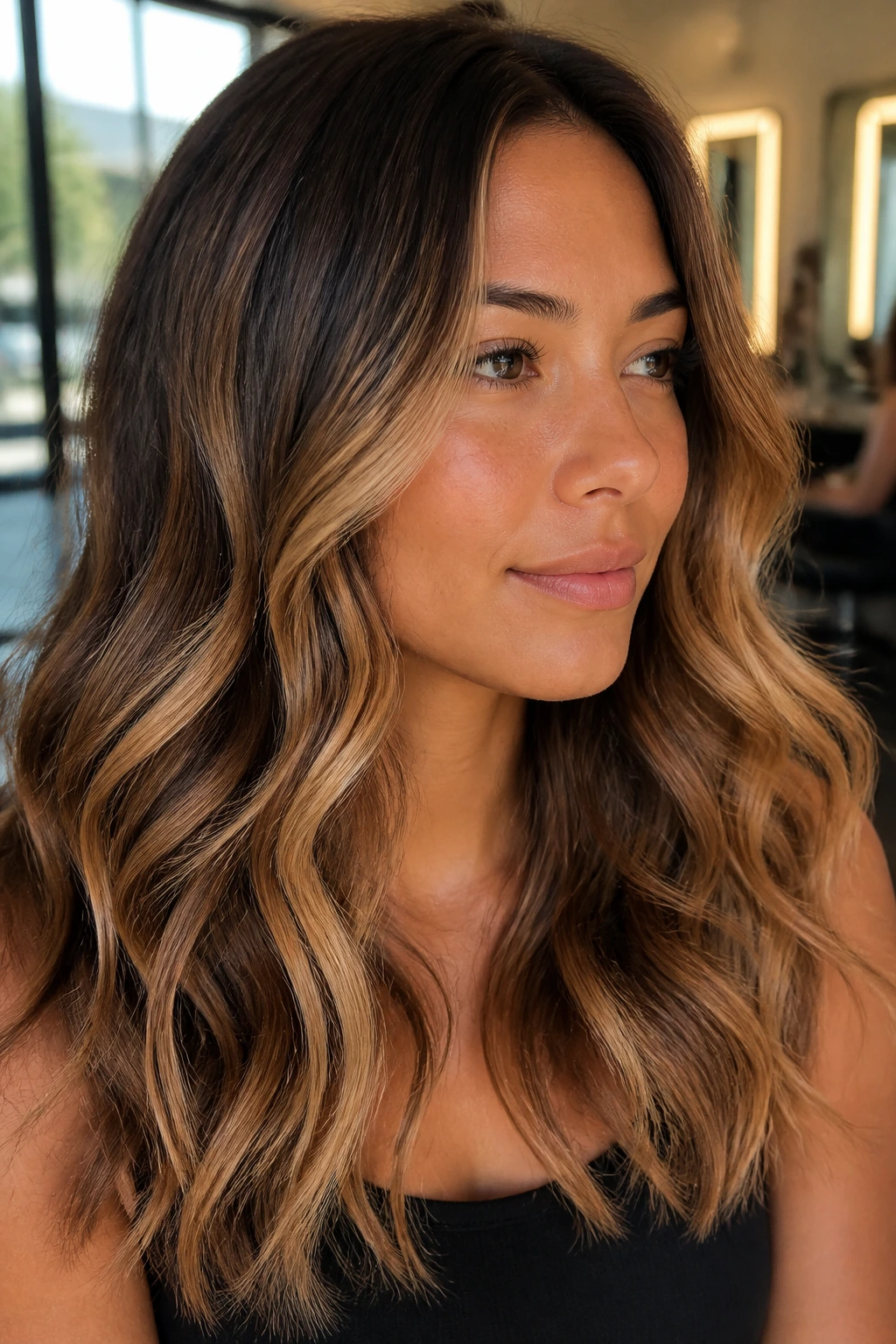
Warm Honey Edit: Keep everything in the honey-to-caramel family and skip cool toner altogether. This works best if your tan is golden and your wardrobe already leans warm.
Cool Beige Reset: Swap honey for beige, mushroom, and soft ash-blonde pieces. Good choice if warm blonde makes your skin look too yellow or your hair pulls brass quickly.
Low-Contrast Bronde: Use a level 1-2 shift between base and highlight instead of a bigger jump. The result is quieter, easier to wear, and better for anyone who hates obvious root lines.
Bright Front, Soft Back: Put your lightest pieces only around the face and keep the rest of the head in a bronde melt. This gives you the lift you want without making the whole color loud.
Curly Halo Version: Concentrate the brightness on the outer curl pattern and the crown. Curly hair shows dimension best when the light lands where the curl shape opens up, not on every strand.
Tools, Photos, and Salon Resources
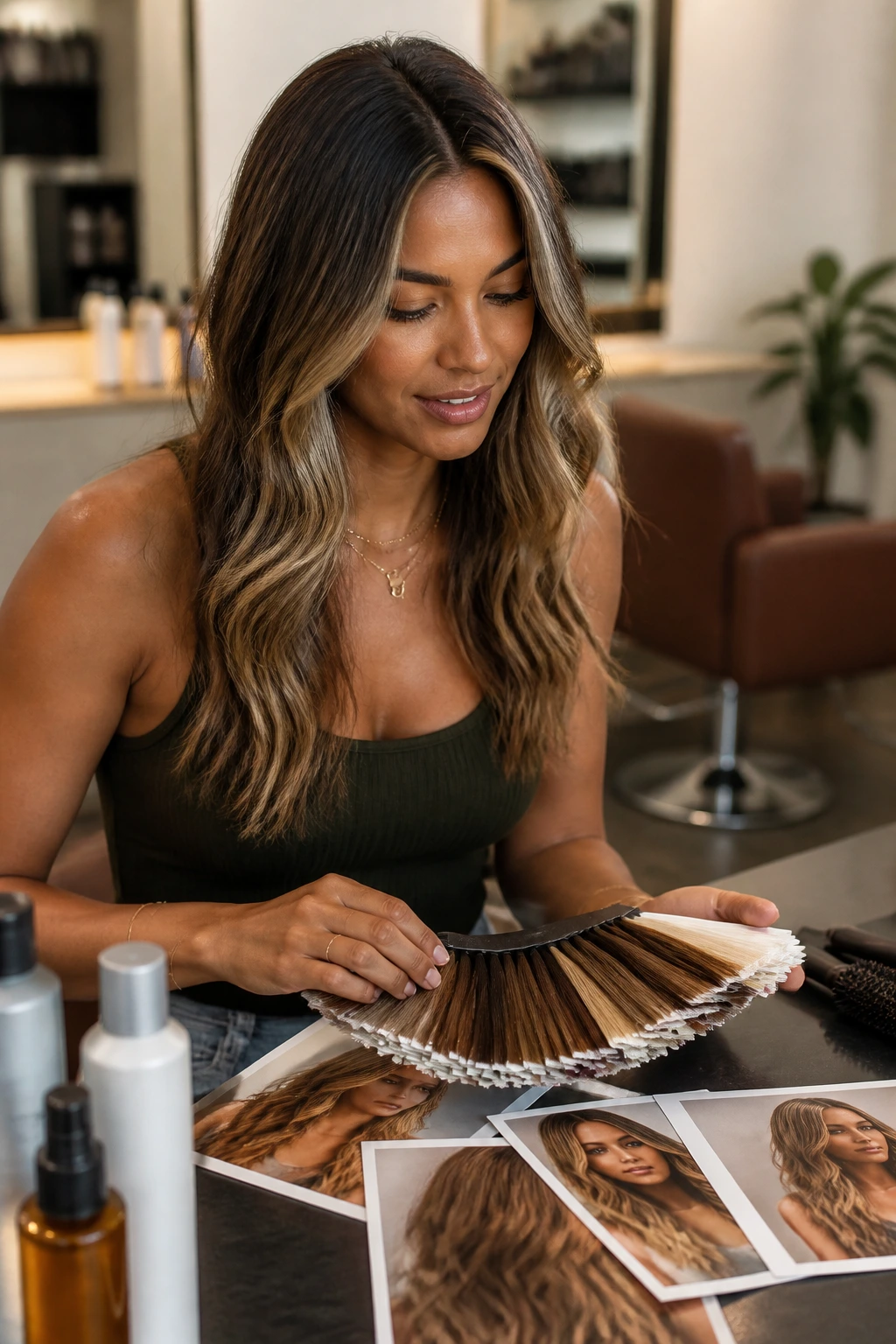
- Two or three reference photos in similar lighting: Bring examples taken indoors and in daylight so your colorist can see the tone, not just the vibe.
- A note on your current level: Write down whether your hair is around level 4, 5, 6, or 7 brunette. That detail helps avoid guesswork.
- A sulfate-free, color-safe shampoo: This keeps toner from rinsing out too fast and helps the blonde stay softer between appointments.
- A weekly mask: Pick one with slip and moisture, especially if your medium-length hair is colored from mid-shaft down.
- Heat protectant spray: Medium hair gets damaged fast at the ends, and highlights show that damage sooner than dark hair does.
- Purple or beige-toning shampoo: Use only if your blonde starts drifting too yellow or muddy. Too much toner shampoo can dull the shine.
- A wide-tooth comb and section clips: Handy for detangling and for keeping highlighted pieces from getting snagged after washing.
Maintenance That Keeps the Blend Soft
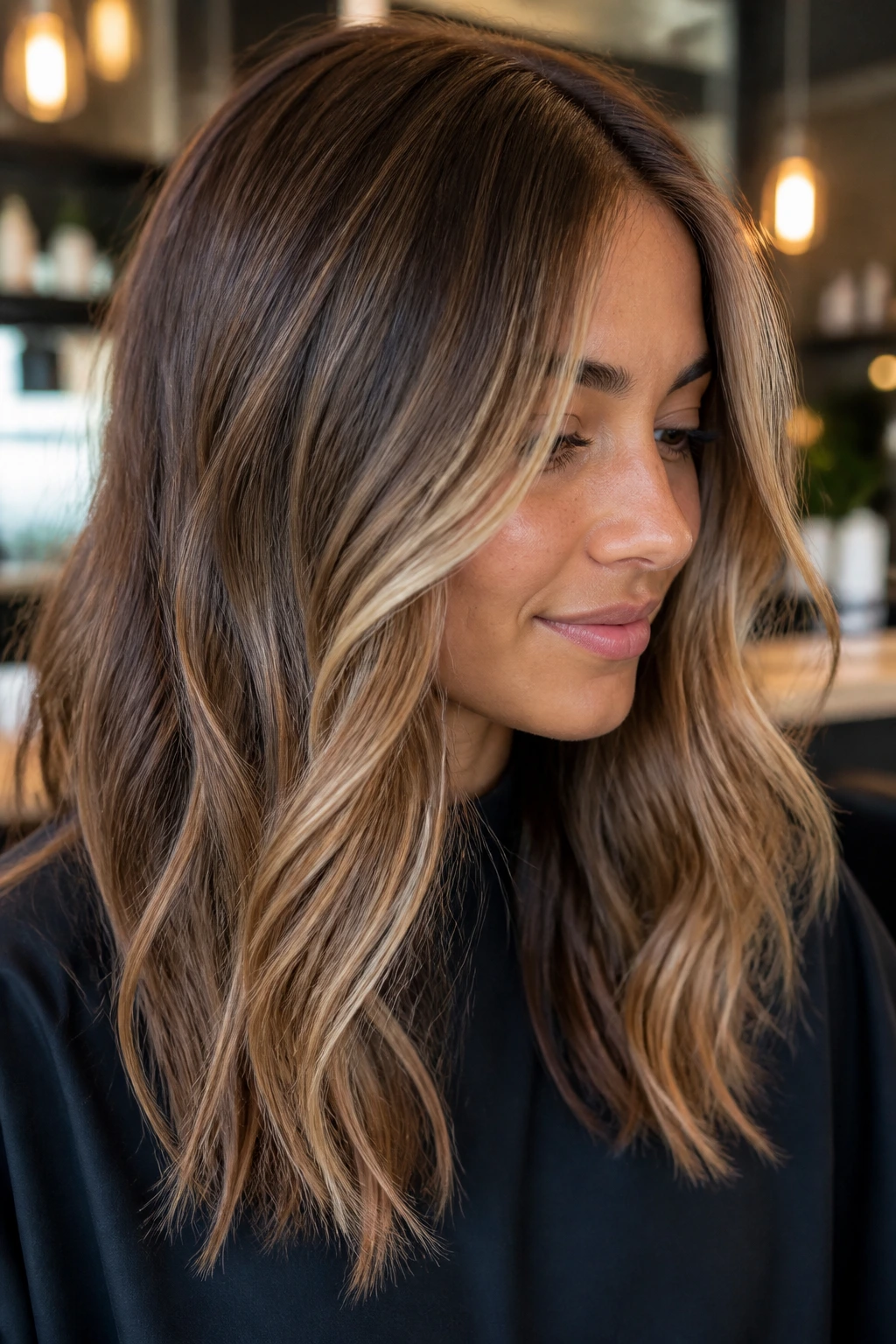
Fresh highlights need a little discipline if you want the color to stay calm instead of turning brassy or flat. Wash with lukewarm water, not hot. Hot water opens the cuticle and lets the toner fade faster, which matters when you’re wearing beige, honey, or champagne tones. Two or three washes a week is usually enough for medium-length highlighted hair unless your scalp gets oily fast.
Glossing is the secret move here. A salon gloss every 4 to 8 weeks can revive the tone without lifting the hair again. If your highlights are warm, a honey or beige gloss keeps the blonde from going too yellow. If they’re cooler, a smoky beige gloss stops the hair from looking green or dull.
Chlorine and sun deserve attention too. Wet the hair with clean water before swimming, then add leave-in conditioner through the ends. A UV spray helps when the hair lives outside for long stretches. That stuff matters more than people think. The color can be gorgeous in the chair and tired in two weeks if you leave it unprotected.
Frequently Asked Questions
What highlight shade flatters tan skin best?
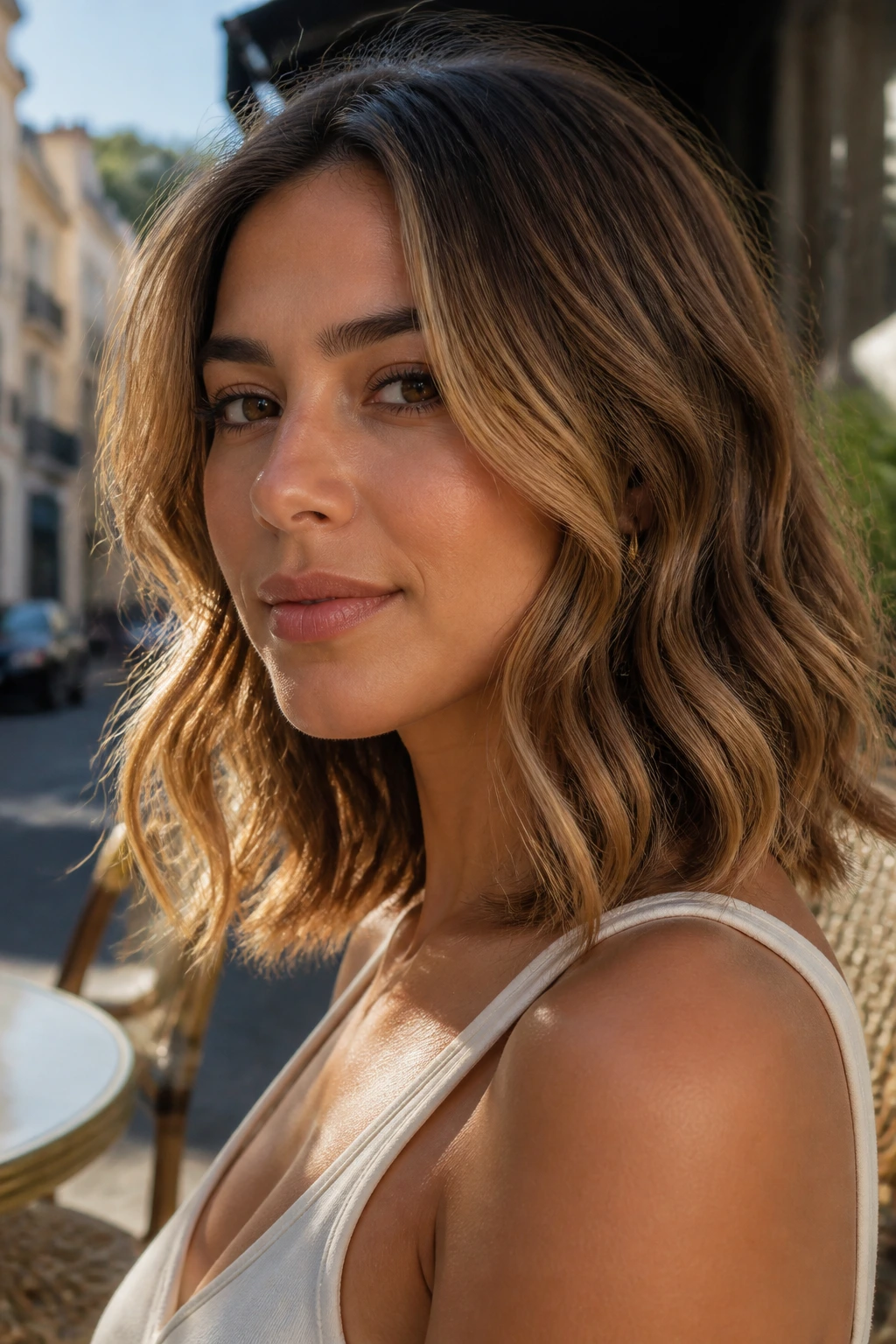
Honey, caramel, beige, and bronze are the safest places to start. If your tan leans olive, beige and mushroom tones usually look cleaner than very warm gold. If your skin is golden, richer honey tones can look glossy and expensive.
Should tan skin avoid ash blonde?
Not always. A soft ash-bronde can work if the ash is muted and blended with beige or brown. The problem comes when the tone gets too gray or too strong, because that can make tan skin look flat or tired.
How light can medium brown hair go without looking stripy?
Usually one to three levels lighter at the front and through the mid-lengths is enough for a polished bronde look. If the jump is too dramatic and the root stays untouched, the color can read disconnected instead of blended.
Do highlights or lowlights matter more on medium hair?
Both matter. Highlights give you brightness, but lowlights keep medium-length hair from looking thin or blown out at the ends. A small amount of depth underneath makes the blonde look richer.
How often do these colors need a refresh?
Glossing every 4 to 8 weeks keeps the tone in shape, while full highlight touch-ups often land somewhere around 8 to 12 weeks, depending on how soft the grow-out is. A rooted balayage can stretch longer than a brighter money-piece look.
Can curly hair wear brown-blonde highlights without frizz?
Yes, but the placement has to respect the curl pattern. Bright pieces on the outside of the curl and near the crown work better than stripes running through every coil, and the hair needs extra moisture after lightening.
What if the highlights turn orange?
That usually means the lift stopped too early or the toner wasn’t cool enough for your base. A beige or blue-violet toner can correct some of it, but strong orange often needs the salon to adjust the formula. Don’t keep layering purple shampoo on top and hope for a miracle.
Can I do this at home?
You can maintain tone at home, but the first lift is where things get tricky. Tan skin is unforgiving about bad placement, and medium brown hair can turn patchy fast if the lightening isn’t controlled. If you want a soft, blended result, the salon is the safer bet.
The Shade That Stays Soft as It Grows
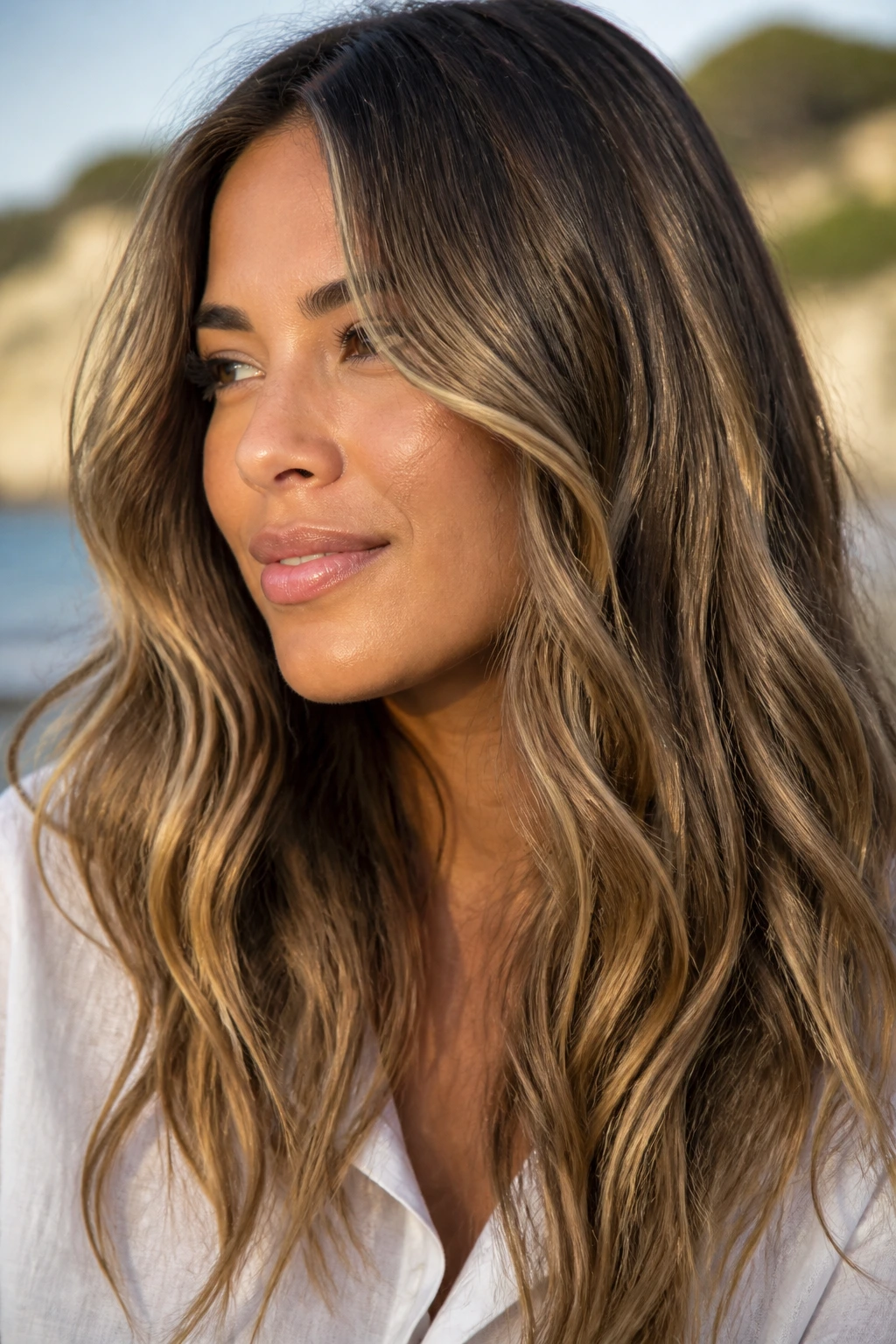
The prettiest brown blonde medium summer highlights for tan skin are the ones that keep their shape after the first wash, the first blowout, and the first month of grow-out. That’s why tone matters more than brightness alone. Honey, beige, caramel, bronze, mushroom, and soft bronde all work because they sit close enough to brunette that the hair keeps its depth.
Medium-length hair gives those tones room to move. A good face frame, a blurred root, and a few brighter pieces through the mids can change the whole line of the cut without making the color look loud or brittle. That balance is the real win here.
Choose the shade that matches your undertone, ask for placement that respects the length, and keep the blonde soft enough to live with. The best version will still look like your hair — only lighter, shinier, and a little more awake.