



A long shag haircut can make curly hair look deliberate in a way blunt cuts rarely do. On an oval face, that matters even more, because the shape can take layers without getting swallowed by them — but only if the cut respects your curls instead of fighting them.
The trouble is that a lot of shag haircuts are described as though hair behaves the same way on every head. It doesn’t. Loose 2C waves collapse differently than springy 3A spirals, and a dense 3C pattern will eat up length in a way that surprises people the first time they air-dry. A long shag only works when the layers are placed where your curls actually live, not where they look nice on a straightened inspo photo.
That’s where this collection earns its keep. These 22 long shag haircuts for oval faces with curly hair are built around shape, shrinkage, and movement — the three things that decide whether a cut lands softly around the face or turns into a puffball with ambitions.
Why You’ll Love This Collection
-
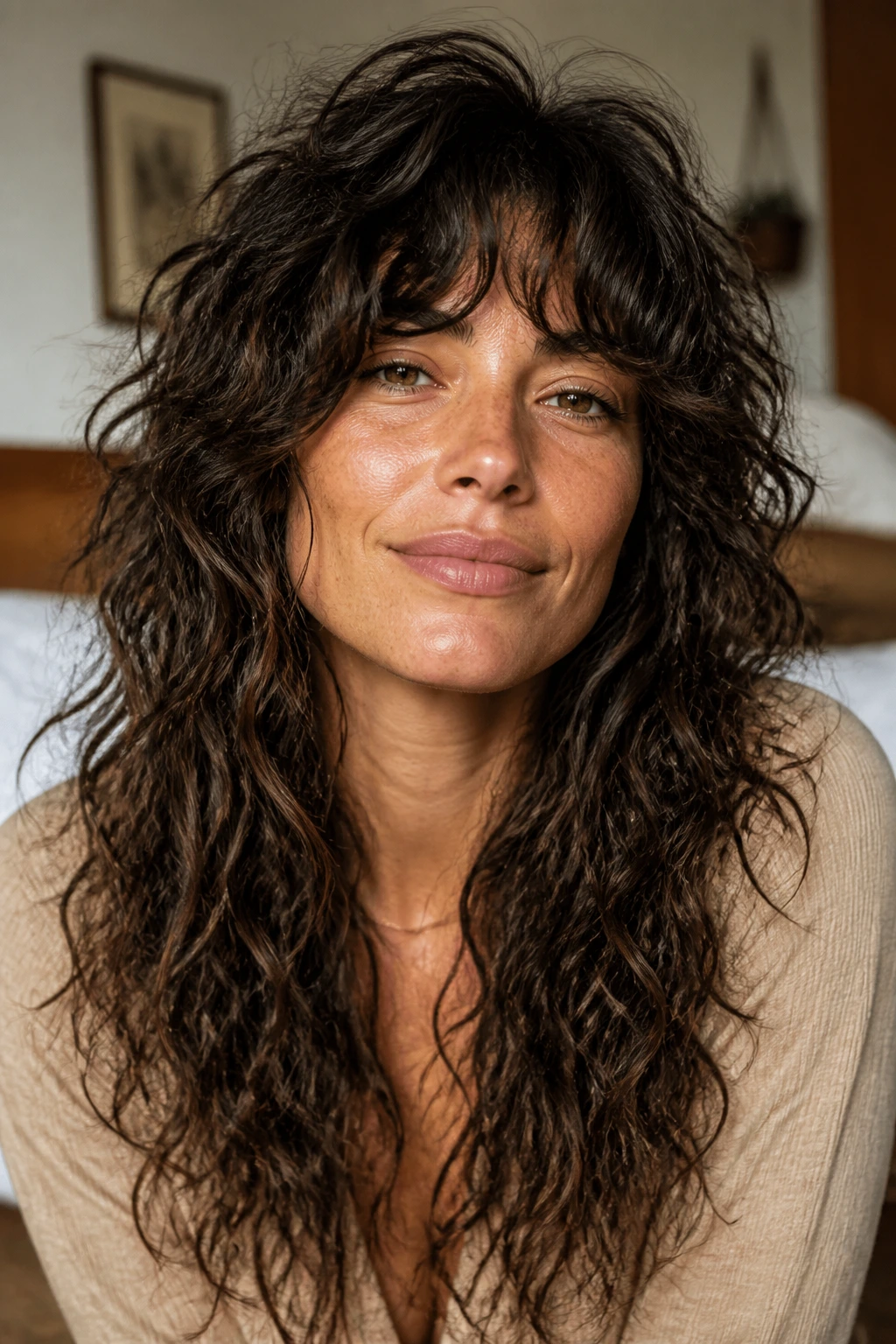
Oval-face balance: Oval faces can handle layers, but the right shag keeps the cheekbones visible instead of burying them under a blanket of hair.
-
Curl-friendly shaping: These cuts work with shrinkage, density, and curl pattern, so the shape still makes sense when your hair dries shorter than it looked wet.
-
Movement without losing length: A long shag gives you lift around the crown and face while keeping enough perimeter length to pull it back or tuck it behind one ear.
-
Fringe options that actually fit curls: Curtain bangs, bottleneck bangs, and side-swept pieces can sit well on an oval face without chopping the face in half.
-
Grow-out that doesn’t look accidental: The best shag layers blur as they grow, which means you can stretch the time between cuts without looking like you forgot about your hair.
-
Easy to tune up at home: Most of these shapes respond well to a diffuser, a little mousse, and a smart refresh on day two. No elaborate styling ritual required.
Why Long Shags and Oval Faces Work So Well With Curly Hair
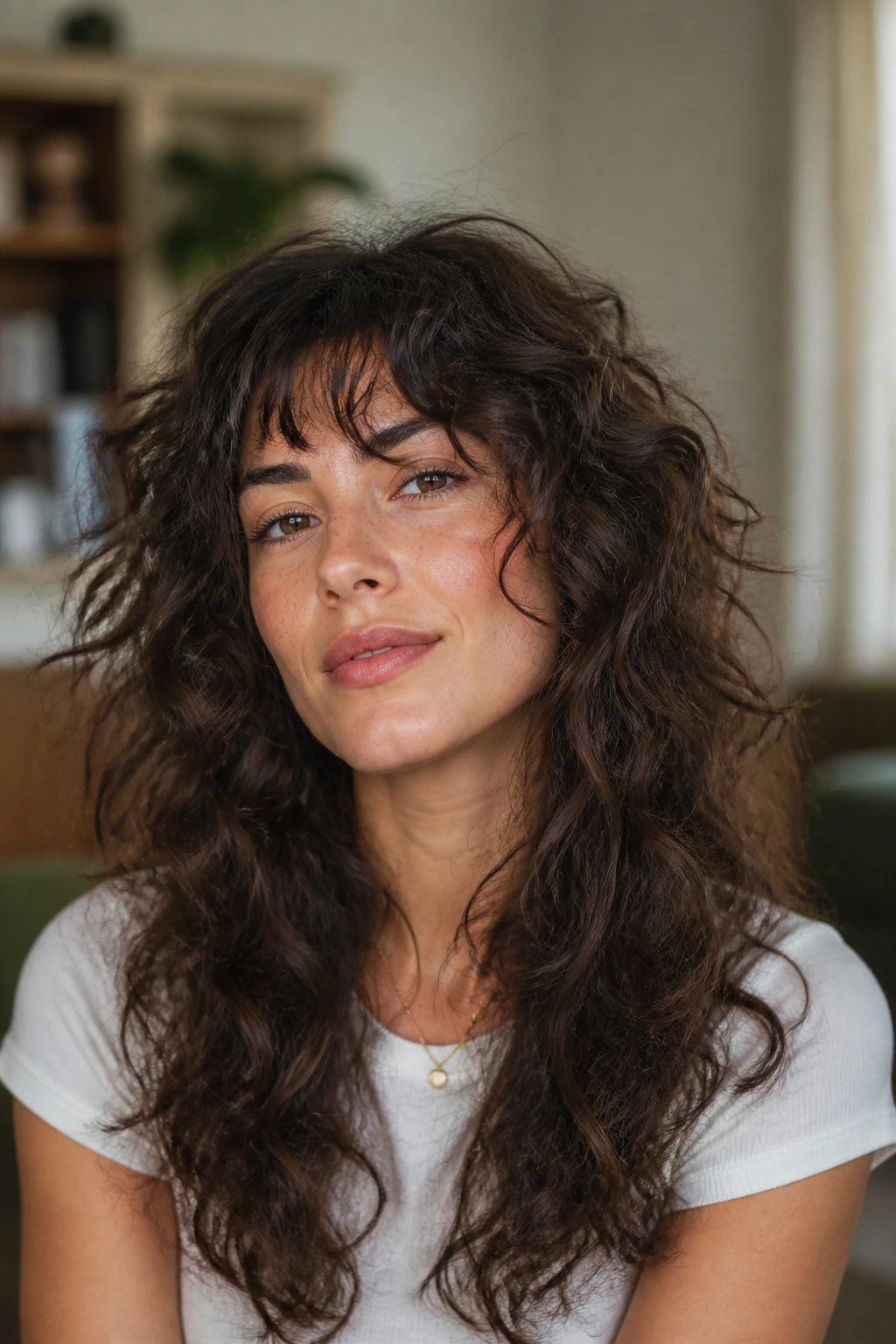
An oval face has room to play with. That’s the honest version. The forehead, cheekbones, and jaw tend to sit in a balanced line, so a long shag can bring movement without throwing the whole face off center. The trick is not to let the layers spread too wide at the sides or pile too much height on top.
Curly hair changes the equation because it shrinks, bends, and expands in different places. A layer that looks soft at shoulder length when wet can jump up several inches once it dries. That’s why dry cutting, curl-by-curl shaping, or at least section-by-section visual checks matter so much here. The cut needs to be planned around where the curls land, not where they stretch.
I also like long shags on curls because they let you keep a clear perimeter. You still get the messy, lived-in texture people want from a shag, but the ends have enough length to anchor the shape. That anchor matters on oval faces. Without it, the whole cut can drift upward and start feeling fluffy instead of defined.
1. Curtain-Bang Curly Shag
This is the softest place to start, and honestly, it’s the version I’d point to first for most oval faces. The curtain bangs split gently through the center and sweep into cheekbone layers, so the face stays open while the curls do their thing. Nothing feels too chopped or too precious.
Ask for the shortest face-framing pieces to land around the cheekbone when dry, not wet. That one detail saves a lot of regret later. Keep the back long enough to skim the collarbone or upper chest, then let the internal layers build movement without stealing the length.
A light curl cream and a small amount of gel are enough here. Too much product around the fringe will make the front hang in ropes, which defeats the whole point.
2. Bottleneck Fringe Curly Shag
The bottleneck fringe is a smart choice if you want bangs but don’t want a full curtain across the forehead. It starts a little narrower in the center and widens as it reaches the temples, which gives oval faces a nice frame without shortening the face too much. On curly hair, that shape can look especially good when the curl pattern is mixed and the front pieces don’t sit perfectly even.
Tell your stylist you want the fringe to break into soft pieces, not one hard line. The rest of the cut can stay long and layered, with the most visible movement sitting between the cheekbone and jaw.
What I like most about this shape is that it gives you a defined front without forcing every curl to behave. The bangs can sit a little wild and still look intentional. That is a gift on humid days.
3. Wolf-Edge Long Shag
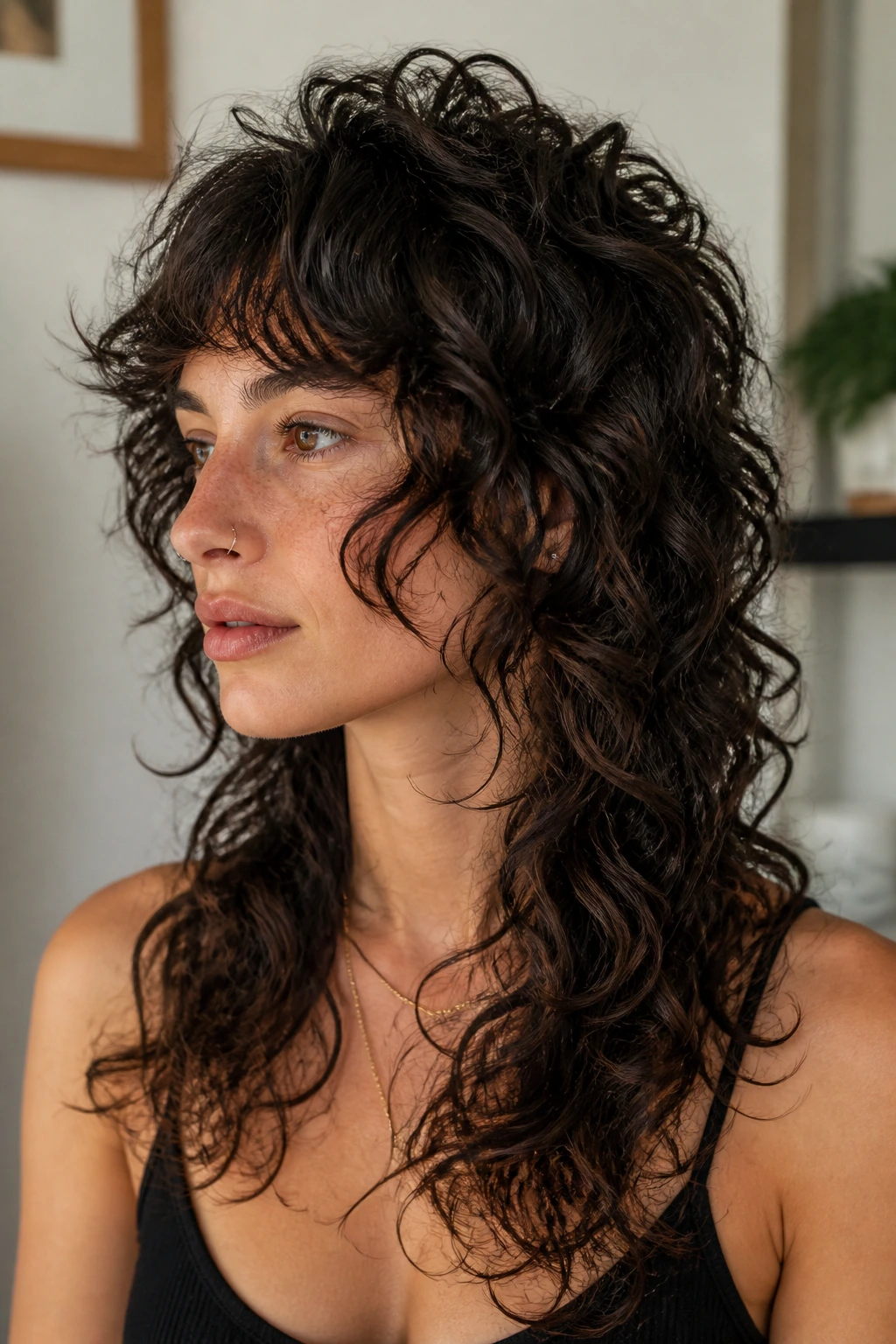
This one leans a little edgier. The crown stays lively, the top layers sit shorter, and the length drops off toward the back in a way that feels more wolf cut than classic shag. On oval faces, that extra lift at the crown keeps the profile from looking flat, which is useful if your curls fall heavy on top.
The key is not to let the stylist overdo the short layers. If the top gets too high and the sides get too wide, the whole cut can balloon. Keep the longest perimeter around chest length if you want the cut to read as long rather than mid-length.
What Makes It Work
- The crown gets volume without turning into a mushroom.
- The back keeps enough weight to anchor the curl pattern.
- Side pieces should graze the cheekbones, not stop at the widest point of the face.
Styling note: diffuse just until the roots are about 80 percent dry, then stop. Let the rest finish on its own so the layers keep their shape instead of frizzing apart.
4. Butterfly-Layer Curly Shag
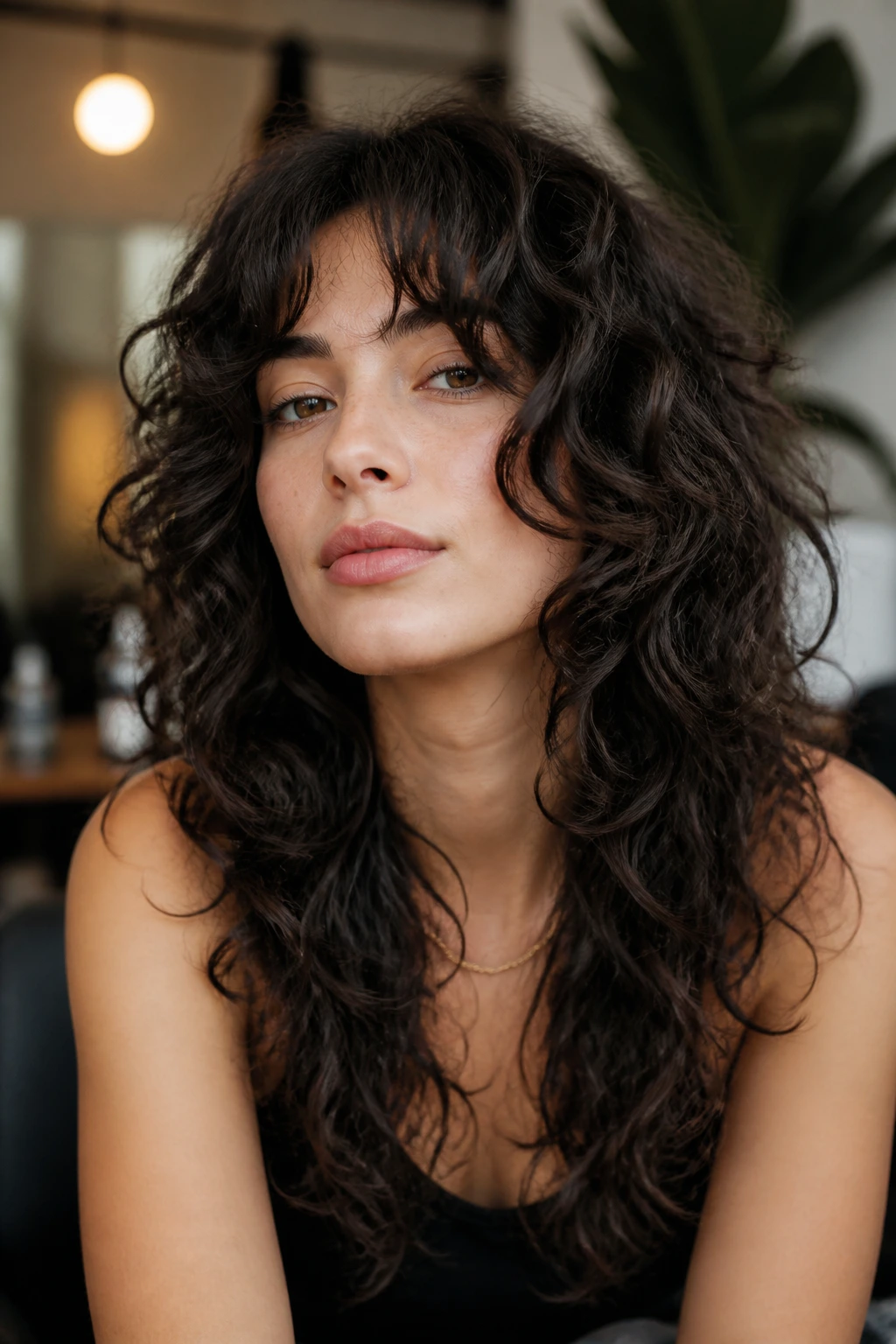
This is the shag for anyone who likes face-framing drama but wants to keep the length. The front layers swoop away from the face in a butterfly-like curve, while the back stays long enough to keep the silhouette elegant rather than shaggy in the old, college-haircut sense. On an oval face, those front wings make the features pop without squeezing the face inward.
Curly hair gives this cut extra life because the lifted front layers create a soft halo around the cheeks. The trick is to keep the longest pieces long. If the front gets too short, the shape turns busy fast.
I’d ask for the shortest pieces to hit around lip or chin level when dry, especially if your curls spring hard. That lets the cut frame the face while still leaving you enough length to tuck pieces back or pin them loosely when you want them off your face.
5. Side-Swept Fringe Shag
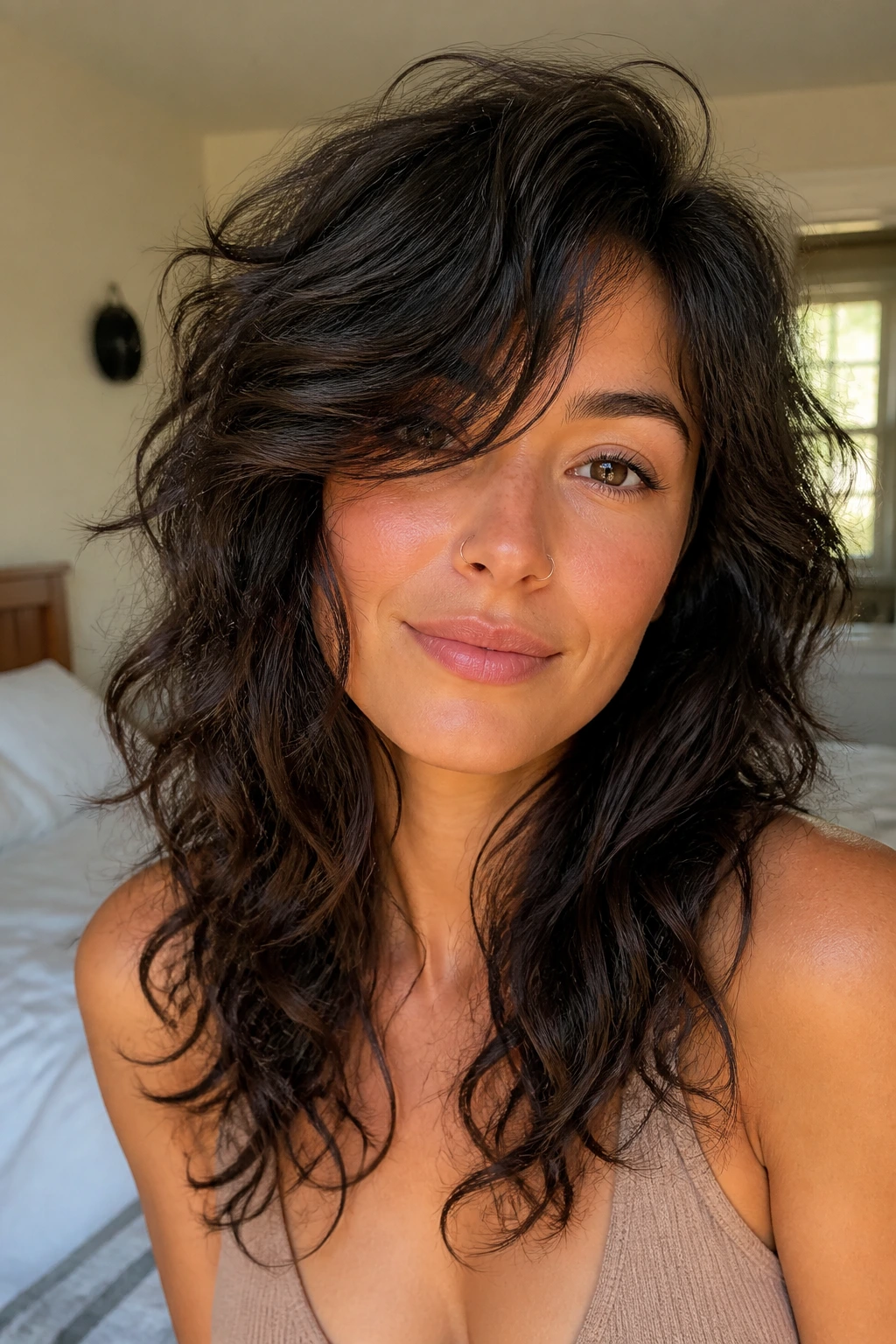
Can a side part do more for curls than a center part? Sometimes, yes. A deep side-swept fringe breaks up the symmetry of an oval face in a way that feels soft, not severe, and it gives curly hair a natural lift where the roots want to rise anyway.
This cut works well if one side of your hair tends to lie flatter than the other. The side fringe helps redirect that imbalance so it looks like styling, not a problem. Keep the layers long through the ends and let the fringe travel into the cheek area instead of stopping sharply at the brow.
I like this version for people who want movement without a lot of forehead coverage. It’s less high-maintenance than a full bang and easier to grow out. If you’re tired of trimming fringe every few weeks, this one is a calmer choice.
6. Razor-Layer Ringlet Shag
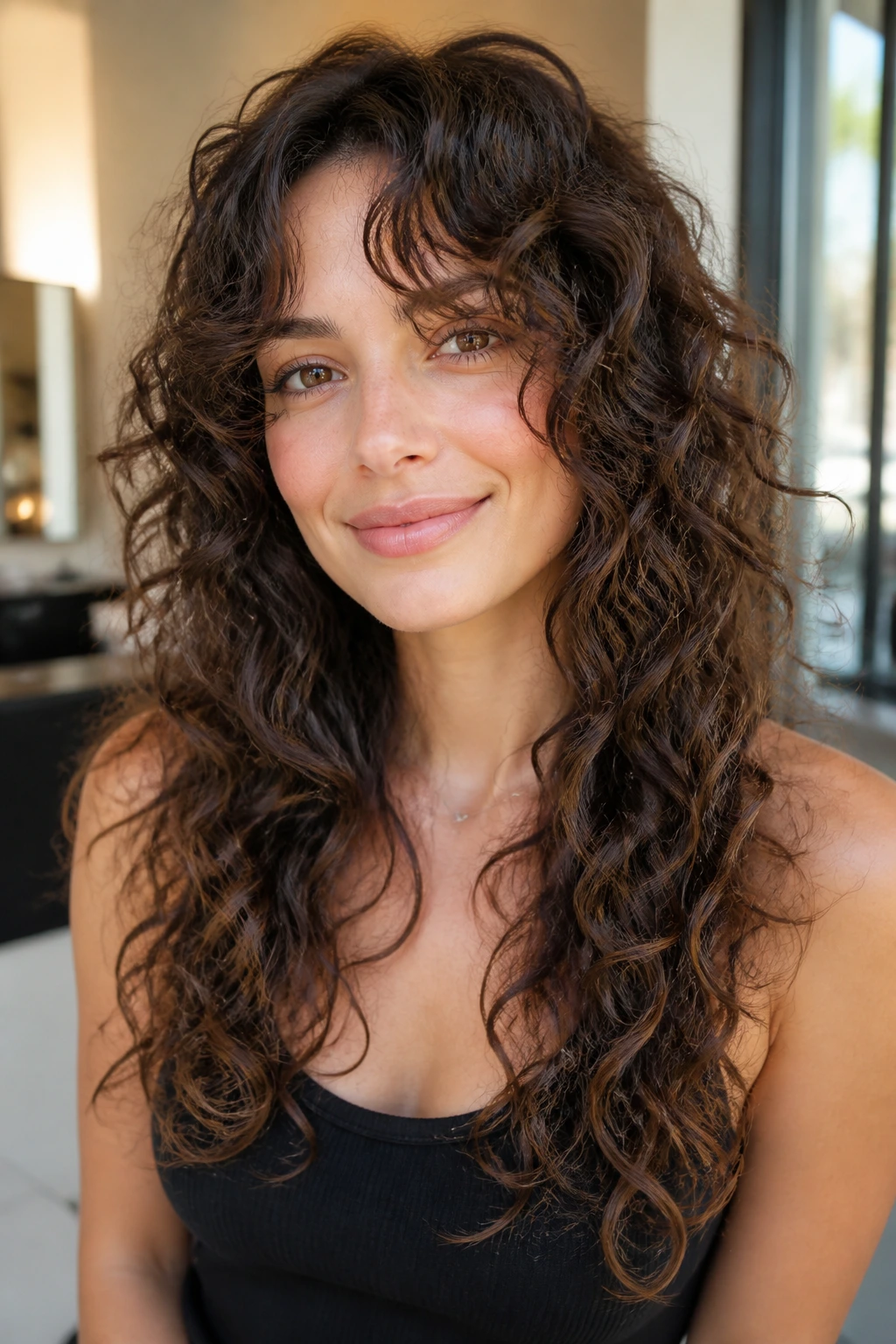
Razor-cut layers can look beautiful on loose, springy curls that have enough structure to hold a piecey edge. The ends feel airier, the outline breaks up, and the curls stack in a way that reads light instead of bulky. On an oval face, that airy effect keeps the cheeks from getting buried under too much width.
The catch: razor cutting is not for every curl pattern. Tighter or fragile curls can fray if the razor work is too aggressive. If your hair already feels dry at the ends, ask for softer point cutting instead of a full razor pass.
The best version of this cut keeps the perimeter long and lets the internal layers do the work. You get motion without losing the length that makes the style feel grown-up rather than spiky.
7. Halo-Volume Shag
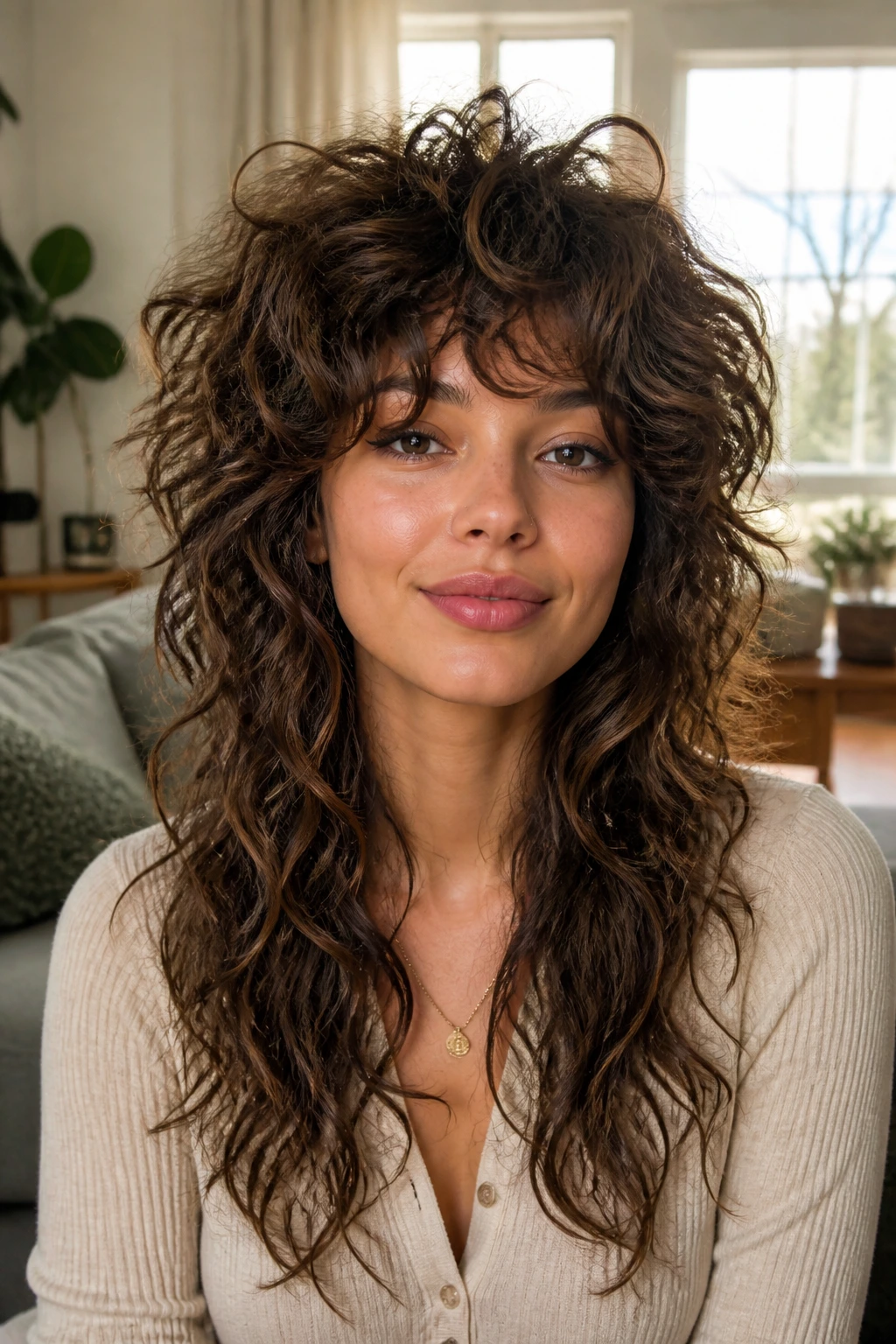
This is the cut for people who want volume to sit up top and around the face, not balloon from ear to ear. Think of it as a shaped halo: soft at the temples, fuller at the crown, and long through the bottom. On an oval face, that gives the eye a clean path downward, which keeps the face looking balanced.
It’s especially good for curls that droop at the roots. The top layers are carved to lift, but the sides stay controlled so the shape doesn’t widen too much. That matters. Wide sides on an oval face can make the whole cut feel rounder than intended.
Use a root clip or two while drying. Just a few clips at the crown can change the entire silhouette once the hair sets.
8. U-Shaped Long Shag
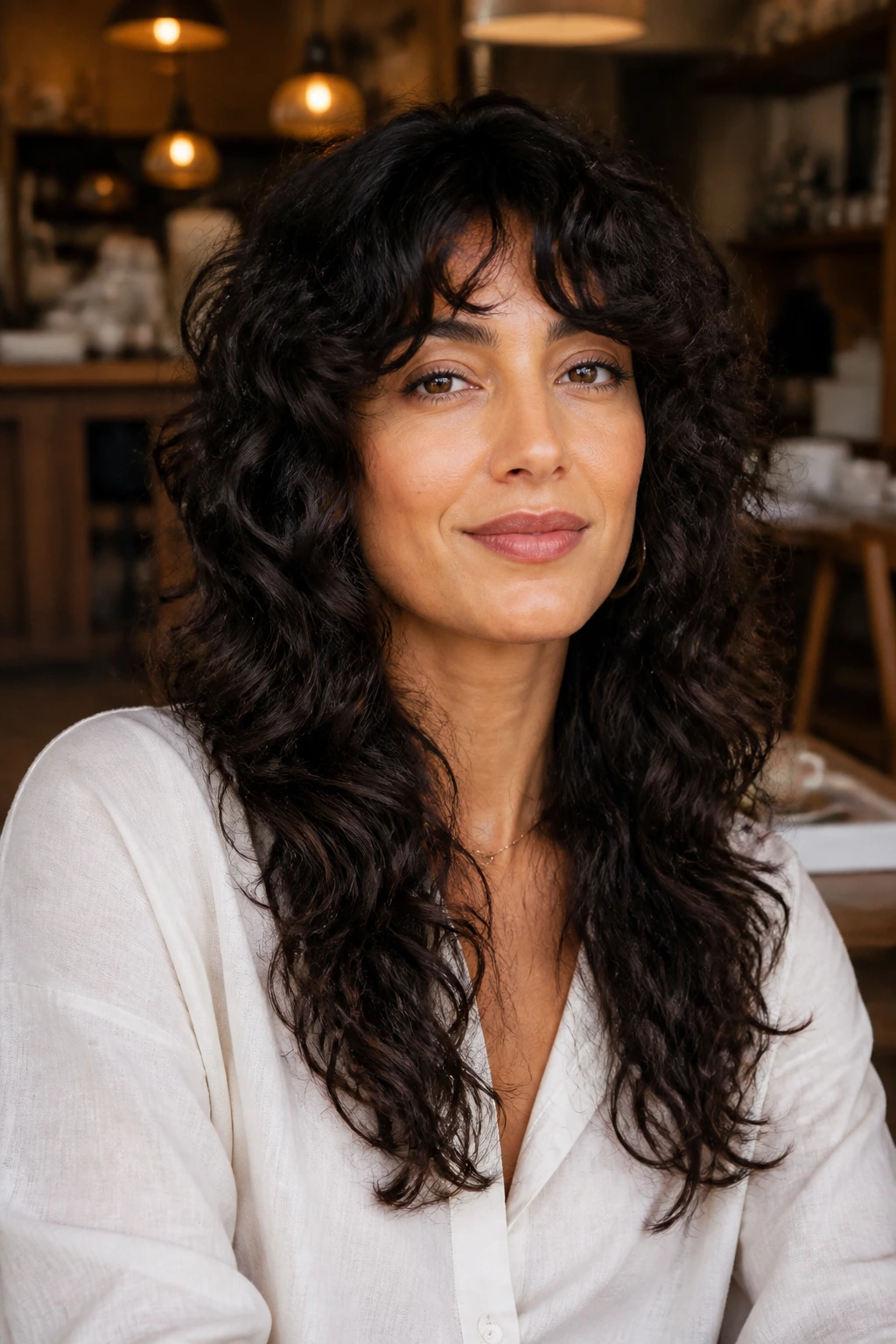
This is the quiet one in the group. The perimeter forms a soft U, which keeps the longest pieces in the back a touch longer than the sides. That shape gives curly hair a clean edge, and on an oval face it keeps the profile from looking too boxy.
The U shape is a good match if you want the shag layers but don’t want the cut to look broken apart. The layers can still start around the cheekbone or jaw, but the overall outline stays smooth. I prefer this when someone wants a long curly shag that still looks polished enough for work or dressier settings.
Ask for the shortest face-framing pieces to blend, not slice, into the lengths. That way the front still moves, but the whole haircut stays cohesive.
9. DevaCut-Inspired Curly Shag
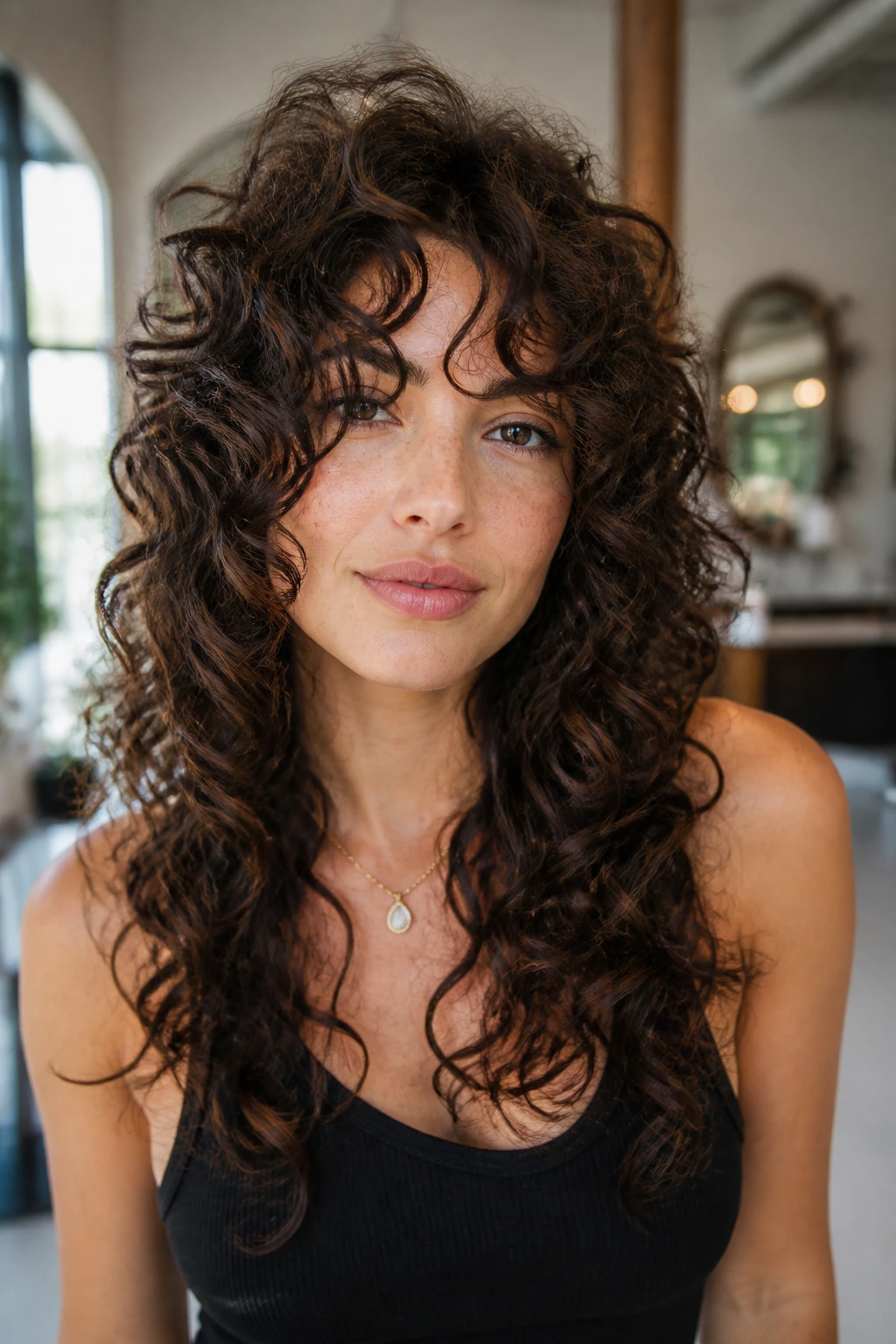
This is the most curl-specific version here. A DevaCut-inspired shag is shaped curl by curl, often dry or nearly dry, so the stylist can see exactly how each ringlet sits. That’s a huge advantage when you’ve got an oval face and a mix of curl sizes, because the haircut can be adjusted around your actual pattern instead of a guess.
The result is usually a softer outline with more accurate layers around the cheeks and jaw. It can look less “styled” on the cutting floor, but that’s the point. The curls are allowed to fall where they want.
If your hair grows in different patterns on the left and right sides, this cut is worth a serious look. It handles asymmetry better than a blanket wet cut, and the long shag shape keeps the result from getting too triangular.
10. Deep Side-Part Shag
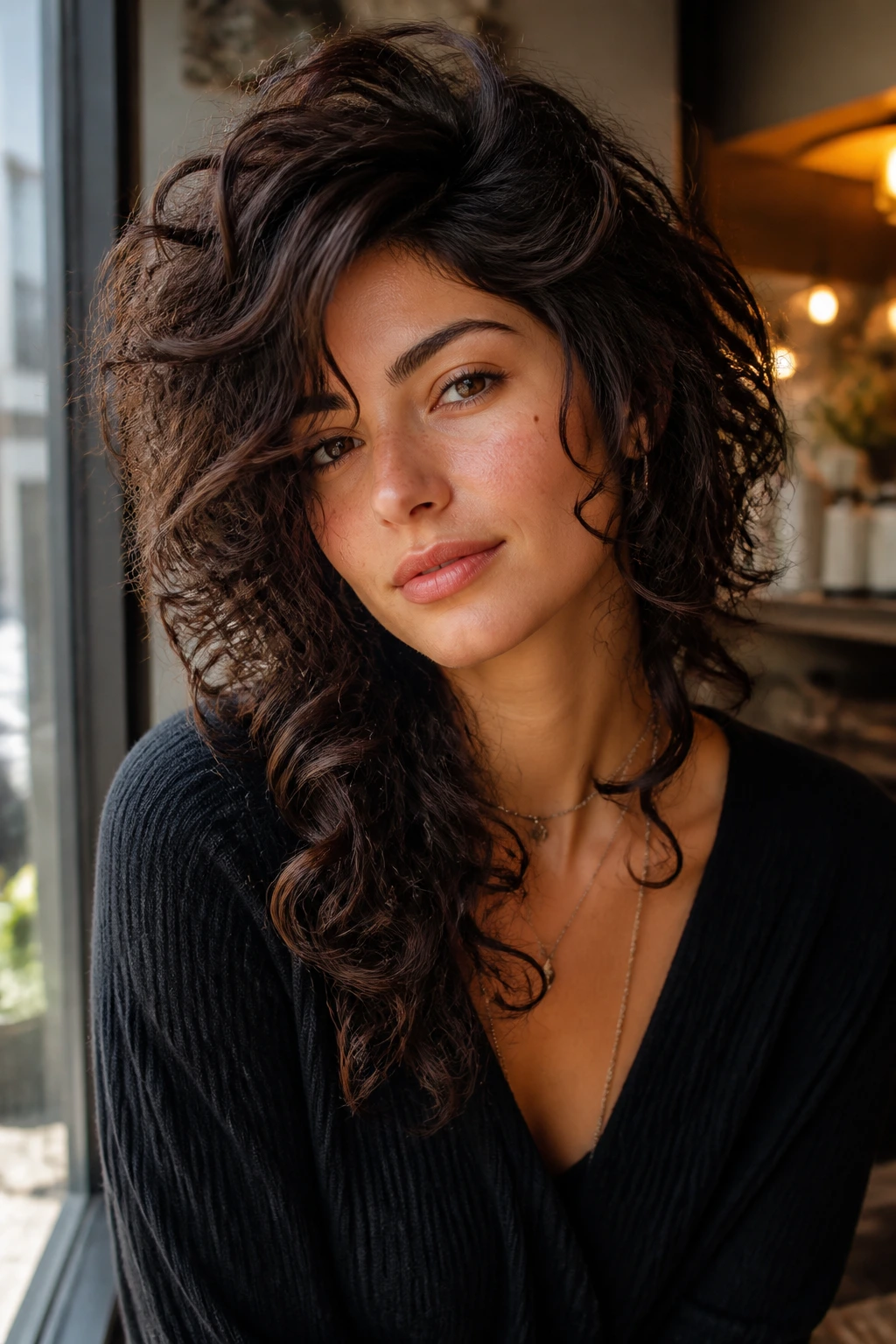
A deep side part changes the whole conversation. It gives an oval face a little asymmetry and lets curly hair pile in a way that looks polished without trying too hard. The taller side adds lift; the flatter side keeps the face from looking wide.
This is a good option if your curls flatten on top but puff near the temples. The side part redirects that volume, and the long shag layers soften the transition from crown to ends. The cut still needs face-framing pieces, though. Without them, the side part can make the front feel heavy instead of shaped.
I’d keep the part flexible rather than carving it permanently. That way you can switch sides on different days and keep the curl pattern from training too hard in one direction.
11. Retro 70s Feathered Shag
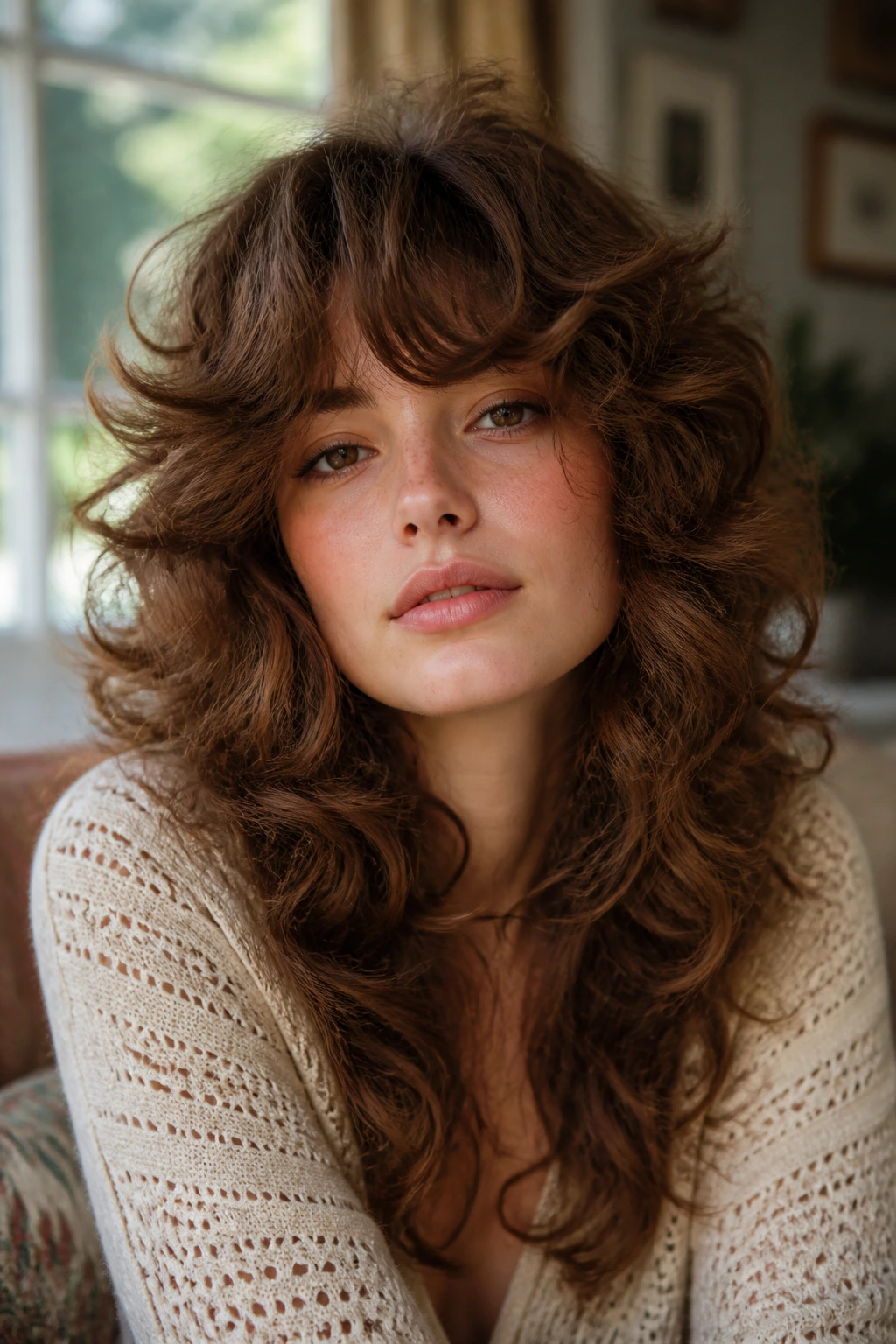
If you like a little drama, this one delivers it without becoming costume-y. Feathered layers around the face create that retro lift, and on curly hair the effect is softer than the original blowout-heavy versions. The style still carries a 70s feel, just translated through curls rather than a round brush.
Oval faces wear this well because the feathered front opens the features while the longer ends keep the shape grounded. Ask for the layers to bend away from the chin instead of stopping right there. That keeps the face from feeling boxed in.
It’s especially nice on looser curls that can stretch a bit with product and diffusing. You get movement around the eyes and cheekbones, then the length keeps the shape from looking too airy.
12. Invisible-Layer Shag
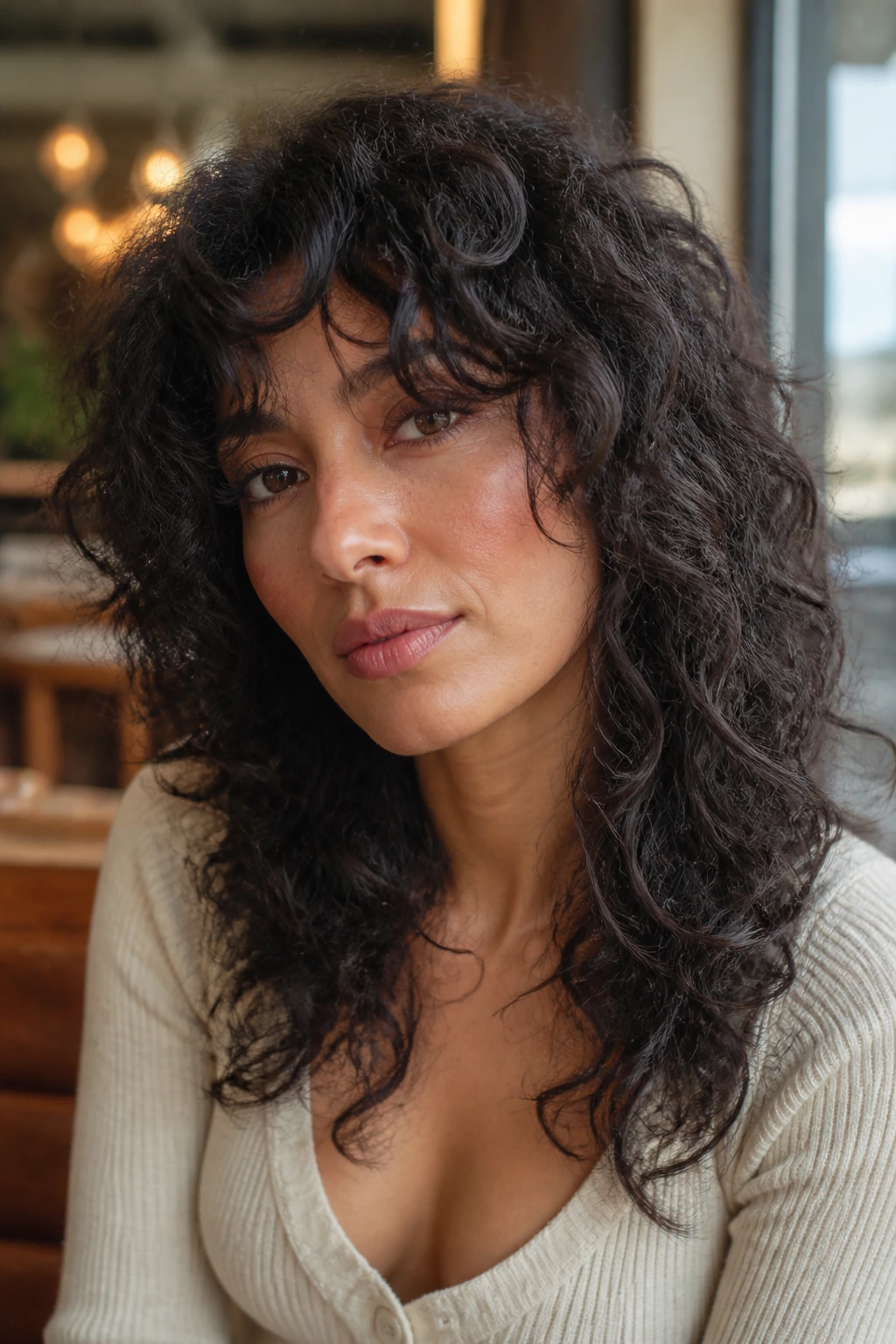
This cut hides its work, which I appreciate. The outer outline stays smooth, but the interior layers remove bulk and create bounce where the curls need it. On an oval face, that means you get shape without obvious steps or choppy shelves.
Invisible layers are good for people who want the shag effect without a heavily textured finish. The cut moves when you walk, but it doesn’t scream “layered haircut” in the mirror. That can be the sweet spot if you like your curls soft, not piecey.
Best For
- Dense curls that need weight removed from the inside.
- Oval faces that want movement but not too much width at the sides.
- Anyone who prefers a cleaner silhouette with curl-friendly shaping underneath.
Styling note: use a light mousse at the roots and a gel through the mid-lengths. That combination keeps the hidden layers from collapsing into a flat sheet.
13. Tapered Crown Shag
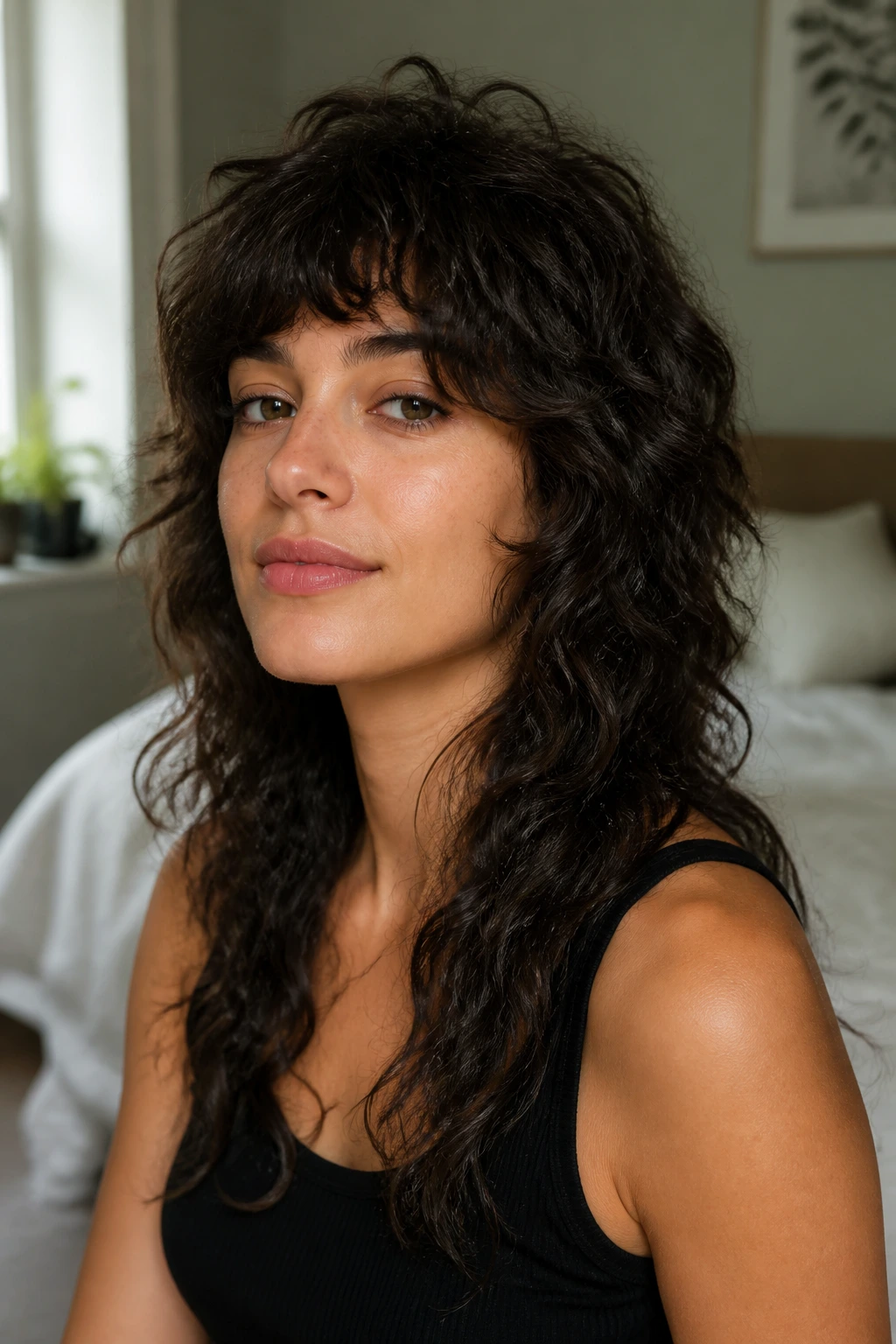
This version puts more attention on the top of the head. The crown is tapered just enough to lift the silhouette, while the bottom layers stay longer and looser. On an oval face, that vertical lift can be a nice counterpoint to the balanced proportions of the face itself.
It’s a smart cut if your curls tend to sit close to the scalp at the top and flare out lower down. Tapering the crown helps the whole shape look intentional instead of top-heavy. The ends should still feel light, not wispy.
I would avoid taking the crown too short if your hair is fine. Fine curls can spring up harder than expected, and a short crown can turn a long shag into something closer to a rounded crop. Keep the longest pieces long. That’s the anchor.
14. Collarbone-to-Rib Shag
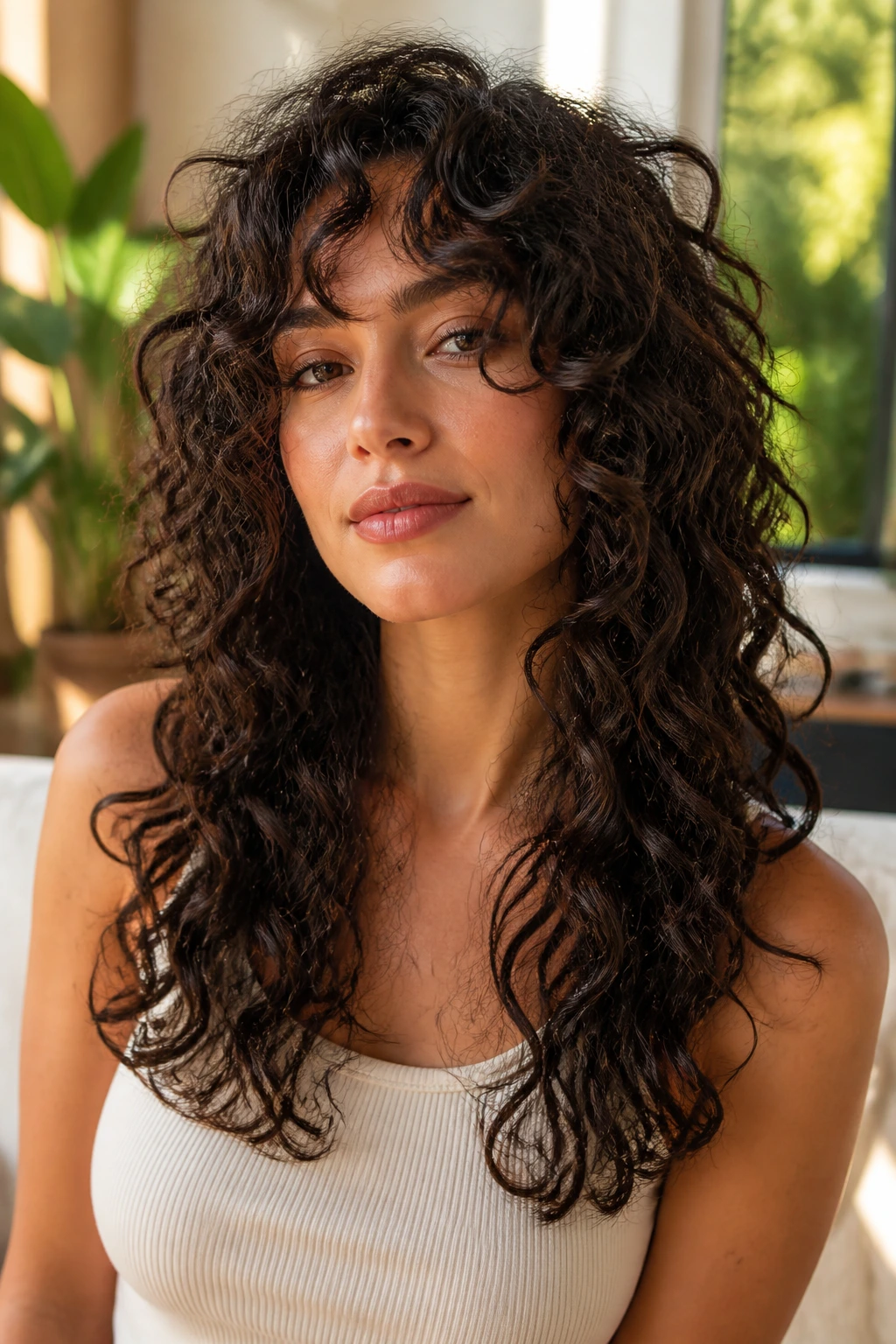
Here’s a cut for people who really want to keep length. The shortest face-framing layers can start around the chin or lip, but the rest of the hair falls from collarbone toward the ribs. That makes it one of the more dramatic long shag haircuts for oval faces with curly hair.
The benefit is simple: you keep the long, swaying perimeter that makes curly hair feel luxurious, while the upper layers still get enough shaping to prevent the ends from hanging like curtains. Oval faces usually do well with this because the length keeps the face from looking too exposed.
If your curls lose definition as they get longer, this is a good candidate for a heavier leave-in and a gel cast. The length needs hold, or the shape can blur at the bottom.
15. Piecey Micro-Layer Shag
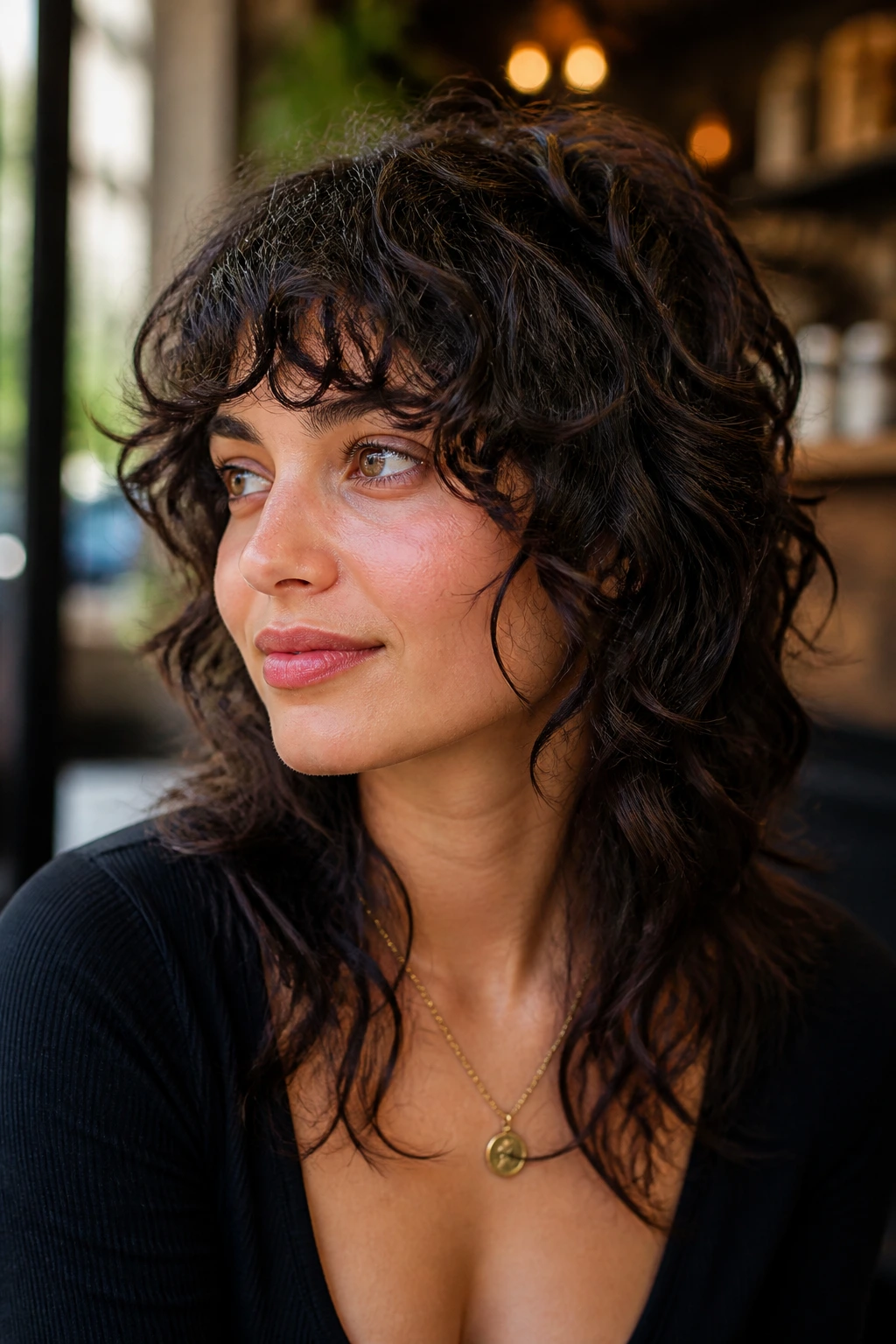
This one is for curls that love definition. Micro-layers are small, internal layers that break the hair into little zones of movement instead of big slabs of shape. The result is a piecey finish that works especially well on oval faces because it keeps the outline soft around the temples and jaw.
The downside is obvious: too many micro-layers can make thick hair feel frayed. So the cut has to be controlled. You want enough internal separation to keep the curls from clumping into one big curtain, but not so much that the ends look thin.
If you like fingers running through your hair and seeing distinct curls fall apart and reform, this cut gives you that. It looks especially good with a touch of gel broken up after drying.
16. Soft Mullet-Leaning Shag
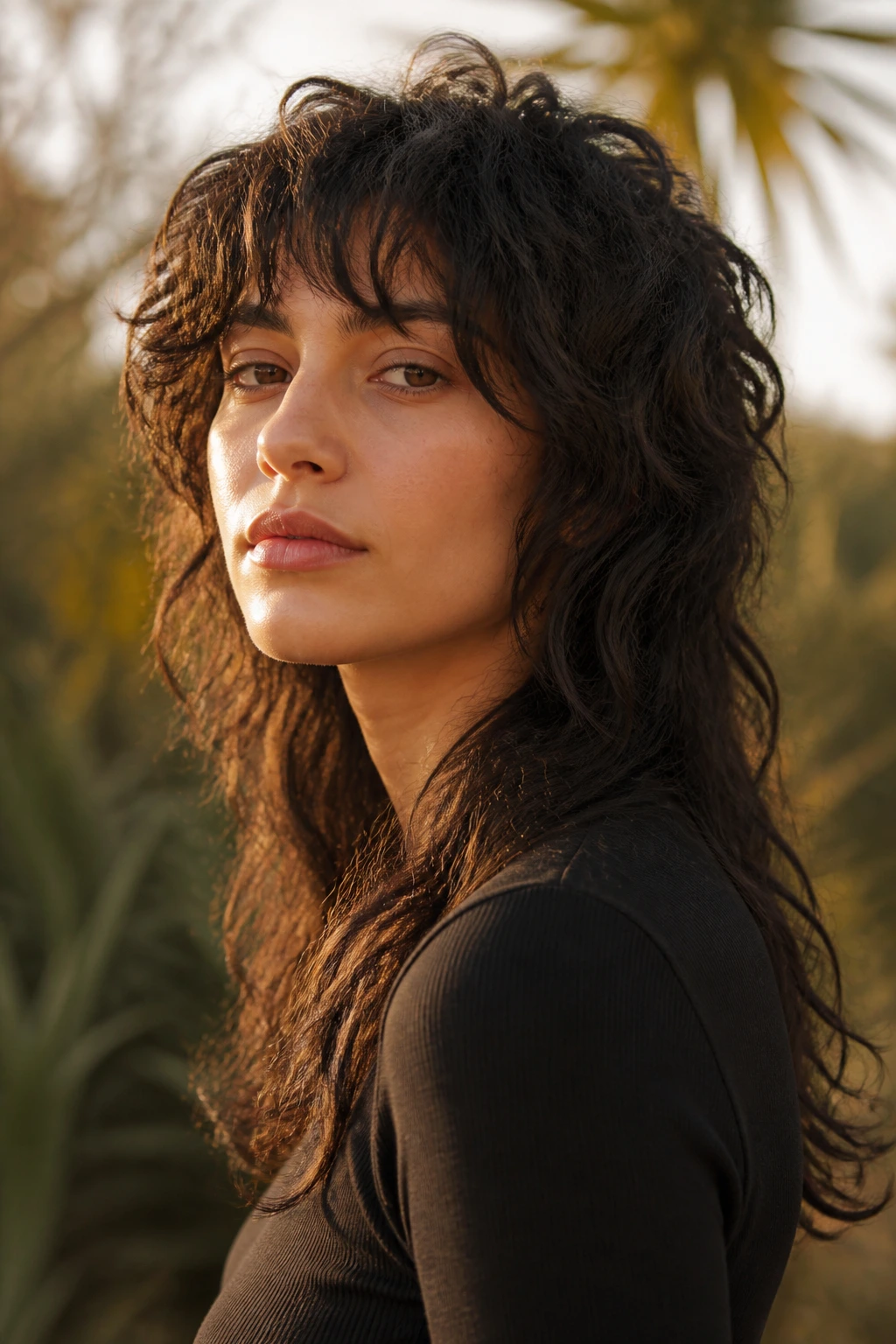
This is the boldest shape in the group, though “soft” matters here. The front stays shaggy and face-framing, while the back keeps a little more length and attitude. On an oval face, that longer back line helps balance the stronger top texture and keeps the shape from feeling too wide.
I’d recommend this when you want the shag to feel modern and a little undone. The style has edge, but the curls soften the transition so it doesn’t turn into a hard mullet line. That softness is the whole trick.
The cut works best when the stylist keeps the front layers sweeping from the cheekbone, not from the brow. That preserves the face shape and keeps the haircut from becoming top-heavy.
17. Rounded Frame Shag
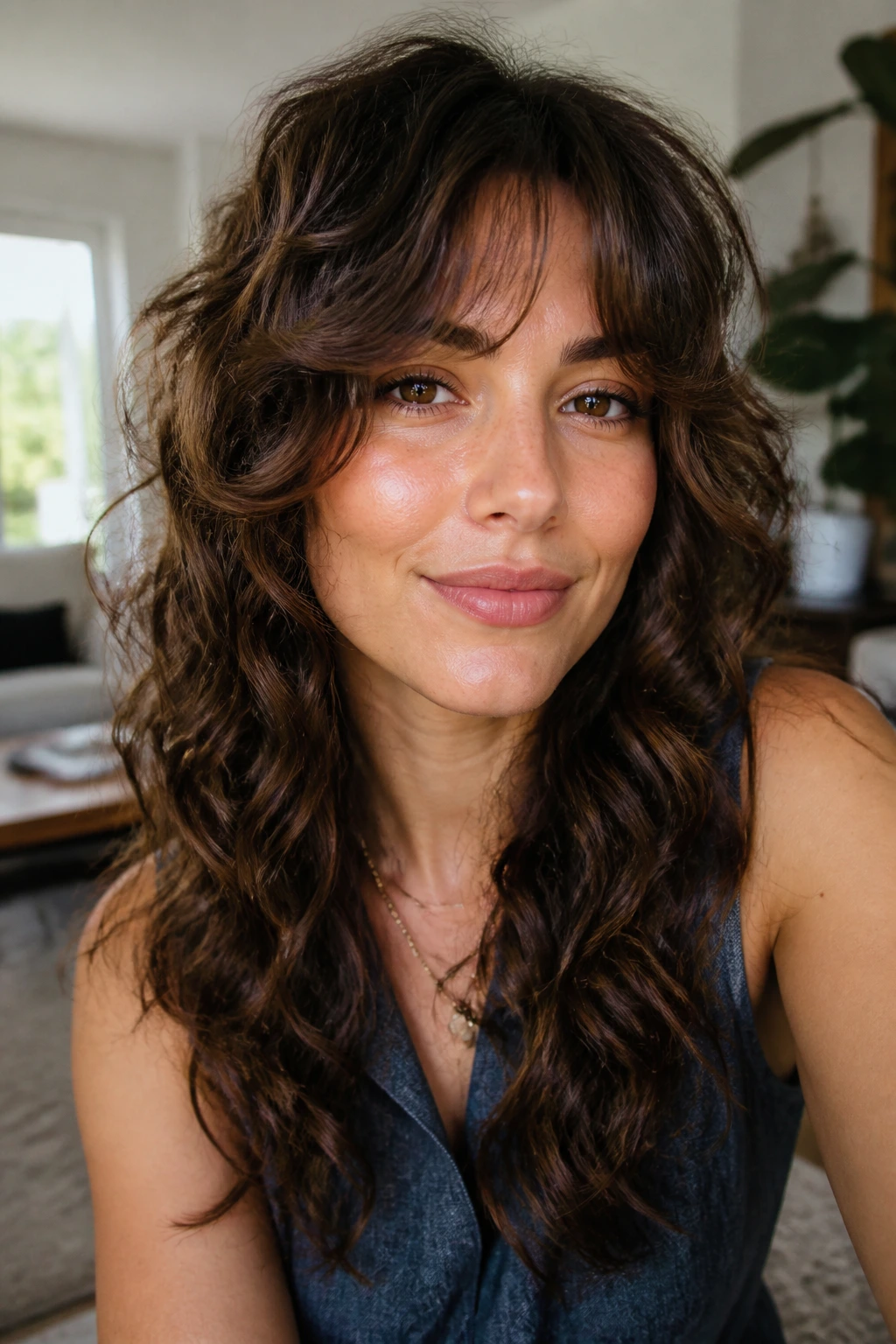
This is one of the friendliest shapes for curly hair because it follows the curve of the face instead of fighting it. The layers arc around the cheekbones and jaw, then drop into a longer perimeter that stays smooth at the bottom. Oval faces look especially natural in this shape because the haircut echoes the face’s own balance.
The rounded frame is a good fix for curls that puff at the sides. Rather than creating a hard shelf, the shape bends around the face and settles outward gently. It’s not a flat cut. It just isn’t a rebellious one.
Ask for the front to be cut with the curl pattern in mind so the roundness shows once the hair dries. That matters more than the raw wet shape.
18. Defined Ringlet Shag
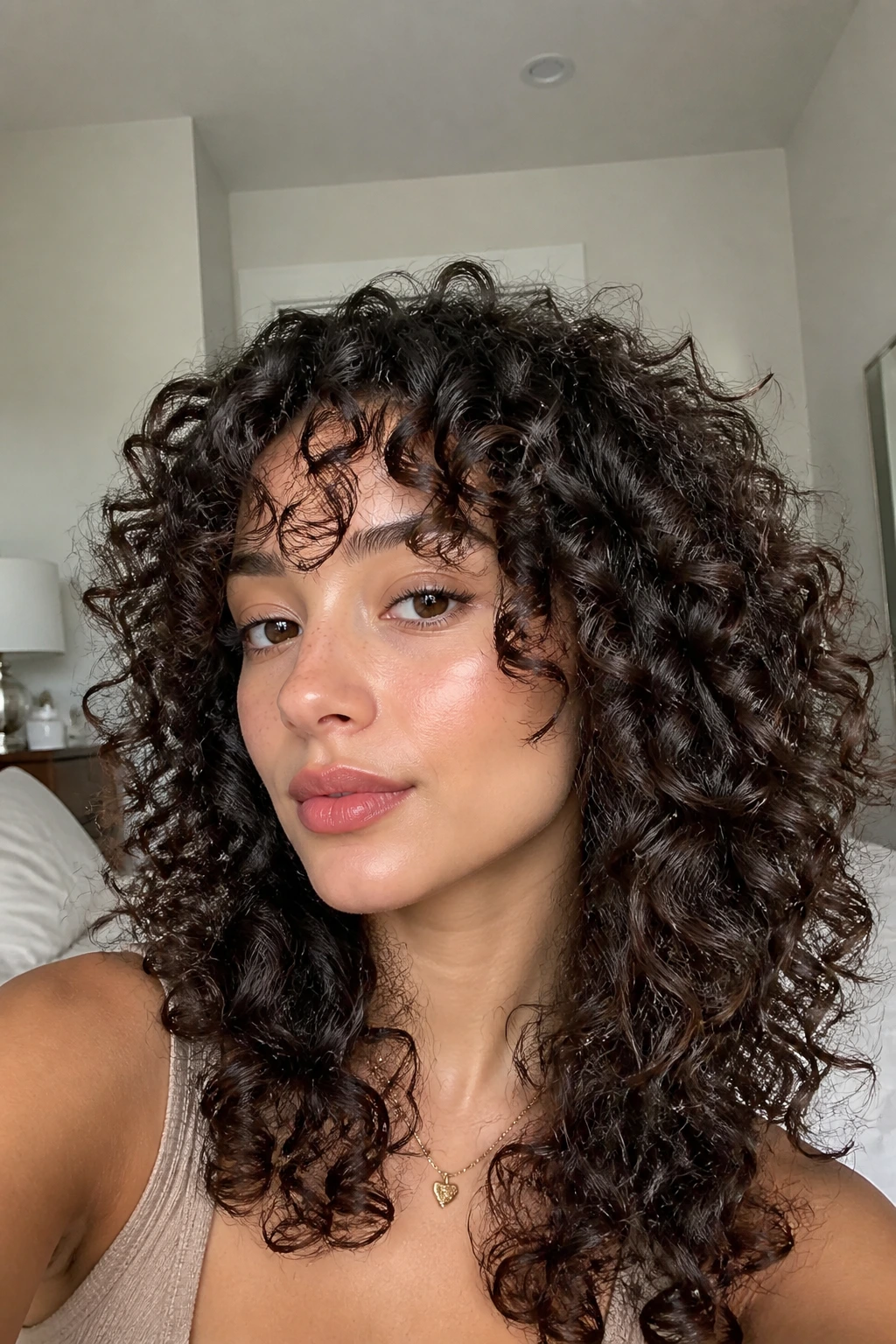
Some curls want a lot of definition, not a lot of fluff. This cut leans into that. The layers are placed so ringlets can stack and show off their individual shape, with the longest ends keeping the haircut from shrinking into a short frame.
Oval faces work well with this cut because the face stays visible while the ringlets build texture around it. The key is balance: enough layering to let the curls spring, not so much that the silhouette gets frayed.
How It Reads
- Strong curl definition around the cheeks.
- Length that still brushes the collarbone or below.
- Less bulk in the lower half, more shape near the top.
If your curls clump well when you style them, this is a strong candidate. If they separate into fuzzy pieces no matter what, a softer shag may be easier to live with.
19. Air-Dry Friendly Shag
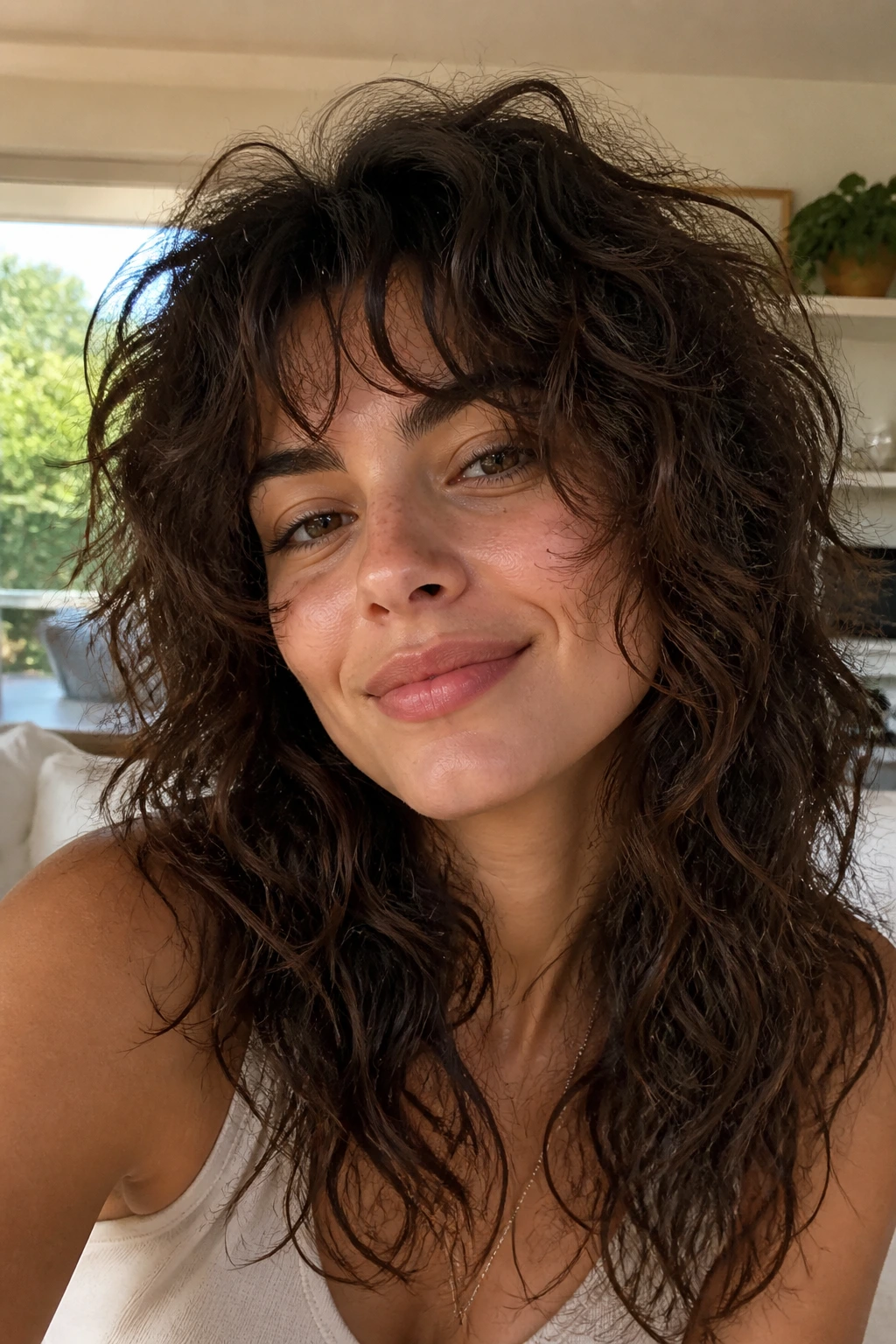
Some haircuts demand a diffuser every time. This one doesn’t. The layers are arranged so the hair can air-dry without losing all its shape, which is useful if you’d rather spend 20 minutes doing something else. On an oval face, the looser finish still keeps the features open.
The trick is to avoid overly short top layers. Air-dried curls need enough length to settle into their own pattern, or they can spring up into a rough halo. Keep the face frame soft and the bottom long.
I like this shape for people whose hair looks better when left alone. That’s not laziness. That’s pattern.
20. Volume-on-Top Shag
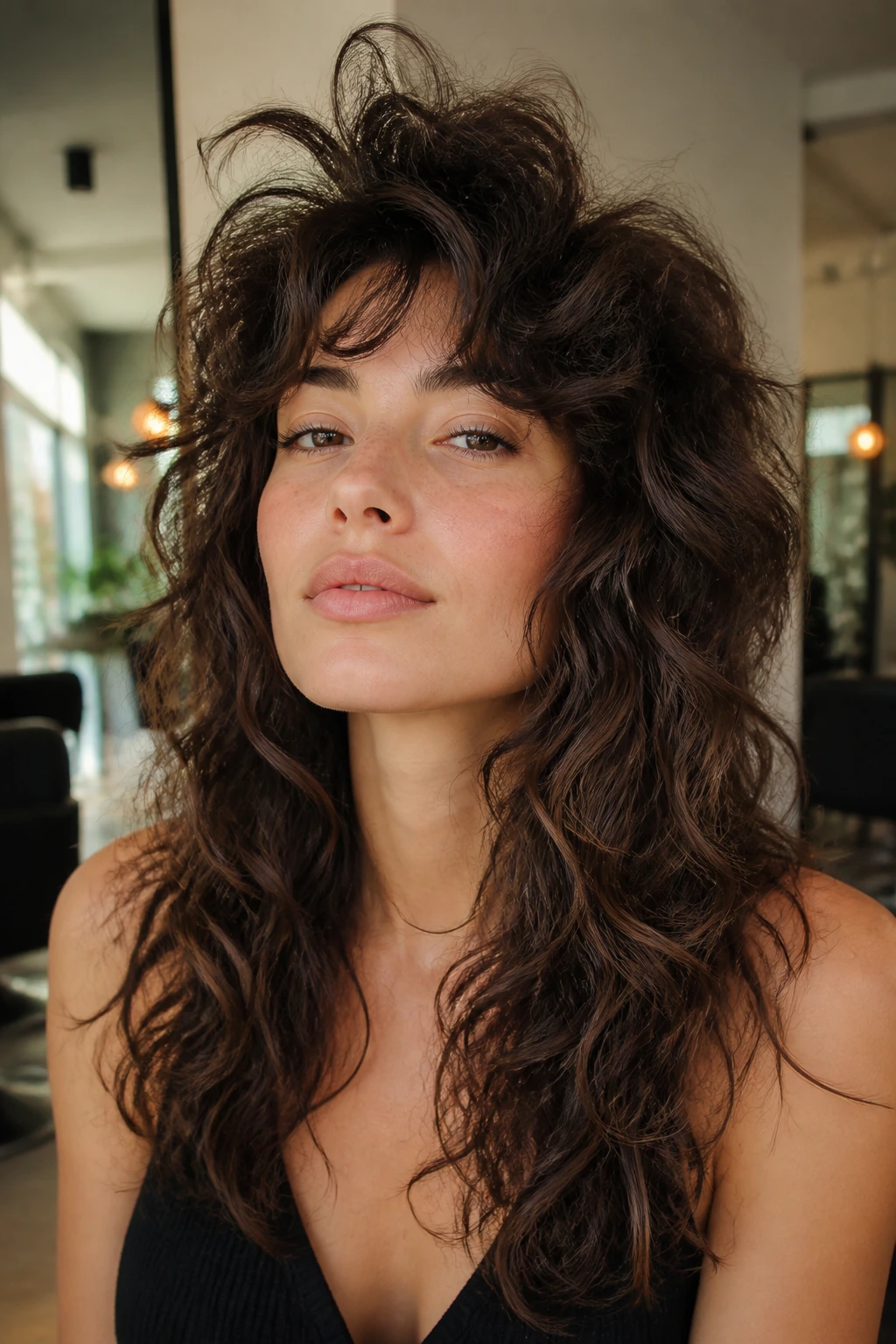
Can a shag have too much lift at the crown? Absolutely. But when it’s done right, that extra height keeps the curl pattern from collapsing and gives an oval face a sharper outline. The hair sits up first, then falls into the long layers below.
This cut suits people whose lengths are thick but whose roots get flat. The top layers are cut to encourage lift, while the sides are kept from spreading too far outward. You get presence at the scalp without the dreaded triangle shape.
Use a diffuser with the head tipped slightly to one side, then finish upright. That keeps the crown alive and stops the sides from puffing out in a hard ring.
21. Face-Opening Long-End Shag
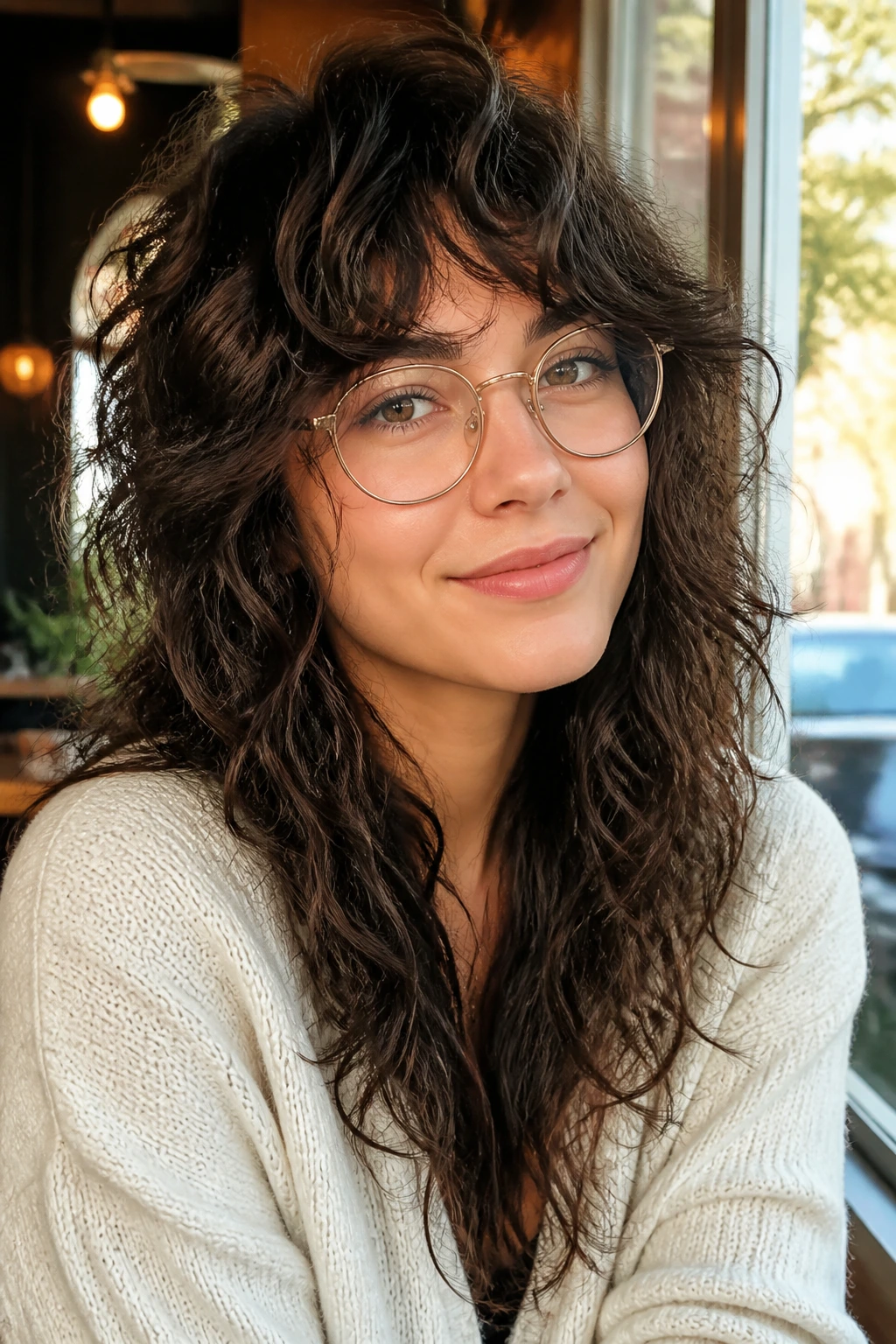
This is the cut for anyone who wants the face to feel lighter without giving up the length. The front is carved to pull hair away from the cheeks and temples, while the ends stay long and weighty enough to keep the overall shape grounded. Oval faces wear this nicely because the face stays visible, not crowded.
It’s a good pick if you often wear glasses, too. The open front keeps the frames from fighting the haircut. I’d ask for the shortest pieces to land where they won’t sit directly on the top of the glasses arm, which can get annoying fast.
The long ends make this feel less trendy and more lived-in. That’s a good thing.
22. Grow-Out Curly Shag
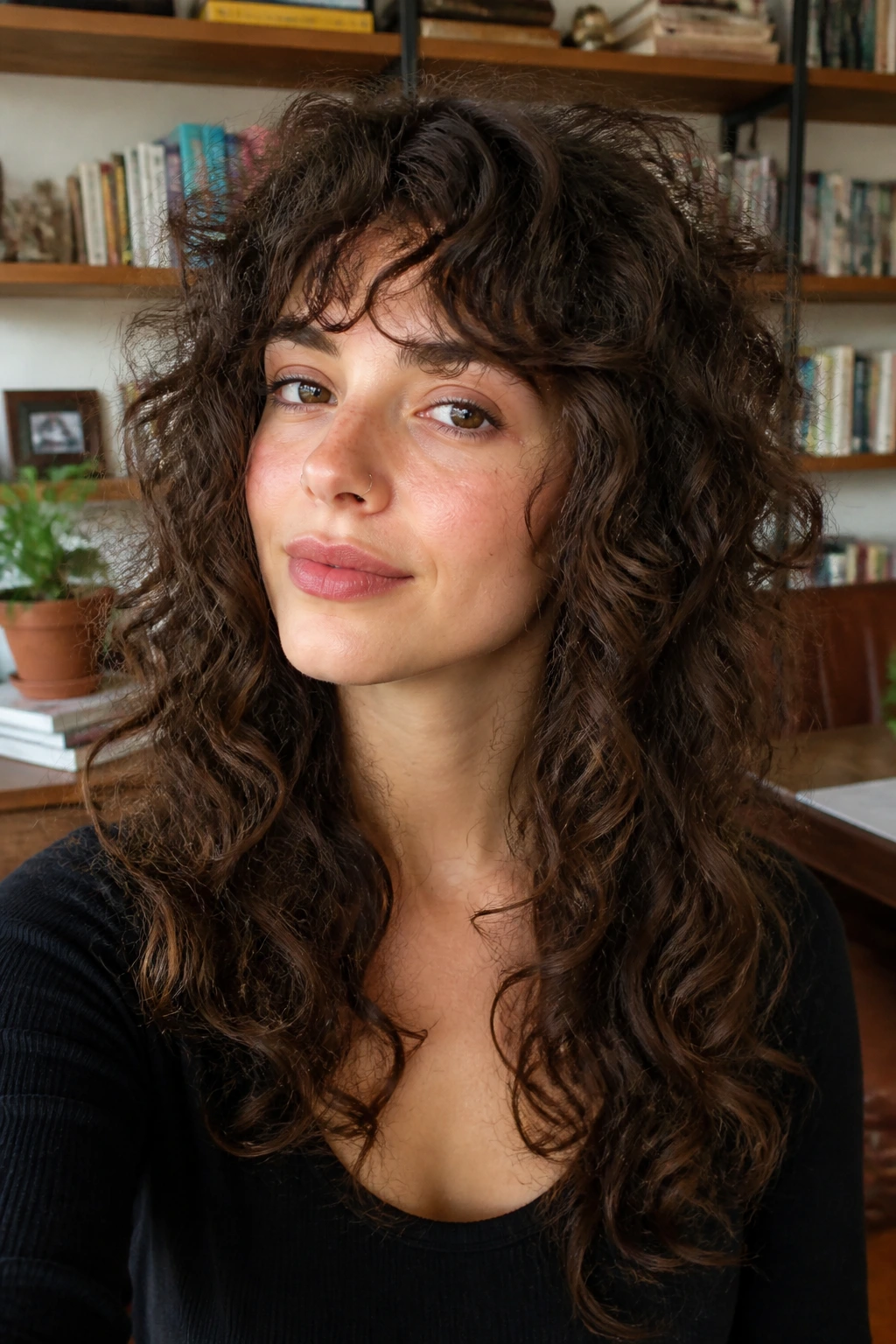
This is the haircut that forgives you. The layers are blended in a way that still looks deliberate as they lengthen, which is half the battle with curly hair. On an oval face, the shape keeps its balance even when the fringe softens and the perimeter creeps down.
Ask for a long perimeter, soft internal layering, and face-framing pieces that can survive a few months of growth without getting weird. That usually means avoiding razor-sharp shelves and leaving enough length in the bangs to brush them aside if needed.
If you hate the feeling of being trapped by your haircut, this is the one to keep in your back pocket. It grows out with grace, and that’s a rarer quality than people admit.
How to Brief Your Stylist Before the First Snip
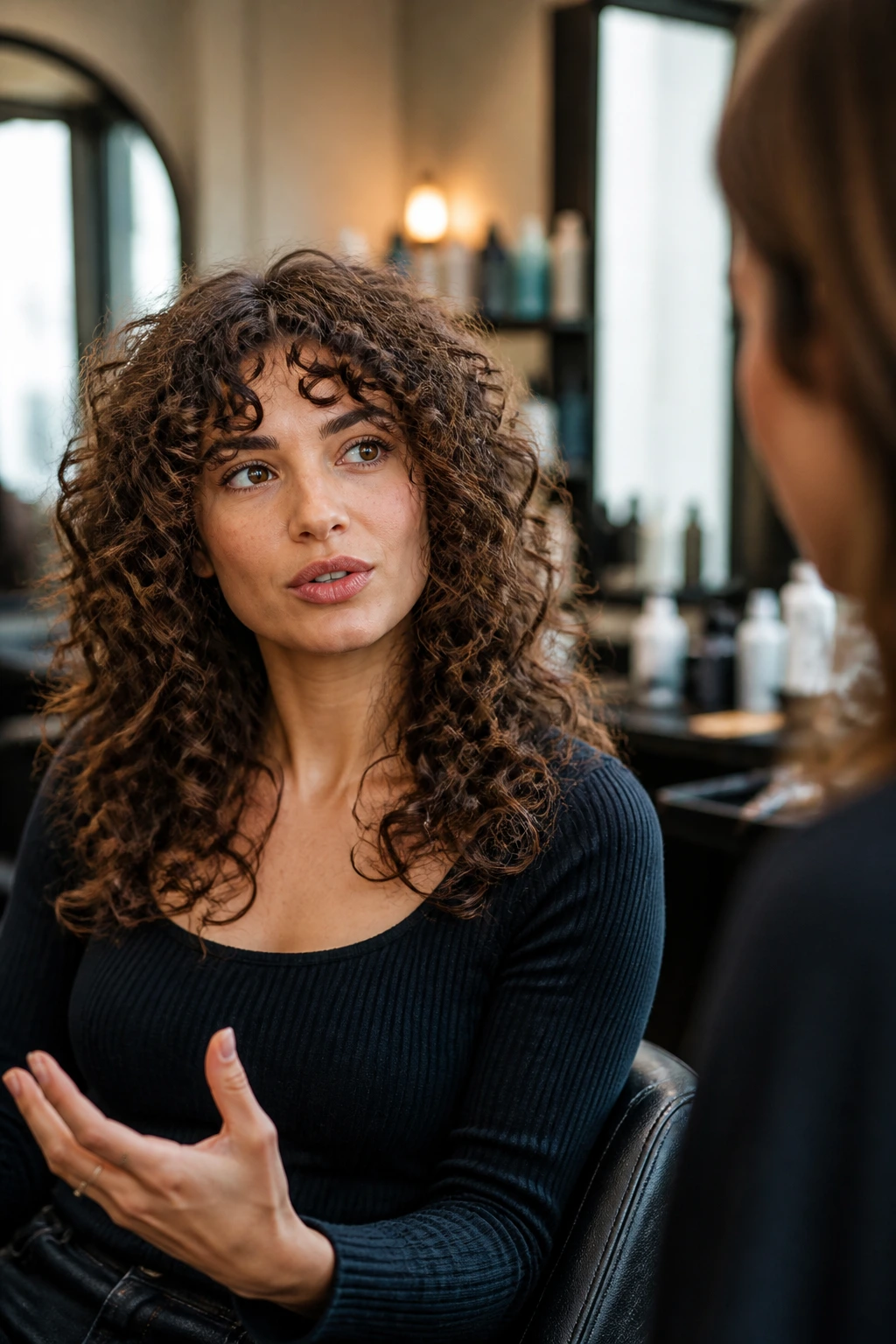
Bring photos, yes, but not just any photos. Bring images that match your curl pattern, density, and length goals. A gorgeous shag on straight hair tells your stylist almost nothing about how your curls will sit once they dry.
Say where you want the shortest pieces to land when dry. Cheekbone, lip, chin, collarbone — those are useful reference points. If you leave that conversation vague, the cut can drift upward faster than you expect, especially if your hair has strong shrinkage.
I’d also talk about how much styling you’re willing to do. If you air-dry most days, ask for softer layers and a cleaner perimeter. If you diffused every wash, the stylist can push the shape more aggressively. That one detail changes the whole haircut.
Essential Tools and Products for These Cuts
-
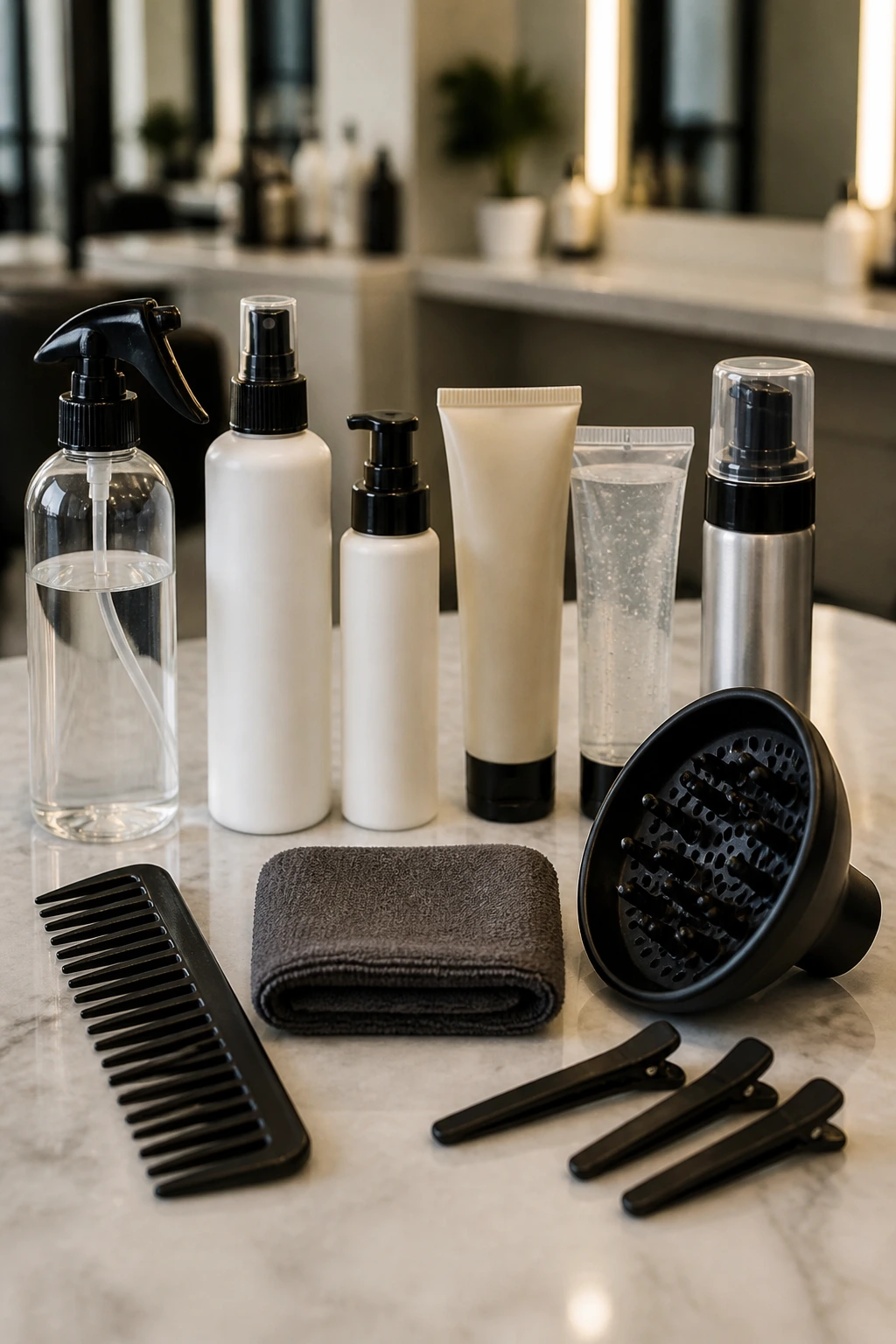
Spray bottle with fine mist: Useful for reactivating curls on day two without soaking the whole head.
-
Leave-in conditioner: Keeps the mid-lengths from feeling dry after the layers are cut in.
-
Curl cream: Best for softer definition and frizz control, especially on looser curl types.
-
Gel with medium or firm hold: Gives the shag a cast that holds the shape while it dries.
-
Mousse: Helps the crown keep lift without weighing the hair down.
-
Wide-tooth comb: Good for detangling in the shower without stretching the curls.
-
Microfiber towel or cotton T-shirt: Blots water without roughing up the cuticle.
-
Diffuser attachment: Lets you dry the layers without blasting them flat.
-
Duckbill or root clips: Handy for lifting the crown while the hair sets.
How to Style a Long Curly Shag on Wash Day
-
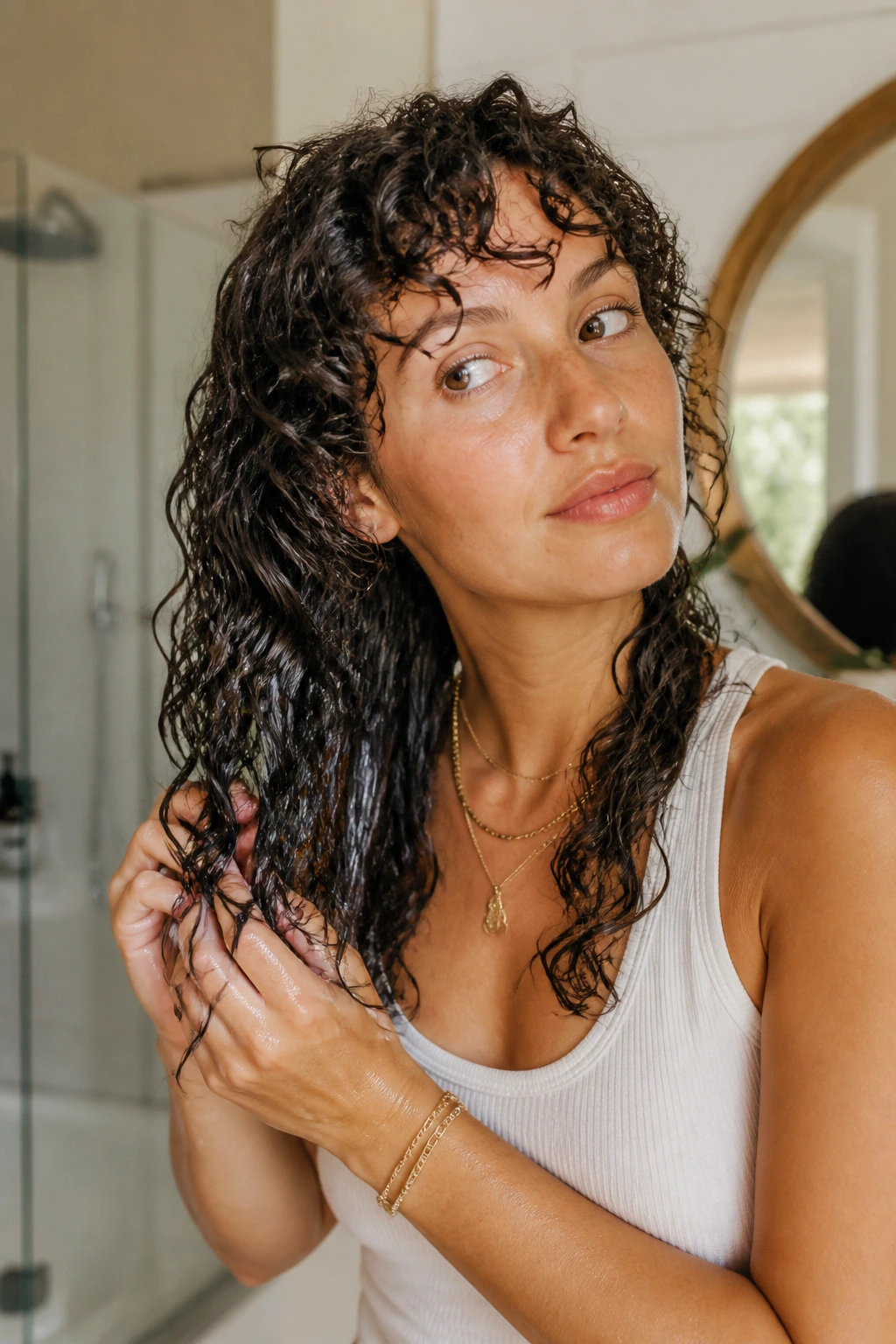
Cleanse and condition with the end shape in mind. Focus shampoo on the scalp and keep conditioner through the mid-lengths and ends so the layers stay soft but not slippery.
-
Apply leave-in to soaking-wet hair. Use enough to coat, not drown. You want slip, not drape.
-
Layer on curl cream or mousse, then gel. Scrunch upward from the ends toward the scalp so the layers keep their bounce. If your hair is fine, go lighter on cream and heavier on mousse.
-
Set the part and fringe before drying. Curtain bangs, side parts, and face-framing pieces settle best when you place them while the hair is still wet.
-
Diffuse on low or medium heat. Move the diffuser slowly and stop when the roots are about 80 percent dry. Do not keep touching the hair as it dries or you’ll break the cast and kick up frizz.
-
Scrunch out the cast only when the hair is fully dry. A drop or two of lightweight oil on your palms helps, but don’t overdo it.
How to Refresh the Cut Between Washes
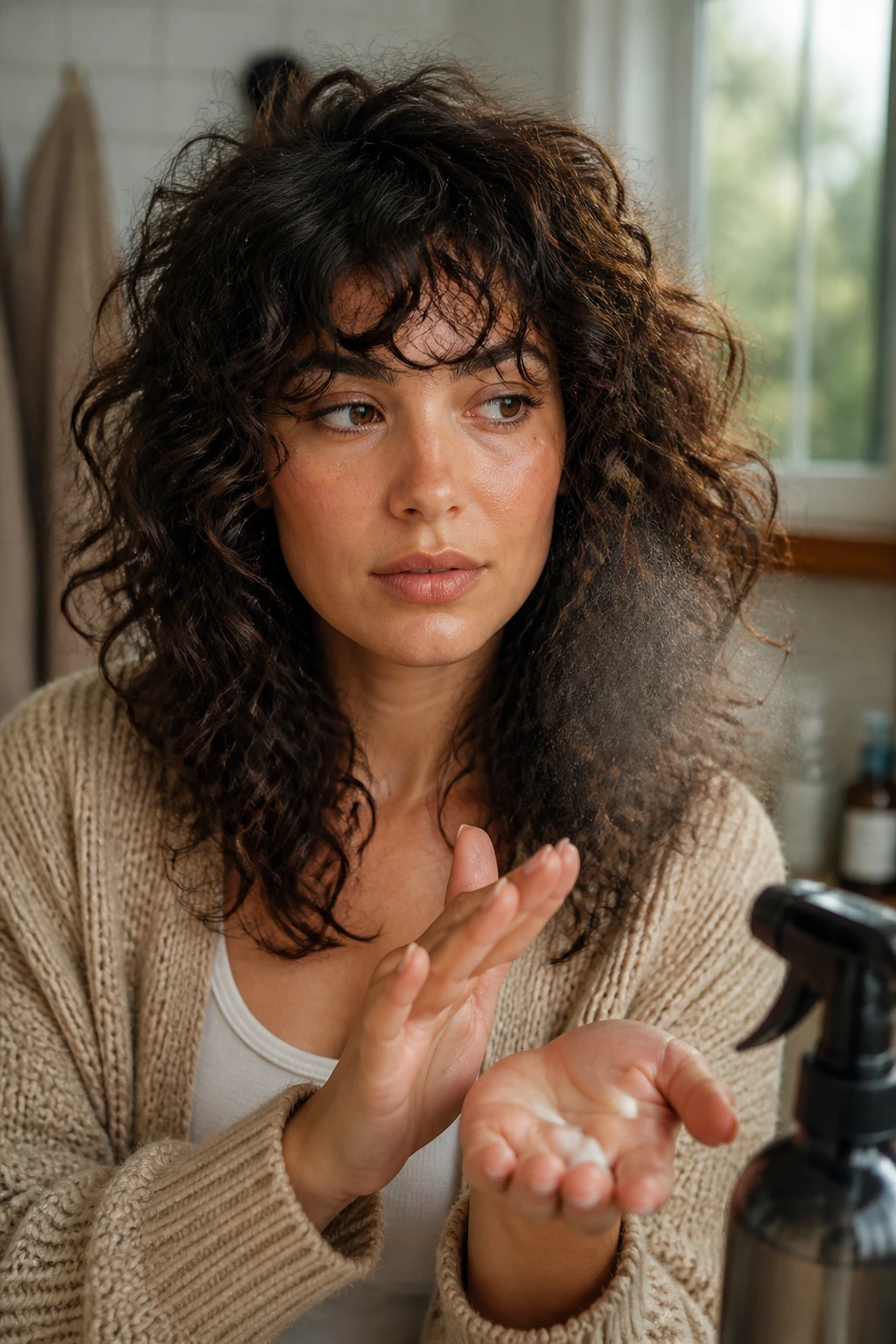
The best refresh is usually small, not dramatic. Mist the dry areas with a fine spray bottle, then smooth a pea-sized amount of leave-in or curl cream between your palms and glaze it over the frizzy spots. A little goes a long way. Too much product on day two can make the layers collapse.
If the crown has flattened, clip the roots for 10 to 15 minutes while the hair re-dries. That tiny pause can bring the shag back to life without a full restyle. I also like a light squeeze of mousse at the roots before diffusing for three or four minutes if the shape needs help.
Sleep matters too. A satin pillowcase, loose pineapple, or a few large twists will protect the layers overnight. Curly shags tend to lose shape where the hair rubs the most — usually around the temples and back of the crown — so that’s where the protection pays off.
Common Mistakes That Flatten the Shape
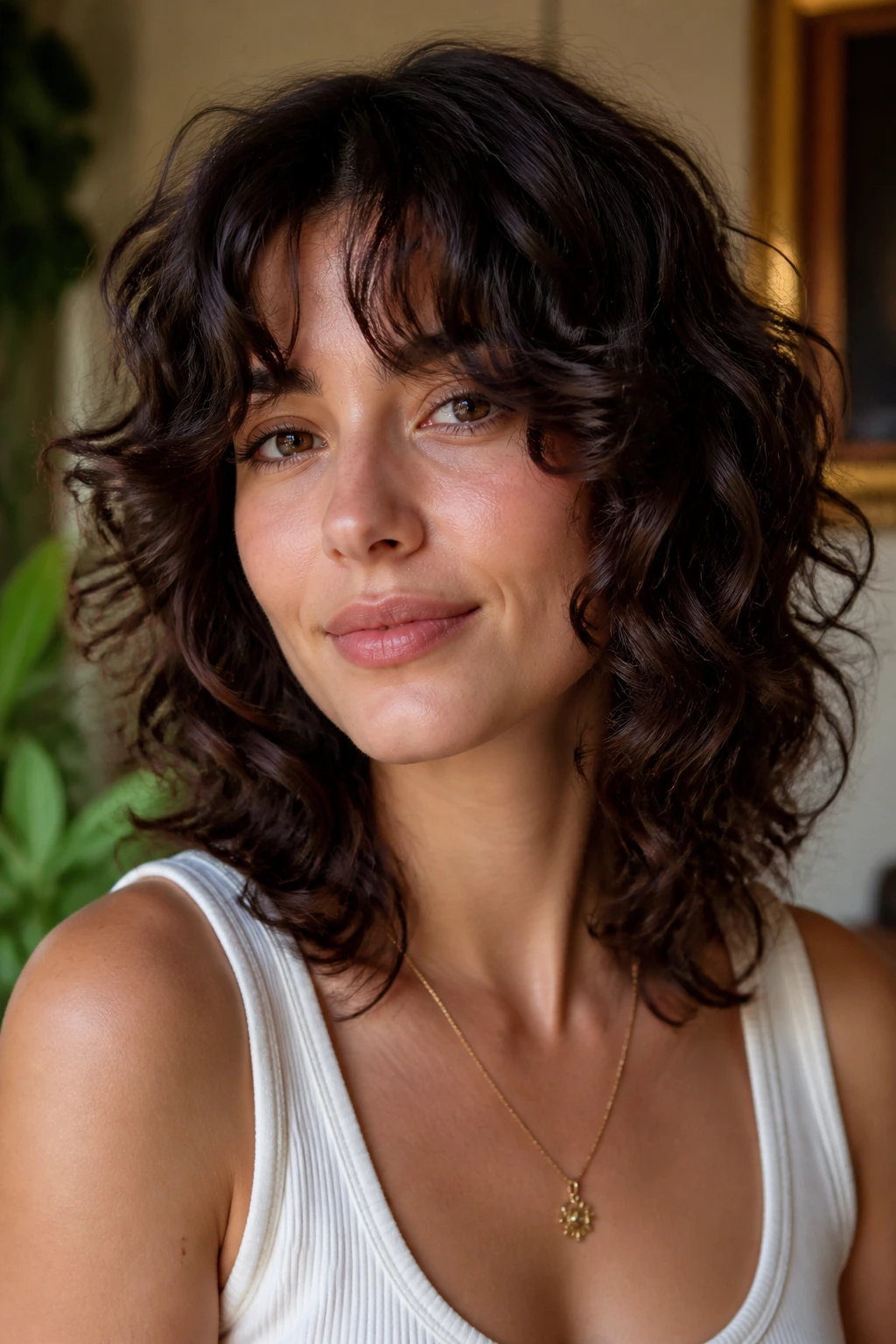
The biggest mistake is letting the haircut shrink before you judge the length. Wet curls lie. They lie badly. A stylist who cuts to the wet line only may accidentally remove too much once the hair springs up.
Another common problem is over-thinning. If the scissors or razor take too much weight out of dense curls, the haircut starts to fray instead of move. You end up with halo frizz at the sides and a weak outline at the bottom. The fix is simple: keep some internal weight and remove bulk in targeted sections, not everywhere.
The third trap is loading heavy creams at the roots. Long shags need lift near the crown, and thick product there pulls the whole shape down. Put richer product from ear level down and keep the scalp lighter.
Variations and Adaptations to Try
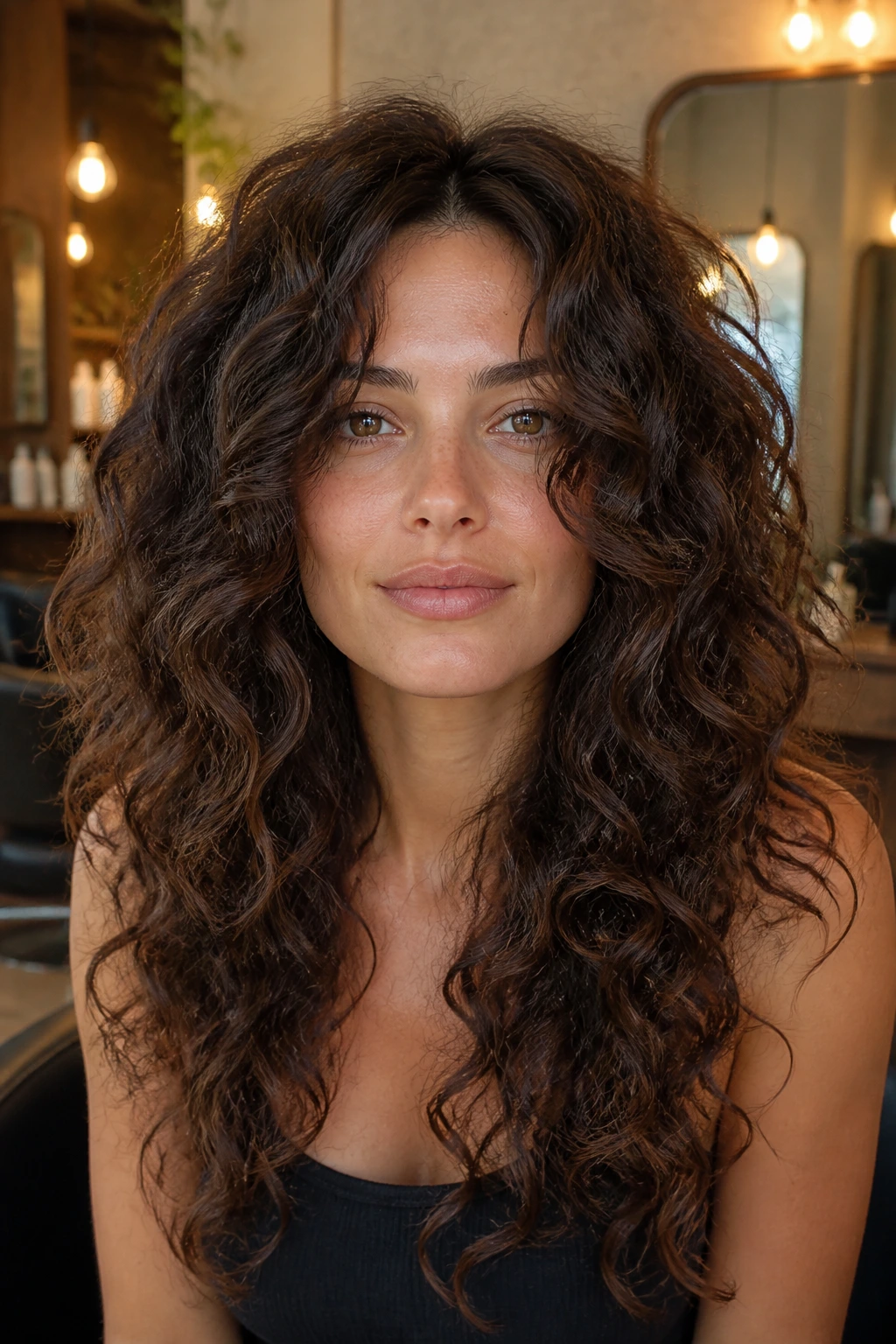
Fine-Curl Lift Edition: Keep the layers long and the crown slightly shorter, then use mousse instead of heavy cream. This version gives fine curls enough lift without stripping away all the perimeter weight.
Dense-Curl Weightless Edition: Ask for interior debulking and a longer outer line. It removes the cube-like width dense curls can create while keeping the shape strong on an oval face.
No-Bang Frame Edition: Skip fringe altogether and let the front layers start at the cheekbone. Good for anyone who wants the shag shape without forehead commitment.
Edge-Softened Wolf Edition: Push the top layers a little shorter and let the back hang longer, but keep the ends feathered. It reads modern without feeling harsh.
Low-Drama Grow-Out Edition: Leave the fringe long enough to tuck away and keep the shortest layers around the jaw rather than the brow. This one is for people who hate frequent maintenance.
How to Keep the Shape Between Salon Visits
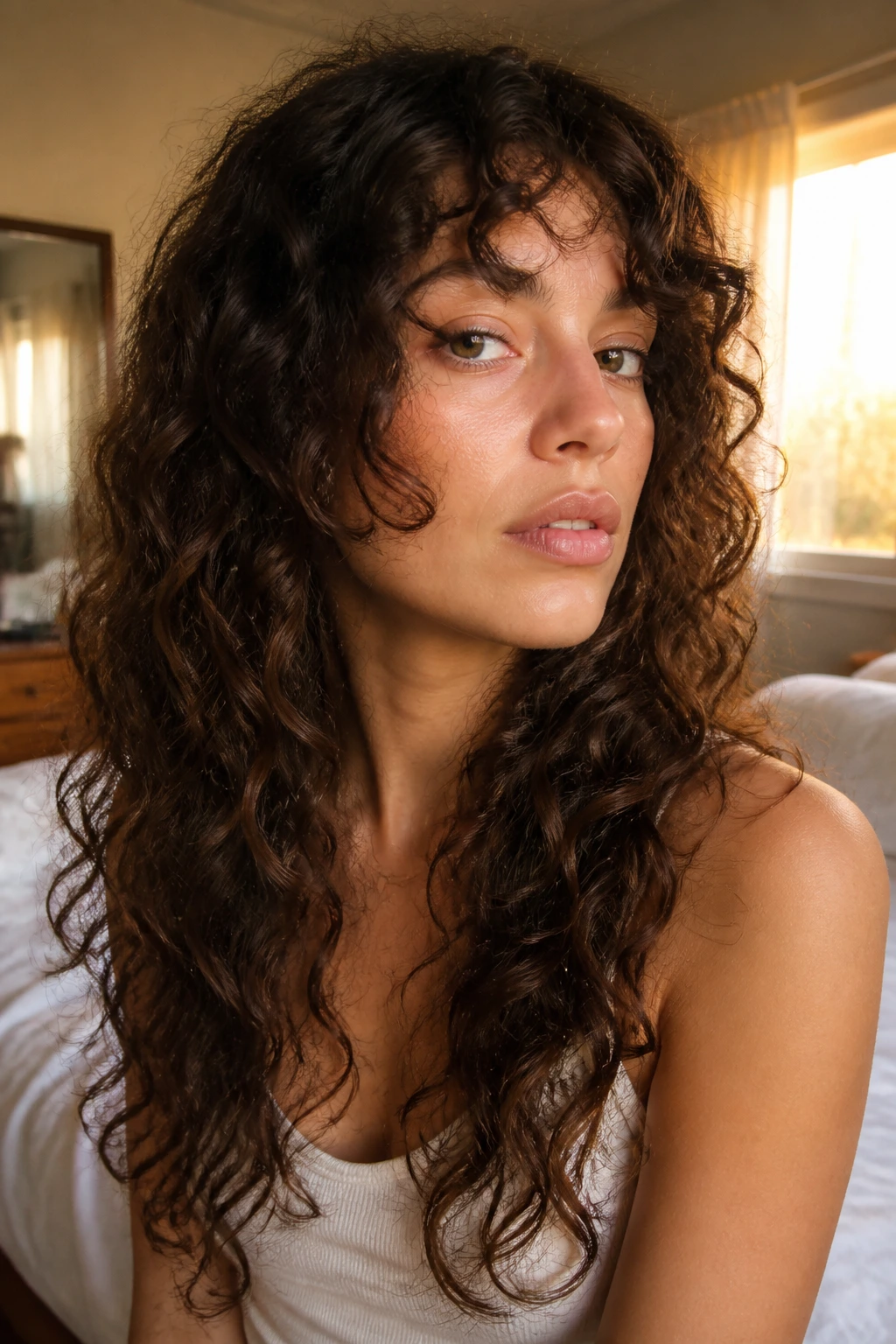
Long curly shags usually stay happy with trims every 8 to 12 weeks if you wear bangs, and about 10 to 14 weeks if the fringe is long and flexible. If you see the sides ballooning or the face frame losing its line, that’s your clue. Don’t wait until the whole cut feels fuzzy.
Between trims, keep the ends moisturized but not soaked in product. A weekly deep conditioner helps if your curls are dry from diffusing or weather, but the short refresh products should stay light. The cut works best when the curls can spring, not sit under a layer of cream.
If your stylist can do a quick dusting on the front pieces between full cuts, even better. That tiny maintenance pass keeps the face frame sharp without changing the whole haircut. It’s a small appointment that pays off.
Additional Tips and Shape Boosters
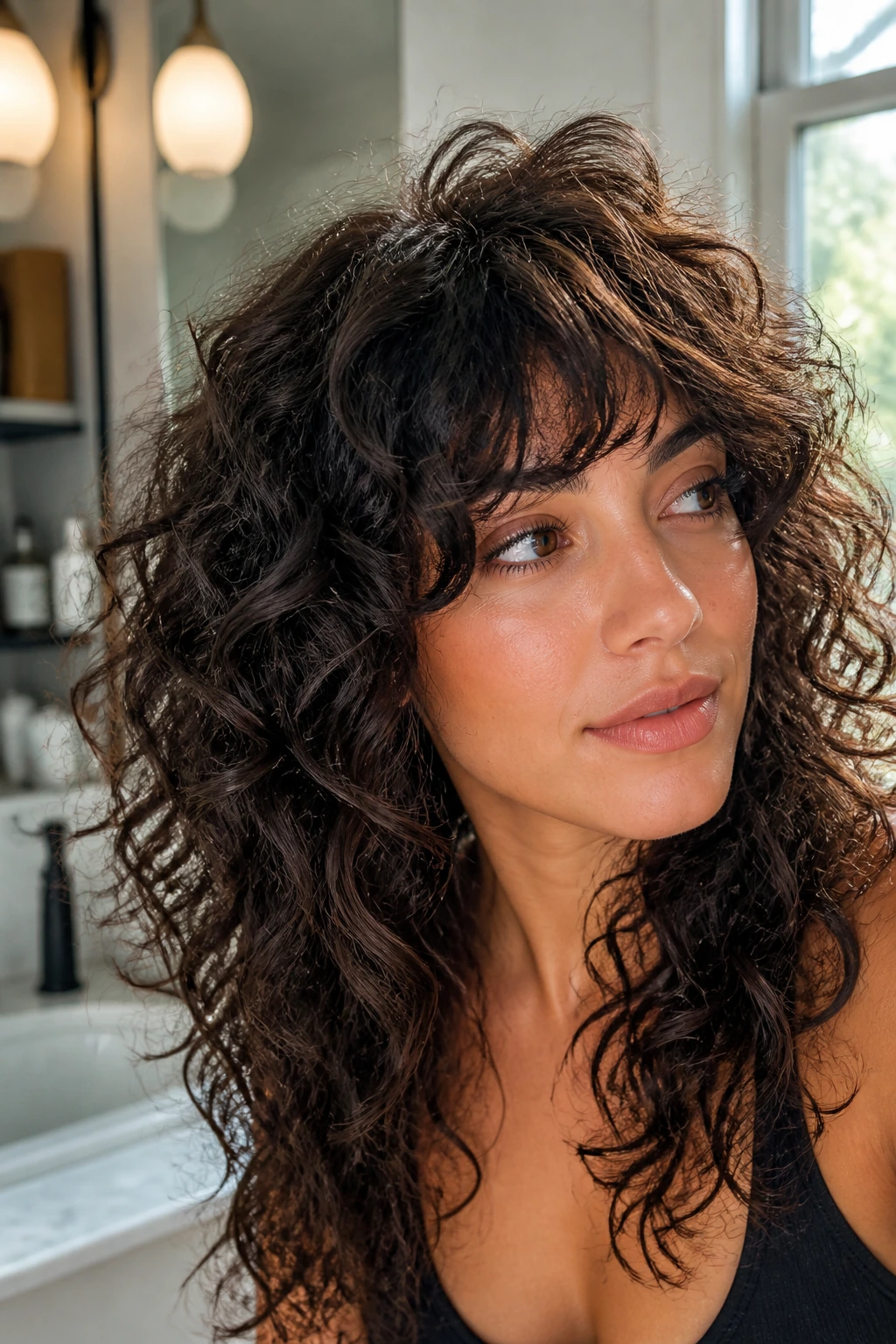
Root Lift: Clip the crown for 10 minutes after styling if the top tends to collapse. It helps the shag keep its height without teasing.
Fringe Control: Dry your bangs first. They’re the first part to misbehave and the first part to steal attention if they go crooked.
Curl Definition: Use gel on the outer layer and a little mousse near the roots. That split keeps the layers defined without making the bottom feel stiff.
Night Routine: Pineapple loosely or twist the front pieces back before bed. The face frame will thank you in the morning.
Humidity Plan: Keep a travel-size spray bottle and a tiny bit of gel in your bag. One quick mist beats a full rescue mission.
Frequently Asked Questions
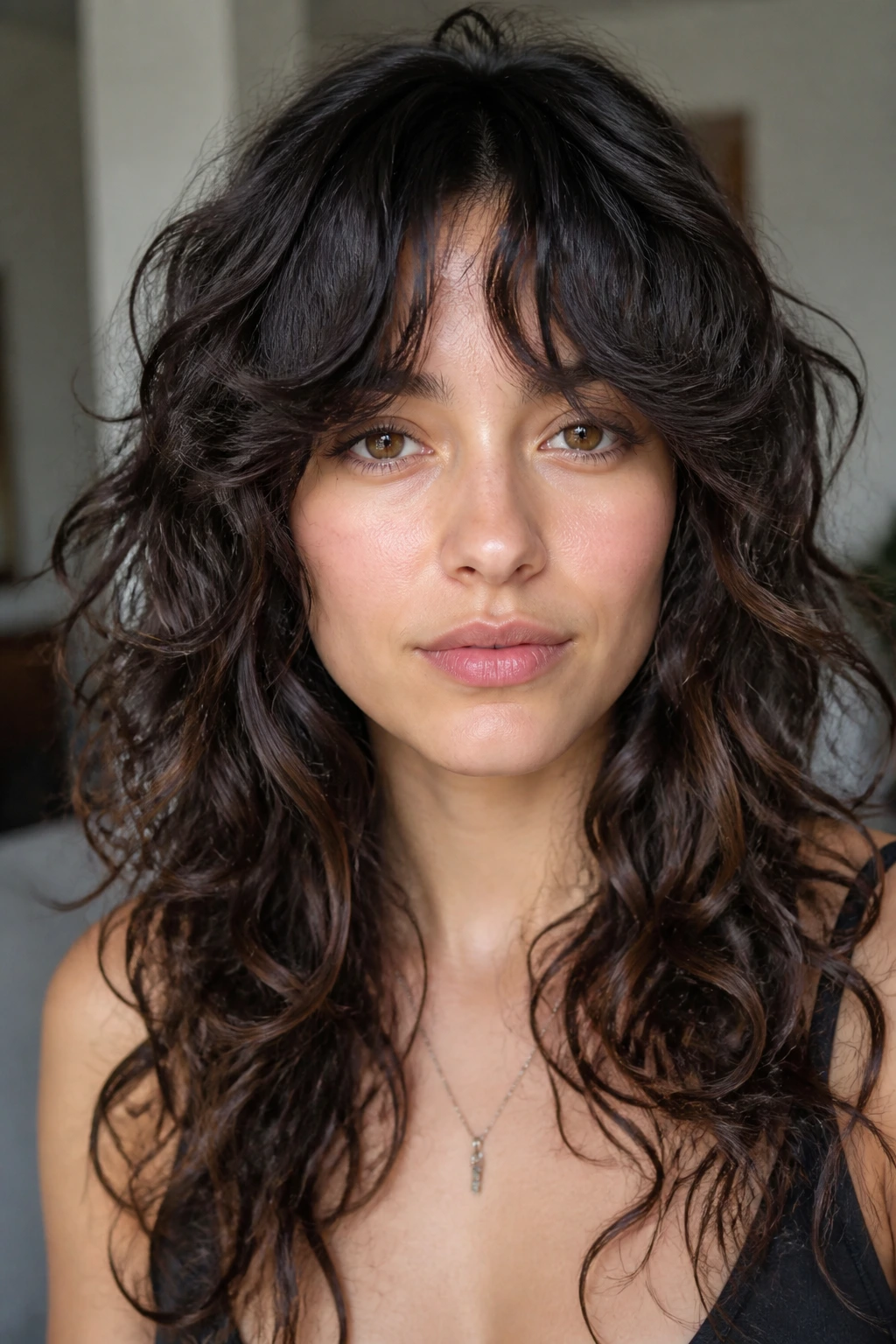
Will a long shag make my oval face look longer?
It can, if the layers are too vertical and the face frame is too thin. The fix is to keep some width around the cheekbones and avoid making the crown overly tall. A balanced shag should open the face, not stretch it.
Are curtain bangs or side-swept bangs better for curly hair?
Curtain bangs are easier to blend into a long shag, but side-swept bangs can work better if one side of your curls lies flatter. The choice usually comes down to how much forehead coverage you want and how much daily styling you’re willing to do.
Should curly shags be cut wet or dry?
Dry or mostly dry cutting is usually safer because it shows the curl pattern and shrinkage. Wet cutting can still work, but only if the stylist knows how your curls behave once they spring back up.
How often should I trim a long curly shag?
Most people do well with trims every 8 to 12 weeks. If you wear bangs or strong face-framing layers, you may want a light trim sooner so the front doesn’t lose its shape.
Can fine curly hair wear a long shag without looking thin?
Yes, but the layers need to be longer and lighter than they would be on dense curls. Too many short layers will expose the ends and make the hair look sparse, especially around the perimeter.
What if my curls are tighter on one side than the other?
That’s normal, and a good stylist can work with it. A dry or curl-by-curl cut usually handles asymmetry better because each side can be shaped to its own pattern instead of forced into a mirror image.
Can I straighten a curly shag sometimes?
You can, but the layers will show more once the hair is smooth, so the cut needs clean blending. If you flat iron often, ask your stylist to keep the face frame softer and the perimeter cleaner so the straight version still falls well.
What should I say if I don’t want too much volume at the sides?
Tell the stylist you want the layers to move without widening the silhouette. That usually means keeping the side layers long enough to tuck inward and avoiding heavy texturizing around the cheek line.
The Shape That Keeps Moving
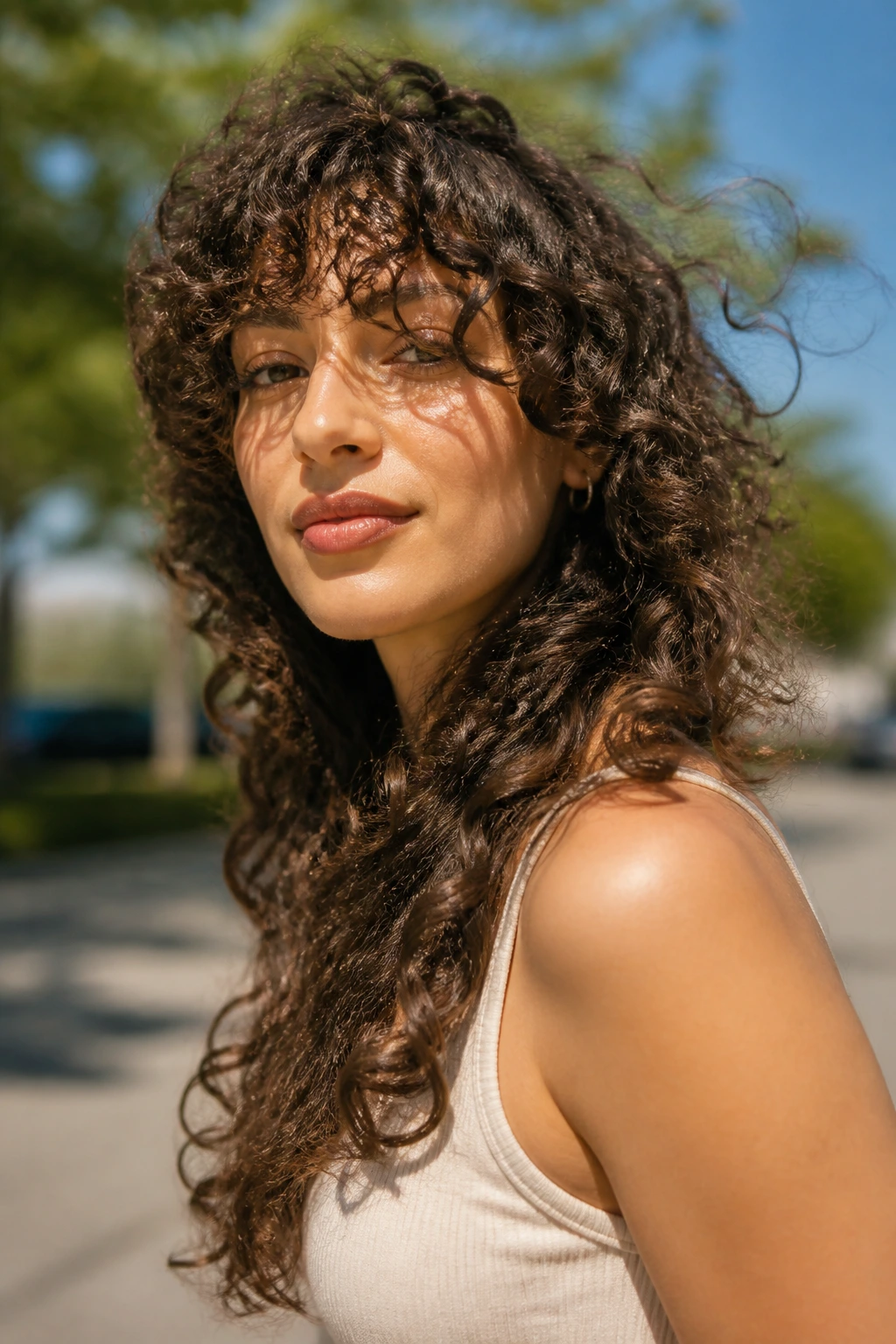
A good long shag on curly hair does something a blunt cut can’t. It leaves room for the curls to breathe, but it still gives the face a clear frame. On an oval face, that balance matters more than people think. Too much width, and the shape drifts. Too little structure, and the curls lose their point.
The best versions in this group all do the same basic job in slightly different ways: they protect length, respect shrinkage, and keep the front from getting heavy. That’s the whole game. If you get those pieces right, the haircut will look alive on wash day, then settle into something even better as it grows out.
Pick the version that matches your curl pattern and your patience level, then make the stylist explain exactly where the shortest pieces will sit when dry. That one conversation saves more bad haircuts than any trend photo ever could.