



Cold air, wool collars, and indoor heat can do a number on curly hair. One hour you’ve got glossy bends and a sharp side part; the next, the whole shape has puffed outward and sat there like it owns the place. That’s exactly why fall dark hairstyles for round faces with curly hair need a little more thought than “just cut it shorter” or “just add layers.” The best shapes here don’t fight the curl. They give it a lane.
Dark hair changes the game, too. Espresso, cocoa, black cherry, mahogany, blue-black — those shades make the curl pattern read in shadows and shine, which is a gift when you want the eye to travel up and down instead of side to side. On a round face, that vertical movement matters. So does a bit of asymmetry. So does knowing where the widest part of the face sits and refusing to park your shortest layers right there.
I keep coming back to one simple rule: if the curl cut stops right at the cheeks, the cheeks start doing all the talking. Better to let the shape open at the crown, skim past the cheekbones, or taper in a way that keeps the silhouette clean. The good news? Curly hair gives you more room to do this than straight hair ever will. Curls bend. They stack. They soften hard lines. Use that.
Why These Styles Earn a Spot on Your Save List
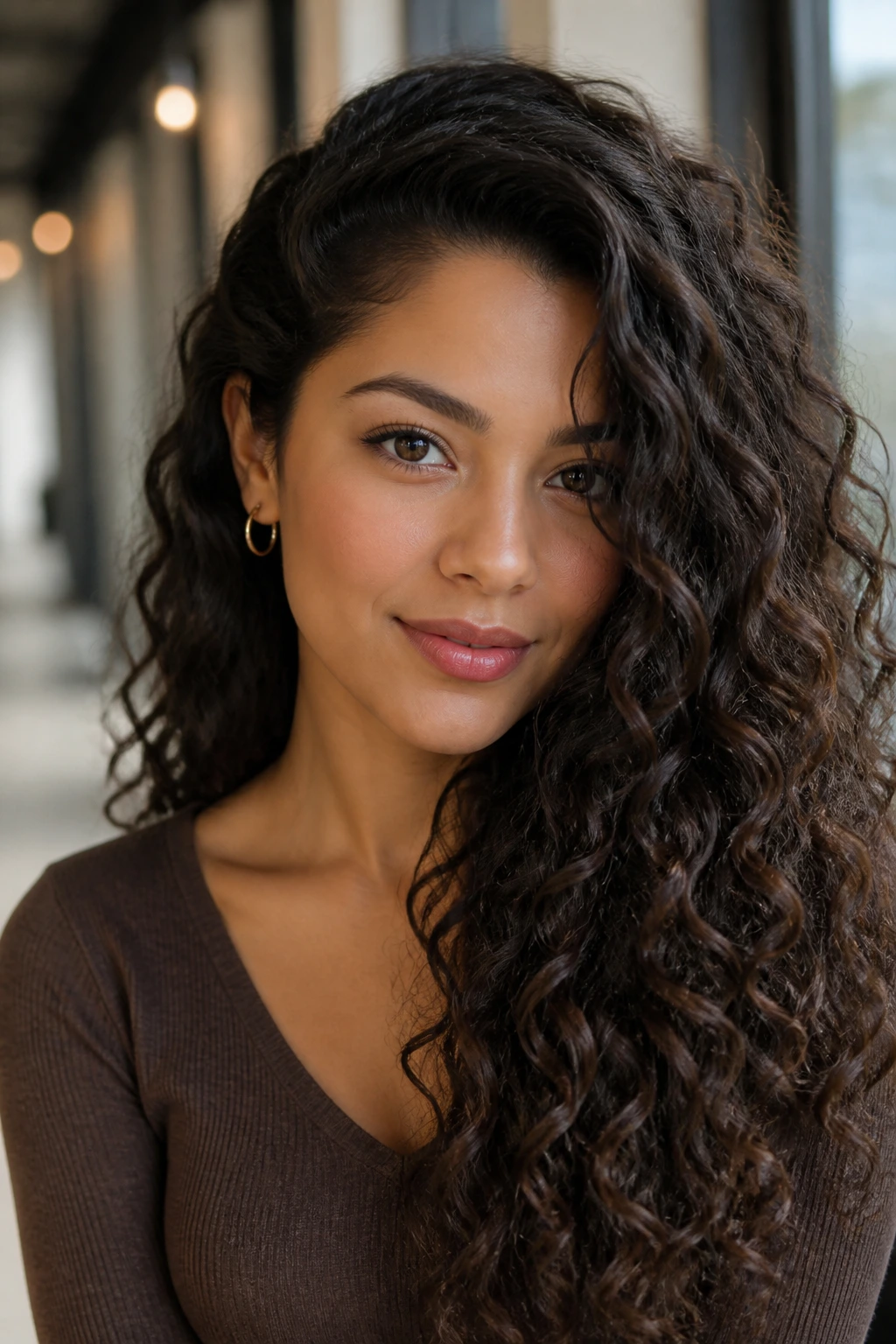
- They stretch the face without flattening the curls: The best cuts here build height at the crown or length in the front, which keeps a round face from reading wider than it is.
- They work with dark color, not against it: Deep brunette and black tones show off curl shape through contrast, so the style looks polished even when the weather is messy.
- They make shrinkage less annoying: A smart cut leaves room for curls to spring up without turning into a triangle at the jaw.
- They move well under scarves and coats: Several of these shapes sit neatly around fall layers instead of getting crushed into a frizzy puff by a high collar.
- They give you styling options: Some are wash-and-go friendly, some want a diffuser, and a few look better on second-day hair than they do fresh.
- They suit more than one curl type: Loose waves, ringlets, and tighter coils can all find a version here, as long as the cut respects the curl pattern.
Why Dark Curly Shapes Work So Well on Round Faces
A round face is not a problem to solve. It’s a shape to balance. That balance usually comes from length, angle, and lift — not from hiding behind hair that hangs in one heavy curtain on both sides.
Dark hair helps because it gives curls depth. Light hits the bends, the bends cast a tiny shadow, and the whole shape looks more defined. In a blunt, one-length cut, that can work against you. In a layered cut with a little movement around the face, it’s gold. The eye sees line, not just volume.
The crown matters more than most people think
If the top of your curls sits flat, the sides start doing too much. A bit of lift at the crown changes the whole profile. Not helmet hair. Just enough height to elongate the face and keep the silhouette from spreading outward at cheek level.
The cheekbone rule
I like front pieces that start near the cheekbone or a touch below it. Too short, and they widen the middle of the face. Too long, and they disappear into the rest of the cut. That middle ground is where curly hair looks intentional instead of accidental.
Dark color is part of the shape
Espresso, walnut, and black cherry tones don’t just look rich. They also make layer breaks easier to see, which matters when a stylist is trying to carve movement into curls without stripping out too much weight. On a round face, that clarity helps the haircut do its job.
1. Long Curly Layers with a Deep Side Part
The deep side part is the quiet hero here. It breaks the face into diagonals, which is exactly what a round face likes, and it gives long curls a chance to fall in a line that doesn’t feel boxy. On dark hair, the part line and the shadow from the curls make the whole shape look sharper.
What the side part actually does
A center part can work, but a deep side part often gives you more visual length. The bulk of the curls shifts off center, which opens up one side of the face and lets the other side fall in a softer arc. That little imbalance does a lot of heavy lifting.
- Best on medium to long curls that have enough spring to hold a shape.
- Ask for layers that begin below the cheekbone, not right at it.
- Use a diffuser on low heat and tilt your head toward the heavier side so the part keeps its drama.
- A gloss in espresso or deep chocolate makes the curl pattern read cleaner in low light.
Best tip: keep the shortest front pieces longer than the jawline. That one detail keeps the look from widening your cheeks.
2. Chocolate Shag with Airy Crown Layers
This is the cut for anyone who likes movement and hates the feeling of hair sitting like a solid wall. A curly shag breaks the shape apart on purpose. The crown gets some lift, the lengths get softer, and the front pieces land in a way that feels loose, not busy.
The dark chocolate tone is doing real work here. It shows off the individual bends in the layers, so the haircut looks textured instead of frizzy. That matters on round faces because a shag that is too fluffy at the sides can go sideways fast. The trick is to keep the crown airy and the side volume controlled.
I like this style best on curls that already have a little personality — 3a through 3c especially. It wakes up quickly with curl cream and a small amount of mousse, then settles into that slightly undone shape that looks better with a coat than under salon lights. If your hair gets puffy at the cheeks, keep the outer layers longer and let the interior do the work.
3. Collarbone Lob with Soft Face-Framing Pieces
Want the easiest shoulder-length shape to live with? This is the one I’d put near the top of the pile. A collarbone lob gives curls room to bounce without ending right at the widest part of a round face, and the longer front pieces keep the whole thing from feeling blunt.
Keep the front longer than the cheek
That’s the rule. If the shortest face-framing curl lands at the cheek, the face starts to look wider. If it lands closer to the jaw or collarbone, the eye moves downward instead. Simple. Effective.
A lob like this works especially well when the curls are cut dry or nearly dry, so the stylist can see how much they spring. On dark brown or black hair, the silhouette reads even cleaner when a little shine serum is worked through the ends. Keep the root volume soft, not flat, and let the front bend forward just enough to soften the jawline.
This is also one of the more office-friendly shapes in the whole group. It looks polished without feeling stiff, and it doesn’t need twelve pins to behave.
4. Curtain Bangs on Loose Spiral Curls
Are curtain bangs on curly hair risky? Yes. Are they worth it when they’re cut right? Also yes.
The move is to keep the bangs long enough to split around the center and skim the outer corners of the eyes. Short curtain bangs can work on some faces, but on a round face they can float upward and make the middle feel wider. Long, soft pieces, though, draw the eye down and frame the face without boxing it in.
- Best for loose spirals and soft ringlets that can separate without shrinking into a tiny fringe.
- Ask for the shortest point to hit between the brow and cheekbone, depending on shrinkage.
- Style with a light gel or foam so the bangs don’t puff outward.
- Let them dry with a clip at the roots if they want to collapse onto the forehead.
The nice thing here is the movement. Curtain bangs can make dark curly hair feel expensive without looking overworked. They also grow out better than a blunt fringe, which is helpful because curl bangs have a habit of changing their mind after the first wash.
5. Tapered Curly Pixie with Height at the Crown
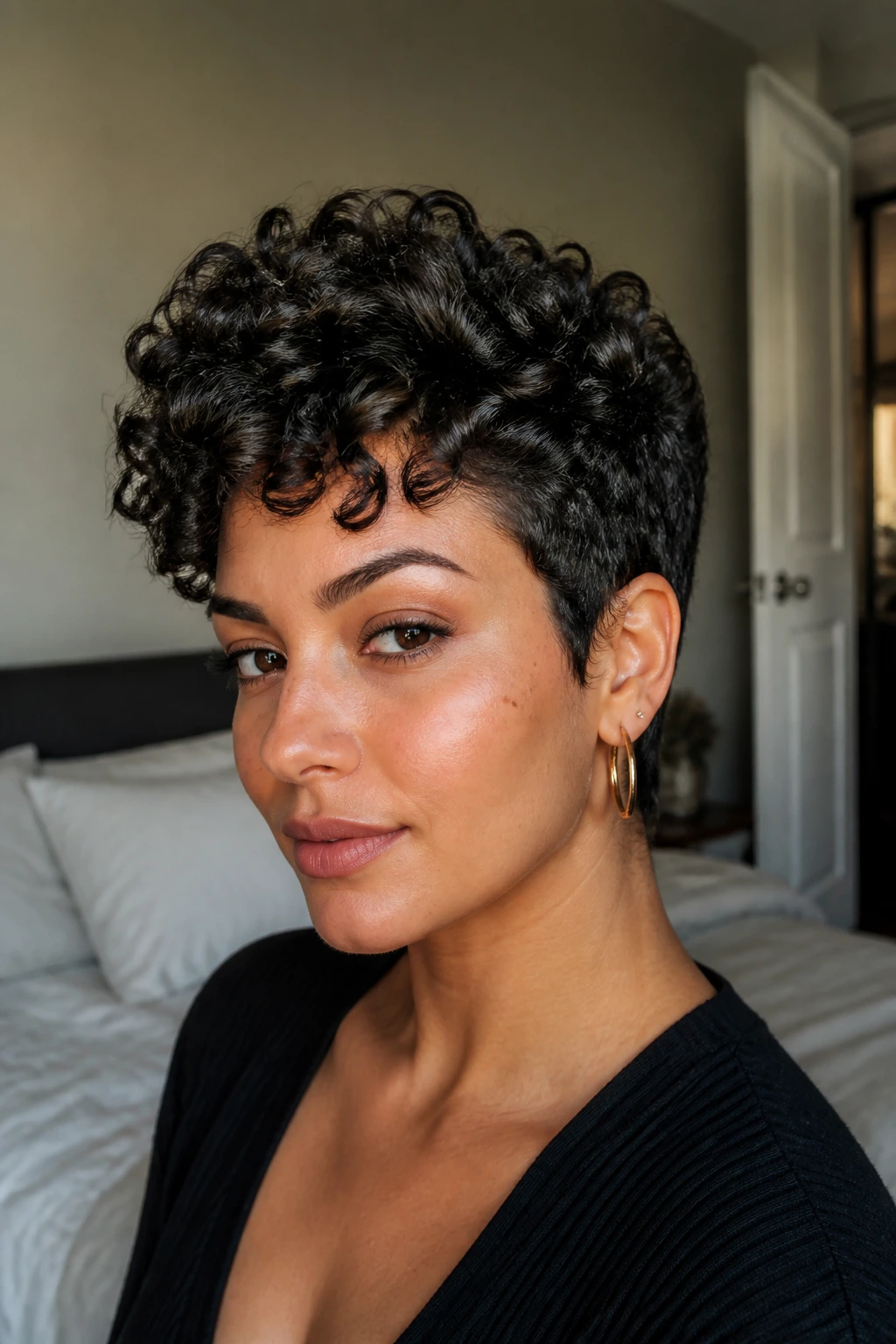
A pixie can absolutely flatter a round face. The old rule that “short hair makes a round face wider” is lazy advice, and I’ve seen too many bad versions of it. What matters is shape. A tapered curly pixie with height on top gives you that clean, lifted line while keeping the sides close enough to the head to avoid extra width.
This style is strongest when the curls on top are allowed to sit a little taller and the nape is kept neat. The result is sharp, not severe. On dark hair, especially deep brown or black, the texture shows in the crown and gives the style more dimension than a straight pixie ever would.
It’s a good pick if you want a low-fuss morning routine. A bit of curl cream, a diffuser for five to ten minutes, and a finger rake around the part is often enough. The haircut does the rest. Just do not cut the top too short. You want lift, not fuzz.
6. Rounded Afro with a Clean Shape-Up
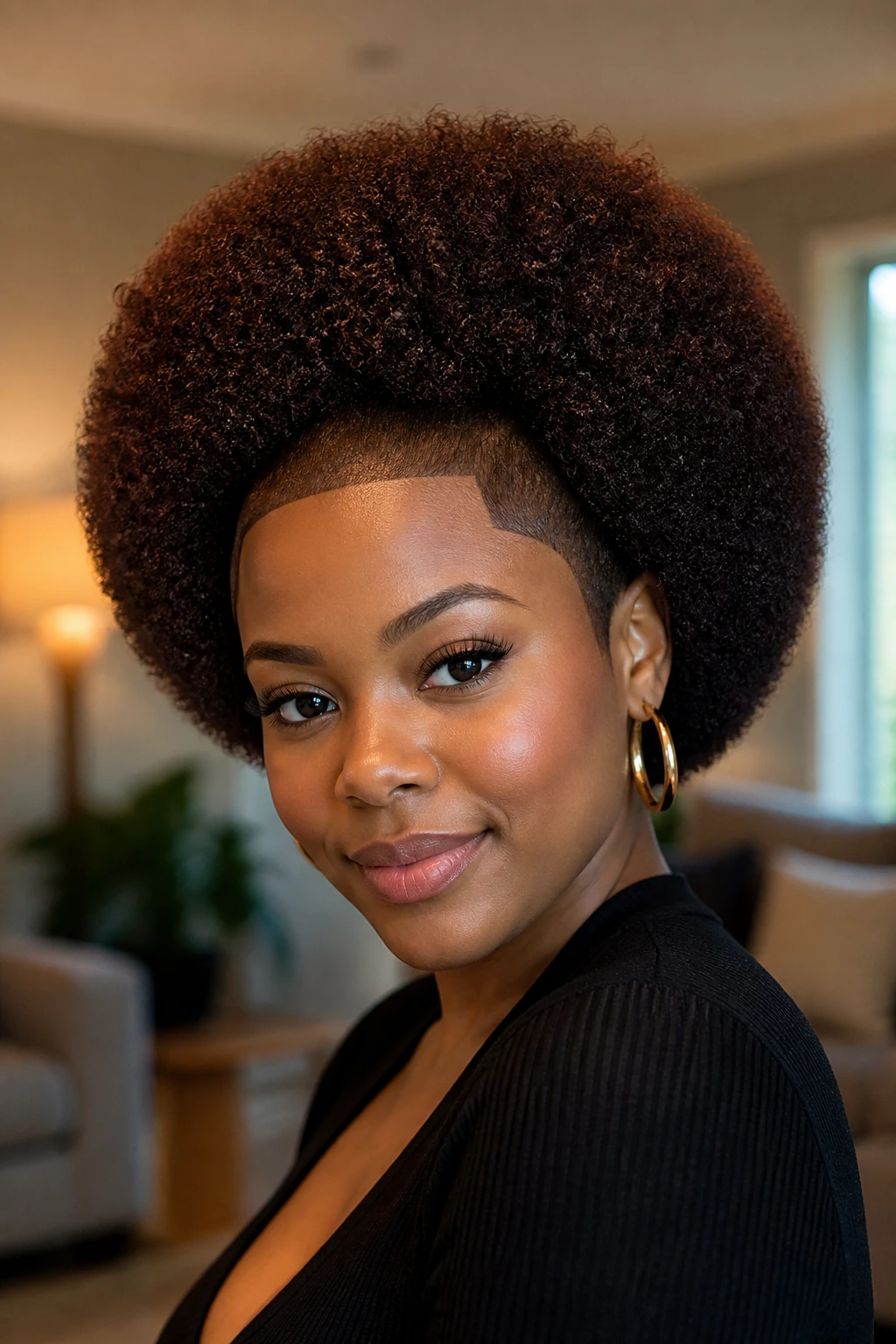
If your hair is coily and dense, a rounded afro can be one of the best shapes for a round face — as long as the sides are shaped with intent. The goal is not a perfect sphere. That’s the trap. The goal is a clean outline with enough height to keep the face looking balanced.
A good shape-up at the hairline and temples makes the whole style feel deliberate. Then the crown can expand upward and outward a little, which gives the face more vertical line. This is where dark hair looks especially rich. The coils cast little shadows through the shape, and the whole silhouette feels plush.
Who this suits best
- Tighter curl patterns that hold roundness naturally
- Hair with enough density to keep a full shape without gapping
- People who like a bold outline and don’t mind regular shaping
I love this with a deep mahogany gloss or a blue-black finish. It makes the texture read clearly in soft fall light and keeps the cut from looking flat. If the sides are starting to balloon, ask for a slightly tighter taper, not more length all over.
7. Shoulder-Length Wolf Cut in Espresso Brown
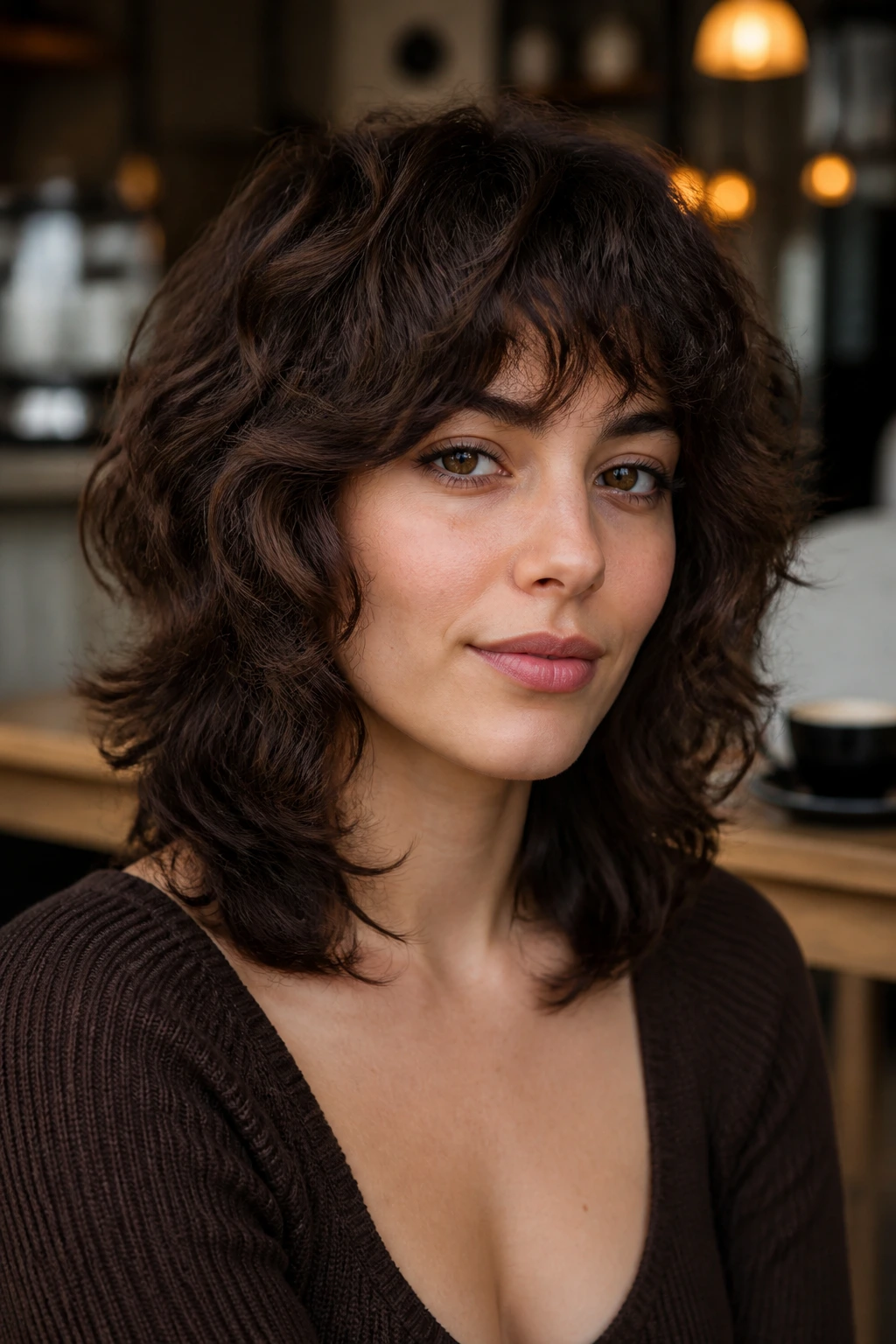
A wolf cut on curly hair can go wrong fast if the layers are hacked in without a plan. But when it’s shaped well, it gives round faces exactly what they need: lift, edge, and movement that doesn’t pile at the cheeks. The shoulder-length version is the sweet spot. Short enough to feel current, long enough to keep the curl pattern from turning into a triangle.
Espresso brown suits this cut because the layer breaks show up in low light and the texture looks deliberate instead of fuzzy. I’d keep the shortest layers around the crown and upper sides, then leave the lengths around the collarbone to pull the eye downward. That keeps the shape from widening the middle of the face.
- Works well on dense curls that like air between the layers.
- Ask for longer face-framing pieces rather than blunt side pieces.
- Diffuse until about 85 percent dry, then let the last bit air dry so the ends don’t get too puffy.
- A touch of curl mousse at the roots helps the crown hold height.
This one has attitude. Not costume drama. Just enough.
8. Low Curly Ponytail with Crown Lift
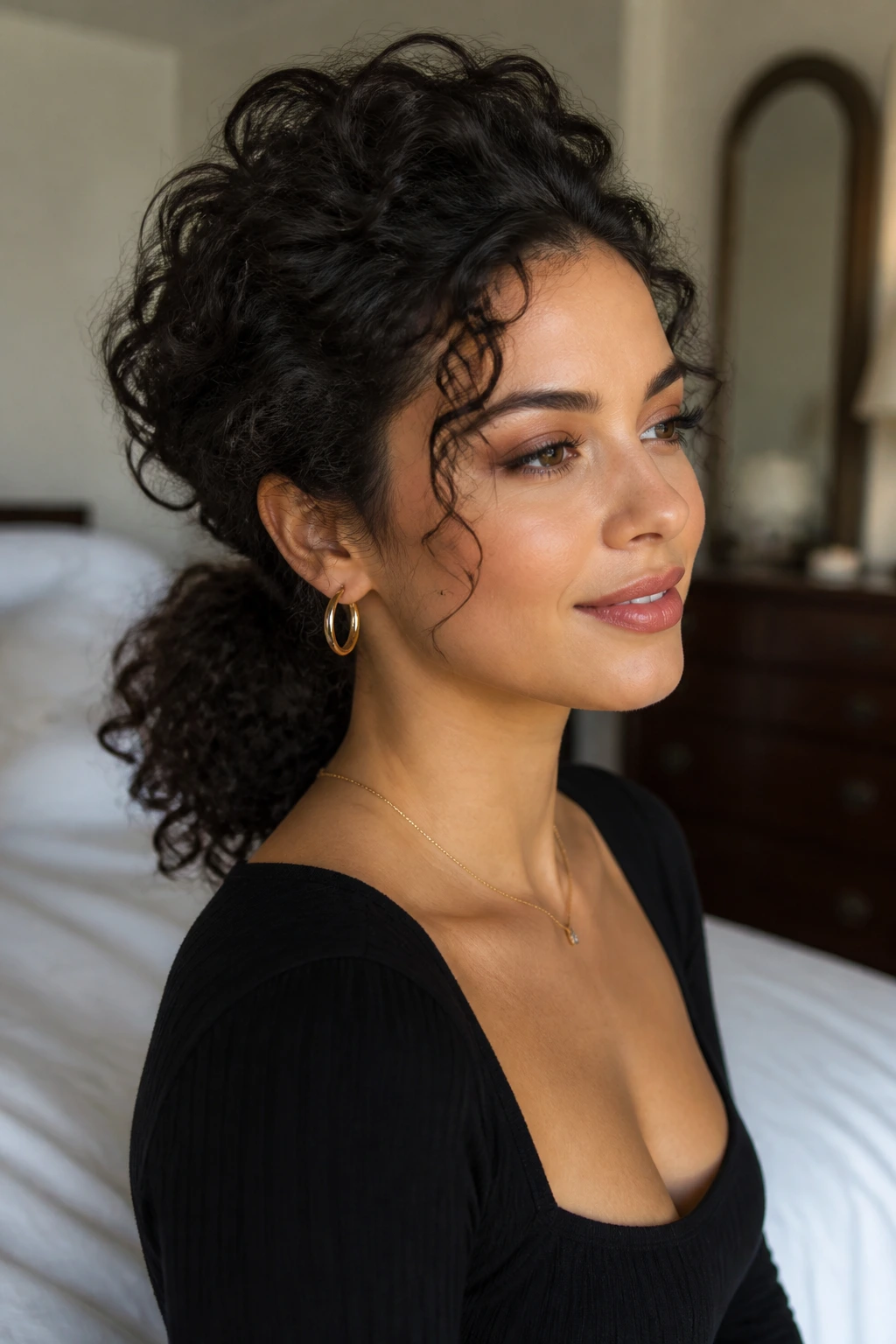
A low ponytail sounds plain until you do it the right way. Then it stops being plain and starts being one of the smartest shapes for a round face, especially when the weather makes you want your hair off your neck. The trick is to keep the crown loose and lifted before you tie it back.
If you slick everything tight, the face gets exposed in a harsh way and the cheeks can feel like the widest point in the room. If you leave a little softness at the temples and let a few curls spill forward, the ponytail becomes lengthening instead of severe. On dark curls, the effect looks polished because the silhouette stays clean.
I like this best a little off center, not dead flat at the back. Use a satin scrunchie or a coated elastic, then wrap one curl around the base if you want it to look finished without a lot of work. A quick mist of shine spray on the gathered length keeps the ponytail from looking dusty under indoor lights.
9. Half-Up Twist with Loose Front Curls
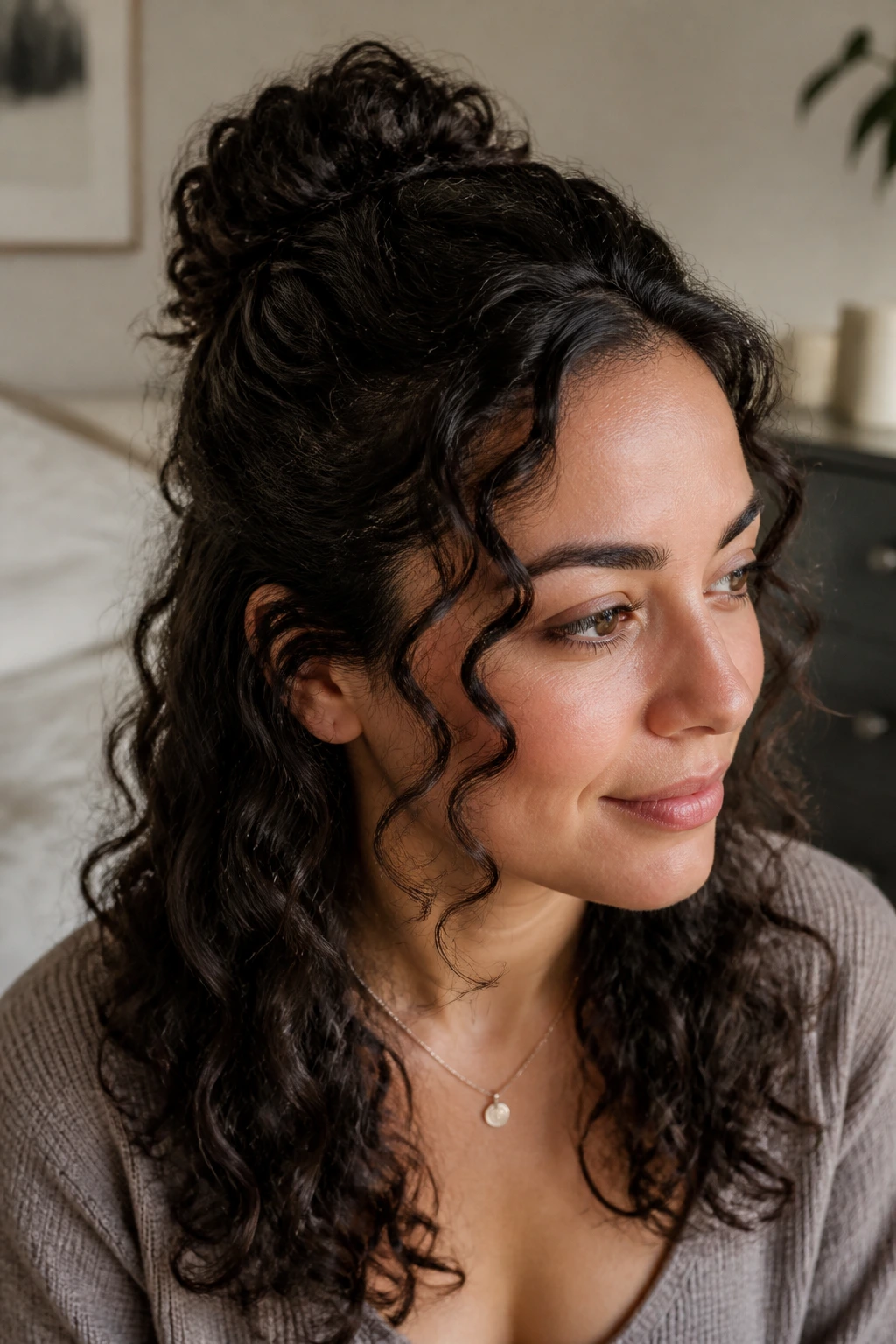
What if you want the face opened up but still want your curls on display? A half-up twist is the answer more often than people think. It pulls the crown back just enough to create lift, while the front pieces stay loose and keep the shape soft around the jaw.
The best version for a round face is not too polished. Twist the top section, pin it loosely, and let the front curls do their own thing. The result should feel airy, not sprayed into place. Dark hair makes this especially pretty because the twist at the crown creates a clean line, and the free curls underneath add movement.
Best on second-day curls
Second-day hair often holds a twist better than fresh wash-day hair. The curl pattern has a little grip, which means the top section won’t slide out as quickly. A light refresh spray and a pinch of gel at the front pieces usually does the job.
If your face is very full through the cheeks, keep the two front curls longer than you think you need. They should graze the jaw or collarbone, not stop at the smile line. That small change matters.
10. Side-Swept Curl Cascade
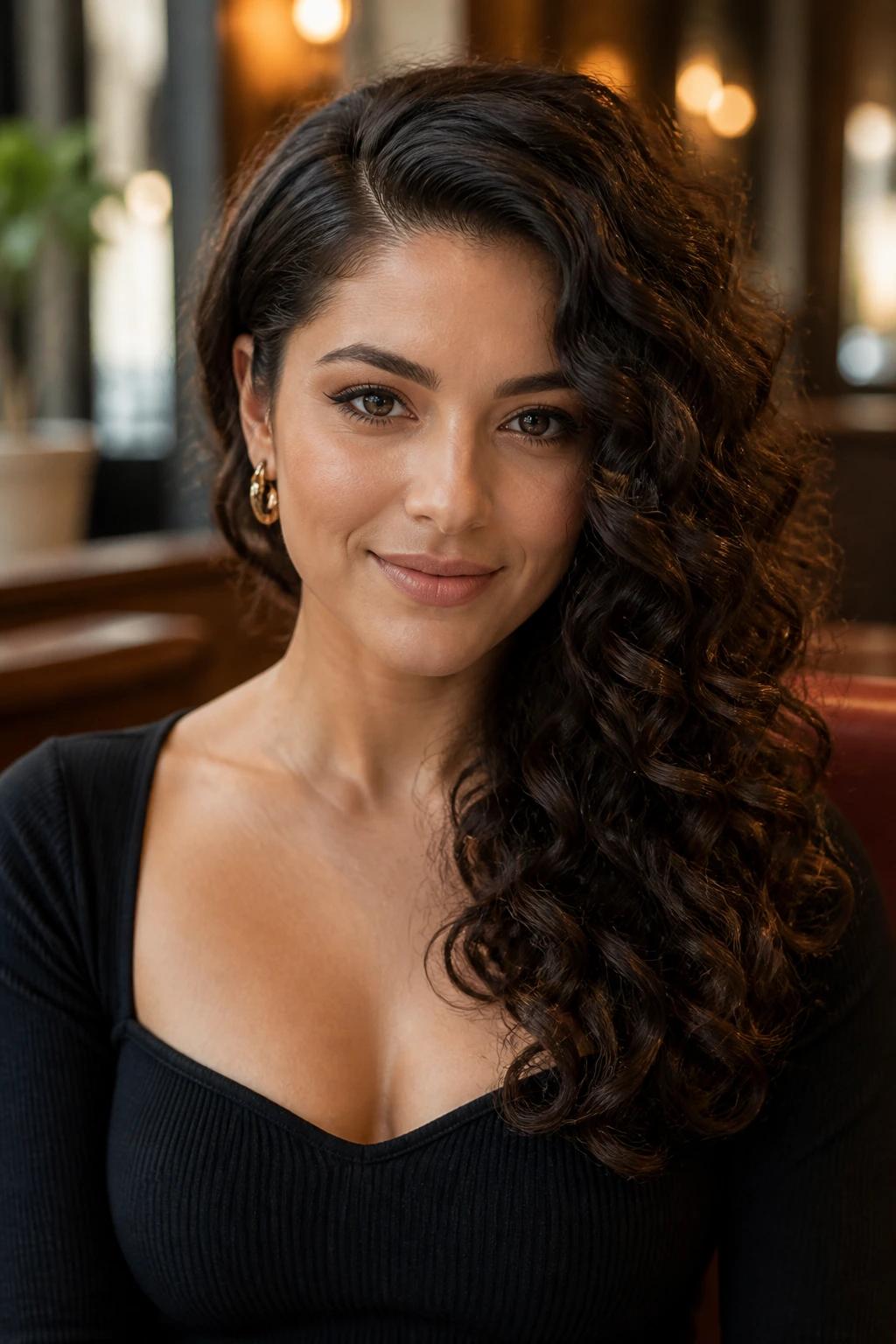
There’s something theatrical about a side-swept curl cascade, but it doesn’t have to look formal. On a round face, the side sweep creates an obvious diagonal line, and that line is what keeps the look from feeling circular. Dark curls make the sweep read like a ribbon instead of a blob.
A deep side part plus a shoulder-to-chest length curl pattern gives the style its shape. One side carries more weight. The other side opens the face. That tension is what makes it interesting. It’s especially good if your curls are medium-dense and need a little direction, because the style gives them a place to land.
- Use a wide-tooth comb only at the roots if you need to shift the part.
- Clip the heavier side at the crown while it dries so it keeps its lift.
- A light oil on the ends helps the cascade look glossy, not crunchy.
- Best when the part begins slightly above the arch of the eyebrow.
This is one of my favorite looks for evenings out because it feels dressed up without needing a formal updo. It also photographs well in low light, which dark hair sometimes struggles with if the curls aren’t defined.
11. Curly Bob with Understated Internal Layers
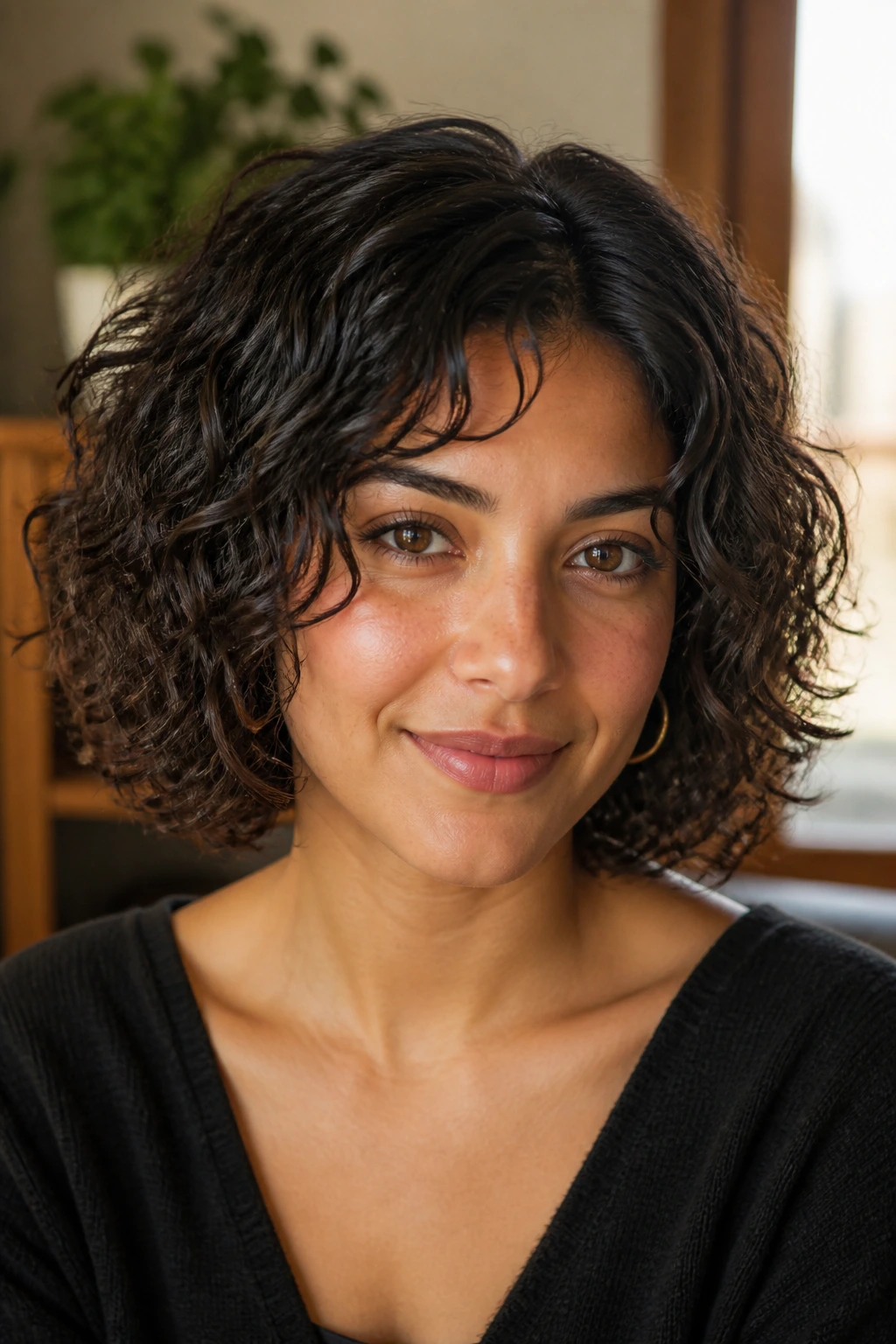
A curly bob is not automatically widening. That’s the lazy version of the conversation. The real issue is where the weight sits. If the bob is cut with internal layers — not choppy, not shredded, just enough to break up the bulk — it can sit beautifully on a round face.
Keep the length below the chin or right at the collarbone if your curls shrink a lot. Anything too short can bounce upward and park itself at the cheeks. The internal layers take the pressure off the outer shape, so the bob bends instead of bulging.
I like this cut in a dark mocha or soft black shade because the hairline looks crisp and the curl pattern gets to be the star. It also grows out politely, which is more than I can say for some curly cuts that lose their shape the minute the salon blowout disappears.
If you wear glasses, this shape can be especially good. The lower edge of the bob doesn’t compete with the frames the way a wide side shape sometimes does.
12. Braided Crown with Free Curls at the Nape
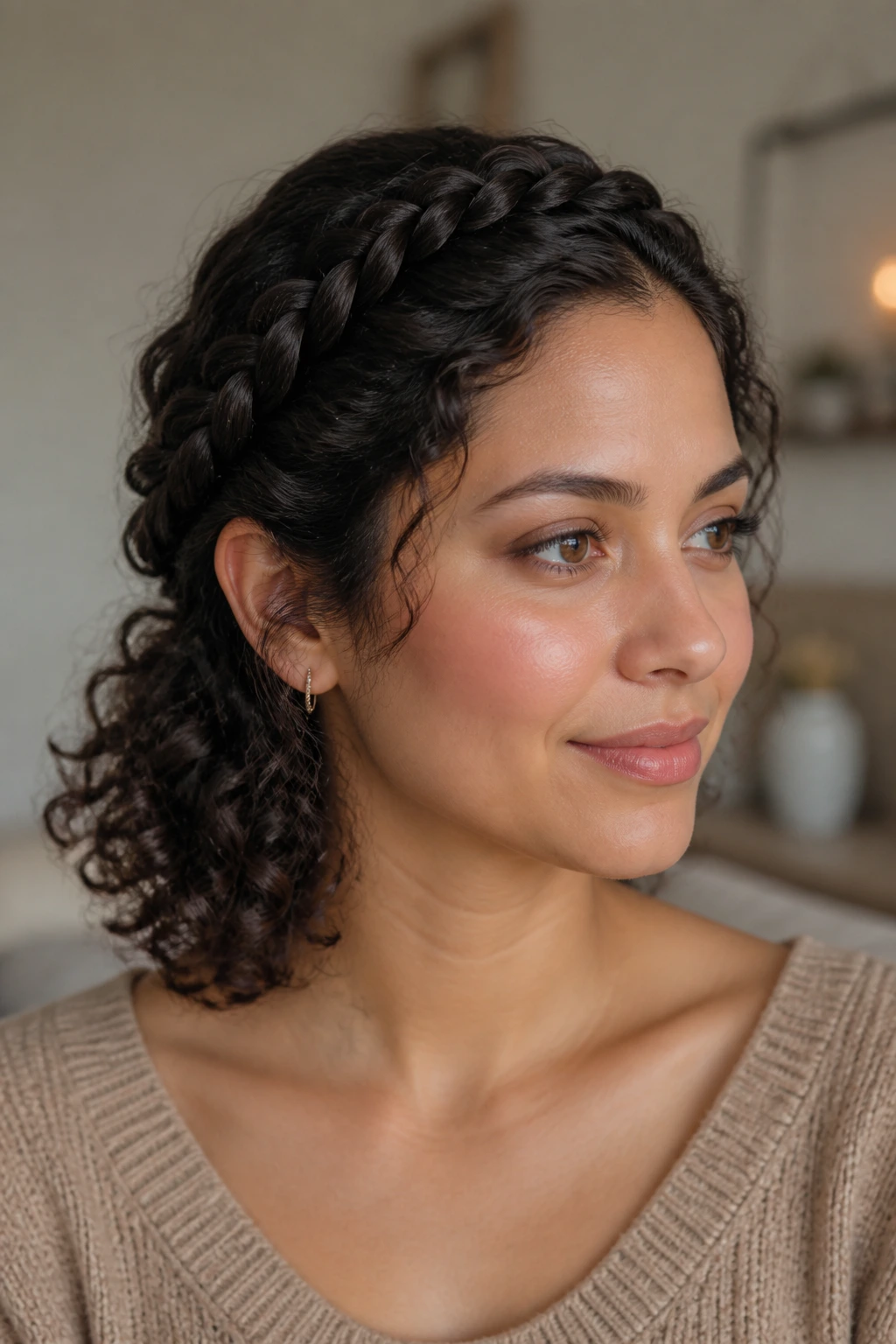
A braided crown buys you structure up top and softness where it counts. On a round face, that braid creates a horizontal accent that sits high enough to lift the eye, while the curls left loose at the nape keep the silhouette from getting too severe. It is a smarter choice than a full slick-back if you like some face-framing softness.
This works best when the braid is not too thick. A chunky crown braid can add width near the temples, and that’s not the move here. Keep it narrow, close to the head, and let the loose curls below do the visual balancing. Dark hair makes the braid texture stand out even when the lighting is dim or warm.
It’s one of those styles that looks more complicated than it is. Good news. You can prep it on slightly stretched curls, which means less frizz and fewer runaway pieces. A dab of styling cream along the braid line keeps the roots smooth without turning the rest of the hair stiff.
13. Asymmetrical Curly Cut with a Longer Front
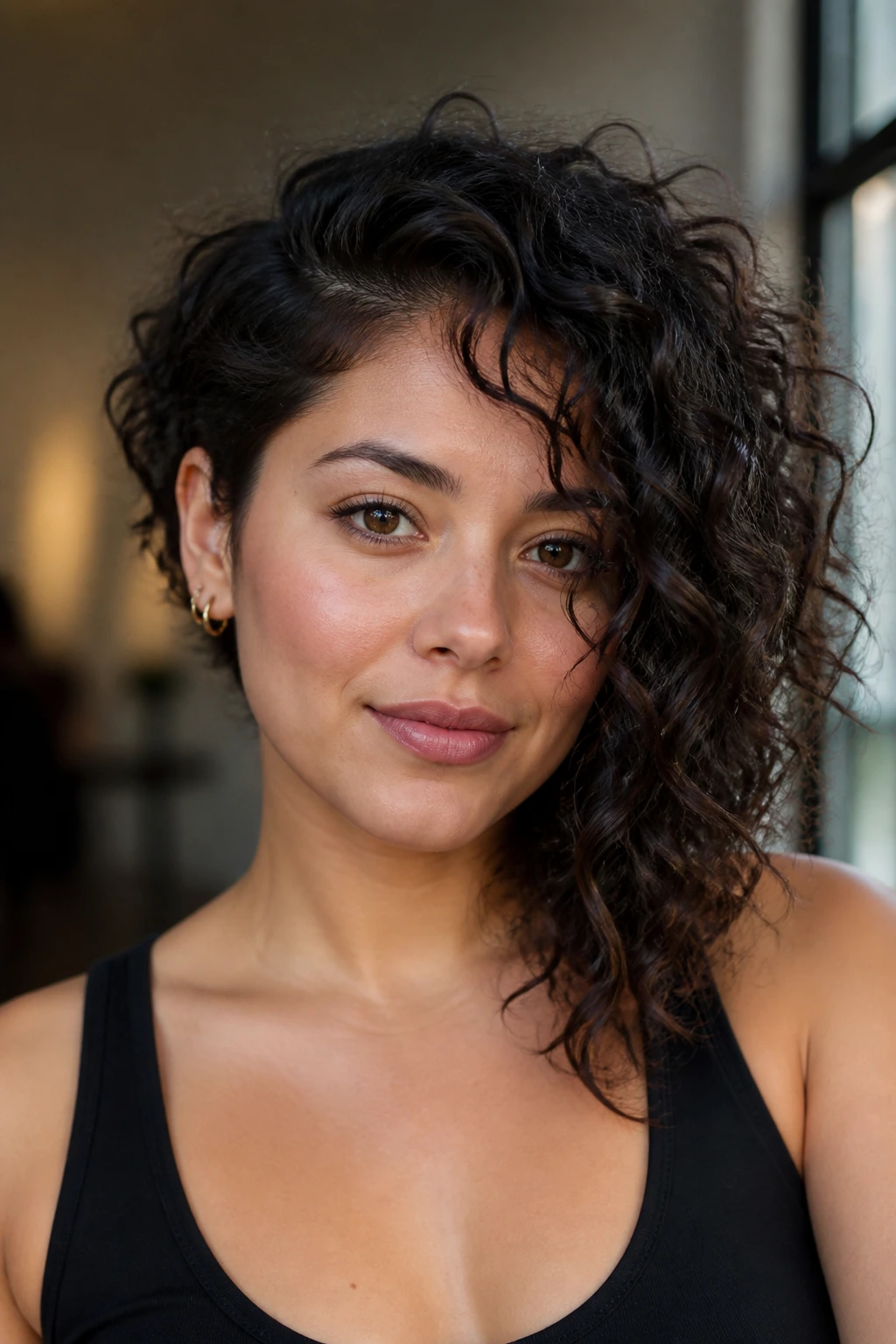
If your face feels widest in the middle, an asymmetrical cut can be a small miracle. One side is left longer, or the front angle drops more sharply on one side, and suddenly the face has a line to follow instead of a circle to sit inside. That offset shape is especially useful for curly hair, because the curls themselves add softness around a sharp cut.
The best asymmetrical versions are subtle. You do not need a dramatic one-side-shorter situation unless you want that energy. A few inches of difference in the front can change the whole look, especially on dark hair where the contrast between the sides reads cleanly.
Ask for this much difference
- Keep the longer side brushing the collarbone or upper chest
- Let the shorter side still reach below the jaw
- Preserve crown lift so the asymmetry doesn’t collapse into the cheeks
This is a good choice if you like your hair to feel a little fashion-forward but still wearable every day. It has shape. It has attitude. And it does not depend on a curling wand to work.
14. Deep Mahogany Ringlets with a Soft Fringe
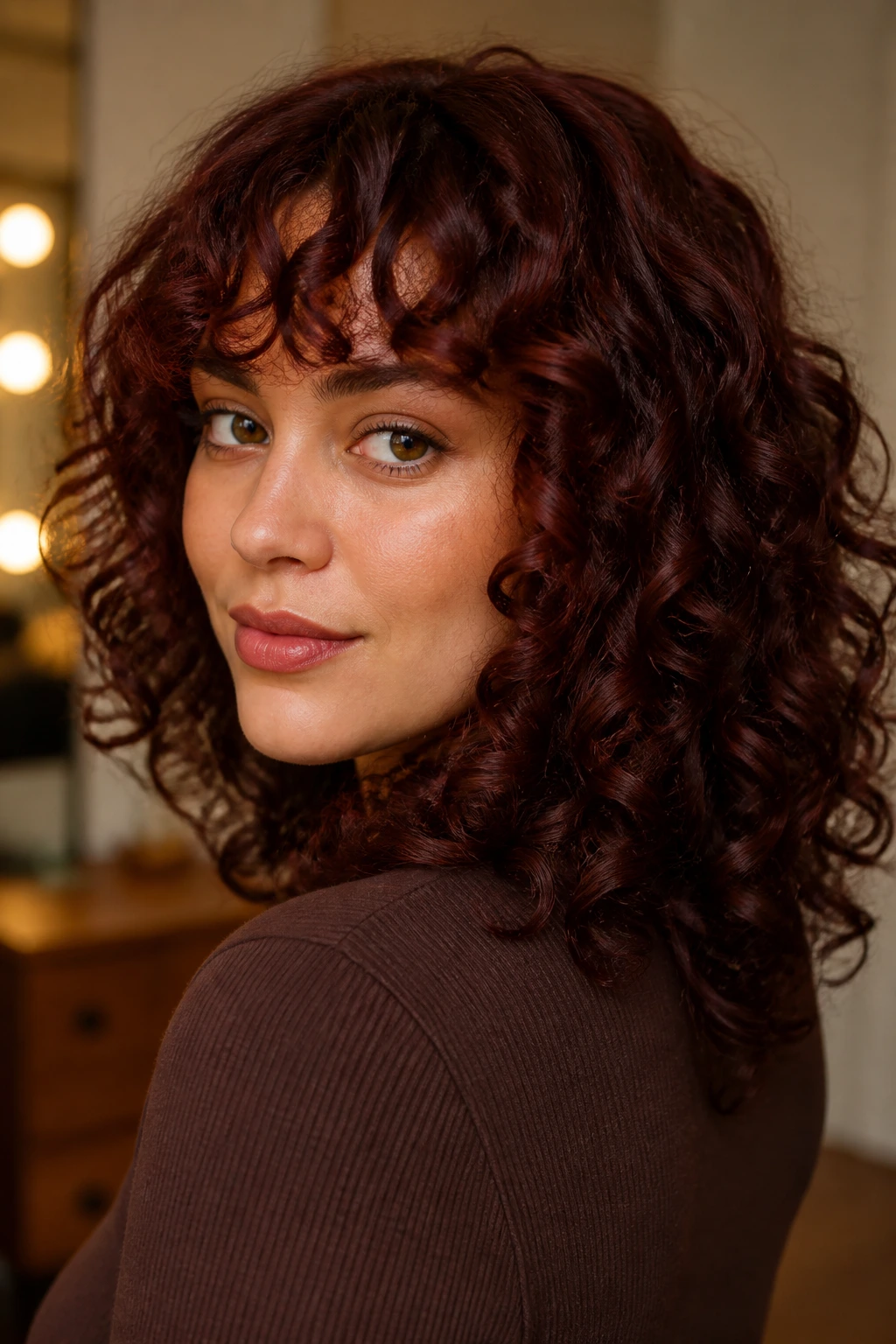
Some styles are about cut. This one is about color and line working together. Deep mahogany ringlets give curly hair a warm, dimensional look that fits fall without turning orange or brassy, and a soft fringe can soften the face without swallowing it. The key word is soft.
If the fringe is too blunt, it can shorten the face in the wrong way. If it’s wispy and curled just enough to split, it gives the forehead a little break while the rest of the ringlets pull the eye downward. On a round face, that balance is useful. The fringe should skim, not sit there like a curtain.
I like this on medium to dense curls where each ringlet can live its own life. The mahogany shade catches indoor warmth in a way that darker flat black often does not, so the whole style feels richer. A gloss treatment every few weeks helps the color stay deep instead of dull.
This is one of the more romantic options in the group, but it still has structure. That’s the part I prefer.
15. Twisted Low Bun with Curly Tendrils
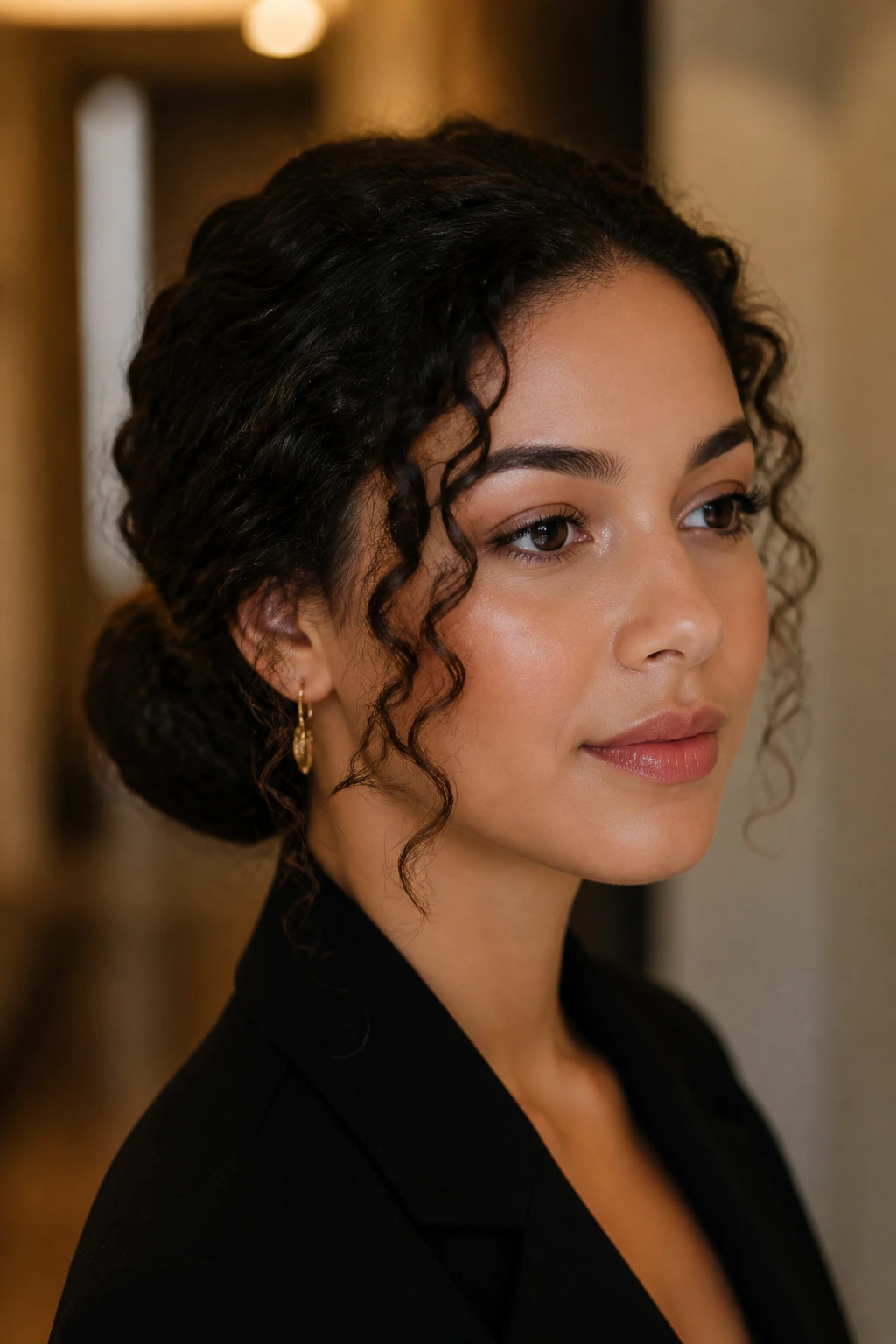
If your curls frizz the second a scarf touches them, a twisted low bun can save the whole day. Pull the hair low and loose, twist it instead of scraping it flat, and leave a few tendrils around the temples and ears. That’s the difference between a severe bun and one that flatters a round face.
The low placement matters. High buns can sometimes widen the top of the head and make the face feel shorter. A low bun sits beneath the widest part of the face, which gives the eye a place to settle. The tendrils keep the style from looking too tight, and on dark hair they add tiny ribbons of shadow around the face.
This is one of the better options for coat-heavy weather, because the bun stays clear of collars and the front pieces can be tucked or left alone depending on your mood. If the bun feels too flat, gently lift the crown with the point of a comb before you pin it. That one move changes the whole shape.
16. Glossy Black Cherry Layers with Flip-Out Ends
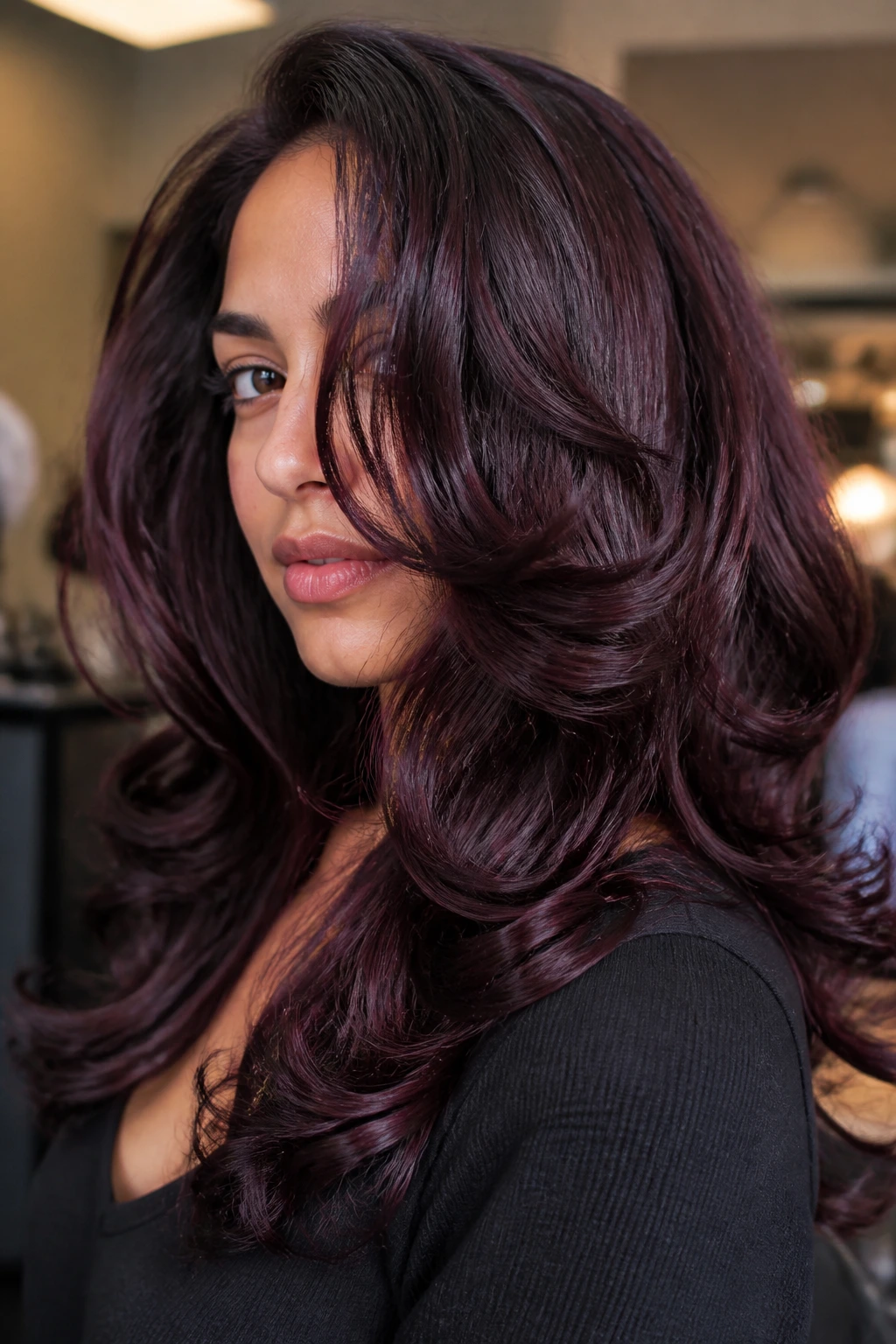
A little flip at the ends keeps curly hair from looking heavy. That’s especially helpful on a round face, where too much inward bend can make the lower half feel crowded. Black cherry layers bring the bonus of depth: the color looks almost black indoors, then shows a red-violet cast when light hits it.
- Best for shoulder-length to long curls that can hold a directional finish.
- Ask for layers that encourage the ends to turn out, not tuck under.
- Use a small round brush only on the last inch or two if you want to coax the flip.
- Keep the front pieces longer so the flip happens lower than the cheeks.
This style has a little 1970s energy, but it doesn’t look costume-y if the cut is modern and the layers are soft. It’s also a solid pick if you want your hair color to do some of the visual work while the shape stays simple. The red undertone wakes up the curls. The flip-out ends keep the silhouette from closing in.
17. Sculpted Shoulder-Length Cut with Invisible Layers
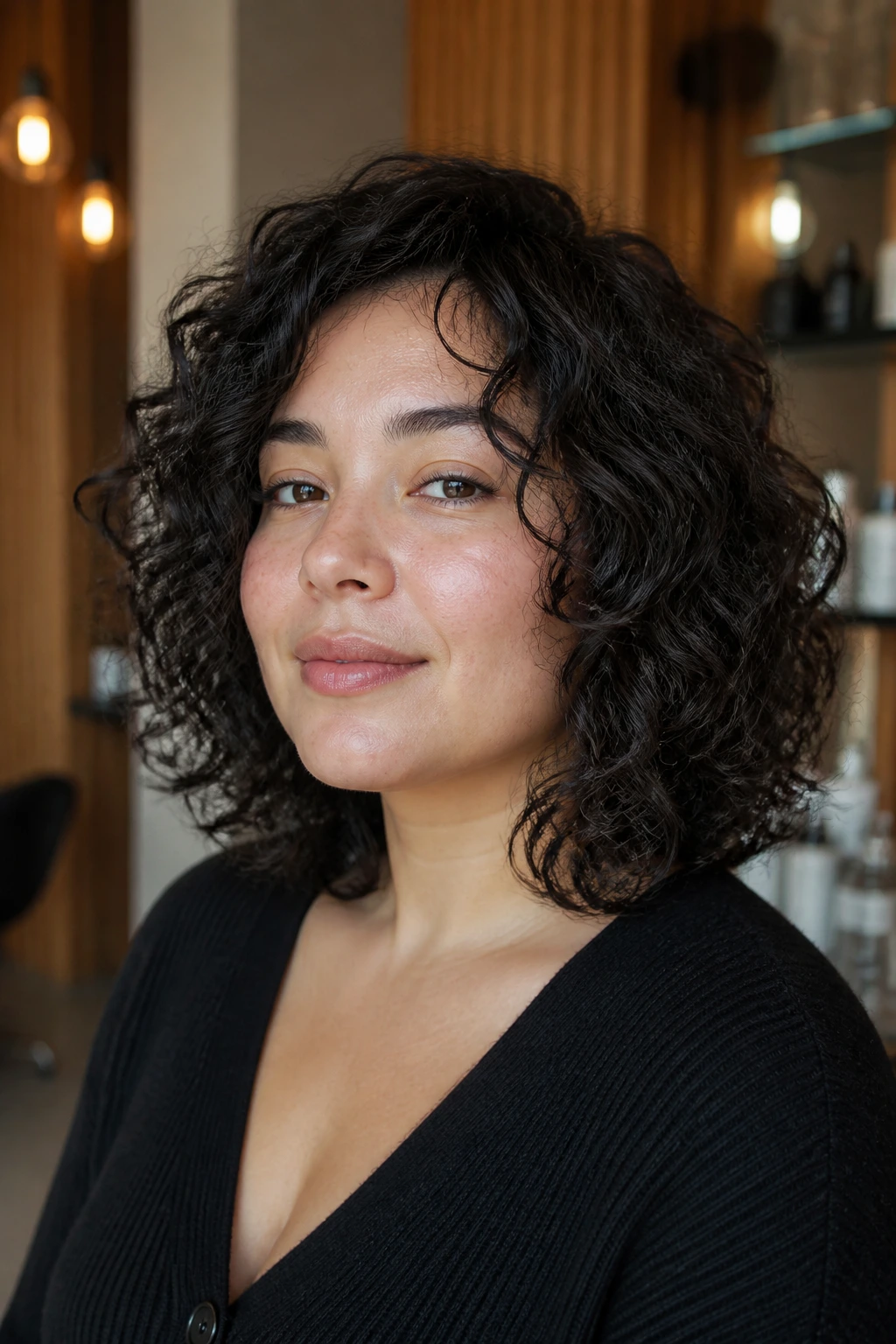
If you like the idea of a neat, shoulder-length curly shape but hate looking chopped up, invisible layers are your friend. They remove bulk from inside the haircut without leaving obvious steps, which keeps the outer line smooth. On a round face, that smoother line can be the difference between “shape” and “puff.”
This cut works beautifully on dense curls that need weight removed in the middle. The shoulders are a smart stopping point because the hair doesn’t end at the cheek or jaw, but it still feels manageable. On dark hair, the smooth exterior gives you shine; the internal layers give you movement.
I’d call this a very grown-up cut, though that sounds more stuffy than I mean it. What I really mean is that it behaves. It can be styled in ten minutes, worn loose, clipped back, or tucked under a coat without falling apart. That’s not glamorous on paper. It is glamorous in real life.
18. Loose Crown Puff with Defined Ends
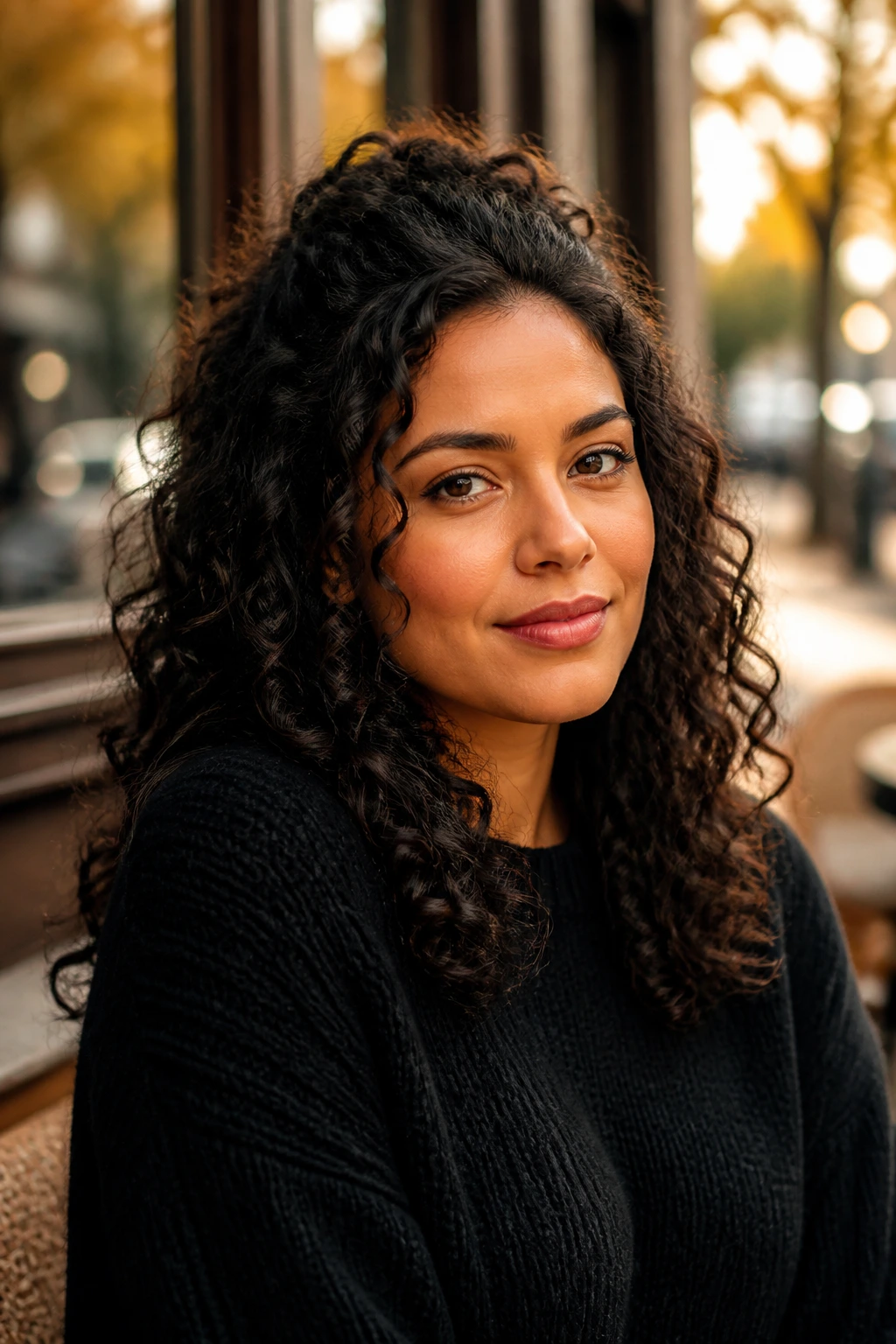
A loose crown puff is a smart middle ground when you want the top lifted but the ends left controlled. On a round face, that lift helps the face read longer, while the defined ends keep the whole style from exploding outward. It is a better choice than flattening everything just to “slim” the face.
The trick is to keep the puff soft, not stretched tight. Pull the front and crown upward, secure it loosely, and let the rest of the curls hang with definition. Dark hair makes the contrast between the lifted crown and the polished ends look deliberate. If the roots are a bit flat, a quick root refresh with water and mousse usually brings them back.
This style is especially good for in-between days. It looks intentional with a leather jacket, a scarf, or a knit sweater, which is exactly the kind of practical polish I want from a fall look. Not fussy. Not flat. Just shaped.
How to Ask for the Right Shape in the Chair
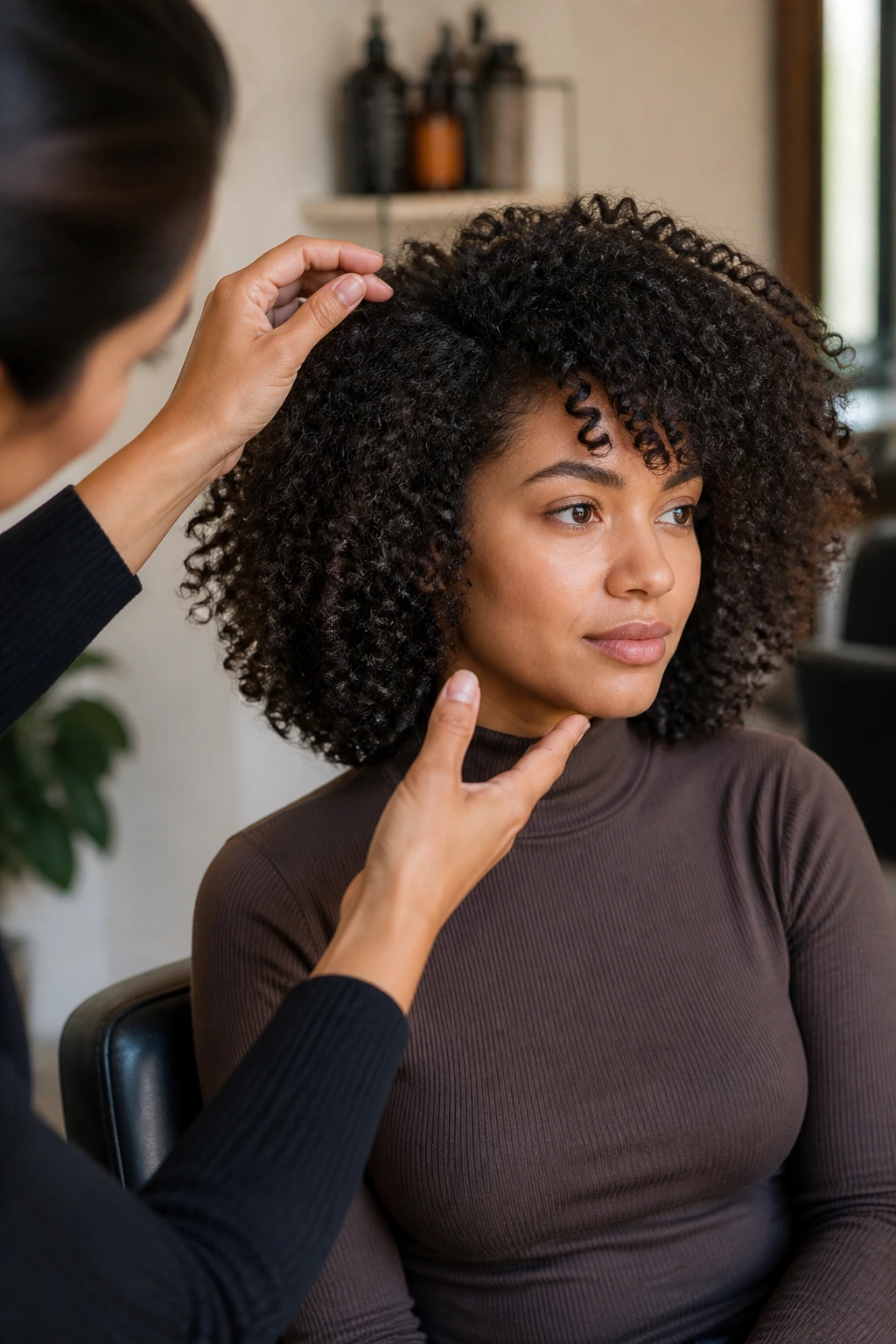
Say the widest part out loud. Seriously. That one sentence makes a stylist listen differently.
Tell them whether your cheeks are the fullest part of your face, whether your curls shrink a lot, and where you want the eye to go. If you want length, say so. If you want crown lift, say that too. Curly cuts get muddled when people ask for “layers” and leave it there. Layers can mean anything from a soft face frame to a heavily textured shag.
Use these exact kinds of notes
- “My curls shrink about two inches.”
- “I don’t want the shortest piece to land at my cheekbone.”
- “I like a side part, but not a heavy triangle at the sides.”
- “I need the shape to work air-dried and diffused.”
Bring one or two photos, then point to the parts you like. Not the whole haircut. The part. The cheek pieces. The crown. That is how you steer a curly cut without ending up with a salon version of someone else’s hair. And if the stylist wants to cut it dry, let them. Curly hair usually tells the truth when it’s dry.
How to Style These Looks Without Flattening the Crown
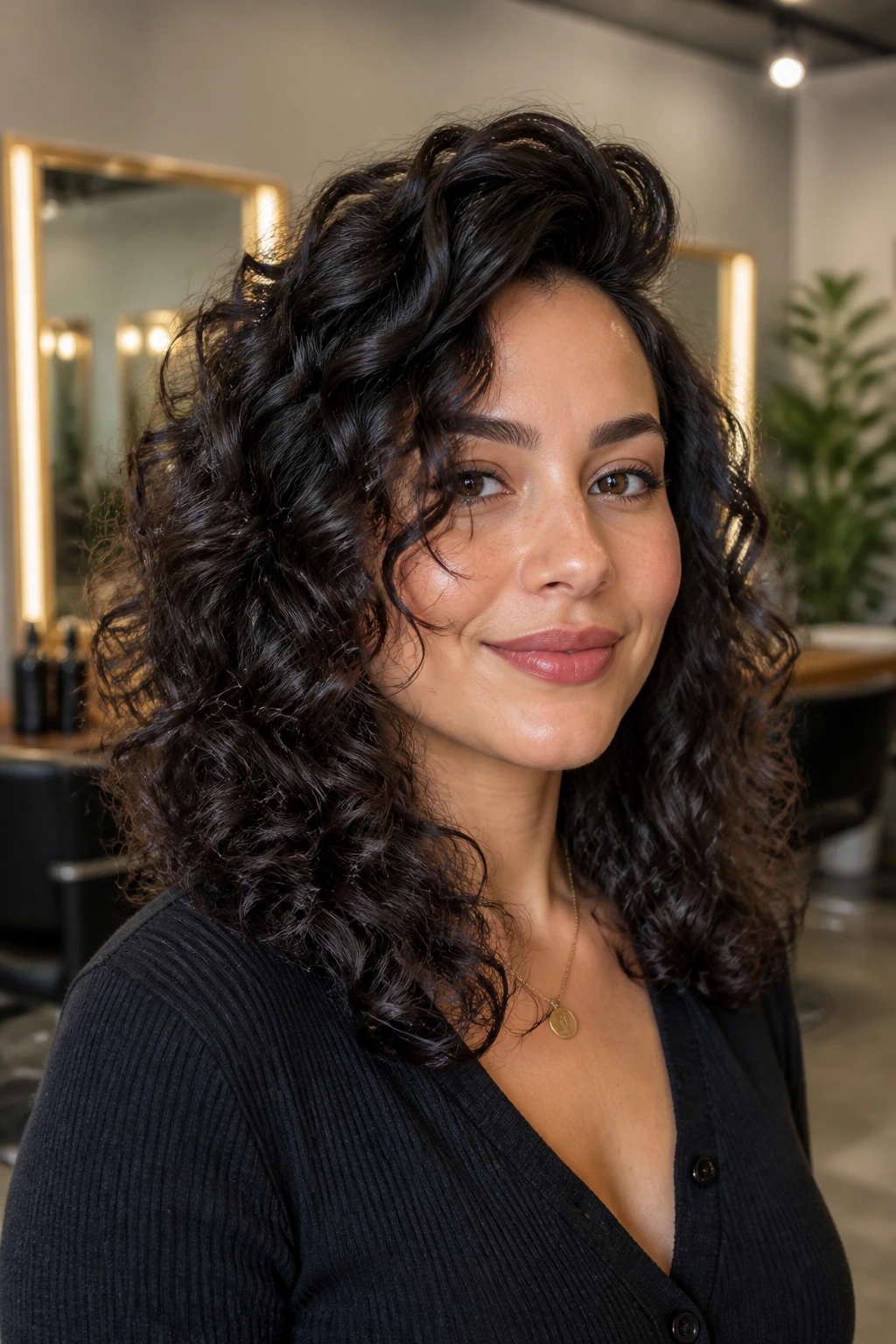
The crown is where a lot of round-face styling lives or dies. Flatten it, and the sides take over. Raise it a little, and the whole shape opens up. That’s why I’m fussy about root care.
Root prep: Apply mousse or a light foam to damp roots, then lift sections with clips while they dry. You’re not trying to build a tower. You just want some space at the scalp.
Drying method: Diffuse on low or medium heat and stop at about 80 to 90 percent dry. If you keep blasting curls after they’ve set, they often puff out at the cheeks. Let the last bit air dry.
Part placement: Shift the part while the hair is still damp. Once curls lock in, moving the part takes more effort and usually creates frizz where you don’t want it.
Finish: Use a tiny amount of oil or serum on the ends, not the roots. A greasy root on dark curly hair can make the shape fall flat fast.
And yes, hats are a thing. If you wear one, choose a satin-lined or roomy style when you can. Snug hats can squash the crown and widen the sides by noon.
The Mistakes That Make Curly Hair Read Wider on a Round Face
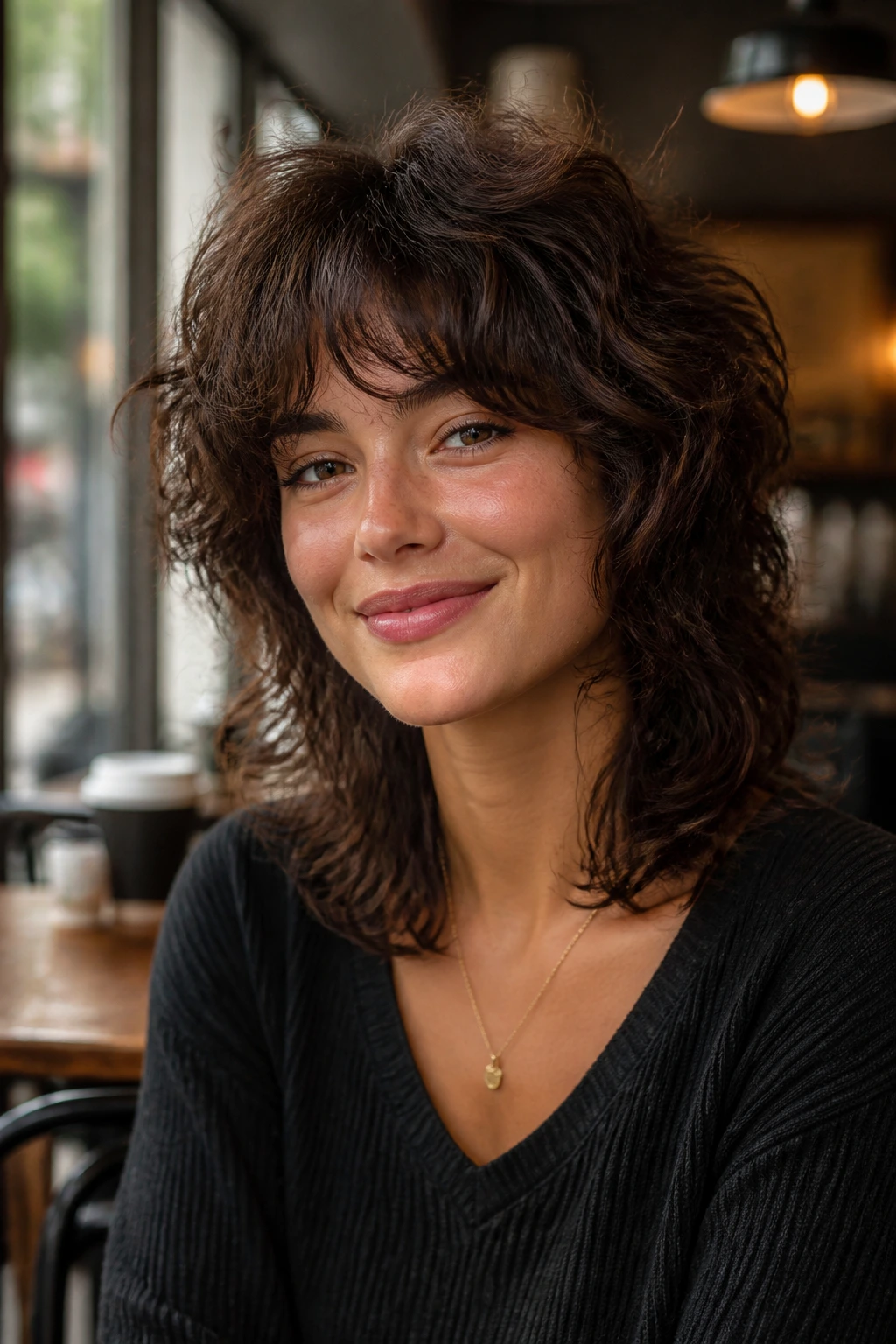
The most common mistake is also the easiest to fix: cutting the shortest layers at the cheeks. That puts the bulk right where the face is already fullest. Move those pieces lower and the whole shape opens up.
Another one is over-thinning the ends. People think they’re removing bulk, but on curly hair that can leave a stringy middle and a puffier perimeter. The result is worse, not better. A better move is internal shaping or a softer layer system that preserves the outline.
Watch out for these
- Too much volume on both sides: Great for a portrait, bad for a round face if the shape spreads outward.
- A flat crown: It makes the cheeks look wider because the eye has nowhere else to go.
- Bangs cut too short: They can shorten the face and expose the width at the temples.
- Ignoring shrinkage: Curly hair usually rises. If you cut to the dry curl length, the shape can jump higher than expected.
- Heavy collar-length ends: If the cut lands right where scarves hit, the style can puff and bend in odd ways.
The fix is not more product every time. Sometimes it’s just a cleaner cut and a better dry shape.
Easy Tweaks and Variations to Make These Looks More You
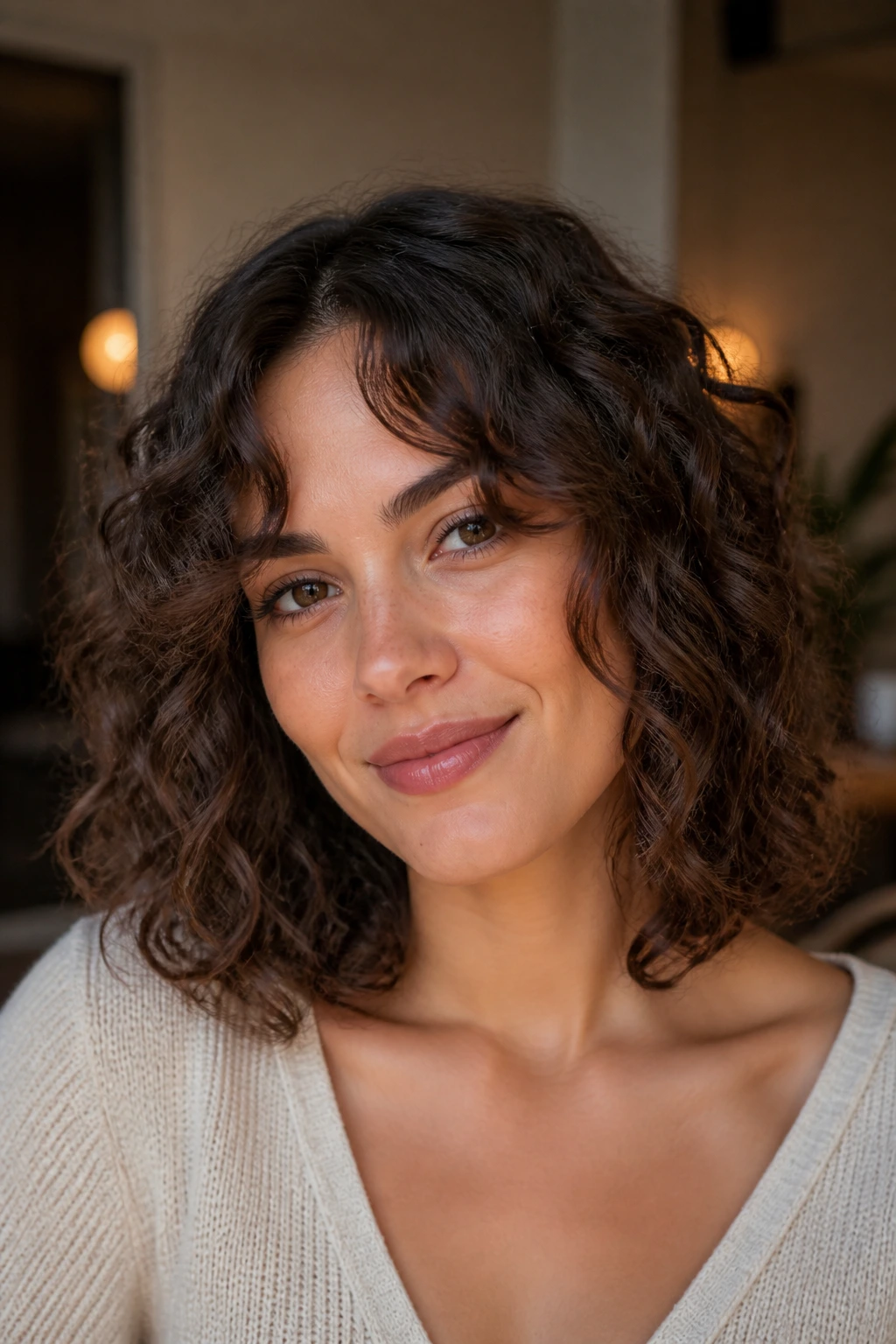
The Softer Office Version: Keep the part cleaner, the frizz lower, and the front pieces longer. This works if you want polish without losing curl shape.
The Bold Fall Color Version: Add espresso gloss, black cherry, mahogany, or a deep auburn glaze to make the curl pattern pop under dimmer light. Dark hair looks especially good when the color has one clear undertone instead of six.
The Low-Maintenance Version: Choose a collarbone cut, a low ponytail, or a sculpted shoulder-length shape. These hold up on day two and do not need a full restyle every morning.
The Texture-First Version: Go for a shag, wolf cut, or invisible-layer bob if you like movement and don’t mind a little edge. These are the cuts that look best when curls are allowed to breathe.
The Protective Version: Use twists, buns, and crown styles that keep the ends tucked away from scarves and coats. That helps reduce friction when the air gets dry.
Tools That Make Curly Styling Easier
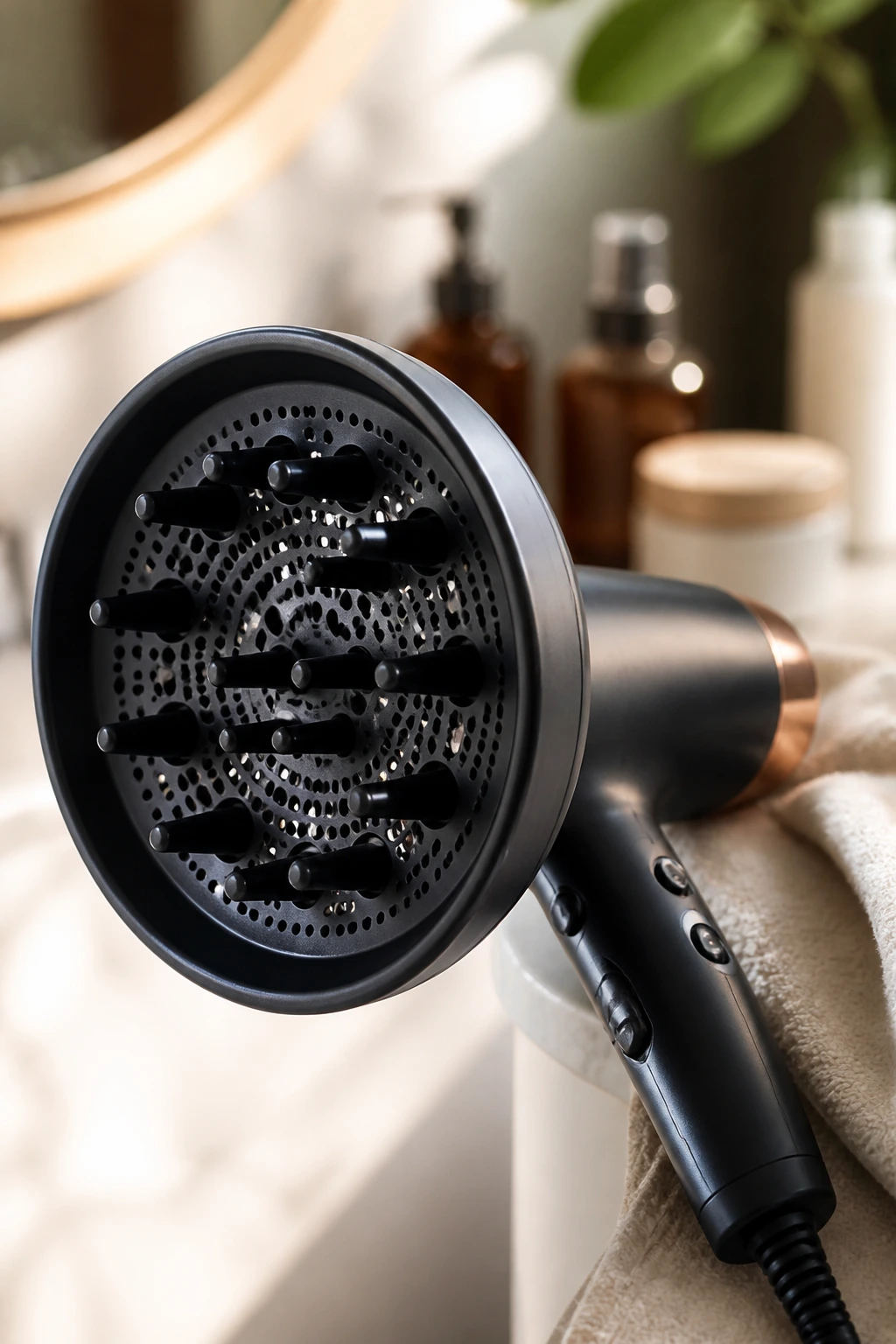
- Diffuser attachment: Helps set curls without blasting them straight.
- Wide-tooth comb: Good for shifting parts and detangling when hair is damp.
- Duckbill or curl clips: Useful for lifting the roots while they dry.
- Satin scrunchies: Better than tight elastics for ponytails and half-up styles.
- Lightweight curl cream: Gives slip and definition without making the hair greasy.
- Mousse or foam: Good for crown lift and styles that need structure.
- Fine mist spray bottle: Handy for refreshing second-day curls.
- Small amount of hair oil or serum: Best on ends and surface frizz, not the roots.
- Satin bonnet or pillowcase: Cuts down on friction overnight, which matters a lot when the weather dries everything out.
Keeping the Shape Between Wash Days
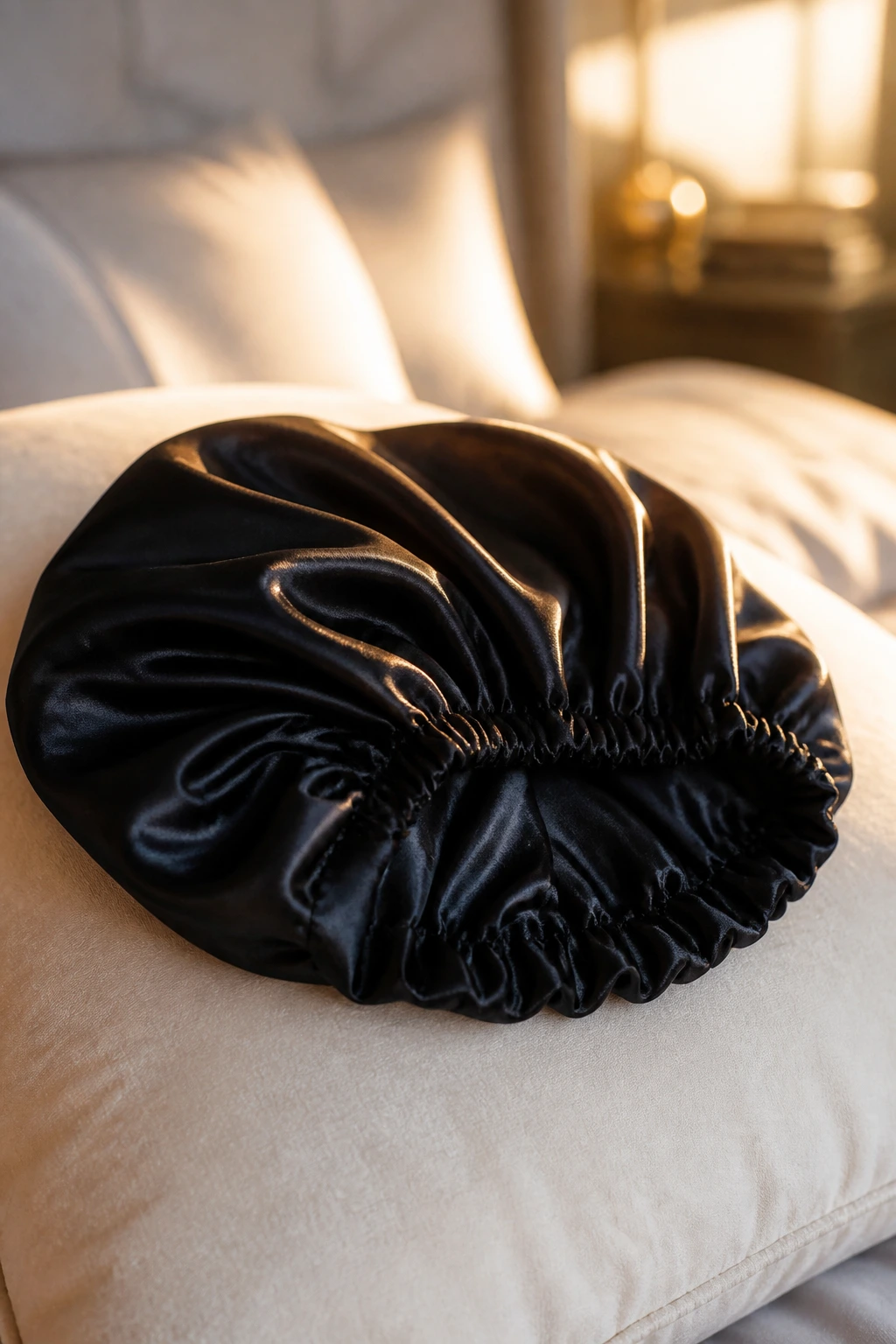
Curly styles last longer when you stop treating every morning like a full reset. Sleep on a satin pillowcase or wear a bonnet if your hair is long enough to tuck in comfortably. For ponytails, buns, and half-up looks, use a loose pineapple or twist rather than a tight elastic that leaves dents.
A light refresh is usually enough on day two or three. Mist the curls with water mixed with a little leave-in, scrunch upward, and re-clamp the roots if they’ve gone flat. If the cheeks are puffing outward, dampen just those side sections and re-shape them with your hands instead of soaking the whole head.
Trims matter too. Most curly cuts need a shape check every 8 to 12 weeks if you want the silhouette to stay balanced. Color-treated dark hair often benefits from a gloss or conditioning treatment every 4 to 6 weeks if the shine starts to go muddy. And if your curls are prone to dryness, a deep mask once a week is not overkill. It is maintenance.
Questions People Ask Before Cutting Curly Hair Short
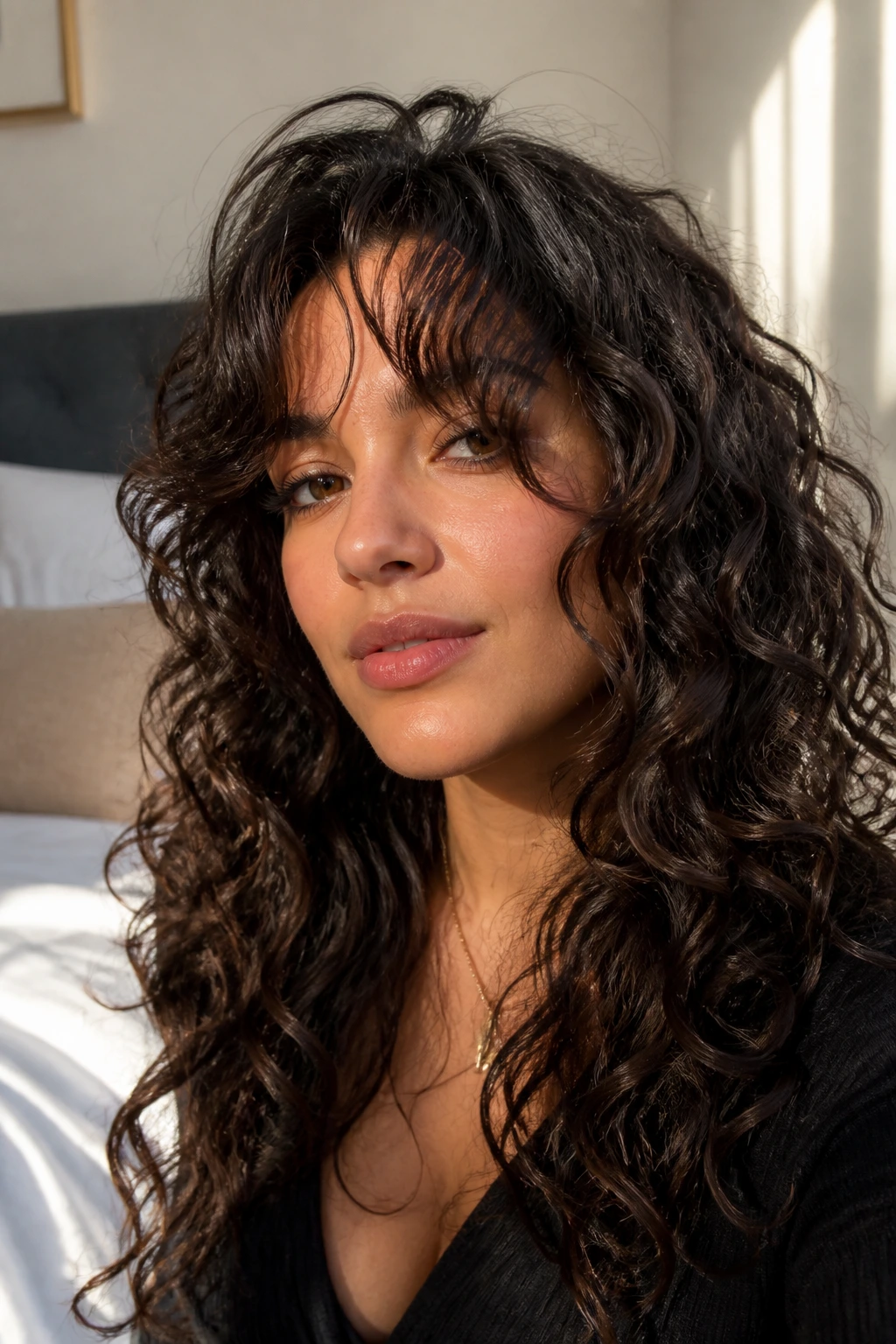
What is the most flattering curly cut for a round face?
The safest bet is usually a collarbone lob, a long layered cut, or a curly shag with crown lift. Those shapes keep the eye moving vertically and don’t pile all the volume at the cheeks.
Should round faces avoid bangs with curly hair?
Not at all. The trick is length and softness. Curtain bangs, airy fringe, and longer face-framing pieces usually work better than short blunt bangs that land high on the forehead.
Does a middle part or side part work better?
A side part often gives more length, while a middle part can work if the crown has enough lift and the front pieces fall long. If your face is very full through the cheeks, I’d usually start with a side part first.
How short can curly hair go on a round face?
Short can work, but the shape needs lift on top and tighter sides. A tapered pixie or shaped afro tends to do better than a blunt chin-length cut that ends right at the widest point.
Can dark hair make curly styles look heavier?
It can, if the cut is too solid. Dark hair also shows curl definition beautifully when the layers are placed well and the ends have movement. A little shine and a smart silhouette make a big difference.
What if my curls are more waves than ringlets?
Go for the lob, side-swept styles, or long layered cuts. Those shapes give waves room to fall without needing as much structure as tighter curls.
How do I keep my curls from puffing at the cheeks?
Keep the shortest pieces below the cheekbone, use a diffuser gently, and refresh only the side sections if they swell up. A bit of root lift at the crown often helps more than extra product at the sides.
Soft Lines, Strong Shape
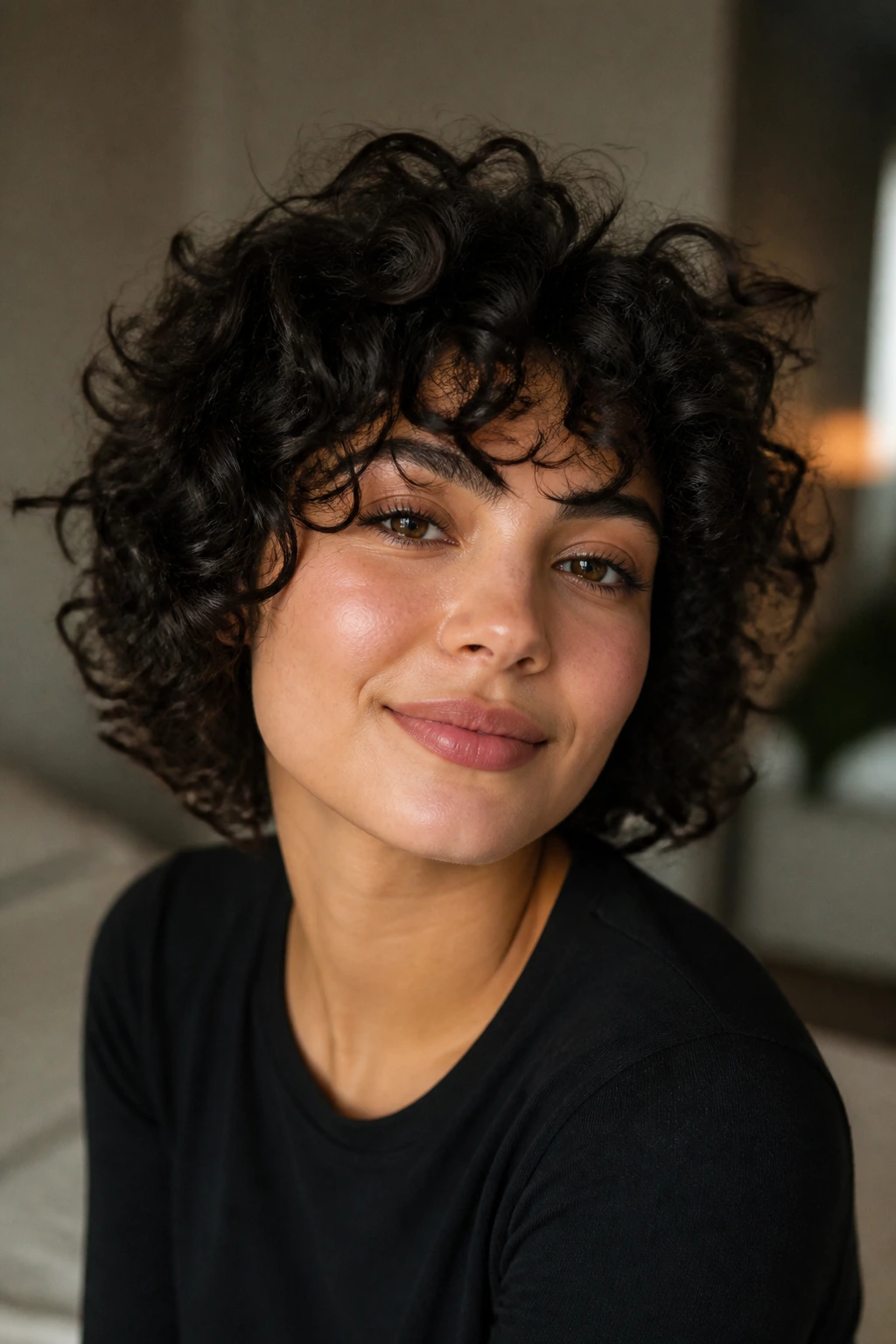
The best curly haircut for a round face is rarely the most dramatic one in the chair. It is the one that knows where to stay long, where to lift, and where to leave room. Dark color helps because it sharpens the curl pattern and gives the silhouette more depth, especially when the light turns soft and the air gets dry.
If you pick one of these shapes and ask for the cheekbone question out loud — where the shortest piece starts, where the crown rises, where the front falls — you’ll get much closer to the result you actually want. And that matters more than chasing some imaginary “perfect” face shape rule.
Curls do not need to be tamed into obedience. They need a cut that understands their movement. Give them that, and the whole look settles into place.