



Fine hair loves shape more than length. That sounds backward the first time you hear it, because a lot of people with finer strands assume they need to keep every inch they can. But a flat curtain of hair at shoulder length can look thinner than a shorter cut with a smart outline, a little bend, and bangs that split softly around the face.
Wash-go shag haircuts for fine hair with curtain bangs work when the cut does the heavy lifting. The perimeter has to hold enough weight to look full. The layers have to live mostly inside the shape, not saw the ends into wisps. And the curtain bangs need to start with enough length that they can sweep open without needing a perfect blowout every single time. Too short, and they jump into baby-bang territory. Too thinned out, and they disappear by lunch.
The nicest part is that this shape can go in a lot of directions. Some versions are polished and quiet. Some lean wolf cut and feel a little tougher around the edges. Some keep the line blunt enough to read as dense, then add movement where the hair actually needs it. That’s the trick, really. The haircut should look intentional when you air-dry it, flip your head upside down for 20 seconds, or do nothing fancier than rake in mousse and walk away.
Why These Shags Earn Their Keep on Fine Hair
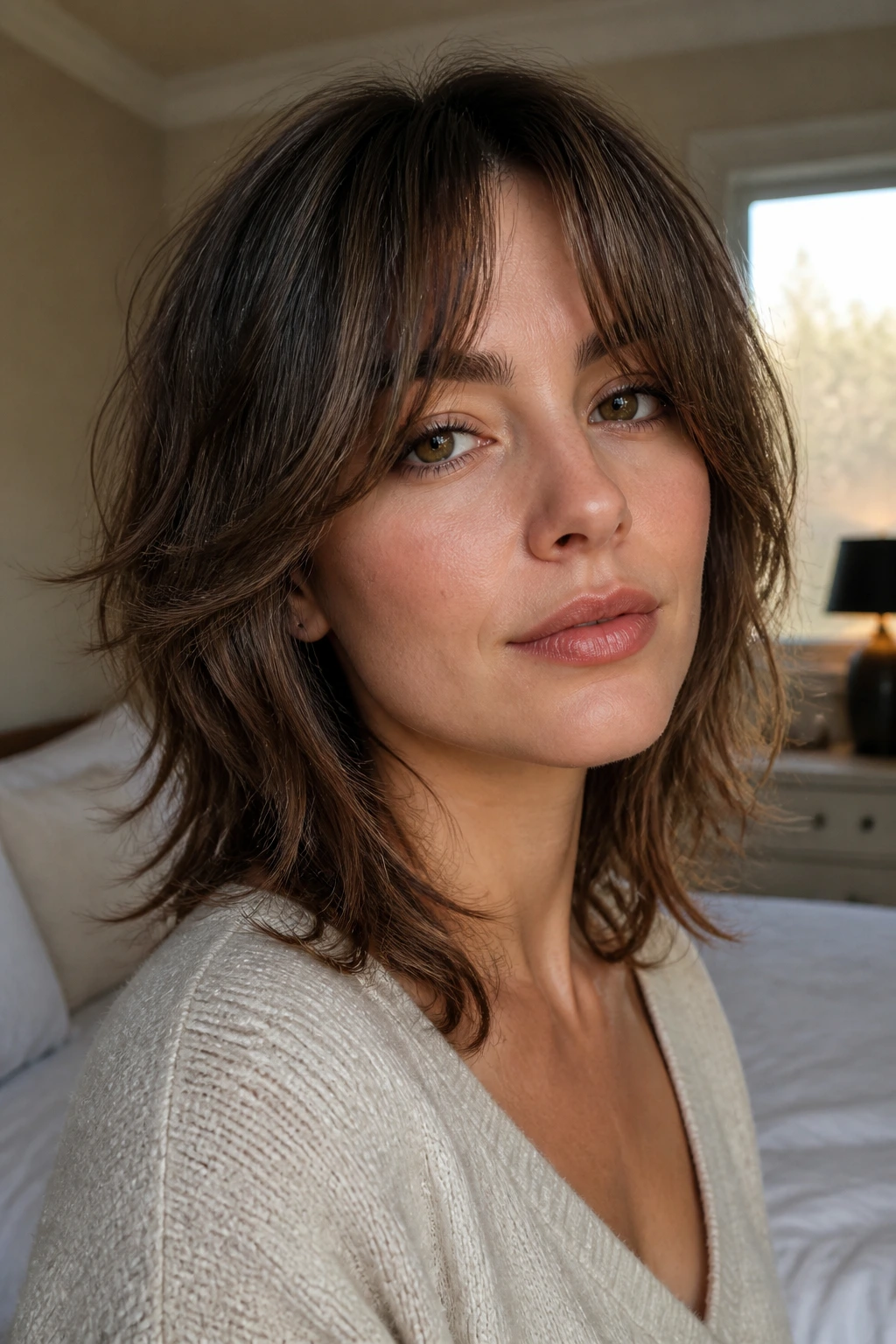
Perimeter weight matters: a fine-hair shag looks fuller when the ends keep a solid line, because a blunt edge gives the eye something to read as density.
Curtain bangs do quiet face work: split bangs that start around the cheekbone can open the face without stealing too much bulk from the front.
Internal layers beat aggressive thinning: the best versions take weight out from inside the haircut, not from the outline, so the hair still looks like hair.
Most of these cuts air-dry well: the shape is built into the haircut, which means your natural bend gets to do some of the work.
They grow out without a hard shelf: if the curtain bangs are cut with a soft slope, you don’t get that ugly “I need a trim this minute” line two weeks later.
They can look fuller on second day hair: a little separation and root lift usually help this kind of cut more than a heavy, polished finish ever will.
1. Collarbone Cloud Shag
The collarbone version is the one I’d hand to someone who wants movement without giving up the feeling of having hair. The length hits low enough to keep the ends from looking see-through, while the layers start low enough to avoid that shredded, over-lightened look fine hair gets when a stylist gets too enthusiastic with texturizing.
Why it works on fine hair
The bottom edge stays heavy enough to read as dense. That’s the main thing. Curtain bangs can sweep from the center part and fall into the cheekbones, which gives the face shape without making the front look sparse.
- Ask for the length to land at or just below the collarbone.
- Keep the layers soft and mostly internal, starting below the cheekbone.
- Let the curtain bangs stay long enough to tuck behind the ears on rough hair days.
Best for: people who want a softer shag that still feels like hair, not a cloud of flyaways.
2. Chin-Grazing French Shag
This is the shortest cut in the group that still behaves politely. Chin length sounds bold on paper, but on fine hair it can be a cheat code, because shorter hair shows body faster. The whole silhouette feels compact, and compact hair often looks thicker.
The French-shag angle keeps the crown soft, not spiky, and the curtain bangs open wide enough to flatter the face instead of closing it off. I like this one for straight or slightly bent hair that collapses when it gets too long. A quick round-brush bend through the bang area is usually enough. No fancy styling. No wrestling with a curling iron for 20 minutes.
3. Soft Wolf Cut With Long Curtain Fringe
Why does the wolf cut keep showing up in fine-hair conversations? Because the idea is sound when it’s softened. A shaggy wolf shape with long curtain fringe gives lift around the crown and a little taper through the nape, but it does not need to look punky or overcut to work.
What to tell your stylist
Ask for more lift through the top, less thinning through the ends. That distinction matters. On fine hair, the worst version of a wolf cut is the one that gets so chopped up that the outline disappears. Keep the fringe long, let it feather into the cheek, and skip aggressive razoring on the bottom inch unless your hair has a lot more density than it seems.
4. Rounded Lob With Split Bangs

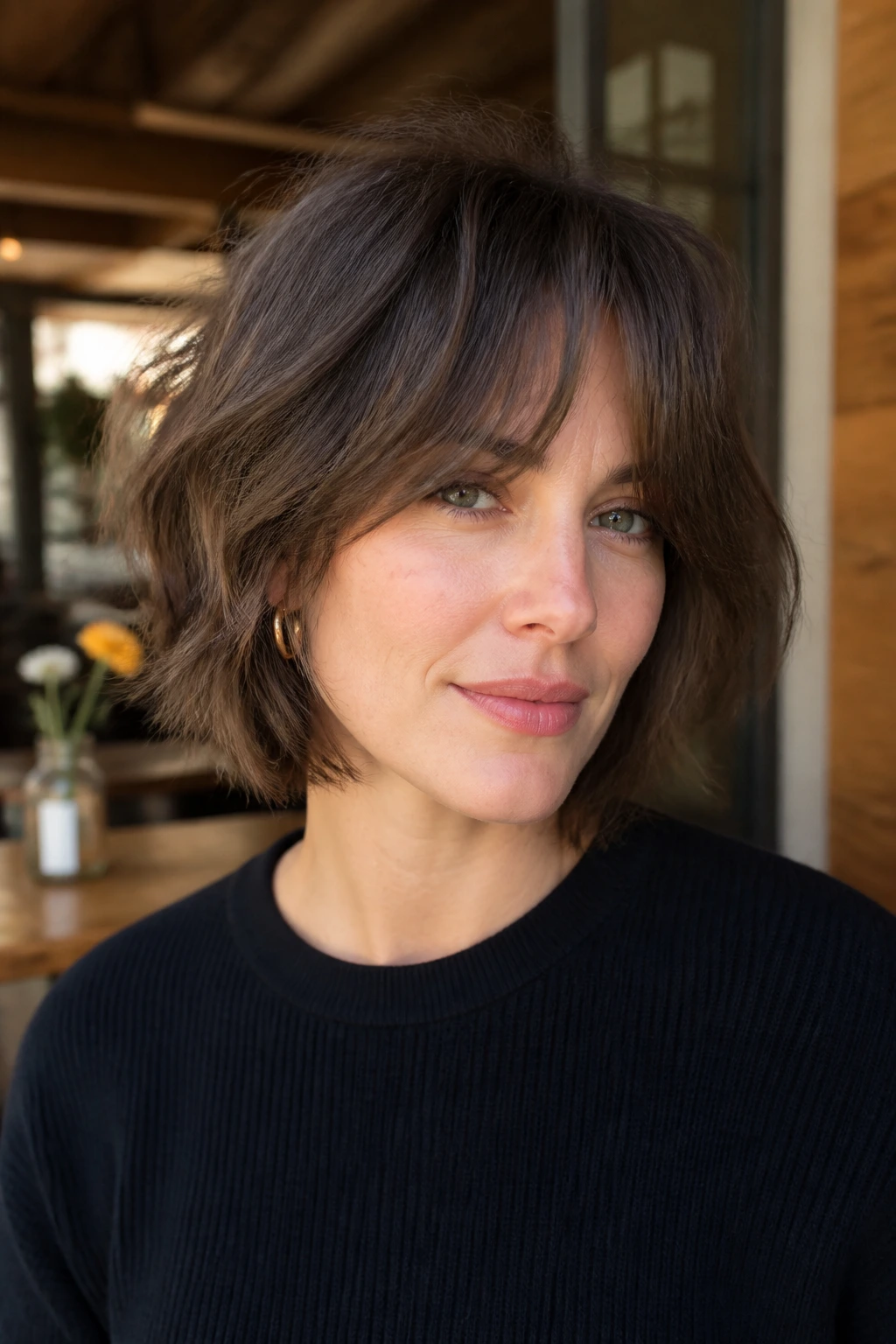
A rounded lob is the safe bet that never looks boring. It sits near the shoulders, curves inward slightly, and keeps enough length to feel grown-up while still giving the illusion of thickness. Split bangs in the middle keep the front soft, which helps fine hair avoid that blunt helmet effect.
This is the cut I recommend when someone says, “I want something wearable, but I’m sick of my hair lying flat against my head.” The rounded shape creates a little shadow under the jaw. The curtain bangs finish the job by drawing the eye inward. It’s tidy. Not rigid. A nice middle ground.
5. Micro-Shag Pixie Bob
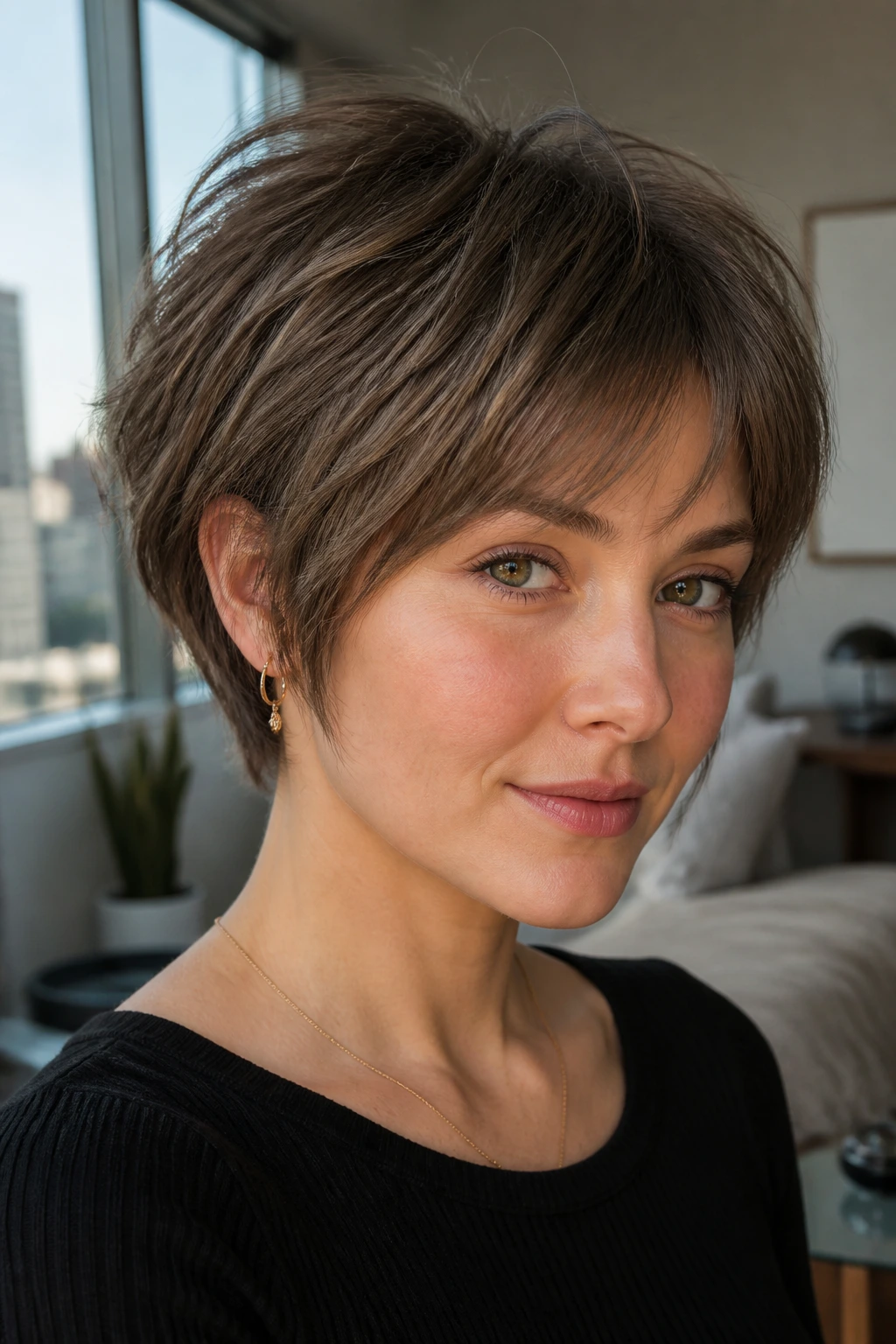
Short hair can actually be easier for fine strands. The micro-shag pixie bob proves it. The length sits between a pixie and a bob, with enough softness at the crown to give lift and enough shape around the ears to avoid that helmet-on-a-stick look.
The curtain bangs are really more like temple-length fringe here, and that’s the point. They soften the face without dragging the whole cut down. Use a pea-sized amount of paste or a light cream at the ends, not the roots. If you overdo product on this one, it turns stringy fast.
6. Airy Bixie Shag
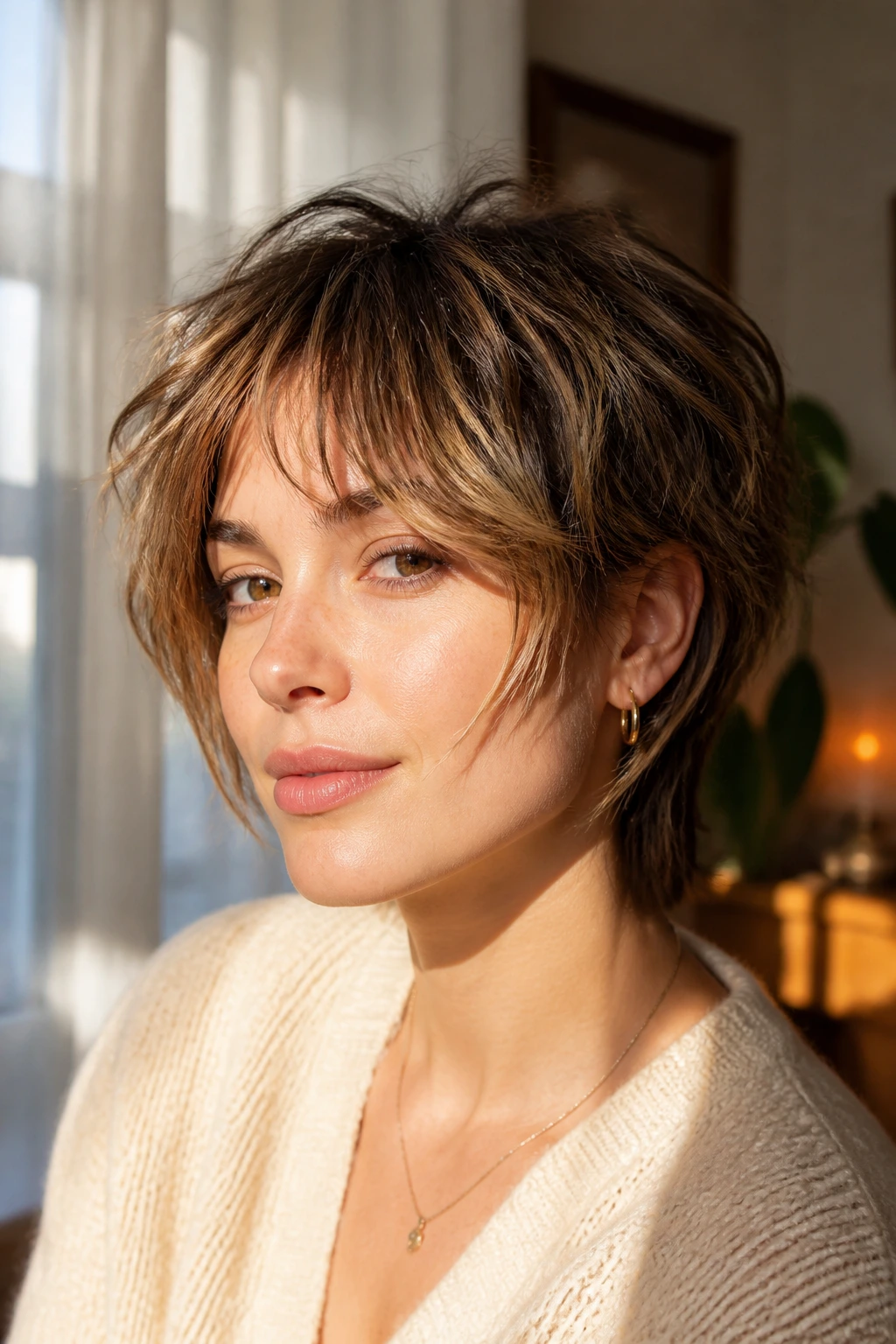
The bixie is what happens when a bob and a pixie decide to share a coat closet. It has the bite of a short cut, but the line is feathered enough to move. For fine hair, that means you get shape without too much bulk around the ears or nape.
How to wear it
Let the top stay a touch longer than the sides. That tiny imbalance is what gives the haircut life. Curtain bangs should brush the cheekbones, not land at the brow unless you’re committed to styling them daily. This cut is especially kind to faces that want a little lift near the temples.
7. Shoulder-Length Razor Shag
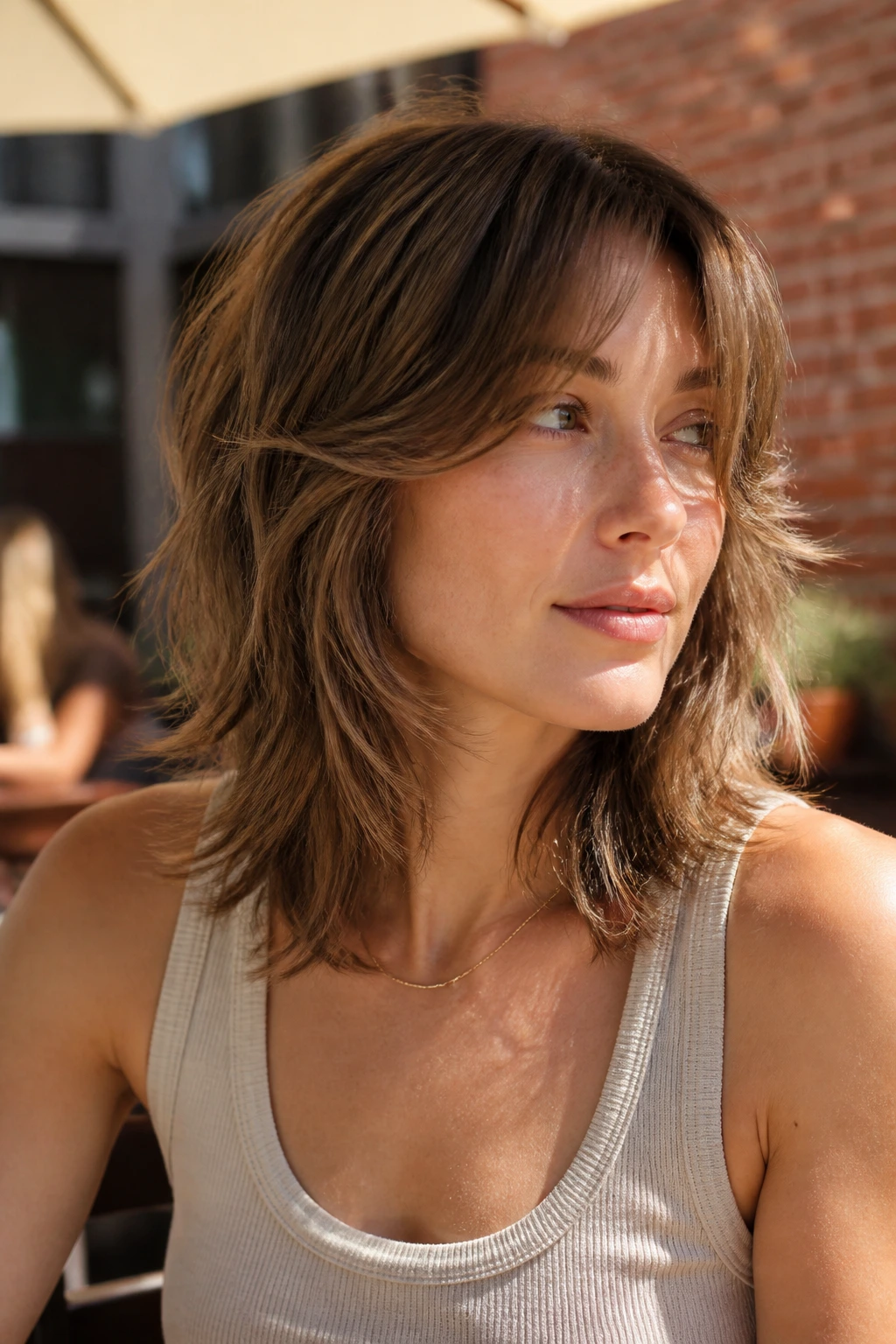
A shoulder-length razor shag can be gorgeous on fine hair, but only if the razor hand is light. I mean light. Not “I watched a tutorial and got ambitious” light—actually light. The goal is separation, not thinning out the ends until they look like ribbons.
This works best when the cut keeps enough length to drape over the shoulders, then uses a few sharp interior pieces to break up the line. Curtain bangs should stay long and beveled, so they swing to either side instead of sitting like two little shelves. If your hair has a soft wave, this cut wakes up fast.
8. Feathered Midi With Bottleneck Bangs
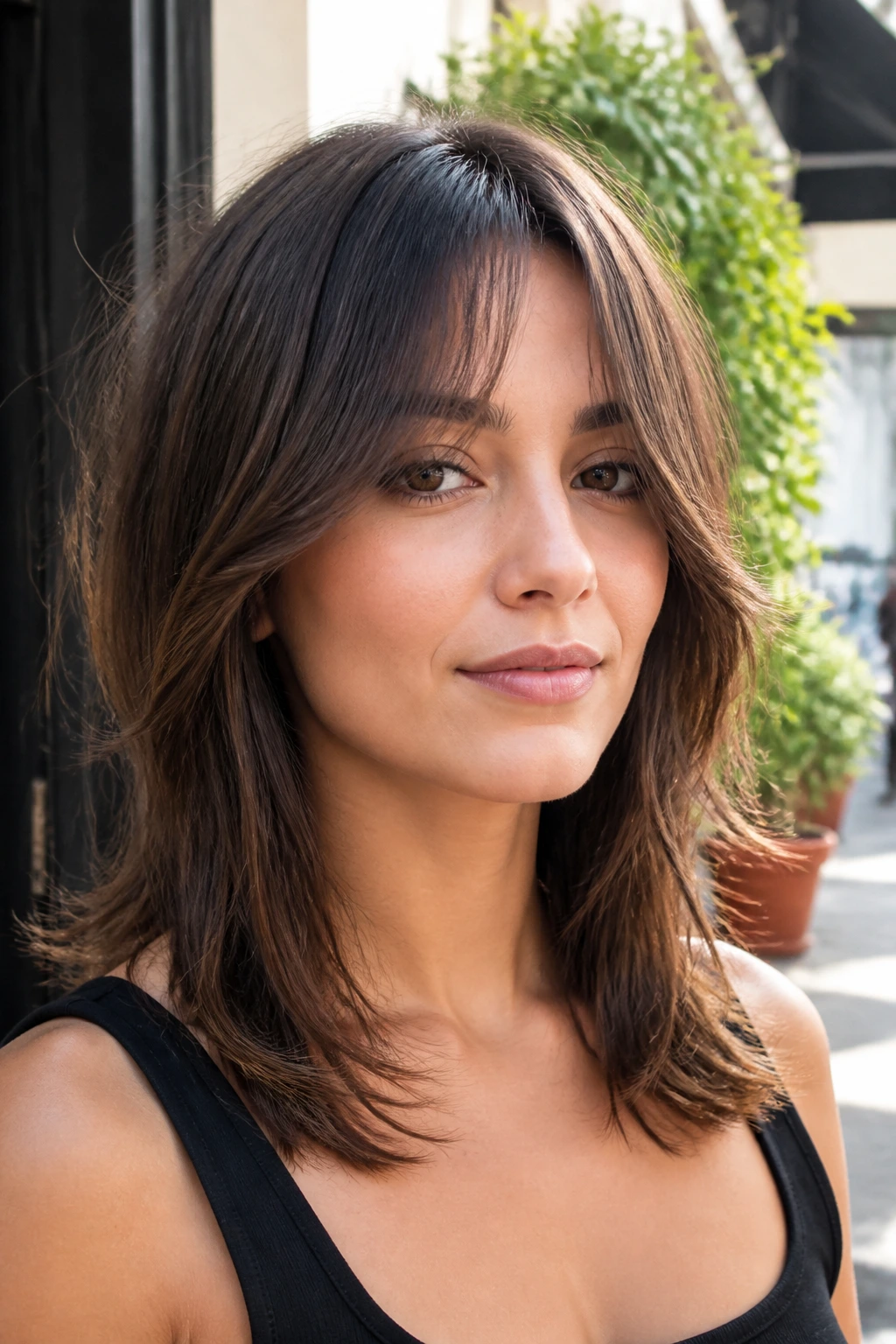
Bottleneck bangs are a smart cousin to curtain bangs. They’re a little narrower at the center and a little wider as they open toward the cheeks, which makes them flattering on fine hair because they don’t require the fringe to be overly dense.
The feathered midi length keeps the mid-lengths airy, but not hollow. I like this version for longer faces or anyone who wants cheekbone emphasis without a heavy bang line. You get softness at the front and a light, floaty feel through the rest of the cut. It’s one of those styles that looks like you meant to do very little—which, on busy mornings, is a gift.
9. Shaggy Bob With Center-Part Fringe
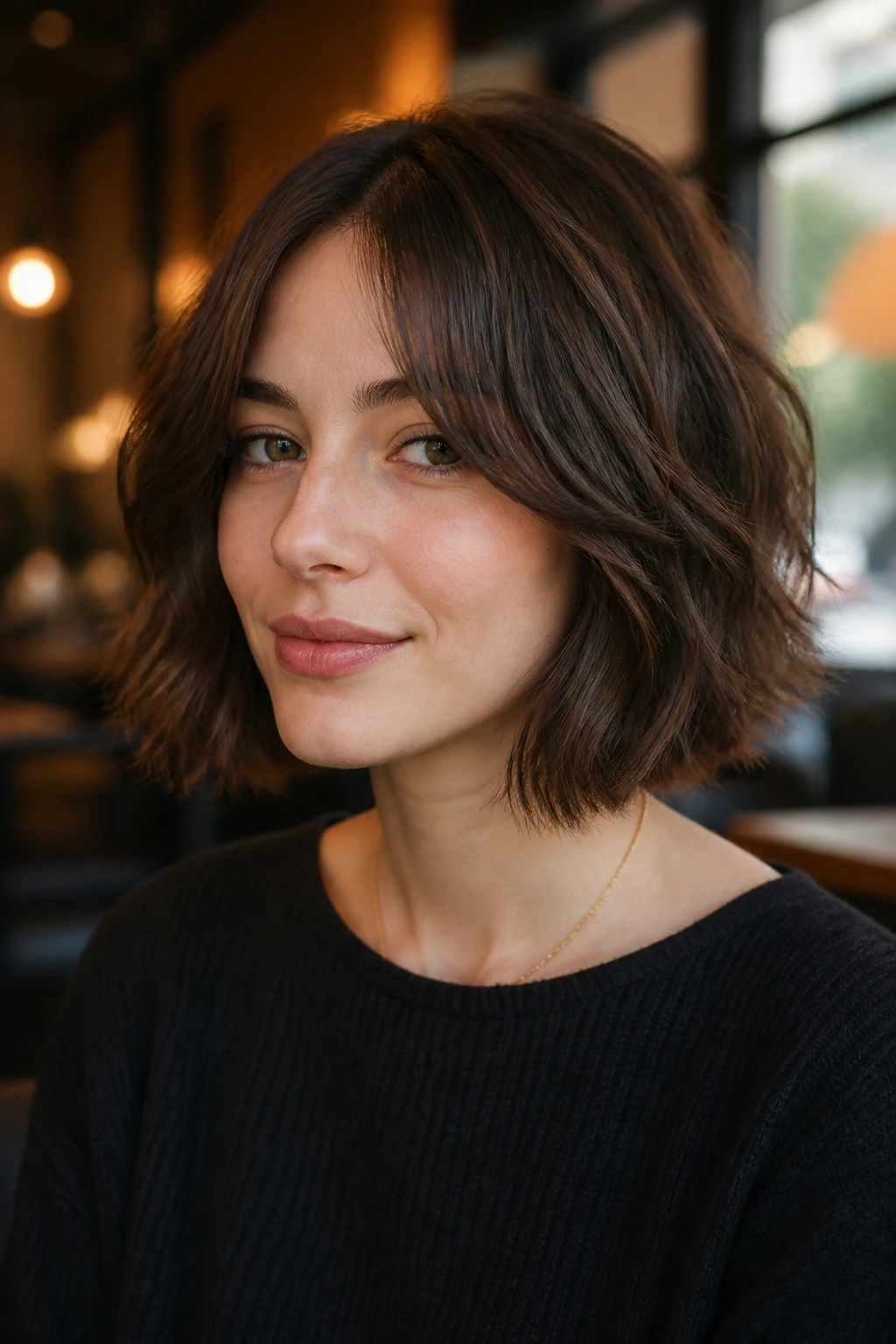
A shaggy bob with a center-part fringe sits right in the sweet spot between polished and undone. The bob perimeter gives fine hair a fuller edge, while the shag texture keeps it from feeling stiff. The curtain bangs split cleanly and connect the front to the sides instead of sitting there like a separate feature.
If your hair tends to puff at the ends but stay flat at the roots, this one solves the shape problem in a practical way. The length is short enough to bounce, but not so short that you lose styling options. Try a mist of volumizing spray at the roots and a loose bend at the front pieces. That’s often enough.
10. Long Layered Shag With Face-Framing Cheeks
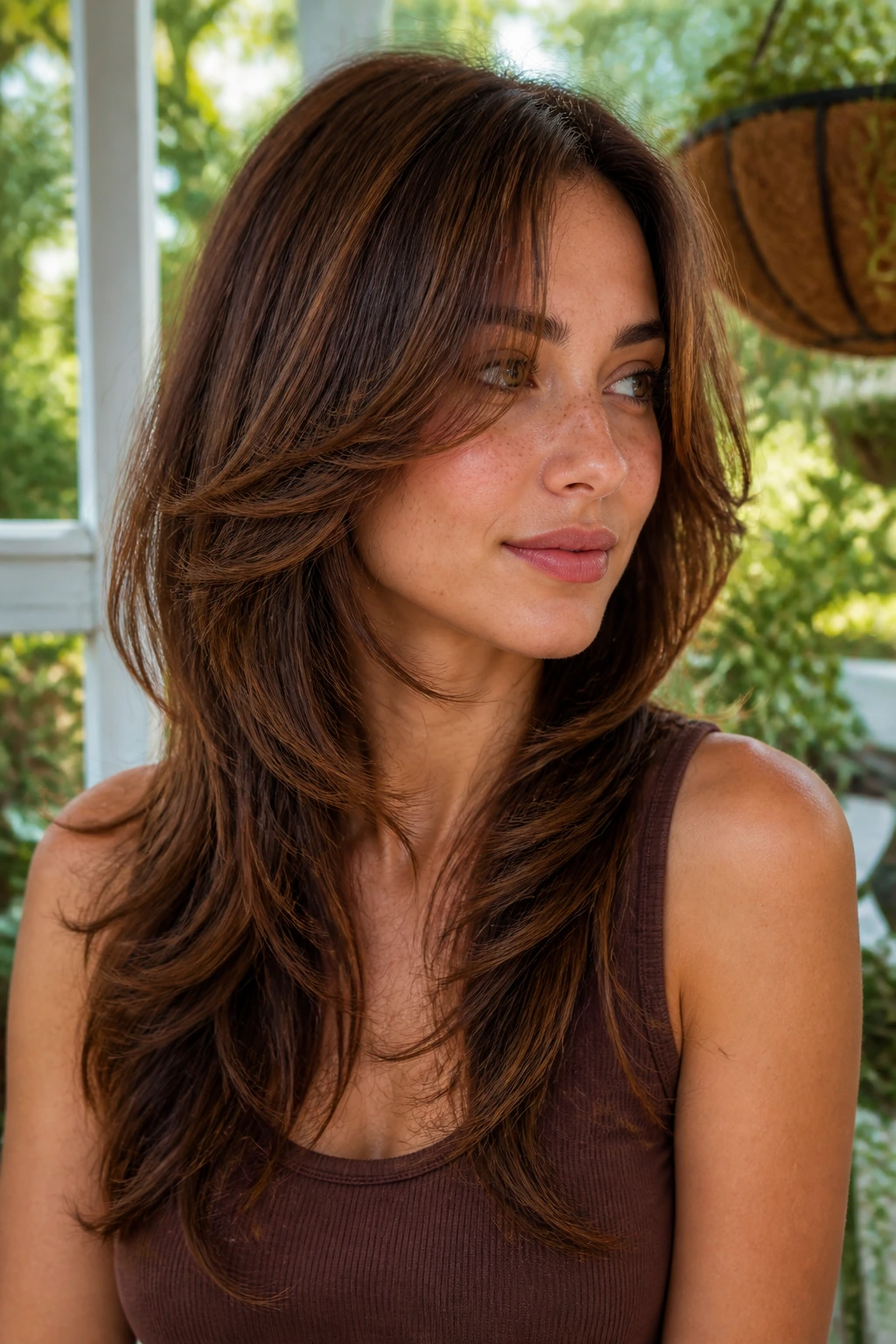
Not everyone wants to give up length. Fair enough. The long layered shag keeps the hair below the shoulders, then uses face-framing pieces around the cheeks and jaw to stop the whole thing from hanging like a curtain. On fine hair, that face frame can do more visual work than ten extra inches ever will.
This is a good choice if your hair grows slowly or you’re attached to ponytail length. The important part is restraint: keep the layers long, keep the ends healthy, and avoid over-thinning the lower half. Curtain bangs should blend into the first face frame layer so the front doesn’t feel chopped off from the rest.
11. Curved Mullet Shag
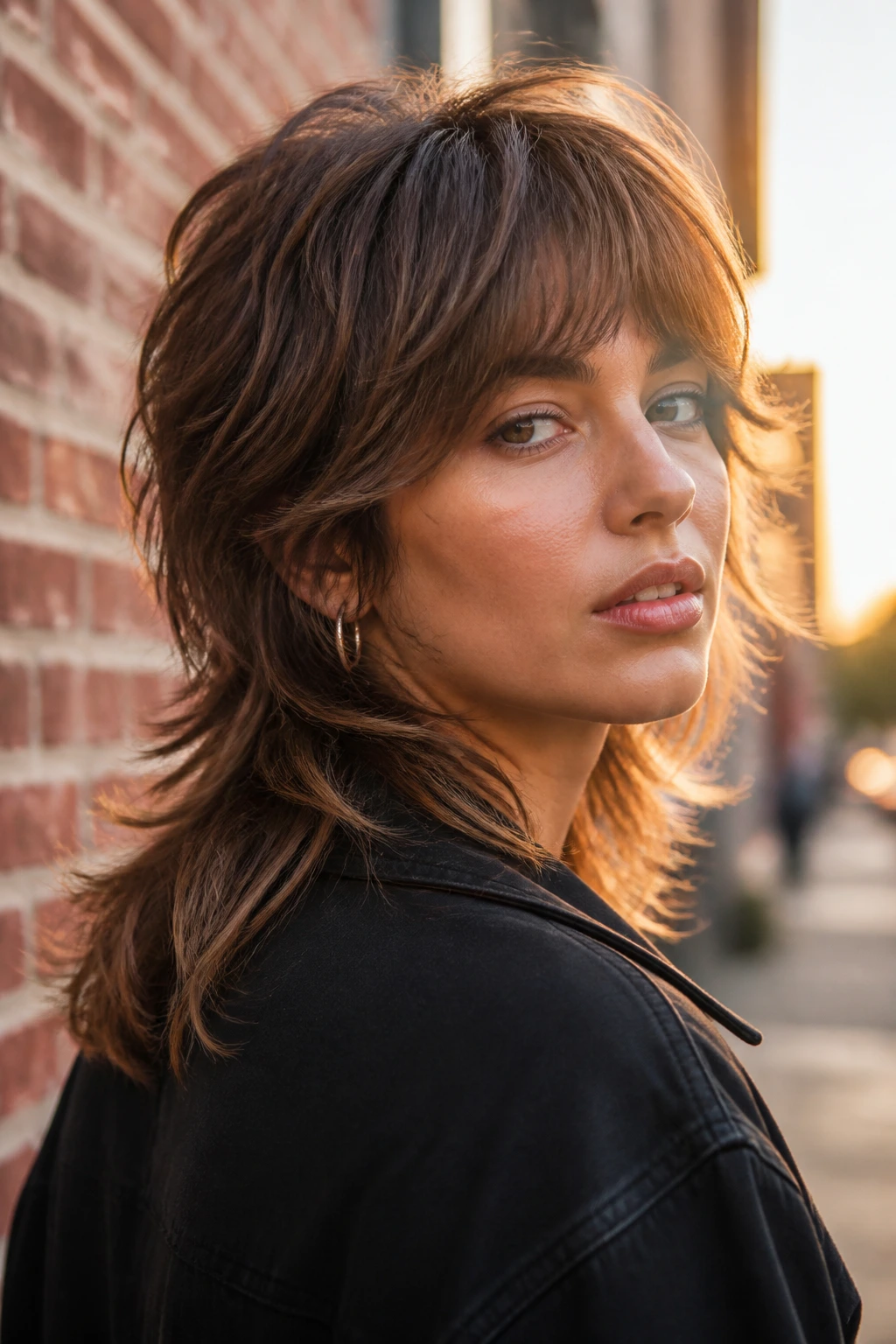
The curved mullet shag is for someone who wants a little edge without shouting. The front stays soft and face-framing, the back stays a touch longer, and the shape curves rather than spikes. On fine hair, that subtle curve matters, because hard, jagged layers can look stringy fast.
The shape logic
The cut gives the crown some lift, then lets the neckline fall away slightly so the silhouette doesn’t get boxy. Curtain bangs help soften the transition at the face. I’d keep this one out of the “too much razor” camp unless the hair has enough density to survive it. It’s better when the texture feels feathery, not shredded.
12. Piecey Crop With Temple Bangs
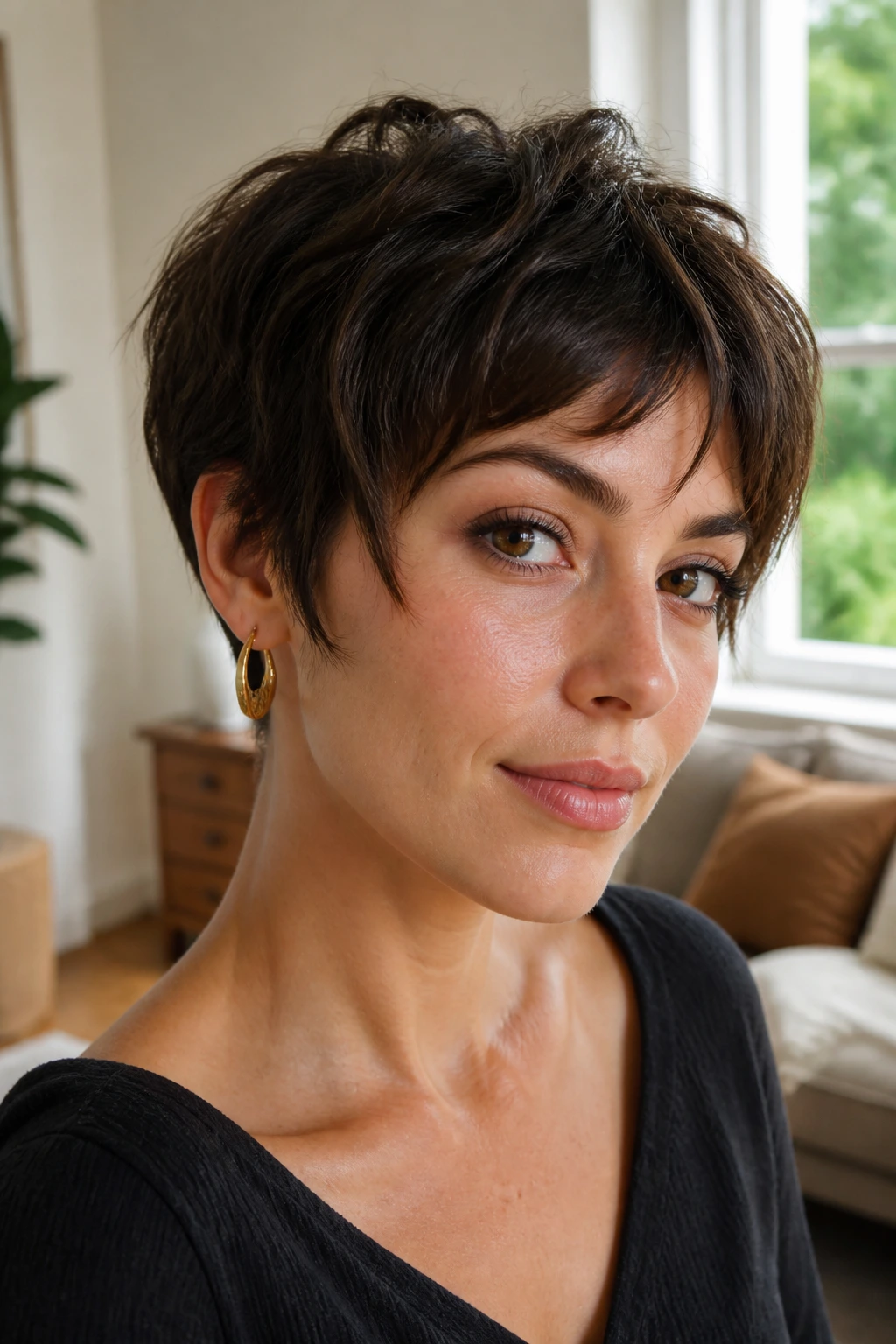
If you like short hair and hate spending time on it, this one has a case. The piecey crop keeps the outline neat while the top is cut with enough texture to separate into small, airy sections. Curtain bangs become temple pieces here—shorter, lighter, and easy to push aside.
This cut works best when you want a little height at the top and very little fuss at the sides. Use a root spray, rough-dry the crown, and stop before the hair is bone dry if you want natural separation. A tiny bit of dry texture spray at the end is usually enough. Too much product and it starts looking sticky, which is not the point.
13. Invisible-Layer Lob

An invisible-layer lob looks blunt at first glance, and that’s why it’s smart. The layers are tucked inside the shape, so the outer line keeps the look of density while the inside has enough movement to keep it from falling flat. Fine hair loves that kind of trick.
Curtain bangs work here because they soften the front without opening holes in the silhouette. This is the cut for someone who says they want “just a small change,” but still wants the hair to move when they walk. If you air-dry, the shape will show without much coaxing. If you blow-dry, the result is cleaner and still not overdone.
14. Tapered Shoulder Shag
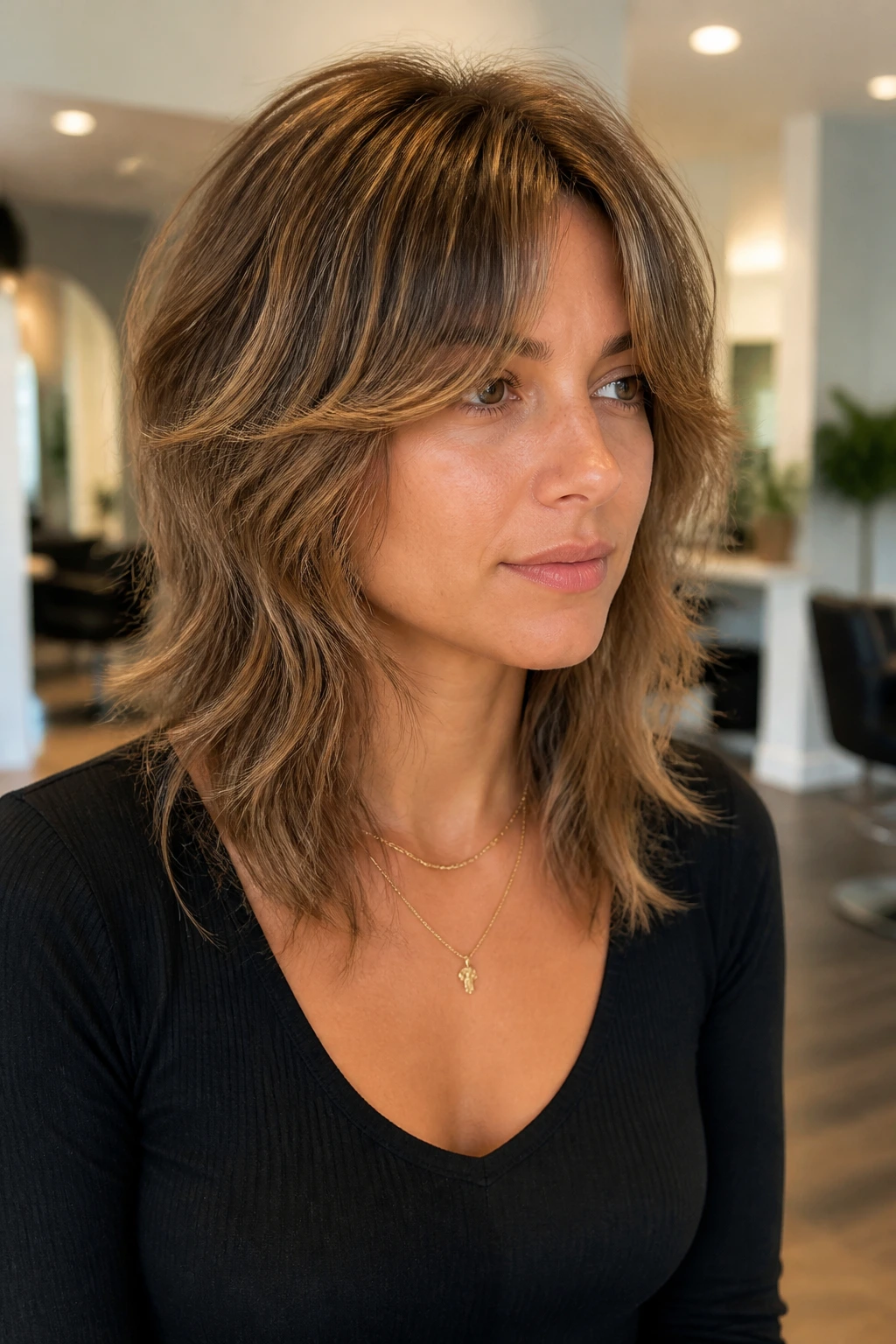
This is one of the most useful shapes for flat, shoulder-length hair. The taper makes the hair slightly shorter toward the top and around the face, so the crown gets lift while the ends keep enough mass to look full. That balance is hard to beat on finer strands.
The curtain bangs should be soft and gradual, not blunt or stacked. Ask for the layers to start around the cheekbone and taper toward the collarbone. If the stylist starts cutting up near the ears, the whole thing can look airy in the wrong way. The tapered shoulder shag is strongest when the front and crown feel lifted and the lower edge still looks solid.
15. Tousled Butterfly Shag Lite
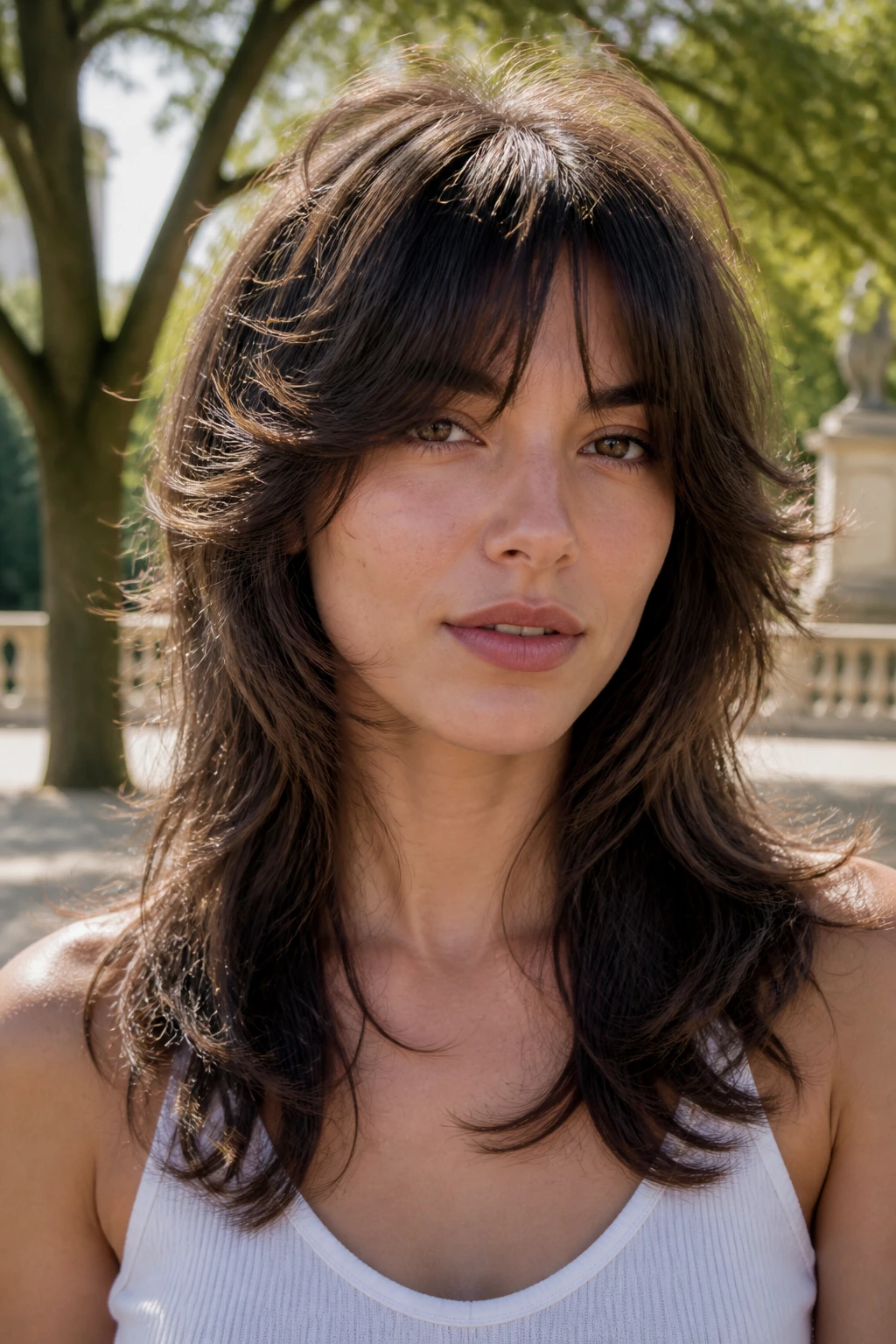
The butterfly cut gets a shaggy cousin here, and I like the lighter version better for fine hair. It keeps the longer length in back, then adds face-framing layers that open like wings around the cheek and jaw. Curtain bangs plug the center gap and make the shape feel intentional instead of accidental.
You’ll get the most out of this one if you’re willing to do a quick round-brush bend through the front. Not a full blowout. Just enough to give the layers a soft sweep. The back can stay freer and messier. That contrast is part of the appeal.
16. French Girl Midi Shag

There’s a reason this cut keeps hanging around: it’s forgiving. The French girl midi shag sits around the mid-neck to shoulder zone, with airy layers and bangs that part easily from the center. It does not ask for much from your styling routine.
The key is keeping the finish soft rather than piecey for the sake of being piecey. Fine hair tends to look better when the separation is subtle and the outline stays readable. A little styling cream through the mids, a bit of root lift, and you’re done. This is one of the few shag cuts that can look tidy and a little undone at the same time. That’s hard to fake.
17. Soft Mullet Bob
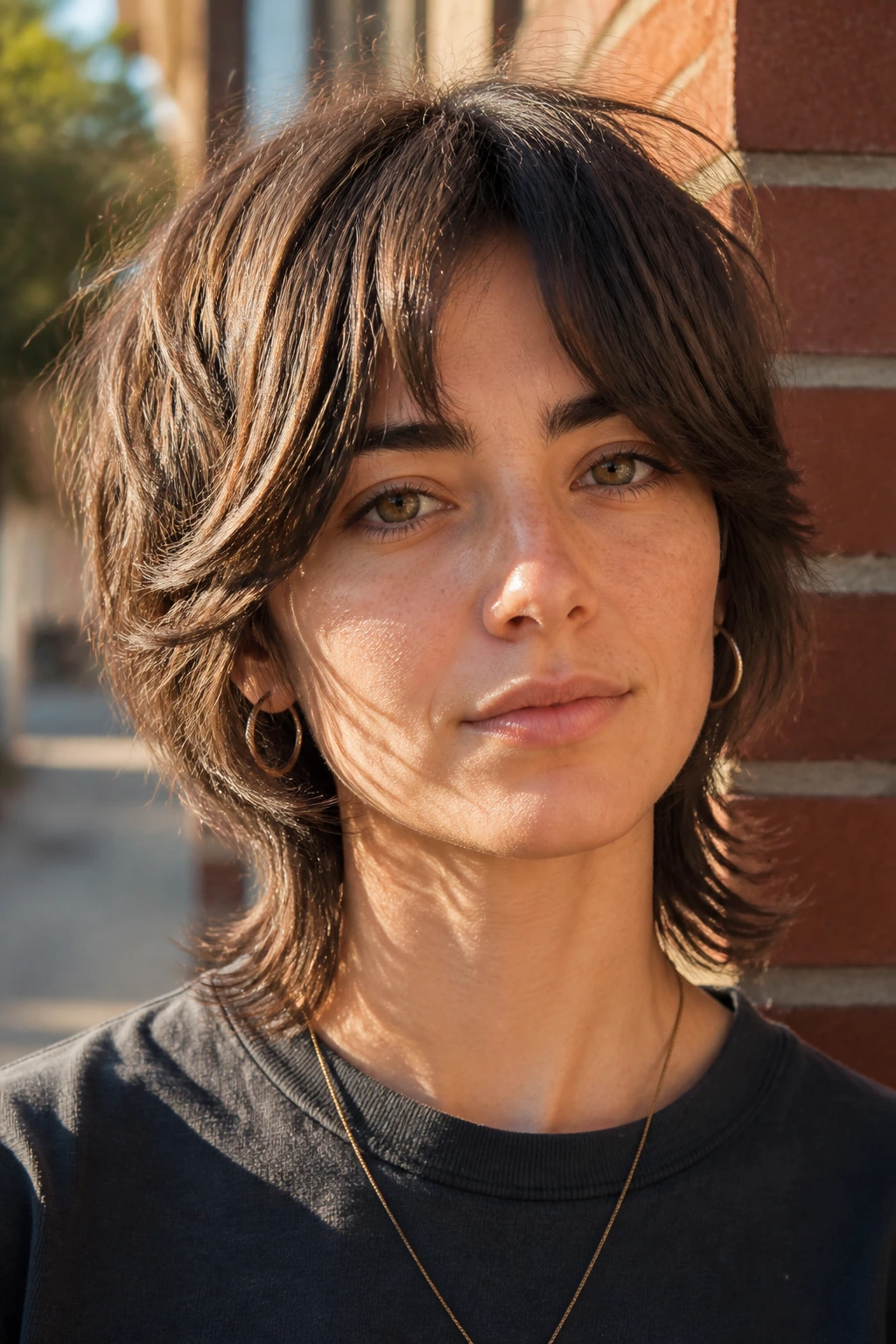
A soft mullet bob is the restrained version of a bolder shape. The front and sides sit like a bob, while the back holds a hint of length so the haircut doesn’t collapse into a block. Fine hair benefits from that slight difference in length because it creates movement without asking the hair to carry too much weight.
Curtain bangs balance the whole thing by softening the forehead and connecting the front to the sides. I’d call this one good for someone who likes shape but doesn’t want the haircut to shout from across the room. It’s a low-key edge. Just enough.
18. Straight-Hair Razor Shag
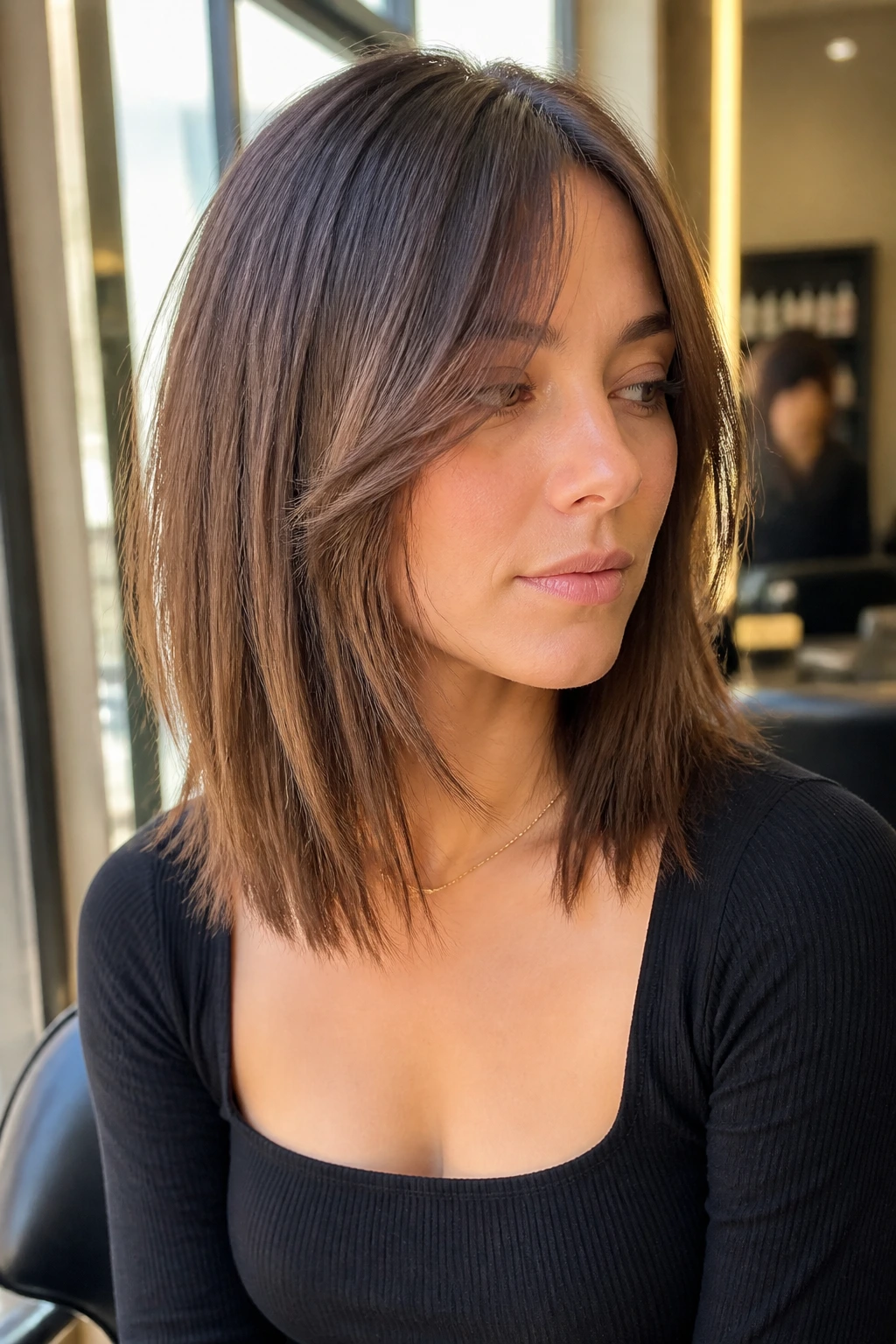
Straight hair is unforgiving. Which is why this version has to be cut with restraint. The straight-hair razor shag keeps the ends blunt enough to hold a line, then uses only a few internal cuts to stop the shape from turning into a shelf.
Curtain bangs on straight hair should usually be a little longer than you think, because they lose length visually once they’re split open. I’d avoid over-lifting the crown too. On straight, fine strands, too much crown texture can expose the scalp and make the top look thinner than it is. A soft bend at the front and a little separation at the ends is plenty.
19. Wavy Halo Shag
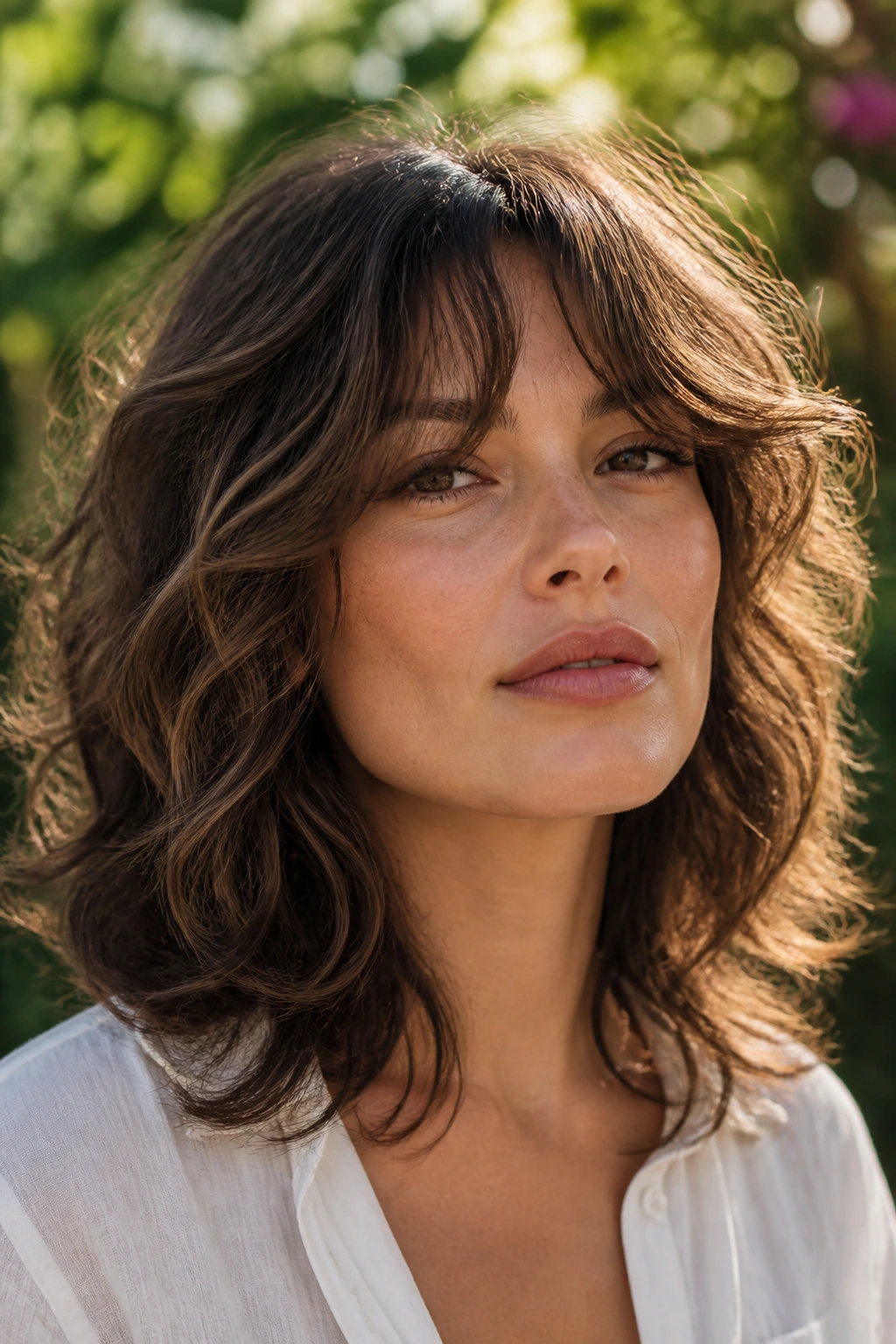
If your hair has a natural wave, stop fighting it and give it a shape that rewards the bend. The halo shag puts movement all around the head, not just at the ends, so the wave has somewhere to live. Fine hair with wave often looks better when the layers follow the bend pattern instead of cutting across it.
Why it flatters wavy fine hair
The layers are lighter through the mids and less aggressive at the bottom, which lets the wave lift without frizzing into nothing. Curtain bangs should be long enough to split and curl softly away from the face. A diffuser helps here, but so does doing very little. That’s the part people overlook.
20. Cuffed-End Lob With Long Curtain Bangs
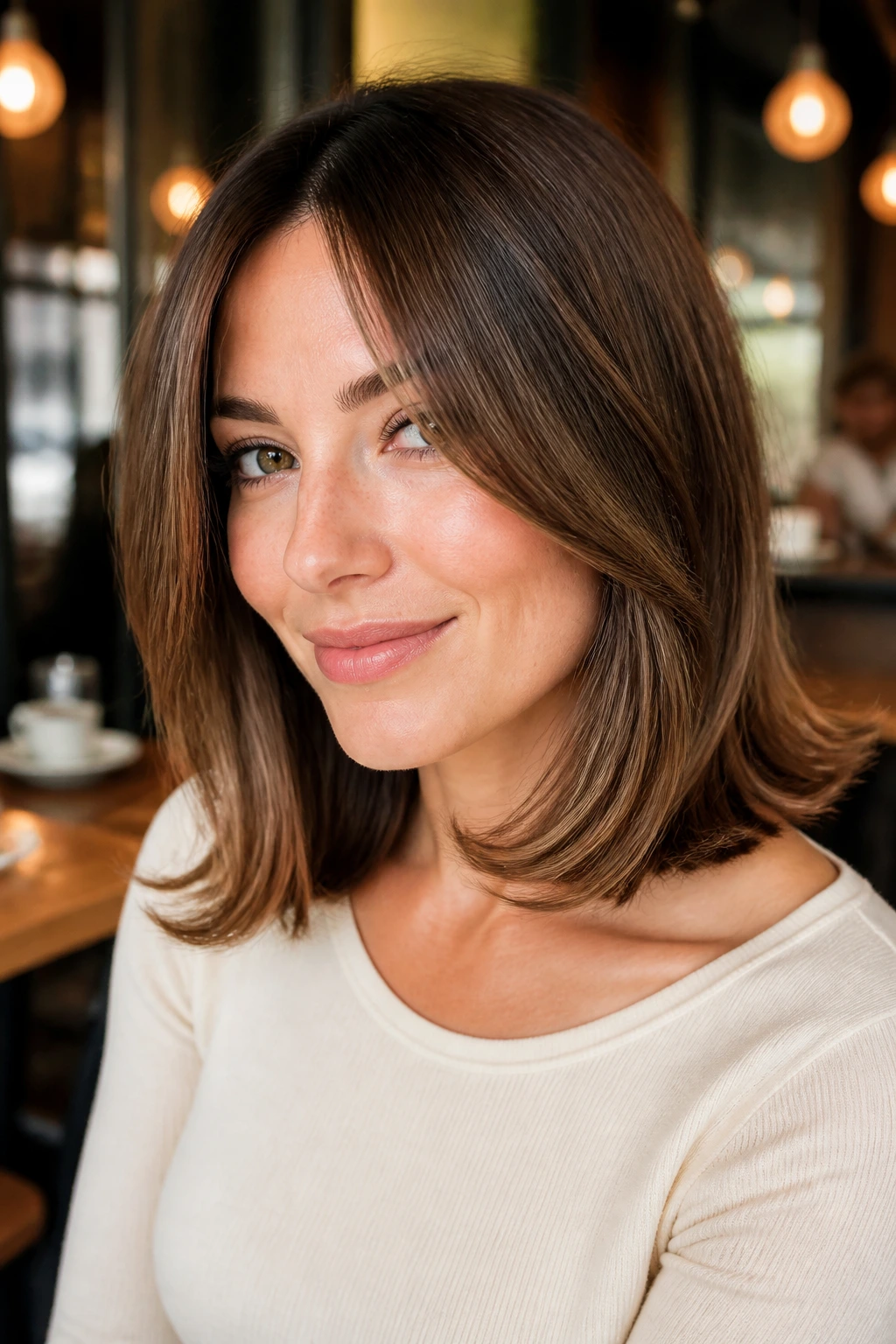
The cuffed-end lob is for people who like a bit of polish and don’t want to spend forever with a brush. The ends bend inward or outward on purpose, creating a visible edge that helps fine hair look thicker. The shape reads as neat, not stiff.
The long curtain bangs are the glue. They soften the front and give you the option to tuck them behind the ears, pin them back, or wear them open. This cut works especially well if your hair is the kind that looks flat when it’s too long but frayed when it’s too short. The lob length avoids both problems.
21. Air-Dry Crop Shag
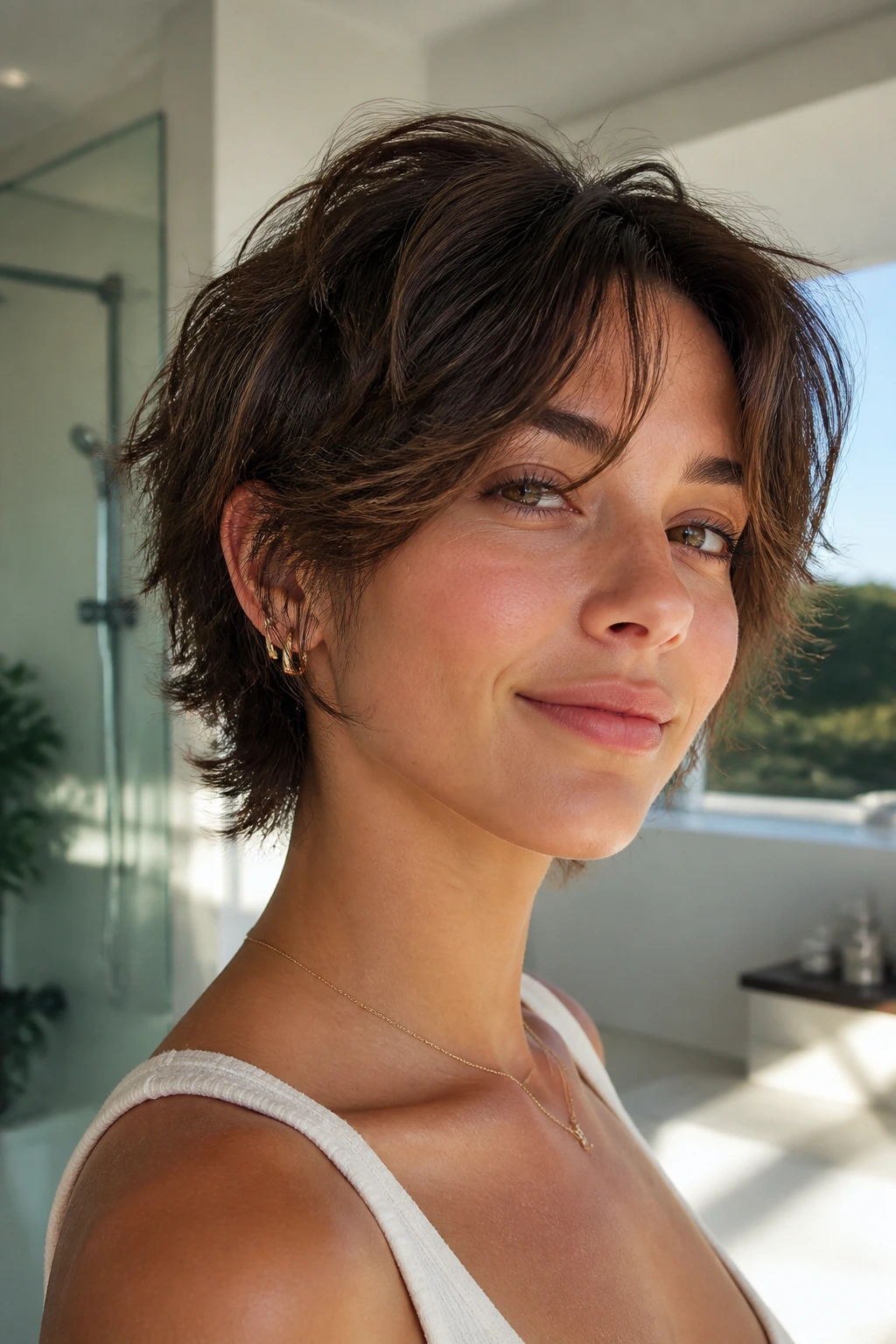
This is the one for people who want to wash, blot, scrunch, and leave. The air-dry crop shag keeps the length short enough that the hair dries in a reasonable amount of time, while the texture is cut in a way that encourages bend without a lot of fuss.
Curtain bangs stay long enough to move, which matters. Too short and they turn into a separate problem. Too long and they lose the face-framing job. I’d use a light mousse here and nothing heavier at the ends. The shape should feel breezy, not coated.
22. Grown-Out Shag With Feathered Fringe
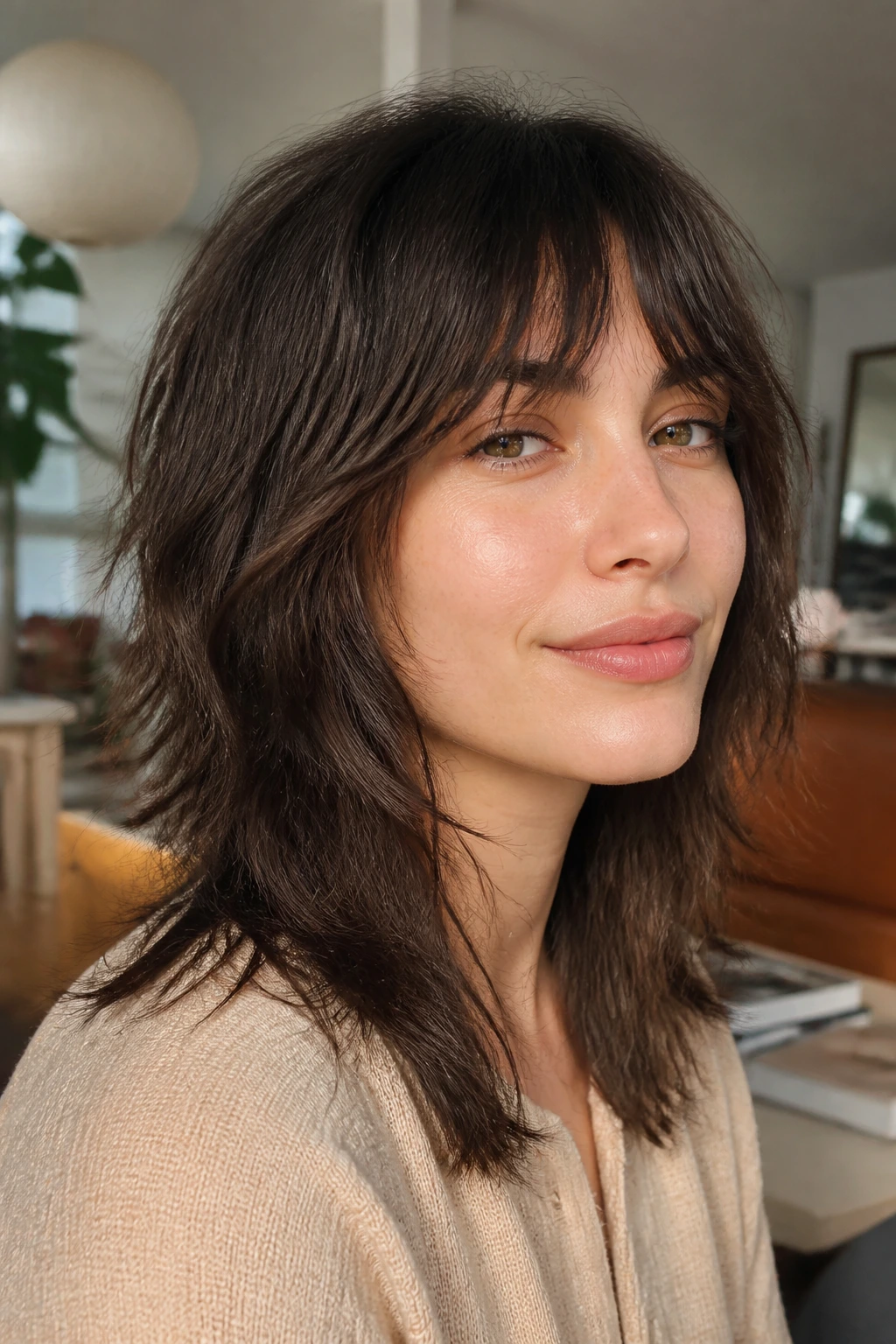
This may be the smartest choice of the bunch. The grown-out shag is designed to look better the longer it gets between trims, which is rare and useful. The feathered fringe stays soft around the face, and the layers blend instead of announcing themselves every time they move.
If you hate salon upkeep, this is the cut to bookmark. It keeps its shape at eight weeks, then still looks decent at twelve if the bangs are trimmed once in the middle. Fine hair often looks best when the grow-out is gentle, and this shape understands that. It doesn’t panic when it gets a little longer. Neither should you.
How to Ask for the Right Amount of Texture
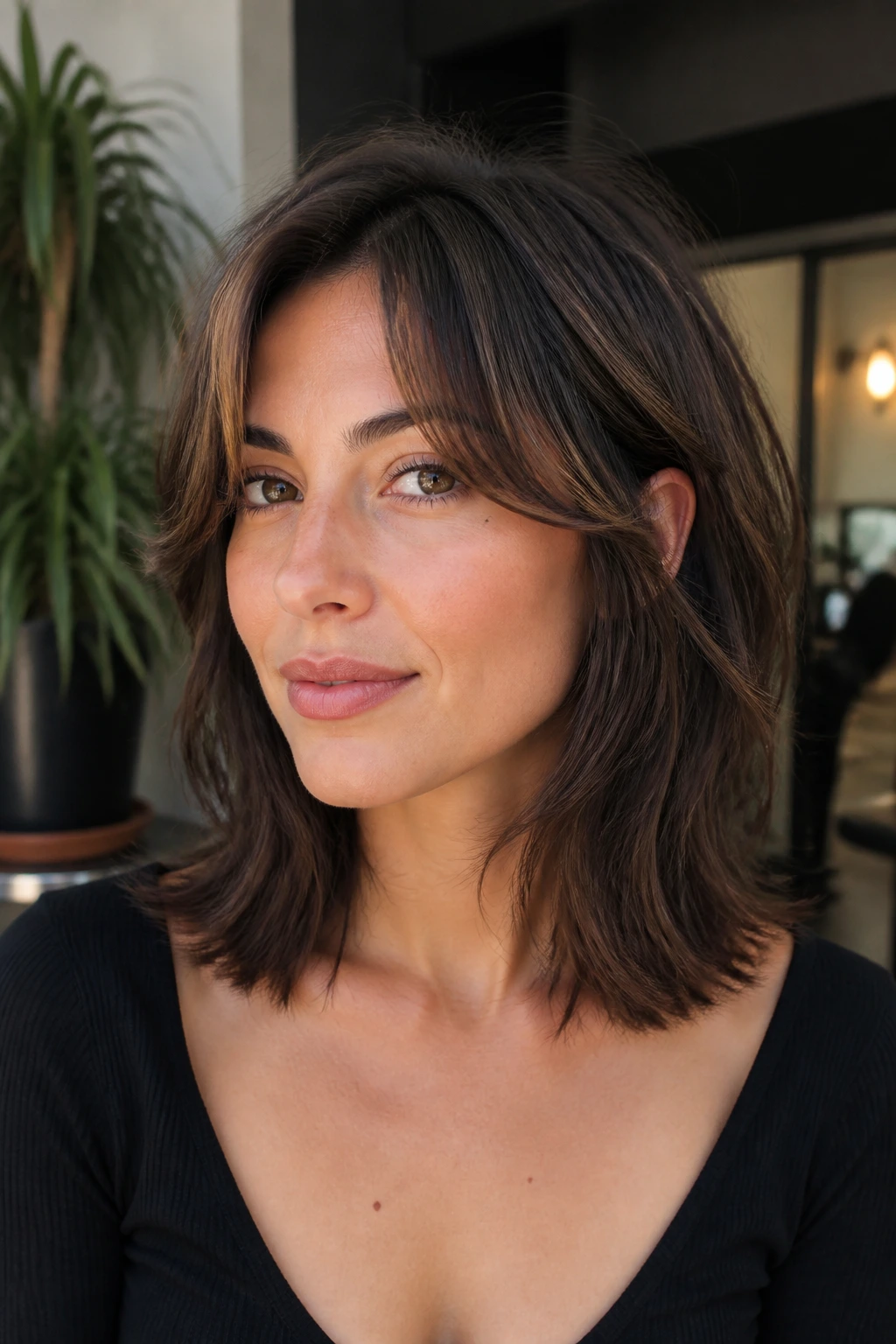
A good wash-go shag starts in the chair, not in the bathroom mirror later. Tell your stylist you want movement inside the haircut, not a hollow outline. That single sentence saves a lot of bad outcomes. Ask where the first layer will start, and make sure it’s not climbing too high on the head unless you want a more dramatic wolf-cut shape.
Bring two photos if you can: one showing the overall length, one showing the fringe. That helps more than bringing one perfect photo and expecting the cut to magically translate. Hair density, face shape, and growth pattern all change the result. Mention whether your hair bends, sticks straight, or splits at the crown. That part matters more than most people think.
Ask for the curtain bangs to be long enough to sweep open and long enough to tuck away. If the stylist cuts them too short, you lose the whole easy-going point of the look. And if your hair is fine enough that the ends see through fast, say so. A blunt bottom edge with softer internal layers is often the better move.
The Mistakes That Drain the Hairline
Over-texturizing the ends: the symptom is stringy, see-through tips that look thinner the second the hair dries. The fix is a blunt perimeter with only light internal layering.
Cutting curtain bangs too short: they spring up, split awkwardly, and never quite frame the face. Ask for them to start longer than expected, because they shrink visually once they separate.
Using heavy creams or oils at the roots: the hair looks clean for five minutes, then drops. Keep rich products from the scalp and use them sparingly on the mids and ends.
Layering too high on the head: this can make the crown look sparse instead of airy. The shape needs lift, yes, but not a giant hole through the top.
Skipping trims for the fringe: curtain bangs lose their easy shape when they grow past the cheekbone and start flicking into the eyes at random. A small trim every 4 to 6 weeks keeps them cooperative.
Softer, Edgier, and Longer Versions to Try
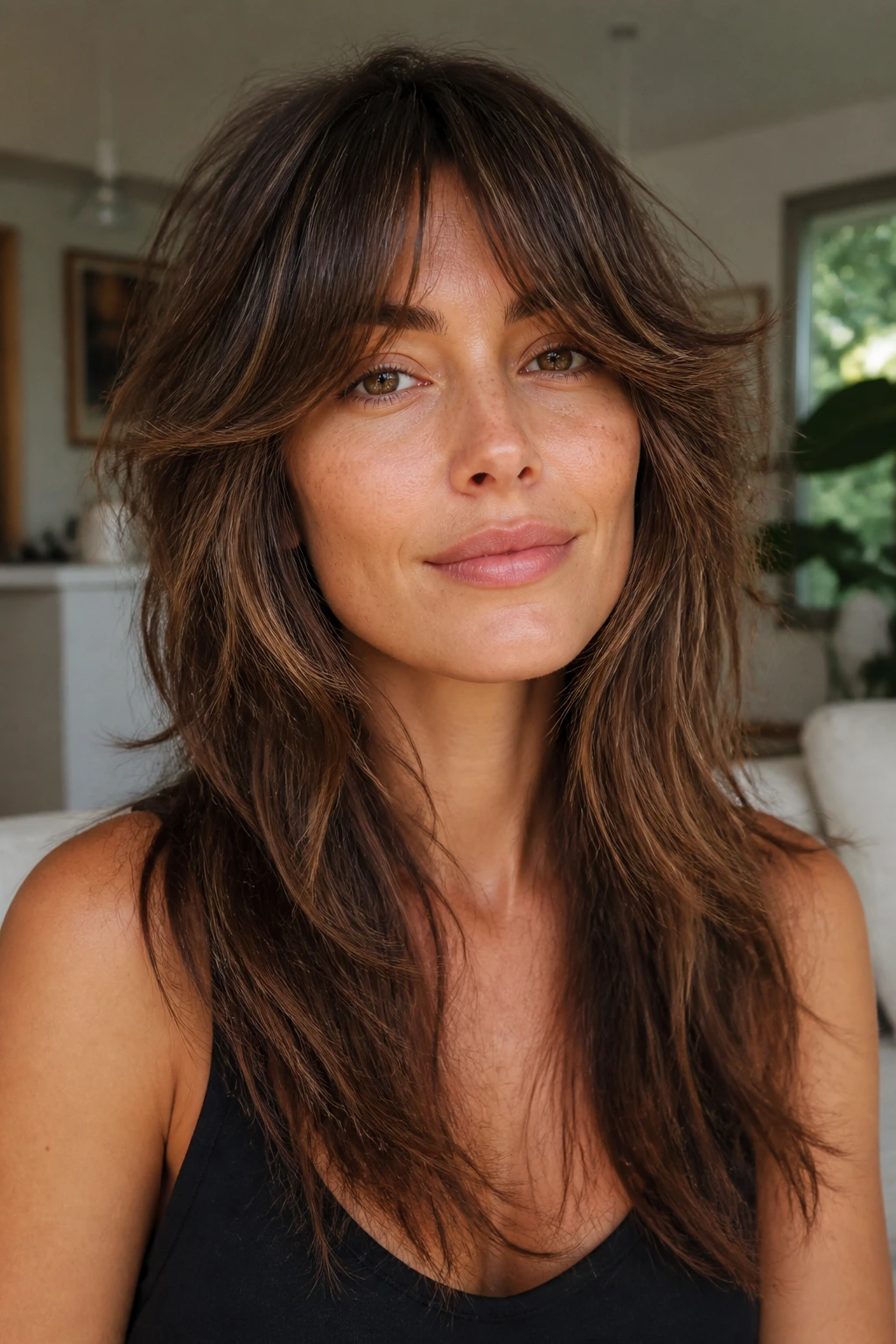
The Soft Frame Edit: keep the layers longer, start the face-framing pieces below the cheekbone, and leave the curtain bangs broad. This version feels quiet and easy, which suits people who want movement without obvious shag energy.
The Wolfier Version: ask for more crown lift, a clearer nape taper, and a stronger difference between the front and back lengths. It has attitude, but still works on fine hair if the ends aren’t shredded.
The Long-Length Safety Net: keep the hair below the shoulders, keep the perimeter blunt, and add only the lightest face frame. This is the choice if you like the idea of a shag but panic at the thought of too much volume loss.
The Straight-Hair Polish Pass: keep the silhouette smooth, trim the curtain bangs long, and ask for minimal razoring. It reads cleaner and is easier to live with if your hair doesn’t bend on its own.
Tools That Make Air-Dry Styling Easier
- Lightweight mousse: gives the roots some support without coating fine hair; work a golf-ball amount through damp lengths.
- Root-lifting spray: best at the crown and around the part line, where fine hair usually collapses first.
- 1-inch or 1.25-inch round brush: useful for bending curtain bangs and the front pieces into that soft open shape.
- Blow dryer with a nozzle: the nozzle matters; it pushes the hair smoother and keeps the bangs from puffing wildly.
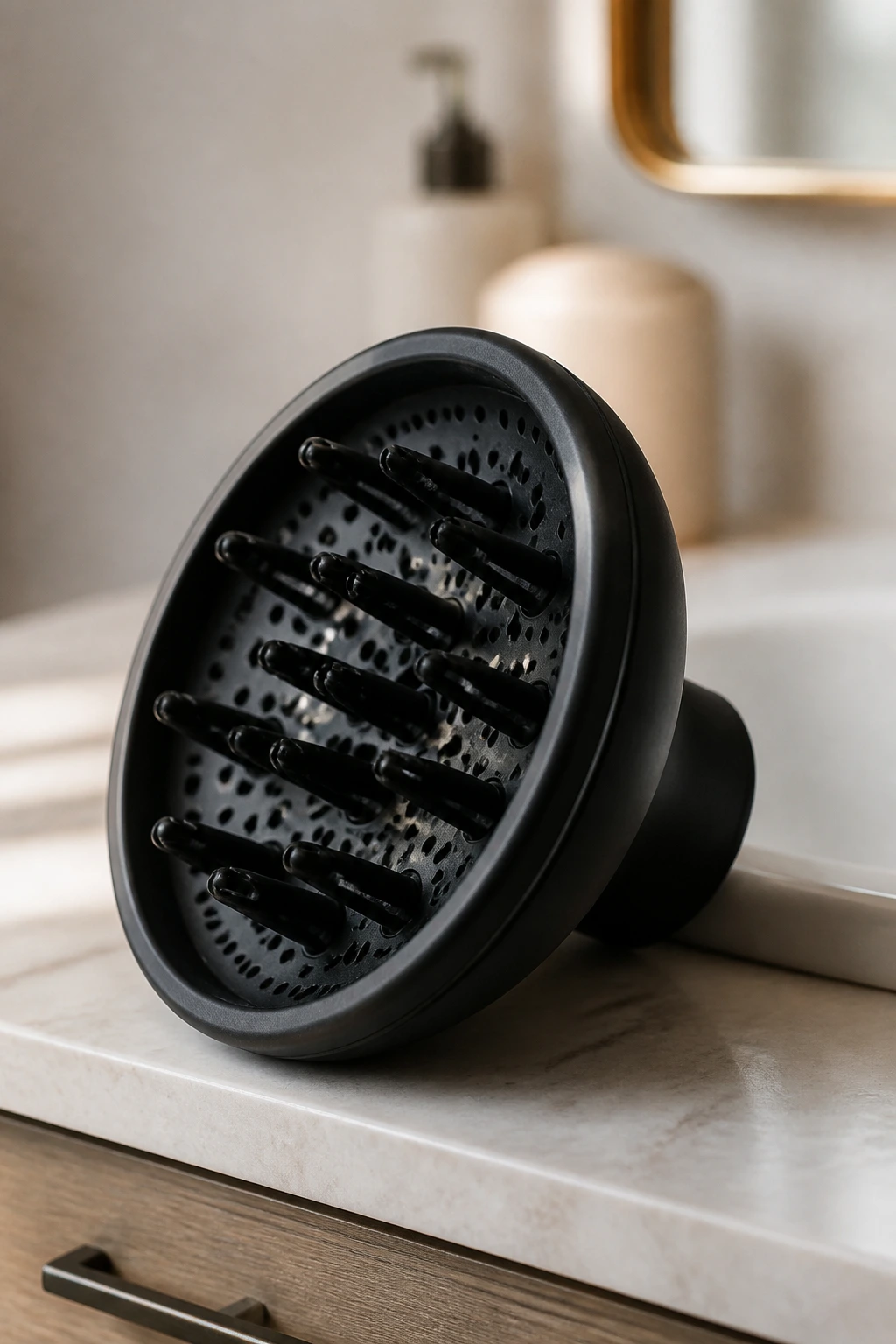
- Diffuser: handy if your hair has wave and you want it to keep its shape without frizzing into fluff.
- Duckbill clips or small section clips: these help set the bangs while they cool, which makes the fringe sit better.
- Dry shampoo: not just for oil; it adds grip at the roots on day two or three.
- Light hold hairspray: a mist at the fringe can keep the curtain shape from breaking apart in humidity.
Keeping Curtain Bangs in Shape Between Trims
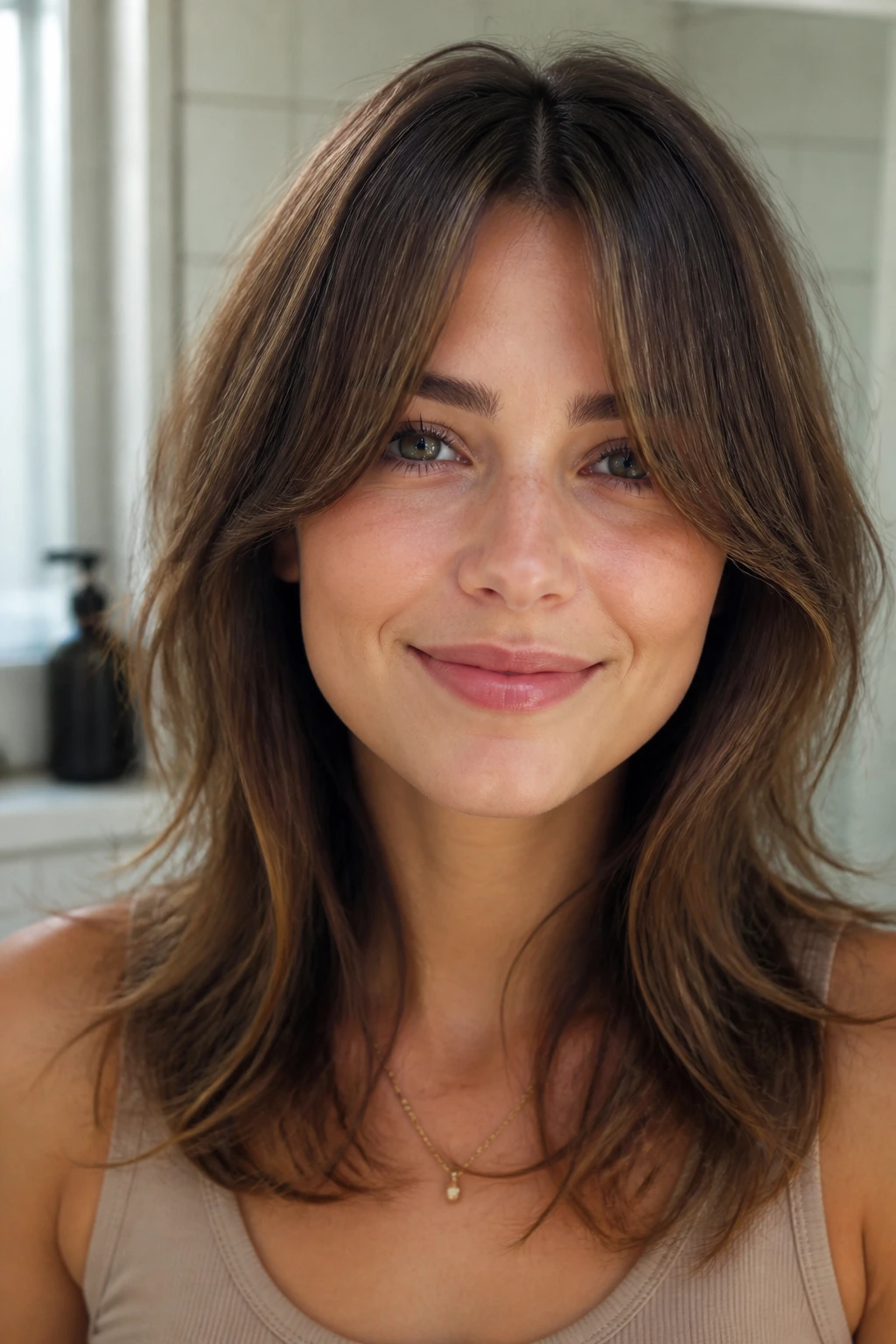
Curtain bangs behave best when you don’t wait until they’re driving you mad. A tiny trim every 4 to 6 weeks keeps the split point at the right place and stops the sides from swallowing your face. If you’re trimming them yourself, take off less than you think—about a quarter of an inch at a time—and cut them dry, not wet, so you can see where they actually sit.
At home, dry the bangs first. Always. They shape the whole haircut more than people realize, and once they dry in a weird angle, you’ll spend the rest of the day fighting them. Use a small brush to sweep the center forward, then bend each side away from the face. Let them cool pinned or clipped if your hair forgets shape fast.
Nighttime matters too. A loose clip at the crown or a soft bend over a satin pillowcase helps preserve the front pieces. You do not need a giant routine. You just need the bangs to wake up with some memory.
Questions People Ask Before They Commit
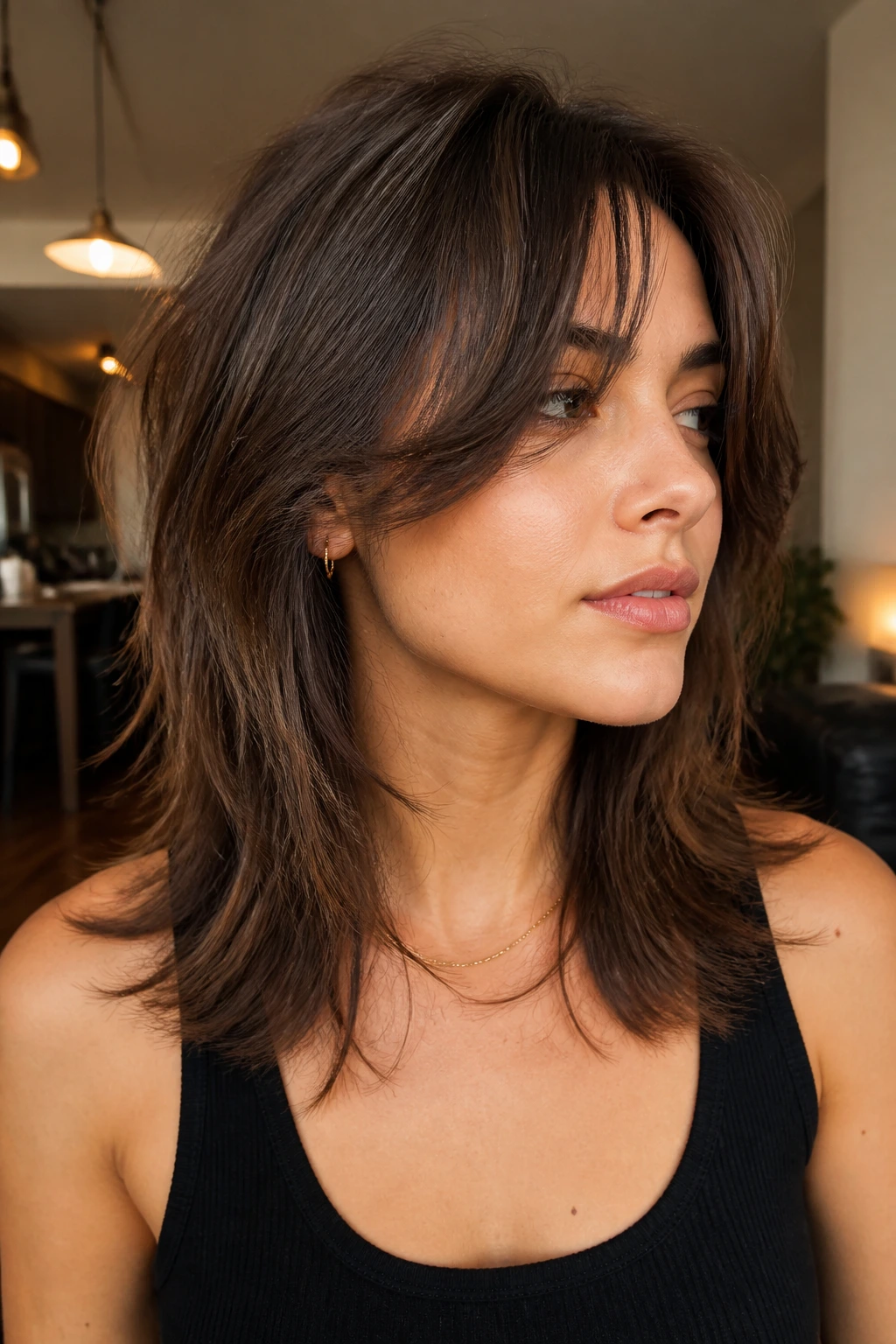
Will a shag make fine hair look thinner? It can, if the layers are cut too high or the ends are thinned too much. The right version keeps a solid perimeter and uses soft internal layers, which gives the eye more shape to read.
Can curtain bangs work on very straight hair? Yes, but they usually need to be cut a little longer and styled with a slight bend. A quick brush-dry or a tiny round brush pass at the front helps them settle.
How often should I trim this cut? Plan on 6 to 8 weeks for the overall shape and 4 to 6 weeks for the curtain bangs if you want them to stay open and face-framing.
What if my hair has a cowlick at the part? Ask for bangs that start a bit longer and slightly heavier near the center. A cowlick can split the fringe in annoying ways, so a little extra length gives you room to work with it.
Is this cut good if I never style my hair? Some versions are. The collarbone cloud shag, the invisible-layer lob, and the grown-out shag are the easiest to air-dry and go. Shorter, more razored versions usually need a bit more handholding.
Can I still tie it back? Usually, yes. The longer shags and lobs are especially easy to clip into a loose ponytail or claw clip. Curtain bangs may need a pin or two, but that’s part of the charm.
What should I avoid asking for at the salon? Don’t ask for “lots of texture” without explaining where. That usually ends with too much thinning at the ends and not enough structure at the perimeter.
The Cut That Still Looks Good on Day Three
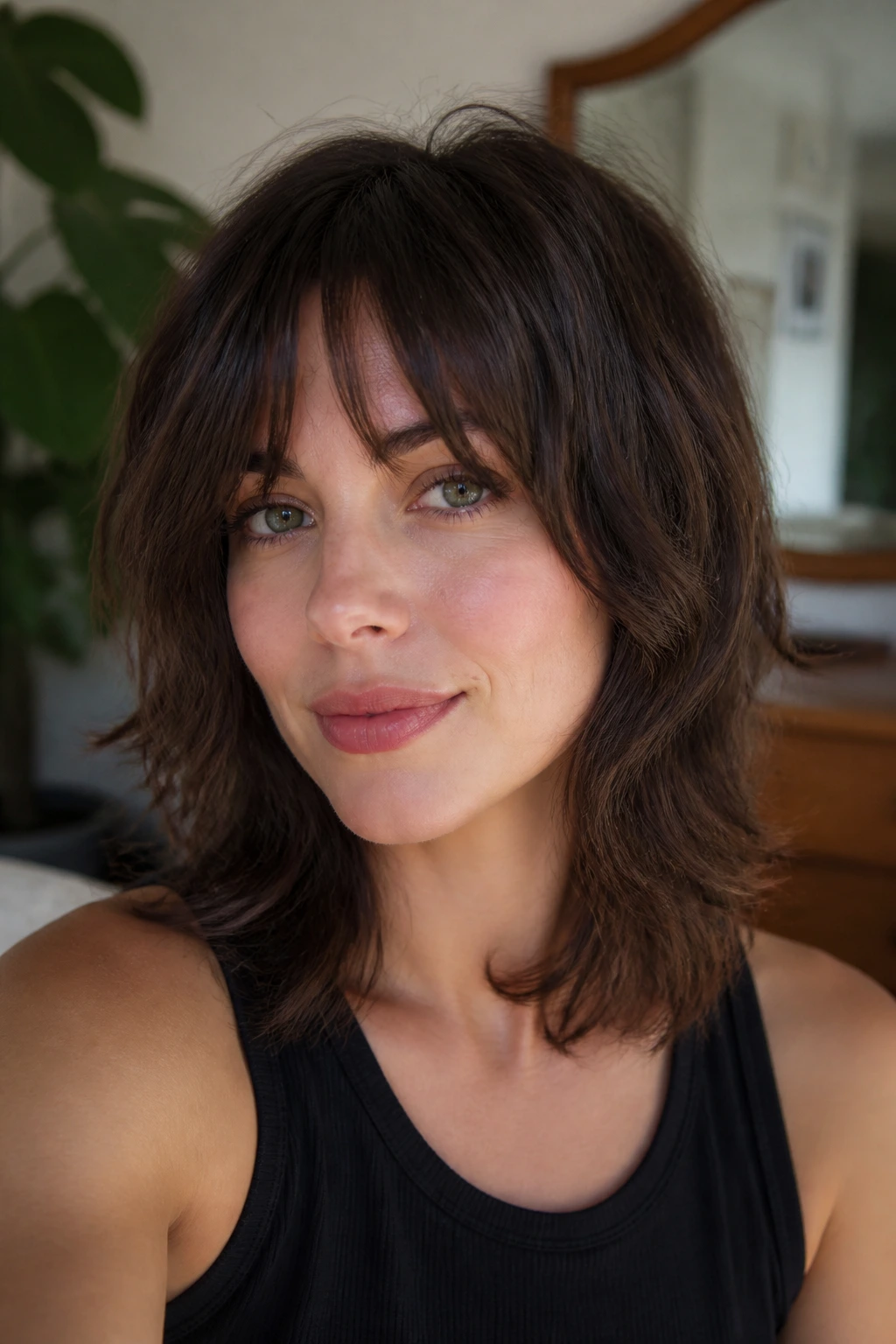
The nicest thing about a good wash-go shag on fine hair is that it doesn’t collapse the minute your hands leave it. The shape stays readable because the layers were cut to support the perimeter, not erase it. Curtain bangs do the softening up front, and the rest of the cut keeps the hair from looking overworked.
That’s why these 22 versions range from polished to a little scruffy. Fine hair doesn’t need to be bullied into volume. It needs a shape with a clear edge, a smart front, and enough room to move when you air-dry it and walk away.
Pick the version that matches how much effort you actually want to spend on your hair. That’s the part people skip, and it matters more than the photo on the inspo board.