



A good curly shag on an oval face does something sneaky: it makes the face look balanced without flattening the curl pattern. That’s the whole charm. The layers move, the fringe falls sideways instead of straight down, and the curl clumps keep their shape instead of turning into a mushroom cap. When people ask for curly shag haircuts for oval faces with side-swept bangs, what they usually want isn’t “more hair.” They want better lines. Better movement. Better control around the forehead and cheekbones.
I like this family of cuts because it gives curls room to behave like curls. The side-swept bang softens the front without boxing the face in, and the shag layers keep the silhouette from getting too bottom-heavy. That matters more than people think. A curly cut that’s too blunt can make an oval face feel longer than it is, while a shag that’s too short through the crown can puff up like a cotton ball. The sweet spot sits between those two disasters.
Oval faces are lucky in one way and annoying in another. They can wear a lot of shapes, sure, but that also means the haircut needs to choose a point of view. Do you want cheekbones to stand out? A side sweep does that. Do you want more lift at the crown? The right shag can do that too. Do you want a cut that still looks sane on day three? Now we’re talking. These 22 variations cover the whole range, from soft and shoulder-length to sharper, shorter, and a little rock-and-roll.
Why This Collection Works on Oval Faces
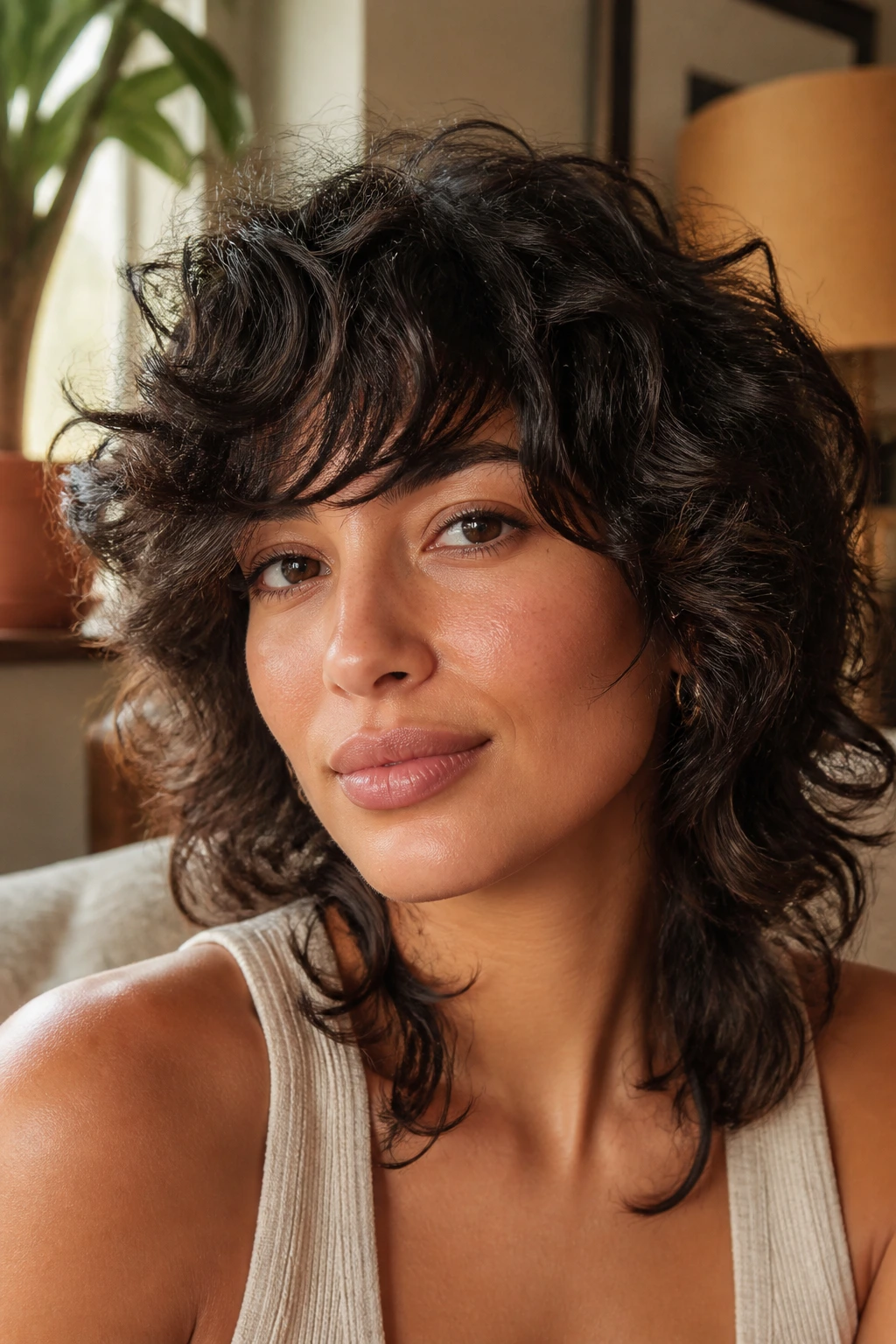
-
Diagonal fringe balances the face: A side-swept bang cuts across the forehead and keeps the eye moving, which is useful when you don’t want the front of the face to feel too open.
-
Shag layers keep curls from piling up: Instead of one heavy block of hair, the cut breaks the shape into pieces, so the curls fall with more movement around the temples and cheekbones.
-
Shrinkage gets built into the cut: Curly hair often springs up one to three inches after drying, so these looks leave room for that bounce instead of fighting it.
-
The grow-out stays softer: A shag with side bangs doesn’t hit a hard line when it grows. It just gets a little more lived-in, which is not a bad thing here.
-
The shape works across curl types: Loose waves, springy ringlets, and denser coils can all wear this idea well if the layer placement changes a little.
-
It styles faster than a blunt cut: You can let the front fall to the side, add a touch of mousse, and move on. No wrestling match with the fringe.
1. Soft Shoulder-Length Curly Shag with Feathered Side Bangs
Shoulder length is the safest sweet spot if you want movement without too much upkeep. On an oval face, this version keeps the curls around the cheekbone line, which gives the face some frame without crowding it. The feathered side bang is the quiet hero here. It starts soft at the temple, then slips into the rest of the cut instead of sitting there like a separate piece.
Ask for layers that begin around the upper cheek, not way up at the crown. That keeps the silhouette from puffing out too high. I like this one on medium-density curls because it holds shape without needing a ton of product. If your curls are looser, a mousse at the roots and a little gel on the ends are usually enough.
How it behaves in real life
This cut is the kind you can diffuse for 10 minutes and still leave looking intentional. The side bang should land just below the eyebrow when dry, because curls shrink and spring away from the face fast. If the front keeps splitting in the middle, clip it sideways while it dries. Small move. Big difference.
2. Chin-Grazing Curly Shag with a Long Side Sweep
If you want the cheekbones to do the talking, this is the one. Chin-grazing length gives the curls a little edge, and the long side sweep keeps the front from turning square. On an oval face, that balance matters more than the length itself. Short can work here, but only if the layers stay soft.
The trick is to keep the perimeter light while building texture above it. That means the side bang should begin near the temple and fall toward the cheekbone, not cut straight across the forehead. It’s a small distinction, but it changes the whole haircut. Straight-across bangs on curls can feel heavy fast. Side sweep keeps the energy moving.
Best on medium-density curls that need a little structure. If your hair is thick, ask for internal debulking instead of heavy thinning on the surface. Thin the inside, not the outline. That’s the difference between shape and frizz.
3. Collarbone Curly Shag with Cheekbone Bangs
Want more movement than a lob, less edge than a wolf cut? This is the middle lane. Collarbone length gives the curls enough room to form clean clumps, and the cheekbone bang lands right where the face usually benefits most. It gives the oval shape a little contour without shrinking the forehead into nothing.
I like this version for people who wear their hair down most days but still want some swing. The layers should be long enough to twist and stack, not so short that the ends pop out like little springs everywhere. The bang can be a touch longer than you think. Let it skim the outer eye area when dry.
A little side note: this cut is excellent for people who change parts often. Move the part an inch either way, and the whole mood changes. That’s useful when you want one haircut to do more than one job.
4. Rounded Wolf-Shag with Airy Side Fringe
This one has a little bite. The rounded wolf-shag keeps more shape through the crown and top layers, then tapers into a softer end line so it doesn’t become a full-on mullet. On an oval face, that roundness keeps the silhouette from reading too long, especially if your curls are springy and hold shape well.
Why it reads softer than a true wolf cut
The fringe stays airy. Not wispy in a weak way—airy in the sense that it doesn’t build a heavy curtain across the forehead. The side fringe should fall in pieces, not one dense chunk. That gives the cut a lived-in look even when the rest of the hair is a little more structured.
This works best when the crown gets a bit of lift from a diffuser or root clip. Flat roots make this haircut feel unfinished. Give the top some air, and the rest falls into place. If you like a little rocker attitude without the full commitment, this is a good place to land.
5. Short Curly Shag with Tucked Bangs
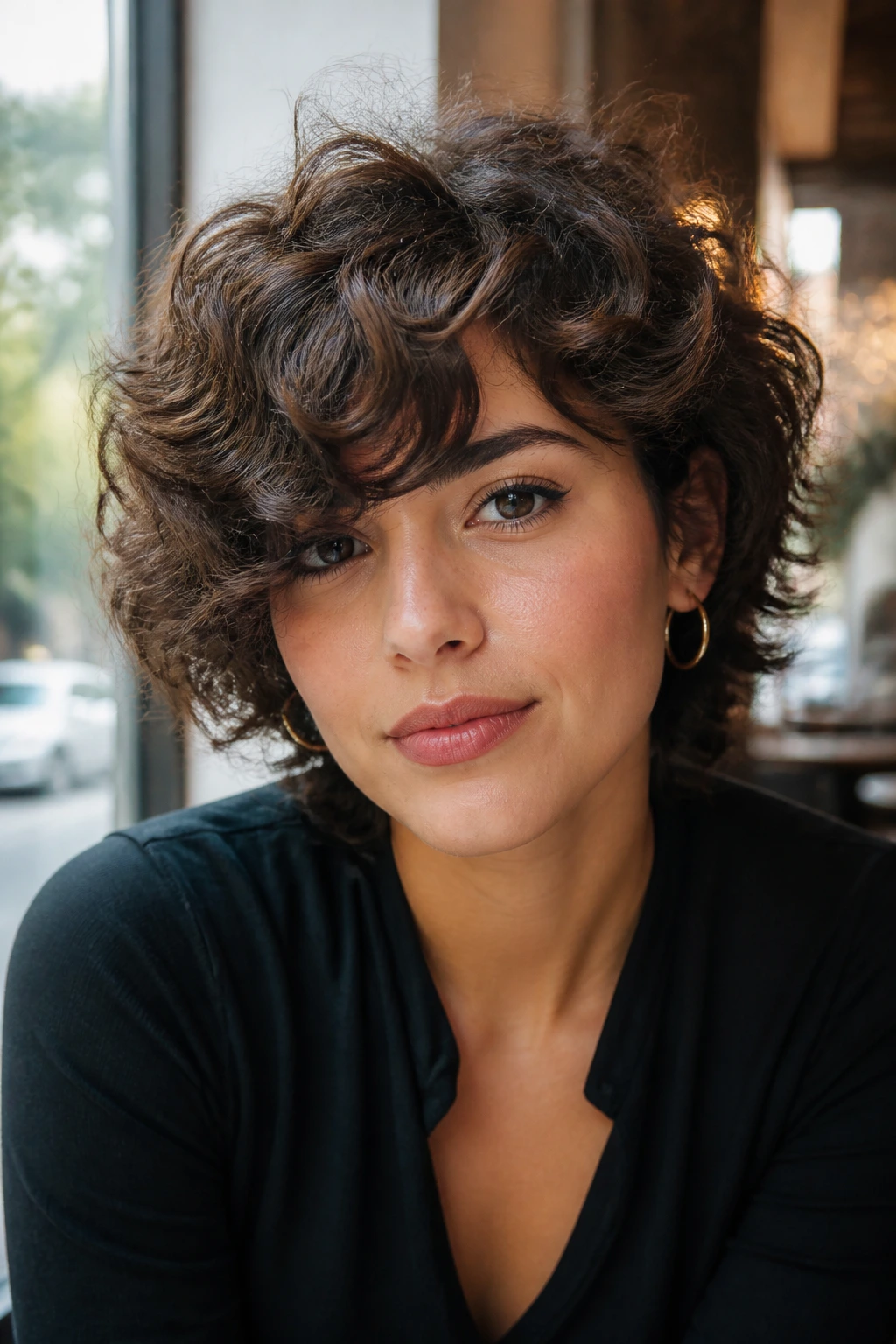
Short curls can be tricky on an oval face because they show everything. That’s why the bang placement matters so much here. The tucked side bang keeps the front soft while the rest of the cut stays cropped and lively. It’s not a pixie, and it’s not a bob. It sits in that helpful space where curls can still bounce.
This version is strongest when the layers are cut with the curl pattern in mind, not against it. A dry cut helps a lot. So does leaving the bang longer on purpose. Short bangs on curly hair age badly if they’re cut too high; they spring up and become a daily annoyance. Keep them long enough to sweep across one eyebrow.
Nope, you do not need to tame every curl. Let some of the shorter pieces around the temple do their thing. That irregularity is what keeps the cut from looking helmet-like.
6. High-Volume Crown Shag with Narrow Side Bangs
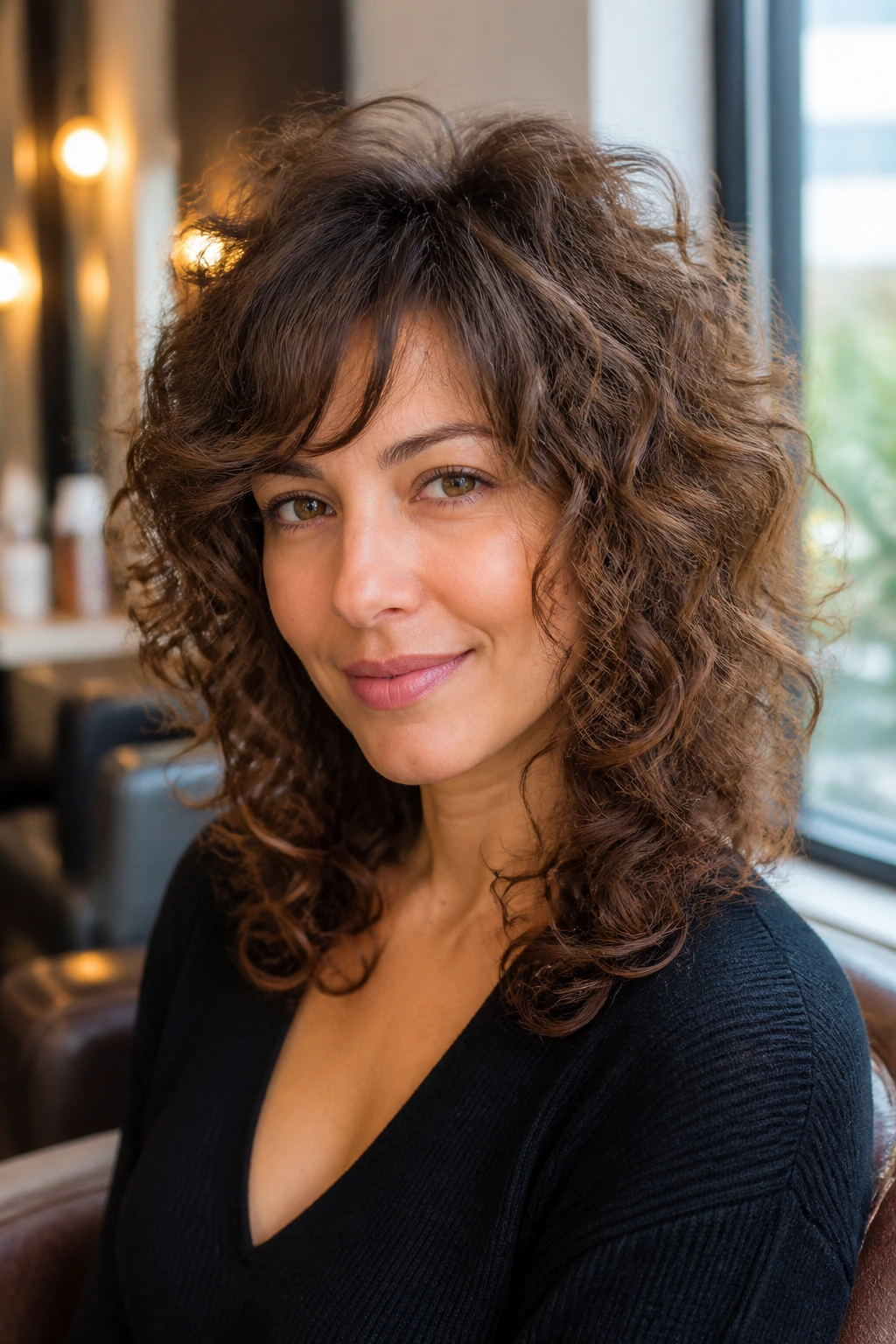
A lot of curly cuts get heavy at the bottom. This one flips the idea. The crown gets the lift, the sides stay narrower, and the side bang is kept slim so it doesn’t steal too much width from the face. On an oval face, that can be a smart move if you want the top to feel taller without the whole head ballooning out.
The structure is simple: short-to-medium layers near the crown, longer face-framing pieces near the cheeks, and a narrow sweep across the forehead. It sounds fussy, but it behaves well in real life. The shape looks best when the roots have a little grit, so a light mousse or root spray helps.
I’d choose this if your curls collapse fast at the top. It gives the head shape without asking for a full styling routine every morning. That’s the appeal. Quiet lift. Less fuss.
7. Piecey Lob Shag with an Off-Center Part
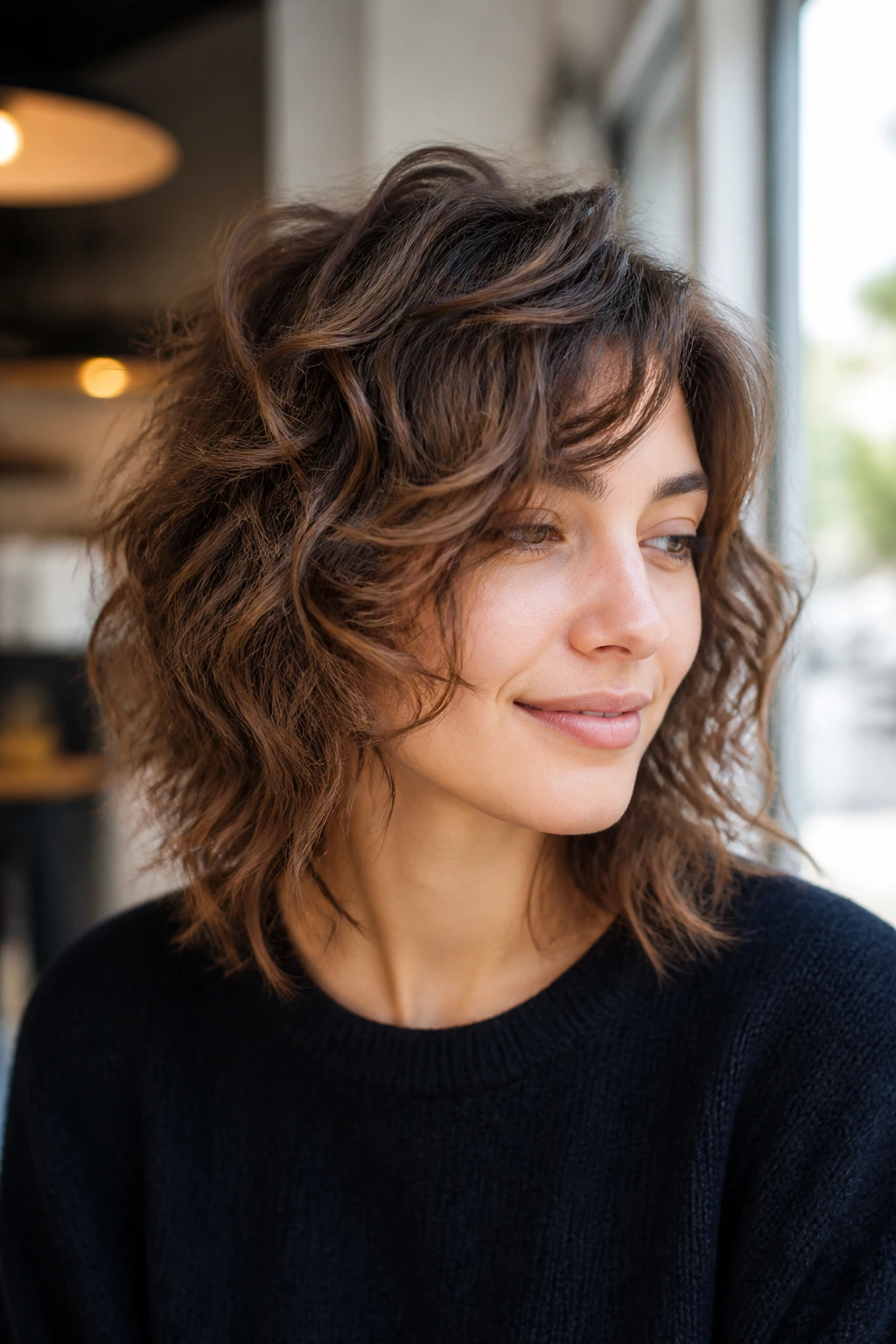
This is the haircut for someone who wants the shag idea without the full shag attitude. The lob length keeps things neat, but the layers and off-center part stop it from looking too polished. The side-swept bang slides naturally into the part, which keeps the forehead open on one side and softly covered on the other.
The piecey effect comes from leaving enough length in the front for the curls to separate into ribbons. If you over-layer this cut, it loses that modern, slightly undone feel. Better to keep the front longer and let product do the rest. A touch of gel and a scrunch is enough most days.
Best for
- curls that want to sit just above the shoulders,
- people who wear glasses and need a bang that won’t fight the frames,
- anyone who wants a shape that still looks tidy after a long workday.
The whole cut reads easy, but not boring. That’s a harder line to hit than people think.
8. Retro Rocker Curly Shag with Heavy Side Sweep
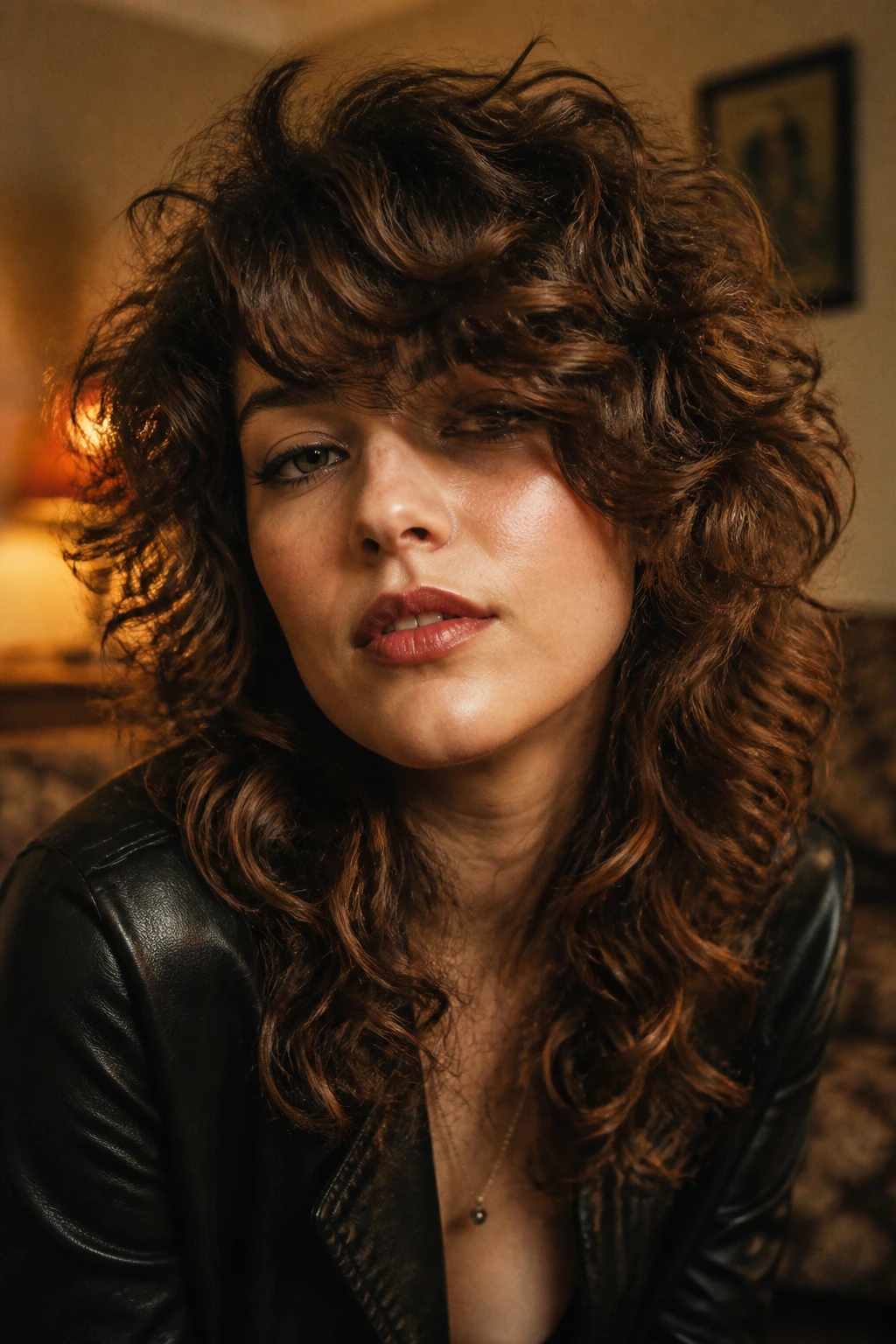
Some side bangs should float. This one should arrive with a little weight. The heavy side sweep gives a retro feel, almost like a softened version of a 1970s rocker cut, but the shag layers keep it from becoming costume hair. On an oval face, that denser fringe can make the features look sharper and more deliberate.
The key is keeping the fringe long enough to move. Heavy does not mean short. It means there’s enough hair in the bang to create a clean sweep without breaking into ten tiny frizz pieces at the first sign of humidity. If your hair is coarse or dense, this version can look fantastic when it’s cut with a little precision around the face.
I’d only use this when you’re okay styling the front every couple of days. The shape needs a little direction. Blow it sideways with a diffuser or a round brush at the root if you want the sweep to stay put.
9. Deva Cut Shag with Face-Framing Spirals
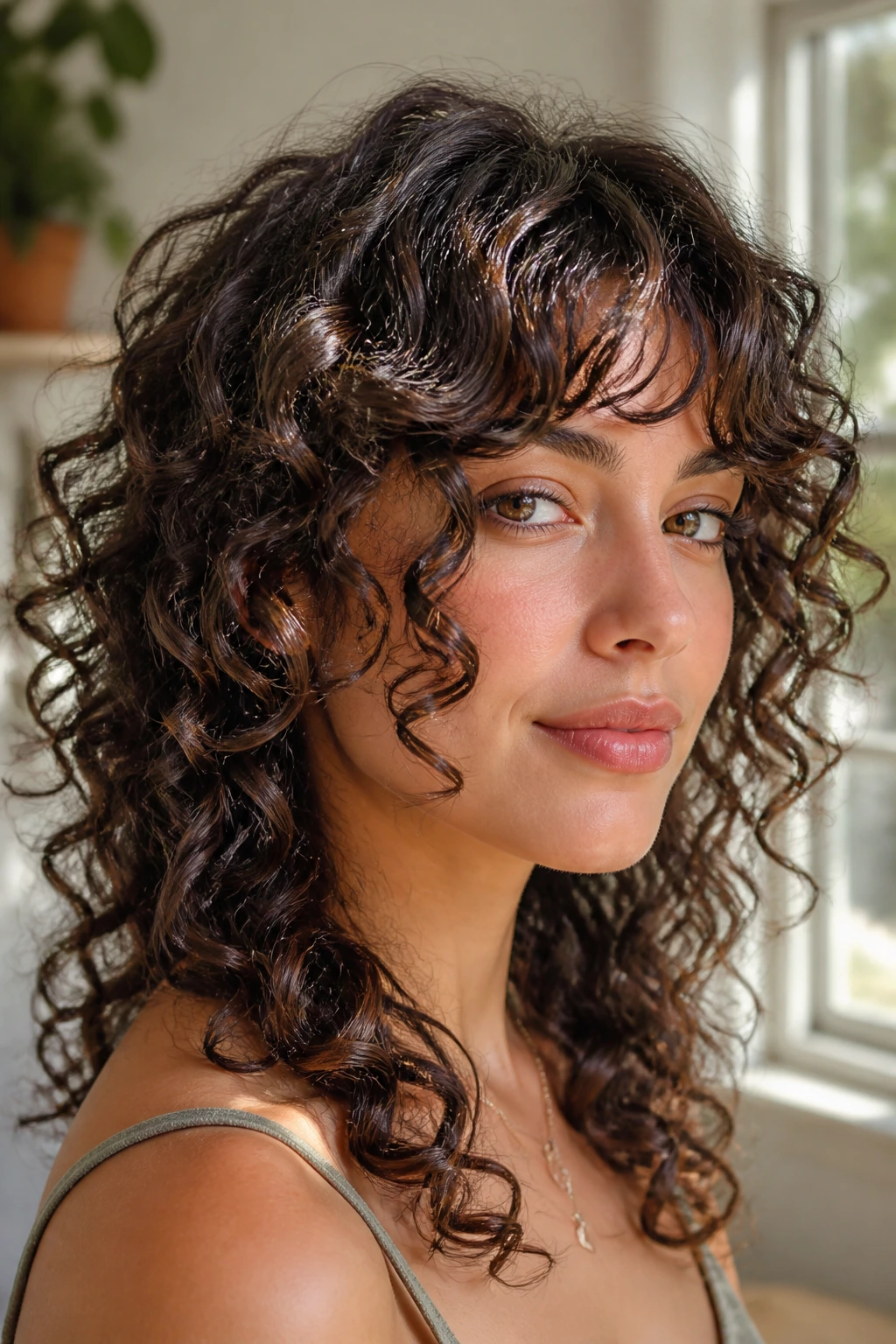
This is the version for people who already know their curls have personalities. The Deva-style approach treats each curl clump as its own line, which is why the face-framing pieces land so well on oval faces. Instead of forcing symmetry, the cut lets the spirals decide where they want to sit. That’s the whole point.
Cutting note
The bang should be trimmed on dry curls, or at least refined dry, because wet curls lie. They lie badly. If the stylist cuts the fringe too short wet, it can bounce right above the eyebrow and stay there in protest. Keep the side sweep longer than you think you need, then let the curl pattern shorten it naturally.
The best part is the way the front pieces arc toward the cheekbone and jaw without looking carved. It’s flattering, but it doesn’t look overworked. If you like curls that still feel like curls—not “styled hair pretending to be curls”—this is a strong choice.
10. Long Boho Shag with a Sweeping Fringe
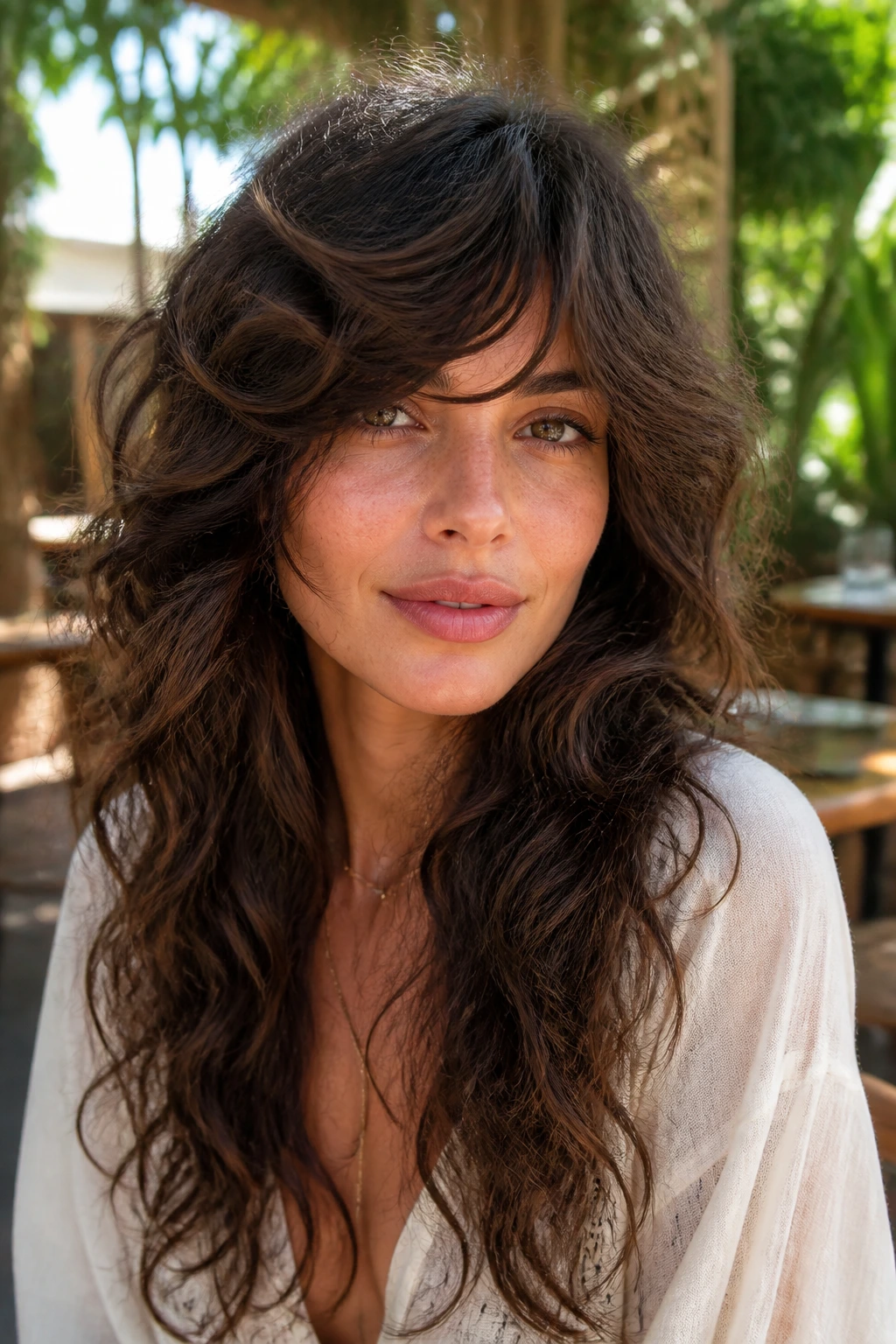
Long shags can go flat fast if the layers are lazy. This one avoids that by keeping a lot of movement through the middle and front. The sweeping fringe drifts across the forehead and disappears into the longer face-framing layers, which works especially well on oval faces that want softness rather than sharp angles.
The length buys you flexibility. Wear it loose, half-up, clipped back, or air-dried with a little bend at the ends. The downside? Long curly hair can hide a bad layer job longer than short hair can. So the front pieces need to be deliberate. If the stylist can’t show you where the shortest face frame starts, ask again.
I like this one with a cream-gel mix: cream for slip, gel for hold. Not a heavy cocktail. Just enough to keep the sweep from fluffing out before lunch.
11. Tapered Neck Shag with Lift at the Crown
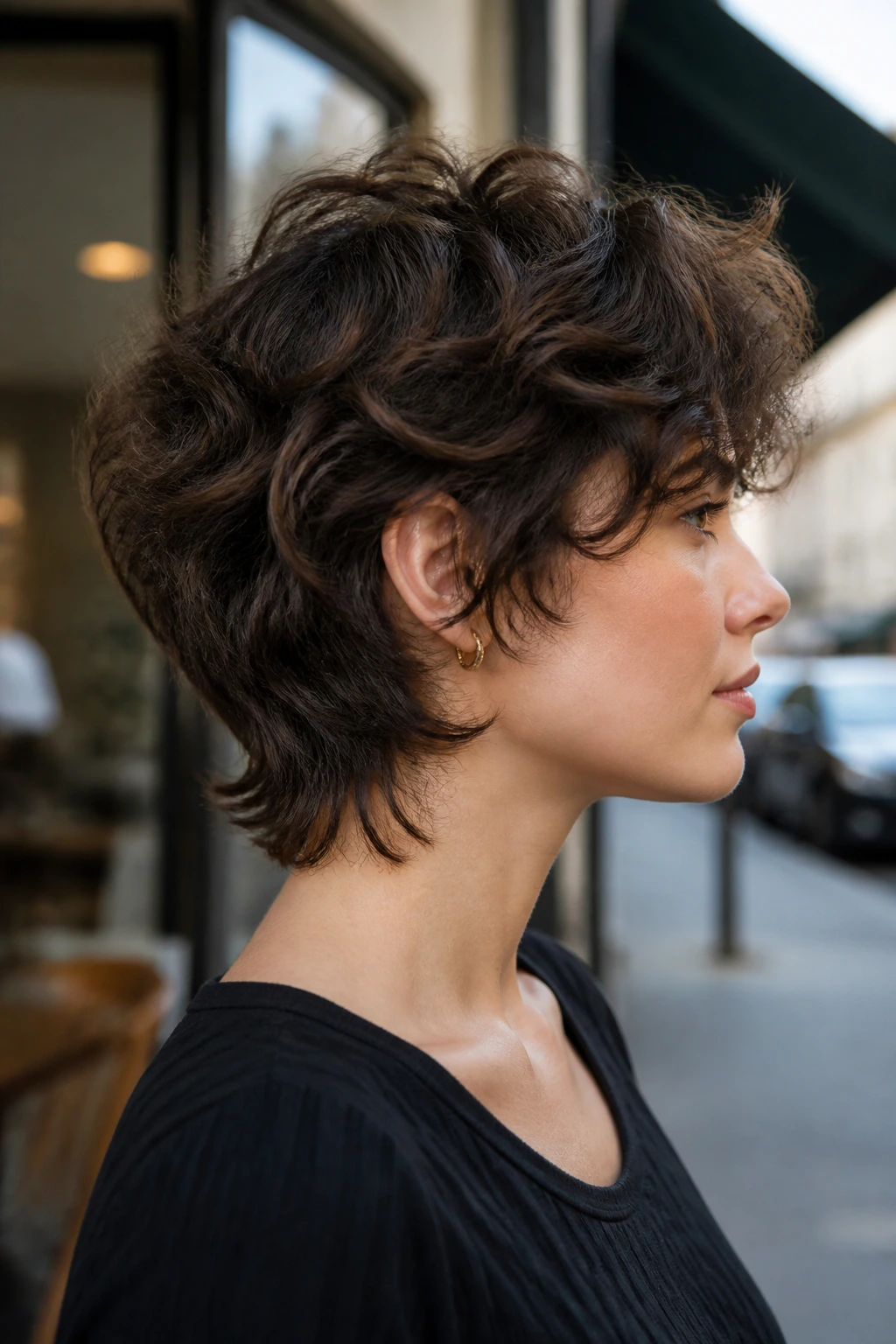
Here’s the cleanest way to keep a curly shag from feeling bulky: taper the back near the neck and keep the crown lifted. That shape gives the haircut a clearer outline from behind, which matters more than people think. On an oval face, the front still stays soft and side-swept, but the profile looks tidier.
This cut is especially good if your curls naturally expand around the lower half of your head. A tapered neck removes some of that weight so the top doesn’t get drowned out. It’s one of those styles that looks casual from the front and more precise from the side. I always find that appealing.
A little caution: don’t let the taper get too aggressive. If the back is cut too tight, the balance slips and the haircut starts to look like it’s trying too hard. Keep the taper gentle, not shaved-down dramatic.
12. Curly Pixie Shag with a Long Front Angle
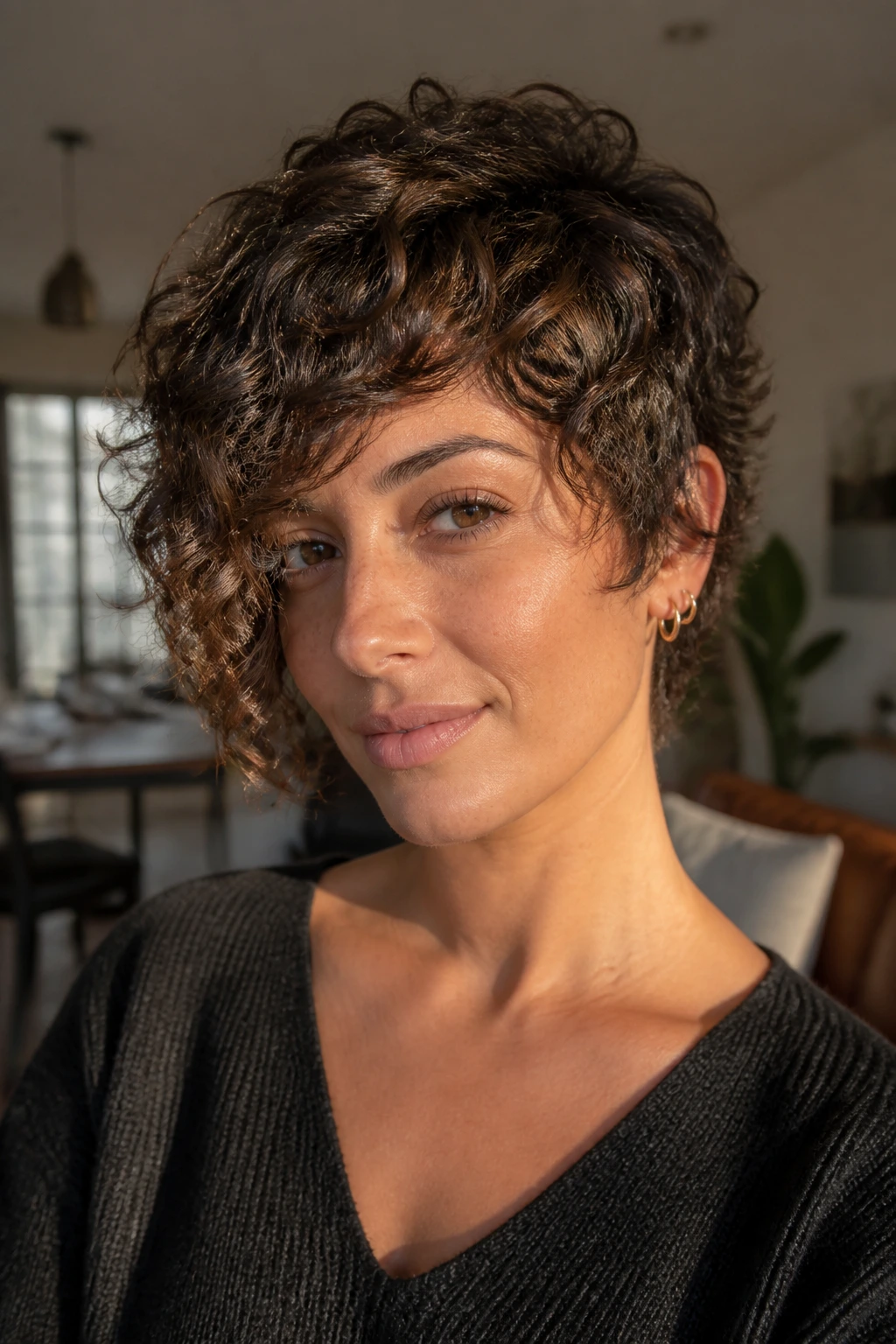
Short and curly can be glorious when the shape knows what it’s doing. This pixie-shag hybrid keeps the back and sides cropped while leaving a longer front angle that can sweep across the forehead. On an oval face, that front angle keeps the cut from looking too upright or too round.
The long front piece matters. It gives you a place for the eye to rest, and it stops the cut from becoming all texture and no shape. If you’ve got 3A or looser 3B curls, this can look fresh and airy. On tighter curls, it needs a stylist who understands shrinkage and won’t cut the front too high.
One thing to ask for
Leave enough length in the front to tuck behind one ear. That tiny bit of flexibility makes the cut easier to wear on days when you want the bangs out of your face but still want some of the shag’s attitude.
13. Dense-Curl Shag with Soft Internal Layers
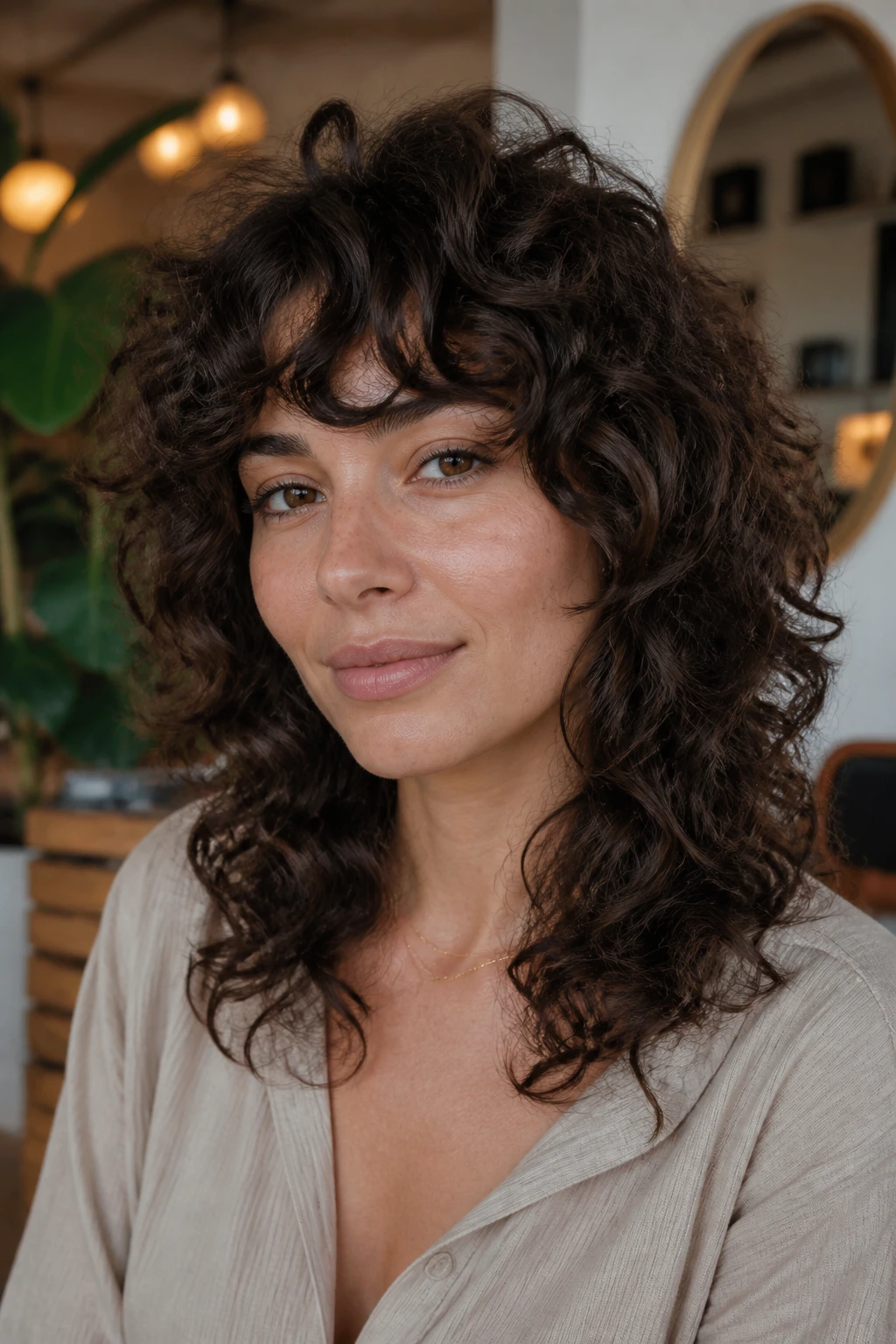
Dense curls can swallow a haircut if the layers are too timid. This version uses soft internal layers to remove weight without blowing up the outline. The side-swept bangs stay long enough to cross the forehead, but the rest of the cut is carved from the inside so the curls can move.
That inside cutting is doing a lot of work. It prevents the triangle shape that dense curls sometimes get when the bottom gets wider than the top. On an oval face, that matters because you want the shape to frame the features, not expand into a triangle helmet. Nobody needs that.
If your hair is thick enough to cast a shadow, this is a good match. Ask for the layers to be blended, not chopped. Choppy on dense curls can go from cool to chaotic in one shampoo.
14. Fine-Curl Shag with Lightweight Side Bangs
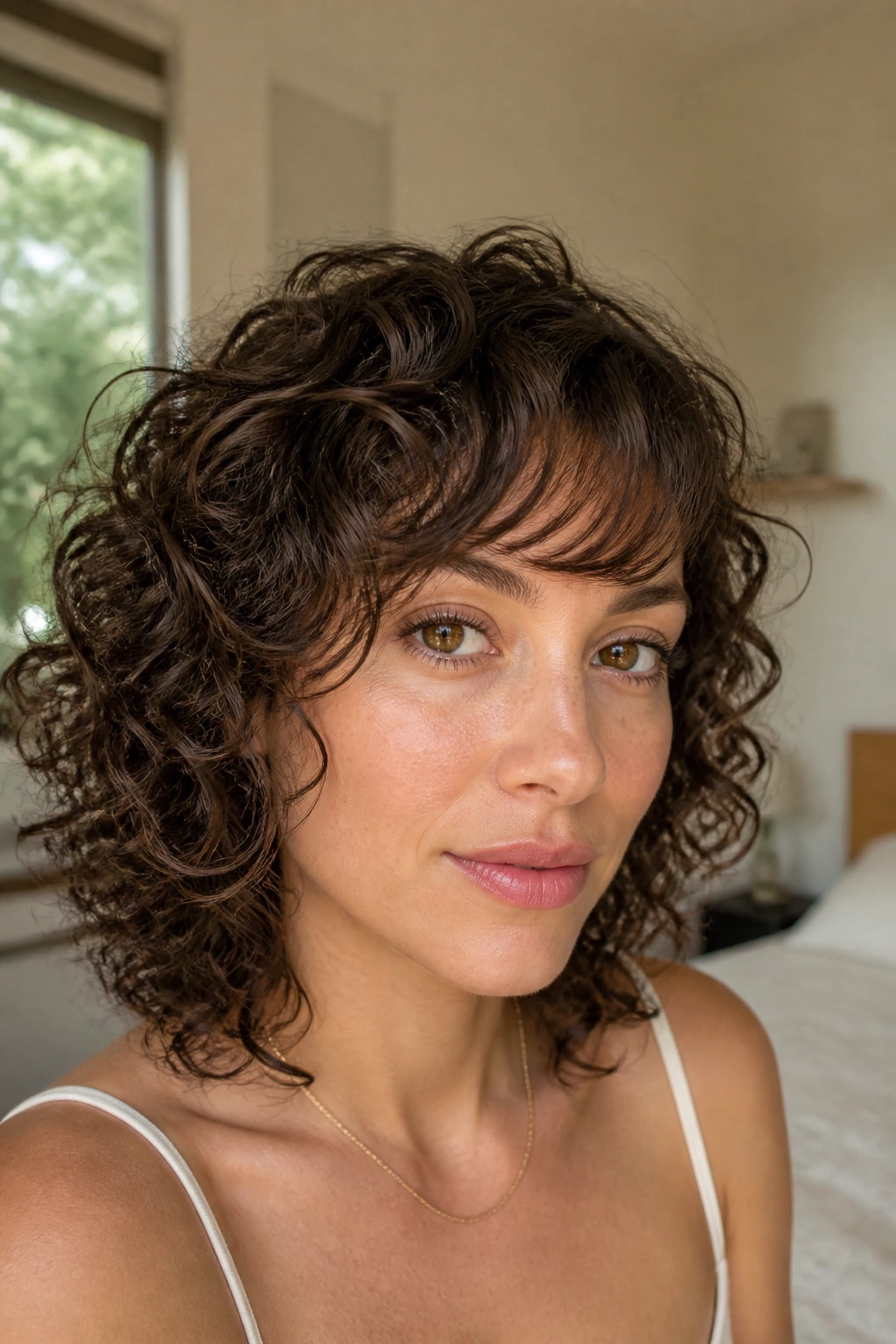
Fine curls need a lighter hand. Too many layers and the whole cut can disappear. This version keeps the shag effect, but the layers are longer and the fringe is airy so the hair doesn’t lose all its weight. On an oval face, that softness keeps the features balanced without making the haircut look sparse.
What makes it work
The side bang should be feathered, not thinned to death. Thinning shears near the front are a gamble on fine curls because they can leave a frizz halo and make the bang separate into little wisps. A better move is long, gentle layering and a product with flexible hold.
I’d use this cut if you want movement more than volume. It gives the impression of texture without demanding a lot of density. If the roots need help, a root-lift mousse is enough. Heavy creams usually do too much here.
15. Wet-Look Curly Shag for Glossy Texture
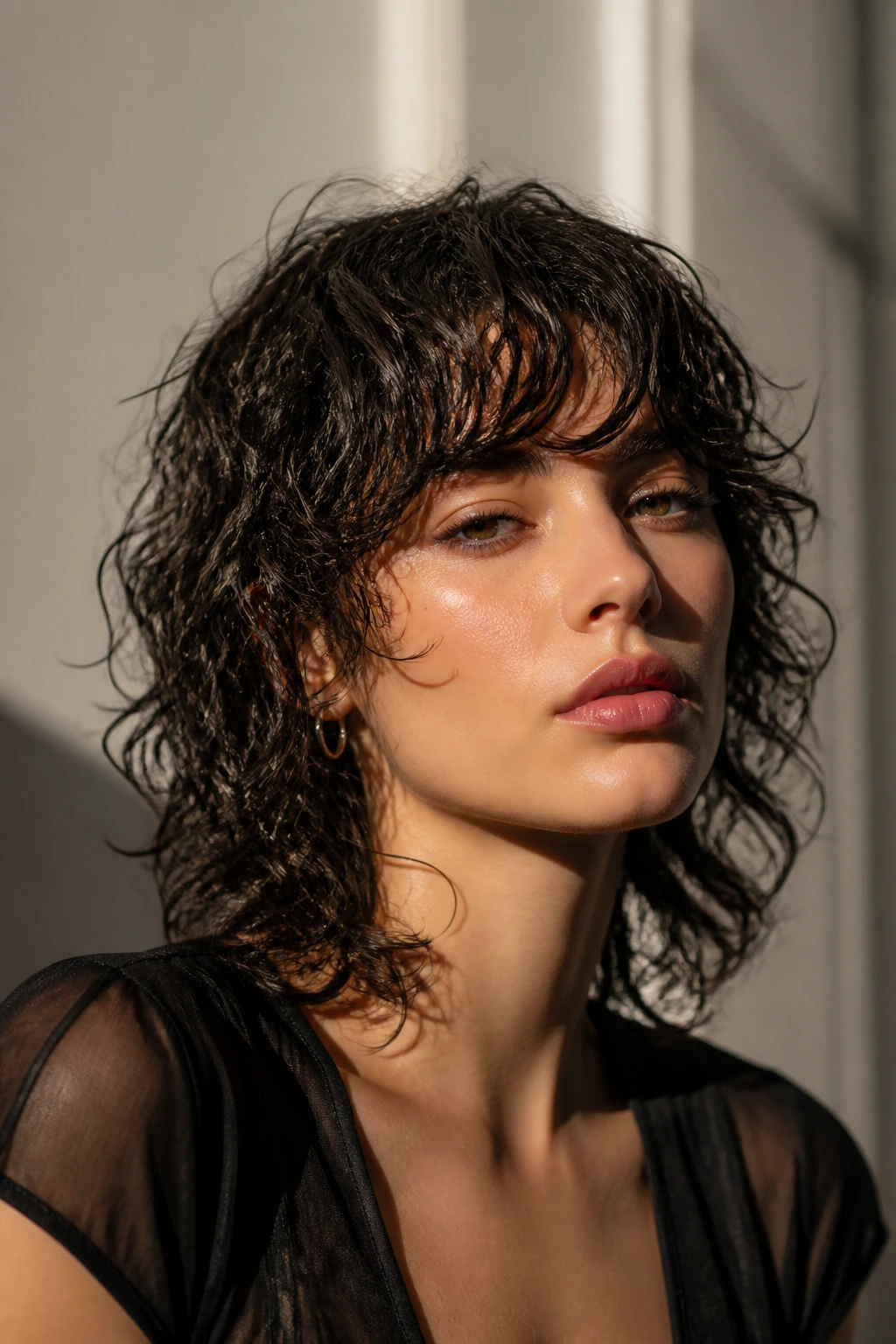
Some curly shags lean soft. This one leans sleek. The idea is to keep the cut layered and side-swept, but style it with enough gel or glaze that the curl clumps stay defined and shiny. On an oval face, the gloss draws attention to the eyes and cheekbones instead of to flyaways.
The side-swept bang works here because the wet finish makes the diagonal shape even more obvious. It’s a little bolder, a little more editorial. Not every day hair, and that’s fine. If you like a defined front section and a sculpted look around the face, this cut gives you a runway-ish edge without losing the shag’s movement.
Keep the product light enough that the curls still separate. A greasy, crunchy finish will kill the shape. You want sheen, not shellac.
16. Air-Dry Shag with Low-Maintenance Bangs
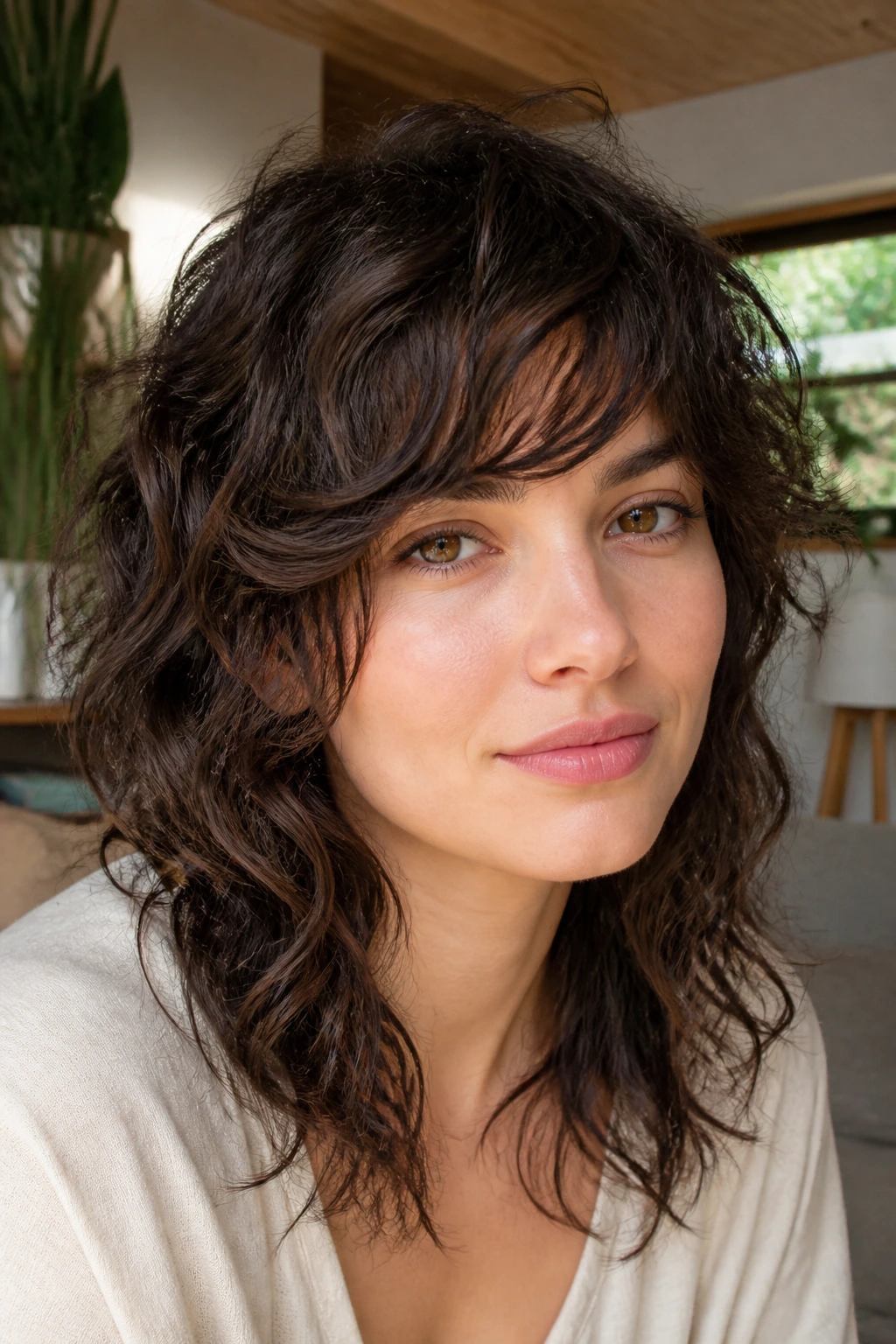
This is the haircut for people who don’t want to babysit their hair every morning. The layers are soft, the bang is long enough to settle on its own, and the side sweep has enough weight to fall into place while the rest of the hair dries. On an oval face, that loose front keeps things easy and natural.
The shape should be built for your actual drying pattern, not your dream routine. If you air-dry a lot, tell the stylist where the curls collapse and where they puff. That’s the useful information. A good shag should still look like a haircut when you walk out the door without a diffuser in your hand.
It’s also one of the better options for humid conditions. The looser fringe can shift a little without looking broken. That kind of forgiveness is worth a lot.
17. Glam Curly Shag with Polished Ends
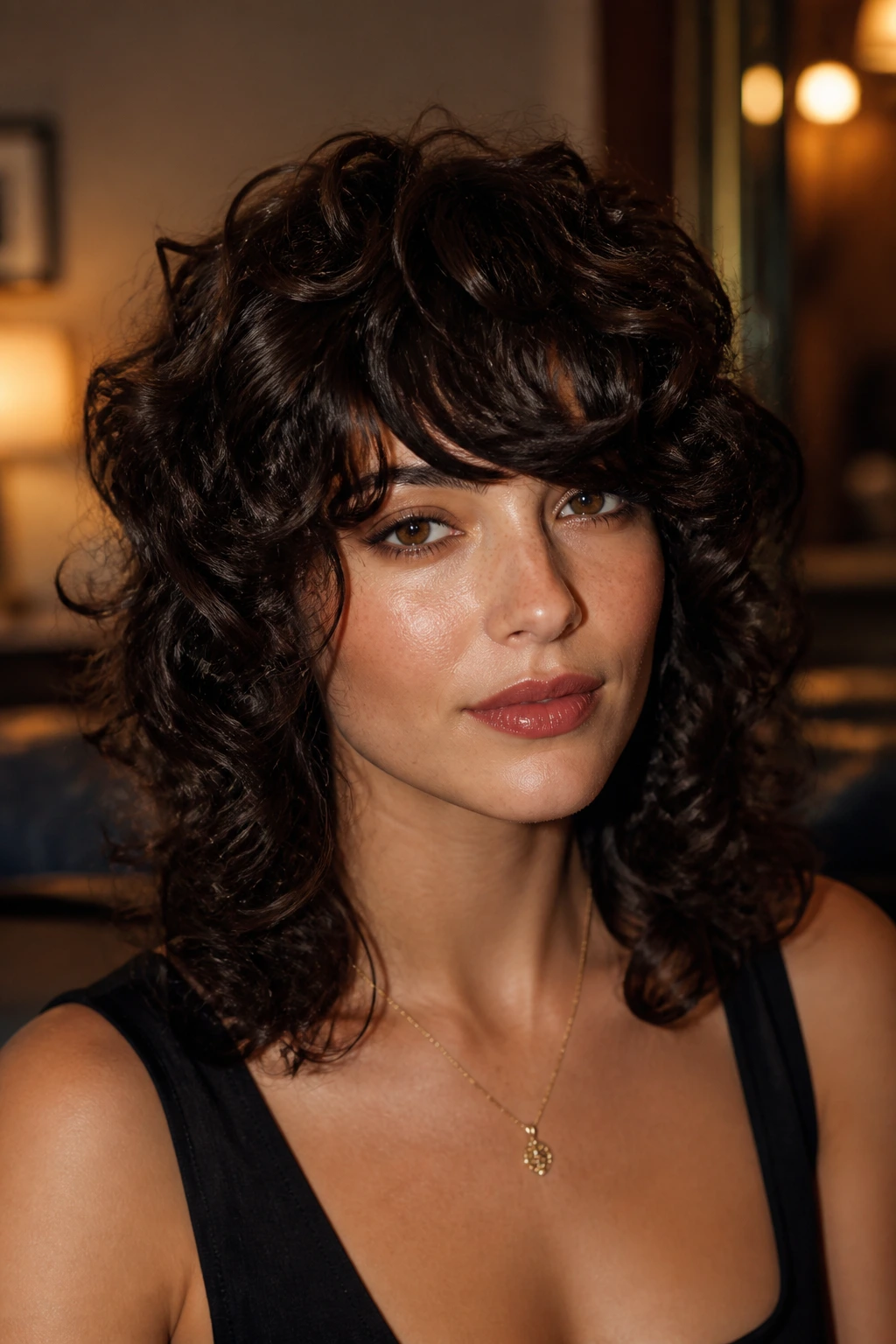
This one is for the nights you want the curls to look deliberate, not chaotic. The polished ends keep the shag from leaning too messy, while the side-swept bangs soften the front so the face still feels open. On an oval face, that combination reads clean and a little fancy without losing the layered feel.
The best way to wear it is with a bit of tension at the root and smooth definition through the mid-lengths. A cream or serum on the ends helps the curls reflect light instead of puffing out. I’d keep the bang slightly longer here so it can be brushed into place and still fall naturally.
Small styling rule
Do not overload the roots with oil. Shiny ends are nice. Greasy bangs are not. Put the gloss where the eye lands last, not first.
18. Messy Midlength Shag with a Bigger Bang Panel
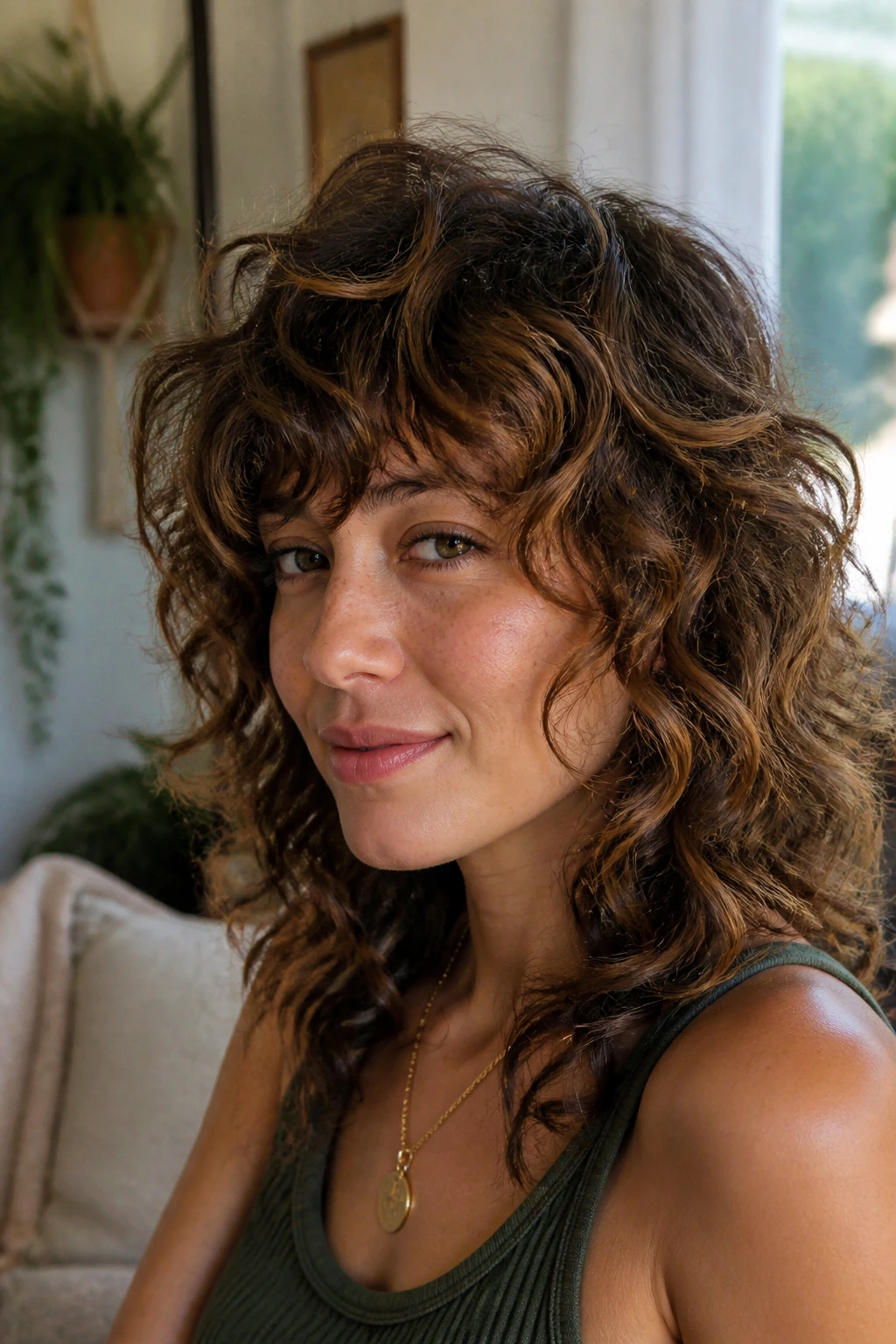
This is the relaxed, slightly rebellious option. The midlength keeps the weight in the hair, while the bigger bang panel gives the front enough presence to frame the face. On an oval face, that width through the front can make the proportions feel more grounded.
The shape works especially well if your curls live somewhere between loose waves and medium spirals. The bangs shouldn’t be too narrow or they’ll separate and disappear. Give them some width, let them sweep sideways, and let a few short pieces break free around the temple. That irregularity is what sells the look.
I like this cut because it doesn’t need perfection to look good. A little frizz almost improves it. That’s rare, and worth respecting.
19. Soft Wolf Cut with a Curved Side Fringe
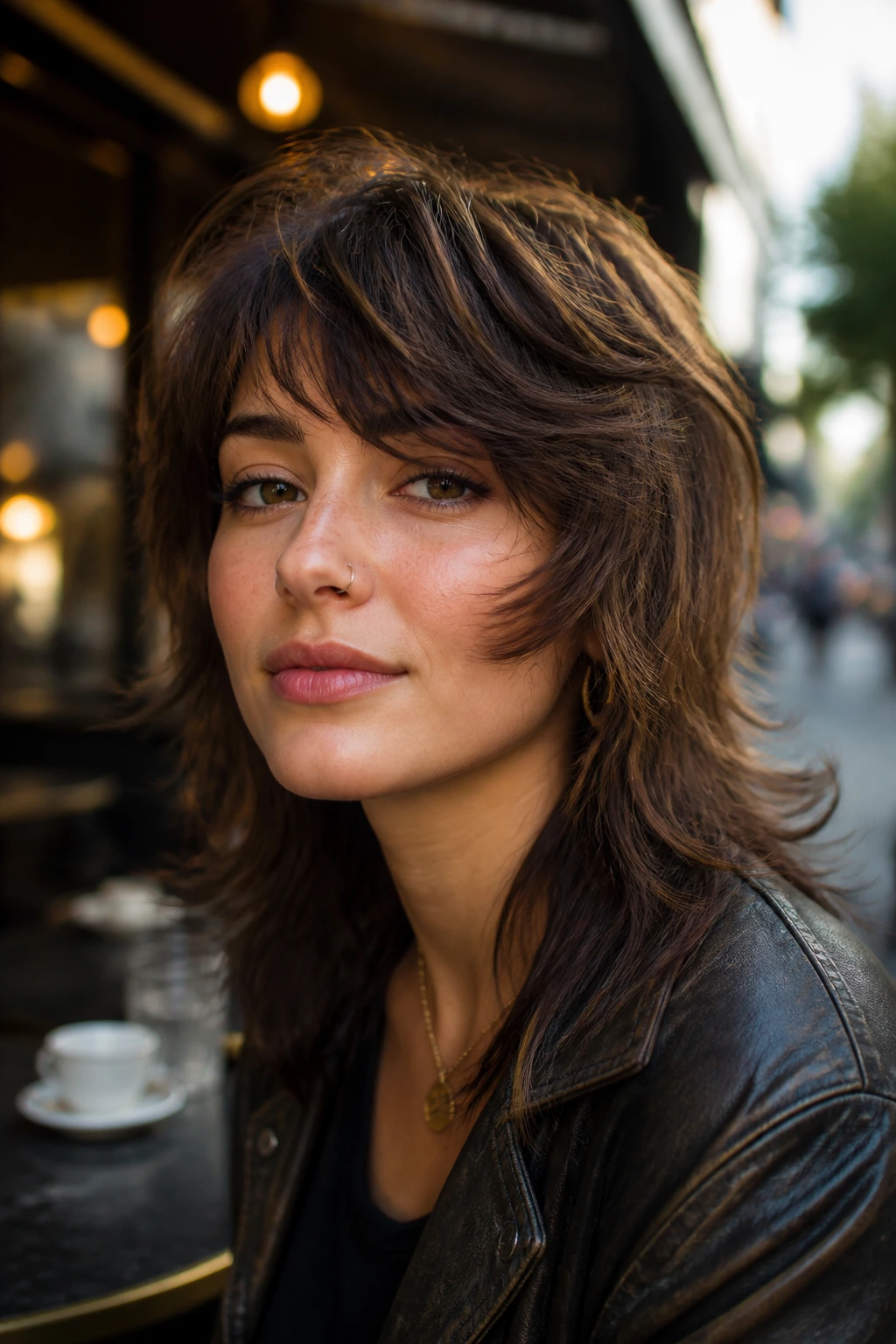
A soft wolf cut is what happens when the shag gets a little more attitude but keeps its manners. The layers are more obvious, the shape is a touch more cropped through the crown, and the curved side fringe keeps the front from feeling harsh. Oval faces can wear this well because the diagonal fringe keeps the attention moving.
The curve matters. Straight side bangs can make a wolf cut feel blunt; curved bangs keep it playful. Ask for the front pieces to bend toward the cheekbone instead of dropping in a hard line. That soft arc is what stops the haircut from looking like a costume version of itself.
Good choice if you like texture, if you’re okay with product, and if you don’t mind a haircut with a little opinion. This one has personality. It knows it.
20. Jaw-Skimming Layers with Side-Swept Bangs
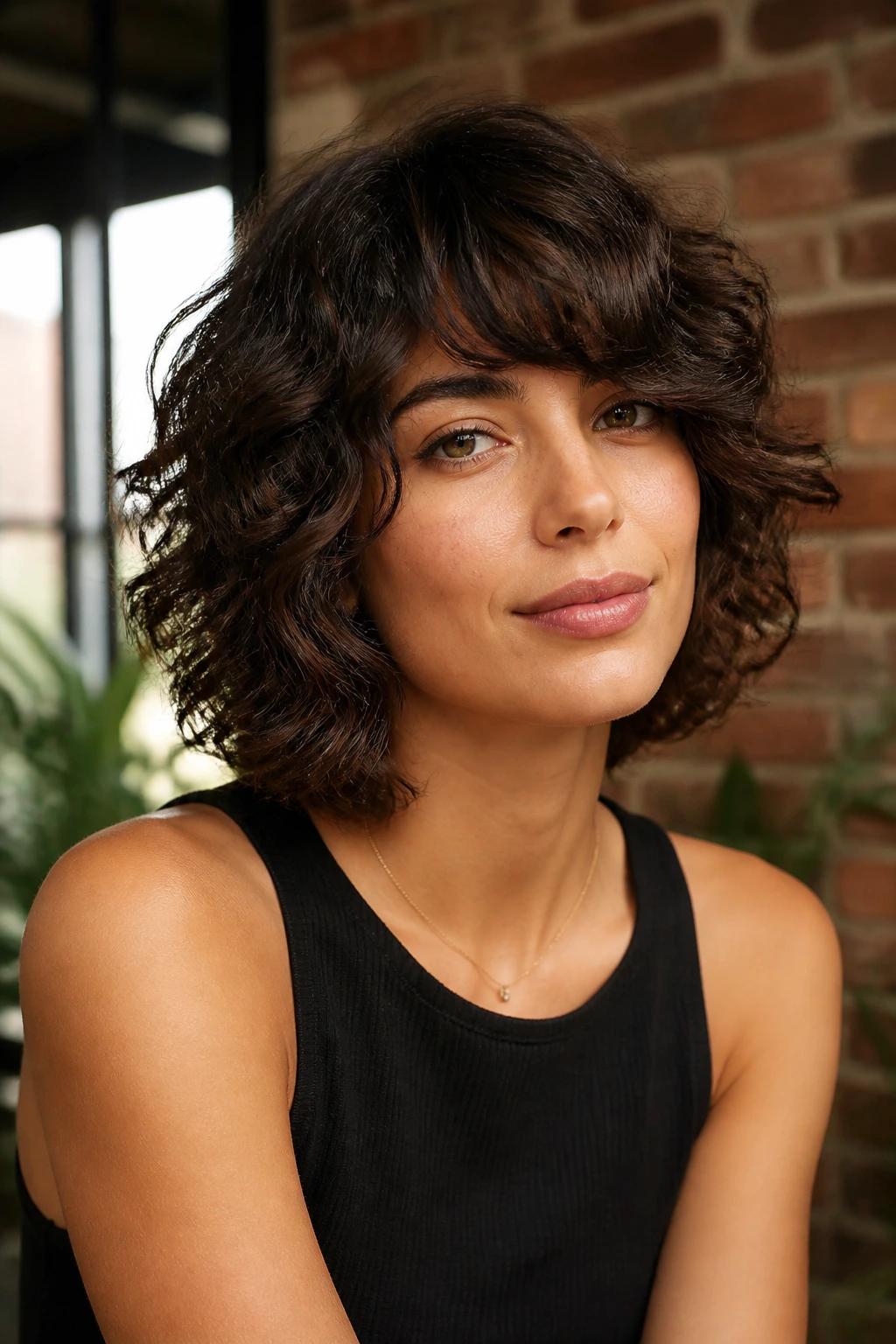
Jaw-skimming layers can be magic on oval faces because they place movement right where the face narrows. The side-swept bangs soften the upper half while the lower layers give the jaw a little frame. The result is balanced, not blunt.
This cut works best when the layers are cut to hit just below or right at the jaw, not much lower. If they’re too long, you lose the contour. Too short, and the hair starts floating away from the face. The right length creates a little pocket of volume around the cheeks, which is exactly where many oval faces benefit from it.
It’s a strong choice if you want a haircut that shows off earrings or a neckline. The shape doesn’t fight accessories. It works with them.
21. Asymmetrical Curly Shag with a Deep Side Part
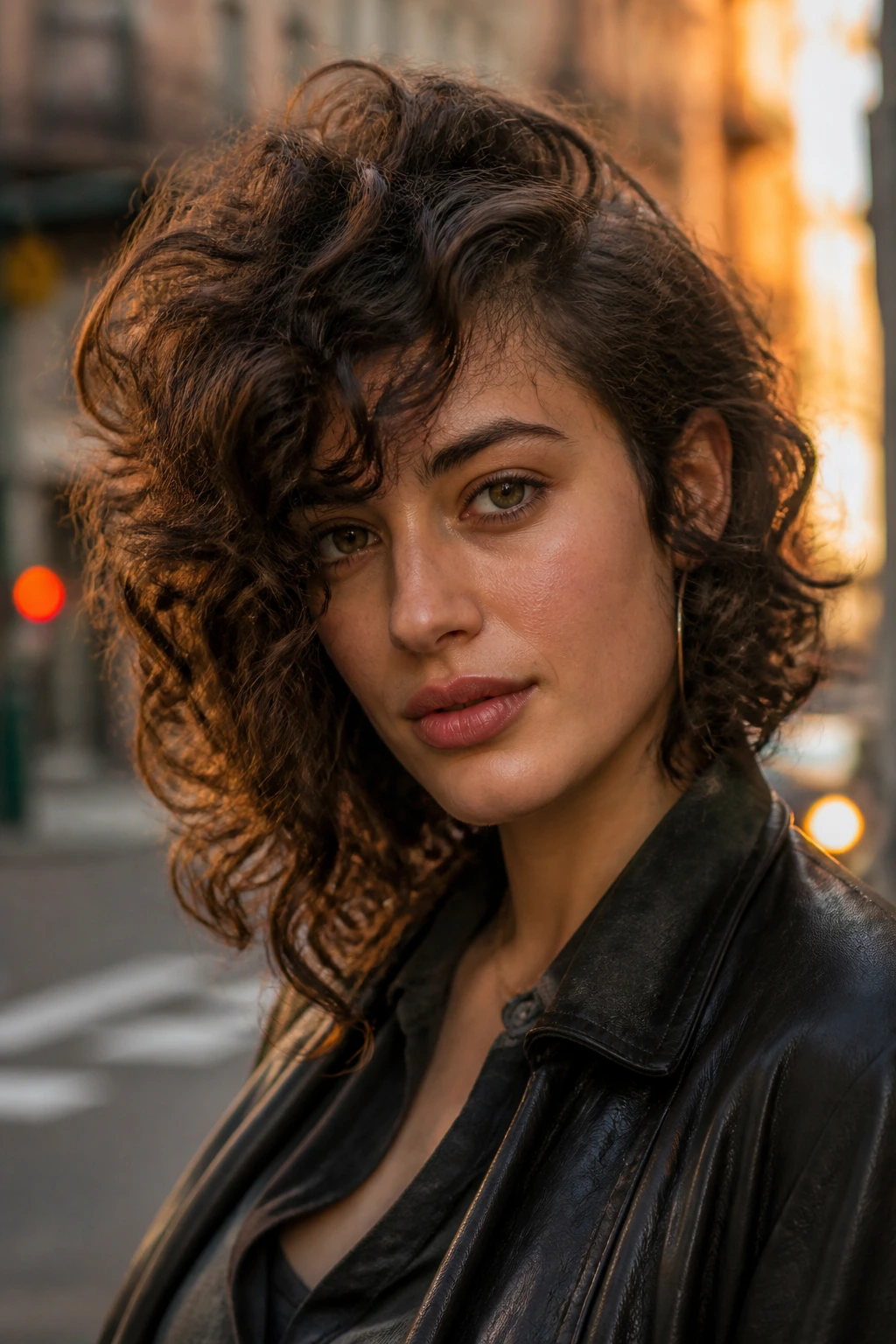
This one has drama, but not the theatrical kind. The deep side part creates an obvious asymmetry, and the shag layers echo that angle so the curls fall with purpose. On an oval face, the unevenness keeps the shape interesting without throwing the proportions off.
Why the asymmetry helps
A deep part gives the bangs somewhere to live, which is useful if your curls naturally resist a center part. The heavier side can fall toward the cheekbone, while the lighter side opens up the face. That contrast keeps the cut from reading too symmetrical, which can make curly hair feel stiff.
I’d reach for this if you wear one side of your hair tucked and the other loose. It looks like the haircut belongs to real life, not a studio wall.
22. Dramatic Face-Frame Shag with Long Side Bangs
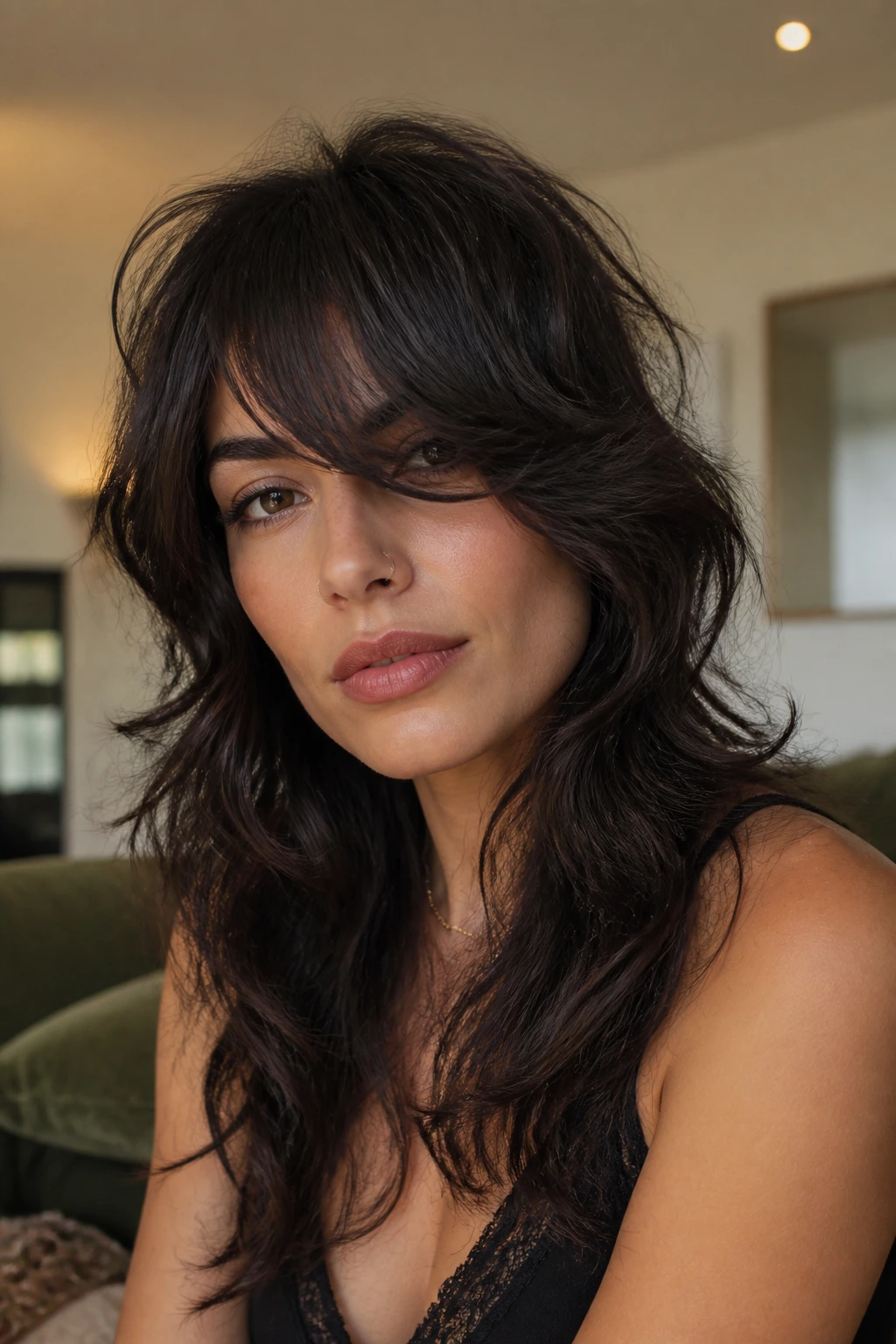
If you want a cut that announces itself the second you turn your head, this is the one. The long side bangs sweep past the eye and melt into thick face-framing layers, which gives the oval face a strong outline without closing it in. It’s bold, but the shag keeps it from getting heavy.
This version thrives on contrast: long in front, lighter through the interior, soft at the ends. The face frame should start high enough to matter and low enough to keep the cheeks visible. That’s the balancing act. Get it right, and the whole haircut feels expensive even when you air-dry it.
I like this on curl patterns that hold a clear clump and don’t frizz the moment you blink at them. The shape depends on definition. If your curls are cooperative, this one pays you back in volume and movement.
Why Curly Shags and Side-Swept Bangs Work So Well Together
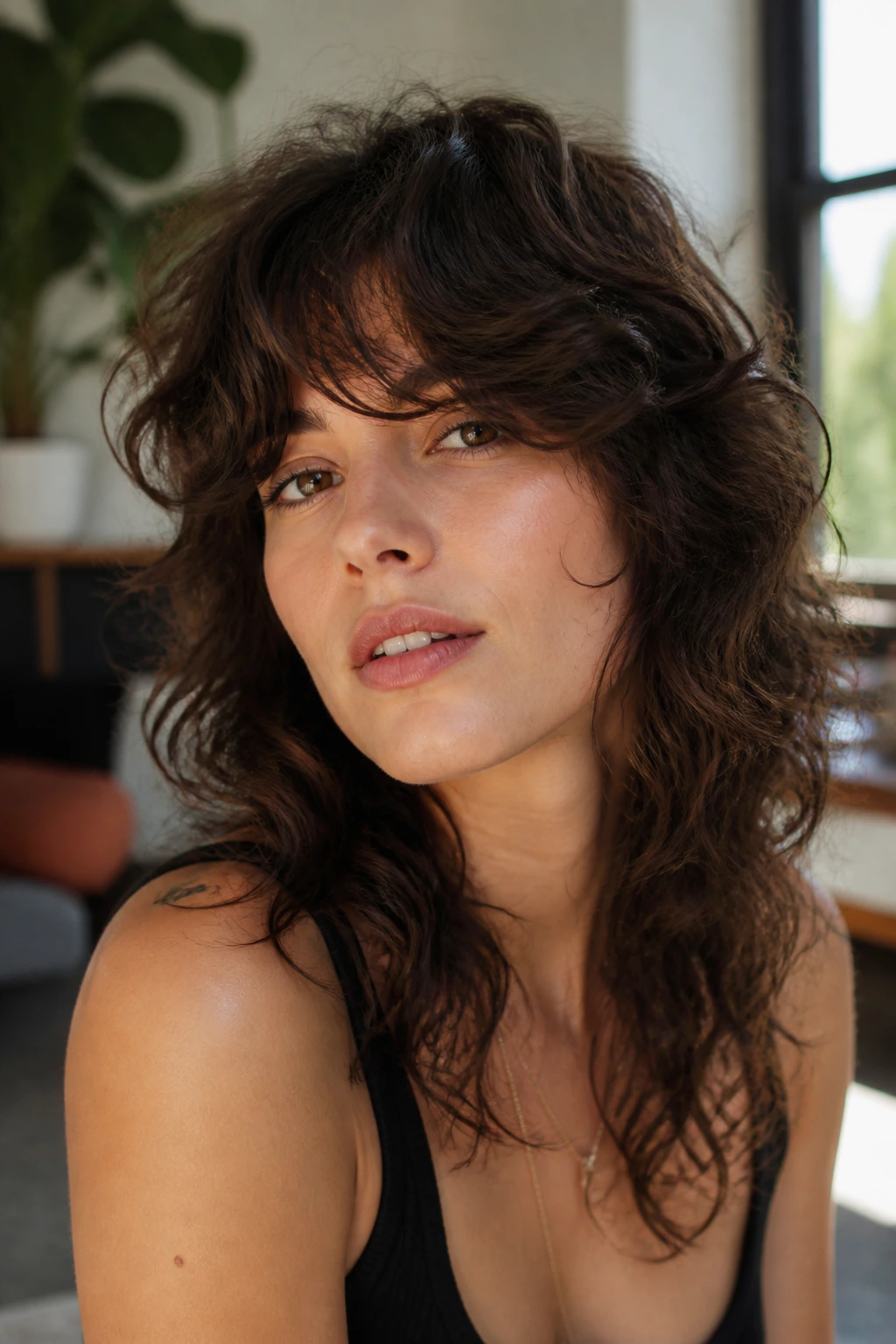
Oval faces give you room, but they still benefit from direction. A side-swept bang creates that direction fast. It pulls the eye diagonally instead of straight down, which stops the forehead from feeling too open and the face from feeling too long. On curls, that diagonal matters even more because the hair has its own opinions about where it wants to land.
The shag part does the quieter work. It breaks up weight, especially around the mid-lengths and ends, so the shape doesn’t collapse into one round mass. When the layers are placed well, the curls sit around the face like they were chosen one by one, not dropped on all at once. That’s the difference between movement and bulk.
Curl shrinkage changes the math, too. A bang that looks a little too long wet can be exactly right dry. A layer that seems harmless in the salon chair may spring up and land right at the cheekbone once the curls wake up. That’s why the best curly shag haircuts for oval faces with side-swept bangs are cut with the final shape in mind, not the damp one. Dry refinement helps. So does a stylist who actually knows how curls fall.
Essential Tools for the Cut and the Morning Routine
-
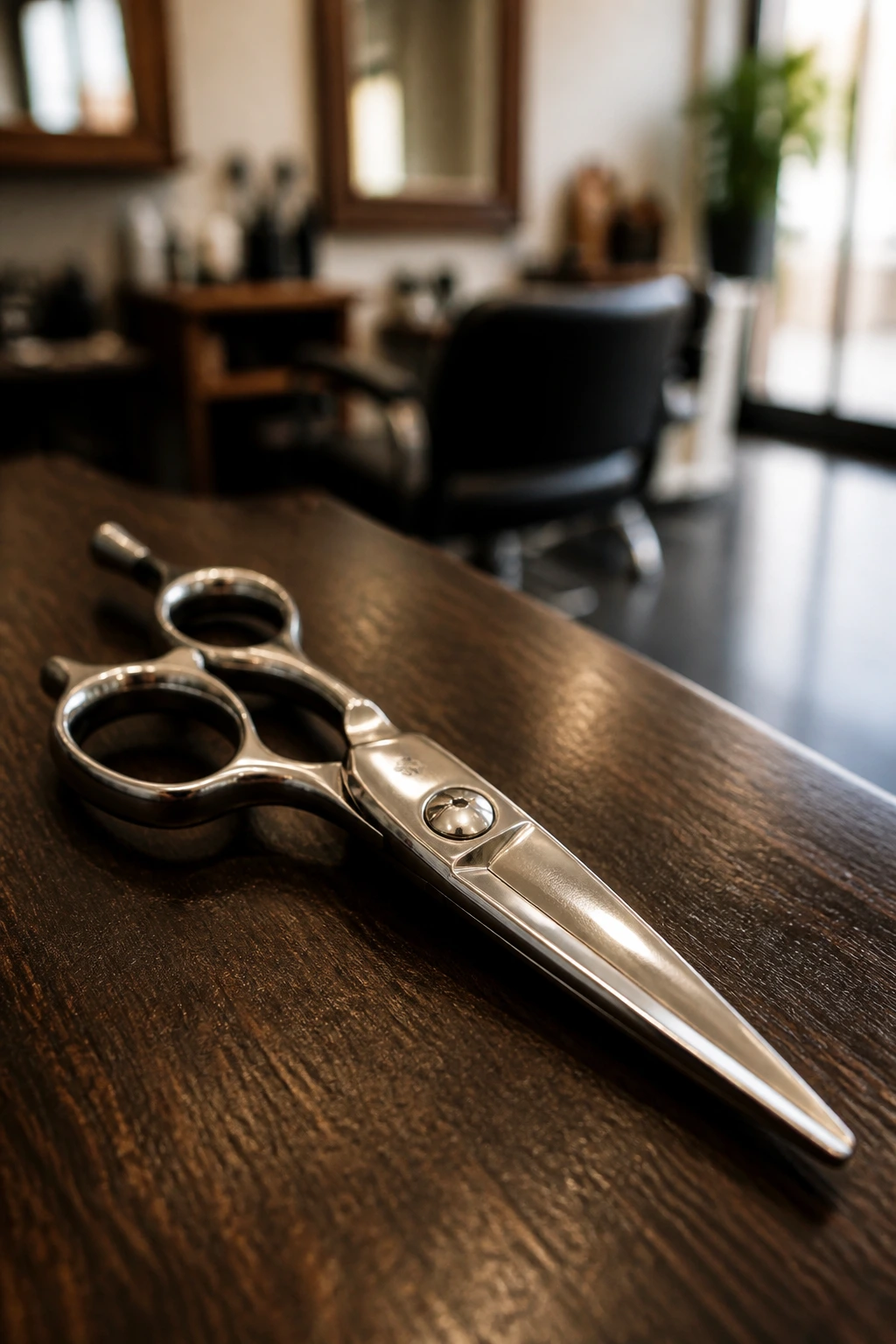
Sharp hair-cutting scissors: Curly hair hates dull blades; they leave fuzzy ends that puff up fast.
-
Wide-tooth comb: Best for detangling wet curls without pulling the clumps apart.
-
Duckbill or sectioning clips: Useful for holding the side-swept bang in place while it dries.
-
Microfiber towel or soft cotton T-shirt: Cuts down on roughing up the curl surface after washing.
-
Diffuser attachment: Keeps the curl pattern intact while adding lift at the roots.
-
Spray bottle: Handy for rewetting the fringe and front layers on refresh days.
-
Light mousse or root foam: Gives the shag some body without turning the bang stiff.
-
Curl cream or gel: Cream adds slip; gel adds hold. Many curl cuts like both in small amounts.
-
Handheld mirror: Helps you check how the side bang sits from the profile, which matters more than the front view.
How to Ask for the Shape at the Salon
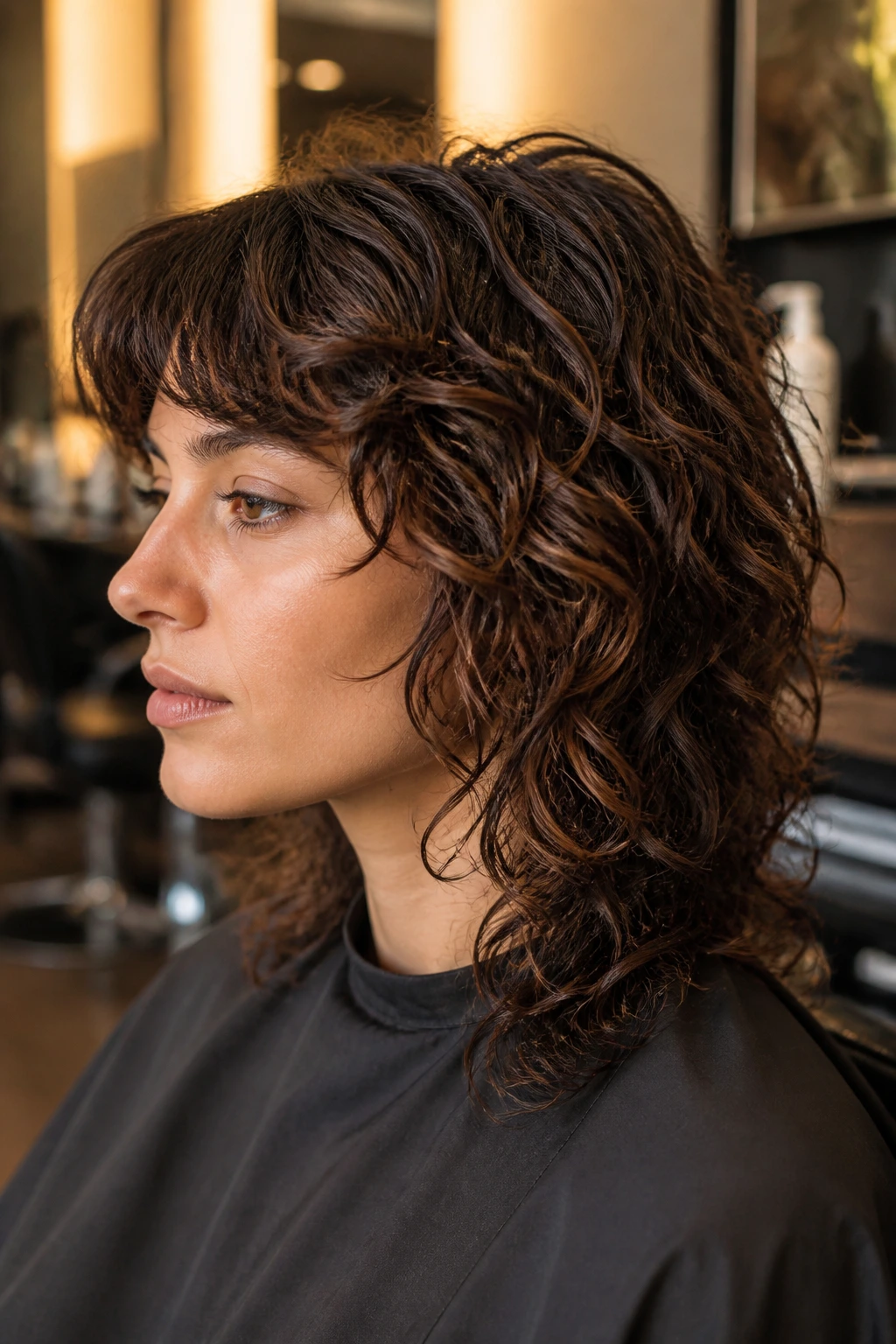
Bring pictures, but bring the right kind of pictures. A photo of someone with straight hair and a curly shag is not a useful reference. You want photos where the curl pattern is close to yours, the bang length is visible, and the face frame is doing the same job you want on your own face.
Tell the stylist where you want the longest bang to land when dry. Say cheekbone, eyebrow, or lip—use a real landmark. Also say how much shrinkage you get. If your curls bounce up two inches, say that out loud before the first cut. That single detail can save you from a bang you’ll be pinning back for a month.
Ask whether they cut curls dry, wet, or both. I prefer dry refinement at the front, because that’s where the side sweep lives or dies. And if you part your hair off-center, say so. A haircut that ignores your part is half-built.
Smart Styling Moves That Keep the Layers Visible
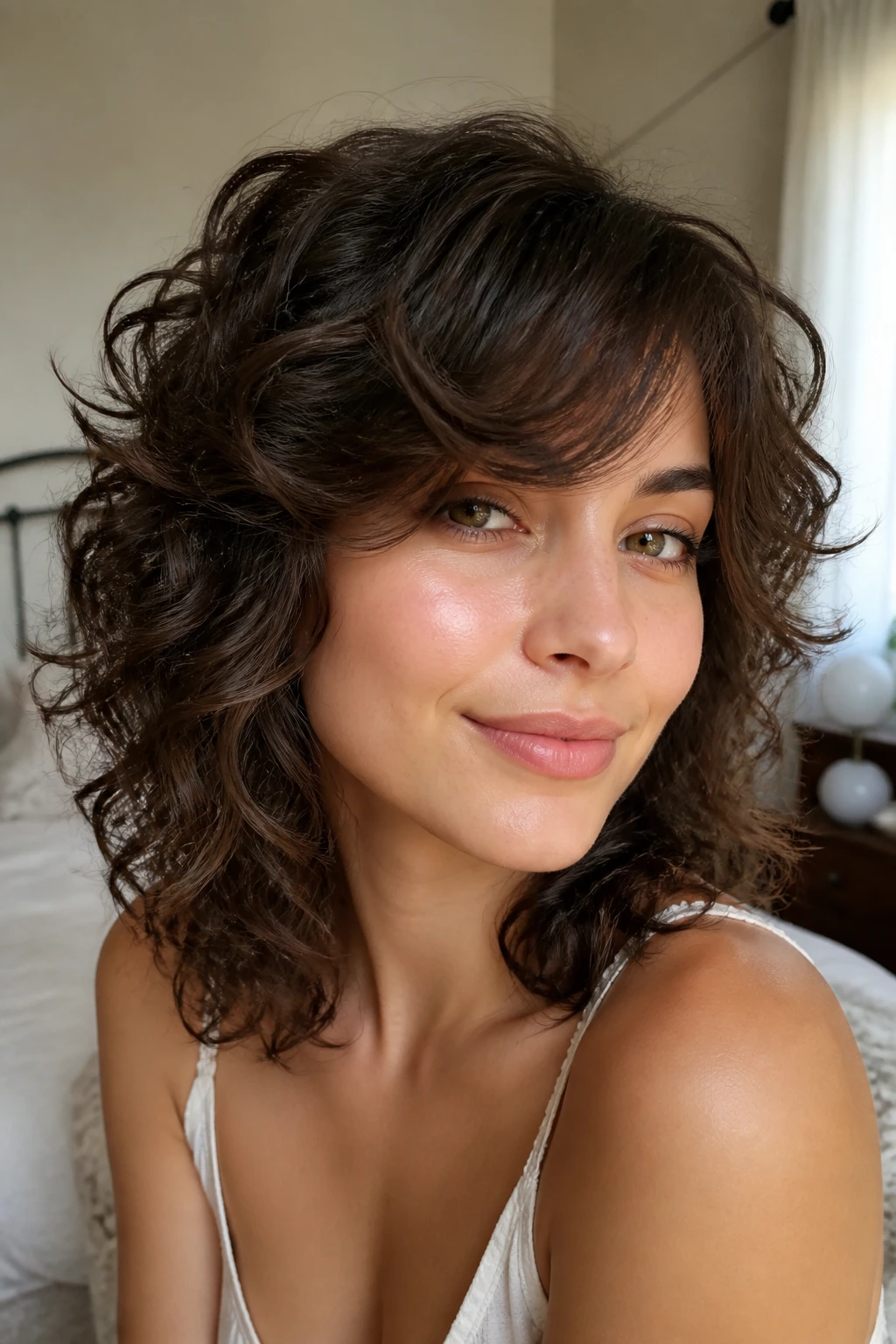
Root Lift: Put mousse at the roots while the hair is soaking wet, then flip and scrunch lightly. The goal is lift, not stiffness.
Bang Direction: Clip the fringe toward the sweeping side while it dries. That one move teaches the hair where to fall and helps the bang stay off the middle of the forehead.
Curl Clumps: Stop touching the hair once the curl pattern starts forming. Too much finger separation turns piecey texture into halo frizz.
Refresh Day Two: Mist the front layers first, not the whole head. The bang usually needs the most help, and rewetting the whole cut can drag everything down.
Finish Smart: Use one small drop of serum or lightweight oil on the ends, never the roots. Heavy product at the crown kills the shag shape faster than bad weather.
Common Mistakes That Flatten the Shape
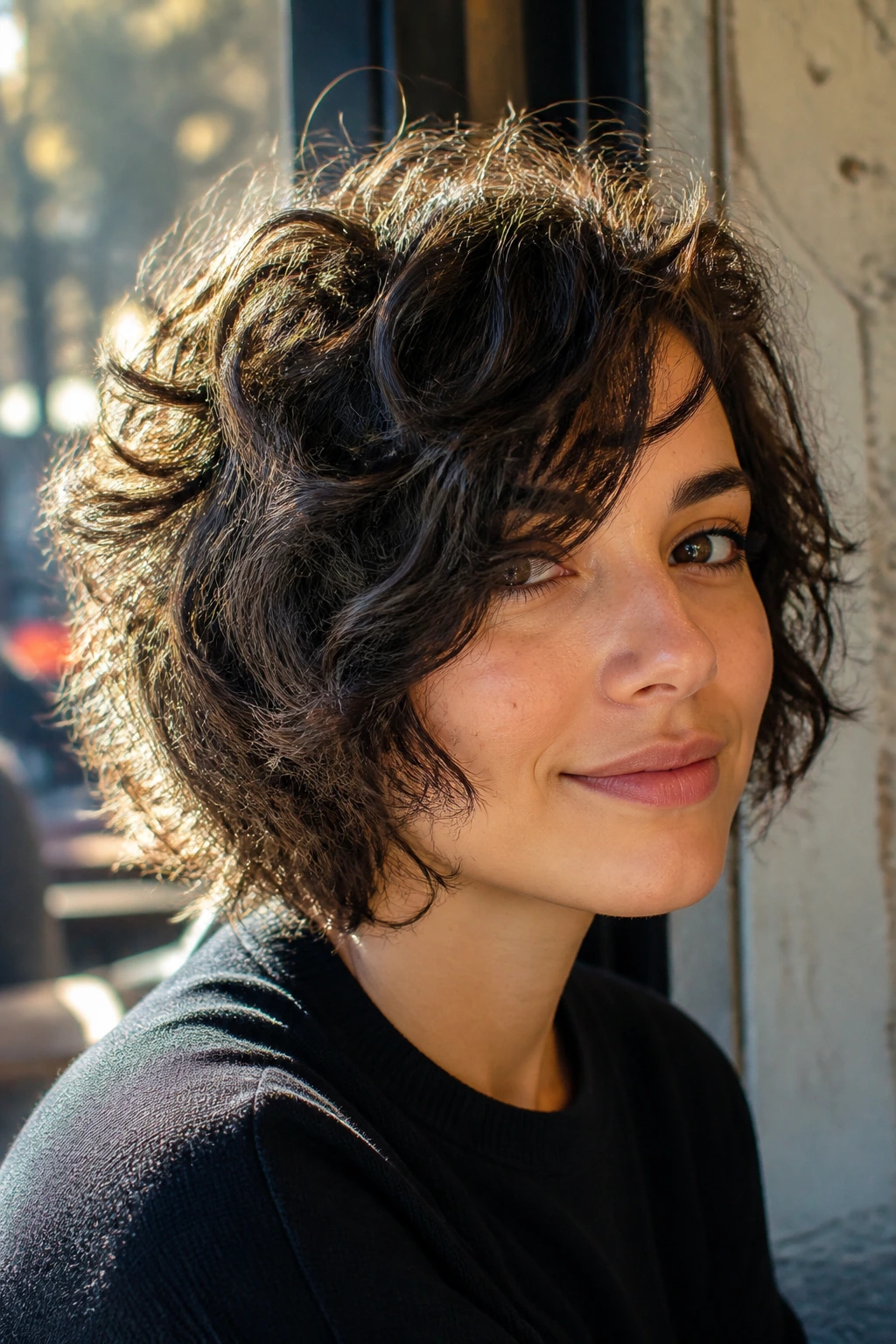
The first mistake is cutting the side bang too short. Curls spring up, and a fringe that lands neatly at the eyebrow in the salon can jump to the middle of the forehead once it dries. The fix is simple: leave more length than feels safe, then refine it dry.
Over-thinning is another trap. Thick curls often need internal weight removal, but if the stylist takes too much from the outside, the hair can frizz and lose its clean outline. You’ll know it happened if the ends look airy in a bad way, not a soft way. Ask for blending, not shredding.
A third problem is building too much volume at the bottom. That’s how you get the triangle. If the lower half of the cut expands wider than the top, the oval face gets lost inside it. Layers around the cheekbones and crown fix that faster than any product.
Heavy creams can also smother the shape. They make curls hang, which sounds fine until the shag stops shagging. Use enough product to define the curl, not enough to paste it down.
Finally, don’t keep the part frozen in one place forever. Even a one-inch shift can change where the bang sits and how the front frame falls. Hair gets used to habits. That’s not always a good thing.
Variations for Fine, Dense, Loose, and Tight Curls
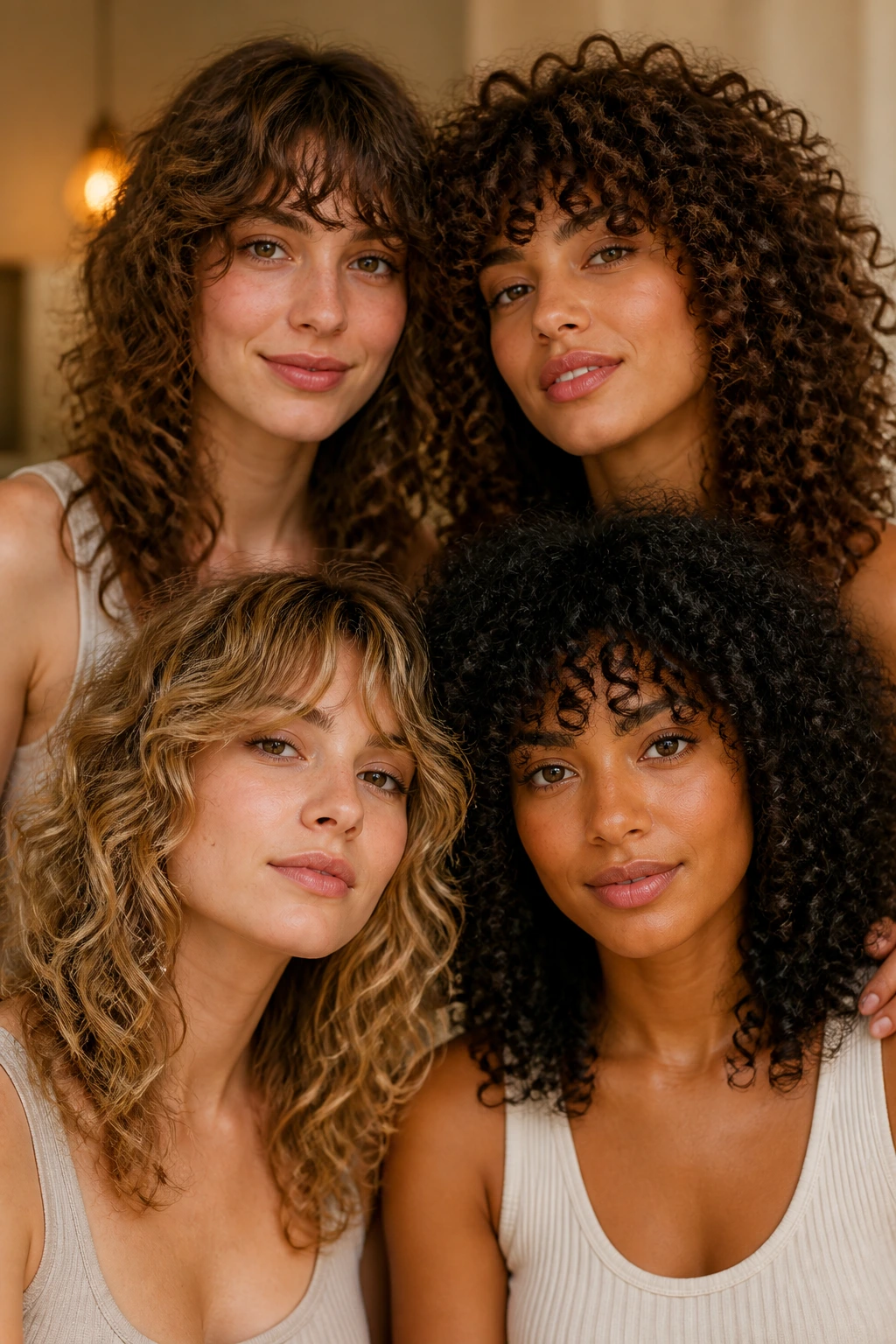
The Soft Spiral Edit: Best for loose 2A to 2C curls that need movement more than structure. Keep the layers longer and the bang feather-light so the hair doesn’t look sparse. A side sweep with a little bend is enough.
The Dense-Curl Balance Cut: Built for 3B to 3C textures that carry a lot of volume. Ask for internal layering and a longer side bang so the front frame doesn’t shrink into the forehead. This version keeps the shape from ballooning at the sides.
The Fine-Hair Lift Version: Good for fine curls that collapse fast. The crown gets a touch of height, the ends stay soft, and the fringe is cut long enough to keep weight. Too many short layers here will backfire.
The Longer Oval Fix: If your face is oval but leans long, shift the volume wider at the cheekbones and keep the top a little flatter. That creates balance without exaggerating vertical length.
The Low-Routine Air-Dry Version: For people who do not want a styling project. Ask for longer bangs, softer layers, and a shape that falls naturally when you scrunch and walk away. It won’t be the most dramatic version, but it might be the one you actually wear.
Keeping the Shape Fresh Between Cuts
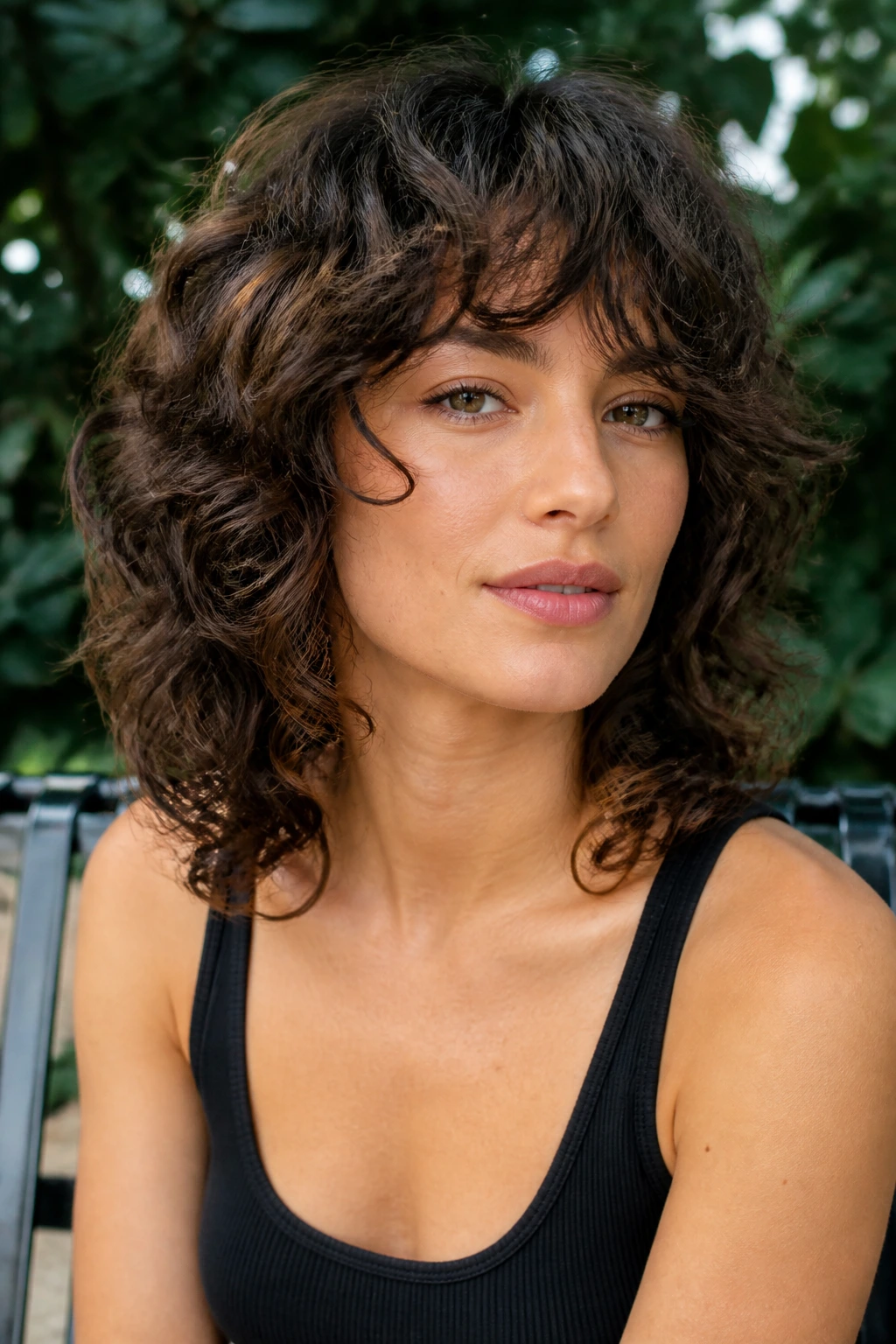
Side-swept bangs ask for maintenance, but not the exhausting kind. A bang trim every 4 to 6 weeks keeps the front from swallowing the eyes. The full shape usually holds for about 8 to 12 weeks, depending on curl type, density, and how fast your hair grows. If the layers start hanging in one blunt line, it’s time.
At home, a satin or silk pillowcase helps the front layers stay smoother overnight. A loose pineapple clip or a soft tie can keep the crown from crushing flat. In the morning, don’t start with heavy product. Rewet the bang and the top layers first, then add a little mousse or gel if the shape needs help.
If the front starts splitting or turning into a weird hook, mist it and clip it to the sweep side for 10 minutes. That usually resets the direction without a full wash. Curls like reminders. Sometimes they need them.
Frequently Asked Questions
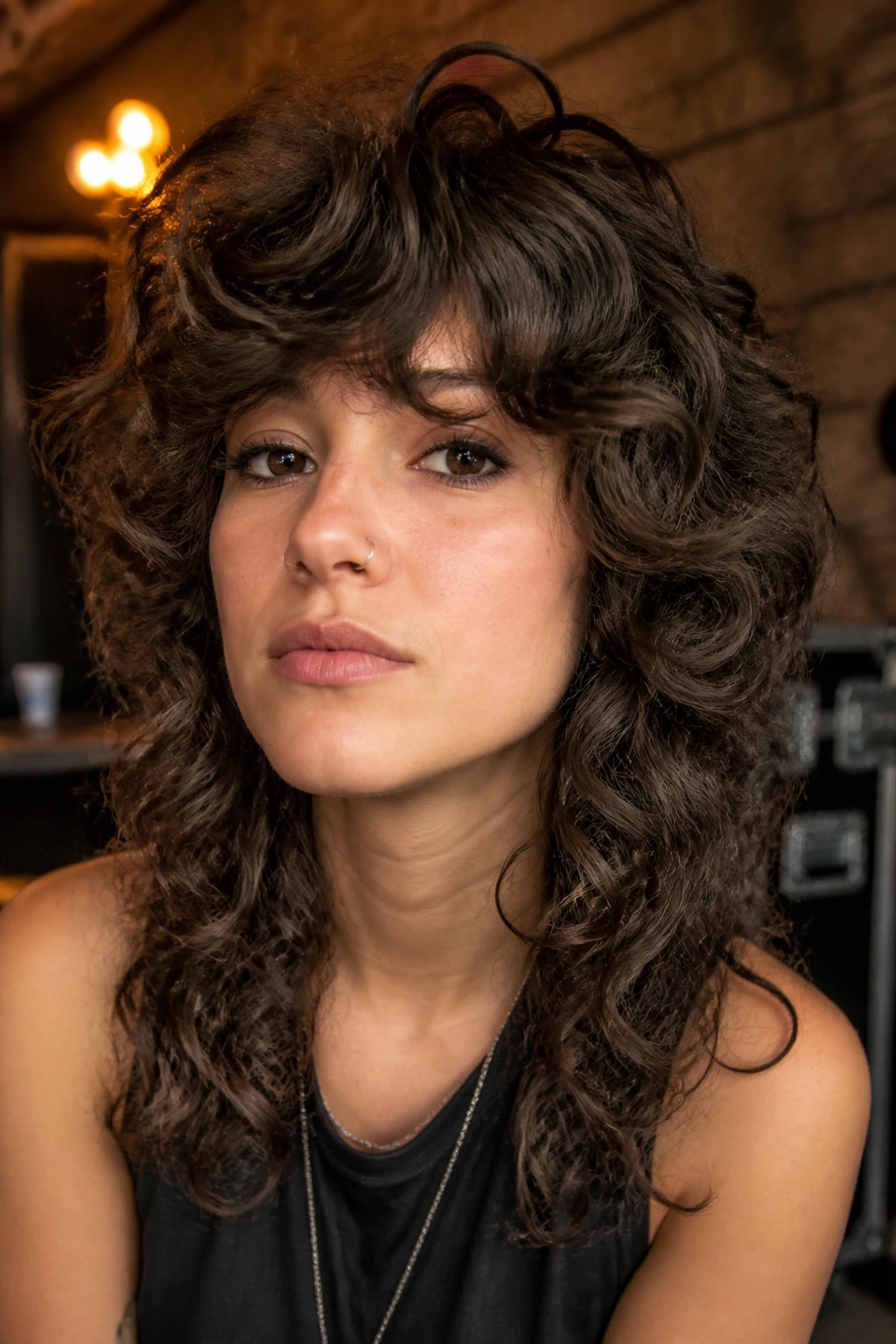
Do curly shag haircuts work on fine hair with oval faces?
Yes, but the layers have to stay longer than they would on dense curls. Fine hair can lose shape fast if it’s over-layered, so ask for soft movement around the face and a side bang that keeps some weight.
How short should side-swept bangs be on curly hair?
Longer than you think. Most curly bangs should be cut so they land below the eyebrow when wet, because shrinkage can lift them higher once the curl forms.
Should a curly shag be cut wet or dry?
A mix is usually best. Wet cutting can set the outline, but dry refinement is where the side-swept bang and face-framing layers get their real shape.
Will a shag make my oval face look longer?
It can, if the volume sits too high and the sides are too narrow. Keep some width around the cheekbones and let the fringe sweep diagonally instead of hanging straight down.
How often should I trim the bangs?
Every 4 to 6 weeks is a safe rhythm for most curl patterns. If your fringe grows fast or shrinks a lot, you may want a small cleanup sooner.
Can I wear this cut with glasses?
Yes, and some versions are better for glasses than others. Longer side bangs and collarbone layers usually sit well with frames because they don’t keep bumping into the temples.
What if my curls shrink more on one side than the other?
That’s common. Ask the stylist to balance each side dry, and part the hair where it naturally wants to fall. Fighting asymmetry usually makes it worse.
What if the side-swept bang keeps separating?
Use a tiny amount of gel or mousse and clip the bang in the sweeping direction while it dries. If it still splits, the fringe may be too short or too narrow for your curl pattern.
The Cut That Keeps Moving
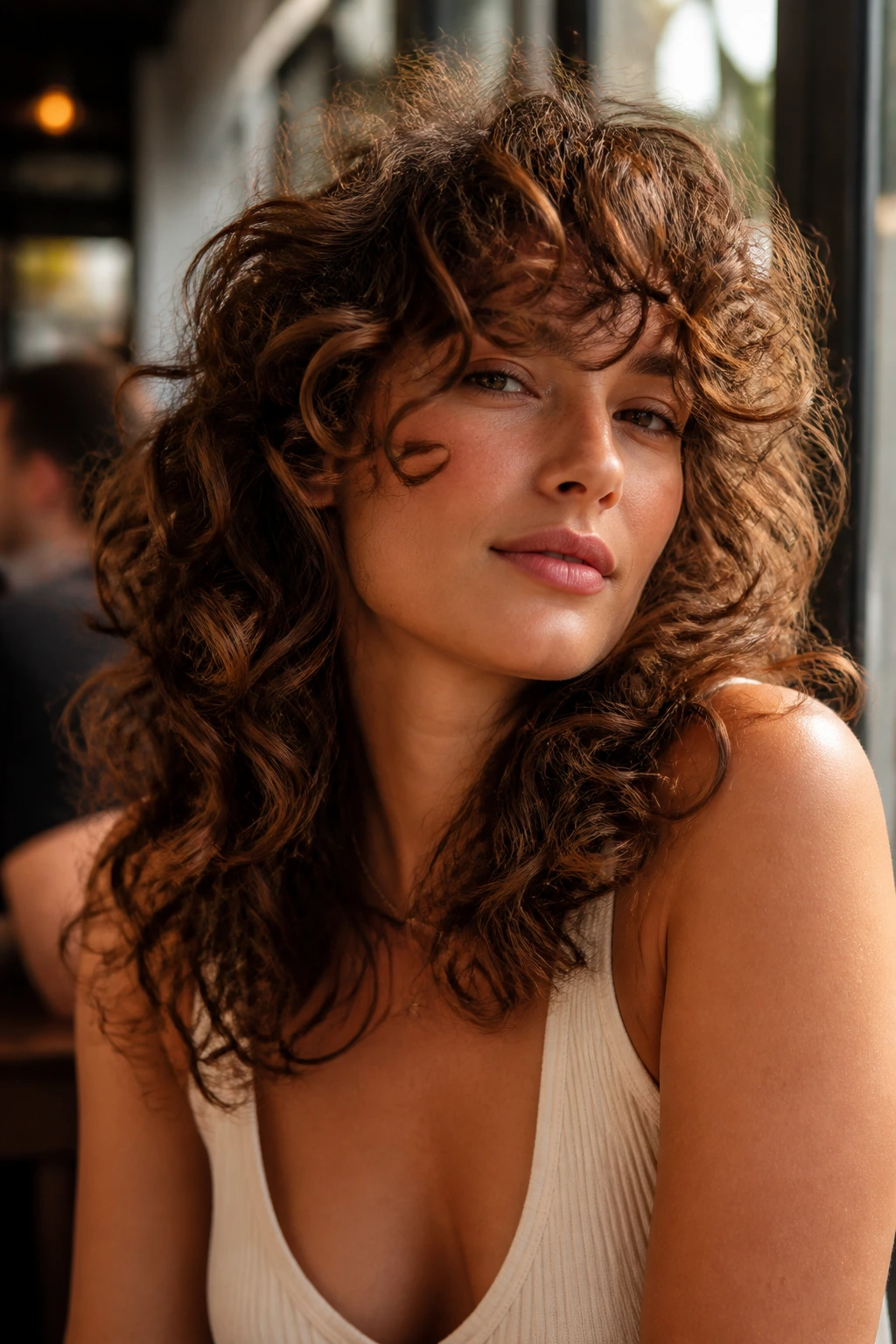
The best thing about these shapes is that they don’t freeze your hair into one mood. A curly shag with a side-swept bang can look polished in the morning, loose by lunch, and a little more dramatic after the second day’s refresh. That’s not a flaw. It’s the point. Curls are built to move, and a good cut should let them do that without losing the face shape underneath.
If you’re choosing one place to start, pick the version that matches your curl density first and your personality second. Length can be tweaked later. Bangs can be trimmed. What matters is whether the front frame opens the face the way you want and whether the layers keep the curls from piling into one heavy mass. Get that right, and the haircut starts doing the work for you.