



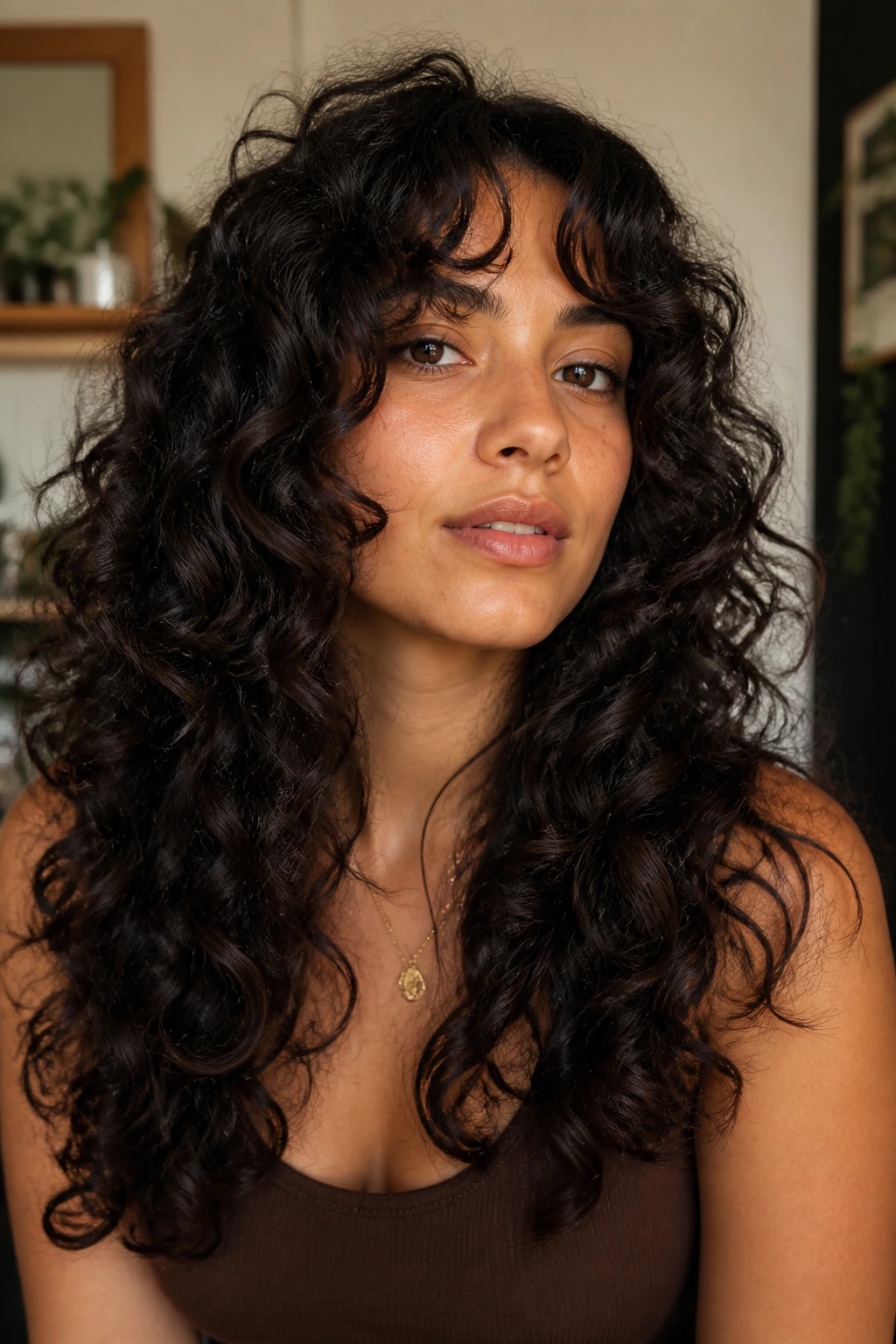
Long dark curls have a way of looking polished even when they’re not trying very hard. Add curtain bangs, and the whole haircut gets a second job: it opens the face, breaks up the heaviness at the front, and keeps all that dark shine from reading flat. On espresso, cocoa, or blue-black hair, the curve of a good fringe shows up like a line drawn by hand. You notice the shape immediately.
That’s why this combo keeps showing up on people with real curl patterns, not just staged photos. Curtain bangs work because they leave room for shrinkage, and long dark lengths work because they give the curls something to fall against. The result isn’t one look. It’s a whole family of looks, from soft and romantic to sharp and layered to deliberately messy in the best possible way.
The catch is that curls are honest. If the front is cut too short, the bangs bounce up and sit nowhere near the cheekbones. If the layers start in the wrong place, the whole silhouette turns triangular. So the good versions of this haircut are never accidental. They’re built with curl pattern, density, and shrinkage in mind, and that’s exactly where the fun starts.
Why These Looks Feel So Good on Dark Curls
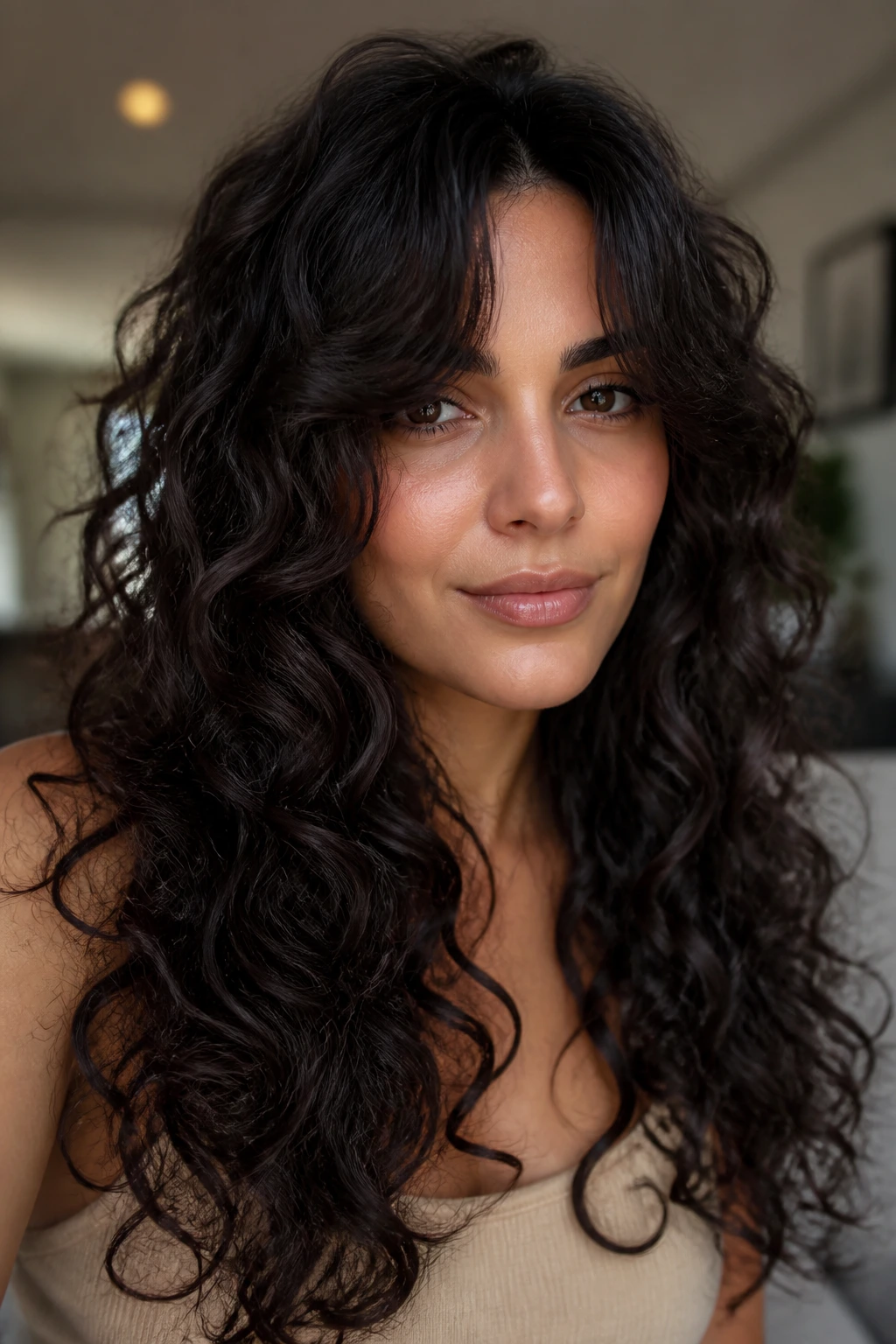
- The front gets shape without losing length: Curtain bangs break up the bulk around the cheeks, but the rest of the hair still keeps that long, dramatic fall.
- Dark hair shows the cut lines clearly: On deep brunette or black hair, the edge of a layer reads cleaner, which makes the whole style look more intentional.
- Shrinkage works in your favor: A bang that looks slightly too long when wet often lands right at the cheekbone once it dries.
- You can tune the volume where it matters: A little lift at the crown, softer pieces at the jaw, and heavier ends all change the mood without changing the whole haircut.
- These styles survive real life: A fuzzy day, a bent curl, a quick refresh with water. The shape still makes sense because curtain bangs are forgiving.
- They flatter without forcing symmetry: The middle split can be neat, messy, or a touch off-center. That looseness is part of the charm.
1. Waist-Length Espresso Layers with Chin-Grazing Curtain Bangs
The first thing you notice here is the weight of the length. It falls in a clean sheet of dark curls, then breaks open right around the chin where the curtain bangs start to move. On thick espresso hair, that front curve keeps the cut from feeling boxy.
Why it works
This shape is smart because the bangs are long enough to bend instead of poof. They sit closer to the cheek than the brow, so even when your curls spring up, the face-framing pieces still land in a useful place. If you like a haircut that feels polished on day one and a little softer on day three, this is a strong place to start.
Best for: thicker curls, oval faces, and anyone who wants length without the “triangle” effect.
Stylist note: Ask for the bangs to start around the bridge of the nose when dry-cut, then let them curve down toward the cheekbone on each side. That extra length matters.
A little shine serum on the ends makes the dark color look richer. Don’t pile product at the root; the weight is the point.
2. The Butterfly Cut on Dense Curly Hair
Dense curls love the butterfly cut because it removes bulk in the middle without turning the ends into wisps. The result is movement at the top, shape around the face, and enough length left over that you still feel like you have hair.
The curtain bangs blend into the shortest face-framing layers, so the whole front opens up instead of sitting as one blunt chunk. On dark hair, the shorter layers catch light in a way that makes the cut look almost sculpted. Not fussy. Just balanced.
What to ask for
- A dry cut or curl-by-curl shaping.
- Shorter face layers that stop at the cheekbone.
- Longer pieces that sweep into the collarbone.
- Internal debulking, not aggressive thinning shears.
This one works best if your curls are heavy enough to collapse under their own weight. If that sounds like your hair, you already know the frustration of roots that look flat and ends that look like a helmet. The butterfly cut fixes the middle of the problem, not just the front.
3. A U-Shape with Soft Curtain Bangs
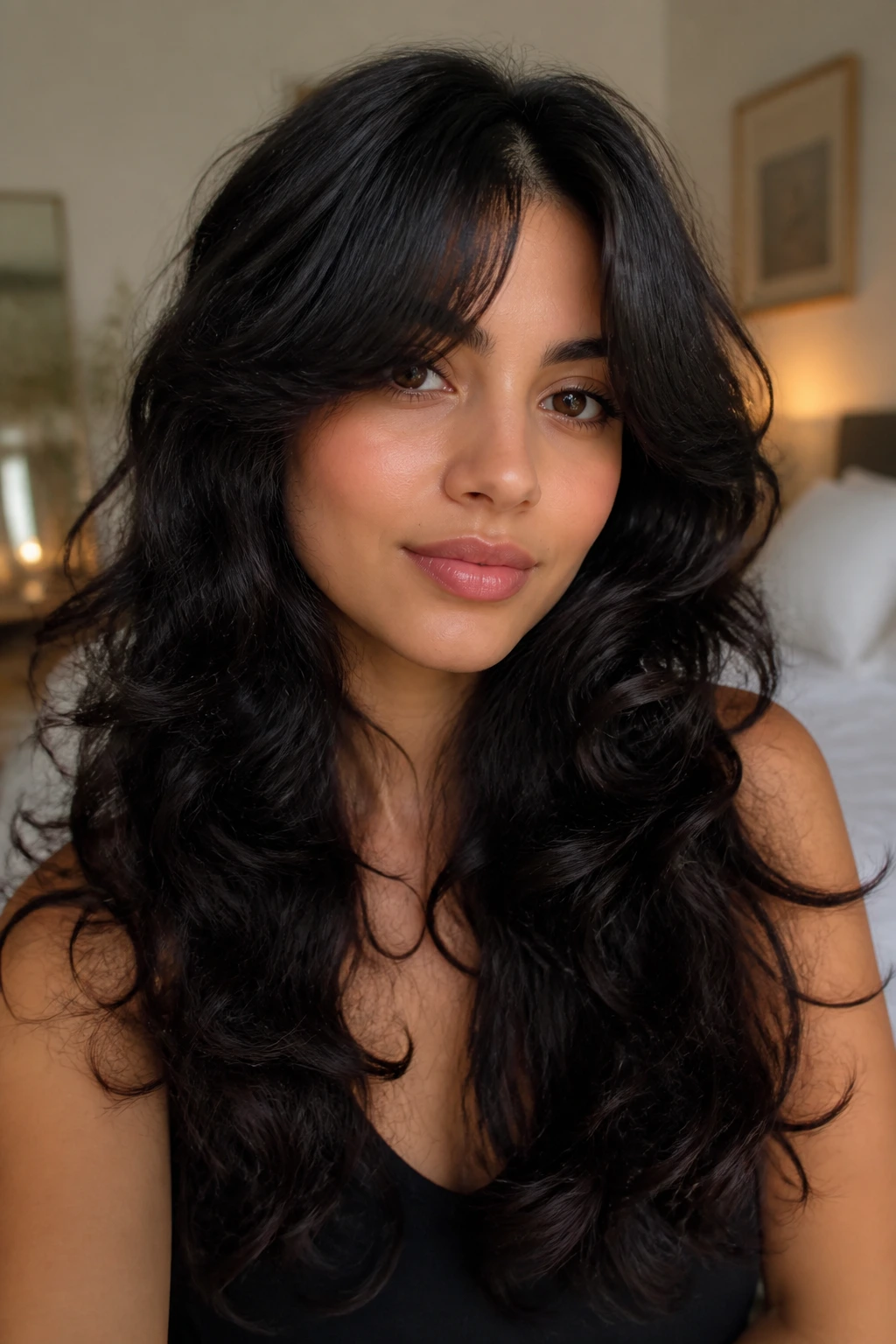
A U-shaped outline is one of those cuts that sounds simple and then quietly does a lot. The center stays longest, the sides lift slightly, and the bangs create a soft entrance into the rest of the hair. On dark curly hair, that U is easy to read without looking severe.
What I like about this shape is that it doesn’t fight the curl pattern. It lets the hair keep its roundness, but it removes the blunt shelf effect that can happen when long curls are cut straight across. The curtain bangs add just enough structure to make the front feel deliberate.
The quick read
- Shape: Rounded at the back, open at the front.
- Effect: Softer face frame, less bulk at the sides.
- Works best on: 3A to 3C curls that need a little direction.
- Ask for: Long layers that follow a U when the hair is dry.
If your hair grows wide before it grows long, this is a flattering fix. It’s calm, not flashy. Sometimes that’s the better haircut.
4. Deep Side Part Curls with Sweeping Curtain Fringe
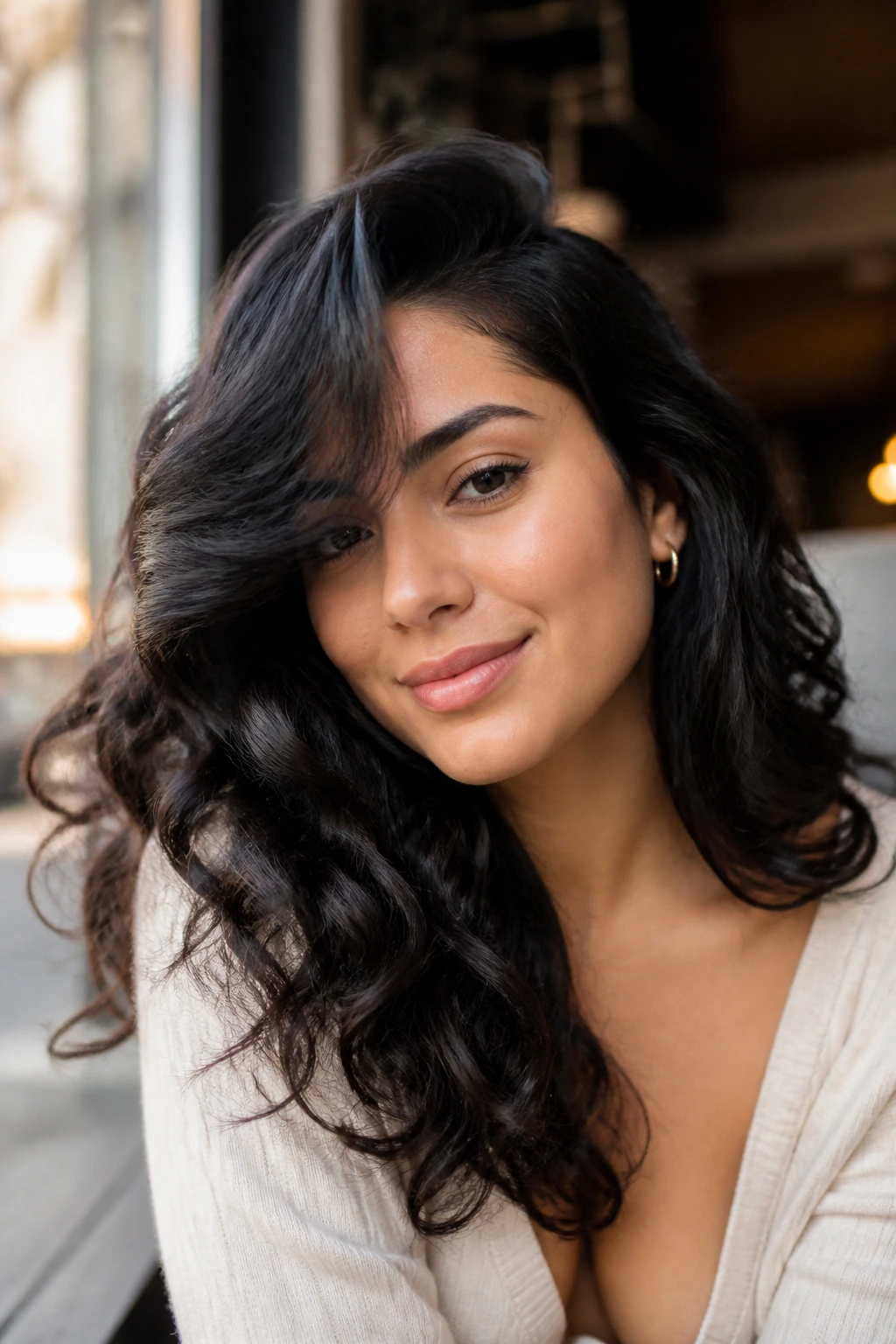
A true middle part is not mandatory, and on some faces it’s not even the nicest choice. A deep side part can make curtain bangs feel more modern and less predictable, especially when the front pieces sweep across one eye before dropping into the cheek.
This is the look for anyone who wants the bangs to do a little theatrical work without turning into old-school side bangs. The part shifts the weight, the curls stack differently on each side, and the dark color gives the whole shape more shadow. It’s especially pretty on hair with big, loose coils.
One sentence, really: this cut has motion.
Use a light mousse at the root on the heavier side, then diffuse with the part already set. If you switch the part only after drying, you’ll spend the rest of the day fighting a stubborn bend in the wrong direction.
5. Rounded Volume with Collarbone Movement
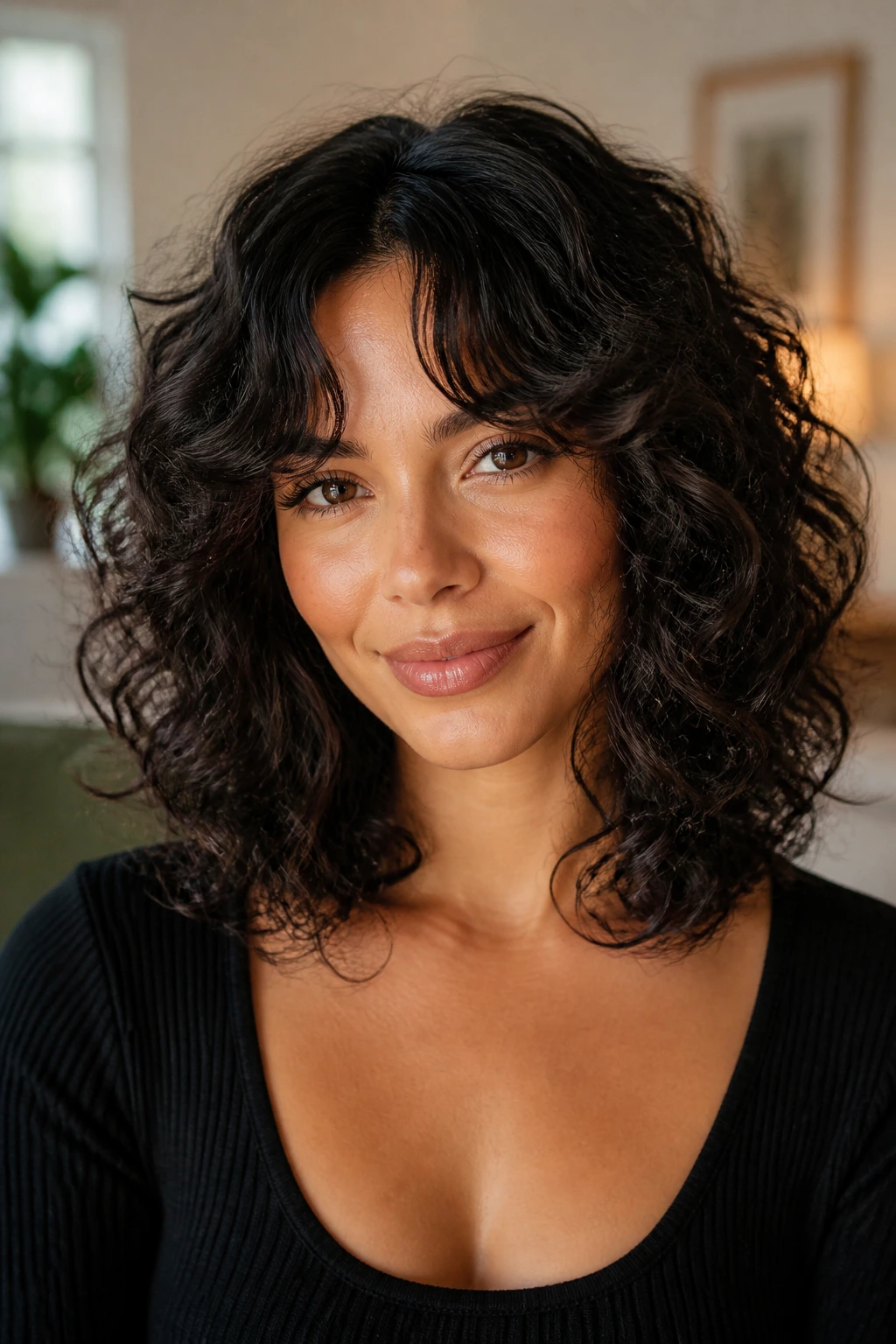
Why does this cut feel so clean? Because it respects the curl’s natural roundness instead of trying to stretch it into something straighter. The bangs split at the center, then fall into collarbone-length layers that form a soft halo around the face.
This is a nice choice if your hair has medium density and you want fullness without bulk. The shape stays rounded at the sides, which means the ends don’t flare out like a broom. Dark curls make the silhouette read even more clearly, especially when the layer edges are well hydrated and not frizzy.
Best use case
- You want a little glam, not a severe shape.
- You wear your hair down more than half-up.
- Your curls shrink enough that collarbone length lands closer to the shoulders when dry.
Ask your stylist to preserve fullness at the perimeter. Too much point cutting here can make the outline fuzzy instead of soft.
6. Boho Layers with Piecey Front Pieces
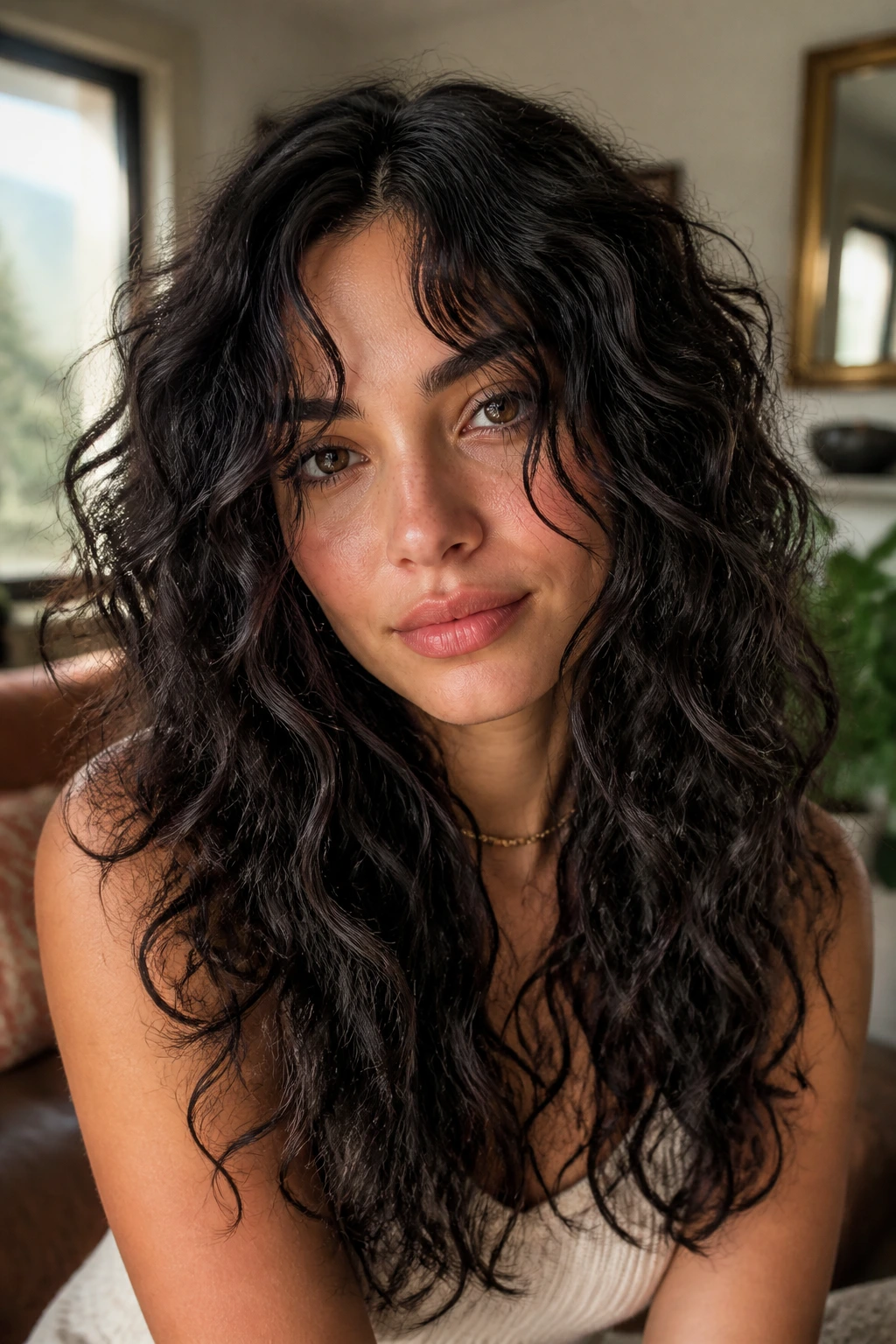
This one has a looser, more lived-in feel. The curtain bangs aren’t carved into a neat frame; they break into piecey sections that melt into long layers. On dark curly hair, that broken texture keeps the haircut from looking too perfect, which is the whole point.
The magic is in the spacing. A few longer front pieces at the cheek, a few shorter ones near the brow line, and then the rest of the hair cascades in a way that feels casual without looking unfinished. If you’ve ever liked the idea of “effortless” but hated the way that word usually gets used, this is closer to the real thing.
Use a curl cream with a little slip, not a heavy butter. The front should separate in soft ribbons, not clump into one thick curtain. That difference matters more than people think.
7. Razor-Softened Length with Loose Face Framing
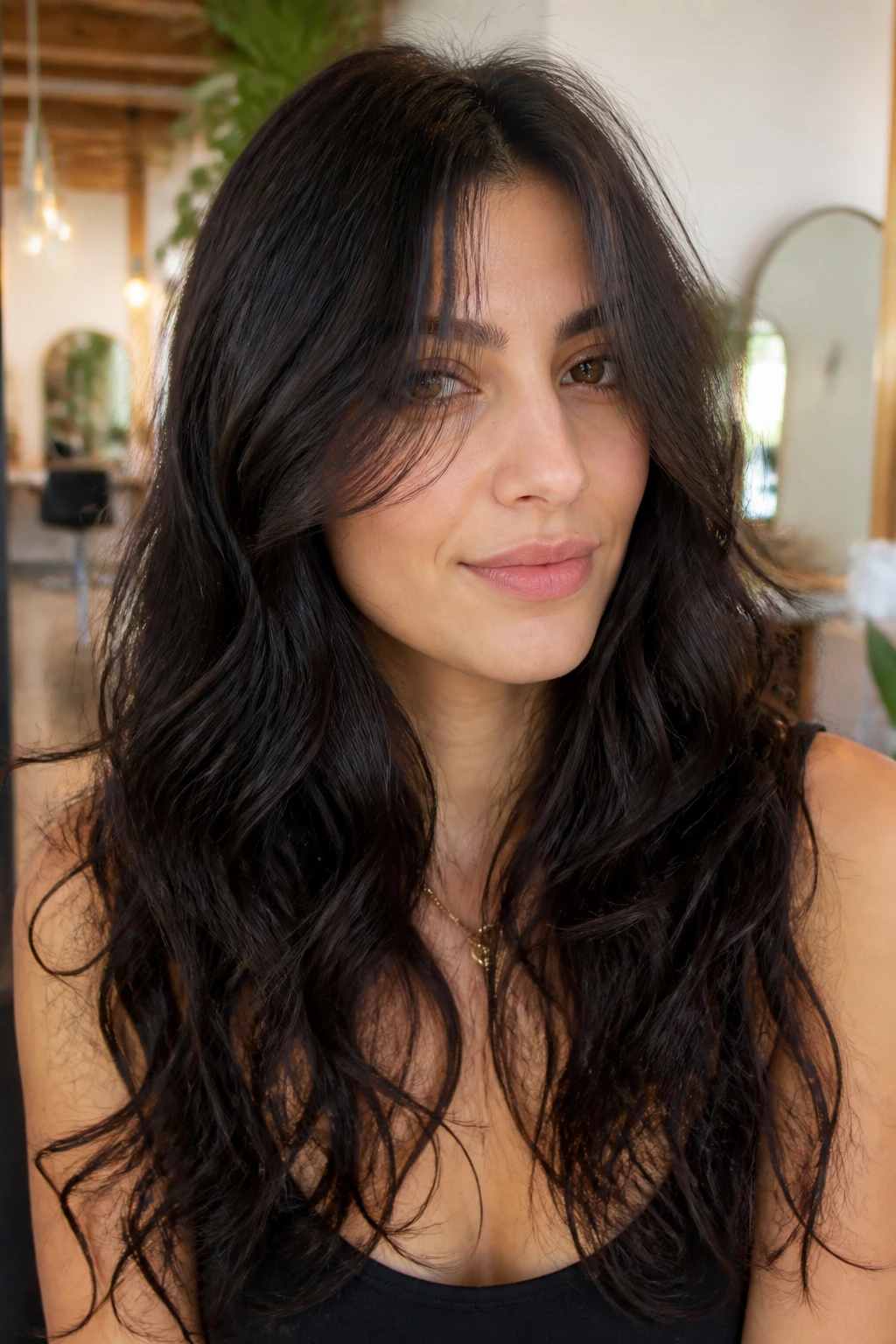
Razor cutting on curls is tricky, and I’m not going to pretend it suits every head of hair. But when it’s done carefully on loose to medium curls, it can give the front pieces a feathered edge that feels light around the eyes and cheeks.
The curtain bangs in this version stay long and airy. They don’t sit as a heavy panel. Instead, they move with a little bend, especially on dark brown hair where the texture reads clearly. The rest of the length stays long, so the style doesn’t lose its drama.
This works best when the stylist knows how your curls behave dry. If they cut it too wet and too short, the fringe can spring up and live above your glasses, which is not the mood.
A small warning
Razor work and tight curls do not always play nicely together. If your pattern is very springy, a shear cut with point-cut ends is usually safer.
8. Curly Shag with Long Curtain Bangs
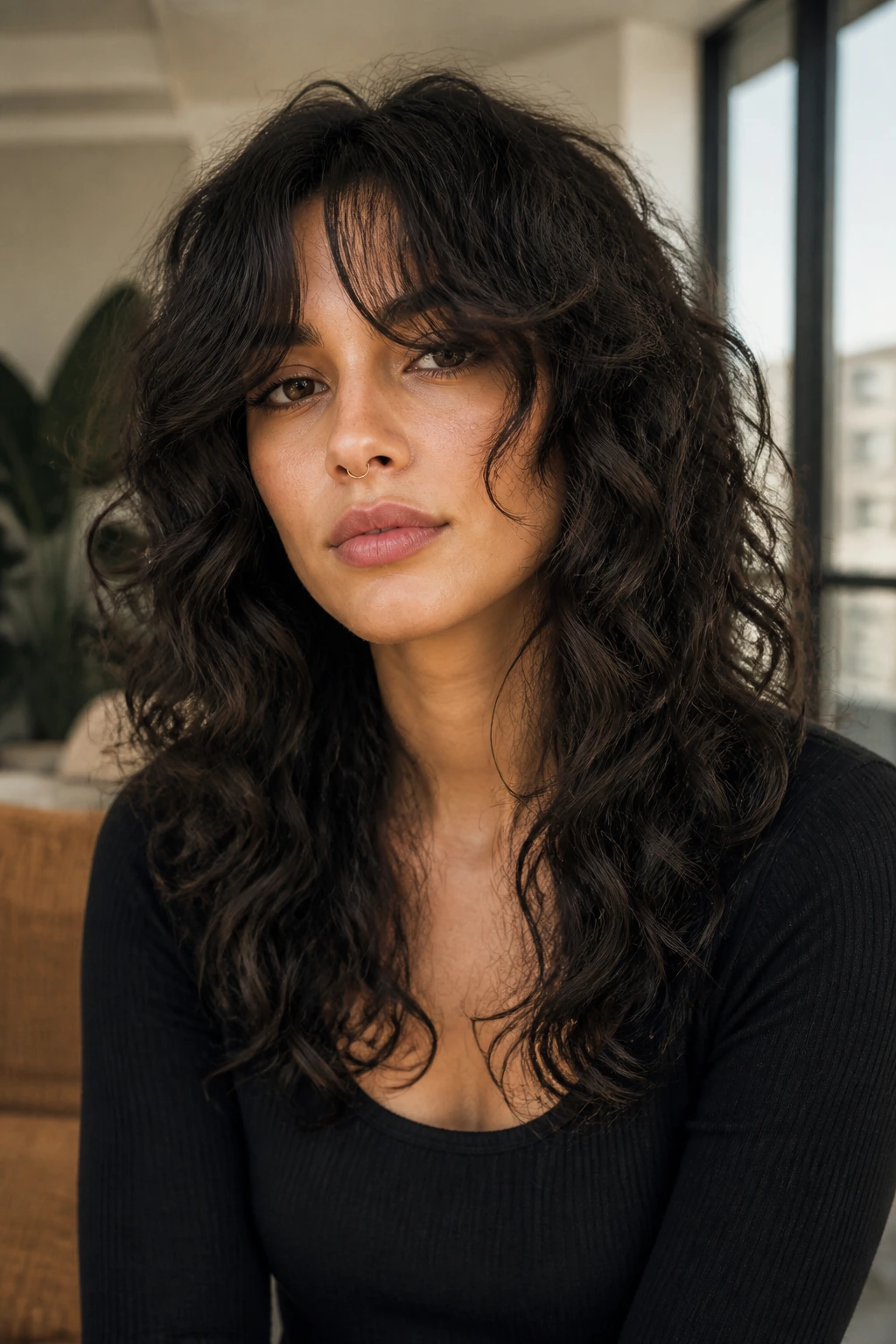
A shag with long curls isn’t chaotic when it’s done well. It’s layered with intention. The crown gets a bit more lift, the middle loses weight, and the curtain bangs bridge the gap between fringe and face frame.
This is one of my favorite shapes for dark hair because the cut lines show up in just enough contrast to make the layers feel purposeful. Not harsh. Purposeful. You get a little rock-and-roll attitude, but the length keeps it from tipping into costume territory.
Why it stands out
- It gives volume where curls often flatten.
- The bangs blend into the top layers instead of hanging alone.
- The shape looks better when the hair has a little frizz; honestly, that’s part of the texture.
If you like the idea of air-dried hair that still looks styled, this is a strong contender. Just keep the bangs long. Short shag bangs and curly shrinkage are a risky pairing.
9. One-Length Ends with Hidden Internal Layers
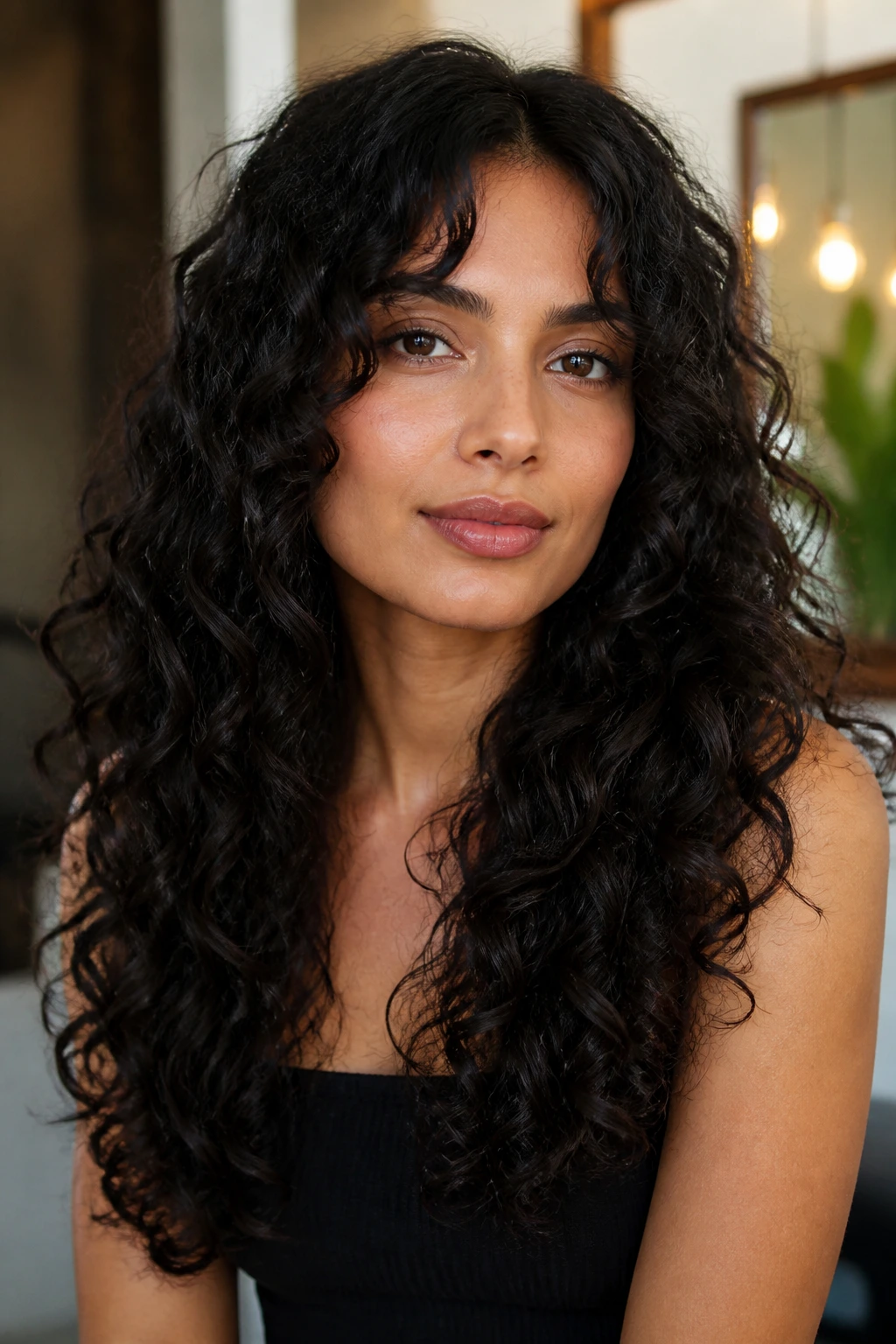
Not every curly cut needs obvious layers on the outside. Sometimes the prettiest shape is a mostly one-length perimeter with internal layers carved underneath to remove bulk. Add curtain bangs, and the front becomes the only place where the cut announces itself.
That contrast is sharp in a good way. The ends stay heavy and glossy, which is especially nice on dark hair, while the front opens softly around the face. If you like seeing the full density of your curls but hate having the front sit like a wall, this is the move.
What makes it different
The perimeter gives you weight and length. The internal layering gives you movement without fraying the outline. And the curtain bangs keep the face from disappearing into all that volume.
This is a good salon conversation for someone who says, “I want my hair to stay long, but I need the front to behave.” That’s the whole brief right there.
10. Chestnut Curls with Cheekbone-Grazing Bangs
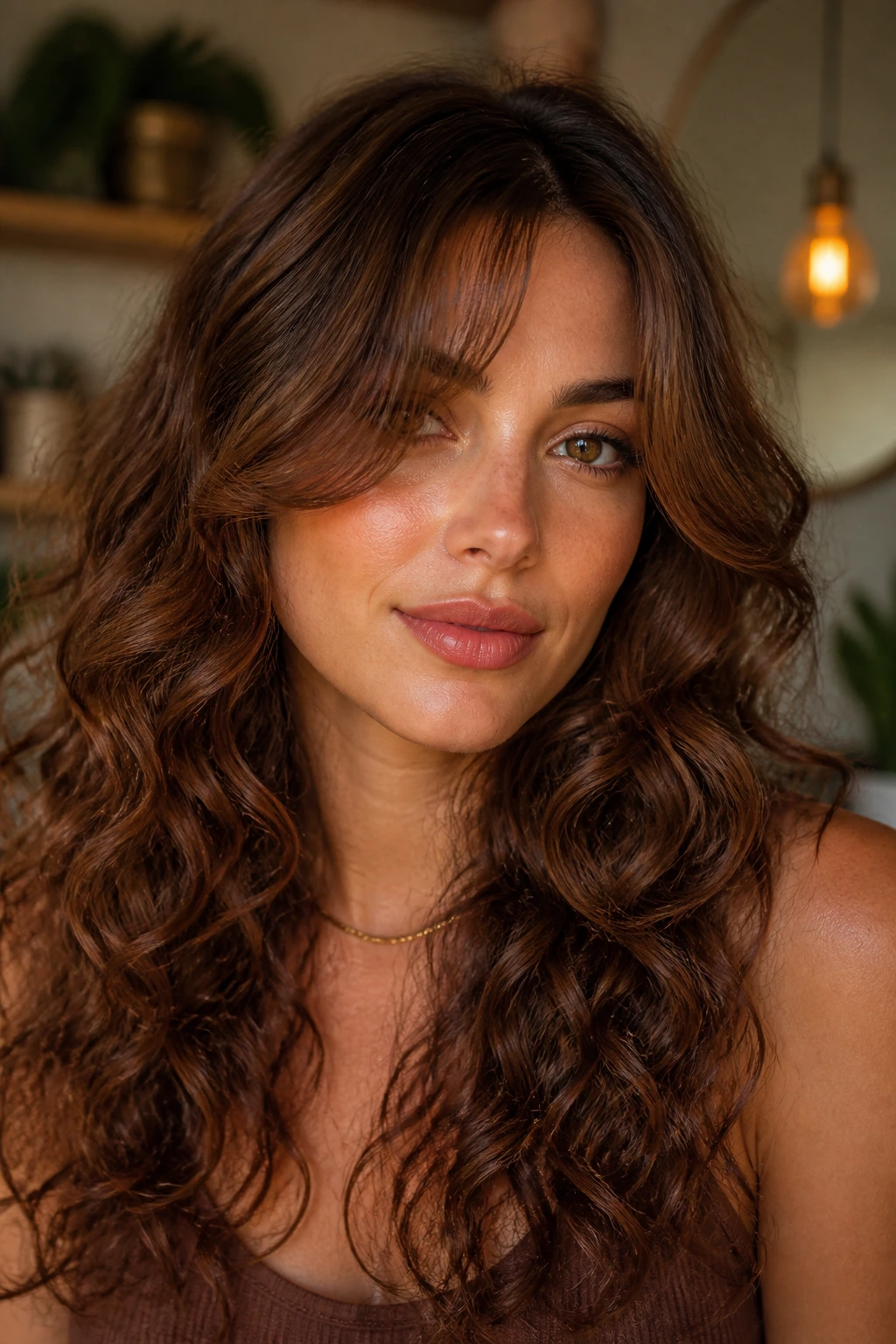
A warm chestnut tone changes how this haircut reads. The layers pick up more light, the curls separate more visibly, and the curtain bangs land right at the cheekbone where they can do the most flattering work. It’s soft, but not sleepy.
The front pieces should be cut long enough that they arc outward first, then curve back in. That bend is what creates the curtain effect. Too short, and they turn into standard bangs. Too long, and they disappear into the rest of the hair. Balance matters here.
A neat middle part is not required. Slightly off-center can be prettier, especially if one side of your face carries more volume than the other.
How to use it
Pair it with a side-tucked sweater, a sharp collar, or a simple earring. The haircut already has movement, so you don’t need to pile on extras.
11. Cascading Spiral Layers Around the Face
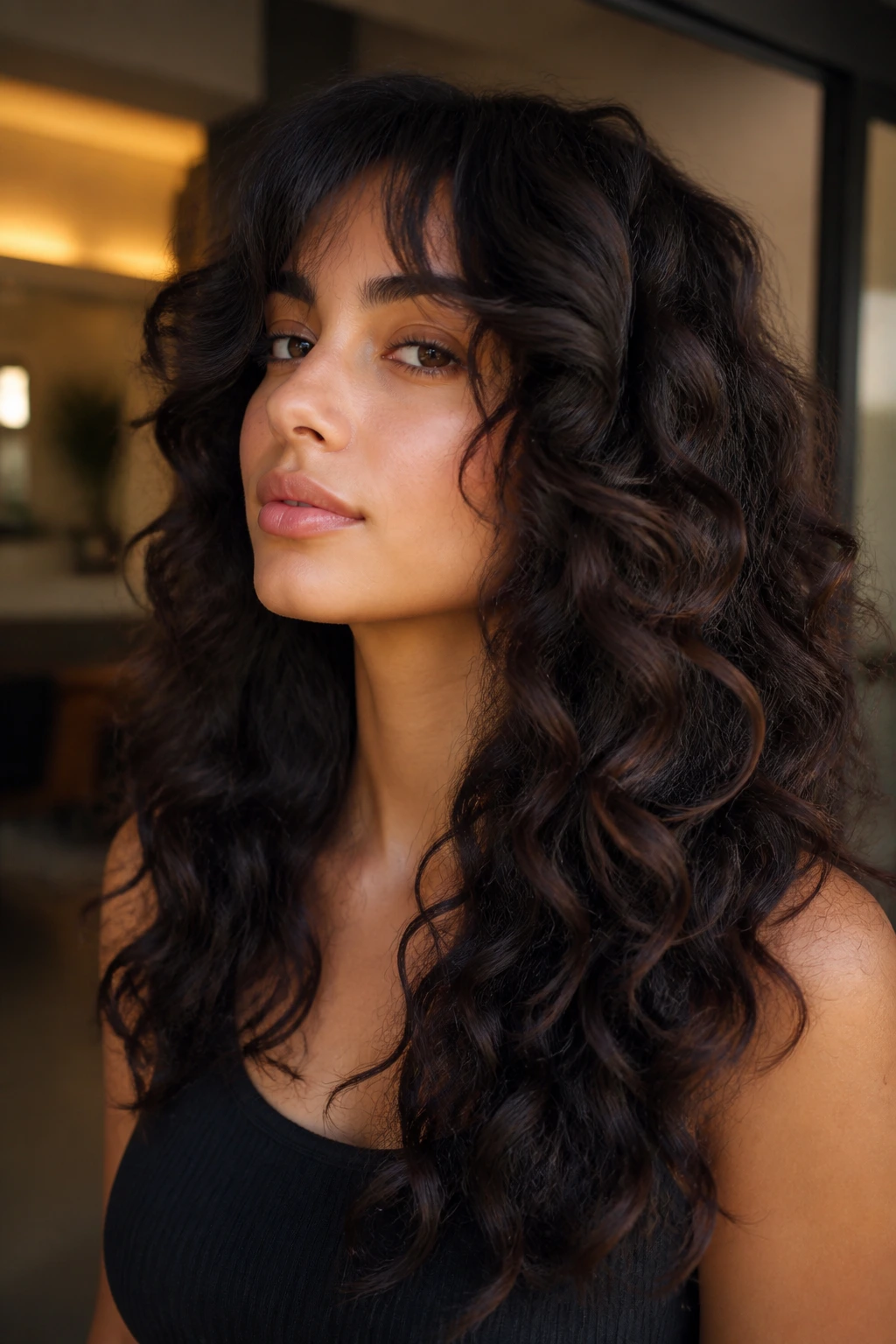
This cut is all about the front spiral path. The curtain bangs don’t stop at one obvious point; they step down in length from temple to cheek to jaw, then melt into the rest of the layers. On darker curls, that cascade looks expensive because the shape is clean even when the texture is loose.
The key is that the face frame never gets too short. Spiral curls need room to sit, and bangs that respect that room tend to look much better on day two. If you’ve got a strong curl pattern and you’re tired of fringe that jumps up unpredictably, this kind of layering solves part of the problem before it starts.
I’d call this one graceful rather than high-drama.
And that’s not a knock. Some cuts should whisper.
12. Barrel-Curl Glam with Sculpted Curtain Bangs
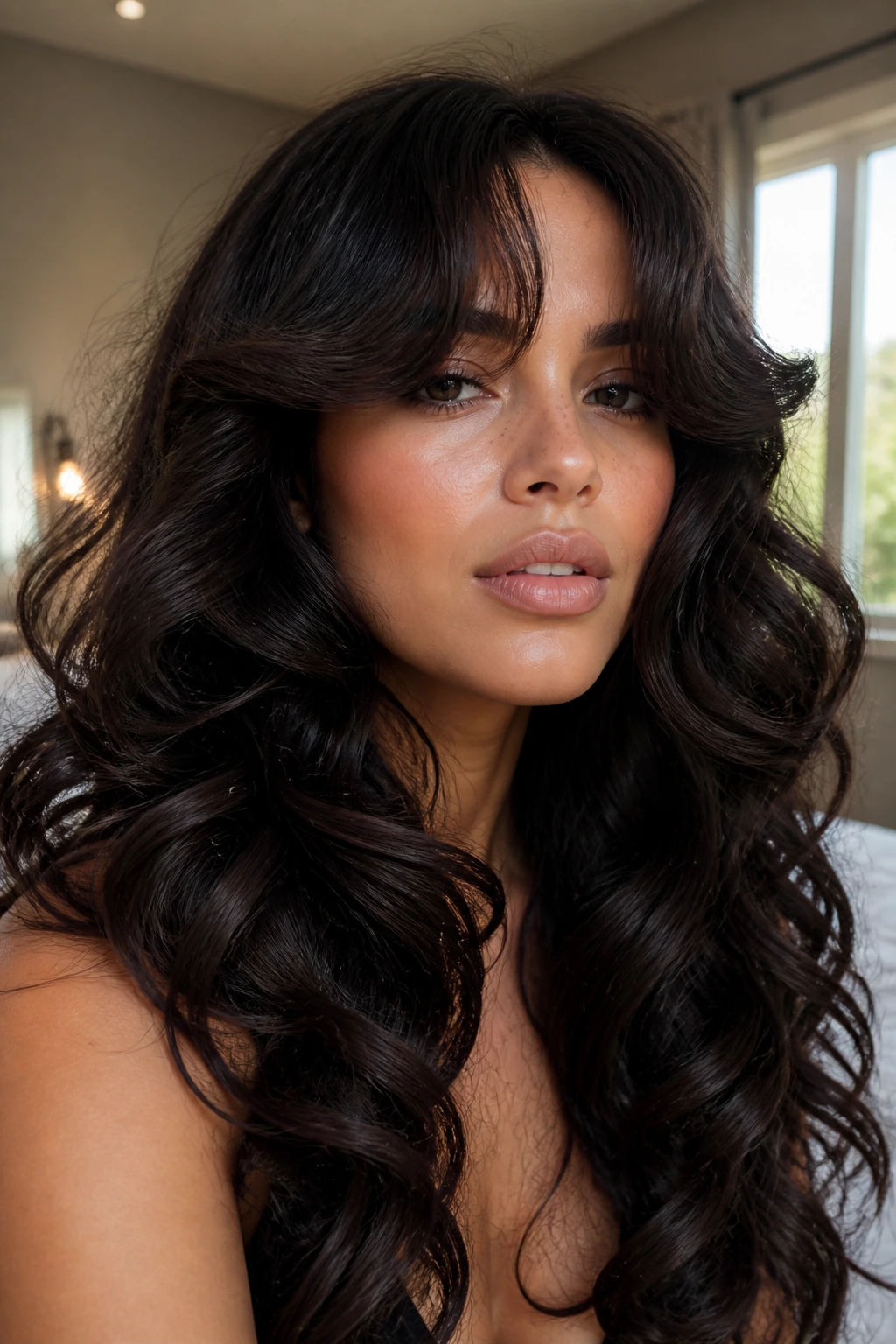
Big barrel curls and curtain bangs make a very specific kind of statement. The curls are smooth enough to show off shape, the bangs are polished enough to frame the face, and the dark color gives the whole look a glossy finish.
This is the most “done” style on the list, but not in a stiff way. The front pieces should be brushed or diffused into a soft S-curve, then separated with fingers or a pick once they dry. If the bangs stay too clumped, the shape gets heavy. If they’re separated too much, you lose the glam.
For best results
Use a lightweight gel or foam at the roots and a small amount of cream through the mid-lengths. Heavy oils make this style collapse faster than you’d expect.
If you like a haircut that works with a dressier wardrobe, this one is hard to beat. It looks especially nice on dark hair with a healthy sheen.
13. Stretchy Wash-and-Go with Airy Front Pieces
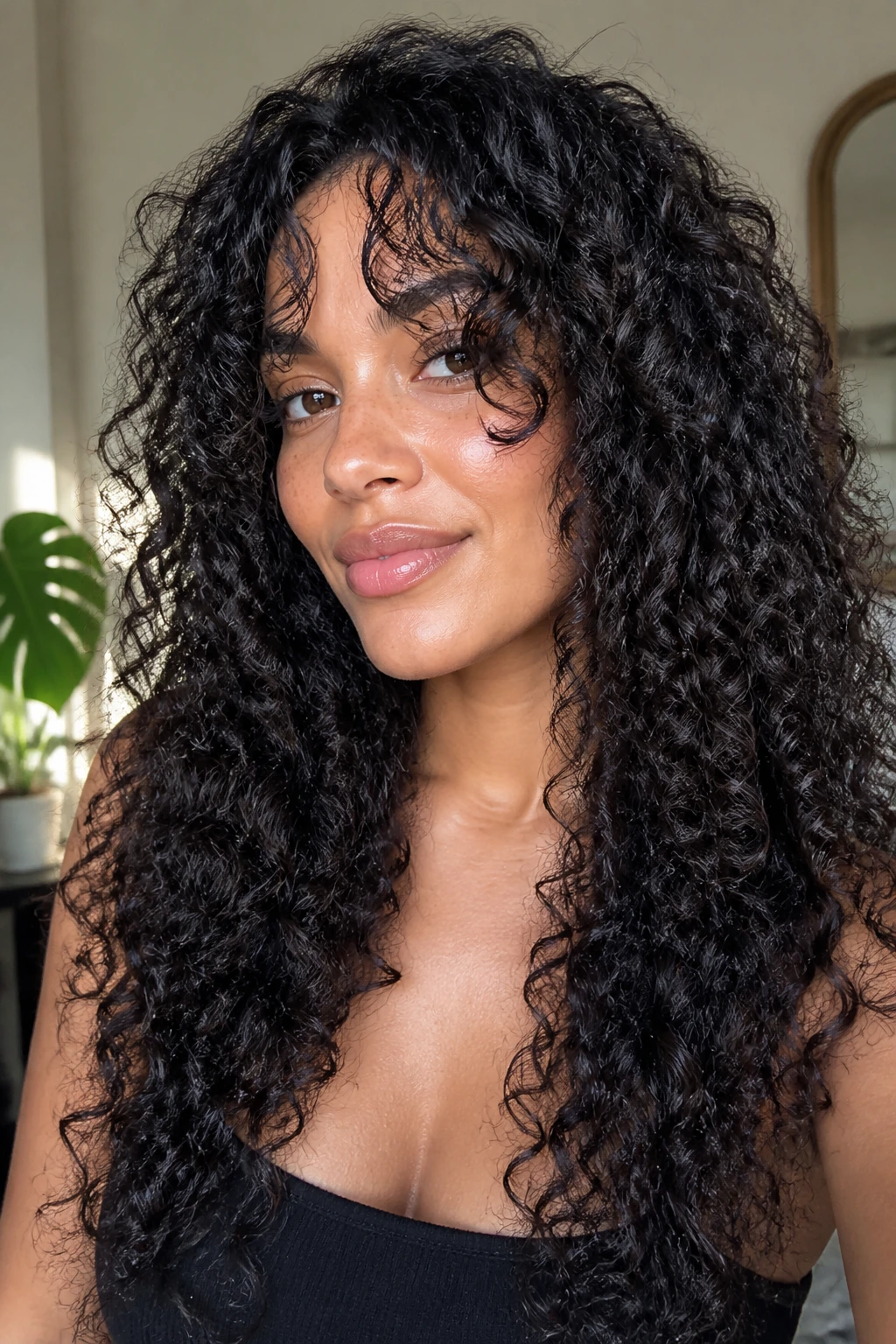
Some cuts are made to be manipulated. This one is made to be easy. The curls are left longer and slightly stretched, which means the curtain bangs stay airy instead of puffy, and the rest of the hair lands in soft long layers that don’t require a ton of shaping.
It’s a smart option if your routine is mostly wash, define, diffuse, and leave. The front pieces can dry from the center part down toward the cheeks, and because they’re cut with enough length, they don’t need daily rescue. That alone makes the style worth considering.
What it looks like
Think movement more than structure. The fringe opens the face, the length falls in soft coils, and the overall shape feels relaxed but not sloppy.
If your hair gets frizzy when overhandled, this is a nice compromise. Cut well, it does a lot on its own.
14. Low-Maintenance Length with Soft, Long Bangs
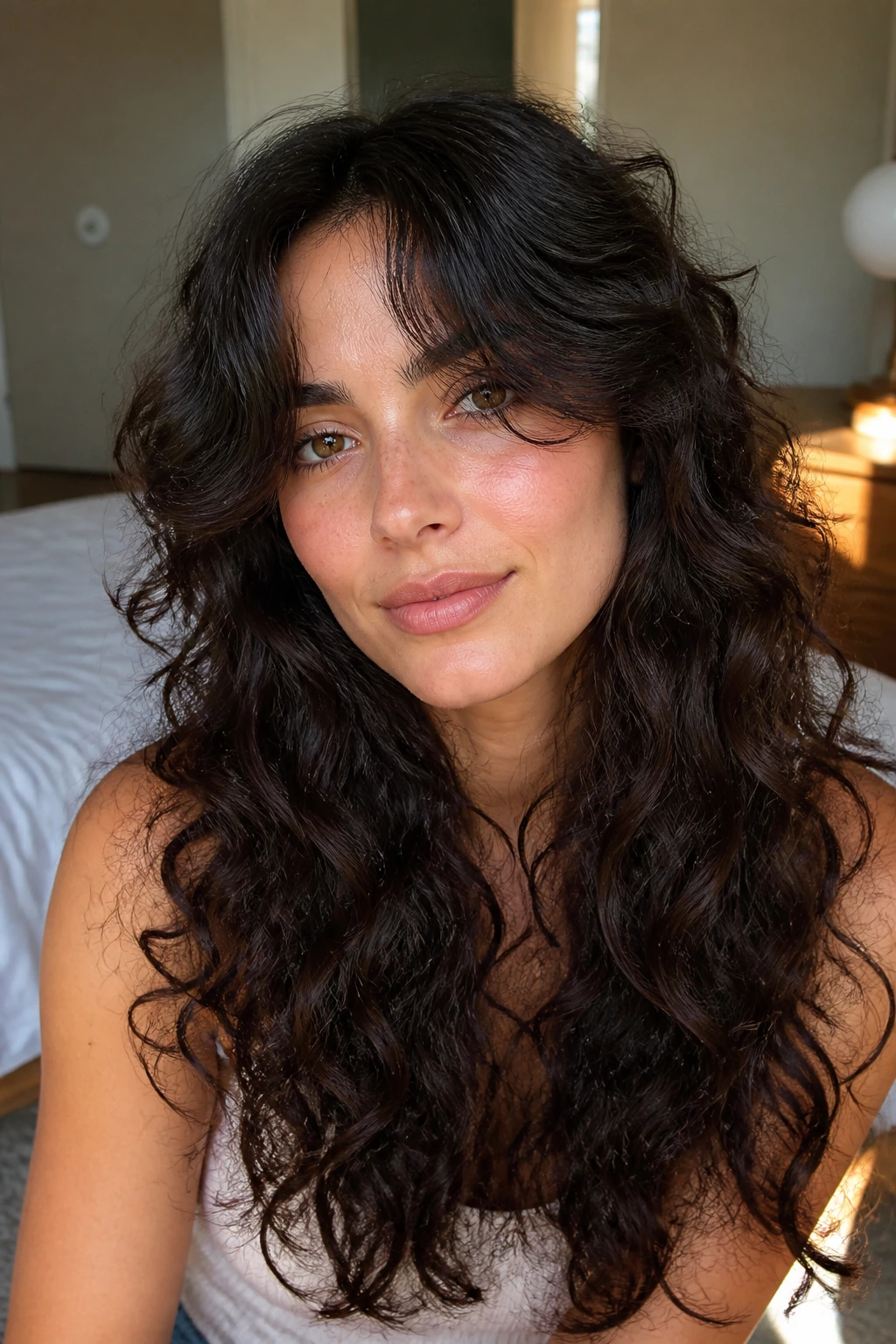
This is for the person who wants curtain bangs but does not want a complicated haircut. The bangs are kept long, the layers are minimal, and the ends stay full. On dark curly hair, that simplicity lets the texture do the talking.
The trick is to keep the face frame long enough that it still looks intentional when it’s not freshly styled. You should be able to wear it air-dried, clipped back, or pushed to one side without the whole thing falling apart. That’s harder than it sounds.
The sweet spot
Ask for the bang pieces to stop below the cheekbone when stretched and to blend into the first layer without a hard line. That gives you options on days when your curls misbehave, which, let’s be honest, is most days.
15. Crown-Lifted Curls with a Center Split Fringe
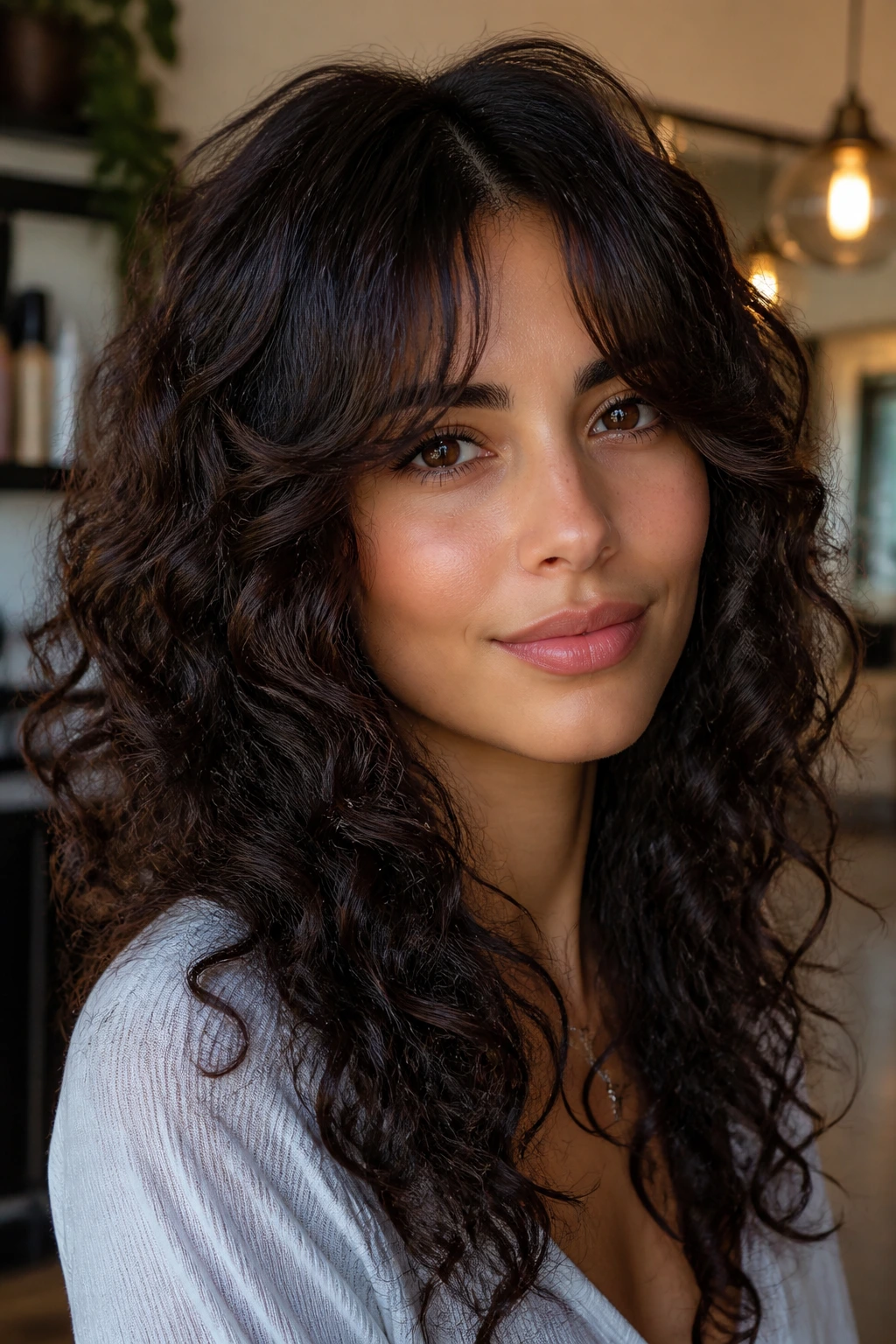
A little height at the crown changes everything. It keeps the head shape from flattening, especially on long dark curls, and it gives the curtain bangs a natural place to fall from. The center split opens the forehead, then the front pieces drift outward instead of sitting in one heavy block.
This style has a clean line without looking severe. If your curls are dense at the roots, ask for internal lift near the crown and keep the outer length intact. That combination gives you a shape that feels buoyant without losing weight at the ends.
One practical note: use clips at the root while diffusing. It helps the bangs and top layer keep that lifted bend instead of drying flat against the scalp.
16. Half-Up Length with Face-Framing Tendrils
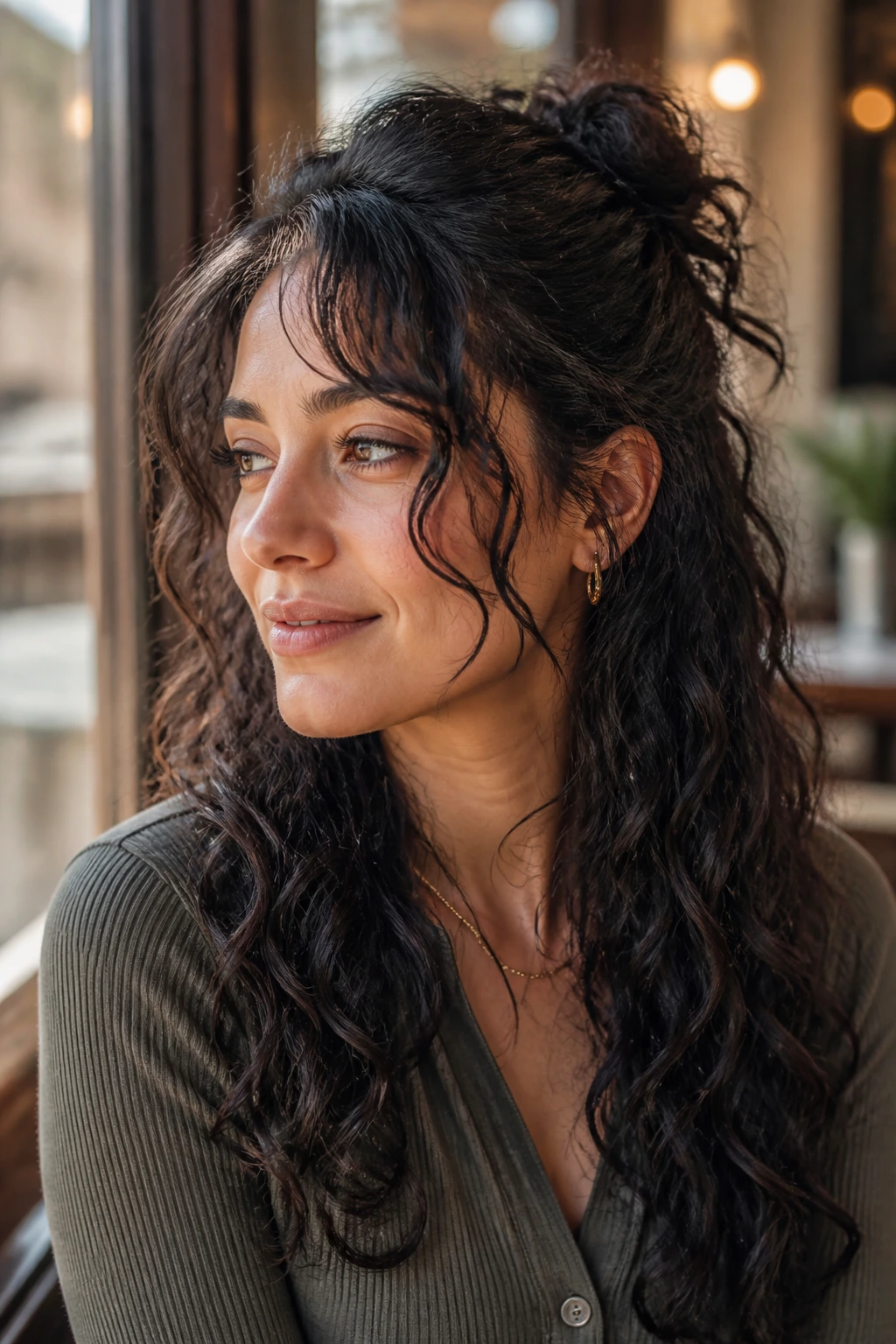
Half-up styles can get lazy fast on curly hair. A lot of them just scoop the top and call it done. The better version uses curtain bangs and a few deliberate tendrils to make the style feel finished, not improvised.
The bangs are long enough to leave out when the top is pulled back, and that front shape keeps the face from looking bare. Dark curls make the contrast neat: polished top, soft frame, long length underneath. It’s practical, and it still looks like you made a decision.
When it works best
- School or office days when you need hair off your neck.
- Second-day curls that need a fast reset.
- Long faces that benefit from width at the cheeks.
If you’re always pinning your bangs back, you probably need this cut more than you think.
17. Thick Dark Curls with Internal Weight Removal
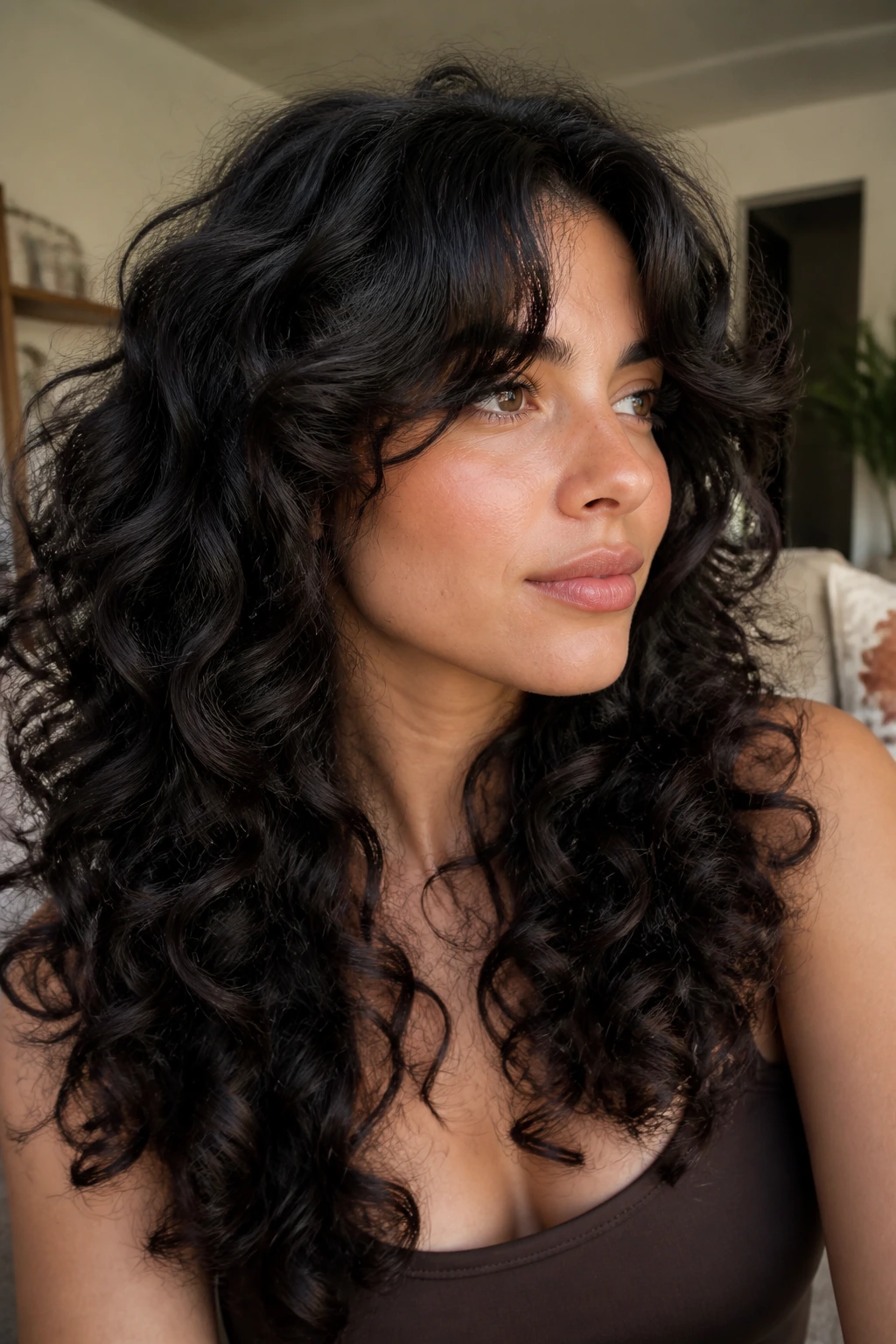
Thick curly hair can look lush, but it can also feel like too much hair is happening all at once. Internal weight removal fixes that without collapsing the shape. The curtain bangs are kept long and soft so the front stays open even when the rest of the hair is dense.
This is not a “thin it out” haircut. That’s a different thing, and usually the wrong one. You want pockets of removed bulk, especially under the top layer and around the sides, so the hair can move instead of sitting in a solid mass.
The payoff is real. The curls spring a little higher, the bangs bend more easily, and the silhouette stops looking square.
18. Fine Curly Hair with Longer Curtain Bangs
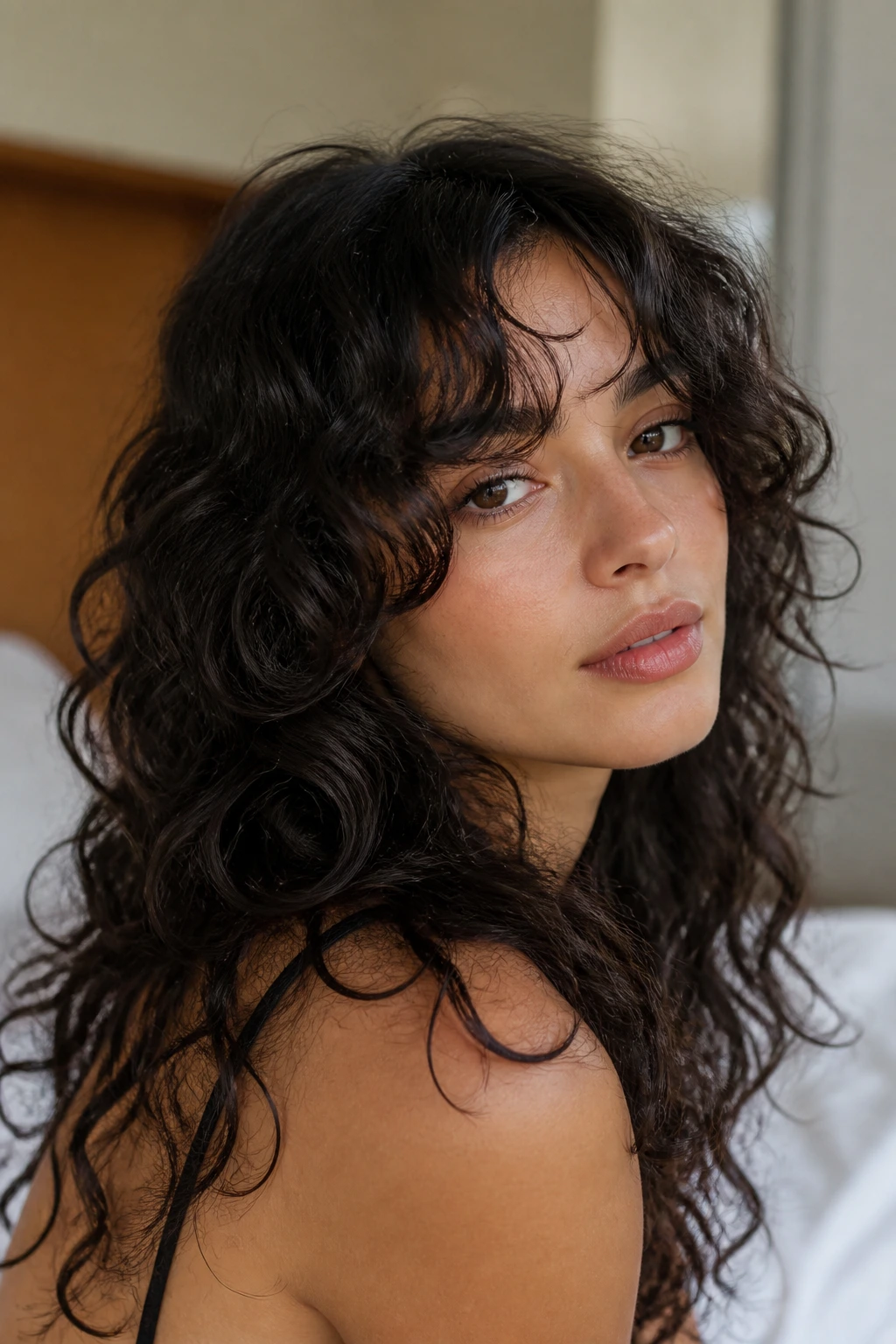
Fine curls need a gentler hand. Too many layers and they disappear; too much thinning and the ends go see-through. This cut keeps the fringe long, lets the length stay mostly intact, and uses just enough shaping around the face to create movement.
The longer bang length is the whole point. It gives fine curls a chance to fall in a clean line instead of floating up and turning wispy. On dark hair, the smaller curls still read clearly because the color gives them visual weight.
Keep this in mind
Use lightweight styling products. A heavy cream can flatten fine curls within an hour, especially at the front where the bangs already have less hair to work with.
This is one of those cases where restraint looks better than ambition.
19. Wolf-Cut Energy on Long Dark Curls
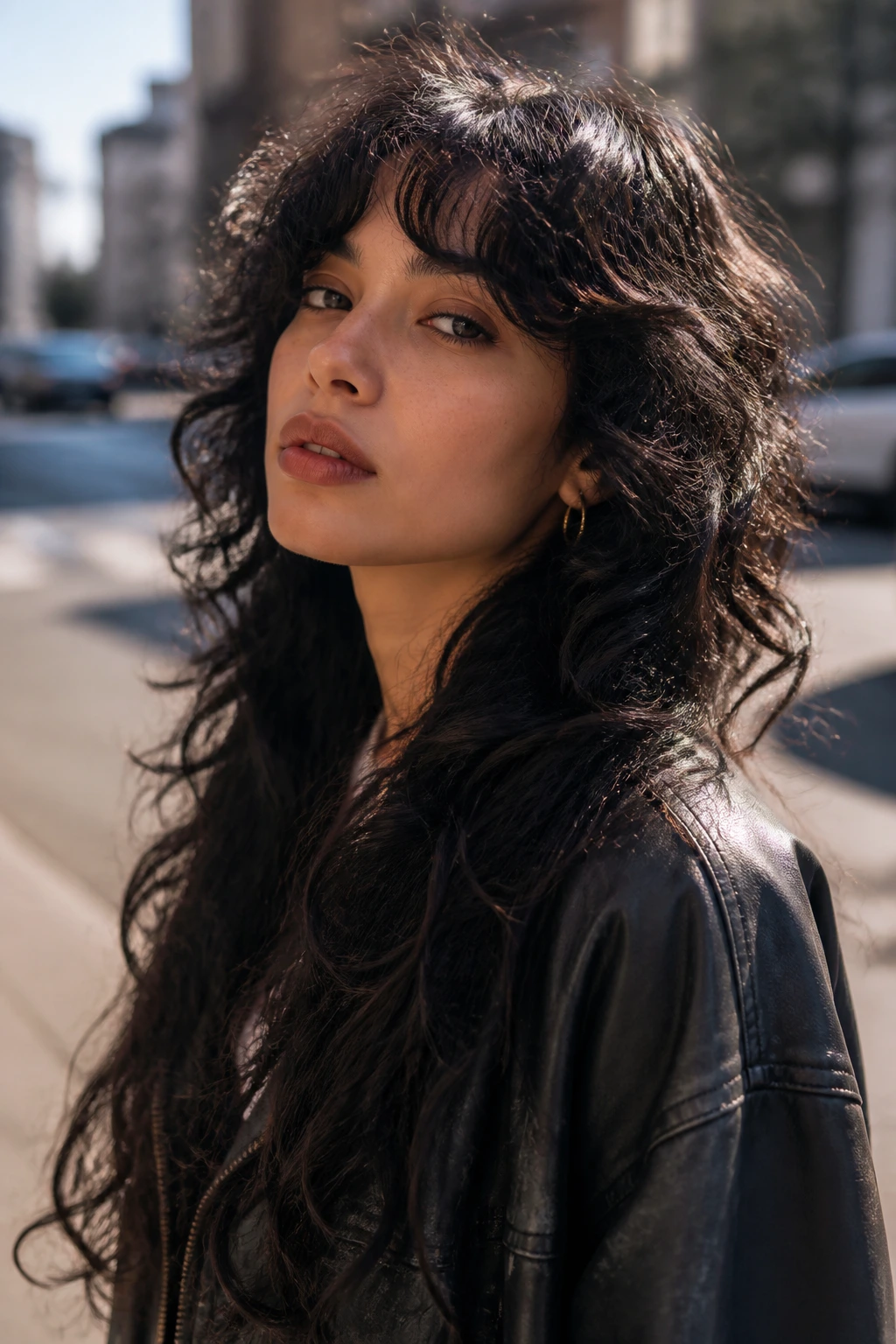
A curly wolf cut can be fantastic, but only when the layers are handled with some discipline. The top gets shaggy texture, the length stays long, and the curtain bangs become part of the wild but controlled front shape. Dark curls make the contrast between top layers and length look especially sharp.
What I like here is the attitude. It doesn’t pretend to be polished in a traditional way. It leans into texture, separation, and a little edge. If your hair has enough density to support short-to-long layering without looking sparse, this can be a very flattering shape.
Good fit if you want
- A little rock energy.
- More lift around the crown.
- A haircut that still works when it’s not perfectly styled.
If you’ve been stuck between “too neat” and “too messy,” this is the middle ground.
20. Smoky Brunette Curls with Glossy Ends
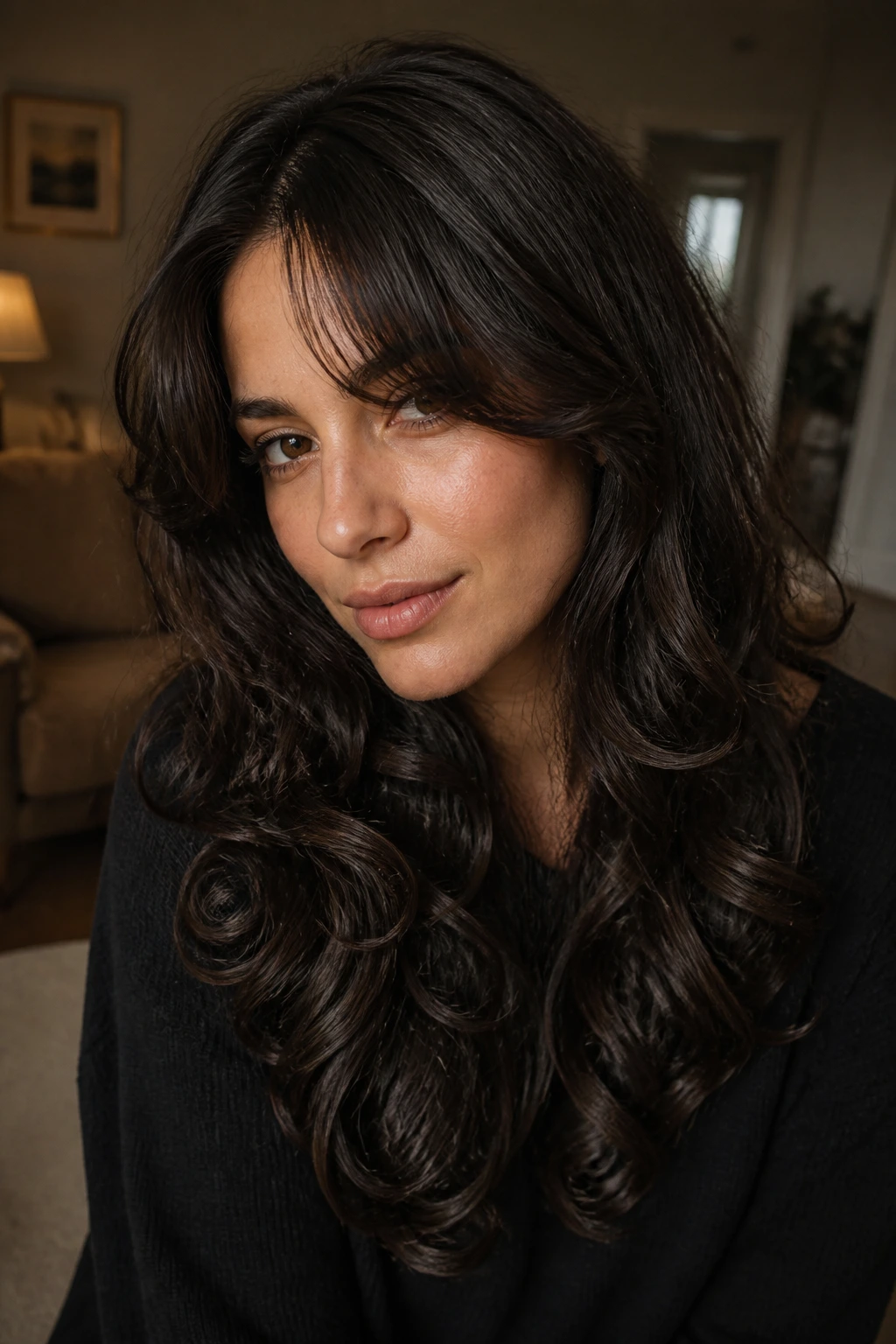
This one is about finish as much as shape. The curls are long, the curtain bangs are soft, and the ends are kept glossy so the dark color doesn’t vanish into a fuzzy outline. When the hair is healthy-looking at the bottom, the whole style feels richer.
The bangs should be trimmed to sit in that cheekbone-to-jaw corridor, not chopped straight across the forehead. That gives the front a gentle opening shape, which matters more on dark hair than people think. Without that curve, the style can feel heavy even if the curls are beautiful.
A light glossing spray or serum on the ends can help, but don’t smear it through the bangs. The front needs movement, not grease.
21. Oval-Shape Layers with Cheekbone Curtain Bangs
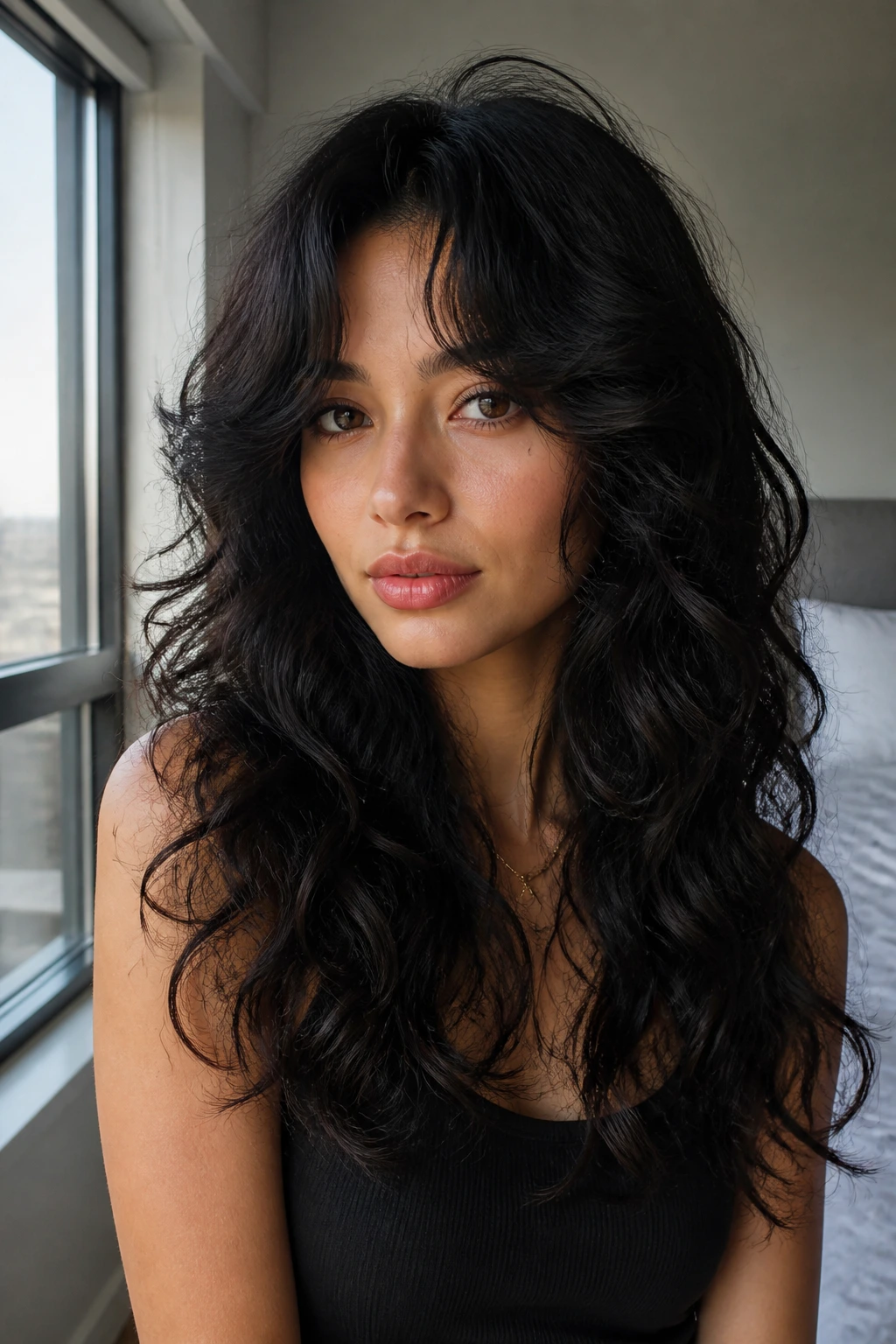
Oval faces give you room to play, and this haircut uses that. The face frame starts high enough to matter, the curtain bangs drop neatly around the cheekbone, and the rest of the layers fall in a way that keeps the silhouette long and lean.
This is one of the cleanest shapes on the list because it doesn’t need a lot of explanation. It just works. The dark curls provide the drama, the bangs provide the break in the front, and the length keeps everything feeling elegant without going stiff.
The best version has a slightly broken texture at the front. Not frizzy. Broken. That little bit of separation keeps the bangs from looking like a helmet piece.
22. Ringlet Cascade with Ultra-Soft Curtain Fringe
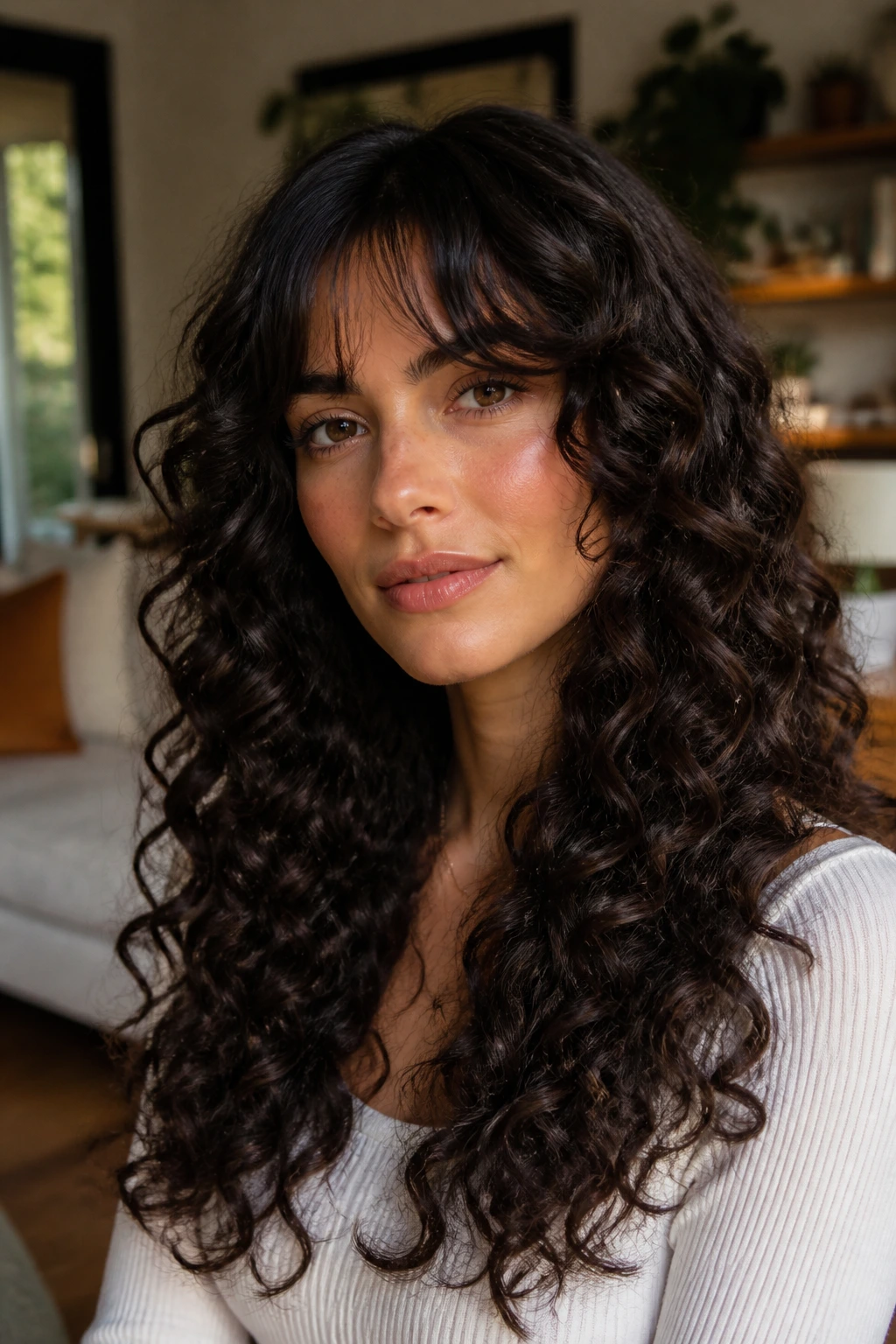
Ringlets need room, and this haircut gives them exactly that. The fringe is cut longer than you might expect, then softened enough that it can split naturally and fall away from the center. The rest of the hair cascades in defined spirals, which look especially striking on dark color because each ringlet has its own shadow line.
This style is a good answer if you love definition but hate bluntness. The curtain bangs don’t crowd the forehead, and the length keeps the ringlets from shrinking into a compact halo. It feels romantic without being precious.
A final stylist note
If your ringlets are springy, insist on dry cutting the fringe. Wet curls can lie to everyone in the room, and bangs are the first place that lie shows up.
Why Long Dark Curly Hair Loves Curtain Bangs
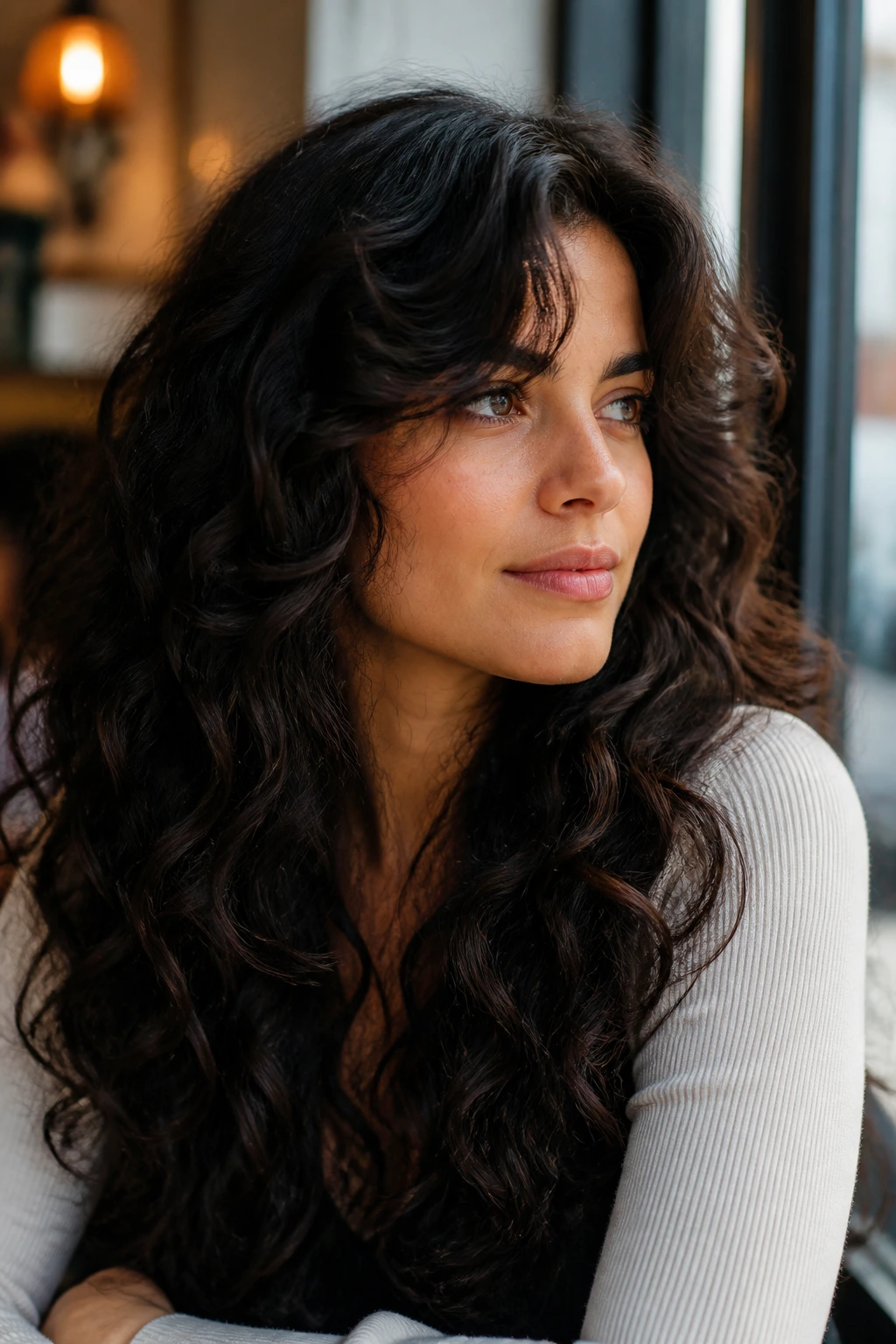
Dark curly hair can carry weight, but that weight needs a release point. Curtain bangs give it one. They open the face, soften the top-heavy feeling curls can get, and create a visible shape right where the eye lands first.
There’s also a color reason this combo works so well. Dark hair shows shadow. It makes the curve of a bang, the edge of a layer, and the lift at the root easier to read. On lighter hair, some of that structure blurs. On deep brunette or black hair, the cut line has more presence.
Shrinkage is the other piece. Curly bangs are not a straight-line problem. A good curly fringe is cut with dry movement in mind, so it can live somewhere between the nose and the cheekbone and still land where you want after it springs up. That’s why these styles feel flattering instead of fussy. They’re built for the way curly hair actually behaves.
How to Ask a Stylist for This Shape
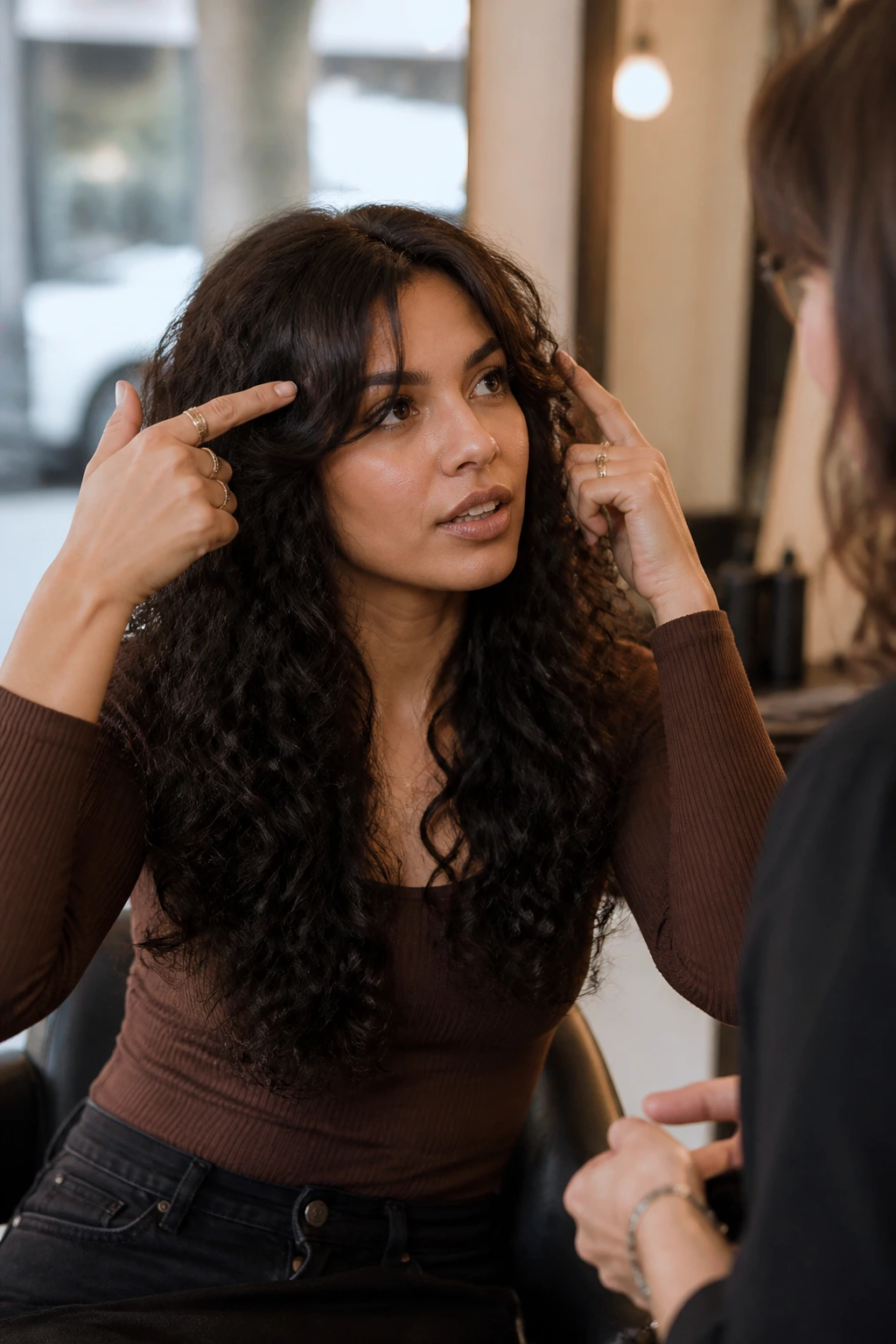
Bring photos, yes, but also bring words. The right words save you from a lot of bad assumptions.
Tell your stylist whether you want full curtain bangs, soft face-framing pieces, or a long fringe that can be tucked away. Then point to the exact spot where you want the front pieces to land when dry. Cheekbone, jaw, chin, collarbone — those are different asks.
A few phrases help a lot:
- “Cut it dry so the shrinkage is real.”
- “Keep the bangs long enough to split.”
- “I want weight removed inside, not the ends thinned out.”
- “Start the shortest face pieces around the cheekbone.”
- “Keep the perimeter long.”
If your curls are tight, mention how they behave on day two, not just day one. That matters. A fringe that looks cute right after a wash and then floats up above your glasses is not a win.
Tools and Products That Make the Front Pieces Behave
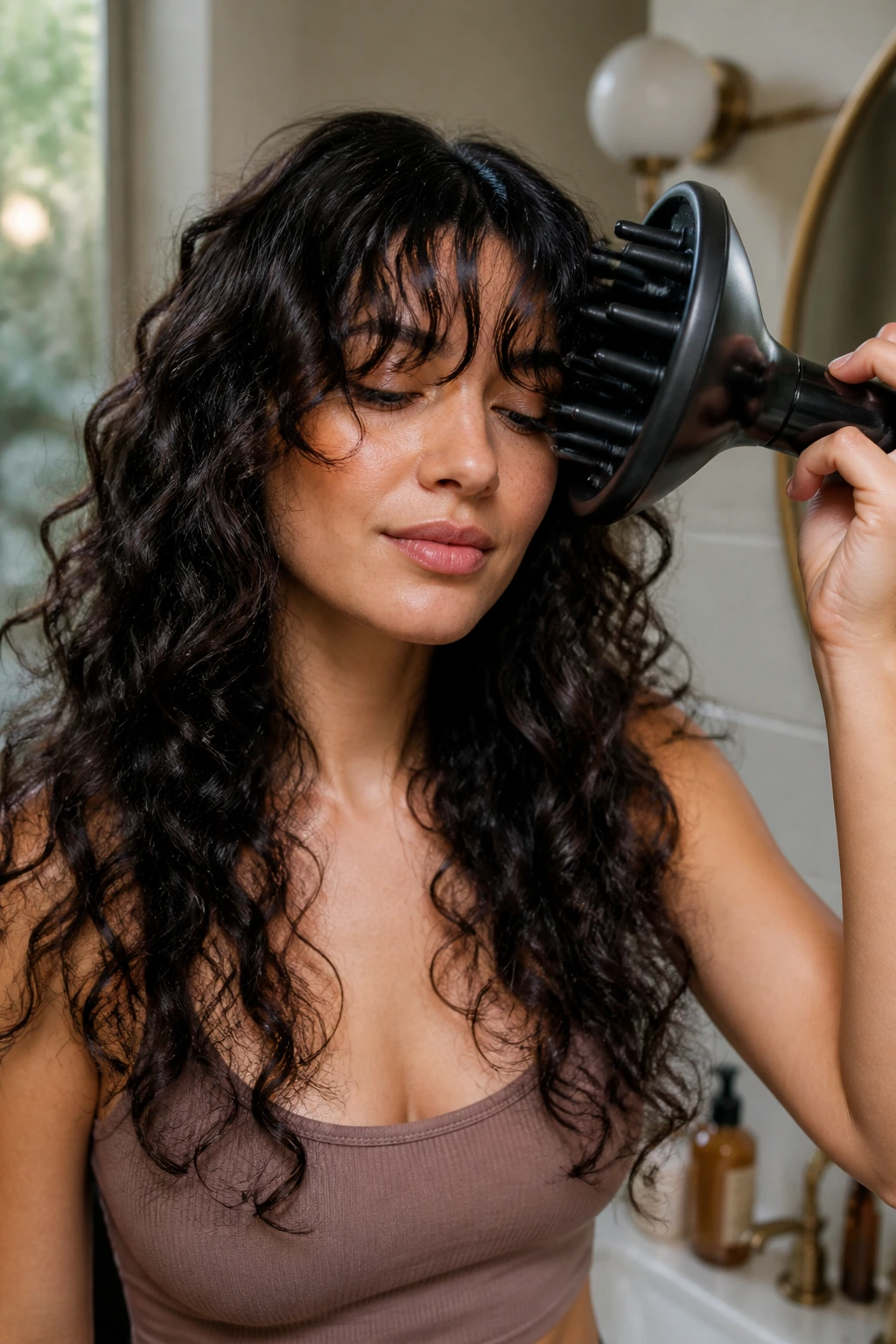
You do not need a bathroom shelf that looks like a salon exploded. You need a few specific things, and they need to be the right kind.
- Diffuser attachment: A bowl-shaped diffuser helps the bangs dry without blasting them apart.
- Microfiber towel or cotton T-shirt: Less rough than a bath towel, so the front doesn’t frizz up immediately.
- Wide-tooth comb: Good for sectioning the bangs while they’re damp.
- Duckbill clips: Use these at the roots to encourage lift at the crown and around the fringe.
- Lightweight curl cream: Enough slip to define the curl, not so much that the bangs collapse.
- Mousse or foam: Great for fine to medium curls that need a little root memory.
- Soft-hold gel: Useful if your curtain bangs separate too quickly and lose their curve.
- Spray bottle with water: The quickest way to reset just the front without rewetting the whole head.
- Satin bonnet or pillowcase: Helps the bangs keep their bend overnight instead of mushing flat.
If you only buy one thing beyond your regular shampoo, make it the diffuser. The front pieces respond to controlled drying better than almost anything else.
Styling Moves That Keep Curtain Bangs Curved, Not Puffy
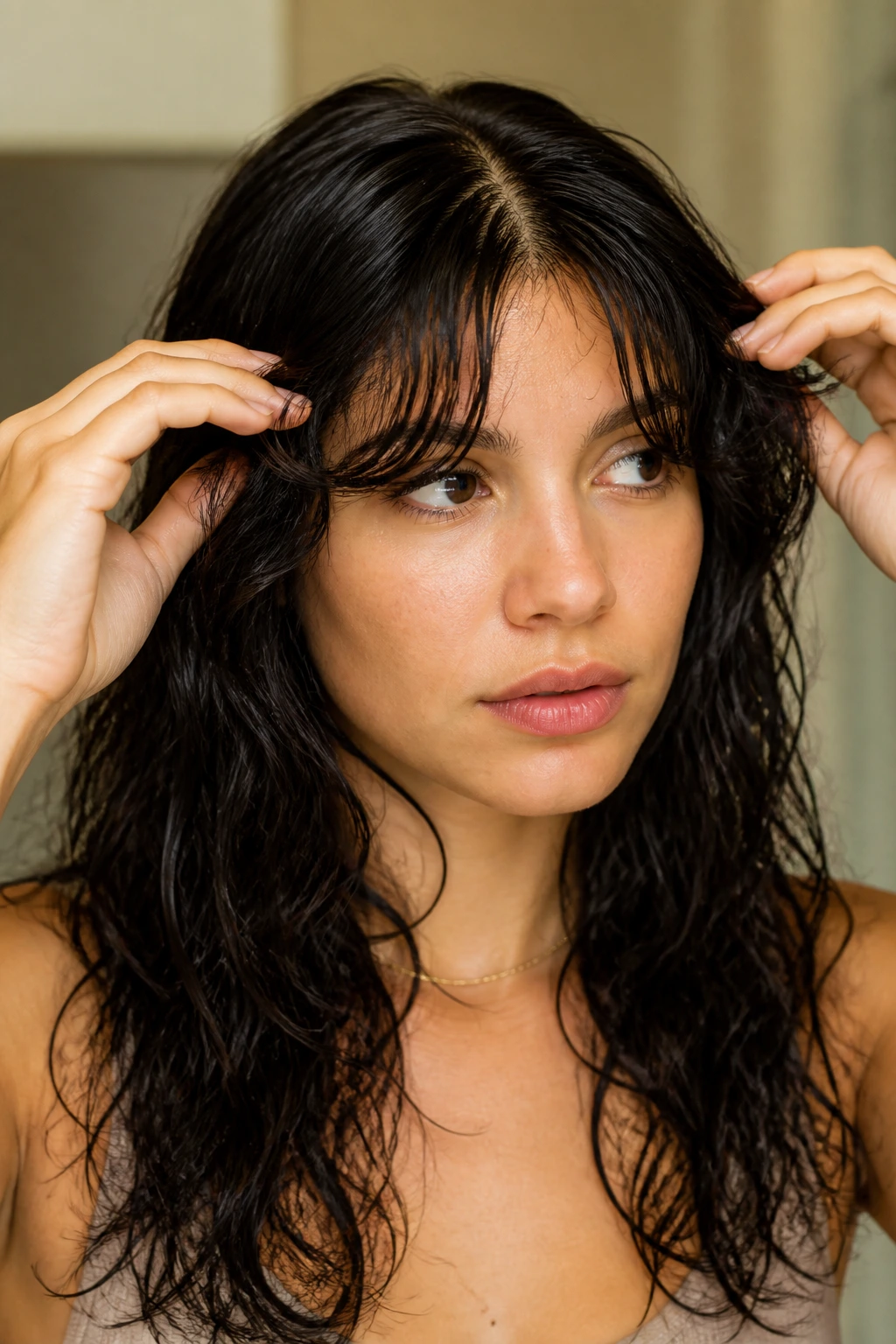
The front of curly hair is where most of the work happens. The rest can usually take care of itself. The bangs? They need a little coaxing.
Start with damp hair, not dripping hair. Apply product to the bangs first, then scrunch the rest. That way, the front gets the extra attention it needs before your hands are covered in product and you’re tempted to overdo it. Use your fingers to guide the curtain pieces away from the center part, then clip the roots for a few minutes while you finish the rest.
Diffusing in short bursts helps more than long blasts. Aim the airflow upward at the roots, then let the bangs set in place before touching them again. If they dry too fast while lying flat against the forehead, they’ll keep that shape all day. Not ideal.
For refresh days, don’t soak the whole head. Wet just the fringe and the front layers, scrunch in a pea-sized amount of cream or foam, and let the curl pattern come back on its own. The less you disturb the rest of the length, the better the shape holds.
Common Mistakes That Flatten the Front
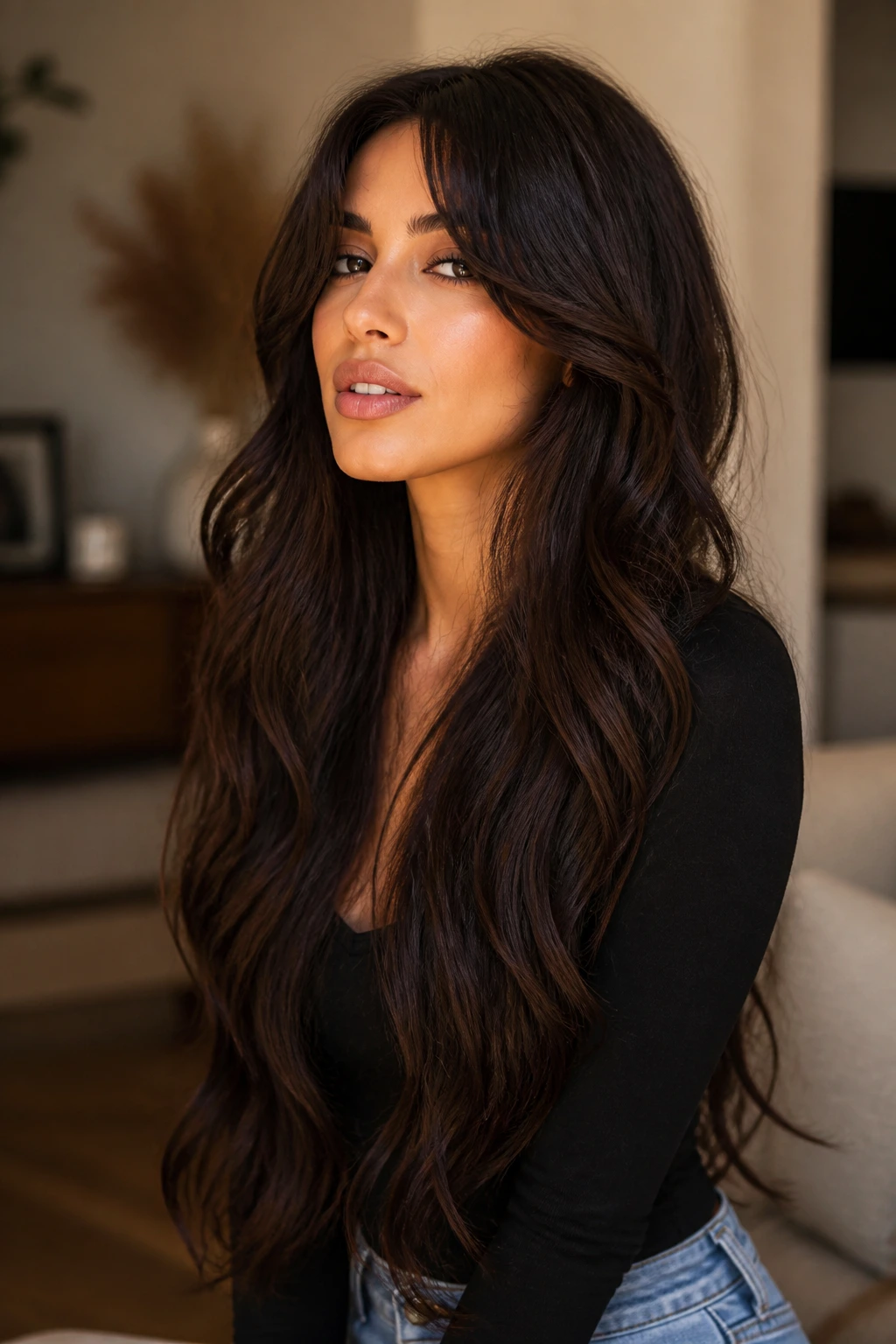
The most obvious mistake is cutting curtain bangs too short. On curly hair, short often becomes way shorter. The fringe bounces up, the face frame vanishes, and you end up trying to pin it back for three weeks straight. Leave more length than feels safe in the chair.
The second mistake is over-thinning. If the stylist takes too much weight out of the front, the bangs go stringy and sit apart in awkward little pieces. You want movement, not transparency. Ask for shaping, not aggressive thinning.
Heavy products can wreck the front too. A thick cream or oily butter on the bangs will make them hang in ropes or collapse by noon. The front usually needs lighter product than the rest of the hair.
And then there’s the wet-cut lie. Curls look longer when they’re wet. If nobody checks the bangs dry before you leave, the shape can be off by an inch or more. That’s not a small mistake on fringe. That’s the whole haircut.
Variations for Different Curl Types and Face Shapes
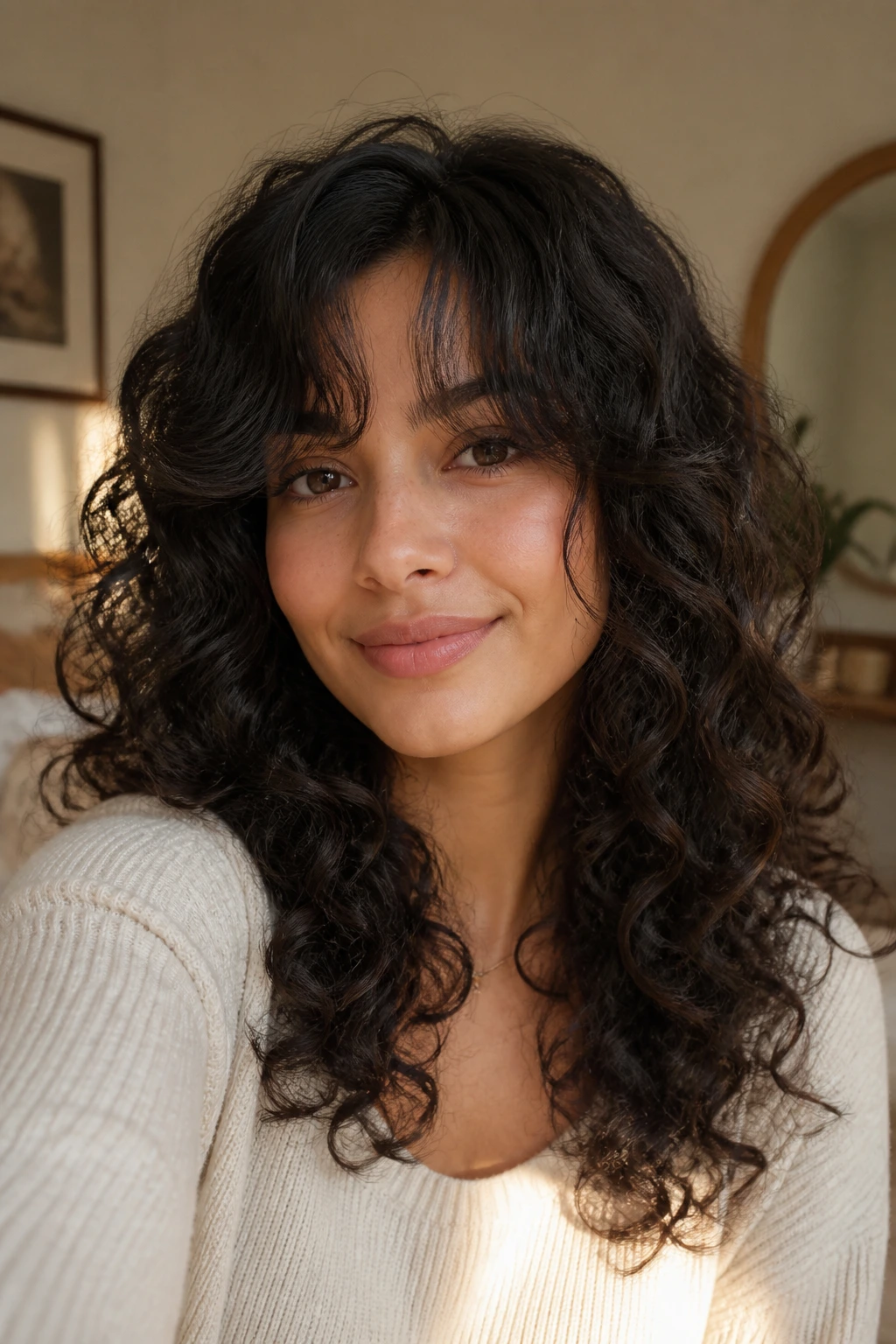
The Soft 3A Sweep: Best if your curls are loose and want to fall in larger bends. Keep the fringe long and airy, then split it slightly off-center so it doesn’t look too neat.
The Dense 3C Frame: Better for thicker curls that need weight removed near the cheeks. Ask for internal layering and longer bang pieces that can fold into the rest of the hair.
The Fine-Curl Feather: If your curls are delicate, keep the layers minimal and the bangs longer. That preserves density and stops the front from going see-through.
The Glassy Brunette Finish: Use this if shine is the whole point. A smooth curl cream and a light serum on the ends keep the dark color looking rich instead of dusty.
The Glasses-Friendly Split: For anyone who wears frames, keep the curtain pieces cheekbone length or longer. That gives your glasses room and keeps the fringe from sitting right in the lenses.
These tweaks change the mood without changing the core shape. That’s the useful part.
Night Care, Refreshing, and Trim Timing
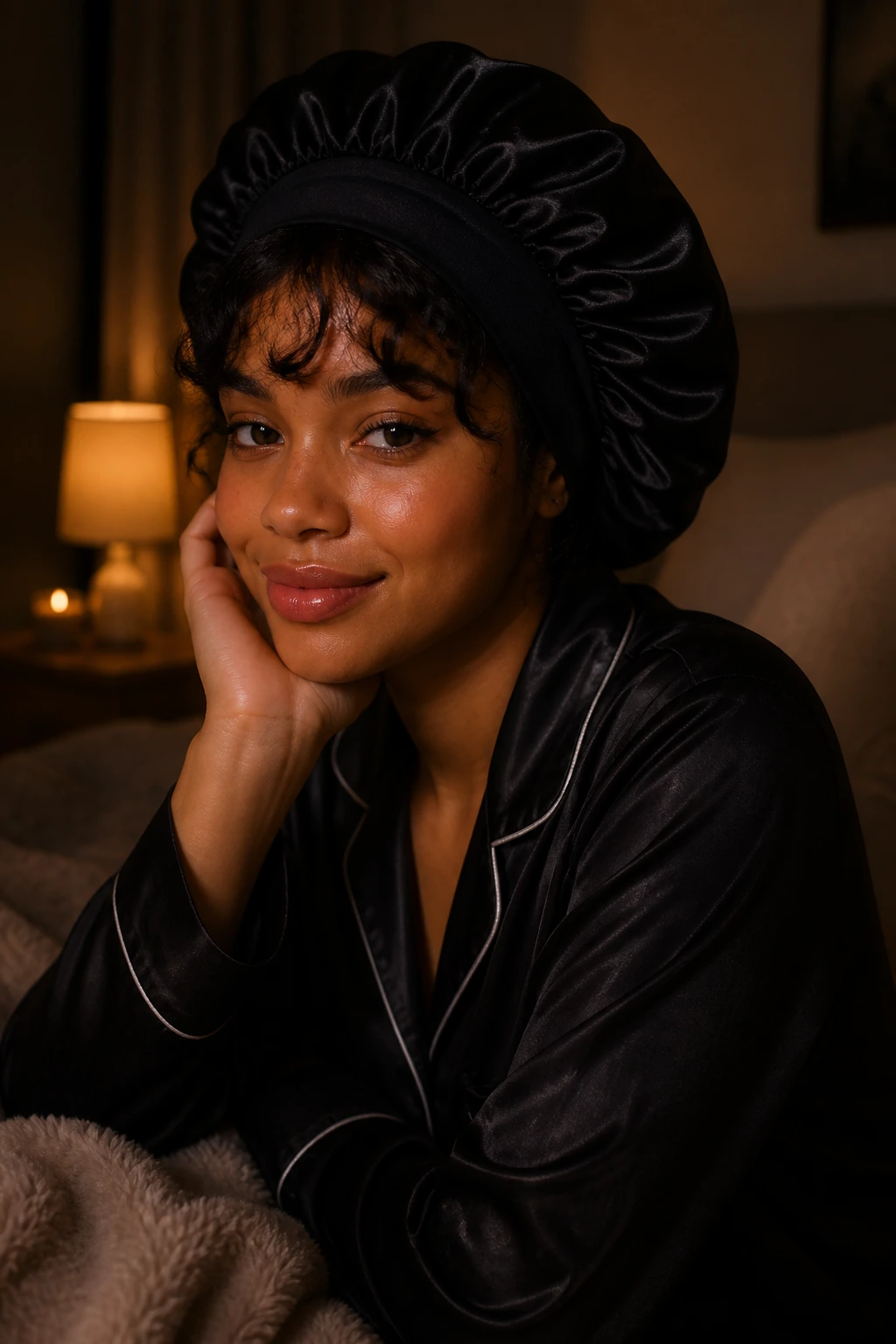
Curly curtain bangs need a little more attention than the rest of the haircut, and that’s normal. At night, protect the front with a satin bonnet or at least a satin pillowcase, and if your bangs are long enough, twist them loosely away from your face before sleep. No tight clips. No rough elastic.
In the morning, check the fringe first. If the rest of the hair looks fine, leave it alone. Mist the bangs lightly, finger-coil the pieces that have split in a bad direction, and let them air-dry or diffuse for a few minutes. It takes less time than redoing everything.
Plan on trimming the bangs more often than the rest of the haircut. For many curly heads, every 6 to 8 weeks keeps the front useful. The length may need a tiny dusting sooner if your shrinkage is strong. The back and sides can often wait longer, but the fringe is the part that changes the mood fastest.
If you wear the style straight into a ponytail sometimes, tell your stylist. The bangs should still look good pulled back, not only when they’re down.
Frequently Asked Questions
Do curtain bangs work on tighter curls?
Yes, but the length matters more than people expect. Tighter curls usually need longer bangs cut with shrinkage in mind, so the fringe can still sit at the cheekbone instead of springing up too high.
Should curly curtain bangs be cut wet or dry?
Dry is safer for most people. Wet curls stretch and hide their real length, which is how bangs end up several inches shorter than planned once they dry.
What if my curtain bangs split too much in the middle?
That usually means they’re too heavy at the base or too short to fold naturally. A little root lift, a lighter product, and a trim that keeps the outer edges longer usually fix the shape.
Can I still wear my hair up with this cut?
Absolutely, and that’s one of the nicest parts of it. Long curtain bangs can drop out of a bun or ponytail as face-framing pieces, which makes the style useful even on rushed days.
Will this haircut make my face look wider?
Not if the bangs are cut with enough length. Curtain bangs should open the face, not box it in, so the pieces need to sweep downward and outward rather than stop at one blunt line.
How much product should I use on the bangs?
Less than you think. Start with a pea-sized amount of lightweight cream or foam for the front, then add a touch more only if the bangs feel too fluffy after drying.
What if my hair is fine but very curly?
Keep the layers minimal and the fringe long. Fine curls need enough length to hold shape, and too much removal at the front will make the bangs disappear into wisps.
The Shape That Keeps Its Character
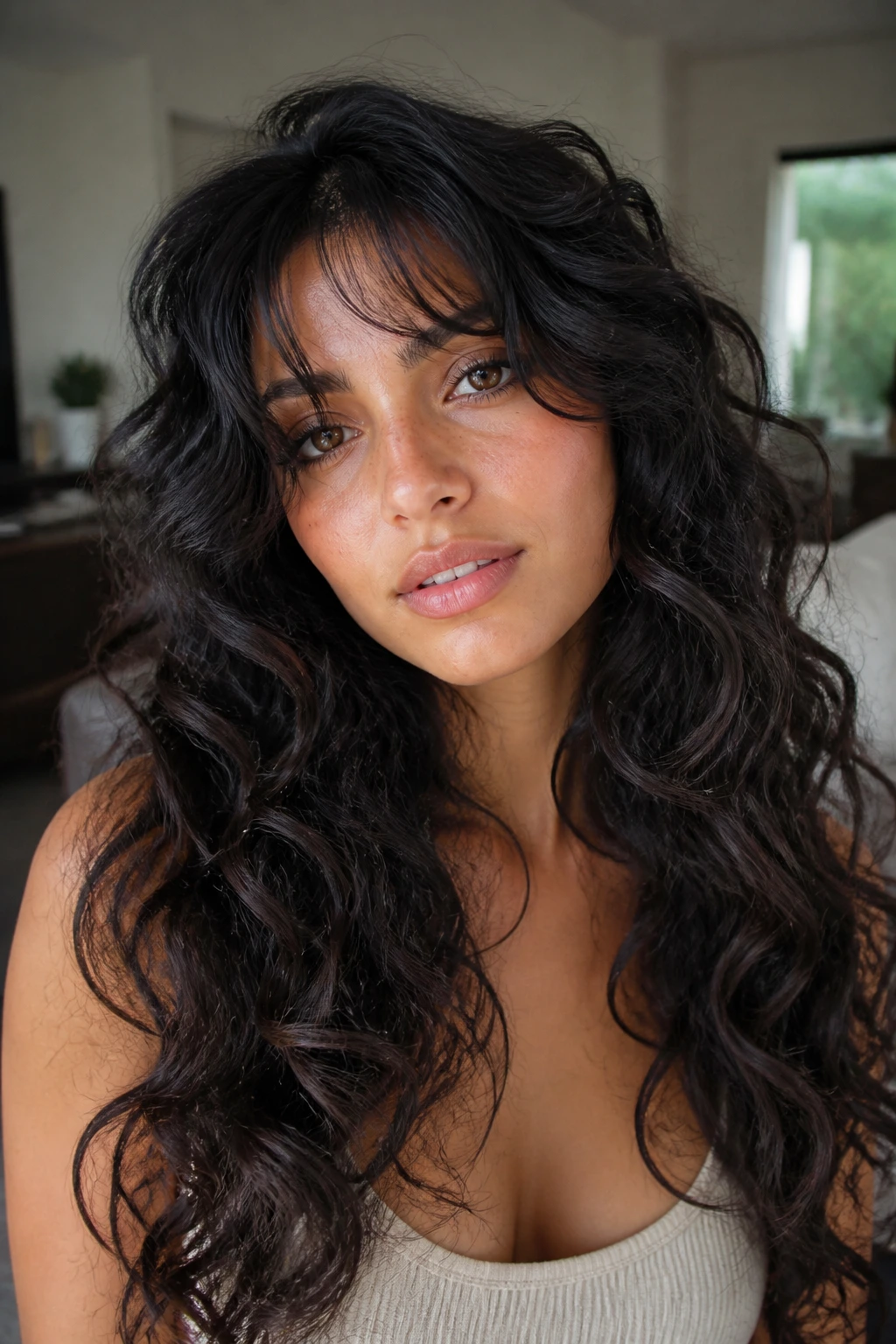
There’s a reason this haircut keeps working across so many curl patterns and face shapes. The long dark length gives you weight, the curtain bangs give you motion, and the combination leaves room for your hair to behave like hair, not like a fixed idea of a haircut.
The best version is never the most dramatic one on the rack. It’s the one that respects shrinkage, keeps the fringe long enough to move, and gives the front just enough definition to frame the face without stealing the rest of the show. That’s the sweet spot. If you find yourself coming back to that feeling in photo after photo, trust it.