



Type 2C hair has a habit of making every styling choice feel negotiable. The roots go a little flat, the mids swell, the ends bend with a mind of their own, and then curtain bangs enter the picture and suddenly everything matters twice as much. Done right, though, that combo is one of the best-looking pairings out there: soft, face-framing, a little undone in a way that feels deliberate instead of accidental.
The catch is timing. Curtain bangs on wavy hair are not a “snip and forget” situation. Type 2C waves shrink more than people expect once they dry, and bangs that look cheekbone-skimming when wet can jump straight to eyebrow drama by lunchtime. I’ve seen the difference a quarter-inch makes. I’ve also seen a beautiful wave pattern get buried under too much cream, too much brushing, or a fringe cut too short to live through a humid commute.
That’s why the smartest 2C hairstyles with curtain bangs are the ones that work with the bend you already have. Not against it. Some lean polished, some lean shaggy, some barely count as “styled” because the wave does half the job for you. The good ones all solve the same problem: they keep the front soft, keep the crown from collapsing, and let the texture look intentional from the first day of the cut to the awkward grow-out stage.
Why These 25 Shapes Work So Well on 2C Waves
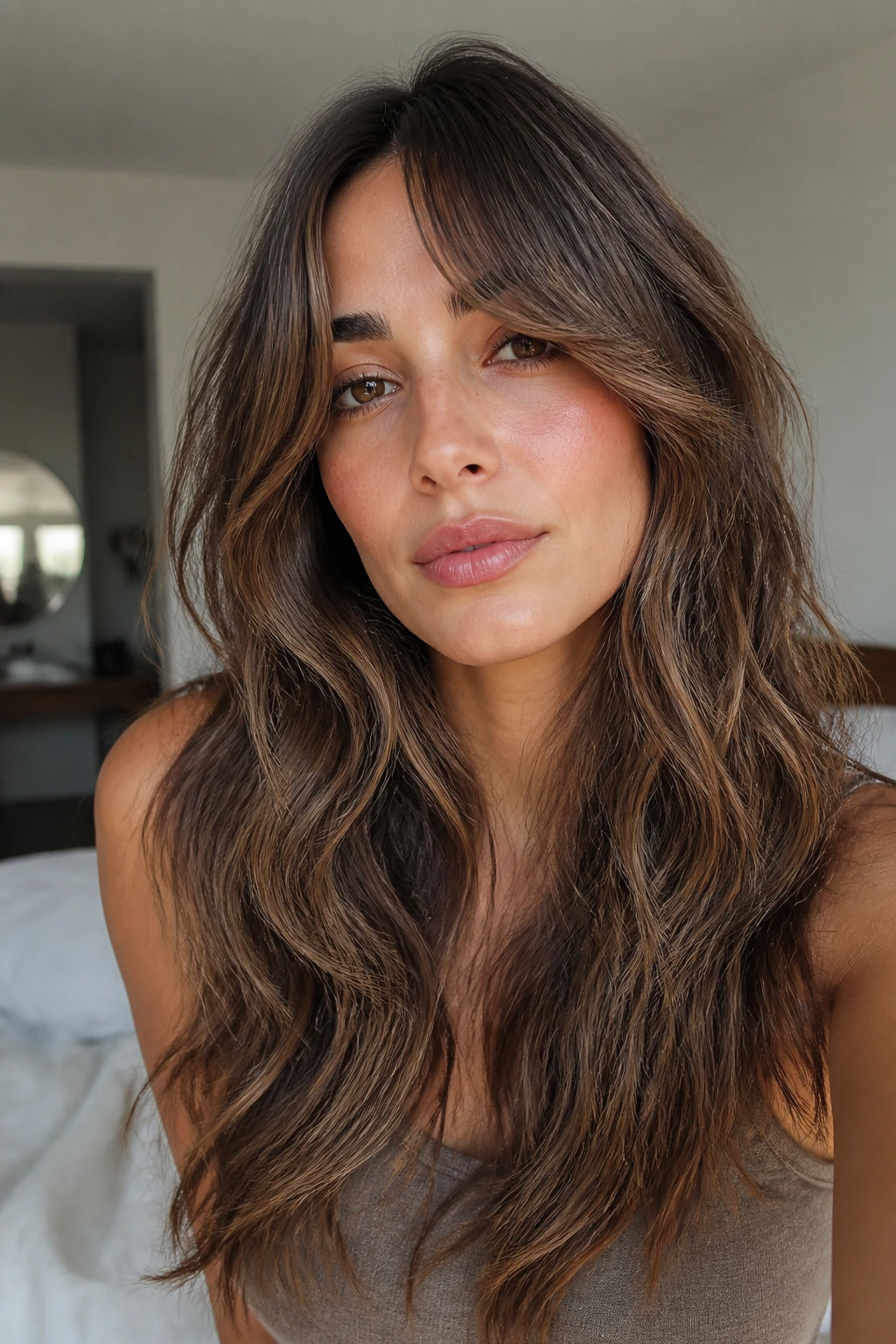
- They leave room for shrinkage: Curtain bangs on 2C hair need length on day one, because the wave pattern will spring up once the hair dries.
- They frame the face without boxing it in: The best versions soften the cheekbones and jawline, which matters when your hair has enough movement to puff out at the sides.
- They keep the crown from going flat: Layers, roots clips, and strategic parting give the front some lift before the wave settles.
- They work with air-drying and diffusing: A good 2C cut should still look believable when you let it dry with mousse and a little scrunching.
- They grow out gracefully: Curtain bangs are forgiving when they start drifting longer, which is more than I can say for blunt fringe on wavy hair.
How to Pick the Version That Won’t Fight Your Texture
Your hair density matters more than your face shape here, at least at first. Fine 2C hair usually looks best when the curtain bangs are kept light, with long face-framing pieces that connect into soft layers. Thick 2C hair needs more internal removal so the front doesn’t puff into a helmet by noon. If your strands are somewhere in the middle, you’ve got the easiest job of the bunch.
The length of the bangs is where people get bold in the salon and regret it later. Ask for curtain bangs that start longer than you think you need. Cheekbone to lip length is the sweet spot for most wavy hair, because that length still looks intentional when the wave shrinks and bends up. Eyebrow-length fringe on 2C hair often lands in awkward territory. Too short to tuck. Too long to behave.
Face shape matters, sure, but the wave pattern is the loudest voice in the room. Round faces usually like a longer center part and bangs that open from the nose or lip line. Square faces often look softer when the face-framing pieces start around the cheekbone and taper past the jaw. Heart-shaped faces can handle a little more fullness around the temples, especially if the ends are kept loose instead of over-thinned.
And here’s the salon note I’d never skip: ask for the fringe to be cut with your wave in mind, not iron-straight. If your stylist cuts curtain bangs without seeing how your hair bends when it’s dry, you can end up with pieces that sit too high on one side and too low on the other. Not a disaster. Just annoying. Annoying is fixable, but it’s nicer not to start there.
1. Long Layered Waves with Cheekbone Curtain Bangs
This is the version I reach for first when someone wants curtain bangs but does not want to spend every morning negotiating with them. Long layers keep the wave loose through the ends, and the bangs skim the cheekbones instead of sitting on the forehead like a curtain rod. The result feels airy, but not flimsy.
Why It Works
The long length gives 2C waves room to bend without turning into a triangle. Curtain bangs sit in front, but the layers behind them keep the whole shape from feeling heavy. If your hair tends to get bulky at the sides, this cut breaks that shape up before it starts.
What to Ask For
Ask for long layers that begin below the chin, plus face-framing pieces that blend into the curtain bang. You want connection, not two separate haircuts stacked on top of each other. A few point-cut ends near the front soften the line without making the fringe wispy.
Best for: medium to thick hair that needs movement without losing length.
Quick style note: A round brush at the bangs and a diffuser at the ends is enough. Don’t overwork the mids.
2. Shoulder-Grazing Shag with Airy Fringe
A shag and 2C hair get along for the same reason two people with messy kitchens get along: neither side is trying to be pristine. This cut has shorter internal layers, a bit of lift at the crown, and curtain bangs that feather out instead of hanging in one solid block.
The shag works when your waves already have a little attitude. If your texture has that bent, slightly tousled look even after air-drying, this cut catches it and makes it look deliberate. The fringe should stay longer at the sides so it can swing open rather than curl into itself.
How to Wear It
Use a small amount of mousse at the roots, then scrunch in a lightweight cream through the mids. Diffuse on low speed until the hair is about 80 percent dry. Finish by shaking the roots with your fingers. That last step matters. The shag needs a little disorder.
3. Butterfly Cut with Floating Face Frames
The butterfly cut gives you that full, soft shape that looks like there’s more hair than there actually is. On 2C waves, the layered top section lifts away from the face while the longer bottom layers keep the length. Curtain bangs blend into the shorter pieces and make the whole thing look stitched together on purpose.
What I like most here is the movement around the cheekbones. The front pieces don’t sit flat. They hover. That makes this style especially good if your waves lose shape by the second day and need a cut that still looks “done” when it’s a little sleepy.
Styling cue: Wrap the bangs around a medium round brush for 10 to 15 seconds, then let them cool in place before touching them. If you pull too soon, they’ll split.
4. Collarbone Lob with a Soft Bend
A collarbone lob is the haircut I recommend when someone wants structure but not a lot of styling time. On type 2C hair, the length sits in that useful middle zone: long enough to form a wave, short enough to avoid dragging the face down. Curtain bangs make it feel lighter at the front.
This one is especially good if your hair starts to swell at the shoulders. That’s where a lot of wavy hair gets wide in a way that’s hard to control. The lob keeps the ends neat enough to avoid that triangle effect while still letting the wave pattern show.
What Makes It Nice to Live With
It air-dries well. It diffuses quickly. And if you need to smooth only the bang area with a brush and leave the rest alone, the cut still holds together. That is a rare and useful thing.
5. Wolf Cut with Longer Curtain Bangs
The wolf cut can be a little chaotic, but on 2C waves it often looks better than the polished versions people try to force onto textured hair. The crown is shorter, the ends are thinner, and the curtain bangs stay long enough to blend into the shaggy perimeter.
This cut is for someone who doesn’t mind texture being visible. Actually, that’s the whole point. If you spend a lot of time trying to make your waves sit perfectly smooth, this is not the one. If you like a little edge and a little air around the face, it works fast.
A Small Warning
Don’t let the bangs get too short. On a wolf cut, short fringe plus wavy hair can turn into a puffy triangle at the front. Keep the curtain pieces long enough to fold into the side layers, and the cut stays cooler.
6. U-Cut for Thick 2C Waves
Thick 2C hair needs shape that respects weight. A U-cut keeps length at the back while curving the sides gently toward the face, which helps the fringe read soft rather than chopped. Curtain bangs fit in because they echo the curve of the cut.
This is one of those styles that looks expensive even when it’s not being styled much. The outline is the trick. A hard, blunt edge can make dense waves feel boxy. A U-shape gives the front some breathing room.
How to Keep It from Looking Heavy
Ask for internal debulking near the mid-lengths, not just thinning at the ends. If all the weight sits under the ears, the curtain bangs have to fight the bulk around them. That’s when the whole thing starts puffing sideways.
7. Deep Side Part with Swept-Back Curtain Bangs
Not every curtain bang has to live dead center. A deep side part gives 2C waves a little glamour and solves the “my bangs split in the middle by noon” problem. One side falls longer, the other opens toward the cheekbone, and the whole style feels more fluid.
This works especially well on days when your roots want volume but your front pieces keep collapsing. The side part gives direction. The curtain bangs stop looking like a middle-of-the-road compromise and start looking like a style choice.
Best use case: second-day hair that needs a reset without a full wash.
Quick move: mist the bangs with water, twist them away from the face for a minute, then release and finger-comb. It resets the bend without flattening the wave.
8. Half-Up Twist with Loose Front Pieces
A half-up twist is one of the easiest ways to make curtain bangs look intentional instead of accidental. Pull the crown back loosely, leave the front pieces out, and let the wavy lengths sit underneath. The twist gives lift where 2C hair often goes flat.
I like this one because it doesn’t demand precision. The bangs can be a little uneven. The twist can be slightly loose. Nobody cares, and that’s exactly the energy it needs. It reads soft because it is soft.
Best for busy mornings
If your wave pattern is strongest from the ears down, this style lets you show off the texture without fussing over the front every five minutes. A dab of serum on the ends keeps the loose pieces from fuzzing out.
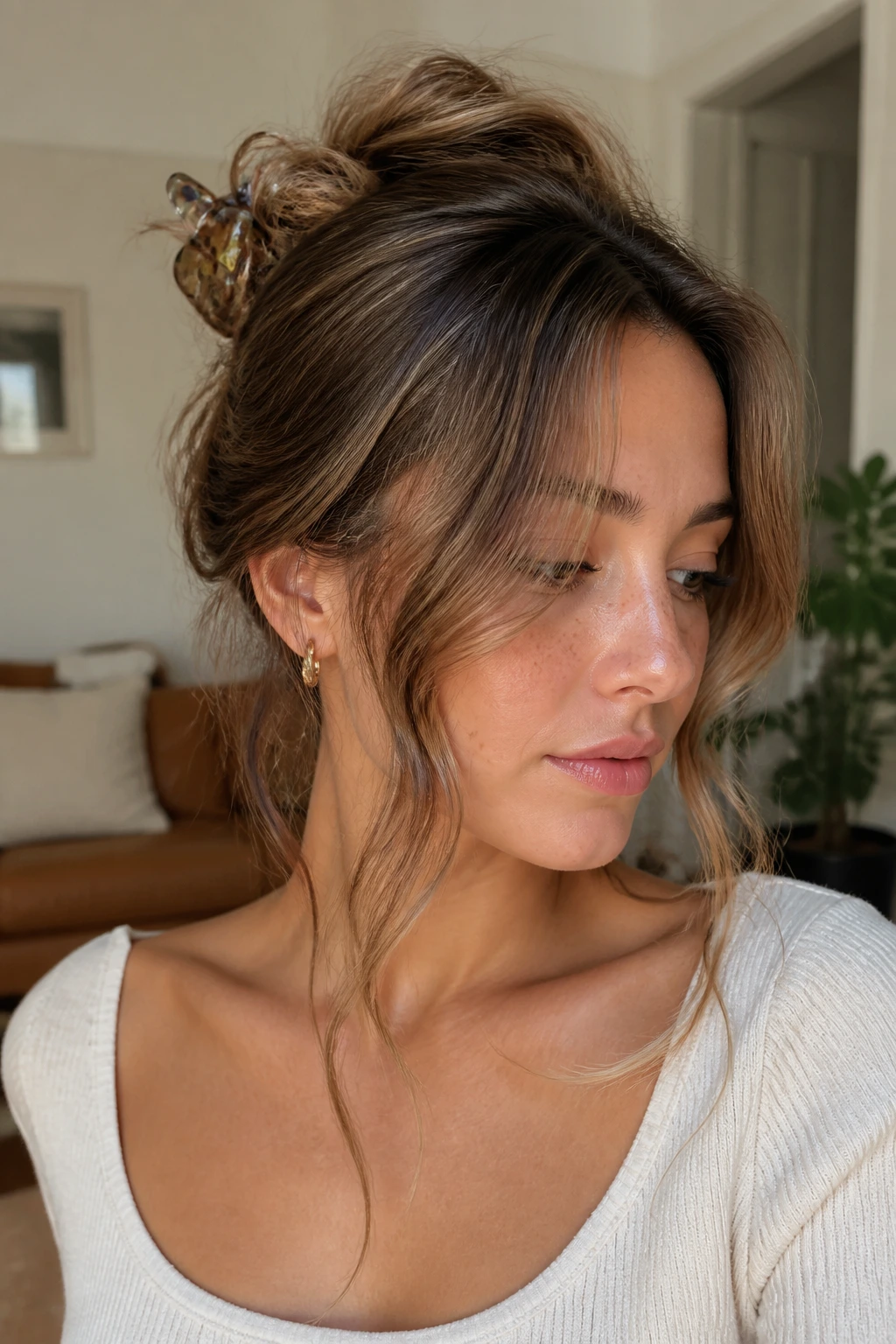
9. Claw-Clip Roll with Face-Framing Bangs
A claw clip roll looks modern on wavy hair because it lets the texture stay visible instead of hiding it under tension. The curtain bangs stay out front, the lengths twist up loosely, and the face-framing pieces can fall where they want. That little bit of mess is doing real work.
For 2C hair, this style is useful on days when the mids are acting bigger than you want. Twist the lengths high enough that the ends tuck in, but not so tight that the wave gets crushed. The clip should feel secure, not squeezed.
One detail that matters: leave the front pieces out before you clip the rest up. If you try to yank them loose after the clip is in place, they’ll fight you and kink in strange places.
10. Low Messy Bun with a Center Part
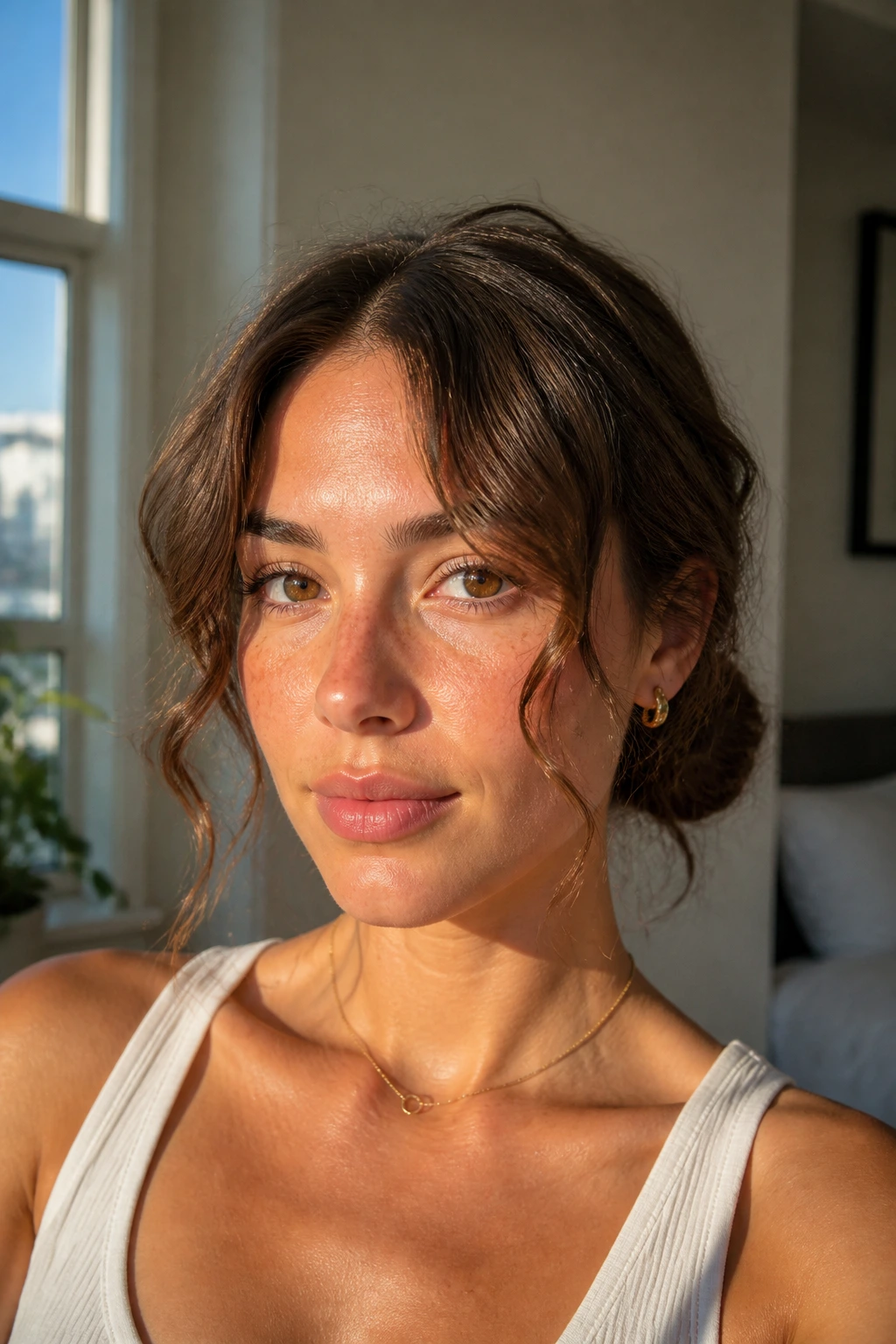
The low messy bun is old news, but on 2C waves with curtain bangs it gets a second life. The center part keeps the front balanced, the fringe softens the forehead, and the bun itself can stay loose enough to show a few bent pieces at the nape.
This is a good “I have five minutes and no patience” style. It’s not trying to be sleek. It’s trying to be flattering. That matters more than polish when the hair has texture built into it already.
How to make it look better: don’t slick the sides back too hard. Leave a little room around the temples so the bangs can sit naturally. Tight buns and curtain bangs rarely make friends.
11. Braided Crown Half-Up
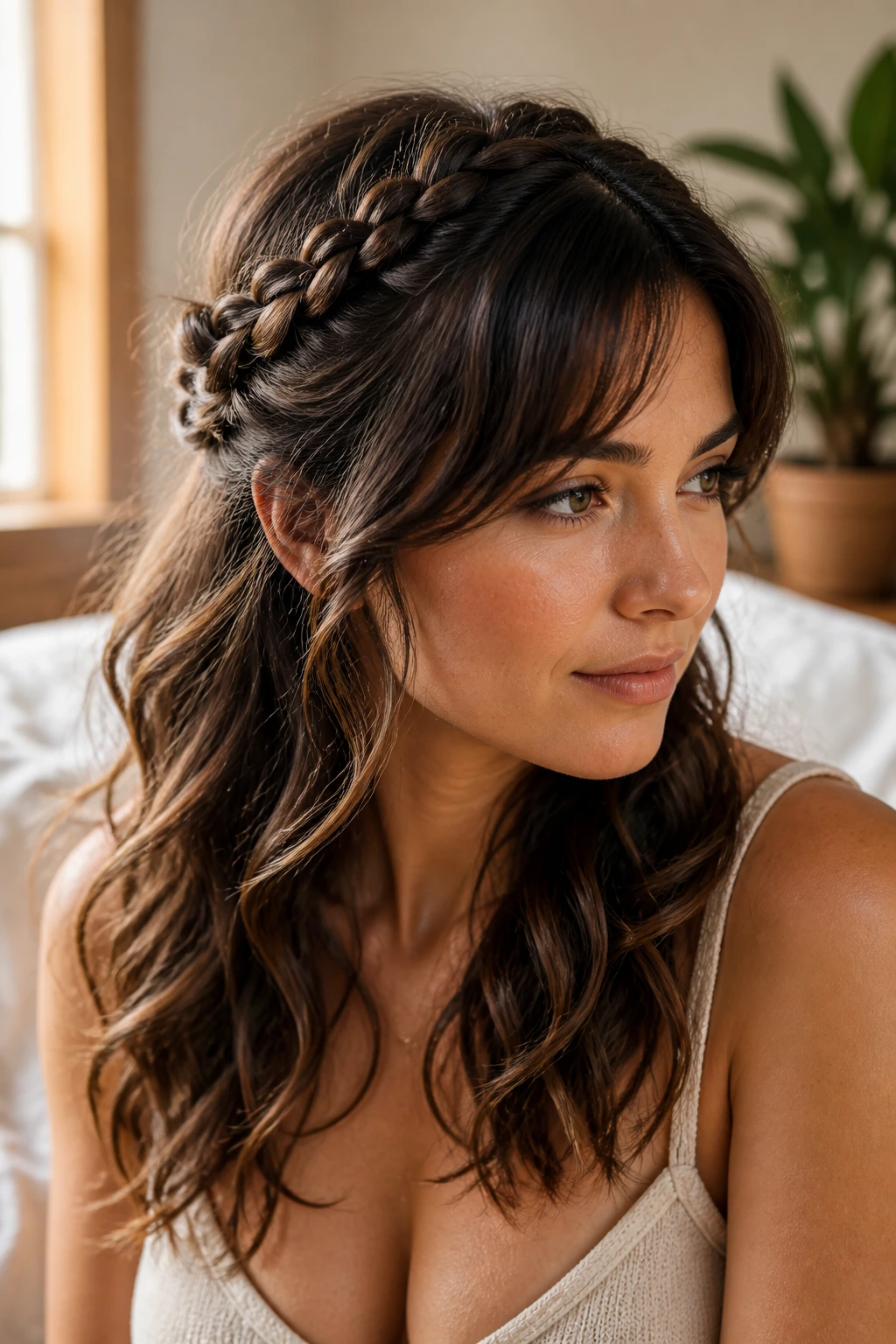
A braided crown half-up style gives type 2C hair something better than a plain clip: texture on texture. The braid adds structure to the top, while the lower waves stay loose and the curtain bangs frame the face. It’s one of the few styles that can feel both romantic and practical.
The trick is keeping the braid loose. Pull it too tight and the bangs look disconnected. Keep it soft and the face pieces become part of the whole shape. The style works best when the braid sits slightly above the ears rather than pinned high on the crown.
Good for
- medium-length waves that want control at the top
- bangs that are growing out and need a softer frame
- days when the roots need lift but the ends still look good
12. Loose French Braid with Tendrils
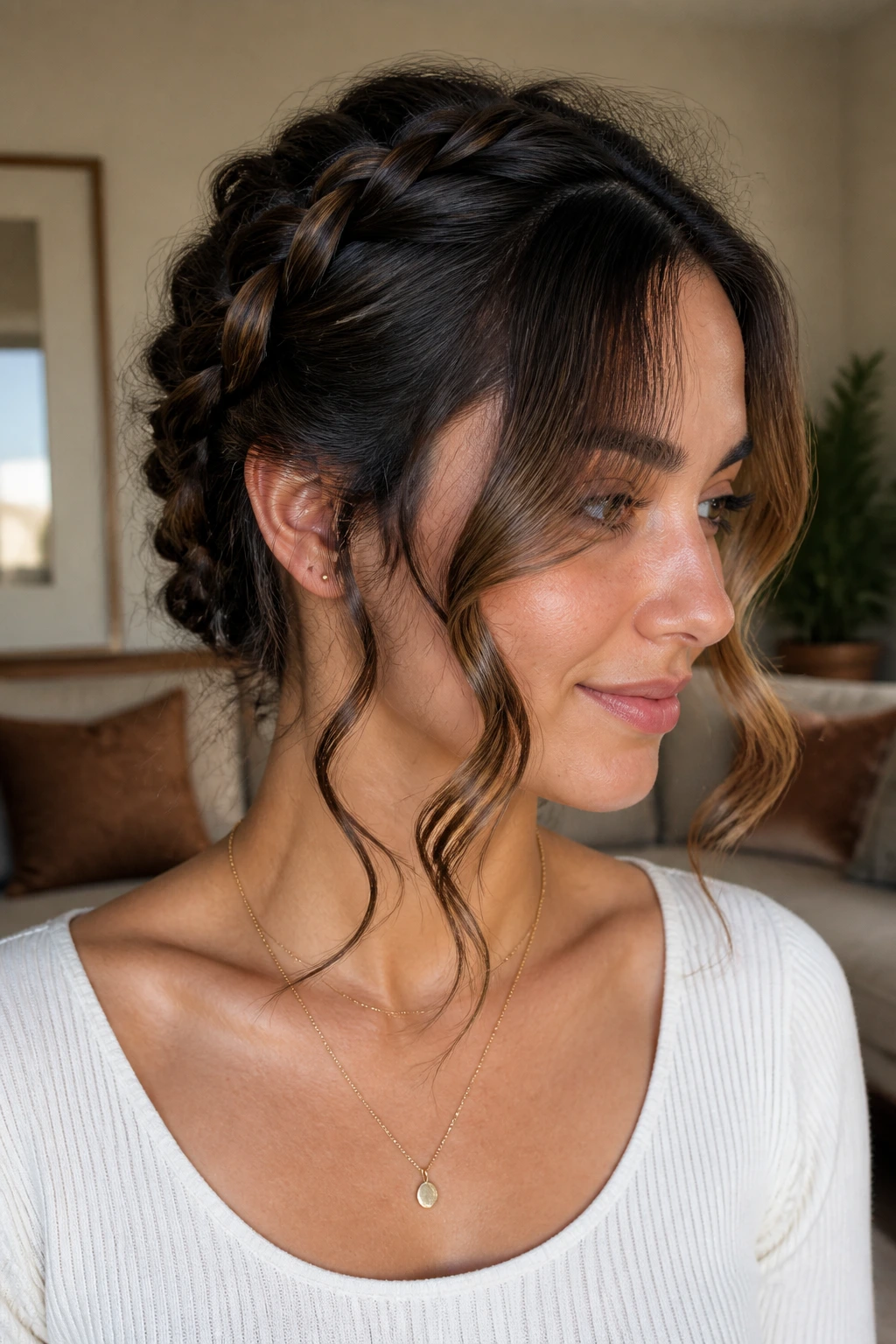
A French braid on wavy hair is one thing. A loose French braid with curtain-bang tendrils is another. The braid keeps the bulk contained, while the loose face pieces stop the style from looking too school-uniform. It’s especially nice when your 2C texture gets frizzy in the back first.
Keep the braid slightly pancake-style after you finish it. That means gently widening each section with your fingers so it doesn’t look tight against the head. The fringe should stay split and soft around the cheekbones.
Tip: a tiny bit of styling cream on the tendrils helps them stay curved instead of frizzing into a fuzz halo.
13. Diffused Big-Volume Waves
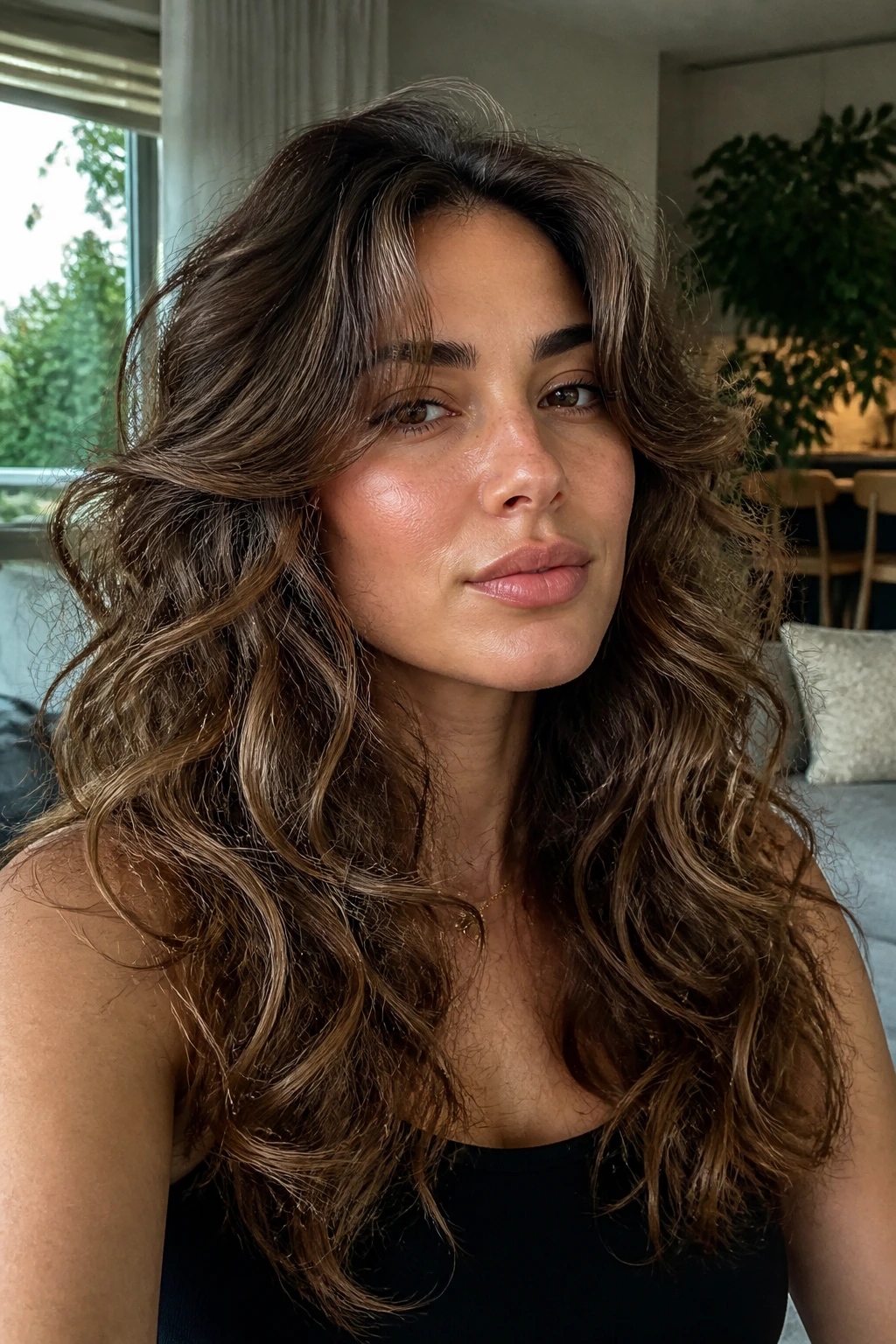
Some 2C hair wants volume. Not polite volume. Actual volume. Diffused waves with curtain bangs can look lush and full when the cut has enough layering to support them. The fringe gets lifted with a brush or a couple of root clips, then the rest dries with body.
This style is all about drying direction. Clip the curtain bangs away from the face while they’re damp, then diffuse the mids and ends upward. If you flip your head too much, the bangs can separate. If you do nothing at all, they’ll sit flat and stubborn.
Best product combo: mousse at the roots, light gel through the mids, and a soft-hold spray at the end.
14. Air-Dried Scrunch-and-Go
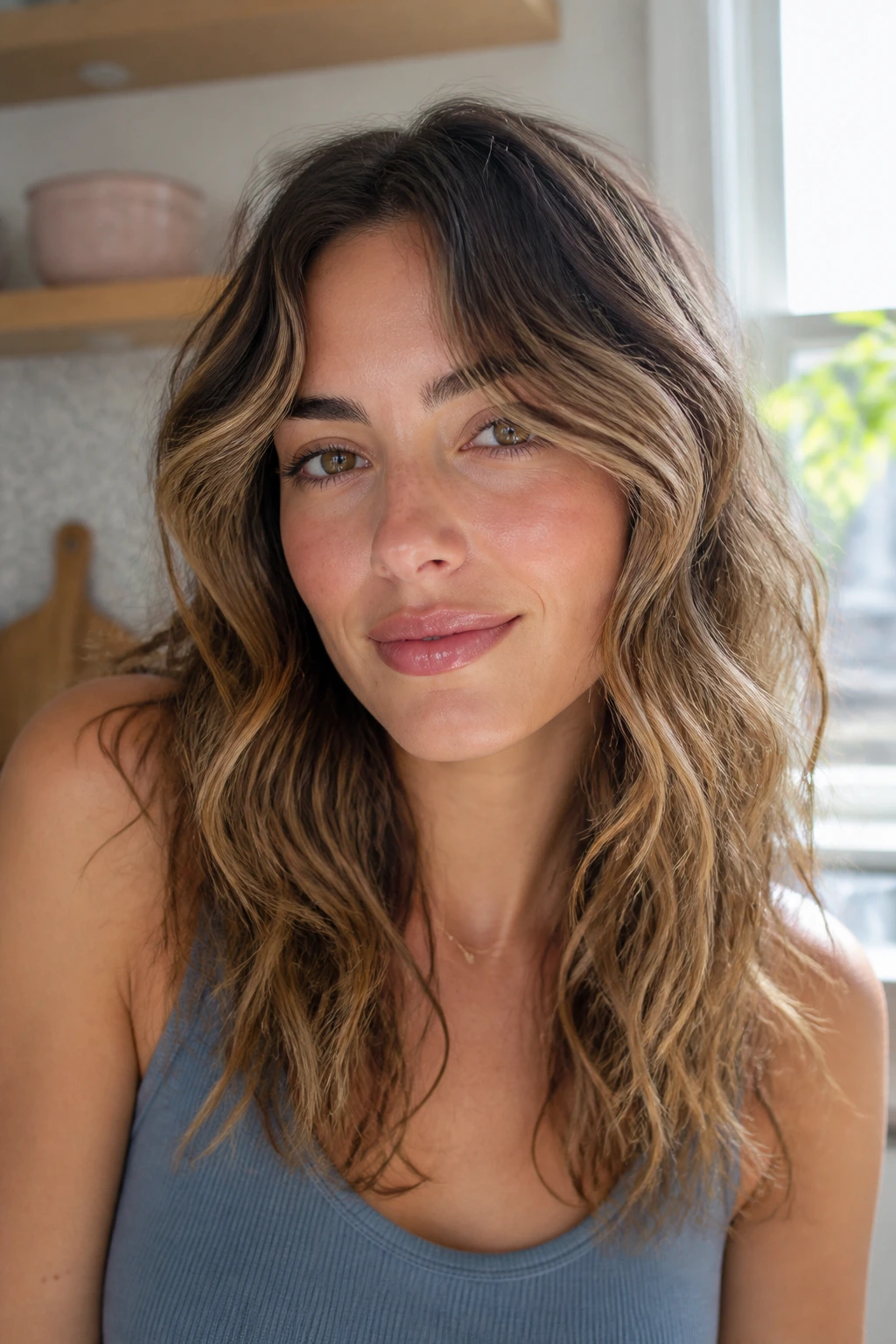
A lot of people with 2C hair are secretly trying to make it look like they did less. Fine. This is that style. Scrunch in a lightweight leave-in and a mousse, twist the curtain bangs lightly away from the face, and let the hair dry on its own. The result should look soft, not crunchy.
The charm here is the texture itself. You don’t want polished ringlets. You want that slightly bent, beachy pattern that still looks face-framing. Curtain bangs help because they guide the eye toward the face, which makes the rest of the hair feel more composed even when it’s doing its own thing.
What to avoid
Heavy creams. Too much touching while it dries. And definitely brushing it out before the wave sets. That last one turns a decent bend into frizz fast.
15. Brushed-Out Glam Waves
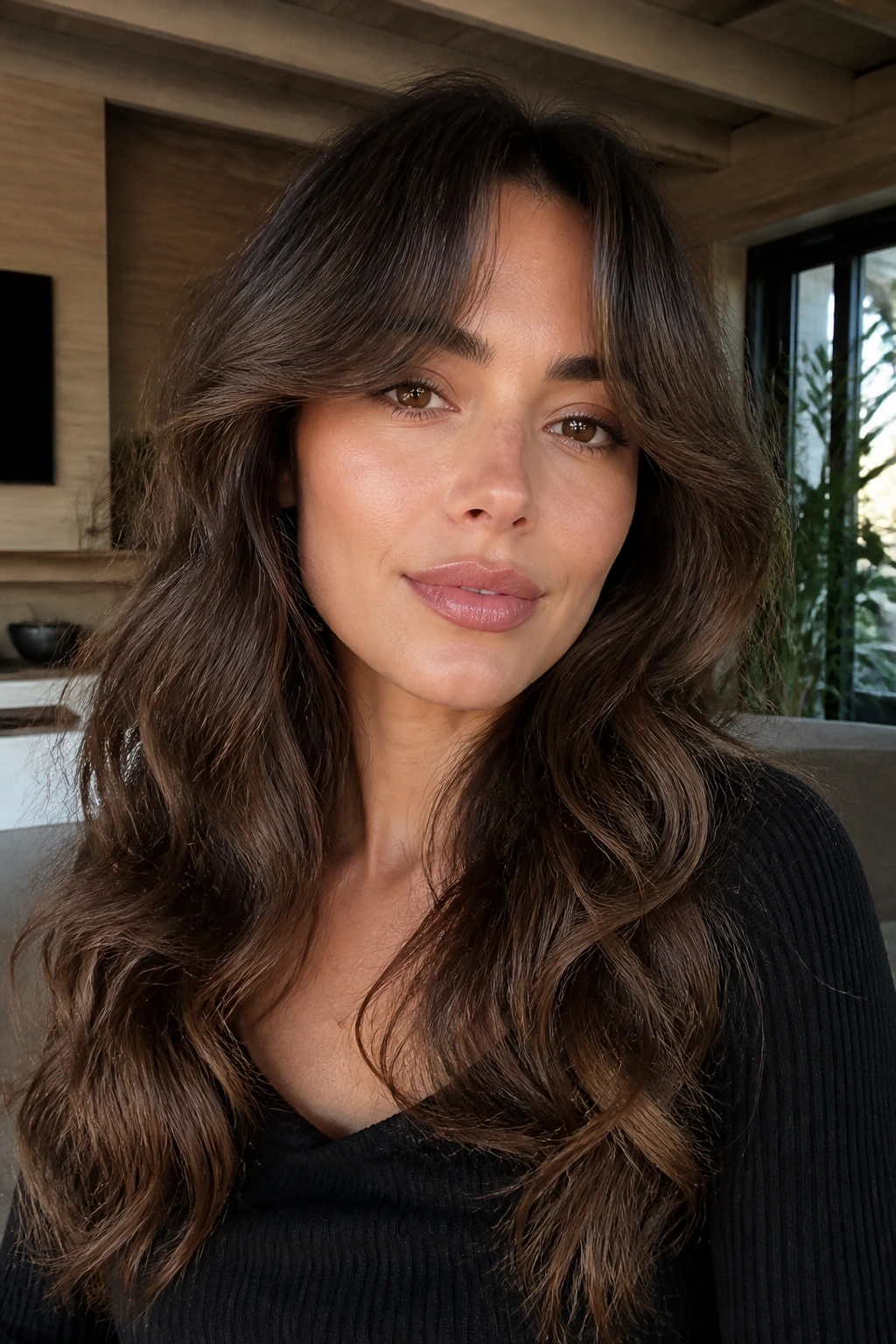
Brushed-out waves are a little old Hollywood, a little soft-focus, and very good if you want curtain bangs to blend into the rest of the hair rather than sit apart from it. You set the wave with a diffuser or rollers, let it cool, then brush lightly with a boar-bristle brush or paddle brush.
On type 2C hair, this style works best when the cut already has some layering. Without that, the brushed-out finish can turn blunt. With the right cut, it looks smooth at the top and airy at the ends.
One useful rule: brush after the hair is fully cool. Warm wave patterns collapse. They do not negotiate.
16. Ponytail with Curtain Bangs
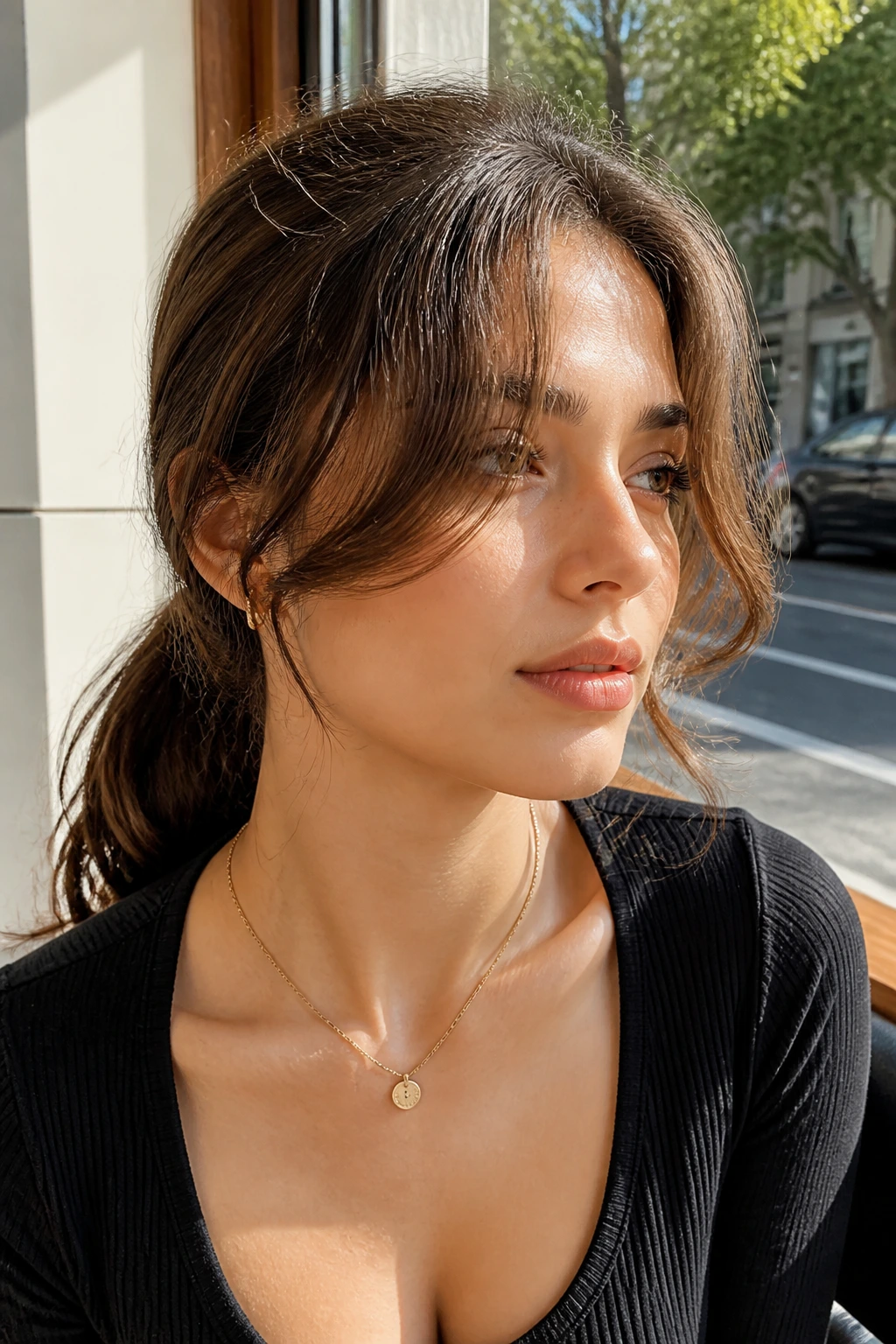
A ponytail can look plain on wavy hair unless the front pieces are doing something interesting. Curtain bangs solve that immediately. They soften the forehead, and the ponytail keeps the rest of the hair controlled without hiding the texture.
Low ponytails work best for this. High ponytails can pull the front too tight and make the bangs split strangely. A low pony at the nape lets a few wave bends spill out around the neck, which is where this style gets its charm.
Quick polish move
Wrap a small strand of hair around the elastic. It takes less than a minute and makes the whole thing look finished, even if the rest of the hair is dry shampoo and good intentions.
17. Half-Up Barrette Clip
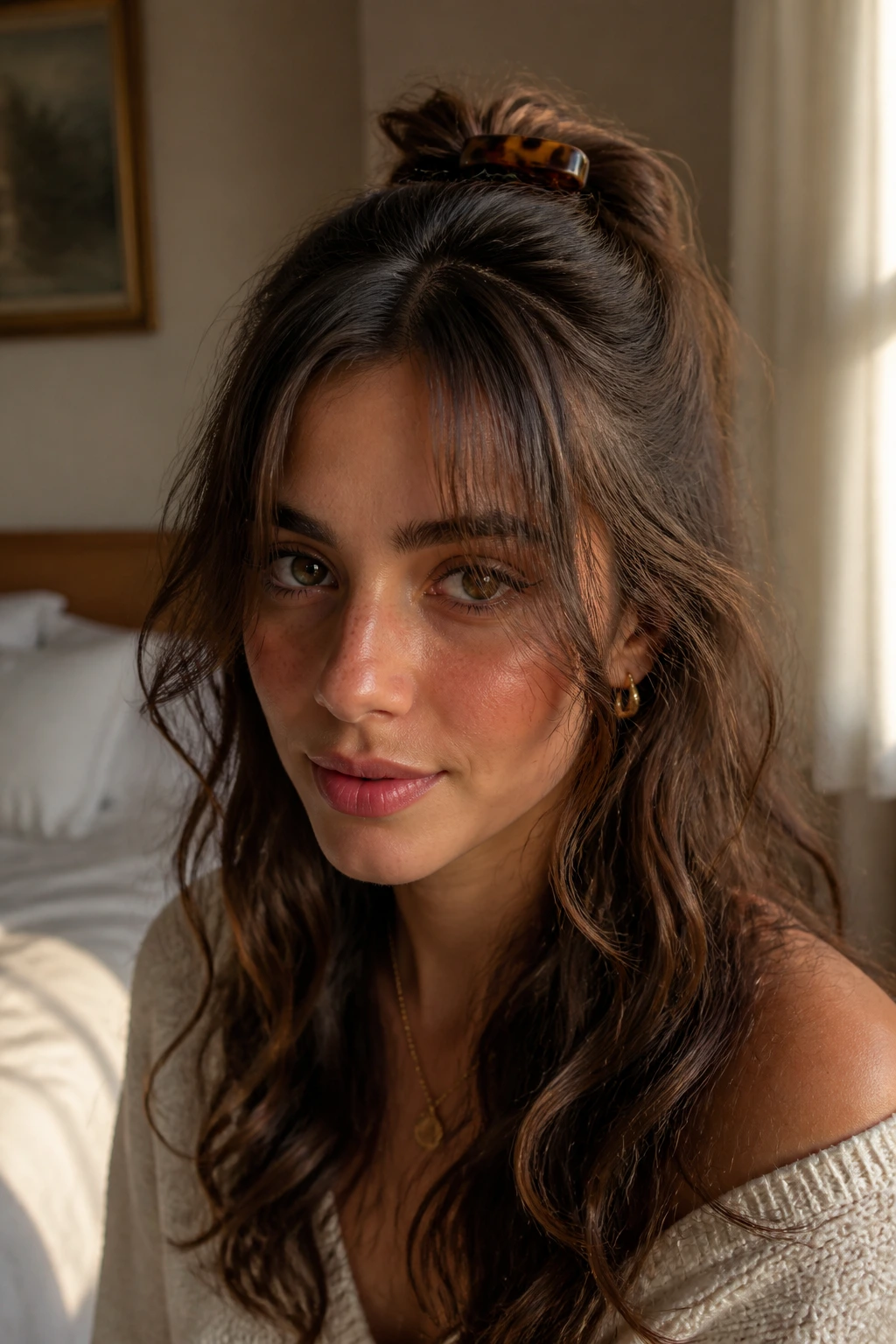
This is the version of a half-up style that looks neat without being rigid. Pull back the top section, clip it with a barrette, and leave the curtain bangs open in the front. The barrette keeps the top controlled while the wave still shows through underneath.
I like this on second- or third-day hair because the crown often needs the most help by then. The clip gives lift where the hair has gone sleepy. The bangs keep the front from looking scraped back. Easy. Effective. No drama.
Best for fine 2C hair: choose a smaller clip so the top section doesn’t look overpowered by the accessory.
18. Headband Tuck with Loose Fringe
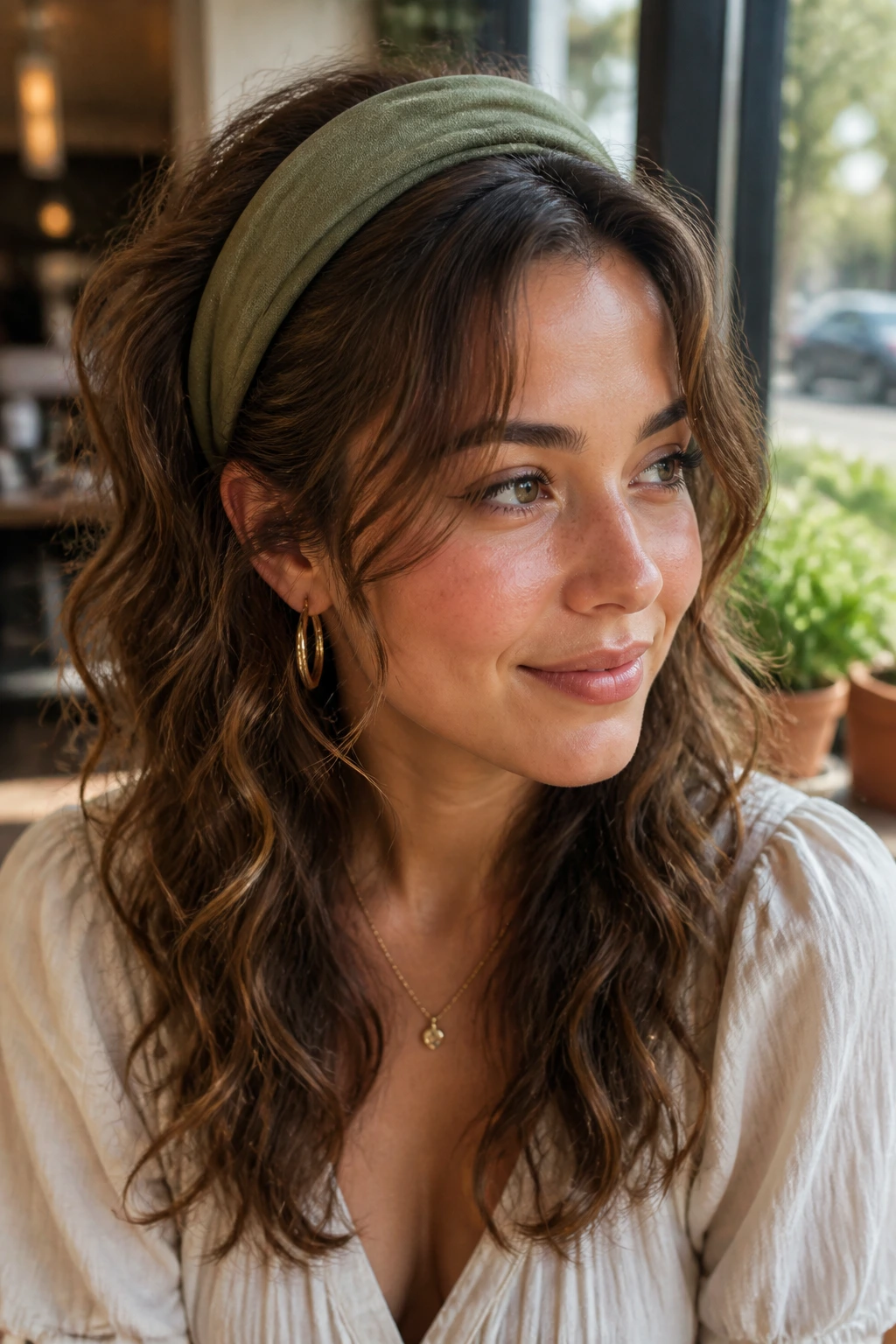
A headband tuck can go very wrong on wavy hair if the band is too tight. But when the band sits gently and the curtain bangs stay out front, it becomes one of the fastest ways to make 2C texture look intentional on a lazy morning.
The important part is placement. Push the band back just enough to lift the hairline, then pull a few pieces loose at the temples and around the bangs. The style should look like you meant to soften it up, not like you surrendered to gravity.
Best use case
Workdays, errands, post-gym hair, or any time the front just needs to stop touching your face for a while.
19. Twisted Halo Updo
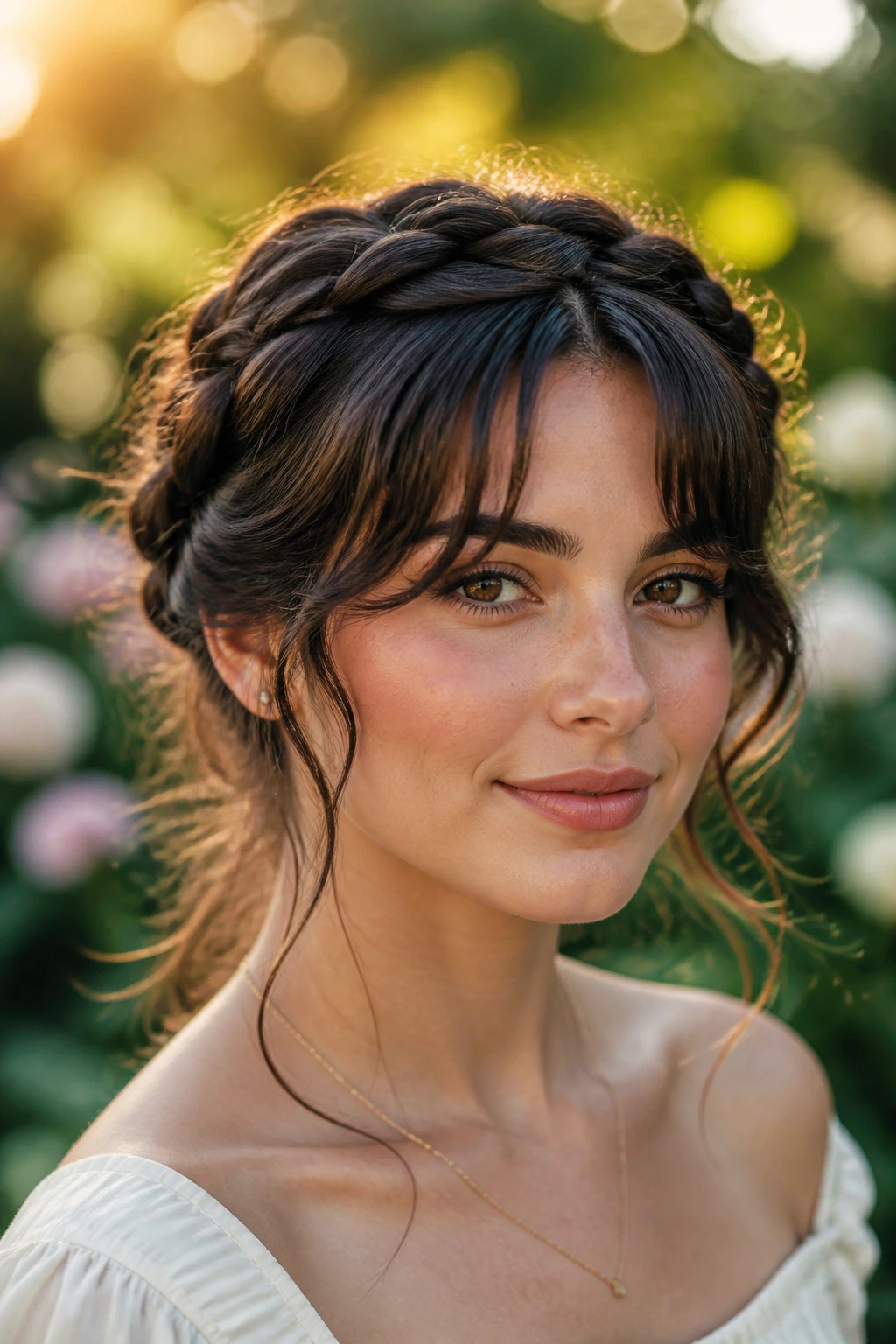
A twisted halo updo uses the wave pattern instead of hiding it. Twist each side back and pin it around the head, leaving the curtain bangs and a few loose tendrils around the front. It’s a softer version of a formal updo, and it plays well with textured hair.
The halo shape keeps the hair off the neck, which is useful if your 2C waves puff when they’re warm. The bangs keep the face from disappearing into the style. That contrast is the whole point.
Pinning note: use crisscrossed bobby pins, not one lonely pin in each twist. Wavy hair slips. Pins need backup.
20. Bubble Braid with Wavy Lengths
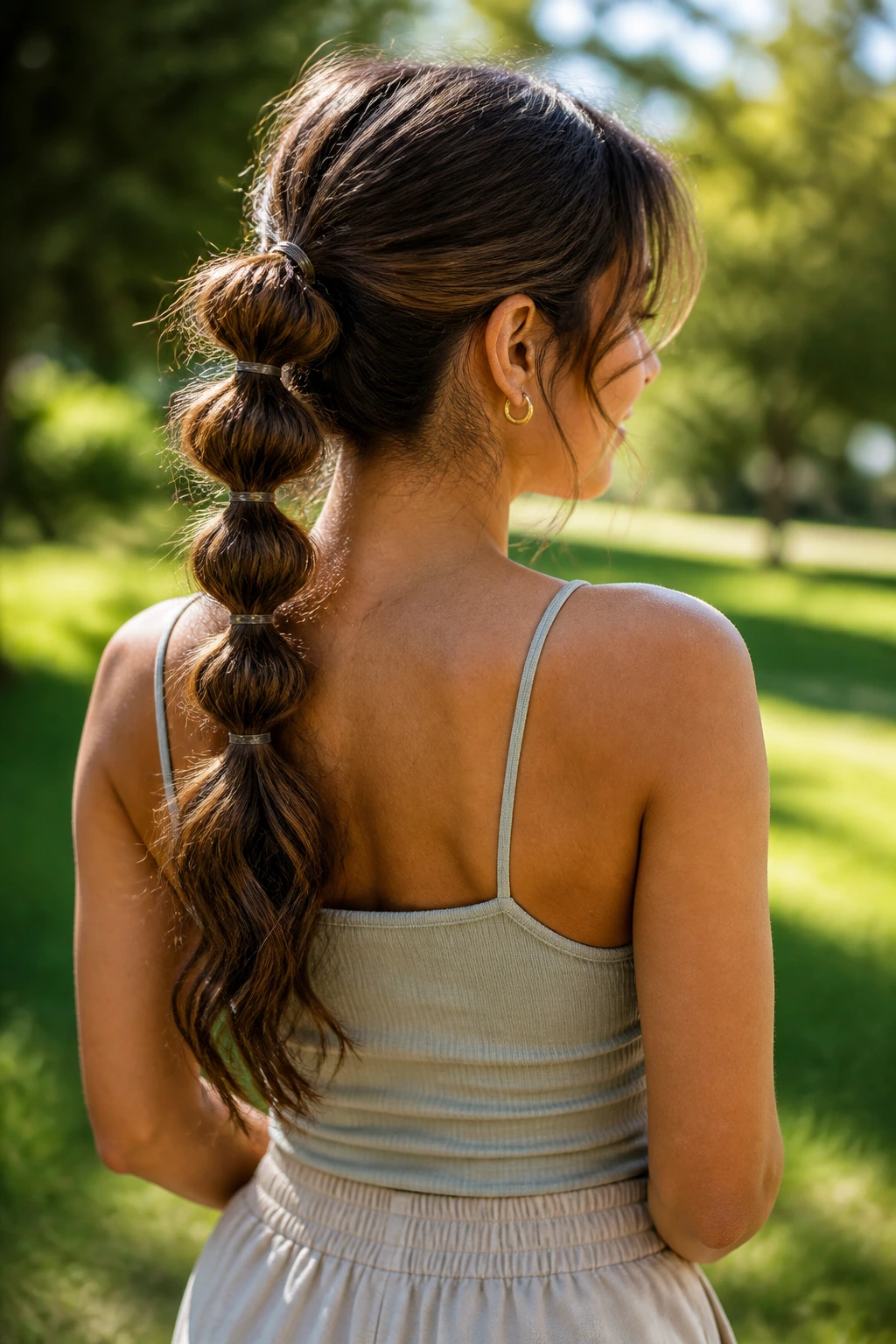
Bubble braids are more forgiving than traditional braids because they don’t depend on perfect sectioning. That makes them friendly to 2C hair, which often has pieces that want to bend differently. Curtain bangs at the front keep the style from looking too sporty.
This one looks best when the bubbles are spaced evenly down the ponytail and gently pulled wider after tying. The goal isn’t tight little balls. It’s rounded sections that let the wave texture stay part of the story.
Small styling tweak
Leave the last 2 to 3 inches of the ponytail free if your hair is long enough. That bit of looseness keeps the ends from looking clipped off.
21. Low Braided Ponytail
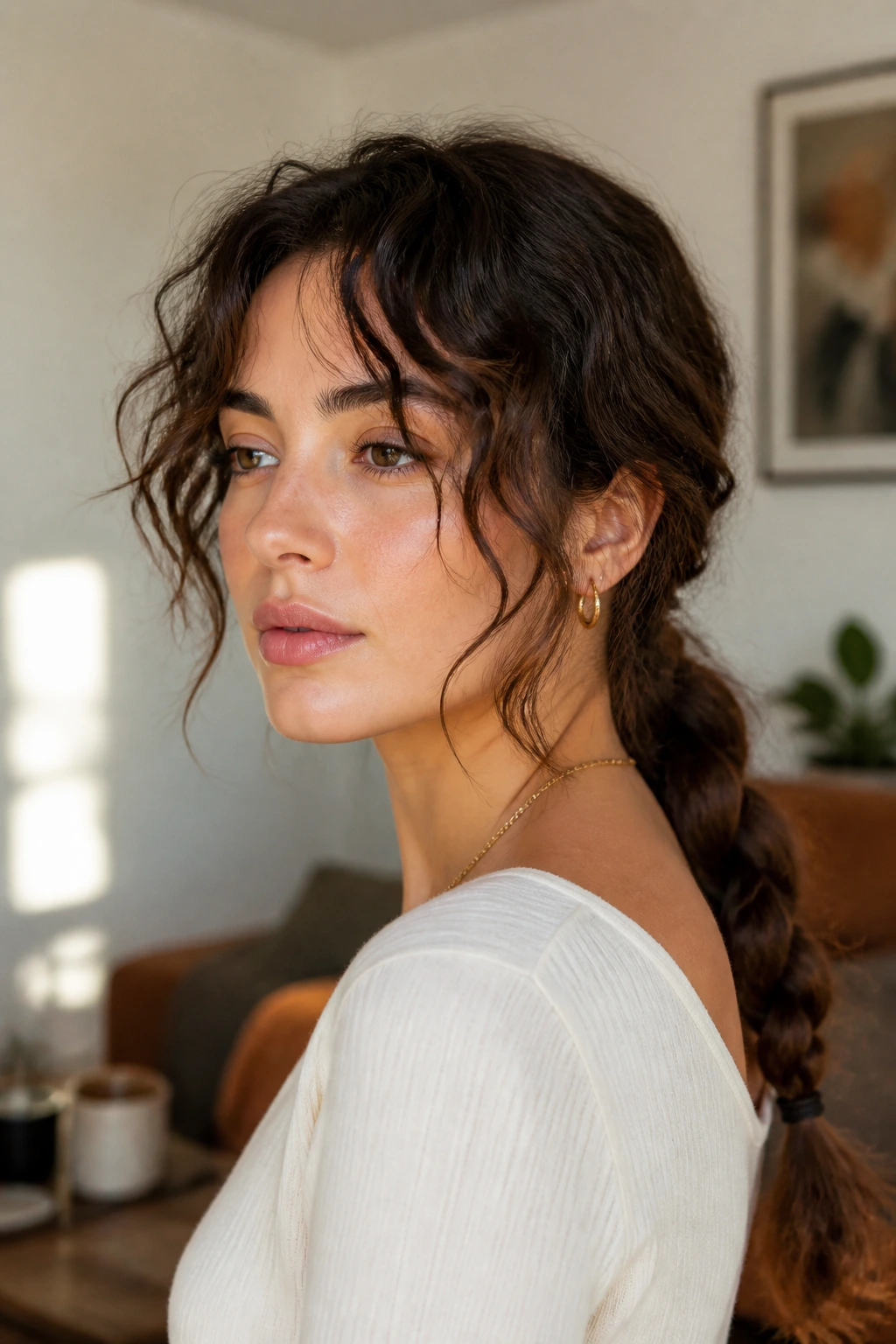
A low braided ponytail is a cleaner cousin of the bubble braid. It keeps the hair together, shows off the wave pattern, and lets the curtain bangs do the face-framing work up front. It’s tidy without being severe.
This works especially well when your ends get frizzy faster than your mids. The braid keeps the rougher parts contained, and the bangs carry the softer visual line. If you’ve got layers that keep escaping, a little wax on the fingertips helps tuck them into place.
Opinion: this style looks better a touch loose than perfectly snug. Tightness tends to fight 2C hair.
22. Slicked-Back Top with Curved Bangs
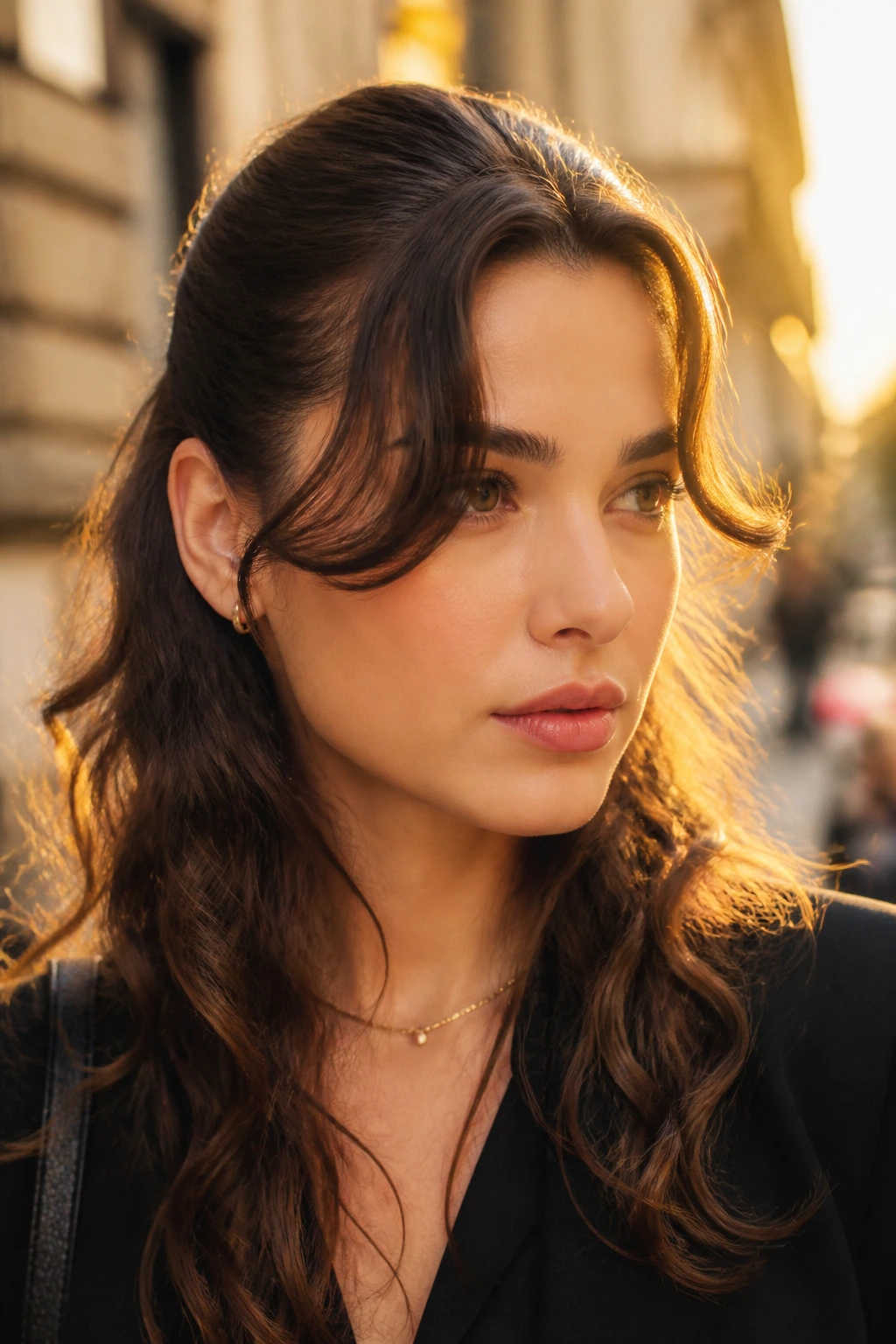
Slicked-back styles are not always friendly to wavy hair, but a soft version can be smart when the front wants to misbehave. Smooth the top section back with gel or cream, leave the curtain bangs curved and separated, and let the ends stay wavy. The contrast is the hook.
This is a good choice when humidity has turned the crown into a puffball but the lengths still look decent. You get control at the top and movement everywhere else. Just keep the slicked area close to the head and not greasy-looking. That’s a fine line.
What makes it work
The curtain bangs need to stay soft. If you pull them too flat, the style loses the whole point. Aim for curved, not glued.
23. Soft Pin-Up with Gently Flipped Ends
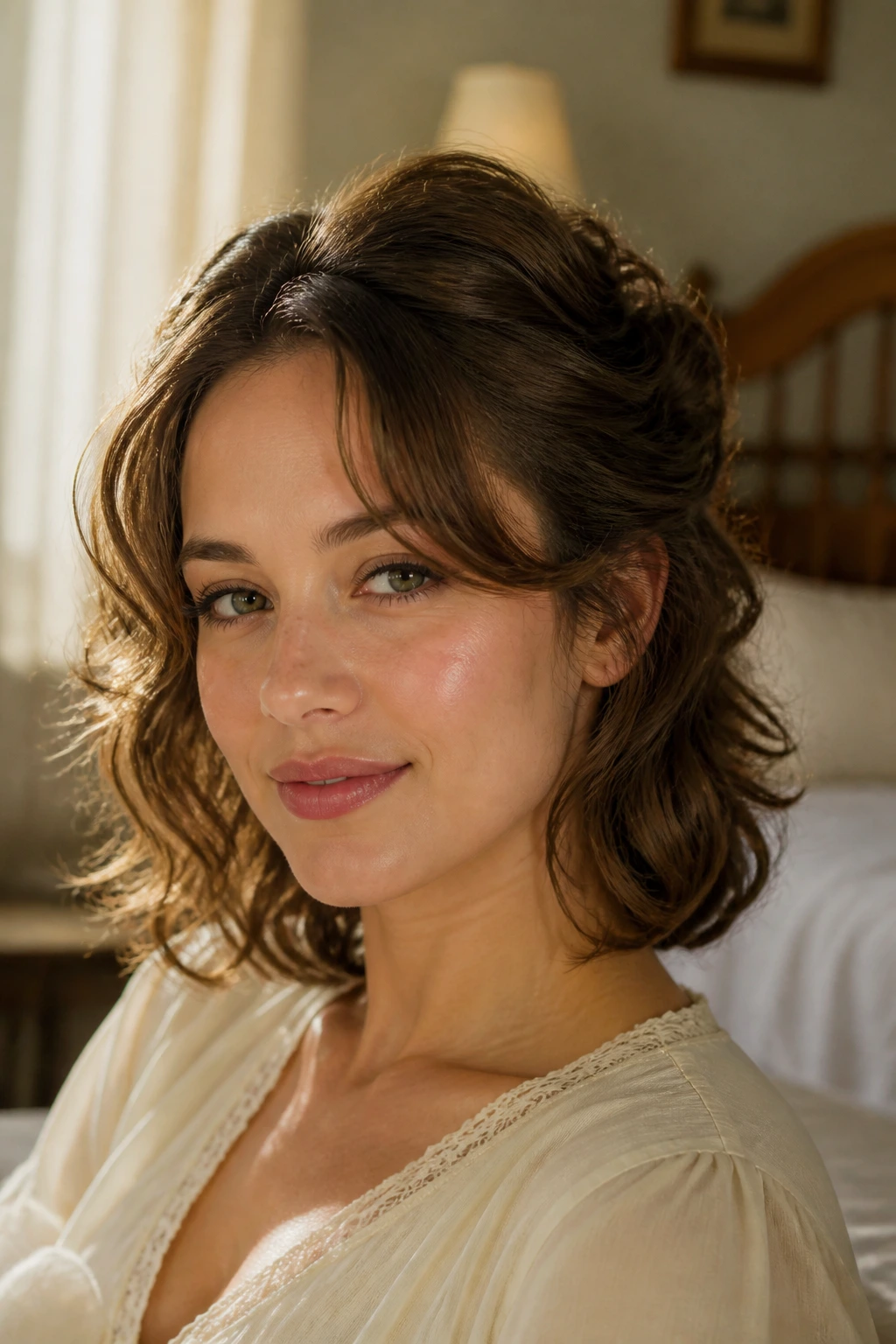
A soft pin-up gives 2C hair a little polish without forcing it into a hard set. Roll or pin the lengths into a loose shape, let the curtain bangs fall open, and flip the ends outward or inward depending on how much movement you want. It feels a bit retro without turning costume-y.
The best part is that the style keeps the face open. Curtain bangs help the front stay gentle even when the back is pinned up. If your wave pattern is loose at the roots and stronger toward the ends, this style lets both show up without competing.
Style cue: pin the hair while it’s slightly damp if you want the shape to hold longer. Fully dry hair is better if you want less structure and more softness.
24. Retro ’70s Blowout with Curtain Bangs
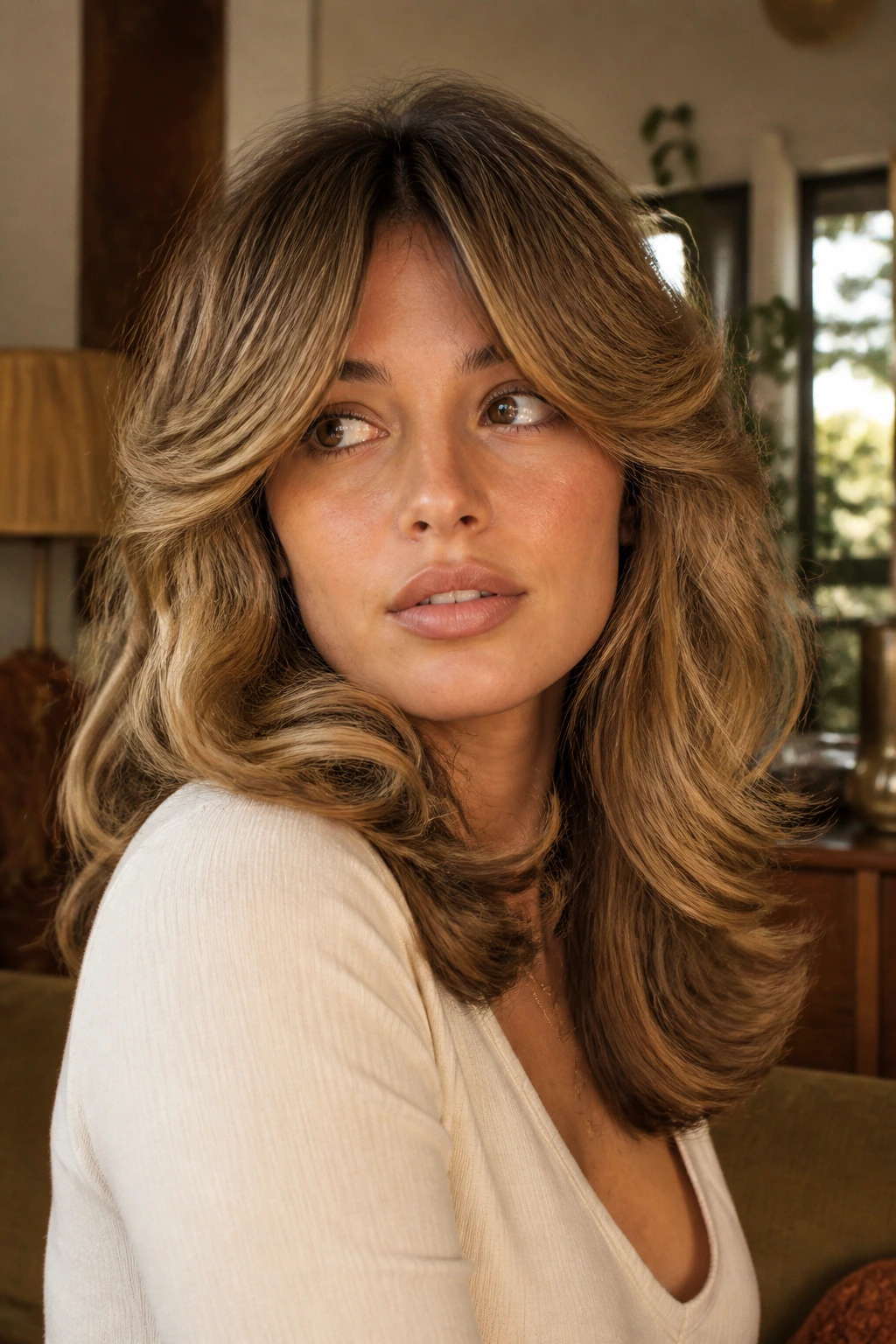
If you like the look of fluffy, turned-under layers and a fringe that opens at the cheekbones, this is the one. The retro blowout works beautifully on 2C waves because the natural bend gives the style some help before you even pick up a brush. Curtain bangs are basically the whole personality here.
You’ll want a round brush, a dryer with a concentrator nozzle, and enough patience to set the bang direction before drying the rest. Curl the ends away from the face or under, depending on the mood. The fringe should sweep with a soft S-shape, not sit stiff.
Who should try it
Anyone whose waves are thick enough to hold shape, or anyone who wants a fuller look without going to a curling iron for every section.
25. Short Grow-Out Lob with Feathered Fringe
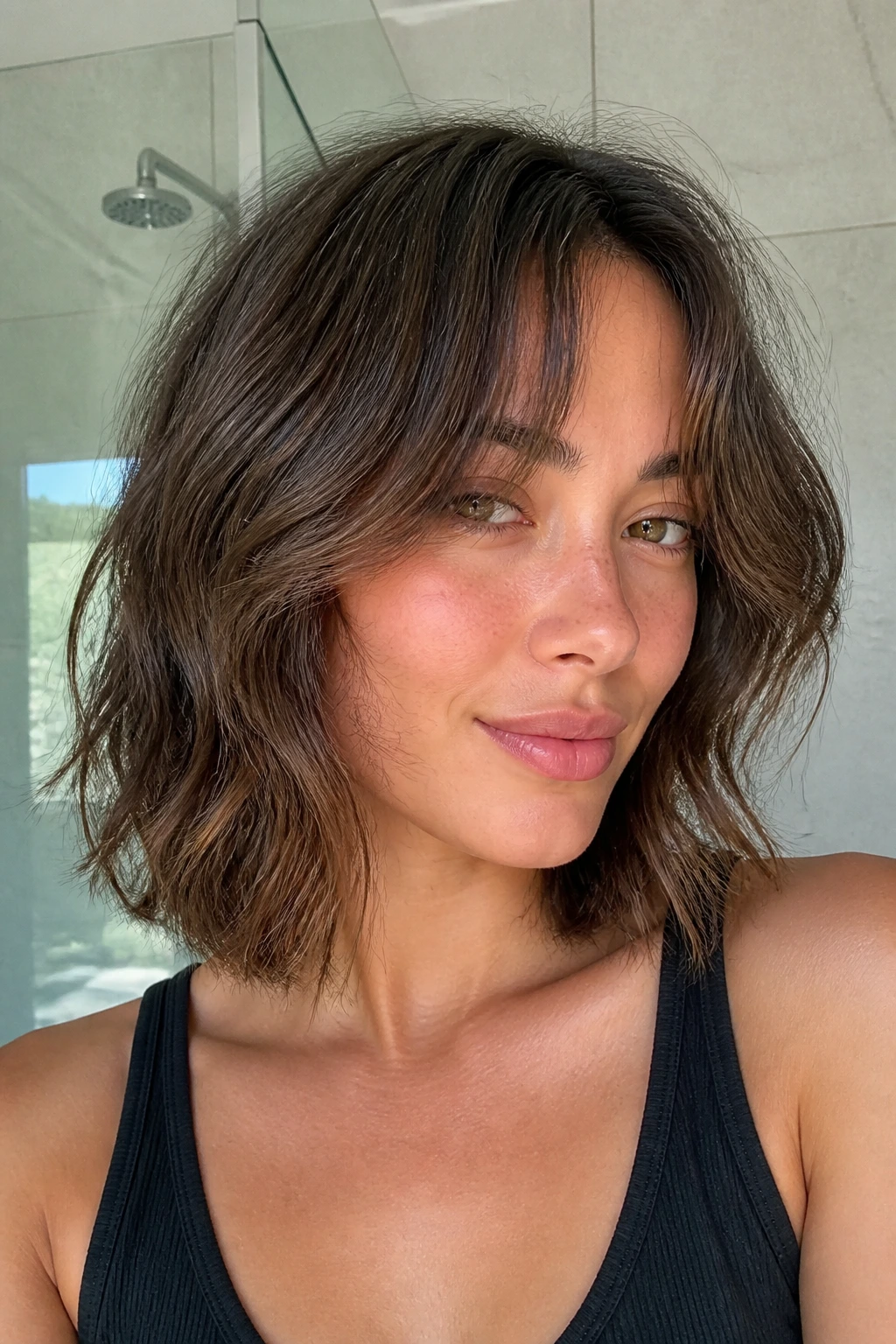
This is the style I think gets overlooked too often. A lob that sits just above the shoulders with feathered curtain bangs is one of the easiest places for 2C hair to live. The length is short enough to stay lively, long enough to pull back when needed, and the fringe helps the grow-out stage look intentional.
The feathered front pieces are the real workhorses here. They hide the awkward in-between stage when bangs are too long to sit the same way every day but not long enough to tuck behind the ears. That weird phase? This cut makes it less weird.
Small edge: keep the ends softly beveled, not blunt. Wavy hair in a short lob can look boxy fast if the perimeter is too straight.
How to Brief Your Stylist So the Fringe Lands in the Right Place
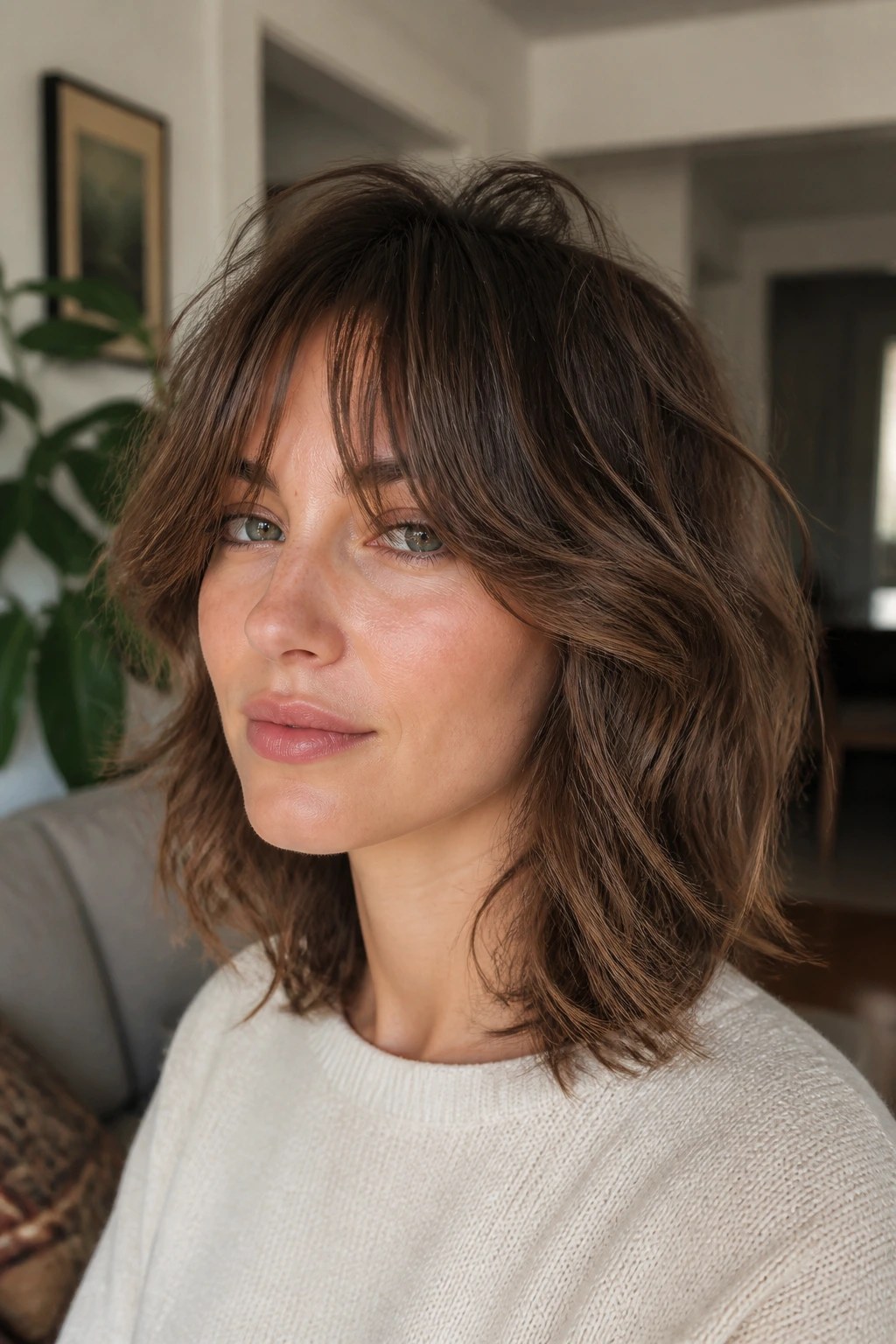
Type 2C hair needs a haircut conversation, not a five-second shrug in the salon chair. The goal is to leave with curtain bangs that still look like curtain bangs after they dry, not a short fringe that hops away from your forehead and leaves you staring at it in the mirror. Bring photos, yes, but bring dry-hair photos. Wet hair lies.
Tell your stylist where your wave shrinks the most. Some people get a bigger jump at the temple pieces, others at the center fringe, and that difference changes the cut. If your hair is dense, ask for movement removed from the inside rather than razor-thinning the surface. Razor work can make the front frizzier than you want if it’s done too aggressively.
A good script is plain: “I want the curtain bangs long enough to hit cheekbone level when dry, with soft layers that connect into the front.” That’s enough. You do not need salon poetry. You need a workable shape. And if your stylist wants to cut the fringe shorter because it looks “more polished” wet, push back. Wet polish is not the same thing as dry reality.
Tools That Make 2C Waves Easier to Style
- Diffuse attachment: Useful for setting the wave without blasting the fringe apart; low speed and medium heat usually behave best.
- Microfiber towel or cotton T-shirt: Cuts down on rough drying and keeps the front from frizzing before you’ve even started.
- Wide-tooth comb: Better than a brush for detangling damp waves without stretching them out of shape.
- Duckbill or sectioning clips: Handy for pinning curtain bangs away from the face while they cool in place.
- Small round brush: The fastest way to bend the fringe under or away from the face without turning the whole cut into a blowout project.
- Light mousse or foam: Adds hold at the roots and keeps 2C waves from going flat after an hour.
- Light gel or cream-gel: Good if you want definition without a crispy finish.
- Silk or satin scrunchies: Safer for half-ups, ponytails, and overnight pineapple styles.
- Bobby pins and a claw clip: The everyday workhorses. Cheap. Useful. Not glamorous, which is fine.
Styling Moves That Keep the Fringe from Splitting
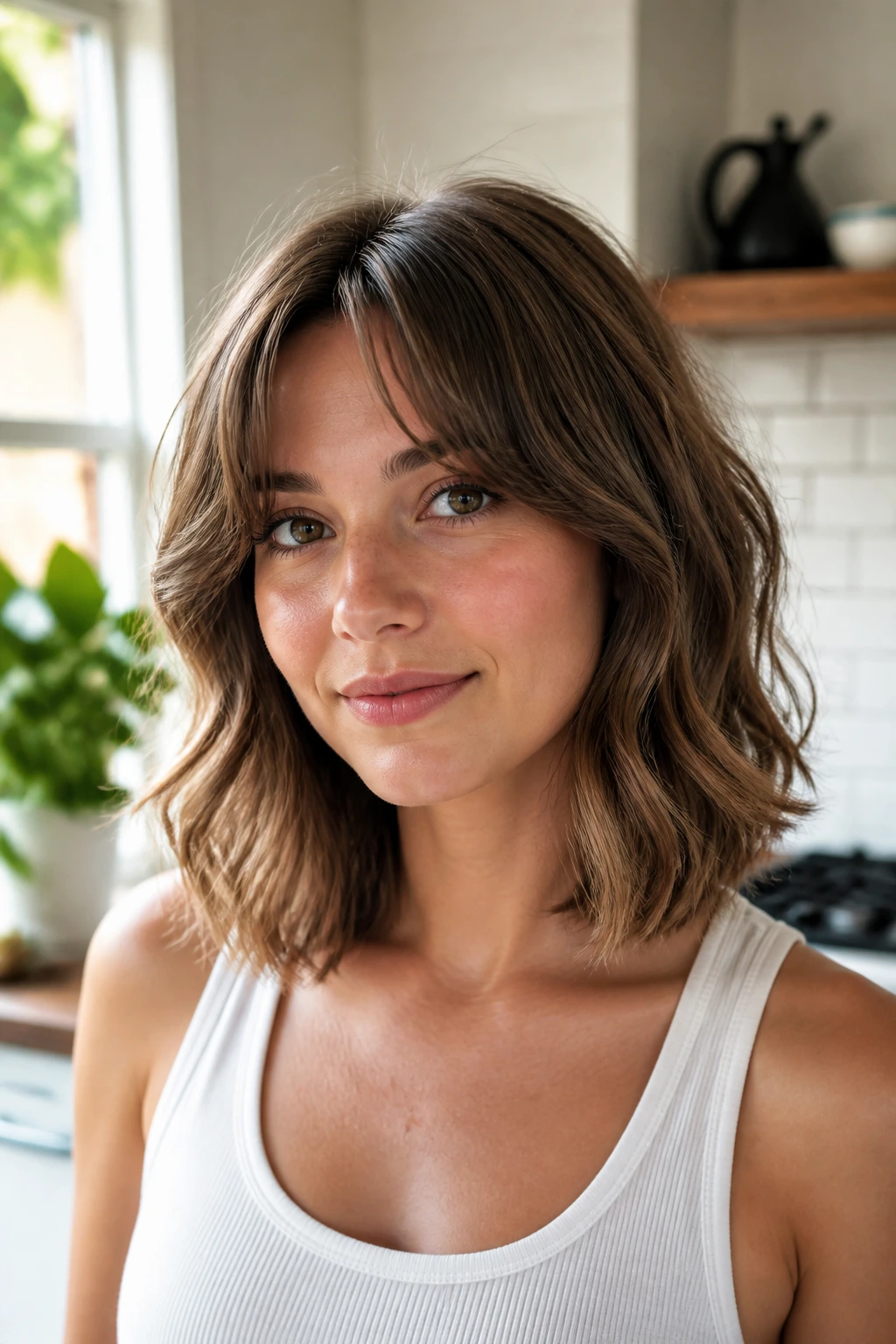
Dry the bangs first: Curtain bangs on 2C hair usually behave better if you dry and shape them before the rest of the hair gets too fluffy. Clip them to each side, hit them with the dryer for a few minutes, then let them cool. That small head start matters.
Use less product at the front: The fringe area gets greasy and heavy fast. Put your mousse and cream in the mids and ends, then use only the leftover residue on your fingers for the bangs. Anything thicker tends to make them piece out in weird chunks.
Keep the part flexible: A hard, permanent center part is not always the friend of wavy curtain bangs. If the front keeps splitting in a stubborn way, shift the part a quarter inch off-center and let the bangs fall from there. It changes the whole mood.
Let things cool before touching them: Warm hair is floppy hair. If you mess with the fringe while it’s still hot from the diffuser or brush, it will collapse into exactly the shape you didn’t want. Cool air, then hands off for a minute.
Common Mistakes That Flatten 2C Texture
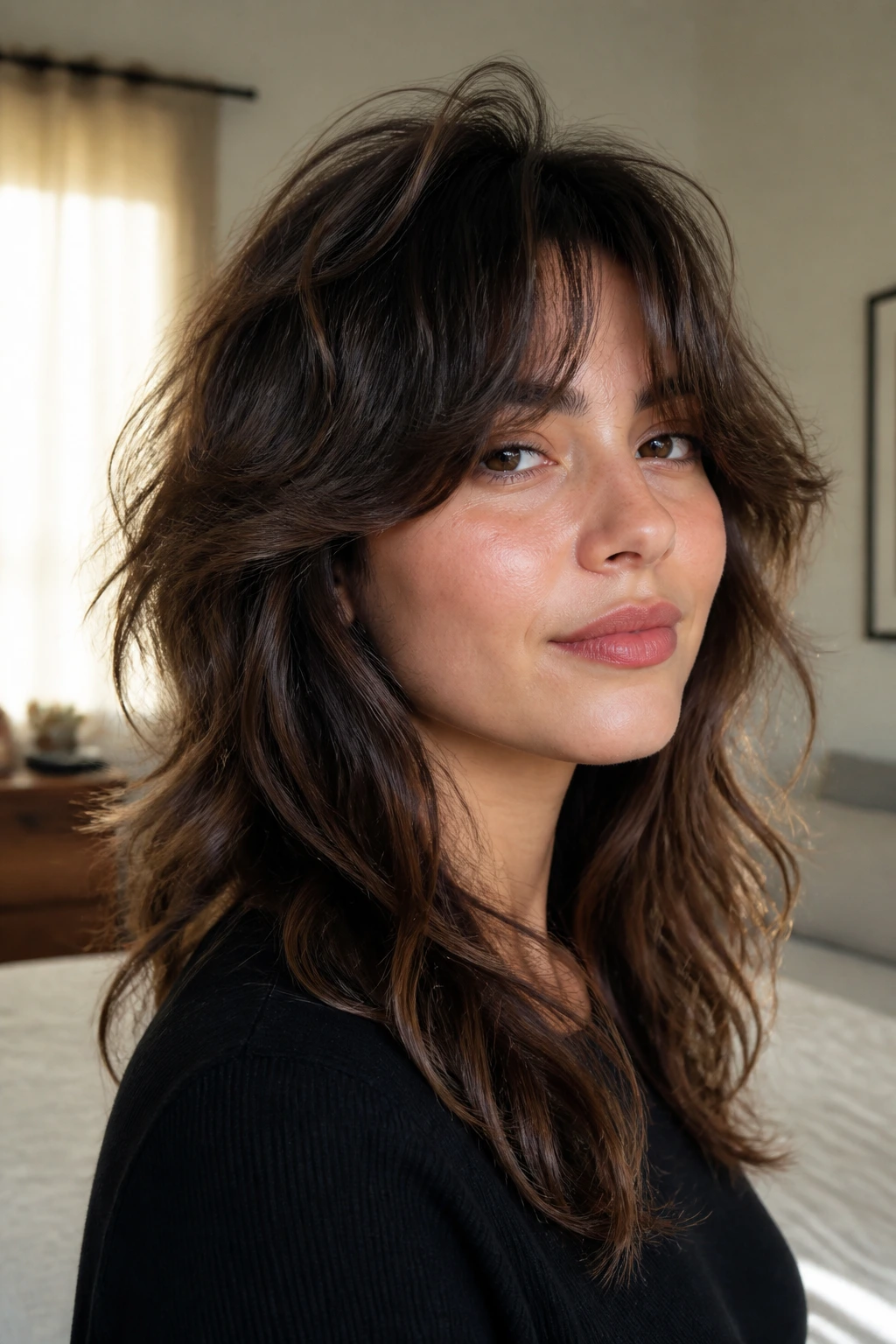
- Cutting the bangs too short: This is the classic regret. 2C waves shrink, and the fringe can jump a full half-inch or more after drying. If you think the length is “maybe too long,” that is probably the right length.
- Loading the front with heavy cream: Curtain bangs need movement, not weight. Thick creams and oils make them separate, string out, or sit flat against the forehead.
- Brushing waves dry from root to tip: That turns defined bend into a frizz halo fast. Detangle damp hair, and only brush dry waves if you’re intentionally going for a brushed-out finish.
- Ignoring the crown: If the top is flat, curtain bangs can look disconnected. A few root clips or a touch of mousse at the roots keeps the front from sinking.
- Trying to force symmetry: Wavy hair is rarely perfectly even on both sides. If one curtain piece sits a little higher, adjust the part or the dry direction instead of fighting the whole cut.
Variations for Fine, Thick, Short, Long, and High-Frizz Hair
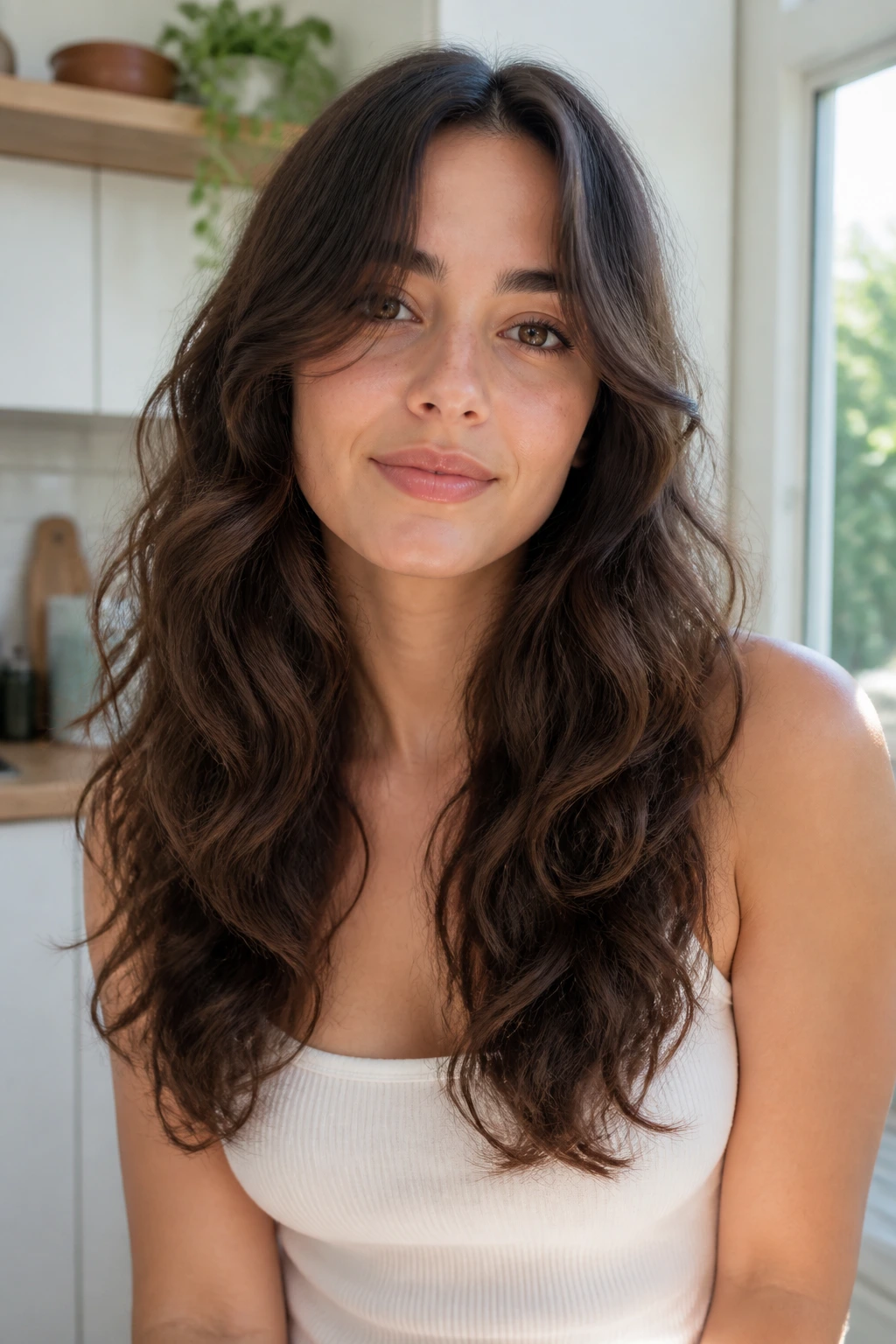
Fine-Hair Lift Version: Use shorter layers, but keep the curtain bangs light and a touch longer than you expect. A mousse at the roots and a tiny round brush at the front will give you lift without sacrificing the wave.
Thick-Hair Weightless Version: Ask for interior shaping and longer curtain bangs that can drape instead of puff. This keeps the front from becoming a wall of hair. You want swing, not bulk.
Short-Hair Grow-Out Version: A lob or shag with face-framing bangs makes the awkward stage look planned. It’s the easiest way to keep 2C hair looking styled while the cut gets longer.
Heat-Free Version: Put the fringe in loose twists or clips while damp, then let the rest air-dry with a foam or mousse. This gives you bend and direction without a hot tool.
Humidity-Heavy Version: Swap rich creams for lighter gels and keep a small anti-frizz serum on the ends only. Heavy products tend to make wavy curtain bangs droop when the air gets sticky.
Between-Wash Care for Curtain Bangs and Wavy Hair
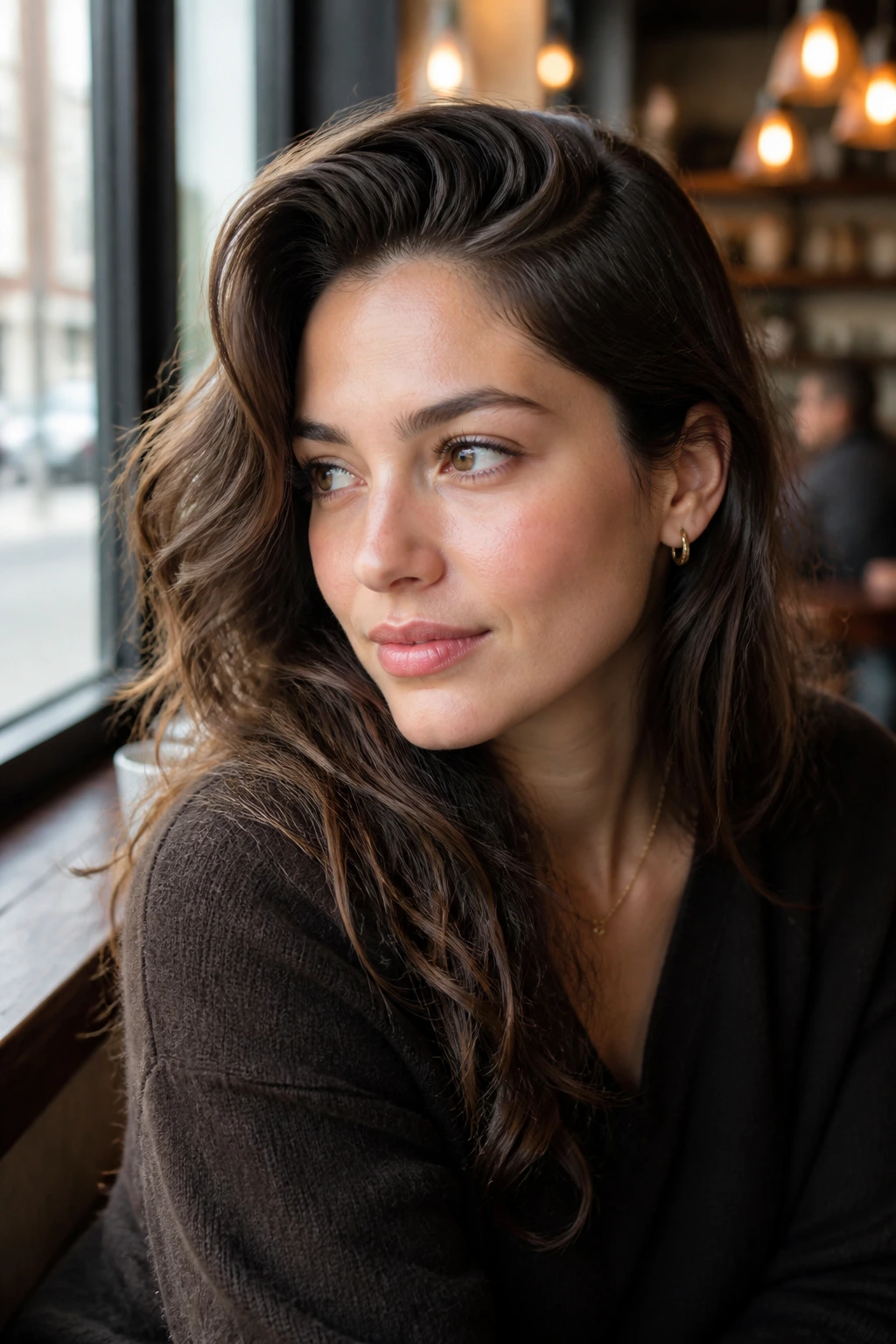
Curtain bangs age faster than the rest of the haircut. That’s the annoying truth. They sit against your forehead, pick up oil, and lose shape sooner, so they usually need a midweek refresh even when the rest of your hair still looks fine. Dry shampoo at the roots helps, but use it sparingly on the fringe. Too much and the hair turns chalky.
A quick reset usually works better than a full wash. Mist the bangs lightly with water, pinch them into their center split, and blow-dry for 30 to 60 seconds with a round brush or your fingers. If the waves through the lengths have gone sleepy, scrunch in a little water and foam on the mids, then diffuse for a few minutes. Most 2C hair can be revived without starting over.
Plan on trimming curtain bangs every 4 to 6 weeks if you like the shape sharp, or every 6 to 8 weeks if you’re happier with a softer grow-out. Layers can usually wait a bit longer, but the fringe needs more frequent attention because it changes the silhouette so fast. And if you wear the style a lot, sleep on a silk pillowcase or gather the hair loosely in a pineapple. It cuts down on crown flattening and morning frizz. Not magic. Just helpful.
Frequently Asked Questions
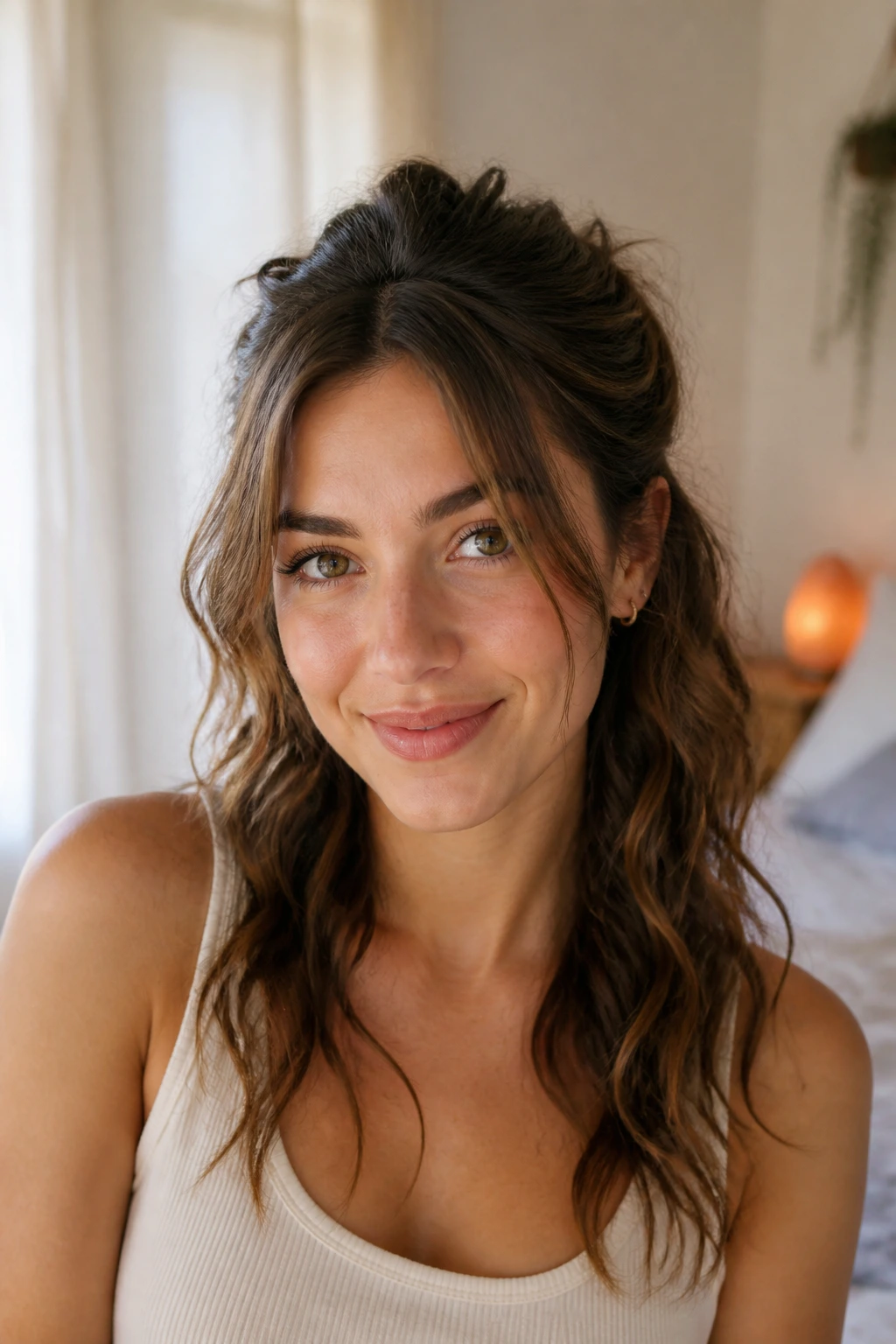
Do curtain bangs work on every type 2C wave?
They work on most 2C waves, but the length and density need to be adjusted. Fine hair usually likes lighter fringe and longer layers, while thick hair needs more internal shaping so the front doesn’t puff out.
How short should curtain bangs be on wavy hair?
Longer than you think. Cheekbone to lip length is the safest starting point for 2C hair because the wave will shrink upward once dry. If you want a shorter look later, that’s easy. Growing back a fringe that was cut too short is less fun.
Can I air-dry curtain bangs and still make them look good?
Yes, but you’ll probably need to guide them. Clip the bangs away from the face for the first part of drying, then separate them with your fingers once they’re mostly dry. A little mousse or foam helps the bend stay in place.
Should curtain bangs be cut dry or wet?
Dry cutting usually gives a better read on how 2C hair moves, though some stylists use a hybrid approach. The bigger issue is whether the person cutting them understands how much your wave shrinks. Dry or wet, the cut has to account for that.
What if my bangs keep splitting in the middle?
Shift the part slightly off-center, clip the fringe while it cools, and use less product at the front. A stubborn split often means the bangs were cut too bluntly or too short for the wave pattern, not that you’re styling them wrong.
Do these hairstyles work for fine hair?
Yes, but the cut has to stay light. Fine 2C hair looks better with long, airy curtain bangs and face-framing layers than with heavy stacking around the cheeks. Too much layering can make it look sparse at the ends.
How do I keep curtain bangs from getting oily so fast?
Use the smallest amount of product near the forehead and keep dry shampoo for the roots only. If you touch the bangs all day, they’ll get greasy faster, so try pinning them back at home and releasing them when you’re ready to wear them down.
Can I wear curtain bangs with a ponytail or bun?
Absolutely, and that’s part of the appeal. Curtain bangs make ponytails, buns, and clips look less severe because they keep some movement around the face. A low pony or soft bun usually looks better than something pulled tight to the scalp.
The Fringe That Moves With You
Curtain bangs on 2C hair work best when they’re treated like part of the texture, not a separate job on top of it. That means longer lengths, softer layers, and styling that respects the bend your hair already wants to make. The styles above all do the same quiet, useful thing: they keep the front from feeling heavy while still letting the wave show up.
The nicest part is the range. You can go shaggy, polished, loose, clipped up, braided, blown out, or barely styled at all, and the fringe still gives the haircut shape. Pick the version that matches how much time you actually want to spend in front of the mirror. Then let the waves do what they do best.