



Thin hair with caramel highlights can look airy and expensive, or flat and stripey, and the cut decides which one you get. That’s the part people miss. Caramel gives fine strands warmth and depth, but it only earns its keep when the shape underneath has enough structure to hold the color.
Blunt edges, soft bends, face-framing light, and a smart root shadow do more for thin hair than heavy styling ever will. I’ve seen too many people ask for “more layers” when what they really need is a cleaner outline and a brighter spot around the face. The right caramel placement can make the hair read thicker from six feet away, which is the whole trick.
What follows leans hard into that idea: shape first, color second, and not a useless amount of fluff in between. Some of these looks are polished and sharp. Some are soft and lived-in. All of them give thin hair a little more presence without making it feel overworked.
Why Thin Hair with Caramel Highlights Looks Fuller Without Heavy Styling
Caramel adds shadow and light in the same haircut. That matters because thin hair often looks flat when every strand is the same tone. A warm caramel ribbon, especially one placed near the part or around the cheekbones, breaks up the sheet-like look and gives the eye something to track.
Blunt lines do more than layers on fine hair. A clean bob edge or a solid perimeter keeps the ends from disappearing into wisps. Then the highlights sit on top of that shape and read as depth, not just color.
The best placement sits where people look first. Around the face, at the crown, and through the top third of the hair, caramel catches light fast. Underlayers can stay a shade deeper so the hair doesn’t look see-through from every angle.
Root shadow helps more than people expect. It softens the transition at the scalp, which is useful when the part line is a little wide or the hair settles close to the head. On thin hair, that softer fade can be worth more than an extra round of foils.
Fine hair and thin hair are not the same problem. Fine hair means the strand itself is skinny; thin hair means there may simply be fewer strands. A good cut for one often helps the other, but the way you layer and lighten it should be different.
1. Blunt Chin-Length Bob with Caramel Ribbons
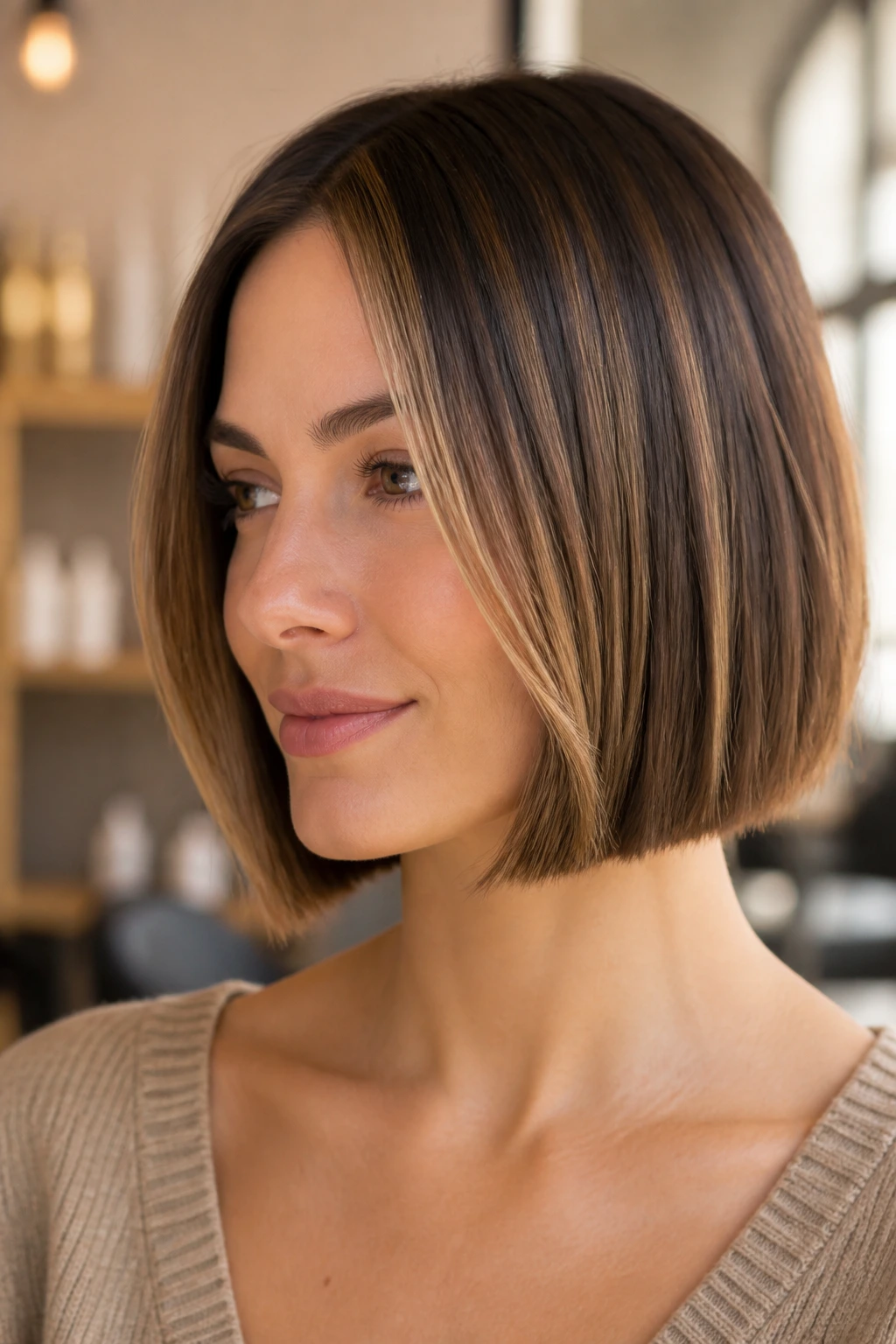
A chin-length bob is the first cut I’d hand to someone whose hair keeps collapsing by lunchtime. The blunt edge gives thin hair a real perimeter, and the caramel ribbons can sit just inside the outline so the cut feels fuller instead of hollow. It’s clean. It’s direct. It doesn’t beg for volume products to do all the work.
Why It Works
The chin line keeps the hair visually dense because every strand stops at the same place. Add a few caramel ribbons around the face and top layers, and the shape starts to look thicker even when the actual amount of hair hasn’t changed.
A Few Things to Ask For
- A blunt perimeter at chin length, not a razor-heavy finish.
- Caramel babylights that begin a little below the root.
- A soft bend at the ends, not a curled-under helmet.
My tip: keep the highlights a shade deeper than honey blonde. Thin hair looks richer when the caramel is warm and dimensional, not pale and washed out.
2. French Bob with Airy Fringe
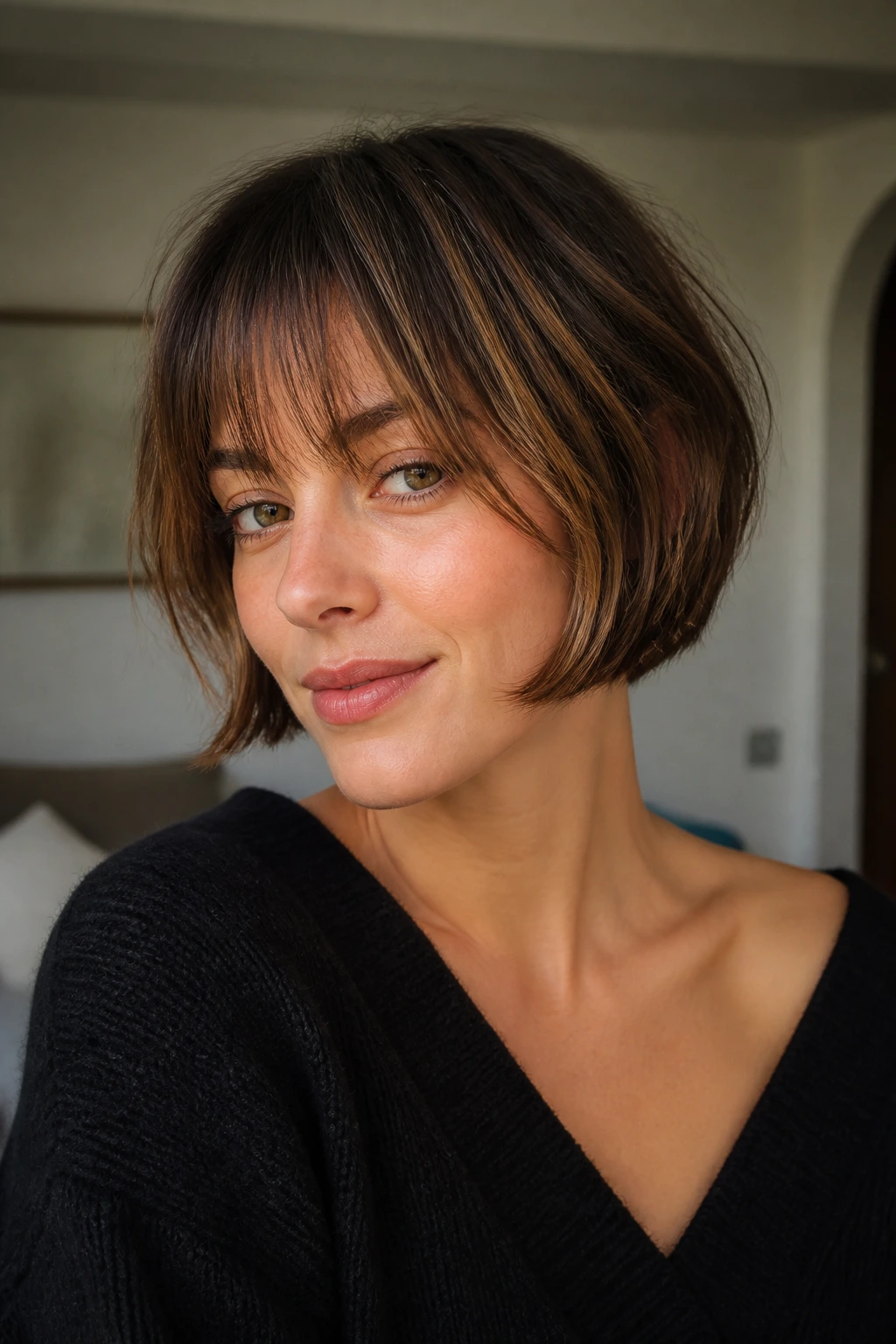
A French bob gives thin hair a short, chic shape without relying on bulk, and the airy fringe keeps the forehead from looking too bare. The caramel highlight placement should be delicate here—think tiny ribbons through the fringe and a few brighter pieces at the cheekbone line. No chunky stripes. Please.
What Makes It Different
This cut works because the hair stays short enough to hold a line, but not so blunt that it feels severe. The fringe softens the forehead, while the caramel pieces add motion right where the eye lands first. A little texture at the ends keeps the whole thing from reading too tidy.
How to Wear It
If your hair dries straight, use a round brush just on the fringe and leave the rest with a slight bend. If it’s naturally wavy, scrunch in a light mousse and let the ends stay soft. The color should feel like a glow, not a map.
3. Collarbone Lob with Invisible Layers
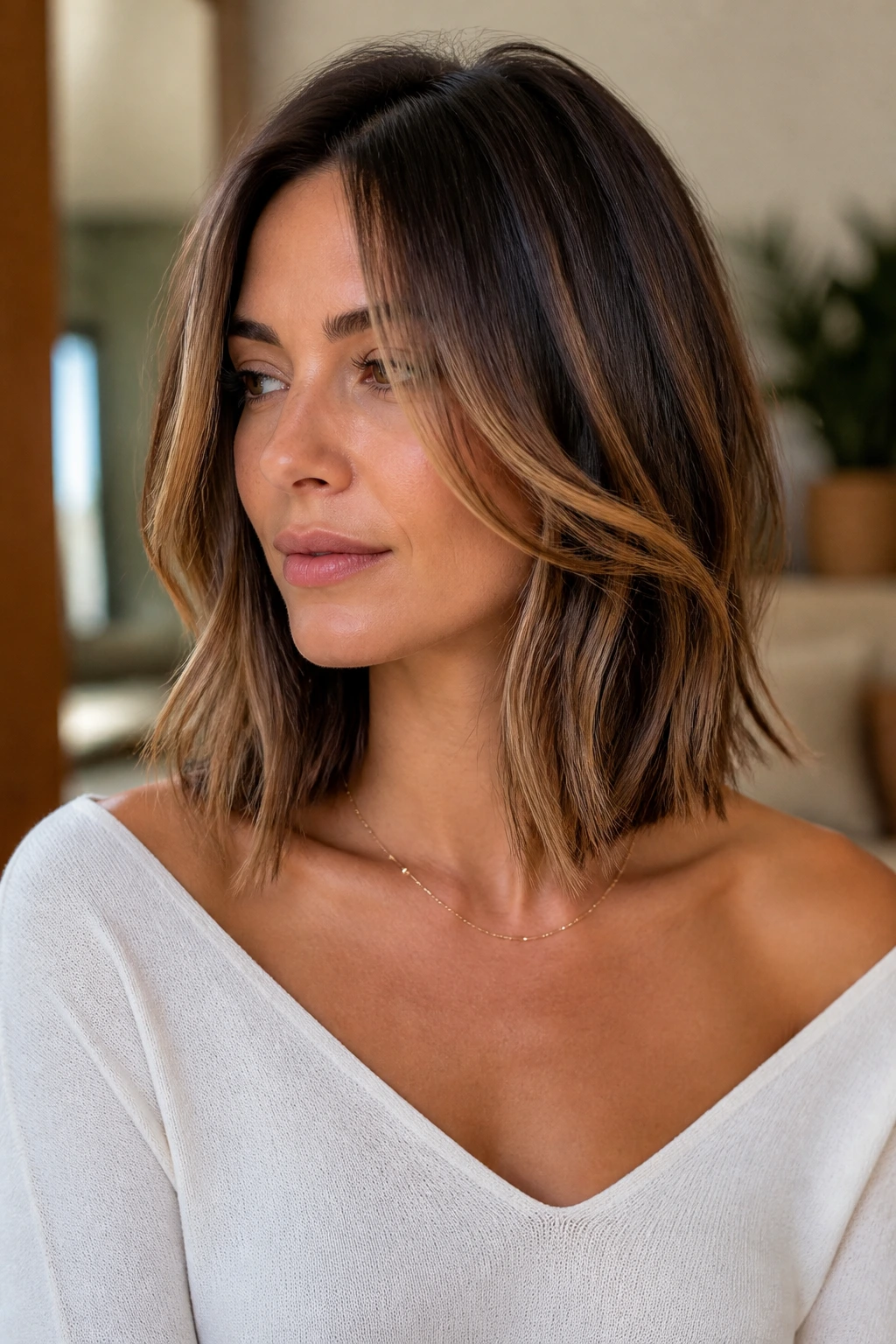
Why do stylists keep coming back to the collarbone lob? Because it gives thin hair enough length to swing, but not so much weight that it drags flat against the head. Invisible layers keep the interior moving without chopping away the outline, and that’s the sweet spot for caramel highlights.
The highlights here should be subtle and placed with a light hand. A few caramel slices around the face, then thinner pieces through the top layer, make the hair look sunlit without making the ends look sparse. The goal is movement, not a choppy texture festival.
How to Style It
Blow-dry the roots up and away from the scalp with a medium round brush. Then bend only the middle lengths, leaving the ends straighter so the cut stays clean. That one detail keeps the lob from turning fluffy and thin at the same time.
4. Side-Part Pixie with Caramel Crown
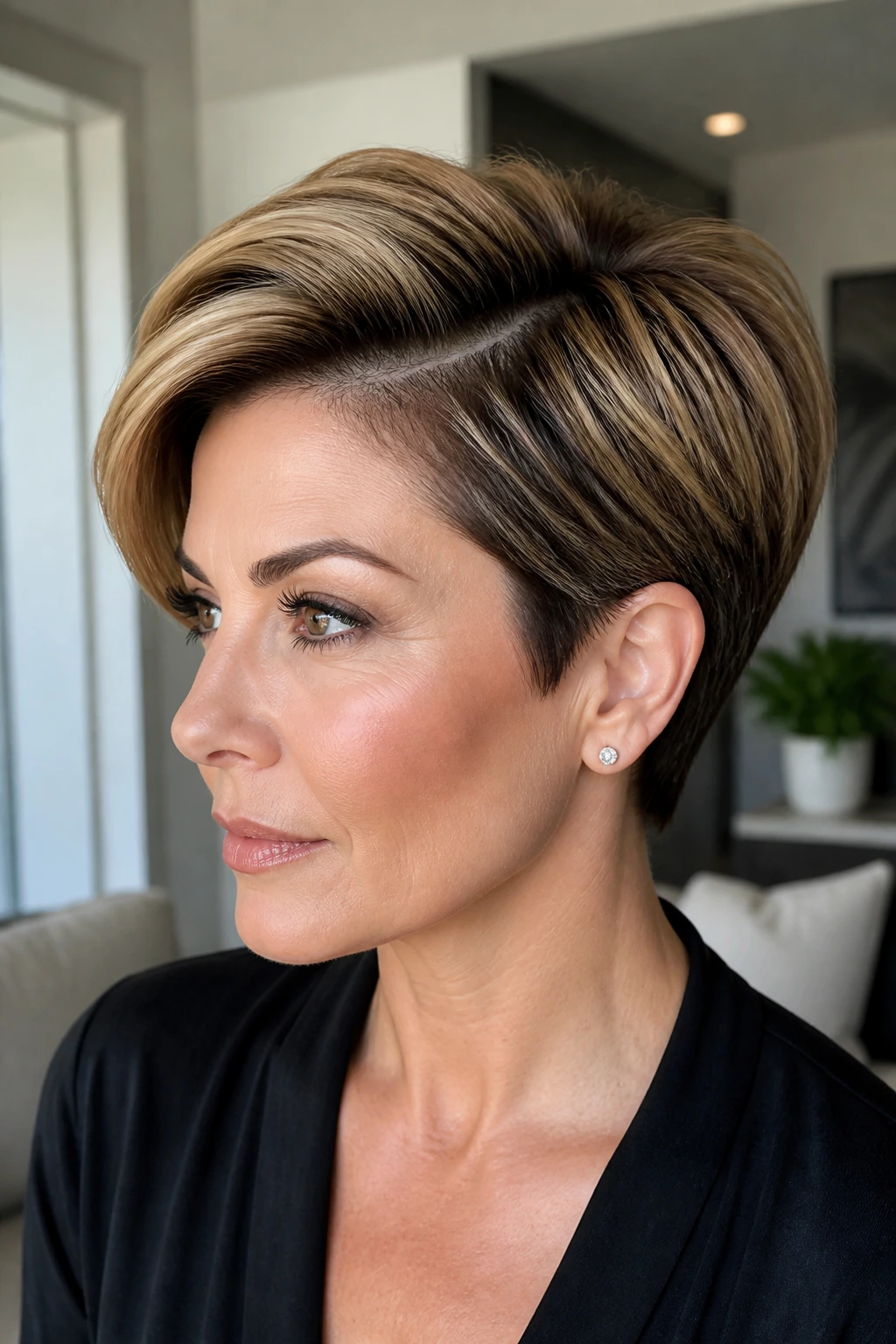
A side-part pixie can be a genius move for thin hair because it shifts the weight onto the top and front, where you want the fullness to live. Caramel highlights on the crown and longer fringe give the cut a lifted, almost sun-kissed shape. The sides stay tighter, which keeps the whole style from puffing out in the wrong places.
What to Watch For
The side part should be deep enough to create lift, but not so deep that the hair falls across the face like a curtain. Ask for longer texture through the top and a softer taper at the nape. That combination gives the caramel somewhere to show off.
Short hair can look blunt in a harsh way if the color is too uniform. A few brighter strands around the hairline make this pixie feel more finished.
5. Sleek Angled Bob
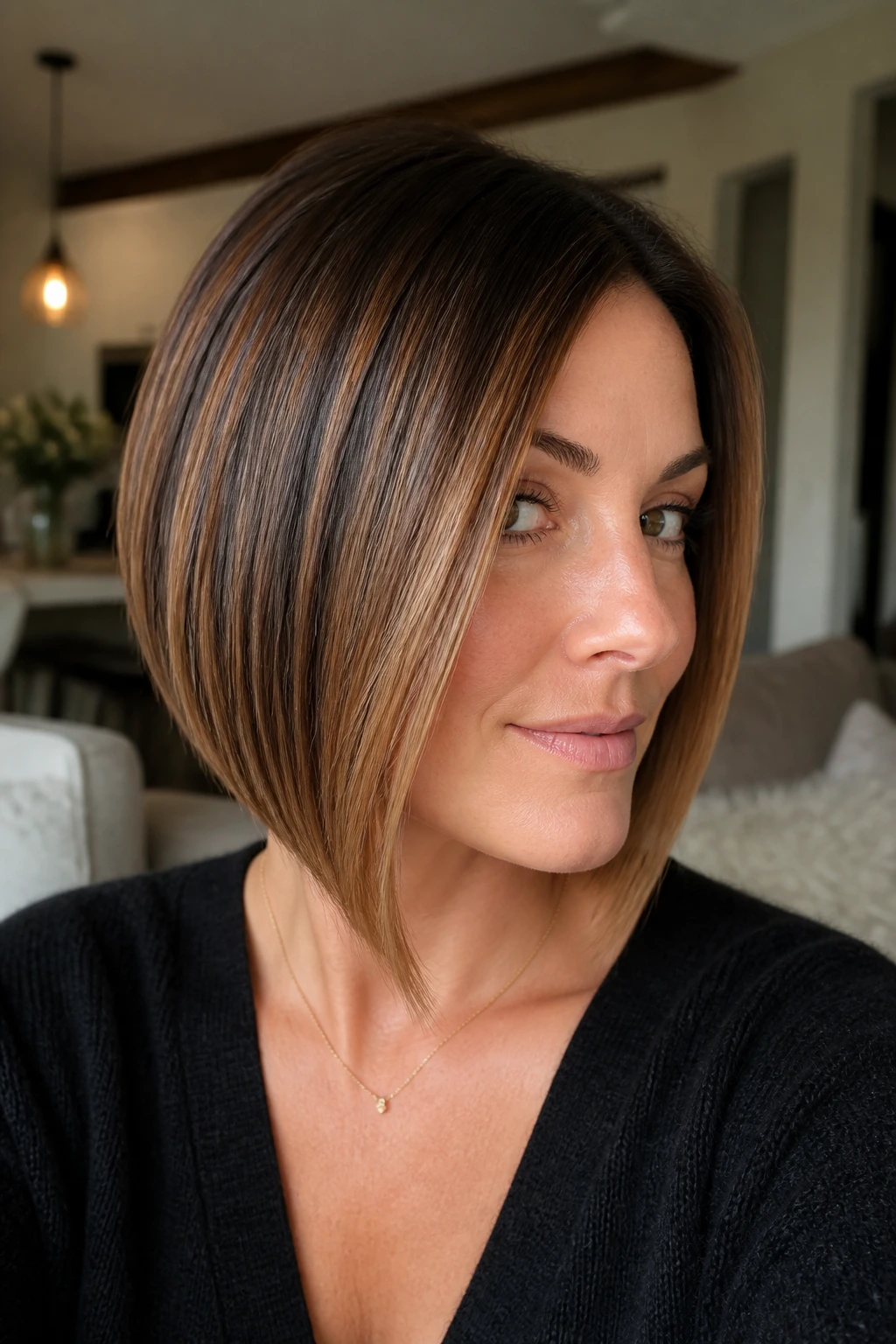
The angled bob is one of those cuts that makes thin hair look intentional immediately. Shorter in the back, longer in the front, it creates a forward line that the eye reads as structure. Caramel highlights should follow that angle, starting denser near the front and lighter through the back.
That placement matters. It pulls attention toward the face and gives the front panels a little more visual weight, which is exactly what thin hair often needs. Keep the finish smooth, with a flat brush or a paddle brush and a touch of serum only on the ends.
A sharp angle plus warm caramel is a strong combination. It looks polished without being stiff.
6. Curtain-Bang Lob
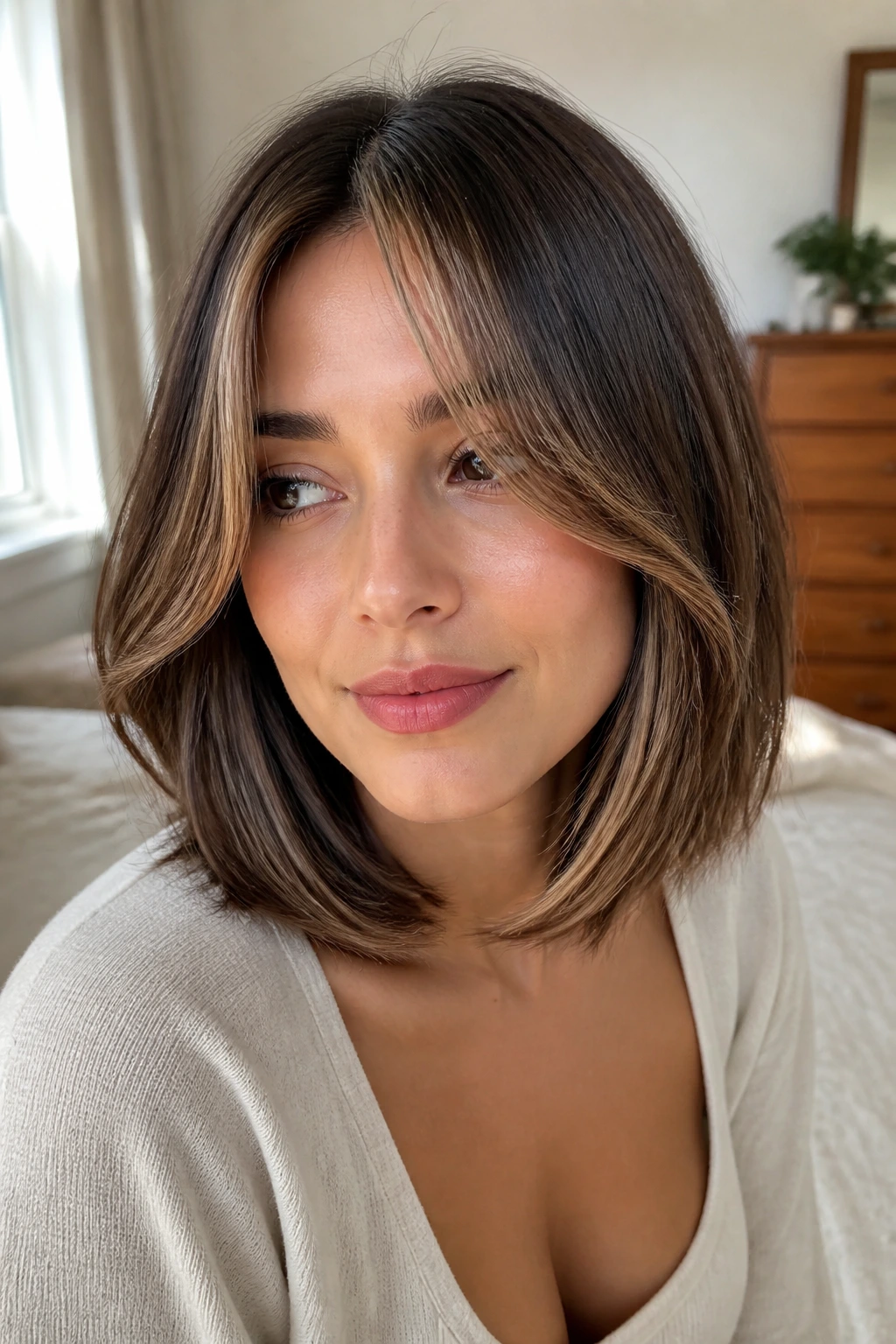
Curtain bangs are one of the few fringe styles that can help thin hair instead of fighting it. They split the front in a way that opens the face, and on a lob, they make the top layer feel fuller because the bangs and the front lengths work together. Caramel money pieces around the part line make the effect even stronger.
The key is softness. Curtain bangs on thin hair should graze the cheekbone or just brush the lashes, not sit in a heavy slab across the forehead. If you want the style to feel current but not fussy, keep the ends of the lob loose and airy.
Small Detail, Big Payoff
A gentle bend around the face keeps the bangs from separating too much. And if the part is a little off-center, the caramel pieces will show more dimension than they do on a straight middle part.
7. Soft Shag with Feathered Ends
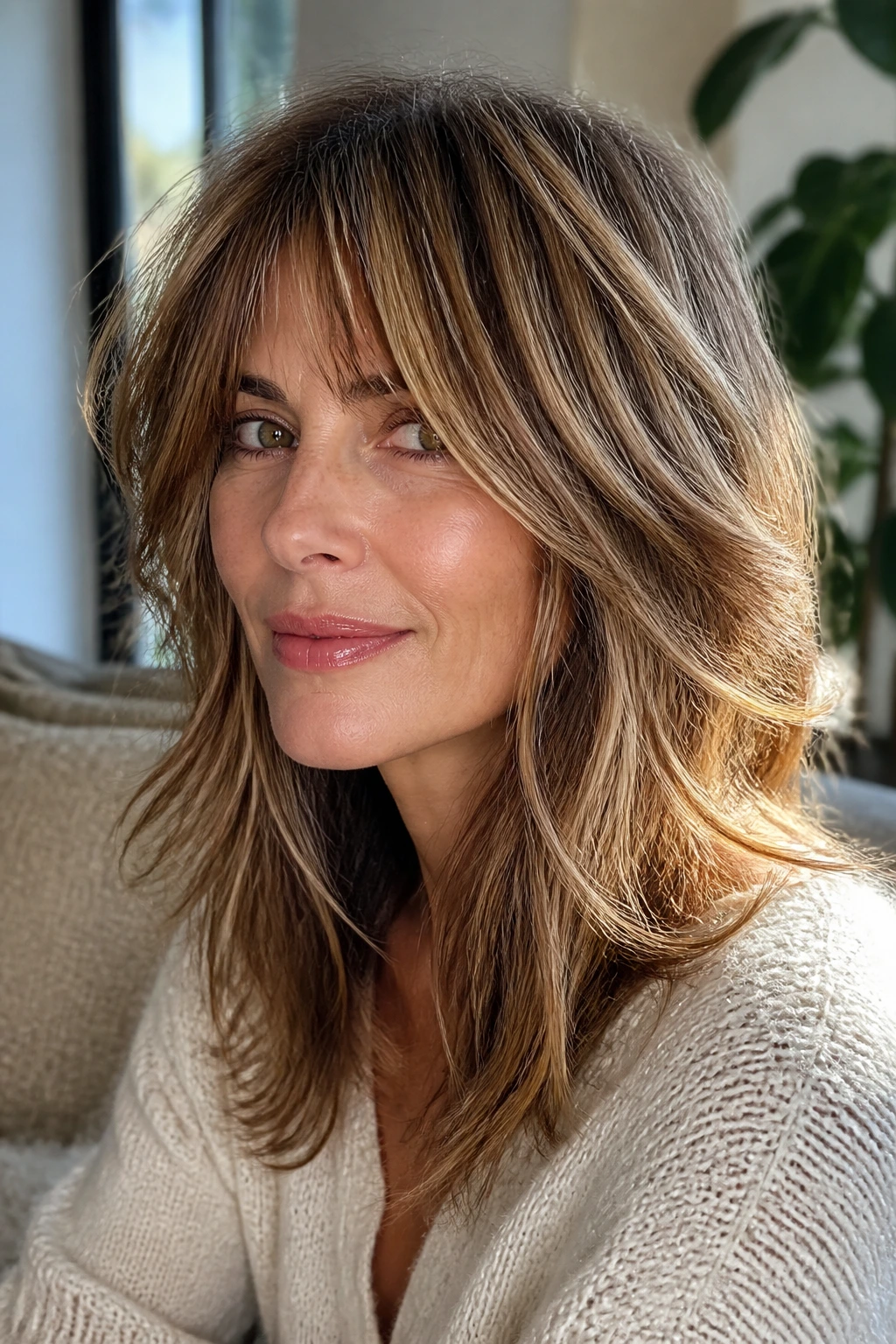
A soft shag can work on thin hair, but only if the layers are controlled. Too many short snips and the ends disappear. A better version keeps the top airy, the mid-lengths soft, and the perimeter just heavy enough to hold shape. Caramel highlights give those feathered layers some definition so the cut doesn’t blur into a cloud.
This is the style for people who like texture without the crunchy, overstyled look. Think loose movement, a little piecey separation, and color that’s brighter on the outer layers than underneath. That keeps the haircut alive without making it brittle.
My opinion? This one looks best when it’s a little imperfect. If every strand is forced into the same bend, the shag loses its charm.
8. Stacked Bob with Root Shadow
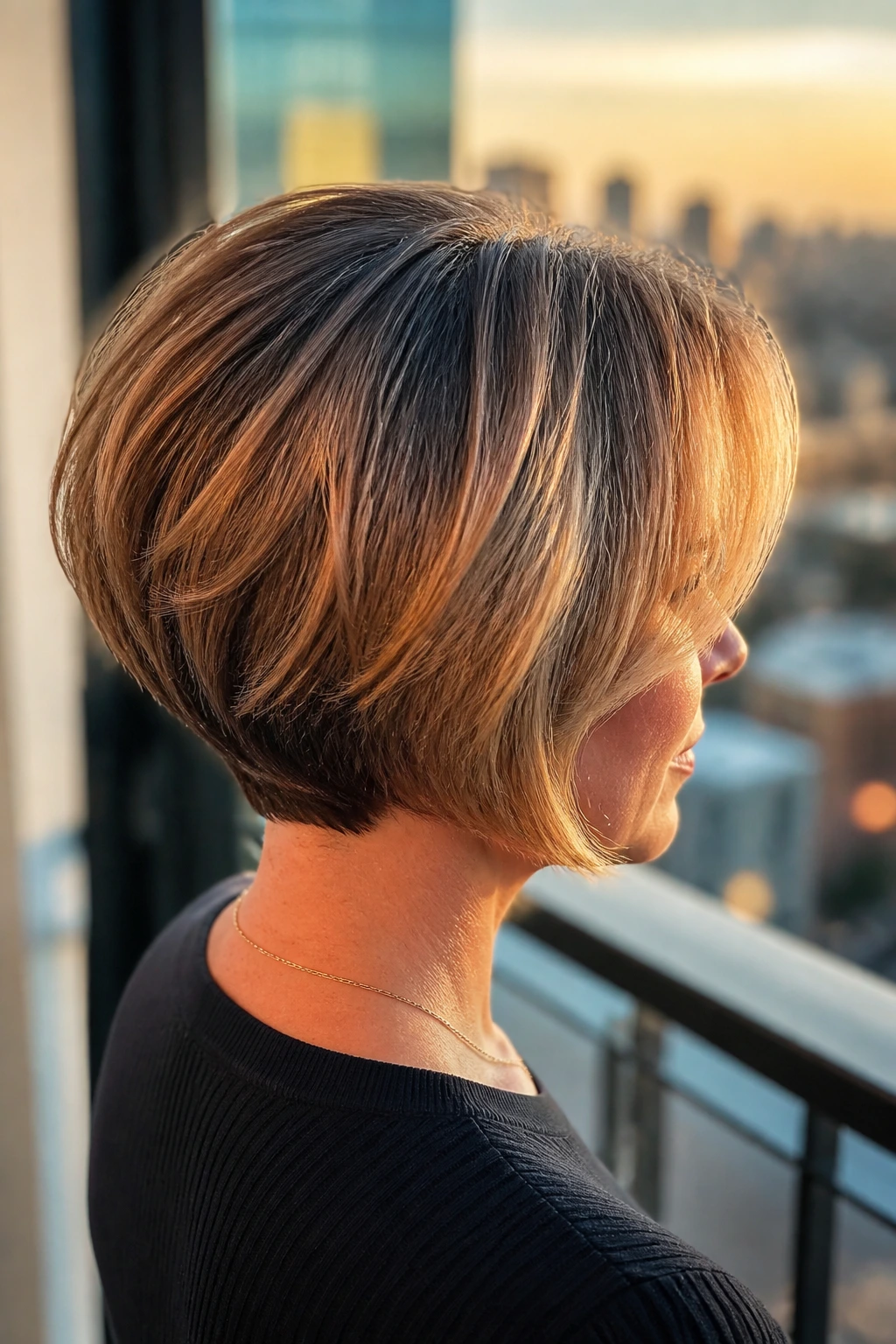
A stacked bob is built for the person who wants lift at the back of the head. The shorter layers stack up near the nape, which gives thin hair a little architecture, and a root shadow keeps the crown from looking too light or too sparse. Caramel highlights can sit above the stack, where they catch movement instead of disappearing into it.
Quick Styling Notes
- Blow-dry the back first for shape.
- Use root-lift spray at the crown, not through the ends.
- Keep the front pieces a touch longer so the cut doesn’t feel too boxy.
The shadow at the root is the quiet hero here. It makes the caramel feel richer, and it gives the haircut more depth from every angle.
9. Bottleneck Bangs with a Shoulder Cut

Bottleneck bangs are like curtain bangs with a little more shape at the center, and they’re one of the smarter fringe choices for thin hair. They open out around the eyes and cheekbones, which lets caramel highlights do a lot of the visual work without the haircut getting heavy. Pair them with a shoulder-grazing cut and the whole style feels soft, not limp.
The highlight placement should start around the brow line and curve outward. That gives the bangs dimension without making them look striped. Keep the shoulder length blunt enough to hold a line, then soften just the very front pieces.
This is a good option if you want movement near the face but don’t want a full shag.
10. Bixie Cut with Caramel Texture
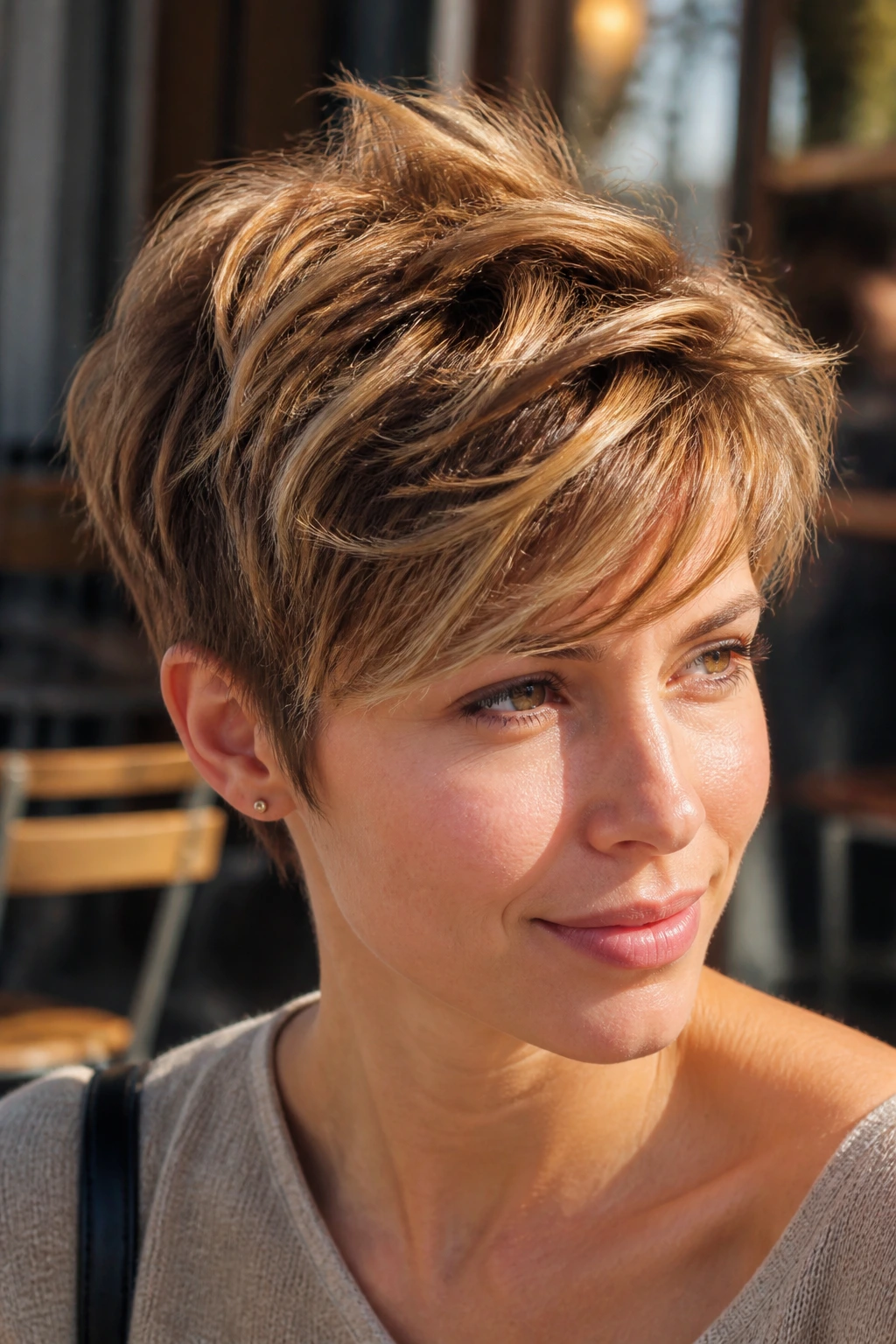
The bixie sits between a bob and a pixie, and on thin hair that middle ground can be useful. It gives you enough length to play with texture at the top, but not so much that the hair droops. Caramel highlights, especially through the crown and fringe, make the texture look intentional rather than choppy.
Why It Feels Fresh
Because the cut is short, the color shows immediately. A few brighter strands near the part and temple areas make the crop look fuller from the front. The sides should stay neat; the top should stay movable.
If you like hair that takes two minutes to style and still looks like a thought was put into it, this is the one.
11. Wavy Lob with Money Pieces
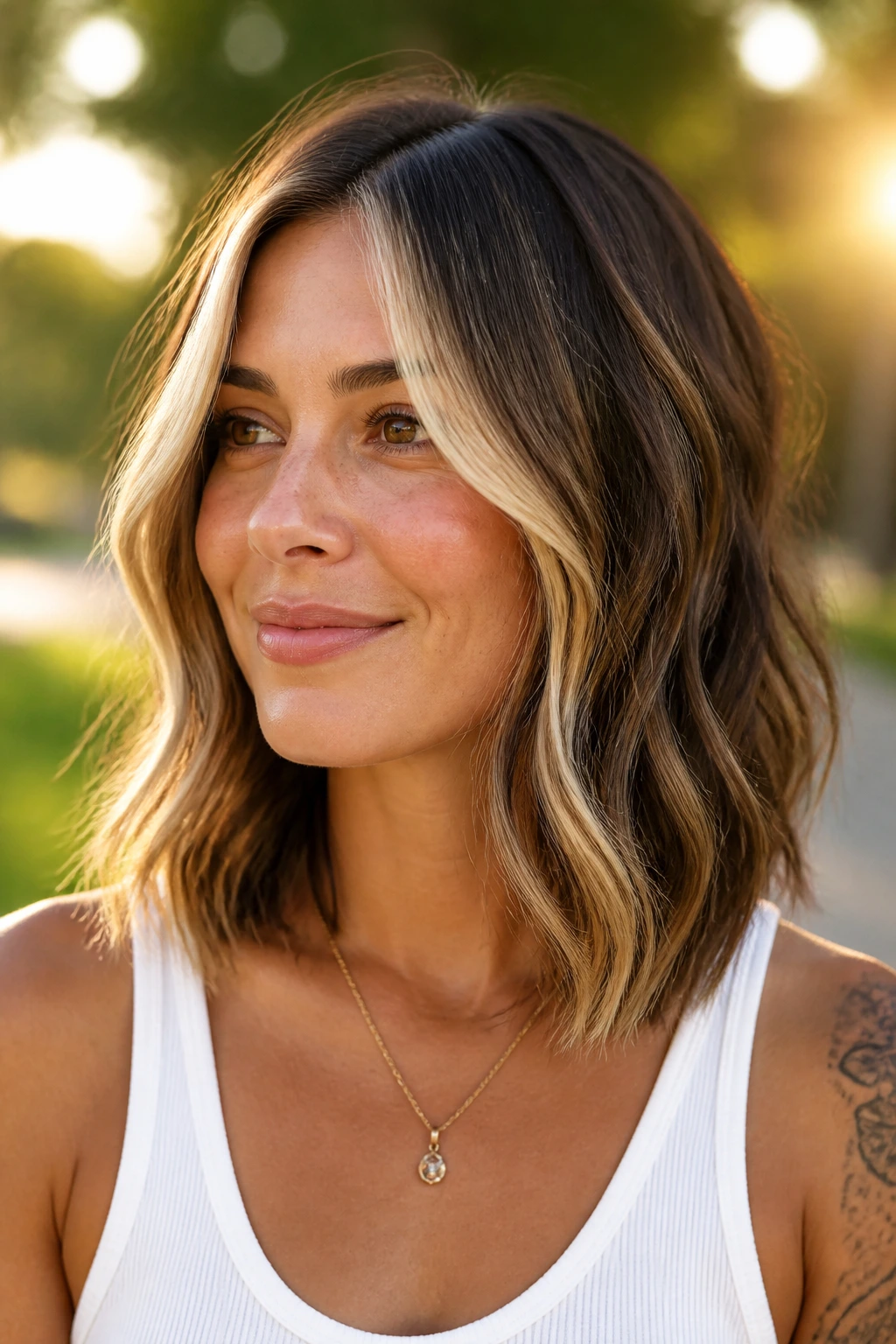
A wavy lob is one of the safest bets for thin hair because it gives you enough length for movement and enough room for caramel money pieces to make an impact. The face-framing light should be just a touch brighter than the rest of the highlights. That little shift makes the cut wake up around the cheekbones.
The waves do not need to be tight. In fact, they shouldn’t be. A loose bend from mid-length to ends keeps the shape soft and stops the hair from shrinking too far off the shoulders. If you want the style to last, curl away from the face on one side and toward the face on the other. It sounds fussy; it isn’t.
This is the look I’d choose for someone who wants movement without a lot of layering.
12. Asymmetrical Bob
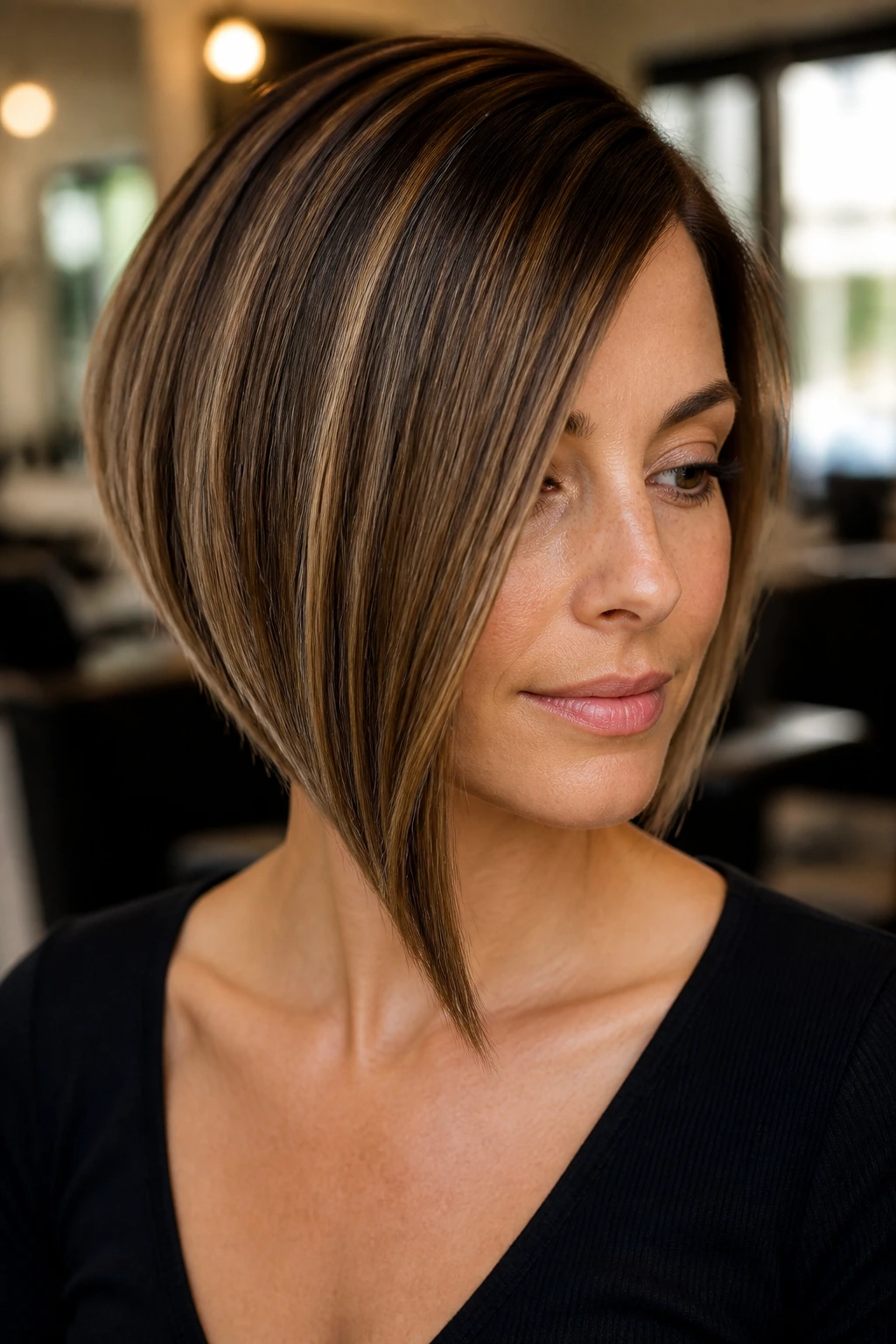
An asymmetrical bob gives thin hair a built-in point of interest. One side sitting a little longer than the other creates a diagonal line that naturally looks fuller, and caramel highlights can be placed to echo that line. The brighter side gets a little more emphasis. The shorter side stays quieter.
That difference is what makes the cut work. Thin hair often looks best when the eye has a direction to follow, and asymmetry gives it one. Keep the ends blunt enough to hold the shape, because too much texturizing will steal the effect.
A clean asymmetrical bob feels sharper than a soft layered cut. If you like structure, this one has it.
13. Butterfly Cut for Fine Long Hair
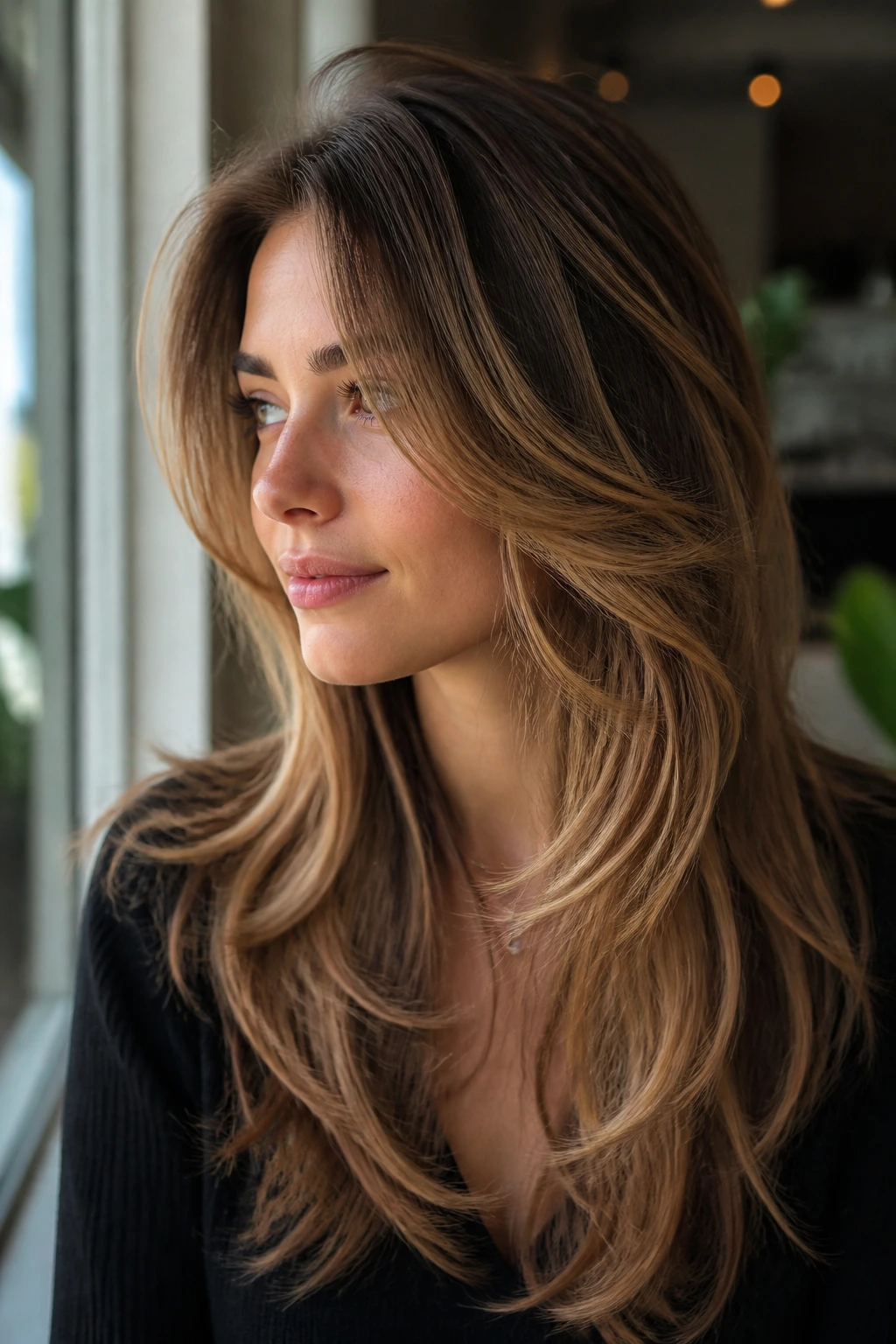
Can a butterfly cut work on fine hair? Yes, if it’s softened. The top layers should frame the face and create lift around the crown, while the longer bottom length stays full enough to keep the hair from looking scraggly. Caramel balayage on the upper layers helps separate the pieces so the cut reads as airy, not thin.
The trick is restraint. Too many short layers and the shape falls apart. A controlled butterfly cut lets the hair move without sacrificing the heavier line underneath, which is the part that keeps long hair from looking stringy.
I like this one for people who want the illusion of volume without losing length. It’s a compromise, but a smart one.
14. Half-Up Twist with Loose Waves
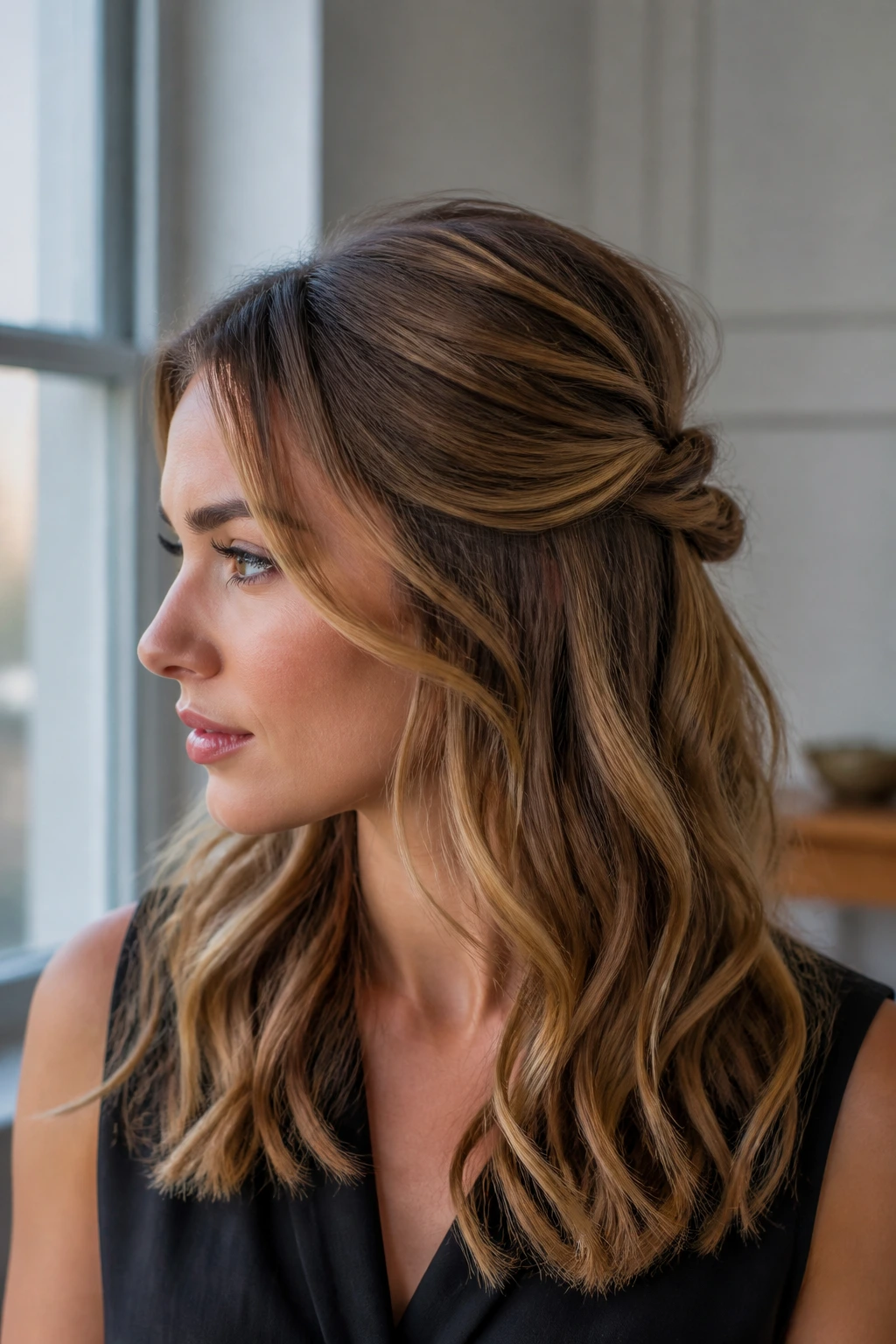
A half-up twist is one of the simplest ways to make thin hair look more styled than it is. Pulling the top section back creates a little lift at the crown, and caramel highlights show beautifully through the twist because the color shifts direction as the hair folds. Loose waves underneath keep the lower half from looking flat.
How to Make It Work
Don’t slick the top too tight. Leave a small bit of give at the crown, then pin the twist with two bobby pins instead of one heavy clip. If the ends are a little bent, better still.
This is the kind of style that looks casual in the best way—like you didn’t fight your hair all morning.
15. Low Ponytail with Face-Framing Pieces
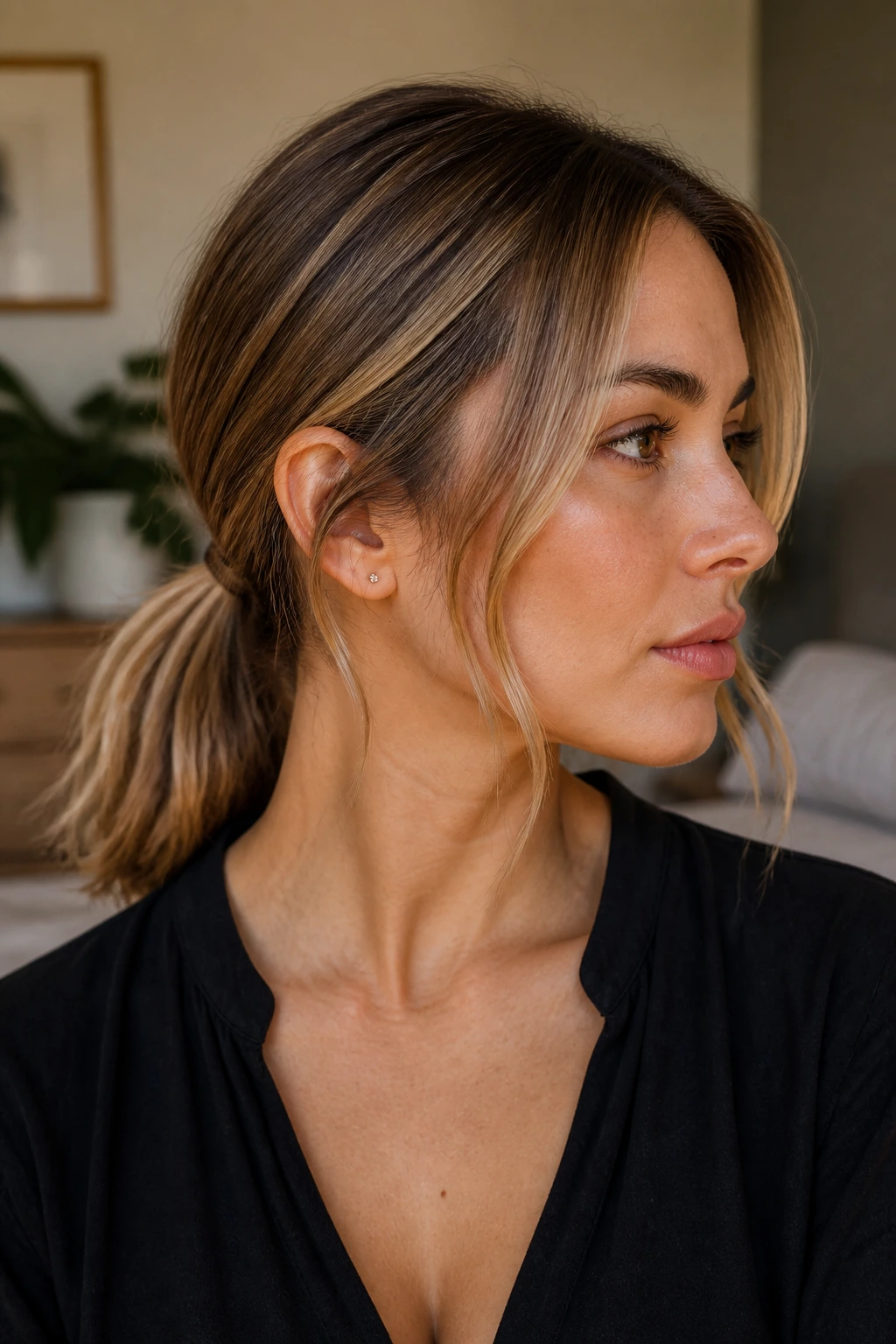
A low ponytail can look sparse if you yank every strand back and call it done. Thin hair needs a little softness near the face, and caramel highlights help those loose front pieces stand out instead of disappearing. Keep the pony low, just above the nape, and let the face frame stay out.
That one move changes everything. The ponytail reads fuller because the top stays smooth and the front pieces carry light. If you want extra polish, wrap a small piece of hair around the elastic and pin it underneath.
This style is plain in the best sense. Clean. Fast. Reliable.
16. Claw-Clip French Twist
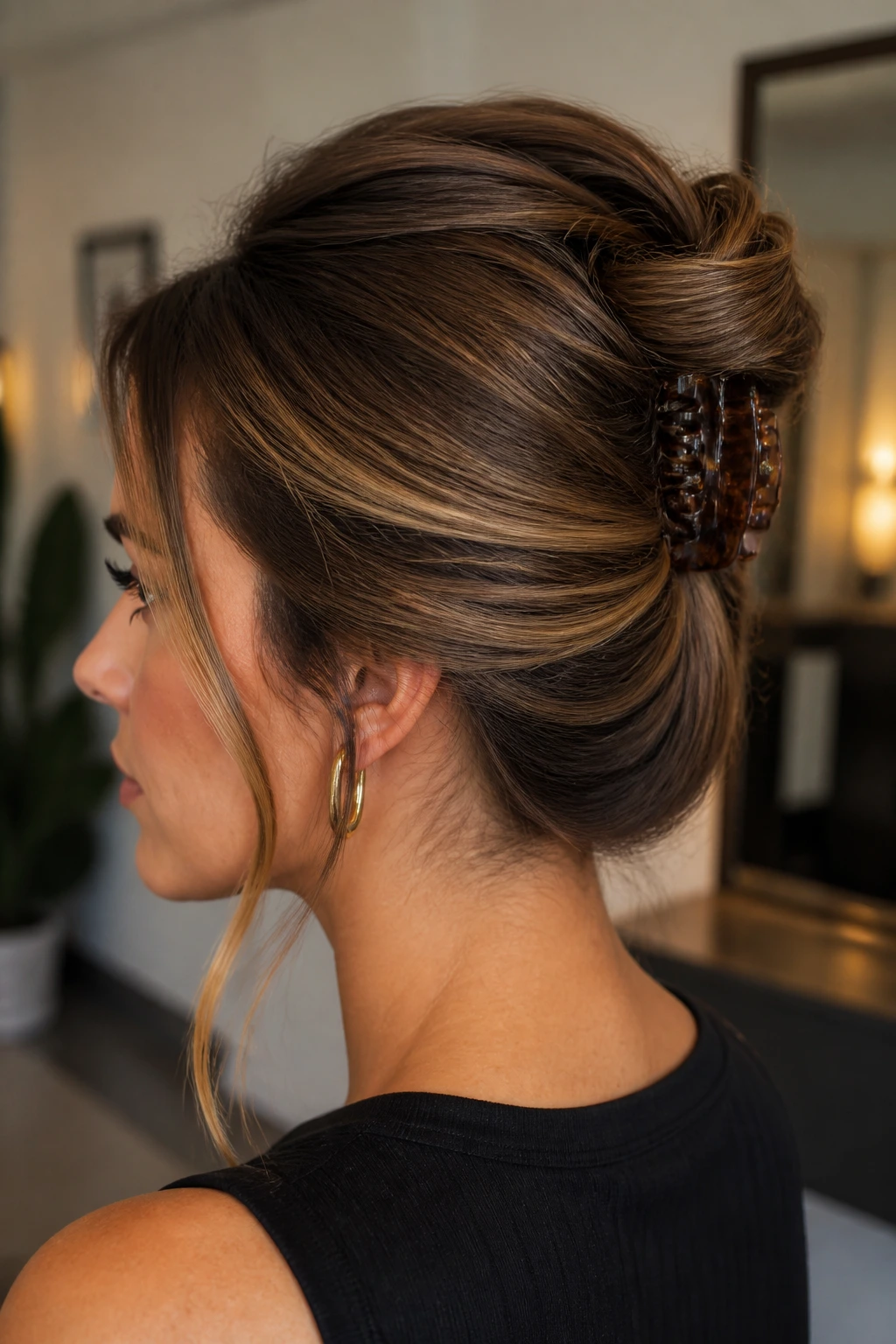
The claw-clip French twist gives thin hair a lift that a tight bun never will. The twist creates folds, and those folds catch caramel highlights differently across the surface, which makes the style look richer than it is. A medium clip works better than a giant one; oversized clips can swallow fine hair.
Best With
- Shoulder-length or longer hair.
- Softly highlighted hair, especially with brighter pieces near the crown.
- Slightly dirty hair, which grips better and slips less.
If the front pieces are tucked loosely instead of slicked flat, the whole style looks more expensive. Not fussy. Just finished.
17. Bubble Ponytail
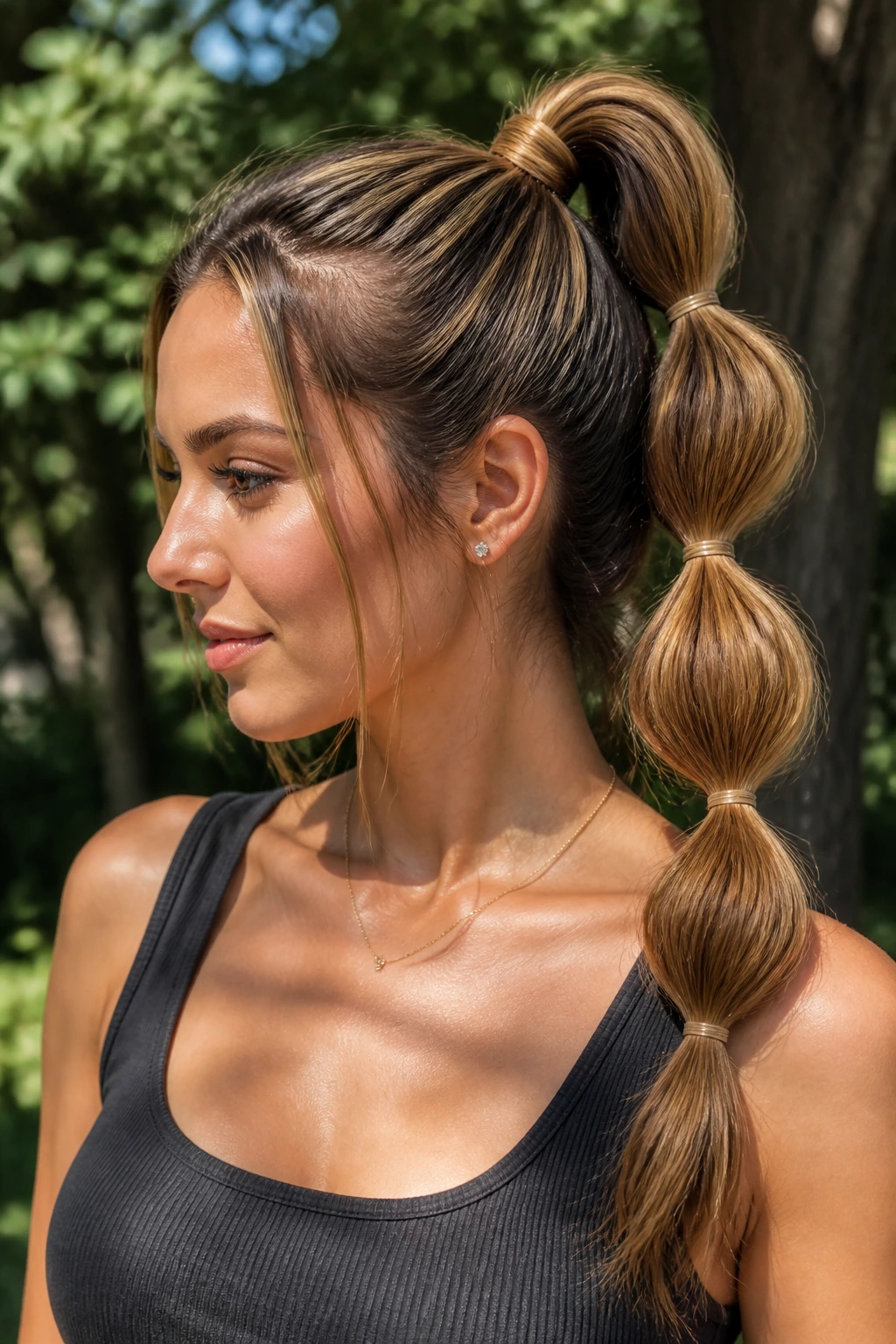
A bubble ponytail is a smart trick for thin hair because the elastic sections create the illusion of volume at intervals. Caramel highlights make each bubble stand out more clearly, especially if the hair is gently pulled apart between elastics. The key is spacing.
Use clear elastics or small bands every 2 to 3 inches, depending on length. Then pinch each section outward a little, not enough to break the shape, just enough to make it fuller. The style should look soft and segmented, not like a science project.
I like this one when a regular ponytail feels too flat and a bun feels too severe.
18. Textured Crop with Piecey Top
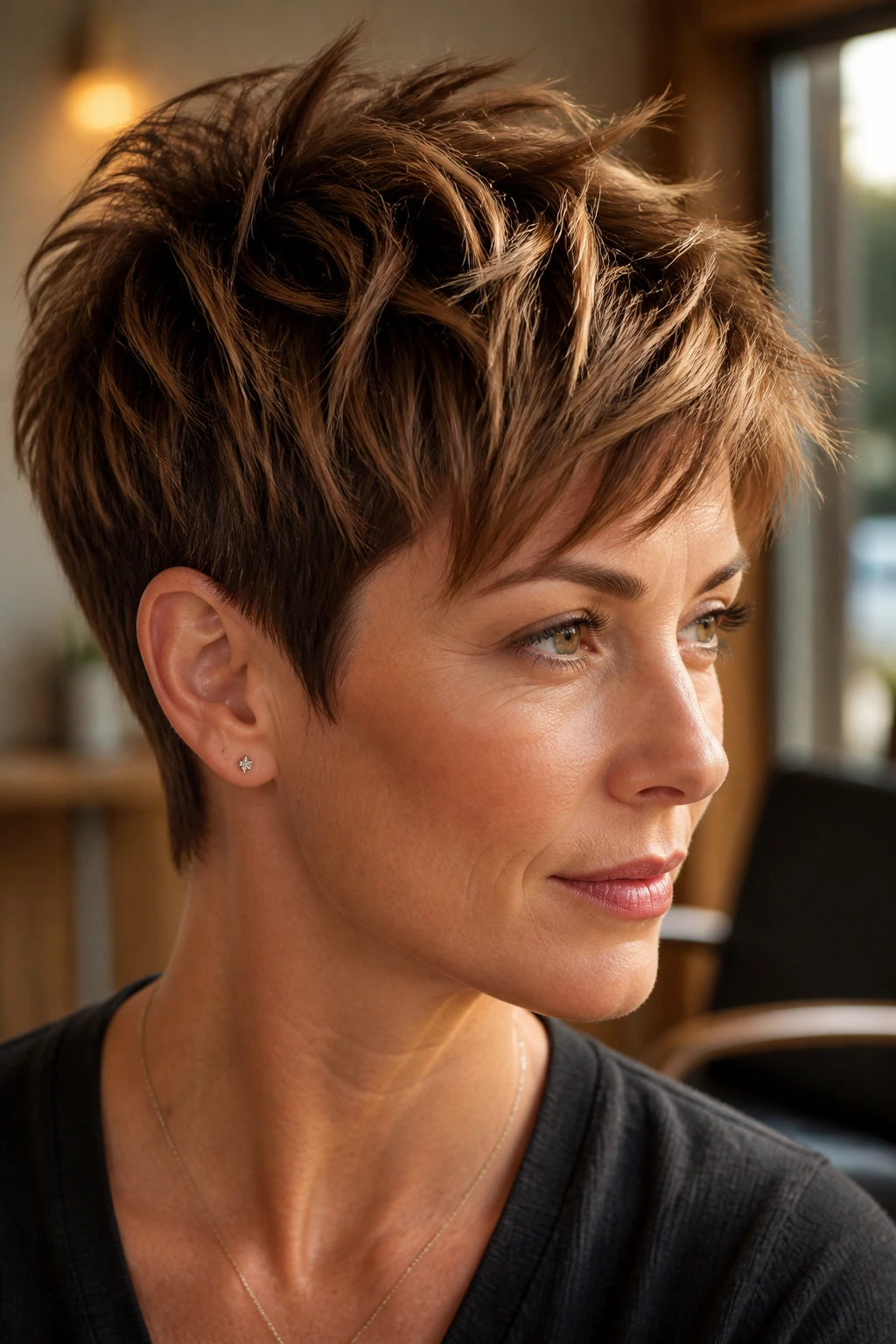
A textured crop can be brilliant on thin hair if the top stays piecey and the sides stay controlled. The whole point is to create movement on the surface while keeping the haircut compact underneath. Caramel highlights through the top layers give that separation a little extra punch.
The mistake people make here is overdoing the texturizing. If you take too much weight out, the crop turns wispy. Keep the perimeter neat and use a matte paste or light wax only on the top pieces. The finish should feel touchable, not sticky.
This cut has attitude. Quiet attitude, but still.
19. Chin-Length Curly Bob
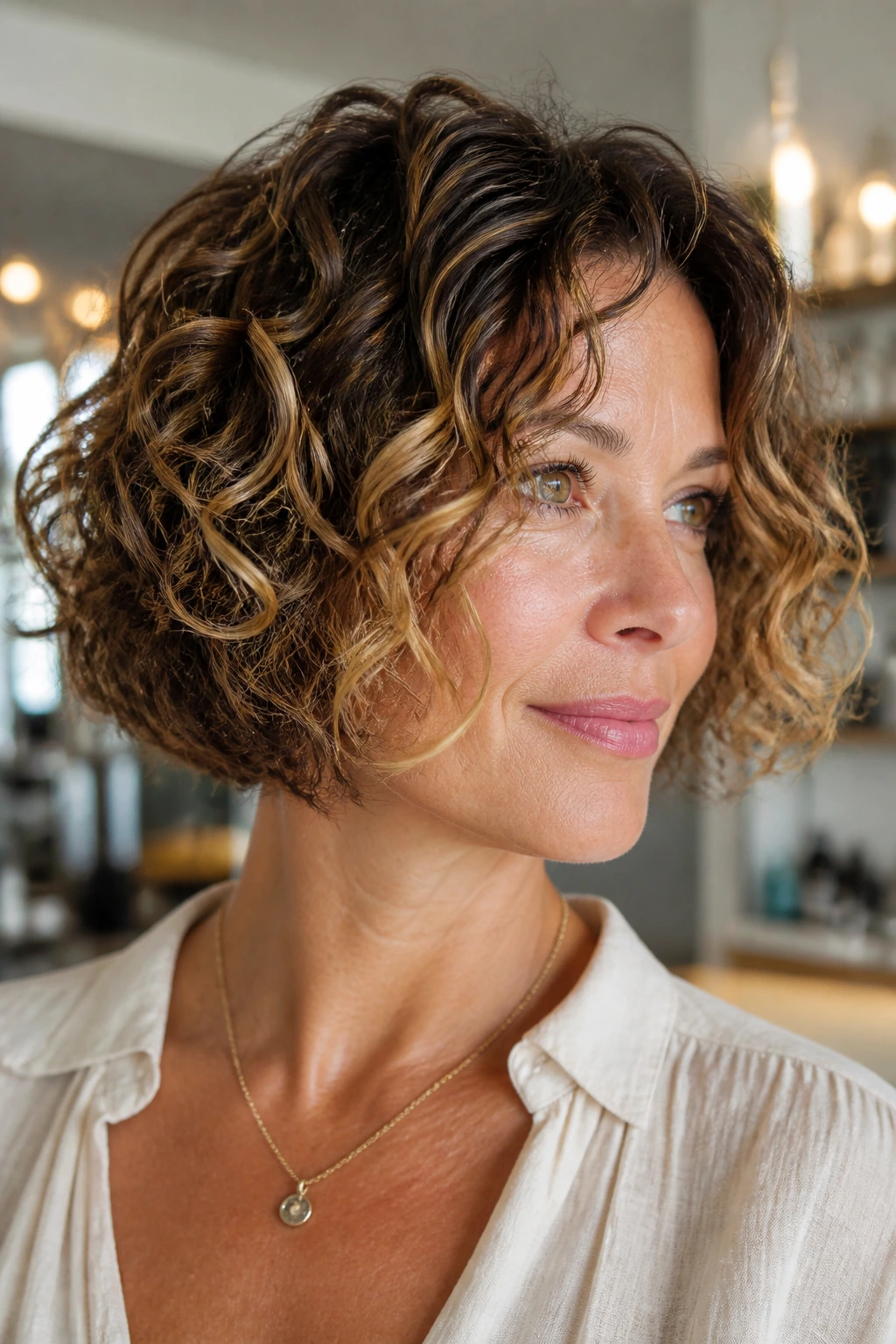
Curly hair that’s thin needs length in the right place, and a chin-length bob can be very kind to it. Too short and the curls bounce up and expose the scalp. At the chin, the curls can stack neatly, and caramel highlights placed on the outer curve of each ringlet make the texture look more defined.
The color should follow the curls, not fight them. Ask for lightness on the visible top layer and a few deeper pieces underneath so the shape doesn’t turn into one pale puff. The bob should move, but the outline should still exist.
If your curls are loose and fine, this one is especially worth trying. It gives them shape without forcing them small.
20. Long Layered Cut with Balayage Ends
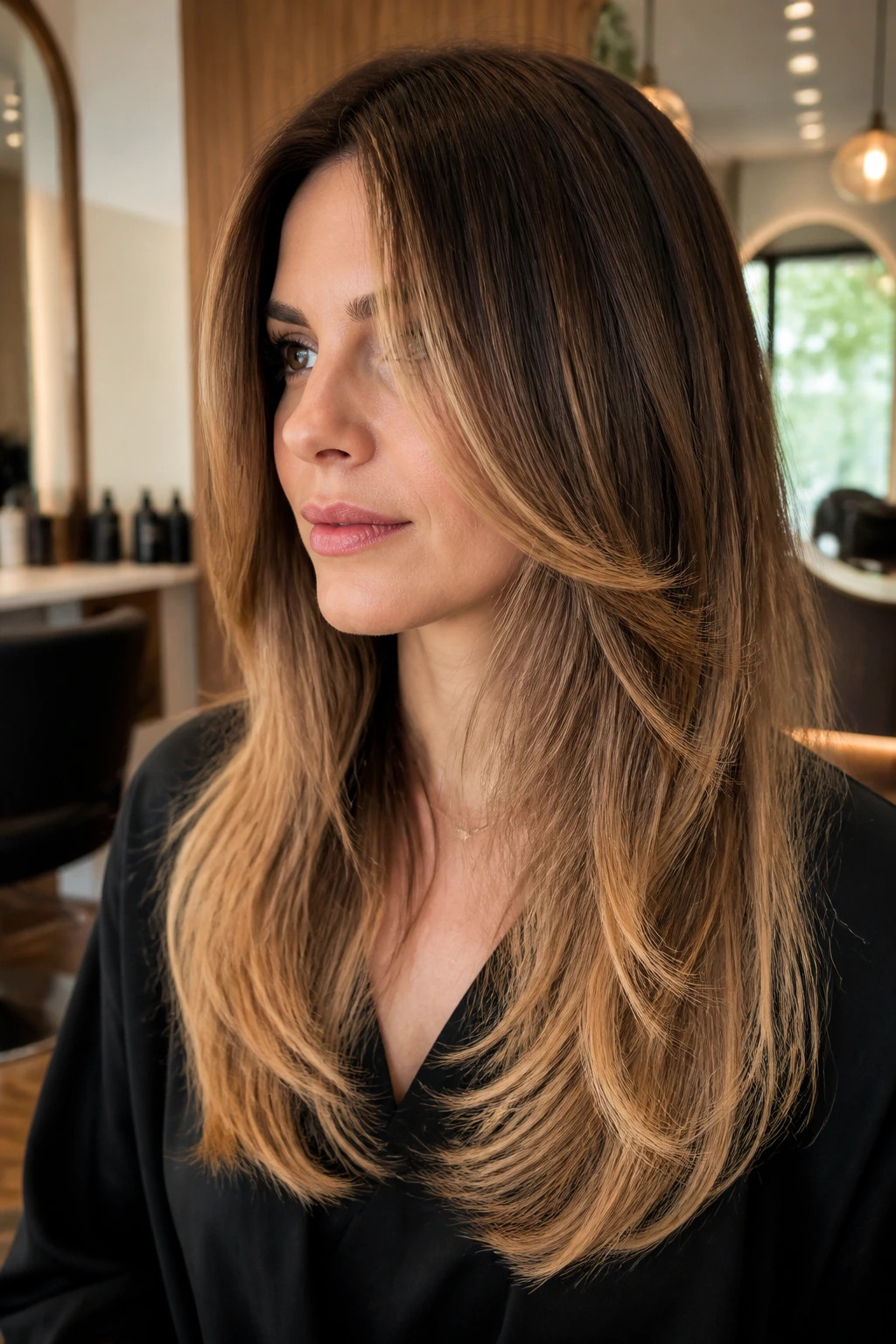
Long thin hair is tricky. Too long and it hangs straight; too layered and it looks sparse. A long cut with soft layers through the front and caramel balayage concentrated toward the ends solves part of that problem by keeping the upper lengths fuller and the lower lengths bright enough to show movement.
The balayage should not start too high. If the lightness creeps up toward the roots, the hair can lose weight where it needs it most. Keep the brightness from mid-length to ends and let the face frame carry the brighter notes.
This is a good choice for people who want length more than volume. It won’t fake a huge mane, and it shouldn’t. It will look cleaner and better balanced.
21. Slicked-Back Low Bun with Caramel Glow
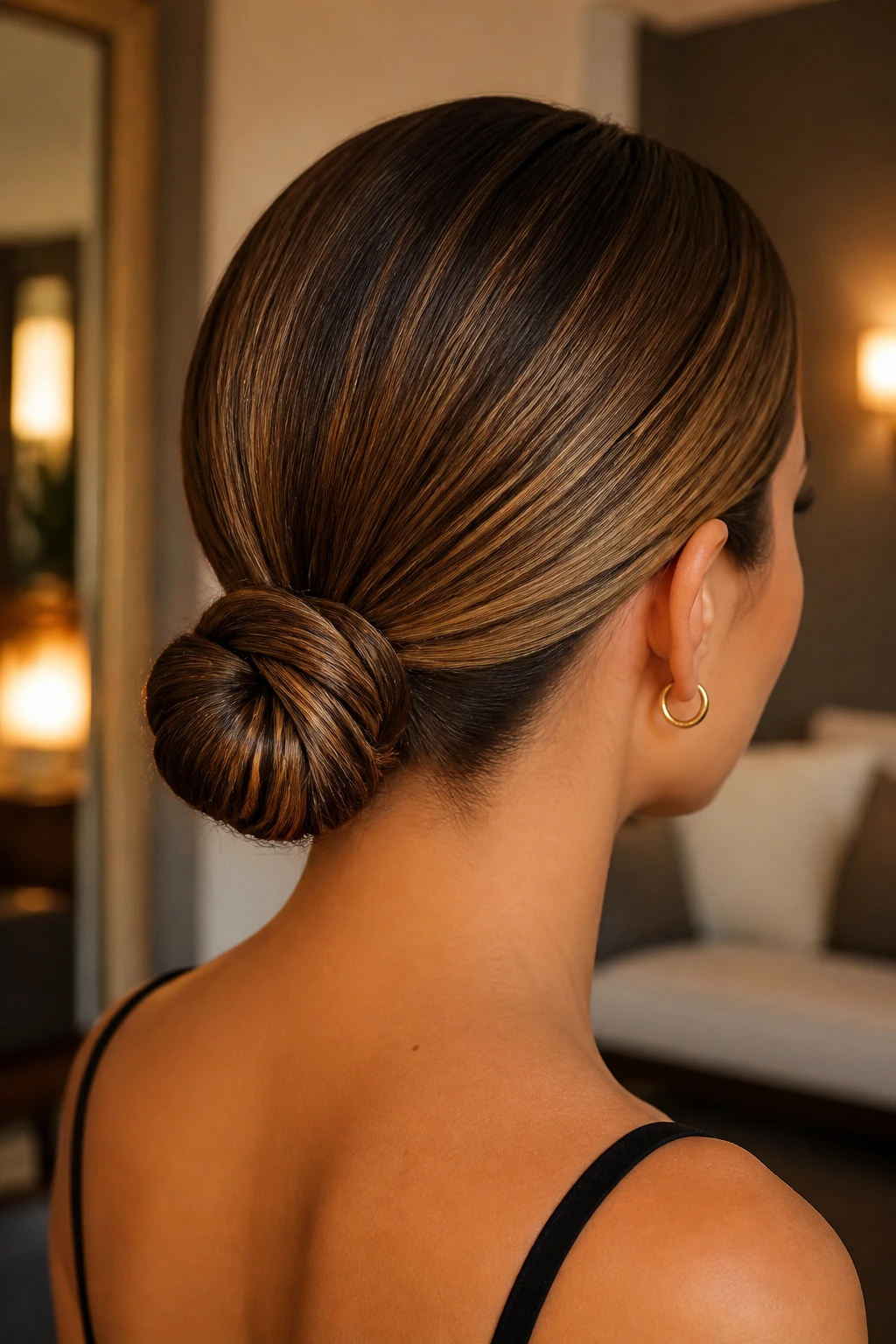
A slicked-back low bun can look severe on thin hair, but caramel highlights soften the finish by breaking up the surface. The glow comes from the contrast between the polished top and the visible color shifts in the bun itself. Keep the bun small and wrapped close to the nape; a huge bun on thin hair usually looks like a promise the hair can’t keep.
The real move is leaving just enough shine on the top without drowning the roots in gel. A lightweight cream or gel-and-water mix works better than a heavy butter or balm. The bun should look smooth, not greasy.
This is the dressy option. Simple, yes. Boring, no.
22. Rounded Blowout Lob
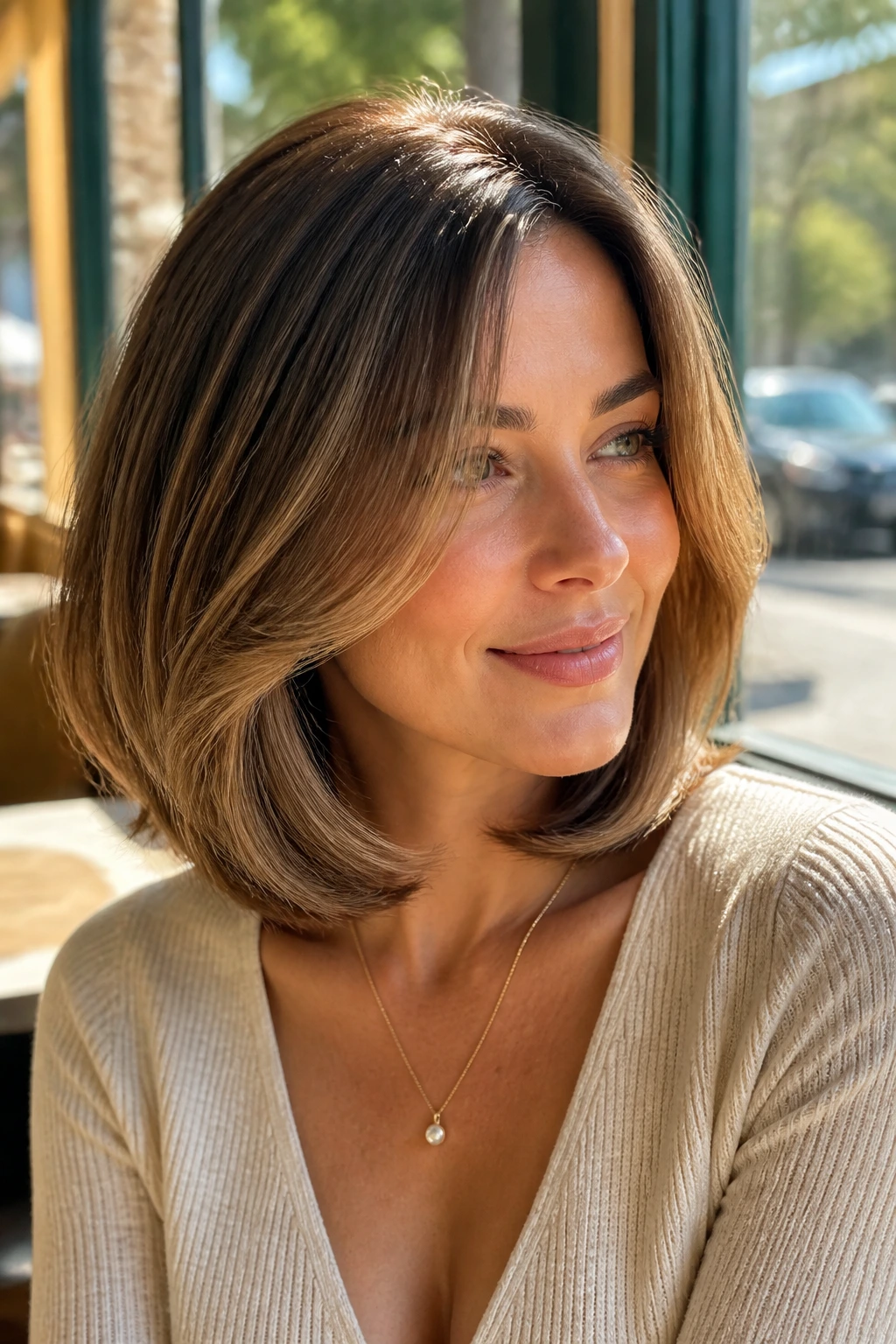
A rounded blowout lob gives thin hair a soft cushion of shape around the face and shoulders. The round brush creates lift at the roots and a gentle curve at the ends, while caramel highlights make every bend read more clearly. The style feels full because the silhouette is round, not because the hair is overloaded with product.
Styling Clue
Dry the roots first. Then work through the mid-lengths with the brush, rolling the ends under just a touch. Finish with a cool shot and a whisper of spray at the crown.
I’d choose this one when someone wants a polished style that still has movement. It looks expensive without acting precious.
23. Soft Wolf Cut for Thin Hair
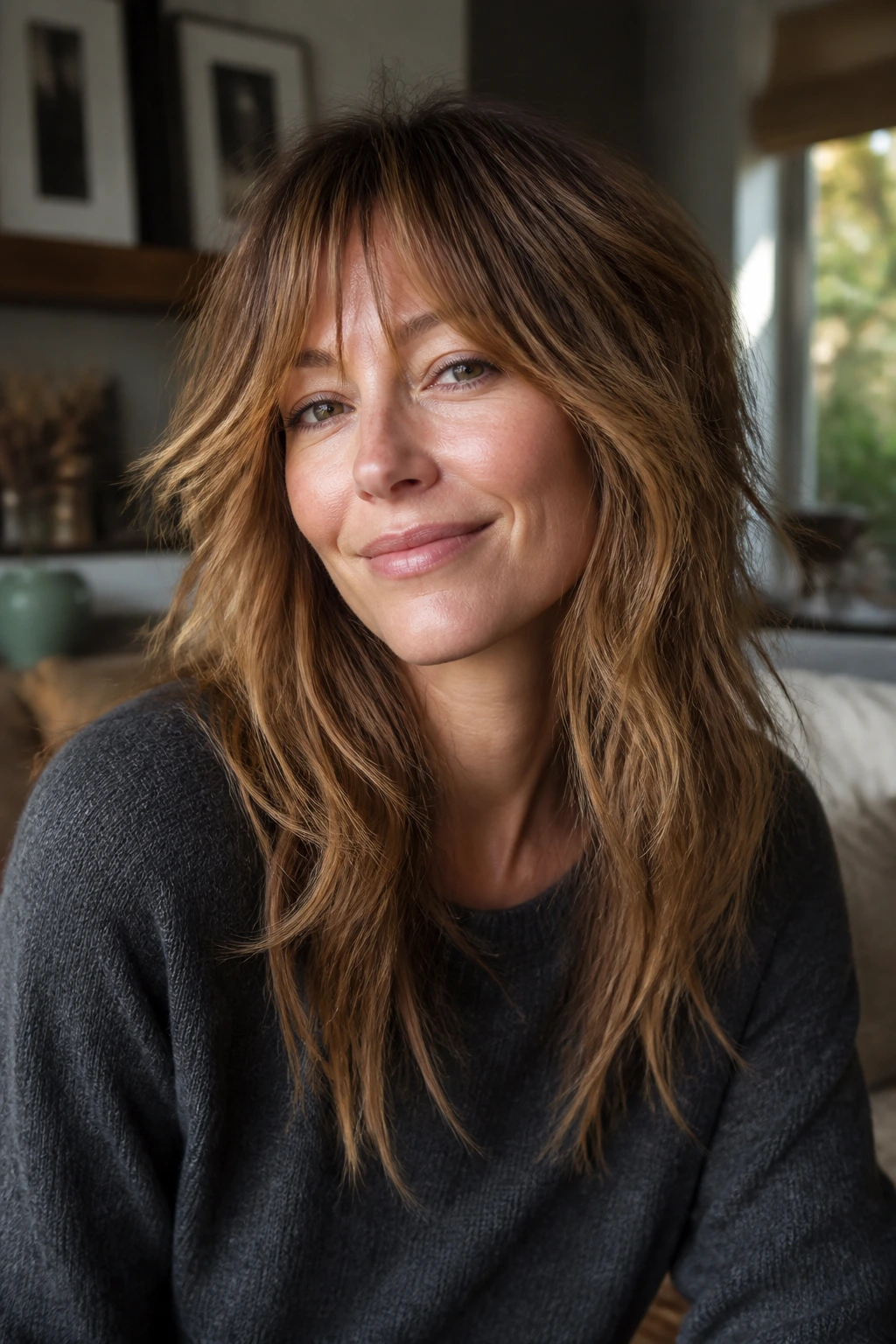
The wolf cut can go wrong on thin hair fast. Too many choppy layers, and the ends vanish. But a softened version—with longer internal layers, a light fringe, and caramel pieces focused on the upper surface—can add edge without sacrificing too much density. Think of it as the calmer cousin, not the wild one.
What Makes It Work
The crown gets lift. The face gets shape. The lower lengths stay long enough to keep the cut grounded.
If you like texture but hate the feeling of losing all your hair to scissors, this modified wolf cut is the one to ask about. Just be specific. Very specific.
24. Tucked-Behind-Ears Bob
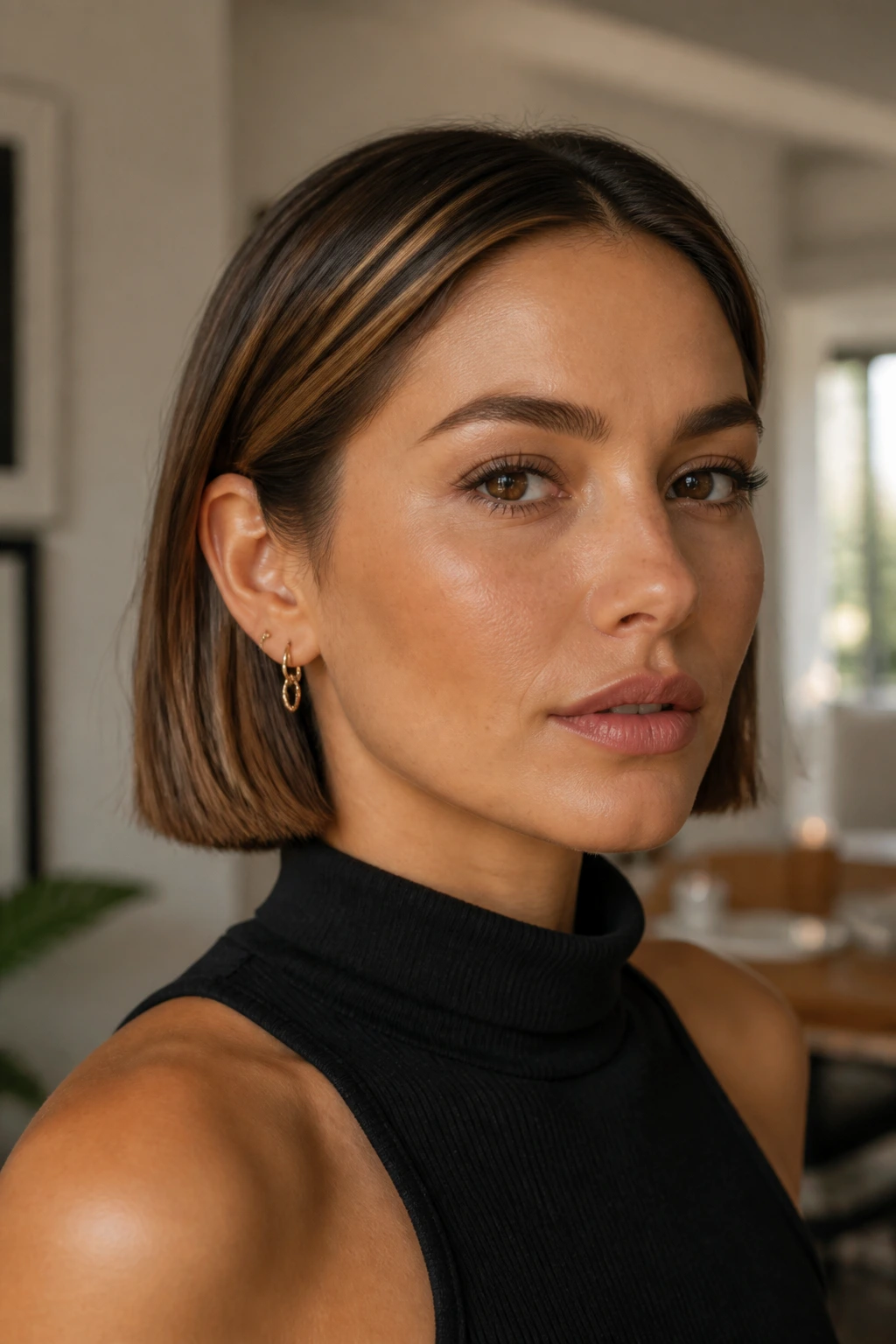
A tucked-behind-the-ears bob sounds almost too simple, which is exactly why it works. Thin hair often benefits from a neat, close shape that shows off the jaw and cheekbones instead of fighting them. Caramel highlights around the temple and front panels become more visible when the hair is tucked, which gives the style some quiet drama.
This cut looks best when the ends are blunt and the part is slightly off-center. That keeps the tuck from flattening the whole head. A little bend at the ends helps too; otherwise the style can fall into “office hair” territory in a hurry.
It’s the sort of look that gets better the more casually you wear it.
25. Shimmering Side-Swept Layers
Side-swept layers are a strong finish for thin hair because they move the eye diagonally across the face, which creates the illusion of width and lift. Caramel highlights should follow the sweep, with the brightest pieces at the front and softer tones as the layers move back. The result is soft, not sparse.
A deep side part gives the crown instant height. Then the layers fall away from the face in a way that feels flattering without being too styled. If your hair tends to collapse in the same place every day, this is the kind of shape that breaks the habit.
My favorite part is how little effort it takes once the cut is right. Good shape does most of the job.
Why Caramel Highlights Make Thin Hair Read Fuller
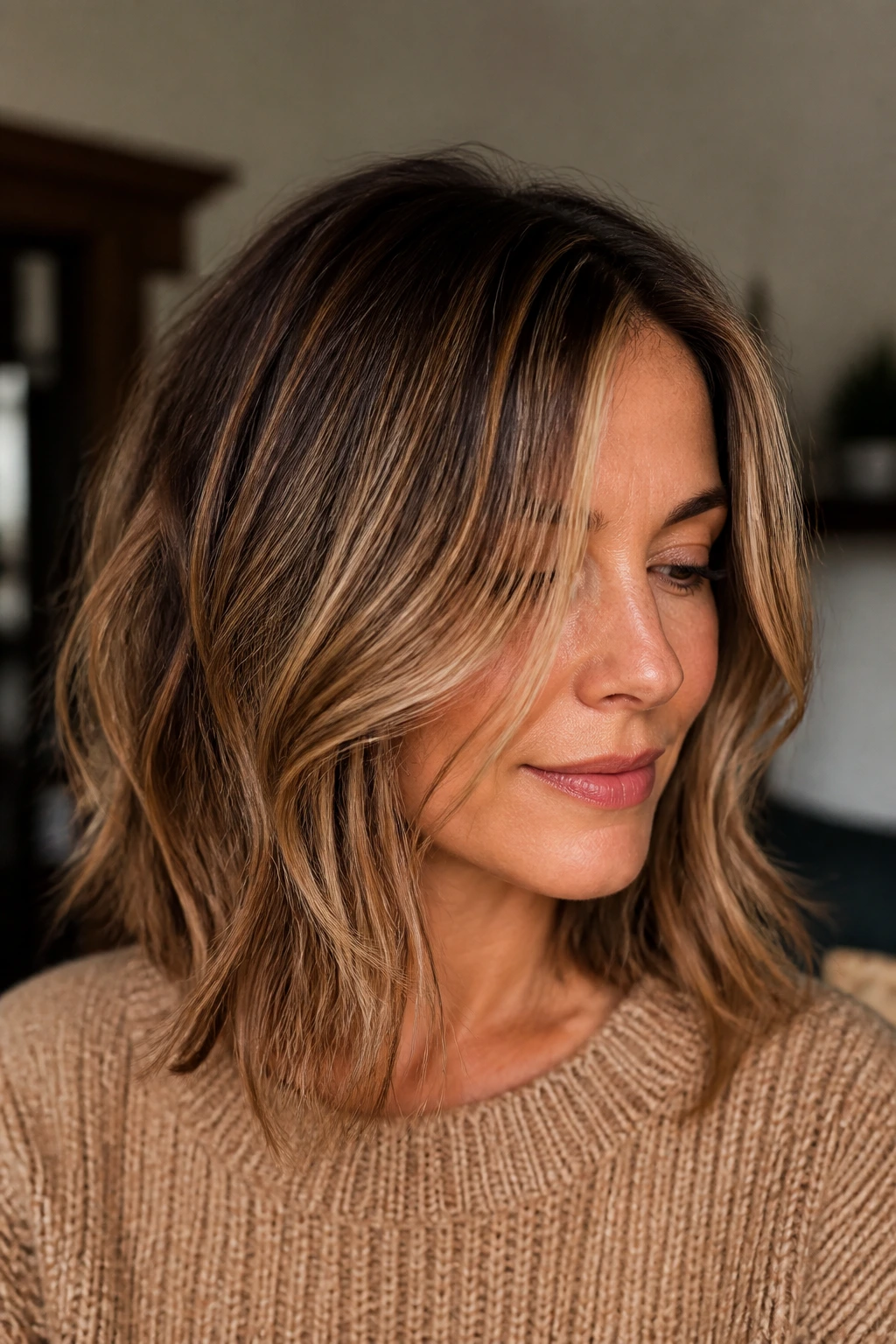
Thin hair does not need louder color. It needs smarter color. Caramel sits in that middle zone between blonde and brown, which lets it add light without turning the hair into a high-contrast stripe show. That middle ground is where the fullness illusion starts.
A lot of the best results come from contrast that’s soft enough to feel natural but clear enough for the eye to register. If the base is light brown, caramel babylights can brighten the top and face frame while a few lowlights underneath keep the bottom from looking see-through. If the base is darker, the caramel should usually stay warm and grounded, not pale gold.
The placement matters even more than the shade. Bright pieces at the part line, temples, and top layer make the hair catch light where people actually look. Lower panels can stay deeper so the haircut keeps its weight. That’s the reason a fine, softly highlighted bob often looks thicker than a fully lightened one. It’s not magic. It’s restraint.
What to Tell Your Stylist Before the First Snip
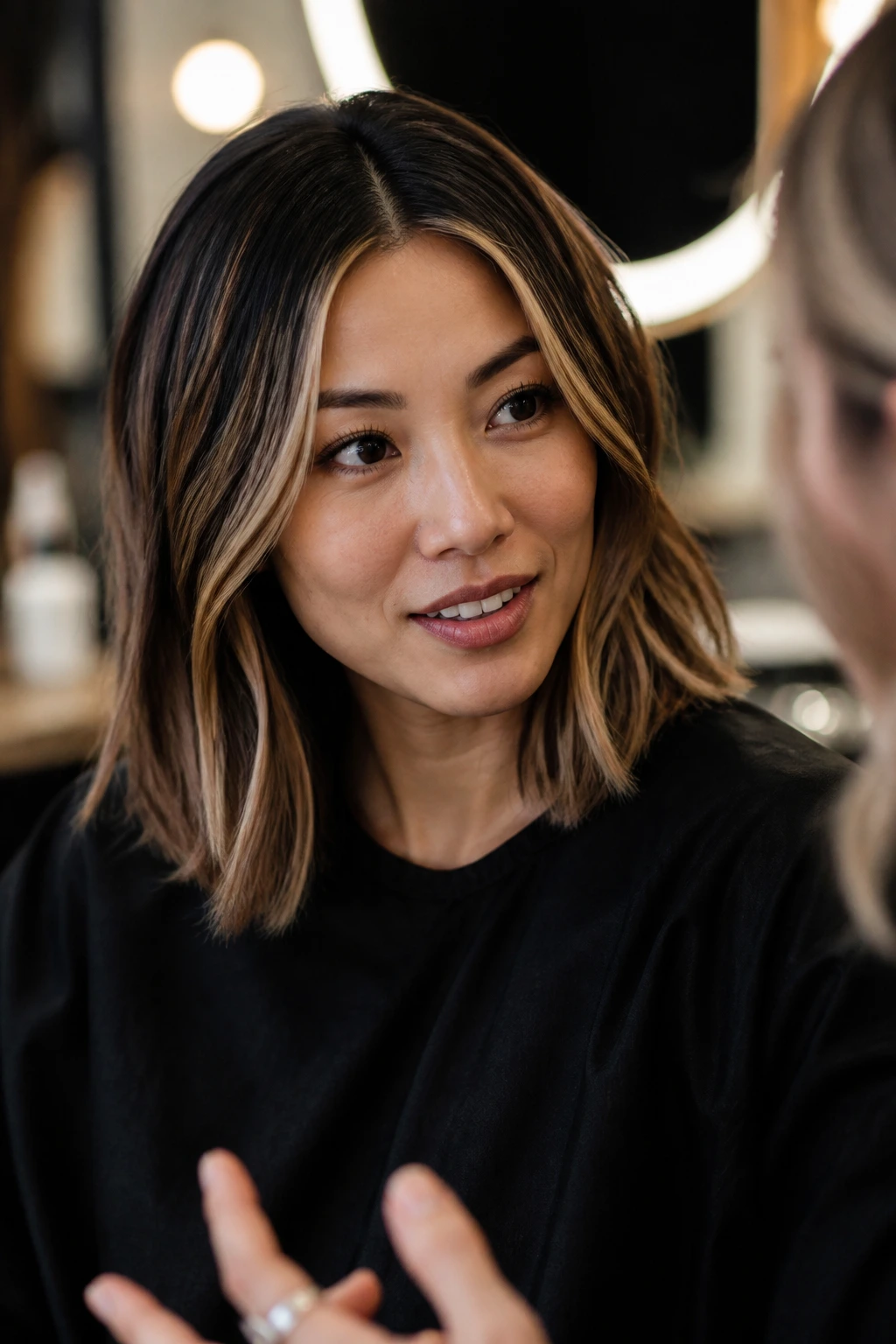
The best salon conversations are short and specific. Bring two or three photos, then say what you like in plain language: the length, the part, how much movement you want, and where you want the caramel to show. If you only say “make it fuller,” you’re handing the whole job to luck.
The Cut
Ask for a perimeter that matches your hair density. For short styles, that usually means blunt or slightly beveled ends. For lobs and longer cuts, ask for internal softness instead of lots of short layers at the bottom.
The Color
Use words like babylights, money pieces, root shadow, balayage, and lowlights if they fit the look. Tell the colorist whether you want the caramel to read warm, beige, or a little toffee-like. And say where you want brightness to live—around the face, through the crown, or mostly on the outer layers.
The Finish
If your hair falls flat fast, say so. A stylist can leave more weight at the ends, avoid over-thinning the interior, and place highlights in a way that supports lift instead of exposing the scalp. That one conversation saves a lot of regret later.
Essential Tools for Styling These Looks
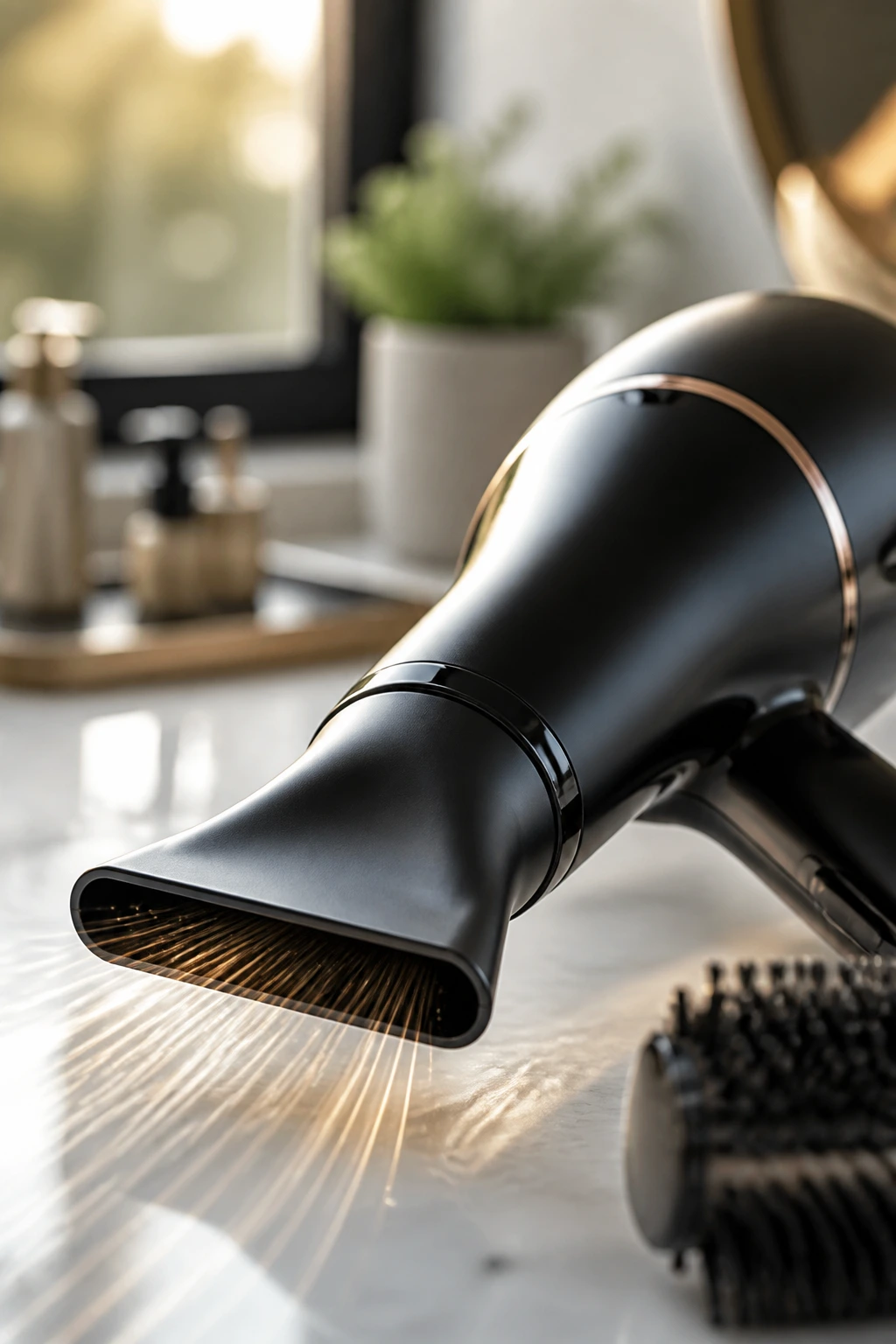
- Blow dryer with concentrator nozzle — Directs airflow so you can lift the roots instead of blasting the hair sideways.
- 1-inch curling iron or flat iron — Best for loose bends on bobs, lobs, and face-framing pieces.
- Round brush, 1.25 to 1.5 inches — Helps create body without making the ends puff.
- Tail comb — Useful for clean parting, sectioning, and teasing? Skip the teasing, honestly, unless you keep it microscopic.
- Lightweight mousse — Gives hold at the roots and mid-lengths without the sticky feel of heavy creams.
- Heat protectant spray — Fine hair burns faster than people think.
- Dry shampoo — Adds grit at the roots and buys you another day before a wash.
- Texturizing spray — Good for bobbed styles and wavy lobs; use a light hand.
- Velcro rollers or duckbill clips — Handy for setting the crown while the hair cools.
- Finishing serum or oil, very small amount — Just for the ends. Too much will flatten the whole style in a minute.
How to Wear These Hairstyles Day to Night
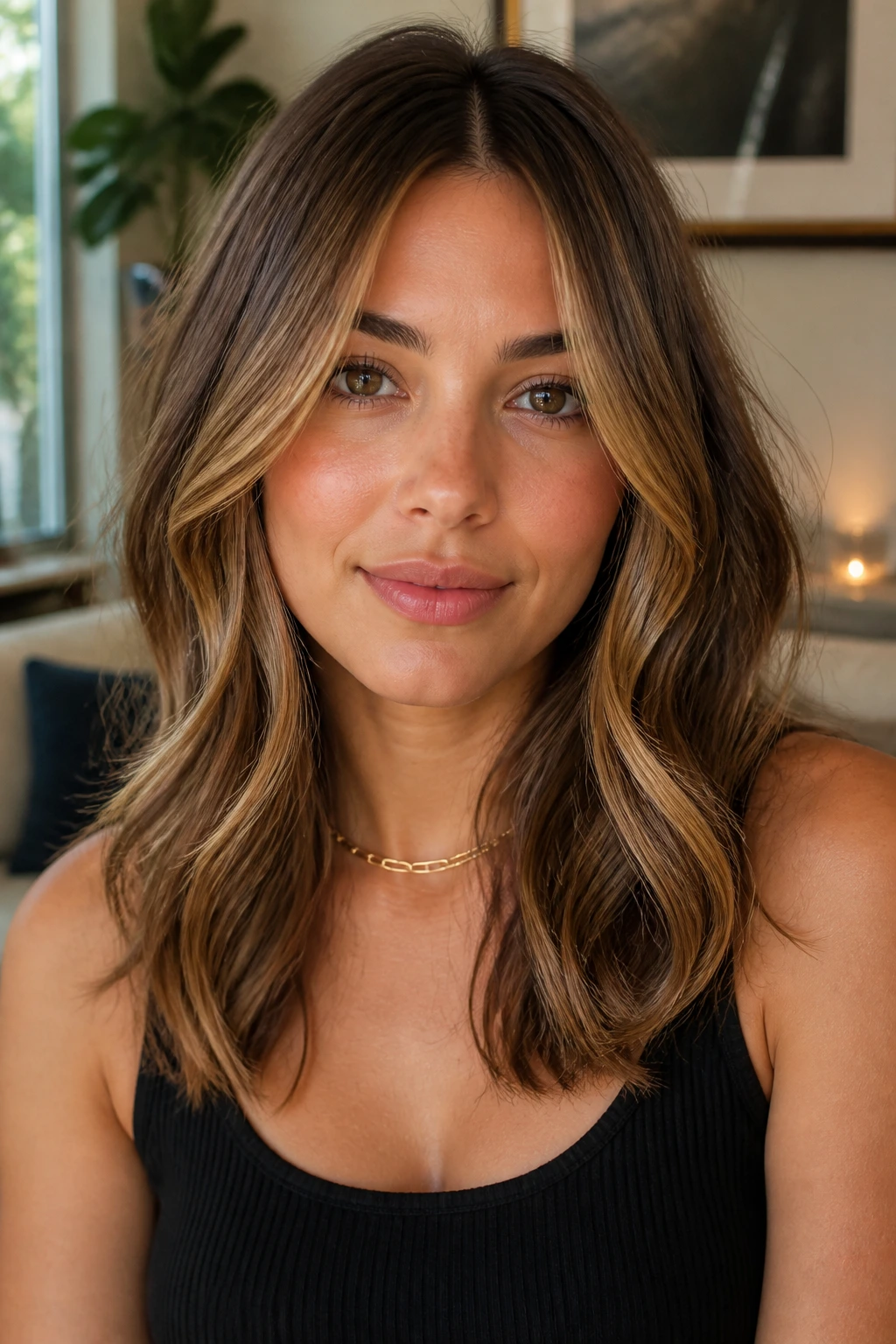
Everyday polish: Keep the roots lifted, the ends clean, and the product light. Thin hair shows buildup fast, so a pea-sized amount of serum or cream is usually enough for the whole head. If your style has caramel money pieces, tuck one side behind the ear to show them off without fuss.
Dressy finish: Add one or two deliberate bends around the face with a curling iron, then brush them out slightly so they don’t look too curled. That soft bend makes the caramel gleam more than a tight curl does. A side part or deep tuck can also make a simple bob look more finished in seconds.
Best accessories: Slim headbands, small clips, silk scrunchies, and narrow barrettes work better than heavy, oversized accessories. Big clips can swallow thin hair. Small ones let the cut and color stay visible.
What to avoid: Heavy oils at the roots, giant barrel curls, and crunchy hairspray. All three can collapse the shape before lunch.
Small Texture Boosters That Do the Heavy Lifting
Volume trick: Put mousse on damp roots, then rough-dry until the hair is about 80 percent dry before you reach for a brush. That little gap gives the roots memory without turning the finish stiff. If you’ve got a bob or lob, flip the head for a few seconds at the end and then cool it upright.
Color boost: A clear gloss or glaze every few weeks keeps caramel highlights from going muddy. Warm tones fade fast into brass or beige-brown if they’re left alone too long, especially on porous ends. A gloss keeps the shine clean and the color read crisp.
Customization: If your hair is wavy, let the waves do the movement and only shape the front. If it’s straight, use a flat iron to create a slight bend, not a full curl. If it’s curly, define the outer layer and leave the interior looser so the cut doesn’t swell too wide.
Make-it-yours: Fine hair that hates product usually behaves better with spray-based volume than creams. Hair that gets dry at the ends can take a tiny drop of oil, but keep it far from the scalp. And if you’re growing your hair out, add caramel only around the face so the rest can stay low-maintenance.
Common Mistakes That Flatten Thin Hair
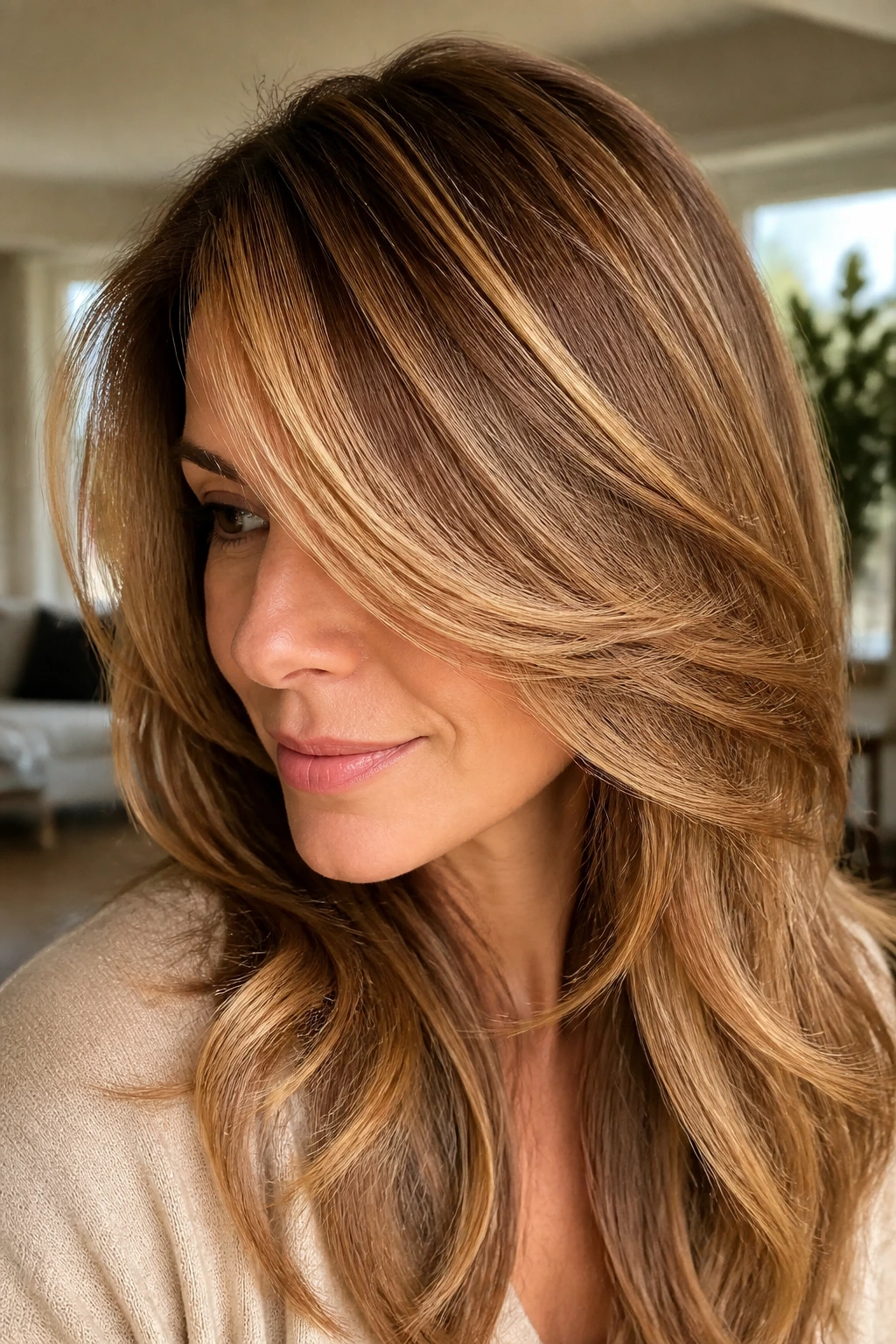
Over-layering the cut. The symptom is obvious: ends that look ragged, see-through, and a little tired. The fix is a stronger outline with softer interior shaping. Thin hair needs support at the perimeter, not a hundred tiny snips.
Making the caramel too pale. If the highlights jump too far from the base, they can look stripey and draw attention to sparse areas instead of hiding them. Keep the caramel within a believable range of the natural color, and add lowlights if the whole head starts looking too bright.
Using heavy cream on the roots. Fine hair collapses fast under rich products. Put most of the moisture on the mid-lengths and ends, then use mousse or a light spray at the crown where lift matters.
Curling too tightly. Tight curls shrink thin hair and expose more scalp. Loose bends, brushed-out waves, or a rounded blowout work better because they make the shape look broader without shouting about it.
Parting the hair in the same spot forever. The scalp starts to show, and the highlight placement can look harsher than it should. Shift the part a half-inch now and then. Small change, big payoff.
Skipping the gloss. Caramel can go dull faster than people expect. When the tone gets muddy, the whole style loses clarity. A gloss restores the shine and keeps the color looking deliberate.
Variations and Adaptations to Try
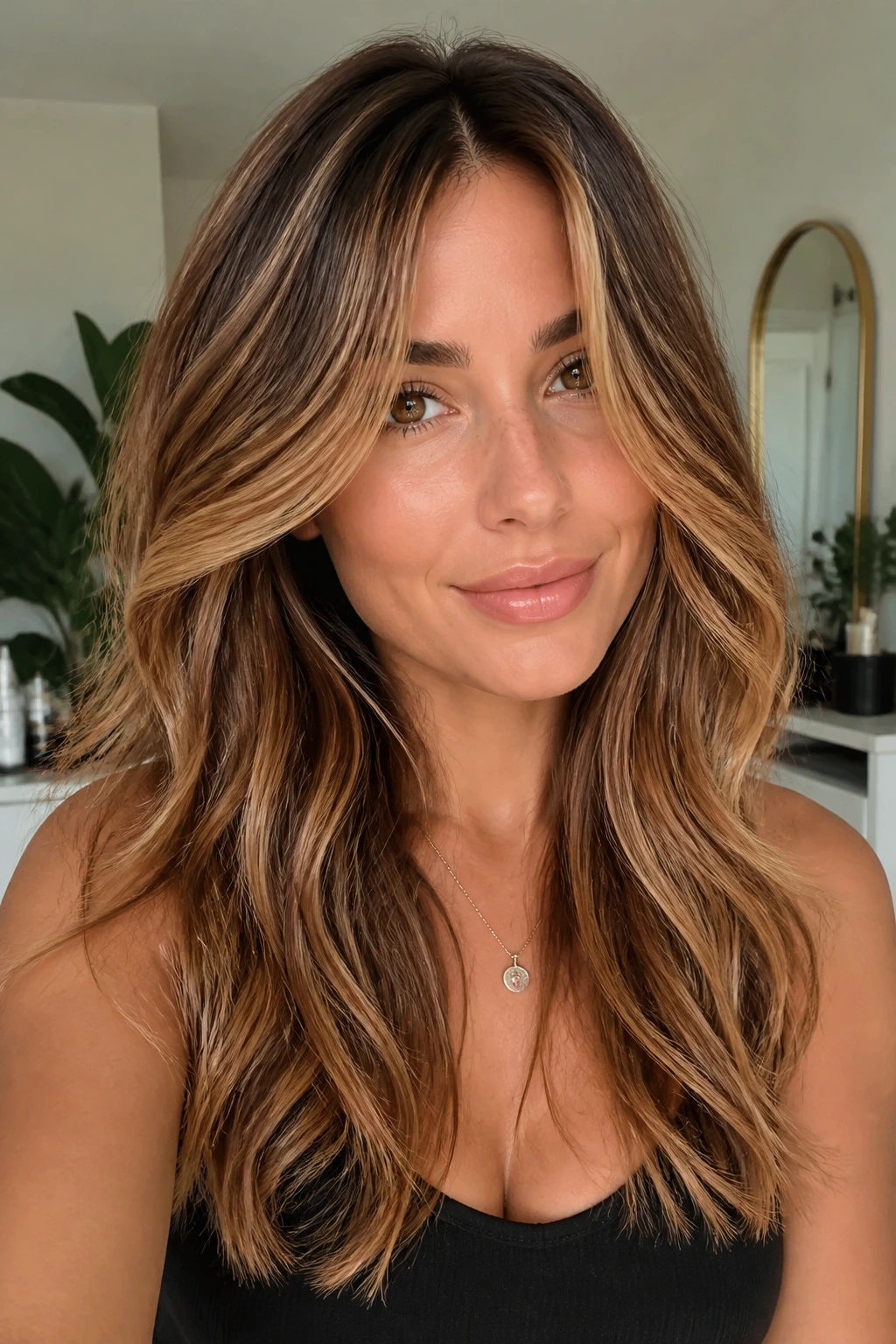
Honey-Drizzle Minimalist. Keep the haircut the same and ask for only a few caramel ribbons around the face and crown. This works well if you want the lightest possible color change and don’t want the maintenance of a full highlight pattern.
Toffee Root Melt. Leave the root a touch deeper and melt it into caramel mid-lengths. The darker root makes thin hair look denser at the scalp, which is useful if your part line shows quickly.
Curly Caramel Halo. Place the brightest pieces on the outer curve of the curls and skip the underside. That gives the hair a halo effect without making the texture look frizzy or overprocessed.
Beige-Caramel Blend. If your skin tone reads cooler, ask for a beige-caramel mix instead of a golden one. The hair still feels warm, but the tone stays softer and less orange near the face.
Low-Fuss Grow-Out Version. Pick a cut with a strong perimeter and a color placement that starts lower from the root. This is the one to choose if you want to stretch appointments and keep the grow-out line soft.
Keeping the Cut and Color Fresh Between Appointments
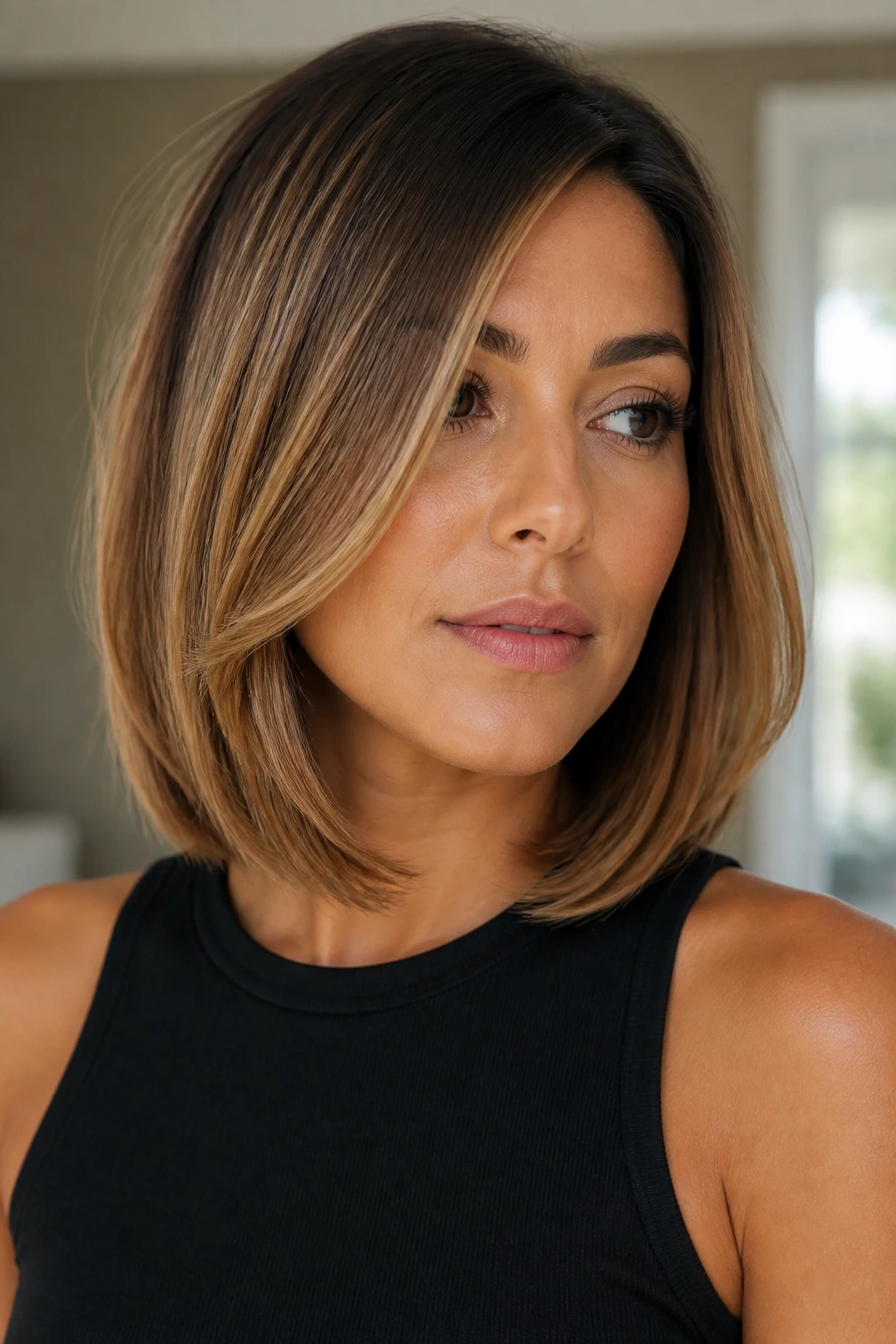
Short cuts like bobs, bixies, and pixies usually want a trim every 5 to 7 weeks if you want the shape to stay crisp. Lobs and shoulder-length cuts can usually stretch to 8 to 10 weeks, while long layered styles often hold for 10 to 12 weeks before they start looking slack. If your hair grows fast, shave a week off those windows.
Caramel highlights tend to look best with a gloss or toner refresh every 6 to 8 weeks if the color is bright around the face. If the tone is more muted to begin with, you can sometimes stretch it longer, but the shine will still need help. A weekly mask on the ends keeps the lighter pieces from turning dry and rough.
Dry shampoo buys time, but don’t pile it on for days. Two or three days of use is usually enough before the roots start to feel dusty. Clean roots and a little movement make these styles look far more deliberate than a mountain of product ever will.
Frequently Asked Questions
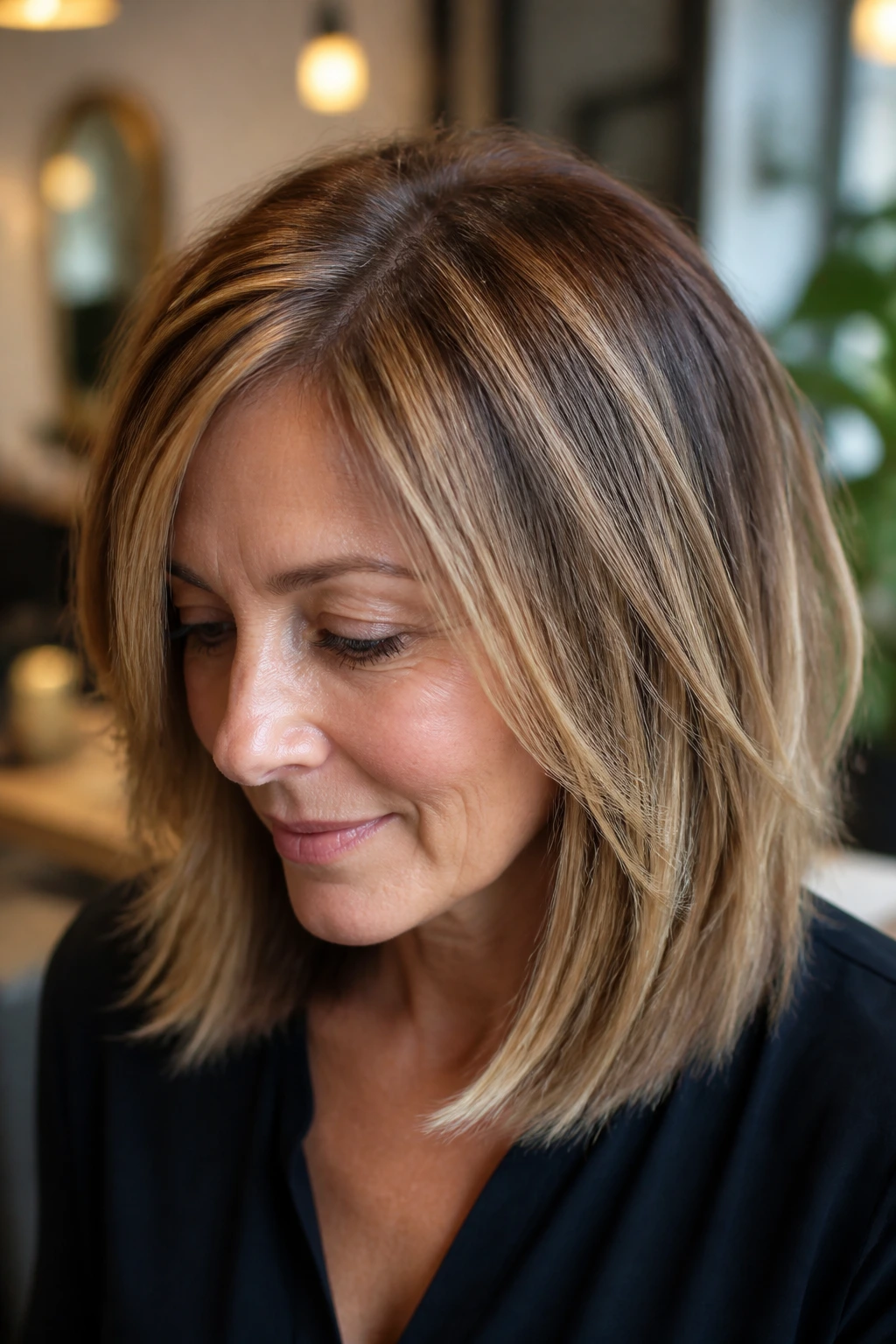
What caramel shade looks best on thin hair?
A warm caramel that sits between honey blonde and light chestnut usually looks the most believable. It gives depth without screaming for attention, and that softness helps the hair look fuller instead of patchy.
Are highlights or balayage better for fine hair?
Babylights and soft balayage both work, but babylights often win when the hair is very fine because they blend into the base instead of carving out big bright sections. Balayage is better if you want a lower-maintenance grow-out and a softer face frame.
Will layers make thin hair look thinner?
Too many layers will, yes. Controlled internal layers or longer face-framing pieces can help, but a strong outline is what usually keeps thin hair from looking sparse.
Can I wear these looks if my hair is fine but dense?
Absolutely. Fine-but-dense hair often needs the same visual tricks as thinner hair, but it can usually handle a little more layering and texture. The cut can be slightly lighter without losing shape.
How do I keep caramel highlights from turning brassy?
Use color-safe shampoo, avoid scorching-hot water, and get a gloss when the tone starts to go orange or dull. If your hair runs warm fast, a violet or blue-toned product can help, but use it sparingly so the caramel doesn’t turn muddy.
What if my hair is curly?
Choose styles that keep enough length for the curl pattern to show without puffing up too high. A chin-length curly bob, a softened shag, or a long layered cut with light caramel on the outer layer usually works better than a heavily chopped shape.
How can I make thin hair look thicker without teasing it?
Use a blunt edge, a root-lift product, and a style that moves the eye diagonally or around the face. Caramel highlights near the part and cheekbones help a lot because they create dimension without adding weight.
How do I explain this to my stylist?
Say whether you want short, shoulder length, or long, then ask for a shape that keeps the perimeter full and the interior soft. For color, mention caramel babylights, face-framing pieces, a root shadow, or a subtle balayage depending on how much upkeep you want.
Soft Light, Better Shape
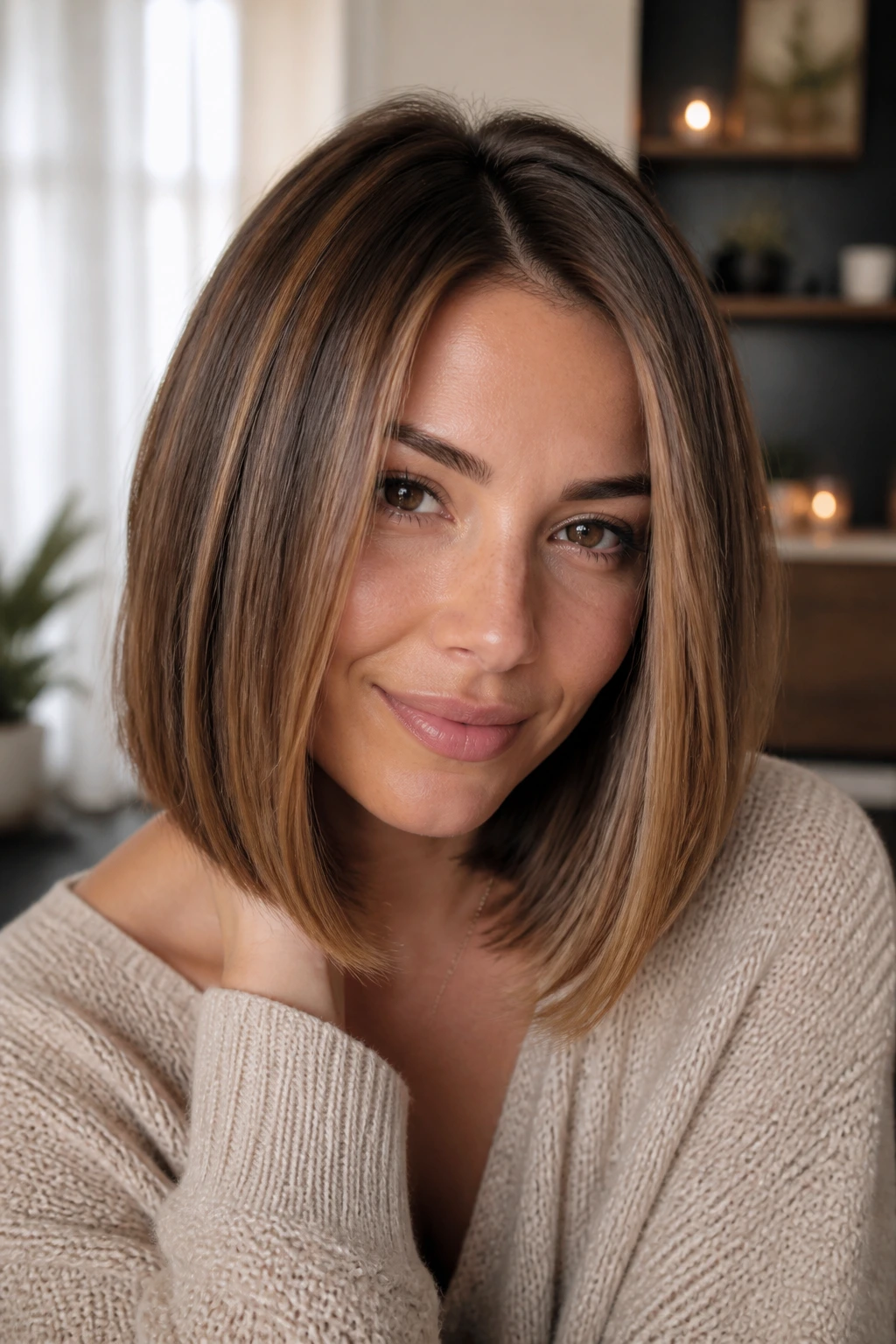
The smartest hairstyles for thin hair do two things at once: they hold a clean line and they let the color do some of the contouring. Caramel highlights are especially good at that because they warm the hair without stripping it bare. They make a bob look denser, a lob look more lifted, and a simple ponytail look like a choice instead of a compromise.
My vote is always for shape first, shine second, and enough restraint to keep the hair from looking overworked. If you start with that mindset, nearly any of these cuts can hold up in real life, not just in a salon mirror. And that’s the point, isn’t it? Hair that looks good when you leave the chair, then still looks like itself after a long day, a light brush, and one more glance in the bathroom mirror.