



Oval faces can carry a lot, which is exactly why twist braids need a real point of view. The shape already gives you balance, so the braid work gets to decide whether the finish feels soft, sharp, airy, or a little dramatic. On natural hair, that choice matters even more, because the twist pattern, the parting, and the density all change how the face reads from a few feet away.
The sweet spot with twist braids for natural hair and oval faces is not “anything goes.” It’s knowing when to keep the sides full, when to open the face with a clean part, and when to let a few front pieces do the talking. A center part can look crisp. A side sweep can feel looser and less severe. A chin-length bob can show off cheekbones in a way waist-length twists never will.
There’s also the practical side, which a lot of style roundups skip. Natural hair has memory, shrinkage, and texture that changes the finished look more than the extension hair does. If the roots are stretched badly, the front can puff in a way that fights your face shape. If the twists are too tiny, the style can read stringy. If they’re too chunky, they can bury your features. The good styles live in the middle, or at least know how to break the rules on purpose.
Why These Twist Braids Suit Oval Faces So Well
-
Balance without boredom: Oval faces already have proportion, so twist braids can play with symmetry instead of trying to fix anything. That means you can wear a center part, a side part, or a swept-up finish without the style looking off.
-
Parting matters more than people think: A clean middle part makes the face look calm and structured; a deep side part adds movement and pulls the eye diagonally. Same head, very different mood.
-
Natural hair gets room to breathe: Medium and chunky twists reduce daily combing, which helps preserve the curl pattern and keeps the hairline from taking a beating.
-
Length is a design choice: Chin-length and shoulder-length twists keep the face open. Longer twists pull attention downward and make earrings, necklines, and jawlines part of the styling.
-
Texture does half the work: Havana, passion, Senegalese, and flat twists each sit differently on natural hair. Some feel soft and matte. Others look sleek and dense. Oval faces can handle that range without needing a huge amount of corrective styling.
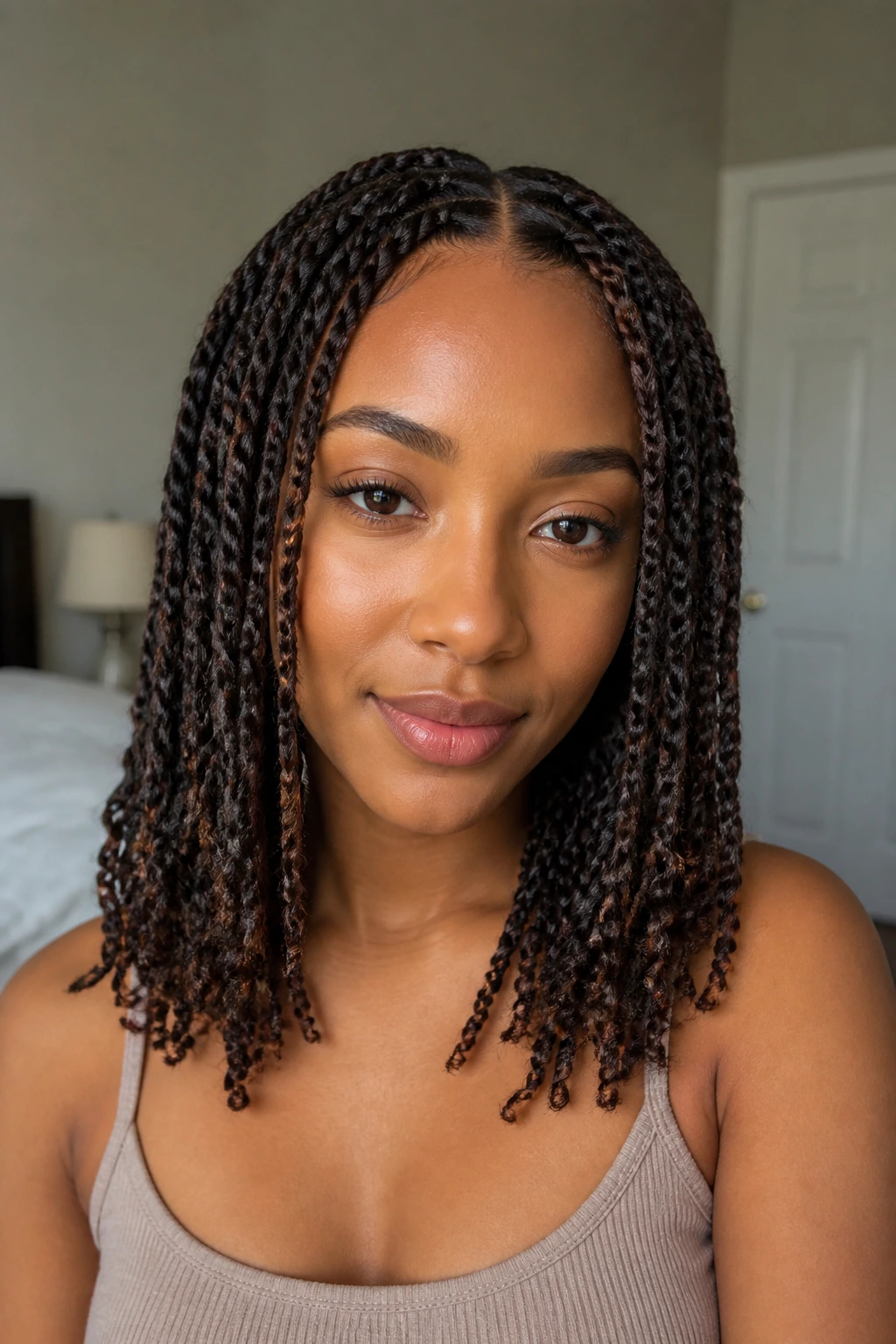
1. Center-Part Medium Havana Twists
A clean center part and medium Havana twists are one of those combinations that looks calm without feeling stiff. The twists have enough thickness to show up clearly in photos and enough movement to avoid that overpacked, helmet-like effect that can happen with jumbo styles.
Why it flatters an oval face
The middle part keeps the face evenly framed, so the cheekbones stay visible and the jawline doesn’t get swallowed by hair. I like this style best when the twists fall right around the collarbone or a little below it. That length gives you swing, but it still leaves the face open enough to read.
Best when your natural hair is medium to dense
If your hair has a lot of body at the root, medium Havana twists help control it without flattening everything down. Ask for a neat front part and a softer taper around the temples. The small change makes a big difference. A hard, heavy front line can make the whole style look boxy.
A touch of mousse on the roots after installation keeps the parting crisp for the first few days, and that clean line does a lot of face-shape work by itself.
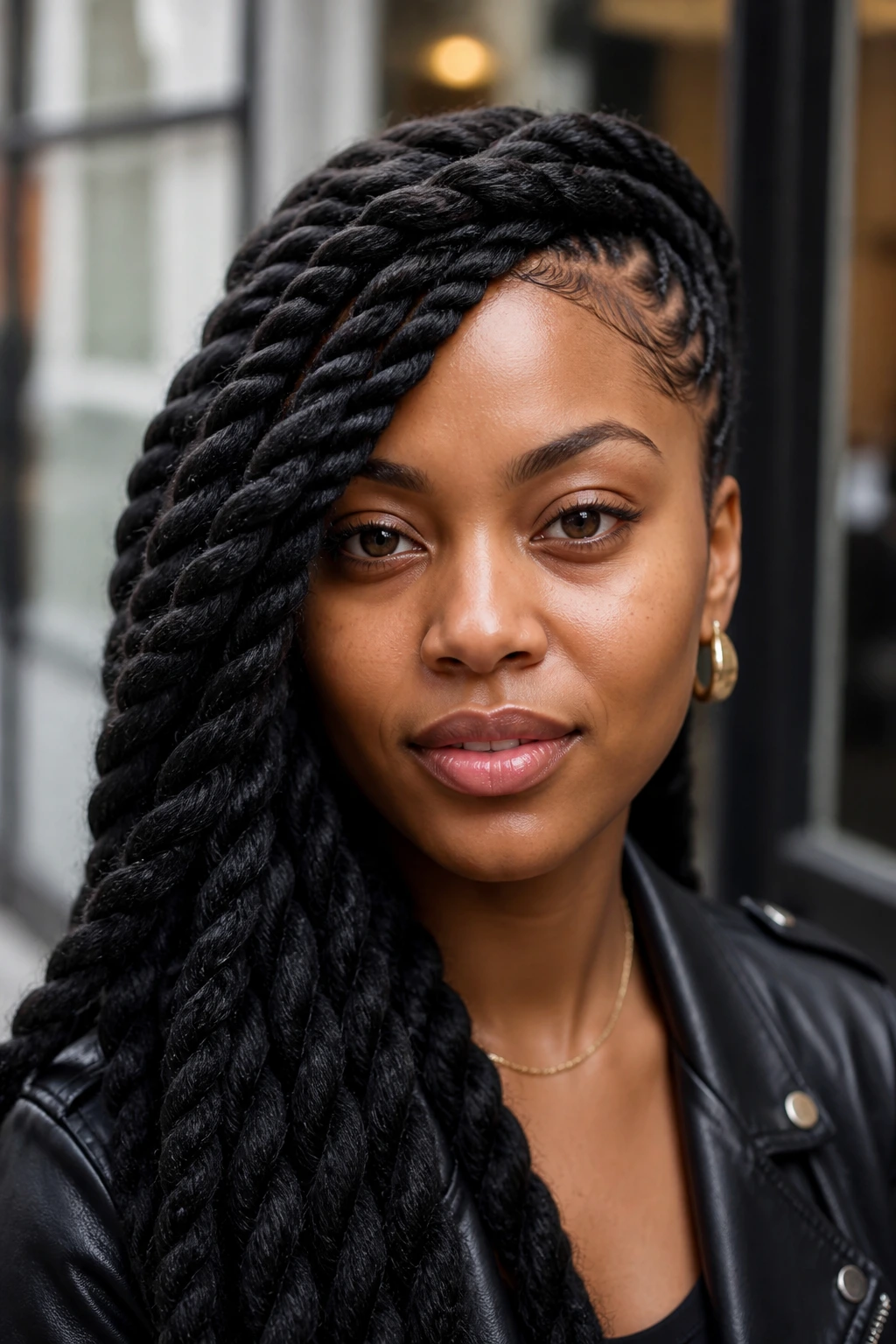
2. Side-Swept Jumbo Rope Twists
Jumbo rope twists are blunt in the best way. They have weight, shape, and a little attitude, and the side sweep keeps that fullness from sitting evenly across the forehead.
A strong diagonal changes the whole face
On an oval face, a deep side sweep gives your features a direction. The eye moves from the part down toward the cheek and neck, which adds motion without needing layers cut into the hair. If your face feels long, this is a smart move because the twist mass sits across the side instead of dragging the eye straight down the center.
Keep the roots soft, not flat
The front twist should not be yanked tight just to make the part look sharp. A crisp part is nice. Tender edges are not. Ask for larger sections at the front and keep the side with the most volume just off-center, not fully pinned to the scalp. That keeps the style from reading too severe.
I’d wear this with hoop earrings and a plain neckline. It does the rest.
3. Shoulder-Length Passion Twists
Passion twists bring a softer, springier texture than sleek Senegalese twists, and that softness is a gift on oval faces. The water-wave hair gives the ends a little movement, which keeps the style from feeling too hard around the cheeks.
Why the texture matters
Passion twists bounce. They don’t hang like stiff cords, and that bounce helps break up the vertical line that long twists can create. If you like hair that feels touchable and slightly undone, this is the version to watch. It’s also easier to wear with natural hair that has a lot of shrinkage, because the style doesn’t need to sit ruler-straight to look good.
Best if you want a softer frame
Shoulder length is the sweet spot here. Shorter than that and the twists can feel a little crowded near the jaw. Longer than that and the looser texture can start to look busy. Keep the front pieces a touch lighter than the back so the face still gets space.
A little frizz at the ends is part of the charm. Too much polishing kills the point.
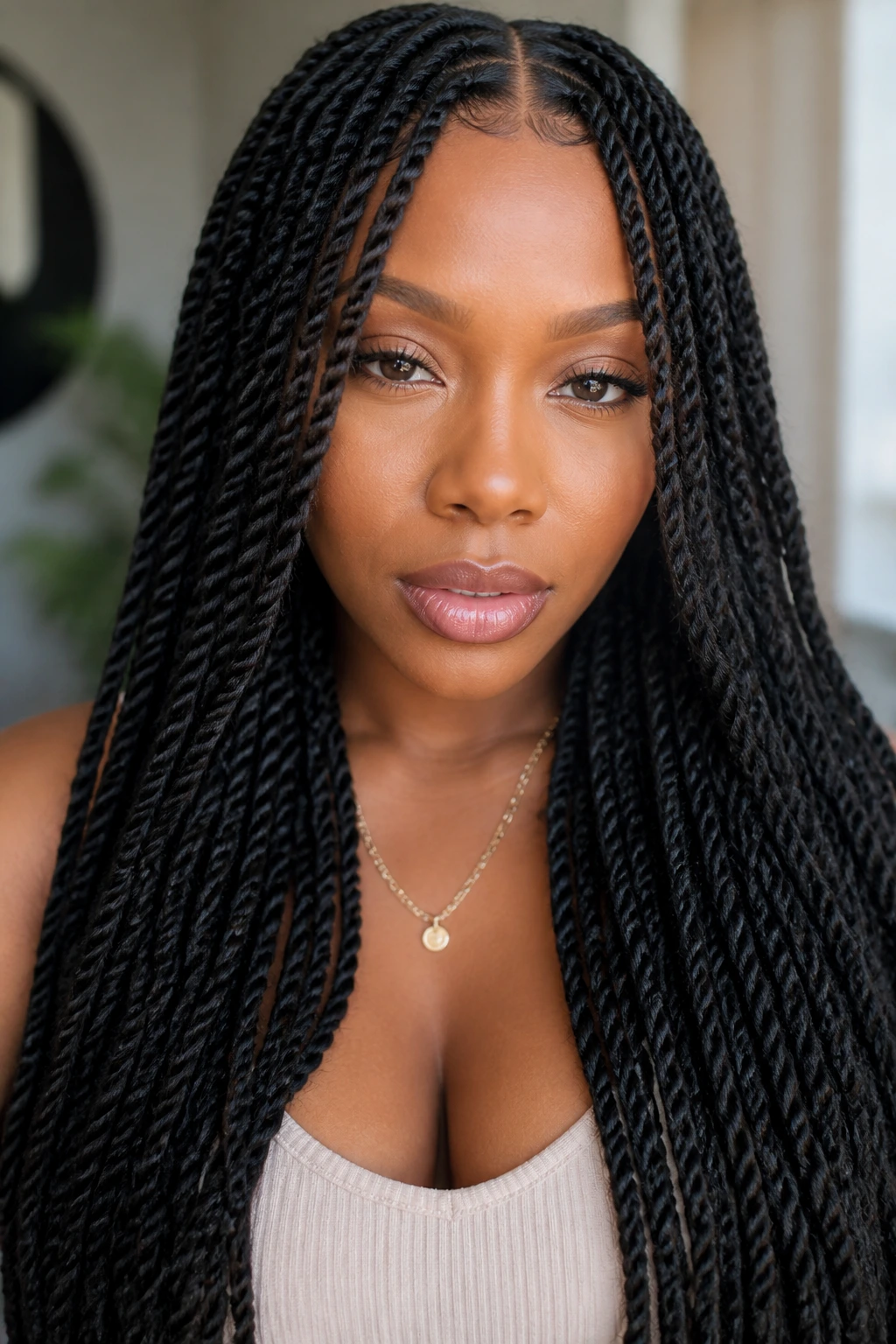
4. Long Senegalese Twists with Curtain Front Pieces
Long Senegalese twists look sleek, polished, and deliberate. On an oval face, the trick is not to let the length take over. Curtain front pieces solve that problem fast.
Straight down the back, soft around the face
The long line in back gives you drama. The front pieces, parted just off-center and allowed to fall a little wider around the cheeks, stop the style from looking severe. I like this look when the front sections are slightly shorter than the rest. It gives a layered effect without needing real layers cut into the hair.
Useful if you want length without heaviness at the front
If your natural hair is thick, long Senegalese twists can get heavy fast. Ask for a lighter density around the temples and hairline so the style does not pull downward. The result should feel smooth at the roots, not like the front of the style is dragging your face with it.
This is one of the cleaner styles for work, formal events, or any day you want the hair to behave.
5. Chin-Length Twist Bob
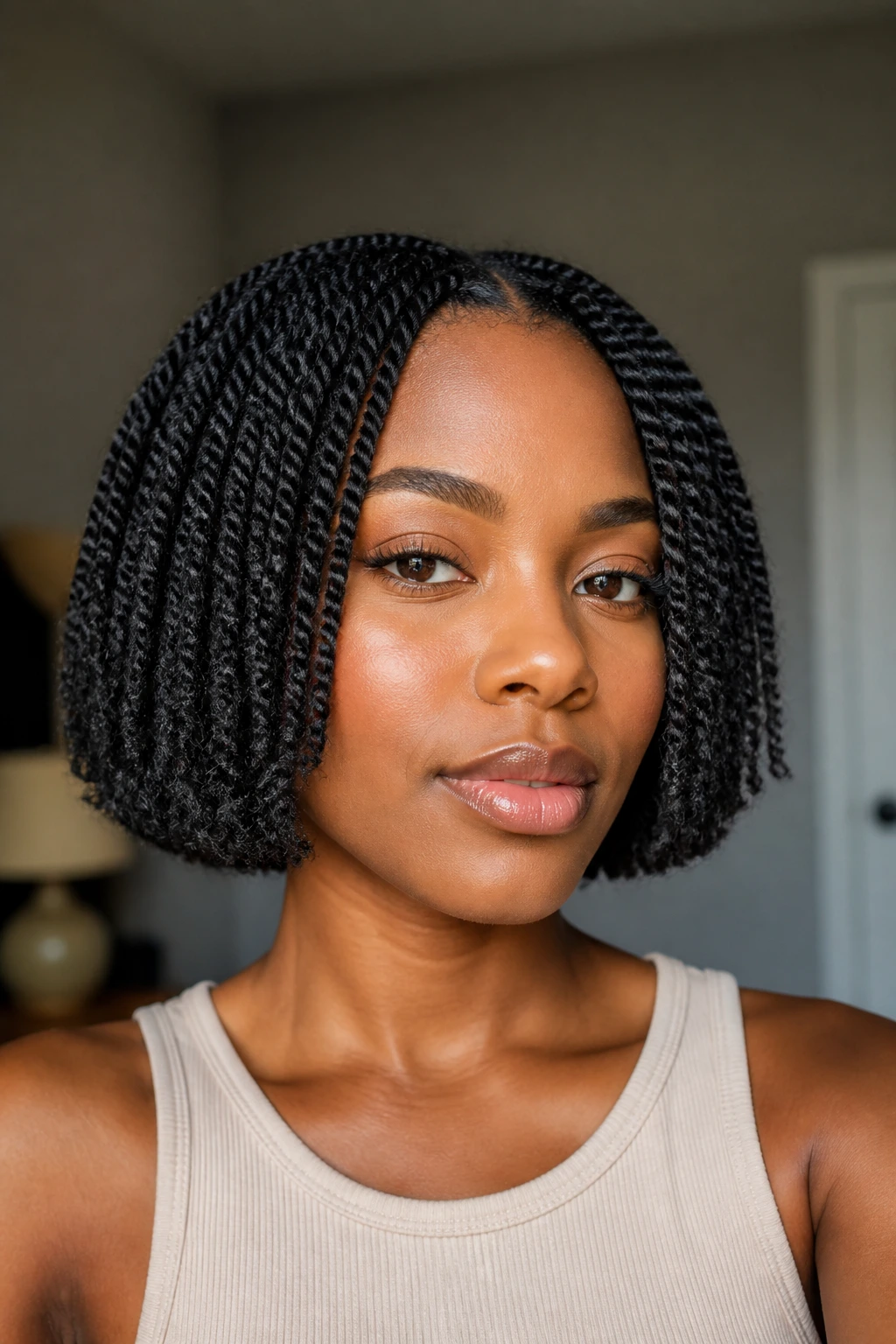
A chin-length twist bob is blunt, neat, and a little daring. It puts the focus exactly where it should be on an oval face: on the eyes, cheeks, and jawline.
Short hair makes the face do the work
There is nowhere for the style to hide, which is why it works. The bob opens up the neck, shows the shape of the jaw, and gives earrings room to matter. If you’ve got a narrow jaw and sharper cheekbones, this length can make the whole face look crisp and intentional.
Keep the ends even or slightly flipped
A clean cut line feels modern. Slightly flipped ends soften it if you do not want the bob to look too severe. I’d skip thick bangs here unless they’re very light and broken up, because too much hair across the forehead can flatten the oval shape.
A bob like this also grows out well. It gets more casual, not messy, which is a nice problem to have.
6. Half-Up Crown Twists
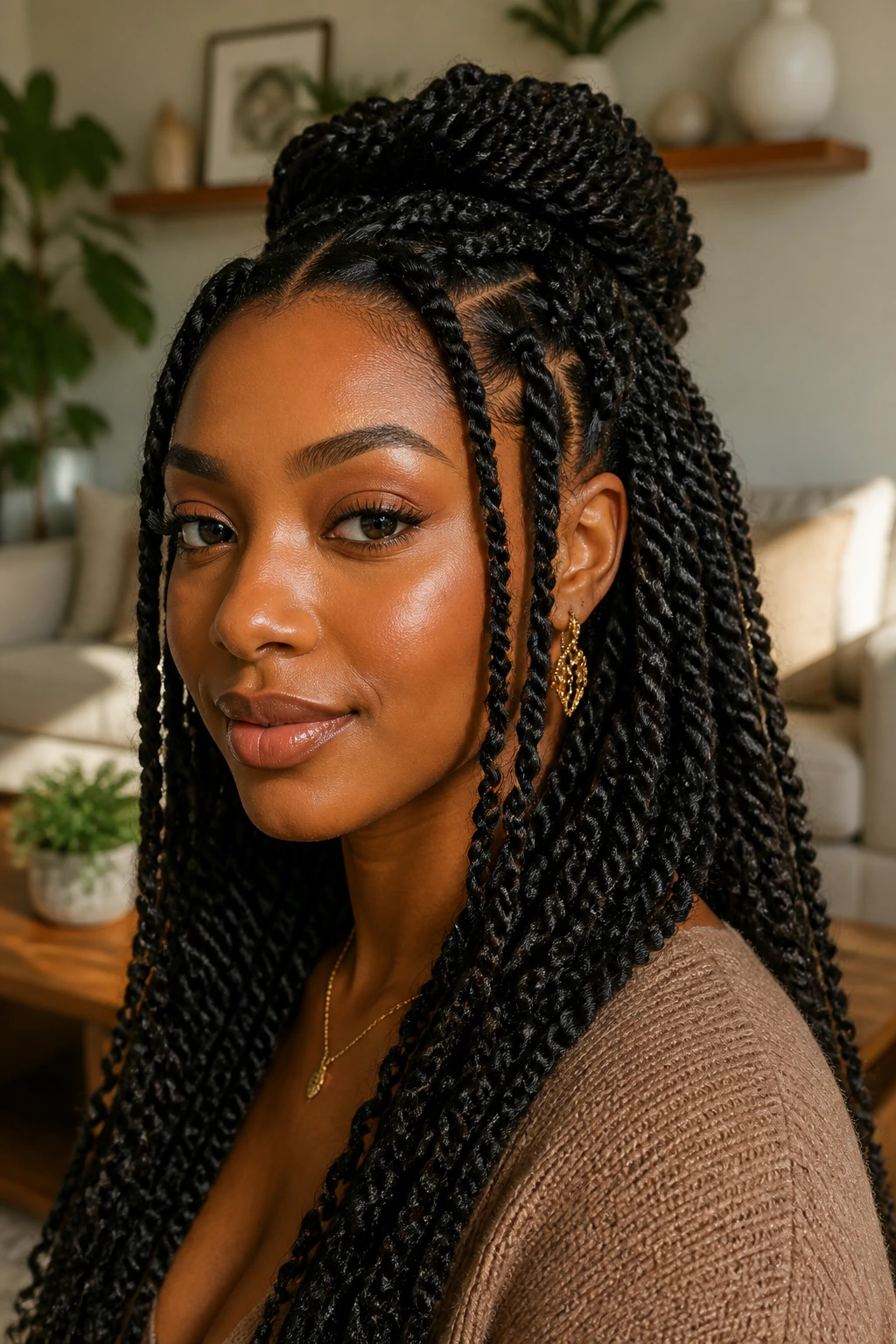
Half-up crown twists give you height where you want it and openness where you need it. That balance is perfect for an oval face, which can handle a little lift at the crown without losing proportion.
Why the crown lift works
Pulling the top section back exposes the eyes and cheekbones while keeping movement in the lower half of the style. The face gets a frame, not a curtain. That distinction matters. A full updo can sometimes make the forehead look longer; a half-up style leaves enough softness around the sides to avoid that.
This is the style I like for earrings
If you own bold earrings, this is the style that lets them show off. Keep the crown section smooth and secure it with a covered elastic or a wrapped twist. The back can stay fuller and looser, which keeps the look from feeling too formal.
A couple of face-framing twists left out in front can make the whole thing feel less rigid.
7. Knotless Feed-In Twist Braids
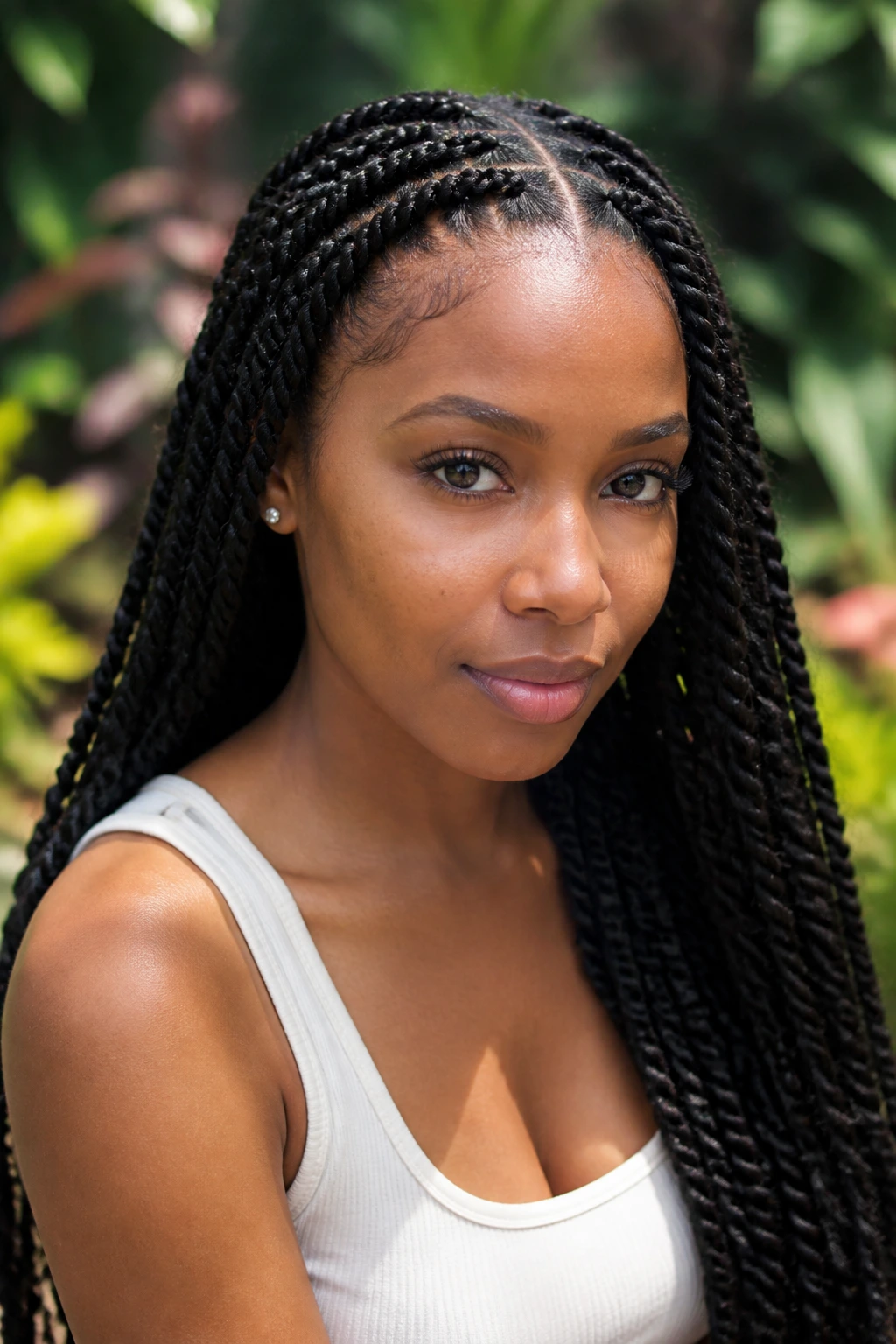
Knotless feed-in twist braids are a smart pick if you want a clean scalp line and less initial tension. On oval faces, the biggest benefit is that the style stays sleek at the root without creating a bulky bump where the braid begins.
Why knotless matters here
The gradual feed-in gives the front a flatter, softer start. That keeps attention on the face instead of the braid knot. If you have natural hair that is sensitive around the hairline, this style tends to feel kinder than a heavy, anchored front section.
Best with a neat part pattern
A straight middle part or narrow side part keeps the look polished. Because the twists start low and grow fuller as they travel down, the face stays open and the profile stays clean. That’s especially useful if you like long twists but do not want the front of the style to look dense.
This is a quiet style, but not a boring one. It just knows where to stop.
8. Triangle-Part Twists
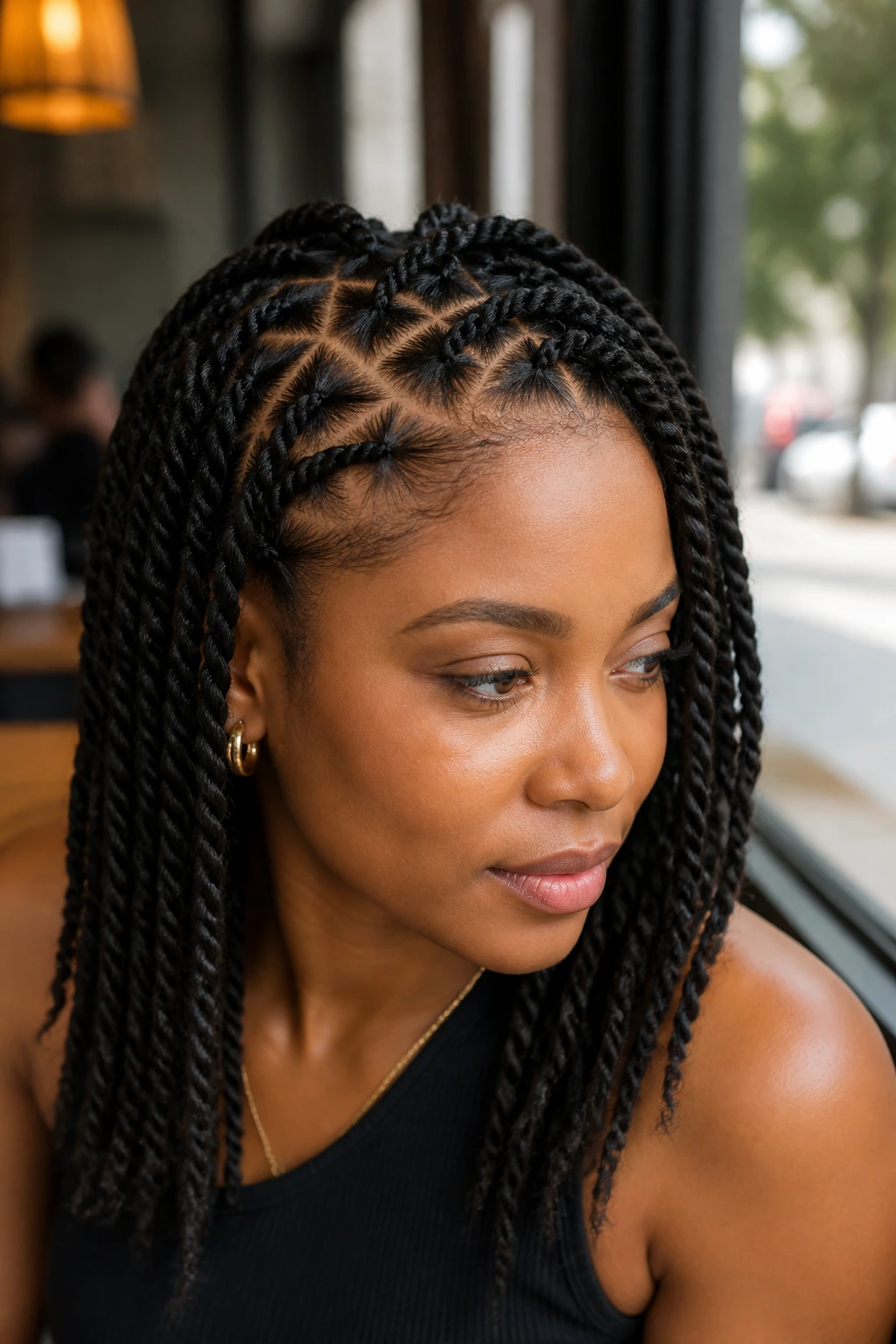
Triangle parts are one of my favorite ways to make twists feel intentional without adding accessories. On an oval face, that geometric parting adds a little visual bite while the face shape itself keeps the whole look balanced.
The parting becomes the design
You don’t need dramatic length or extra volume if the parts are doing the work. Triangle parts make the scalp pattern visible in a way that looks crafted, almost architectural. That can be enough on its own when you want the style to feel different without becoming fussy.
Keep the twists medium, not too tiny
Tiny twists plus triangle parts can start to look busy. Medium-size sections give the shape room to breathe. I’d keep the front triangles slightly larger than the ones at the back, because the face needs fewer distractions than the crown.
If you like a style that gets noticed from above and still looks clean from the front, this is a strong pick.
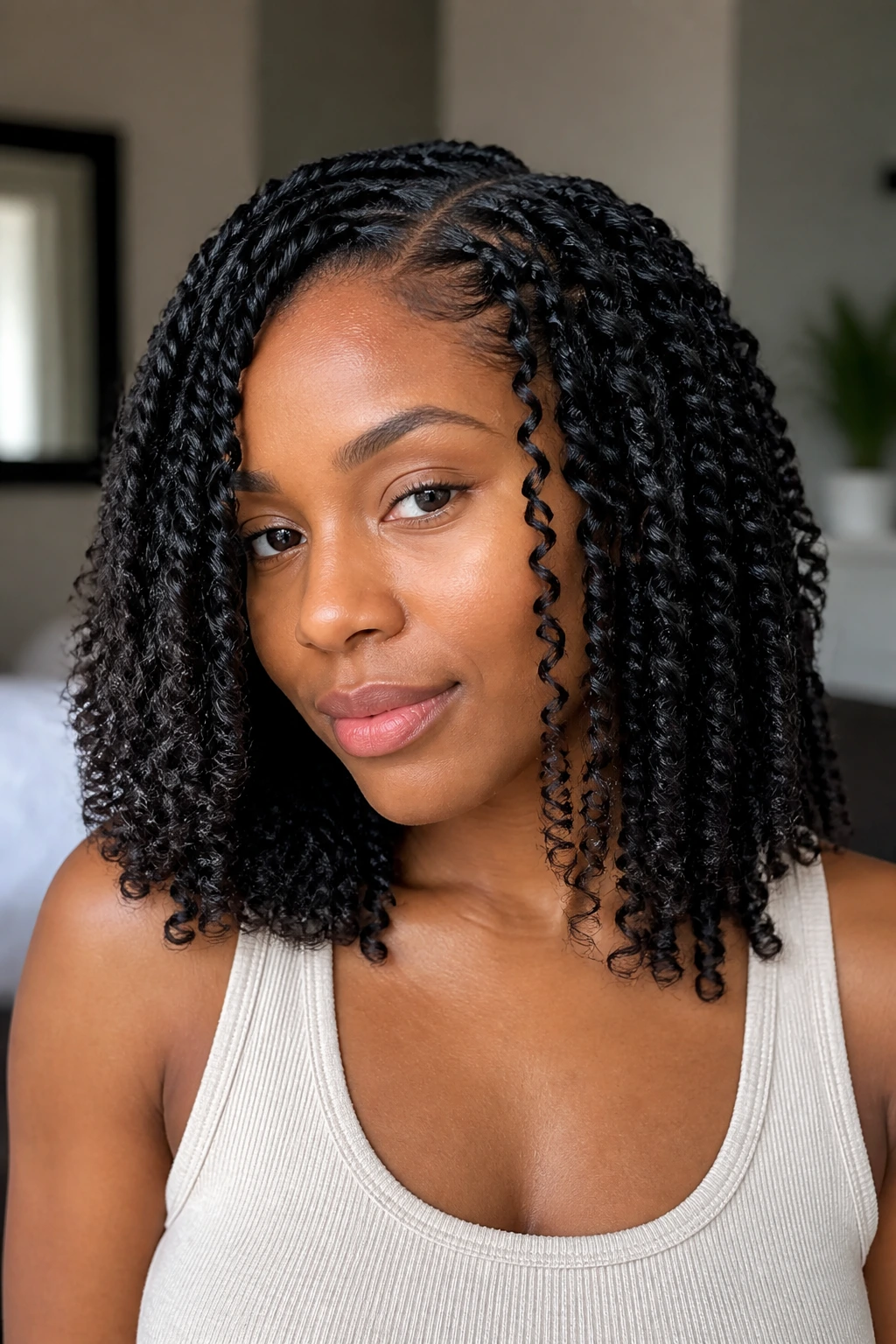
9. Boho Twists with Loose Ends
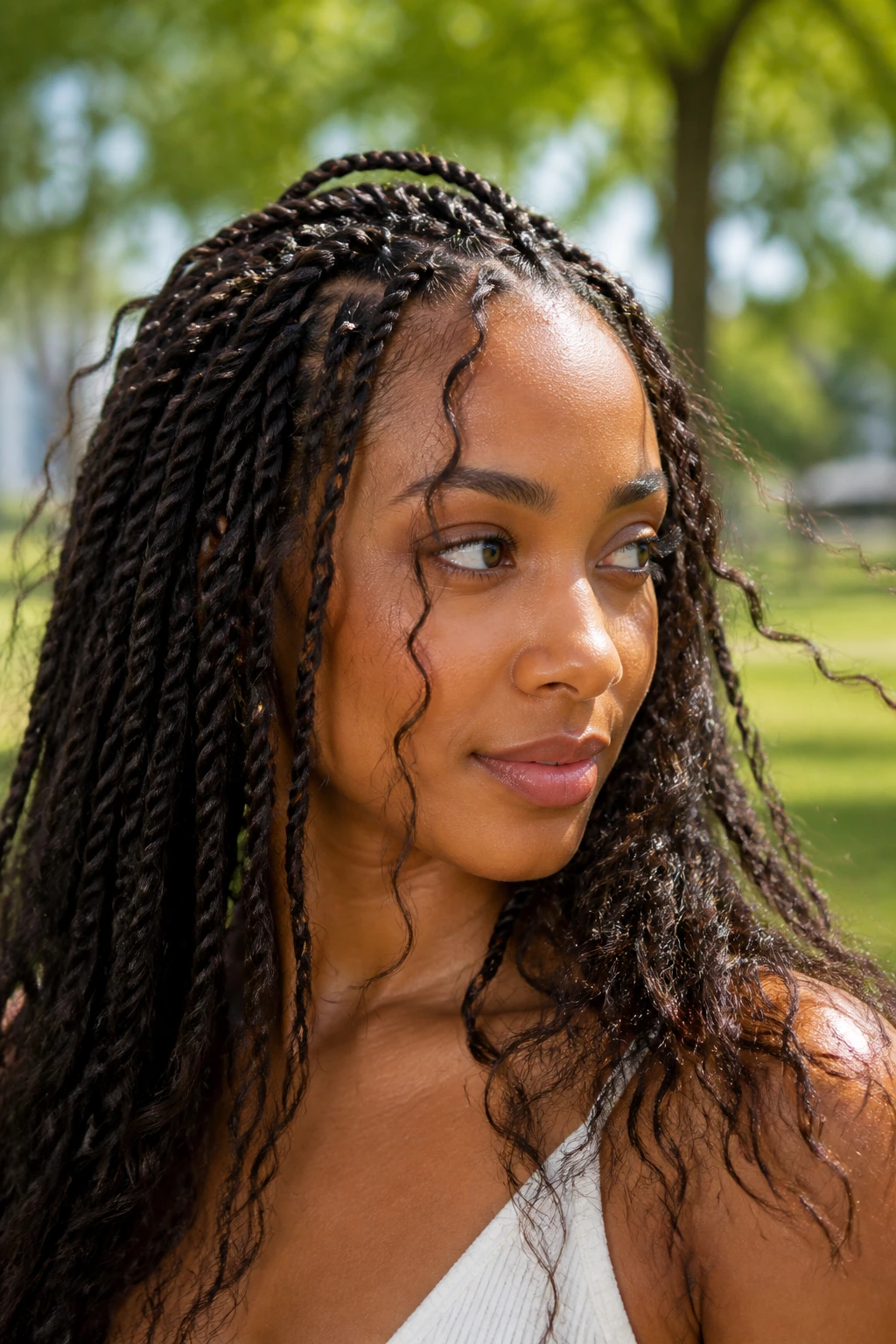
Boho twists are for people who like a little mess in a controlled way. The loose curls threaded through the ends soften everything, which is handy on an oval face if you want the style to feel less exact.
Softness around the face, not chaos
The danger with boho twists is overdoing the loose pieces. Too many curls around the temples can hide the face shape entirely. A few well-placed pieces near the front, and the rest tucked into the length, are enough. You want movement, not a hair cloud.
The texture needs some restraint
This style works best when the base twists stay neat and the loose pieces are limited to the ends or just a few front strands. That contrast—structured root, soft finish—keeps the style from looking unfinished. On an oval face, it gives the eyes and cheekbones a break from all the vertical lines.
If you like hair that looks lived-in on purpose, this is the one.
10. Flat Twists into a Low Bun
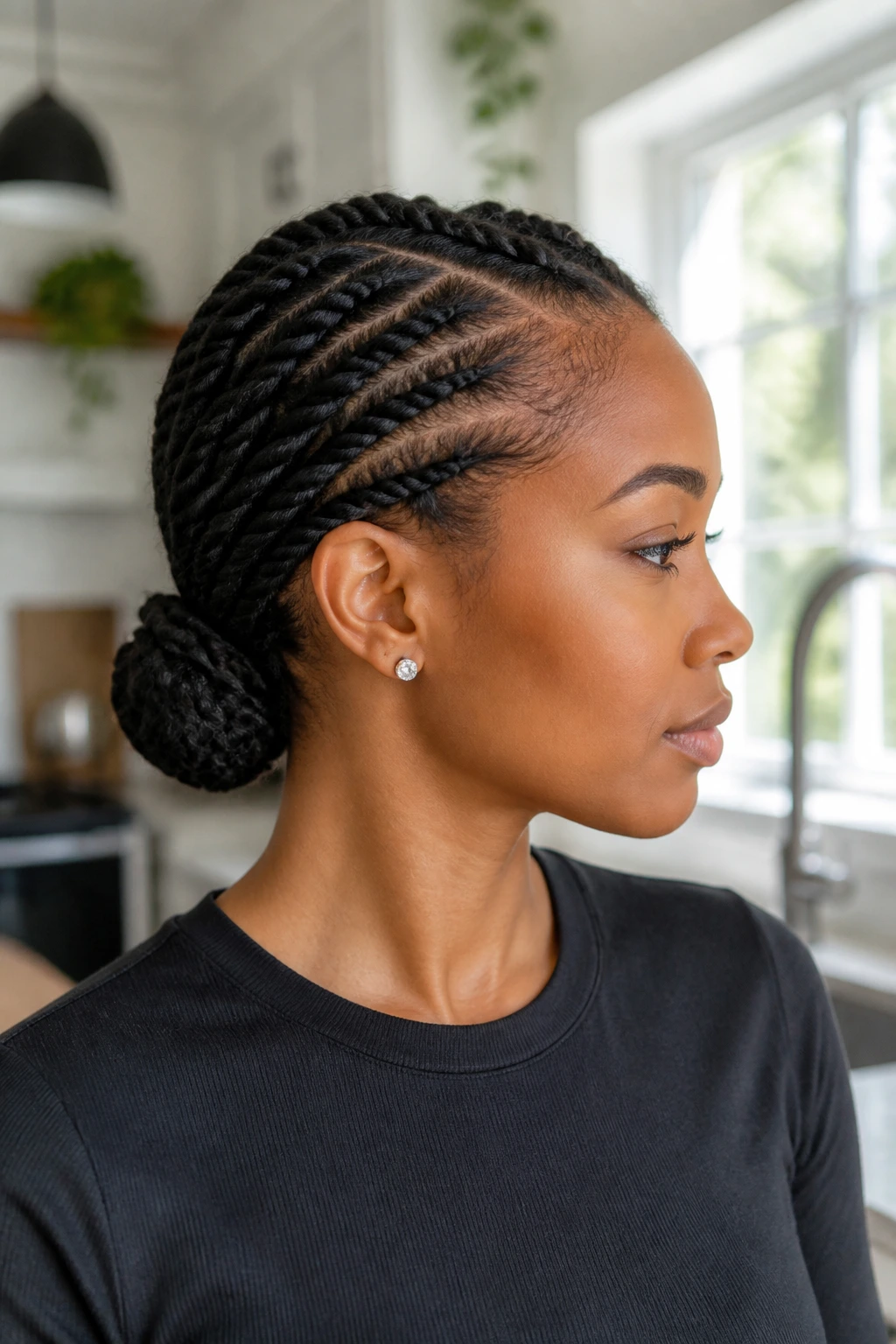
Flat twists into a low bun are the polished cousin in this group. The style pulls the hair back from the face, which lets the natural symmetry of an oval shape take center stage.
Why it looks so clean
The flat twist base hugs the scalp, and the bun sits low enough to avoid adding height where you do not need it. That makes the face feel open, not dragged upward. It’s a solid choice for events, workdays, or long stretches when you want the hair completely out of the way.
Keep the bun smooth, not stuffed
A low bun that is too large can overpower the neck line. A medium bun, pinned with hidden bobby pins, usually looks better. I also like a side part with this style because it gives the front a bit of movement and stops the look from going too severe.
This is one of those styles that looks better after the first day, once it settles in.
11. Face-Framing Twists with Soft Tendrils
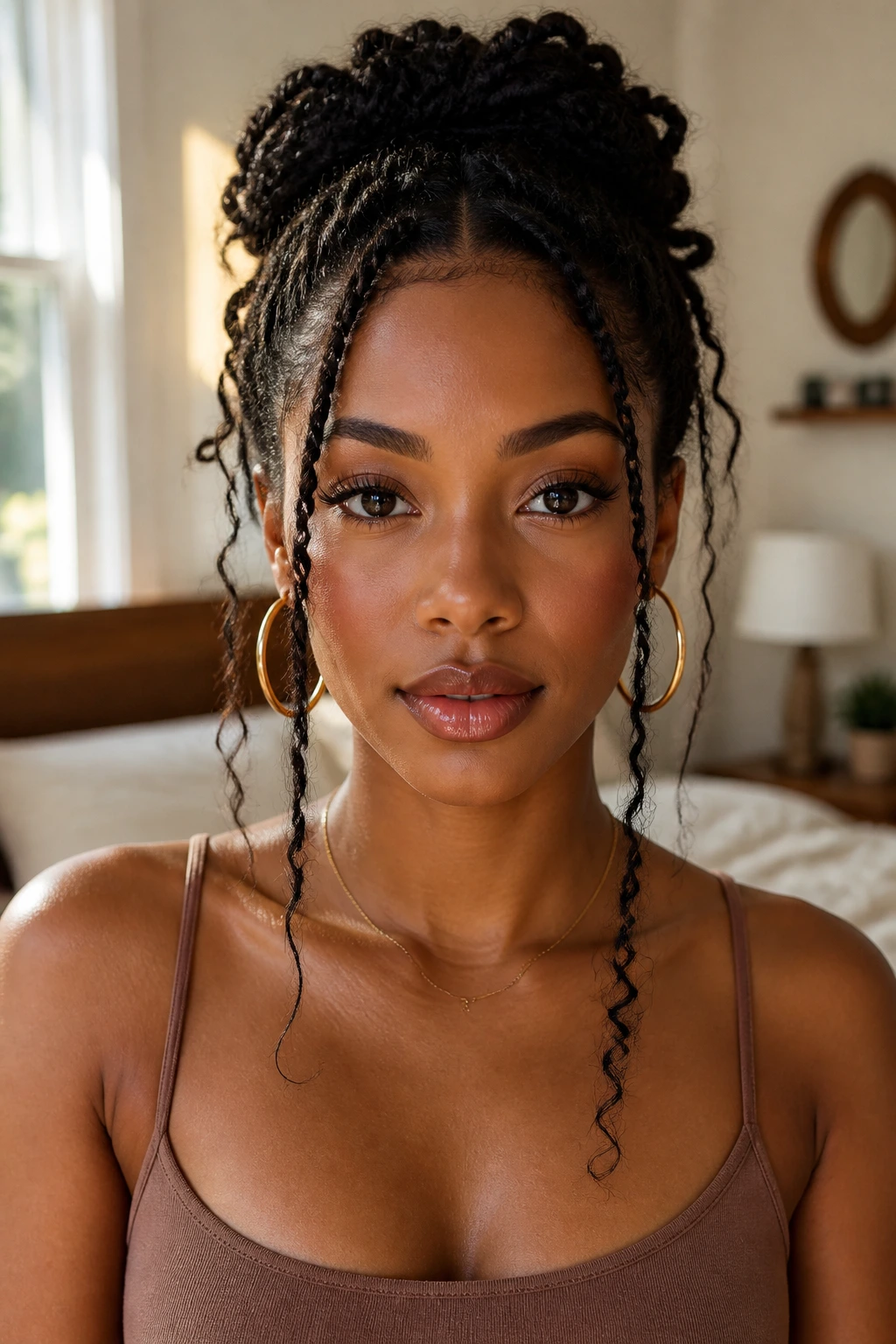
Want to keep the face open but not bare? Leave two or four slender twists in front and let them fall around the temples. That small move changes the whole balance of the style.
The front pieces need discipline
The tendrils should be slim enough to frame, not block. If they’re too thick, they make the face look crowded. A pair that lands just below the cheekbone is usually enough. They create a little softness at the sides, which keeps the oval shape from looking too long.
This is where earrings and lashes can matter
I’m not going to pretend accessories are an afterthought. They’re part of the style. Face-framing twists give the eyes and jawline a path, and earrings can sit in that open space without fighting the hair. If you want a romantic look that still feels neat, this is a smart middle ground.
Tiny detail. Big payoff.
12. Waist-Length Mini Twists
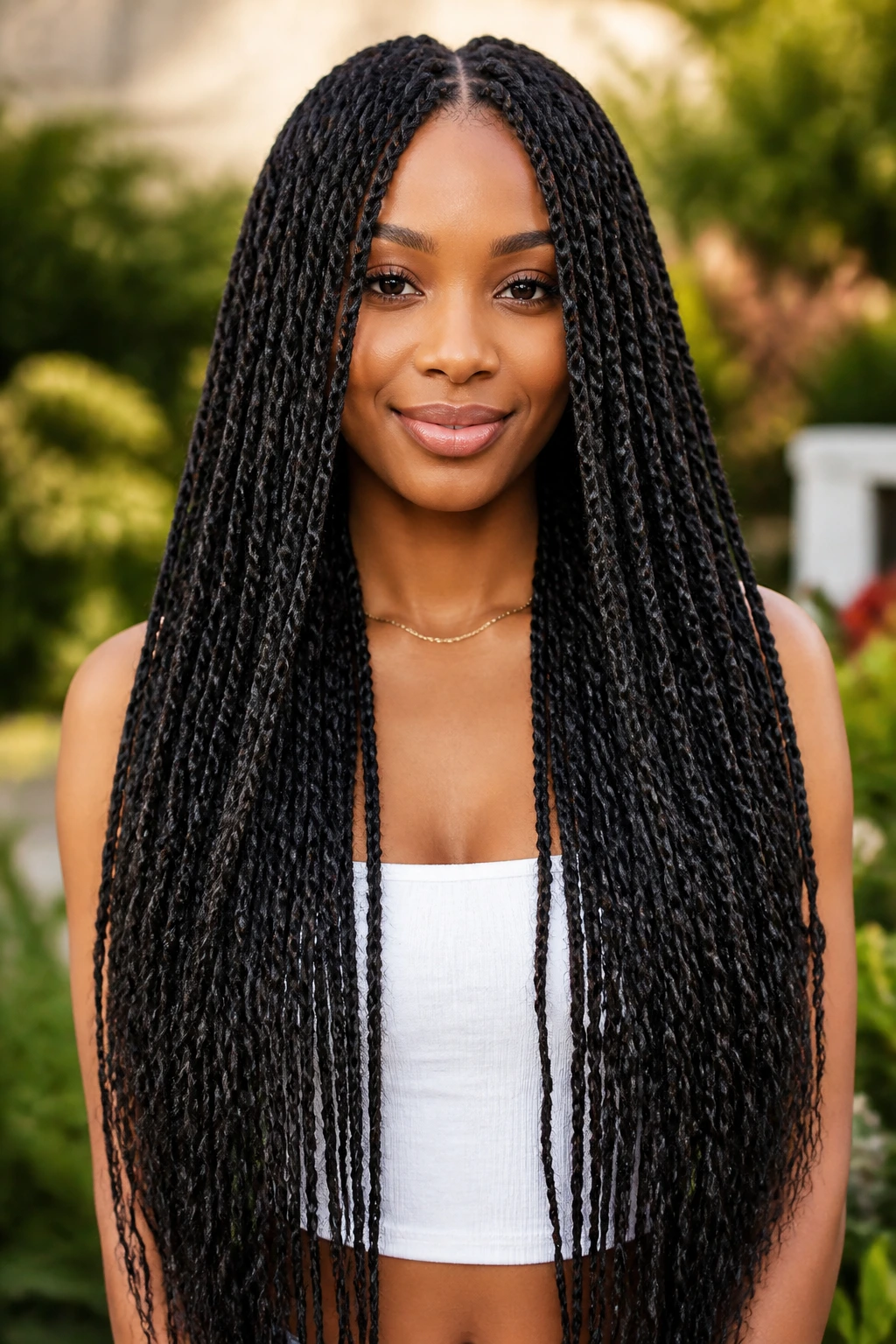
Mini twists at waist length have a lot going on: movement, slender texture, and serious visual length. On an oval face, the key is keeping the front from feeling too thin or stringy.
Why the style can work
The long length draws the eye downward, which can make the neck look elegant and the face look slightly lifted. But the twists need density. If they’re too sparse near the front, they can make the forehead and temples look bigger than they are. That is not a good trade.
Good for people who like low-manipulation styles
Mini twists are lighter than many braided looks and easier to refresh piece by piece. They also look nice with natural hair that has a lot of shrinkage, because the tiny sections let the texture sit close to the scalp without puffing up too much. Keep the ends tidy and the root area moisturized, or they start to fray fast.
This style looks best when the finish is neat, not wispy.
13. Deep Side-Part Rope Twists
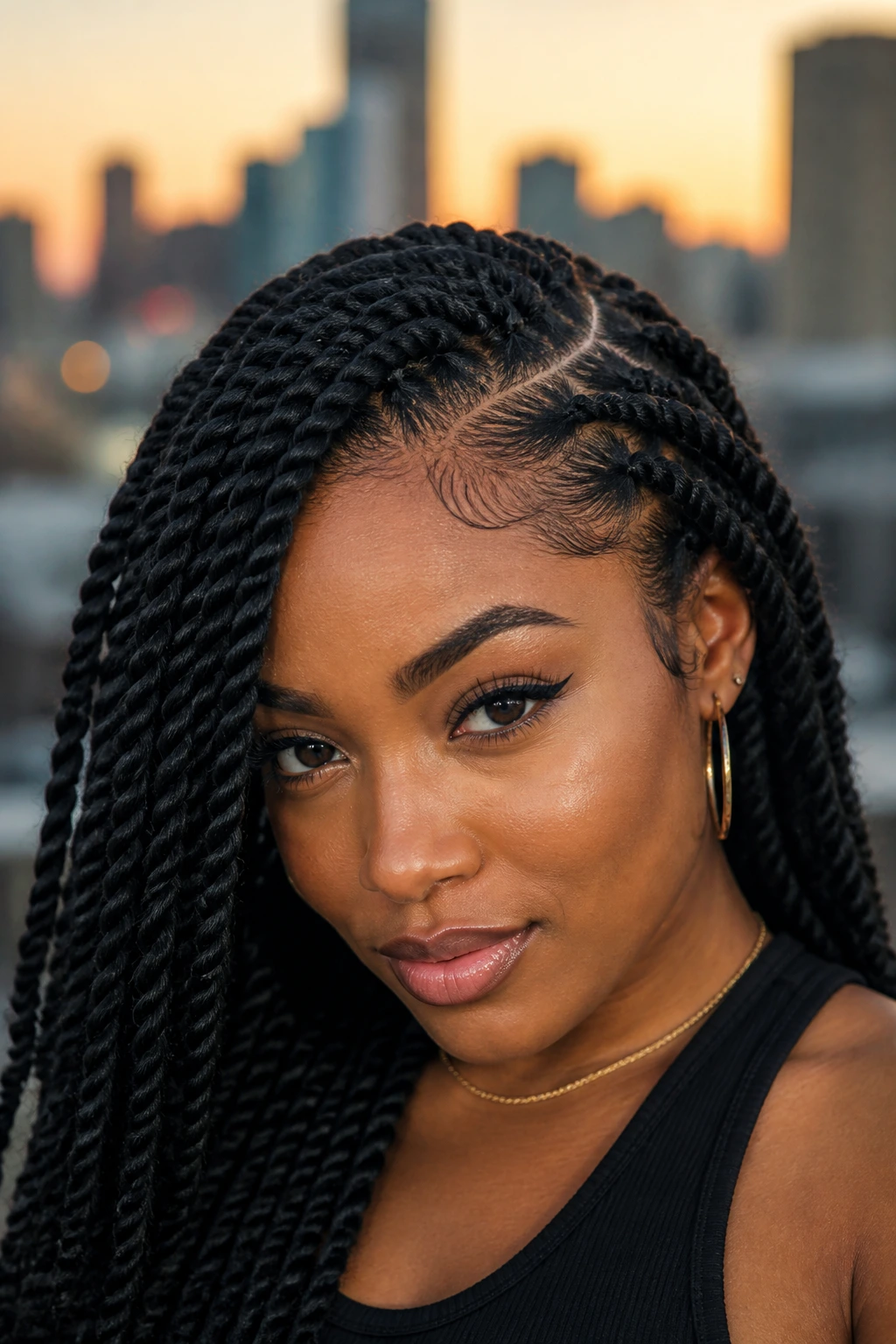
A deep side part changes the mood instantly. Rope twists with this parting feel a little more dramatic than a straight middle, and on an oval face, that diagonal line is doing a lot of flattering work.
The eye follows the line
The part cuts across the forehead and pulls attention downward, which keeps the face from reading too long. I like this choice when the cheekbones are strong or when you want the style to feel less symmetrical. The depth of the part gives you movement before the twists even start.
Keep the heavier side controlled
The side with more hair should feel intentional, not lopsided by accident. If the twist density is too uneven, the style can look like it’s slipping rather than sweeping. A clean side part paired with even twist length usually solves that.
This is one of the best options for anyone who wants a little drama without adding accessories.
14. Two-Strand Twist Faux Locs
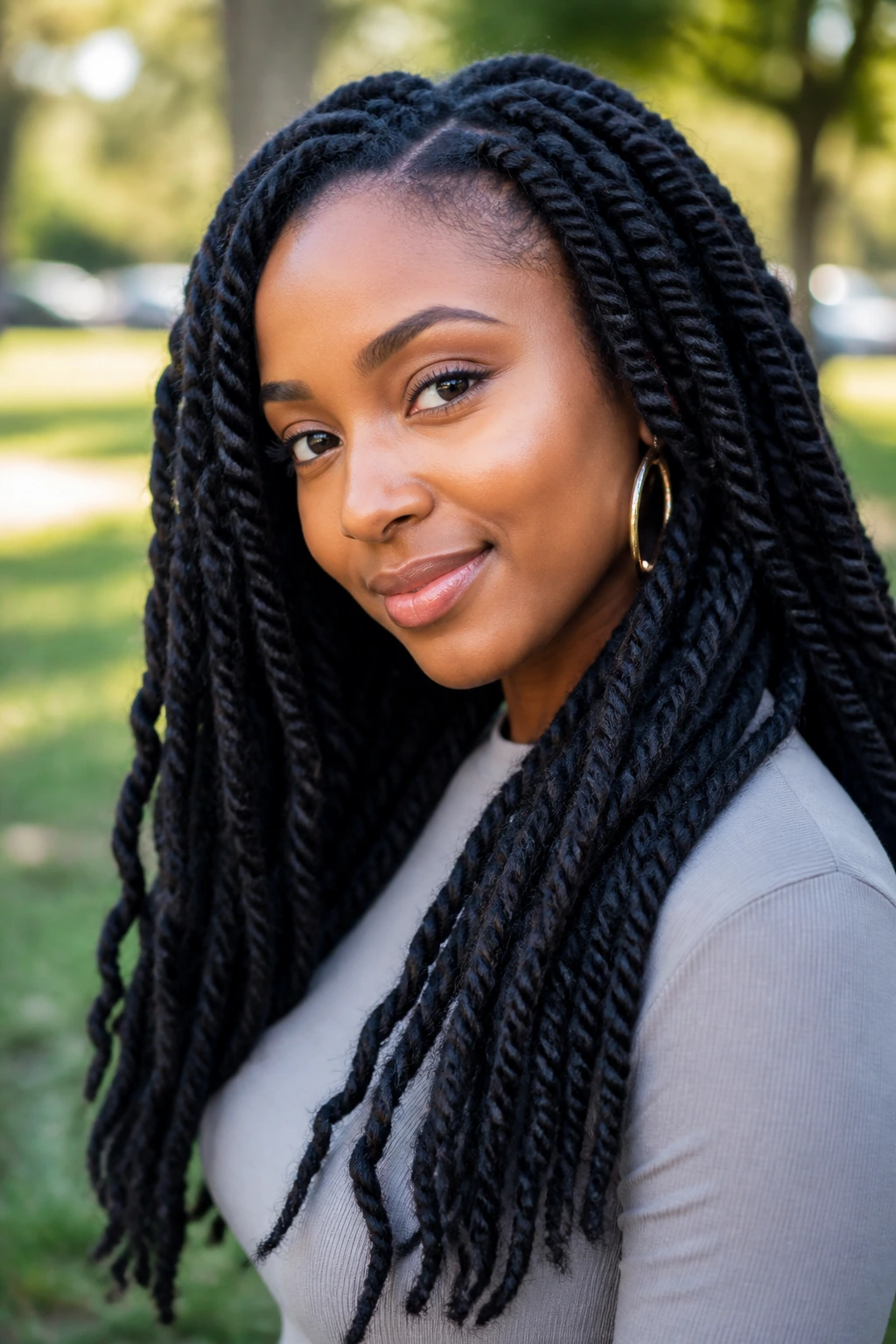
Faux locs made with a two-strand base bring structure and weight. They’re thicker than regular twists, and that thickness can be flattering on an oval face because it gives the style a strong perimeter.
Why the chunkier shape helps
Oval faces can handle volume at the sides, especially when the face is already balanced. Faux locs add that volume in a way that feels grounded. They also give the hair a more textured, lived-in look, which can be easier to maintain than ultra-sleek twists over a long stretch.
Best if you want a style with presence
These look especially good when worn shoulder-length or a little longer, so the locs do not crowd the jaw. Keep the root sections neat and the front line soft. That blend of texture and polish is where the style starts to shine.
If you like hair that feels sturdy and substantial in the hand, this one delivers.
15. Chunky Twists with Beads at the Ends
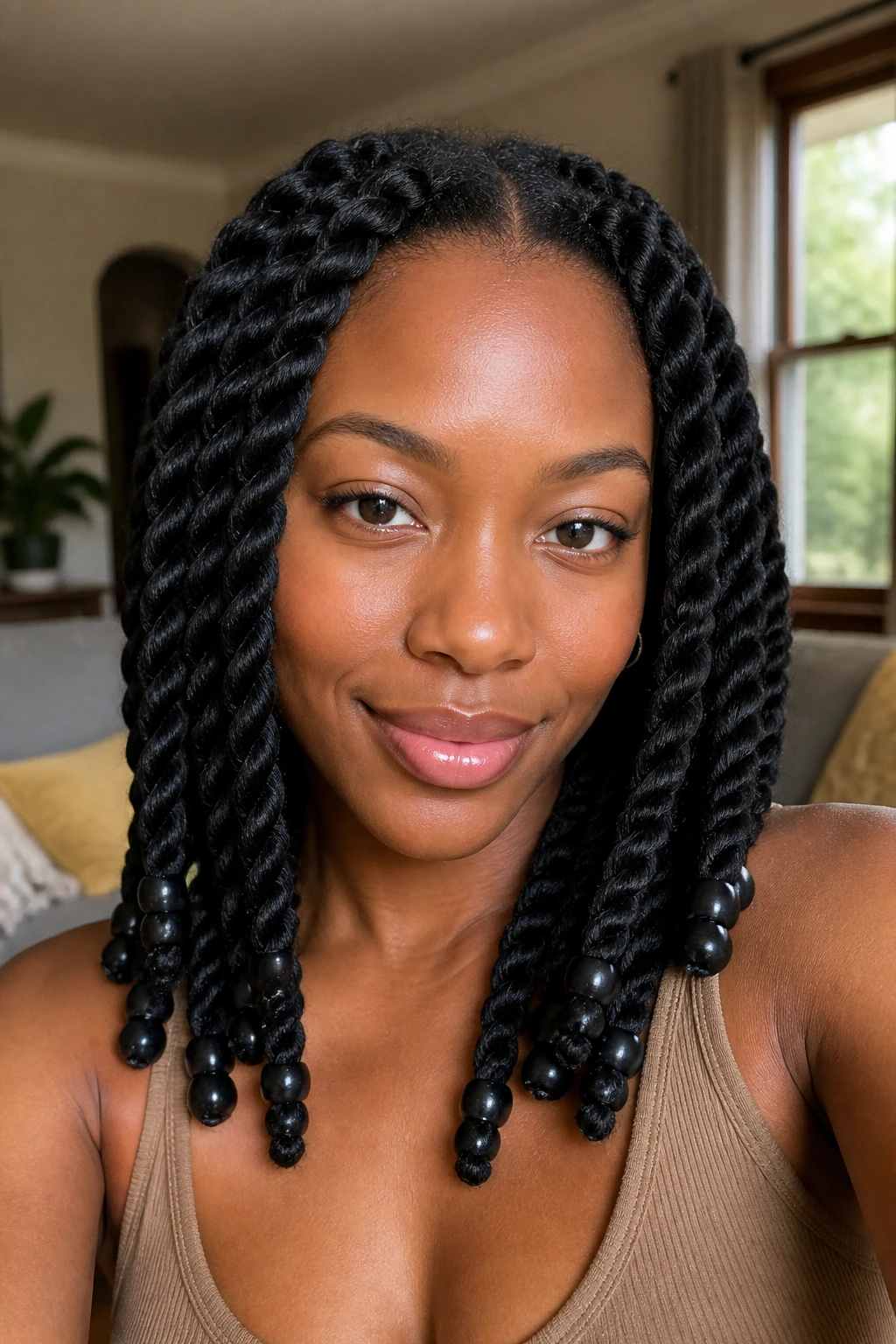
Beads at the ends can turn a simple twist style into something playful fast. On an oval face, they work because the face shape has enough balance to absorb the extra detail without looking overwhelmed.
Make the beads part of the shape
The beads should hang at the bottom, not cluster halfway up the twist. That keeps the visual weight low, which is better for face balance. I’d stick to one bead style or one color family so the style does not start to look busy.
Chunky twists keep the look from getting childish
There’s a fine line here. Too many small beads on tiny twists can feel costume-like. Chunkier twists give the beads a stronger base and make the whole style look deliberate. If you want something a little fun but still wearable, this is the move.
A simple gold cuff near the root can be enough. No need to overdecorate.
16. Wrapped-Base Twist Ponytail
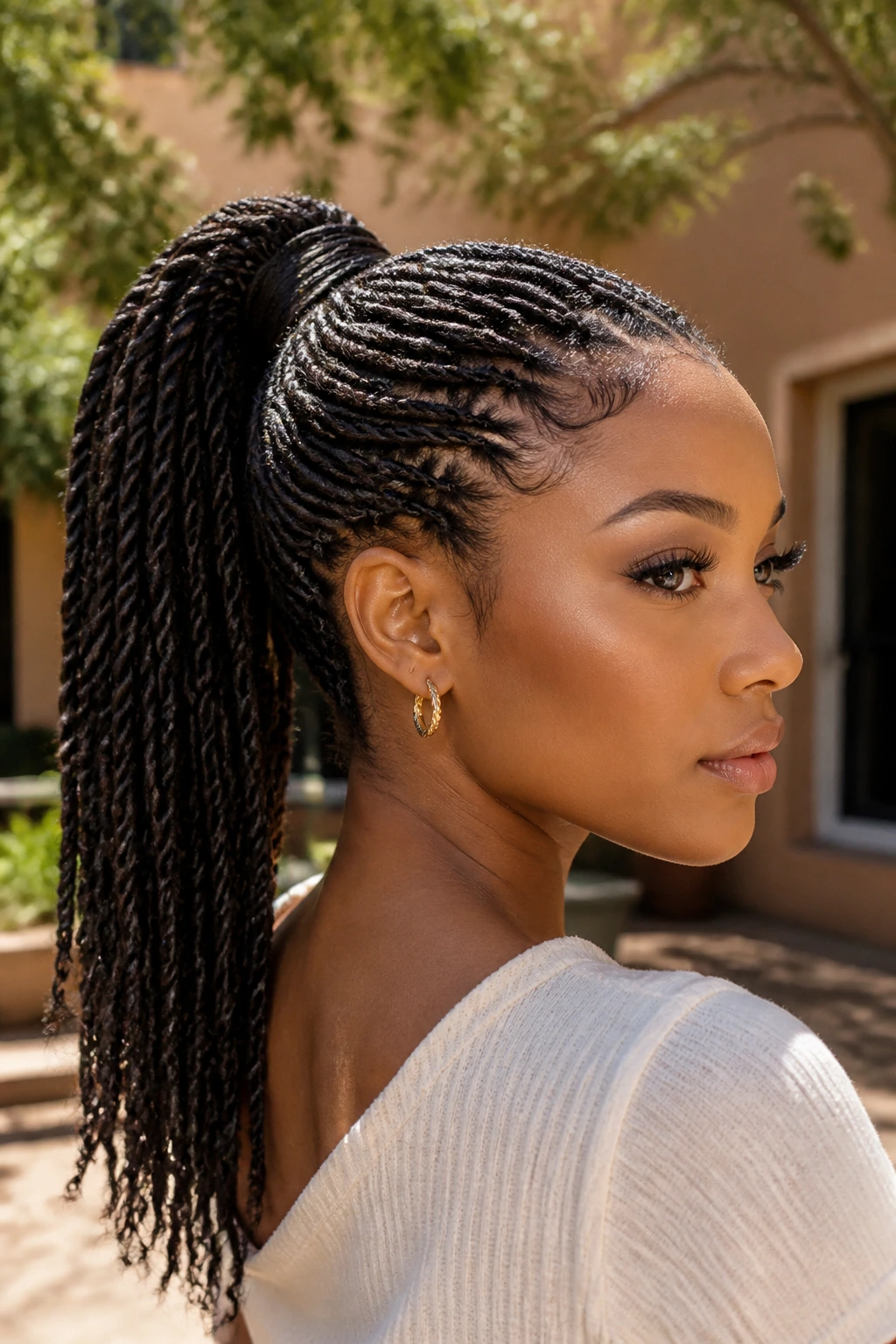
A wrapped-base twist ponytail is sleek, efficient, and clean around the face. It’s the kind of style that makes an oval face look even more balanced because the hair gets pulled away from the features without flattening them out.
Why the ponytail works so well
The tie point becomes a style detail instead of a visible elastic. When the base is wrapped with a small twist or a strip of hair, the look feels finished. The ponytail can sit high, mid, or low, but I prefer mid-height for oval faces because it keeps the forehead open and the jawline visible.
Use this when you want the face front and center
This is an excellent choice for busy days, workouts, and warm weather because the hair stays controlled. Keep the crown smooth but not painfully tight. A ponytail that pulls too hard at the front throws off the whole balance.
The wrapped base makes even a simple ponytail look thoughtful.
17. Halo Twist Braid Updo
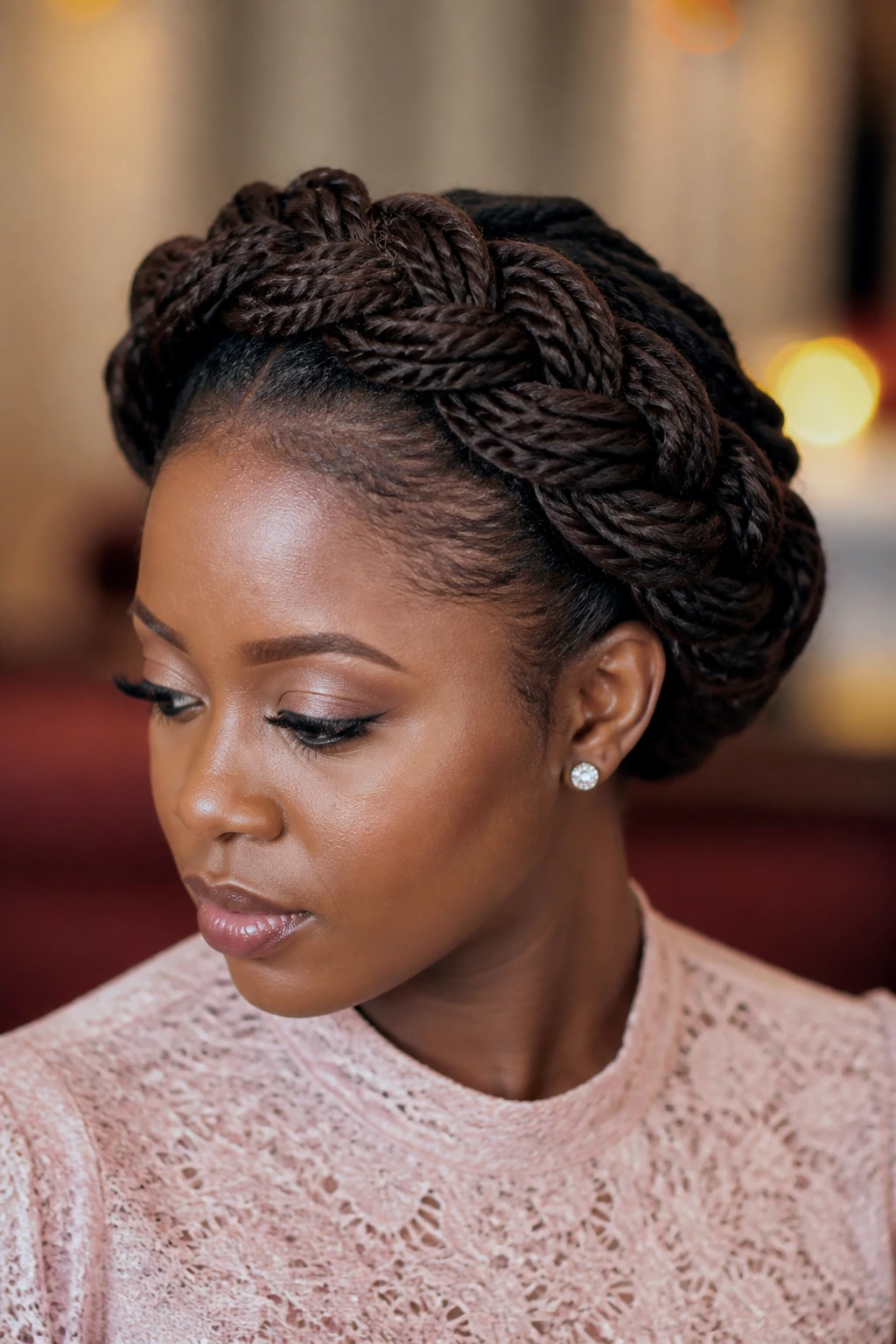
A halo updo turns the twists into a crown, which sounds dramatic because it is. On an oval face, the circular shape frames the face without crowding it, and that matters.
The shape creates softness up top
Unlike a high bun, a halo wraps around the head and leaves the center open. That means the face stays visible, the neck stays long, and the style has enough height to feel special without piling everything at the crown. I like this when you want formal polish but do not want the hair sitting like a tower.
Best with medium or long twists
Short twists can make this style look skimpy. Medium or long lengths give you enough material to wrap cleanly. Keep the front section smooth and the halo a little wider at the temples so the oval shape stays intact.
This is one of the few updos that can look soft and structured at the same time.
18. Zigzag-Part Twists
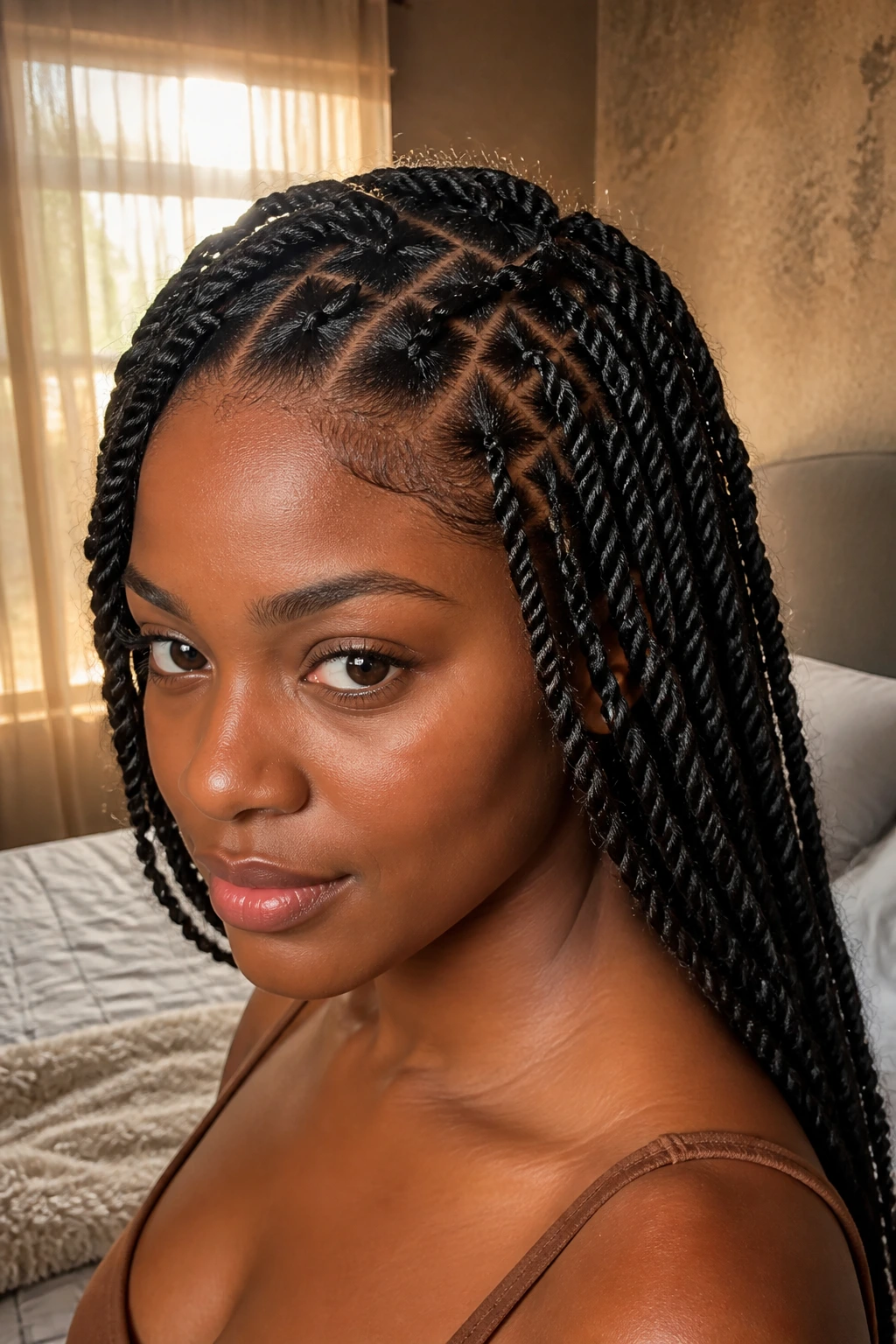
Zigzag parts are for people who want the scalp pattern to do some of the style work. On an oval face, the unusual parting adds interest without needing a lot of extra volume.
Why the part pattern matters
A zigzag part breaks up the clean vertical lines that can make twist styles feel too plain. It also gives the front a bit of edge. Since oval faces can handle symmetry and asymmetry both, the design reads as playful rather than chaotic.
Keep the rest of the style simple
This is not the place for heavy beads, loose curls, and giant accessories all at once. Let the parting be the statement. Medium-length twists with neat ends are enough. The style ends up looking smart and deliberate, which is better than trying to shove in every trend you’ve ever liked.
It’s a small detail that reads from across the room.
19. Layered Twists with Shorter Front Pieces
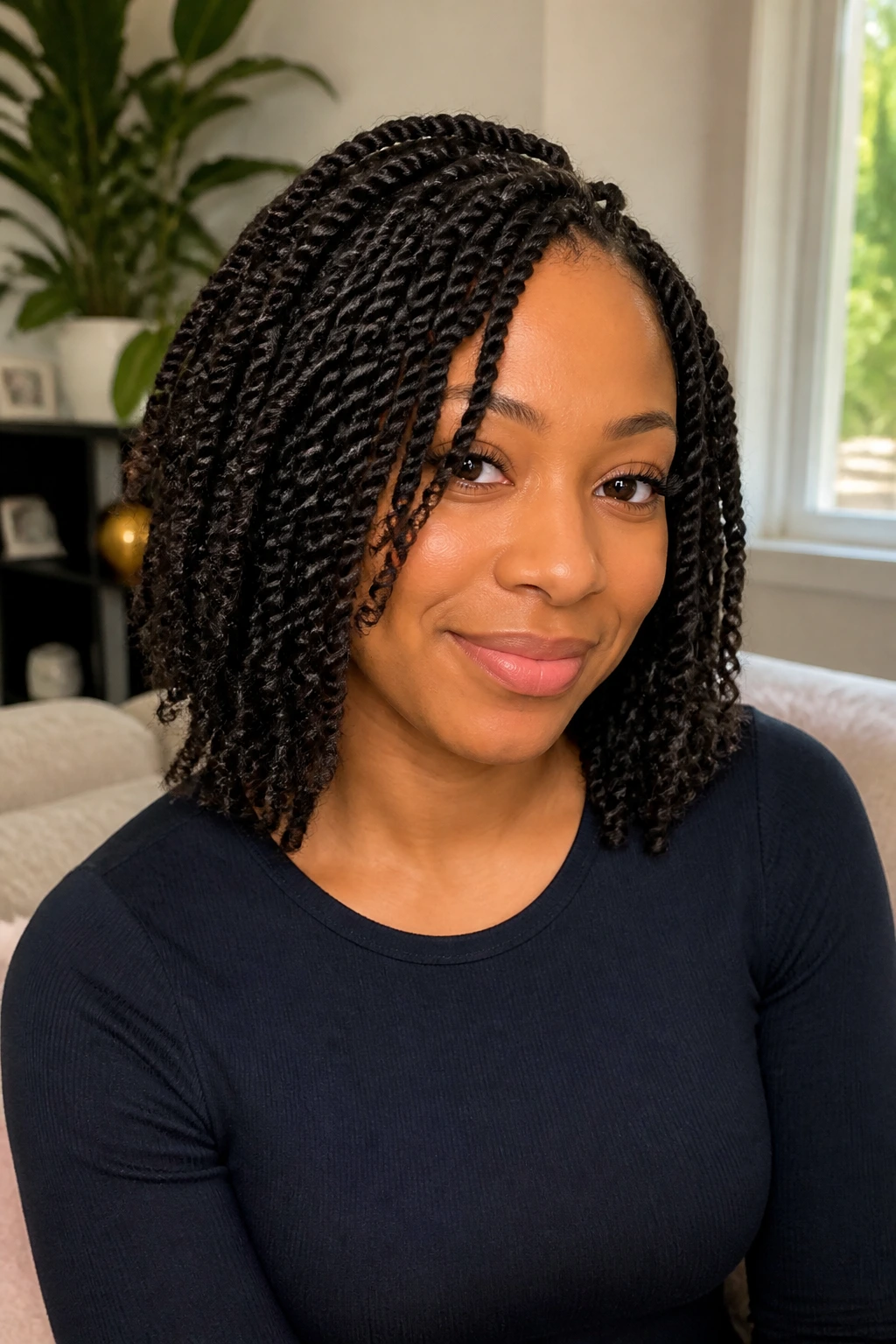
A layered twist style with shorter pieces around the face gives you shape without forcing bangs into the mix. The shorter front softens the forehead and lets the back carry the length.
Why I like this better than blunt length
A single long curtain of twists can drag the eye down too hard. Layering changes that. The front pieces give the face a gentle frame, while the longer back pieces keep the style feeling full. On an oval face, that creates movement without losing proportion.
Best when you want the hair to feel lighter
This is useful if your natural hair is dense and you do not want every inch of it pulled into the same length. The shorter pieces keep the front from feeling heavy. Ask for the shortest front pieces to land around cheekbone level, not right at the eyes. That avoids the constant brushing-away problem.
Clean, easy, and not overthought. I like that.
20. Flipped-End Twist Bob
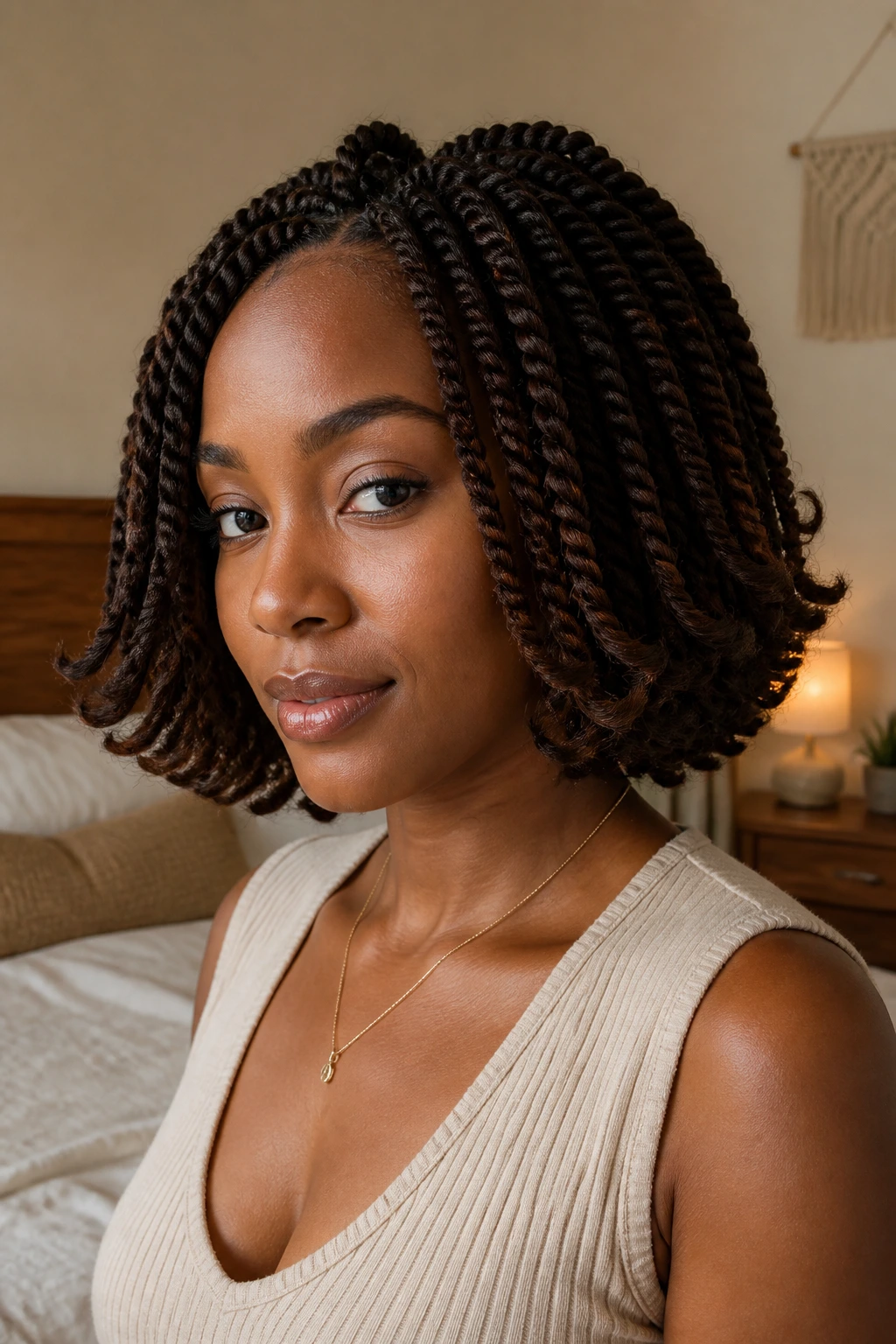
A twist bob with flipped ends has a bit of swing and a bit of retro attitude. The ends turn outward or inward instead of hanging dead straight, which keeps the face from looking too long.
The flip adds shape at the bottom
On an oval face, a little width at the lower edge can be useful. It balances the length of the face and gives the twist bob a finished outline. If the hair is too blunt at the ends, the style can feel boxy. A soft flip avoids that.
This one lives on detail
The parting still needs to be clean. The ends still need to be even. But the flip gives you a more playful profile, especially if you tuck one side behind the ear. That small asymmetry keeps the look from feeling too strict.
I’d wear this with glossy lip balm and a simple neckline. The bob already has enough to say.
21. Two-Tone Twists with Warm Ombre Ends
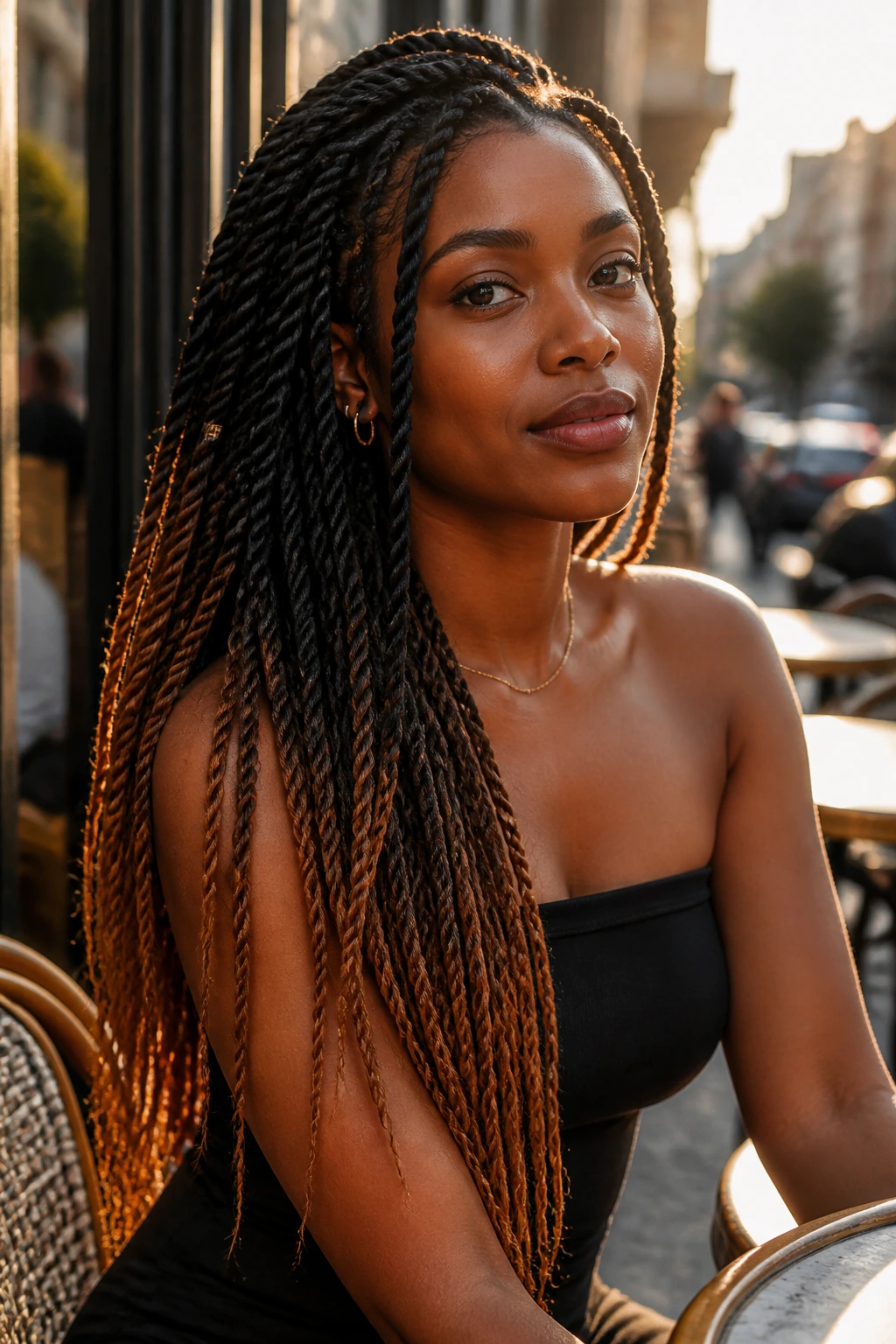
Color changes the read of a twist style fast. Warm ombre ends—think honey, copper, chestnut, or soft auburn—draw the eye down the length of the twist and keep the face from feeling boxed in.
Why the gradient helps
A darker root with lighter ends gives the style motion even when you’re standing still. On an oval face, that movement keeps the look lively without needing extra layers. It also softens the visual weight around the crown, which can be helpful if your natural hair is dense or your part is very neat.
Best when the twist pattern is simple
Because the color is doing part of the work, you don’t need a complicated parting system. A center part or a gentle side part is enough. I’d keep the root line tidy and let the ombre do the bragging. Too many design elements at once can make the style feel noisy.
This is the style for someone who wants color without committing to a full head of dye.
22. Cornrow-Base Twists with Hidden Parts
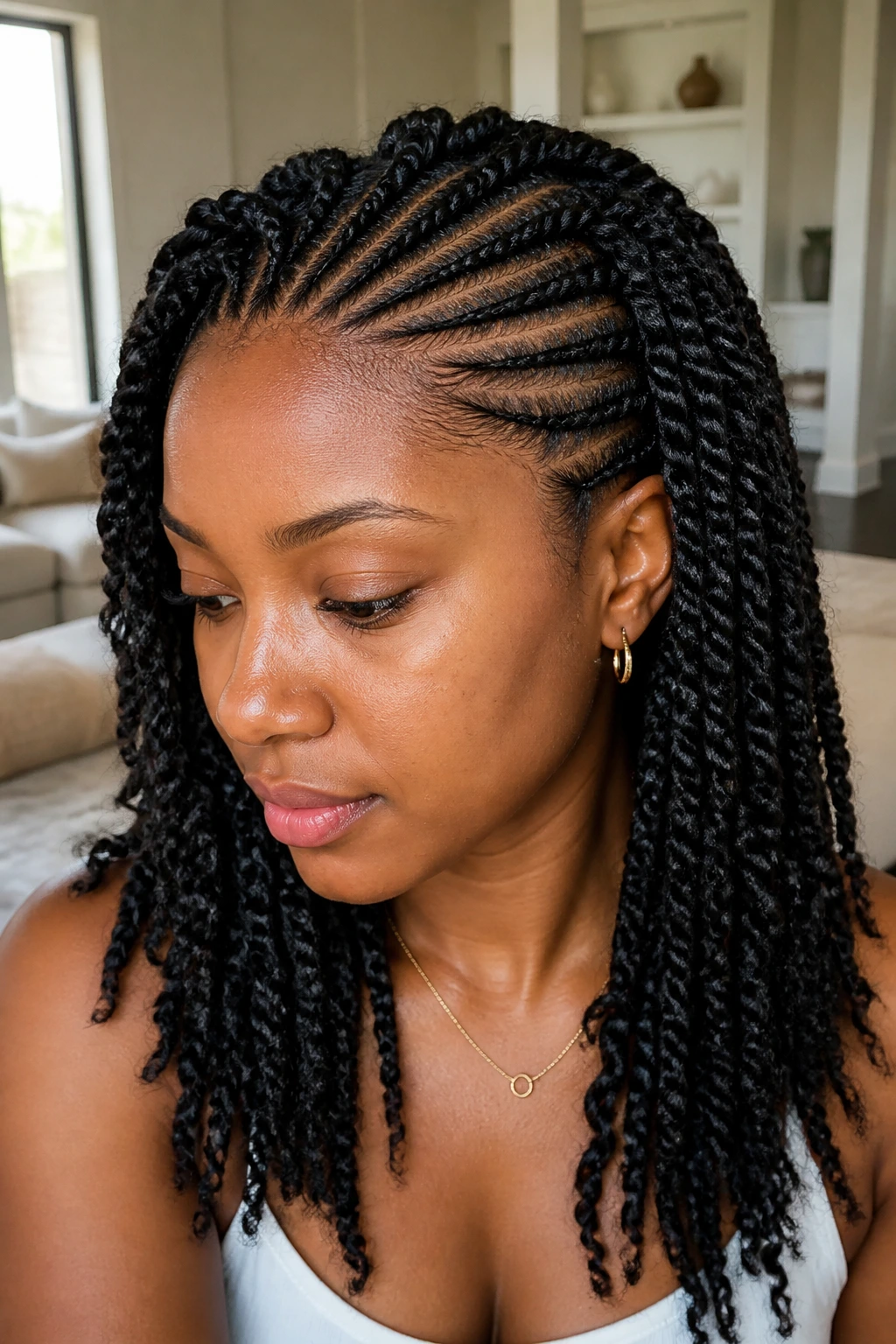
Cornrow bases with twist lengths attached give you a clean front, a tight foundation, and a very tidy face frame. The hidden part structure is especially nice on oval faces because it removes clutter from the forehead.
Why the sleek front helps
When the scalp work is neat, the face gets more room. The hairline looks intentional, and the twists can fall from a smooth base without the front puffing up. That’s useful if your natural hair expands a lot at the roots or if you want the style to stay crisp for a longer stretch.
Keep the cornrows modest in size
Tiny, over-tight cornrows are a bad idea. They may look neat for a minute, but they can punish the hairline. Medium-width bases sit better and still give you that clean finish. If you want the style to read polished instead of severe, leave a little softness around the temples.
This is one of the more practical styles in the whole lineup.
23. Side Halo with Loose Back Twists
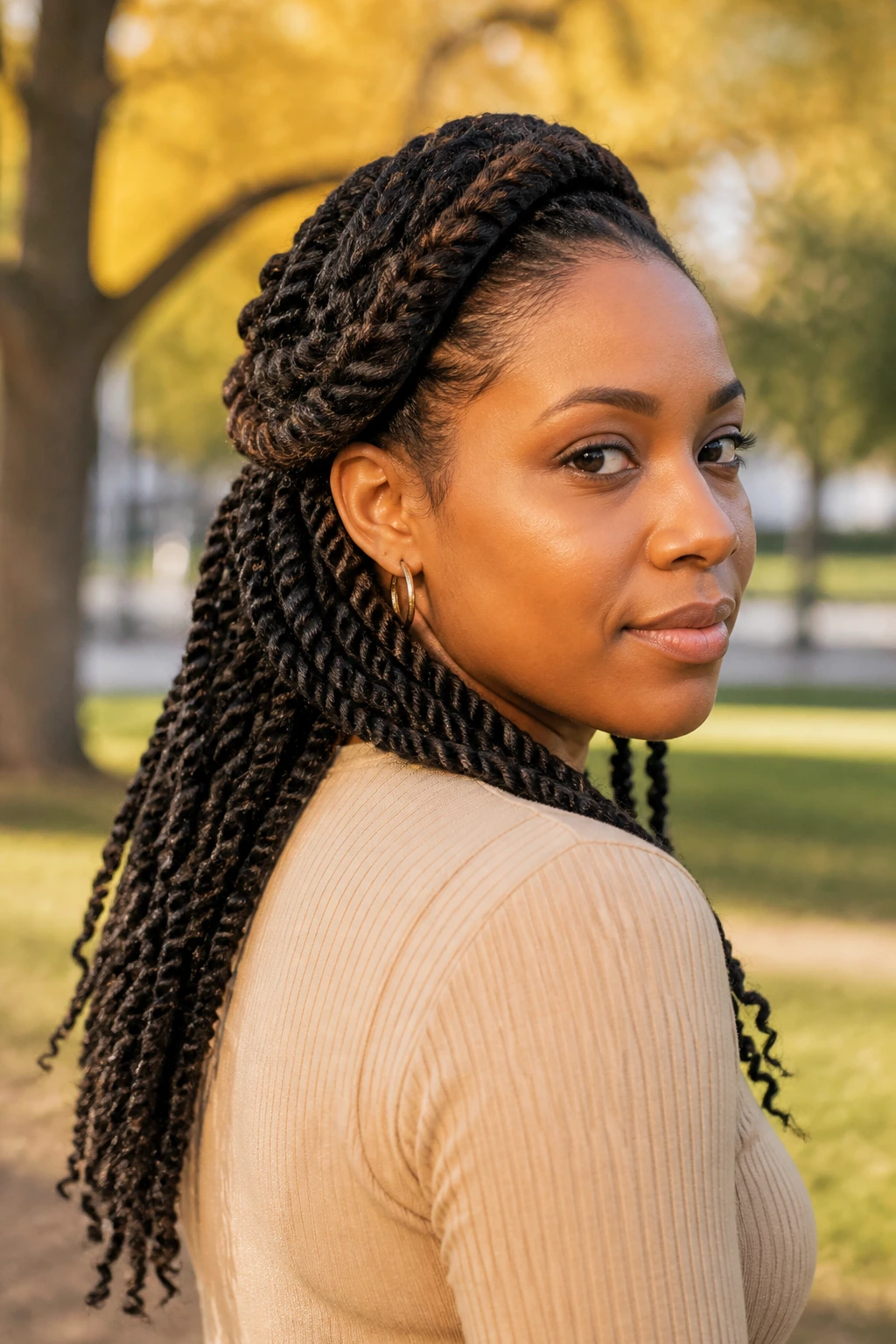
A side halo with loose back twists gives you the best of two moods: a neat, pinned front and a softer back section. The side sweep creates a nice diagonal line across an oval face, which keeps the features from feeling too centered.
A little asymmetry goes a long way
The halo part on one side lifts the look, while the rest of the twists stay loose. That keeps the face framed without turning the whole style into an updo. I like this when you want something romantic but not fussy. The head shape stays visible, and the hair still moves.
Use this when you want one side to lead
If one side of your face is your favorite side, this is the style that lets you show it off without looking like you tried too hard. Keep the pinned side close to the temple and let the loose side fall past the jaw. That contrast is the whole point.
Simple, but not plain. That’s the nice part.
24. Mini Twists Pulled into a Top Knot
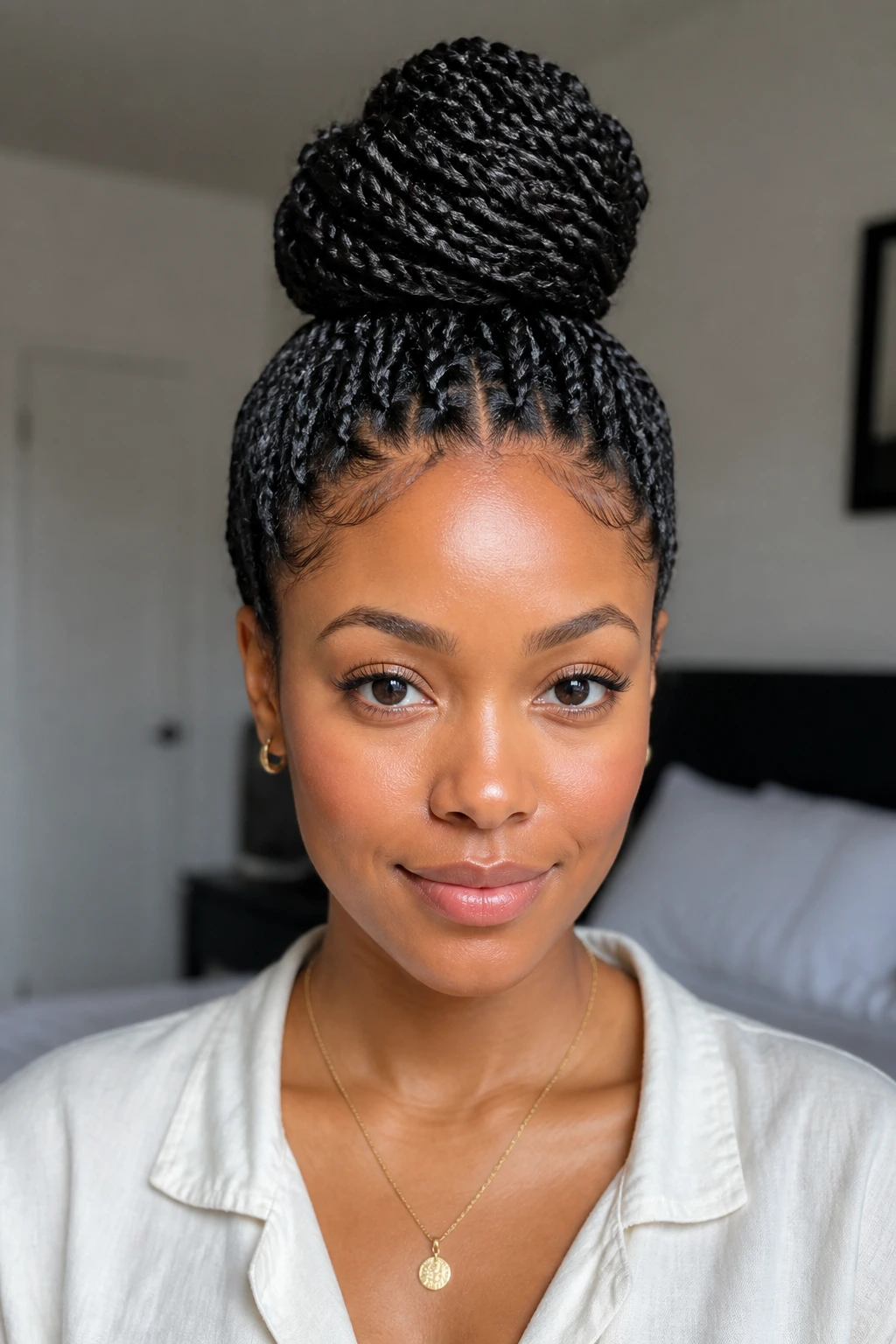
Mini twists can be worn loose, but they’re especially good when gathered into a top knot that sits high and tidy. On an oval face, the knot opens up the face while the tiny twists keep the style from looking bulky.
The top knot needs a soft crown
Pulling every twist tight into the center can make the face look longer. Leave a bit of softness at the crown and around the edges so the knot sits on top of the head instead of pressing down on it. That keeps the proportions cleaner.
Best when you want the style off your neck
This is a practical choice for warm days, workouts, or long work stretches. The mini twists stay secure, and the top knot keeps the focus on the eyes and cheeks. A few loose twists at the back can keep the style from feeling too severe if you want a softer finish.
I would not over-accessorize this one. The structure already does enough.
25. Asymmetrical Swept Twists
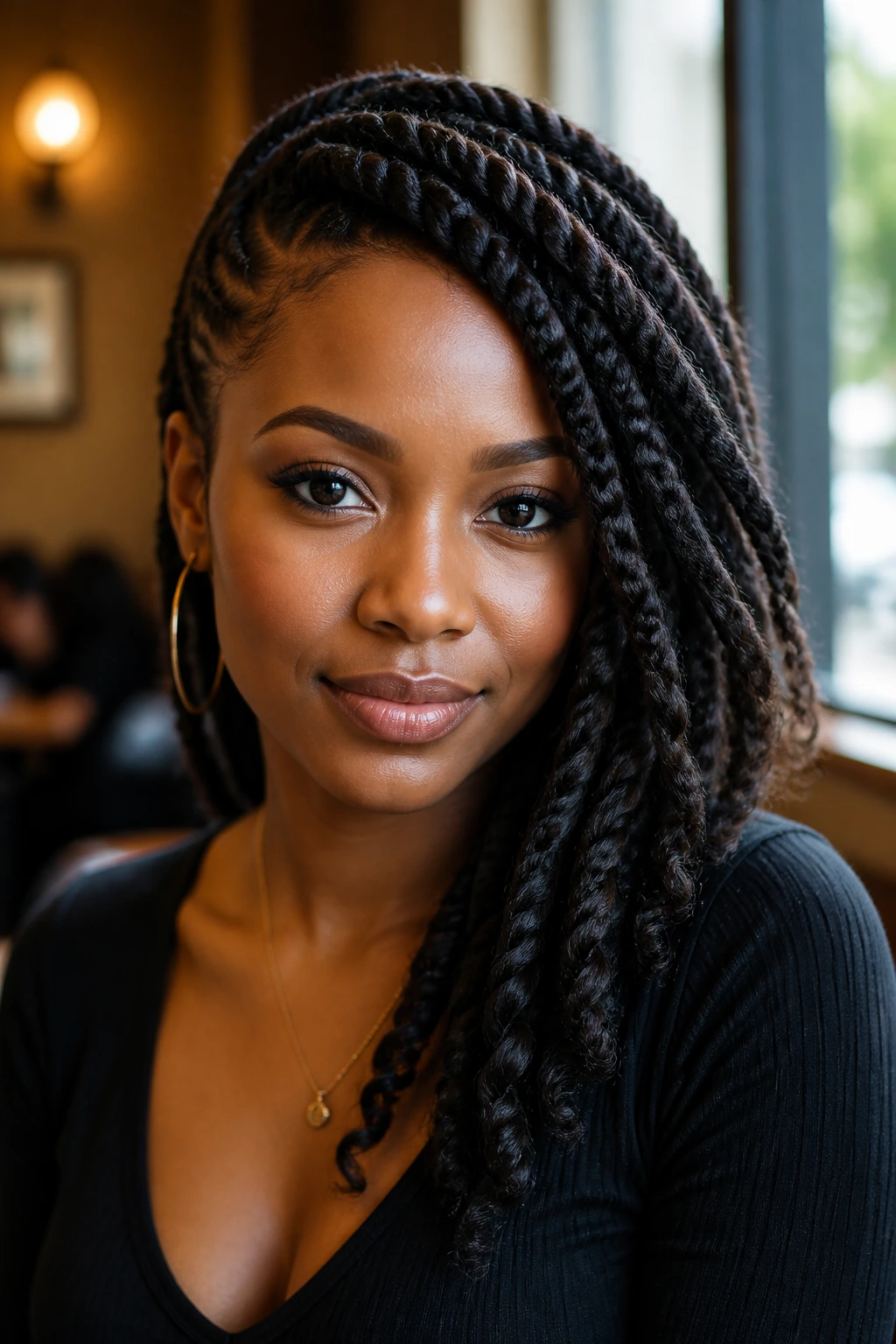
Asymmetrical swept twists are the boldest finish in the group, and oval faces can wear them without much fuss. The hair sits heavier on one side, leaving the other side more open and creating a strong diagonal line.
Why the asymmetry works
The face already has balance, so shifting the braid weight to one side creates interest instead of distortion. It pulls the eye across the features and makes the cheekbones look even more defined. If you want a style that reads fashion-forward without requiring a complicated install, this is a strong ending point.
Keep the sweep controlled
The key is to sweep, not collapse. The heavier side should still have shape, and the lighter side should still look intentional. Pair it with one statement earring or a clean neck line. Too many extras will compete with the sweep.
This is the kind of style that looks best when you stop before it gets busy.
How Twist Size, Parting, and Length Change the Whole Look
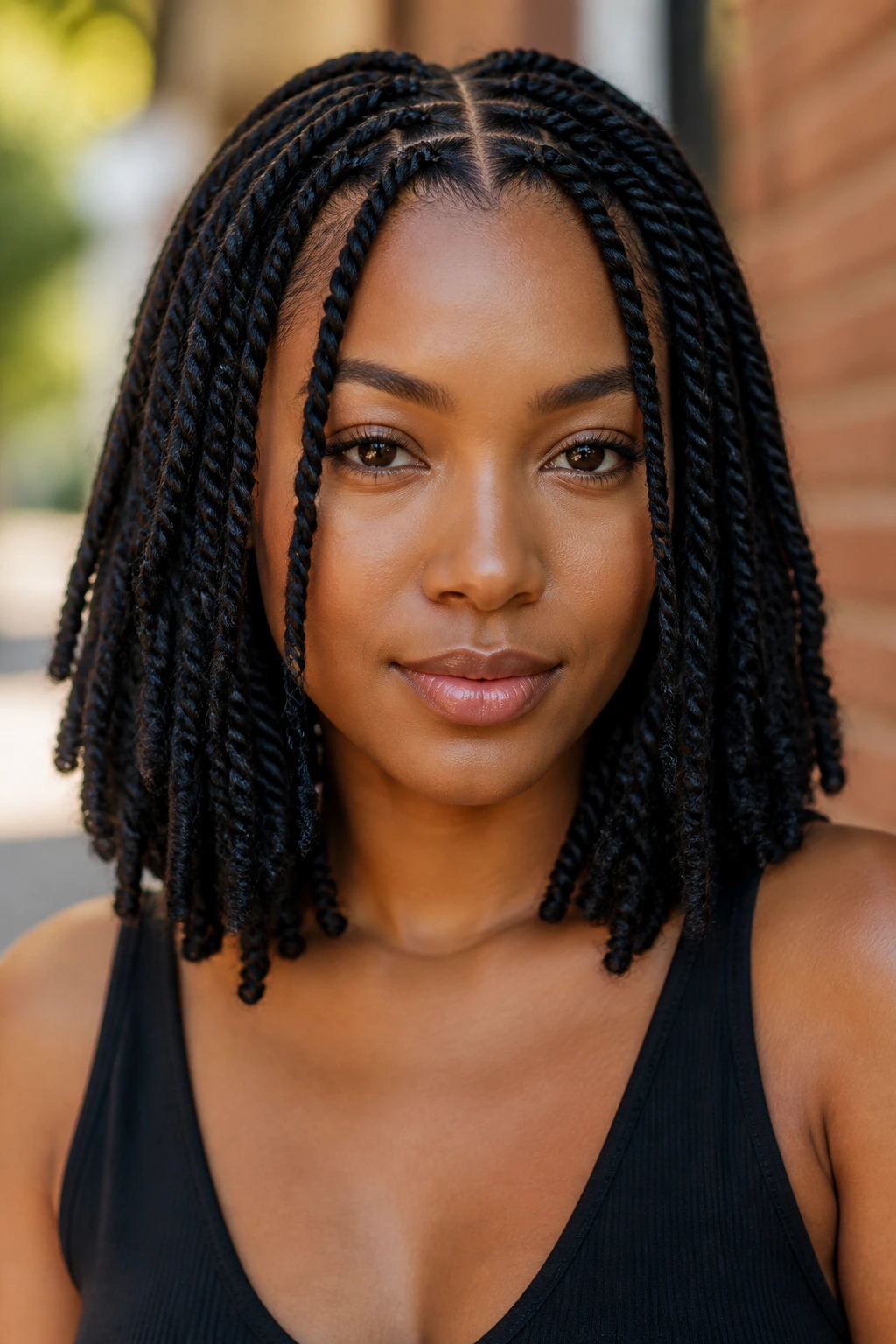
The size of the twist changes the mood faster than most people expect. Jumbo twists give you volume and speed, but they can overwhelm the front of the face if the parts are too dense. Medium twists are the safest middle ground for oval faces because they keep the features visible while still giving the style enough weight to feel finished. Mini twists are the most flexible, but they need density near the front or they can look wispy and a little unfinished.
Parting is the second knob. A center part reads calm and symmetrical. A deep side part adds movement and breaks up the vertical line of longer twists. Zigzags and triangles are the decorative versions, and they work best when the rest of the style stays simple. If the parting is loud, the twists should stay clean.
Length matters last, and maybe most. Chin-length and shoulder-length twists keep the face open. Waist-length twists give you drama and movement, but they need balance at the front so they do not drag the eye too far downward. If you want the oval face to stay the star, keep at least one area light: the front pieces, the crown, or the ends.
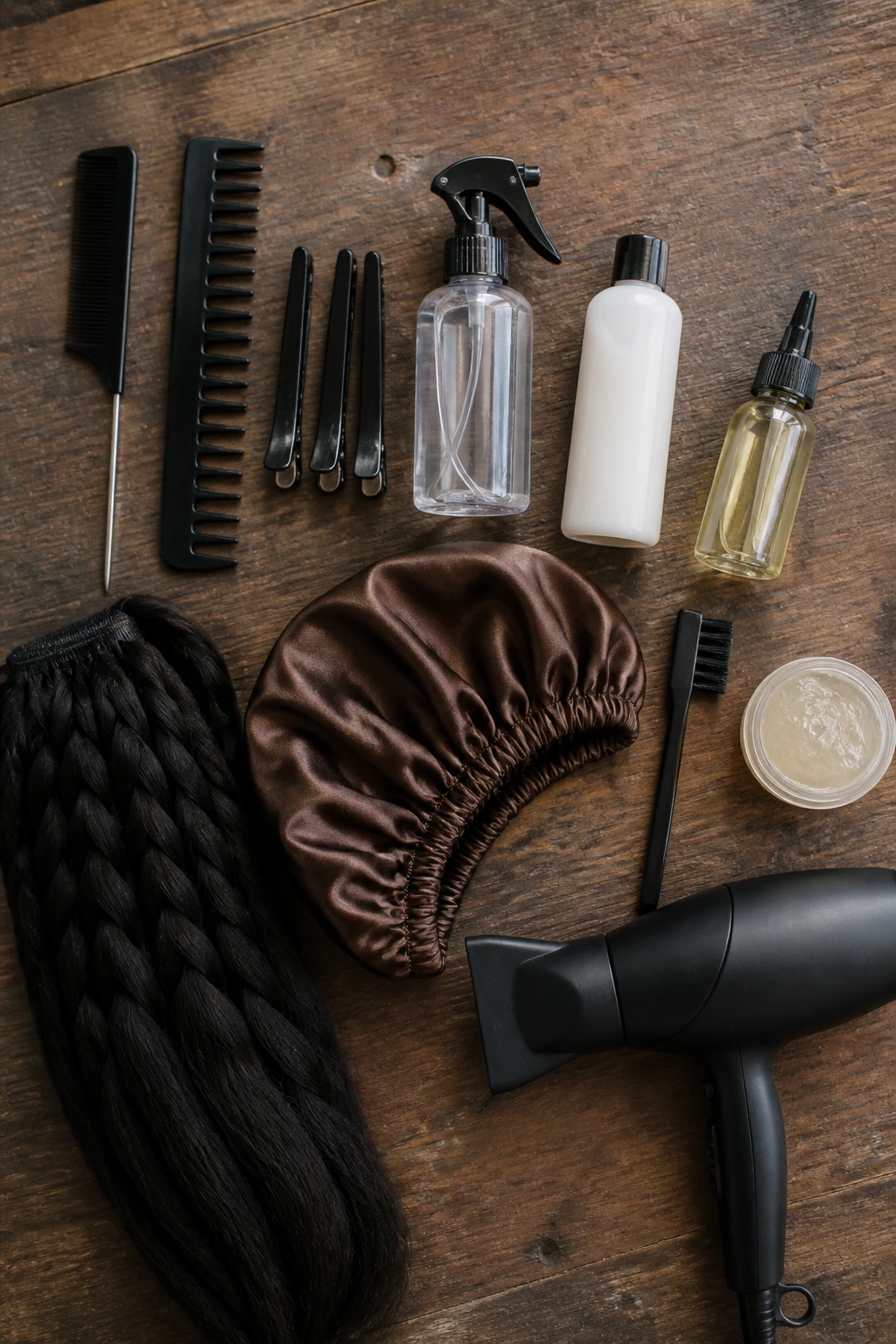
Essential Tools for Clean Twist Braids
-
Rat-tail comb: Use the tail for clean parts and straight sections at the scalp. A blunt comb will not give you the same control.
-
Wide-tooth comb: Detangling natural hair before the install is easier on stretched curls than chasing knots with a fine comb.
-
Sectioning clips: They keep the unused hair out of the way and stop the parts from collapsing while you work.
-
Spray bottle with water or leave-in mix: A light mist helps the hair stay pliable during prep. Don’t soak it.
-
Light leave-in conditioner: Use a small amount so the roots stay soft, not slippery.
-
Scalp oil with a pointed nozzle: Handy for refresh days. A little goes farther than people think.
-
Synthetic braid hair: Marley hair gives a matte, fuller twist; Kanekalon leans smoother and sleeker; water-wave hair is the base for passion twists.
-
Satin bonnet or scarf: Non-negotiable if you want the style to last without the ends fuzzing out overnight.
-
Edge brush and small setting gel: Useful for smoothing the hairline, but keep it light. Heavy gel cakes up fast.
-
Blow-dryer with a cool setting or comb attachment: Optional, but useful if your natural hair shrinks hard and you want a stretched base before braiding.
Pre-Braid Prep That Keeps Natural Hair Happy
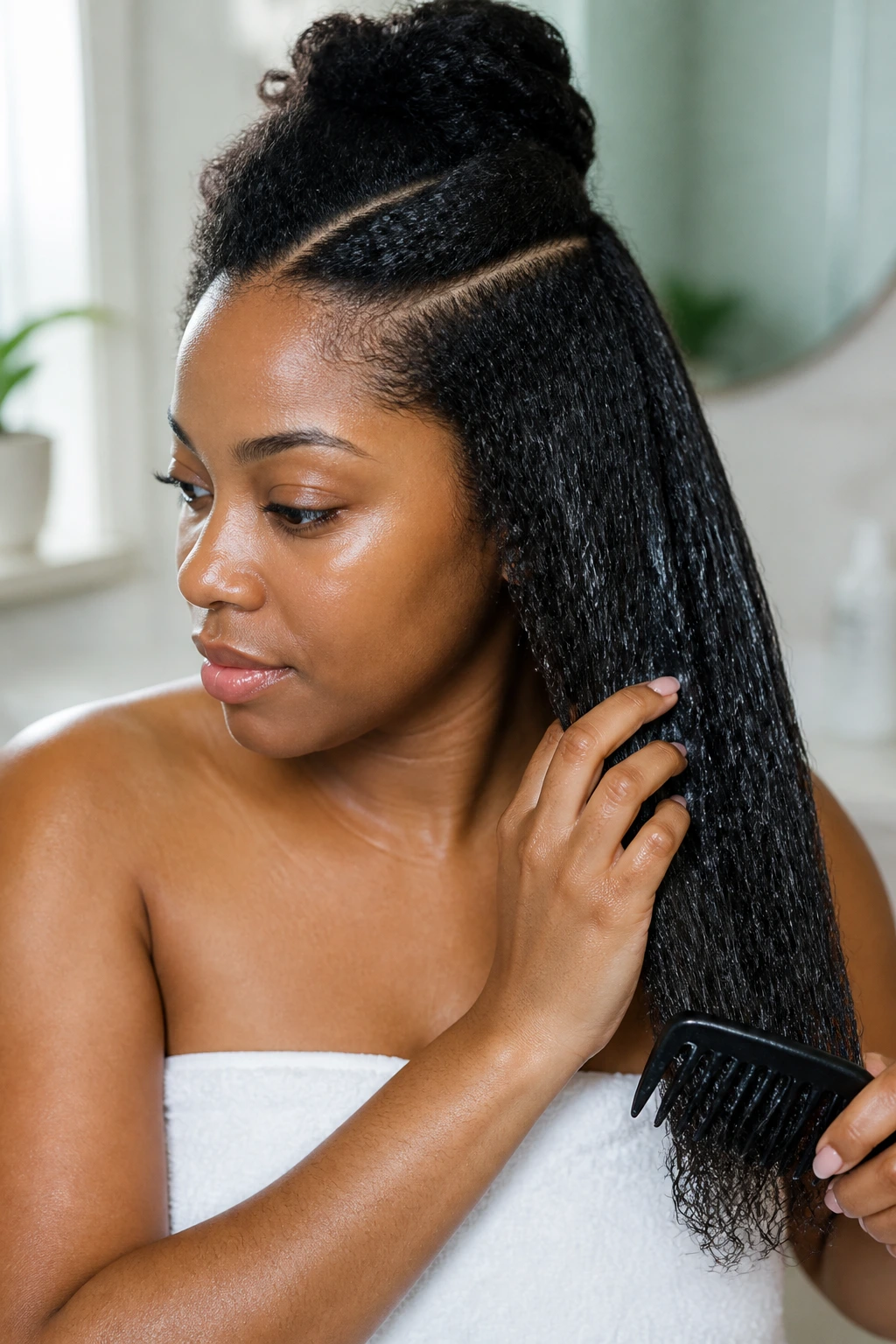
Clean, stretched, detangled hair makes twist braids look better and feel better. If the hair is packed with buildup or still damp at the roots, the install will sit awkwardly and the scalp will pay for it later. I like to start with a thorough wash, then a deep condition, then a full dry. Full dry matters. A style built on damp roots can smell off and swell under the twists.
Stretching helps too. Banding, twist-outs, or a low-heat blow-dry on cool air can give the hair enough length to lie flatter at the parting. That matters for oval faces because a neat front line keeps the shape balanced. If the front puffs too much, the style can get top-heavy in a hurry.
Trim split ends before the install if they’re snagging the comb. You do not need perfect ends, but you do need ends that are ready to tuck in. A little prep saves a lot of frustration once the braiding starts.
Styling Moves That Keep an Oval Face in Balance
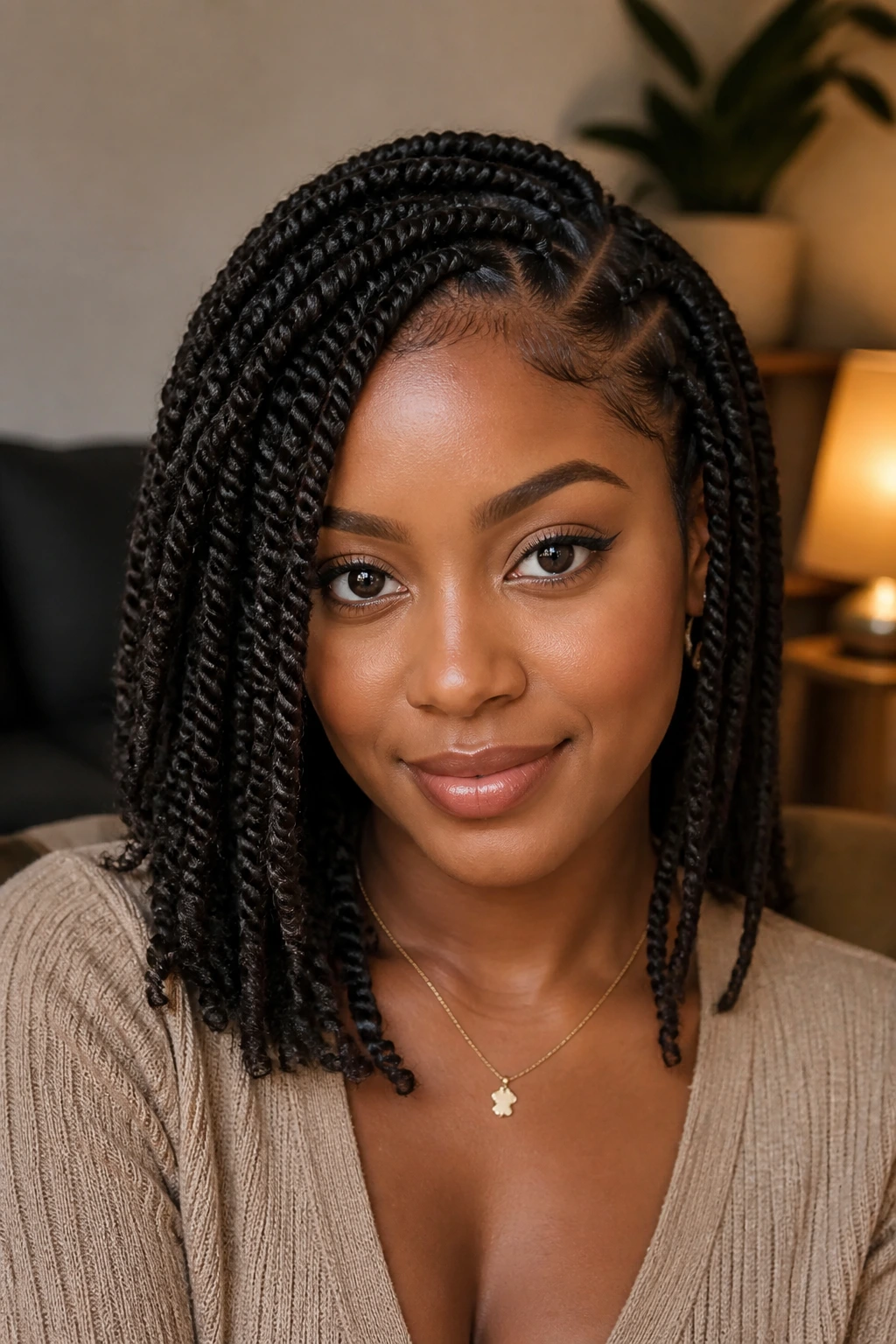
Parting: Choose the part based on what you want the eye to do. A center part gives symmetry. A side part creates motion. Zigzags and triangles work when you want the scalp pattern to matter as much as the length.
Volume: Keep one zone lighter if the rest of the style is full. That might mean thinner front pieces, a looser crown, or a shorter finish. Too much fullness all over can blur the face.
Front pieces: I like leaving a few face-framing twists when the style is long or very neat. They stop the hair from becoming a single vertical wall. If you already have earrings or makeup doing a lot of work, keep the front clean instead.
Accessories: Place cuffs and beads low, not crowded near the scalp. On oval faces, the open space around the forehead and temples is valuable. Don’t cover it just because you can.
Edge work: Smooth the hairline, but don’t freeze it. A soft edge looks healthier than a shellacked one, and the style will age better over the next couple of weeks.
Common Mistakes That Make Twist Braids Look Off
-
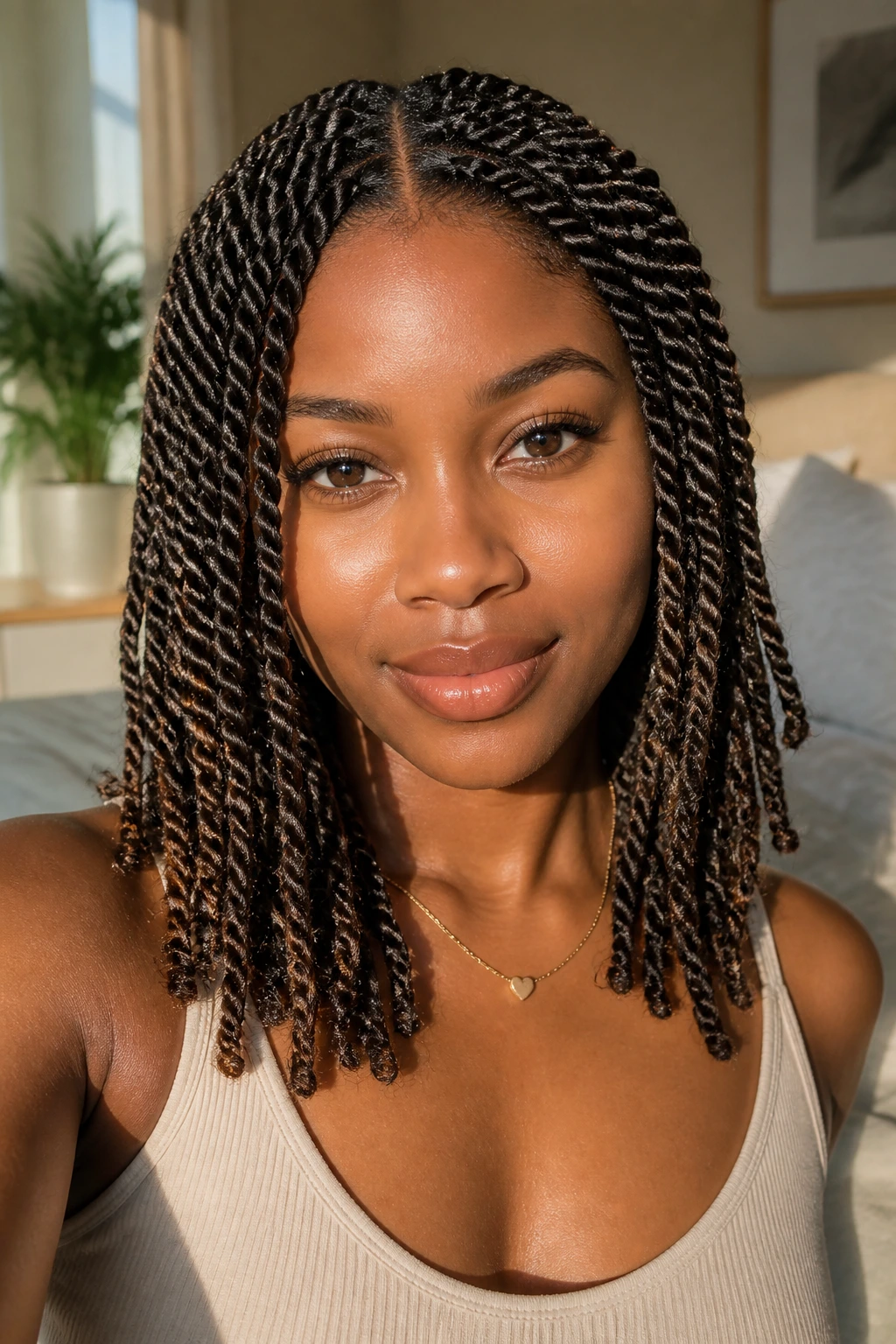
Pulling the front too tight: The symptom is immediate tension at the hairline and a face that looks strained instead of framed. The fix is simple: loosen the roots, use larger front sections, and ask for a softer install line near the temples.
-
Choosing one length for every twist without checking balance: Waist-length twists can be gorgeous, but if they’re too dense around the face, they drag the eye down. Shorten the front pieces or switch to a side part to reopen the shape.
-
Overcrowding with beads, cuffs, and curls: Too many extras can make an oval face look busy instead of balanced. Pick one statement detail and let the rest of the style stay quiet.
-
Skipping prep on natural hair: If the hair is damp, tangled, or coated in old product, the twists will sit unevenly and the scalp may itch faster. Wash, dry, detangle, and stretch before the first part is made.
-
Ignoring the weight of the extension hair: Heavy synthetic hair looks full for the first day and starts to feel like a drag later. If your scalp is sensitive, choose lighter fiber and medium sections.
-
Leaving the style in too long: The longer it stays past its prime, the fuzzier the roots get and the less clean the face frame looks. Refreshing a style is one thing. Rescuing it after it has collapsed is another.
Variations and Alternatives Worth Trying
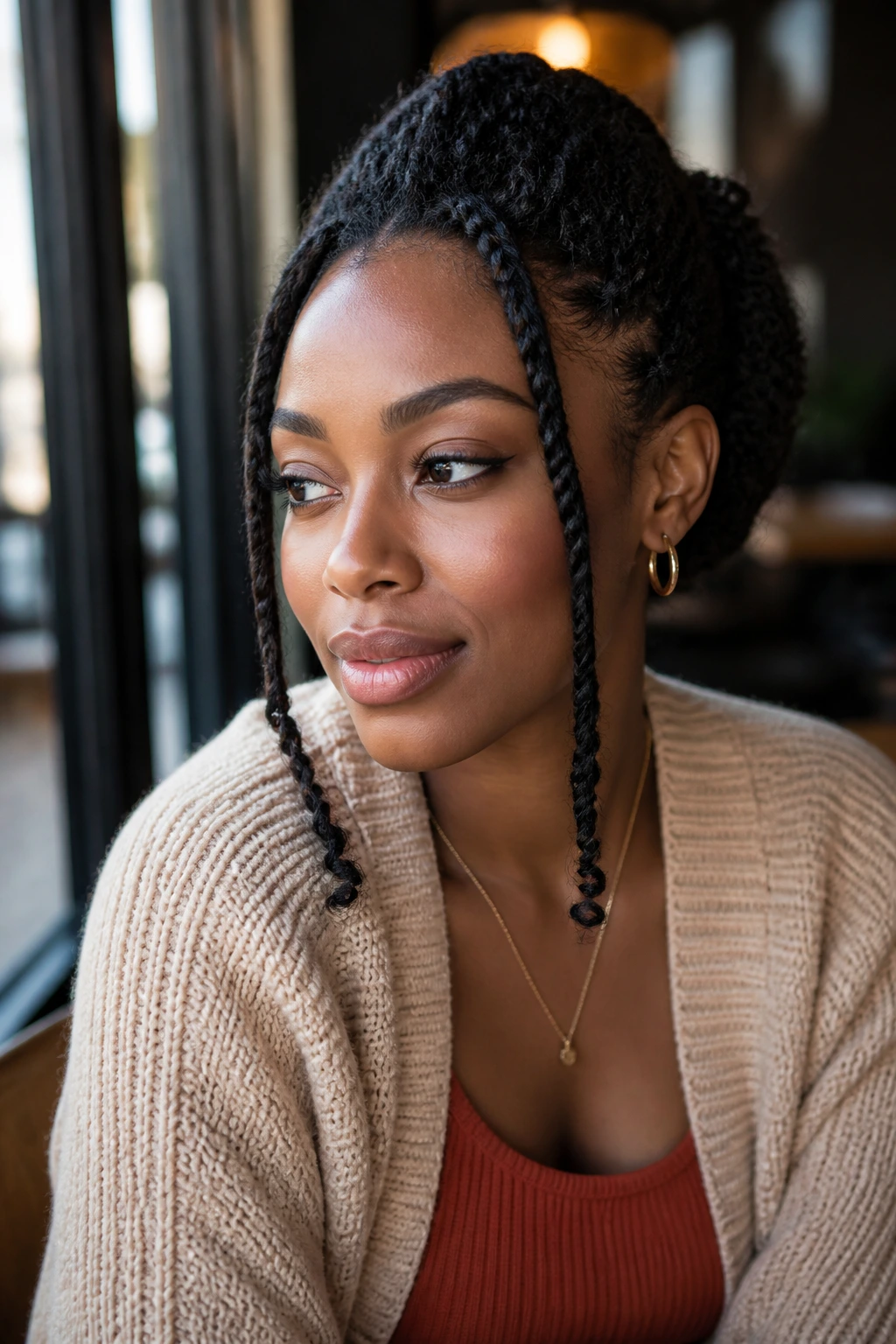
Soft-Frame Twists: Leave two slimmer twists out at the front and keep the rest tucked away from the cheeks. This is a good choice when you want a gentle frame without committing to bangs.
Office-Sleek Twists: Pick a middle part, smooth the roots, and keep the twist length around the shoulders or collarbone. It reads clean and controlled, which is useful if you want the style to look polished with very little fuss.
Weekend Boho Twists: Add loose water-wave pieces through the ends, but keep the base neat. The contrast between polished roots and airy ends keeps the style from looking messy.
Low-Tension Twists: Use medium sections, lighter extension hair, and a softer part line. This version is worth choosing when your scalp gets tender or when you want the style to last without feeling heavy.
Dramatic Side Sweep: Pull the whole look to one side and let the opposite temple stay open. That asymmetry is one of the quickest ways to make an oval face look deliberate and slightly more striking.
Keeping Twist Braids Fresh Between Wash Days
The first rule is boring, and it works: wrap the hair at night. A satin bonnet or scarf keeps the twist surface from rubbing dry and frizzy while you sleep. If the twists are long, I like to gather them loosely and then wrap the scarf around the hairline so the roots stay smooth.
Scalp care should be light, not greasy. A few drops of oil along the parting is enough for most people, especially if the style is clean and the scalp isn’t dry. If the scalp starts to itch because of product buildup, use a diluted cleanser on a cotton pad or nozzle bottle and wipe the part lines rather than soaking the whole head.
Washing depends on the install, but once every one to two weeks is a sane rhythm for most twist styles. Let the scalp dry fully afterward. If you wear longer twists, the ends will usually survive a careful wash, but heavy scrubbing at the roots will not help them. If the perimeter starts fuzzing first, refresh the front and sides before you touch the whole head.
Removal timing matters too. Larger twists often look best for about four to six weeks. Smaller twists can last longer if you keep the scalp clean and the roots are not loosening too much, but once detangling starts to get annoying, it’s time to take them out rather than force another week.
Frequently Asked Questions
Which twist size flatters an oval face the most?
Medium twists are the easiest place to start because they keep the face open without looking sparse. Jumbo twists can work if the parting is clean and the front isn’t too heavy, while mini twists are best when you want lots of movement and a lighter feel.
Do twist braids work on short natural hair?
Yes, but the install has to match the length. Chin-length twist bobs, flat twists, and knotless feed-in styles tend to work better than long styles that need a lot of anchoring. If the hair is very short, a stylist may need to use smaller sections or a base braid before adding twist hair.
How do I keep twist braids from looking too flat on an oval face?
Keep a little fullness near the crown or at the sides, and don’t smash the front too hard with gel. A side part, a few face-framing pieces, or a slightly layered finish can add enough shape to keep the style from lying dead against the head.
Are twist braids bad for your edges?
They can be if the front is installed too tightly or if heavy extension hair pulls on the hairline. The safest version is one that feels secure but not tense, especially around the temples and nape.
Can I wear twist braids with no extensions at all?
Absolutely. Mini twists, flat twists, and some rope-twist styles work beautifully on natural hair alone. The look is usually lighter and easier on the scalp, though the twists may shrink more and need a cleaner maintenance routine.
What if my scalp gets itchy after the install?
First check for tightness. If the roots hurt, the style is too tight and needs attention. If it’s more of a buildup issue, cleanse the part lines lightly, let the scalp dry fully, and avoid piling on more oils, which usually makes the itch worse.
How long should twist braids stay in?
For most people, four to six weeks is a sensible window for larger or medium twists, while smaller twists can sometimes last longer with careful upkeep. Once the roots start matting or the edges look stressed, the style is past its useful life.
Can I still work out with twist braids?
Yes. A loose ponytail, a silk-lined cap, or a wrapped scarf can keep the style controlled during exercise. Just be sure to dry the roots afterward so sweat does not sit in the parting and turn the scalp cranky.
What’s the best braid hair for a soft, natural-looking finish?
Marley hair gives a matte, fuller look that blends well with textured natural hair. Kanekalon leans smoother and sleeker, which suits Senegalese-style twists. Passion twists need water-wave hair if you want that softer, springy finish.
The Styles That Let the Face Do the Work
Oval faces do not need rescue styling. They need choices. That’s why twist braids are such a strong match: the face shape already has balance, so the job becomes deciding how much structure, softness, or movement you want on top of it.
The best twist looks here are not the loudest ones. They’re the ones that leave room for the eyes, keep the hairline calm, and use parting and length with some discipline. Get those pieces right, and the style stops feeling like just another protective look. It starts acting like a frame.
If you’re deciding where to begin, start with the twist size you can keep clean, then choose the part that flatters your features without crowding them. That simple order saves a lot of bad installs, and it makes the whole thing easier to wear for more than three days.