



Curly hair and a heart-shaped face can look polished fast—or a little off-balance, with too much lift near the temples and not enough weight around the jaw. The wrong cut makes the forehead feel wider, the chin smaller, and the curls busier than they need to be. The right one does the opposite. It gives the eye somewhere softer to land.
That is why the best modern haircuts for curly hair and heart-shaped faces usually work lower on the head: jaw length, collarbone length, cheekbone-grazing fringe, or a side part that breaks the width up top. Curl shrinkage changes everything, too. A bob that lands at the chin when wet can jump a full inch or two once it dries, and that matters a lot more on curls than it does on straight hair.
I trust shapes that hold up on day two. If a haircut only looks good with perfect styling and a salon diffuser, it is too fussy. The good ones keep their line when you tuck one side behind the ear, let the crown air dry, and step into real life without looking overworked. The first thing to know is why some silhouettes flatter a heart shape while others fight it.
Why These Modern Curly Cuts Balance a Heart-Shaped Face

-
Width moves lower: The strongest cuts in this group build shape around the cheekbones, jaw, or collarbone, which softens a broader forehead without hiding it.
-
Crown height stays controlled: Curls already want to lift. A cut that piles even more volume at the top can make the face feel top-heavy in a hurry.
-
Fringe works like a frame, not a curtain: Side-swept bangs, curtain bangs, and bottle-neck bangs break up the forehead in a way that still leaves the curls looking light.
-
Shrinkage is part of the plan: Good curly cuts leave room for curls to spring up 1 to 3 inches, sometimes more, so the shape still lands where it should after drying.
-
The face frame does the heavy lifting: Shortest pieces that hit at cheekbone or jaw level pull attention inward and downward, which is exactly where a heart-shaped face usually wants it.
-
They work across curl types: Loose waves, springy ringlets, and tighter coils need different amounts of layering, but the same basic geometry keeps the balance right.
1. Chin-Grazing Curly Bob with a Soft Side Part
A chin-grazing curly bob is one of those cuts that looks simple until you watch what it does to the face. The length stops right where a heart-shaped face needs help, around the jawline, so the chin feels less narrow and the forehead feels less dominant. A soft side part keeps the top from looking too centered and formal. That tiny shift changes the whole read of the cut.
What to ask for
Ask for the perimeter to land at the jaw when dry, not just when wet. If your curls are springy, that usually means the wet cut will sit a touch longer than you think. Keep the front pieces slightly longer than the back so the shape leans forward a little instead of ballooning out at the sides. It’s a small thing. It matters.
This bob is especially good on 2C to 3B curls with medium density. A little mousse at the roots and a diffuser on low heat is enough. Skip a hard center part unless your forehead is already balanced by fringe; the side part does more work here than people expect.
2. Collarbone Lob with Cheekbone Layers
Collarbone length is the safest place for curls on a heart-shaped face. It gives you enough hair to feel like you still have length, but it doesn’t hang so low that the shape disappears. The collarbone line acts like a shelf for the curls, and cheekbone layers keep the upper half from swelling out.
Why it works
A lob that sits just at or below the collarbone gives the jaw some visual weight. That helps a narrow chin read a little fuller. The cheekbone layers are the real trick, though. They bring movement where the face already has strength, instead of stacking all the volume at the temples.
This cut suits people who want a grown-up shape without losing bounce. It also behaves well on air-dry days, which is a nice bonus when you are not in the mood to hover under a diffuser for twenty minutes. Ask your stylist to keep the layers soft and not too high on the head. If the top gets chopped too much, the cut starts flirting with mushroom territory.
3. Curly Shag with Curtain Bangs
A curly shag can be brilliant on a heart-shaped face, but only when the layers are placed with some restraint. The best version keeps movement around the cheeks and jaw, then lets curtain bangs split the difference up front. That fringe softens the forehead without boxing the face in. It also looks good when it grows out, which is the part people forget.
How to keep it from going too high
The mistake with shags is adding too much lift at the crown. That makes the head look tall and the face look narrower than it is. Ask for the shortest layers to begin below the brow or at the cheekbones, not up at the temples. You want texture, not a halo.
Curtain bangs work especially well if your curls are loose to medium. They can open away from the center and curve into the rest of the cut. A dry-cut approach helps here because curl pattern changes the length so much. If your stylist cuts them wet and too short, you will spend the next month pinning them back.
4. Long U-Shape Cut with Face-Framing Pieces
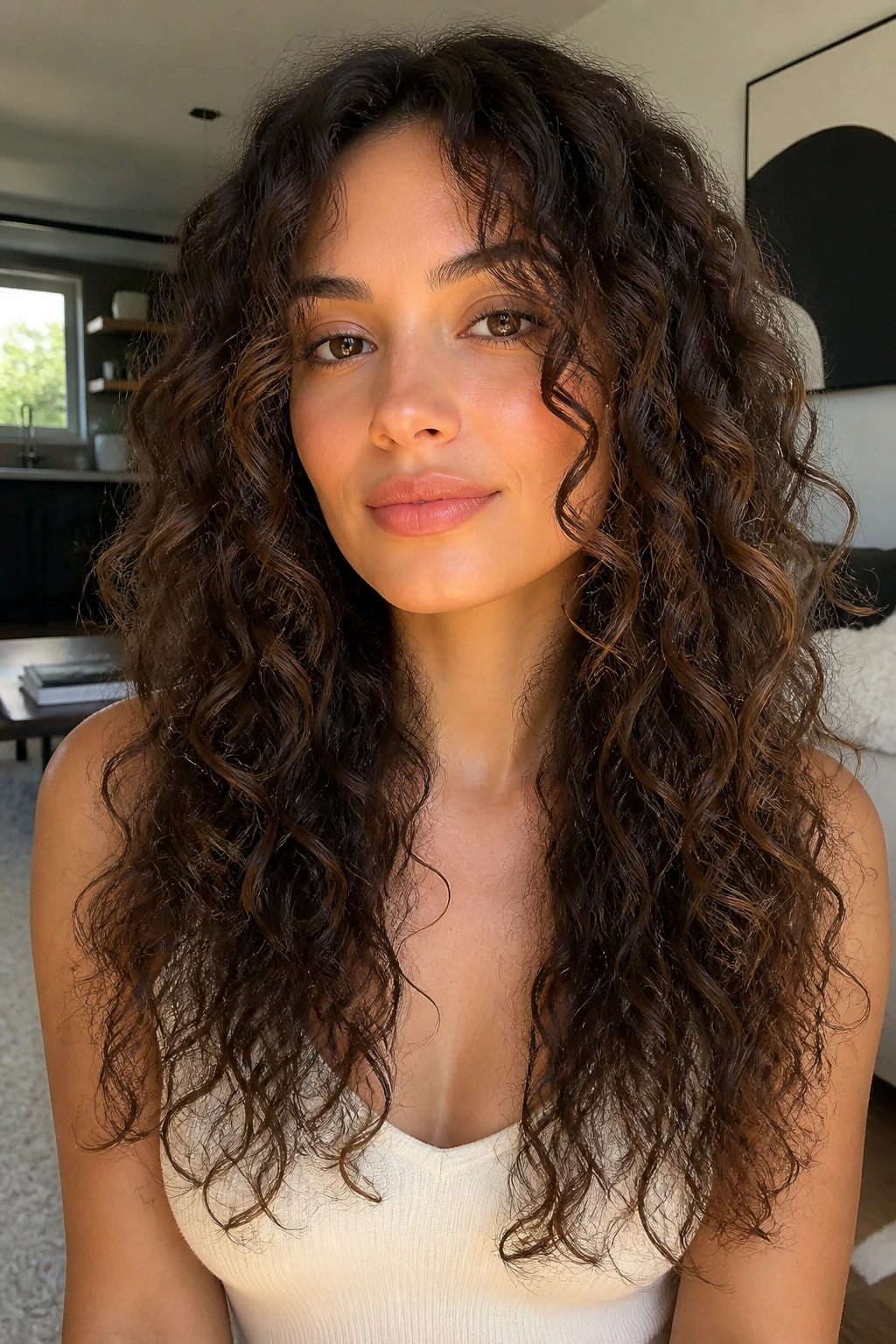
Long hair can work on a heart-shaped face, but it needs a shape. A blunt sheet of curls that drops straight down can make the upper face look wider by comparison. The U-shape fixes that. It keeps length in the back while rounding the perimeter just enough to avoid that flat, curtain-like look.
Who this suits
This is the cut for someone who wants to keep the drama of long curls but still see some structure around the face. The face-framing pieces should start around the chin or collarbone, depending on shrinkage and density. If they start too high, the cut starts to look busy around the cheeks. If they start too low, you lose the balancing effect.
It works well on thick hair because the lower curve keeps the outline soft. Fine curls can wear it too, but the layers need to be gentler so the ends do not go stringy. I like this one for people who wear their curls down most days and want the shape to look intentional even when the roots are a little flat.
5. Rounded Curly Pixie with a Tapered Nape
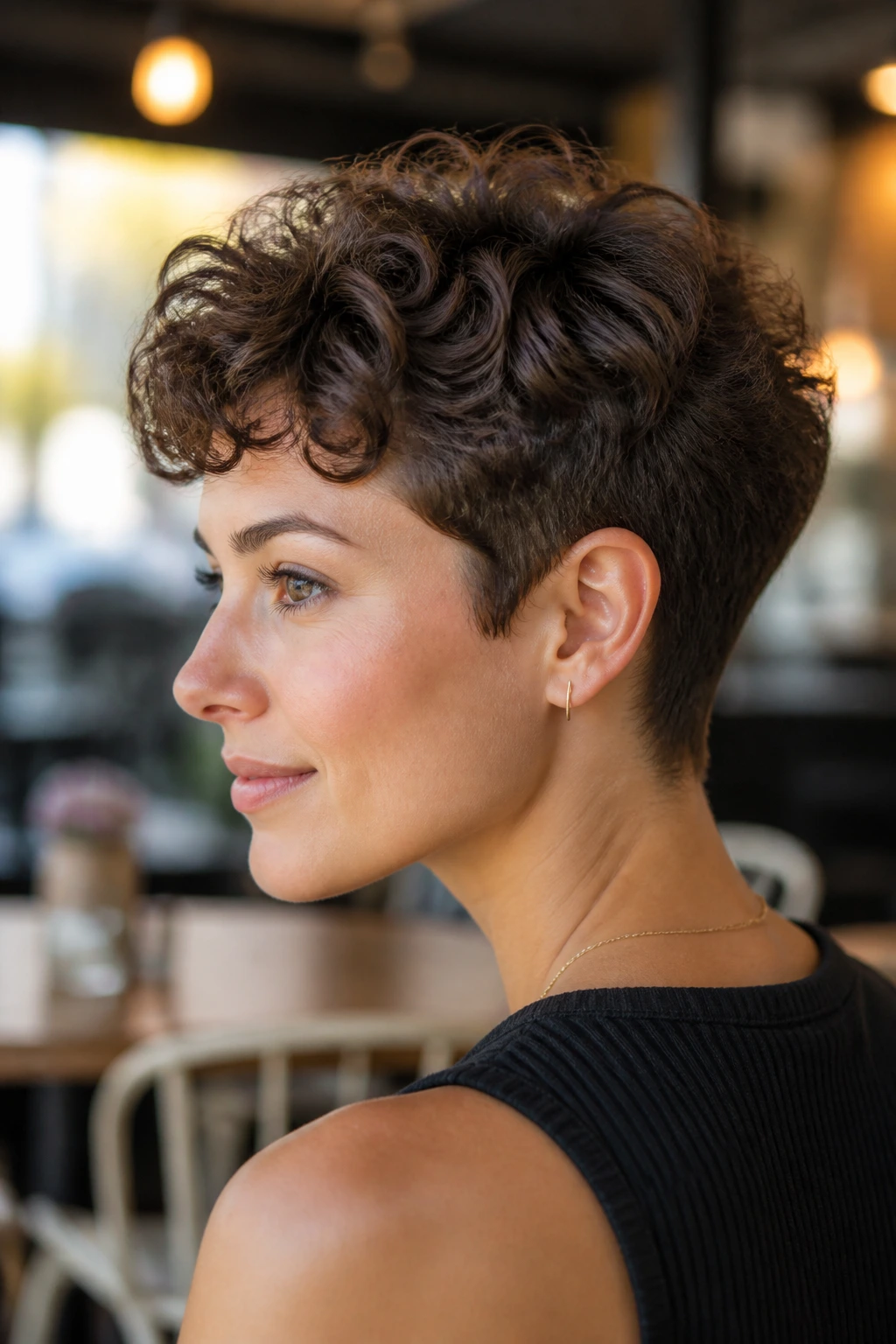
Short hair can flatter a heart-shaped face beautifully when the volume is handled with a light hand. A rounded curly pixie keeps the crown soft and the sides clean, which prevents the face from looking top-heavy. The tapered nape removes bulk at the neck, so the head shape reads neat instead of puffed out.
The best version has longer curls on top that sweep forward or sideways, not straight up. That forward motion pulls the eye toward the center of the face and makes the chin look less narrow. If your curls are tighter, ask for the top to stay long enough to bend, not stand.
This cut is sharp, but not severe. It needs regular shape-ups. Every 4 to 6 weeks is normal if you want the outline to stay crisp. If you let it grow too long without a trim, the sides can start to puff out and the whole balance changes.
6. Curly Wolf Cut with Broken-Up Ends

The wolf cut can be excellent on curly hair, but it needs a softer hand on a heart-shaped face. A full-on wolf cut that leaves the top too short can make the forehead feel even broader. The modern version keeps the edges broken up, the crown controlled, and the face frame a bit longer.
Why it works better than a harsh mullet
This cut gives you movement without making the silhouette feel jagged. The back can carry some length, while the pieces near the cheeks stay soft enough to reduce upper-face width. That makes it a nice pick if you like edge, but not a sharp, over-styled look.
Ask for the shortest layers to stop around the cheekbone, not the temple. That single detail keeps the cut flattering instead of costume-y. It’s also a good option if your curls are dense and need internal structure, because the broken-up ends remove bulk without making the outline look thin.
7. Deva Cut with Balanced Layers

A Deva-style cut is less about a specific silhouette and more about the way the shape is built. Curl by curl, dry, the stylist can see where each spiral wants to land. On a heart-shaped face, that matters a lot. It lets them place the shortest pieces where they soften the forehead and the longest pieces where they add weight near the jaw.
The real strength here is precision. You are not guessing at shrinkage. You are cutting the curl in its natural state, which means the final shape is less likely to surprise you in the mirror on wash day. That makes this technique especially useful if your curl pattern changes from front to back.
Bring your usual styling routine to the appointment. If you diffuse, say so. If you air-dry, say that too. A dry cut should respect how you wear your hair, not how it looks when it’s pinned up and pretending to behave.
8. Shoulder-Length Midi with Side-Swept Fringe

Shoulder-length curls are easy to live with, and the side-swept fringe makes them much kinder to a heart-shaped face. The shoulder line gives the curls enough length to hang, while the fringe breaks up the width across the forehead. It is a good middle ground if you want a haircut that still feels feminine and soft without going full bob.
This shape is especially useful for loose curls and waves that need a little help staying away from the temples. The fringe can start deep on one side and drift across the forehead rather than stopping bluntly. That keeps the face open.
A side-swept fringe also buys you flexibility. You can tuck it back, clip it up, or let it collapse naturally on humid days. That sounds minor. It isn’t. A fringe you can move around is a lot easier to live with than one that demands perfect styling every morning.
9. Invisible-Layer Collarbone Cut

This is the cut for people who want shape without obvious layers. The outer line stays fairly clean, almost one-length, but the interior layers remove enough weight to keep curls from puffing into a triangle. On a heart-shaped face, that subtlety helps. You get softness around the jaw without obvious choppiness around the cheeks.
It is a smart choice if your hair is fine to medium and you dislike the shaggy look. The curl pattern still gets room to move, but the perimeter stays polished. Ask for the shortest hidden layers to begin below the cheekbone, and keep the front slightly longer if your curls spring upward a lot.
This cut is also easy to grow out. That’s one reason I like it. As the layers settle, the shape stays readable for a long time, and you are not stuck with a harsh line between salon visits.
10. Brow-Grazing French Bob for Loose Curls

A French bob can work on a heart-shaped face when the curls are loose and the fringe is handled with care. Brow-grazing length softens the forehead, while the bob itself sits high enough to show off the neck and jaw. The trick is not to make it too round or too wide.
A useful detail
Keep the front a touch longer than the shortest point around the sides. That tiny slope keeps the cut from spreading outward at cheek level. A loose curl pattern benefits from this because the hair can sit close to the face without getting bulky.
This is not the bob for someone who wants a lot of wash-and-go forgiveness. It has a bit more attitude than that. But if your curls are soft waves to loose spirals and you like a cut that feels crisp rather than fluffy, it can be a very good match. A side part or broken center part often looks better here than a dead-straight middle.
11. Asymmetrical Curly Bob

An asymmetrical curly bob sounds dramatic, but the best version is actually quite subtle. One side sits a little longer than the other, and that slight imbalance can help a heart-shaped face by shifting attention away from a broad forehead and toward the lower half of the face. It’s a neat trick.
Keep the difference modest—about 1 to 1.5 inches is usually enough. Anything more starts to look like a statement haircut in the loudest possible way. The curl pattern does enough talking on its own.
This cut works best when the longer side lands near the jaw or just below it. Tuck the shorter side behind the ear for a clean line, or let the longer side fall forward when you want extra softness. It is a good pick if you like structure but do not want a cut that behaves like a box.
12. Mixie Cut with Soft Sides
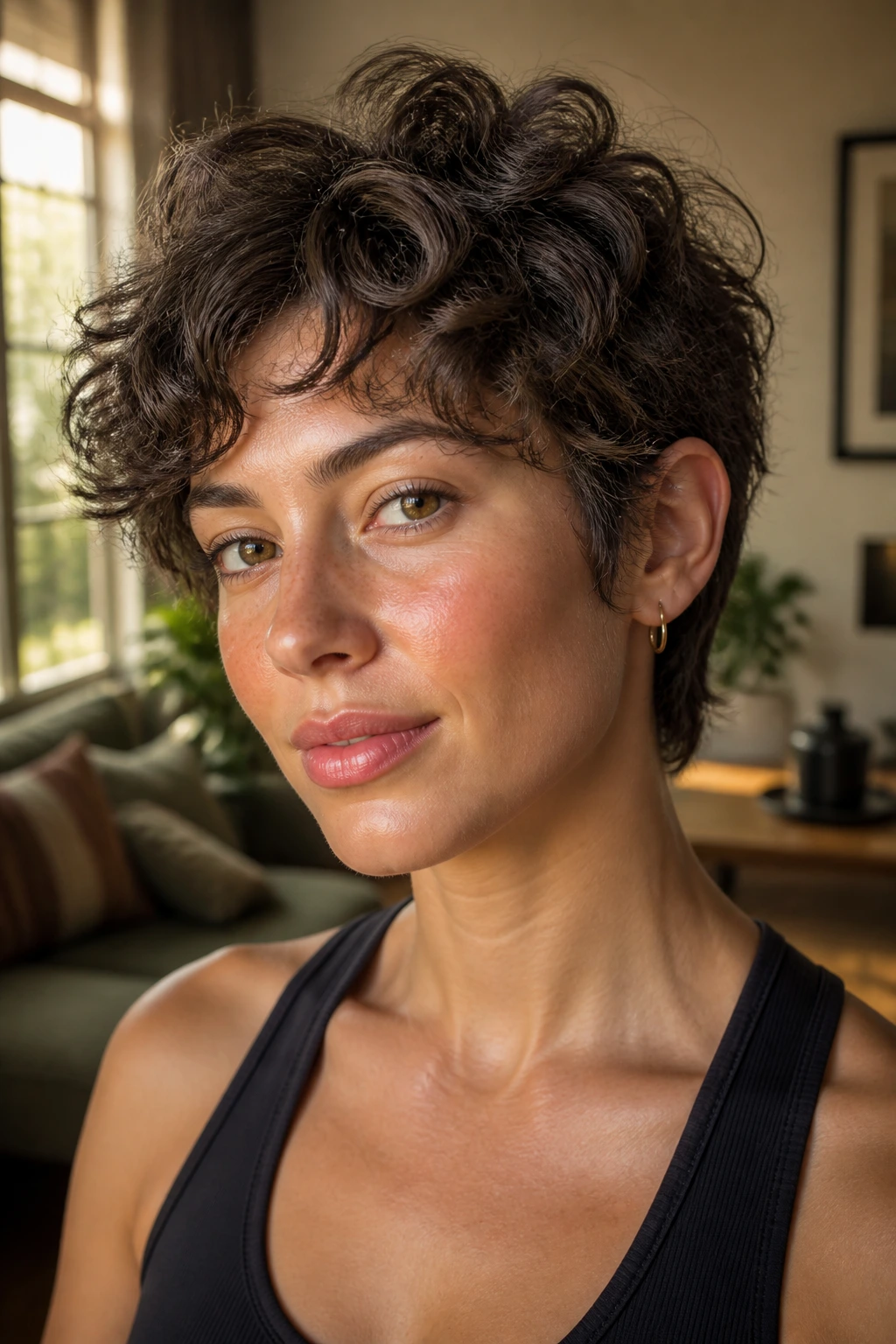
The mixie is the little sibling of the mullet and the pixie, and it can look excellent on curls when it is softened at the sides. A heart-shaped face gets a nice amount of movement from the top, while the softer side lengths stop the forehead from feeling too exposed. The cut has edge, but not the harsh kind.
Ask for length left around the ears and temple area so the shape can bend rather than spike outward. If the sides are taken too short, the face can feel top-heavy. That is the whole battle with short curly cuts on this face shape: keeping some visual weight lower down.
This one is for people who like a little grit in the silhouette. It grows out well, too, because the shape naturally slides toward a bixie or short shag as it gets longer. Not many short cuts do that without awkward stages.
13. Center-Part Lob with Bottle-Neck Bangs

A center part can work on a heart-shaped face when the fringe does enough of the balancing. Bottle-neck bangs start shorter in the middle, then curve longer near the cheekbones, which softens the forehead without making the front look heavy. On curly hair, that shape can be gorgeous because the fringe blends into the rest of the cut instead of sitting on top of it.
The lob length keeps the lower face from disappearing. That matters. A center part alone can make a heart face look a little long and sharp, but the bottle-neck fringe shifts some focus outward to the cheeks and inward to the eyes.
This cut is best if you like symmetry but do not want flatness. The part stays clean, the fringe does the softening, and the lob gives the curls a tidy place to settle. It does need a stylist who understands how curls shrink at the front, though. If the bangs are cut too short, they will spring right up and stop being bangs.
14. Soft Undercut Pixie with Crown Length
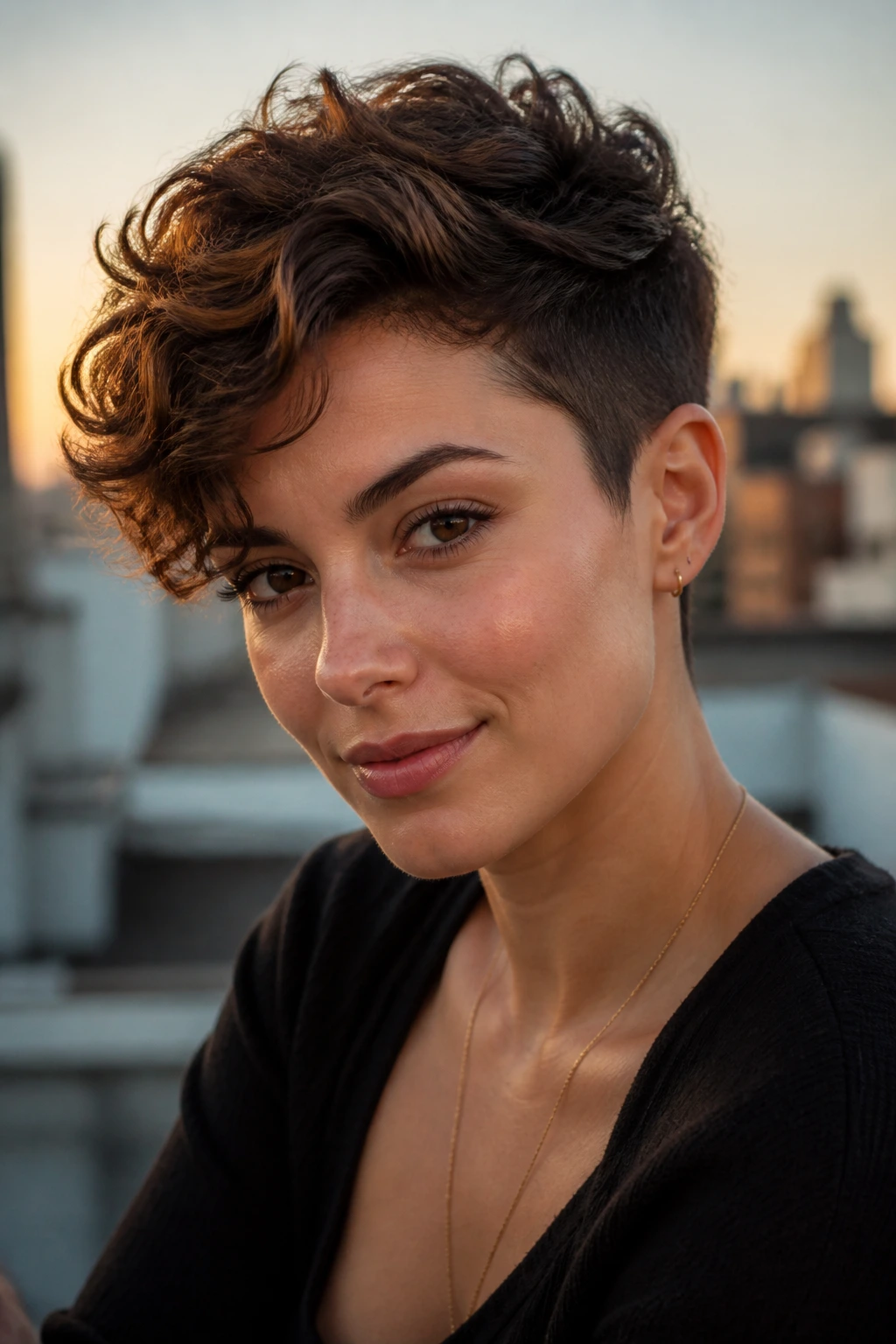
A soft undercut pixie solves one of the oldest curly-hair problems: too much bulk where you do not want it. By removing weight underneath, the cut lets the top stay long enough to sweep to one side or fall gently forward. On a heart-shaped face, that keeps the outline neat while still giving the forehead some break.
The undercut should stay hidden enough that the shape looks clean from the front. You do not need a dramatic shaved section for this to work. Even a subtle reduction under the back and sides can make the top curls sit better and keep the jawline from getting swallowed.
This is a smart choice for dense curls and coils that puff at the sides. It also feels lighter in humid weather, which is not a small thing. If you are tired of fighting volume where your head naturally widens, this cut can feel like relief.
15. Long Layers with Cheekbone-Grazing Pieces
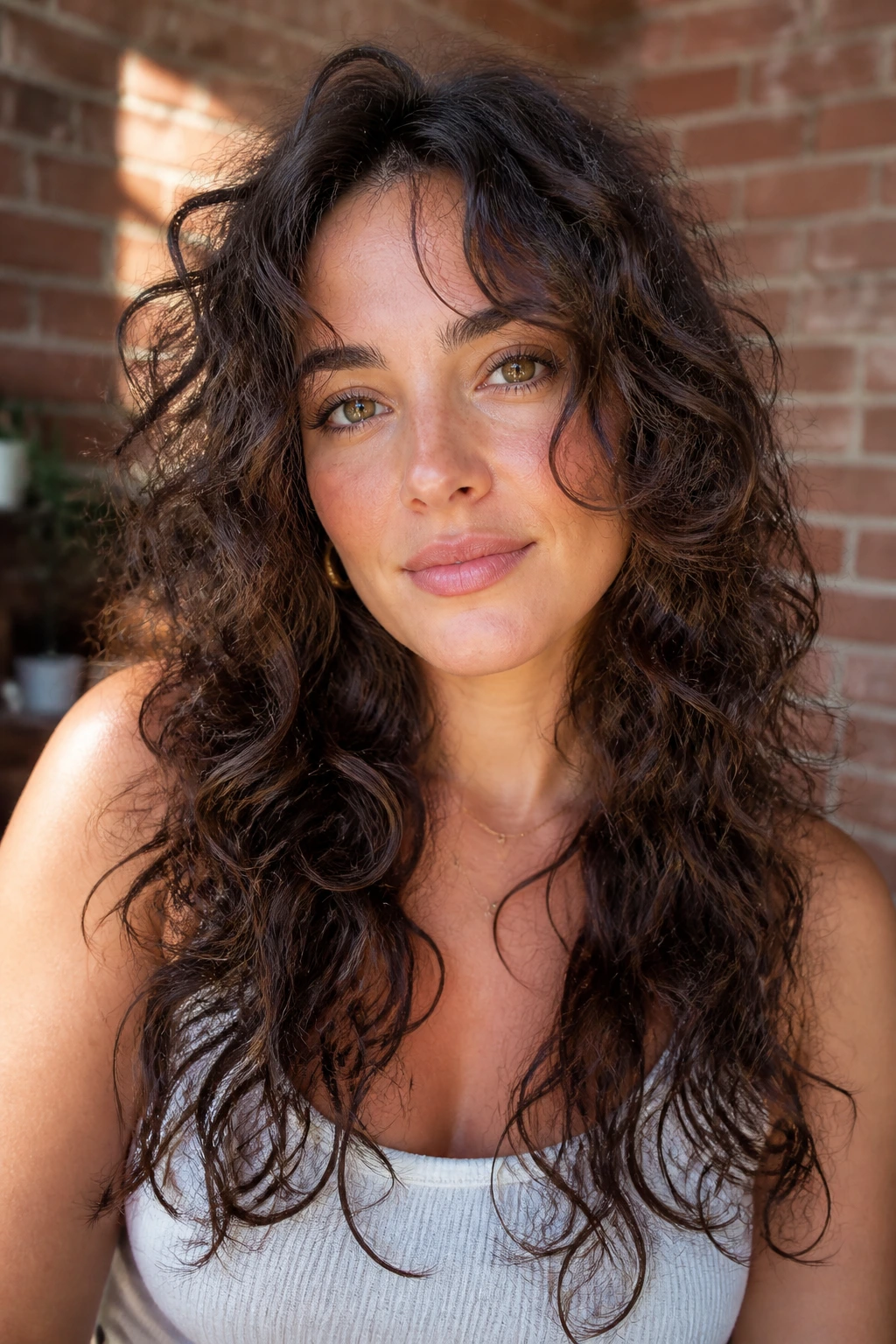
Long curly hair can flatter a heart-shaped face, but it needs intentional layers. The key is not to cut layers everywhere and hope for movement. The key is to place the front pieces where they matter, usually at the cheekbones or just below, so the face gets framing before the rest of the hair falls away.
This style is especially good for medium to high-density curls that can carry weight. Long layers stop the bottom from going too heavy while keeping the top from puffing out like a triangle. The perimeter should stay strong. If the ends are chopped too much, long curls start looking wispy and tired.
I like this cut for people who want length with a bit of shape and do not want to visit the salon every six weeks. It grows out gracefully. The face frame softens, the back keeps its line, and the overall shape still makes sense even when it is a little overdue.
16. Curly Mullet with Rounded Edges

The modern curly mullet is softer than the old version people picture. On a heart-shaped face, that softness matters. The length at the back gives the jaw some visual company, while the rounded edges keep the front from feeling sharp or severe. It is a cut with personality, not a costume.
What makes it work
The front and sides should stay long enough to curve around the face, with the shortest layers around the cheekbone rather than the temple. That keeps the forehead from taking over. The back can be a little longer and piecey, which helps the curls move instead of sitting in one block.
This is a strong choice if you like a cut that feels modern and a little rebellious, but not messy. It does ask for styling—usually a cream plus a light gel, then a diffuser or air-dry scrunch. If you want polish without losing edge, this is the lane.
17. Bixie Cut with Lift at the Crown
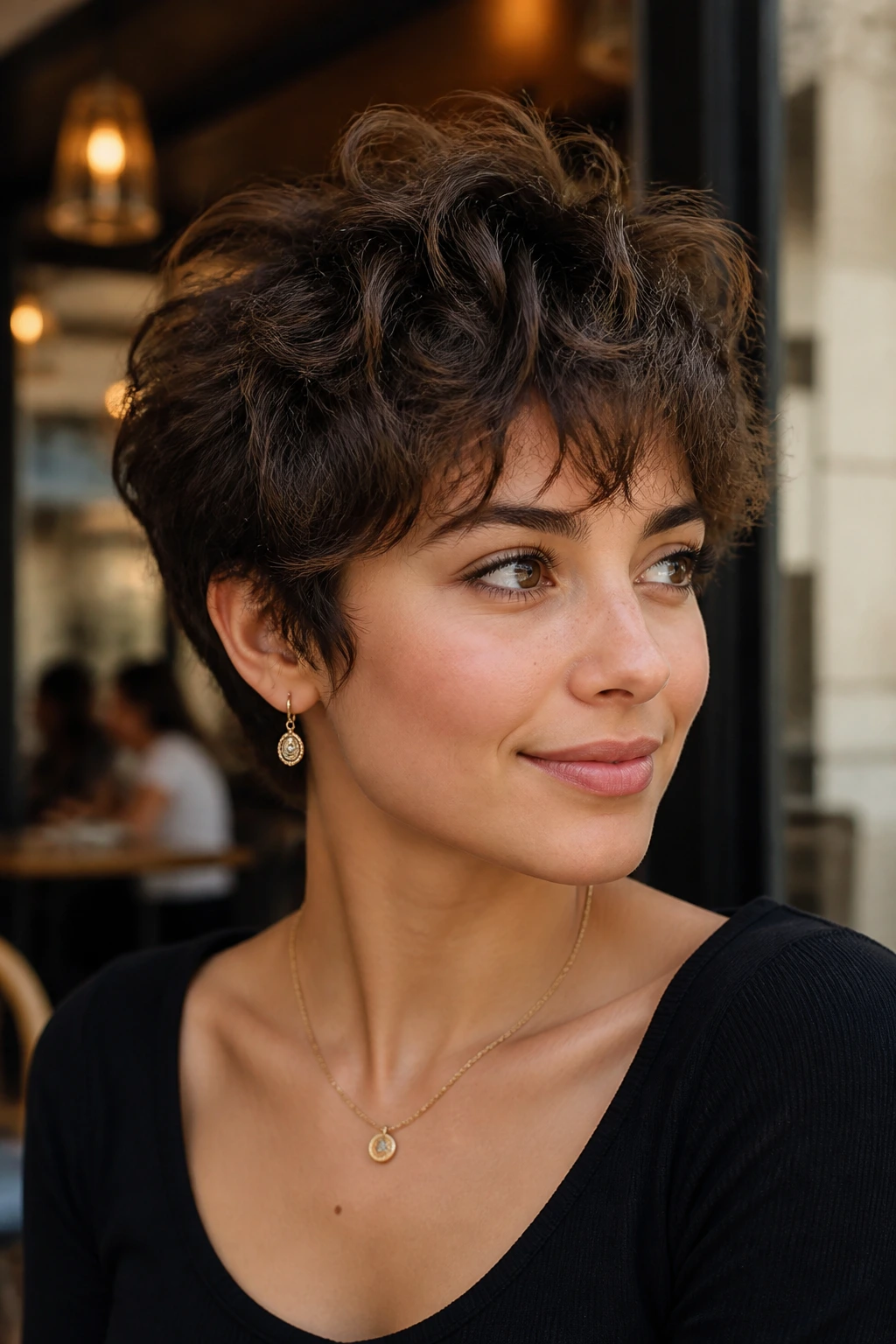
A bixie sits between a bob and a pixie, and that middle ground can be magic on heart-shaped faces. It is short enough to feel fresh, but long enough to keep some softness around the jaw and ears. The crown gets lift, but not so much that the face turns top-heavy.
The best bixies on curls keep the sides a little longer and the top slightly forward. That way the hair frames the face instead of standing away from it. If your curls are loose, you can tuck pieces behind the ear. If they are tighter, the shape still reads clean because the length is controlled.
This is a good cut when you want something easy but not bland. It looks deliberate even when the styling is quick. And quick matters here. A bixie should be a five-minute haircut, not a twenty-minute negotiation.
18. Blunt Midi with Interior Weight Removal
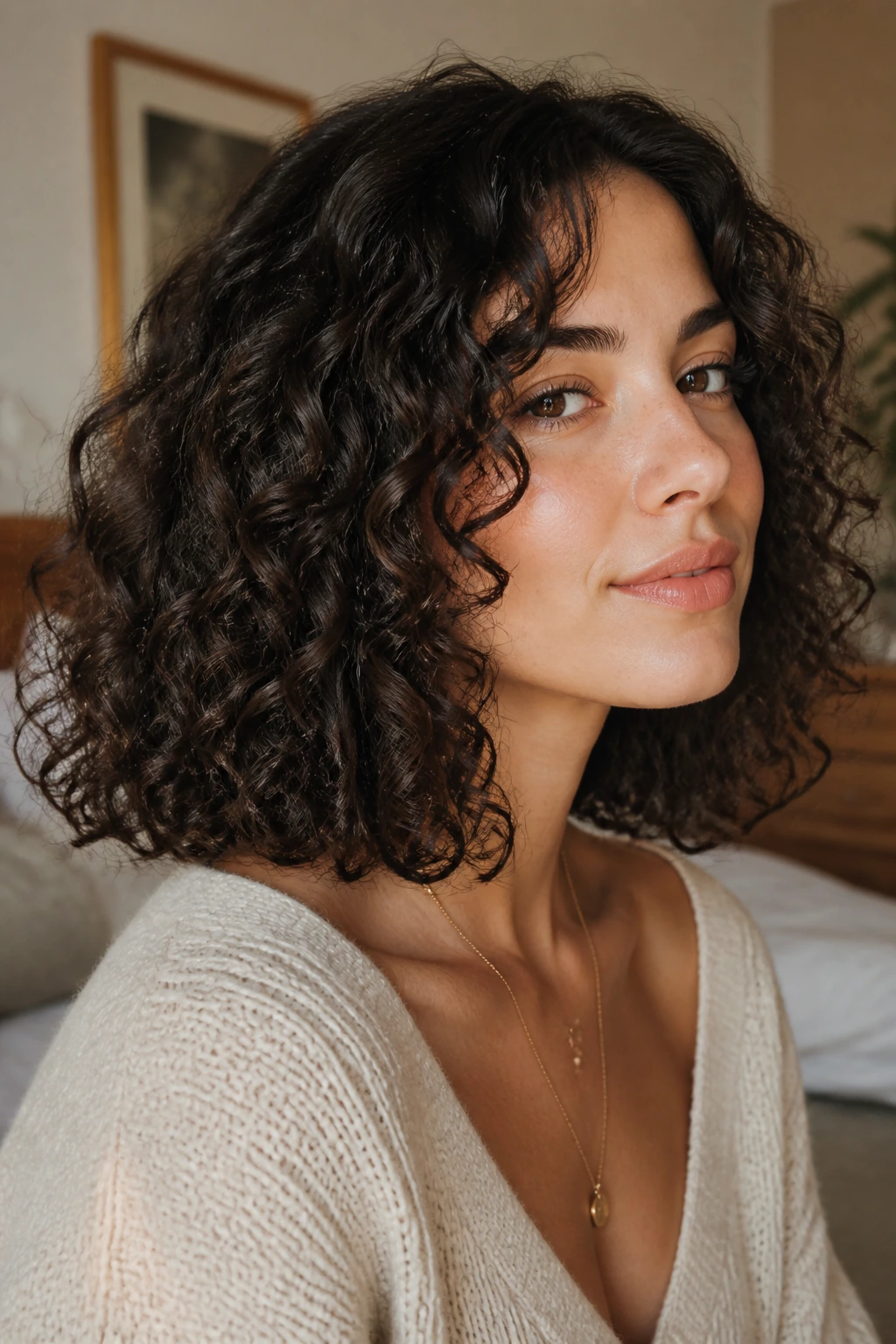
A blunt midi can surprise people because it sounds too square for curls. On a heart-shaped face, though, the strong horizontal line can actually help balance a narrow chin. The secret is removing weight from the inside so the curls do not balloon underneath the outer edge.
That outer line should land around the collarbone or a touch below. Any shorter, and the bluntness can widen the face in the wrong place. Any longer, and the visual impact gets muddy. This length gives a clean edge without turning the hair into a block.
This cut loves dense curls and stronger wave patterns. It does not love weak ends. If your hair is fine, ask for very conservative internal shaping. The goal is a sleek outline with movement inside, not a hollow shell.
19. Side-Swept Crop with Jawline Softness
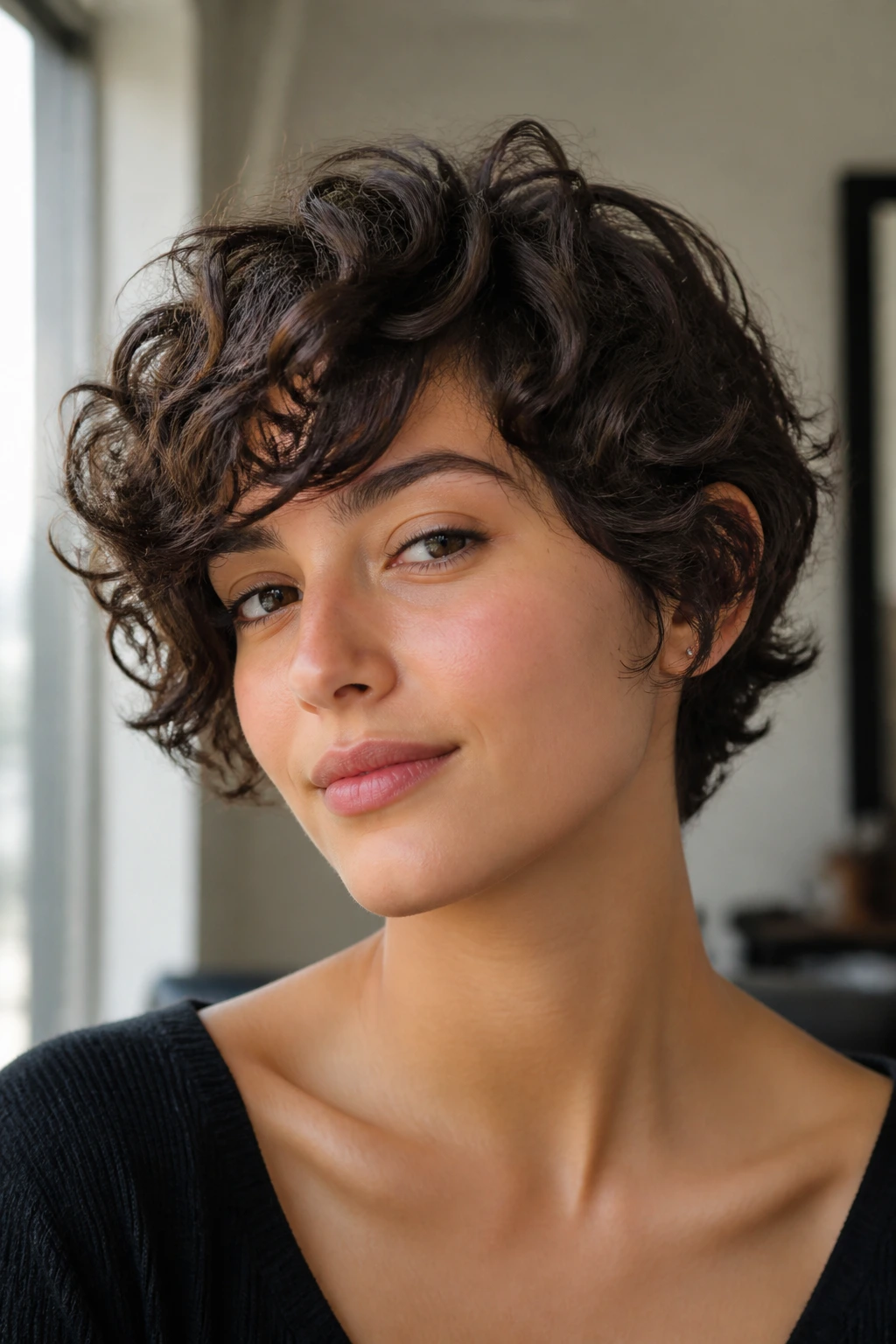
A side-swept crop gives you short hair without exposing every angle of the face. The sweep across the forehead softens the width up top, and the length around the jaw keeps the lower face from disappearing. It is a smart pick if you want a low-maintenance shape that still feels styled.
This cut works best when the front is long enough to bend, not flip. A short crop with curled bangs and slightly longer side pieces can look especially good with bold earrings and a clean neckline. The face stays open, but not stark.
It is also one of the fastest cuts to live with. A bit of cream, a little scrunch, maybe a diffuser blast for the roots, and you are done. If you do not want to spend half your morning coaxing curls into place, this one deserves a close look.
20. Collarbone Shag with Feathered Ends

The collarbone shag sits between a playful shag and a more polished long layer cut. That middle ground works nicely on heart-shaped faces because it gives movement around the face without flooding the temples with volume. The feathered ends keep the silhouette soft all the way down.
I like this cut on medium-density curls that want shape but not too much structure. The fringe can be curtain-like or side-swept, and the rest of the cut can drift around the collarbone with easy movement. It has a little swing to it. Not too much. Enough.
This is a good salon choice if you want a cut that feels current without looking overworked. It also wears well with second-day curls, which is where a lot of haircuts fail. If it still has shape after sleeping on it, that tells you the layers were placed with some sense.
21. Curly Butterfly Cut with a Short Face Frame
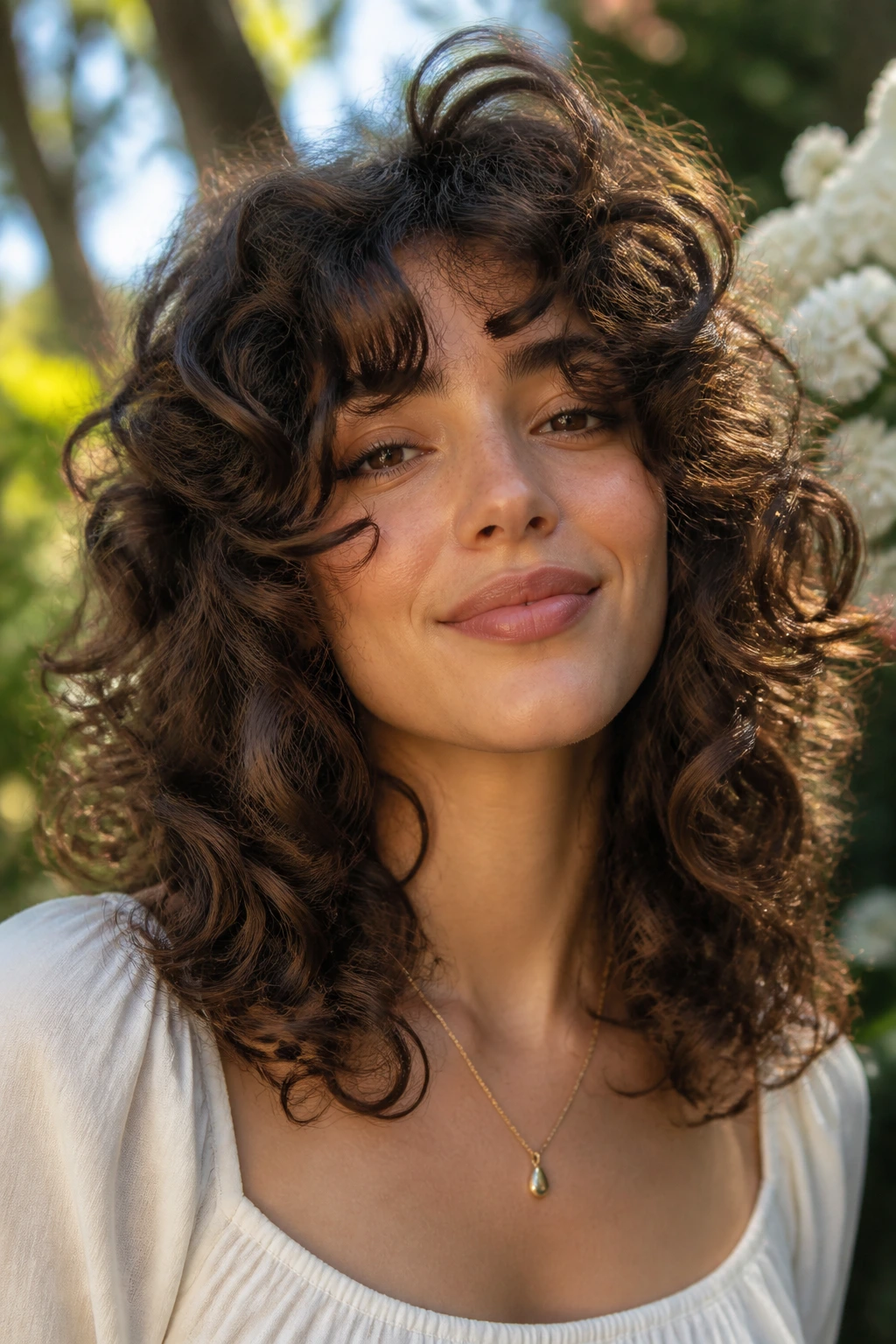
The butterfly cut gets its name from those shorter top layers that sit over much longer length underneath. On curls, that idea can work beautifully when the face frame is kept short enough to lift the eyes but long enough to avoid a puffed-out crown. For a heart-shaped face, the shorter pieces should land around the cheekbones, not the temples.
That placement helps the face feel softer around the upper half while the long bottom pieces add weight where the chin needs support. It is a smart way to get volume without making the silhouette boxy. If your hair is long and dense, the butterfly shape can remove some of that blanket effect that curls sometimes create.
This cut looks especially good when the front pieces are styled away from the center. You get motion, but not a giant dome of hair. That balance is the whole point. The shape should flutter, not hover.
22. Grown-Out Pixie Bob with Airy Layers

A grown-out pixie bob is one of the most forgiving shapes in this whole list. It keeps the ease of a short cut, but the extra length around the ears and jaw gives a heart-shaped face more balance. The airy layers stop it from feeling blocky, which is the usual problem with in-between cuts.
Why I like it
It grows out cleanly. That alone makes it worth mentioning. If you are moving from a pixie toward a bob, this shape gives you a real style during the awkward stretch instead of a compromise you keep apologizing for.
Ask for the top to stay soft and movable, not spiky, and keep the sides long enough to tuck. The result is casual but not shapeless. It works especially well if you like to alternate between polished and messy hair days without changing the cut itself.
What a Heart-Shaped Face Needs from a Curly Cut

A heart-shaped face has a wider forehead, strong cheekbones, and a narrower jaw or chin. That shape is part of the charm. The mistake is treating it like something that needs to be hidden. It does not. It needs a haircut that redirects the eye.
Bring the eye line down
The best curly cuts for this face shape tend to add interest around the cheekbones, jaw, or collarbone. That means cheekbone layers, side-swept fringe, and soft perimeter shapes do more work than high crown volume ever will. If the top is too big, the forehead wins the argument.
Keep the crown soft
Curls already make the crown lively. Leave it alone more often than you think. A little root lift is nice; a towering puff on top is not. The balance usually improves when the shortest layers sit lower than the temples and the face frame starts around the cheekbone or jaw.
Respect shrinkage, not just shape
This part gets ignored constantly. A curly bob cut to chin length when wet may sit at the mouth or cheek when dry, and that can be the difference between flattering and awkward. A good stylist plans for that before the scissors come out. If you are cutting at home, do not pretend shrinkage is the same everywhere on the head. It isn’t.
How to Ask for a Modern Curly Haircut at the Salon
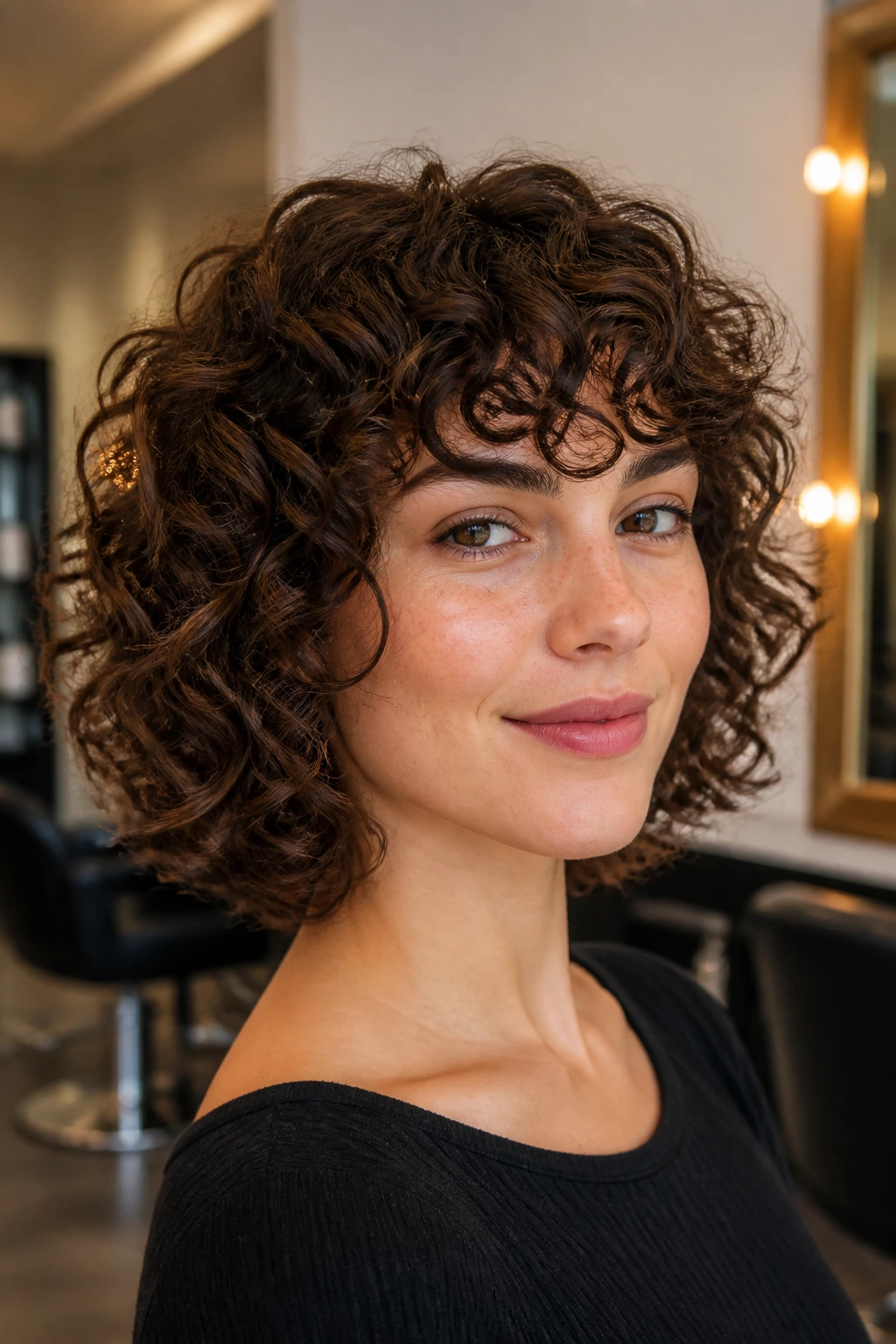
Bring photos, yes, but bring the right ones. Show a haircut on hair with a similar curl pattern, density, and length goal. A loose wave bob is not a helpful picture if your hair shrinks two inches and your texture is tighter. The silhouette matters more than the celebrity face in the photo.
Say where your part lives on an ordinary day. If you wear a deep side part, say that. If you never part in the middle, say that too. A stylist can cut the best shape in the room, then ruin the result by ignoring the part you actually use. That happens more than people admit.
Ask where the shortest pieces will land when the curls dry. Use landmarks: cheekbone, jaw, collarbone. Those words help. “Face-framing” by itself is too vague. So is “a little shorter in front.” Be the annoying client who wants a number or a point on the face. Your haircut will be better for it.
If your hair is curly enough to shrink a lot, ask for the first cut to be slightly longer than the goal. You can always take more off. Taking hair back on is much harder.
Essential Tools That Make These Cuts Easier to Wear
-
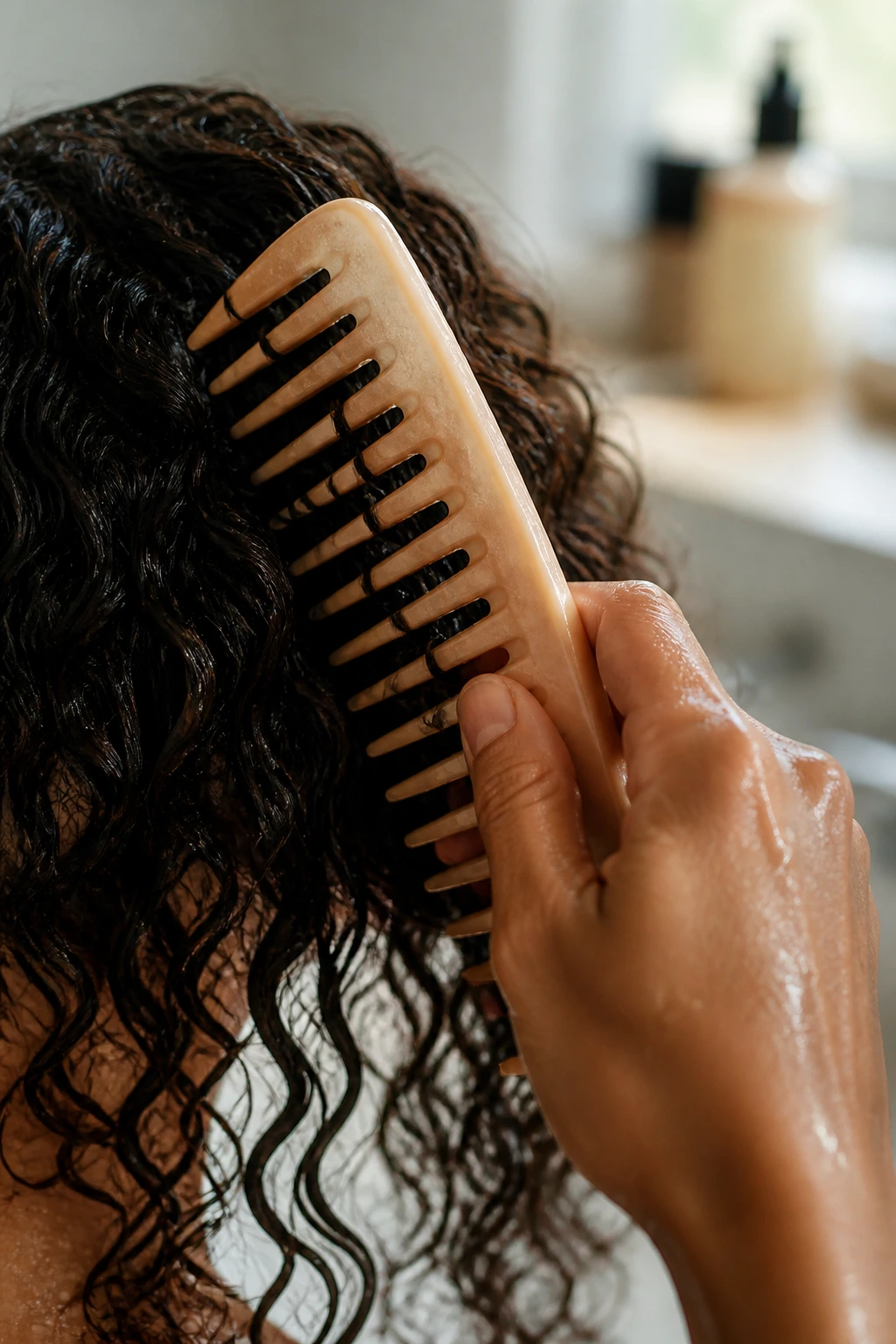
Wide-tooth comb: Best for detangling soaking-wet curls without pulling the shape apart.
-
Microfiber towel or soft T-shirt: Cuts down on frizz while you squeeze out water after washing.
-
Diffuser attachment: Helps set the curl pattern while keeping the crown from flattening.
-
Duckbill clips: Useful for lifting roots at the part or setting face-framing pieces away from the forehead while they dry.
-
Spray bottle: A light mist revives curls on day two without soaking the whole head.
-
Curl cream, mousse, or light gel: These help each cut hold its outline; the exact product matters less than the amount and where you place it.
-
Hand mirror: Handy for checking the back of a pixie, bixie, or short shag without twisting your neck into knots.
Smart Styling and Drying Moves for Curls
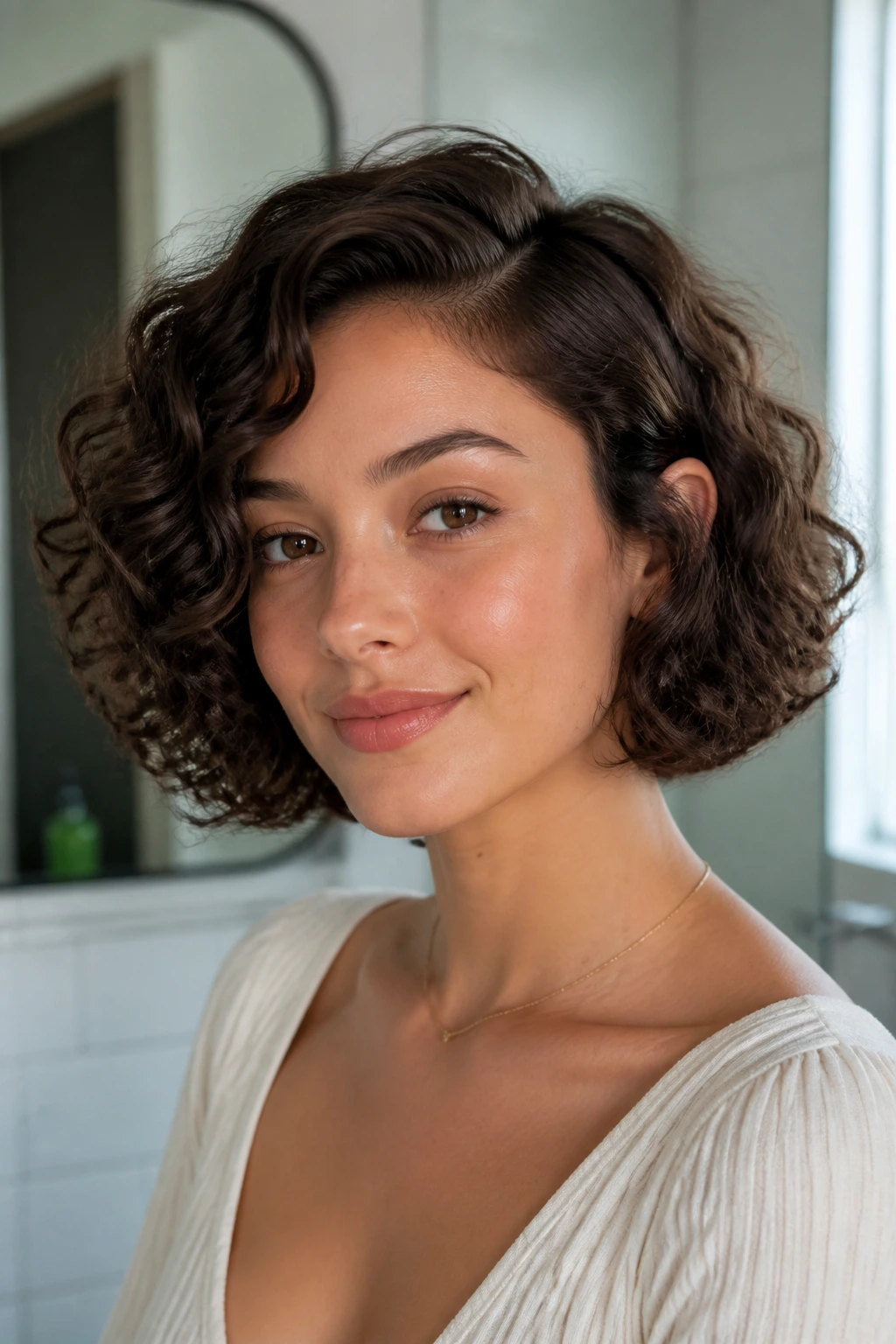
A good curly haircut still needs a decent drying routine. That does not mean a long one. It means a routine that matches the cut. Short styles like pixies and bixies usually need root lift first, then a little product through the top. Bobs and lobs need more attention to the front pieces so they do not collapse into the cheeks.
Set the part before the hair dries
Once curls start to form, the part gets stubborn. Set it early, while the hair is soaking wet. If you want a side part, make it off-center before product goes in. If you want a center part with fringe, clip the bangs out of the way so they dry in the direction you want.
Use less product at the crown
The crown does not need the same amount of cream as the mids and ends. Too much there makes the roots fall flat or look greasy. Start with a small amount—about a nickel-sized blob for shorter cuts, a golf-ball amount for shoulder length—and add more only if the ends feel dry.
Diffuse until the cast forms, then stop fussing
A little gel cast is good. It helps the shape hold. Once the curls are about 80 to 90 percent dry, stop touching them. If you keep scrunching, you break the clumps apart and the haircut loses the clean line you paid for.
Day two should be easy
If a cut is well shaped, day two takes water and a little patience, not a full reset. Mist the front sections, smooth a pea-sized amount of cream between your palms, and scrunch the pieces that have gone flat. A shape that survives sleep is worth keeping.
Common Mistakes That Throw Off the Balance
-
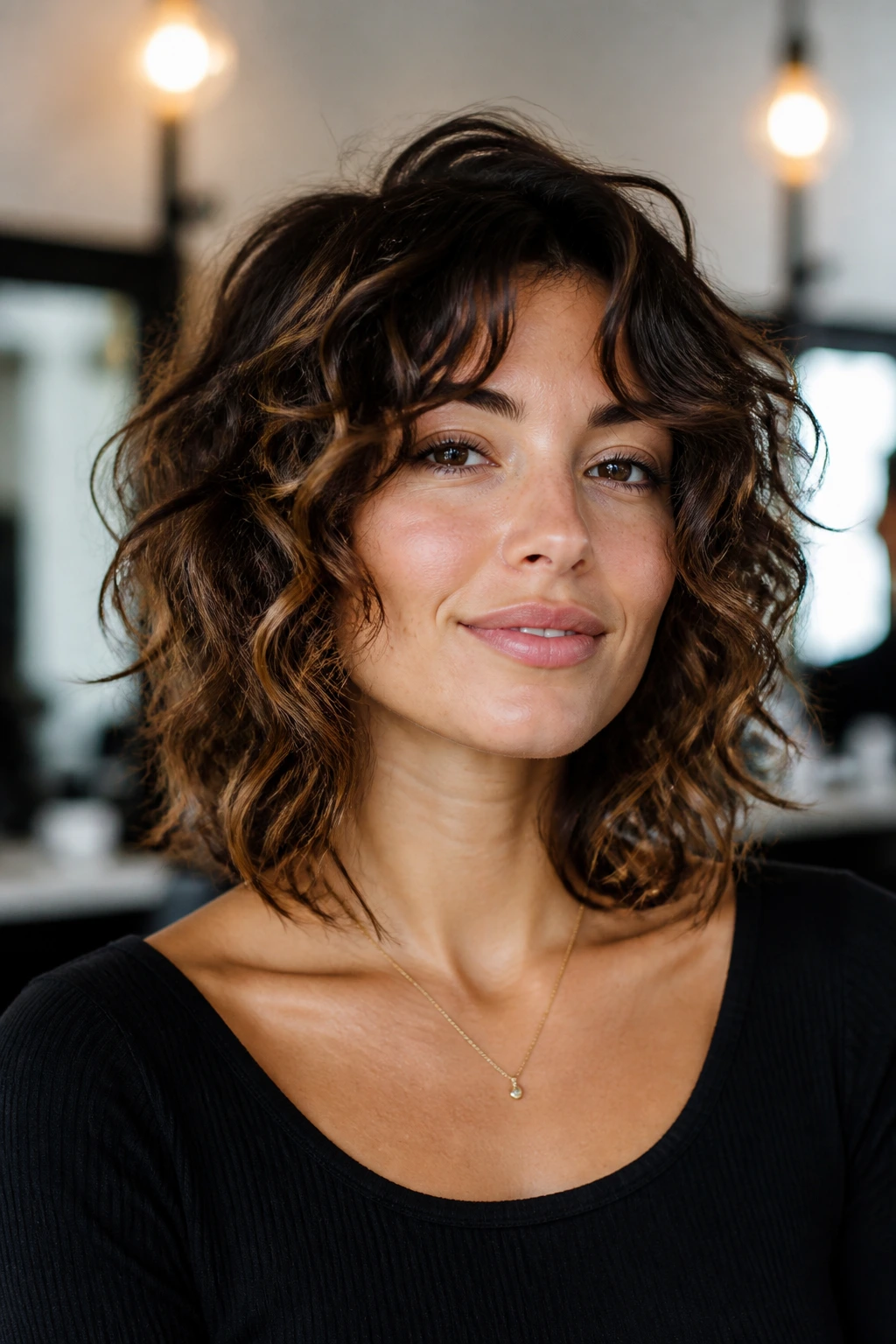
Too much height at the crown: The forehead gets even more attention and the whole cut feels top-heavy. Ask for shorter layers to start lower, and diffuse with the head upright instead of hanging upside down for too long.
-
Layers cut too high at the temples: This makes the upper face look wider and can create a mushroom shape. Keep the shortest face-framing pieces closer to cheekbone level or below.
-
Bangs cut too short when wet: Curly fringe springs up, sometimes dramatically. Leave more length than you think, then refine dry.
-
Over-thinning thick curls: Too much texturizing creates frizz and weak ends. Use selective shaping, not a heavy hand with thinning shears.
-
Ignoring your usual part: A cut designed for a center part can look crooked if you wear a side part every day. Tell the stylist how you live in the hair, not how you might style it once in a while.
-
Taking the back too short on a bob: If the back is shorter than the front by a lot, the cut can flare outward at the sides and sharpen the jaw in a bad way. Keep the slope gentle.
Variations for Loose Waves, Tight Curls, and Dense Coils
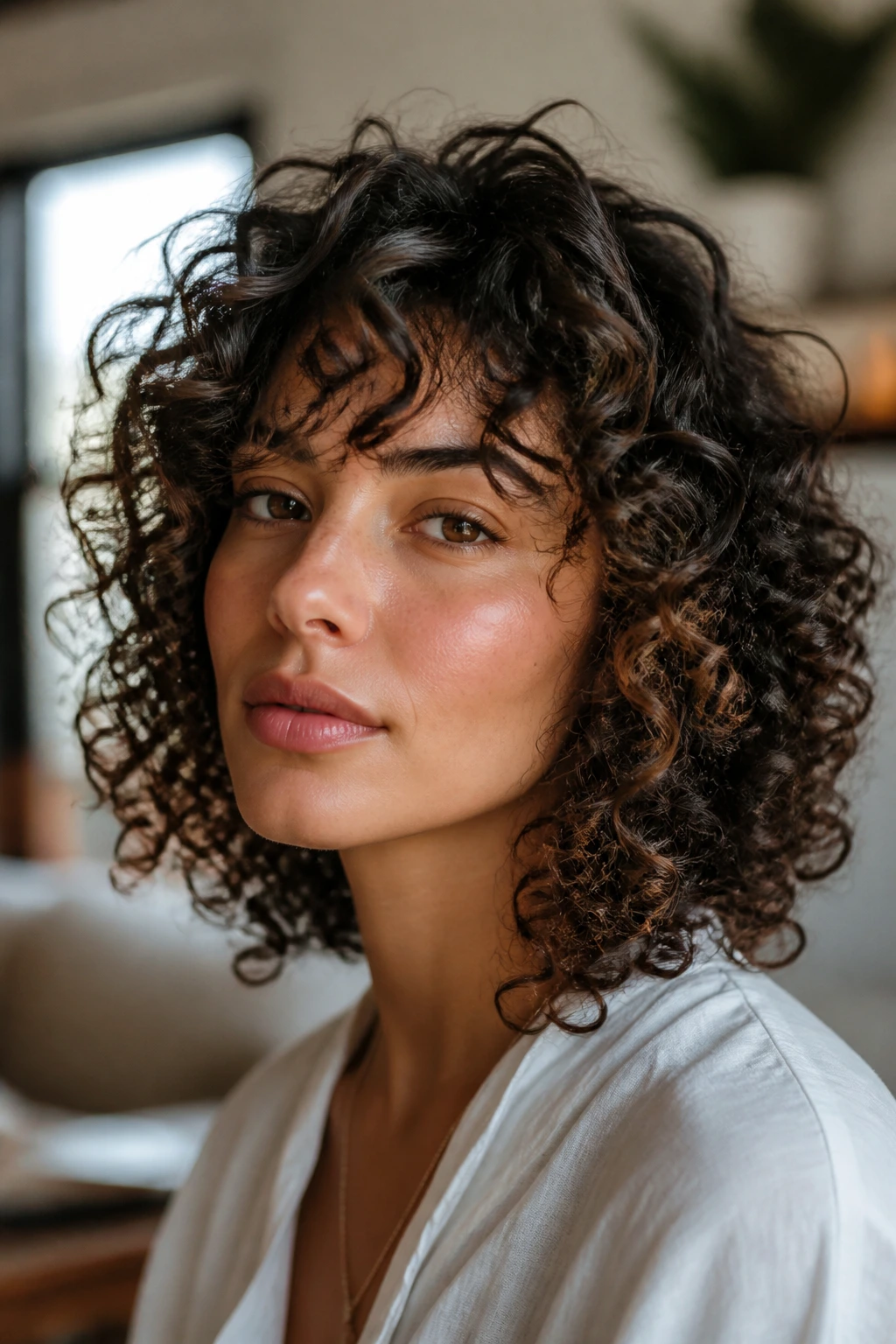
Loose-Wave Version: Go for a French bob, collarbone lob, or side-swept midi. Loose waves need less structural help, so you can keep the layers lighter and let the movement do the work. Heavy layering can make them lose the wave pattern fast.
Tight-Curl Version: A Deva cut, soft undercut pixie, or rounded curly bob usually gives the best result. Tight curls shrink more, so the shape should be built with extra room in the front and a little more length than your eye first expects. That prevents a too-short surprise.
Dense-Coil Version: Choose a bixie, mixie, or long layers with interior weight removal. Dense coils need room inside the shape, or they puff at the sides and sit too wide across the cheeks. Strategic reduction underneath keeps the outline neat.
Fine-Hair Version: Stick with invisible layers, a blunt midi, or a chin-length bob with a side part. Fine curls often collapse when over-layered, so the perimeter has to stay strong. Too many chops make the ends look skimpy in a hurry.
Low-Maintenance Version: The collarbone lob, grown-out pixie bob, and long U-shape are the calmest options. They all grow out without falling apart, and they do not demand a strict styling ritual every morning. That is a real advantage, not a compromise.
Trim Timing and Shape Maintenance

Short curly cuts live and die by trim timing. If you have a pixie, bixie, or soft crop, plan on a trim every 4 to 6 weeks. That keeps the sides from puffing out and stops the top from losing its clean line. The shape disappears faster on short hair than people think.
Bobs and lobs usually hold up for 8 to 10 weeks, sometimes a touch longer if the layers are soft. If the ends start flipping outward or the front pieces stop hitting the cheekbone or jaw where they should, it is probably time. Long layers can go 10 to 14 weeks, but only if the perimeter stays healthy and the face frame is not growing into your eyes.
Bangs need their own schedule. Curtain bangs and side-swept fringe can be nudged every 3 to 5 weeks, either at the salon or with careful home trimming if you know what you are doing. I would not freestyle that with kitchen scissors. Please do not.
At home, keep the shape intact with a satin pillowcase or bonnet, a light mist of water for refresh days, and a clarifying wash every couple of weeks if you use a lot of gel or cream. Product buildup makes curls lose their bounce, and once that happens, the haircut looks heavier than it really is.
Questions People Ask Before Booking

Should a heart-shaped face avoid bangs?
Not at all. Heavy, straight-across bangs can be tricky on curls, but curtain bangs, bottle-neck bangs, and side-swept fringe often work very well. The point is to soften the forehead, not cover it completely.
Can a center part work on curly hair with a heart-shaped face?
Yes, if the face frame does enough balancing. Bottle-neck bangs, cheekbone layers, or a lob with soft movement around the jaw can make a center part feel intentional instead of severe. Without that extra shape, the center part can make the forehead feel wider.
How short can I go?
Short can be very flattering. A pixie, bixie, or rounded crop works when the top is not too tall and the sides are soft enough to avoid a sharp triangle effect. The key is keeping some length where the curls can bend instead of sticking straight up.
Are layers always better than one-length cuts?
No. A blunt midi or lob can be excellent if the hair is dense enough and the internal weight is handled well. Too many layers on fine curls can leave you with frizzy ends and a weak outline.
Should curls be cut wet or dry?
Dry cutting gives the most control for many curl patterns, especially when you care about exact face-framing placement. Wet cutting can still work, but the stylist has to understand shrinkage and curl behavior very well. If the cut depends on precise length at the cheekbone or jaw, dry is safer.
What if my curls get huge at the sides?
Ask for the shortest layers to start lower and for the perimeter to stay strong. Side volume usually calms down when the shape is built to carry weight near the jaw or collarbone instead of at the temples.
Will these cuts still work if my hair is mostly waves?
Yes, though the lighter shapes—the lob, French bob, side-swept midi, and blunt midi—often behave best on waves. Very layered styles can lose their line if your wave pattern is loose and fine.
The Shape That Feels Like You
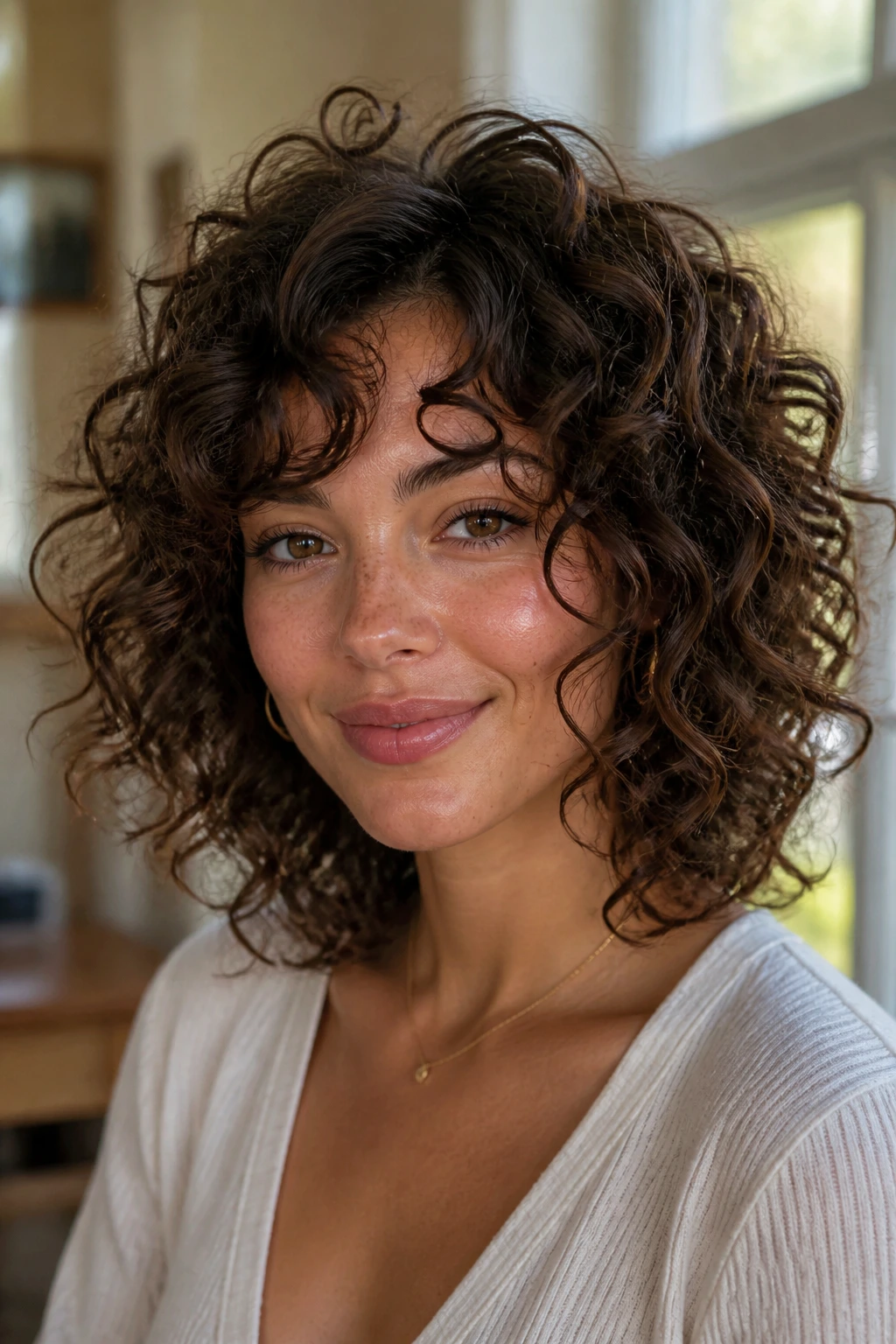
The best haircut for a heart-shaped face does not try to hide the face you already have. It gives it a better frame. That is the whole trick, and curls are actually very good at it when the shape is placed with some care.
If you remember only one thing, make it this: the best balance usually comes from leaving the crown soft and moving the visual weight lower, toward the cheekbones, jaw, or collarbone. Once you start looking at cuts that way, the right choice gets easier to spot.
Bring a photo, say where your curls shrink, and point to the exact line you want the shortest pieces to hit. Then let the shape do its job.