



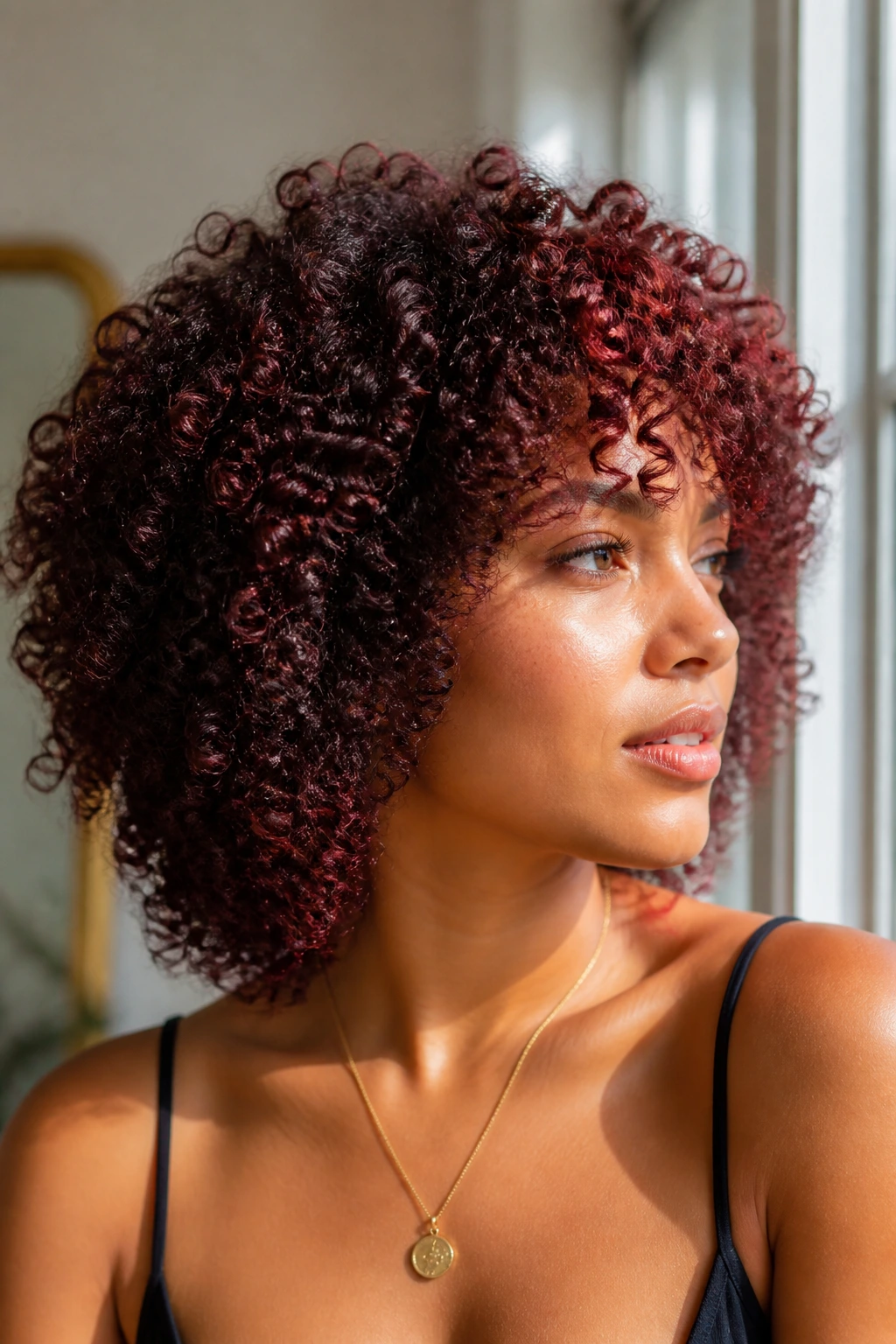
Red on dark curly hair has a special kind of drama. It doesn’t behave like red on straight hair, where the color sits out in the open and shouts from every strand. On curls, it hides, flashes, returns, and changes its mind every time the light shifts. A burgundy coil can look nearly black in the mirror, then throw wine and copper in the sun. That swing is the whole appeal.
The best red hairstyles for dark curly hair understand that trick. They don’t fight the base color. They work with it. Deep cherry, merlot, mahogany, rust, auburn, and copper all sit in different places on the spectrum, and each one plays differently on 3B spirals, 4A ringlets, and tighter 4C coils. Pick the wrong shade and the whole thing can read muddy or orange. Pick the right one and the hair looks richer before you even touch a styler.
What matters most is placement. A full head of bright red can look flat if it’s painted on like one solid block, but red tucked into layers, ends, puffs, twists, and face-framing pieces has room to move. That movement is where dark curly hair gets interesting. The bends catch pigment. The shadows keep it deep. And a good red usually looks more expensive when it isn’t trying too hard.
Why These Red Looks Earn Their Keep
-
Depth First: Dark curls already bring shadow and contrast, which makes burgundy, cherry cola, and merlot shades read deeper and less cartoonish than they do on straight hair.
-
Low-Commitment Options: Several of these styles work with glosses, highlights, extensions, or temporary color, so you do not have to jump straight to bleach if you only want to test the waters.
-
Curl-Friendly Shape: Cuts, puffs, twist-outs, and rod sets keep the curl pattern visible instead of burying it under a flat sheet of color.
-
Face-Framing Power: Red money pieces, side parts, and front highlights can change the whole face with far less dye than a full-color job.
-
Protective Style Flexibility: Braids, faux locs, and updos let you wear red while cutting down on daily manipulation, which matters if your hair drinks moisture fast.
-
Daylight Drama: These shades behave differently in sunlight, indoor light, and shadow, so you get movement instead of one-note color.
1. Cherry Cola Wash-and-Go
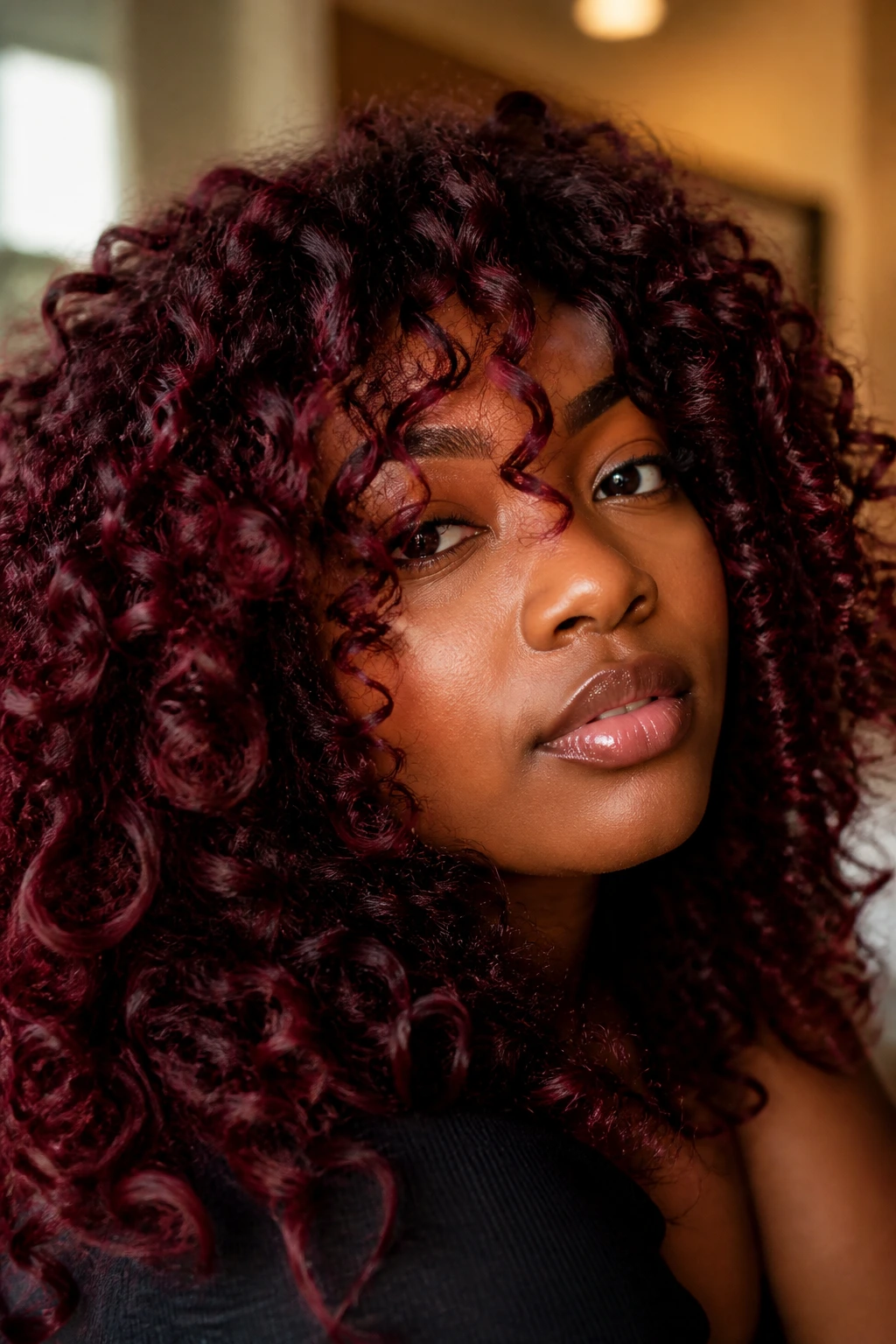
Cherry cola is the red I reach for when dark curls need a color shift without losing depth. The shade sits right in that burgundy-to-wine lane, which means it doesn’t have to fight the base to be seen. On a wash-and-go, every coil becomes a tiny color chamber. The result looks darker at the root, brighter at the bend, and almost molten at the ends.
Why It Works on Dark Curls
A wash-and-go gives the color a moving surface. Each curl catches light at a different angle, so cherry cola never reads flat for long. If your hair is level 3 to 5, this shade usually shows up without bleaching, especially if you use a red-violet semi-permanent color or a tinted styling gel.
What to Ask For
- A burgundy or cherry cola gloss if you want depth with shine.
- A red-violet direct dye if you want a louder finish on porous ends.
- Medium-hold gel to keep the curl clumps crisp.
- A diffuser if your pattern loses shape when it air-dries.
The best version of this look is glossy, not crunchy. Once the cast forms, scrunch it out lightly with a drop of oil on your palms. That little bit of shine keeps the red looking intentional instead of dusty.
2. Copper Ribbon Highlights
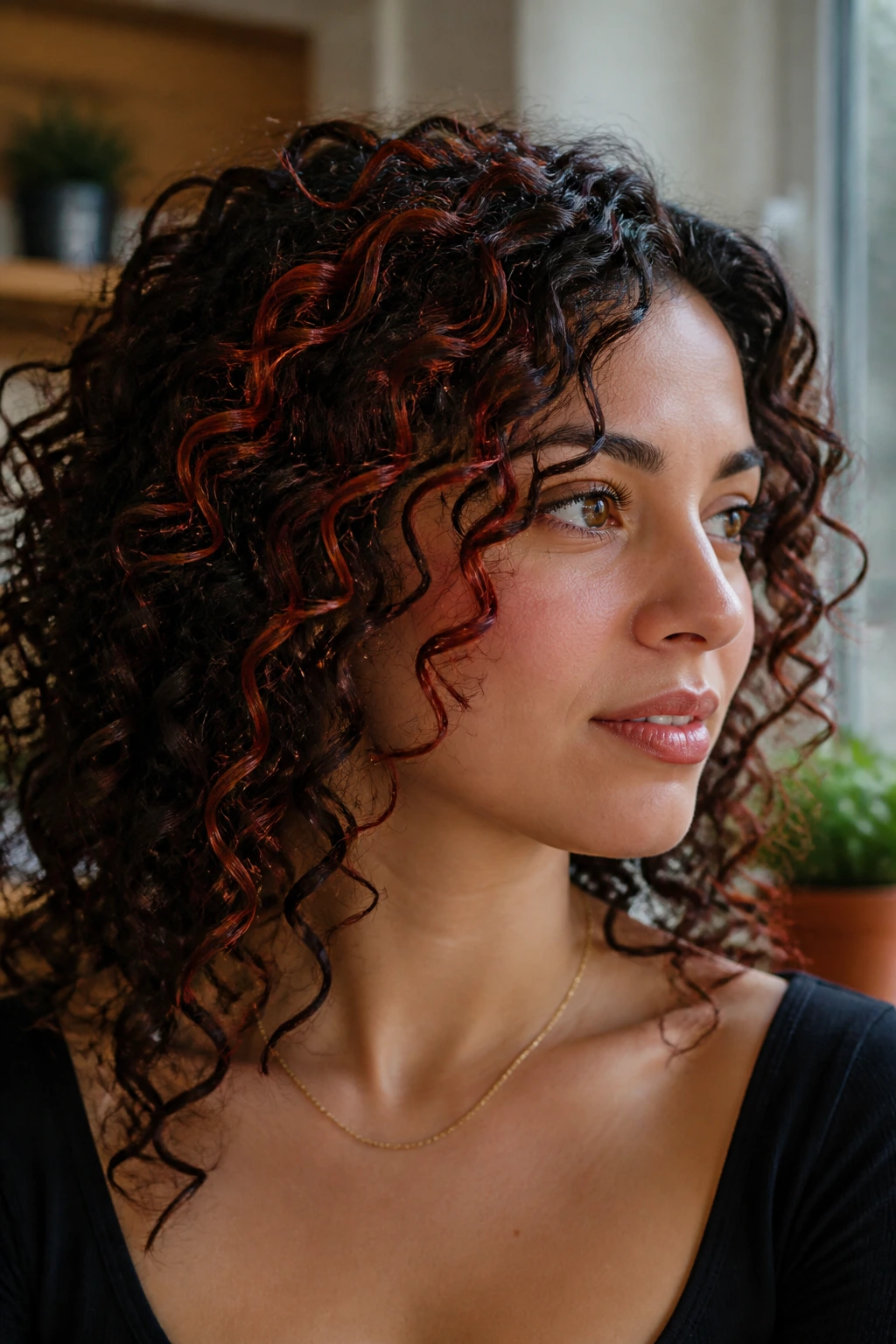
Copper ribbon highlights are what I suggest when someone wants red but isn’t ready for a full-color moment. The trick is placement. Thin ribbons painted through the outer ringlets give you movement without flooding the whole head with warmth. On dark curly hair, copper works best where the eye already lands: the crown, the temple pieces, and the top layer around the face.
A layered cut helps here. If the hair is all one length, the copper can disappear underneath the weight. But when the curls have a few tiers, the lighter red pieces rise and fall through the shape. It looks better in motion than it does on a salon board.
Best for this style
- 3A to 4A curls with some natural lift
- Medium or high-density hair
- People who want visible red with softer regrowth
- Curls that can handle a little lightening on select sections
Keep the copper pieces finer than you think. Big chunks can look stripey fast. A few well-placed ribbons around the face do more work than a loud block ever will.
3. Burgundy Twist-Out
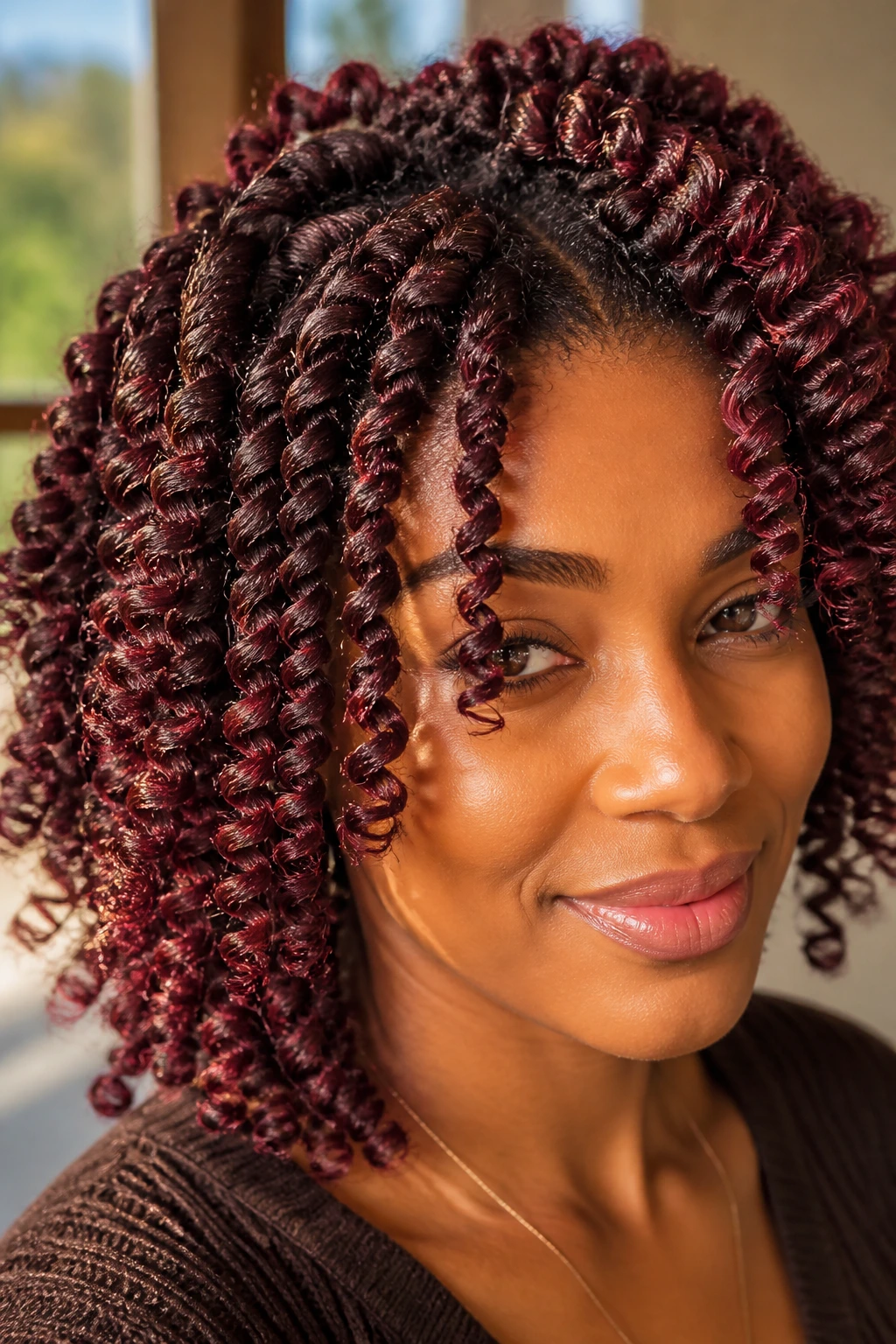
A burgundy twist-out has a certain polish that a wash-and-go doesn’t always give you. Each two-strand twist becomes a color band, and when you unravel the set, the red shows up in soft arcs instead of one solid wash. On dark curly hair, that makes the shade feel expensive rather than loud.
The structure matters. Twist the hair while it’s stretched and damp, not soaking wet. Add leave-in, a creamy styler, then a tiny bit of oil only on the ends if they fray easily. Let it dry completely. If you take it down too early, the burgundy looks patchy and the curls collapse before they get a chance to settle.
I like this look on medium-length hair, especially if the curl pattern is tight enough to hold the twist pattern for a full day or two. It gives you definition on day one and a fluffier halo by day three.
H3: Why it flatters dark coils
Burgundy is deep enough to read as a rich tone in low light, but it still flashes red when the twist-out separates. That’s the sweet spot. You get color without losing the shape of the hair.
4. Mahogany Layered Afro
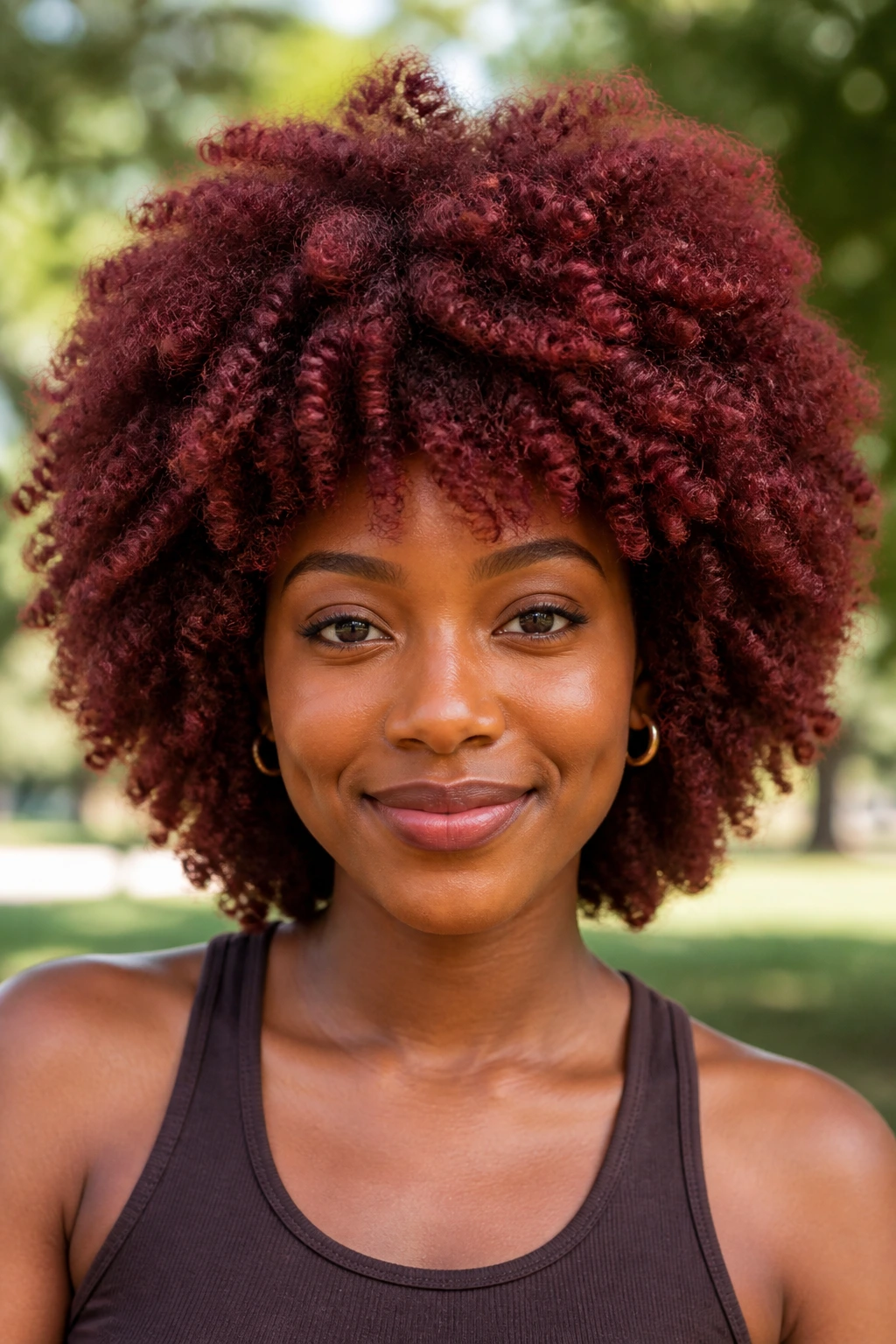
Mahogany and a layered afro are a smart match because the cut does half the work before the color even shows up. Layers create little ledges for the red to sit on. Without them, a one-length afro can swallow color at the center and leave the outside looking heavier than it should.
Ask for rounded layers that let the silhouette stay full but not boxy. Mahogany works especially well on dark curly hair that already leans brown-black, because the red stays close to the base and reads as depth first, color second. It’s subtle in the room, richer outside.
This is one of those looks that gets better as the hair expands a little. Freshly styled, it’s neat. By day two, the layers separate and the red starts doing more of the talking.
5. Auburn Curly Bob
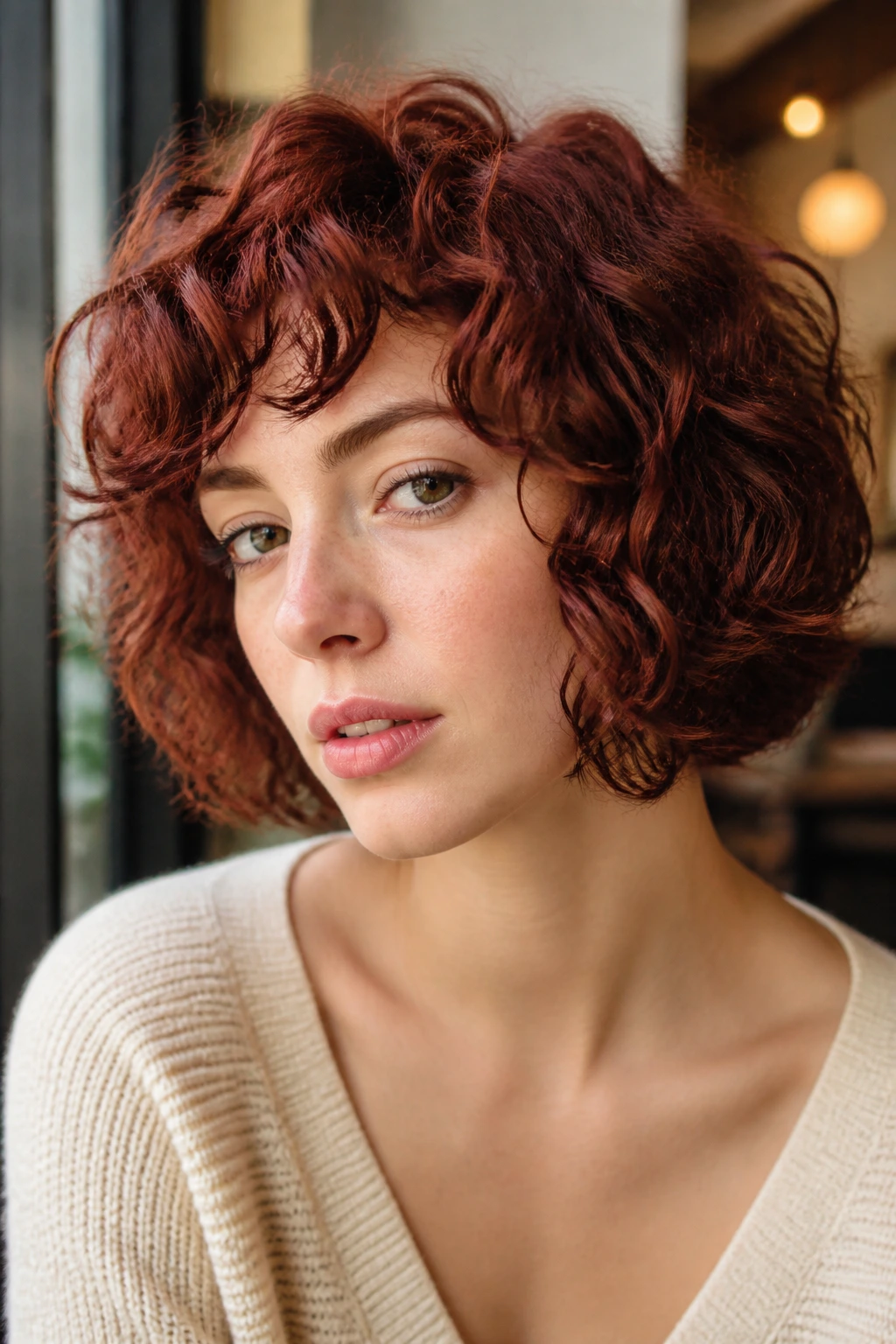
A curly bob in auburn is one of the easiest ways to make red feel clean and crisp instead of busy. The shorter length puts the color right near the jawline, where it frames the face instead of disappearing into a long curtain of hair. And because auburn sits between brown and orange, it usually looks more wearable on dark curls than a brighter copper.
The cut should sit just below the chin or right at the collarbone, depending on how much shrinkage your curls have. If the hair is too blunt, the bob can feel heavy. A few soft layers keep it from ballooning.
- Best on shoulder-length curls that spring up a lot
- Works well with a side part or deep center part
- Good for people who want red to show even indoors
- Needs regular shaping to keep the ends from puffing out
I’d take this over a flat straight bob any day. The curl pattern gives it life.
6. Merlot High Puff
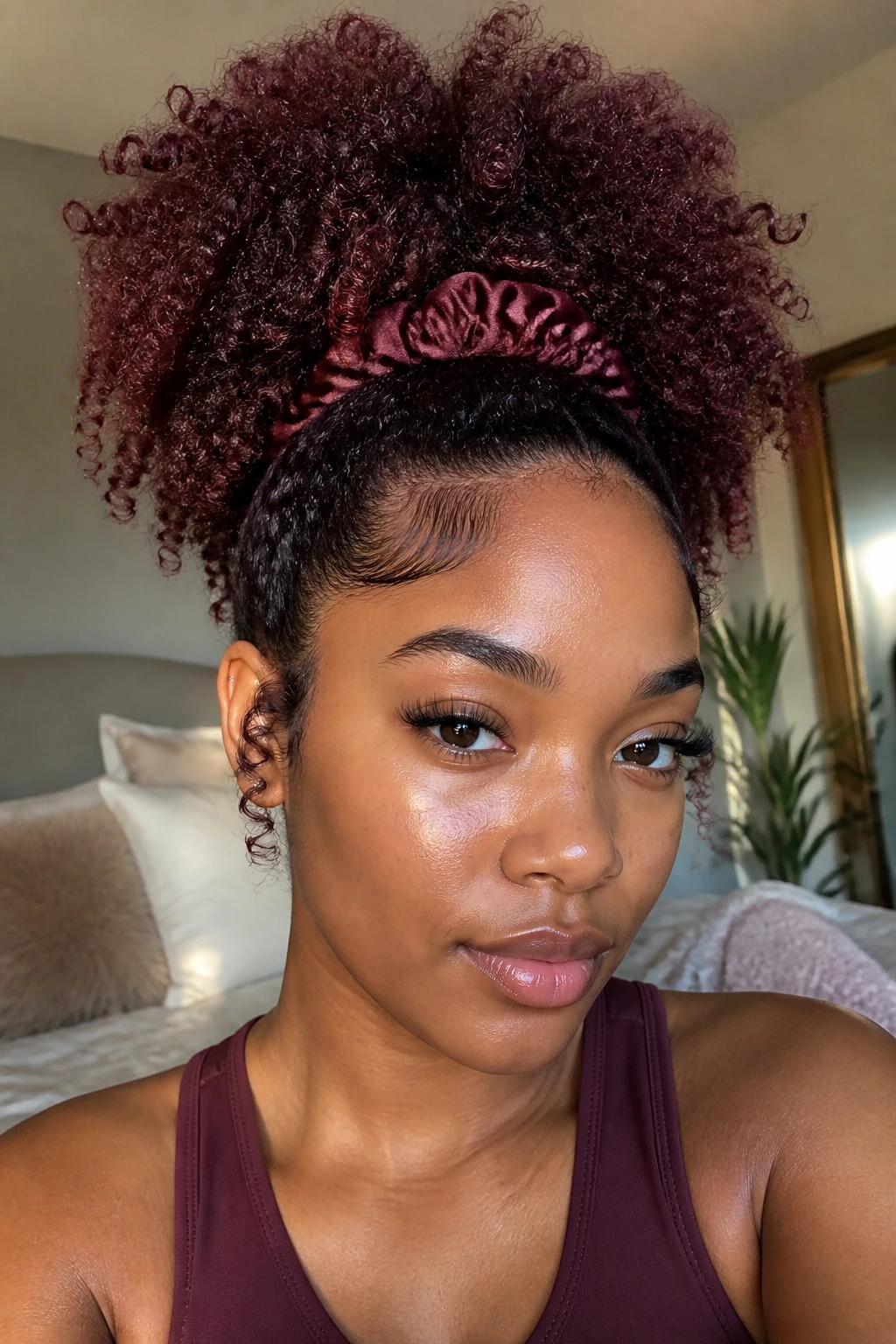
A high puff is one of the cleanest ways to wear merlot on dark curly hair because the style lifts the whole shape off the neck and puts the color where it can be seen. If your curls are dense, a puff also saves you from fighting every strand into submission. You gather, smooth, and go.
Merlot is deeper than bright red, which matters here. The puff shape already has a lot of volume, so a shade that sits too high on the brightness scale can start looking loud in the wrong way. Merlot keeps the drama contained. It feels lush, not shouty.
Use a satin scrunchie or stretch band so the base doesn’t snap the curls. Smooth the front with a little gel or edge control, but don’t flatten the crown. The best part of this style is the halo shape, not a slicked-down helmet.
7. Cinnamon Coil Fro
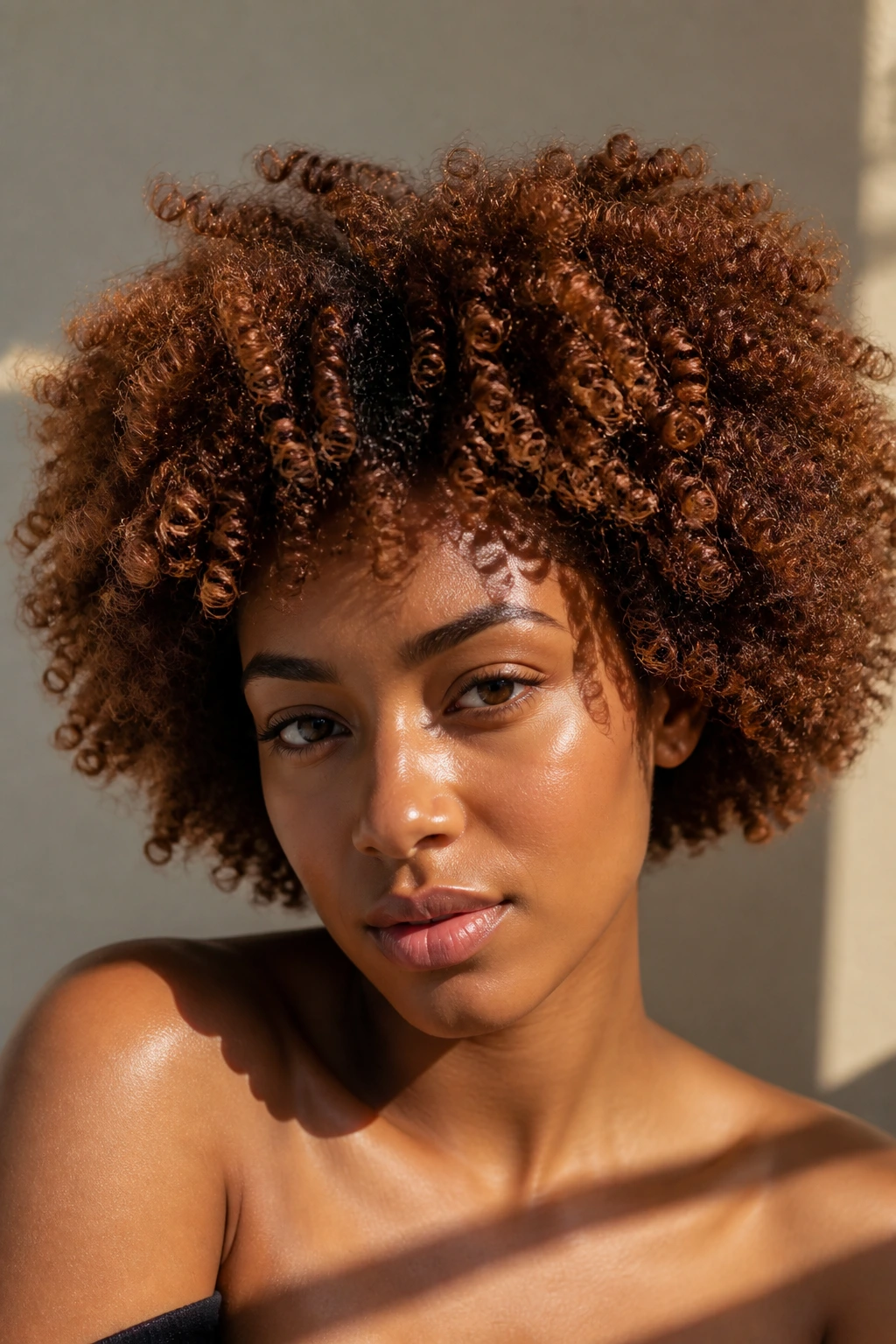
Cinnamon coil fro is the kind of style that looks simple from far away and much more deliberate up close. The curls or coils are defined first, then the red tone is laid over them like warmth under the surface. Cinnamon sits in that red-brown lane that dark curly hair loves, especially if you want your color to appear rich in most light and fiery only when the sun catches it.
What makes it different
Unlike copper, cinnamon doesn’t demand attention from the first glance. It builds. The shade is softer, and that softness works beautifully on dense curls that would overwhelm a brighter red. If you have 4B or 4C coils, this is one of the most forgiving red families because it lets the texture stay front and center.
How to wear it
- Use a twist-out, coil set, or defined fro shape.
- Keep the roots slightly deeper than the ends for dimension.
- Pick the hair only at the roots if you want more volume.
- Finish with a light sheen spray, not a heavy oil.
The color should look warm, not waxy. That’s the line.
8. Red Ombre Braid-Out
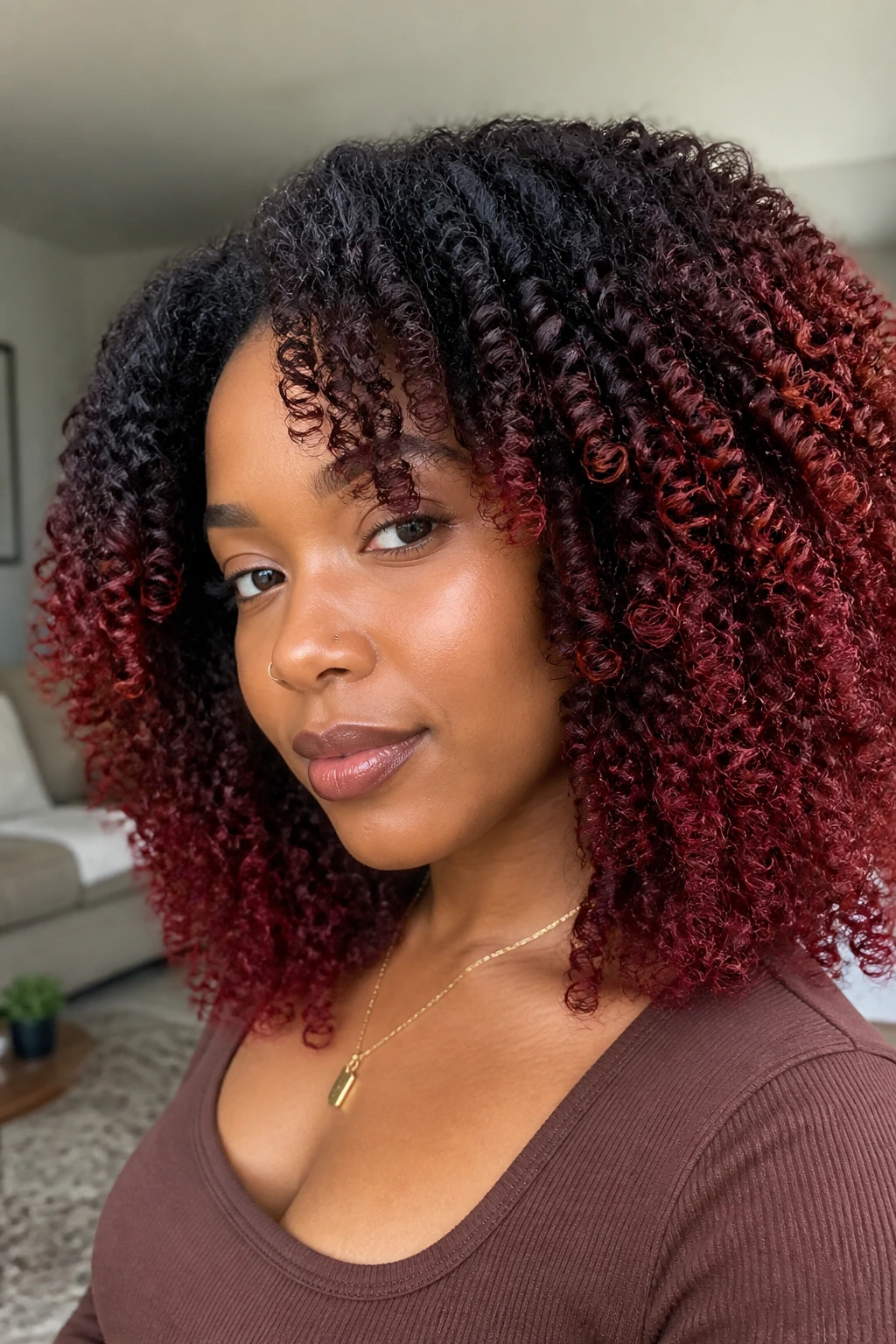
A red ombre braid-out is for the person who wants the color to come in slowly. Dark roots stay near the natural base, and the red shows up more strongly toward the mid-lengths and ends. On curly hair, that gradient is not just pretty; it also gives the hair a longer-looking shape because the eye follows the color downward.
This style works best when the hair is stretched before braiding. If the strands are too shrunken, the ombre can get lost in the density. A braid-out also gives the red a more linear look, which is useful if you want the color to read even from a distance.
Good setup for this look
- Start the red color lower on the hair shaft, not at the root.
- Use medium braids if you want movement, smaller braids if you want tighter texture.
- Seal the ends well, because that’s where the color will fade first.
- Unbraid only when the hair is fully dry.
This is one of the easiest red looks to grow out gracefully. The roots can stay dark without looking like an accident.
9. Crimson Faux Loc Updo
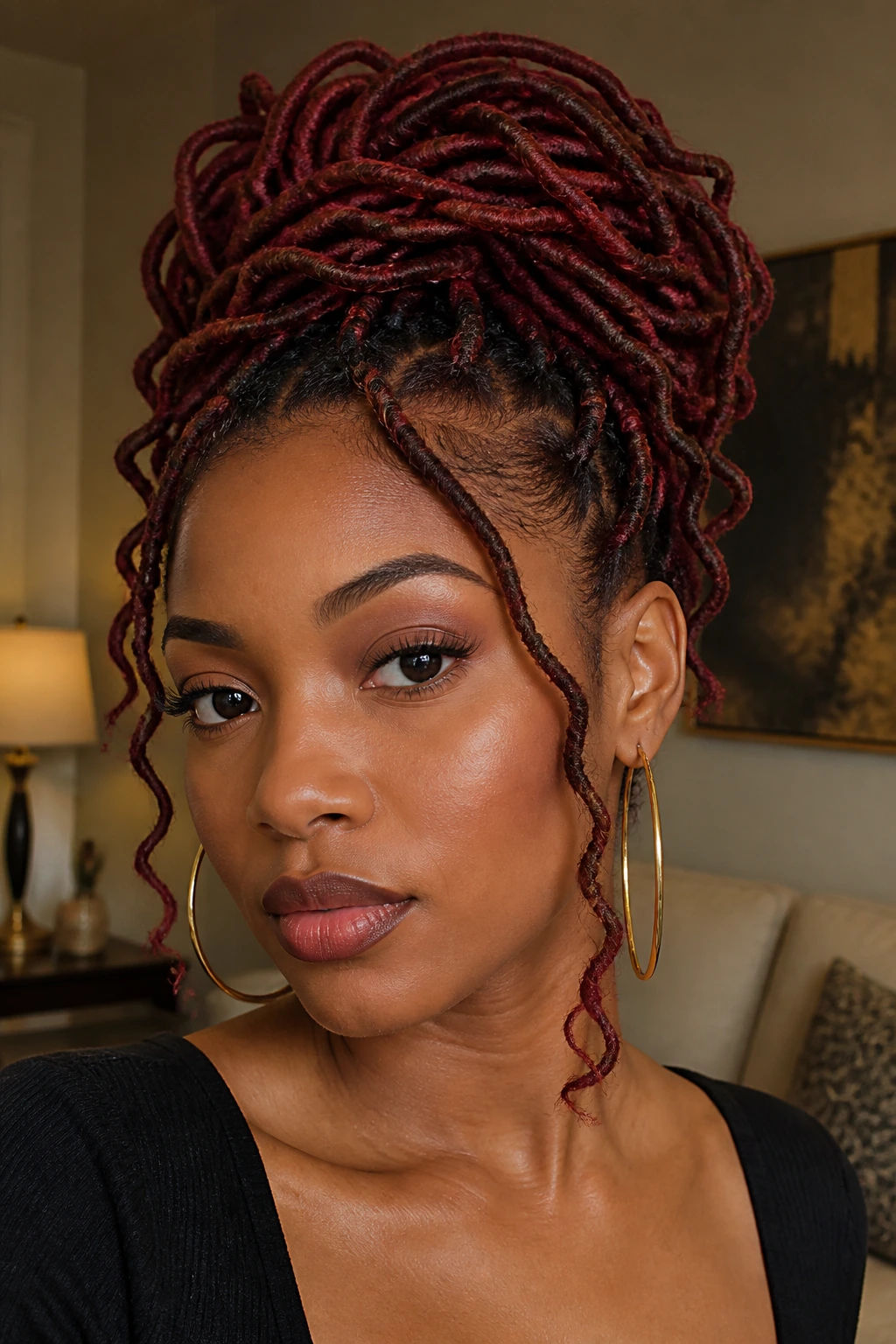
Want red without putting your own curls through a full dye service? Faux locs in crimson are a very sane answer. The color lives in the extensions, which means your natural hair gets a break while the style still looks bold. Pulled into an updo, the red reads cleanly around the face and crown instead of getting buried in the length.
The updo matters more than people think. A loose crown bun or pinned twist at the back lets the crimson locs arc upward, where light can catch them. If they’re left hanging straight down, the color can flatten out and the whole style loses some edge.
This is a strong choice for longer wear. It’s protective, it has movement, and it doesn’t ask you to retouch the color every week.
10. Rust-Toned Tapered Cut
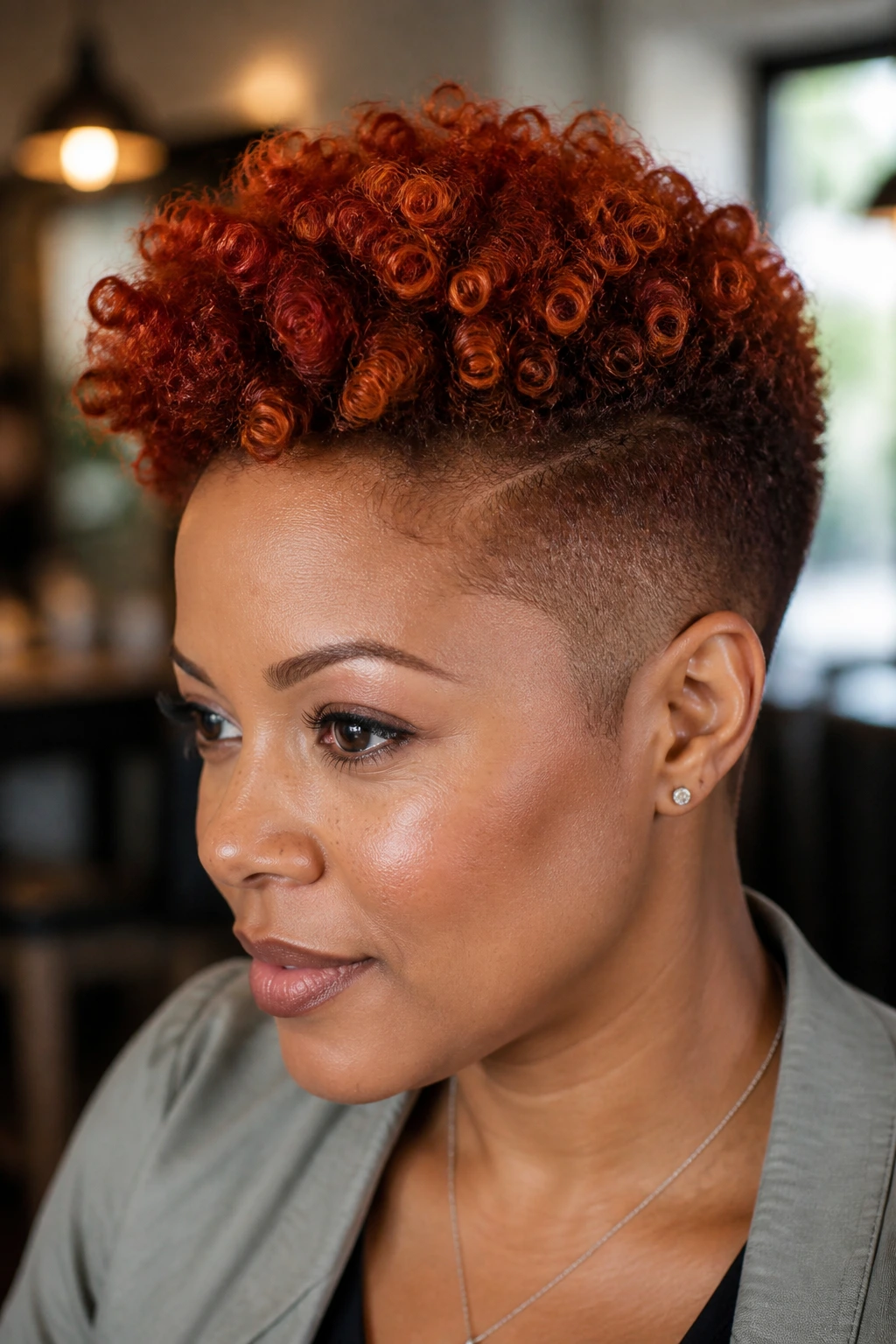
A tapered cut with rust-toned curls on top has a sharpness that bigger styles can’t quite match. The shaved or closely cropped sides make the red on top feel more intentional, because the eye goes straight to the warm color and the textured crown. Rust is a smart red for this shape; it sits close to brown, so the cut stays wearable even when the color is vivid.
The shape should be clean at the nape and rounded at the top. If the top is too flat, the style loses energy. If it’s too long, the tapered effect disappears and the whole thing gets bulky. A good tapered cut gives the curls a little lift around the crown and lets the color sit where it matters.
- Keep the sides tight for contrast.
- Define the top with curl cream or mousse.
- Refresh with a little water and fingertip shaping.
- Ask for a rust or red-brown gloss if you want depth, not neon.
This cut has a nice honesty to it. No hiding. No fuss.
11. Cranberry Flexi-Rod Set
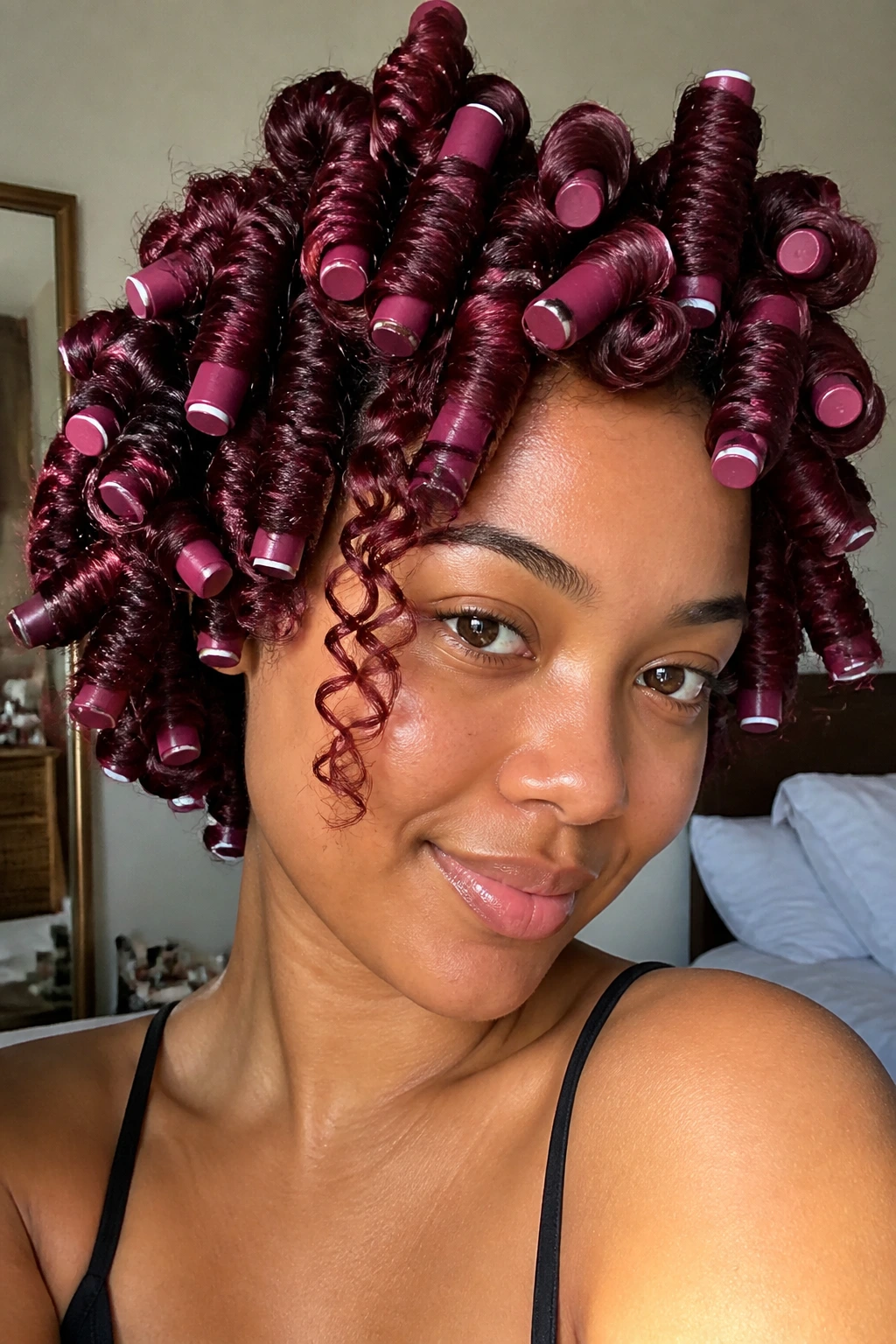
Cranberry and flexi-rods are a satisfying pair because the spiral shape makes the color look almost liquid. Each curl comes off the rod with a neat coil, and the cranberry shade settles into the curve instead of lying flat across it. On dark curly hair, that kind of curl pattern shows red more cleanly than a loose blowout ever will.
Rod size matters. Smaller flexi-rods create tighter coils, which make the red look denser. Larger rods give you a looser bounce and a softer finish. If you want the shade to read as glossy and rich rather than bright and obvious, medium rods are the sweet spot.
A setting lotion or mousse with a light hold helps the curls keep their roundness. Too much product and the style gets stiff. Too little and the spiral drops before you’re done leaving the house.
12. Copper Money Pieces
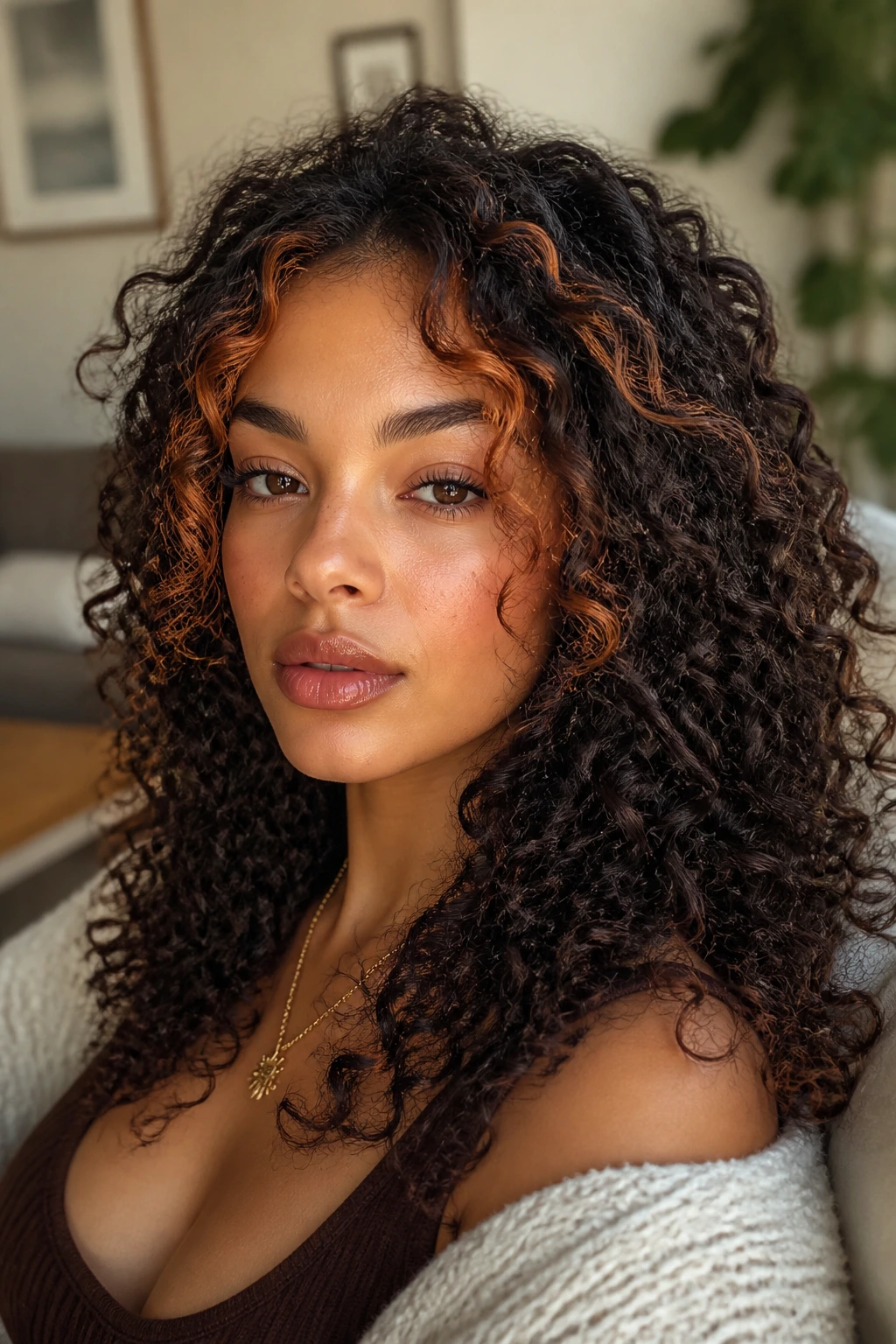
If a full red head feels like too much, copper money pieces are the smartest shortcut in the pile. You keep most of the dark base, then let the copper live around the face where it can lift the whole look. On curly hair, that placement is even better because the front pieces frame the skin tone and bounce differently from the back.
Where to place them
Paint the front chunks around the temples and just behind the hairline, then let a few narrow streaks move into the top layer. That keeps the color from looking like a hard stripe. If you have bangs or a curly fringe, even better. The red sits right where the eye looks first.
This style does ask for a little lift, because copper needs room to show. But you usually do not need to bleach the whole head. One or two well-placed sections can carry the entire look.
It’s a good move if you want a red accent that still lets the rest of the curls stay dark and deep.
13. Plum-Red Half-Up Half-Down
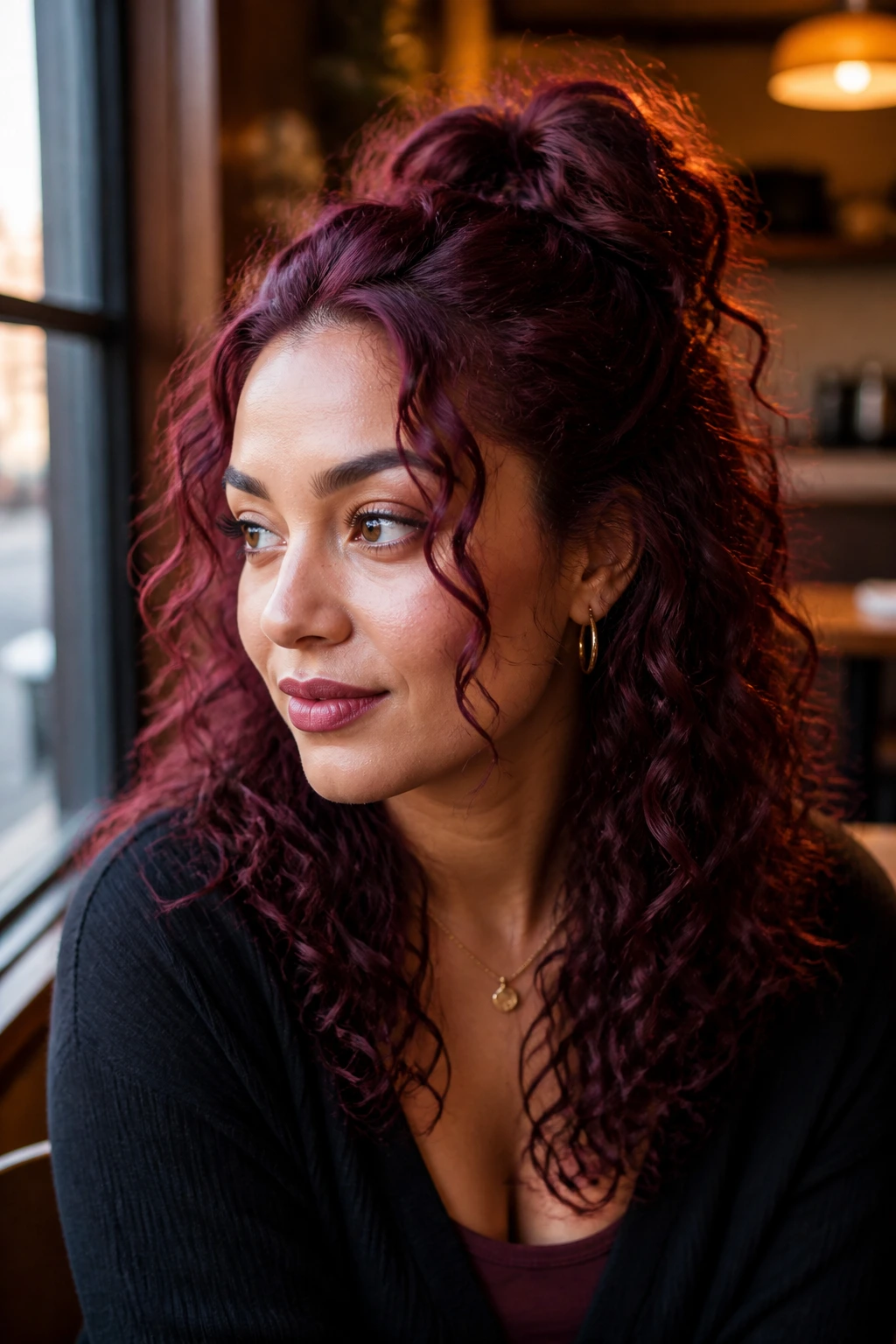
A half-up half-down style gives plum-red curls two jobs at once: height at the crown and color through the length. Pull the top section up loosely, leave the rest down, and the red suddenly looks more dimensional because some pieces are lifted into the light while others keep their shadow.
Plum-red works especially well when you want red that leans cool instead of coppery. That cooler base keeps dark curly hair from drifting orange. The style also suits medium to long lengths, since there’s enough hair to show both the tied-up top and the loose bottom.
You can keep the top smooth or leave a few curls out near the temples. Either way, the style reads balanced. It’s polished enough for a long day, but the hair still looks like hair, not a sculpture.
14. Ruby Curly Pixie
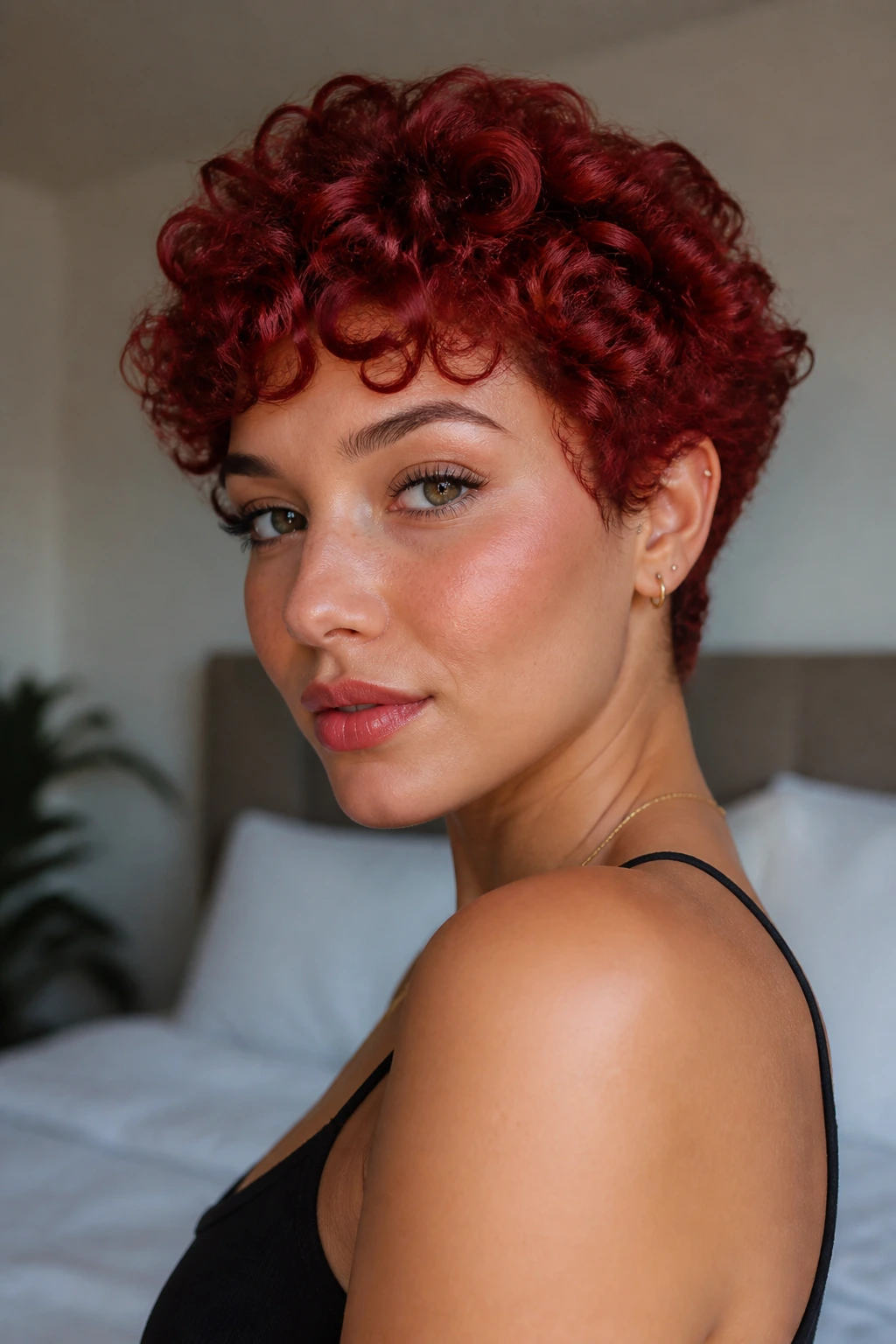
A curly pixie in ruby has real attitude, and the short length keeps the red from overwhelming the face. On dark curly hair, the crop lets the color sit close to the skin, where ruby can look bold without needing a lot of brightness. The shape does the talking first. The color backs it up.
This is a good choice if you like definition around the ears and nape. A little styling cream, a pick at the roots, and a finger twist near the fringe is usually enough. The mistake people make with short red curls is loading them up with too much product, which turns the shape heavy and dulls the red.
Why it works
- The short length shows color fast.
- The pixie shape keeps maintenance low.
- Ruby reads cleaner than scarlet on dark bases.
- A small amount of shine spray goes a long way.
It’s a crop with presence. No filler needed.
15. Chestnut Red Finger Coils
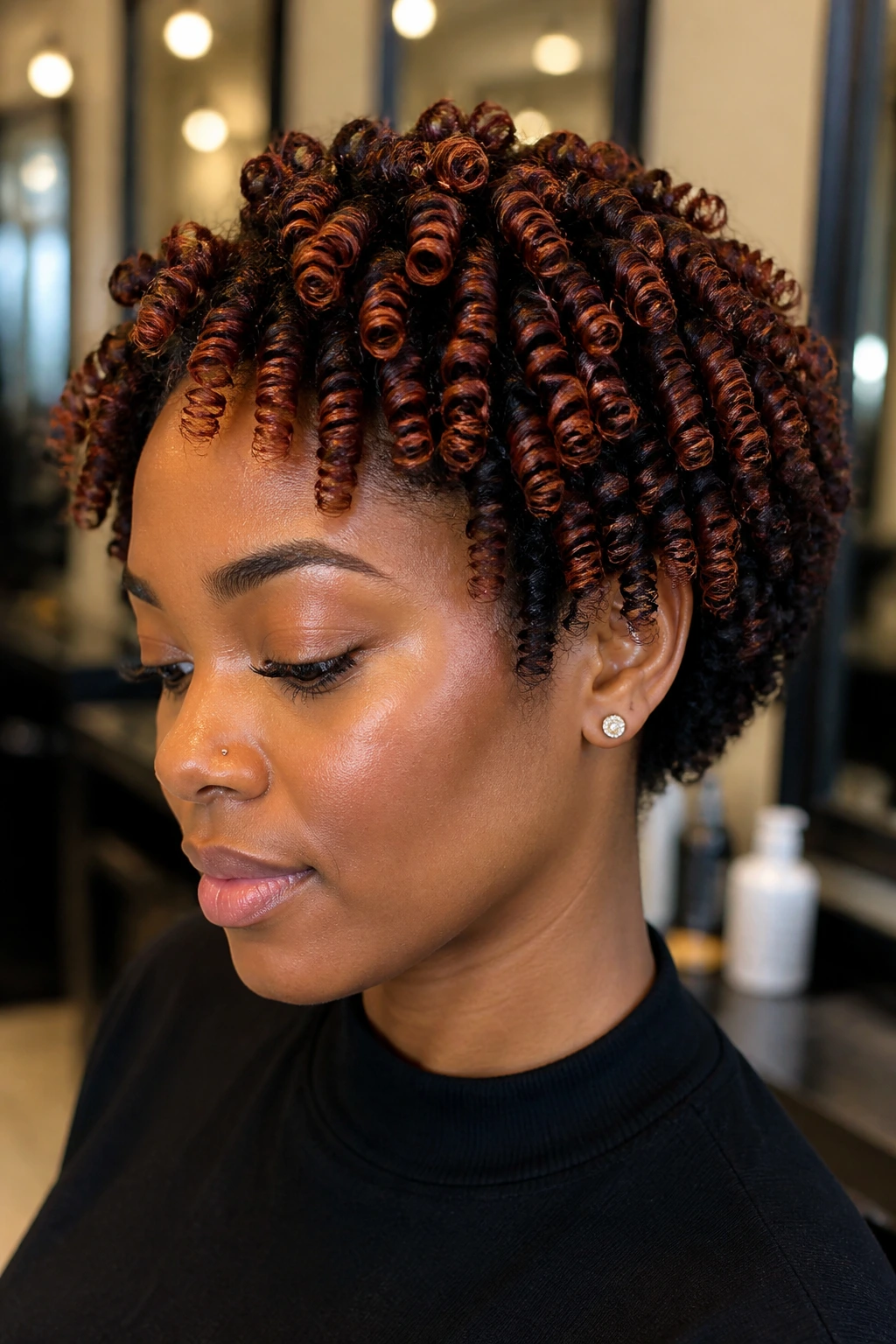
Chestnut red finger coils are for the person who likes neatness with a bit of warmth. The coils give you clean definition, and the chestnut tone keeps the red grounded. On dark curly hair, that combo feels especially good because the color sits halfway between brown and red, which is often the most wearable lane.
This style asks for patience. Small sections, a good slip product, and a little time at the mirror are part of the deal. But the payoff is a set of coils that hold shape and show color in little flashes as the hair moves.
I like this look on short to medium lengths where the coils can keep their shape for several days. If you want to stretch the style, sleep on satin and refresh the front with a light mist of water and leave-in.
16. Velvet Red Afro Puff
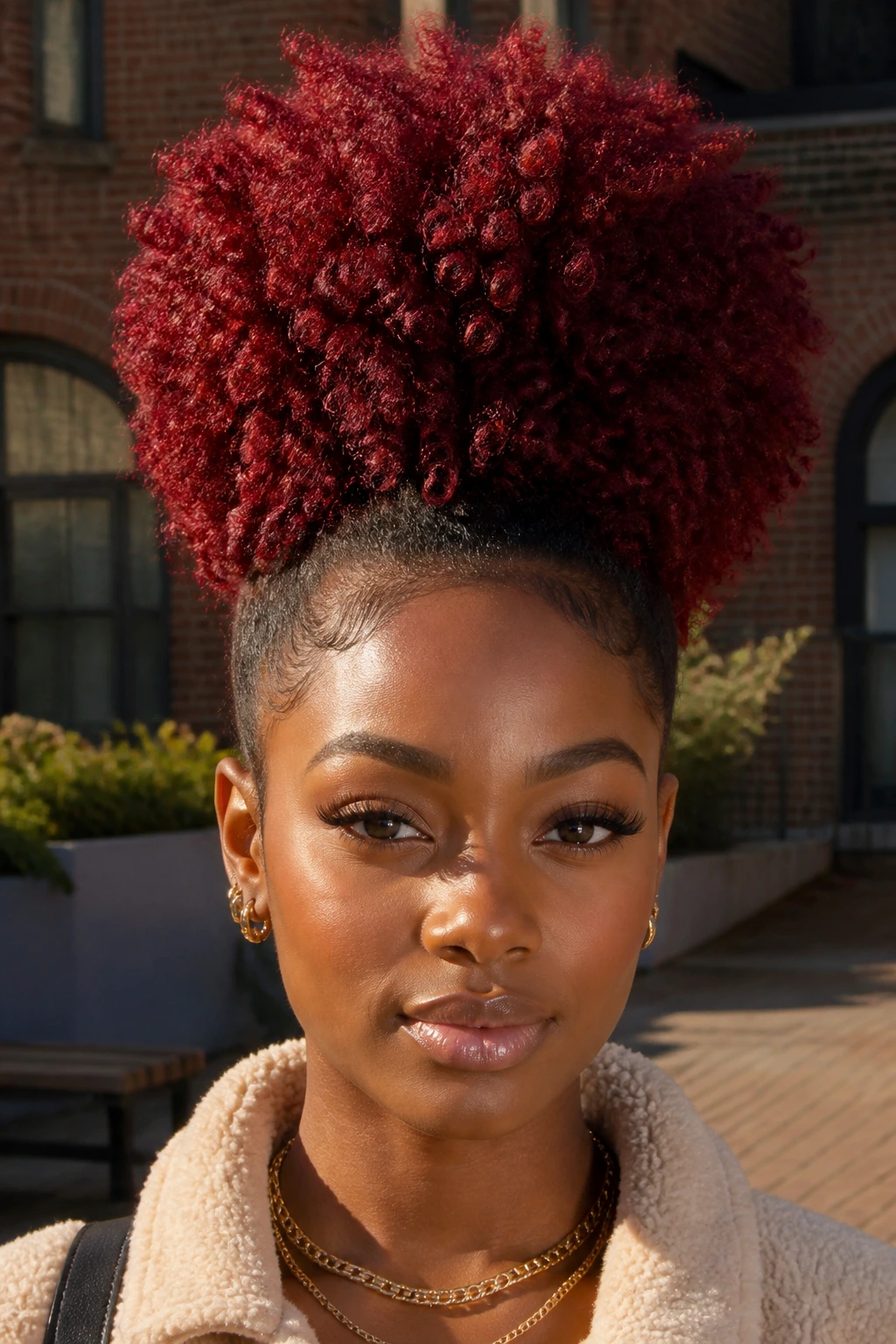
Velvet red and a puff belong together. The puff gives the color lift and the red gives the puff depth. Instead of reading harsh or bright, the shade feels plush, almost soft-focus, which is exactly what dark curly hair can do when the tone sits in the right red-brown family.
The key is keeping the puff rounded and full. If you pull it too tight, the curls at the base lose their texture and the whole thing gets stiff. A stretchy band, a smooth front, and a little shape at the crown do enough. Let the puff itself stay airy.
This is one of the easiest red styles to wear with a simple wardrobe too. Black tee, gold hoops, puff on top. Done. The color does the work.
17. Fire-Red Clip-In Streaks
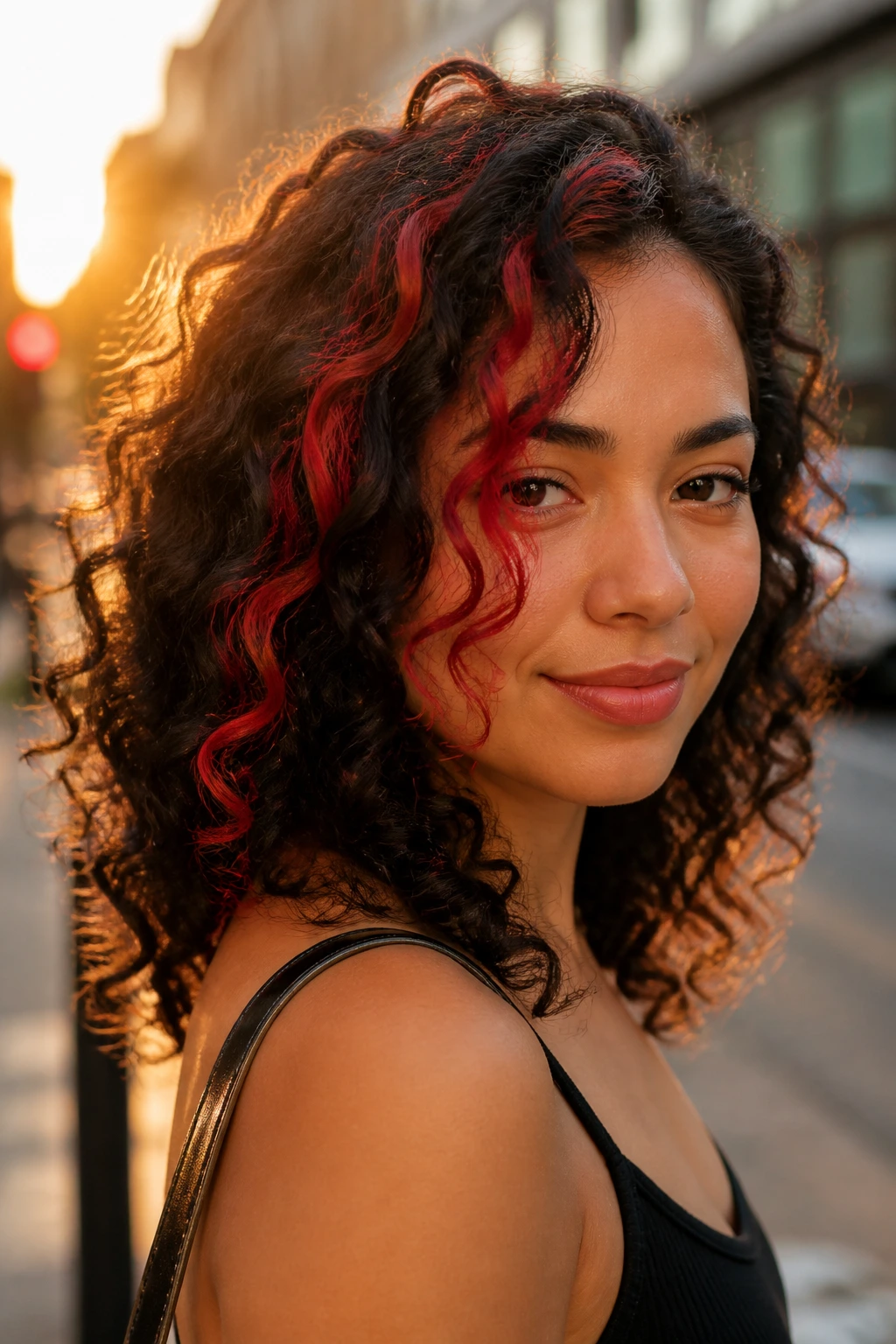
Some red styles should not ask for a permanent commitment, and clip-in streaks are the answer for that. You can add bright red pieces near the front, behind the ear, or through the top layer, then take them out when you’re done. On dark curly hair, that temporary contrast can look sharper than a permanent dye job because the base stays deep and the red stays loud.
The trick is to keep the streaks few and deliberate. Three or four pieces placed near the face usually beat a whole handful scattered everywhere. Too many clip-ins start looking messy fast, especially once the curls move around.
Use them when you want an event look, a weekend change, or a test run before coloring your hair. They’re also useful if you’re still deciding whether you like red against your skin tone.
18. Dark Cherry Layered Shag
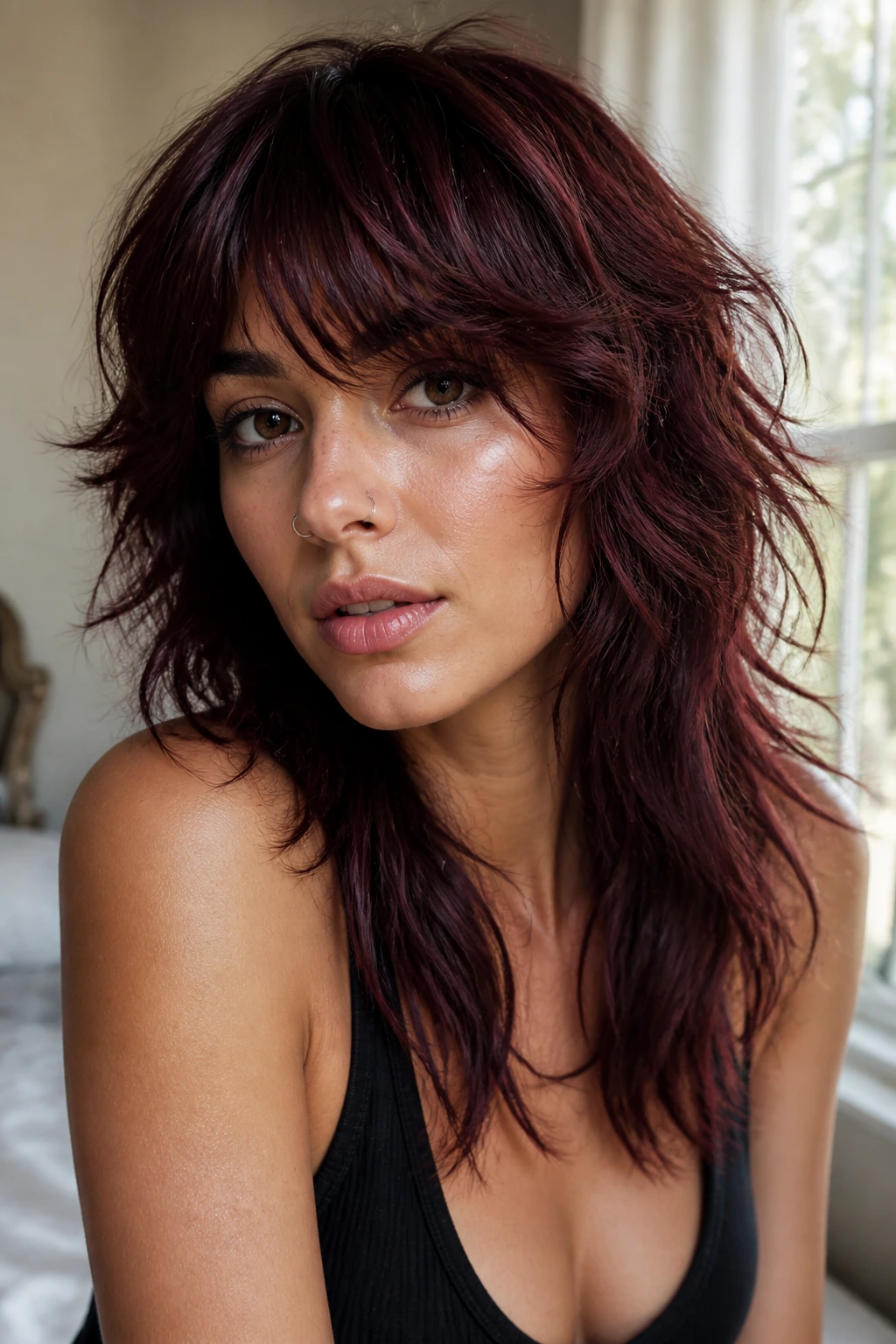
A layered shag in dark cherry red has a nice edge because the cut already brings movement, and the color rides that movement instead of sitting on top of it. The shag’s uneven layers and fringe stop the hair from feeling too neat. That matters. Red can get formal fast if the cut is too tidy.
Dark cherry is a strong choice for a shag because it gives visible color without demanding pre-lightening on many darker bases. It’s rich, a little moody, and the layers create enough broken surface that the red keeps changing as you turn your head.
If you like volume around the crown and face-framing pieces that don’t behave too perfectly, this is a solid lane. It looks even better with a little texturizing cream and a loose finish.
19. Red Peekaboo Highlights
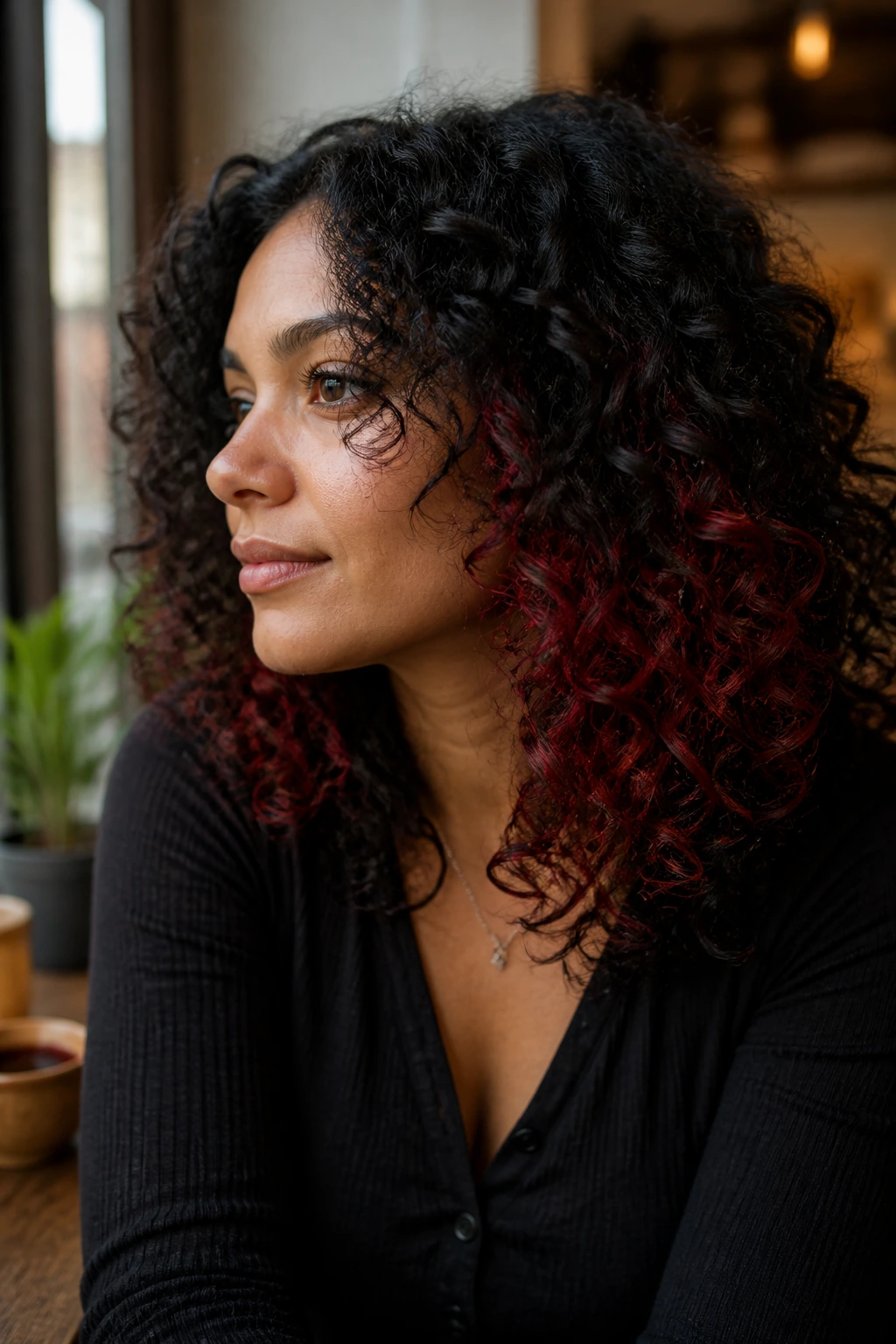
Want red that only shows when the curls move? Peekaboo highlights sit underneath the top layer, so they flash at the bend instead of sitting out in the open. On dark curly hair, that hidden placement is smart because the top keeps the overall look grounded while the underlayer gives you surprise color.
Best placement for peekaboo red
Put the red under the crown, behind the ear, or along the lower half of the back section. That way it shows when the curls lift, part, or swing. If the highlights sit too high, they stop being peekaboo and turn into regular streaks.
This is one of the easiest ways to test red on a conservative haircut or workplace-friendly style. You get the fun part without handing the whole head over to the color.
20. Brushed-Out Burgundy Fro
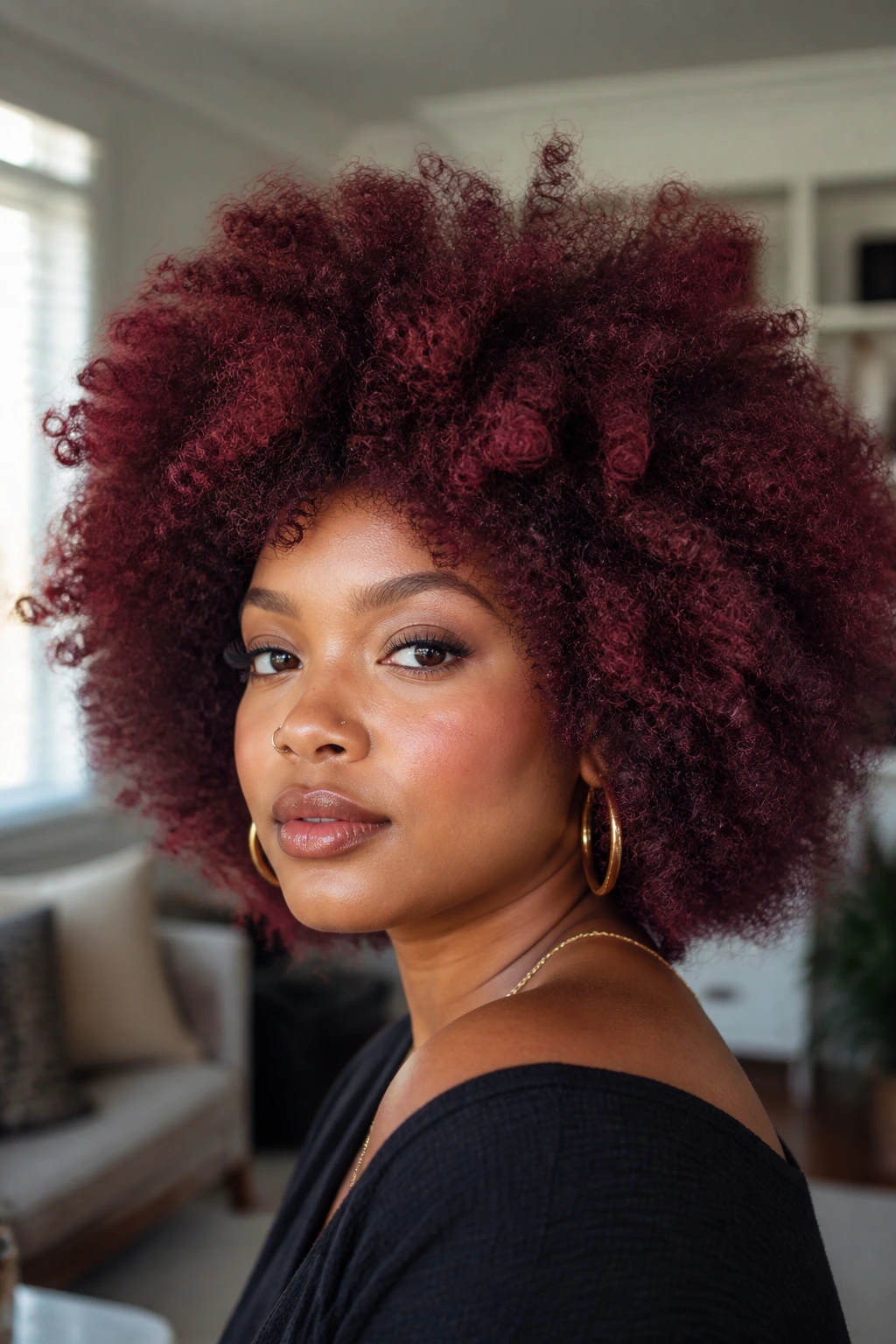
There’s something especially good about a brushed-out fro with burgundy underneath it. The twist-out or braid-out starts defined, then you pick it out into a soft cloud. The burgundy color lives in the body of the hair, which makes the fro look deeper and more dimensional than a plain dark shape.
The one thing to watch is how you brush it out. Don’t attack the ends. Lift at the roots, separate gently, and stop before the curls turn into fuzz. The goal is fullness with shape, not a halo of static.
This style is strongest on hair that already has a thick texture, because the burgundy color catches on the outer ringlets and still has room to breathe once the fro expands. It’s a good example of red working with volume instead of fighting it.
21. Cinnamon Spiral Rod Set
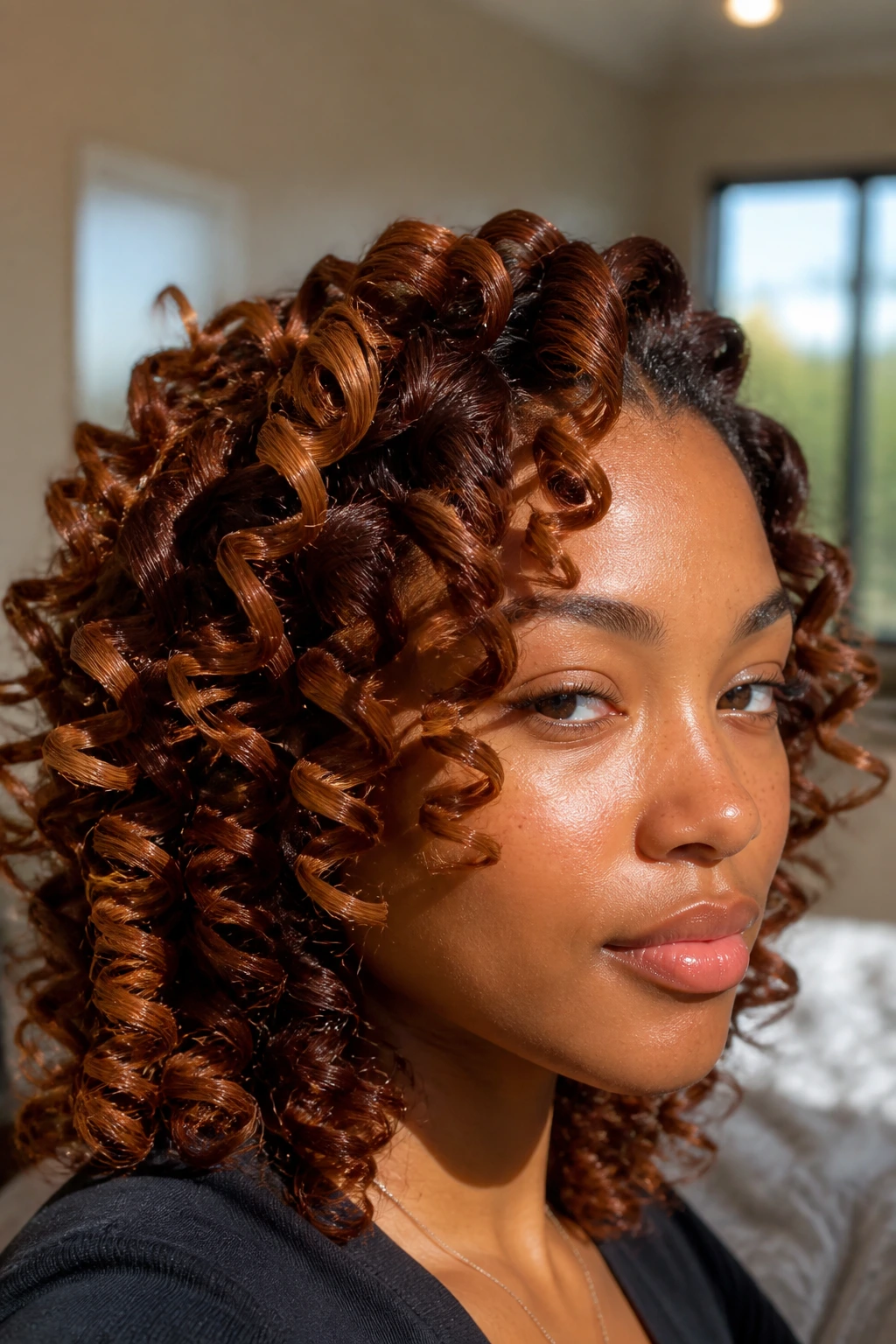
A cinnamon spiral rod set is one of those styles that looks more polished than the time it takes suggests. The rods create clean spirals, and the cinnamon tone keeps the curls warm without veering into bright copper. On dark curly hair, that gives you a set that feels rich in indoor light and a little brighter when you step outside.
Small rods near the face, slightly larger ones through the back—that mix keeps the shape from looking too uniform. A mousse with decent hold helps the spirals last. The finish should be soft and springy, not sticky.
If you like structure more than fluff, this is a good red style to try. The curls stay organized, and the color stays visible from root to end.
22. Auburn Halo Braid
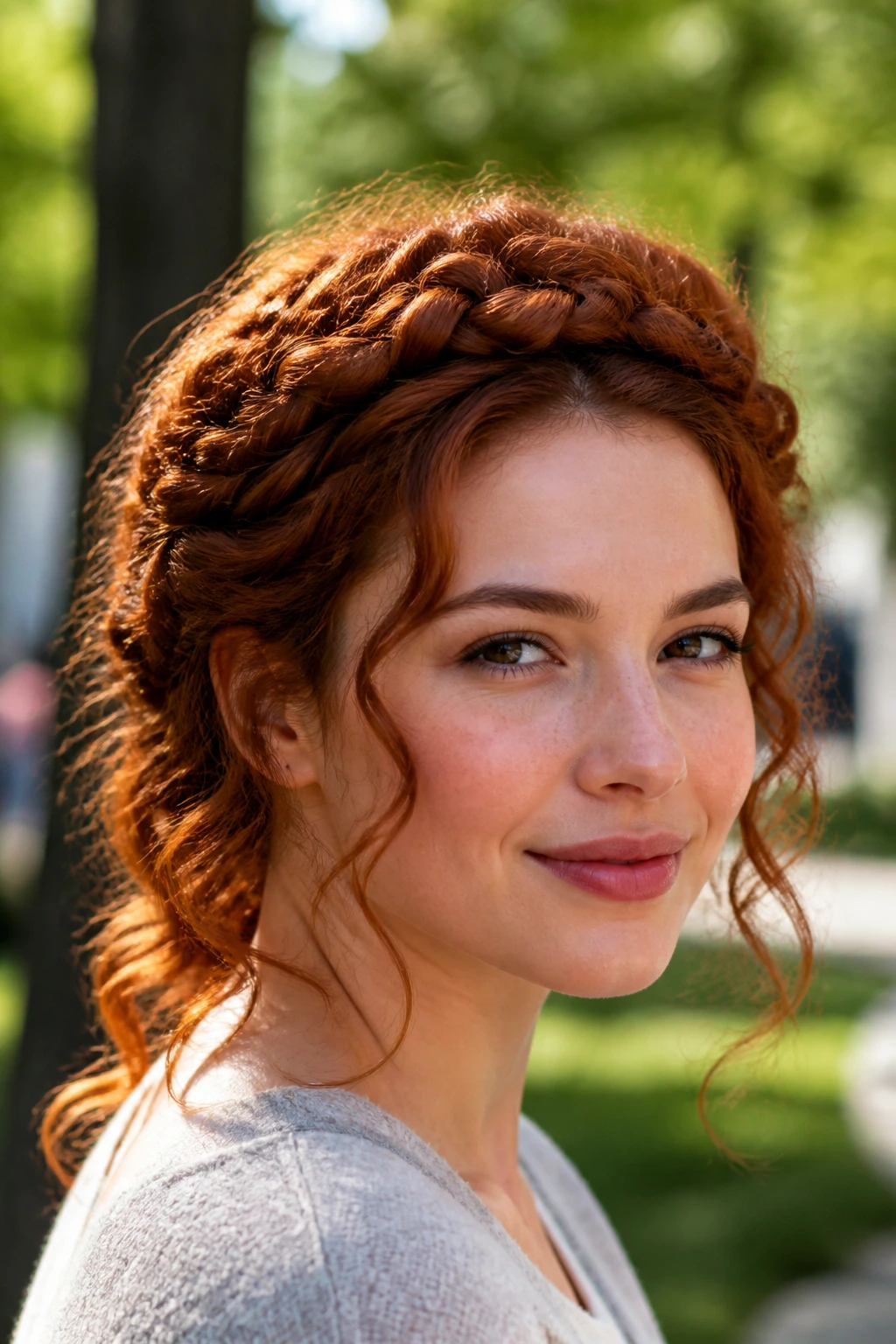
A halo braid in auburn has a nice tension to it: the braid shape is classic, almost modest, while the red keeps it from feeling plain. On dark curly hair, auburn around the crown can make the whole face look more open because the braid sits like a frame instead of a cap.
This works especially well if you want your hair off your face but still want color to show. You can braid the front sections into the halo and leave the back curls loose, or tuck everything in for a cleaner silhouette. Either version gives the red a place to live without demanding constant styling.
I’d use this one for days when you want the hair to look finished before you’ve done anything else. It has that kind of built-in order.
23. Wine-Red Side Part Curls
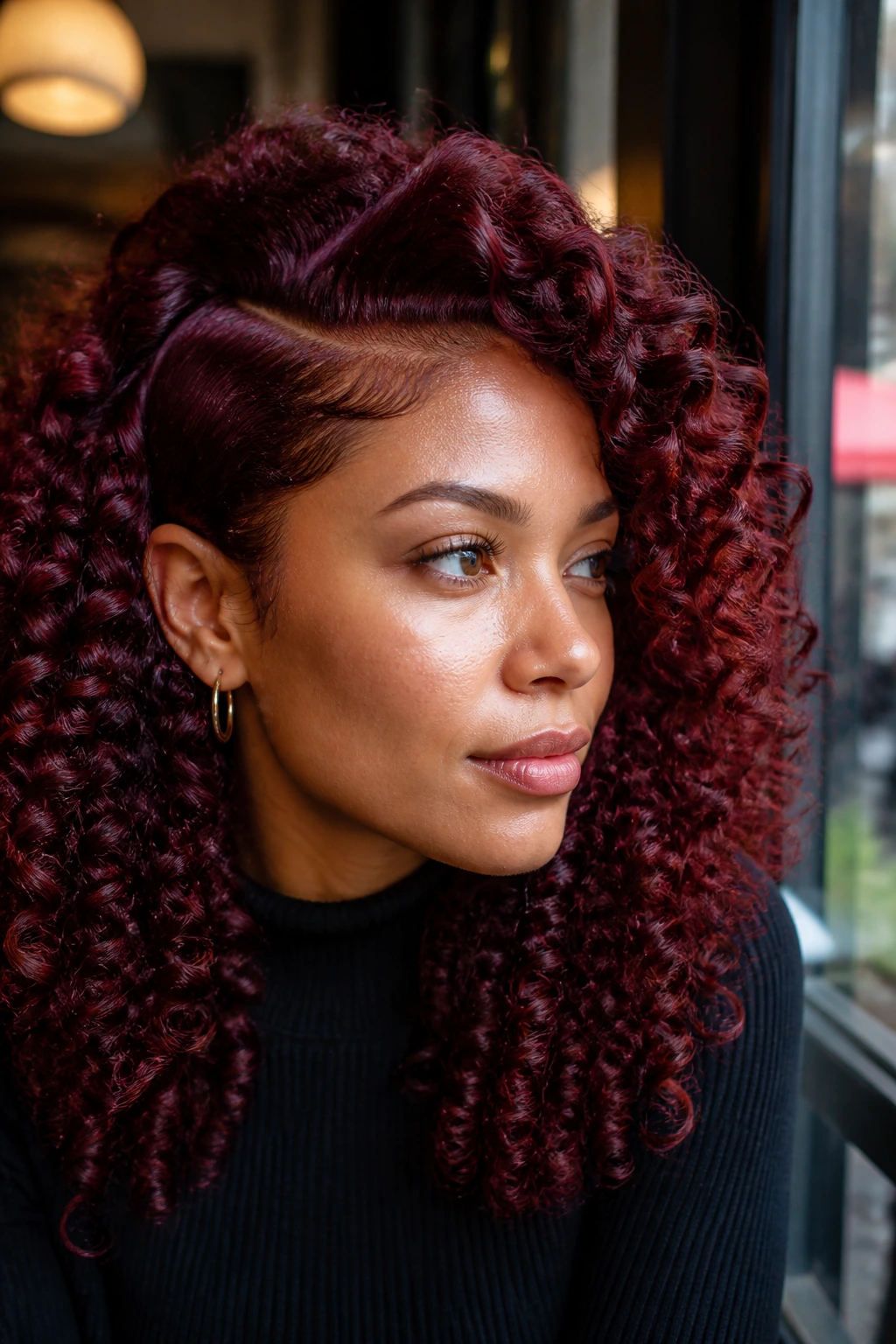
A deep side part changes a red curl style more than people expect. Once the hair shifts to one side, the wine-red tone picks up shadow on one half and light on the other. That contrast makes the curls look sculpted instead of just big.
Wine red is a good middle ground shade because it stays dark enough for curly hair to hold, but warm enough to show that you went for color on purpose. The side part adds shape without needing a cut. A pin or barrette at the temple can keep the heavier side in place and make the silhouette cleaner.
This is a strong option for anyone who wants red without leaning into copper or orange. It reads grown-up and a little dramatic without becoming fussy.
24. Scarlet Accent Bantu Knot-Out
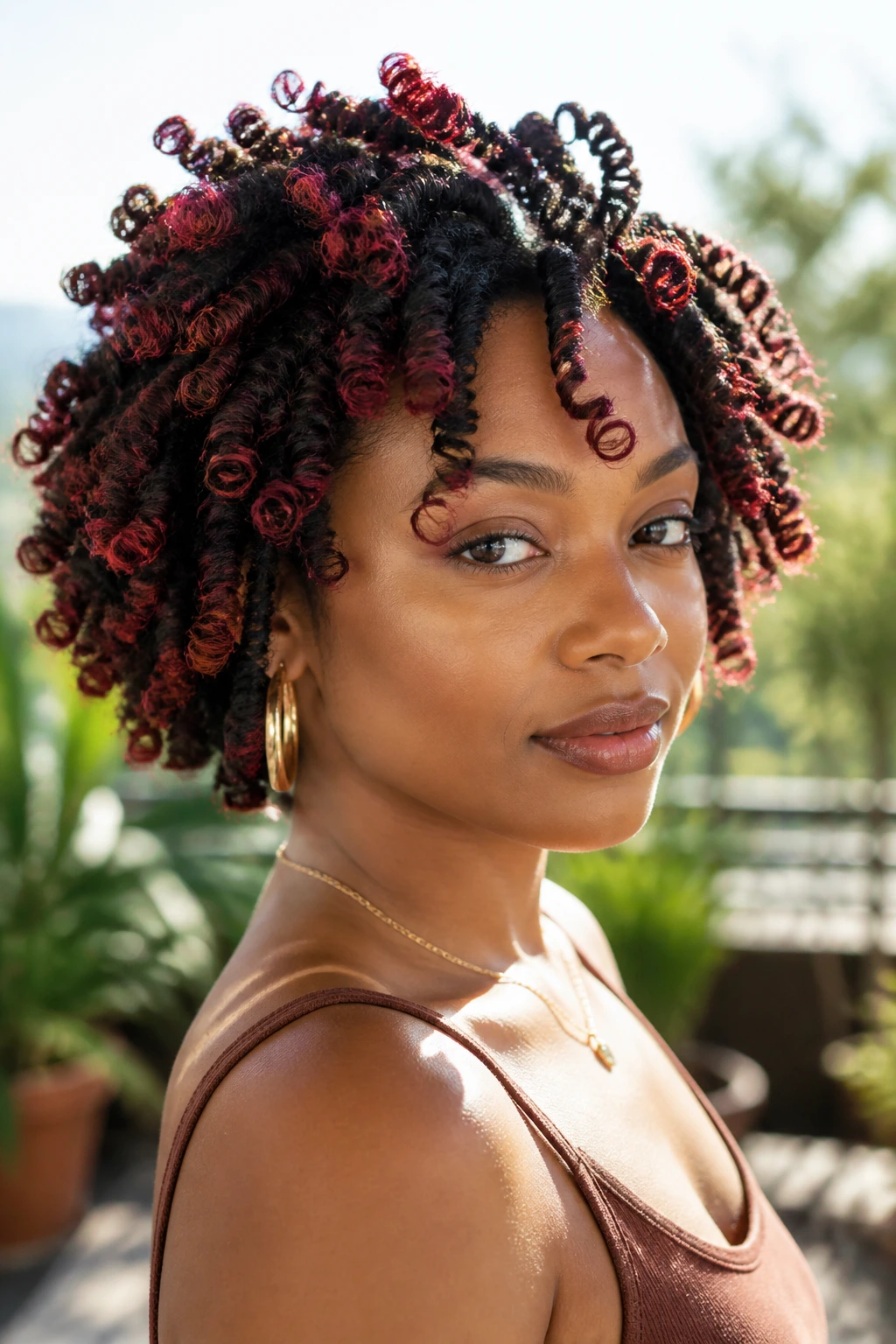
A full scarlet head can be a lot. Scarcarlet accents on a Bantu knot-out give you the same energy in a more controlled dose. The knots create texture first, then the red comes through at the unraveling points and around the tips. On dark curly hair, that means the color shows where the pattern is most active.
The best version keeps the roots deeper and lets the scarlet sit toward the ends or on just a few knot sections. That keeps the style from looking noisy. When you unravel, separate carefully and let the curls sit for a minute before fluffing. Scarlets look better when the shape has some room to breathe.
If you want a party look that still respects the curl pattern, this is a good place to start.
25. Red-Tipped Coil Fro
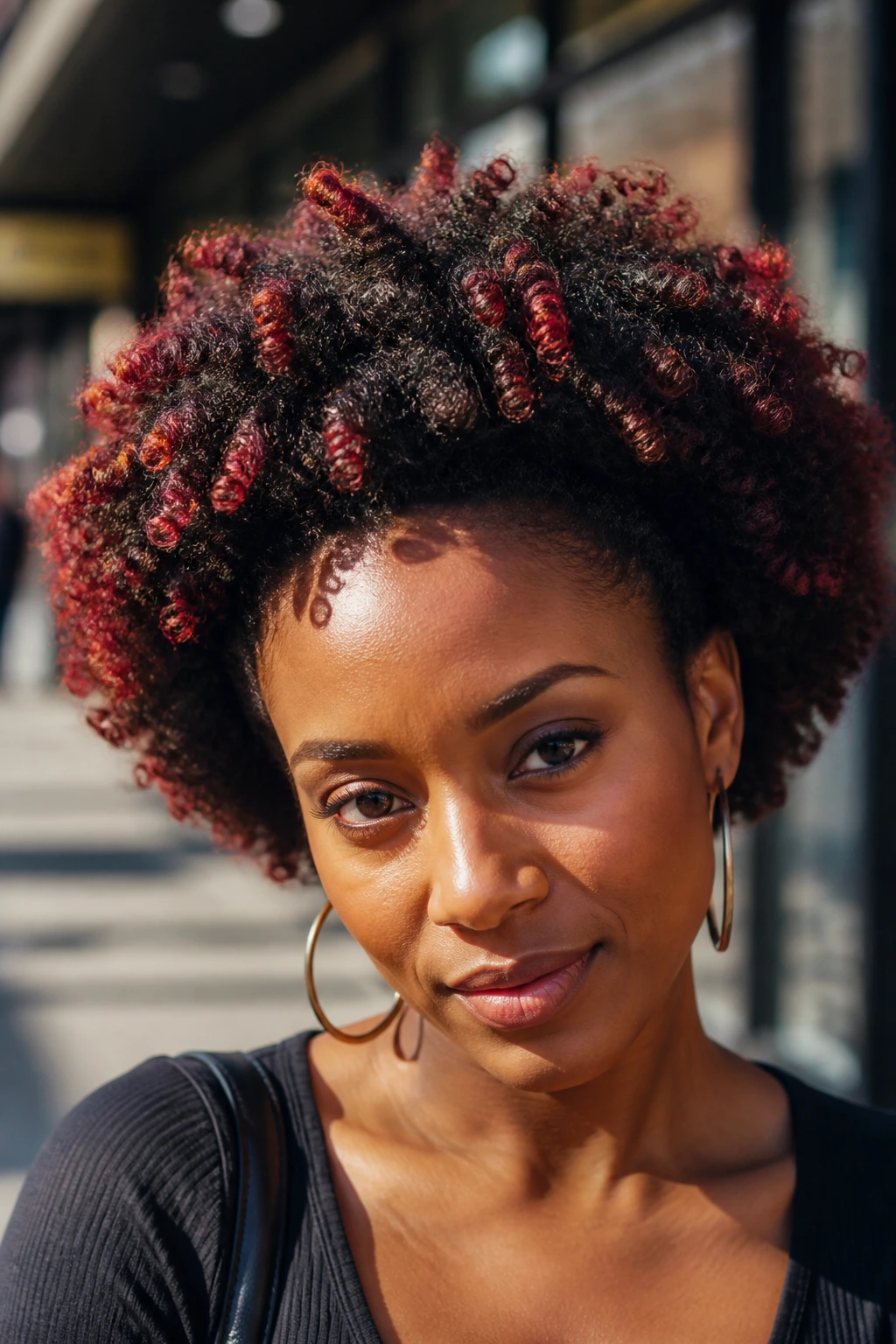
Red-tipped coils are the quietest way to end this list, and maybe the smartest. Instead of coloring the whole head, you let scarlet or cherry red live on the tips and outer perimeter of the coils. On dark curly hair, that gives you movement right where the eye notices bounce.
The base stays dark, which makes the red look sharper. The tips catch the light every time you turn your head, and the effect is cleaner than a full-head bright red on many curl types. If you’re not ready for a big color leap, this gives you a clear way in.
A tapered shape helps because the red ends show more easily around the outline of the fro. It’s a small detail, but on curls, the edge does a lot of work.
Why Red Loves Dark Curls
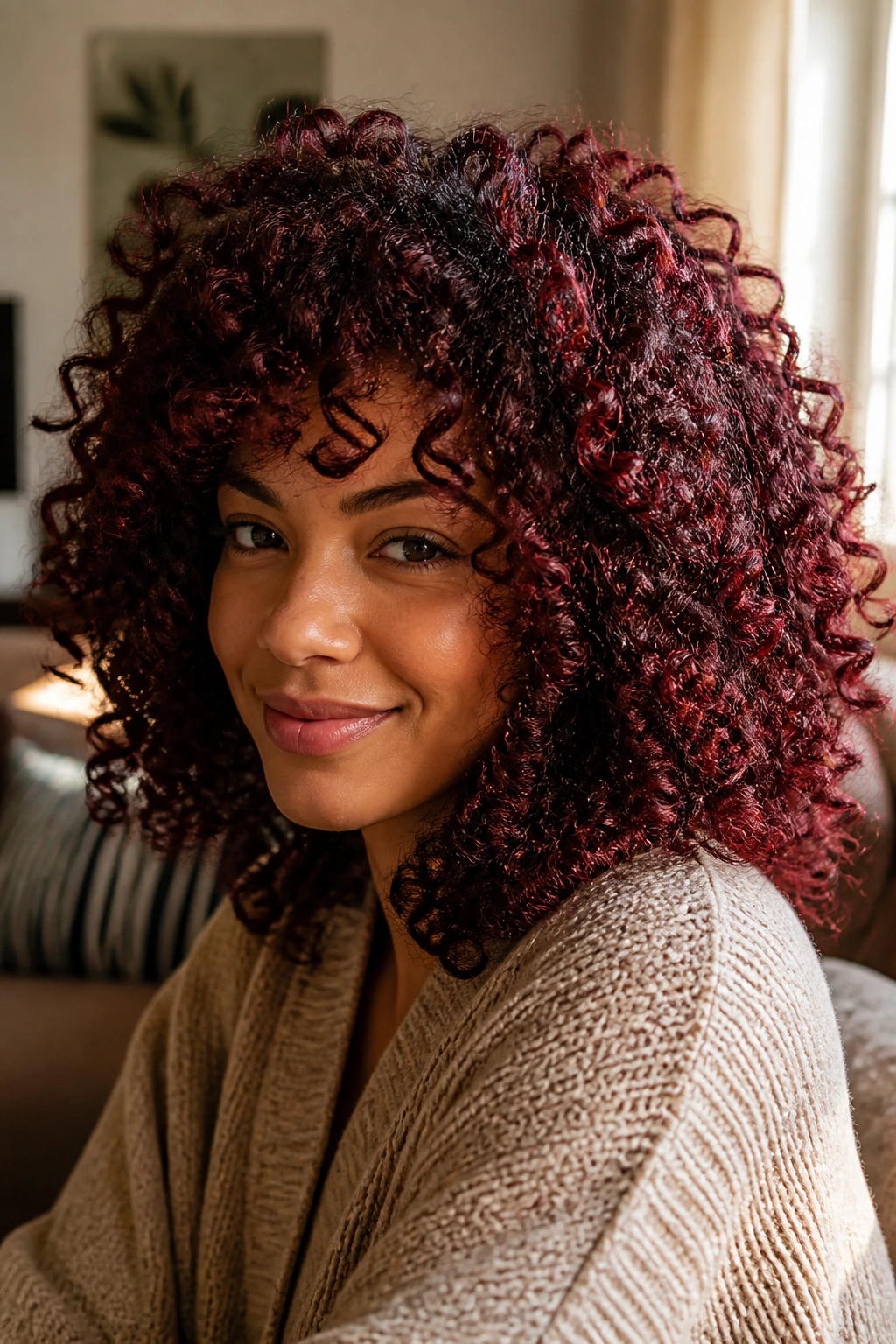
Red has a better time on dark curly hair than people sometimes expect. That’s partly because curls give the color texture to sit on. A flat strand reflects light one way. A coil throws light around, and each bend acts like a tiny stage for pigment. The result is movement, not sameness.
Dark bases help too. Burgundy, merlot, mahogany, and cherry cola all stay close enough to brown or black that they don’t vanish. They look like depth first and dye second, which is why they hold up even when the color fades a little. That fading can be useful, by the way. A deep red that softens into brown-red after a few washes often looks better than a loud shade that never settles.
The brighter reds need more care. Copper and scarlet can absolutely work on curly hair, but they usually need smarter placement or a bit of lift, because dark pigment will swallow weak color fast. Face-framing pieces, tips, and underlayers help the red stay visible without forcing the whole head through harsh processing. If your curls are porous at the ends, they’ll grab red faster than the roots, which is why a gloss or a gradient often looks more even than one blanket shade.
There’s another small advantage here. Curly hair can make red look intentional even when the style is simple. A puff, a twist-out, or a layered afro gives the shade breaks and shadows. Those breaks matter. They keep the color from turning into a hard, one-note block and let it read as something alive, which is what red should do on curls anyway.
Tools That Make These Looks Easier to Wear
-
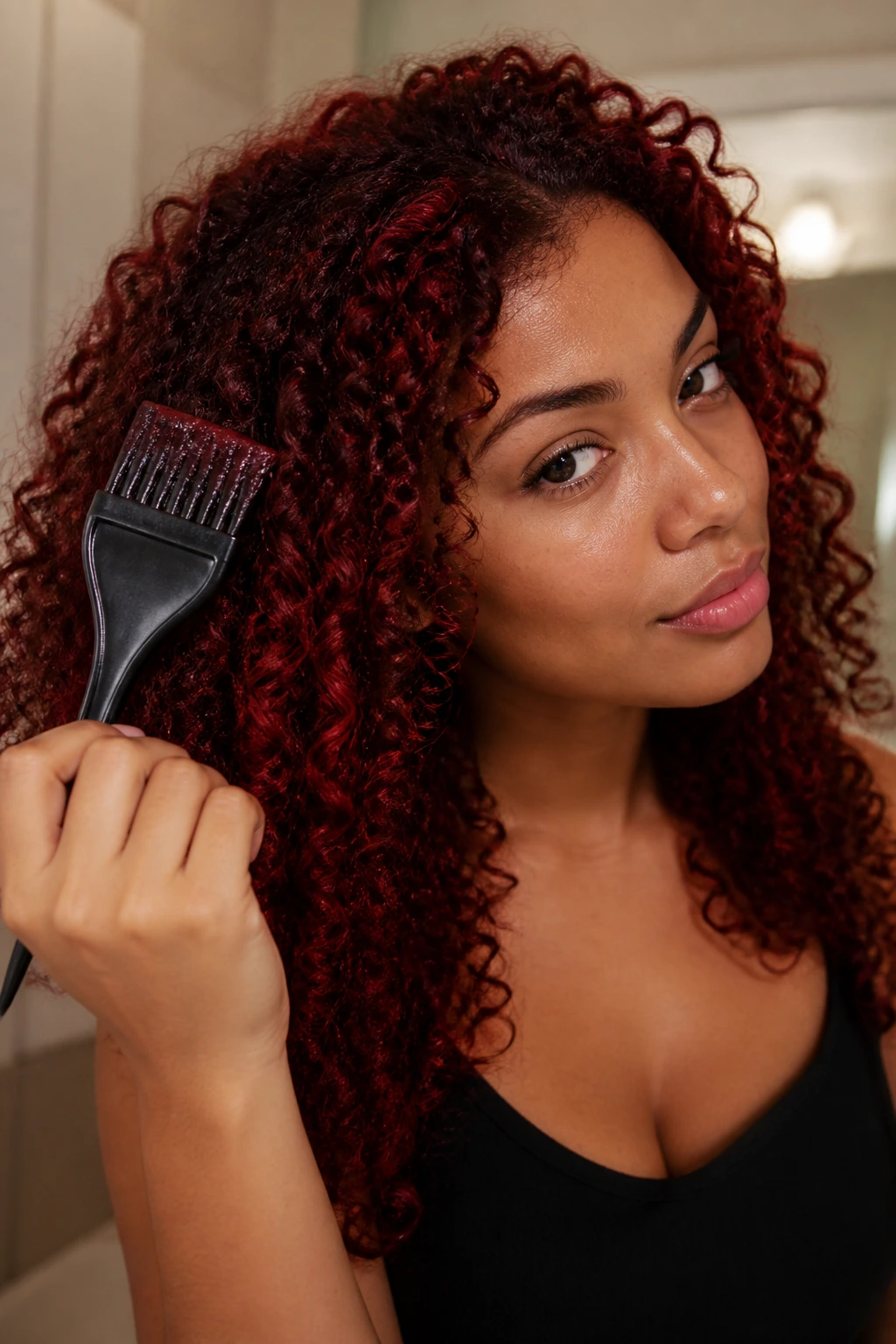
Tint brush and color bowl: Useful for sectioned application when you’re painting red onto curls, highlights, or money pieces.
-
Gloves: Red stains everything it touches. Your hands, your sink, your towels. Gloves save the drama.
-
Sectioning clips: These keep dense curls out of the way so you don’t miss hidden layers.
-
Rat-tail comb: Handy for drawing clean parts, money pieces, and highlight sections.
-
Applicator bottle: Better than a spoon-and-prayer approach for root touch-ups or glosses.
-
Wide-tooth comb: Gentle detangling matters once color has made the hair a little drier.
-
Diffuser attachment: Helps wash-and-gos, rod sets, and twist-outs keep shape while drying.
-
Satin bonnet or pillowcase: This protects red tone and curl definition overnight.
-
Microfiber towel or T-shirt: A rough bath towel can rough up the cuticle and make the color look dull.
-
Color-safe shampoo: Choose a gentle cleanser that won’t strip the red in one wash.
-
Deep conditioner: Colored curls need this. Pick one that keeps slip and softness.
-
Bond-building treatment: Worth having if you lighten at all. It helps keep the curl pattern from feeling brittle.
-
Edge brush and light gel: Useful for puffs, pixies, and halo braids where the front line matters.
Choosing the Right Red Shade, Dye Type, and Finish
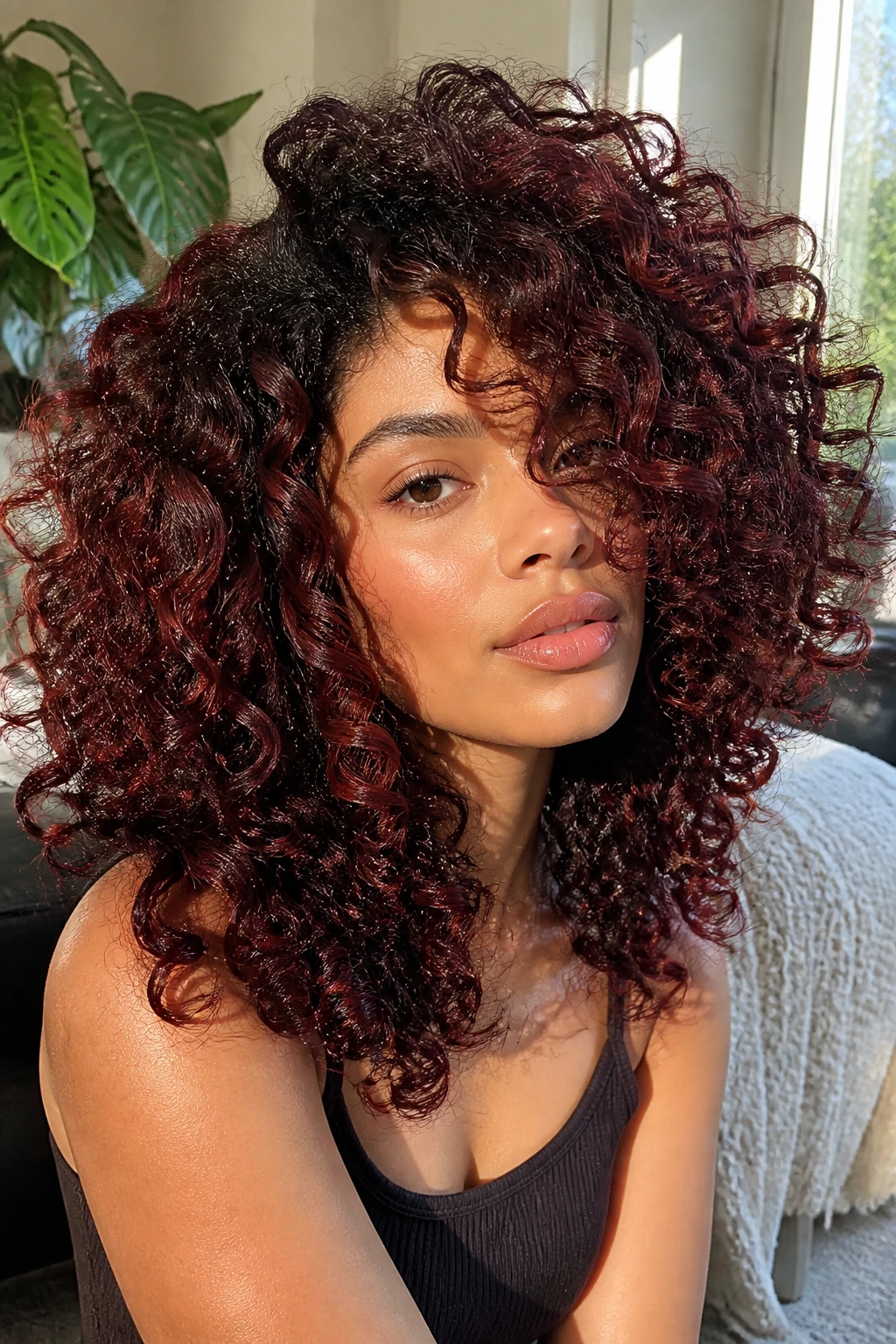
If dark curly hair had a favorite red family, it would probably be burgundy first, then mahogany, then auburn. Those shades sit close to the base color, which means they show up without asking for huge damage. Cherry, wine, and merlot fall into the same useful zone. Copper and scarlet can look gorgeous, but they need more light to be seen, so they usually ask for lift, placement, or both.
Product type matters more than a lot of people think. A direct dye or semi-permanent color deposits pigment without developer, which is easier on curls and a smart first step if you’re nervous. A demi-permanent red can add shine and depth with a softer grow-out. Permanent color is the one to choose when you need root coverage or a more lasting shift, but on curly hair it’s not the first place I’d start unless the plan truly needs it.
If your ends are porous, they’ll grab red faster than the roots. That’s useful if you want dimension, but it can also make the hair look patchy if you don’t plan for it. In that case, apply color to the mids first and let the ends process for less time. A hidden strand test at the nape saves more regret than any fancy styling trick.
Finish is the final piece. Glossy reds look richest on curls that are defined but not crunchy. A slight sheen spray or a light oil on the outer layer helps, but heavy butter can make red look flat. If you want the color to pop, keep the surface clean and the silhouette clear.
How to Wear These Reds in Everyday Life
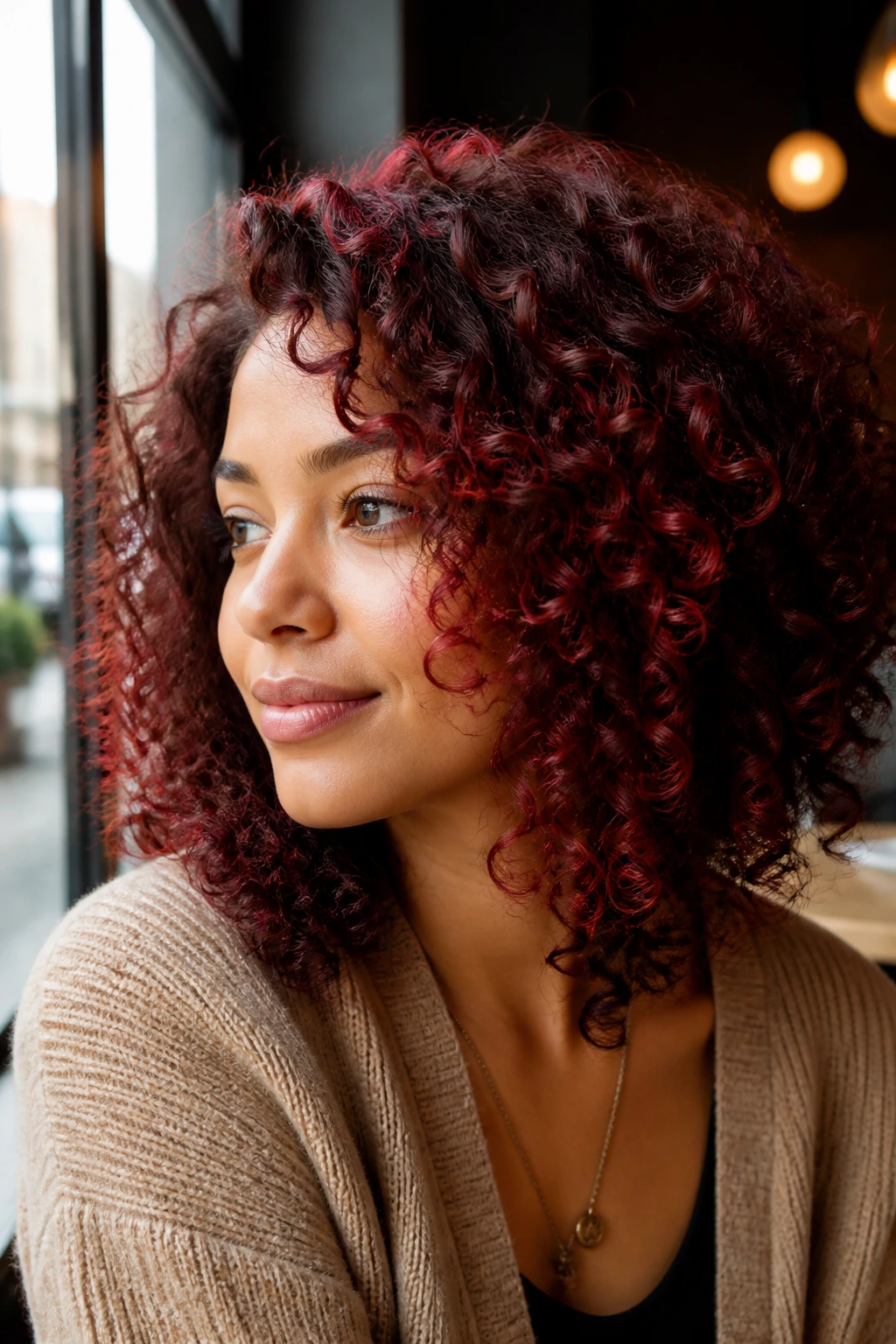
Presentation: Keep the curl pattern visible. Whether it’s a wash-and-go, twist-out, puff, or rod set, red reads best when the curls have shape and the roots are not buried under too much product. A slightly defined finish beats a greasy one every time.
Accompaniments: Gold hoops, tortoiseshell clips, black tops, cream knits, and berry-toned makeup all sit well beside red curls. Warm shades near the face tend to make burgundy, auburn, and cinnamon look deeper. A harsh neon lipstick can fight the hair; a berry or brick tone usually settles better.
Wear Time: Temporary clip-ins and color wax are one-day choices. Glosses and direct dyes can last through several washes depending on porosity and shampoo frequency. Protective styles like faux locs or braids can carry red for weeks, but the scalp still needs care underneath.
Best Setting: Darker reds like merlot, cherry cola, and mahogany are easy to wear almost anywhere because they read as rich instead of loud. Copper money pieces, scarlet tips, and bright red streaks make more noise, which is useful when you want the hair to do the talking.
Extra Shine, Shape, and Contrast Tricks
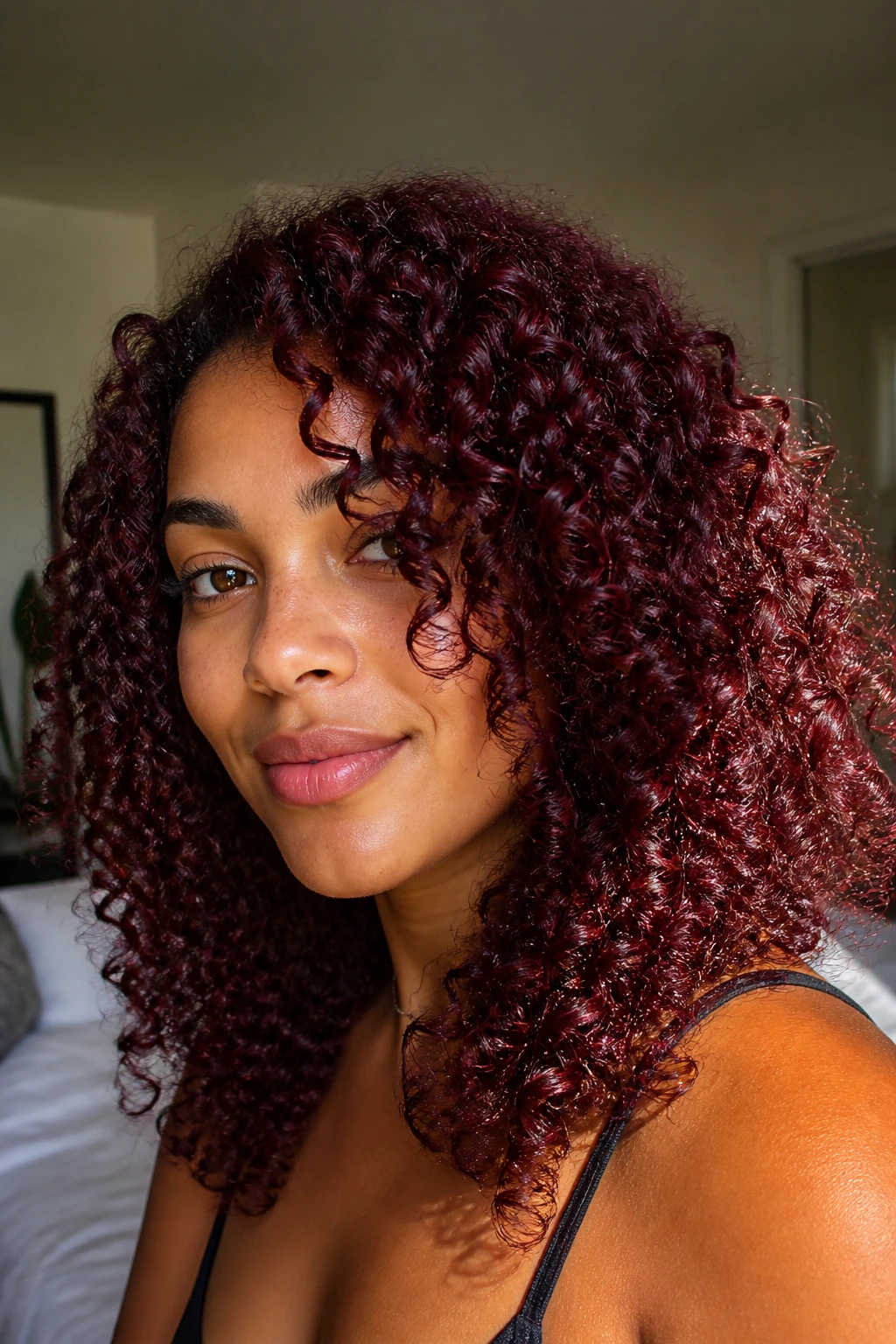
Color Boost: A tinted conditioner or red gloss every couple of weeks can keep burgundy and cherry shades from turning brown-dull. Use it lightly, though. Too much pigment and the hair starts staining towels, collars, and pillowcases.
Shape Boost: Diffuse until the curls are about 80% dry, then let the rest air-dry. That keeps the ringlets from collapsing under their own weight. For twist-outs and braid-outs, separate only when the hair feels cool and dry all the way through.
Contrast Boost: Leave the roots a shade deeper than the mids and ends. That small gradient makes red feel dimensional, especially on dark curly hair. One flat tone can look painted on. Two close tones look intentional.
Accessory Move: A narrow scarf, a clip at the temple, or a single hoop earring can change how the red reads against the face. Small details matter more with this color than people expect. Red already has presence; don’t crowd it.
Make-It-Yours: If you want low commitment, reach for clip-ins, temporary color wax, or hidden peekaboo pieces. If you want less maintenance, stay in the burgundy, plum, or mahogany family instead of chasing bright copper. If you want more drama, place the red on the front pieces and the tips, where it gets the most light.
Keeping the Color Fresh Between Washes
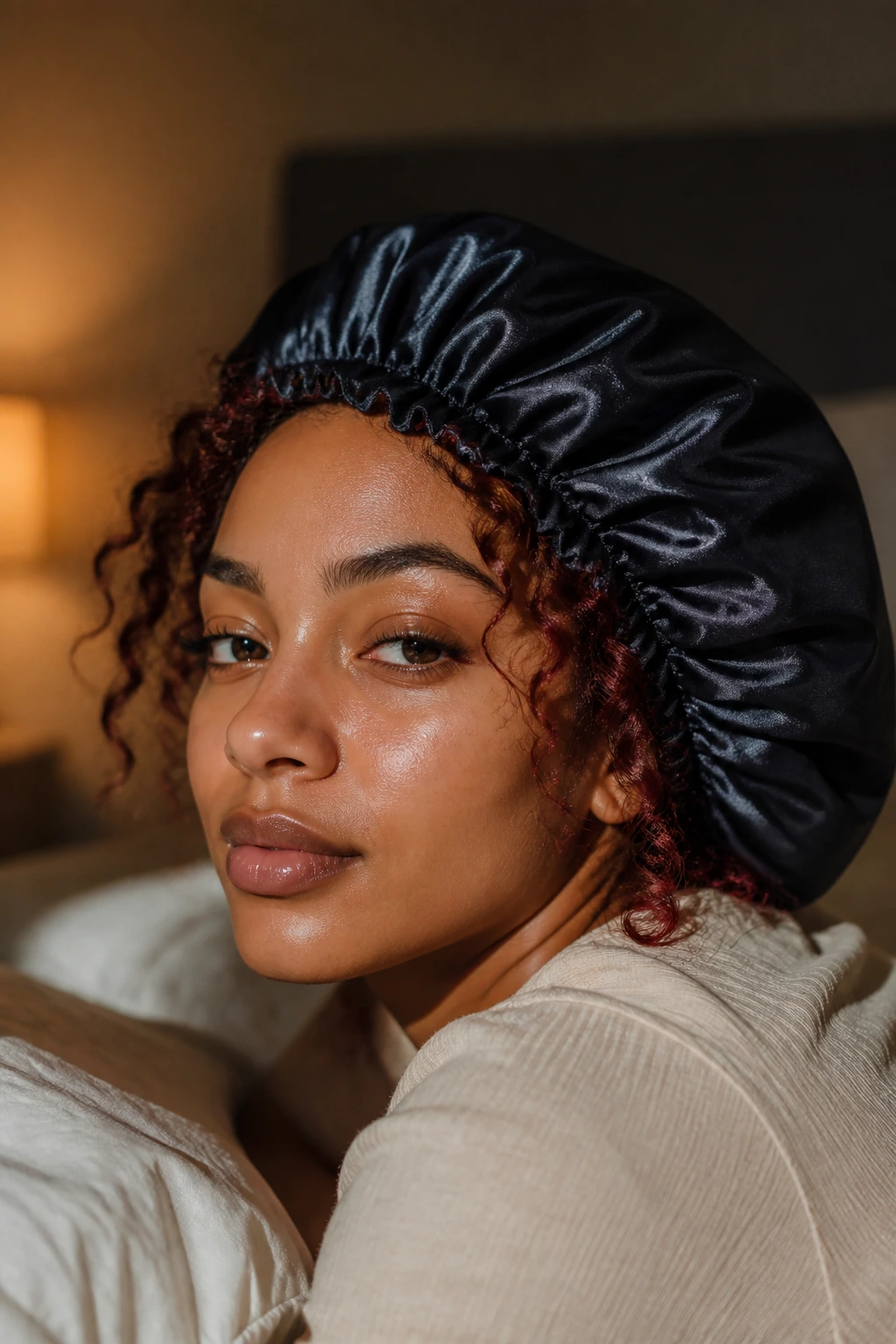
Red fades faster than brown, and curly hair can dry out faster than straighter textures, so the maintenance plan has to cover both problems at once. Nighttime matters first. A satin bonnet or pillowcase cuts down on friction, which helps the color stay shiny and keeps the curl clumps from fraying. Pineapple styles work well on longer curls; shorter cuts usually need just a smooth wrap or bonnet.
Wash day should stay gentle. Cool or lukewarm water helps preserve red pigment better than hot water, and a sulfate-free cleanser keeps the color from bleeding out too fast. If the style is a wash-and-go, refresh the shape with water, leave-in, and a little gel on the frizzier spots. If it’s a twist-out or rod set, rehydrate with a light mist and finger-shape the curls instead of soaking them all over again.
For permanent red or heavily deposited dye, touch-ups usually happen every 4 to 6 weeks at the roots, sometimes sooner if the contrast gets sharp. Glosses and semi-permanent colors often need a refresh every 2 to 4 weeks on porous hair. Protective styles like faux locs or braids can stay in longer, but the scalp should still be cleaned and oiled lightly as needed. Leave them in too long and the style starts looking dusty, especially around the hairline.
If you’re planning a color appointment, keep the hair free of heavy butters for a day or two beforehand. Clean enough to process, not squeaky. That balance matters more than people think.
Variations and Adaptations to Try
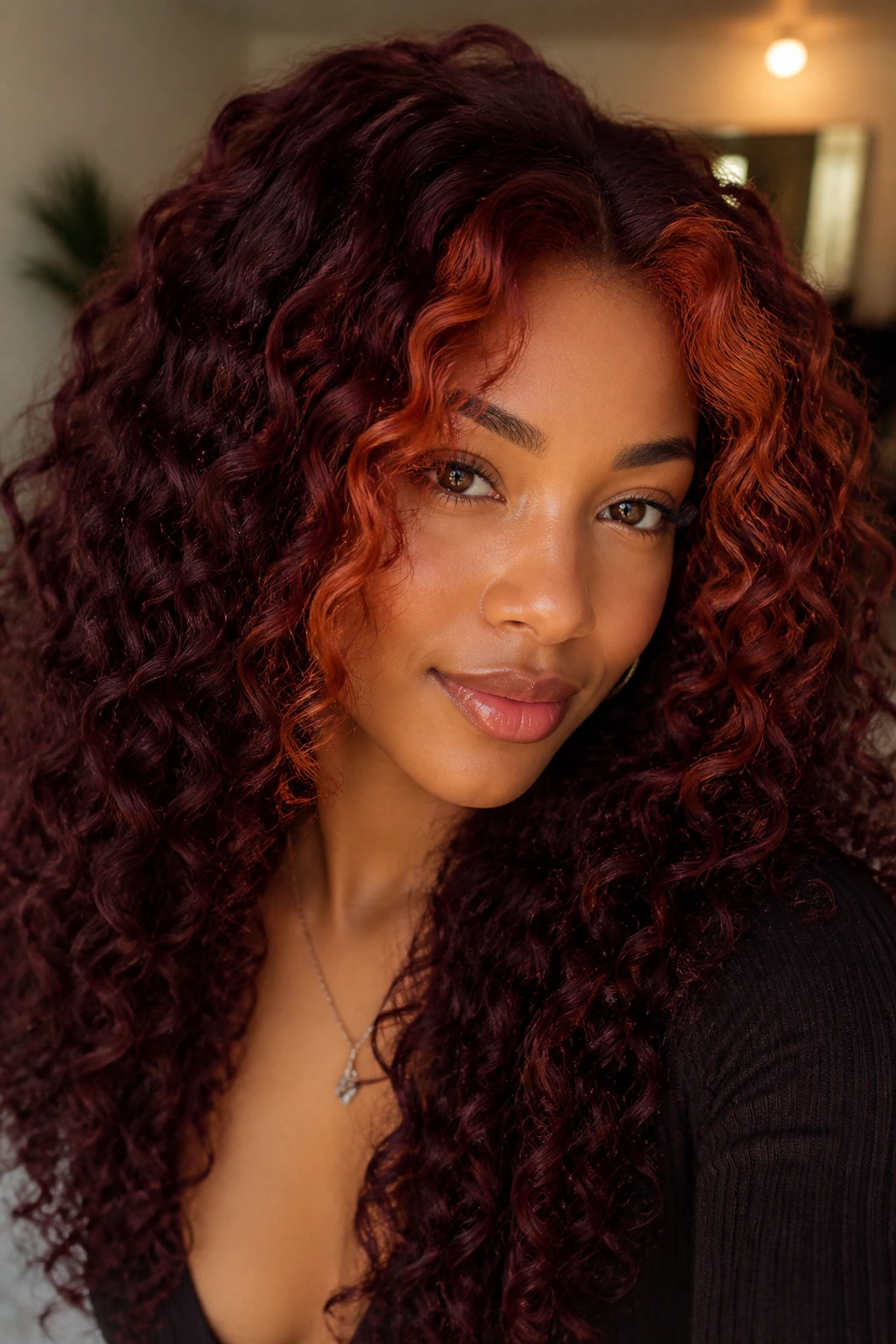
No-Bleach Burgundy: If you want red on dark curly hair without lightening, stay in the burgundy or mahogany family and use a semi-permanent or demi-permanent formula. You’ll get the richest payoff on porous mids and ends, and the grow-out stays softer. This is the safest place to start if your curl pattern is fragile.
Copper Face-Frame Edit: Instead of coloring the whole head, lighten just the front pieces and a strip around the part line. The rest of the curls can stay dark, which keeps the style grounded while still making the color obvious. This works especially well with bobs, shags, and side parts.
Protective-Style Red: Use red braiding hair, faux loc extensions, or crochet pieces if you want the color effect without dyeing your own curls. The result can last for weeks, and your natural hair gets a break from daily manipulation. It’s the better move when length retention matters more than a permanent shade change.
Gloss-Only Cherry: A red gloss or tinted conditioner gives you a test run without commitment. The shade won’t be as loud as permanent dye, but it can deepen dark curls and make them look shinier in low light. This is the version I’d pick if you’re unsure how much red you want on your face.
Bold Scarlet Pop: If you want something louder, add scarlet to the tips, money pieces, or clip-in streaks instead of the whole head. That gives you brightness where it counts and keeps the rest of the hair usable for everyday life. Bright red is easier to live with when it’s aimed, not scattered.
Common Mistakes That Flatten the Look
Picking a red that’s too light for the base: On very dark curls, weak red can disappear or turn orange at the worst spots. The fix is to choose burgundy, mahogany, or cherry first, then move brighter only where the hair has enough lift.
Skipping a strand test: Curls don’t all process the same way. Porous ends can go darker, roots can stay shy, and one hidden coil at the nape will tell you more than the box ever will. Test before you do the whole head.
Over-lightening to chase brightness: A lot of people burn the curl pattern just to make scarlet show up. The hair may look red for a week and then feel rough for months. If you need a brighter red, use placement or extensions instead of pushing the hair farther than it wants to go.
Washing too hot and too often: Hot water strips red fast, and frequent shampooing pulls even more pigment out. Cool water, gentle cleanser, and fewer full washes protect both the color and the curl clump.
Forgetting moisture: Colored curls can look flat when they’re thirsty. If the hair feels rough, the red looks dull too. Use a deep conditioner regularly, and do not stack heavy protein on top of already stiff strands.
Using too much oil on the surface: A slick, greasy finish can mute the color. A few drops on the ends is enough. The rest should stay light so the red still catches the eye.
Questions People Ask Before Going Red
Can dark curly hair go red without bleach?
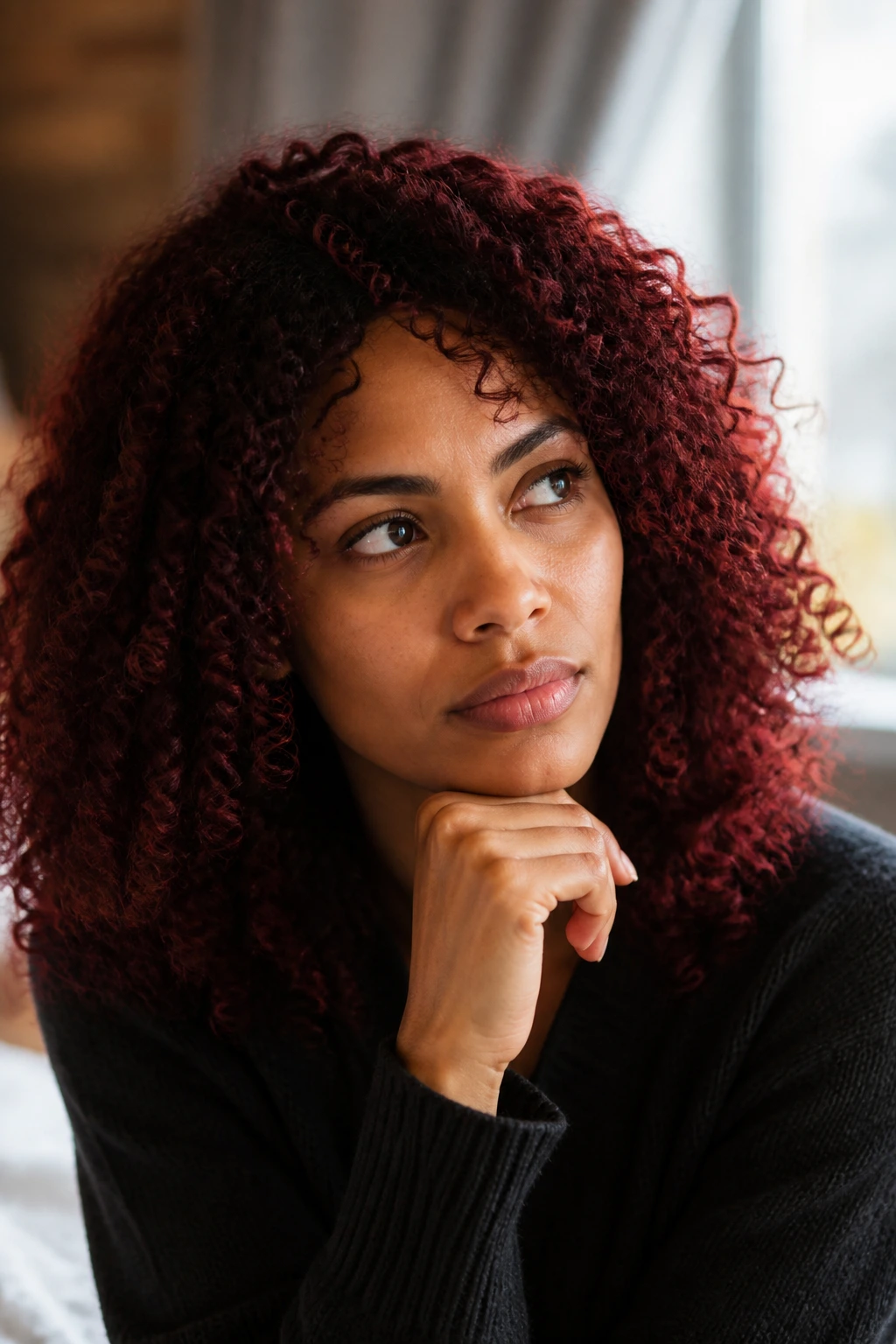
Yes, if you stay in the deeper red family. Burgundy, mahogany, wine, and cherry cola usually show up on dark bases without lift, especially on porous hair or under sunlight. Copper and scarlet are harder without some lightening, so those shades often need placement or a different plan.
Which red shade looks best on very dark curls?
Deep burgundy and mahogany are the safest bets because they respect the base color. They read rich instead of orange and tend to fade into a softer version of themselves. If you want more warmth, auburn is usually easier to live with than bright copper.
How long does red color last on curly hair?
That depends on the product and how often you wash. Direct dyes and tinted glosses can fade after a few shampoos, while demi-permanent color lasts longer. Protective styles or clip-ins can hold the look much longer because the color isn’t being washed every few days.
Will red damage my curls?
Not if you keep the process gentle and don’t chase too much lift. The damage usually comes from over-bleaching, high-volume developers, or repeated lightening on fragile ends. A gloss, semi-permanent dye, or extension-based style is much kinder.
Do red highlights work better than full red on 4C hair?
Often, yes. Highlights, money pieces, or peekaboo sections can show red more clearly on dense coils because the color has a lighter visual load. Full red can still look great, but it usually needs a more thoughtful shade choice and more upkeep.
Why does my red turn orange so fast?
That usually means the shade was too bright for the base or the hair was lifted past the point it could hold the pigment evenly. It can also happen if you wash with hot water or use a harsh cleanser too often. A red-violet or burgundy gloss on top often helps correct the tone.
Can I use henna for a red look?
You can, but henna is a commitment. It gives a warm red-brown stain and can be hard to remove or lighten later. If you think you may want brighter reds or bleach down the road, pause before reaching for henna.
What if my curls get frizzier after coloring?
Treat the hair like it has been through something, because it probably has. Add a richer conditioner, reduce heat, and use products with slip so the curls clump again instead of fluffing out. A soft hold gel or mousse on the outside layer can help the red look intentional while the moisture balance returns.
The Red That Fits Your Curl Pattern
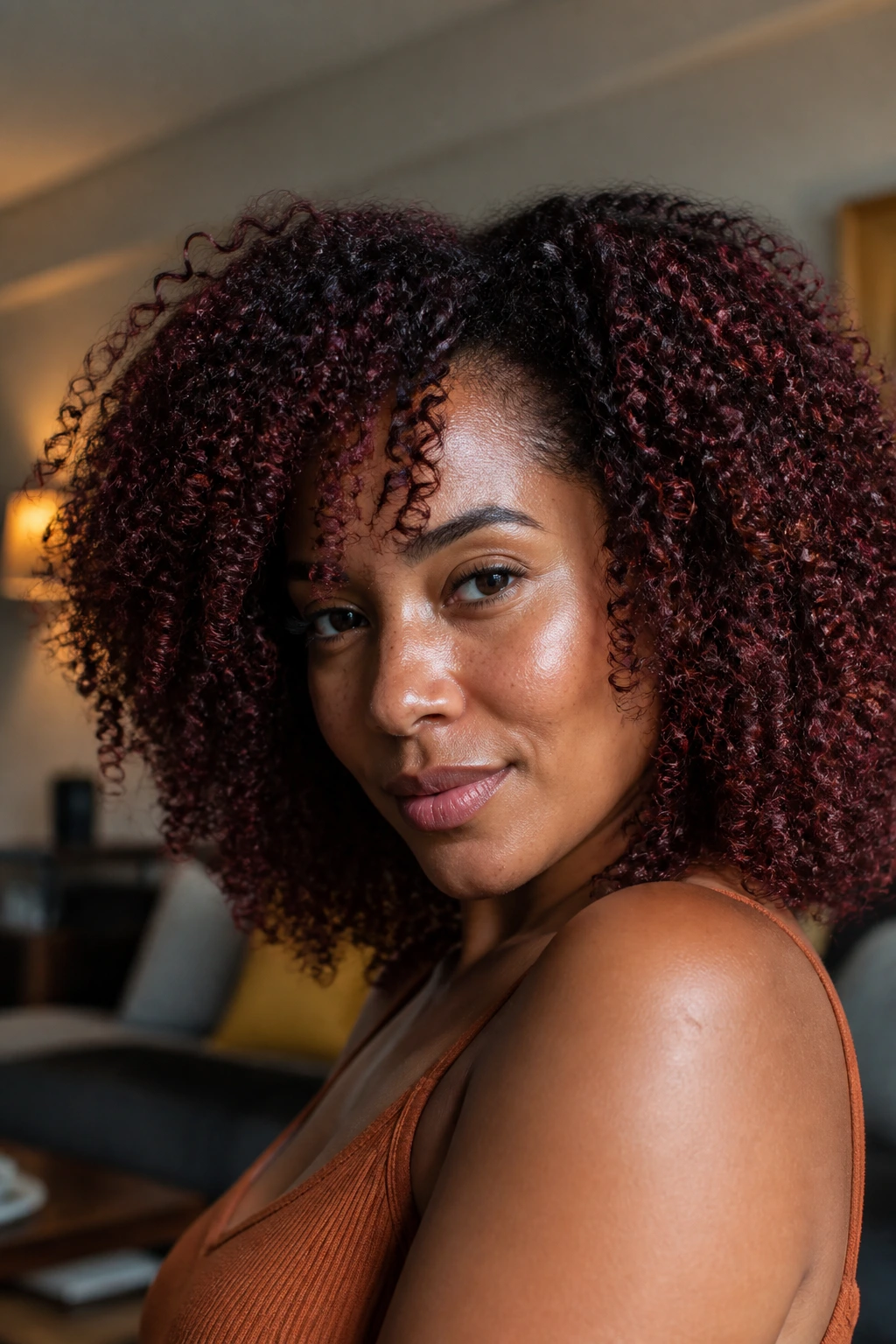
The smartest red for dark curly hair usually isn’t the loudest one. It’s the shade that respects the base, works with the curl pattern, and shows up in the places your hair already likes to move. Sometimes that means a burgundy wash-and-go. Sometimes it means copper only at the front. Sometimes it means a puff, a twist-out, or a protective style with crimson extensions and no dye at all.
That’s the part people miss. Red on curls is less about choosing a single color and more about choosing how you want the color to live. On the hairline. In the ends. Under the top layer. Wrapped into a braid. Flashed in a spiral. Once you get that part right, dark curly hair and red stop arguing and start working together.
Pick the version that leaves your curls intact and gives the shade room to breathe. That’s the one you’ll keep reaching for.