



The best haircuts for curly hair and heart-shaped faces are the ones that understand two things at once: curls need room to move, and a heart-shaped face usually needs a little softness around the forehead and a little weight nearer the jaw. If a cut ignores either part, the result can feel off fast. The crown gets too puffy. The temples look wider. The chin looks sharper than it really is.
That balance matters more than most salon talk admits. Curly hair shrinks, bends, and swells in its own stubborn way, and a cut that looks neat when wet can land somewhere completely different once it dries. A bob can jump two inches. Bangs can split in weird places. Layers can either build a beautiful shape or turn into a triangle that eats your whole face.
The good news is that there are a lot of shapes that work here, and they do not all look the same. Some use fringe to soften the forehead. Some use side parts to break up width. Some keep length around the jaw so the eye travels downward instead of hanging out at the temples. A few are short and sharp, a few are round and airy, and a few are the sort of cut that looks better on day three than on wash day. That’s the fun part.
Why These Cuts Flatter Curly Hair and Heart-Shaped Faces
-
They balance the widest point: Most of these cuts avoid piling the most visual weight at the temples, which is where a heart-shaped face already tends to read broad.
-
They respect shrinkage: Curls spring up when they dry, so these shapes leave enough length in the right places to keep the chin and jaw from getting lost.
-
They soften the forehead: Fringe, side parts, and face-framing pieces keep the upper half of the face from feeling too exposed or too top-heavy.
-
They keep curl movement visible: A good curly cut should let the pattern show, not freeze it into a stiff helmet shape or a puffed-up triangle.
-
They have different maintenance levels: You can choose a cut that behaves after a five-minute refresh or one that wants a diffuser, a cream, and a little patience.
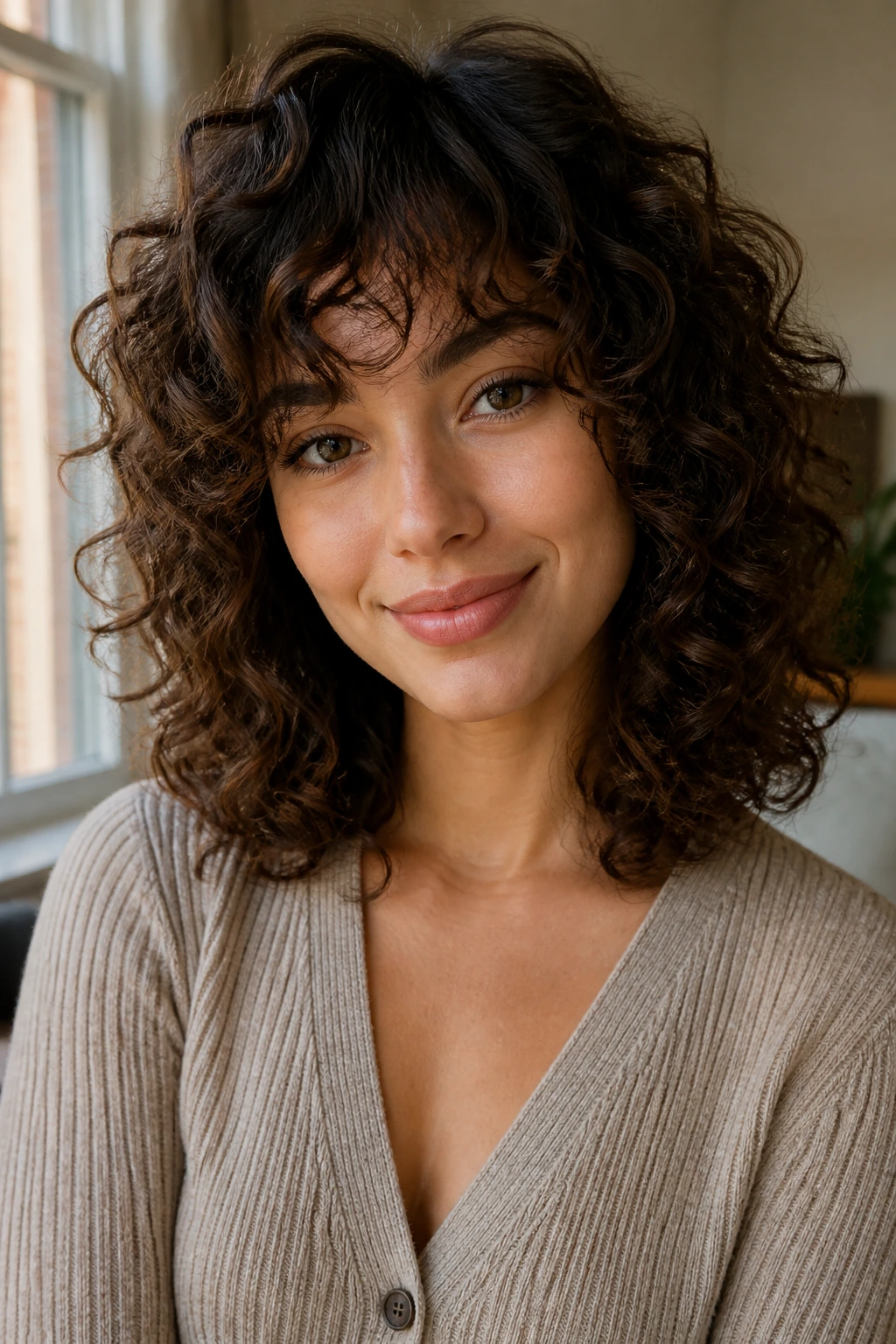
1. Curly Curtain Bangs and Collarbone Layers
Curtain bangs are one of those moves that looks obvious once you see it, which is usually a sign the idea was sound all along. On a heart-shaped face, they break up forehead width without blocking the whole top of the face, and the collarbone layers keep the silhouette from stopping too high. The result is soft, not fussy.
Ask for the bangs to start a little longer than you think you need, especially if your curls spring up hard when they dry. I like fringe that parts near the pupil and skims the cheekbones on the way down. That tiny bit of length keeps the bangs from turning into a blunt wall.
2. Chin-Length Curly Bob
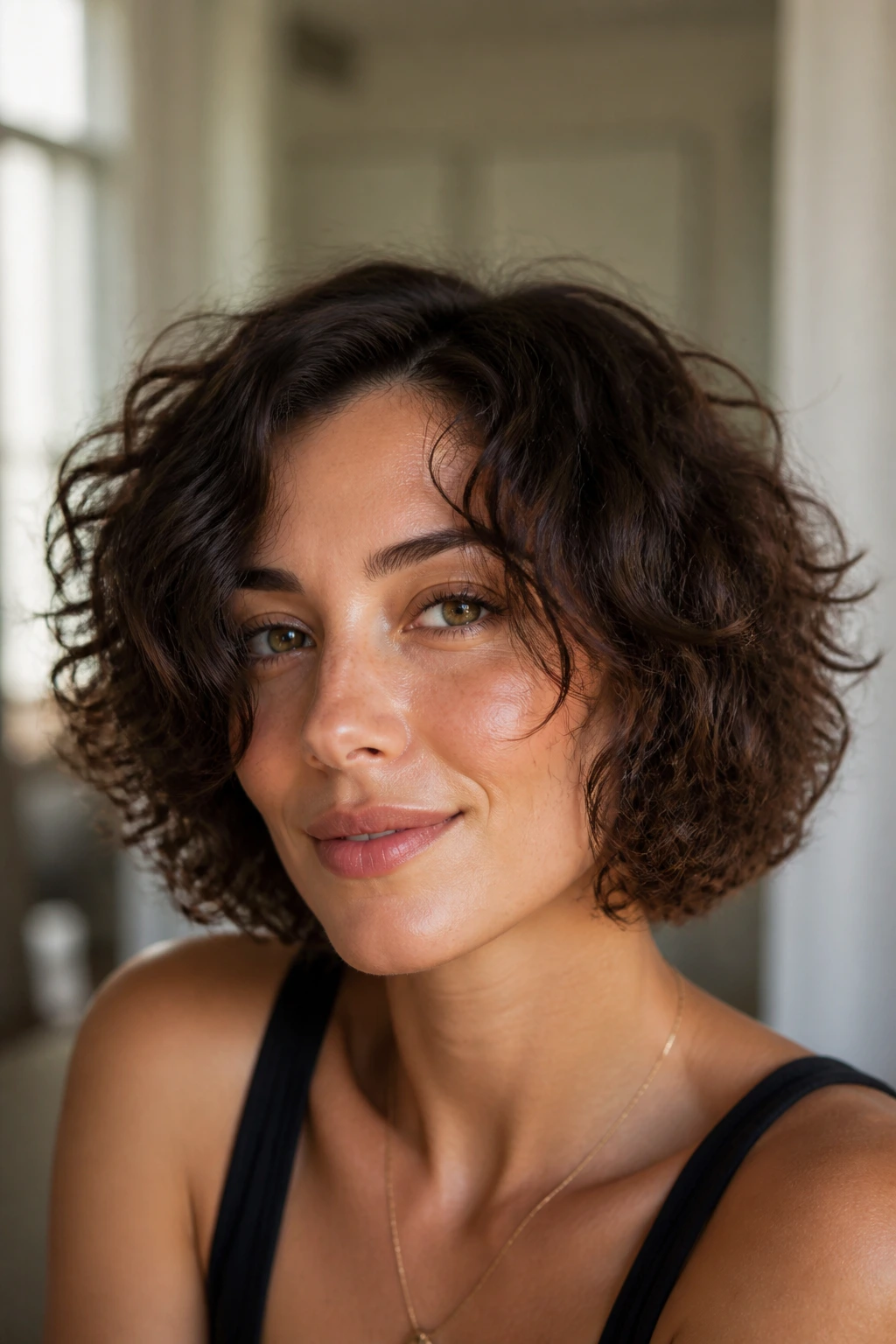
A chin-length curly bob sounds bold because it is. Done well, it brings the eye straight to the jawline and gives a heart-shaped face some much-needed balance below the cheekbones. Done badly, it can land in that awkward puff right beside the temples. So the length matters.
The trick is to cut it a touch below the chin when the curls are dry or nearly dry, then let the shape settle. If your curls are springy, that extra half-inch saves the whole cut. This works especially well when the bob has a little internal softness rather than a hard, square edge.
3. Soft Curly Shag

A shag is not automatically messy. On curly hair, it can be one of the smartest ways to put movement where the face needs it and keep the top from looking helmet-like. For a heart-shaped face, the best version keeps the shortest pieces around the cheekbones, not way up at the crown.
That placement matters. Too many short layers on top and the hair balloons straight up. Better to let the front pieces fall around the face and let the back carry some of the volume. The cut ends up looking lived-in, but the shape is doing real work.
What to ask for
- Long layers that start around the cheekbone
- A soft fringe or a broken curtain bang
- Enough weight left at the ends to avoid a triangle
4. Shoulder-Grazing Lob with Face-Framing Pieces
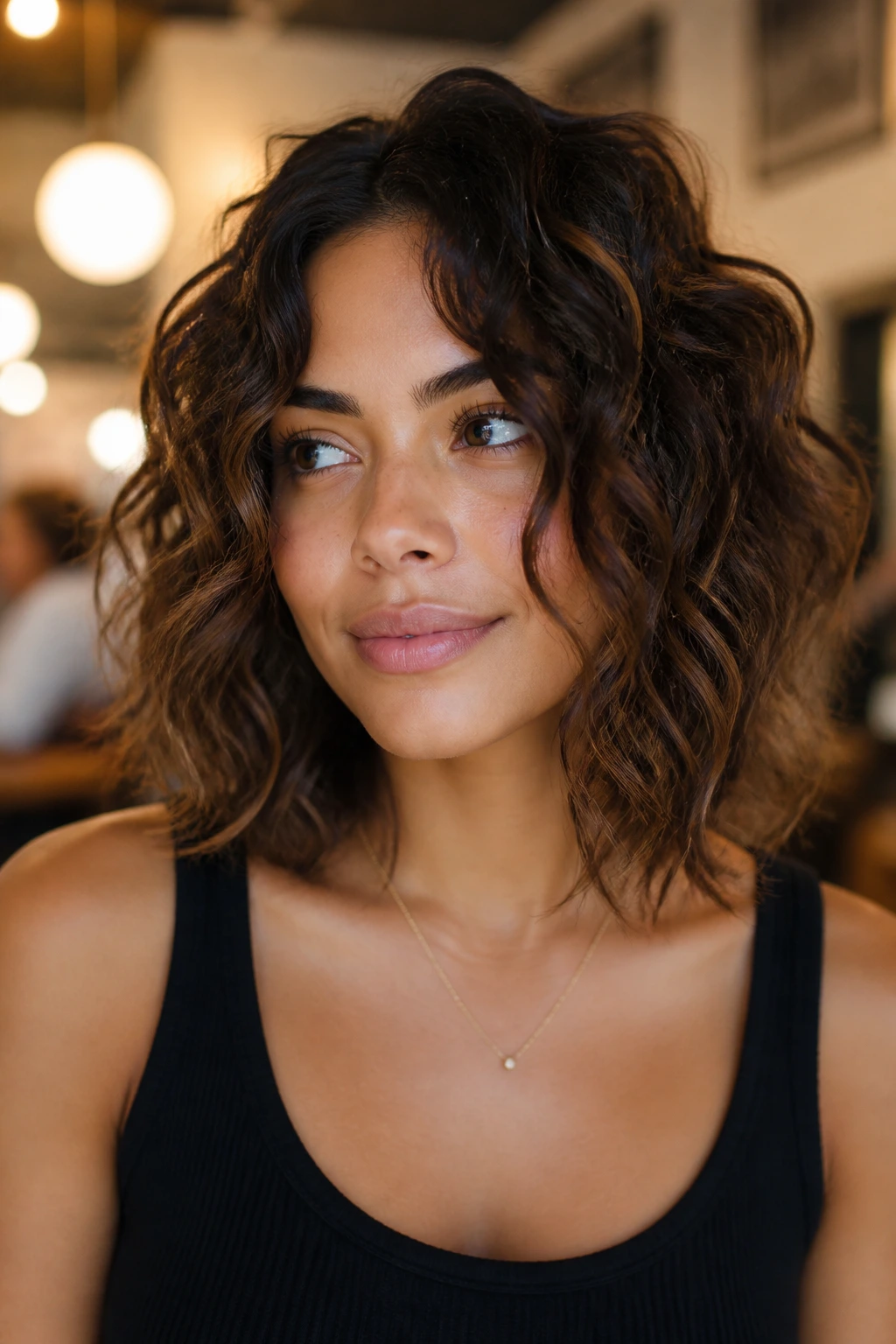
If you want something that feels safe without feeling boring, this is the one I keep circling back to. A lob that hits at the shoulders or just above them gives curls a place to settle, and the face-framing pieces can start below the cheekbone so they soften the lower half of the face instead of widening the upper half.
This cut is forgiving on grow-out, which I appreciate. It also works with middle parts, side parts, and that in-between part you fall into when you are not thinking about your hair. If your curls are medium to dense, this shape tends to hold up with less fuss than a shorter bob.
5. Tapered Pixie with Volume on Top
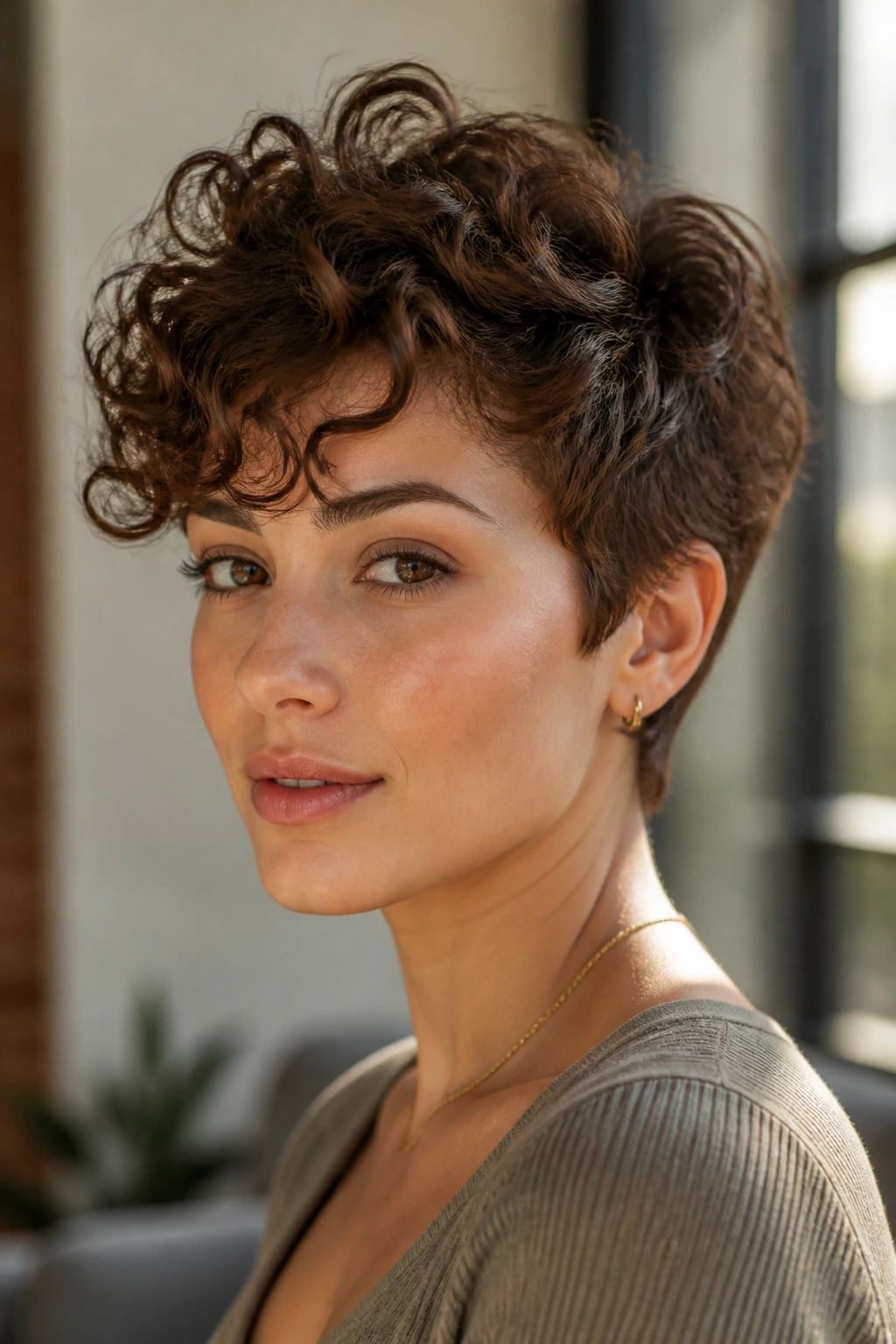
Short hair can absolutely flatter a heart-shaped face. The mistake is making the top too tall and the sides too bare, which can exaggerate the forehead. A tapered pixie solves that by keeping the nape and sides close while leaving enough curl on top to soften the shape.
The best versions still have some fringe, even if it is tiny. A curl or two falling forward over the brow does a lot of quiet balancing. If your curls are tight, ask for the top to be sculpted rather than thinned out. You want shape, not a little fuzzball.
6. Rounded Afro with Soft Edges
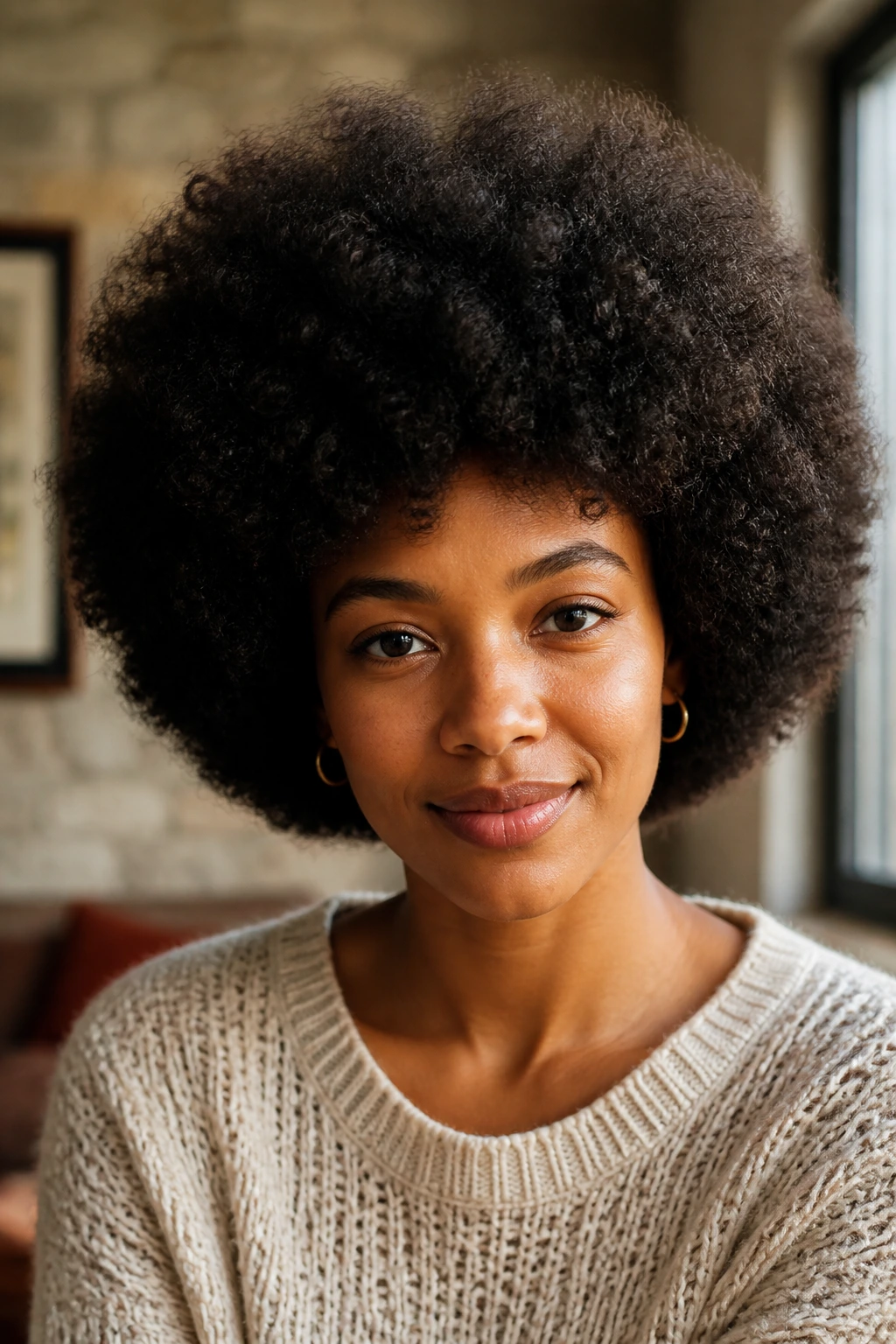
A rounded afro can be gorgeous on a heart-shaped face because it avoids hard width at the temples and instead creates a soft halo around the head. The key is in the edges. They should feel rounded and plush, not sharp or boxy.
I like this cut when the hair has enough density to hold a real shape. It gives coils and kinks room to bloom without forcing them into a narrow outline. A little more length around the jawline helps the face feel grounded, which is exactly what a heart shape usually needs.
7. Deva Cut with Long, Layered Curls
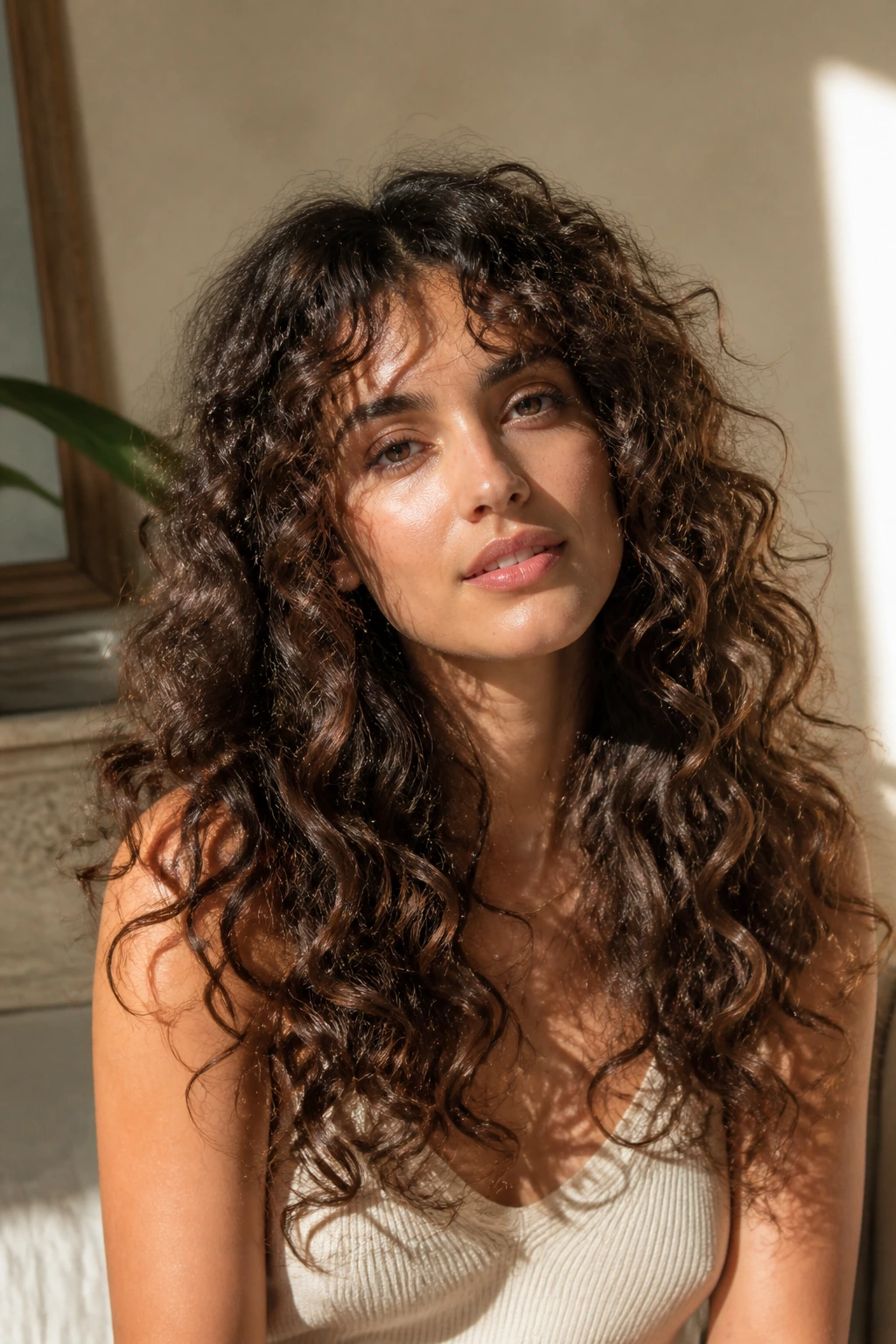
A Deva-style cut is built around the curl pattern itself, which is why it can be such a good fit here. The stylist shapes the hair curl by curl, usually dry or mostly dry, so each piece lands where it should instead of being guessed at while it is stretched out wet. That matters a lot when your face shape depends on precise placement.
For heart-shaped faces, ask for the shortest pieces to sit around the mouth or cheekbone, not up by the temples. You want the front to soften, not widen. When done right, the shape feels clean but not stiff, like the curls were given a map and not a guess.
8. Wolf Cut for Dense Curls
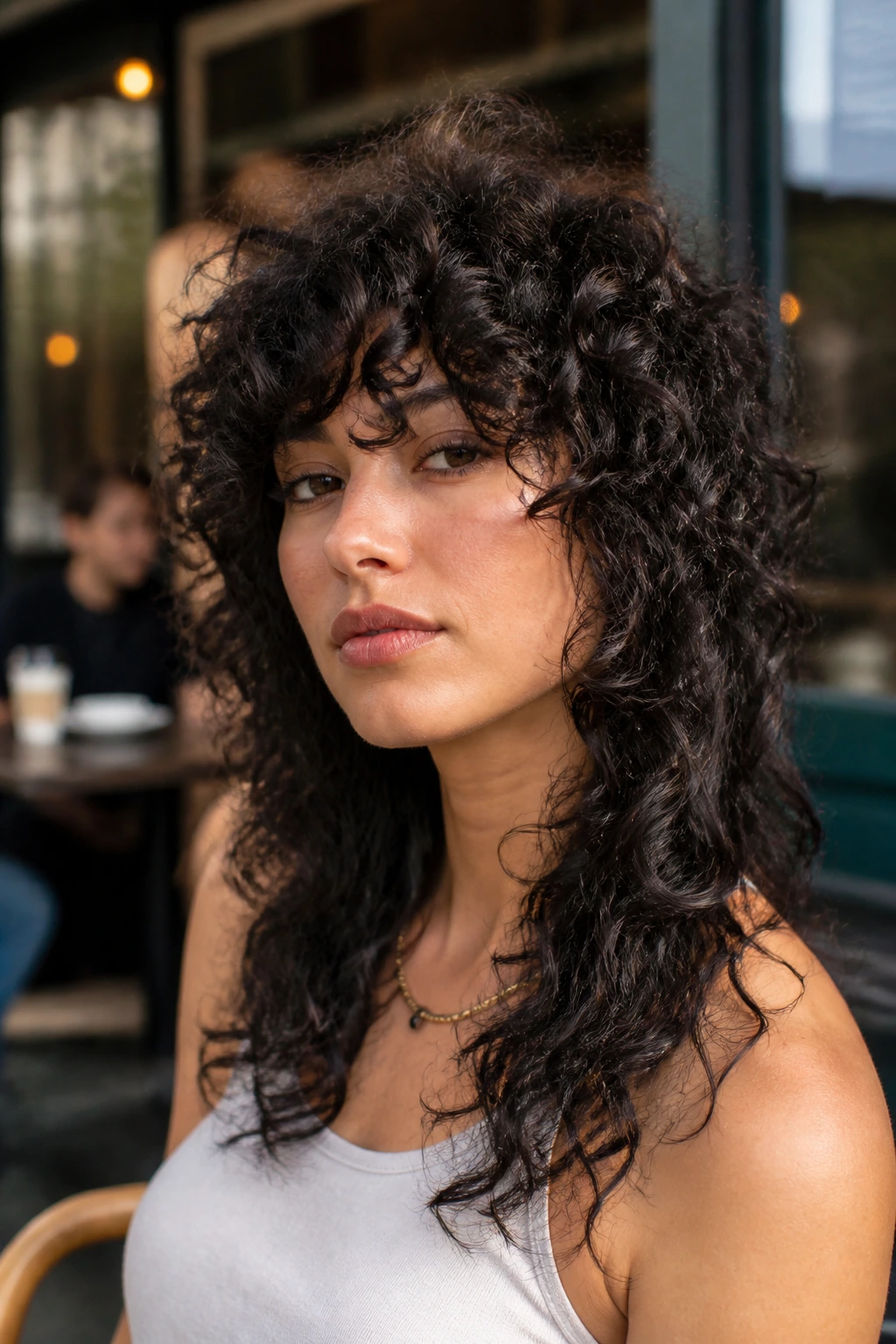
A curly wolf cut can go wrong fast if it is cut like a straight-hair trend piece. On curls, the better version keeps the layers long enough to move and avoids carving the crown into a mushroom. What you want is texture, not a pile-up of short pieces on top.
This cut is excellent if your hair is dense and you like volume with some edge. The shorter front layers frame the face, the longer back keeps the silhouette from feeling too square, and the overall shape gives the eye somewhere to travel. If your hair is fine, though, this one can get wispy and weak.
9. French Bob with Curly Fringe
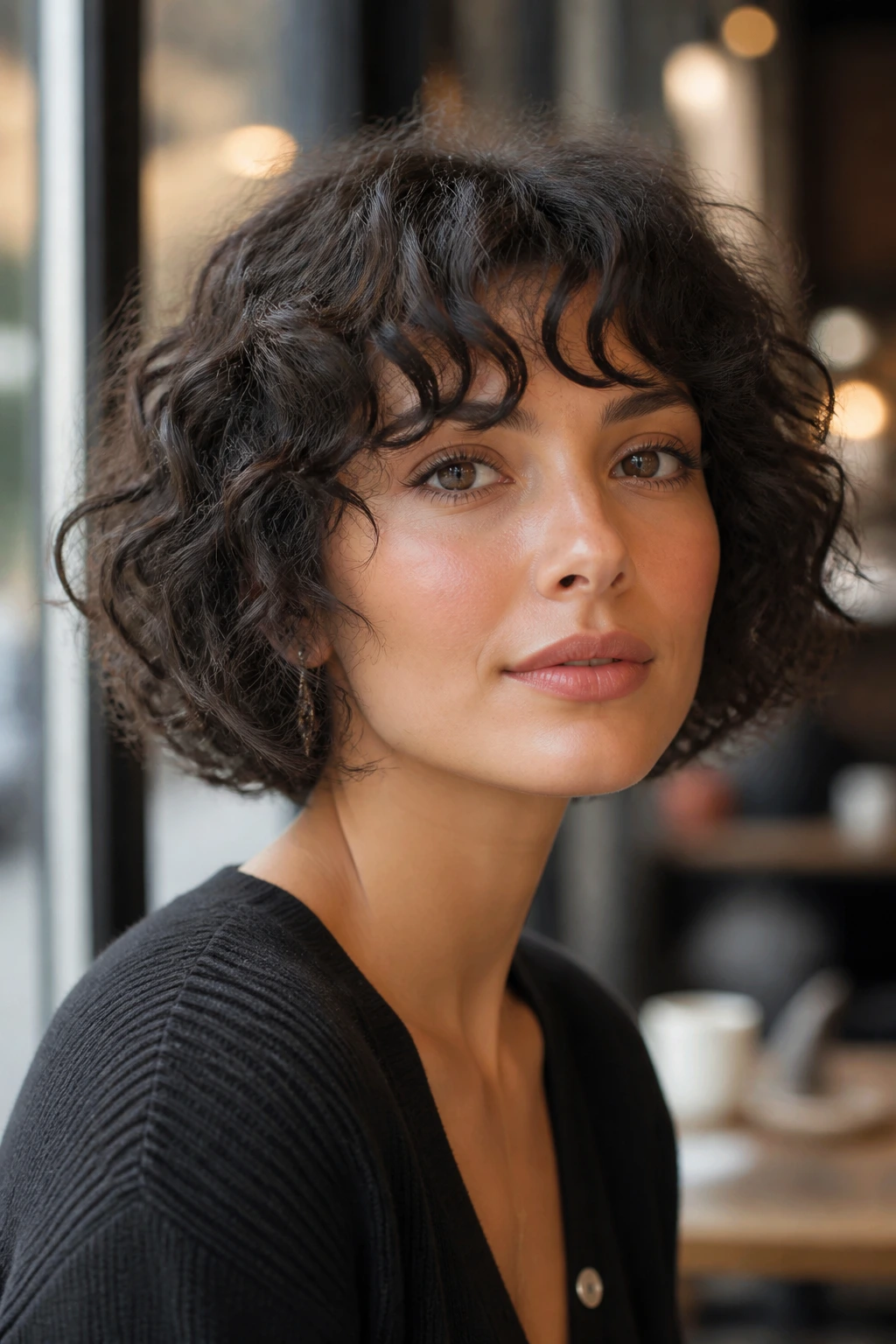
The French bob has a little attitude, but on curly hair it needs a softer hand. For a heart-shaped face, I like it just below the jawline with a curly fringe that breaks apart instead of sitting like one solid strip. That keeps the forehead from feeling too open without making the face look boxed in.
This cut works best when the curls are loose to medium and have some spring. If the fringe is too heavy, it can make the upper face feel crowded. Too short, and it starts to look like a bet you lost. The sweet spot is airy, a little tousled, and right at the edge of easy.
10. Asymmetrical Curly Bob
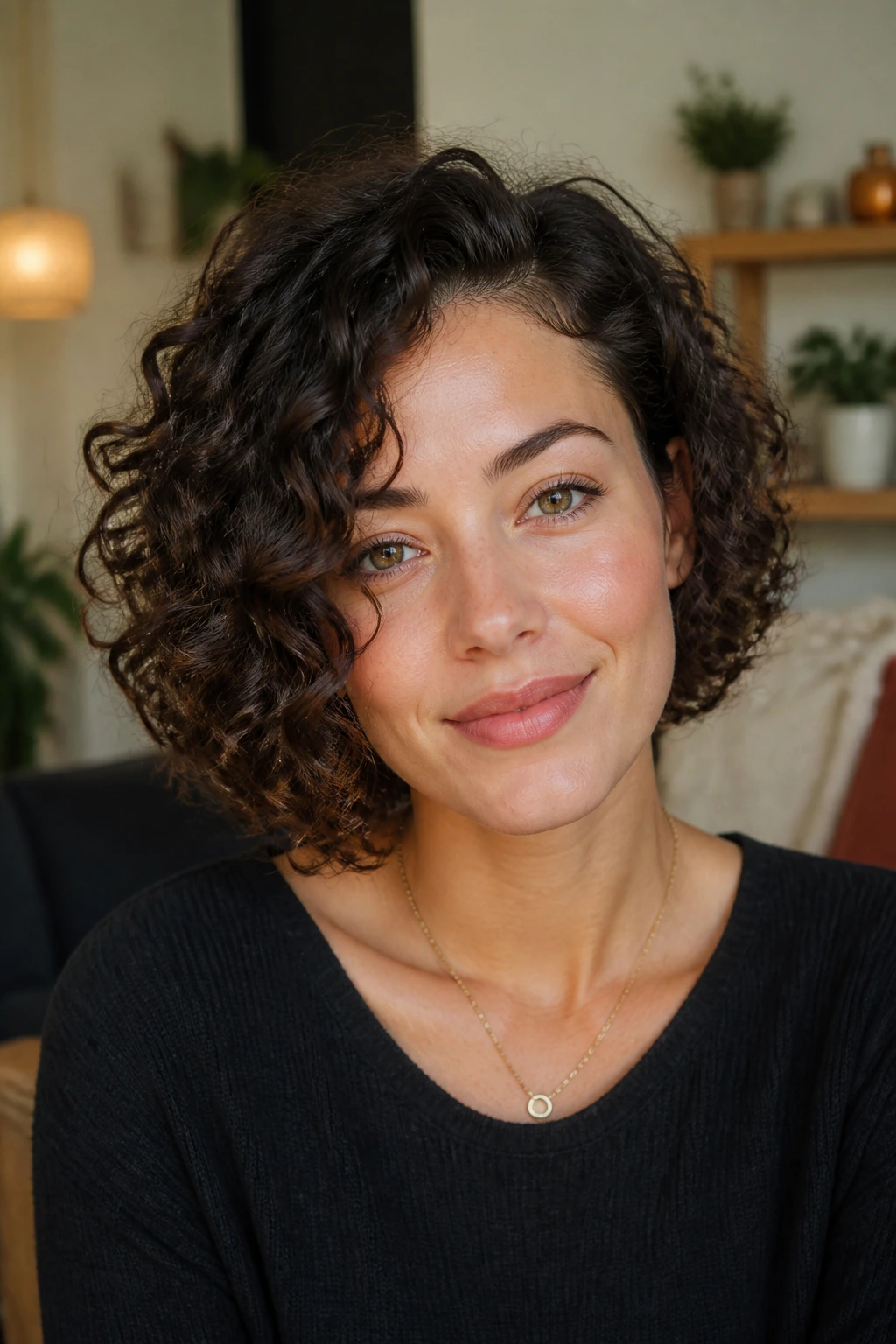
A slight asymmetry can do a sneaky amount of good on a heart-shaped face. One side sits a little longer, which pulls the eye downward and breaks up the broadness at the top. It is a small shift, but curls make it feel intentional rather than severe.
I would keep the asymmetry subtle. Curls already have their own rhythm; you do not need a dramatic slash to prove the point. A gentle difference in length, paired with a side part, is usually enough. The cut should look like movement, not an accident.
11. Butterfly Layers on Long Curls
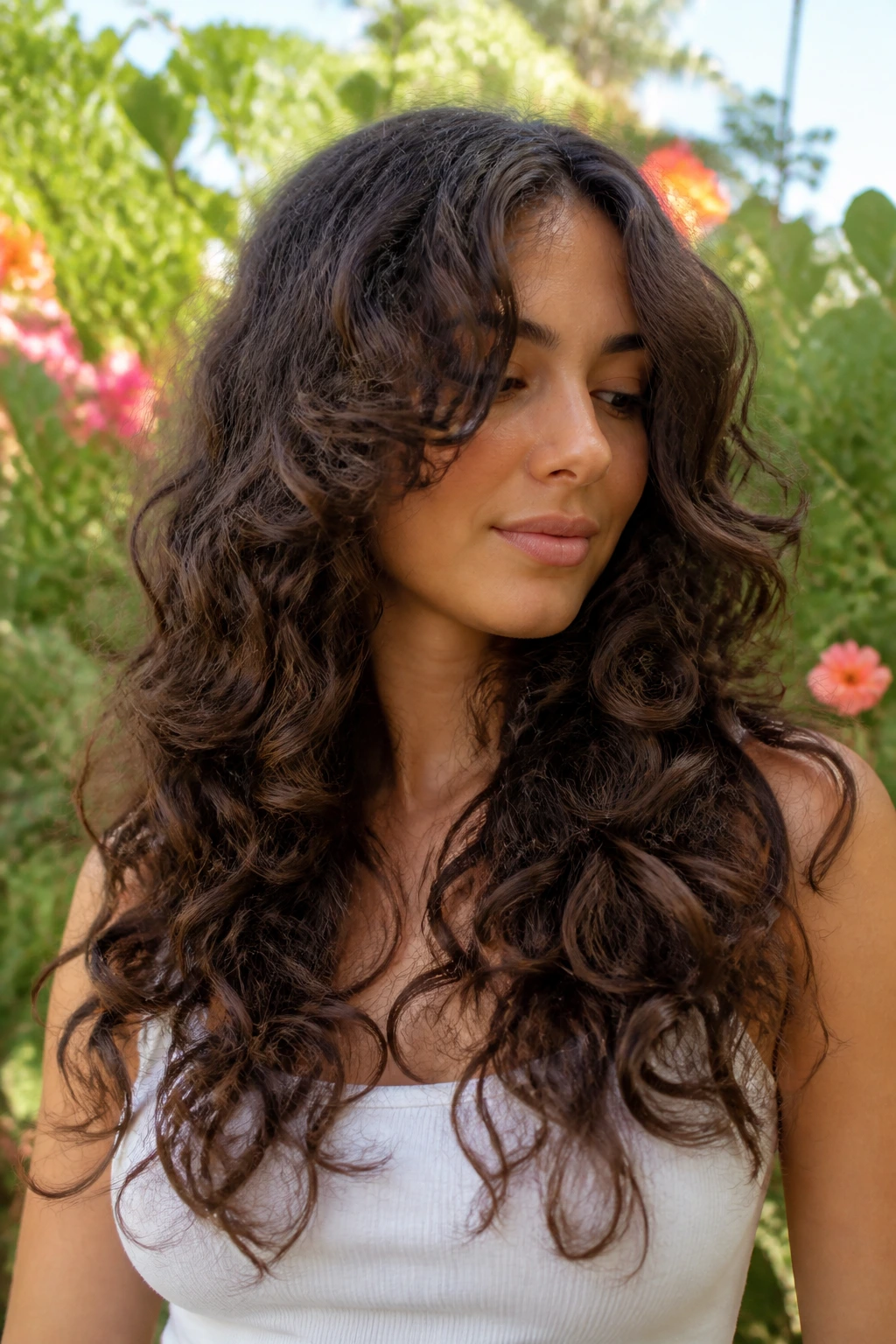
Butterfly layers are made for people who want to keep length but are tired of hair sitting like one long column. On heart-shaped faces, the shorter front layers open the face near the cheekbones while the longer bottom layers keep the overall look soft and vertical.
This is one of the better choices if you want hair that moves when you walk. The shape is lighter around the top half and fuller toward the ends, which helps the face feel more balanced. Just do not let the shortest pieces get too high on the head. That is where the whole thing can go from airy to puffy.
12. Deep Side-Parted Mid-Length Cut
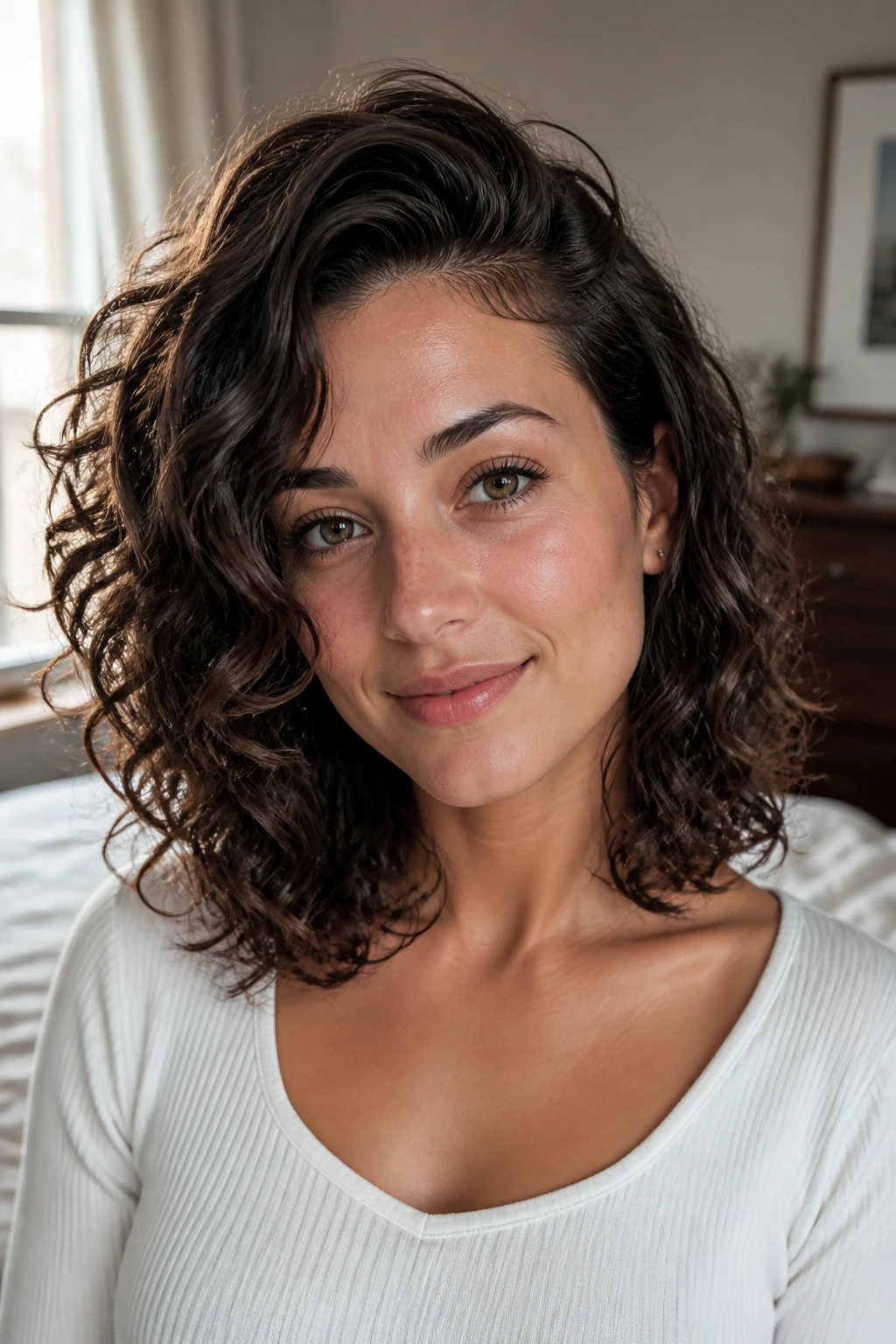
Sometimes the haircut is only half the story. A deep side part can change the whole read of a heart-shaped face by shifting the weight away from the widest part of the forehead. On curly hair, it also gives the roots a little built-in lift on one side, which can be very flattering.
This works well with shoulder-length or mid-length curls because the length keeps the silhouette from spreading out too much. If you have ever felt like your face needs a little asymmetry without committing to a full asymmetrical cut, this is the easier move. It is plain in the best way.
13. Curly Mullet with a Soft Crown
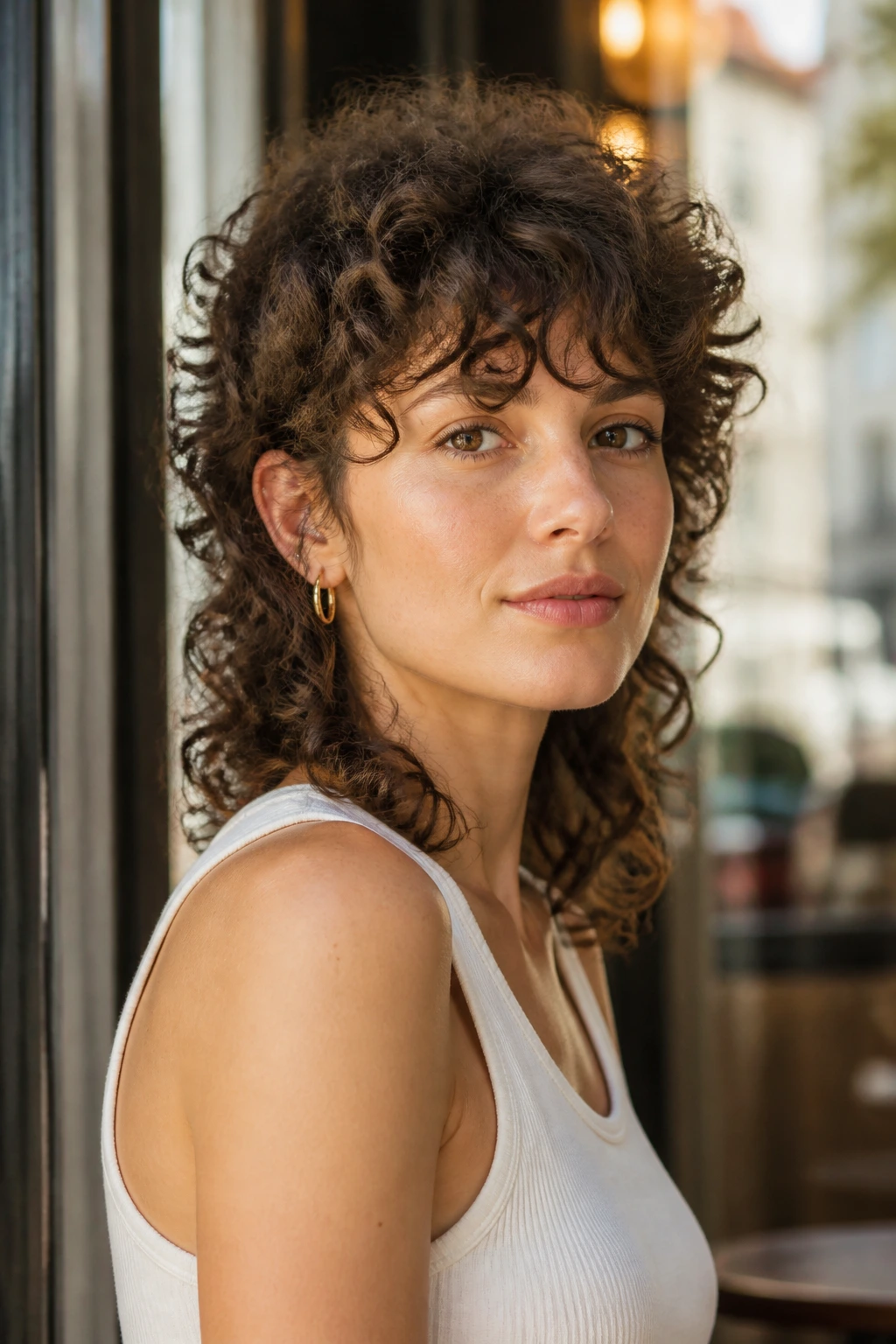
A modern curly mullet sounds braver than it actually feels. The softer version keeps the crown controlled, lets the sides stay face-framing, and leaves more length in the back to stretch the silhouette downward. For a heart-shaped face, that extra length can be a relief.
The important part is softness. You do not want the sides hacked away so hard that the temples feel naked. You want a gradual shape, with enough fringe or front curl to soften the forehead and enough back length to keep the whole thing from floating upward. This is a cut for people who like a little edge but still want the face to look balanced.
14. U-Shape Cut with Internal Layers
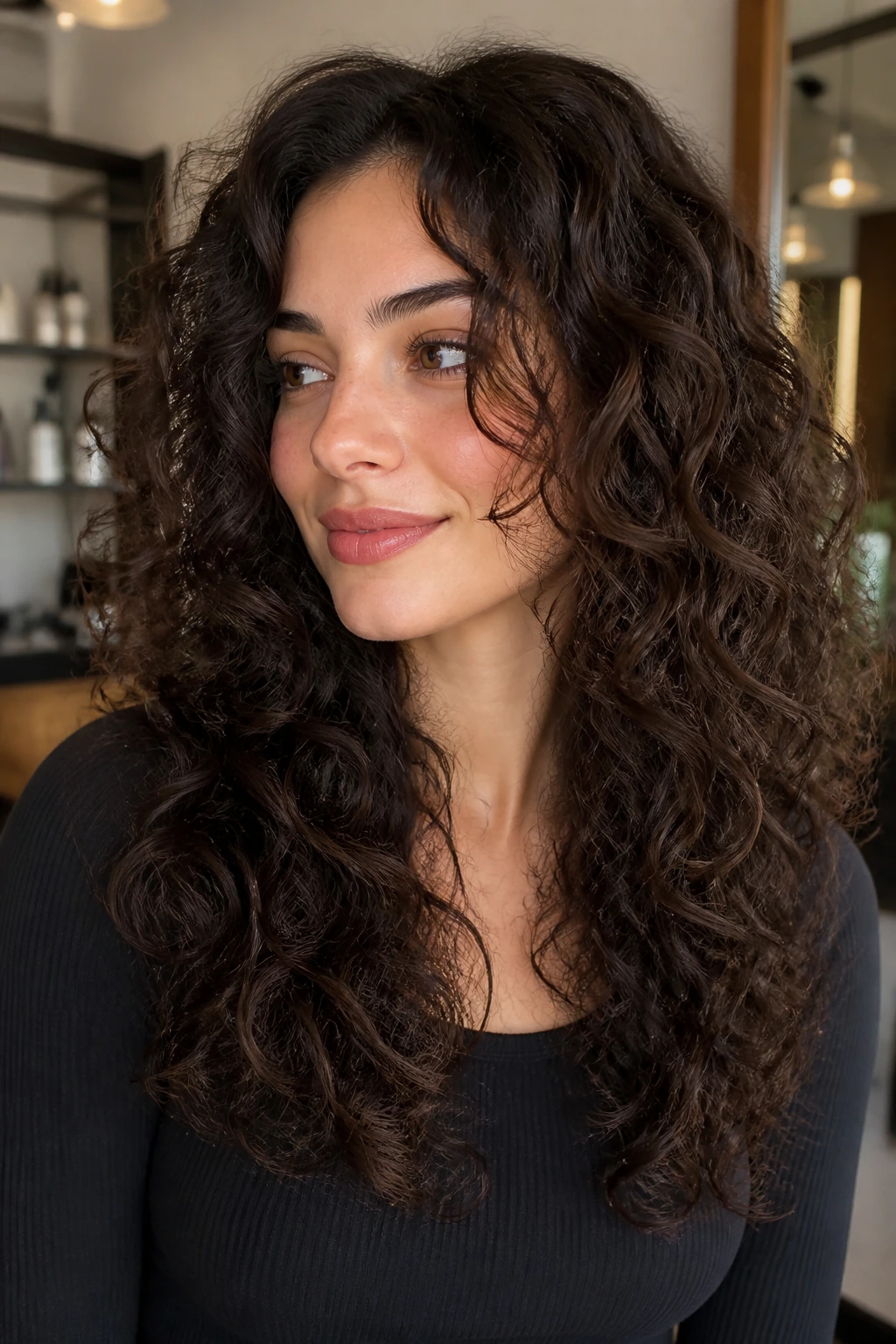
A U-shape cut sounds subtle, and that is exactly why it works. The outer line curves gently instead of stopping in a blunt block, which helps a heart-shaped face feel less wide at the top and more open around the jaw. Internal layers keep the inside of the haircut from turning dense and heavy.
I especially like this shape for thick curls that tend to bunch up. You keep enough perimeter to show off length, but the hidden layering takes care of some of the bulk. It is one of those cuts that looks clean in a way you notice more after a week of wear than on the day you leave the salon.
15. Bottleneck Bangs and Long Curls

Bottleneck bangs are clever because they are narrower at the center and open up near the temples. That shape is useful for a heart-shaped face since it softens the forehead without making the whole front of the hair feel heavy. Pair them with long curls and the effect is even better.
This is a nice choice if you want fringe but hate the feeling of a full, blunt bang. The center can sit a little shorter, while the sides blend into longer pieces that graze the cheeks. It feels lighter than curtain bangs, but it still does the same balancing work.
16. Tapered Crop with Side-Swept Fringe
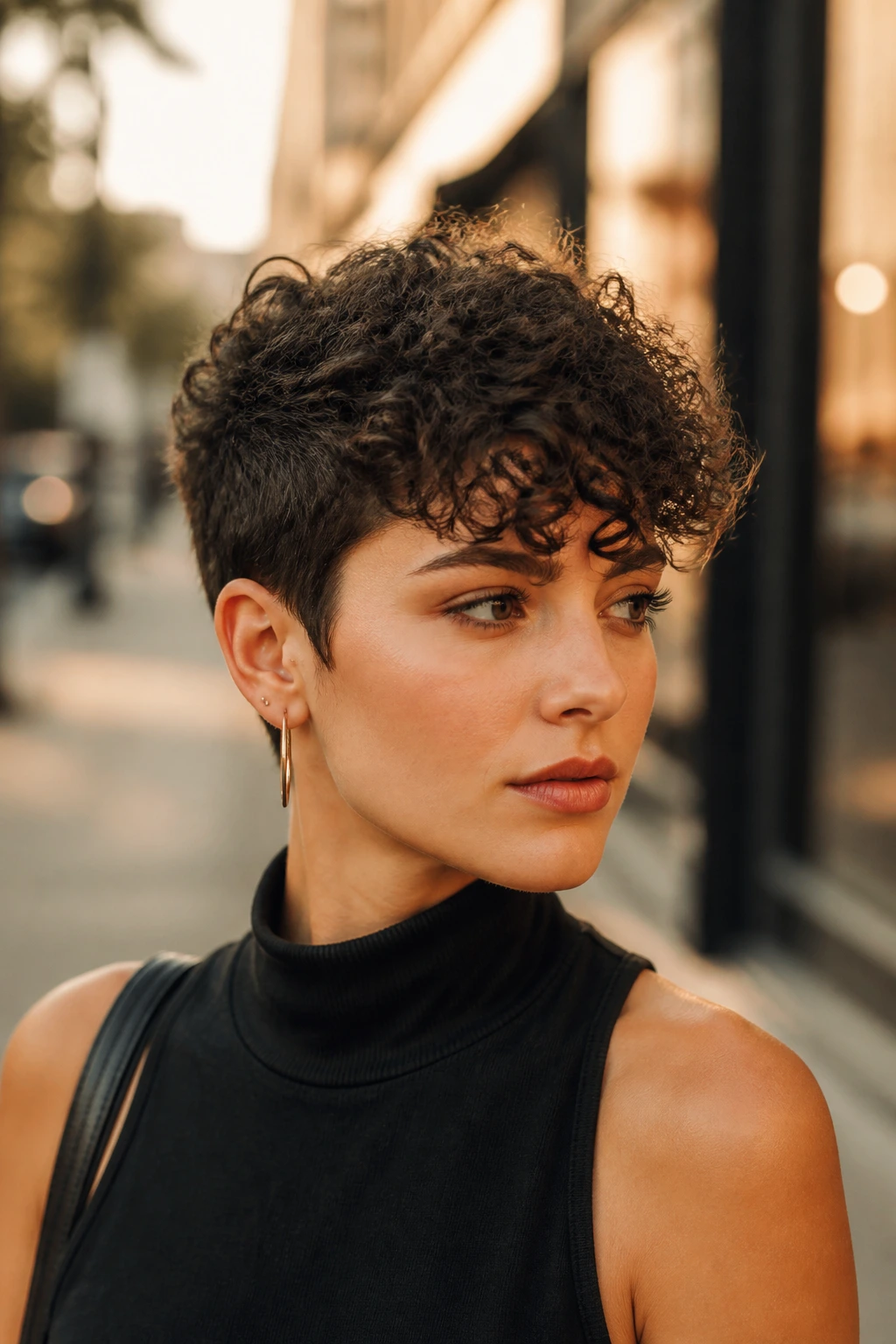
A tapered crop is for someone who wants short hair without the top feeling rigid. The sides and nape stay tight, while the fringe sweeps across the forehead and helps soften the upper face. On a heart-shaped face, that diagonal line is doing a lot of heavy lifting.
This cut is especially good if your curls are small, springy, or coily and you do not want to spend ten minutes fighting them every morning. The shape needs enough length in the fringe to move, though. Too short, and it starts to stand up in the wrong direction. That is not the effect we want.
17. Halo Cut for Coils and Kinks
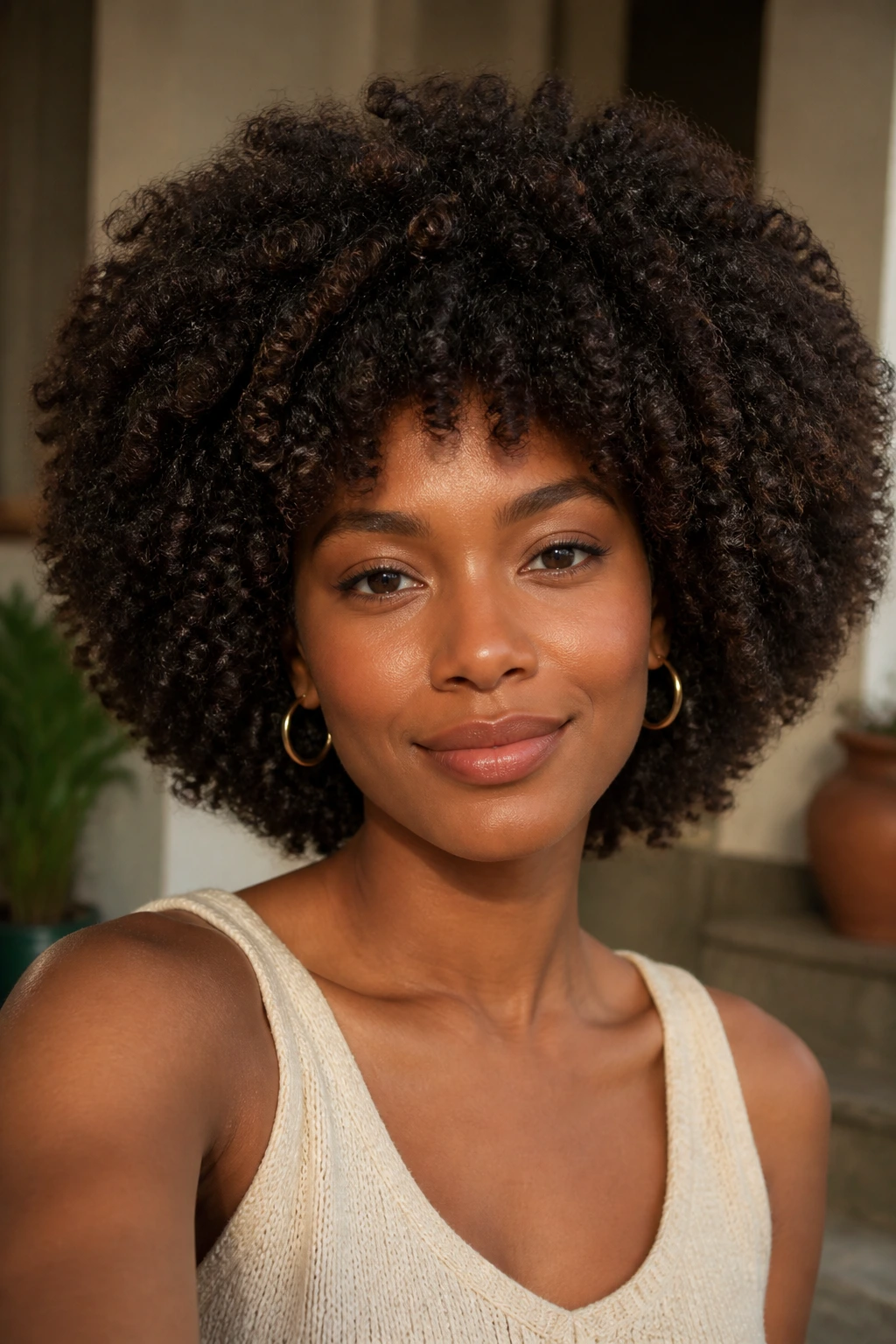
A halo cut is one of the prettiest answers for coily hair on a heart-shaped face because it keeps the shape rounded without making the temples too wide. The outline wraps softly around the head, and the lower edges land in a way that gives the face some softness near the jaw and neck.
This style works best when the curl pattern is dense enough to support a round silhouette. Moisture matters here. If the curls are dry and fluffy, the halo can swell in a way that swallows the face. If the coils are hydrated and defined, the shape looks calm and intentional.
18. Shullet with Soft Texture
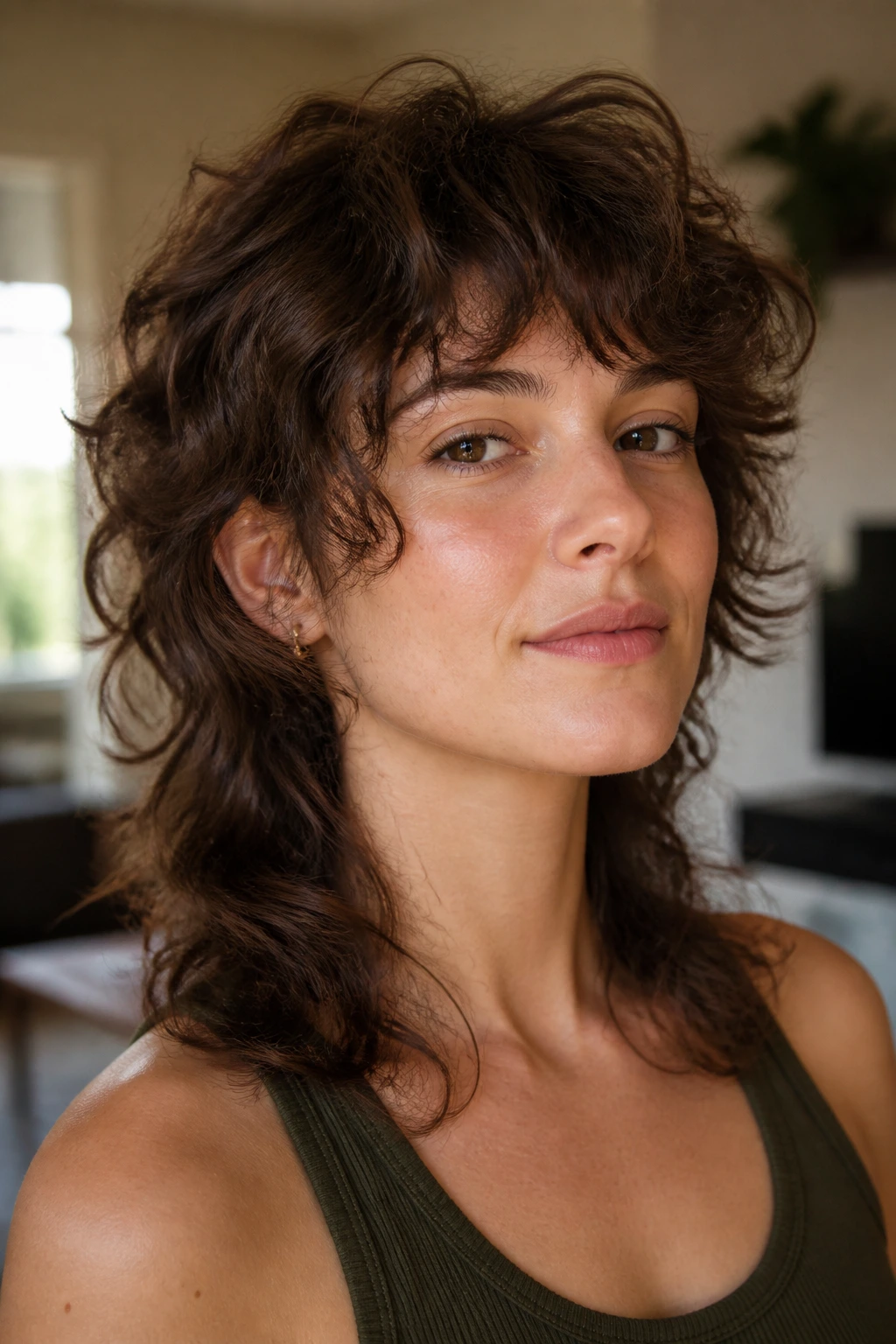
The shullet is the friendlier cousin of the mullet, and that matters here. On a heart-shaped face, the front needs to be soft enough to reduce forehead width, while the back can carry a little extra length to pull the shape downward. The whole haircut feels rebellious without being harsh.
I would not ask for a severe version. Keep the transition from front to back gentle, and let the fringe pieces sit at or just below the cheekbones. The goal is movement. If the cut starts looking like a dare, it has gone too far.
19. Blunt Bob for Thick, Springy Curls
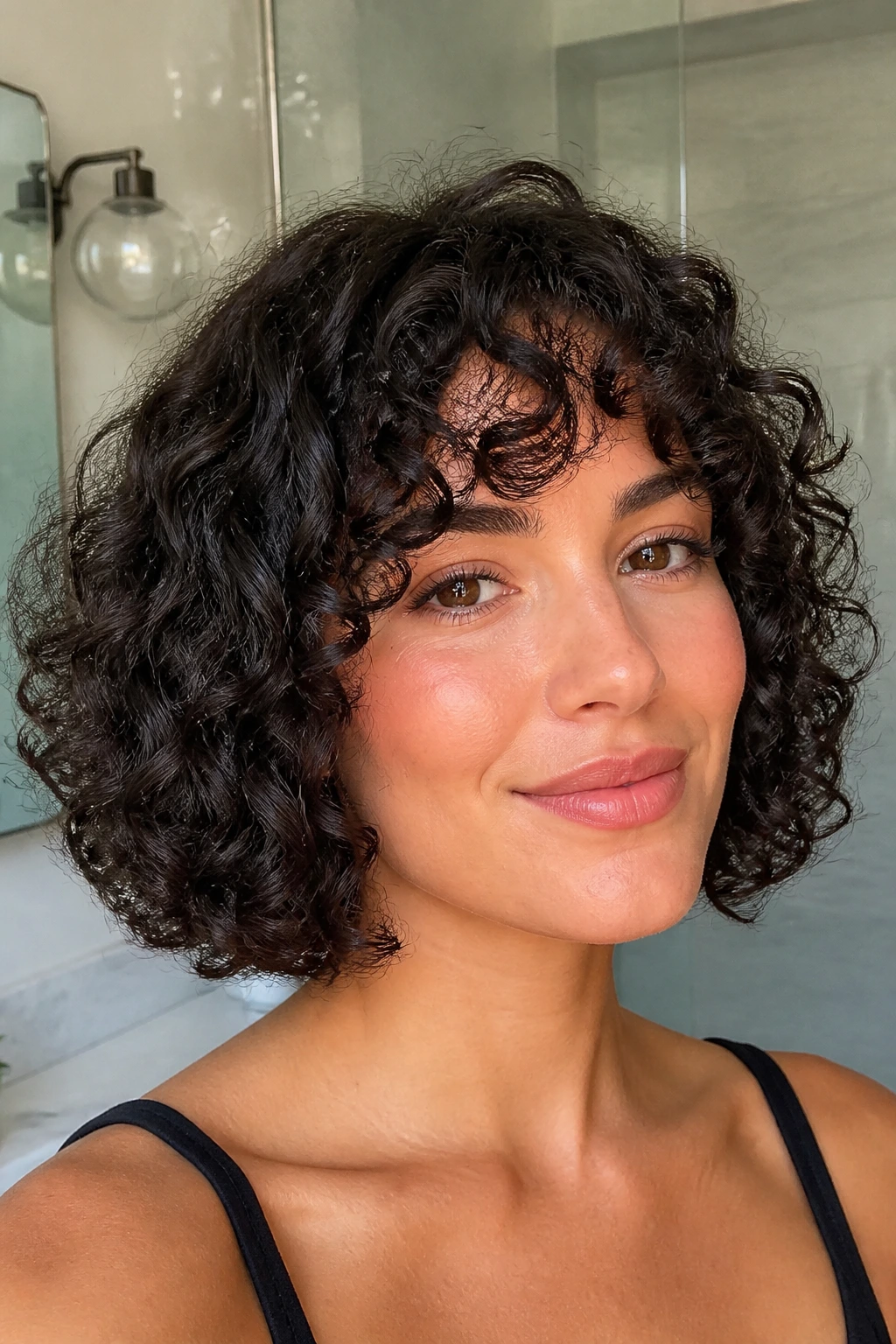
Blunt bobs get a bad reputation in curly hair, but dense curls can pull one off beautifully. The strong edge gives the haircut weight, which keeps the shape from exploding outward. For a heart-shaped face, the line should usually sit below the chin so the lower half of the face gets some visual support.
This cut works best when the curls are springy and hold together in clumps. If the hair is fine, a blunt line can look sparse. If the hair is thick, though, it can look crisp and full in a way that feels almost architectural. It is a strong shape. That is the point.
20. Face-Framing Lob with a Deep Side Part
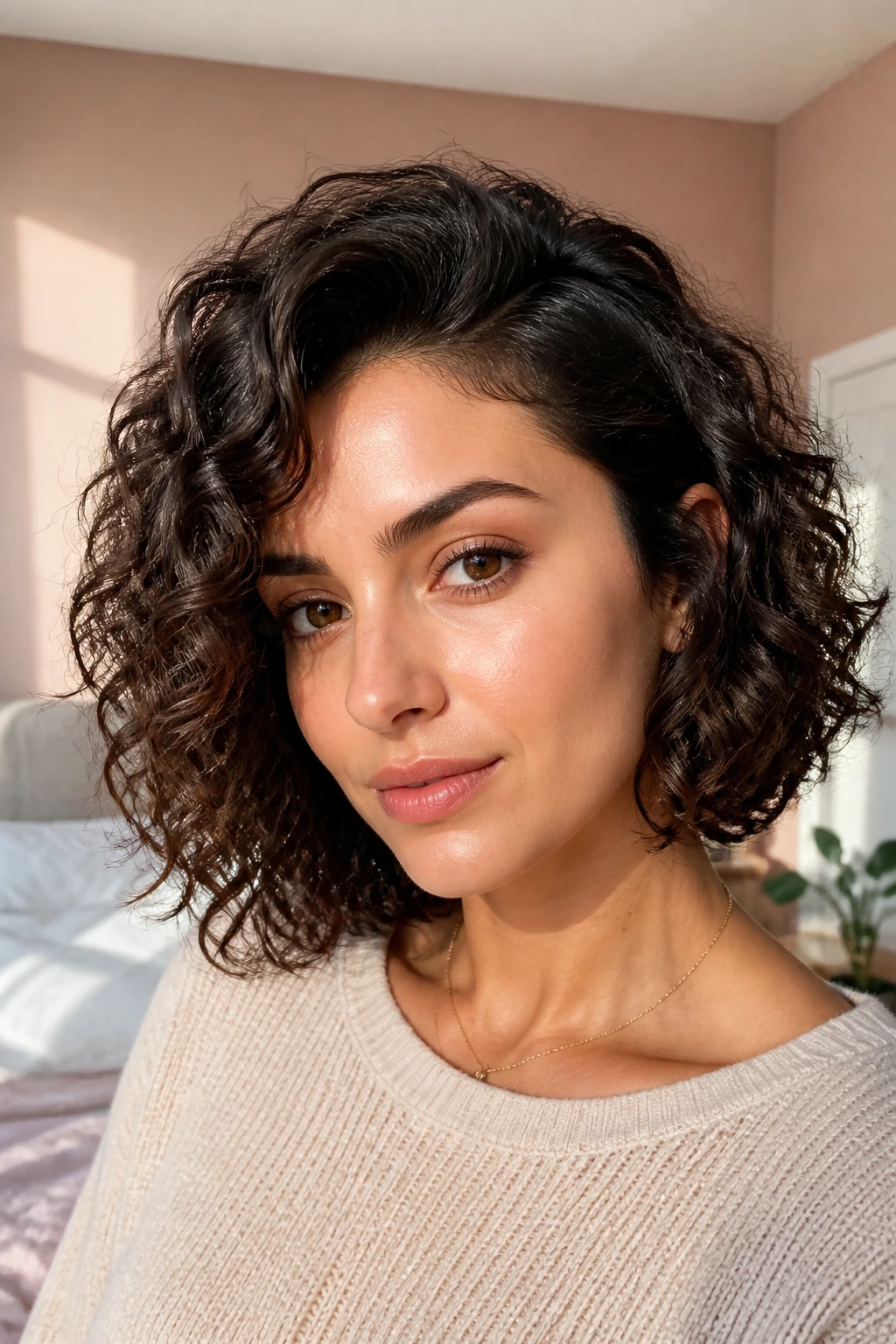
This one is easy to love because it doesn’t ask for much drama to look right. The deep side part moves volume away from the forehead, and the face-framing pieces start low enough to soften the cheekbones without ballooning the top of the face. The lob length keeps things grounded.
If you are picky about grow-out, this is a good bet. It handles a few extra weeks without collapsing into chaos, which is more than I can say for many shorter curly cuts. You can wear it polished or loose, but either way the shape stays readable.
21. Mixie with Longer Top Layers
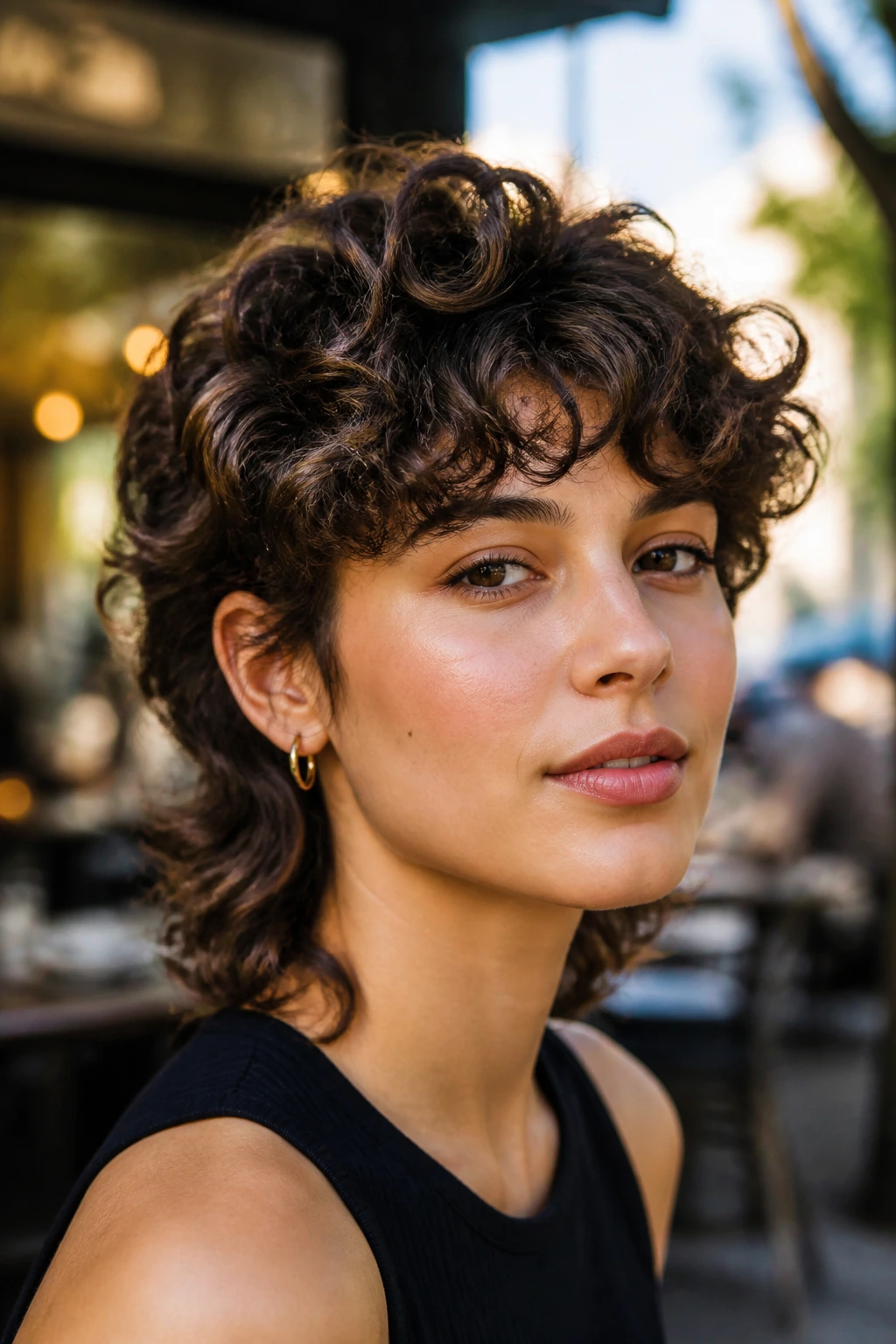
A mixie is a pixie-mullet hybrid, and on curls it can look sharper than people expect. The longer top layers help the curls form shape instead of lying flat, while the length at the nape keeps the cut from feeling too square around the face. For heart-shaped faces, that balance is useful.
This is a good choice if you want something modern but still easy to wear. It does need regular trims because the proportions matter. Once the nape gets shaggy and the top loses its shape, the whole thing can look less designed and more like you postponed a haircut.
22. Invisible Layers on a Lob

Invisible layers are the answer when you want movement but do not want to see a lot of obvious steps in the cut. On a heart-shaped face, that can be a gift, because the overall outline stays soft while the hair still gets enough lift to avoid looking blocky. The effect is subtle and clean.
I like this approach for finer curls or for people who get nervous every time someone says the word “layer.” The perimeter stays thick, the shape stays calm, and the curls are given enough room to bounce. If you want a lob that behaves without looking choppy, this is the quietest route.
23. Rounded Midi Cut with Full Ends
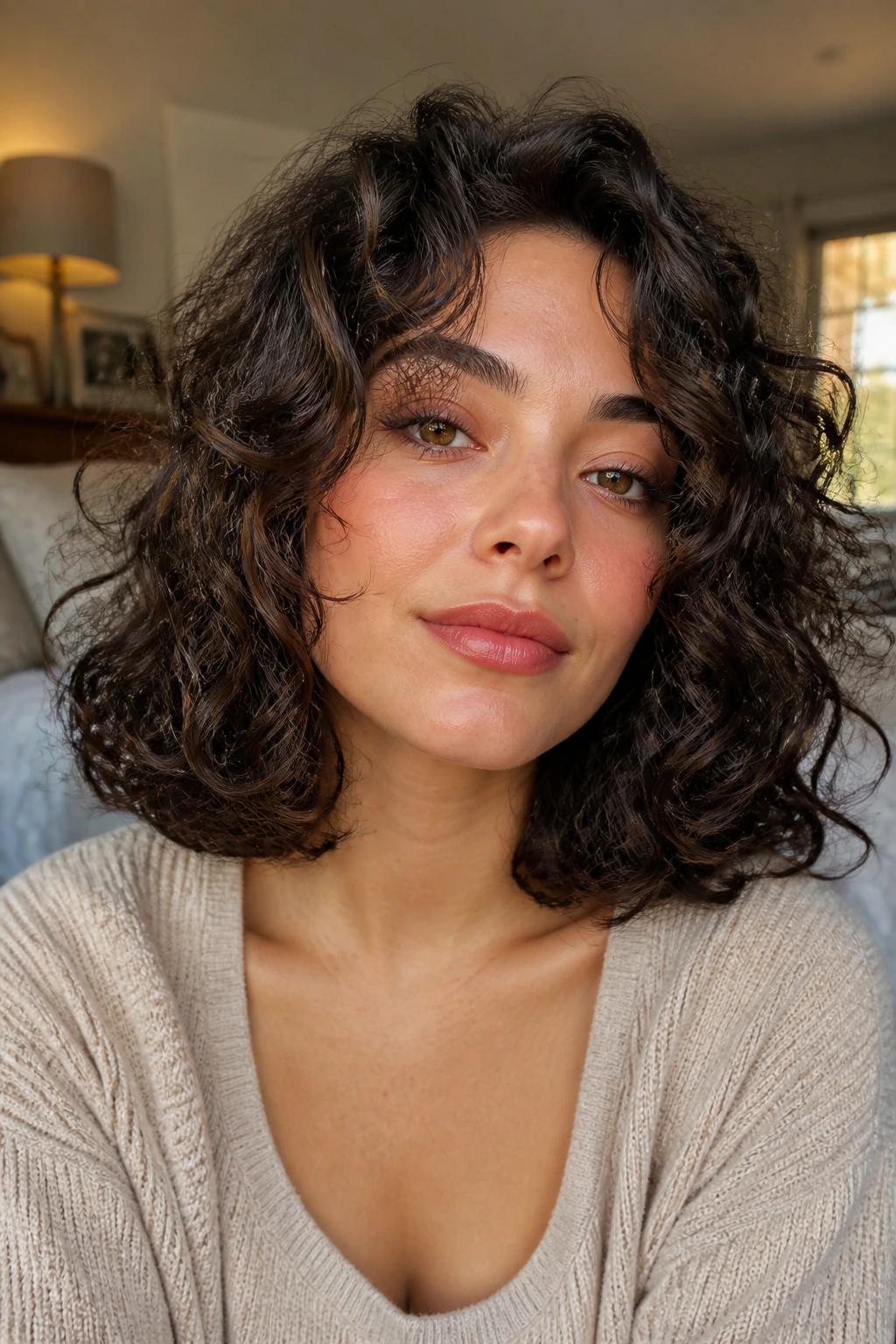
A rounded midi cut sits in that middle zone where the hair is long enough to feel feminine if you like that word, but short enough to have shape. The rounded perimeter is useful on heart-shaped faces because it keeps the visual weight lower, near the jaw and neck, instead of around the temples.
The full ends matter here. If the bottom gets too thinned out, the whole cut starts to look airy in a bad way. Keep the lower edge rich and the top soft, and the face gets a gentle frame without losing the sense of length. It is a solid choice if you want the cut to look polished even on a lazy day.
24. Long V-Cut for Dense Curl Patterns
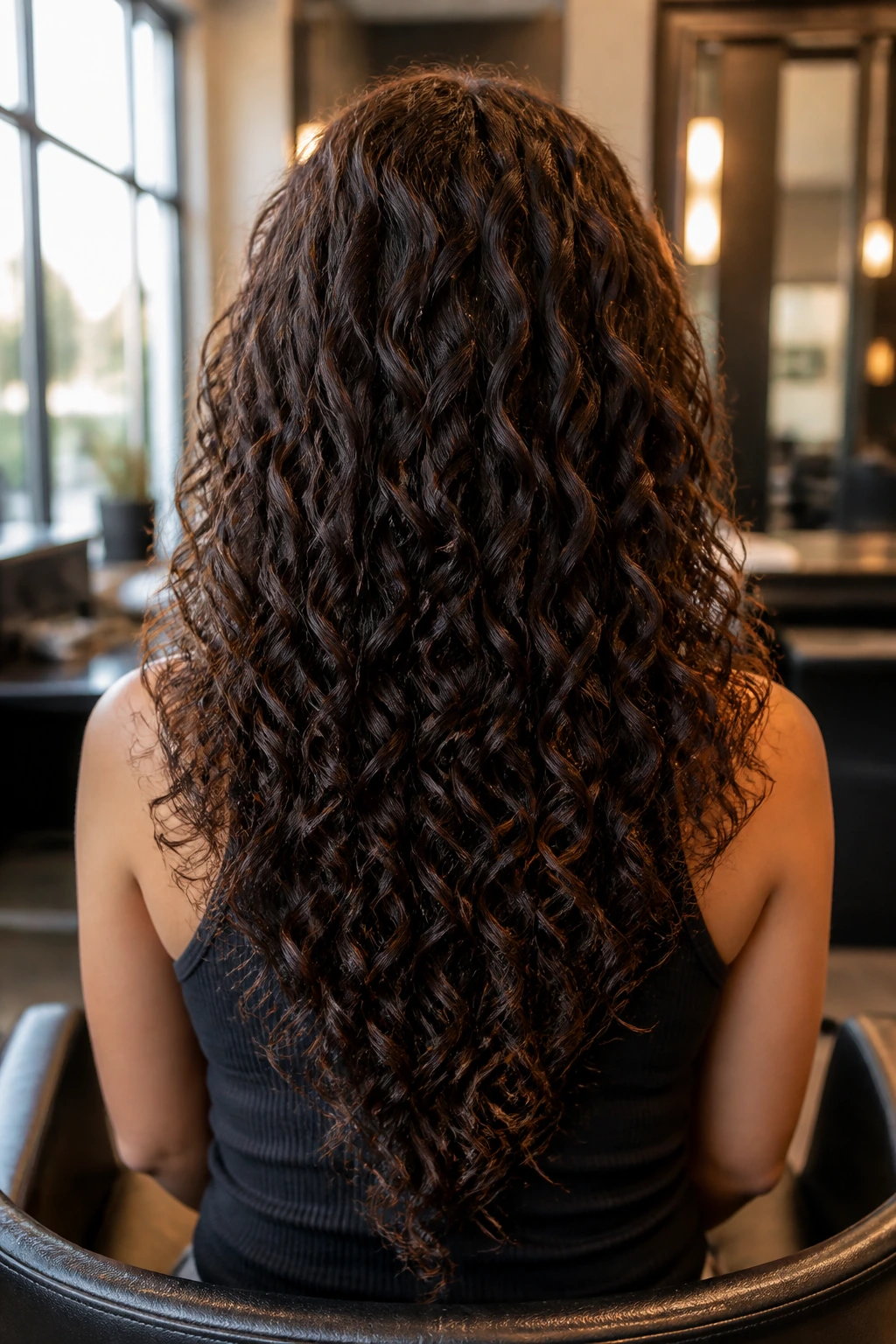
A V-cut can be a smart move for long, dense curls because it pulls the shape vertically instead of letting the hair spread into one wide curtain. That vertical line is flattering on a heart-shaped face, especially if the sides are kept soft around the cheekbones.
This cut needs enough density to hold its point. On fine curls, the V can turn stringy fast. On thick curls, though, it creates a cascade that feels light without losing drama. I prefer it when the hair is long enough to show the taper clearly from front to back.
25. Soft Crop with Side Fringe
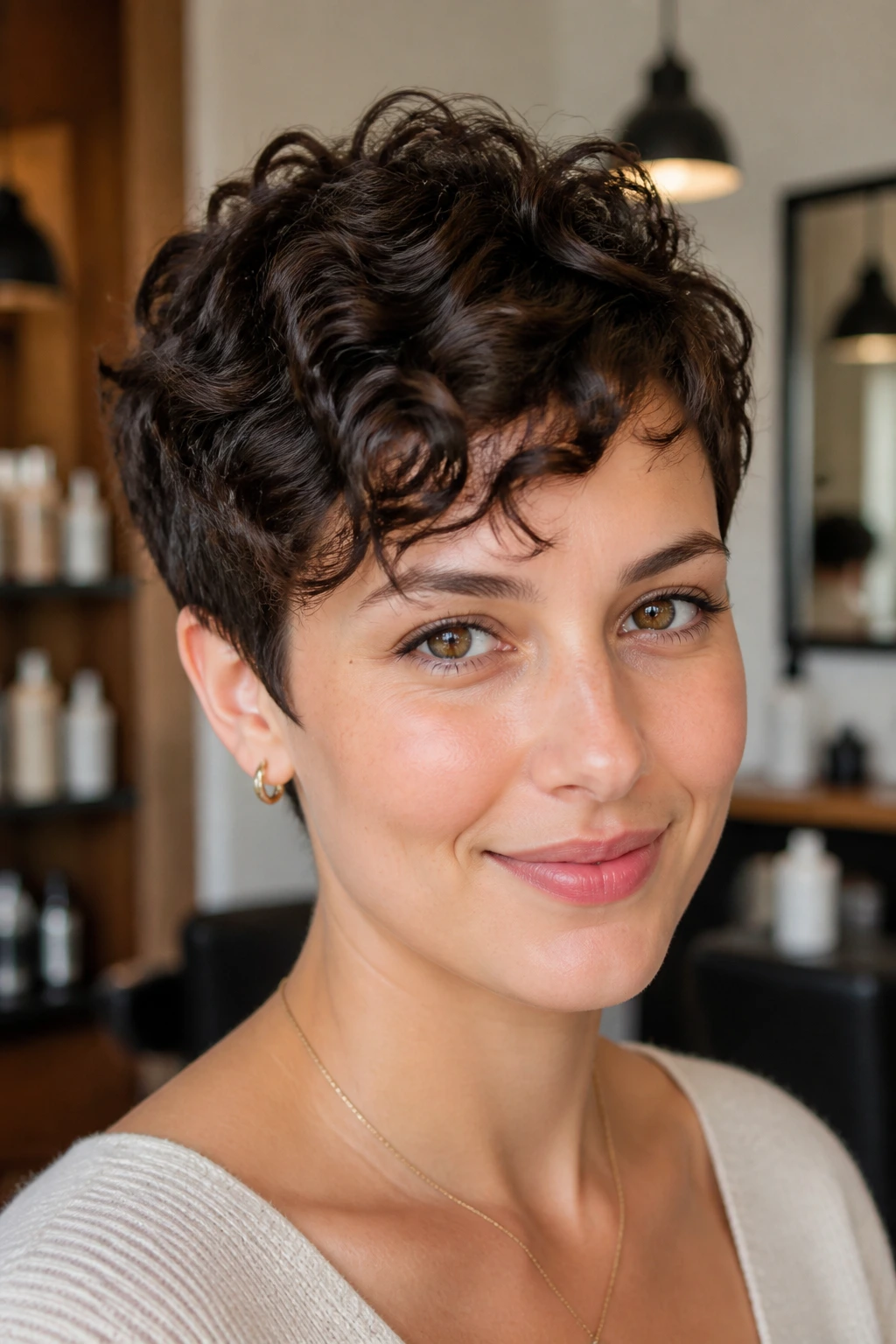
A soft crop is short, quick, and a little more forgiving than a super-close pixie. The side fringe takes some of the emphasis off the forehead, while the cropped sides and back keep the whole shape neat. On a heart-shaped face, that side sweep is the detail that keeps it flattering.
This cut is a good fit if you want minimal styling time and do not mind visiting the salon often enough to keep the shape clean. It works especially well when the curls are loose enough to bend and not stand up straight. Tiny detail, big payoff.
Why These Cuts Put the Width in the Right Place

Heart-shaped faces usually have a broader forehead, prominent cheekbones, and a narrower chin. That means the most flattering curly cuts tend to soften the top half of the face while giving a little more life to the area near the jaw. If the cut adds volume at the temples, the face can feel wider than it really is. If it ignores the lower half completely, the chin can disappear into the shape.
Curly hair makes that balancing act more interesting. It does not fall in a straight line, and it does not stay where you place it. A curl that looks like a chin-skimming layer when wet may land above the mouth when dry. That is why dry cutting, curl-by-curl shaping, and honest shrinkage talk matter so much.
The sweet spot is usually some combination of these things: a side part, face-framing pieces that start low, fringe that breaks up forehead width, and enough length near the jaw to anchor the whole shape. Not every cut needs all four. But if a cut has none of them, I would be cautious.
What to Tell Your Stylist Before the First Snip
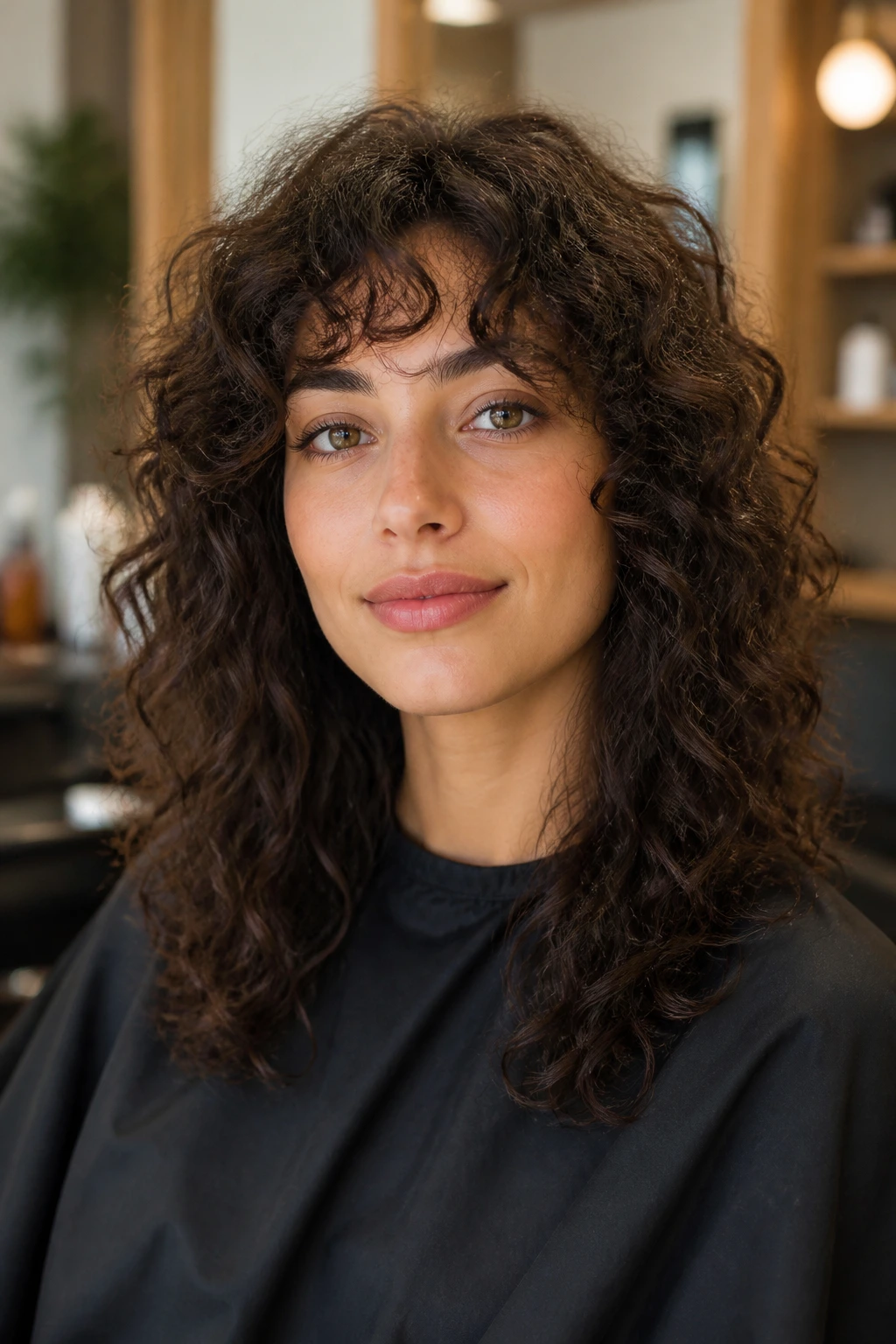
Do not walk in and say “just make it cute.” That sentence is how people end up with bangs they did not want and layers that look like they were assigned at random. Bring a photo or two, but also bring words. The words matter.
Tell your stylist where you want the weight to sit. Say you want softness near the cheekbones, not a lot of volume at the temples. If you are keeping bangs, say whether you want them to break apart, sweep sideways, or stay airy around the forehead. Those details change the whole cut.
A few phrases help a lot:
- “Please cut with my curls dry or mostly dry.” That tells the stylist you care about shrinkage and final shape.
- “I want the widest part of the cut below my cheekbones.” Useful for heart-shaped faces.
- “Keep the fringe light and flexible.” Good if you do not want heavy bangs.
- “Do not thin out the ends too much.” Especially helpful on dense curls.
- “Show me the shape from the front and the side.” Because curls can look charming from one angle and lopsided from another.
Bring your hair in the way you normally wear it. Not brushed flat. Not stretched. Not pressed into a ponytail and called natural.
Styling Tools That Pull the Shape Together
- Wide-tooth comb: Good for detangling in the shower or after leave-in, without ripping apart the curl clumps.
- Microfiber towel or cotton T-shirt: Helps blot water without roughing up the cuticle and making the ends frizz out.
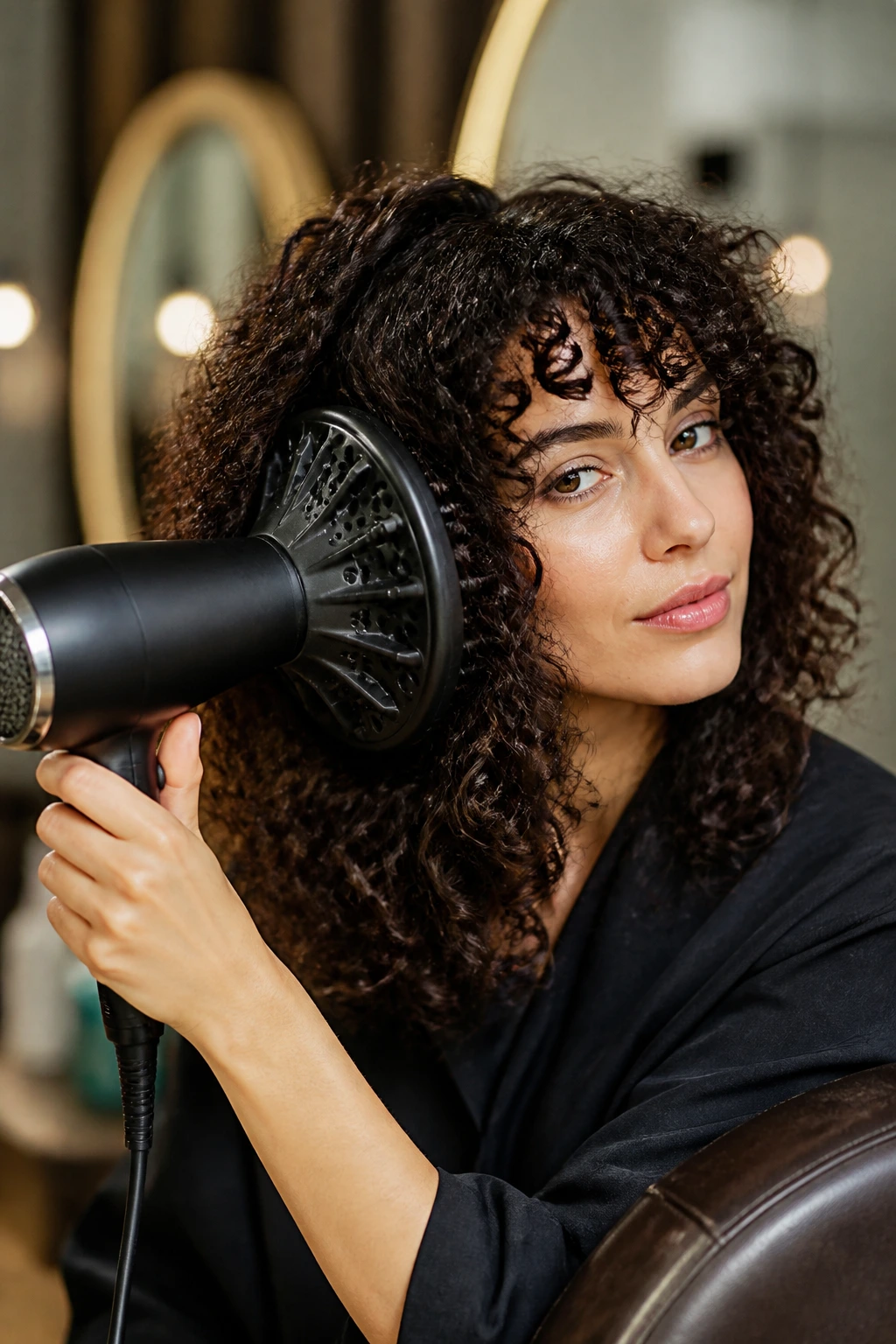
- Diffuser attachment: Useful if you want the roots to lift without blasting the curl pattern apart.
- Sectioning clips: Handy when you need to apply product in neat zones, especially with fringe or face-framing layers.
- Leave-in conditioner: Keeps the curl soft enough for the layers to settle instead of puffing.
- Curl cream or lightweight gel: Cream helps shape, gel helps hold. Many heads need both.
- Small round brush or Denman-style brush: Optional, but useful for directing curtain bangs or a side fringe while wet.
- Hand mirror: Not glamorous, but it helps you check the back shape after styling.
How to Style the Cut So the Shape Shows Up
Start With Soaking-Wet Hair
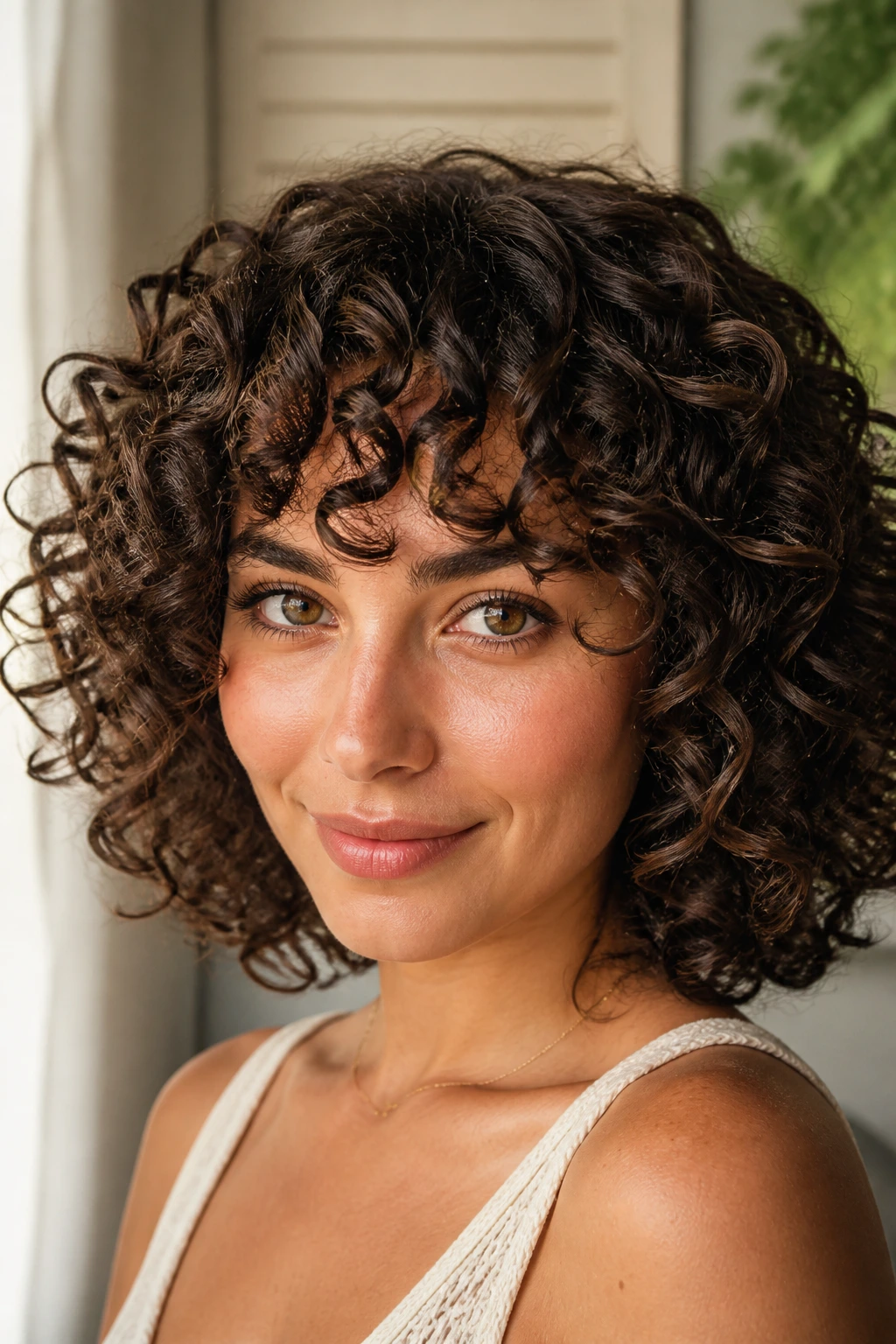
Curls respond best when product goes on hair that still feels heavy with water. That water helps the cream or gel spread evenly, and it keeps the outer layer from getting overloaded. If you wait too long, the top dries first and turns into frizz while the underneath stays damp. Annoying. And avoidable.
Work the Product Where the Cut Needs Help
Face-framing pieces usually need a lighter hand than the back. Fringe needs a little more direction. The crown often needs less product than people think; too much there can flatten the top and make the sides puff out. Use your fingers to rake, then scrunch. If the curls are loose, a gentle brush set can help them clump before they dry.
Diffuse in Short Bursts
Low heat. Low speed. Patience. Tilt your head, cup the curls in the diffuser bowl, and hold for 20 to 30 seconds at a time before moving. If you hover the dryer too close, you can blow the face frame around before it sets. That is how you end up with one side behaving and the other side staging a protest.
Refresh Instead of Rewashing
Day-two hair usually needs water first, then a tiny bit of leave-in or curl cream on the ends. Scrunch the front pieces back into place with damp hands. If the bangs separate, wet just the fringe and reset it alone. That is faster than wetting the whole head, and it keeps the cut from looking tired.
Keeping the Shape Between Salon Visits
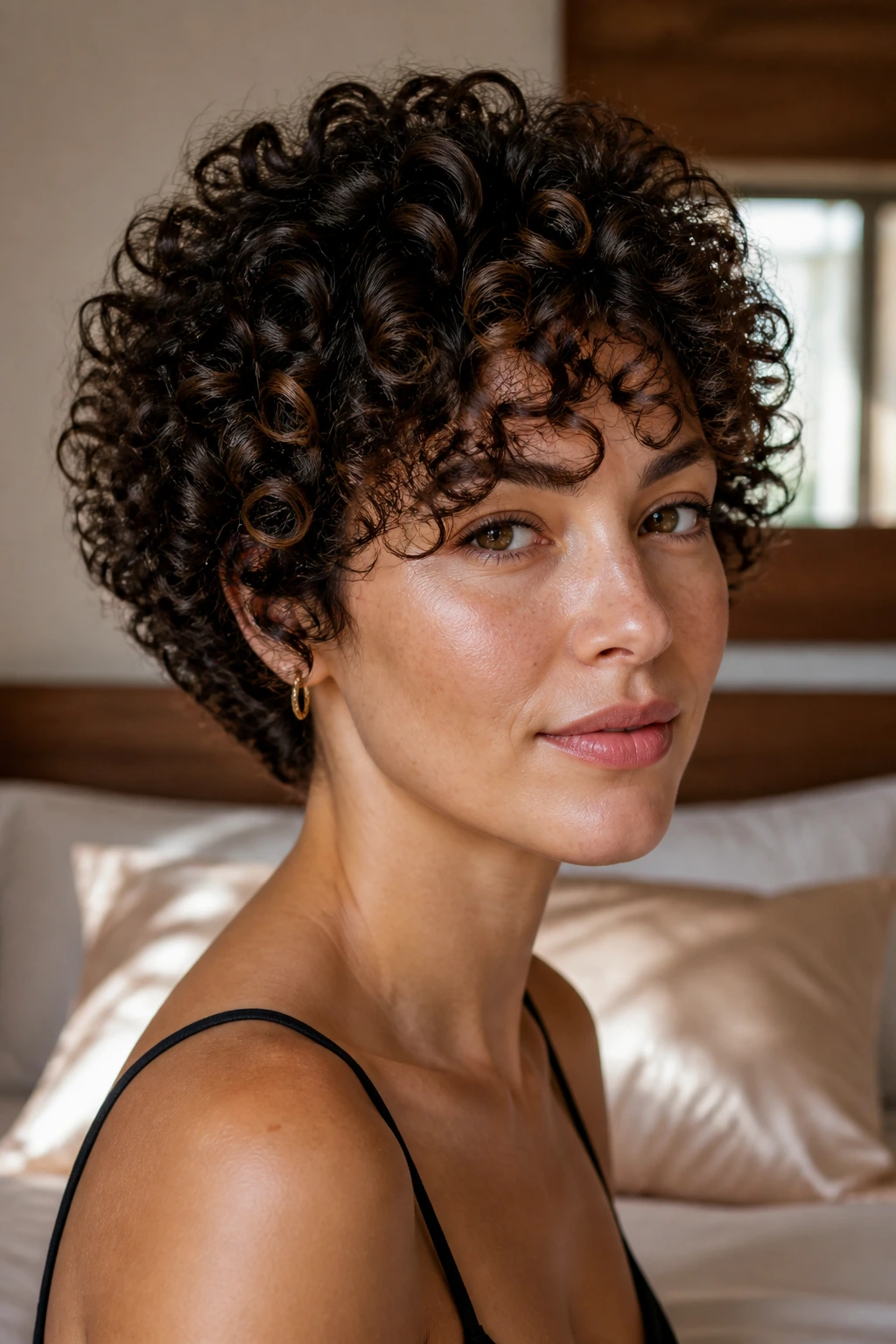
Short curly cuts live and die by their trim schedule. A pixie, crop, or mixie often needs a tidy-up every 4 to 6 weeks, because even half an inch can change the balance at the crown and nape. Bobs and lobs usually hold for 8 to 12 weeks, though bangs can ask for attention sooner. Longer layered cuts can stretch farther, but only if the ends stay thick enough to support the shape.
The real enemy is not just growth. It is uneven growth. One side droops. The fringe splits. The crown gets too bulky. If you notice the shape drifting before the length does, that is your cue to book a trim. Waiting until the whole thing feels wrong is how people end up asking for a bigger chop than they wanted.
Sleep helps too. A satin pillowcase or bonnet can keep the front pieces from mashing flat overnight, and a loose pineapple can keep longer curls from getting crushed. That is not glamorous advice, but it saves time in the morning.
Common Mistakes That Throw the Balance Off

-
Cutting curls too short at the front: The curl shrinks, the fringe bounces up, and the forehead ends up wider than before. Fix it by leaving face-framing pieces longer than you think you need.
-
Building too much volume at the temples: This is the quickest way to make a heart-shaped face feel top-heavy. Ask for softness near the sides and more action near the jaw.
-
Thinning out dense curls with a heavy hand: Over-thinning creates frizz and a see-through shape at the ends. Internal removal should be subtle, not aggressive.
-
Ignoring the dry shape: A wet curl can lie to you. If the stylist never checks how the hair sits dry, the final line may land in a weird place once you wash it yourself.
-
Cutting straight hair inspiration onto curls: A blunt reference photo can look chic on paper and chaotic in real life. The better reference is a curly version of the shape.
Variations for Different Curl Patterns and Lifestyles
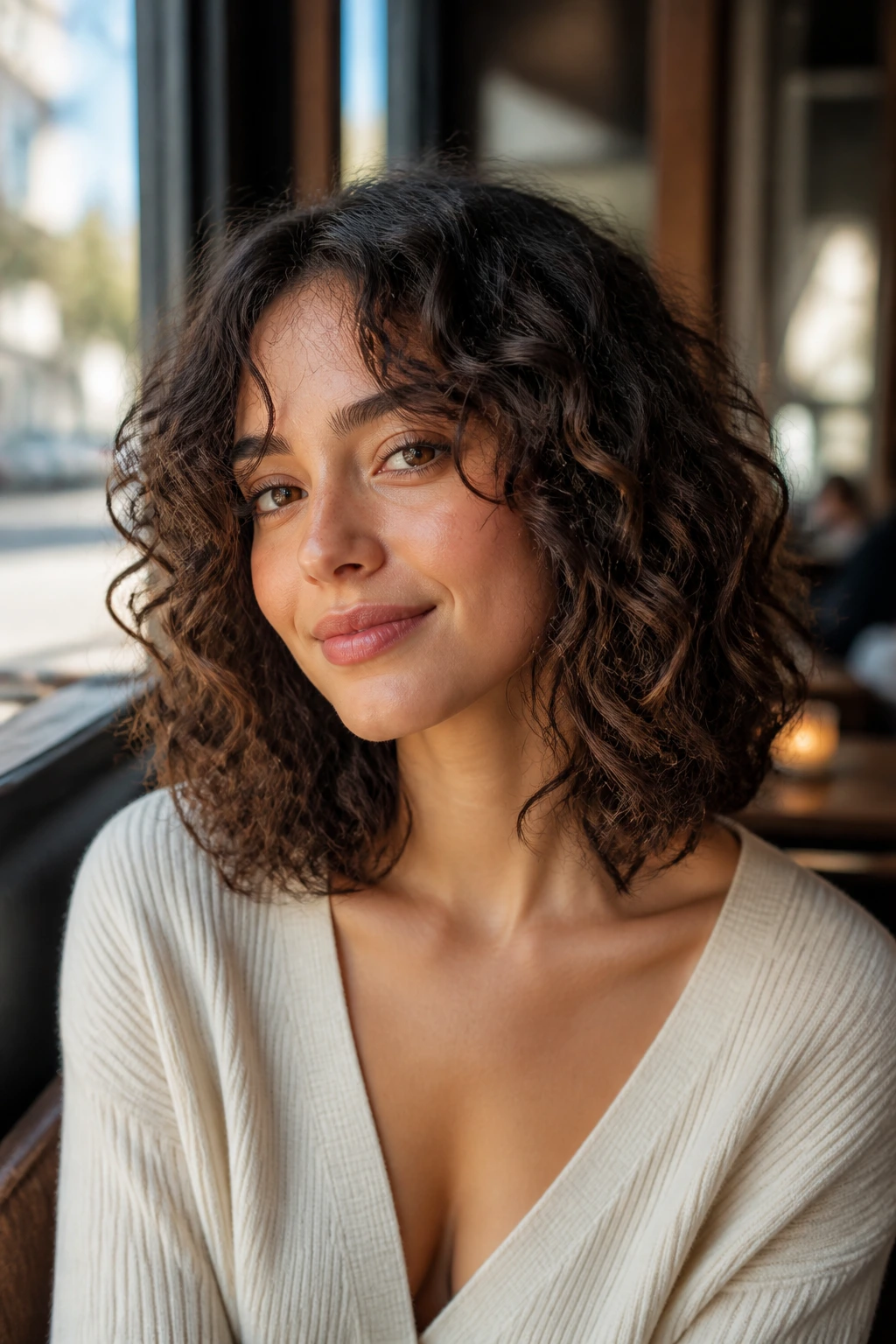
The Low-Maintenance Lob: Keep the length at the collarbone, use subtle face-framing, and skip heavy bangs. This version works when you want shape without daily styling drama.
The Fringe-Forward Version: Choose curtain bangs, bottleneck bangs, or a side fringe if you want to soften the forehead more aggressively. This is the one for people who like the idea of bangs but not the commitment of a blunt strip across the brow.
The Dense-Curl Shape-Up: If your hair is thick and springy, lean on blunt edges, rounded perimeters, and internal layers. The goal is to control the width without losing fullness.
The Coily Sculpted Version: For tighter textures, a halo cut, tapered crop, or rounded afro can keep the shape balanced and elegant. Moisture and precise shaping matter more here than sheer length.
The Edgy Version: If you want more personality, the wolf cut, shullet, or mixie gives you movement and attitude while still keeping the face soft. These cuts do ask for more trimming, though, and they show every inch of growth.
Questions People Ask Before They Book
Should heart-shaped faces avoid blunt bangs?
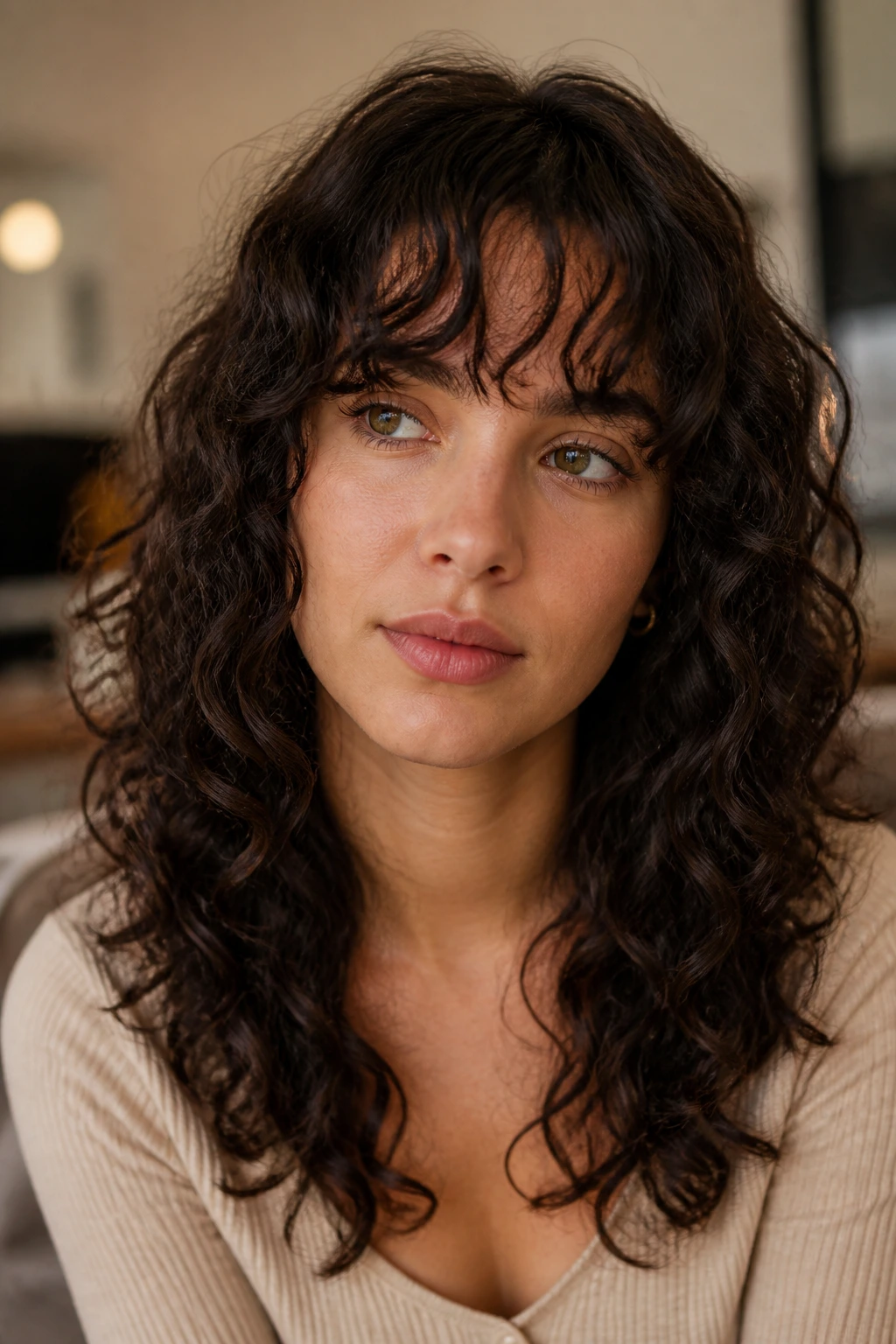
Not always, but heavy straight-across bangs can make the forehead feel even broader. Softer fringe shapes — curtain, bottleneck, side-swept — usually flatter more often because they break the line instead of boxing it in.
Can curly hair be cut wet, or does it need to be dry?
Either can work, but curly cuts are usually safer when the stylist checks the hair dry at some point. Wet hair stretches out, and shrinkage can change the whole shape once it dries.
Do layers make curly hair frizzier?
Bad layers do. Good layers remove bulk where it helps and keep enough weight in the ends to stop the hair from puffing into a triangle. The difference is precision.
What if my curls are fine and flat at the top?
Choose cuts that keep the top lighter but not over-thinned, like an invisible-layer lob, a side-parted cut, or soft curtain bangs. Too many short pieces can collapse fine curls instead of lifting them.
How short can I go without exaggerating my forehead?
Short can work, but the shape matters more than the length. Keep some fringe, side sweep, or front softness if you go pixie-short. That keeps the face balanced.
Which cut is safest if I am nervous?
A shoulder-grazing lob with subtle face-framing pieces is probably the least risky place to start. It flatters a lot of curl patterns and still gives you room to tweak the shape later.
How often should I trim a curly haircut?
Short styles often need attention every 4 to 6 weeks. Medium-length curls can usually go 8 to 12 weeks, and longer layered cuts can stretch farther if the ends stay healthy.
What should I avoid if I wear my curls air-dried most days?
Avoid shapes that depend on heavy blow-drying to sit right. If you air-dry, ask for a cut that already carries the right silhouette once the curls settle on their own.
The Shape That Still Works on Day Three
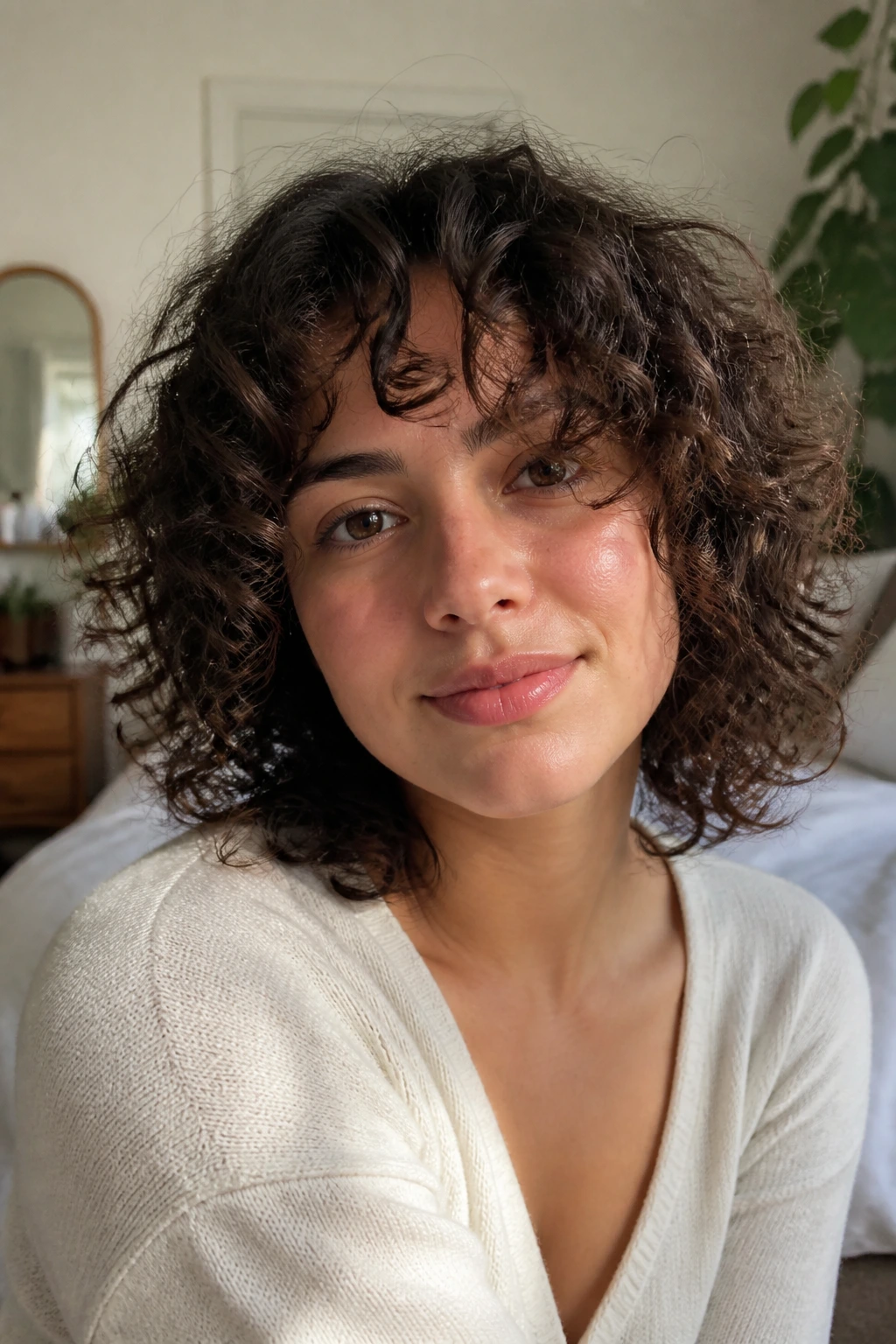
A good curly cut for a heart-shaped face does not need to look perfect in the salon chair. It needs to land well after the curls dry, after they move around, and after you have lived in them for a few days. That is the real test. Not the mirror under fluorescent lights.
What I like most about these shapes is that they solve the same problem in different ways. Some soften the forehead. Some anchor the jaw. Some use fringe, some use length, and some use sheer curl placement to do the balancing for you. If your hair has been fighting your face shape, the fix is probably not more product. It is a better map.
The best cut is the one that makes your curls look like they belong there. And once that happens, you stop apologizing for shrinkage and start enjoying the shape it gives you.