



Thick straight hair can swallow a soft wave in an hour if the cut is fighting you. The best thick hairstyles for straight hair with beachy waves do not chase tiny curls; they build loose bends, clean parts, and enough movement around the face that the length stops feeling like one solid sheet.
That’s the trick most people miss. With dense, sleek hair, the wave pattern is only half the story. The other half is where the weight sits, how much hair you leave out of the iron, and whether the ends stay a little straighter so the whole style doesn’t turn puffy.
I keep coming back to beachy waves on thick hair because they change the shape of everything. A blunt line becomes softer. Heavy lengths stop dragging down the face. And the style can go casual or dressed-up without asking for a completely different routine, which is one of the few hair trends I’ll happily defend.
Why These Looks Earn Their Spot in Your Rotation
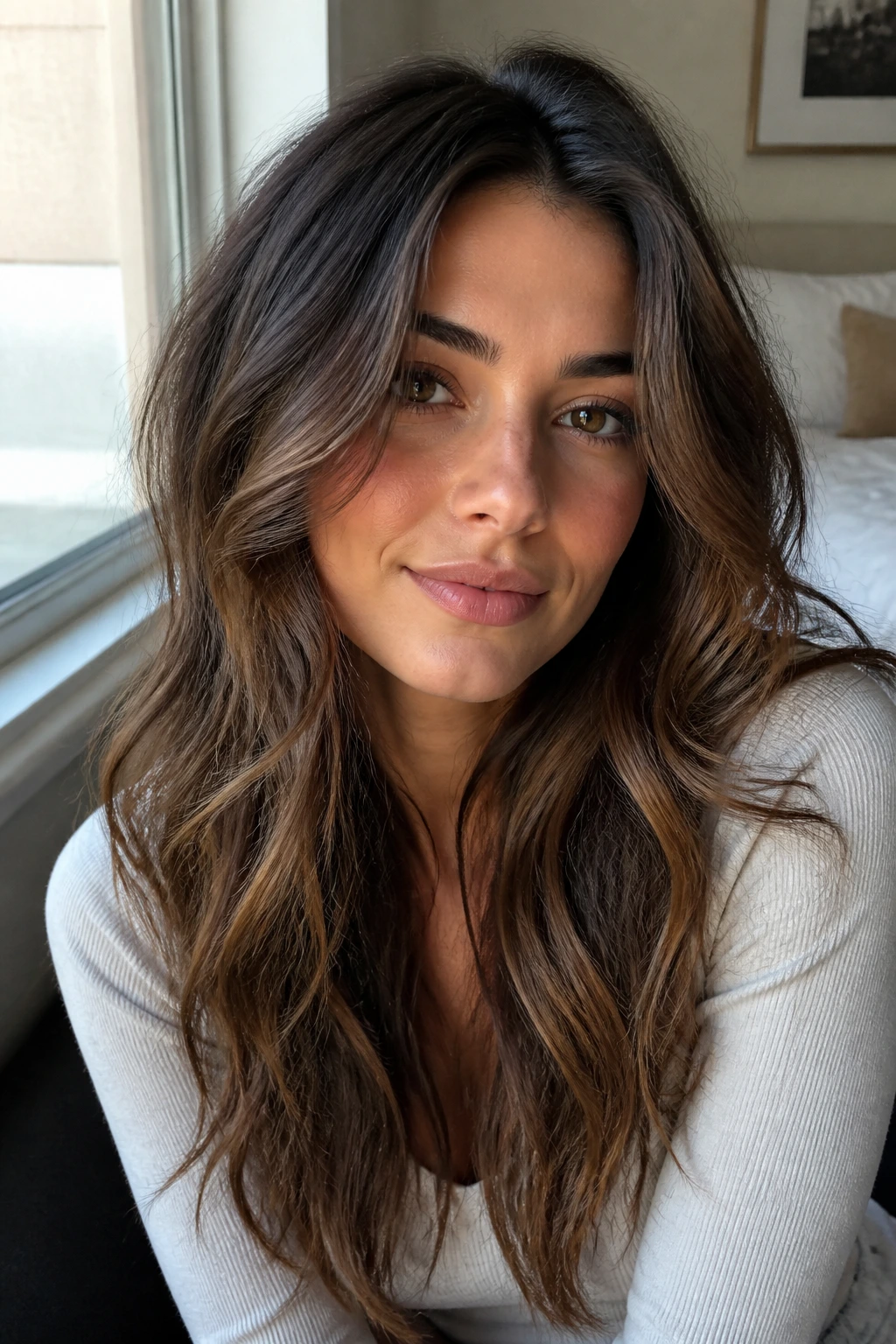
-
Built for density: Thick hair has enough body to hold a loose bend, so these styles use that weight instead of fighting it.
-
Shape at the front matters: Layers, curtain pieces, and side parts keep the face from disappearing behind a curtain of straight length.
-
The wave stays wearable: Loose bends read as beachy on thick hair; tight curls usually look too busy once they settle.
-
The same base can go far: A half-up twist, a claw clip, or a low ponytail can all sit on top of the same wave pattern without starting over.
-
Second-day hair gets better, not worse: These styles usually look more lived-in after a sleep cycle, especially if you protect the shape overnight.
-
Heat is optional, not mandatory: Some of the best results come from braid sets, twists, and clip lifts rather than chasing every strand with a hot tool.
1. Long Face-Framing Layers with Loose Mid-Barrel Waves
Long layers are the easiest way to stop thick straight hair from reading as one heavy block. The front pieces hit around the cheekbone and jaw, which gives the waves somewhere to move instead of hanging straight down the sides of your face.
I like this look with a 1.25-inch curling iron or wand. Wrap 1- to 1.5-inch sections away from the face, leave the last inch out, and alternate direction once you pass the jawline. That little bit of inconsistency keeps the finish from looking too set.
The best part is how little product it needs. A light mousse at the roots and a flexible hairspray at the end are enough. Anything heavier starts to rob the movement you just built.
2. Center-Parted Gloss Waves with Blunt Ends
A blunt hemline and beachy waves sound like opposites, but thick hair can carry both. The straight edge at the bottom keeps the shape dense and polished, while the wave through the mids stops the length from feeling stiff.
This version works best when the waves are brushed out after cooling. I’d use a large barrel or a flat iron bend, then wait until the hair feels fully cool before running a wide-tooth comb through it. If you brush early, the whole thing swells.
Keep the product simple. A heat protectant, a whisper of shine serum on the ends, and a light mist of texture spray in the mid-lengths are enough. Too much oil will flatten the blunt line, and that’s the part that makes the style look deliberate.
3. Curtain Bangs and Shoulder-Grazing Waves
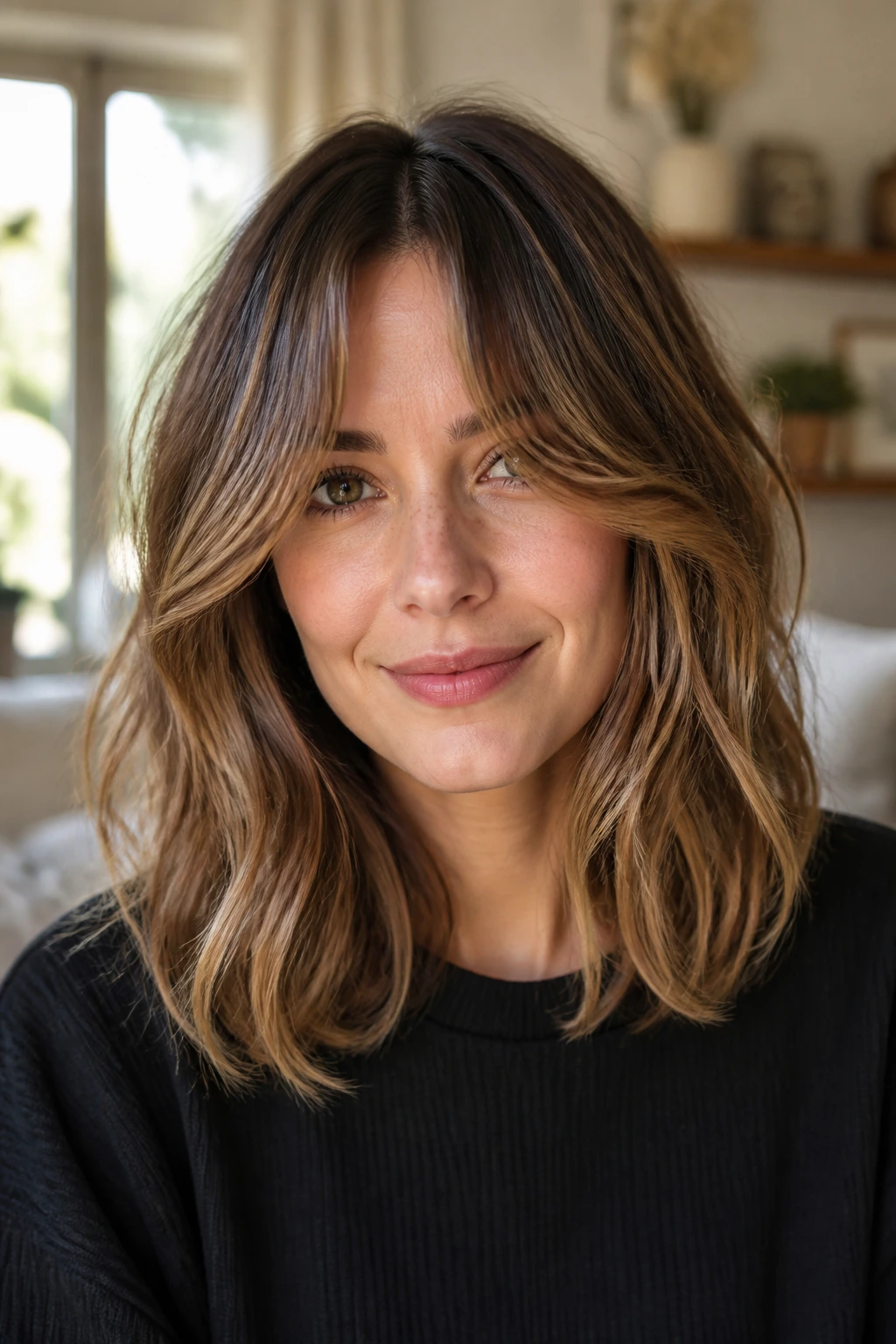
Curtain bangs change the whole read of thick straight hair. They break up the front weight, which is often where dense hair looks most square, and they let the waves frame the face instead of hanging beside it.
The bangs need a different touch than the rest of the hair. Use a smaller iron or a flat iron bend on the front pieces, directing them away from the eyes and down toward the cheekbones. Leave them softer than the mids; a hard curl here looks dated fast.
Shoulder length helps the style feel light. If your hair sits right at the collarbone or just below it, the waves bounce a little more and the bangs don’t get dragged down by the length.
4. Deep Side-Part Waves with Tucked Front Pieces
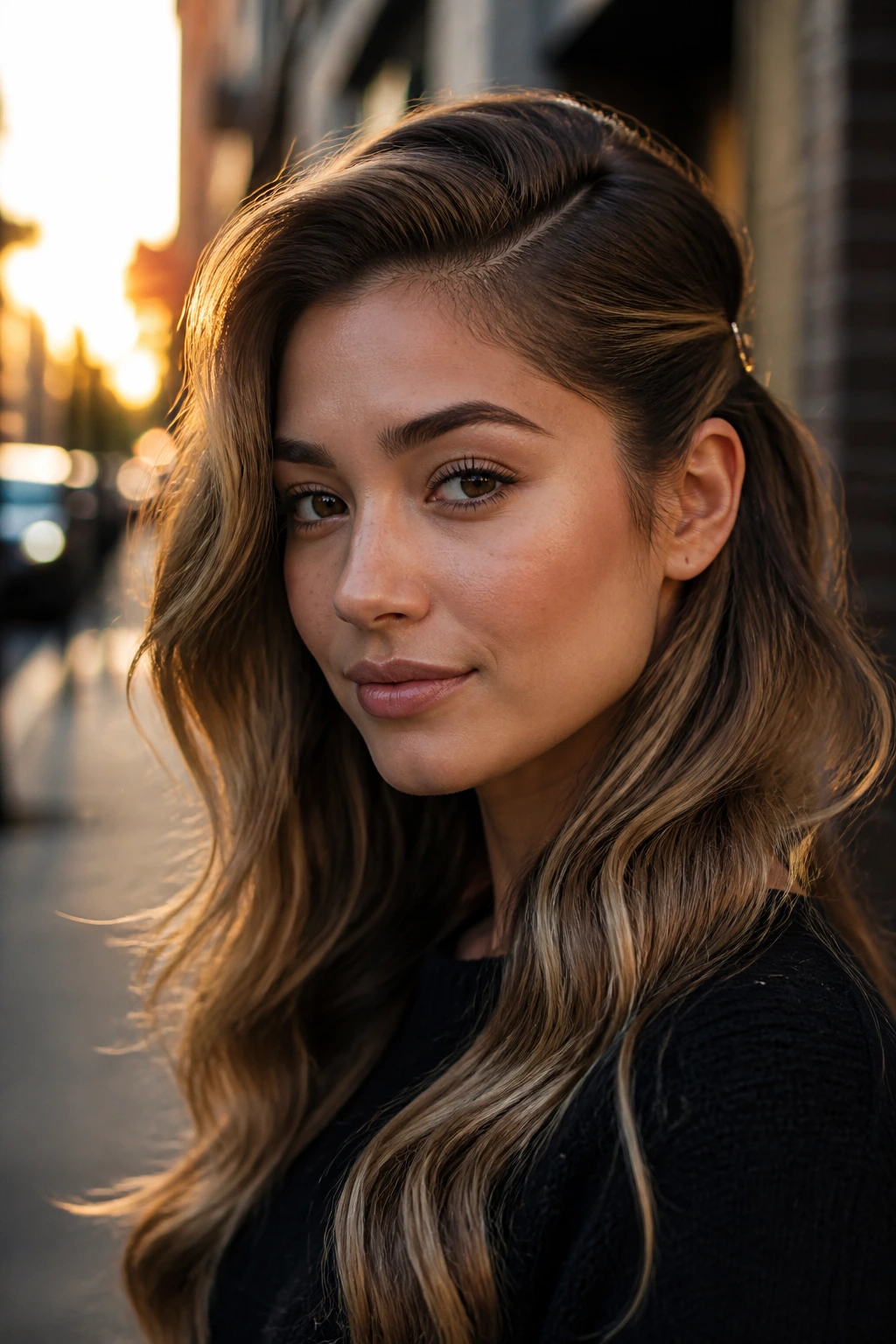
A deep side part does something useful on thick straight hair: it shifts the bulk. Instead of spreading evenly across the head, the weight falls to one side, and that gives the waves a touch more lift at the crown.
Pull the smaller side behind one ear and let the longer side skim the cheek. I like to clip the crown root on the heavier side for a few minutes while it cools, because thick hair often resists lift there. That tiny pause changes the whole silhouette.
This style has a nice, slightly old-fashioned feel without looking formal. One tucked side, one loose side, and a loose wave pattern on both ends up reading clean and easy.
5. Half-Up Twist with Loose Wavy Lengths
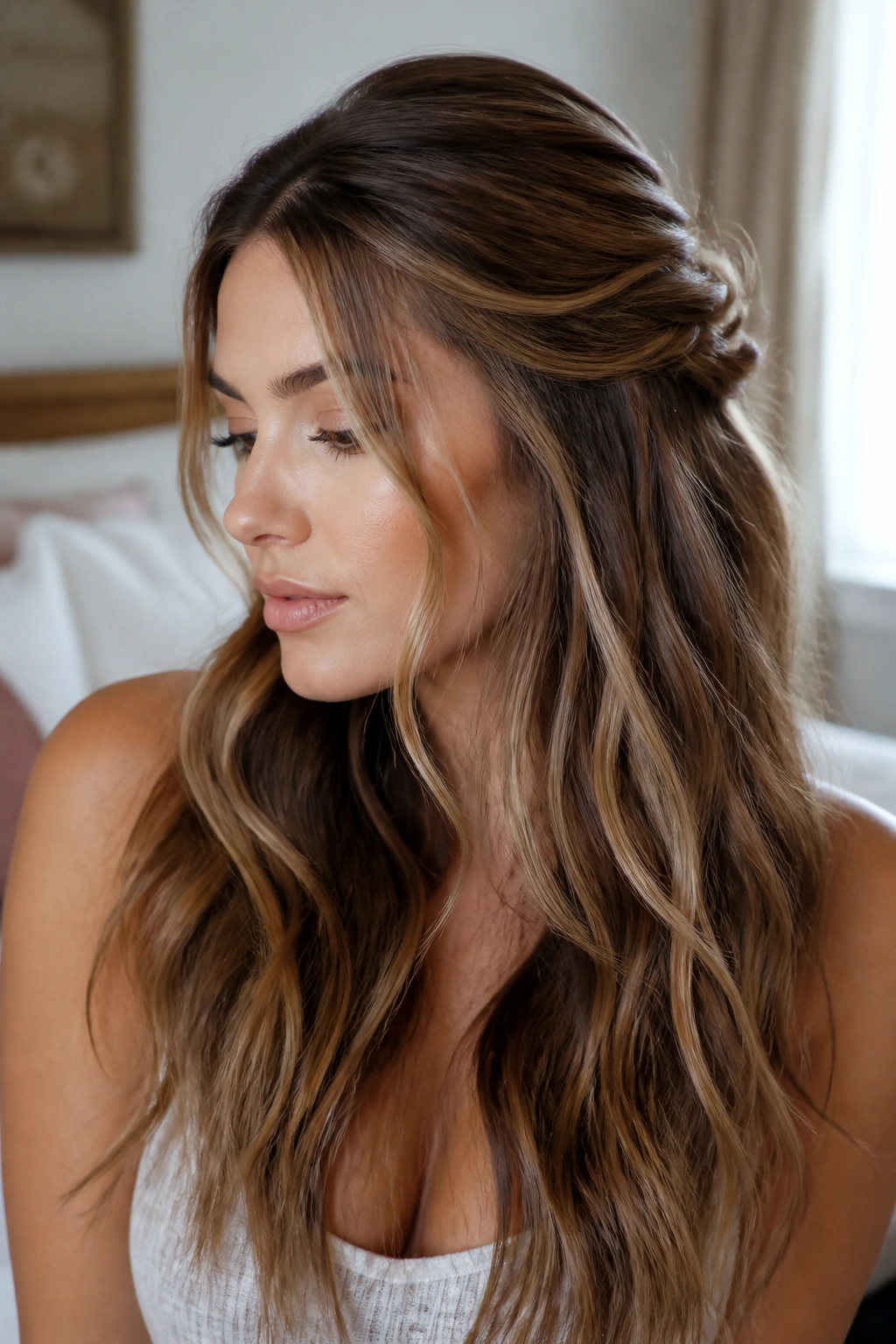
When thick hair feels heavy at the crown, a half-up twist buys you shape fast. Gather only the top section from temple to temple, twist it back, and pin it low enough that the wave pattern underneath still shows.
The lower half should stay loose and soft. Use a 1.25-inch barrel on the bottom sections, but don’t overwork the top. If the crown gets too curled, the style starts to feel crowded.
A small clear elastic can disappear inside the twist if you don’t want pins showing. I’d stop there rather than stacking clips and bands on top of one another. The whole point is to make the top lighter, not busier.
6. Claw-Clip Roll with Soft Ends Spilling Out
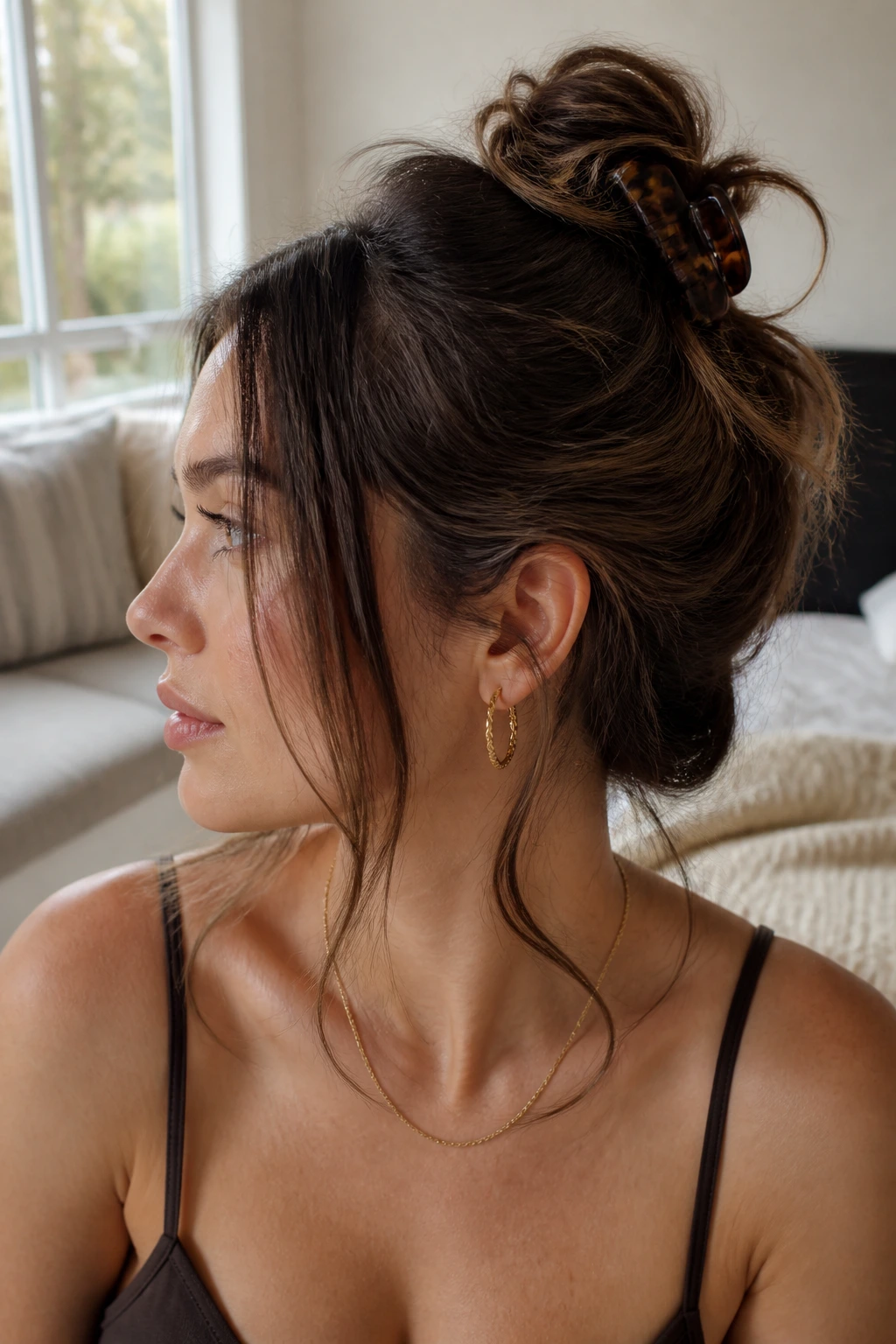
A claw clip does not need perfect polish to look right with waves. In fact, a slightly loose roll usually suits thick straight hair better because it lets the texture break up around the face and at the nape.
Gather the upper half of the hair, twist it upward, and clip it so the ends spill out instead of being tucked flat. Leave a few waved pieces loose at the front. Those stray bits keep the style from looking like you tried too hard, which is the whole mood here.
This is one of my favorites for second-day hair. The roots usually have enough grip, and the clip gives the crown some height without pulling the wave out of the lengths.
7. Layered Lob with Piecey Ends
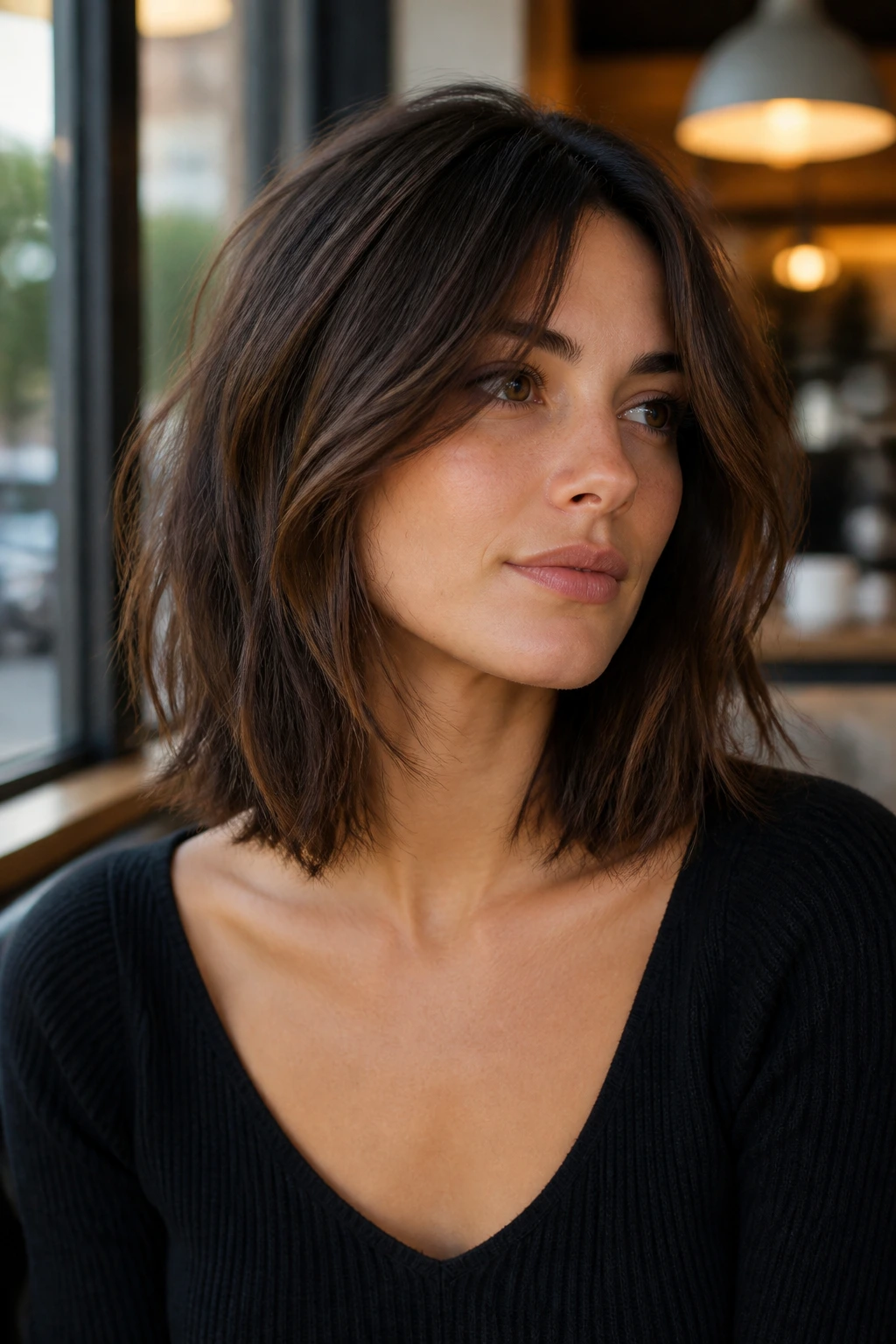
A layered lob sits right at the point where thick hair starts to feel easier to manage. The length hits around the collarbone, and the layers keep the ends from turning into a heavy shelf.
What to ask for at the salon
-
Soft internal layers: Ask for movement inside the shape, not a dramatic chop through the perimeter.
-
A blunt outer line: The edge should stay strong so the cut doesn’t look wispy.
-
Length that brushes the collarbone: That sweet spot lets the waves bend without the style going triangular.
For styling, bend the middle sections with a flat iron or a small wand and keep the very ends piecey. The lob looks best when it has a little separation at the bottom, not a single soft puff.
8. Shag Cut with Airy, Broken Waves
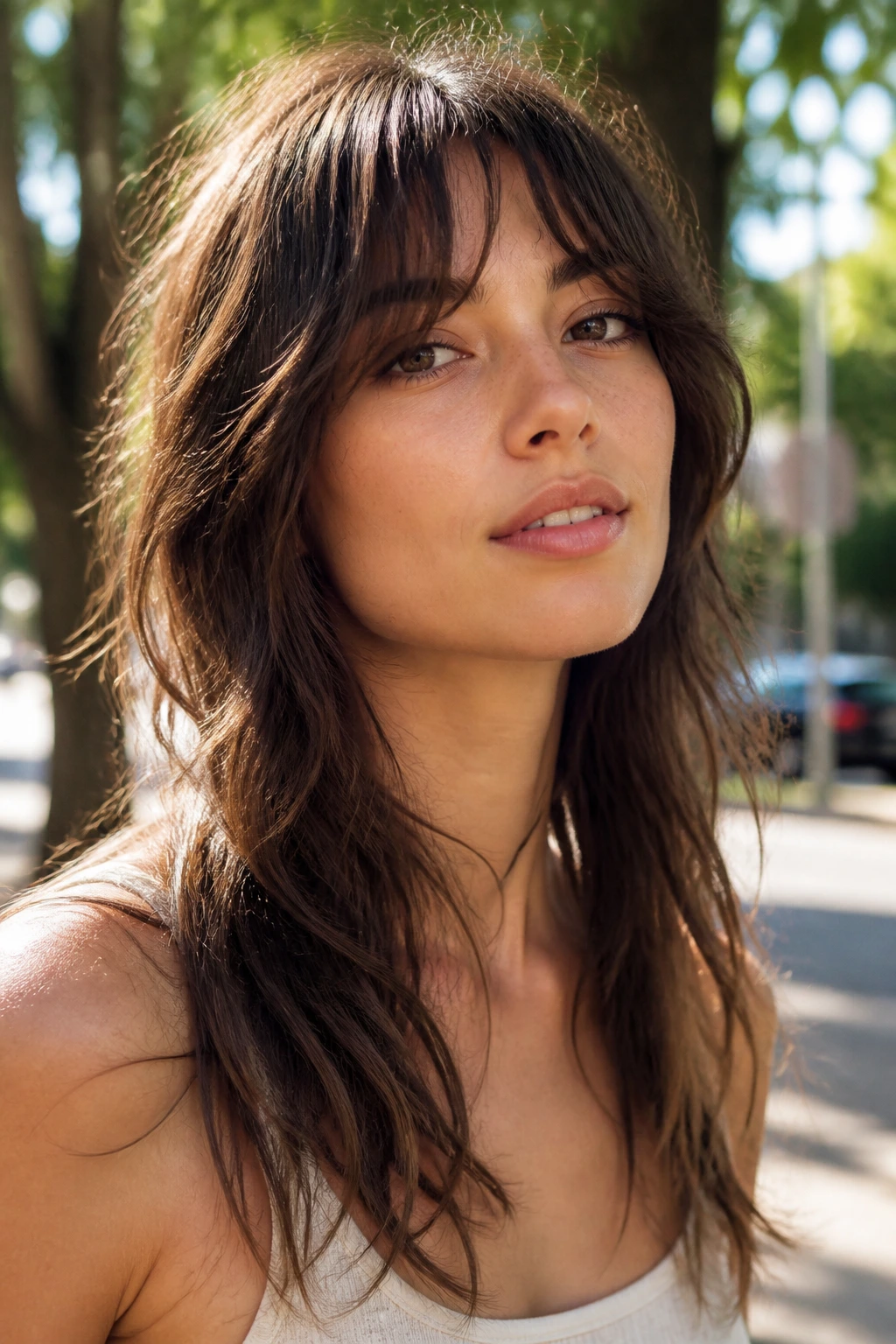
If you like movement that looks a little chipped up and lived-in, a shag is the right partner for thick straight hair. The shorter crown layers keep the bulk from sitting flat, and the longer pieces at the bottom still hold enough weight to make the waves fall nicely.
The trick is not to over-smooth it. Rough-dry the roots, work in a light mousse, and twist random 1-inch sections around a wand rather than trying to make every bend match. A shag looks better when the waves break up at slightly different heights.
I’d skip heavy serum here. That can make the layers cling together and erase the airy part that makes a shag work in the first place.
9. U-Shaped Cut with Big Soft Waves
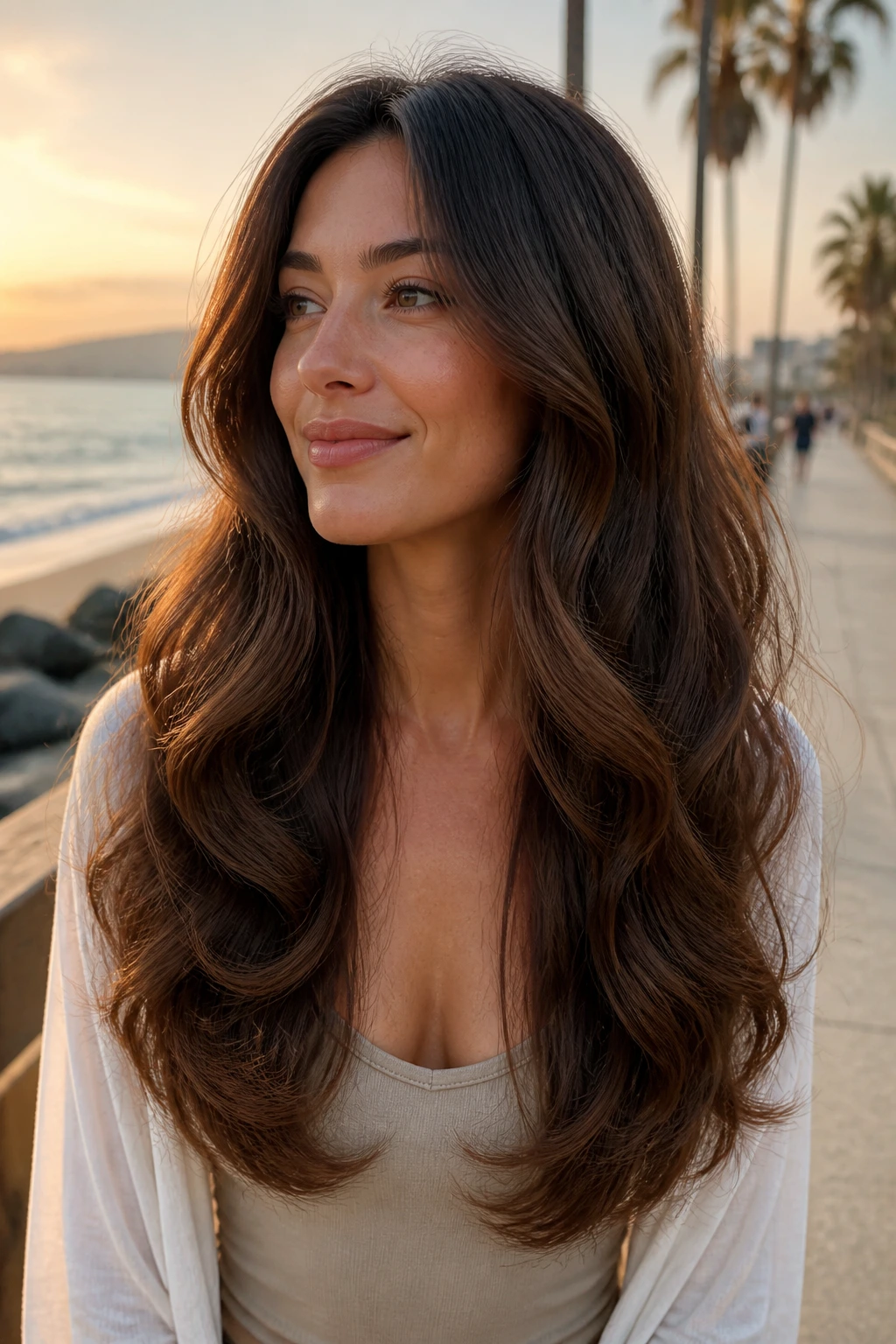
A U-shaped cut keeps the length in the center and gently lifts the sides, which is handy when thick straight hair gets boxy. The outline feels rounder, and the beachy wave pattern follows that shape instead of fighting it.
This is a good look for longer hair that you do not want to chop dramatically. The outer line stays full, the interior waves move, and the whole style avoids the wide, heavy triangle that thick hair can fall into after a day of wear.
Use bigger sections here. A 1.5-inch barrel or a large flat iron bend makes more sense than tiny curls, because the hair weight will relax the pattern anyway. Let the waves cool clipped in place for a few minutes before you touch them.
10. Soft Wolf Cut with Undone Texture
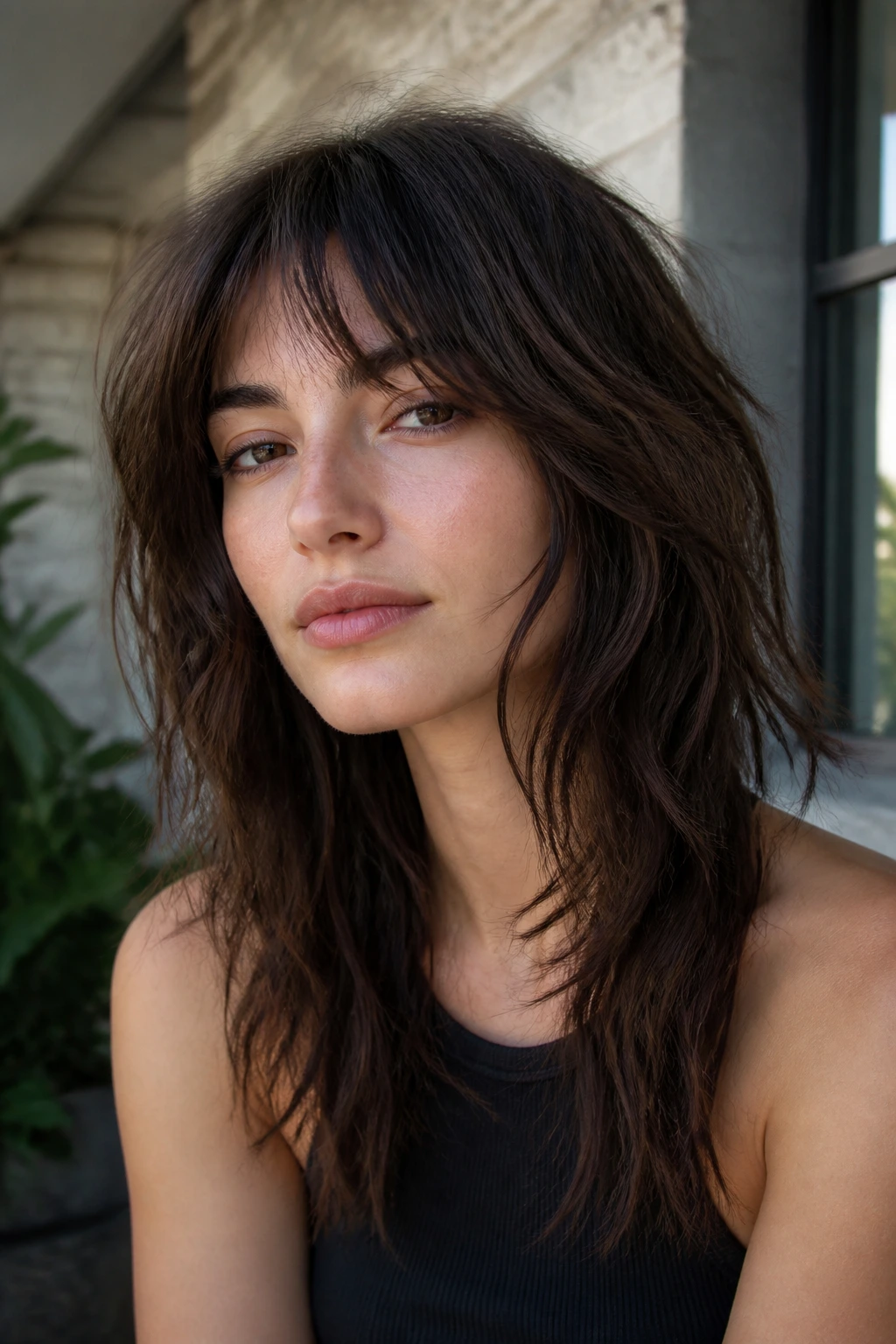
A soft wolf cut gives thick straight hair a little attitude without tipping into chaos. The crown layers sit shorter, the perimeter stays longer, and the shape opens up around the head instead of hanging like a curtain.
This one likes texture spray more than shine products. Mist the mids, scrunch lightly, and bend the front pieces away from the face so the top has lift. The goal is a broken wave, not a uniform curl.
If your hair is very straight, rough-dry first and then wave only the lower two-thirds. That keeps the top from collapsing under its own weight. The cut does enough work on its own; it doesn’t need help looking edgy.
11. Braided Crown with Wavy Lengths
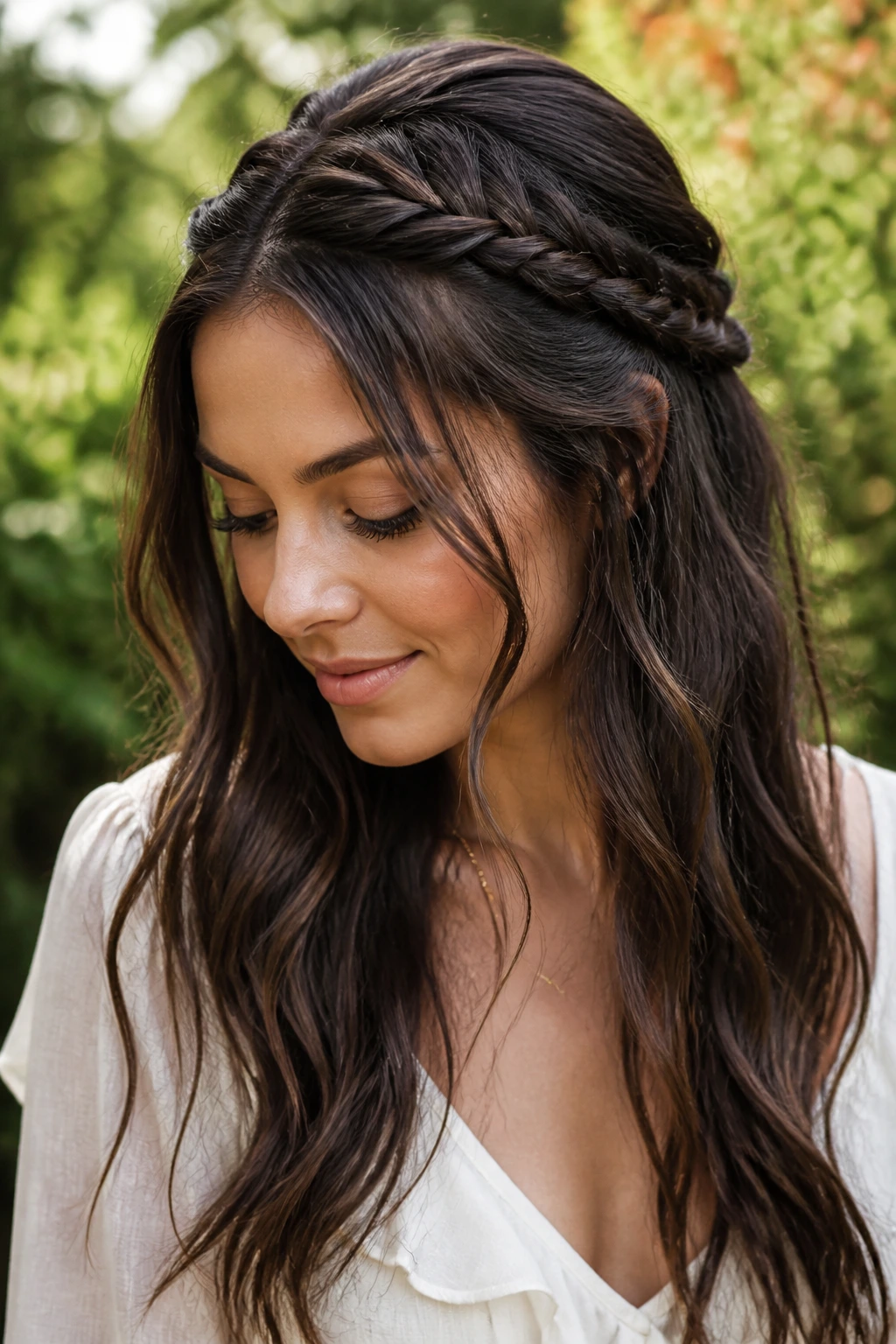
Braids and beachy waves usually live on the same page, especially on thick hair. A braided crown, even a small one, pulls the front up and back while the loose lengths keep the softer texture visible.
I prefer this with two thin braids starting near the temples and meeting at the back, then pinned under the top layer. That leaves the lower hair loose, wavy, and a little fuller at the ends. It’s a nice balance when you want the face opened up but don’t want to commit to an updo.
The key is not to braid the pieces too tightly. Thick hair already has grip. Tight braids can leave sharp bends that fight the softness of the rest of the wave.
12. Low Ponytail with Face-Framing Bends
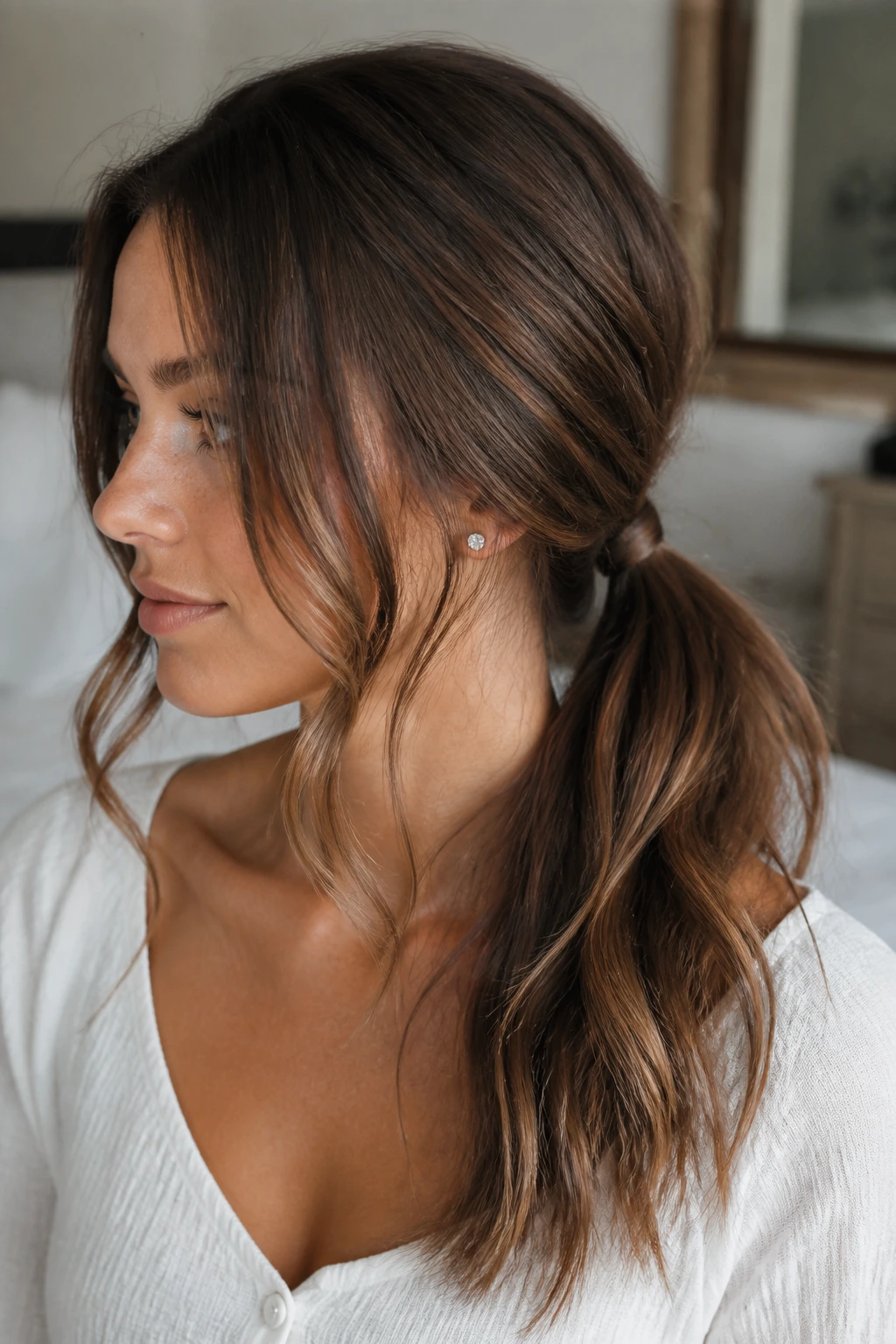
A low ponytail is often the smartest answer when thick straight hair feels too big to wear loose all day. The pony keeps the bulk controlled, but the wave around the face softens the shape so it doesn’t feel severe.
Leave two front sections out before you secure the pony at the nape. Bend those pieces away from the face and let them fall over the cheeks. A small section of hair wrapped around the elastic makes the whole thing look cleaner, even if the back is intentionally relaxed.
This style works especially well when the wave pattern is concentrated from mid-lengths down. You get movement where people can see it and less puff where the ponytail sits.
13. Messy Bun with Loose Wave Tendrils
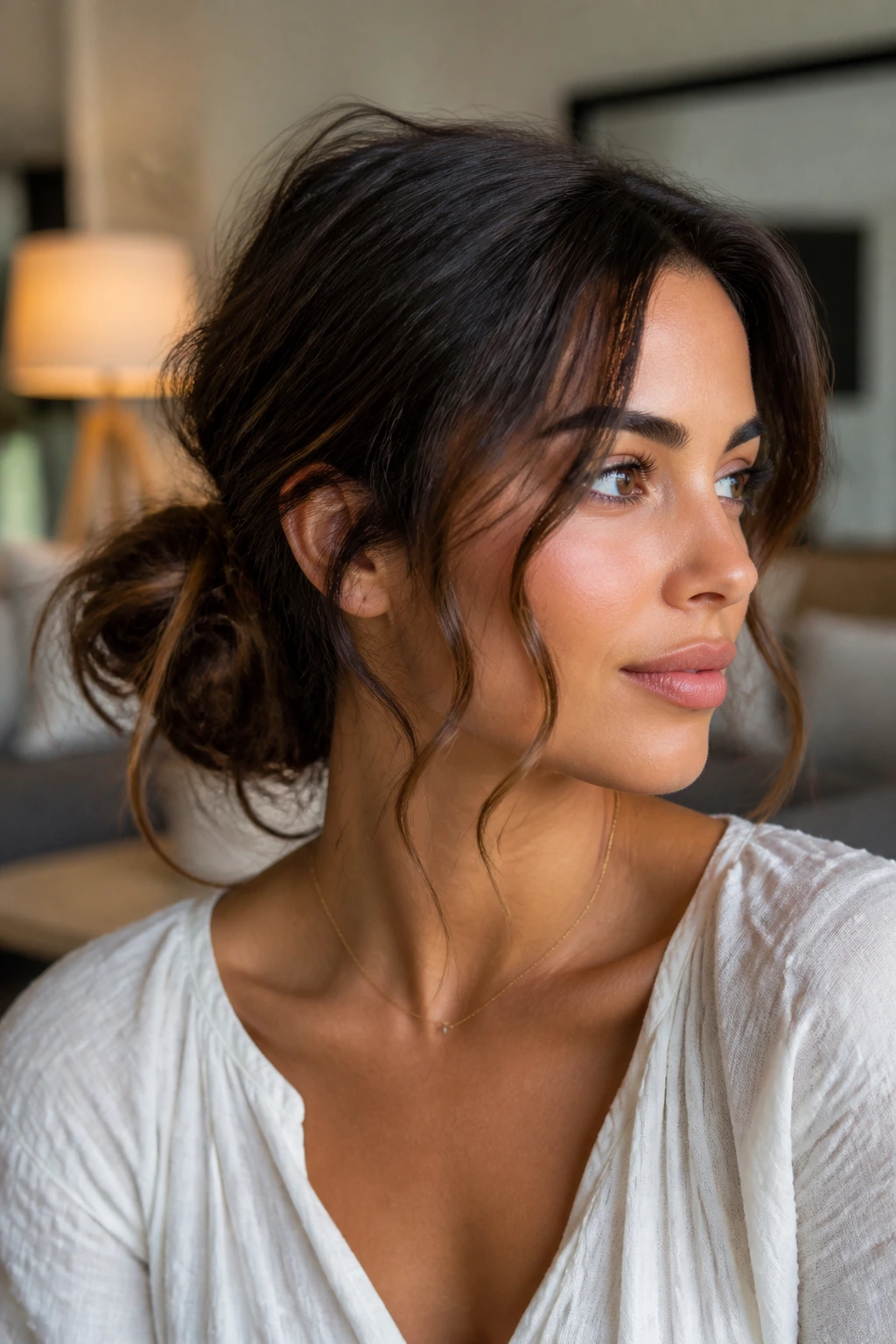
A messy bun on thick straight hair works best when it’s not trying to be tiny. Use the density. Let the bun sit low or mid-level, keep it a little wider than a fist, and pull out a few wave pieces around the hairline.
The tendrils matter more than people think. If they’re left too straight, the style feels unfinished; if they’re over-curled, the bun starts to look fussy. I like a soft bend at the front and a looser wave near the ears.
A large scrunchie or a pair of U-pins makes this easier. Thin elastics can dig into thick hair and make the bun collapse by lunch.
14. Sleek Top Section with Textured Lengths
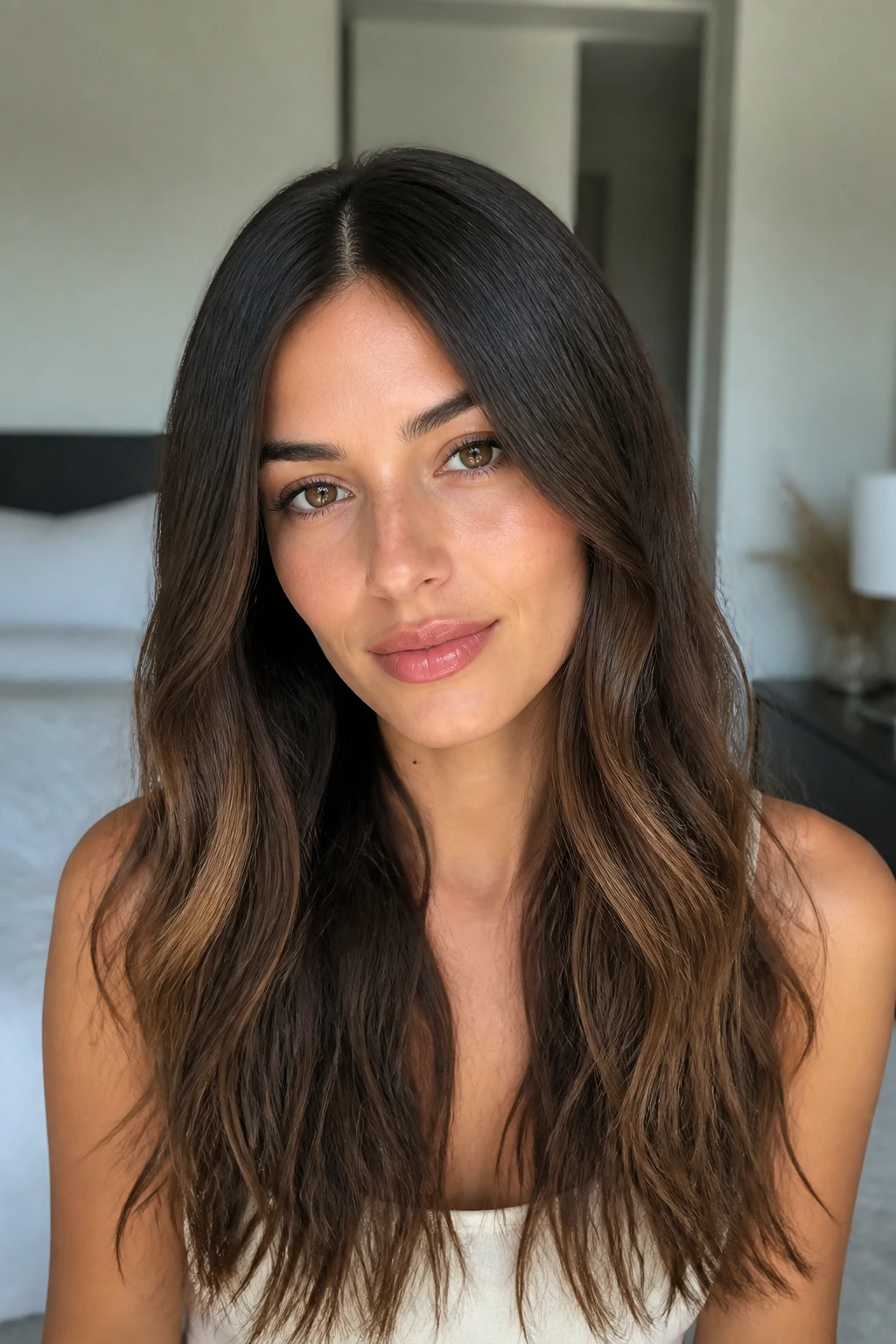
This is the look for anyone who wants contrast. The top section stays smooth, the lengths keep the beachy wave, and the sharp difference between the two makes thick hair look more controlled.
Brush the roots flat with a blow-dryer and nozzle before you add the bends below the ears. That smoothing step keeps the crown from puffing up, which is the usual problem with thick straight hair. Once the top is calm, the lengths can do the fun part.
I like this with a center part or a soft off-center part. It reads clean and modern, and it’s one of the few wave styles that still looks polished when it starts to lose shape.
15. Side-Swept Waves with One Ear Tucked
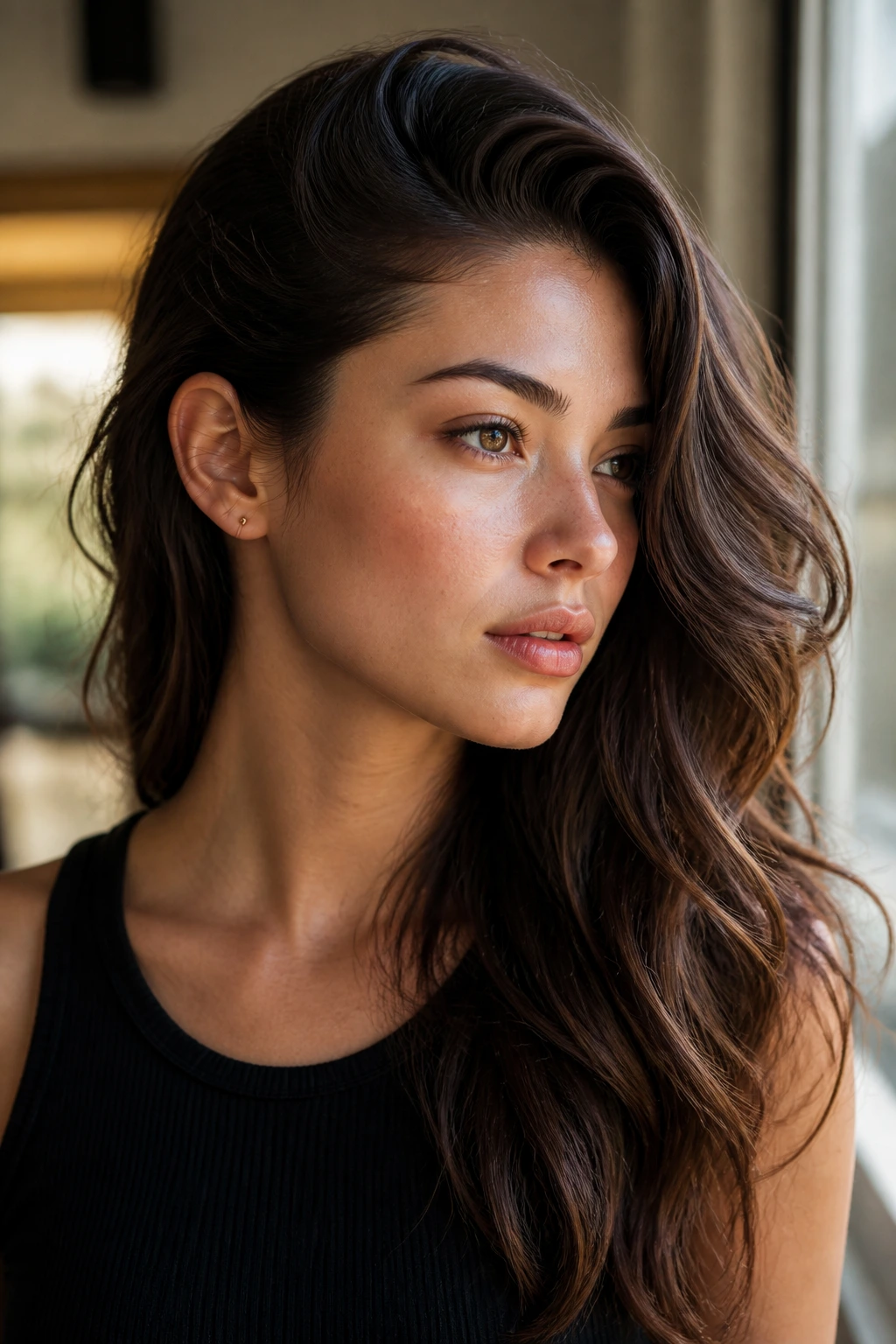
A side-swept wave pattern gives thick straight hair a little asymmetry, and asymmetry is usually kind to heavy density. Tucking one side behind the ear clears the face and lets the other side fall in a stronger line.
The tuck only works if the wave is loose enough to move. Curl away from the face, then brush lightly once the hair cools so the bend softens. A dab of styling cream at the tucked side can keep the curve from popping out.
This is a quiet style, but not a boring one. It makes the hair look intentional without making it look stiff.
16. Bubble Braid Ends with a Wavy Crown
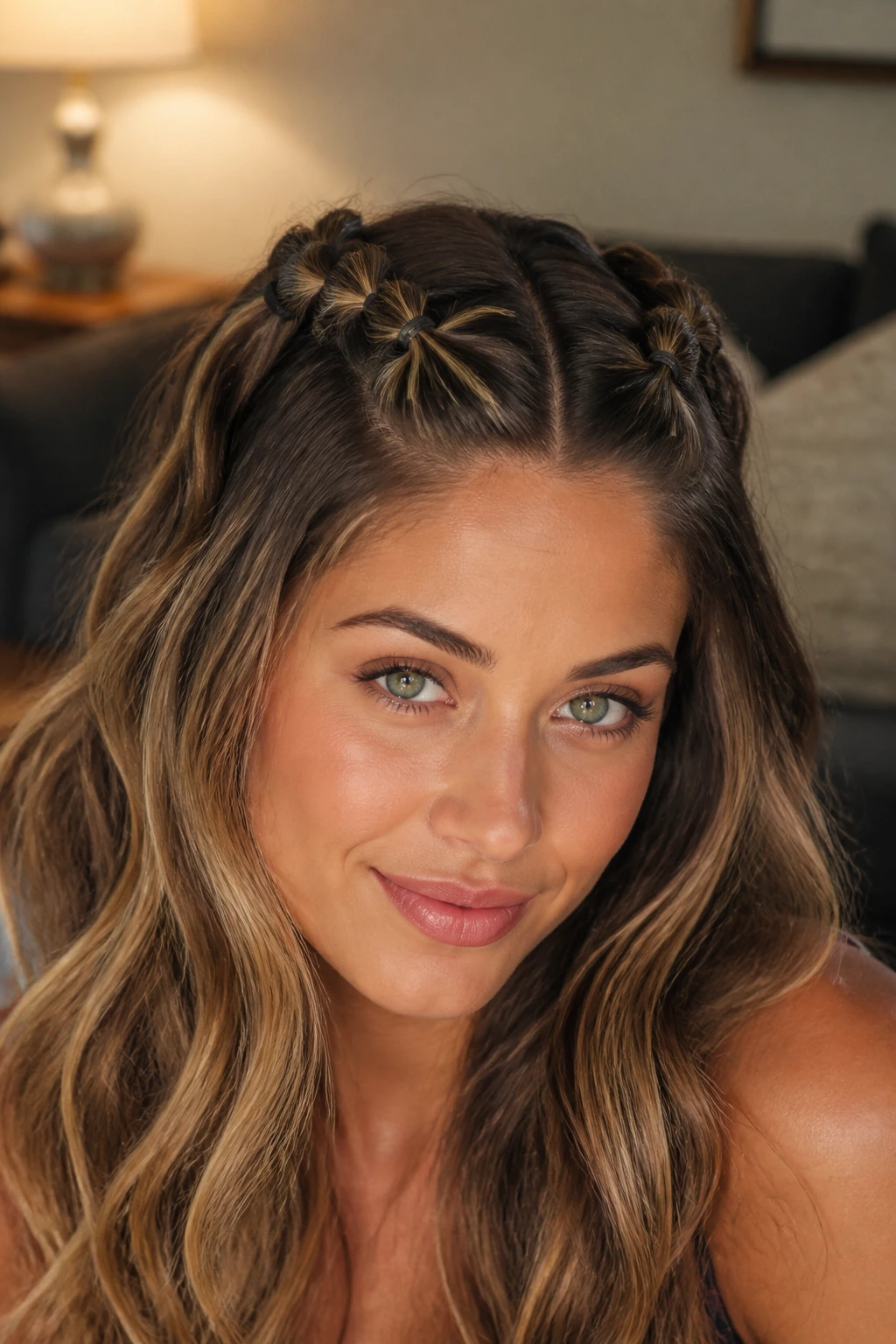
Bubble braids are a smart way to corral thick hair without hiding the wave entirely. Keep the crown loose and wavy, then gather the lower half into a ponytail or braid and add elastics every few inches to create the “bubble” effect.
The contrast is the point. Soft waves near the scalp, structured sections below. On thick hair, the bubbles sit fuller and look better than they do on fine strands, because there’s enough mass to hold the shape.
I’d keep the elastics about 2 inches apart. Too close together and the bubbles start to look cramped; too far apart and the braid loses its rhythm.
17. Brushed-Out Gloss Waves with Soft Ends
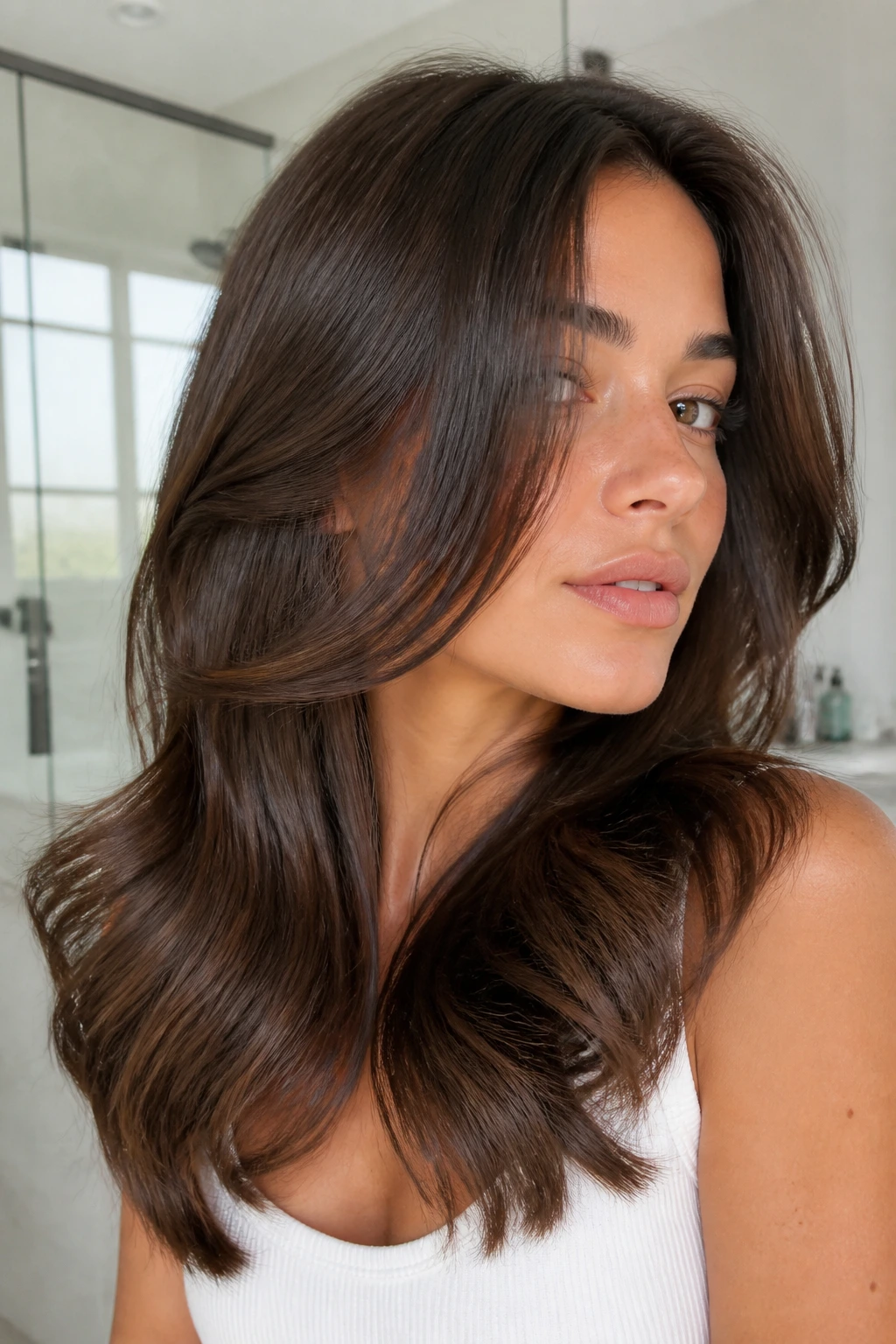
Some beachy waves need to look smooth, not gritty. That’s where a brushed-out gloss finish earns its place. Curl or wave the hair with a larger barrel, let each section cool, then brush it through once so the bends merge into one soft line.
This style likes shine, not salt. Use a heat protectant that leaves the hair soft, then finish with a pea-size amount of serum through the ends and a very light mist of flexible-hold spray. The ends should still move when you turn your head.
Thick straight hair wears this well because the density keeps the gloss from disappearing. The result has more swing than a tight curl and less frizz than a rough beach finish.
18. Waist-Length Mermaid Waves with Invisible Layers
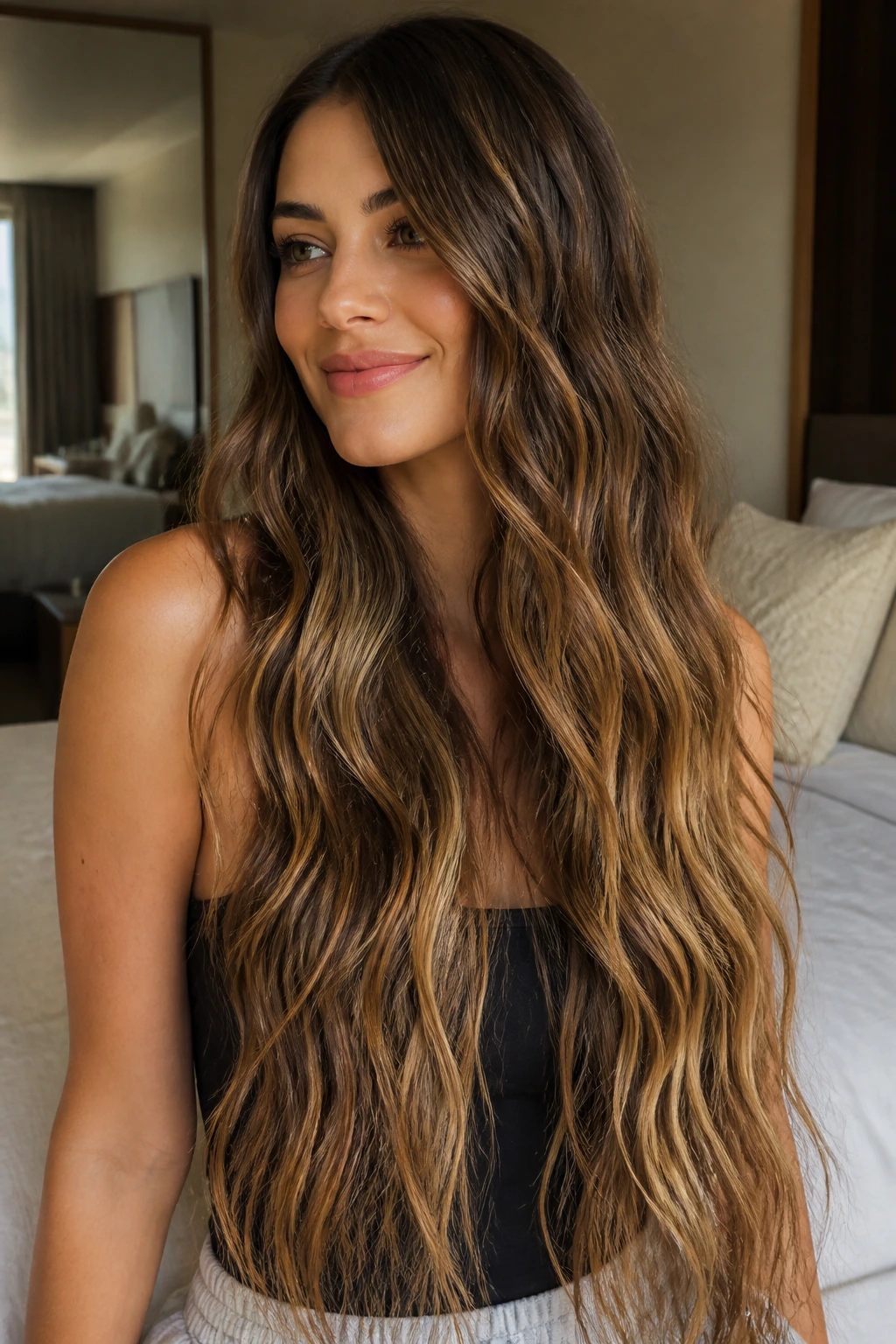
Long, thick straight hair can carry dramatic length if the layers stay hidden. Invisible layers keep the bottom from turning into a blunt wall, and the wave pattern helps the whole shape move instead of dragging.
Use larger sections here. A 1.5-inch barrel or a large wand makes sense because tiny curls will shrink the length and create too much volume at the ends. Keep the first inch near the roots cleaner, then let the wave start lower down.
This style needs patience. Long dense hair takes longer to cool, and if you touch it too soon the waves slide out before they set. Clip a few sections up while they cool if your arms get tired; it’s worth the extra minute.
19. Blunt Shoulder-Length Cut with Salt-Spray Texture
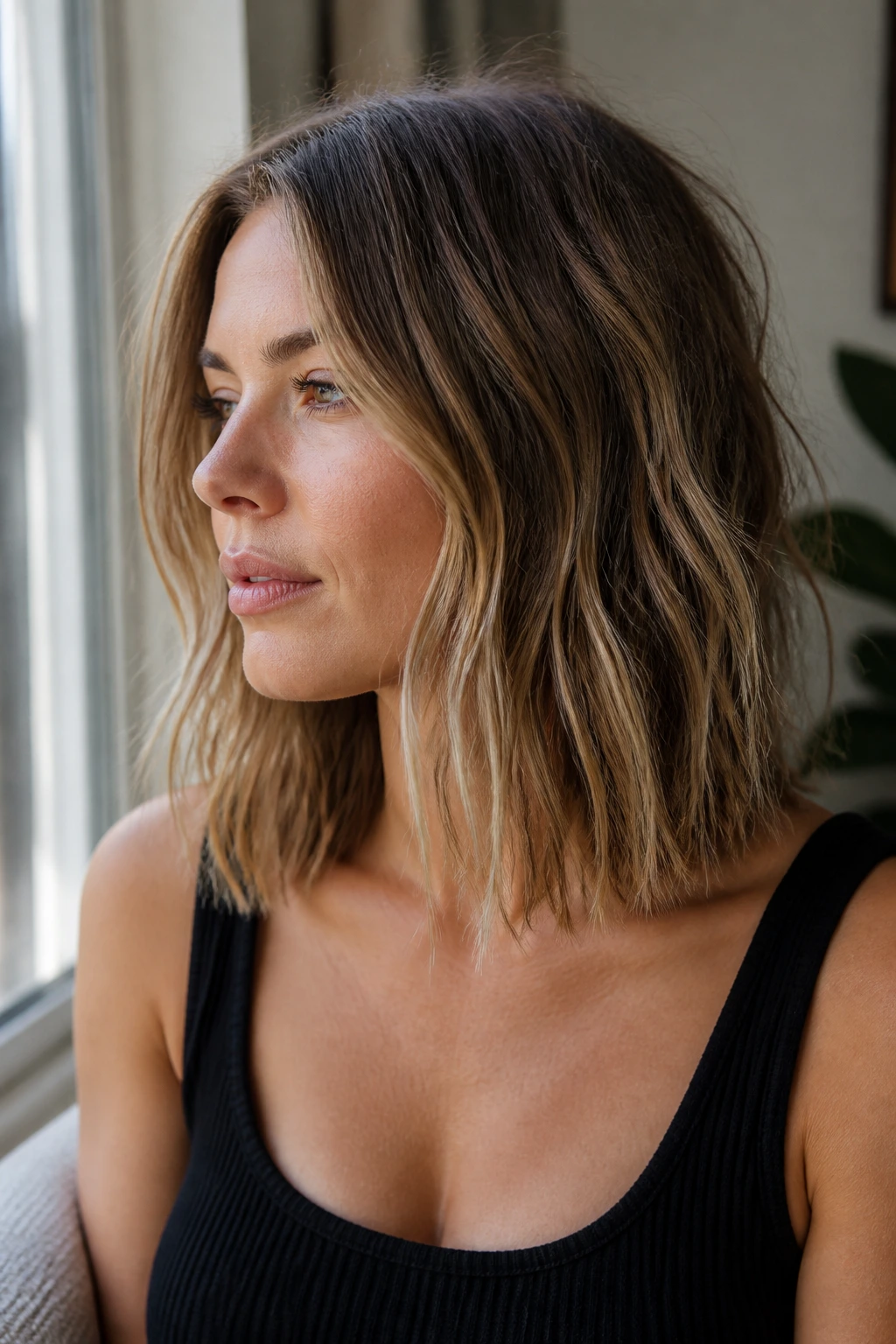
A blunt shoulder-length cut gives thick hair a strong edge, and the beachy wave keeps that edge from feeling harsh. It’s a good mix when you want structure but not heaviness.
Salt spray can work here, but only in a light hand. Mist the mids and ends, scrunch once or twice, then stop. Too much salt spray on thick straight hair can make the surface rough in a way that looks more dry than beachy.
I like this cut for people who want the ends to look clean while the top stays relaxed. The blunt line keeps the hair from fraying out, which matters when the texture is already dense.
20. Second-Day Waves with Woven Pigtail Braids
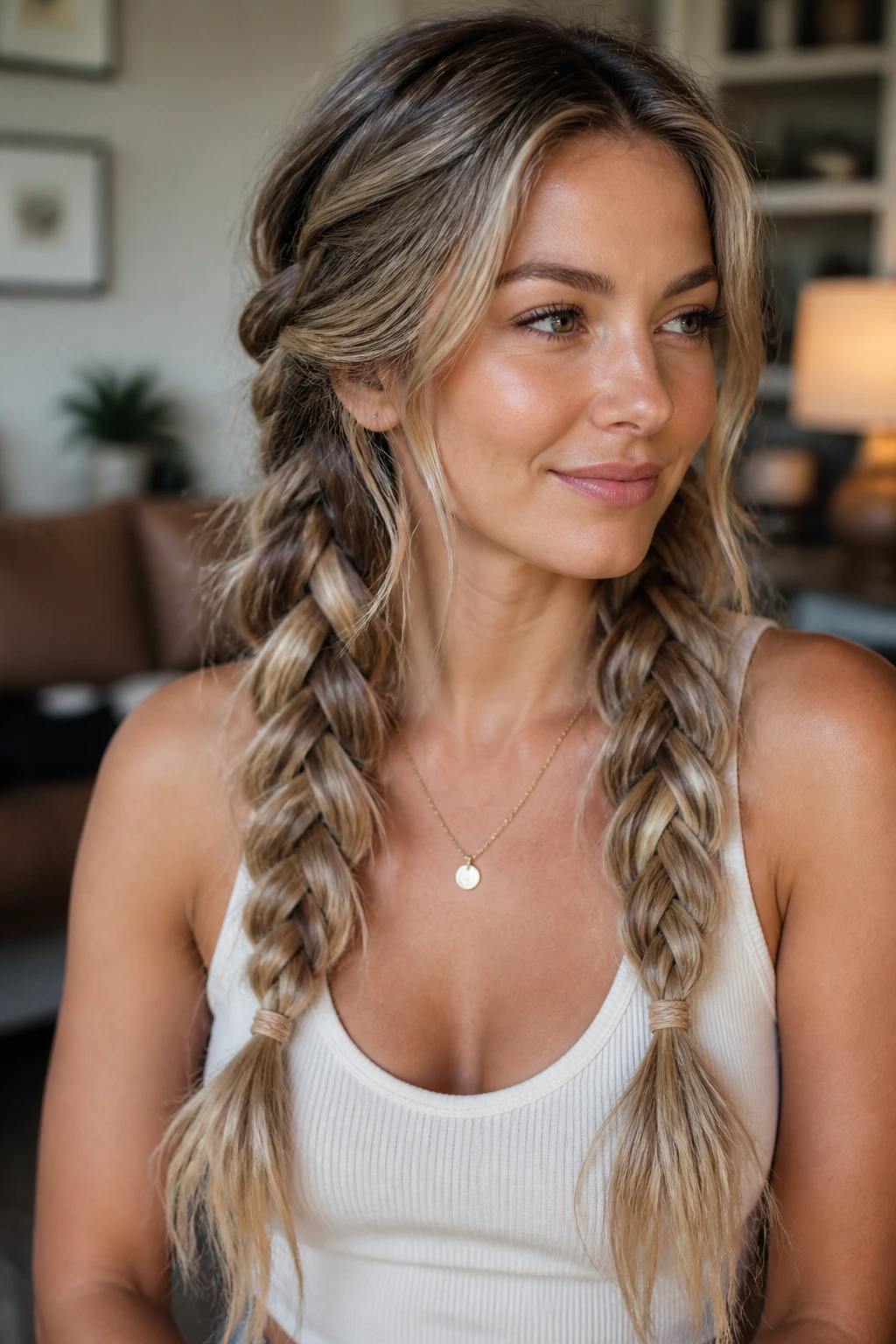
Second-day hair is often better than day-one hair for thick straight strands. There’s a bit more grip, a little less slipperiness, and enough bend left over to braid without the style unraveling in five minutes.
Split the hair into two low sections, braid each side loosely, and leave the ends tied with small elastics. When you take the braids out, the wave looks softer and more scattered than a hot-tool set. A touch of dry shampoo at the roots keeps the scalp from looking shiny.
This version is good when the original wave has flattened but not disappeared. You’re not starting over. You’re just redirecting the texture.
21. Twisted Half-Up Knot with Loose Ends
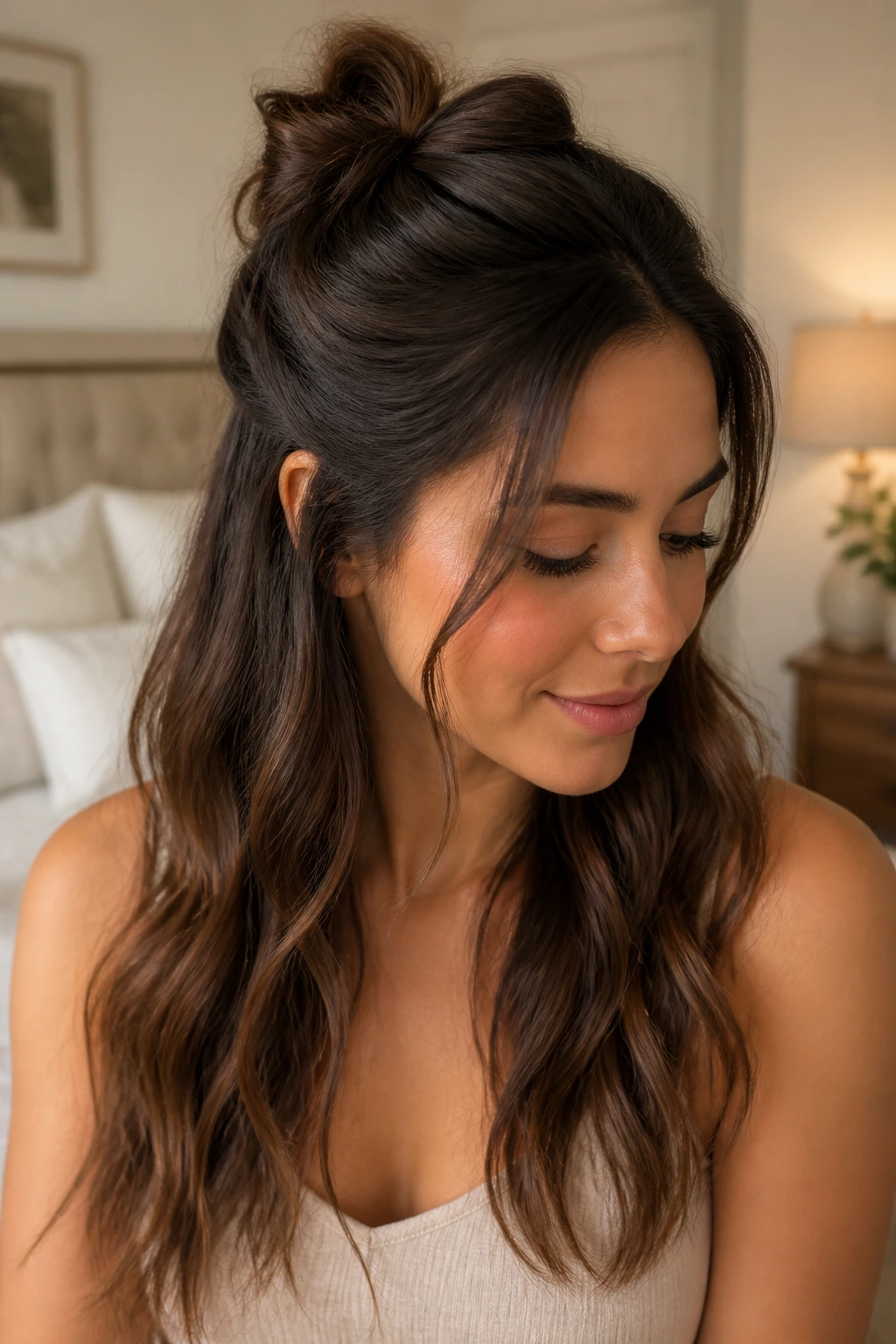
A twisted half-up knot gives thick straight hair a little lift at the crown without taking away the wave below. Twist two front sections back, knot them once, and pin the knot flat so it sits right above the occipital bone.
The loose ends underneath should stay soft and open. If the bottom gets too polished, the knot starts to feel disconnected from the rest of the style. I like a few face pieces bent away from the cheekbones to keep the front from looking sealed shut.
This is a useful in-between look. It works for days when you want the hair up, but not all the way up.
22. Soft Center-Part Waves with Polished Lengths
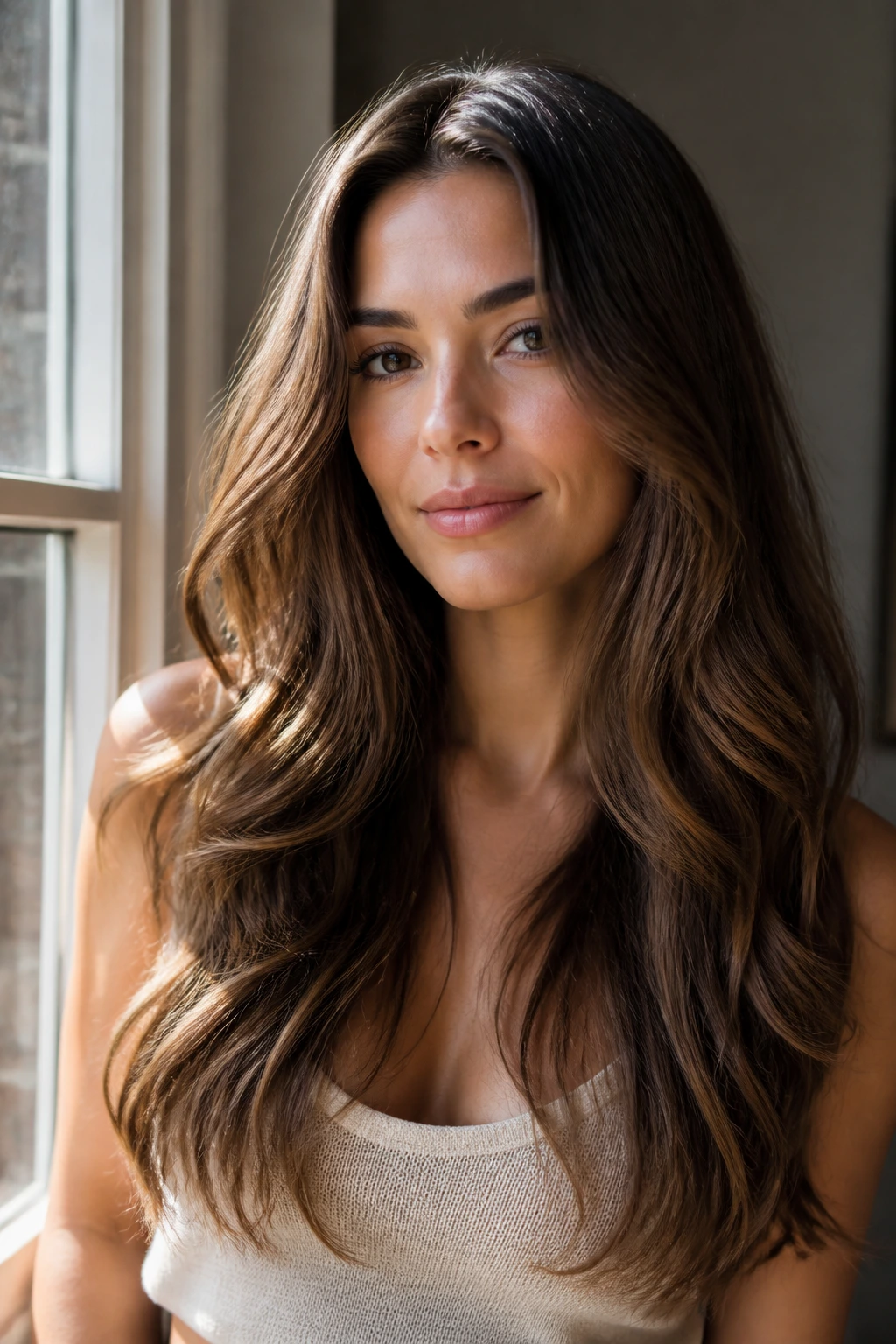
A soft center part can make thick straight hair look calmer and more expensive-looking without needing extra structure. The line keeps the style balanced, and the polished lengths stop the bulk from feeling frizzy.
The trick is in the finish. Use a larger barrel, let the waves cool, then separate them with your fingers instead of a brush. A fine mist of shine spray on the lower half helps the style look smooth, not crunchy.
This is a quieter wave than some of the others in the list. No heavy lift, no obvious styling tricks. Just clean shape and movement.
23. Wind-Swept C-Shape Waves with Chin Layers
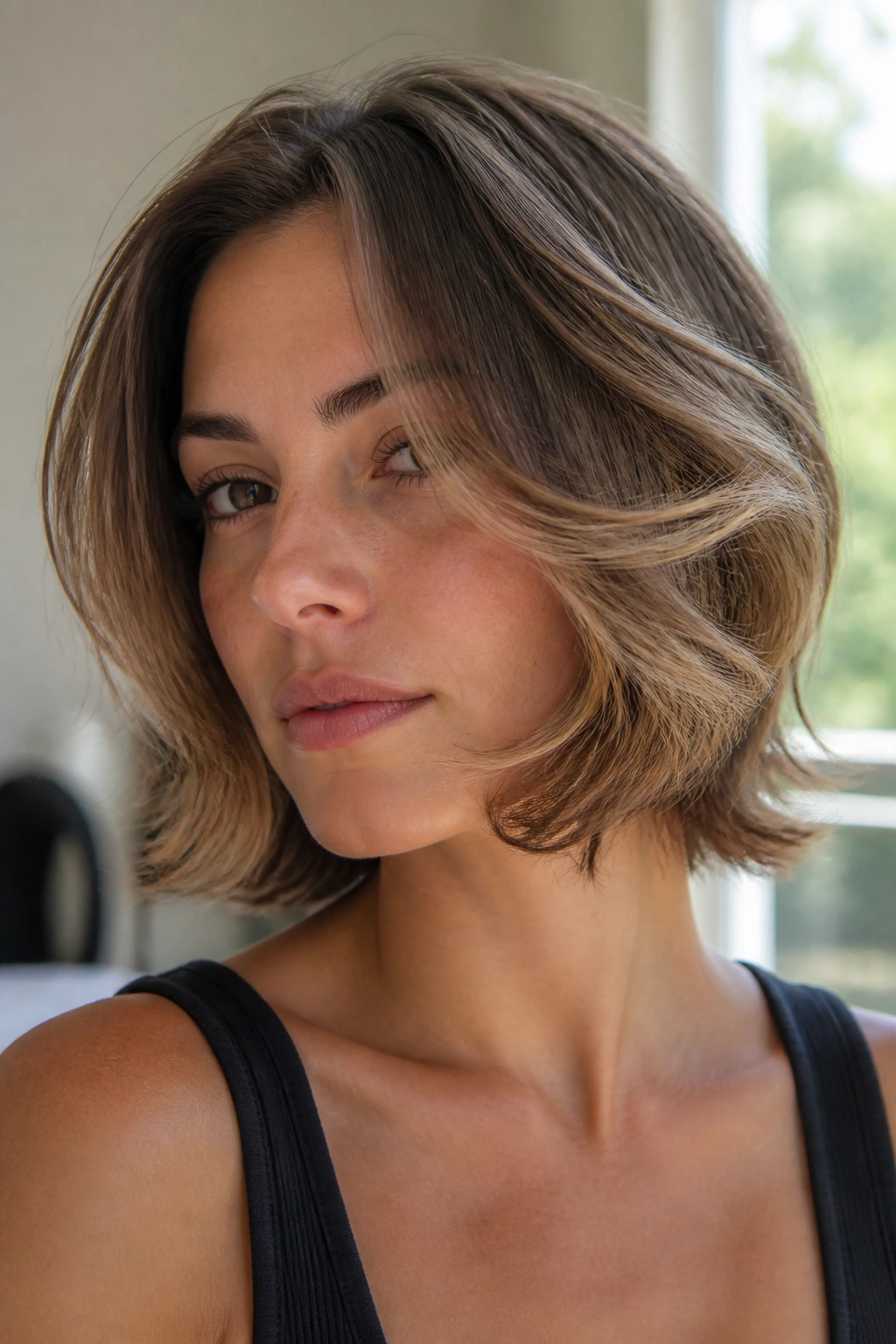
C-shaped waves are especially flattering around the face because they bend inward and then away again, which creates a soft frame. On thick straight hair, that bend helps the front pieces stop looking like solid strips.
Ask for chin-grazing layers if your hair tends to sit heavy near the cheeks. Those shorter pieces catch the wave better and keep the face from disappearing behind the length. A round brush or flat iron can help set that front curve before the rest of the hair gets its loose wave pattern.
This one has a soft, blown-by-the-air feel without needing a full blowout. I’d choose it when the front of the hair needs the most help.
24. Air-Dried Scrunched Waves with Clip Lift
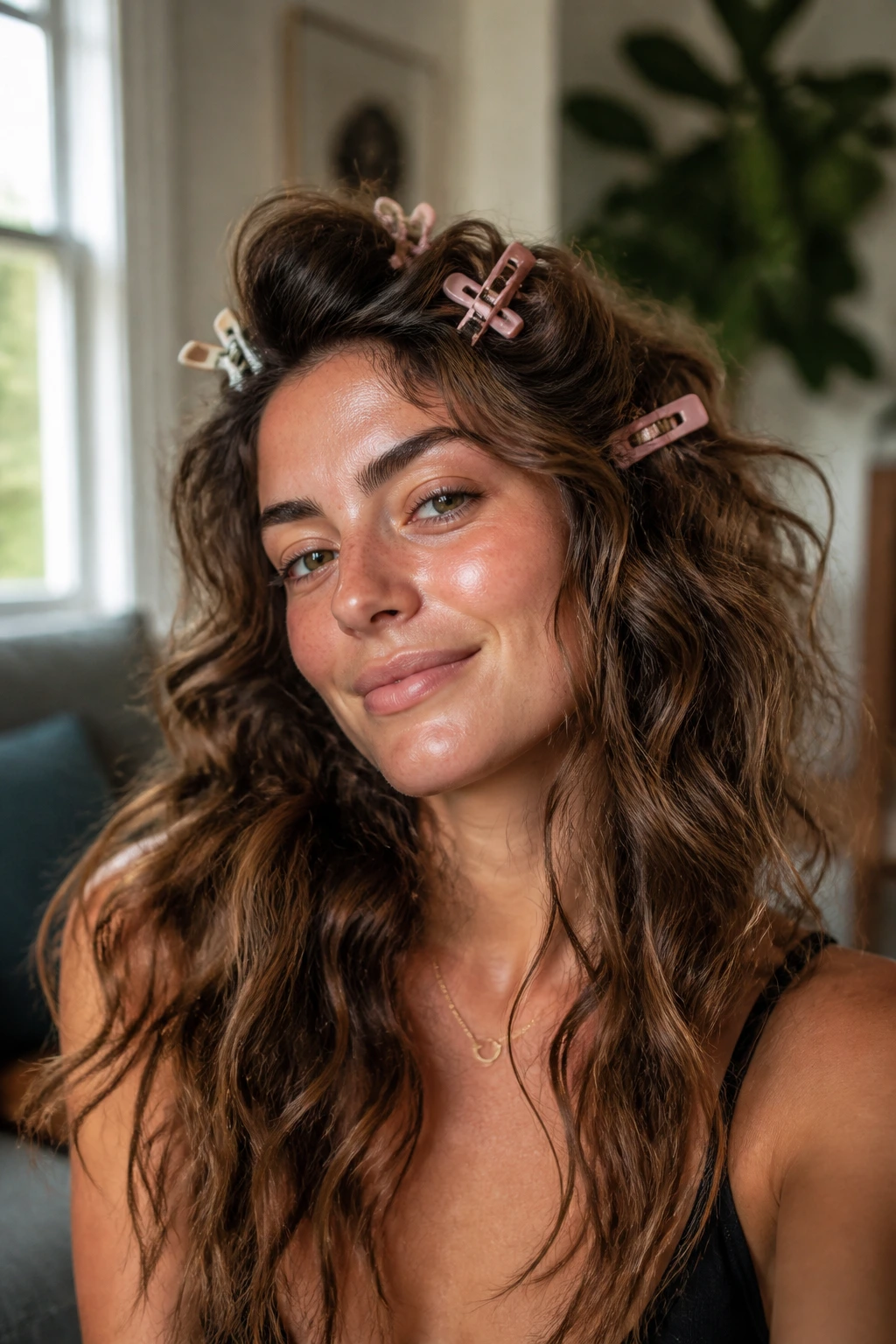
Not every beachy wave needs heat. Thick straight hair can take an air-dry texture look if you give it enough help at the roots and enough patience through the mids.
Work in a light leave-in, a small amount of curl cream or wave lotion, and then clip the roots up in a few places while the hair dries. Scrunch the lengths every 10 or 15 minutes while they’re still damp, then leave them alone. The clips make the crown lift without turning the whole head into frizz.
This is the kind of style that rewards restraint. Touch it too much and you lose the texture. Touch it too little and the roots stay flat.
25. Accessory-First Waves with Barrettes and Ribbon
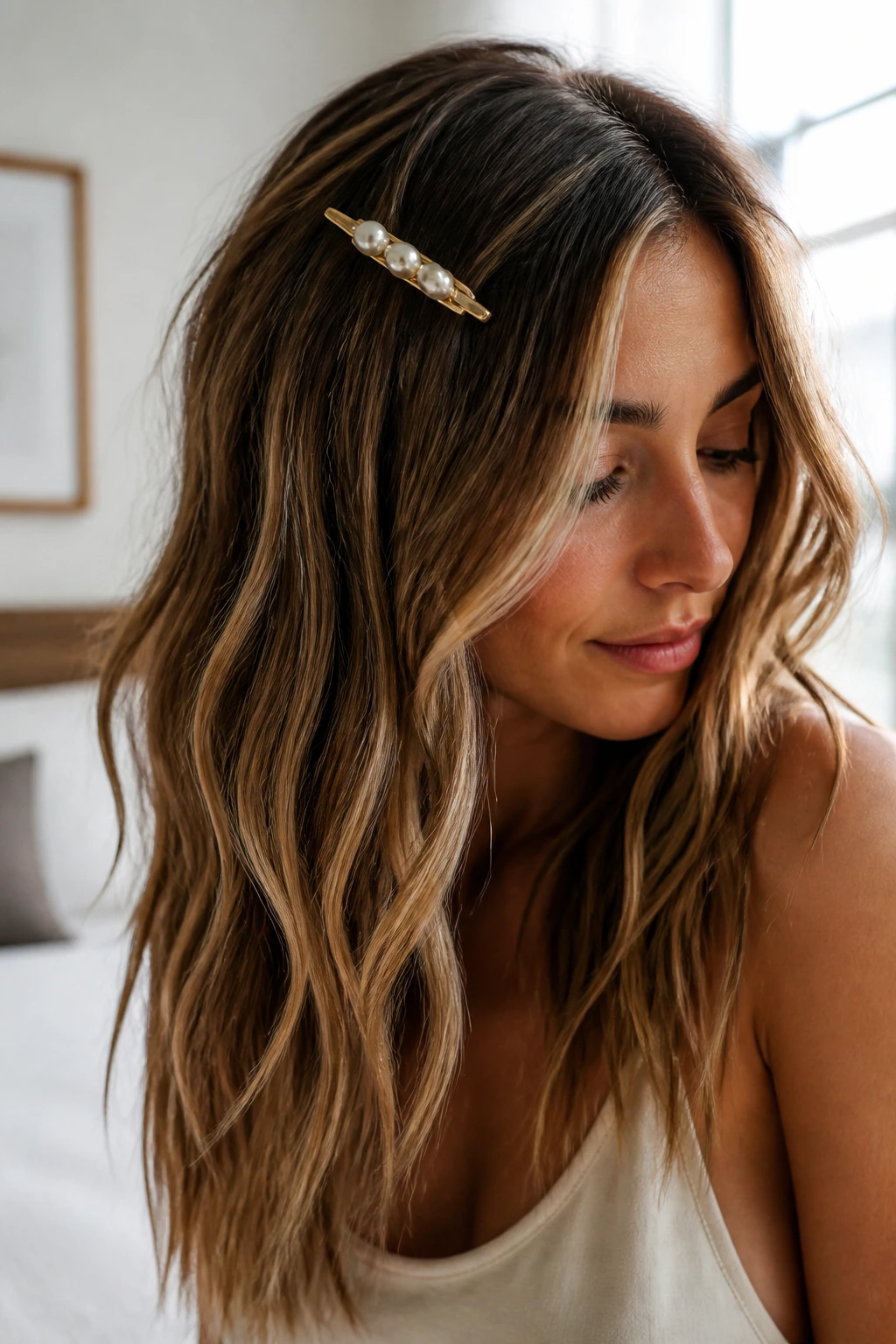
When the wave pattern is simple, the accessory can do the talking. A row of barrettes, a ribbon tied near the nape, or one statement clip on the heavier side of a part can turn basic beachy waves into a finished look.
I’d keep the wave loose and unfussy here. Let the hair move, then choose one accessory and commit to it. Too many pins at once makes thick hair feel crowded, and that is the exact opposite of what beachy waves are supposed to do.
This style is good when you need speed. A few bends, a clean part, one accessory. Done.
Why Thick Straight Hair Keeps Beachy Waves From Going Flat
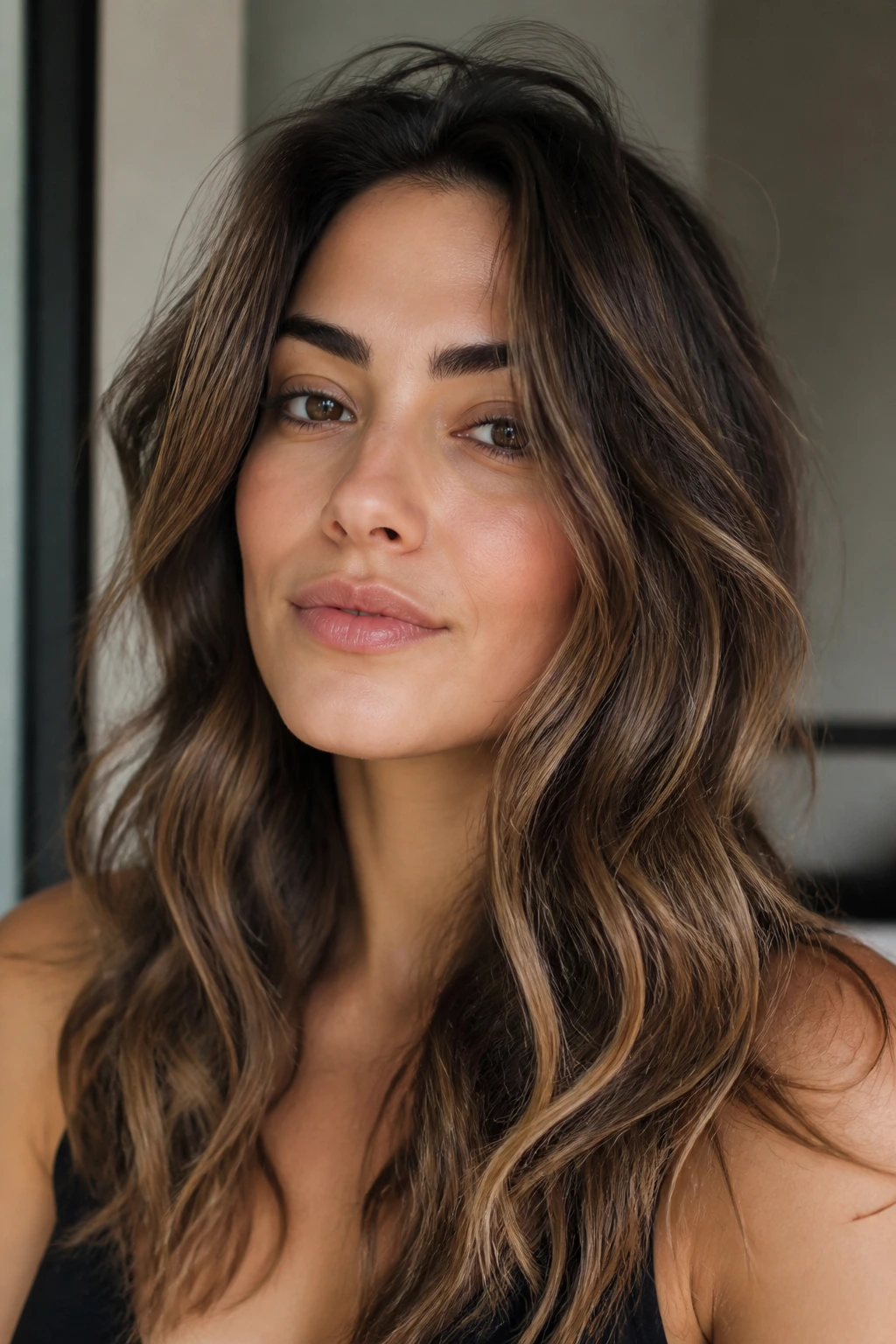
Thick straight hair has a built-in advantage: once it takes a bend, it usually holds on longer than finer hair. The problem is that density also adds weight, and weight pulls waves down faster at the root than most people expect. That’s why the best looks here use a mix of lift, cooling time, and shape around the face.
The cut matters more than the tool. Internal layers give the wave room to move, while blunt ends keep the style from looking stringy. A flat, single-length cut can still work, but it needs a stronger parting plan and usually a softer wave pattern so the ends do not turn into a heavy shelf.
Cooling is the quiet hero. If you touch thick hair before it cools, the bend slips. Clip it, pin it, or leave it alone for a few minutes, and the wave stays visible much longer. That little habit is worth more than buying a fancier iron.
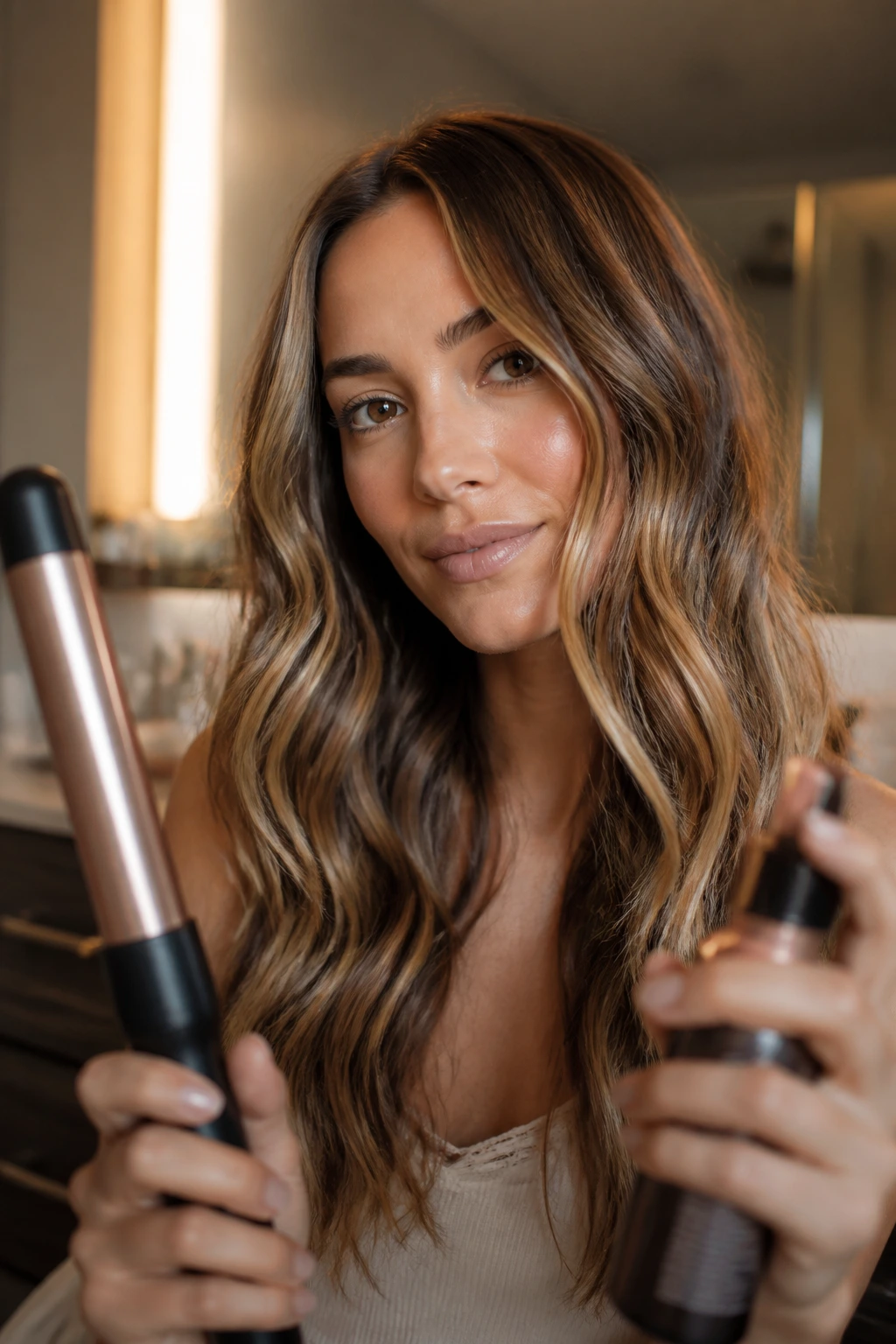
Essential Tools for These Looks
-
1.25-inch curling iron or wand: The safest all-around size for loose beachy bends on thick straight hair.
-
1-inch flat iron: Good for soft S-waves, front pieces, and more polished bends.
-
Heat protectant spray: Keeps hot tools from roughing up the cuticle and leaving the ends dull.
-
Sectioning clips: Thick hair needs clean sections; clips keep the top out of the way while you work.
-
Tail comb: Helpful for making a crisp part and dividing dense hair evenly.
-
Flexible-hold hairspray: Holds the wave without turning it stiff or sticky.
-
Texturizing spray: Adds grip and separation once the waves have cooled.
-
Dry shampoo: A root refresher for day two and a quick fix for flat crown areas.
-
Boar-bristle brush or wide-tooth comb: Use lightly after cooling to soften the pattern without pulling it apart.
-
Silk scrunchie or soft elastics: Easier on thick hair when you’re setting half-up styles, buns, or overnight braids.
Smart Cut and Product Choices
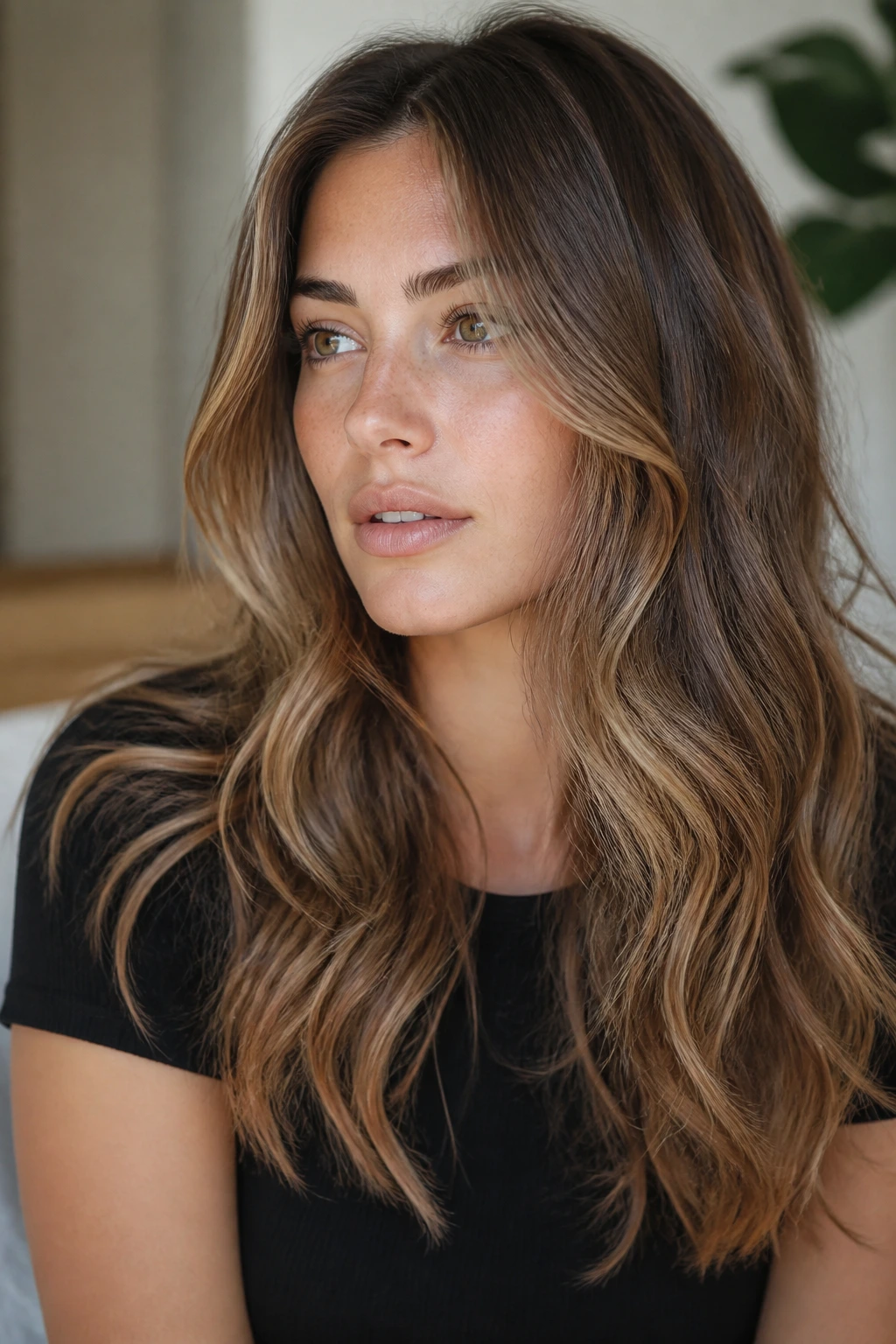
If you’re keeping thick straight hair long, ask for internal layers rather than a bunch of razor-thin pieces at the ends. Internal layers remove bulk where the hair stacks up, but they leave the perimeter strong, which is what makes beachy waves sit neatly instead of fraying out. A blunt hemline can work too, but only if you’re happy to spend a little more time with the iron and the brush.
For products, choose hold that feels flexible, not sticky. A mousse at the roots gives lift before blow-drying, and a texturizing spray through the mids helps the waves separate once they cool. Heavy oils and rich creams belong mostly on the ends; if they get near the crown, the style collapses faster than it should.
Barrel size matters more than people think. Long, thick hair usually likes a 1.25-inch or 1.5-inch barrel. Shoulder-length cuts often behave better with a 1-inch tool, especially if you want the bend to stay loose rather than shrinking into something tighter than you planned.
How to Make the Texture Last Through the Day
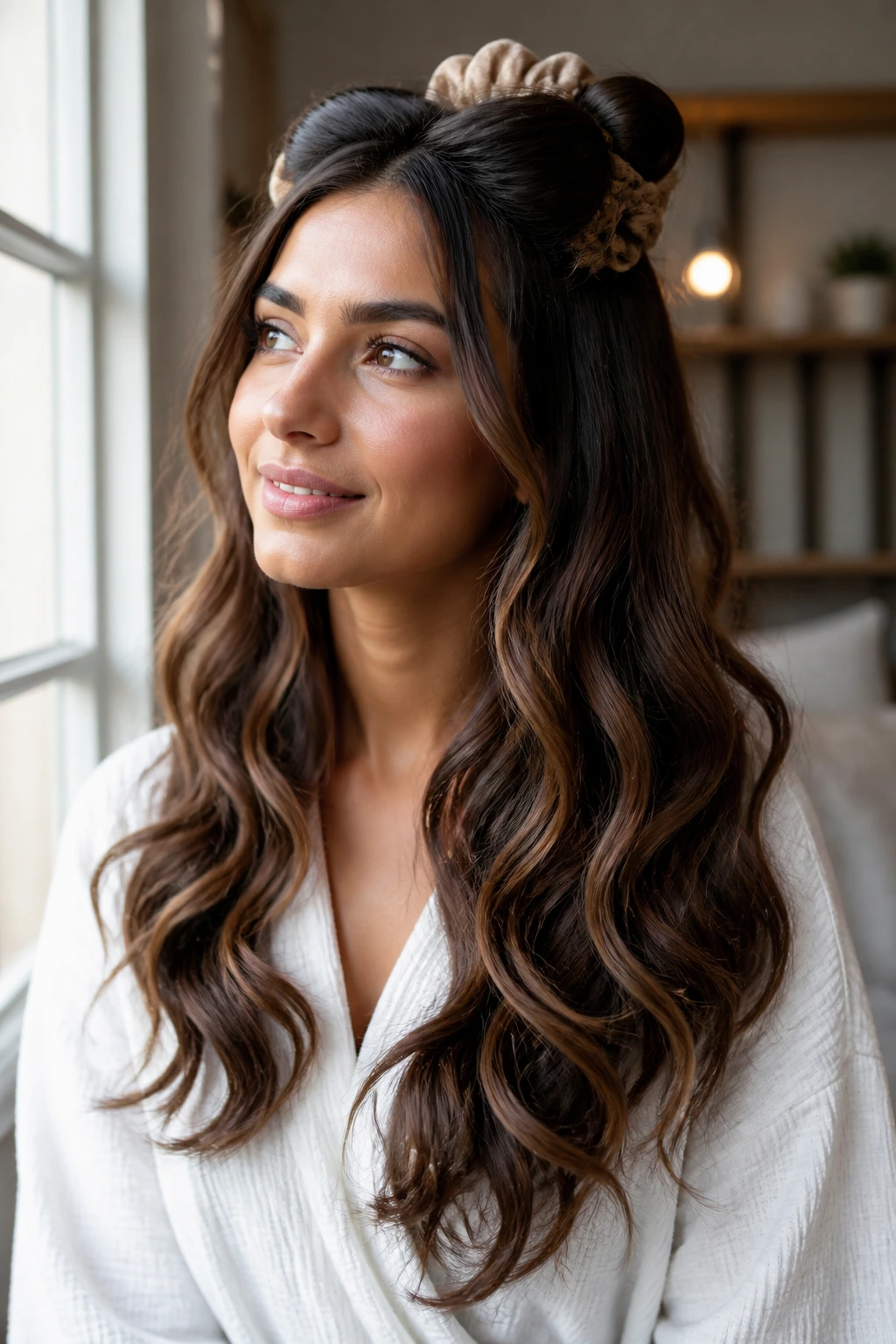
Prep: Start with hair that is fully dry and slightly “lived in,” not freshly washed and silky. A little natural grip helps the wave hold.
Section Size: Work in 1- to 1.5-inch sections. Bigger chunks waste time and leave the middle under-styled, which is why the wave disappears at the first turn of the head.
Cooling Time: Clip each curl or bend until it feels cool to the touch. Thick hair holds shape better after it sets, and that extra pause is the difference between a style that lasts and one that flattens before lunch.
Finish: Use a light mist of flexible hairspray from 8 to 10 inches away. Spray too close and you get wet spots. Spray too much and the wave loses its movement.
Refresh: If the roots puff up later in the day, use dry shampoo at the scalp, not the lengths. Then lift the roots with your fingers instead of brushing through the whole style and starting over.
Common Mistakes That Make Thick Hair Lose Its Shape
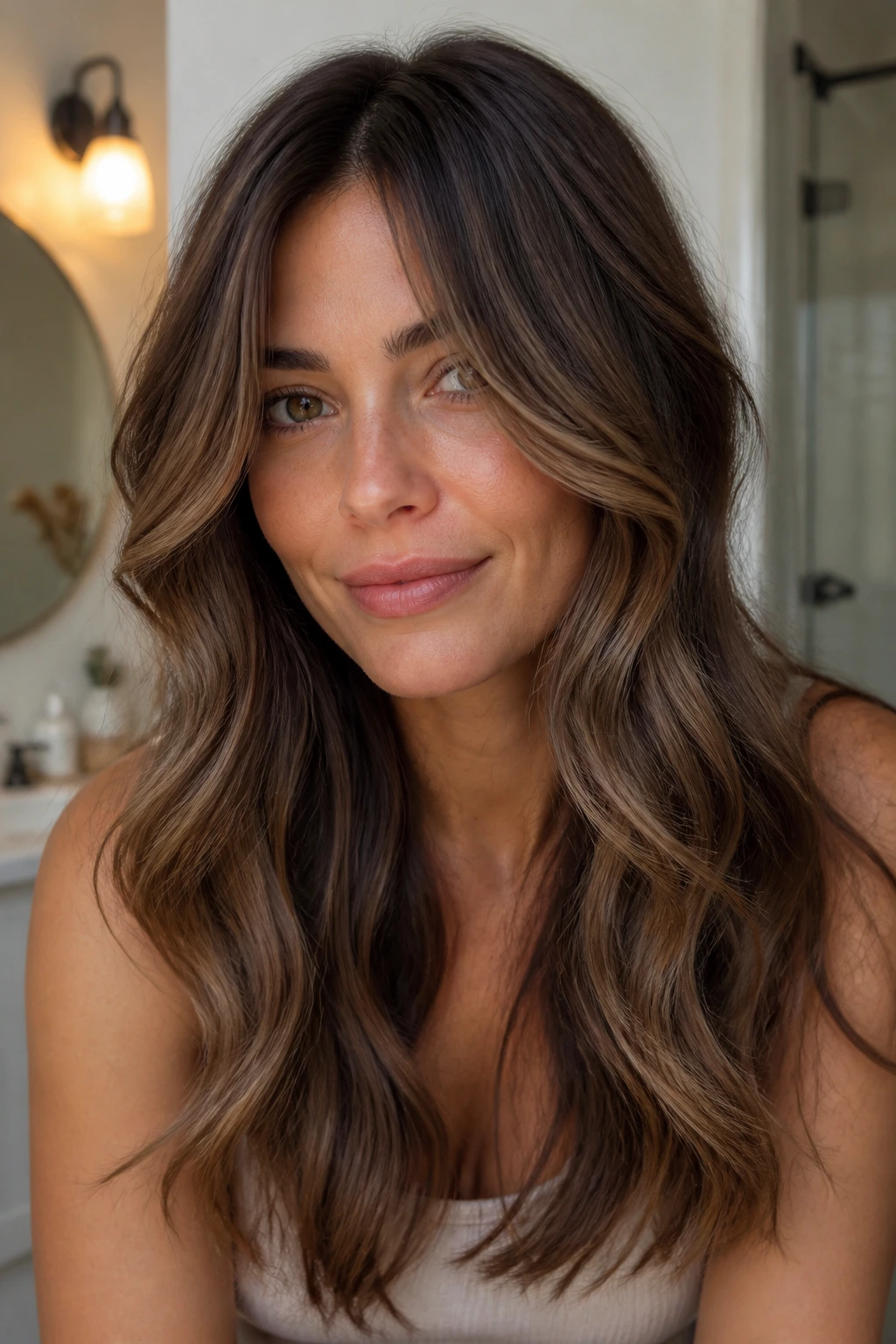
The first mistake is curling every section the same way. Uniform curls look too set on thick straight hair, and once they relax, they can blur into one wide puff. Alternate directions, leave the ends a little straighter, and the wave reads as softer from the start.
Another problem is too much product near the roots. Thick hair often tempts people into adding more spray, more cream, more oil. The result is flat at the scalp and greasy at the crown. Keep rich products on the lower third and use lighter hold products higher up.
Skipping the cooling step is a classic fail. Hot waves are fragile waves. If you brush or finger-comb them too soon, the bend falls apart and the hair gets fuzzy instead of beachy.
And yes, over-thinning can backfire. If a stylist removes too much weight from the ends, thick straight hair can look wispy and uneven once it’s waved. Better to ask for controlled internal layers than to carve away the perimeter.
Variations and Alternate Ways to Wear the Same Wave Pattern
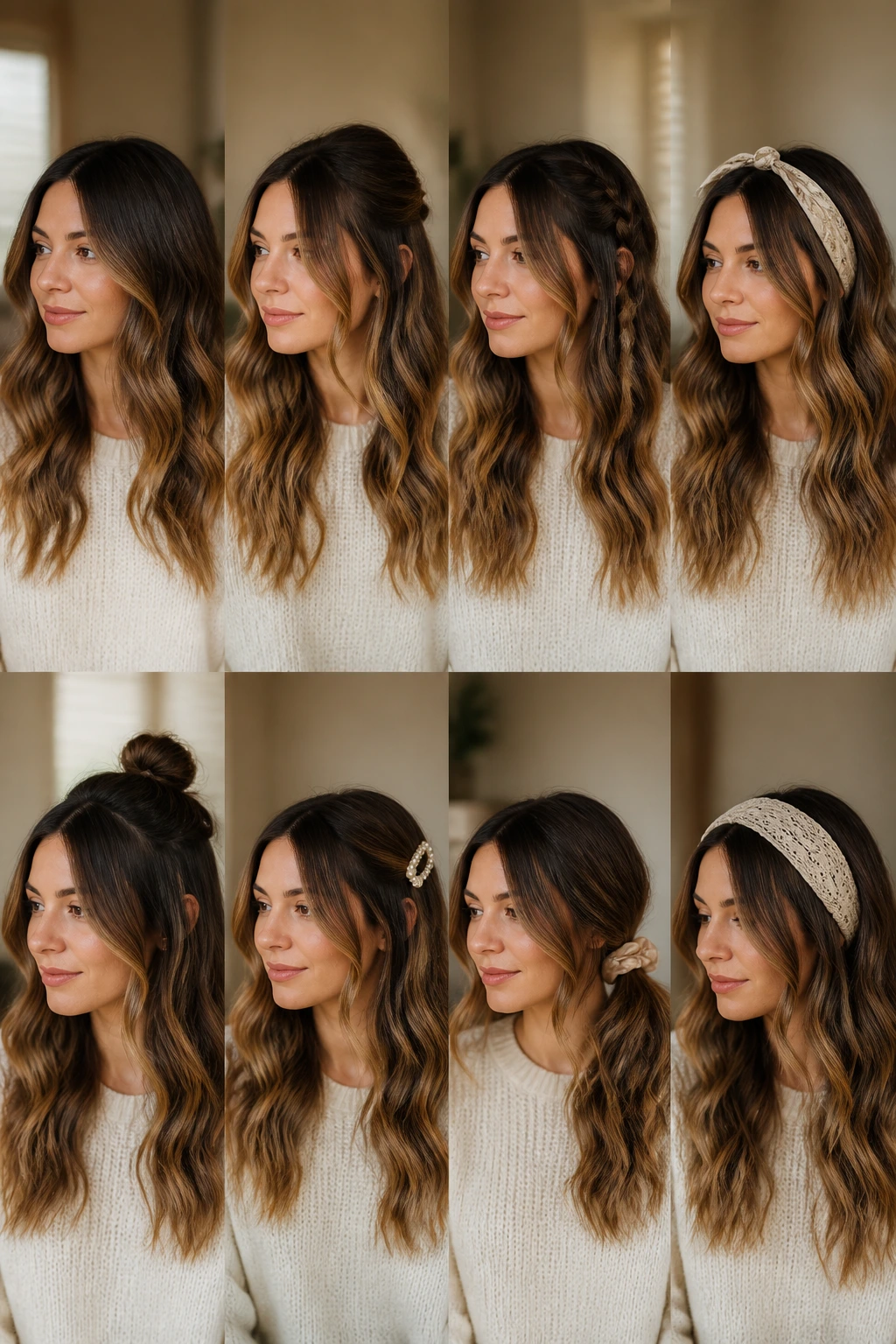
Heatless Rope-Braid Set: Twist damp hair into two or four loose ropes and let it dry fully before releasing. The wave comes out softer and more irregular than a heat set, which works well on thick hair that already has shape.
Flat-Iron S-Waves: Press the iron in a soft bend from side to side instead of clamping and curling. This method gives a slightly more polished beach wave and works best on shorter to mid-length hair.
Glossy Brush-Out Waves: Curl the hair, let it cool, then brush it through for a smooth finish. Add shine spray only at the ends so the hair keeps movement without looking rough.
Root-Lift Blowout Waves: Blow-dry the crown with a round brush, then wave only the mids and ends. This keeps the top airy and makes the style look fuller without adding extra curl.
Accessory Switch-Up: Take any of the loose-wave looks above and change the mood with a barrette, ribbon, or side pin. Thick hair holds accessories well because there’s enough hair for the clip to grab without sliding.
Maintenance, Nighttime Care, and Next-Day Refresh
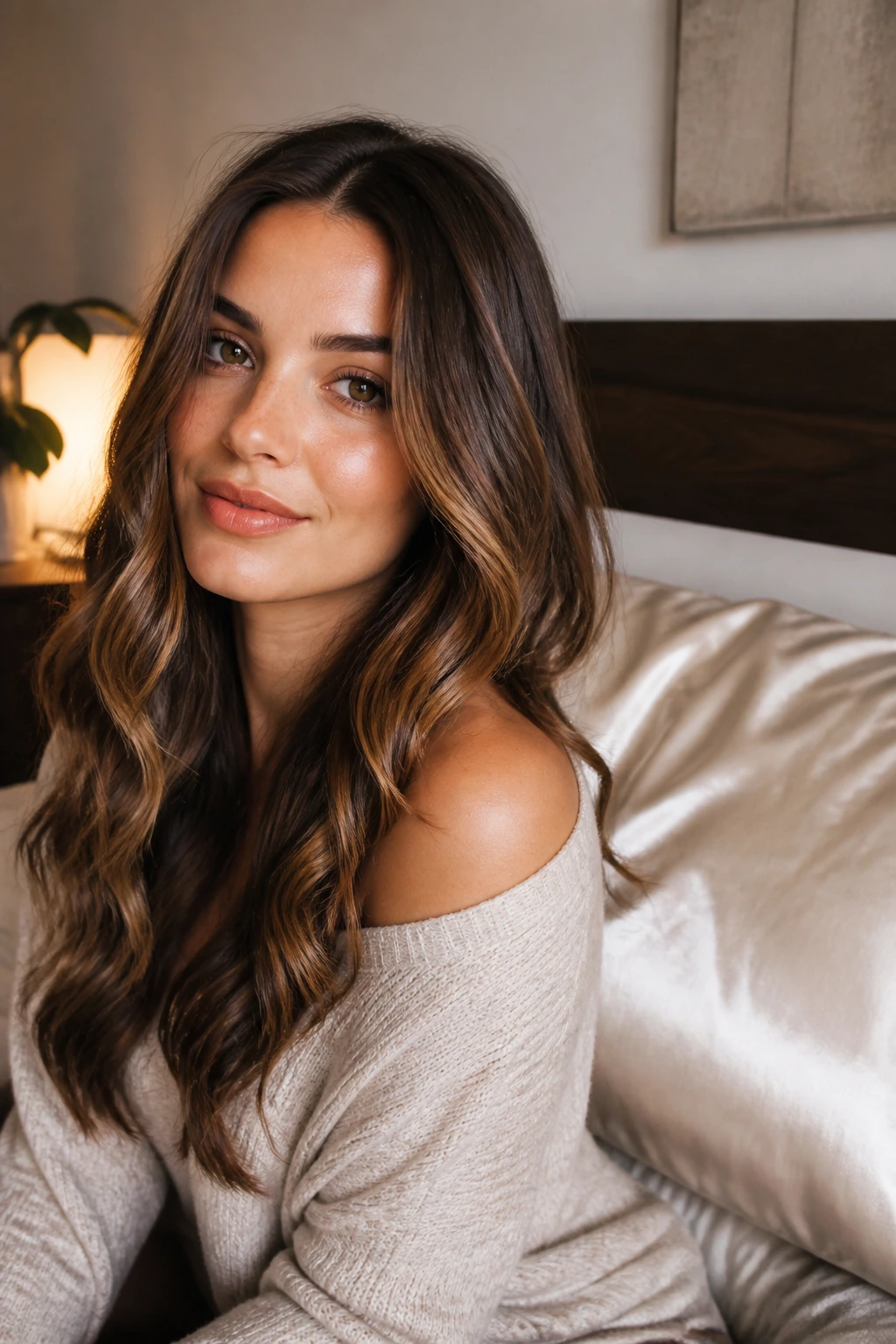
Beachy waves on thick straight hair usually hold for 2 to 3 days if you treat them well. After that, the roots tend to need a wash or a deeper refresh because product buildup starts weighing the shape down. If your scalp runs oily, you may need to reset sooner. If it runs dry, you can often stretch the style longer.
At night, a loose braid, a low bun, or a soft twist keeps the pattern from getting crushed. A silk pillowcase helps too. It cuts down on friction, which matters more than people think when the hair is dense and prone to surface frizz.
For the morning refresh, mist the mid-lengths lightly with water or a wave spray, scrunch once, and hit the roots with dry shampoo if needed. If one side went flat, rewave only that section rather than restarting the entire head. That saves time and keeps the finish from looking overworked.
Every week or two, use a clarifying shampoo if texture sprays and dry shampoo start stacking up. Thick hair can hide buildup for a while, then suddenly feel heavy and dull. When that happens, the wave pattern usually improves the same day you wash it out.
Questions People Ask About Thick Straight Hair and Beachy Waves
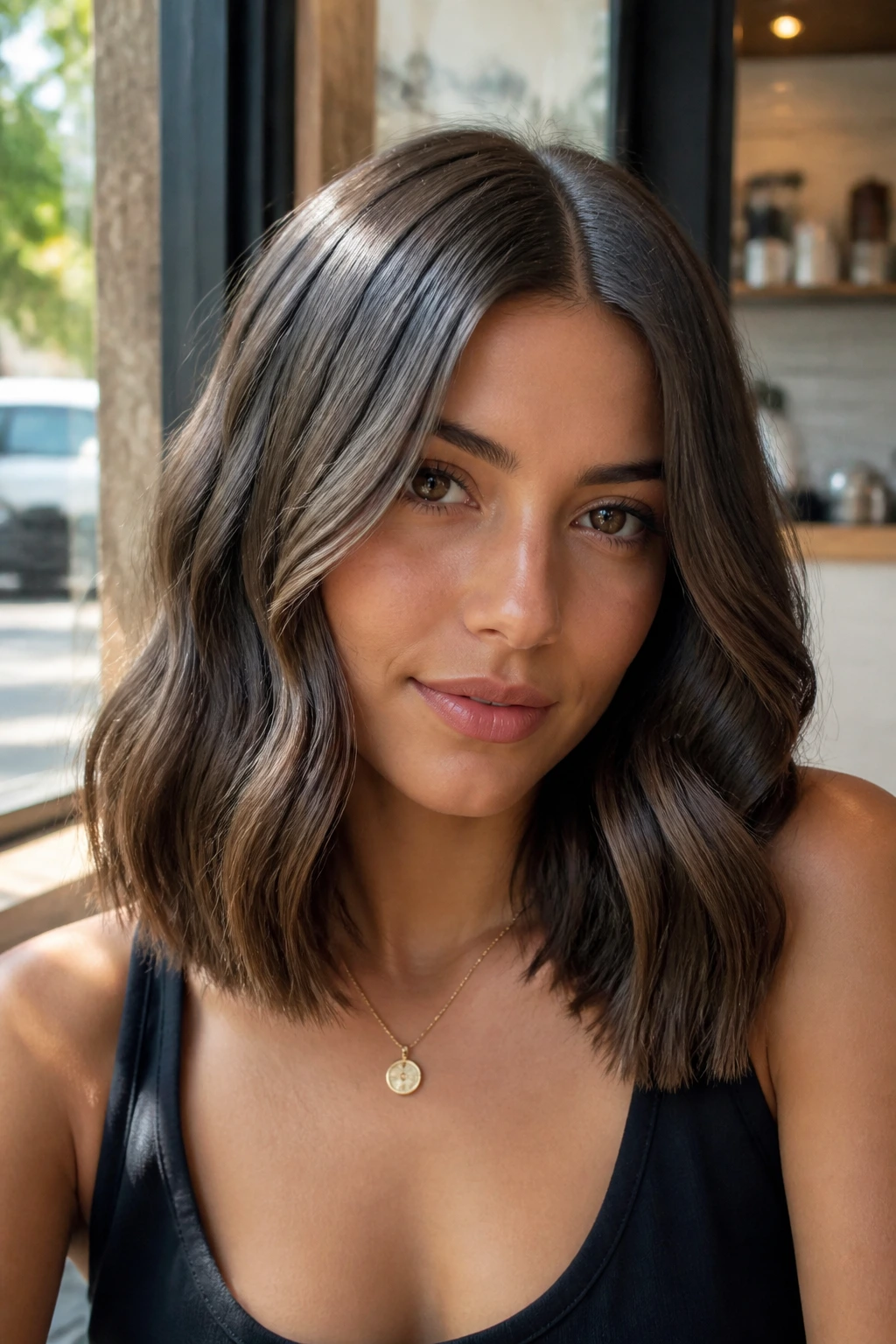
What barrel size works best for thick straight hair?
A 1.25-inch barrel is the safest all-around pick. If your hair is very long, 1.5 inches gives a looser bend; if it’s shoulder length, 1 inch usually gives better control.
Can beachy waves work without heat on thick straight hair?
Yes, but the set needs more patience. Rope braids, loose plaits, or twist sets work best when the hair dries fully before you take them down.
Should I curl away from the face or alternate directions?
Do both. Curl away from the face on the front pieces so the shape opens up, then alternate directions through the rest of the head so the wave doesn’t turn into one big repetitive pattern.
Why do my waves fall so fast?
Usually because the hair was touched before it cooled or too much product was added at the root. Thick straight hair can hold a bend, but it still needs a set time.
Is a blunt cut bad for beachy waves?
Not at all. A blunt cut can look excellent with beachy waves, especially if the finish is brushed out and the ends stay clean. It just needs a little more shaping around the face.
How do I stop the crown from going flat?
Use mousse at the roots before drying, clip the crown while it cools, and avoid heavy oils near the part. That combination helps the top stay lifted longer.
Can I sleep on the waves and wear them again tomorrow?
Yes. A loose braid or low bun plus a silk pillowcase usually keeps enough shape for a next-day refresh. You may need to touch up the front pieces, but the whole head usually won’t need a full reset.
What if my hair gets frizzy instead of wavy?
The bend is probably too tight, the product is too heavy, or the hair was brushed too early. Loosen the curl pattern, use less product, and wait until the hair is cool before separating it.
The Wave That Makes Thick Hair Easier to Wear
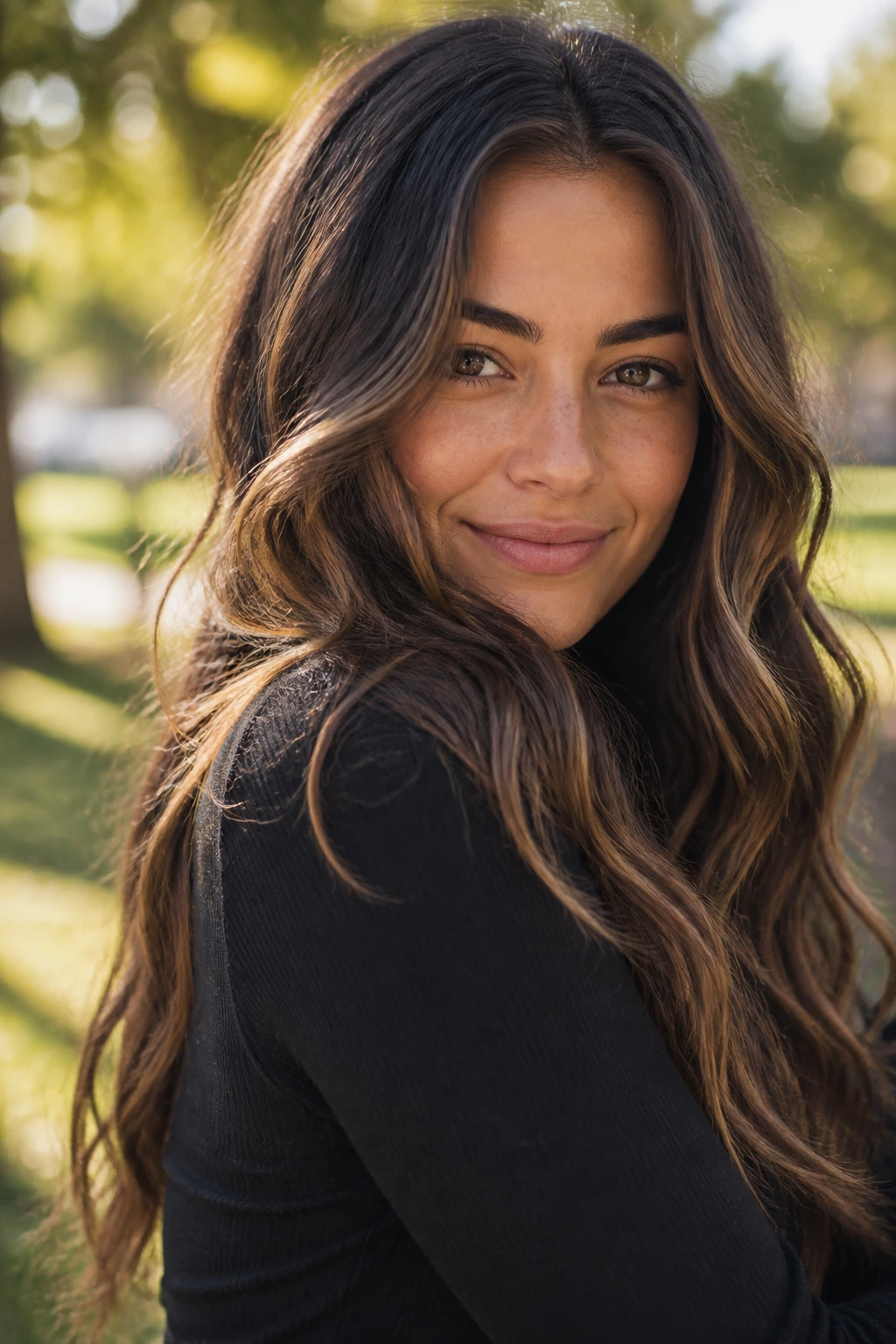
Thick hair doesn’t need to be tamed into submission. It needs shape that respects its weight. That’s why beachy waves work so well here: they soften the density without stripping away the fullness people spend time trying to build.
Pick one look from the list and wear it two or three times. The hair will tell you fast whether it likes a blunt line, a loose layer, a side part, or a clipped-up top. Once you find the one that sits right, the rest gets easier—and that’s the part worth keeping.