



The mistake most people make with wavy, thinning hair is trying to hide it with length. That usually backfires. The ends get wispy, the crown lies flatter, and the whole shape starts to feel more like a curtain than a haircut.
Caramel highlights can help, but they’re not the whole story. The right cut does the heavy lifting: it keeps the perimeter looking solid, lets the waves bend without collapsing, and places lighter ribbons where the hair naturally moves. Done well, caramel doesn’t read as stripey color; it reads as depth, warmth, and the illusion that there’s more hair than there actually is.
That’s why this particular mix of shape and color matters so much. Wavy hair already gives you texture. Caramel highlights add contrast without the harshness that can make fine hair look separated into little pieces. Put the two together with the right cut, and you get softness at the ends, lift at the roots, and a finish that doesn’t need a mountain of styling product to stay alive.
Why These Wavy Haircuts Work Better Than Chasing More Length
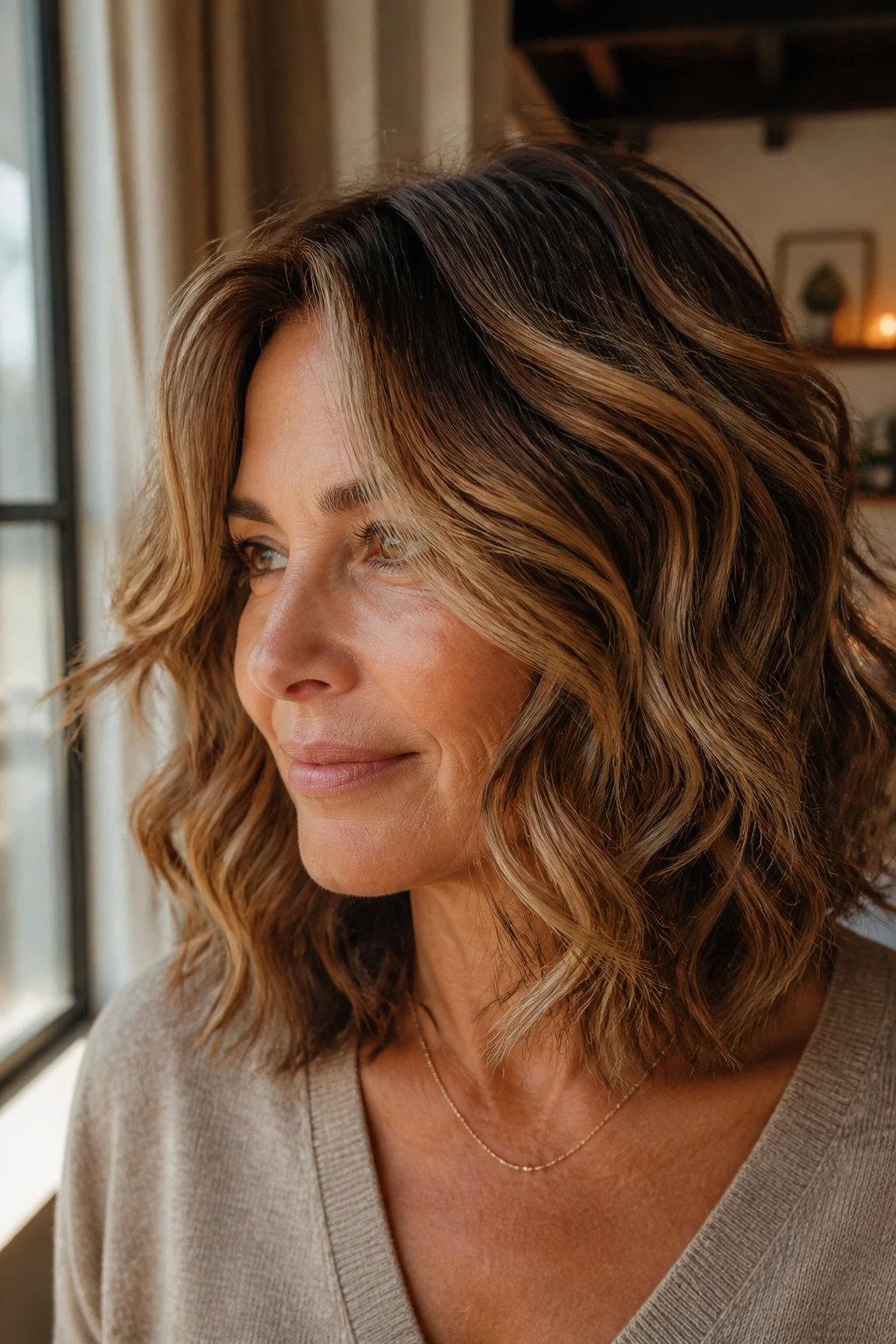
-
The perimeter stays heavier: A fuller bottom line makes thinning hair look denser from the front and the side, which matters more than inches past the shoulders.
-
Caramel adds visual thickness: Warm brown-gold ribbons break up flat sections and make each wave read as a strand of its own instead of a see-through sheet.
-
The crown gets room to lift: Shorter shapes and smart layering stop the top from being dragged down by too much length.
-
Waves do the styling for you: A good wavy haircut doesn’t fight the bend pattern; it lets the texture support the shape so you don’t have to force volume with a curling iron.
-
The grow-out looks calmer: Soft caramel highlights and lowlights blur better than harsh blonde streaks, so the cut stays neat between salon visits.
1. Collarbone Lob with Soft Ends
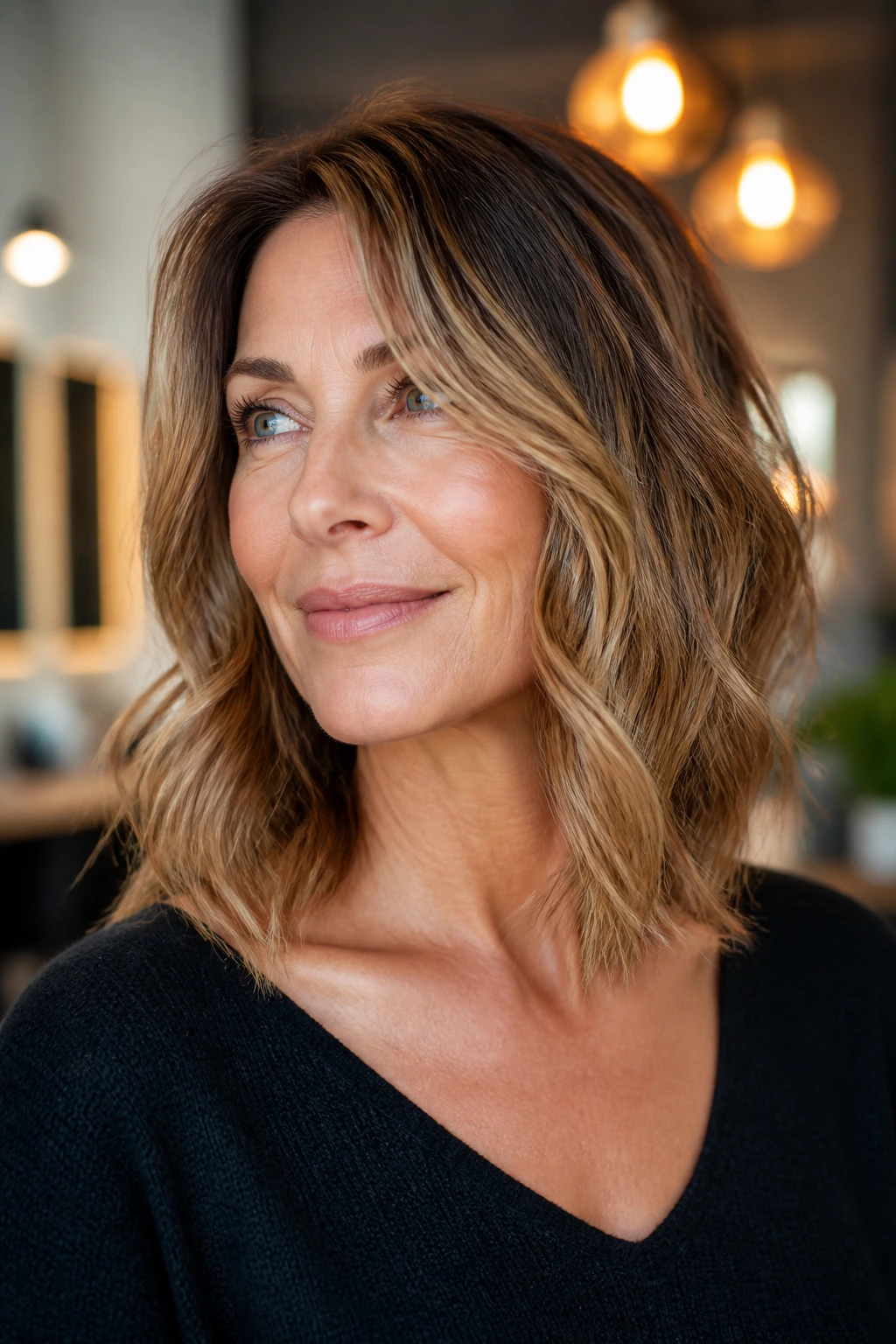
The collarbone lob is the cut I reach for first when someone says, “My waves are there, but my hair looks thin.” It keeps enough length to feel versatile, yet the ends sit in a solid line that doesn’t go stringy by lunch. Add caramel highlights through the mid-lengths and around the face, and the wave pattern starts to look thicker because the eye keeps landing on the bends.
What Makes It Work
The lob sits at that useful spot right around the collarbone, where hair has enough weight to hang well but not so much that it drags the crown flat. Ask for soft point-cut ends rather than a blunt chop that looks harsh on wave patterns. That little bit of softness keeps the line modern without turning the bottom into frayed fringe.
Caramel highlights should be painted in wider, softer ribbons, not tiny zebra stripes. The waves will break up the color for you. I like this cut on anyone who wants movement without the commitment of a short bob.
2. Chin-Grazing French Bob with a Side-Swept Bend
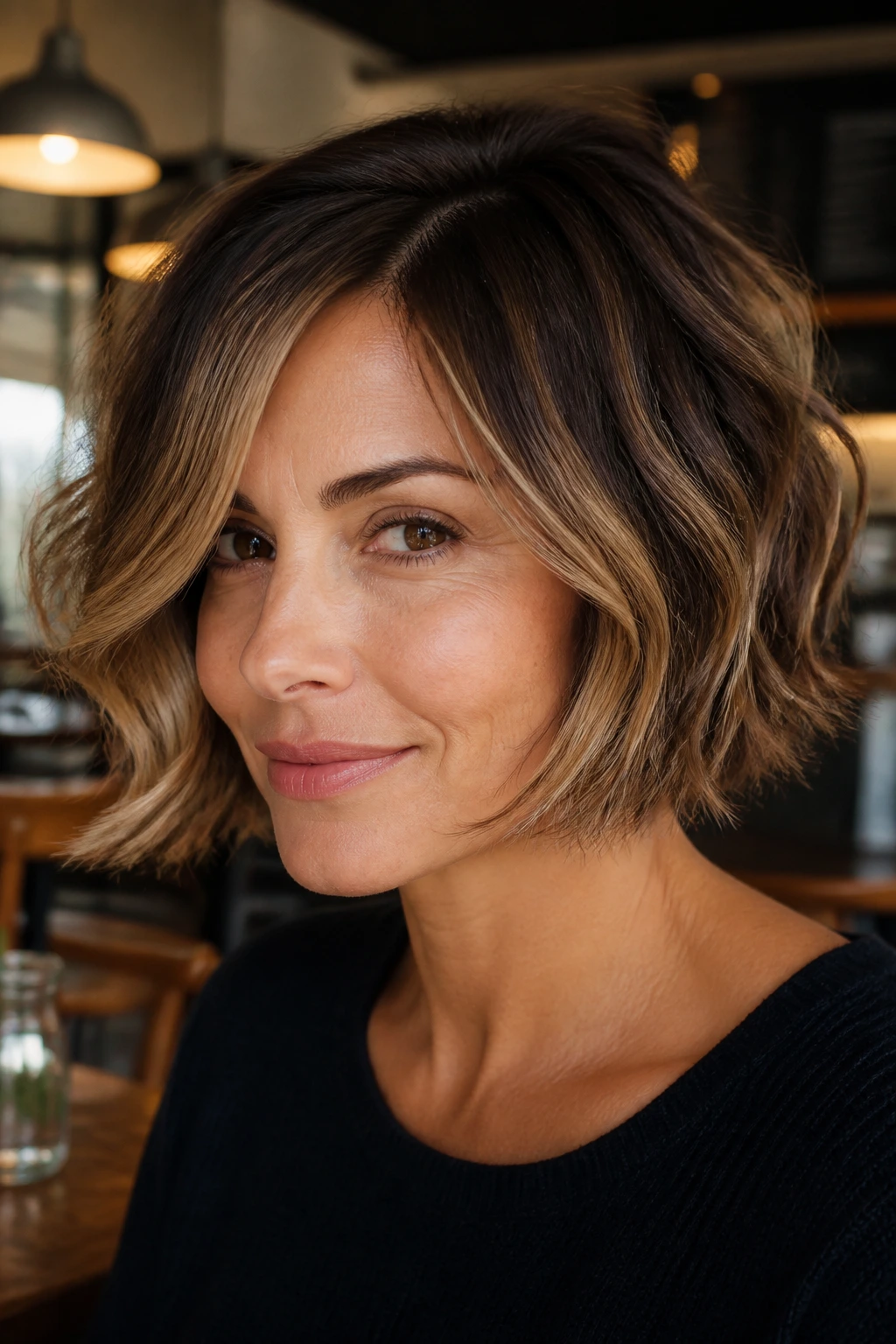
A chin-length French bob can make thin wavy hair look twice as full if the base is strong. The key is not to over-layer it. Keep the edge clean, let the waves do the curving, and sweep a few caramel pieces along the cheekbones so the shape feels alive rather than helmet-like.
Why It Helps Thin Hair
Shorter hair has less chance to pull itself down. That matters. A chin-grazing bob puts the weight where you need it, right around the jaw, while the side-swept bend keeps the look soft. Caramel highlights near the front create a bright frame that makes the cut feel more substantial.
If your hair is fine but wavy, this is one of those cuts that looks better on day two than day one. The waves loosen a touch, the part settles, and the line gets a little more relaxed.
3. Curtain-Bang Lob with Face-Framing Caramel Pieces
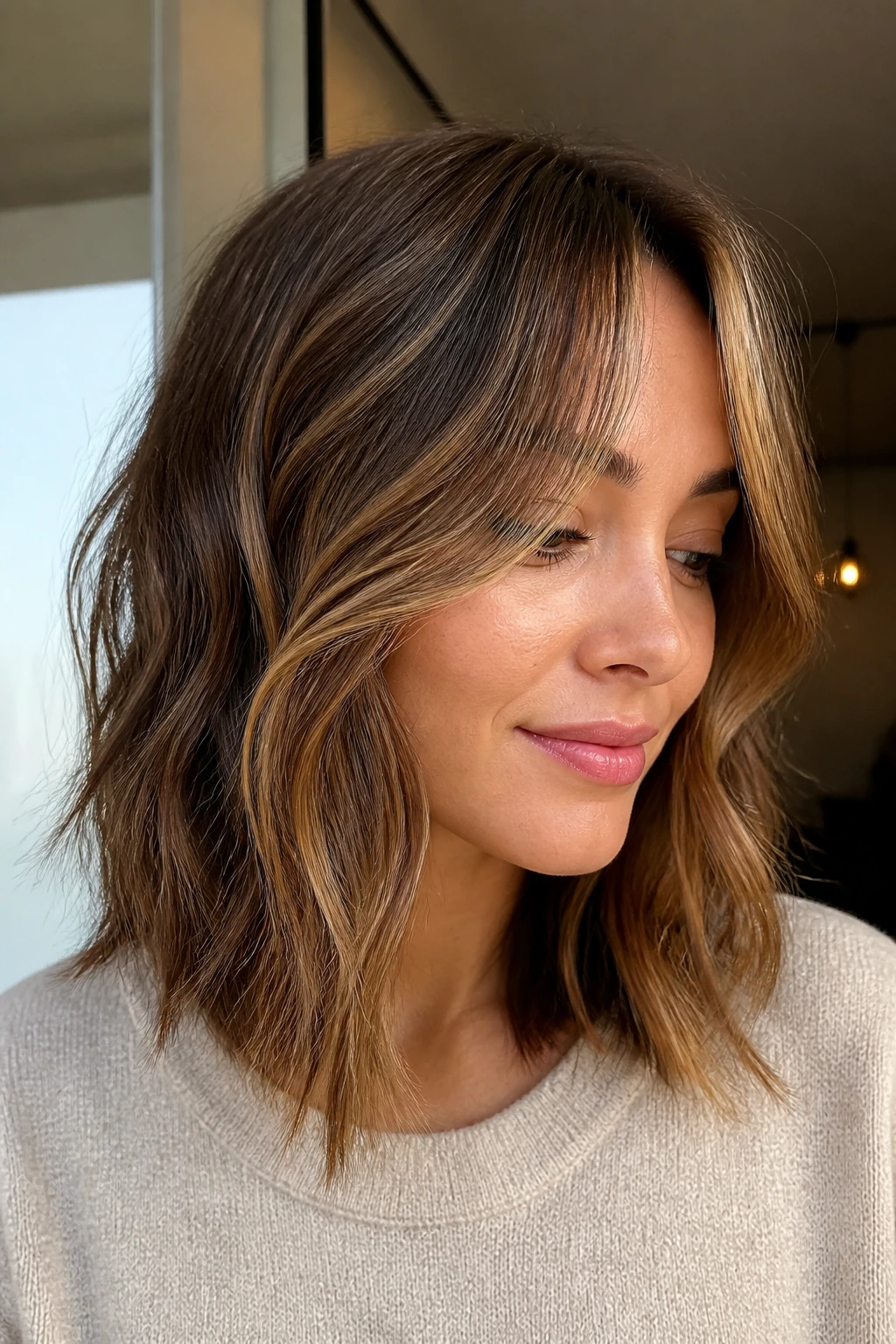
Curtain bangs are one of the few bang styles I trust on thinning wavy hair. They don’t sit in one heavy block across the forehead, which is where many bang cuts go wrong. Instead, they split the attention and bring the eye to the face-framing pieces, where caramel highlights can do some real work.
How to Ask for It
Tell your stylist you want the bangs to start soft, not dense. They should graze the brow or cheekbone depending on your face shape, then melt into the front layers. The lob underneath gives the rest of the hair a steady base, while the bangs take the pressure off a sparse crown by giving the whole cut a more styled feel.
This cut is especially good if your waves are loose and bendy rather than tight. The caramel should live around the front and a little below the part, not packed into the fringe itself, or the bangs can start to look busy.
4. Shoulder-Length Shag with Controlled Layers
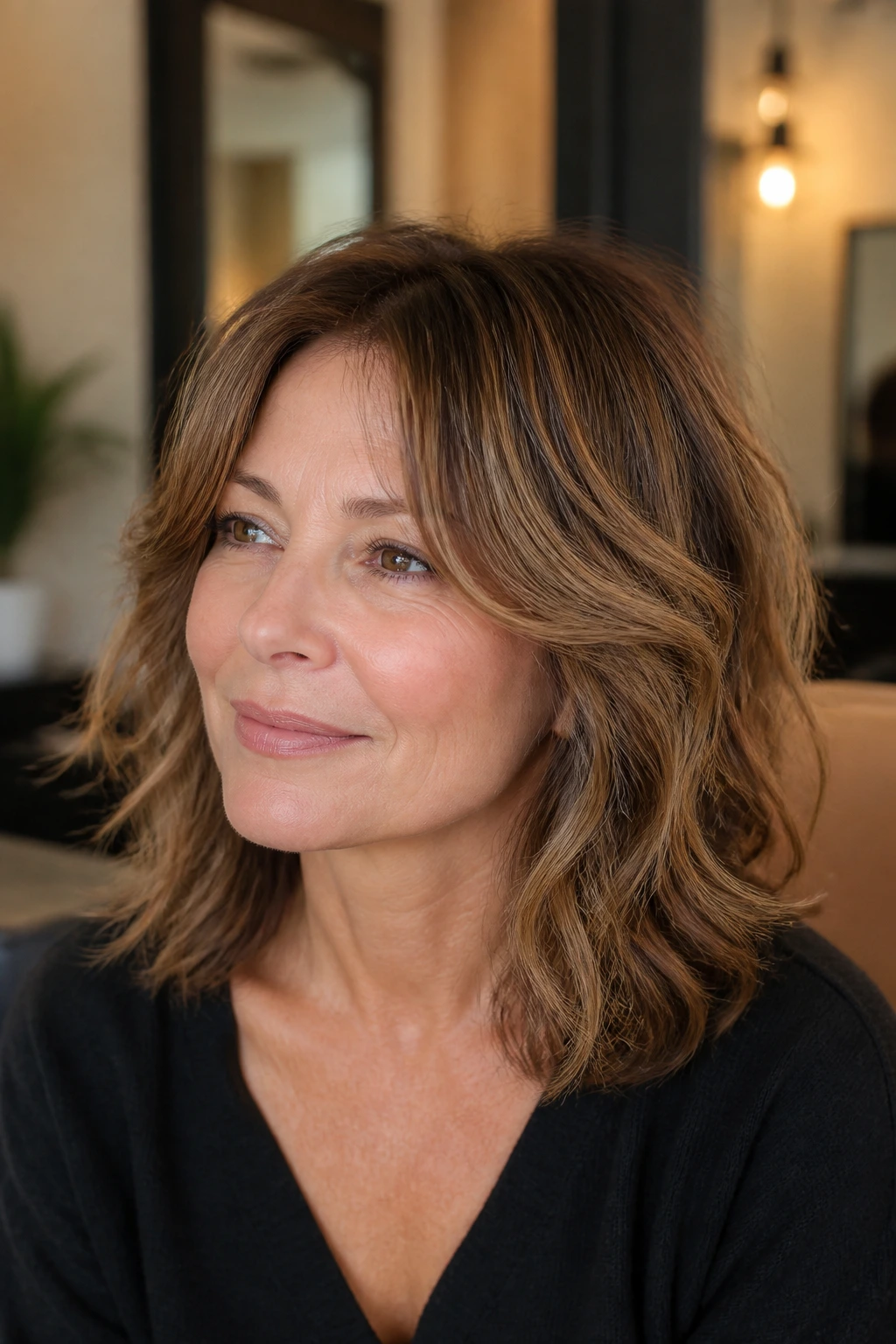
A shag can be brilliant on wavy hair, or it can turn into a puff of confusion. The difference is control. Keep the layers controlled, not shredded, and let the caramel highlights sit in the upper layers so the movement shows without stripping the ends bare.
The Sweet Spot
Shoulder length is long enough to keep some weight but short enough to avoid that thin, pulled-down look at the bottom. The shag shape gives wave pattern room to move, and a little lift near the crown keeps the head from looking flat on top. That lift is the whole point.
A lot of people think a shag means lots of layers. Not here. On thinning hair, too many layers make the outline weak. You want enough to support texture, not so much that the ends disappear.
5. Blunt Mid-Length Cut with Soft Texturizing
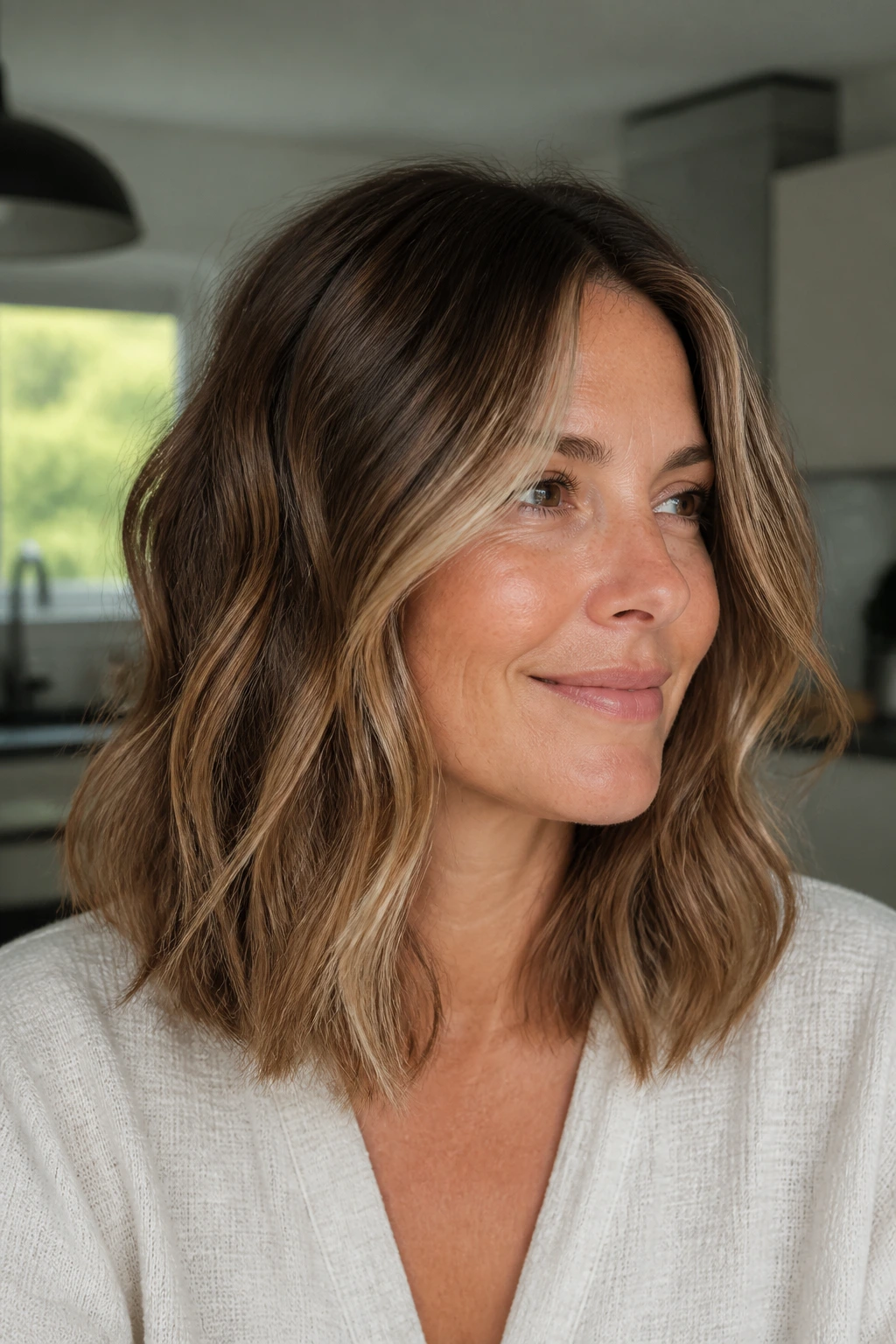
If your hair is fine, a blunt line can be your best friend. It looks strong. It makes the whole mass of hair read as one shape instead of a bunch of see-through ends. Add just a touch of texturizing on the interior, and the waves still move without losing the bottom edge.
Why I Like This One
This is the haircut for someone who wants the illusion of density more than big, airy layers. The blunt edge gives the eye a clear line to hold onto. Caramel highlights can then be placed in a way that breaks up the flatness along the surface without sacrificing that thick-looking perimeter.
The trick is restraint. If the stylist gets enthusiastic with thinning shears, you’ll lose the very thing that makes this cut work. Ask for soft internal movement, not heavy debulking.
6. Rounded Bob with a Deep Side Part
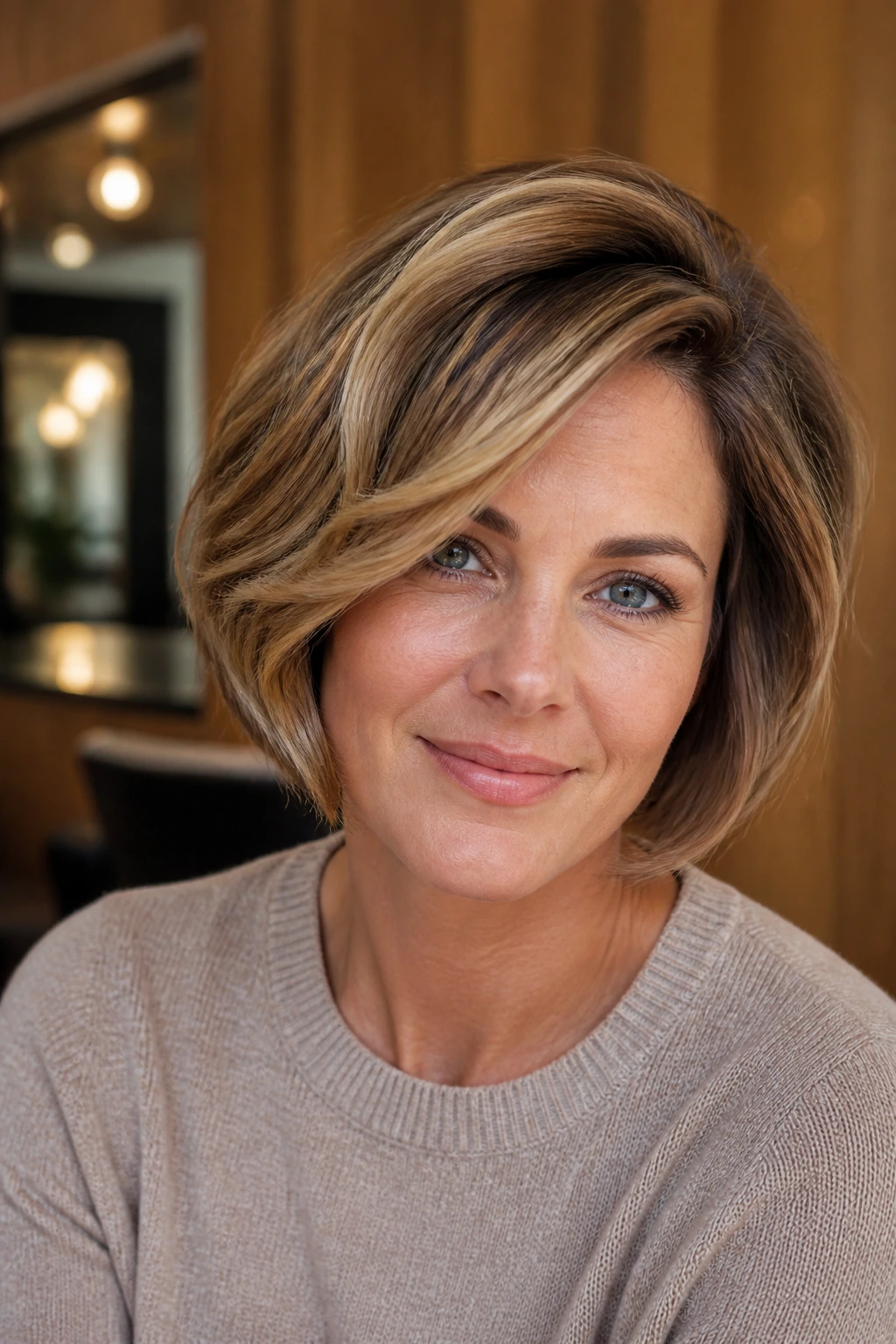
A rounded bob sounds old-fashioned until you see what it does for fine, wavy hair. The curve around the head gives the illusion of fullness, and a deep side part instantly creates lift on the heavier side. Caramel highlights can sit higher on that lifted side, which makes the whole shape pop without shouting.
Best For
This cut works especially well if your hair tends to lie close to the scalp on top. The side part interrupts that flatness fast. The rounded outline underneath keeps the ends from looking narrow, which is where a lot of short cuts fall apart on thinning hair.
If your waves are loose, this bob practically styles itself with a diffuser and a dab of mousse. If your waves are stronger, ask for the interior to stay soft so the round shape doesn’t turn bulky.
7. Butterfly Cut for Long Waves
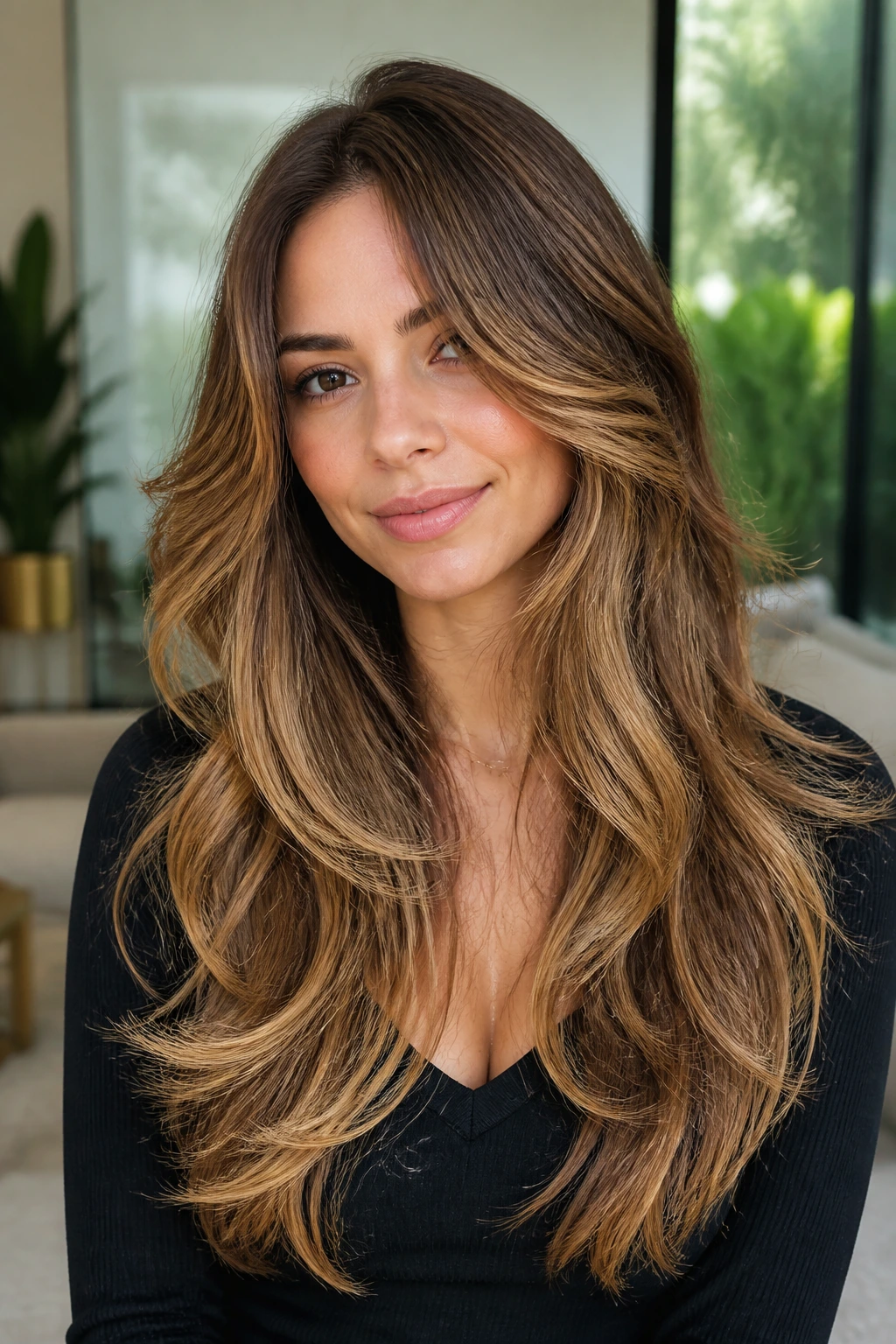
The butterfly cut is for the person who wants to keep length but hates the weight of long, thinning hair. Shorter face-framing layers give lift around the front, while the back stays longer and fuller. Caramel highlights belong on the outer layers and around the face, where they can show every time the hair bends.
Why It Works on Longer Hair
Long waves can look dreamy, but once the ends start thinning out, the whole shape goes limp. The butterfly cut solves that by removing bulk up top without hollowing out the entire length. You keep movement at the front and preserve enough thickness through the back to avoid that stringy, stretched look.
This one does need a good stylist. If the shortest layers are cut too high, the hair can flare out in the wrong places. Ask for a soft butterfly shape, not a dramatic one.
8. Textured Pixie Bob with Lift at the Crown
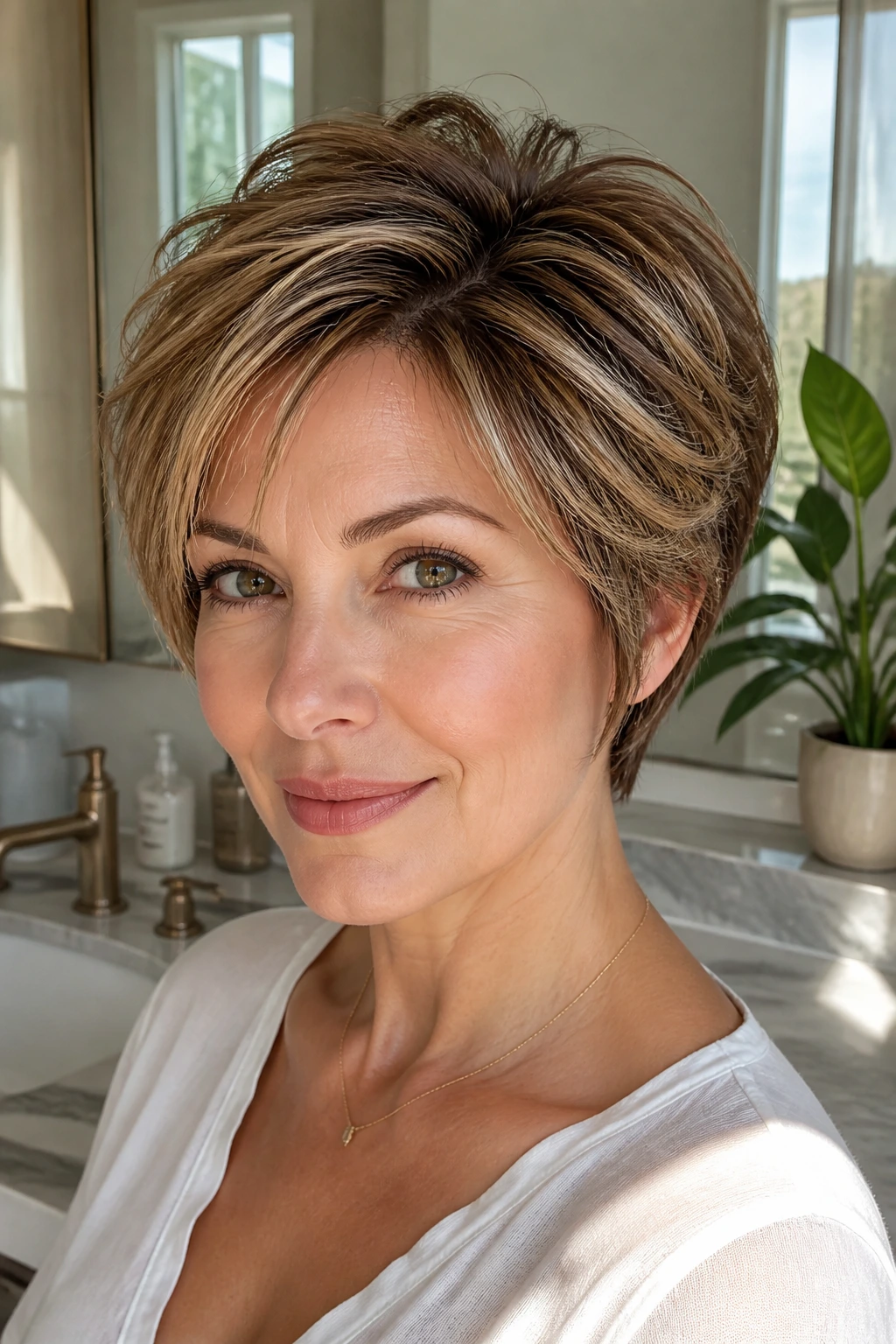
The pixie bob is the practical answer for hair that’s lost density around the crown and sides. It’s short enough to feel light, but not so short that you lose styling options. Caramel highlights on the top layers create a little visual lift, which helps the cut look fuller from every angle.
Why It Feels Fresh
The shorter back removes dead weight. The longer top gives you room to scrunch, sweep, or tuck. That contrast is what makes the shape interesting. On wavy hair, the texture gives the cut movement without needing a lot of product.
I like this one for people who are tired of their hair behaving badly. It’s neat, quick to dry, and the grow-out is usually forgiving if the top stays soft.
9. Wavy Midi Cut with Invisible Layers

Invisible layers are the good kind of sneaky. They remove enough weight to keep the waves from collapsing, but the surface still reads like one full sheet of hair. That matters on thinning hair, where visible choppy layers can make ends look separated.
The Quiet Advantage
A midi cut sits between the collarbone and the upper chest, which is long enough to feel feminine without dragging the shape down. Caramel highlights work best here when they’re blended through the mid-lengths, not dumped into the ends. That keeps the bottom from looking sparse.
This is one of my favorite cuts for people who want low-drama hair. It does not need a lot of explaining. It just works, especially with a center part and soft wave cream.
10. Chin-Length Bob That Tucks Behind the Ear
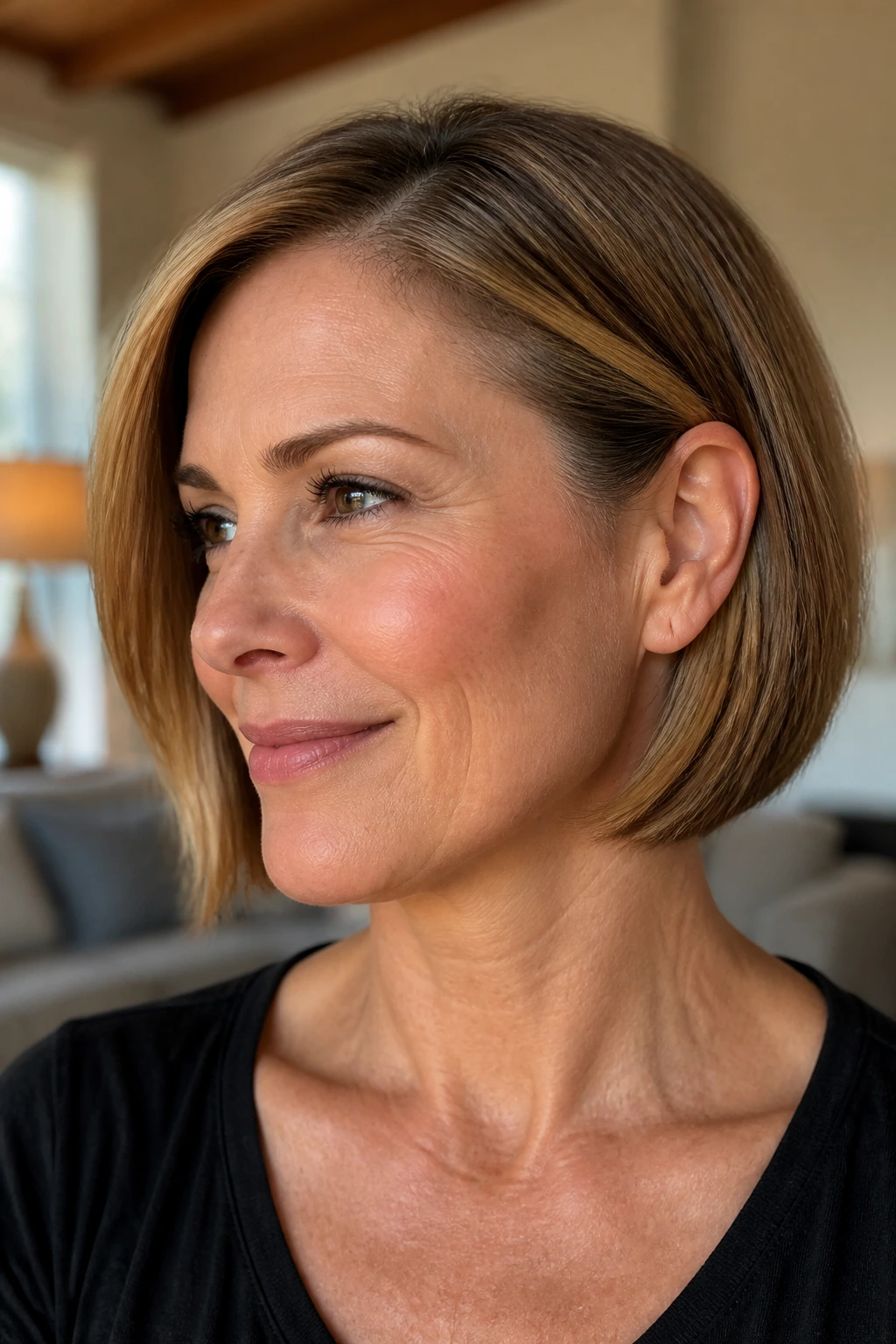
A bob that reaches the chin and tucks cleanly behind the ear creates shape where thin hair usually needs it most: around the sides. The exposed cheekbone and jawline do half the styling for you. Caramel highlights near the face add a little brightness, so the cut doesn’t vanish in flat light.
Little Details That Matter
Ask for ends that are blunt enough to hold a line but soft enough to move. If the cut gets too wispy, the bob stops looking intentional. The tucked-behind-the-ear trick works especially well when the front has enough length to stay put but not so much that it collapses.
This is not a “wash and forget it” haircut. It looks best with a quick pass of a round brush or diffuser at the roots.
11. Wolf Cut Lite with Soft, Broken-Up Ends

The full wolf cut can be too much for thin hair. A softer version, though, has a lot going for it. The crown gets a little lift, the ends stay broken up enough to feel cool, and caramel highlights pick up the choppier pieces so the texture reads clearly.
Keep It Soft
The best wolf cut lite has a controlled silhouette. Think airy, not shredded. The top layers should create movement without making the ends see-through, which is the line you do not want to cross. The caramel should sit mostly where the waves bend, so it looks like dimension instead of patchy color.
This cut leans casual. It’s for hair that looks better a little undone. If you love a neat, polished finish every day, this probably isn’t your first stop.
12. Feathered Long Layers with Caramel Ribbons
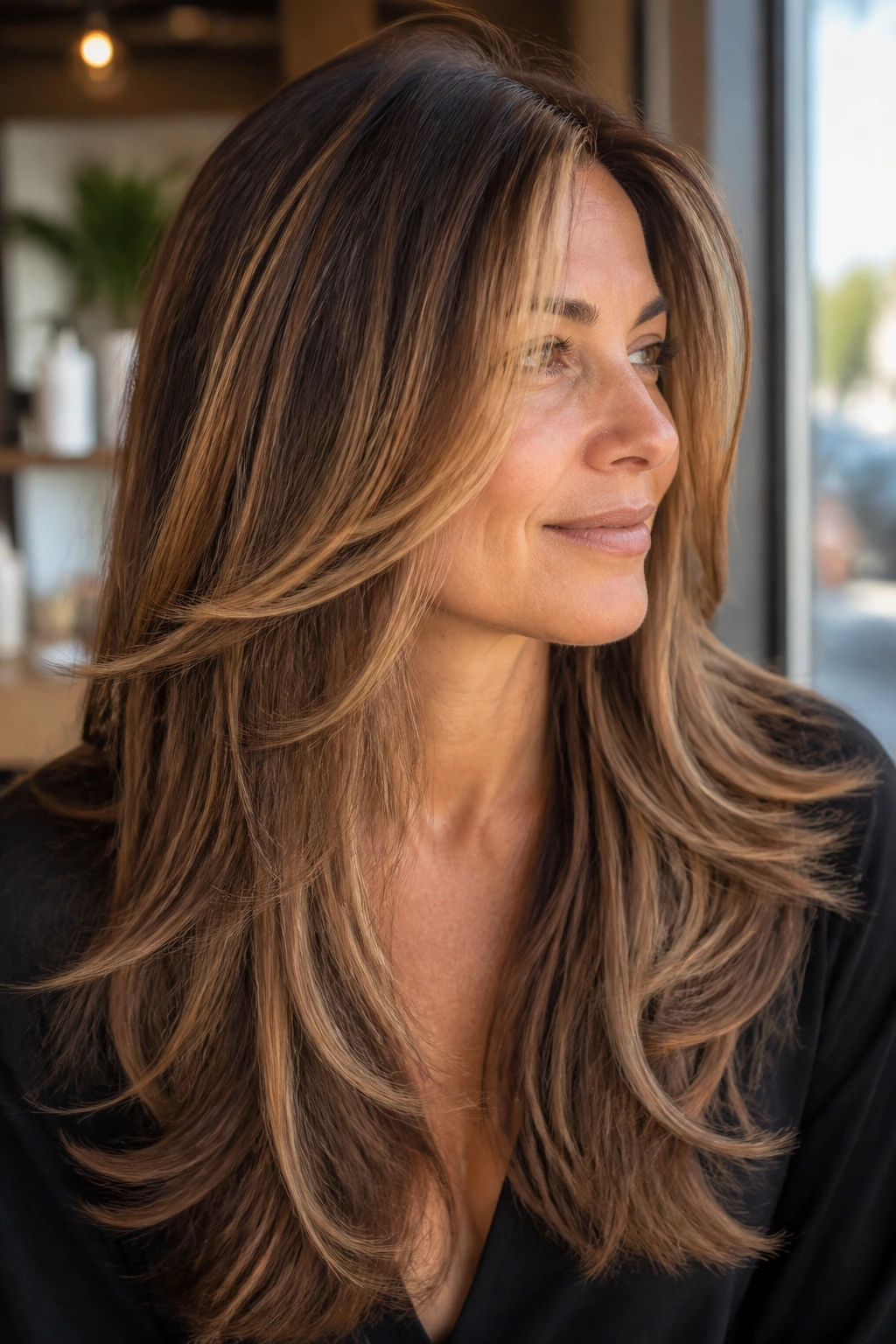
Feathering gets a bad reputation because people remember the overdone versions. The modern version is much softer. Long layers, cut with a light hand, keep the ends from looking heavy while the caramel ribbons slide through the surface and stop the hair from reading as one flat brown mass.
Why It’s Not the Same Old Layered Look
Long layers can absolutely work on thinning wavy hair if the last layer isn’t too short. The shape needs to keep enough density at the bottom. Feathering helps by softening the transition without carving out big gaps in the hair.
This cut is a nice middle ground if you’re nervous about going short. It still needs trims on a schedule, though, because long thin ends will show wear fast.
13. Asymmetrical Lob with One Strong Side
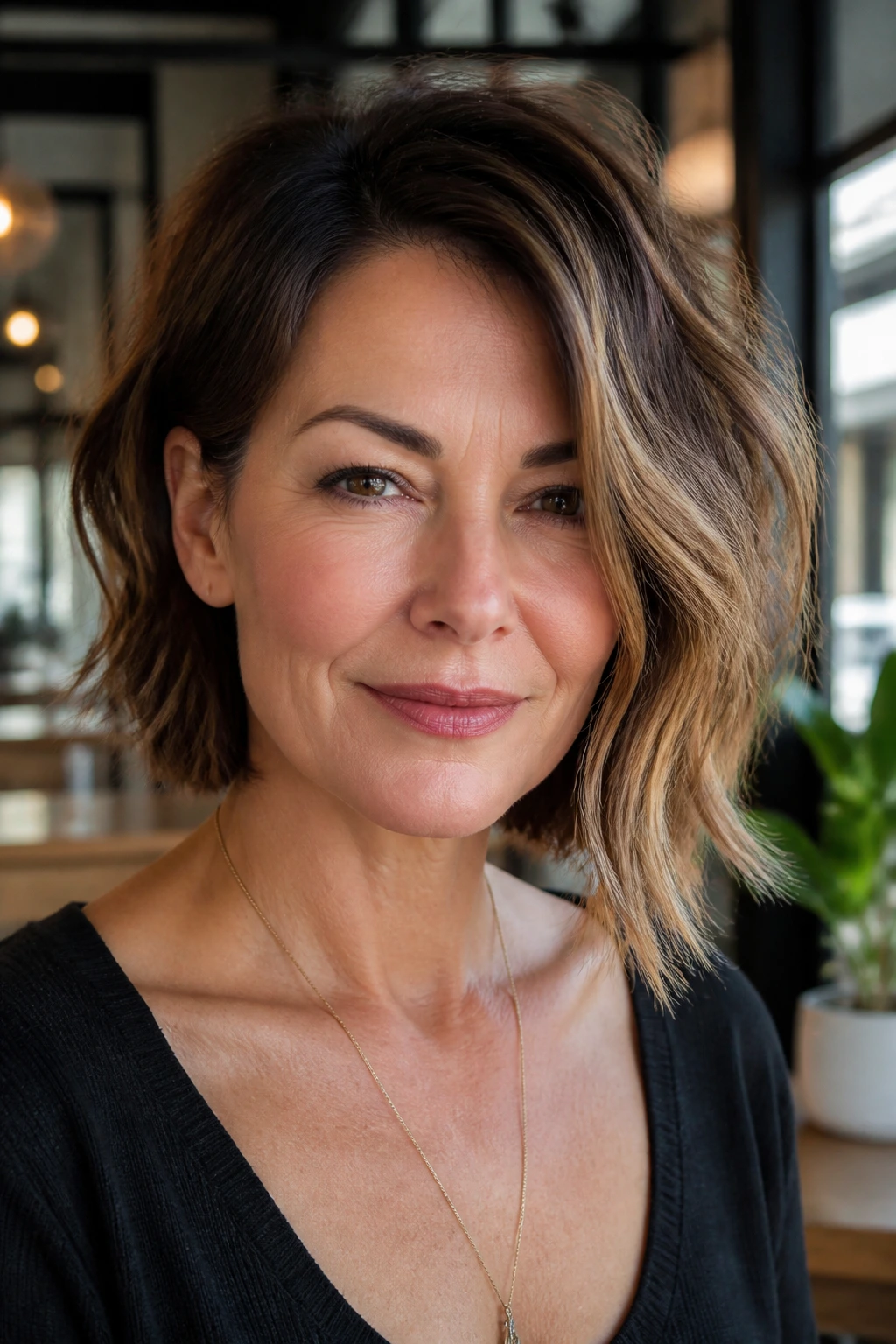
An asymmetrical lob creates a little tension in the shape, and that tension makes the hair look fuller. One side is longer, one side is slightly shorter, and the difference pulls the eye away from any sparse spots near the part or temple. Caramel highlights on the longer side can deepen that effect.
When It Shines
This cut is especially good if one side of your hair is naturally flatter than the other. Rather than fighting it, the asymmetry works with your pattern. The longer side gives you a little swing, and the shorter side helps the bob keep its line.
Keep the difference subtle. A dramatic angle can look fashionable in a salon mirror and awkward when you’re growing it out. A quiet asymmetry wears better.
14. Inverted Bob with a Clean Nape
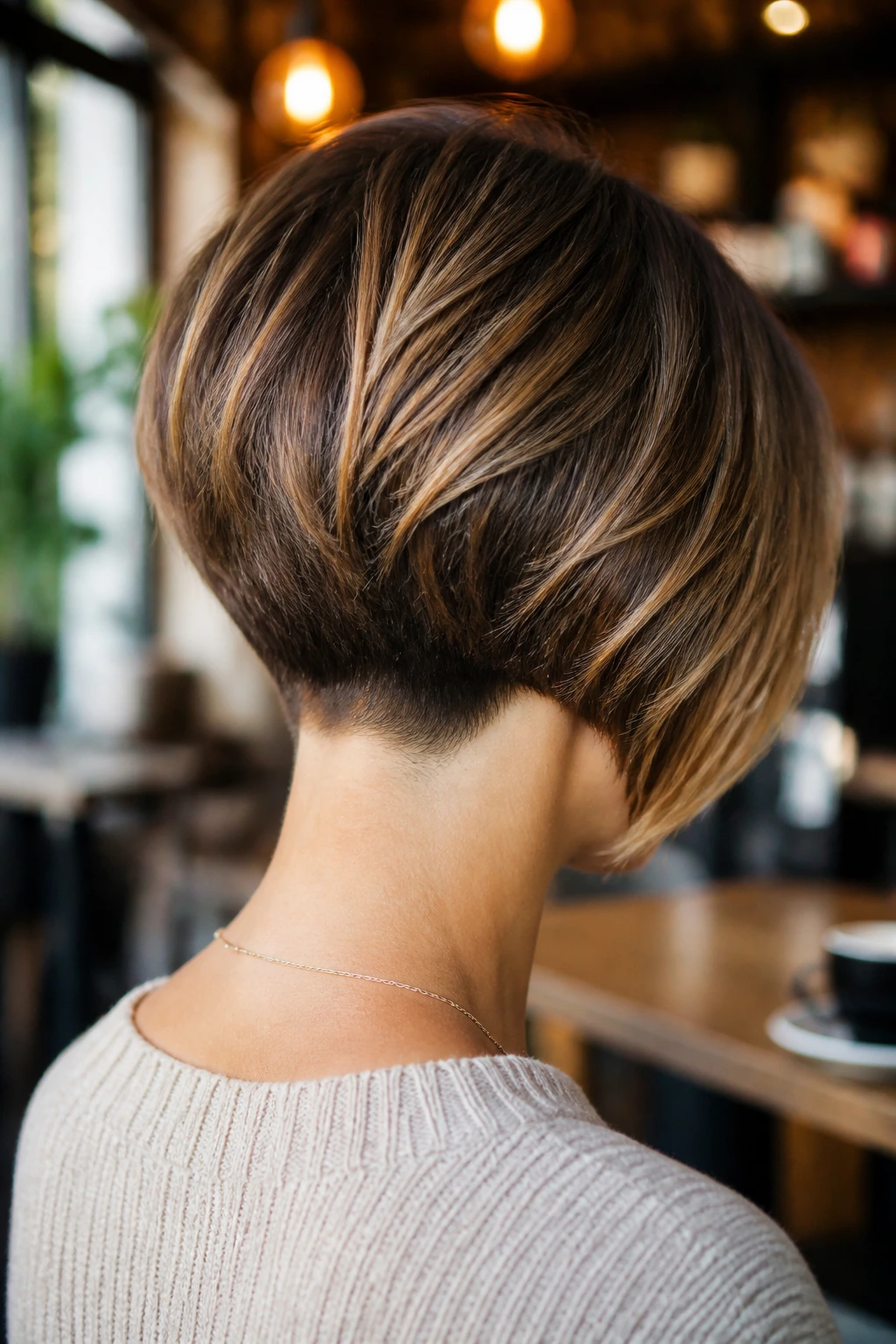
The inverted bob has a stacked shape in the back and longer front pieces, which is a smart move for thinning hair because it builds the illusion of lift at the crown. The clean nape keeps the neckline tidy, and the caramel highlights can be placed to show off the curve of the cut rather than scatter across it.
Why the Back Matters
A lot of people focus only on the front, but the back of the head is where thin hair often gives itself away first. A soft inversion solves that by adding body at the back without making the front too heavy. It’s a shape that looks deliberate from every angle.
This one does best with a regular trim. If the stacked area grows out too much, the silhouette loses its crispness fast.
15. Bixie Cut with Longer Top Layers
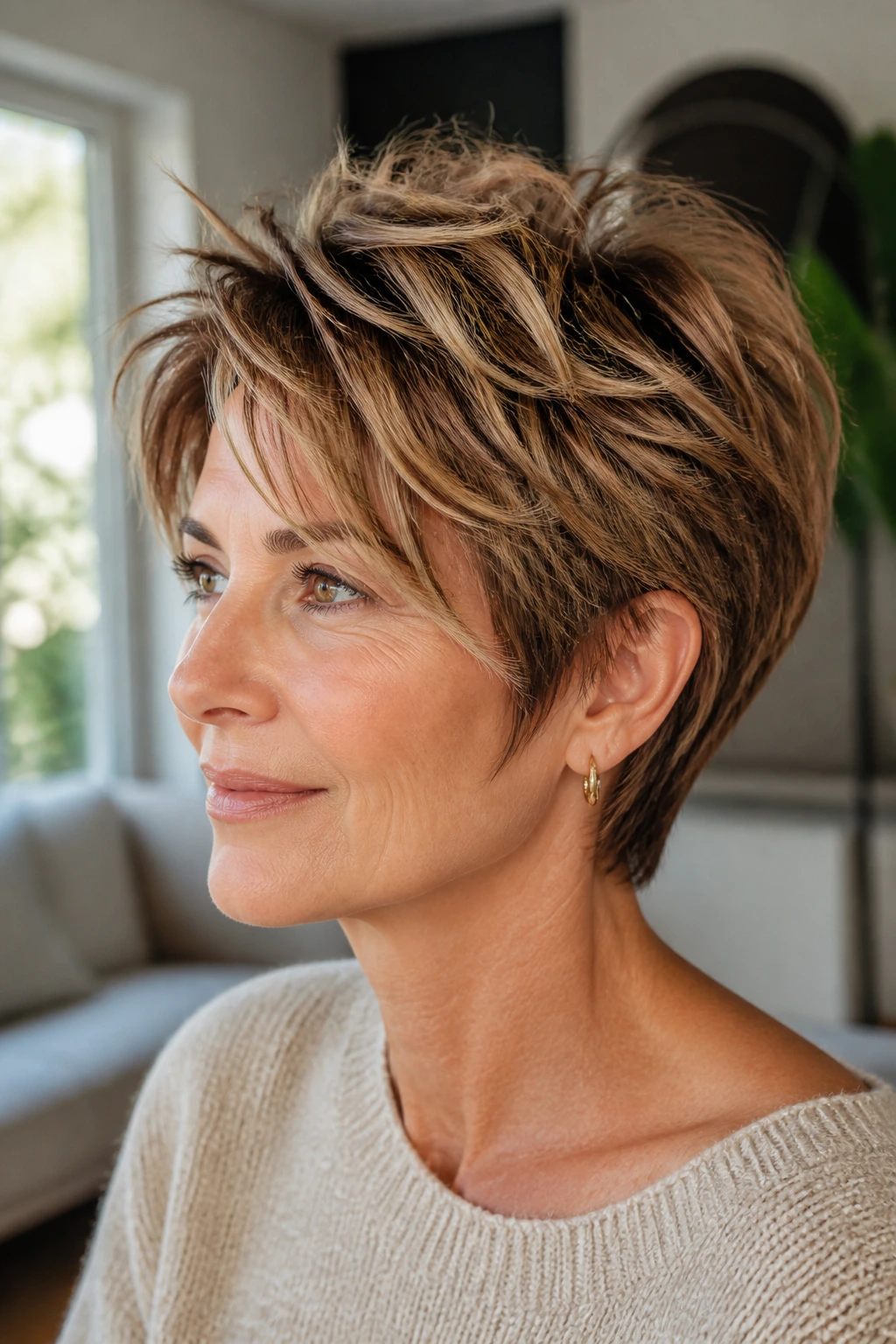
The bixie sits between a bob and a pixie, which sounds odd until you see how useful it is for fine waves. The sides stay short enough to lift the face, while the top remains long enough to show movement. Caramel highlights on the top layers give you that tiny bit of brightness that keeps the cut from looking too dark or flat.
Why It’s a Smart Compromise
If your hair is thinning but you’re not ready for a full short cut, this is a very good middle step. It removes dead weight around the sides, where fine hair can lie too close to the head, but keeps enough top length to style with your fingers.
It’s also fast. Drying time drops, product use drops, and the whole routine becomes less fussy. That matters more than people admit.
16. Airy Crop with a Soft Top
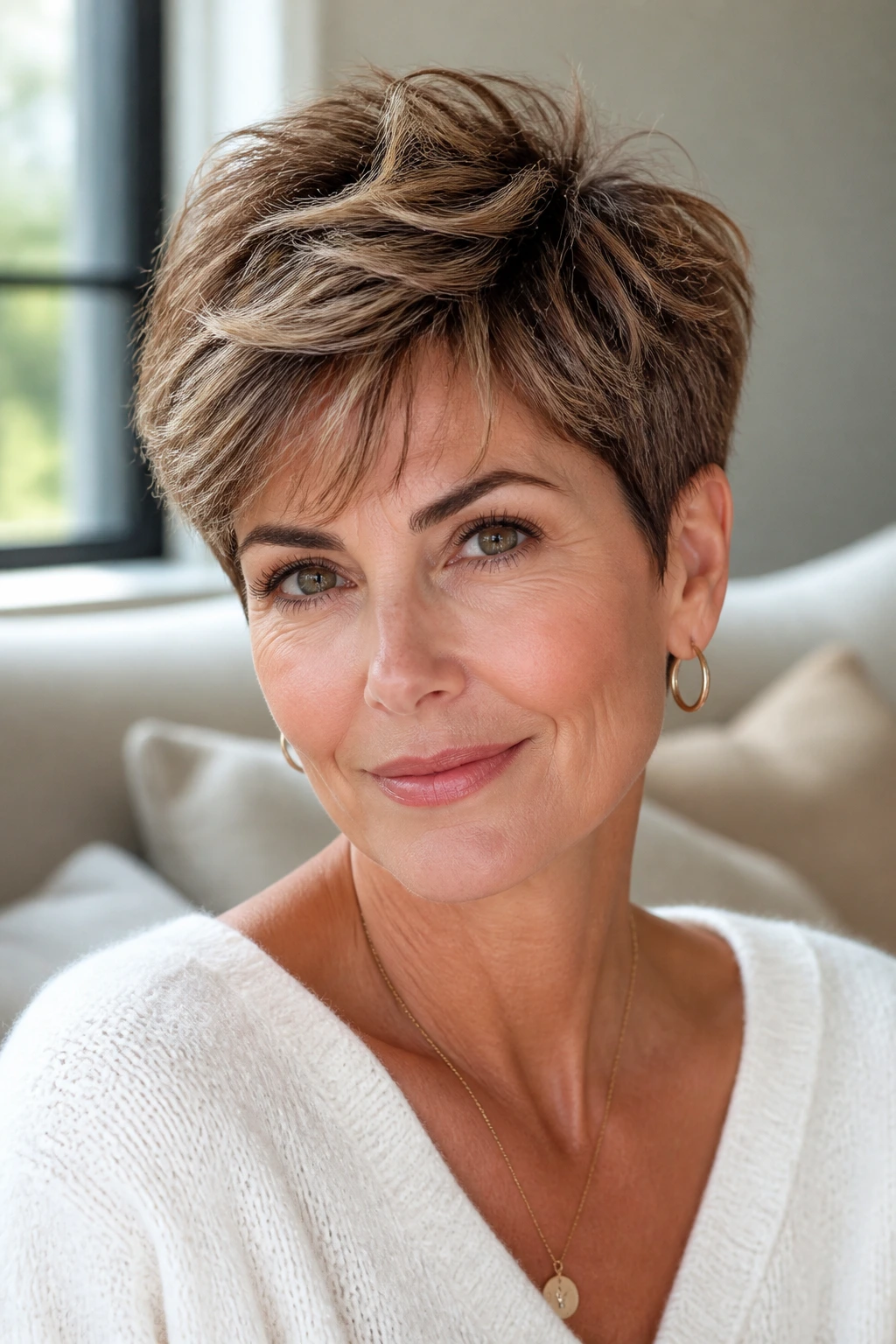
A soft crop on wavy hair needs texture, not choppiness. The top should have enough length to bend and lift, while the sides stay neat so the style doesn’t balloon out. Caramel highlights concentrated on the top add a sunlit effect that keeps the crop from reading too severe.
Best For Busy Mornings
This cut is a relief if you’re done babysitting longer hair. It takes a minute to scrunch, a minute to finger-comb, and you’re out the door. The danger is overtexturizing the top until it looks spiky, so the stylist needs a light hand.
It’s not the obvious choice, but it’s one of the most freeing. Less hair to manage. More shape. That trade feels good.
17. U-Shaped Long Cut That Keeps the Perimeter Full
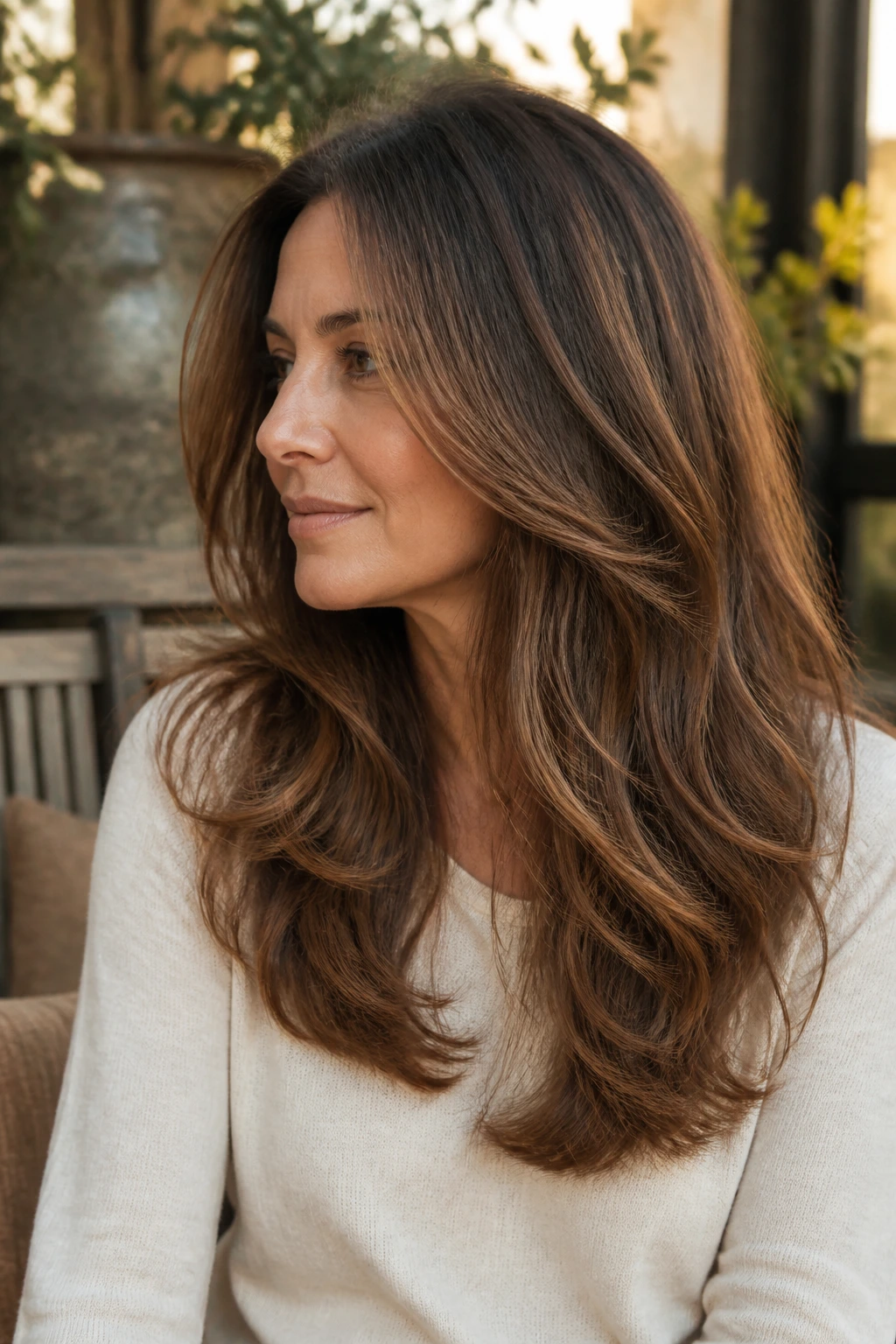
A U-shape sounds subtle because it is. That’s the point. The hair stays longer in the back with a gentle curve around the sides, which keeps the perimeter looking thick. Caramel highlights tucked through the lower layers add movement without exposing the ends.
Why It Works When You Want to Keep Length
If you are attached to long hair, this is the cut that lets you keep it without letting it get sad. The U-shape preserves density at the bottom while still giving a little contour around the face. It’s calmer than a heavily layered long cut, and calmer is often better with thinning hair.
I’d avoid aggressive face-framing here. A few pieces are enough. Too much and the front starts to look disconnected from the length.
18. Razor-Textured Shoulder Cut with Careful Ends
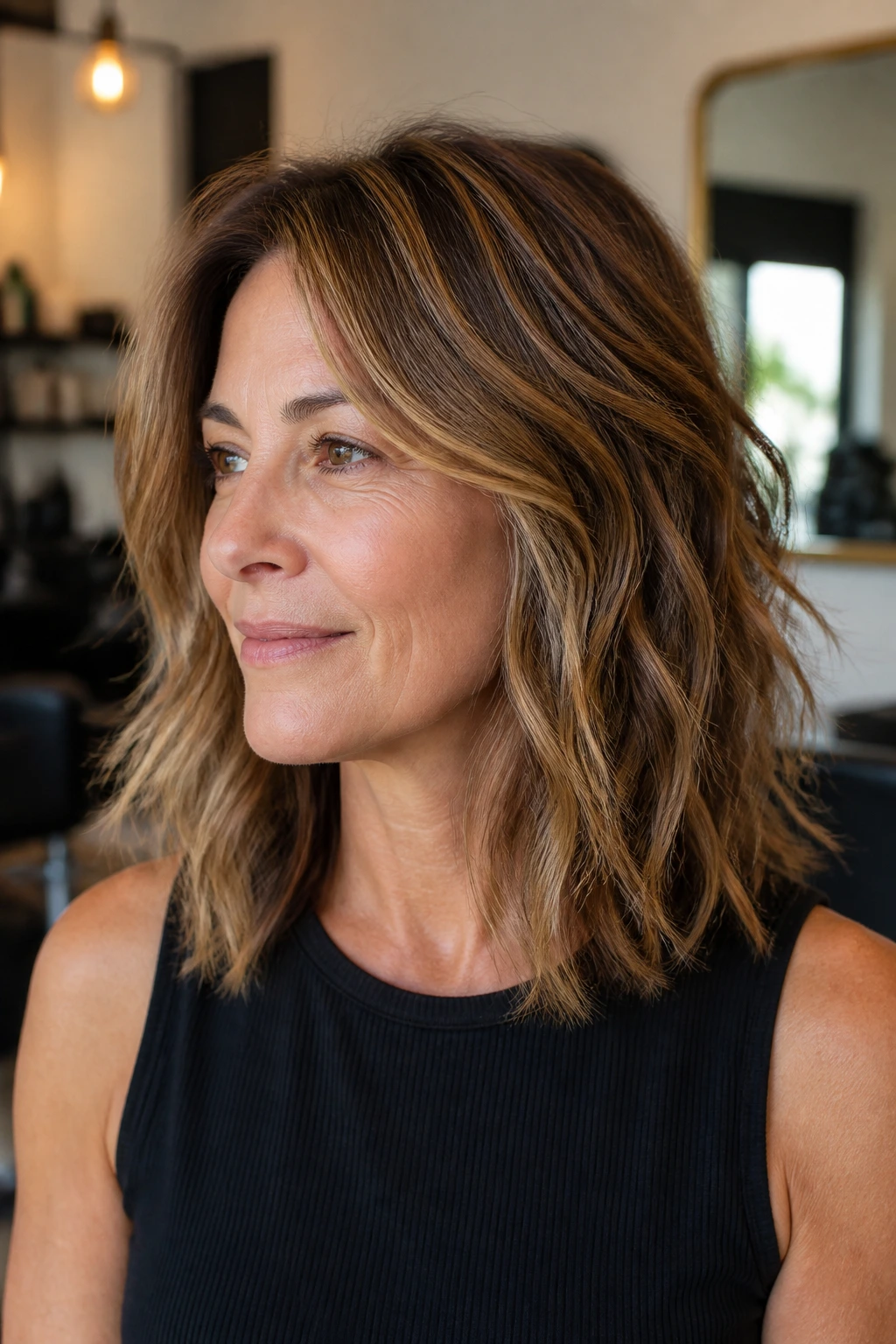
Razor cutting can be tricky on thinning hair. Done lightly, it gives the shoulders a soft edge and lets waves fall with a bit of swing. Done badly, it frays the ends and makes the haircut look tired before you leave the chair. Caramel highlights help, but they cannot rescue a bad cut.
Use Caution Here
This one is for someone who wants a softer, more lived-in finish. The shoulder length keeps the shape from going limp, and the razor can help the waves separate in a controlled way. The stylist should work in small sections and stop before the ends get shredded.
Ask for a gentle razor finish, not a heavy one. If your hair is already fragile or very fine, scissors may be the safer option.
19. Deep Side-Part Bob with Lift at the Roots
Sometimes the part is the haircut’s best friend. A deep side part can instantly create volume on one side, especially in a bob that already has enough body at the perimeter. Caramel highlights near the part make the lift look intentional instead of accidental.
The Fastest Shape Shift
This is one of the quickest fixes in the whole list. No major length change needed. Just a clean bob, a side part placed slightly off center, and a few well-placed lighter pieces to keep the eye moving upward.
It’s the cut I’d suggest for someone who wants a simple answer. Simple, not boring. There’s a difference.
20. Choppy Midi Cut with Face Framing
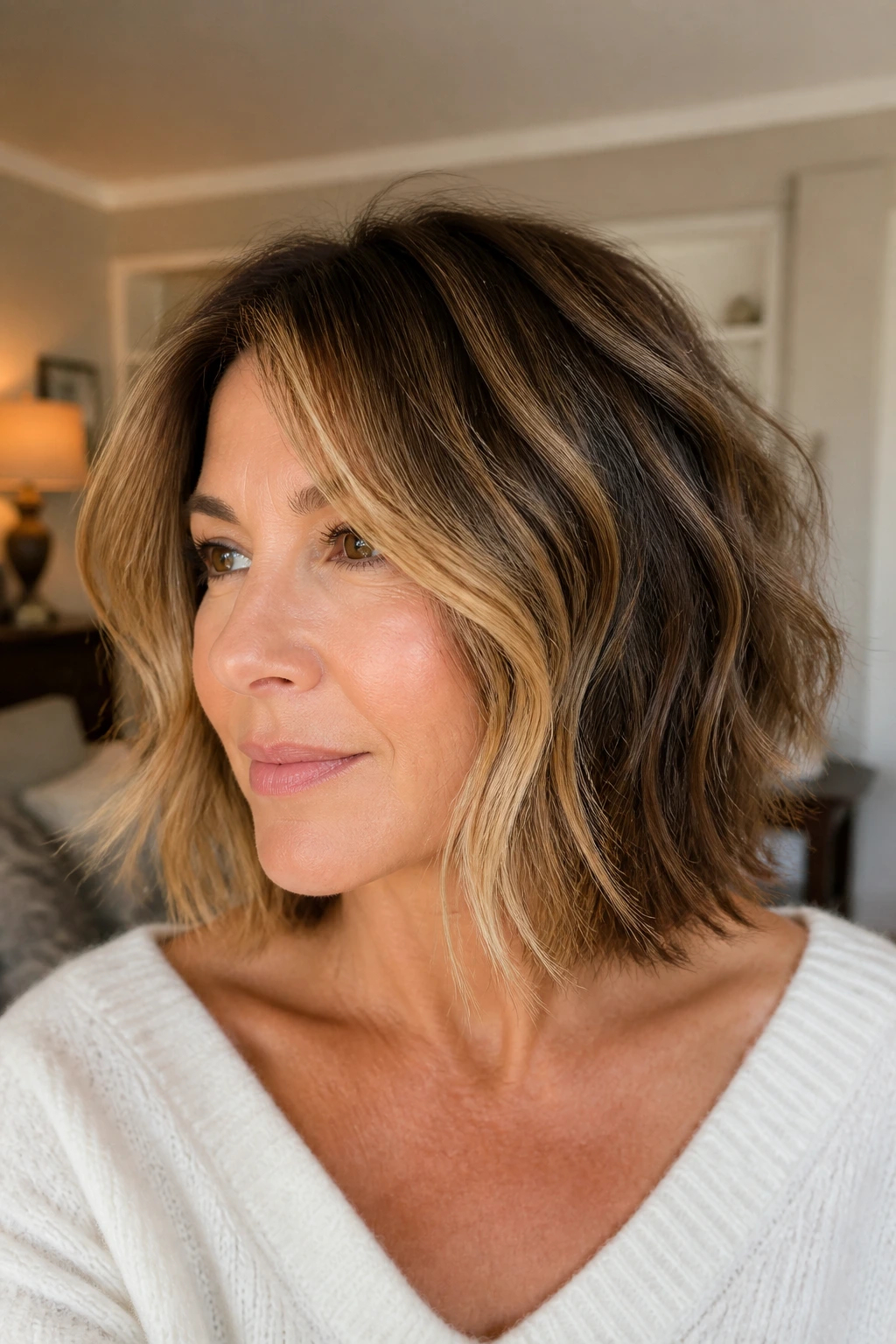
A choppy midi cut gives wavy hair texture without asking it to pretend it’s thick all the way through. The face-framing pieces soften the front, while the rest of the cut keeps enough body to avoid that see-through finish at the ends. Caramel highlights should live mostly on the framing pieces and outer wave layers.
A Good Fit for Soft Movement
This cut works when you want a bit of edge but not a full shag. The choppiness is controlled, the face frame adds shape, and the length stays manageable. It’s a nice choice if your waves already have a bit of bounce and you just want the haircut to stop fighting them.
Do not let the front pieces get too sparse. That’s the fastest way to make this style look unfinished.
21. Graduated Bob with Peekaboo Caramel
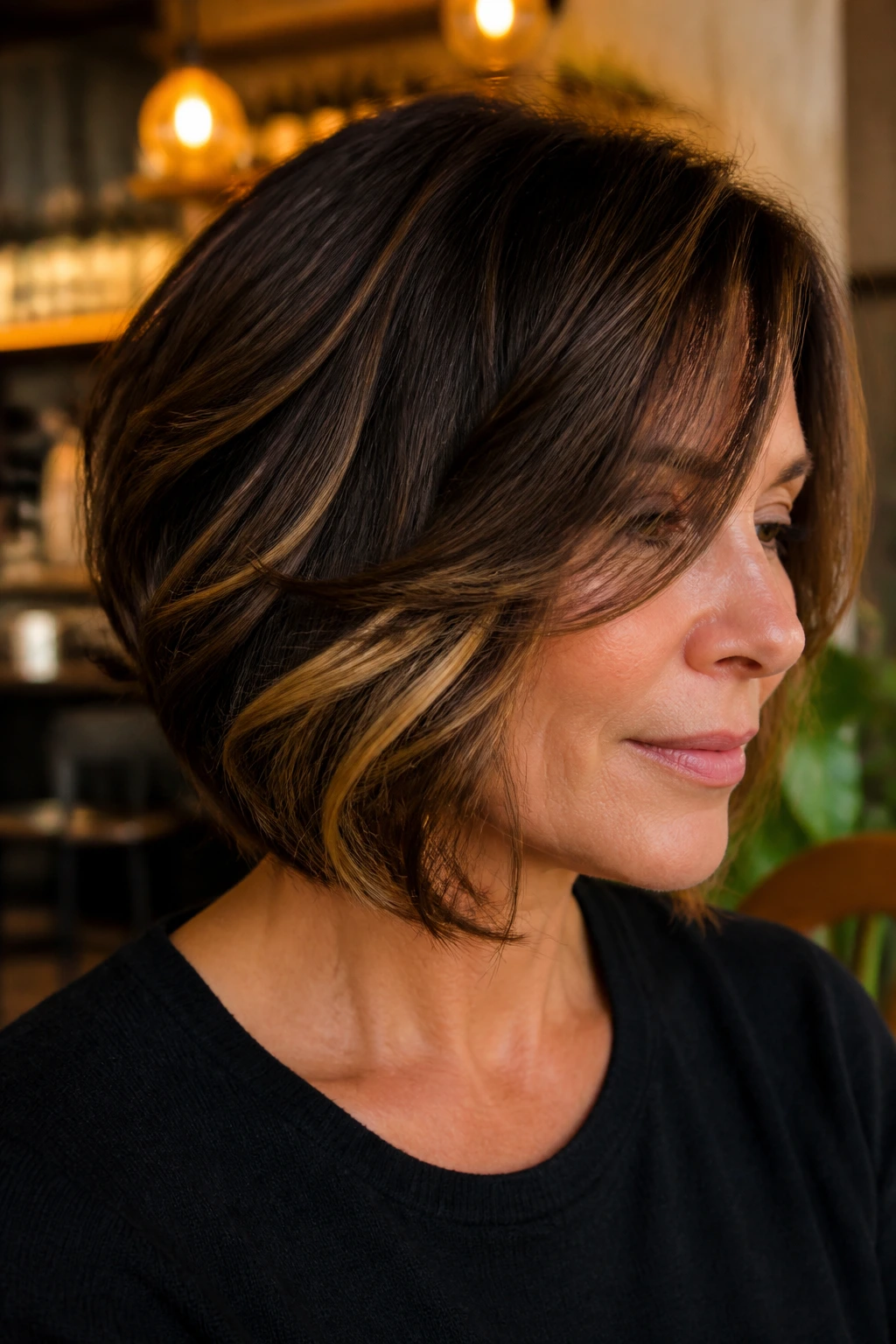
A graduated bob builds fullness through the back while keeping the front longer and softer. Peekaboo caramel highlights underneath the top layer make the hair look darker and denser on the surface, then brighter when it moves. That little flip between hidden and visible color is half the fun.
Why the Color Placement Matters
This is a smart move if you want dimension without a lot of obvious light pieces on top. The hidden caramel gives depth, especially when the hair is tucked or winds around the neck. The cut itself supports the shape; the color makes it feel richer.
It’s a little more polished than the shaggy options. If you like clean lines with some surprise underneath, this is a strong choice.
22. Soft Mullet for Loose Waves
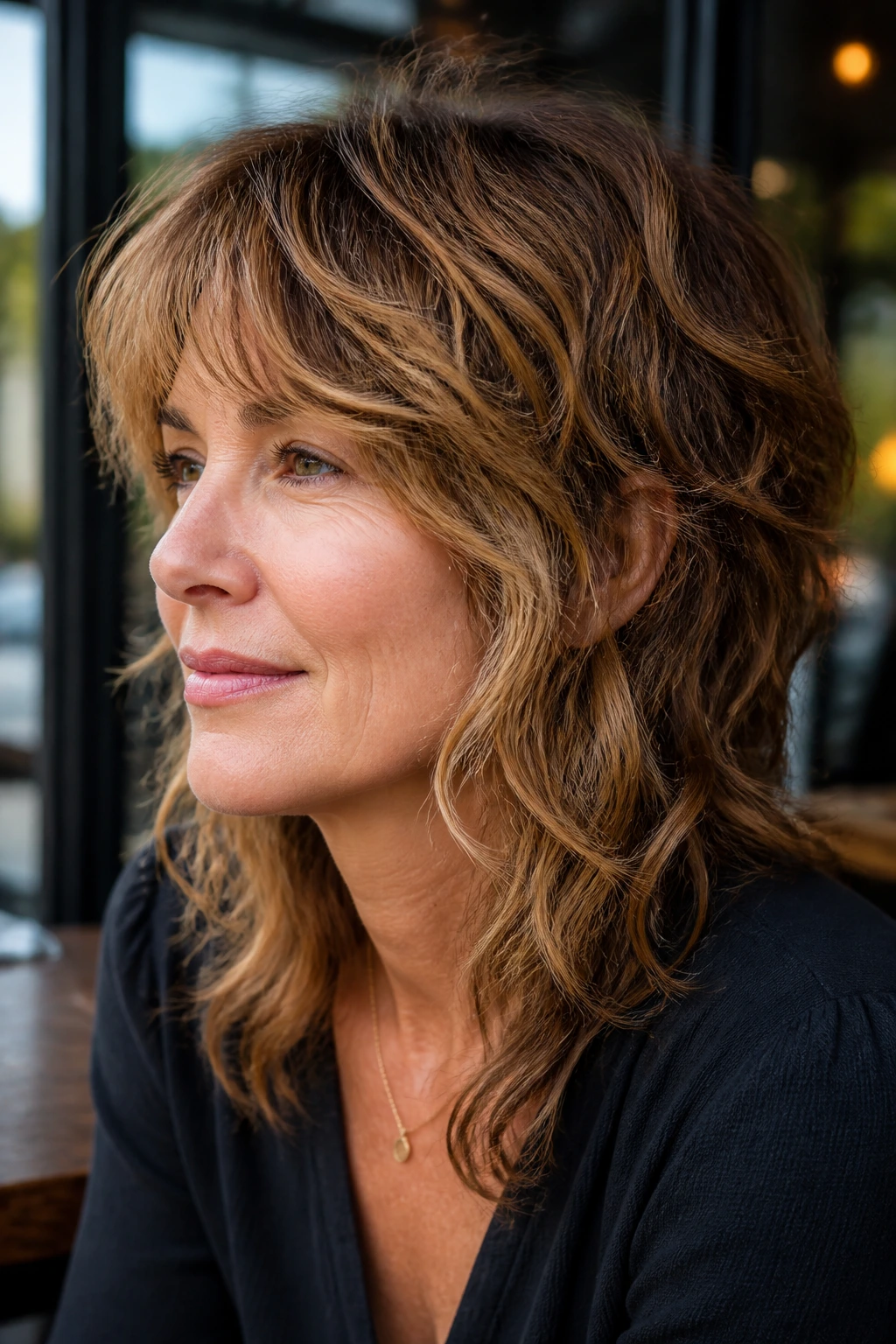
The soft mullet has more edge than most people expect, but it can work beautifully on wavy hair when it stays subtle. The front stays shorter, the back keeps a little length, and the layers move in a way that keeps the crown from going flat. Caramel highlights help separate the pieces so the shape looks intentional.
Keep the Edges Gentle
This is not the punk version from a music video. The modern soft mullet is much easier to wear. It needs enough length in the back to avoid looking chopped off, and the top should be light enough to lift without turning wispy.
If your waves have a loose bend and a bit of natural volume, this cut can look excellent. If your hair is very fine and straightens out easily, it may take more styling than you want.
23. Layer-Light Long Cut with a Dusting at the Bottom
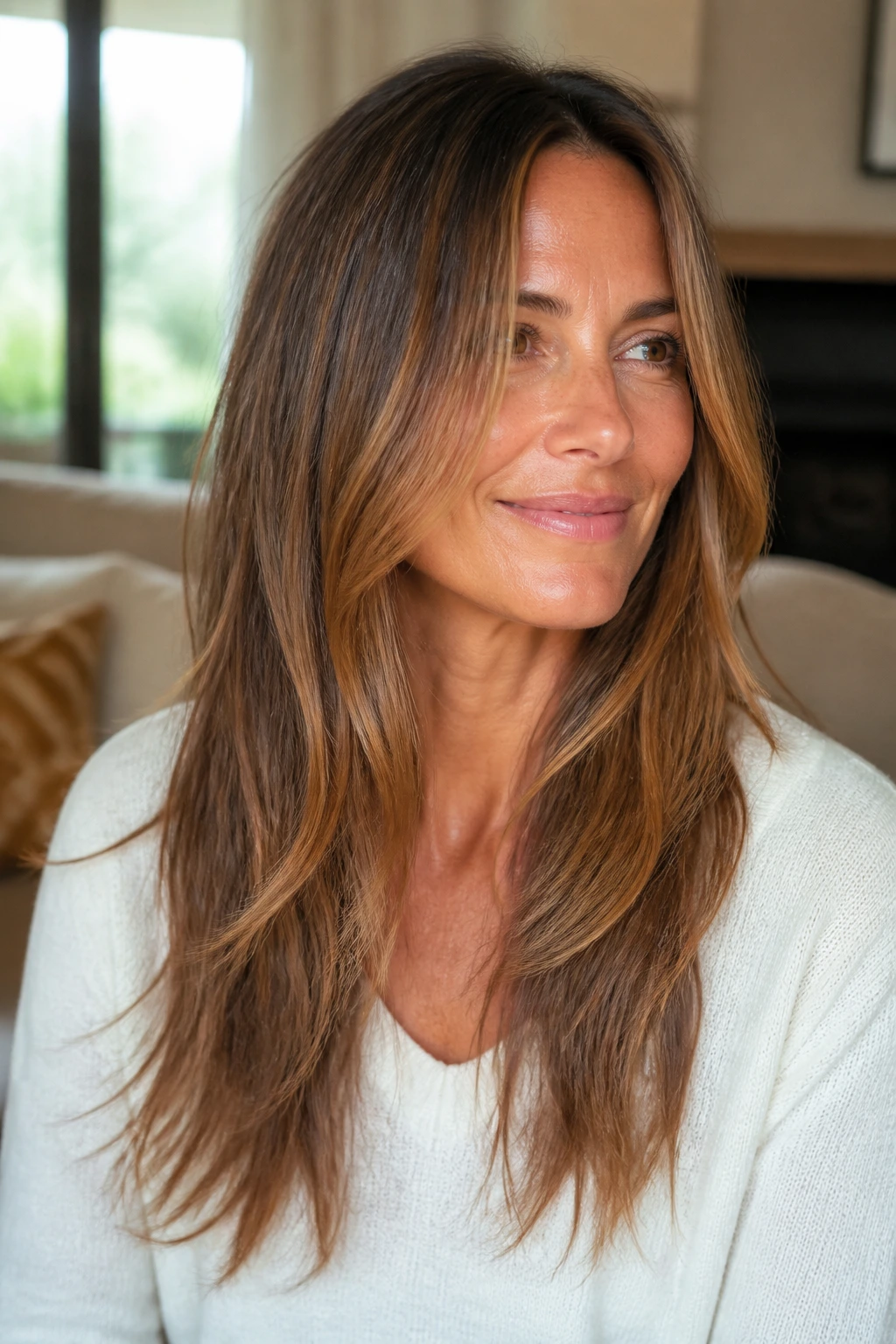
Sometimes the best move is to do less. A layer-light long cut keeps the length, adds only a few face-framing pieces, and dusts the very ends so they don’t split the shape apart. Caramel highlights can be woven through the mid-lengths to give the hair a bit of life without changing the silhouette much.
The Quiet Choice
This one is for the person who loves long hair but hates seeing thin, ragged ends. Instead of loading on layers, the cut preserves as much density as possible. The waves still move because the hair isn’t weighed down by dead length.
It’s not flashy. It doesn’t need to be. For some heads of hair, restraint is the best styling decision in the room.
24. Tapered Nape Bob with a Fuller Crown
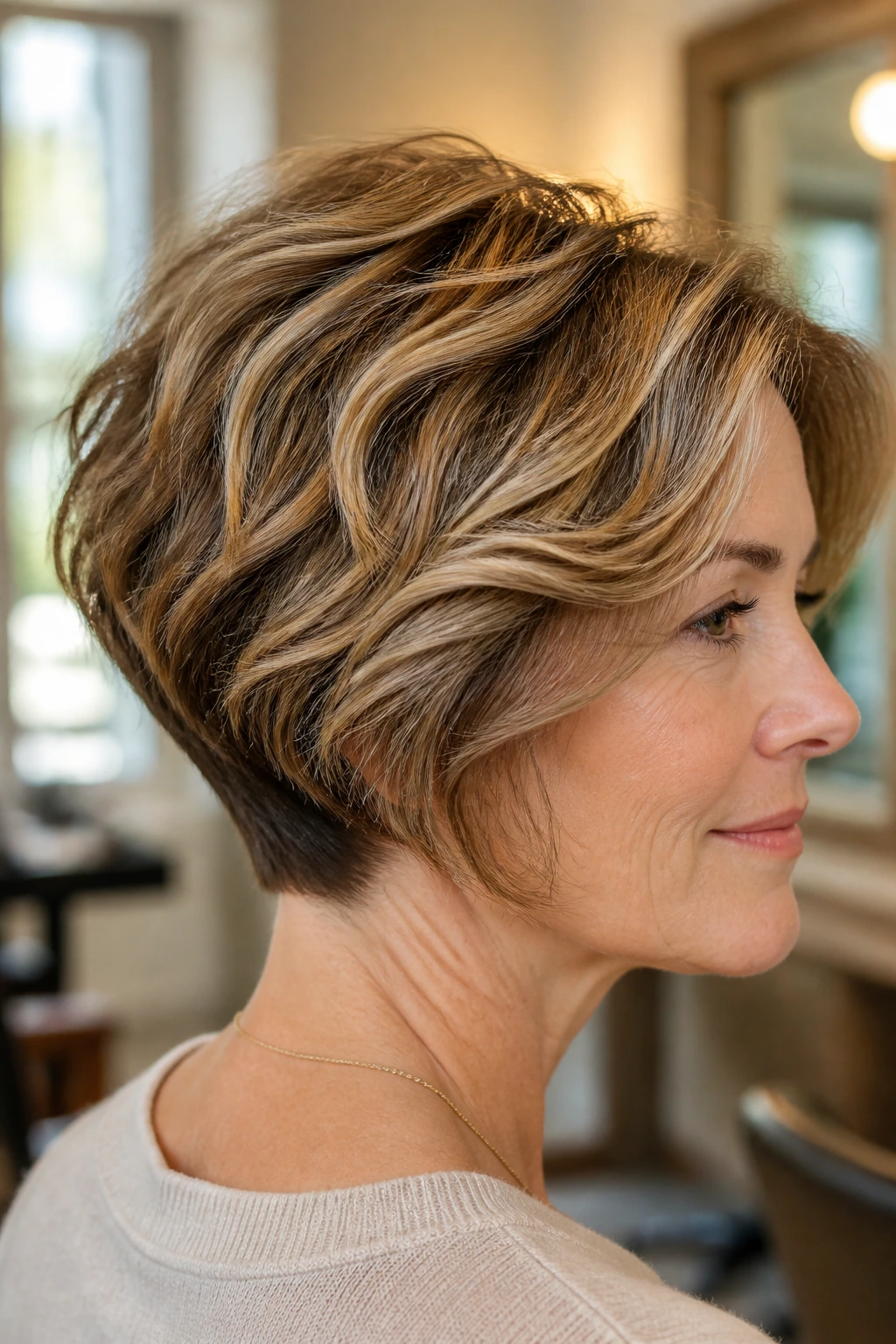
A tapered nape bob removes bulk at the neckline while keeping the upper sections fuller, which can help the top of the head look more lifted. The shape is neat, tidy, and surprisingly flattering on wavy hair that has lost some density at the sides. Caramel highlights on the crown and upper mid-lengths keep the top from sinking into one flat tone.
Where It Excels
If your hair tends to puff out at the bottom but lie flat at the top, this shape balances that out. The taper makes the neck area cleaner, and the fuller crown creates the sense of height. It’s a very practical haircut, though not boring if it’s cut with enough softness.
You will want regular trims here. A tapered bob grows out in a way that can look bulky fast if you ignore it.
25. Side-Swept Lob with Internal Volume
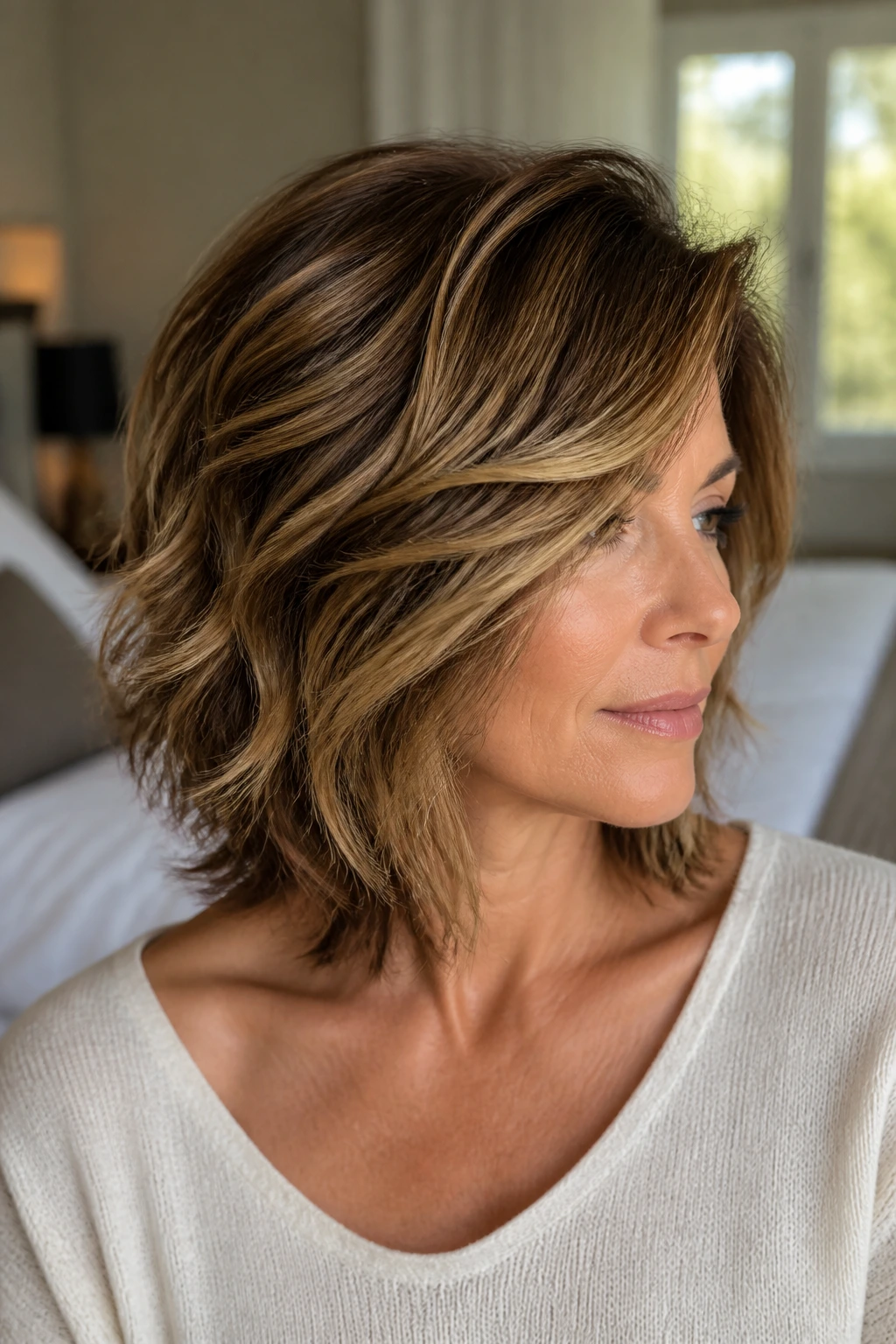
The side-swept lob is the graceful ending note for this whole lineup. It keeps the flattering length of a lob, adds internal volume so the waves sit off the scalp, and uses a side sweep to make the face look open. Caramel highlights through the sweep and the ends give the cut a soft, dimensional finish.
Why It Sticks Around
This is one of those cuts that suits a lot of hair types because it isn’t trying to do too much. It lifts, it moves, it frames, and it doesn’t punish you when you air-dry it on a rushed morning. The internal volume is the secret; it keeps the outside looking smooth while the inside does the work.
If you want one haircut from this list that can swing from casual to polished with only a change in part and product, this is the one I’d keep on the short list.
Why Shape Beats Weight When Hair Is Losing Density

The first thing thinning wavy hair loses is not always volume. Sometimes it loses honesty. The hair starts trying to act longer than it is healthy, and that creates the stringy look that makes people panic and chop everything off. A better cut changes the story before that happens.
Caramel highlights help because they create movement inside the shape, but the cut still has to earn its keep. A stronger outline at the perimeter makes hair look fuller from the front. Lift at the crown stops the top from settling into a flat strip. And a little restraint with layering keeps the ends from going see-through, which is where many salon cuts go wrong.
I’m opinionated about this part because I’ve seen too many beautiful waves ruined by overuse of thinning shears. If your hair is already fine, the cut should give it structure, not reduce it to confetti.
What to Tell Your Stylist About Waves, Thinning, and Caramel Placement
Bring photos, yes, but bring the right kind. Show one photo of the haircut shape you want and another of the color placement you like. Those are not the same thing, and a lot of salon confusion starts when people expect one picture to do both jobs.
Be direct about where your hair is thin. Crown, temples, ends, or all three. A good stylist needs that map before they decide how much to layer or where to place the caramel. If the thinning is mostly at the top, ask for lift through the crown and keep the perimeter weightier. If the ends are the problem, ask for bluntness or soft dusting, not deep texturizing.
A few useful phrases help:
- “I want the ends to look full, not wispy.”
- “Keep the layers controlled so the waves still have a strong outline.”
- “Place the caramel where the hair bends, not in skinny streaks.”
- “If you add lowlights, keep them soft and blended under the surface.”
That last one matters. A little lowlight can make highlights look richer and the cut look thicker, especially on medium-brown bases.
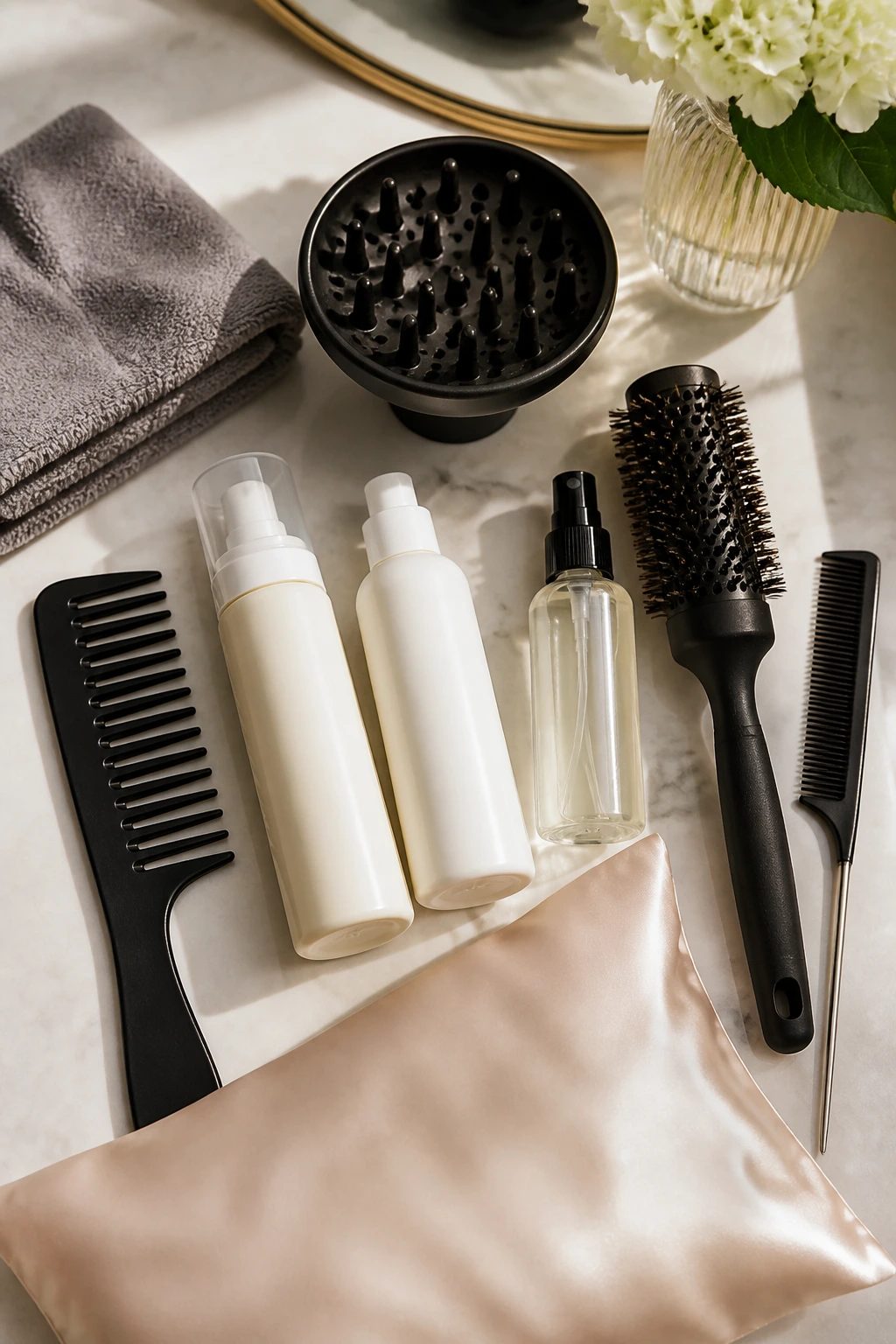
Tools That Make These Cuts Easier to Wear
-
Wide-tooth comb: Pulls through waves without stretching them into frizz.
-
Microfiber towel or cotton T-shirt: Cuts down on rough drying and keeps the wave pattern cleaner.
-
Diffuser attachment: Gives wavy hair lift at the roots without blasting the shape apart.
-
Volumizing mousse: Best at the crown and roots, where thin hair needs a little support.
-
Lightweight leave-in conditioner: Keeps ends from feeling dry without flattening the cut.
-
Round brush, medium barrel: Useful for shaping bobs, lobs, and curtain bangs.
-
Tail comb: Helps with clean parting and sectioning, especially when you want to switch the part for lift.
-
Heat protectant spray: Necessary if you use a blow dryer, diffuser, or iron, even on lower heat.
-
Silk or satin pillowcase: Not glamorous, but it helps the cut look better on day two.
How to Style These Cuts So the Caramel Shows Up
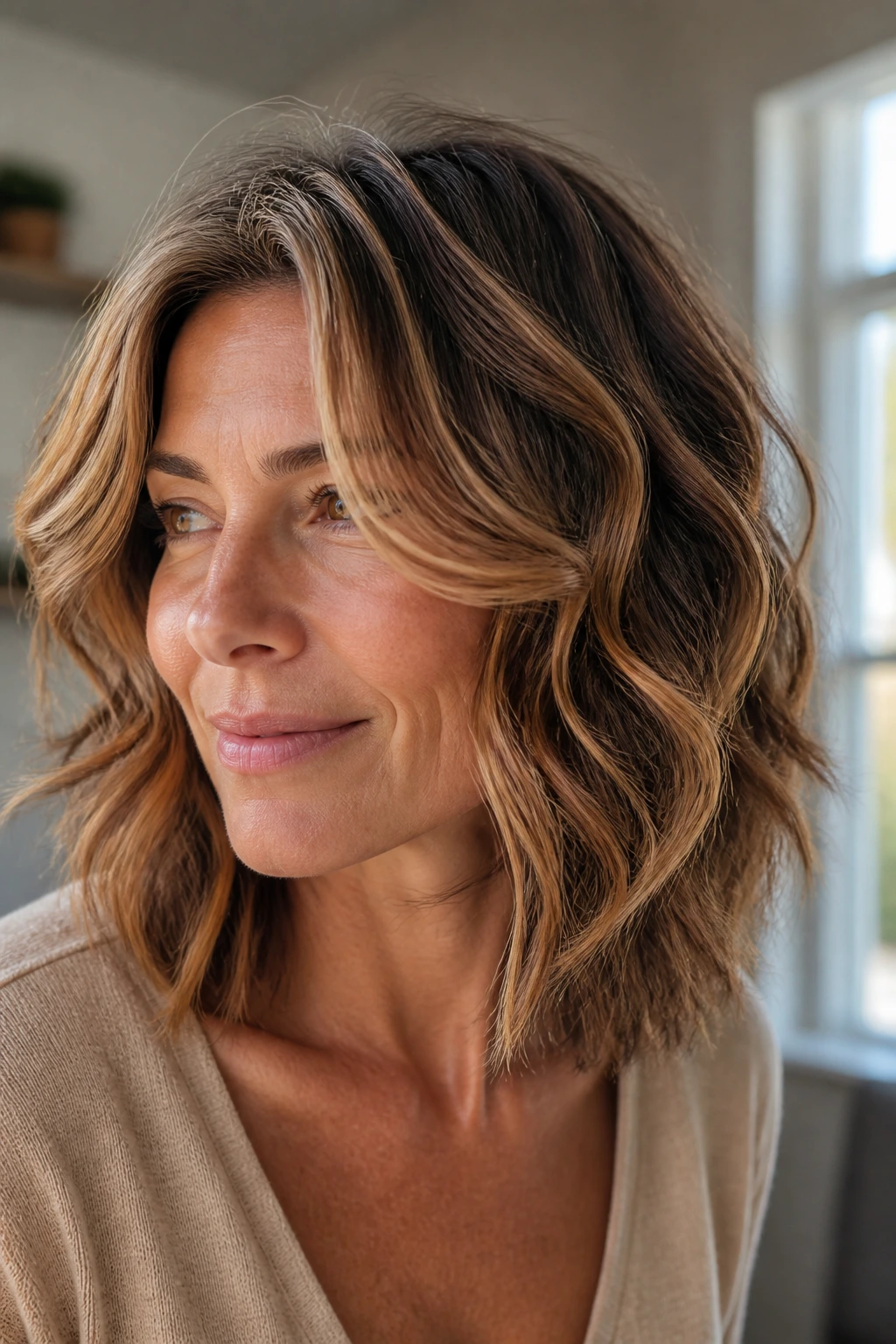
Presentation: Start with a part that gives the crown some lift, usually slightly off center unless your cut is built around a clean middle part. Scrunch waves upward while drying so the caramel pieces land on the bends instead of hanging in straight bands.
Accompaniments: Pair these cuts with a mousse at the roots, a pea-sized amount of cream through the ends, and a light mist of texture spray only where the hair needs separation. Heavy oils are the wrong roommate here; they sink wavy, thinning hair down fast.
Portions: If your hair is fine, use less product than you think you need. Half a palm of mousse is plenty for many shoulder-length cuts. For shorter bobs and pixies, a walnut-sized amount can be enough. More is not better.
Beverage Pairing: If you want the look to stay soft and not stiff, aim for air-drying to about 70 percent and then finish with the diffuser for the last bit of lift. A cool shot at the roots helps the shape settle.
That routine works because it respects the haircut instead of trying to force it. The caramel highlights show better when the hair moves a little, not when it’s plastered into place.
Smart Maintenance for the Cut and the Color
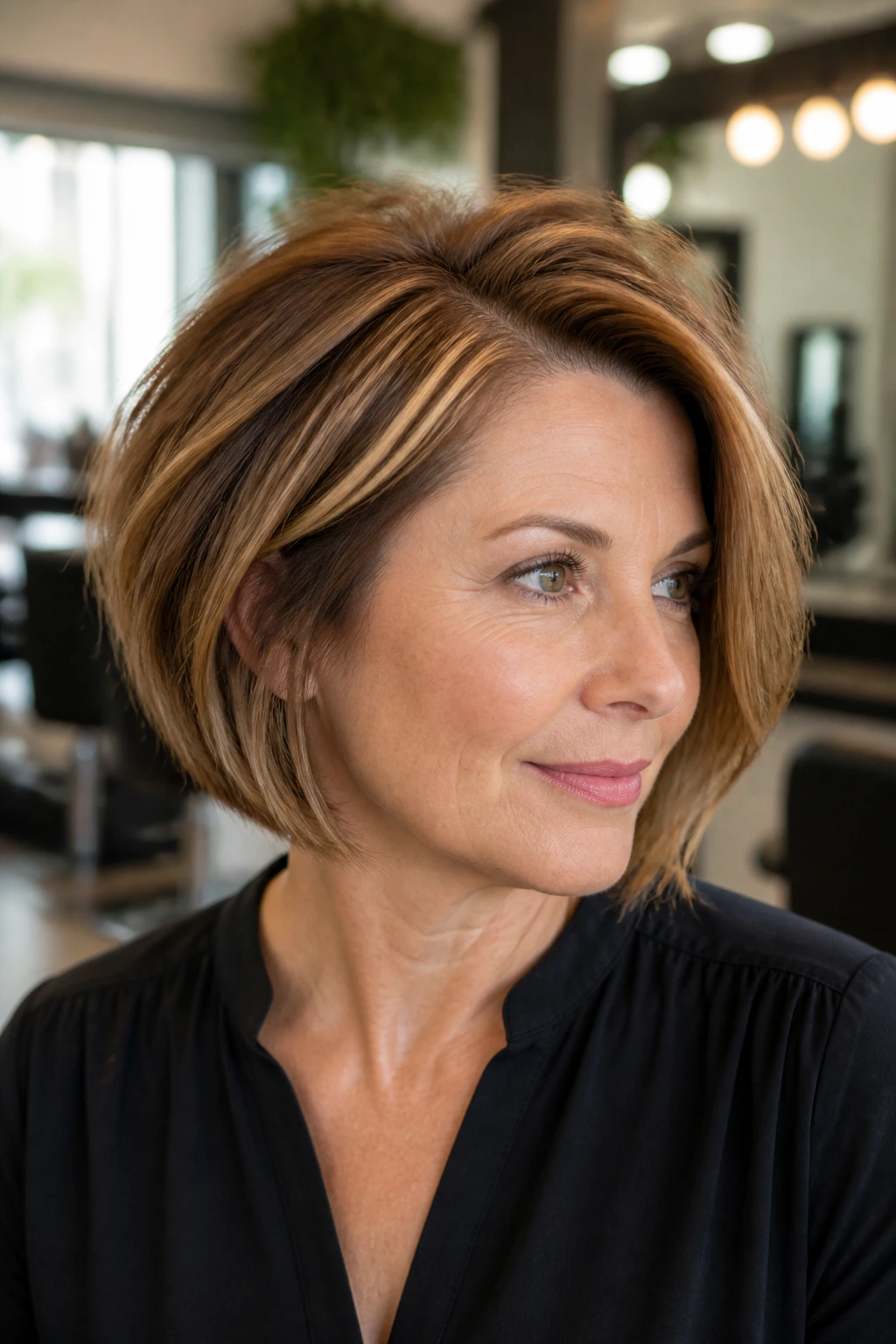
Caramel highlights on wavy, thinning hair look best when the shape stays tidy. That means trims on a schedule, not whenever you remember. For shorter bobs, six to eight weeks is the range I’d stick to. For lobs and longer layered cuts, eight to ten weeks usually works, though very fine ends may need a clean-up sooner.
Color needs its own calendar. A caramel gloss or toner every six to eight weeks keeps the warmth from turning dull or muddy. If your base color is darker and the highlights are soft, you may be able to stretch that a bit. If the hair is porous or lightened more heavily, brass can show faster.
Wash frequency matters too. Fine wavy hair usually looks better with two or three wash days a week than with daily scrubbing. Too much washing strips the surface and makes the highlights feel dry. On off days, a quick mist of water and a little leave-in can revive the bend without starting over.
If the cut starts to lose shape, don’t assume you need more layers. Sometimes you need the opposite: a blunt dusting at the bottom, a cleaner part, or a root-lift product used more carefully. Small fixes go a long way here.
Extra Tips for Fuller-Looking Waves
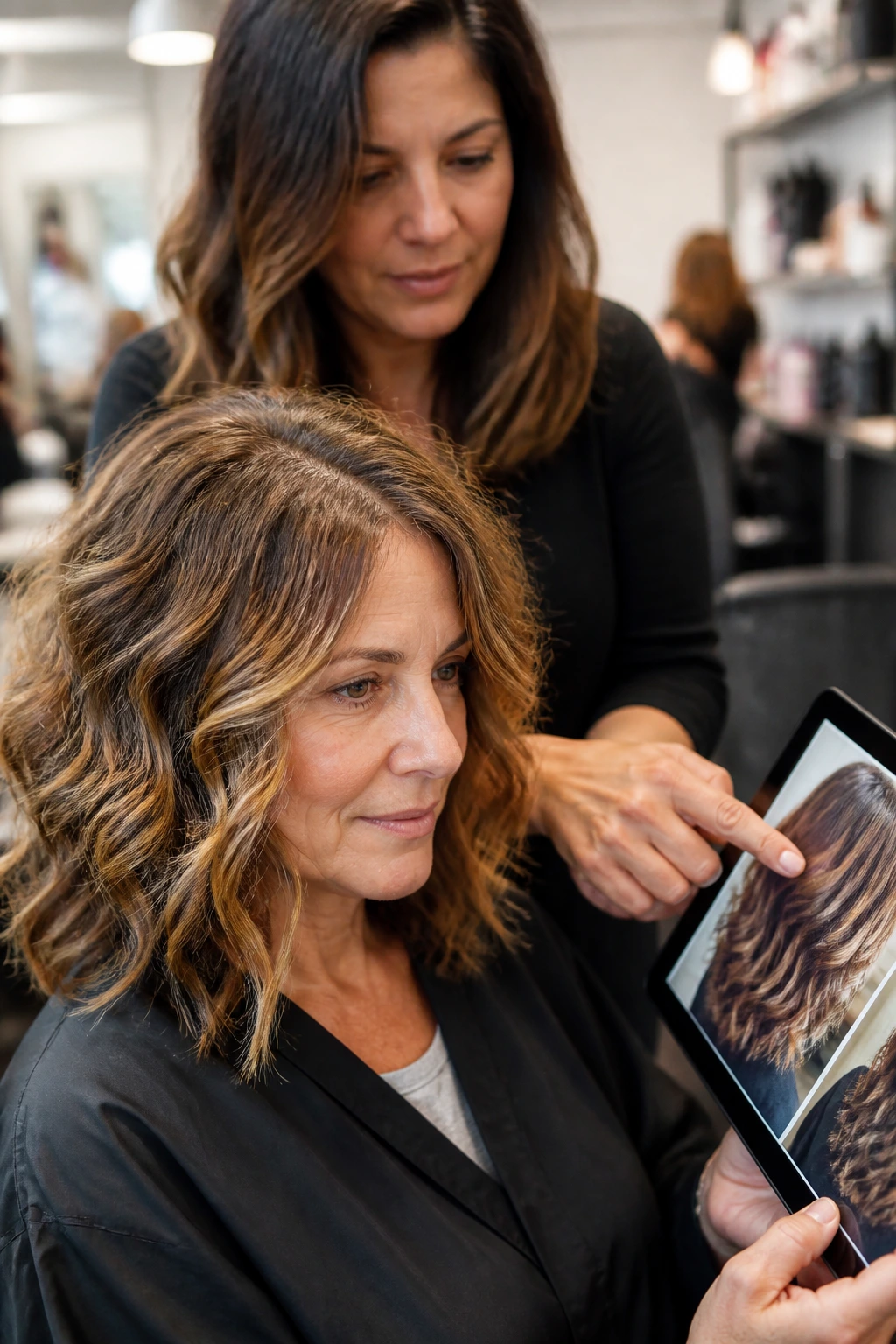
Texture Boost: Put mousse at the roots and a tiny amount of cream only on the last third of the hair. That keeps the top from lying flat while the ends stay soft instead of crunchy.
Color Boost: If your highlights are reading too bright, ask for a soft caramel gloss or one or two lowlights underneath. That gives the hair more depth and stops the lighter pieces from floating separately.
Time Saver: Flip your part every few days. It changes where the root lift sits and keeps the same side from collapsing.
Pro Move: Dry the roots first, even if the ends stay damp. Thin wavy hair often looks flatter because the crown never gets enough attention at the start.
Make-It-Yours: If you like low-maintenance hair, stay with a blunt lob or side-swept bob. If you want more edge, a soft shag or bixie gives you a little movement without asking for a lot of fuss.
The best upgrade, though, is restraint. One good shape and a smart caramel placement beat five conflicting styling tricks.
Common Mistakes That Make Thin Wavy Hair Look Straggly
The biggest mistake is over-layering. It feels logical to remove weight when hair is thin, but if the layers start too high or too close together, the ends go stringy and the whole cut looks smaller. The fix is a stronger perimeter with only enough internal shaping to let the waves move.
Another common problem is placing caramel highlights too far from the cut’s movement. When the lighter pieces sit in random stripes, they expose the lack of density instead of helping it. Ask for the color to sit around the bends, face frame, and top layers where the wave actually breaks.
A third one: leaving the part in the same place forever. Thin roots can flatten over time, and that one side starts to look exhausted. Switch the part, even a little, and the volume often comes back with almost no effort.
Then there’s too much heavy product. Thick creams, oils, and curl butters can make wavy hair cling together in little wet-looking ropes. That’s not shine; that’s flattening. Use light layers of product and stop once the hair feels controlled, not coated.
Finally, skipping trims because you’re trying to grow it out is a trap. Thin ends get ragged fast. A quarter-inch cut every so often often preserves more length than letting split ends chew through the hair for months.
Variations and Adaptations for Different Faces, Densities, and Routines
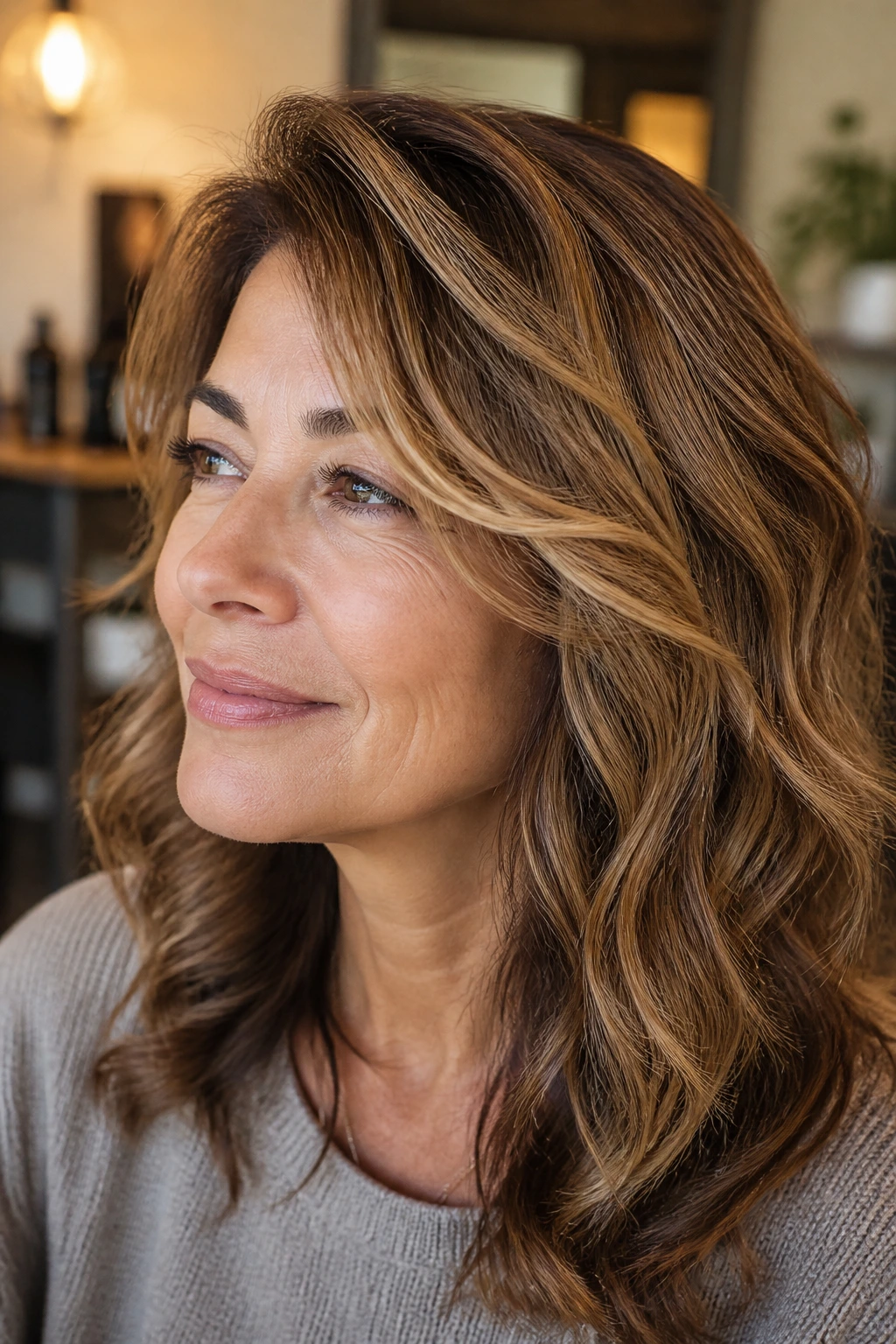
The Soft Side-Part Swap: If your crown is flat, shift the part slightly deeper on one side and keep the layers around the face longer. It gives instant lift without changing the whole haircut. This works especially well with lobs and bobs.
The Root-Shadow Caramel Edit: Ask for a slightly deeper root and softer caramel mids and ends. That creates depth at the scalp, which helps fine hair look thicker, especially if your base color is light brown or dark blonde.
The Fringe-Forward Version: For a high forehead or sparse temples, add curtain bangs or a soft side fringe. Keep the fringe wispy enough to move, not dense enough to separate into stringy sections.
The Short-and-Neat Version: If styling time is short, choose a bixie, pixie bob, or rounded chin-length bob. These shapes need less daily work and still show off caramel highlights in the top layers.
The Long-Hair Rescue: If you’re attached to your length, stick with a U-shape, butterfly cut, or layer-light long cut. You keep the feeling of long hair, but the ends stop looking tired and thin.
The Cooler Caramel Shift: If warm tones are not your thing, ask for beige-caramel or toffee with a softer gloss. You still get dimension, just with less copper warmth.
Frequently Asked Questions
Which haircut makes wavy thinning hair look the fullest?
A blunt lob, rounded bob, or chin-length bob usually gives the strongest density illusion because the perimeter stays solid. If you want length, a U-shaped cut or a butterfly cut can still work, but the bottom line needs to stay full.
Are layers bad for thinning hair?
Not automatically. Too many short layers are the problem, not layers themselves. The safest version is controlled internal layering or long, soft layers that keep the bottom edge thick.
Should caramel highlights be warm or beige?
Warm caramel works best on most brown and dark blonde bases because it blends with the natural undertone and doesn’t look harsh. Beige-caramel can be nice if your skin tone runs cooler, but it needs to stay soft so it doesn’t flatten the wave pattern.
Can I wear bangs if my hair is thinning at the temples?
Yes, but soft curtain bangs or a side fringe are safer than dense straight bangs. They give shape without exposing the thinner areas around the hairline.
What if my waves go frizzy after a new haircut?
That usually means the cut was too aggressive or the styling products are too heavy or too dry for the new shape. Try a lighter mousse, less rough towel-drying, and ask your stylist next time to keep the ends less shredded.
Do lowlights help with thin wavy hair too?
They do. A few soft lowlights under the surface make caramel highlights look richer and give the hair more depth, which can help the whole cut appear thicker.
How often should I refresh the color?
A gloss every six to eight weeks is a solid rhythm for caramel highlights, especially if your hair is porous or gets a lot of sun. If the tone stays rich longer, you can stretch it a bit.
How short is too short for thinning wavy hair?
Too short is only a problem if the cut removes the shape you need. A crop can work well if the top has enough length for movement, but if your hair grows in flat and fine, a very short cut may show scalp more than you want.
The Shape That Holds Up
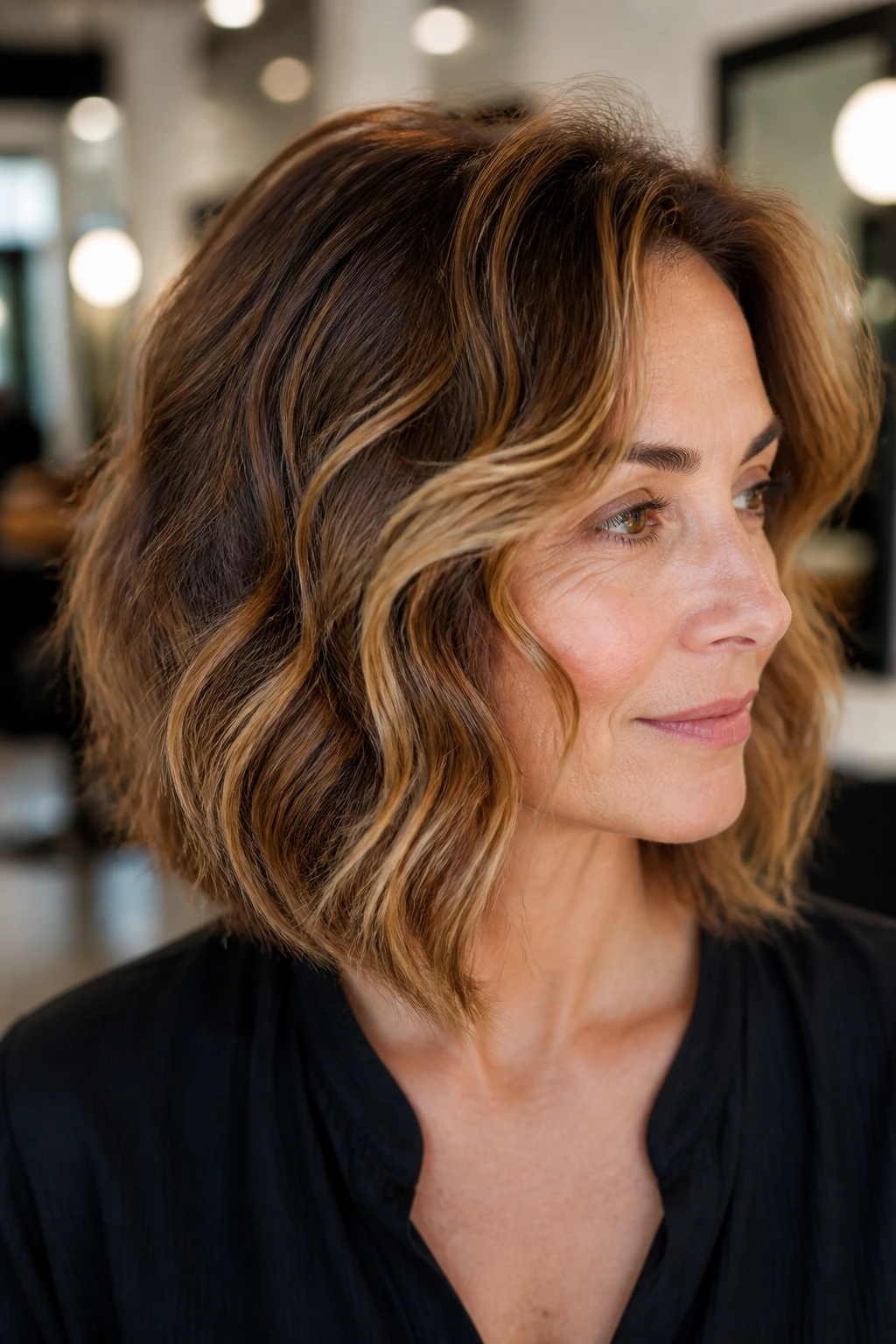
The best haircut for thinning wavy hair is the one that gives the eye a clear outline and gives the waves room to do their own work. Caramel highlights help, but they’re the finishing touch, not the fix. A good lob, a smart bob, or a carefully layered mid-length cut can make the hair look denser before you ever touch a styling wand.
That’s the part people miss when they keep chasing more inches. You do not need endless length. You need shape, a little lift, and color placed where the hair naturally bends. Get those three things right, and the whole head reads fuller, softer, and a lot less tired.