



A blonde ponytail on natural hair can look polished, bright, or a little too hard in a hurry. Caramel highlights are usually what keeps it on the right side of that line. They soften the brightness, warm up the face, and stop the whole style from reading like one flat block of color.
What I like most is the way the shade mix changes once texture enters the picture. Coils, curls, and stretched natural hair already bring shape. Blonde adds light. Caramel adds depth. Put them together in a ponytail, and the style gets movement even when the base is slicked down tight.
The 22 looks below cover sleek wraps, high puffs, braided ponytails, curled extensions, and a few styles that live somewhere in between. Some are gentle. Some are loud in a good way. And some are the kind of ponytail you wear when you want the whole room to notice the hair before they notice anything else.
Why These Blonde Ponytail Ideas Work So Well on Natural Hair
- Warmth beats harsh contrast: Caramel highlights keep blonde from sitting on dark natural hair like a sticker; the color reads blended instead of pasted on.
- Texture does half the styling for you: Coils, curls, and stretched strands give ponytails lift, so the blonde has shape to sit on instead of falling flat.
- The base can stay deeper: A shadow root or deeper crown keeps the ponytail looking intentional, not overly bleached.
- Extensions blend faster with caramel tones: Honey blonde, golden blonde, and caramel-leaning pieces usually disappear into natural hair better than icy blonde.
- You can go sleek or full without changing the color story: A high pony and a puff pony can wear the same tones and still look like two different moods.
- The style works across hair lengths: Shorter natural hair can use a ponytail piece, while longer hair can build the volume from its own texture.
The Color Map Behind a Good Blonde Ponytail
A good blonde ponytail on natural hair rarely uses one shade all over. That’s the part people skip, and it’s why some blonde styles look bright in photos but oddly stiff in real life. Caramel highlights give the eye a place to rest. They also make the blonde read warmer, which matters a lot when your base is deep brown, espresso, or black-brown.
My favorite blend is a deeper root with honey or beige blonde through the ponytail length and a little caramel near the hairline or face-framing pieces. That keeps the style from going brassy without pushing it into icy territory. On coily hair, especially 4b and 4c textures, very pale blonde can look disconnected unless there’s a warm bridge somewhere in the style.
If you’re choosing extensions, look for shades that fade from 1B or dark brown at the root into 27, 30, 613, or a custom caramel-blonde blend. If you’re coloring your own hair, a warm toner often does more good than a brighter bleach job. The goal is not the lightest blonde you can get. It’s the blonde that still looks like it belongs on your head.
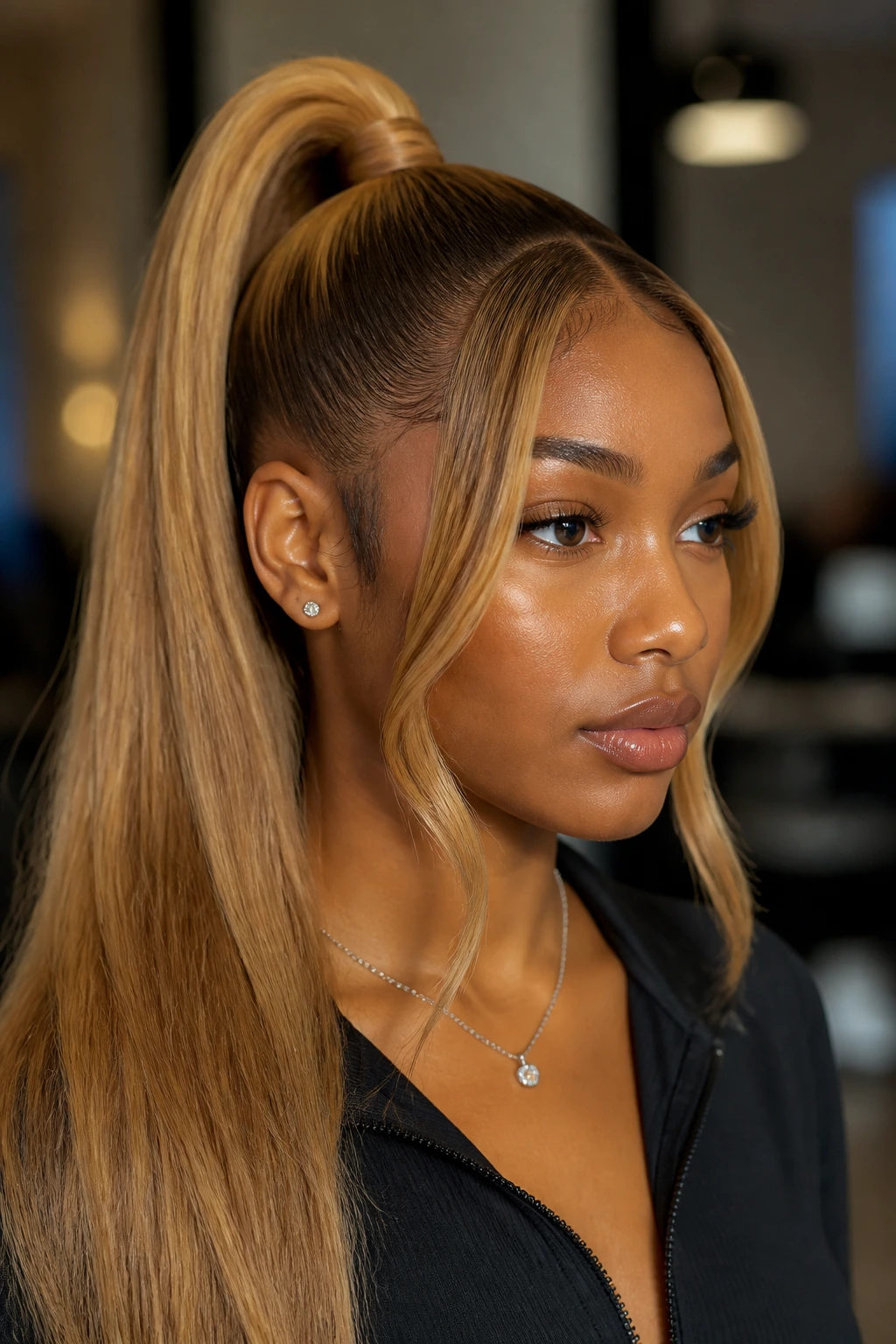
1. Sleek Honey-Blonde High Pony with Caramel Money Pieces
A high ponytail like this has a sharp, almost glassy finish at the base, then softens the second those caramel pieces hit the cheekbones. I like this look because it gives you height without making the style feel stiff. The honey-blonde length keeps the ponytail bright, but the money pieces pull the color back into something warmer and more wearable.
Why It Works
This is the cleanest style in the group, which is exactly why it looks so expensive when it’s done well. The base sits high at the crown, so the face lifts immediately, and the caramel highlights keep the whole thing from looking one-note. On stretched natural hair or a silk-pressed base, the ponytail sits flatter and the color takes center stage.
Quick Styling Note
A rat-tail comb, strong gel, and a boar-bristle brush are doing most of the work here. Smooth the hair in thin layers, not one heavy coat. If the front starts to puff up before the band is secure, stop and re-brush; don’t keep piling on gel.
Best for: round and oval faces, event hair, and anyone who wants a very defined silhouette.
Pro tip: Wrap a small strip of blonde extension hair around the base instead of using a bulky scrunchie. It keeps the line tight and hides the elastic better.
2. Curly Puff Ponytail with Warm Blonde Ends
Want height without the helmet effect? This is the answer. The puff sits big and airy, while the blonde lives mostly at the ends and outer curl clumps, so the style still feels soft. Caramel highlights around the crown keep the puff from looking like one big dark shape with a bright tail.
Why It Works
The puff respects natural texture instead of flattening it. That matters. A ponytail that keeps the coil pattern visible always looks more alive than one that tries to erase it. The warm blonde ends move when you walk, and the color catches light in a way that makes the puff look fuller than it is.
What Makes It Better
- Use a stretched twist-out or a fluffy wash-and-go as your base.
- Pick a ponytail piece with warm blonde ends, not icy platinum.
- Leave a little frizz on purpose. Too much smoothing kills the shape.
Best for: 4c puffs, 4b curls, and anyone who wants volume without a ton of tension.
Pro tip: Pick the puff out only after it’s attached. If you fluff before, you lose control over how much shape the ponytail actually has.
3. Wrapped Braid Ponytail with Caramel Stitch Accents
This one has structure. You see the braid first, then the ponytail length, then the little caramel accents woven through the stitch pattern. It feels neat, but not boring. A braided base also gives blonde a chance to look more dimensional, because the strands move in blocks instead of one smooth sheet.
Why It Works
Braids and blonde are a strong pair because the braid pattern breaks up light in a good way. Caramel stitch accents soften the line of the braid and keep the blonde from turning too bright under indoor light. If your natural hair is thick, this is one of the easiest ways to keep the style compact at the scalp and dramatic at the tail.
Quick Details That Matter
- Feed-in braids should be snug, not tight.
- Keep the first inch near the hairline smooth so the braid base doesn’t puff.
- Blonde extension hair looks best when it’s pre-stretched or lightly feathered at the ends.
Best for: long wear, protective styling, and days when you want a tidy base with a little visual detail.
Pro tip: Ask for caramel strands closer to the braid base and brighter blonde farther down the ponytail. That small shift makes the color read more expensive than a single solid shade.
4. Bubble Ponytail with Blonde Sections
A bubble ponytail is one of those styles that looks complicated until you realize it’s mostly good sectioning and a stack of small elastics. On natural hair, the trick is to keep each bubble full enough to show the blonde, but not so overstuffed that the ponytail turns boxy. Caramel highlights between the bubbles make the whole thing look striped in the best way.
Why It Works
The bubble shape gives blonde a built-in rhythm. Each section catches the light differently, so the color moves as the ponytail moves. If you use extension hair, the bubbles stay rounder and the blonde reads cleaner. If you use your own stretched hair, the bubbles feel a little softer and more textured.
How I’d Style It
Use clear bands or thin elastics every 3 to 4 inches, then gently tug each section outward. Don’t try to make every bubble the same size. A little unevenness looks human. A little too much symmetry can make the style feel rigid.
Best for: medium to long natural hair, concerts, parties, and photo days.
Pro tip: Dust the elastics with a touch of shine spray before you slide them on. It cuts friction and keeps the hair from snagging as you tighten the sections.
5. Side-Swept Low Ponytail with Face-Framing Highlights
A low side ponytail has a softer personality than a center pony. It falls across one shoulder, shows off earrings, and lets the caramel pieces do quiet work around the cheek and temple. That side sweep is flattering in a way people underestimate. It draws the eye diagonally, which tends to smooth the whole silhouette.
Why It Works
A deep side part gives the ponytail some movement before the tail even starts. The blonde length can stay glossy and long while the caramel highlights near the front soften the face. This is one of the easiest ways to make blonde feel grown and not flashy.
Styling Notes
If your hair is long enough, keep the ponytail low at the nape and let the front pieces stay slightly curved. If you’re using extensions, choose a tail with loose waves rather than pin-straight hair. The curve matters. It keeps the ponytail from looking too severe.
Best for: formal dinners, date nights, and anyone who likes a face-framing shape.
Pro tip: Tuck one side behind the ear and leave the other side loose. That tiny asymmetry is where the style gets its charm.
6. Middle-Part Straight Ponytail with Curled Ends
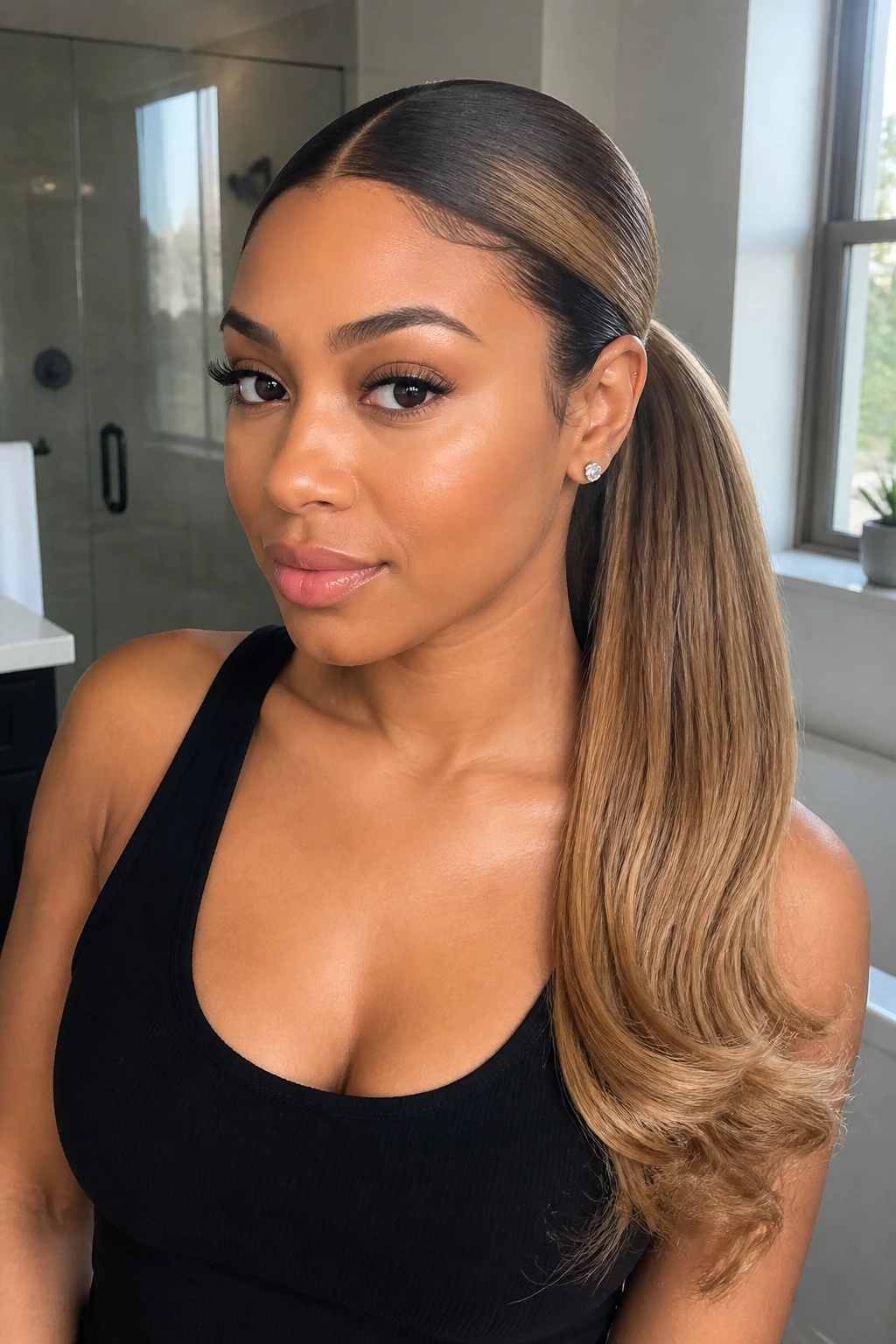
This is the ponytail that looks simple until you stand beside it and notice how clean the line really is. The center part gives the face a long, neat frame, and the curled ends stop the whole thing from feeling stiff. Caramel highlights work especially well here because the straight base lets the color read clearly.
Why It Works
Straight ponytails can go flat fast on natural hair if the texture at the base is ignored. A good blowout or silk press solves that, but the color placement does some of the heavy lifting too. Deeper caramel near the root and brighter blonde at the ends creates a small gradient that keeps the tail moving.
A Practical Detail
Keep the front part crisp, but do not chase perfection with extra product. Too much edge gel can flake once the curls start to bounce. A clean part, one smoothing brush, and a little shine serum on the tail are enough.
Best for: pressed hair, drawn-out natural hair, and polished events.
Pro tip: Curl the last 2 to 3 inches of the ponytail with a medium barrel iron or use a pre-curled extension piece. Tiny curls at the ends make the whole style look finished.
7. High Puff Ponytail with Blonde Ombre Tips
This one has presence. A high puff already gives you lift, but blonde ombre tips turn that lift into a statement. The base stays grounded in your natural color, while the lighter ends bring the movement forward. Caramel highlights around the halo tie the two tones together so the puff doesn’t feel chopped in half.
Why It Works
If your natural hair shrinks a lot, this is one of the easiest ways to show off shape without forcing a slick style. The puff keeps the texture visible. The ombre tips keep the eye moving. And because the blonde lives at the ends, you can keep the root depth that makes the look feel believable.
Best Placement
Set the puff high, but not painfully high. Too much lift can tug at the crown and make the style look forced. A high puff that sits just above the crown usually gives the best shape. If your hair is dense, use a large band and a wide satin scarf to compress the base before fluffing the tail.
Best for: 4c and 4b hair, twist-outs, and anyone who wants volume first.
Pro tip: Let a few caramel pieces stay visible near the front instead of hiding every highlight in the puff. It makes the style read warmer from the front and less like a single dark cloud with blonde ends.
8. Feed-In Braided Ponytail with Honey Blonde Feed-Ins
Feed-in braids are built for this kind of color story. The braid starts close and small at the scalp, then the honey-blonde feed-ins build length and drama as the ponytail drops. Caramel threads woven into the plaits stop the blonde from looking pasted on. The whole look feels engineered, in a good way.
Why It Works
Because the braid grows gradually, the eye never hits a sudden color jump. That’s the magic. The base stays tidy, the braid stays secure, and the blonde appears as a controlled sweep instead of a hard block. If you want a ponytail that can hold for days without frizzing into chaos, this is one of the strongest options.
Quick Checklist
- Use light but strong braiding hair so the ponytail doesn’t pull.
- Keep the feed-ins consistent in thickness.
- Finish with a small curled tail or a sealed end if you want a cleaner line.
Best for: protective styling, longer wear, and anyone who likes crisp braid work.
Pro tip: Ask for the caramel shade to sit in the middle of the braid feed-ins, not only at the tail. The braid pattern shows off tonal changes much better than a flat, single-color feed.
9. Rope-Twist Ponytail with Cinnamon-Caramel Shine
A rope-twist ponytail has a more relaxed look than a braid, and that’s exactly why it works with caramel. The twists catch light along the ridges, so the blonde doesn’t need to do all the visual work by itself. Cinnamon-caramel tones in the twists add depth without stealing the show.
Why It Works
Two-strand twists create a soft spiral down the tail, which is a nice break from all the straight, sleek ponytails in this group. They’re also easier on the scalp than tighter braided styles. If your natural hair likes to swell up a bit, the twist texture keeps that from looking messy. It looks intentional. Always.
Styling Notes
Use a creamy twisting product or a light gel-cream, not a heavy butter that coats the hair. Heavy products make the rope lines blur. If the ends are blonde, seal them well or use pre-twisted extension hair so the twist stays defined longer.
Best for: medium-length natural hair, low-tension styling, and soft everyday wear.
Pro tip: Twist the base slightly tighter than the tail. That keeps the ponytail from unraveling at the top, which is the first place these styles usually go slack.
10. Half-Up Ponytail with Loose Blonde Curls
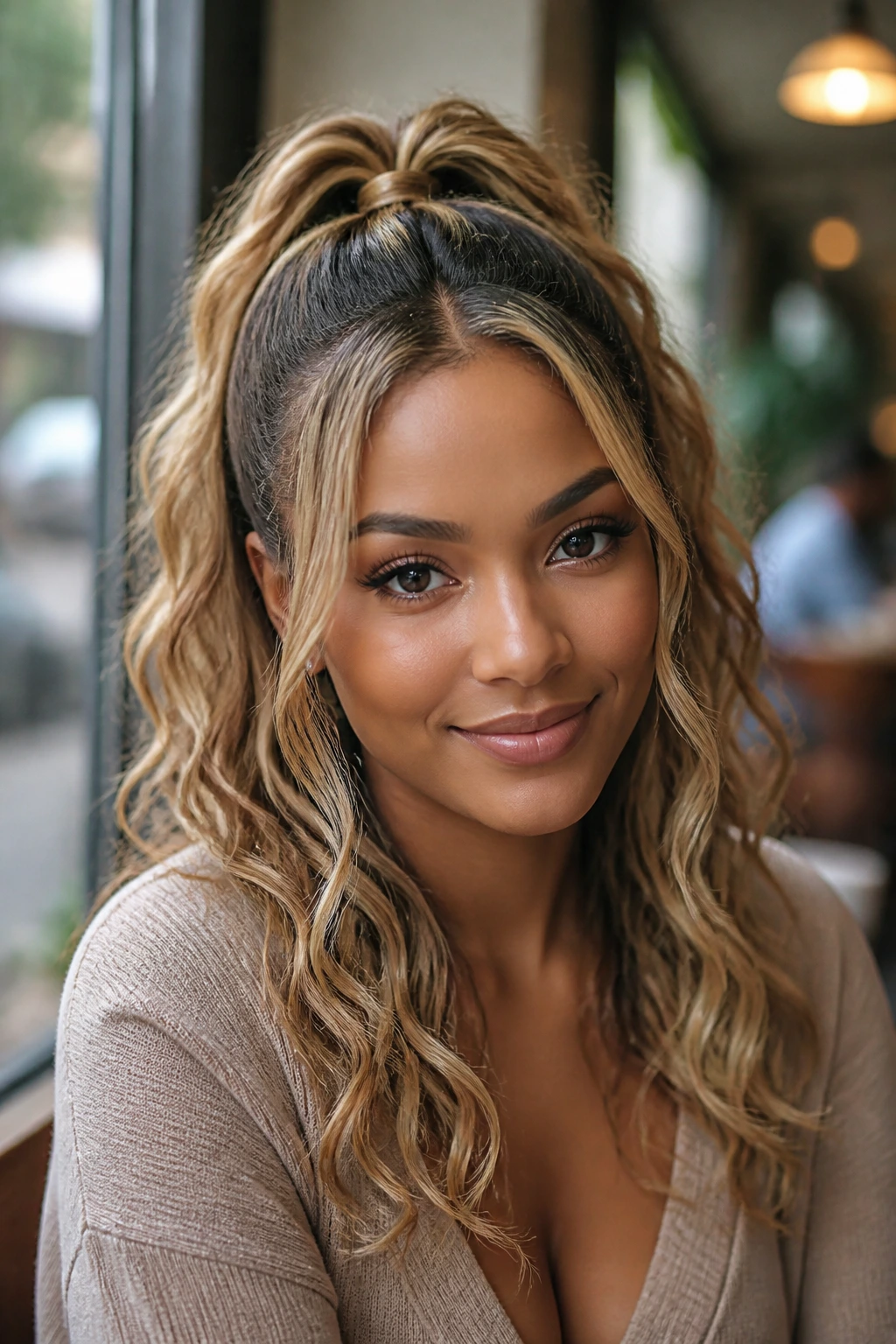
Half-up ponytails are useful because they let you keep the crown lifted while the rest of the hair stays loose and soft. On natural hair with caramel highlights, this is a nice way to show off the color without pulling all of it back. The blonde curls around the bottom give the style a little swing.
Why It Works
The half-up shape gives you control over volume at the top and movement at the bottom. That split is flattering on curls because it prevents the style from becoming too heavy in one place. Caramel highlights near the crown and around the face keep the lifted section from looking too dark once the bottom curls take over.
What to Keep in Mind
The top section should be snug enough to stay put, but not so tight that it flattens the front of the head. Leave a little root texture if you want the ponytail to feel softer. Straight, overly slick half-ups can look a bit severe on textured hair. A little softness around the edges fixes that fast.
Best for: casual glam, brunch hair, and styles that need both polish and movement.
Pro tip: Curl only the lower section in larger chunks. Too many tiny curls make the half-up look busy. A few wide pieces are enough.
11. Braided Crown Ponytail with Bright Blonde Lengths
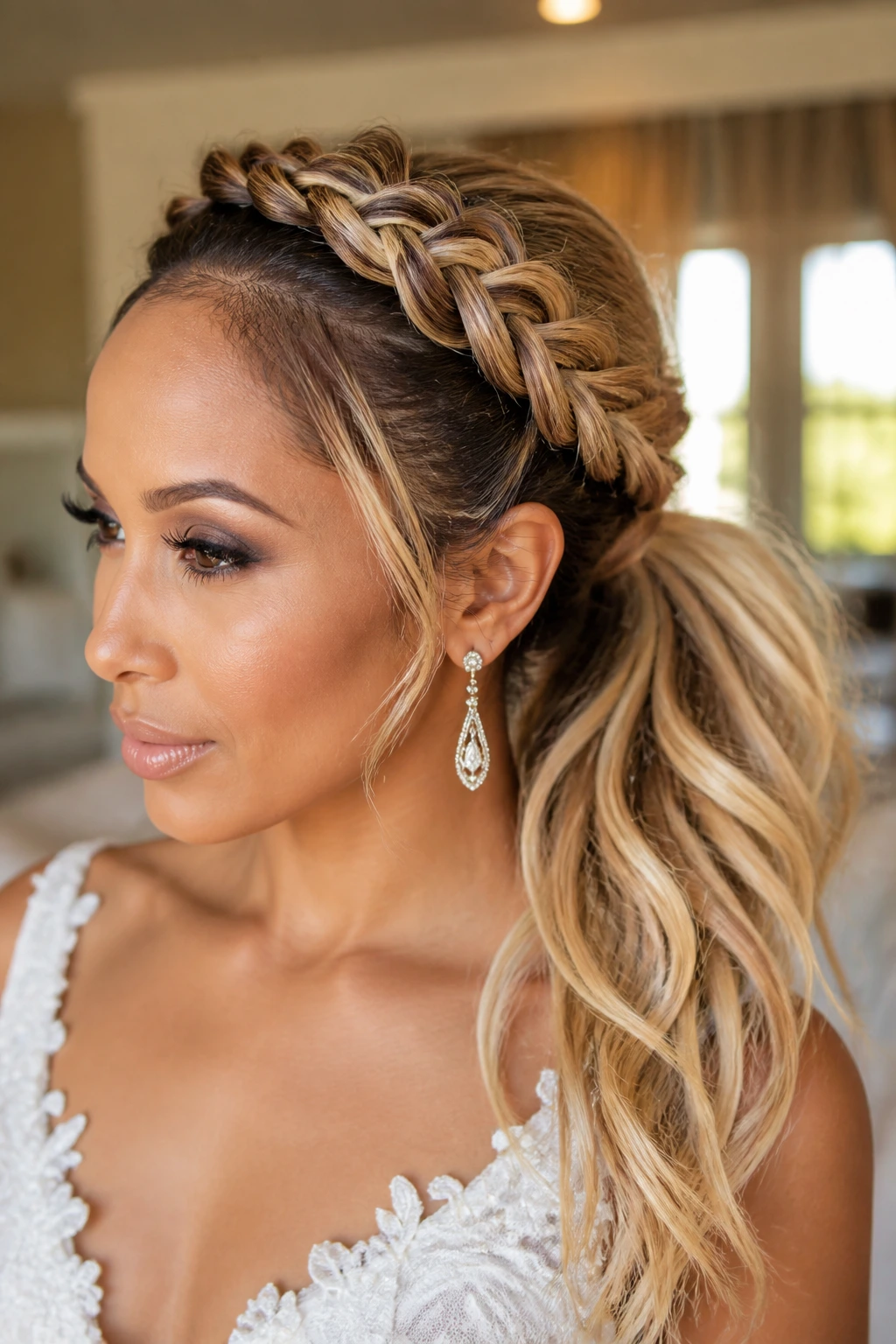
This is the kind of ponytail that feels dressed up before you even put on earrings. The braid around the crown acts like a built-in headband, and the blonde ponytail that follows gives the style room to breathe. Caramel highlights threaded through the crown braid stop the top from looking too stark next to the bright lengths.
Why It Works
The crown braid gives the style structure at the hairline, which is where a lot of ponytails either shine or fall apart. Once that base is settled, the blonde length can go brighter without the style feeling loud. It’s a smart balance. The braid contains the front, the ponytail opens up the back.
Best For
- Weddings and dressy events
- Natural hair that needs more visual interest at the front
- People who like a tidy top and a fuller tail
Pro tip: Keep the braid lines slightly wider if you want the style to read softer. Tiny crown braids can look busy against bright blonde.
12. Low Ponytail with a Satin-Wrapped Base
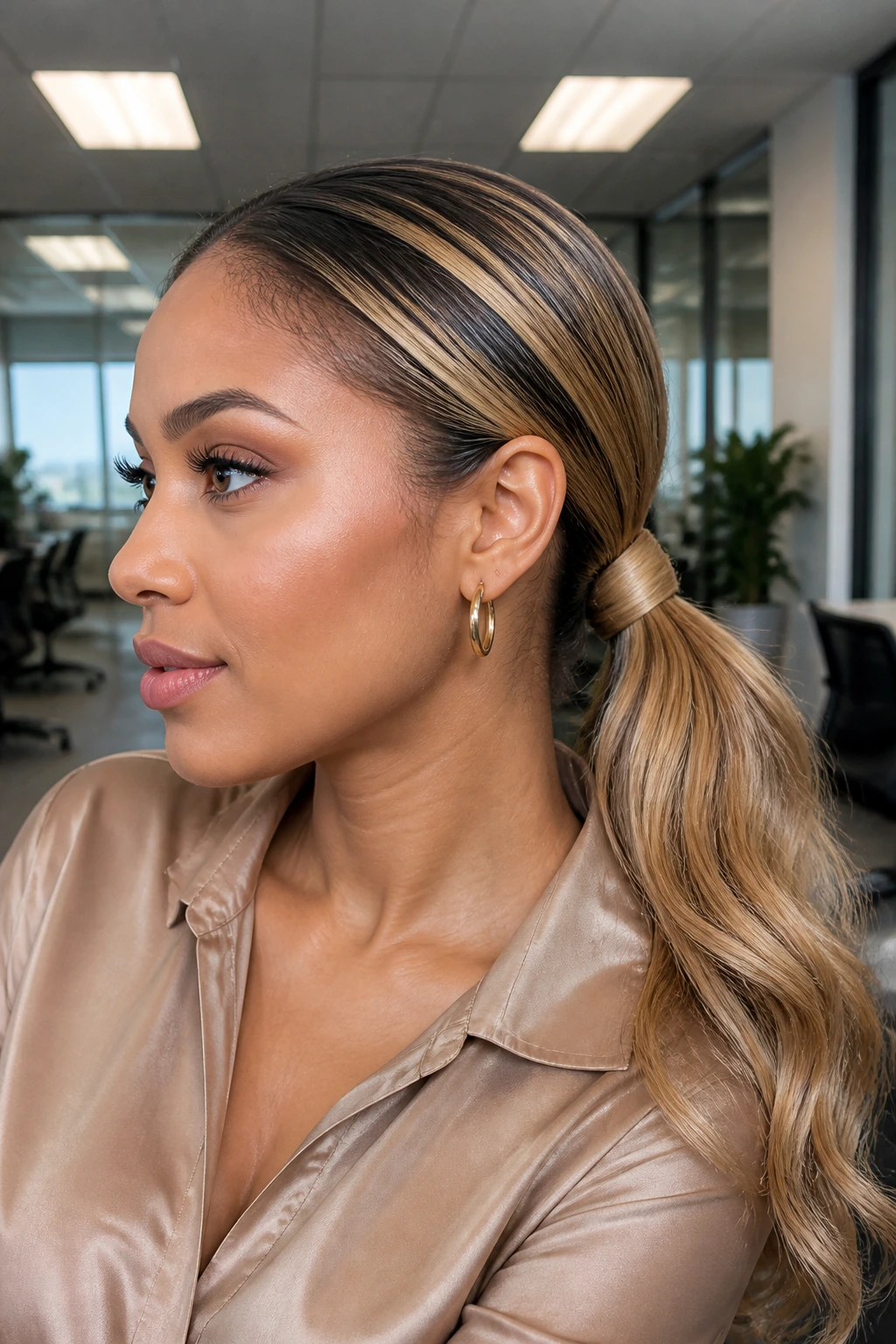
A satin wrap changes the whole mood of a low ponytail. Instead of looking plain, the base suddenly feels deliberate. The blonde tail can stay soft and full, while the satin adds a small hit of shine near the knot. Caramel highlights echo that softness and keep the look from getting too formal.
Why It Works
The wrap hides the elastic and gives you an easy place to add color without bleaching anything else. It also makes a low ponytail feel finished even when the rest of the hair is loose and simple. If you like accessories, this is a nice place to use them without cluttering the whole head.
A Small Warning
Do not use a wrap that’s too bulky. A thick knot at the base makes the ponytail sit awkwardly, and on natural hair it can create extra lift in the wrong place. Keep the wrap smooth and close to the head.
Best for: office days, dinners, and anyone who likes a soft, polished low silhouette.
Pro tip: Pick a satin wrap in caramel, champagne, or warm beige. Cool silver satin can fight the tone of the blonde instead of helping it.
13. Curly Ponytail with Shadow Roots
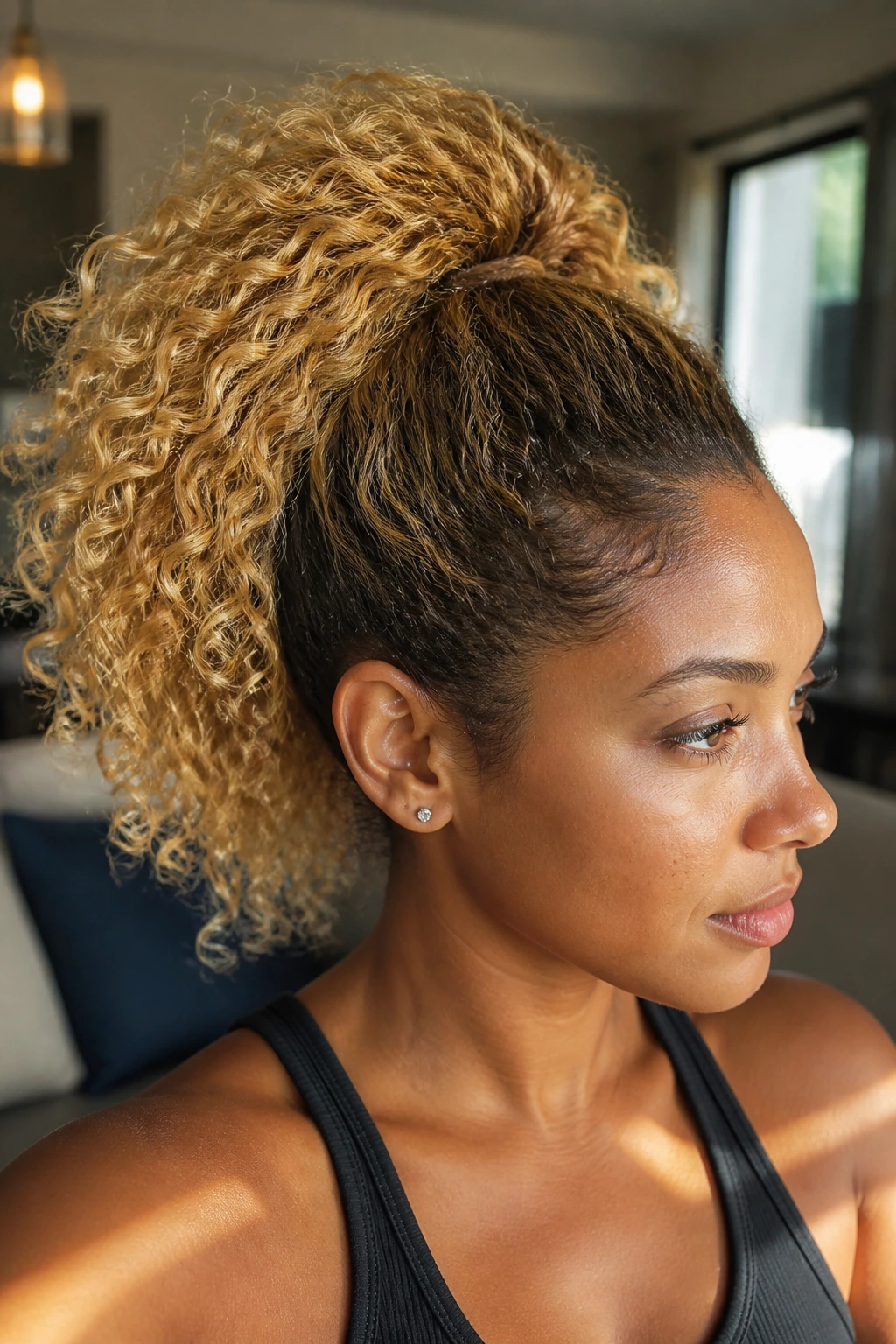
This style is proof that blonde does not need to start at the scalp to look good. In fact, it usually looks better when it doesn’t. A shadow root lets the curly ponytail keep some depth at the base, while the blonde lengths and caramel streaks keep the tail bright and dimensional.
Why It Works
Shadow roots are a friend to natural hair. They make the color transition easier, and they forgive a little regrowth. That matters if you don’t want to retouch the ponytail every few days. The curls do the rest of the work by breaking the light across the length.
Best For
- Clip-in ponytails
- Curlier extension textures
- Anyone who wants blonde but not an all-over bright base
Pro tip: Match the shadow root to your natural hair closely, then let the blonde come in after an inch or two. The longer the fade, the softer the whole look feels.
14. French-Curl Ponytail with Caramel Ribbons
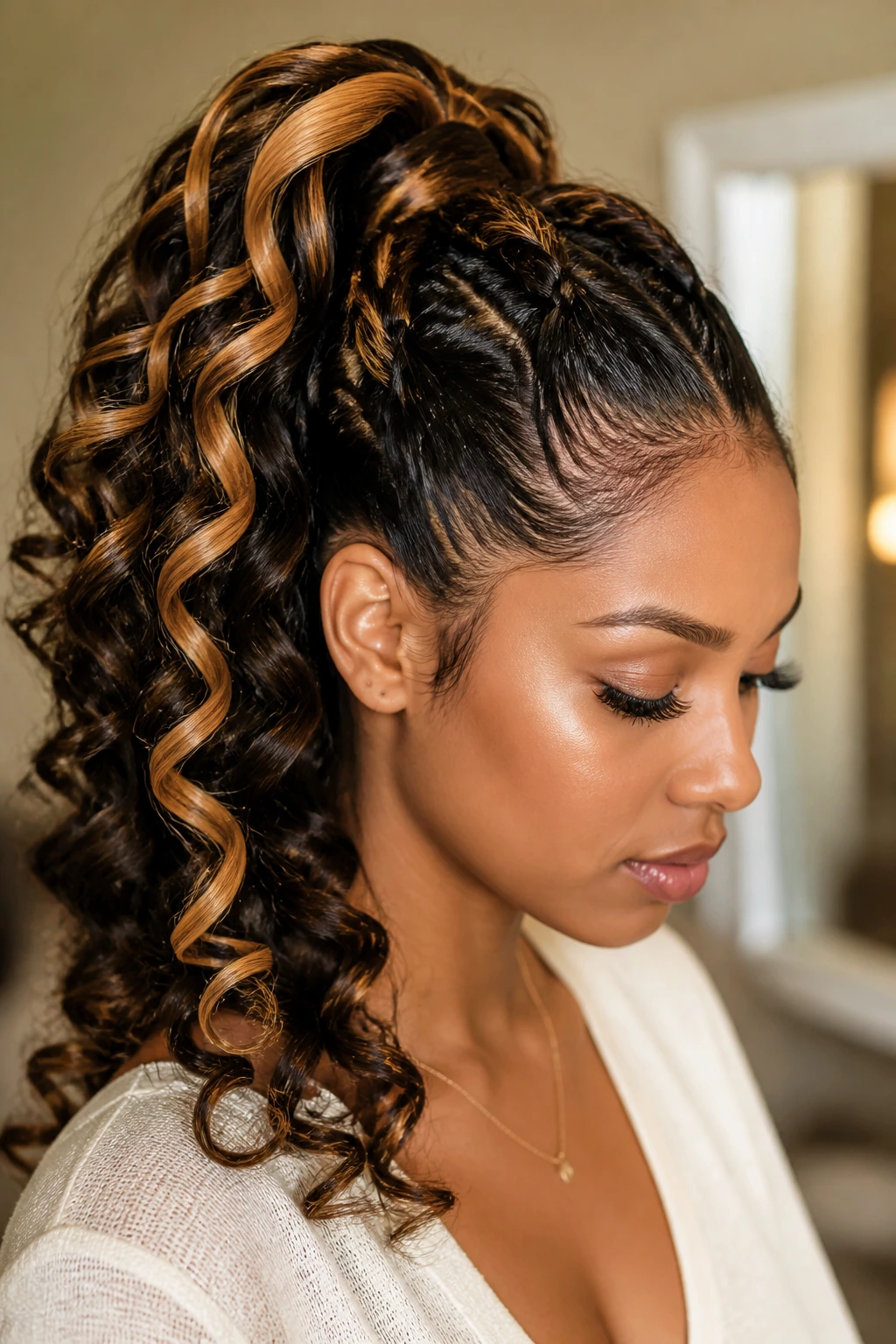
French curl ponytails have a romantic feel that straight extensions can’t fake. The curls bounce at the ends and bend at the mid-length, which gives caramel highlights little pockets to sit in. The blonde reads softer because the curl pattern keeps shifting the light.
Why It Works
This style is one of the easiest ways to get volume without teasing the hair or building a heavy base. The curls do the visual lifting. Caramel ribbons through the lengths stop the blonde from turning too flat under indoor lights, especially when the ponytail swings.
Styling Notes
If you’re using a pre-made French curl ponytail piece, brush it with your fingers, not a hard brush. Hard brushing can pull the curl apart and make the ends go fuzzy faster. A tiny bit of leave-in on your palms usually does more good than a spray bottle full of water.
Best for: soft glamour, date nights, and people who like a fuller, face-framing ponytail.
Pro tip: Let a few curls rest over one shoulder instead of pulling every strand behind you. The look gets prettier when it moves.
15. Mohawk Ponytail with Sleek Sides
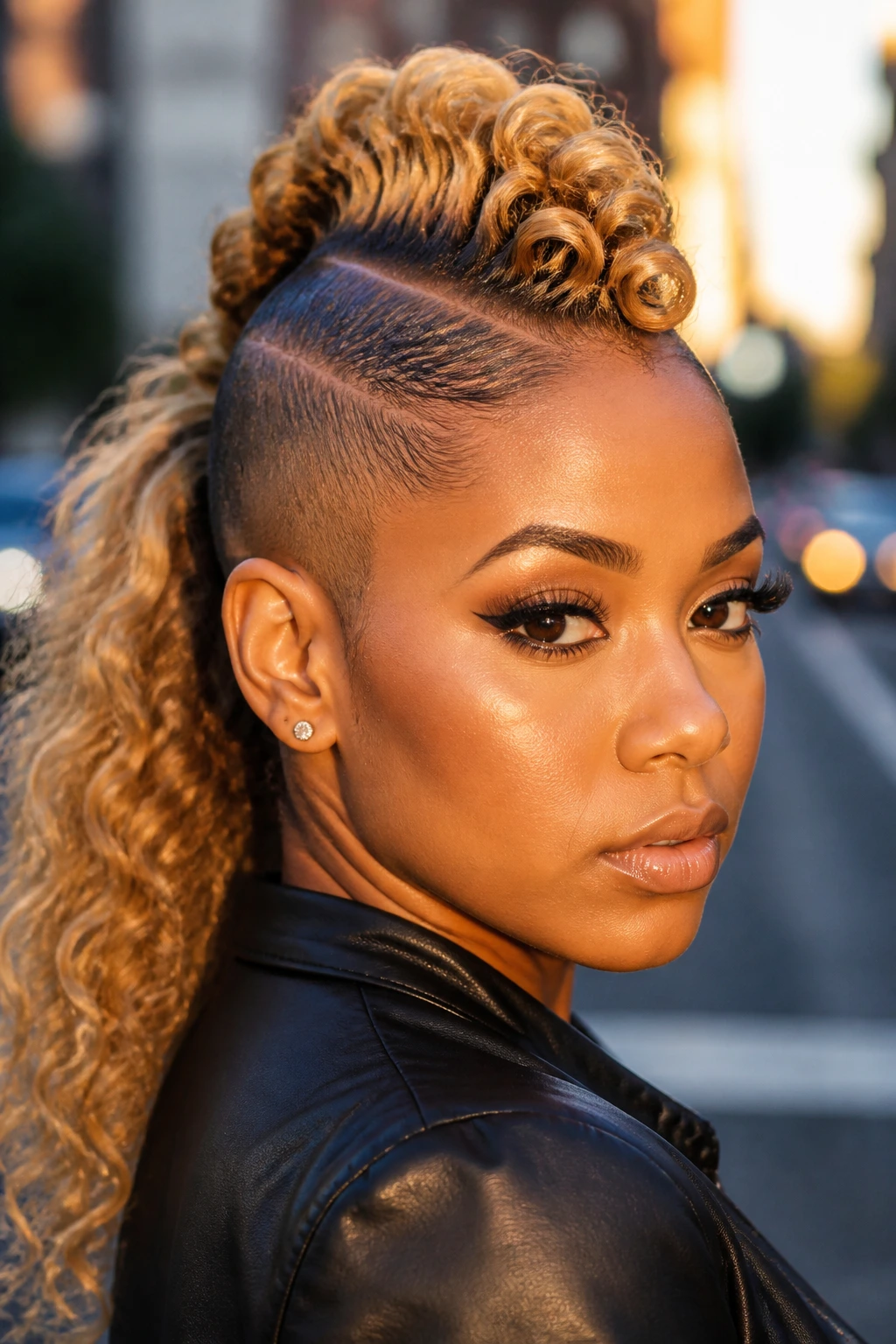
A mohawk ponytail is not subtle. That’s the point. The sides stay sleek, the center ridge stands up taller, and the blonde ponytail at the back or crown gives the whole shape a hard edge. Caramel highlights cut through the center section so the style doesn’t read as one flat dark strip with a bright tail attached.
Why It Works
The shape is doing the heavy lifting here. A sleek side panel creates contrast, which makes the ponytail look sharper and more deliberate. If your natural hair tends to puff at the sides, braiding or flattening those sections first can make the whole style hold better. This look loves clean lines.
Best For
- Bold outfits
- Statement earrings
- Anyone who wants height and edge in the same hairstyle
Pro tip: Keep the center ridge smooth but not plastered. A little texture in the ridge makes the style look stronger than a shellacked finish.
16. Chunky Twisted Ponytail with Soft Blonde Ends
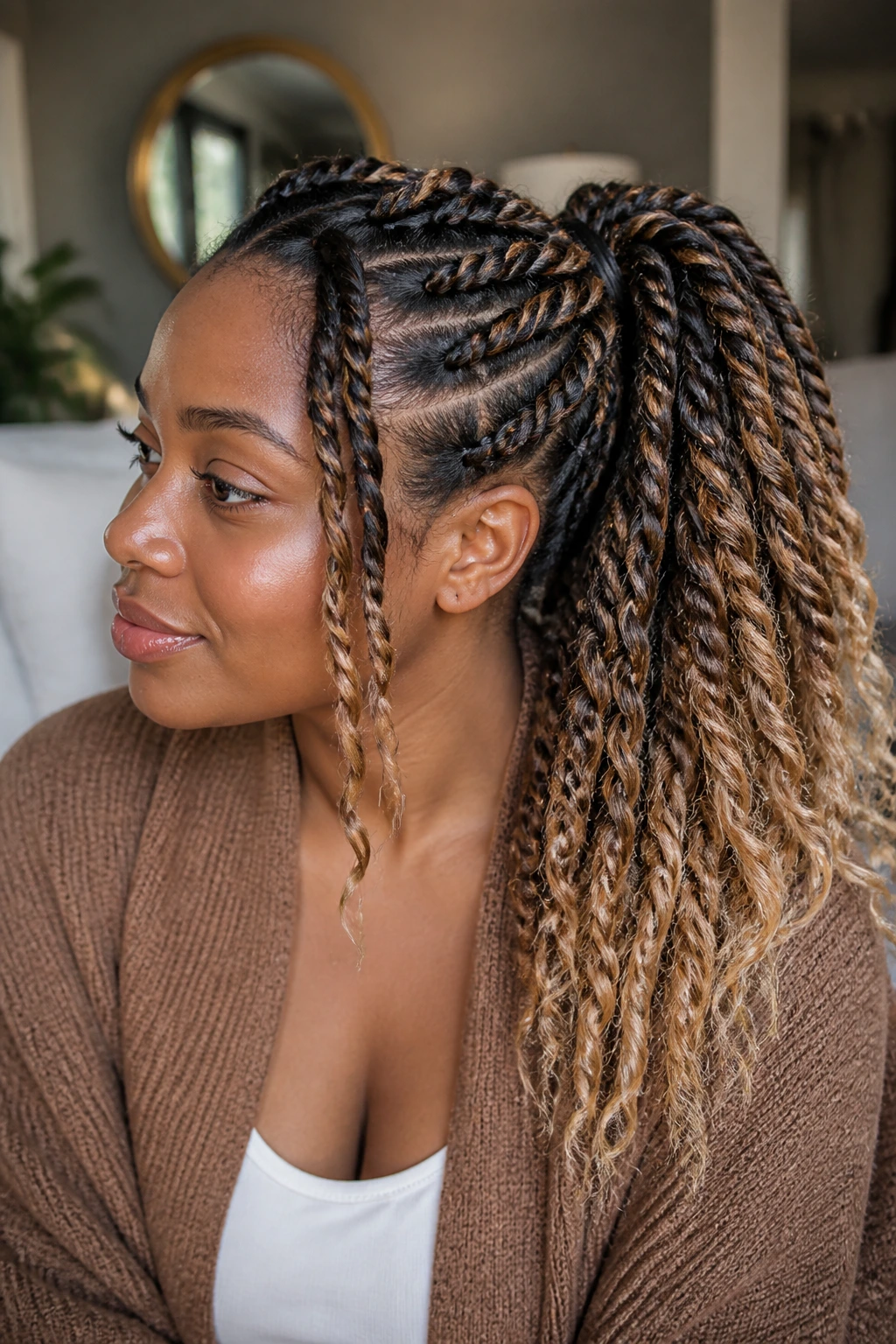
Chunky twists give the ponytail a calmer feel than braids. There’s less detail at the scalp, more movement in the body of the hair, and a nicer sense of weight at the bottom. Blonde ends soften the style and keep the twists from looking too dense.
Why It Works
Two or four large twists are easier to wear than tiny sections, especially if you prefer low tension. The shape is also forgiving. If one twist puffs a little more than the other, it reads as texture, not a mistake. Caramel highlights woven near the ends keep the look warm and grounded.
Styling Notes
Use a twist cream that gives slip, then let the twists dry fully before gathering them. Damp twists look neat for about ten minutes, then they swell and frizz in ways that are hard to control. If you want the ends bright, save the lightest blonde for the last few inches.
Best for: everyday wear, protective styling, and natural hair that likes softness over precision.
Pro tip: Keep the twists slightly larger near the top and narrower at the end. That taper gives the ponytail a better shape when it hangs.
17. Loc Ponytail with Honey-Blonde Wraps
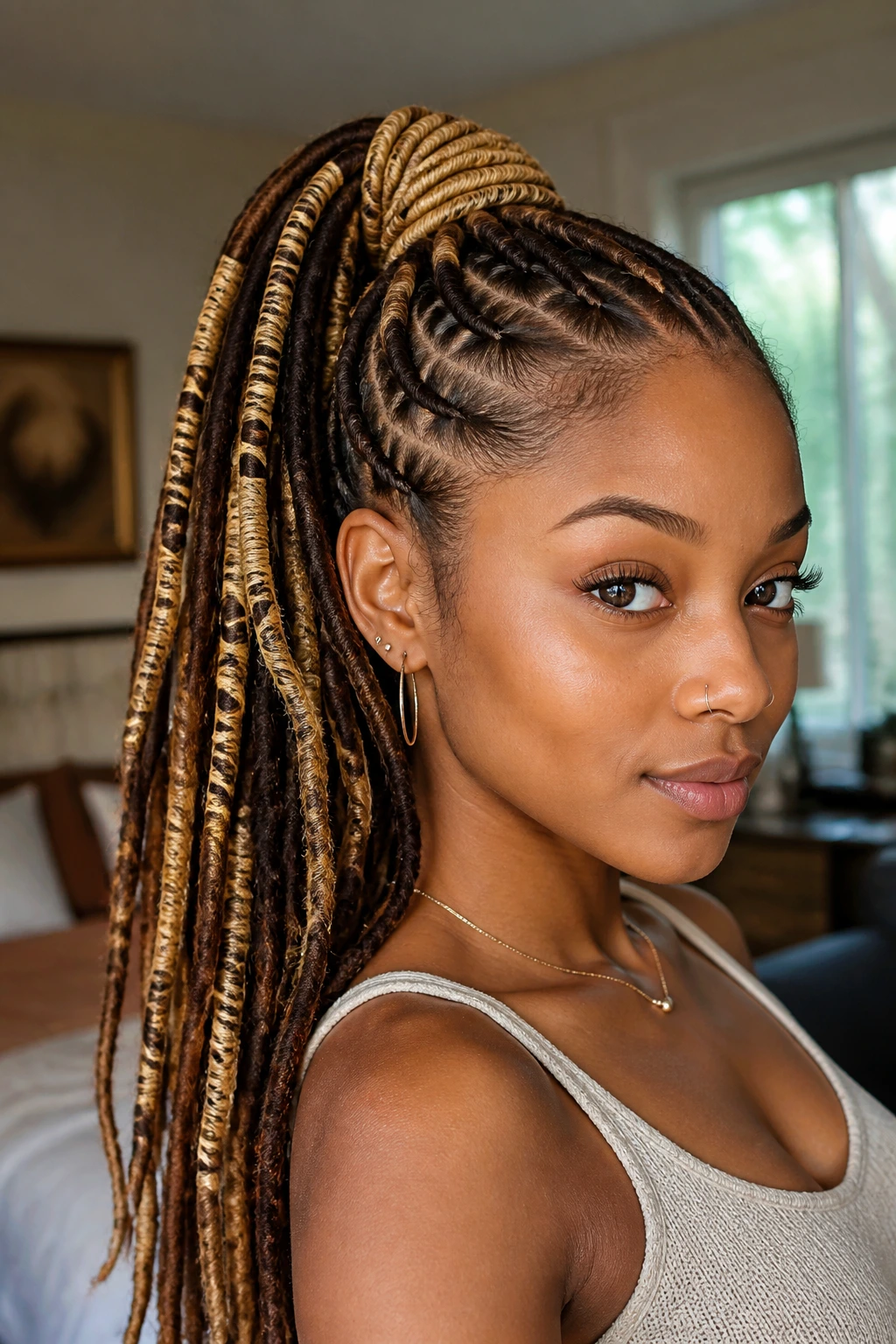
Locs wear blonde well when the color has enough warmth in it. Honey-blonde wraps or colored loc extensions can make the ponytail feel rich instead of washed out. Caramel accents along the lengths stop the bright pieces from taking over the whole style.
Why It Works
The thickness of locs already gives the ponytail body, so you do not need much extra volume. What you need is balance. Honey and caramel do that better than a stark pale blonde. They sit closer to the earthy tone of mature locs and keep the style from feeling disconnected.
Best For
- Mature locs gathered into a ponytail
- Wrapped loc extensions
- People who want color without losing the structure of the loc pattern
Pro tip: Keep the wraps light and avoid overloading the ponytail with heavy accessories. Locs already carry visual weight; too many extras make the style feel crowded.
18. Crisscross Base Ponytail with Long Extensions
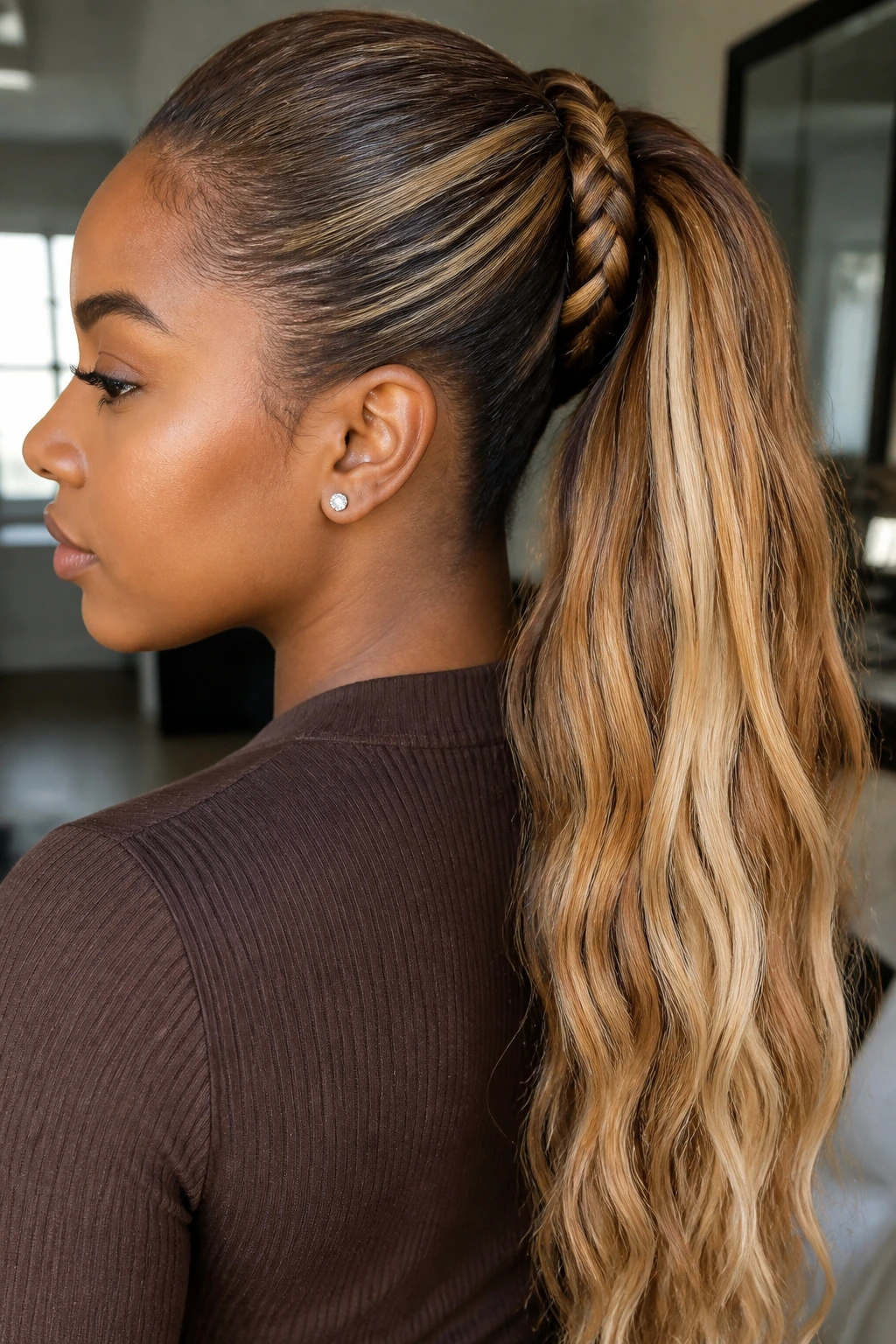
The crisscross base is one of those tiny details that changes everything. At a glance, it looks like a simple ponytail. Then you notice the pattern at the base, and the whole style feels custom. Blonde extensions flowing from that base get a stronger anchor, and caramel highlights keep the crossed sections from disappearing into the hairline.
Why It Works
Crisscrossing gives the base depth. That means the ponytail doesn’t need a giant accessory or a big braid to feel finished. On natural hair, especially when you’re working with extensions, it also helps disguise the elastic and creates a cleaner transition from base to tail.
Quick Styling Note
Cross the sections in an “X” pattern before securing them, then pin the overlap flat. Keep the tension snug enough to hold but not so tight that the front of the hairline starts lifting. That’s the difference between polished and painful.
Best for: long extensions, sleek looks, and styles that need detail without extra bulk.
Pro tip: Use a shade of blonde one step softer than you think you need. The crisscross detail already adds interest; the color does not have to shout.
19. Side Ponytail with Deep Part and Caramel Peekaboo
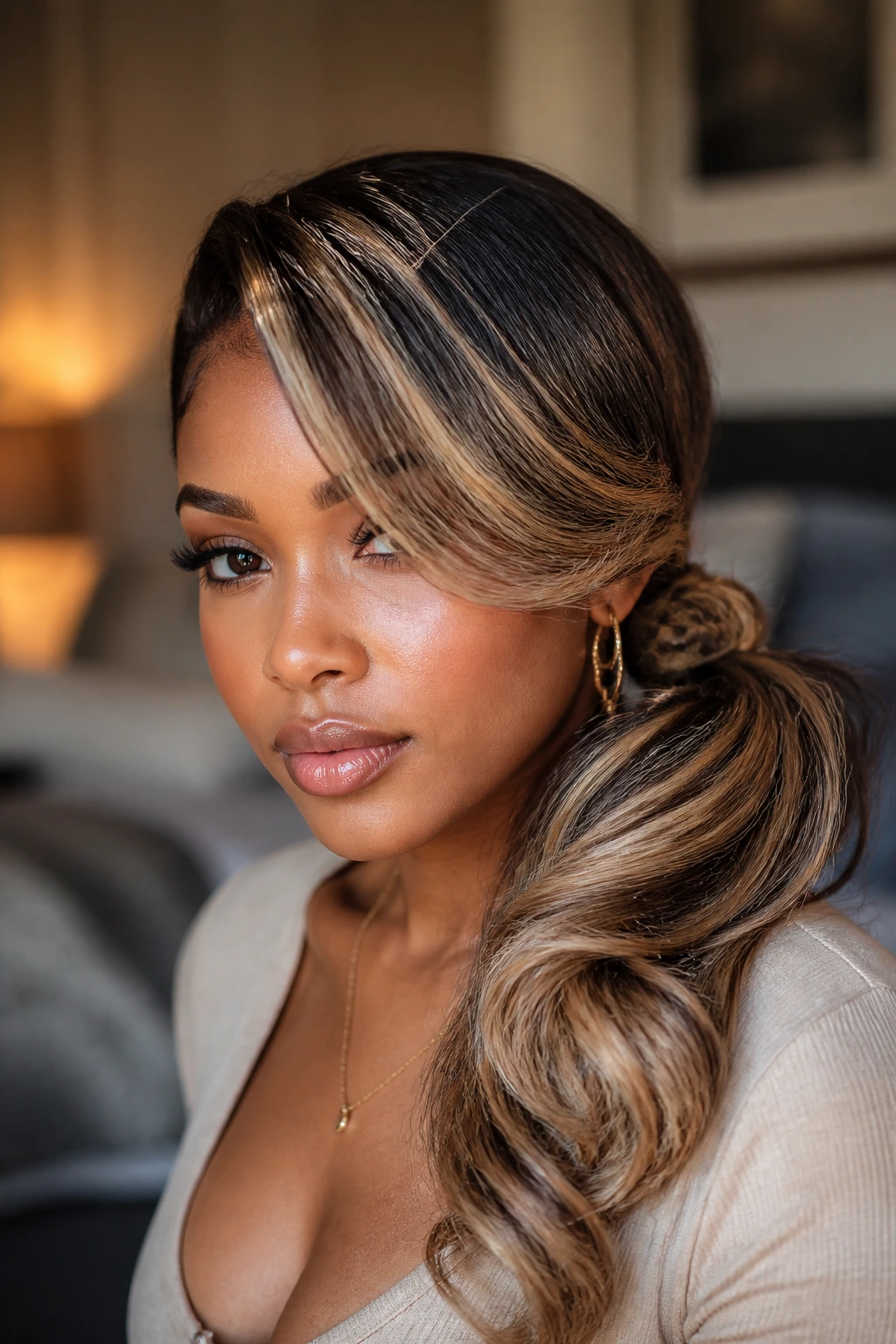
A deep side part changes the whole personality of a ponytail. Suddenly it feels softer, a little more playful, and less rigid than the usual center or high placement. Caramel peekaboo pieces tucked under the top layer give the blonde somewhere to hide and reappear, which is exactly what keeps this style interesting.
Why It Works
The side placement creates visual weight on one side of the face, which is flattering if you want a gentler frame. The peekaboo caramel makes the color feel layered instead of front-loaded. You get flashes of brightness instead of a full blast of blonde from every angle.
Best For
- Oval and heart-shaped faces
- Soft glam makeup
- People who want color without full exposure at the hairline
Pro tip: Let the ponytail drop just below the ear rather than up near the cheek. A low side angle keeps the style elegant and easier to wear all day.
20. Braided-Into-Curls Ponytail
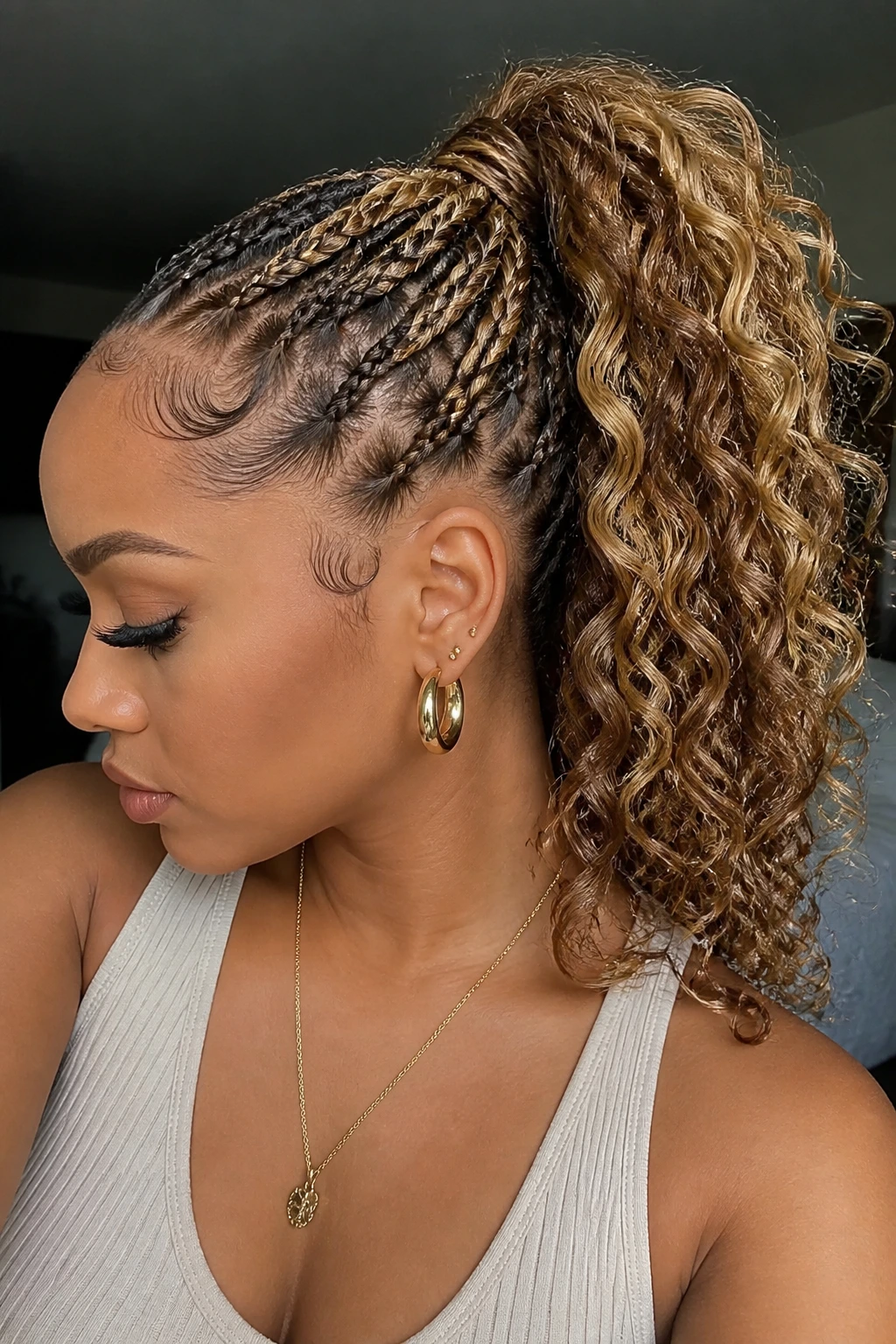
This is the ponytail for someone who wants both structure and softness. The braid at the base keeps the top neat, then the curls take over and move the look into something looser. Caramel highlights tucked into the braid and blonde curls through the tail make the transition feel smooth.
Why It Works
It solves one of the biggest ponytail problems on natural hair: how to keep the top controlled without making the ends too stiff. A braid handles the root area. Curls handle the motion. The style lands in the middle, which is where a lot of people actually want to live.
Styling Notes
Keep the braided section clean and let the curls start lower than you think. If the curl pattern begins too high, the braid loses its shape. If it starts too low, the ponytail can look split into two separate ideas. A few inches of transition usually works best.
Best for: mixed-texture ponytails, event hair, and anyone who likes a little contrast.
Pro tip: If the curls are extension hair, separate them with your fingers, not a comb. A comb can turn a crisp curl into a puff of frizz fast.
21. Tapered Puff Ponytail with Blonde Halo
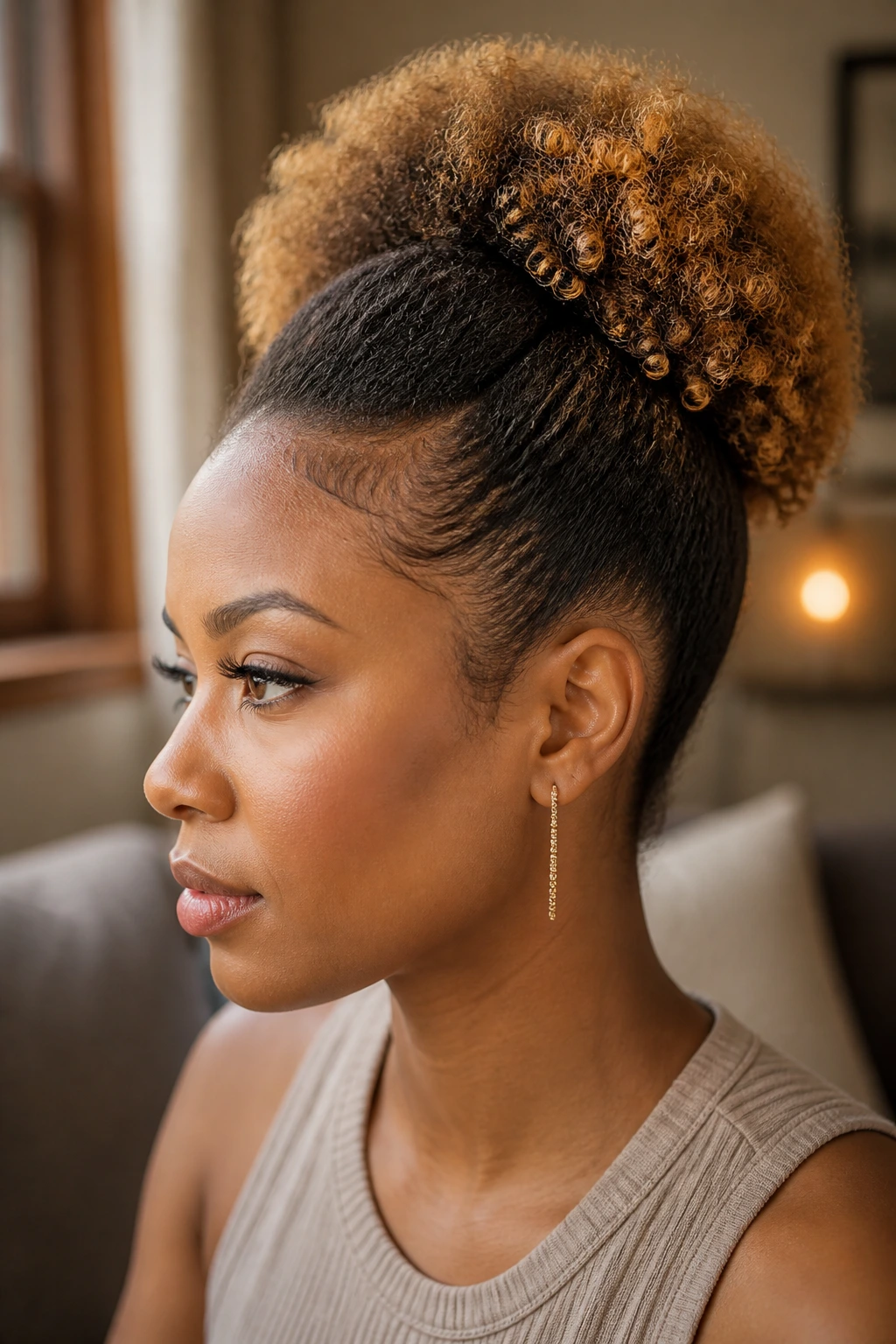
Shorter natural hair can still play with blonde in a big way. A tapered puff ponytail puts the volume at the center, then uses blonde and caramel around the halo to make the shape pop. The result feels round, lifted, and a little sculptural.
Why It Works
Tapered cuts already have natural shape built in. A puff ponytail keeps that shape visible instead of hiding it under extension hair. The blonde halo gives the eye an outline, which makes the puff look fuller and more defined than it would in a single dark shade.
Best For
- Short natural hair
- Tapered fades
- People who want color that frames the puff instead of covering it
Pro tip: Use a small amount of edge control only where the puff needs definition. Too much product makes short hair look wet in patches, and that ruins the halo effect.
22. Low Voluminous Ponytail with Glossy Caramel Finish
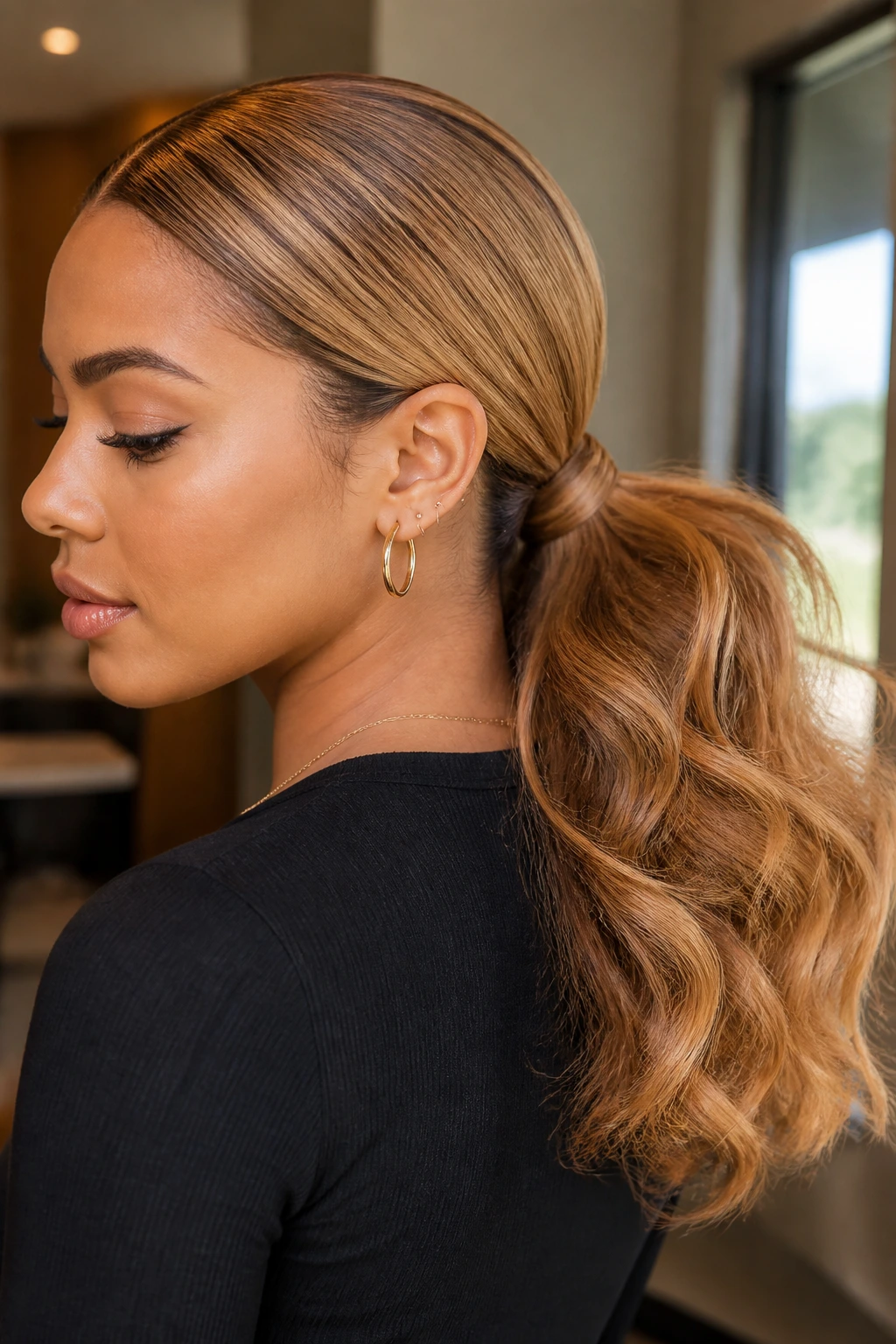
This is the closing look because it does so much with so little fuss. A low ponytail with real volume feels calm, not flat, and the glossy caramel finish keeps the blonde from becoming too bright or too dry-looking. It has enough softness for daily wear, but enough shape to pass for dressed up.
Why It Works
Low ponytails often need one strong visual anchor to avoid looking sleepy. Here, that anchor is the body of the tail. The caramel finish gives the blonde depth, and the low placement keeps the style easy on the scalp. If you want elegance without stiffness, this is the one I’d hand you first.
Styling Notes
Build the volume first, then smooth the outside. That order matters. If you smooth too early, you flatten the tail before it has a chance to read full. A touch of shine spray on the outer layer is enough; more than that starts to look greasy.
Best for: workwear, formal dinners, and everyday hair that still wants some presence.
Pro tip: Let the ponytail rest slightly off-center at the nape. That tiny shift makes the style feel less expected and more personal.
What to Ask for When You Want the Blonde to Stay Warm Instead of Brassy
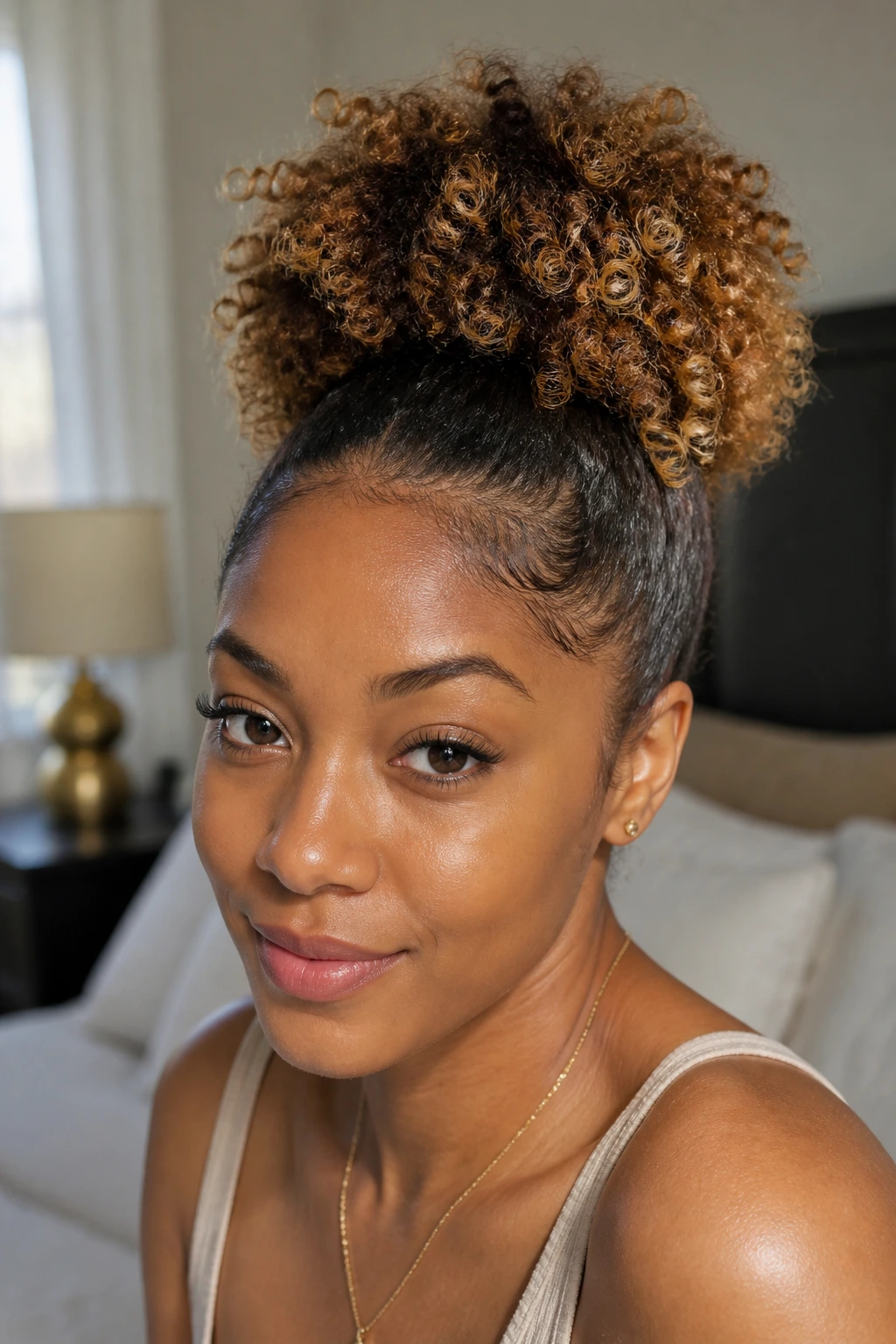
The easiest way to keep blonde ponytails flattering on natural hair is to start with the right tone. Warm blonde shades such as honey, beige, golden, and caramel-blonde usually sit better against dark bases than icy platinum. They blend faster, photograph more softly, and give the ponytail a little more depth around the edges.
If you’re buying extensions, don’t shop by “blonde” alone. That label is too broad to mean much. Look for rooted blends, tone numbers that echo your natural color, or pre-mixed pieces that already fade from a deeper base into a lighter tail. If the extension hair looks flat under store light, imagine how it will look in daylight. Usually worse.
I also prefer extensions with a texture that matches your own finish. A shiny straight ponytail on a matte, dense natural base can look disconnected unless the base is pressed or blown out. A soft wave or curl often blends faster because it gives the color a place to break.
Essential Tools for a Clean Base and a Soft Finish
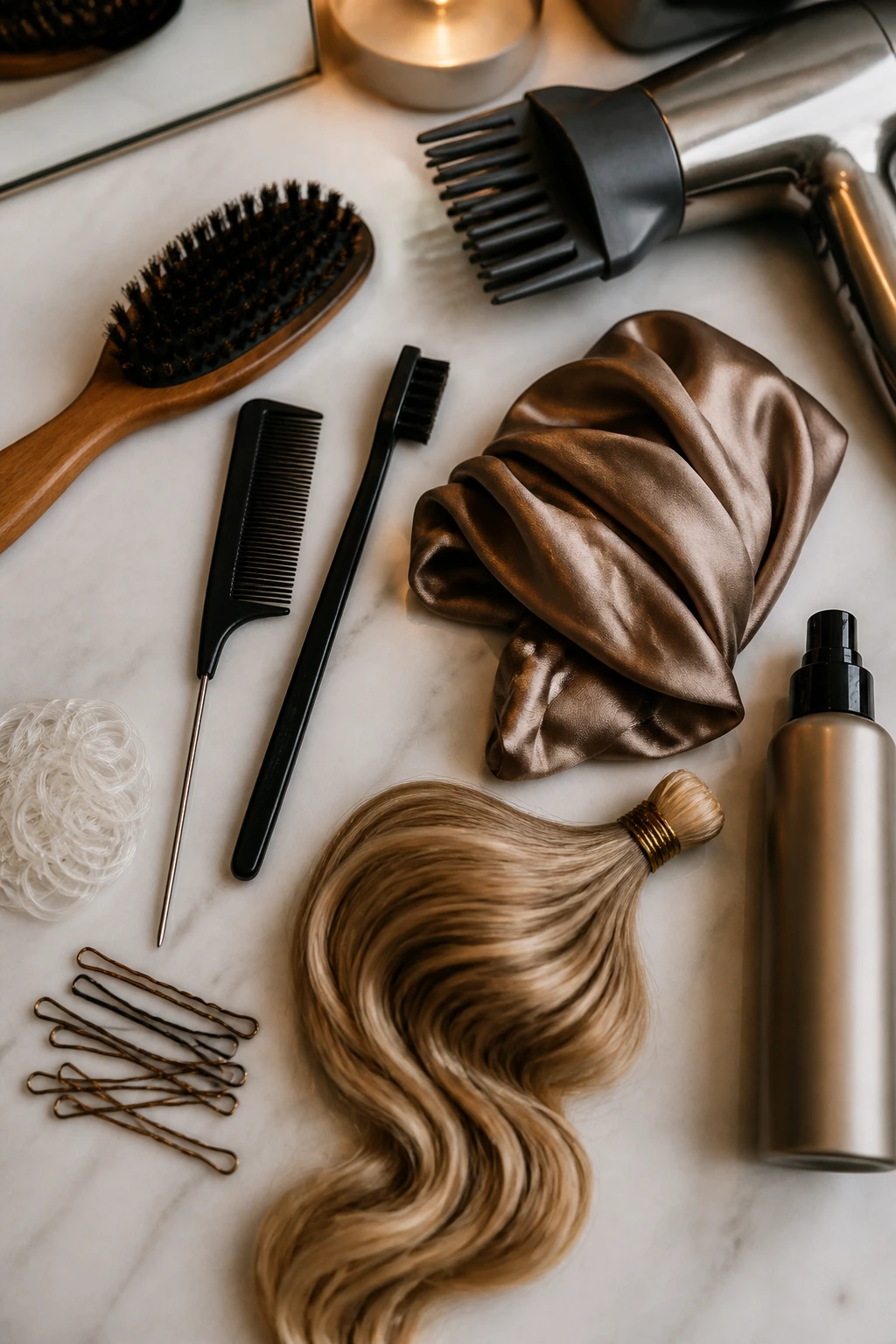
- Rat-tail comb: For parts, clean sectioning, and separating the hairline into neat rows.
- Boar-bristle brush: Helps smooth stretched or pressed hair without leaving a fuzzy halo at the base.
- Strong-hold gel or styling cream: Use it sparingly to lay the front down in thin layers.
- Edge brush: Good for tiny smoothing work around temples and nape areas.
- Satin scarf or wrap strip: Holds the base while it sets and keeps frizz down.
- Hair ties and small elastics: Clear ones disappear best in bubble, braid, and wrapped styles.
- Bobby pins: Useful for tucking down loose ends, wrap pieces, or crisscross sections.
- Ponytail extension or drawstring piece: Best for adding length, fullness, or pre-curled blonde ends.
- Blow-dryer with comb attachment: Handy for stretching natural hair before sleeker styles.
- Shine spray or light serum: A little goes a long way on blonde hair; too much makes it look oily fast.
How to Wear These Ponytails With Earrings, Necklines, and Makeup
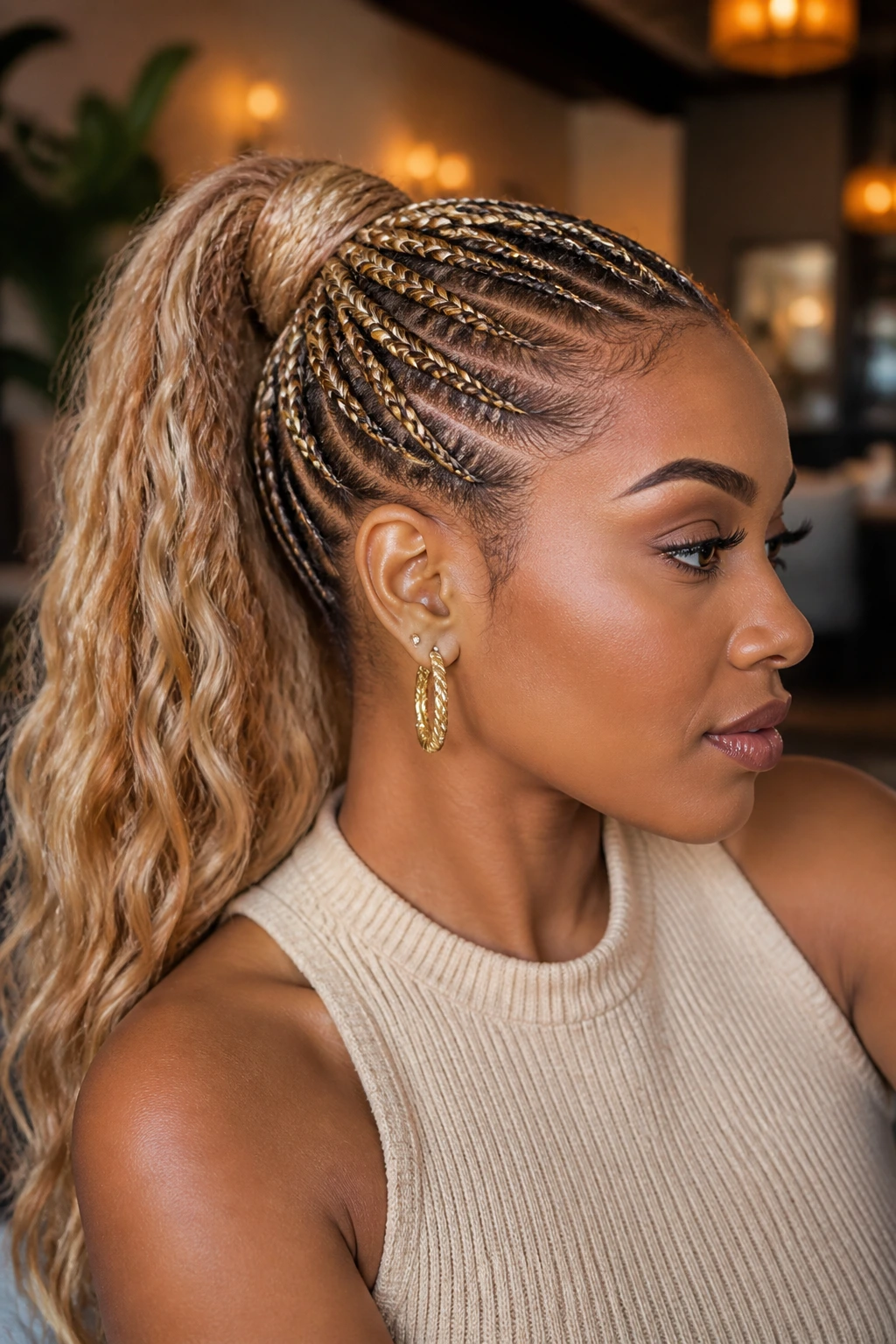
Presentation: High ponytails look sharp with lifted brows, a clean part, and a little gloss on the lips. Low ponytails feel softer when you leave one or two face-framing strands out, especially if the caramel pieces are meant to soften the jaw.
Accompaniments: Hoops, drop earrings, and slim chain necklaces pair well with ponytails because the hair clears the neck. Off-the-shoulder tops and wide necklines make the blonde lengths stand out more; turtlenecks can work too, but only if the ponytail has enough height or shine to avoid getting swallowed.
Portions: Big puffs and curled ponytails can handle more volume in the hairpiece itself, while sleek styles usually need a cleaner, lighter extension so the base does not look bulky. If your hair is shorter, keep the ponytail piece proportionate; a tail that’s too thick at the base can pull the whole style off balance.
Finish: Warm blonde wants warm support. Think gold hoops, bronze makeup, caramel-brown liner, and a little cheek gloss. Cool silver accessories can work, but they fight the tone if you use too many at once. Keep one thing bright and the rest quiet.
Easy Ways to Make the Style Softer, Bigger, or Sleeker
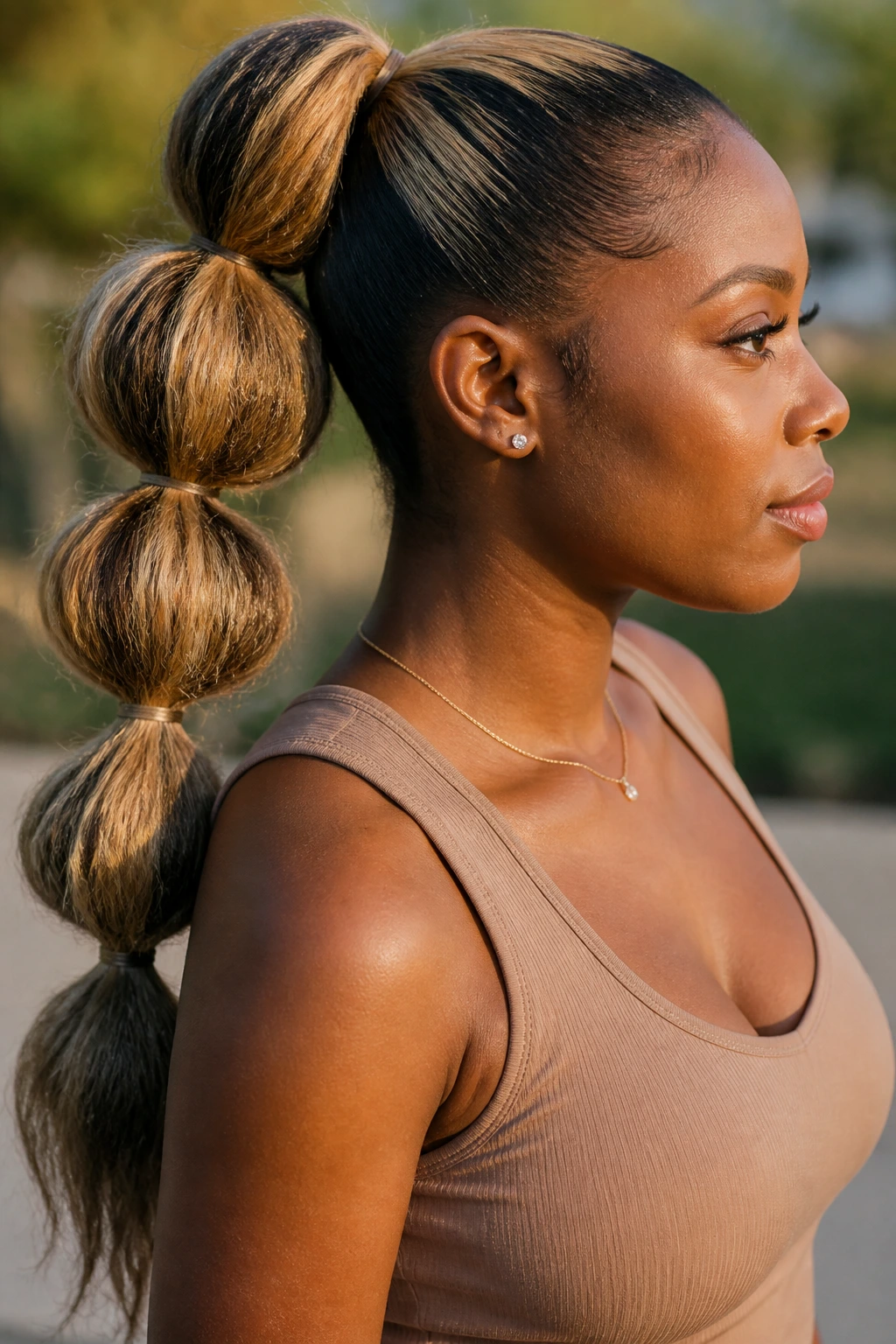
Color Balance: If the blonde feels too loud, drop in more caramel near the crown or around the face. If it feels too dull, brighten only the ends or the tail, not the entire base.
Texture Shift: Want more polish? Stretch the hair before styling and keep the tail brushed smooth. Want more body? Leave the root texture a little loose and let a curly or wavy extension do the work.
Accessory Play: A satin wrap, a braid cuff, or a thin scarf can turn a basic ponytail into something more personal without adding much weight. I’d skip oversized clips unless the ponytail is very long; they can overwhelm the shape fast.
Make-It-Yours: For a softer everyday version, keep the color warm and the base low. For a bolder finish, raise the ponytail, brighten the ends, and keep the root sleek. If your scalp is sensitive, choose styles with less tension at the temples and more body in the tail itself.
Common Mistakes That Pull the Style Off Balance
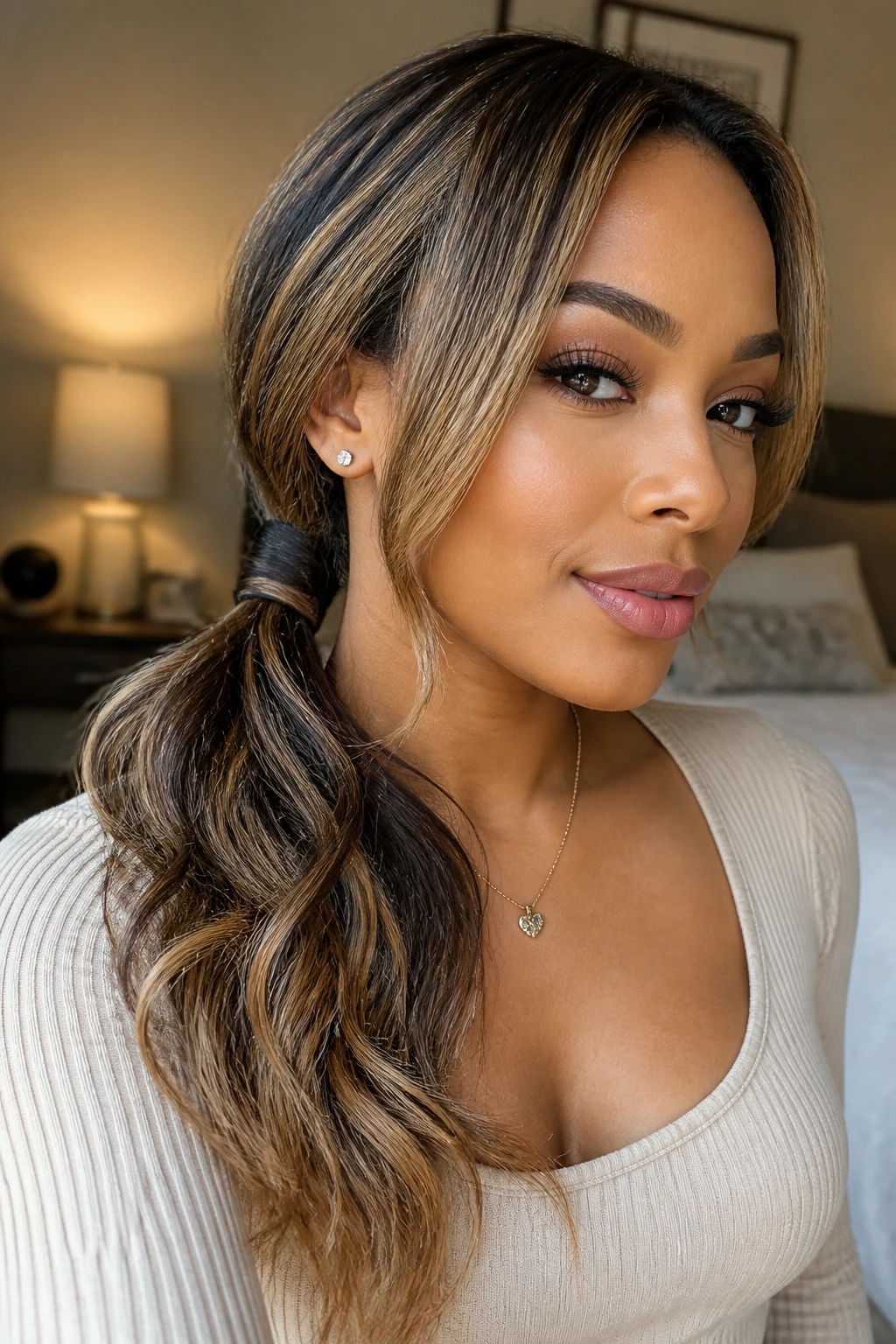
The biggest mistake is going too pale too fast. If the blonde jumps straight from a dark root into a bright, icy tail, the ponytail can look disconnected. Caramel highlights are the bridge, not the garnish. They should sit where the eye needs a little help moving through the style.
Another problem is over-smoothing the base. A slick ponytail is nice; a hard, shiny helmet is not. When there’s too much gel, the hairline can flake, the base can crack, and the style starts looking tired before you’ve left the house. Thin layers of product are enough. More usually makes it worse.
Tension is the quiet killer here. If the ponytail pulls at the temples or gives you a headache by the end of the day, it’s too tight. Tight hair might look neat for a few minutes, but it rarely stays pretty once the scalp starts pushing back. Use a lower anchor, a wider elastic, or a braid base if your hair needs more support.
Finally, don’t ignore texture matching. A glossy extension with a matte natural base can look mismatched unless you prep the hair to meet in the middle. Heat, stretch, or choose a ponytail piece that already matches your finish. That small decision changes everything.
Keeping the Ponytail Fresh for Several Days
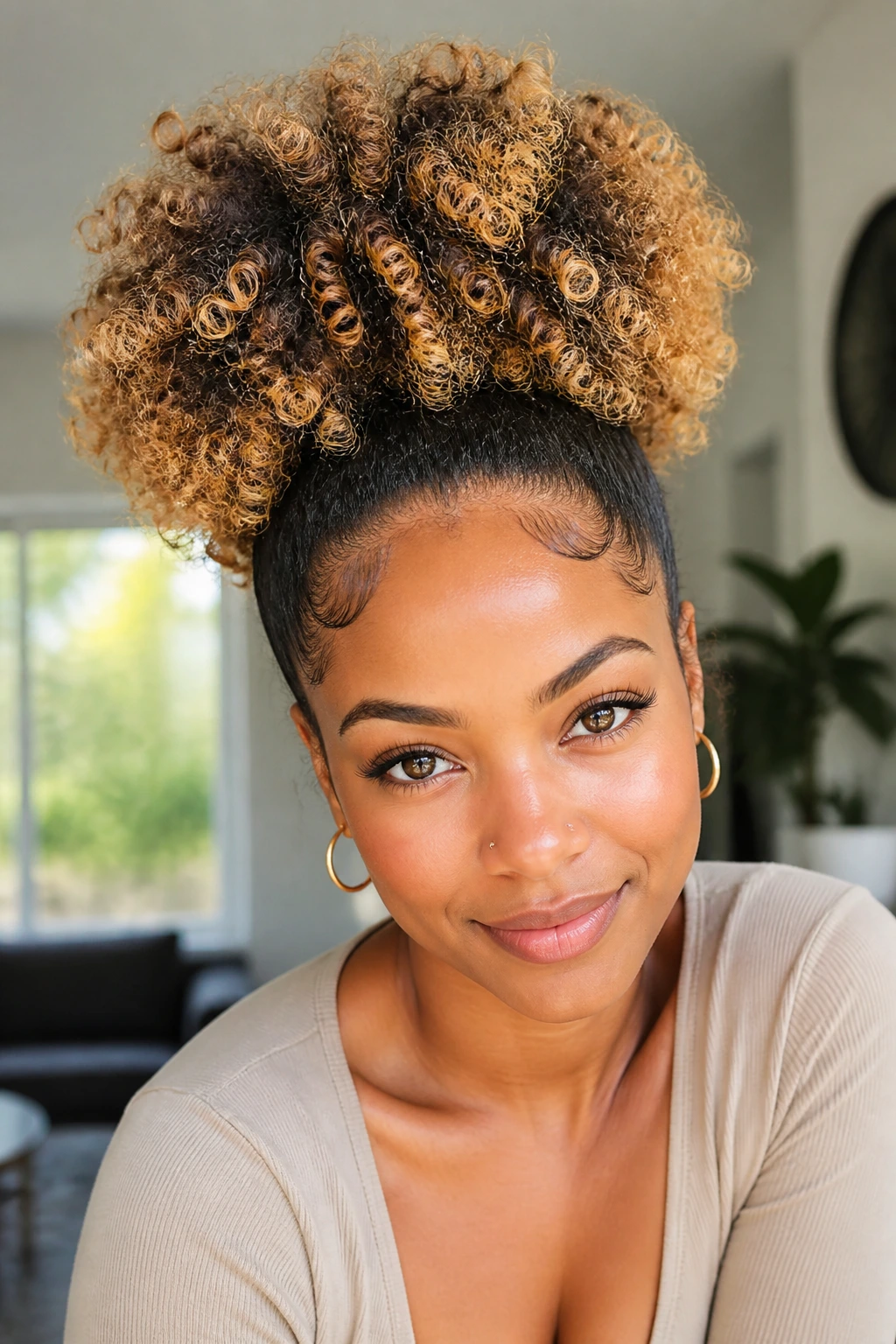
A good blonde ponytail can last, but the maintenance has to be calm and regular. For sleek styles, wrap the base with a satin scarf every night and smooth the front with your hands in the morning. If the edges need help, use a tiny bit of gel on a brush, not a full redo. The less product you pile on, the less flaking you’ll fight later.
Curly and puff styles usually need a looser routine. A light mist of water on the tail, followed by a little leave-in on your palms, can wake the curls back up without soaking them. Don’t saturate the blonde pieces. Wet extensions stay damp at the core longer than people expect, and that can leave the style limp by midday.
Braided and feed-in ponytails often last the longest, sometimes close to one to two weeks if the scalp stays comfortable and clean. Still, the edges usually need a refresh sooner than the braid itself. If you see lifting at the hairline, don’t keep fighting it with more gel. That’s your cue to loosen, reset, or take the style down.
For removable ponytail pieces, store them in a satin bag or hang them so the curls do not get crushed. If you’re wearing the style for several days in a row, a quick scalp cleanse or a dry shampoo at the roots can help, but keep it away from the blonde lengths. Product buildup on light hair shows faster than it does on dark hair.
Questions People Ask Before Trying Blonde Ponytails on Natural Hair
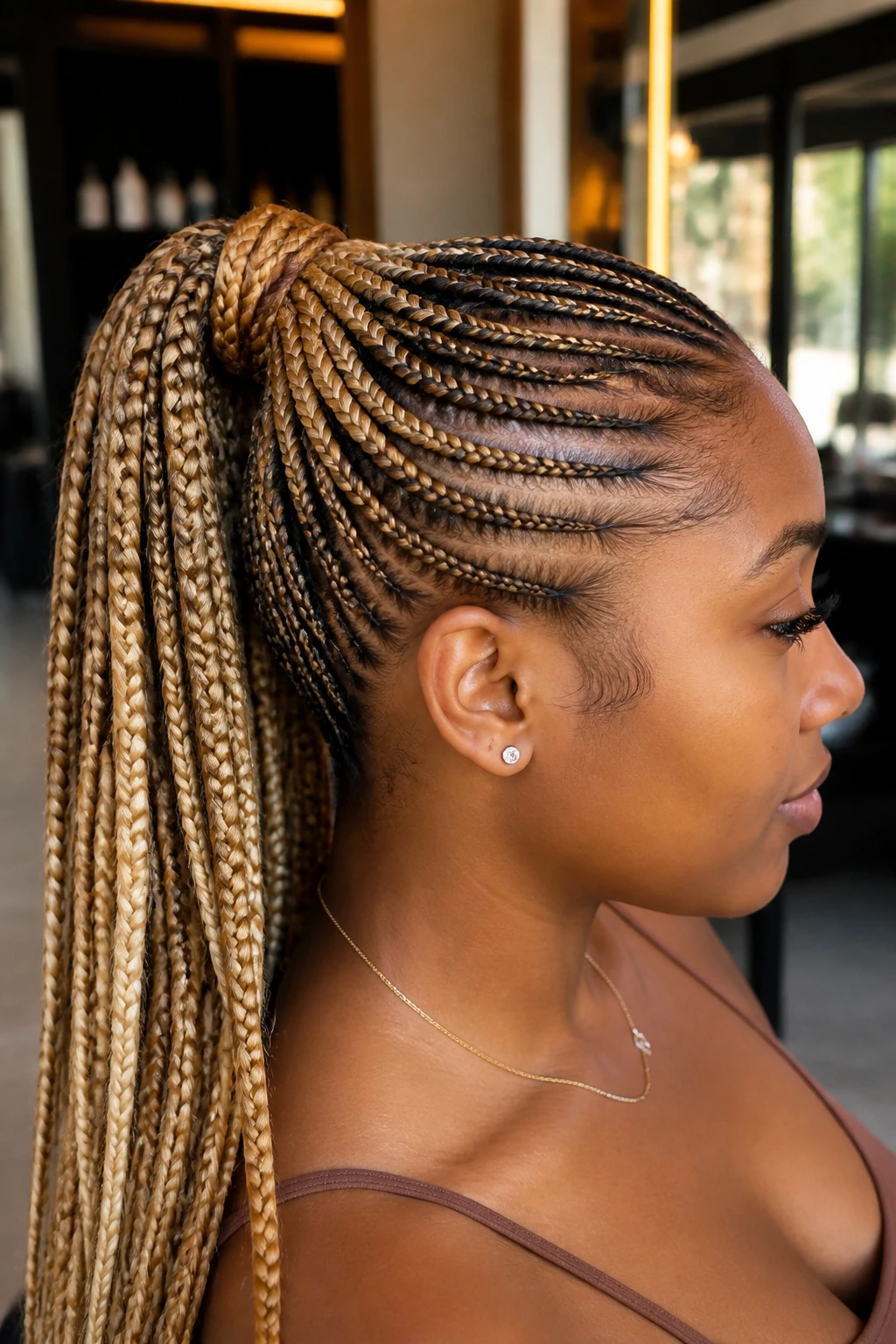
Can natural hair wear blonde ponytails without looking overdone? Yes, if the color has some warmth in it. Honey blonde, caramel-blonde, and rooted blonde pieces usually blend better than a flat pale shade because they sit closer to the natural depth of coily hair.
Do I need to straighten my hair first? Not always. Sleek high and middle-part ponytails usually look cleaner with stretched or pressed hair, but puffs, braids, twists, and curly ponytails can start from textured hair and still look finished.
What if my hair is short? Use a drawstring ponytail, clip-in tail, or braided base instead of trying to force a full-length style from your own hair. Short hair can still wear the look, but the anchor needs to be stable.
How do I stop the ponytail from slipping? Start with dry, stretched hair and apply product in thin layers. A secure base, a strong elastic, and a scarf set for 10 to 15 minutes usually help more than extra gel.
Can I wear these styles every day? You can, but the tension needs to stay low. If your edges feel sore or the scalp feels tight, give the style a break. A pretty ponytail is not worth a tired hairline.
Which styles last the longest? Feed-in braids, wrapped braid ponytails, and twisted protective styles usually outlast sleek ponytails because the base holds its shape better. Curly styles tend to need refreshes sooner.
How do I keep blonde from turning brassy? Pick a warmer blonde to start with, keep caramel near the root or face-framing area, and use toning care only if the hair is color-treated and meant to handle it. On extensions, the better move is usually shade choice, not heavy product.
Are extensions better than using my own hair? Extensions help when you want more length, fullness, or pre-curled ends. Your own hair usually gives the style more texture and a more natural swing. I’d choose based on the shape you want, not on a rule.
The Styles That Keep the Warmth
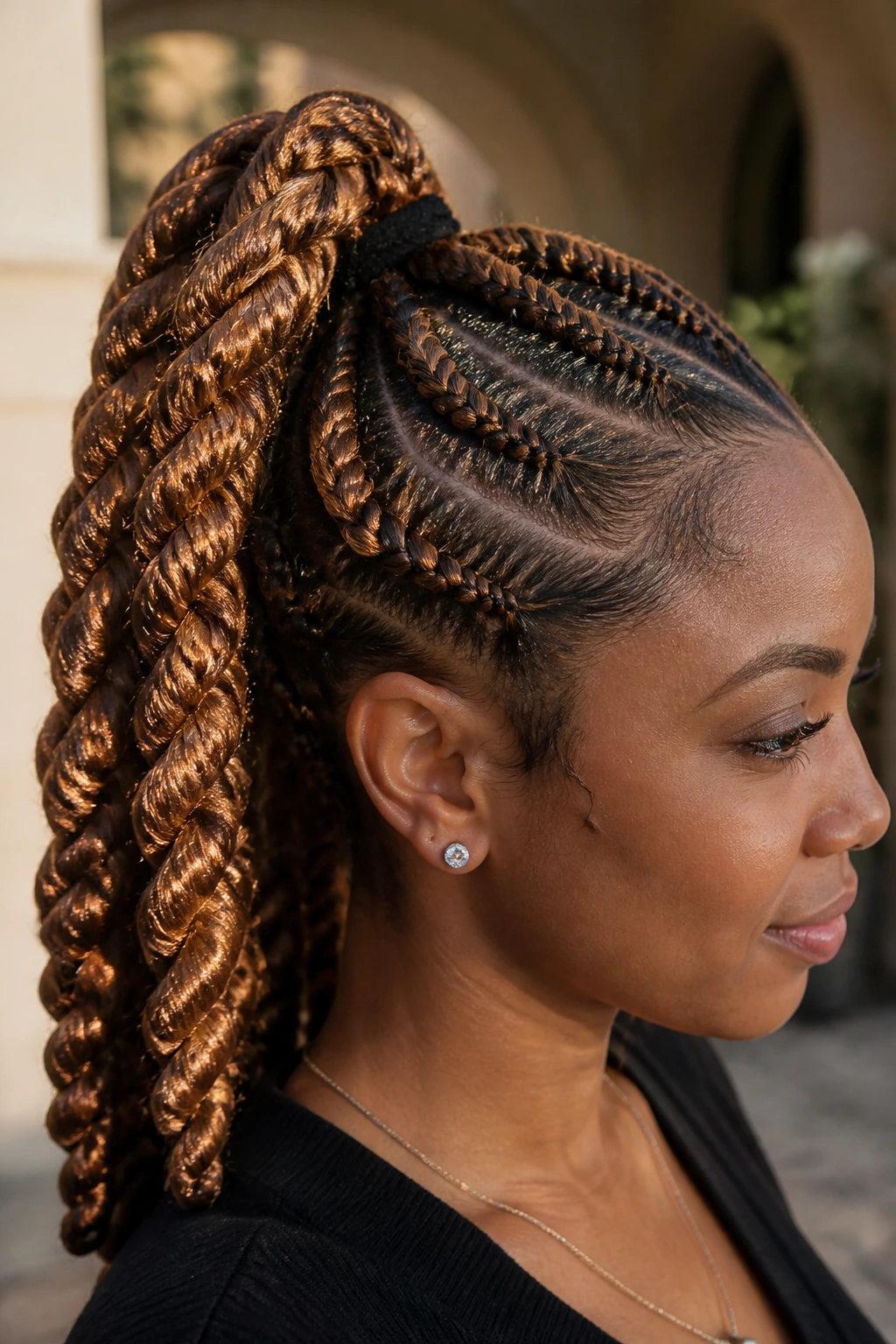
The best blonde ponytails on natural hair do one thing well: they keep the color warm enough to flatter the texture underneath. Caramel highlights are what stop the blonde from going flat, loud, or disconnected. They bring the shade back into the face, the braid, the puff, and the tail.
Pick the shape that matches the way you actually wear your hair, not the one that looks hardest to copy on a mood board. A sleek high pony says something different from a soft low puff, and a braided feed-in tail has a whole different rhythm from a curly half-up. The color story stays the same. The attitude changes.
Start with one version that feels close to home, then nudge the shade or the height a little brighter next time. That’s usually where the good looks come from anyway — not from doing the loudest thing, but from getting the mix of blonde, caramel, and natural texture exactly right.