



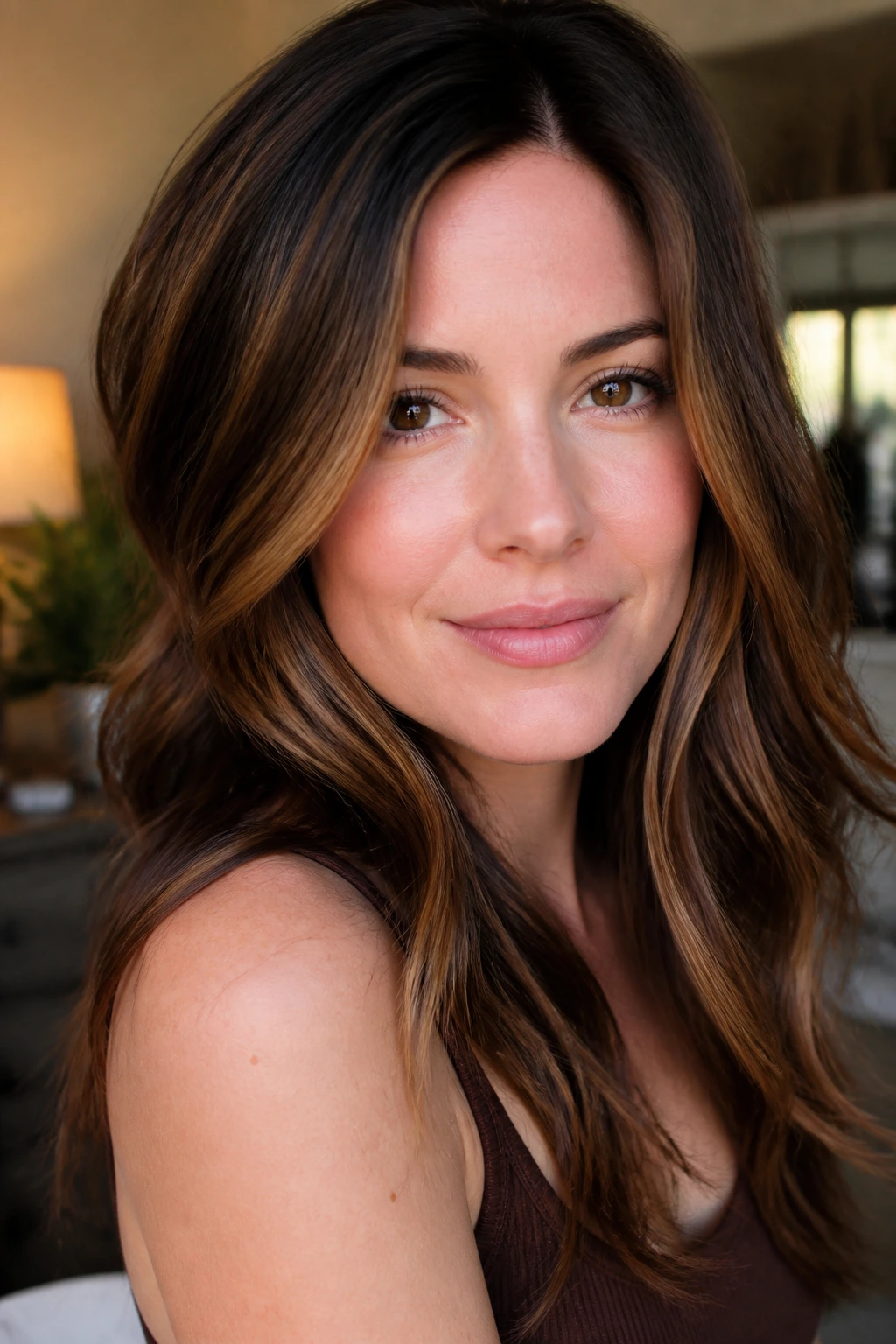
Fair skin can go cold fast under the wrong highlight formula. Too much blonde and the hair starts to look striped; too much copper and the face can read pinker than it really is. Brown amber highlights sit in the useful middle, especially when the haircut has soft layers that let the color move instead of sitting in one hard band.
That middle is where the magic lives. A level 6 chestnut, a level 7 amber glaze, a few caramel ribbons around the face — those choices can wake up a pale complexion without turning the whole head into a bright, obvious color story. And with soft layers, the light catches the ends, then the midlengths, then that little bend near the cheekbone. It feels alive. Not loud. Just awake.
Too much gold is the trap.
Why Brown Amber Highlights Feel Better on Fair Skin and Soft Layers
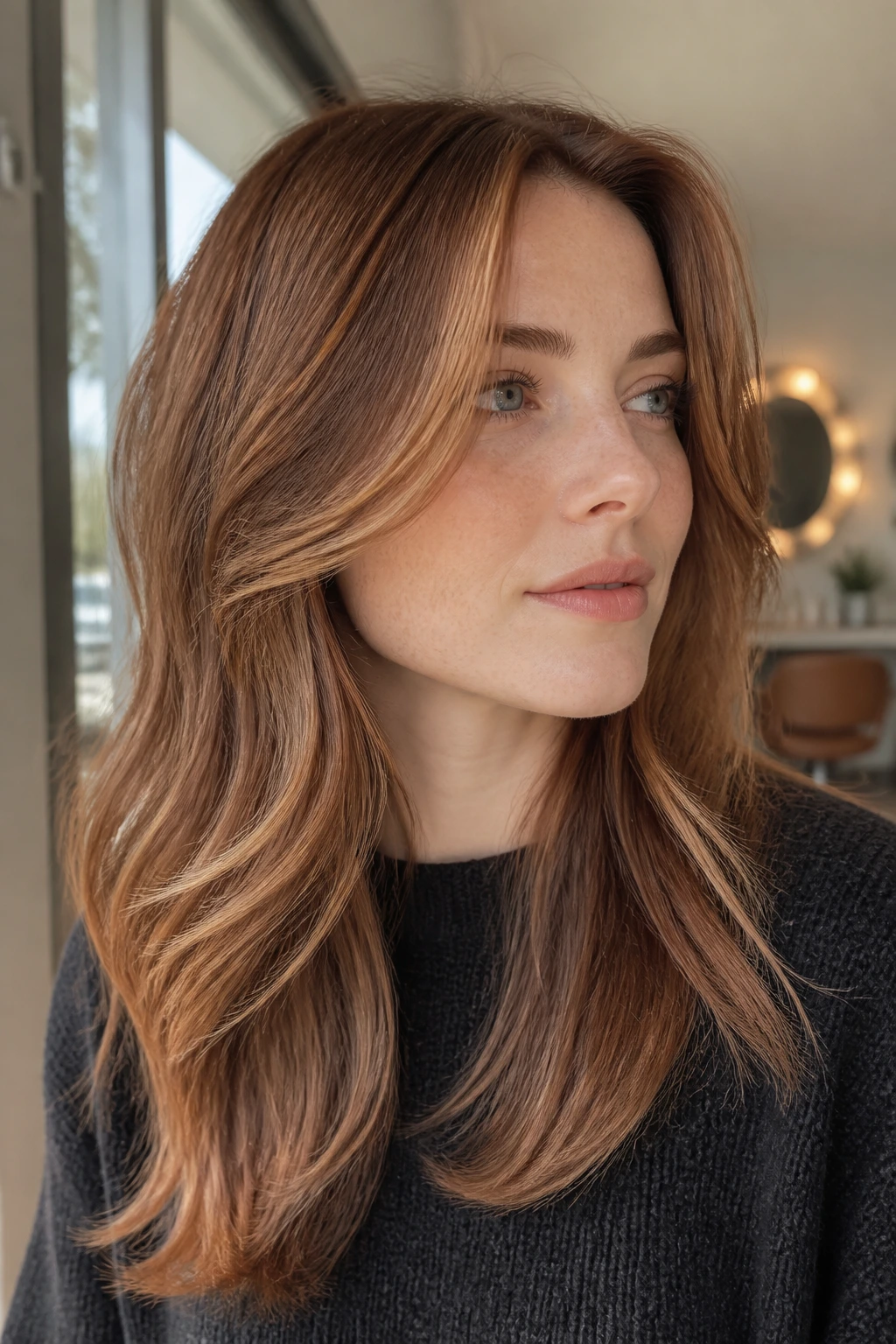
Warmth without the redness: Amber sits between gold and copper, so it warms fair skin without pushing it into the flushed, sunburned look that heavier copper sometimes creates.
Soft layers make the color move: A layered cut breaks the highlights into smaller visual pieces, which keeps even a richer brown-amber formula from looking flat or blocky.
The grow-out is kinder: A deeper brown root with amber ribbons fades more softly than a pale blonde stripe, especially when the highlights are placed through the midlengths and not just the top.
You can tune the tone fast: One gloss can push the same placement toward honey, toffee, chestnut, or bronze without changing the whole head.
It works on more than one hair texture: Fine hair gets the illusion of fullness from babylights, while thicker hair gets shape from wider ribbons and a little lowlight depth.
If you’ve ever had highlights that looked pretty in the salon mirror and a little harsh at home, this is the kind of color family that fixes that problem. It reads better in daylight. It also behaves better when you tie your hair back, tuck it behind one ear, or let it air-dry into soft bends.
1. Soft Face-Framing Amber Ribbons
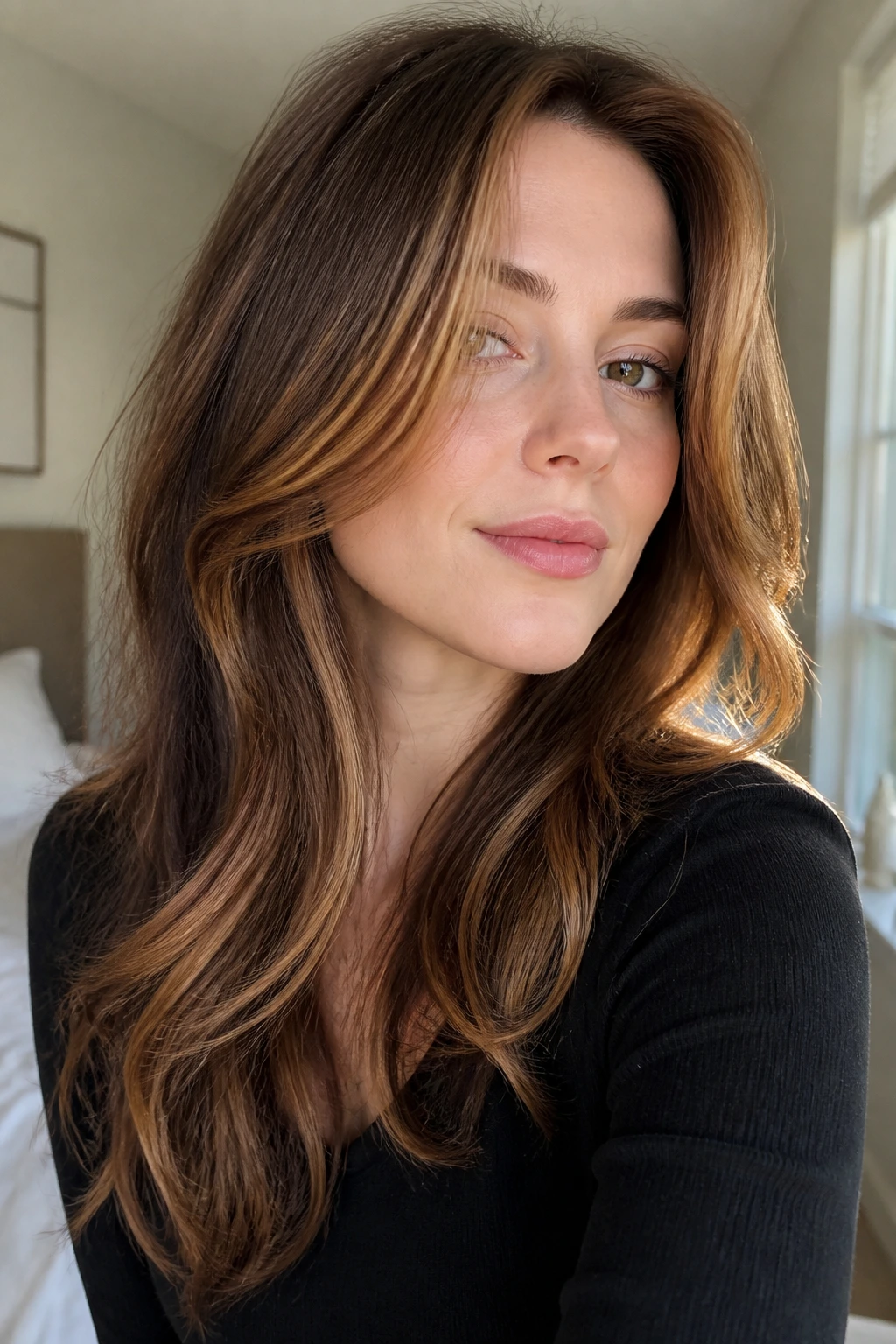
Start here if you want the safest, smartest version of the look. A few amber ribbons around the hairline, cheekbones, and top layer can brighten fair skin without changing the whole head, which is exactly why this style works so well on soft layers.
The trick is restraint. Keep the brightest pieces just one or two shades lighter than your base, and let the rest of the highlights stay in the brown-to-amber lane. That keeps the color from reading streaky. On a layered cut, those front pieces will lift every time the hair moves, which gives you color even when you’re not styling it hard.
I like this for first-timers. It’s enough. If the hair is fine, the face frame can be done with very thin foils so the highlight looks woven in rather than painted on top.
2. Cinnamon Chestnut Balayage for Gentle Depth
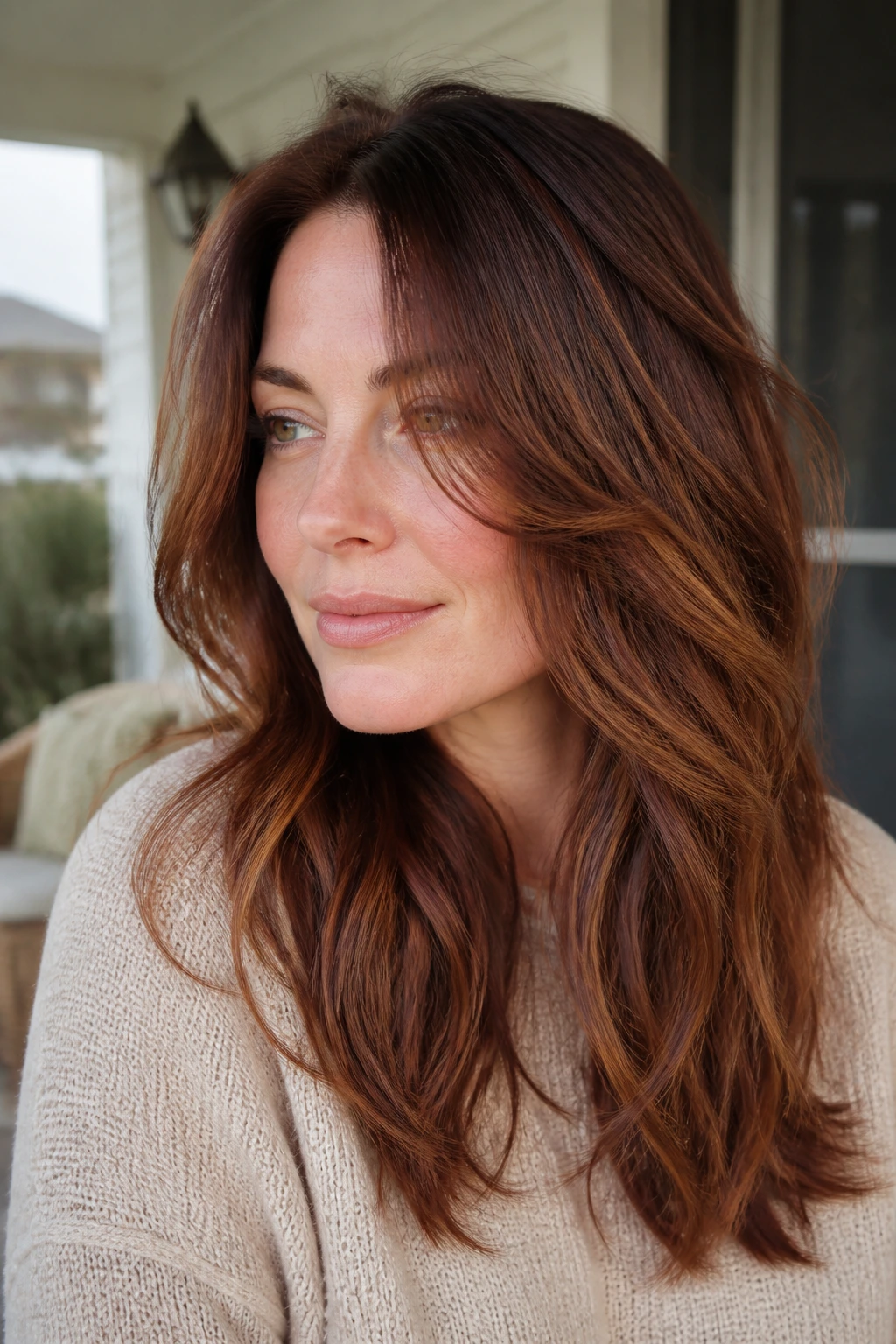
This is the look I reach for when fair skin needs a little more contrast under the layers. Chestnut balayage with a cinnamon-amber finish gives you depth at the root and warmth through the ends, so the cut gets shape instead of looking like one flat sheet.
Why It Works on Layered Hair
The hand-painted placement lets the darker chestnut stay visible between the lighter pieces. That spacing matters. Soft layers need pockets of shadow, or the whole cut starts to look too airy and the highlights lose their shape.
Ask for the lightest amber to sit around the midlengths and ends, not all the way up at the scalp. That keeps the grow-out gentle and keeps fair skin from fighting the warmth. If your hair is medium-density, this is one of the best ways to make the layers look fuller without making them heavy.
A little wave helps, but even straight hair will pick up enough movement to show the color change.
3. Caramel Money Piece on Wispy Layers
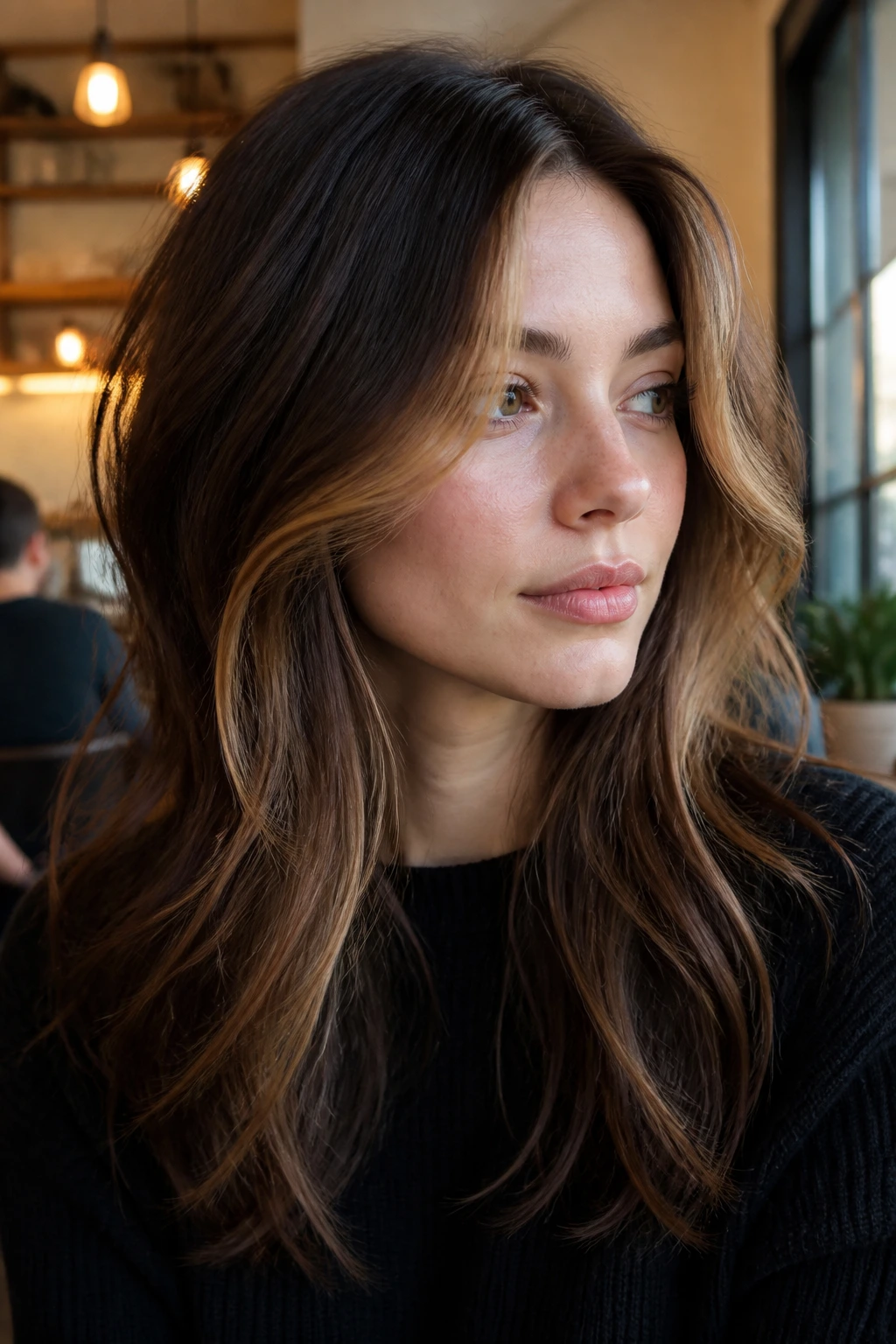
Want the fastest way to make the color read from across the room? Put the brightness at the front. A caramel money piece framed by soft layers gives fair skin a lifted edge and makes the eyes look sharper, even if the rest of the hair stays fairly deep.
This works because the front pieces do the talking first. They hit the cheekbones, skim the temples, and shift as you move your head. On wispy layers, that tiny bit of contrast feels intentional instead of harsh. I’d keep the money piece caramel or honey-brown, not pale blonde, unless the base is already quite light.
The back can stay quieter. That’s the part people often miss. You do not need brightness everywhere to get a bright face.
4. Honey Babylights on a Fine Lob
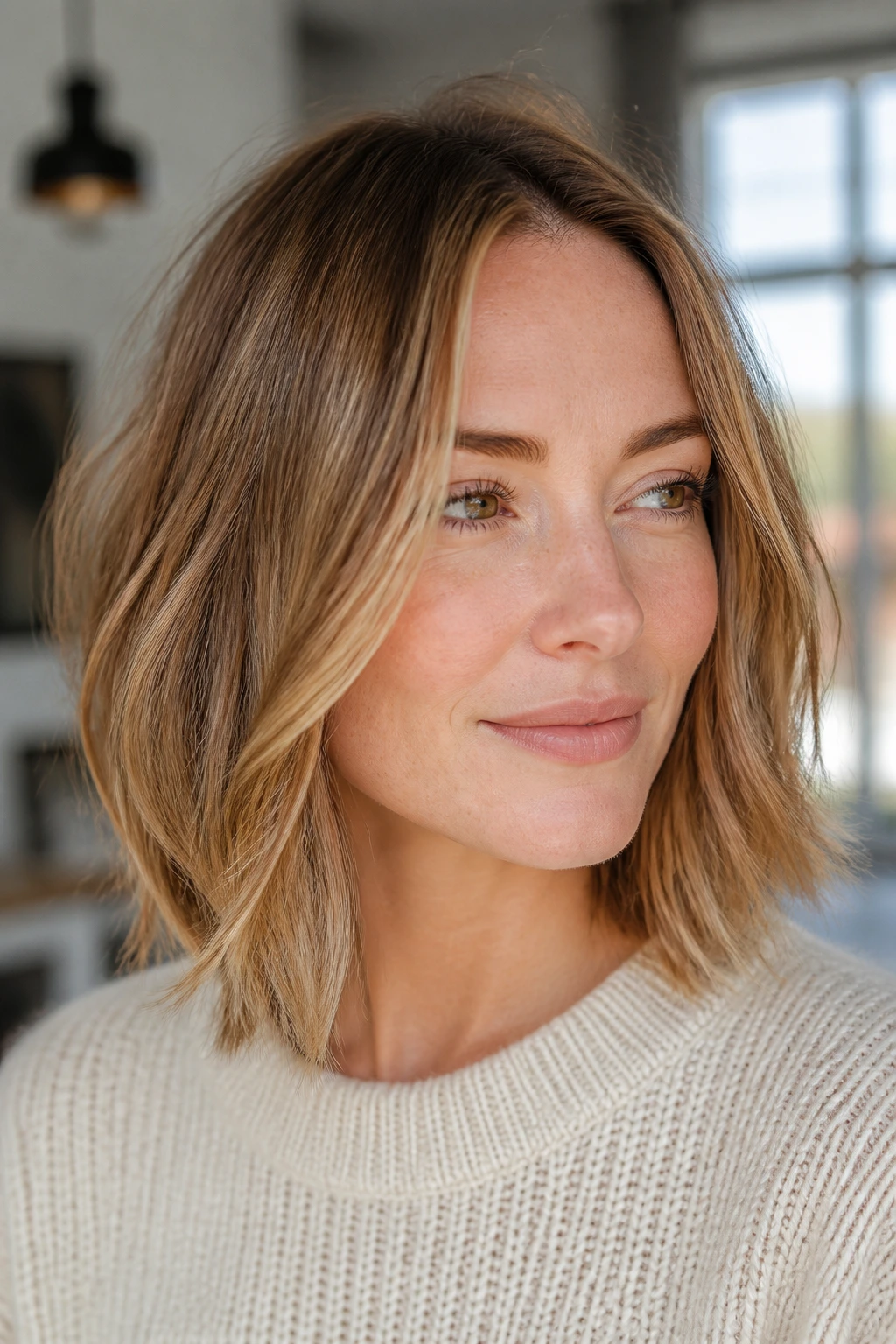
Fine hair and heavy highlights usually fight each other. Babylights solve that because the strands are so thin they almost disappear into the cut — which is exactly what you want when the goal is dimension, not stripes.
A fine lob with soft layers gets a lot out of tiny honey-brown threads through the crown and face frame. The hair looks fuller because the light catches more surfaces, not because the color is louder. On fair skin, that soft honey warmth keeps the complexion from looking washed out on pale days.
I like this when the hair already has a gentle bend. The bend is what separates the ribbons. Without it, the color can blur a little, so ask for thin, close placement and a subtle gloss rather than a big lightening job.
5. Toffee Ribbon Lights Through a Shag
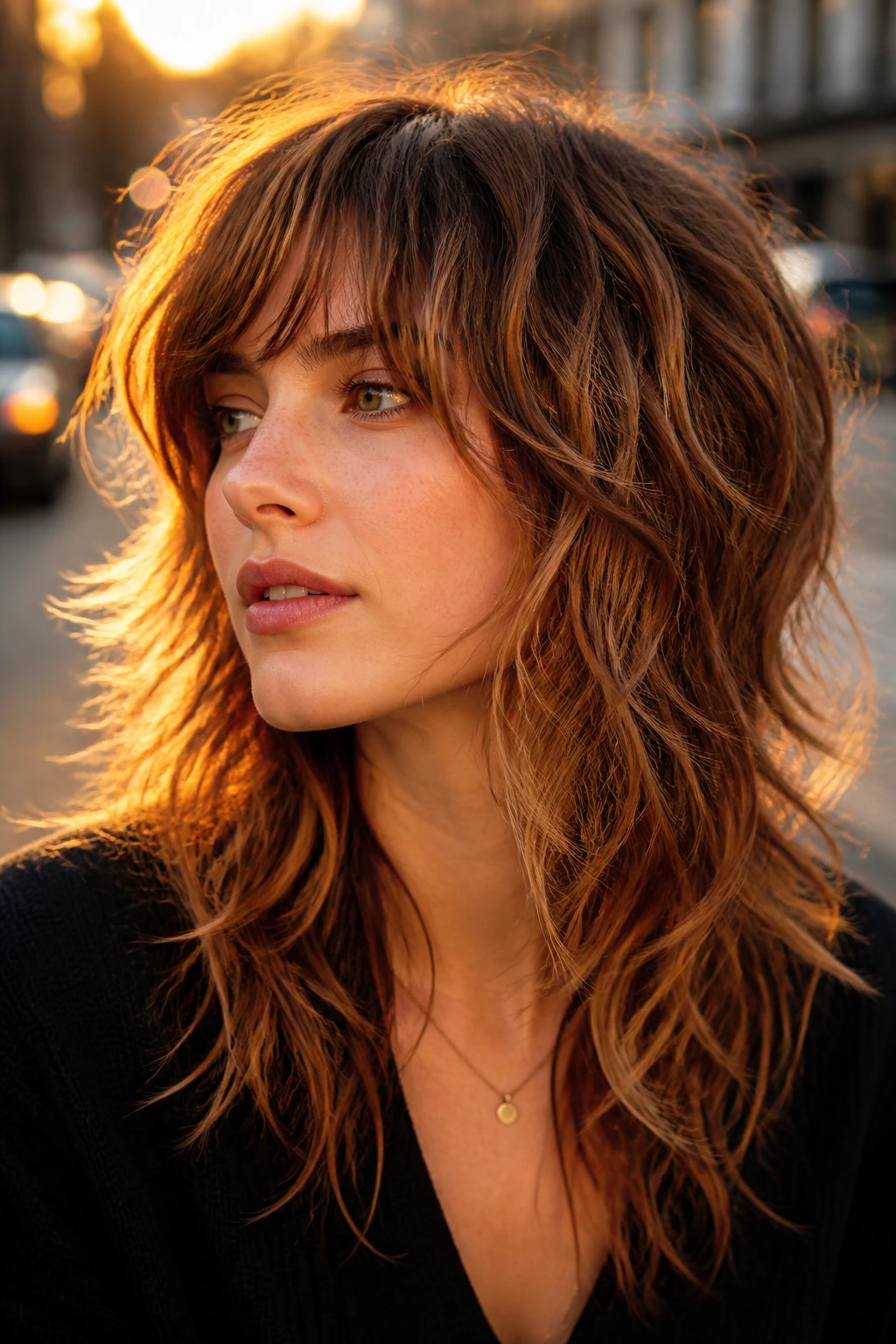
A shag loves broken-up color. Clean, even highlights can look too neat on this cut, but toffee ribbon lights make all that texture feel deliberate. The choppier the layer, the more useful the ribbon.
The smartest placement here is uneven on purpose. Brighten a few pieces near the crown, a few around the cheekbone, then let the lower layers stay deeper. Fair skin gets warmth without a halo of one note. The shag gets movement without looking busy.
I’m partial to this on shoulder-length cuts. The lighter pieces flash when the ends flick out, which is half the point. If your shag has curtain bangs, leave them a touch brighter than the rest so the front of the cut doesn’t disappear.
6. Bronze Melt from Root to Tip
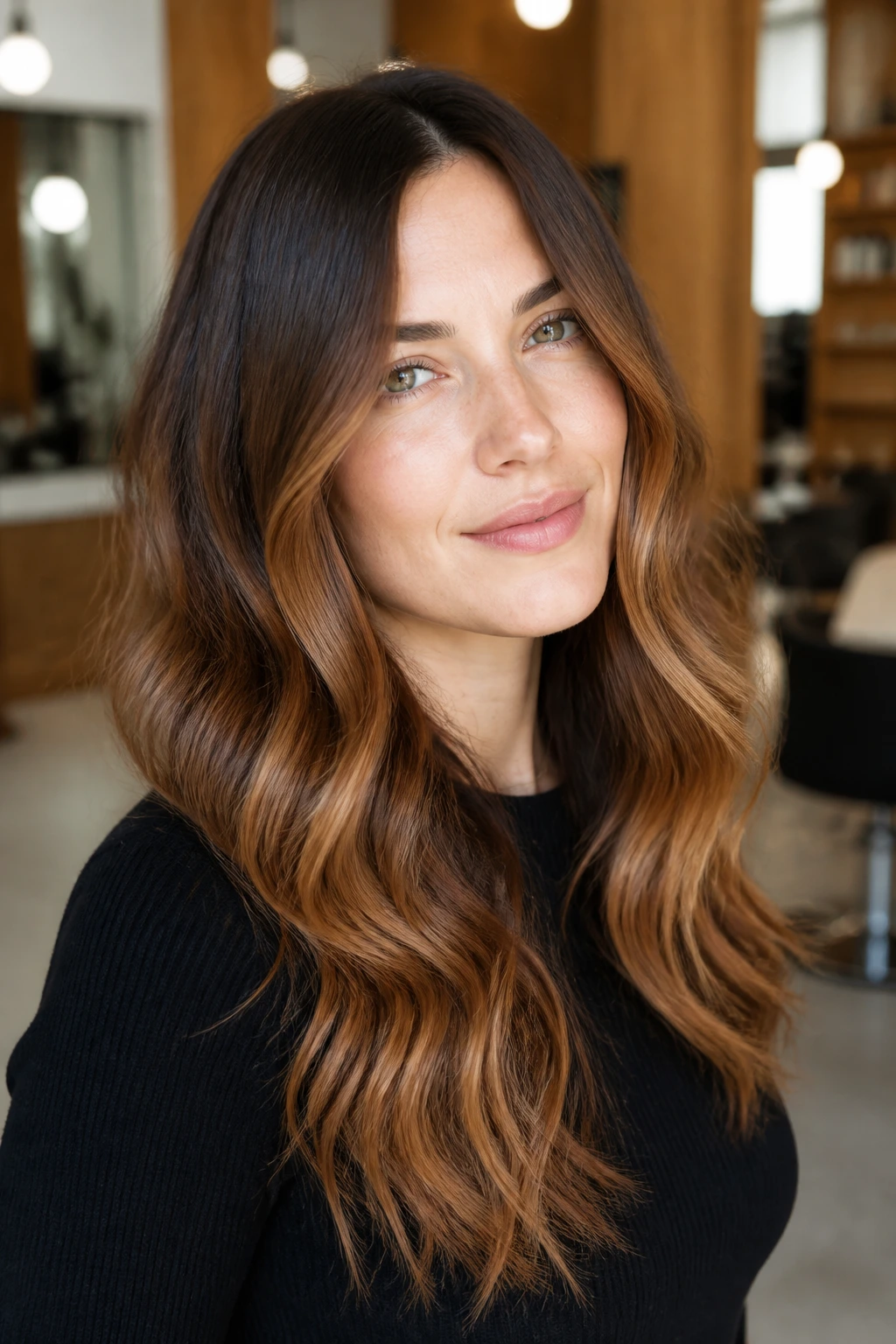
This is the one for anyone who wants the color to feel expensive without looking overworked. A bronze melt moves from a deeper brown root into amber-bronze mids and softly brighter ends, so nothing hits your eye as a hard line.
Because fair skin can look sharp against stark contrast, the melt matters. The root shadow gives the face a frame; the bronze midlengths warm the complexion; the lighter tips keep the soft layers from feeling heavy. It’s a long, quiet gradient. No stripes. No surprise orange.
If your hair is already light, this can be done mostly as a gloss-and-tone approach instead of a heavy lift. That’s a good thing. Less damage, less brass, better movement in the layers.
7. Maple Lowlights with Amber Veils
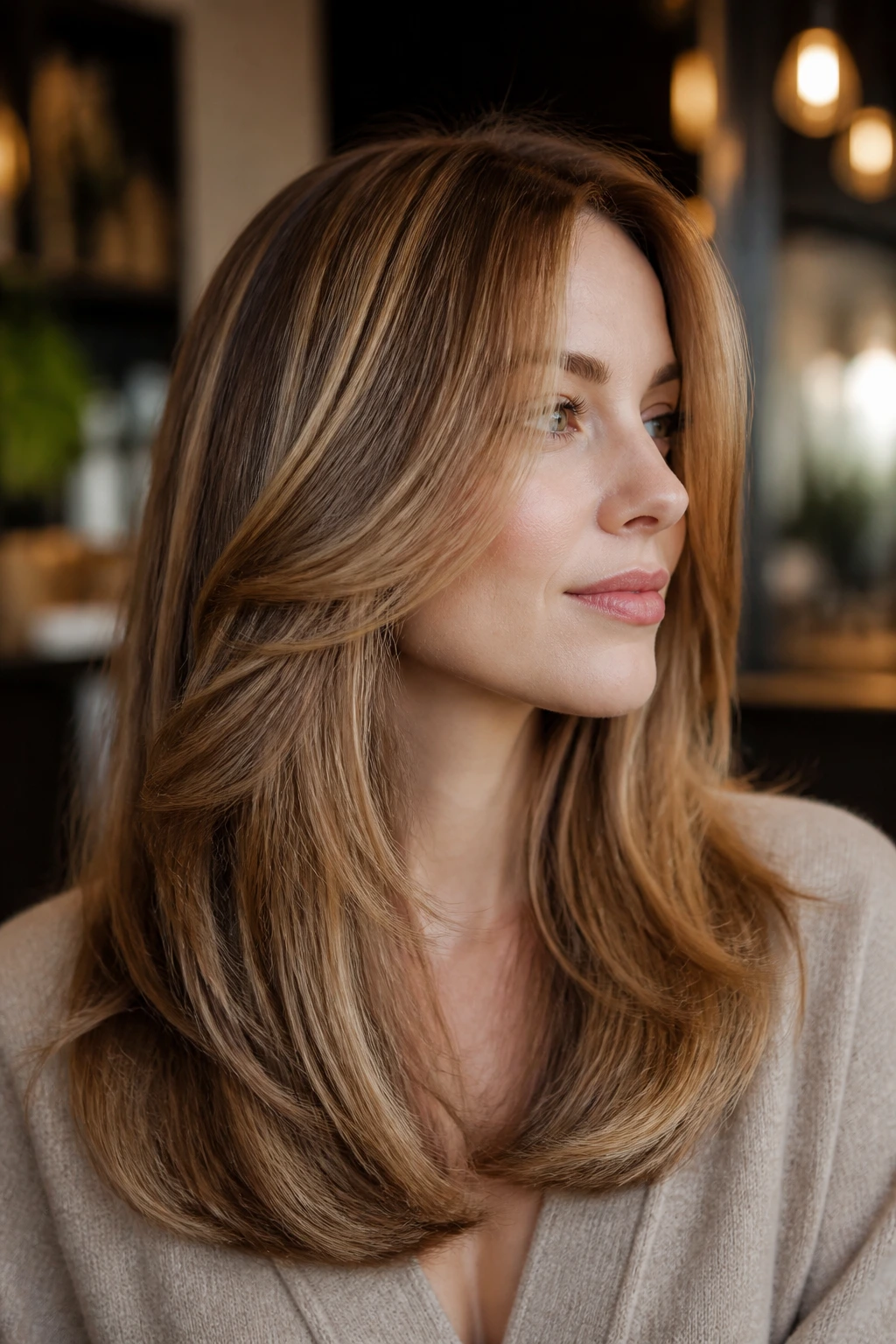
People forget how useful lowlights are. If your hair has gone too light, or if the fair skin beside it looks a little drained, maple lowlights can give the whole cut shape again. Then a few amber veils over the top keep it warm and reflective.
The Easy Fix for Hair That Looks Too Pale
This is one of those color moves that seems small until you see it in motion. Lowlights create shadow underneath the highlights, so the amber doesn’t float on top like decoration. It sits inside the haircut.
Soft layers need that internal depth. Otherwise, they can drift toward fluffiness, especially in very fine hair. If your ends are porous, keep the amber veils soft and slightly muted. Too much warmth on porous hair can look brighter than planned, and not in a good way.
8. Rooted Foilayage with a Soft Shadow
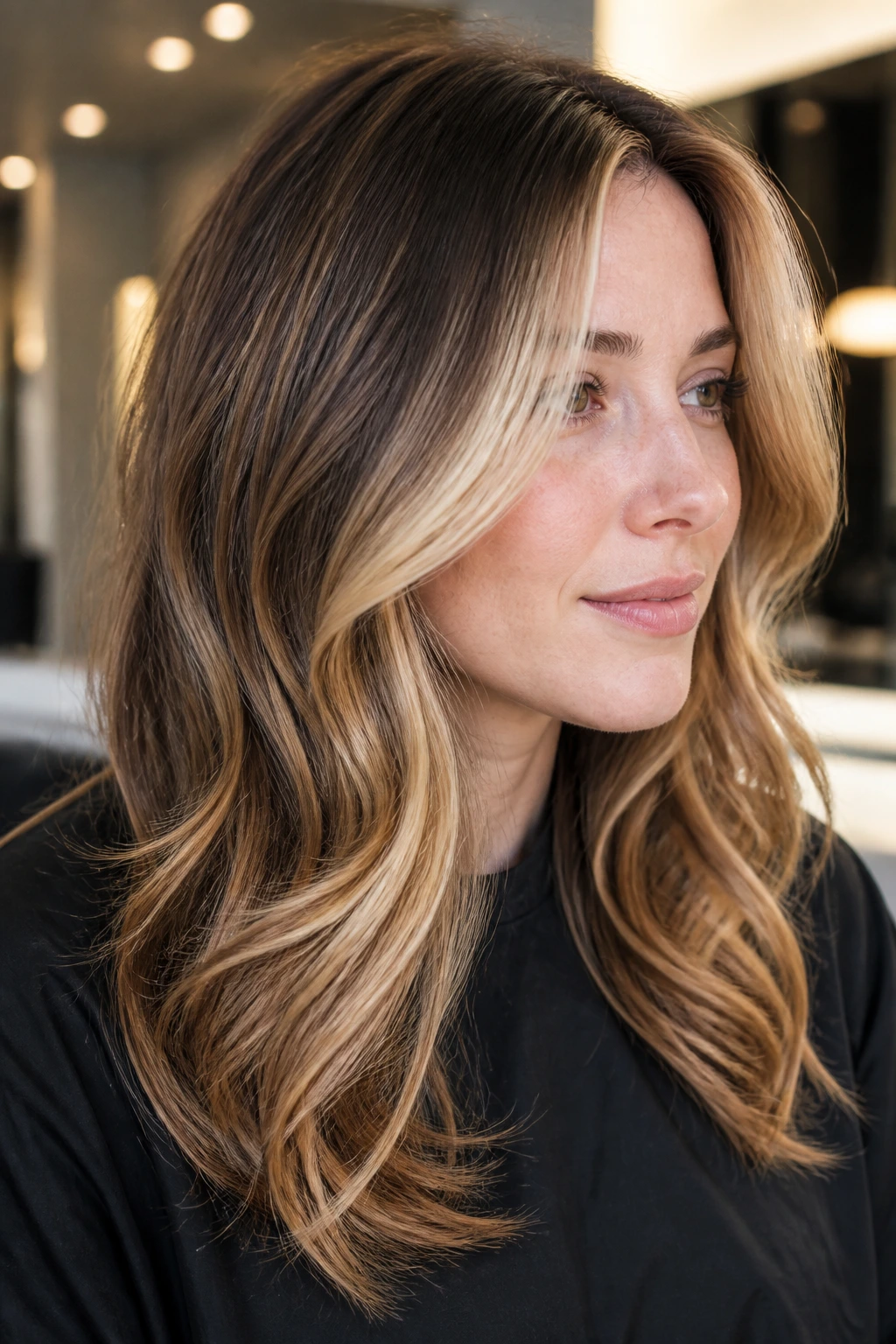
If you want something that grows out cleanly and still looks polished, ask for foilayage with a rooted shadow. The foils give you lift where you need it, and the hand-painted finish keeps the edges soft.
This is one of my favorite techniques for fair skin with layered cuts because the dimension starts near the face and then diffuses downward. You get bright threads at the front, richer brown at the root, and amber pieces that don’t all live on the surface. The result has depth from every angle.
The shadow root matters more than people think. A half-inch to an inch of depth at the scalp keeps the whole look from turning airy and pale. On soft layers, that small strip of darkness is what makes the lighter pieces look intentional.
9. Pecan Highlights Around Curtain Bangs
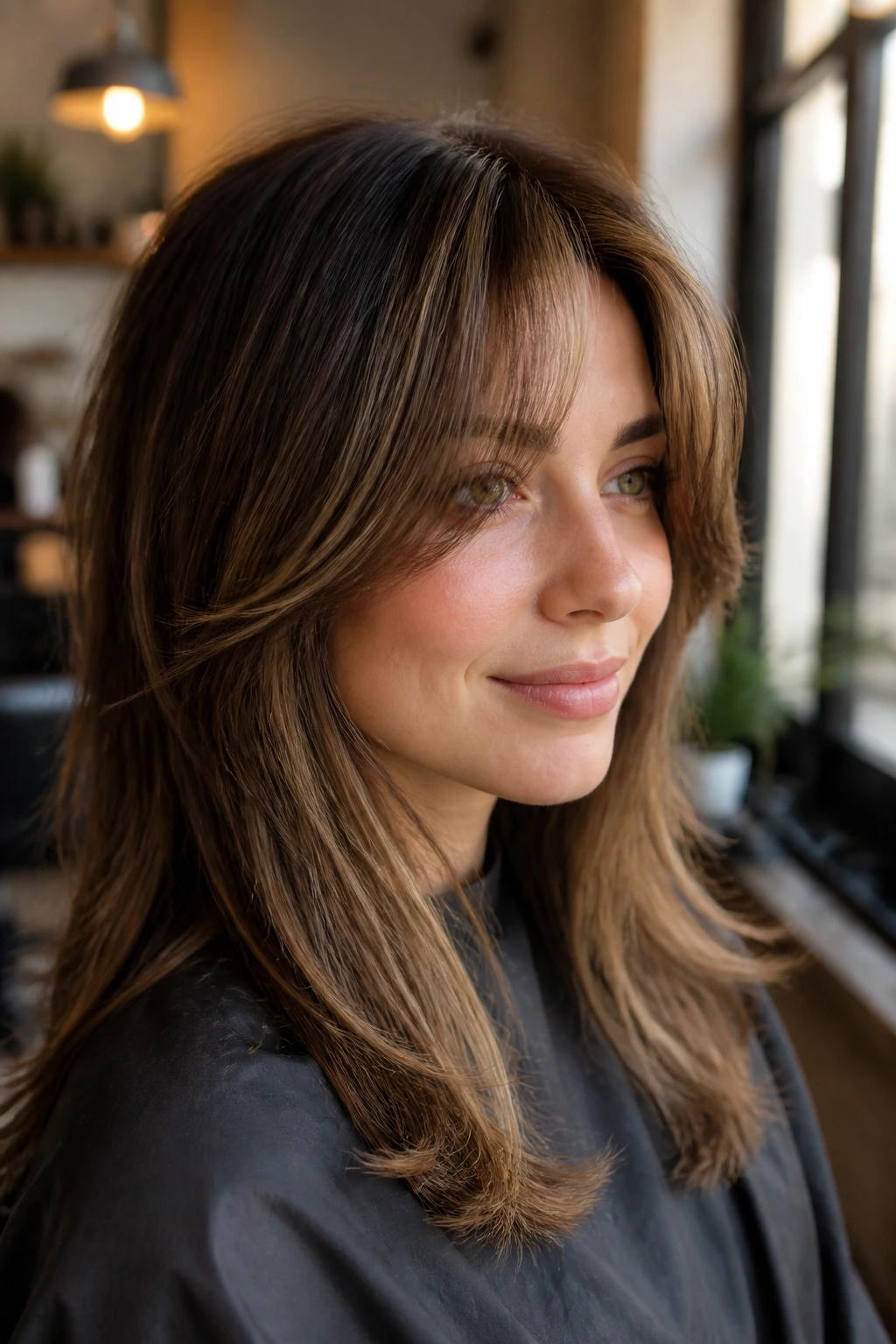
Curtain bangs are basically a built-in frame, and they love warm brown color. Pecan highlights around the fringe soften the forehead area, warm fair skin, and make the cut look fuller in motion.
I like this placement because it doesn’t waste lightening on the back of the head where nobody notices it first. Put the brighter pieces where the bangs split and where the front layers curve away from the face. That bend is where the amber catches.
Best When You Want the Face to Open Up
The color should be a touch lighter right at the bend of the bangs, then taper into a deeper brown through the rest of the layer. That keeps the fringe from looking blunt. If the bang area is too bright, it can dominate the face. If it’s too dark, the cut disappears. Pecan hits the middle.
10. Auburn-Leaning Amber for Peach Undertones
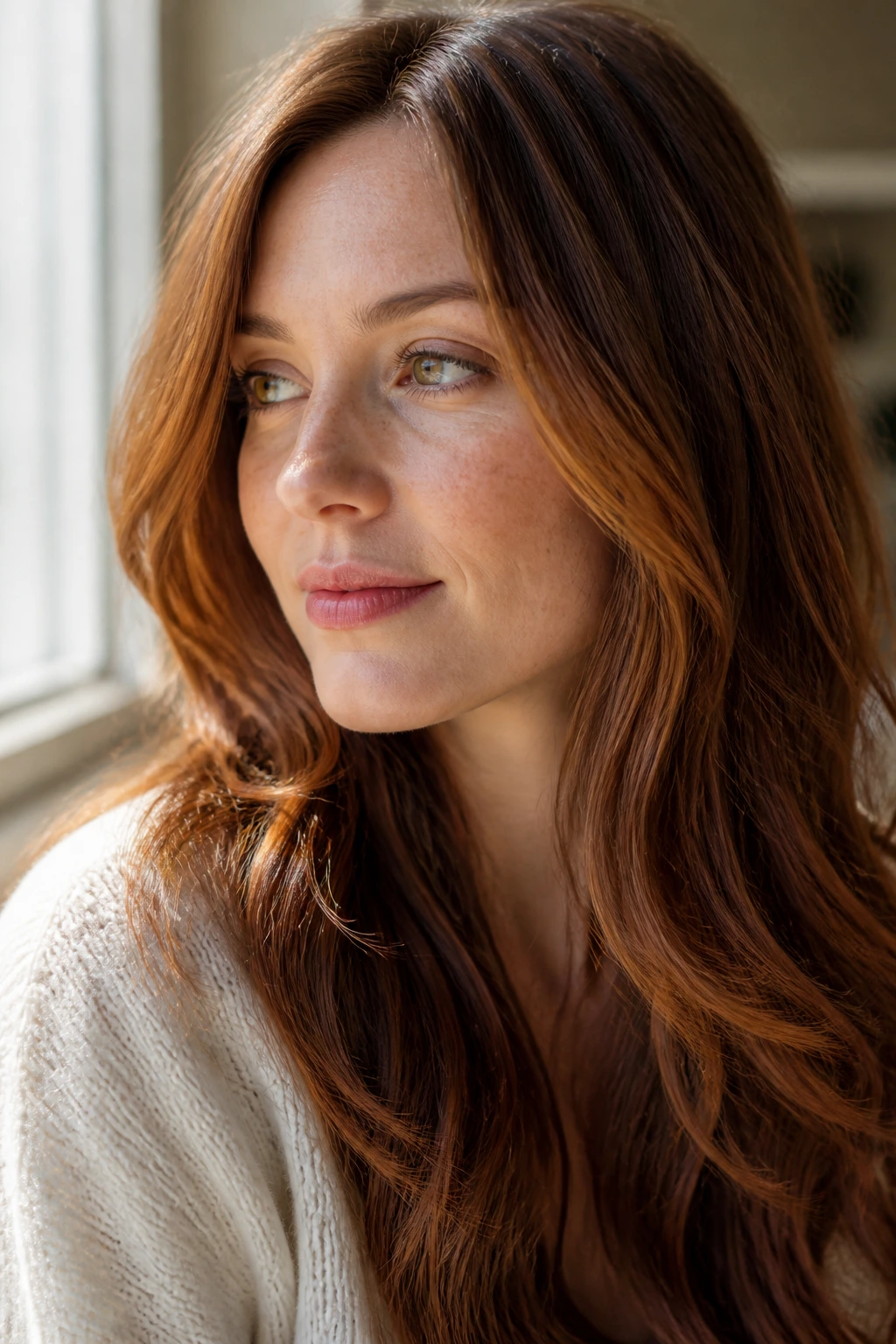
Peach and warm-neutral fair skin can handle more copper in the mix. Not a lot. Just enough. Auburn-leaning amber brings a little fire to the color without turning the whole head orange.
This works best when the base is a soft brown rather than a light blonde. The auburn thread can then live inside the brunette, which looks richer and more believable. Soft layers help because they break the auburn into smaller flashes instead of one loud block.
If you have freckles, this is a lovely lane. The warmth echoes them instead of competing with them. If your skin leans pink, I’d keep the copper dialed back and let the amber stay more golden than red.
11. Mushroom Brown with Golden Amber Threads
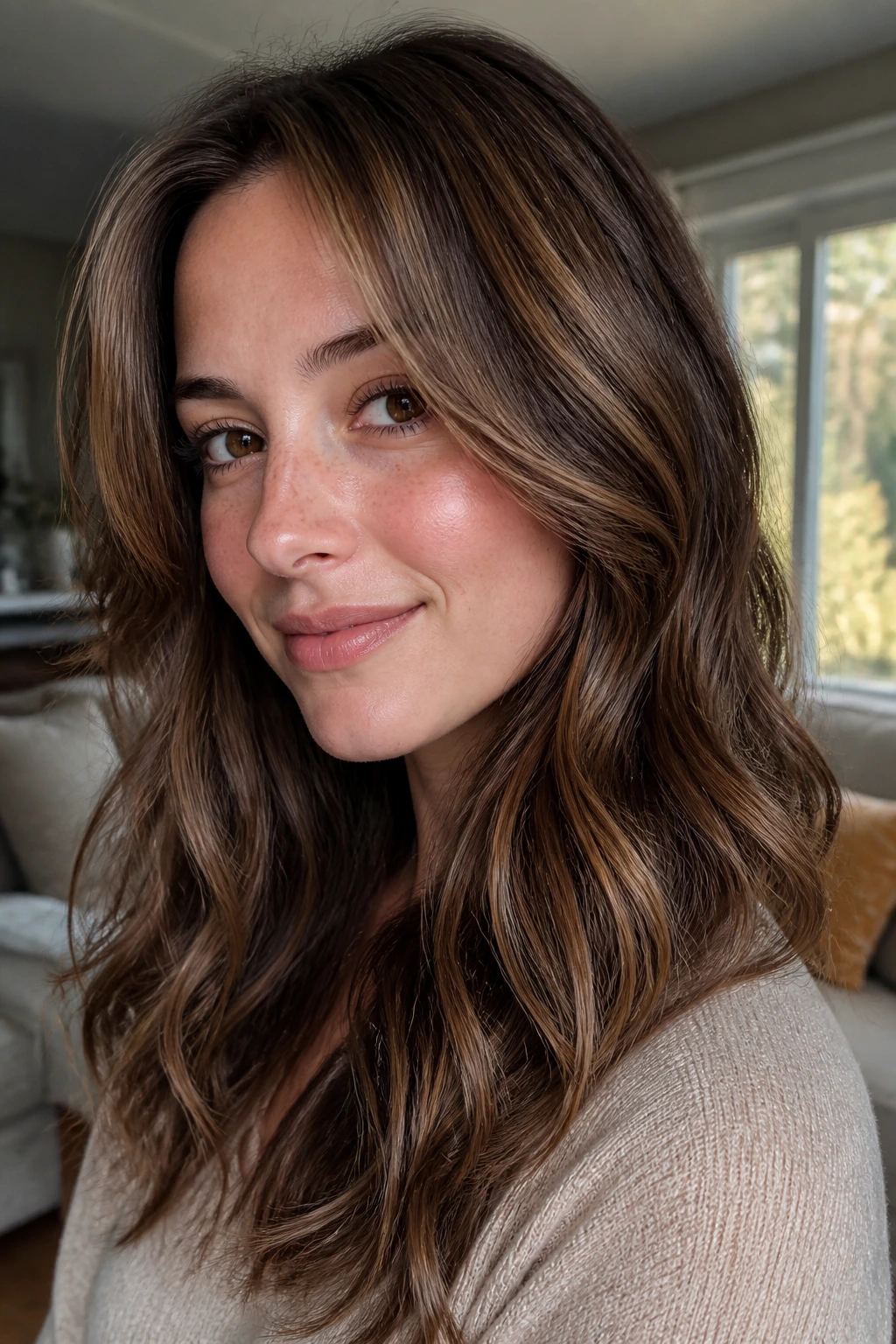
Cooler fair skin often looks better with a deeper base and just a few golden pieces. Mushroom brown gives you that muted, neutral foundation, while golden amber threads stop the color from looking flat or dusty.
The key is balance. Too much gold and the coolness of the mushroom brown disappears. Too little and the hair can look like it’s missing light. Soft layers help the gold thread in and out of view, which is perfect if you want warmth that shows up in motion rather than in a bright stripe.
This is one of the most wearable options on the list. It doesn’t scream for attention. It just makes the hair look richer, which is often what fair skin needs more than brightness.
12. Chai Latte Brown with Creamy Ribbons
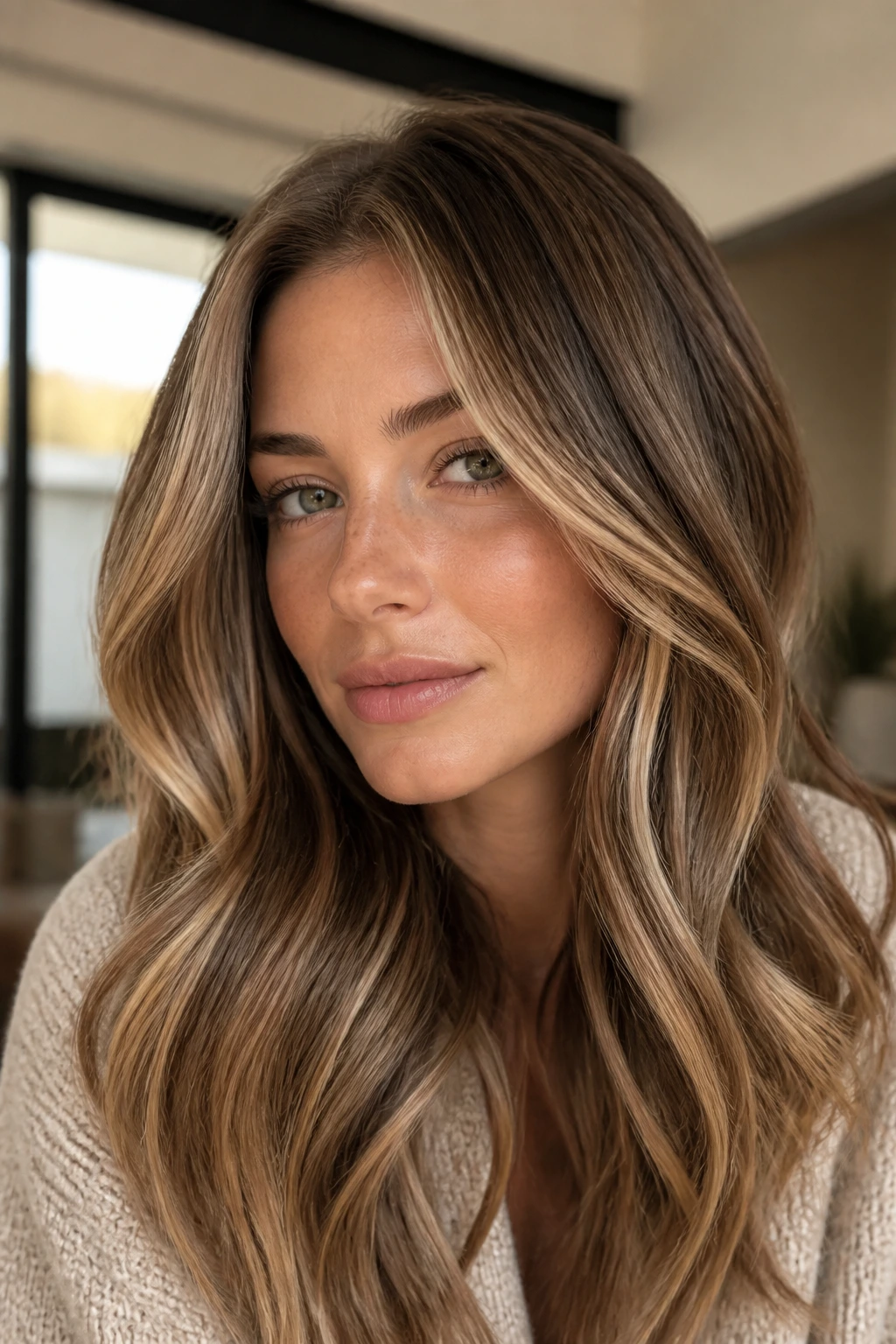
This is the softest, creamiest version of the whole family. Think chai latte brown with a few creamy amber ribbons running through the midlengths and ends. It’s warm, but not sugary.
The look works because the pieces are soft enough to read as texture, not streaks. On fair skin, that matters. The color warms the face while the creamy notes keep the result from going too deep or too heavy. Soft layers make the ribbons visible as the hair bends, which gives the cut a little lift even on quiet days.
If you like a natural brunette look but want something more dimensional than a one-process brown, this is a good lane. It’s also easy to gloss warmer or cooler later, depending on how the tone settles.
13. Peekaboo Amber Underlayers
Not every highlight needs to live on top. Peekaboo amber underlayers hide the warmth beneath the surface, so the color shows when the hair swings, tucks behind the ear, or moves in the wind.
That hidden placement is a smart choice for fair skin if you want interest without a bright front frame. The top layer can stay a little deeper and calmer, which keeps the face from looking overlit. Then the amber flashes underneath and gives the whole cut a soft spark.
I especially like this on layered cuts with a bit of length. The movement exposes the underlayer naturally. If your hair is straight and very smooth, a bend at the ends helps the color peek through instead of staying hidden all day.
14. Feathered Shag with Toasted Brown Lights
A feathered shag wants color that follows the motion of the haircut. Toasted brown lights do that beautifully because they’re warm, but not overly bright. The pieces sit where the layers flick, not where the scalp is flat.
This is one of those looks that can make fair skin feel less stark without going into obvious blonde territory. The toasted tones soften the edges of the face and add a little earthiness to the cut. If the hair is thick, the light pieces should be broken up so the shag still feels airy.
A matte texture spray or a little bend with a round brush makes the color read better. The layers need to move, or the subtle ribbons won’t show their full effect.
15. Espresso Base with an Amber Gloss
Not every amber look needs a bleach job. Sometimes the smartest move is an espresso base with an amber gloss over the top, plus a few lighter face-framing pieces if the hair can take it.
This approach is especially good when the hair is damaged, overprocessed, or naturally quite dark. The gloss adds warmth and shine, and the deeper base keeps fair skin from looking washed out next to pale strands. You still get the amber feeling, but it’s wrapped in darkness, which gives it more punch.
A Low-Drama Option That Still Reads Warm
The finish matters here. Ask for shine, not just color. A clear or warm gloss can make the hair look smoother and richer, and soft layers make that sheen travel from root to tip. It’s a quieter look, but a good one.
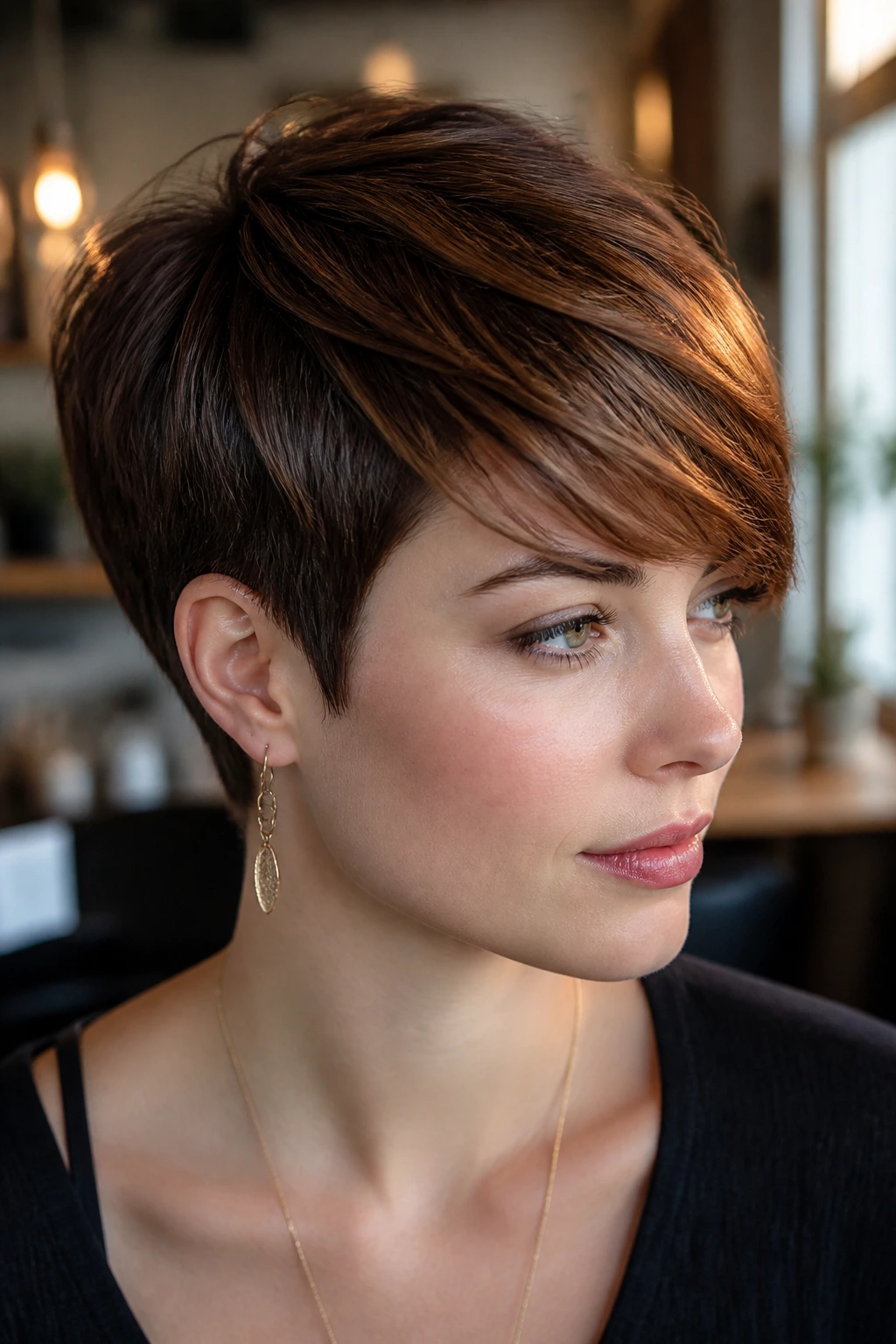
16. Side-Swept Amber Panels on a Pixie
Short hair needs precision, not a ton of color. Side-swept amber panels on a pixie can do more for fair skin than a whole head of tiny foils because the eye lands on the shape first.
The best placement is usually around the fringe, the top ridge, and the side that gets swept back. That gives the cut a little contour. On soft layers, even in a pixie, those brighter panels help the texture show up instead of flattening into one color.
This is a style where contrast can be a friend. The key is to keep the amber rich, not loud. A pixie doesn’t have enough canvas for sloppy placement. If the panels are too thick, they’ll look striped fast.
17. Mocha and Amber Blend for Pink Skin
Pink fair skin can be picky about warmth. Too much gold brings out redness. Too little warmth makes the face look a bit bloodless. Mocha and amber together solve that better than a one-note blonde ever could.
The mocha base calms the skin. The amber brings life back in. It’s a controlled warmth, which is the point. I’d keep the amber in the midlengths and face frame, then let the roots stay deeper and cooler. That way the warm pieces light up the complexion without floating on their own.
This is one of the few times I’ll argue for slightly more depth than brightness. The deeper base makes the fair skin look brighter by comparison. Funny how that works.
18. Crown-Brightening Chestnut Curves
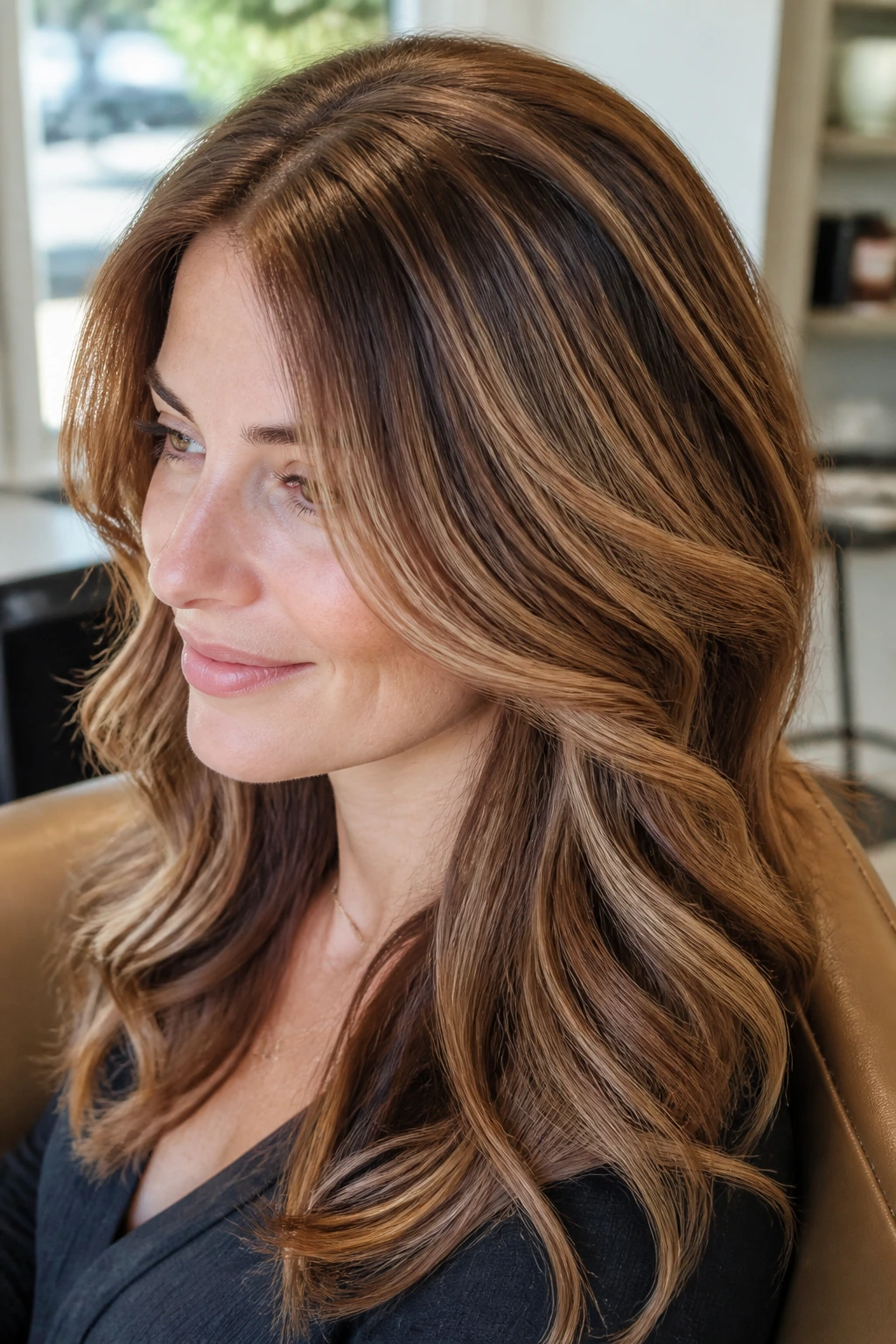
Sometimes what you need is lift, not brightness. Crown-brightening chestnut curves place the lighter brown-amber pieces in arcs around the top of the head, which gives soft layers the look of volume even when the hair is fine or flat.
The eye reads that curved placement as movement. It makes the hair feel fuller at the roots without turning the whole crown blond. On fair skin, a little warmth up top can stop the face from looking hollow near the hairline, which can happen with too much dark root and no light at all.
This style is especially good if you wear your hair with a soft side part. The curve changes shape depending on where the part falls, so the color never feels static.
19. Bronzed Ends for Curtain Layers
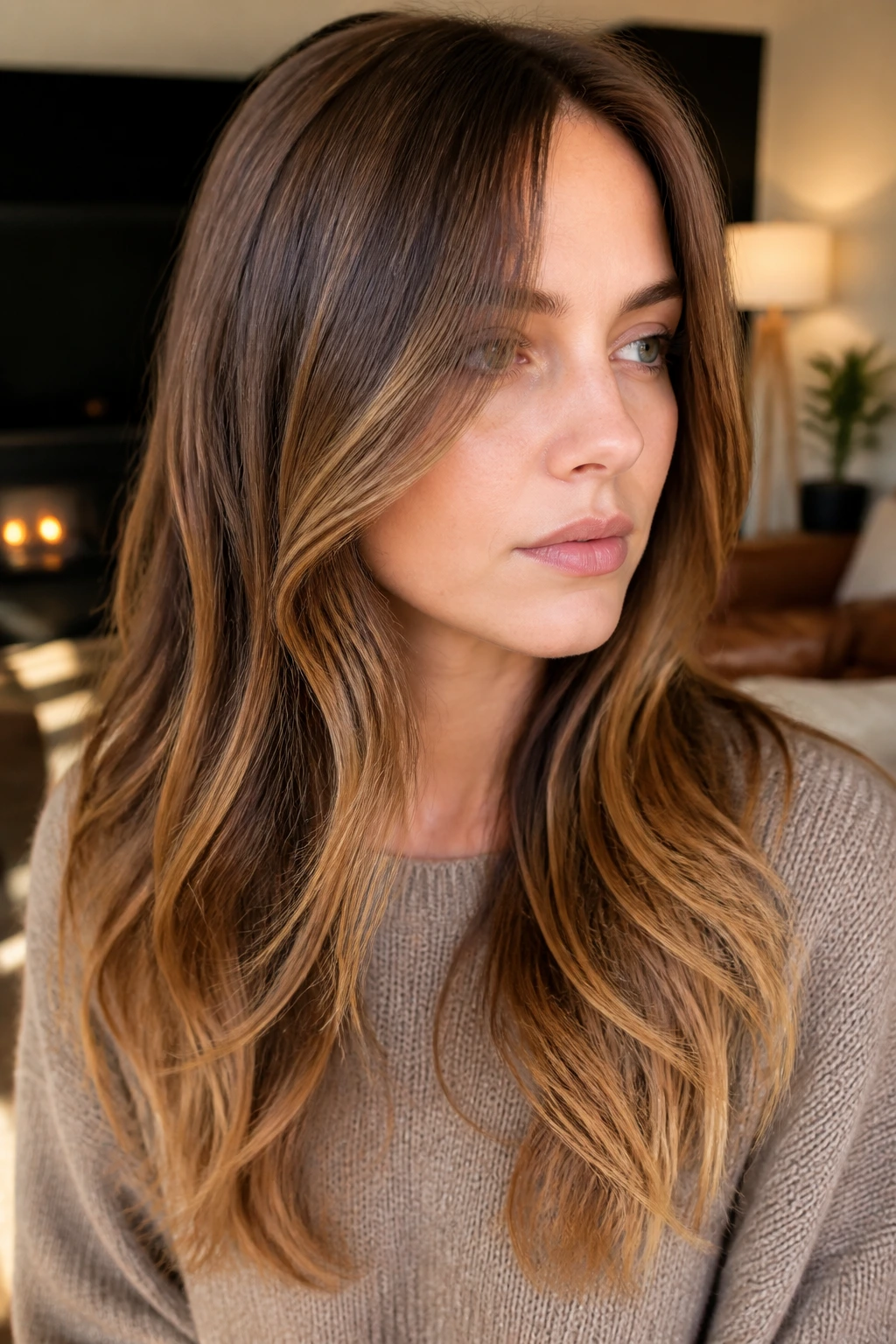
If you wear long curtain layers, put the emphasis at the ends. Bronzed ends keep the top calm and let the hair lighten gradually as it drops, which is flattering on fair skin because the face stays framed by a deeper brown.
That lower-half brightness makes the layers show up when you wave the hair or let it fall forward. It also keeps the maintenance lower, since the brightest pieces are not sitting right at the root line. I like bronzed ends when the haircut already has a lot of softness and you want the color to follow that shape.
A middle part makes this look feel modern and clean. A loose wave makes it feel a little more relaxed. Either way, the bronzed ends keep the cut from disappearing at the bottom.
20. Walnut Brown with Amber Veining
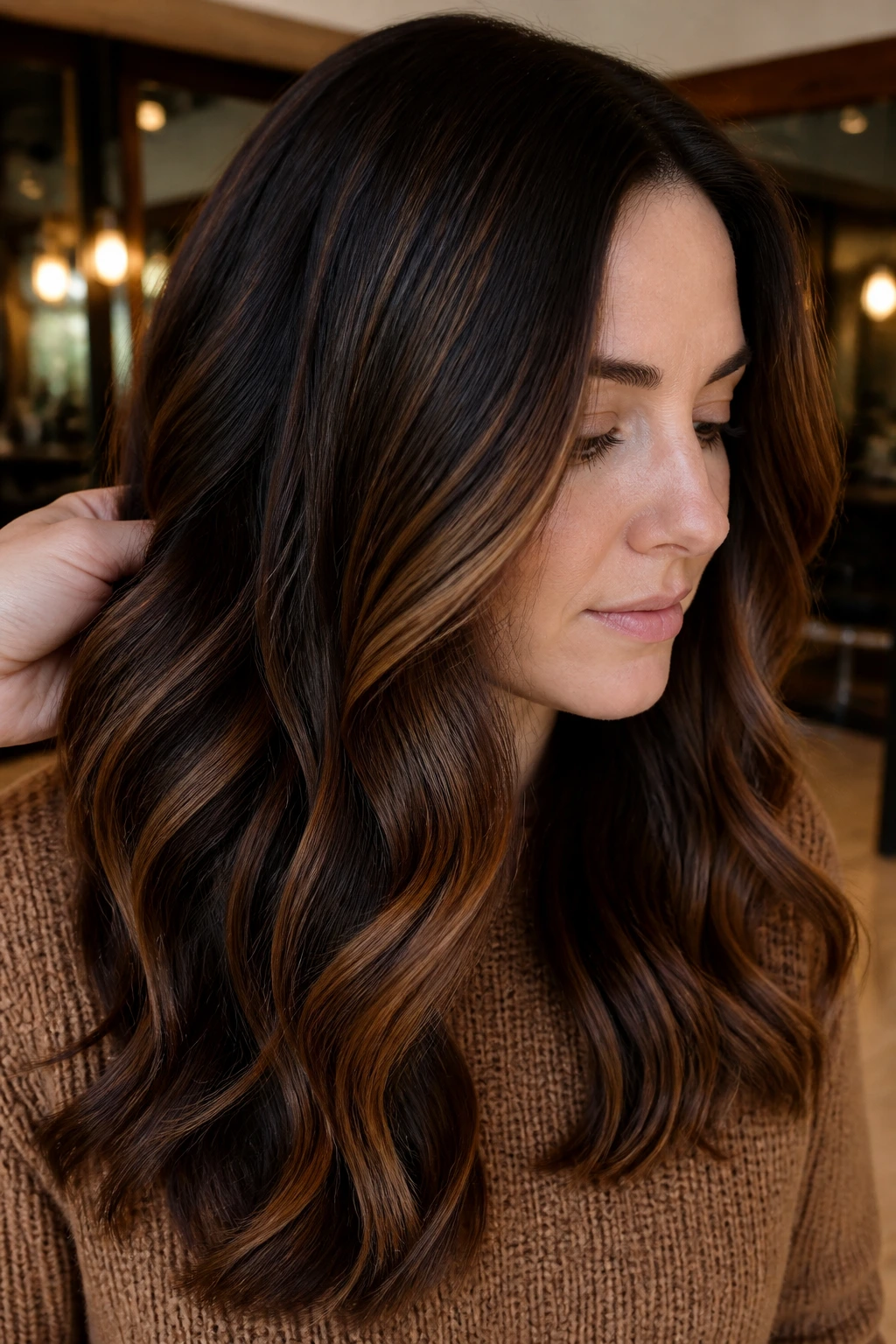
Thick hair needs internal movement or it can look too blocky. Walnut brown with amber veining creates that movement by weaving lighter threads through a deeper base instead of painting big panels on top.
The veining idea matters. You want narrow, irregular ribbons that run through the mids and underlayers, almost like light running through wood grain. On fair skin, that depth is flattering because it warms the face without making the hair look light all over.
Best for Dense Hair That Needs Shape
This is one of the stronger options if your soft layers still feel heavy at the ends. The amber breaks up the density, and the walnut keeps the overall look grounded. It’s a good reminder that highlights are not just about brightness. They’re about making the cut read better.
21. Straight-Hair Balayage with Soft Ribbons
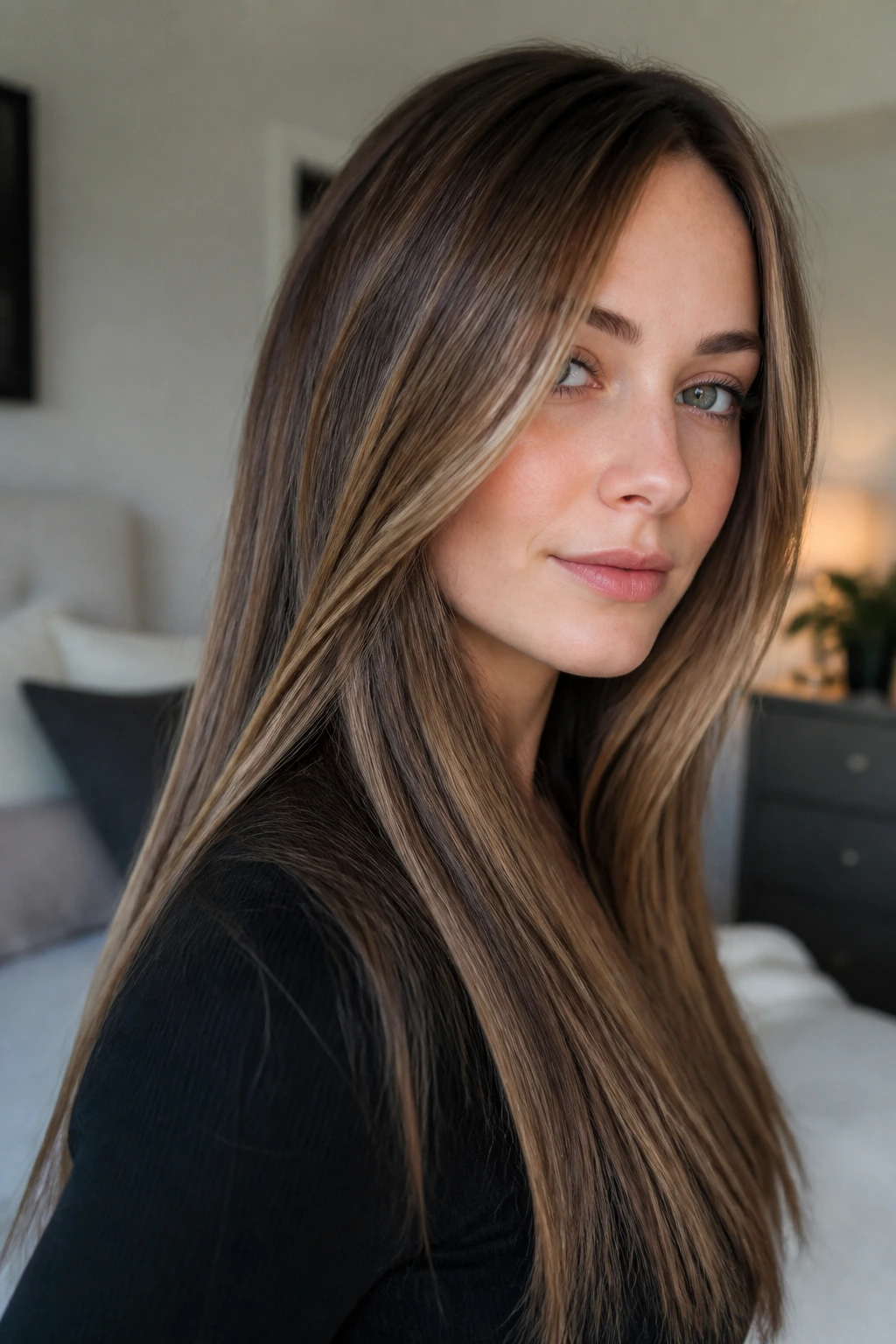
Straight hair is unforgiving. It shows every placement choice. That’s why soft ribbon balayage needs to be especially deliberate when the hair is smooth and flat.
The ribbons should be diagonal, not horizontal. They should move through the head shape, not sit across it. Fair skin benefits from the subtle warmth, but straight hair needs enough variation to avoid looking like a single flat curtain of color. A few brighter face-frame pieces help a lot here, especially if the cut has layers that kick at the ends.
If you wear the hair super sleek, keep some depth at the root and through the underside. That stops the top from looking like a strip and the rest from disappearing.
22. Curly Halo Lights in Amber Brown
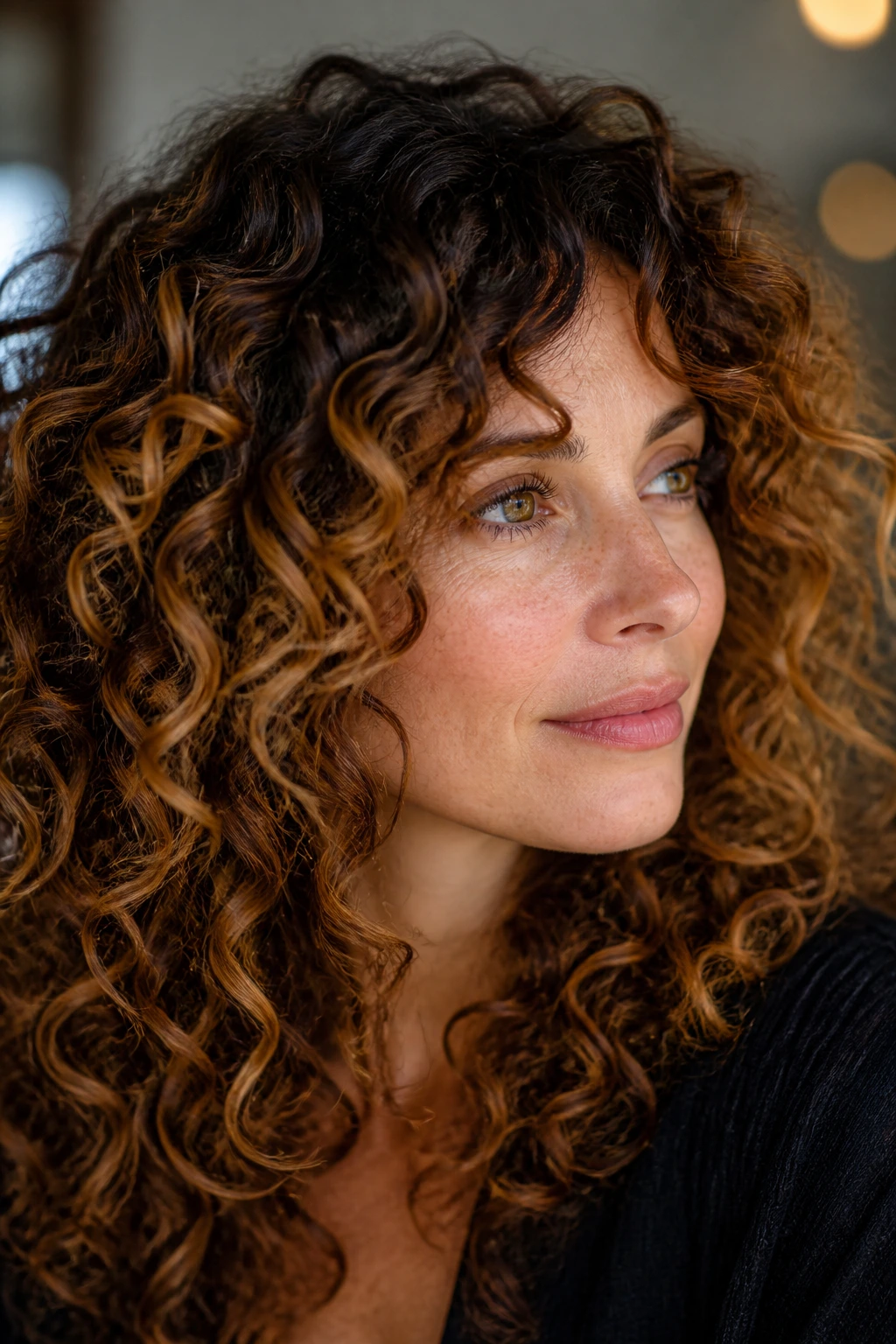
Curly hair has its own rules. You cannot place amber the same way you would on straight hair and expect the result to show. Curly halo lights work because the brightness sits on the outer curve of the curl pattern, where the light actually hits.
On fair skin, the warmth comes through as movement rather than bulk. That’s the beautiful part. Soft layers in curls create little shelves, and those shelves are where the amber can live without turning muddy. If the hair is very dense, a few lowlights underneath will keep the shape from expanding too much.
I prefer this kind of placement over all-over highlighting on curls. It respects the curl pattern. It also gives a nicer grow-out, which is handy because curls can be a little picky when color starts to fade.
23. Dimensional Bob with Toffee Lift
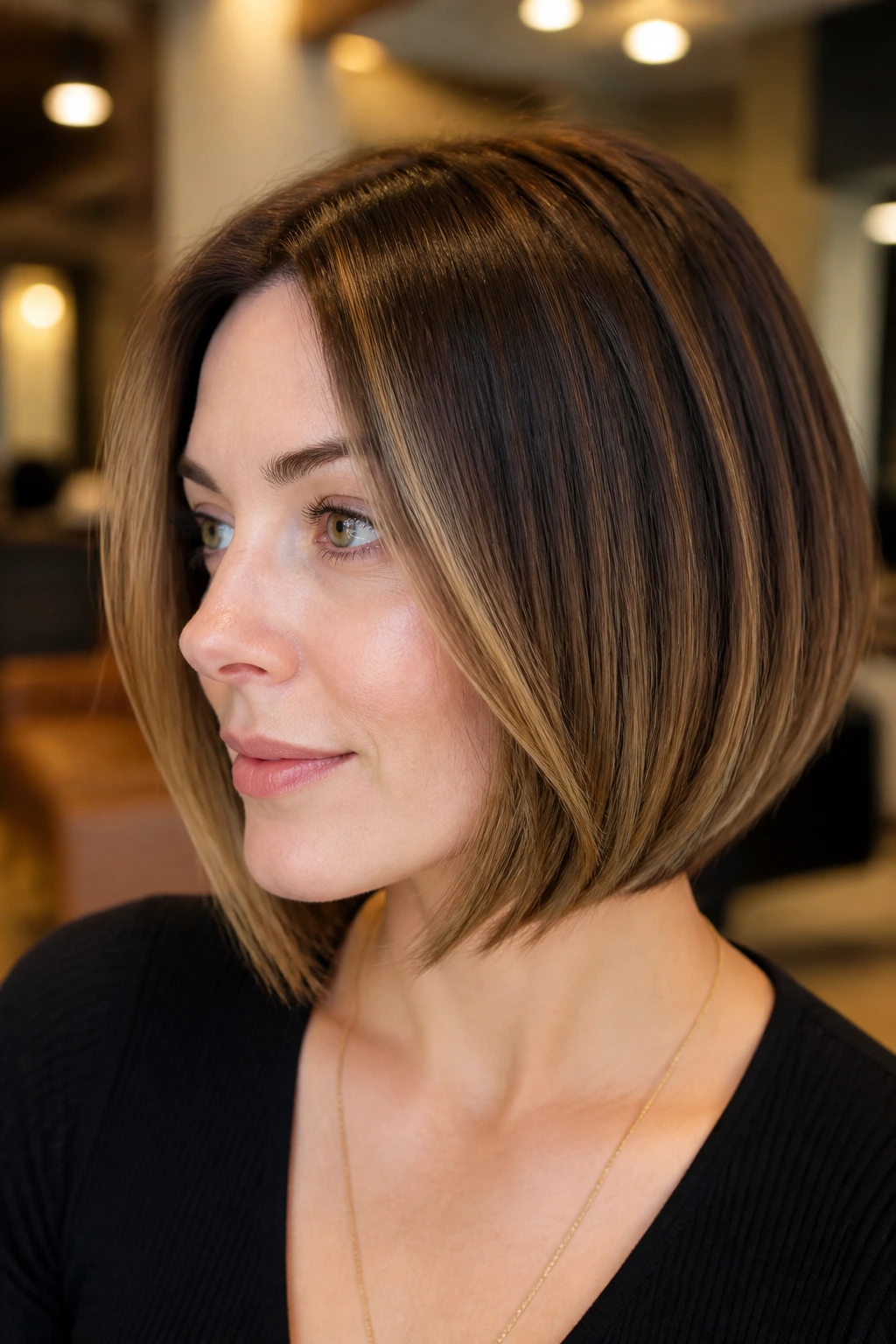
Bobs need clean placement because every inch counts. Toffee lift gives a bob enough brightness to show the cut line while still keeping the color soft and warm against fair skin.
The highlight should live through the inside layers and the front angle, not just the very top of the head. That gives the bob a bend and a little swing when you move. On a blunt-ish bob with soft internal layers, toffee keeps the shape from feeling hard.
This is one of those styles where a gloss makes a huge difference. Too much lift and the bob can look spiky. Too little and the cut flattens. Toffee is the middle ground, and that middle ground is where bobs usually look best.
24. Easy-Grow-Out Rooted Lob
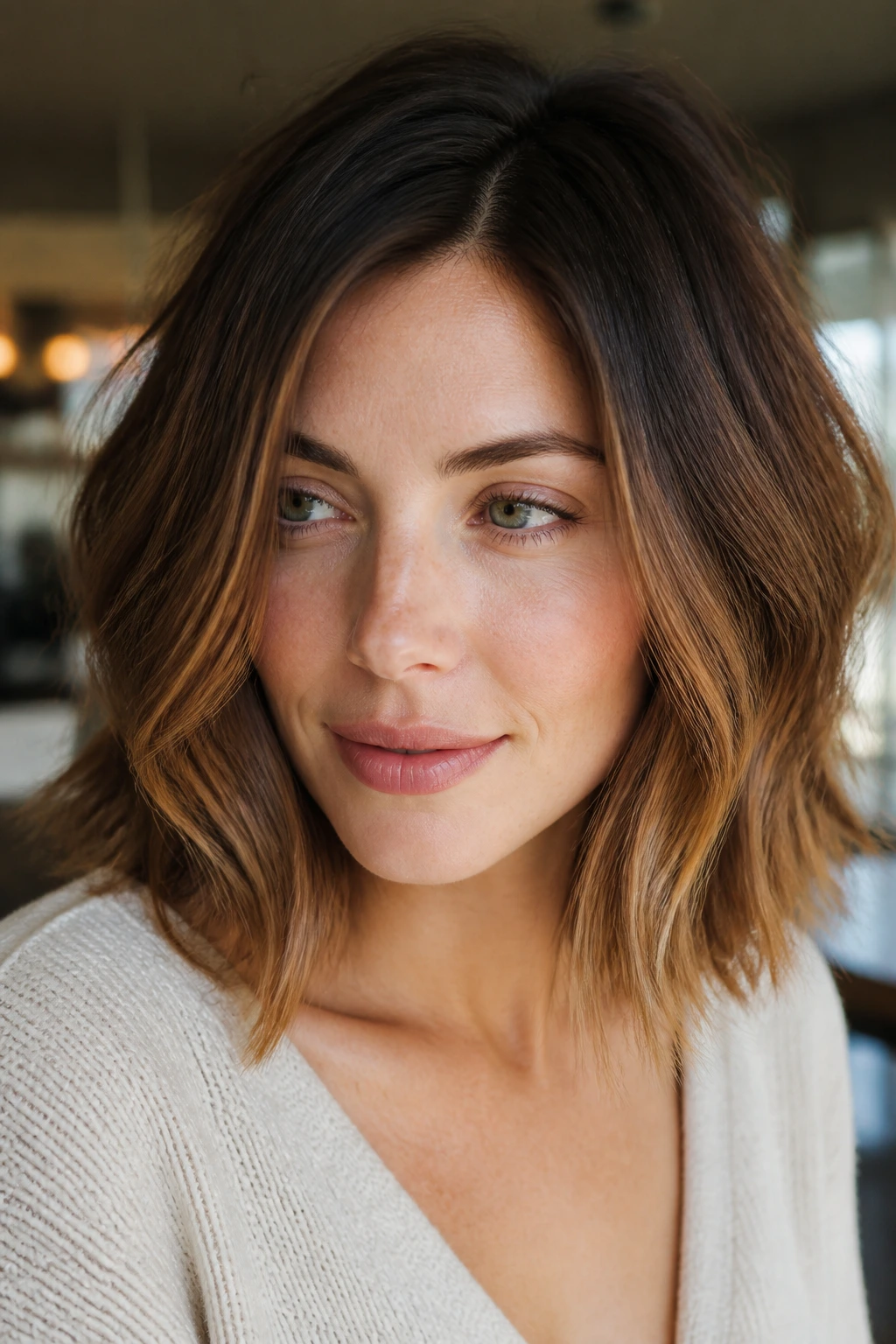
If you do not want to sit in a chair every few weeks, the rooted lob is your friend. Leave a deeper root shadow, brighten the midlengths with brown-amber ribbons, and keep the ends softly lighter.
That root depth keeps fair skin from going pale against the hair. The lob length helps too, because it gives the color enough room to graduate instead of jumping from dark to light all at once. Soft layers make the grow-out even cleaner since the pieces break up as the hair falls.
This is one of the most practical choices on the list. It looks intentional on day one and still looks intentional when it’s grown out a bit. Not every color can say that.
25. Glassy Amber Finish with a Soft Root Shadow
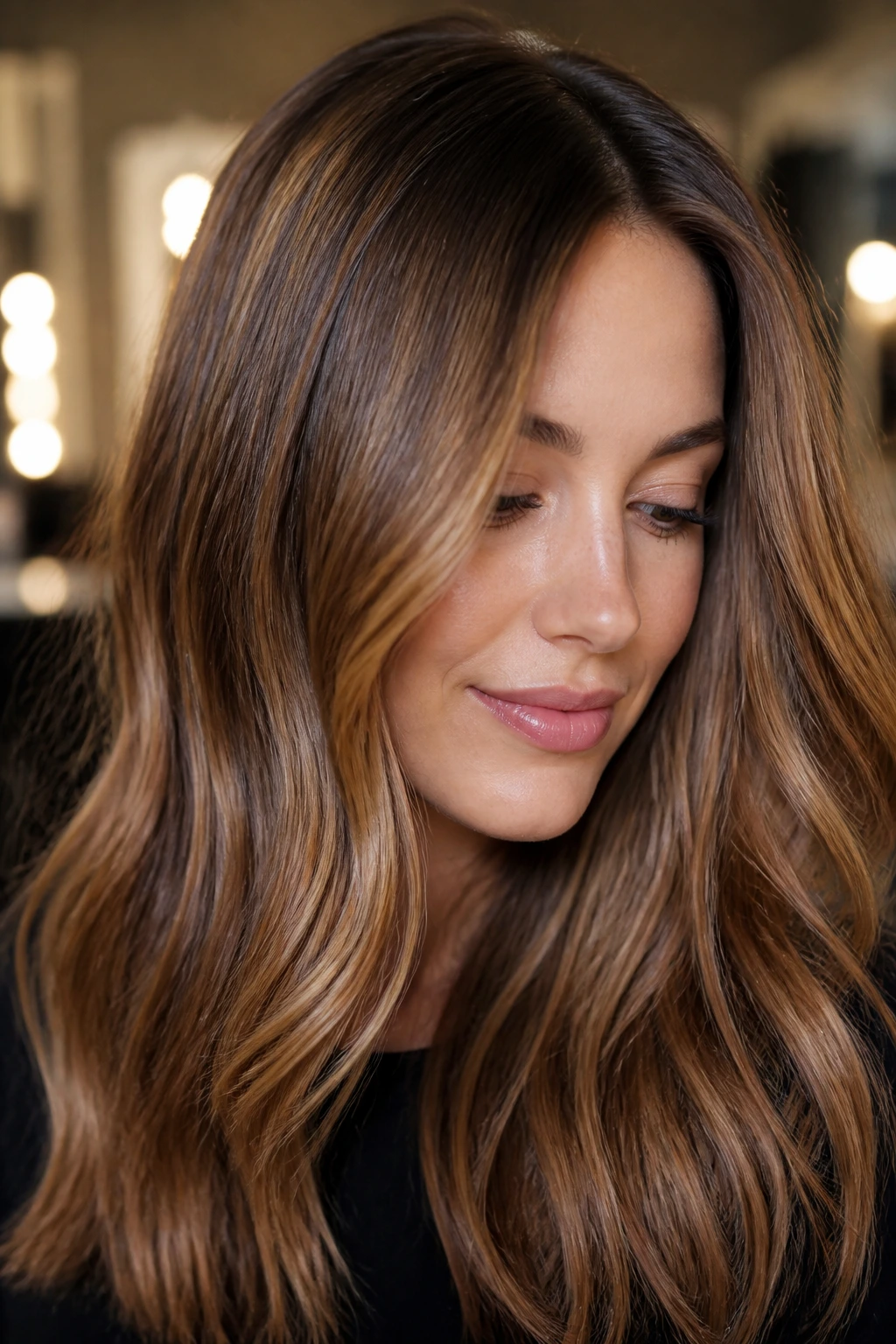
This is the polished version of the whole idea. A glassy amber finish with a soft root shadow gives fair skin warmth, shine, and control all at once. The highlights are there, but the gloss is what you notice first.
The best part is how the finish moves across soft layers. The shine catches the bends, the amber shows through the mids, and the darker root keeps the whole look anchored. If the earlier styles are about placement, this one is about refinement. It’s the same family of color, just smoothed out at the edges.
I’d choose this when the cut is already right and the color just needs a cleaner finish. It’s the kind of look that can make a very ordinary blow-dry seem more considered than it really was. That’s worth something.
Why the Brown Amber Family Loves Soft Layers
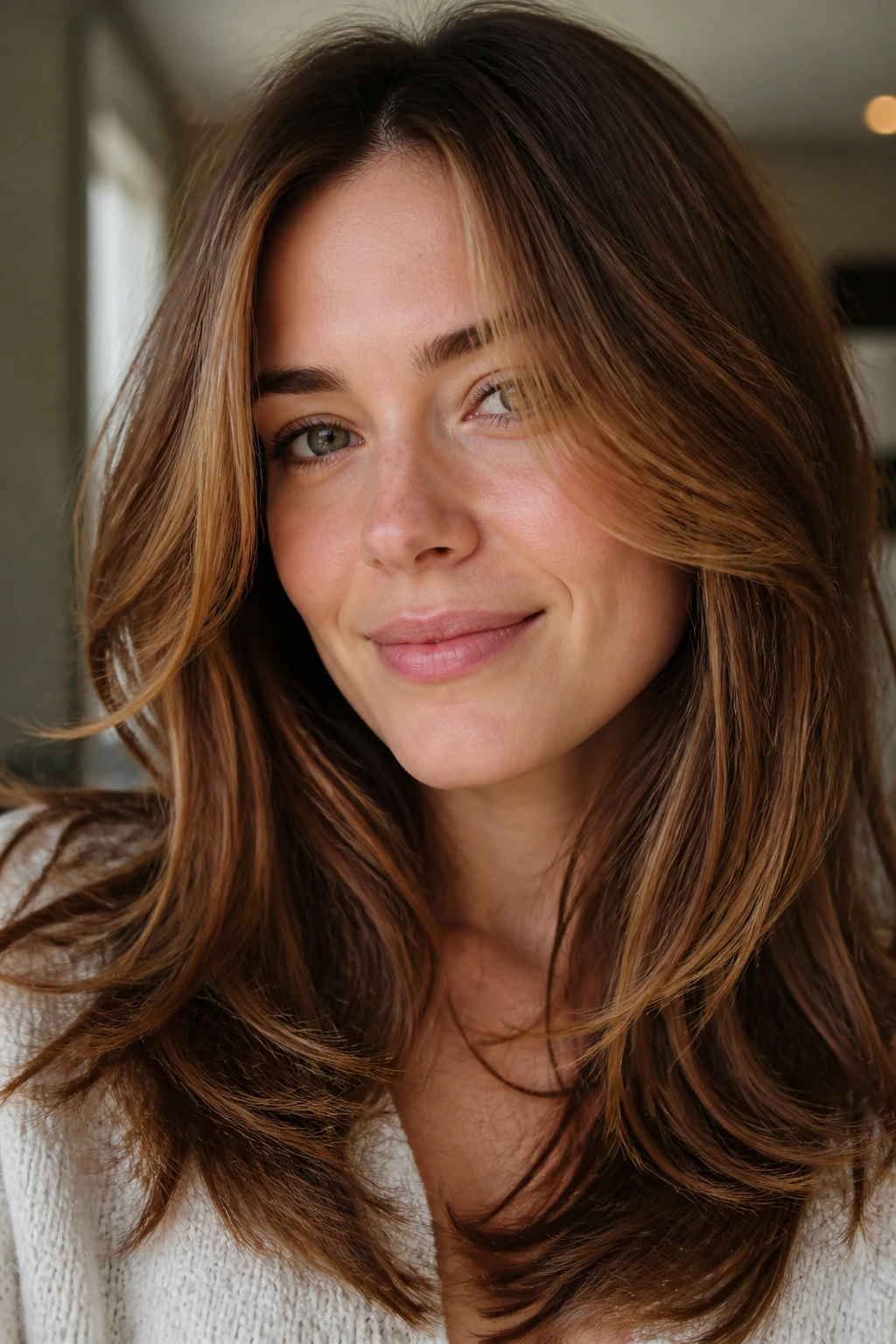
Soft layers are not just a haircut choice here. They’re the reason the color works at all.
A blunt cut can show brown amber highlights, sure, but it shows them in big blocks. Layers break that up. They let a caramel thread sit under a chestnut thread, then a lighter amber piece flicks out at the cheekbone and the whole thing starts to breathe. That movement matters on fair skin because it keeps the color from looking too flat or too obvious.
The other reason layers help is balance. Brown amber lives in the warm middle of the color wheel, and fair skin usually needs warmth close to the face but not an entire curtain of it. Soft layers let you place brightness where the face needs it and shadow where the hair needs depth. That makes the haircut look fuller, not louder.
I also like layered cuts because they keep the maintenance honest. If the color grows out, the layers blur the line. If the toner softens, the shape still looks good. That’s not a small thing. It’s the difference between a style that depends on one perfect salon visit and a style that keeps looking good while life happens around it.
Essential Tools for Color Consults and At-Home Styling
-
Inspiration photos on your phone: Bring 2 or 3 pictures that show both the tone and the placement; one photo rarely tells the whole story.
-
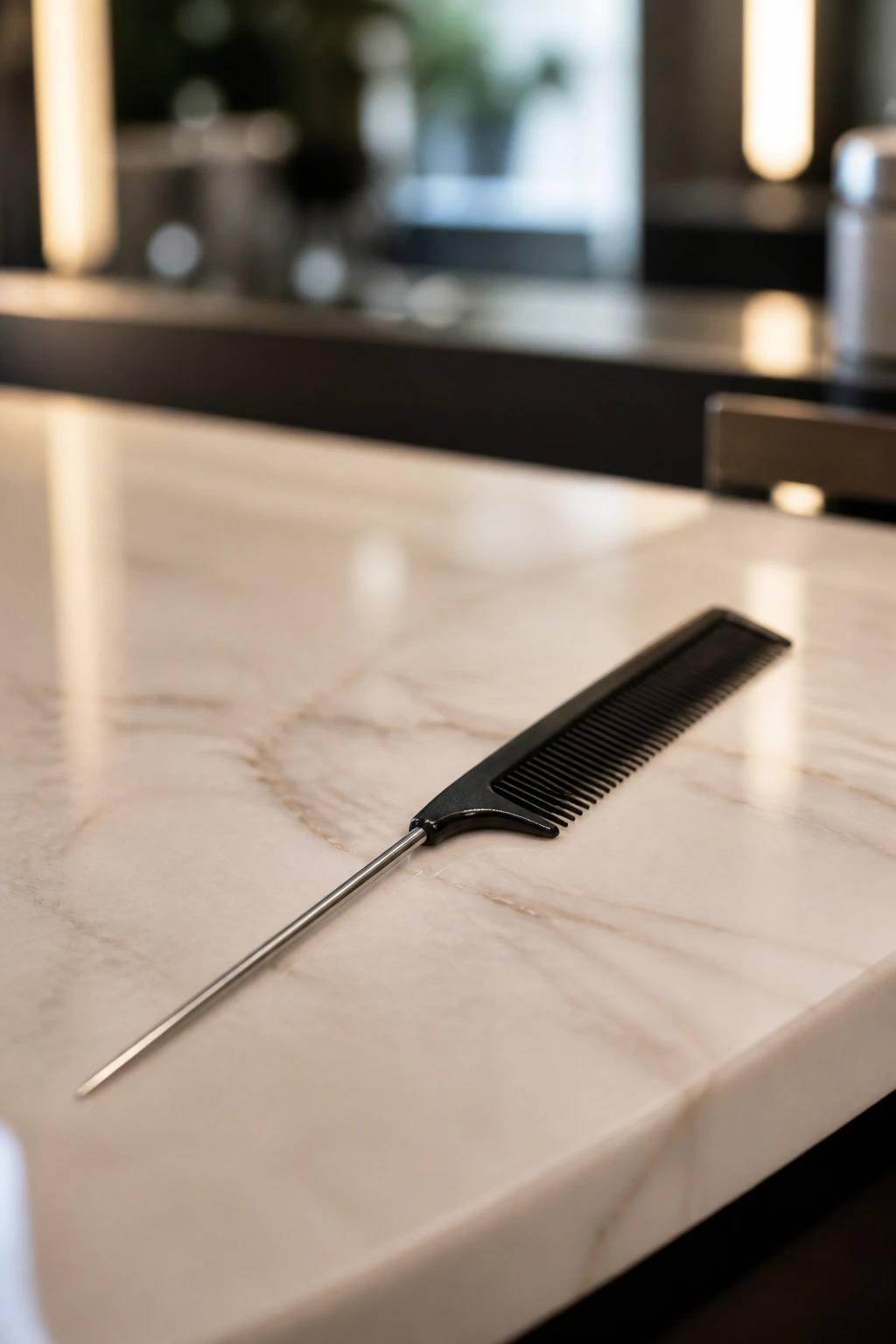
Tail comb and sectioning clips: These help a colorist map the face frame, crown, and underlayers cleanly, especially on layered cuts.
-
Balayage board or foils: Not needed at home unless you’re trained, but they matter in the salon because they change how much lift the hair gets.
-
Sulfate-free shampoo: Helps brown-amber tones stay softer for longer, especially if the hair is porous or highlighted heavily.
-
Color-safe conditioner or mask: Use this when the ends start to feel rough; amber looks better on hair that lies smooth.
-
Heat protectant spray: Non-negotiable if you blow-dry or curl. Amber goes dull fast when the cuticle is fried.
-
Round brush or 1-inch curling iron: Both help reveal the ribbons inside soft layers.
-
Wide-tooth comb: Safer than yanking a brush through highlighted hair when it’s wet.
-
Clarifying shampoo: Use it sparingly, only when product buildup starts to haze the color.
-
Satin pillowcase or bonnet: Optional, but it keeps the layers from getting frizzy and helps the shine last past the first wash.
Smart Shade Choices and Salon Notes
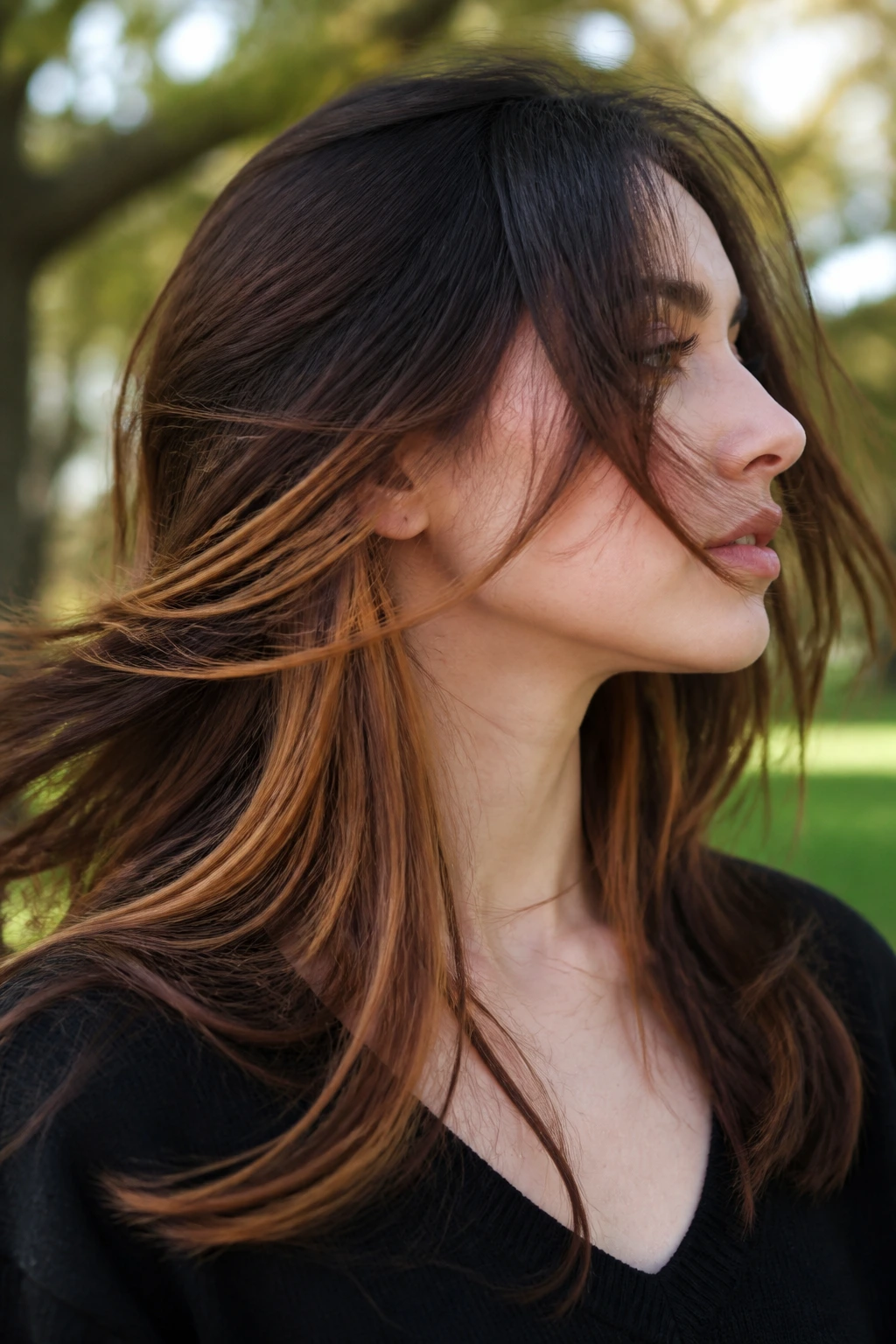
A good brown-amber result starts with the base level, not the fancy name on the mood board. Ask yourself where your natural hair sits: a level 5 mocha, a level 6 chestnut, a level 7 caramel brown? That answer shapes everything. If the base is already light, you may need lowlights as much as highlights. If the base is dark, the amber has to be lifted enough to show without turning brassy.
Fair skin tends to split into a few useful camps. Pink or cool fair skin usually likes a more muted amber — honey, beige, toasted brown, soft bronze. Peach or neutral fair skin can handle more caramel and cinnamon. If your skin has freckles or a golden cast, you can usually go warmer without trouble, but I’d still keep the brightest pieces near the face rather than all over the crown.
Bring reference photos that show placement as well as tone. One picture might have the exact amber you want but the wrong haircut, and that matters. A soft layered lob will wear color differently from a shag, and a curtain bang will need a different front frame than a pixie. Tell the colorist if you want a root shadow, babylights, balayage, or foilayage. Those words are useful because they say how visible and how soft you want the result to feel.
Porous hair grabs warmth fast. If your ends have been lightened before, ask for a gentle gloss and a strand test. That one small check can save you from a too-orange finish that looks fine for one wash and then turns muddy.
How to Wear Brown Amber Highlights Day to Day
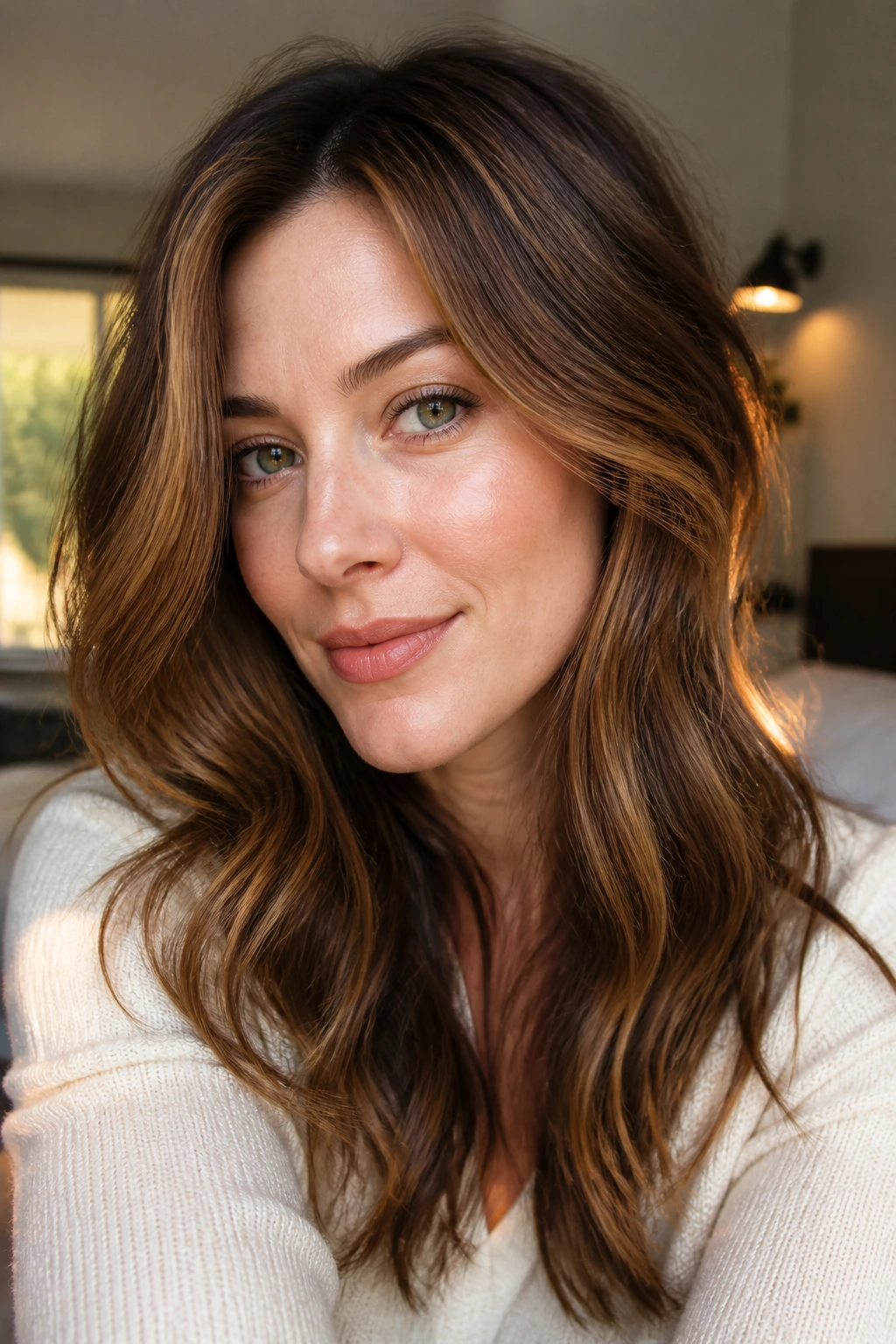
Styling: Loose bends, a round-brush blowout, or a soft wave all help the amber show through the layers. Poker-straight hair can look sleek, but it also hides subtle ribbons, so I’d reserve the flat iron for days when you want a sharper finish.
Cut Pairings: Curtain bangs, feathered shags, lobs with internal layering, and soft bobs all make this color read better. A blunt edge can still work, but it needs more deliberate placement around the face and ends.
Makeup Pairings: Peach blush, soft rose lipstick, and a warm brow gel keep the hair from overpowering fair skin. You do not need a full warm makeup look; a few warm notes are enough to echo the hair.
Day-to-Night Switch: Tuck one side behind the ear, add a deeper bend at the ends, and the face-frame pieces start doing more work. That tiny shift is often enough. No dramatic restyle required.
Additional Tips and Color Boosters
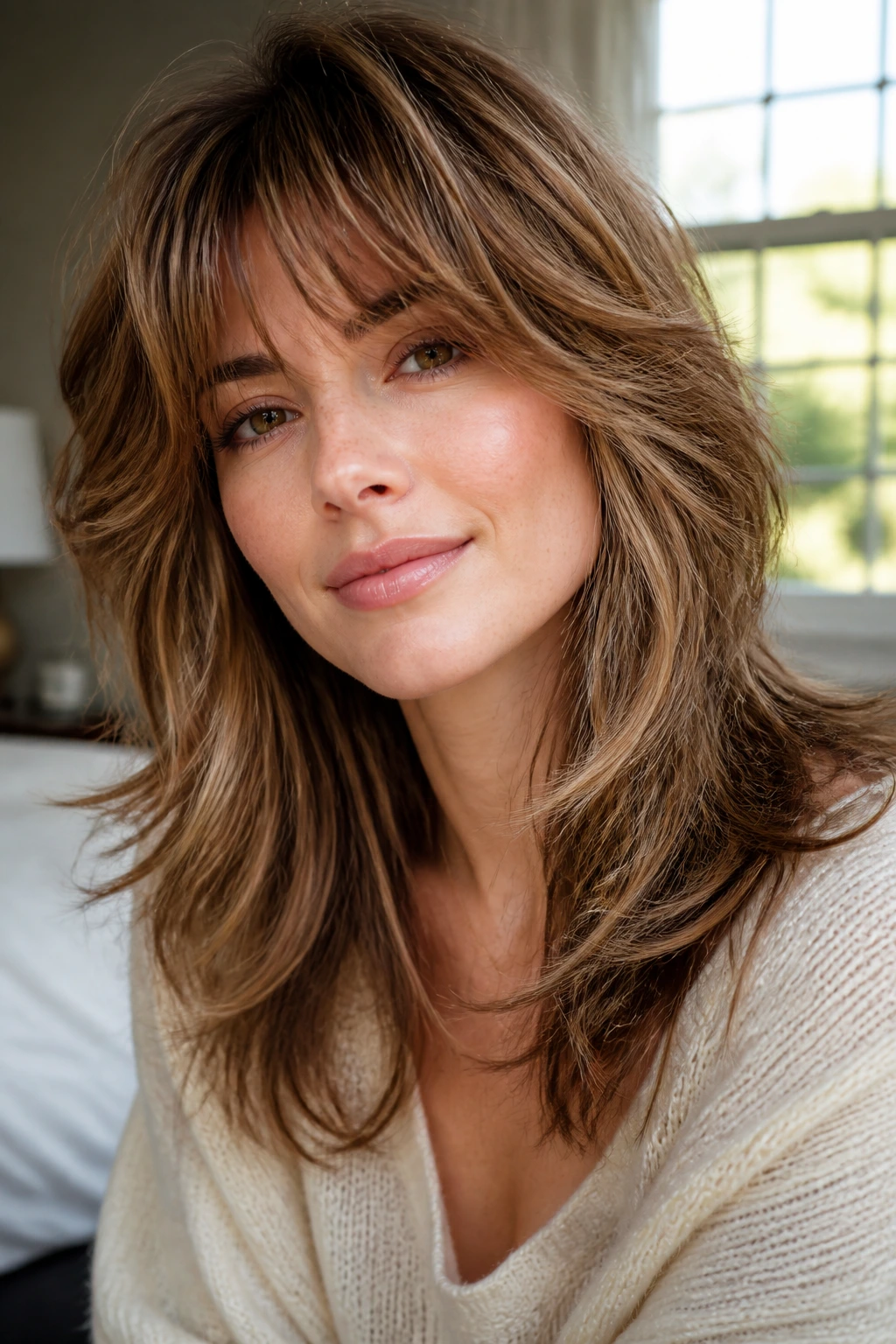
Gloss Enhancement: A warm gloss every 6 to 8 weeks keeps brown amber from going flat. If the color starts to feel dull before the roots need attention, gloss first. I’d reach for toner before I reach for more lightener.
Customization: If the hair is too light, add lowlights rather than more highlights. If it’s too heavy, brighten only the front and crown. The middle of the head often needs less attention than you think.
Shape Boost: Soft layers show color best when they’re bent, not hanging perfectly still. A large round brush or a loose iron bend at the ends makes the ribbons pop in a way air-drying sometimes misses.
Make-It-Yours: For cooler fair skin, keep the amber more honey-brown and less copper. For peachier skin, lean into cinnamon and toffee. For fine hair, use thin foils or babylights. For thick hair, break the color into wider ribbons so the layers don’t vanish.
Make-Ahead Care, Washing, and Refresh Schedule
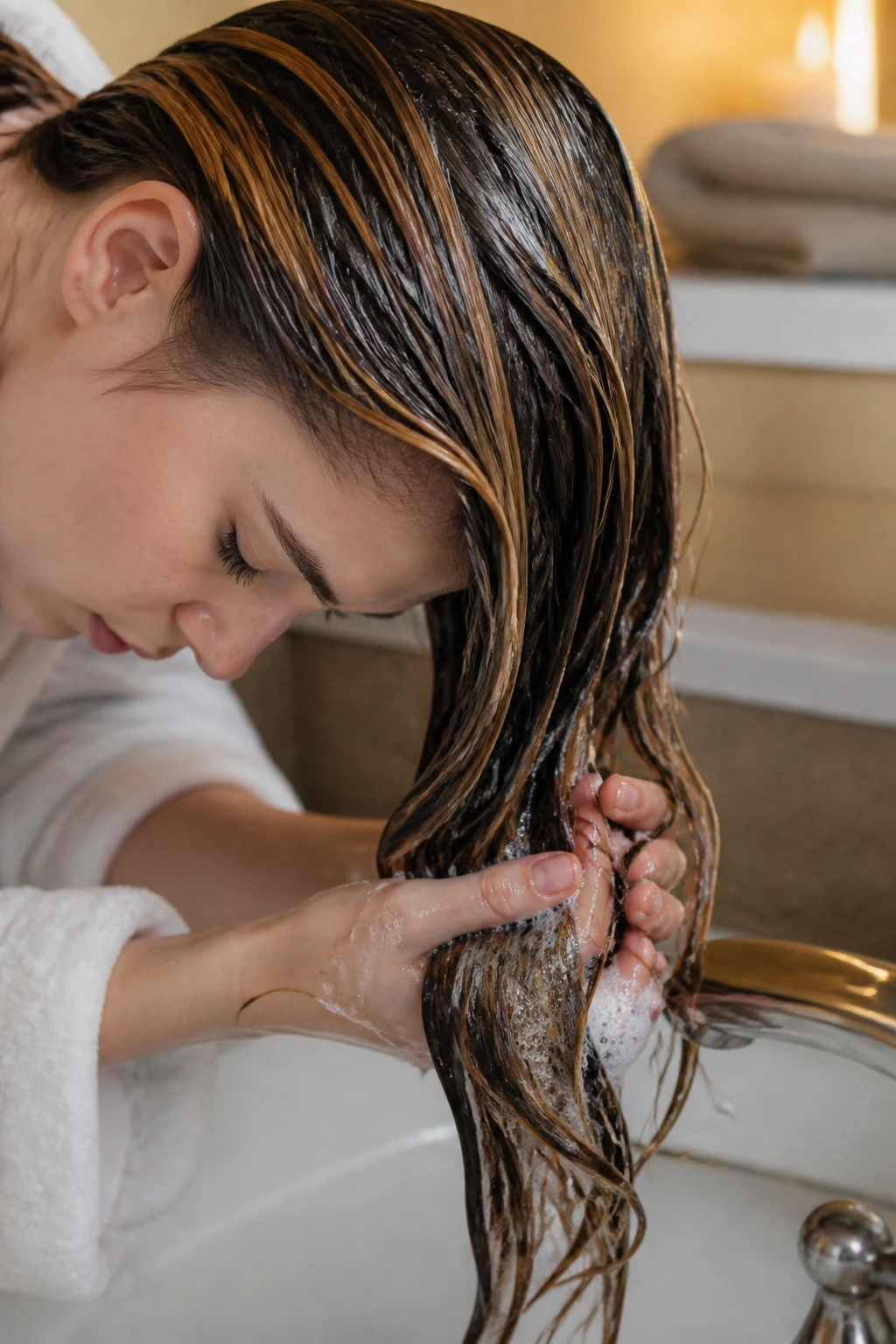
Brown amber highlights hold up best when you stop treating them like bleach-blonde hair. Wash 2 to 3 times a week if you can, and use lukewarm water instead of hot. Hot water roughs up the cuticle and makes warm color fade faster than it should.
A color-safe conditioner after every wash is the baseline. Once a week, use a deeper mask on the mids and ends for 5 to 10 minutes, especially if the layers are lightened. That keeps the amber glossy instead of dry-looking. If you style with heat most days, add a leave-in protectant before blow-drying and a separate spray before curling. They’re not the same thing, and the hair knows it.
For maintenance, a gloss or toner every 6 to 8 weeks usually keeps the warmth clean. Root touch-ups depend on technique: a rooted balayage or foilayage can often stretch to 8 to 12 weeks, while brighter face-framing pieces may ask for a refresh sooner. If the ends start to look thirsty, trim the soft layers every 8 to 10 weeks so the color sits on a clean shape.
One practical note: if the amber starts reading a little too gold, do not blast it with purple shampoo for a week straight. That can mute the warmth you actually wanted. Use a color-safe gloss or a short, careful toning wash instead. Purple shampoo has a place, but it is a tool, not a religion.
Variations and Adaptations to Try
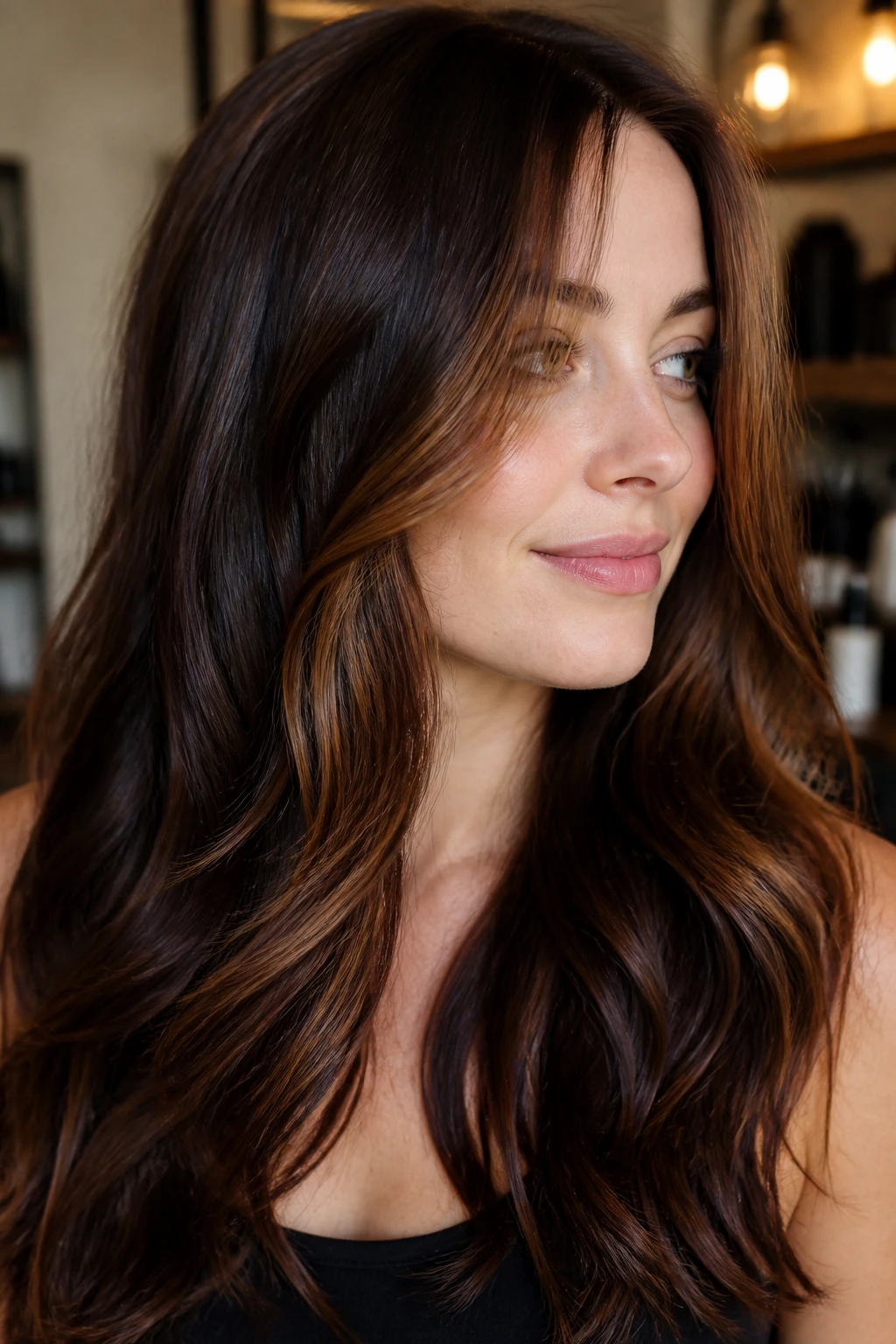
The Cooler Amber Tweak: Swap copper-heavy tones for honey, beige, or toasted brown if your fair skin leans pink or easily flushed. The result stays warm, but it won’t fight your complexion.
The Low-Maintenance Root Shadow: Leave more depth at the scalp and concentrate the lightness through the face frame and midlengths. This is the version I’d choose if you hate frequent salon visits.
The Fine-Hair Babylight Route: Use very thin highlights spaced tightly through the top and front layers. Fine hair gets more movement from dozens of tiny threads than from a few thick ones.
The Richer Lowlight Fix: Add walnut or maple lowlights to hair that has gone too light or too flat. The extra depth gives fair skin a better frame and makes the amber look richer.
The Curly Surface-Glow Plan: Highlight the outer curve of curls rather than every strand. The warmth shows up when the hair moves, and the curl pattern stays defined instead of frizzy.
Common Mistakes to Avoid
Going too orange too fast: Amber is warm, but it should not look like pumpkin. If the hair starts to make the skin look red, the formula is too copper-heavy. Ask for more gold-brown and less red-orange next time.
Using chunky highlights on soft layers: Big striped pieces fight the haircut. They can make layered hair look chopped up instead of soft. Babylights or ribboned balayage usually work better.
Ignoring the root depth: Bright pieces with no shadow can float on fair skin and make the head look pale. A little root depth keeps the color grounded and the layers visible.
Putting all the brightness on top: If the underlayers stay dark and the top is the only light zone, the hair can flatten when it moves. Spread some warmth through the mids and lower layers so the color shows from the side.
Over-toning the warmth away: A beige toner can be useful, but too much toning steals the amber character. If the hair starts to look muddy instead of warm, the gloss has gone too cool.
Skipping heat protection: Amber loses shine quickly when curled with naked heat. Use protectant every time, even for a quick bend on the ends. Dry, fried amber is not a cute look.
Questions People Ask Before They Book
Will brown amber highlights work on very fair skin?
Yes, if the warmth stays controlled. Fair skin usually looks best with amber that leans brown, honey, or chestnut rather than bright copper, and soft layers help the tone read as dimension instead of one flat color block.
Do I need bleach to get this look?
Not always. If your hair is already light brown or dark blonde, a gloss, a few lowlights, or soft highlights may be enough. Darker bases usually need some lift, but not every version of the look requires heavy bleaching.
Are brown amber highlights better than blonde highlights for soft layers?
I think they often are. Blonde can be pretty, but on fair skin it can go a little washed out if the tone is too pale. Brown amber keeps more depth in the cut, which helps layered hair look fuller and more dimensional.
How often will I need to refresh the color?
A gloss every 6 to 8 weeks keeps the warmth alive, while root touch-ups can often wait 8 to 12 weeks if the technique is soft. Face-framing pieces may need a faster refresh than the rest of the head.
What if my hair turns brassy?
That usually means the amber has drifted too yellow or orange. Ask for a softer gloss, use color-safe shampoo, and avoid overusing hot tools without protectant. One good salon gloss usually fixes more than a drawer full of purple shampoo.
Can I get this look on a bob or pixie?
Absolutely, but placement matters more on shorter cuts. Pixies and bobs need deliberate face-frame pieces, crown lift, or side panels so the color shows without looking spotty.
How do I ask my colorist for this style?
Bring reference photos and say you want brown amber highlights on a soft layered cut with low contrast at the root. Mention whether you want balayage, babylights, foilayage, or a money piece, because those techniques behave differently.
Will it still look good if I air-dry my hair?
Yes, though the ribbons show more clearly with a small bend. Air-dried waves can be lovely here, especially on soft layers, but a little cream or texture spray helps the amber catch the light instead of disappearing into the texture.
The Soft-Warm Finish
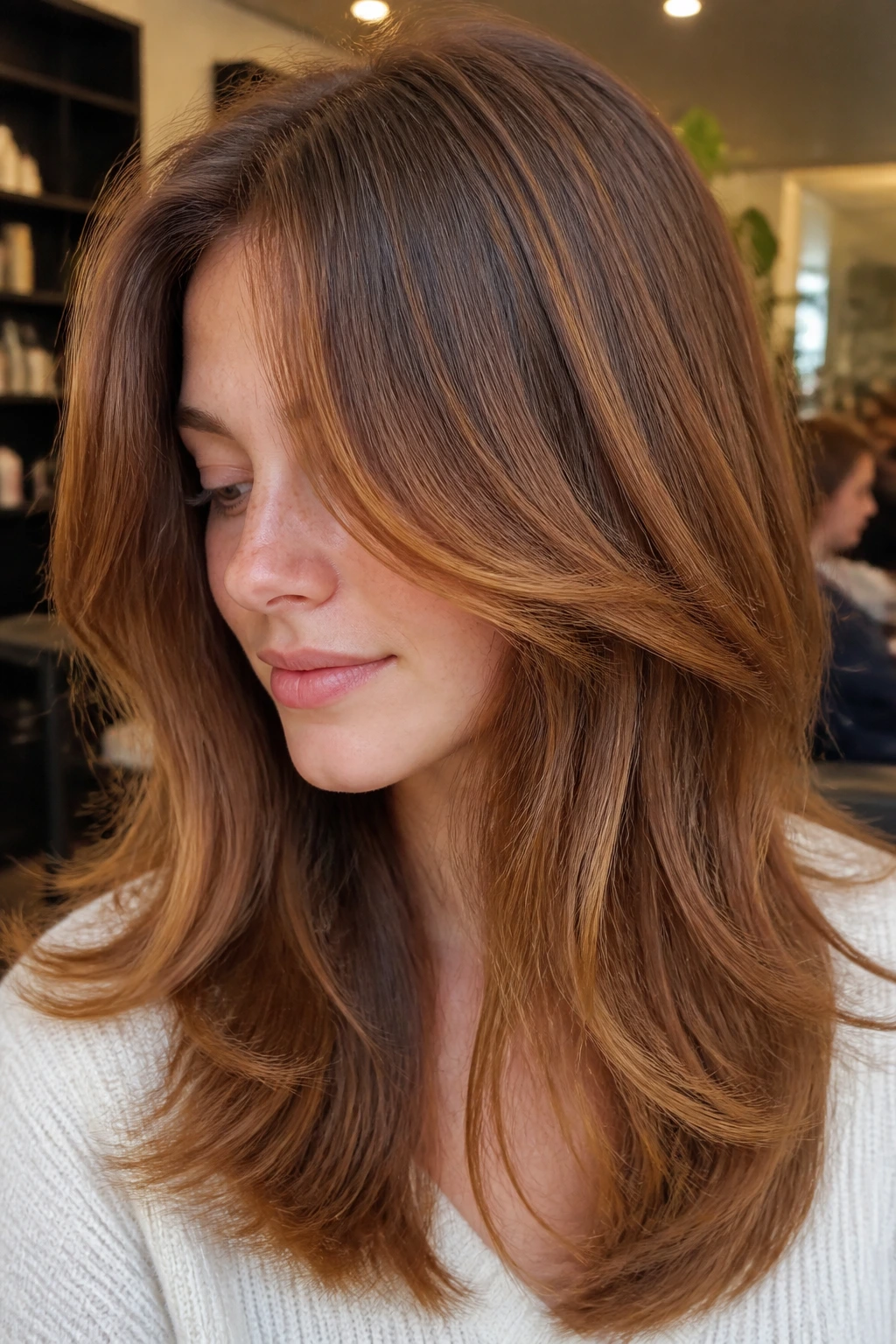
Brown amber highlights have a rare kind of usefulness. They warm fair skin without drowning it, and they make soft layers look like they were built for movement instead of just cut for length. That’s a better trick than brightness for brightness’s sake, and honestly, it ages better.
The best versions are the ones that respect the haircut. Thin where the hair is fine. Deeper where the face needs framing. A little shadow at the root. A little glow at the ends. Get that balance right, and the color keeps paying off every time the hair swings, bends, or catches a bit of daylight.