



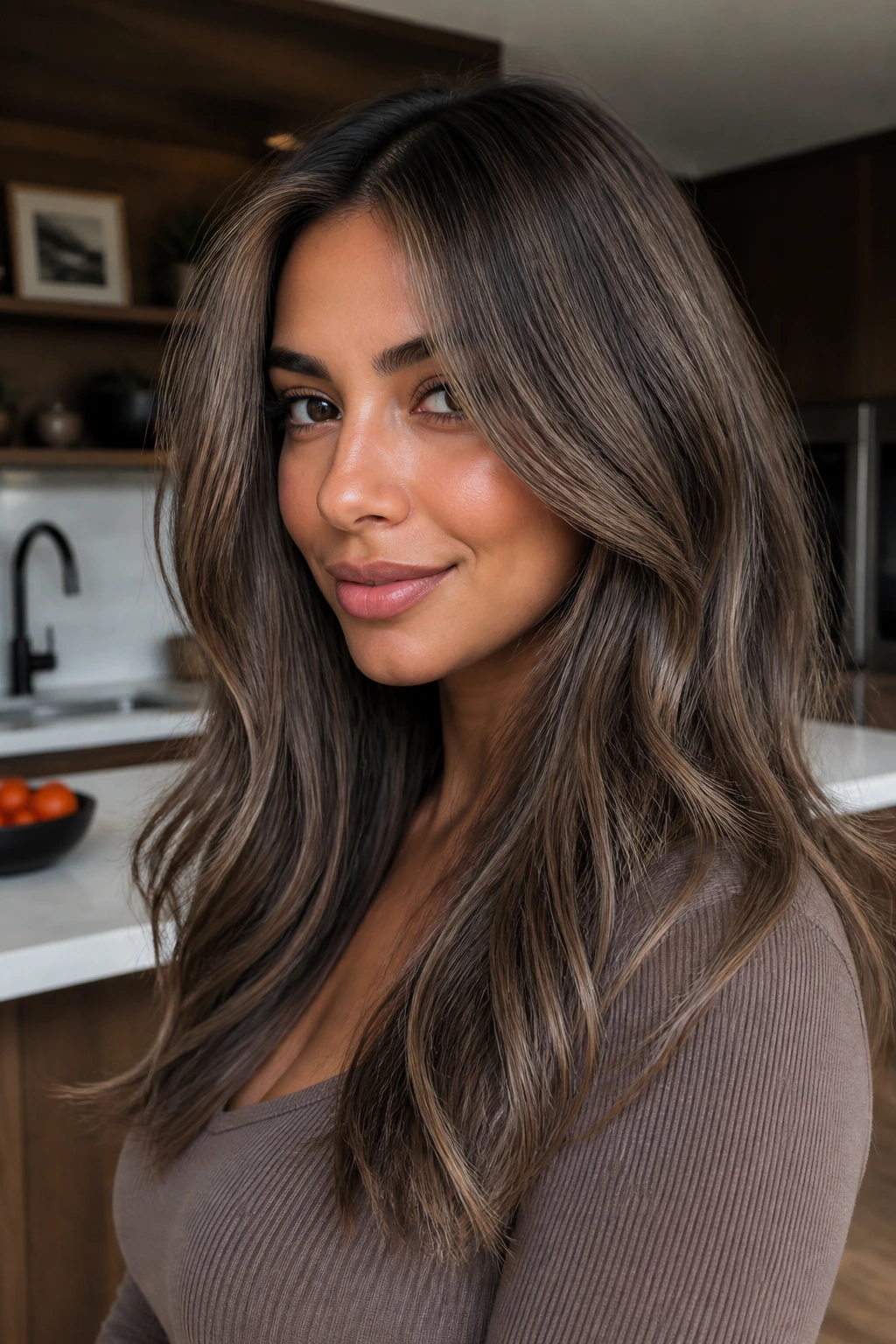
Brown babylights can be gorgeous on tan skin, but only when they’re handled with a light hand. Go too blonde and the hair starts shouting. Go too chunky and the whole thing turns striped, which is the quickest way to lose that soft, expensive-looking finish people are after. The sweet spot is a fine weave, a brown that sits one or two shades off the base, and placement that follows the face instead of fighting it.
Oval faces make this even easier. There’s already balance there, so the color doesn’t have to “fix” proportions the way it might on a rounder or longer face. It can just move. A few bright threads around the cheekbone, a muted ribbon through the ends, a little shadow left near the roots — that’s enough when the cut and the face shape are doing their part.
Tan skin brings its own set of rules. Warm tan tones can sing with caramel, chestnut, and hazelnut brown. Olive-leaning tan skin usually looks sharper with mushroom, mocha, or beige-brown dimension that stays away from orange. The wrong brown doesn’t look bad because it’s brown; it looks wrong because the undertone is off by half a step. That half step matters.
Why These Brown Babylights Work So Well
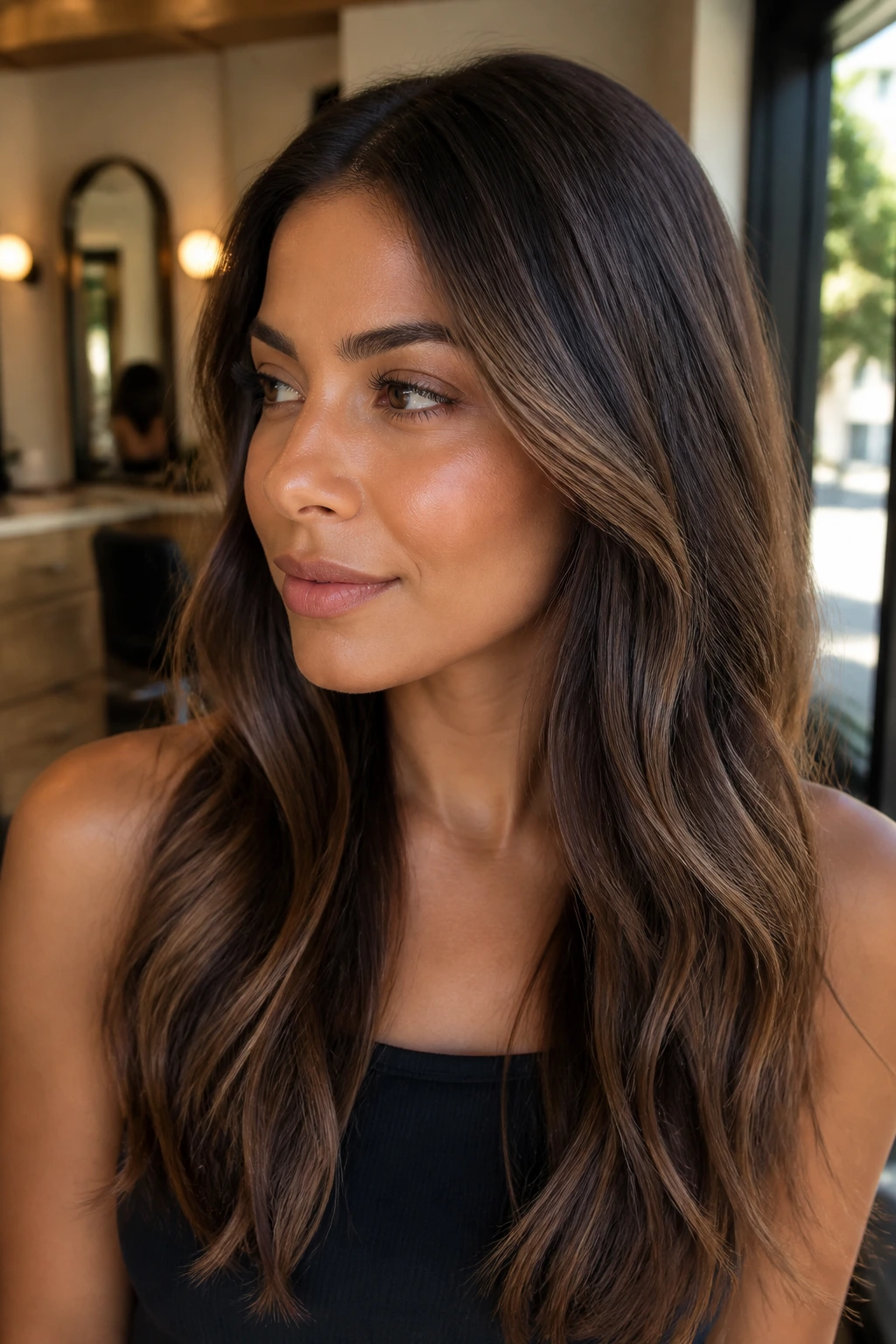
-
They keep the base believable: The finest babylights sit close to your natural brunette, so the color reads as shine and movement instead of obvious streaks.
-
They flatter tan skin without bleaching it out: Caramel, chestnut, mocha, and hazelnut tones echo the warmth already in the skin, which keeps the face from looking flat.
-
They suit oval faces without trying to reshape them: A few brighter ribbons near the temples or cheekbones give direction, but the balance of an oval face means you do not need heavy contouring through the hair.
-
They grow out without a hard line: Because the sections are so narrow, regrowth blends instead of announcing itself at the part.
-
They work with curls, waves, and straight hair: Fine brown threads catch light differently depending on texture, which is why they can look soft and polished on a blowout or more lived-in on loose waves.
-
They give you room to go warmer or cooler: Tan skin can lean honey, bronze, olive, or neutral, and babylights let the tone shift without demanding a full color overhaul.
1. Soft Cocoa Veil
The quietest brown babylights are often the smartest ones. A soft cocoa veil keeps the lift close to the base — usually just a shade or two lighter — so the result looks like your hair decided to behave better under better light. On tan skin, that cocoa warmth reads rich, not brassy.
Ask for the lightest pieces to stay around the temple zone, the top layer, and the first few inches past the part. That gives oval faces a little movement without widening the sides. The rest can stay close to the natural brunette base, which is exactly why this version grows out so cleanly.
A gloss in neutral brown or soft beige makes this look better than a shiny topcoat in pale gold. Cocoa wants restraint. Too much warmth and the effect starts to slide toward copper, which is a different mood entirely.
2. Chestnut Micro-Babylights
Chestnut babylights have a little more glow in them, but they still stay fine enough to feel airy. Picture tiny chestnut threads tucked through layered hair so the color flickers when you turn your head. On tan skin, chestnut is a sweet spot: warm enough to brighten, deep enough to avoid that stripy salon look.
Why the tiny weave matters
The narrower the weave, the softer the result. That matters on oval faces because a dense block of color can make the face feel longer than it is, while a threadlike chestnut lift keeps the outline easy and balanced.
This look is especially good on medium-density hair with movement. If your hair is too flat, the micro-lighting gives you texture without forcing a big contrast. Ask your colorist to keep the brightest pieces just under the top layer so the shine peeks through instead of sitting on top like paint.
3. Caramel Ribbon Lattice
Caramel babylights are for the reader who wants people to notice the hair first and the dye second. The ribbons are still fine, but there are enough of them that the color shows from across a room. On tan skin with golden undertones, caramel gives that sun-warmed effect that never looks cold or chalky.
Oval faces love this placement when the brighter strands wrap from the cheekbone down toward the ends. It guides the eye in a soft curve instead of a straight line, which keeps the face from feeling stretched. A few pieces around the front are enough; you do not need to light up the whole head.
If your hair is layered, the lattice effect gets even better because the brighter ribbons catch on different lengths. On blunt cuts, keep the distribution a little sparser so it doesn’t turn busy. Busy color is a real thing.
4. Mushroom Brown Smoke
Mushroom brown is the color people ask for when they say they want “cool brunette,” but the good version is much more specific than that. It has taupe, beige, and a faint smoke-gray edge that keeps the tone controlled. On tan skin with olive undertones, that cooler brown can look cleaner than any golden shade.
The trick is to keep the brightness low and the gloss neutral. If the lift goes too warm, mushroom brown loses its point. If the base is already very warm, ask for only a slight neutralizing glaze after the highlights are lifted so the color stays dimensional instead of muddy.
5. Mocha Money-Piece Babylights
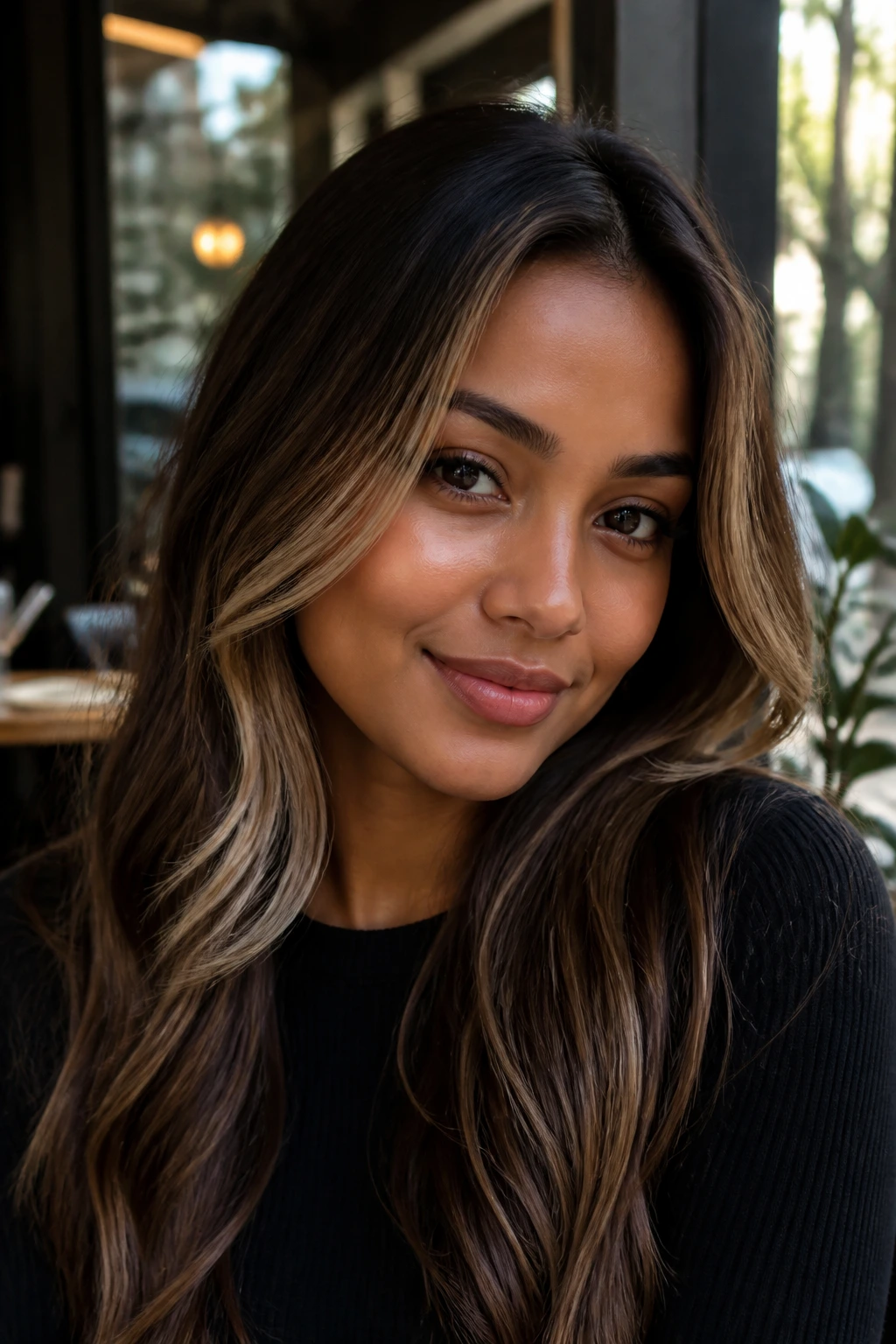
A money piece does not need to be loud to do its job. In mocha brown babylights, the front sections are just a touch lighter and a touch softer than the rest of the hair, enough to pull light toward the face without turning the whole style into a billboard. It’s a useful move for tan skin because mocha keeps the warmth grounded.
Oval faces can wear this well when the brightest pieces sit at cheekbone level rather than starting up near the forehead. That placement keeps the face from looking elongated. If you wear a middle part, keep the lightest strokes symmetrical; if you wear a side part, let the heavier side stay a little deeper.
This one is a good choice if you heat-style your hair a lot. A sleek blowout or a round-brush bend makes the front pieces pop without needing more contrast.
6. Cinnamon Toast Ends
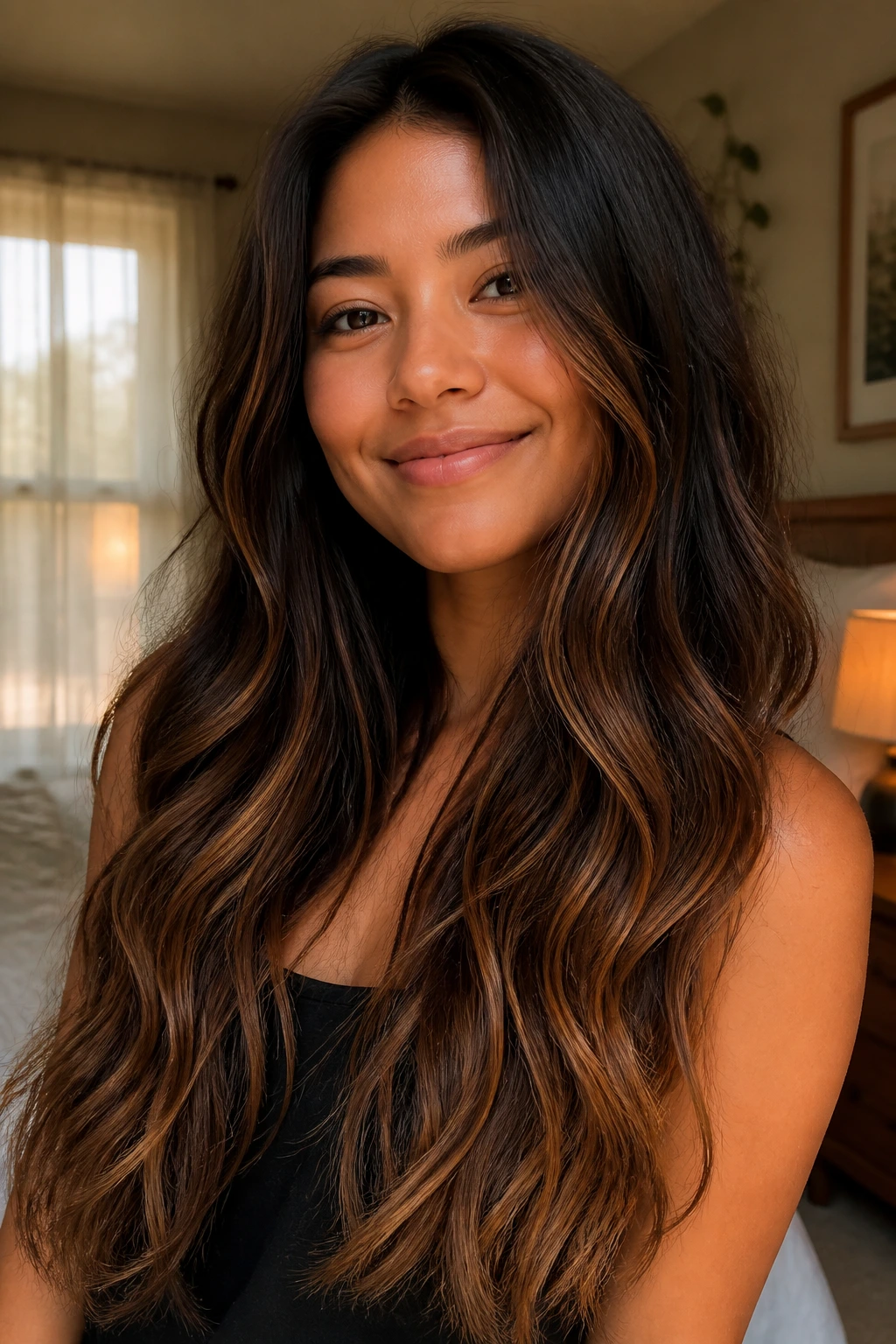
Cinnamon babylights near the ends give the hair a warm finish that feels touched by heat rather than bleach. The upper sections stay deeper, while the lower third picks up the spice-toned lift. On tan skin, that glow can be lovely — especially if your undertones are golden or peachy.
This look works best on long layers or soft waves. The ends need room to move, or the cinnamon detail disappears. Oval faces benefit because the eye travels downward, which creates a gentle vertical line without making the face look longer in a harsh way.
If your hair is dry at the tips, keep the lightening modest there. Cinnamon tones can go hollow fast on porous ends, and once that happens, the color looks dusty instead of warm.
7. Espresso Shadow Babylights
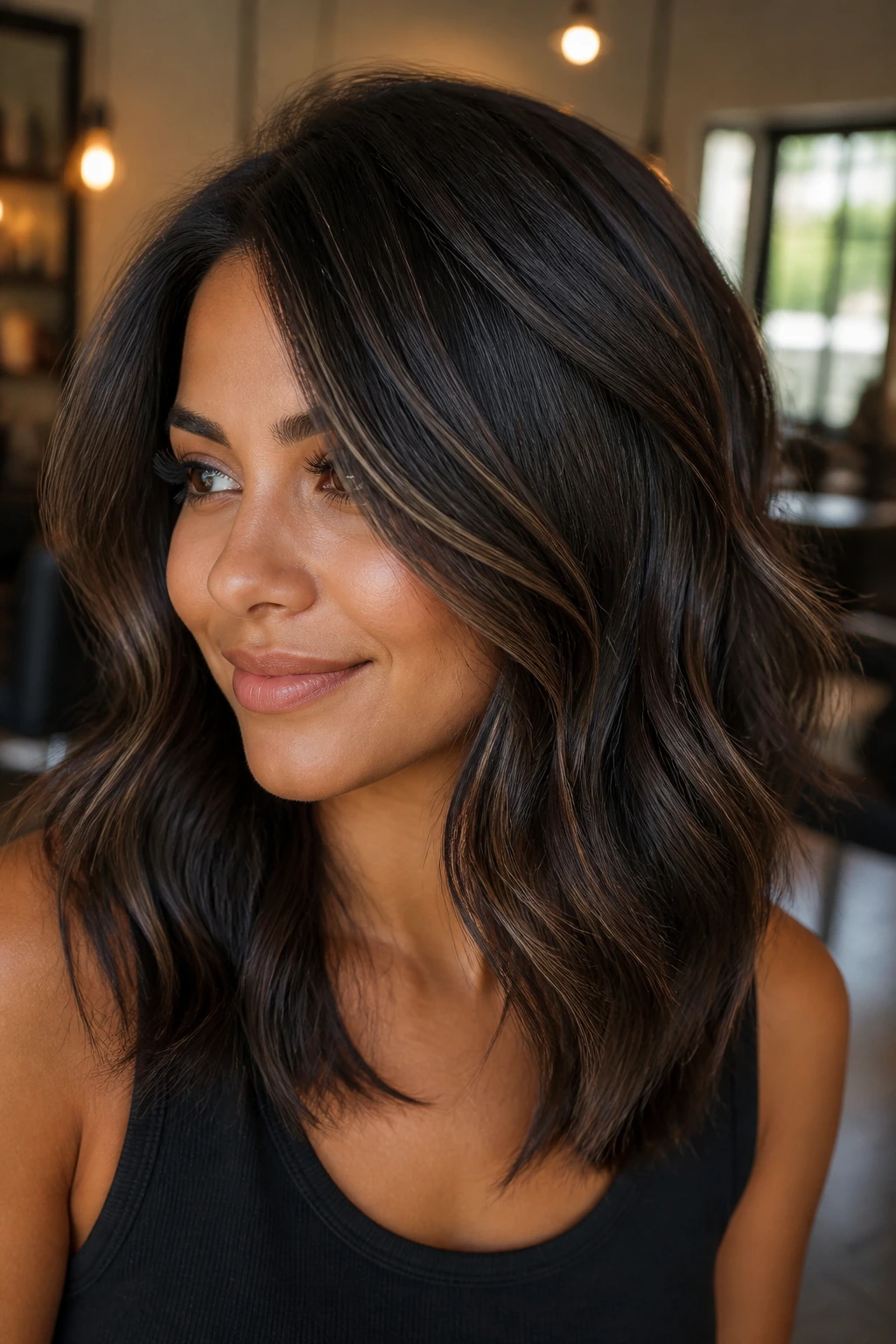
Not every brown babylight has to lighten the hair. Some of the best dimension comes from shadow. Espresso lowlights woven through a brunette base create depth, and a few barely-there lighter threads keep the surface from looking flat. It’s a sharp move for tan skin because the dark espresso makes the complexion look brighter by contrast.
For oval faces, this is a clean way to add contour. Keep the shadow a bit stronger at the temples and underneath the top layer. The shape stays soft, but the hair gets more body. That matters if your hair is fine or if the ends need help looking denser.
I like this version on shoulder-length cuts. It has room to breathe there. On very long hair, you may want a few softer caramel threads at the ends so the whole look does not read too heavy.
8. Honeyed Hazelnut Melt
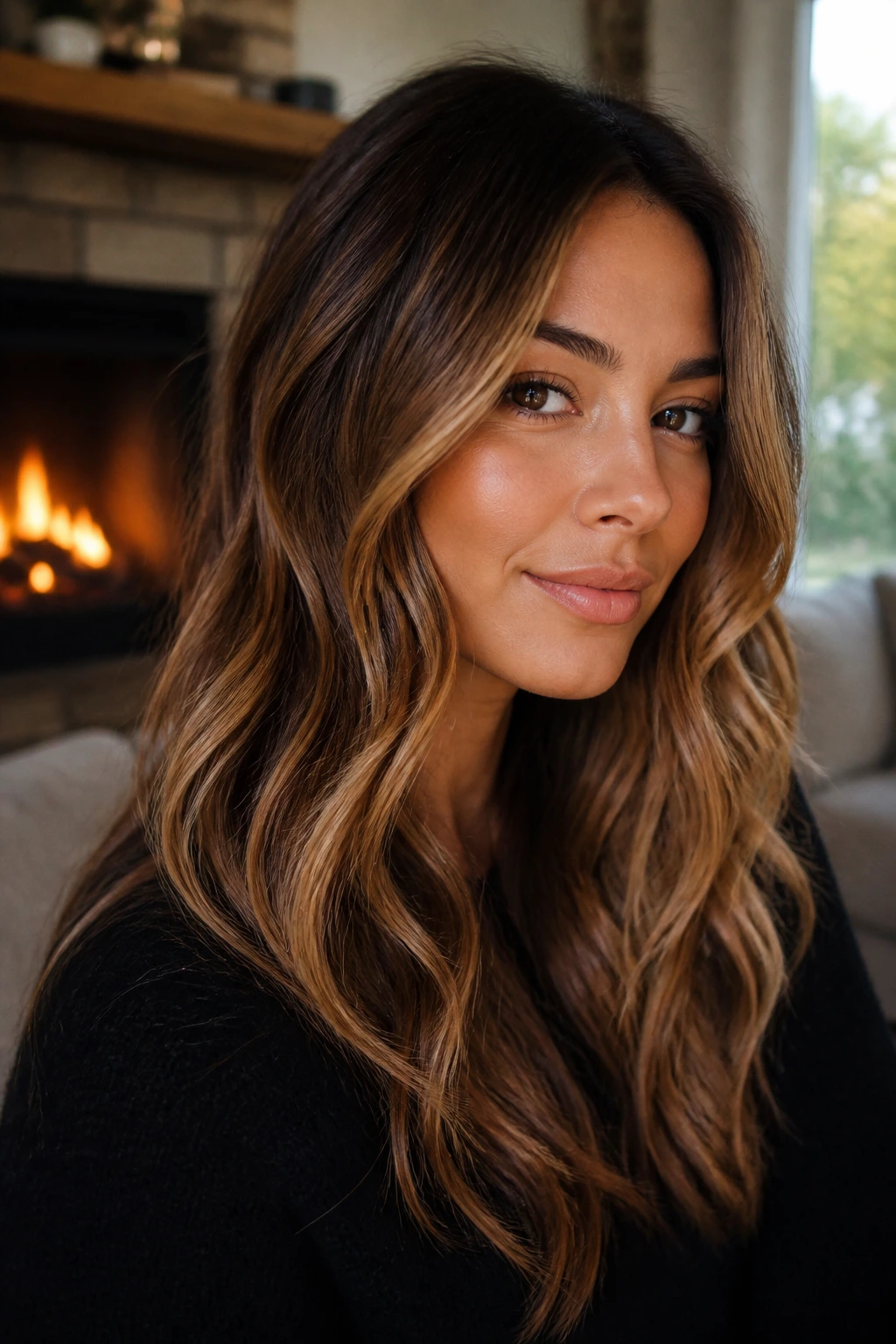
A hazelnut melt is the in-between look for people who hate hard lines but don’t want their brunette to sit still. The roots stay deeper, the mids warm up to hazelnut, and the ends catch a honey-brown glow. On tan skin, that blend gives warmth without committing to one tone all the way through.
The color line should disappear
The best version of this look never gives you a visible break between root and highlight. The change has to feel gradual, especially around the front sections, where a blunt line would be most obvious. That’s why this style works so well on oval faces; the color flows with the shape instead of cutting across it.
A soft wave or a loose bend helps the melt show. Straight hair can hide a lot of the transition, which is a shame here, because the whole point is the movement between tones.
9. Toffee Contour Lights
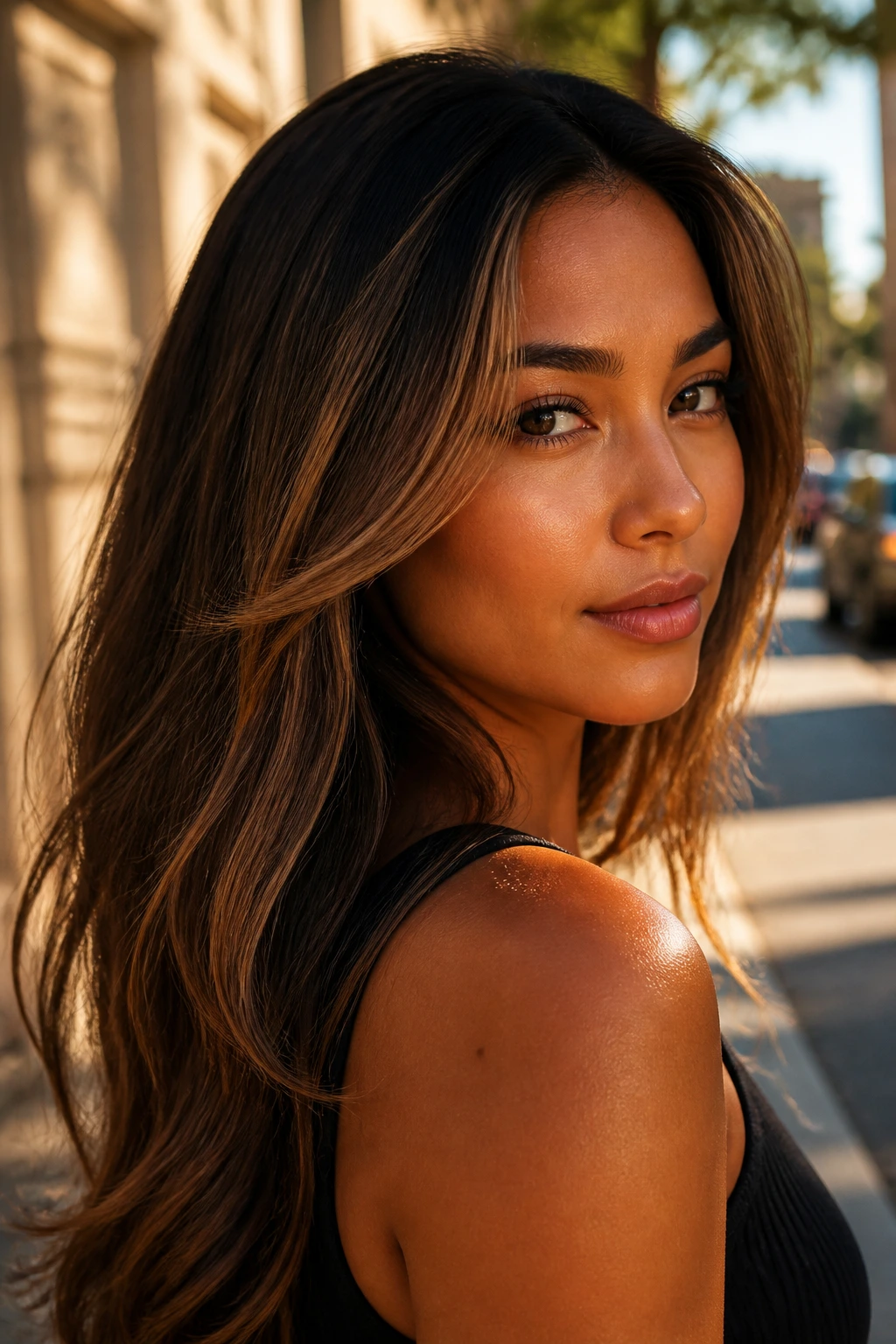
Toffee babylights are a contour job, not a full-head event. The lighter pieces sit where light would naturally hit: around the cheekbones, at the jawline, and in the outer layers that frame the face. On tan skin, toffee has enough warmth to feel flattering without looking orange.
Oval faces are a gift here. You can place the brightest strands a little lower than you would on a round face, and the result still looks balanced. That lower placement keeps the face from feeling too long while the color gives shape to the cut.
If you wear your hair behind your ears, make sure a few strands stay in front. Otherwise the contour effect disappears when the hair is tucked back, and the whole point of the placement gets wasted.
10. Bronze Silk Babylights
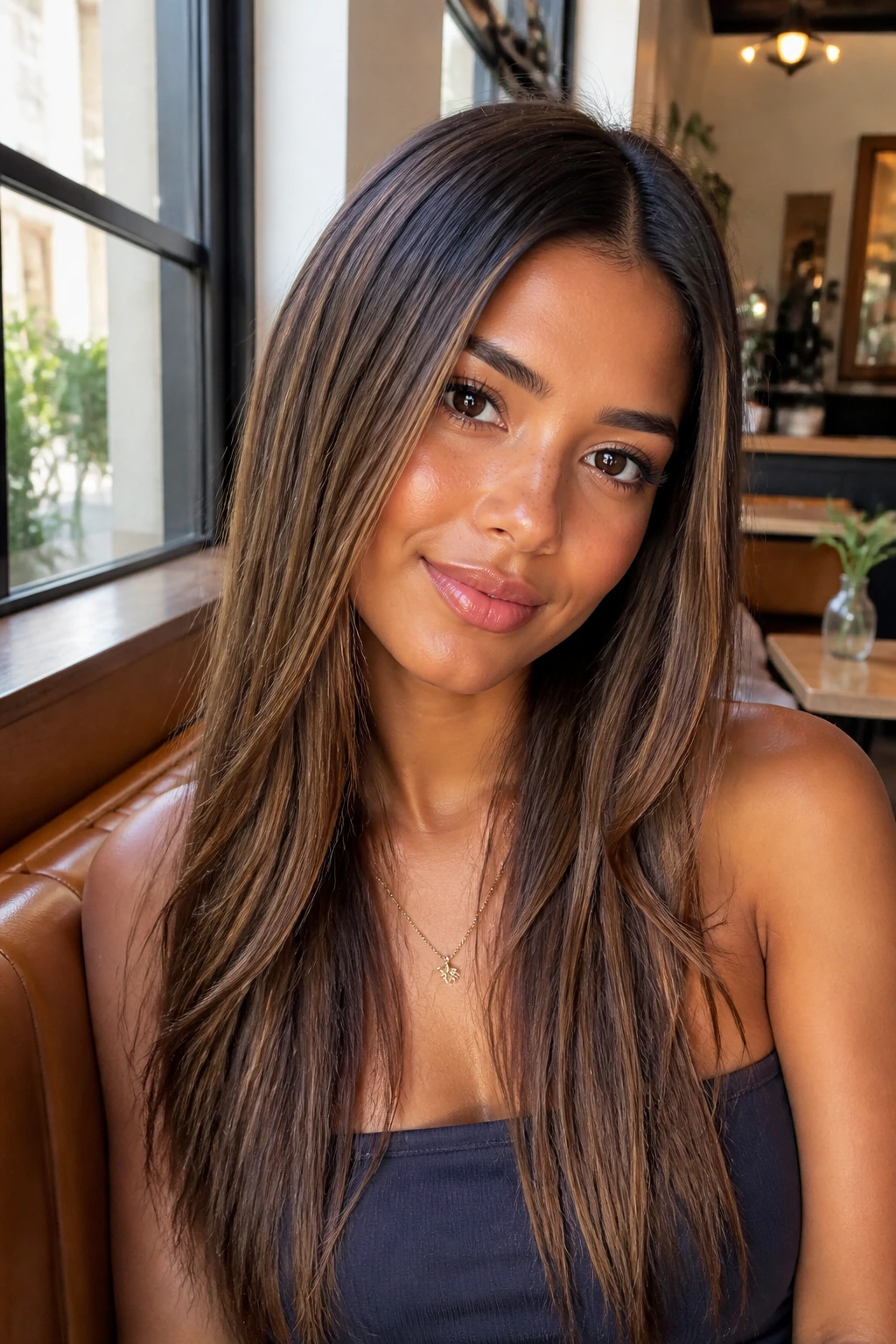
Bronze has one job: make the hair look polished. Bronze silk babylights do that by keeping the tone warm, reflective, and very fine. Tan skin usually loves this finish because bronze echoes the skin’s warmth instead of competing with it.
The silk part matters. Ask for a glossy finish, not a flat matte tone. A beige-brown gloss over lifted pieces can keep the bronze from skewing too orange, which is the easy mistake here. On oval faces, bronze works best when the brightest ribbons stay through the mid-lengths and outer layers, not just the very top.
This is a strong choice if you often wear a center part and straight styling. Bronze shows depth on smoother textures in a way that chunky caramel highlights don’t.
11. Cocoa and Copper Mix
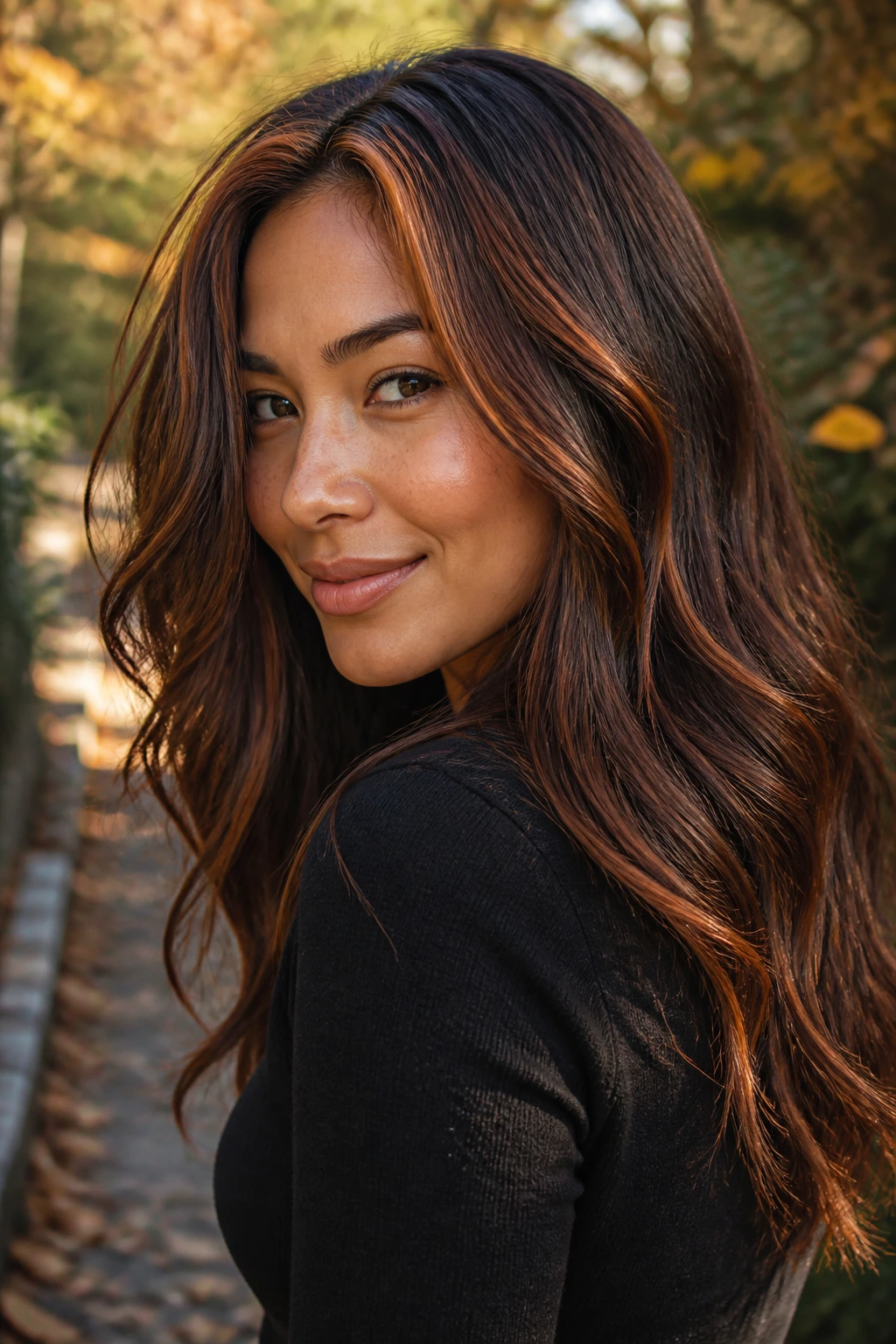
A little copper can wake up brown babylights fast. Too much, and the hair starts looking like autumn décor. The sweet spot is a cocoa base with just a whisper of copper in the lighter strands, enough to catch light on tan skin and keep the brunette from turning muddy.
Keep the copper on a short leash
The color should read brown first. Copper is the accent, not the headline. That’s why this mix works so well on oval faces: the warmth sits in the hairline and the front layers, giving the face some glow without flooding the whole shape with color.
If your skin leans golden, this can be lovely. If your skin is olive and you fight redness, go lighter on the copper and keep the gloss neutral. A good colorist can place just a few copper-touched ribbons where the light naturally hits.
12. Ash Brown Glass Finish
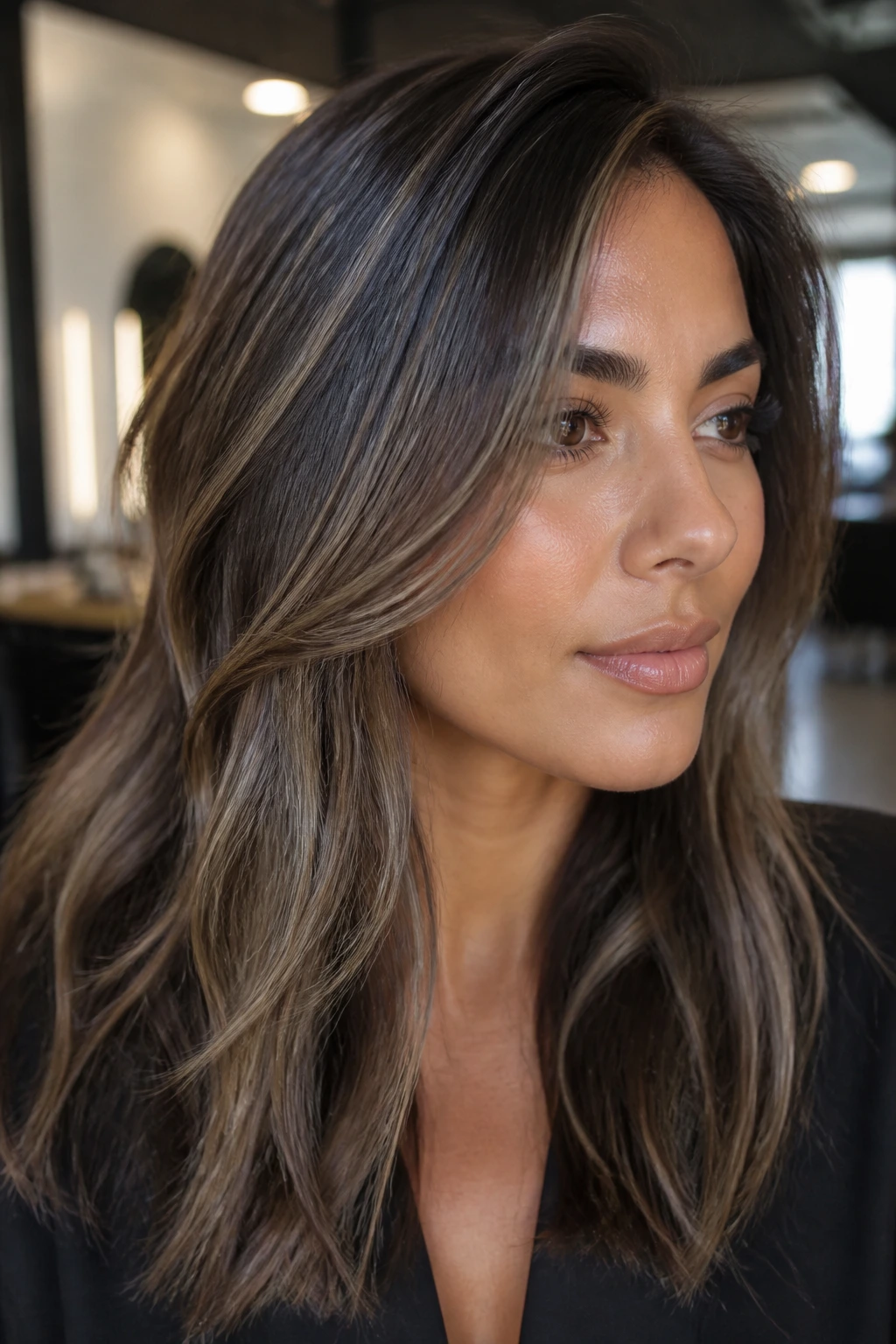
Ash brown babylights are tricky, and I mean that in a good way. When they’re done well, they look like smoky glass. When they’re done badly, they go flat and lifeless. On tan skin with neutral or olive undertones, the coolness can sharpen the whole face and keep the brown from becoming too sweet.
The finish should stay glossy. Ash without shine looks dull fast. Ask for a soft beige-ash toner rather than an icy one, especially if your base pulls warm. Oval faces can wear this with a center part or a side sweep, but the cool tone works best when the front pieces are feathered, not blunt.
If your hair tends to go orange when lifted, this is the tone to talk about early. Cooling it after the lightening phase is easier than trying to fix brass later.
13. Rooted Beige Brunette
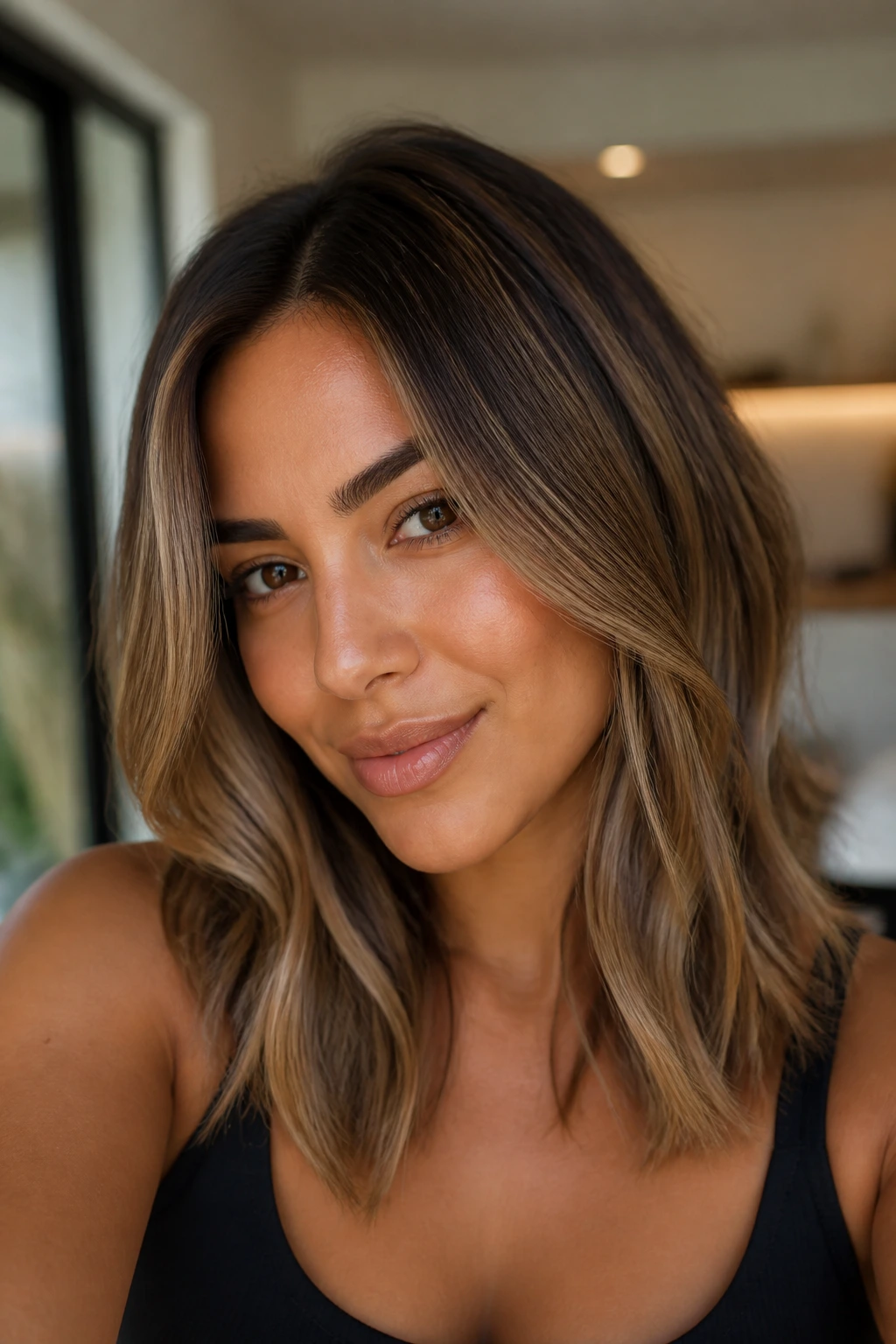
A rooted beige brunette has one job: make regrowth look deliberate. The roots stay deeper, the mid-lengths and ends shift into a soft beige-brown, and the whole style feels lived-in without looking lazy. Tan skin often likes this because beige can brighten the complexion without screaming yellow.
The root shadow should be subtle, about half an inch to an inch at most, depending on how fast your hair grows and how deep your base is. For oval faces, the beige lift should concentrate around the face and the outer layers so the shape keeps some movement.
This look is a strong choice if you want fewer salon visits. It also plays nicely with a long bob or shoulder-length cut, where the rooted zone and lighter ends create enough contrast to hold interest.
14. Walnut Halo Around the Face
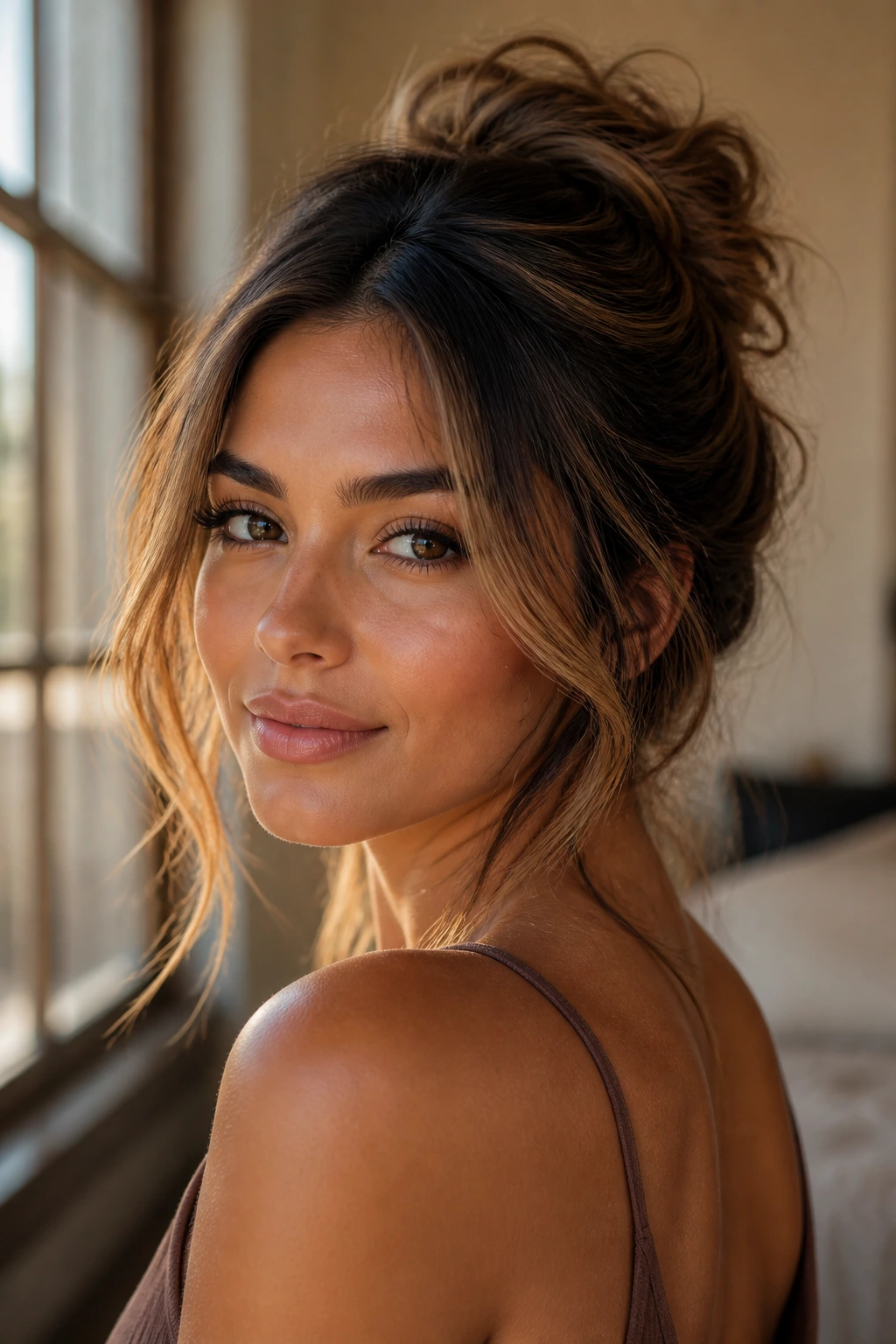
Walnut babylights wrapped around the hairline can make the whole face look more awake. The idea is simple: place the lighter walnut-brown pieces in a soft halo from temple to temple, then let the rest of the hair stay deeper. On tan skin, walnut gives warmth without getting sticky or red.
Put the brightest pieces where the eye lands first
That means the temples, cheekbone area, and a few strands just behind the face frame. Not the crown. Not the part line screaming for attention. Oval faces can carry a halo like this because the proportions don’t need heavy correction; the color just adds a little life around the edges.
I like this most on people who wear their hair up a lot. A bun or a clip still leaves enough of the halo visible that the color keeps doing its work.
15. Latte Lift on Midlengths
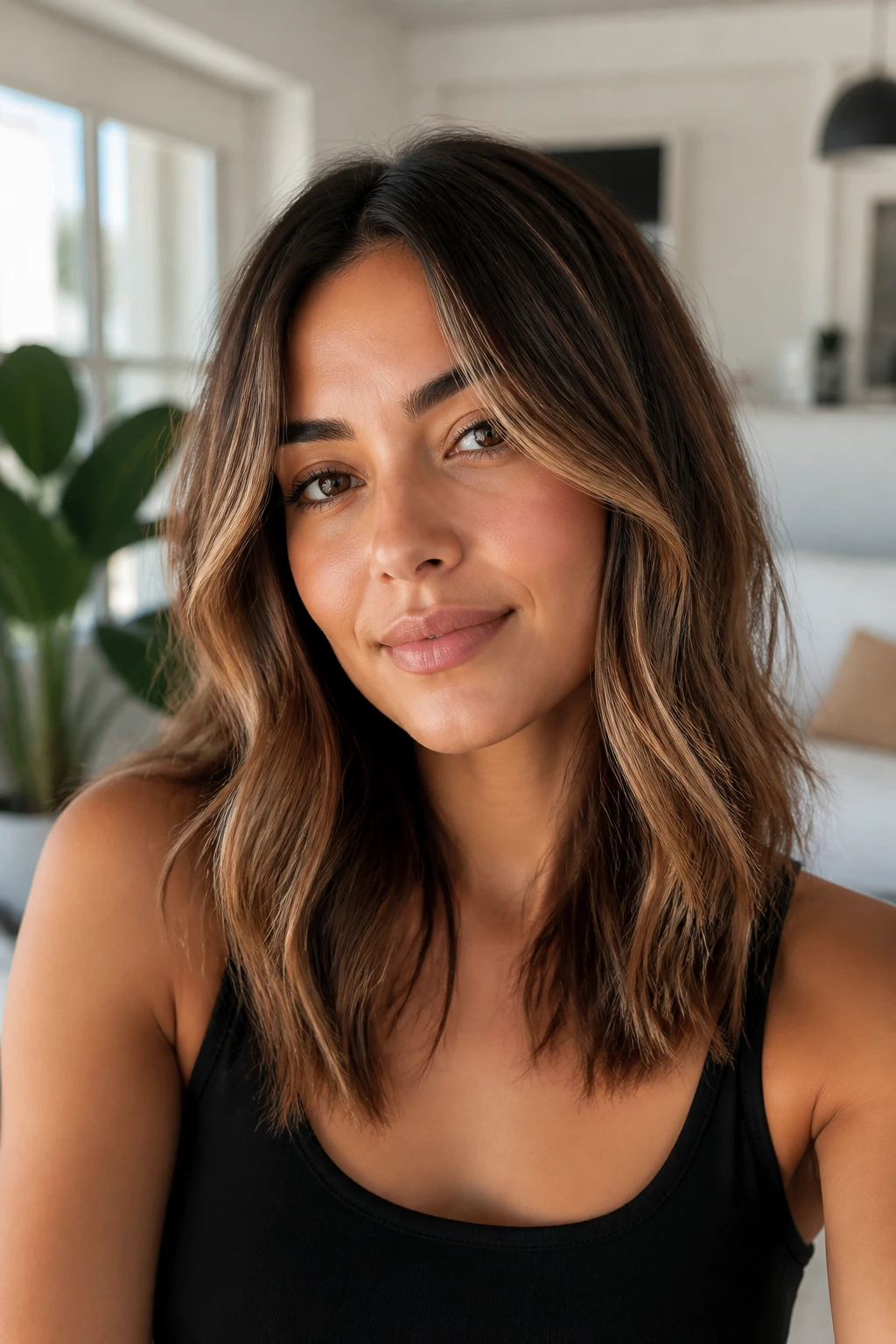
Midlength babylights are underrated. Everyone wants bright ends or a big face frame, but sometimes the hair looks flat in the middle because that’s where the eye lands first. A latte lift through the midlengths fixes that, giving tan skin a creamy brown glow that feels soft instead of flashy.
For oval faces, this placement can be the best of both worlds. It keeps the volume of light away from the very top of the head, which helps the face avoid looking too elongated, while still creating shape in the body of the hair. Loose bends make this one sing.
If your hair is long and layered, ask for some of the latte tones to sit just under the top surface. You’ll see them when the hair moves, which is exactly the point.
16. Maple Syrup Threads
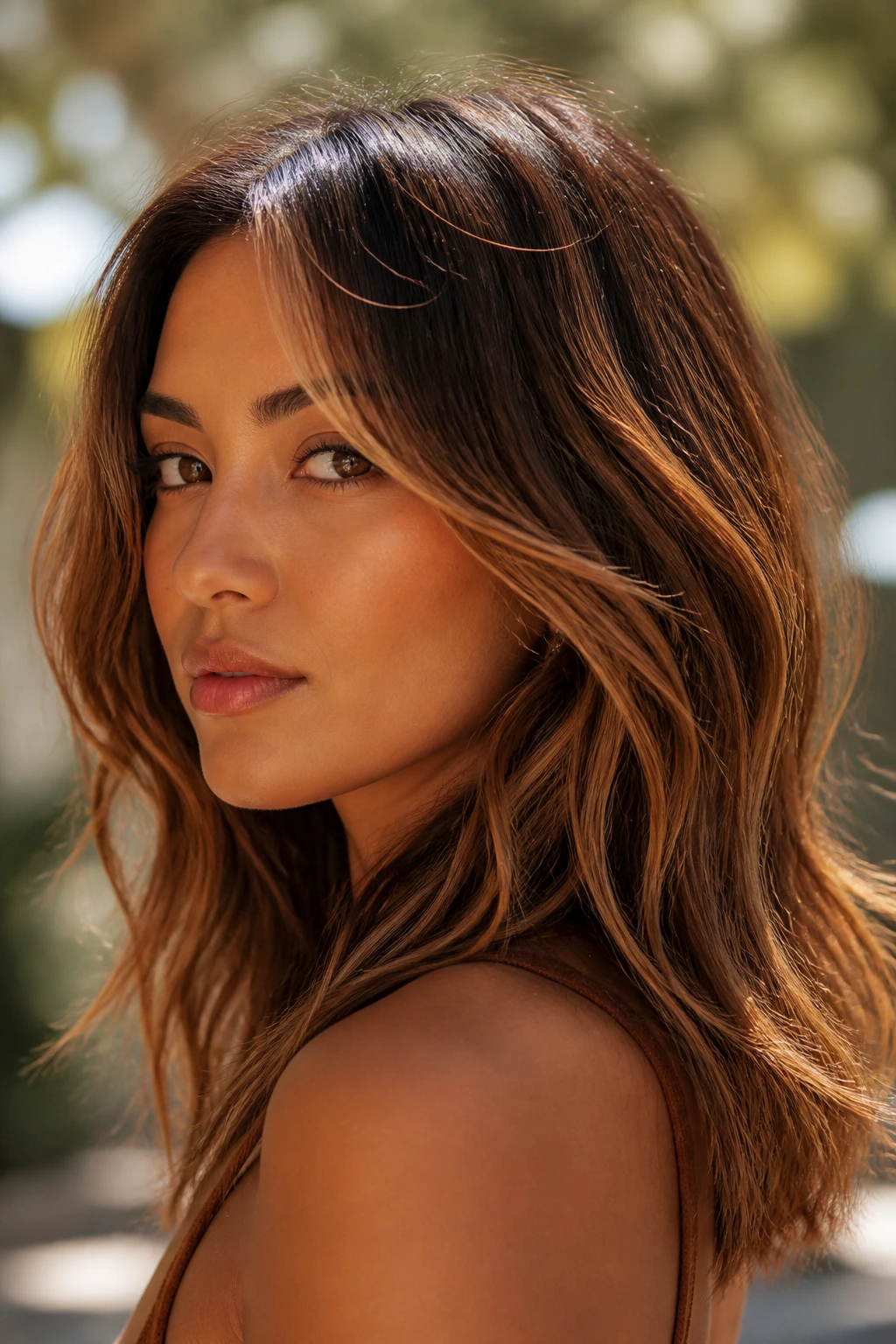
Maple syrup babylights are warm, thin, and quietly luminous. They look especially good in textured hair because the bends and coils catch the amber-brown ribbons from different angles. On tan skin, that maple tone can feel almost edible — warm, soft, and not too bright.
The placement should follow the natural movement of the hair, not fight it. If the hair bends away from the face, put some of the warmest strands there. If it sits flatter at the crown, use a few finer strokes on top so the whole style doesn’t disappear under indoor lighting.
This one is lovely if your hair color often looks dull in photos. The maple tone reflects light without needing blond pieces, which is why it can look richer than a more obvious highlight job.
17. Smoky Chocolate Bob Lights
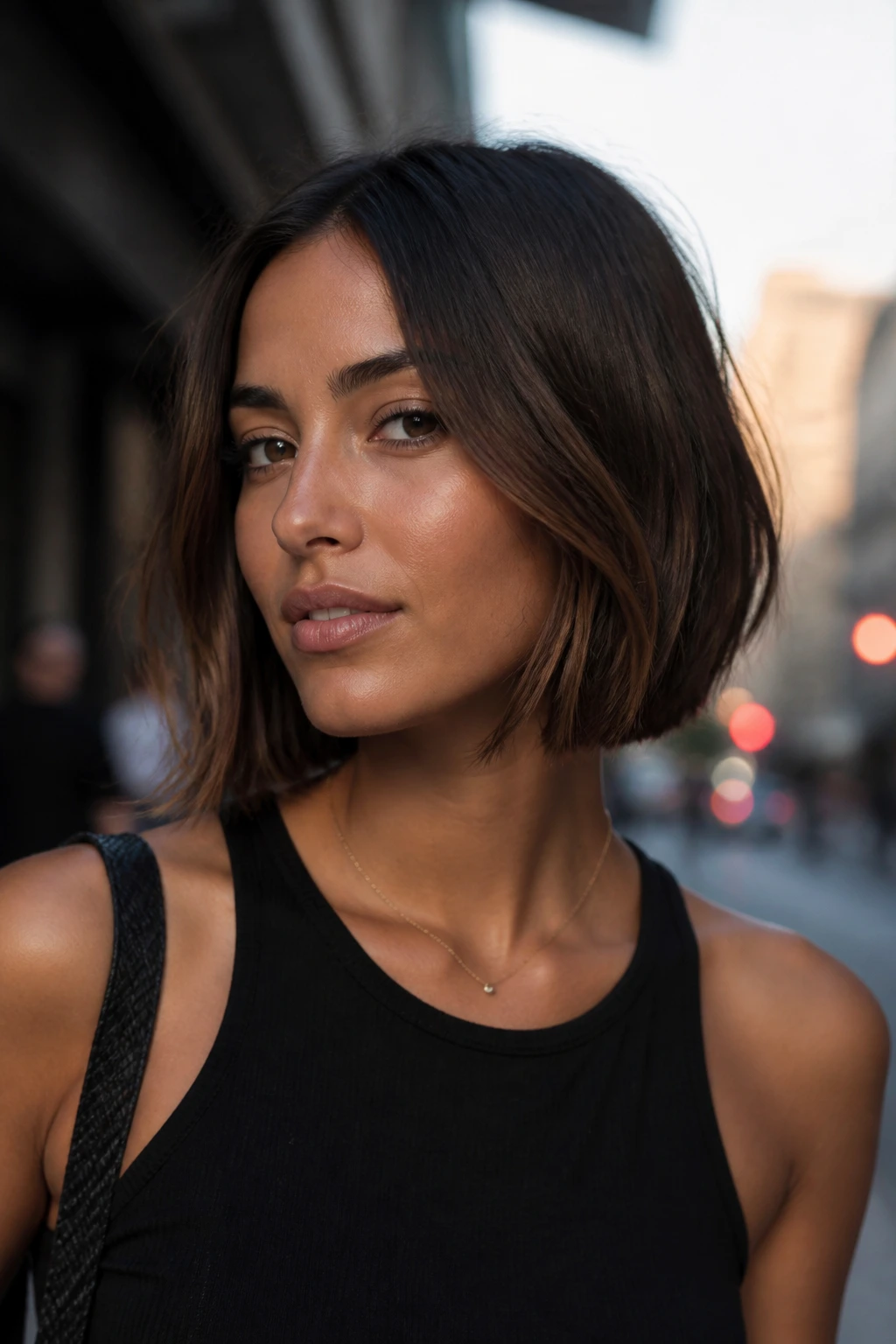
A bob or lob needs a different kind of babylight. There isn’t as much length to work with, so the placement has to create shape fast. Smoky chocolate babylights do that by threading deeper brown and soft brown ribbons through the outer layers, especially near the jaw and ends.
The result is clean and sharp on oval faces. A blunt bob can look too solid if the color is one flat tone; these fine chocolate lights break that up without making the cut busy. Tan skin likes the smoky depth because it keeps the brown grounded and avoids too much red.
Keep the lightest pieces near the perimeter
The outer edge of the bob is where movement shows. If the babylights live there, every turn of the head catches a little shimmer. That’s the whole game with shorter hair.
18. Dimensional Bronde Balancing Act
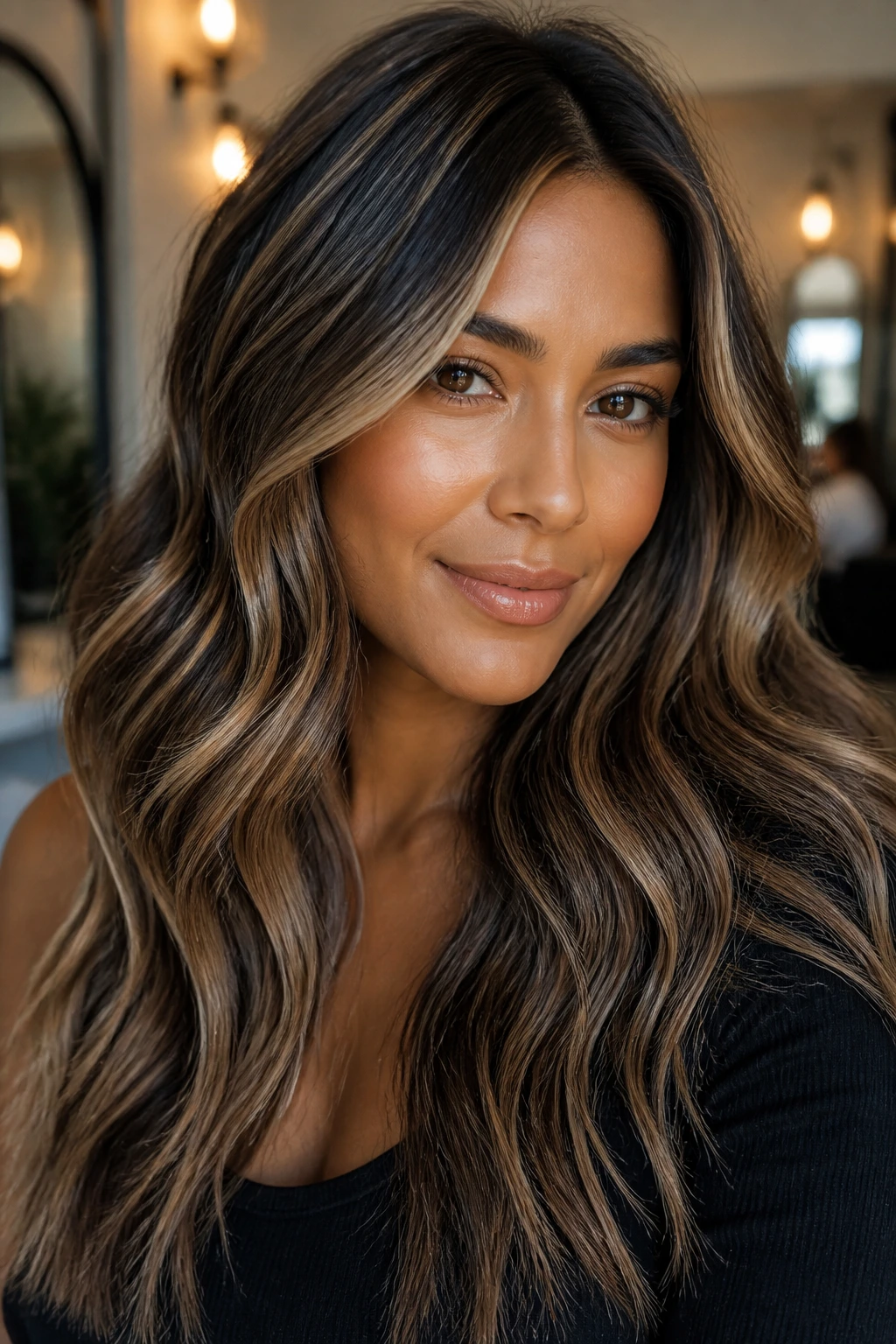
Bronde can go wrong fast when it gets too blond. The version I like for tan skin stays brown first, with just enough lighter beige or caramel through the surface to soften the brunette. Oval faces wear this well because the balance of the face lets the color drift lighter without needing the cut to do extra work.
This is the look for someone who wants a sun-touched effect but hates strong contrast. Keep the base rich and let the babylights lift only a notch or two. A wavy blowout helps separate the tones so the dimension shows up instead of blending into one blur.
If your natural color is dark brunette, don’t chase a pale bronde. The good version here is restrained. That restraint is what makes it work.
19. Cherrywood Brown Glint
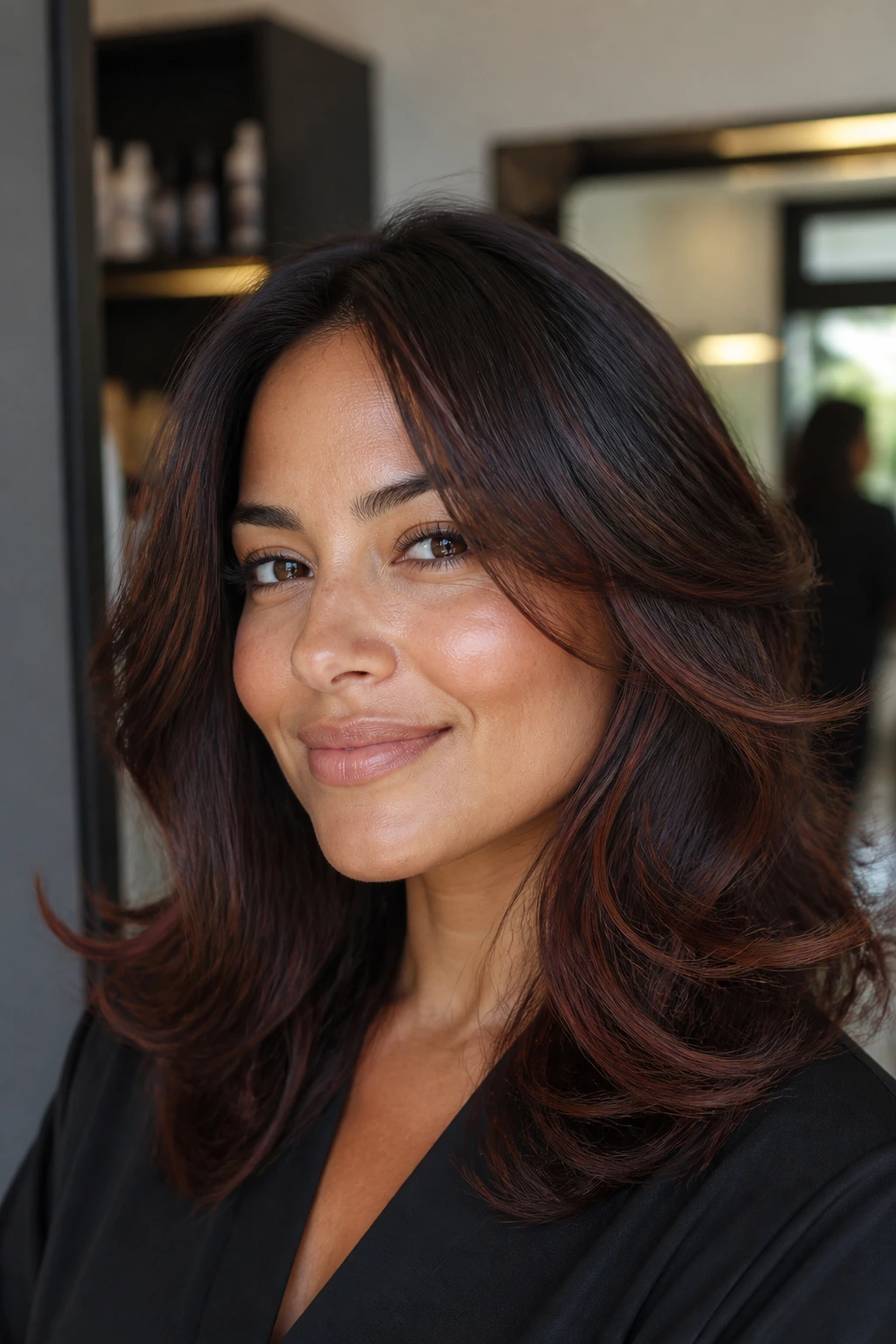
Cherrywood brown has a red-brown undertone that can look expensive on the right skin. On tan skin that leans warm or golden, it adds richness. On cooler tan skin, it can turn too reddish unless the cherry note stays subtle.
Oval faces can use this tone as a softness play. A few cherrywood threads near the ends and around the face create movement without changing the whole head. It’s especially nice if your cut has layers that flip outward a little — the red-brown catches there and gives the hair a deeper edge.
If you’re nervous about red, ask for the cherry tone to stay under the surface layer. You’ll see it in motion, not as a flat red cast.
20. Sanded Mocha Face Frame
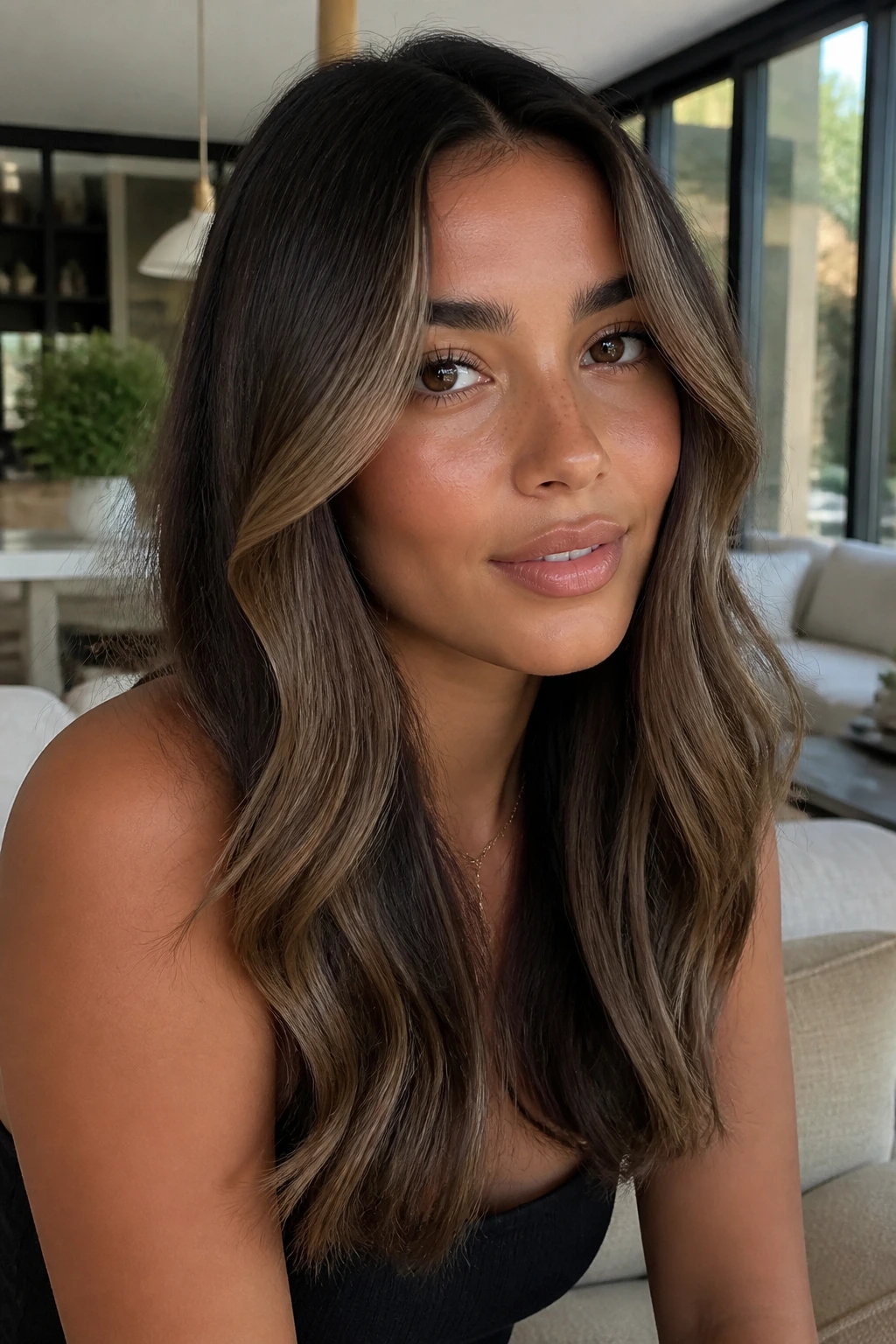
Sanded mocha sounds dry, but the color should feel anything but. Think soft mocha with the shine pulled back just enough to keep it muted. The face frame gets the main lift, while the rest of the hair stays a little deeper and more grounded. On tan skin, that contrast keeps the face lively.
Place the frame at cheekbone height
That’s the line that matters on oval faces. Too high, and the color starts competing with the forehead. Too low, and it disappears into the ends. Cheekbone height gives you shape without changing the natural balance of the face.
This is one of the easiest ways to make a brown-babylight look more styled than accidental. It has a clear purpose. You can see it in one glance.
21. Almond Butter Babylights
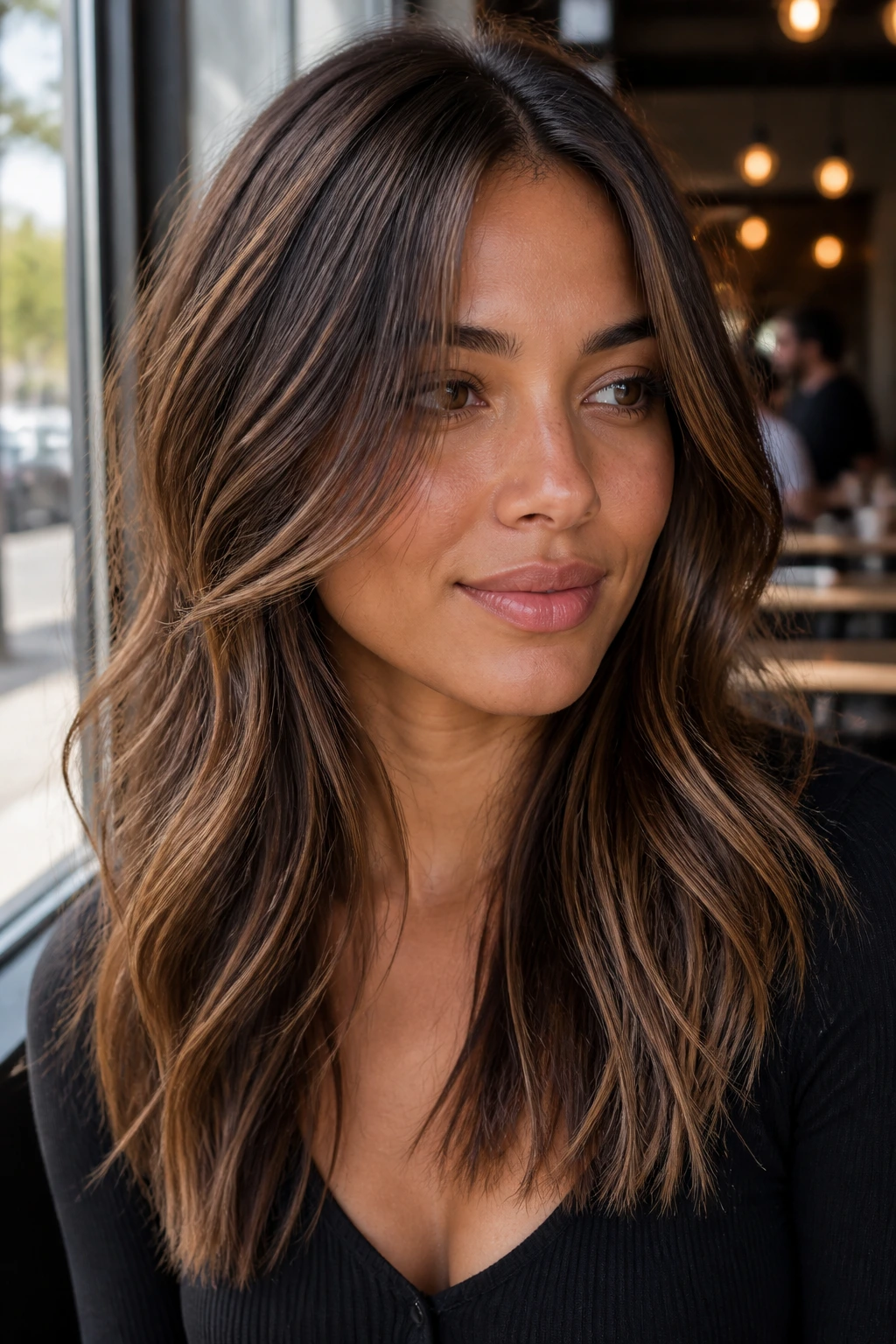
Almond butter brown is the creamy middle ground between golden and neutral. It is soft, but not dull. On tan skin, that makes it one of the safest choices if you do not know whether your undertone leans warm or neutral.
The babylights should be delicate enough that the hair still reads brunette from across the room. If they get too pale, almond butter turns into beige-blond territory, and that’s a different look. Oval faces do well with this tone when the color is kept slightly brighter through the front and softer through the back.
This shade also works well on fine hair, because too much contrast can make fine strands look thinner. Creamy brown dimension gives the illusion of fullness without asking the hair to be something it isn’t.
22. Dark Roast Lowlights
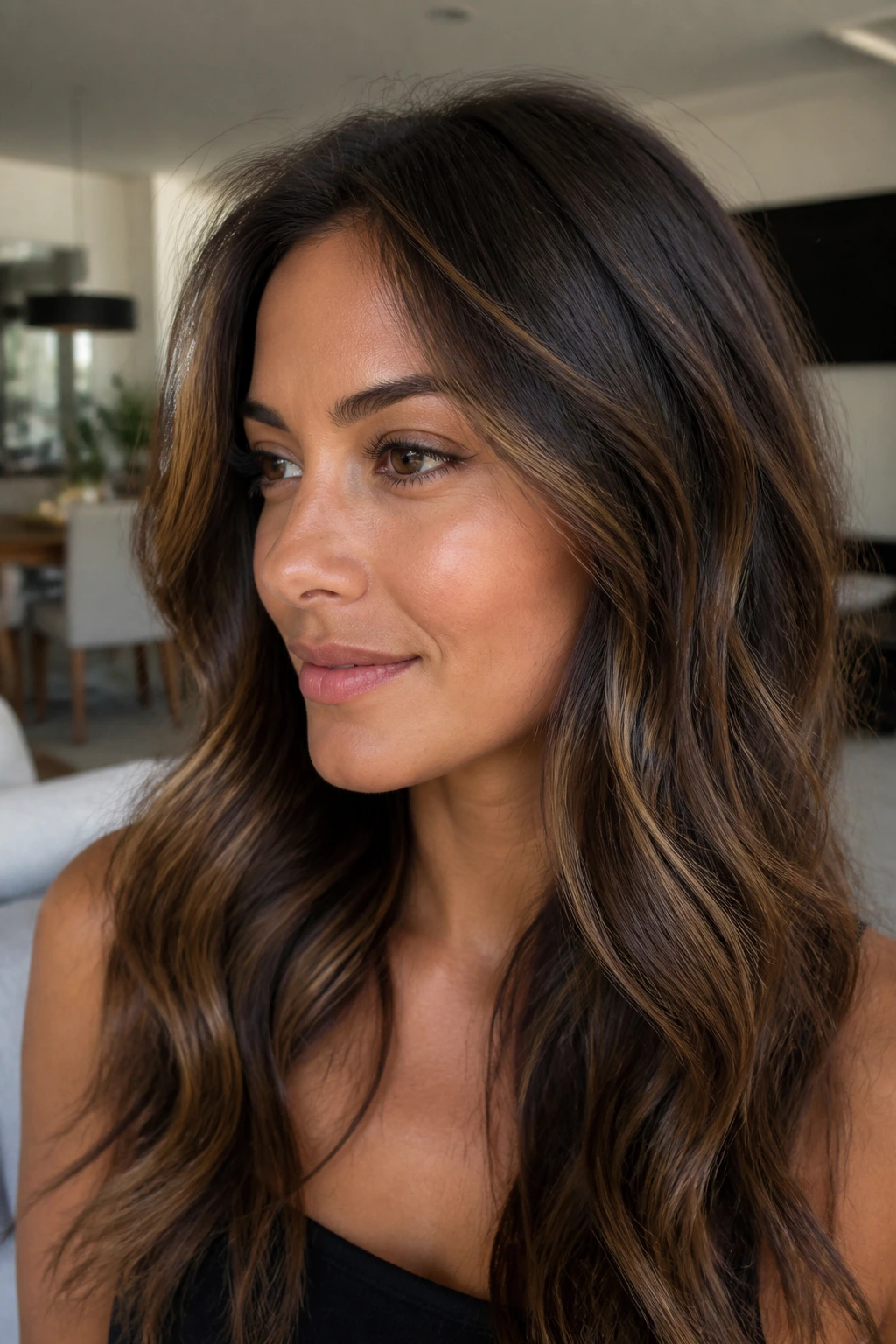
Dark roast lowlights are the thing people forget to ask for when their hair looks too light and a little flimsy. By weaving deeper brown back into the lighter pieces, you restore density. Tan skin often benefits because the darker bits make the complexion look brighter in comparison.
Oval faces can handle those lowlights near the temples and under the crown without feeling heavy. In fact, the extra depth helps define the shape. If you already have a lot of movement in your haircut, dark roast lowlights make the texture easier to see.
This is a smart fix after several lightening sessions. It gives the hair back some structure. And structure matters.
23. Tawny Brown Surf Waves
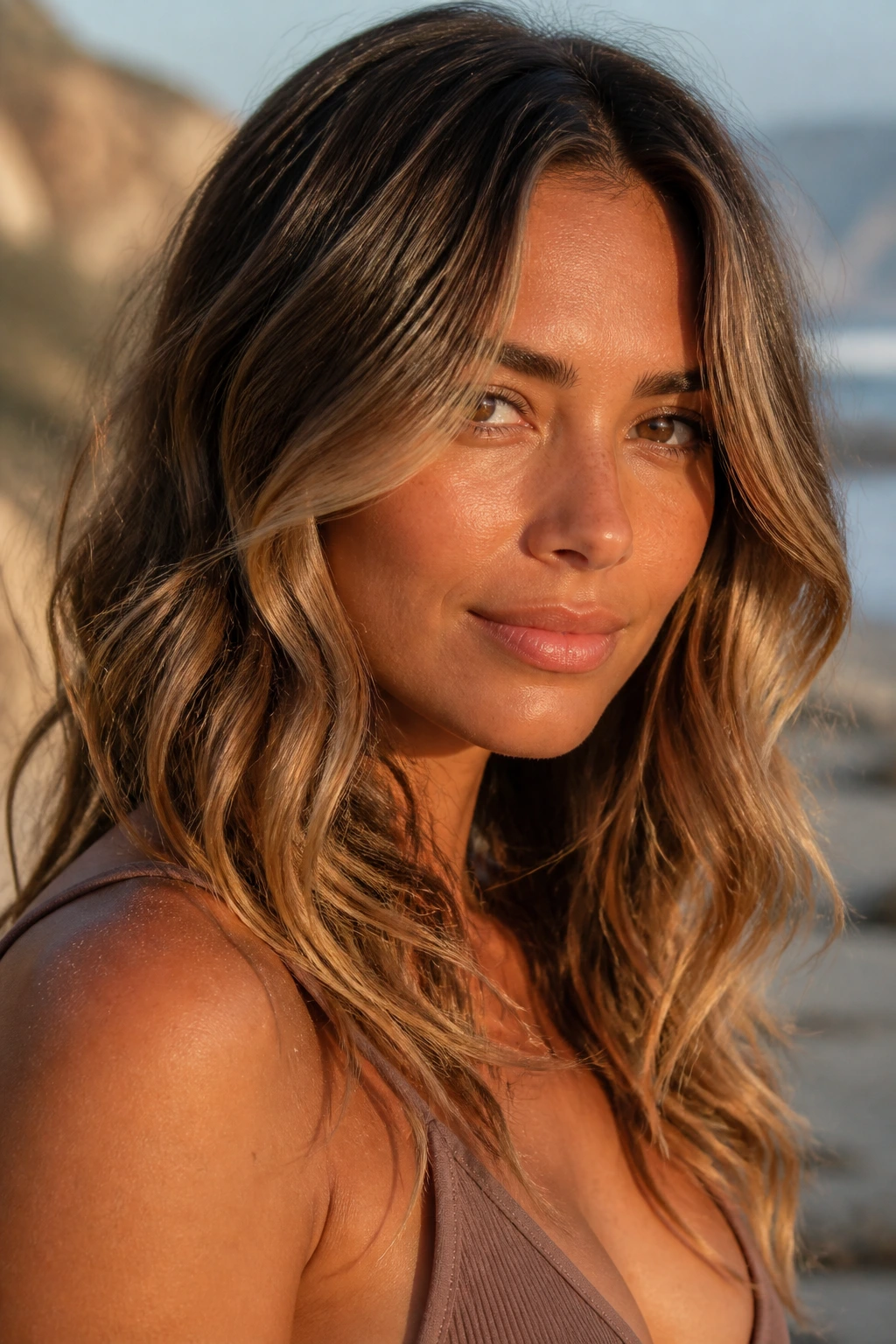
Tawny brown sits between gold and soft brown, which is why it looks so good in waves. The color moves with the bend of the hair, flashing warm here and deeper there, never staying in one flat state for long. On tan skin, tawny feels sun-warmed without turning blond.
If your hair naturally waves or you use a 1.25-inch iron, this is one of the easiest looks to wear. Oval faces get a nice lift when the brightest pieces start around the cheek and fall toward the collarbone. That keeps the face open without making it longer.
Leave the ends a little softer
Hard ends can make tawny hair look blocky. A softer finish keeps the movement alive, which is the whole point of surf waves anyway.
24. Sable Glossed Layers
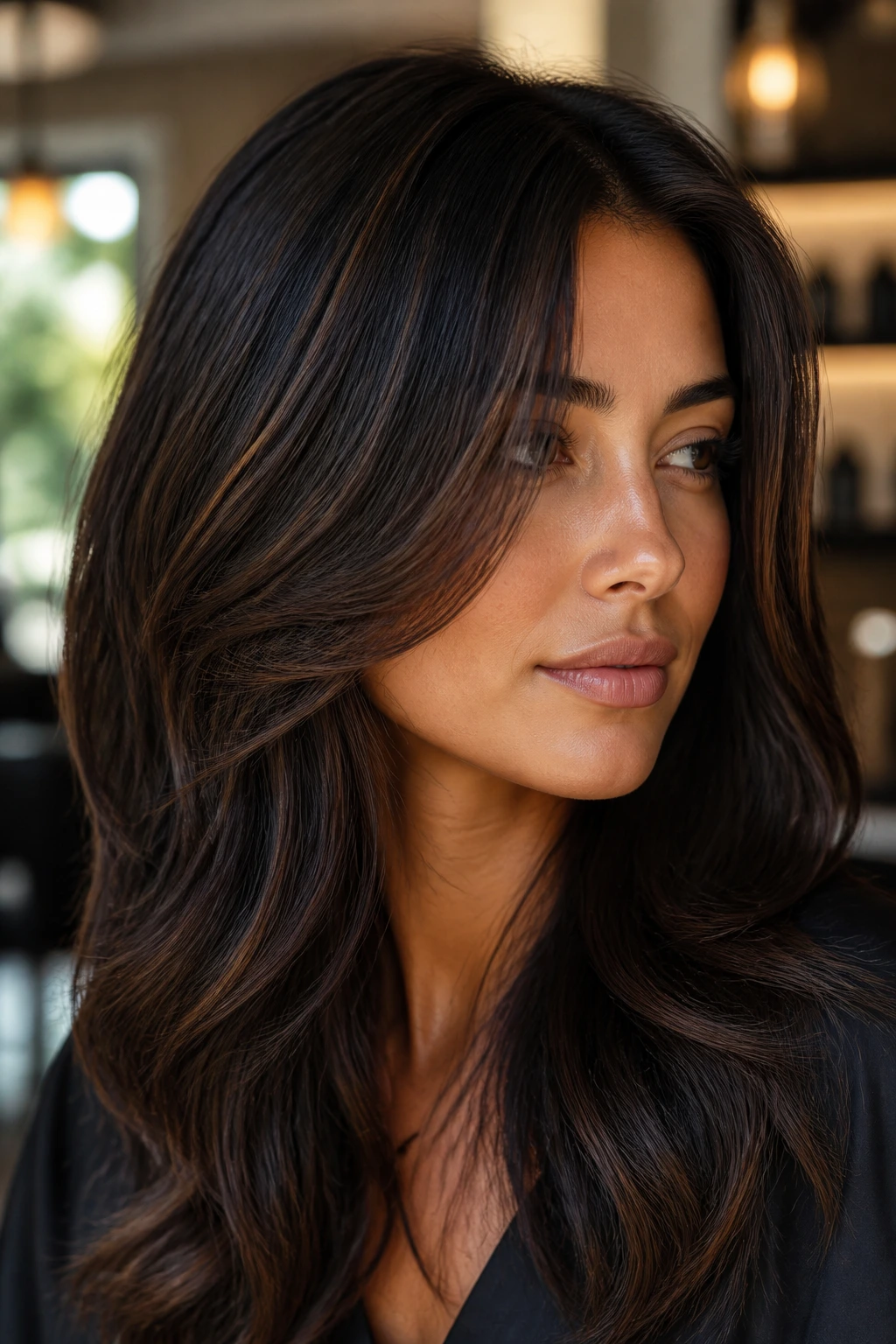
Sable is a deep, polished brown that thrives on shine. The babylights here are sparse and intentional, tucked into layered sections so the movement shows only when the hair shifts. On tan skin, sable gives the complexion a little glow because the darker base creates contrast without losing warmth.
Oval faces look especially clean with this kind of color because the cut can stay simple. The gloss does most of the work. If your hair is layered around the face, a few sable-fine lighter strands in the top layer are enough to break up the depth.
This is one of my favorites for people who want brown hair to look expensive without looking obvious. It’s subtle. It knows what it’s doing.
25. Sunset Cocoa with Fine Lifting
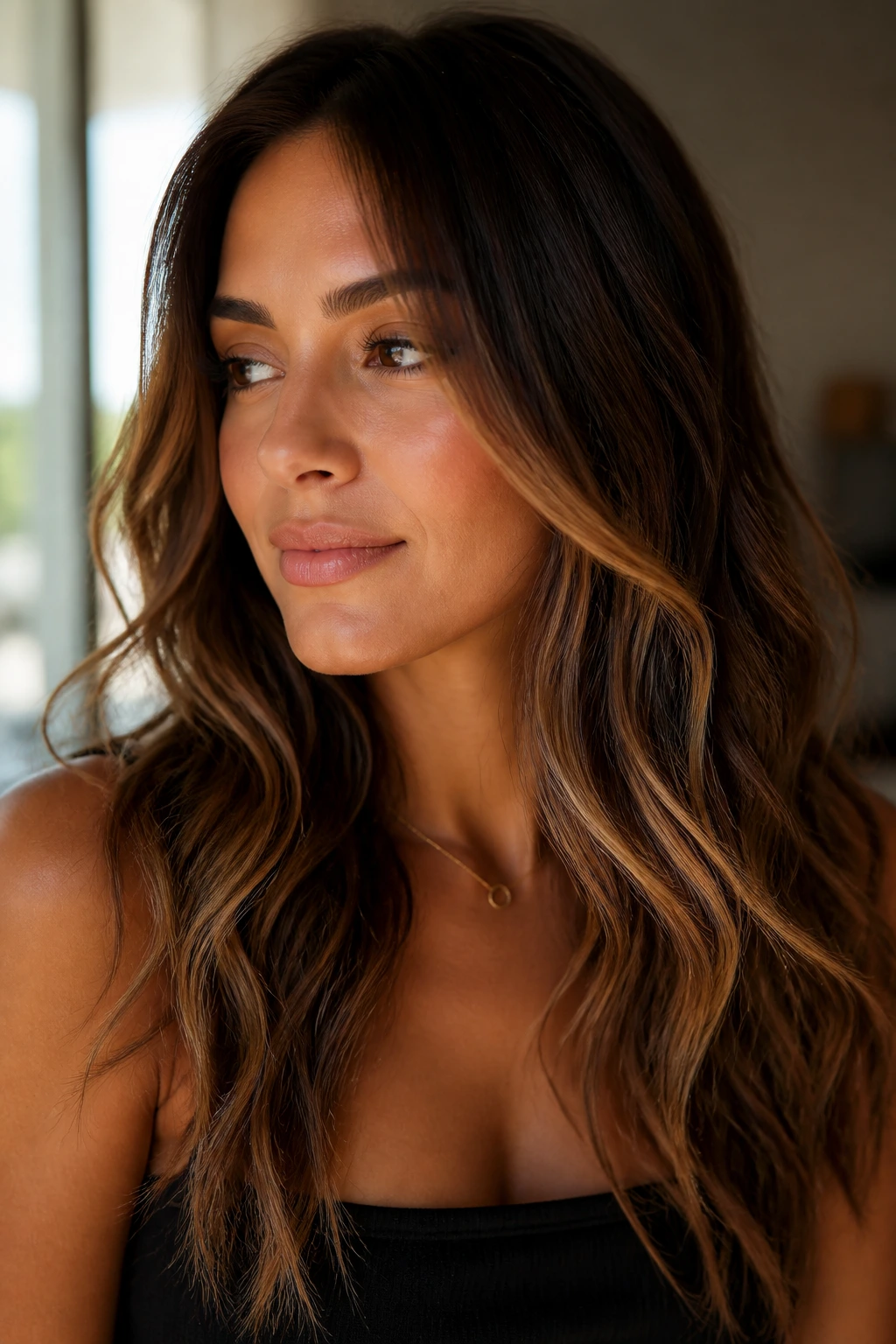
The last look is the brightest one, but it still stays in the brunette family. Sunset cocoa means the hair has warm, lifted pieces near the ends and around the face, while the base keeps its depth. On tan skin, that mix can be excellent because the warmth feels alive instead of washed out.
Oval faces can wear the brighter pieces lower on the head, which keeps the balance intact. Let the lightest ribbons live below the cheekbone line and through the outer lengths. That way the face gets a glow, but the shape stays calm.
If you want just one thing to remember from this whole list, remember this: the best brown babylights are the ones that look like they belong to the hair already. Sunset cocoa does that when the lift stays fine, the gloss stays rich, and the ends never get dragged into blond territory.
Why Brown Babylights Look So Good on Tan Skin
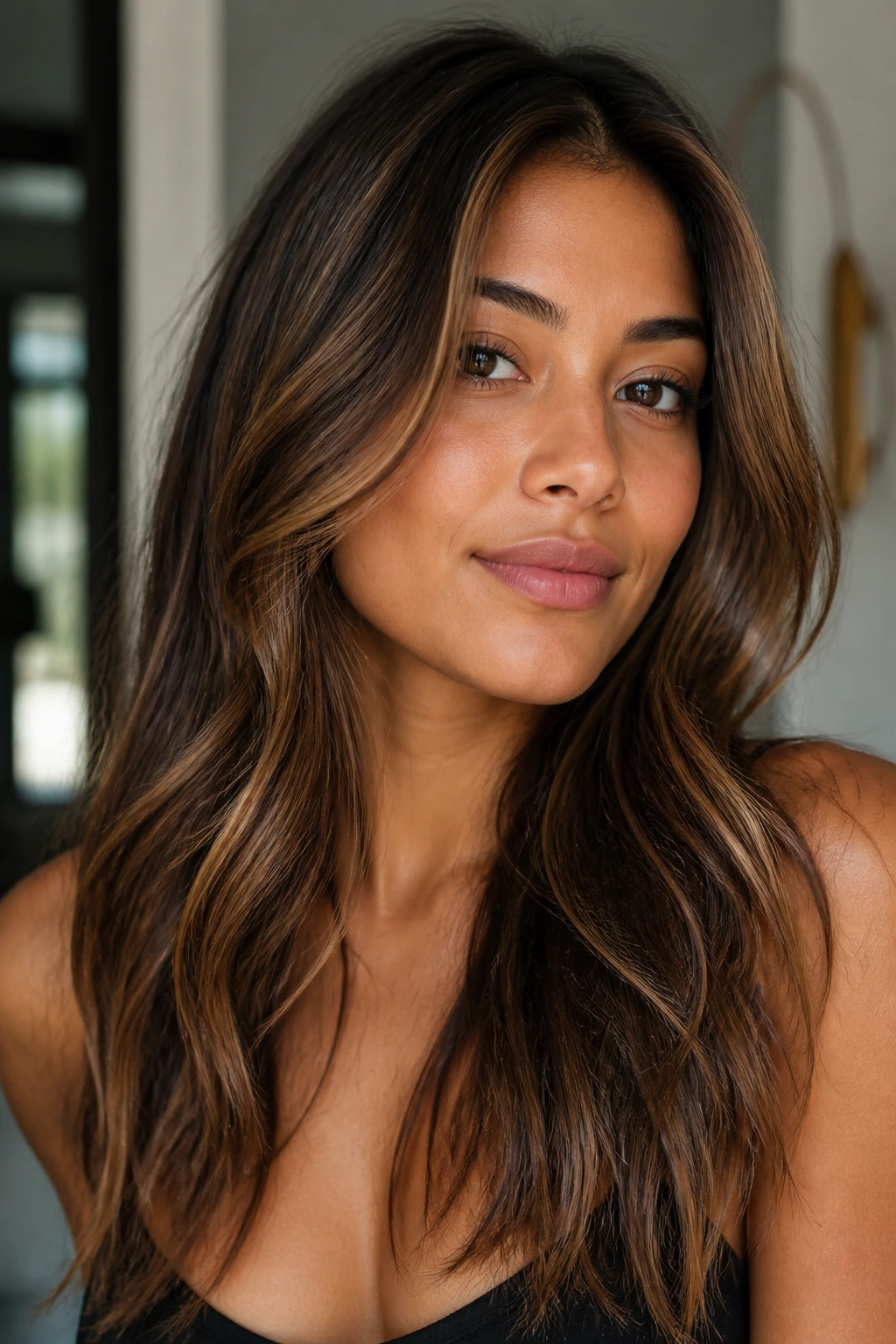
Tan skin gives brown hair a better starting point than a lot of people realize. The trick is that “tan” doesn’t mean one tone. Some tan skin leans gold, some leans olive, some reads more neutral under indoor light, and the brown babylights need to answer that instead of ignoring it.
Warm brown shades work because they echo the skin’s own depth. Caramel, hazelnut, chestnut, bronze, and amber-brown all pull the hair and complexion into the same family. Cool browns have a job too, but they need to be more deliberate. A mushroom or ash-brown babylight can look polished on olive tan skin, but on a golden tan, it can flatten the face if the gloss is too smoky.
There’s also a practical reason these colors hold up. Brown babylights do not need to be lifted to the level of blonde to be useful. A one- or two-level lift creates softness, not neon. That means less obvious regrowth, less brass to fight, and fewer moments where the color looks harsh under fluorescent light. Good brown dimension is less about screaming and more about staying believable in every room you walk into.
The Face-Framing Rules That Suit Oval Faces
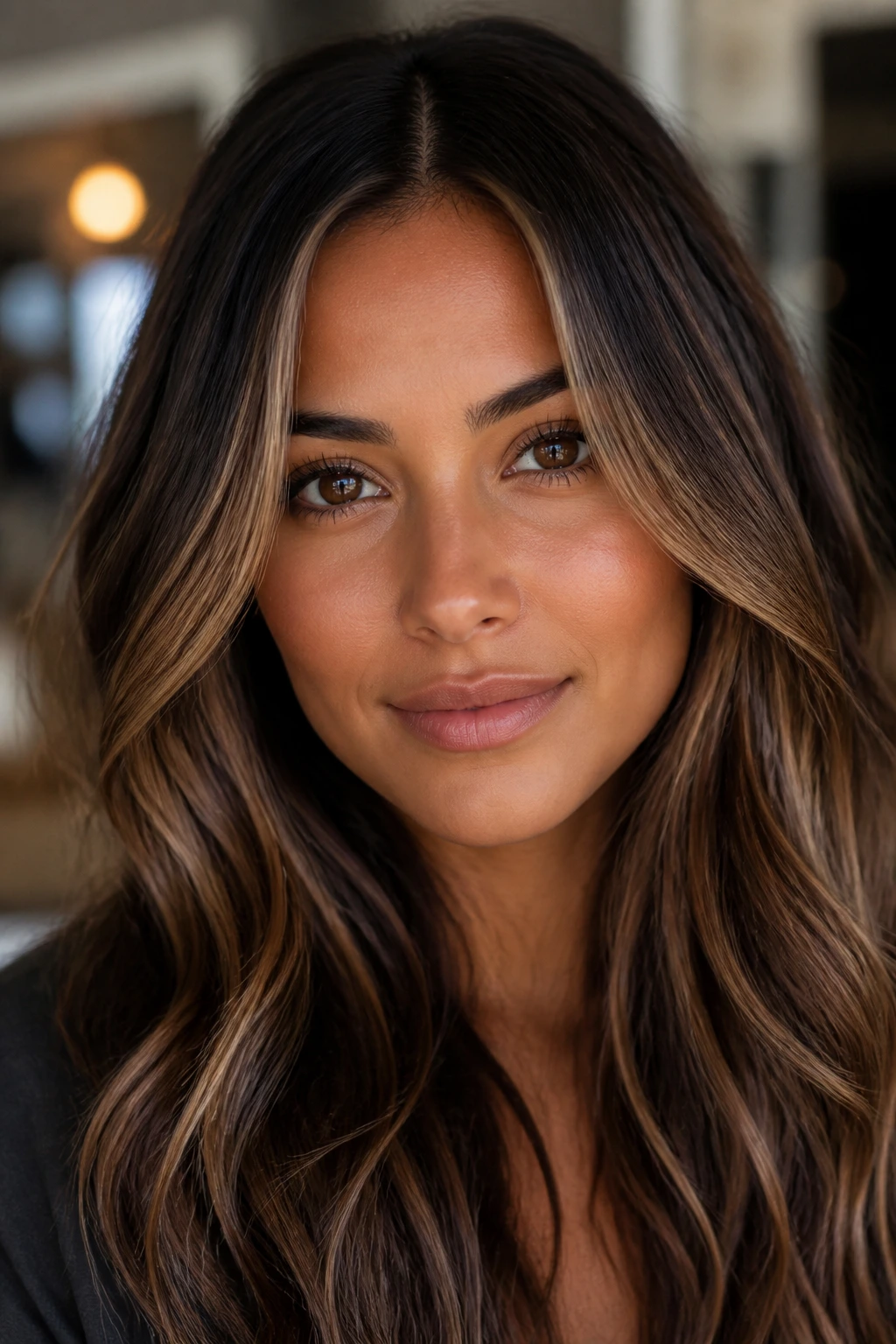
Oval faces are easy to flatter and easy to overload. People forget the second part. Because the shape is already balanced, a colorist does not need to chase heavy contour or pile brightness on top of brightness. The smartest move is usually the simplest one: place the light where the face naturally opens.
Cheekbone-level highlights are the most useful. They give structure without dragging the eye too far upward. If the bright pieces start too high on the head, the face can look longer. If they sit too low and are buried under the ends, the frame disappears. The sweet zone lives around the temples, the outer cheekbone, and the first few inches of the front layers.
Center parts and oval faces are friends, but the babylight placement has to respect that symmetry. A middle part with tiny, even front pieces reads clean and soft. A side part can take a little more brightness on the heavier side, which keeps the style from collapsing on one side. If you’re wearing curtain bangs, the color should be woven around them, not stopped dead at the bang line. That hard stop is what makes the hair look colored instead of lived in.
What to Ask for in the Salon Chair
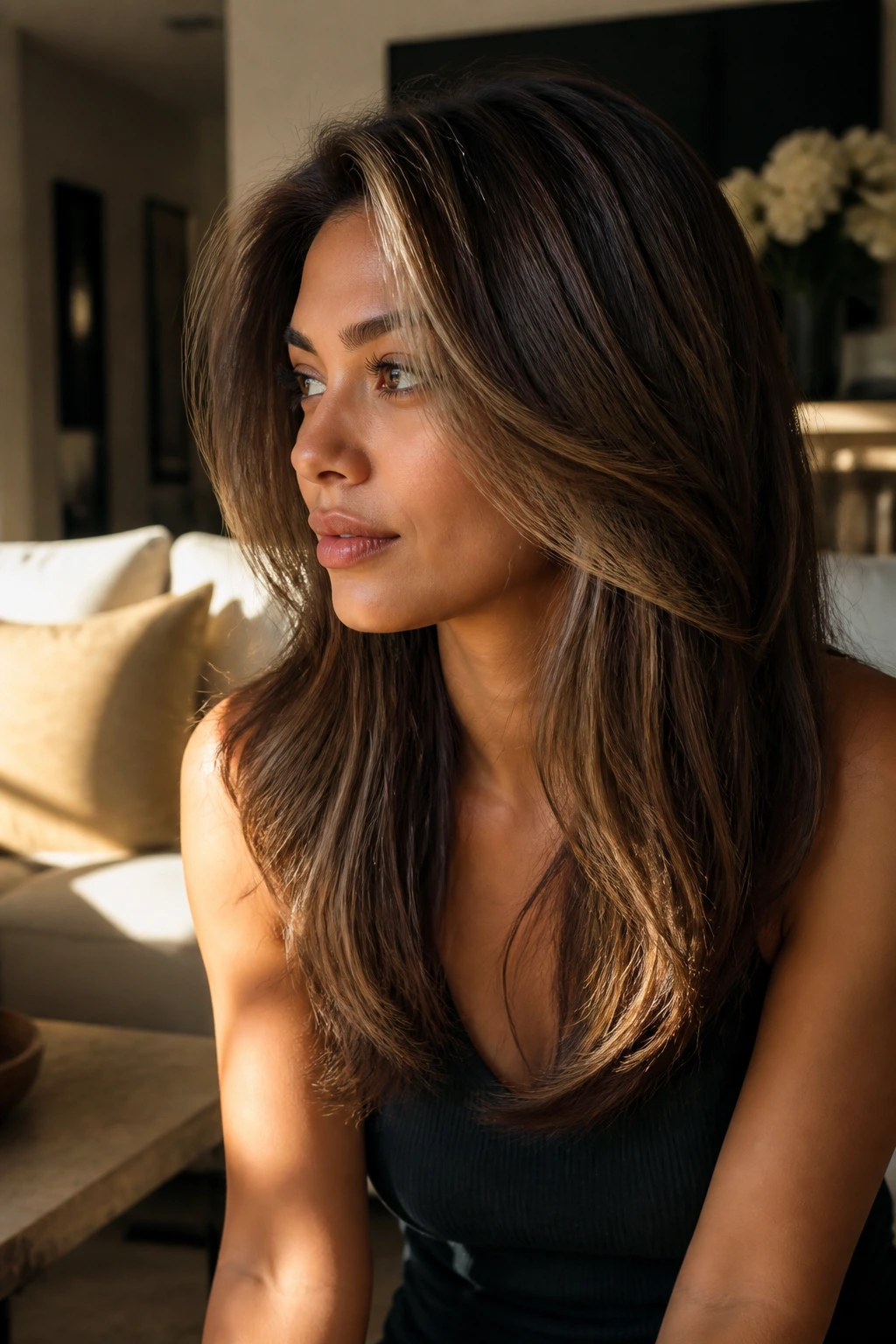
Bring photos, yes, but bring the right photos. A picture of a blonde balayage on cool skin will confuse the conversation faster than a bad haircut. Show your colorist a brunette reference with a similar base depth, similar skin tone, and the kind of placement you want around the face. Placement matters more than the exact shade name.
Say the words you actually want. “Fine babylights, one to two levels lighter than my base, with a soft gloss after lifting” is useful. “I want it lighter” is not. If you want a face frame, say where it should begin: temple, cheekbone, or jawline. If you want low maintenance, ask for a rooted finish or a half-inch shadow root so regrowth doesn’t draw a hard line the second it grows.
Mention what your hair does when it’s lightened. If it pulls orange, say so. If the ends are porous, say that too. A colorist can work with porosity by using a lower developer on the ends or by lifting the front pieces more gently than the back. That part sounds small. It isn’t.
Essential Tools and Products for Keeping the Tone Clean
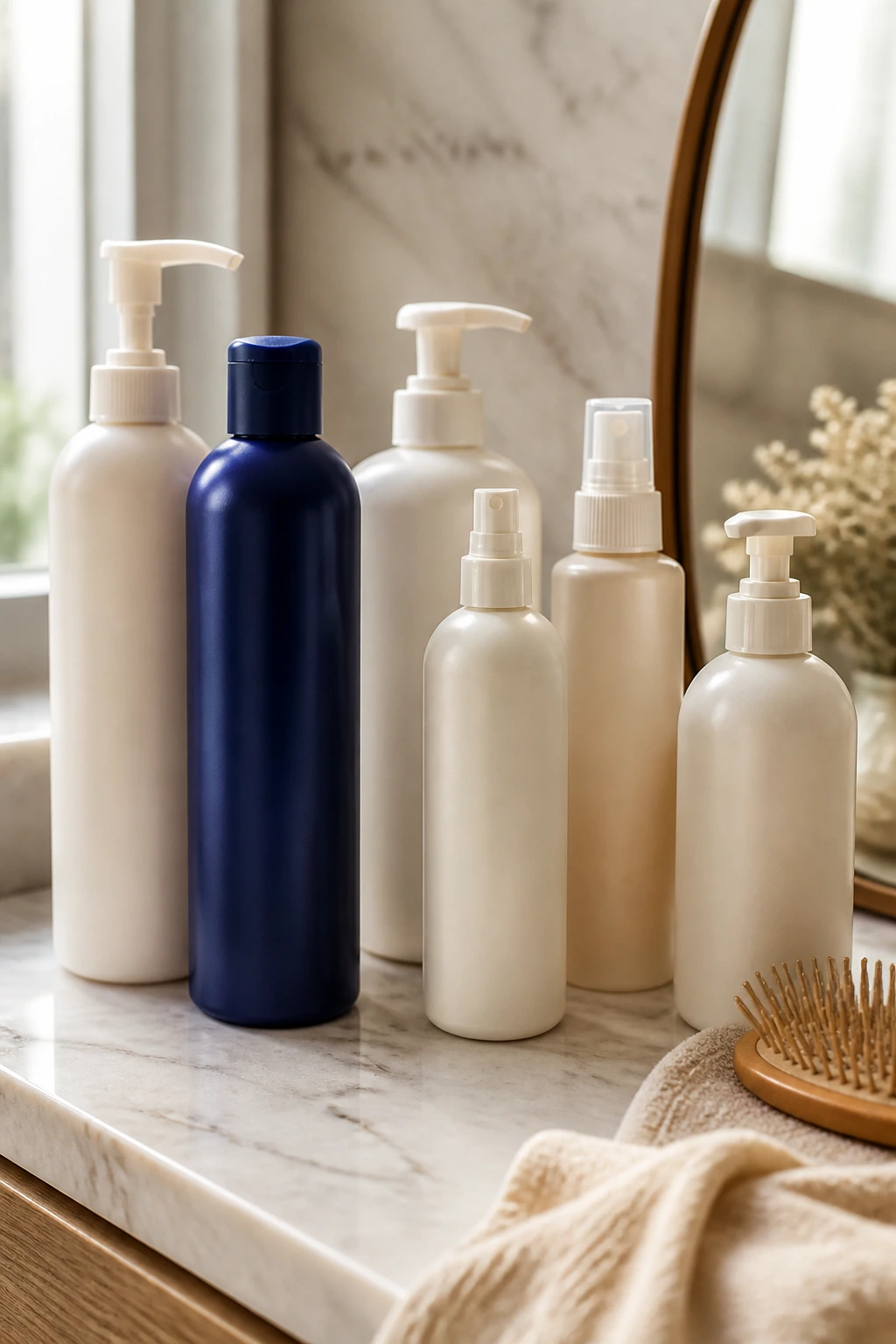
- Color-safe shampoo: Use a sulfate-free formula that doesn’t strip gloss out of the hair in two washes.
- Conditioner for color-treated hair: Look for something that leaves the mids and ends slippery, not coated.
- Blue shampoo: Helpful if your brown babylights swing orange; use it sparingly so the hair doesn’t go muddy.
- Leave-in conditioner: Keeps lighter pieces from feeling dry and rough, especially after heat styling.
- Heat protectant: Apply before blow-drying or curling; lifted hair is more fragile than the base.
- Wide-tooth comb: Best for detangling wet hair without tearing at the lighter strands.
- Microfiber towel or soft T-shirt: Cuts down frizz and keeps the cuticle calmer after washing.
- Gloss or toner: A demi-permanent glaze helps brown tones stay mocha, chestnut, or beige instead of brassy.
- Clarifying or chelating shampoo: Use occasionally if hard water or styling buildup starts dulling the color.
- Round brush or 1.25-inch curling iron: Useful for showing off the dimension once it’s in the hair.
Warm, Neutral, and Cool Brown Tones: How to Pick One
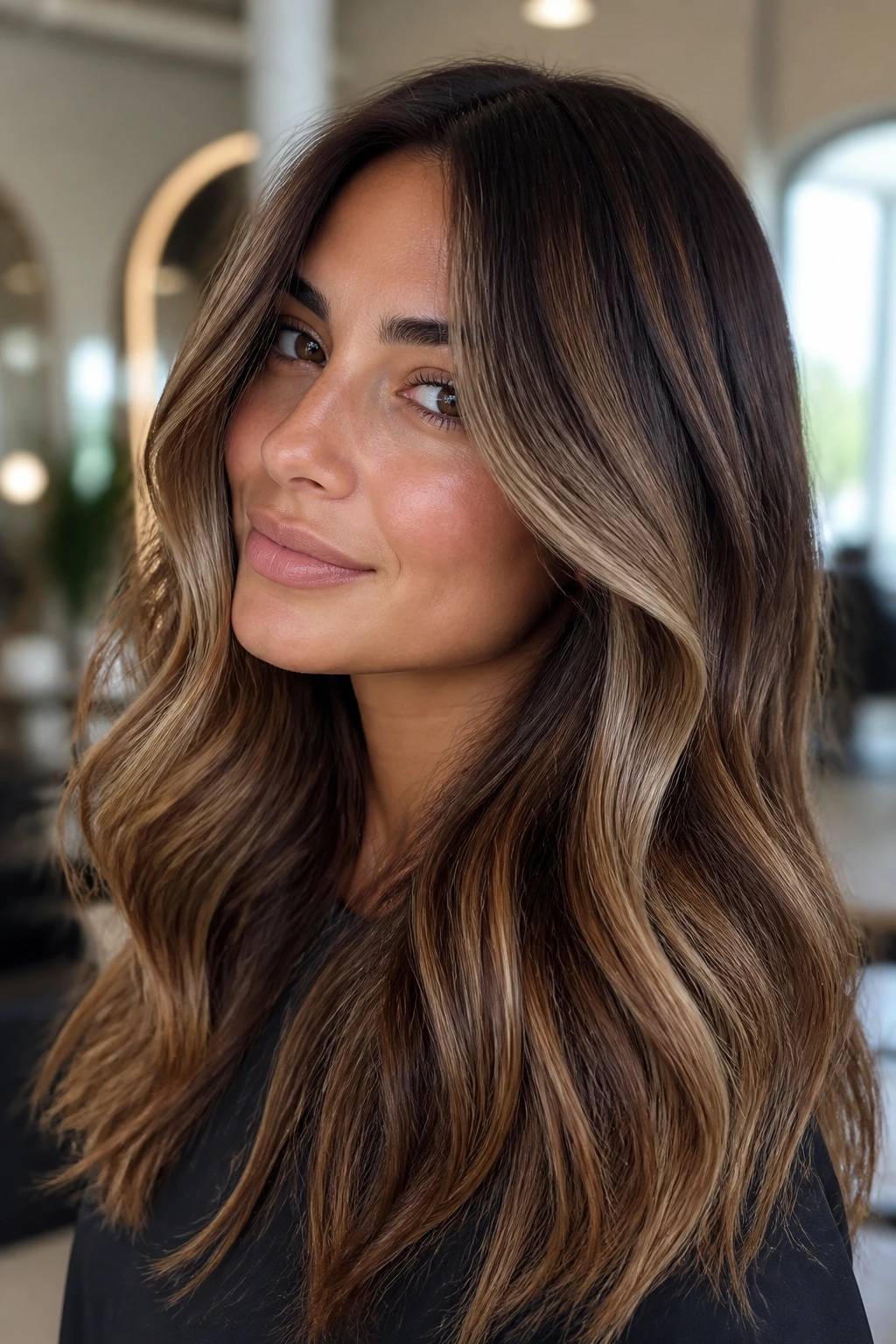
Warm browns are the easiest yes for golden tan skin. Caramel, hazelnut, honey-brown, and cinnamon-brown all echo warmth already in the complexion, so the result looks effortless. If your jewelry is usually gold and your skin tends to tan deeper in the sun, this is probably your lane.
Neutral browns are the safest middle ground. Mocha, beige-brown, walnut, and almond butter give you dimension without pushing too gold or too ash. Neutral browns are the ones I reach for when someone says they want the hair to look soft, not styled to death. They also hold up well on oval faces because the tone doesn’t compete with the shape.
Cool browns need the most discipline. Mushroom, ash, and smoky chocolate can look polished on olive or neutral tan skin, but they need shine. Without gloss, they can dry out the whole look. If your skin has a lot of warmth, keep the cool tone as an accent rather than the main event, or the hair can start to look separate from the face instead of part of it.
How to Wear and Style the Dimension
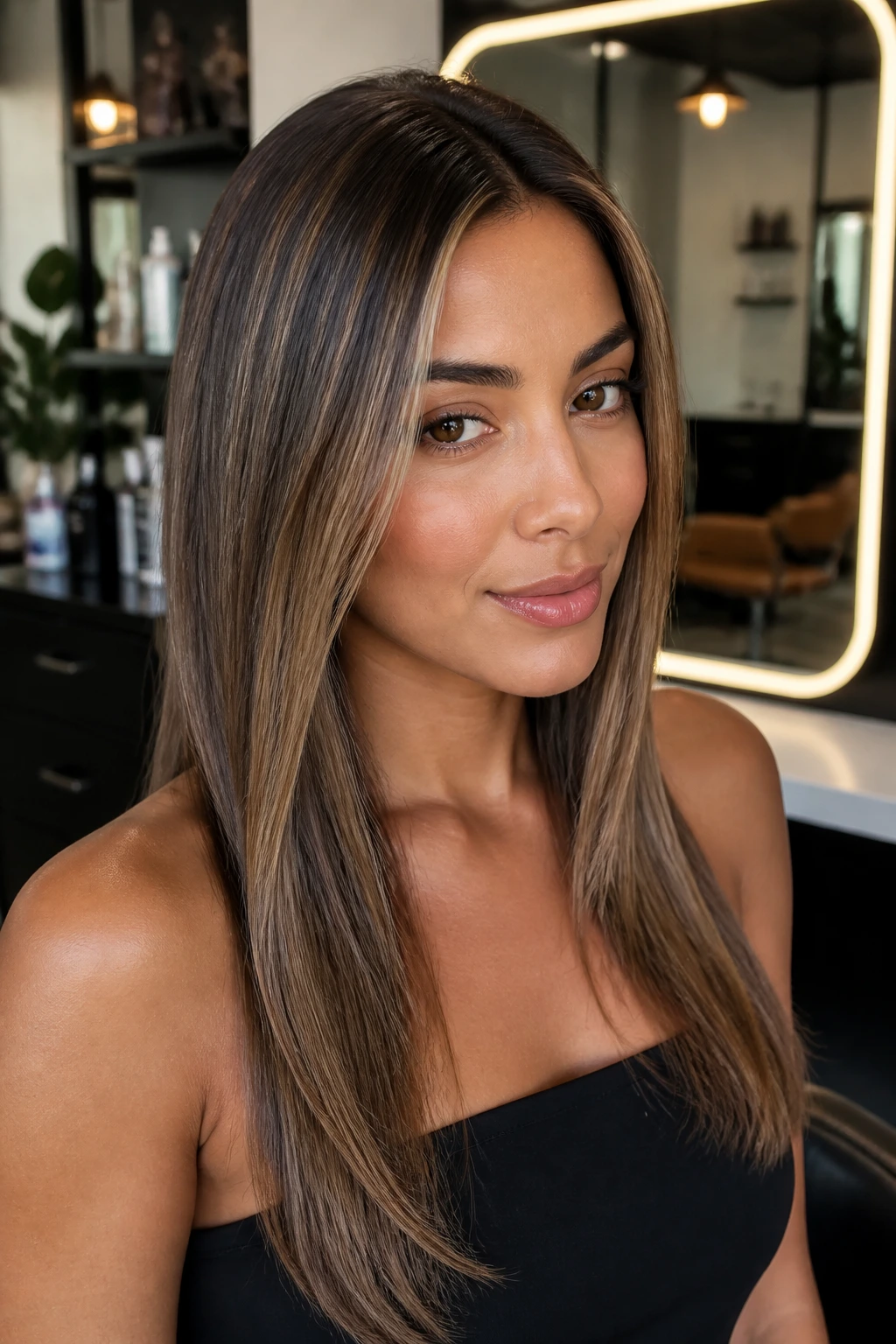
Straight hair shows off placement. Waves show off blend. Curly hair shows off movement. That sounds obvious, but it changes how you should style brown babylights if you want the color to read clearly.
For a sleek blowout, use a round brush and direct the front sections away from the face. That opens the babylights around the temples and makes the lighter pieces look intentional. A flat iron can work too, but keep a little bend at the ends or the color loses depth.
Loose waves are the easiest way to show dimension through the mids and ends. Wrap sections around a 1.25-inch iron, leave the last inch out, and brush the waves apart once they cool. That last part matters. If the waves are too neat, the color looks like a stripe pattern. If they’re too brushed out, the dimension disappears.
Curly hair needs moisture first, styling second. Diffuse on low heat, then separate a few face-framing curls by hand so the babylights are visible. If the hair is porous, use a cream styler instead of a crunchy gel, because the lighter pieces need softness more than hold.
Additional Tips and Face-Framing Boosters
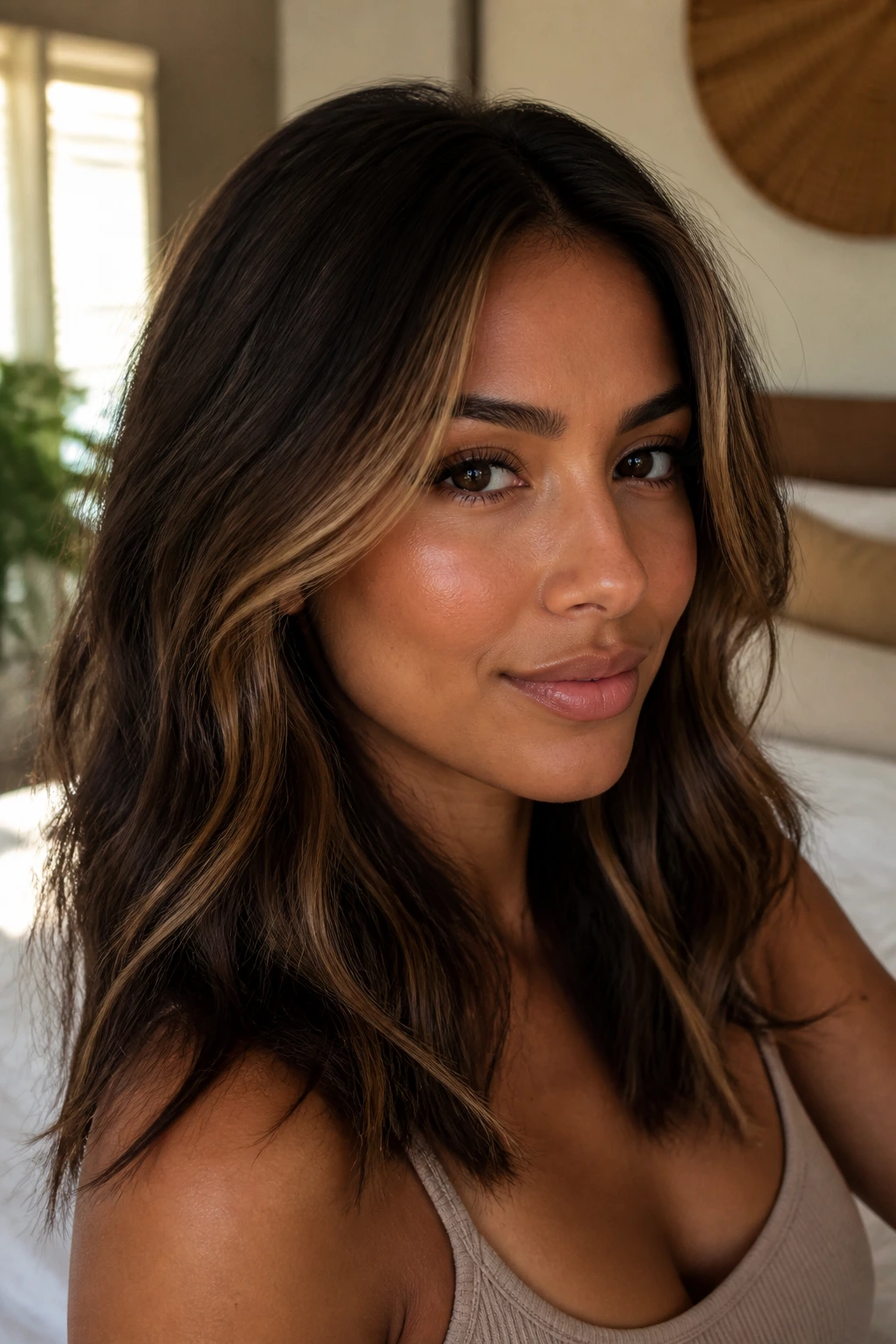
Placement Booster: Keep the brightest brown babylights at the front layers and around the cheekbone line, then let the back stay deeper. That gives oval faces movement without making the whole head busy.
Tone Booster: If your brown pulls too orange after lifting, a beige-brown or smoky mocha gloss usually fixes the problem faster than trying to add more highlights. The fix is in the toner, not more bleach.
Time-Saver: Ask for a partial refresh around the hairline and part between full appointments. You do not need the whole head redone every time if the placement is fine.
Styling Booster: A little shine serum on the mids and ends can make brown babylights look far more expensive than they cost to maintain. Go light. One pump too many and the color goes greasy.
Make-It-Yours: If you wear a middle part, keep the babylights symmetrical. If you wear a side part, load the lighter ribbons toward the heavier side so the style doesn’t collapse into shadow.
Common Mistakes That Flatten the Look
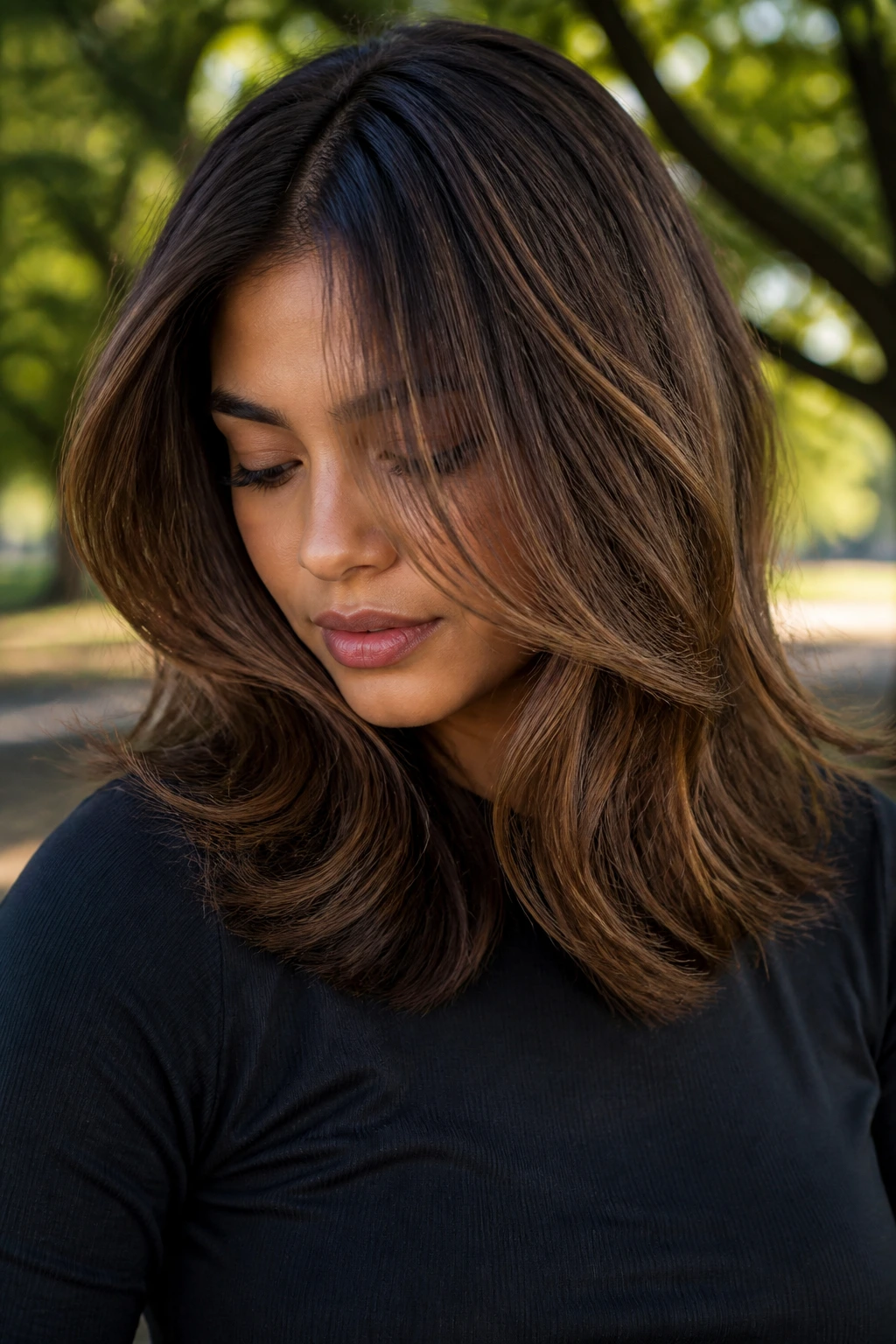
The biggest mistake is going too light. Brown babylights should sit near brunette, not migrate into blonde territory unless that’s the actual plan. On tan skin, overly pale pieces can look stripy and make the complexion look tired. The fix is a smaller lift, usually one or two levels, plus a gloss that keeps the warmth clean.
Chunky sections are the second problem. Babylights are supposed to be fine, almost threadlike. If the weave is too wide, the color stops reading as shimmer and starts reading as highlights from a decade ago. Ask for micro-weaving or very thin foils.
The third mistake is bad placement on an oval face. Brightness shoved too high can stretch the face visually. Brightness buried too low can make the hair look heavy. The clean zone is around the temples, cheekbones, and midlengths.
Skipping toner is a trap. Lifted brown hair often turns orange or yellow at first, and if you stop there, the whole result can look unfinished. A beige, mocha, or chestnut gloss usually pulls it back into shape. And if you rely on purple shampoo for brown hair, be careful. It can dull warmth and leave the highlights looking muddy instead of polished.
Variations and Adaptations to Try
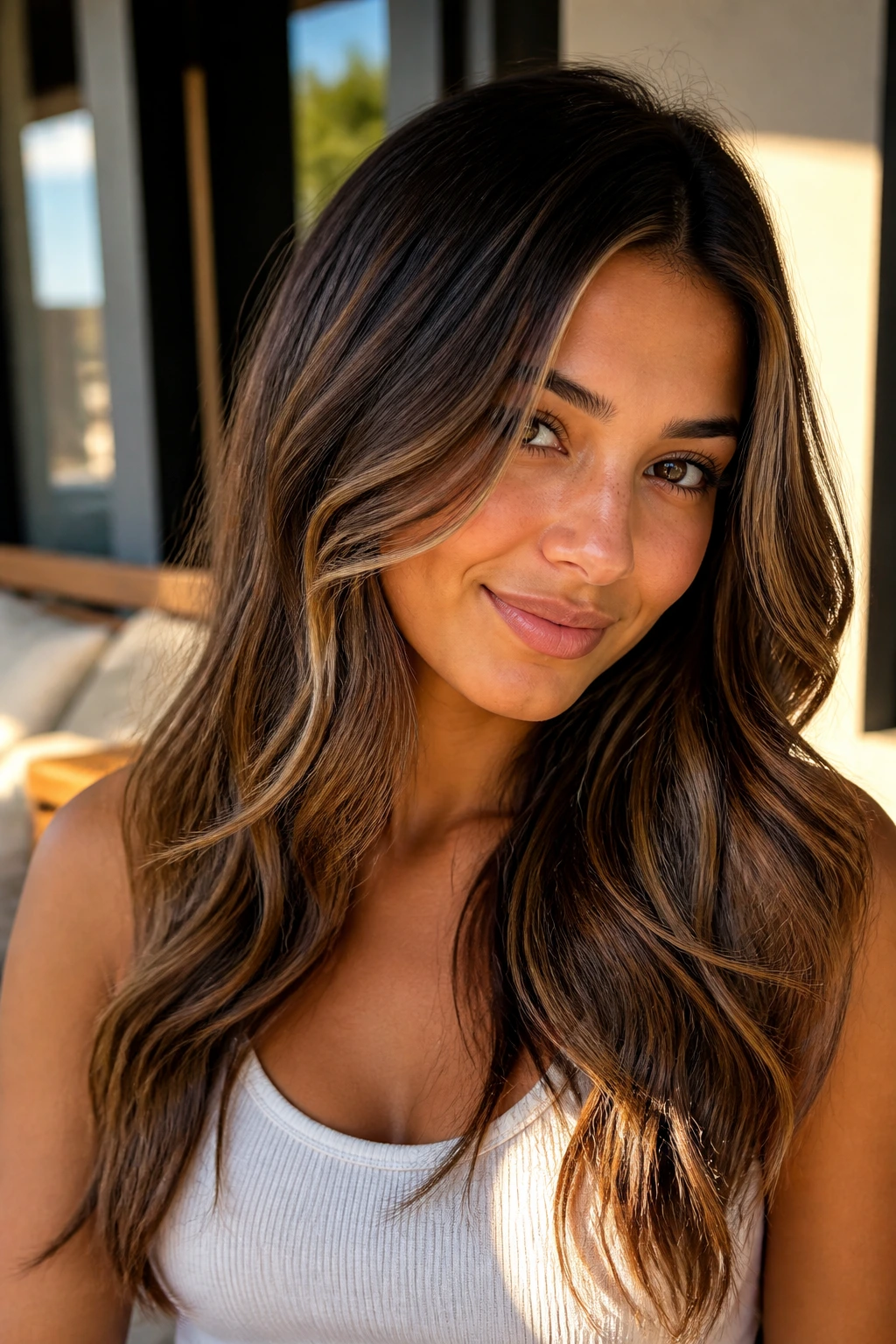
Golden Glow Brunette: Lean into caramel and honey-brown pieces if your tan skin has warm undertones and you want the hair to feel sun-touched. Keep the lift fine so the color still reads brunette first.
Smoky Olive Brown: Use mushroom, mocha, and ash-brown tones if your skin leans olive or neutral. This version is better when you want the hair to look cool, clean, and a little modern.
Copper Whisper Brunette: Add only a trace of copper to a cocoa base if you want richer warmth without going full auburn. It works well on tan skin that already has a golden cast.
Rooted Low-Maintenance Brunette: Keep a deeper root shadow and let the babylights show mainly through the mids and front layers. This is the easiest version to live with if you don’t want visible regrowth every few weeks.
Bronzed Wave Brunette: Push the dimension a touch lighter and style it in loose waves. The movement brings out the bronze pieces, which makes the whole color feel softer and more lived-in.
Maintenance, Refreshes, and Grow-Out Timing
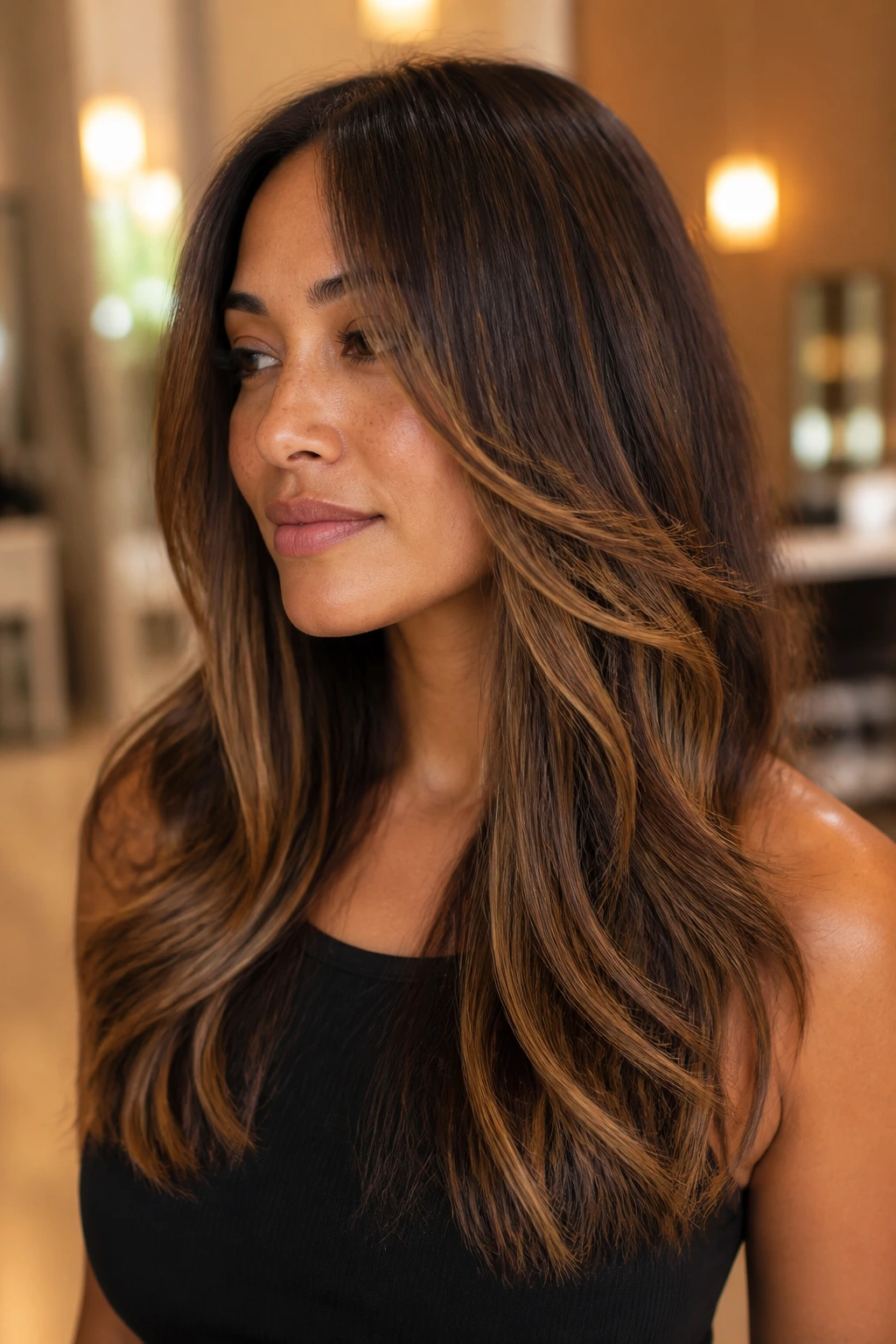
Brown babylights are easier to maintain than blonde, but they still need some attention. If you want the tone to stay clean, use a color-safe shampoo two or three times a week and keep the water lukewarm. Hot water strips gloss faster than most people expect. It also roughs up the lighter pieces, which makes them look drier.
A gloss or toner refresh every 4 to 8 weeks keeps the brown where you want it. Porous hair usually needs the shorter end of that range. Healthier hair can stretch longer. If you notice the color going orange, flat, or too gold, it’s probably time for a refresh even if the roots still look fine.
For grow-out, a partial babylight touch-up around the hairline and part every 8 to 12 weeks is often enough. That’s especially true if you’ve got a rooted finish or a soft shadow at the base. If you swim, wet the hair with clean water first and use conditioner before getting in the pool. Chlorine and hard water can both rough up brunette tones. A monthly chelating wash helps if mineral buildup starts dulling the finish.
Frequently Asked Questions
Will brown babylights wash out tan skin?
Not if the tone is chosen well. Tan skin usually looks best with brown dimension that stays warm, neutral, or softly smoky rather than pale blonde pieces that compete with the complexion.
How light should babylights be on dark brown hair?
Usually one to two levels lighter than the base is enough for a soft result. That keeps the contrast low and prevents the hair from looking streaky or over-processed.
Are babylights better than balayage for oval faces?
Babylights give a softer, finer finish, which is useful if you want movement without obvious blocks of color. Balayage can still work, but babylights are better when you want the face framing to feel delicate.
What if my hair turns orange after lightening?
That means the toner step matters. A beige, mocha, or ash-based gloss can pull the warmth back in line without making the hair look flat. Blue shampoo can help between appointments, but it is not a full fix.
Can I get brown babylights on curly hair?
Yes, and curls can make the dimension look even better. The key is to keep the lightening gentle and the moisturizing routine strong, because textured hair can show dryness faster on the lighter pieces.
How often do brown babylights need a refresh?
Many people can go 8 to 12 weeks between partial appointments and 4 to 8 weeks between gloss refreshes. The exact timing depends on how porous the hair is, how much heat you use, and how warm the tone runs.
Do I need lowlights too?
Not always, but they help if the hair is too light or too flat. A few deeper pieces can make brown babylights look richer and give the cut more shape.
Can brown babylights work with a side part?
Yes. A side part can actually help by loading a little more brightness onto the heavier side of the face. Just keep the lightest pieces balanced enough that the shape still feels even.
A Soft Brown Finish That Still Has Shape
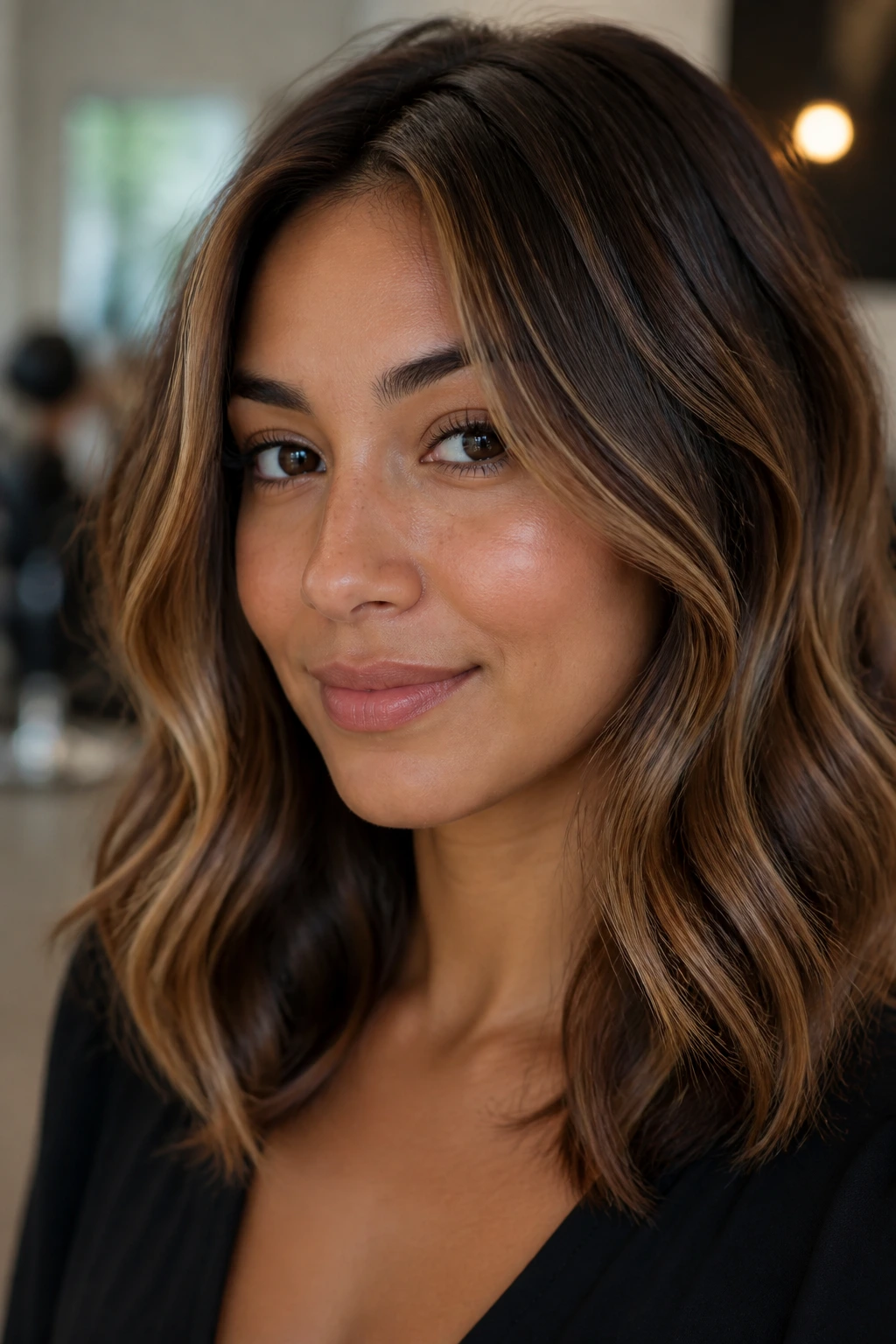
Brown babylights are one of those color choices that reward restraint. The good versions don’t try to outshine the face or the cut. They sit close to the base, catch light in the right places, and let tan skin do some of the work.
For oval faces, that means you can lean into movement instead of correction. For the color itself, it means choosing the right brown is only half the story. Placement, gloss, and grow-out matter just as much. Get those right and the whole head looks calmer, richer, and a little more deliberate — which is really what most people are after when they ask for dimension in the first place.