



A thick bob on a round face can look polished in one photo and puffed-out in the next. The difference usually isn’t the bob itself. It’s where the weight lands, how much lift sits at the crown, and whether the money piece highlights fall in the right place — usually closer to the cheekbone or jaw, not sprayed high across the temples like a flashlight.
That’s why this haircut category is so useful when you want shape without losing fullness. A thick bob gives you body in the back and sides, which can be a blessing or a curse depending on the cut line. Add face-framing brightness, and you’ve got a chance to pull the eye vertically instead of letting everything stop at the widest part of the face. That part matters more than people think.
The best versions don’t try to “hide” a round face. They steer it. Some use a longer front. Some use a side part. Some use internal layers to break up bulk. And some lean hard into a blunt, glossy line so the shape feels crisp instead of fluffy. The fun part is that money piece highlights can change the mood of the whole haircut without changing the silhouette at all.
Why These Thick Bobs Flatter Round Faces Instead of Widening Them
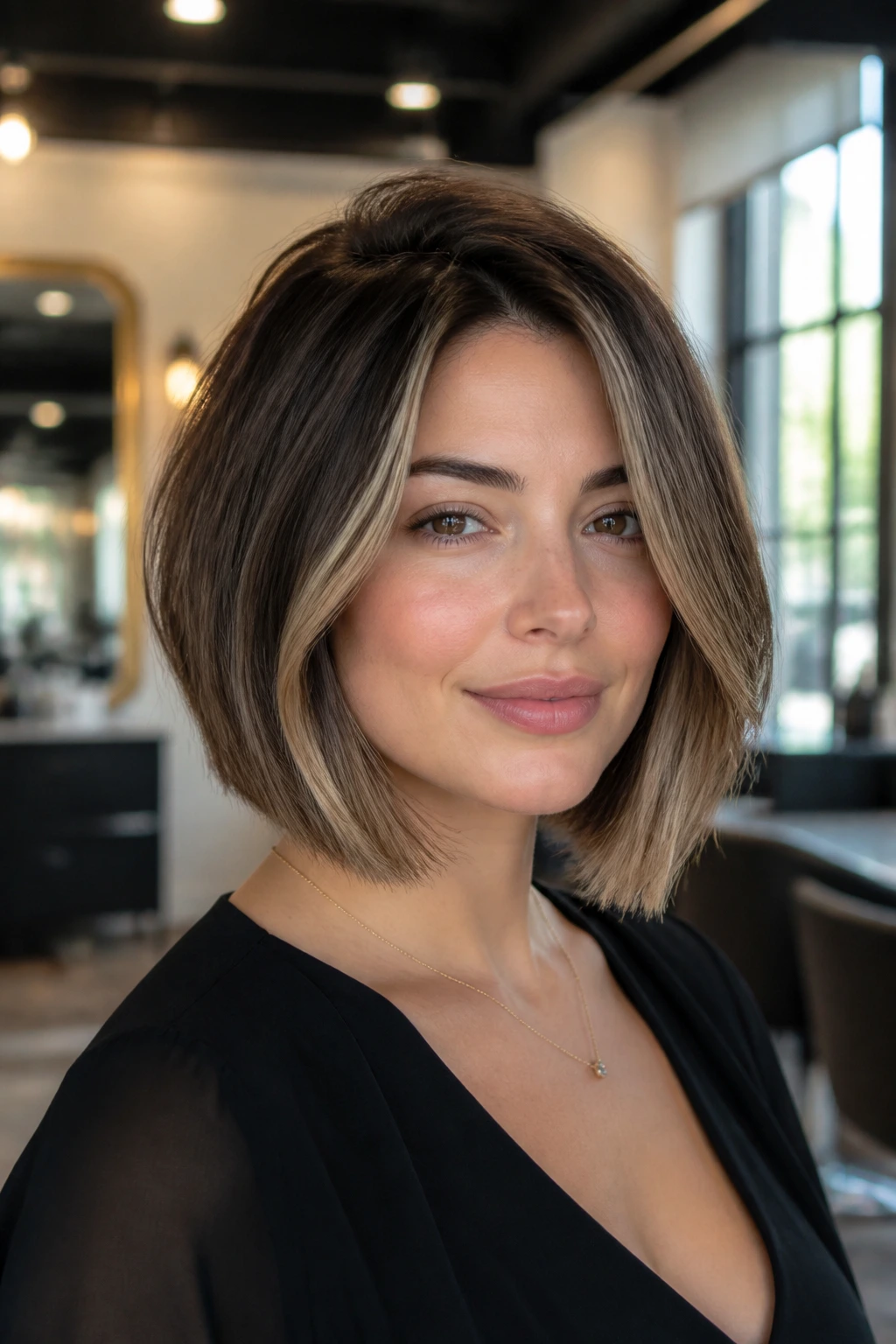
-
The front stays longer than the sides: That slight angle keeps the eye moving downward, which is the whole trick when you want a round face to look a touch longer.
-
The crown gets lift, not the cheeks: A bit of height at the top is useful; volume sitting right at cheek level usually isn’t. These cuts keep the fullness where it helps.
-
Money piece highlights do the framing work: Bright face-frame pieces act like a visual line, and a well-placed line can sharpen a soft face faster than another inch of length.
-
Thick hair gets shape, not puff: Dense hair can balloon if it’s all one blunt mass. These bobs use beveling, layering, stacking, or weight removal so the outline stays intentional.
-
They work with air-drying or styling tools: You do not need a full blowout every day. The best versions still look like a haircut, even after a rough dry and a little serum.
-
The color can be warm or cool: Honey, caramel, vanilla blonde, champagne, copper — the tone changes the feel, but the framing effect stays the same.
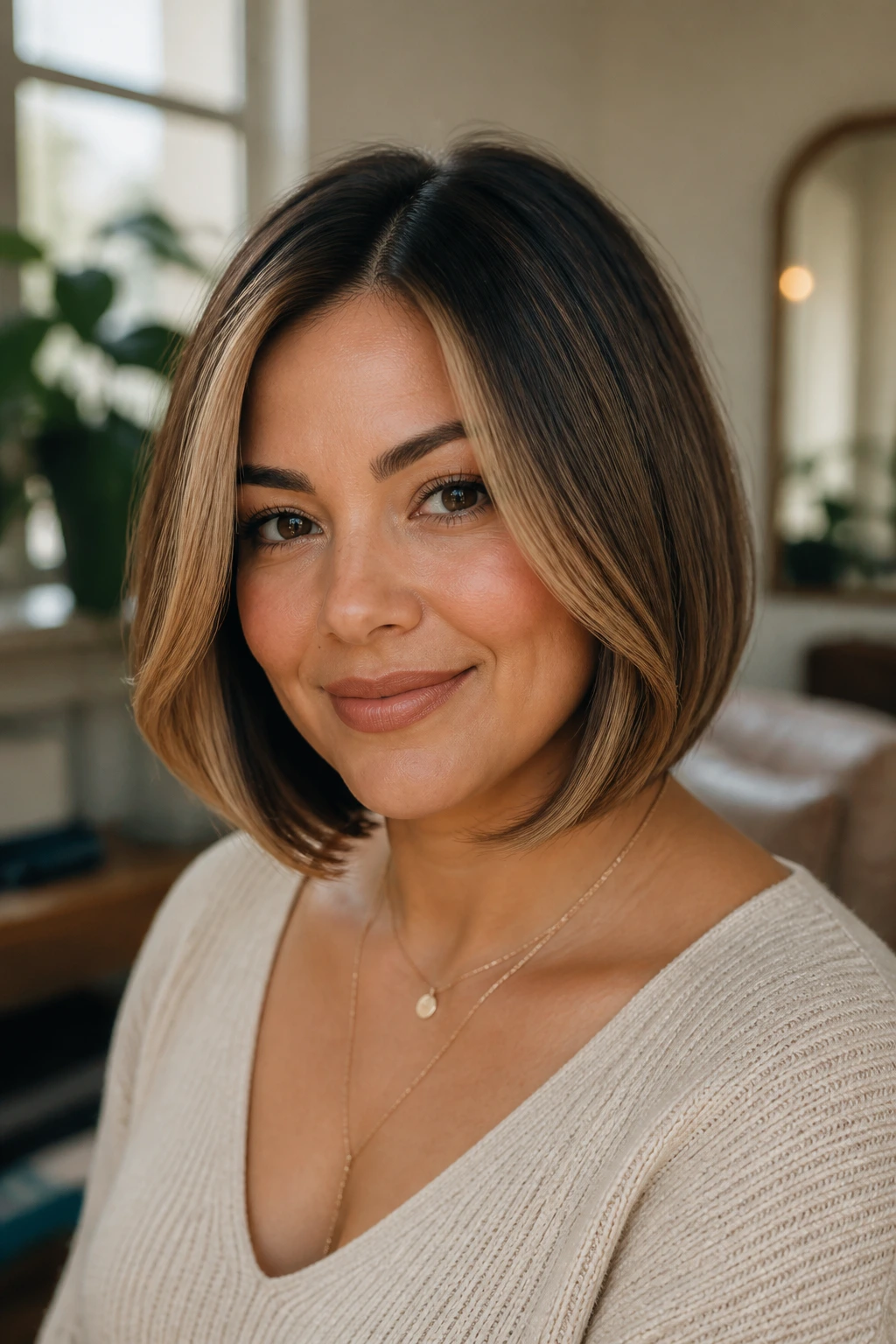
1. Chin-Grazing French Bob with Vanilla Money Piece Highlights
A chin-grazing French bob is one of those cuts that looks effortless only when it’s cut with a very sharp eye. On a round face, the clean line at the chin gives the face a little edge, while the softly feathered front keeps it from turning boxy. Add a vanilla money piece, and the whole thing stops feeling severe. It gets brighter, lighter, and a lot more intentional.
The key is not to let the bob sit like a helmet. Ask for a subtle bend through the ends and a touch of softness at the front corners. The money piece should start around the brow arch or cheekbone, then melt into the rest of the color so it doesn’t look striped. If your hair is thick, a tiny bit of internal debulking near the nape helps the shape fold inward instead of flaring out.
This one is especially good if you wear your hair air-dried with a little wave. It likes a side tuck behind one ear, red lipstick, and a neckline that shows off the jaw. Very French. Very unbothered.
Best for: thick hair that naturally wants body and a round face that needs a little vertical line.
Style note: a 1-inch curling iron just at the front pieces can create that broken, piecey bend without wrecking the bob’s shape.
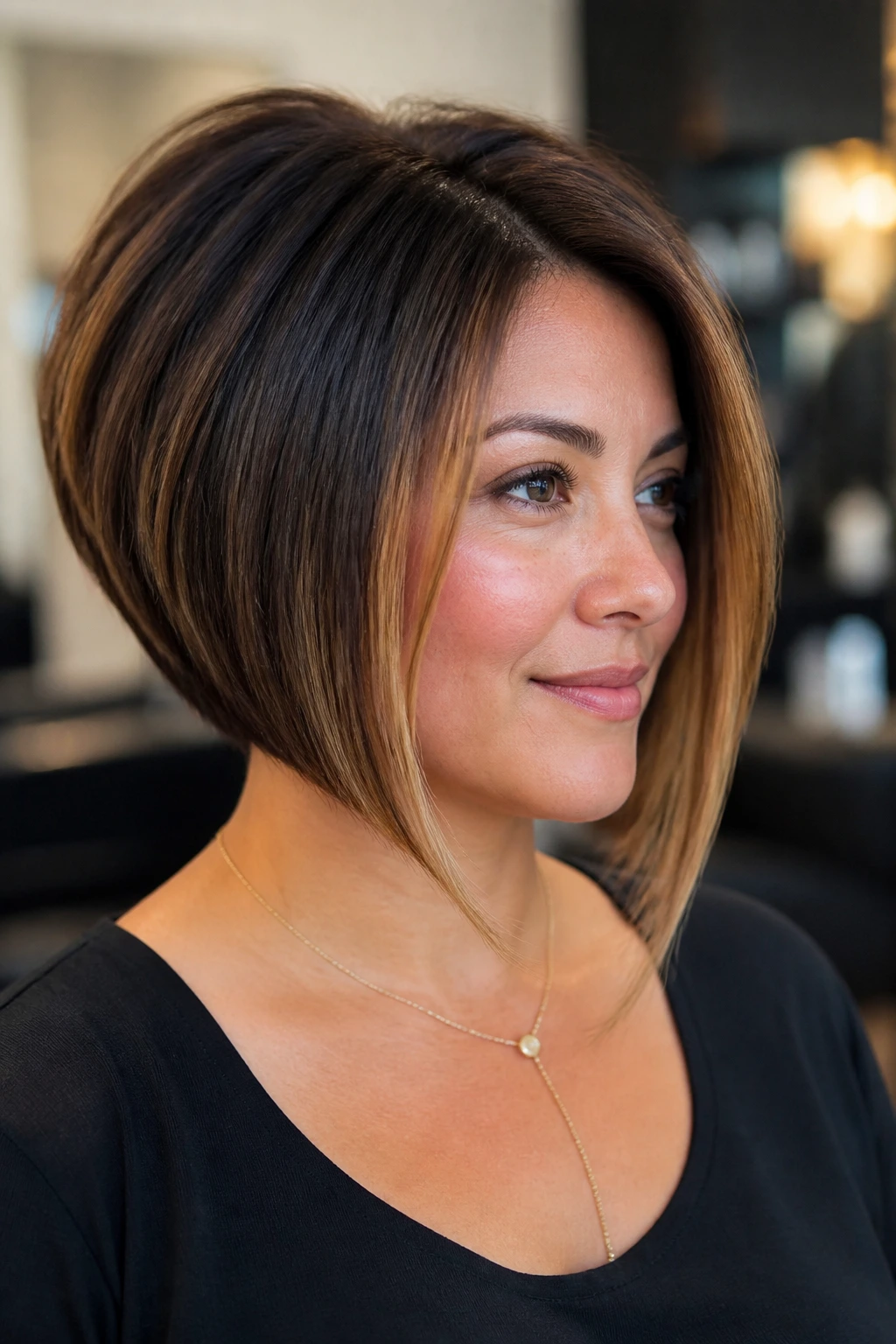
2. Rounded A-Line Bob with Honey Face-Frame Highlights
Want a bob that narrows the face without feeling too sharp? The rounded A-line does that job beautifully. It’s slightly shorter in the back, longer in the front, and the whole silhouette slopes forward in a way that gives a round face some needed length. The honey highlights at the front warm up the cheeks without making them look wider.
This cut works because the front angles downward instead of stopping at the fullest point of the face. That little detail changes everything. Thick hair benefits too, because the back can be built with controlled volume instead of bulk. If your hair tends to puff under humidity, ask for weight removal under the top layer, not around the perimeter. Perimeter is what gives the bob its shape.
The honey money piece should be bright enough to show, but not so pale that it shouts from across the room. A soft gold-beige tone is usually the sweet spot on medium and warm brunettes. You want it to feel like sunlight, not a streak.
A center part can work here, but I prefer a slightly off-center part. It keeps the front moving and avoids that “too symmetrical” look that can make round features feel fuller.
3. Stacked Bob with Caramel Front Panels
A stacked bob is one of the smartest moves for thick hair because it removes some of the heaviness from the back while keeping the cut full and rounded through the crown. On a round face, that lifted back section creates height where you want it most. The caramel front panels then act like long visual rails, pulling the eye down instead of across.
This is not a timid haircut. It has architecture. The stacked nape gives you that clean, tapered back view, and the front pieces should drop below the jaw enough to create a narrow frame. If the front is too short, the roundness comes back fast. If it’s too long, the stack loses its punch. There’s a narrow sweet zone, and a good stylist will know it.
Caramel works here because it has warmth without the brassiness that can make thick hair look muddy. The front panels can be a little brighter than the rest of the money piece, especially if you want the haircut to show from the front and the side. A gloss finish makes the stacked shape look even sharper.
This one’s for people who like structure. Clean neckline. Defined profile. No fluff.
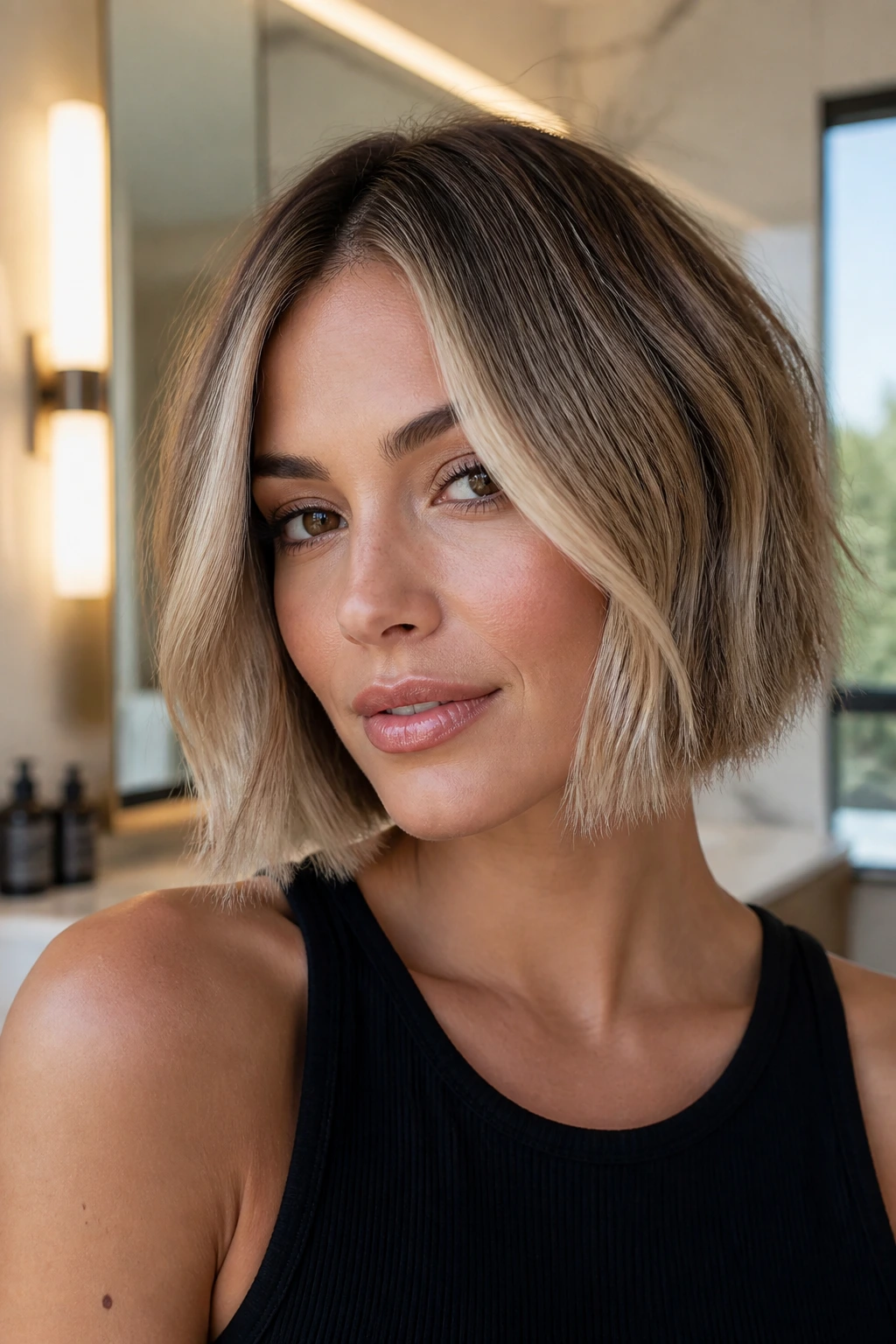
4. Textured Jaw-Length Bob with Beige Blonde Money Piece Highlights
A jaw-length bob can go wrong fast on a round face if it’s cut too blunt and left too smooth. But once you add texture, it wakes up. The ends should be broken up just enough to keep the line from sitting like a ruler across the face. Beige blonde money piece highlights soften the front and add brightness without turning the whole style into a high-contrast block.
The jaw length is the point here. It gives the face a little frame right where it needs it, but the texture keeps the edges from exaggerating fullness. Thick hair needs that movement. Ask for point cutting or light slide cutting through the last inch so the ends don’t sit heavy. If the hair is coarse, a little polishing cream through the surface helps the texture look deliberate instead of frizzy.
I like this cut with a middle part when the face frame is long enough to drop past the cheek. If not, a slightly off-center part will usually flatter more. The money piece should be narrow at the root and a touch broader through the mid-lengths — that gives brightness without taking over the whole front.
It’s a practical bob. Easy to wear. Not precious.
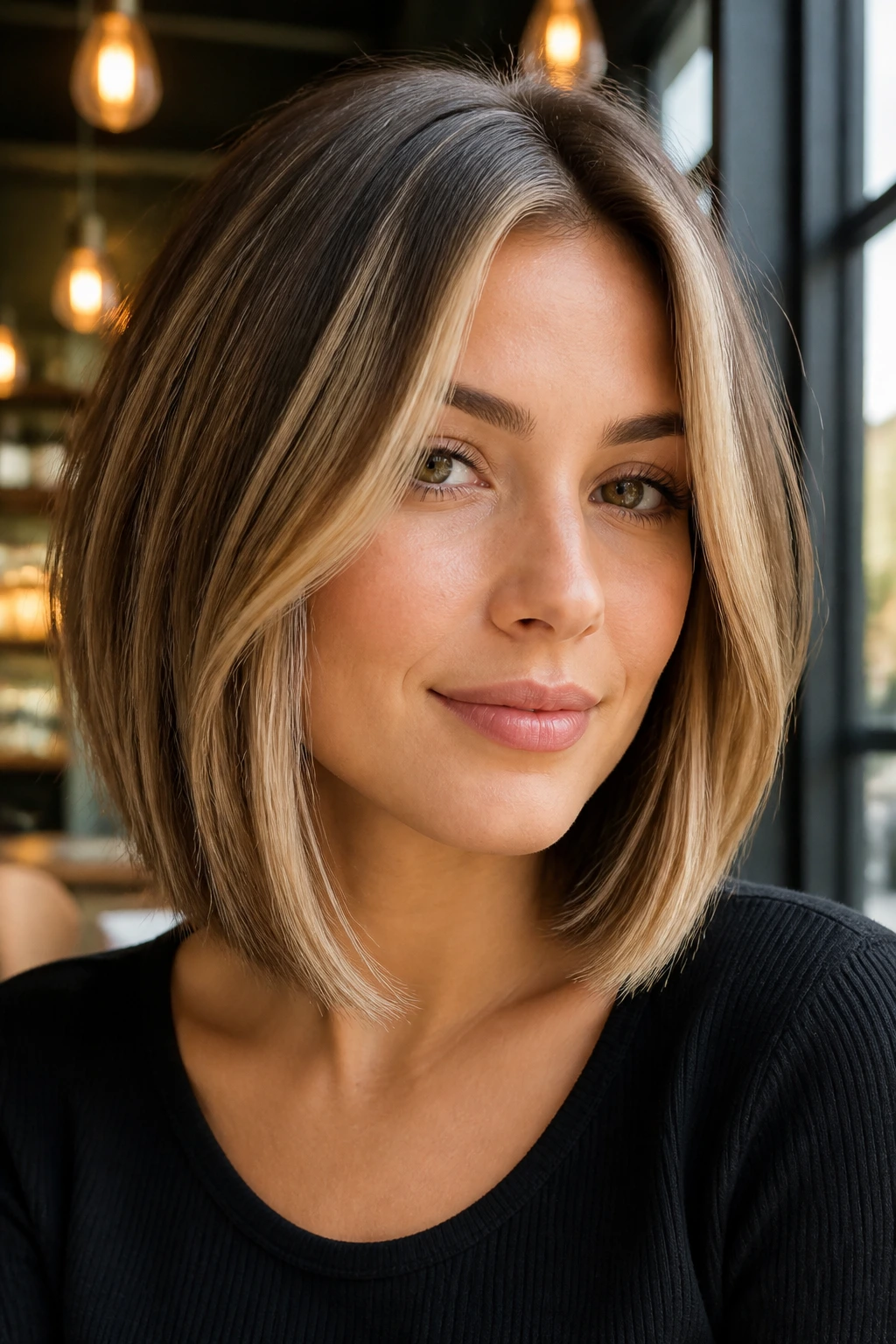
5. Collarbone Bob with Buttercream Highlights
The collarbone bob gives you breathing room. That extra length below the chin keeps a round face from feeling boxed in, and with thick hair, it also means the ends can carry weight instead of puffing outward. Buttercream highlights around the front soften the whole cut and make the face look brighter without the harsh contrast that some blondes bring.
This is a cut I trust when a client wants the bob shape but doesn’t want to give up movement. The front should still be a bit longer than the back, but the difference can be subtle. The shape reads as full, not fluffy. That’s the distinction. Add a loose wave and the bob starts to look more expensive; wear it sleek and the line feels polished enough for work or a dinner out.
Buttercream is a good choice for brunettes who don’t want to cross into pale blonde territory. It sits nicely against medium brown, dark blonde, and warm brunette bases. A root shadow helps keep the grow-out civilized, which matters because face-framing pieces are the first thing people notice when they start to fade.
If your hair is thick, this length is forgiving. It gives you enough weight to control the sides while still letting the front move.
6. Deep Side-Part Bob with Cinnamon Ribbon Lights
A deep side part is one of the easiest ways to change the balance of a round face. It breaks up symmetry immediately, and symmetry is what tends to make round features look even rounder. Pair that with a thick bob and cinnamon ribbon lights, and the result feels diagonal instead of circular.
The part matters more than people admit. Shift it an inch or two off center and the hair at the front starts to fall across the face in a way that narrows the cheeks. On thick hair, that fall has some real weight to it, which is exactly what you want. The cinnamon lights should weave through the front and top layer, not sit in one chunky strip. Ribbons, not bands.
This style has a little old-school glamour baked in. It looks especially good with a bend through the mid-lengths and a tucked side behind one ear. The longer front line does the slimming work, while the warm color keeps the whole thing from feeling too severe.
If your hair naturally resists a side part, damp-set it with clips at the root for ten minutes after blow-drying. That small trick makes the part hold without needing a ton of hairspray.
7. Blunt Bob with Platinum Face Frame Highlights
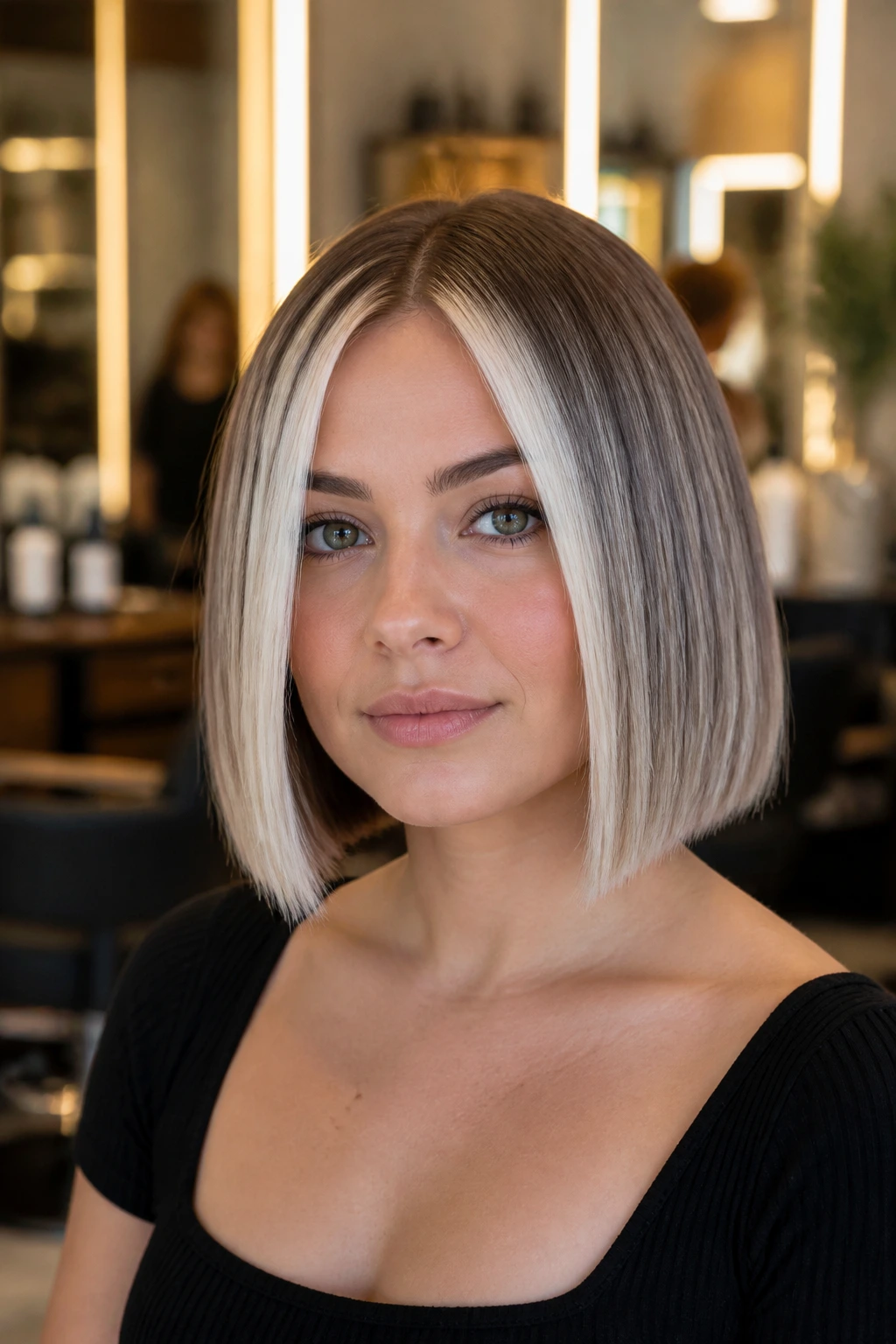
People get nervous about blunt bobs on round faces, and I get why. Done wrong, they sit heavy and boxy. Done right, though, they look sharp in a way that can actually make the face read slimmer. The secret is keeping the line clean while letting the platinum face frame start low enough to stretch the front vertically.
This cut depends on precision. The perimeter should be even, the ends should be polished, and the front should not stop at the widest part of the cheeks. I’d keep the money piece thin at the root and brighter through the middle so it doesn’t create a hard stripe. Platinum works best when the base color has enough depth to support it; otherwise the whole look can go flat.
The blunt edge is useful for thick hair because it keeps the bob looking dense and expensive rather than wispy. That density gives the haircut a strong silhouette. What saves it from looking heavy is the brightness at the front. The eye goes to the light, then down, and that changes the face shape more than people expect.
You need a flat iron or a very good round brush for this one. Air-drying will not give you the same sharpness.
8. Inverted Bob with Champagne Root Shadow
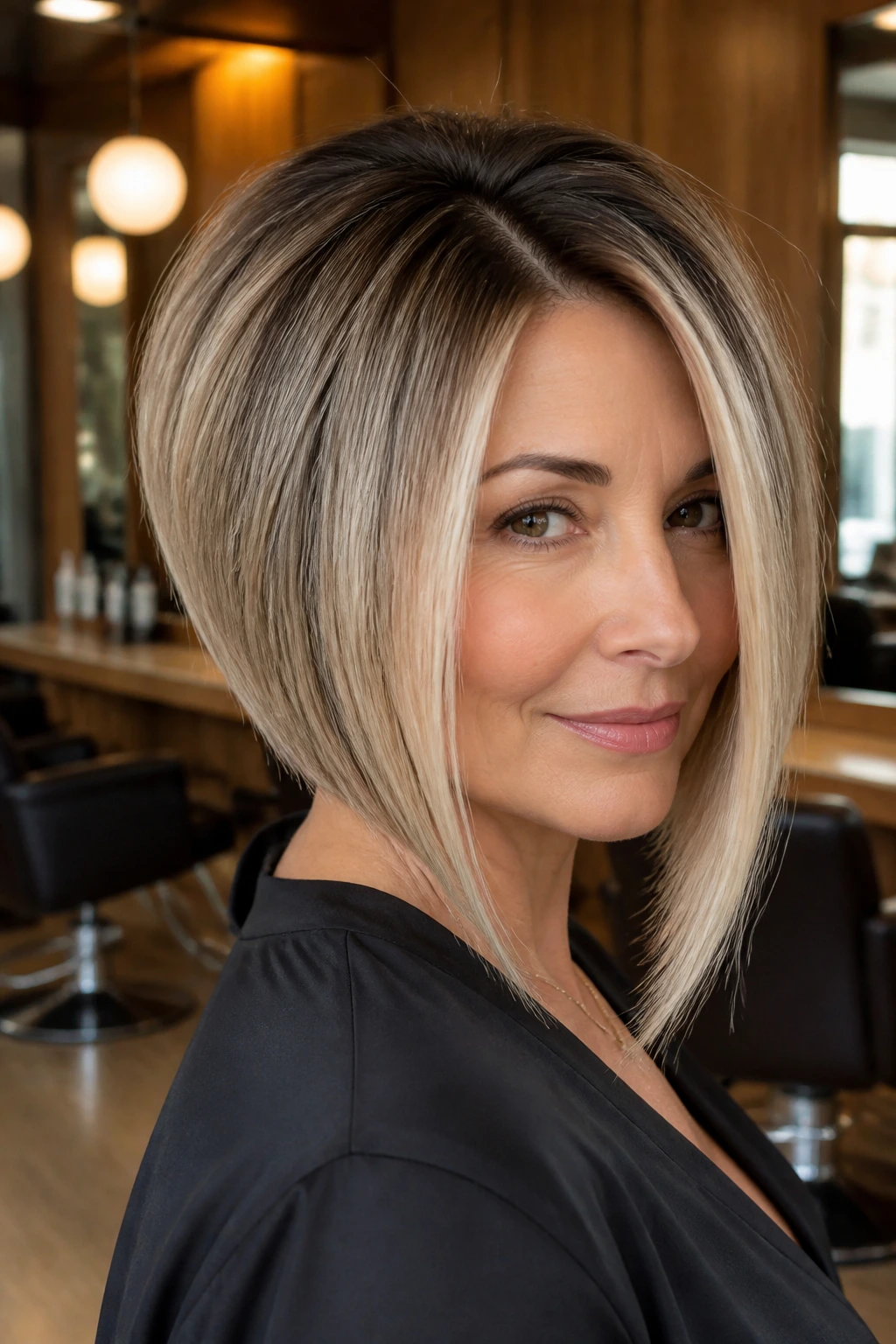
An inverted bob gives you lift in the back and length in the front, which is exactly the geometry a round face often likes. The silhouette creates a forward pull, and the champagne money piece keeps the front airy instead of heavy. A soft root shadow is the part that makes the color feel grown-up rather than stripy.
I like inverted bobs on thick hair because they let you remove weight where it would otherwise sit like a brick. The back can be shorter and tighter, while the front pieces taper into the jaw and collarbone. That contrast creates movement. Without it, thick hair can turn into one big round shape, which is the last thing most people want here.
Champagne is a useful tone because it’s bright but not yellow. It suits cooler brunettes and neutral bases especially well. If your skin leans warm, ask for a champagne-beige blend so the front pieces don’t go icy. The shadow root matters because it keeps the grow-out soft and gives the bob dimension from day one.
This cut looks best with a little bend at the ends. Not curls. Not poker-straight. Just a smooth curve that follows the angle of the cut.
9. Curly Bob with Sunlit Money Piece Highlights
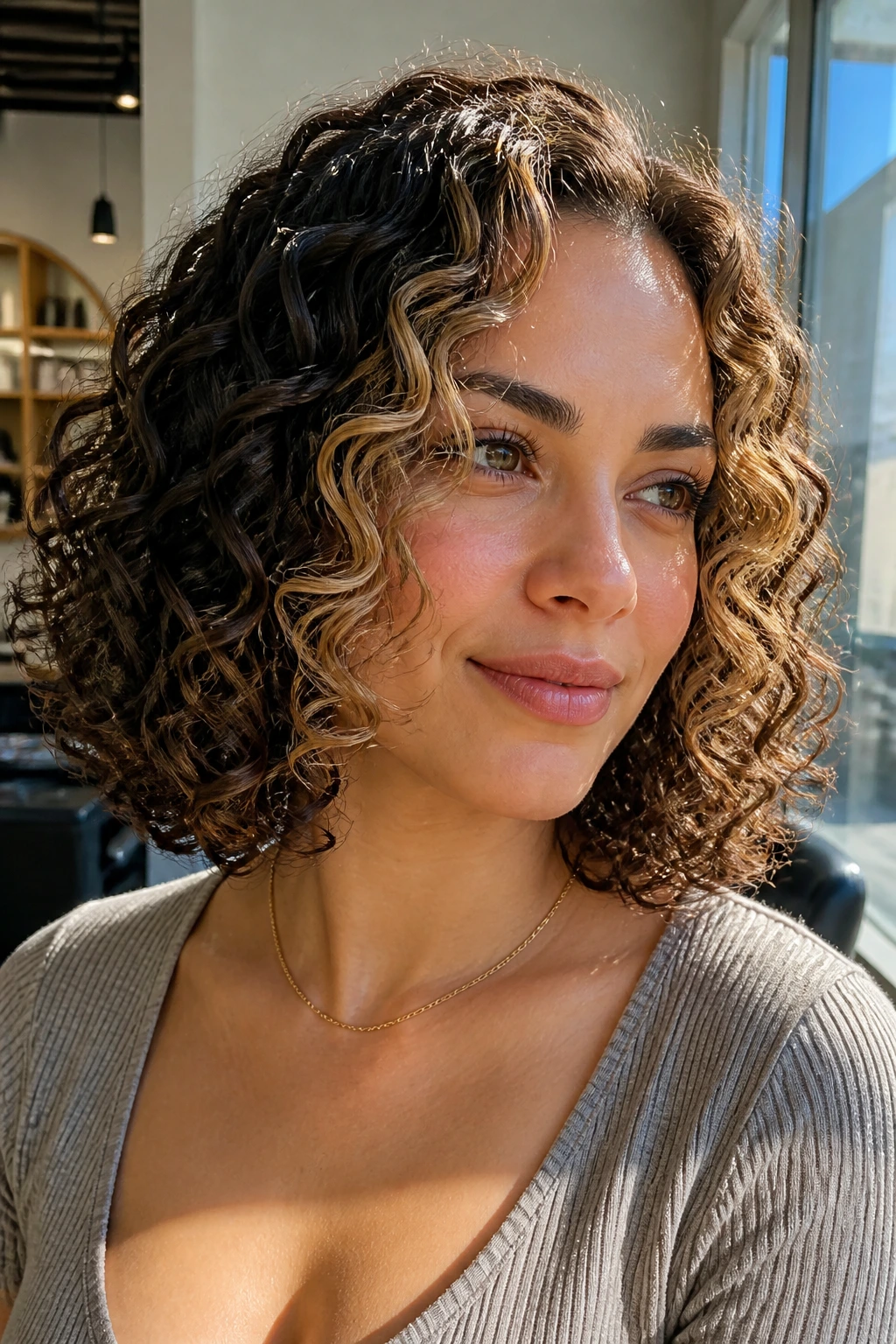
Curly bobs on round faces need strategy, not apology. The shape has to respect the curl pattern and still keep the eye moving downward. A sunlit money piece helps because it creates a bright front edge without forcing the curls to sit flat. That light on the outer pieces can make the whole cut feel lifted.
The biggest mistake with curly bobs is cutting them too short and too evenly. You want some length through the front and a little internal layering so the curls stack without building width at the cheeks. A sunlit highlight — something between beige blonde and soft gold — should sit around the front curls and maybe one or two curls near the temple. Not every curl needs to be bright. That would be chaos.
I prefer this shape when the curls have some spring but not too much shrinkage. If your hair pops up a lot when it dries, your stylist should cut it longer than you think. Curly bobs are sneaky that way. They always shorten.
Use a diffuser, a curl cream that doesn’t dry sticky, and a tiny bit of oil on the ends once the hair is fully dry. The money piece shows the texture best when the curl pattern is defined, not brushed out.
10. Shaggy Bob with Copper Flicks

The shaggy bob is for anyone who wants movement to do some of the face-flattering work. On a round face, the broken layers interrupt the circular outline. Copper flicks bring heat to the front and make the cut feel lively instead of structured. It’s a good match if your thick hair tends to sit heavy and needs a little rebellion.
This is not a sleek bob pretending to be casual. It’s genuinely textured. The layers should be light enough to create separation, but not so choppy that the bob loses its body. Thick hair can handle more texture than fine hair, and in this cut, that density helps. Copper around the face warms the complexion and pulls attention upward, especially if the brighter pieces are tucked into the top layer.
The shaggy bob is one of the few bobs that actually improves when it’s not over-styled. Let it dry with a diffuser or a rough blow-dry, then break up the front pieces with a matte paste. You want movement at the ends and a little air around the cheek area.
It’s a little undone. That’s the point. If you like hair that looks touched, not lacquered, this one’s hard to beat.
11. Italian Bob with Creamy Blonde Front Pieces
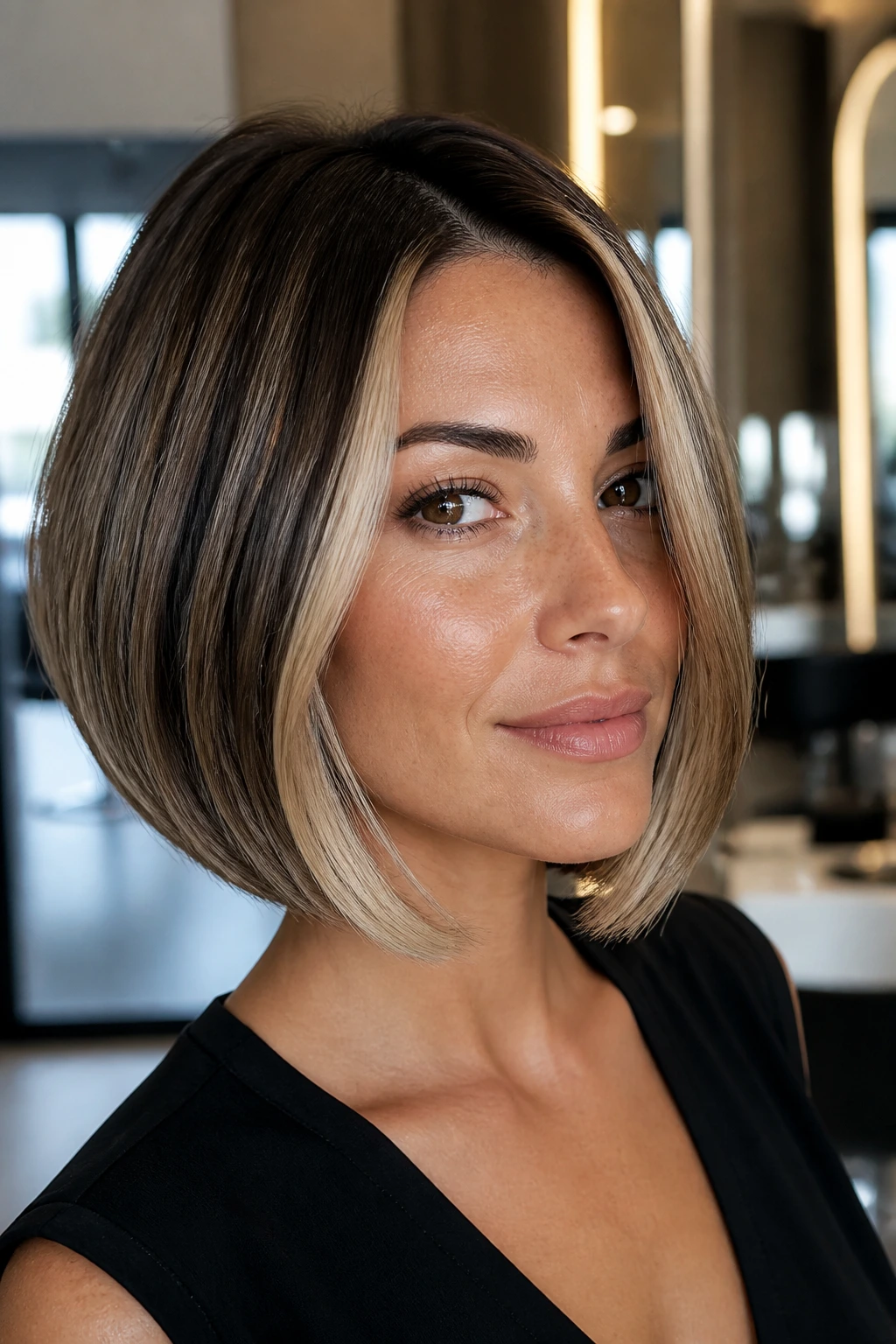
The Italian bob has weight, shine, and a certain plushness that works beautifully on thick hair. On a round face, the cut needs a tiny bit of forward length so the fullness doesn’t sit all around the cheeks. Creamy blonde front pieces keep it bright and elegant, especially when the rest of the color stays deeper.
This is one of my favorites when someone wants a bob that feels expensive without being fussy. The perimeter is full. The ends are blunt or only slightly beveled. The front pieces should be long enough to skim the jaw, not sit right on top of it. That little difference keeps the silhouette from going too round.
Creamy blonde is softer than platinum, which makes it easier to wear with the Italian bob’s heavier shape. You get brightness near the face, but the color doesn’t steal the whole haircut. A gloss finish can be a good idea here, because this style depends on shine. Flat color makes the whole thing feel dull.
If your hair is coarse, a smoothing cream before blow-drying helps the bob curve under instead of sticking out. A big brush, a little patience, and a cool shot at the end do most of the work.
12. Tousled Wavy Bob with Mocha Dimension

A tousled wavy bob gives a round face texture to work with, and texture is often the missing ingredient. When the waves break up the outline, the face reads less wide. Mocha dimension keeps the color grounded, which matters if your hair is thick enough to swallow lighter pieces. You want contrast, not clutter.
This cut is especially good if your natural texture is somewhere between straight and wavy. You don’t need perfect curls. In fact, perfection would be the wrong goal. The movement should be soft and irregular, with the front pieces a touch longer than the rest so they drop past the cheeks. That gives the money piece a job to do.
Mocha highlights are underrated. They don’t shout, but they add depth around the face and through the lower layers. On dark brunettes, they stop the bob from looking like one solid block. A few brighter front pieces can still sit near the cheekbones, but the rest of the color stays subtle.
This one looks best with a 1.25-inch iron wrapped loosely away from the face, then brushed out with fingers. Don’t overthink it. The charm is in the softness.
13. Center-Part Bob with Peekaboo Money Piece Highlights
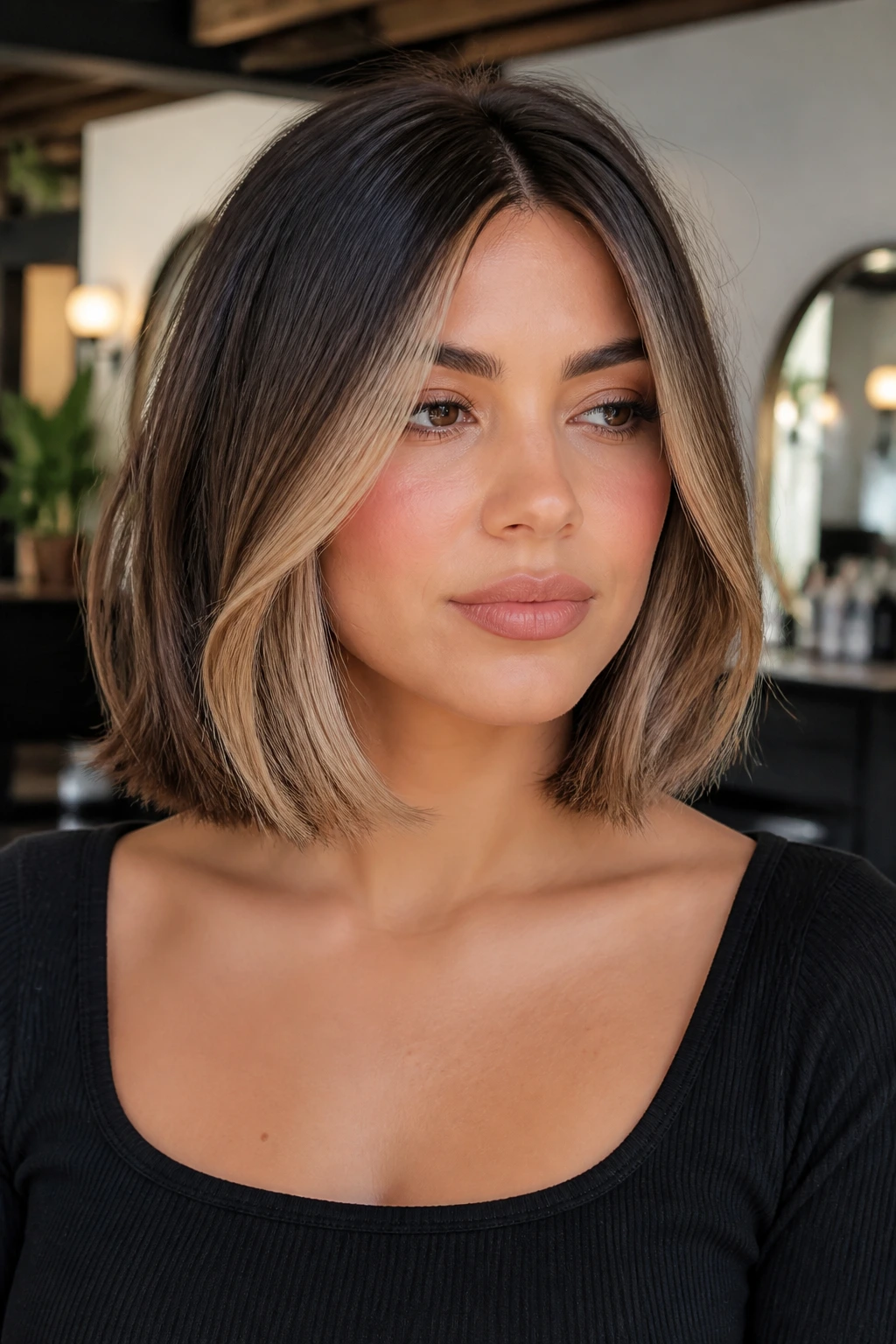
A center part is not off-limits for a round face. It just needs help. The bob has to be long enough, the front pieces need enough movement, and the money piece should be bright without turning into a hard stripe. Peekaboo highlights work because they show as you move, not all at once.
This cut relies on length and balance. I’d keep it at least at chin length, often a little longer, so the center part doesn’t flatten the cheeks. Thick hair helps here because the shape has enough body to hold the part without collapsing. The peekaboo front pieces can be tucked under a top layer, which keeps the brightness soft and a little mysterious. I know, that sounds dramatic. But it’s accurate.
What I like most is how this cut changes when you turn your head. Straight on, it’s neat. At an angle, the color pops through and pulls the face into a longer line. If your hair tends to go flat in the middle, a light volumizing spray at the roots and a round brush at the crown will fix most of it.
It’s a clean look. Not severe. Clean.
14. Chin-Length Bob with Curtain Bangs and Apricot Glow

Curtain bangs can be a gift on a round face when they’re cut with enough softness to open at the cheekbones. Paired with a chin-length bob, they add a little vertical framing up front without chopping the face in half. Apricot glow is the color move that keeps this cut warm and fresh.
The bangs should not be too short. If they stop high on the forehead, they can make the face look broader. Let them sweep from the center and break around the cheek area. That shape works because it creates a diagonal, and diagonals are your friend here. The chin-length bob underneath holds the body, which matters on thick hair because the bangs need a solid base, not a flimsy one.
Apricot is especially nice on warm brunettes and dark blondes who want brightness without going pale. It can sit in the money piece and through the curtain bangs, or it can be used more lightly through the front layers. I prefer a slightly faded apricot, not a neon peach. The softer tone gives the haircut a polished feel.
This one looks best when the bangs are blown back and away from the face, not flattened down. Give them a little bend. Always.
15. Layered Bob with Sliced Blonde Pieces
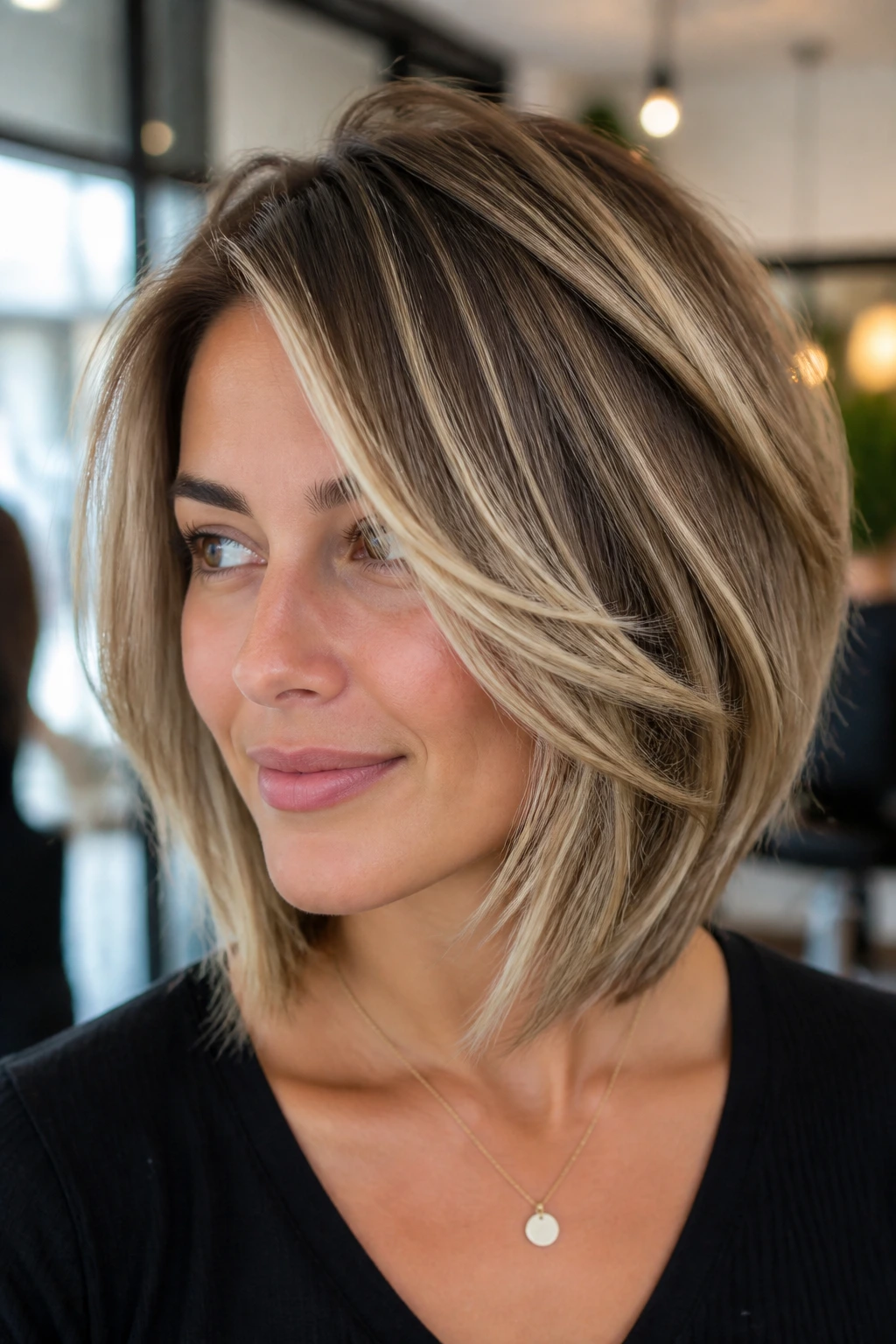
A layered bob is one of the best answers for thick hair that wants to expand at the sides. The layers carve out weight so the shape can move, and sliced blonde pieces keep the front from disappearing into the rest of the cut. On a round face, that separation matters.
The trick is not to over-layer. Too many short pieces and the bob gets fluffy. Too few and it turns into a heavy block. You want internal shape, especially through the lower half of the cut, so the perimeter still looks full. Sliced highlights are useful because they run along the layers and show the motion of the haircut instead of sitting on top like decoration.
This style is a little more modern than the classic blunt bob, but still wearable. The blonde pieces can be cool, beige, or neutral depending on the base color. What matters most is that they show some vertical movement through the front and around the crown, not just a bright panel at the temple.
If you have thick hair and worry about bulk, this is one of the most forgiving options on the list. It gives you shape without taking away the fullness that makes a bob feel expensive. That’s a good trade.
16. Box Bob with Ash-Beige Money Piece Highlights
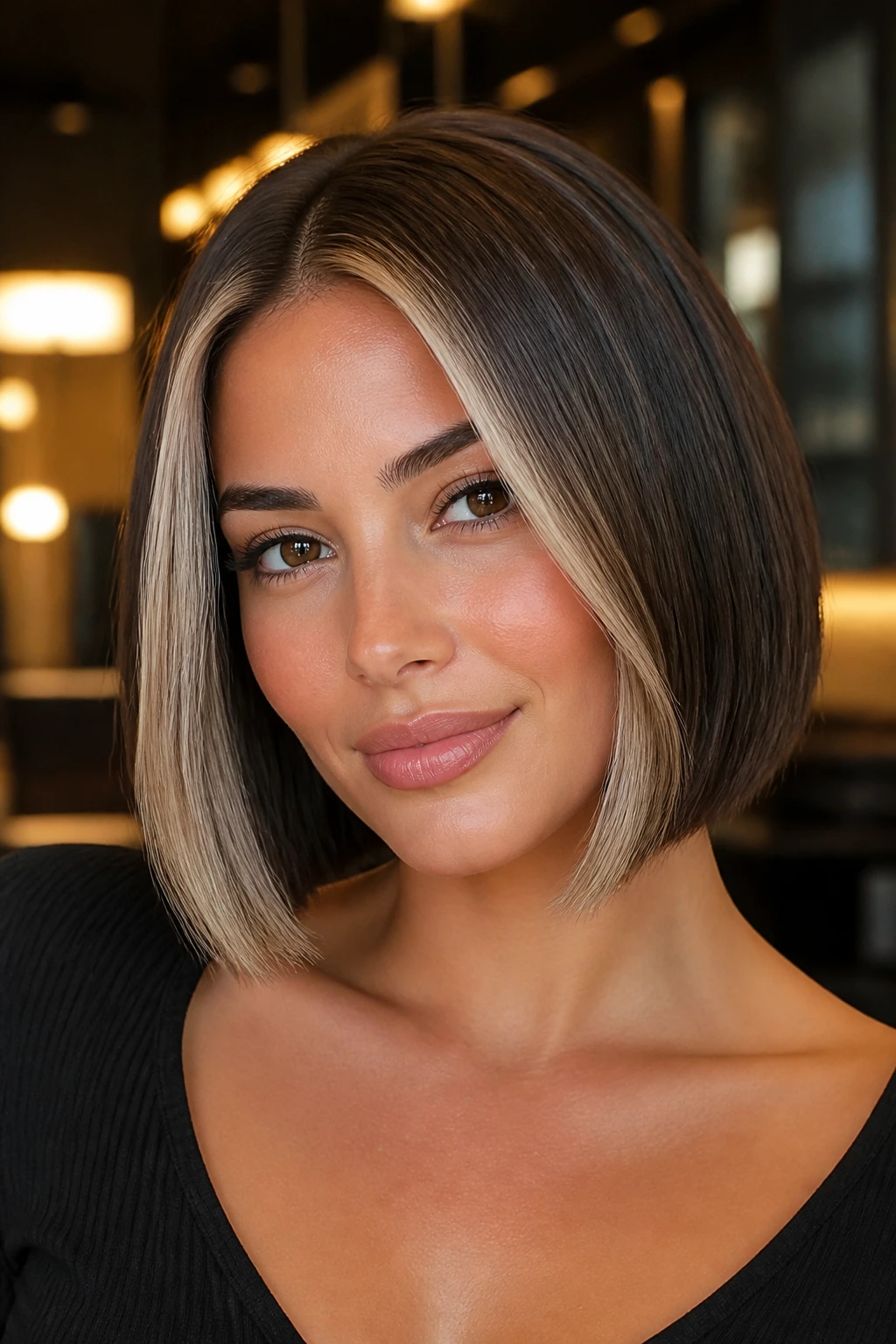
A box bob is all about clean edges and a controlled shape. On a round face, that can sound risky, but it works when the front stays slightly longer and the money piece adds a cool, sharp frame. Ash-beige is the color that keeps the cut from looking too warm or too wide.
The box bob sits straighter than a rounded bob, which means the perimeter is more graphic. Thick hair is useful here because it gives the line real substance. The danger is puffiness at the sides, so the internal shape needs to be slimmed a little. Not thinned to death. Just cleaned up. The ash-beige money piece should sit high enough to show the cheekbones and low enough to avoid a stripe across the forehead.
This cut feels modern, a little severe in a good way, and perfect if you like wearing sharp eyeliner or structured clothes. It doesn’t need much styling once it’s cut well. A blow-dry with the nozzle pointed downward and a final pass with a flat brush usually does enough.
If your skin tone is warm, ask for a warmer ash-beige rather than a blue-toned blonde. Otherwise the contrast can get too harsh.
17. Rounded Bob with Side-Swept Fringe and Golden Ribbons
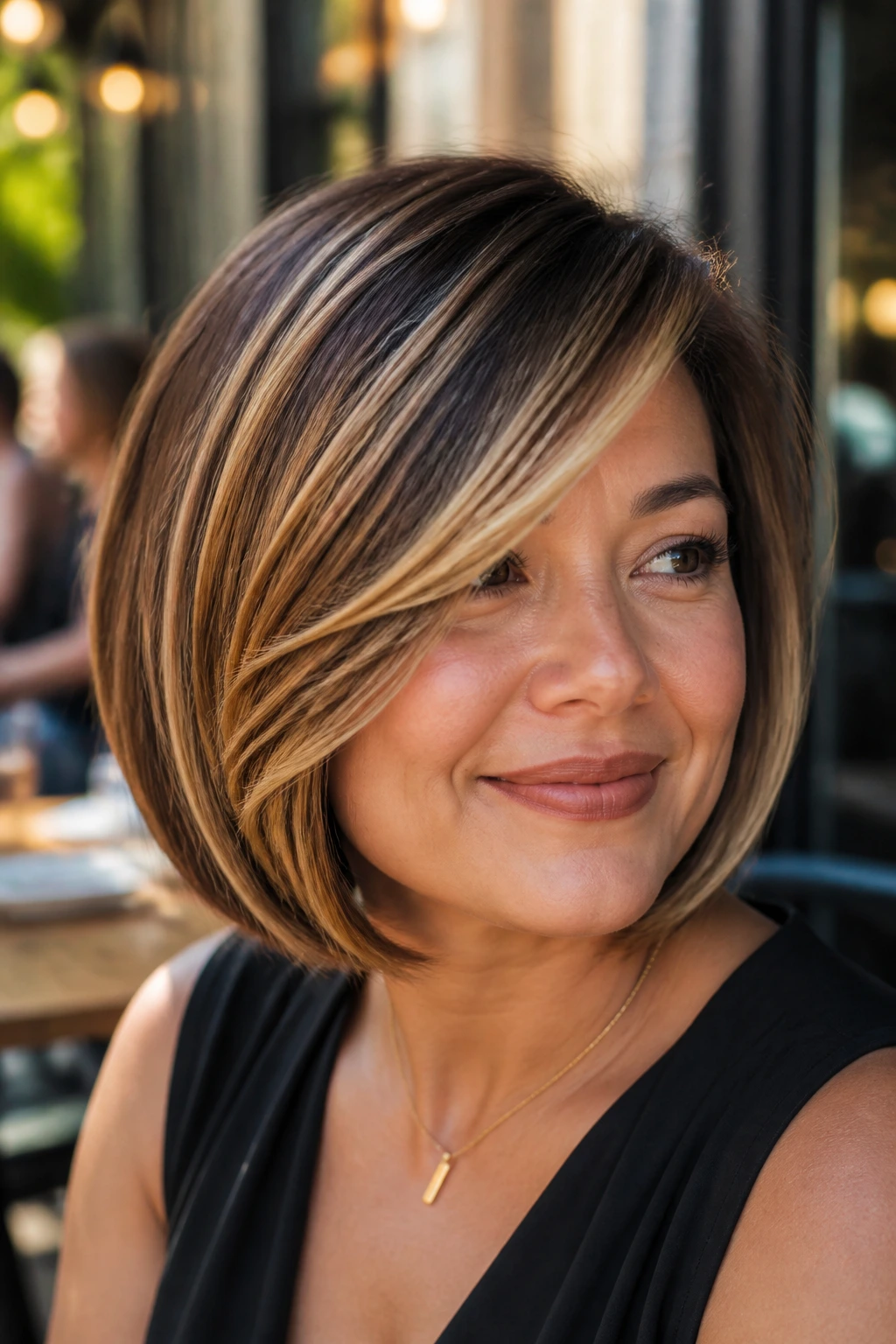
A rounded bob can flatter a round face if the roundness lives in the haircut, not just on the face. That sounds obvious, but it’s the difference between soft shape and accidental puff. A side-swept fringe breaks the symmetry, and the golden ribbons add movement right where the eye needs it.
This cut is useful for thick hair because it lets the density do the work. The rounded shape can sit full at the ends while the fringe angles the top half of the face. That diagonal line through the bangs is the secret. It slices across the widest point and makes the whole look less circular. Golden ribbons are a good match because they brighten the front without taking away the fullness that makes this bob feel plush.
I like this one best when the fringe is long enough to blend into the side section. Short, blunt fringe can fight the face shape. A long sweep is softer. The color should be placed so the brightest strands hit the side of the fringe and the front curve near the cheekbone.
This is a good example of a cut that looks better with a little movement. Run a brush through it too much and the shape collapses. A fingertip finish is enough.
18. Undercut Bob with Bright Front Streaks
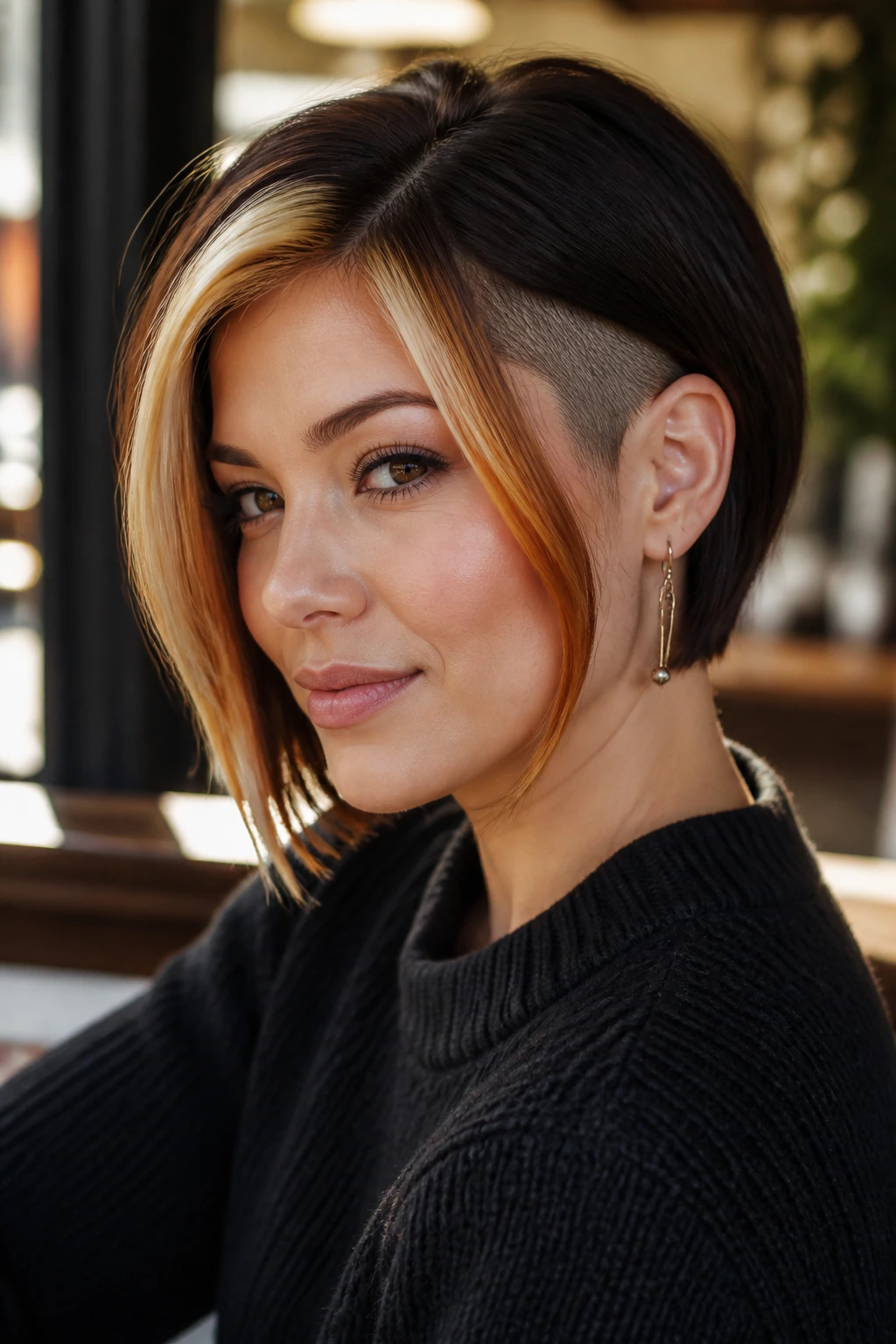
An undercut bob is a relief for thick hair. It removes hidden bulk from underneath so the top layer can sit clean instead of puffed out. On a round face, that matters because the sides stay under control. Bright front streaks then pull the focus upward and forward, which helps the face look longer.
This is the bolder option in the group. You won’t see the undercut unless the hair moves, but you’ll feel the difference every day because the bob dries faster and sits flatter at the nape. The front streaks can be blonde, copper, or even a pale beige tone depending on how dramatic you want it. The whole point is contrast. Not chaos. Contrast.
If you wear your hair tucked behind the ears often, this shape is especially satisfying because the clean back and bright front pieces show off the cut. It also plays well with strong brows and a little makeup definition, since the haircut already has a bit of edge.
Ask your stylist to keep the visible perimeter thick enough that the bob still reads as full. Too much removal underneath and the shape starts to fall apart. You want controlled, not shaved down to nothing.
19. Air-Dried French Bob with Biscotti Highlights

The air-dried French bob is for people who want the haircut to do the talking even when they barely touch it. On a round face, the slightly undone texture stops the shape from getting too perfect, which is a good thing. Biscotti highlights keep the front soft, beige, and lived-in rather than stark.
This cut works because it doesn’t rely on constant heat styling. The ends can bend a little on their own, the crown can have a bit of lift, and the money piece sits like a quiet frame instead of a neon sign. Biscotti is one of my favorite tones for this because it sits between warm and cool. It flatters a lot of skin tones and grows out with fewer complaints.
Thick hair gives this style more body than fine hair ever could, which is a big advantage. The bob should be cut to encourage natural movement, not fight it. A little texture spray on damp hair, a light scrunch, and then hands off for ten minutes can be enough. Seriously. Sometimes the best move is leaving the hair alone.
This one is easy to wear with jeans, a blazer, or a dress shirt. It doesn’t care. The cut has enough character on its own.
20. Asymmetrical Bob with Champagne Pop Highlights
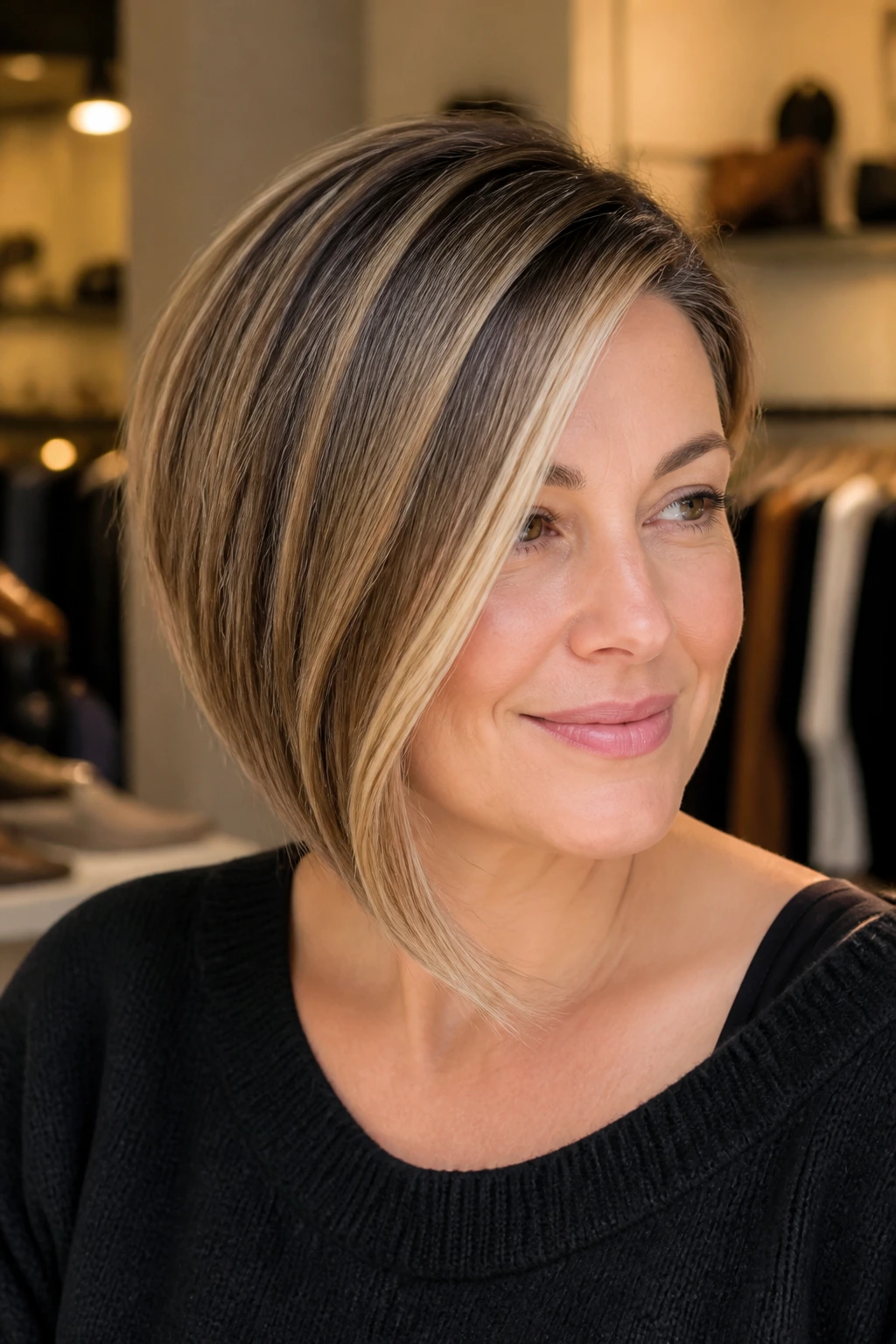
An asymmetrical bob is one of the cleanest ways to steer a round face into a longer line. One side falls slightly longer than the other, and that imbalance makes the eye travel instead of stopping in the middle of the cheeks. Champagne pop highlights at the front help exaggerate that line in a good way.
The asymmetry should be noticeable, but not theatrical unless that’s your thing. A difference of an inch or two is often enough. Thick hair gives the shape some weight so it doesn’t look accidental. The longer side can skim the jaw or slip just below it, while the shorter side opens the neckline a bit more. That mix gives the bob motion even when it’s worn straight.
Champagne pop is bright without being icy, which means the front pieces can carry the look without overpowering the base color. If you wear your hair parted on the shorter side, the longer front tends to fall across the face and create an even stronger slimming line. If you wear it on the deeper side, the bob feels a little more dramatic.
This is a good choice if you don’t want a haircut that feels safe. It has shape. It has point of view.
21. Midi Bob with Internal Layers and Toffee Money Piece Highlights
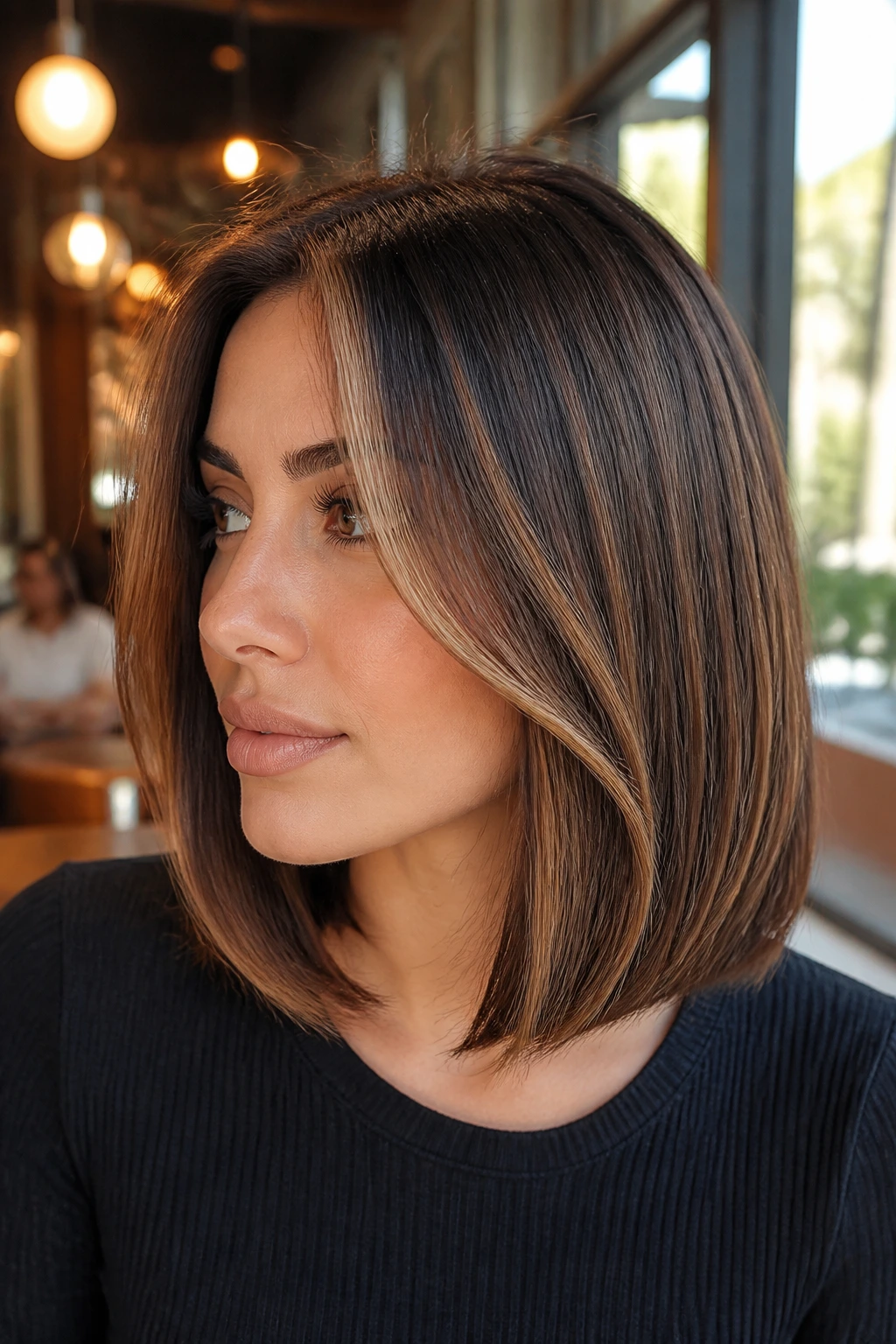
A midi bob lives between a classic bob and a lob, and that in-between length can be very friendly to a round face. It gives you enough hair to fall below the cheeks while still feeling like a bob. Internal layers keep the bulk from turning boxy, and the toffee money piece adds warmth right where the face needs movement.
This is a smart pick for thick hair because the length uses the hair’s weight instead of fighting it. The internal layers should be hidden enough that the outside line still looks full and clean. The money piece can start softly around the cheekbone and blend into the front layers. Toffee works especially well on chestnut and dark blonde bases because it adds dimension without a dramatic color shift.
I like this cut for people who want low drama, high payoff hair. It grows out gracefully, it styles with a brush or a wave wand, and it doesn’t scream for attention. But it still frames the face. That balance is rare.
If you want a little extra lift, flip the ends under with a round brush instead of straightening them flat. The slight curve keeps the silhouette controlled.
22. Razored Bob with Wheat Blonde Panels
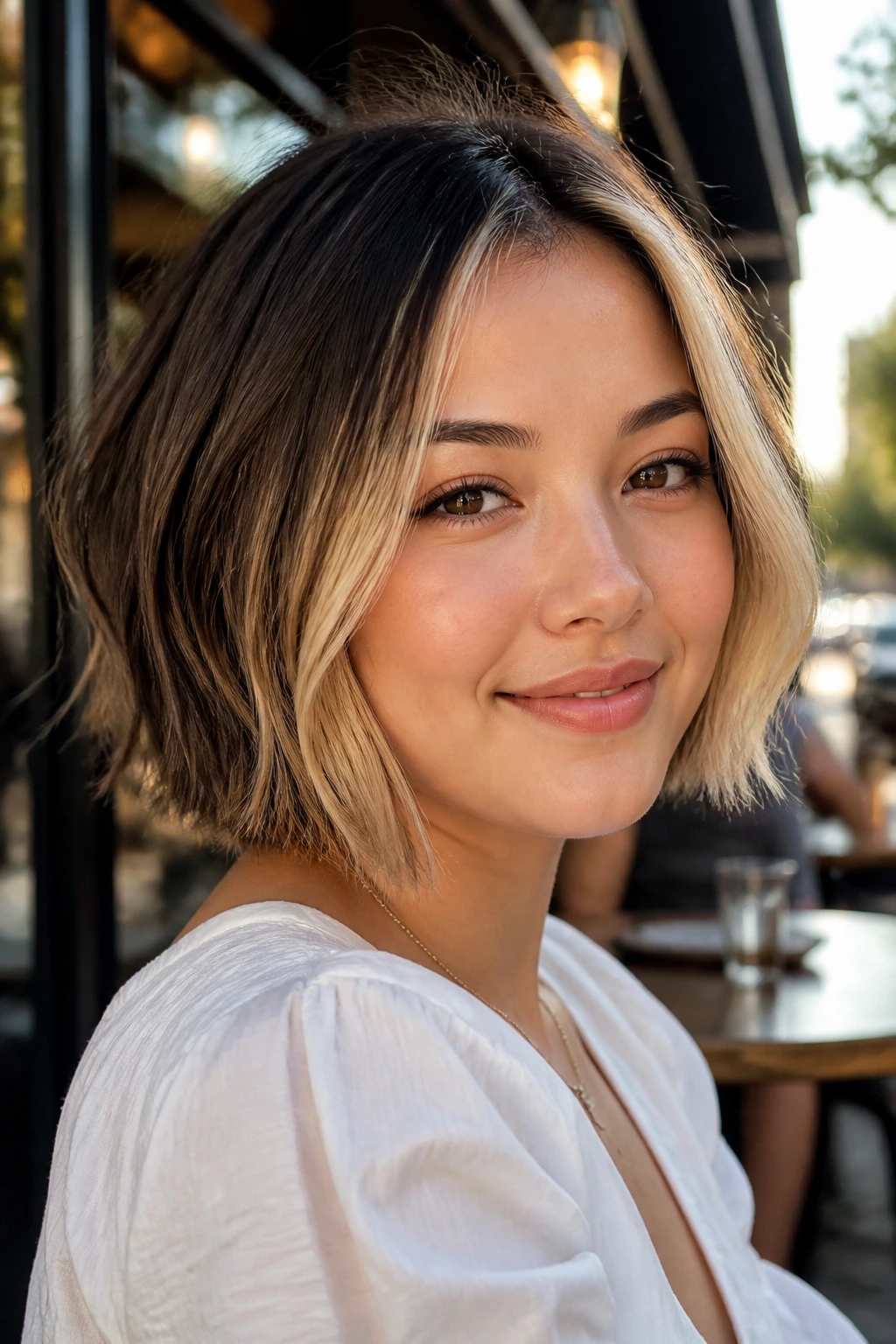
A razored bob is not for every hair type, and I’ll say that plainly. On thick hair, though, it can be fantastic because the blade takes out bulk and leaves movement through the ends. Wheat blonde panels soften the front and keep the haircut from looking too hard, which is useful on a round face.
The razor gives the bob broken edges. That means it won’t sit like one heavy slab. It also means the hair can move more freely around the cheeks and jaw. The front panels should be bright enough to frame the face but not so light that they look disconnected from the base color. Wheat blonde is a useful middle ground. Soft. Calm. Easy to grow out.
You do need a stylist who knows how to razor thick hair without shredding it. When it’s done badly, the ends frizz and the shape falls apart. When it’s done well, the movement looks effortless. That’s the whole game here. The color should support the movement, not fight it.
If your hair has a slight wave, this cut can look almost beachy with very little styling. If it’s straight, use a smoothing serum and a bend at the front pieces. That gives the razored ends something to do.
23. Cropped Bob with Soft Side Bangs and Chestnut Frame
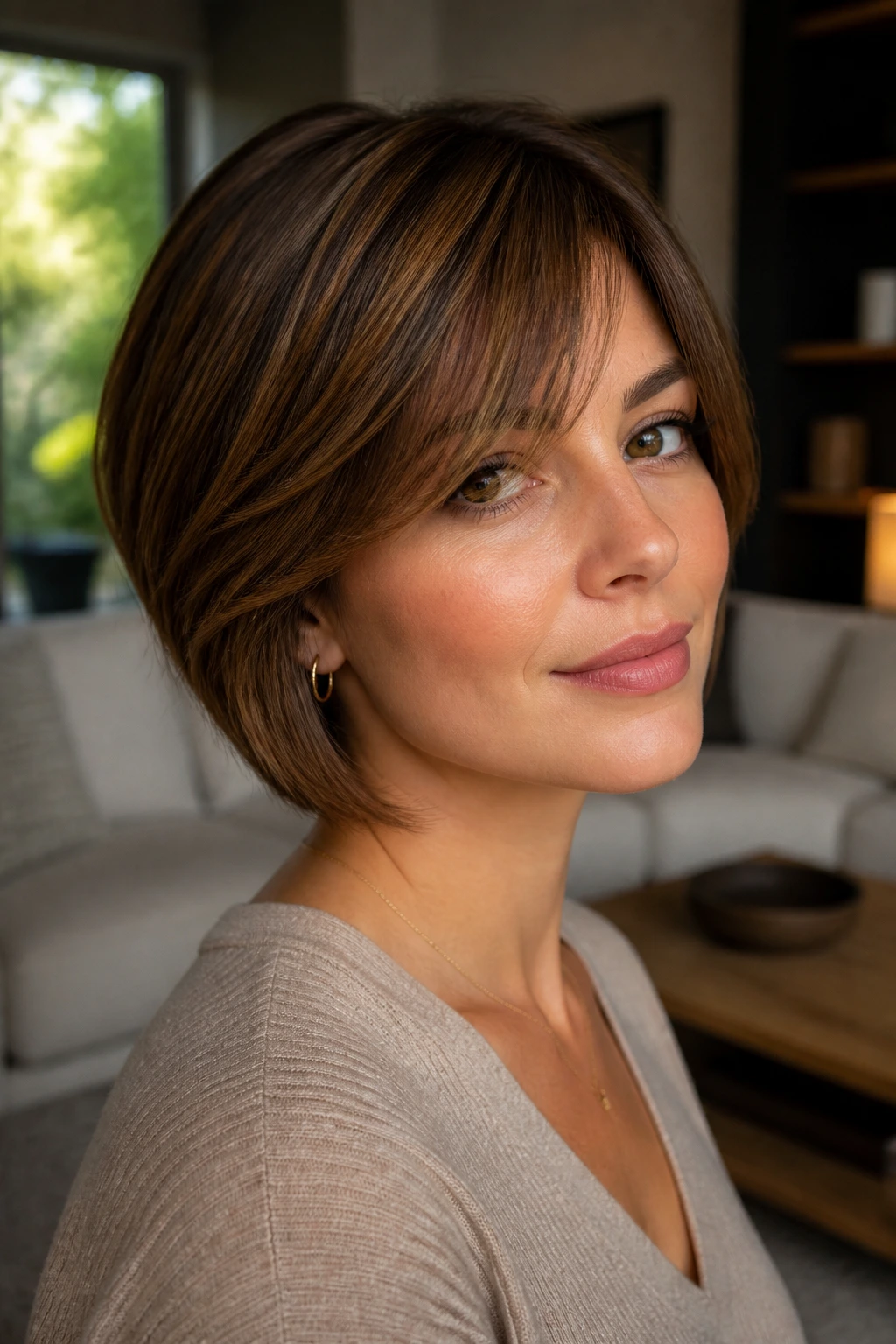
A cropped bob can work on a round face if the front is handled carefully. The side bangs are doing the heavy lifting here. They cut diagonally across the forehead and give the face a stronger angle, while the chestnut frame adds depth around the perimeter so the shape doesn’t read too wide.
This is a short look, so the details matter. The ends should still have a bit of length near the jaw, even if the nape is cropped close. Thick hair helps the cut hold its shape, but it also means you need discipline from the stylist. Too much width at the cheeks and the bob turns puffy. The side bangs should blend, not sit like a separate piece.
Chestnut is a nice choice because it keeps the haircut soft and rich. If the base color is dark, a few lighter front strands can still give the face brightness without making the whole look high-contrast. I like this shape with a tucked side and a little lift at the crown.
It’s shorter than most people expect, but that’s part of the appeal. It feels crisp. If you like a clean neckline and a face-framing fringe, this one delivers.
24. Blowout Bob with Creamy Face Frame Highlights
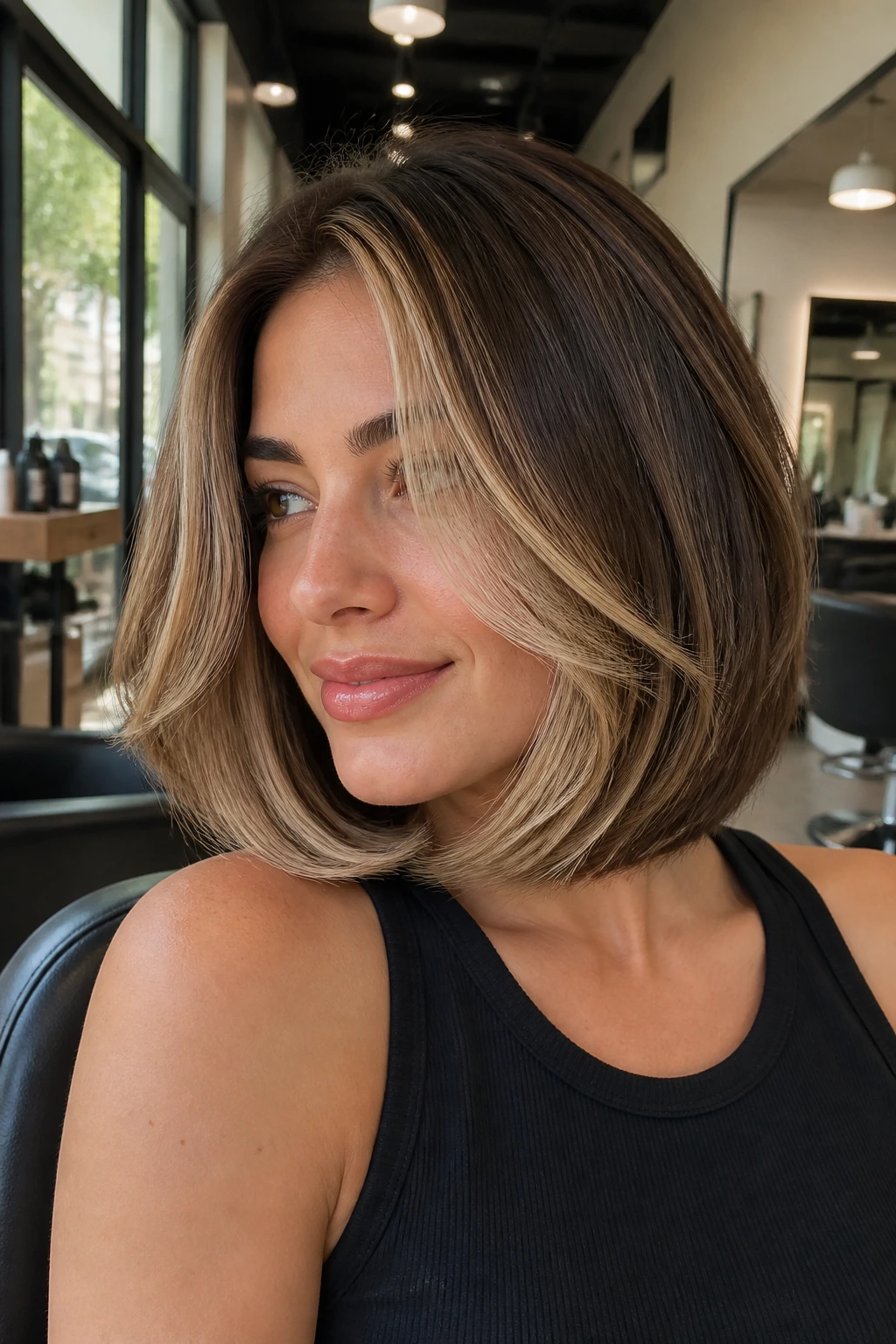
A blowout bob is all about bounce, and bounce can be your ally when the round face needs a little length. The key is not to flip the ends outward. Keep them curved under or softly bent around the jaw. Creamy face frame highlights brighten the front and make the whole shape look lifted.
This style gives thick hair a chance to behave instead of just exist. The round brush creates tension at the root, smooths the mid-lengths, and builds a little bend through the ends. That bend is what keeps the silhouette from going puffy. Creamy highlights around the face can start a little below the temple and run through the front layers so the eye travels down and in.
I like this cut when you want a polished finish without a flat, stiff look. It can be glossy and soft at the same time. If your hair holds a blowout well, this is a strong option. If it doesn’t, Velcro rollers at the crown for ten minutes can rescue the shape.
There’s a reason this one keeps showing up in salons. It flatters on camera, in daylight, and in the boring in-between moments when you’re just running errands.
25. Curved Bob with Espresso Base and Bright Cheekbone Lights
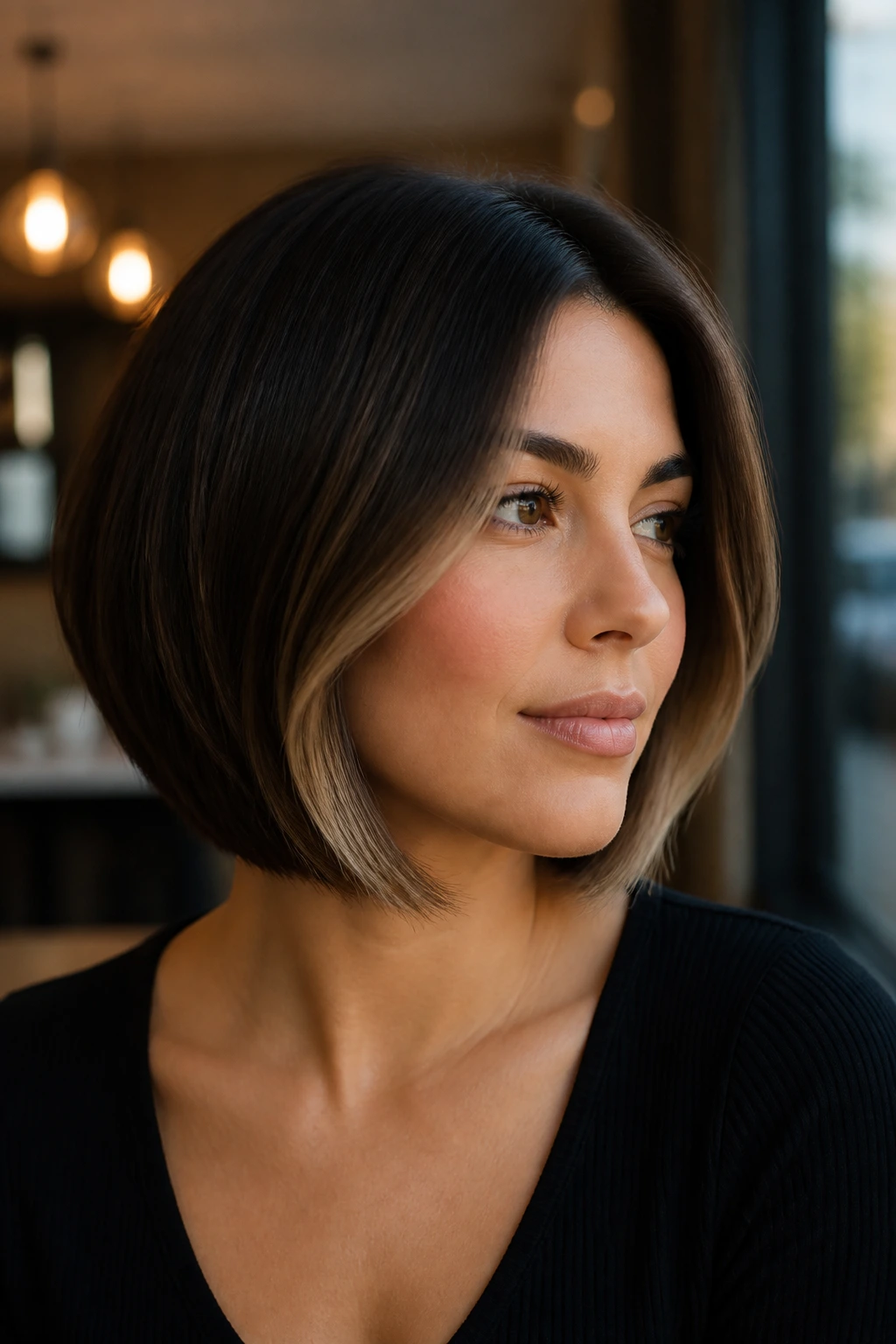
A curved bob wraps the hair slightly inward so the ends sit close to the neck instead of flaring outward. On a round face, that curve is useful because it creates a cleaner frame below the cheek. Bright cheekbone lights add lift right where the face needs a focal point, while the espresso base keeps the cut grounded.
This is one of the best choices for thick hair that tends to widen at the sides. The curve keeps the silhouette neat. The heavier base color makes the bright pieces stand out more, which is handy if you want the face-framing effect to be obvious. Those lights should be placed just under the cheekbone and softened through the front so they don’t look like a harsh stripe.
The haircut itself can be simple. That’s part of the appeal. The shape does the work, and the color gives it a little spark. Wear it sleek for a sharper line or with a slight wave if you want the front pieces to move more freely.
It’s a strong finish to the list because it does exactly what a good bob should do: frame the face, keep the thickness under control, and leave you looking like you meant it.
How to Brief Your Stylist So the Bob Falls in the Right Place
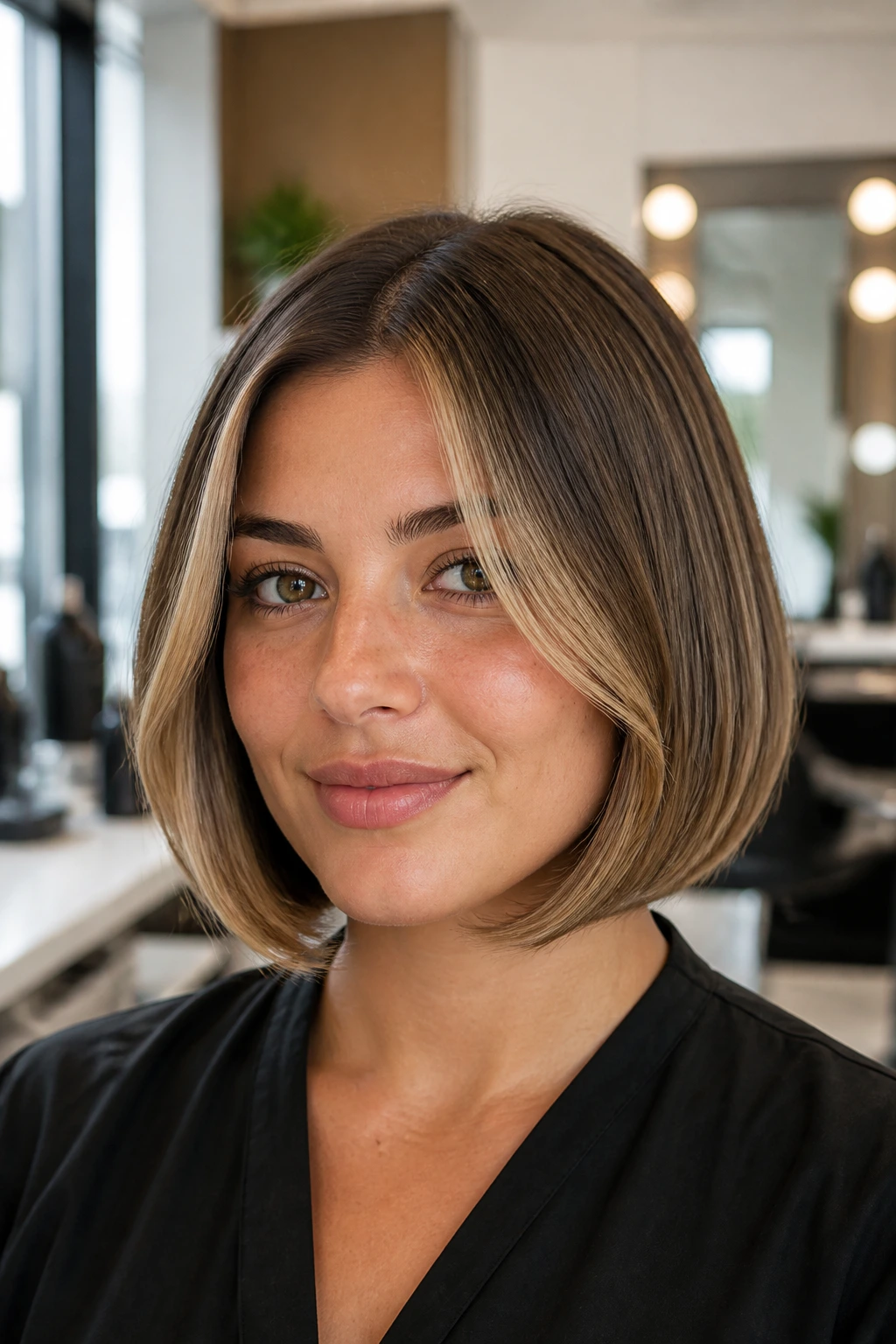
Bring reference photos, yes, but don’t stop there. Photos show shape. They do not always show length relative to face size, hair density, or the way a money piece is placed at the front. Tell your stylist where you want the perimeter to land — chin, jaw, or collarbone — and be specific about whether you want the front longer than the back by a little or by a lot.
The money piece conversation matters even more. If you want face-framing highlights that slim rather than widen, ask for brightness that starts near the high cheekbone or just below the brow, then softens through the front layers. For a round face, a harsh bright block at the temple can spread the face out visually. A thinner, elongated front light usually works better.
If your hair is thick, ask how much internal weight removal they plan to do. Too little, and the bob balloons. Too much, and it turns wispy and loses the thick-bob look that made you want it in the first place. I’d rather see a strong outer line with smart debulking underneath than a thin, over-layered mess.
The Tools That Keep Thick Bobs Smooth, Lifted, and Shiny
-
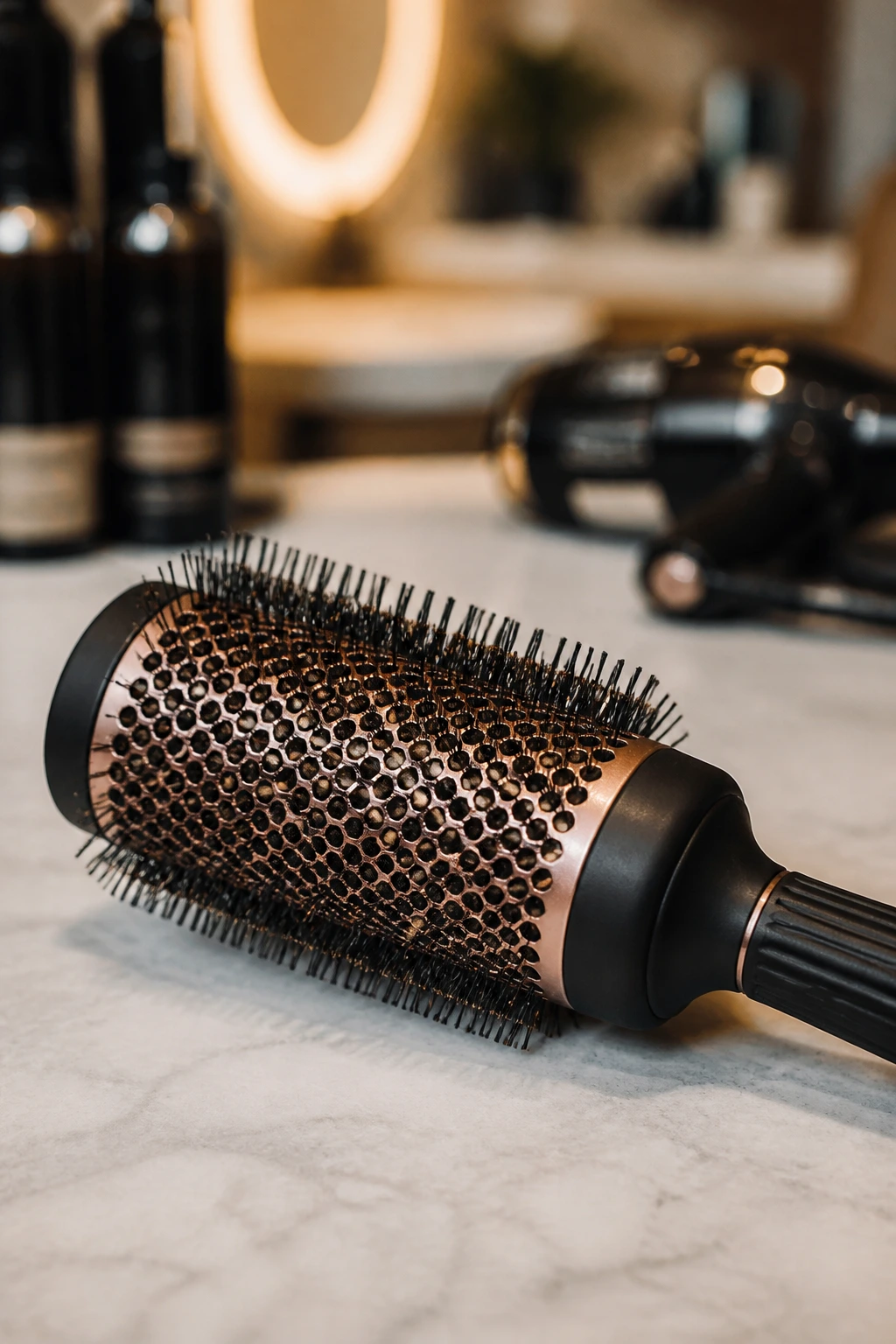
Blow dryer with a nozzle attachment: The nozzle helps push the cuticle flat, which matters if you want the front pieces to look smooth instead of fuzzy.
-
1 to 1.5-inch round brush: This size gives enough bend at the ends without making the bob curl under too hard.
-
Flat iron with adjustable heat: Handy for sharpening the front pieces or fixing the side that won’t sit right.
-
Heat protectant spray: Thick hair can take a beating from hot tools, and the front money piece will show damage first if you skip this.
-
Volumizing mousse or root lift spray: Use a little at the crown if the bob collapses toward the face.
-
Texturizing spray: Good for shaggy, wavy, or air-dried versions that need separation through the ends.
-
Light smoothing cream or serum: A pea-sized amount keeps the cut polished without making it limp.
-
Color-safe shampoo and conditioner: Highlights fade faster when you use harsh wash products.
-
Purple shampoo: Only useful if your money piece is blonde or champagne and starts going yellow; don’t overuse it.
-
Sectioning clips: Thick hair is much easier to dry when you divide it into four or six clean sections.
How to Choose the Right Length, Part, and Money Piece Placement
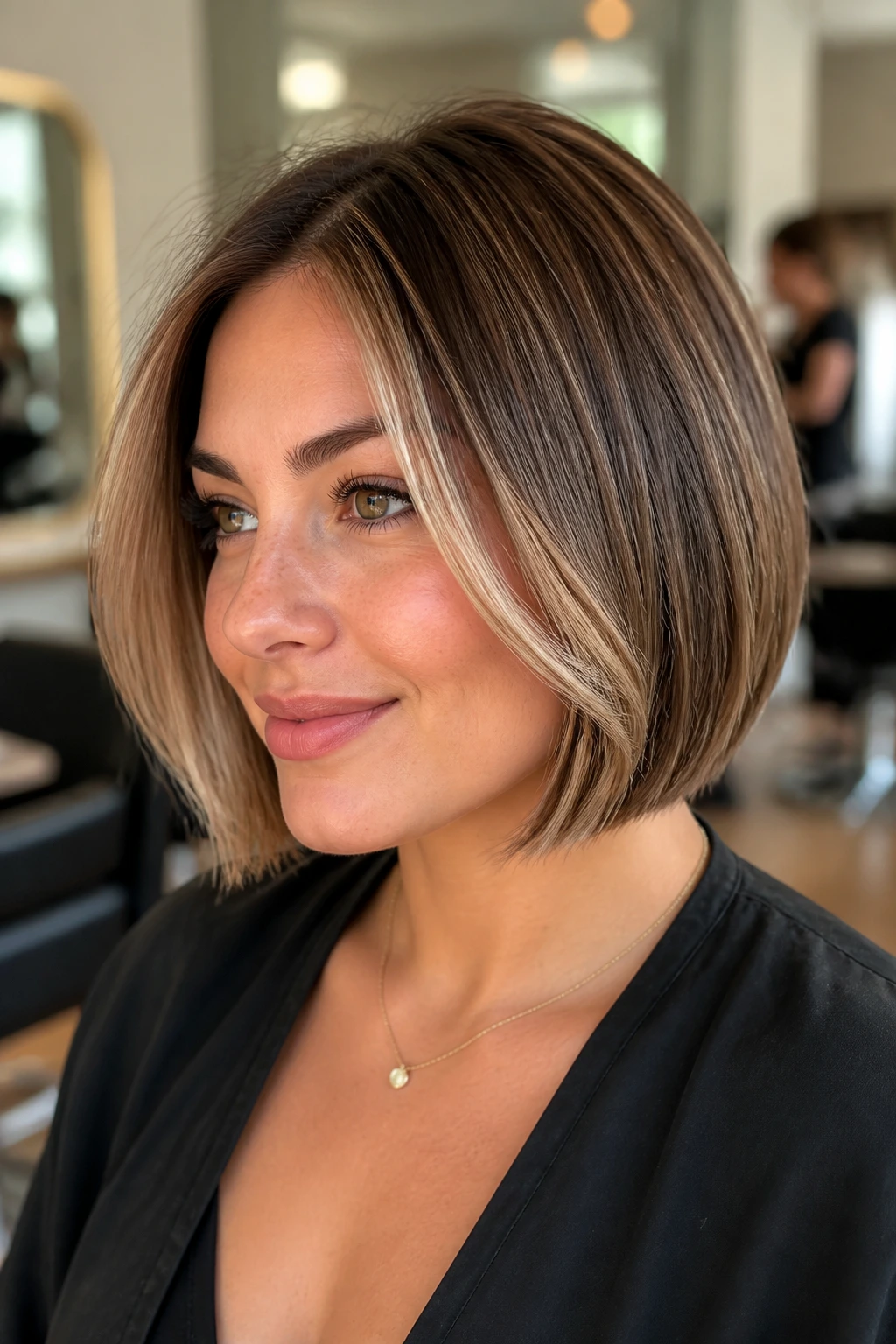
Length is the first decision, and it should be made with the face shape in mind before anything else. Chin-length works when you want a sharp, visible frame. Jaw-length adds definition but needs softness or angle. Collarbone and midi lengths give the safest elongation because they let the hair fall below the widest part of the face.
The part changes the whole mood. A center part can look sleek if the front pieces are long enough to drop past the cheeks. A side part is usually easier on round faces because it creates an asymmetrical line straight away. Deep side parts can be dramatic, but even a slight shift off center helps.
Money piece placement should follow the eye line, not just the hairline. The brightest pieces usually work best when they start around the cheekbone, curve around the face, and fade toward the jaw or collarbone. If the highlights begin too high and too wide, they can make the face look broader. If they start too low, they can disappear. The sweet spot is somewhere in the middle, which is why a good colorist always looks at the haircut and the face together.
Everyday Styling Moves That Keep the Silhouette Clean
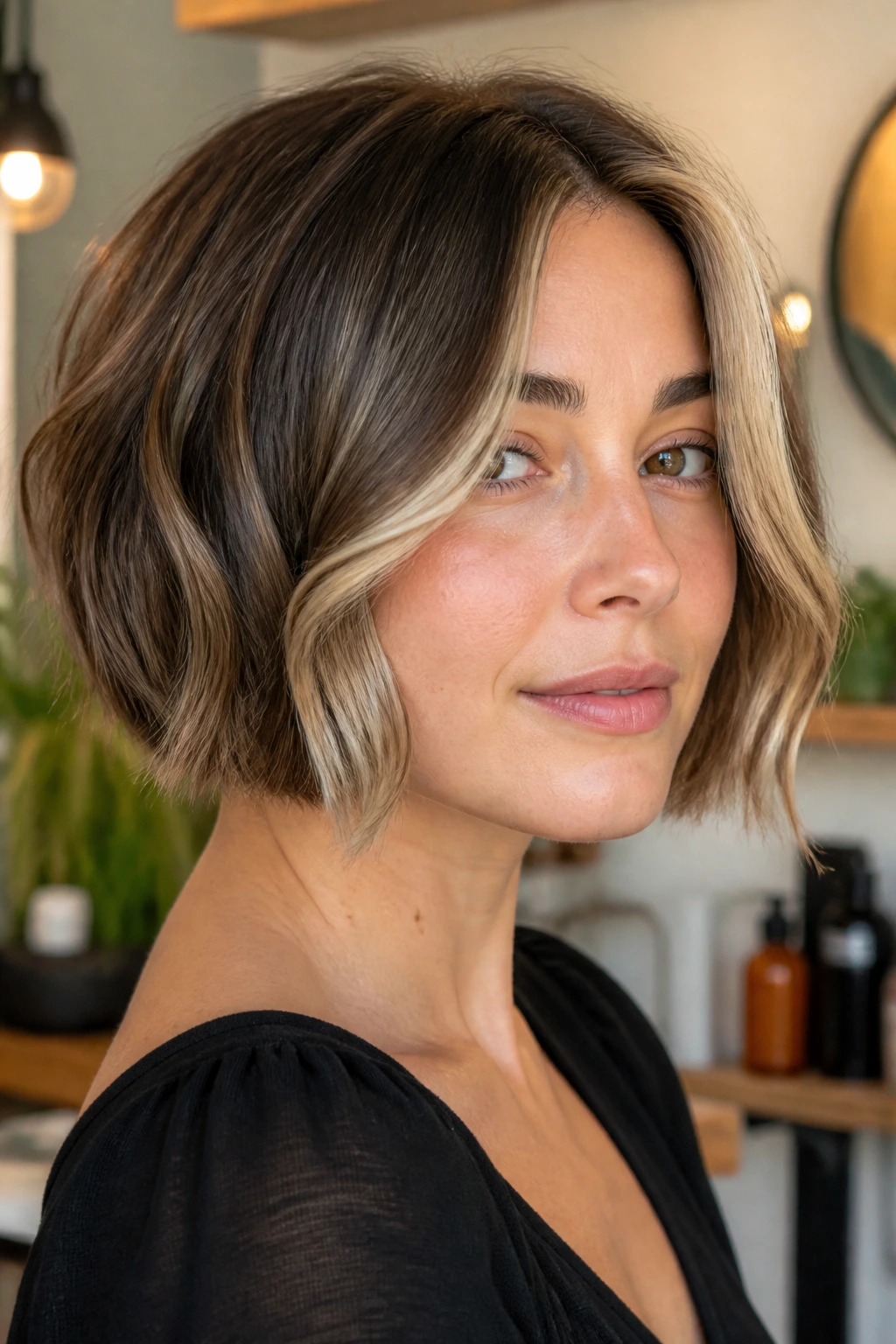
Sleek finish: Blow-dry the bob with a nozzle and a round brush, bending the ends slightly under. Then tap the front pieces with a flat iron only if they need more polish. The goal is control, not pin-straight stiffness.
Soft volume: Lift the crown with a root spray before drying, then clip the top section at the root for five minutes while it cools. That one move can make a thick bob look lighter around the face.
Texture: If the cut is shaggy, wavy, or air-dried, use a small amount of texturizing spray and scrunch the ends, not the roots. You want the movement low and around the jaw, where it helps the shape.
Quick refresh: On the second day, mist the front pieces with water, re-bend them around a brush or iron for a few seconds, and add a pea-sized amount of serum to the ends. That’s usually enough to bring the bob back without a full wash.
Tuck and release: Tucking one side behind the ear opens the face more than people expect. It’s a small move, but on a round face it can make the highlight placement look sharper.
Smart Maintenance for Cut, Tone, and Grow-Out
A thick bob holds its shape longer than a razor-cut pixie, but it still needs trimming. Most versions look best with a dusting or trim every 6 to 8 weeks, especially if the ends are blunt or the front pieces are doing face-framing work. Let it go too long and the line loses the whole point.
Color maintenance depends on the tone. Blonde and champagne money pieces usually need a gloss or toner refresh every 6 to 10 weeks if you want the brightness to stay clean. Warm caramel, honey, and toffee pieces are a little more forgiving, but they still fade and can turn muddy if you wash with harsh shampoo. Sulfate-free formulas help. So do cooler rinses and fewer clarifying washes.
If the cut has a shadow root, that makes grow-out easier, but don’t let “low maintenance” fool you into ignoring it completely. A bob that frames the face starts to look tired when the front pieces lose their shape. A tiny trim around the front and a quick gloss can make the whole haircut feel new again.
Common Mistakes That Make a Thick Bob Look Wider
Cutting the bob too short at the cheeks: This is the classic face-widening mistake. If the front ends right at the widest part of a round face, the haircut can echo that shape instead of balancing it. Push the front a little lower or add angle.
Placing the money piece too high: Bright streaks at the temple can spread the width visually. Start the light closer to the cheekbone or below it if you want a slimming frame.
Over-layering thick hair: Too many short layers can make the bob puff out, especially on humid days. Ask for controlled internal weight removal instead of choppy, disconnected layers all over.
Flattening the crown: A bob that sits flat on top and full at the cheeks can look squat. You want a little lift up top so the face gets some vertical space.
Ignoring the part line: A center part on a face that needs more asymmetry can make the haircut look static. Shift it slightly and see how much the whole shape changes. More than most people expect.
Using the wrong tone: Very icy blonde on a warm base, or muddy caramel on a cool base, can make the front pieces look disconnected. The color should frame the face, not fight the skin tone.
Variations and Adaptations to Try
Soft Brunette Frame: Keep the bob in your natural brown range and brighten only the front 1 to 2 inches. This is the easiest version to grow out, and it still gives the face the long, bright line that money piece highlights are known for.
Copper Glow Bob: Best for warm skin tones and darker bases. A copper or cinnamon front piece warms the complexion and gives the cut a little energy without needing heavy blonde maintenance.
Cool Champagne Version: If you want a cleaner, lighter finish, use a champagne or beige-blonde front frame with a soft root shadow. That contrast keeps the bob polished and works especially well with blunt or boxy shapes.
Curly-Control Bob: For curls and coils, leave the front longer than you think and lighten only select curls around the face. The cut stays full, but the brightness still shows where it matters.
Low-Maintenance Shadow-Root Bob: Keep the base deeper and let the money piece fade gently into the rest of the color. This version is good for people who don’t want to live at the salon every few weeks.
Bold Contrast Bob: Dark base, bright front, clean perimeter. It’s dramatic, but it works when the cut is precise and the highlights are narrow enough to frame rather than flood the face.
Frequently Asked Questions
What bob length is best for a round face?
Chin-length can work, but jaw-to-collarbone lengths are usually easier to wear because they fall below the widest part of the face. If the cut is shorter, it needs angle, texture, or a side part to keep the shape from going wide.
Do money piece highlights make a round face look wider?
They can, if they start too high or too far out toward the temples. The best placement usually begins around the cheekbone and softens down the front, which creates a vertical frame instead of a horizontal one.
Can thick bobs work with a center part?
Yes, if the front pieces are long enough and the crown has some lift. A center part on a short bob can feel severe; on a longer thick bob with face-framing highlights, it can look sleek and balanced.
What if my hair is very dense and puffs out at the sides?
Ask for internal weight removal, not a bunch of choppy surface layers. You want the outer line to stay full while the inside loses bulk. That keeps the bob from turning triangular.
Are blonde money piece highlights the only option?
No. Caramel, honey, copper, beige, champagne, and toffee all work depending on your base color and skin tone. The point is to brighten the front and guide the eye, not to chase a single color family.
How often should I get the bob trimmed?
Every 6 to 8 weeks is a good rhythm for most shapes. If the front pieces are the whole reason the cut flatters your face, don’t let them grow out so much that they stop framing anything.
Can I style these bobs without heat every day?
Yes, especially the French, shaggy, and textured versions. Air-dry with a little product, then refine only the front pieces if they need help. Thick hair often holds shape better than people expect once it’s cut well.
What should I do if the bob looks too round after styling?
Flatten the sides a little, lift the crown, and rework the front pieces so they fall more vertically. A small shift in parting or a quick bend through the money piece can change the whole silhouette.
The Shape That Keeps Its Edge
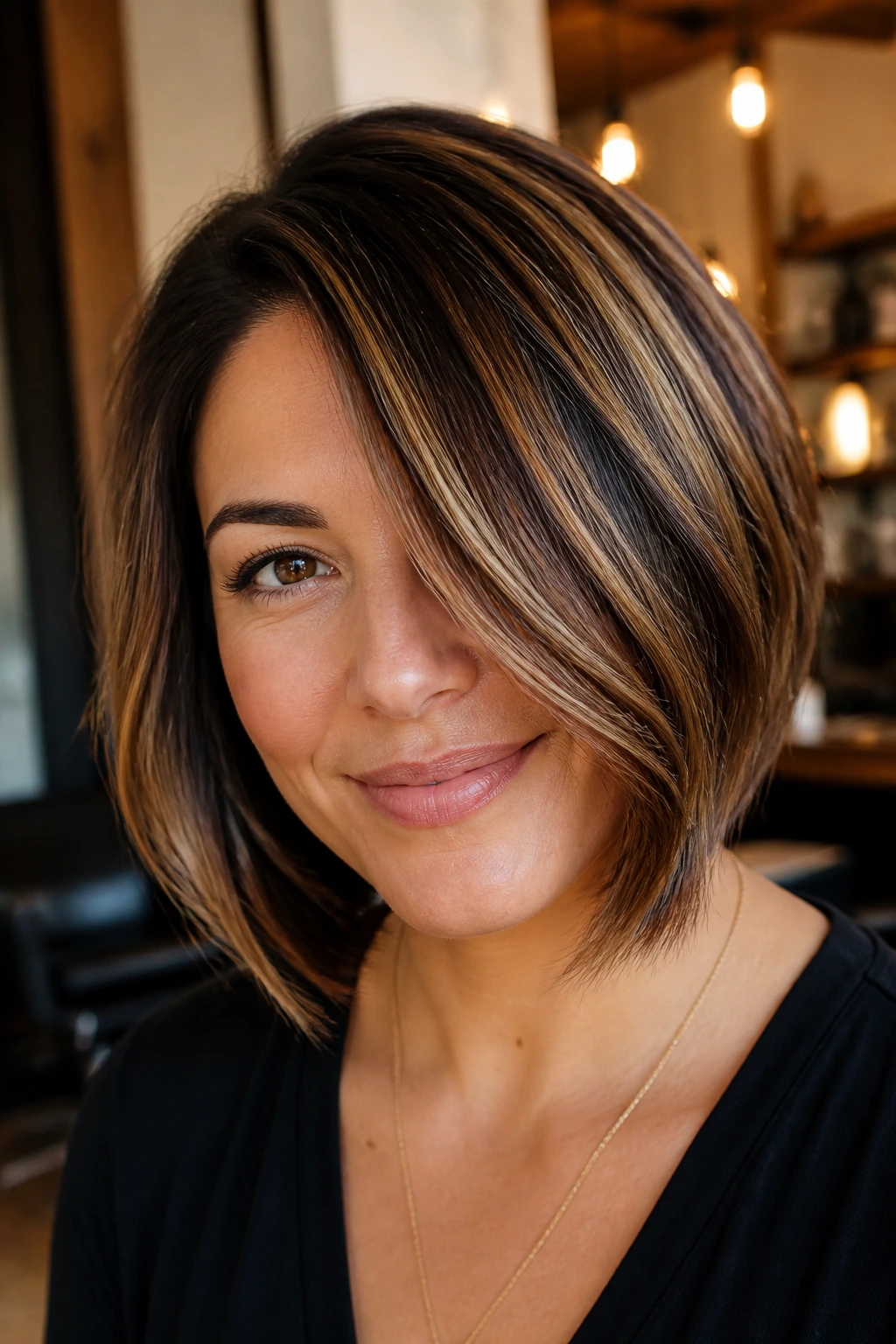
A good thick bob for a round face doesn’t try to erase the face. It gives it structure. Some versions do that with angle, some with lift, and some with brighter money piece highlights that pull the eye where you want it to go. The haircut feels best when the shape and color are doing the same job.
What I like about this whole group is how practical it is. You can go polished, shaggy, sleek, curled, blunt, or softly layered and still land in the same flattering zone, as long as the front framing is smart and the bulk is controlled. That’s the real trick, and it’s more useful than chasing one “perfect” bob photo.
Pick the version that fits your hair density, your styling patience, and your tolerance for salon touch-ups. Then commit to the details. That’s where the haircut starts to look like it was made for your face.