



An oval face can wear a lot of haircuts, but not every cut gives back as much as it takes. A textured stacked bob on wavy hair has a smart little trick up its sleeve: the back lifts, the sides soften, and the wave pattern does half the styling before you even touch a brush. That’s why 25 textured stacked bobs for oval faces with wavy hair make such a useful reference point. Some of them sharpen the jaw. Some skim the cheekbones. A few lean softer and longer so the cut grows out without turning shapeless.
The mistake I see most often is this: people ask for “a bob with layers” and end up with something that’s either too round or too airy around the ears. Wavy hair has its own opinions. It wants movement, but it also likes to puff where it gets too much freedom. The best stacked bobs work with that bend pattern instead of flattening it or fighting it.
Oval faces give you room to play, which is the fun part. You can go shorter at the nape, keep the front pieces at the chin, add a side part, or thread in bangs without wrecking the shape. The real question is less “can I wear this?” and more “which version makes my wave pattern look intentional?” That’s where the cuts below start to matter.
Why These Textured Stacked Bobs Keep Working
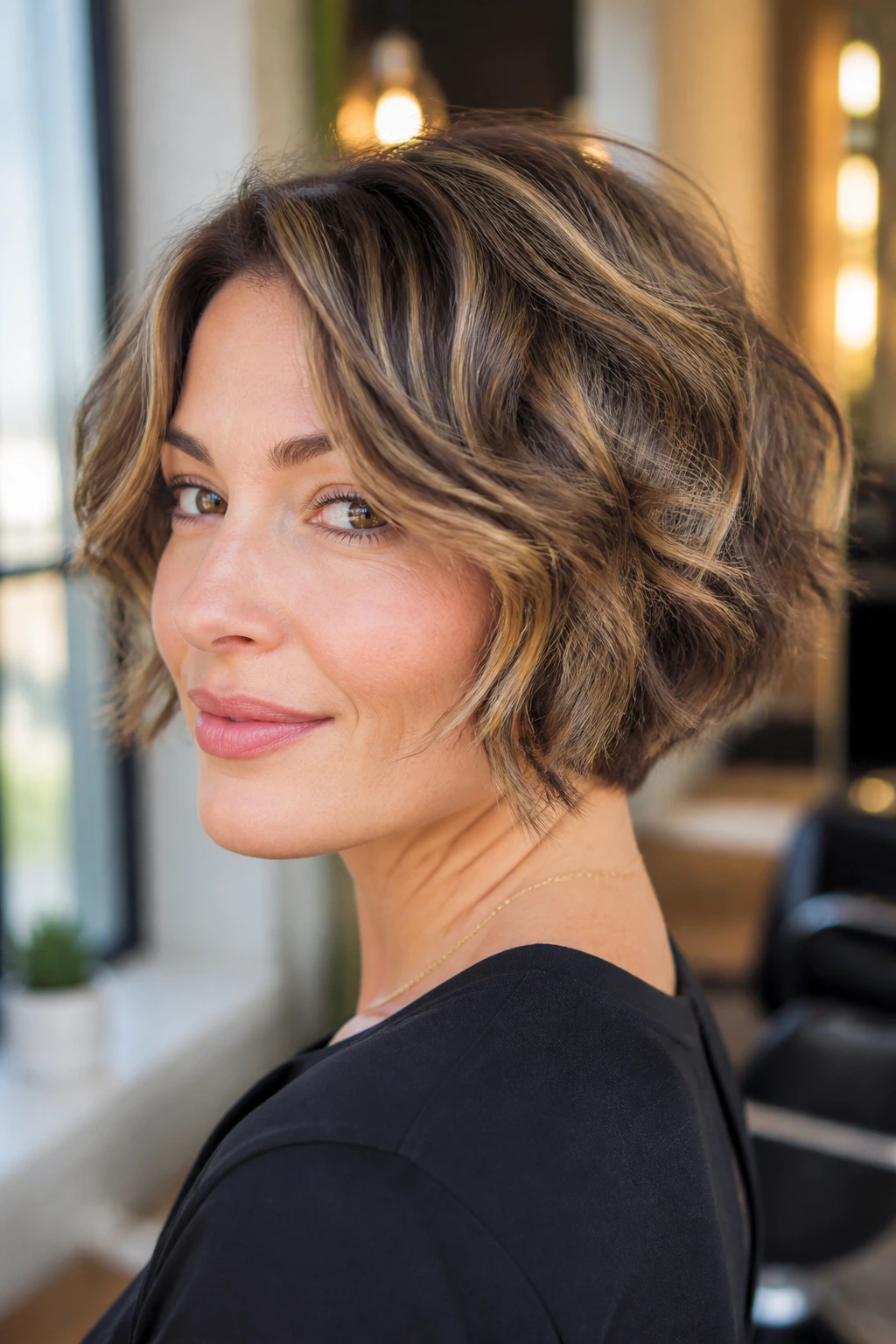
-
Oval-face balance: The shape of an oval face already carries symmetry, so a stacked bob can build lift at the back without needing to “correct” anything. That leaves more room for cheekbone and jawline emphasis.
-
Wave-friendly movement: Wavy hair brings a bend that sits nicely on top of graduation lines, so the cut looks alive even when you air-dry it and leave the styling tools in the drawer.
-
Cleaner nape, lighter feel: The stacked back removes bulk where hair tends to sit heavy, which makes the silhouette feel lighter from behind and less boxy in profile.
-
Easy to tune for density: Fine hair can get a little crown lift and a tighter stack; thick hair can lose weight inside without turning into a frizz ball.
-
Bang-friendly shape: Curtain bangs, side-swept fringe, and soft face-framing all slide into this cut without fighting the base line.
-
Grows out with manners: A good stack keeps its shape for weeks, then softens into a tidy bob-lob instead of jumping straight into awkward triangle territory.
1. Soft Nape-Stacked Bob
This is the version I’d hand to someone who wants the shape, but not the drama. The nape is shortened enough to create lift, yet the graduation stays soft, so the back doesn’t kick out like a helmet. On wavy hair, that matters. The wave adds enough texture on its own; you do not need the haircut to shout.
For an oval face, this cut sits in that sweet zone where the front grazes the jaw and the back hugs the neckline. It keeps the eye moving up and down the silhouette instead of just stopping at a blunt line. Ask for subtle stacking at the nape, then keep the perimeter slightly longer in front so the shape feels airy, not hard.
A 1-inch curling wand isn’t required here. A little mousse, a diffuse-dry, and a finger rake is usually enough. That’s the beauty of it.
2. Chin-Grazing Stack with Airy Ends
Why does this one work so well? Because the front pieces land right where an oval face looks strongest: around the jaw and lower cheek. The stacked back gives lift, while the airy ends stop the front from feeling heavy. It’s a neat little visual tug-of-war.
What to Ask For
Tell your stylist you want a stacked bob with chin-grazing front corners and soft texturizing through the ends, not chunky layers. That phrase matters. Chunky layers can make wavy hair flare out at the cheeks, and nobody needs that.
This version looks especially good when the wave pattern is loose to medium. The cut lets the curl bend show up without turning into a round puff. If your hair has a softer S-wave, this is one of the easiest shapes to live with.
3. Feathered Crown Stack
This one is all about lift near the top. The crown gets feathered so the back doesn’t collapse flat, which is a common problem on wavy hair that has a little weight to it. The result is a bob that looks like it’s been touched by a round brush, even when it hasn’t.
An oval face can carry crown height without the cut looking top-heavy. That’s a useful advantage. The feathering adds vertical movement, and the stacked nape keeps the lower half from spreading out.
I like this cut for anyone whose hair grows straight down at the back of the head. You know the look. One good wash day, and then the crown falls by noon. This one fights that problem with shape instead of product.
4. Curved Inverted Bob
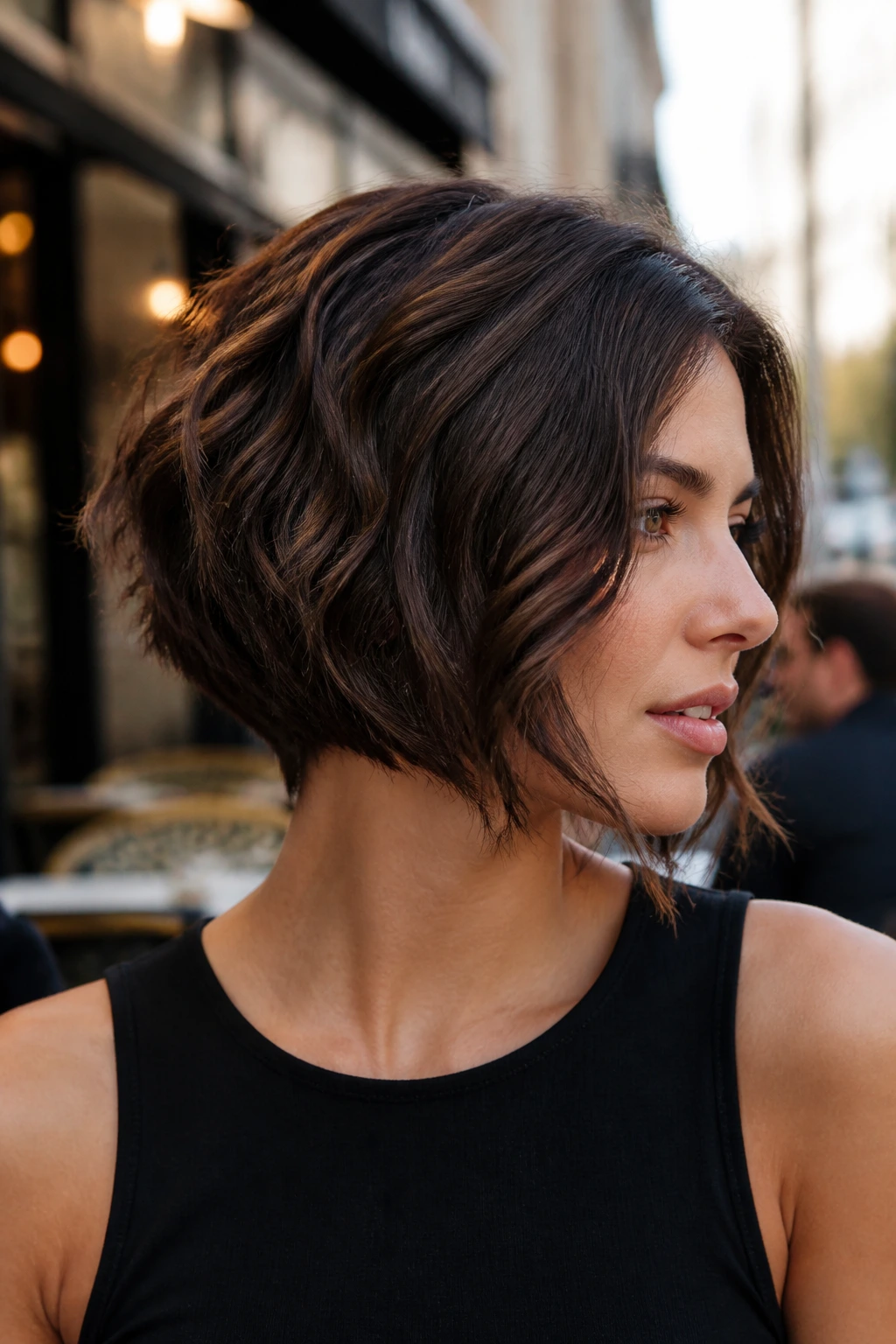
There’s something satisfying about a bob that curves cleanly from the nape into a longer front. It feels neat without looking stiff. The inverted line gives structure, and the waves break the sharpness just enough to keep it from looking too formal.
On an oval face, the curve helps guide attention from the cheekbones down to the chin. That diagonal line is a small thing, but it changes the whole read of the haircut. It’s also one of the better options if you want your bob to look polished with minimal effort.
A curved inverted bob needs a stylist who understands graduation, not just length. If the back is stacked too aggressively, the shape can get puffy. If it’s too soft, you lose the whole point. Balance matters here. A lot.
5. Piecey Micro-Layer Bob
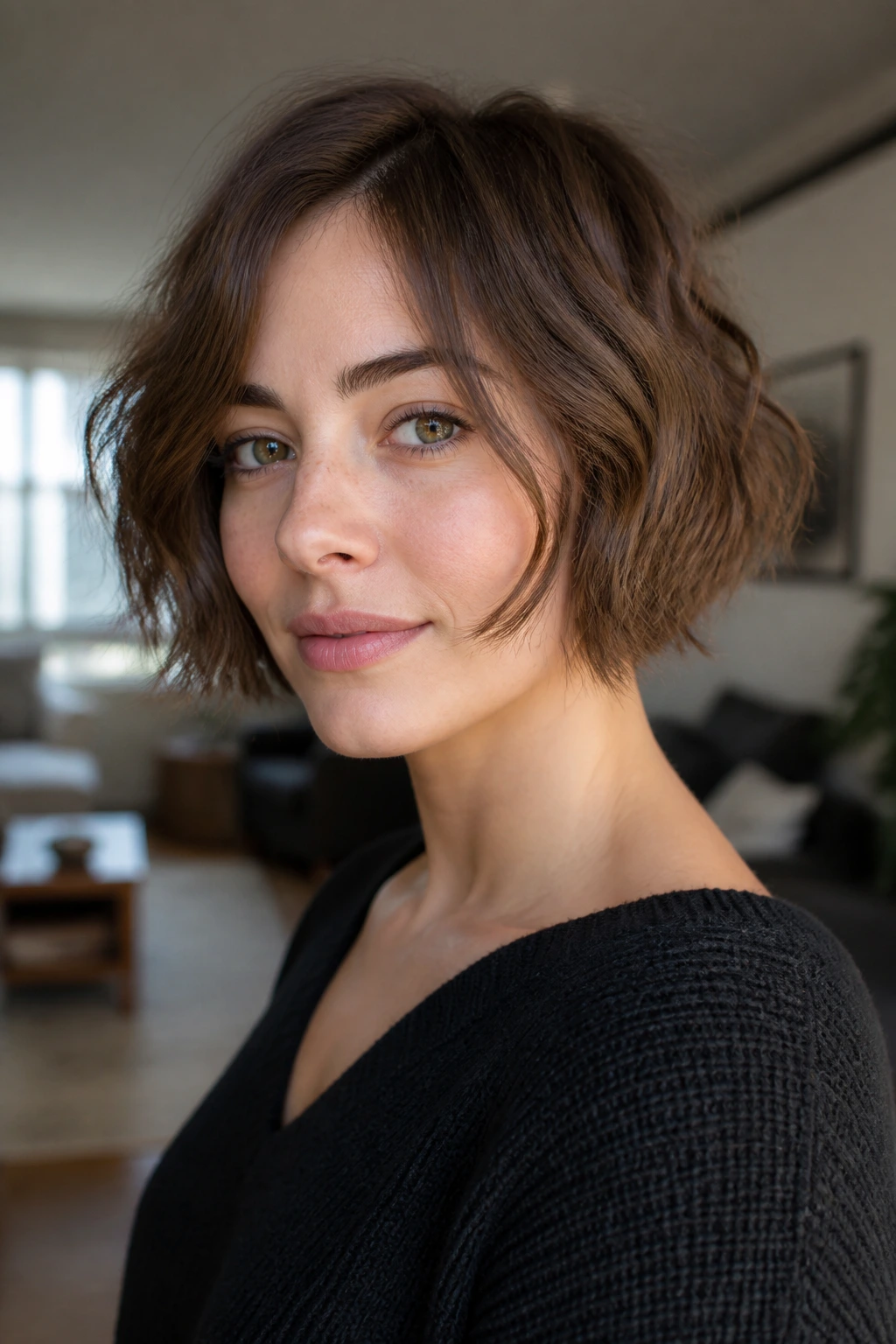
This is the choppier cousin in the family. The layers stay small, close, and broken up, which gives the hair little edges to catch and separate. On wavy hair, those micro-layers create a piecey finish that looks textured even after a rough dry.
For oval faces, the trick is to keep the front pieces clean enough to frame the face rather than fray around it. That means the texture lives mostly through the interior and back, while the outline stays readable. Too much point-cutting at the perimeter and the whole thing goes fuzzy.
This cut is good if you like hair that looks a bit undone. Not messy. Just not overly groomed. The best versions have movement around the crown and a soft tuck at the nape, so the shape still reads as a bob from every angle.
6. Long Front Stacked Bob
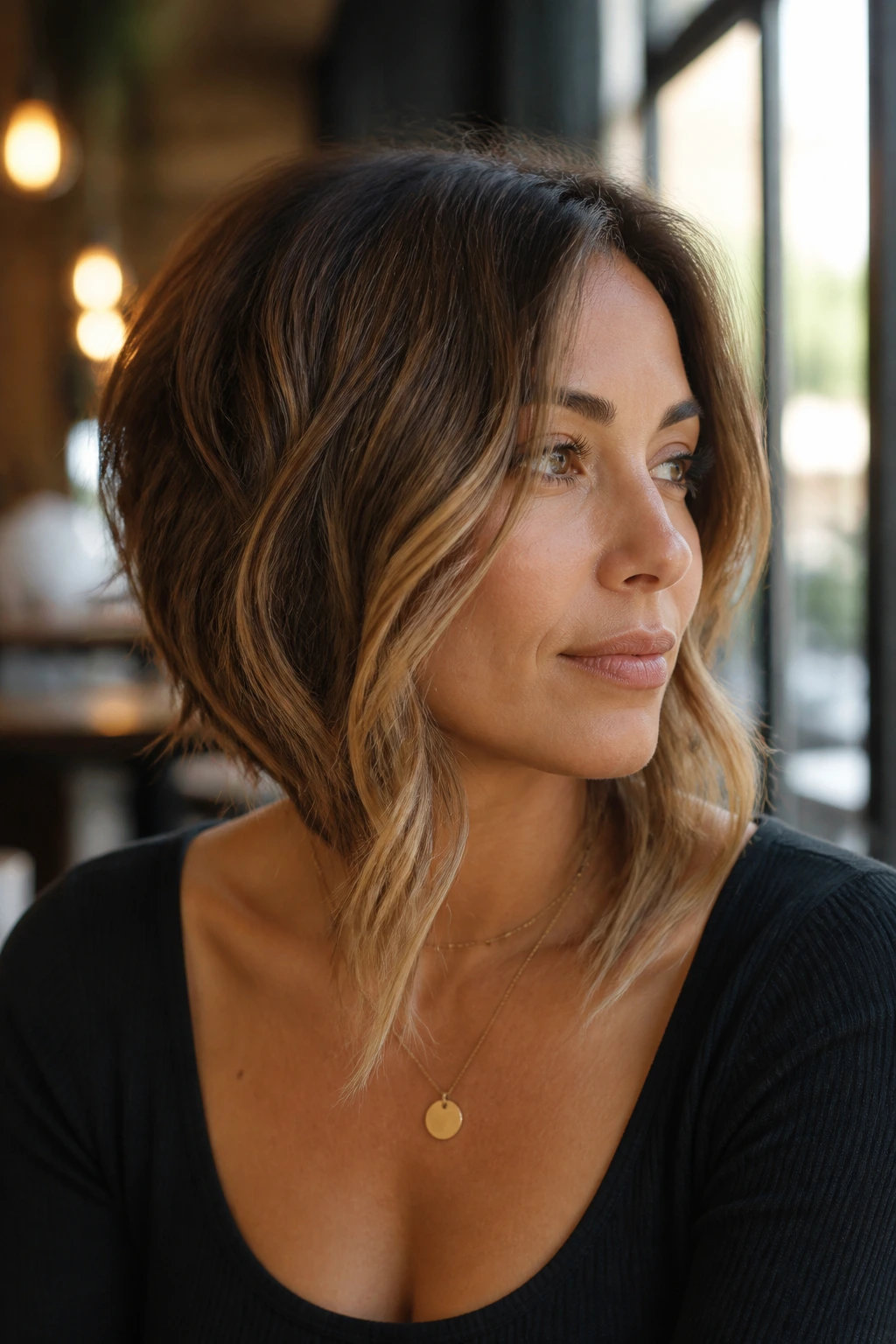
This is the one for someone who likes the security of a little extra length. The back is still stacked, but the front hangs longer, sometimes brushing the collarbone if you want a softer lob effect. The contrast keeps the cut from feeling blunt.
Oval faces do well with this because the longer front pieces can skim the jaw and neck without hiding the face. Wavy hair gives the front enough swing that the length doesn’t sit dead. It moves. That’s the whole point.
If you’re nervous about going short, start here. The long-front stack gives you the shape of a bob with a gentler edge. It also grows out nicely, which is not a small thing if you dislike frequent salon visits.
7. Deep Side-Part Bob
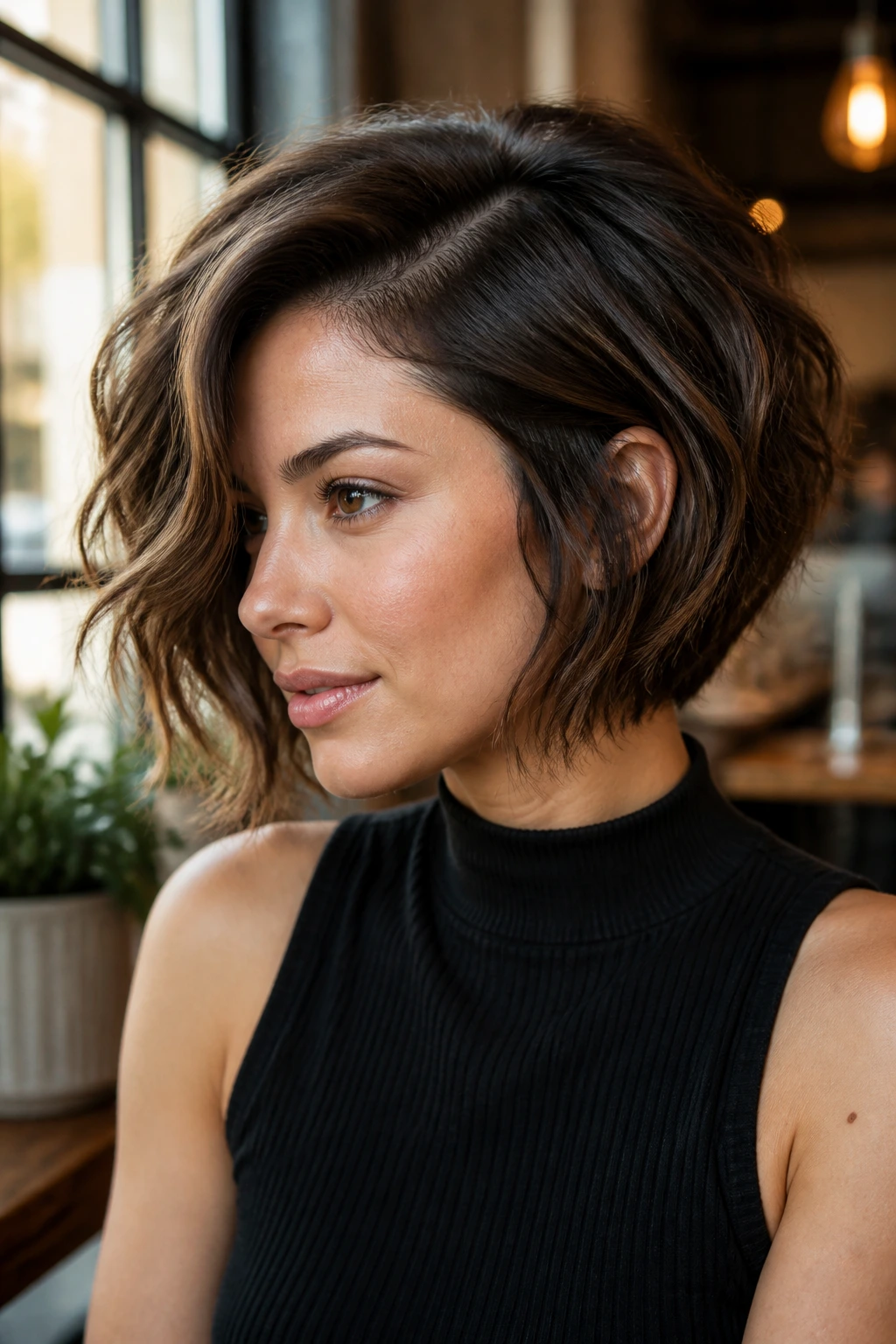
A deep side part changes the whole mood of a stacked bob. Suddenly the shape feels more sculpted, a little more dramatic, and a lot less symmetrical. For oval faces, that imbalance is flattering because it draws attention to one eye, one cheekbone, and the clean line of the jaw.
The back still needs that graduated lift, but the side part does something else: it gives the wave a place to fall without spreading evenly across both sides. That can be a lifesaver if your hair tends to puff at the temples.
Use this version when you want the cut to feel a bit more editorial. Not fussy. Just sharper. A deep side part and a light root-lift spray at the crown can make a plain bob look much more deliberate.
8. Razor-Textured Bob
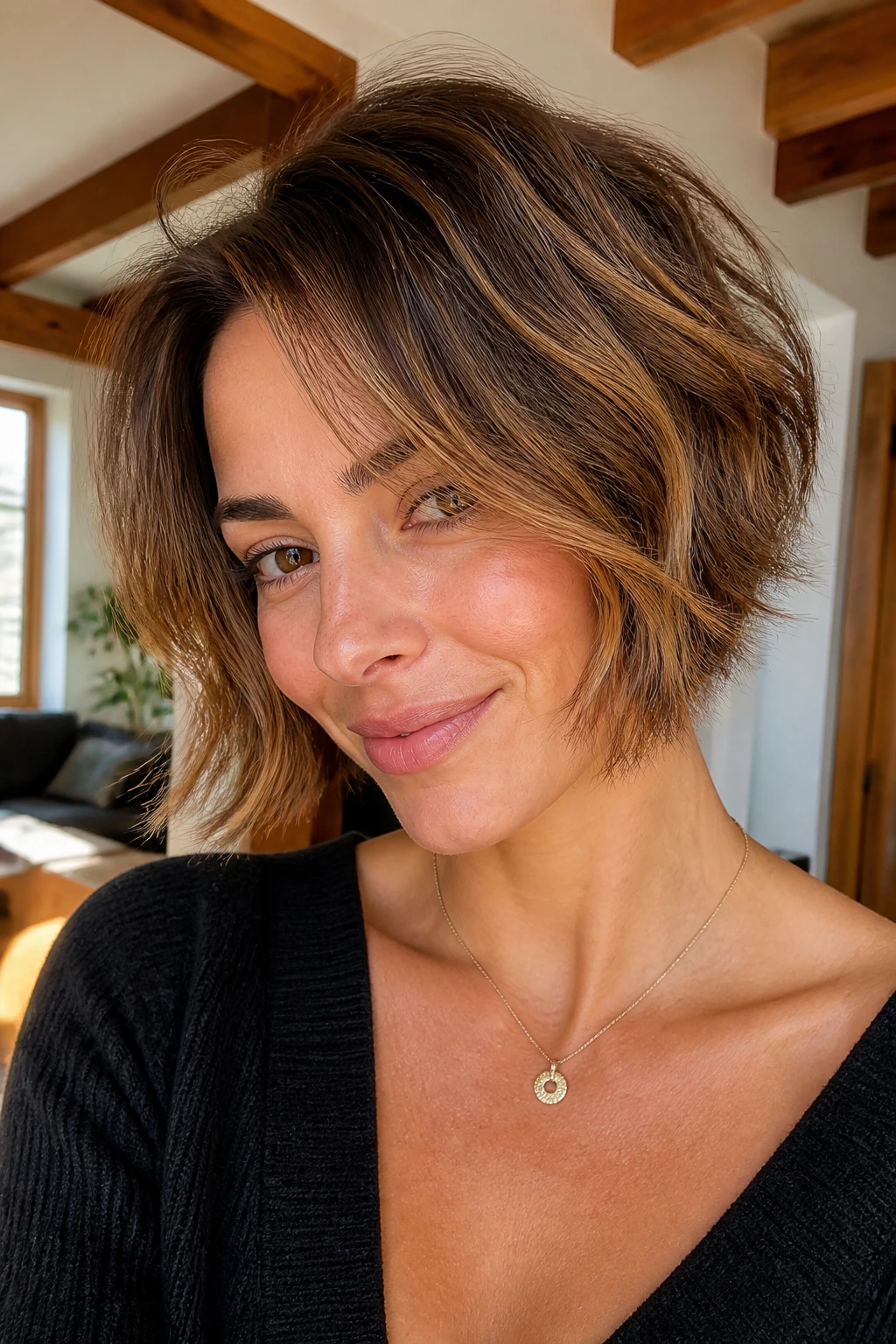
A razor cut can be gorgeous on wavy hair when the stylist knows where to stop. The ends come out softer, thinner, and a little wispy, which helps the wave pattern break up in a good way. You get texture without the stacked layers feeling heavy.
On an oval face, a razor-textured bob lets the outline stay close to the head while the ends flick and move. That contrast is what makes it interesting. It’s especially nice if you dislike blunt ends because they can make wavy hair look too thick at the line.
The catch? Razor work on very dry or porous hair can go too far. If your ends already fray, ask for soft slide-cutting instead of an aggressive razor pass. The goal is movement, not shredding.
9. Curtain-Bang Stack
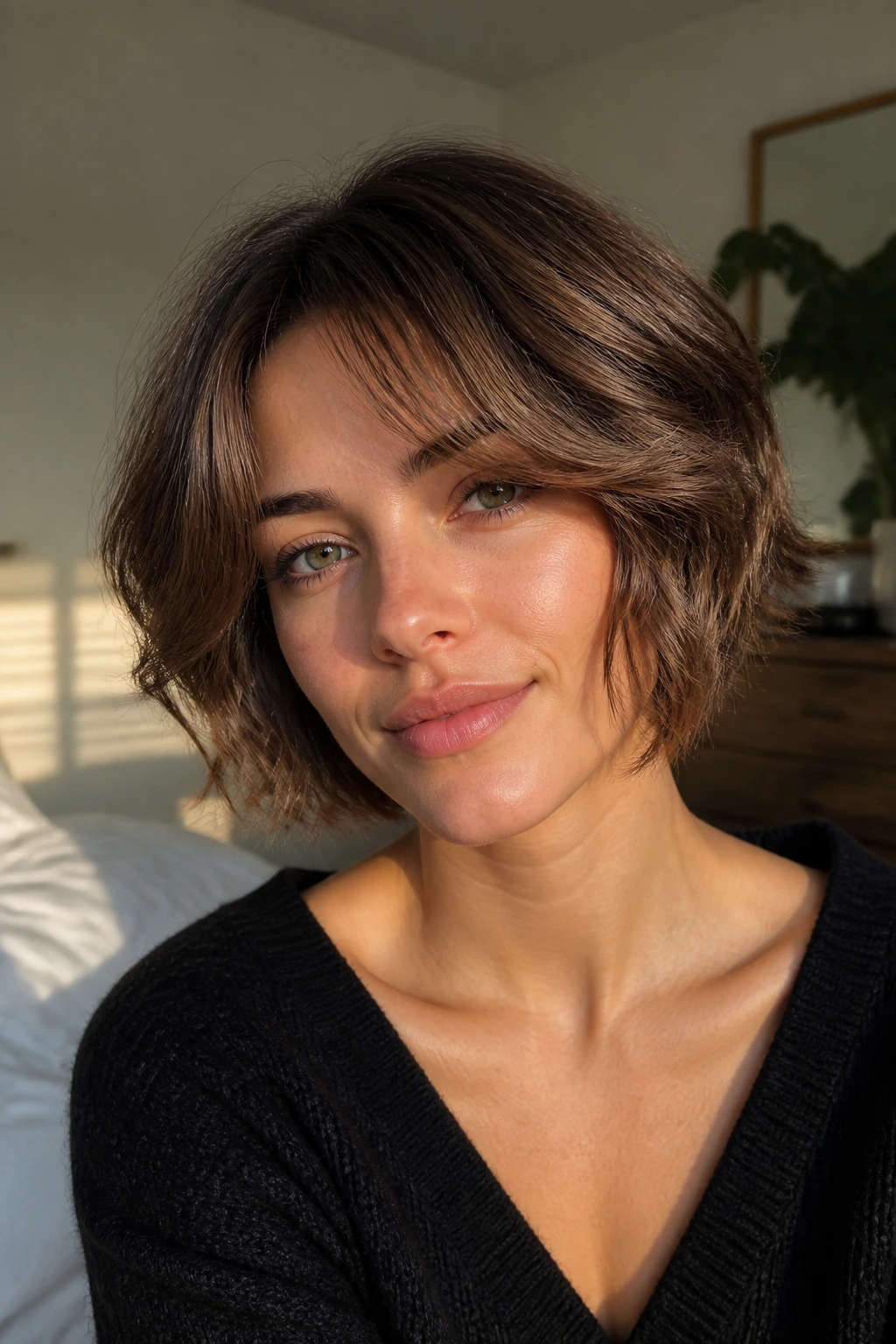
Curtain bangs and a stacked bob have a nice little conversation going on. The bangs split the face softly, then the stacked back adds lift so the whole cut feels balanced rather than heavy on the forehead. On oval faces, curtain bangs are easy to wear because they don’t crowd the features.
The key is keeping the bang length flexible. You want them long enough to blend into the front pieces, not chopped so short that they sit apart from the rest of the cut. Wavy hair gives curtain bangs a little bend, which is lovely when the movement stays loose.
This version works best when the stylist layers the bangs into the front corners. If they stop the bangs too abruptly, you’ll get a disconnect between the fringe and the bob. That’s an easy fix. It just needs to be mentioned.
10. French-Girl Wavy Bob

This one has attitude, but in a quiet way. Think airy ends, a little bend through the mid-lengths, and a stacked back that keeps the shape from drooping. It’s the sort of bob that looks like it dried on its own and then got a quick touch with fingers, not a full styling session.
Oval faces can wear this with almost no friction because the softer perimeter keeps the look approachable. The wave takes center stage, while the stack quietly does the structural work in back. That’s the nice trick here.
I’d ask for soft internal layering and a side part or loose center part. The cut should feel easy, not severe. If it starts looking too sculpted, the French vibe disappears fast.
11. Polished Undone Bob
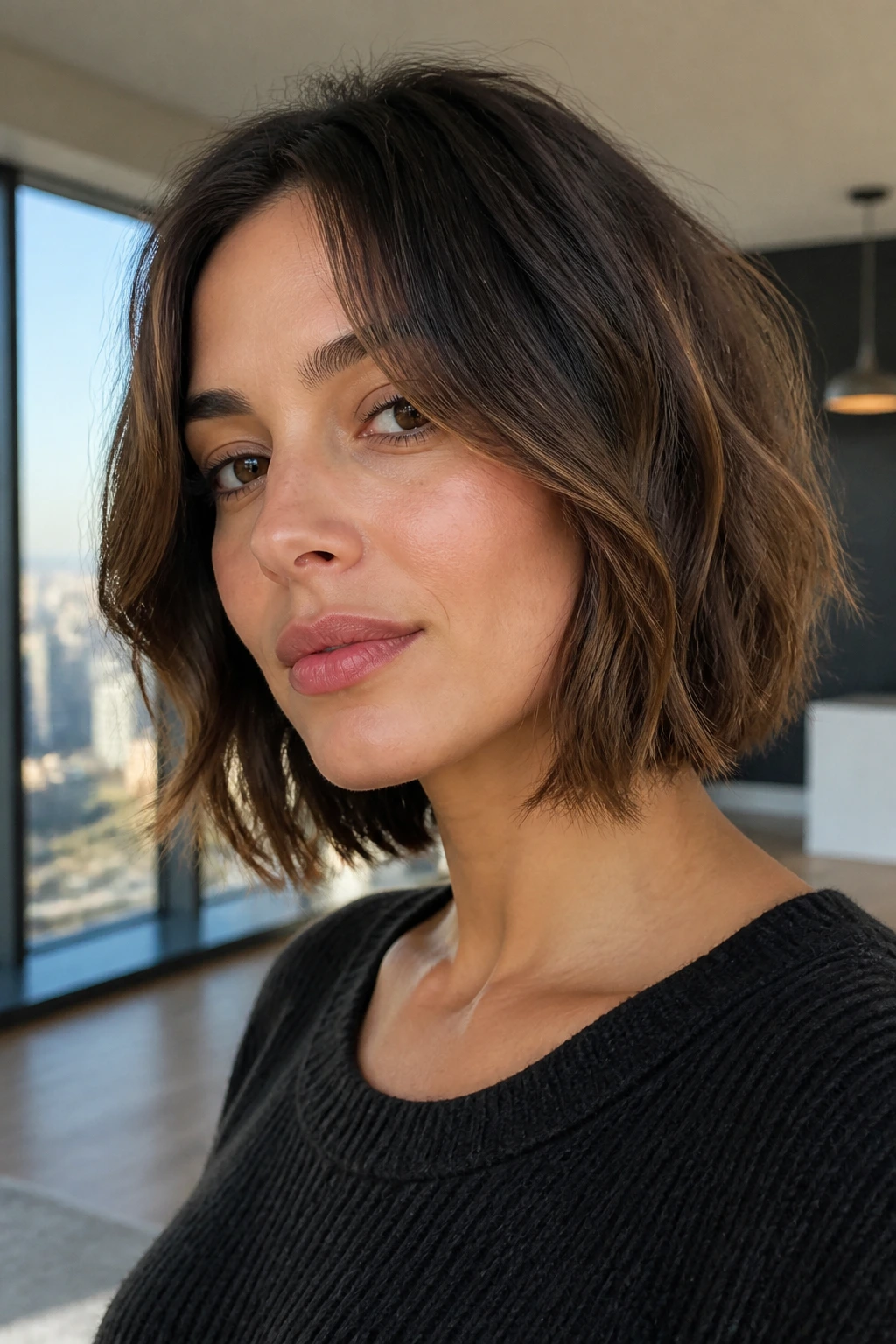
The phrase sounds contradictory, and that’s exactly why it works. You get a smooth base with enough texture in the ends to keep the hair from looking flat or overly styled. This is the bob for days when you want to look put together without having to fight your own wave pattern.
An oval face gives this cut room to breathe. The longer front pieces can sit neatly at the cheek or jaw, while the stacked back holds the silhouette up. If you have naturally wavy hair, a light smoothing cream through the top layer and a bit of wave left underneath is usually enough.
This is one of my favorite shapes for work settings because it behaves. It doesn’t sprawl. It doesn’t puff too much. And it still has some personality, which matters more than people admit.
12. Undercut Nape Bob
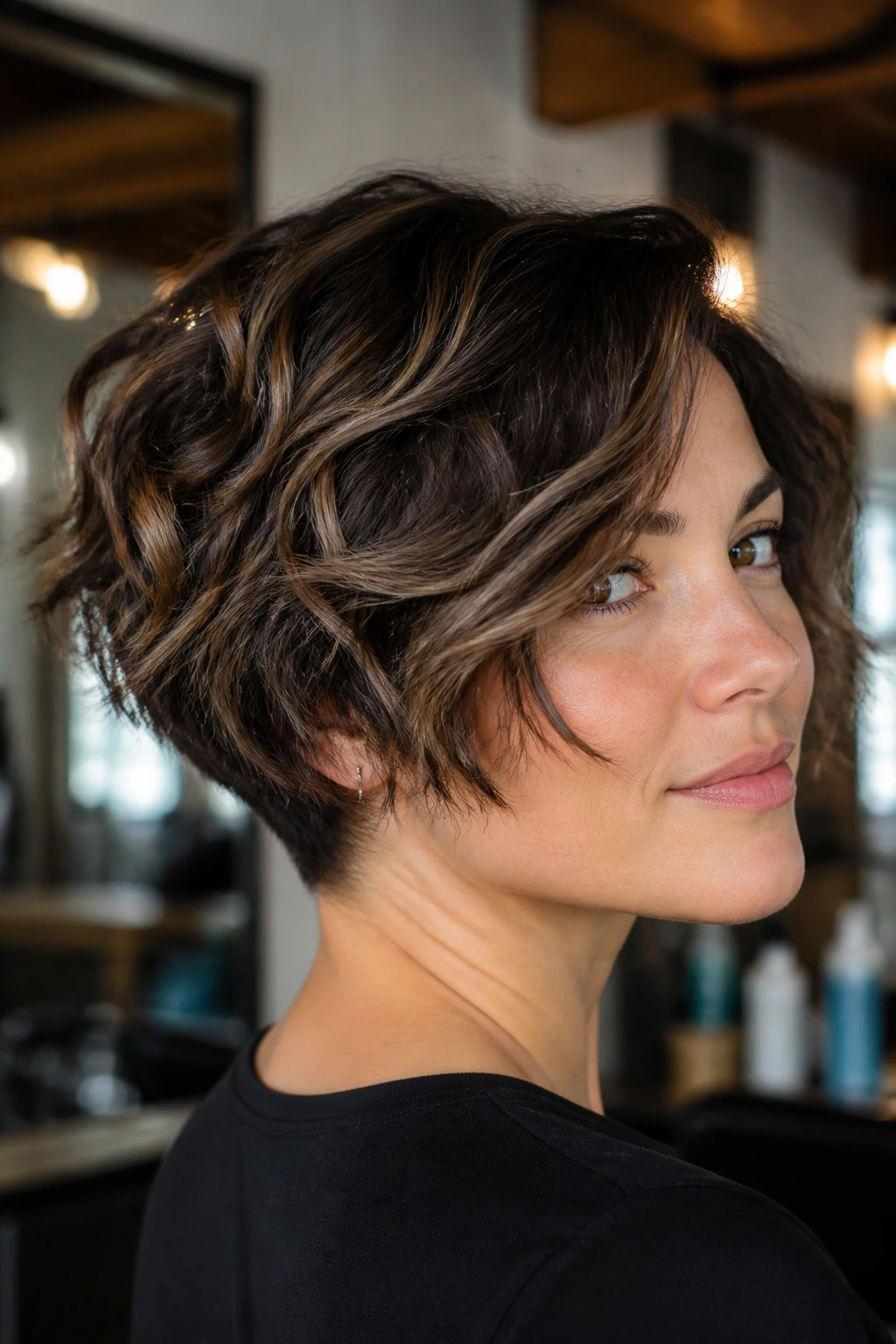
A tiny undercut at the nape can make a big difference on thicker wavy hair. It takes out hidden bulk, which lets the stack sit cleanly instead of bulging from the bottom. The effect is subtle when the hair falls, but you feel it in the way the cut moves.
For oval faces, the undercut keeps the nape sleek while the front stays soft and face-framing. That contrast is a nice one. It gives the cut a sharper profile from behind, then a gentler read from the front.
This is not the place for timid layering. If the hair is dense, a stack alone may not do enough. A small undercut, usually hidden under the top section, can stop the shape from becoming boxy.
13. Air-Dry Stack
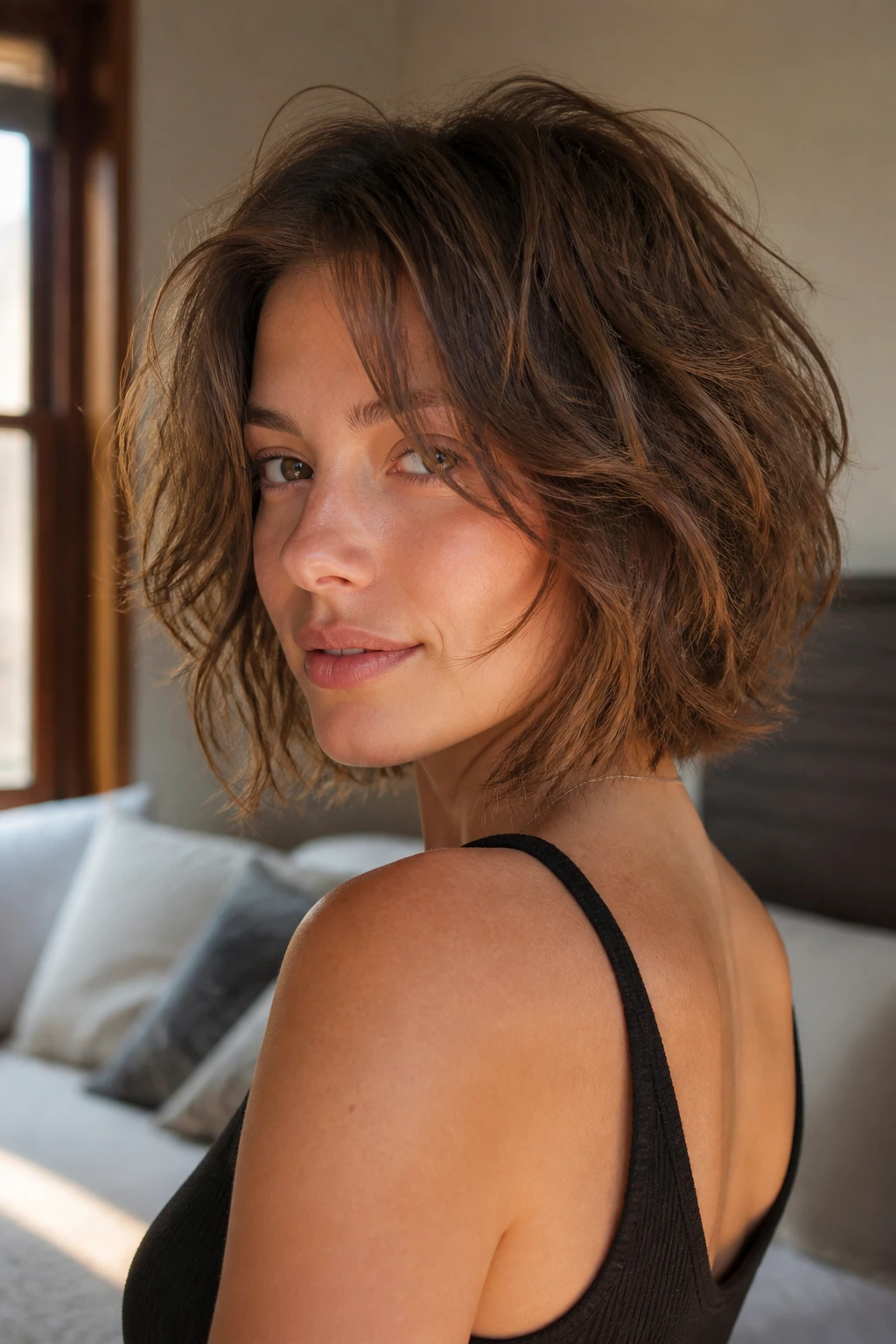
If your hair looks better the less you bother it, this is your friend. The cut should support the wave pattern as it dries, with enough stacking in back to keep the shape visible and enough softness at the front to prevent the face from feeling boxed in.
Why it works
Wavy hair likes a little product and a little patience. A mousse or wave cream through damp lengths, then a hands-off air-dry, usually gives the stack enough memory to show off. Oval faces can handle the gentle curve that air-drying creates, especially when the nape is tighter than the front.
This version is best when the stylist avoids over-thinning. Too much texturizing and the cut loses its outline once it dries. The shape should still read clearly when you walk away from the mirror.
14. Wedge-Inspired Stack
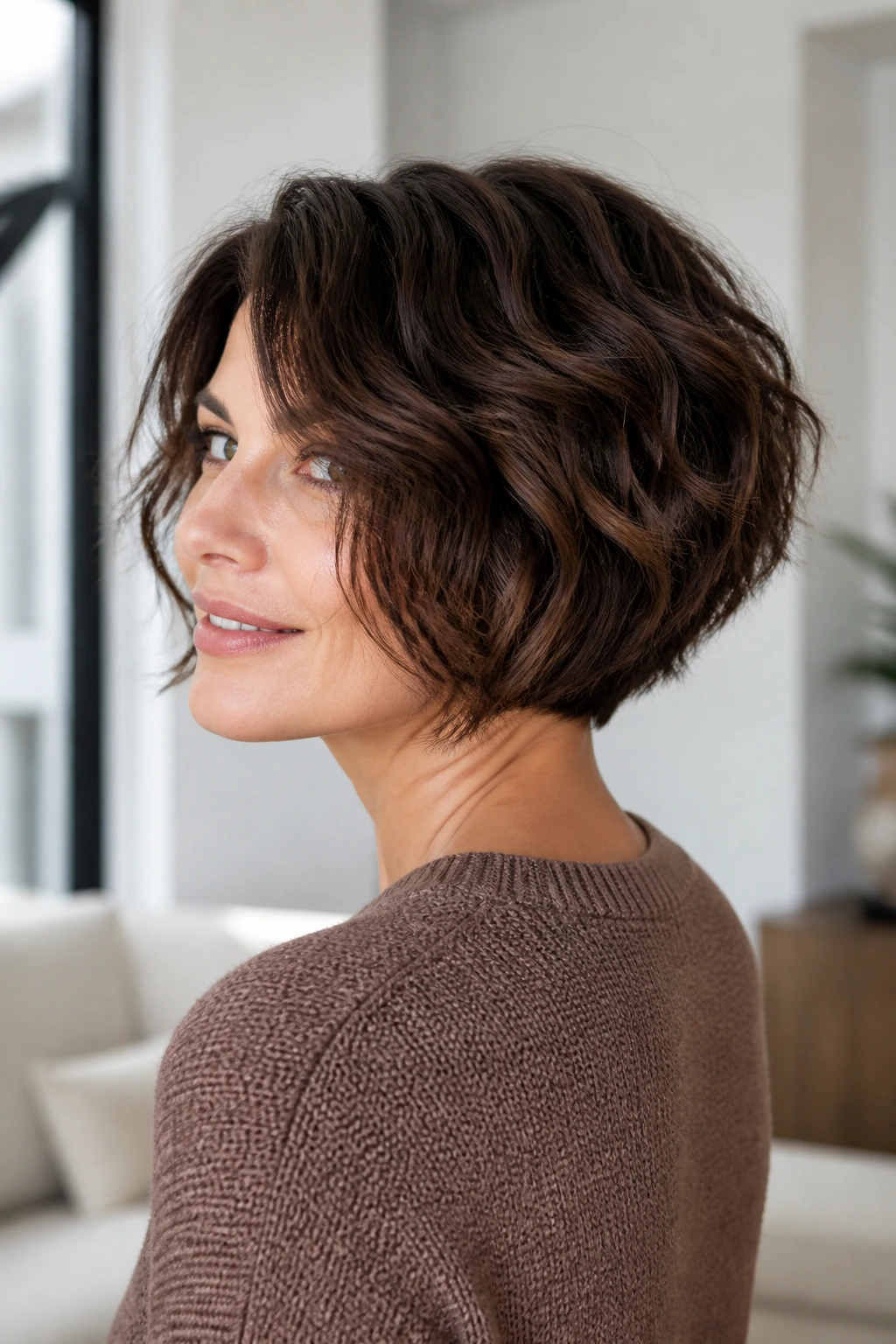
This cut borrows the crisp back line of a wedge, then softens it for modern wear. The nape sits shorter, the back angles up cleanly, and the sides stay textured instead of stiff. It’s neat. Very neat, actually.
Oval faces can carry a wedge-inspired bob because the geometry doesn’t fight the natural balance of the face. The shape frames the jaw without crowding it. Wavy hair takes the edge off the wedge, which is a blessing if you don’t want something too retro.
I like this one for people who want a defined silhouette. It has more backbone than a soft bob, but it doesn’t lock the hair into a helmet. The wave breaks it up just enough.
15. Asymmetrical Wave Bob
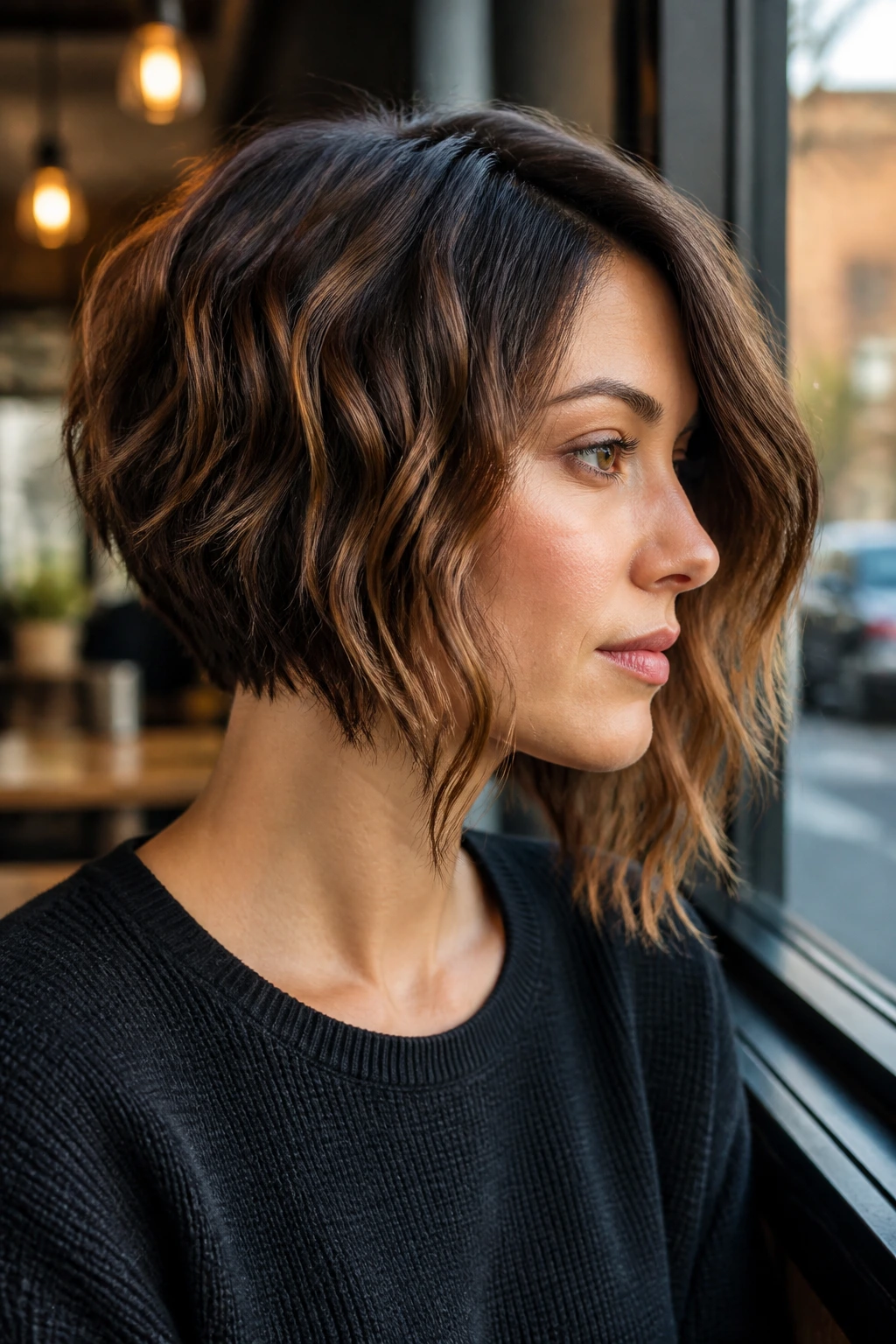
One side longer than the other sounds dramatic on paper, but in practice it can be surprisingly wearable. The asymmetry gives the eyes a path to follow, and the waves keep the line from feeling harsh. On an oval face, that off-balance effect can add interest without making the haircut feel fussy.
The shorter side can sit closer to the jaw, while the longer side skims below it. That difference can be only an inch or two, but it changes the mood of the cut. It looks intentional, and that matters.
This is the style I’d pick if you like a bob with a little edge and don’t mind people noticing the shape from one side before the other. It reads as modern without needing a lot of styling tricks.
16. Collarbone Stack
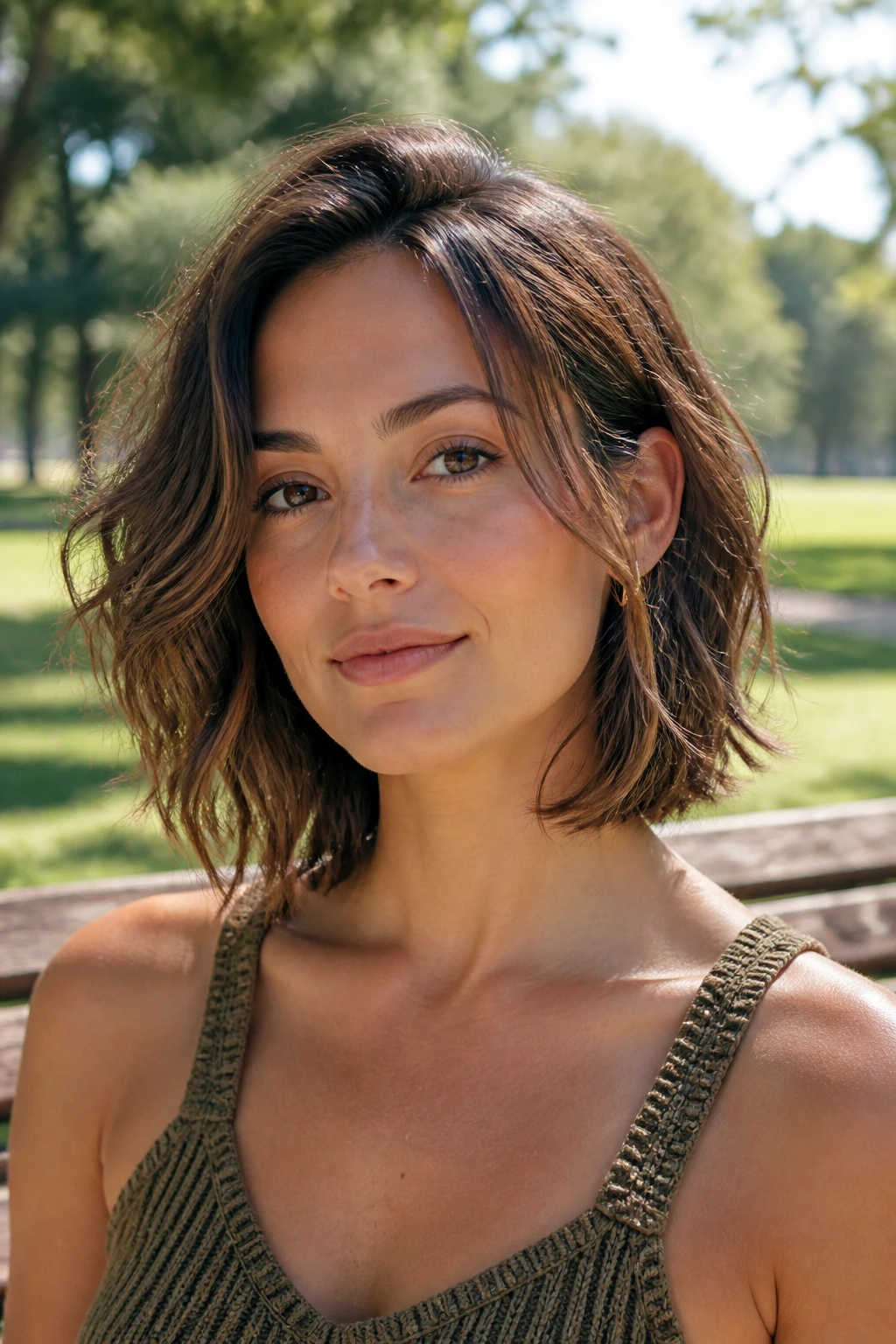
A collarbone-length stack is the safest long version in the group, and I mean that in the best way. You still get the lifted nape and the angled back, but the front has enough length to tuck behind the ears or swing around the chin. It’s a useful compromise.
Oval faces tend to look good in this length because the cut doesn’t swallow the bone structure. The front pieces land just low enough to feel soft, not heavy. Wavy hair helps fill out the shape without making it feel flat at the crown.
If you’re moving down from longer hair, this is an easy bridge cut. It gives you a bob silhouette while keeping enough length to feel familiar.
17. Dimensional Color Stack
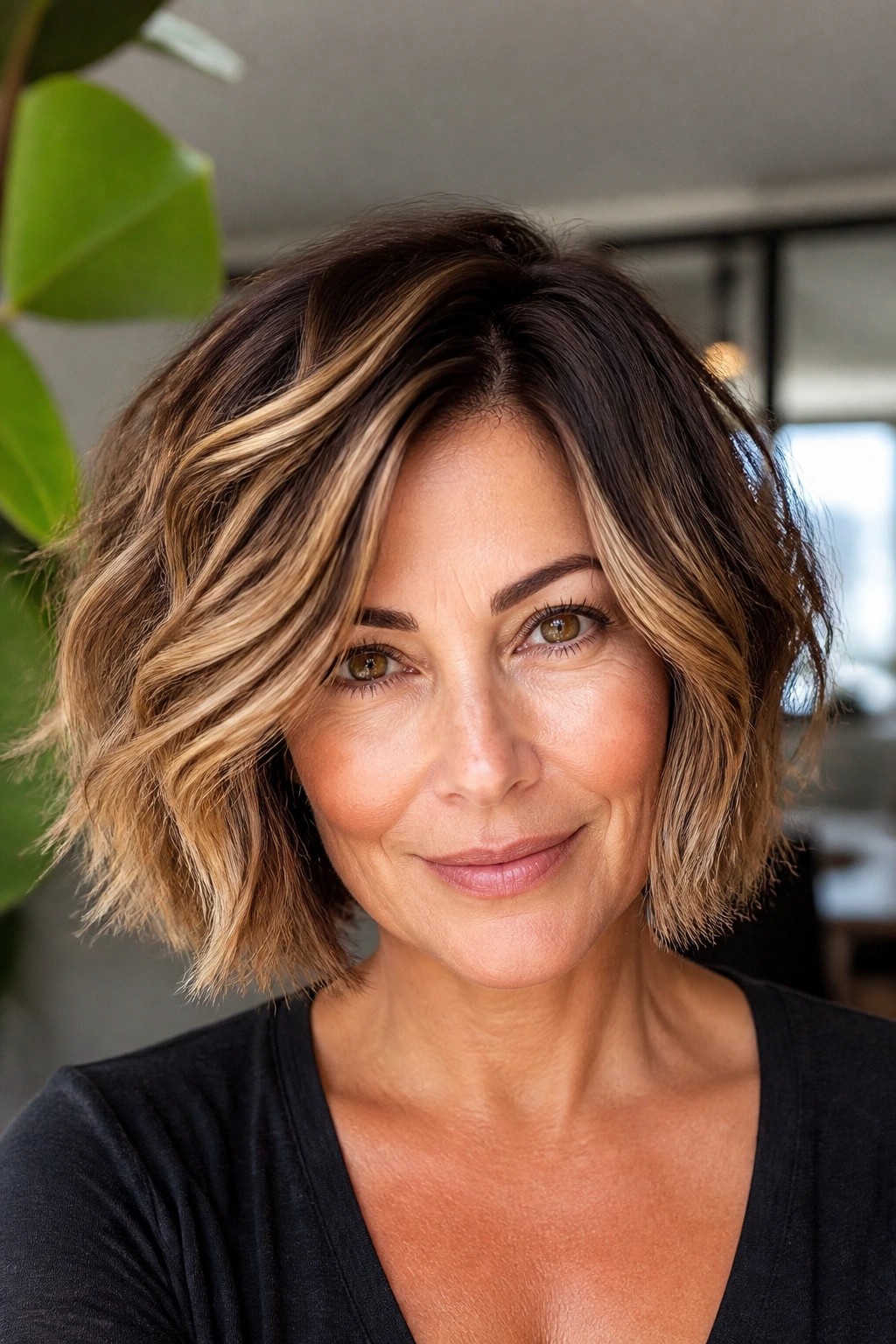
Color changes the shape more than people expect. Balayage, ribbons, or even a soft root shadow can make the stacked layers read more clearly because the light catches the graduation. On wavy hair, that separation helps the texture show instead of disappearing into one solid block.
Oval faces benefit when the brighter pieces land around the cheekbone and jaw. That pulls the eye inward and keeps the face from looking washed out by a single all-over tone. It also gives the bob more movement in photos and daylight.
I’m picky here: color should support the cut, not distract from it. A good dimensional stack looks like the haircut has more depth, not like the hairdresser was bored and grabbed a foil packet.
18. Rounded Halo Bob
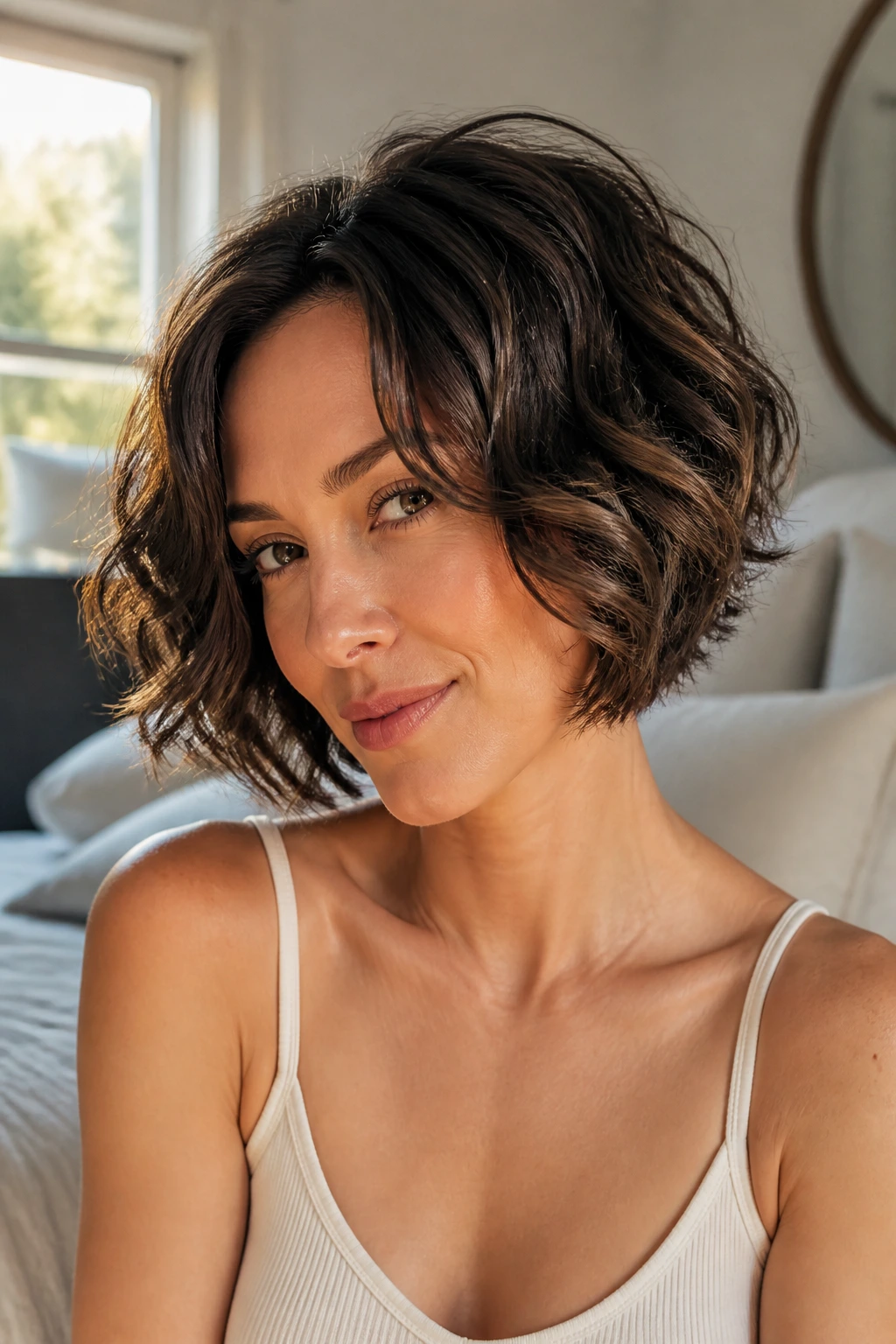
A rounded halo bob sounds soft, and it is, but it still needs structure under the surface. The stack at the back keeps the crown lifted while the outer line curves around the head in a smooth arc. On wavy hair, that curve can look lush rather than puffy if the layers are controlled.
Oval faces can wear the rounded shape without feeling overwhelmed by width. The face shape already has balance, so the hairstyle can lean into softness. Just don’t overbuild the sides. That’s how the halo turns into a mushroom.
This version is good if you like a bob that feels fuller and more polished. It reads as rounded from the front, clean from the back, and much easier to maintain than it looks.
19. Side-Swept Fringe Stack
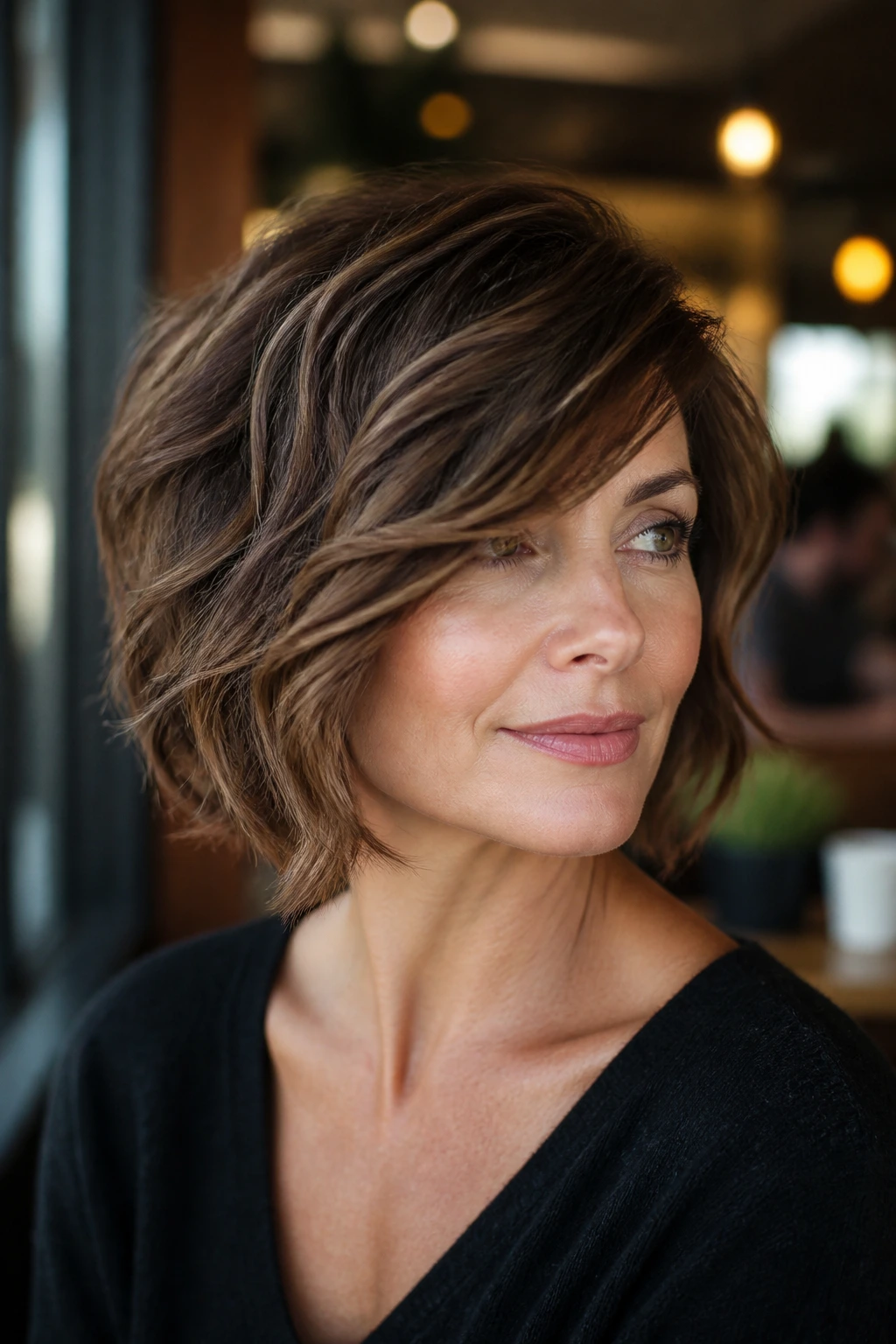
A side-swept fringe gives the cut a diagonal line, and diagonal lines are useful. They pull the face open, soften the forehead, and guide the eye right into the stacked shape behind it. The result feels considered without looking overworked.
For oval faces, the fringe adds a little asymmetry without changing the overall harmony of the face. That’s the nice part. You can shift the mood of the bob with one front section and a dry round brush.
This version works especially well when the fringe is cut to blend into the longest front pieces. If the fringe stops too short, it can read as an extra piece sitting on top. Blend is what makes it feel expensive. And yes, that word gets overused, but here it’s true.
20. Soft Shag Stack
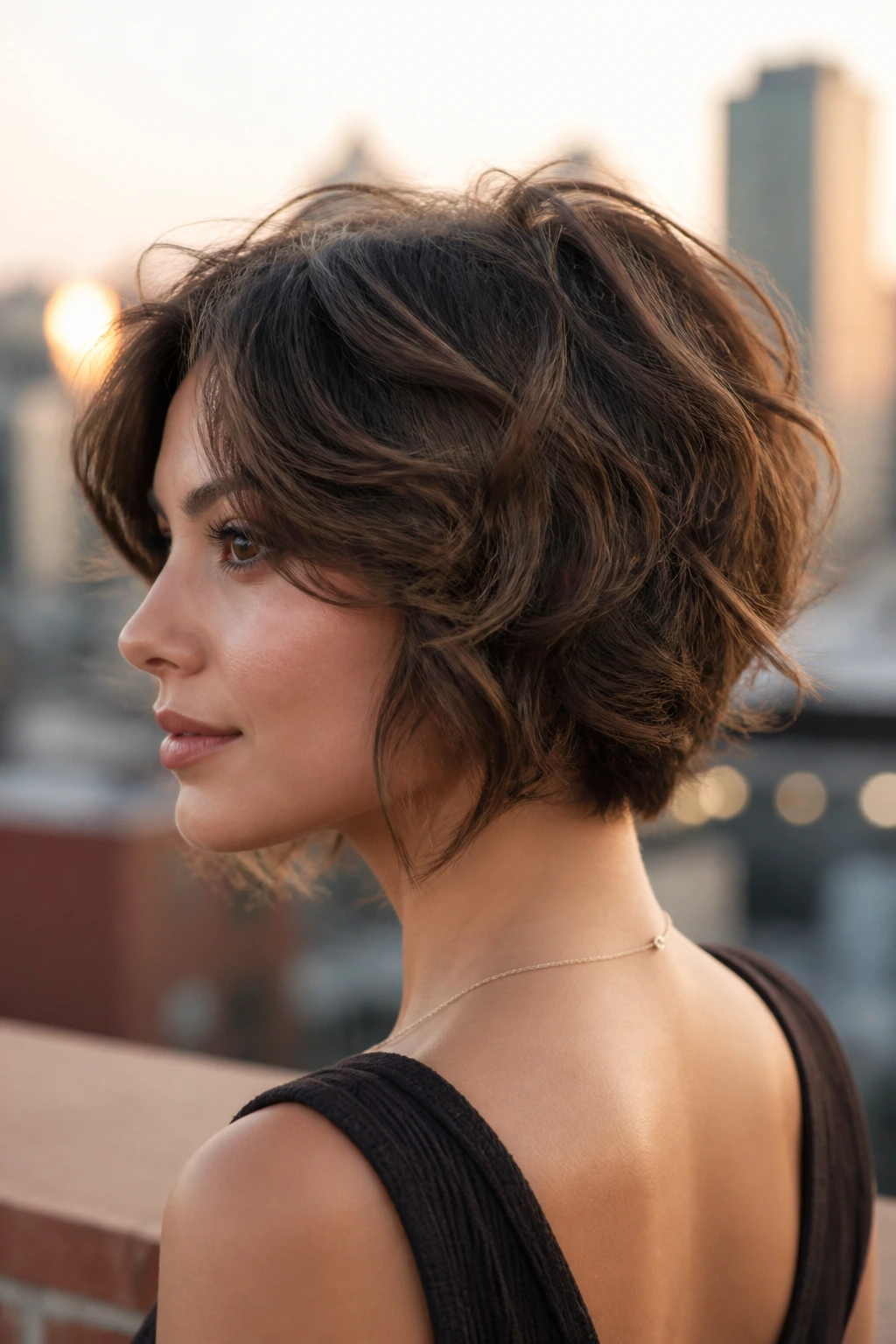
This is the rebellious one, but it’s still a bob at heart. The stack remains in the back, while shag-style layers add some broken texture through the crown and sides. That’s a smart fit for wavy hair because the waves already want to scatter a little.
Oval faces can wear the soft shag stack without losing structure because the cut keeps enough length at the perimeter. You get movement around the temples and cheekbones, but the bob line still anchors the shape. Too much shagging, and it stops reading as a bob. So the layers need restraint.
I like this cut for people who are tired of hair that sits politely. This one has a bit of swing to it.
21. Thick-Hair Weight-Removed Stack
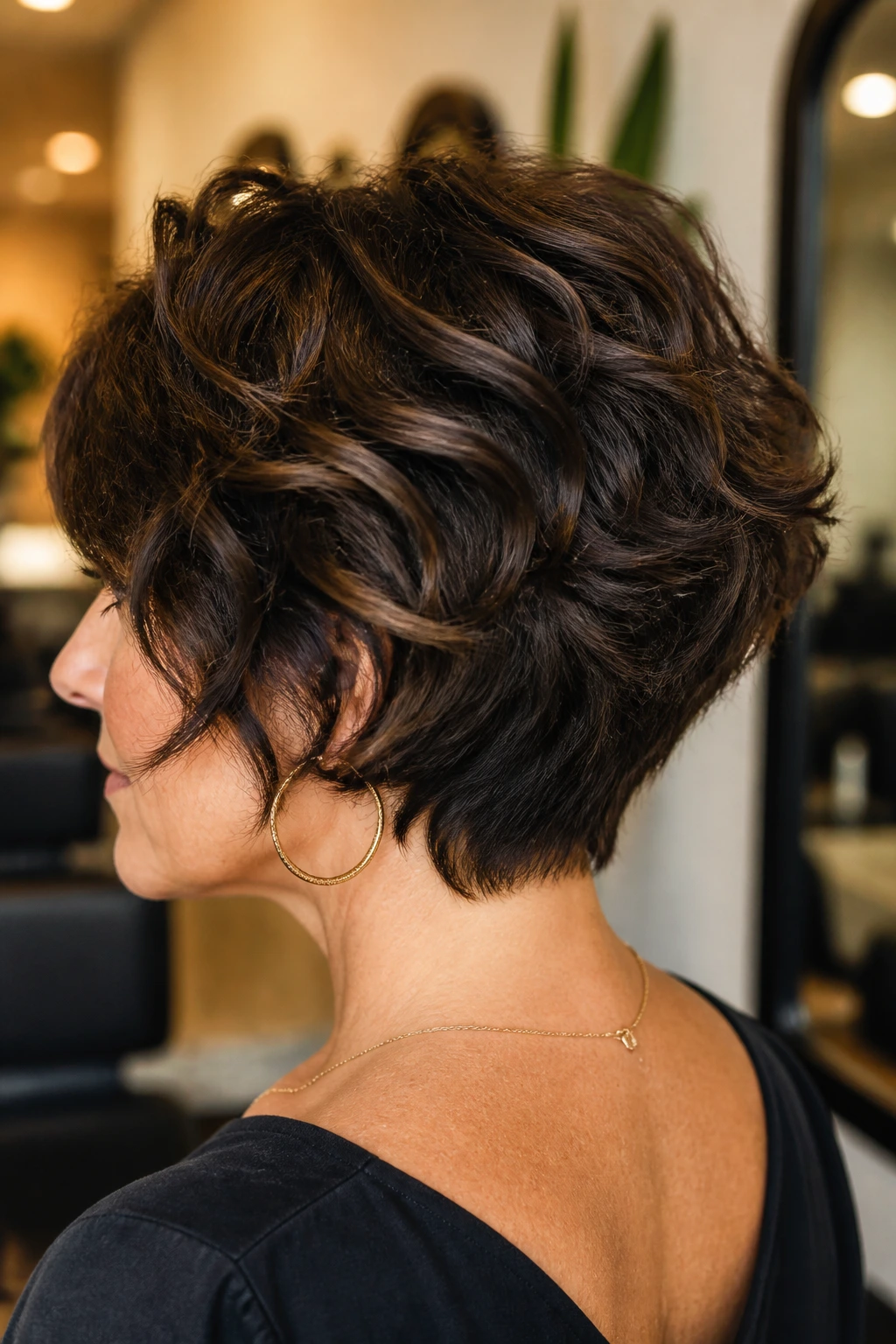
Thick wavy hair can look gorgeous in a stacked bob, but only when the bulk is handled with a steady hand. The back needs real graduation, and the interior needs weight removal so the lower half doesn’t balloon out. Done well, the result is clean and light.
Oval faces work nicely with this cut because the volume stays where it belongs: near the crown and upper back, not at the jaw. The face stays open, and the wave pattern looks controlled rather than puffy.
A blunt perimeter on thick wavy hair is usually the wrong move here. It makes the cut feel dense at the bottom. Ask for interior debulking and a precise nape line instead.
22. Fine-Hair Lifted Stack
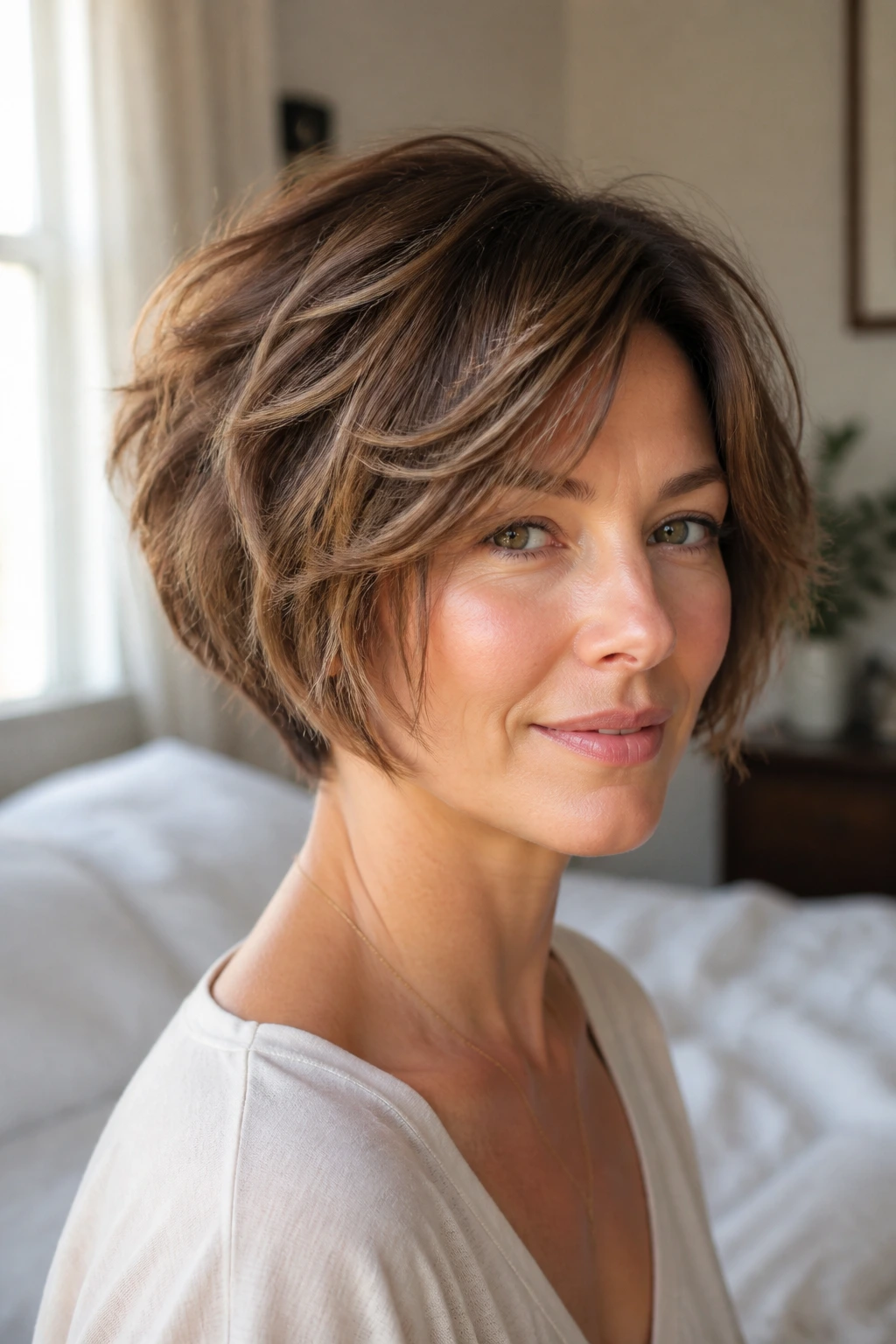
Fine hair needs a different game. Less bulk. More lift. This stacked bob uses a tighter graduation at the back to create the appearance of fullness, while the top layers stay light enough not to collapse under their own weight.
Oval faces are a good match because the cut doesn’t need extra width to balance anything out. The texture can stay delicate and still look intentional. A little root spray at the crown and a quick blow-dry with a round brush can make the shape hold much better.
The trick with fine hair is not to over-thin the ends. If you do, the cut can go stringy fast. A tidy stack with soft internal shaping usually gives more body than a lot of slicing ever will.
23. Beach-Textured A-Line Bob
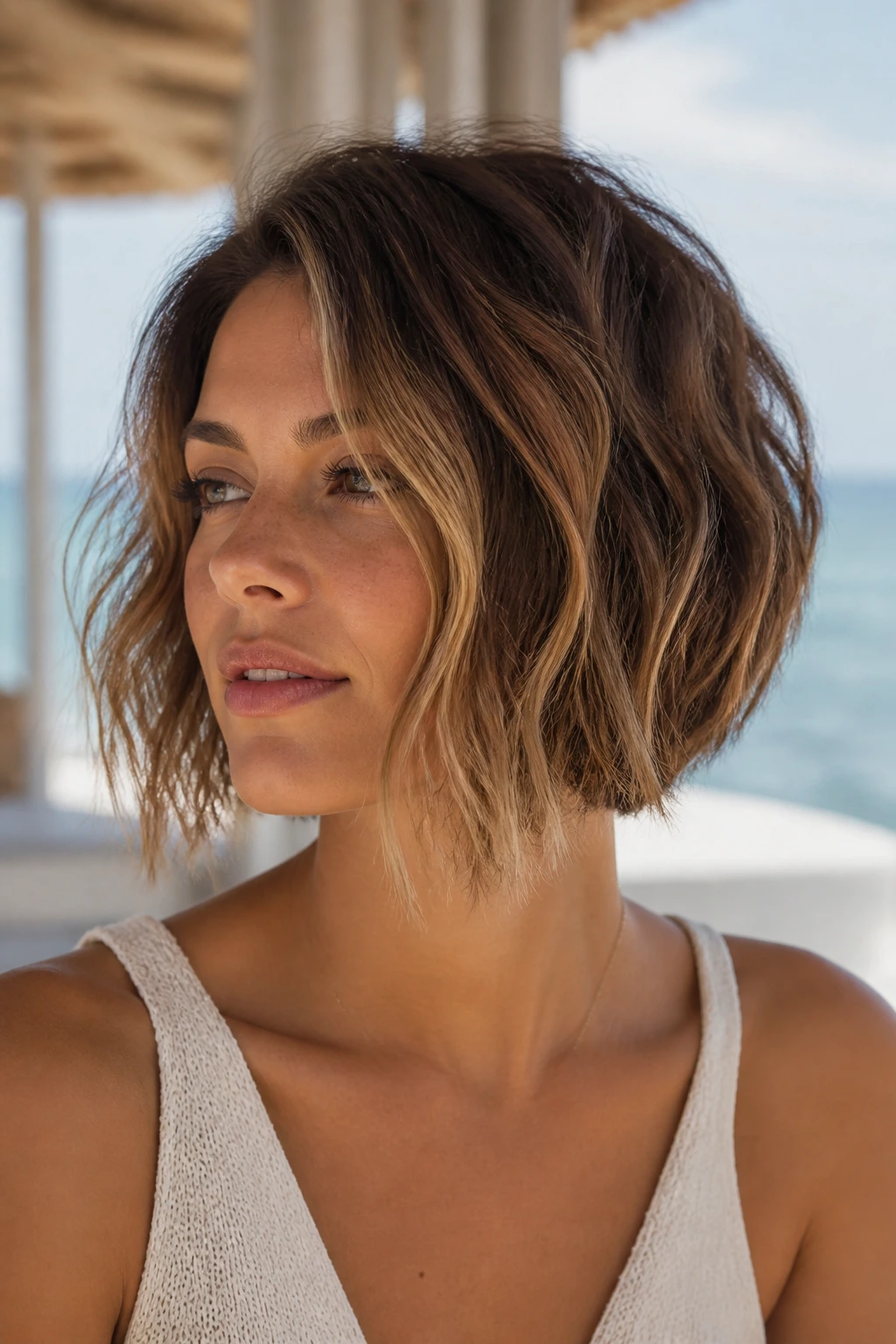
The A-line shape keeps the front longer than the back, which gives wavy hair a natural place to fall. Add texture, and the whole cut turns loose and easy. It’s one of the most forgiving versions in the group because the shape has room to move.
Oval faces can wear this because the length in front lightly frames the jaw without closing off the face. The back still feels stacked, just not severe. It’s a useful middle ground for someone who wants angle without sharpness.
A sea-salt spray can work here, but don’t drown the hair in it. A little grit is enough. Too much and the ends start looking dry instead of textured.
24. Grow-Out Friendly Stack
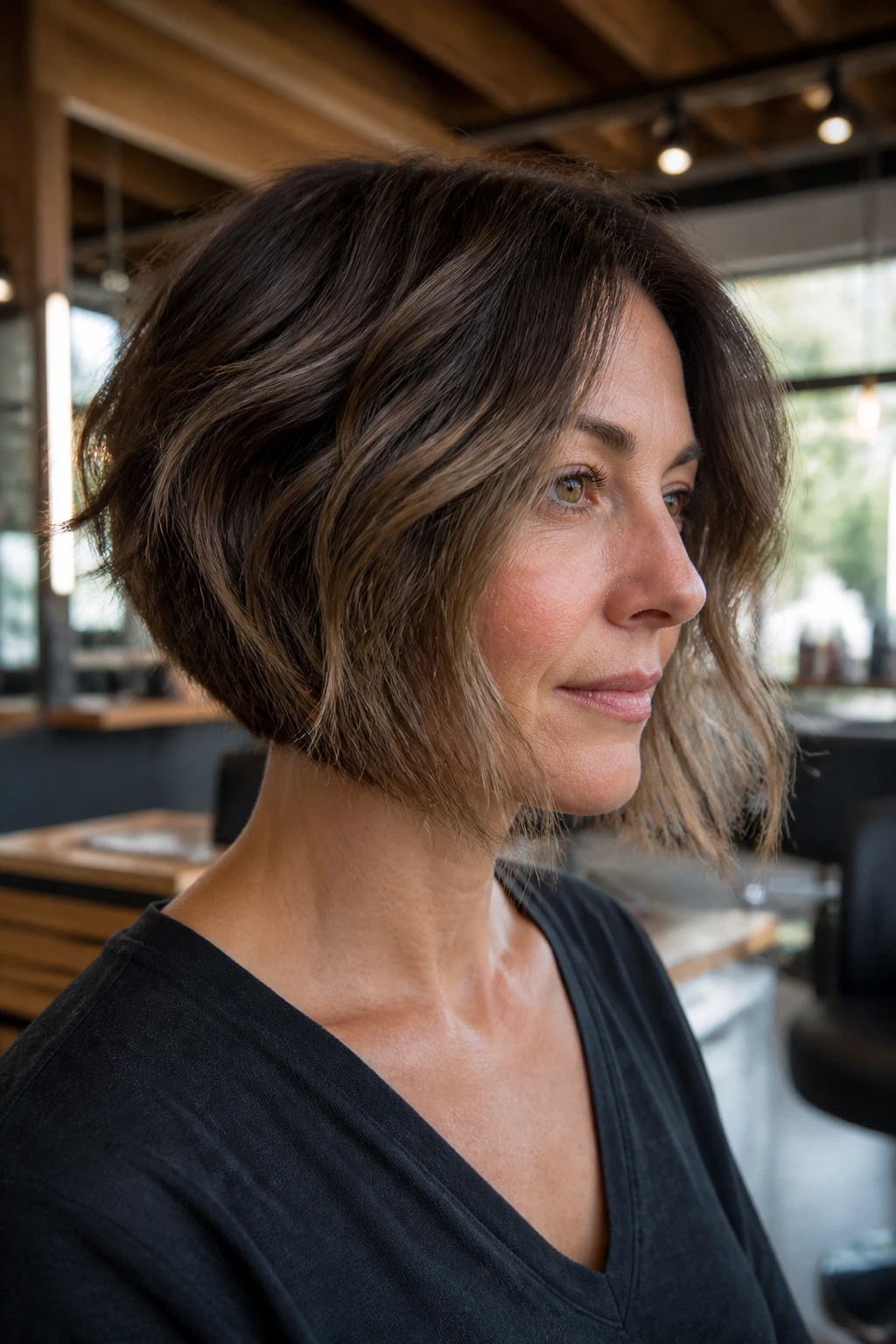
This is the cut for the person who likes a shape that keeps paying rent as it grows. The back is stacked enough to look fresh, but the front is left a touch longer so the silhouette doesn’t fall apart in six weeks. That matters more than people think.
For oval faces, the grow-out version stays flattering because the front still follows the line of the face. Wavy hair helps disguise the transition as the layers soften. When a straight bob grows out, the line can get blunt and awkward fast. Wavy hair is kinder.
If you hate constant trims, this is the version to choose. It looks tidy on day one and still looks decent when it’s slightly overdue.
25. Event-Ready Smooth Stack
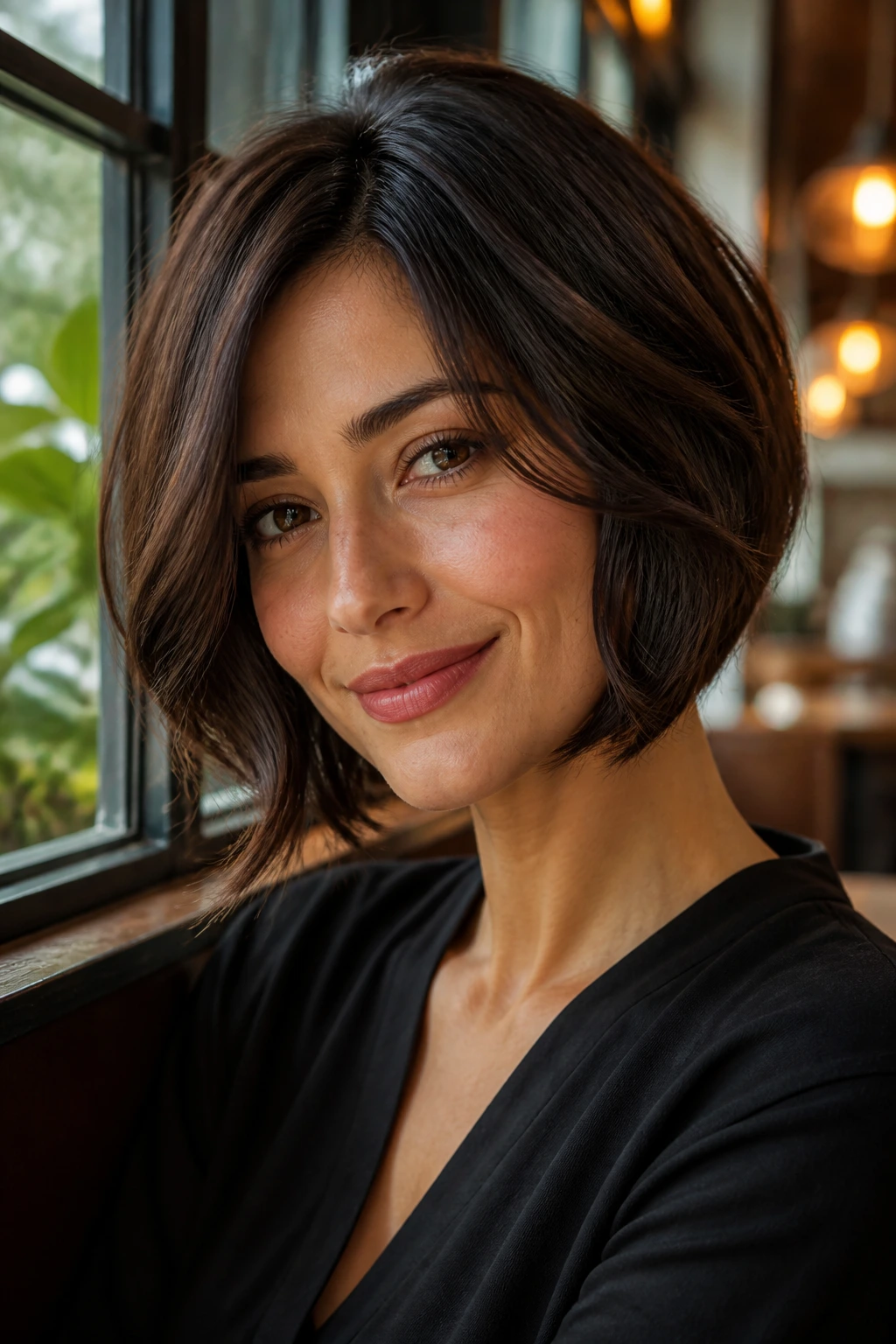
Not every textured stacked bob has to look casual. This one leans cleaner, with smoother ends and a more controlled finish through the front. The back still carries the stacked structure, but the styling is more polished, which makes it easy to dress up.
Oval faces can carry the sleekness because the face shape already gives the cut room to breathe. The smooth finish keeps the wave from taking over, while just a bit of movement at the ends keeps it from looking stiff. A flat iron is optional; a blowout brush can do most of the work.
I’d choose this version for dinner, photos, or any situation where you want the haircut to look deliberate. It still has texture. It just puts on a cleaner shirt.
Why Stacking and Texture Suit Oval Faces So Well
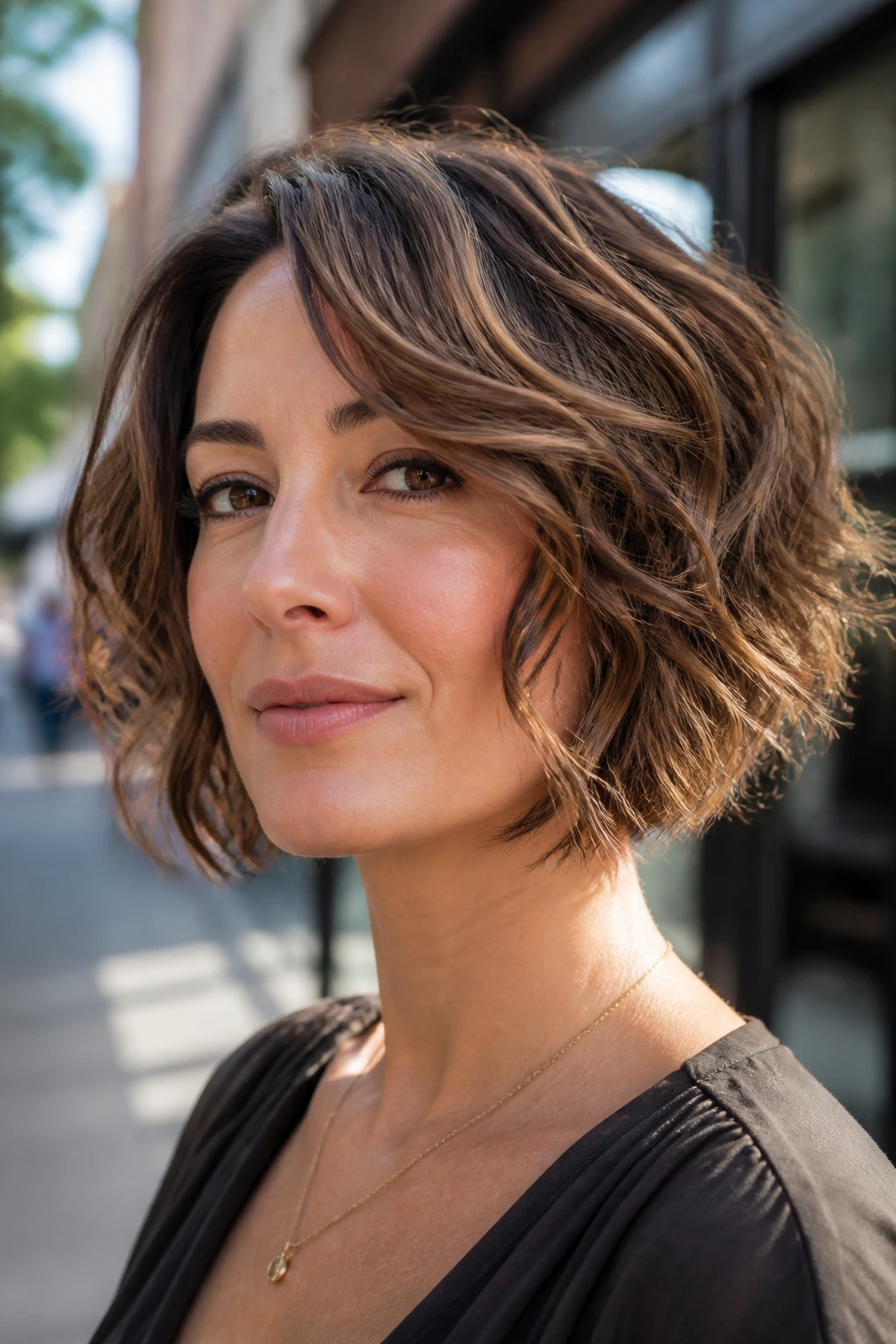
Oval faces are easy to flatter, but that does not mean every bob shape earns its keep. The reason a stacked bob works here is simple: the cut builds vertical lift at the back while leaving the face open enough to show off the natural balance of the shape. That creates movement without crowding the jaw or forehead.
Wavy hair makes the whole thing more interesting. The bend gives the stack a little lift of its own, and the broken texture softens the transition from nape to front. If the cut is too blunt, the wave can look heavy. If the layers are too high at the sides, the hair can puff around the ears. The sweet spot sits between those two mistakes.
The geometry that matters
The back should rise cleanly from the neckline. Not steep. Just enough to create a visible graduation. The front should fall in a diagonal line that touches the jaw, cheek, or collarbone, depending on the length you choose. That diagonal does quiet work. It keeps the face from looking flattened by a single horizontal line.
Where the wave should live
I like the texture concentrated through the interior and ends, with the perimeter left readable. That way the hair still looks like a bob when it settles. If you remove too much weight from the sides, wavy hair can start floating away from the head in a way that no amount of product fixes.
What to Say When You Sit in the Chair
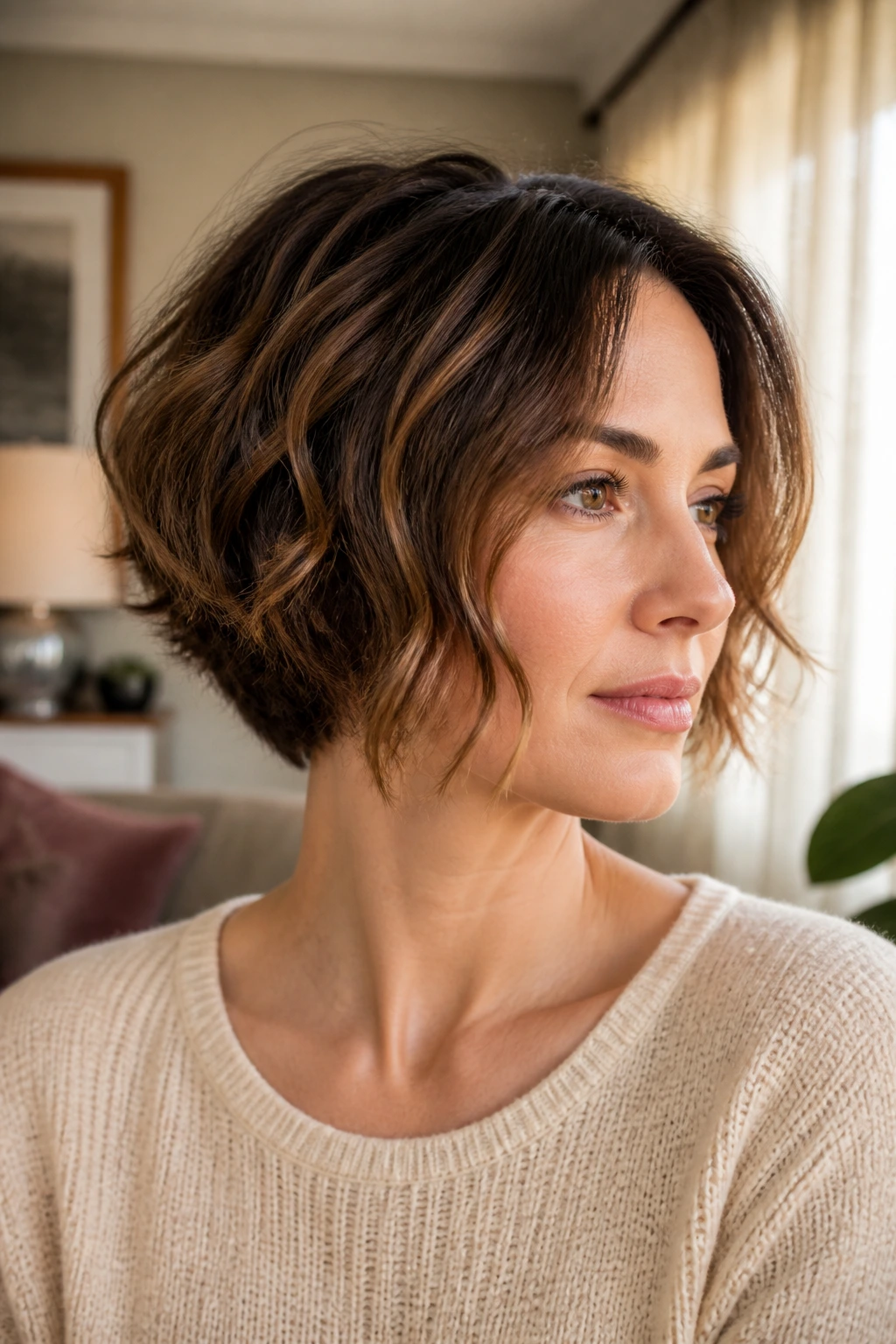
Bring pictures. Two or three, not twenty. The useful ones are the ones that show the front, side, and back separately, because stacked bobs change a lot from angle to angle. A photo of someone with a chin-length bob means almost nothing if the nape is the part you care about.
Ask for a stacked bob with a graduated nape, soft internal texture, and a perimeter that stays clean through the jaw or cheekbone. That wording tells the stylist you want shape, not random layers. If you air-dry most days, say that out loud. If you blow-dry smooth, say that too. The haircut should be built for your routine, not someone else’s.
Fine hair needs a lighter hand on the thinning. Thick hair needs more weight removal inside the shape. Wavy hair almost always benefits from a dry or mostly dry cut reference so the stylist can see where the bends actually fall. That part gets skipped too often, and then the finished cut surprises everyone in the wrong way.
How to Style It on a Normal Morning
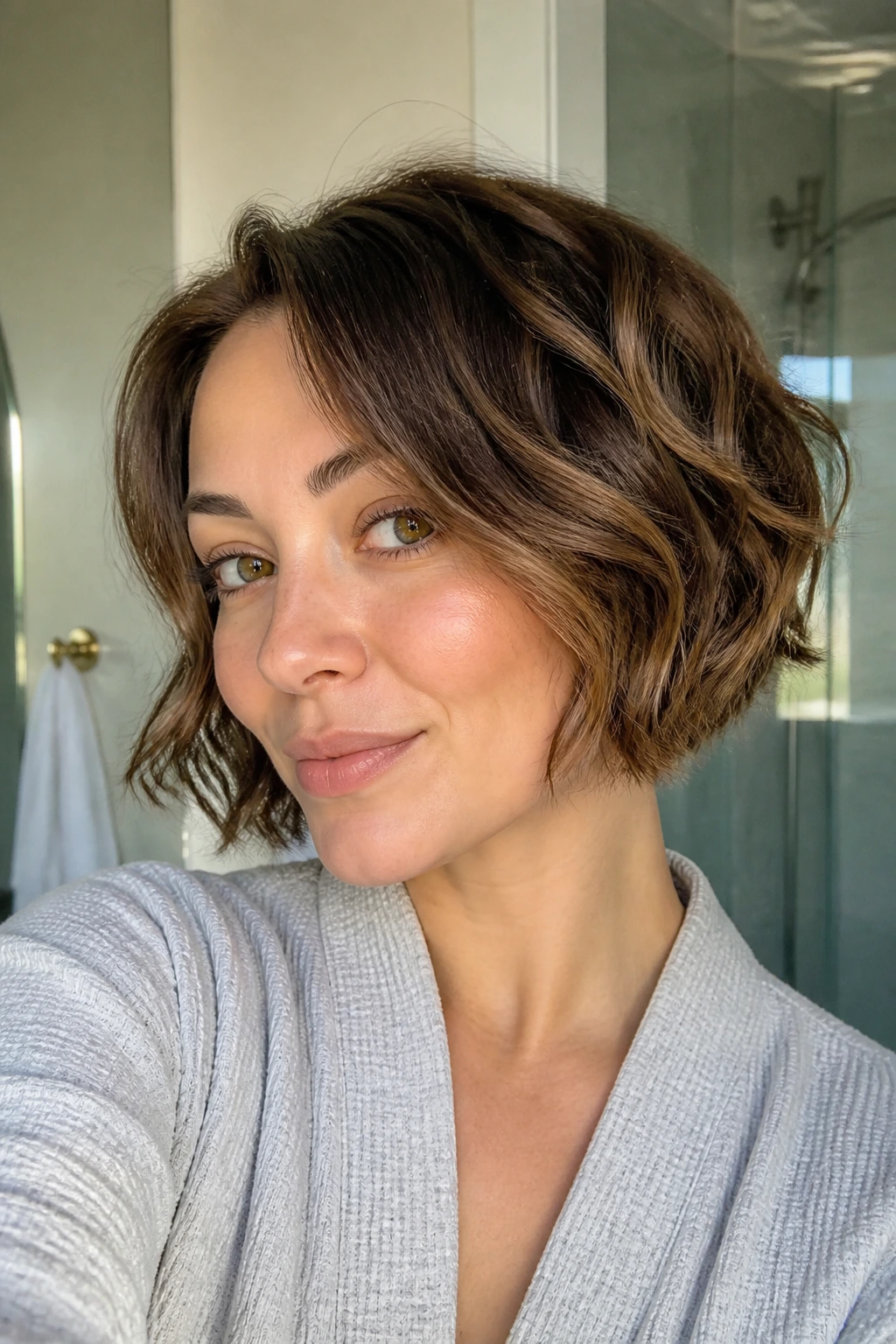
A stacked bob with waves should not need a 20-minute battle every day. If it does, something in the cut is off.
Air-dry route
Work a small palmful of mousse or lightweight curl cream through damp hair, then scrunch the ends and clip the crown for a little lift. Leave the top alone as much as you can. Once it’s about 80 percent dry, let it finish naturally. The back should keep its shape without turning crisp.
Blow-dry route
Use a nozzle on the dryer and rough dry the roots first. Then take a round brush or hot brush and focus only on the top layer and front corners. Don’t over-straighten the ends. That’s the move that kills the texture and makes a stacked bob look too neat for its own good.
Day-two route
Mist the hair lightly, press a little wave cream into the mids, and warm the crown with a diffuser or a short blast from the dryer. If the nape has gone flat, a touch of dry shampoo there can help, but use a small amount. Too much and the back gets dusty-looking fast.
Essential Tools and Styling Products for These Cuts
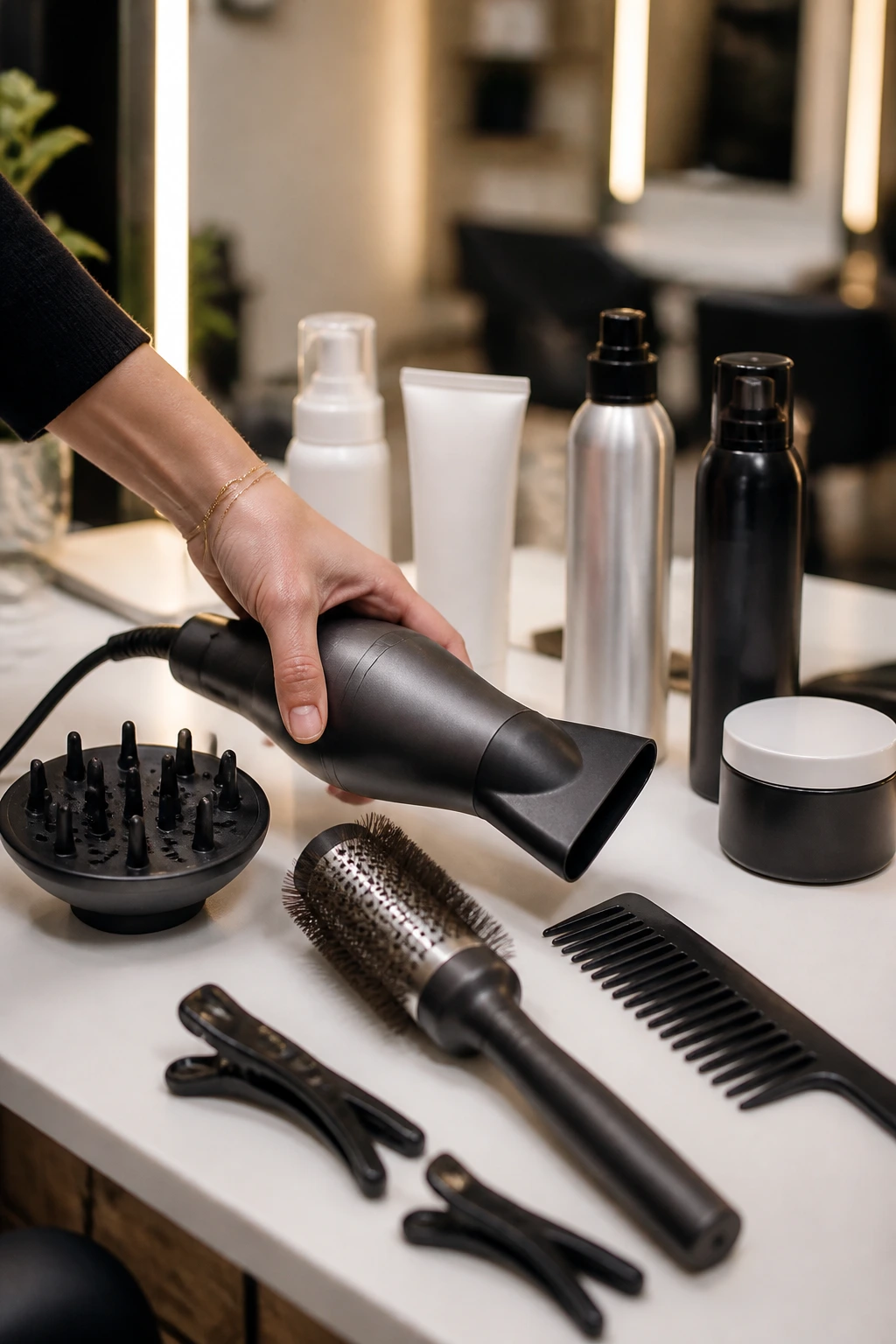
- Blow dryer with a nozzle attachment: Helps control the airflow so the back stack doesn’t get blown apart.
- Diffuser: Useful for wavy hair when you want the bend to stay soft and separated instead of frizzy.
- 1 to 1.5-inch round brush: Best for smoothing the front corners and lifting the crown without making the ends too curled.
- Lightweight mousse: Gives wave support at the roots and through the mids without the sticky, crunchy feel.
- Curl cream or wave cream: Good for air-dry days; use a small amount or the bob can collapse.
- Texture spray: Adds separation to piecey bobs and shag-influenced versions.
- Dry shampoo: Keeps the crown and nape from going limp between washes.
- Finishing cream or soft wax: Handy for taming the end pieces and keeping the shape from fuzzing out.
- Wide-tooth comb and clips: Useful for detangling wet waves and sectioning the hair while styling.
How to Keep the Shape Sharp Without Overdoing It
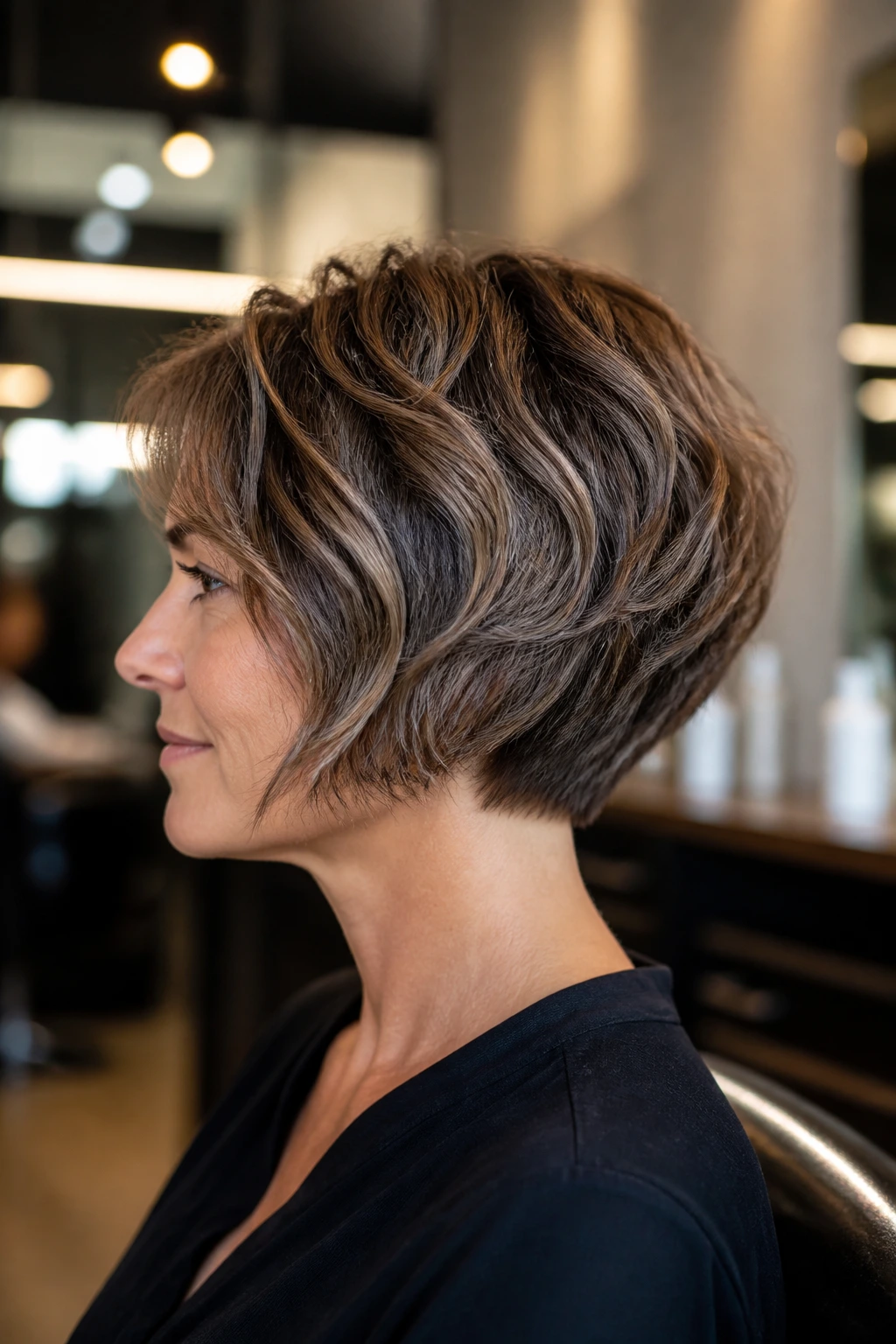
A stacked bob lives or dies by its silhouette. That’s the truth of it. The back needs to stay cleaner than the front, and the front needs enough softness to avoid looking chopped off. Once the stack grows out too far, the cut loses its lift and starts sliding into a blunt bob-lob shape.
Trim timing
If you want the stack to stay crisp, plan on a trim every 6 to 8 weeks. If you’re growing it out, you can push that to 8 to 10 weeks, but the back will soften faster than the front. That’s normal. The nape is the first place the outline changes.
Night care
A silk pillowcase helps, but the main goal is keeping the crown from getting crushed. I like clipping the top section loosely at the crown or turning the hair into a low, loose twist before bed. Nothing tight. You want to wake up with a shape, not a crease.
Wash cycle
Most wavy bobs behave best with washing every 2 to 4 days, depending on scalp oil and product use. If you pile on heavy cream, the cut loses lift. If you wash too often, the ends can get puffy and rough. Find the middle. That’s where the shape lives.
Common Mistakes That Flatten or Widen the Shape
-
Over-layering the sides: This is the classic puff problem. The bob starts widening at the ears instead of staying clean along the head. Fix it by keeping most of the graduation in the back and only light texture near the sides.
-
Cutting the front too blunt: A blunt front can make oval faces look longer than they are and can make wavy hair sit like a shelf. Ask for softened corners or a gentle angle into the jawline.
-
Using heavy creams everywhere: A thick curl cream can make the stack droop by lunch. Put richer product only on the mid-lengths and ends, then keep the roots lighter.
-
Ignoring the natural part: If your hair wants a side part and you force it center, the back stack can look lopsided. Work with the way your hair falls or adjust the cut to match the part you actually wear.
-
Blow-drying the ends too straight: That kills the texture and makes the bob look flat and dated. Leave some bend in the perimeter so the haircut still feels alive.
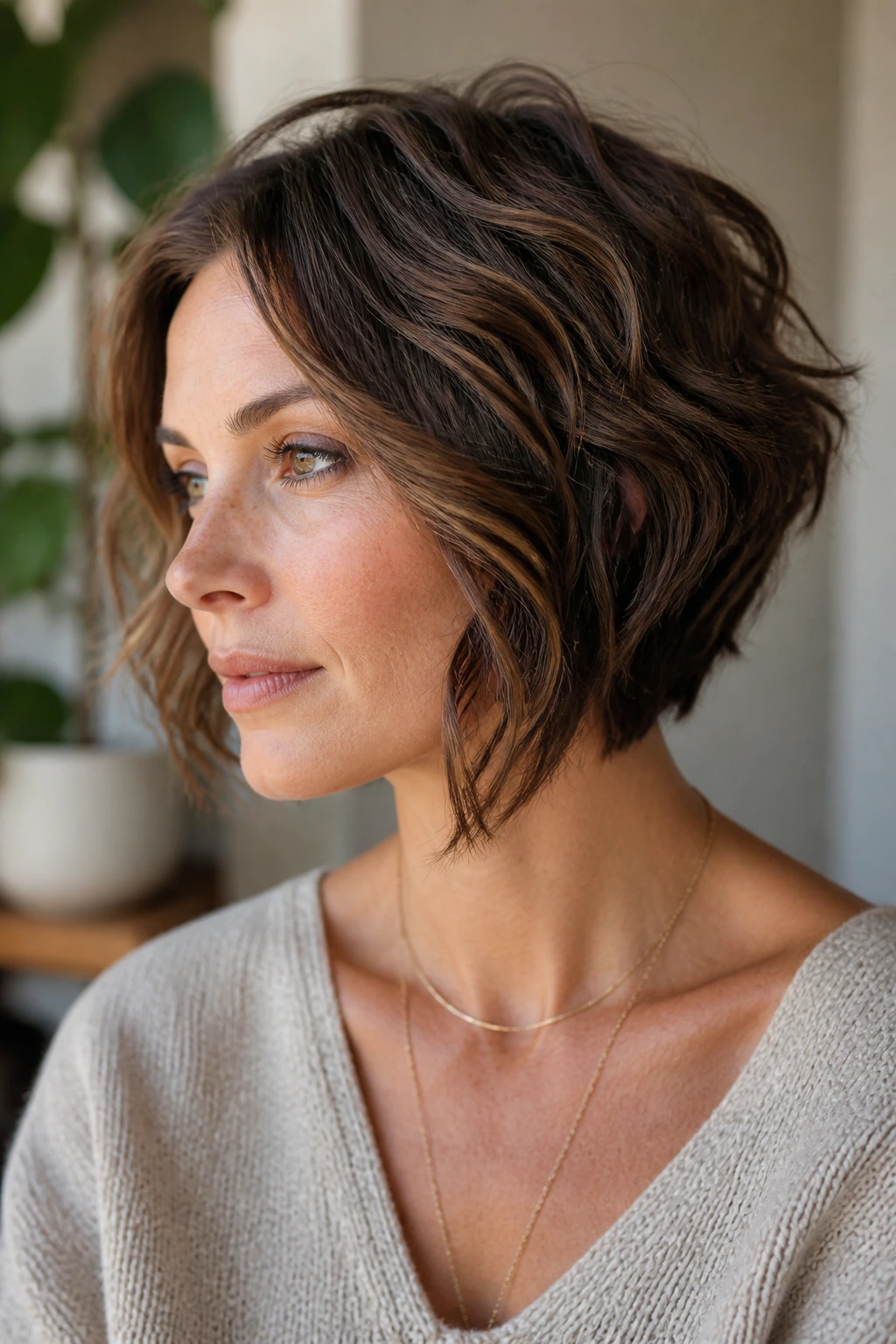
Variations and Adaptations to Try
-
Fine-Hair Lift Stack: Ask for tighter graduation at the nape and fewer long internal layers. A little root spray and a round brush at the crown will keep the shape from deflating.
-
Thick-Hair Weight-Release Stack: This version uses deeper internal debulking and a slightly longer front. It keeps the bob from flaring out at the bottom while still giving the wave room to move.
-
Curtain-Bang Stack: Add long curtain bangs that blend into the front corners. This softens the forehead and gives the bob a more relaxed frame, especially on oval faces.
-
Air-Dry Stack: Keep the layering soft and the perimeter readable, then style with mousse and a diffuser only if needed. It’s the easiest route for naturally wavy hair that behaves better without heat.
-
Grow-Out Stack: Leave the front closer to the collarbone and keep the nape graduated but not extreme. This version looks tidy longer and slips into a bob-lob without a rough transition.
-
Color-Lift Stack: Add balayage or subtle highlights around the front corners and crown. The light pieces make the layers pop and help the texture show, especially in softer waves.
Frequently Asked Questions
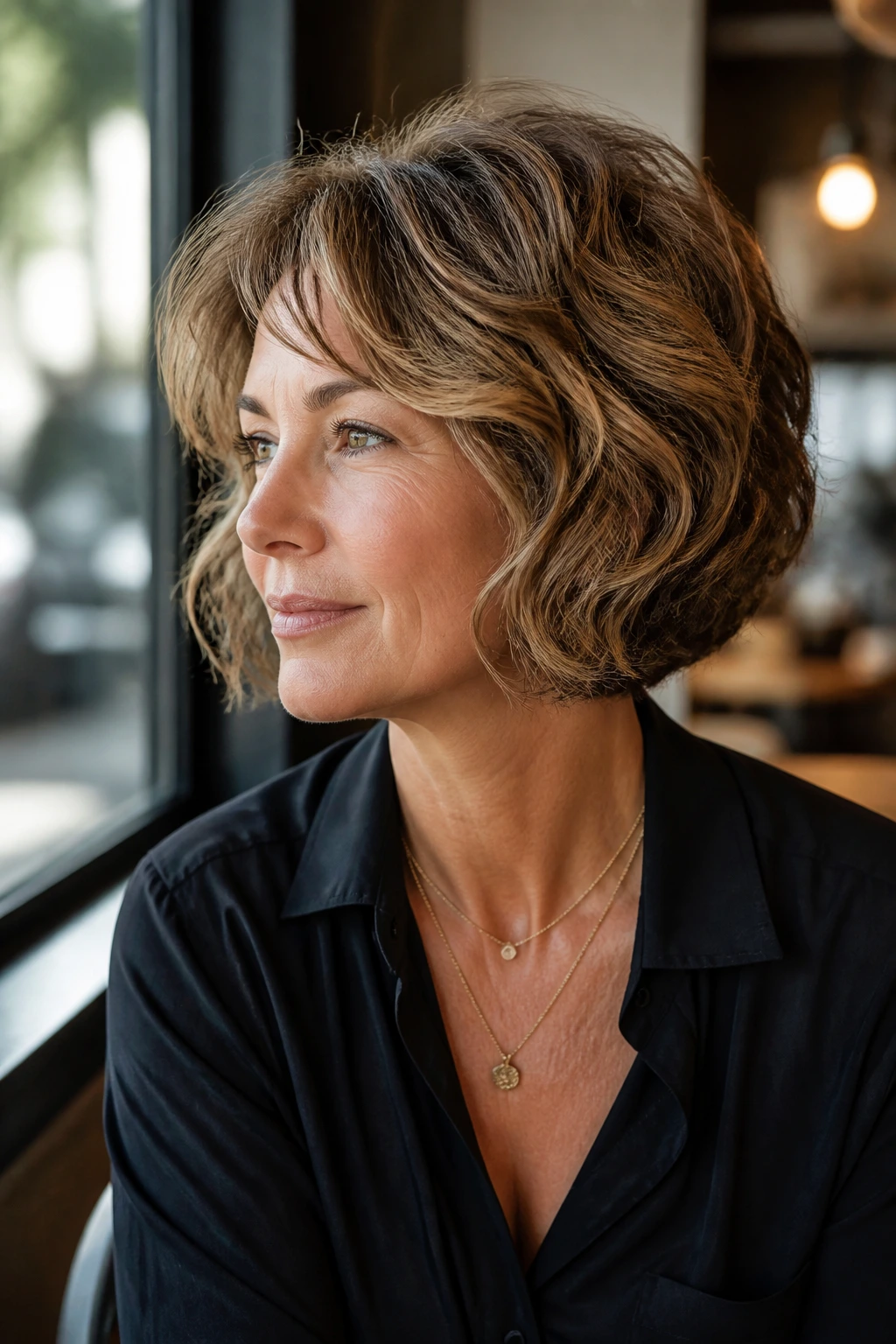
Is a stacked bob good for an oval face?
Yes, because an oval face can carry a lot of shapes without needing correction. A stacked bob adds lift at the back and lets you play with length at the front, which keeps the face open and balanced.
Will wavy hair puff up too much in a stacked bob?
It can, if the sides are over-layered or the product is too heavy. Keep most of the graduation in the back, then use lightweight mousse or wave cream so the texture stays separated instead of expanding outward.
How short should the back be?
That depends on density and how bold you want the silhouette. Most people do well with the nape sitting about 1 to 2 inches shorter than the front corners, but thick hair may need more internal weight removal to show the shape cleanly.
Can I wear bangs with this cut?
Absolutely. Curtain bangs and side-swept fringe work especially well because they soften the forehead and blend into the front pieces. The main thing is to keep the fringe connected to the rest of the bob instead of leaving it as a separate block.
Does this haircut work for fine hair?
Yes, but the stack should be controlled. Fine hair usually needs a stronger nape shape and less thinning through the ends so the cut doesn’t go wispy by the third day.
What if my hair is thick and heavy?
Then the haircut needs more interior weight removal and possibly a hidden undercut at the nape. Without that, thick wavy hair can balloon at the bottom and lose the clean stacked line.
How often should I get it trimmed?
Every 6 to 8 weeks keeps the stack crisp. If you’re growing it out, 8 to 10 weeks is workable, but the shape will soften faster at the back.
What’s the best way to grow it out without an awkward phase?
Keep the front a little longer and ask the stylist not to over-stack the nape at your last few trims. That gives the haircut a smoother slide into a bob-lob instead of a sudden switch.
The Shape That Keeps Its Edge
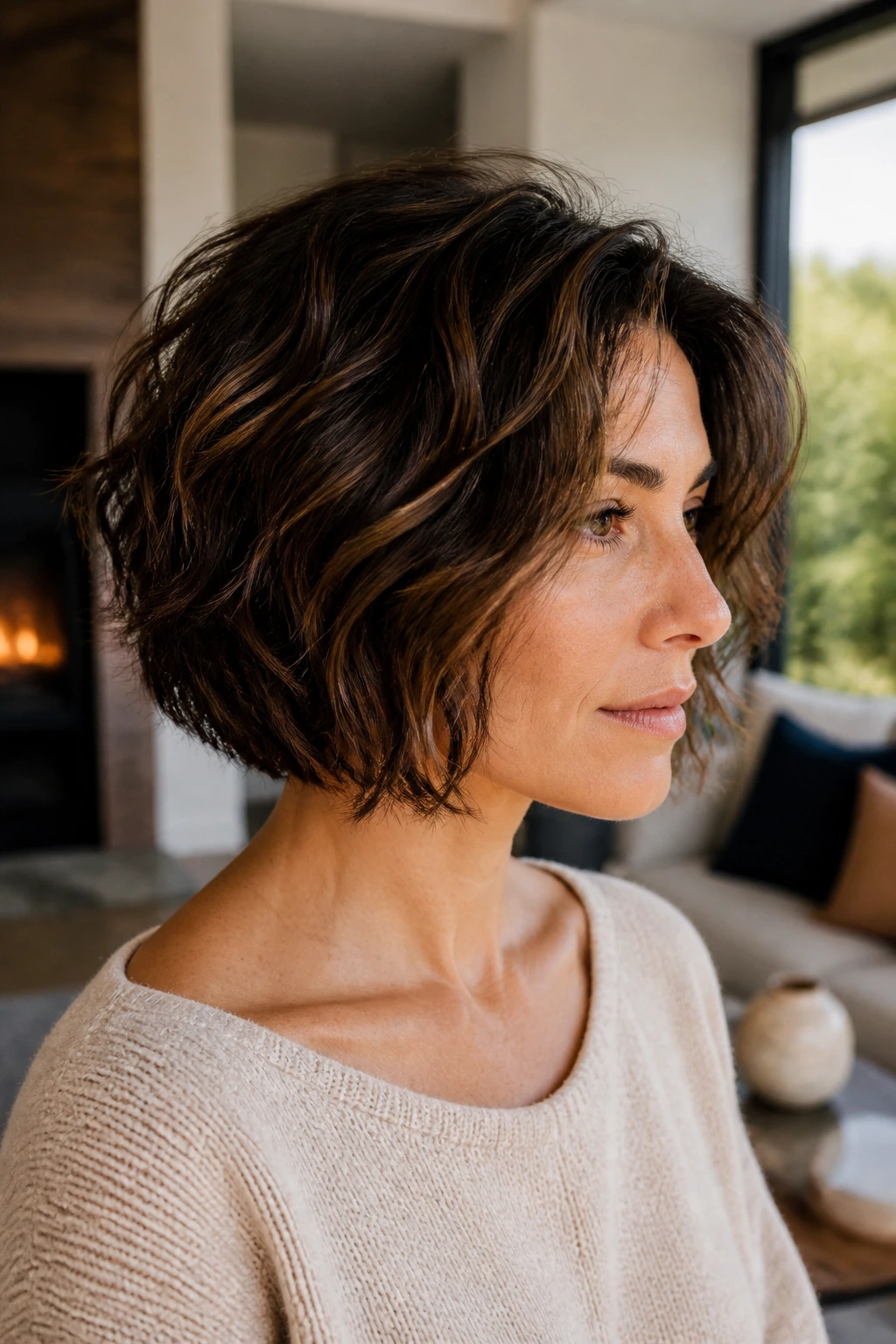
A good stacked bob doesn’t just sit on the head. It changes how the hair moves when you turn, tuck, bend, or let it dry on its own. That’s why oval faces and wavy hair make such a strong pairing here: the face has room for the shape, and the wave gives the cut life without much fuss.
Pick the version that matches your density and your patience. Go softer if you air-dry. Go sharper if you like a neat outline. Ask for the nape shape you actually want, not a vague “bob with layers,” and the haircut will do much better work for you.