



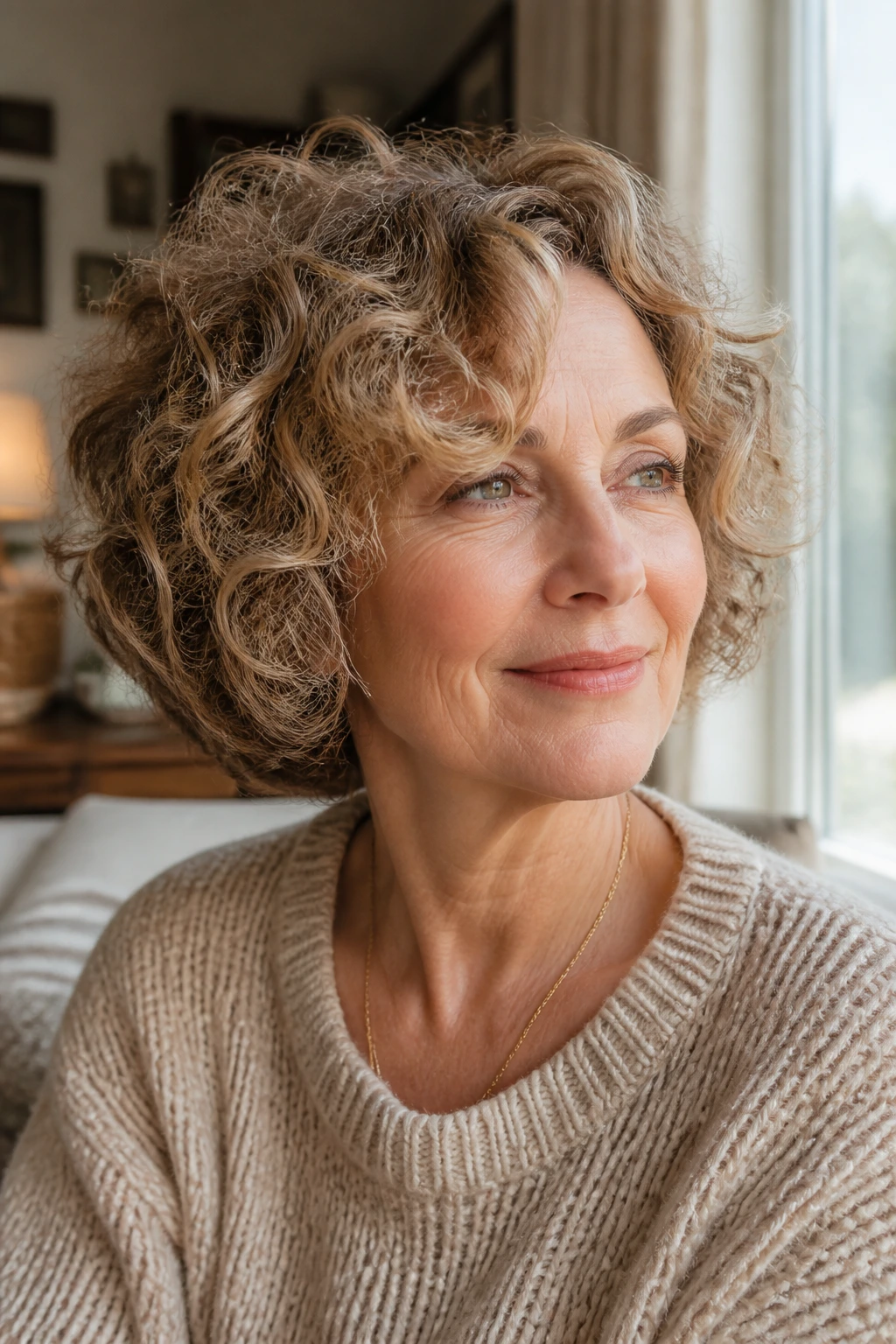
A tousled bob on curly hair has a sneaky advantage: it looks like you meant to do very little, even when the cut is doing most of the work. That matters after 50, when curls often get a little drier, a little lighter at the crown, and a little less willing to sit still for a blunt, boxy shape. A smart bob keeps the outline clean and lets the curl pattern do the softening.
What I like about a tousled bob for curly hair is that it doesn’t fight the bend in your hair. It uses it. The ends can feather out, the layers can lift at the temples, and the whole shape can move instead of sitting there like a helmet with a nice blowout. That’s the difference between “short hair” and a haircut with personality.
The trick is choosing the right bob for your curl type, face shape, and tolerance for styling. Some versions are cut to give you more crown height. Others trim weight from thick curls so the sides don’t balloon out. A few lean polished; a few lean shaggy; all of them can work beautifully on women over 50 with curly hair when the shape is thought through instead of chopped in a hurry.
Why This Collection Works for Curly Hair After 50
-
Less bulk, more shape: A good tousled bob removes the heavy triangle that curly hair can build around the jaw and gives the curl pattern a cleaner outline.
-
Lift where it counts: Layers near the crown and temples keep the top from flattening, which matters when hair gets finer or more resistant to volume.
-
Soft around the face: Side parts, curtain bangs, and cheekbone layers soften the line near the jaw without hiding your face behind too much hair.
-
Easy to air-dry: Most of these cuts look better when they’re not overworked. A little cream, a little gel, and a diffuser can be enough.
-
Works with gray and silver hair: Tousled texture shows off salt-and-pepper strands instead of making them look stiff or over-shaped.
-
Forgiving as it grows: A bob with movement can go a few weeks between trims without losing its whole personality. That’s worth something.
1. Jaw-Grazing Layered Bob
This is the bob I’d hand to someone who wants shape first and drama second. The length skims the jaw, so your curls can bounce instead of dragging downward, and the layers keep the outline from turning into one solid puff. On curly hair, that little bit of lift at the front makes a bigger difference than people expect.
Ask for longer interior layers and a soft perimeter, not razor-thin ends. The best version keeps enough weight at the bottom to stop the curls from frizzing apart, but not so much that the whole cut hangs in one block. If your hair tends to get fuller at the sides, this is a smart middle ground.
A jaw-grazing bob also works well if you wear earrings. The curls sit just above or right at the jaw, so the neckline stays visible and the face gets framed without looking crowded.
2. Soft French Bob
The French bob gets a little too romanticized, but on curly hair it can be sharp in a good way. Shorter through the perimeter, often closer to cheek length, it gives curls a lifted, airy shape that feels chic without asking for much styling time. The key is softness, not precision. Too blunt, and it looks severe; too layered, and it loses the whole point.
This version is especially nice if your curls are loose to medium and you’re tired of length that keeps pulling the front down. A French bob lets the cheekbones show, and that can be incredibly flattering with silver or salt-and-pepper texture.
Best ask: keep the outline rounded, not square, and let the curls be cut in a dry state if your stylist knows how to read shrinkage.
3. Rounded Bob with Crown Lift
A rounded bob is one of the best answers to flat roots and wide sides. The silhouette stays fuller at the top and narrows gently toward the neck, which gives curly hair a clean dome of volume instead of the side-heavy triangle that can happen when weight sits too low. It’s tidy, but not stiff.
The crown matters here. If the top is left too long, the style collapses. If it’s cut too short, the curl springs up and you get a little mushroom situation. The sweet spot is usually a few carefully placed layers at the crown and around the temples so the shape rises where the eye needs it.
This is a strong choice when your curls have lost some spring at the roots. A dab of mousse at the base and a diffuser for five to eight minutes can make the whole cut look more intentional.
4. Angled Bob with a Tapered Nape
Want the neck to look longer and the front to feel softer? The angled bob is the one. It sits shorter in the back and gradually extends toward the front, which creates a sleek line even when the curls themselves are loose and tousled. On curly hair, the angle should be gentle, not a severe wedge.
The tapered nape keeps the back from puffing out under a collar or scarf. That matters more than people realize. If you wear glasses, sweaters with high necks, or structured jackets, this shape keeps the whole haircut from competing with your clothes.
I like this cut for women who want a little structure without losing movement. It has enough edge to look polished, but the curls keep it from feeling hard.
5. Feathered Curly Shag Bob
This one has attitude, and I mean that in the nicest way. A feathered shag bob uses layers more freely, so the curls split into airy pieces instead of clumping into a heavy block. On thick or medium-thick hair, that can be a lifesaver. The silhouette feels lighter the second it’s cut.
The mistake people make with shaggy curly bobs is over-thinning the ends. Don’t do that. You want controlled feathering, especially around the face and crown, so the cut keeps its body. The perimeter should still have enough weight to hold the shape.
If your curls like to frizz when they’re left too long, this style can feel like a reset. A little curl cream, a little gel, then a hands-off dry. That’s usually enough.
6. Side-Swept Bob with Loose Ends
A deep side sweep gives curly hair a built-in lift on one side and a softer drape on the other. That asymmetry is useful when you want the face opened up without going full dramatic side part. The loose ends keep the bob from looking too styled; they should move when you turn your head.
This cut flatters round and square face shapes because the side sweep interrupts the symmetry that can make a bob feel stiff. It also plays nicely with grays, which can look almost luminous when the curls are allowed to fall in irregular pieces.
What to Ask For
Tell your stylist you want longer front pieces and enough internal layering to keep the side from collapsing into a single curtain. If your curls are tight, ask them not to take too much off the outer edge.
7. Stacked Bob with Built-In Lift
Stacked bobs are polarizing for straight hair, but curly hair changes the story. The back is shaped a little shorter and fuller, which builds volume where you need it most. The front stays softer so the cut doesn’t turn into a block. Done well, it gives curly hair a lifted back line without making the head look too round.
This style is worth considering if your crown is fine but the lower back section feels dense. The stacking removes some weight from the nape, which lets the curls bounce instead of hanging flat against the neck. It’s a practical cut, not a fussy one.
Be careful with overstacking. Too much and the back balloons. The right amount feels shaped, not sculpted.
8. Collarbone-Length Curly Lob

Not every bob has to stay short. A collarbone-length lob gives curly hair room to stretch, which is useful if shrinkage makes shorter cuts bounce up more than you want. The length also means you can tuck it behind the ear, clip one side back, or let it fall loose without losing the bob family feel.
This is the cut I’d suggest if you’re nervous about going too short. It’s still airy and tousled, but there’s enough length to keep the curl pattern from looking too springy or cropped. On coarser textures, that extra inch or two can keep the perimeter from puffing outward.
It also grows out gracefully. That’s a rare and underrated quality.
9. Curly Bob with Curtain Bangs
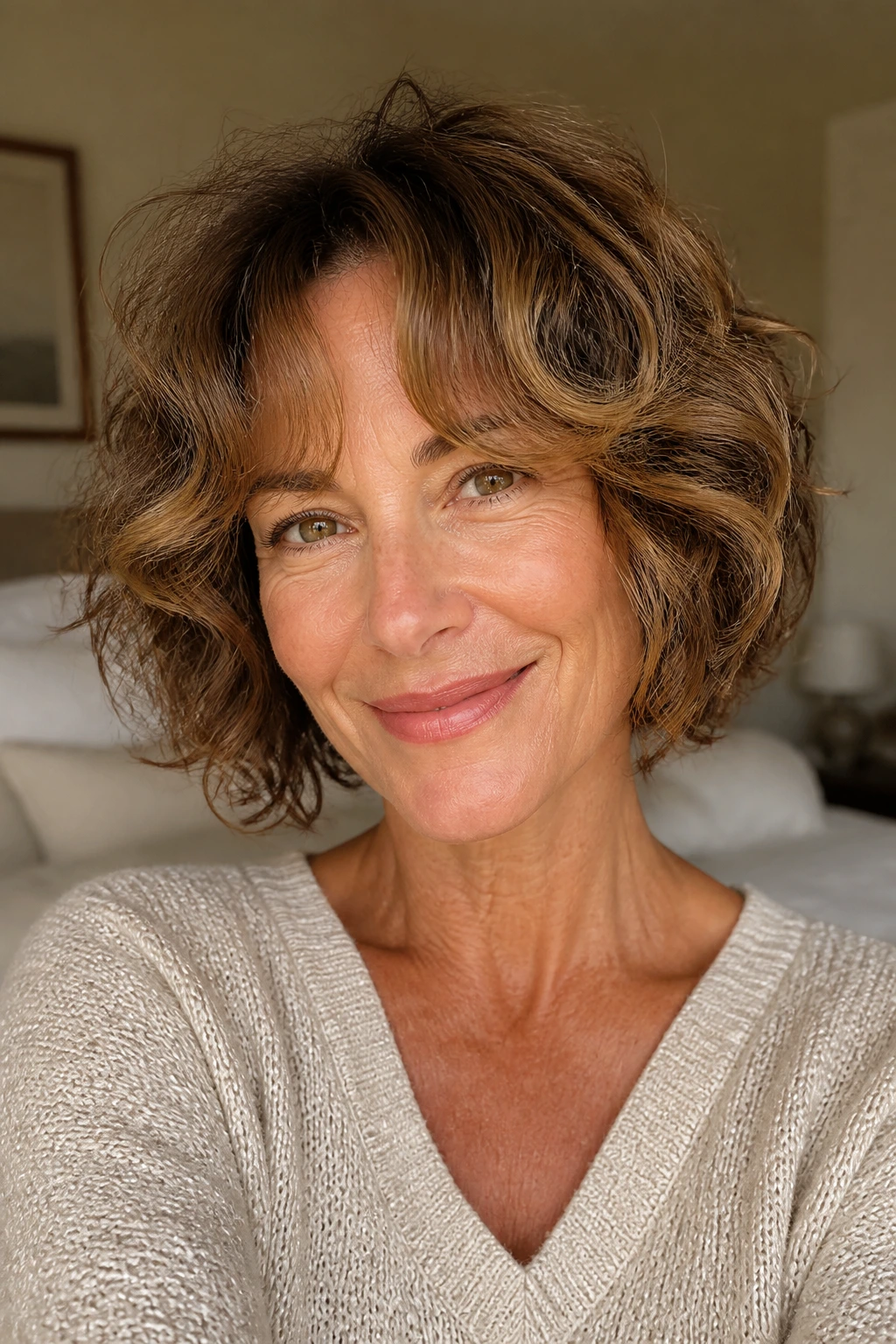
Curtain bangs change the entire mood of a curly bob. They break up the forehead, soften the front edge, and give the haircut a little movement right where people look first. If the bangs are cut too heavy, though, they can stick straight out or separate in odd pieces, so the shape has to be light.
The best curtain bang bob on curly hair usually starts with longer face-framing pieces that can be parted in the middle or slightly off-center. That gives you options. On good days, they fall open. On humid days, they still look like part of the cut rather than a mistake.
If your curls spring up a lot, ask for the bangs to be cut longer than you think you need. Curly fringe always shrinks more than people imagine. Always.
10. Deep Side-Part Bob

A deep side part can rescue a bob that feels flat on top. It shifts the weight, lifts the crown, and gives the curls a more dramatic fall across one side of the face. That makes the cut feel fuller without needing a ton of product or heat.
This is one of those styles that looks especially good when the curl pattern is a little uneven. The side part turns that unevenness into character. The front pieces can be swept back, tucked, or left loose, depending on how much face you want to show.
I like it for anyone who likes a bob but doesn’t want a symmetrical, school-photo shape. It feels a little more alive.
11. Inverted Curly Bob
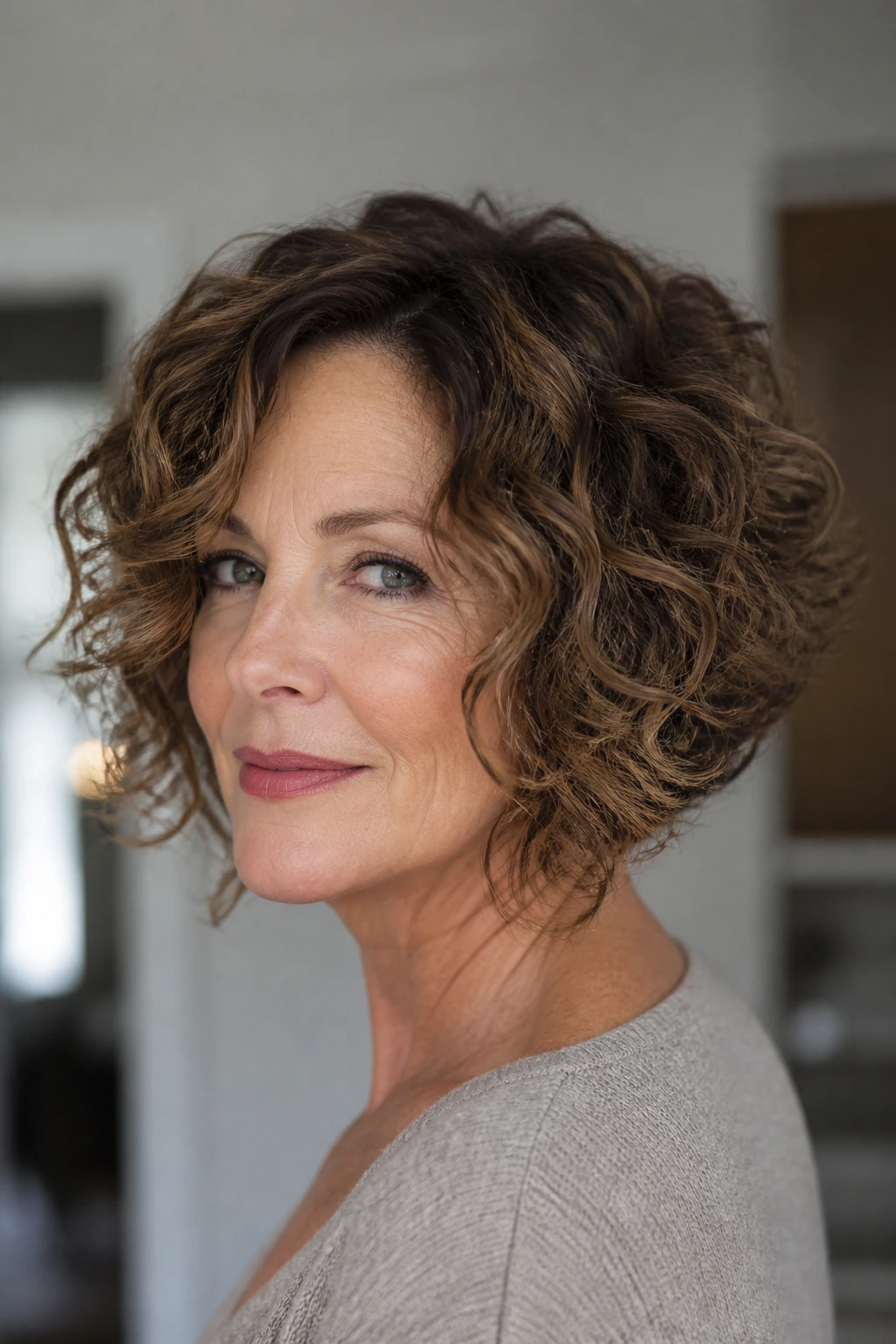
An inverted bob leans longer in the front and shorter in the back, but the curl pattern softens the geometry. That’s the beauty of it. The angle is still there, yet the curls blur the line enough to keep it from looking harsh. It’s a good choice when you want a sharper outline without losing movement.
The cut works best when the stylist leaves enough fullness around the front to frame the chin. If the front gets too thin, the whole thing can look wispy and unfinished. You want the hair to swing, not hang.
This style often suits women with strong cheekbones or a defined jaw because the front length draws the eye outward. It’s a little more structured than a shag, a little less plain than a one-length bob.
12. Choppy Piecey Bob
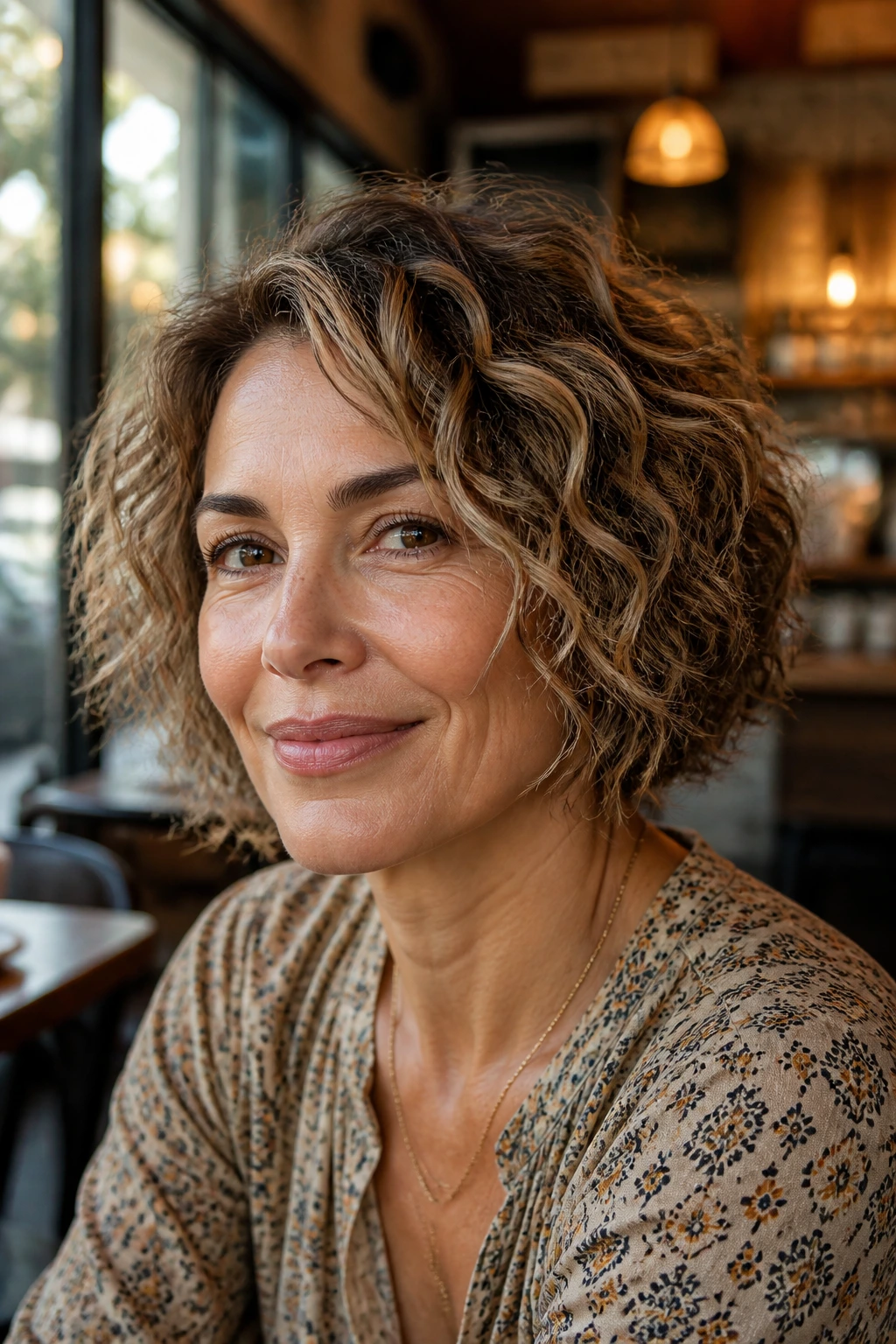
A piecey bob is all about separation. The curls don’t merge into one shape; they read as individual ribbons and coils, which can be a nice way to keep thicker hair from looking dense. The chop should be controlled, though. Choppy does not mean broken.
This cut is especially good if your curls are medium to tight and tend to clump in big sections. The piecey shape lets the hair move without losing its curl identity. It also works well with salt-and-pepper tones because the different pieces catch light in distinct ways.
Use a lightweight gel or curl cream, then break up the cast gently once dry. That little step matters. If you skip it, the whole style can feel harder than it should.
13. Silver-Glow Bob
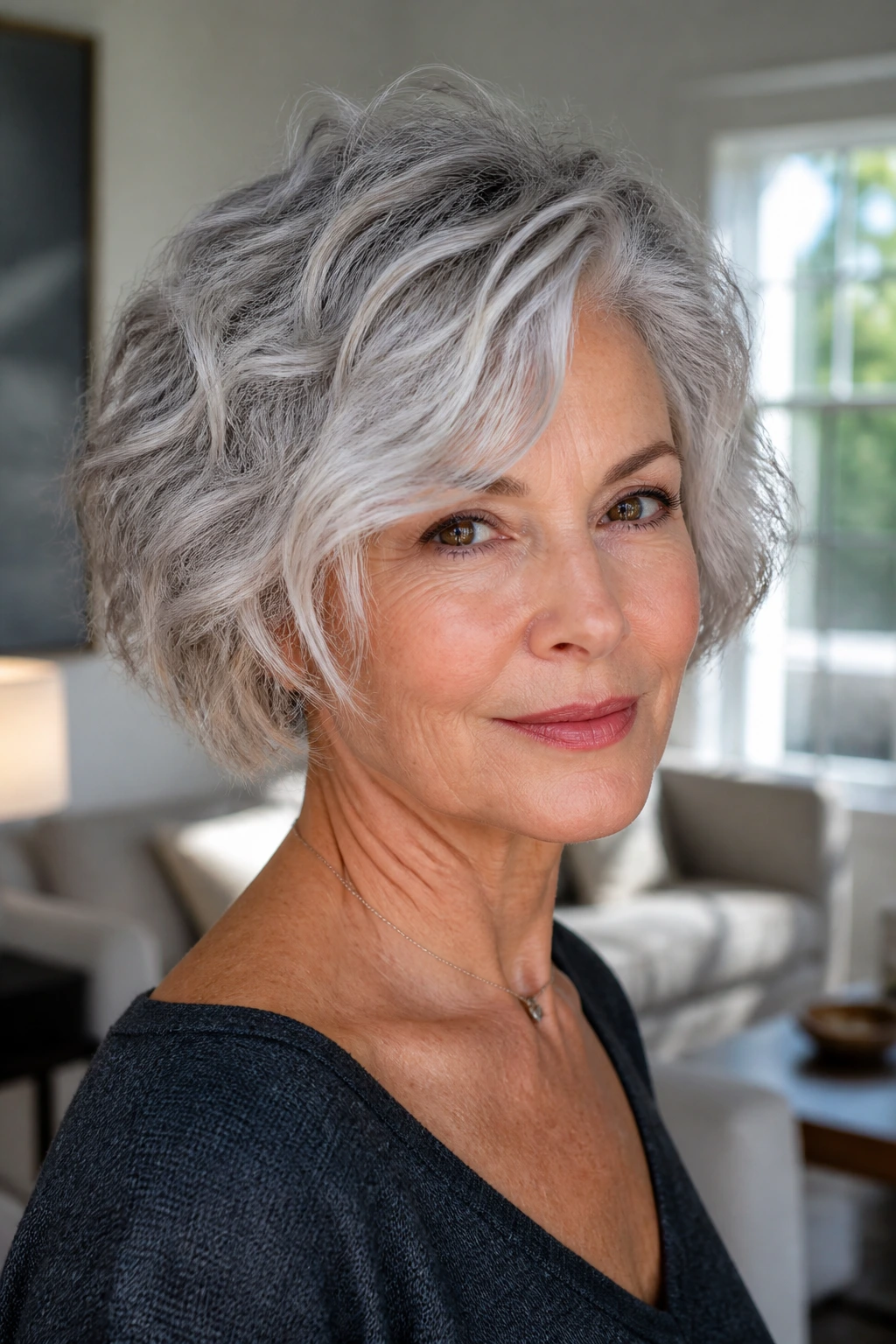
Gray and silver hair love texture. They don’t need a fussy shape to look interesting; they need a cut that lets the light bounce off the curls. A tousled silver bob keeps the color from reading flat, especially when the cut has soft layering near the temples and cheekbones.
The nicest version isn’t too perfect. A little irregularity makes the silver strands look dimensional instead of washed out. If your hair has a wiry patch at the crown, a rounded bob with light layering can keep that area from sticking up like a halo.
This is a lovely cut for women who want their natural color to be the feature, not something hidden under styling. No heavy straightening. No over-smoothing. Just shape.
14. Blunt-Edge Soft-Texture Bob
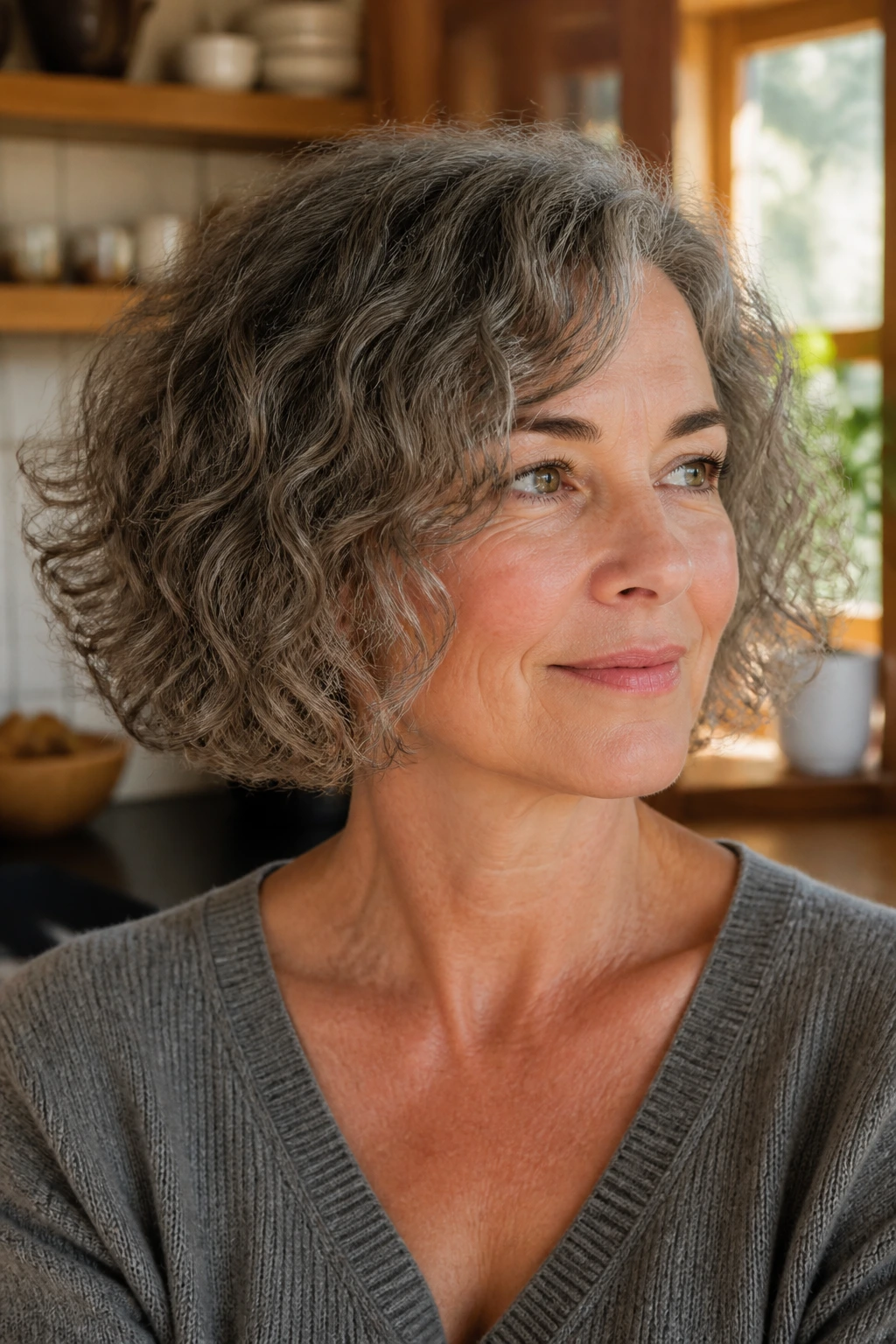
Blunt doesn’t have to mean severe. On curly hair, a blunt-edge bob with soft texture gives you a clean bottom line while still allowing the curl pattern to do its thing. The perimeter looks intentional, but the interior can be lightly shaped so the hair doesn’t feel like a brick.
This is a smart option for curls that are fine to medium and need a little weight at the ends. Too many layers can make them springy in the wrong way. A softer blunt line gives them a place to settle.
If you like a tidy outline but hate stiffness, this is a good compromise. It looks especially nice when the ends are point-cut by hand instead of carved into a hard shelf.
15. Asymmetrical Curly Bob

An asymmetrical bob does not need to shout. A subtle difference in length is often enough to give curly hair a more modern feel. One side can graze the chin while the other sits a touch higher, and the curls keep the change from feeling too engineered.
This cut works when you want the haircut to read as deliberate even on a low-effort day. It can also help balance a face that feels wider on one side, or it can simply give you a little edge if you’re tired of standard symmetry.
Best Fit
It’s a strong choice if you wear one side tucked behind the ear a lot. The longer side becomes a feature instead of an accident, and the whole haircut starts to feel more tailored.
16. Cheekbone-Framing Bob
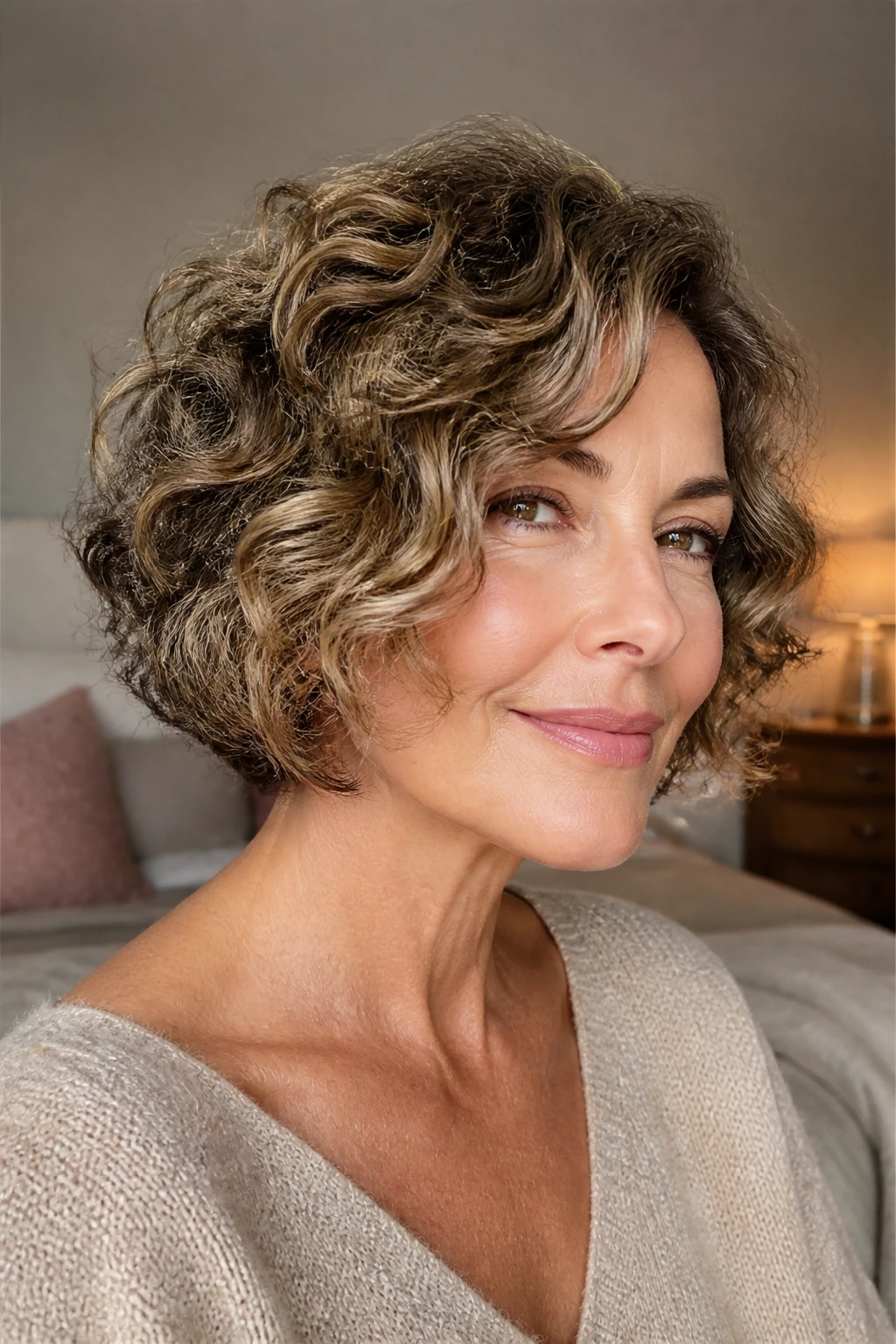
Cheekbone-framing layers are one of those details that sound small and end up changing everything. The curls land where the face has natural structure, which makes the cheekbones look a little higher and the jaw a little softer. That’s a useful trick when you want the bob to flatter the face instead of just sitting around it.
The hair should curve in, not out. That’s the key. Ask for face-framing pieces that bend toward the cheek rather than flaring away from it. If the layers are too short, they’ll poof. If they’re too long, the effect disappears.
I like this one for women who wear makeup sparingly. The haircut does some of the framing work for you.
17. Micro-Bang Tousled Bob

Micro bangs are not for everyone, and I appreciate that. But on a curly bob, they can look sharp and a little mischievous in the best way. The short fringe adds contrast to the softness of the bob, which keeps the whole haircut from feeling too sweet.
This works best when the curls are not extremely tight at the front, or when the stylist is willing to leave the fringe longer so it can shrink into place. The rest of the bob should stay loose and slightly messy. That contrast is the point.
If you wear glasses, this cut can be tricky. The fringe needs to stop above the frames, not fight them. Get that right, and it’s a standout shape.
18. Chin-Length Root-Lift Bob
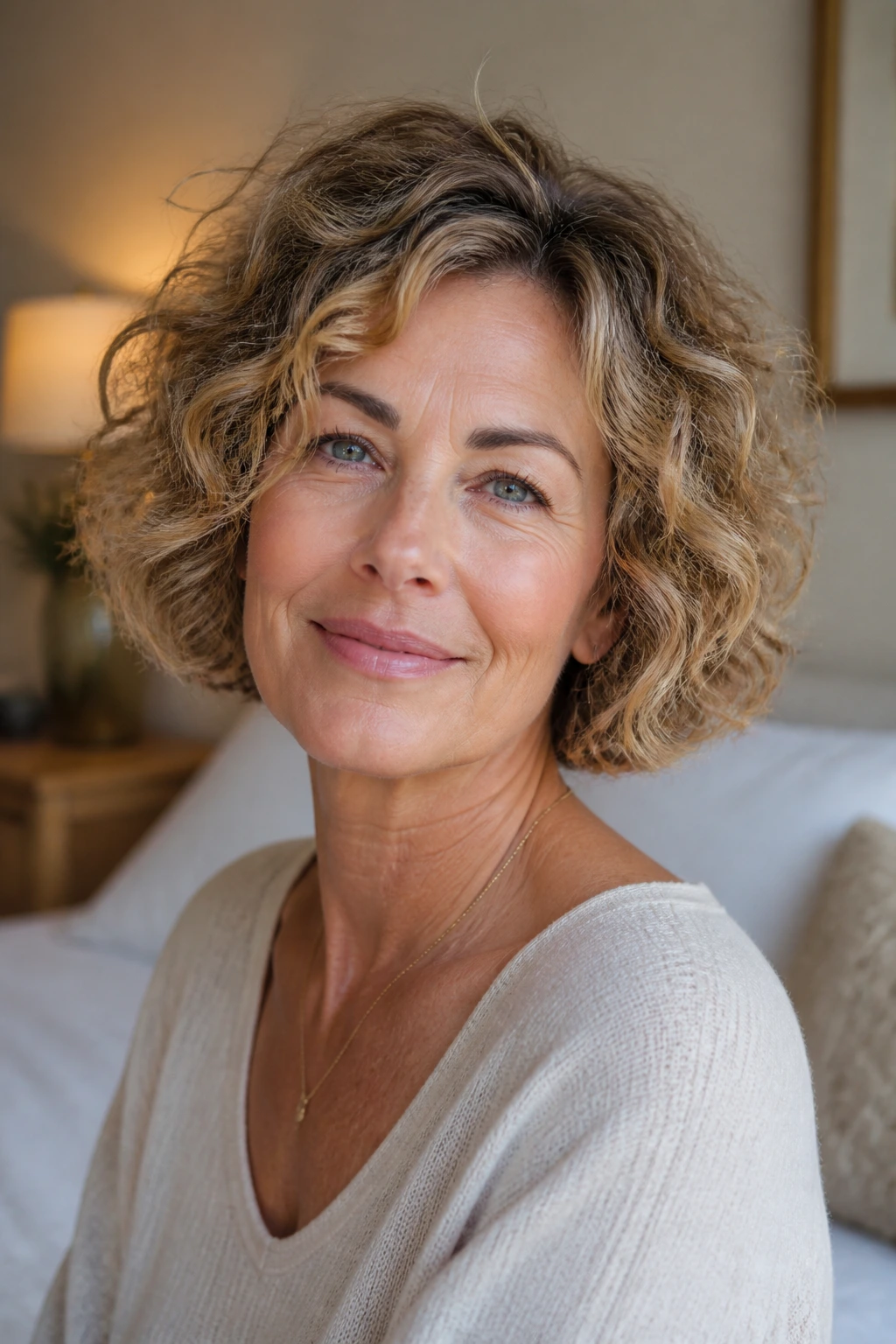
A chin-length bob can look flat if it’s cut without regard for the crown. The fix is root lift and a little layering at the top. That gives the curls some height so the silhouette doesn’t collapse around the cheeks.
This length is a classic because it keeps the hair short enough to feel fresh while still giving the curl pattern enough room to settle. It’s a good everyday shape for women who want movement but don’t want to manage a lot of length near the shoulders.
A small root-clipping session while the hair dries can help here. So can a diffuser set on low heat for the first few minutes. It’s boring advice, but it works.
19. Thick-Curl Control Bob
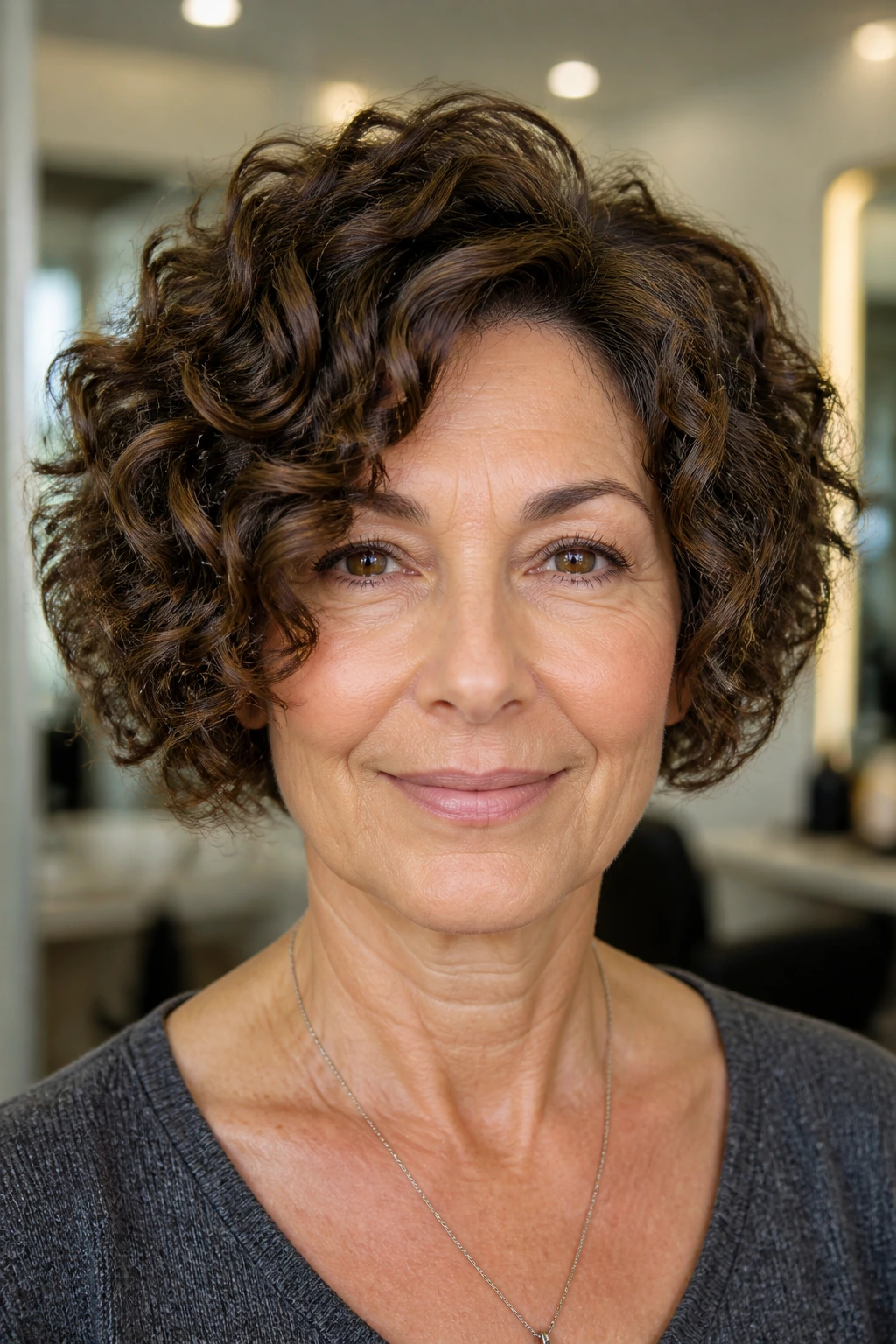
Thick curls need a haircut that removes weight without slicing the life out of the ends. This is that haircut. A control bob uses interior layers and careful shaping to stop the sides from exploding outward while keeping the curl pattern rich and full.
The danger with thick hair is over-thinning. Once the bottom gets wispy, it frizzes, and the shape loses structure. Better to keep the perimeter sound and reduce bulk in the middle where the hair naturally piles up.
If your hair takes forever to dry, this cut can save time too. Less mass means less wetness hanging around the neck and back. Small mercy, big payoff.
20. Fine-Curl Cloud Bob
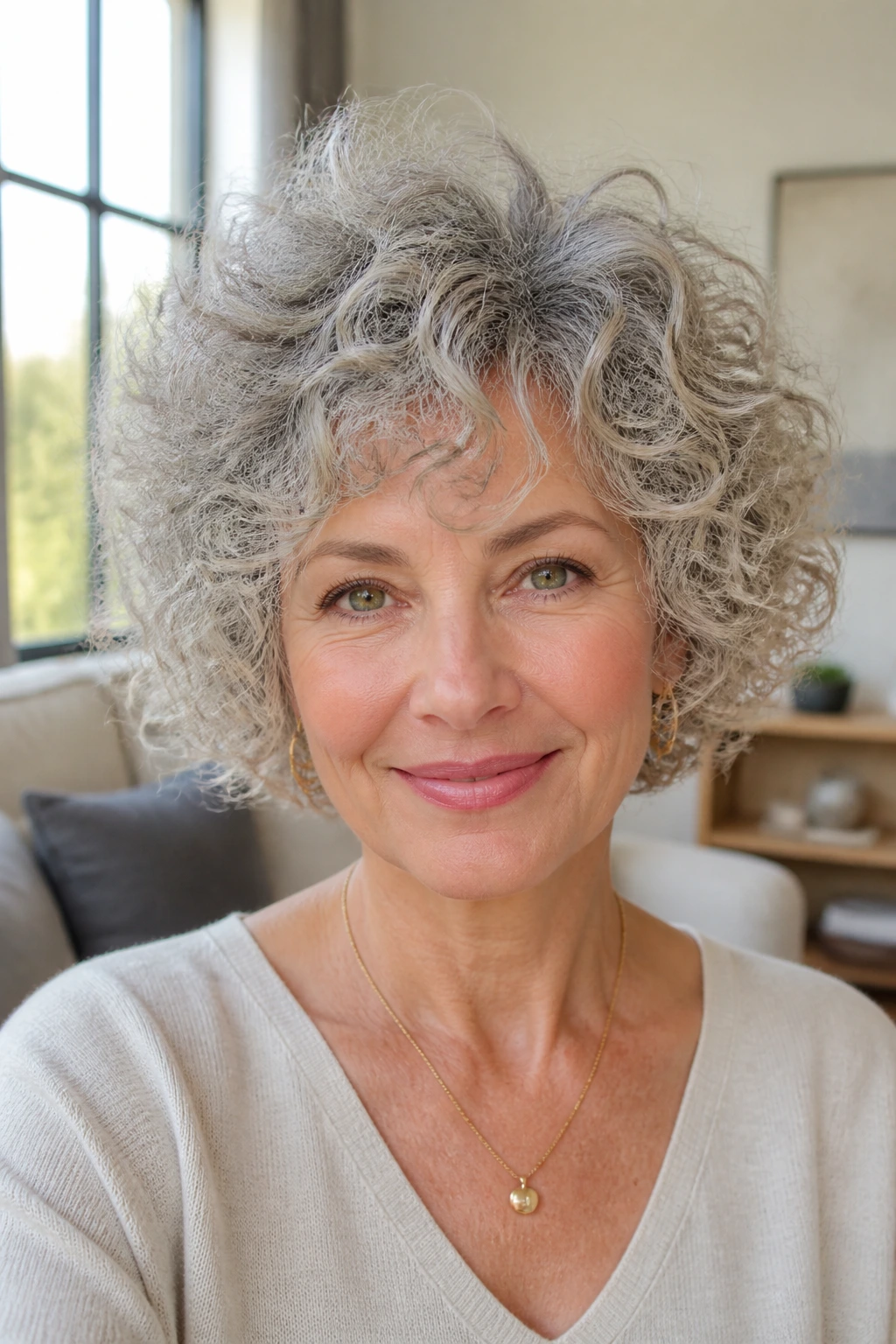
Fine curls need a different strategy. Instead of stripping weight, you want a shape that gives the illusion of more body. A cloud bob does that with soft layers, a rounded outline, and enough length to let the curl pattern expand without clinging to the scalp.
Heavy products will ruin this cut fast. Keep it light. A foam or airy mousse at the roots, then a tiny amount of cream on the ends. That’s usually enough. If you add too much, the curls collapse and the bob loses its lift.
This style is especially good if your hair is a little fragile around the temples. The soft shape flatters the face without making the hair look thin.
21. Highlighted Dimension Bob
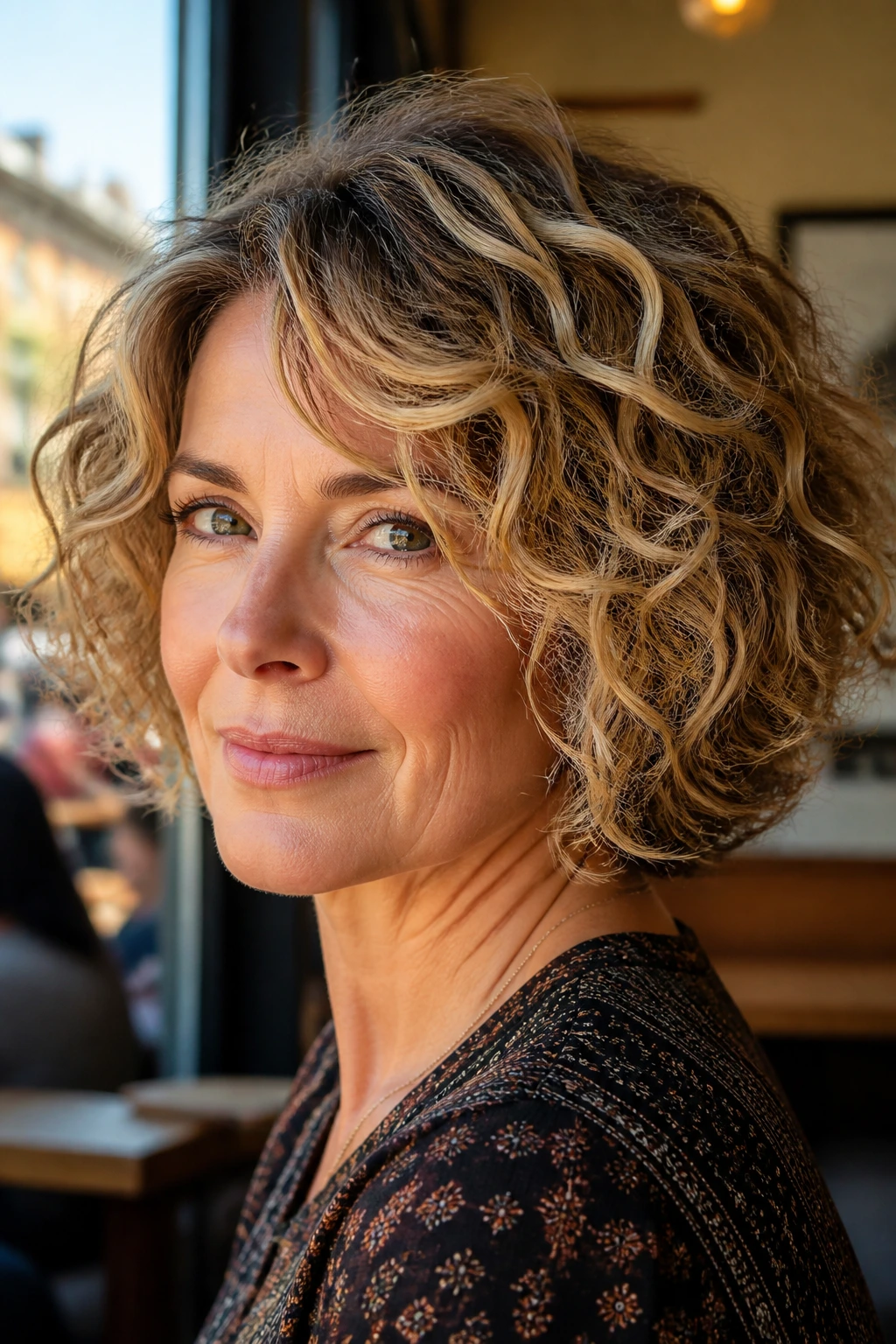
Color can make a tousled bob look twice as alive. Highlights placed around the face, crown, and outer curl pattern catch on the bends and give the haircut more depth. On curly hair, the placement matters more than the shade alone. Done badly, highlights can look stripey. Done well, they make the texture readable from across the room.
A dimensional bob doesn’t need obvious streaks. Fine ribbons around the front and a little brightness through the top are enough. If your hair is silver or gray, warm beige or cool pearl tones can add contrast without hiding the natural color.
This is the bob to choose when the cut is good but you want a little extra movement on top of it.
22. Ear-Tuck Bob
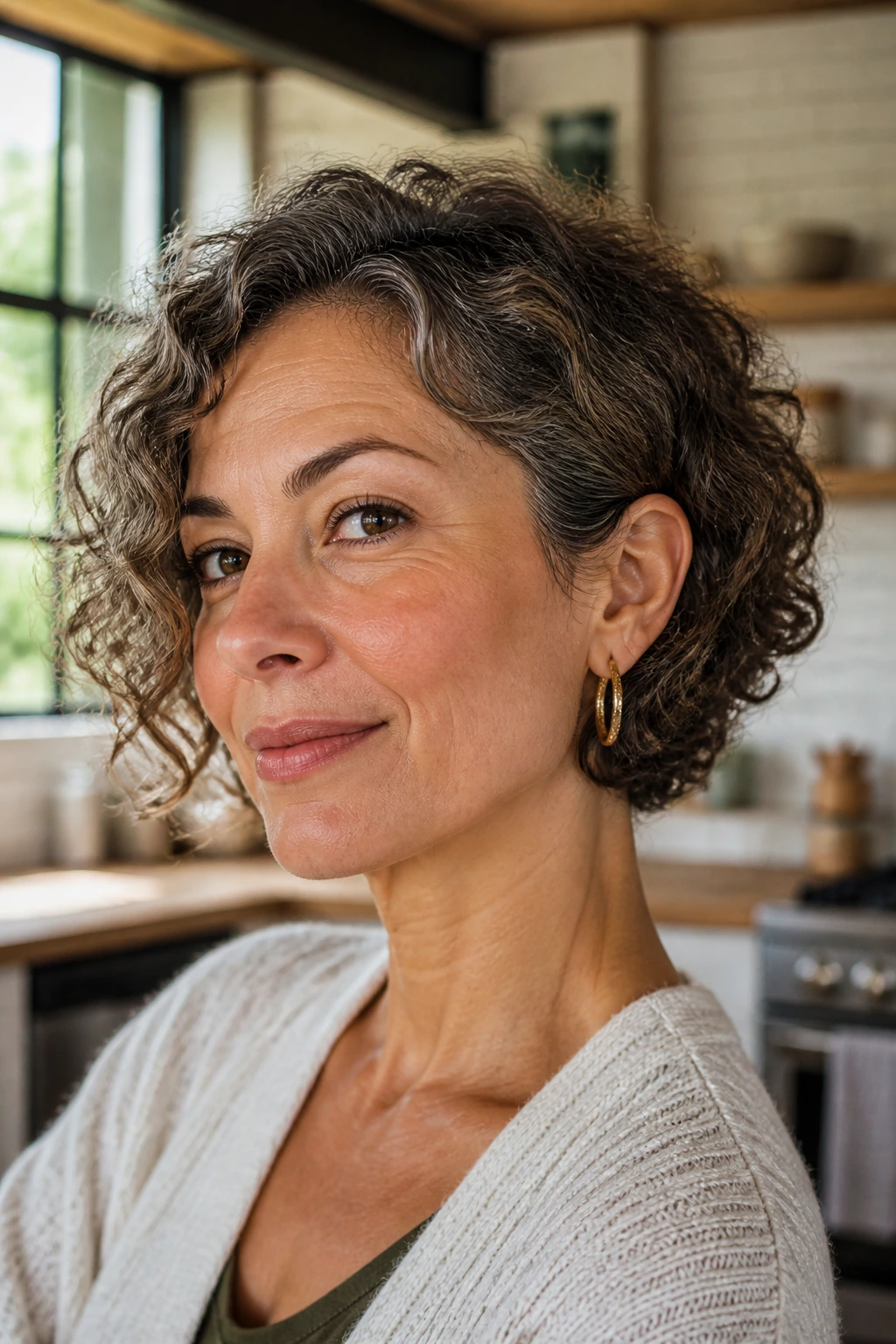
A bob that can tuck behind the ear is one of those practical pleasures people underestimate. It gives you a quick change in shape without a clip, and it keeps hair off the face when you’re reading, cooking, or wearing glasses. The trick is making sure the front is long enough to tuck smoothly without sticking out at a weird angle.
This cut looks cleaner when the front pieces are soft and not over-layered. Too many short bits near the ear and you lose the tuck option entirely. Keep a little length there, and the style becomes much more flexible.
It’s a small thing. It matters.
23. Air-Dried Easy Bob

If you don’t want to spend your life standing over a diffuser, this is your cut. An air-dried bob needs the layers placed so the curls fall into shape on their own, with the bottom line light enough to move but not so light that it frizzes apart. It should look decent when you leave it alone.
This works best with curl cream, a touch of gel, and a microfiber towel or cotton T-shirt to blot out extra water. Then stop touching it. The less you fuss, the better it usually looks.
I’d recommend this to anyone who wants a bob that fits into real mornings, not salon mornings.
24. Diffused Volume Bob
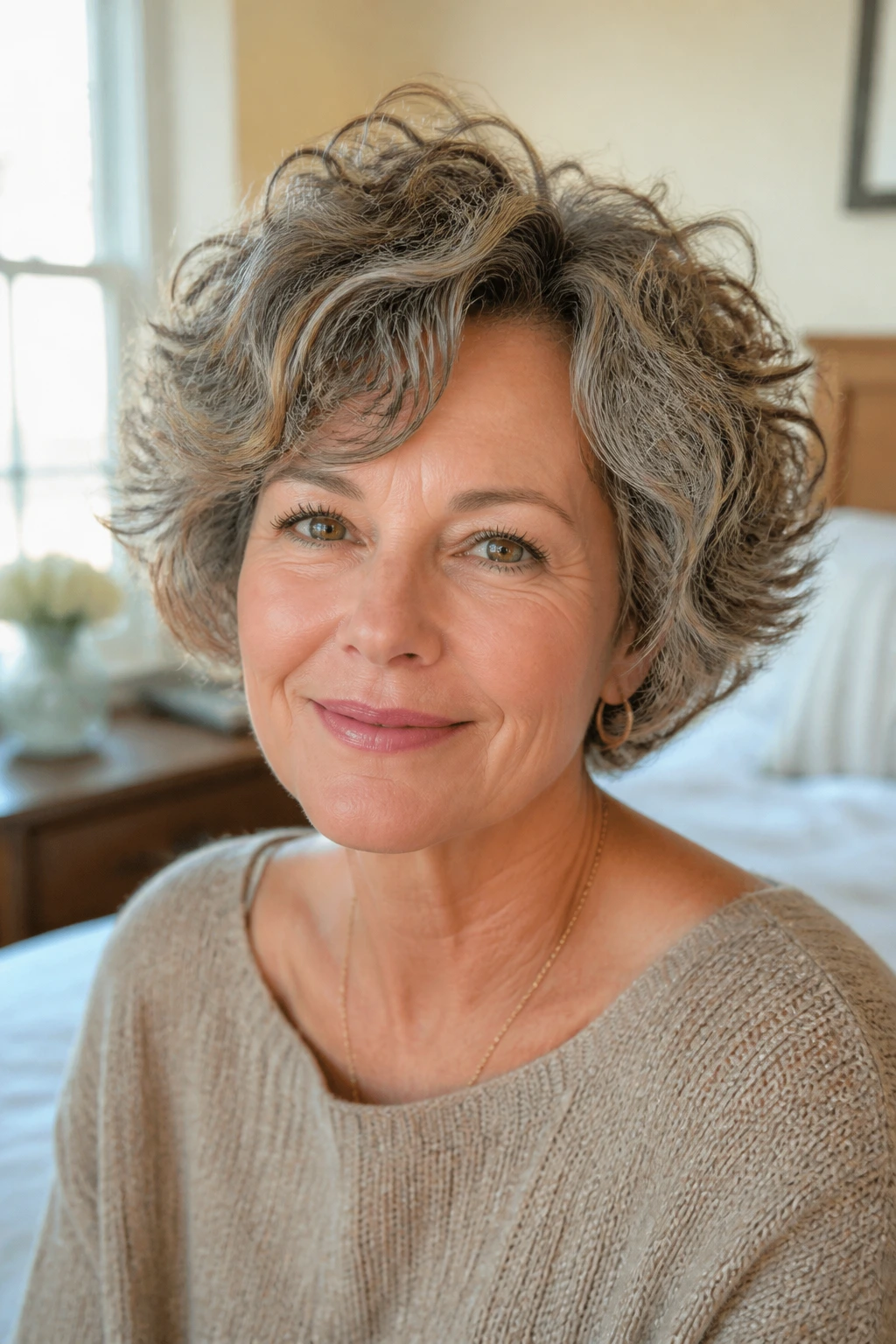
Some people want bigger hair. Fair enough. A diffused volume bob is built for that: lift at the roots, rounded fullness through the crown, and soft ends that keep the cut from turning puffy. It’s especially good for curls that flatten fast after drying.
The styling matters as much as the cut. Start with root clips, diffuse on low heat, and stop when the hair is about 80 percent dry. Letting the last bit air-dry helps the shape stay soft rather than crunchy. If you dry every strand to the point of perfection, the bob can lose movement.
This one has a little glamour in it, but not the stiff kind.
25. Razor-Textured Modern Bob
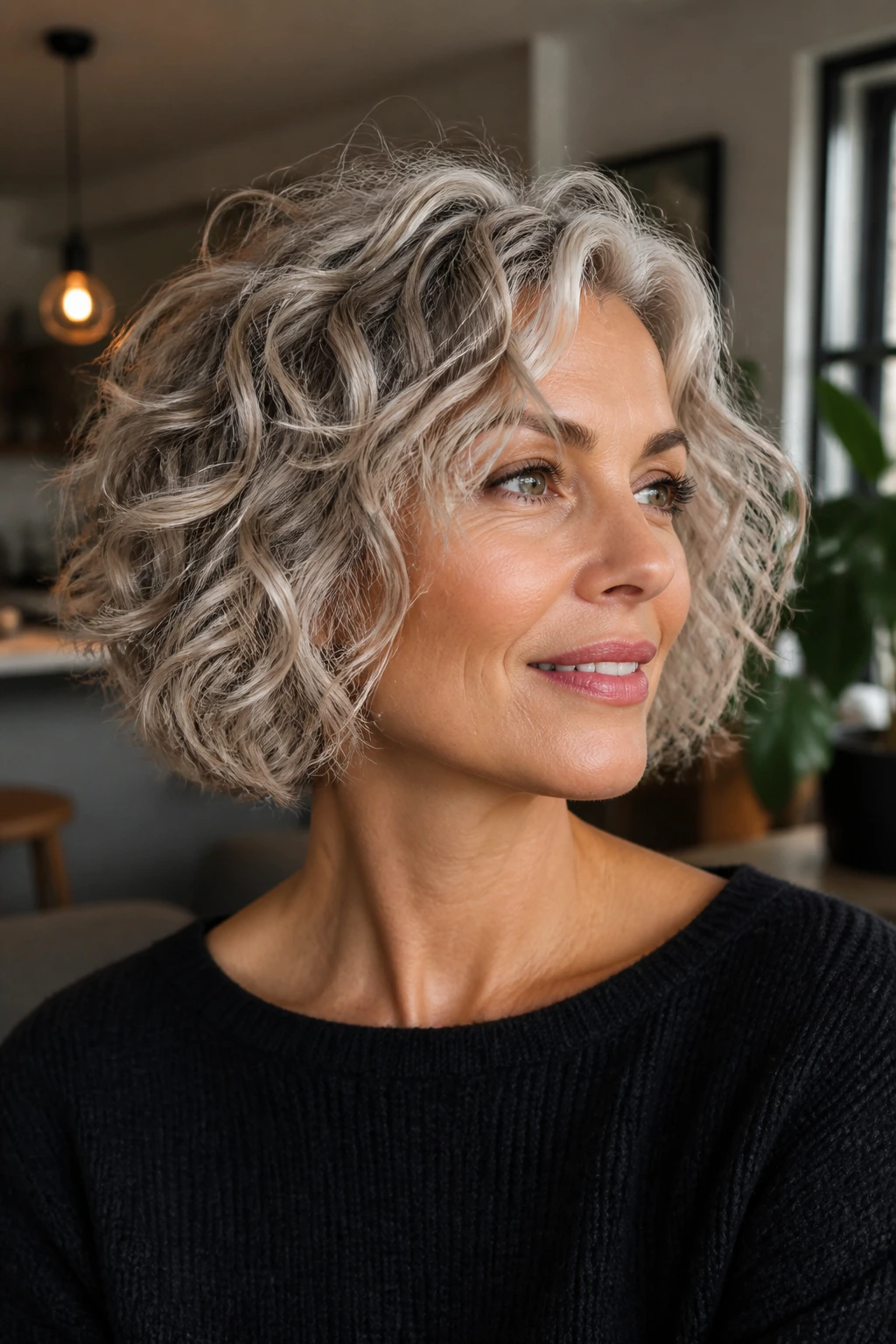
A razor-textured bob has edge, but it needs a careful hand. On curly hair, the razor can soften the ends and create a more irregular shape, which keeps the cut from looking too tidy. That irregularity is what gives the style its modern feel. It’s a little undone, but still shaped.
The risk is frizz. If the razor work is too aggressive, the ends can fray and the curls lose their clean outline. So this style is best when the stylist understands curly hair and doesn’t overdo the texturizing. A light hand is the whole point.
This is a strong finish to the list because it captures what the best tousled bob does: it looks relaxed, but every inch has a reason.
Why Tousled Bobs Stay Friendly to Curly Hair After 50
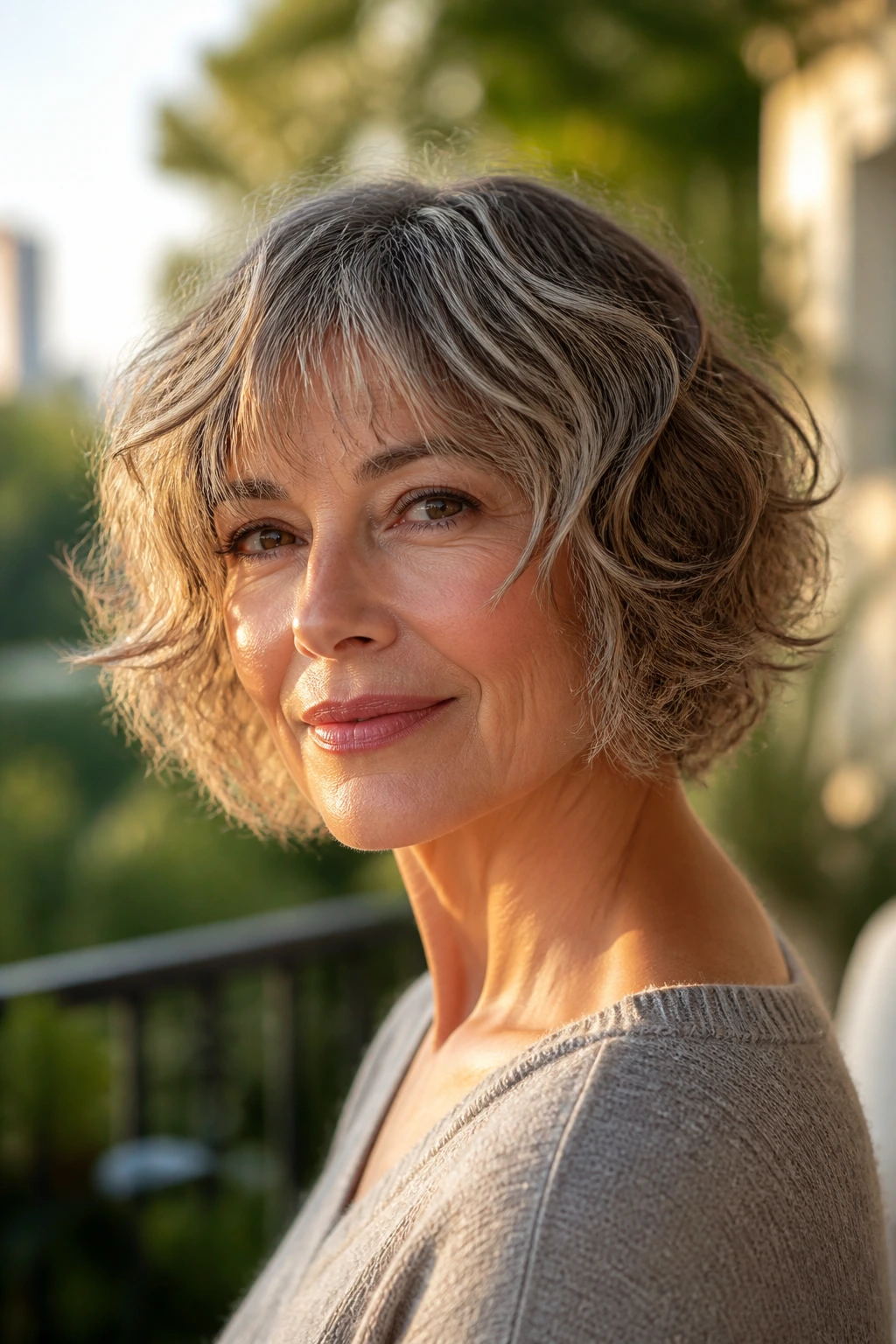
A good curly bob works because it respects shrinkage, density, and movement all at once. Hair after 50 often changes texture a bit — not always thinner, not always grayer, not always drier, but often some mix of those three — and a tousled bob gives you room to adjust without starting from scratch. It can be shorter near the nape, fuller near the crown, and softer around the face.
The cut also keeps styling honest. You do not need to force curls into a perfect shape for this to work. A light diffuser, a small amount of product, and the right perimeter will do more than a 45-minute blowout that falls apart by lunch. That’s why these bobs keep coming back: they’re flattering, but they aren’t needy.
And yes, the messier versions are often the better ones. That little bit of lift, curl separation, and imperfect bend is what keeps the haircut from looking dated.
Choosing the Best Length for Your Curl Pattern and Face Shape
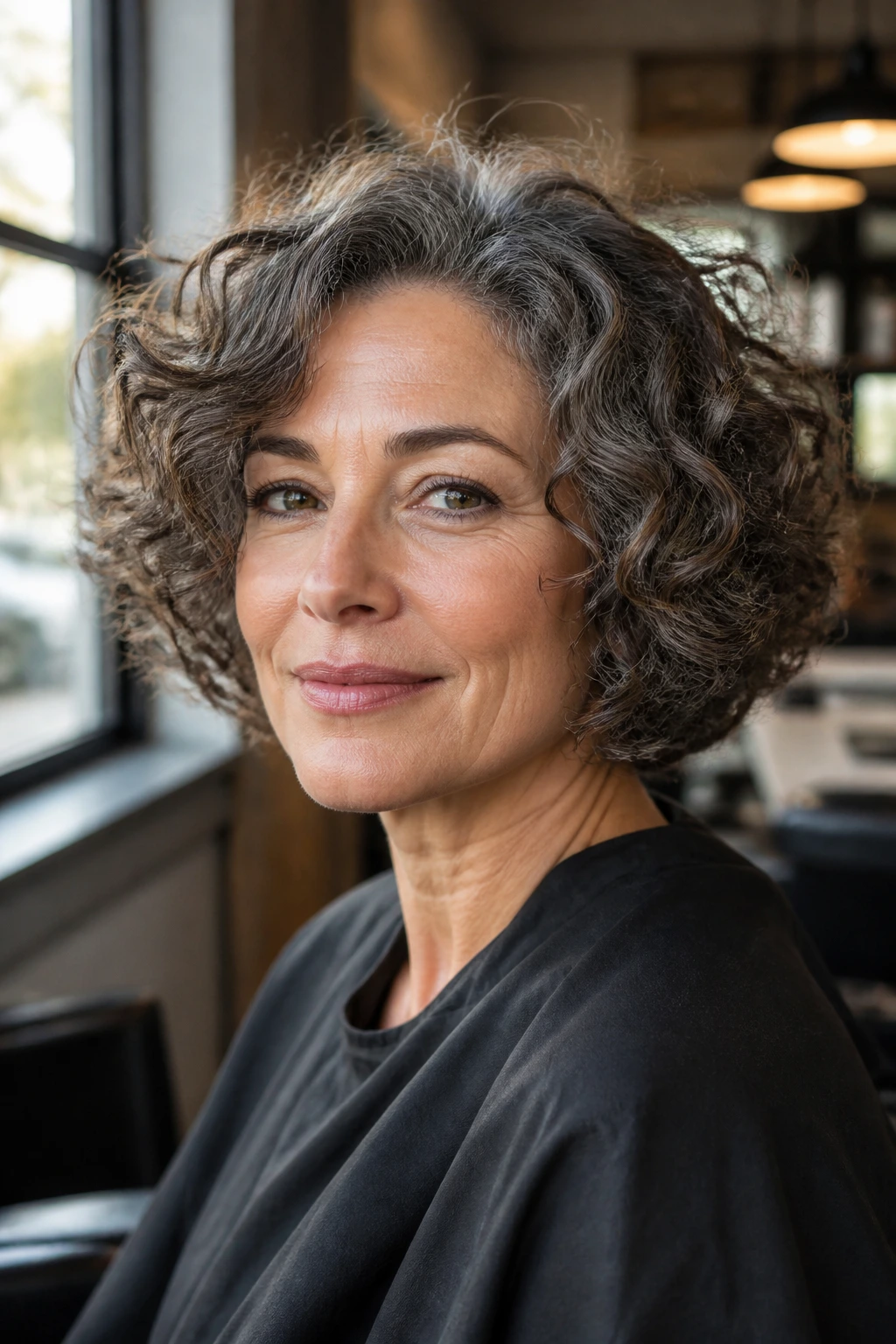
Length changes everything with curly hair. Go too short and the curl springs up into a wider halo than you expected. Go too long and the weight pulls the front down, which can flatten the whole shape. The sweet spot depends on how tightly your curls coil and how much width you want around the cheeks.
If your face is round, try a bob that lands closer to the jaw or a little below it, with side-swept pieces to break up the width. If your face is long, a rounded bob with curtain bangs or a cheekbone-framing shape can bring balance back toward the middle. Square faces usually soften well with side parts and longer front sections.
Fine curls usually like a little more length than thick curls. Thick curls often need more internal shaping. That one detail changes the haircut more than any trendy name ever will.
How to Ask Your Stylist for the Right Layers
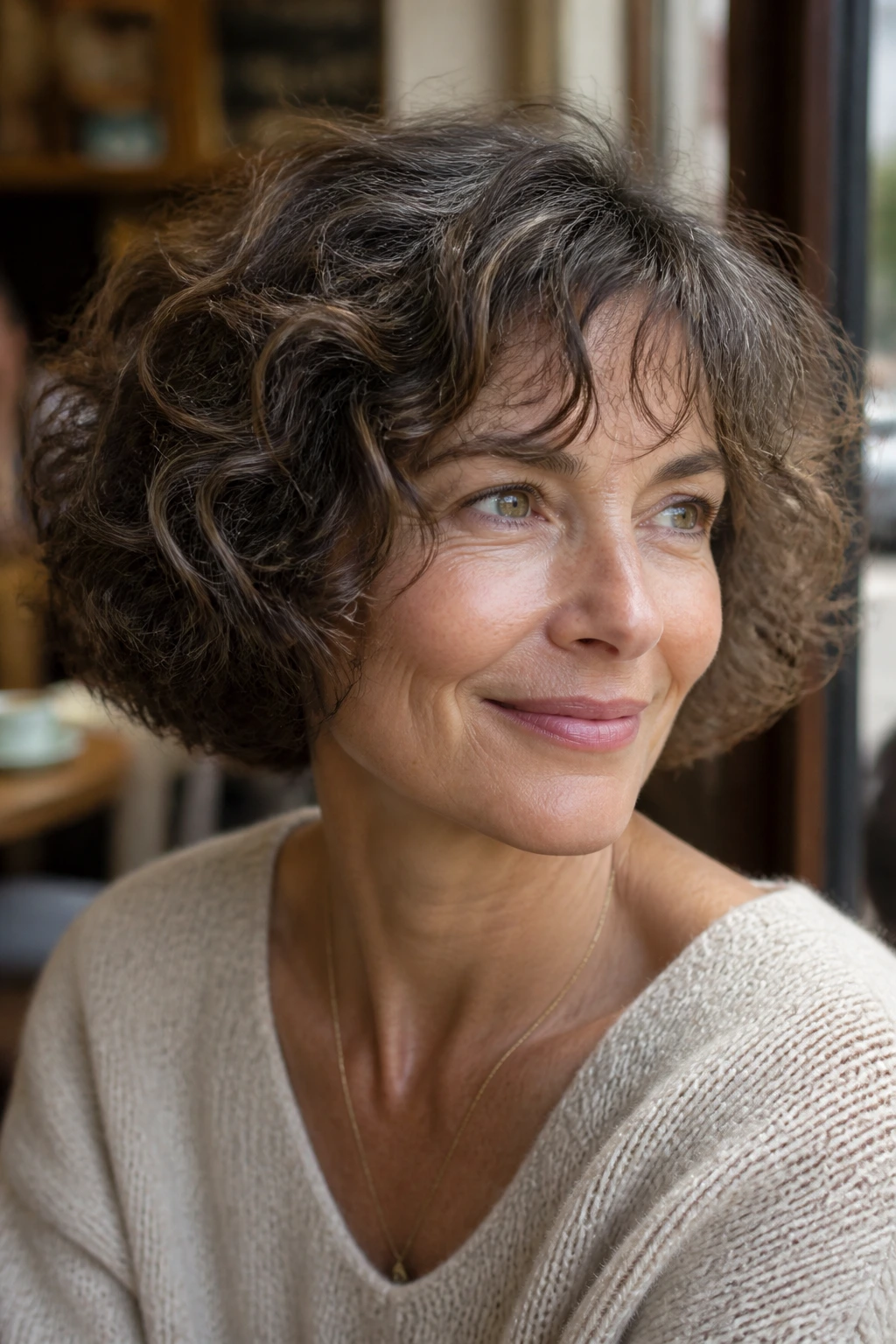
Bring photos, but bring the right photos. You want images that show the haircut from the side, front, and back, not just one flattering angle with studio lighting. A curly bob can look tiny in one shot and huge in another, so the cut needs real reference points.
Say what you want the hair to do. Do you want lift at the crown? More room around the jaw? Less bulk at the sides? Better tuck-behind-the-ear length? Those are useful instructions. “Make it cute” is not.
If your stylist cuts curly hair dry, let them. If they cut it wet, ask how they account for shrinkage. That conversation matters more than the name of the haircut.
Tools and Products That Keep the Shape Light
-
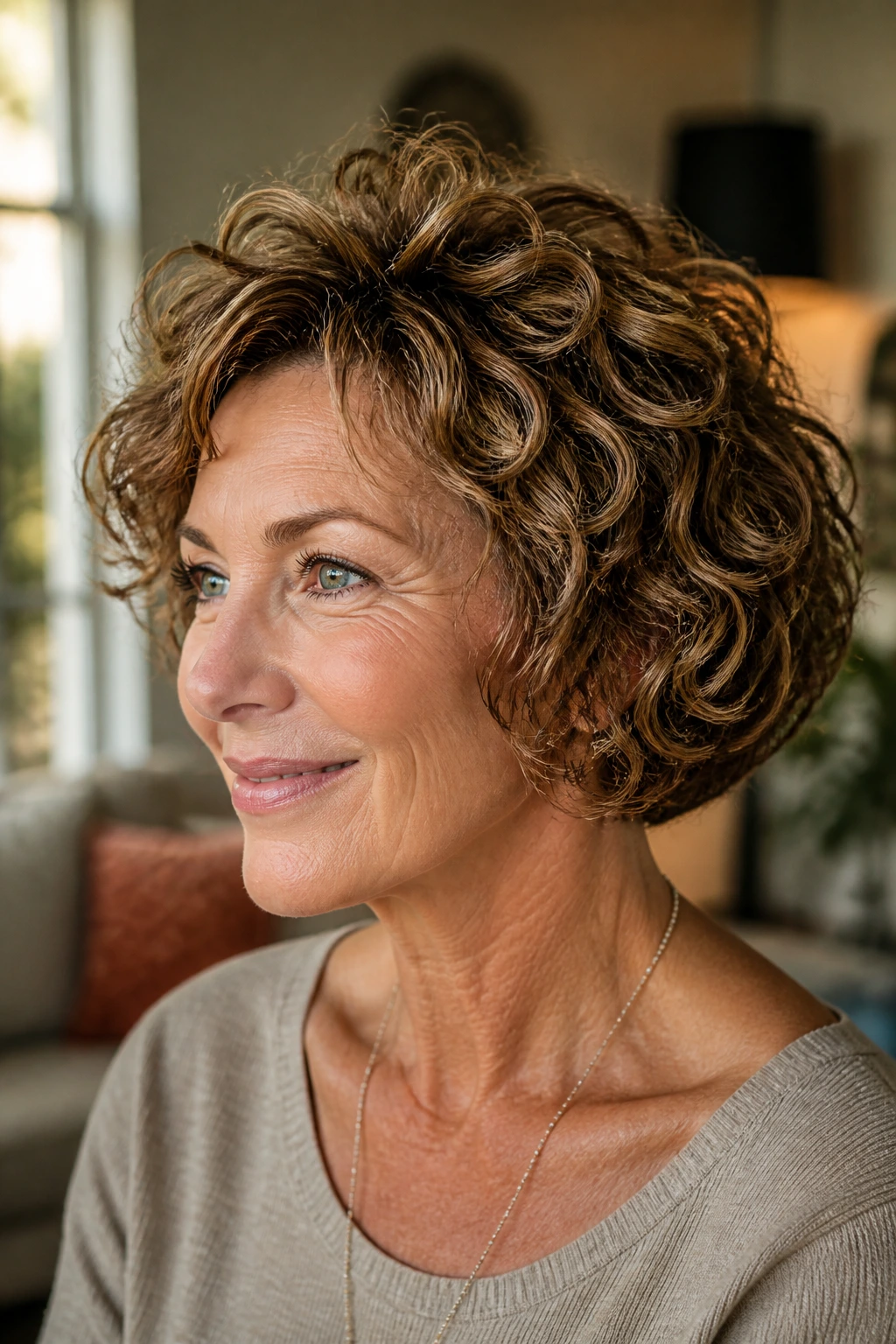
Wide-tooth comb: Use it only on wet hair with conditioner in, so curls keep their clump instead of stretching out.
-
Microfiber towel or cotton T-shirt: Blots water without roughing up the cuticle the way a bath towel can.
-
Curl cream: Adds softness and keeps the ends from puffing, especially on dry or gray hair.
-
Lightweight mousse: Good for root lift and airy volume without making the bob feel sticky.
-
Gel with a soft cast: Helps the style hold its shape while drying, then scrunches out cleanly.
-
Diffuser attachment: Keeps curl pattern intact while giving the crown a little lift.
-
Duckbill clips or root clips: Useful if the top needs a bit of height while drying.
-
Satin pillowcase: Cuts down on frizz overnight and helps the bob keep its curve.
You do not need all of these. A bob usually behaves better when you use fewer products, not more.
Styling Moves That Make the Bob Look Intentional
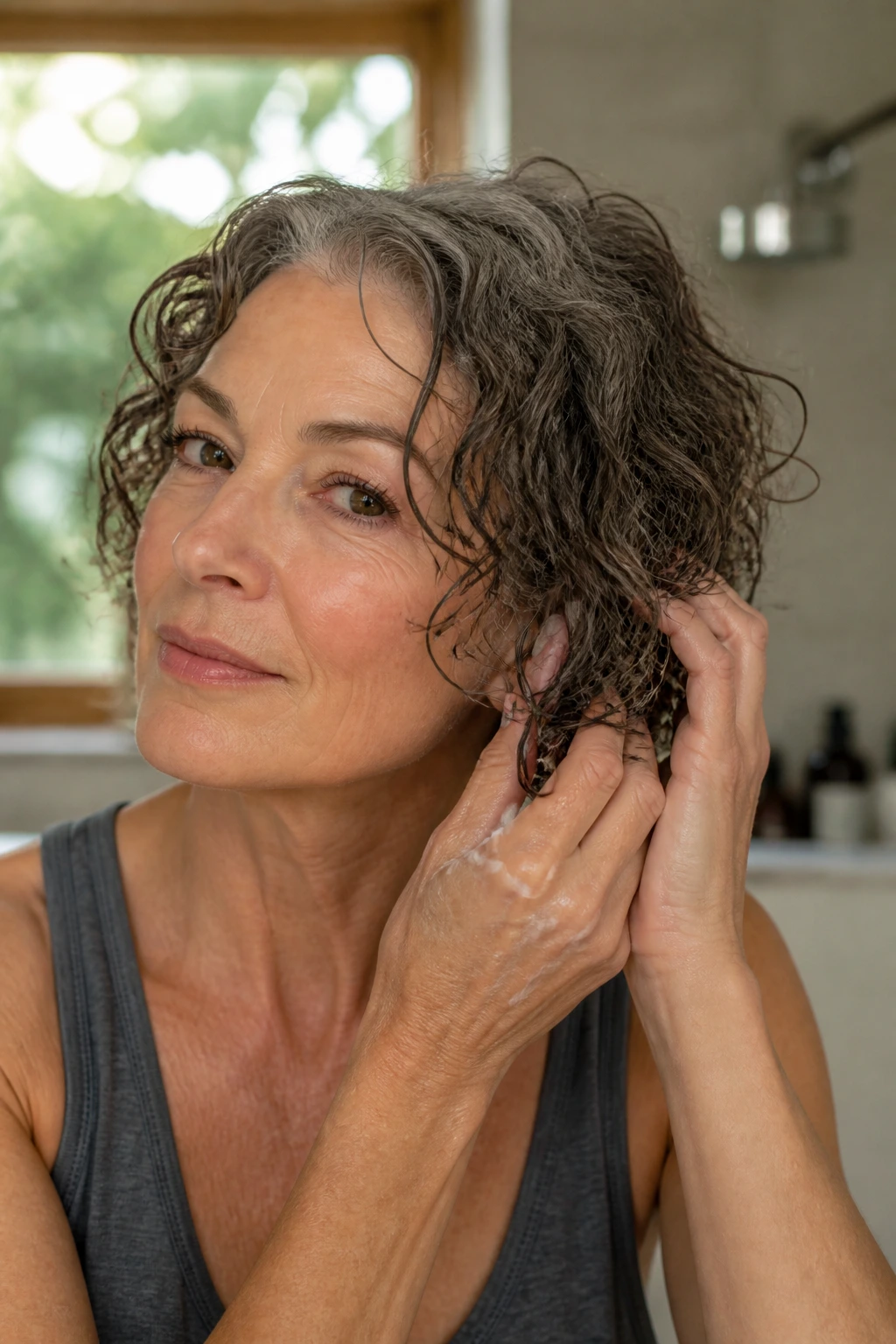
The best curly bob styling starts before your hair is fully dry. Scrunch in your product while the hair is damp, not dripping. If the curls are soaking wet, the product slides around and the shape gets patchy. If the hair is already half dry, it gets uneven and frizzy.
Diffuse at the roots first if you need lift. Then move to the mid-lengths and ends. That order matters. If you blast the ends first, they can dry too fast and go frizzy while the top stays flat. A few minutes upside down can help, but don’t live there; too much upside-down drying can make the crown too wild.
Once dry, break the cast with dry hands and a tiny touch of serum if needed. Tiny. The goal is movement, not grease.
Common Mistakes That Flatten or Balloon Curly Bobs
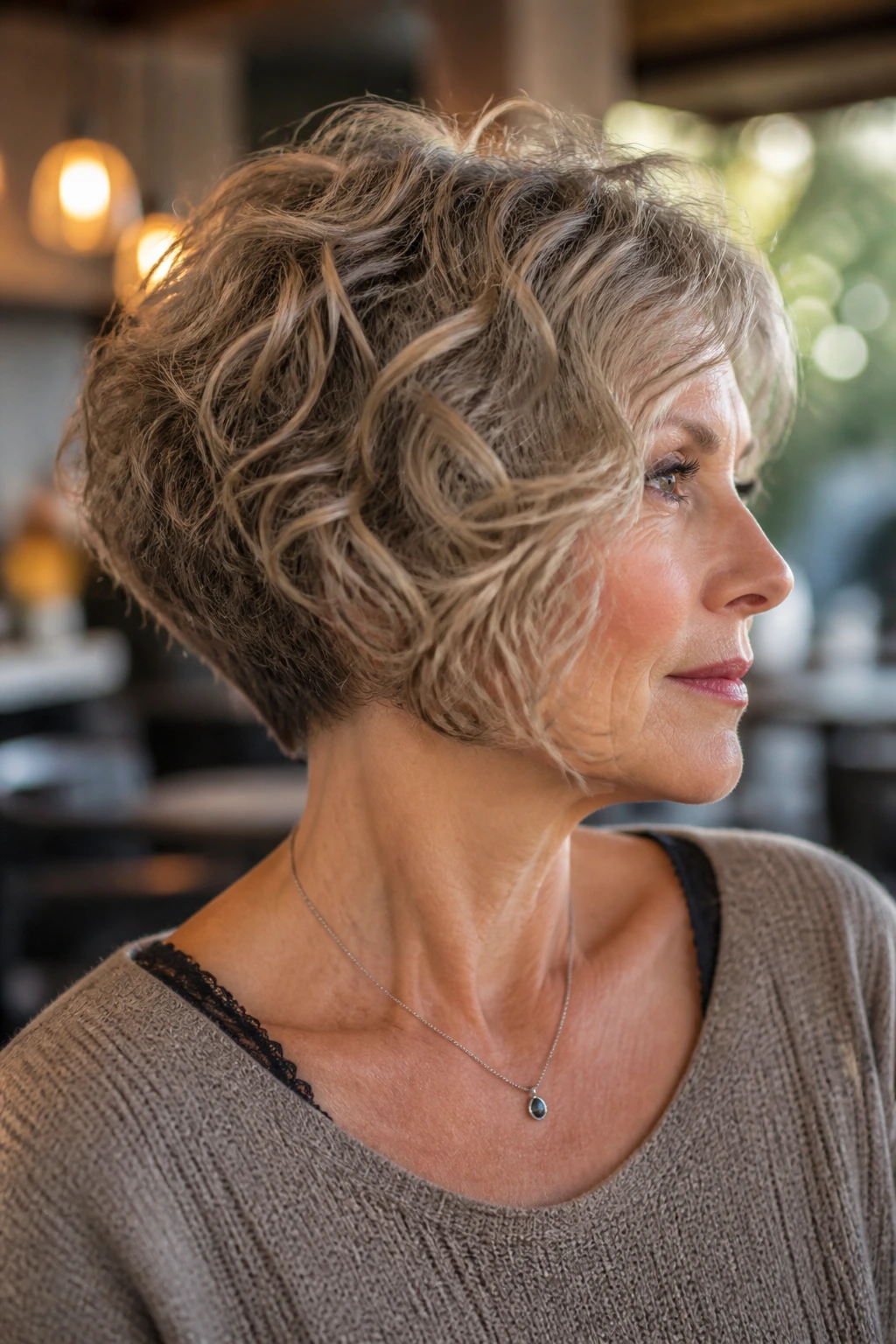
The first mistake is cutting too much weight out of the ends. The hair may look lighter in the chair, then it dries into a frizzy shelf with no clean line. The fix is to keep enough perimeter weight to hold the shape, especially if your curls are fine or porous.
Another problem is ignoring shrinkage. A bob that seems perfect wet can jump a full inch or two shorter when dry, which can change the whole feel of the cut. If your curl pattern is springy, ask for the length to be left a touch longer than you think you want.
Heavy creams are another trap. They make the bob collapse and split apart in ugly strings. Use less, not more.
And then there’s the crown. If the top is cut too flat, the whole style sinks. If it’s over-layered, the silhouette turns puffy. That middle road is where good curly bob haircuts live.
Smart Variations and Alternatives
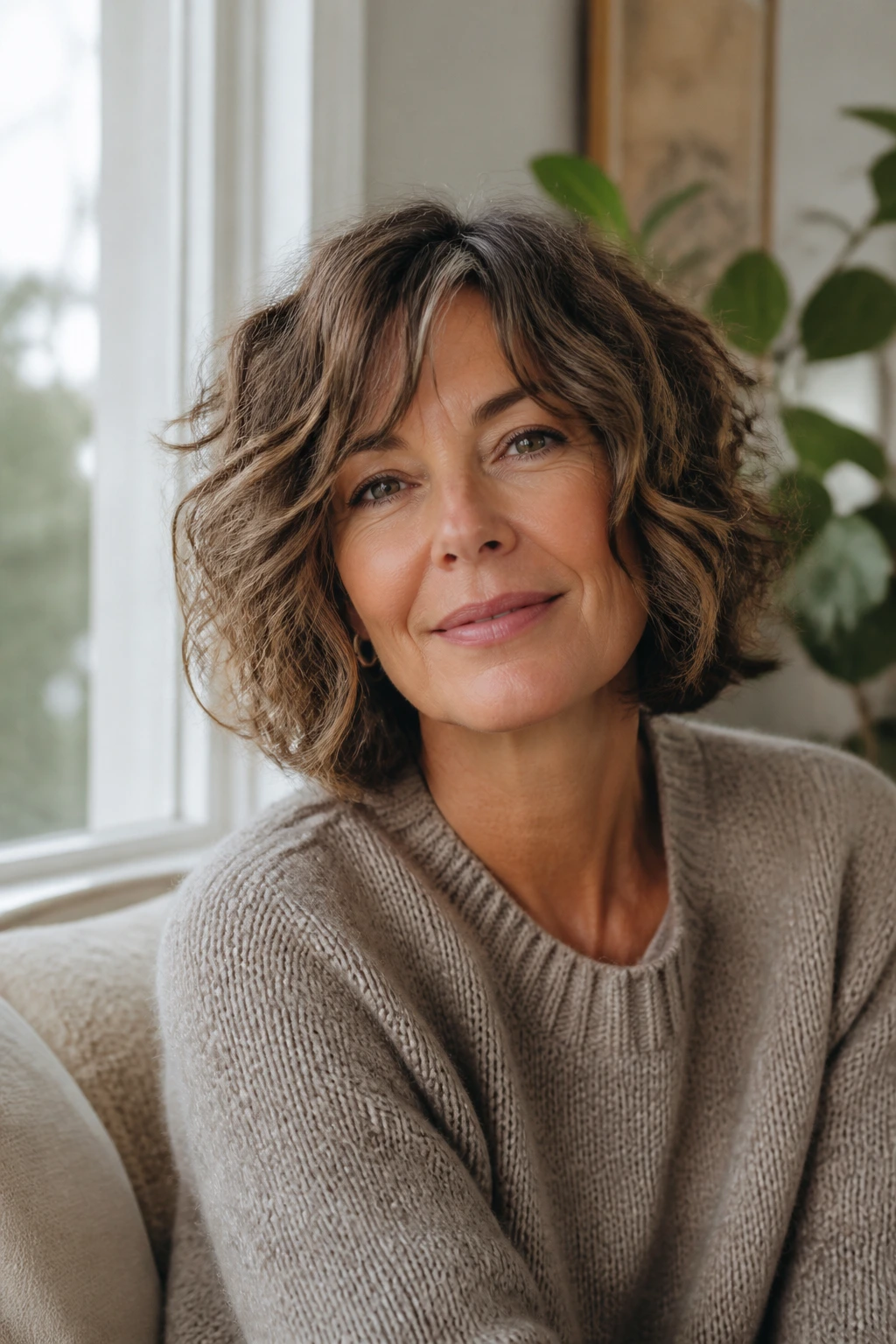
Soft Shag Bob: Add more face-framing layers and let the ends stay irregular. This works well if your curls are dense and you want air between the strands.
Long Bob with Bangs: Keep the length near the collarbone and pair it with curtain bangs or a light fringe. It’s a gentler way to wear texture if you’re nervous about short hair.
Short Crop Bob: If you want less time drying, go a bit shorter at the nape and keep the top rounded. Best for springy curls that want to sit up.
Polished Bob: Use fewer layers and a cleaner outline. This suits people who want a more elegant shape with just a hint of texture, not a full shaggy look.
Gray-Forward Bob: Lean into your natural silver with soft layering and a simple cut that lets the color do the work. No extra drama needed.
Maintenance, Refreshing, and Trim Timing
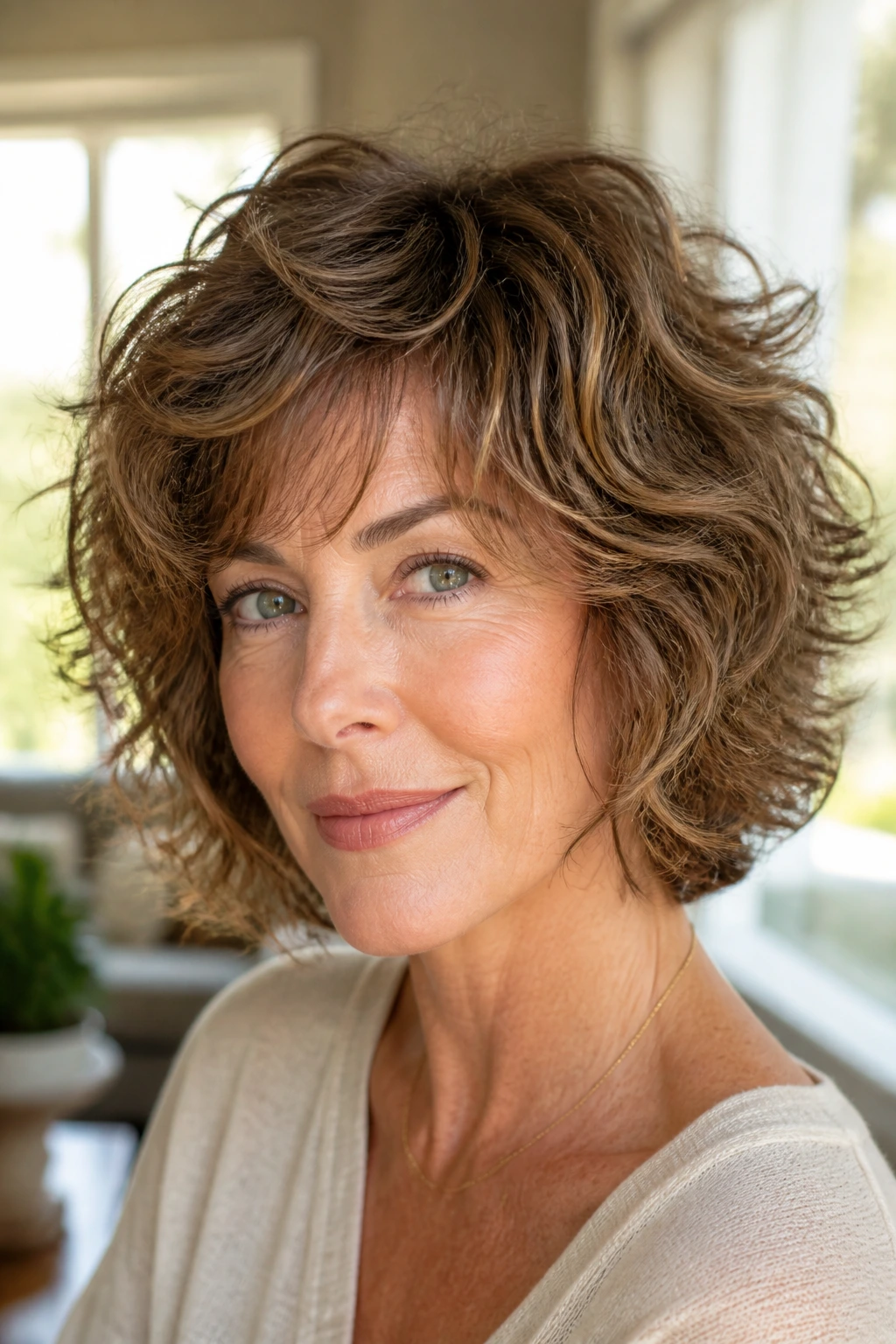
Curly bobs usually hold their shape for about six to eight weeks before the outline starts to feel fuzzy or the layers lose their balance. If your hair grows fast at the nape, you may want a cleanup sooner. The cut itself will tell you. When the ends begin to flip in odd directions or the crown stops lifting, it’s time.
Between washes, a spray bottle with water and a drop of leave-in conditioner can wake the curls back up. Don’t soak the whole head. Mist the flat spots, scrunch, and let them settle. If the roots look crushed, lift them with clips for 10 to 15 minutes while the hair dries again.
Sleep matters too. Pineapple the hair loosely if the curl pattern allows it, or tuck it into the satin pillowcase and let the top stay soft. The more you preserve the shape at night, the less work you’ll do in the morning.
Frequently Asked Questions
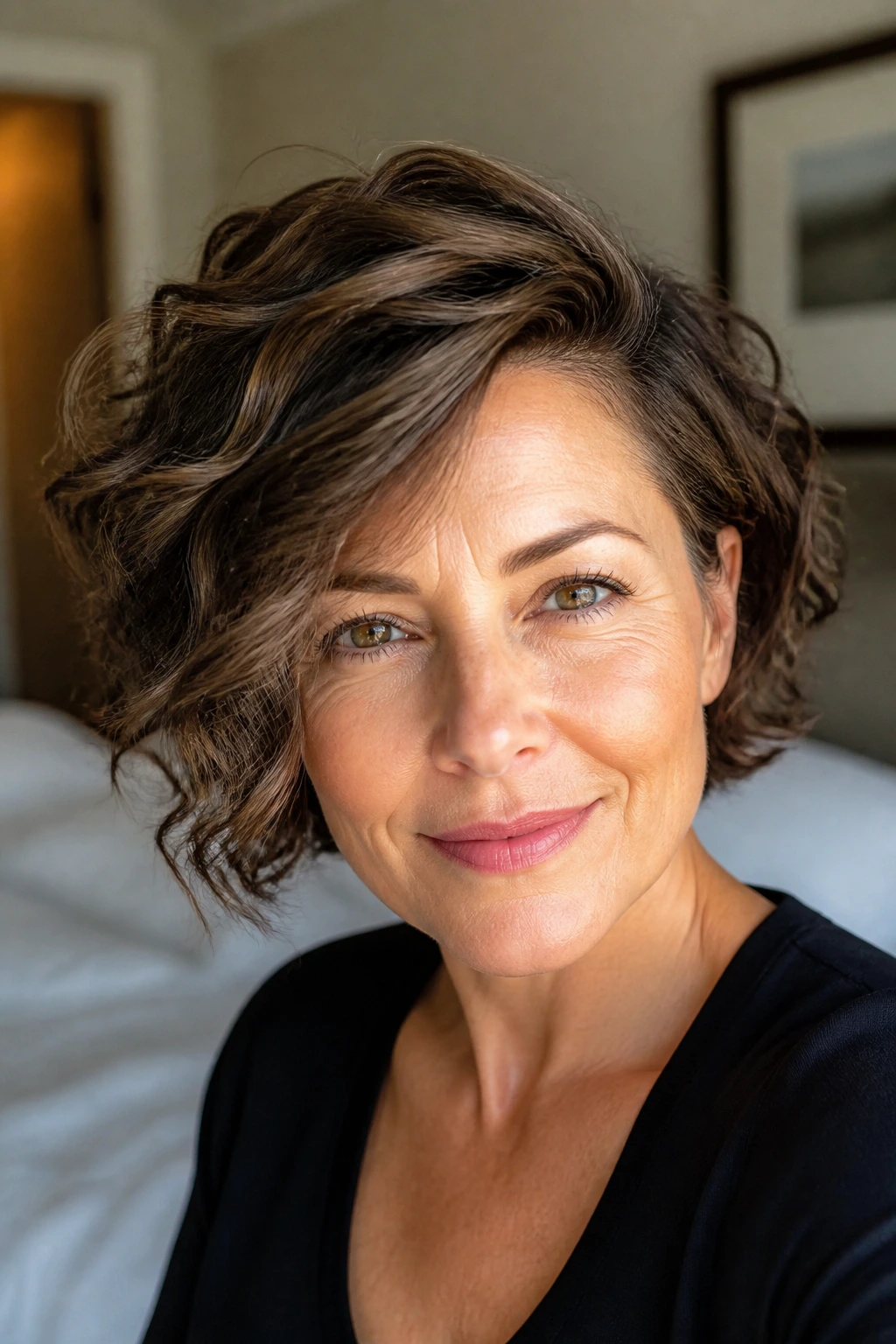
Does a tousled bob work on very tight curls?
Yes, but the cut usually needs more room at the bottom and less aggressive layering. Tight curls shrink more, so the stylist should leave extra length and shape the bob dry or mostly dry so the final line lands where you expect.
Will a bob make my hair look thicker if it’s getting finer?
It can, if the crown is built properly and the cut avoids too much thinning. Finer curls usually look best with a rounded shape, light layering, and a little root lift from mousse or clips.
Can I wear a tousled bob with glasses?
Absolutely. In fact, some of the best versions — like the ear-tuck bob or a side-swept shape — work better with glasses than with a long, heavy cut. Keep the front pieces long enough that they don’t jam into the frames.
What if my curls get frizzy in humidity?
Use a small amount of gel over curl cream, not a heavy butter. That combo gives the hair a firmer shell while it dries, which helps the curls hold their shape instead of swelling into a fuzzier halo.
Should curly bobs be cut wet or dry?
Dry cutting gives the stylist a better read on shrinkage, curl pattern, and where the weight sits. Wet cutting can still work, but only if the stylist is very deliberate about how much length they leave.
How often should I trim a curly bob?
Most curly bobs benefit from a trim every six to ten weeks. If the shape starts to widen at the sides or flatten at the crown, don’t wait for the ends to look damaged. Shape matters more than split ends here.
Can I air-dry a bob and still keep volume?
Yes, if the layers are placed correctly and you don’t overload the hair with product. A little mousse at the roots, a small amount of curl cream through the ends, and clipping the crown while it dries can make a big difference.
What if my bob keeps flipping out at the ends?
That usually means the perimeter is too blunt or the ends are too light. A stylist can soften the line with point cutting or add a touch of weight back into the bottom so the curls settle instead of kick out.
A Cut That Moves With You
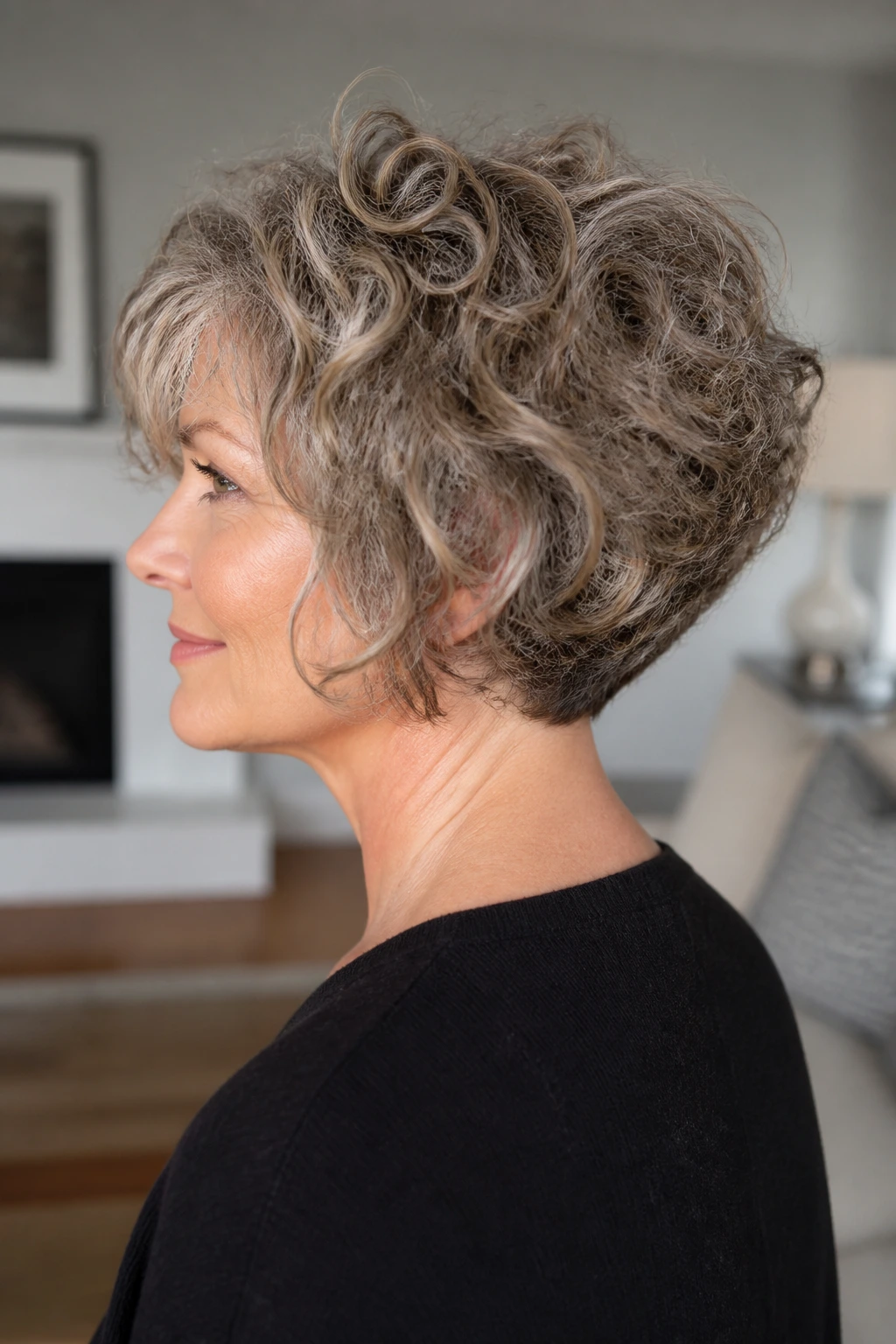
The nicest thing about a tousled bob for curly hair is that it doesn’t force your texture to behave like someone else’s. It lets the curl pattern stay visible, which is really the whole point. Soft layers, a thoughtful length, and a little lift in the right place can turn an ordinary haircut into something you actually enjoy styling.
If you’re after a change that feels fresh but not fussy, start with the bob shape that solves your biggest annoyance — too much bulk, not enough crown, bangs that never sit right, or ends that won’t behave. The right one will make itself obvious after a few mornings in the mirror.