



Round faces and curly hair can make a bob behave like a mood swing. Cut it too short at the cheeks and it balloons. Leave it too blunt and it sits like a shelf. Forget shrinkage and the whole thing climbs two inches higher than the cape suggested.
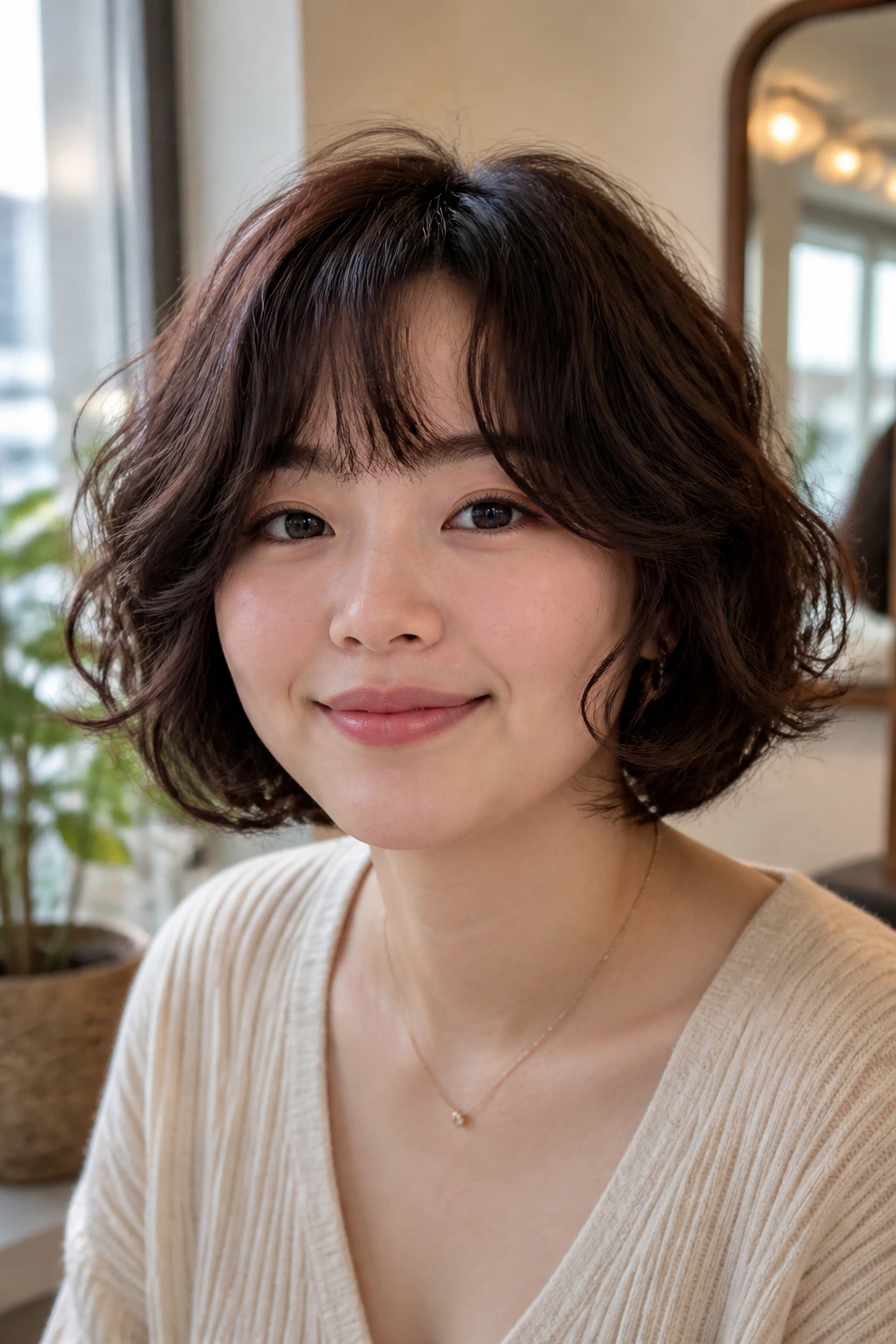
A Korean bob for round faces and curly hair works because it usually leans on soft edges, diagonal lines, and a little bit of air around the face instead of trying to pin everything flat. That matters. Curly texture already brings width and lift; a good bob should steer those things, not fight them.
The nice part is that “Korean bob” is not one haircut. It’s a family of shapes: C-curl finishes, hush-cut layers, hime-inspired panels, collarbone-length bobs, and those neat little inward bends that make the ends look deliberate instead of accidental. Once you know how those shapes behave on curls and roundness, the choice gets a lot easier.
Why These 25 Cuts Earn a Real Spot in the Rotation
-
Face-shaping is built in: These bobs keep the widest point away from the cheeks, which helps a round face read a little longer without needing a dramatic length change.
-
Curl shrinkage is treated like a fact, not a surprise: The styles here leave room for your curls to spring up, which is the difference between a cute bob and one that lands awkwardly above the jaw.
-
You get options with a point of view: There are sleek versions, airy versions, shaggy versions, and face-framing versions, so the haircut can match your style instead of flattening it.
-
Salon language is easier to borrow: Each look comes with a simple way to describe it to a stylist—length, parting, layers, and the kind of end shape you want.
-
Maintenance stays realistic: A lot of these cuts still look good after a few days of curl refreshes and a six-week trim, which is worth more than a trendy photo.
-
The shape can be tuned to your curl pattern: Loose waves, springy ringlets, and denser curls all need slightly different handling, and these bobs leave room for that.
1. Chin-Grazing Soft Korean Bob
This is the bob that makes a round face look a little more sculpted without turning the haircut into a geometry lesson. The length sits right around the chin, but the ends are softened with point-cutting so the line doesn’t feel stiff or boxy. On curly hair, that softer edge matters. A hard, blunt chin line can widen the face fast; a gentle finish lets the curl pattern do some of the work.
What makes it such a smart starting point
The best version lands just below the chin when your hair is dry, not when it’s stretched out and wishful. I’d keep at least 1 to 1.5 inches of breathing room if your curls spring up sharply. That little cushion keeps the bob from floating too high after the first wash.
If you wear your curls loose and airy, this cut gives you a neat frame around the jaw without feeling severe. If your hair is denser, ask for the perimeter to stay full and the interior to be lightly shaped, not thinned to the point where the ends go wispy.
Ask for this: a dry or curl-aware cut, chin-grazing length, soft perimeter, and minimal layering below the cheekbone.
2. C-Curl Bob with Inward Flicks
The C-curl bob is one of those salon styles that looks polished without looking fussy. The ends turn inward in a clean little curve, which pulls the eye down instead of letting the sides puff out. On a round face, that inward bend is doing quiet work all day long.
For curly hair, the trick is not to force a cartoonish flip. You want a bend, not a curl helmet. A medium round brush, a diffuser with a gentle scrunch, or even a flexi-rod set on the last 2 inches can create that curve without flattening the root. If your curls already make a soft “C” at the ends, this is the easiest bob to live with.
Style note
Keep the front pieces a touch longer than the back—about half an inch to 1 inch makes a difference. That tiny slope helps the jaw look cleaner. And if your hair is thick, resist the urge to pile on layers; too many and the curve starts wobbling instead of flowing.
3. Airy Layered Bob with Invisible Interior Layers
This one is for people who love curl movement but hate the triangle effect. The surface still looks like a bob, but the inside has light layers that take out bulk from the crown and midlengths. Done well, it gives curly hair room to sit without exploding sideways.
The important part is where those layers begin. I prefer them to start above the ear or around the occipital bone, not at the cheeks. Layers cut too high around the face can widen round features; layers that live a little higher give lift without stealing the perimeter. That’s the sweet spot.
Best for: thicker curls, 2C to 3B hair, and anyone who wants a bob that moves when they turn their head.
A stylist should understand the phrase invisible layers or internal debulking. If they start talking about thinning out the whole head with scissors meant for straight hair, pause. Curly bobs need shape. They do not need random gaps.
4. Collarbone Bob with Curtain Bangs
This is the safest long-bob option in the group, and I mean that in the best way. The collarbone length gives a round face some vertical line, while curtain bangs split the forehead and stop the haircut from feeling bottom-heavy. On curly hair, the bangs soften the whole look, especially if they’re cut to fall somewhere between the brow and cheekbone when dry.
The key is balance. If the bangs are too short, they jump up and make the face look wider. Too long, and they disappear into the sides. I like them to graze the cheek area with enough length to tuck or sweep away on lazy days.
How to wear it
This cut likes a slightly off-center part and a little root lift at the crown. That keeps the silhouette from going flat on top, which is where round faces can sometimes lose definition. A light mousse at the root and a curl cream through the ends usually does the job.
5. Hime Bob with Curly Side Panels
A hime bob is not for everyone, which is exactly why I like including it. The sharp little side panels make a strong frame around the face, and on a round shape they can be surprisingly useful if the length is placed well. The trick is to keep the panels longer than the widest part of the cheek and let the rest of the bob stay soft.
Curly hair gives this cut more personality than straight hair ever will. The contrast between the neat side pieces and the softer back makes the style feel intentional, not costume-y. I’d be careful with density here, though. If your curls are very thick, the side panels can get heavy fast unless they’re carefully weight-removed.
A good hime bob on curls should look like the face is framed, not boxed in. That’s the whole game.
6. Side-Part Swing Bob
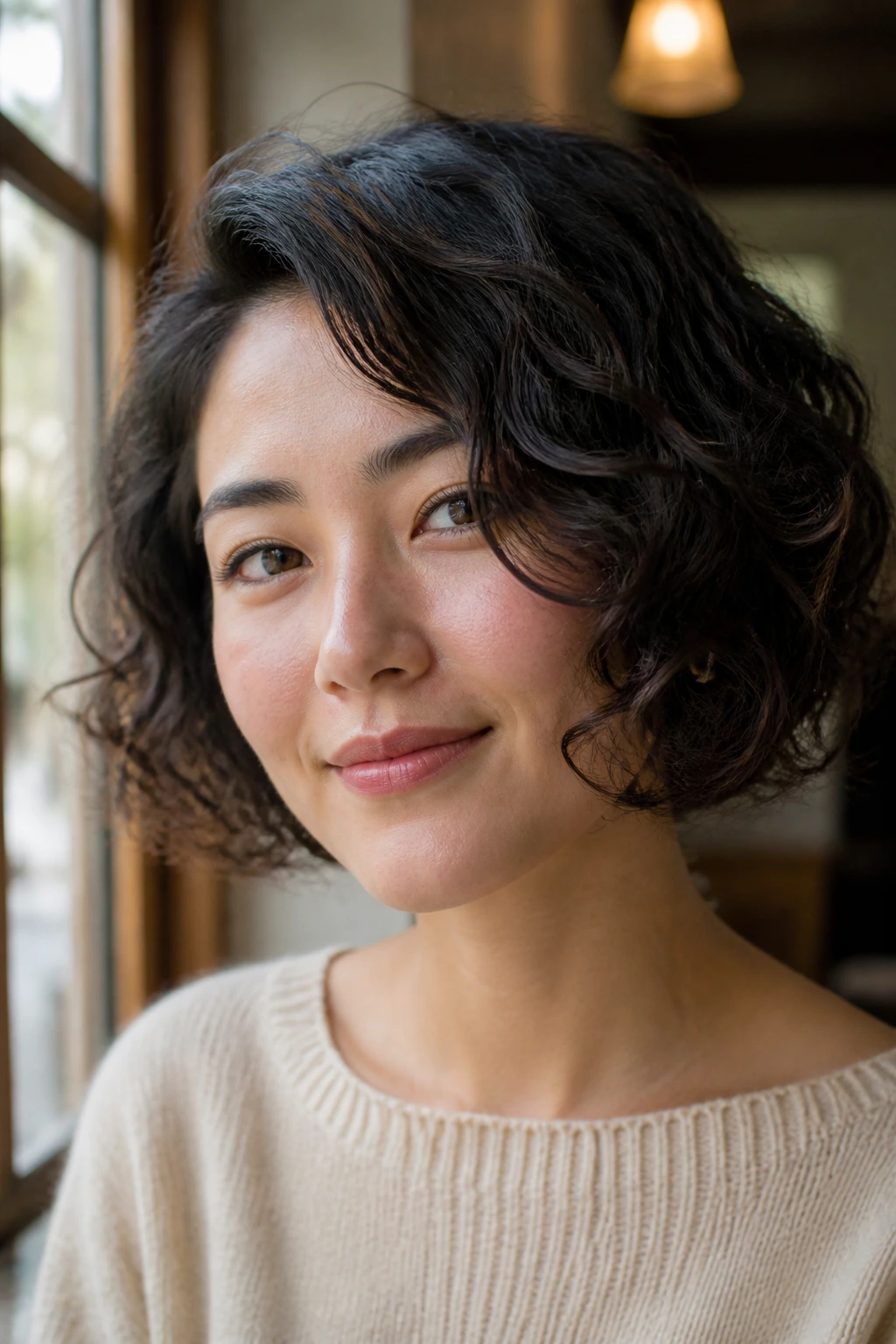
If you want the quickest visual fix for a round face, move the part. A deep side part creates a diagonal line across the forehead, and diagonal lines are a kind thing to roundness. They pull the eye upward and off-center, which gives the haircut a little swing even when the curl pattern is soft.
This is one of my favorite bob shapes for curly hair that has one side flatter than the other. A side part lets the fuller side do some lifting while the other side hugs the jaw. The result feels casual, not over-styled.
Quick styling cue
Use a root clip or a blow-dry with the part set opposite your usual side for the first 5 minutes. That tiny root memory can change the whole silhouette. Then let the curls fall wherever they want. They’ll usually settle into something better than the mirror did at the start.
7. Blunt Bob with Soft Ends
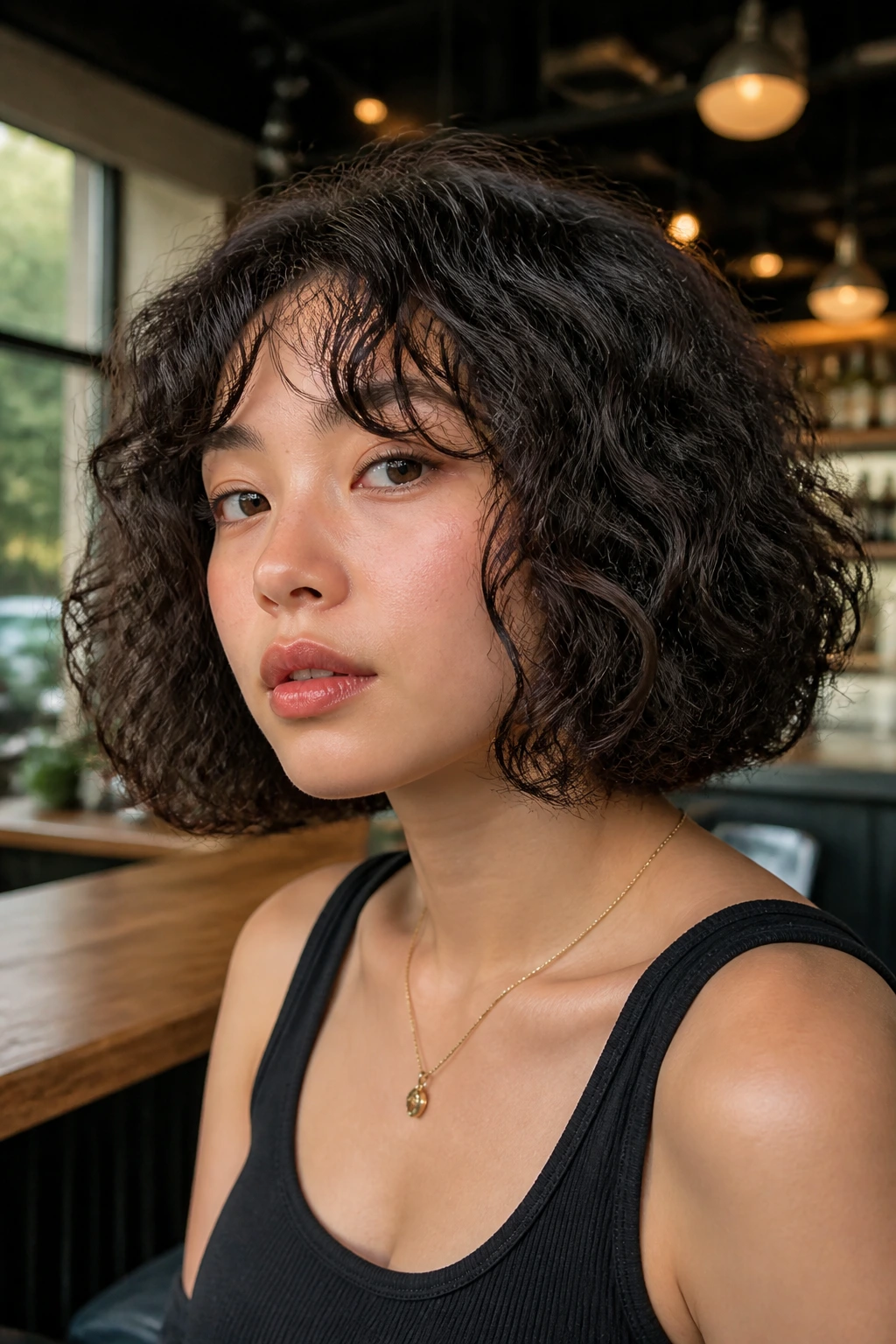
A blunt bob on curly hair sounds risky, and sometimes it is. But when the line sits a little below the jaw and the ends are softened just enough to avoid a shelf effect, it can look crisp in a very satisfying way. Round faces benefit from the clean edge because it gives the cheeks something controlled to sit against.
The part people get wrong is the finish. If the bottom edge is carved too sharply, the haircut can puff at the sides and feel wide. A tiny bit of point-cutting on the perimeter keeps the line from acting like a ruler. I’d also keep the length at least 1 inch below the jaw if your curls are springy.
This is a good choice if you want your bob to look neat on day one and still behave on day three. It doesn’t need a lot of styling, just enough to keep the outline clean.
8. Jawline Bob with Long Face-Framing Pieces
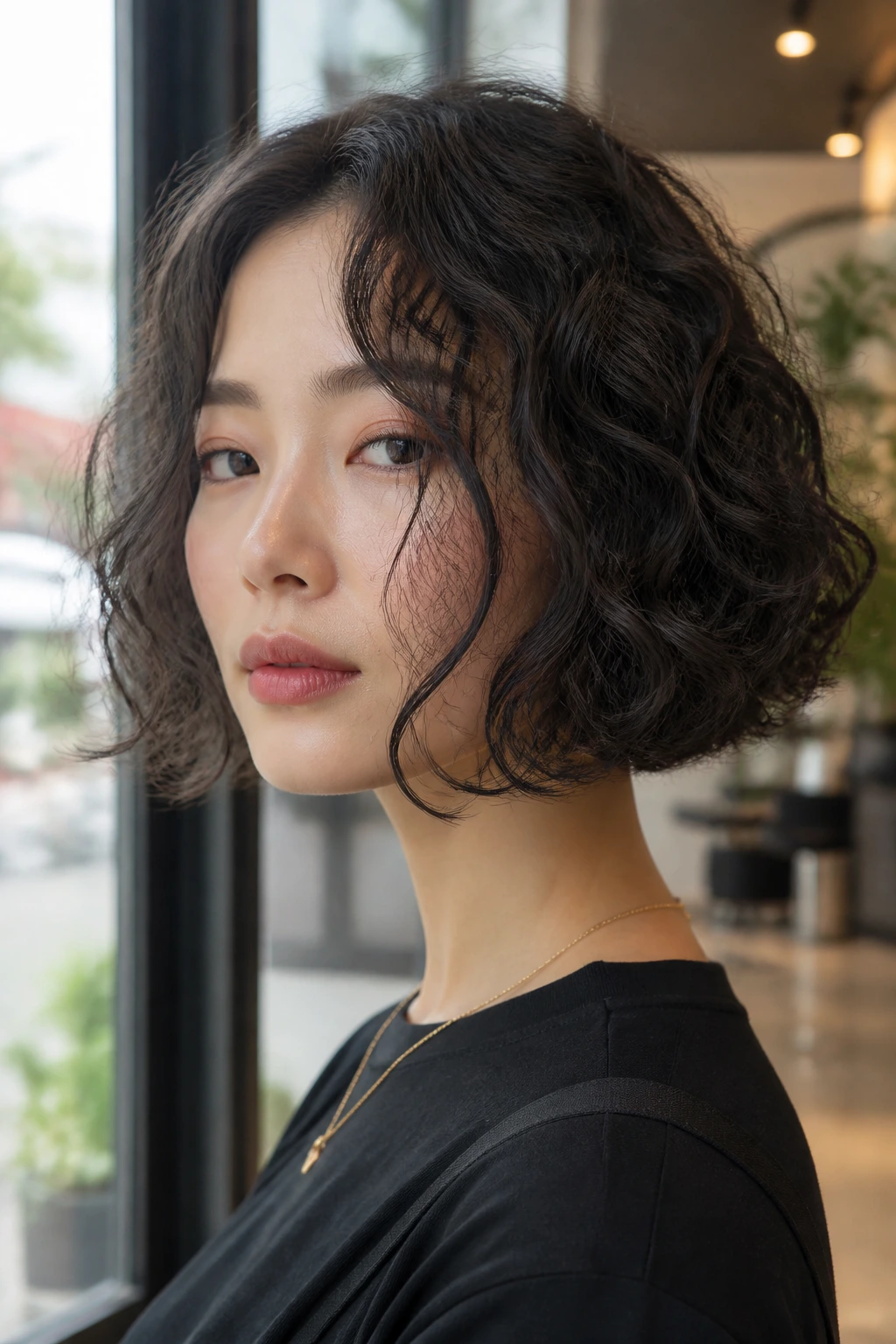
This is the bob I reach for when someone wants the short-hair feeling without giving up face-framing length. The center section or front pieces sit below the jawline, while the rest of the bob stays compact. That extra length in front creates a vertical line beside the cheeks, which helps round faces look a bit narrower.
On curly hair, long face-framing pieces are a gift because shrinkage rarely hits them equally. Even if the front bounces up more than expected, you still have enough length to tuck, twist, or wear loose. It’s practical hair, which I always appreciate.
What to ask for
Ask for front pieces 1 to 2 inches longer than the back and make sure the stylist checks the curls while they’re dry or close to dry. If the front pieces end at cheekbone level on the cape, they may land at nose level once your curls wake up. That is not the same haircut.
9. Hush Cut Bob
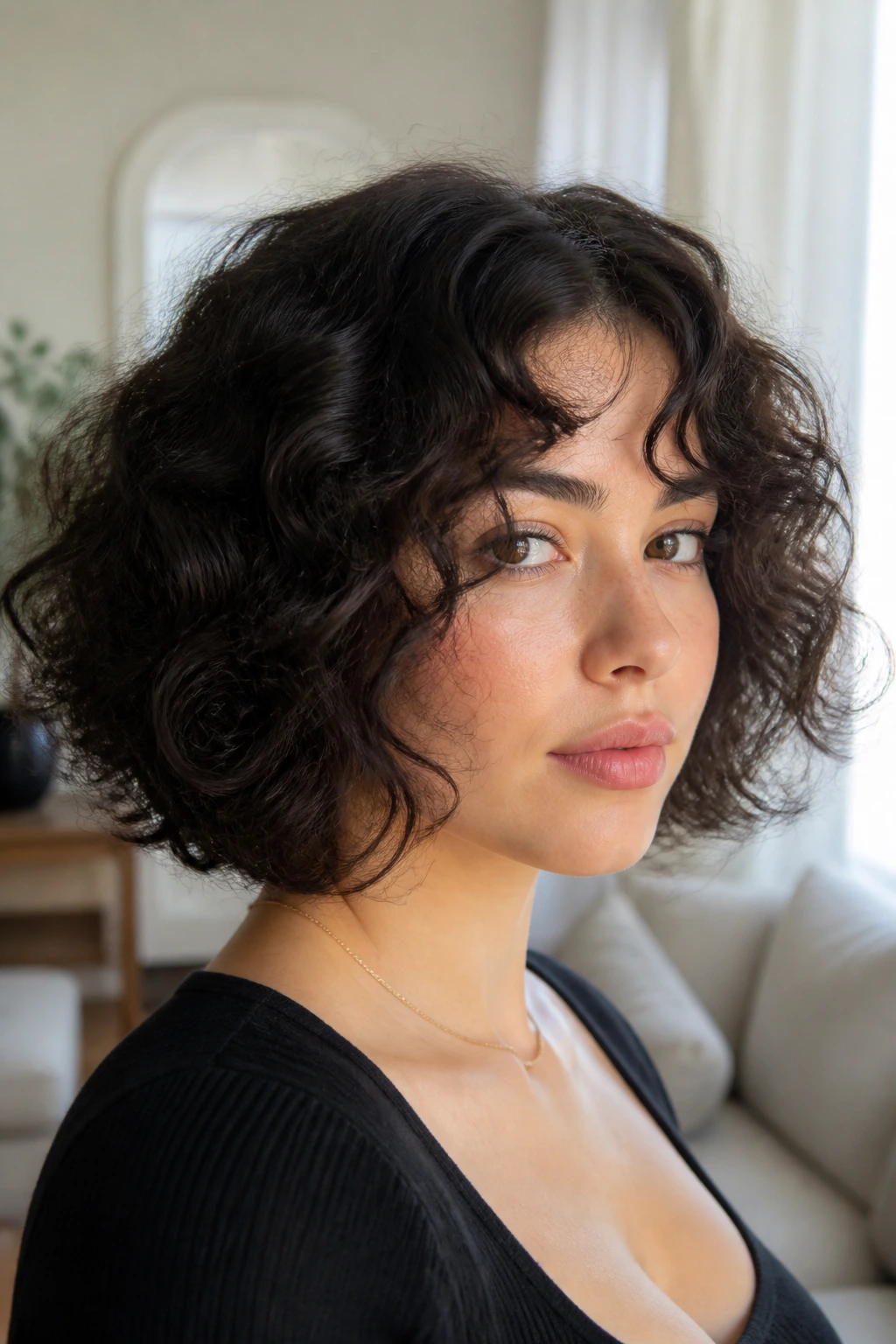
The hush cut is one of the calmer, softer Korean shapes, and that’s why it works so well here. It gives you movement without shredding the perimeter. On a round face, the secret is to keep the lightest layers away from the cheeks and let them live more in the midlengths.
Curly hair likes this cut when it’s too dense to sit flat but too pretty to carve into a shag. The layers break up the bulk, but the outline stays bob-like. Think whisper, not thunder. That’s the mood.
If you’ve ever had a curly haircut that looked great for the first hour and then puffed into a cloud by lunch, this style may behave better. It has enough internal motion to keep the shape interesting, but not so much that the sides widen into a triangle.
10. S-Curl Bob with Loose Bend
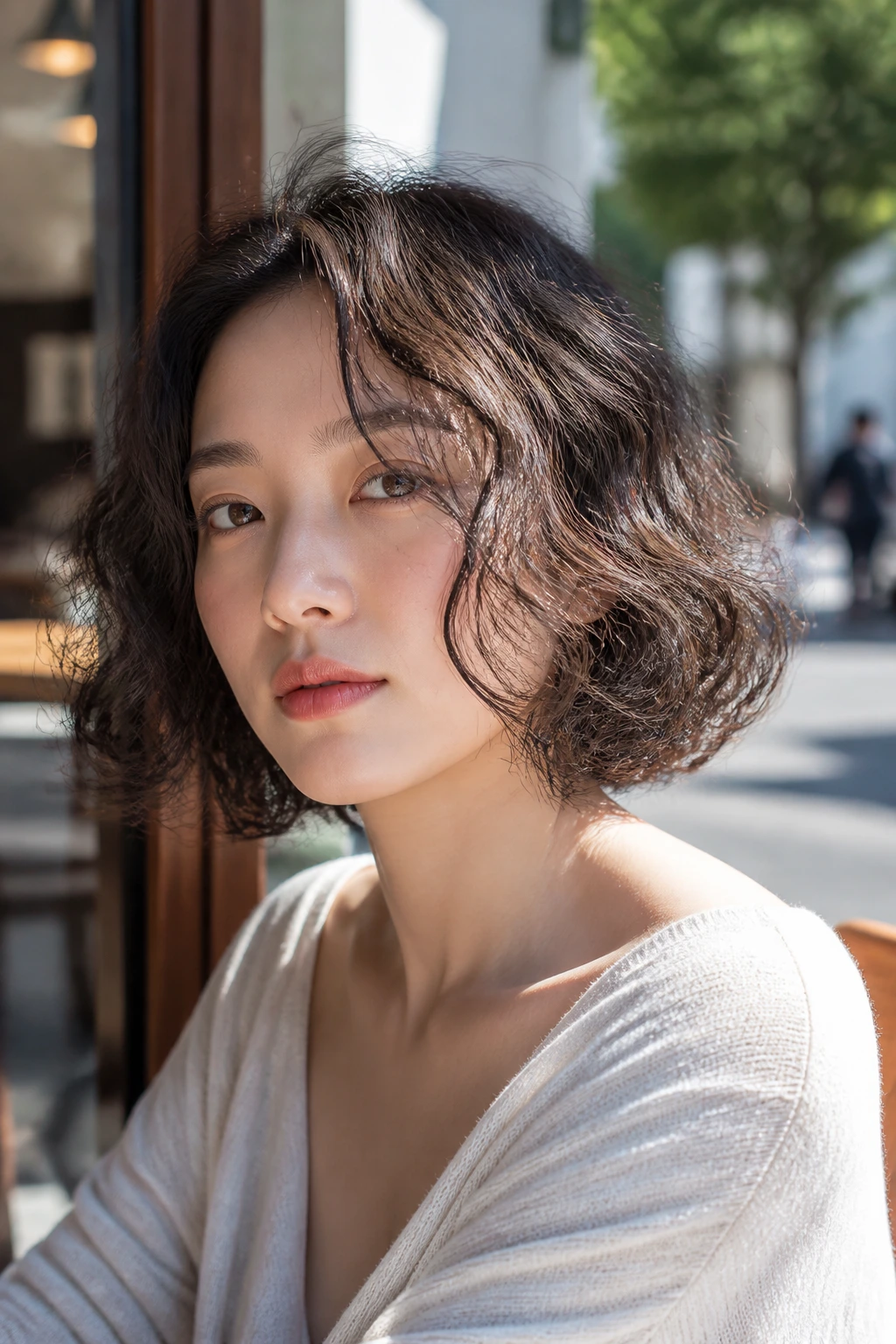
A loose S-curl bob is all about gentle wave direction rather than tight ringlets. It gives the hair a soft swoop from the cheek area down to the ends, which is lovely on round faces because the movement travels vertically instead of spreading sideways.
This style suits looser curl patterns, especially 2A to 2C hair, or curly hair that likes to stretch under its own weight. If your strands are finer, the S-shape can give the illusion of more body without requiring a lot of product. If your hair is thick, keep the bend relaxed; too much curl at the ends can make the cut read shorter than it is.
A large-barrel iron, roller set, or twist-diffuse routine can create the bend. Just don’t overdo it. The whole point is that the ends feel soft, not over-controlled.
11. Curly Pixie Bob
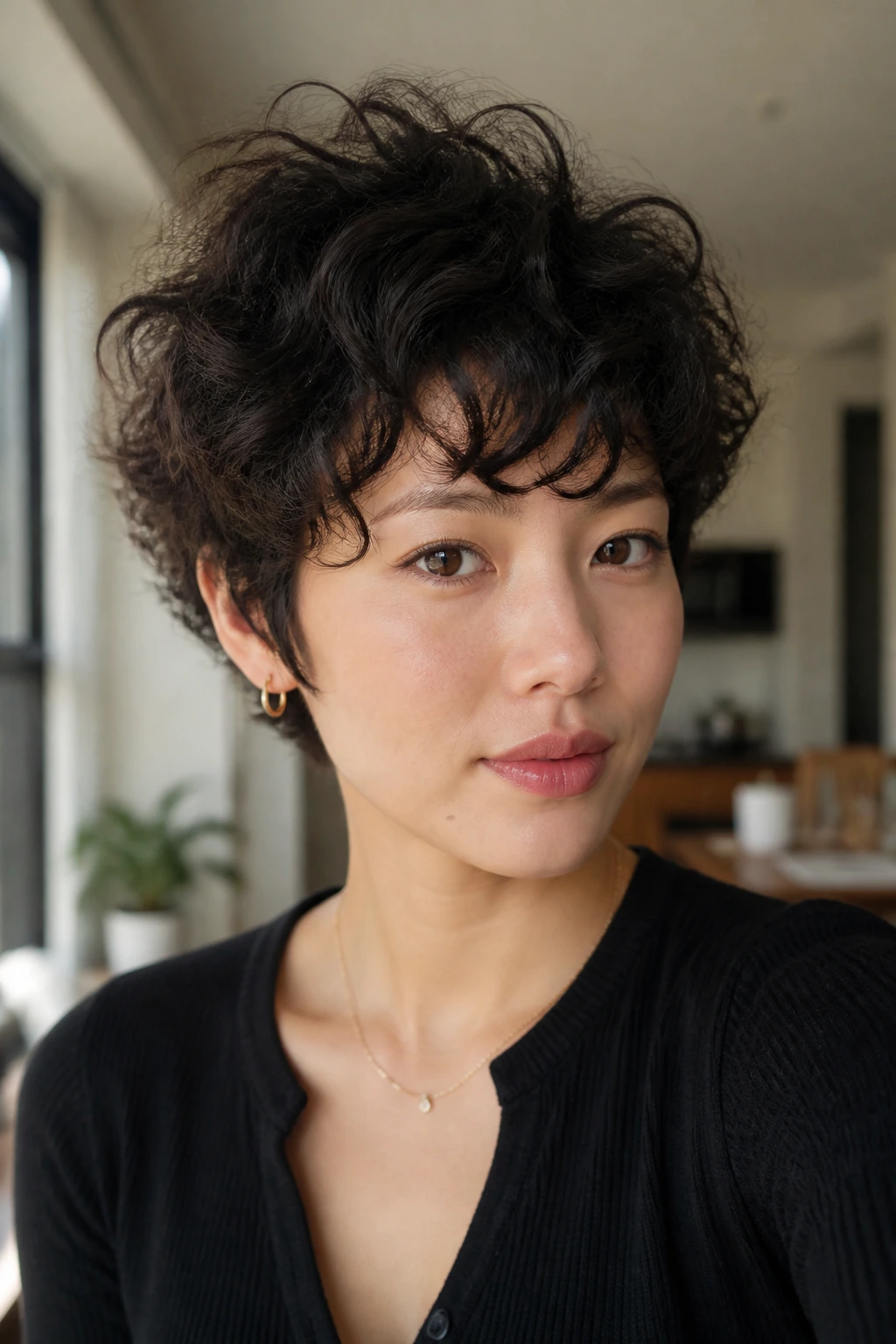
This is the bold one. The curly pixie bob sits between a short bob and a grown-out pixie, with enough length at the top to keep the curls interesting and enough nape control to stop the shape from getting fuzzy. On a round face, it works best when the crown has a little lift and the fringe or front pieces fall diagonally.
I would not recommend this cut if you want to hide behind your hair. It shows your face. That’s the point. The payoff is a sharp, fresh shape that still looks soft because the curls keep it from feeling severe.
Who it suits
Best on tighter curls, stronger cheekbones, and anyone who likes a shorter neckline. If your curls are very loose and your face is broad across the cheeks, ask the stylist to leave extra length at the front so the cut doesn’t balloon at the sides.
12. Inverted Korean Bob
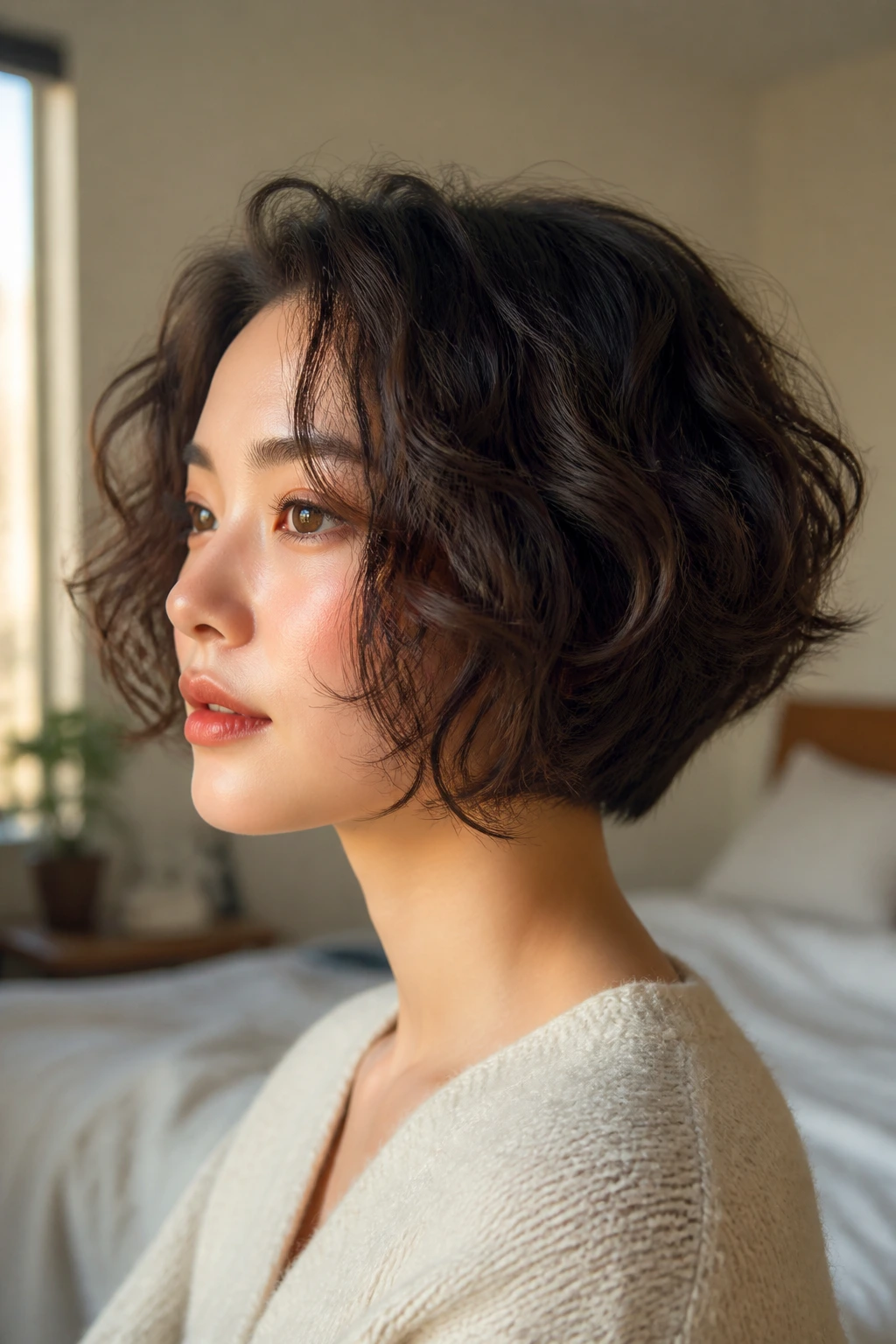
The inverted bob is built to do one thing well: create a longer front that pulls the face down. The back sits shorter and cleaner at the nape, which gives the haircut a little lift without making the crown look puffy. On curly hair, the shape can be gorgeous if the transition is soft rather than stacked too aggressively.
Round faces usually benefit from the front length here. The longer angles act like vertical rails beside the cheeks. That’s why this cut reads more flattering than a symmetrical bob on many people with fuller faces.
The danger is over-stacking. If the back is chopped too high, the silhouette can start to feel helmet-like. I prefer a gentle slope with room for curls to fall naturally, not a sharp wedge. Leave the drama to the front.
13. U-Shaped Bob
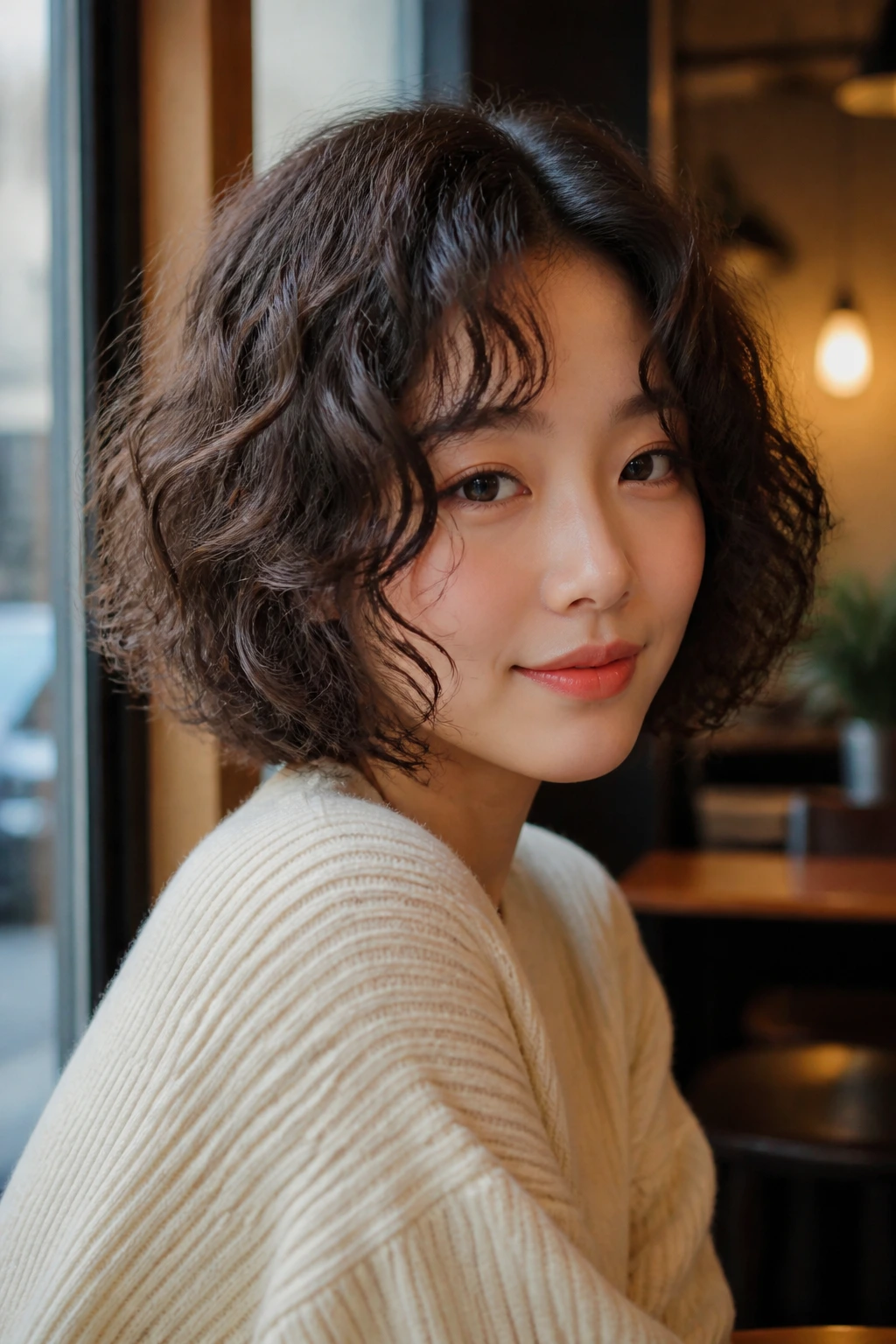
A U-shaped bob is a small change that makes a big difference. The back is a little shorter, the sides are a little longer, and the whole perimeter curves like a shallow U instead of stopping abruptly. That shape softens round faces because it avoids a hard horizontal line at the cheeks.
Curly hair behaves well with a U-shape because the curve gives the curls somewhere to land. The front doesn’t have to fight the back for attention. It just sits there, slightly longer, quietly making the face look leaner.
I like this cut for people who want a bob but hate looking “cut off” at the chin. It’s one of the easiest shapes to grow out too, which is a nice bonus. Hair that grows well is underrated.
14. Bottleneck Bang Bob
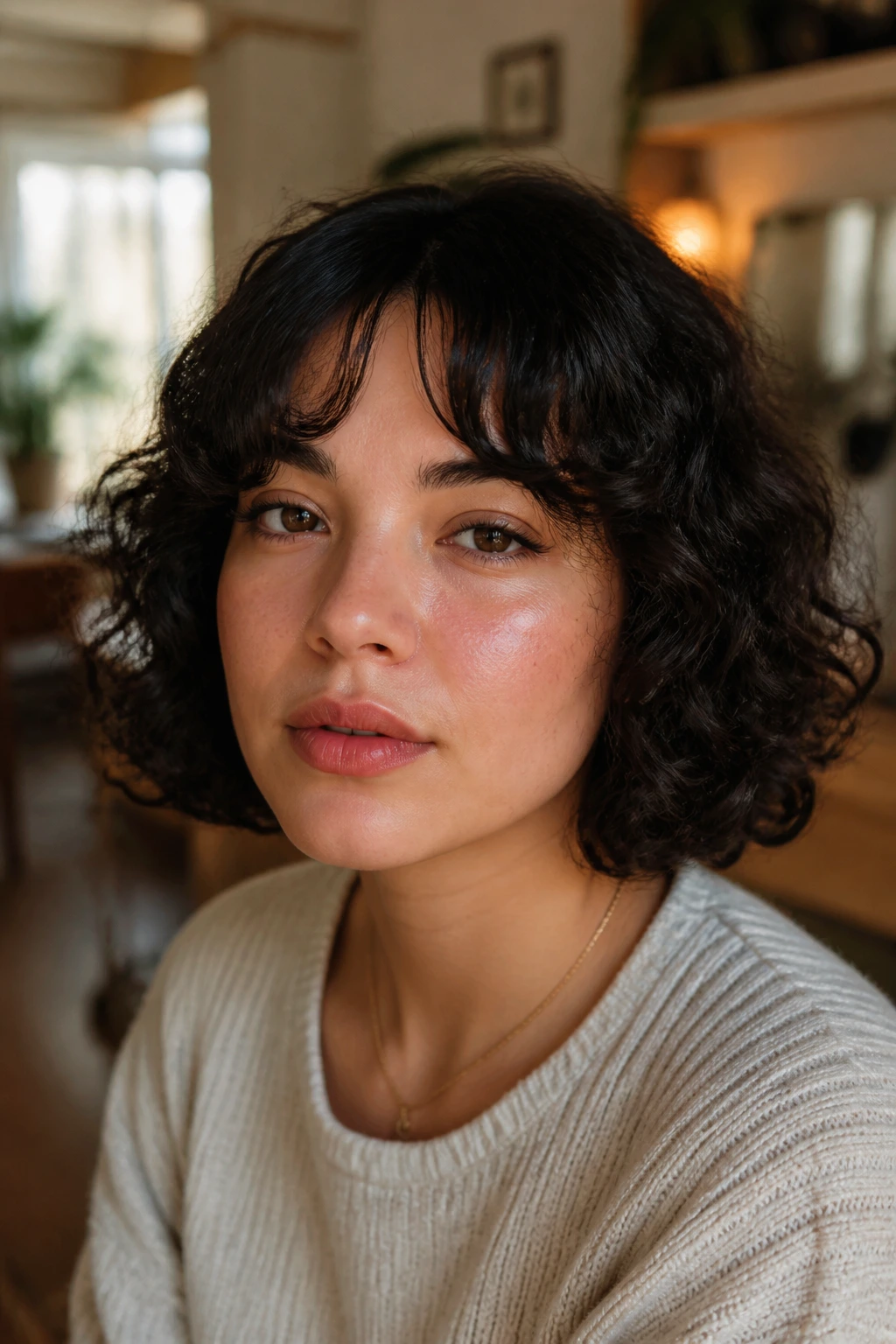
Bottleneck bangs are one of those fringe choices that sound fussy and end up being practical. They start narrow between the brows, then widen softly toward the temples, which keeps the forehead from looking blunt. On round faces, that widening at the sides can frame the face without cutting the whole forehead off in a straight line.
Curly hair needs these bangs to be cut with shrinkage in mind. If the fringe is cut dry, the stylist can see where the curls spring up and where they collapse. If they’re cut wet and left too short, the bangs can end up hovering too high, which changes the whole balance of the cut.
This style is a good middle ground if you want bangs but not a heavy wall of them. They soften the bob and keep the face open.
15. Feathered Bob
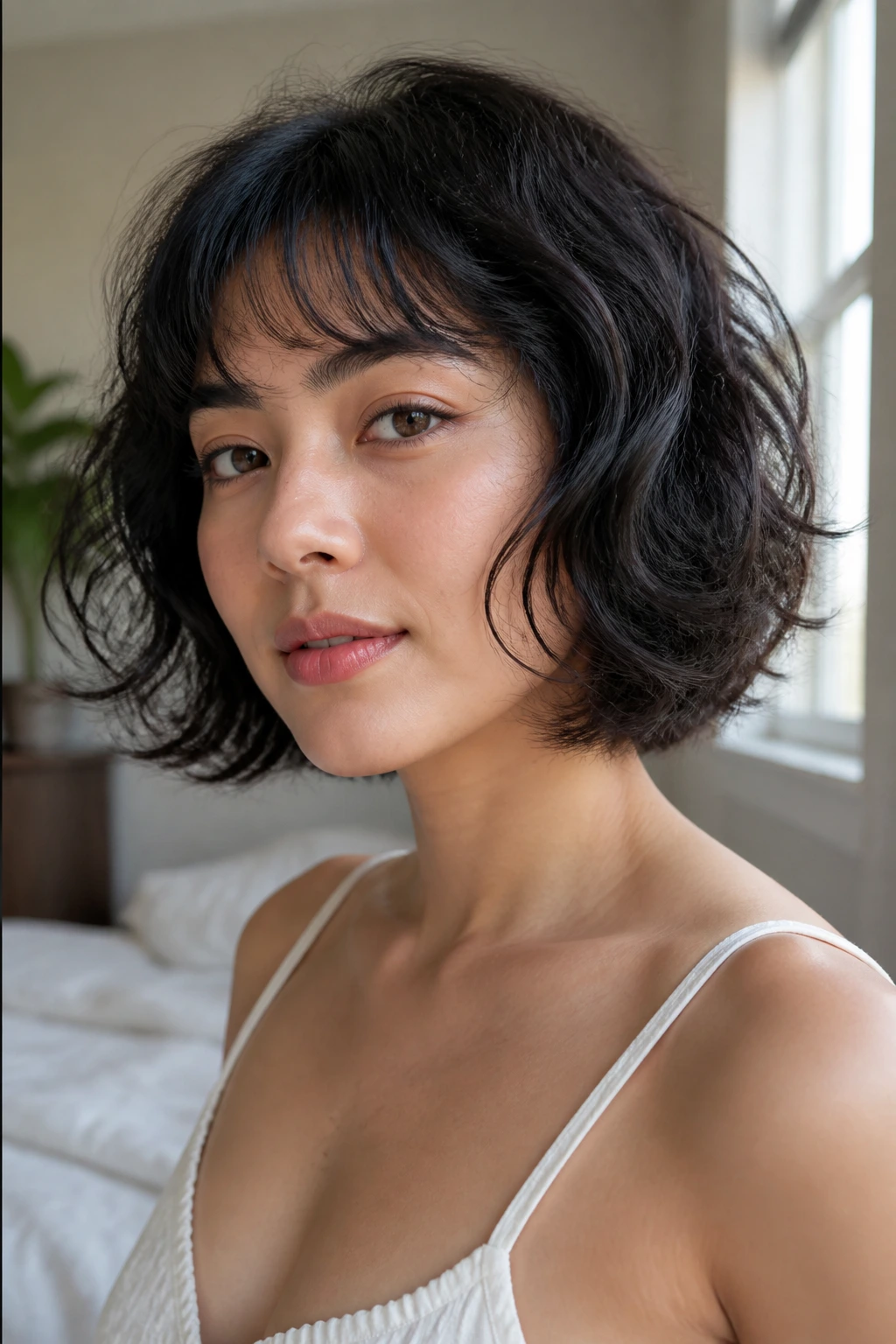
Feathering sounds old-fashioned until you see it on curls done well. In a Korean-style bob, feathering is less about dramatic layers and more about light, directional ends that don’t sit in one block. The perimeter still has shape, but the edges don’t feel dense or shelf-like.
On round faces, feathered ends are useful because they create motion at the jaw without adding a lot of width. They also stop thick curls from building into a square silhouette. If your hair has medium density and likes to bulk up at the bottom, this cut can help the shape breathe.
I’d avoid razor-heavy feathering on tight curls. It can make the ends frizz faster than you want. Point-cutting or careful slide-cutting is usually the safer route.
16. Shaggy Korean Bob
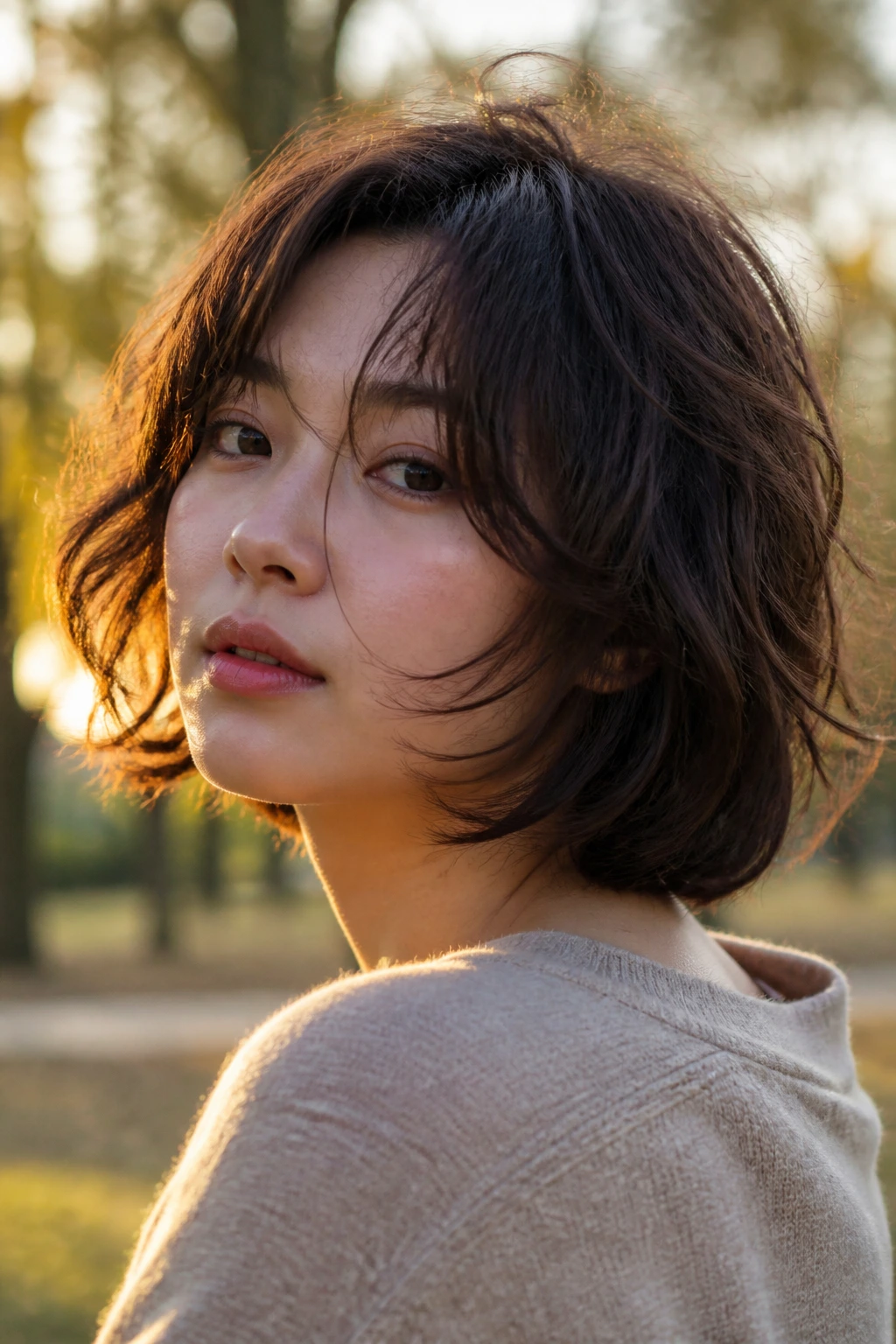
This is the casual one in the group. A shaggy Korean bob keeps a bob-length base but adds a little looseness through the crown and sides, so the haircut looks lived-in instead of polished. On a round face, the texture keeps the sides from sitting flat against the cheeks, which is oddly more flattering than a severe neat cut in a lot of cases.
Curly hair and shaggy layers can be a great match if the layers stay controlled. The problem comes when the haircut is too chopped up and the widest curl lands exactly at cheek level. That’s where the roundness gets louder. Keep the shortest pieces above that point, or leave them out entirely.
This one works best if you like a bit of mess. Not chaos. Just a little movement that looks intentional when the wind hits it.
17. Box Bob with Rounded Corners
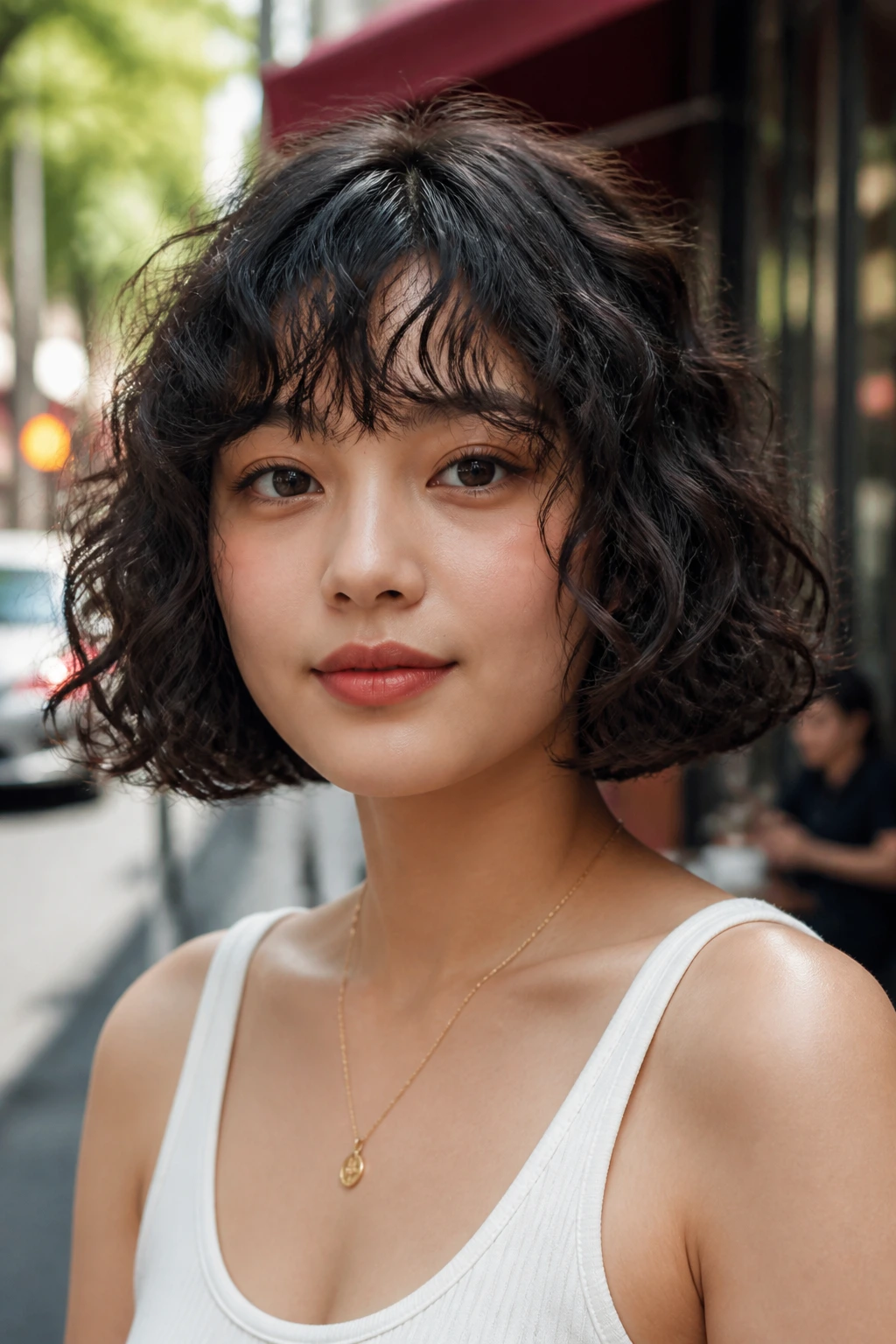
A box bob has a stronger edge than a soft bob, but on curly hair it doesn’t have to look harsh. The corners are what matter. If the stylist rounds the edges ever so slightly, the shape can look clean without turning square against the face.
Round faces usually need the length to sit below the jaw with this cut. Otherwise the bluntness can widen the cheeks. The good news is that curly texture helps soften the boxy feeling automatically. The hair moves. It doesn’t behave like a helmet unless you force it there.
Best for
People with finer curls or waves who want a bit of structure. It also suits glasses well, because the crisp line of the bob can hold its own against frames without looking busy.
18. Permed Body-Wave Bob
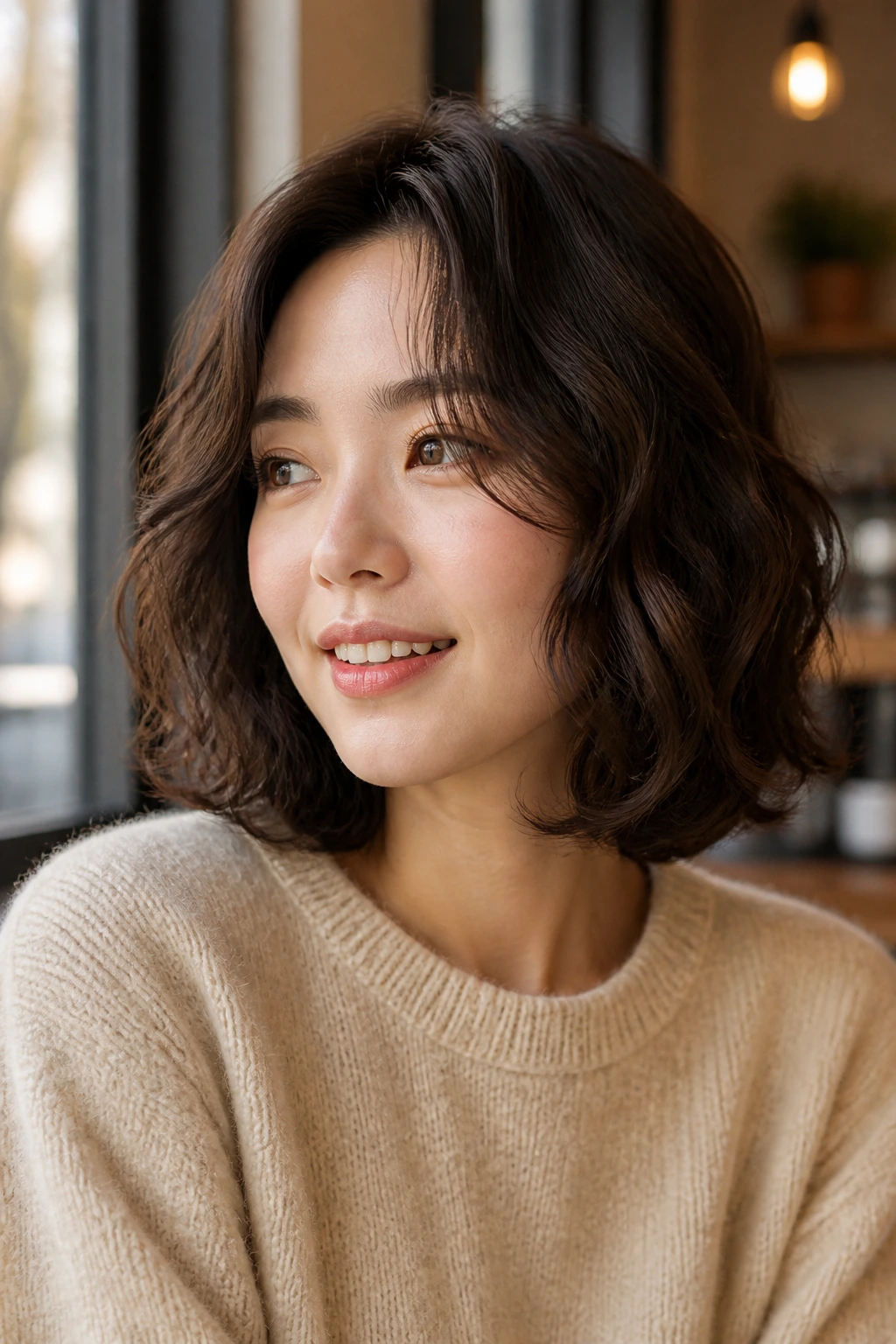
A body-wave bob is for anyone who wants that soft Korean salon bend without waiting on their natural pattern to cooperate. The wave is looser than a ringlet and more directional than a beach wave. It flows. That’s the word I’d use.
On a round face, body waves work because they keep the hair moving vertically instead of puffing out at the sides. The bob stays light around the cheeks and fuller through the lower half, which reads cleaner in photos and in real life. If your hair is naturally straighter, this can be one of the easiest ways to get the shape.
If you’re thinking about a perm or long-lasting bend, keep the curl pattern soft. Tight perm rods can shrink the length too much and make the face look wider instead of slimmer. Gentle is better here. Much better.
19. Ear-Tucked Minimal Bob
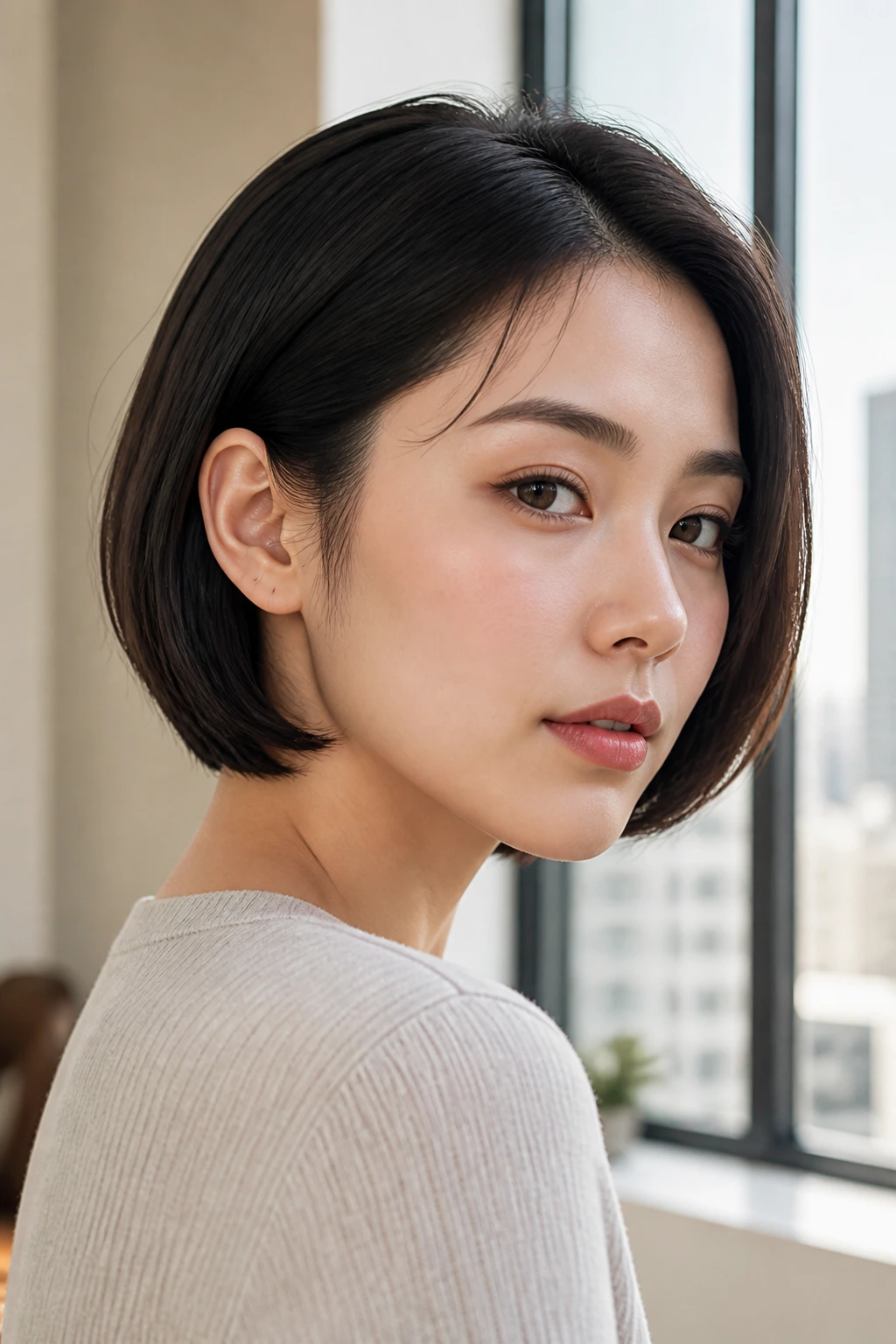
There’s something satisfying about a bob that can tuck neatly behind the ear and still keep its shape. The ear-tucked minimal bob is simple, but not plain. It relies on precision: length that barely clears the jaw, enough weight to hold the tuck, and a clean line that doesn’t fray out at the ends.
This is a strong option for round faces because the tucked side opens a visual window around the cheek. That little bit of skin showing near the jaw changes the whole feel of the cut. Curly hair can do this too, though it usually needs a touch more length than straight hair to stay tucked.
I’d call this a low-drama haircut with a neat little payoff. Very good if you like earrings, glasses, or collars that frame the neck.
20. Deep Side-Part Crown-Volume Bob
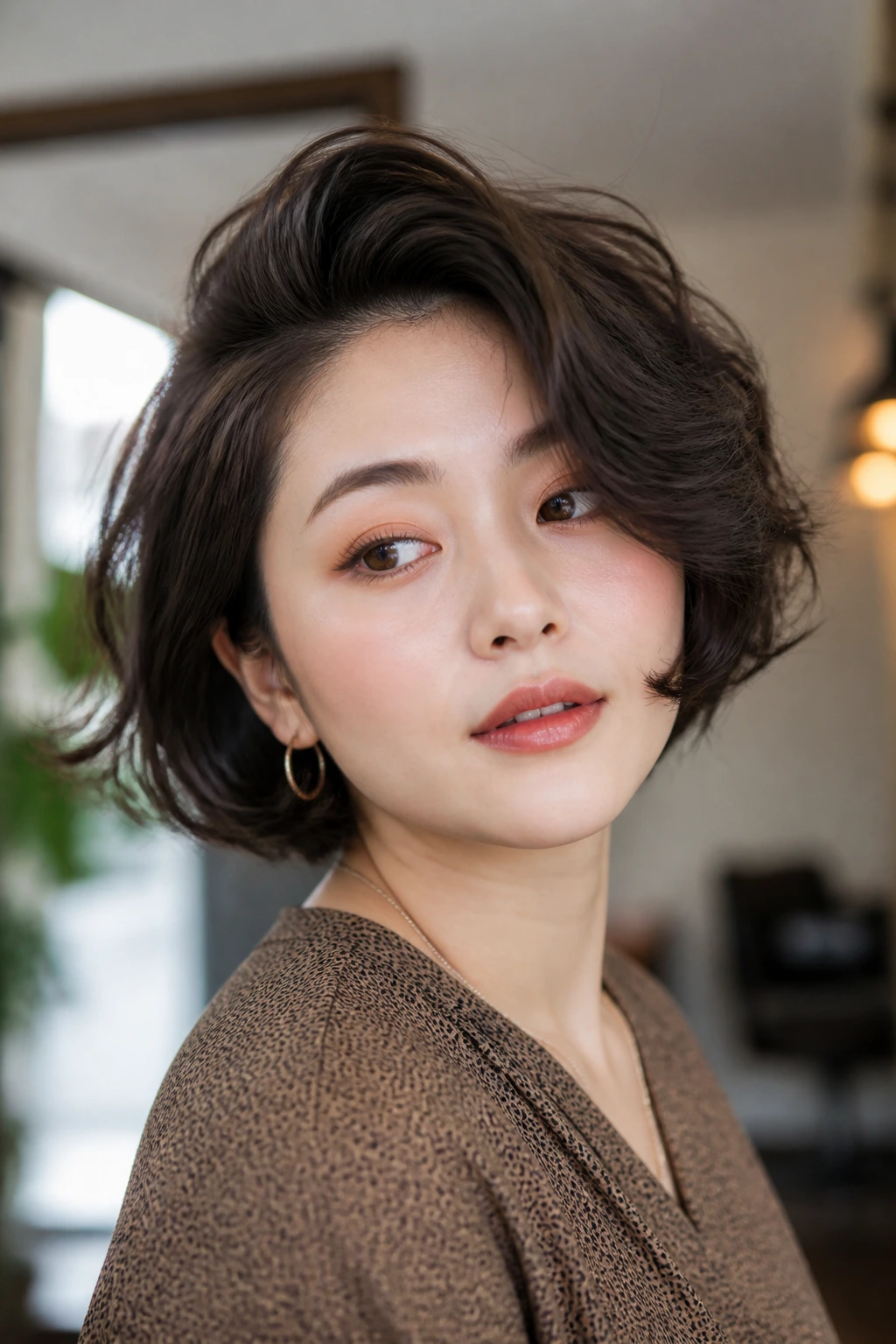
If the crown falls flat, this is your friend. A deep side-part bob pushes volume upward and away from the sides, which helps round faces look less wide. The front section drapes diagonally, the crown gets lift, and the whole cut feels longer.
Curly hair loves this when the root is a little trained with mousse or a root clip. You do not need giant volume. You need the right volume in the right place. That distinction matters, because too much fullness at the sides can undo the work.
This style can look playful or elegant depending on how you finish it. Air-dry for softer curves. Diffuse for a cleaner shape. Either way, the side part does a lot of the heavy lifting.
21. Soft Wolf Bob
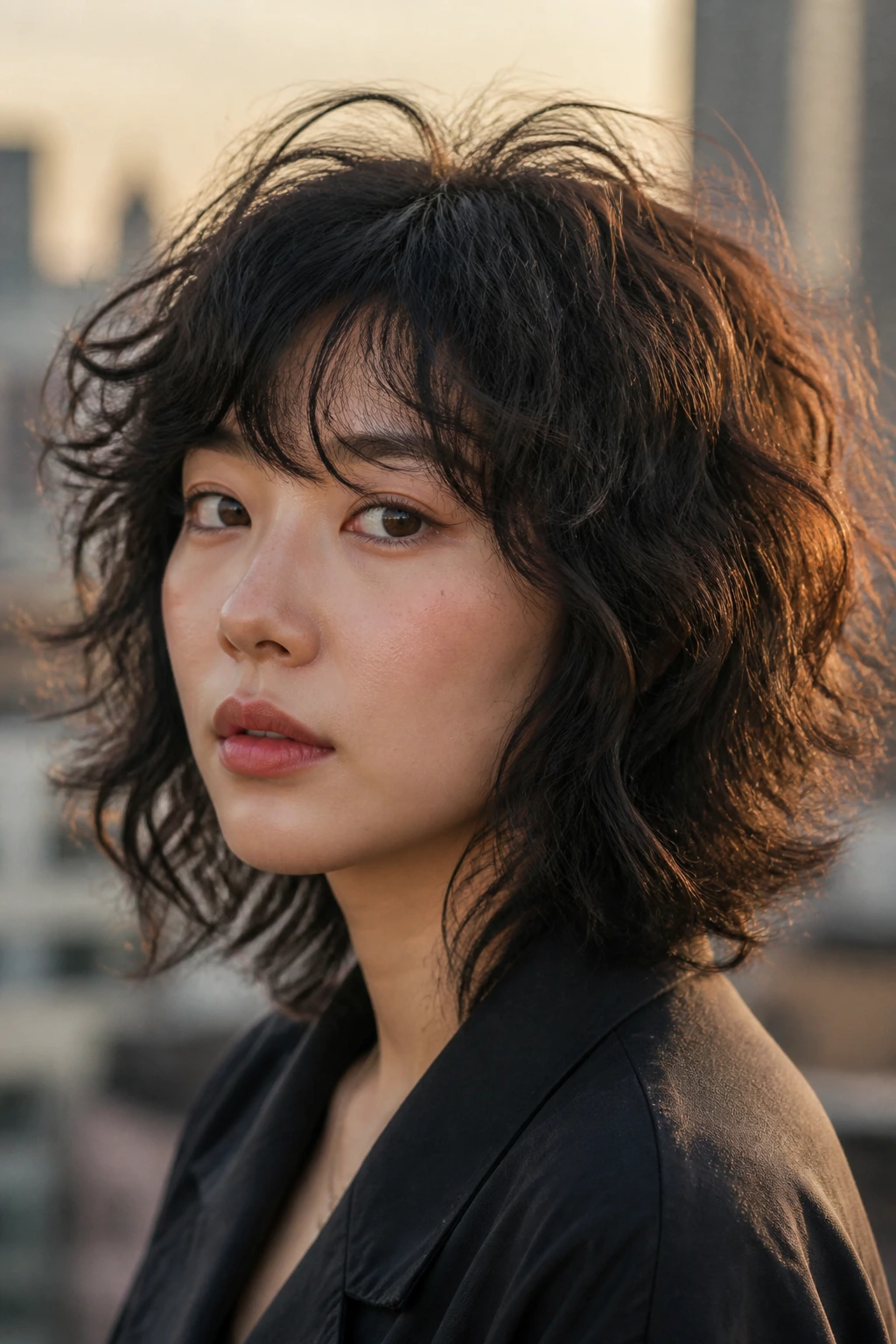
A soft wolf bob borrows the shape language of a wolf cut but keeps the length in bob territory. There’s texture at the crown, some movement through the midlengths, and a longer perimeter that stops the haircut from turning into a full shag. On curly hair, it can look cool without looking overdone.
Round faces need the shortest layers to stay careful here. If the top layers hit at the cheekbone, the face can look wider. Keep the layers above or below that zone, not right on it. That small detail changes everything.
This cut is for people who like some edge. If you want your bob to have a little bite, this is the one. It looks especially good when the curls are slightly imperfect and the ends aren’t all doing the same thing.
22. Half-Up Length Bob
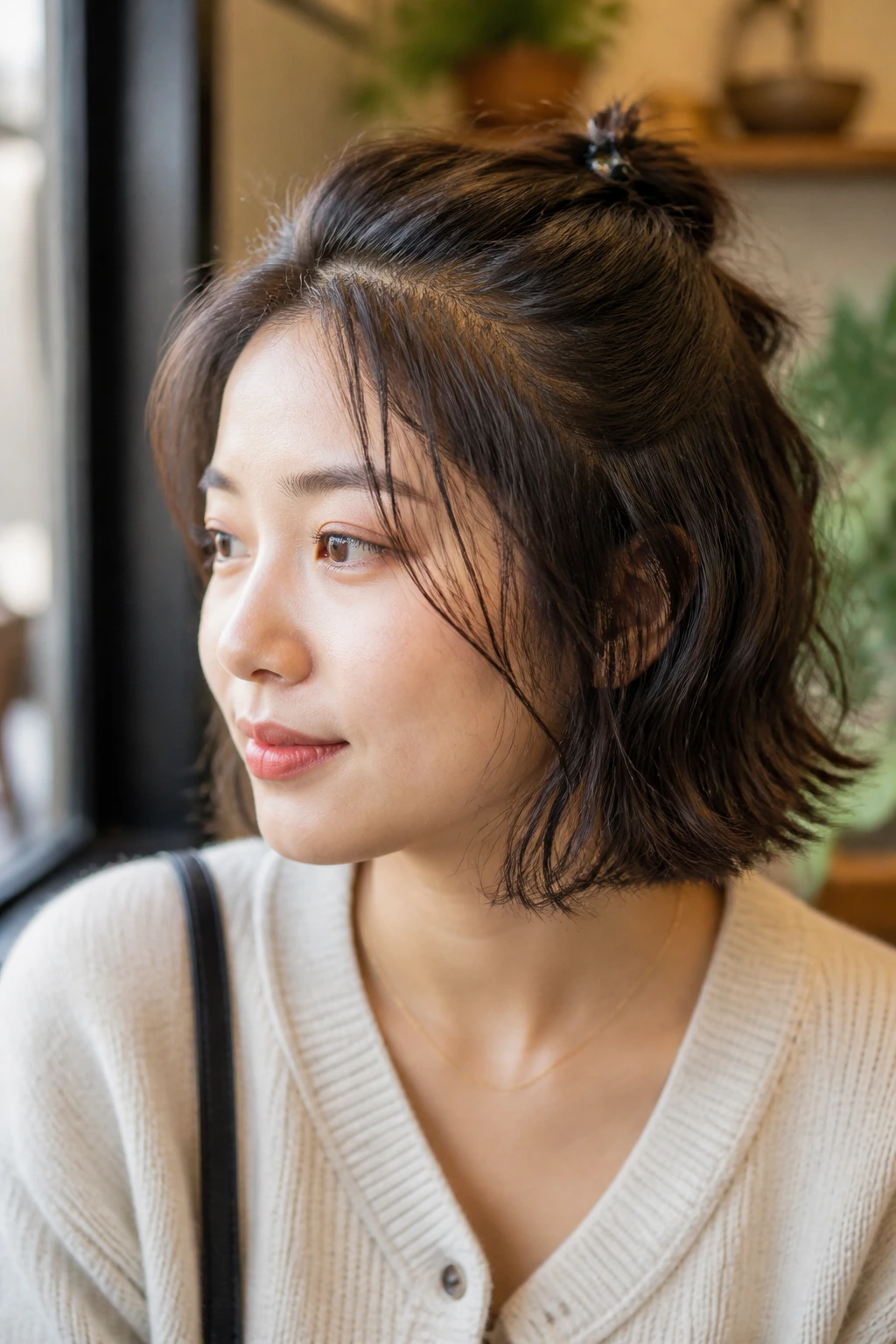
Technically, this leans more lob than bob, but it earns a place here because it solves a real problem: you get enough length for clips, half-ups, and easy refreshes without giving up the bob silhouette. For round faces, the extra length creates vertical line. For curly hair, it buys you room for shrinkage.
I like this one for people who get bored fast. One day the hair is down and soft. The next day it’s twisted half up with a claw clip and looks like an entirely different haircut. That flexibility matters if you wear your hair to work, to the gym, and out at night.
If the cut lands at the collarbone or just above it, curls still bounce. They just bounce in a more controlled way. That’s the sweet spot.
23. Glass Bob with a Soft Bend
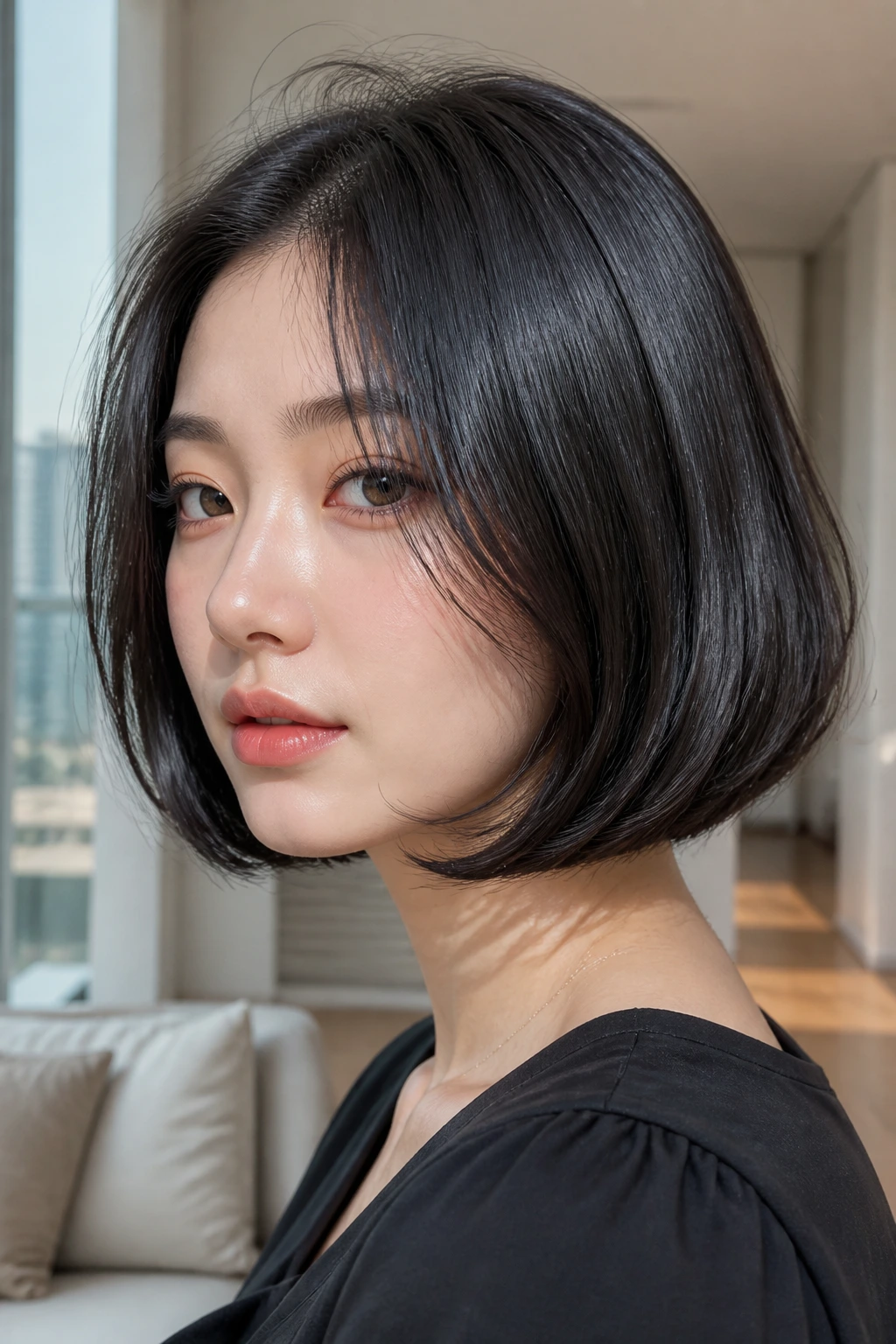
A glass bob is sleek, shiny, and precise, but on curly hair it works best when you add only a soft bend at the ends. Too much straightening and the whole haircut loses life. Too much curl and it stops being a glass bob. The trick is a controlled finish with movement at the perimeter.
This look is stronger on looser curls, especially if they can be stretched with a blow-dry brush or a soft pass of the flat iron. Round faces benefit because the clean side lines and shiny finish keep the hair from feeling bulky. The face gets a crisp frame instead of a fluffy halo.
Heat protectant is non-negotiable here. So is patience. A rushed glass bob looks frizzy, and frizz is not part of the mood.
24. Temple-Frame Bob with Tapered Sides
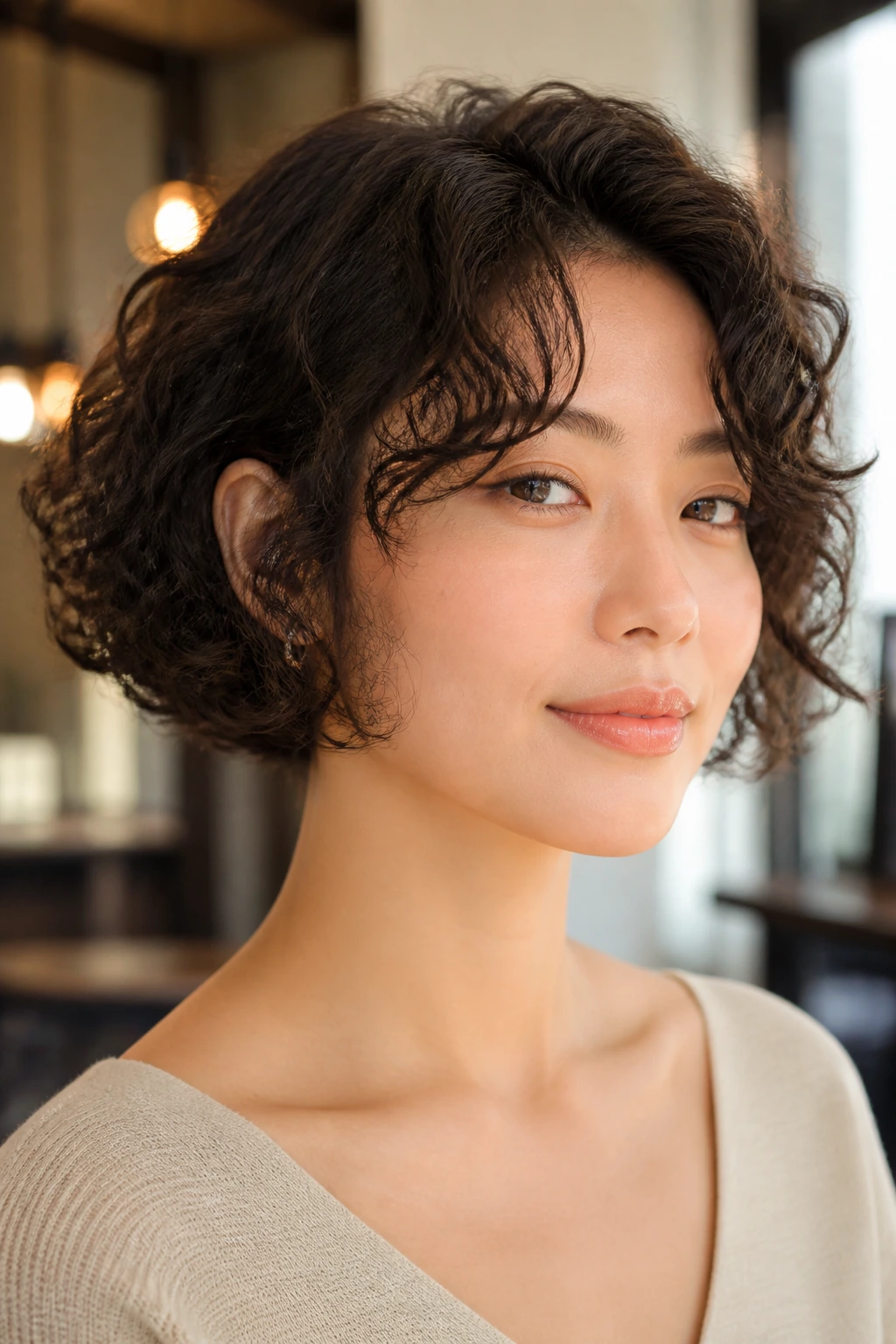
This one is built around the temples, which makes it one of the best face-shaping bobs on the list. The length begins a little longer at the sides, then tapers softly toward the jaw, giving round faces a slimmer outline without a harsh angle. On curly hair, those temple pieces become the main visual feature, so they need to be cut with care.
I like this cut for anyone who wears glasses or likes to tuck hair behind the ears. The temple area stays neat while the rest of the bob carries the texture. It’s tidy, but not severe.
A stylist should avoid over-thinning the side sections. You want a taper, not a see-through edge. The difference is obvious when the hair moves.
25. Grow-Out Proof Bob
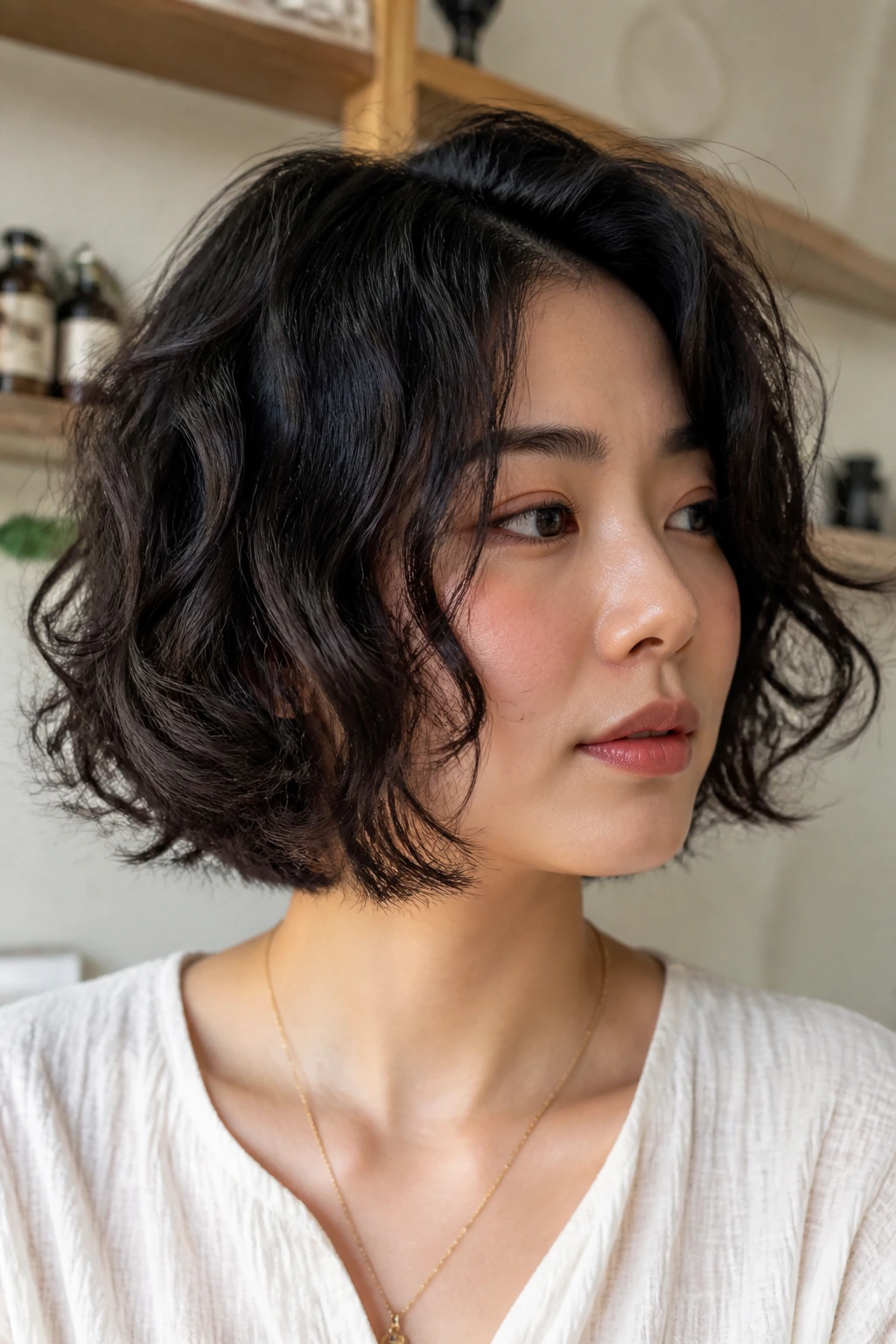
The last cut is the one I wish more people asked for: a bob that still looks good after eight to ten weeks. The perimeter sits below the jaw, the layers are soft, and the front is left long enough that shrinkage and growth don’t ruin the shape immediately. On curly hair, this is a practical dream.
Round faces benefit because the shape never gets too short at the widest point. The bob keeps length where it matters and forgives a missed trim or two. That’s not glamorous, but it’s useful. I have a soft spot for useful haircuts.
If you hate sitting in a salon every month, ask for a grow-out-friendly outline and a few soft face-framing pieces. It won’t look as sharp as a precision bob on day one, but it will look better on day fifty.
Why the Korean Bob Works on Curly Hair Instead of Fighting It
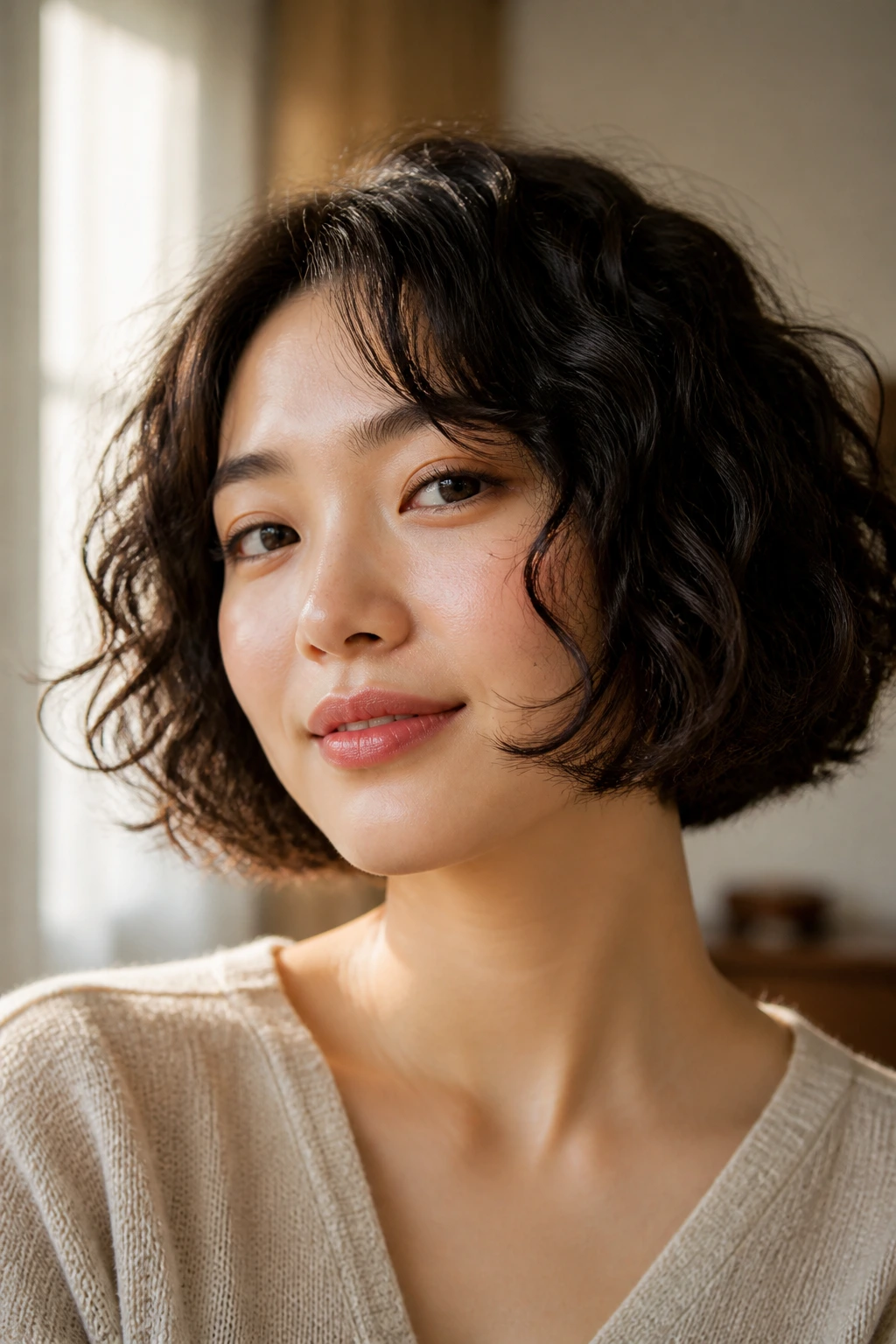
The reason these cuts keep showing up in good salons is simple: they respect shape. A Korean bob usually doesn’t rely on one heavy line from ear to ear. It uses soft changes in length, a careful part, and a perimeter that bends instead of sticking straight out. Curly hair responds well to that kind of attention because the texture already brings movement.
Round faces need vertical cues. That can mean a longer front, a deeper side part, a collarbone length, or a little crown lift. None of that is dramatic on its own. Put them together, though, and the haircut stops widening the face at the cheeks. That’s the useful part of the Korean bob idea.
The other reason this style family works is shrinkage. Curly hair is not honest in a wet cut. It lies. Sometimes a little. Sometimes a lot. A good bob leaves room for the curl to spring up, then uses layers and direction to keep the shape from becoming square or too short.
What to Bring to the Salon Before the First Snip
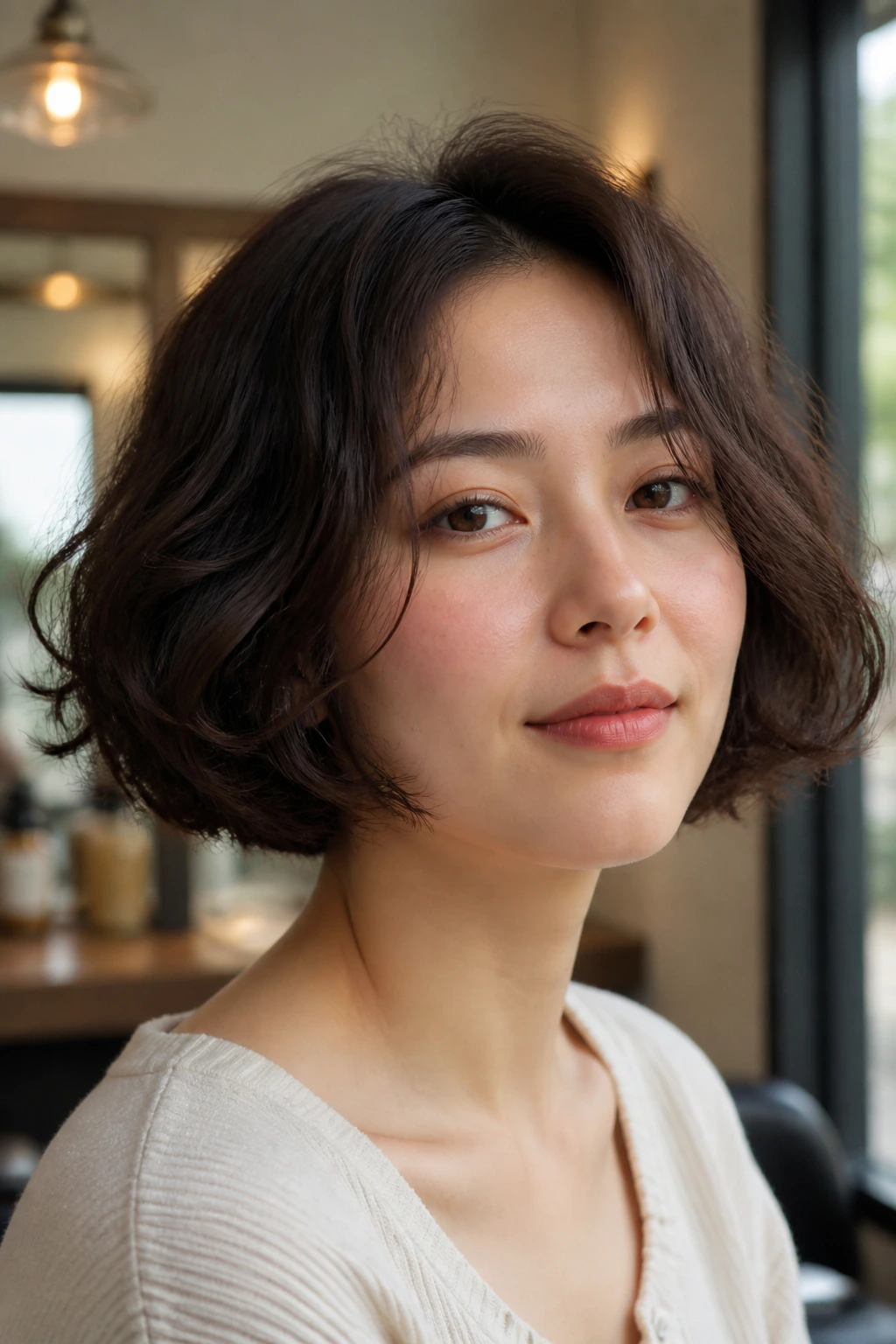
Bring photos, but bring the right photos. One front view is not enough. Show a front angle, a side angle, and one photo where the hair is in motion or slightly messy. That tells the stylist more than a perfect studio shot with straight hair ever will.
Also bring one photo of what you do not want. I know that sounds fussy, but it saves everyone time. If you hate a stacked nape, say so. If you don’t want cheek-level volume, say that too. A round face and curly texture need clear boundaries, or the haircut can wander in the wrong direction fast.
A good consultation also includes your routine. Tell the stylist if you air-dry, diffuse, stretch with a brush, or wear your hair in its natural curl pattern 90 percent of the time. Those details change the cut more than the name of the haircut does.
Essential Tools for Styling and Maintaining These Cuts
-
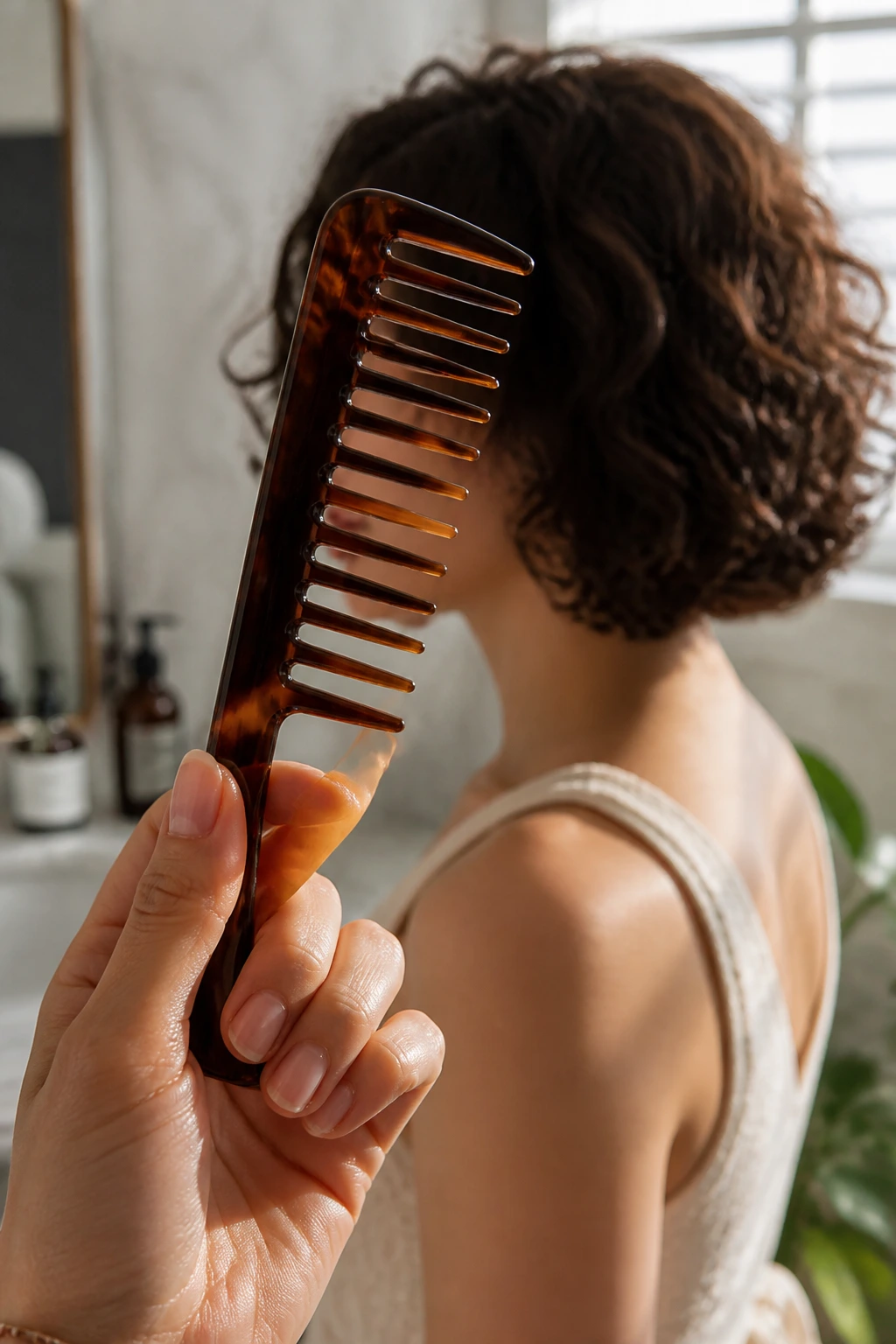
Wide-tooth comb: Best for detangling curls in the shower without pulling the shape apart.
-
Curl cream: A light cream helps define the bend on bob-length curls without turning the ends greasy.
-
Mousse or foam: Useful at the roots and crown when you want lift that lasts past lunch.
-
Diffuser attachment: The safest way to dry curly bobs if you want volume without frizz.
-
Small round brush: Handy for C-curl finishes, inward ends, and soft root lift around the face.
-
Heat protectant spray: Non-negotiable if you use a blow-dry brush or flat iron, especially on glassier versions of the bob.
-
Duckbill clips or root clips: Great for setting the crown while drying so the top doesn’t collapse.
-
Microfiber towel or cotton T-shirt: Cuts down rough frizz after washing.
-
Silk or satin pillowcase: Helps keep the bob from puffing up at the nape overnight.
How to Tell a Stylist What You Actually Want
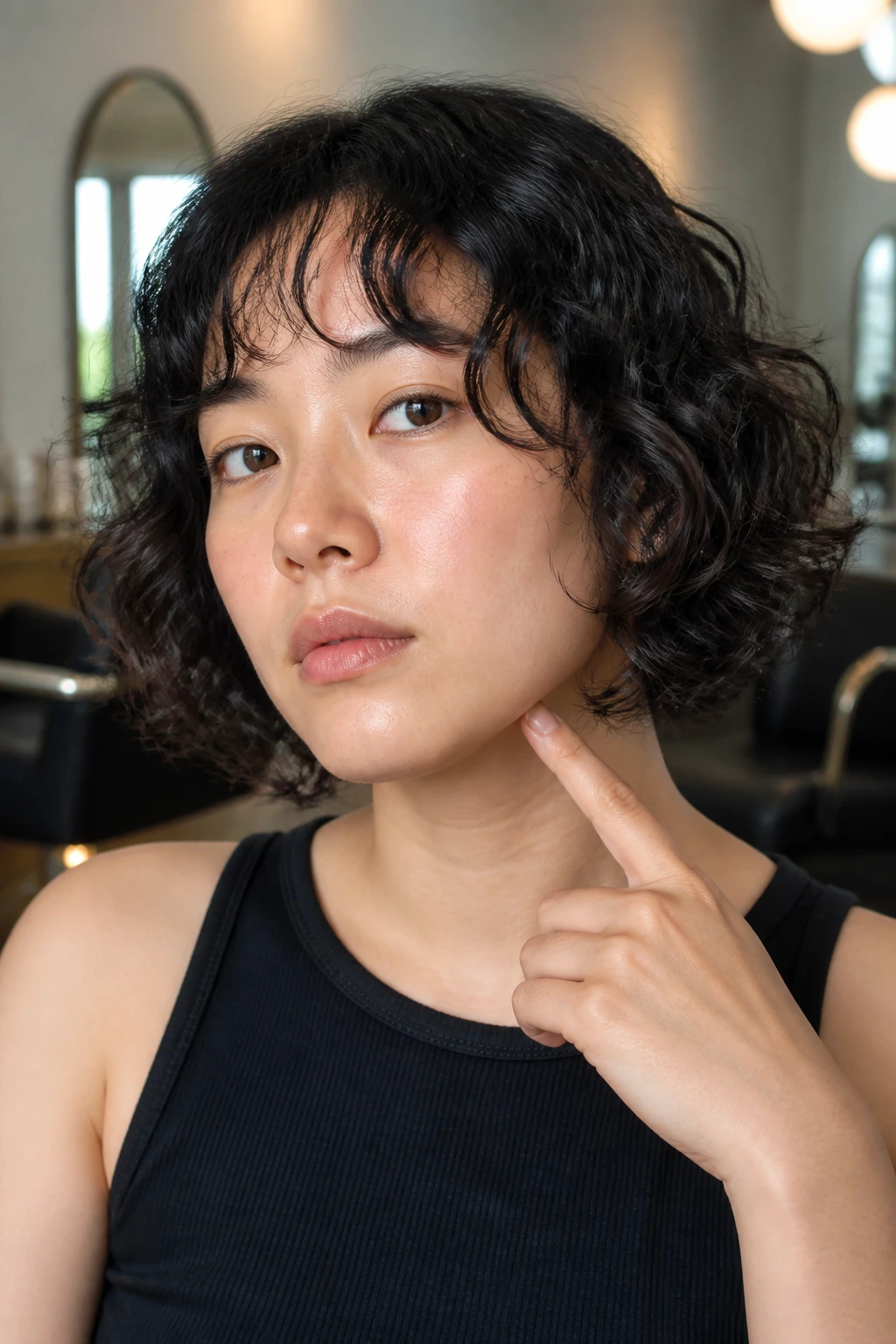
Start with the shape, not the trend name. Say where you want the length to land in relation to your jaw: below it, at it, or just above it. Then say how much width you want around the cheeks. That one line does a lot of work.
If your curls shrink more than you expect, say so early. A stylist can only adjust the cut if they know the dry result is usually 1 to 3 inches shorter than the wet one. Curly hair punishes optimism. It does not reward it.
I also like to tell stylists whether the haircut has to work with glasses, earrings, turtlenecks, or a lot of ponytail days. Those little life details matter. A bob that fights your daily habits will never look as good as one that fits them.
How to Wear These Bobs Day to Day
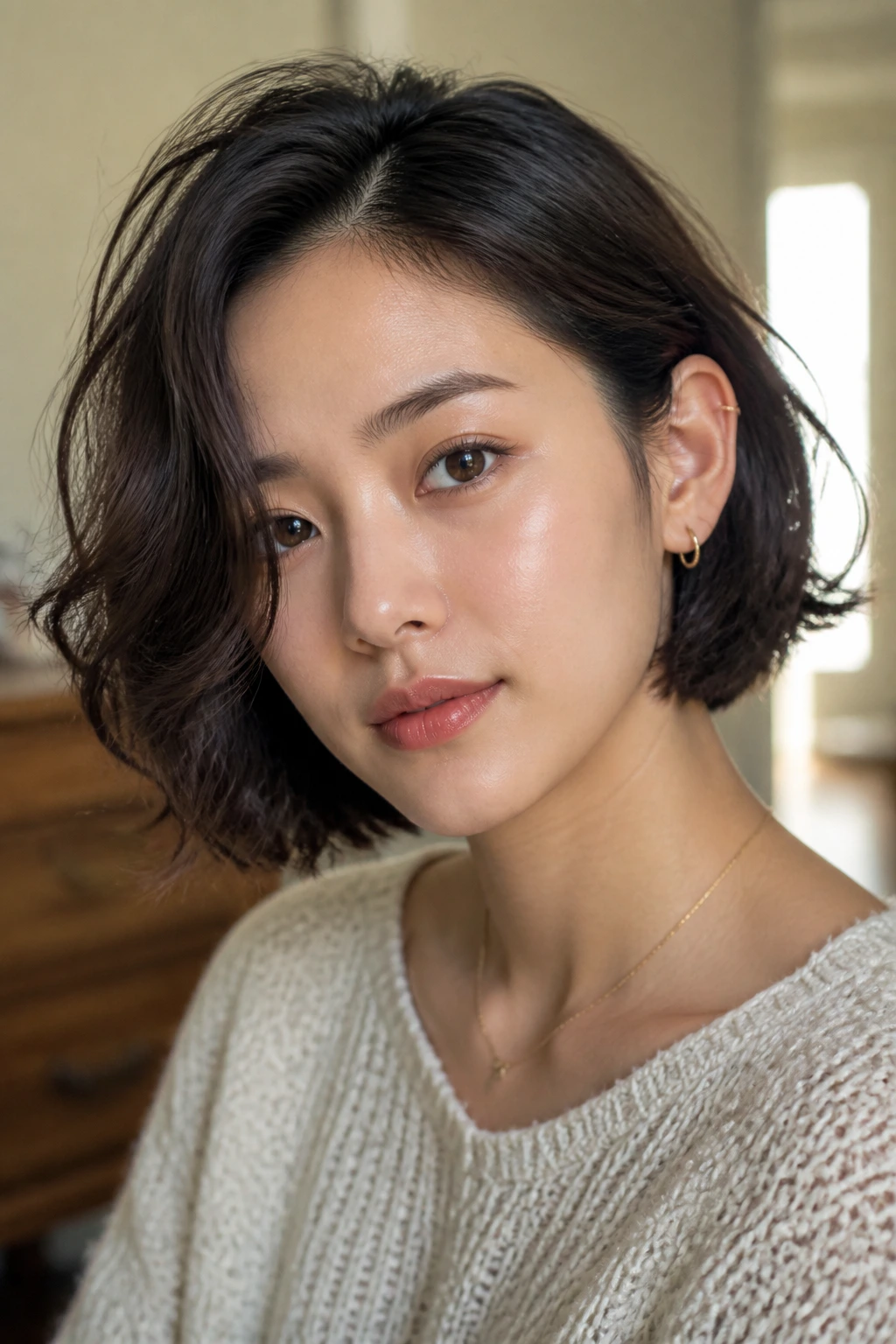
Parting: A slight off-center part is the easiest trick for round faces because it creates a diagonal line instead of a wide horizontal spread. If your face reads especially full through the cheeks, that tiny shift can do more than a dozen styling products.
Accessories: Drop earrings, slim hoops, and glasses with some height in the frame all work well with these cuts. They give the bob a vertical companion, which keeps the whole look from feeling squat. Wide collars can crowd the jaw, so open necklines usually feel better.
Finish: Keep the top softer and the ends more defined. That balance matters. If every strand gets the same amount of product, the hair tends to go flat at the crown and bulky at the sides, which is the exact opposite of what a round face wants.
For everyday wear: Tuck one side behind the ear, leave the other side loose, and let a few face pieces fall where they want. That asymmetry is flattering in real life, not just in salon photos.
Additional Tips and Shape Boosters
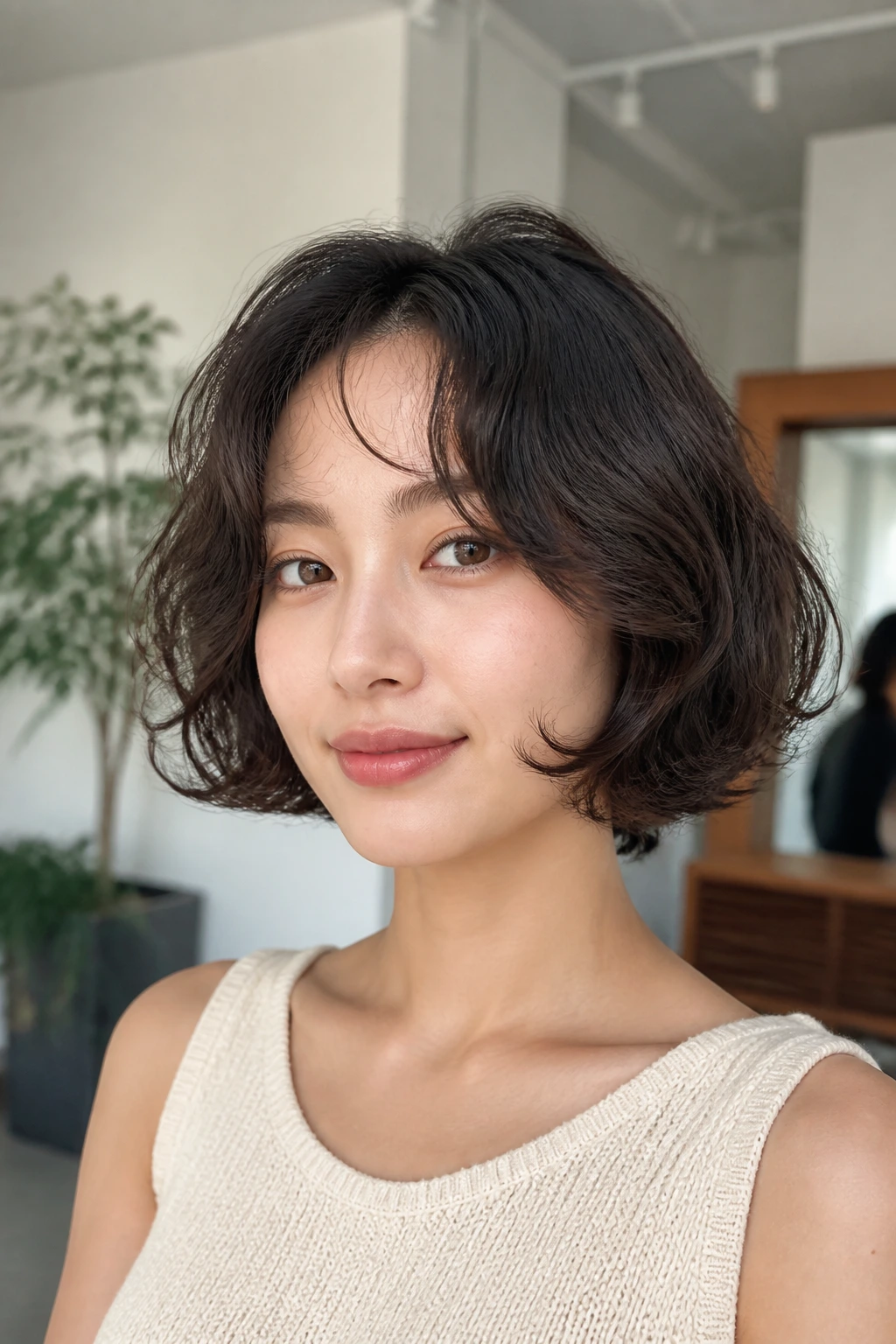
Face-Length Boost: Keep the longest front pieces at least 1 to 2 inches below the chin if your curls spring up hard. That extra length gives you room to breathe after wash day, and it keeps the face from looking wider than the photo suggested.
Curl Control: Cut curls where they live, not where they are when stretched. If your hair loses a full inch when it dries, the stylist needs to account for that before the scissors close. Dry cutting is often the safer bet for springy textures.
Texture Boost: For finer curls or waves, a foam mousse at the roots and a light cream at the ends will usually give more shape than one heavy styling cream. Heavy product can drag the bob down and erase the lift that makes these cuts work.
Salon Trick: Ask for the perimeter to stay full unless the hair is very thick. Too much thinning at the bottom can make curly bobs frizz upward and widen the silhouette. A little weight at the ends often looks cleaner than a cut that has been thinned to bits.
Common Mistakes That Make a Bob Look Wider or Shorter
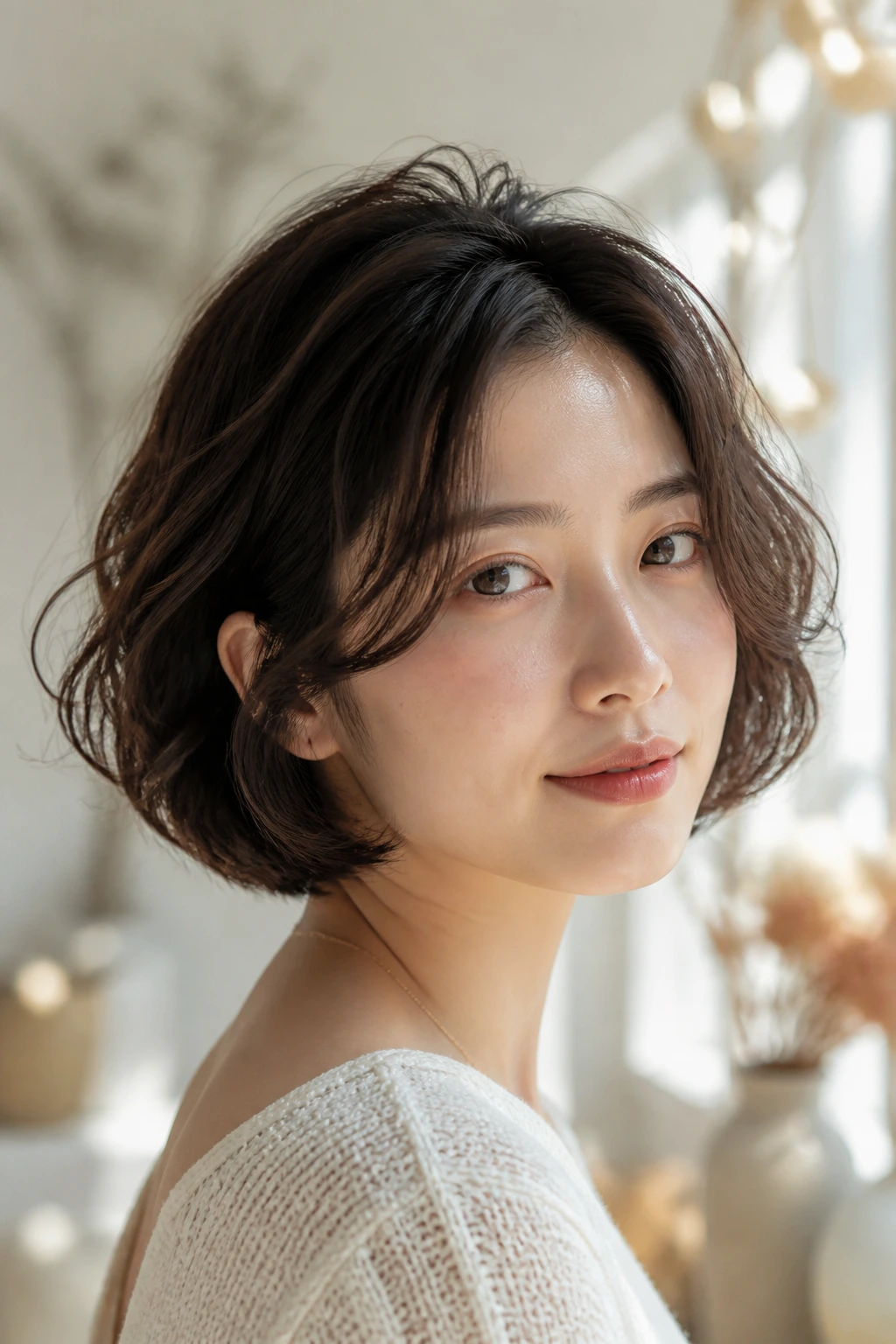
The first mistake is cutting the bob to wet length and calling it done. Curly hair shrinks, and a chin-length cut on wet hair can land two inches above the jaw when dry. The fix is simple: account for shrinkage and keep the final dry length in mind from the start.
Another problem is over-layering around the cheeks. It sounds airy in theory, but on a round face it often adds bulk right where you wanted less. Keep the shortest layers higher up or farther back, and let the front pieces do the face-framing.
Heavy product causes a different kind of trouble. If the roots are coated in cream or oil, the crown collapses and the sides puff out. Use product where the curl needs it most—midlengths and ends—and keep the roots lighter.
Last, don’t copy a straight-hair Korean bob photo and expect the same result. Straight hair and curly hair are not playing the same game. The silhouette has to be adjusted for texture, or the haircut will look off the moment it dries.
Variations and Adaptations to Try
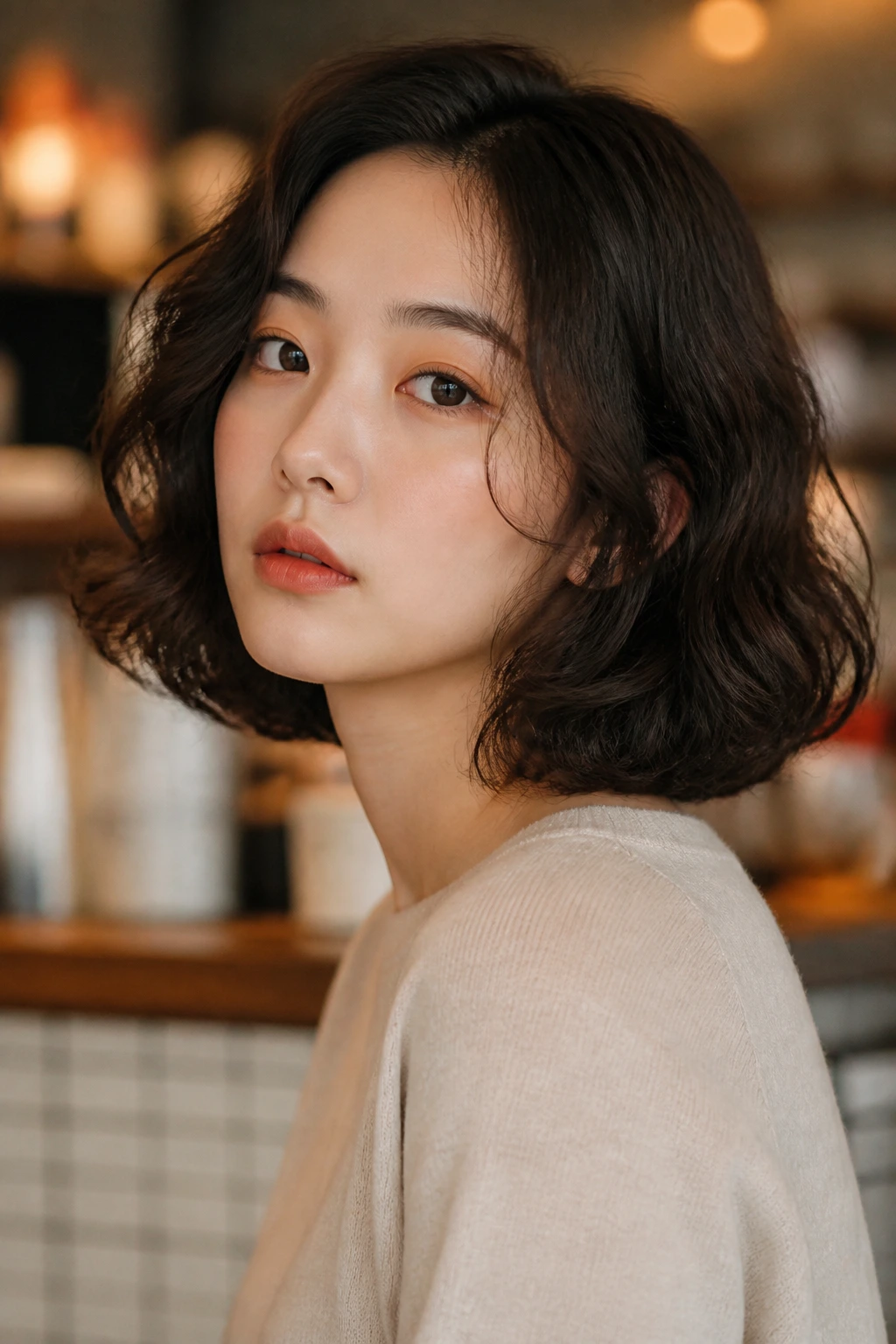
Loose-Wave Version: If your hair is more 2A to 2C than truly curly, keep the layers minimal and let the ends turn inward with a brush or foam wrap. This version looks clean and soft without needing much heat. It’s also one of the easiest to wear with a center or slight side part.
Thick-Curl Version: For dense curls, ask for internal removal of bulk and a longer perimeter. The bob should breathe from the inside, not from shredded ends. This keeps the shape from swelling at cheek level, which is the usual problem with thick hair.
Fine-Hair Version: Go blunter, not layer-heavy. Fine curls need weight to keep the bob from disappearing into wisps at the bottom. A blunt line with a tiny inward bend often looks fuller than a heavily layered cut.
Low-Heat Version: If you avoid hot tools, choose a style that looks good air-dried with curl cream and a diffuser only for emergencies. The cut should do most of the visual work. That’s the difference between a useful haircut and one that depends on a perfect styling session.
Glossy Blowout Version: For events or cleaner days, stretch the curls with a blow-dry brush and keep a soft bend at the ends. This works especially well on collarbone bobs and glassier shapes. It gives the face a neater frame without making the haircut stiff.
Grow-Out Version: Leave the front a little longer than you think you need and keep the nape soft. You’ll get an extra few weeks of decent shape before the bob starts looking tired. That alone makes the style more livable.
Wash-Day, Refresh, and Grow-Out Care
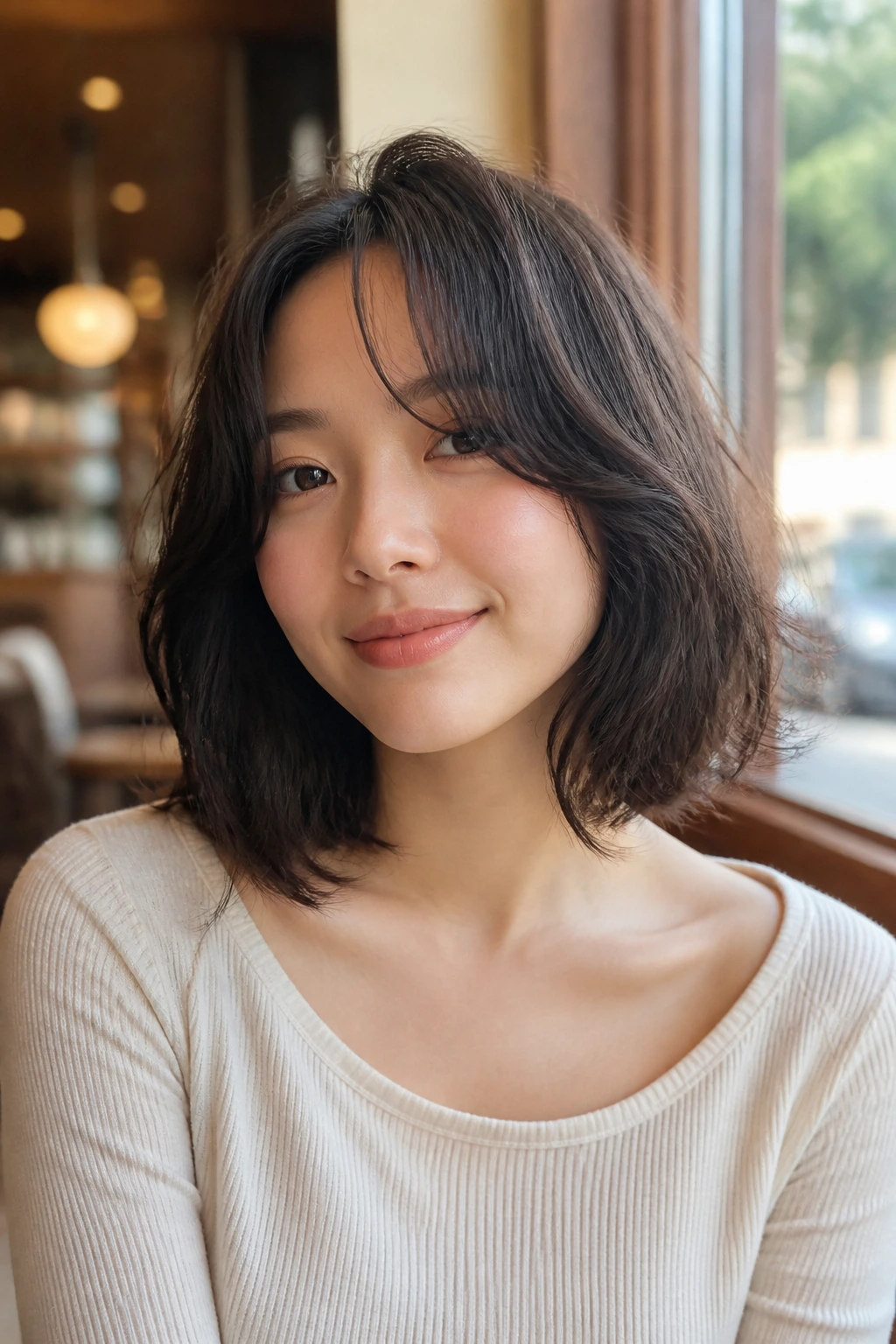
A good Korean bob on curly hair should survive at least two or three days with a refresh, and sometimes four if your hair doesn’t get oily quickly. Day one is the cleanest. Day two is often the best-looking day. Day three is where a little mist and scrunching earns its keep.
To refresh, mist the ends lightly with water, add a pea-size amount of curl cream or foam to the sections that have gone flat, then diffuse on low heat for a few minutes. Don’t soak the whole head. That usually creates frizz and makes the bob puff where you least want it to.
Trim schedule matters more than people admit. For sharper shapes like the hime bob, inverted bob, or glass bob, a cleanup every 6 to 8 weeks helps the line stay honest. For softer, grow-out-friendly versions, 8 to 10 weeks is often fine. Bangs and front pieces may need a touch-up sooner, around 3 to 4 weeks, especially if they hit your eyes.
Sleep care helps too. A silk pillowcase or loose pineapple keeps the curl pattern from exploding at the crown and nape. If you wake up with one side flattened, a few root clips and 10 minutes of air drying usually fix it.
Frequently Asked Questions
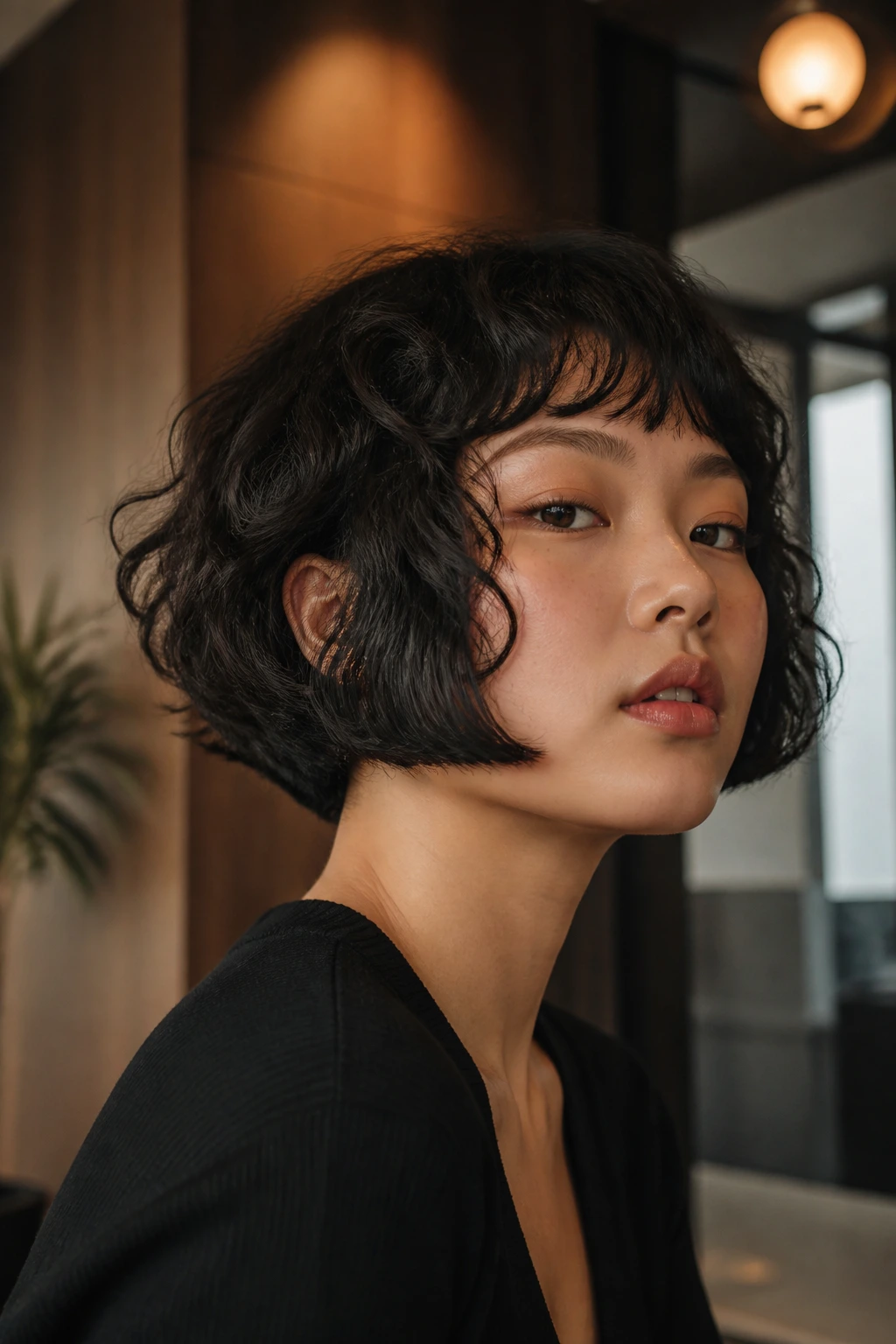
Can curly hair really wear a Korean bob without looking too wide?
Yes, if the cut is shaped for curl shrinkage and the widest part of the hair doesn’t sit exactly at the cheeks. Longer front pieces, a soft perimeter, and a bit of crown lift do most of the work.
How short is too short for a round face?
If your hair lands right at the widest part of the cheeks and puffs outward, that’s usually the danger zone. Many round faces do better when the shortest visible length sits a little below the jaw or has longer pieces in front.
Should I ask for a dry cut?
If your curl pattern is springy or uneven, a dry or mostly dry cut helps the stylist see where the hair will actually sit. For looser waves, a damp cut can work too, as long as the shrinkage is still measured carefully.
Will a center part make my face look wider?
Sometimes, yes, especially if the bob is short and sits at cheek level. A slight off-center part or deep side part usually gives a round face more vertical shape without making the haircut feel lopsided.
What if my curls puff out at the sides after a few hours?
That usually means the cut is too short at the widest point or the styling product is too heavy at the roots. Keep the root light, use a diffuser with low airflow, and ask your stylist for a softer perimeter next time.
Can I still tuck the bob behind my ears?
Absolutely, but the cut needs enough length to stay tucked once your curls spring up. Ear-tucked styles usually need a little extra room compared with straight-hair bobs.
Which bob is easiest to grow out?
The collarbone bob, U-shaped bob, and grow-out-proof bob are the most forgiving. They keep their line as they lengthen, so you’re not stuck with a weird mid-stage that sits too high on the face.
Is a blunt bob bad for thick curly hair?
Not at all, but it needs to be softened at the ends and placed at the right length. Thick curls can hold a blunt line beautifully if the cut doesn’t turn into a box at cheek height.
A Cut That Keeps Its Shape
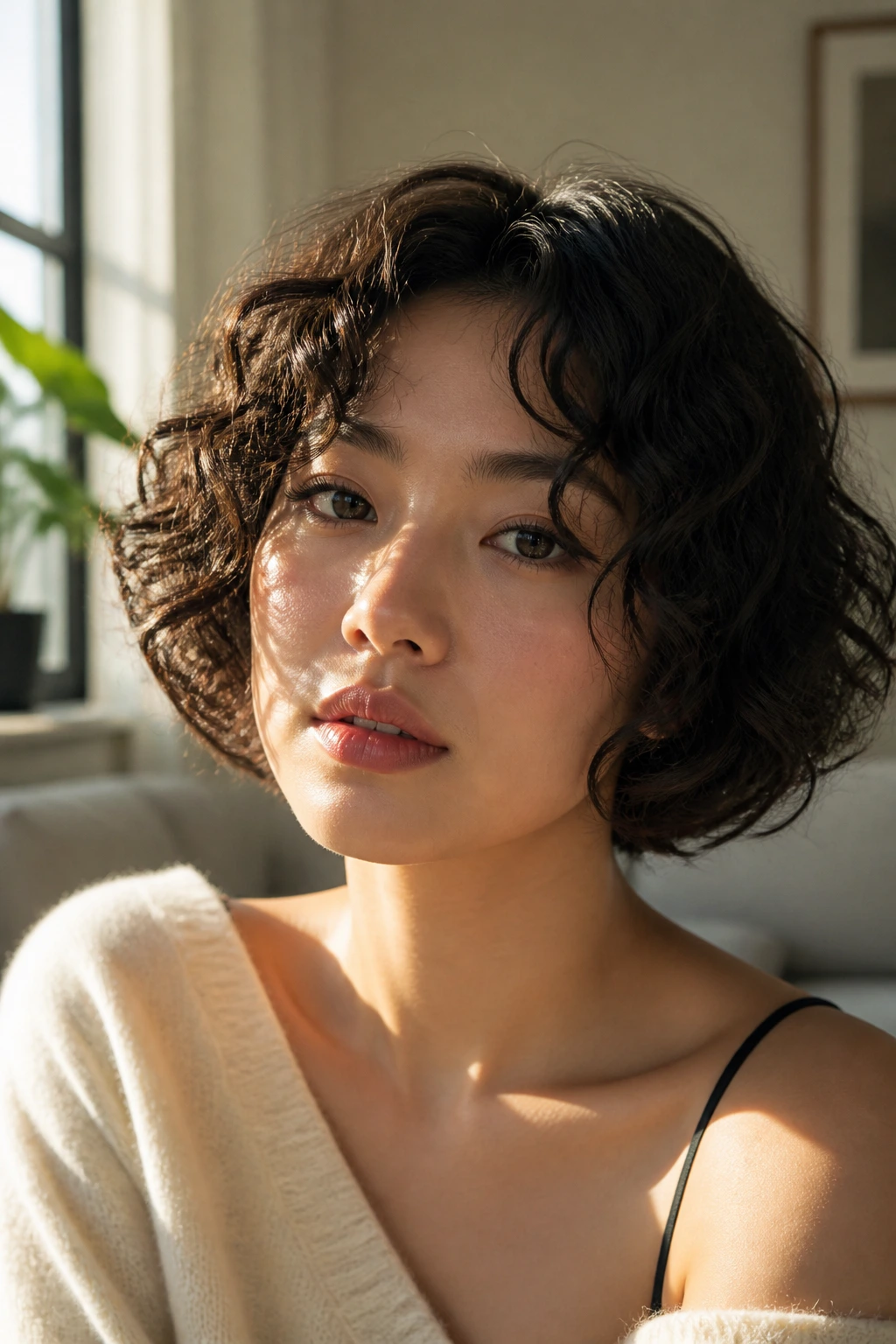
The best Korean bob for round faces and curly hair is rarely the shortest one or the trendiest one. It’s the one that knows where your curls land when they dry, where your face is widest, and how much movement you actually want around the jaw.
That’s why these 25 shapes matter. Some are neat. Some are airy. Some lean sharp, some soft, and a few sit right in the middle where hair tends to behave best in real life. Bring a good reference photo, measure your shrinkage honestly, and ask for the shape that works on day three, not just the moment you leave the chair.