



A textured lob gives Black hair room to move without losing its shape. That is the whole appeal. The cut sits in that sweet band between jaw and collarbone, but the real work happens inside the haircut: layers that remove bulk where it piles up, face-framing pieces that open the front, and enough length left at the perimeter so the style still looks full when shrinkage, humidity, or a silk press change the game.
That matters because Black hair does not all behave the same way. A lob that looks collarbone-length on blown-out hair may land much higher once coils dry down. A blunt line that looks crisp on a relaxed texture can turn boxy on dense natural hair if the layering is too heavy or too shallow. The good textured lobs respect that reality instead of pretending every head of hair sits the same way.
Some of the best versions are almost deceptively simple: a soft side part, a few feathered pieces near the cheekbone, a nape that’s tucked in just enough to keep the silhouette clean. Others lean more fashion-forward, with one side longer than the other or a rounded crown that gives the whole cut lift. Either way, the point is the same — shape first, movement second, and enough structure that the style still makes sense three days after wash day.
Why This Collection Works for Black Hair
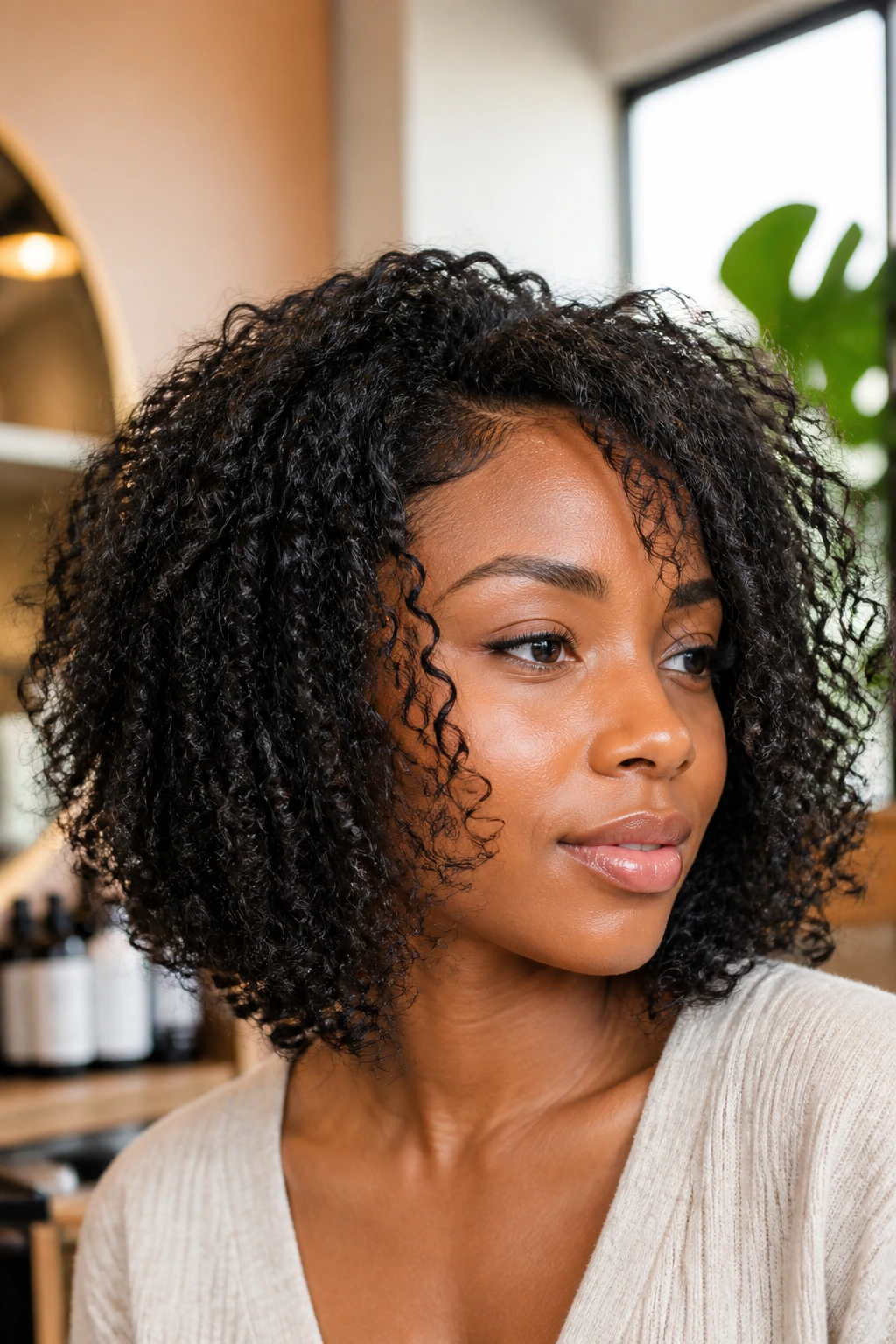
- Shrinkage gets factored in: These lobs are long enough to survive the drop that happens when curls dry tight or a blown-out style settles overnight.
- Layers do the heavy lifting: Interior cutting removes bulk without making the ends look wispy, which matters when density is the thing giving the hair its presence.
- Multiple finishes fit the same cut: A single lob can wear as a silk press, twist-out, blowout, wand curl set, or sewn-in style without needing a whole new shape.
- The outline stays readable: Even when the texture changes, the haircut still looks intentional because the perimeter has a clear line.
- Face shape gets a real role: Side parts, curtain fringe, angled fronts, and crown volume shift the balance of the cut in ways that actually show up in the mirror.
- Maintenance stays sane: A well-planned layered lob can grow out for weeks before it starts losing the silhouette, which is a relief if you do not live at the salon.
1. Soft Blunt Lob with Hidden Layers
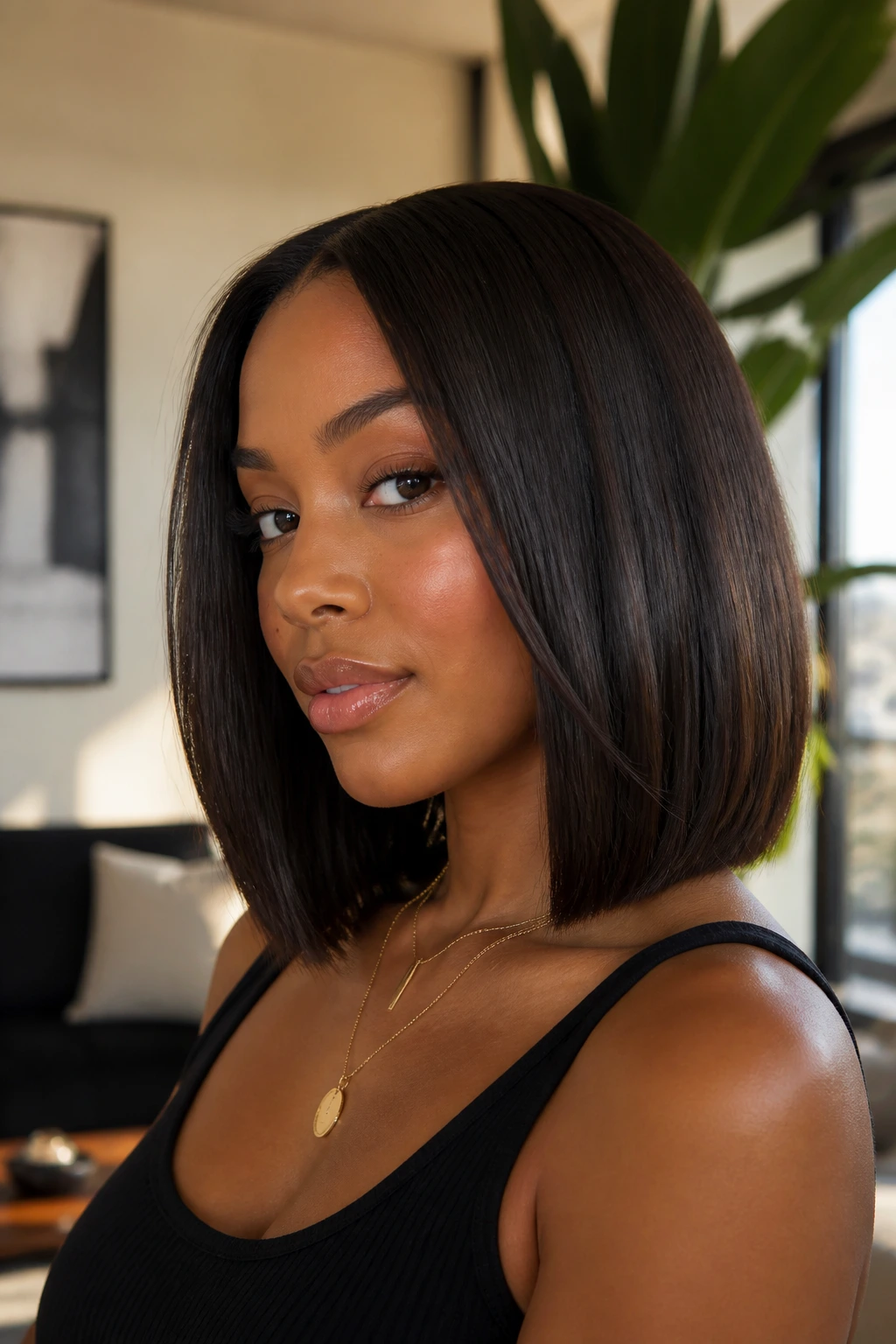
A blunt lob with hidden layers is the one I reach for when someone wants polish but does not want the haircut to sit there like a cardboard cutout. The edge stays clean, usually skimming the collarbone, while the interior layers quietly take weight out of the crown and back. That’s the difference between a lob that moves and one that just hangs.
This version is especially good on dense Black hair because the outline stays strong even after a full day of wear. Ask for subtle internal layers starting around the chin or upper neck, not a choppy surface cut. The goal is to keep the perimeter looking heavy and full, then let the inside do the softening.
Best when you want:
- A straight silhouette that still bends at the ends.
- A cut that works with silk presses and blowouts.
- A shape that grows out without turning boxy too quickly.
One sharp detail: if your hair tends to puff at the ends, keep the layering invisible from the outside. Visible layers can be lovely, but on a blunt lob the hidden version keeps the line cleaner.
2. Side-Part Feathered Lob
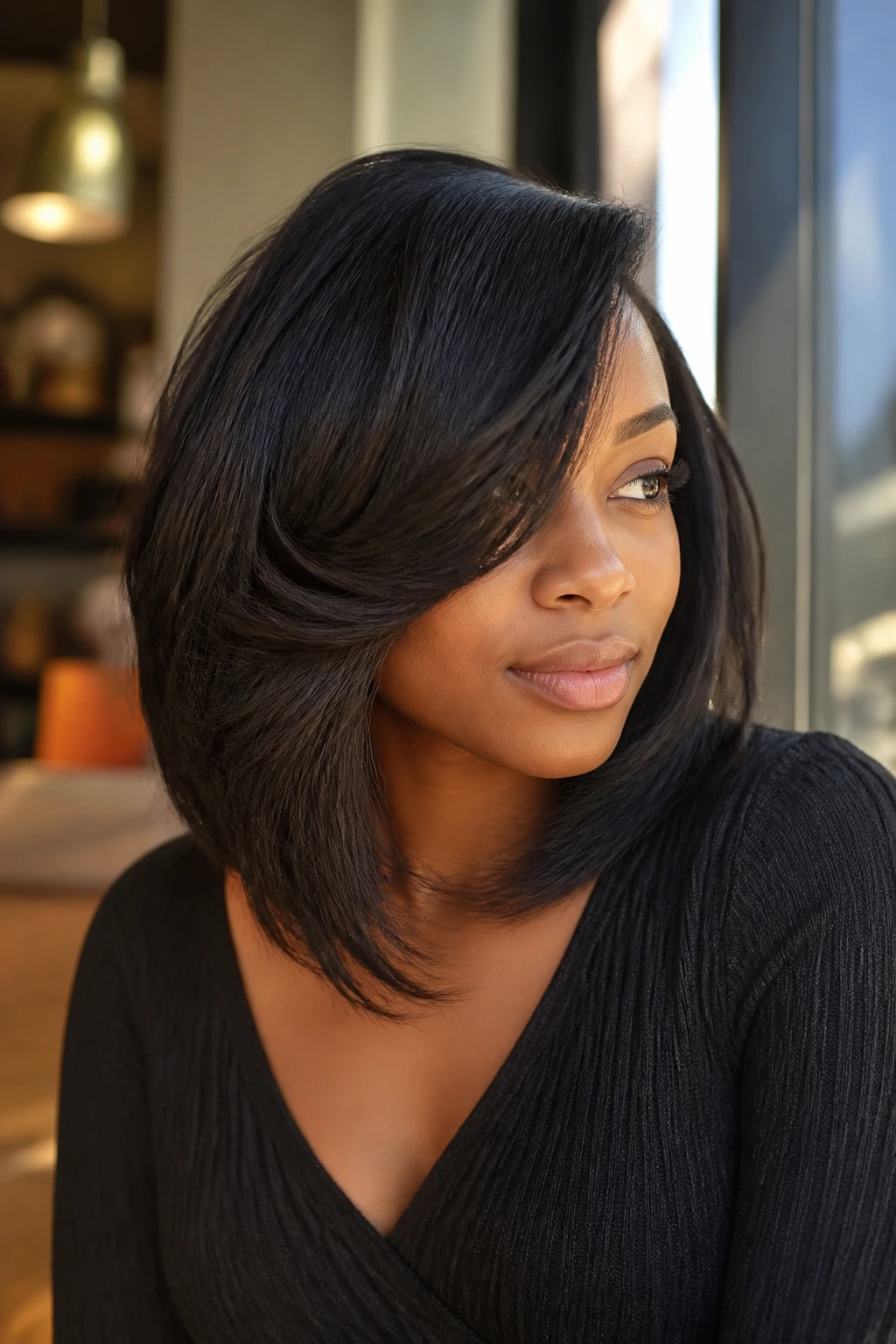
Why does a side part matter so much here? Because it changes the whole weight of the haircut without forcing you to lose length. A deep side-part feathered lob pulls the front section across the forehead and cheek, which gives the face more shape and keeps the cut from feeling too symmetrical.
The feathering should live around the front and mid-lengths, not hacked into the ends. On textured Black hair, feathered layers work best when they are soft enough to move but not so thin that the perimeter starts looking frayed. A blowout finish makes this style especially easy to see, though it can also live under curls.
Styling note: tuck the heavier side behind one ear and leave the lighter side loose. That tiny asymmetry makes the cut look deliberate instead of accidental.
3. Curly Lob with Long Interior Layers
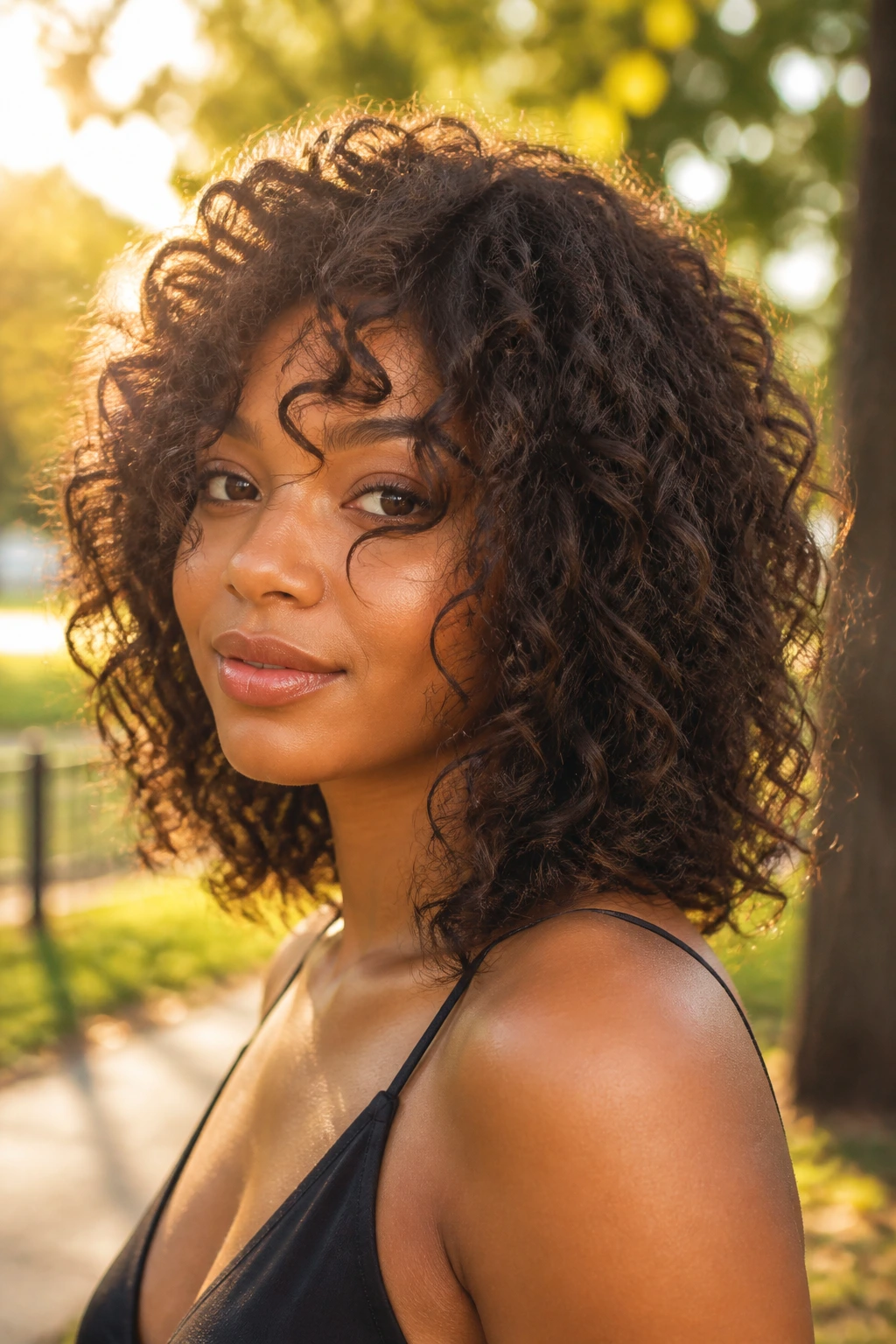
A curly lob with long interior layers is all about protecting the shape of the curl pattern. Short layers near the top can make the cut puff out in the wrong places, which is how you end up with a triangle instead of a lob. Long layers, placed deeper inside the shape, keep the curls stacked but not crowded.
What makes it work
The curl pattern gets room to spring without stealing too much length from the perimeter. That matters if your curls shrink two or three inches once they dry. With the right layer placement, the style lands around the shoulders instead of climbing up your neck by lunchtime.
- Best on defined curl sets, twist-outs, and rod sets.
- Looks clean with a middle part or a soft off-center part.
- Needs a light hand with layering around the crown.
A good stylist will usually cut this shape with the hair stretched or dry enough to show the curl fall. Wet cutting can be fine, but on tighter textures it can hide how much length you’re actually losing.
4. Angled A-Line Lob
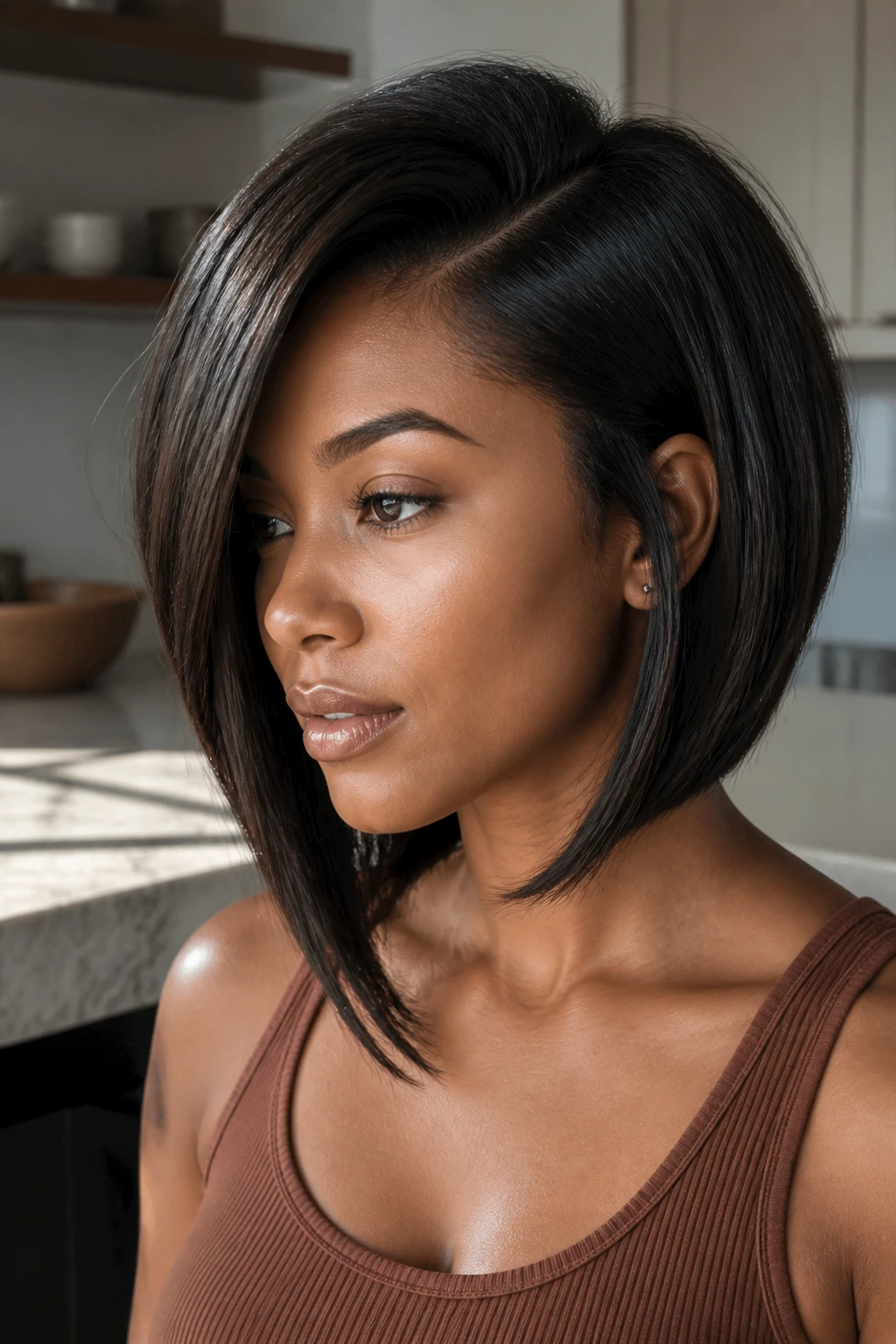
The A-line lob is the one that gives you that quiet forward sweep. Shorter in the back, longer in front, it creates a diagonal line that looks sleek even when the styling is simple. On Black hair, the shape works especially well when the front pieces graze the collarbone and the back sits a little higher at the nape.
Here’s the part people get wrong: the angle should be subtle, not extreme. If the front is too much longer than the back, the cut starts to feel dated and fussy. Keep the drop gentle, and the whole style reads more expensive than dramatic.
This cut is a nice fit for round and square faces because the front length visually stretches the jaw. If you wear it straight, the line is sharp. If you wear it with a bend or loose curl, the angle still shows, just with more movement.
5. Lob with Curtain Bangs and Face-Framing Layers
Curtain bangs can be tricky on Black hair, but when they’re done with enough length and softness, they change a lob fast. The front falls away from the face instead of closing it in. Face-framing layers then carry that effect down toward the cheekbones and jaw, which keeps the whole cut from feeling heavy at the front.
This is one of those styles that looks especially good when the hair has a little bend or bounce. A silk press with tucked-under ends is polished; a rounded blowout or wand curl set makes the fringe feel softer and less severe. If you like your hair to move when you turn your head, this cut delivers that without needing a lot of product.
The main rule is length. Keep the curtain pieces long enough to split naturally, because short fringe on dense hair can spring up too high and eat the face.
6. Silk-Pressed Lob with Flipped Ends
A silk-pressed lob with flipped ends gives classic shape a little lift at the bottom. It’s the haircut version of a crisp shirt cuff. The ends can flip in or out, depending on how the stylist finishes them, but either way the movement keeps the style from looking flat.
Best on…
- Hair that takes a smooth press without needing heavy oil.
- Medium to dense textures that can hold a clean bend.
- Anyone who likes a finished look with almost no mess around the edges.
The trick is not to fry the ends into submission. A good silk press keeps the hair smooth, then uses a round brush or flat iron just at the last inch or two to create that curve. The flip should look intentional, not stiff.
This is also one of the easiest lobs to dress up or down. Add a side part and a shine serum, and it reads sharp. Leave the part centered and the ends softly turned under, and it looks cleaner and more understated.
7. Coily Layered Lob for 4C Texture
A coily layered lob works because it respects shrinkage instead of fighting it. On 4C hair, a lob cut too short or too heavily layered can balloon up like a pyramid. The fix is long internal layers, a perimeter that keeps some weight, and enough length left in the front to stay visible once the coils tighten.
The shape rule is simple: keep the heaviest layers away from the crown and the shortest pieces away from the exterior line. That keeps the cut from standing out too far from the head. A dry cut or a cut on stretched hair often gives the best read on where the true length will land.
This style shines in twist-outs, braid-outs, and stretched wash-and-gos. If you like volume, good. If you want control, also good. It’s one of the few layered lobs that can look plush without looking bulky.
8. Asymmetrical Lob with One Longer Side
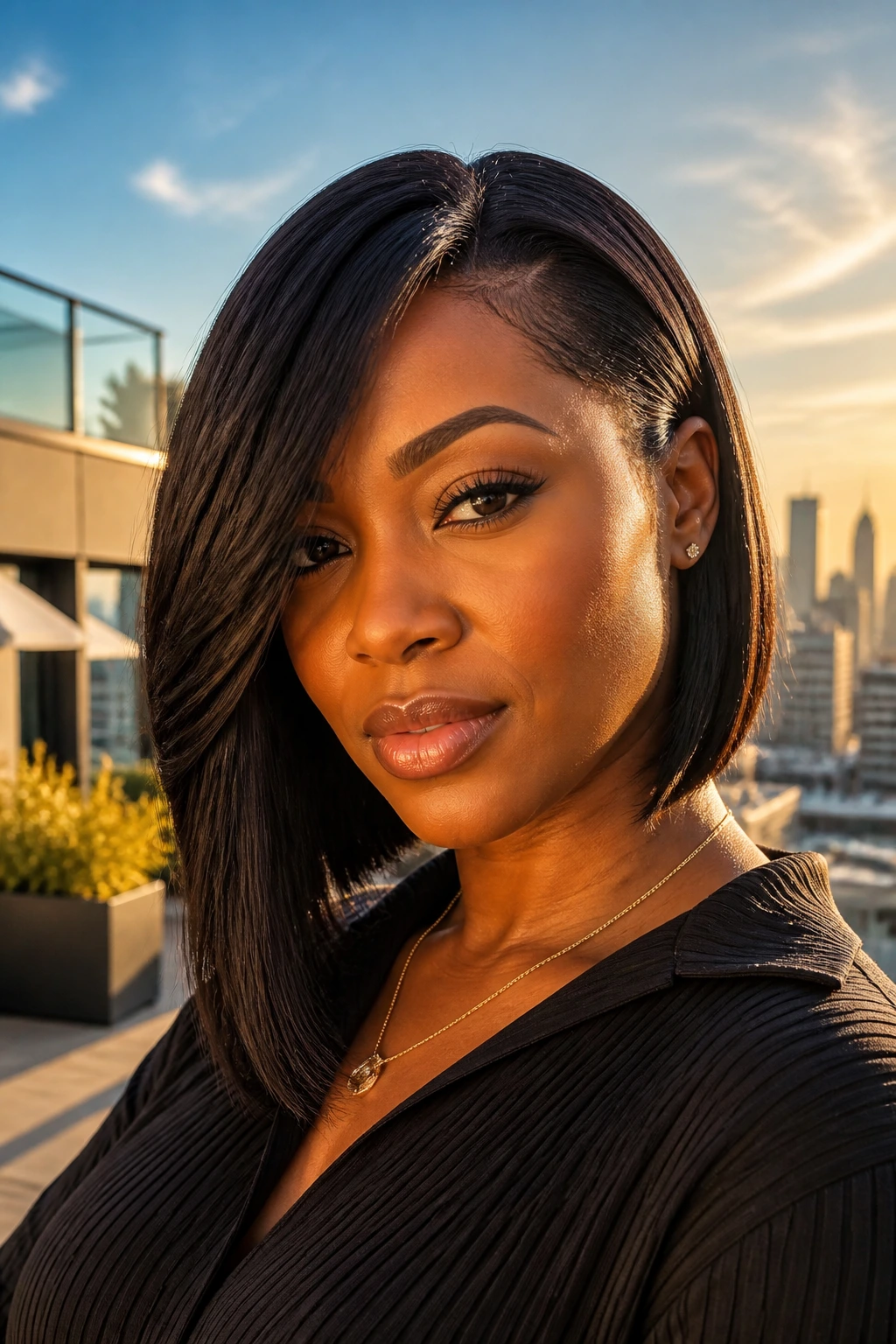
Why does an asymmetrical lob keep showing up in salon chairs? Because the smallest shift can change the whole face line. One side sits a little longer, usually by an inch or two, and that tilt creates motion even when the rest of the cut is sleek.
This is not the place for subtlety if you don’t want it. The charm of the look is the obvious difference between sides, especially when the parting is clean and the styling stays glossy. On Black hair, the asymmetry can soften strong cheekbones or sharpen a softer jaw depending on where the longer side falls.
A deeper side part usually makes this cut feel more polished. If you prefer curls, keep them loose and brushed through at the ends so the length difference still reads. Tight ringlets can hide the shape, and that defeats the point.
9. Stacked Nape Lob
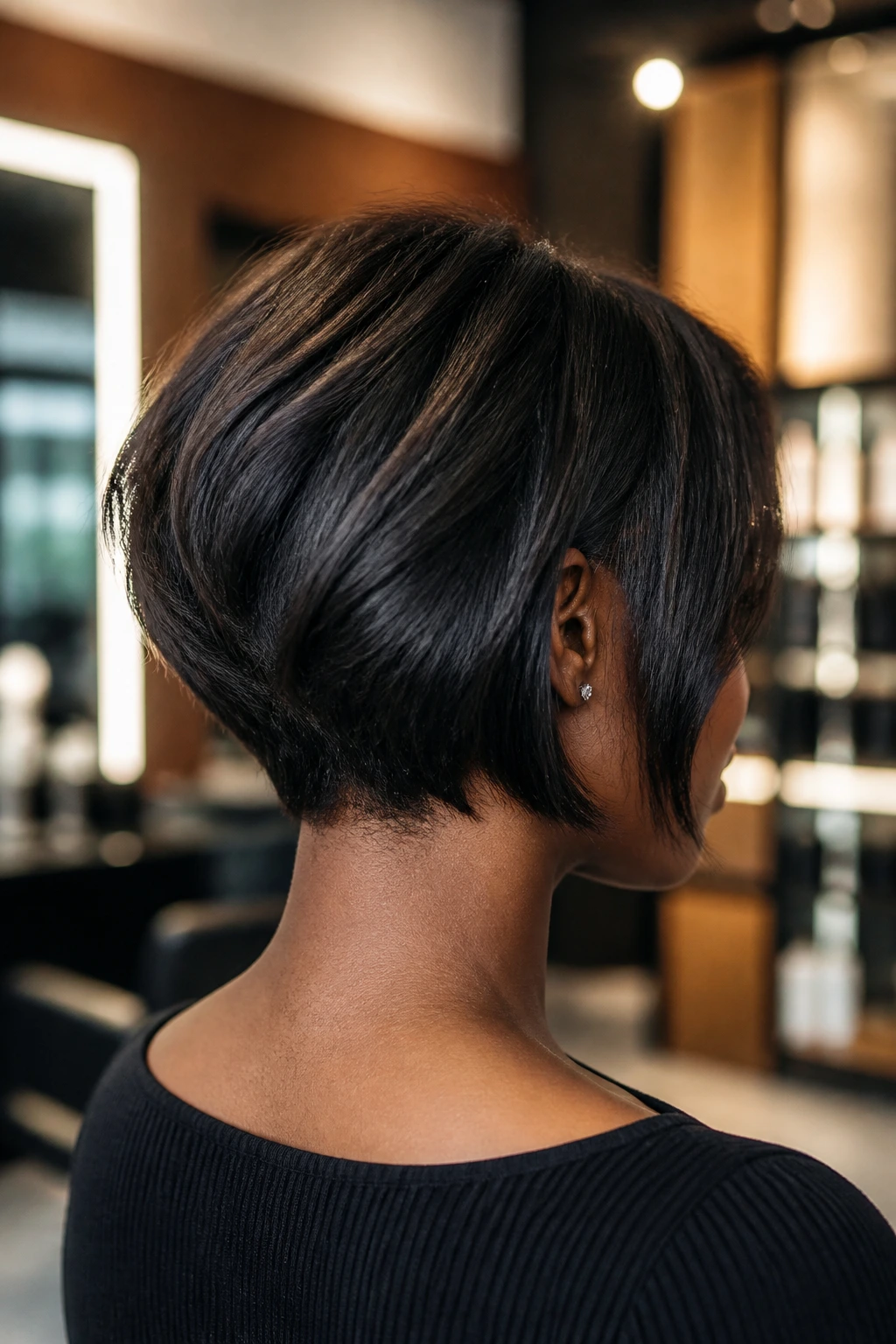
A stacked nape lob gives the back of the haircut some architecture. The layers pile subtly at the nape, which lifts the shape off the neck and helps dense hair stop looking square from the rear. It’s a smart cut when you want fullness at the crown but less bulk at the neckline.
The silhouette matters here more than the texture finish. Straightened, it looks tailored. Curled, it looks rounder and softer. The back should taper neatly, not be shaved or overcollapsed, because Black hair needs enough weight in the structure to hold the shape.
A stacked nape also helps if your hair tends to grow out heavy at the bottom. The cut naturally avoids that thick, shelf-like line. That alone is worth the price of the haircut.
10. Deep Side-Part Volume Lob
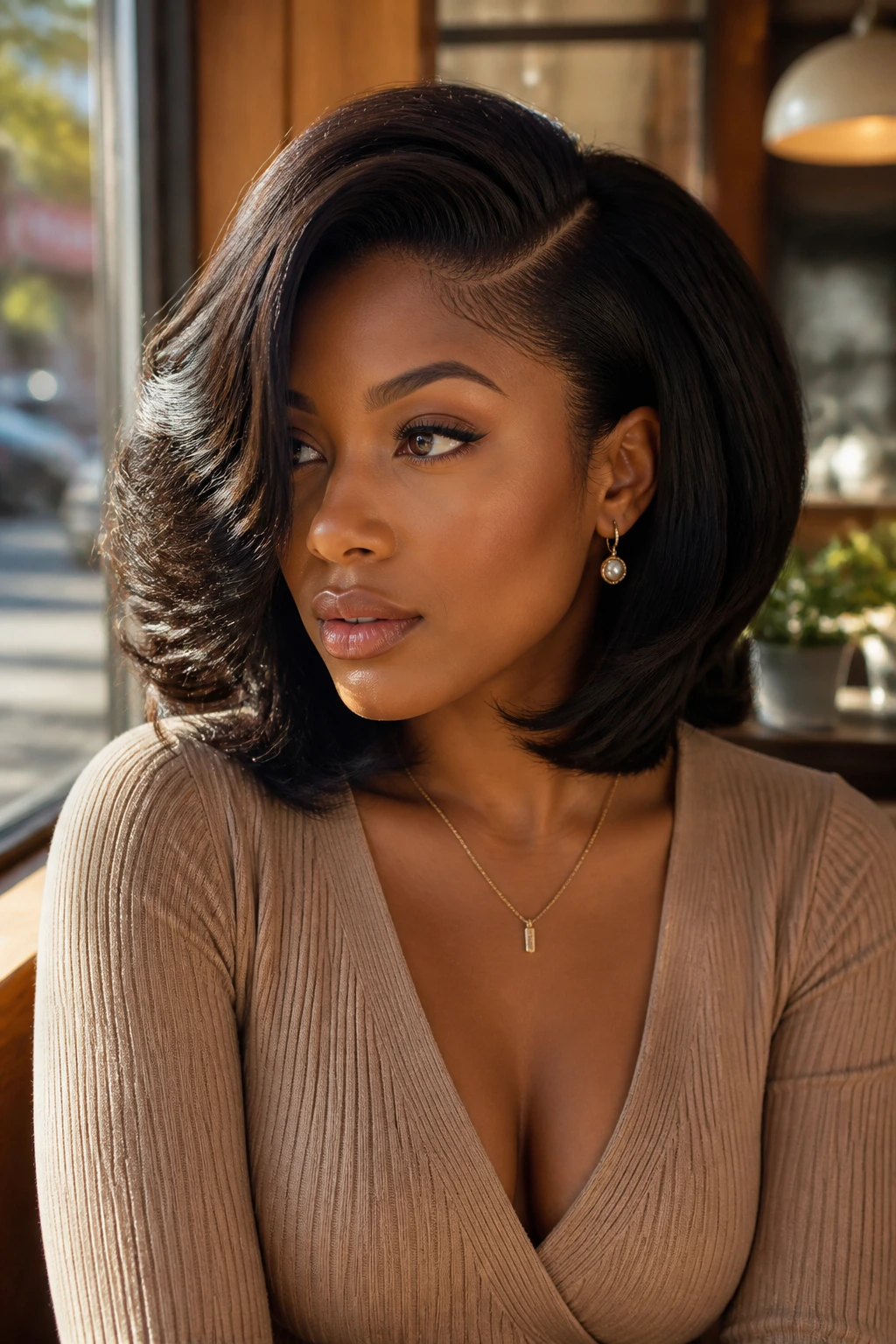
A deep side part changes the balance of the entire head. With a volume lob, that matters more than a lot of people realize. The roots on the heavy side lift, the front pieces swing across the cheek, and the crown gets a little height without needing a teasing comb and a prayer.
How to wear it
- Pair it with a rounded blowout for softness.
- Use a large-barrel iron if you want loose bends.
- Keep the part clean all the way back so the lift stays visible.
The cut itself can be subtle, but the styling should not be lazy. If the root is flat and the ends are weighted down, the whole style loses its shape. A bit of mousse at the roots or a setting lotion on stretched hair gives this lob a better base.
This is one of the best options when you want a little glamour without going full formal. It moves. It also photographs well in real life, which is different from looking good only in a mirror.
11. Razor-Cut Piecey Lob
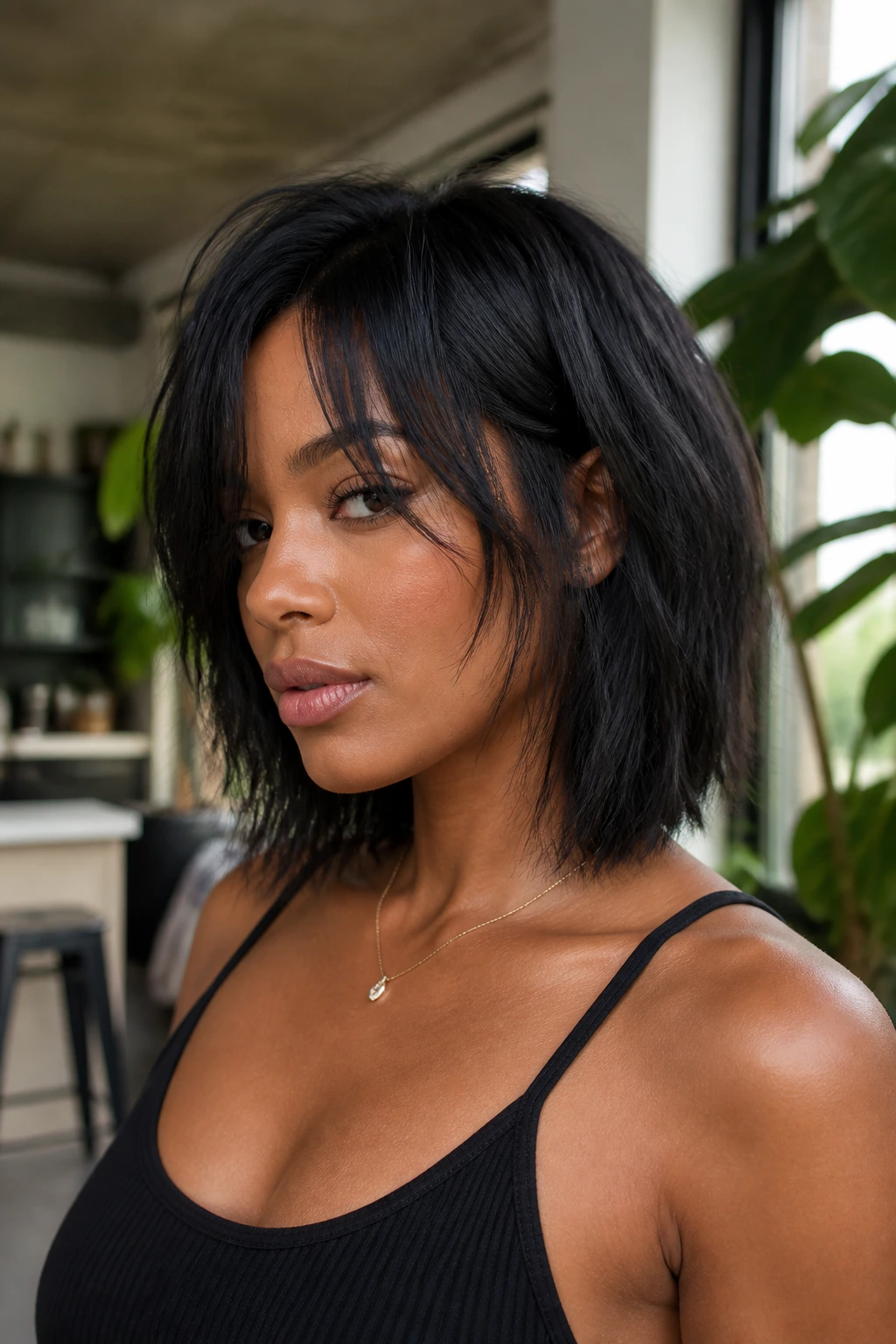
A razor-cut piecey lob lives in a more textured lane. The ends break into softer strands, which gives the haircut a bit of edge and keeps the finish from feeling too polished. On Black hair, this works best on relaxed, silk-pressed, or blow-dried textures that can show the separation.
The caution is simple: a razor can rough up fragile ends if the hair is already dry or prone to breakage. So this one is about condition as much as style. Healthy ends give you that airy, separated finish. Weak ends just look frayed.
Best when the goal is:
- A slightly undone shape.
- Movement around the chin and jaw.
- A cut that plays well with texture sprays or light wax on the ends.
If you love straight lines, skip this one. If you like a little breakup and less uniformity, it has a lot of personality.
12. Wet-Look Sculpted Lob
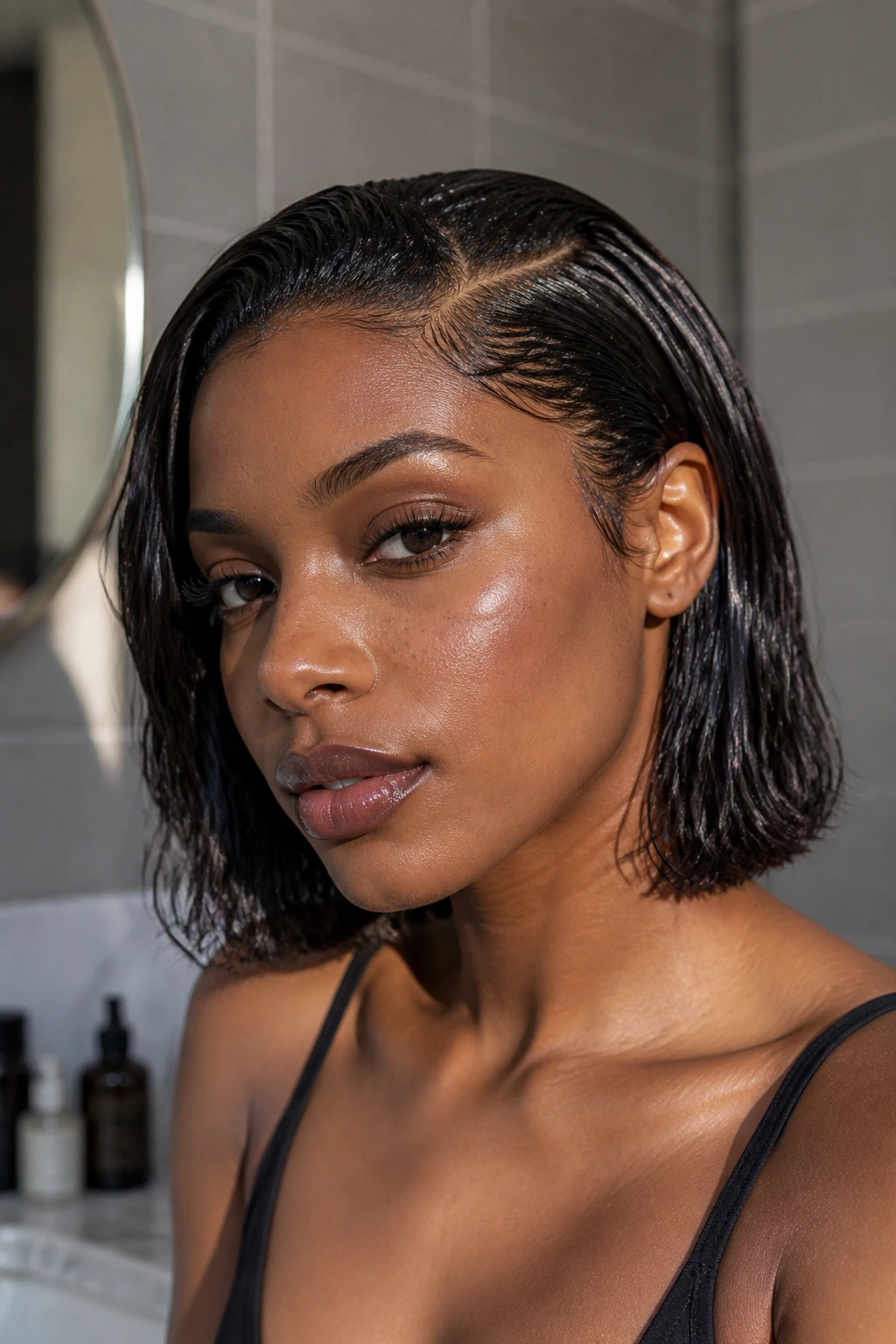
A wet-look lob is glossy, controlled, and a little bit dramatic in a good way. The hair is usually smoothed close to the head with gel or curl cream, then sculpted into defined sections that hold their shape. For Black women who like a cleaner outline, this style can be a sharp change from fluffier texture.
The product load matters. Too much and the hair looks greasy. Too little and the style dries in uneven patches. The best version has a glassy finish at the roots and a soft bend or wave through the mid-lengths.
This is not the style I’d choose for a rushed morning. It rewards time and careful sectioning. But when it’s done right, it gives the lob a polished, editorial feel that still works with textured hair instead of flattening it into something it isn’t.
13. Twist-Out Lob with Rounded Shape
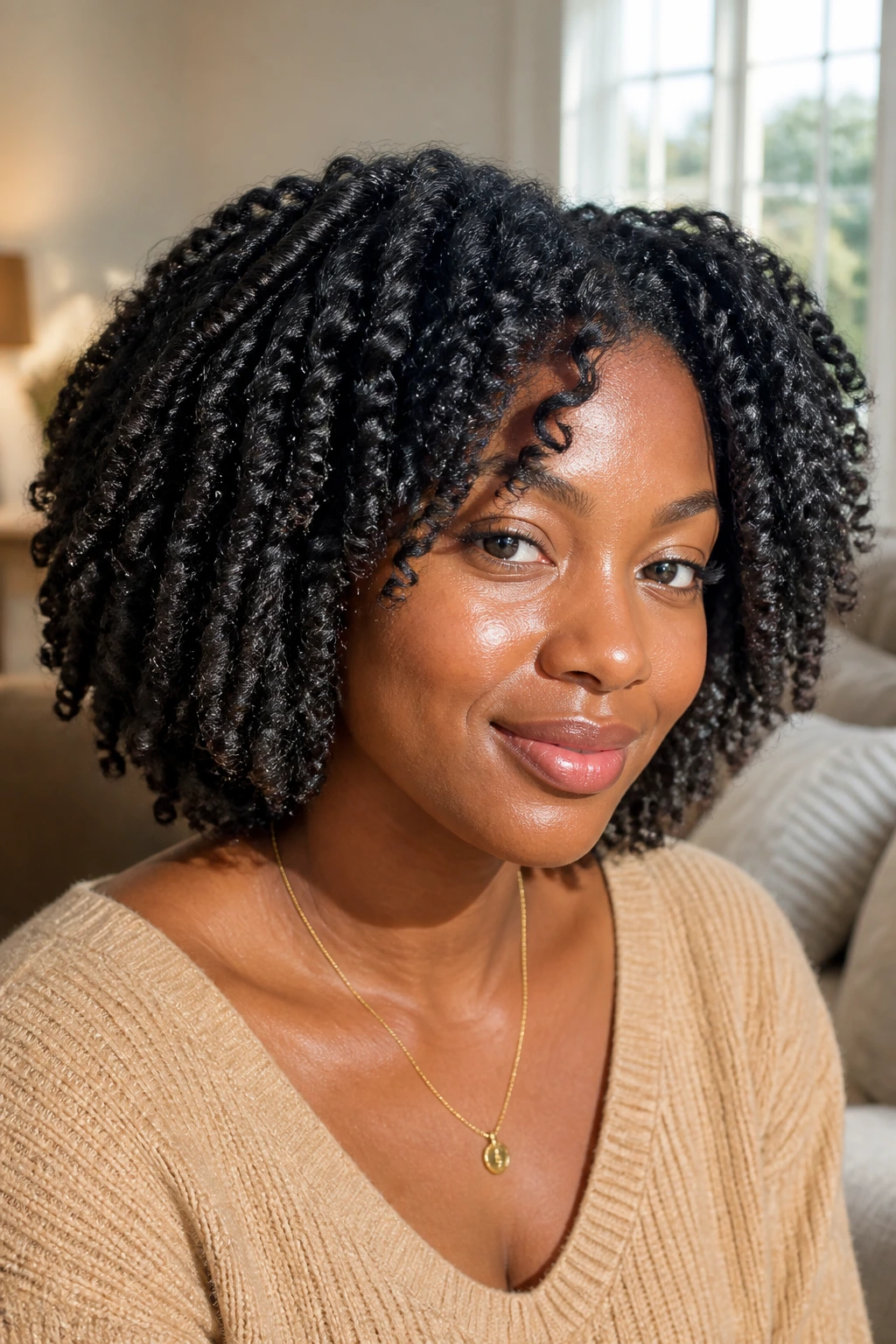
A twist-out lob should look full, but not triangular. That’s the challenge, and the layers are what solve it. When the cut is rounded through the sides and slightly longer at the bottom, the twist-out keeps a soft dome shape instead of spreading outward in a box.
If you like definition, this is a strong choice. The twists can be set with a cream that gives hold without crunch, then separated once they’re fully dry. A pick at the roots adds lift, but only a little — too much and the shape loses its clean line.
This cut works beautifully for people who want their natural hair to look styled even on casual days. It doesn’t need to be huge to look finished. That’s a relief, frankly.
14. Honey Blonde Layered Lob
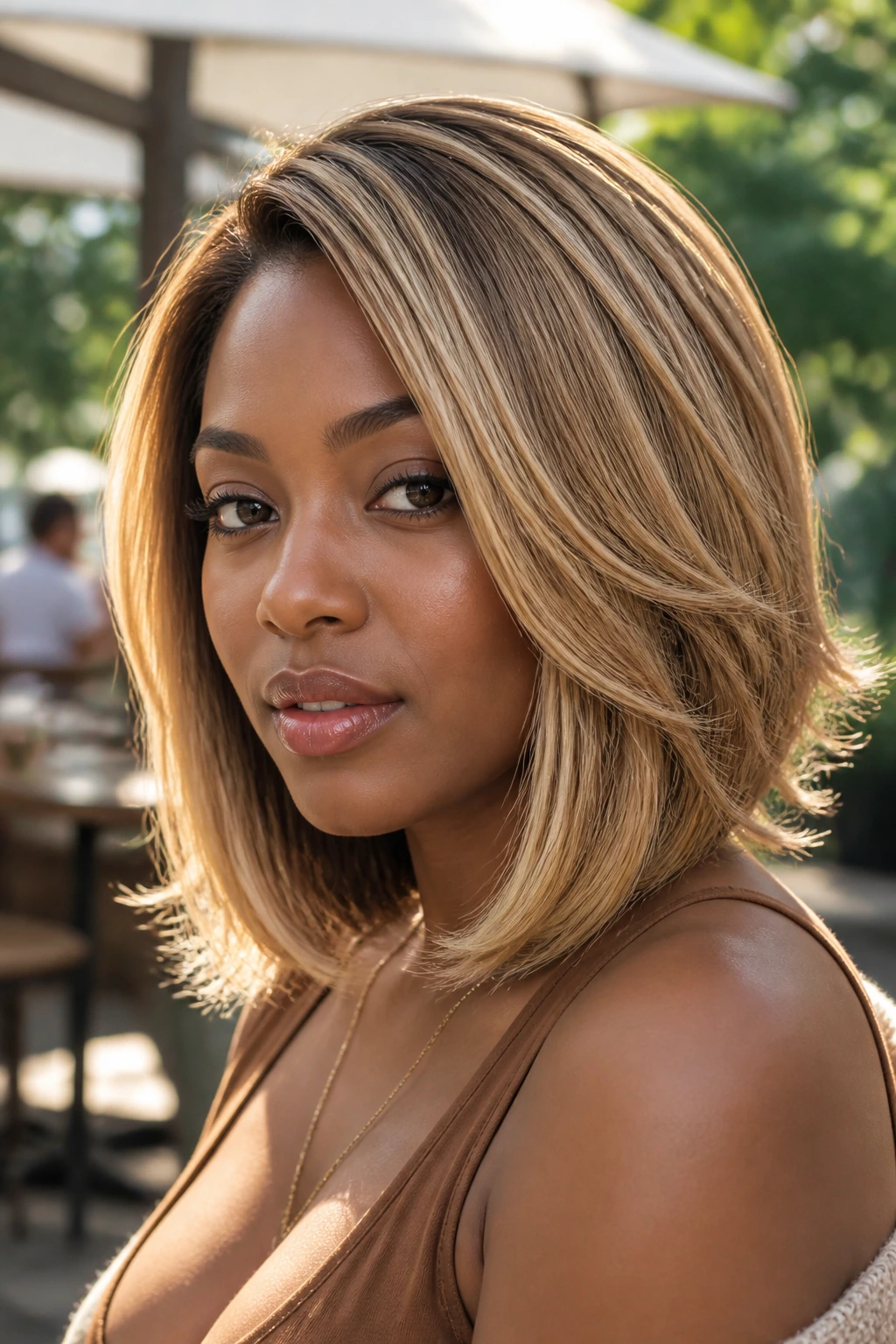
Color changes the way layers read, and honey blonde is one of the easiest shades to understand on a textured lob. The warmer ribbons catch the movement in the layers, so the haircut looks more dimensional even when the styling is simple. On Black hair, that warmth tends to sit nicely against the skin without going brassy if the tone is handled carefully.
Where the color should sit
A little lighter around the face. A little deeper underneath. That contrast makes the layers show up instead of disappearing into one flat tone.
This cut benefits from regular deep conditioning because lighter hair can feel drier at the ends, especially if it’s also heat-styled. If you want the color without giving up the health of the length, keep the lightening concentrated and avoid dragging it all the way through the perimeter.
15. Balayage Lob with Lived-In Dimension
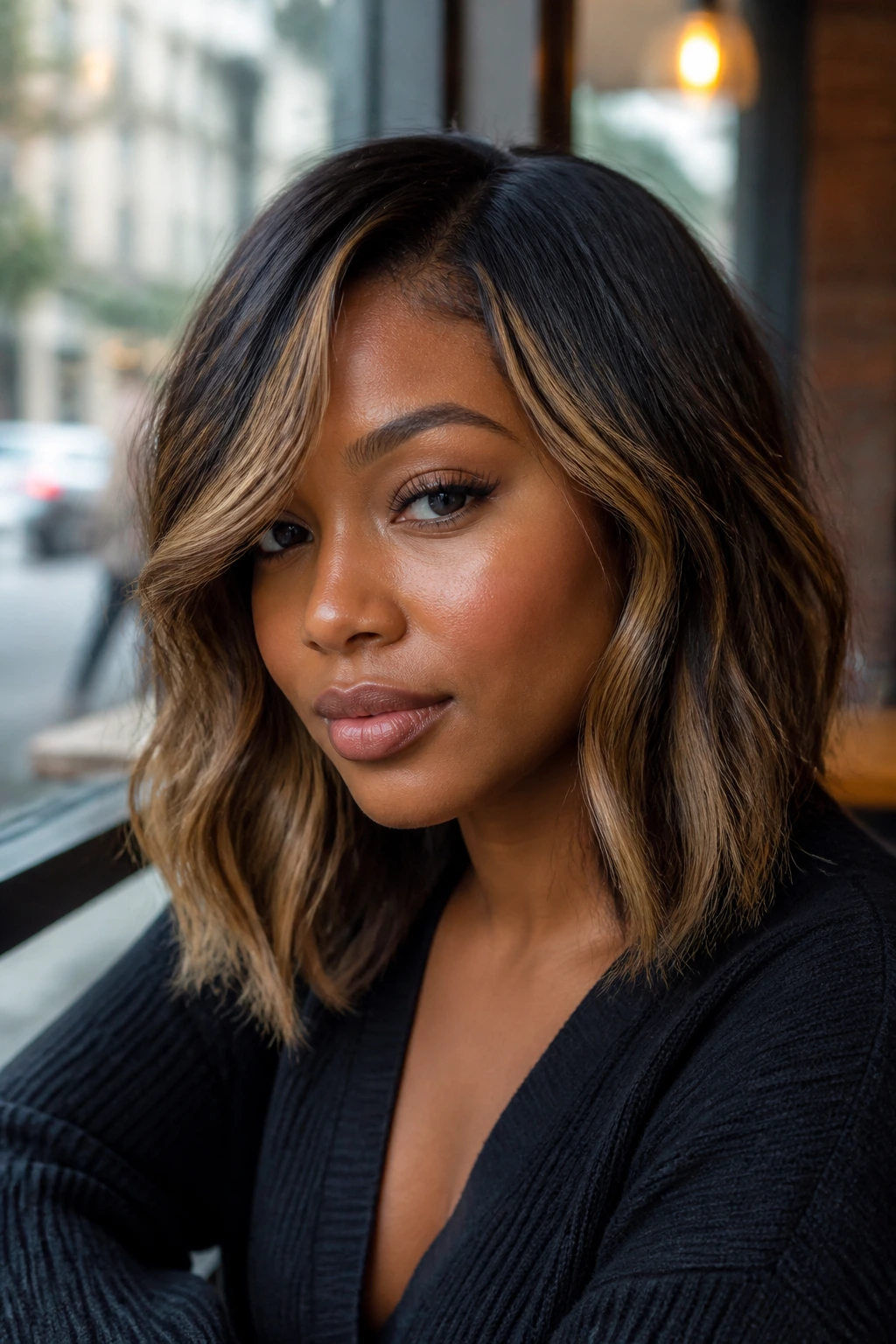
Balayage on a lob is less about streaks and more about depth. Painted highlights placed around the front, ends, and upper layers give the cut movement even when the style is worn straight. On Black women, that dimension can make layered sections stand out without forcing the whole head into a high-contrast color job.
The finish should look grown-in, not striped. If the highlights are too uniform, the cut loses some of its softness. Think ribbons, not blocks. A few lighter pieces near the cheekbones also help the face-frame layers do their job.
This is a good option if you want visual interest but don’t want to commit to a full-color overhaul every few weeks. The grown-out effect can be part of the appeal. That’s the nice part.
16. Blowout Lob with Feathered Ends
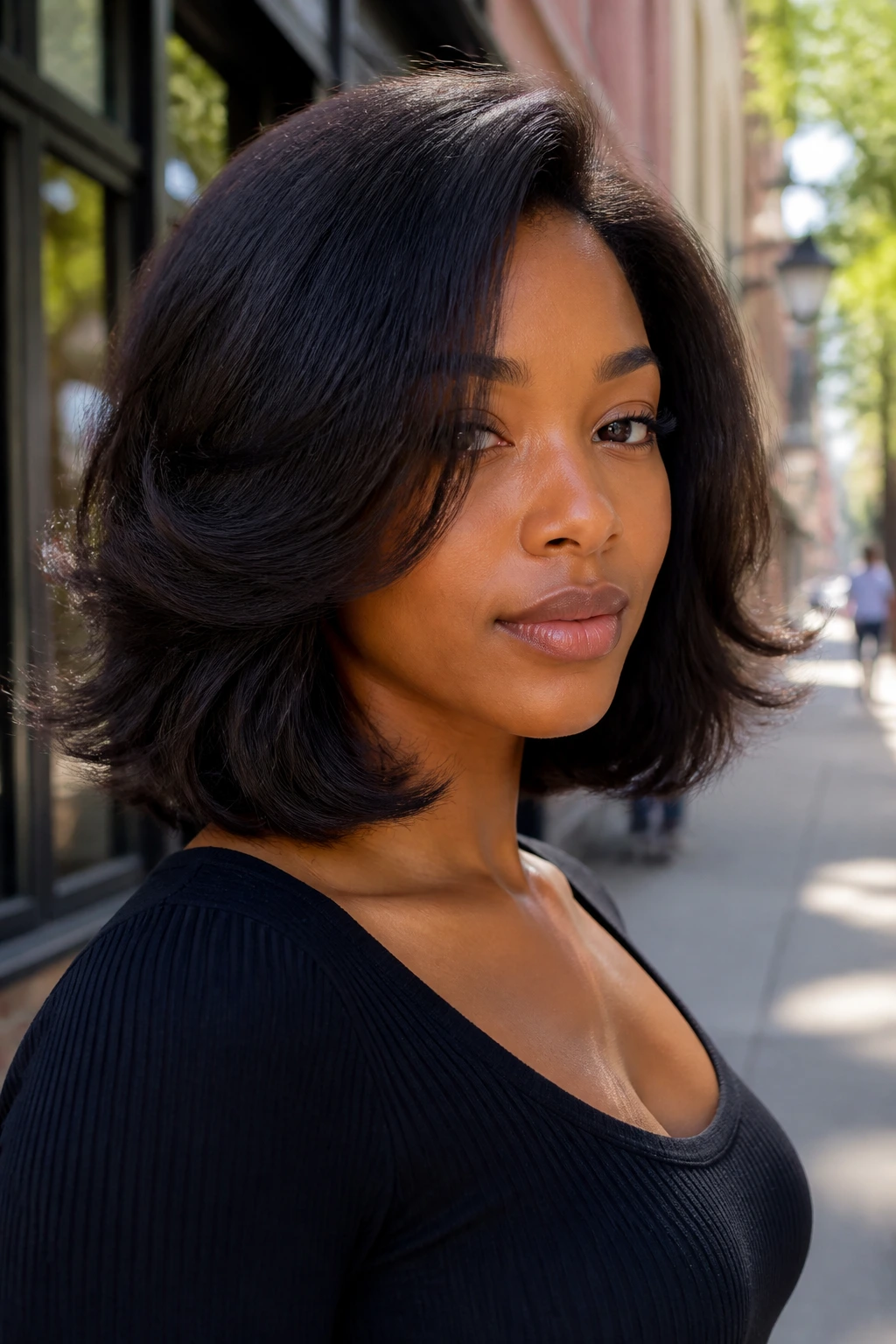
A blowout lob is one of the easiest cuts to live in because the movement is already built in. The layers can be feathered through the bottom half so the ends bend lightly and the whole shape feels airy instead of heavy. On dense hair, that feathering keeps the style from sitting like a block at the shoulders.
The round brush matters. So does the angle of the dryer. Pulling the hair up and over rather than straight down gives the finish more swing. A little tension at the root, a soft bend at the ends, and the cut suddenly looks a lot more expensive than the effort it took.
This is one of my favorites for in-between seasons of wear, when you want your hair to look finished without flattening your texture too long. The beauty is in the motion.
17. U-Shaped Lob with Soft Layers
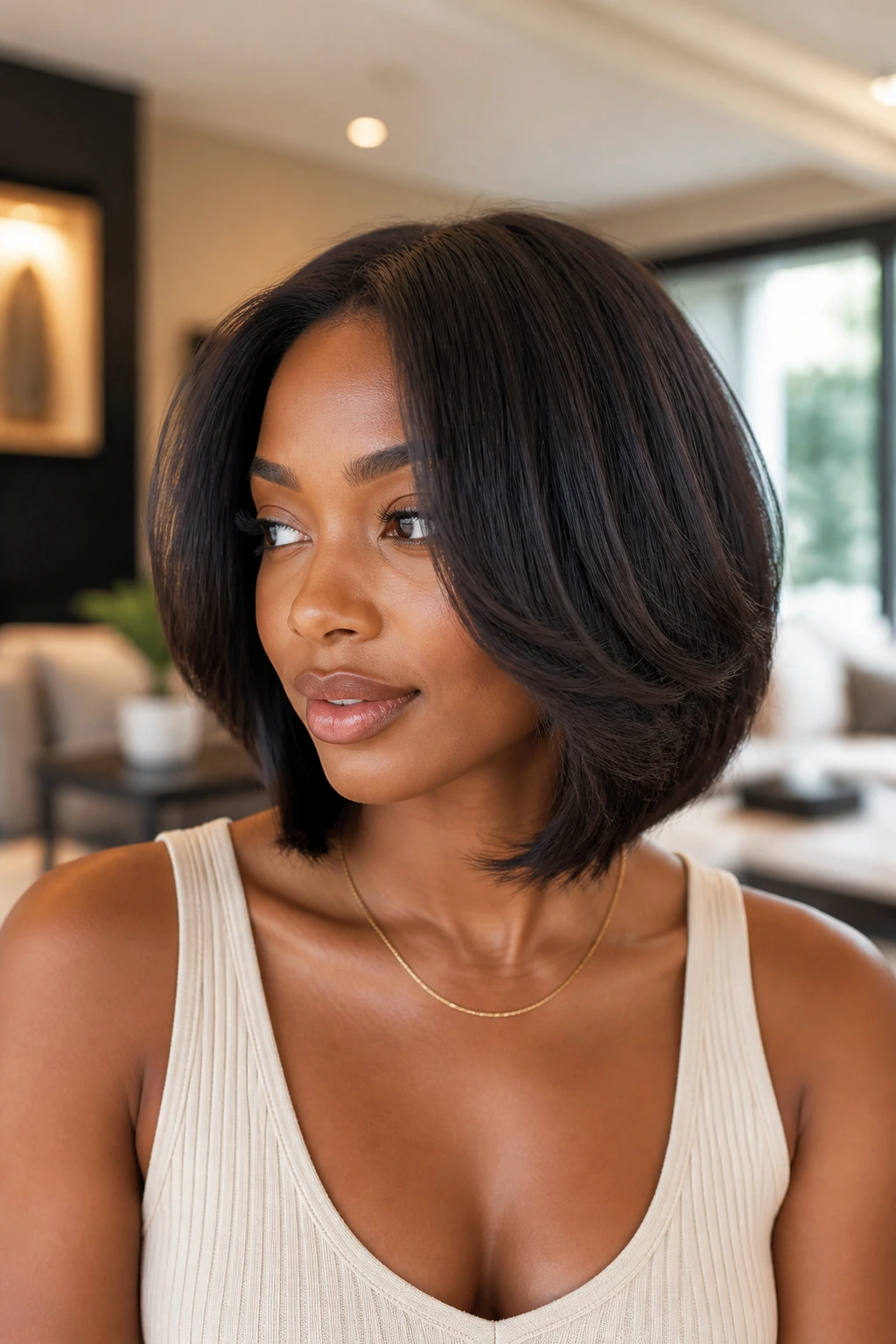
The U-shaped lob curves gently at the back instead of cutting straight across. That shape makes the hair look fuller through the center while still keeping the edges soft. For Black hair, that can be a good compromise if you want a layered cut but hate losing too much perimeter weight.
The U-line is subtle. It should not shout. The front stays slightly longer, the back rounds in, and the layers live quietly inside the body of the hair. On a blowout, you’ll see the curve clearly. On curls, you’ll see it in how the sides settle.
If your hair naturally grows thick at the nape, this shape also helps keep the bottom from looking square. It’s a small thing. It matters more than people think.
18. Collarbone Lob with Bouncy Flip
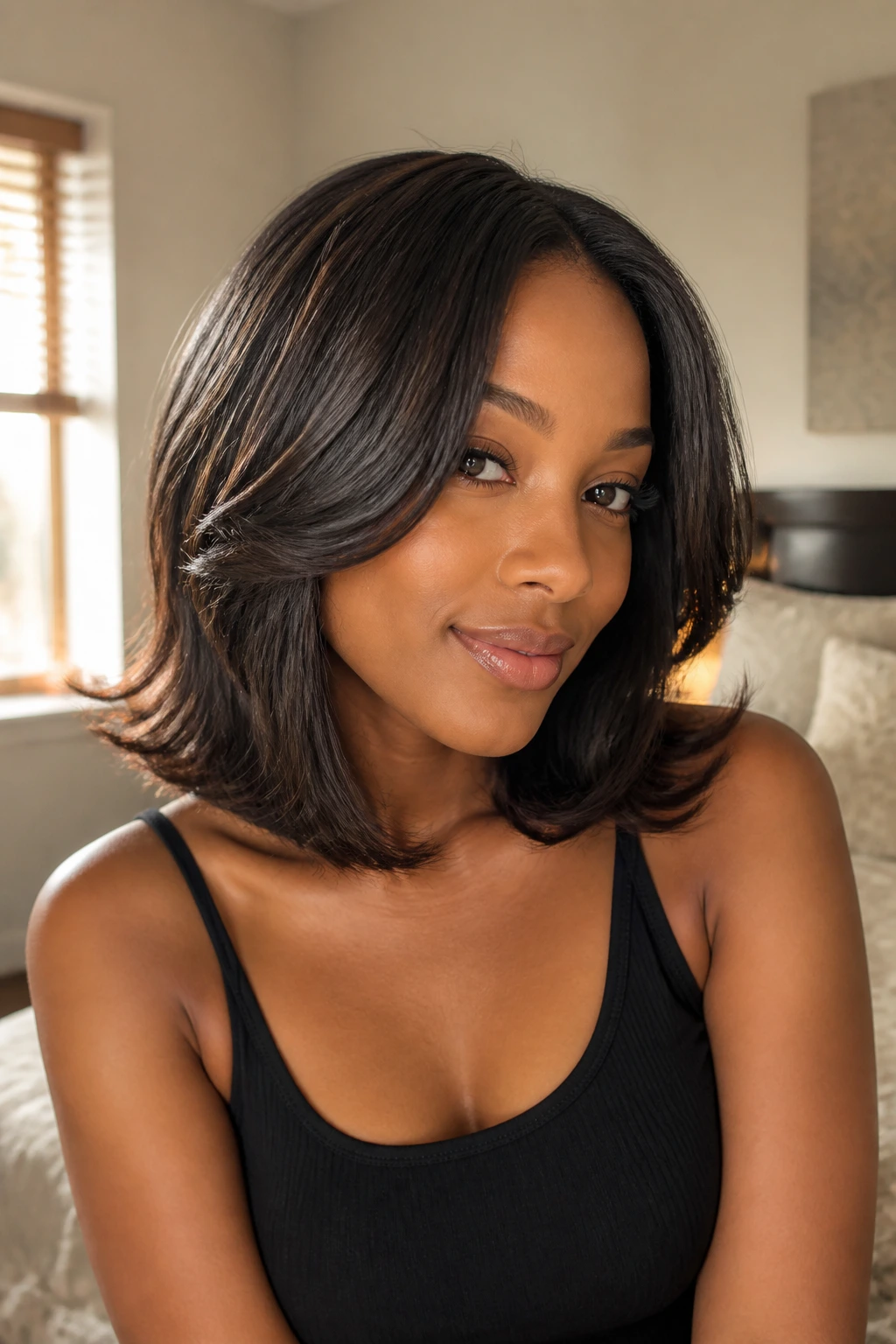
A collarbone lob with a bouncy flip sits in that playful middle ground between polished and easy. The haircut itself can be simple, but the styling turns the ends outward or inward so the line never feels stiff. That flip is what makes the cut feel alive.
This shape works especially well when you want movement around the shoulders. It keeps the hair from sticking to the neck or collapsing straight down. A curling iron, flat iron bend, or round brush can all do the job; the point is the curve, not the tool.
A side part gives it a little extra swing. A middle part keeps it cleaner. Either way, the flipped ends keep the lob from looking too severe.
19. Rounded Crown-Volume Lob
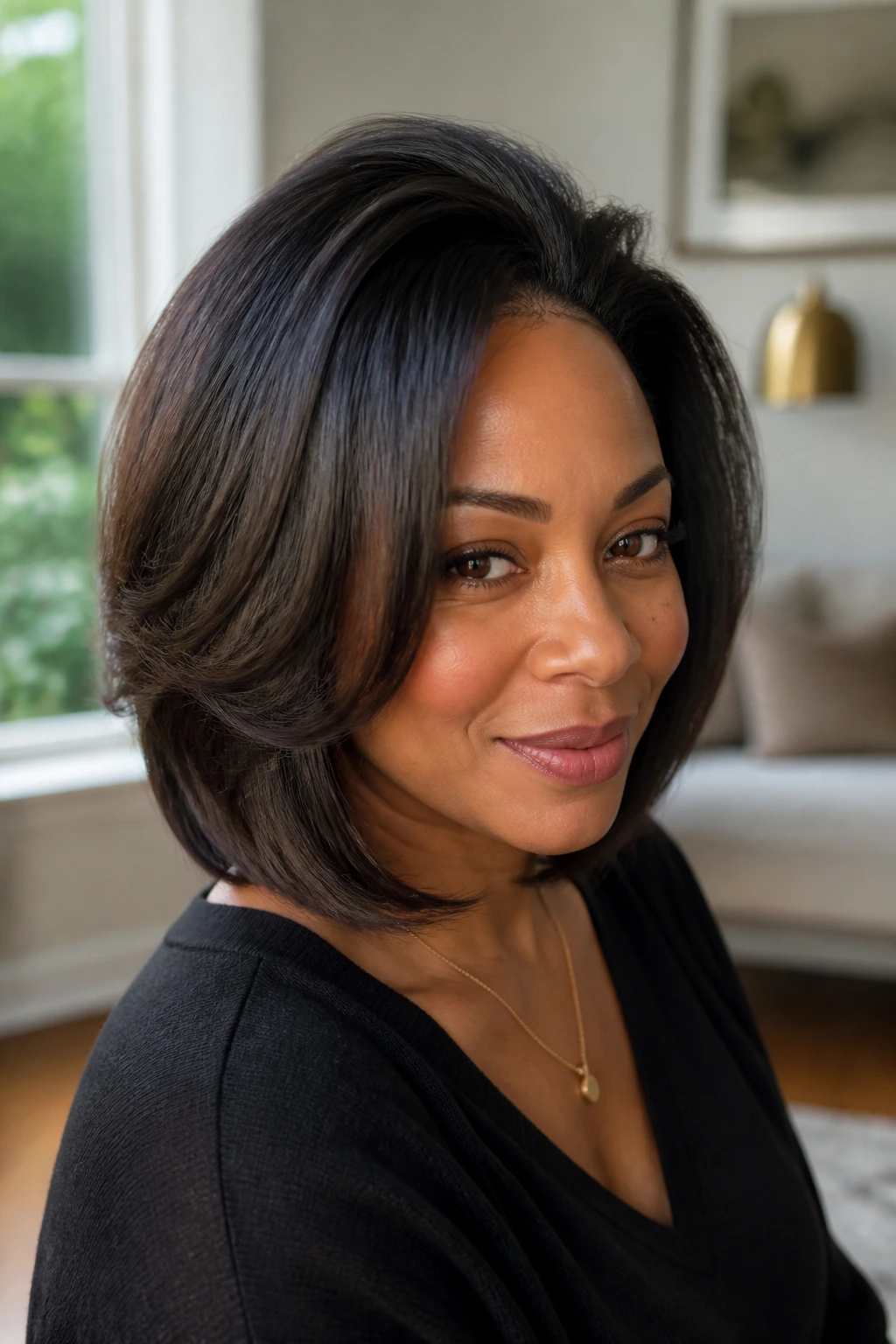
A rounded crown-volume lob is a quiet fix for hair that falls flat at the top and heavy at the bottom. The crown gets a little lift, the sides stay smooth, and the perimeter keeps enough length to balance the shape. It’s especially useful on fine-to-medium textures that need help standing up a bit.
A quick shape check
If the top is flat, the cut reads smaller. If the crown has lift, the whole style looks fuller even when the ends are simple.
This version often works well with roller sets, large flexi rods, or a round-brush blowout. The styling choice changes the mood, but the underlying structure stays the same: height up top, softness at the edges.
20. Braided-Accent Lob
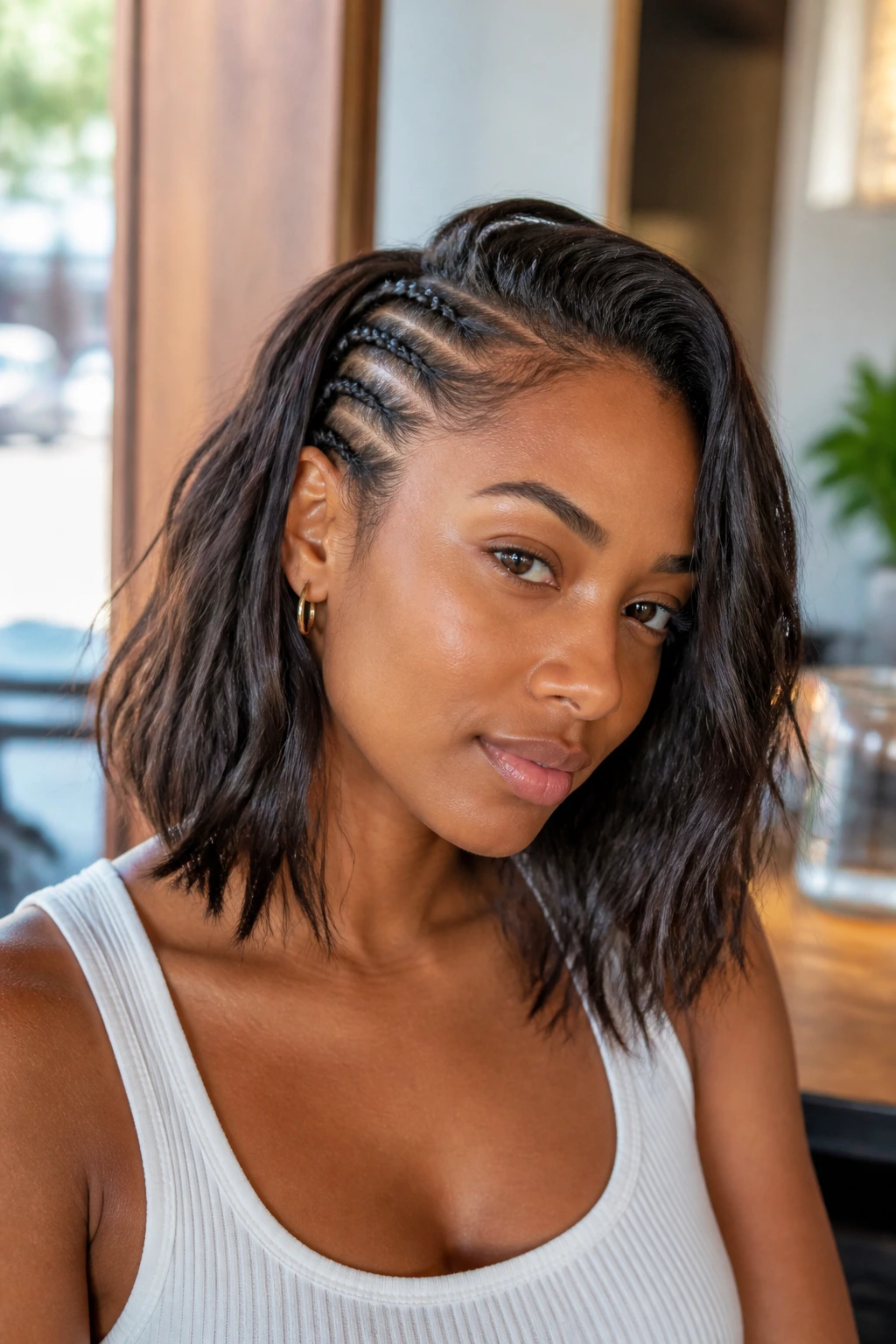
A braided-accent lob is for anyone who wants the haircut to do a little more without losing the simplicity of the lob itself. Small braids, flat twists, or cornrow accents around the hairline or one temple give the style a custom look. The rest of the hair stays loose and layered.
This is a useful move when you want to stretch a style between wash days or add detail for an event. The braids don’t need to take over the whole head. Two or three carefully placed sections are enough to change the read of the cut.
Keep the braids neat and the base smooth. If the accent pieces are too thick, they overpower the lob and make it feel crowded. Small details work better here.
21. Sew-In Lob with Blended Layers
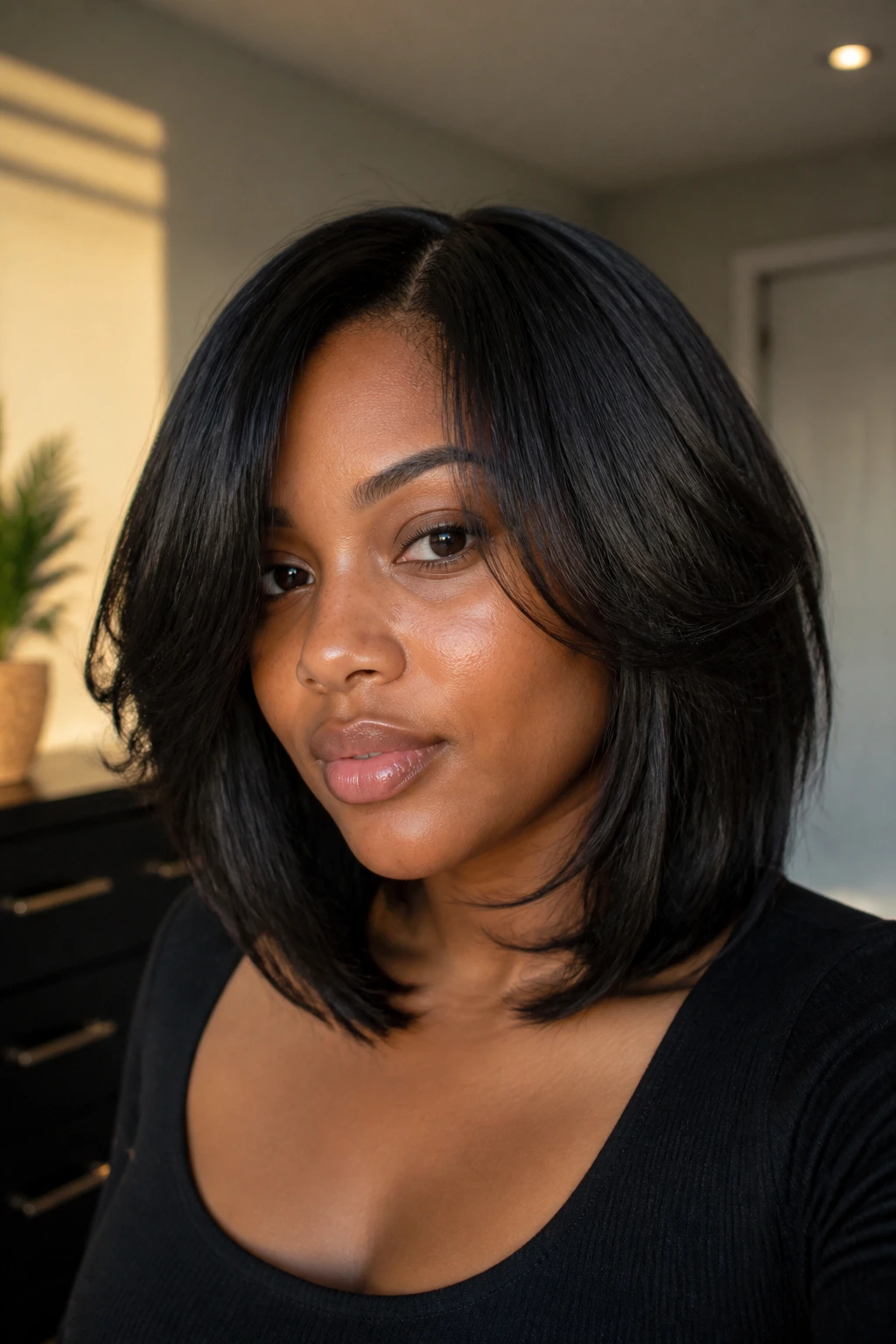
A sew-in lob is one of the better protective options if you want the look of a layered cut without daily heat. The tracks or install are cut and shaped into a lob silhouette, then blended so the texture falls naturally. The good versions do not look bulky at the crown or stiff at the ends.
The key is balance. Too much hair in the install and the style gets heavy around the shoulders. Not enough and the lob looks stringy. A layered blend around the front pieces and a slight taper at the back help the style sit like a real haircut rather than a helmet.
This is a smart choice for periods when you want your own hair tucked away but still want shape and movement around your face. It’s protective, yes. It should also look like something you’d actually wear.
22. Air-Dried Lob with Defined Ends
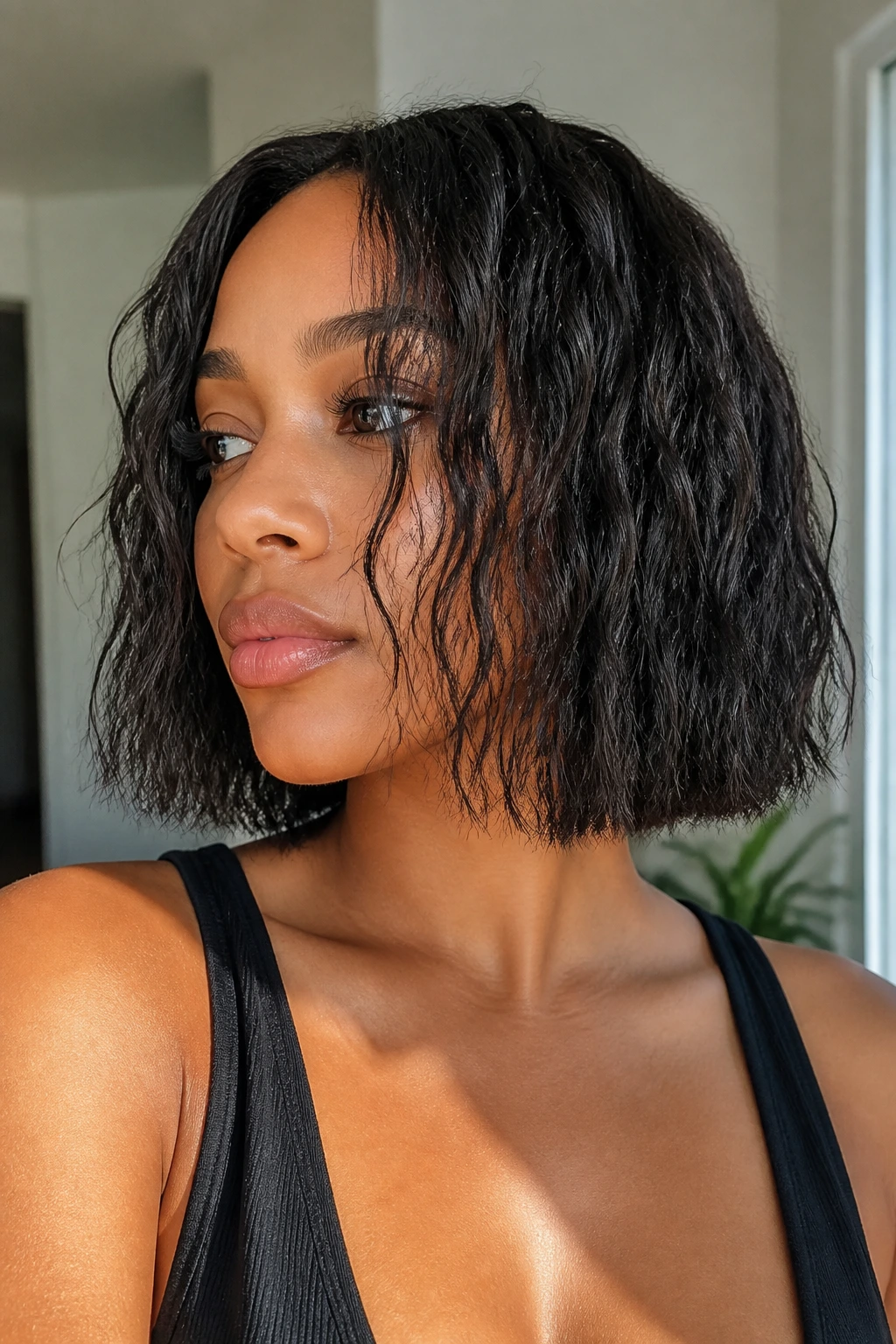
An air-dried lob keeps things honest. You wash, style, and let the texture do what it does. The layers matter here because they stop the dry-down from turning into one big puffed rectangle. With the right cut, the air-dried finish looks soft at the top and more defined at the ends.
The styling product should support the shape, not drown it. A lightweight leave-in, a cream with slip, and a bit of gel at the ends can help the layers hold together as they dry. Scrunching or finger-coiling the front pieces gives the face a cleaner frame.
This is one of the easiest styles to wear if you don’t want to live under heat. It does ask for patience, though. Rushing the dry-down usually ruins the shape before it has a chance.
23. Middle-Part Sleek Lob with Tapered Underlayers
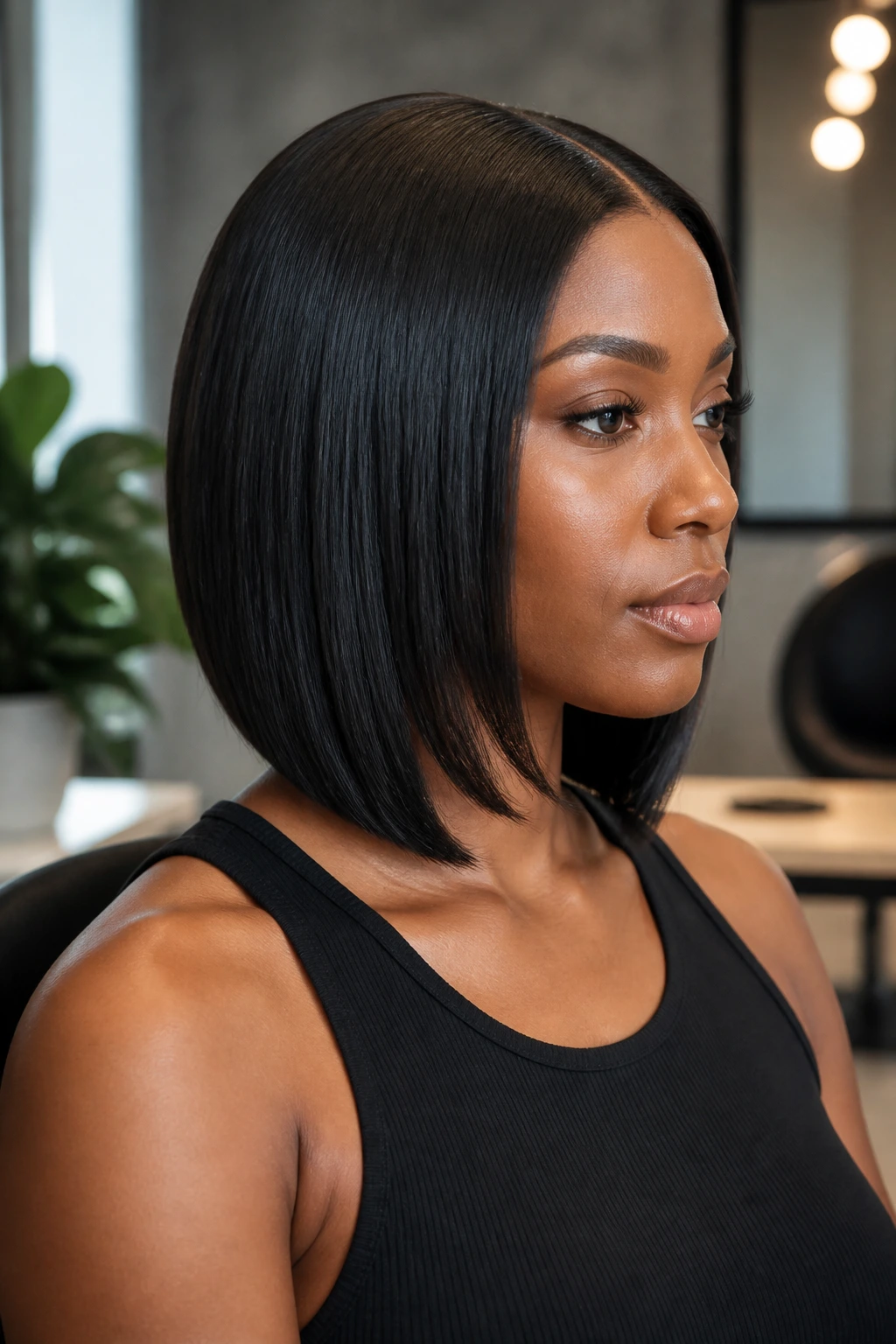
A middle-part sleek lob with tapered underlayers looks calm on the surface and smart underneath. The middle part makes the cut feel symmetrical, while the tapered underlayers keep the body from getting too wide through the ends. That combination gives you clean lines without a dead-flat finish.
This style is especially strong when the hair is straight or softly pressed. The part should be precise, the crown smooth, and the underlayers trimmed enough to allow movement without creating a shelf. If the ends bend under naturally, even better.
It’s a good match for anyone who likes order in a haircut. Not boring. Ordered. Those are not the same thing.
24. Tousled Lob with Tapered Sides
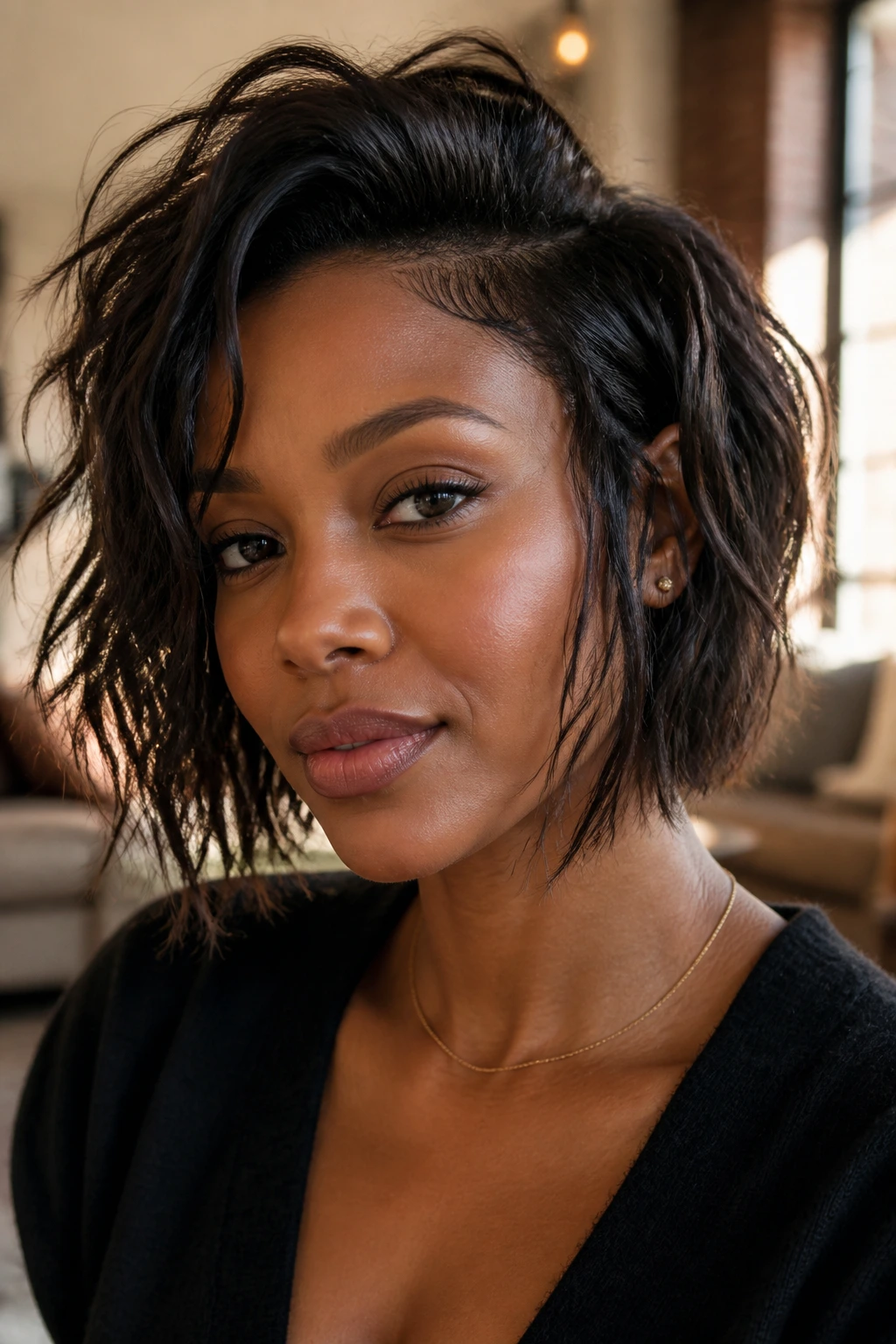
A tousled lob with tapered sides is a little messier, but in a controlled way. The sides narrow slightly toward the face, which helps the haircut stay close and wearable, while the top and mid-lengths keep enough texture to feel undone. It’s the kind of style that looks better after a little movement than it does fresh from the mirror.
How to keep it from turning sloppy
Use loose bends, not tight ringlets. Break up the curls with your fingers, not a brush. Leave a few pieces longer around the cheek so the shape still has a frame.
This is a nice option if you like hair that does not look frozen in place. It has energy. It also forgives a slightly imperfect styling day, which is more useful than people admit.
25. Glam Lob with Side-Swept Bangs
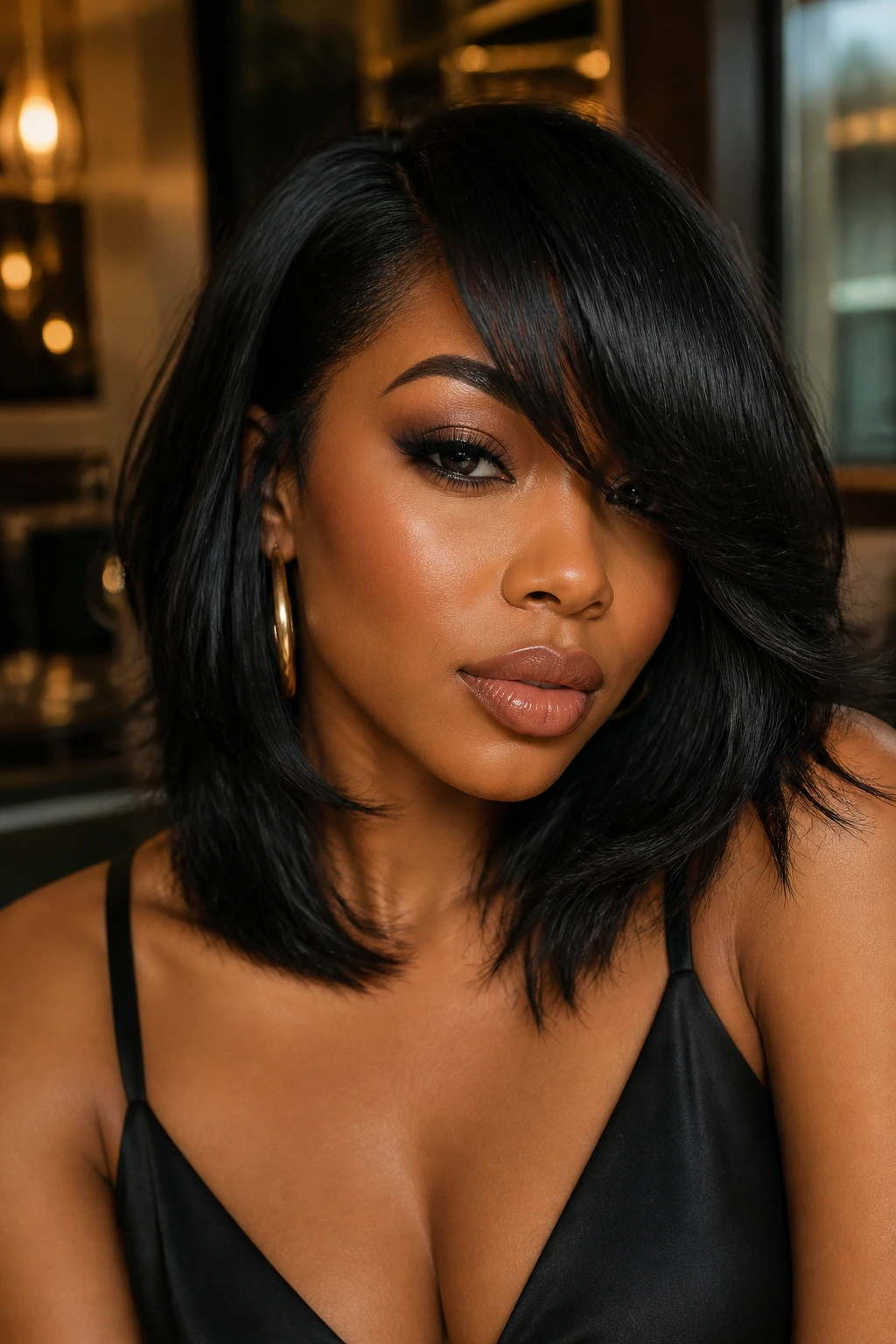
A glam lob with side-swept bangs brings all the drama to one side and keeps the rest of the cut soft. The bang section should blend into long layers instead of stopping abruptly, so the whole style feels fluid. On Black hair, this works especially well with a smooth press, loose curl, or brushed-out wave.
The bangs are the point here. They guide the eye, soften the forehead, and give the lob a finished front view. If the rest of the cut is simple, the sweep does the work. If the ends are curled, even better.
This is the style I’d choose for a night-out event, a photo, or any day you want your hair to do a little more talking than usual. It has presence without needing a lot of extra decoration.
How Layers Change the Lob on Black Hair
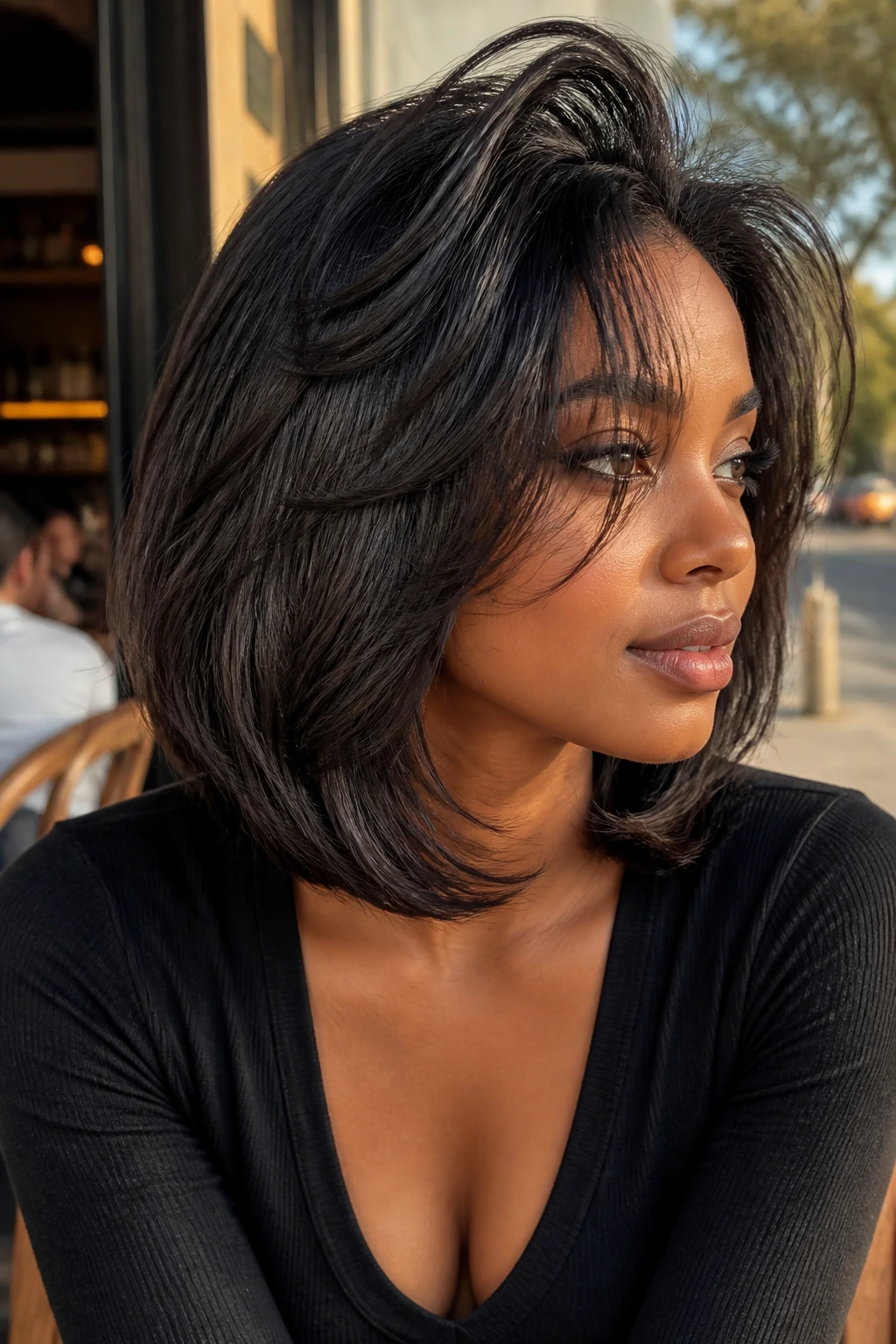
Layers are not just shorter pieces cut into longer hair. On Black hair, they change the silhouette. A good layer can take a lob that wants to balloon outward and make it fall closer to the head. It can also lighten the crown so the ends do not drag the whole shape down.
That’s why the texture matters so much. Coils, curls, blown-out strands, and pressed hair all respond differently. A layered lob that looks soft and airy on silk-pressed hair can read much fuller once natural texture comes back. That is not a flaw. It is the real behavior of the hair, and the haircut should be designed around it.
The best approach is usually to decide which finish you wear most often. If you live in twist-outs, the layers should support that shape. If you mostly wear a silk press, the perimeter and face frame matter more. If you rotate styles, a middle-ground cut with long interior layers tends to survive all of them.
Essential Tools for Styling and Maintenance
- Sharp hair shears: For trims and shape maintenance; kitchen scissors will chew the ends.
- Tail comb: Helps with clean parts, sectioning, and precise layer placement.
- Sectioning clips: Keep dense hair out of the way while you blow-dry or style in parts.
- Blow dryer with comb attachment: Useful for stretch-drying natural hair or smoothing a lob before a press.
- Round brush: The easiest way to give a lob that soft flip at the ends.
- Flat iron or silk press tool: Best for sleek versions that need a clean finish.
- Diffuser: Helps curls keep shape without blasting them apart.
- Light heat protectant: Needed any time heat touches the hair; go easy so the cut doesn’t get greasy.
- Mousse or foam wrap lotion: Good for blowouts, finger waves, and setting curl definition.
- Satin bonnet or scarf: Protects the outline overnight and keeps the layers from getting crushed.
- Wide-tooth comb: Safer than fine combs for detangling textured hair.
- Edge brush: Handy for polish around the hairline without disturbing the rest of the shape.
What to Ask for at the Salon
Bringing a photo helps, but not in the lazy way people sometimes do it. Don’t just show the image and say, “This.” Point to the front length, the part, the amount of layering, and whether the finish is curly, pressed, or blown out. Those details matter more than the overall vibe.
Say where you want the lob to land on your hair, not the model’s hair. Collarbone is a better target than “around here.” If your hair shrinks a lot, mention that up front. If you wear your hair stretched most of the time, say that too, because a cut on blown-out hair and a cut on shrinkage-heavy curls are not the same thing.
You can also ask the stylist whether they prefer to cut your texture dry, stretched, or in its natural state. There is no one right answer. The right answer is the one that gives the cleanest read on your real length and the least surprise when the hair is back in its usual pattern.
Practical Tips for Getting the Shape Right
Shrinkage check first: If your curls or coils shrink hard, plan the finished length longer than you think you need. A lob that looks perfect wet can end up too high once it dries. That’s how good cuts turn into accidental bobs.
Keep the perimeter honest: The bottom line needs enough weight to read full. If the ends are over-thinned, the whole cut starts to look hungry. A little bulk at the edge is part of what makes a lob feel luxe on Black hair.
Choose the part on purpose: A center part sharpens the face and makes the symmetry obvious. A side part softens the line and can hide a stronger jaw or fuller cheek. Don’t treat the part like an afterthought; it’s half the haircut.
Match the finish to the cut: A curly lob should not be styled like a bone-straight press, and a sleek lob should not be fluffy all over unless that is the point. The same cut can do both, but not always on the same day with the same method.
Common Mistakes to Avoid
Cutting the hair too short while it is wet is the fastest way to miss the real length. Once Black hair dries and shrinks, the lob can jump several inches higher. The fix is simple: cut with shrinkage in mind, or stretch the hair enough to see where it will actually land.
Over-layering is another one. Too many short pieces near the top create a fluffy triangle, especially on dense curls. Keep the shorter pieces deeper inside the shape and leave the outer line strong.
A lot of people also forget the ends. If the perimeter is rough, split, or razor-thin, the whole cut looks tired no matter how good the layers are. Trim cleanly and keep the ends healthy with regular conditioning and minimal heat abuse.
And one more: choosing a cut that fights your natural texture. If your hair wants volume and you force a razor-softened style with no structure, the haircut will spend every day trying to escape itself. Work with the texture. It’s less annoying.
Variations and Alternatives to Try
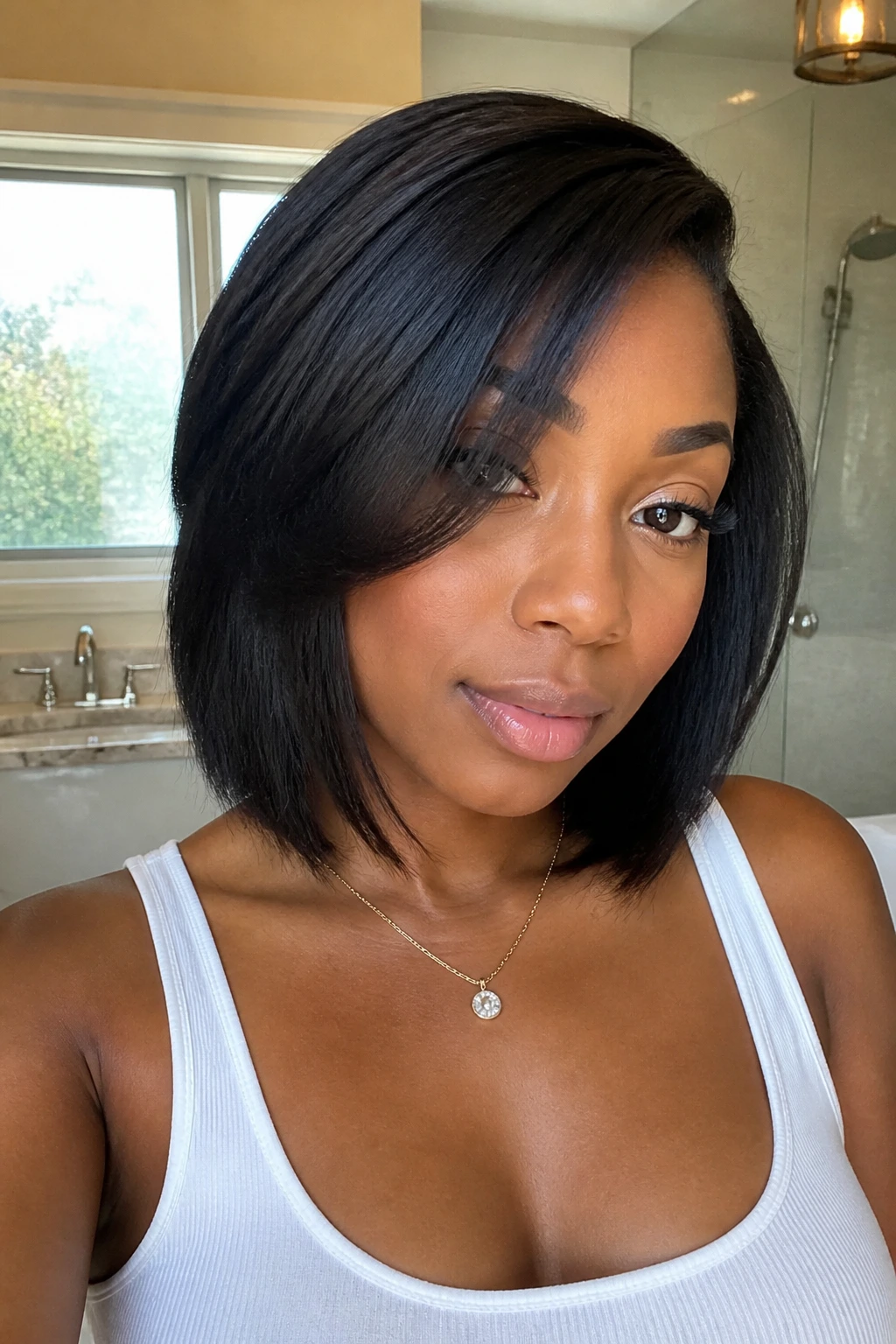
Silk-Press Switch-Up: Same layered lob, different finish. A silk press gives the haircut a sharper outline and makes face-framing pieces stand out. It works best if you want polish for a few days without changing the cut itself.
Wash-and-Go Lob: Keep the layers long and the perimeter soft, then style with a curl cream and gel. This version leans on definition rather than heat, which is useful if you want less manipulation and more texture.
Protective Install Version: Turn the lob into a wig, sew-in, or quick weave when you need low daily styling. Ask for the install to keep the lob’s outline and not pile too much hair at the crown.
Color-Boosted Lob: Add honey blonde, cinnamon brown, or subtle ribbons around the face. Color makes the layers read faster, especially if your haircut is intentionally soft and you want more movement to show.
Low-Heat Air-Dry Version: For people who prefer minimal heat, keep the cut a little longer and let the texture dry into shape. The layers do the visual work, and the styling stays simple.
How to Keep the Cut Fresh Between Visits
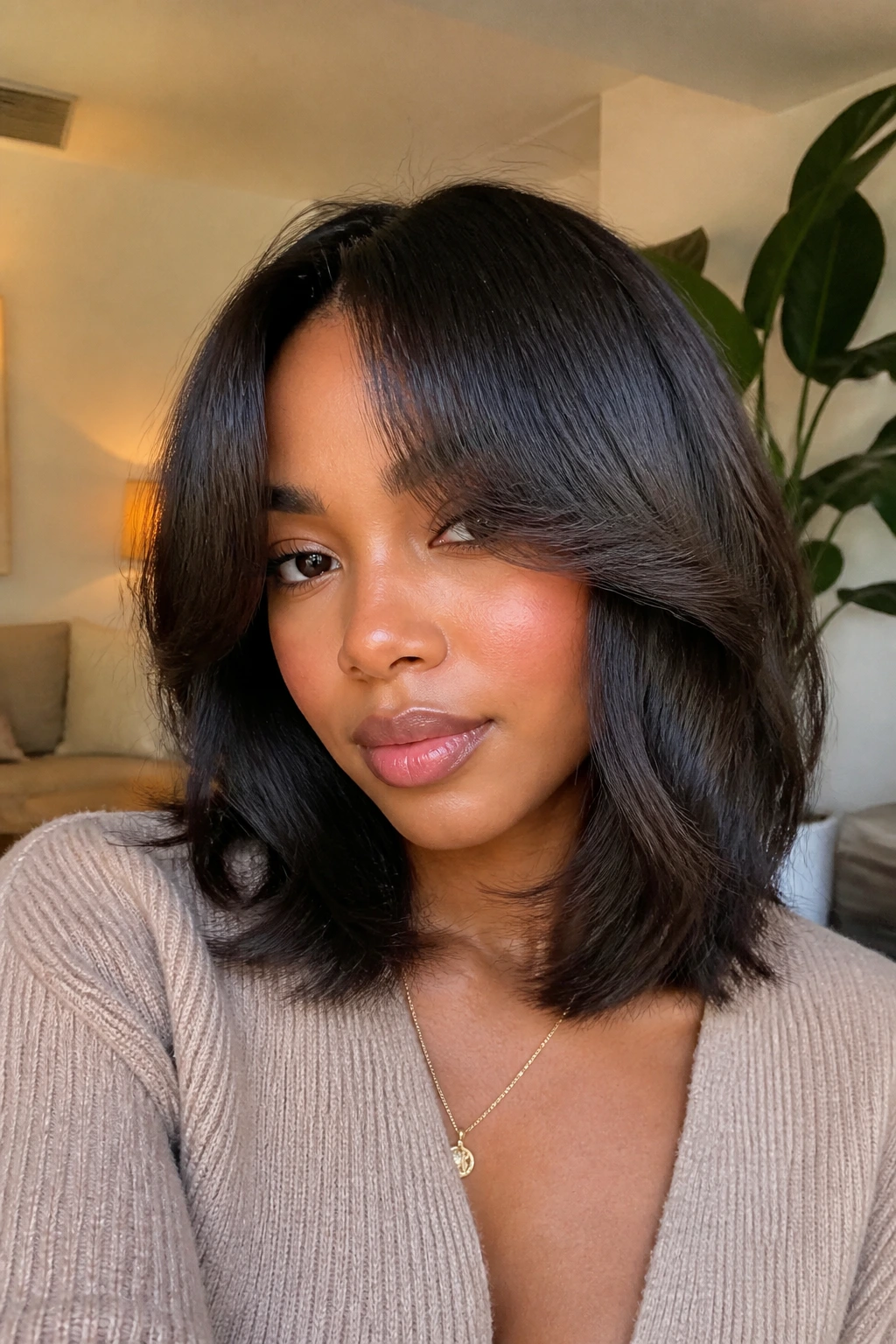
The shape lasts longer if you stop treating bedtime like an afterthought. Wrap straight or pressed lobs with a silk scarf, or use a bonnet that actually covers the ends. For curly and coily versions, a loose pineapple or clipped wrap helps keep the top from flattening overnight.
Refresh natural-texture lobs every 3 to 4 days with a light mist of water and a small amount of leave-in or foam. You do not need to soak the hair. Damp is enough. Over-wetting usually wrecks the shape faster than dryness does.
Silk-pressed versions usually need the most respect. Keep them away from steam, heavy oils, and sweaty workouts if you want them to last more than a minute. A light serum on the ends and a nightly wrap can help the finish stay smooth for several days.
Plan trims every 8 to 12 weeks, depending on how fast your hair grows and how often you heat-style it. If you wear a sew-in or wig version of the lob, keep up with scalp cleansing and remove the install on schedule so the cut underneath does not get ignored.
Frequently Asked Questions
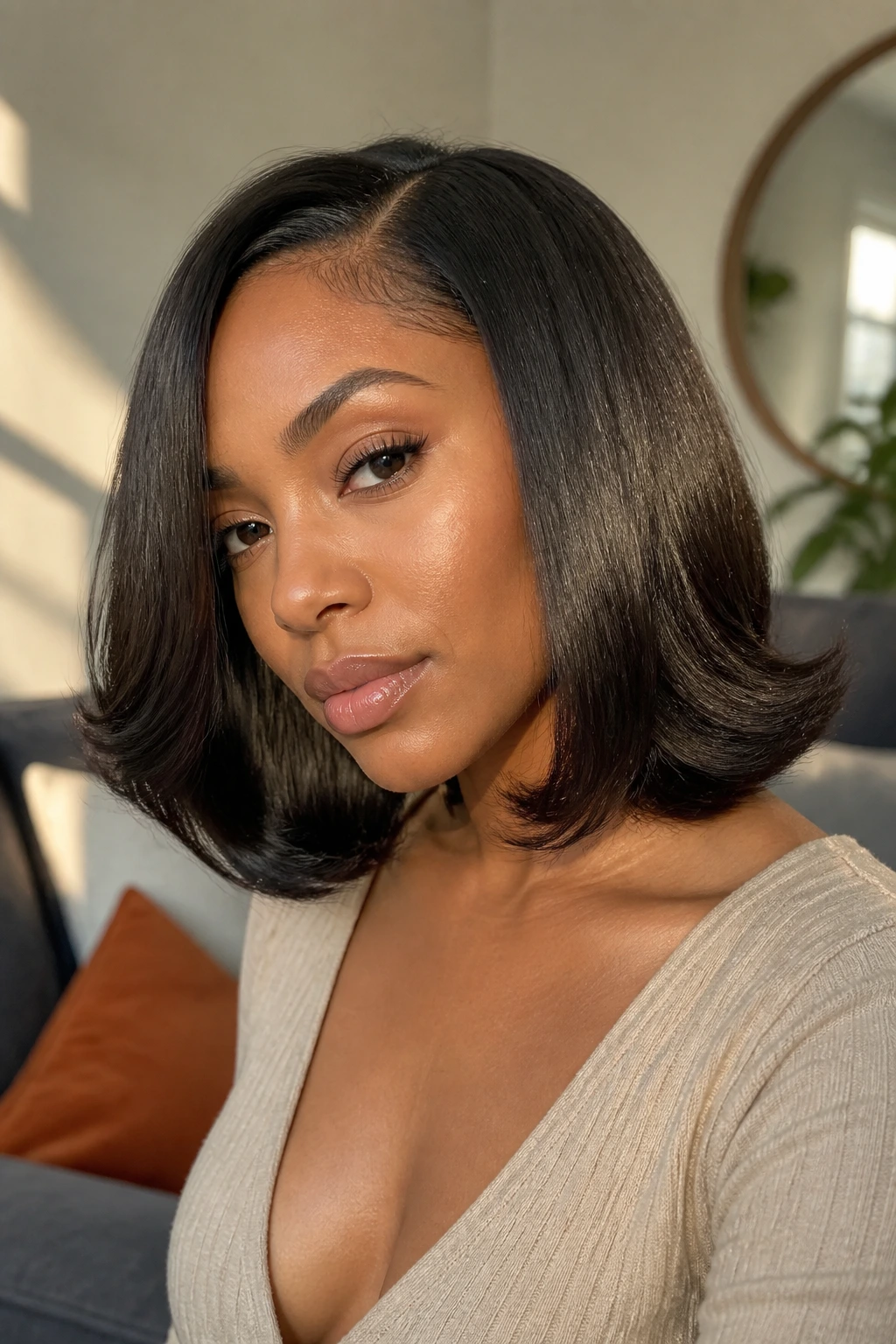
How short should a textured lob be on Black hair?
A good target is usually somewhere between the chin and collarbone, but shrinkage changes that fast. If your hair coils tightly, ask for a little extra length so the finished cut doesn’t land too high once it dries.
Will layers make my hair look thin?
They can, if the stylist takes too much from the outside edge. The safer move is long interior layers that remove bulk without hollowing out the perimeter. That keeps the lob full.
Can I wear a layered lob with natural hair and still keep volume?
Yes, and that’s where this cut shines. The trick is placing the layers where they reduce puffiness instead of taking away all the body. Natural hair often looks best with a little weight left at the ends.
What if my hair gets puffy by day two?
That usually means the finish and the cut are not matched well, or the layers were cut too high. Refresh with a light mist and a small amount of product, then pin the shape at night so it doesn’t swell out.
Is a side part better than a middle part for a lob?
Neither is universally better. A side part softens the front and adds lift; a middle part gives a cleaner, more symmetrical line. Choose the one that suits your face and your usual styling habits.
Can a lob work as a protective style?
Yes, if it’s done as a sew-in, wig, quick weave, or other install that keeps your natural hair tucked away. The key is making sure the install follows the lob shape instead of stacking too much hair around the shoulders.
How do I tell my stylist I want the cut to work with shrinkage?
Say where you want the hair to fall when it’s dry and in its usual texture, not just when it’s stretched. Mention how you wear it most often — blown out, curly, pressed, or in an install — because that changes where the layers should sit.
The Shape That Keeps Moving
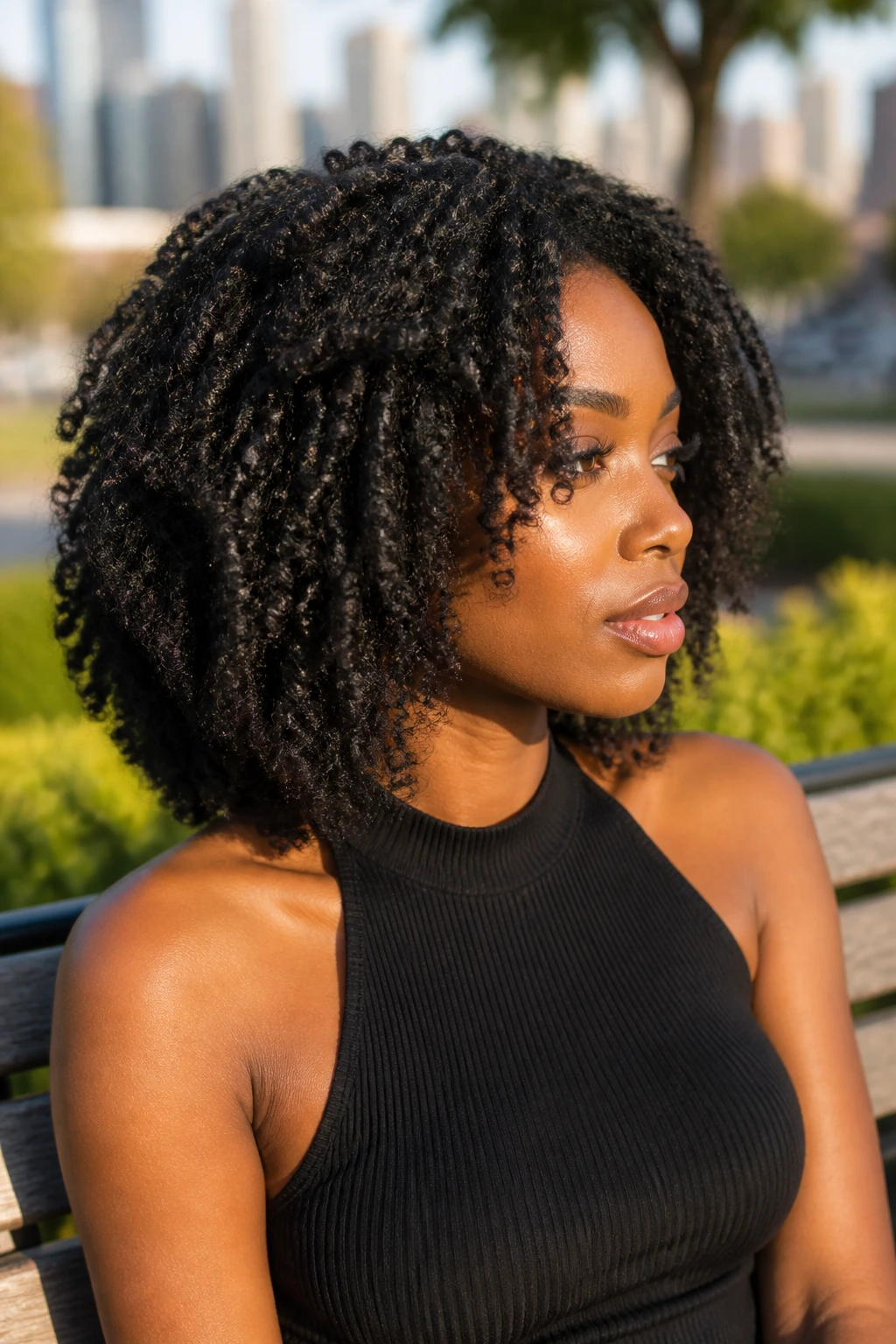
The best layered lobs on Black women are not busy haircuts. They are smart ones. The line is clean, the interior is doing work you can feel more than see, and the style still makes sense when the texture shifts from wet to dry or from pressed to natural.
That’s why this length keeps hanging around. It gives you shape without stealing movement, and movement without giving up the outline. Pick the version that matches how you actually wear your hair, not the one that only looks good in a single photo, and the cut will pay you back every time you catch it in a mirror.