



Some lob haircuts sit neatly on a mood board and fall apart the second real waves hit them. On wavy hair, a cut that lands too high can puff outward, and on heart-shaped faces that same shape can make the forehead feel even broader while the chin disappears into the ends.
That is why the best curly lobs for wavy hair and heart-shaped faces are all about where the weight lands. Collarbone length keeps the bend from springing too high, while face-framing pieces around the cheekbone or just below the chin soften the wide-forehead, narrow-chin contrast that comes with this face shape. Get those two things right and the cut starts doing the work for you.
A good lob on wavy hair should move when you turn your head. It should not sit like a shelf. The styles below cover the full spread: curtain bangs, side parts, shaggy ends, rounded lines, blunt edges that stay soft because the interior is thinned out, and a few sharper options for people who want something cleaner. There’s a version here for fine waves, thick waves, loose curls, and the kind of hair that changes mood every time humidity enters the room.
Why These Lob Shapes Keep the Face in Balance
-
Forehead balance: The styles here either break up a wide forehead with fringe or pull the eye downward with a side part and longer front pieces.
-
Chin softness: A lob that ends at the collarbone or just below it gives the lower face a little more presence, which matters when the chin is the narrowest point.
-
Wave control: Each cut keeps enough length for the wave pattern to settle, so the hair bends instead of ballooning at jaw level.
-
Grow-out friendliness: These shapes look less awkward at 8 weeks than a short bob, because the extra length buys you time.
-
Styling range: You can air-dry one version and diffuse another; the haircut still holds its shape.
1. Collarbone Lob with Curtain Bangs
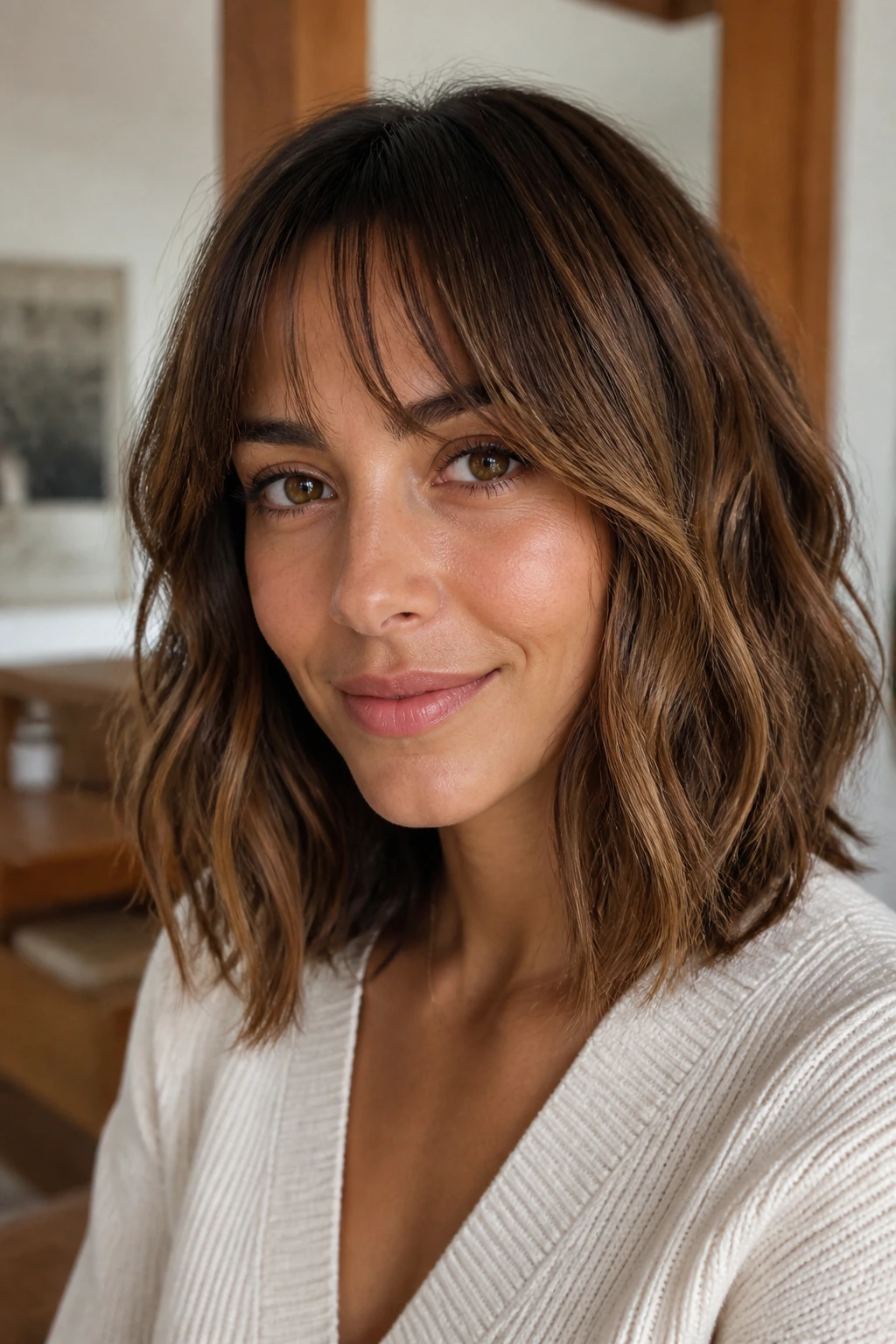
Curtain bangs are the easiest way to give a lob shape without boxing in the face. On wavy hair, this version lands around the collarbone, where the bend can stretch out instead of springing into a puff at jaw level. The front pieces part near the bridge of the nose and slide toward the cheekbones, which is the part of a heart-shaped face that likes a little softness.
Why it works: The collarbone gives the waves enough weight to settle, and the bangs take attention off a wider forehead without hiding it. That matters. A heavy fringe can make the top of the face feel crowded; this one stays open and moves.
Ask for the bangs to be cut slightly longer than you think you need. Wavy hair shrinks in a dry room and puffs in humidity, and the extra length keeps the curtain shape from turning into a squat little triangle after the first wash.
A little bend around the cheekbone does more than a blunt line ever could.
2. Side-Parted Lob with Long Face-Framing Layers
If your part always collapses on one side, stop fighting it and use the imbalance. A deep or side part gives the crown a quick lift, and long face-framing layers start below the cheekbone so the front stays soft instead of scalloped. On a heart-shaped face, that diagonal line helps the eye travel down and out, which eases the width at the top of the face.
- Keep the shortest front piece around lip length if your waves are loose.
- Push it closer to chin length if your hair is denser and swells when dry.
- Ask for the layers to stay long enough that they do not flip out by the ear.
This one reads polished even when the waves are a little chaotic. It is a smart choice if you want movement without a shaggy finish, and it grows out in a nice way because the side part hides the first inch of regrowth better than a center part does.
3. Blunt Lob with Invisible Internal Layers
A blunt lob sounds risky on wavy hair. It isn’t, if the inside is trimmed right. The outside line stays clean, but the stylist removes a little weight from the middle so the ends do not puff into a triangle. That trick matters on heart-shaped faces because a straight perimeter gives the chin more structure without making the top of the face look even wider.
The secret is restraint. Too many visible layers and the haircut loses the blunt edge that makes it feel sharp. Too much texturizing and the ends fray into a halo that looks soft for one hour and messy for the rest of the day.
This cut is best when your waves are medium-density or thick and you like a neater finish. It also plays well with a middle part if the front pieces are kept just long enough to skim the jaw instead of stopping right at it.
4. Shaggy Lob with Airy, Piecey Ends
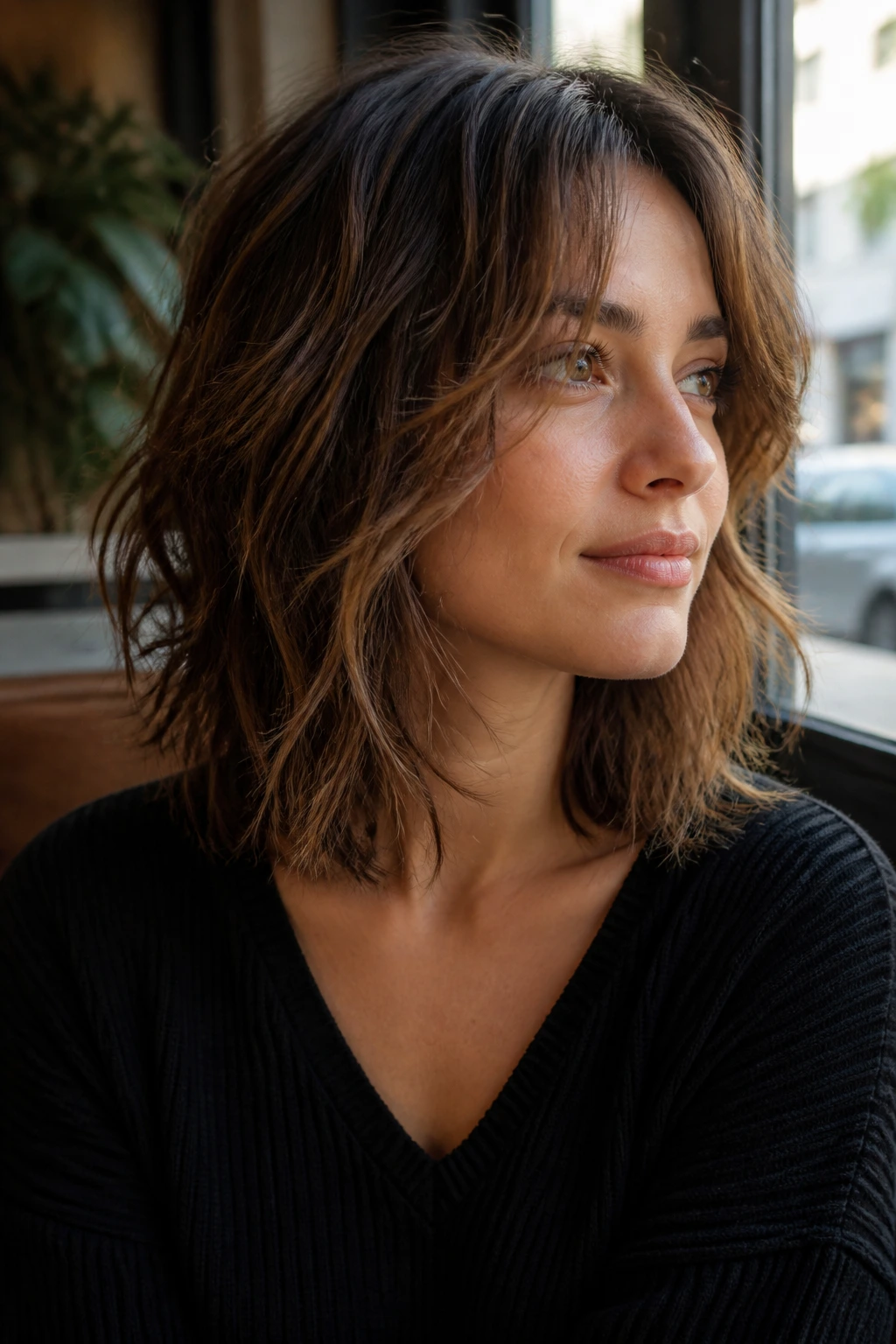
This is the cut for hair that flips by noon. A shaggy lob uses light internal layers and piecey ends so the wave pattern has somewhere to go, which keeps thick or springy hair from stacking up around the cheekbones. The forehead stays open, the chin gets a little more visual weight, and the whole shape feels less top-heavy.
What to ask for
Ask for the crown to stay soft, not short. That is the part people get wrong. If the top is cut too aggressively, the face can widen where you least want it.
What makes it feel good on wavy hair
The pieces around the face should start around the cheekbone, then taper toward the jaw. That creates movement without building a shelf at the temples. A dab of mousse and a diffuser can make the texture look intentionally broken up, not frizzy.
It is a low-fuss cut, but not a lazy one. There’s a difference.
5. Off-Center Lob with Chin-Skimming Front Pieces

The off-center version is the one I reach for when someone wants shape without bangs. A part that sits just a touch away from the middle gives the root a natural lift, and chin-skimming front pieces widen the lower half of the face in a gentle way. That helps balance the broader upper face that heart-shaped faces naturally have.
This works especially well if your waves are loose and your hair tends to fall flat at the crown. The diagonal line from part to chin does a lot of quiet work. It lengthens the face, softens the forehead, and keeps the lob from feeling symmetrical in a stiff, pageant-hair way.
Keep the front pieces long enough to tuck behind the ear without popping up like wings. That one detail makes the cut look expensive even when it was air-dried in ten minutes.
6. Bottleneck Bang Lob with a Soft Curve
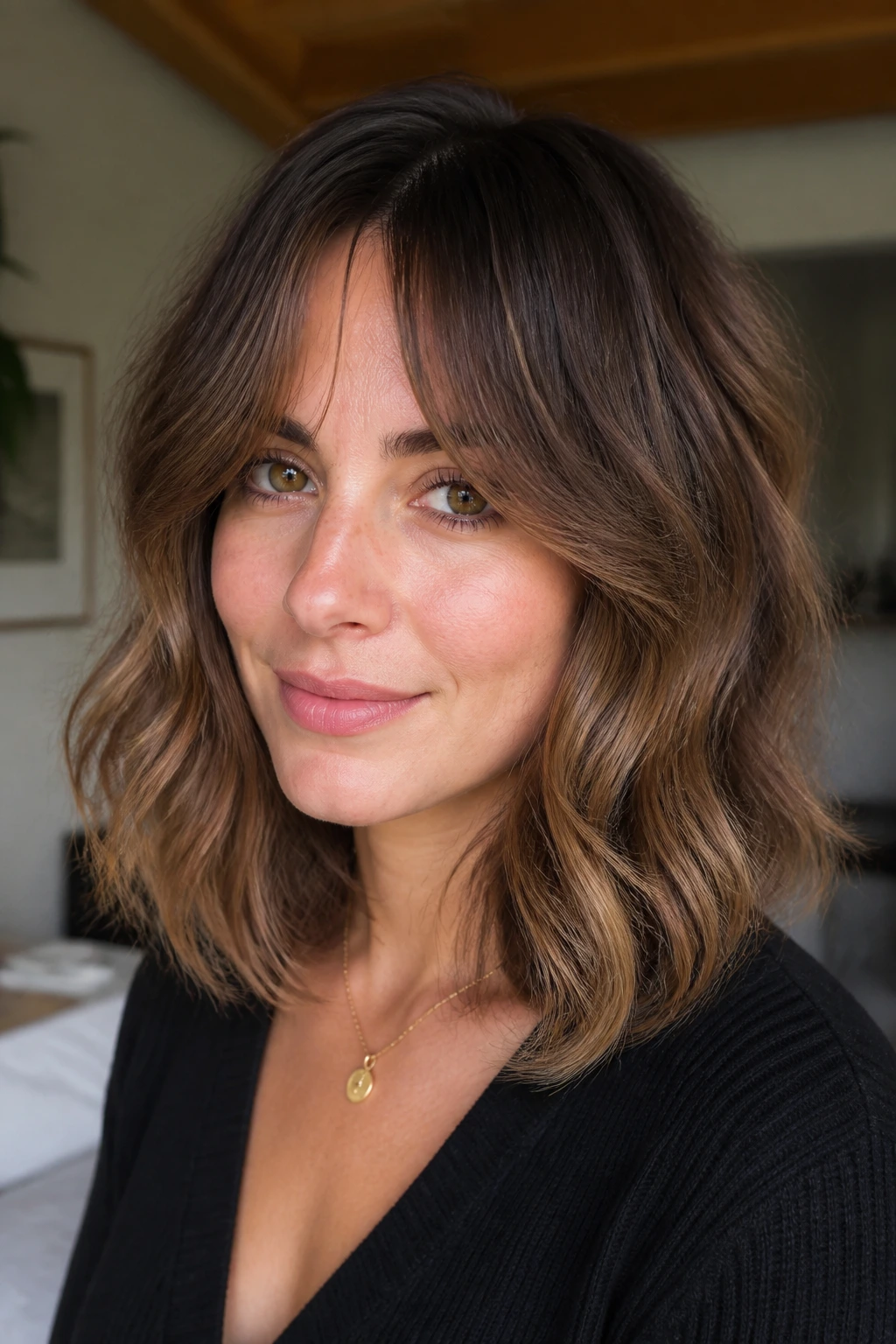
Why does a bottleneck bang soften a heart-shaped face so quickly? Because it starts narrow at the center, then opens out over the cheekbones instead of drawing a hard line across the forehead. On wavy hair, that shape is useful. The fringe stays airy, and the lob underneath gets to keep moving without competing with a heavy bang line.
The best version is cut with the hair dry enough to show its true bounce. Wet cutting can leave the bangs too short once they spring up, and bottleneck bangs are already compact by design. Keep the rest of the lob at collarbone length so the fringe feels like part of the haircut, not a separate accessory sitting on top of it.
This is the style for people who like a little softness around the eyes but do not want a full curtain bang. It has more structure than it looks like it does.
7. Layered Lob with a Gentle Flip at the Ends
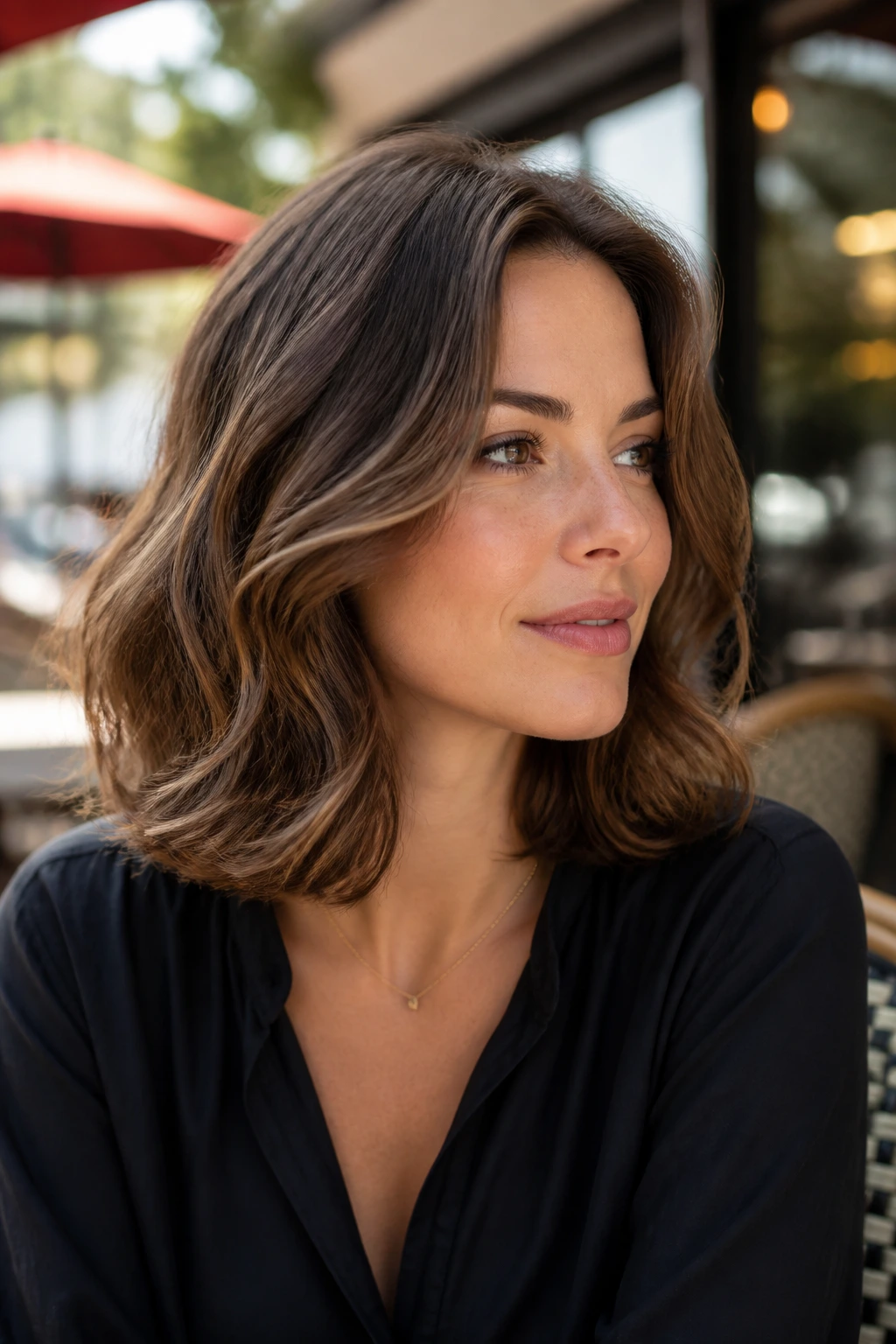
This is one of those cuts that looks plain in a photo and much better in motion. The layers are kept long, then the ends are beveled just enough so they turn under or flick outward at the collarbone. That little flip adds width where a heart-shaped face benefits from it most: around the jaw and lower cheeks.
The trick is not to over-layer the top. Long, sliding layers let the wave pattern stay intact, and the bevel at the ends keeps the outline from feeling blocky. If the hair is thick, ask for a bit of internal weight removal so the ends do not collapse into a heavy line.
A round brush or a large hot-air brush can sharpen the flip in about five minutes. Or you can air-dry and let the bend happen on its own, which often looks better if your waves are already defined.
8. Asymmetrical Lob with One Longer Side
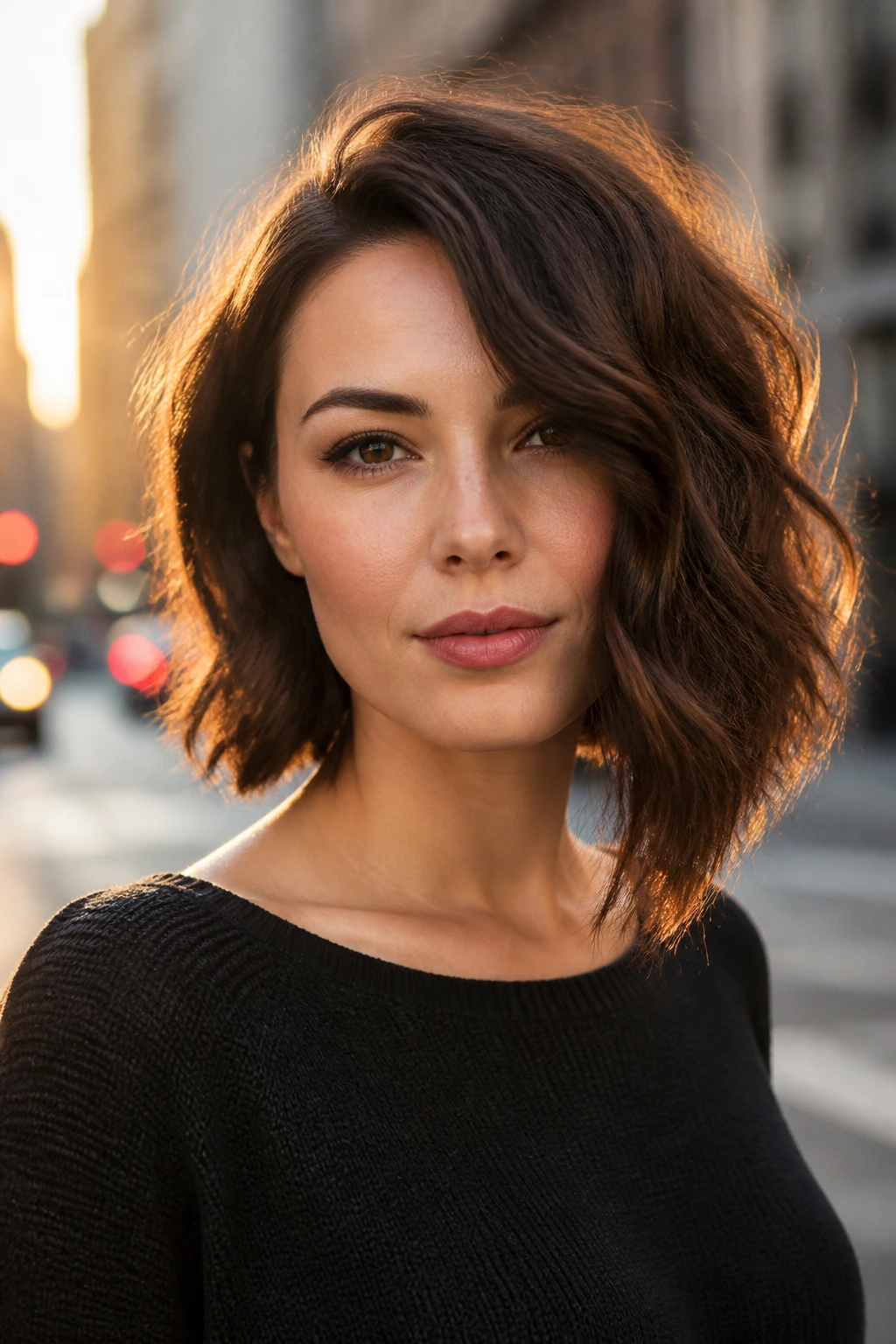
An asymmetrical lob changes the face before the styling even starts. One side sits a little longer, which gives the eye a diagonal path to follow and makes the lower half of the face feel less narrow. On a heart-shaped face, that movement is gold. It breaks the broad-to-narrow contrast without hiding anything.
The cut works best when the longer side is only an inch or two below the shorter side. Push it too far and the style starts looking like a deliberate statement piece instead of a wearable haircut. Keep the layers sparse, too; asymmetry already brings enough interest.
This is a good choice if you wear one side tucked behind the ear. The tucked side shows the clean line, and the longer side swings over the cheekbone when you move. Simple. Sharp. Not fussy.
9. Rounded Bevel Lob with Curved Ends
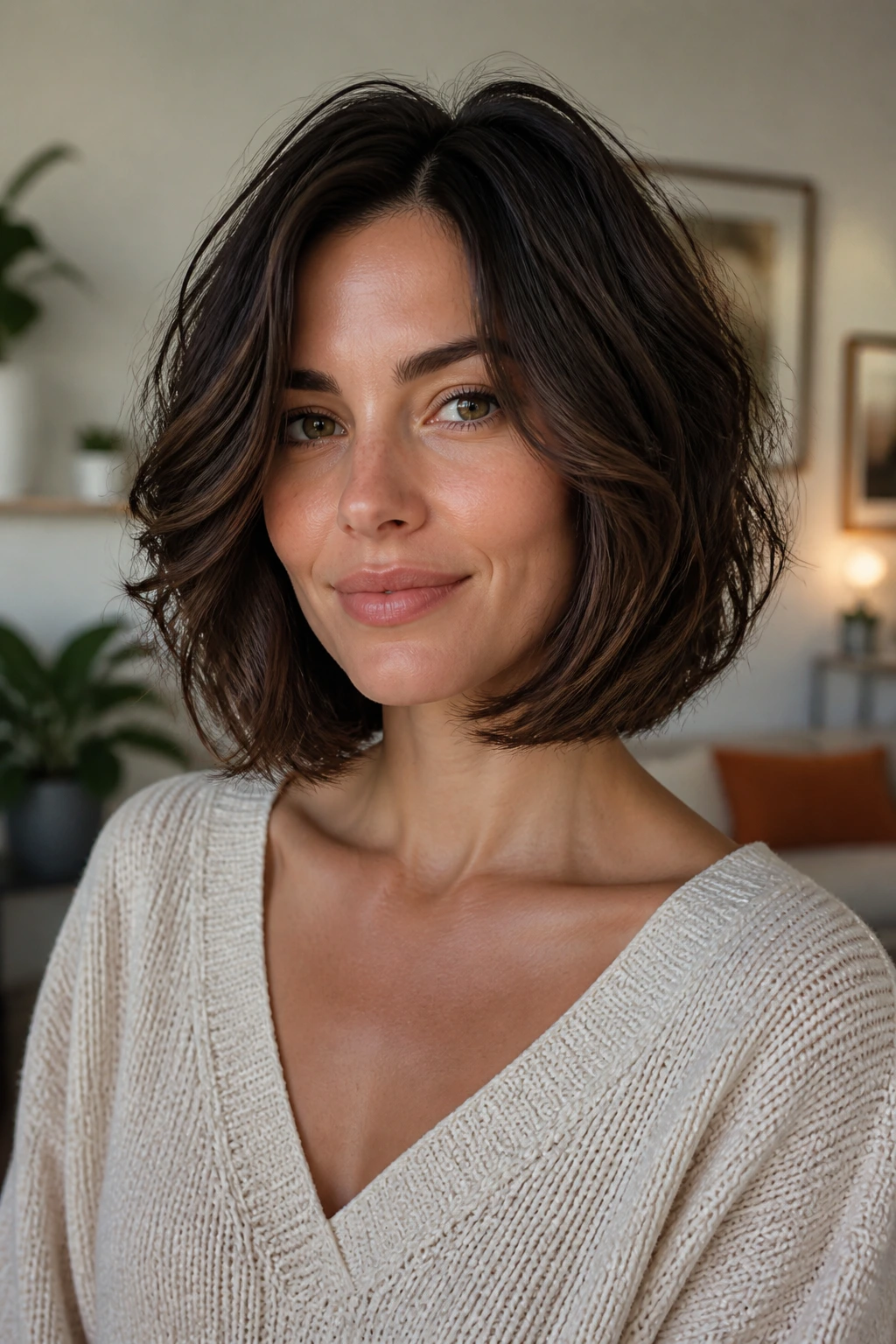
Round the ends and the whole haircut turns gentler. A beveled lob curves inward just enough to frame the jaw, which is useful when the chin is the narrowest part of the face. The shape feels tidy without being stiff, and wavy hair usually picks up that curve with very little persuasion.
This cut is especially kind to thick hair. The rounded outline prevents the dreaded triangle effect, where the sides flare out and the bottom looks too wide. Ask your stylist to preserve enough length in the front to keep the face open; if the front stops too high, the curve can crowd the cheeks.
A bevel also makes second-day hair easier. The shape holds even when the roots are a little flat, because the line of the cut does more work than the styling does.
10. Shag-Inspired Lob with a Soft Fringe
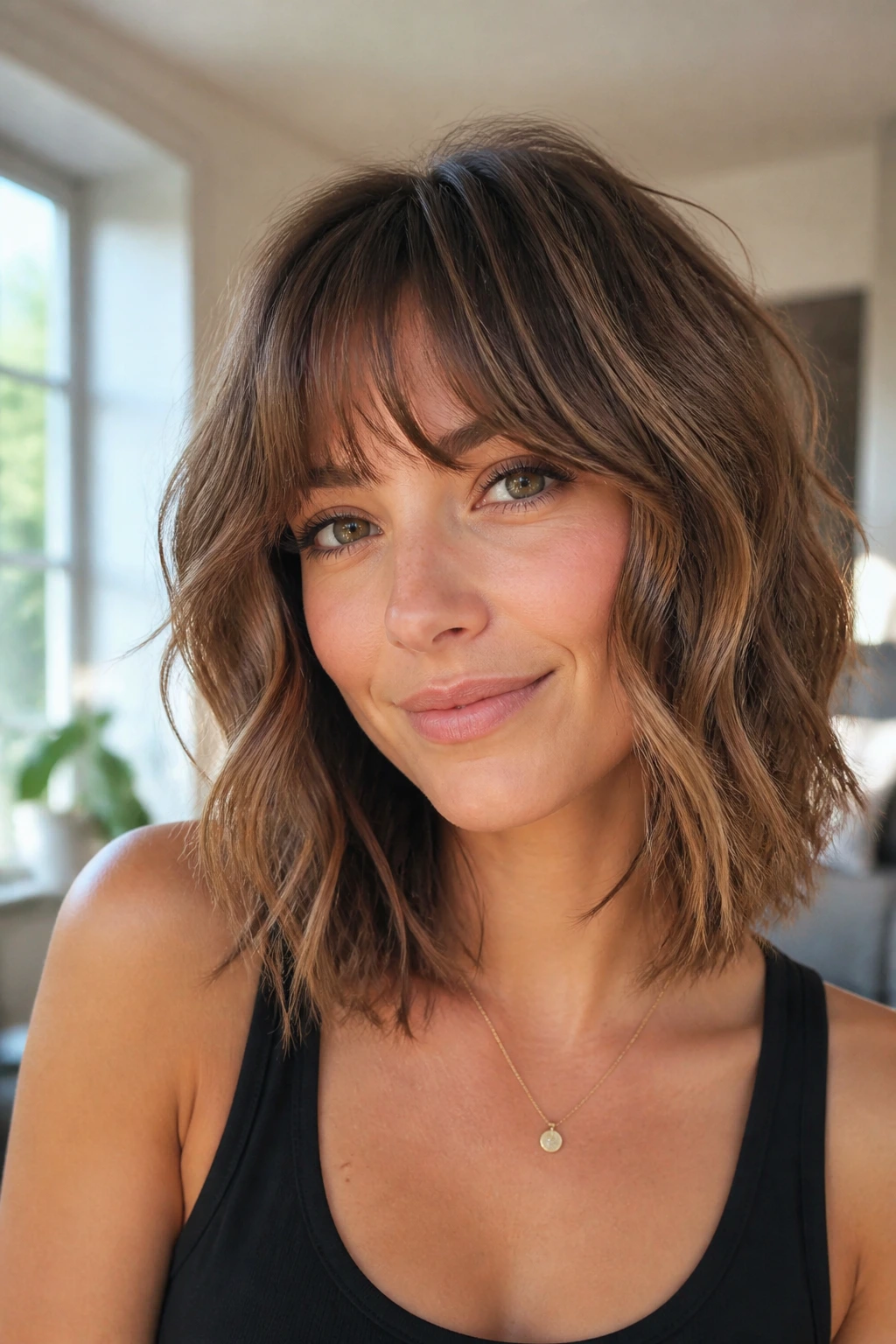
The shag-inspired lob is not the same thing as a full shag. The length stays in lob territory, but the fringe and face-framing pieces are feathered so the cut looks lighter and less formal. That softness matters on heart-shaped faces because the fringe can blur a wider forehead without building a block of hair across it.
If your waves are loose, this can be air-dried almost every day. If they are tighter or more uneven, a diffuser and a small amount of foam will keep the texture from puffing out at the roots. Keep the layers long enough that the bottom half still has weight; otherwise the haircut turns airy in the wrong way and starts to feel scattered.
A shag-influenced lob is one of the easiest styles to wear when you like movement more than polish. It does not pretend to be sleek. That is the point.
11. French-Girl Lob with Loose, Natural Volume

Some cuts need a diffuser. This one does not care. The French-girl lob leans into soft, imperfect volume, with just enough shape around the face to keep the forehead from taking over. The ends land somewhere between the collarbone and top of the shoulders, which gives wavy hair room to bend instead of stiffening up.
The magic here is restraint. The layers stay long, the part stays slightly off-center, and the finish never looks lacquered. That makes the style forgiving on heart-shaped faces, because it creates ease around the top of the head while leaving the jawline visible.
If your hair tends to frizz, use a light cream, not a heavy butter. The cut already gives you body; too much product only makes the whole thing sag.
12. Deep Side-Part Lob with Lift at the Crown
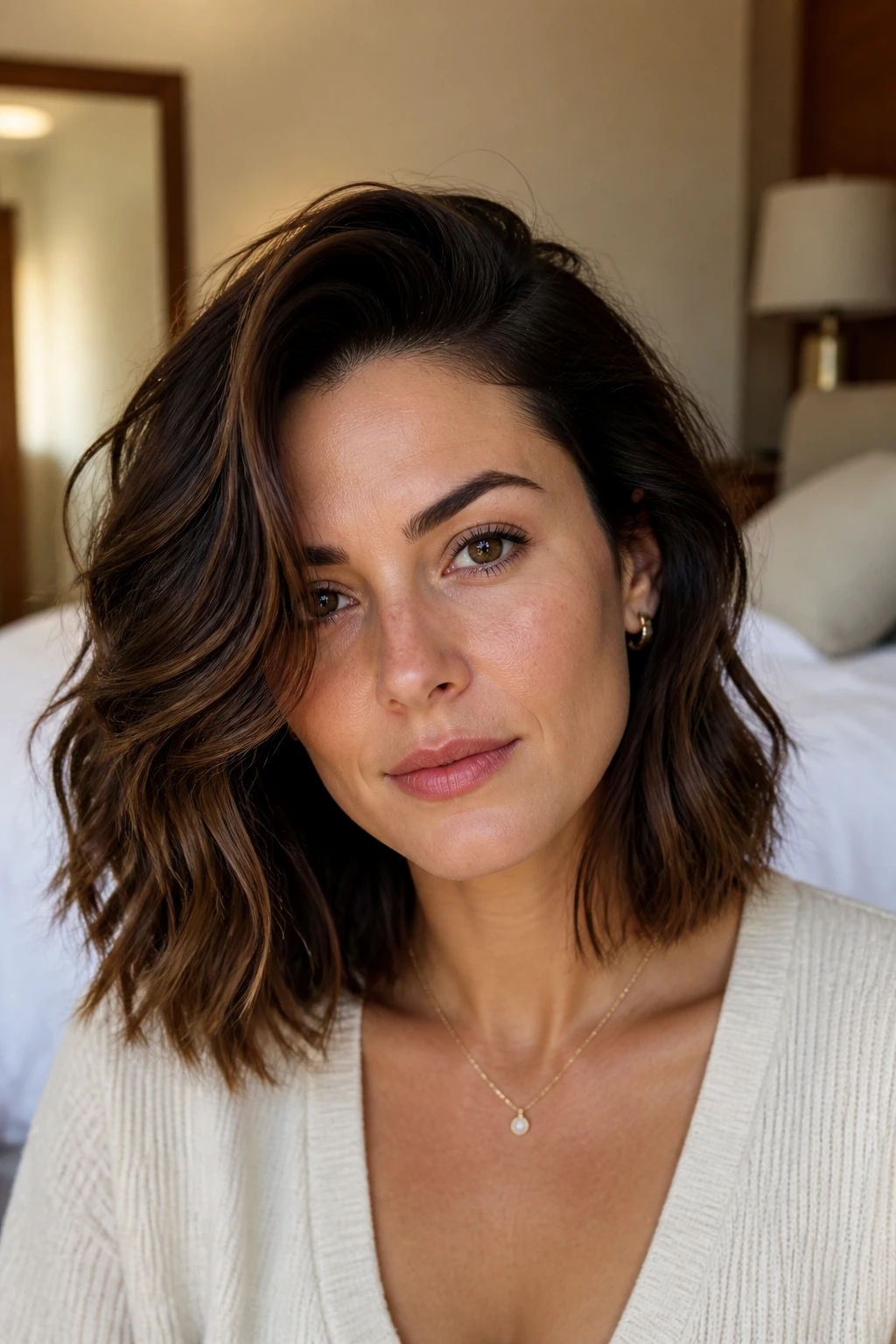
A deep side part changes more than the part line. It builds volume where the hair naturally wants to rise and pushes the front pieces across the forehead in a way that softens the upper face. On heart-shaped faces, that extra lift at the crown helps lengthen the silhouette without adding bulk around the chin.
This cut looks especially good when the front is kept just long enough to brush the collarbone. The longer side can sweep across the cheekbone and settle there, while the shorter side gives the eyes a little edge. It has a clean, almost old-Hollywood shape when you smooth it out, and a more relaxed feel if you let the waves stay loose.
A root clip at the crown while the hair dries makes a bigger difference than most people expect. So does moving the part before the hair is fully dry. The line sets where you tell it to, not where it lands by accident.
13. Beachy Lob with Long Layers Only
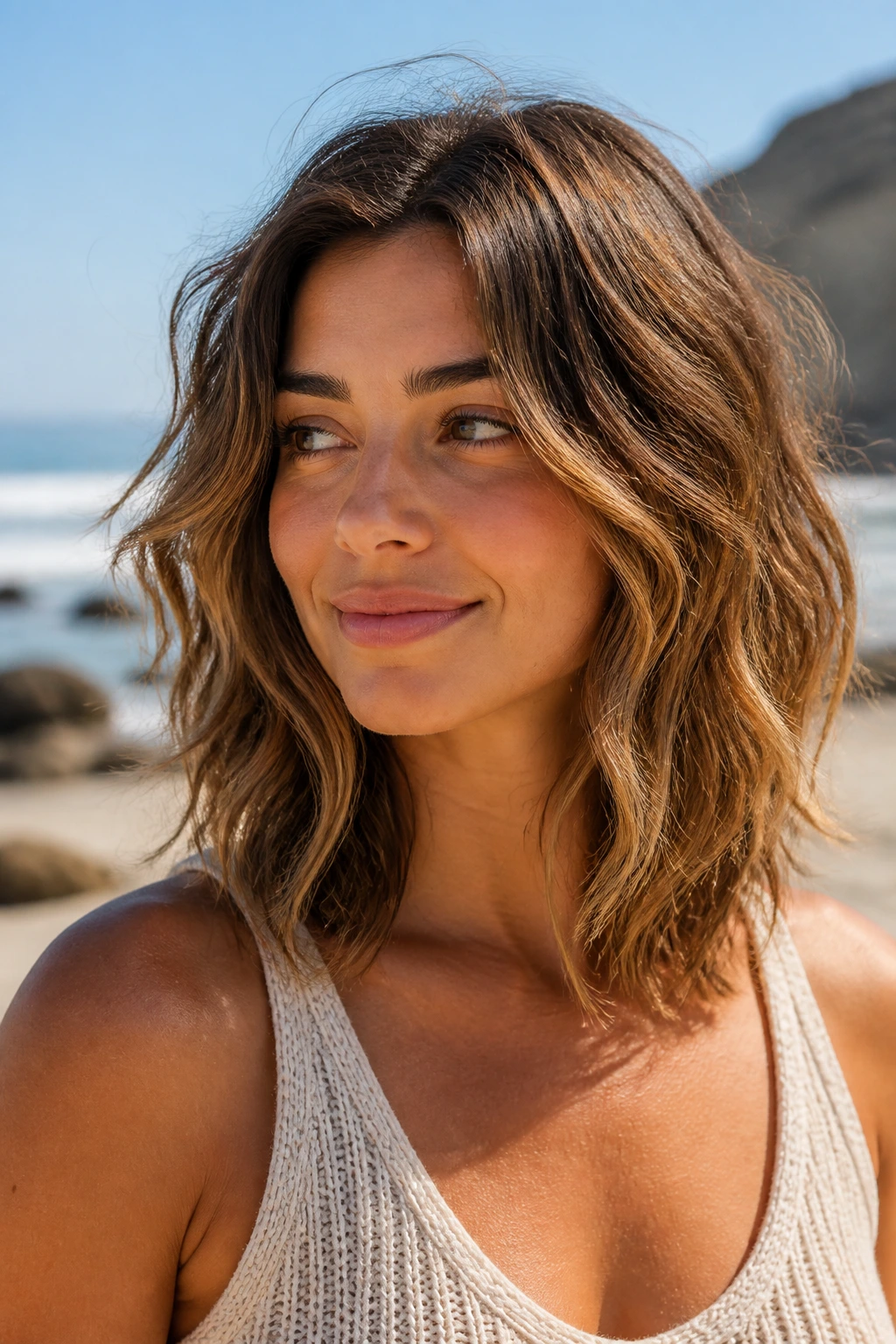
Long layers only sound boring until you see what they do at shoulder length. They keep the wave pattern intact, add movement without stealing density, and stop the ends from looking like one heavy shelf. That’s useful for heart-shaped faces because the hair can stay full through the lower half without piling too much weight on the cheeks.
This version is a good match for fine waves or hair that goes limp if too many layers are cut into it. You still get swing, but you do not lose the substance that makes a lob feel like a lob. Salt spray can help, though I prefer a light mousse at the roots and a very small amount of cream on the mids.
The result is beachy without looking scraped apart. Clean lines underneath. Loose texture on top. Easy to live with.
14. One-Length Lob with a Polished Curve
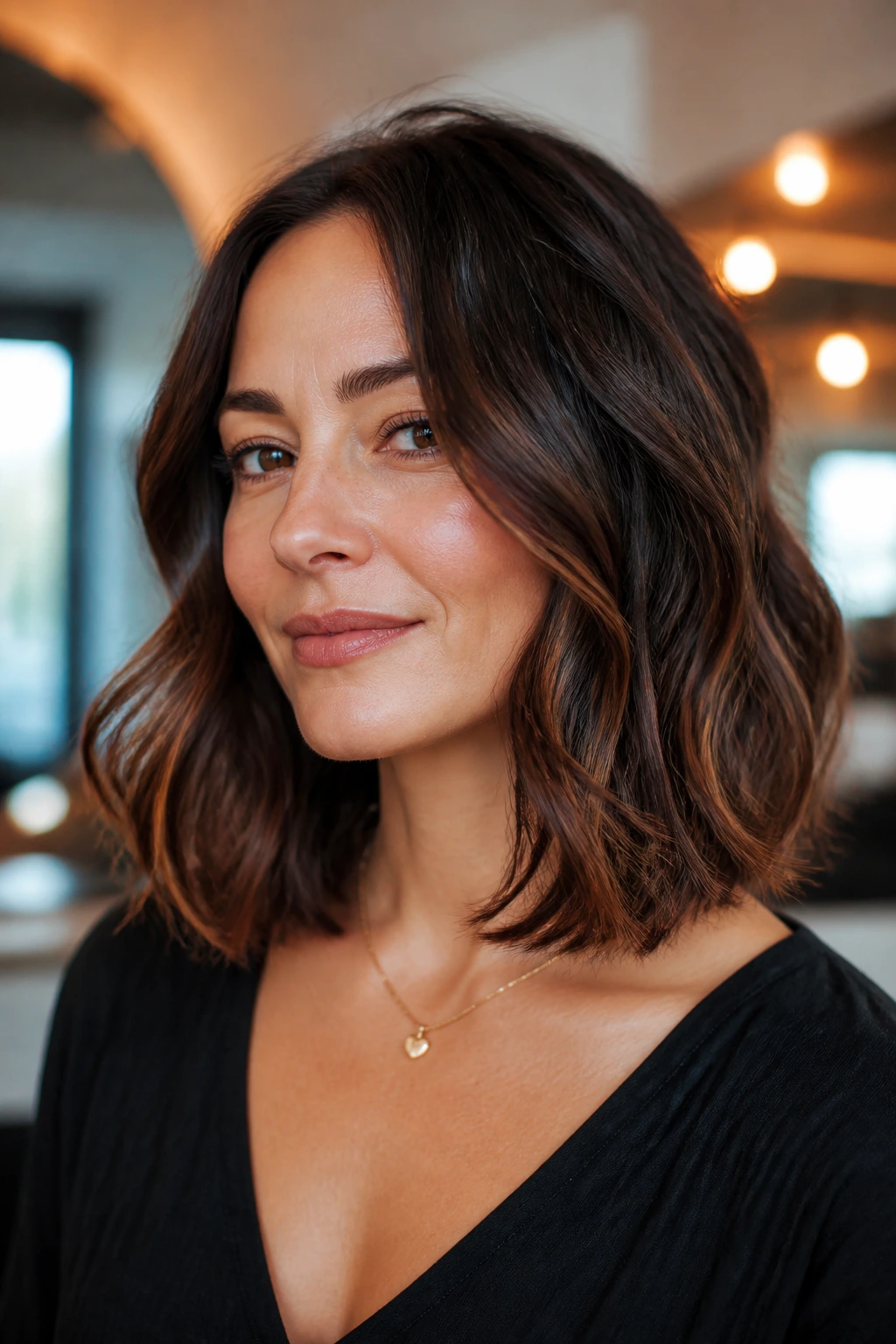
A one-length lob is the calmest option here. The perimeter stays even, which gives thick or medium-thick waves a solid base, and the face-framing curve comes from the way the hair is dried, not from a stack of layers. For a heart-shaped face, that matters because the fullness sits lower, where the jaw can use the help.
This cut looks best when the stylist point-cuts the ends just enough to keep them from feeling hard. You still want the clean outline. You do not want a blunt block that sits like cardboard at the shoulders.
If you like a smoother finish, a large round brush or a hot brush can bend the ends inward in a few passes. If you prefer texture, let the waves dry on their own and use only enough product to keep the surface from fraying.
15. Face-Framing Lob with Bright Front Pieces
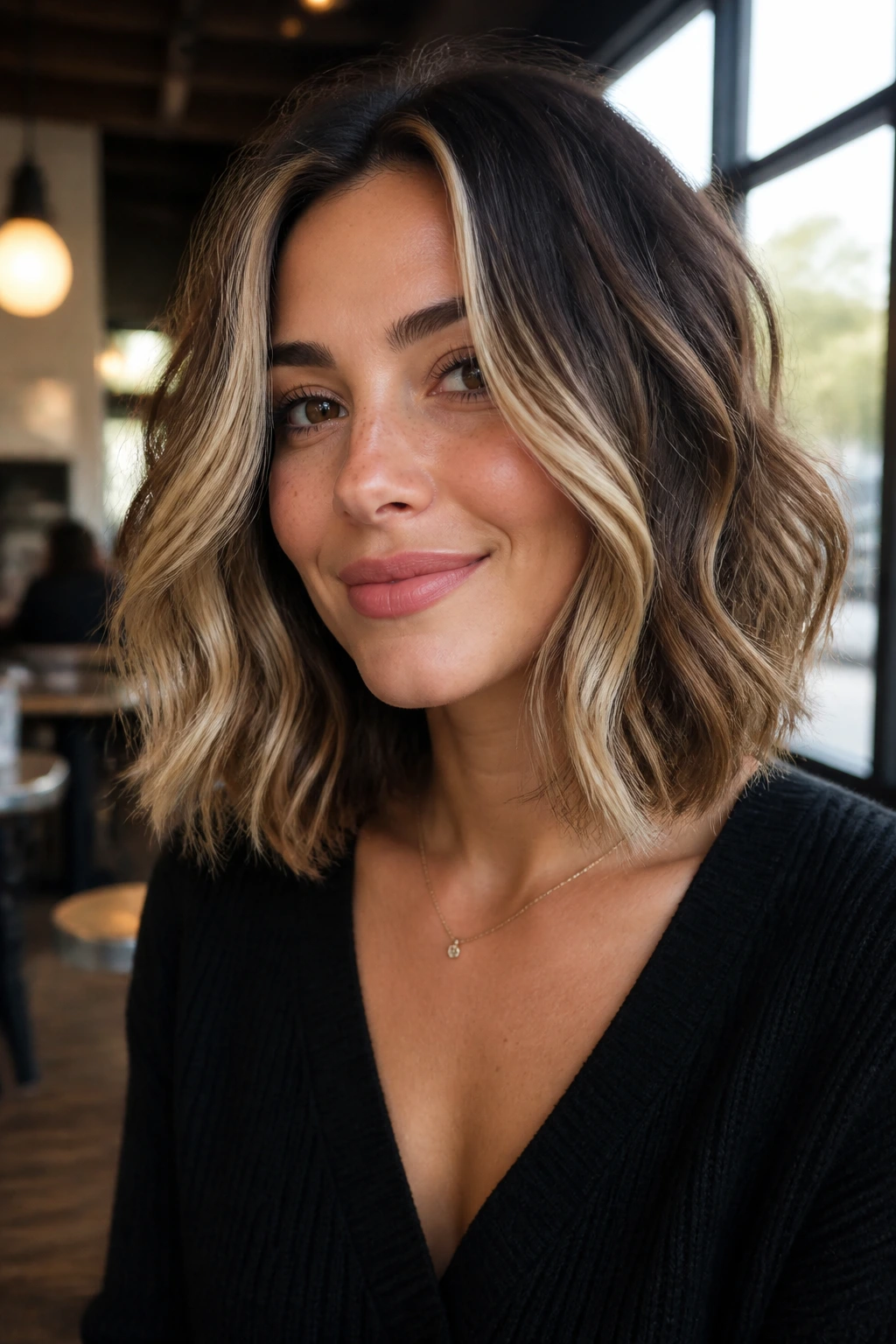
Color can change how a lob reads on the face, and bright front pieces do a lot of the work here. Lighter pieces around the cheekbone and jaw draw the eye downward, which is useful when the upper face is the widest part. On wavy hair, those brighter strands also show the movement of the cut more clearly than a solid color does.
The cut itself should stay soft. Keep the front pieces long enough to graze the cheek or chin, then use the color to highlight where the shape is strongest. If the lightest pieces start too high at the temples, the forehead can look wider than it actually is. That is a detail worth protecting.
This is one of the few styles that looks nearly different with a slight shift in placement. Move the bright pieces lower, and the face gets more length. Move them wider, and the cheekbones pop. Same cut. Different effect.
16. Razored Lob with Lightweight Ends

Razored ends are a tool, not a mood. On the right hair, they take weight out of coarse waves and let the lob move without feeling stiff. On the wrong hair, they can make the ends look fuzzy by lunchtime. That is why this version is best done by someone who actually knows how waves behave when they dry.
The reason it flatters heart-shaped faces is simple: the ends stay light enough to swing around the jaw instead of sitting in one solid chunk. That makes the lower face feel a little fuller without turning the hair into a puffed triangle. Keep the layers controlled and the razor work mostly at the perimeter.
This cut does like a styling product, but not much. A lightweight cream or a soft gel cast is enough. Too much oil or butter and the razor work disappears under weight.
17. Structured Lob with Defined S-Waves
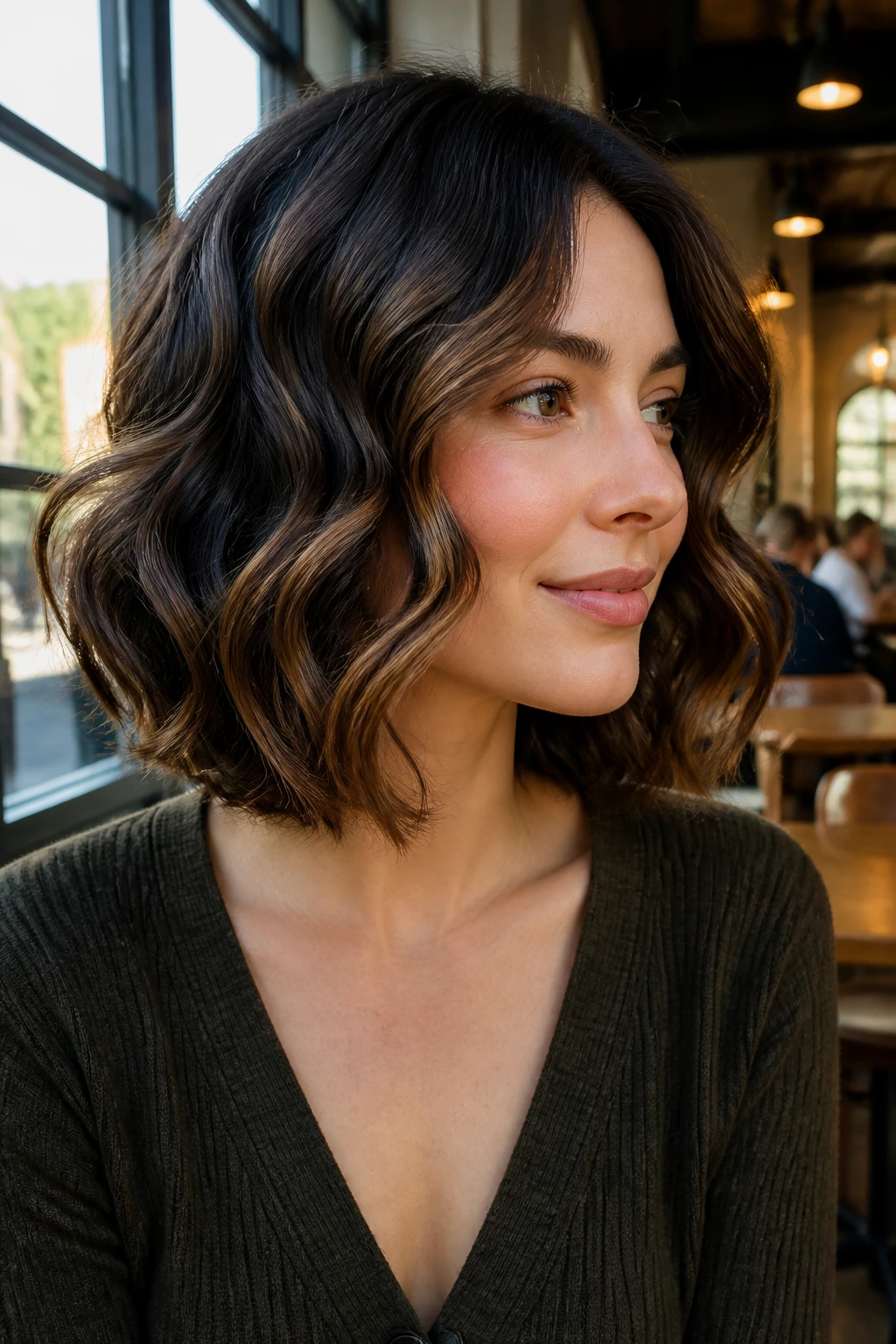
Defined S-waves need a cut that holds a clean outline. This version keeps the lob neat at the perimeter while leaving enough length for the waves to settle into shape. It is the most polished option in the group, and that makes it good for anyone who wants the haircut to look deliberate even when they air-dry.
The face-framing pieces should be long, not choppy. Short, broken pieces fight against the structure and make the cut look busy around the temples. A side part or a soft off-center part works well here because it gives the wave pattern a natural direction.
If your waves tend to separate into a few strong bends instead of full curls, this cut is a quiet winner. It gives the pattern room to show without letting the silhouette fall apart.
18. Soft-Edge Lob with Side-Swept Bangs
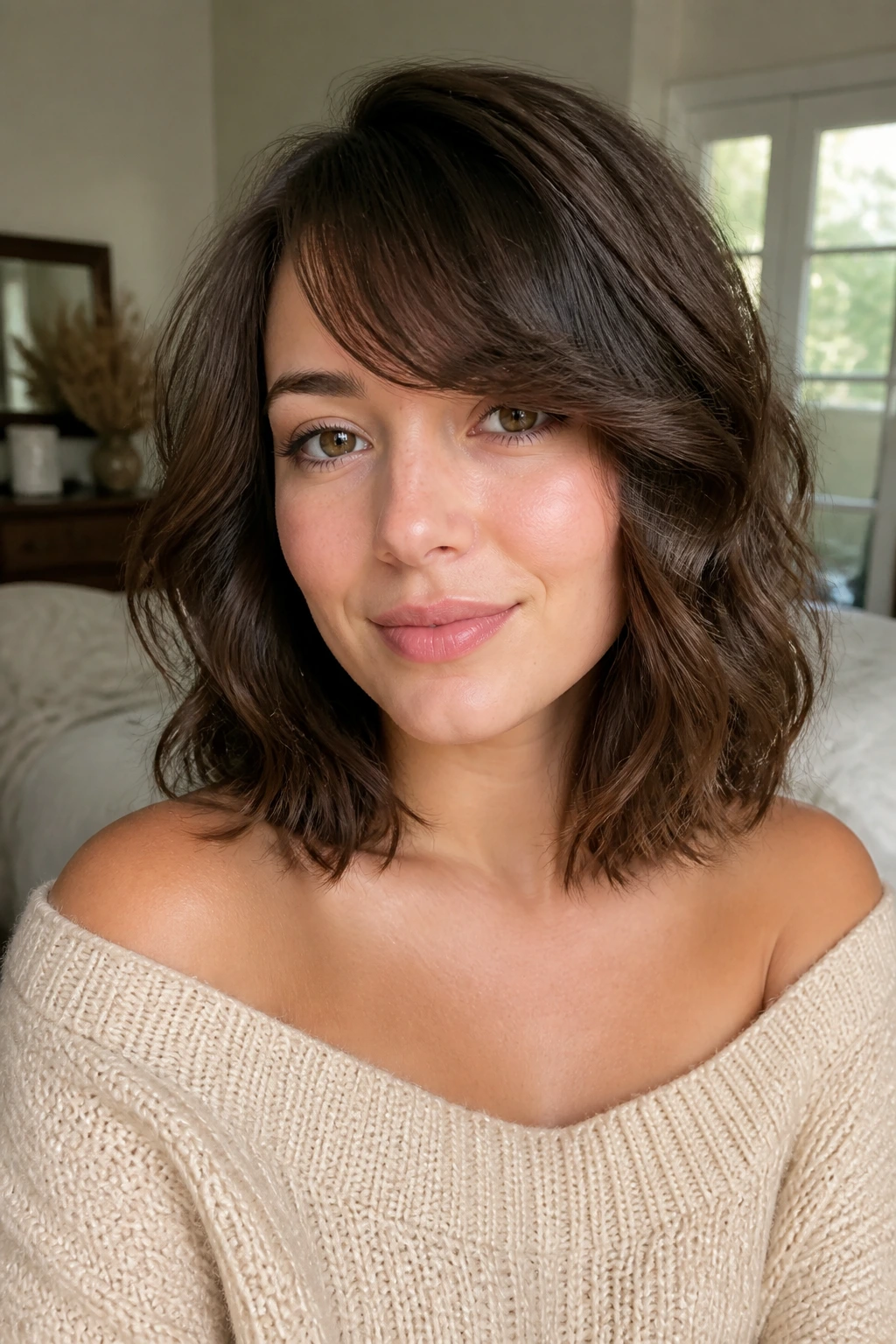
Side-swept bangs are the easy answer when you want coverage without a curtain. They skim across part of the forehead, soften the widest point of a heart-shaped face, and blend into the rest of the lob without a hard line. On wavy hair, that softness matters because the fringe does not need to be perfectly neat to work.
The edges around the rest of the cut should stay lightly point-cut so the whole shape feels smooth, not chopped. A side-swept bang also grows out well, which is a practical bonus if you hate seeing a haircut turn awkward after six weeks.
This is a good style for people who want a little forehead control but do not want to commit to the maintenance of full bangs. You can sweep it loose on wash day and tuck it back when you want the face fully open.
19. Wash-and-Go Lob with Minimal Layers
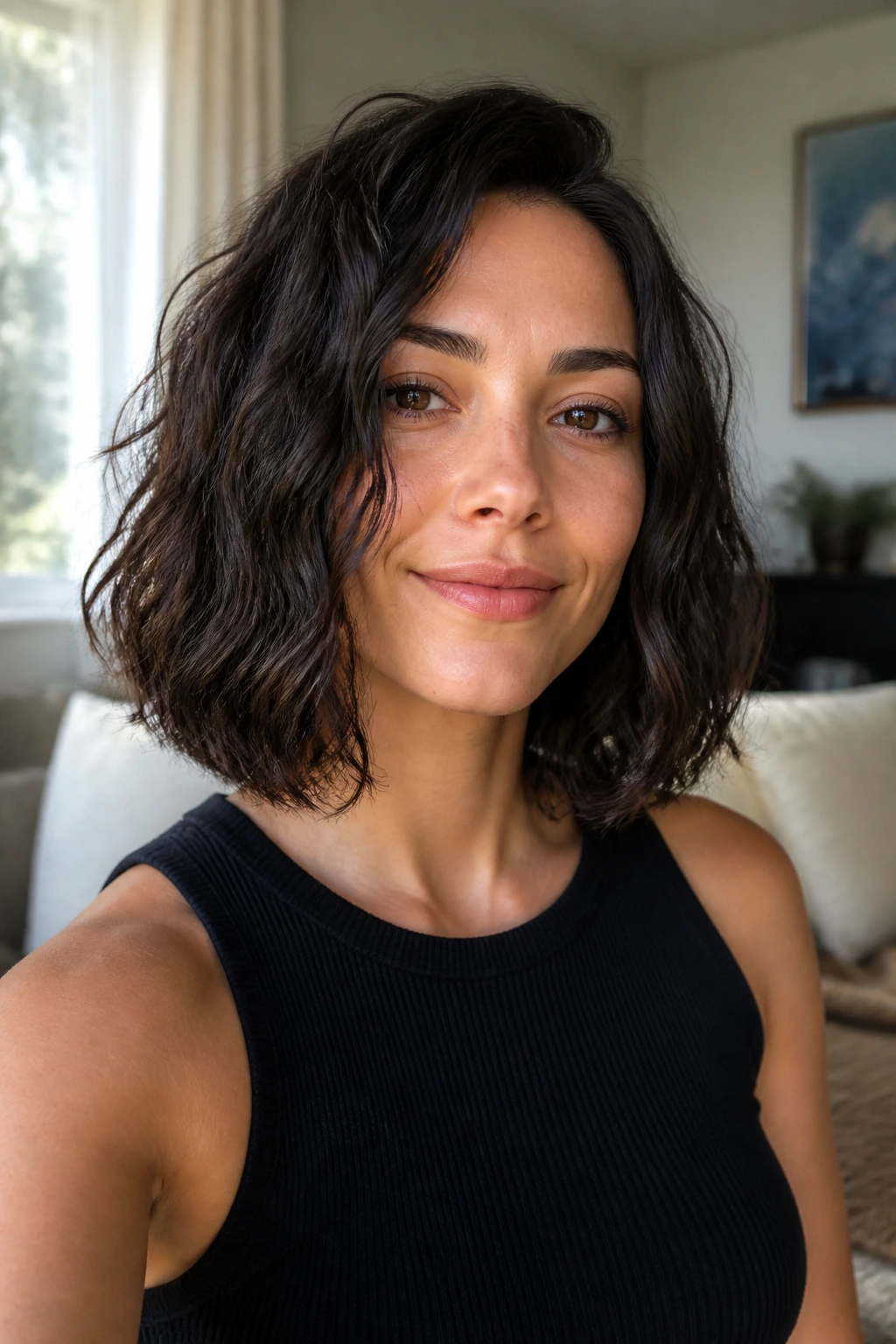
Minimal layers are a relief if your hair already has a mind of its own. The cut keeps the shape clean and lets the wave pattern set the tone, which is useful when the hair is fine, mixed-textured, or prone to frizzing if too much is removed. For heart-shaped faces, the clean outline at the bottom helps the chin look a little less narrow.
This is the low-maintenance version that still looks intentional. You wash, add a small amount of foam or cream, scrunch, and leave it alone. That’s the whole point. If the layers are too short, the hair can puff around the temples; if they stay long, the overall shape remains sleek enough to control.
It is a nice choice for someone who likes a cut more than a styling routine. There is no shame in that.
20. Micro Curtain Lob with Airy Bangs
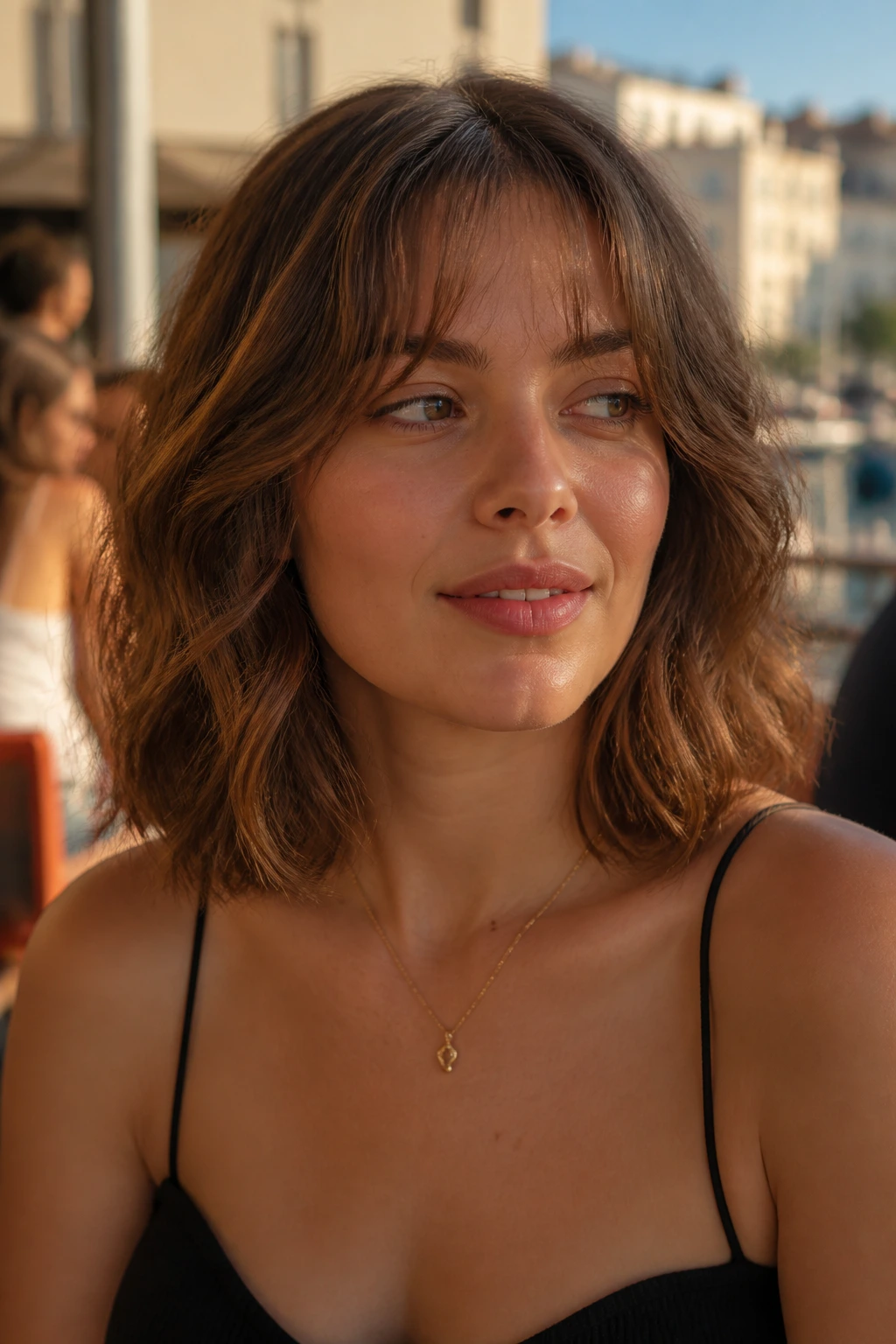
Micro curtain bangs walk a thin line. Keep them soft and feathered, and they can open a heart-shaped face in a neat, modern way. Let them get heavy or blunt, and the whole front of the haircut starts looking boxed in. The lob underneath should stay collarbone length so the short fringe has room to breathe.
This style suits someone who likes the idea of bangs but wants less hair on the forehead than a traditional curtain fringe gives. It works best on wavy hair that bends rather than coils, because the bangs need a gentle curve, not a hard curl. A tiny round brush or even a finger-twist while the fringe dries can stop it from separating into odd little hooks.
The payoff is a light, cheekbone-first shape that keeps the face open. Clean. A little playful. Not precious.
21. 90s Flip Lob with Flicked-Out Ends
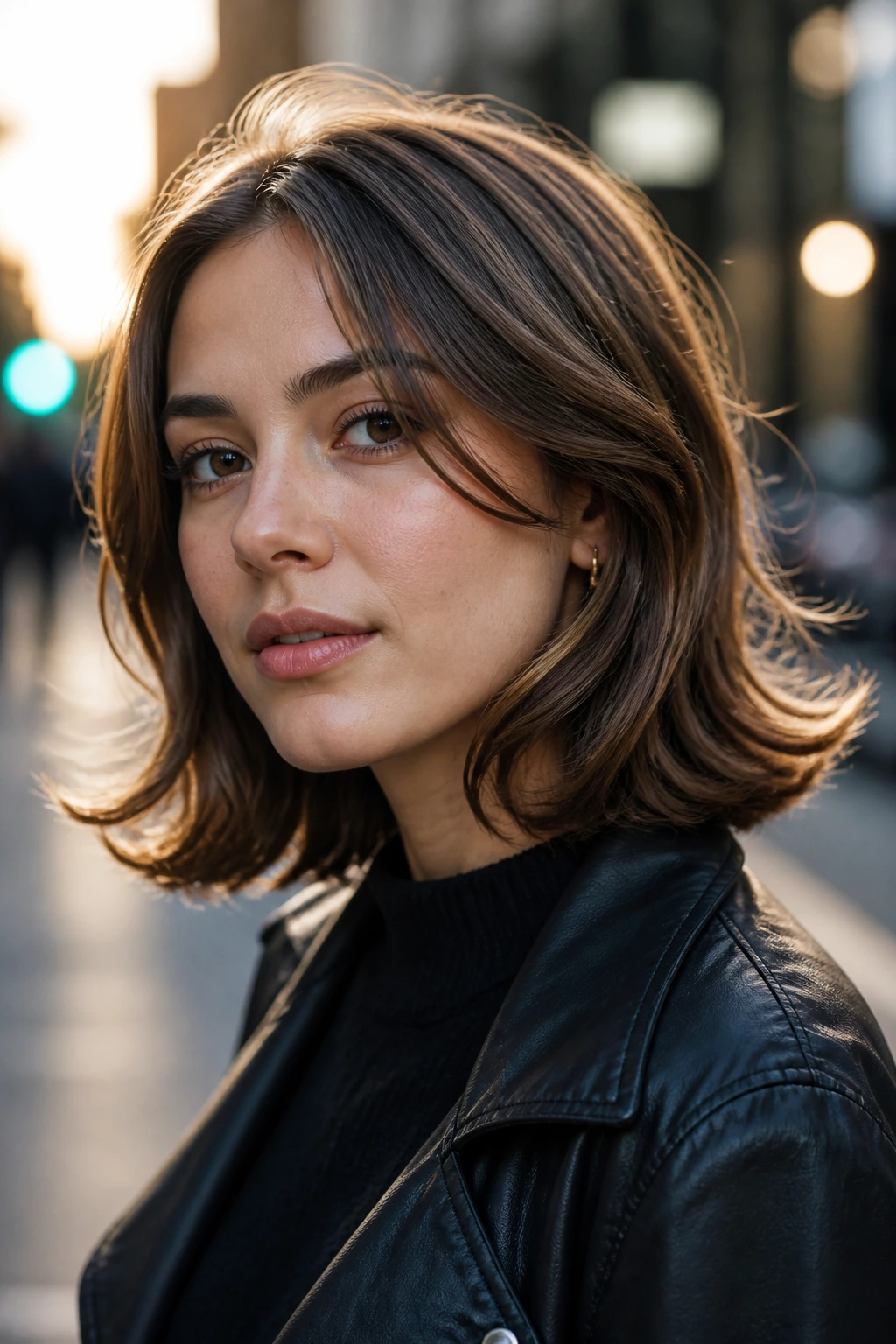
The 90s flip looks playful because the ends are doing the talking. Instead of tucking inward, the hair flicks out at the collarbone or just below the jaw, which gives a heart-shaped face a little more width at the bottom. That small change makes a surprisingly big difference in balance.
This cut needs enough length to flip without floating away from the neck. If the lob is too short, the ends can stick out like arrows. Keep the front pieces long and the internal layers restrained, then style with a round brush or a flat iron bend if you want the flick to hold.
It is a good option when you want a lob that feels a touch more styled than “air-dried and done.” There’s a little attitude to it. The good kind.
22. Airy Lob with Hidden Internal Debulking
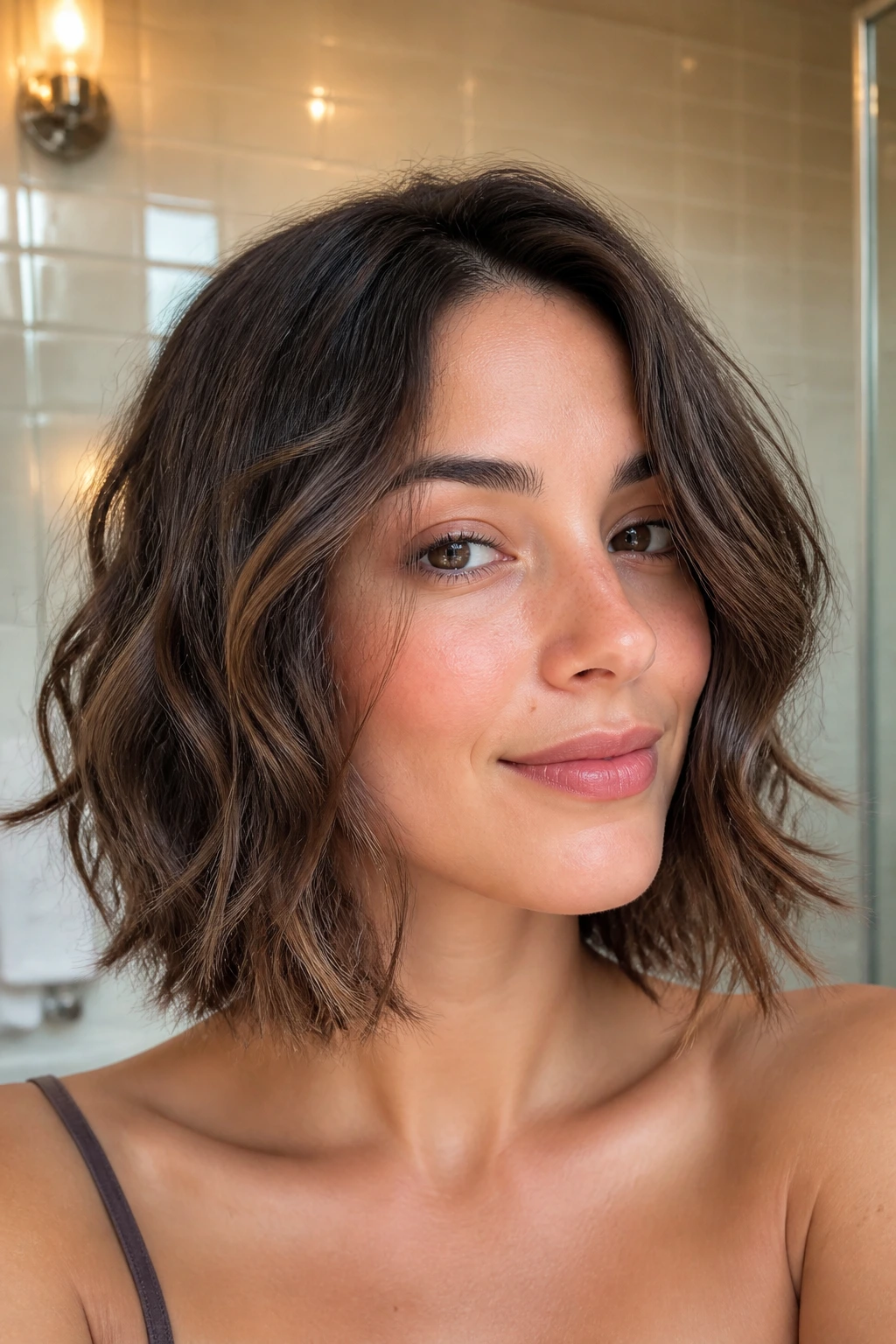
Hidden debulking is the invisible part of a good thick-hair lob. The outside line stays soft and smooth, but the inside loses enough weight that the wave pattern can move without ballooning. That matters on heart-shaped faces because thick hair can make the upper half of the face feel even broader if the cut is too blunt.
The trick is to keep the perimeter intact while removing bulk through the middle sections. Not at the ends. Not around the temples. Inside the haircut, where nobody sees the scissors doing their best work. When it is done right, the shape still looks full, just less heavy.
This version is one of the easiest to wear in humidity. The hair has room to swell without turning into a triangle, and the face stays open instead of buried under width.
23. Graduated Lob with a Slightly Shorter Nape
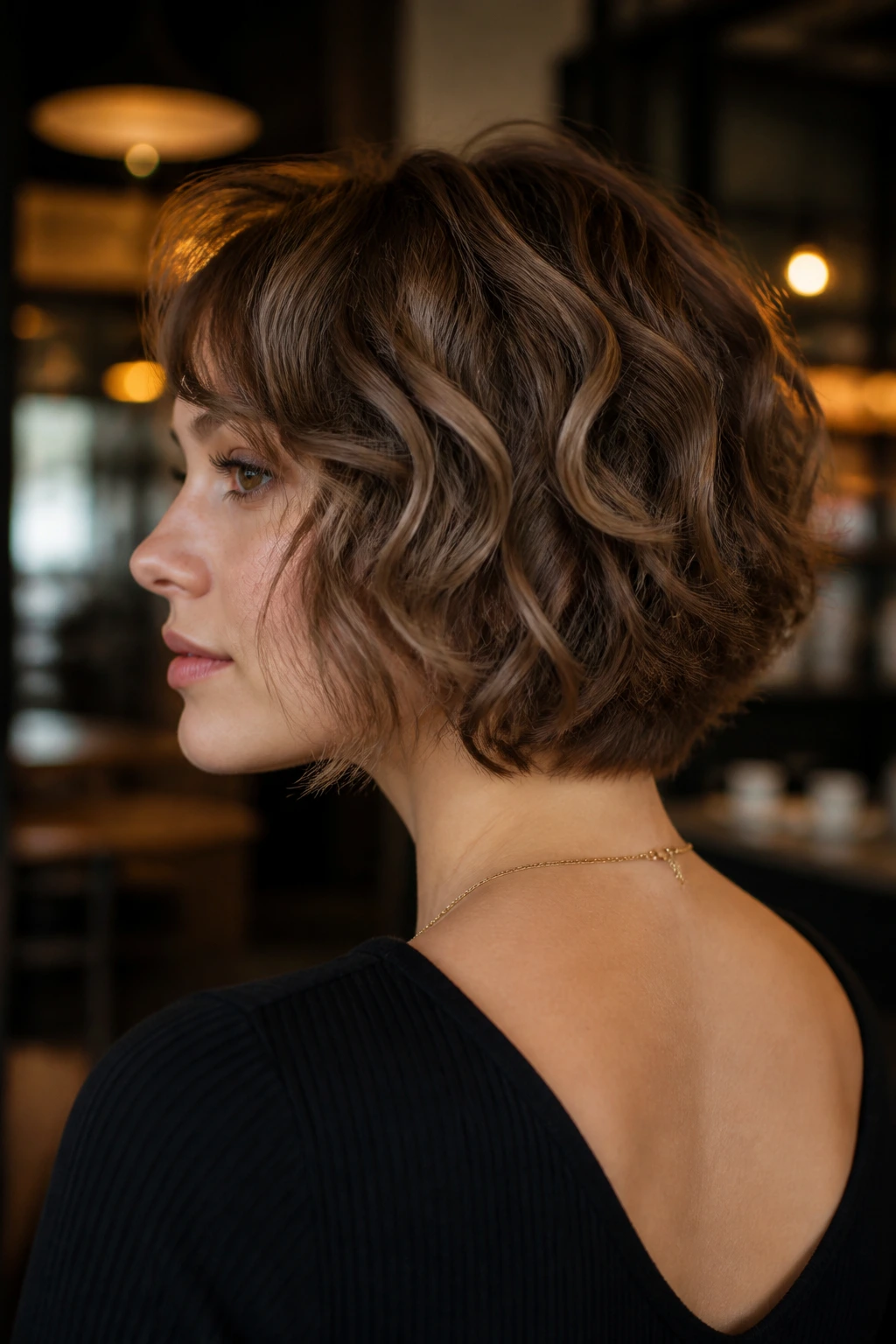
A graduated nape can save a lob from feeling boxy. With a little more length left in the front and a cleaner lift at the back, the cut gains shape without getting stacked and old-fashioned. For wavy hair, that subtle graduation helps the ends settle instead of sticking straight out.
Heart-shaped faces usually do well when the front is still the longest point. That keeps the eye moving downward. The nape can sit a bit shorter to lighten the back and give the neck a neat line, but it should not push too high or the whole cut starts to feel like a mini-bob.
This is a smart choice if you like a neater silhouette and want the haircut to sit close to the head without losing movement at the front. It has structure. It does not scream for attention.
24. Tousled Lob with Long Perimeter Layers
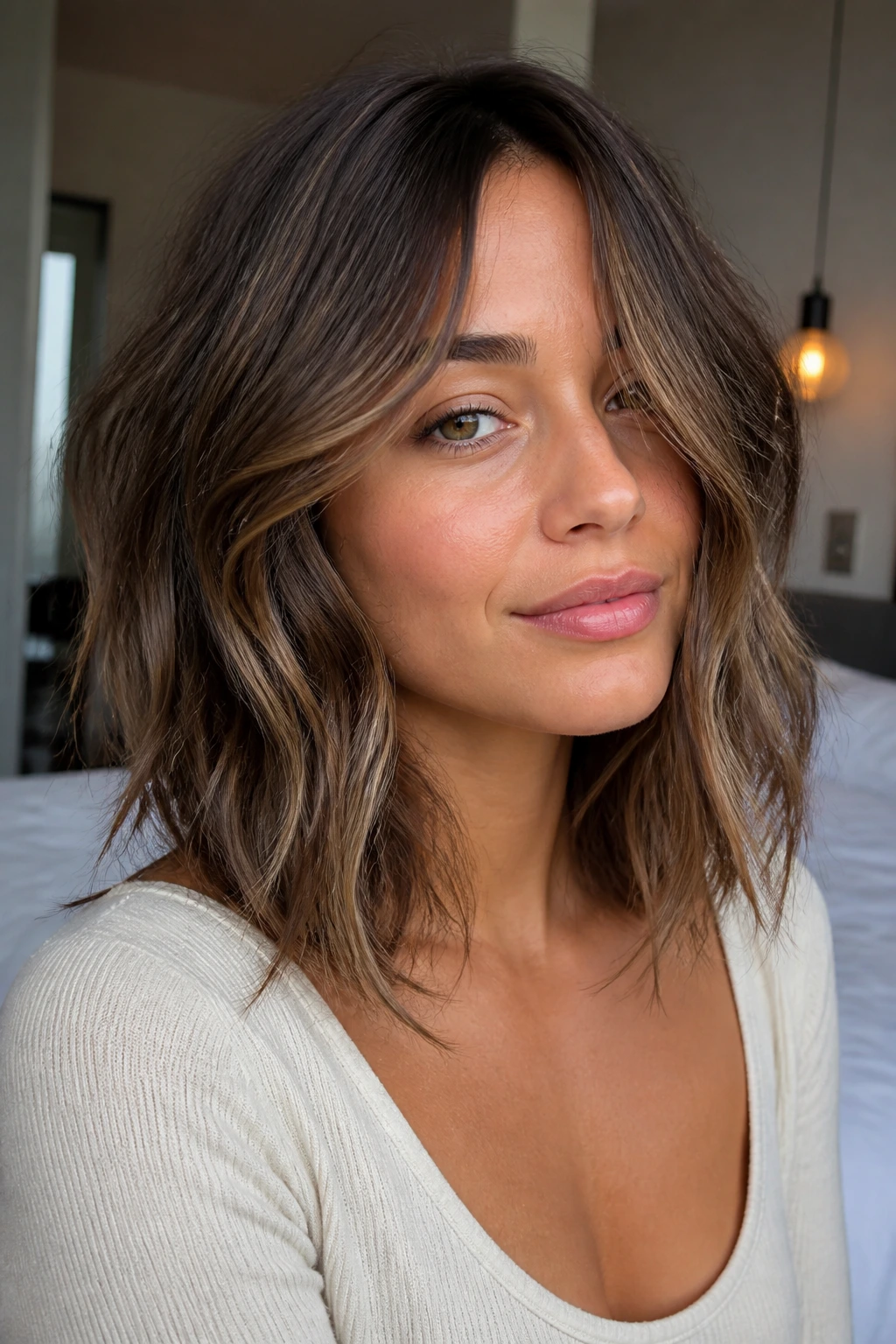
Long perimeter layers keep the movement at the edges where it belongs. Instead of breaking the haircut apart through the middle, they let the ends carry the texture while the top stays smoother and more controlled. That shape is kind to heart-shaped faces because it draws attention down to the jaw and collarbone.
The look is best when the layers are cut with restraint. Too much layering and the hair turns into scattered pieces. Too little and the perimeter loses the soft swing that makes the lob feel relaxed. I like this version on hair that has a naturally loose wave and a little thickness through the mid-lengths.
Let the front pieces skim the mouth or chin, then keep the rest loose. That gives the haircut its tousled look without making it messy in a careless way.
25. Halo Lob with Chin-Length Front Pieces

A halo lob puts the softest pieces right where the face needs them most. The front sections sit near the chin, the side pieces curve around the cheeks, and the back stays long enough to keep the whole cut anchored. On a heart-shaped face, that shape is useful because it creates a gentle frame around the lower half without flattening the crown.
The chin-length front pieces are the key. They widen the lower face just enough to balance the forehead, and they work especially well when the wave pattern has a soft bend rather than a tight curl. Add a side part or a slight off-center part, and the whole thing feels even more open.
This is the version I would hand to someone who wants the face-framing effect most of all. It is soft, it is wearable, and it lets the haircut do the flattering without looking like it is trying too hard.
Why Curly Lobs Work So Well on Wavy Hair and Heart-Shaped Faces
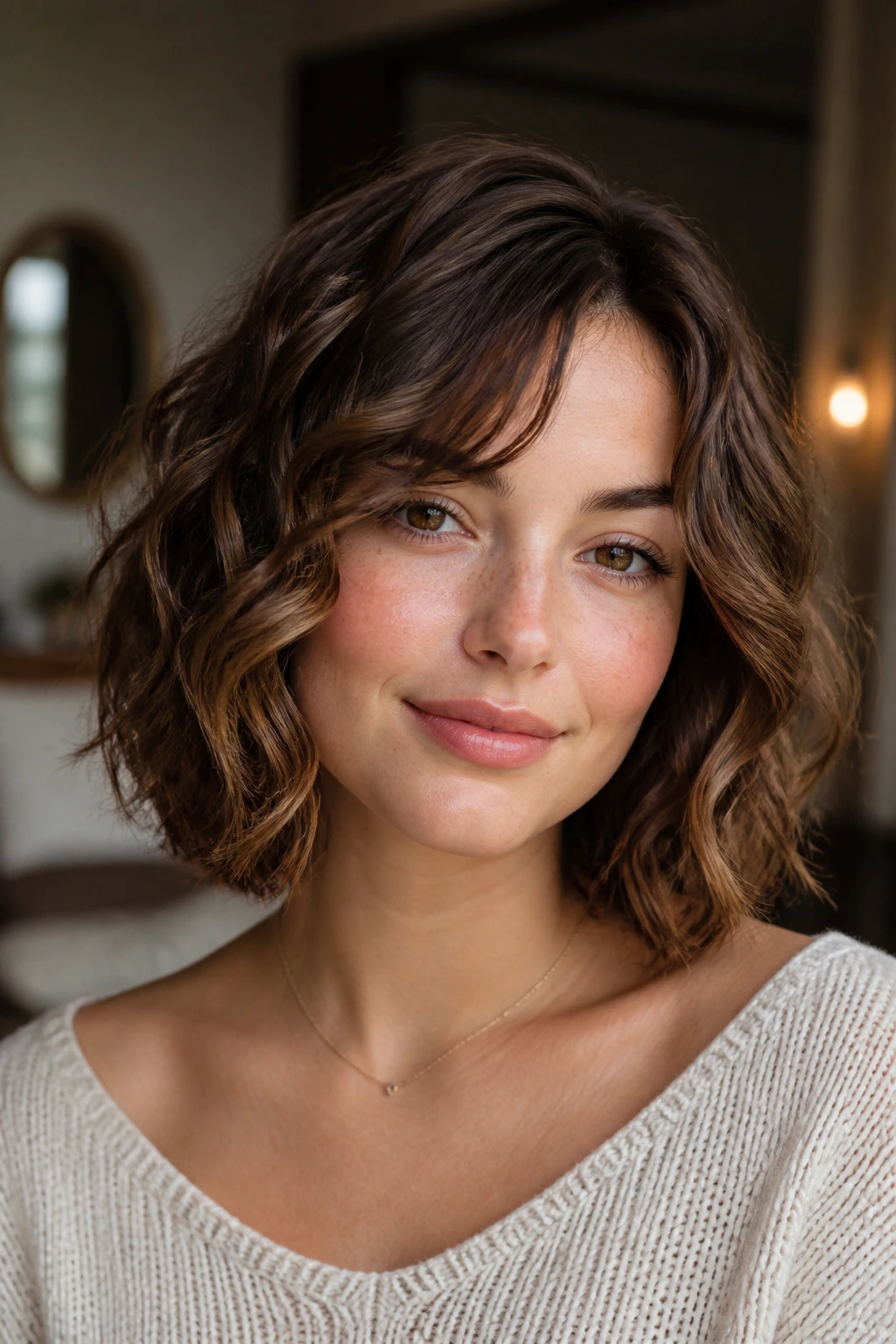
A lob lives in a useful middle ground. It is long enough to let waves settle, short enough to keep the shape visible, and flexible enough to wear polished or loose depending on how much time you have in the morning. That middle ground matters more than most people think. Waves need room to bend, but they also need a perimeter that stops them from exploding outward at the widest part of the face.
Heart-shaped faces bring their own geometry into the room. The forehead is usually the widest point, the cheekbones sit high, and the chin narrows quickly. A good lob respects that shape instead of trying to erase it. Fringe, side parts, long front pieces, and ends that land near the collarbone all work because they pull the eye downward and soften the upper half without hiding the face.
The biggest mistake is treating all lob lengths the same. They are not. A wavy lob that ends at the jaw can look sharp on one person and boxy on another. Move that same cut two or three inches lower, add a little internal weight removal, and the whole thing changes. Hair is like that. Small shifts matter.
What to Tell Your Stylist Before the First Snip
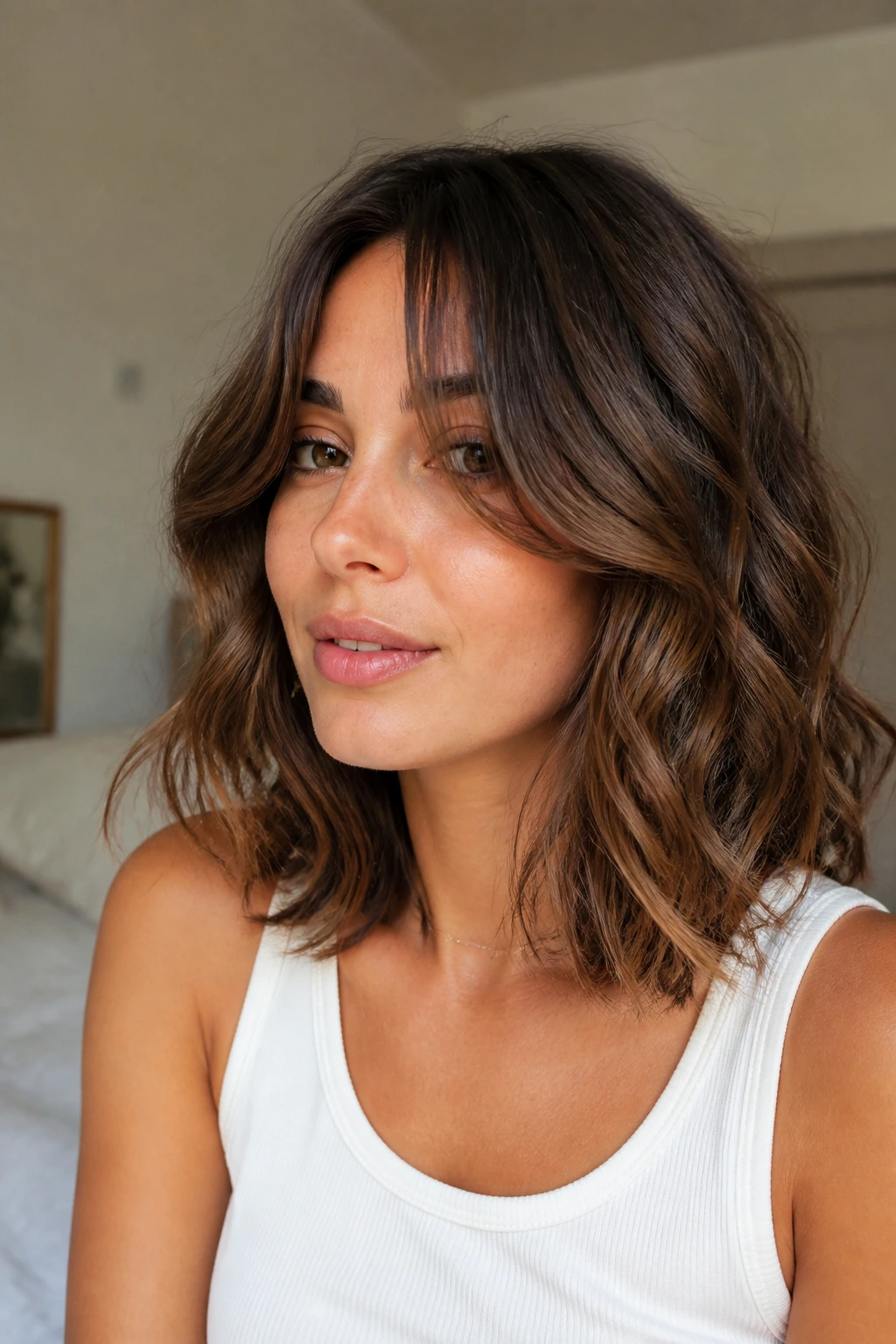
Bring photos, but not just pretty front shots. Side views matter more for this cut. The silhouette around the cheekbone and collarbone tells you whether the lob will feel soft or boxy once it moves.
Say where you wear your part. Say whether your wave pattern collapses at the roots or balloons at the ends. Say if you want the haircut to air-dry well, because that changes how much internal texture the stylist should remove. A clean sentence like “I want movement around the cheekbones, but I do not want a shelf at the jaw” gets you farther than asking for a generic lob.
A few things worth naming in the chair
- Length: Collarbone, top of shoulder, or just under the chin all mean different things on wavy hair.
- Layers: Ask for long layers or internal debulking if you want movement without frizz.
- Fringe: Curtain, bottleneck, side-swept, or no bangs at all each changes how the forehead reads.
- Finish: Tell the stylist if you live in air-dry mode or use a diffuser most days.
Dry cutting helps when your waves are uneven or have a strong bend. Wet hair lies. It always does.
Tools That Make Styling a Lob Easier
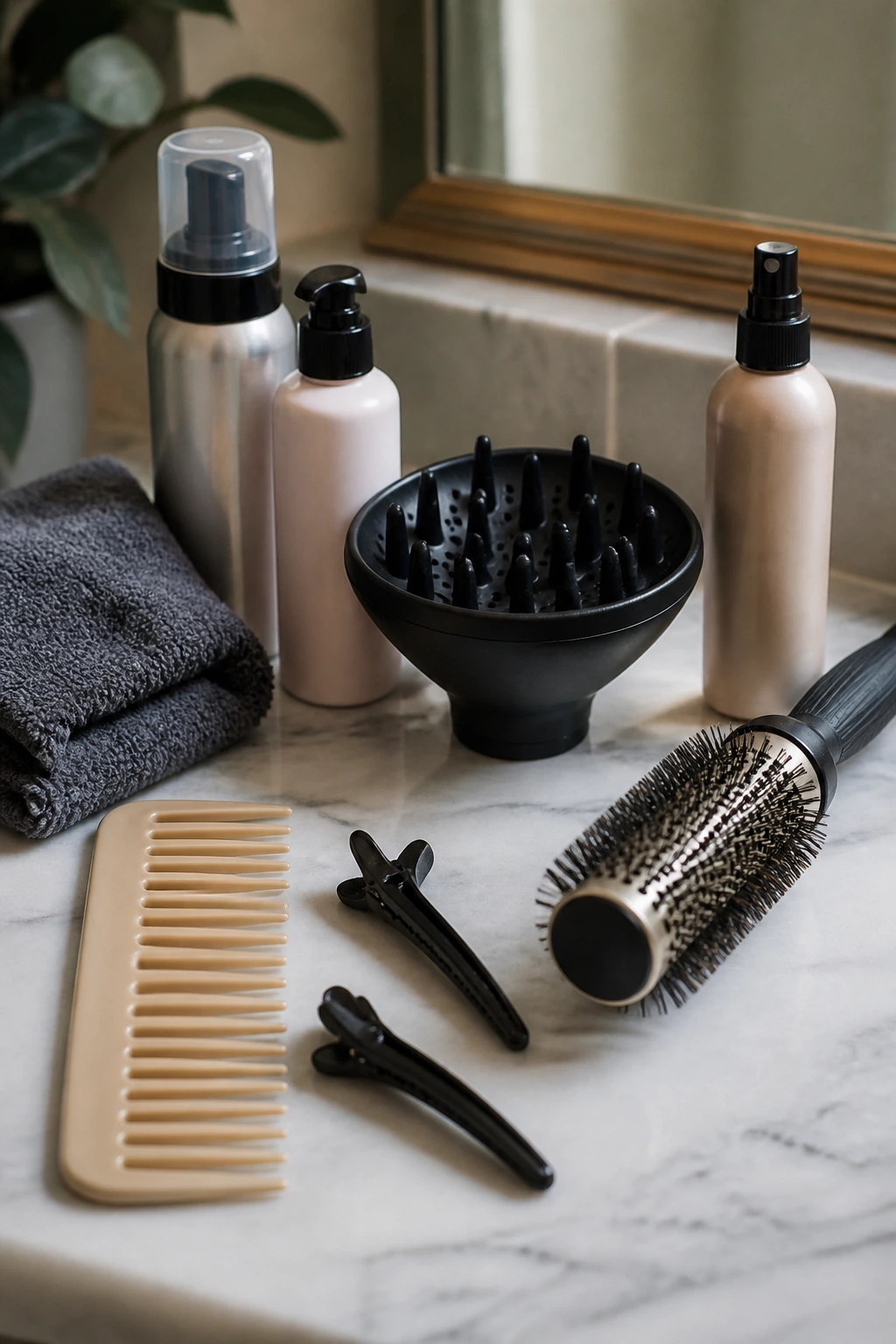
-
Wide-tooth comb: Use it in the shower to detangle conditioner through the mids and ends without pulling the wave apart.
-
Microfiber towel or cotton T-shirt: Both cut down on rough frizz when you scrunch out water; regular terry cloth can puff up the cut.
-
Lightweight mousse: Best for root lift and soft definition on fine to medium waves. Use a small palmful, not a fistful.
-
Curl cream or light styling milk: Good for smoothing the front pieces and keeping the ends from looking dry. Heavy butters usually weigh this length down.
-
Diffuser attachment: Useful if you want the shape to dry with a little more lift and less collapse at the crown.
-
Large round brush or vent brush: Handy for beveling the ends or nudging curtain bangs into place.
-
Duckbill clips: Small, cheap, and worth it for clipping the crown or fringe while the hair cools.
-
Light finishing spray: A flexible hold spray keeps the waves from dropping after lunch without making the cut feel crunchy.
Styling Curly Lobs for Wavy Hair at Home
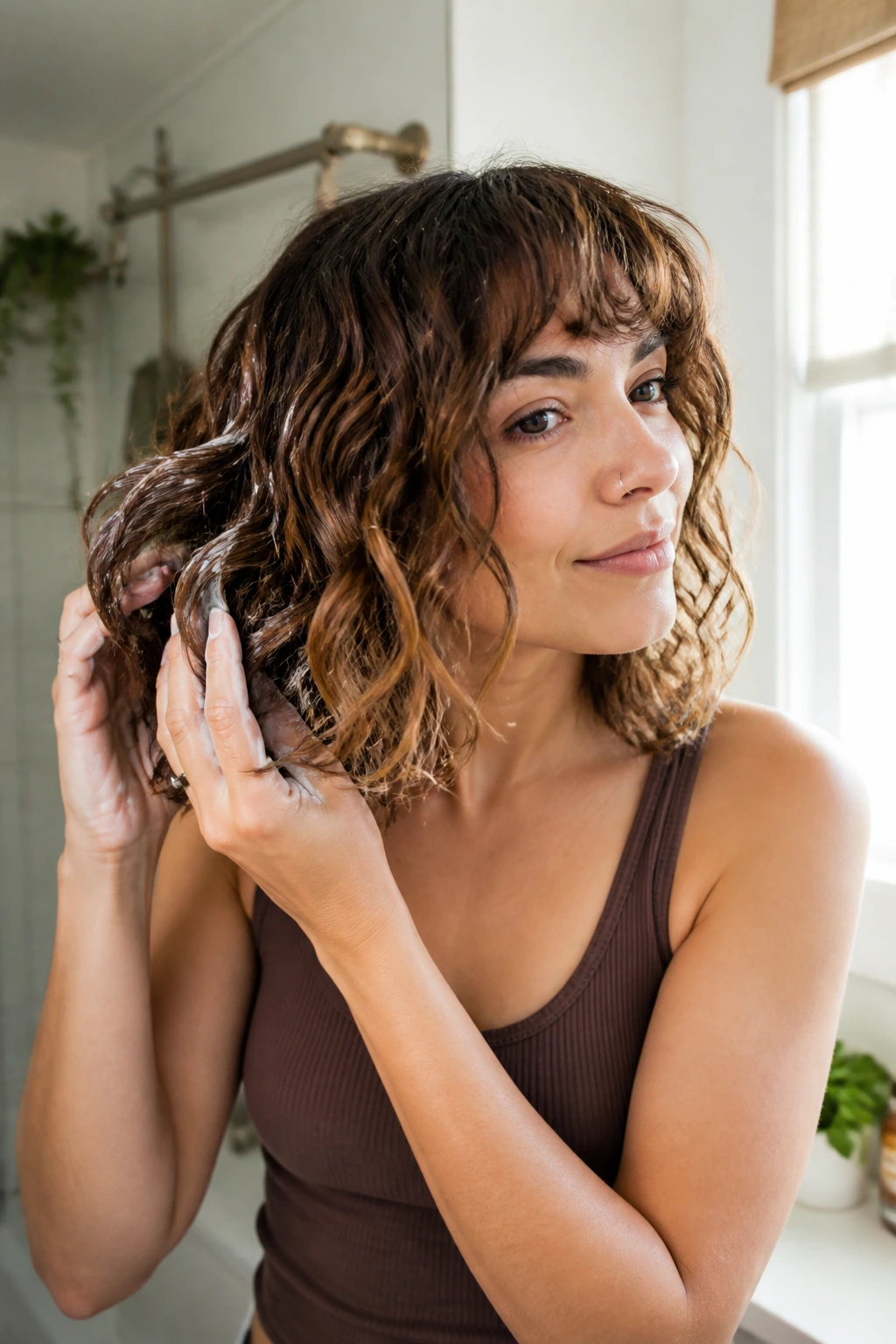
The cleanest styling routine starts on damp hair, not soaking hair. Squeeze out water, add mousse at the roots, then work a small amount of cream through the mids and ends. Too much product at the root kills lift fast. Too much at the ends makes the lob sag and lose its shape by midmorning.
Diffusing helps when you want polish, but don’t blast the hair dry all at once. Hover the diffuser near the roots first, then cup the ends once the surface has started to set. That keeps the wave pattern from stretching out too early. If you air-dry, clip the front pieces away from the face for the first 10 to 15 minutes so they do not dry in a flat line.
Day two is about restraint. Mist the face-framing pieces, twist them once, and let them dry for five minutes before touching them again. A dab of cream on the ends is enough. If the crown has gone flat, lift a small section at the root with a clip while the rest of the hair resets. That one move saves more lobs than any expensive product ever does.
Common Mistakes That Throw the Shape Off
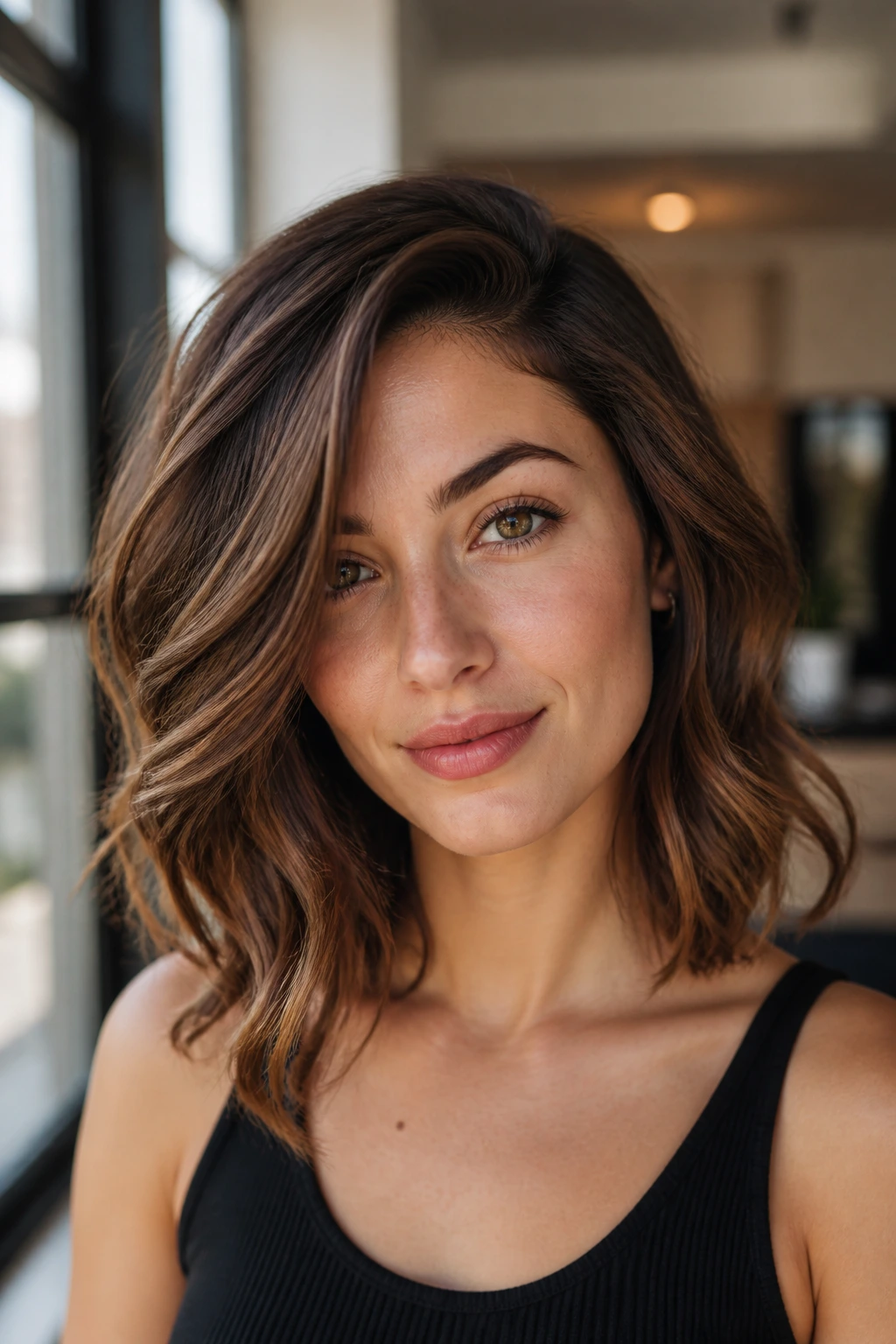
-
Cutting the lob too short at the jaw: The wave springs up and creates a shelf right where the face is narrowest. Keep the length lower, especially if your hair is coarse or springy.
-
Taking the front pieces too high: Short face-framing layers can widen the temples and make the forehead feel more dominant. Ask for the shortest piece to start near the cheekbone or lip.
-
Overloading with cream or oil: Wavy hair at lob length does not need much weight. Too much product makes the ends collapse and the cut loses its shape by afternoon.
-
Texturizing everything: A little internal removal helps; too much makes the ends fray and the silhouette look thin. The cut should move, not unravel.
-
Skipping crown lift: Flat roots can make the face look wider and the whole style feel heavy. A clip, a bit of mousse, or a side part usually fixes it.
-
Ignoring shrinkage: Wavy hair often dries shorter than it looks wet. If you do not leave room for that, the final cut lands higher and wider than planned.
Variations Worth Trying When You Want a Different Feel
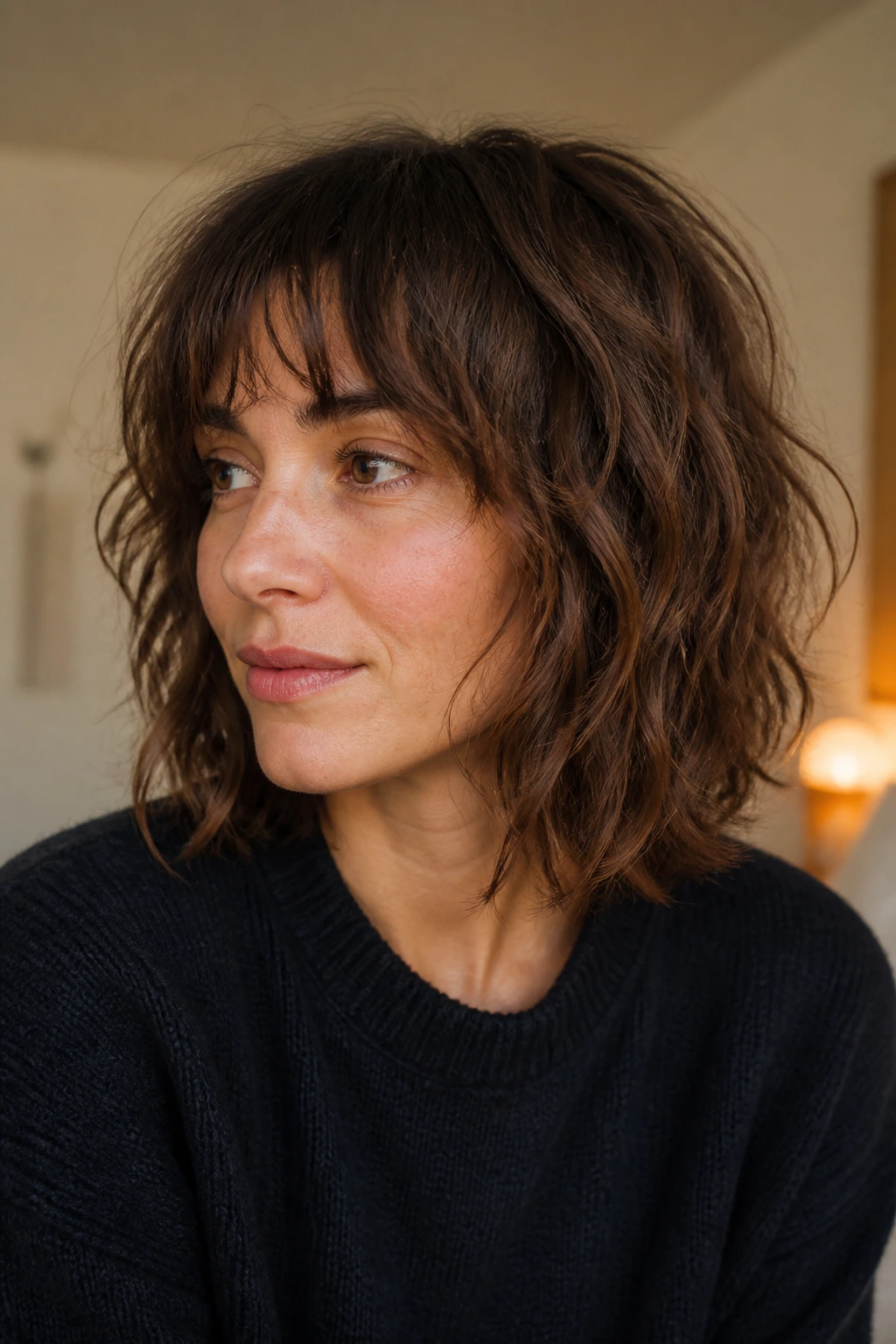
The Soft Shag Turn: Add shorter crown layers and a wispy fringe if you want more movement and less polish. This version is good for dense waves that need air around the top.
The Sleek Salon Curve: Keep the perimeter one length, then blow-dry the ends under with a round brush. It gives the lob a neater line and works well when your hair likes to sit flat in the humidity.
The Air-Dry Version: Ask for long layers, not choppy ones, and skip heavy fringe. This cut depends on your natural bend and looks best with mousse, scrunching, and a hands-off dry.
The Thick-Hair Control Cut: Request internal debulking and a slightly rounded outline. That keeps the sides from ballooning and makes the lob sit closer to the head.
The Fine-Wave Boost: Leave the ends blunt-ish, keep the layers long, and use root lift only. Fine hair loses shape fast when too much is removed, so this version protects density.
The Grow-Out Friendly Version: Add curtain bangs that hit below the brow and face-framing pieces that start at the lip. The shape stays pretty for longer, even when the trim schedule gets delayed.
Keeping the Lob in Shape Between Trims
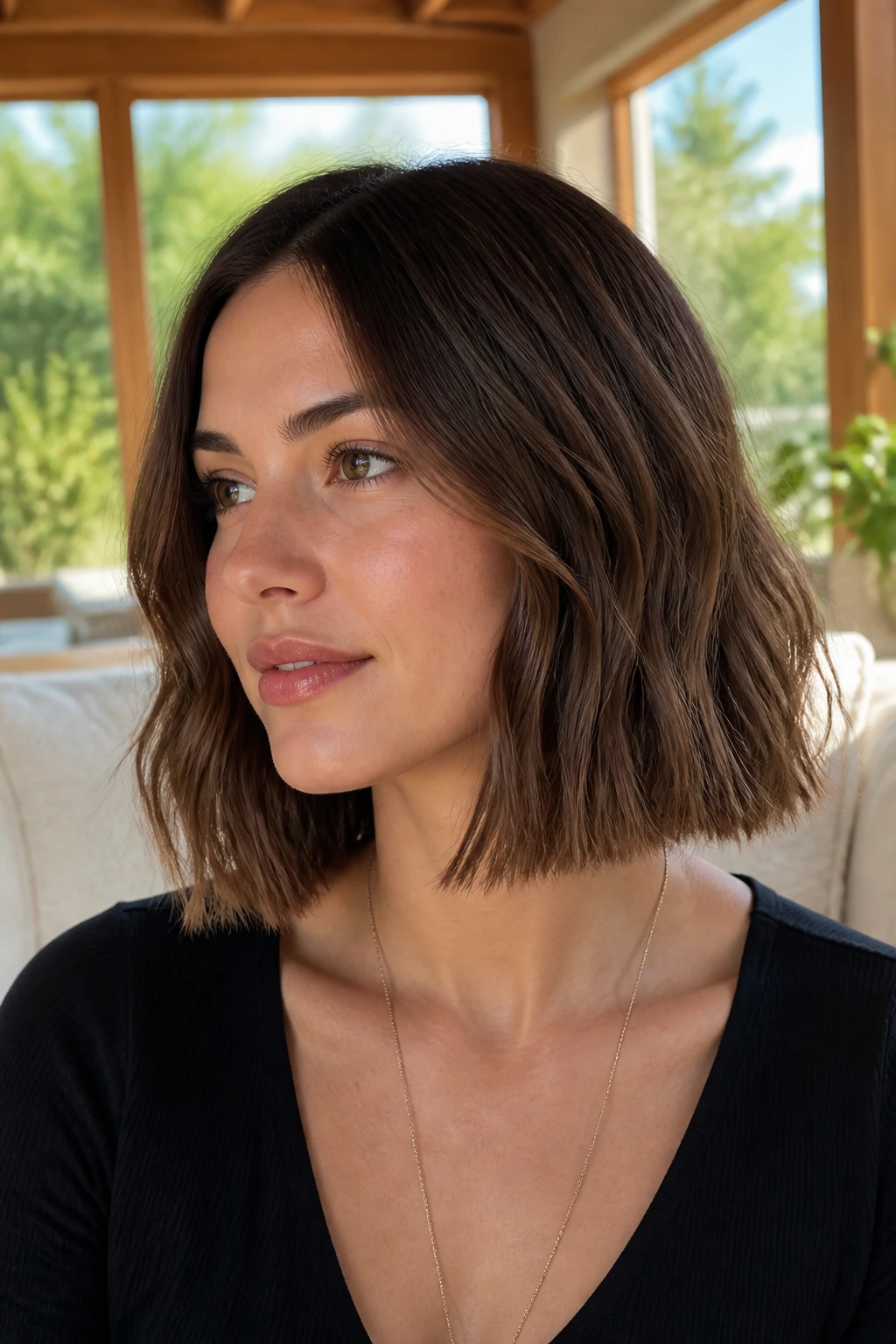
A lob starts changing the minute the ends grow past the spot where the haircut was designed to sit. For most wavy hair, a trim every 8 to 10 weeks keeps the collarbone line clean. If you wear bangs, the fringe may need a small touch-up every 4 to 6 weeks, especially if the wave pattern makes them spring up.
Sleep matters too. A satin pillowcase reduces the roughing-up that turns the front pieces fuzzy overnight. If you wake up with one side flattened, mist that side lightly and reset it with your fingers or a vent brush. No need to start over from scratch.
When the hair gets long enough to drag the shape down, do not wait until the lob becomes a full bob or a shoulder-length grow-out with no plan. That in-between stage usually feels thick at the bottom and tired around the face. A small trim through the front can reset the whole haircut without losing the length you wanted in the first place.
Questions People Ask Before They Book the Cut
What lob length works best on a heart-shaped face?
Collarbone length is the safest bet because it keeps the wave from puffing at the jaw and gives the chin a little more visual presence. If your hair is fine, you can go slightly shorter; if it is thick or springy, a bit longer usually sits better.
Should wavy hair get layers in a lob?
Yes, but not too many. Long layers or internal weight removal help the wave move, while short layers around the face can widen the temples and make the cut feel top-heavy.
Are curtain bangs a good idea here?
They usually are, as long as they stay soft and long enough to blend into the cheekbone. Heavy bangs can crowd the forehead, but a light curtain fringe opens the face without hiding it.
Can I wear a center part with this haircut?
You can, especially if the front pieces are long and the part is not brutally straight. A slight off-center part is easier on most heart-shaped faces because it adds lift and softens the widest point up top.
What if my waves are uneven on each side?
Ask for a dry cut or at least a final dry check. Wavy hair often looks balanced when it is wet and lopsided once it dries, so the stylist needs to see how it lives on your head.
How do I keep the ends from flipping out too much?
Keep the perimeter a little longer and ask for a gentle bevel instead of a sharp razor finish. A round brush or hot brush can nudge the ends inward without forcing them flat.
Is a blunt lob or a shaggy lob better for thick wavy hair?
Both can work. A blunt outline with internal debulking gives thick hair a clean shape, while a shaggy lob breaks up the bulk more aggressively. If your hair expands in humidity, the cleaner outline is often easier to live with.
Can I air-dry a lob and still have it look intentional?
Absolutely. Use a light mousse, scrunch gently, and keep the face-framing pieces from drying smashed against the cheeks. Air-dried lobs look best when the cut itself does most of the work.
The Cut That Stays Soft Around the Face

The best lob for wavy hair is rarely the shortest one in the room. It is the one that gives the wave enough length to settle, enough shape to avoid puffing, and enough softness around the forehead and chin to suit a heart-shaped face without turning it into a project.
That is the part people often miss. A good cut does not fight the way your hair moves. It gives that movement a better route.
Bring the shape that matches your hair density, your part, and the amount of styling you are actually willing to do. If the front pieces are soft and the length lands where the wave can breathe, the haircut will keep doing its job long after the salon chair.