



The wrong bob on thick hair does not whisper. It balloons at the sides, sits heavy at the corners of the jaw, and makes a square face look harder than it is. Mid length bobs for thick hair and square faces solve that problem when they’re cut with a little restraint and a little movement, not with a pair of shears set to “take everything off.”
Collarbone to shoulder length gives the hair room to move, and that matters more than most people think. Dense hair carries its own architecture; if the perimeter lands right on the widest part of the jaw, the whole shape can go rigid. Slide that line down a few inches, soften the front, and the cut starts working with the face instead of boxing it in.
I like this length because it has options. It can be blown smooth, curled into a lazy bend, or worn with natural wave and still look intentional. The trick is choosing the right silhouette, and the 25 shapes below do that from different angles — some blunt, some layered, some cheekbone-first, some with bangs, some without.
Why Mid-Length Bobs for Thick Hair and Square Faces Beat a Chin-Length Chop

-
Bulk lands lower: A cut that ends below the jaw keeps dense hair from widening the face right where the bones are strongest.
-
The jaw stays softer: A little length in the front lets the eye travel down instead of stopping at the corners of the face.
-
Styling gets easier, not harder: Thick hair usually holds a shape well at this length, so you get movement without needing a full blowout every morning.
-
The grow-out is kinder: When the bob reaches collarbone or shoulder level, it shifts into a lob instead of turning into a fuzzed-out triangle.
-
Bangs have room to breathe: Curtain fringe, bottleneck bangs, and side-swept pieces all work better when there’s enough length underneath to balance them.
-
Texture behaves better: Waves and bends look deliberate here; they don’t crowd the face the way they can in a tight chin-grazing bob.
How the Shape Keeps Dense Hair from Turning into a Triangle
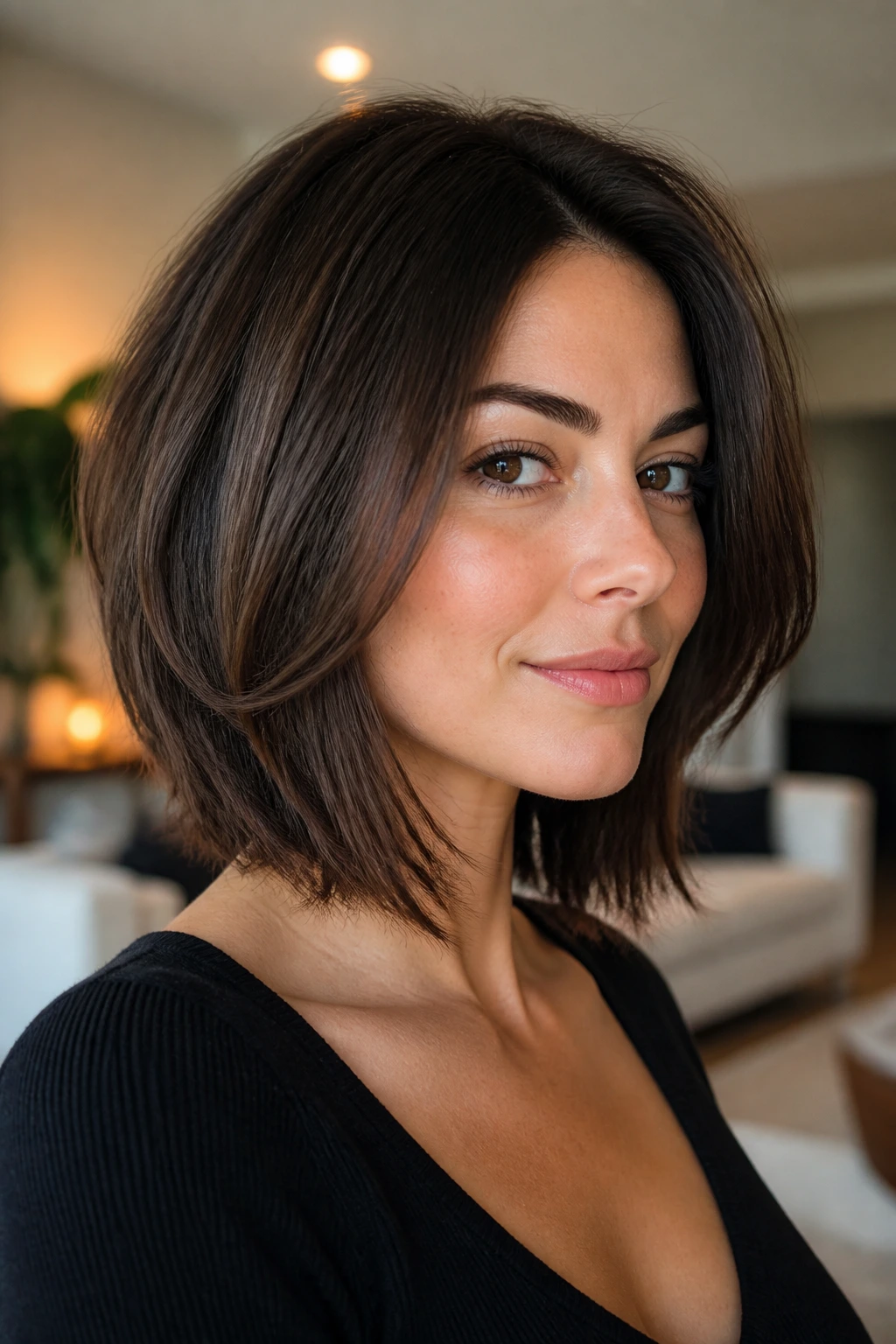
Dense hair needs direction. Left alone, it swells outward at the widest point and makes the lower half of the haircut feel heavier than the top. That’s why the best mid-length bob is rarely just “one length and done.” It usually has a hidden adjustment somewhere — internal layers, a slight angle, or a softened perimeter — that keeps the silhouette from flaring.
The perimeter matters. A blunt edge can look sharp and expensive on thick hair, but only if the line sits in the right place. On square faces, a blunt line at the jaw feels boxy fast. Move that line to the collarbone or a touch below, and the same bluntness reads as structure instead of stiffness.
Where the weight should stay
The strongest versions keep some weight in the lower back and remove just enough inside the shape to stop the ends from ballooning. That’s the part a lot of people miss. They ask for “texture” and end up with frayed ends that puff in humidity.
A cleaner request usually works better: remove bulk from the interior, preserve the outline, soften the front. That gives thick hair swing without turning the haircut into a shag by accident.
What Square Faces Need at the Cheekbones and Jawline

Square faces usually have two things going on at once: a broad forehead and a strong, angular jaw. The haircut shouldn’t fight that geometry. It should blur the corners just enough that the face feels a little longer, a little softer, and less squared off at the bottom.
That’s why front pieces matter so much. If the shortest layers land right at the jaw, the cut can make the face look wider, not slimmer. If they start around the cheekbone or slightly below, they guide the eye downward and create a curve where the face is naturally straighter.
The best face-framing rules
- Start the shortest front pieces below the jaw, unless the haircut is very soft and wavy.
- Use a side part or off-center part if you want a quicker softening effect.
- Keep the ends slightly rounded or beveled rather than razor-straight and hard.
- If you add bangs, let them split or sweep, not sit as a blunt bar across the forehead.
A square face doesn’t need to be hidden. It needs a frame that doesn’t compete with it.
How to Ask for the Cut at the Salon
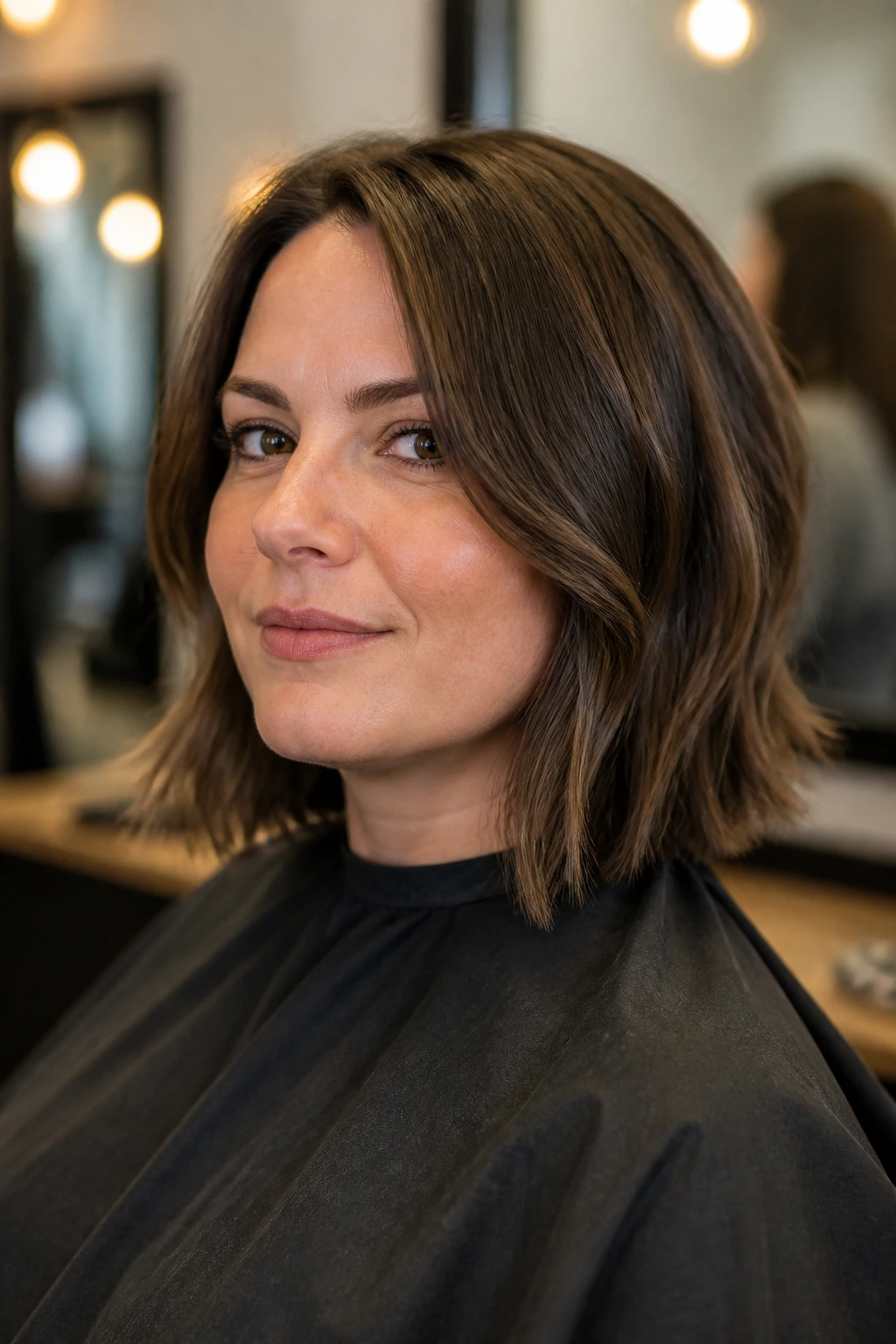
Walk in with photos, but also with language. Photos show the shape; words tell the stylist where the trouble spots are. A picture of a bob you like might look nothing like your hair once it meets your density and your jawline, so say what you’re trying to fix.
Try this kind of phrasing: “I want collarbone length, weight removed inside the shape, and softness around the front without a blunt line at the jaw.” That gives the stylist a real target. If you wear a middle part, say so. If you almost always tuck one side behind your ear, say that too. Those little habits change the final shape more than people admit.
Also say what you do not want. Thick hair can take a lot of cutting, and some stylists reach for thinning shears too fast. That often leaves the ends fuzzy and hard to control.
1. Collarbone Blunt Bob with Soft Ends
The blunt line gives thick hair a clean edge, but the softened ends keep it from sitting like a shelf across the face. On a square jaw, that small shift matters. The collarbone landing point sits below the widest part of the face, so the haircut feels grounded instead of boxy.
Why it works
A strong perimeter gives density a job. The slight point-cut on the last half inch lets the ends move instead of stacking up, which is exactly what thick straight hair tends to do when it’s cut too bluntly. If you want a sleek finish, this is one of the safest places to start.
- Ask for collarbone length with a blunt outline.
- Keep the front 1/2 inch longer than the back.
- Finish with a round brush that bends the ends under.
- Use serum only on the last inch.
Best trick: dry the roots first, then shape the ends last. Thick hair holds a better curve that way.
2. Side-Parted C-Shape Lob
A side part changes the whole mood of this cut. The C-shape at the front curves inward, then slides away from the jaw, which helps a square face feel less angular without looking fussy. On dense hair, that curve also prevents the front from jutting out like a shelf.
This version works especially well if your hair has a little natural bend. Blow-dry the front pieces over a large round brush, then turn the ends just enough to draw a soft arc toward the collarbone. Too much curl and the shape gets old-fashioned fast. Too little and it loses the point.
Use it when you want the haircut to look polished on ordinary days. Not overdone. Not flat, either. Just controlled.
3. Long Bob with Internal Layers
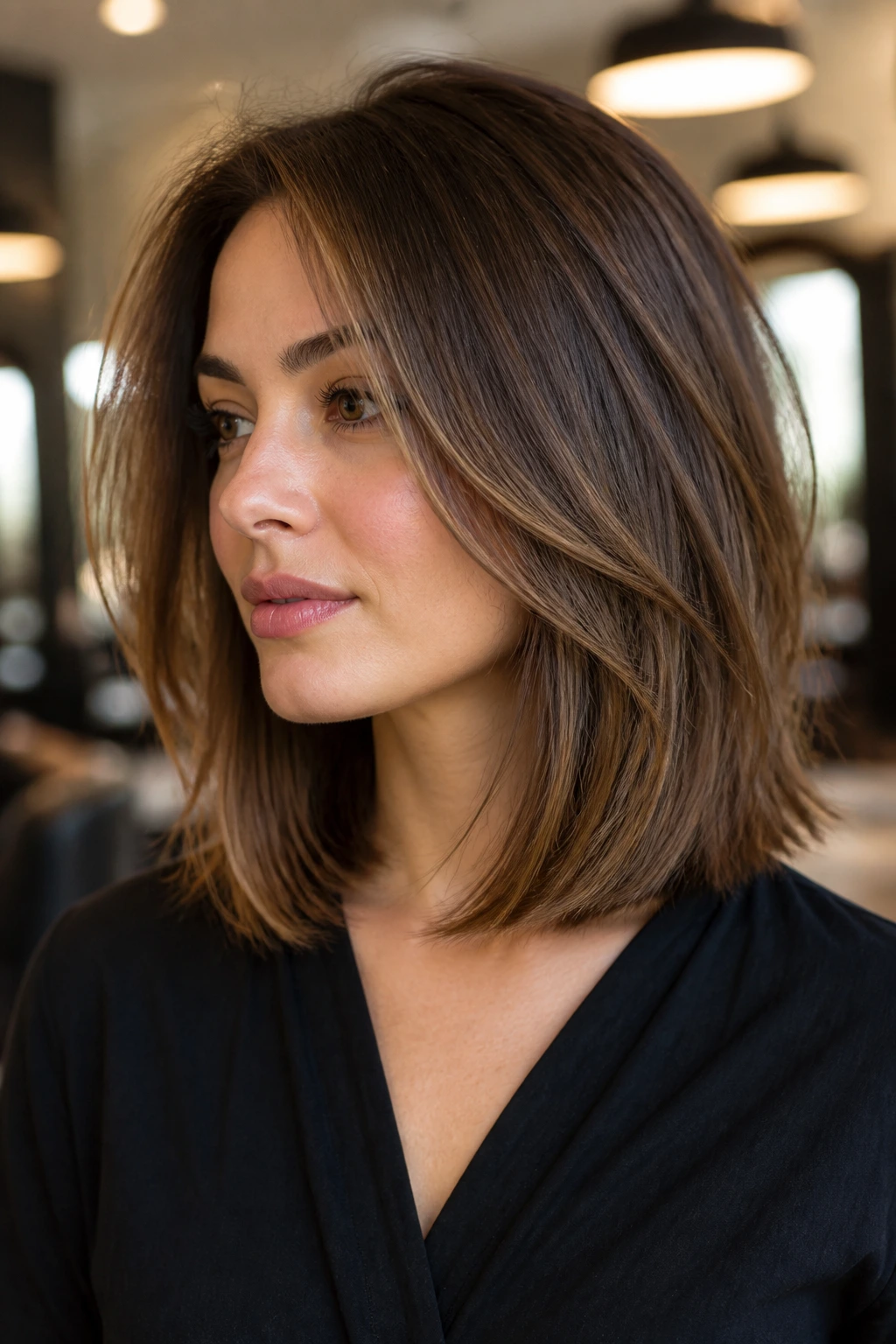
What if you want movement without losing the clean edge? This is the answer. The outer line stays calm and readable, but the inside of the haircut is carved away just enough to keep thick hair from sitting like a helmet.
How to use it
Ask for internal layers only or “hidden layers” if you want to keep the outline intact. The face still gets softness, but the body of the hair is lighter, especially around the crown and mid-lengths. That makes this shape a smart choice for square faces that need a little lift without extra width.
A medium round brush and a quick bend through the front pieces are enough most days. If you air-dry, keep the layers long and minimal so the shape doesn’t break apart. This cut rewards restraint.
4. Curved Under Bob
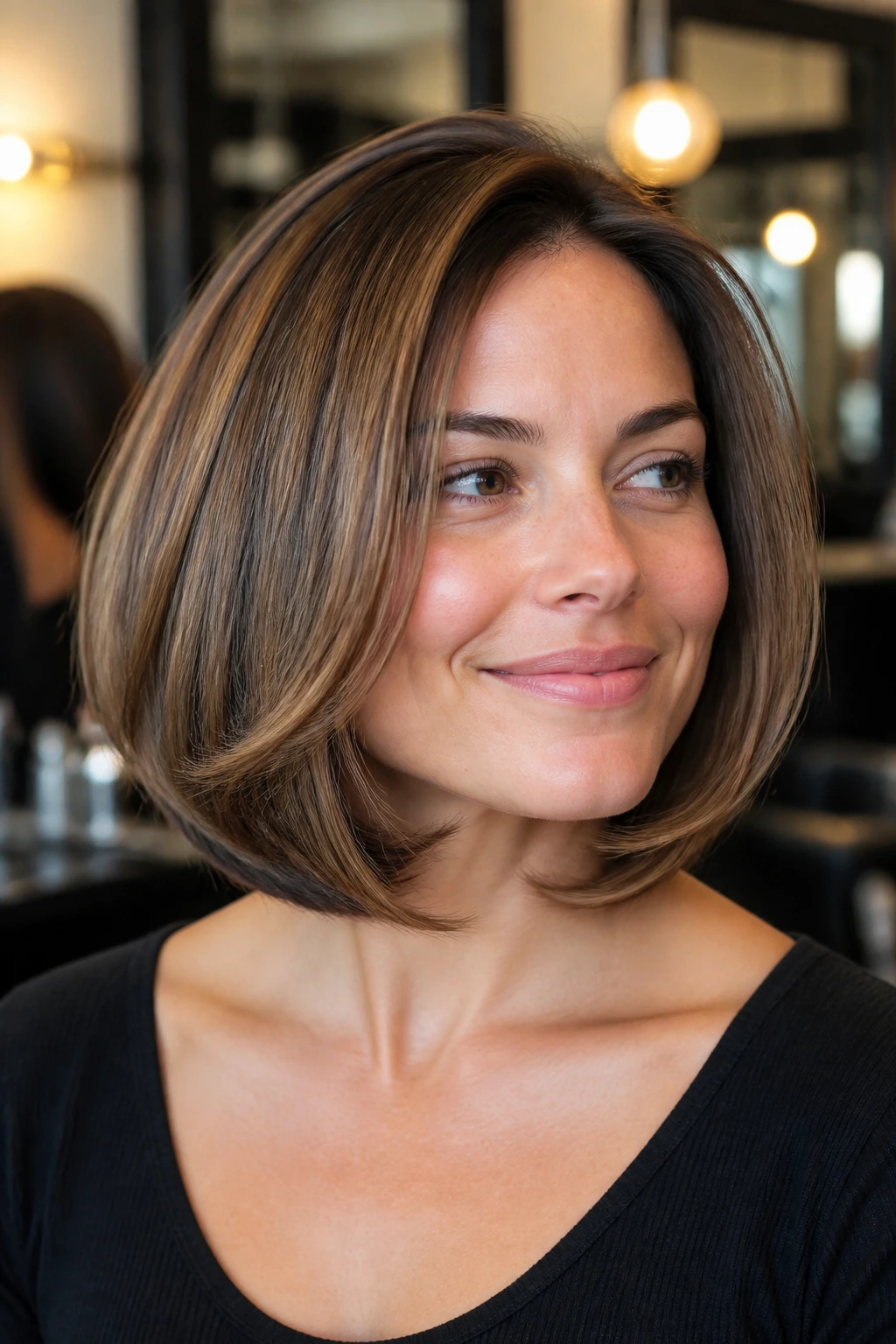
Picture thick hair that wants to flare out by 3 p.m. This shape stops that problem before it starts. The ends are blown under in a smooth curve, and the curve pulls the eye inward instead of letting the width spread sideways.
That inward bend is useful for square faces because it rounds off the lower third of the cut. It’s one of those styles that looks simple until you see it on the right head shape, and then it makes perfect sense. The trick is in the finish, not the cut alone.
- Best for hair that already likes to smooth down.
- Ask for a little weight left at the bottom.
- Use a 1.5-inch round brush.
- Set the front with clips while it cools.
A little hold spray at the ends helps the curve survive the day.
5. Curtain-Bang Bob

This one lives or dies by the fringe. When curtain bangs are cut well, they split the forehead, soften the temples, and lead the eye into the rest of the haircut. On a square face, that gentle opening matters more than a blunt bang ever could.
The bob underneath should stay mid-length, not chin-short. Thick hair gives curtain bangs enough support, but the rest of the cut needs to stay balanced so the fringe doesn’t take over. I prefer a soft middle gap with longer sides that graze the cheekbone or lip. Shorter than that and the bangs can get bossy.
The best version has movement. The bangs should swing, not sit rigidly. A touch of styling cream at the ends helps.
6. Angled Bob That Skims the Jaw
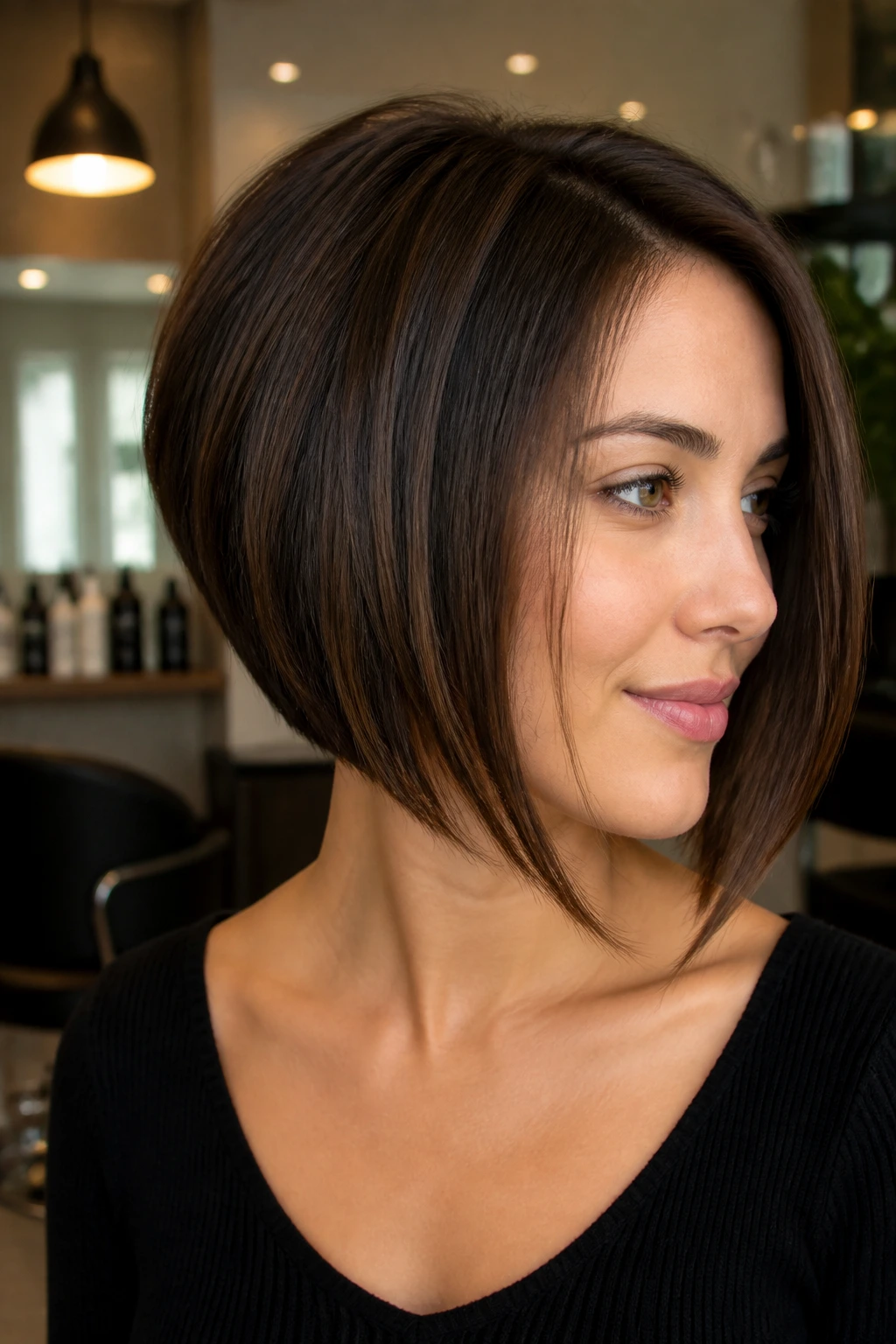
This cut does something blunt bobs can’t: it cheats the eye downward. The back sits a little shorter, the front hangs longer, and that diagonal line pulls attention away from the width of the jaw. It’s a smart move on square faces because the angle creates length without sacrificing density.
Unlike a strong A-line that feels dramatic, this version stays subtle. The angle is there, but you don’t need to announce it from across the room. Thick hair benefits because the back keeps lift while the front stays soft enough to frame the face.
If your hair is straight or slightly wavy, this shape looks clean with minimal styling. If your hair is very coarse, ask for a soft bevel at the ends so the front doesn’t sit too stiffly.
7. Wavy Lob with Invisible Layers
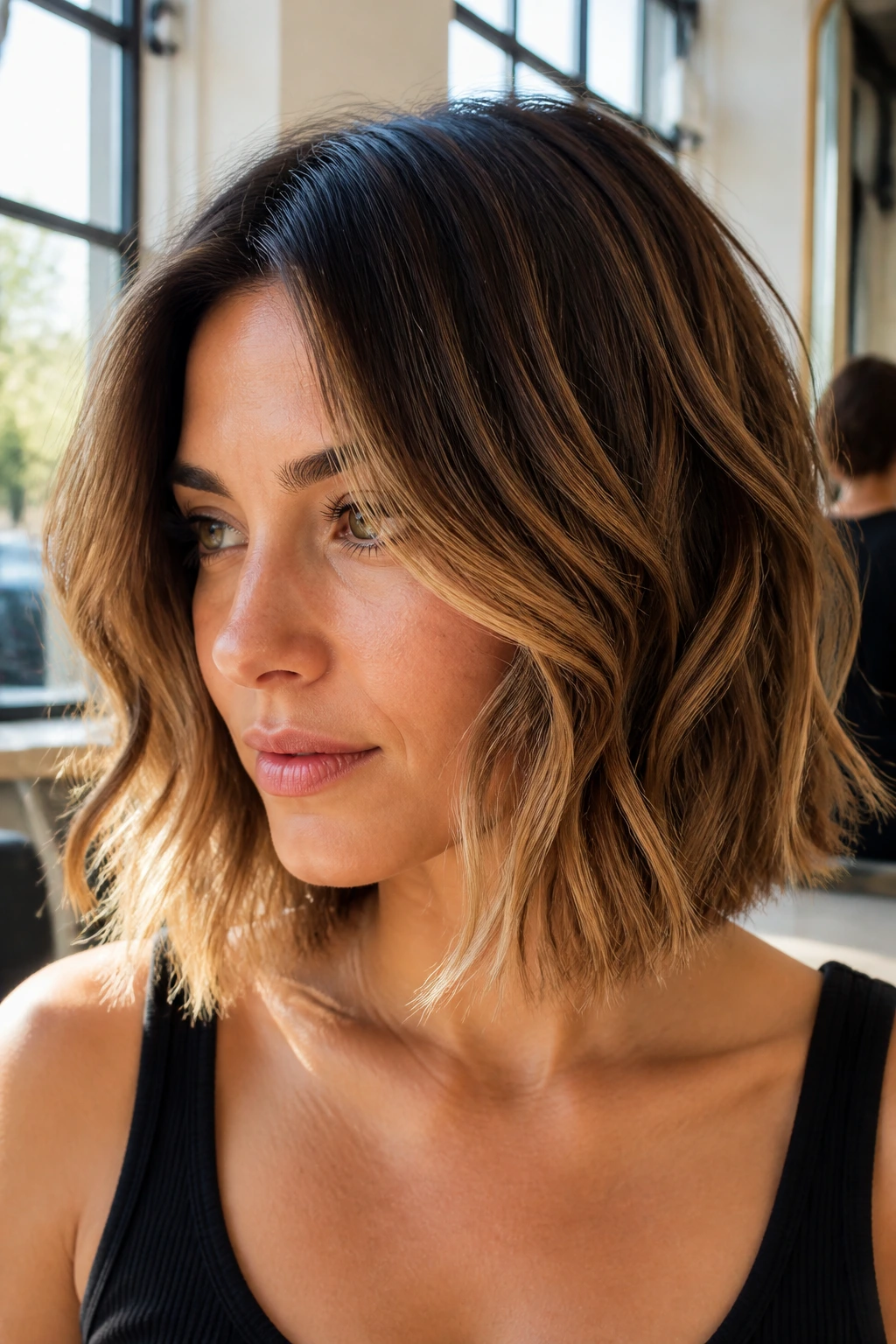
Can thick hair have layers without looking choppy? Absolutely. Invisible layers are the quiet answer. They remove weight from the inside of the haircut, then disappear under waves and bends so the overall shape still looks full and healthy.
That makes this style a good fit for square faces that need softness but not too much drama. The wave pattern breaks up the angles around the jaw, and the collarbone length keeps the whole cut from puffing at the sides. If your hair air-dries with a wave already in it, this shape can feel almost unfairly easy.
What to ask for
Ask for long, internal layers and a length that lands just above or at the collarbone. A salt spray is fine, but keep it light. Thick hair can swallow product and get dull if you overdo it.
8. Piecey Textured Bob

This is the bob for hair that likes separation. Not mushy softness. Separation. The ends are broken up enough to create movement, which keeps dense hair from looking too heavy, and the face-framing pieces stagger around the jaw instead of stopping at one hard line.
A square face benefits from that choppier feel because the outline never reads as a single block. The trick is not to shred the haircut. If the texture gets too aggressive, thick hair can go frizzy and triangular. Better to keep the outline clean and add piecey detail only where the light catches.
Work a small amount of paste through the ends, then scrunch a few front pieces forward with your fingers. It should look deliberately a little undone, not disheveled.
9. Sleek Side-Swept Fringe Lob
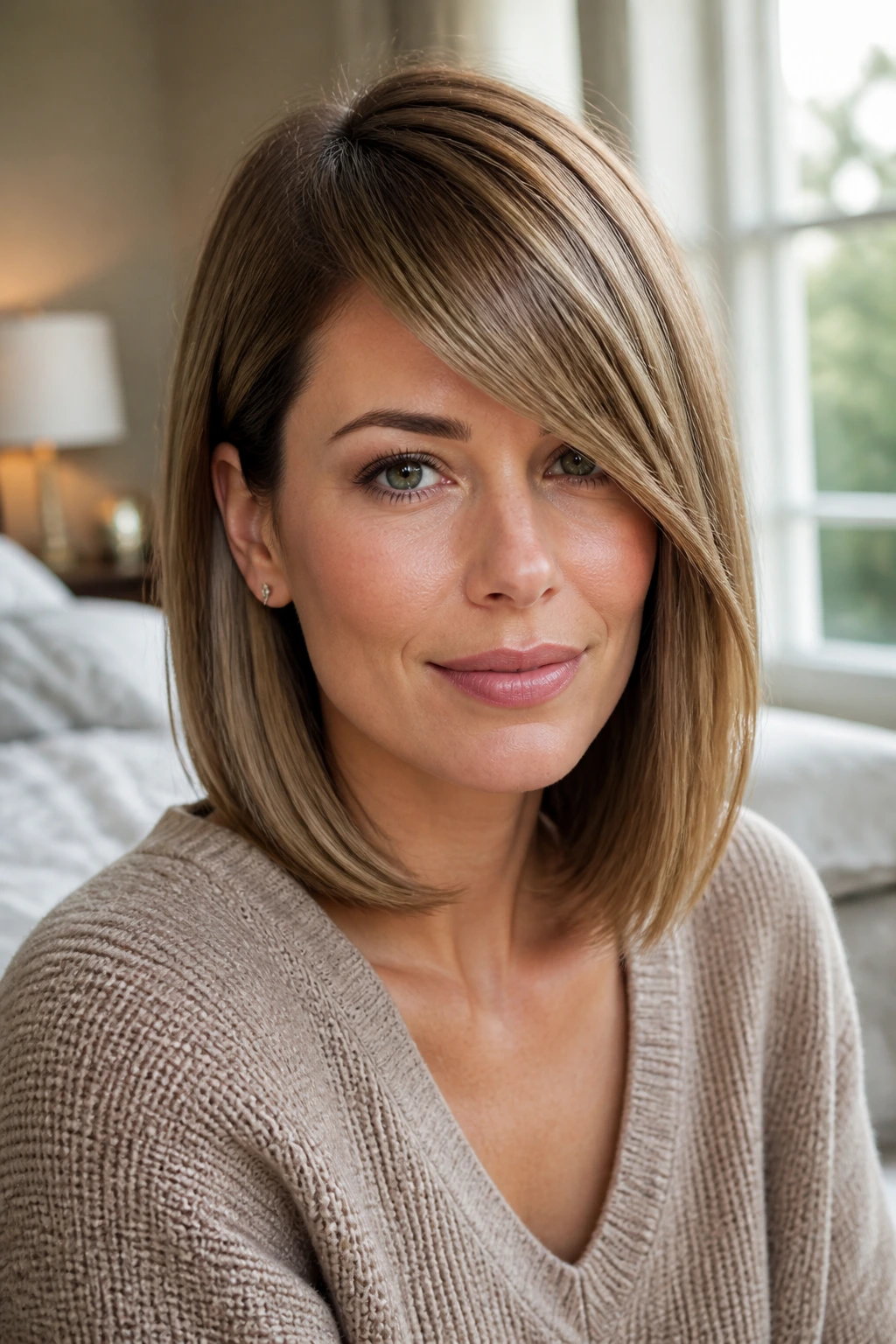
A side-swept fringe can soften a square face faster than most people expect. It creates a diagonal across the forehead, and diagonals are your friend when the jaw is strong. Paired with a lob, the fringe keeps the cut from feeling too symmetrical or severe.
Thick hair gives this style body without much effort, which is useful. You do not need a lot of volume on the crown here; you need a smooth drop from the fringe into the rest of the cut. A flat brush and a blow-dryer nozzle are enough to push the front into place.
This one suits anyone who wants a cleaner, more dressed-up bob that still has movement. It looks especially good when tucked behind one ear, because the asymmetry does a little visual softening all by itself.
10. Rounded Blown-Under Bob
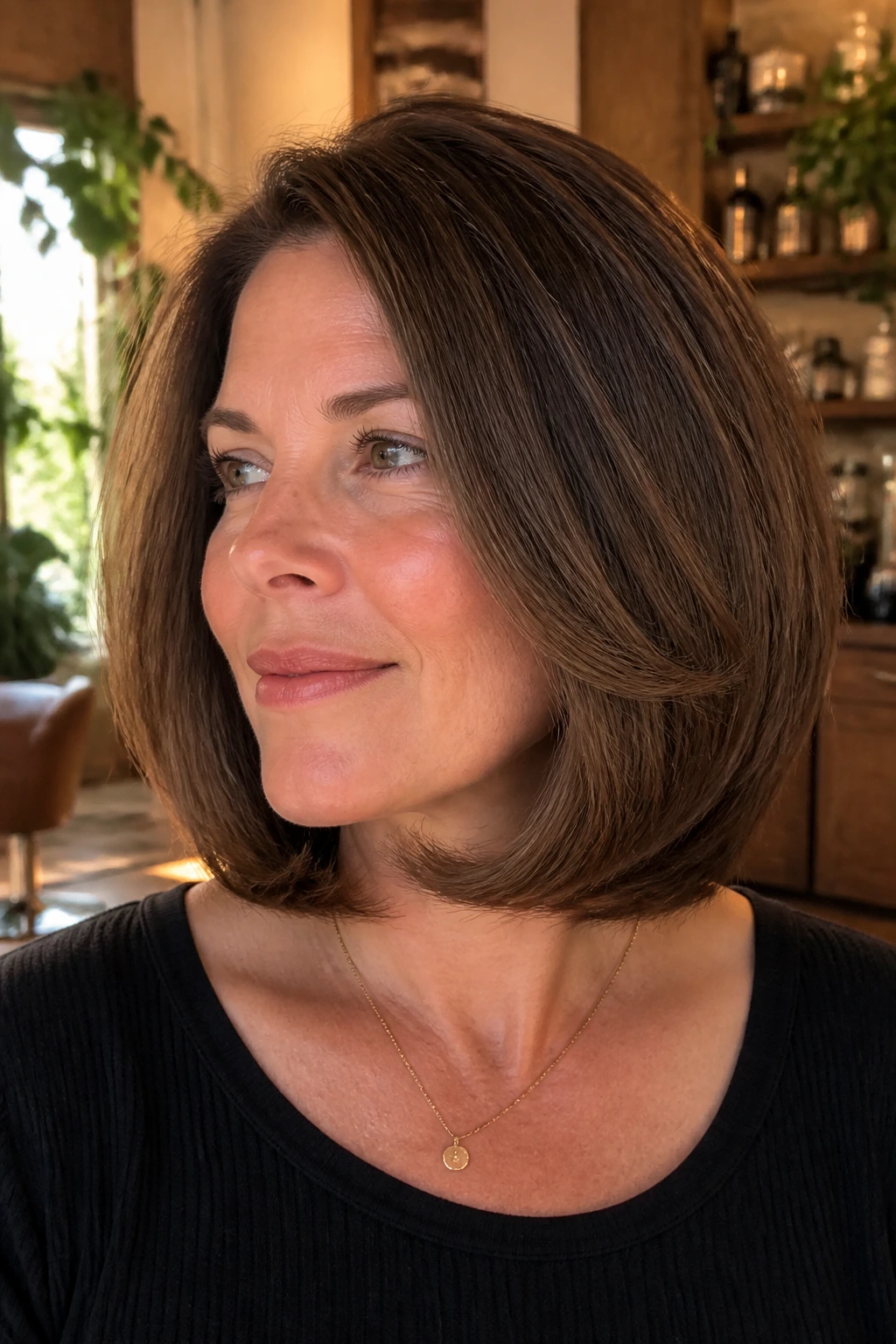
If you like a salon blowout finish, this is the shape that keeps it believable on thick hair. The entire bob is rounded, not puffed, and the ends curve under in one smooth line that follows the neck instead of fighting it. That matters on square faces because the curve interrupts the hard angle of the jaw.
The shape is best when the roundness is concentrated at the ends, not the roots. Too much lift at the crown and the head starts to look wider. Keep the volume low in the top third, then build the shape from the cheekbone down.
This is a good call for people who wear the same cut to work and to dinner. It reads neat in both places. Slightly old-school, maybe. In a good way.
11. French-Inspired Collarbone Bob

This cut has a little looseness to it. Not lazy. Loose. The ends hover around the collarbone, the front is slightly curved, and the overall feel is relaxed enough that it doesn’t fight thick hair every morning.
Square faces tend to like this kind of softness because it avoids a hard edge at the jaw. A center part can work here if the front pieces are long enough, but a tiny off-center shift often looks better because it keeps the face from feeling too symmetrical. That symmetry is where square shapes can get boxy fast.
A blunt fringe can be too much with this cut. Better to leave the forehead open or use a short, split curtain fringe that can bend away from the face.
12. Crown-Removed Layered Lob
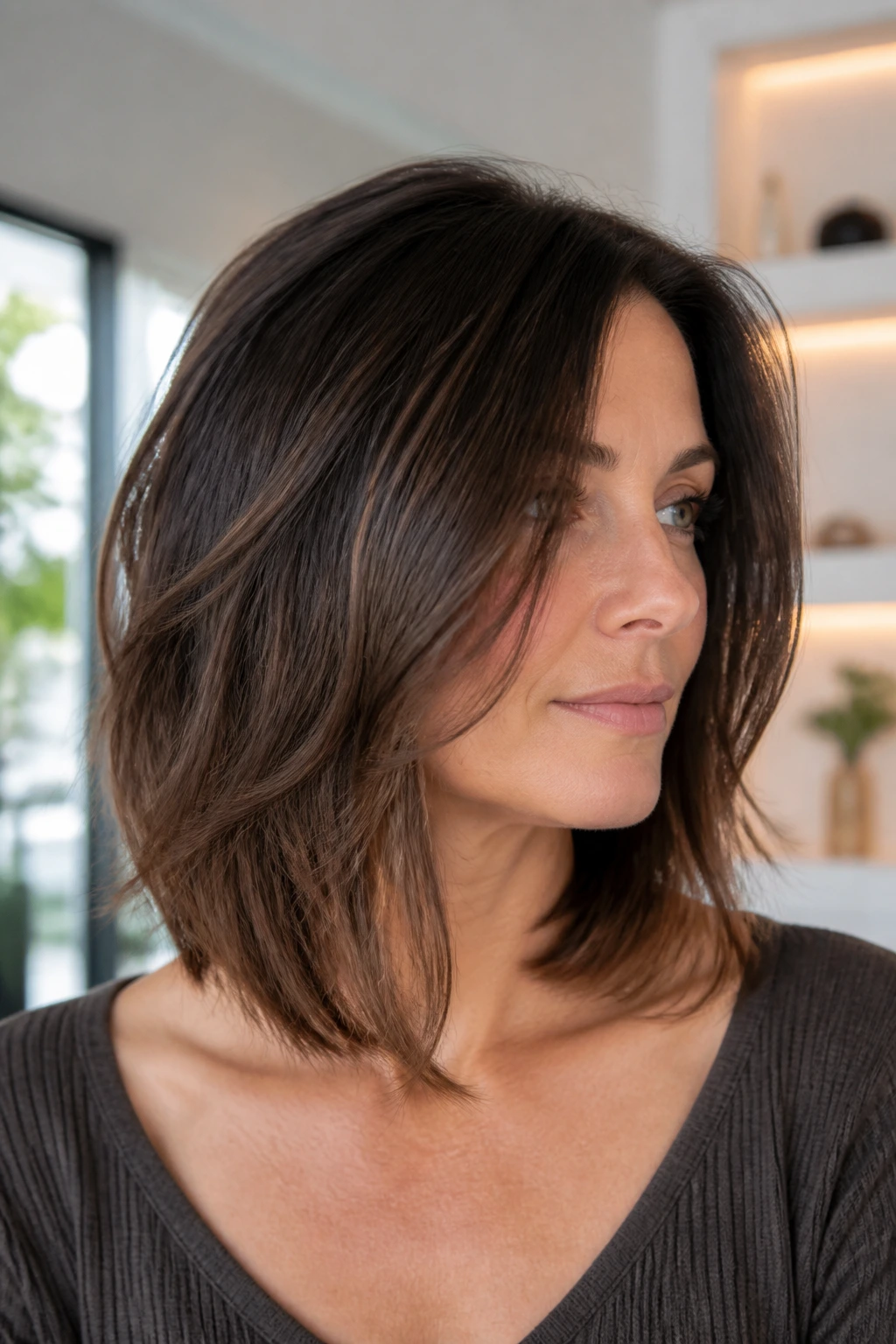
Dense hair often looks heavy because all the weight hangs in the top third of the haircut. This shape takes some of that bulk out of the crown and upper mid-lengths, so the lower half doesn’t feel like it’s carrying the whole load.
Why it works on square faces
The removal at the crown creates lift without side bulk. That’s the key. You get a little height up top, which visually lengthens a square face, and the ends stay soft enough to avoid a boxy finish. Ask for layers that start higher in the back but stay long through the front.
A good stylist will not overdo this. Too many short layers in thick hair can create the dreaded puffy halo. Keep the layers long and blended, and the haircut will move instead of frizzing outward.
13. Deep Side-Part Tuck-Behind Bob

A deep side part can be a small cheat code. It shifts most of the volume to one side, narrows the look of the forehead, and gives the jaw a little less visual weight. Tucking one side behind the ear only amplifies that effect.
This works best when the hair is cut with enough length to support the tuck. If the bob is too short, the tucked side can spring out and look accidental. At collarbone length, it settles. Thick hair likes that extra inch or two because it gives the tuck a place to live.
How to wear it
Let the heavier side fall forward and keep the tucked side smooth behind the ear. A flat iron bend through the front piece helps the line feel soft instead of severe. A pair of small earrings can make the whole thing look deliberate.
14. Blended A-Line Lob

Unlike a blunt front, a blended A-line creates a subtle slide from back to front. That diagonal line helps square faces because it lengthens the silhouette and keeps the jaw from looking wider than it already is. Thick hair benefits too, since the slightly shorter back removes a bit of drag.
The best version is not dramatic. If the front becomes too long and too sharp, the cut can start to feel like a design choice rather than a wearable haircut. A gentle A-line gives shape without looking engineered.
This is a good option if you want something that works straight and wavy. The angle still reads even when the hair has some texture. That’s useful.
15. Razor-Soft Tousled Bob

A razor cut can go wrong on thick hair fast. It can also be brilliant, if the softness stays in the right place. This version uses razor work only at the interior and keeps the perimeter more controlled, so the ends feel light instead of shredded.
That matters for square faces because the softness around the edges blurs the jawline without making the haircut flimsy. The style looks best when it’s a little undone, with a natural bend and a few separated front pieces. A little mousse at the roots, a diffuser, and you’re in the right territory.
If your hair frizzes easily, ask the stylist to keep the razor away from the outermost line. That one decision can save you a lot of swelling in humid weather.
16. Center-Part Lob with Cheekbone Cuts

Can a center part work on a square face? Yes, if the framing is right. The whole point is to place the shortest front pieces around the cheekbones so the face doesn’t read as a flat block from forehead to jaw.
This cut depends on symmetry with softness. The middle part gives a clean base, but the cheekbone layers bend inward just enough to keep the face from feeling too wide. Thick hair handles this especially well because the density supports the shape without needing a ton of product.
A flat iron wave through the front pieces helps. Not a curl. A wave. That small bend changes the geometry.
17. Bottleneck-Bang Shoulder Bob

Bottleneck bangs are sneaky in the best way. They start narrower in the center, then widen around the outer edges, so they soften the forehead without making the lower face look heavier. On a square face, that shape keeps the bangs from drawing a hard horizontal line.
The shoulder-grazing bob underneath gives the fringe enough room to breathe. Thick hair fills out the style nicely, but the shoulders are low enough that the ends do not bunch up at the jaw. I’d call this one polished with a little attitude.
Ask for the fringe to be cut a touch longer than you think. Bottleneck bangs should move. If they sit too short, they lose the whole point.
18. Graduated Bob for Dense Hair

This cut is all about controlled stacking in the back. A graduated bob lifts the nape and lets the front fall longer, which takes pressure off thick hair and keeps the silhouette from looking square. It’s a practical cut disguised as a style choice.
The graduation should be soft, not helmet-like. That’s the danger. Too much stacking and you get the old-school wedge effect, which can feel heavy on a square face. Keep the back snug and the front longer and gentler, and the haircut stays modern.
This is a strong pick if your hair grows outward instead of downward. The shorter back helps it behave. Simple as that.
19. S-Shape Blowout Lob
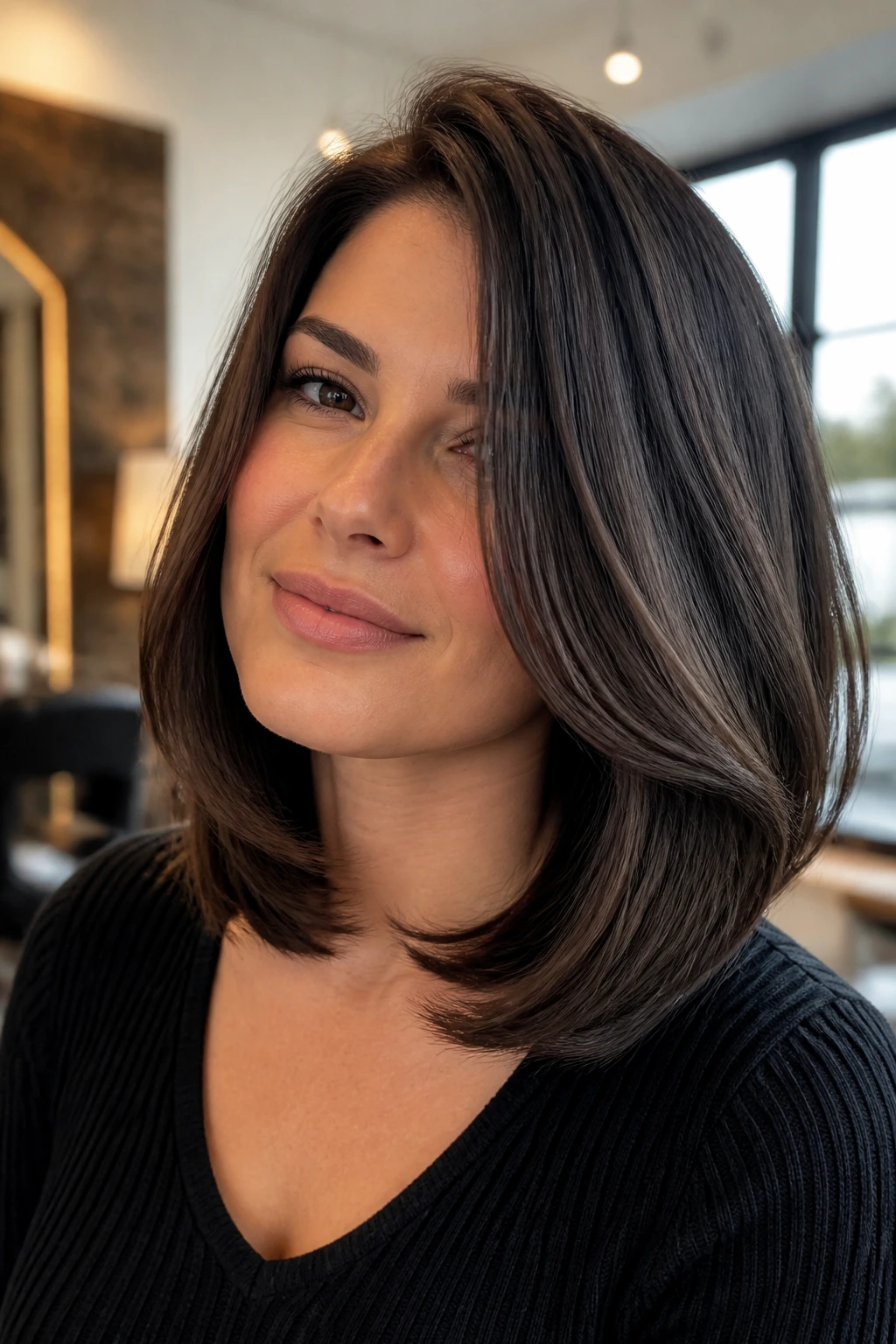
A good blowout can turn thick hair into shape without forcing it into a curl. The S-shape is the sweet spot here. The hair bends near the mid-length, then turns back slightly at the ends, creating motion that softens the edges of a square face.
How to get the bend
Use a round brush or a large barrel iron and work in long, smooth sections. You want a curve, not ringlets. If the bend starts too high, the haircut can feel too bouncy. If it starts lower, it keeps the top flat and lets the face-framing pieces do their job.
This is one of the most flattering choices for someone who likes a salon finish but does not want to live inside a blow dryer. It holds the shape well and doesn’t fight the density.
20. Straight-Across Bob with Soft Interior
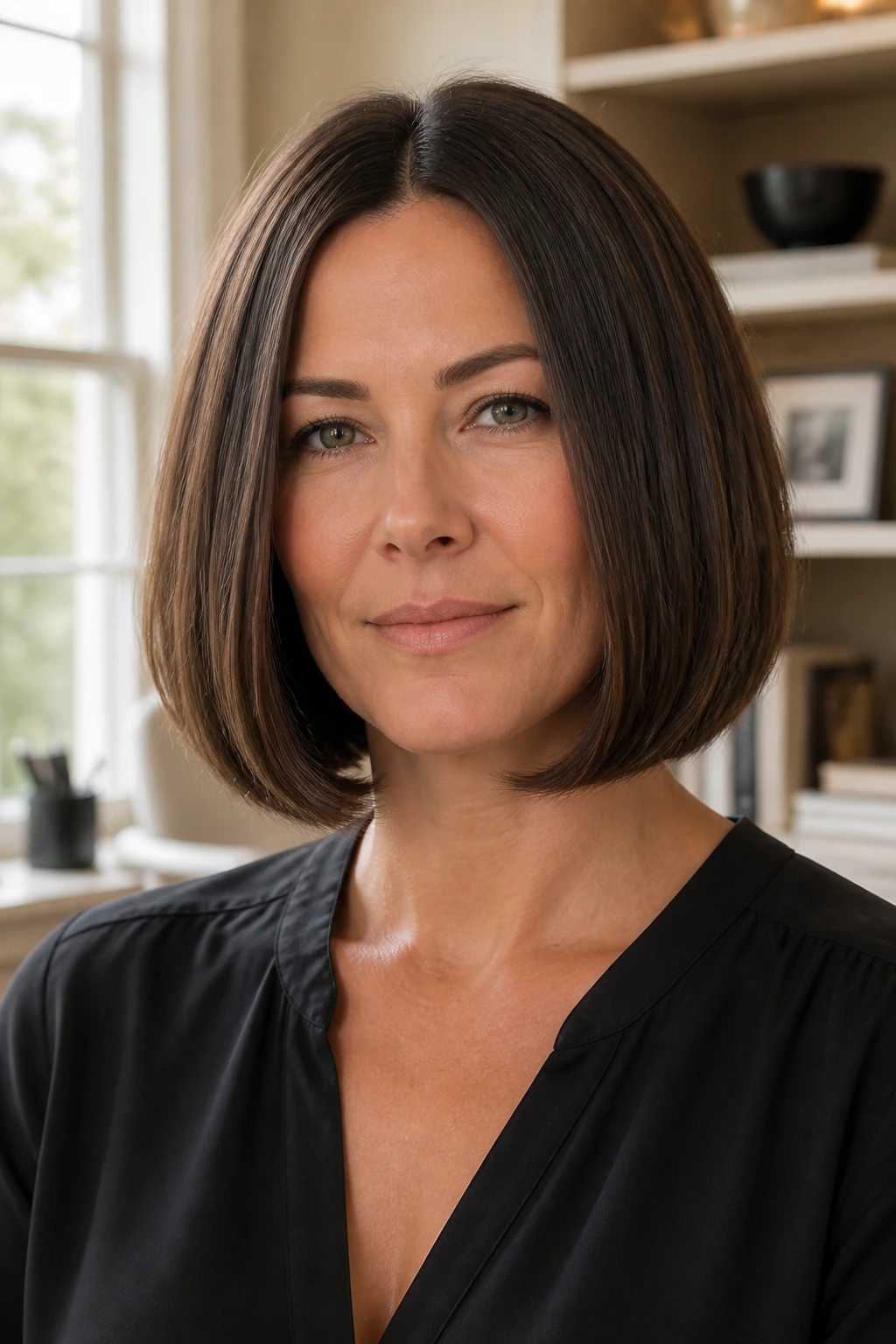
A blunt line sounds risky on thick hair, and sometimes it is. But if the inside is carved out carefully, the outer edge can look sharp without making the whole haircut feel heavy. The result is a straight-across bob that still bends a little around the face.
That soft interior is the part that saves the style on square faces. It removes enough bulk to keep the outline from ballooning at the jaw, while the clean perimeter preserves the strength of the cut. I like this shape when someone wants polish more than texture.
It does require maintenance. If the ends fray, the line stops looking crisp fast. But when it’s fresh, it’s one of the neatest options on the list.
21. Long Fringe Shag Lob

This is the loose, cool cousin in the group. The long fringe shag keeps the perimeter at lob length but adds fringe and texture that break up the solid mass of thick hair. Square faces usually look better with that kind of interruption because it keeps the shape from reading as a block.
The fringe should be long enough to sweep, not sit like a wall. Around the cheekbone and lip is a good zone. Anything shorter risks widening the face instead of narrowing it.
This style works best if your hair has some wave or can be coaxed into one with a diffuser. Straight hair can wear it too, but it needs a little product so the layers don’t separate too sharply.
22. Polished Air-Dry Bob

Not every bob needs a full blowout. This one is built to look clean even when you let it dry on its own. The cut stays longer through the front, with enough internal shaping that thick hair doesn’t puff out at the sides as it dries.
Square faces benefit from the softness of this approach. An air-dried bend around the cheeks and jaw keeps the lines relaxed. The trick is to leave the outer edge calm and do the work inside the haircut instead of relying on heat every day.
Use a light cream or foam, then scrunch only the mid-lengths. If you twist too much, the shape can go uneven. Keep it simple. That’s the point.
23. Beachy Mid-Length Layered Bob

This version is for hair that already wants to wave. The layered structure keeps the waves from piling up in one spot, and the length below the jaw keeps the whole thing from turning triangular. A square face gets some softness from the broken-up texture, especially when the pieces around the front are longer and slightly uneven.
The word “beachy” can mean sloppy if you’re not careful. Don’t let it. The best version still has a clean outline. The waves sit inside the shape, not on top of it like decoration.
A light sea-salt mist or wave spray is enough. Too much and the ends get crunchy, which is a bad trade for thick hair.
24. Tapered Nape Bob with Full Front
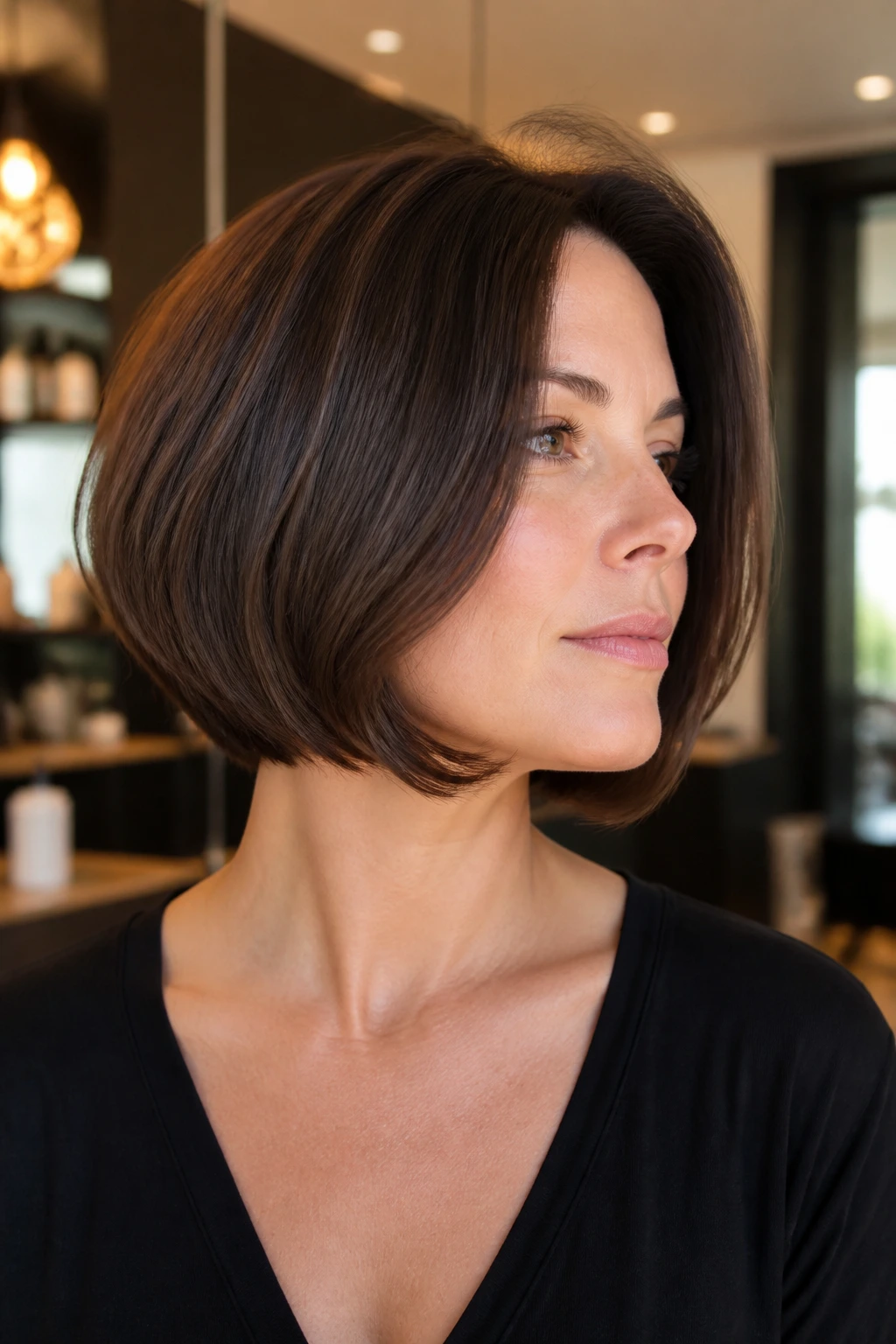
This cut narrows the back and keeps the front fuller, which is a smart move when thick hair feels bulky at the neckline. The taper at the nape makes the shape sit close to the head, while the front stays long enough to soften a square jaw.
It’s a quietly practical haircut. The front can be worn tucked, blown smooth, or left with natural bend, and the back does the hard work of removing visual weight. That makes it a nice option if your hair grows out wide or kicks out at the nape.
Ask for the taper to stay soft. Too much shortening at the back can make the transition look abrupt, especially when the rest of the cut is heavy.
25. Soft-Structured Everyday Lob

Some styles shout. This one just works. The outline is clean enough to keep thick hair under control, but the face-framing is soft enough to flatter a square face from the first week to the last. It’s the kind of cut that doesn’t need a special occasion to make sense.
Why it’s a keeper
The length sits in that useful zone between the jaw and the shoulders, so it doesn’t widen the face or drag the hair down. Ask for minimal layers, a slight bend at the ends, and a front that opens away from the jaw instead of ending right on it. That combination keeps the shape easy to wear and easy to grow out.
If you only want one bob to live with for a while, this is the safest pick. Not boring. Just dependable.
Styling Mid-Length Bobs for Thick Hair and Square Faces Without the Puff
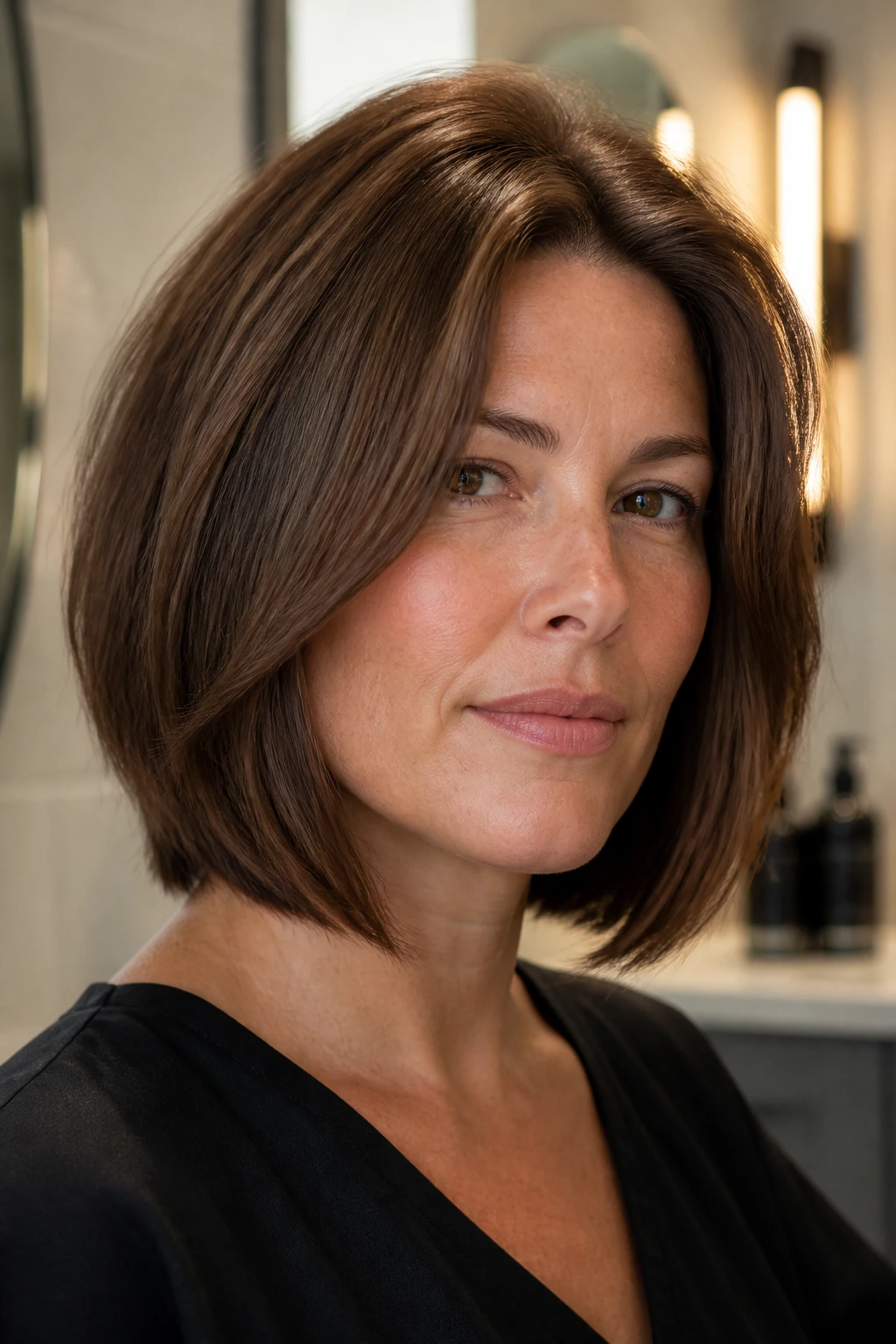
Start with the roots, not the ends. Thick hair usually gets puffy when the crown is neglected and the ends get all the attention. Blow-dry the top first with the nozzle pointed down the hair shaft, then shape the mids and ends with a round brush or flat brush depending on the finish you want.
A few moves that matter
- Root lift: Clip the crown while hair cools if it collapses flat.
- Brush size: Use a larger round brush for smoother curves; a small brush can create too much bend and widen the sides.
- Product amount: Keep cream and oil off the first inch from the roots. That area should stay light.
- Humidity backup: A tiny bit of anti-frizz serum on the outer layer is enough. Soak the cut in product and it will lose movement.
If you air-dry, scrunch from the mid-lengths down and leave the perimeter alone. The perimeter is what keeps a bob looking like a bob. Mess with it too much and you lose the shape.
The Mistakes That Make a Thick Bob Feel Boxy
-
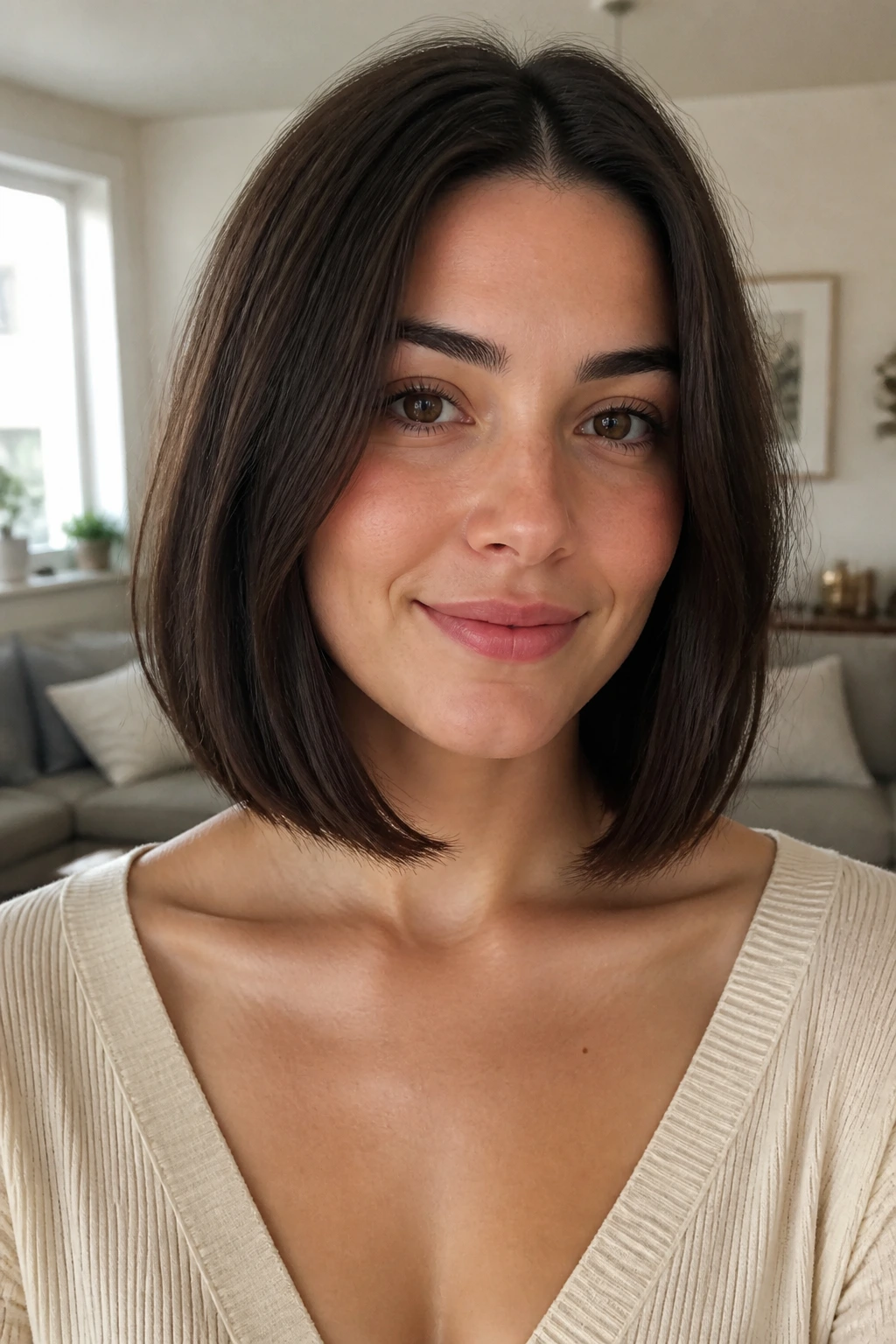
Cutting it right at the jaw: The ends sit on the widest part of a square face and make everything look broader. Move the length lower, or soften the front so it curves away.
-
Over-thinning the outer layer: When stylists attack thick hair with thinning shears at the surface, the ends get fuzzy and expand in humidity. The fix is interior weight removal, not shredding the outline.
-
Forgetting the part line: A middle part can work, but on some square faces it needs soft framing to avoid a hard rectangle effect. Try an off-center part or a side sweep if the haircut feels too severe.
-
Adding too many short layers: Short layers on dense hair can create a fluffy triangle around the cheeks. Keep the shortest layers long enough to blend into the bob instead of floating above it.
-
Skipping the styling plan: A cut that looks good blown out can behave badly air-dried if no one planned for that. Ask how it should look on day one, day two, and with no heat.
Variations and Adaptations to Try

-
Soft Fringe Shift: Add curtain bangs or bottleneck bangs if your forehead feels too open. The fringe breaks up strong lines and gives the face a softer top edge.
-
Sleek Glass Finish: Keep the perimeter blunt, then use a flat iron for a smooth, reflective surface. This works well on straight, dense hair that wants a sharper finish.
-
Wave-First Version: If your hair has a natural bend, ask for internal layers and a collarbone landing point. The waves do the rest.
-
Extra-Soft Grow-Out Plan: Leave the front a little longer and keep the back loose. This is the version to choose if you hate regular trims and want the haircut to drift into a lob without drama.
-
Cooler, Lighter Texture: For very heavy hair, ask for long layers around the interior and a clean outline. It removes weight without making the haircut airy in the wrong places.
-
One-Side Tuck Style: If you like wearing one side behind the ear, build the cut around that habit. A deep side part and a longer front on the tucked side keep the shape balanced.
Tools That Make the Cut Easier to Wear
-
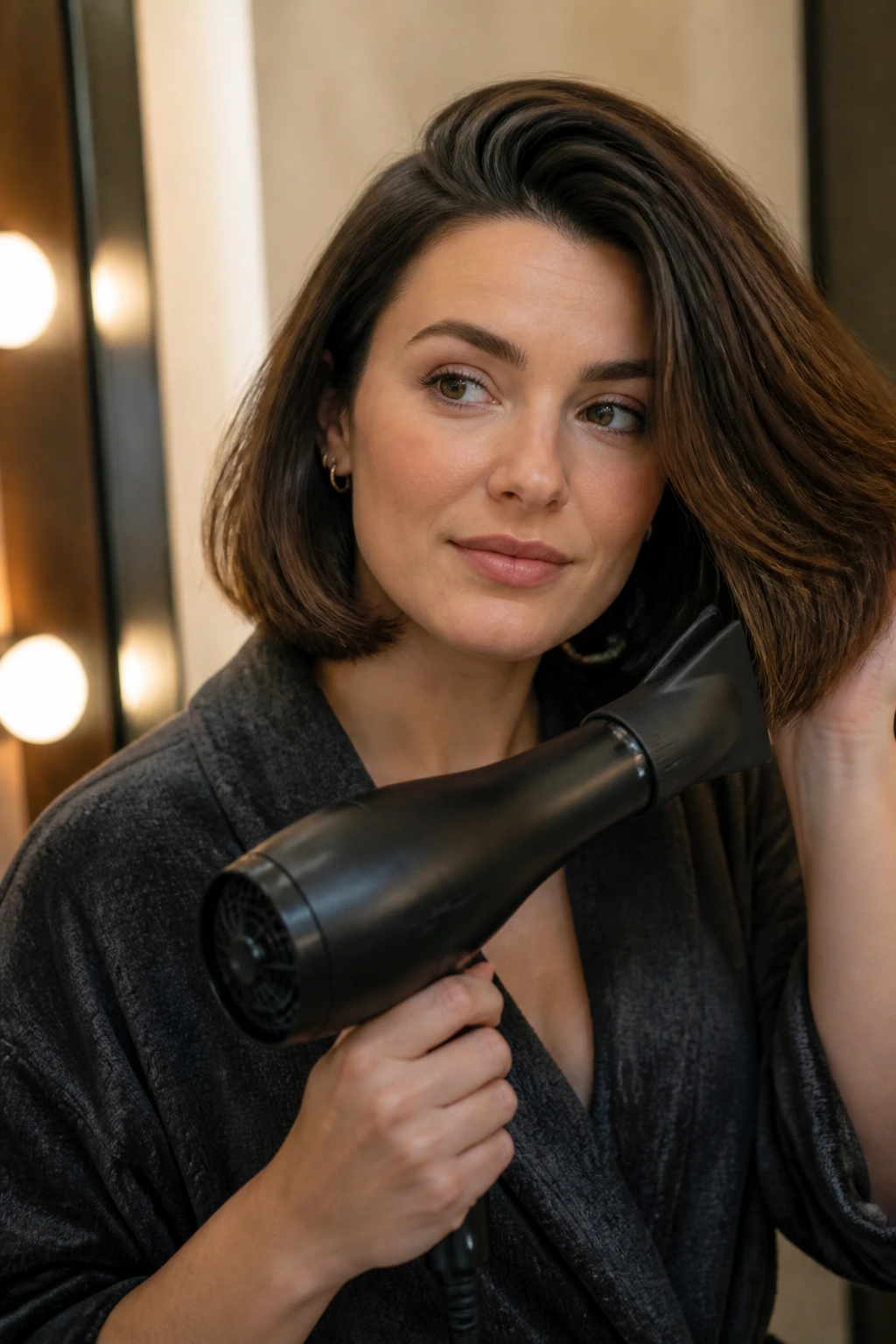
Hair dryer with a narrow nozzle: It keeps the airflow directed so thick hair dries smoother and doesn’t puff outward at the roots.
-
1.5-inch round brush: A good middle size for bending the ends under without turning them into corkscrews.
-
Flat brush or paddle brush: Best when you want a sleeker finish with less curve.
-
Heat protectant spray: Use it every time you blow-dry or iron the hair. Thick hair still burns.
-
Lightweight smoothing cream: Helpful for the front pieces and ends; too much on the roots will flatten the haircut.
-
Dry shampoo: Saves day-two shape and keeps the roots from getting oily and heavy.
-
Clips or duckbill clips: Useful for pinning the crown while it cools, which helps the shape last.
-
Satin pillowcase or bonnet: Not glamorous, but it cuts down on friction, frizz, and flattened ends.
Keeping the Shape Between Trims

A mid-length bob on thick hair usually stays neat for 6 to 8 weeks if the outline is blunt, and a little longer if it’s heavily layered. Once the ends start to splay, the shape loses its edge fast. That’s not a flaw. It’s the tradeoff for wearing a cut with clean lines.
At home, day two is usually the sweet spot. A mist of water at the front, a dab of cream on the ends, and a quick pass with a round brush can bring the haircut back to life without a full wash. If your hair gets too puffy overnight, sleep on a satin pillowcase and keep the top section loose, not tight.
If you plan to grow the cut out, ask for dusting rather than a full reshaping at the salon. That keeps the perimeter from jumping in length all at once, which is when a bob starts looking forgotten instead of intentional.
Questions People Ask Before They Commit

Will a mid-length bob make a square face look wider?
Not if the length lands below the jaw and the front pieces are softened. The problem is usually the wrong endpoint, not the bob itself. A collarbone or shoulder landing point tends to work far better than chin length.
Should thick hair get layers or stay blunt?
Both can work, but the layers should usually live inside the haircut, not chop up the outer line. A blunt perimeter keeps the shape controlled; hidden layers remove weight so the bob doesn’t puff.
Can I wear a middle part with a square face?
Yes, if the front is soft enough. A center part with cheekbone-length face-framing can look cleaner than a side part that’s too dramatic. The key is not the part itself but the shape around it.
Are bangs a bad idea for square faces?
No. Curtain bangs, bottleneck bangs, and side-swept fringe can look excellent because they break up straight lines. Very blunt bangs are the risky ones, especially if they end too high and too straight.
How often should I trim this cut?
Blunt versions usually need a trim every 6 to 8 weeks. Softer layered versions can stretch closer to 8 or 10 if you don’t mind a little grow-out. Once the ends stop sitting cleanly, the cut loses its shape.
What if my thick hair gets too big when it dries?
That usually means the interior wasn’t removed enough or the styling product is too heavy at the roots and too light at the ends. Try a lighter cream, dry the crown first, and ask for interior debulking next time rather than extra surface thinning.
Can this haircut work on wavy or curly hair?
Yes, and often beautifully. The cut should stay a touch longer to account for shrinkage, and the front should be shaped so the wave falls away from the jaw instead of sitting right on it.
Is a sleek bob or a textured bob better for me?
If your hair is very dense and straight, sleek can be easier to control. If it has natural wave, texture may look more relaxed and take less work. The better choice is the one that matches how your hair behaves when you ignore it for a day.
The Shape That Keeps Its Edge Without Looking Hard
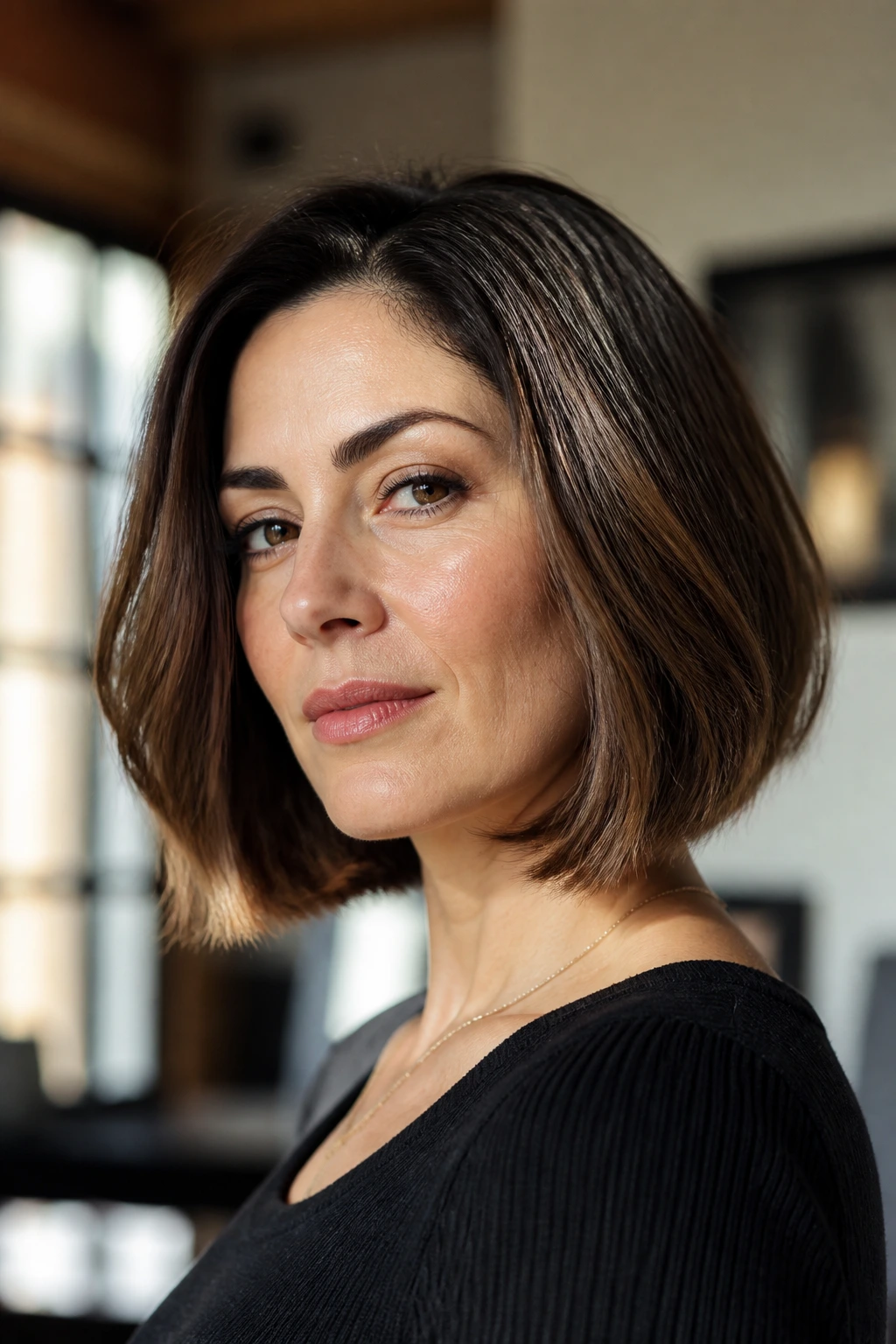
The best mid-length bob for thick hair and a square face does two jobs at once. It reins in the bulk without flattening the hair, and it softens the jaw without making the haircut feel timid. That balance is the whole game.
A good cut here does not need constant fussing. It just needs the right length, the right weight removal, and a front that knows where to stop. Get those three things right, and the haircut keeps looking considered even when you’re five days past wash day.
The funny thing is that these bobs often look more expensive when they’re not overworked. A little movement. A clean line. Enough length to breathe. That’s the combination worth asking for next time you sit in the chair.