



A blunt bob can look like a line drawn with a ruler. On wavy hair, that line gets louder as the hair dries and bends and swells, and on square faces it can land right on the jaw and make the whole lower half of the face feel wider than it is. That’s why layered bobs for wavy hair and square faces are such a smart pairing: the layers break up the hard edge, and the wave keeps the cut from feeling stiff or boxed in.
The trick is not “more layers” in some vague, salon-poster sense. It’s where the layers begin, how much weight stays in the perimeter, and whether the front pieces soften the jaw instead of echoing it. A good layered bob for this face shape should look like it knows what to do when the wind hits it. It should move. It should bend. It should not sit there and announce every angle your face already has.
Square faces usually have a stronger jawline, a broader forehead, and cheekbones that can take a clean edge just fine. But clean edges aren’t the same thing as flattering edges. The best cuts here use diagonal lines, curved fronts, and enough internal shape to keep wavy hair from puffing out at the sides. That balance is the whole game.
Why These Layered Bobs Work on Wavy, Square Faces

- Jaw Softening: Layers that start below the chin keep the haircut from drawing a hard line across the widest part of a square jaw.
- Wave Control: Wavy hair expands as it dries, so internal layers remove bulk without making the ends look thin or stringy.
- Face Lengthening: Longer front pieces, off-center parts, and curved outlines pull the eye downward instead of side to side.
- Grow-Out Friendly: These shapes still look intentional when they’re grown out by a few weeks, because the cut is built on movement, not one severe edge.
- Styling Flexibility: A quick bend with a diffuser, a round brush, or a flat iron on just the front pieces can change the mood without a full restyle.
1. Collarbone-Grazing Layered Bob
A collarbone-grazing cut is the easiest place to start if you want softness without giving up the bob idea. The length lands below the jaw, which matters more than people think. That little bit of extra space keeps the hair from sitting directly on the widest part of a square face, and it gives wavy hair room to form a loose S-shape instead of kicking out at the sides.
Why It Flatters So Well
This length gives you room for movement in the front without building a shelf around the jaw. Ask for layers that begin around the lip or chin area, not right at the jawline. That keeps the wave pattern light while still leaving enough weight in the ends so the style does not frizz apart by noon.
Best For
- Medium to thick wavy hair
- Square faces that want the safest, softest shape
- Anyone growing out a shorter bob
Styling note: A soft bend from a 1-inch iron on just the front pieces is usually enough. Don’t overwork the back. The natural wave does most of the work for you.
2. Soft A-Line Layered Bob
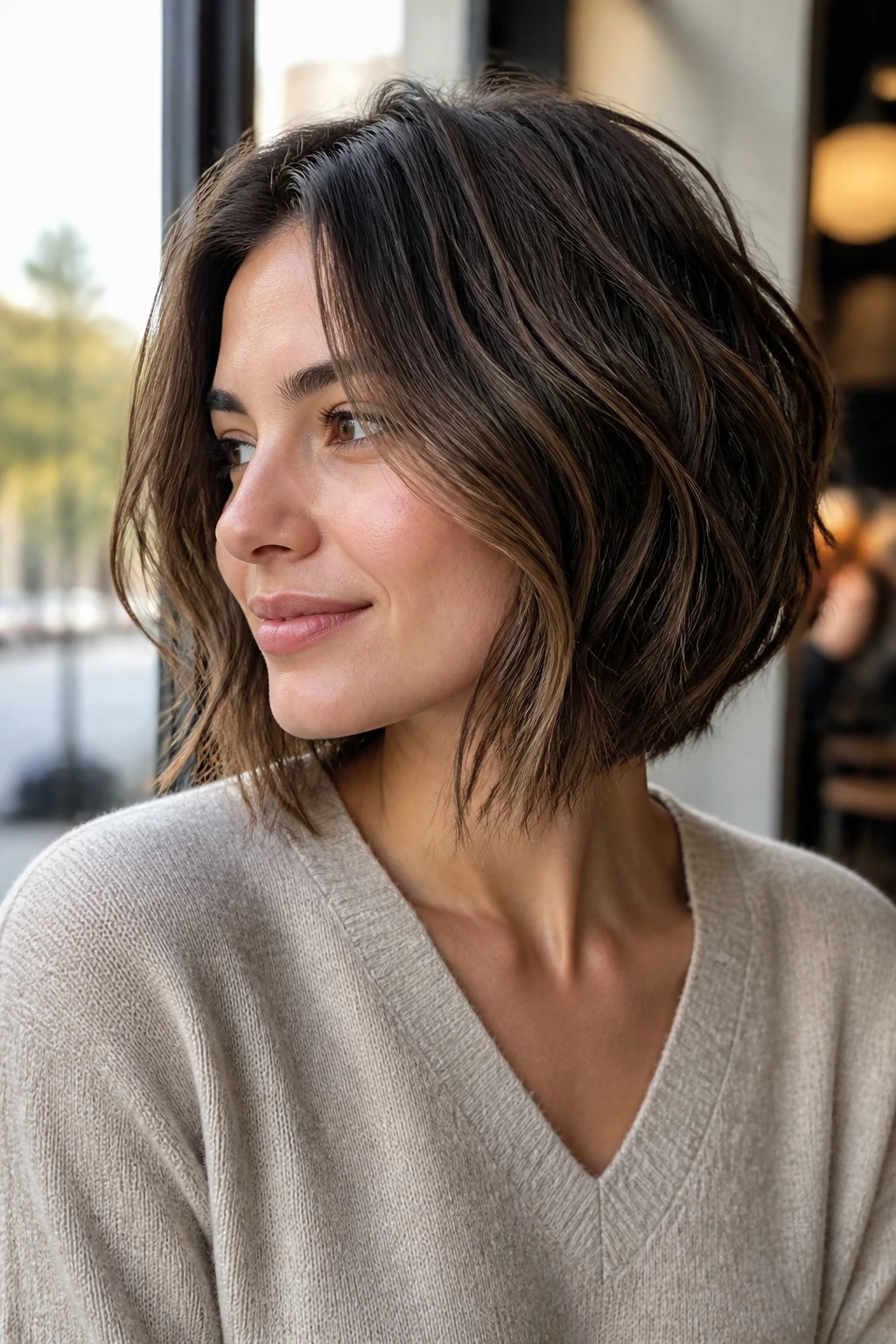
This is the cut that quietly cheats the face shape. The back sits a little shorter, the front drifts longer, and that forward angle draws the eye down instead of letting it park at the jaw. On square faces, that diagonal line is gold. It interrupts all the straight lines and gives the haircut a smoother path across the face.
The A-line shape also plays nicely with wavy hair because the front has enough length to bend instead of flip. If the waves are looser, the angle reads polished. If they’re stronger, the angle reads more relaxed and a little undone. Either way, it avoids that “triangle helmet” effect that can happen when wavy hair gets too much width at the sides.
Ask your stylist to keep the interior lightly layered so the back does not look heavy. The shape should fall, not puff. That’s the difference between a good A-line and one that needs constant taming.
3. Chin-Skimming Curved Bob

Can a chin-length bob work on a square face? Yes — but only when it curves instead of cutting straight across. That’s the point of this version. The perimeter dips slightly lower at the front, and the edges are softened so the line doesn’t hit the jaw like a shelf.
Wavy hair gives this cut a lot of personality, but it also means the stylist has to be careful with length. If the bob is too short and too blunt, the bends can spring outward and widen the face. Keep the front just long enough to graze the chin, then ask for soft interior layering so the hair moves inward rather than ballooning out.
How to Style It
Use a diffuser on low heat and cup the ends upward only at the final stage. If you like a more polished finish, tuck one side behind the ear and leave the other side loose. That tiny asymmetry changes the whole read of the cut.
4. French-Girl Shag Bob

This one lives in the messier end of the pool, and that’s the fun of it. The French-girl shag bob uses choppy layers, soft fringe energy, and a lived-in wave pattern to blur the hard edges of a square face. It looks especially good when the hair has some grit to it — second-day texture, sea spray, a little natural bend.
The important thing is restraint. A shag that’s too aggressively layered can turn wavy hair into fluff, and nobody needs that. Keep the shortest layers light around the crown and sides, then leave enough weight through the bottom so the shape still reads as a bob. The face should feel framed, not swallowed.
What Makes It Work
- The fringe breaks up forehead width.
- The layers keep the hair from stacking at the jaw.
- The texture gives square features a softer outline.
A little matte paste through the ends is enough. Don’t chase perfection here. This cut looks better when a few pieces fall where they want.
5. Tapered Razor Layered Bob
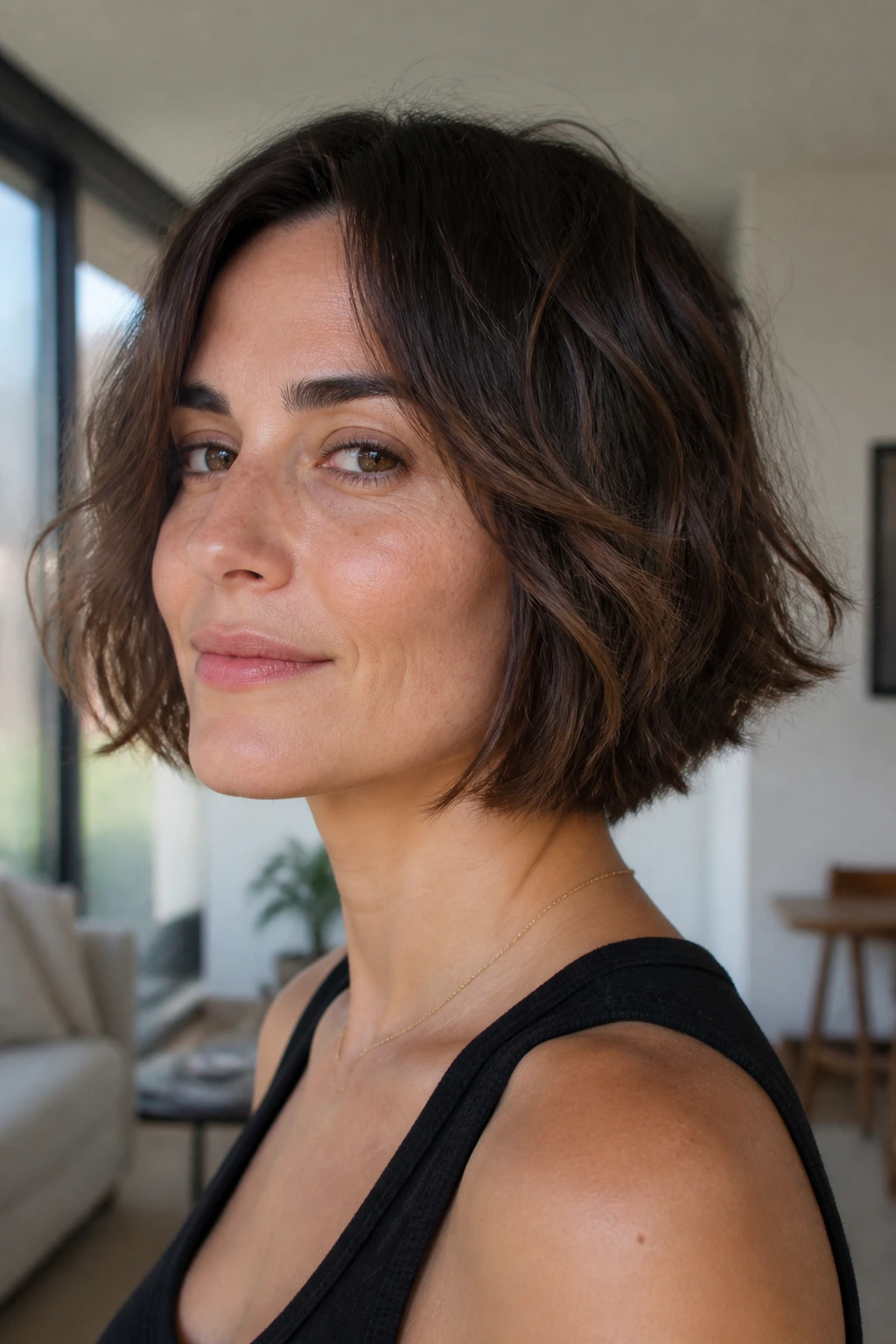
A razor-cut bob can be a very good choice for thick, wavy hair, but only when it’s handled with a light touch. The tapering removes heaviness from the ends and gives the hair a softer edge, which helps square faces because the haircut stops behaving like a block. It becomes lighter, airier, a little more worn-in.
The catch is frizz. Razor work can rough up the ends if the hair is already dry or fragile. So this cut is best when the hair has decent density and the stylist knows how to control the blade. You want soft tapering, not shredded ends.
Best use case: coarse waves that tend to sit too heavy around the cheeks. A little thinning at the right spot opens the shape without making the haircut look sparse. Finish with a smoothing cream on the mid-lengths and ends, then scrunch once. That’s enough. More product will only weigh it down.
6. Face-Framing Lob with Long Layers
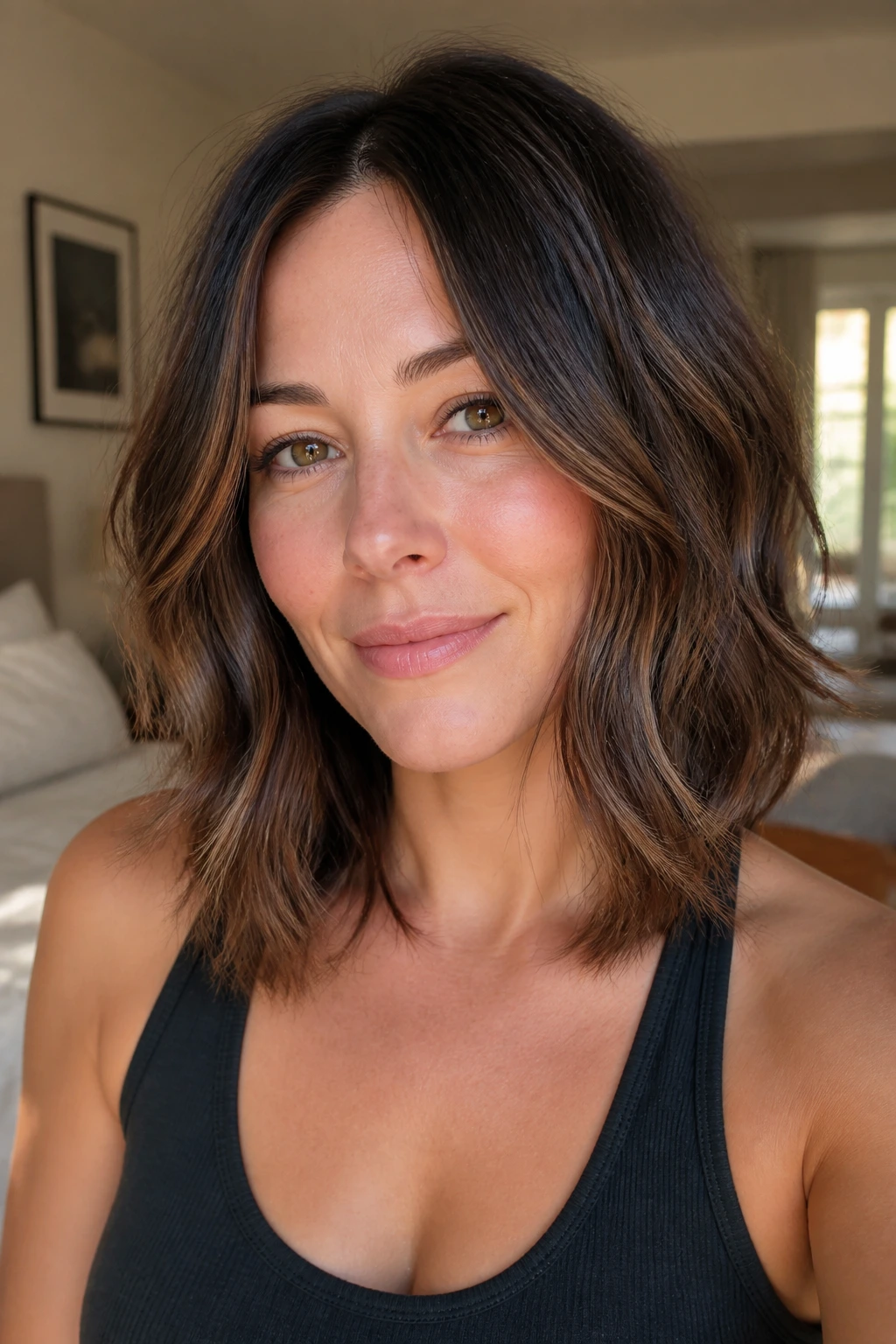
If you want the safest bet with the most flexibility, this is it. The long bob keeps the hair below the jaw, and the long layers add movement without stealing too much density from the perimeter. Square faces benefit from that extra length because it pulls the visual line downward, which softens the width across the lower face.
The front pieces matter here. They should start somewhere around the cheekbone or just below, then fall into longer layers that merge into the rest of the cut. That creates a gentle curtain effect without calling too much attention to the jaw. It also gives wavy hair a clean place to bend.
This is the version I’d hand to someone who wants a bob but does not want to fuss with it every morning. Air-dry it with a leave-in and a light mousse, and it will usually settle into a shape that looks deliberate rather than accidental.
7. Choppy Textured Bob with Side Part

A side part is doing more work than people give it credit for. On a square face, it breaks the symmetry and stops the haircut from echoing the equal sides and strong angles of the face. Add choppy layers, and the whole shape gets looser in the best way.
This bob works when the wave is medium or strong and you want a little attitude in the cut. The ends are piecey, not blunt. The top has enough lift to keep the style from collapsing. And the side part creates a diagonal line that moves across the forehead and down past the cheek, which is exactly what a square face likes.
How to Wear It
Flip the heavier side away from the face, then scrunch a bit of texture spray through the mids and ends. If the roots go flat, lift them with a clip while the hair dries. That one move gives the cut shape without forcing it into a full blowout.
8. Rounded Bob with Invisible Layers

This is the polished one in the group. The outline stays rounded, but the layers live inside the haircut where you cannot see them right away. That keeps the silhouette smooth, which is a smart move for square faces because the curve softens the corners without making the style look fussy.
Wavy hair loves internal layers when you want movement without a choppy finish. The hair keeps its body, but the weight is redistributed so it falls into a curve instead of puffing outward. You get shape without obvious texture lines.
This cut is especially good if your waves are fine to medium and you don’t want the ends to look thin. Ask your stylist not to overtexturize the perimeter. The outside line should feel clean, even if the inside is doing all the real work.
9. Deep Side-Part Layered Bob
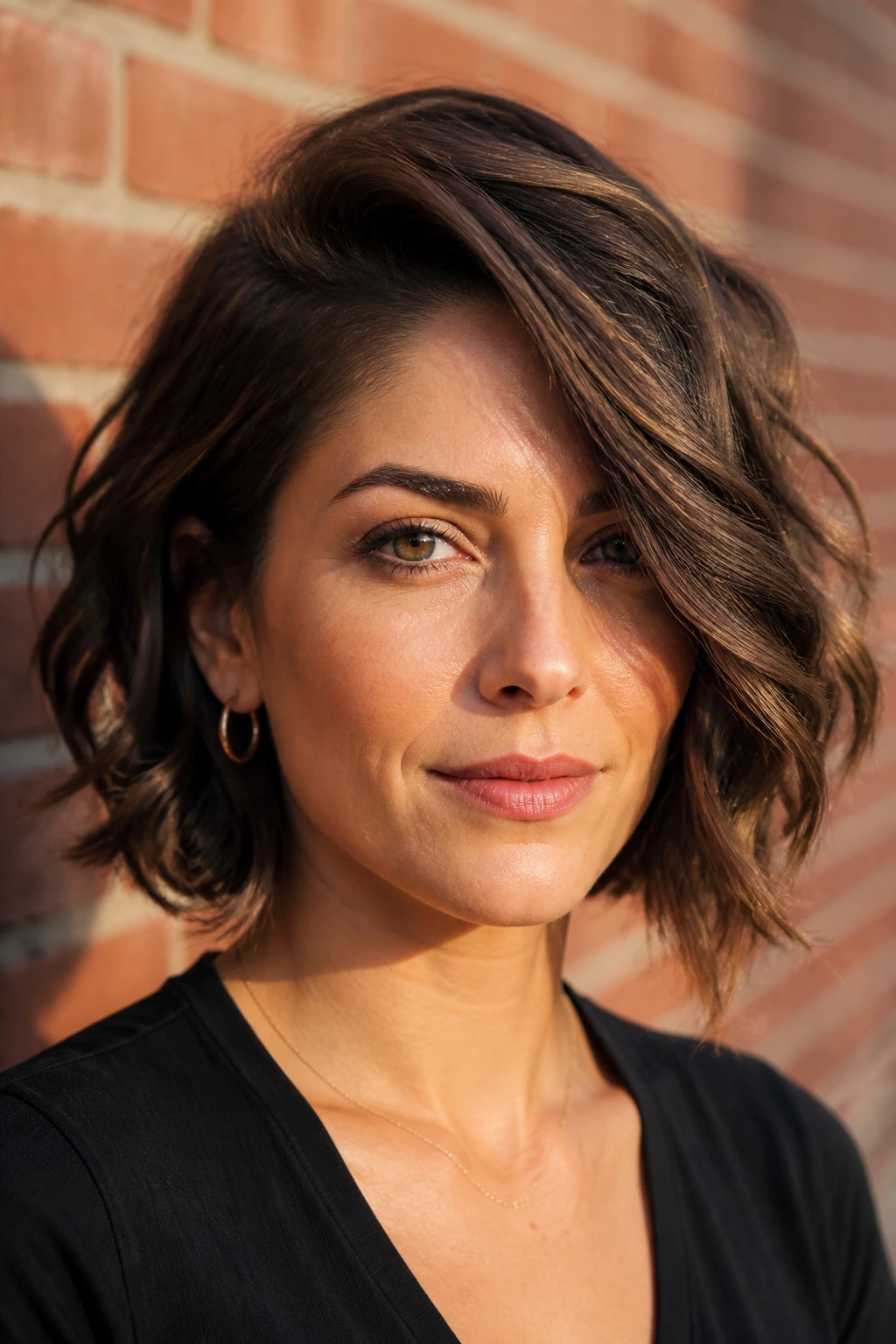
If your face feels widest around the temples or jaw, a deep side part can change the whole read of the haircut in one move. It creates a long diagonal across the face, and that diagonal is a friend to square features. The layers underneath keep the wave from collapsing into one heavy side.
This is a good option when you want softness but still like a bit of structure. The part should not sit so far over that the hair flips into your eyes. Just enough to shift the balance. That little offset is often enough to make the jaw feel less dominant.
A deep side part also works well with wavy hair because it gives one side a bit more lift and the other side a little more swing. The cut ends up looking natural and slightly dramatic, which is a nice combination if you do not want a haircut that behaves itself too much.
10. Feathered Jaw-Softening Bob

This is the cut for anyone who wants the jawline to look less square without hiding the face behind hair. Feathering at the lower half of the bob makes the ends move instead of sitting in one hard block. That movement matters. It gives the haircut a softer edge and keeps the face from feeling boxed in.
The feathering should happen through the sides and the front, not all the way through the back. If the whole cut gets too light, the shape can wobble and lose its body. Wavy hair needs a little mass to cling to, especially if you want the style to last past the first hour after washing.
Good pairing:
- Slight side part
- Light round-brush bend at the ends
- Smoothing cream only on the lower half
If the bob starts to feel too airy, the fix is usually simpler than people expect: fewer products, less brushing, and a tiny trim to restore the outline.
11. Blunt-Base Bob with Internal Layers

This one proves that a blunt line does not have to be harsh. The outer edge stays clean, which gives the haircut a little weight and polish, but the inside is carved out with layers so the wave can move. It’s a smart compromise for square faces that want some definition without adding more width.
The perimeter should land below the jaw, or at least not directly on it. That is non-negotiable here. Then the internal layers take out the bulk so the cut does not balloon. The effect is neat but not stiff.
I like this version for people who want to look put together with minimal styling. The blunt base gives the shape structure. The hidden layers keep it from turning into a helmet. That balance is harder to get than it looks, so the haircut really depends on a stylist who understands wavy hair.
12. Tousled Bob with Curtain Bangs

Curtain bangs are one of the easiest ways to soften a square face because they break up the forehead and taper toward the cheekbones. Pair them with a tousled bob, and the effect gets even better. The face gets framed in arcs instead of corners.
This cut lives or dies on length. The bangs should be long enough to part and fall into the sides, not chopped short and stiff. On wavy hair, curtain bangs can bend in a very flattering way if they’re cut with the wave pattern in mind. Too short, and they can puff. Too heavy, and they hang like curtains in the literal, unhelpful sense.
Styling rhythm
Dry the bangs first with a round brush or a small brush attachment on your dryer. Then let the rest air-dry or diffuse. If the front pieces need help, wrap them away from the face for a few seconds to get that soft sweep. Don’t flatten the whole head to chase symmetry.
13. Asymmetrical Layered Bob

A slight asymmetry can be a wonderful thing on a square face because it keeps the haircut from mirroring the face too closely. One side longer than the other creates motion, and motion softens. That’s the whole appeal here.
The difference in length doesn’t need to be dramatic. Even a subtle half-inch to inch variation can change the line enough to make the face feel less boxy. Wavy hair helps because the texture blurs the transition. The cut reads modern, but not stiff.
This bob is best if you like a little edge and do not mind a style that benefits from a careful parting and a quick touch-up with a flat iron at the front. The asymmetry should feel intentional, not like one side was forgotten in the chair.
14. Bixie-Bob Hybrid with Waves
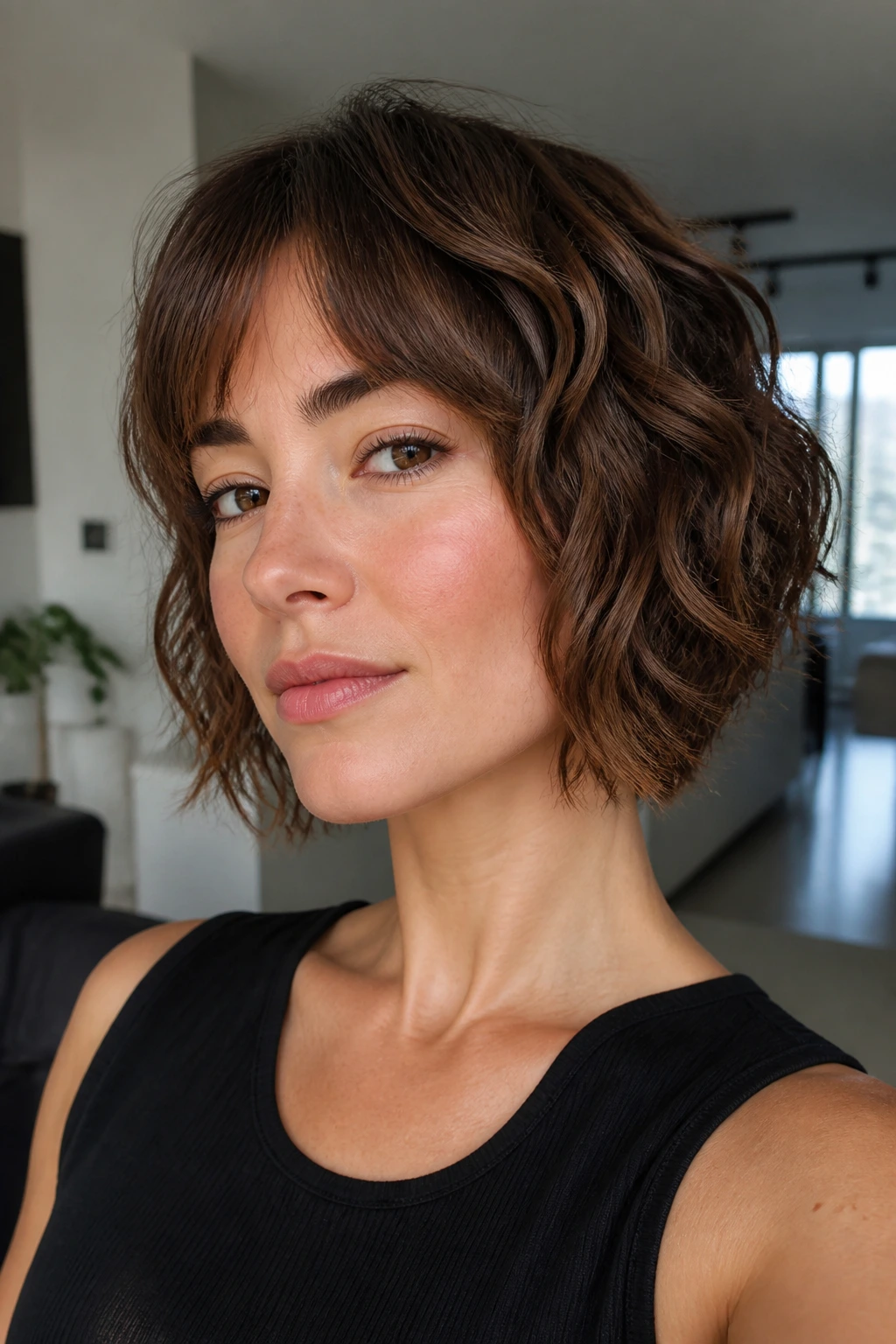
The bixie-bob sits between a bob and a pixie, and that in-between space can be very flattering on square faces if the top is kept soft. Waves give it movement, while the shorter shape keeps it from dragging down the jawline. This is the boldest cut in the set, and it works best when the hair has texture of its own.
What makes it face-friendly is the length distribution. Keep a little extra softness around the temples and sideburn area, and avoid carving the sides too tight. Square faces already have structure; the haircut should loosen that, not sharpen it.
It’s a good choice if you want something lighter around the neck and ears, and if you’re fine styling with a bit of mousse and finger-drying. Low effort? Not quite. Low fuss once you learn it? Yes, and that’s the real draw.
15. Graduated Neck-Length Bob
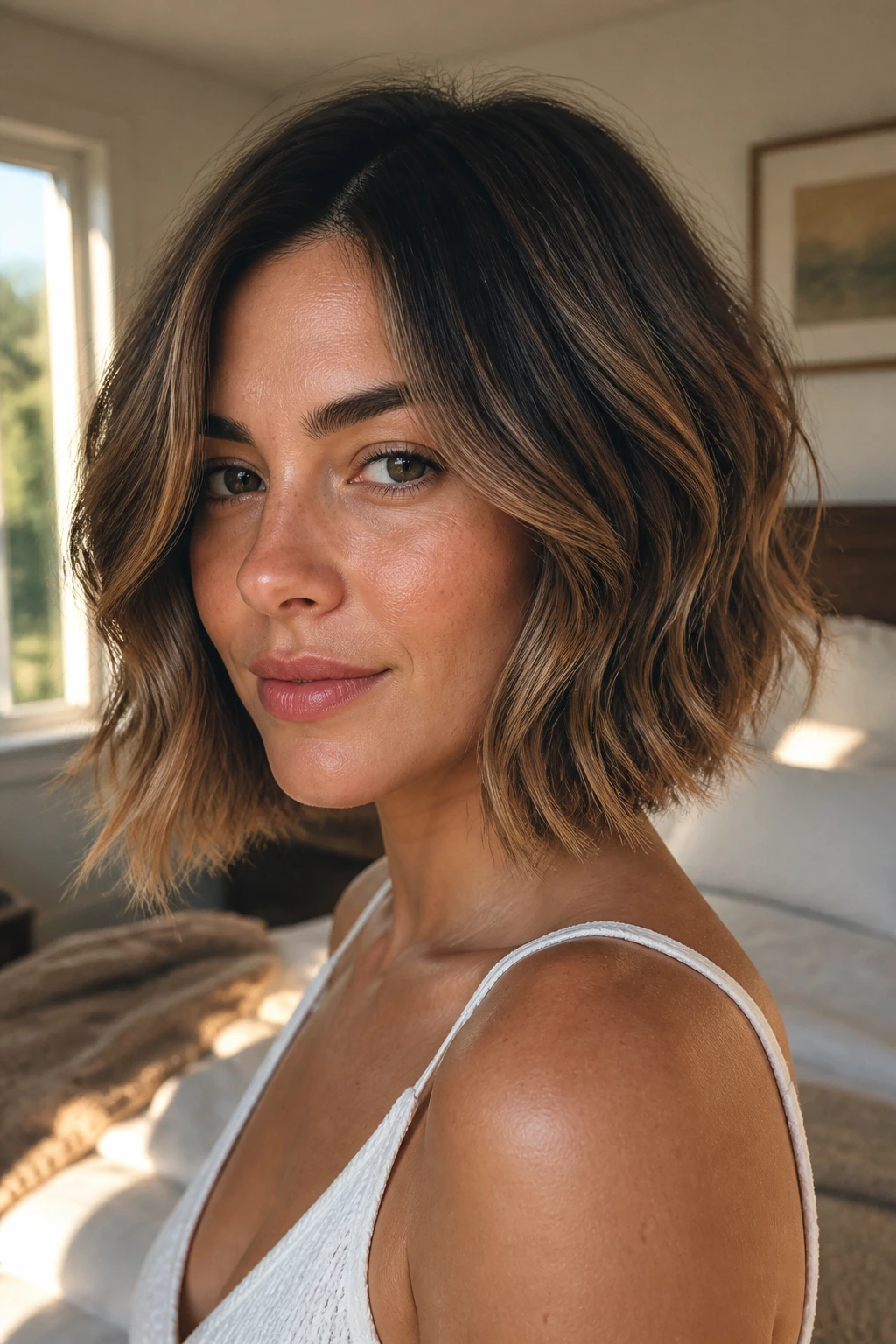
Here, the back sits a touch shorter and lifts gently at the nape, while the front stays longer and softer. That graduation gives the cut shape without creating a hard shelf, which is exactly what you want if you have a square face and wavy hair that likes to fill out at the sides.
The neck-length finish keeps the cut from feeling too long or too heavy. It also makes the hair swing nicely when you turn your head, which sounds small until you see it in a mirror. Movement matters with this shape. Without it, the graduation can look old-fashioned in the wrong way.
Where it shines
- Medium-density waves
- Hair that needs a cleaner neckline
- Anyone who likes a little lift at the back
The front should still be soft and slightly longer than the back. If the graduation gets too steep, the cut starts to look stacked and the square face loses the softness it needs.
16. Piecey Bob with Deconstructed Ends
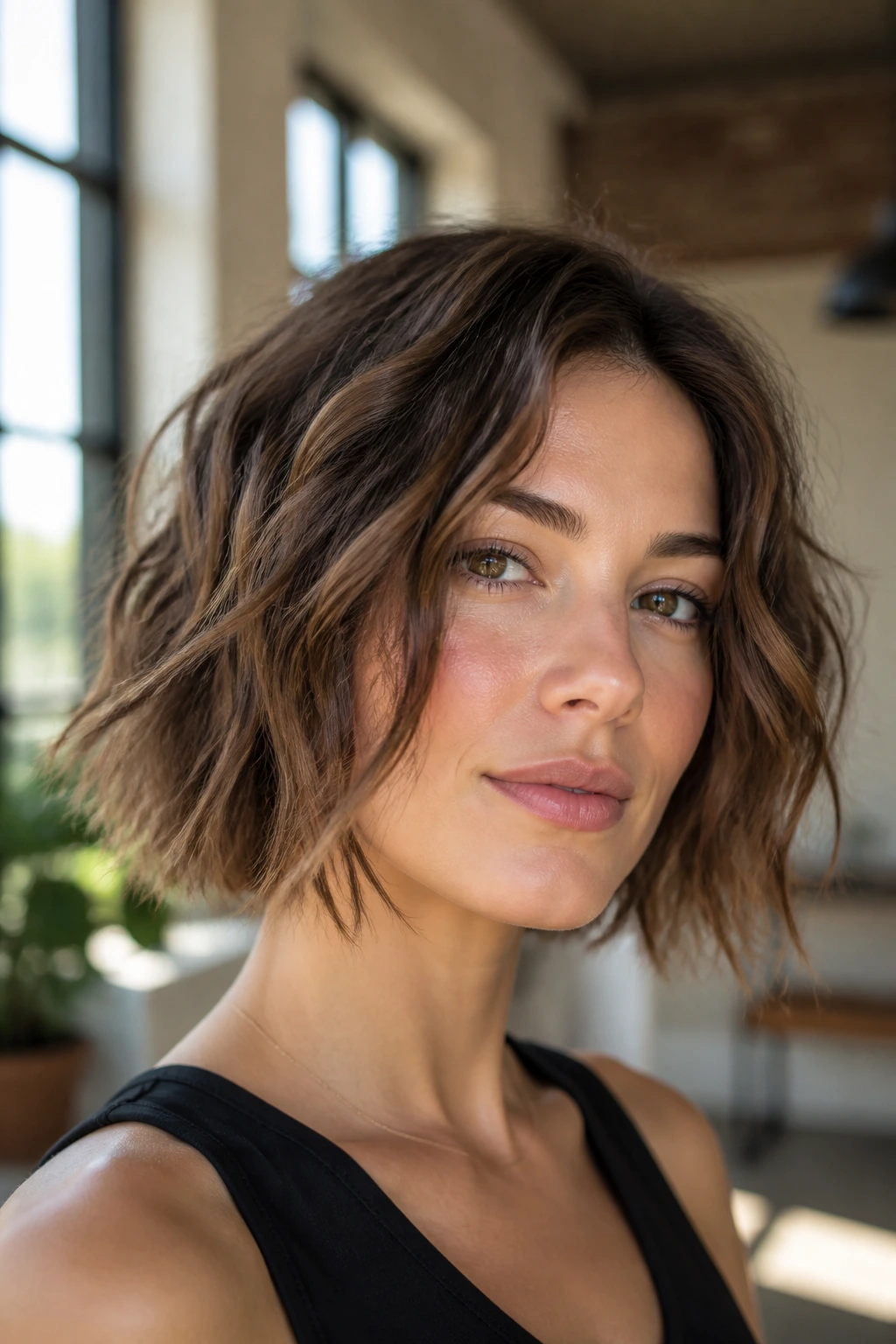
This is the one for hair that naturally likes separation. Instead of forming one smooth sheet, the ends break into little pieces that move independently. On a square face, that broken edge is useful because it keeps the lower half of the face from meeting one solid haircut line.
The deconstructed finish works best when the hair is wavy enough to support it. If the hair is too fine and too soft, the cut can look sparse. But on medium waves, especially with some density, the piecey shape looks effortless in the best possible way — though “effortless” is the wrong word, because a good cut is doing the heavy lifting.
Use a small amount of pomade or wax on the tips, not the whole head. Twist a few ends between your fingers. Stop before it gets sticky. That little bit of separation is enough.
17. Airy Side-Swept Layered Bob
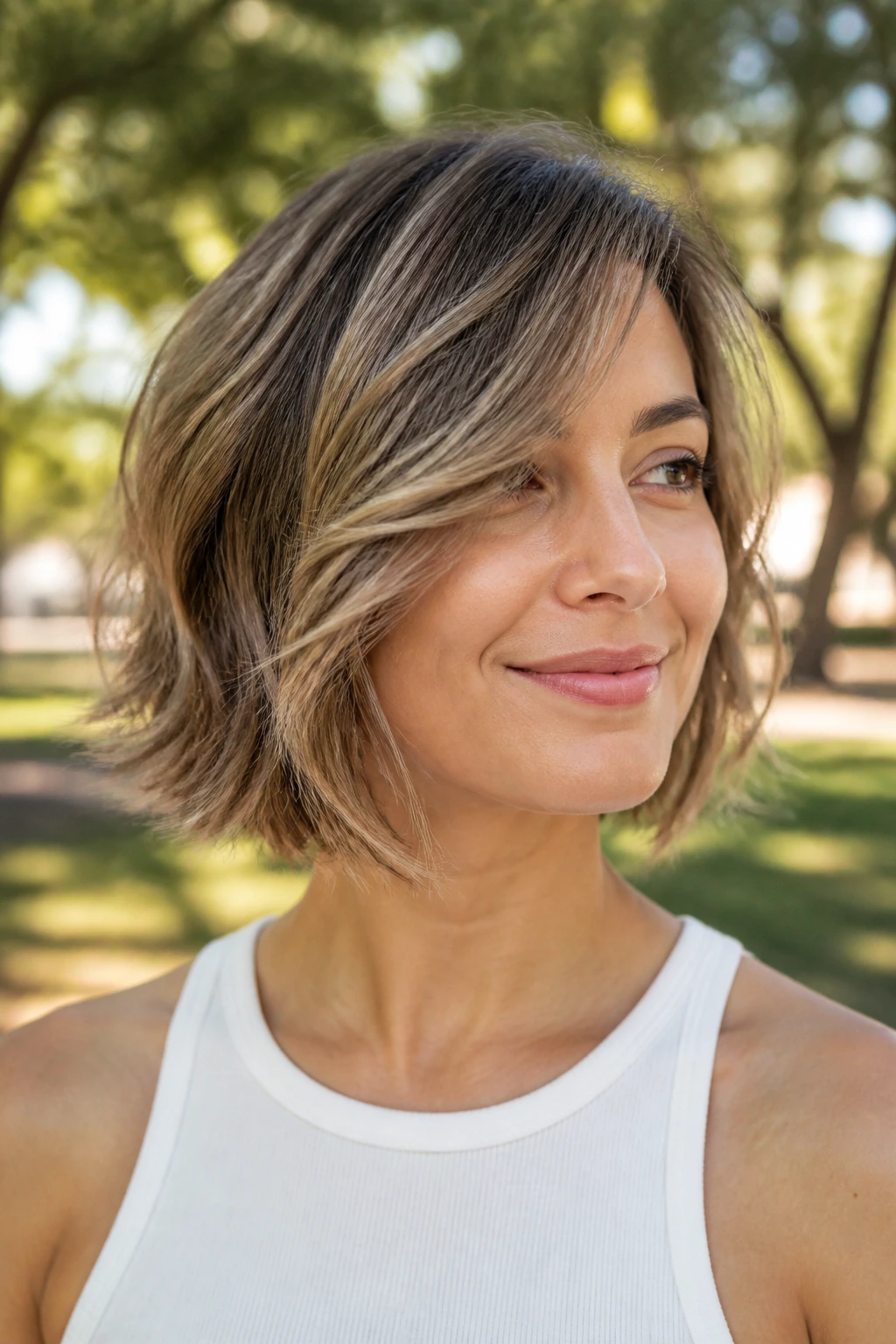
If your face feels broad across the forehead and jaw, an airy side-swept shape helps move the eye diagonally. The side-swept front pieces act like a soft visual curtain, and the light layering keeps the sides from filling out too much.
This cut feels lighter than some of the others on the list. That makes it a nice choice if you have wavy hair that gets heavy fast or if you want to avoid a lot of stacking at the back. The “airy” part matters: the style should have lift, not frizz. Those are not the same thing.
A quick blow-dry at the roots, then a few finger-twists around the front, can be enough. If the wave pattern is strong, let the hair dry halfway before shaping the front. That keeps the side-swept line from falling flat.
18. Sleek-When-Blown Layered Bob
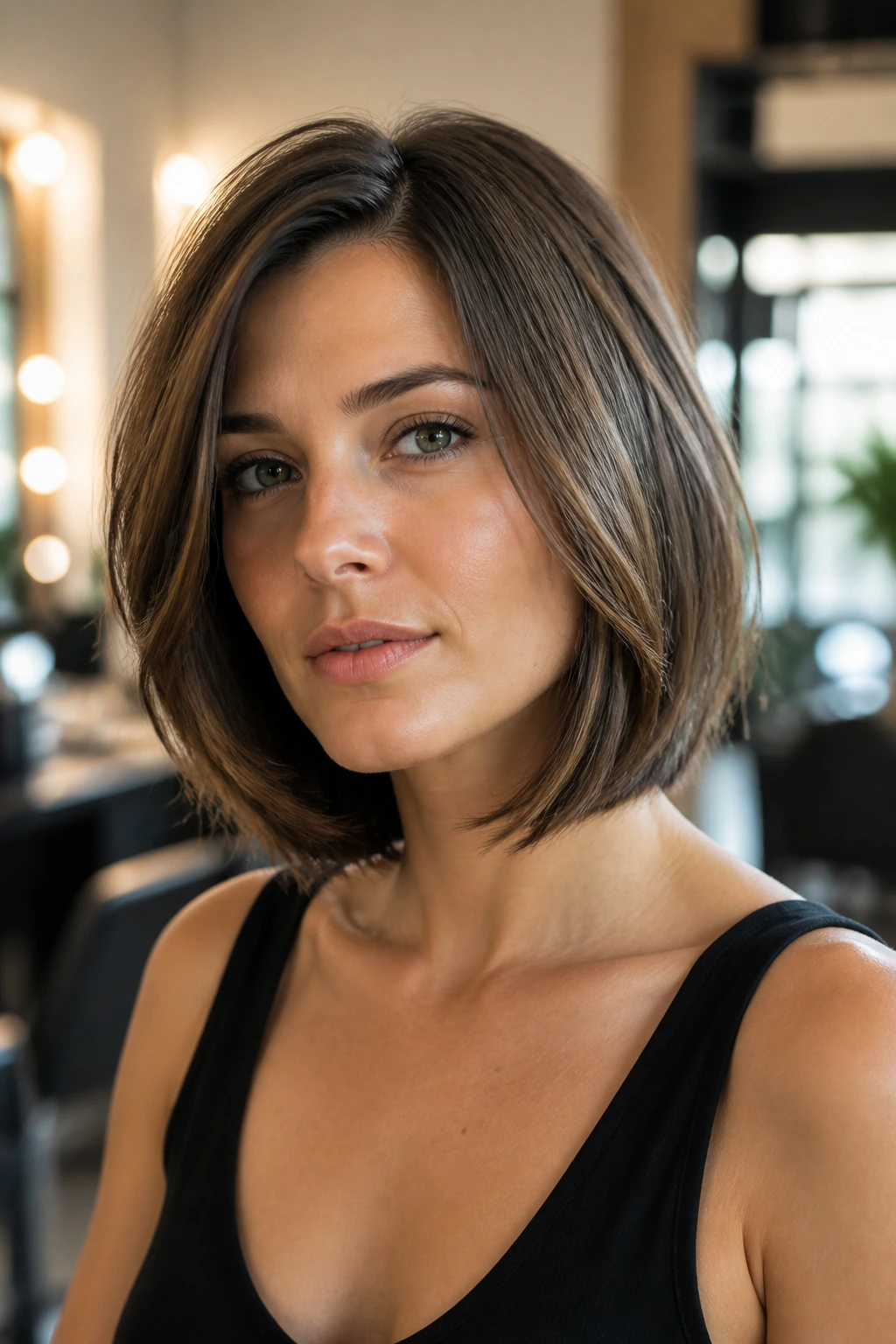
Some people want their bob to look soft and wavy one day, smooth and controlled the next. This version gives you that option. The layers are subtle enough to lie down under a blowout, but they still let the hair move naturally when you air-dry it.
That flexibility makes sense for square faces because a sleek finish can sharpen the line just enough for polish, while the layers prevent the shape from turning boxy. The key is keeping the perimeter below the jaw and the layers long. Short layers would fight the smoothness.
This is one of the better cuts if you switch between air-drying and styling. Use a heat protectant, a round brush, and a concentrator nozzle for the smooth version. Let the wave do its thing on lazy days. The haircut should cooperate either way.
19. Razor-Soft Undercurve Bob
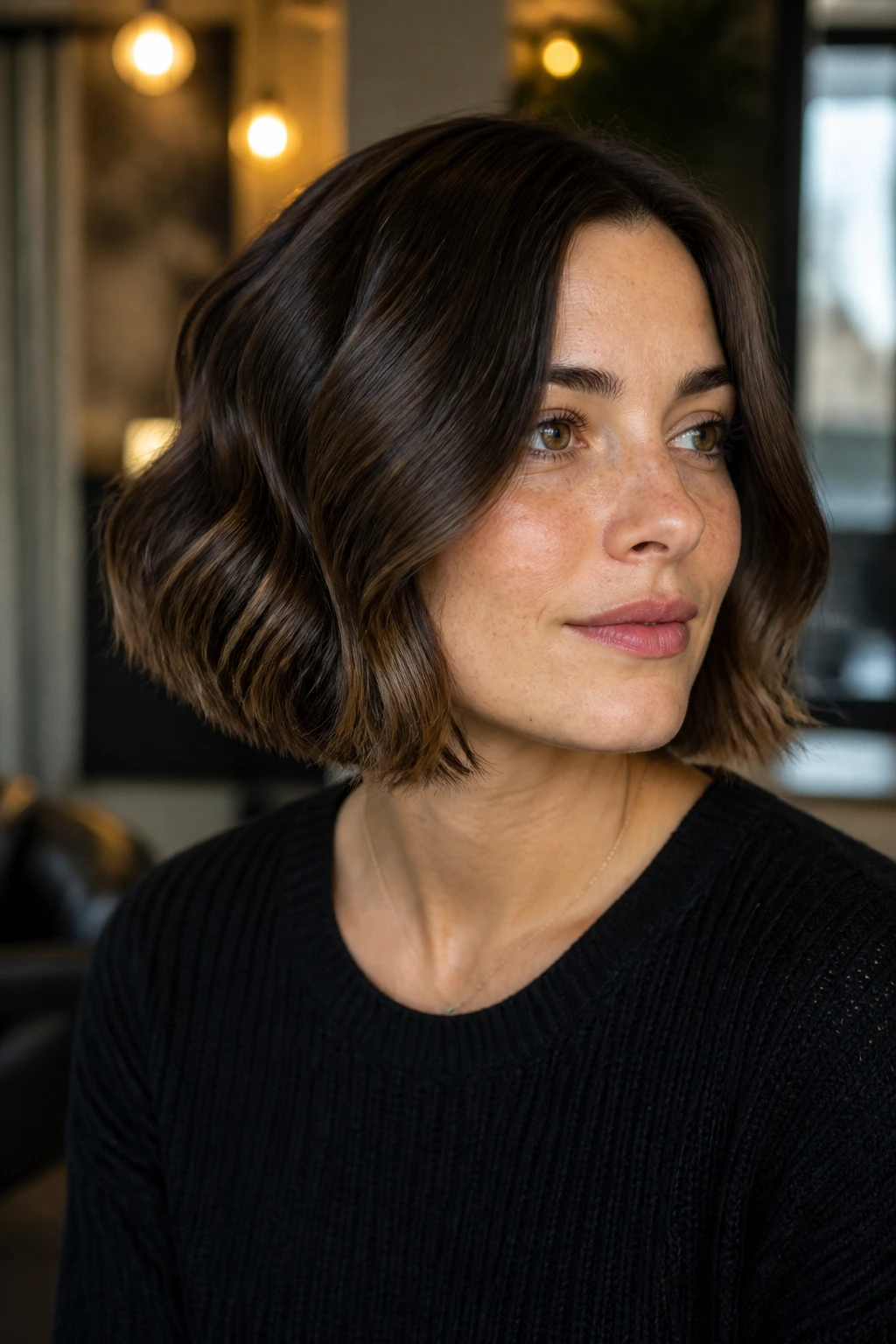
The undercurve is the secret here. Instead of sitting straight, the bottom edge curves slightly inward, which makes the haircut hug the face more gently. On square faces, that inward shape softens the corners without hiding the bone structure.
A razor can help create that softness, but the real point is the curve. Wavy hair naturally wants to bend, and this cut leans into that bend instead of fighting it. The result is a bob that feels tailored rather than blunt.
Watch for this
If the undercurve is too aggressive, the hair can tuck under in a way that feels dated. Keep it subtle. The curve should read as movement, not a helmet rim.
20. Midneck Layered Bob with Tucked Front

This is a very practical cut, and I mean that as praise. The length hits around the midneck, so it stays away from the jaw but does not drift into lob territory. Then the front is just long enough to tuck behind the ears without shortening the face too much.
That tucked-front possibility helps square faces because it opens one side of the face and keeps the haircut from sitting symmetrically all the time. Wavy hair gets a little edge from the tucked shape, especially if you let the front curve naturally instead of forcing it flat.
This is one of the easiest cuts to style fast. A little mousse, a quick scrunch, and a tuck on one side is enough for many mornings. It’s not fancy. It just works.
21. Long Bob with Soft U-Shaped Layers
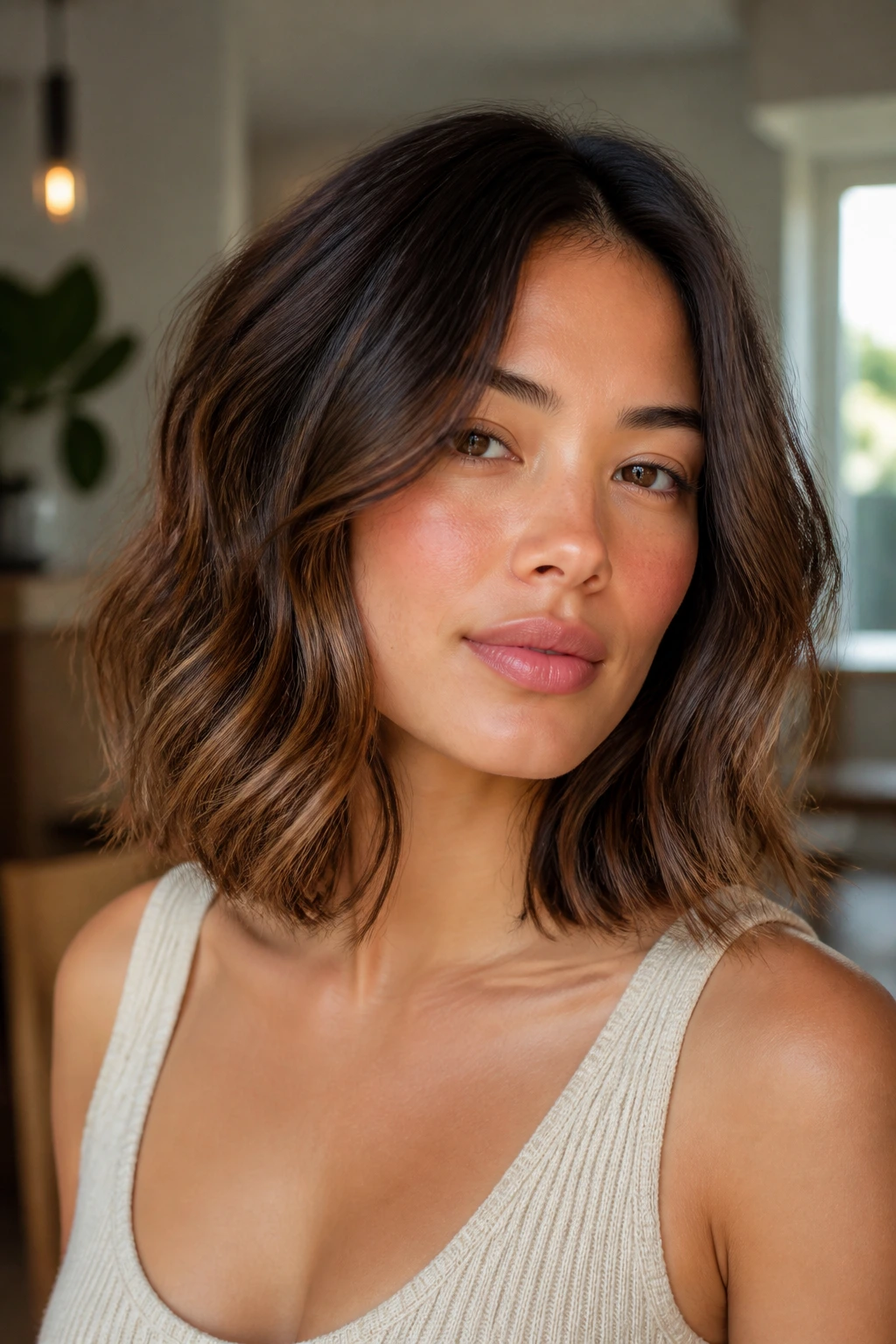
A U-shaped outline is kinder to a square face than a straight horizontal line because the front stays a bit longer and the middle dips gently. That soft dip pulls attention downward and keeps the haircut from feeling severe across the cheeks or jaw.
The layers should follow that curve, not fight it. Long layers are the move here. They keep the wave pattern loose and prevent the ends from stacking into a heavy shelf. This is a good choice if you want a bob that still feels like you have hair to play with.
I like this shape for people who are nervous about going shorter. It gives you the visual lightness of a bob without the sharpness of a chin-length cut. And if you later want more edge, you can always shorten the front a little at the next trim.
22. Bottleneck Bang Layered Bob

Bottleneck bangs are the friendlier cousin of a blunt fringe. They start narrower at the center, then widen and soften toward the sides, which is exactly why they suit square faces so well. They interrupt the width across the forehead and taper into the cheekbones instead of cutting straight across the face.
With wavy hair, the bangs need to be cut with enough length to move. Too short and they jump. Too dense and they can feel heavy. Keep the bob itself layered and slightly below the jaw so the bangs have space to do their job without the whole cut feeling crowded.
This is the pick if you want a little style drama without committing to a harsh fringe. It has shape. It has softness. And it saves a square face from looking too framed in straight lines.
How a Layered Bob Changes the Shape of Wavy Hair
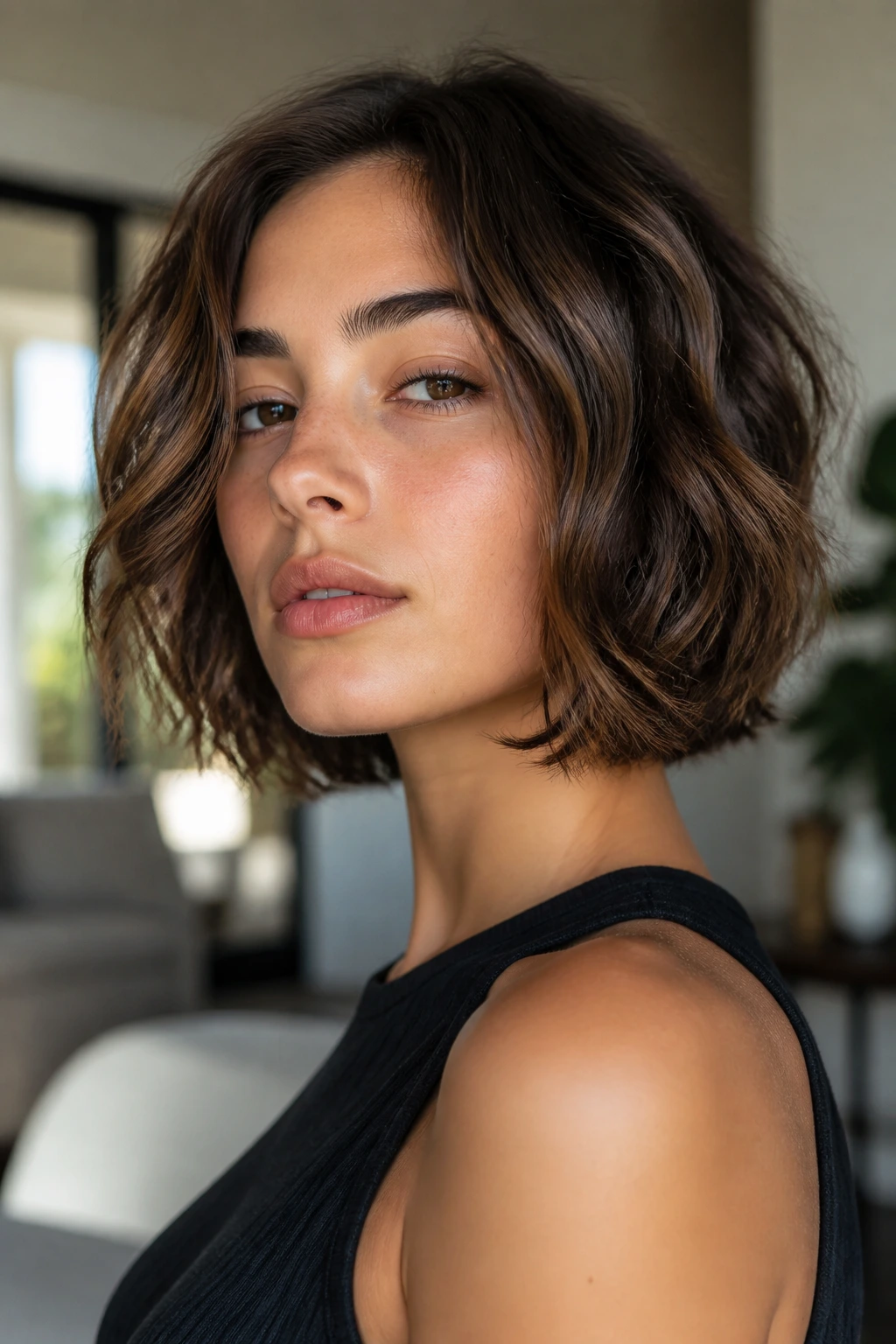
A layered bob is not just “less hair.” That’s the lazy version of the story, and it misses the part that matters. On wavy hair, layers change how the bend falls, how the ends stack, and where the bulk sits once the hair dries. On a square face, that matters because hair can either echo the jaw or soften it.
The useful part is placement. Layers that start too high can make wavy hair puff up around the cheekbones and the jaw. Layers that start too low can leave the haircut heavy and triangular. The sweet spot is usually somewhere between the lip, cheekbone, and collarbone depending on density and wave strength. That range gives the wave room to move without turning the outline ragged.
There’s also a simple visual trick at work. Diagonal lines, side parts, and curved ends keep the eye moving. Straight lines stop the eye. On a square face, the whole point is to avoid a haircut that stops the eye at the jaw and says, “Look here.” No thanks.
How to Brief Your Stylist So the Cut Lands in the Right Place
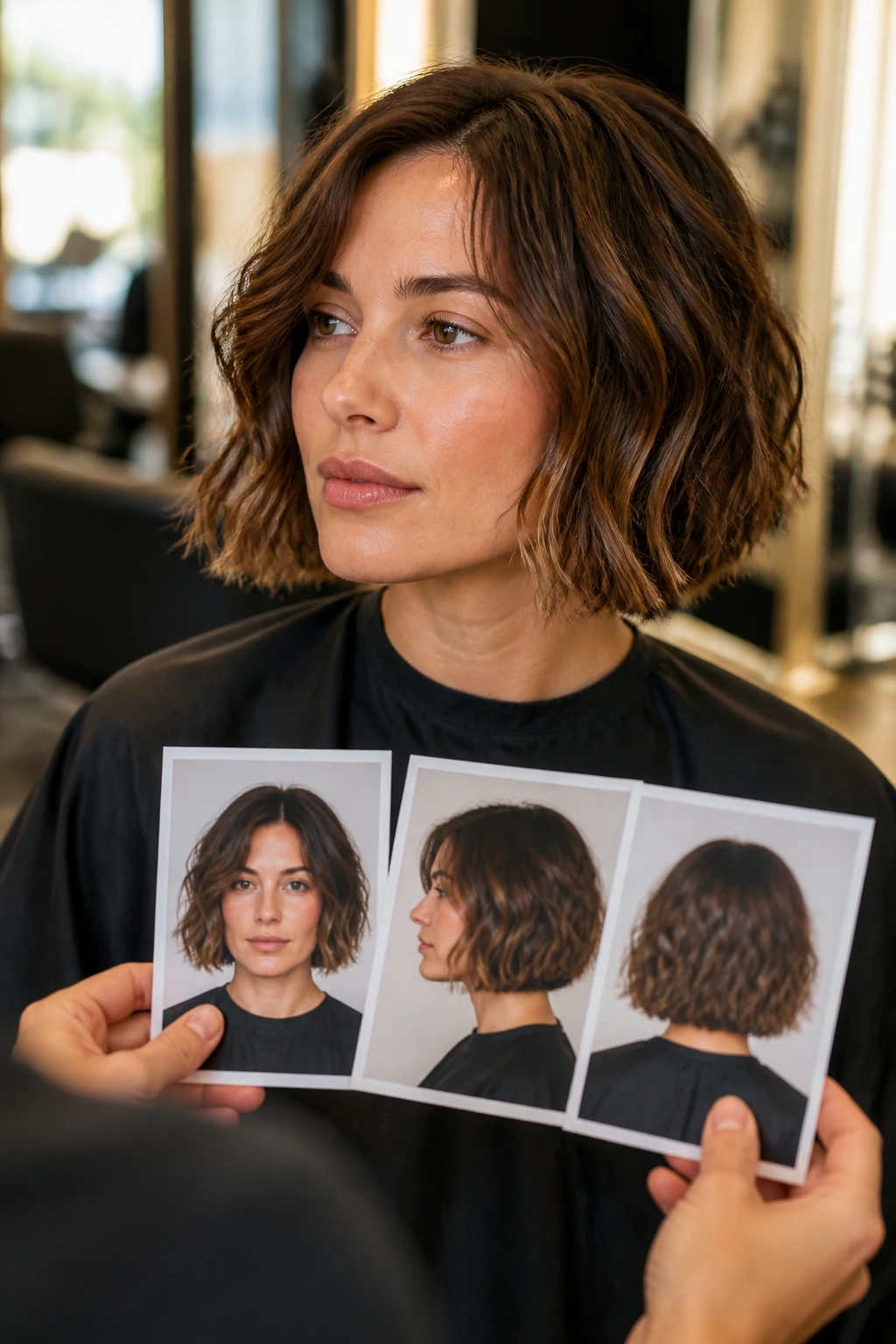
Bring photos, yes, but bring the right kind of photos. Show your stylist three cuts that share the same length and general shape, not six wildly different screenshots from people with different face shapes and curl patterns. One photo of the front, one from the side, and one from the back is more useful than twenty cropped mirror shots.
Then use specific language. Say you want the length to sit below the jaw if that’s true. Say whether you want the layers to begin around the cheekbone, lip, or collarbone. Say whether your waves puff at the sides or flatten at the roots. That information changes the cut more than a celebrity reference ever will.
A good phrase to use is: “Keep enough weight in the perimeter so my waves clump, but remove bulk inside so it doesn’t triangle out.” That’s real haircut language, and it tells the stylist you understand the tradeoff. If your hair is thick, ask for internal shaping. If it’s fine, ask for fewer short layers and more support at the ends. Those are not the same cut.
Tools and Products That Make a Layered Bob Behave
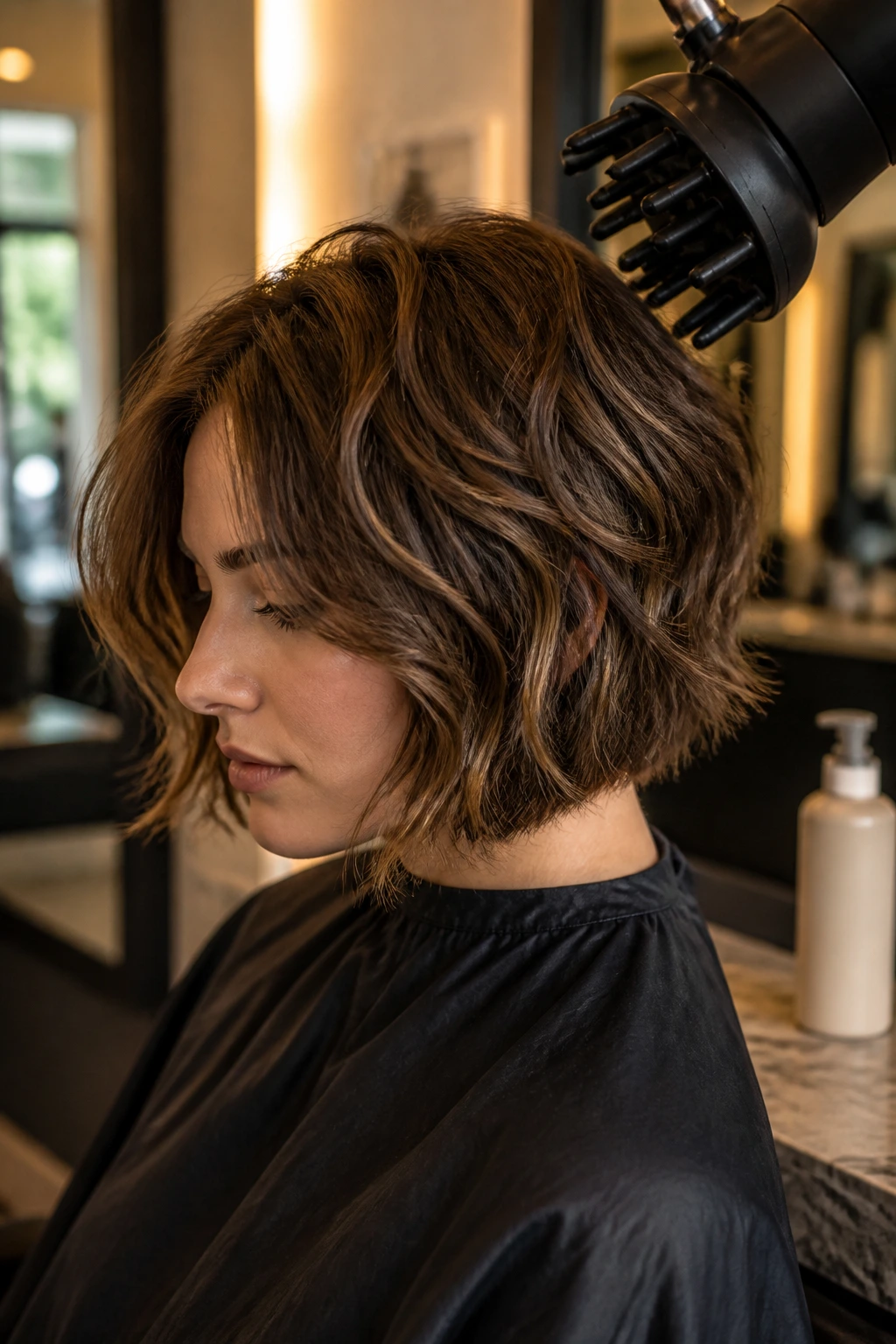
- Diffuser attachment: Softens the wave pattern while keeping frizz down; use on low or medium heat.
- Concentrator nozzle: Helps smooth the front pieces if you want a sleeker finish without flattening everything.
- 1-inch curling iron or wand: Best for redefining only the face frame and the pieces that go odd after sleeping.
- Lightweight mousse: Gives wavy hair hold at the roots and keeps the layers from falling flat.
- Leave-in conditioner: Useful on the mids and ends, especially if your hair leans dry.
- Heat protectant spray: Non-negotiable if you use a dryer or iron more than once a week.
- Microfiber towel or soft T-shirt: Cuts down on rough drying and helps the wave form cleanly.
- Wide-tooth comb: Better than a brush for detangling without stretching the wave pattern.
- Sectioning clips: Handy for blow-drying the front or isolating the crown for lift.
- Texture spray or light finishing spray: Adds grip at the ends without turning the cut stiff.
How to Style a Layered Bob Without Flattening the Wave

Air-Dry Setup: Start with damp, not soaking, hair. Work a small amount of leave-in through the mids and ends, then scrunch in mousse from roots to mid-lengths. Clip the crown for lift if your hair goes flat there, and do not touch the shape until it’s mostly dry. Touching it too early breaks the clump.
Blowout Shortcut: Rough-dry to about 70 percent, then use a diffuser or round brush just where the bob needs help — usually the front and the crown. Keep the dryer on medium heat, not high. High heat expands the wave fast and can make the sides feel fuzzy.
Wave Revival: If day-two hair looks bent in the wrong places, mist the problem sections with water and twist them around your fingers. You do not need to rewash the whole head. A 1-inch iron on just the front pieces can reset the shape in five minutes.
Frizz Control: Put smoothing cream on the lower half only. Root application often kills the lift and makes the bob look tired. The ends need the help; the crown usually does not.
The Mistakes That Make This Cut Boxy Instead of Soft

The biggest mistake is letting the cut hit the jawline like a straight bar. On a square face, that’s the fastest route to a heavier look. If the bob needs to be short, make the front a little longer or curve the perimeter so the line doesn’t stop the eye dead.
Another common problem is over-thinning thick wavy hair. The haircut may feel lighter in the chair, but at home it can go puffy, especially if the wave pattern is strong. You want controlled removal of bulk, not a shredded outline.
People also use too much cream or oil. Wavy bobs need movement, not grease. If the mids and ends are weighed down, the cut loses lift and the face starts to look wider because the hair sits flat on top and heavy on the sides. A pea-sized amount is often enough.
Finally, many people forget to check the shape dried. Wavy hair can shrink up a half inch or more depending on texture. If the stylist cuts only by sight while the hair is wet, the finish can land shorter and wider than intended.
Best Variations If You Want More Edge or Less Fuss
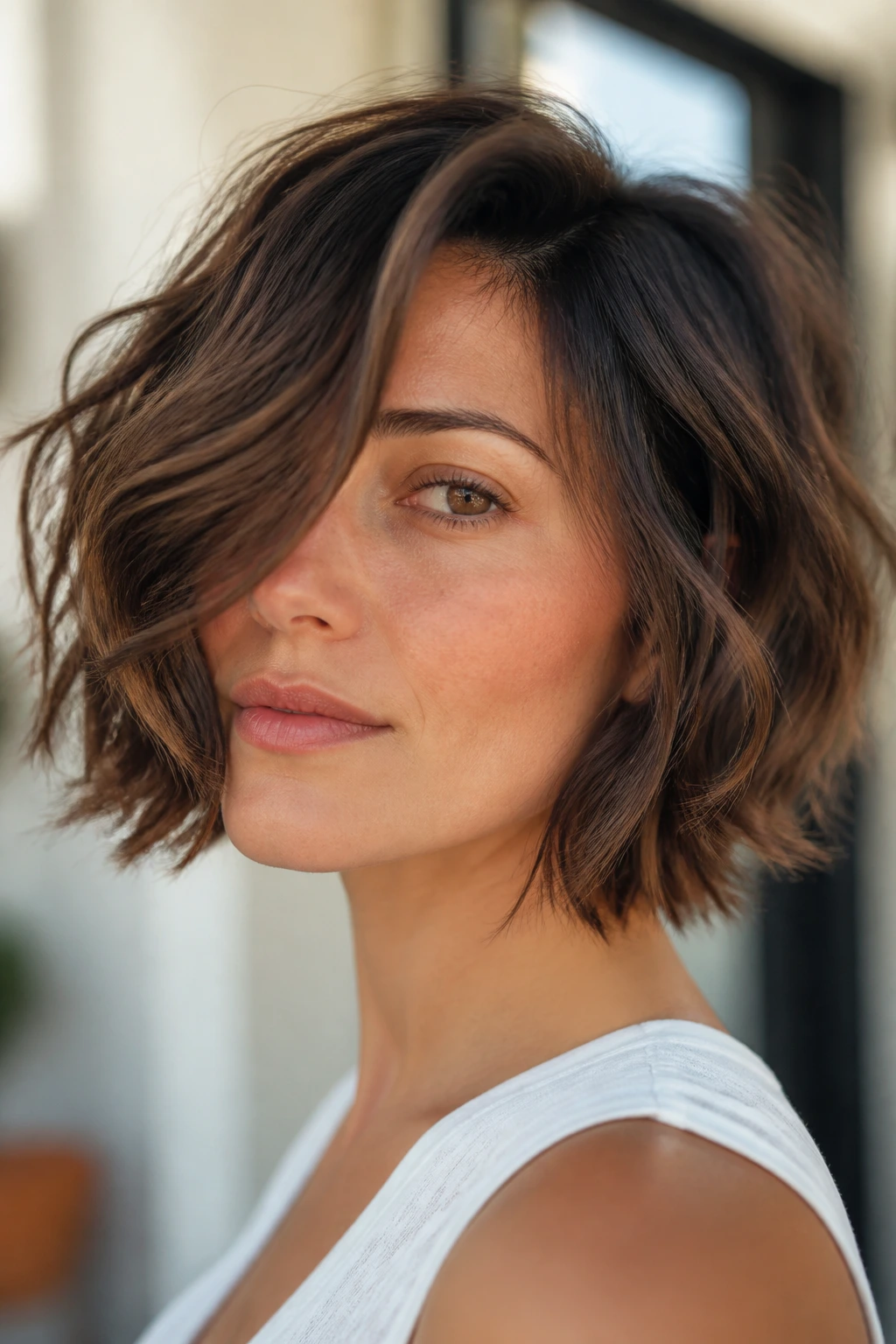
Soft Grow-Out Lob: Keep the length just below the collarbone and let the layers stay long. This is the easiest version to live with if you hate frequent salon visits.
Swingy Side-Part Bob: Make the front longer on one side and give it a deep side part. The diagonal line takes some of the width out of a square face and adds a little drama.
Rounded Airy Cut: Ask for invisible layers and a curved outline if you want the haircut to look polished with minimal styling. It’s a strong choice for fine or medium waves.
Textured Fringe Version: Add curtain bangs or bottleneck bangs if your forehead feels wide or if you want the cut to look softer around the eyes. Keep the fringe long enough to blend.
Low-Maintenance Neck Bob: For people who want a cleaner neckline and less daily styling, keep the cut around the nape with long front pieces. It’s the least fussy option in the group.
How to Keep the Shape Between Salon Visits

Layered bobs look best when the outline stays crisp enough to show the shape. For most people, that means a trim every 6 to 8 weeks for shorter versions and every 8 to 10 weeks for collarbone-length cuts. Wait longer and the layers can start to collapse into one another, especially if your waves are dense.
Night care helps more than people expect. Sleep on a satin pillowcase or loosely clip the top layer up if your hair bends easily. That keeps the front from kinking and the sides from getting mashed flat. In the morning, a light mist of water plus a fingertip of leave-in can wake the shape back up.
If the bob starts to feel heavy, use a clarifying shampoo every 2 to 4 weeks to strip product buildup. Heavy residue is one of the fastest ways to make a layered bob lose its bounce. And if your front pieces keep misbehaving, ask for a tiny cleanup trim around the face frame before the rest of the haircut needs attention. That small fix can buy you another few weeks.
The Questions People Ask Before They Go Short
Will a layered bob make my wavy hair frizzy?
Not if the layers are placed well and the styling is light. Frizz usually comes from too much friction, too much thinning, or too much product, not from layers alone.
Can a square face wear a chin-length bob?
Yes, but it usually works better with a curve, a side part, or longer front pieces. A blunt chin-length line can emphasize the jaw if nothing softens it.
Should I avoid a center part with a square face?
Not automatically. A soft center part can work, but a slightly off-center part often looks gentler because it breaks up the symmetry of the face.
What if my waves are fine instead of thick?
Ask for fewer short layers and more support in the perimeter. Fine wavy hair can lose body fast if the cut gets too airy too quickly.
Do curtain bangs help square faces?
They often do, especially when they’re long and blended. Short blunt bangs usually make the forehead feel wider, while curtain or bottleneck bangs taper things more naturally.
How short is too short for wavy hair?
If the hair springs up a lot when dry, anything sitting right on the jaw can turn wider than expected. A little more length gives the wave room to bend instead of flare out.
Can I air-dry a layered bob and still have it look finished?
Absolutely. Use light mousse, scrunch once, and leave the hair alone while it dries. A layered bob often looks better with a soft air-dried bend than with over-brushed perfection.
What should I tell my stylist if my hair gets bulky at the sides?
Say you want the weight removed inside the shape, not from the bottom edge. That tells them to debulk without turning the perimeter wispy.
The Shape That Takes the Edge Off
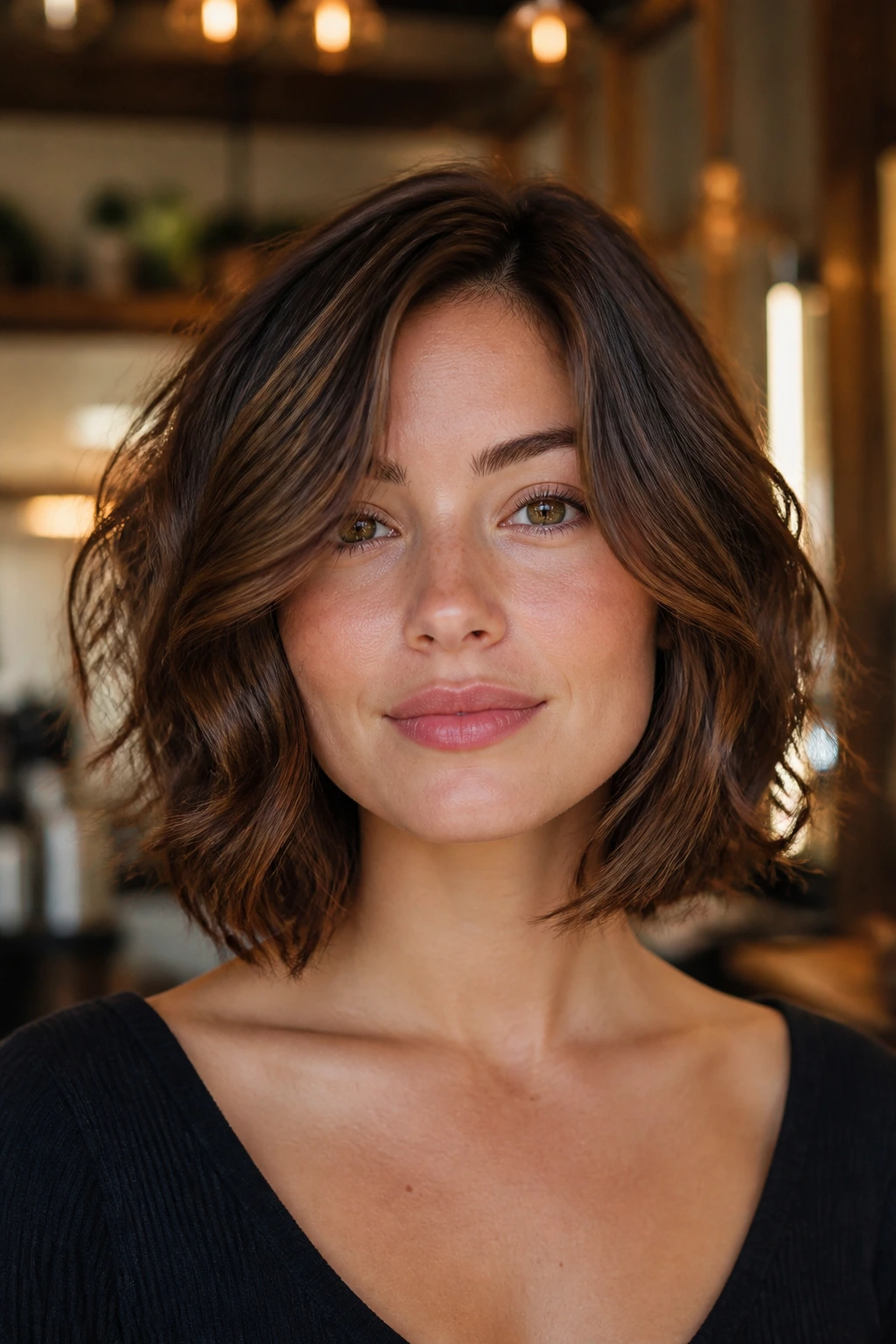
A good layered bob does more than shorten the hair. It changes the geometry of the whole face. On wavy hair, it gives the wave room to move without turning the sides into a wall. On a square face, it softens the corners, stretches the line, and keeps the jaw from taking over the entire look.
That’s why the best versions here are rarely the bluntest ones. They use a bit of curve, a bit of length in the front, and just enough layering to keep the silhouette alive. Pick the one that fits your wave pattern and how much styling you’re willing to do, then let the cut do some of the work for you. That’s the whole point.