



Square faces and wavy hair can be a tricky pair in the chair. Give the wave the wrong length and it kicks out at the jaw; give it the right one and the whole face looks softer, longer, and a little less boxed in. That difference is often just a few inches, a smarter part, and the decision to stop fighting the wave pattern.
Medium-length bobs are the sweet spot because they leave room for movement without swallowing the face. A cut that lands at the collarbone, skims the shoulders, or slips just below the jaw gives wavy hair somewhere to bend instead of balloon. And on a square face, that bend matters. It pulls the eye up and down instead of letting it get stuck on the widest line of the jaw.
I like bobs that bend around the face instead of sitting like a ruler. That’s the whole game here. Some of these cuts are polished and clean; others are messy in the best possible way. All of them are built to soften angles without turning the head into a pile of layers that needs twenty minutes and a prayer every morning.
Why These Cuts Work So Well on Square Faces
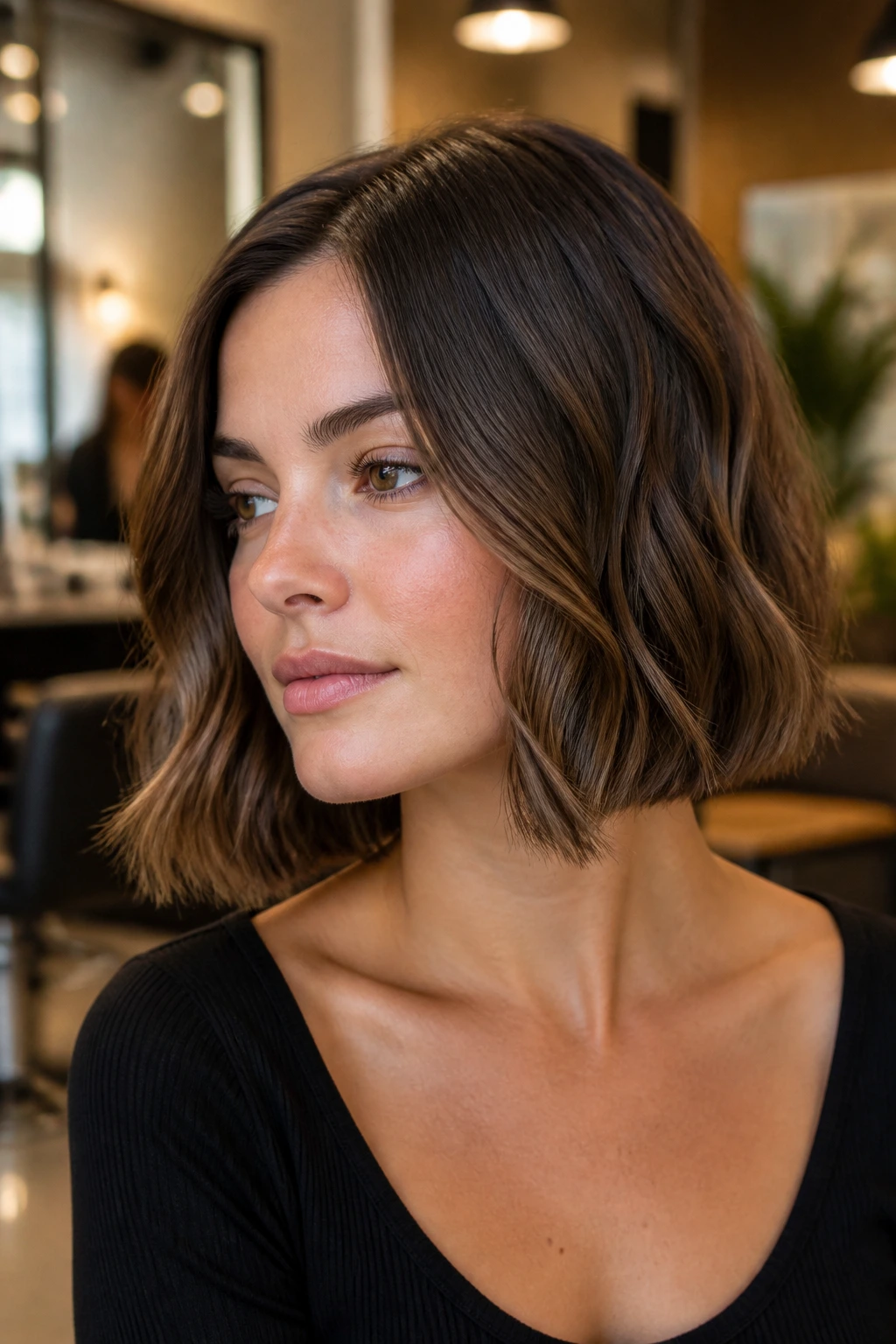
- They move the eye away from the jaw: A bob that ends at the collarbone or below the jawline breaks up the hard horizontal line that square faces naturally have.
- Waves do the shaping for you: A natural S-bend gives the cut softness without needing heavy curling or a lot of heat.
- The length is forgiving: Medium bobs keep enough weight in the hair to stop the sides from puffing out like a triangle.
- They grow out cleanly: A slightly longer bob can survive a few weeks past its trim without turning into a mess.
- You can tune the shape: A side part, curtain fringe, or a few face-framing pieces changes the whole look without a full haircut redo.
1. The Collarbone-Skimming Lob
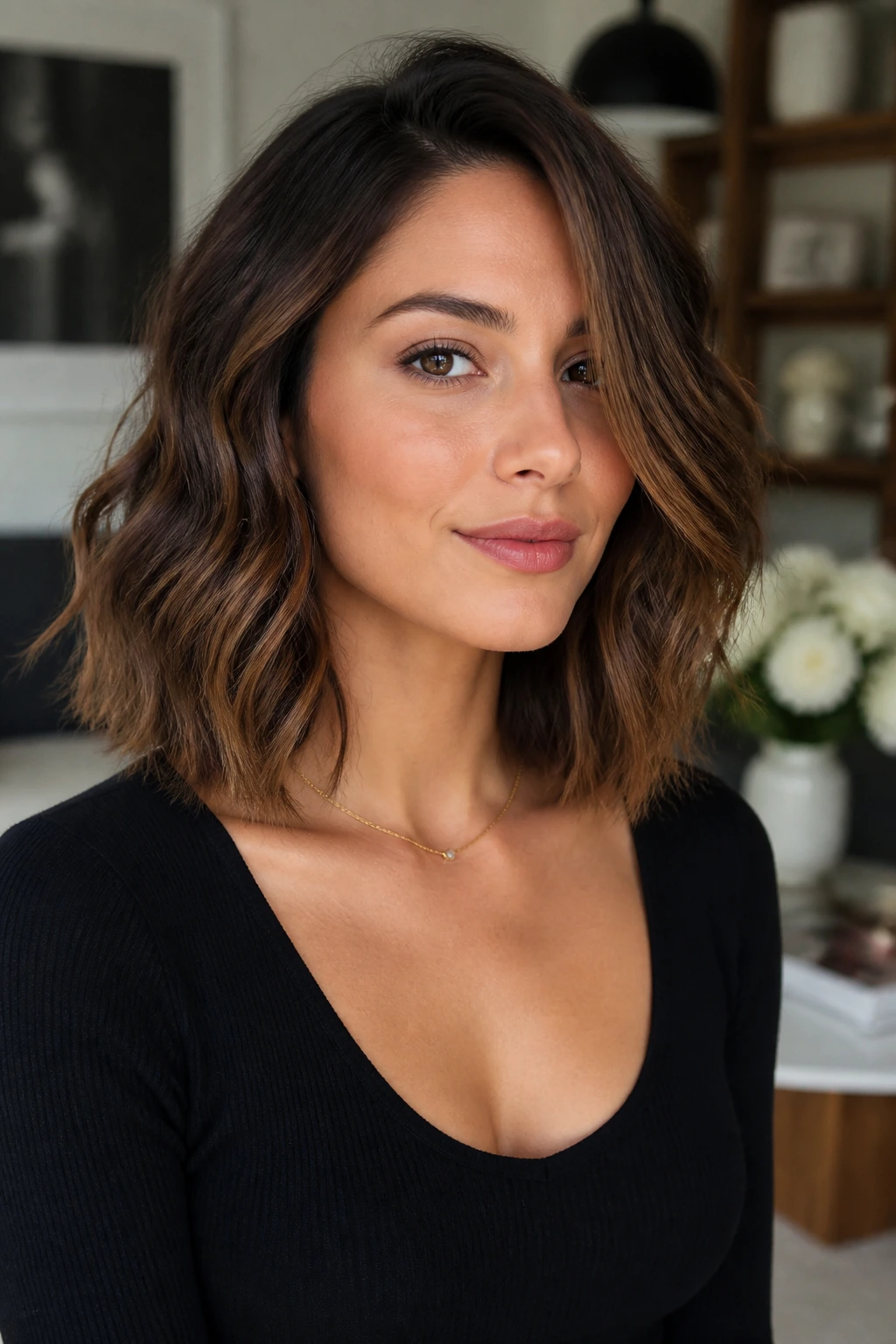
This is the one I reach for first when someone wants a bob but doesn’t want their jawline to look any sharper than it already is. The collarbone-skim sits low enough to keep the face from feeling boxed in, and the wave pattern gets a little room to breathe before it hits the broadest part of the face.
Why It Flashes the Least and Flatters the Most
Ask for the perimeter to land 1 to 2 inches below the jaw, with soft internal layers that start around the cheekbone and disappear into the length. That keeps the shape light without making the ends wispy. On wavy hair, those ends need a little weight or they spring outward at the first hint of humidity.
A center part can work here, but I prefer a part that’s slightly off-center. It feels less severe and keeps the front pieces from creating a straight frame around the widest part of the face. If your waves are loose, a quick bend with a 1.25-inch curling iron through just the top half of the front section is enough.
Best for: medium to thick wavy hair, especially if you want something that still reads as a bob when it air-dries.
One-line tip: keep the last inch of the ends a little straighter than the rest; that tiny contrast keeps the cut from puffing out.
2. The Soft Side-Part Bob
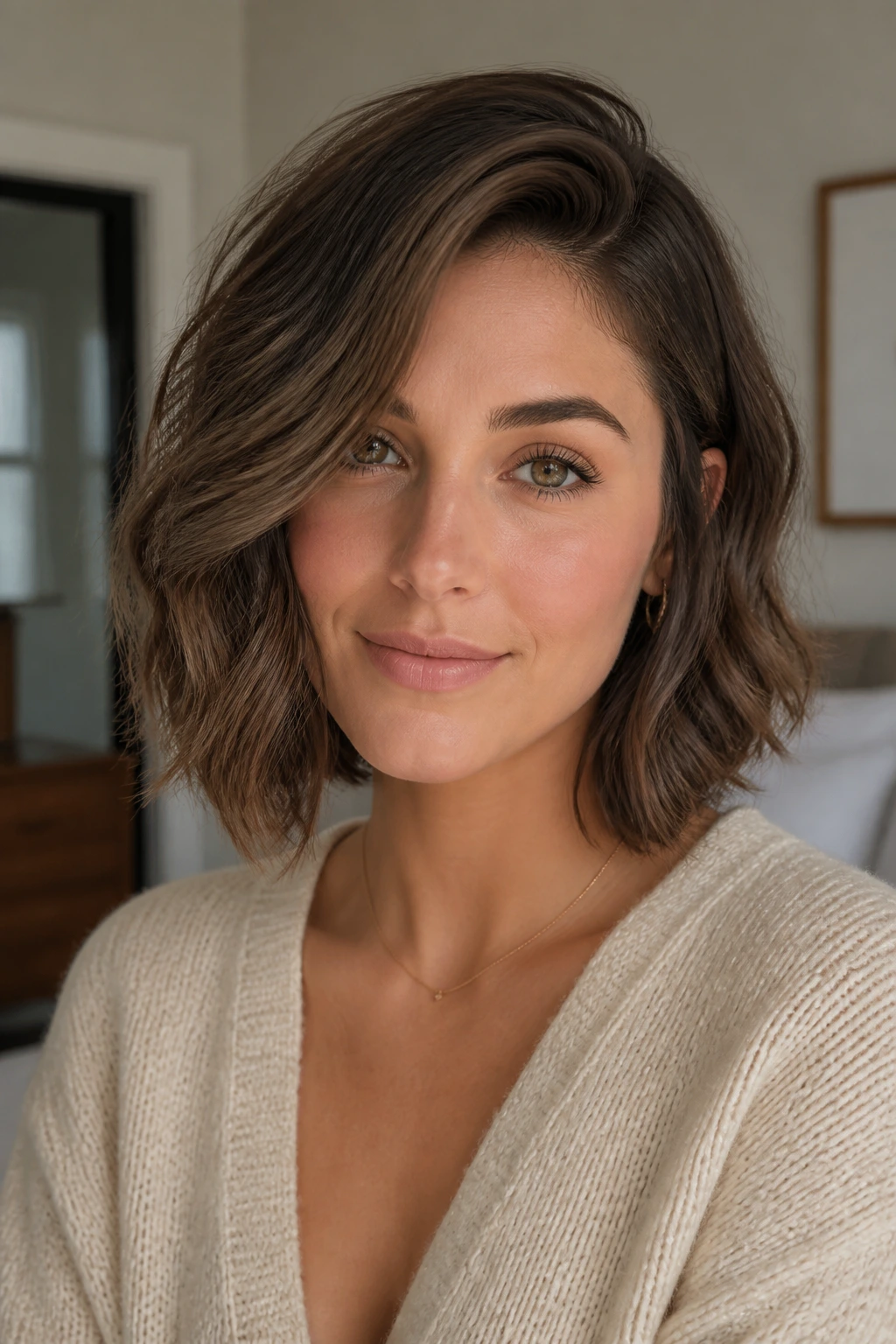
A side part changes more than people expect. On a square face, it cuts the symmetry and stops the eye from tracing the jaw in one flat line. The result feels gentler, a little longer, and less exact.
What Makes It Different
The shape itself can be simple: a bob that hits between the jaw and collarbone, with loose bends and a side part that lands about 2 inches off center. What makes it work is the imbalance. One side falls forward, the other opens up the cheek and temple area, and that little asymmetry is enough to take some weight off the jaw.
I like this cut on wavy hair that gets a bit puffier on one side than the other. A side part lets you work with that instead of fighting it. If the hair wants to flip under at the ends, let it. Don’t flatten every bend out of it. That polished-straight finish is exactly what can make a square face look harder.
- Keep the front pieces a touch longer than the back.
- Blow-dry the roots on the heavier side first so the part doesn’t collapse.
- Finish with a pea-sized amount of cream on the ends only.
Good call: this is the bob I’d choose if you want shape without fringe. It does the softening on its own.
3. The Curtain-Bang Lob

Curtain bangs are popular for a reason, and on a square face they earn their keep fast. They open the forehead, break up straight edges, and give wavy hair a place to fall before it reaches the jaw. That front movement matters.
The Face-Framing Trick That Saves the Whole Cut
The best version of this bob has bangs that start near the bridge of the nose and sweep out toward the cheekbones. Not heavy. Not blunt. Just enough density to frame without pressing the face inward. The main length should still sit at the collarbone or just above it, because the fringe alone won’t carry the shape if the perimeter is too short.
If your waves are loose, curtain bangs can get a little split and floppy by day two. That’s normal. A quick mist of water, a round brush, and a minute of heat on the bang area usually resets them. The rest of the hair can stay rough and lived-in; the fringe only needs to look intentional, not perfect.
What to Ask Your Stylist
- Long curtain bangs that hit around the cheekbone.
- A bob length that stays below the jaw.
- Soft blending at the temples so the fringe doesn’t look like a separate piece.
This is the cut that looks expensive even when you’ve done almost nothing to it. Strange phrase, but true.
4. The Angled Front-Heavy Lob
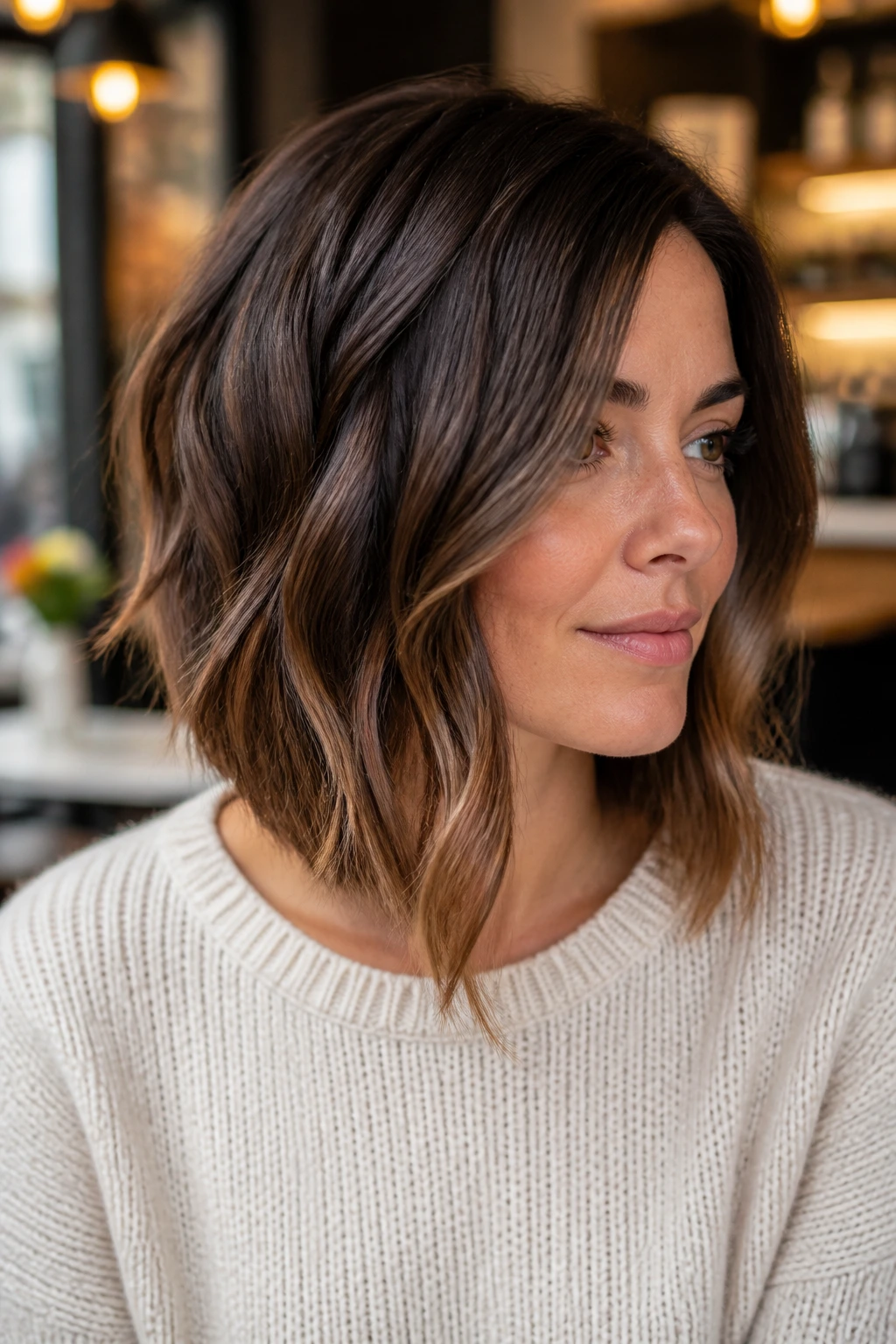
A little angle goes a long way on a square face. When the front pieces are longer than the back, the cut pulls the eye downward and gives the jaw less visual weight. That front-heavy slope is subtle, not dramatic. You want suggestion, not a haircut that announces itself from across the room.
The best version keeps the back neat and slightly shorter, with the front grazing the collarbone. On wavy hair, that difference in length helps the wave fall instead of standing straight out at the sides. If your hair is thick, this shape can remove some of the heaviness around the nape without leaving the ends stringy.
I’d avoid over-styling this one. A little bend through the front sections and a soft blow-dry at the crown are enough. Let the front stay a touch piecey.
5. The Shaggy Mid-Length Bob

This one has more attitude. The shaggy bob is for people who want movement first and neatness second, and square faces tend to like that because the choppy texture keeps the jaw from dominating the look.
What saves this cut from looking messy is the placement of the layers. They should live mostly in the interior and around the cheekbones, not hacked into the outer edge. If the perimeter gets too chopped up, the ends fray and the hair can widen at the sides. Bad trade.
A shaggy bob works best when the wave pattern is already visible. If your waves are hidden until the hair dries, use a lightweight mousse on damp roots and mid-lengths, then scrunch with a diffuser on low heat. The waves will look broken up instead of puffed out.
Best on: medium-density hair that likes texture and doesn’t mind a bit of bedhead energy.
Styling note: if the ends feel too fluffy, smooth the last inch with a drop of serum. It reins in the cut without killing the texture.
6. The Blunt Lob with Bent Ends
A blunt lob sounds risky on a square face, and if it’s cut badly, it is. But the right version can look sharp in a good way, especially on wavy hair where the ends naturally soften the line. The trick is to keep the perimeter clean while giving the hair a slight bend so it doesn’t sit like a box.
I like this on thicker waves that need weight. Too many layers can make the shape collapse into a triangle. A blunt line keeps the bulk under control, then the wave takes care of the softening. That means less styling, not more.
How to Keep It From Looking Too Hard
Work a round brush or large wand only through the bottom half of the hair. Leave the top flatter and smoother. That contrast keeps the cut modern. If you curl everything, the silhouette gets too round and the jaw can look wider instead of softer.
This is a good one for people who want clean edges with a little movement at the ends. It has a polished look, but not a stiff one.
7. The Gentle Inverted Bob
A dramatic inverted bob can be too sharp for a square face. A gentle one is different. The back is a touch shorter, the front slips forward a little longer, and the whole shape tilts just enough to guide the eye away from the jaw.
The magic is in restraint. You do not want a severe angle. You want a soft slope that feels like the hair is naturally falling that way. On wavy hair, this shape works because the back gets enough lift to avoid heaviness, while the front pieces frame the cheeks instead of stopping right at the widest point of the face.
If your nape tends to get bulky, this cut helps. If your hair is fine, ask for a light stack only. Too much stacking at the back can make the top puff up and leave the sides looking too light.
8. The Rounded Bob with Curved Perimeter
A rounded bob sounds old-fashioned until you see it on wavy hair with a square face. Then it makes sense. The curved outline softens hard angles, and the wave pattern keeps the shape from looking too helmet-like.
Why the Curve Matters
The perimeter should arc gently around the chin and collarbone, not sit flat. That little curve is what keeps the face from looking boxy. Ask for the line to be softened through the corners, especially if your jaw is strong and wide. The hair should bend around the face, not stop and point at it.
This one suits medium to thick hair that can hold a curve without losing body. If your hair is fine, the shape may fall too flat unless you add root lift. A small round brush at the crown and a light mist of volumizing spray near the roots is usually enough.
What to watch for: if the underside is cut too bluntly, the round shape gets lumpy. Soft corners matter here.
9. The Bottleneck-Bang Lob
Bottleneck bangs are narrower in the center and wider near the temples, which is exactly why they work so well with a square face. They interrupt the forehead line without chopping the face in half. And because the longer side pieces melt into a lob, the cut feels soft all the way down.
This is a smart choice if you like bangs but hate the feeling of being trapped by them. Bottleneck bangs can be pushed aside, tucked back, or left to fall naturally into the wave. They don’t need exactness. A little mess suits them.
For styling, dry the fringe first, before the rest of the hair gets heavy. Use a small round brush, aim the airflow downward, then flick the ends away from the face. Keep the sides loose. That prevents the jaw from becoming the main feature.
10. The Asymmetrical Bob
A little unevenness is a beautiful thing on a square face. The asymmetrical bob — one side longer than the other — breaks the face’s natural symmetry and gives the jaw less room to dominate the frame. It’s the haircut version of turning your head slightly in a photo.
Keep the difference subtle. Think half an inch to 1½ inches, not a dramatic diagonal. The goal is movement, not a stunt. On wavy hair, the asymmetry looks even better because the bends keep the line from feeling too intentional.
Who It Suits Best
- People who wear one side tucked behind the ear.
- Waves that fall in loose, uneven sections.
- Anyone who wants structure without a heavy fringe.
A strong side part usually helps this shape. It lets the longer side do its job and keeps the shorter side from sitting too high on the cheek.
11. The Razor-Cut Wavy Bob
Razor cutting can go badly if it’s overdone. It can also be exactly right when a square face needs a softer edge and the waves need some breathing room. The hair takes on a feathered finish, and the perimeter loses that hard, blocky feel that can make a jaw look wider.
This works best on hair that’s medium in density and naturally wavy rather than coarse and frizzy. If your hair is very thick, a razor can make the ends too airy unless your stylist knows where to stop. You want internal airiness, not a frayed outline.
A light curl cream or wave spray is enough here. Too much product weighs down the texture and turns the cut stringy. That’s the downside with razored bobs: they look best when they stay clean at the ends and loose through the middle.
12. The Invisible-Layer Lob
Invisible layers are one of my favorite salon requests because they do the work without broadcasting it. You get lift, movement, and shape, but the cut still looks like a bob instead of a bunch of chopped sections. On a square face, that matters. Too many visible layers can widen the silhouette.
How to Keep the Lines Soft
Ask for the layers to begin below the cheekbone and disappear into the length. If your stylist looks confused, that’s a small warning sign. The face-framing pieces should be gentle, not stair-stepped. The perimeter stays smooth, and the wave pattern brings the texture.
This cut is especially good if your hair gets flat at the crown. The hidden layers lift the top without pulling the sides out too much. It’s one of those styles that looks simple and takes a lot of skill to cut well. A good cut should do that.
13. The Off-Center Part Lob
A fully centered part can make a square face feel a little too exact. Move the part a finger-width off center and the whole thing softens. The off-center lob keeps the shape relaxed while still looking balanced.
What I like here is the versatility. You can tuck one side behind the ear, let the other fall forward, or add a bend at the ends and call it done. On wavy hair, the off-center part also helps control the natural swell that happens when the hair dries. It gives the wave somewhere to go.
If you want the face to look a touch longer, keep the front pieces a little below chin level. If you want more cheekbone focus, bring the shortest pieces up closer to the mouth corner. Tiny shifts. Big difference.
14. The French-Inspired Lob

This one has a little less polish and a lot more charm. The French-inspired lob sits around the collarbone with a soft fringe or a face frame that feels grown-in rather than carved. For a square face, that lived-in looseness matters. It keeps the haircut from looking too exact.
The length should not hit the jaw. That’s the trap. Keep it below, then use a light bend or a few rough-dried pieces around the cheekbone. If you’ve got dense waves, ask for the perimeter to be softened with point cutting so the ends do not flare.
Best way to wear it
Air-dry it halfway, then finish the top layer with a blow dryer and your fingers. That uneven finish gives the haircut its charm. Too much smoothness ruins the point.
15. The Piecey Fringe Lob
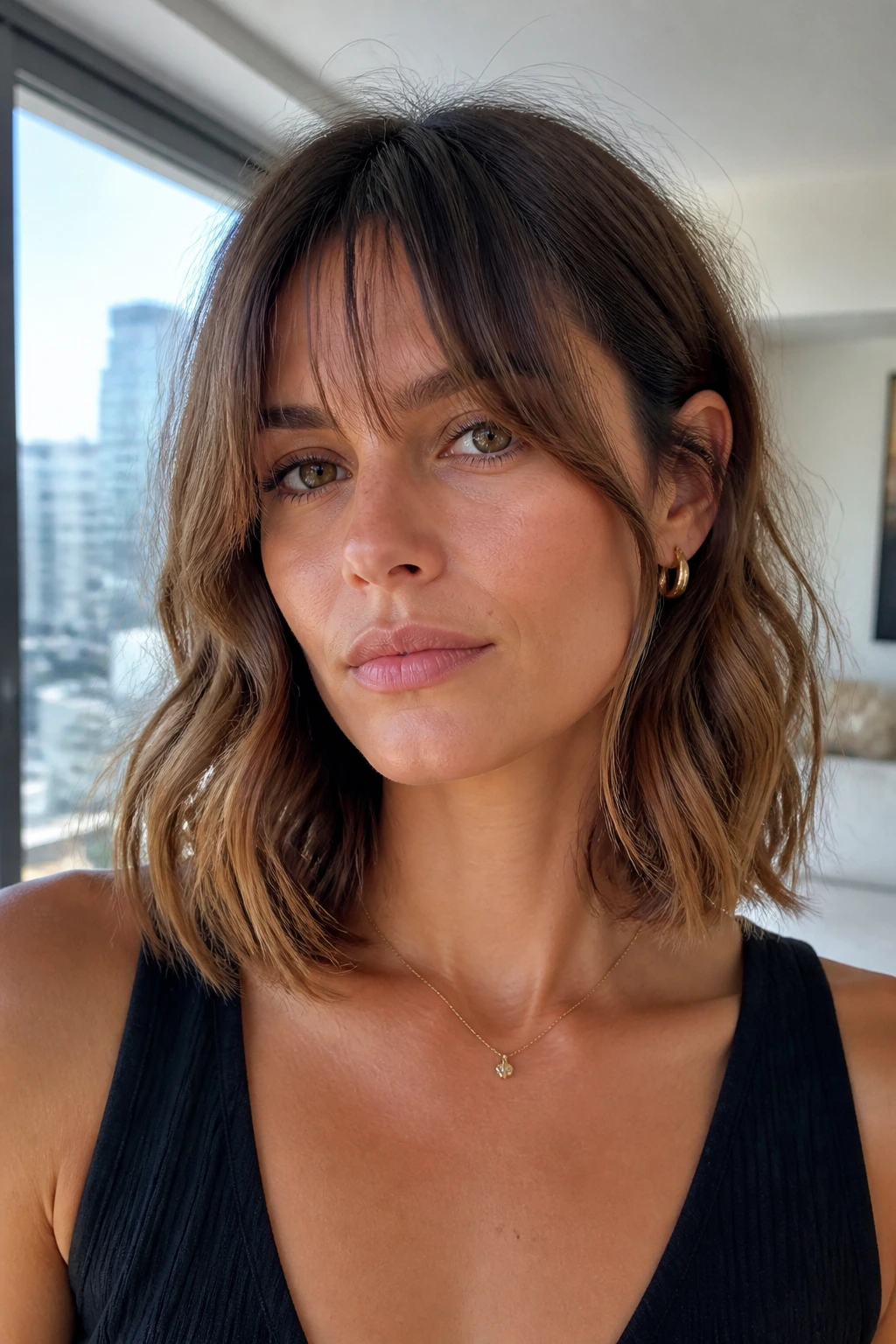
This is the cut for someone who wants movement near the face without committing to full bangs. The fringe is piecey, lightly separated, and long enough to tuck behind the ear when needed. That little bit of texture is useful on a square face because it interrupts the hard lines around the forehead and temples.
A piecey fringe also works with wave memory. If your hair already wants to fall in broken sections, this cut looks even better the second day. Add a little dry texture spray at the roots, pinch a few front pieces with your fingers, and stop there.
- Keep the fringe lightweight, not thick.
- Avoid cutting it straight across at eyebrow level.
- Let a few pieces fall past the cheekbone.
That’s the balance. Enough fringe to soften, not enough to crowd.
16. The Airy Italian Bob
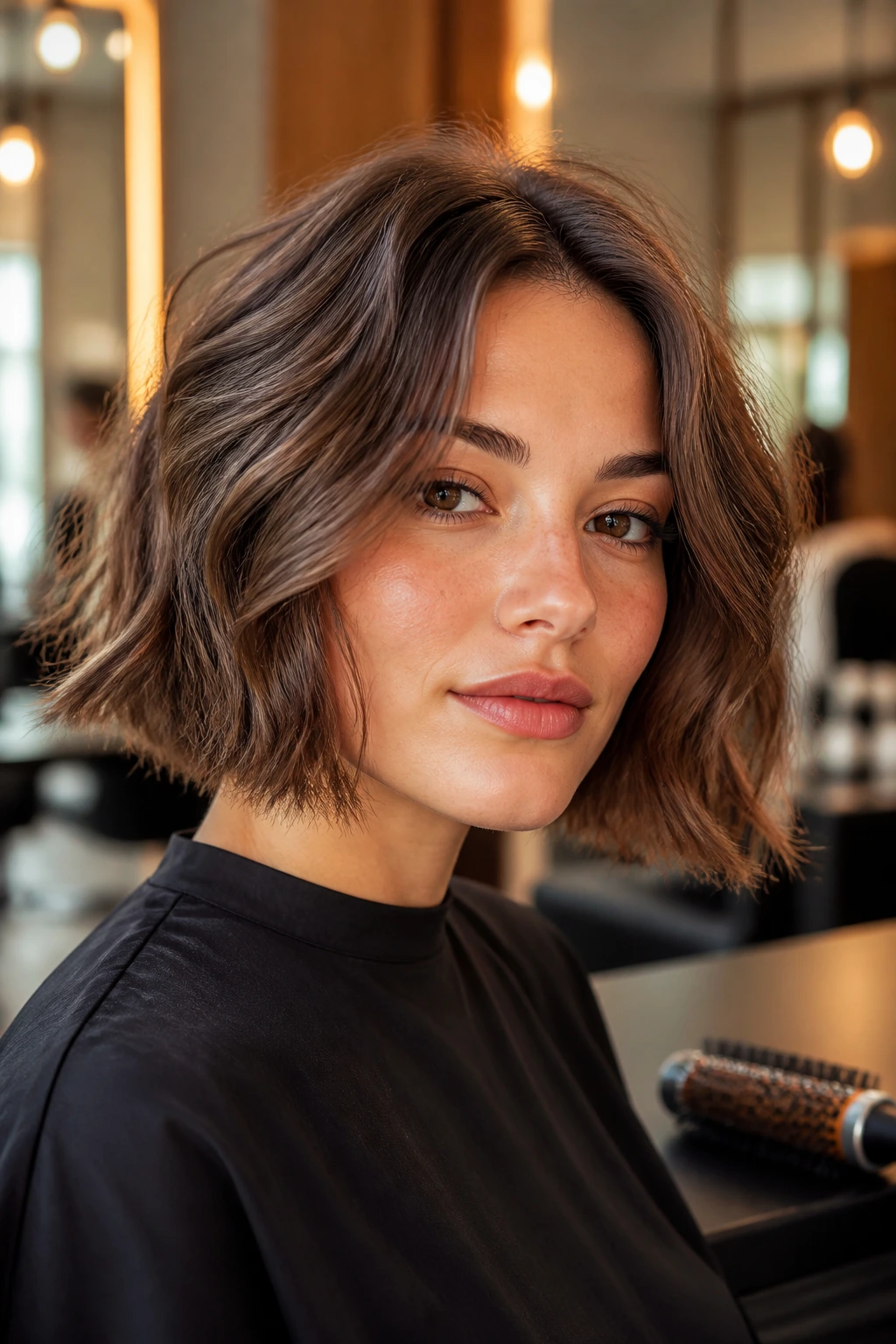
The Italian bob usually carries a little more fullness, and that’s what makes it interesting on square faces. It has body at the roots, bend through the mids, and a perimeter that feels lush rather than sharp. Wavy hair gives it exactly the kind of movement it wants.
The key is keeping the shape airy. If the sides get too full, the face can look wider. So ask for volume mostly at the crown and through the back, with a more controlled side silhouette. A big round brush and a soft bend at the ends can give you that lifted, glossy finish.
I like this one best on medium-to-thick hair that has some natural bend already. It’s not a limp haircut. It likes a little personality.
17. The Choppy Collarbone Bob
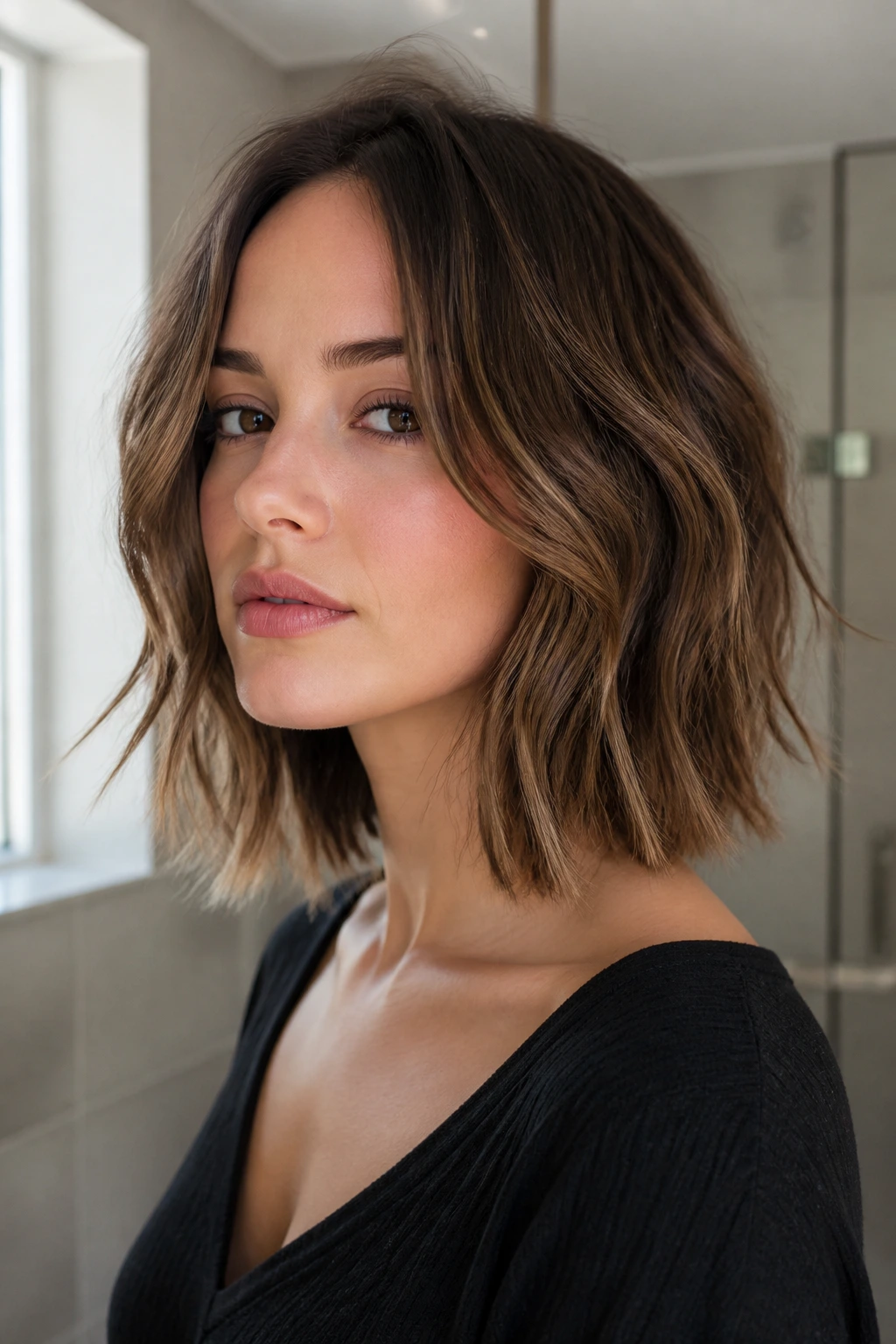
Choppiness can be a mess or a blessing. On a square face with wavy hair, it’s usually a blessing if the cut is controlled. The choppy collarbone bob keeps the length long enough to soften the jaw while breaking up the line just enough to keep it from feeling stiff.
What to ask for
- Point-cut ends, not razor damage.
- Soft face-framing around the cheekbones.
- A perimeter that still reads as a bob when dry.
That last part matters. Too much choppiness can make the ends look thin and scattered. What you want is deliberate irregularity. The wave should look a little piecey, but the overall shape should still feel full.
This is a nice cut if you like the hair to move when you turn your head. It has a bit of swing, and that swing is flattering.
18. The Soft A-Line Lob
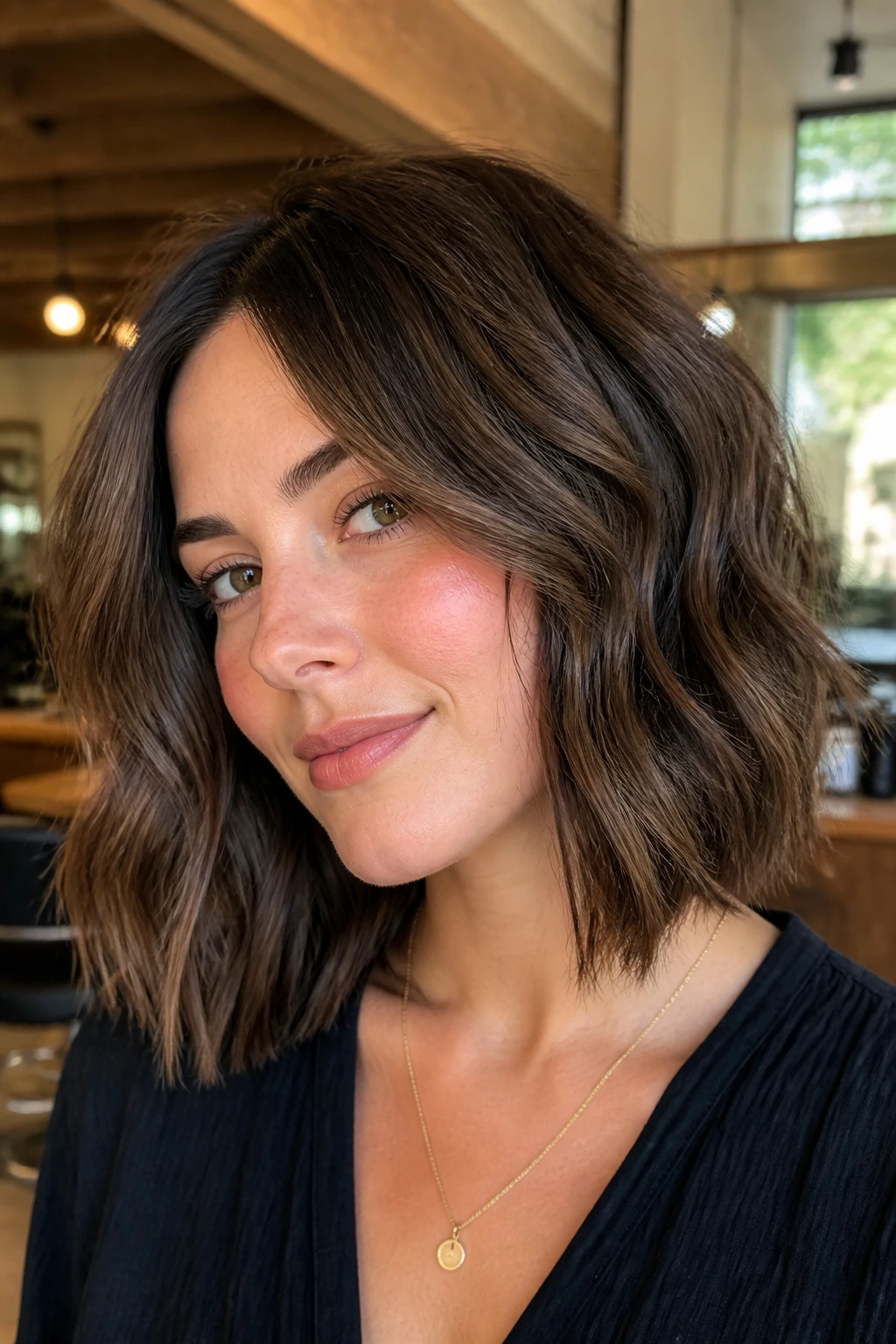
An A-line bob is longer in the front than the back, but the soft version keeps the angle low-key. That makes it useful on square faces because the eye gets a diagonal path to follow, and the jawline doesn’t sit there as a hard stopping point.
Wavy hair keeps this cut from feeling too graphic. The front pieces bend and the back holds a little lift, so the shape has structure without becoming severe. If your hair is thick, ask for the angle to stay gentle. If it’s fine, the slight slope can build the illusion of more density at the front.
I’d wear this one with a side part or an off-center part. A straight middle part can make the front lines read a little too even.
19. The Long Bob with Face-Framing Ribbons
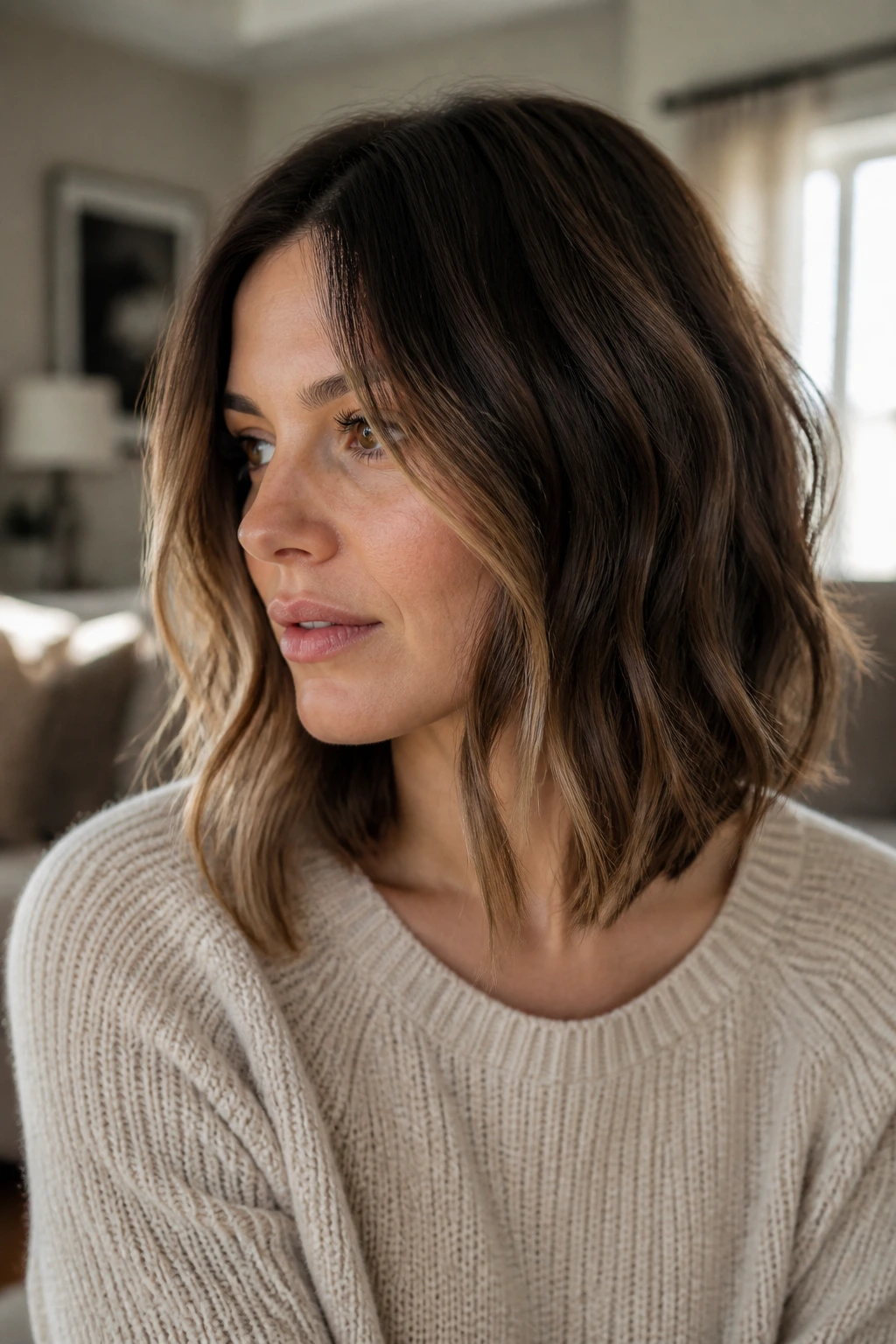
The “ribbons” here are the long front pieces that fall from cheekbone to collarbone and soften the face like curtains that aren’t trying too hard. On a square face, those pieces matter because they break up the strongest lines without dragging the whole haircut into fringe territory.
The body of the bob can stay pretty simple. What changes the feel is where those front pieces start. I like them beginning around the cheekbone and melting into the rest of the length. That gives the jaw some breathing room and keeps the hair from stopping in one blunt line.
If your waves are inconsistent, this cut is forgiving. Some pieces can bend more than others and the style still looks intentional. That’s part of the charm.
20. The Deep Side-Part Wave Bob

A deep side part gives a square face a little drama in the best way. It sends volume toward the crown and away from the jaw, which is exactly where you want the visual weight to go. On wavy hair, that side sweep can look rich without looking stiff.
This cut works best when the waves are brushed into place while damp, then left alone once they start setting. If you keep touching them, they lose the bend and turn fuzzy. A small clip at the side can help train the front pieces while they dry. Old-school trick. Still useful.
A deep side part also makes the haircut read as a little more formal. If you like your bob to move between casual and polished, this one does both.
21. The Feathered Shoulder Bob

Shoulder length can sound like “grown-out bob,” but that’s not what this is. A feathered shoulder bob is intentional. The hair kisses the shoulders, the ends are softened with feathering, and the wave gets to live in a longer, looser shape that suits a square face beautifully.
Why it feels easier than it looks
The extra length gives the jawline space. The feathering keeps the bottom from looking heavy. And because the hair doesn’t stop right at the mouth or chin, the whole face looks a little longer. That’s the quiet benefit here.
This cut is also nice if you’re not ready to lose the option of a ponytail. You can still tie it back, but it doesn’t lose its bob identity when worn loose. It’s a practical compromise, which is not a glamorous phrase, but it’s true.
22. The Air-Dried Texture Bob

Some cuts are built for a blowout. This one is built for your actual life. The air-dried texture bob keeps the perimeter soft, the layers light, and the wave pattern visible without forcing it into a perfect shape. On a square face, that kind of loose movement stops the haircut from feeling too controlled.
The trick is not to overthink the finish. Work in a light mousse, scrunch upward from the ends, and let the hair dry with a little volume at the roots. If the side pieces dry too flat, tuck them behind the ears for fifteen minutes, then release them. That small bend keeps the face open.
Airtime helps this cut. So does patience. Let the hair do its own thing, then make two or three small corrections instead of turning it into a daily project.
Why Medium-Length Bobs Beat a Hard Jaw-Length Line
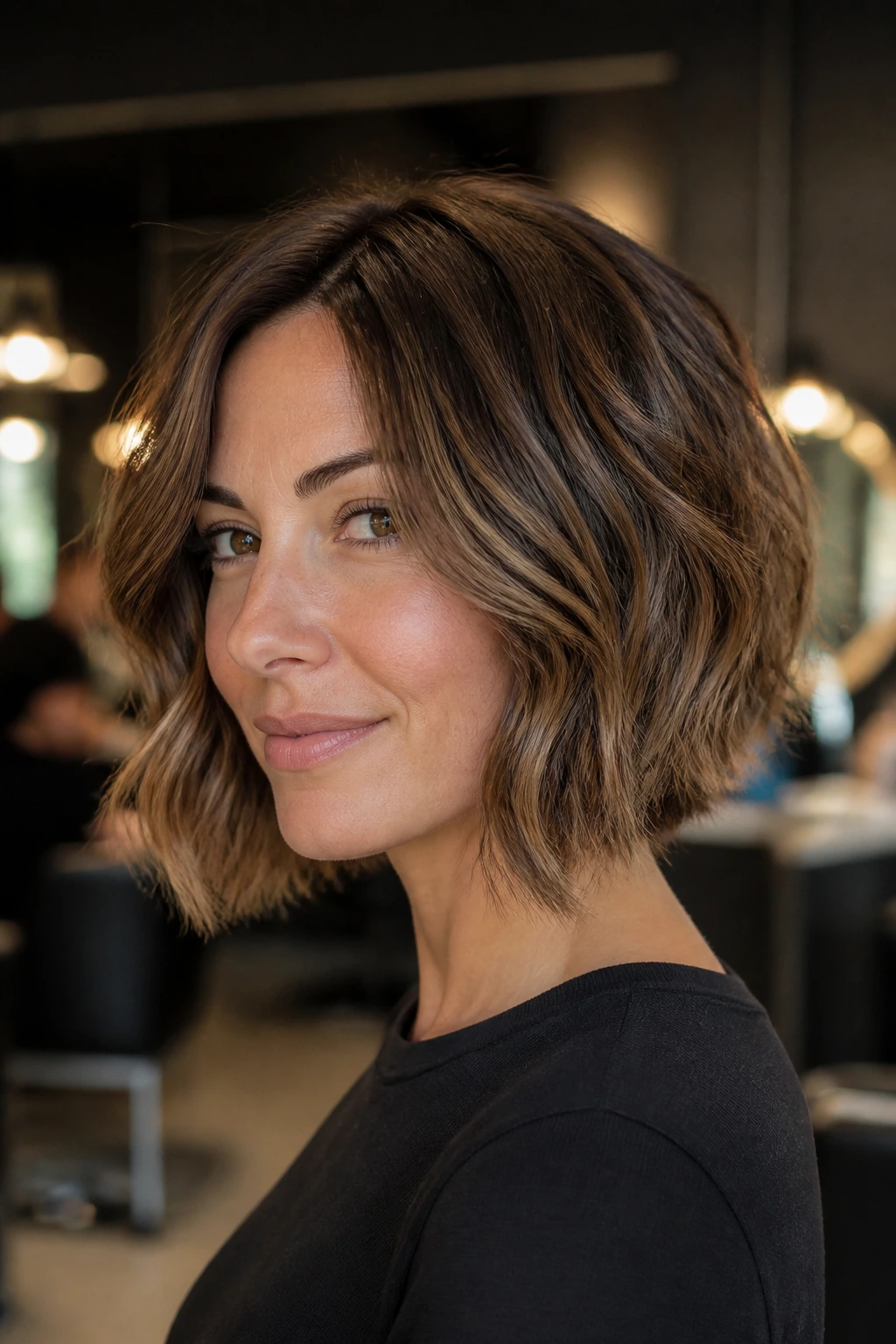
A square face has structure. That’s the whole point of it. The forehead, cheekbones, and jaw tend to read as strong, balanced, and direct, which is lovely until a haircut ends right where the jaw is widest. Then the eye catches on that line and stops there. Not ideal.
Medium-length bobs work because they move the eye. A perimeter that sits below the jaw, above the shoulders, or softly around the collarbone creates a second line for the eye to follow. That extra path matters. It keeps the face from looking chopped off at the sides and lets the waves bend into the shape instead of flaring outward against it.
Wavy hair adds a layer of useful unpredictability. It can soften a hard outline, but only if the cut gives it enough room. A bob that is too blunt, too short, or too equal on both sides can turn wavy hair into a wide shelf. A little length fixes that fast.
The best bobs here are not the loud ones. They are the ones that understand geometry. A softer side part, a long front piece, a little bit of internal layering — those small choices do the real work.
What Your Stylist Should Hear Before the First Snip

Bring photos, sure. But also bring language. Say where you want the length to land: collarbone, just below the jaw, or shoulder grazing. That is more useful than saying “medium bob,” because medium means different things to different stylists.
Tell them you want the face softened, not hidden. That usually means asking for movement around the cheekbones and longer front pieces near the collarbone. If you have thick waves, mention that you do not want the sides to balloon. If your hair is fine, say you need the cut to keep some weight so it does not collapse by lunch.
And be honest about your styling habits. If you air-dry most days, don’t ask for a cut that only looks good with a curling iron. If you like a fast blow-dry, say so. The best bob is the one you’ll actually repeat on a Tuesday morning.
Essential Tools for Styling Wavy Bobs at Home
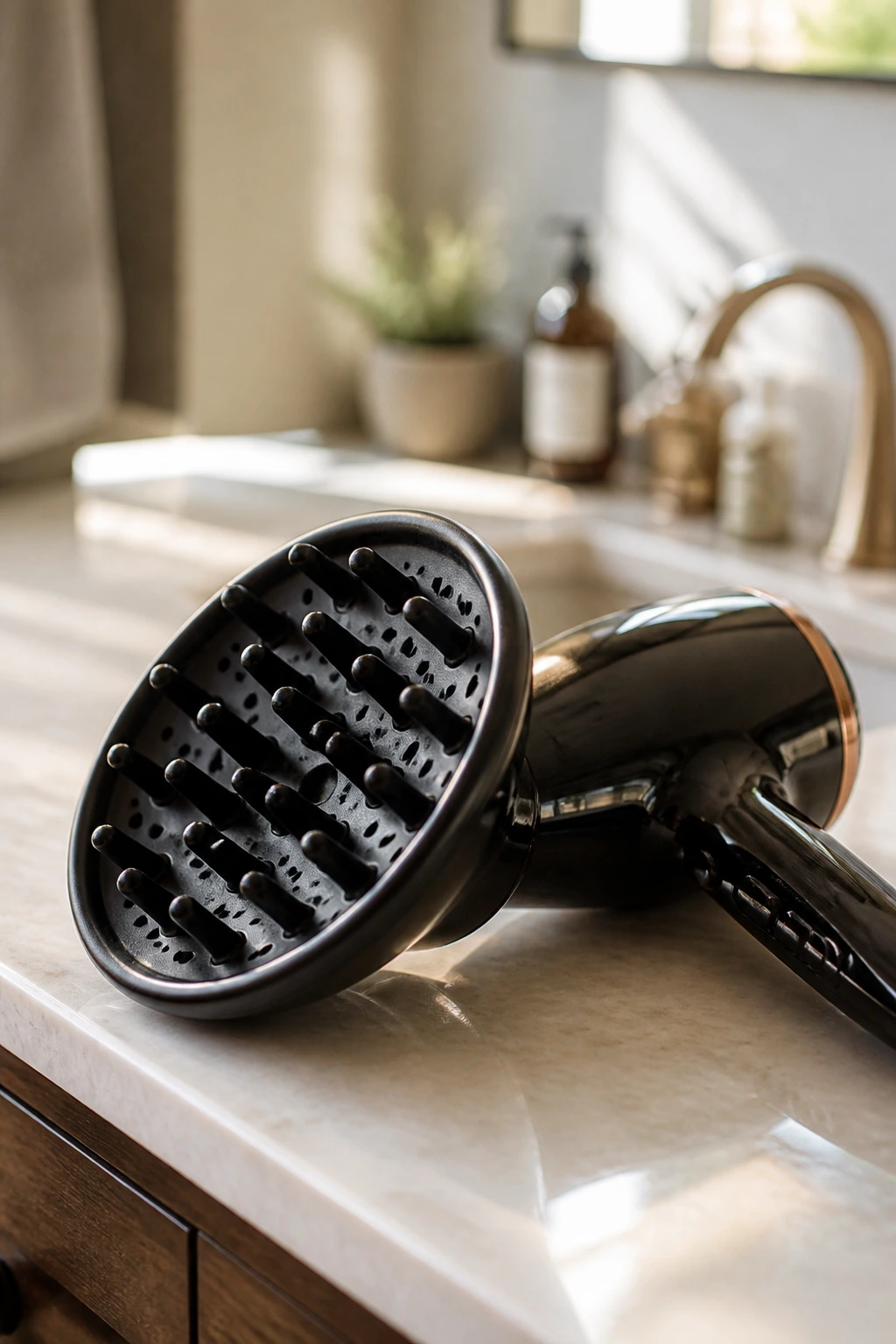
- Blow dryer with a diffuser: A diffuser keeps waves from blowing apart and helps reduce halo frizz.
- Concentrator nozzle: Useful if you want to smooth the roots or direct the front pieces away from the jaw.
- 1-inch or 1.25-inch curling iron or wand: Best for adding a few bends through the top and front sections without making ringlets.
- Wide-tooth comb: Gentle enough for waves that tangle if you rough them up too hard.
- Paddle brush: Good for smoothing the perimeter when you want the cut to look cleaner.
- Duckbill clips: Handy for setting the crown or training a side part while the hair dries.
- Lightweight mousse: Gives wave support without turning the hair crunchy.
- Heat protectant spray: Non-negotiable if you use hot tools more than once a week.
- Texturizing spray: Helpful for piecey fringe, shaggy ends, or second-day texture.
- Finishing serum or cream: Use a tiny amount on the ends to stop puffiness and frizz.
Smart Product Picks for Wavy Hair and Square Faces
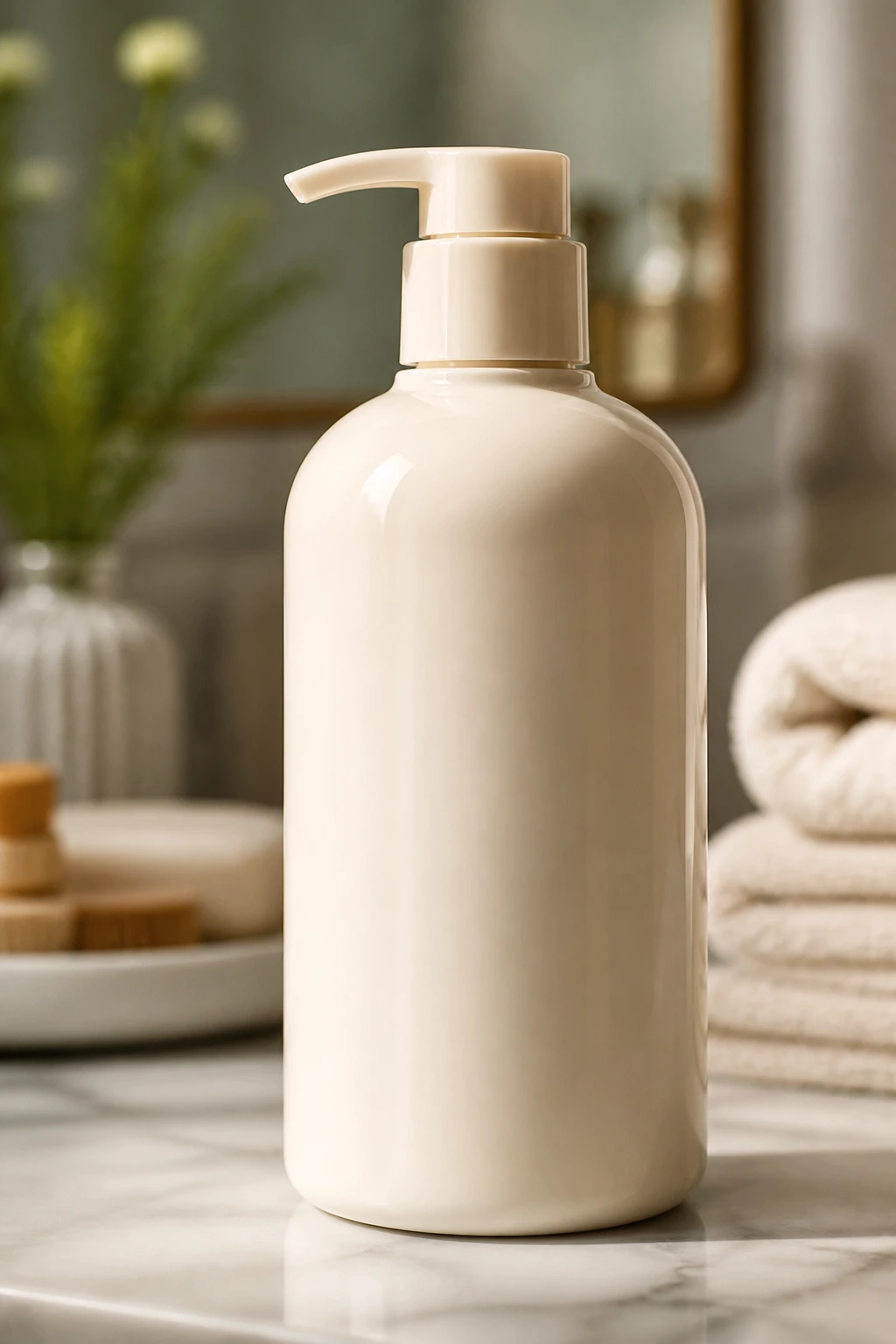
The right products matter because a wavy bob can go wrong in two directions: too flat at the crown or too wide at the sides. Neither one flatters a square face. The product choice should answer your hair’s main problem, not just smell nice on the shelf.
If your waves are fine, start with mousse at the roots and a light spray cream through the mid-lengths. Fine hair gets weighed down fast, so skip rich butters and heavy oils near the root. They make the top collapse and pull the attention to the jawline, which is exactly what we are trying to avoid.
Thicker waves usually need a little more control. A light leave-in cream on damp ends keeps the perimeter from frizzing out, and a small amount of serum can smooth the outer layer after drying. If your hair feels puffy by midday, cut back on the amount. Half a pump too much can be the difference between soft texture and swollen sides.
Dry or color-treated hair often likes a bit more slip. In that case, look for a product that smooths without coating. You want the wave to stay defined, not slick.
How to Wear These Cuts So the Jawline Stays Soft
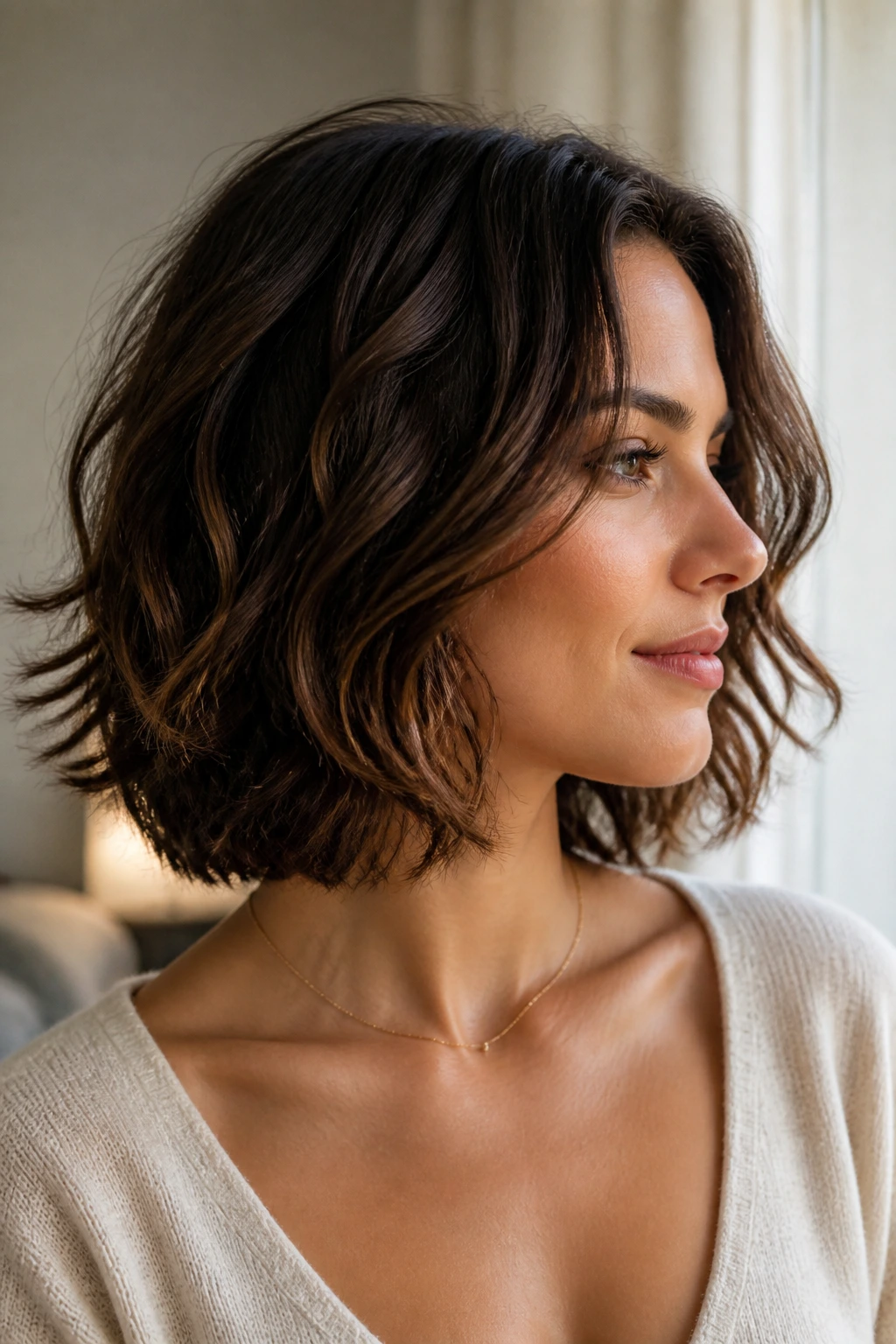
Parting: A side part or off-center part usually softens a square face better than a hard center line. If you love the middle part, keep the front pieces longer so the face doesn’t look squared off.
Texture: Keep the wave loose through the mids and a little straighter at the ends. That contrast stops the silhouette from expanding at the sides.
Finish: Use a pea-sized amount of cream or serum only on the last inch or two. If the product gets too high, the roots flatten and the face can look wider.
Volume: Put lift at the crown, not at the temples. Crown height lengthens the face. Temple volume widens it.
Refresh: On day two, mist the hair with water, scrunch the ends, and re-warm the front pieces with your hands. Don’t drench the whole head unless you want to start over.
Additional Shape Boosters and Styling Tweaks

Face-Framing Boost: Ask for the shortest front piece to start around the cheekbone, not the chin. That keeps the eye moving upward before it drops toward the jaw.
Texture Boost: If the bob feels too neat, add a little texture spray at the mids and scrunch with your fingers. A square face usually looks better with a bit of irregular movement than with perfectly matched sides.
Sleek-Edge Option: If your waves are thick, smooth the top layer with a round brush and leave the bottom half slightly undone. That split finish keeps the haircut from feeling puffy.
Make-It-Your-Own: Fine hair needs more root lift and less cream. Thick hair needs a little internal shaping and a cleaner perimeter. Dry hair wants less heat and more leave-in slip. None of that is glamorous. All of it matters.
Common Mistakes That Make a Bob Look Boxy
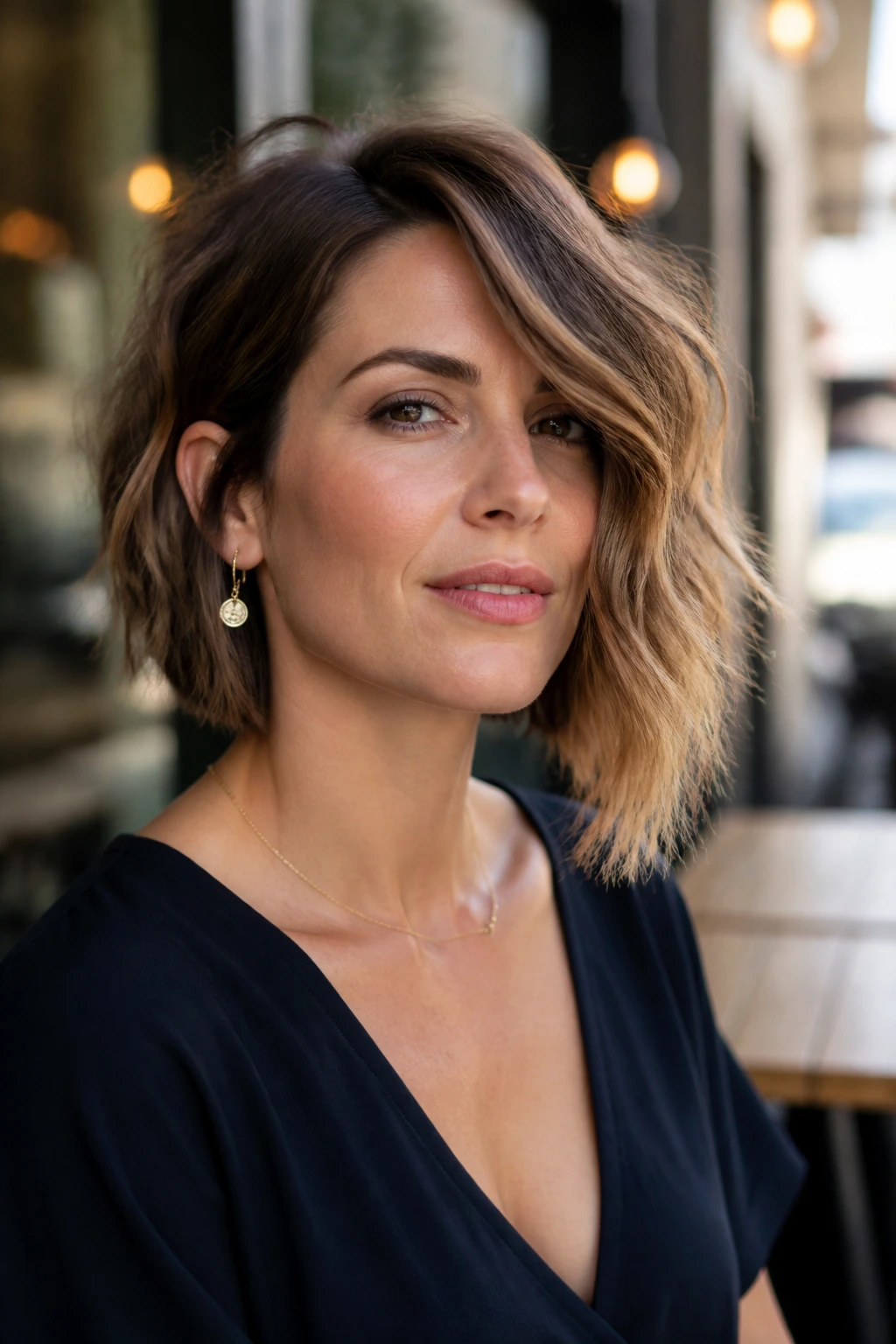
- Cutting the length exactly at the jaw: That’s the fastest way to make a square face look wider. Move the line lower or soften it with longer front pieces.
- Over-layering the outer edge: Too many short pieces around the sides make wavy hair flare outward. Keep the perimeter controlled and put movement inside the cut.
- Using too much cream or oil: Heavy product collapses the crown and makes the ends stringy. Start with less than you think you need.
- Forcing a dead-center part on every bob: Center parts can look severe on square faces unless the fringe and front pieces are doing some real work.
- Blowing the wave completely straight: A pin-straight finish can make the face look harder. Leave some bend in the length.
- Ignoring density: Fine and thick hair need different bob structures. One cut does not fit both.
Variations and Adaptations to Try
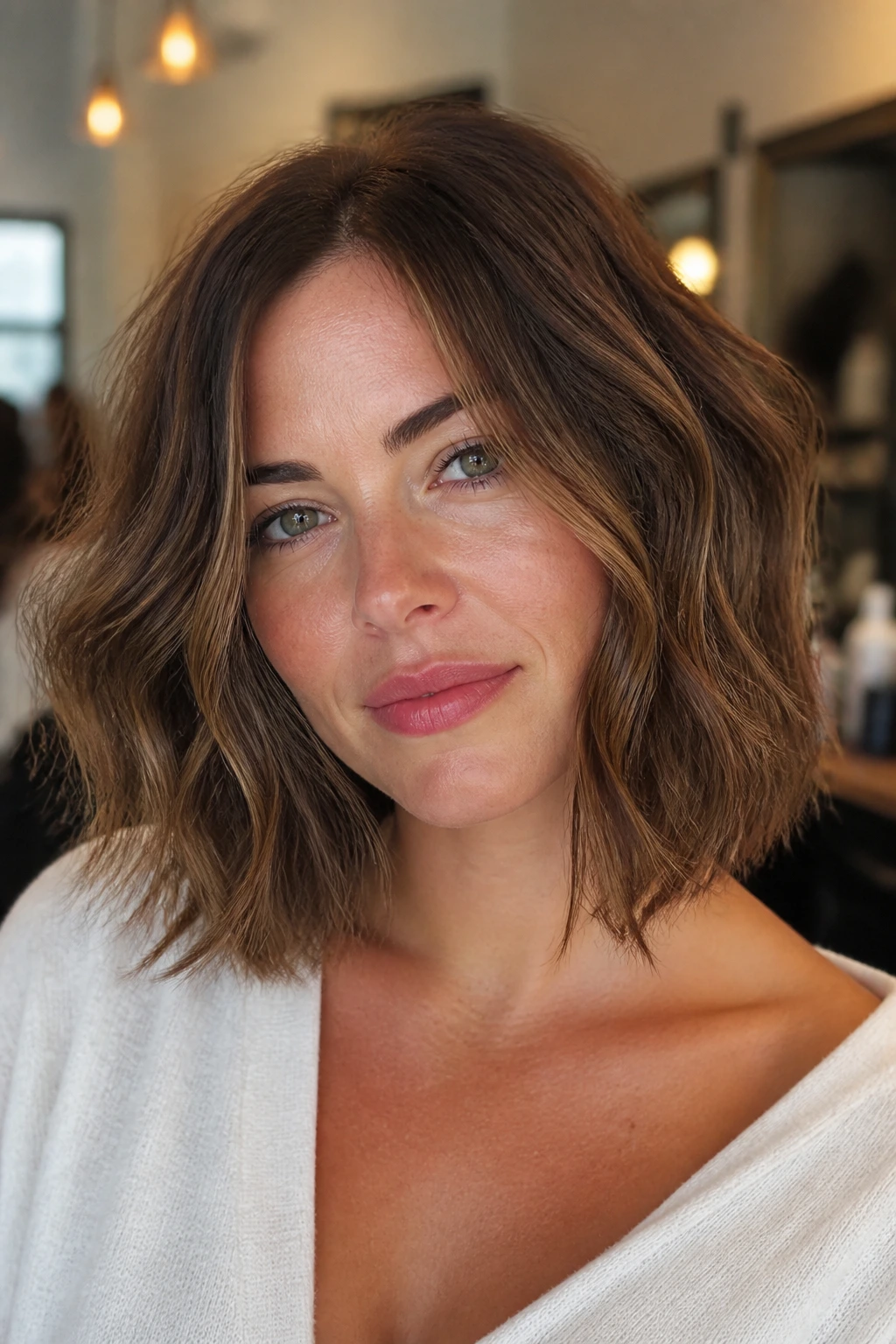
The Fine-Wave Version: Keep the layers invisible and the perimeter clean. Fine waves need weight more than texture, so ask for a softer internal shape and a light root lift product, not a lot of chopping.
The Thick-Wave Version: Remove bulk from the interior, not the outer line. Thick waves look best when the width is controlled at the sides and the crown gets a little lift.
The Air-Dry Version: Ask for a cut that looks right when scrunched and left alone. That means softer ends, cheekbone-facing front pieces, and no hard geometric line at the jaw.
The Fringe-On Version: Add curtain bangs, bottleneck bangs, or a piecey fringe if you want more movement up top. Bangs can help a square face a lot, as long as they stay light and don’t sit too heavy across the forehead.
The Grow-Out Version: Pick a collarbone or shoulder-skimming bob with longer front pieces. It will look good for longer between trims and won’t collapse into a blunt shelf as fast.
Keeping the Cut Looking Fresh Between Trims
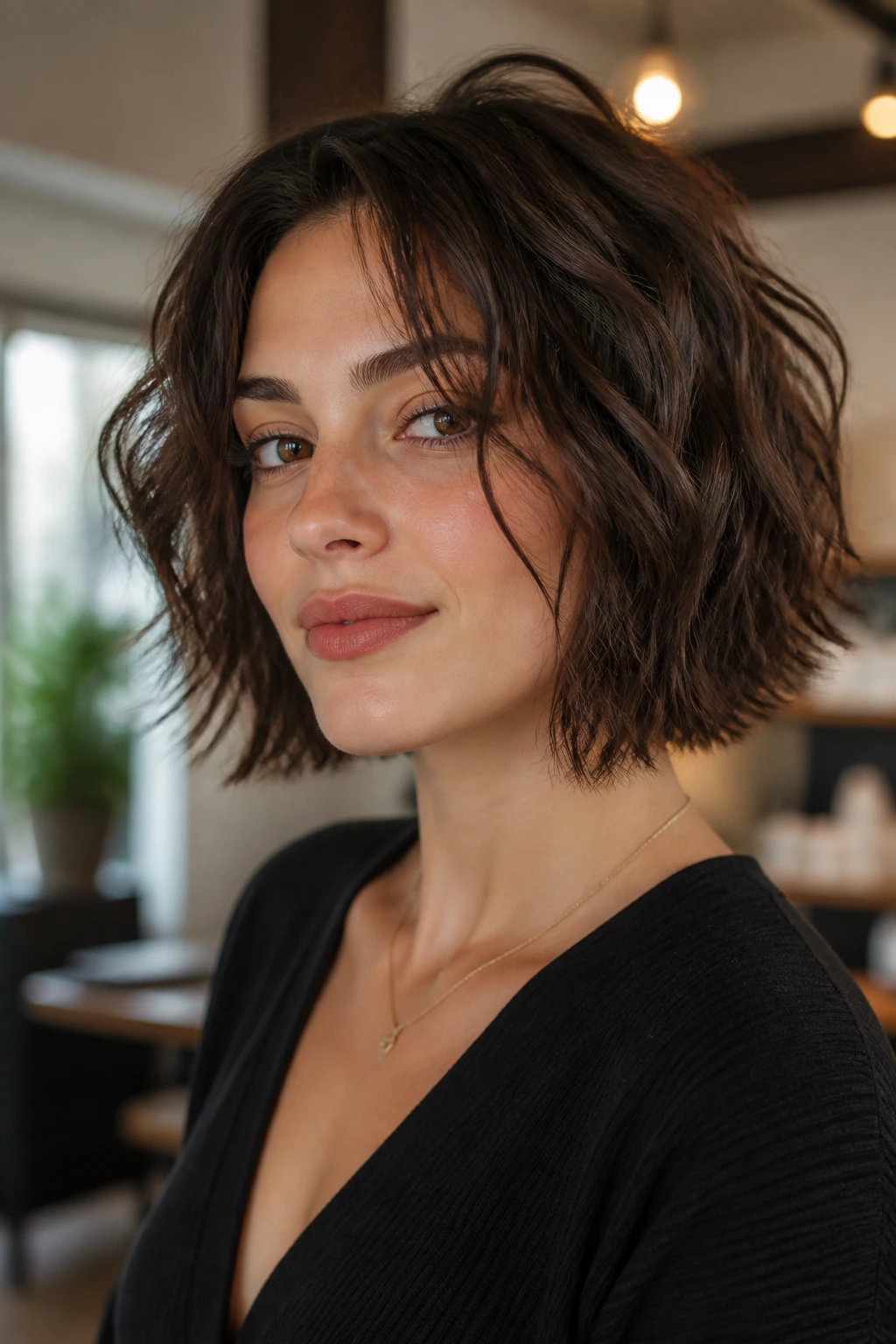
A bob shows its age faster than a long cut, so maintenance matters. The good news is that medium length bobs tend to grow out more gracefully than short ones, especially when the front pieces are slightly longer than the back.
Plan on a trim every 8 to 10 weeks if you want the shape to stay crisp. If you wear bangs, those may need a touch-up every 3 to 4 weeks. Waiting much longer is possible, but the perimeter starts to lose its line and the wave begins to sit in odd places around the jaw.
At home, sleep on a silk or satin pillowcase if frizz is a problem. It keeps the wave from exploding overnight and saves you from starting every morning with a triangle head. If your hair gets flattened at the roots, clip the crown loosely while it dries the next morning. That old trick still works.
For refresh days, mix a little water with a dime-sized amount of leave-in in your palms and smooth it over the mids. Then scrunch. Do not soak the whole head unless you have the time to dry it again. A bob likes targeted fixes.
If product buildup starts making the cut look dull or heavy, use a clarifying shampoo about once every 2 to 4 weeks, then follow with a light conditioner on the ends only. That keeps the wave springy and stops the style from sinking.
Frequently Asked Questions
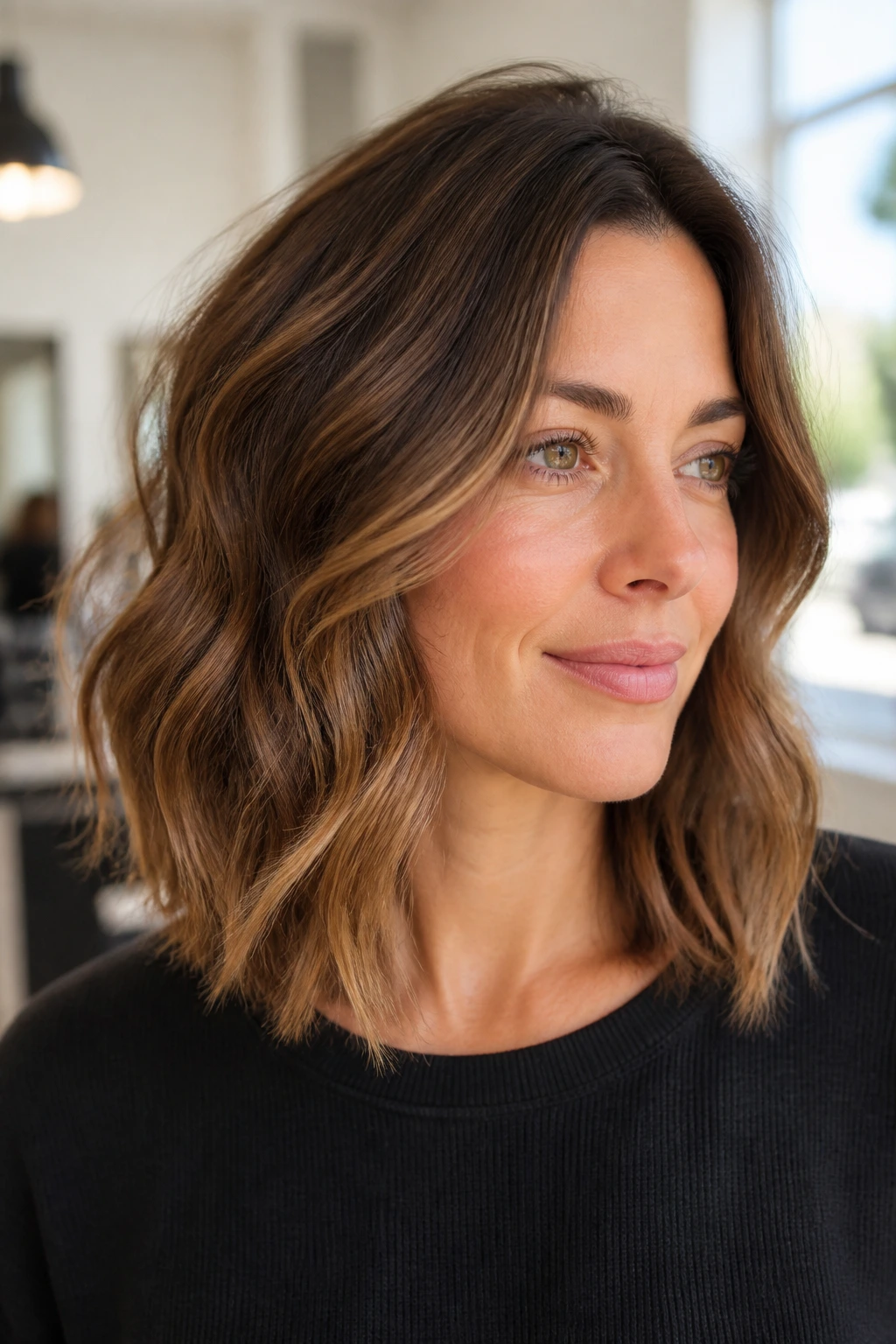
What bob length is most flattering on a square face with wavy hair?
Usually, the safest zone is just below the jaw to the collarbone. That gives the hair enough length to soften the face without dragging the line too low. If your waves are very loose, you can go a little shorter; if they’re thick and springy, a longer lob often behaves better.
Are blunt bobs a bad idea for square faces?
Not automatically, but they need help. A blunt bob that ends right at the jaw can make the face look boxier, while a blunt lob below the jaw with soft wave and a slight part can look clean and modern. The line matters more than the label.
Should square faces with wavy hair get layers?
Yes, but not the wrong kind. Internal layers, invisible layers, and soft face-framing usually help. Short choppy layers around the outer edge can widen the sides, which is the opposite of what you want.
Will bangs make my face look wider?
Heavy, straight bangs can. Lighter options like curtain bangs, bottleneck bangs, or a piecey fringe usually soften a square face instead of crowding it. Keep them airy and let them blend into the rest of the haircut.
Can I wear a middle part with this haircut?
You can, but it’s often more flattering to go slightly off center. A strict middle part can emphasize symmetry in a way that feels a little hard on square features. If you love the middle part, use longer front pieces to soften it.
What if my waves are fine and collapse fast?
Ask for a bob with more weight at the perimeter and less aggressive layering. Fine wavy hair also does better with mousse at the roots, not heavy cream. A quick root clip while drying can help the crown keep its shape.
How do I keep the sides from puffing out?
Keep product light, dry with a diffuser on low speed, and avoid over-layering the outer line. If the sides still flare, a small bend from a curling iron through the front pieces can make the silhouette fall inward instead of outward.
How often should I trim a medium bob?
Most medium bobs look best with a trim every 8 to 10 weeks. If the shape is very layered or you wear bangs, you may want to see your stylist a little sooner. Letting it go too long usually shows up first around the jaw and neck.
Can this kind of bob be air-dried only?
Absolutely. Some of the best versions are built for air-drying, especially the shaggy, textured, and French-inspired cuts. The trick is asking for a cut that still has a clean perimeter so the hair doesn’t puff out while it dries.
Soft Edges Win
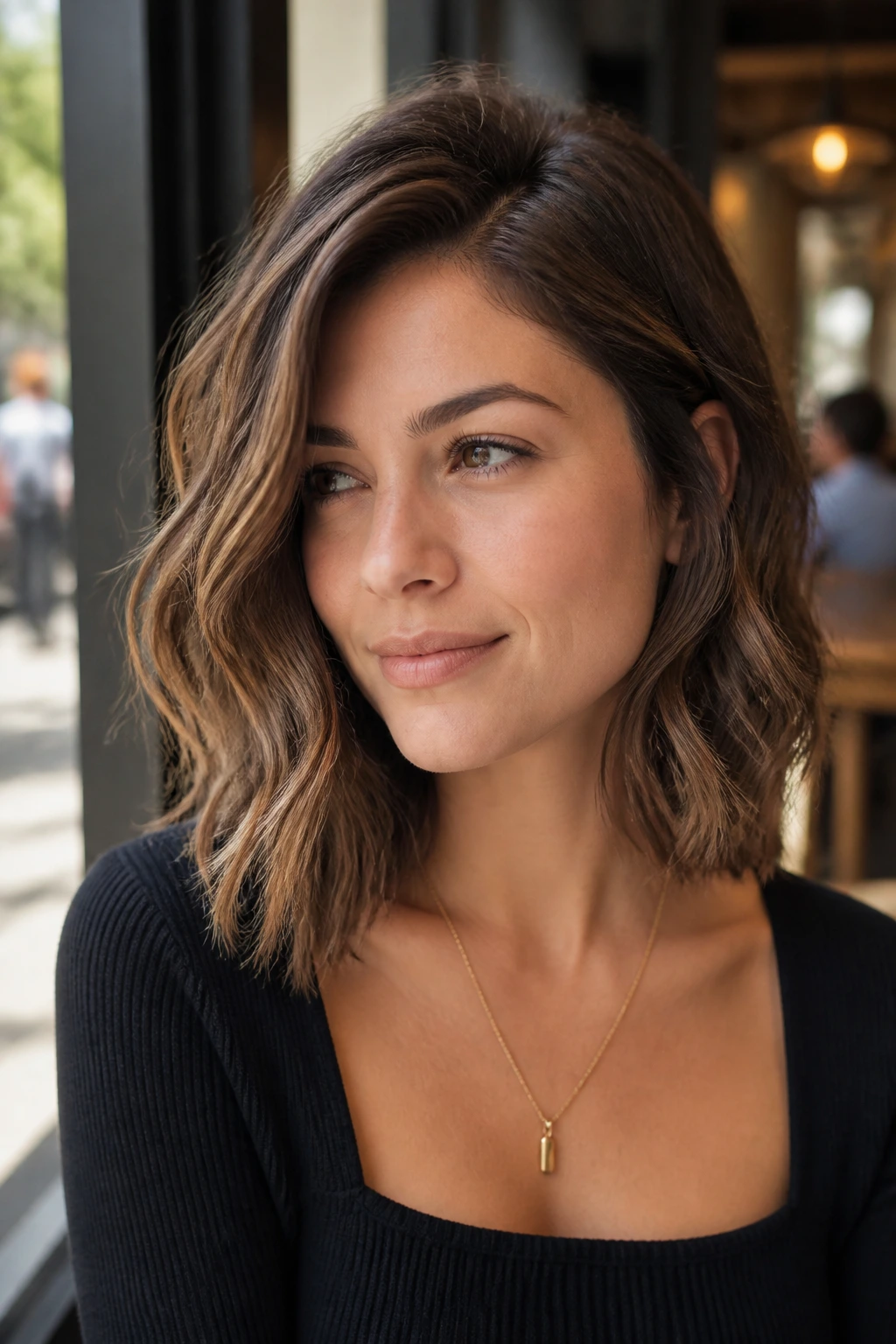
Square faces do not need to be hidden. They need a haircut that knows where to stop, where to bend, and where to leave a little air around the jaw. That’s why medium-length bobs are so useful here: they bring shape without turning the face into a hard frame.
Wavy hair makes the whole thing better when the cut respects the wave instead of flattening it. Bring one of these looks to your next salon visit, point to the length you want, and be specific about the front pieces. A few honest inches can change the whole mood of the cut.