



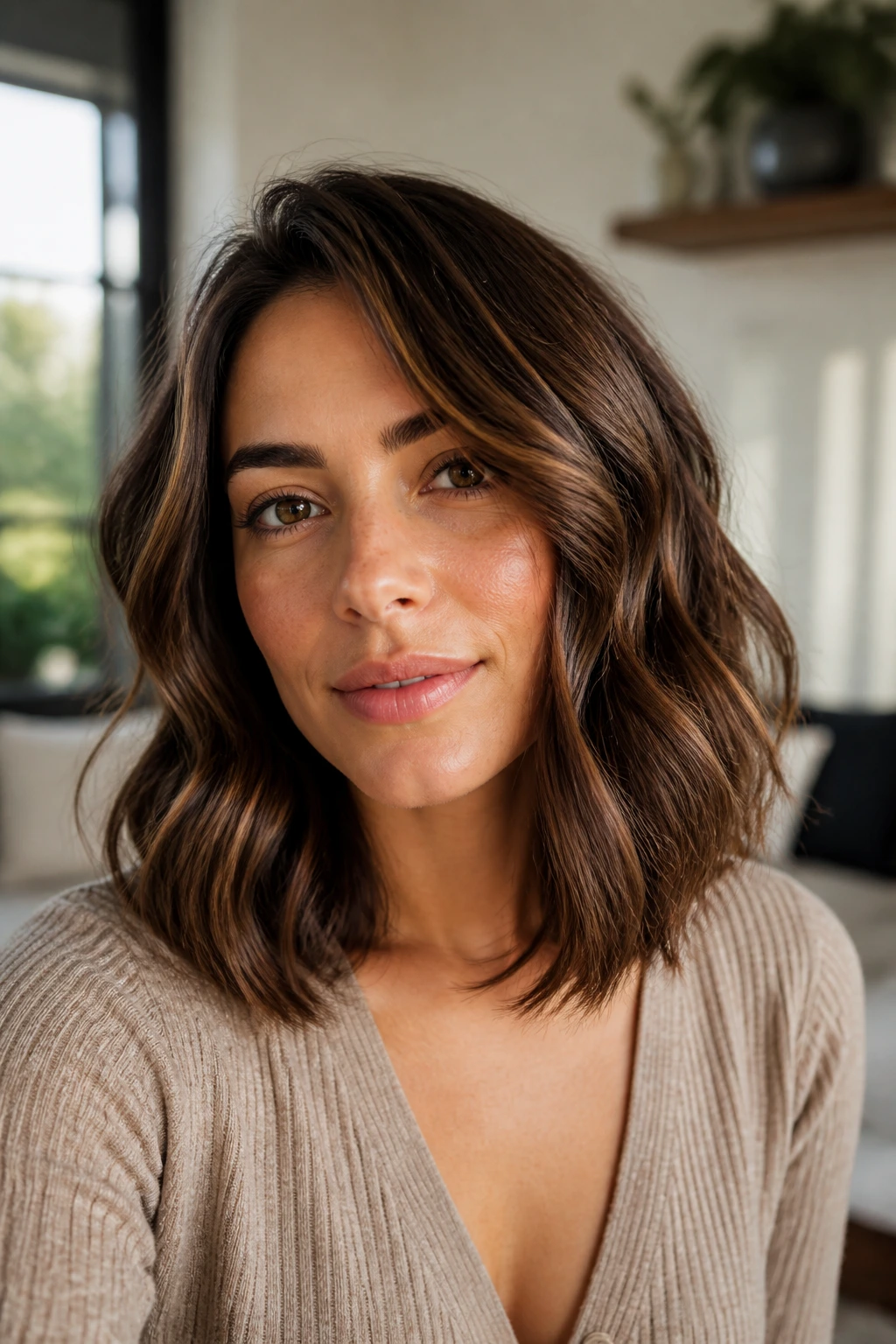
Brown long bobs for wavy hair and oval faces sit in a very useful little pocket of haircut territory: long enough to keep the wave, short enough to keep the ends from going mushy, and structured enough to give an oval face some shape without boxing it in. When the cut lands around the collarbone, the hair gets that easy bend that looks intentional even after an air-dry that took five minutes and a questionable amount of patience.
The reason this length works is less glamorous than it sounds. Wavy hair expands, especially through the sides, and an oval face can start to look longer if the part is wrong or the layers land in the wrong place. A good lob fixes both problems at once. It gives the cheekbones something to meet, opens the neckline, and leaves enough length for brown color to show ribboned highlights, soft gloss, and that shadowy depth that makes brunettes look expensive even when the styling routine is barely civilized.
I keep coming back to this cut because it doesn’t need a trick to be useful. A blunt edge can look sleek. Curtain bangs can soften the forehead. Long internal layers can make waves look fuller without turning the outline fuzzy. And a deeper brown can make the texture read richer without making the whole thing feel heavy. The right version rarely shouts. It just sits there, doing the job.
Why These Brown Long Bobs Earn Their Place
-
The length lands where wavy hair behaves best: collarbone to upper-chest length gives the wave room to form without letting the bottom half puff out like a triangle.
-
Brown color does more with less maintenance: chestnut, mocha, walnut, and cocoa shades keep the cut looking dimensional even when the roots start to show.
-
Oval faces can handle a lot, but not anything: these cuts keep the cheekbones framed and the jawline soft instead of dragging the eye straight down.
-
Most of these styles work air-dried or lightly styled: that matters if your wave pattern is loose, inconsistent, or a little rebellious on humid days.
-
A tiny change can shift the whole mood: a deep side part, a curtain fringe, or a soft flip at the ends can move the cut from polished to relaxed fast.
-
The grow-out is forgiving: a brown lob with texture usually looks better after a few weeks, not worse, which is a rare gift in haircut land.
Why Brown Long Bobs Feel So Good on Wavy Hair
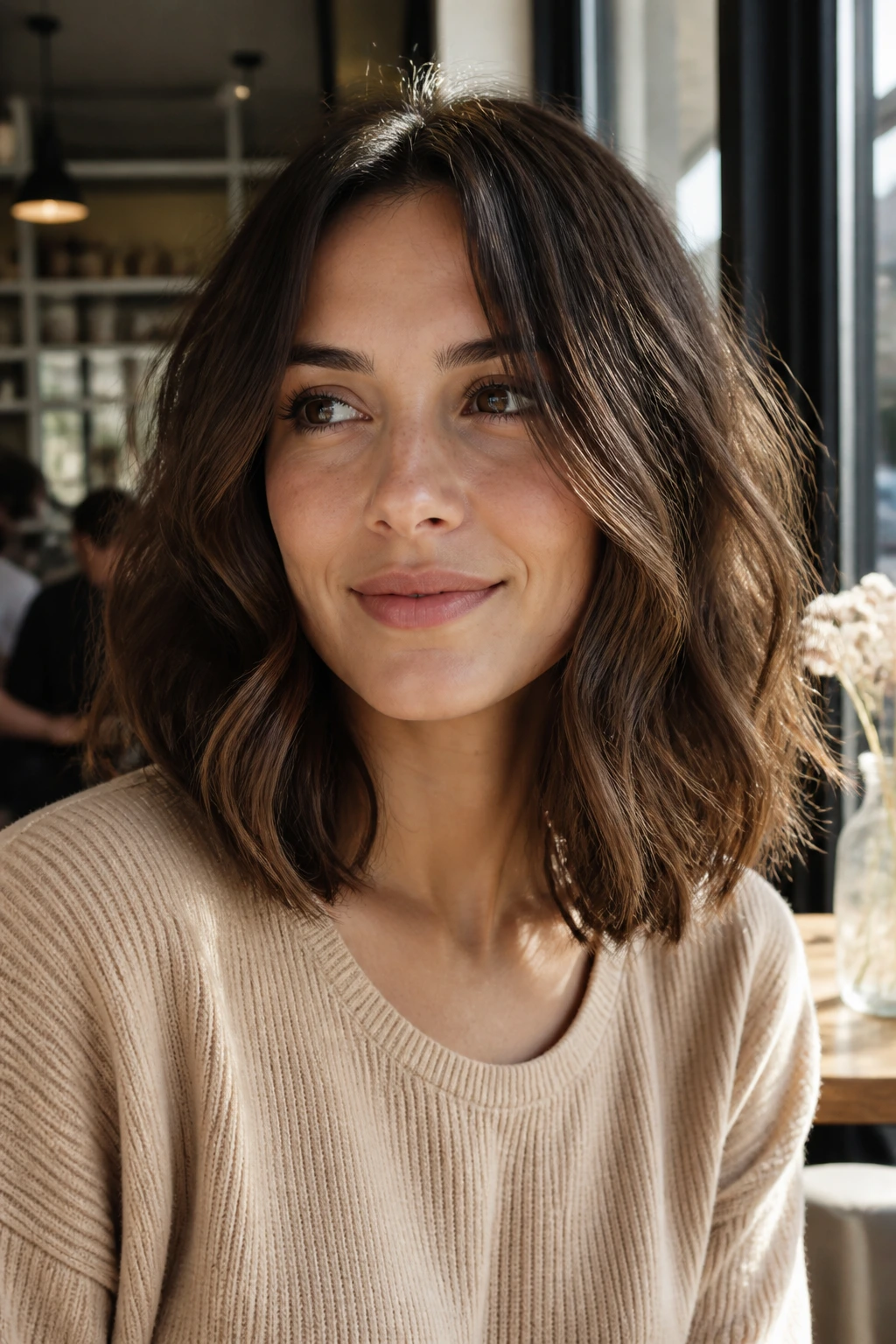
Wavy hair likes room, but not too much. That’s the whole game. A cut that’s too short can make the wave spring up and spread out, while a cut that’s too long starts to drag the texture flat at the ends. A brown lob solves that by sitting right in the middle, where the wave can bend and still keep some swing.
Brown is doing quiet work here, too. On wavy hair, depth matters. A solid dark brown gives the bend more contrast than a flat medium blonde would, while caramel ribbons or warmer chestnut tones can catch the curve of each wave and make the texture read from across the room. Nothing fussy. Just enough variation to keep the shape from looking like one solid block.
There’s another reason this cut behaves so well: the lob doesn’t fight the wave pattern. It lets the hair make its own S-curve instead of forcing it into a polished, round-brush shape all the time. That’s why a collarbone cut with a little internal layering often looks better after a day of living than it does fresh from the salon chair.
How an Oval Face Changes the Shape Conversation
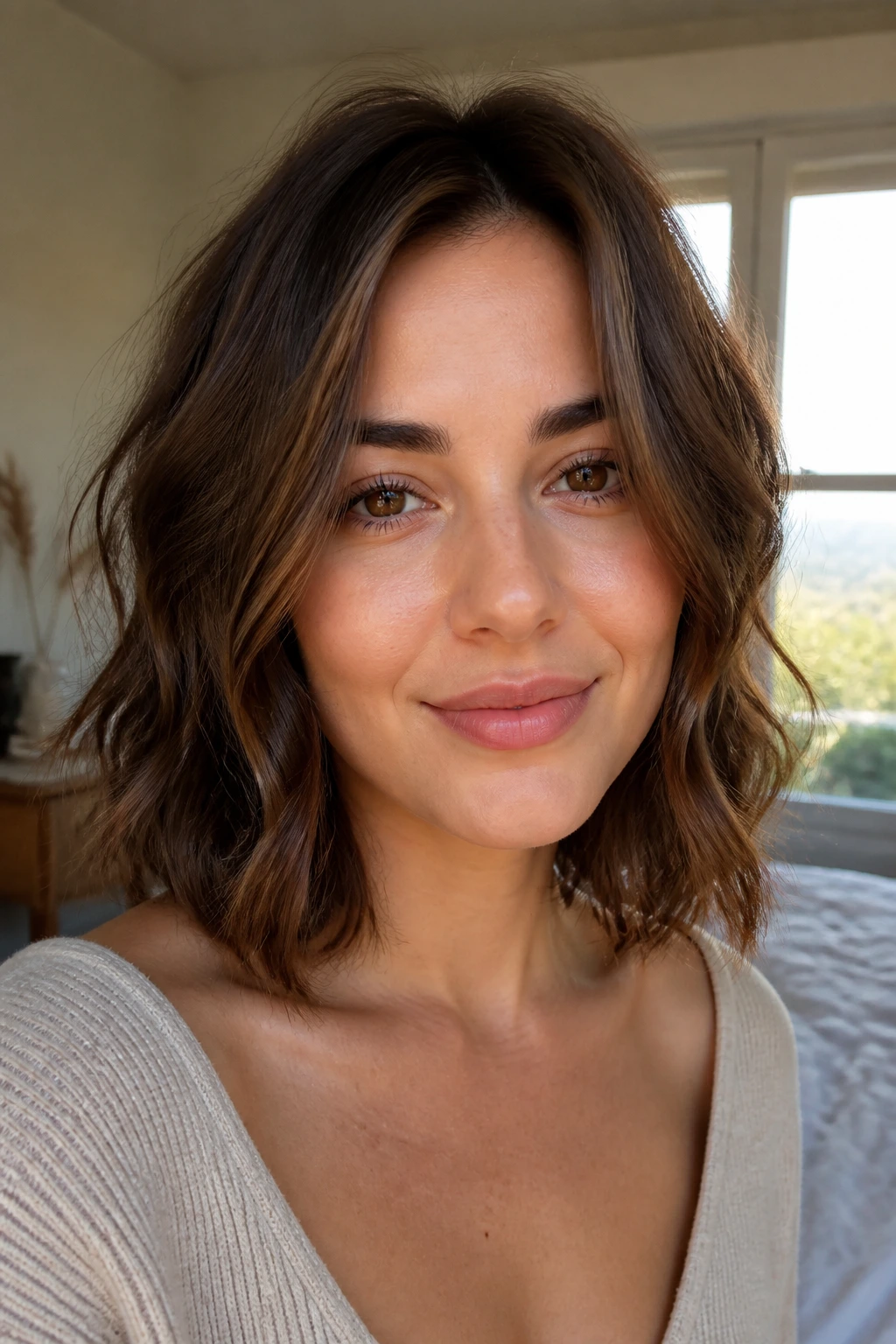
Oval faces are generous. They can wear center parts, off-center parts, soft bangs, and longer fringes without much drama. That sounds easy, and it is, but ease can lead people into lazy haircut choices. A lob for an oval face still needs a plan.
The smartest version usually keeps the weight line near the collarbone or just below it. That length gives the cheekbones a frame without pulling the whole face visually longer. If the front pieces hit right at the widest part of the cheeks and then curve slightly inward or outward, the face gets shape without looking overbuilt.
A lot of stylists like to start face-framing layers somewhere below the chin and above the collarbone for this reason. Too high, and the front can get puffy. Too low, and the cut loses the ability to spotlight the features. The sweet spot is boring in theory and excellent in practice.
1. Chestnut Collarbone Lob with Soft Internal Layers
A chestnut collarbone lob has that warm, expensive-looking brown depth that never tries too hard. The internal layers keep the surface smooth while taking some bulk out from underneath, so the waves lift instead of hanging like curtains. It’s the kind of cut that looks polished even when the styling is only a rough dry and a few bends with a curling iron.
Why It Works
The magic is in the hidden structure. On wavy hair, internal layers let the bends stack without making the outline choppy, which is useful if your face is oval and you want shape without a big visual break across the jaw. Ask for layers that start a few inches below the chin so the front still feels clean.
- Best for: medium-density waves that puff at the ends if left blunt.
- Parting: center or slight off-center both work.
- Styling move: bend the front pieces away from the face with a 1.25-inch iron.
- Color note: chestnut shows off wave texture better than a flat ash brown.
Pro tip: keep the layers soft, not sliced. If the ends look too feathered, the whole cut can start to feel flimsy.
2. Cocoa Center-Part Lob with Cheekbone Bend
A clean center part can absolutely work here, and I’d argue it’s one of the most underrated choices for oval faces. The cocoa shade gives the cut enough visual weight to keep the style grounded, while the wave bend at cheekbone level adds shape right where the face wants it.
The trick is to keep the crown smooth and the movement lower down. If the root area gets too puffy, the center part can stretch the face a bit. But when the bend starts around the eyes or cheekbones, the line looks deliberate. Easy, even. Not flat.
For styling, I like a light mousse at the roots and a wave pattern that alternates away from the face on each side. That prevents the front from collapsing inward. A little shine spray on the ends helps, too, because cocoa brown looks especially rich when the light hits the curve.
3. Mocha Lob with Curtain Bangs
What if you want fringe but do not want to babysit it every morning? Curtain bangs are the answer most people keep ignoring. On a mocha lob, they split the front softly and slide into the rest of the cut, which keeps the look open around an oval face instead of closing it off.
How to Style It
Blow-dry the bangs first with a round brush, directing them away from the face and then back in a soft curve. The rest of the lob can stay loose and wavy, but the bangs need a little direction or they’ll split in odd places. A touch of dry texture spray at the roots keeps the front from lying too flat.
Mocha brown is a good partner for curtain bangs because the color depth keeps the fringe from disappearing into the rest of the hair. If your wave pattern is loose, this is one of the easiest ways to make the haircut feel intentional without putting heat on every inch.
4. Chocolate Wavy Lob with Rounded Ends
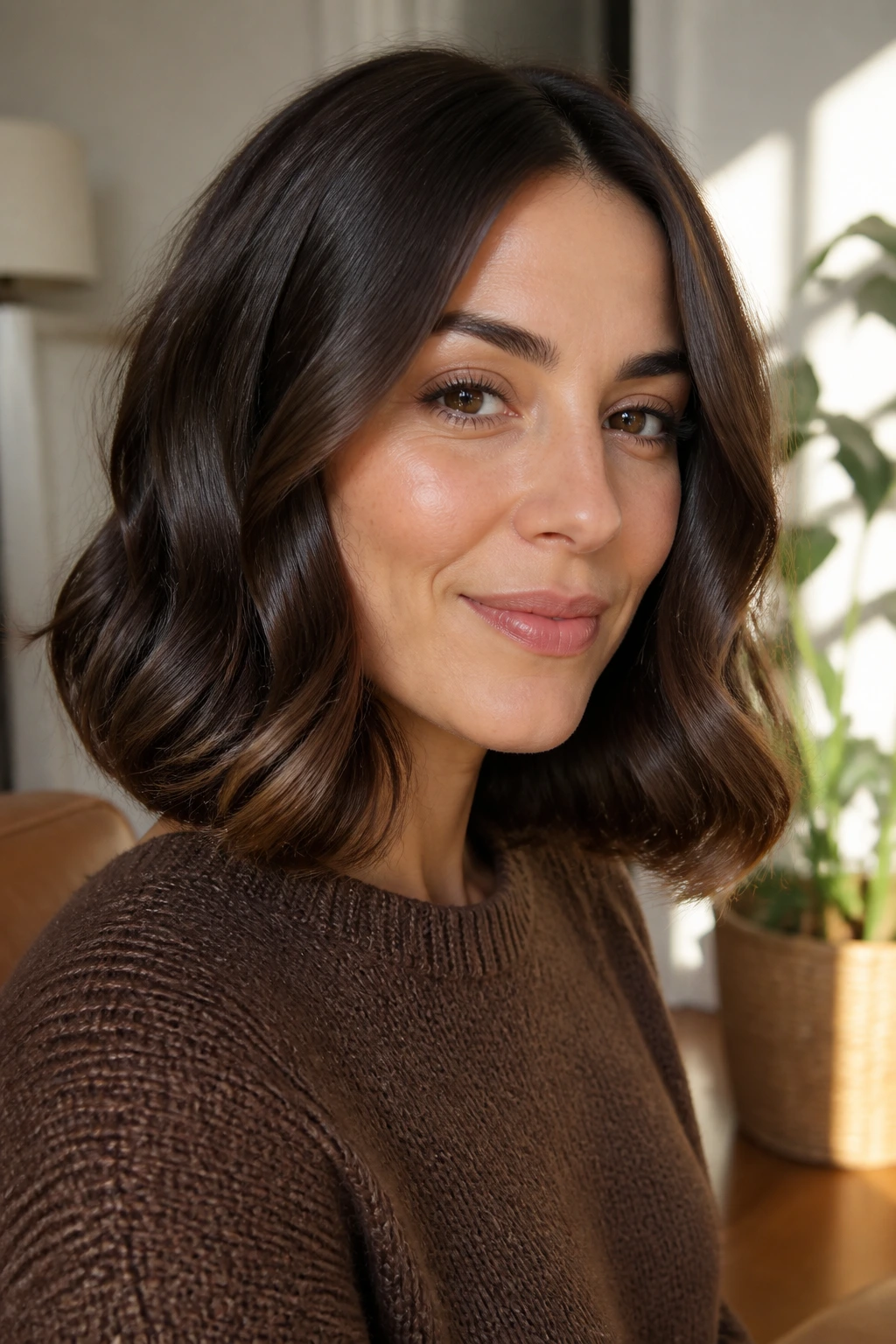
A blunt lob sounds neat until the waves hit the shoulders and start flipping wherever they want. Rounded ends fix that. They give the silhouette a softer curve, which matters a lot if your hair has a little puff at the bottom and your face already carries clean oval lines.
I like this version when someone wants movement but not visible layers. The top stays smooth, the ends curve under or gently out, and the whole cut feels balanced. Nothing jagged. Nothing overtextured. Just enough bend to keep it from looking severe.
- Ask for: a soft perimeter with minimal layering through the body.
- Best when: your hair is medium to thick and holds a wave without frizzing out.
- Finish with: a cream that smooths the last two inches of the ends.
- Why it suits oval faces: it keeps the face open while giving the lower half of the cut some shape.
5. Walnut Side-Part Lob with Long Face-Framing Pieces
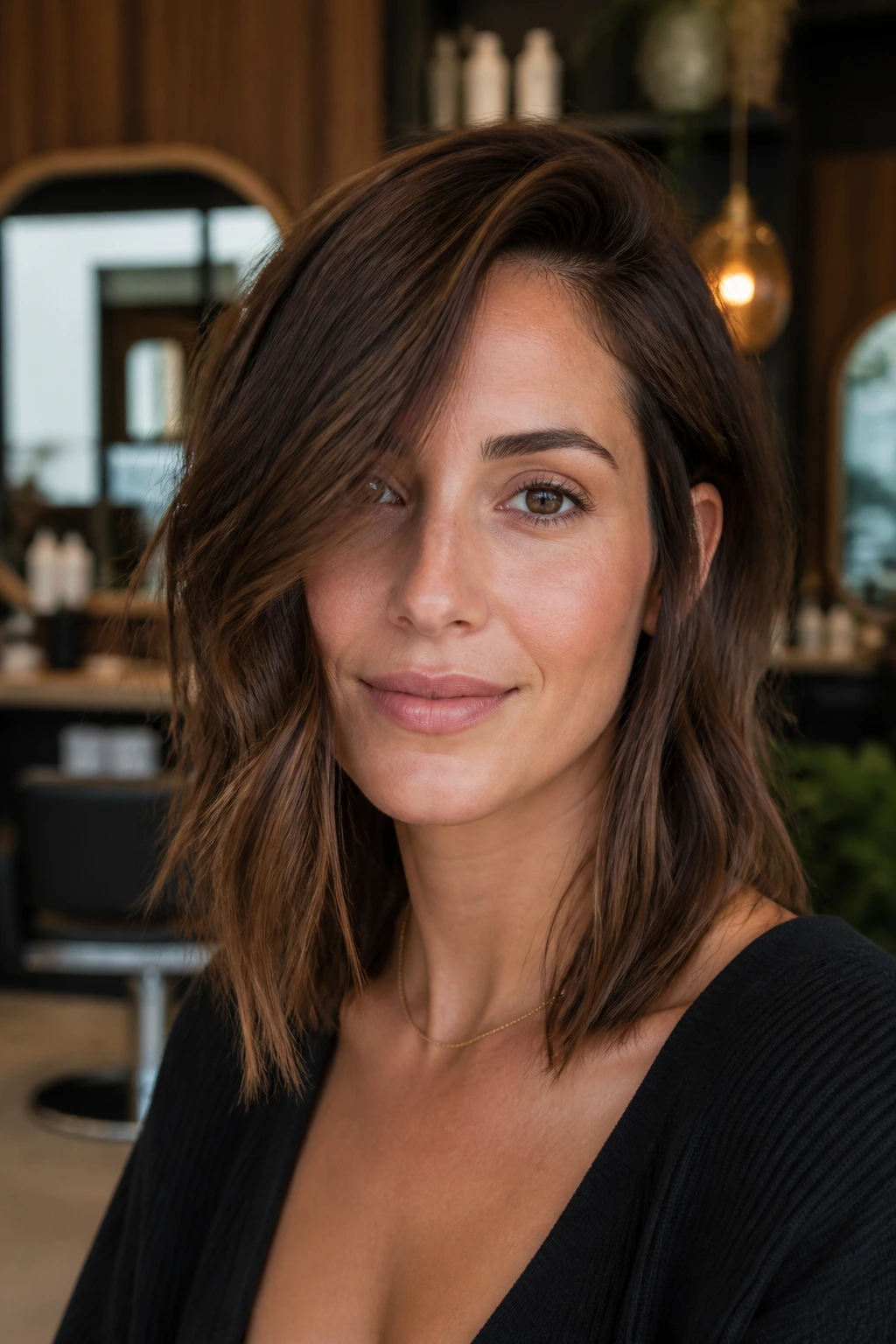
The side part does a lot of quiet work here. Walnut brown already has that grounded, slightly cool richness, and a side part breaks up the symmetry just enough to make an oval face look more sculpted. Long face-framing pieces starting below the cheekbone keep the look soft instead of severe.
This is one of those cuts that looks especially good when the waves are not perfectly matched on both sides. In fact, the slight asymmetry is part of the charm. One side can carry a little more volume, the other can hug the cheek a touch more closely, and the shape still feels balanced.
I’d keep the front pieces long enough to tuck behind the ear without losing the line. That gives you options. Clean when you want it, messy when you don’t.
6. Caramel-Threaded Brunette Lob with Invisible Layers
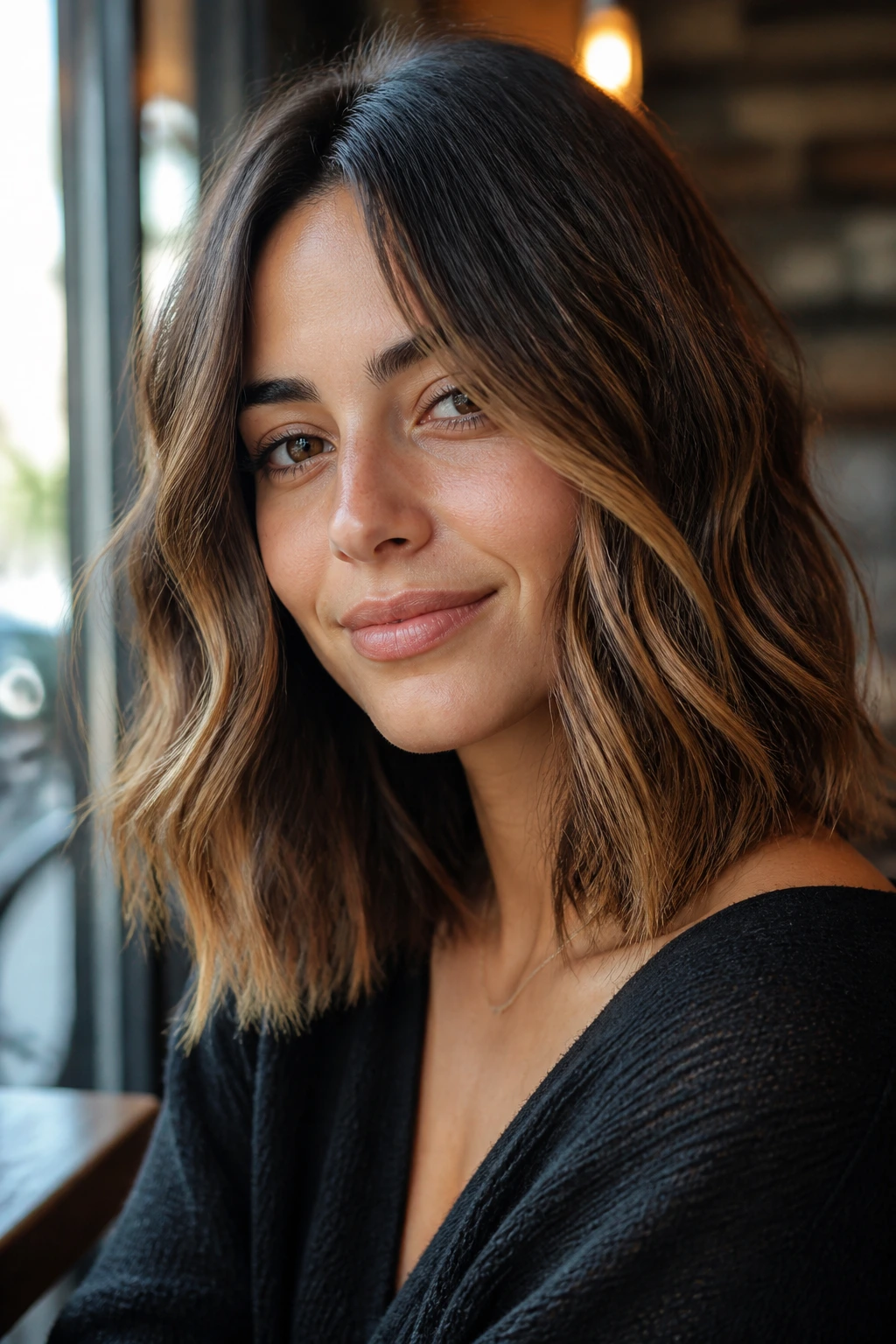
Invisible layers are the best kind of sneaky haircut trick. You don’t see them as stripes or chunks; you feel them when the hair moves. On a caramel-threaded brunette lob, they lift the wave from underneath without breaking the smooth outline, which is a very good fit for oval faces that don’t need extra width at the cheeks.
What Makes It Different
Unlike a shaggy lob, this version keeps the edge tidy. The caramel ribbons sit where the light catches the curve of each wave, so the color does half the styling for you. If your hair tends to look flat in one-process brown, this is a better choice than piling on obvious layers.
It’s also easier to grow out. That matters. The shape keeps its line even after six to eight weeks, and the highlights still look intentional when the wave starts settling down.
7. Espresso Blunt Lob with Airy Texture
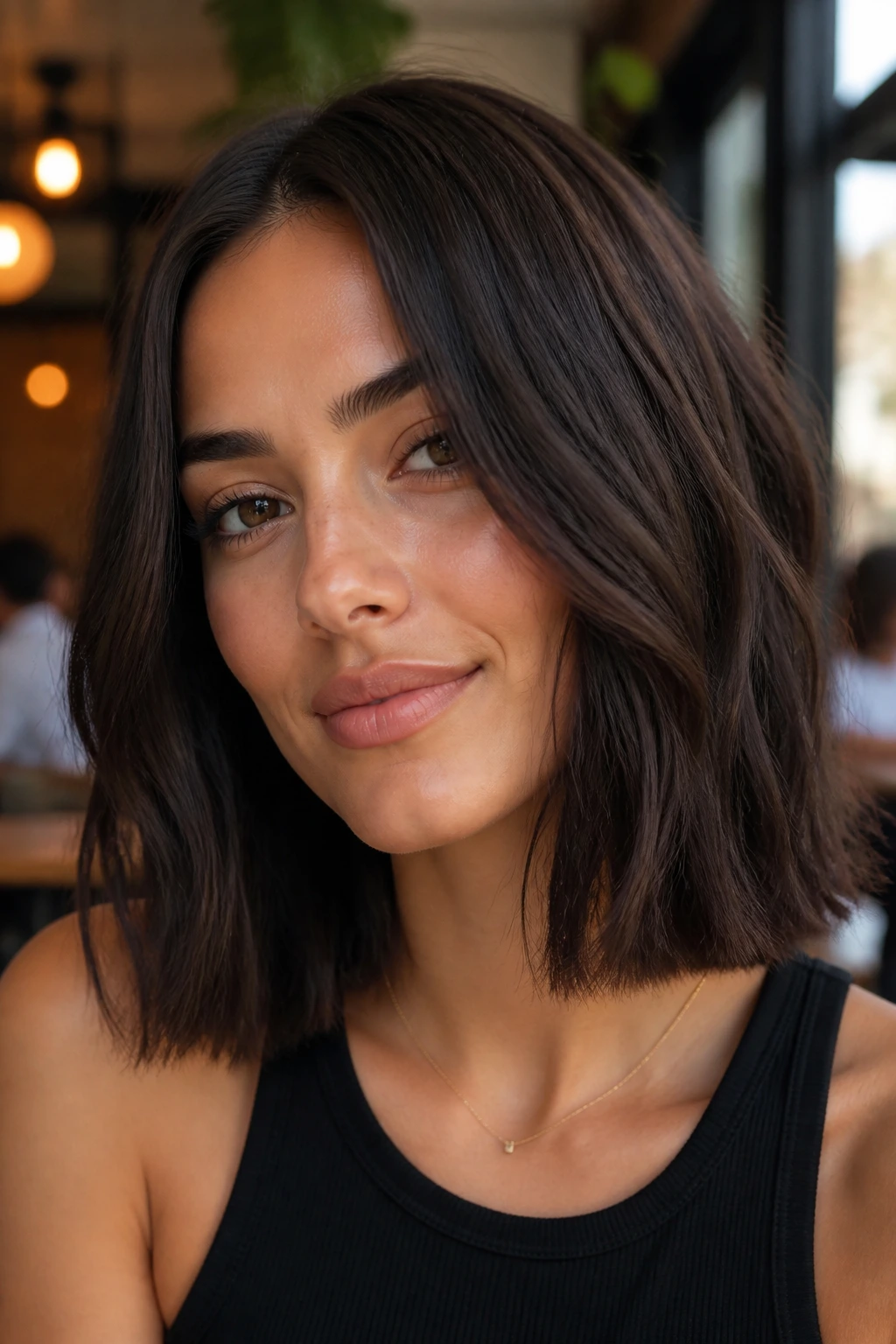
Blunt does not have to mean heavy. A good espresso lob can still have movement, as long as the texture is placed in the right spots and the ends stay crisp. On wavy hair and an oval face, that contrast can look sharp in a very good way.
Why It Works
The blunt line gives the cut discipline. The airy texture keeps it from feeling like a helmet. That contrast is the whole point. If you remove too much weight, the lob loses its edge; if you leave too much, it can sit like a shelf.
- Best for: denser waves that need shape control.
- Parting: center or a clean off-center part.
- Styling move: smooth the roots, then bend only the mid-lengths.
- Finish: a light texture spray, not a heavy paste.
Small warning: don’t over-layer the ends. You want motion, not fray.
8. Hazelnut Lob with Deep Side Sweep
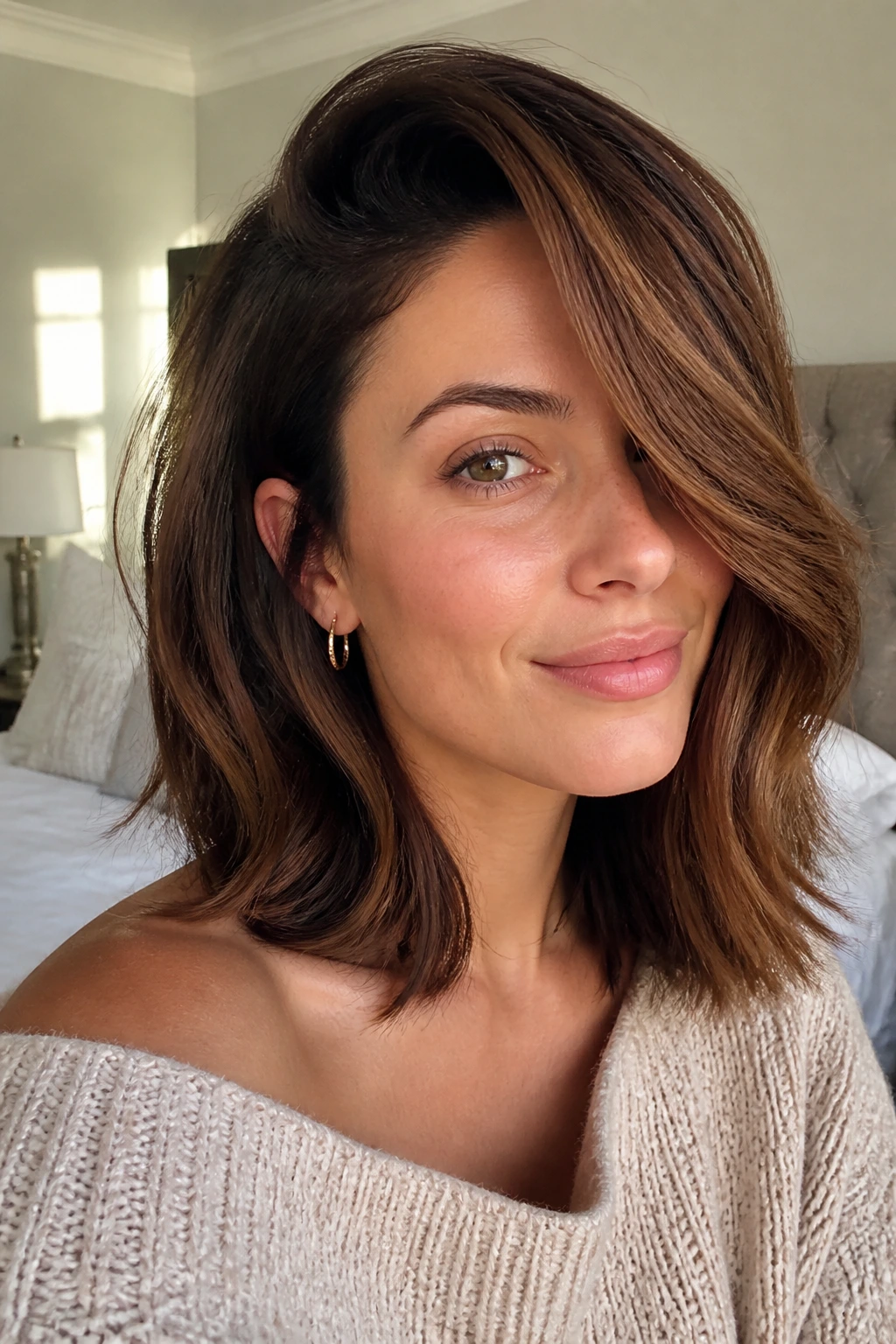
A deep side sweep gives an oval face a little drama without making the cut feel fussy. Hazelnut brown softens the look, so the part becomes a feature rather than a hard line. If your waves are looser on one side than the other, this cut helps hide that unevenness instead of making it obvious.
The real advantage is forehead balance. A deep side sweep shortens the vertical line a touch and shifts the eye diagonally across the face. That sounds technical. In practice, it just looks good. The waves fall where they want to, and the shape feels less straight up-and-down than a center-part lob.
I’d keep the front section long enough to move behind the ear or drape across the cheek. Short side-swept pieces can get too old-fashioned fast. Longer is better here.
9. Cinnamon Brown Lob with Long Shag Layers
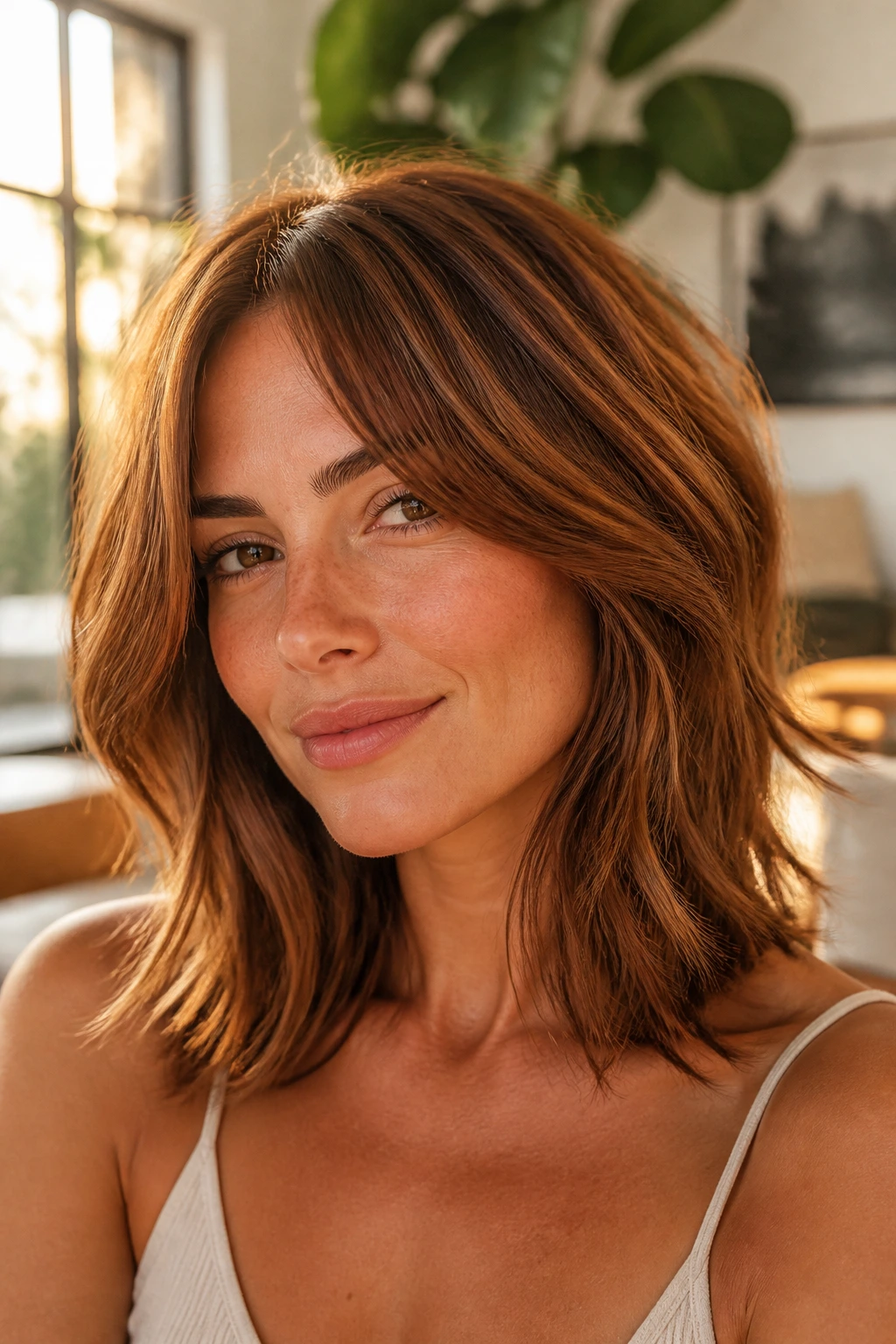
How much shag is too much? More than most people think. A cinnamon brown lob with long shag layers gets its movement from the mid-lengths, not from choppy ends that stick out every which way. That’s the version I’d choose if the wave pattern is strong and you want it to look alive, not tidy.
How to Get the Most From It
Ask for the layers to stay long, especially around the front. The goal is lift and separation, not a stack of short pieces that all fight for attention. On an oval face, those longer layers can frame the cheekbones while keeping the jawline soft.
Cinnamon brown is a smart color for this cut because it catches warm light without turning orange. If you diffuse, keep the dryer on low and stop when the hair is about 80 percent dry. Then let the ends finish on their own. The shag shape looks better with a little imperfect movement.
10. Mushroom Brown Lob with Soft Flip
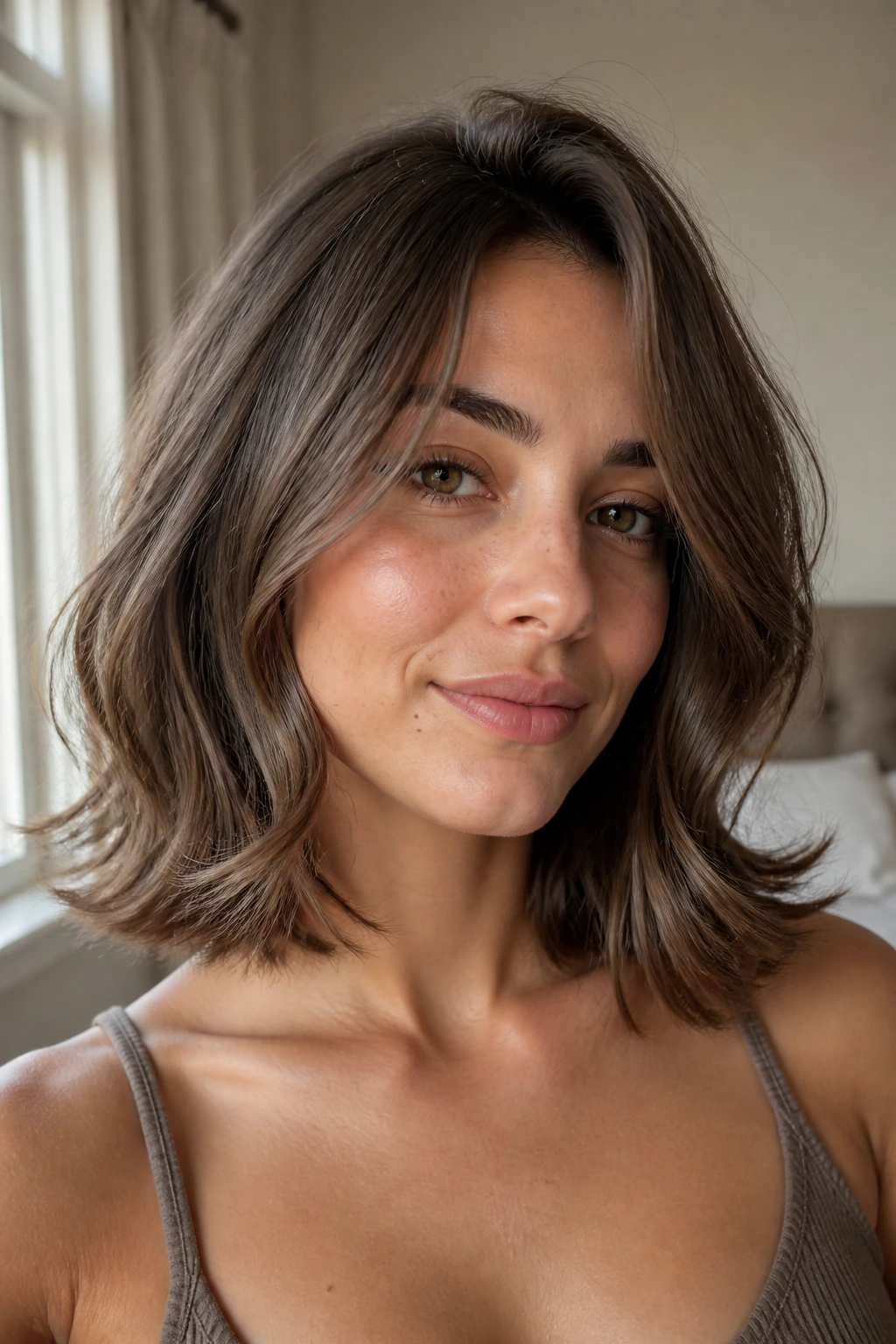
A soft flip at the ends can save a lob from feeling too serious. Mushroom brown makes that flip look cooler and a little more modern, especially if your waves naturally bend outward around the shoulders. On an oval face, the flip keeps the lower half from looking too straight.
This is the cut for someone who likes a little polish but doesn’t want the hair to sit still. The front can tuck under slightly, the ends can flick out just enough to show the line, and the overall shape stays light. Nothing blows up. Nothing goes flat.
- Best when: your hair holds a bend but not a tight curl.
- Style note: wrap only the last inch around the iron, then brush it out once.
- Color note: mushroom brown looks best when the tones stay cool, not muddy.
- Face effect: the flip creates movement below the cheekbones, which keeps the face from looking too long.
11. Toffee Brown Lob with Tucked Under Ends
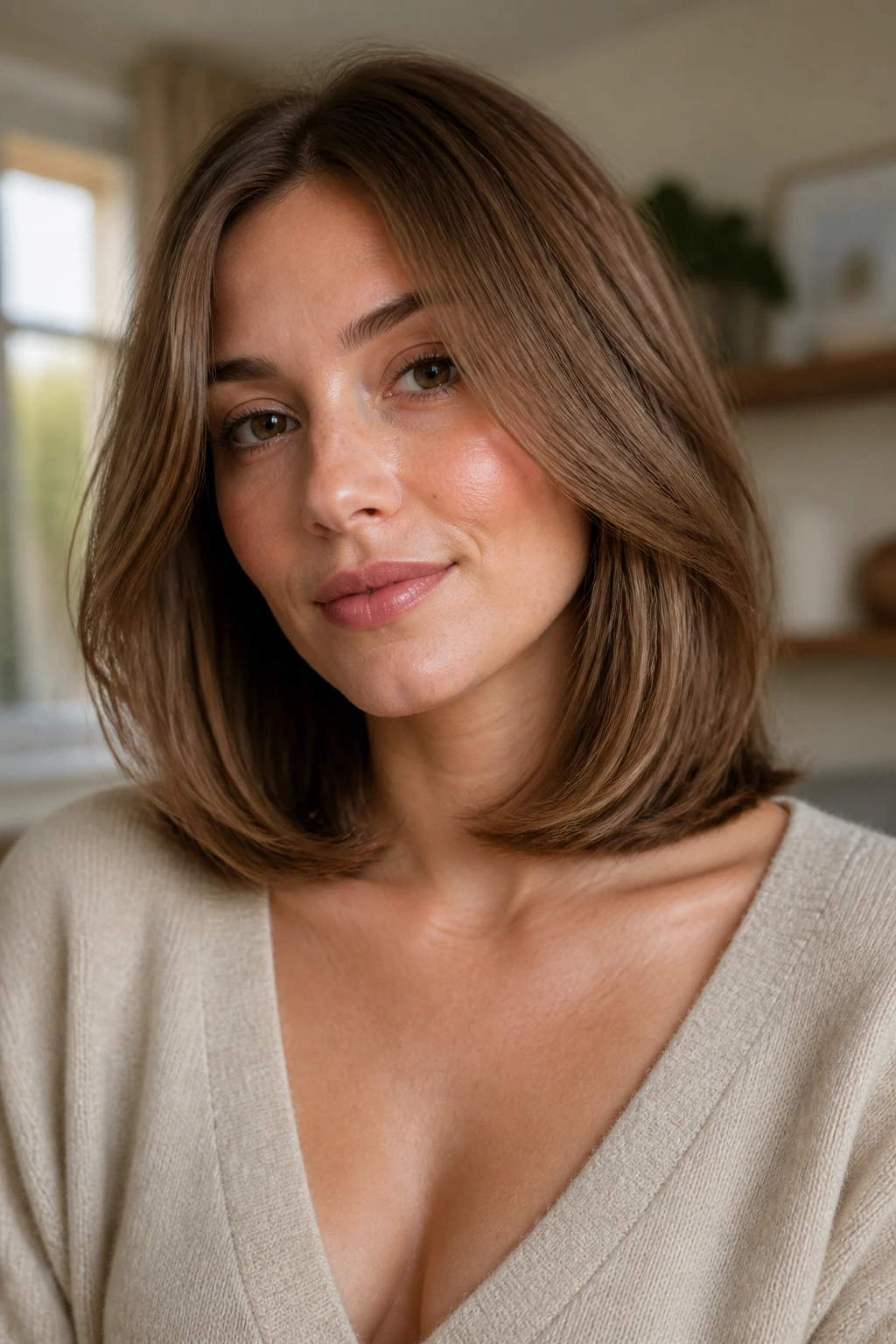
There’s something sturdy about a tucked-under lob. It feels neat, but not stiff. Toffee brown adds warmth, so the style never slides into harshness, and the gentle undercurve keeps the outline neat around the collarbone.
This is the kind of cut that works when you want a low-drama morning. Dry it with a round brush if you like structure, or air-dry and tuck the ends under with a quick pass of a flat iron. Either way, the shape should land just below the collarbone and skim the shoulders instead of sitting on them.
Oval faces handle this shape well because the tucked ends draw the eye inward rather than down. It’s a small difference, but it changes the whole read of the haircut.
12. Milk Chocolate Lob with Side-Swept Fringe
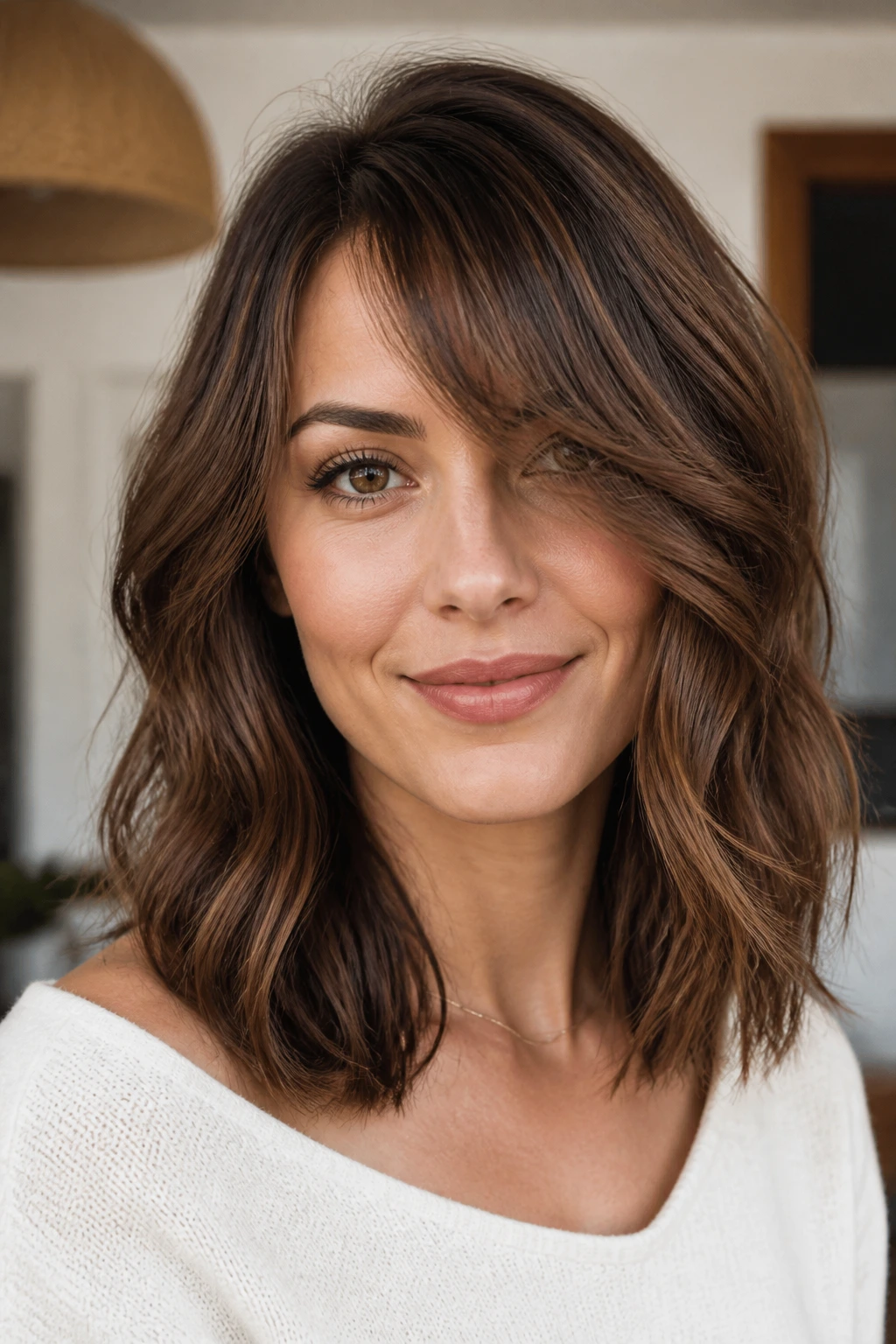
Unlike curtain bangs, a side-swept fringe keeps more forehead visible and gives the face a diagonal line. That can be useful if your waves are fine and you don’t want too much hair sitting across the front. Milk chocolate brown keeps the whole thing soft, which matters because side fringes can turn sharp fast.
This version feels slightly more classic than edgy. The front pieces slide into the rest of the cut, and the wave pattern has room to breathe. If your oval face already has balanced proportions, the side sweep adds just enough asymmetry to keep the look from feeling too neat.
I’d keep the fringe long enough to blend into the cheekbone area. Too short, and it starts looking dated. Too long, and it disappears into the rest of the lob.
13. Bronde Lob with Lived-In Waves
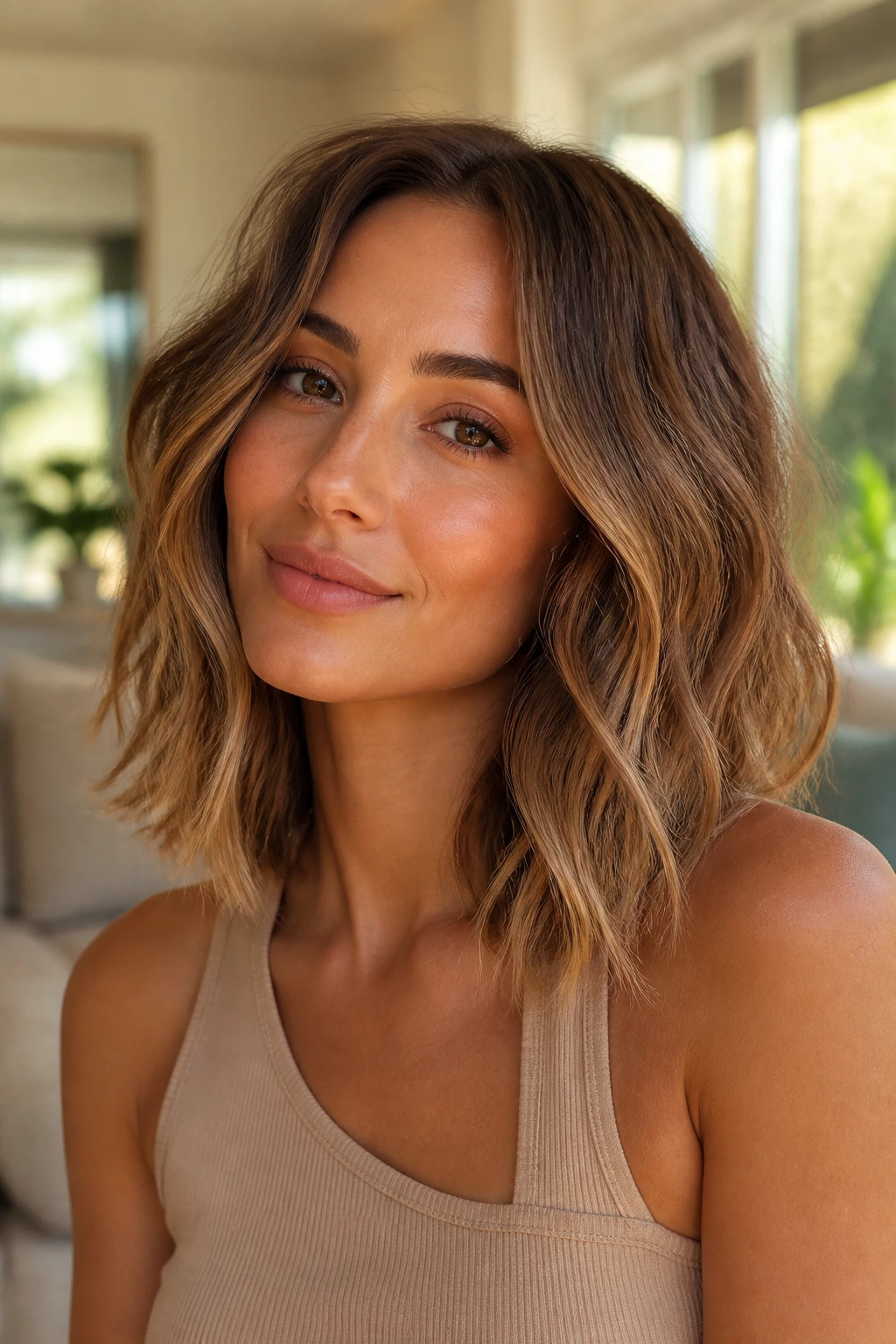
Bronde works here because it keeps the brown base visible while adding just enough lightness to show off the bends. The lived-in wave finish means you don’t need every curl to be perfect; the whole cut is meant to look touched, not engineered.
Why It Works
The mix of brown and soft lighter ribbons breaks up the surface of the hair. On wavy textures, that creates the illusion of more movement without needing more layers. Oval faces benefit because the brighter pieces can sit around the cheekbone area and pull attention there.
- Best for: people who like low-maintenance color that still reads dimensional.
- Styling move: twist random front sections away from the face and leave some ends straighter.
- Color note: keep the highlights fine, not chunky.
- Wear it when: you want a lob that looks better the second or third day.
14. Auburn Brown Lob with Curved Ends
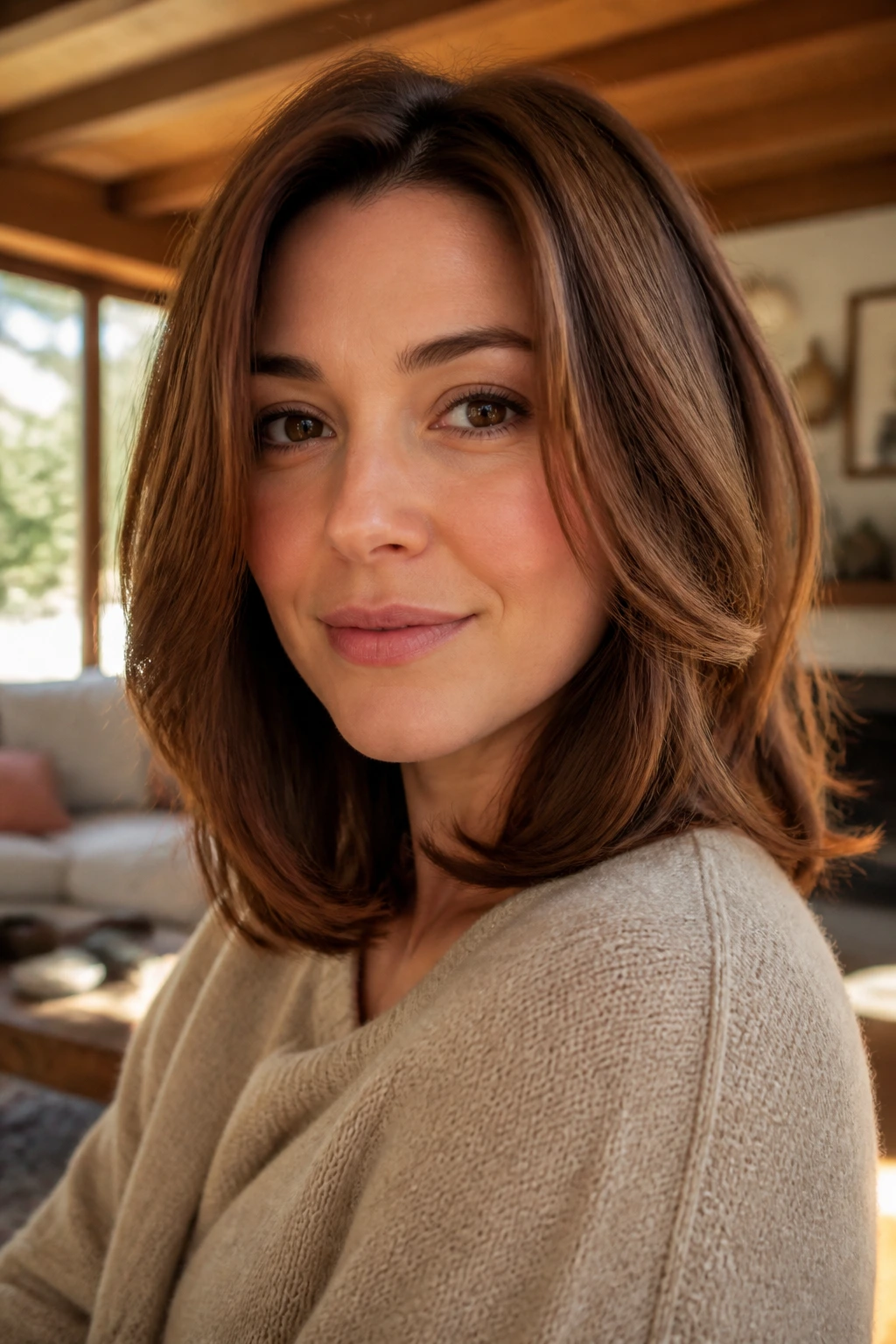
Auburn brown brings warmth that a flat brunette sometimes misses. On a lob, that warmth makes the curved ends look richer and more visible, especially if your waves catch light in uneven pieces. For oval faces, the shape is gentle but not bland.
I like this cut when the goal is softness with a little personality. The auburn tones can sit quietly under the surface or show up more boldly in daylight, depending on how the color is mixed. Either way, the curved ends keep the outline from going rectangular.
This is also one of the easier ways to make a brown lob feel less standard. The color does a lot, and the shape stays simple. That’s a good trade.
15. Dark Cocoa Lob with Polished S-Waves
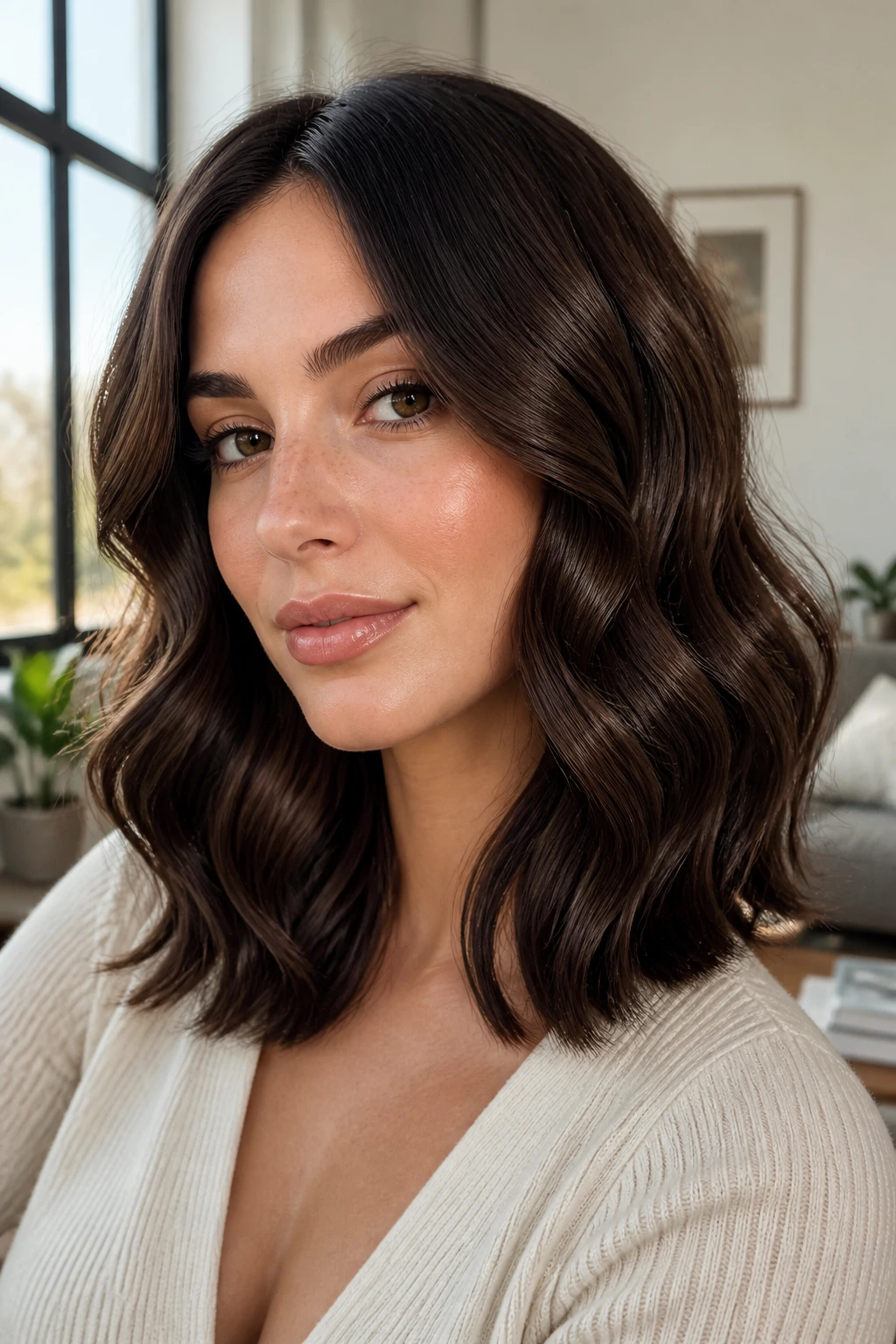
Can a lob look polished without turning flat? Yes, if the S-waves are loose and the roots stay lifted. Dark cocoa brown gives the hair enough depth that the waves show as shape, not as frizz or random bends.
How to Style It
Use a large iron or a flat iron to bend the mid-lengths in alternating directions, then brush the waves out once for that smoother S-shape. Keep the roots lifted with a light mousse or a root spray before drying. The goal is movement that reads as smooth from a few feet away, not curls that look ringed up and stiff.
Dark cocoa is especially good if your hair is naturally thick. It controls the visual bulk without hiding the wave pattern.
16. Maple Brown Lob with Beachy Texture
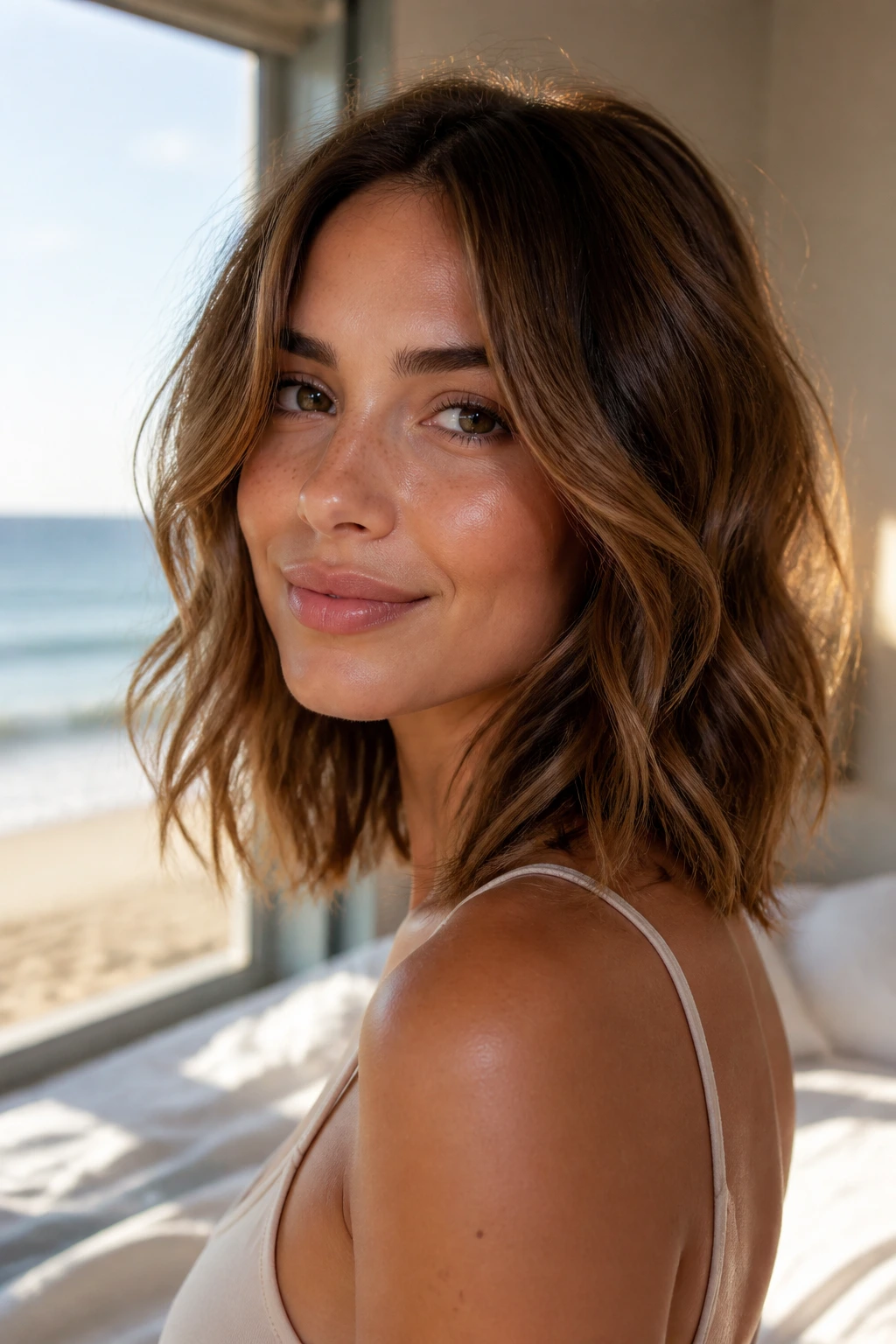
Maple brown has a soft warmth that makes beachy texture look easy instead of overdone. This is the lob for someone whose hair already has a little bend and doesn’t need much coaxing. On an oval face, the texture keeps the length from feeling heavy.
The key is restraint. A few bends at the mid-lengths, a bit of separation at the ends, and a touch of movement around the face are enough. If you over-style it, the cut loses the relaxed edge that makes it work.
- Best for: loose waves and medium-thin hair.
- Styling move: scrunch in mousse and let the hair dry 70 percent before touching it.
- Color note: maple brown looks best when the warmer tones stay soft, not orange.
- Finish: a dry oil on the last inch of the ends only.
17. Ash Brown Lob with Cool Dimensional Layers
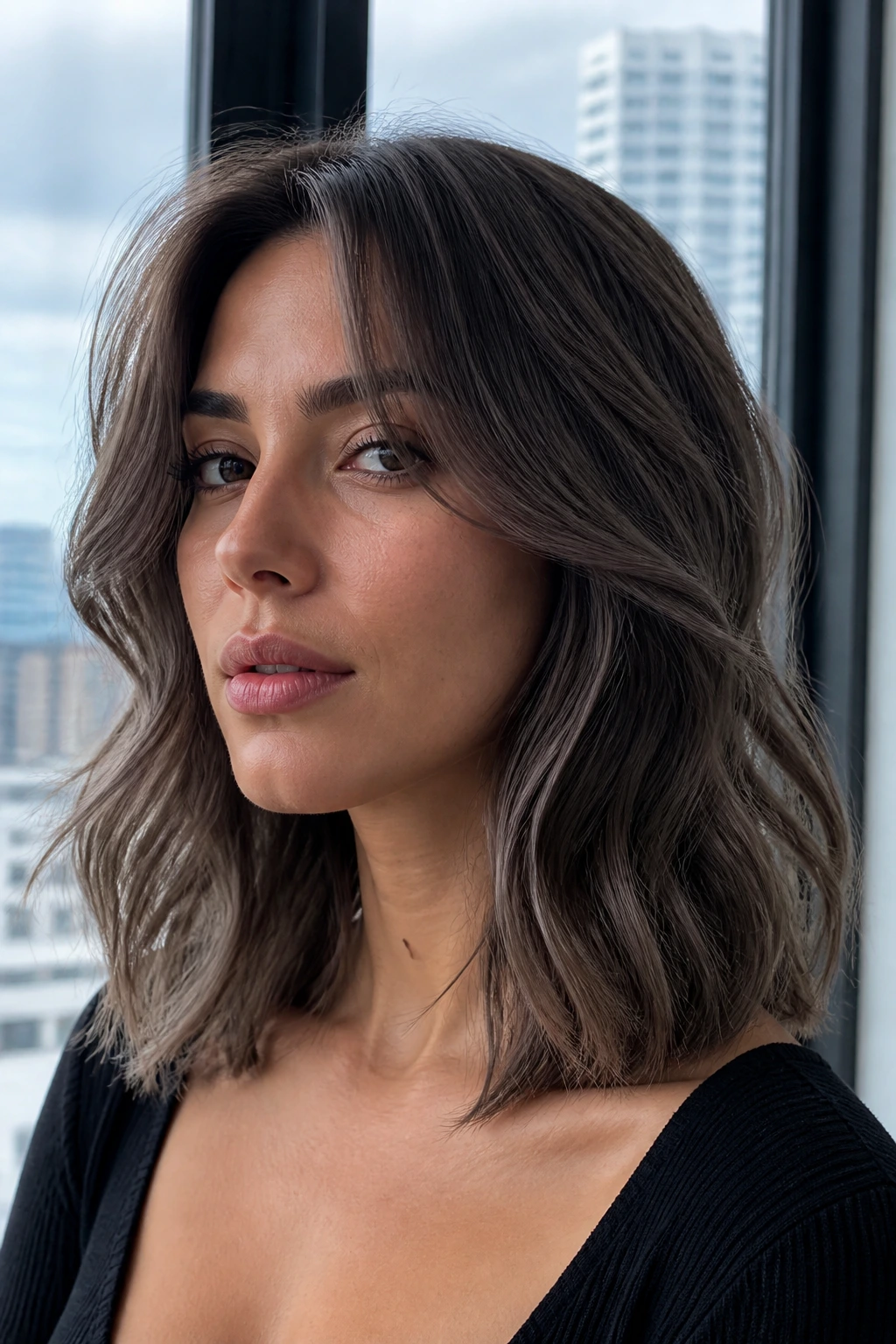
Ash brown gets a bad reputation when it turns muddy, and that’s usually because the haircut isn’t carrying enough shape. On a wavy lob with cool dimensional layers, the color looks crisp because the movement underneath gives it something to show off.
This is a good choice if you like a slightly cooler, quieter brunette. The layers should stay long and soft so the cut still reads as a lob first and a layered cut second. Oval faces do well with this because the silhouette stays open and clean around the jaw.
A gloss every so often keeps the ash tone from dulling out. Without that, the hair can look dusty. With it, the wave pattern starts to look etched in.
18. Chestnut Lob with Bottleneck Bangs
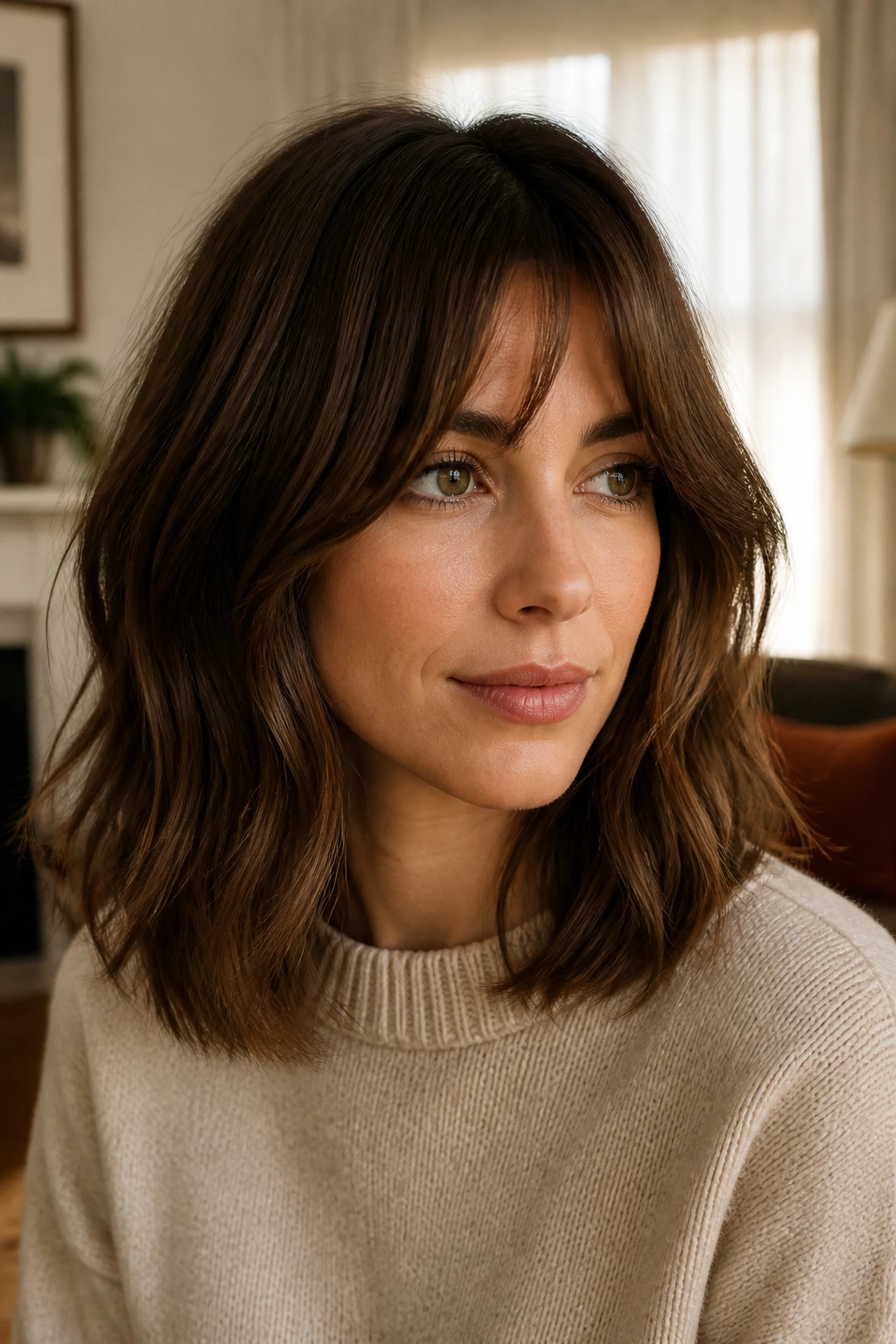
Bottleneck bangs are the bridge between curtain bangs and a shorter fringe. They start narrow at the top, open through the middle, and soften around the cheeks. On a chestnut lob, that shape works especially well because the warm brown keeps the fringe from feeling severe.
What Makes It Different
Unlike blunt bangs, bottleneck bangs leave the forehead breathing room. Unlike a full curtain fringe, they give a more defined frame right above the eyes. For oval faces, that means you get shape without swallowing the features.
I’d keep the lob itself fairly simple here. Let the bangs do the front-facing work, and keep the ends lightly textured so the cut doesn’t get crowded. The result feels modern without being precious.
19. Mocha Melt Lob with Crown Volume
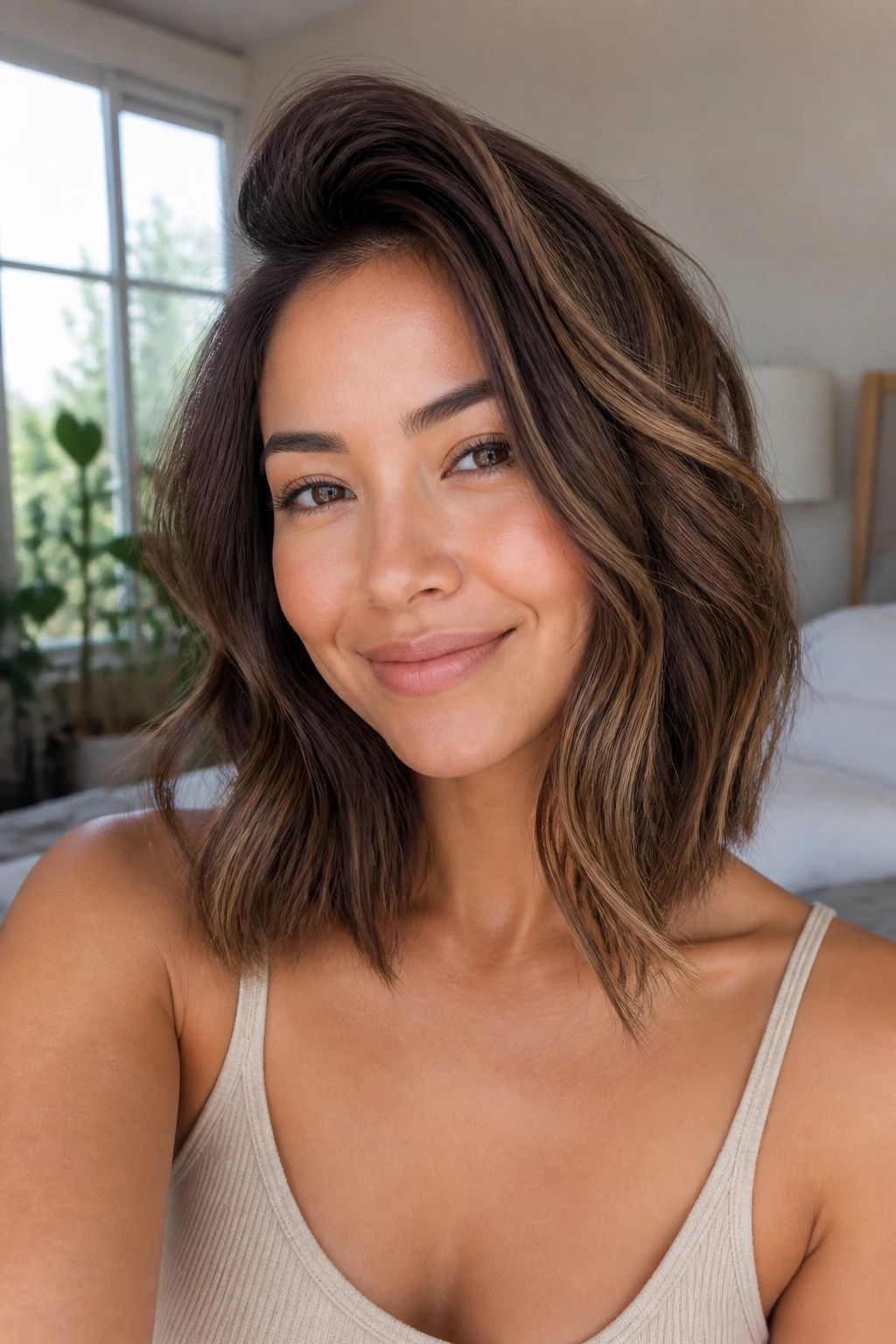
A little crown volume changes everything. Mocha melt color gives the cut depth from root to end, and when the lift sits at the top instead of the sides, the face reads longer and cleaner. That’s useful for oval faces because it keeps the width in the right place.
Why It Works
The melt effect makes the brown shades transition softly, so the haircut doesn’t have one obvious block of color. That keeps the wave pattern from disappearing. If you flatten the crown, the cut can fall too close to the head and lose the movement that makes a lob feel fresh.
- Best for: medium to thick hair that needs shape up top.
- Styling move: blow-dry the roots up and back with a round brush.
- Parting: a slight off-center part gives the crown more lift than a dead-center one.
- Finish: a light flexible spray, not a crunchy hold spray.
20. Hazelnut Lob with Lightly Choppy Ends
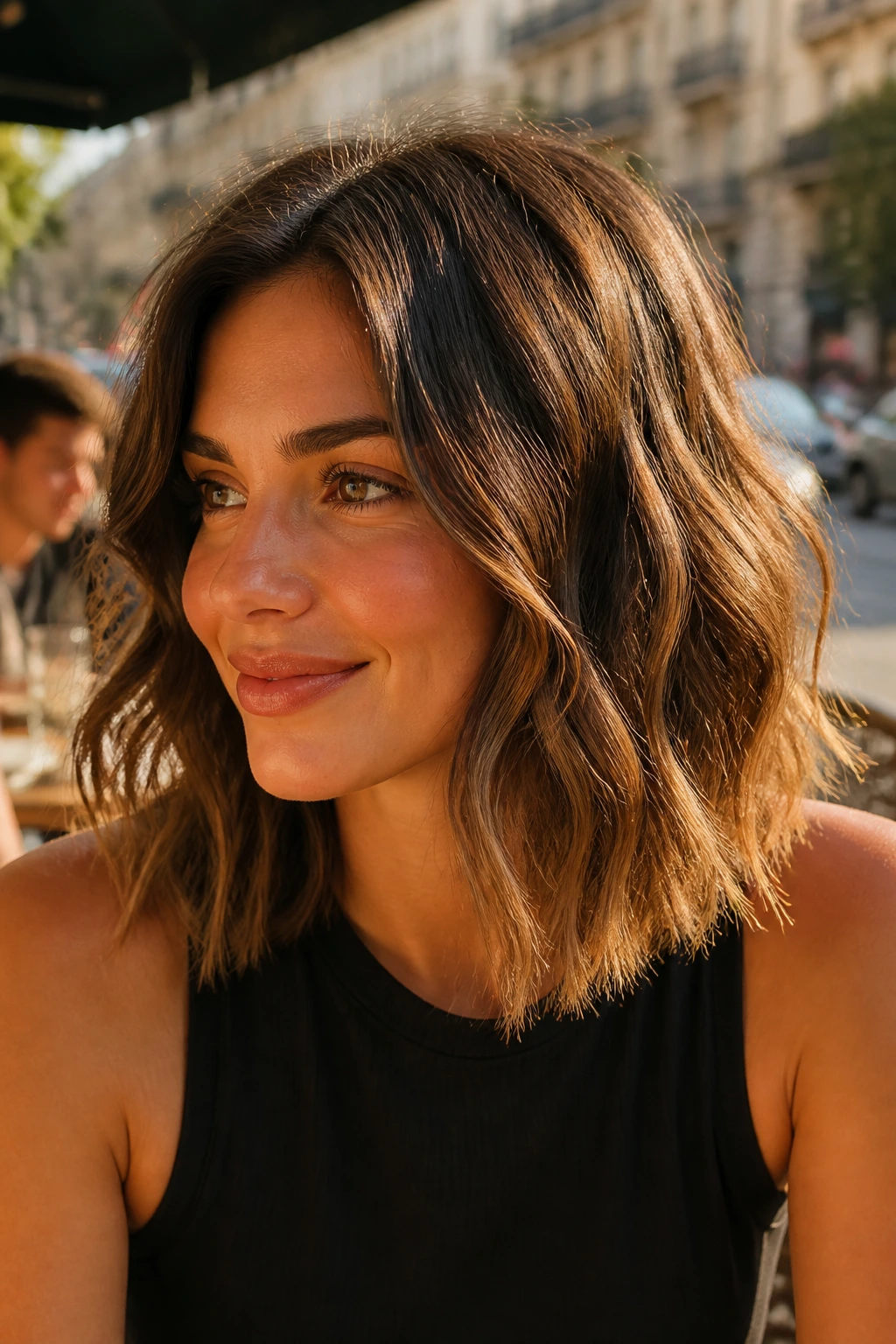
A few choppy ends can be a good thing. Not many. Just enough to break up the bottom line so the lob moves when you turn your head. Hazelnut brown keeps the look soft, which matters because too much choppiness can start to read messy on wavy hair.
This version works well for thicker textures that tend to balloon at the ends. The choppy pieces remove some visual weight without creating a shag. On an oval face, the slight irregularity adds interest around the lower half of the cut, which keeps the eye moving.
I’d keep the texture concentrated in the bottom inch or two. That’s the part most likely to sit flat or puffy, and it’s the easiest place to add shape without wrecking the whole outline.
21. Walnut Lob with Soft Razor Texture
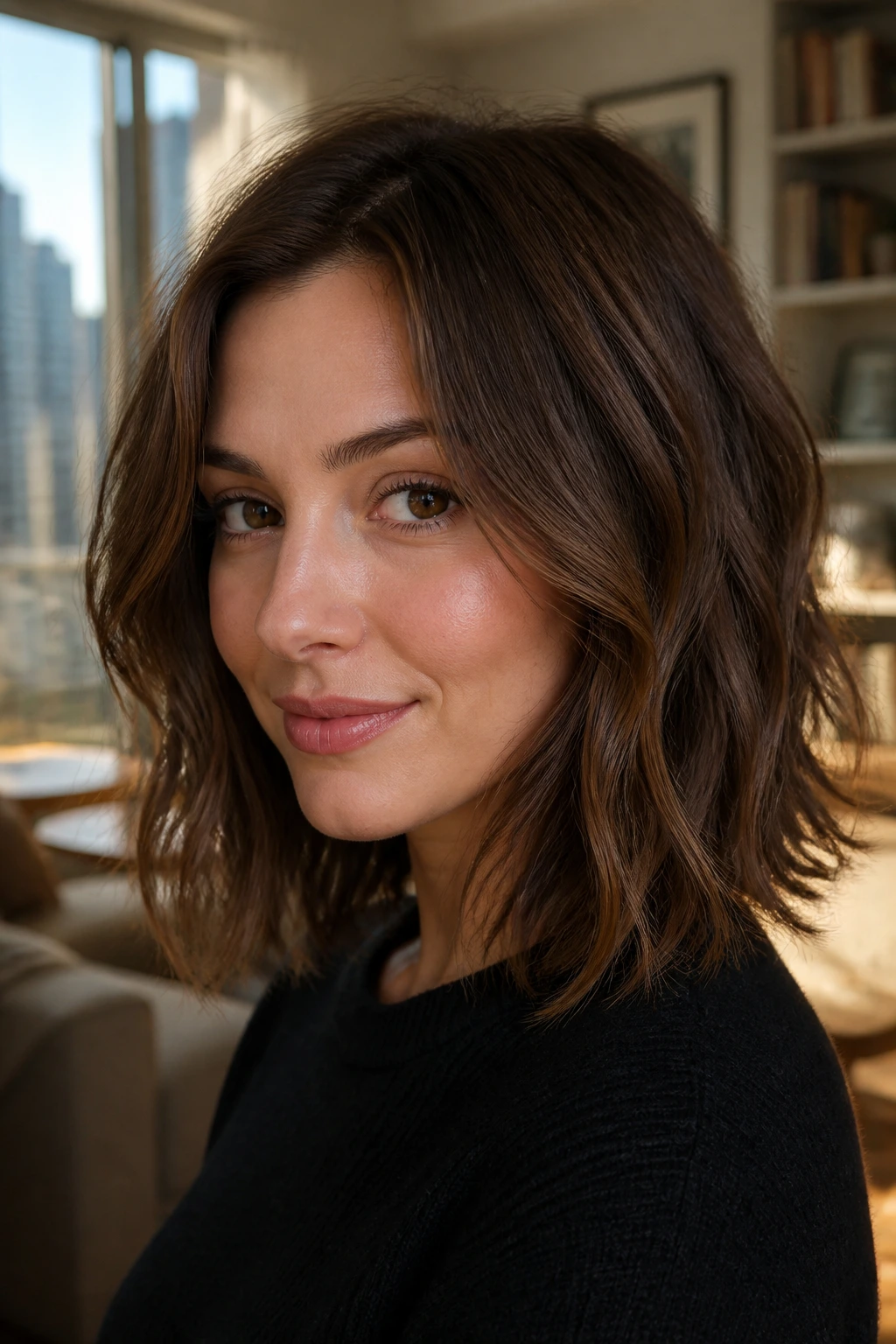
Why does razor texture work here? Because it softens the edge without making the cut fuzzy. Walnut brown gives the lob a grounded finish, and the razor work lightens the outline so the waves can sit inside it instead of fighting against a heavy perimeter.
How to Style It
Use a cream on damp hair, then rough-dry until about halfway dry before finishing with a diffuser or air-dry. The texture should look piecey, but not stringy. If it starts to separate too much, you’ve used too much product.
This cut suits oval faces because the softer edge follows the shape of the face without copying it exactly. That little mismatch is what makes it interesting.
22. Rich Brown Lob with Collarbone-Length Bend
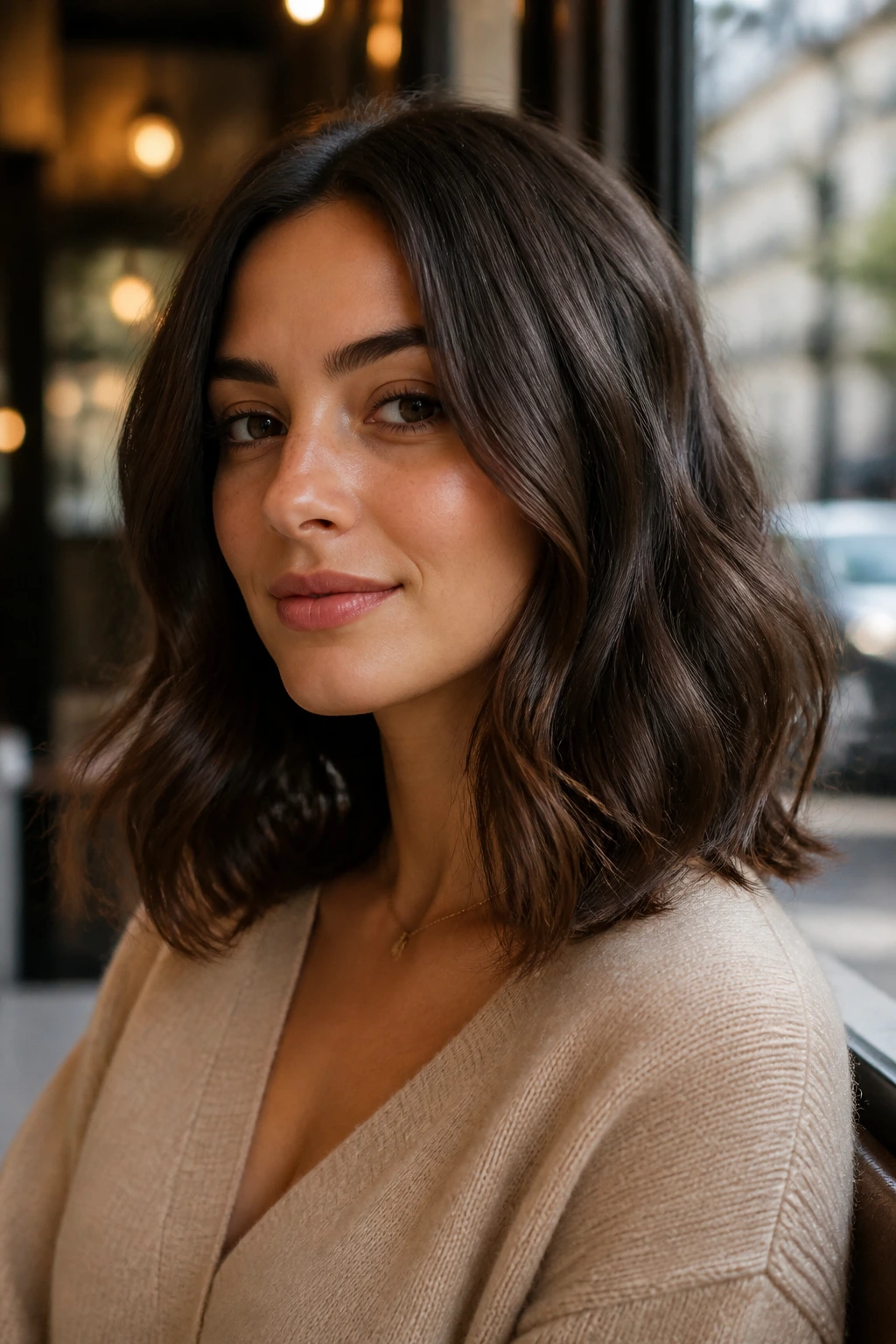
A collarbone-length bend is the safest place for a wavy lob to live when you want options. It can tuck under a coat collar, brush the shoulders, and still keep enough movement to feel like hair rather than a block of color. Rich brown brings depth, so the bend stays visible even on days when the waves are loose.
This is the version I’d choose if you want the shape to work in motion. The front pieces can curve toward the cheekbones, the back can sit a little straighter, and the whole thing keeps that easy oval-face balance. Nothing is fighting the head shape. Nothing is overbuilt.
- Best for: anyone who wants one cut that can look sleek one day and undone the next.
- Styling move: alternate wave directions through the middle section, then leave the ends straighter.
- Color note: rich brown looks best with a clear gloss finish.
- Final effect: a cut that feels shaped even after a long day.
The Styling Moves That Keep a Brown Lob Looking Intentional
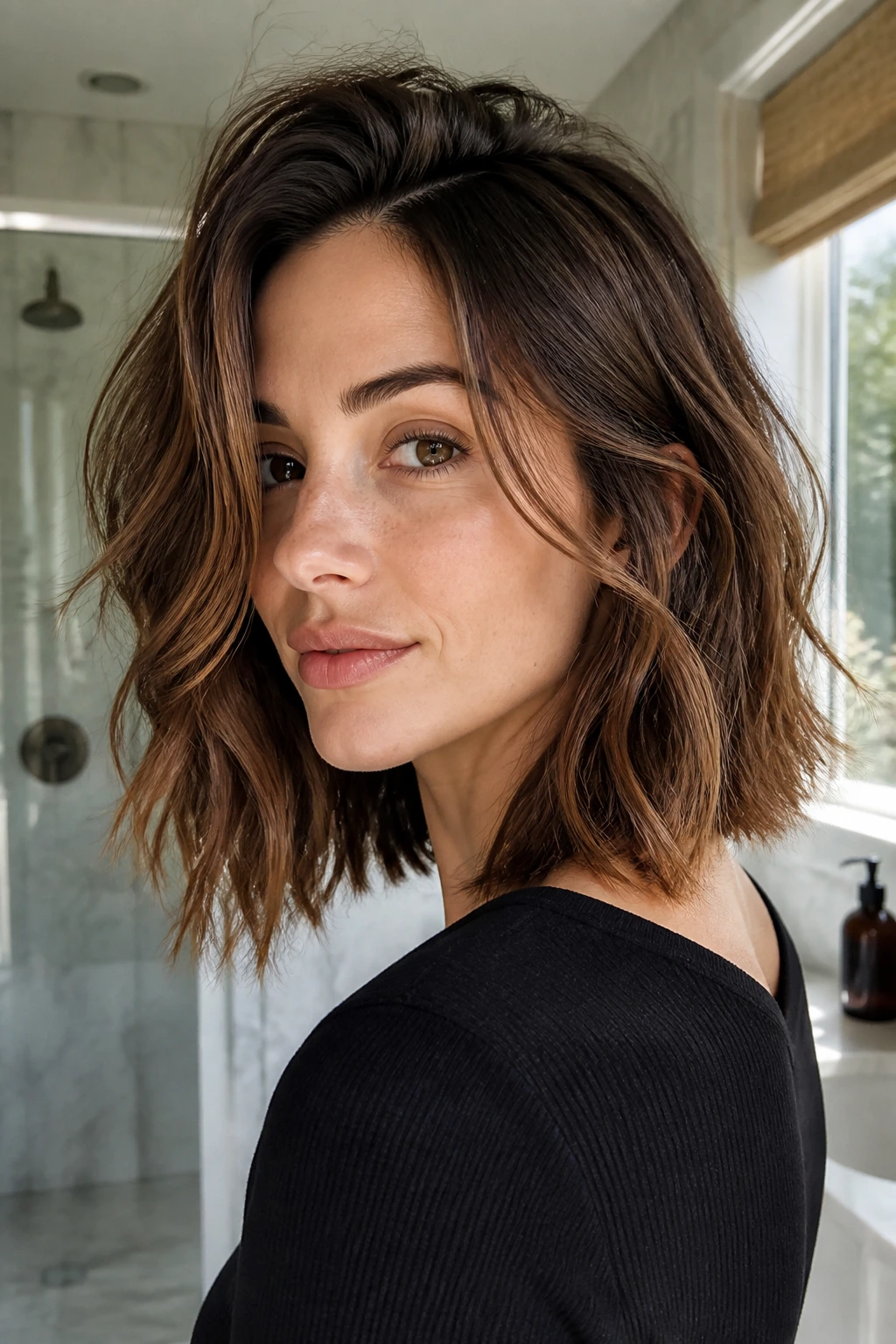
The easiest brown lob to wear is the one that does not need a full-blown blowout every time you wash it. Start with a product that gives a little grip at the roots — mousse, root spray, or a light volumizing foam — because wavy hair loses shape fast when it dries too clean and too slippery. Put most of the product at the crown and upper sides, not the ends.
For heat styling, I’m partial to a 1.25-inch curling iron or a flat iron used as a bending tool. Wrap only mid-lengths, leave the first inch or two near the roots alone, and keep the ends from being too uniform. Uniform ends look fake on a lob. A few straighter pieces mixed in make the cut feel lived-in instead of rehearsed.
Air-drying works too, but only if you resist the urge to touch it. Scrunch once, maybe twice, then let it be. If you need to refresh on day two, mist the hair lightly with water, twist a few face-framing pieces, and rework the front with a dab of texture cream. That’s usually enough.
Common Mistakes That Make the Shape Look Boxy
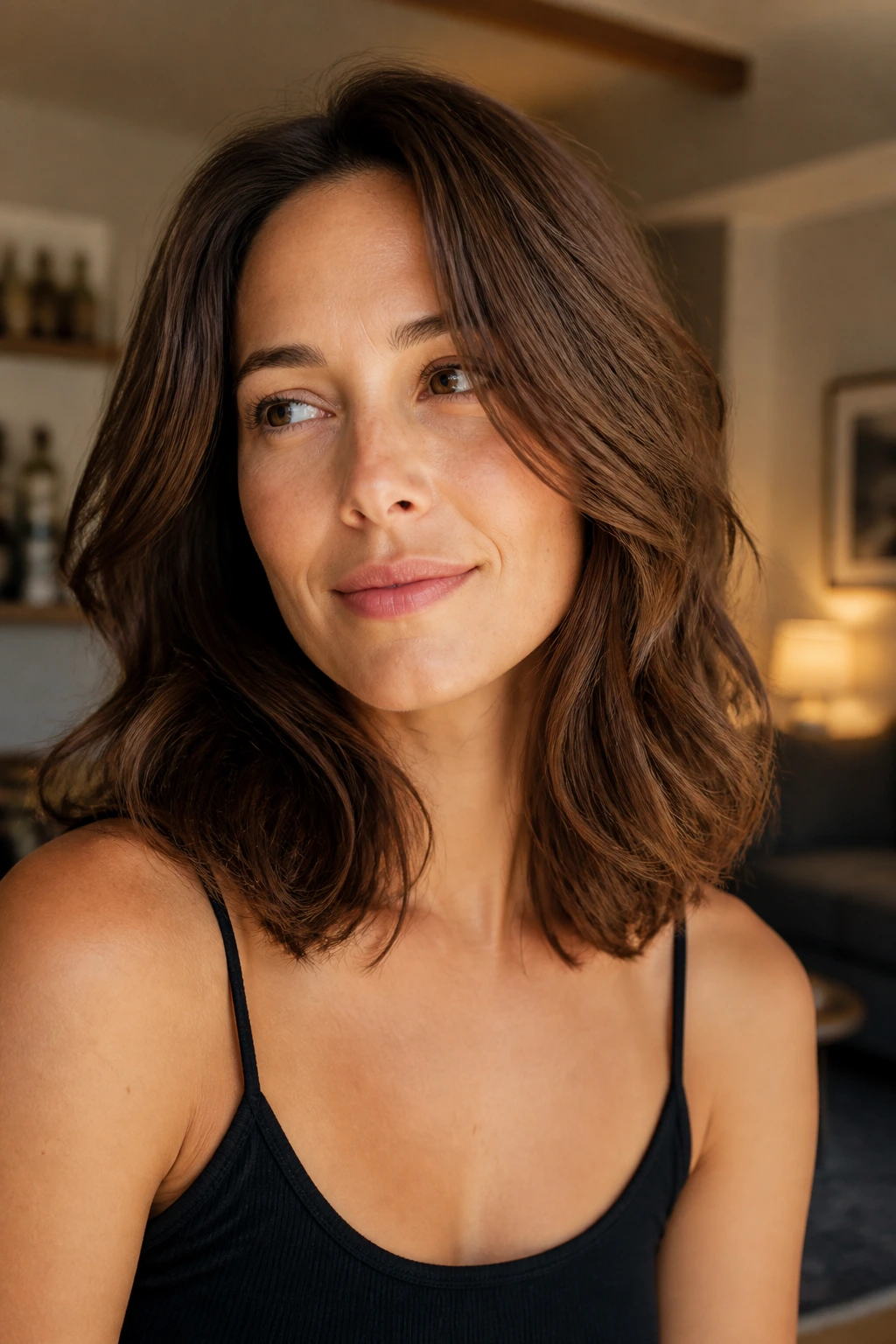
The biggest mistake is taking too much weight out of the sides. Wavy hair can balloon when the lower half is over-layered, and an oval face can start to look longer if the front pieces are too short or too disconnected. If the cut feels wide at the cheekbones and narrow at the ends, the balance is off.
Another easy error: using too much oil or smoothing cream. Brown hair shows shine fast, and the ends can look stringy if the product is heavy. Use the lightest amount you can get away with, then add a little more only to the last inch if the ends need it.
Center parts are not the enemy, but they’re not automatically the answer either. If your crown is flat and your waves sit low, a dead-center part can drag the face down. Shift it a half-inch off center and watch what happens. Small move. Big difference.
And please, don’t ask for so many layers that the cut stops being a lob. There’s a line between movement and chop. If every section is different length, the hair loses that collarbone frame that makes the style work in the first place.
Variations and Adaptations to Try
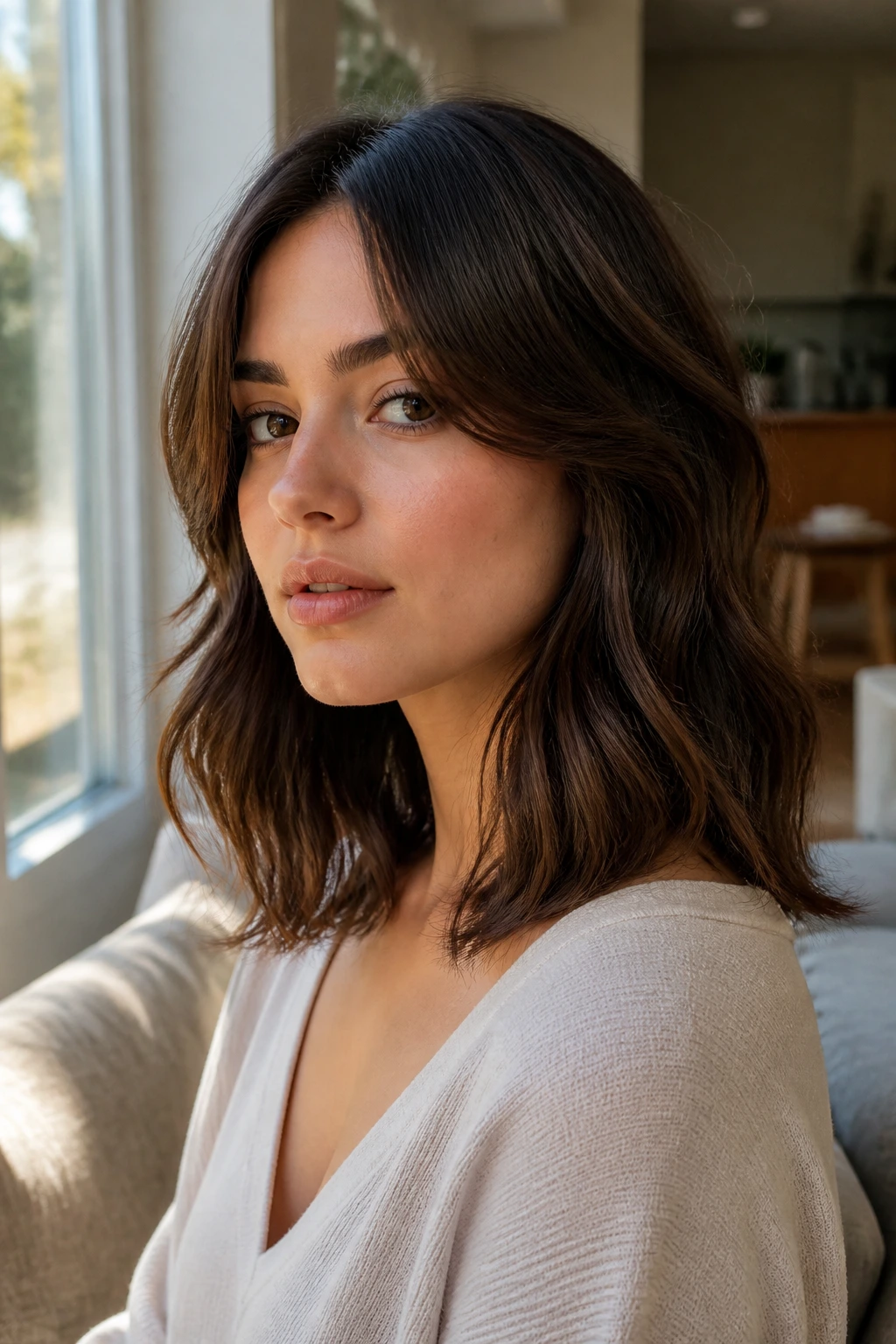
Curtain-Bang Refresh: Keep the lob length and add long curtain bangs that start around the cheekbone. This is the safest way to change the shape without losing the easy, wavy feel. It works especially well if you like to wear the hair center-parted but want a little softness across the forehead.
Soft Shag Lob: Ask for longer layers through the sides and crown, with a bit more separation at the ends. The shape gets looser and more playful, which suits hair that already bends on its own. Don’t go too high with the layers or the cut starts to fight the oval face instead of framing it.
Glossy One-Length Lob: If your waves are loose and your hair is fine, keep the outline mostly one length and let the texture come from styling. Add a clear or demi gloss in a chocolate, chestnut, or walnut shade. The cut looks thicker, and the color reflects light in a cleaner way.
Bronze Ribbon Lob: Thread in a few warm brown ribbons through the outer layer. The effect is subtle on purpose. It helps the wave pattern show up without turning the whole head into a highlight project.
Deep Side-Part Lift: Move the part and leave everything else alone. That one shift can change the entire mood of the cut, especially on oval faces that need a little asymmetry to avoid reading too symmetrical.
The Tools That Make This Cut Easier to Wear
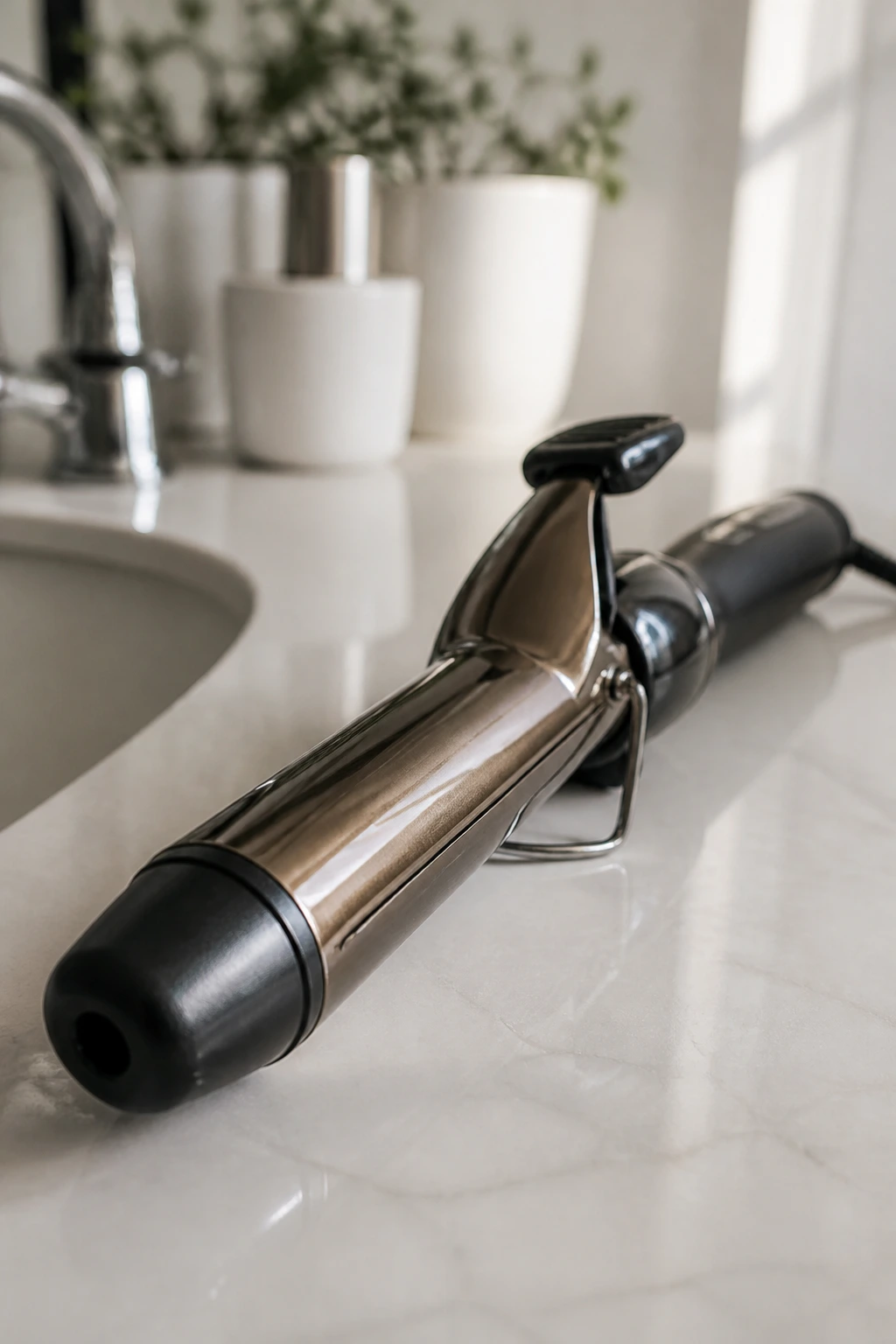
- 1.25-inch curling iron or wand: Best for creating loose bends that look like waves, not curls.
- Flat iron with rounded edges: Good when you want those softer S-bends or a quick flip at the ends.
- Blow dryer with a concentrator nozzle: Helps direct the root lift and keeps the top from puffing everywhere.
- Diffuser attachment: Useful if your natural wave pattern is decent and you want to keep it intact.
- Round brush, medium barrel: Handy for smoothing the fringe, front pieces, or the crown.
- Heat protectant spray: Skip this and you’ll feel it later, especially on brown hair that shows dryness at the ends.
- Texturizing spray or light mousse: Adds grip so the wave doesn’t collapse by lunchtime.
- Wide-tooth comb: Better than a brush for detangling damp waves without stretching them out.
- Light serum or shine mist: A tiny amount on the ends helps brown shades look richer, not fried.
Keeping the Cut and Color Fresh Between Salon Visits
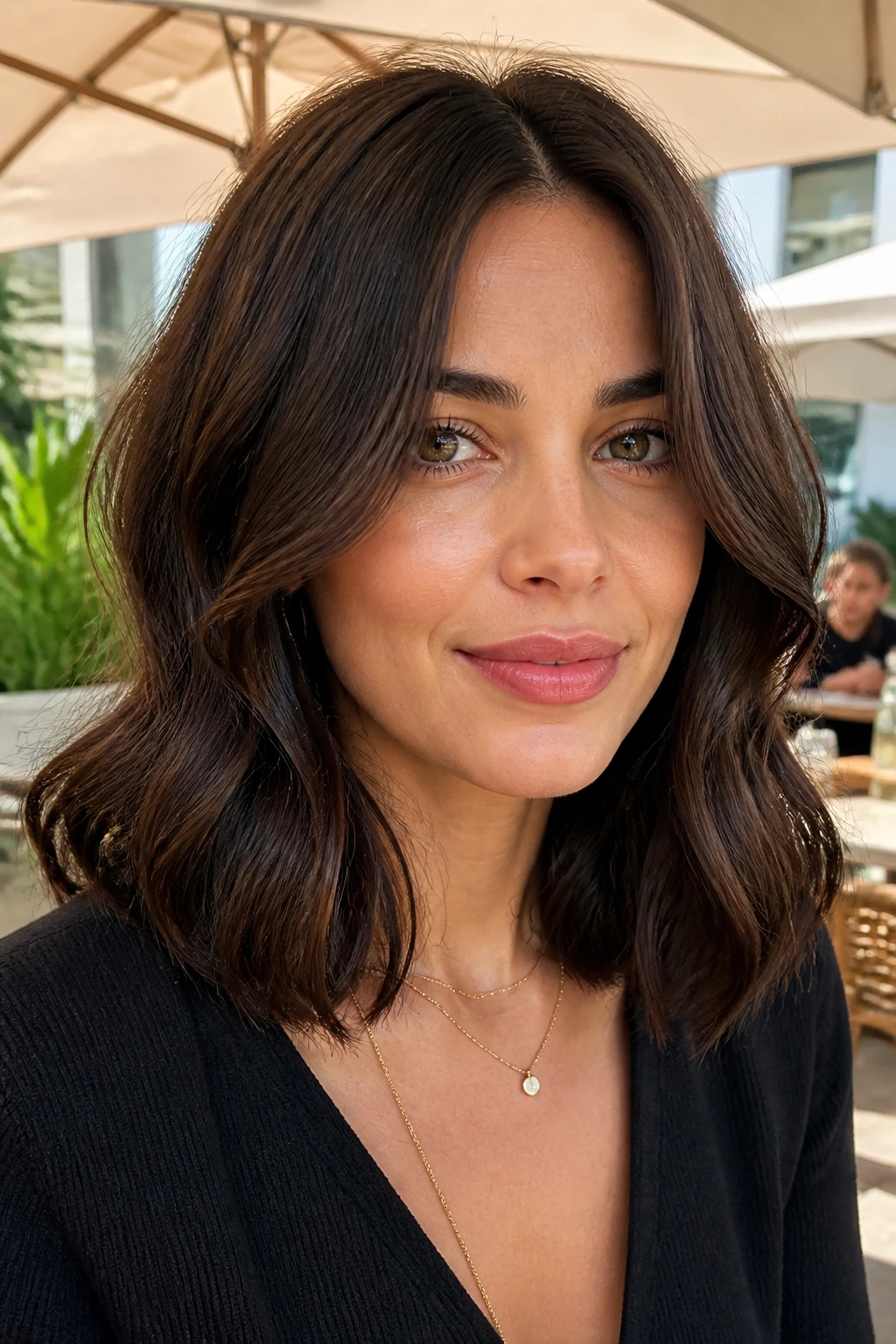
A brown lob usually needs a trim every 6 to 10 weeks if the shape is layered or textured. If it’s closer to blunt, you can stretch that a bit longer, but once the ends start flipping at odd angles, the whole line gets sloppy. That’s when the haircut stops looking intentional.
Color needs its own rhythm. A gloss every 6 to 8 weeks keeps chestnut, mocha, walnut, and cocoa tones from turning dull. If the shade is richer or darker, a clear shine treatment can do more than another round of pigment. For highlighted versions, a toner or demi-color refresh can keep the ribbons from going brassy.
Wash the hair about 2 to 3 times a week if your scalp allows it. Wavy hair usually looks better with a little natural oil left in the mix, and brown shades can handle a bit of that softness. Use conditioner on the lower half only, deep-condition once every week or two, and keep the heavy masks off the roots unless your hair is very dry.
Frequently Asked Questions
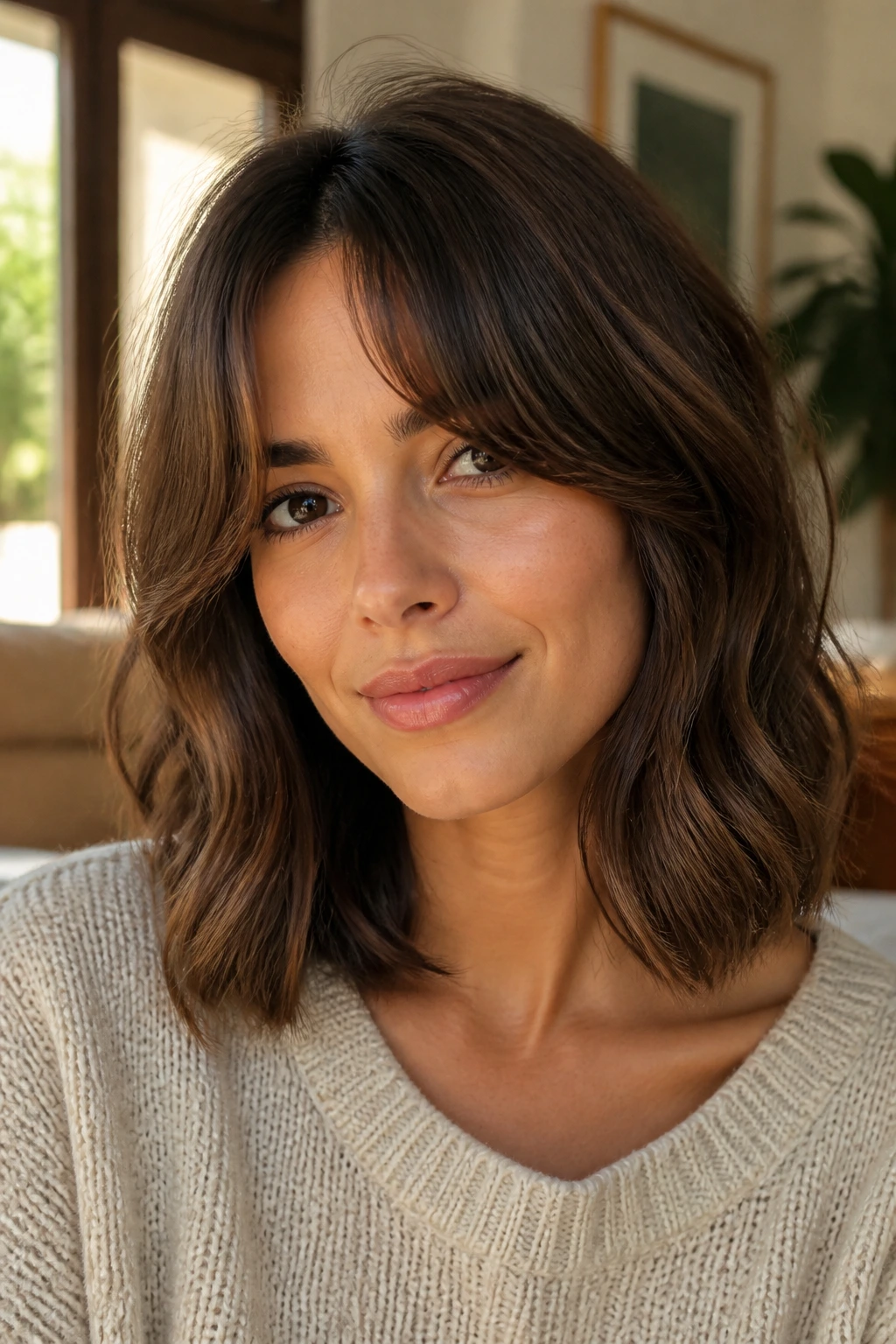
Does a brown long bob work if my waves are loose, not curly?
Yes, and loose waves are often the easiest type to wear this length. The cut gives the wave enough structure to show up, even if your hair only bends in the mid-lengths. A little mousse and a bend-through-the-ends styling pass usually does the trick.
Should an oval face avoid a center part with a lob?
No. Oval faces can wear center parts well, but the rest of the cut has to do some work. If the crown is flat or the front pieces are too short, the face can look longer than you want. A tiny off-center shift often solves that without changing the whole style.
What brown shade is easiest to maintain on this haircut?
Chestnut, mocha, and medium cocoa are forgiving because they hide root regrowth and keep the wave pattern visible. Very ash tones need more toning, and very dark brown can look flat if you don’t keep some shine in it. A soft dimensional brunette is usually the least fussy.
How many layers should I ask for?
Less than most people think. Ask for long layers or invisible layers if you want movement without losing the lob shape. If you have thick hair, you may need a bit more internal removal, but the perimeter should still read like a long bob, not a shag.
Can I air-dry this cut and still make it look finished?
Absolutely. Scrunch in a light styling cream or mousse, part the hair while it’s damp, and leave the front pieces arranged where you want them. If the ends dry weird, a quick bend with an iron on just the front and lower pieces usually fixes it.
What if my hair puffs out at the sides?
That usually means the weight is sitting in the wrong place or the product is too heavy. Ask for internal layers rather than short surface layers, and use a lighter cream or foam. Heavy smoothing product often makes puffier waves collapse at the top and balloon at the bottom.
Is a blunt brown lob too severe for wavy hair?
Not if the blunt line is paired with a soft bend or a little texture at the ends. The severe look happens when the cut is blunt and the styling is flat. Add movement through the mid-lengths and the whole thing becomes cleaner, not harsher.
How do I know if the cut is too short for my face?
If the front ends sit above the chin and the hair starts to widen at the cheeks, it’s probably too short for this specific shape. A good lob for an oval face usually lands at the collarbone or just below it. That gives you room to frame the face without crowding it.
The Shape That Keeps Coming Back
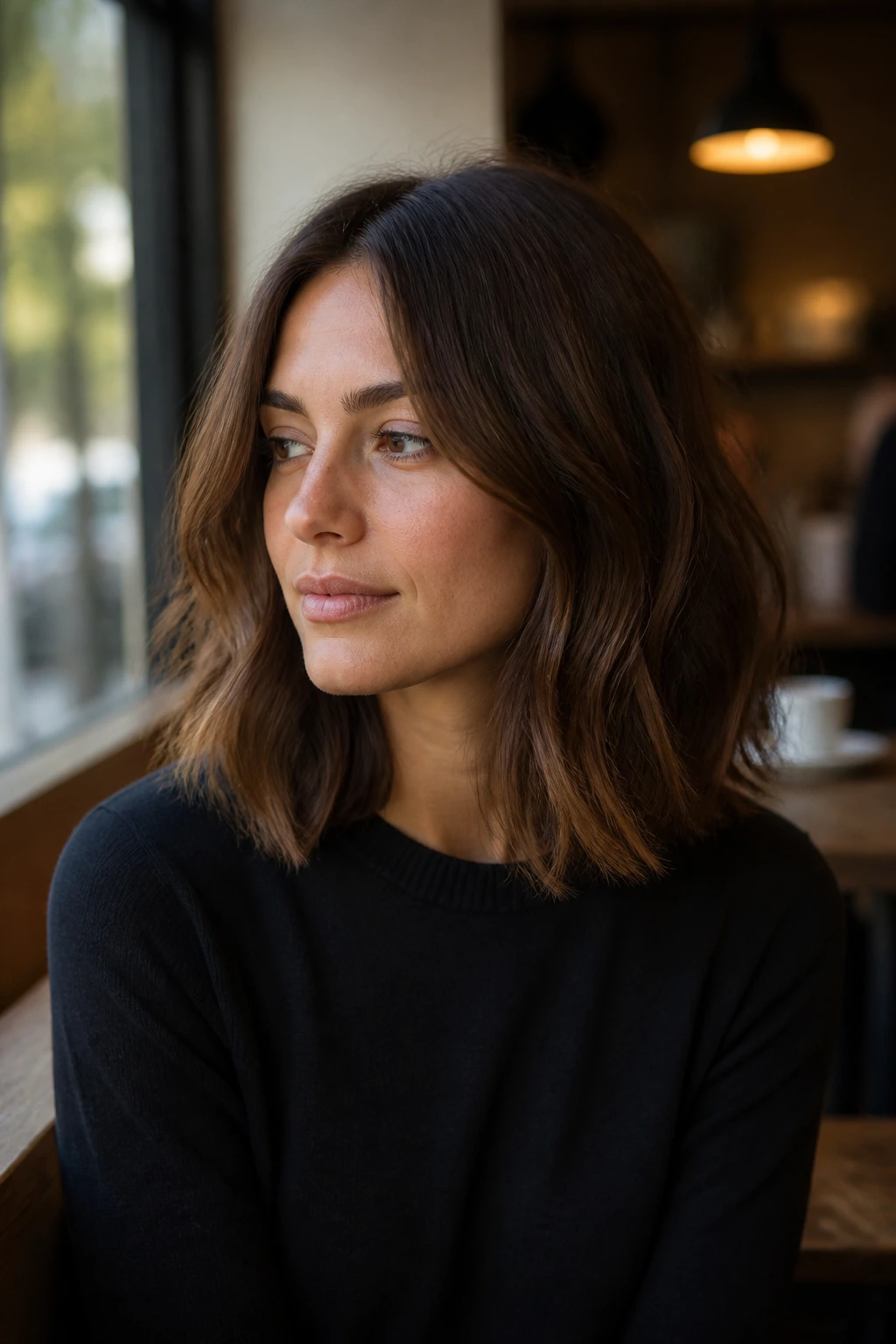
The best brown long bobs for wavy hair and oval faces are the ones that understand restraint. They don’t need to be packed with layers, and they don’t need loud color to look interesting. A good collarbone length, a smart part, and a brown shade with a bit of depth can do more than a dozen styling tricks.
That’s the part worth remembering. If the cut sits in the right place, the wave pattern does most of the work for you. Bring that idea to a stylist with a few photos, talk honestly about how much time you want to spend styling, and the result tends to be much better than chasing a shape that only looks good in one mirror angle.