



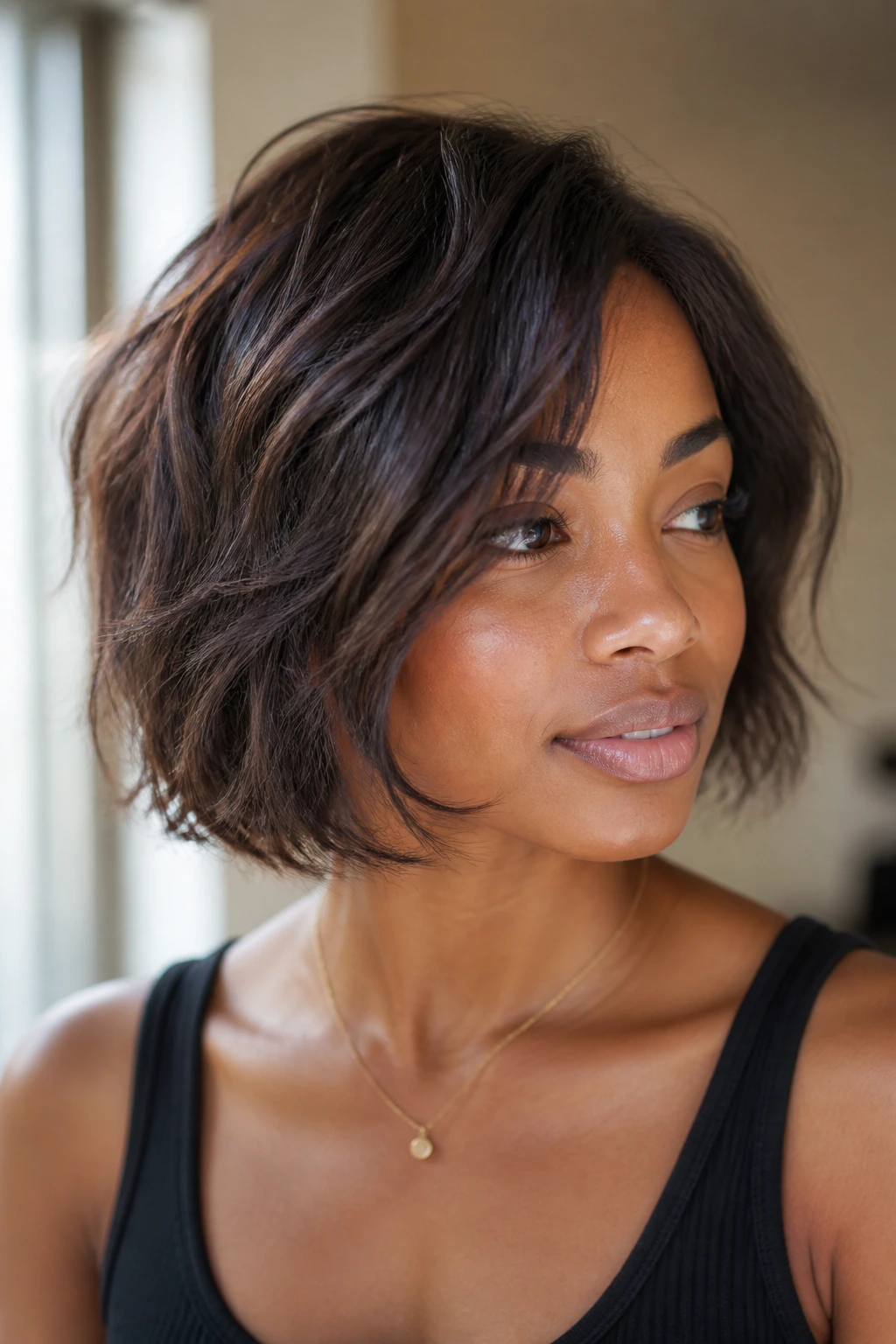
A tousled bob on fine Black hair has one job: make the hair look fuller without making it look stiff. That sounds simple until you stand in front of the mirror with hair that falls flat at the roots, goes see-through at the ends, and refuses to hold a bend unless you ask nicely and then ask again.
Fine hair is about strand thickness, not how much hair you have overall. That matters a lot here. Plenty of Black women have fine strands with strong density, soft coils, relaxed textures, or silk-pressed lengths, and each of those behaves differently when you chop the hair to jaw length and start adding movement. The shape has to do real work.
That’s why the best tousled bobs aren’t random or fluffy or over-layered. They’re clean at the outline, smart at the crown, and a little broken up through the middle so the style moves when you do. A good bob can make fine hair look like it has more body than it does. A bad one makes every thin end report for duty.
Why This Collection Works So Well on Fine Hair
-
Built-In Thickness: A bob keeps fine strands inside a shorter silhouette, so the hair reads fuller before you touch a curling iron or bottle of spray.
-
Movement Without Collapse: Tousled bends break up a flat outline without forcing the hair into so many layers that the ends start looking wispy.
-
Black Hair Has More Than One Behavior: These cuts work on natural curls, stretched coils, relaxed hair, and silk-pressed strands, which means you can choose the finish that matches your routine.
-
Low Product, Better Shape: Mousse, light mist, and a small amount of serum are usually enough here; heavy creams tend to flatten the cut by lunch.
-
Fast Reset Between Wash Days: A few clips at the crown, a quick wrap, or a 1-inch iron can bring the shape back without starting over.
Why a Tousled Bob Makes Fine Hair Look Fuller
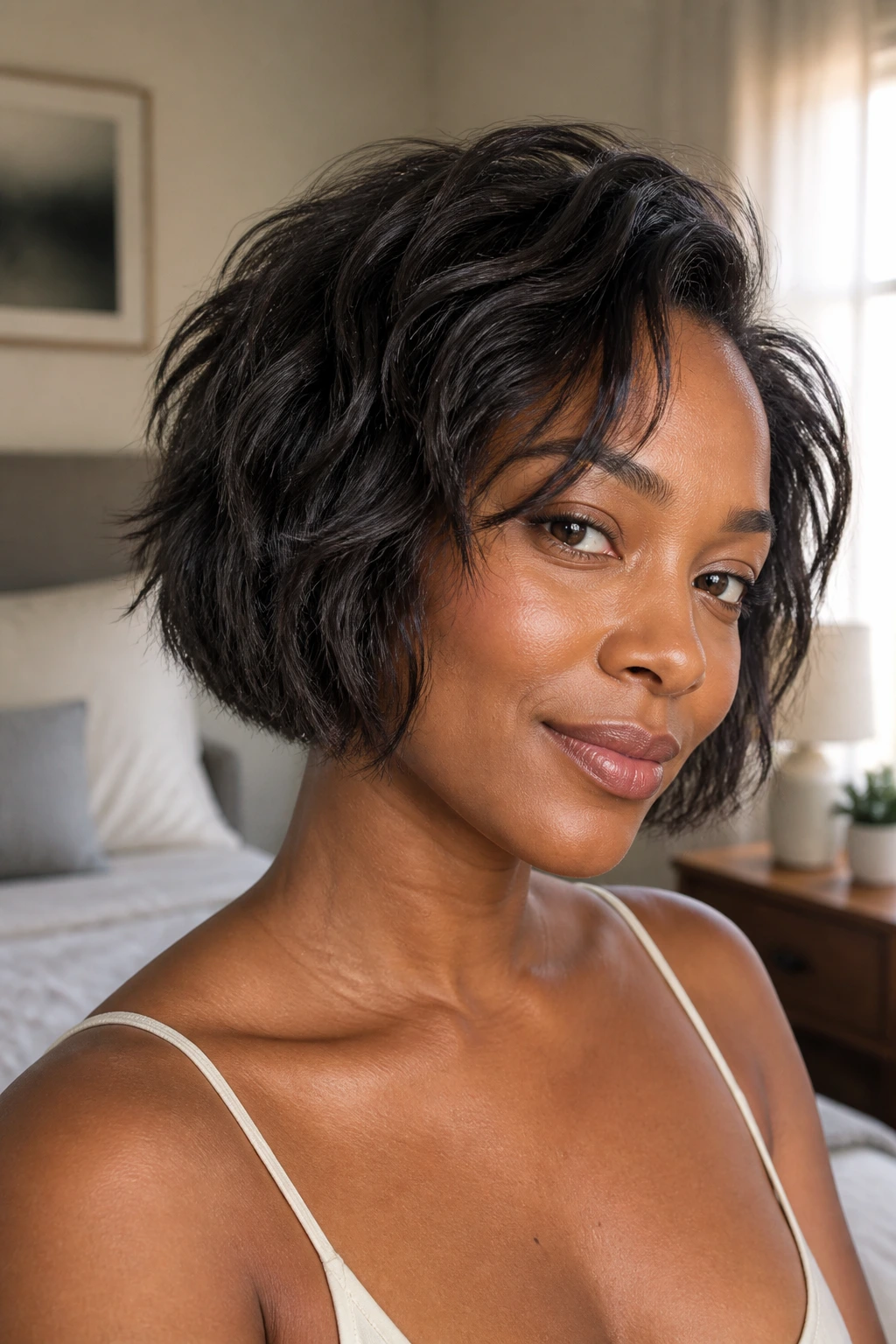
The magic is in the outline first, movement second. A bob creates a visible edge at the jaw, chin, or collarbone, and that edge gives the eye a place to stop. Long, fine hair can disappear into air at the ends. A bob does not let that happen as easily.
The tousled part matters because texture breaks up the flatness that fine hair gets so fast. Not frizz. Not chaos. Just enough bend to make the silhouette feel alive. When the mid-lengths move and the perimeter stays clear, the hair looks denser than it is. That’s the whole trick.
On Black hair, this gets even more useful because the same bob can live on different textures. A natural curl pattern, a blowout, a silk press, or a relaxed base all change how the cut sits, but they all benefit from the same idea: keep the weight where the eye can see it, and stop shaving off the ends until there’s nothing left to hold the shape.
And no, more layers are not the answer to everything. Sometimes they help. Sometimes they wreck the edge and leave you with a halo of thin ends that look busier than they are. The best tousled bobs keep enough structure to look intentional. They don’t beg for volume. They create it.
Choosing the Right Cut, Part, and Product Weight
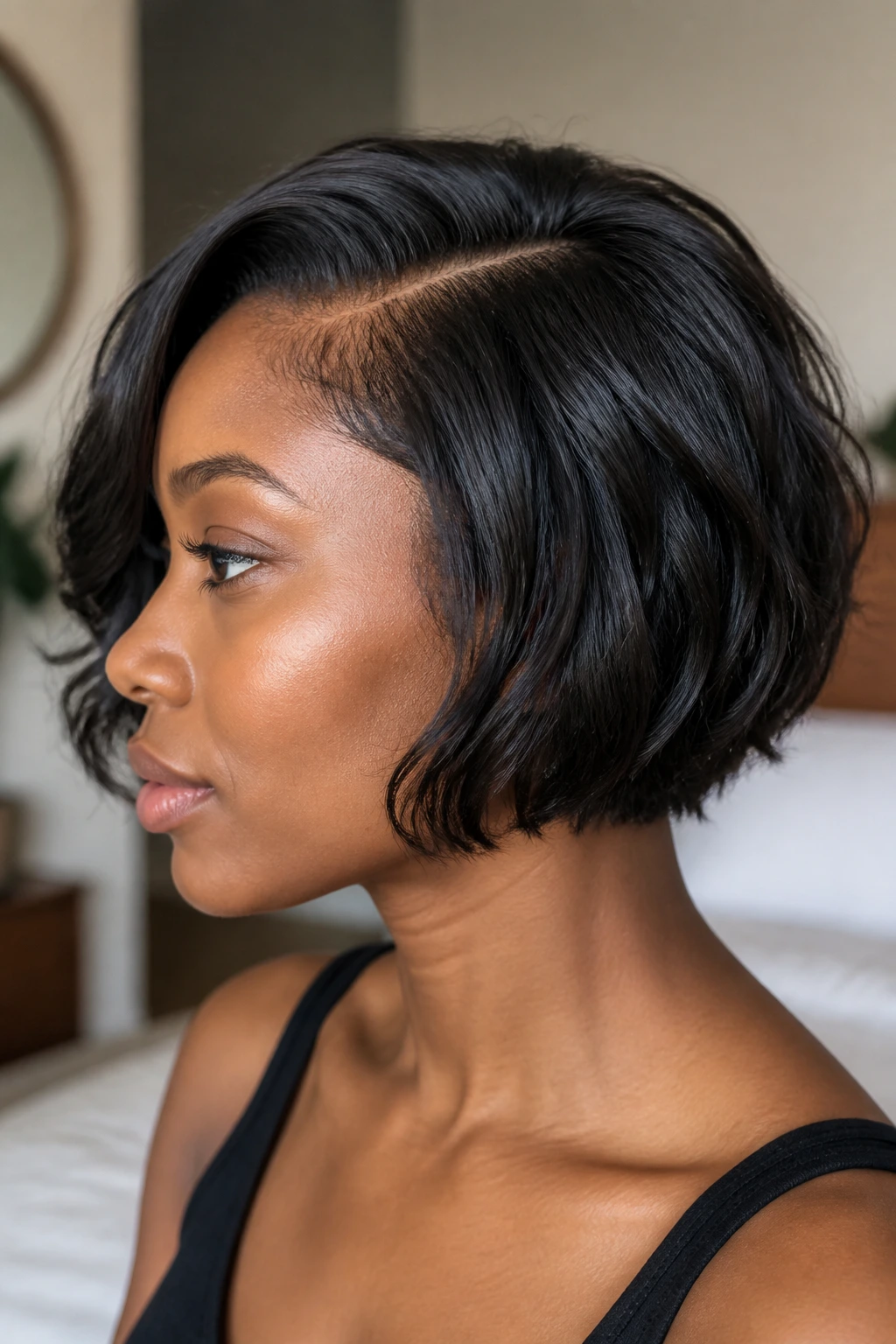
Fine hair needs the right shape before it needs the right styler. If the cut is too long, the ends start to look sparse. If it is too layered, the perimeter gets weak. If it is too blunt with no movement at all, the style can feel like a helmet. The sweet spot is usually a clean outline with a little internal softness, and that balance changes depending on whether you like your hair chin-length, jaw-length, or grazing the collarbone.
The part makes a bigger difference than people expect. A center part can work beautifully on a balanced face, but it also exposes the scalp more clearly if the crown is flat. A deep side part lifts the root line and gives the hair a little drama without asking it to do much. If your hairline or crown tends to lie down by noon, the side part is often the smarter move.
Product weight matters even more than brand names. Use a lightweight mousse or foam near the roots, a texture spray or light mist through the mid-lengths, and a tiny bit of serum only on the last inch or two. Heavy cream at the root is usually a mistake. So is oil on the crown. Those products can be lovely on dry ends, but on fine hair they are fast-lane tickets to collapse.
Here’s the cheat sheet I keep coming back to:
- Chin length: Best when you want the hair to look immediately thicker.
- Jaw to neck length: Good when you want softness without losing the line.
- Collarbone length: Better for a grow-out phase, but only if the ends stay sharp.
- Blunt perimeter: Adds visual density at once.
- Subtle internal layers: Give movement without tearing the shape apart.
- Light product: Keeps the style alive instead of greasy.
What to Ask Your Stylist at the Chair
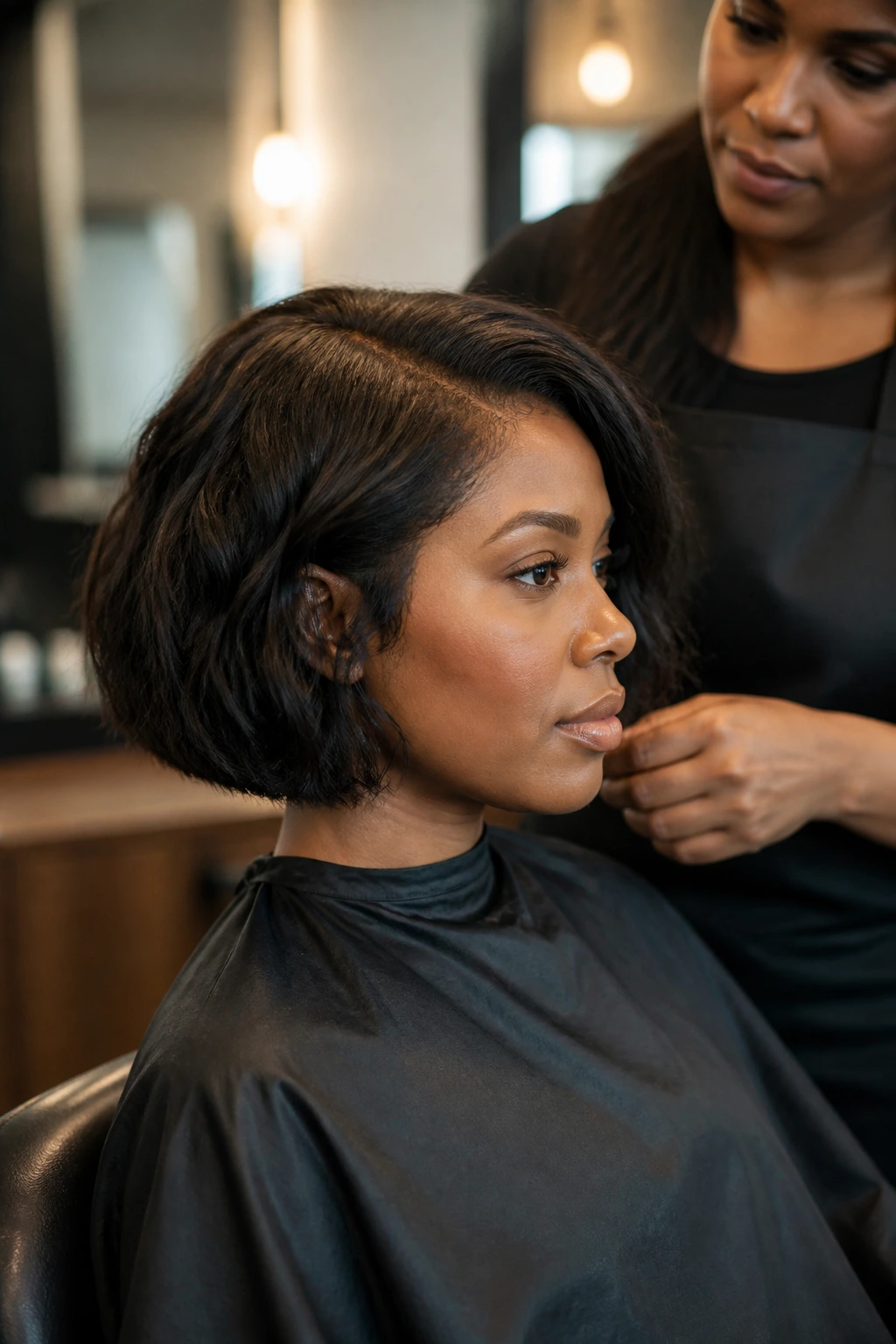
Most bob disasters start with vague language. “Just make it cute” is not a plan. You need a shape conversation, not a vibe conversation. Tell the stylist where you wear your hair most often, how much heat you use, and whether you want the bob to sit on stretched hair, natural texture, or a silk press.
A few phrases are worth using almost verbatim:
- Keep the perimeter blunt.
- Remove bulk inside the shape, not from the edges.
- Leave the front a touch longer if you want face-framing.
- Cut it in the state I wear it most.
- Do not thin the ends aggressively.
That last one matters more than people think. Fine hair can be helped by some internal shaping, but if the ends get shredded with a razor or over-point-cut, the bob loses its bottom line. You want movement, yes. You do not want see-through ends waving at you like they’re in trouble.
Bring photos if you can, but bring the right ones. Side view matters. Back view matters. A photo taken from the front under soft lighting does not tell the stylist how the cut behaves when you turn your head. If your hair shrinks, say so. If you live in a blowout, say so. If you only heat style once in a while, say that too. The best bob starts with a clear brief.
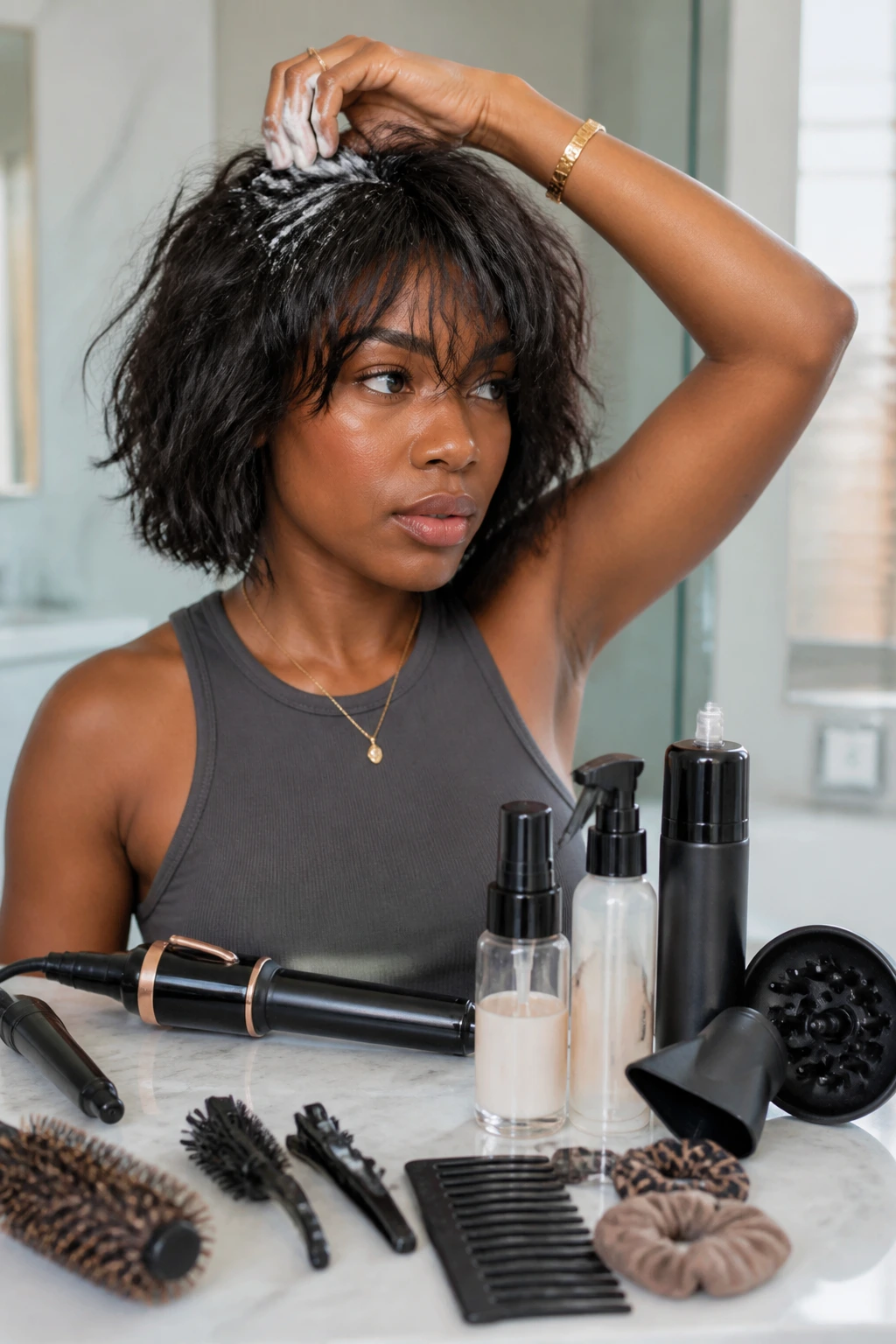
Essential Tools and Products for Tousled Bob Styling
-
1-inch curling iron or wand: The sweet spot for bends and soft movement; bigger barrels can be too loose for fine hair.
-
Lightweight mousse or foam: Builds body at the roots without the sticky feel of heavier creams.
-
Heat protectant spray: Use it before any iron or blow-dryer work, especially if your hair is relaxed or color-treated.
-
Texturizing spray: Helps separate the ends and gives the bob that piecey finish.
-
Blow-dryer with a nozzle: Gives you smoother roots and better control around the crown.
-
Round brush or paddle brush: Round brushes add lift; paddle brushes are better when you want a smoother base.
-
Duckbill clips: Useful for clipping the crown while it cools so the root keeps its shape.
-
Silk scarf or bonnet: Keeps the bob from getting flattened overnight.
-
Dry shampoo: A little at the root can rescue day-two lift without adding weight.
-
Light serum or oil: Use only on the ends, and only a small amount.
-
Wide-tooth comb: Better for detangling natural textures without roughing up the curl pattern.
-
Diffuser: Handy if your bob lives on curls or coils and you want shape without frizz.
1. Chin-Grazing Soft Wave Bob
A chin-grazing bob is one of those cuts that makes fine hair look like it finally settled down and got serious. The length stops the ends from turning stringy, and the soft wave keeps it from reading severe. On Black hair, this shape looks especially good when the front pieces skim the jaw and the bend sits in the middle of the strand, not all the way at the ends.
Why It Works
The chin line gives the eye a hard stop, which makes the hair appear fuller. That matters on fine strands because the illusion of thickness usually comes from where the cut ends, not from how much product you use.
What to Ask For
- A blunt perimeter at or just below the chin
- Very light internal texture, not heavy layers
- A little extra length in front if you want softness around the face
Style it with a 1-inch iron, bending only the mid-lengths for 6 to 8 seconds per section. Leave the last inch straighter. That small detail keeps the ends from fraying into fuzz.
2. Side-Swept Feathered Bob
Want lift at the crown without going super short? This is the one. A deep side part moves the volume to one side, and feathered pieces around the face keep the cut from looking boxy. It has a little swing to it, which fine hair needs more than it needs more layers.
The side-swept shape is especially useful if your hair tends to go flat right at the part line. Shift the part, then clip the root for ten minutes while the hair cools. That tiny pause gives the style memory.
The feathering should be light. Think soft edges, not shredded ends. If the stylist takes too much weight out of the front, the bob starts looking tired instead of airy. Keep the movement in the top half of the hair and let the bottom line stay clean. That’s where the fullness lives.
3. Blunt Bob With Piecey Ends
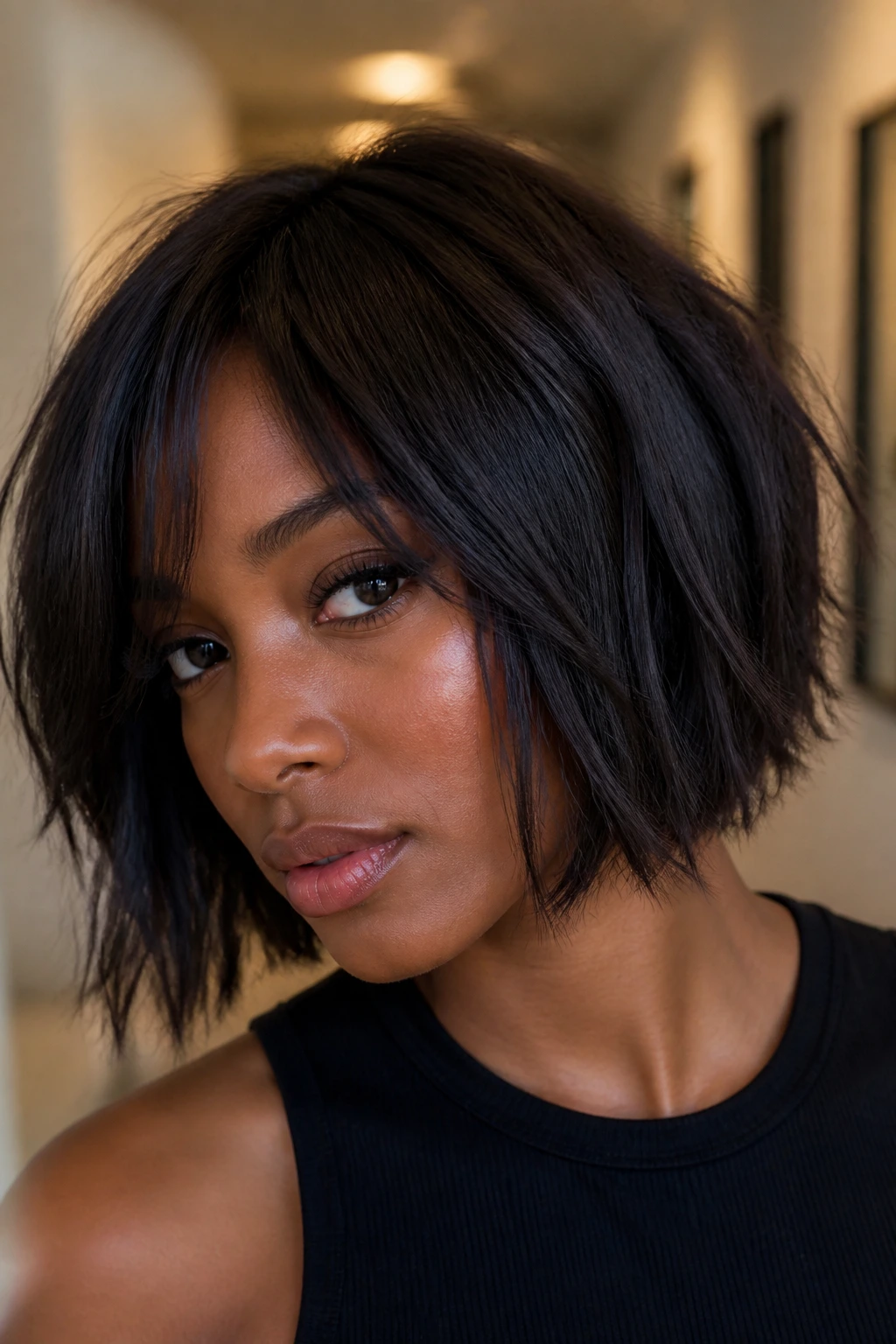
Blunt does not mean boring. On fine hair, a clean, straight edge often looks thicker than a heavily layered cut that tries too hard to move. The piecey finish adds just enough mess to keep the bob from feeling stiff.
Why It’s a Strong Choice
A blunt perimeter creates the illusion of density because the ends land together instead of scattering. Then a little texture spray or fingertip separation gives the style shape without breaking the line.
This is a good pick if your hair is relaxed, silk-pressed, or naturally straightened with heat. It is also a smart choice if you wear earrings often. The bob frames the jaw and neck nicely, and the piecey ends stop it from looking too polished.
A small warning: don’t curl every strand in the same direction. That makes the bob look like a set, not a haircut. Alternate the direction or leave the last inch out on some pieces so the finish feels relaxed.
4. Curly Tousled Bob for Natural Texture
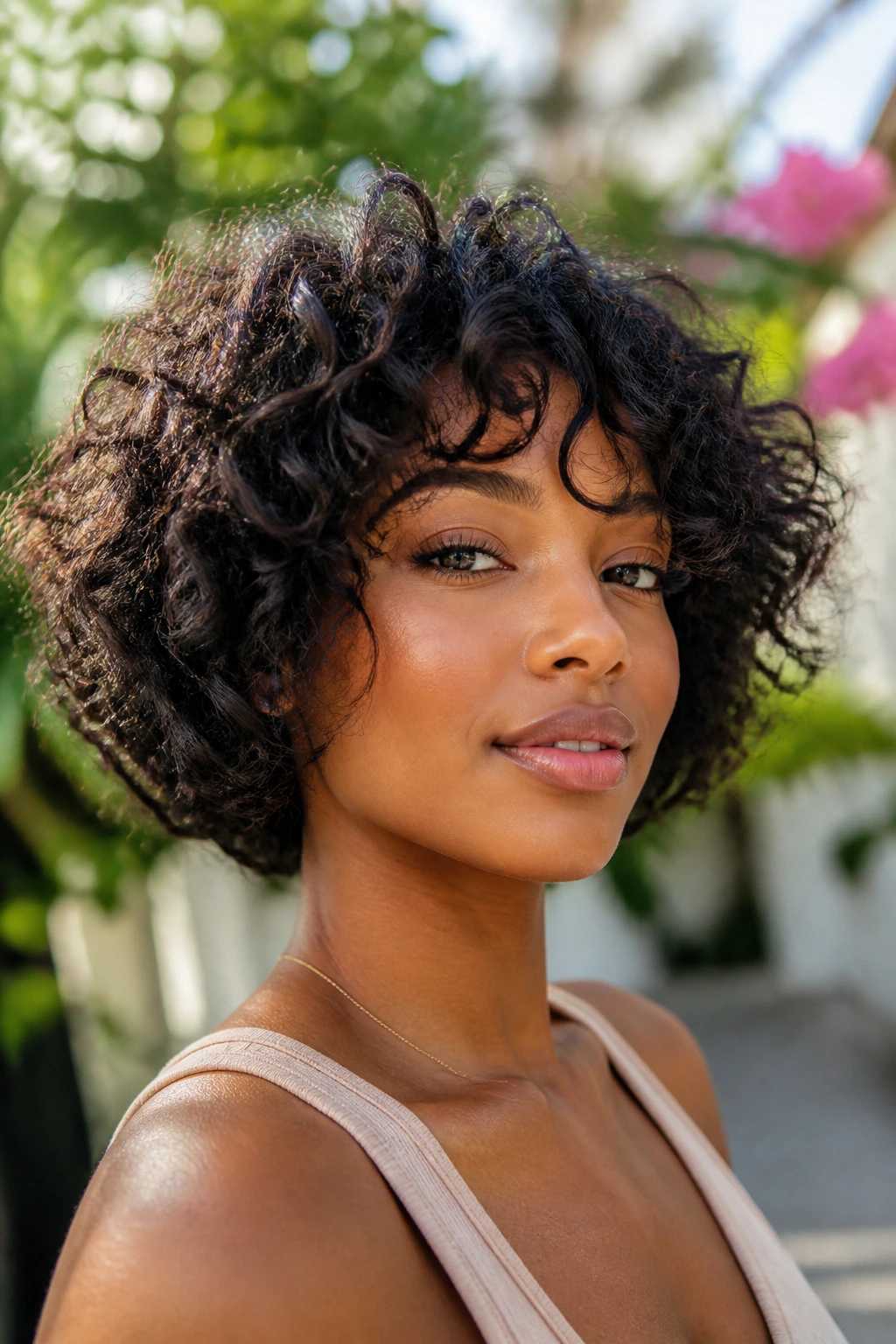
If your curls spring up the second they dry, let the bob work with that instead of against it. A curly tousled bob on fine natural hair should be shaped where the curls live, not where they stretch on a wet head. That distinction changes everything.
A dry cut can be smart here, especially if you wear your hair curly most of the time. The stylist can shape around the curl pattern and keep the silhouette rounded without over-thinning the edges. If you prefer to wear the hair stretched, ask for the cut in that state instead. The goal is to avoid guessing.
Lightweight product is the difference between defined and weighed down. A small amount of leave-in, a foam or mousse, and maybe a little gel on the ends is usually enough. Heavy butter at the crown is the fastest way to flatten the shape. Skip it.
5. Asymmetrical Bob With Long Front Pieces
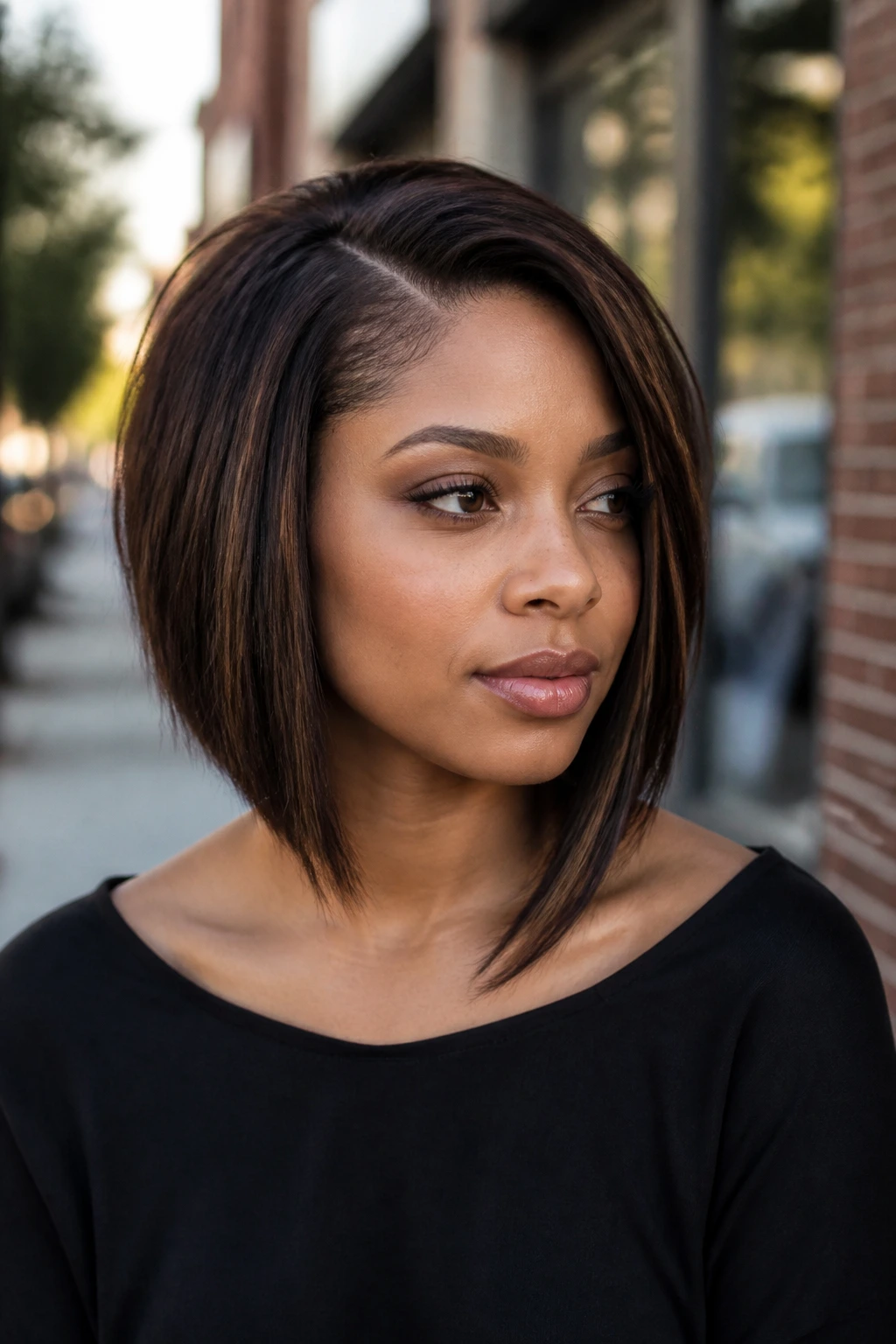
A slight angle can do a lot of invisible work. When one side is a bit longer, the eye follows that line and reads more length, more movement, more body. The back can stay shorter and cleaner, which helps fine hair look denser where it matters most.
This cut works best when the asymmetry is subtle. You want a gentle tilt, not a dramatic wedge unless that is genuinely your style. Too much difference from one side to the other can make fine hair look stringy in the longer corner.
It is a good option for rounder faces or anyone who likes a little edge without committing to a sharp geometry. Keep the styling soft: bend the front pieces away from the face, then let the shorter side sit closer to the jaw. The contrast is half the charm.
6. Stacked Nape Bob With Airy Crown
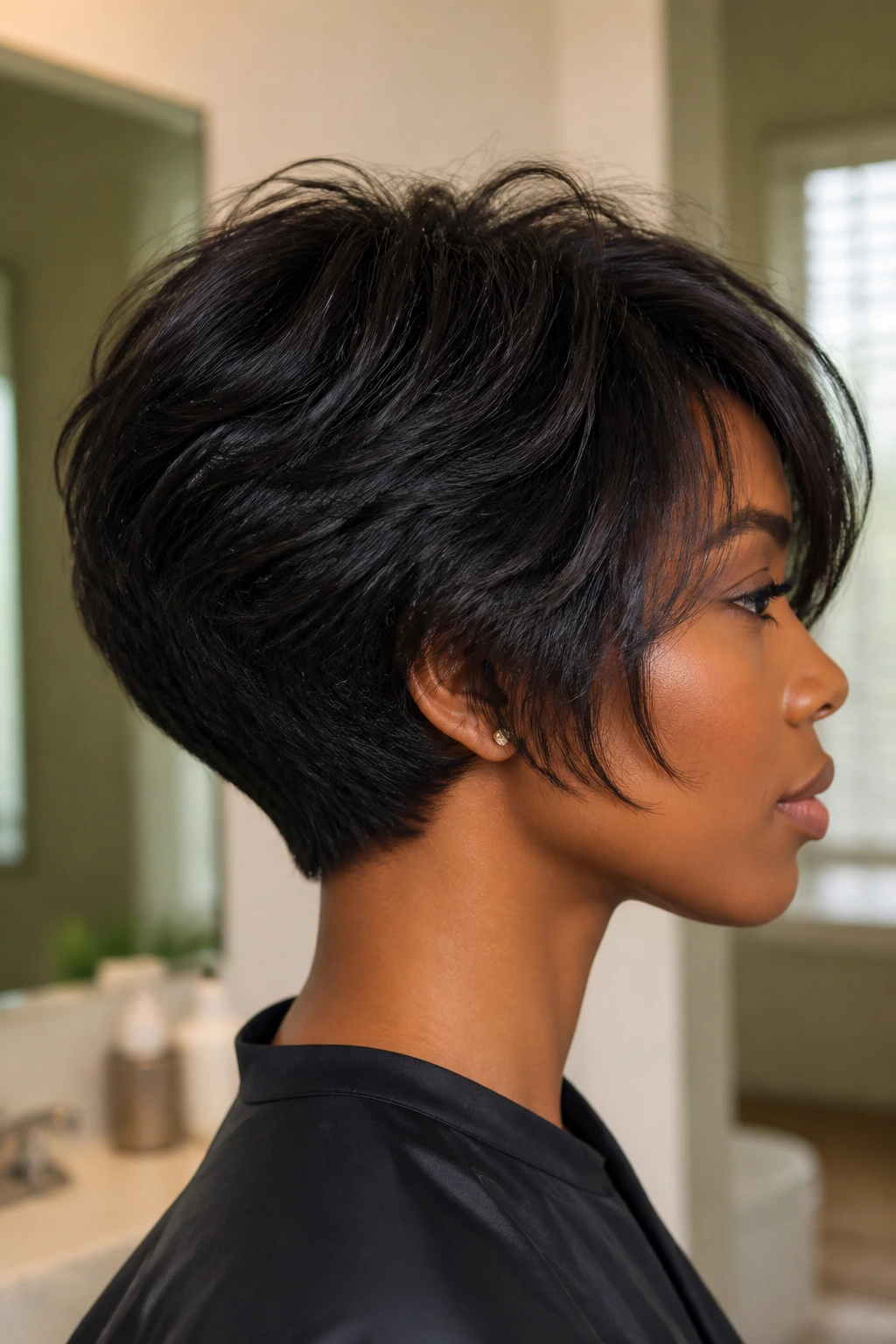
The back does the heavy lifting here. A softly stacked nape gives the bob a little lift from underneath, which can be a lifesaver when your crown tends to lie flat. The word is softly. Not helmet. Not triangle. Soft.
Stacking works because it removes some weight from the back while keeping the top from collapsing into the neck. On fine hair, though, the cut has to stay controlled. If too much is removed, the style puffs in the wrong places and the ends at the front look spare.
Ask for a short graduation at the nape, then keep the crown airy with a round brush and a cool shot from the dryer. You can even clip the top section up while the back cools so the lift sets in place. That extra minute is worth it.
7. Collarbone-Length Tousled Lob
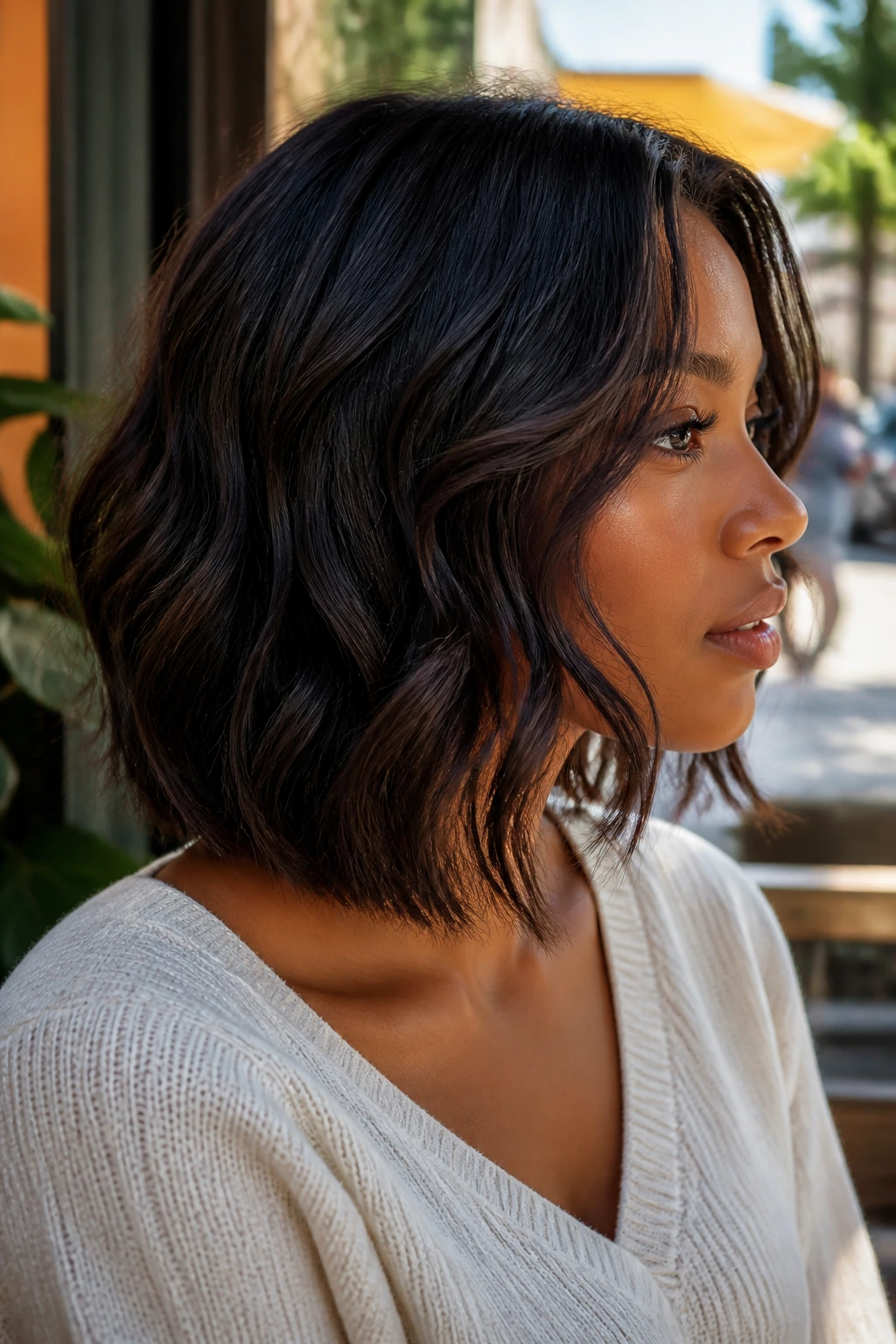
A collarbone lob is the safe move that does not look safe once it’s styled. It gives you a little more length than a classic bob, but it still keeps enough weight in the shape to avoid that see-through look fine hair gets when it grows too long. The trick is to keep the edges blunt enough to read as full.
This cut is a good middle ground if you are not ready for chin length. It also grows out neatly, which matters because fine hair can look ragged surprisingly fast once the perimeter loses its line. A loose bend through the mid-lengths keeps the lob from hanging limp against the shoulders.
I like this version with an off-center part and one or two face-framing pieces. It softens the cut without turning it into long layers, which would defeat the point. If you want movement, add it with styling. Do not make the cut pay for it.
8. Deep Side-Part Bob With Flip Ends
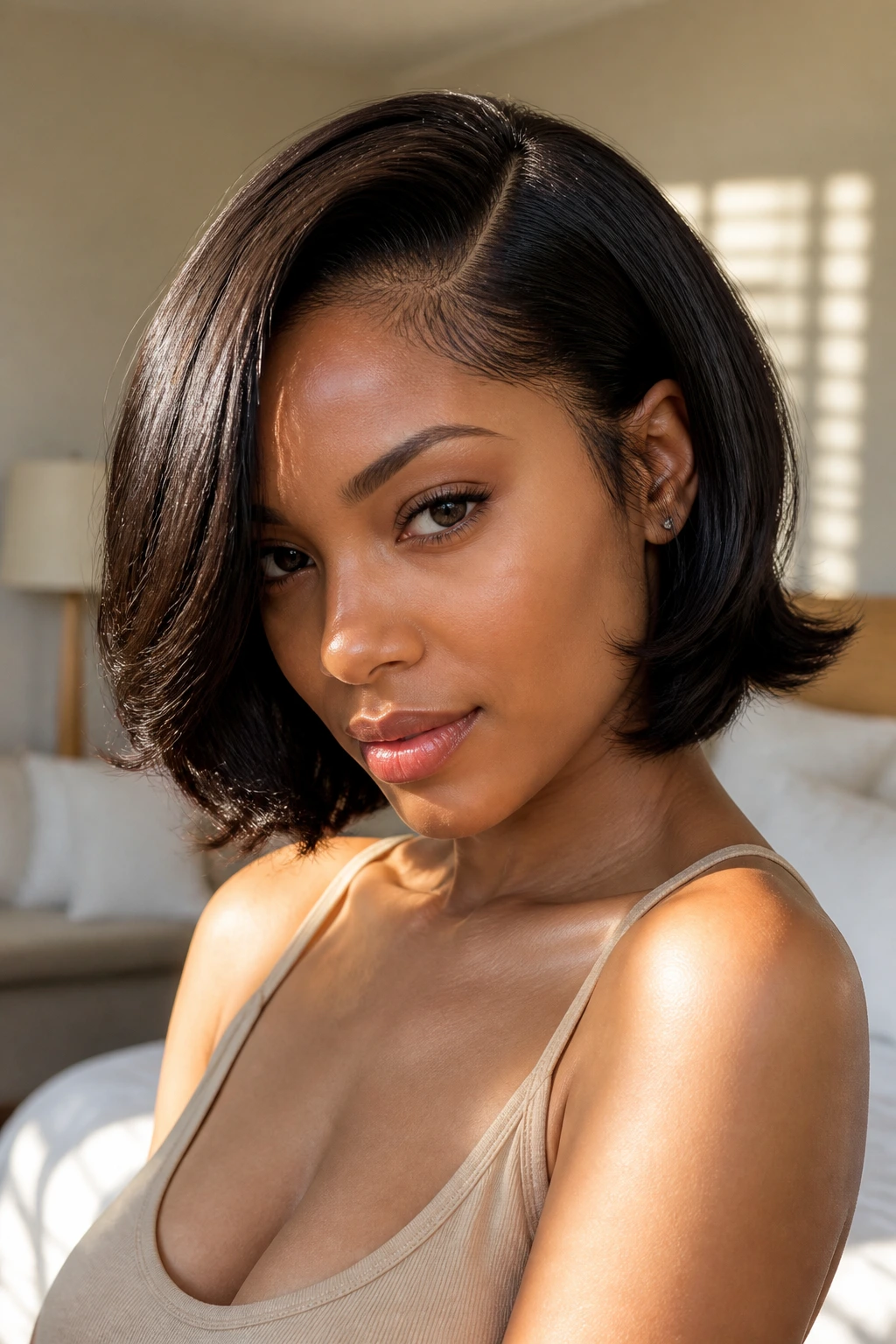
A deep side part changes the entire mood of a bob. Suddenly the crown has lift, the forehead gets a little softness, and the ends can flip out with a bit of attitude instead of curling under like they’re in a formal portrait. Fine hair tends to respond well to this because the side part creates a built-in volume line.
The flip at the ends should feel light. Use a flat iron or a large barrel and flick the last inch away from the neck. If every piece flips the same way, the bob starts looking over-styled. Mix a few bends in different directions and then brush lightly with fingers.
This one is especially good if you want a bob that looks finished without looking frozen. It can work with relaxed hair, silk presses, and even stretched natural hair. The side part is doing the visual heavy lifting, so you do not need a lot of product.
9. Razor-Cut Bob With Wispy Layers
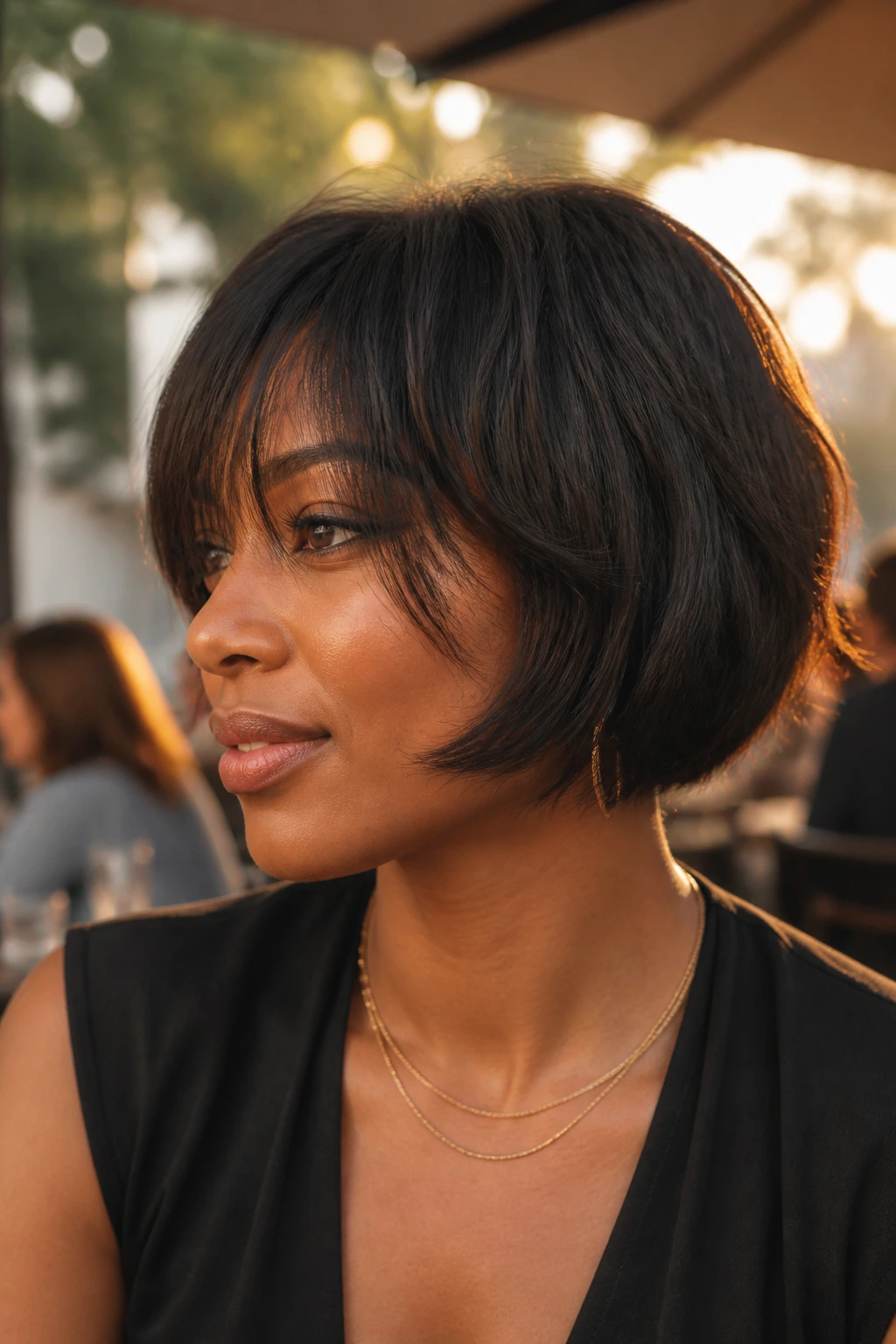
Razor work is a tool, not a personality. That sounds harsh, but it matters. On healthy fine hair, a razor-cut bob can add movement and lightness without stealing the shape. On fragile ends, it can shred the line and make the haircut look thinner than it is.
The wispy layers should be gentle and hidden inside the shape. You want the perimeter to stay visible, then let the interior pieces fall a little softer. That gives the bob a wind-kissed feel without turning the ends into a frayed mess.
If your hair is already dry or breaks easily, I’d skip the heavy razor work. Point cutting is safer. If your hair is in good shape and takes styling well, this cut can look very good with a textured finish and a little root lift. It has motion, but it still feels light on the head.
10. French Bob With Soft Fringe

The French bob is tiny in length but not in presence. Cut it to the cheekbone or just under the jaw, give it a soft fringe, and the whole face changes. Fine hair likes shorter lengths because the ends stay visible and the line stays crisp.
The fringe should be light. Too much bang density will drag the front down and make the whole style feel heavy. Ask for the center of the fringe to sit a little shorter, with the sides tapering out toward the cheekbones. That shape opens the face instead of closing it off.
This one is lovely if you like a cut that feels neat in the morning and still a little undone by evening. A small round brush or a quick finger dry is enough. It does ask for trim maintenance, though. The fringe will tell on you if you ignore it.
11. Wet-Look Tousled Bob
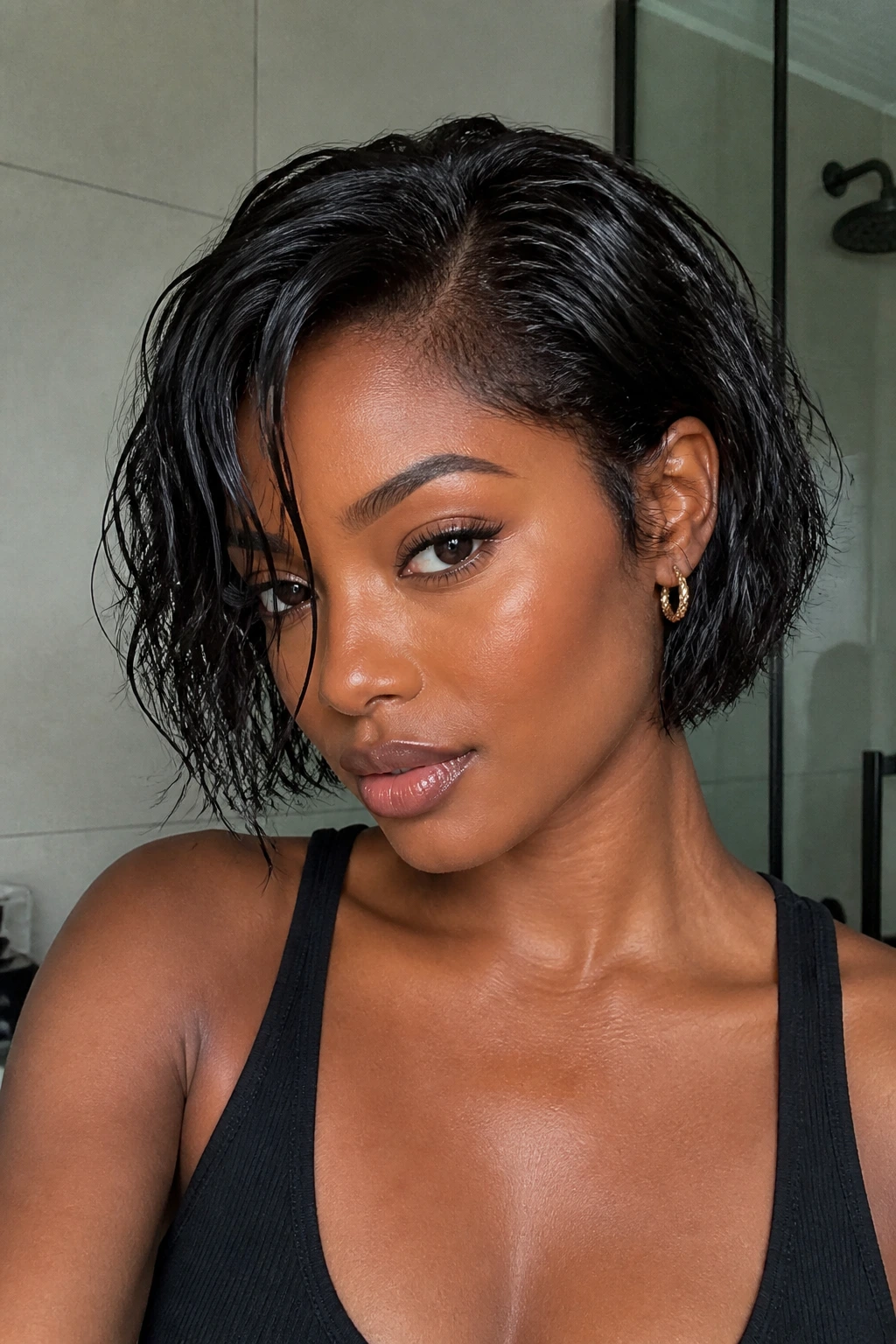
A wet-look bob sounds dramatic because it is dramatic. The shine is the point. On a short bob, that controlled gloss can make fine hair look sleek and deliberate instead of limp. The cut should be short enough to hold the finish, though. Long lengths tend to go stringy fast.
Use a gel or gel-cream on damp hair, then comb it into the shape you want. Pinch a few ends while it dries so the texture does not look flat and glued down. You want a polished surface with some separation at the tips.
This style is best when you want the hair to look fashion-forward without needing a lot of volume. It works especially well with hoop earrings, bare shoulders, or a sharp collar. The haircut stays close, the shine does the talking, and the overall effect is clean rather than fussy.
12. Curved-Under Bob With Loose Bend
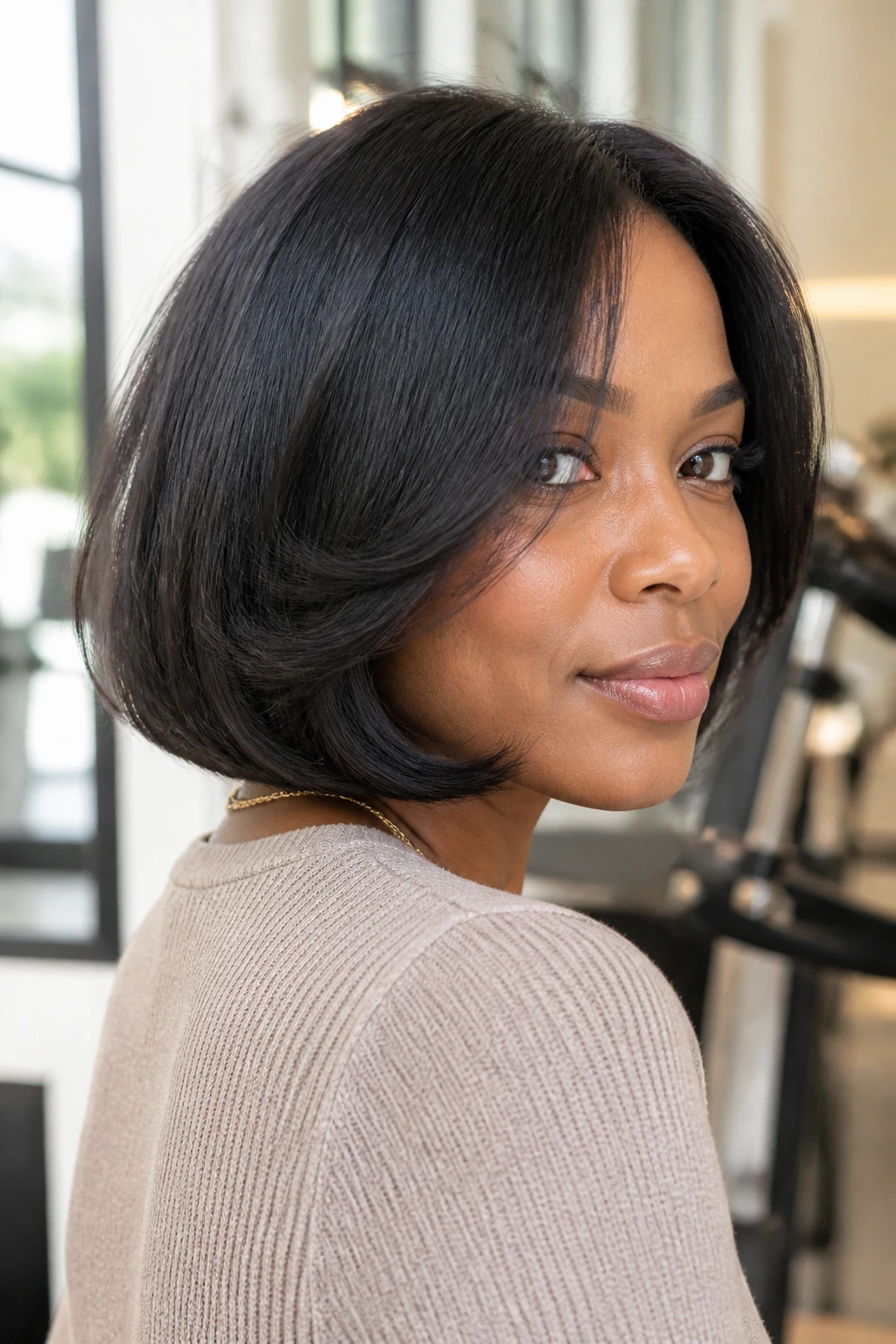
A curved-under bob can look very polished on fine hair, but only if the bend stays loose. If the ends are rolled under too hard, the cut starts to feel old-school in the wrong way. A soft bend keeps it fresh.
The shape works because it gives the perimeter a tidy edge while the interior movement stops the hair from sitting still. Think of it as a salon blowout that has relaxed a little by the time you leave the chair. That looseness is what makes it flattering.
Use a round brush or a large-barrel dryer brush and bend the last inch under just enough to suggest shape. Then add a faint mist of texture spray to the mid-lengths. The bob should move when you turn your head. If it doesn’t, it needs less product, not more brushwork.
13. Layered Tapered Bob for Relaxed Hair
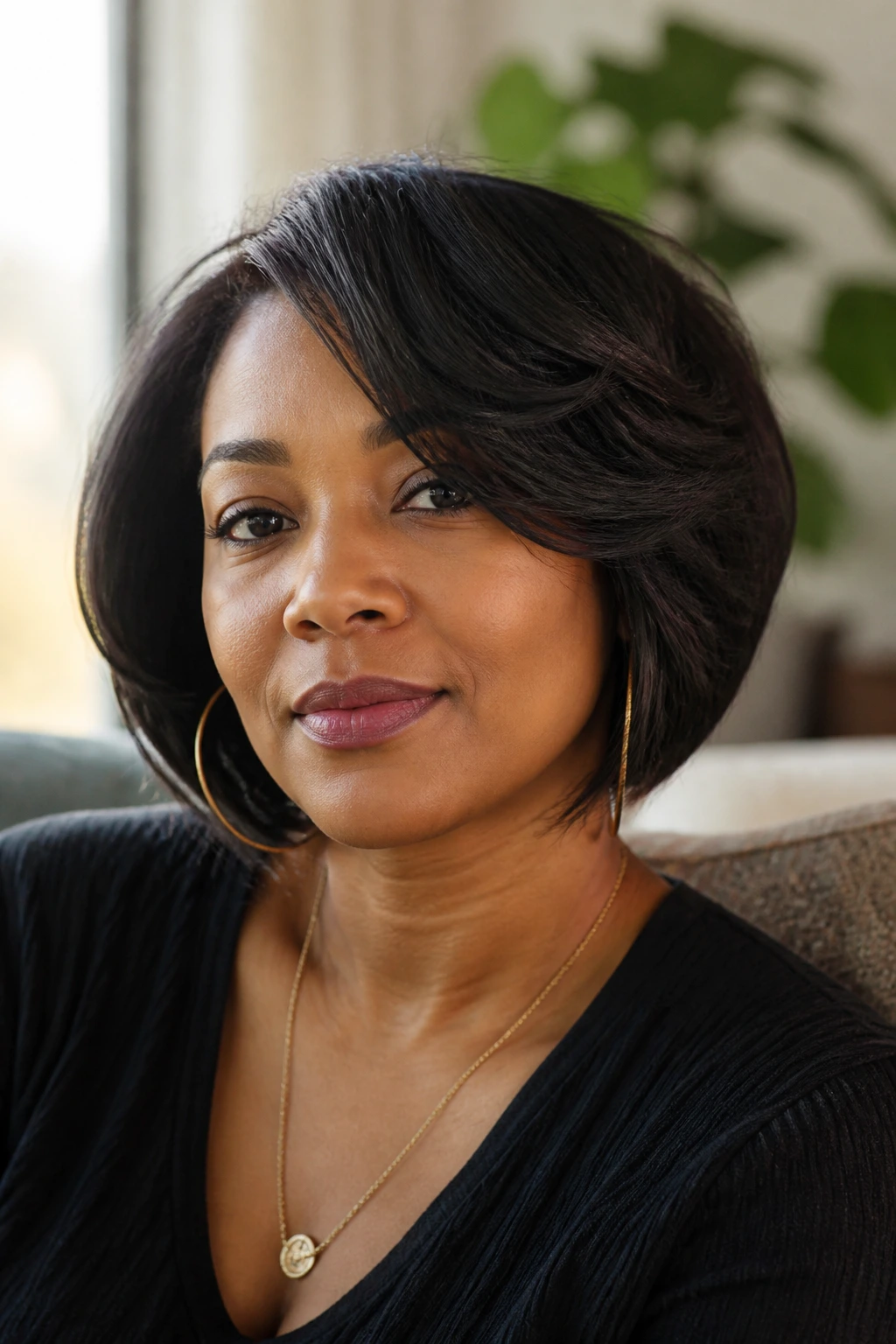
Relaxed hair often falls flat at the ends, which is why a tapered bob can be a strong fix. The taper tightens the silhouette around the nape and gives the top a chance to look fuller without piling on obvious layers. The whole cut feels neater and cleaner.
This version likes a smooth finish with just a little bend at the tips. A wrap set, roller set, or careful blow-dry can keep it soft. The layers should be internal and subtle, not choppy. If the shape starts to look feather-light, too much has been taken out.
One thing I like here: it grows out in a useful way. The taper softens gradually, so you do not get that awkward shelf that some bobs develop after a few weeks. If you wear relaxed hair and hate regular big chops, this is a friendly place to land.
14. Golden Caramel Tousled Bob
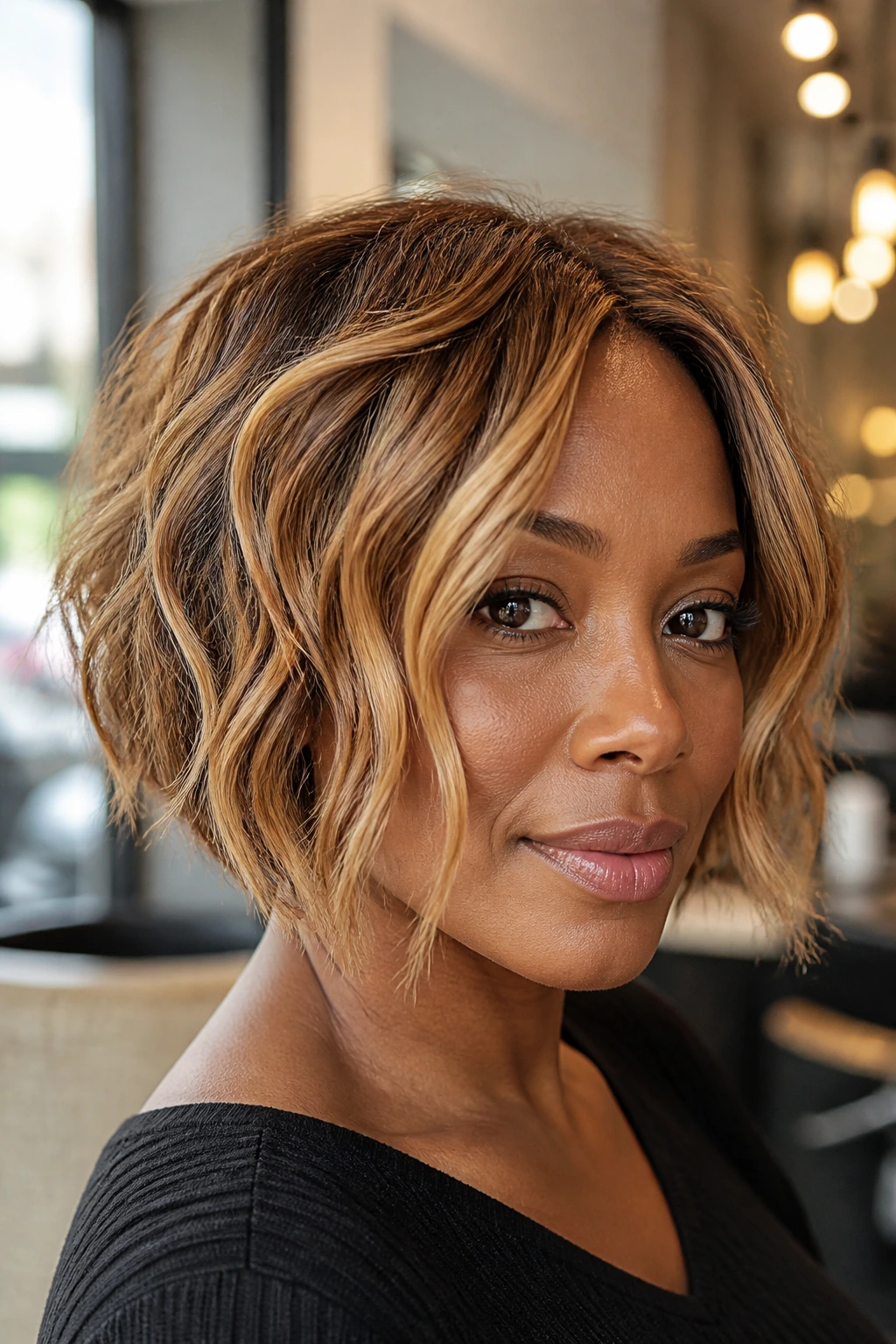
A little color can make fine hair read thicker because the eye catches contrast. Warm caramel ribbons around the face and under the top layer give the bob depth, and depth reads like body. The cut still has to be right, though. Color won’t rescue a weak shape.
This is a good choice if you want the bob to feel warmer and more dimensional, especially on dark hair. Keep the base darker and place the lighter pieces where the light naturally hits: around the face, near the ends, and through the top layer in small doses. Too much lightness everywhere can make the hair look thin instead of dimensional.
Maintenance matters here. Color-treated fine hair needs a gentle shampoo, a light conditioner, and a heat protectant before any hot tools. The texture should stay soft, not crispy. A glossy finish is what makes the color look expensive.
15. Side-Parted Silky Bob With Texture Spray
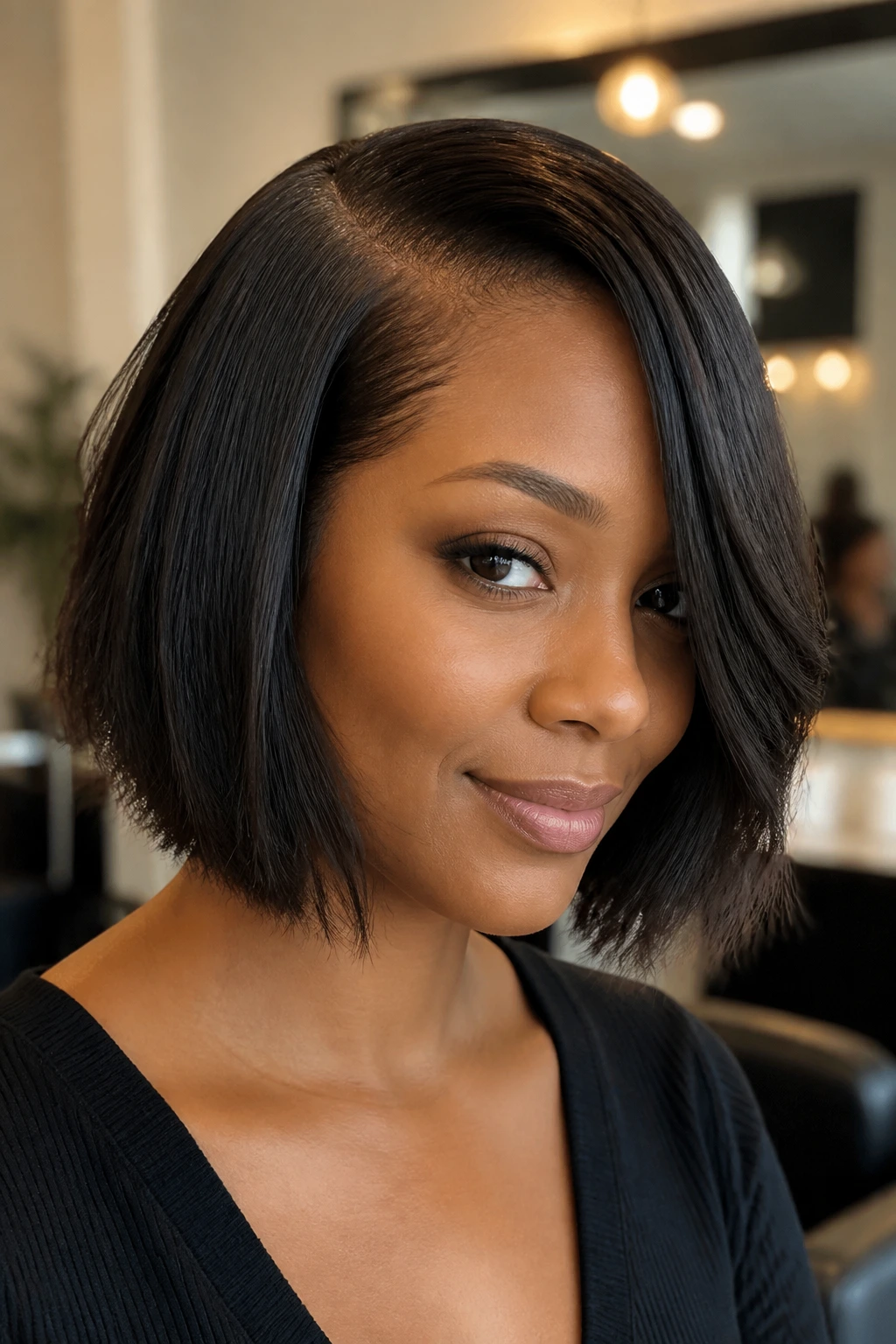
Sleek roots and textured ends are a combination I trust. A side-parted silky bob keeps the top smooth, which is useful if your crown tends to go limp, then uses a little texture spray at the ends to keep the haircut from looking too flat or too formal.
This style works well on silk presses and heat-styled hair. Keep the blow-dry smooth, then bend just the bottom half of the strand with a flat iron or a round brush. The top should stay close and clean. The texture belongs at the bottom edge, where it can make the line look fuller.
A lot of people overdo the serum on this kind of style. Don’t. One tiny drop at the tips is enough. If the roots start to shine too much, the bob loses the lift you worked for. Keep the gloss at the ends and the movement where the eye can see it.
16. Face-Framing Bob With Bottleneck Bangs
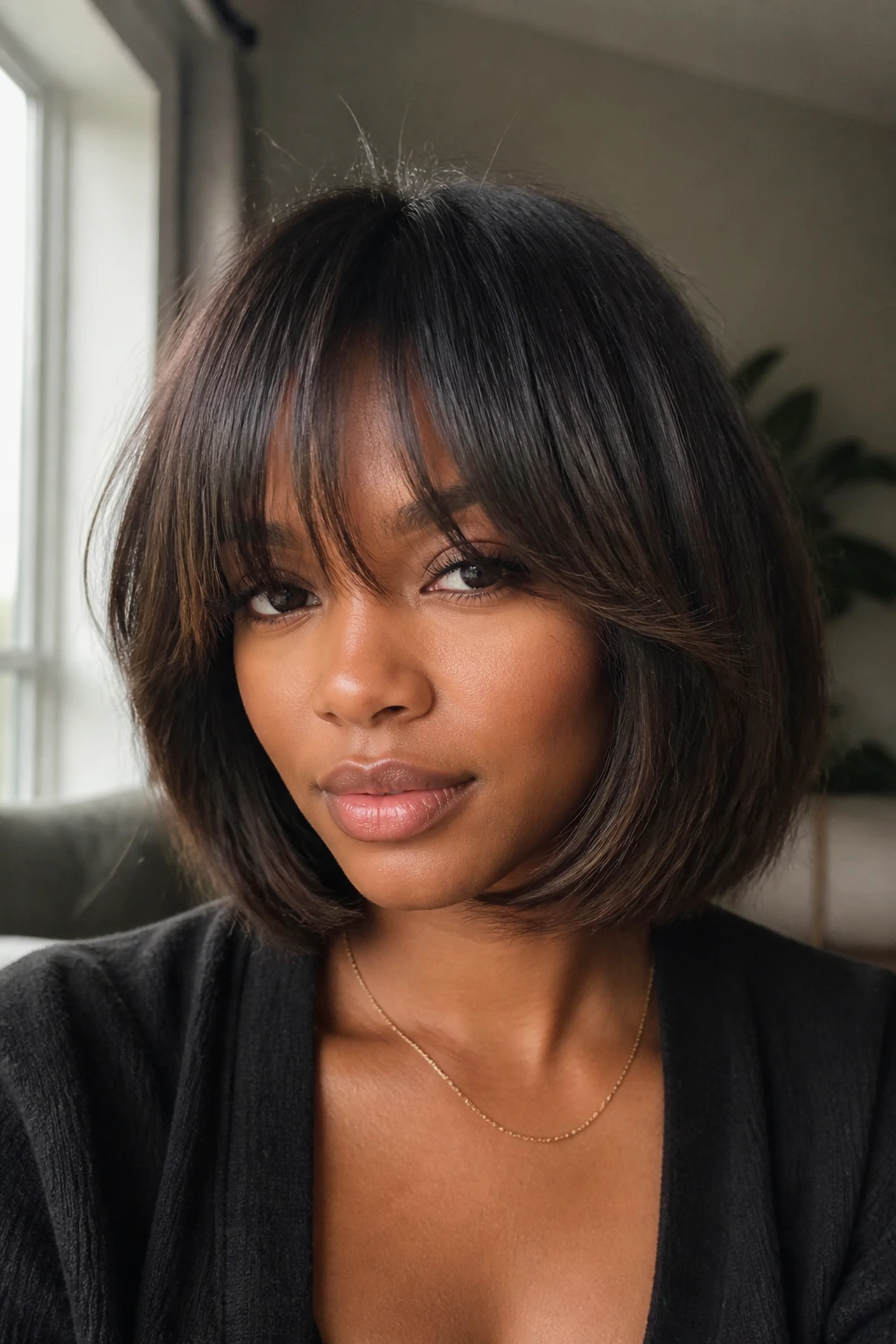
Bottleneck bangs are one of those small choices that change the entire haircut. The center is shorter, then the shape opens out toward the cheekbones, which means the fringe does not eat up too much hair density at the front. That matters on fine hair.
This bob is a good fit if you want your eyes and cheekbones to do some of the work. The face-framing pieces pull attention where you want it, and the bob itself stays light around the jaw. Ask for the bangs to stay airy, not thick. Thick bangs on fine hair can drag the whole style down.
It styles well with a small round brush or even a quick pass of the flat iron, depending on your texture. Keep the fringe soft enough to move when you blink. That sounds dramatic, but it’s true. Stiff bangs make the haircut look harder than it needs to be.
17. Air-Dried Bob With Defined Ends
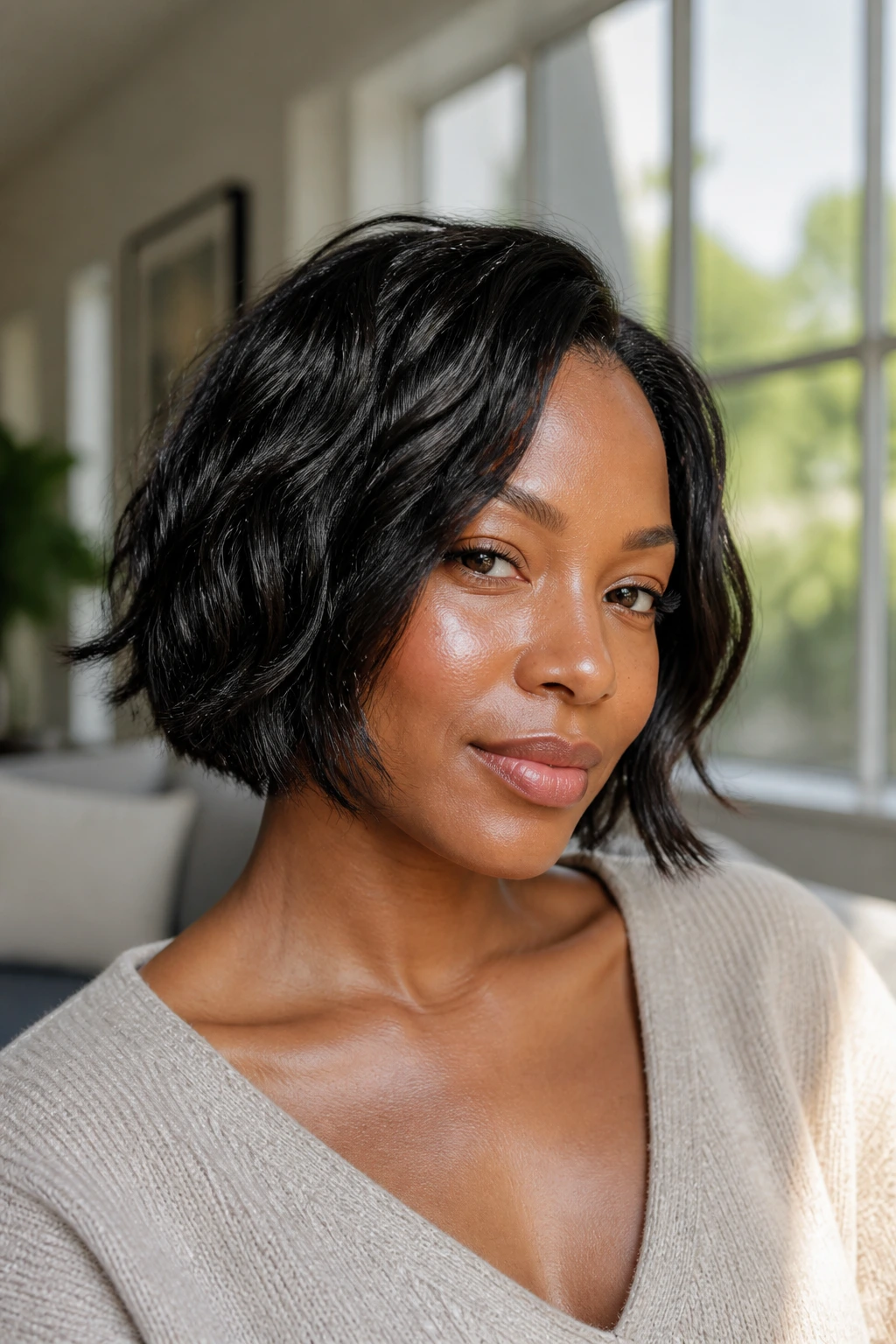
Air-dried does not have to mean shapeless. If your bob is cut well, you can let it dry with very little heat and still keep the outline visible. On fine hair, that’s a nice break from hot tools.
Start with a light leave-in, then add foam or mousse through the roots and mid-lengths. If your texture is curly or coily, twist or smooth small sections so the shape lands where you want it. The ends should finish defined, not fuzzy. Once the hair is dry, do not keep touching it. That’s how the shape breaks apart.
This version works best when you keep the cut a little shorter than you think you need. Air-dried hair usually stretches less than blown-out hair, so the bob should be built for that. It’s a smart pick for days when you want a softer look without losing the line.
18. Choppy Lob With Invisible Layers
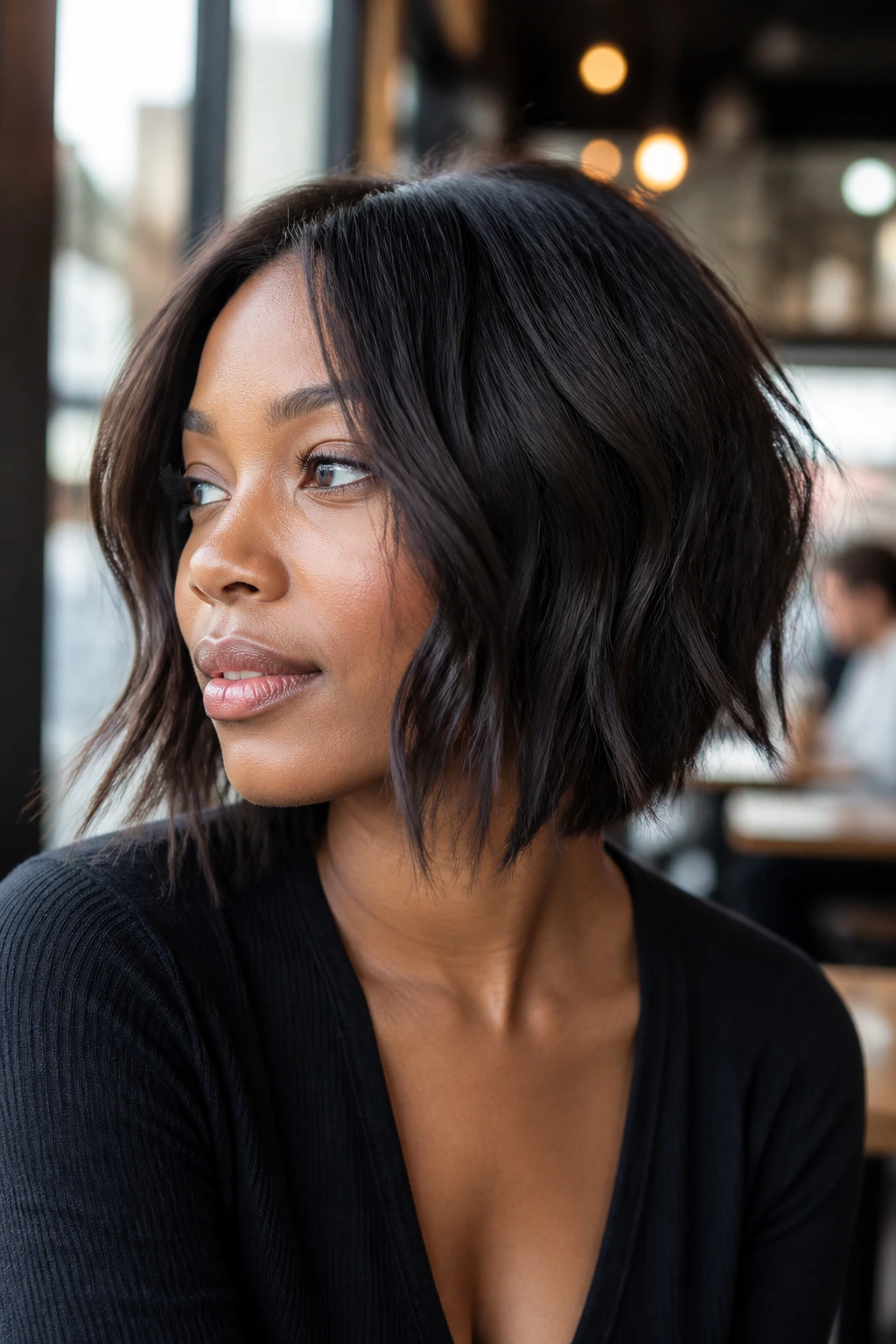
Invisible layers are useful when you want movement but do not want the haircut to announce itself. The perimeter stays clean, the inside gets a little soft, and the lob moves without looking shaggy. It is a nice middle path for fine hair.
The word “choppy” can scare people because it sounds like too much texture. In this case, it means a little separation through the ends, not aggressive chunking. The length should stay around the collarbone so the hair still carries some weight. Too much length and the texture starts to disappear.
I like this cut for women who want versatility. You can wear it straight, bent, tucked, or curled. It also grows out better than many short cuts because the shape is not hanging on a razor-thin edge. Quiet movement. Clean line. That’s the whole appeal.
19. Rounded Bob With Full Crown
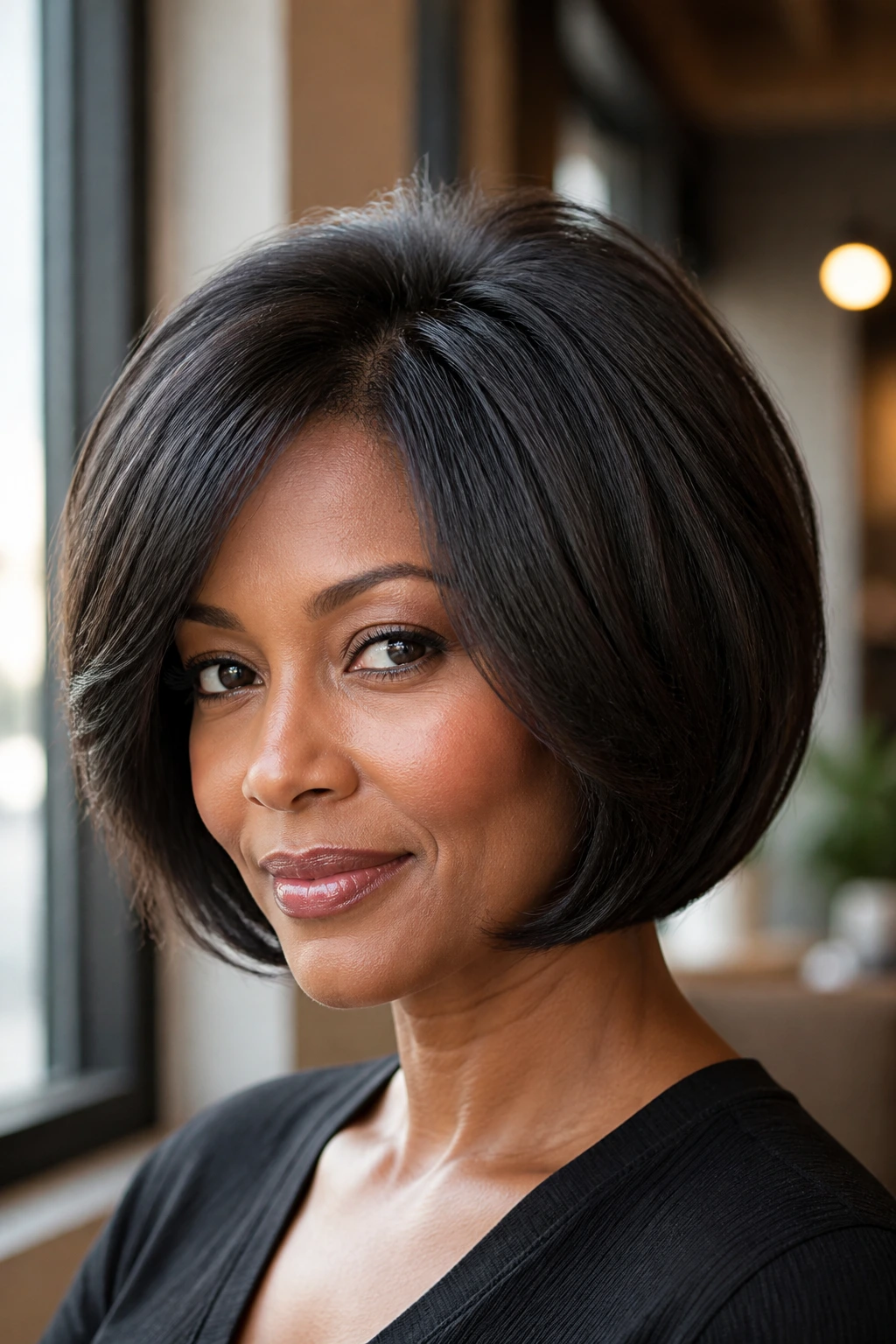
Rounded does not have to mean puffy. If the crown is lifted and the sides are kept smooth, a rounded bob can make fine hair look intentionally full. The silhouette feels soft, but it still has shape.
This cut works well when the head shape and jawline can handle a little curve at the sides. The crown should be encouraged upward with rollers, a round brush, or a root clip, then the ends should fold in just enough to support the curve. If the bob starts to balloon out at the temples, the line is too wide.
It’s a good cut for women who like a polished look without a stiff blowout. The style holds better when the perimeter is neat and the crown has been set while cooling. That last step matters. Hair remembers the shape it cooled in more than the shape it was in while hot.
20. Silk-Press Bob With Soft Bends
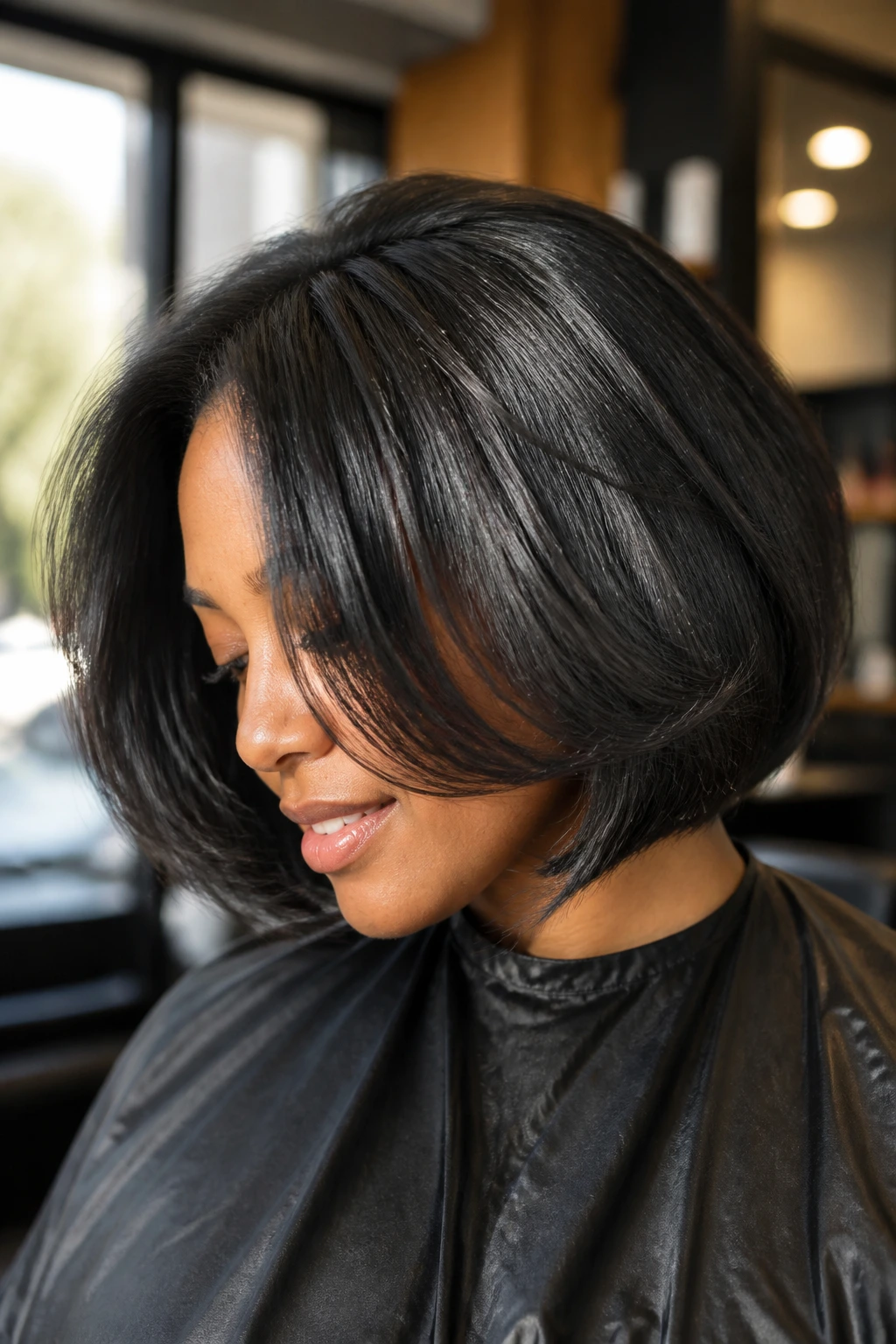
A silk-press bob with soft bends is the cleanest answer when you want shine more than texture. The hair sits smooth, the ends curve just enough to feel alive, and the fine strands get a polished finish that can look unexpectedly full.
This is the bob for careful heat styling. Use heat protectant, keep the iron at a reasonable temperature for your hair, and work in small sections so you do not have to go over the same spot twice. The bend belongs near the bottom third of the strand, not all the way up to the root.
The mistake here is chasing perfection. Every strand does not need the same curl. A little irregularity makes the haircut look human. If the bob gets too even and too shiny, it can start to look stiff. Soft bends keep it moving.
21. Tucked-Behind-Ear Bob With Lift
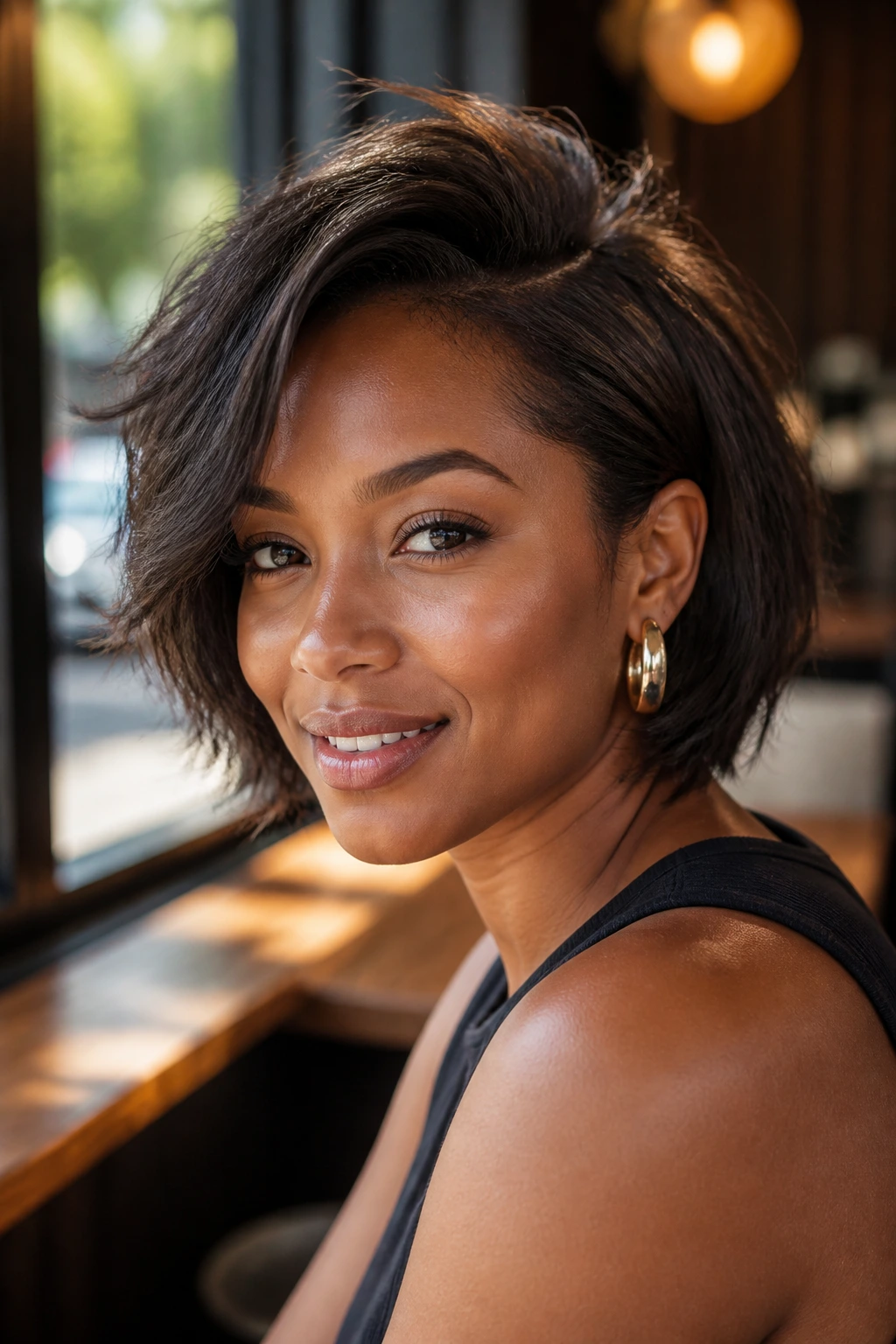
Tucking one side behind the ear sounds tiny, but it changes the whole read of the haircut. Suddenly one side is open, the earrings show, and the bob gets a little asymmetry without needing a full cut change. Fine hair benefits from that kind of visual shift.
The tucked side should still have lift at the root. Use a little mousse or root spray before drying, then tuck the hair once it cools. If you smooth it down with too much product, the whole side will collapse. You want the tuck to look intentional, not pinned to the head.
This is a great style for the days when you want to look finished fast. It works with blunt bobs, soft waves, and silk presses. And it is one of the easiest ways to make a short cut feel styled without spending twenty minutes on the mirror.
22. Short Bob With Micro Volume at the Roots
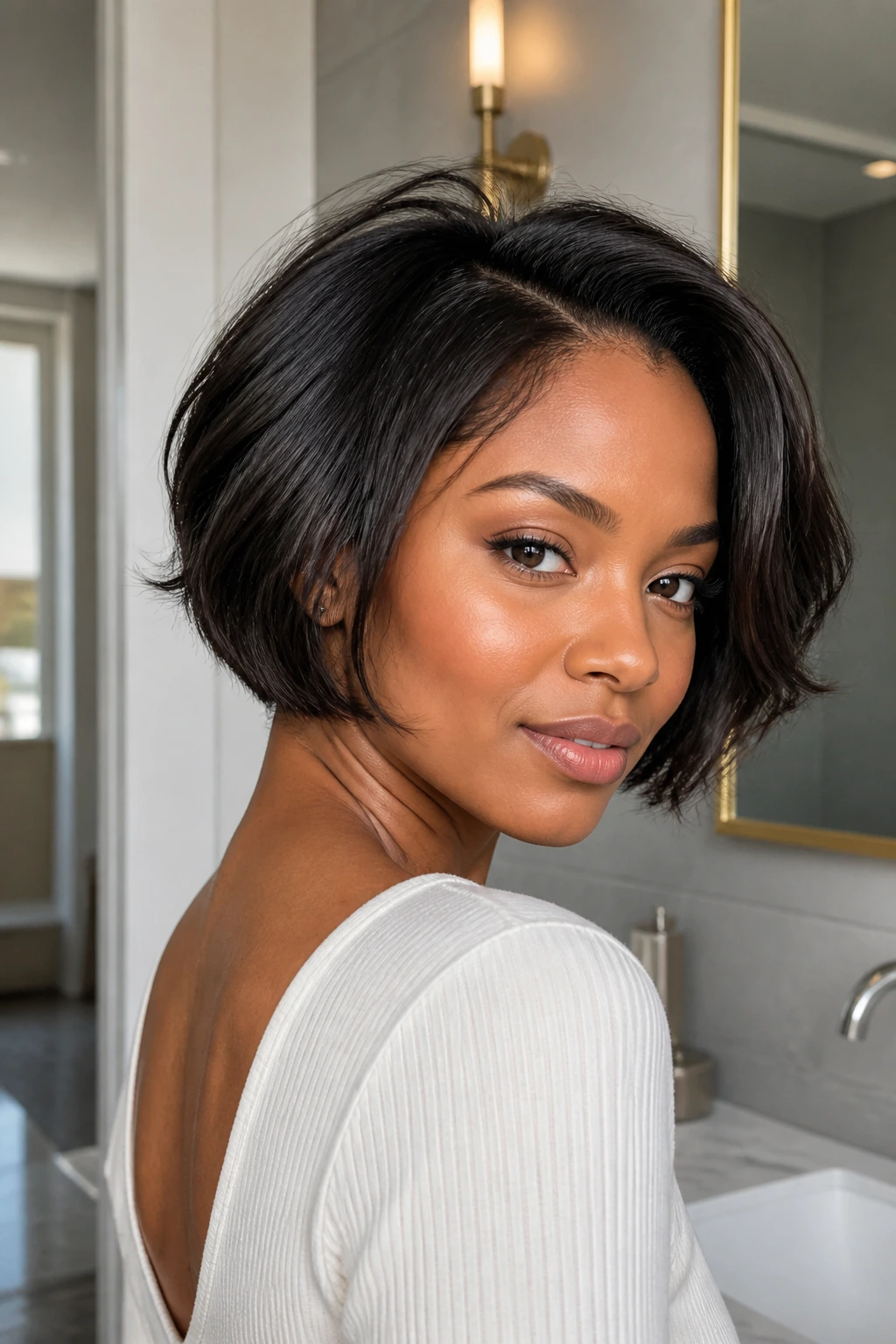
The shortest bob in the group is often the one that looks the densest. Fine hair usually behaves better when it is closer to the head and the perimeter is crisp. Add a little micro-volume at the roots, and the whole cut wakes up.
This version sits high enough to keep the ends strong and low enough to stay wearable. The volume at the root should be subtle—lift, not height. Use clips while the hair cools or a few quick passes with a round brush to encourage the crown. That is usually enough.
I like this cut for women who are tired of fighting long, flat lengths. It gives the hair a cleaner line and takes less work than a shoulder-grazing style that keeps falling in on itself. Trim it on schedule, keep the ends blunt, and it will keep its shape far better than a longer cut that is pretending to be full.
Why the Right Bob Shape Matters More Than More Product
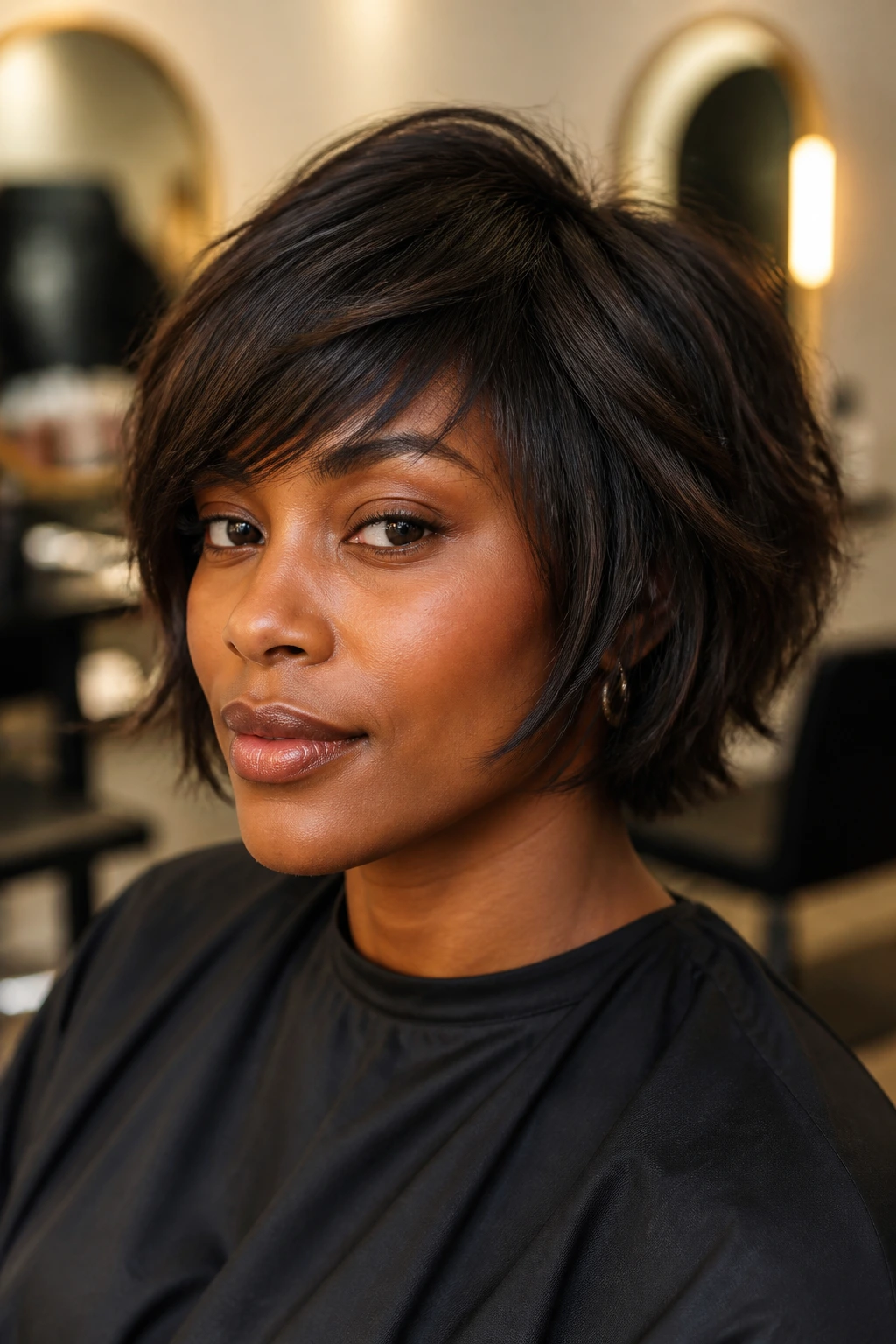
The mistake most people make with fine hair is trying to fix a shape problem with a styling product. That rarely works. If the perimeter is weak, no amount of mousse is going to make the ends look thick. If the cut is too long, dry shampoo will not save it. The haircut has to carry the weight first.
That is why the best versions of these bobs all do the same basic thing in different ways: they keep a visible line, they move the texture to where the eye can read it, and they avoid over-thinning the bottom. One cut leans soft. Another leans blunt. Another leans curly or stacked or angled. Same goal, different route.
A tousled bob also gives you options that longer hair often refuses to cooperate with. You can air-dry it, bend it, smooth it, tuck one side, add fringe, or let it sit with just enough texture to look like you tried—without actually spending an hour proving it.
Styling Tricks That Add Lift Without Making Hair Crunchy
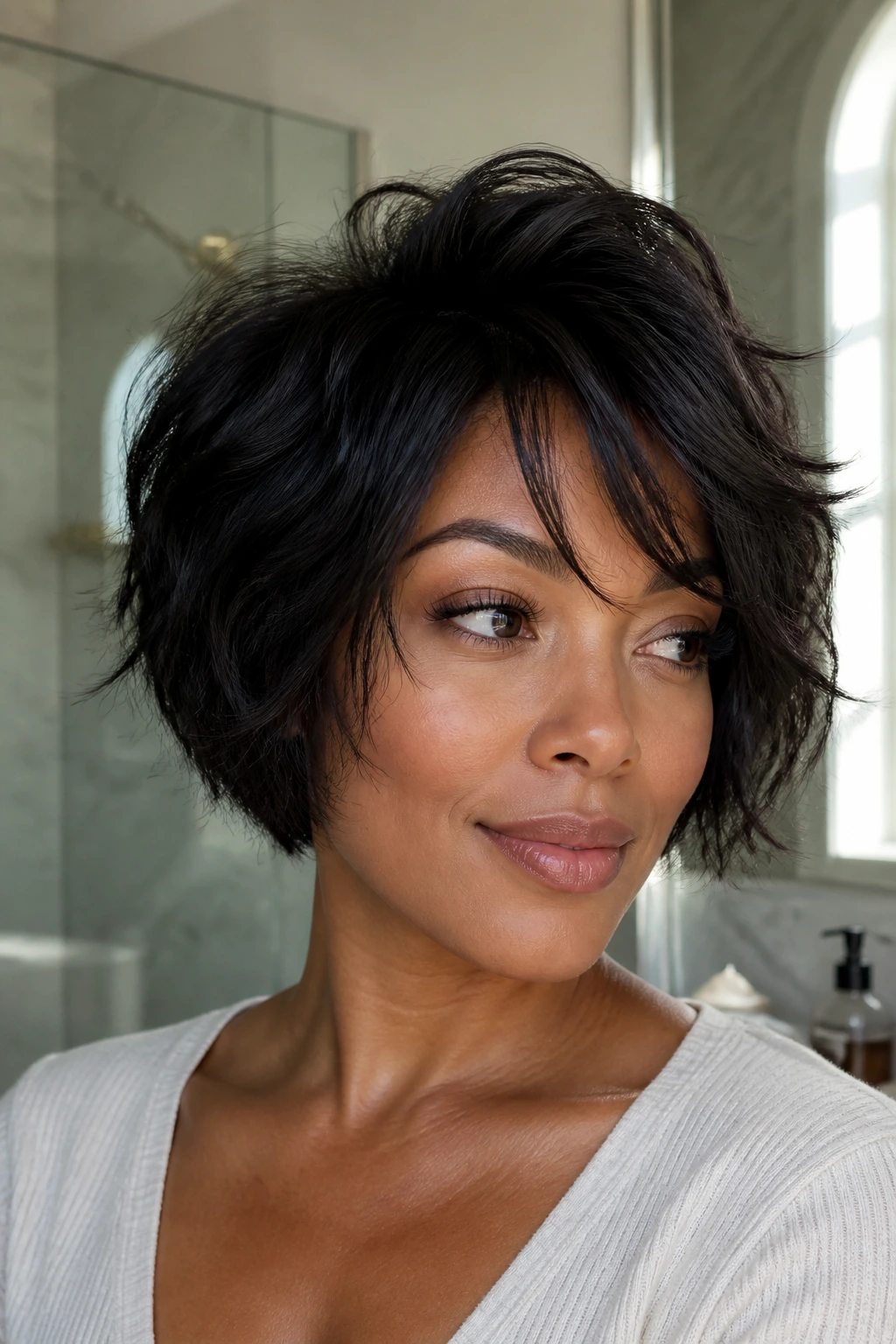
Root Lift: Start with a lightweight mousse or foam at the roots on damp hair, then dry with your head tilted or with a nozzle aimed upward at the crown. If you like clips, set them in the top section while the hair cools. That’s how you get lift that lasts past the walk to the car.
Bend, Don’t Curl: Fine hair usually looks best with soft bends instead of tight curls. Wrap the mid-lengths around a 1-inch iron for 6 to 8 seconds, leave the last inch out, and change direction every few sections so the style does not look too set.
Keep Product Off the Crown: This is where a lot of good bobs go flat. Put your serum on the ends only, and keep oils away from the root unless your scalp is truly dry. The crown needs air, not shine.
Set the Shape While It Cools: Heat creates the form, but cooling locks it in. Clip the hair, pin the crown, or roll a few sections while they cool for 5 to 10 minutes. That short pause makes the style hold better with less product.
Refresh, Don’t Rebuild: On day two or three, add a light mist of water or a tiny bit of dry shampoo at the root, then shake the hair out with your fingers. Do not keep adding more and more product. That path ends in sticky ends and a flat crown.
The Common Mistakes That Flatten a Fine-Hair Bob
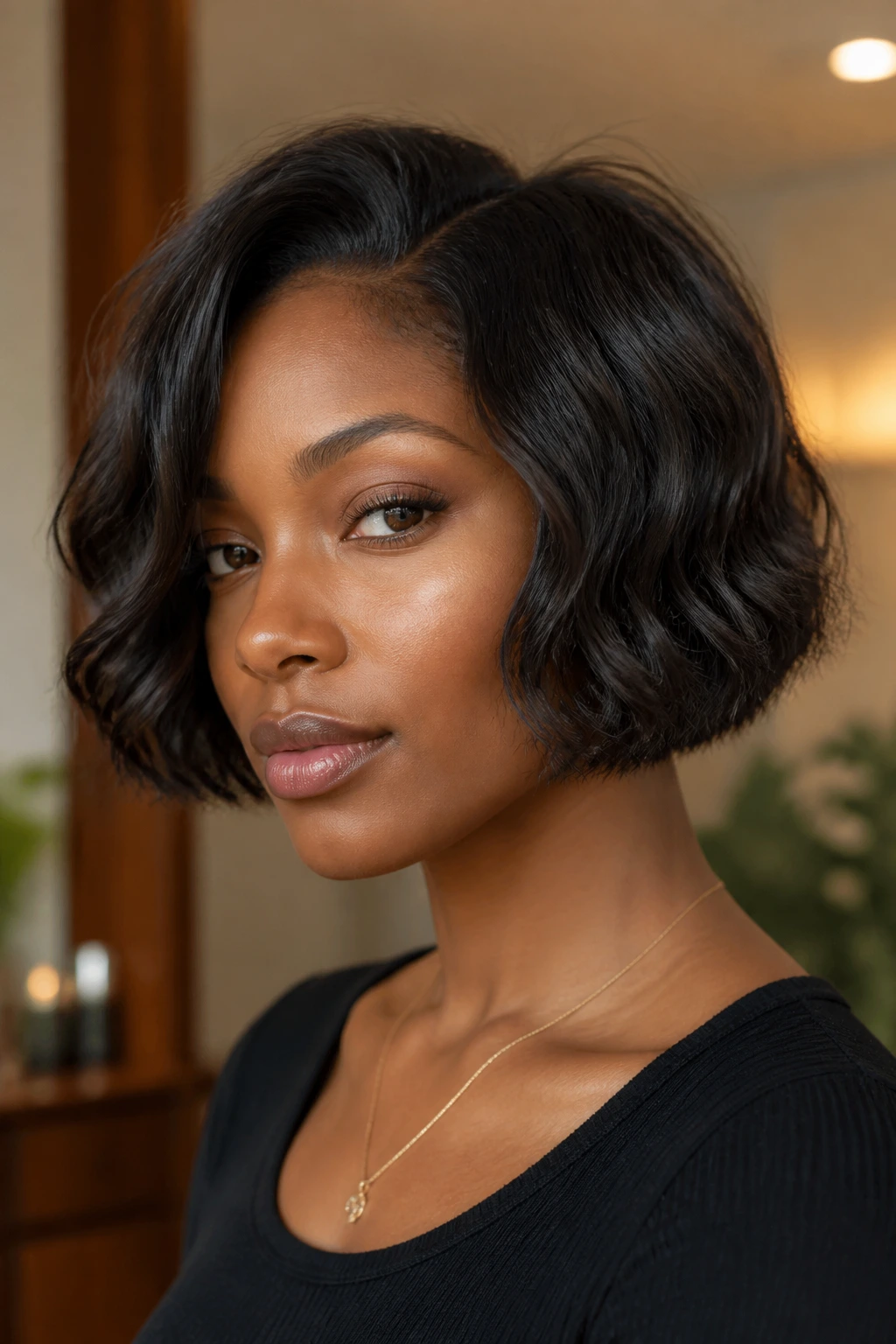
Too Much Layering: The ends start to look see-through, especially at the back and around the jaw. The fix is a stronger perimeter with only subtle internal texture.
Heavy Cream at the Roots: The hair looks shiny for ten minutes, then drops. Use mousse or foam at the root instead, and reserve heavier products for the last inch of the ends if you need them at all.
Cutting It Too Long: A bob that hangs too far below the shoulder often loses the density effect that makes the style work. If your hair keeps collapsing, shorten it rather than adding more product.
Curling Every Strand the Same Way: The style starts to look over-controlled, like a set from a mannequin head. Alternate directions, leave some ends straighter, and use your fingers more than a brush.
Razor-Thinning Fragile Ends: This is the fastest way to make fine hair look like it has less of it. If your ends already feel soft or break easily, ask for point cutting or very light texturizing instead.
Skipping the Cool-Down: Hair needs time to settle into the bend. If you touch it too soon, the crown drops and the style loses its shape. Give it a few minutes, then go in.
Variations and Adaptations Worth Trying
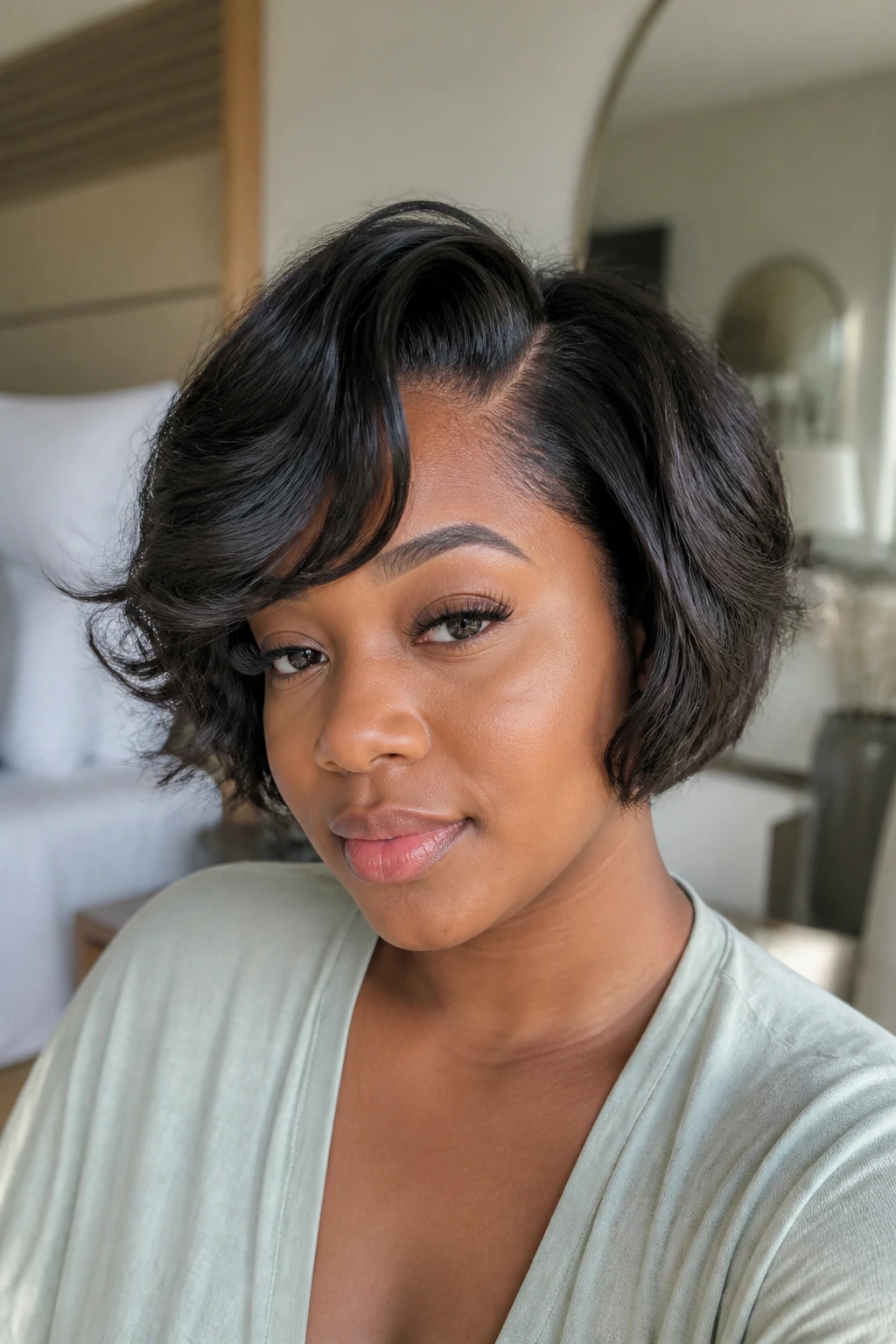
Heatless Crown Bend: Use flexi rods, large pin curls, or a loose braid pattern overnight if you want movement without daily heat. This works best on shorter bobs where the bend can set evenly.
Silk-Press Minimalist: Keep the roots smooth, add one bend at the ends, and stop there. It’s a clean version that suits relaxed or heat-styled hair and stays neat with very little fuss.
Natural Curl Frame: Wear the bob on your curl pattern and let the shape land around the chin or jaw. A lightweight gel and diffuser can keep the edges defined without flattening the curl.
Protective Bob Wig or Sew-In: If you want the look without daily manipulation, choose a bob with light density and a believable part. Too much hair on a bob wig looks bulky fast, so keep the unit light.
Color-Depth Version: Add caramel, auburn, or soft brown ribbons around the face and under the top layer to fake dimension. The cut still has to hold the shape, but the color can help the movement stand out.
Keeping the Shape Between Wash Days
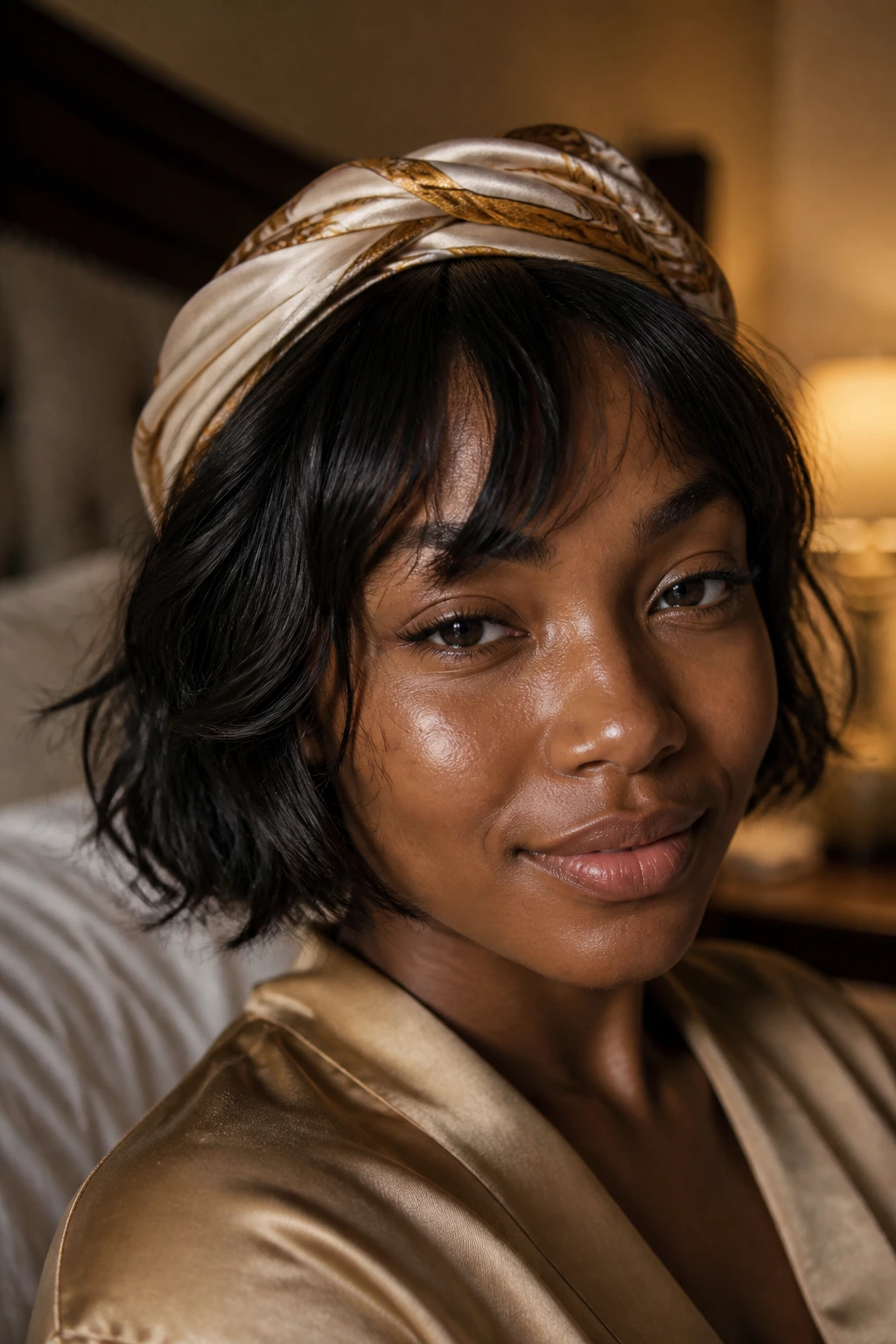
The best bob loses its edge fast if you sleep on it carelessly. Wrap it with a silk scarf or bonnet at night so the crown stays lifted and the ends do not rub themselves into a puff. If your hair is straightened or silk-pressed, a loose wrap or a couple of large pin curls usually works better than stuffing every inch into a tight bonnet.
Day two is where dry shampoo earns its keep. A small amount at the roots can bring the crown back without making the scalp dusty. Spray it from a distance, wait a minute, then massage it in with fingertips. Do not bury the length in it. Fine hair does not need that much help.
For natural curls or air-dried versions, a light mist of water and a touch of foam on the ends can wake the shape back up. Scrunch gently, then diffuse for a few minutes if needed. If the hair is heat-styled, a quick pass with a blow-dryer on low or a 1-inch iron on just the problem pieces usually beats redoing the whole head.
Trim schedule matters more with bobs than with longer styles. Chin-length and blunt looks often need a cleanup every 6 to 8 weeks to keep the line honest. Softer lobs can stretch to 8 to 10 weeks, but once the perimeter starts to fade, the fullness goes with it.
Questions People Ask Before Cutting a Tousled Bob
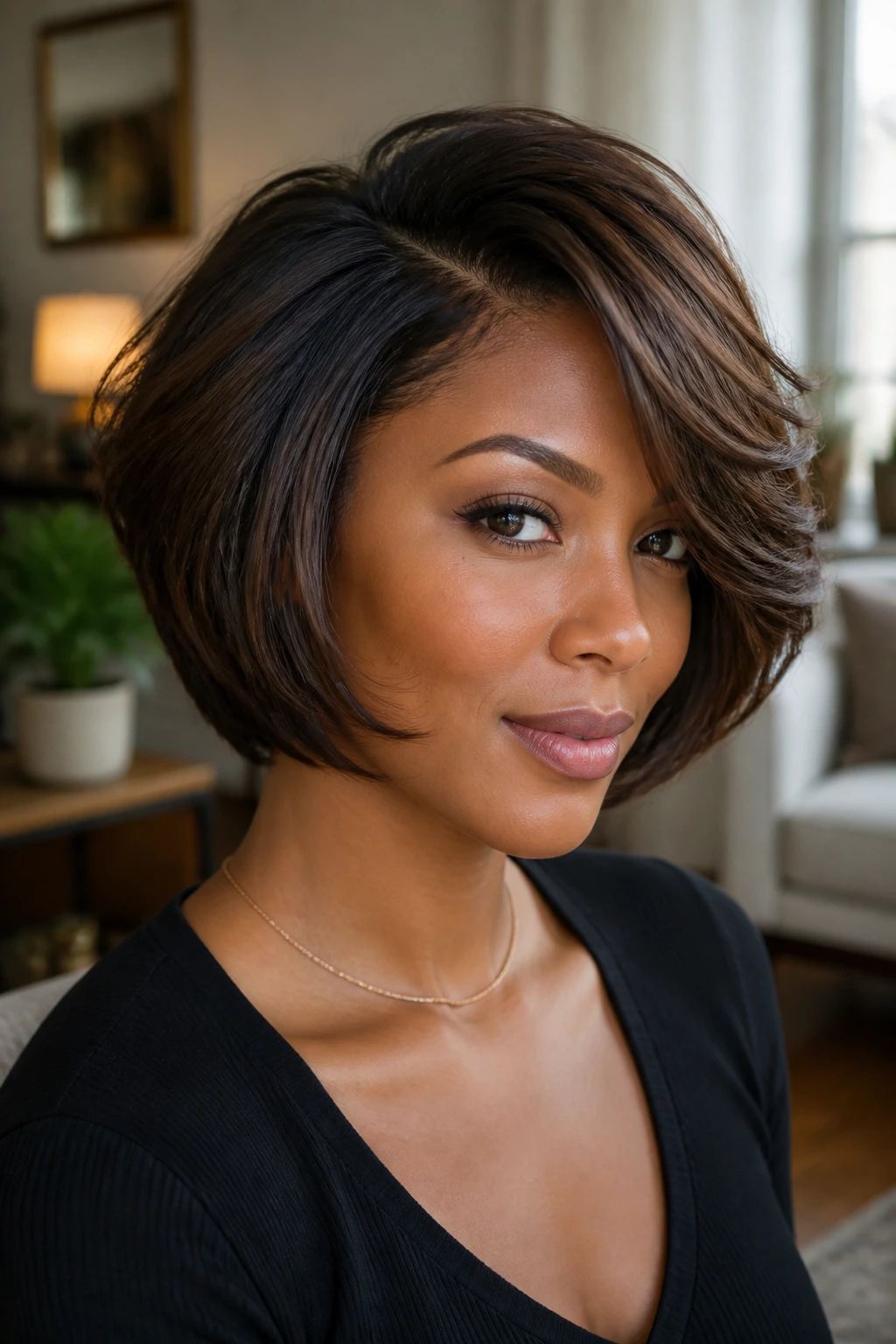
Will a tousled bob make fine Black hair look thinner?
Not if the cut is done well. A strong perimeter and light movement usually make the hair look fuller, while too many layers and too much length are what create the thin look.
Is a blunt bob better than a layered bob for fine hair?
Most of the time, yes, if your goal is density. A blunt line gives the ends more visual weight, while soft internal layers keep the style from feeling stiff.
Can I wear a tousled bob if my natural hair shrinks a lot?
Absolutely. You just need to decide whether the cut should be shaped on stretched hair or on your curl pattern. If shrinkage is part of the look, cut for it instead of fighting it.
What product should I start with: mousse, cream, or oil?
Start with mousse or foam at the roots. Cream and oil are better for the ends, and even then, you only need a small amount on fine hair.
How do I keep the crown from going flat?
Clip the crown while it cools, keep heavy products off the roots, and refresh with dry shampoo or a light root spray between washes. That combination usually does more than piling on more texture.
Can I do a tousled bob without heat?
Yes, especially if the cut is short enough to hold shape. Flexi rods, braid-outs, twist-outs, or air-dried styling can all work, though the length and texture have to cooperate.
How often should I trim a bob like this?
Shorter, blunter versions usually need a trim every 6 to 8 weeks. Softer lobs can go a little longer, but once the line starts to disappear, the haircut loses the fullness that made it worth wearing.
What if my ends flip out instead of under?
Sometimes that’s the better look. If the flip is happening in a weird, uneven way, use a flat iron or round brush to direct the last inch more deliberately, or ask your stylist to soften the edge at the next trim.
Does color help fine hair look thicker?
It can, if the placement is thoughtful. Warm ribbons, lowlights, or a little face-framing contrast add depth, which makes the shape read fuller, but color cannot rescue a weak cut.
The Shape That Still Moves
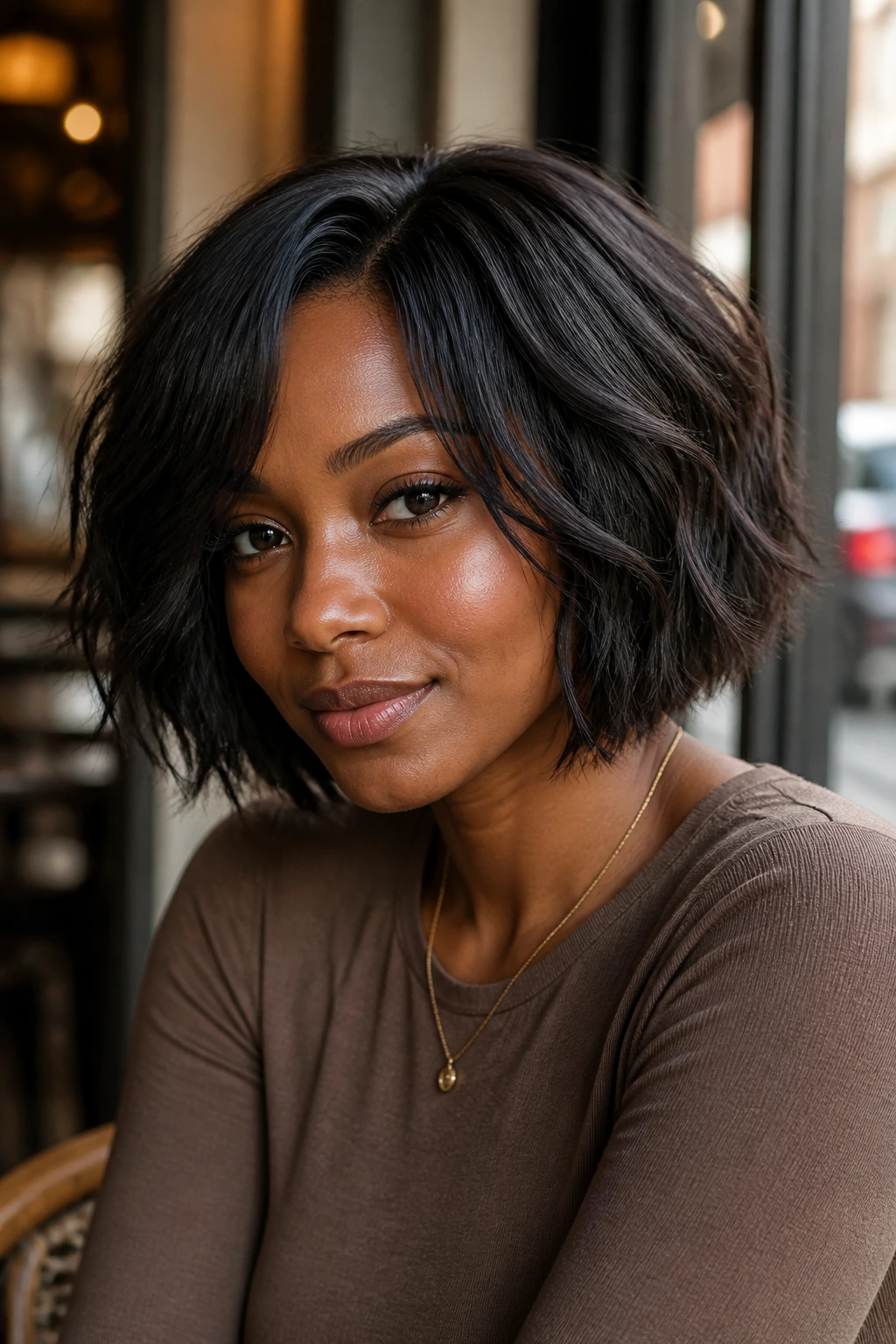
The best tousled bob for fine Black hair is not the one with the most layers, the most curl, or the most product. It is the one that keeps a clear outline and uses movement like punctuation, not like a distraction. That is a much better look.
Some women will want the chin-grazing version. Others will live in a lob, or a rounded bob, or a silk-pressed cut with just one bend at the ends. The right choice depends on how your hair behaves when it is clean, wrapped, air-dried, blown out, or pressed. That’s the part worth paying attention to.
If the perimeter stays honest, the crown gets a little lift, and the ends are not thinned into dust, the style does the rest. And that’s the version of a bob that keeps looking good long after you’ve left the chair.