



A bob can give fine hair the clean edge it’s been missing, or it can turn the whole head into a puffy helmet by lunch. The difference is rarely the haircut name itself; it’s where the weight sits, how high the crown is lifted, and whether the sides are allowed to flare out at the cheekbone.
The best bobs for thin hair and round faces do two jobs at once. They build the look of density at the ends, then pull the eye down with a little angle, a side part, or front pieces that slip past the jaw. That’s the trick people miss when they ask for “something shorter” and hope for the best.
If you’ve ever left the salon with a bob that looked sharp in the mirror but mushy after one wash, you already know how unforgiving this cut can be. The styles below keep the silhouette crisp, the crown light, and the face shape in mind — which is exactly where a lot of bob advice goes lazy.
Why These Bobs Earn Their Keep
- They fake density where it matters: A blunt or cleanly beveled perimeter makes the ends look fuller, which is gold when the hair itself is fine.
- They stretch the face, not the cheeks: Side parts, forward angles, and longer front pieces pull the eye down instead of out.
- They don’t need fussy styling: Most of these shapes hold with a quick blow-dry, a light bend, or a few clips at the root.
- They grow out politely: The better versions still look deliberate when they’re a few weeks past salon-fresh.
- They let your texture do some work: Straight hair gets polish, wavy hair gets movement, and neither has to fight the cut.
- They avoid the over-layered trap: Thin hair can go scraggly fast if the layers are chopped too high or too deeply.
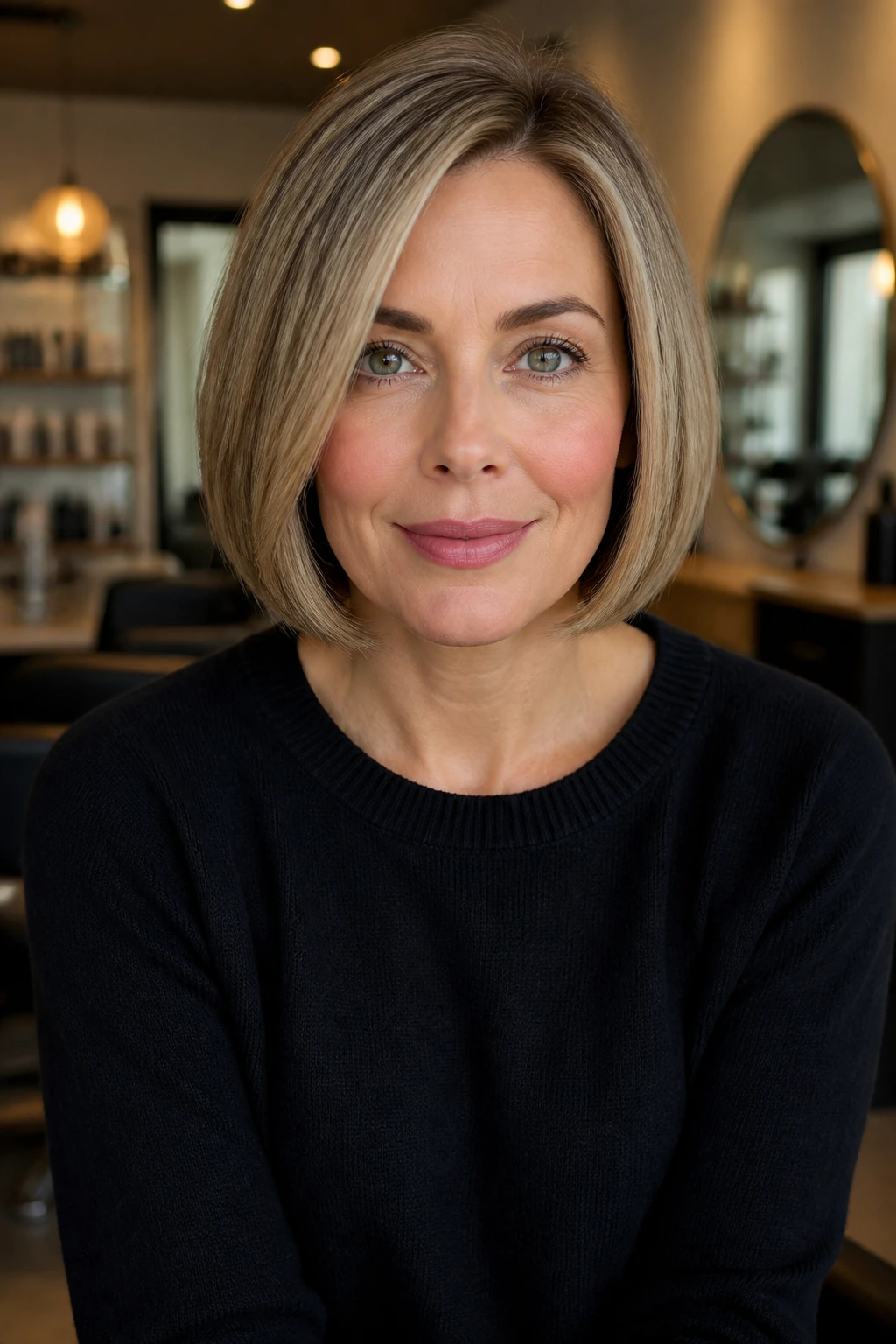
1. Chin-Length Blunt Bob With a Soft Side Part
This is the bob I reach for when someone wants body without drama. The blunt edge at the chin makes thin hair look denser right away, and the soft side part breaks up the roundness that can make cheeks feel wider than they are. It’s tidy, but not severe.
The key is restraint. You want the line to sit just under the jaw, not float above it, and you want the sides to fall clean instead of puffing out. If your hair is fine and straight, this cut can look expensive with almost no styling, which is one of the few times I’ll happily call a haircut low-effort.
A good version has a slight bevel under the ends, not a hard curl. That little turn keeps the outline smooth without adding width. If your stylist reaches for thinning shears at the bottom, ask them to stop. Thin hair does not need help becoming thinner.
2. Angled A-Line Bob That Skims the Jaw
Why does a tiny angle matter so much? Because it changes the line your eye follows. A shorter back with longer front pieces gives the face a vertical pull, and that helps a round face look less compressed. It also keeps the hair from sitting like one broad block at cheek height.
For fine hair, the A-line shape is useful because it stacks visual weight where the ends land. The front pieces can graze the jaw or skim just below it, which keeps fullness at the outline instead of scattering it through too many layers. You get shape without fluff.
Ask for a gentle angle, not a dramatic wedge. Too much difference between back and front can look dated fast, and it can expose the neck in a way that makes the whole style feel harsh. A small slope is usually enough.
3. French Bob With Micro Fringe

A French bob sounds chic because it is chic, but the real reason it works here is the density. It’s short, compact, and usually cut with enough bluntness to make fine strands look thicker than they are. The micro fringe adds interest up top, which helps shift the focus away from the cheeks.
This one does ask for honesty about your face shape. If the fringe is too heavy or too straight across, it can shorten the face. Keep the bangs airy and a little piece-y, and let the length sit at or just below the jaw so it doesn’t widen the widest part of the face.
It’s a good choice if you like a style that looks intentional even when it’s slightly messy. A tiny bend with a flat iron or a quick finger-dry can be enough. No heroic blowout required.
4. Collarbone Lob With Face-Framing Pieces
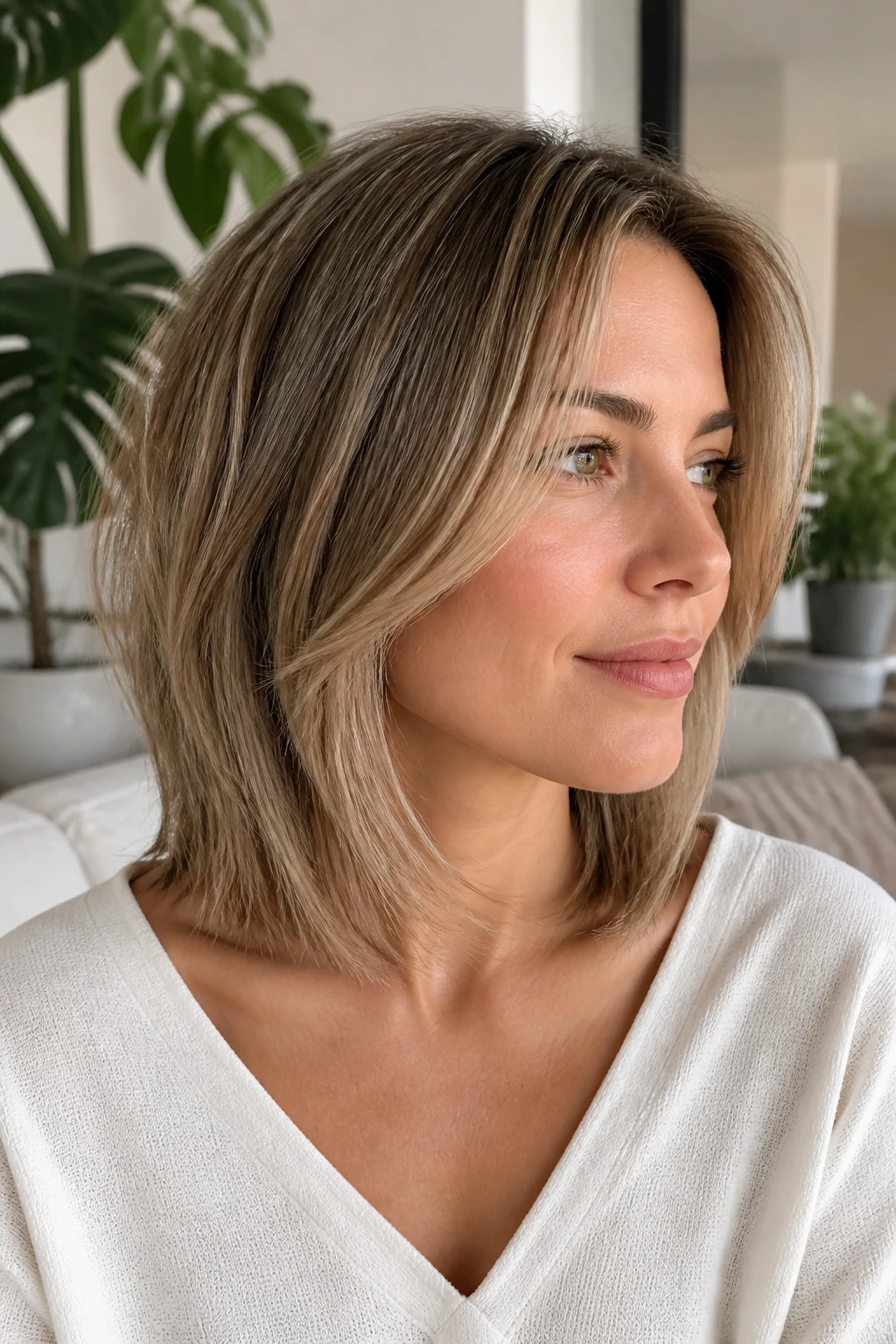
Sometimes the smartest bob is the one that stops pretending it has to be short. A collarbone lob gives thin hair room to move, and it gives a round face more length to work with. That extra inch or two can be the difference between “cute” and “why does my head look wider than my shoulders?”
Face-framing pieces help, but only if they start low enough. You want them to begin around the mouth or chin, then taper toward the collarbone. Layers that kick out at the cheekbone are the wrong move here; they add width where you least want it.
This cut is a favorite of mine for people growing out a shorter bob. It still reads polished, but it buys you breathing room. If your hair tends to collapse at the roots, this shape is easier to refresh with a round brush than a shorter cut that needs constant precision.
5. Side-Parted Sleek Bob
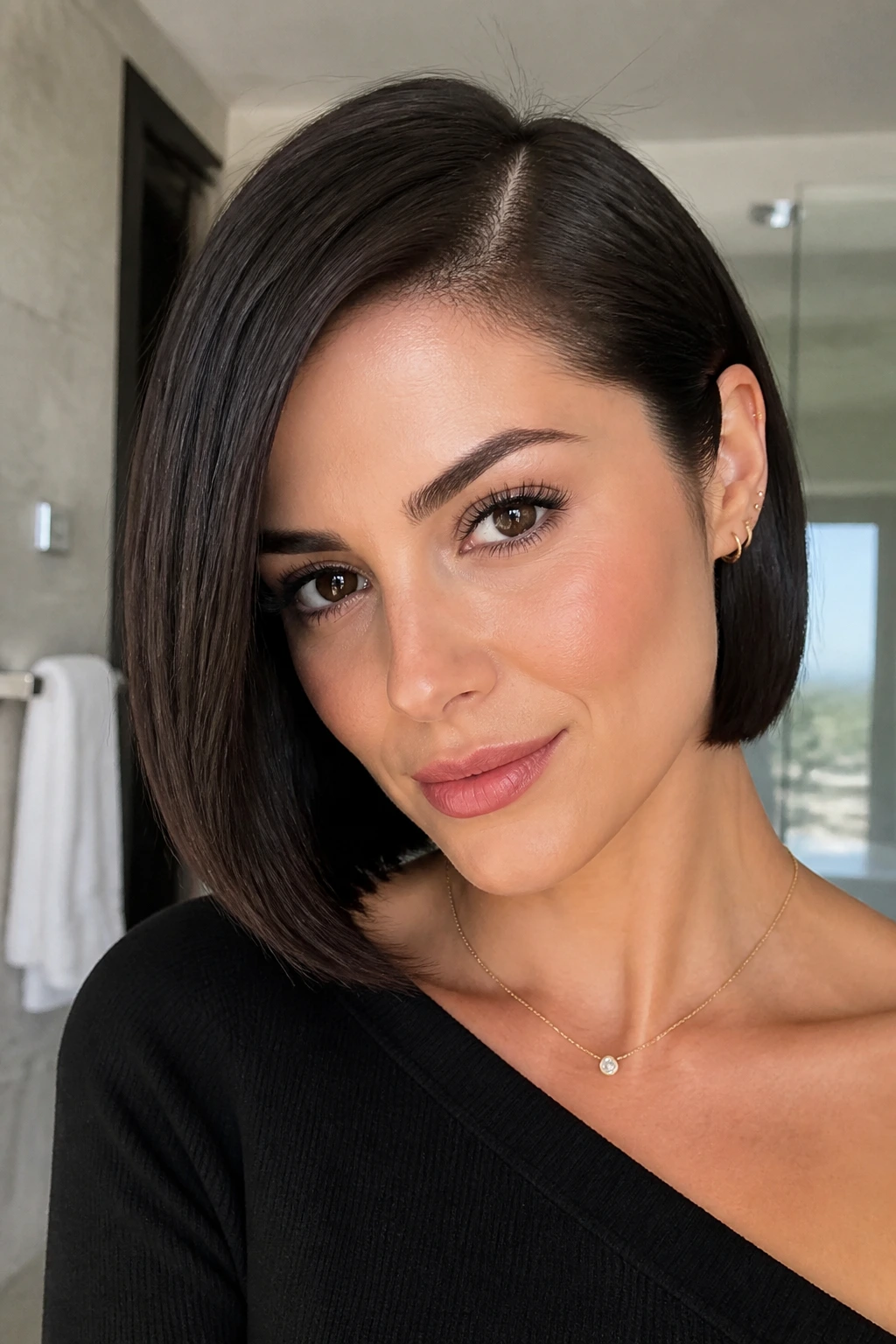
A side part does more than switch the direction of the hair. It lifts one side at the root, breaks up symmetry, and creates a longer diagonal across the forehead and cheek. On a round face, that small asymmetry can be doing a lot of heavy lifting.
Sleek doesn’t have to mean flat. In fact, with fine hair, a sleek finish is often the best way to keep the ends looking thicker. The trick is to smooth the surface while still letting the crown have a little air. A flat iron pass on the ends and a soft blow-dry at the roots gets you there fast.
This style looks especially good when one side is tucked behind the ear and the other side stays loose. That tiny imbalance slims the outline more than people expect. It’s subtle. That’s why it works.
6. Stacked Bob With Crown Lift
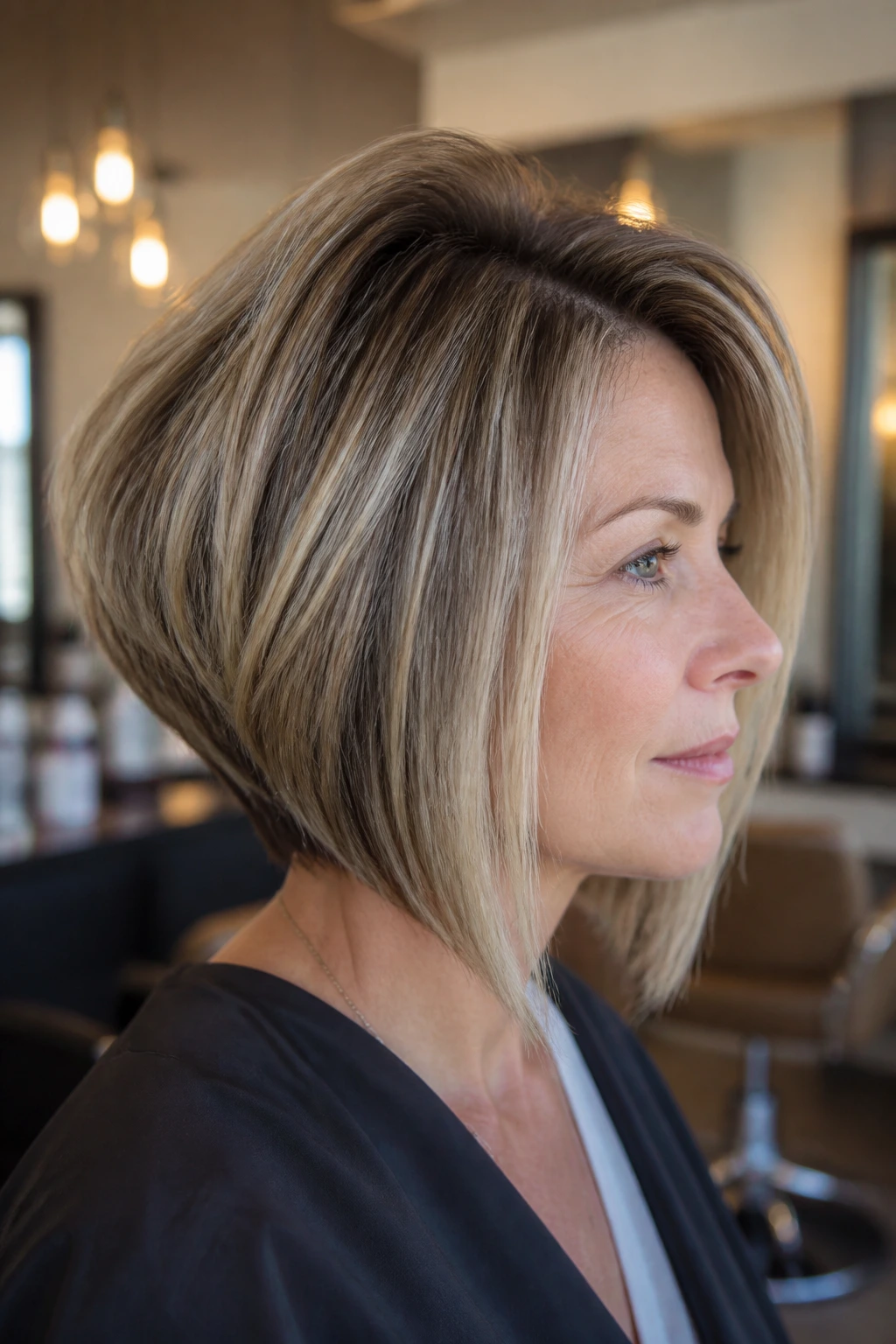
A stacked bob can be a gift for thin hair, but only if the graduation is controlled. The shorter layers at the back create lift at the crown, which keeps the hair from lying too close to the scalp. That matters when your hair needs shape more than it needs length.
The danger is over-stacking. If the back is too short and the sides are too full, the cut can flare out like a mushroom. For a round face, keep the stack soft and let the front pieces stay longer than the back so the face still gets a vertical line.
This is the bob for someone who wants volume without curling a whole head of hair every morning. A round brush at the crown and a quick blast of cool air are enough on most days. The shape does the rest.
7. Bubble Bob With Rounded Ends
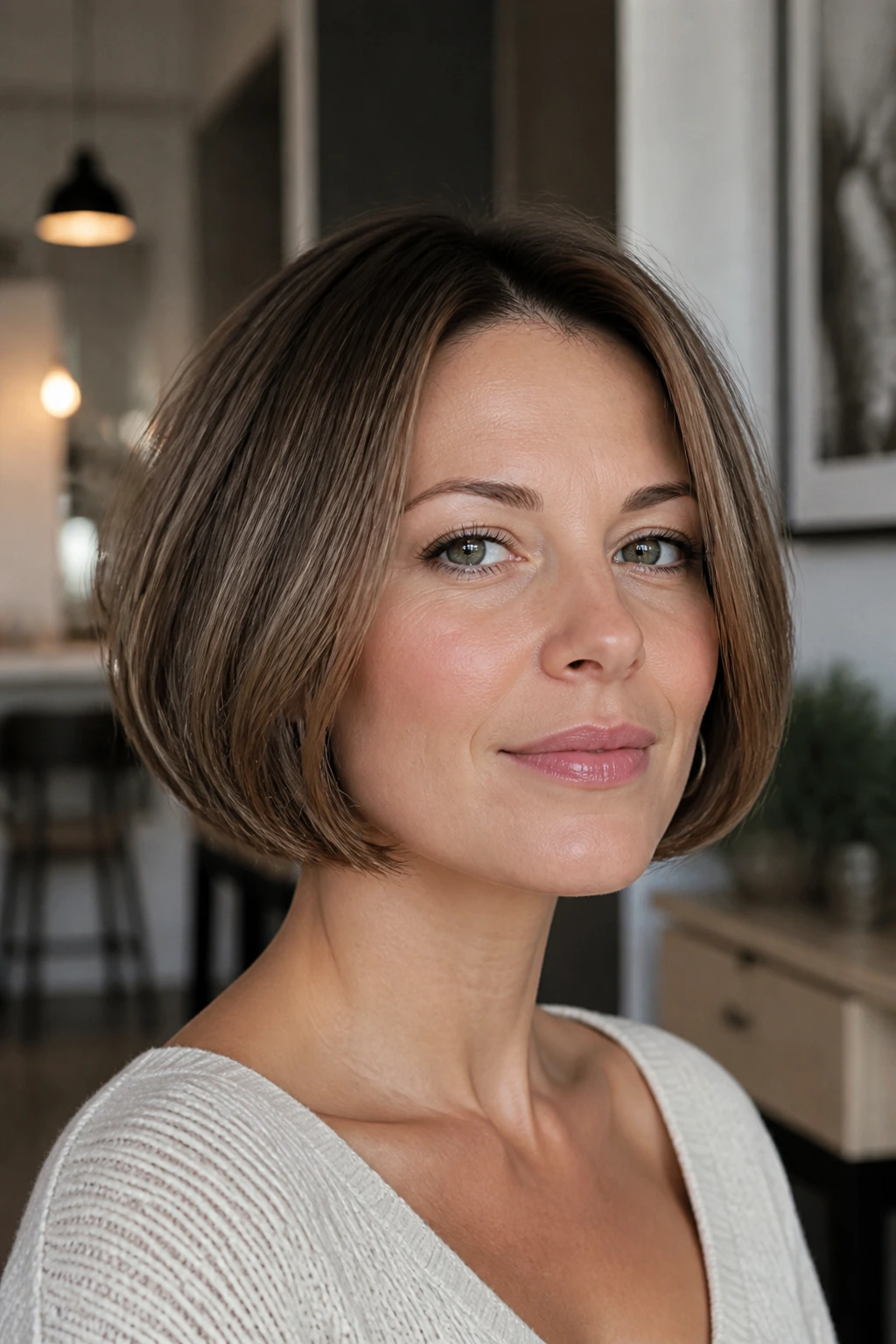
A bubble bob sounds risky for a round face, and sometimes it is. But when it’s cut with a slimmer curve and enough length to clear the jaw, it gives thin hair a plush, rounded shape that looks fuller than a pin-straight outline. The hair sits like a smooth arc rather than a stiff sheet.
The important part is where the bubble ends. If the curve sits right at the cheeks, it adds width. If it falls lower, the style softens the jaw and still keeps the body. That’s why this cut needs a stylist who understands proportion, not just shape.
I like this bob when the hair is fine but not fragile, because it benefits from a small amount of smoothing cream and a round brush. It’s neat. A little playful. And a lot less tricky than people assume.
8. Italian Bob With Soft Volume
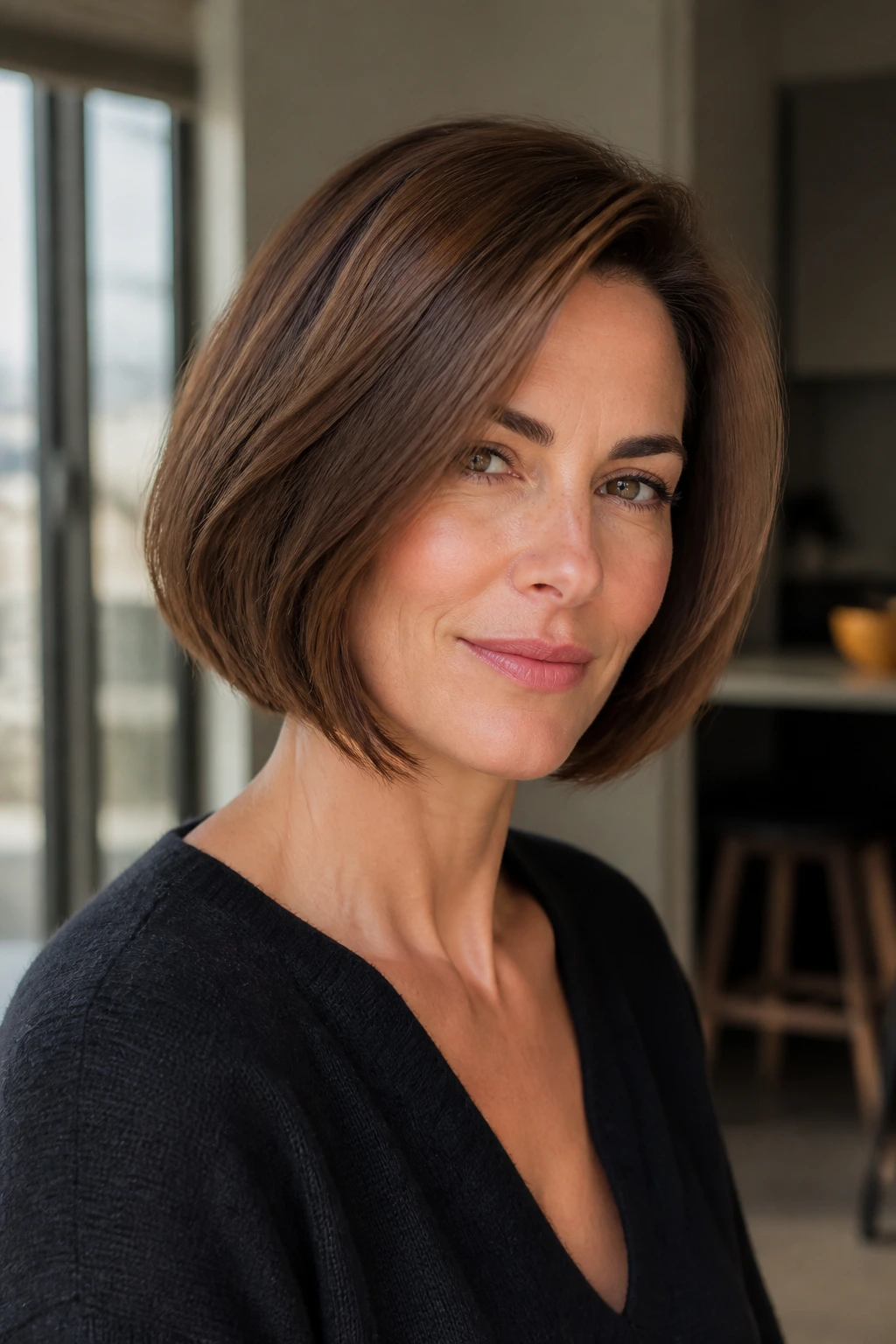
The Italian bob gets its charm from fullness, but on thin hair, fullness has to be faked with care. You want a blunt perimeter, a little internal lift at the crown, and enough length to keep the sides from puffing into the face. Think plush, not bulky.
A round face usually likes this better when the bob lands just below the chin or even grazing the collarbone. That keeps the silhouette from stopping at the widest point of the cheeks. A side part helps, too, because the shape can get dense fast if it’s split dead center.
This is one of those cuts that looks more expensive when it’s not over-styled. A medium round brush, a little root lift, and a soft bend at the ends are plenty. If you’ve been fighting your hair every morning, this shape can be a relief.
9. Choppy Bob With Invisible Layers
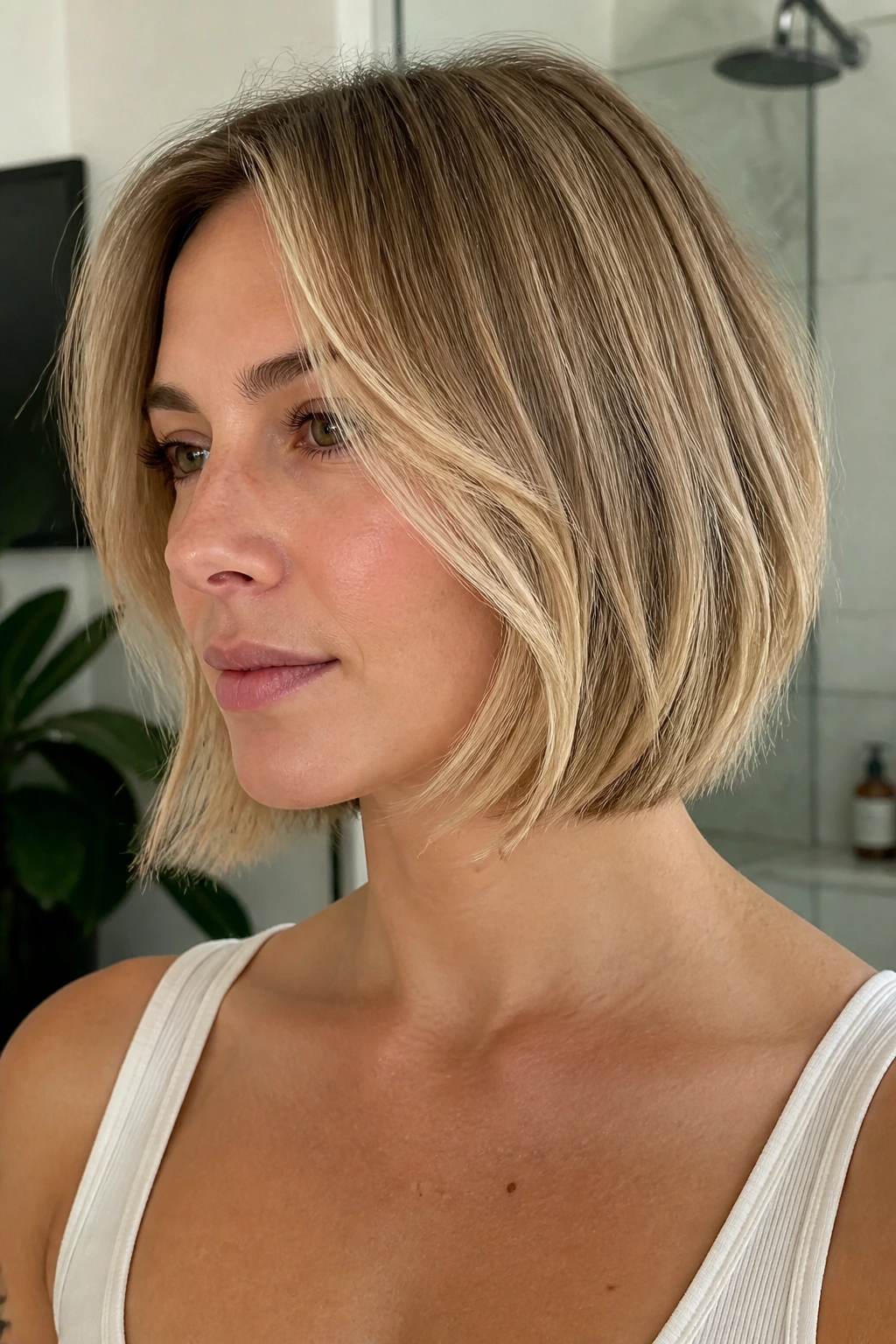
Invisible layers are the secret sauce here. They remove enough weight to keep fine hair from hanging limp, but they don’t leave the ends see-through. That’s the difference between movement and frizz. Thin hair can take a light texture, but it hates being hollowed out.
For a round face, the layers should stay low and quiet. You want movement below the cheekbone, not chopped-up pieces that sit right beside it. The shape still needs a clean outer line so the haircut doesn’t drift into fuzz after two shampoos.
This style is a solid pick if you want something a little less polished than a blunt bob. It looks better with a bit of bend, a dry texture spray, or even air-drying with clips at the roots. Not every bob needs to look freshly pressed.
10. Asymmetrical Bob for a Sharper Line
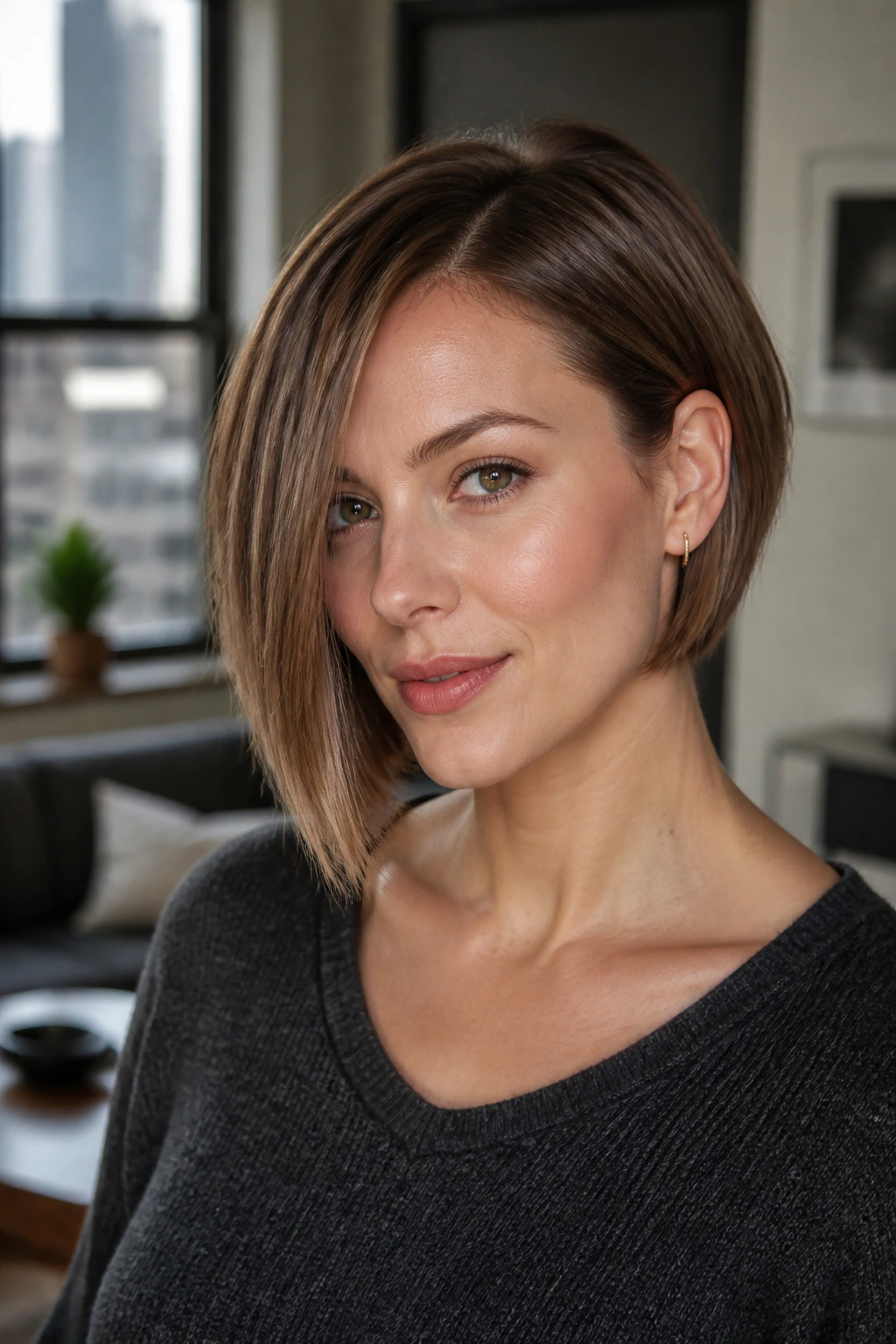
A little asymmetry can do what contouring promises and often fails to do. One side sits longer, so the eye follows the line downward instead of circling the face. On a round face, that diagonal matters. It creates motion and changes the balance of the whole cut.
For thin hair, keep the difference modest. A dramatic asymmetrical bob can eat up precious fullness, especially if one side gets too wispy. A difference of an inch or so is often enough to make the cut feel deliberate without sacrificing density.
This bob looks best when the shorter side is tucked or tucked-back behind the ear. That gives the style a crisp edge and prevents it from reading as lopsided for the wrong reason. It’s a sharp haircut. It should look sharp.
11. Curved-Under Bob With Polished Ends
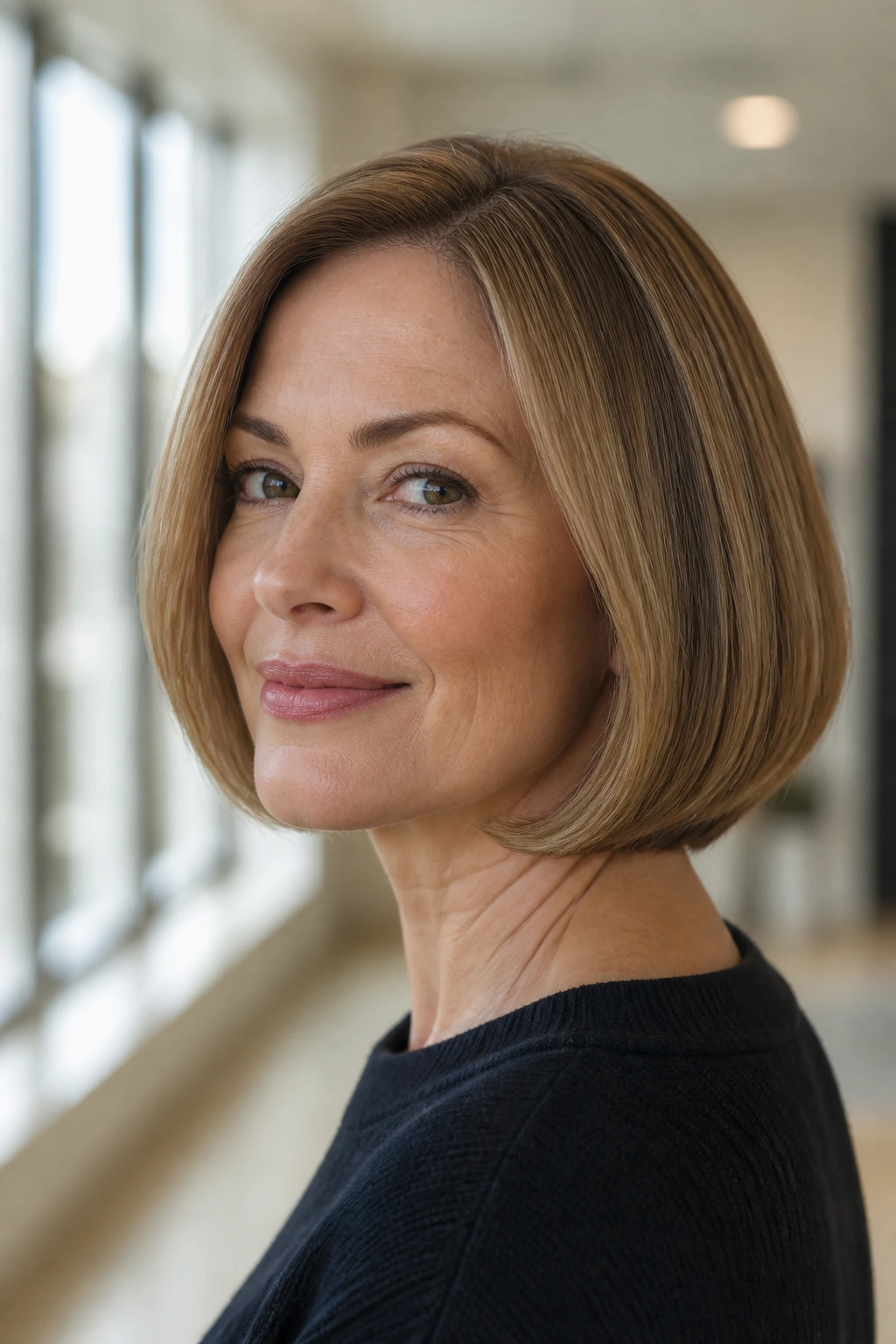
This is the classic salon bob that gets blow-dried under with a brush, and I still think it earns its place. Curving the ends inward makes thin hair look neat and thicker at the edge, where people actually notice fullness. The shape is tidy, controlled, and a little bit old-school in the best way.
For a round face, the curve needs to happen below the cheekline. If the under-turn begins too high, the style starts to widen the middle of the face instead of narrowing it. The best version touches the jaw or a bit below, then turns under gently.
It’s also one of the easier bobs to dress up. A glossing spray and a clean part make it look finished. A tiny bend at the front is enough to keep it from looking too rigid.
12. Tousled Wavy Bob With Loose Bend
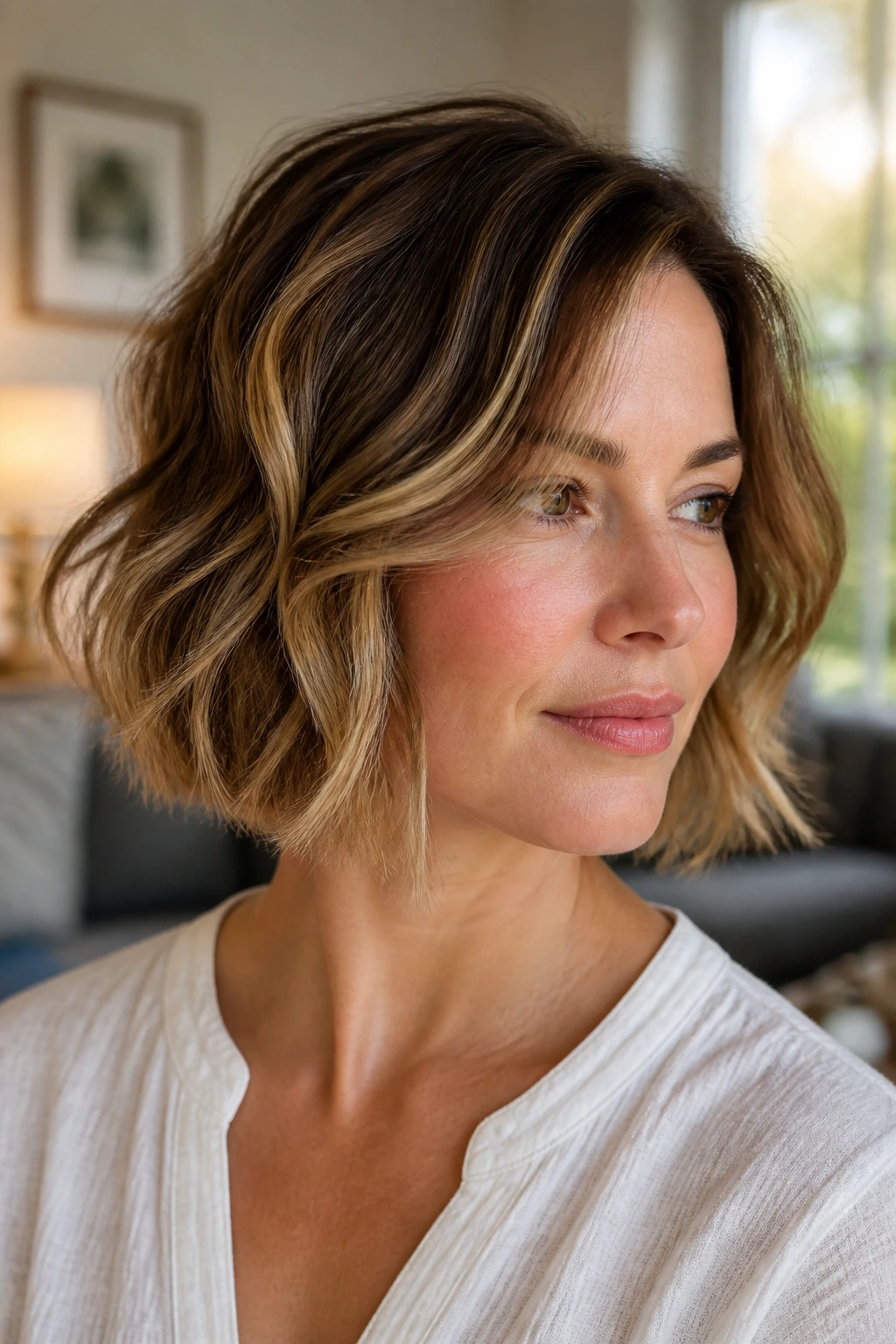
Not every thin-haired bob has to be sleek. A tousled bob can add the look of volume fast, as long as the waves are loose and the ends stay a little straighter than the middle. That keeps the hair from ballooning sideways around the cheeks.
The best version starts the bend lower than the cheekbone. If the wave begins too high, the face gets wider in the middle, and the roundness becomes the first thing you notice. Keep the movement from the chin down, and the face looks longer almost by accident.
I like this style for anyone who gets a little bend in their hair without much effort. A 1-inch wand, a few quick turns away from the face, and a finger rake are enough. Don’t overthink it. The charm is in the looseness.
13. Wet-Look Center-Part Bob
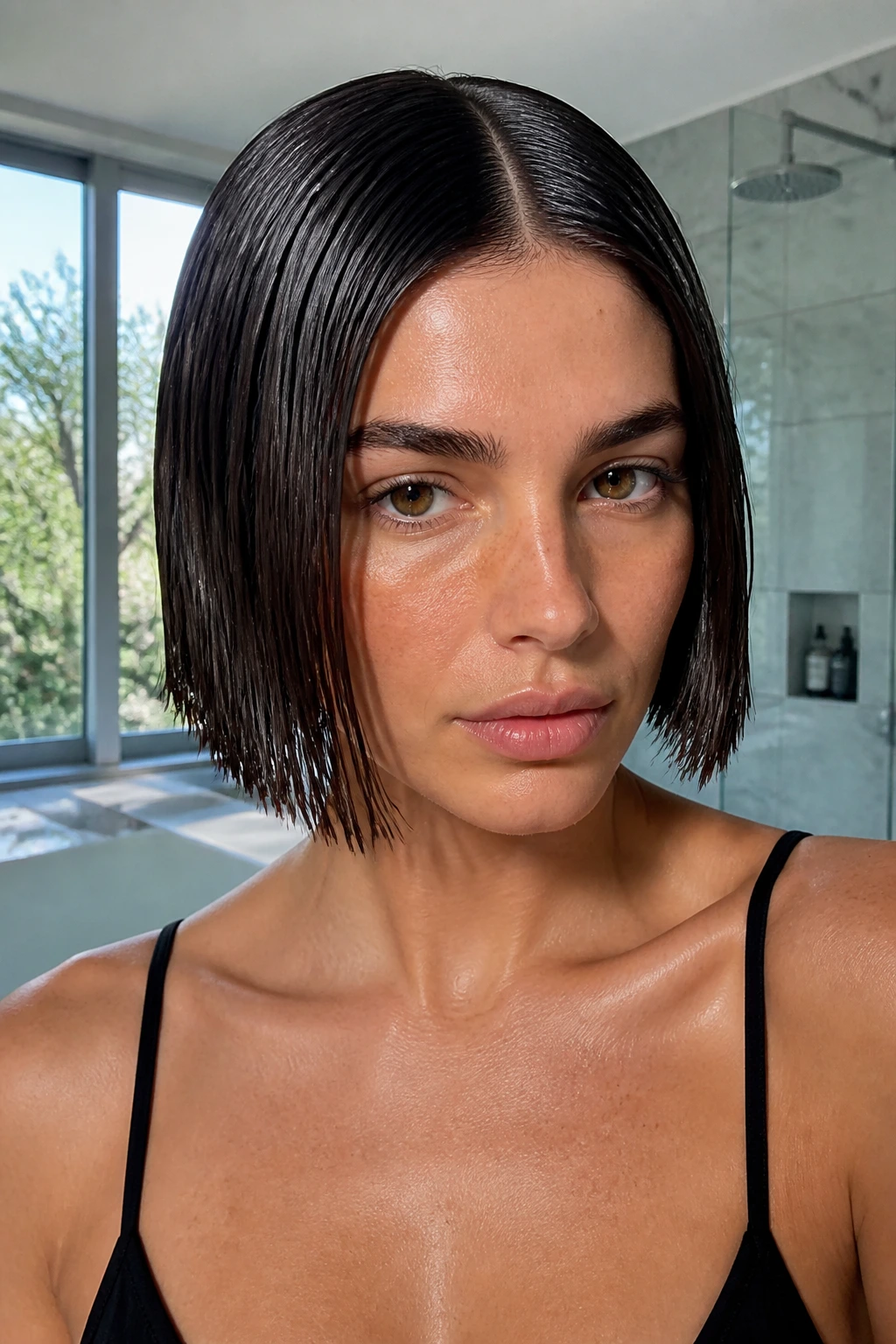
This one is for the days when you want the haircut to look deliberate and a little severe. A center part creates a vertical line down the face, and the wet-look finish keeps fine hair glossy instead of fluffy. On a round face, that clean middle line can be a smart counterweight.
The catch is balance. The bob needs enough length to keep the sides from sitting right at the cheeks. If the cut is too short, the center part just frames the roundness more clearly. A chin-plus length usually works better than a tiny crop.
Use less product than you think. A damp look turns greasy fast on fine hair, especially near the roots. Start with gel or cream from the mid-lengths down, then smooth the top with a comb and leave the crown alone.
14. Tucked-Behind-the-Ear Bob

This is one of the easiest ways to change the shape of a bob without changing the haircut itself. Tucking one side behind the ear opens up the cheek and jaw, which adds asymmetry and makes the face look less circular. It’s simple, but simple can be very effective.
The cut underneath should still have enough length to survive the tuck. If the bob is too short, the tucked side can stick out or spring free. A little extra length in front gives you room to play with placement.
This style is especially good when you need a polished look with almost no effort. A side part, a light bend, and one tucked side do enough. Sometimes that’s all you need to stop a bob from feeling too boxy.
15. Curtain-Bang Bob With Airy Movement

Curtain bangs can be a smart move on a round face because they split the forehead and draw the eye down the sides instead of straight across. Pair them with a bob that lands below the chin, and the whole cut starts to feel longer and softer.
The important word is airy. Heavy curtain bangs can swallow fine hair and make the front look flat by noon. You want a light fringe that opens at the brow or cheekbone, then melts into the front pieces without making a solid wall.
This one works best when there’s a little bend in the hair. A round brush at the fringe and a soft blow-dry through the sides keeps the shape from collapsing. It’s a prettier, easier version of bangs than the blunt kind.
16. Box Bob With a Blunt Perimeter
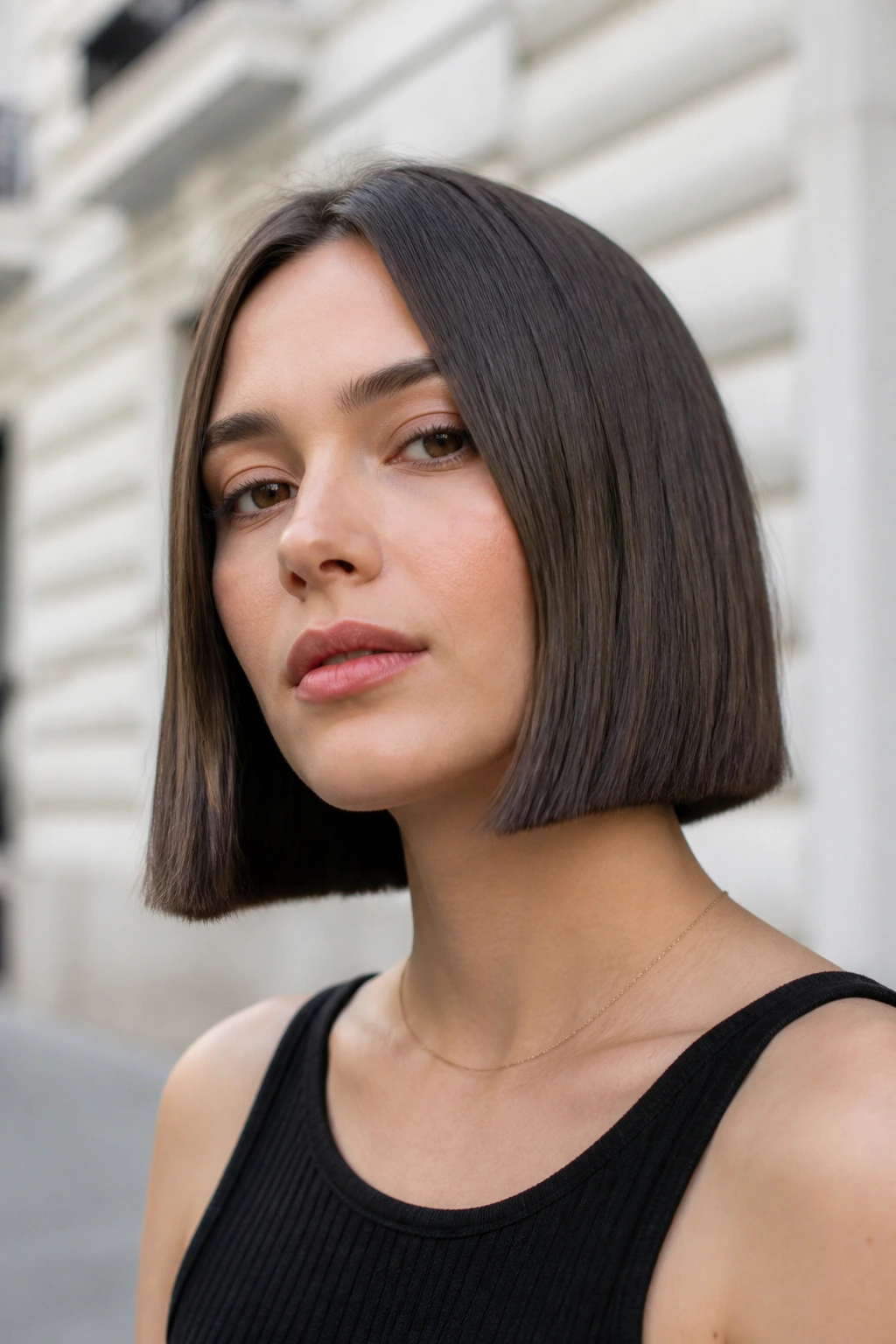
A box bob sounds rigid, and yes, that rigidity is the point. The sharp perimeter makes thin hair look fuller at the ends, almost like the haircut is drawing its own frame around the face. That can be useful when the strands themselves need help showing up.
For a round face, though, the box bob needs a bit of strategy. Keep the line below the jaw or just touching it, and soften the part so the cut doesn’t sit like a square around the cheeks. A center part can make this shape too literal; a slight off-center part is easier to wear.
This is a strong choice if you like precision and don’t want the haircut wandering around after a busy day. The shape stays legible. That alone is worth something.
17. Feathered Bob With Light Face Framing
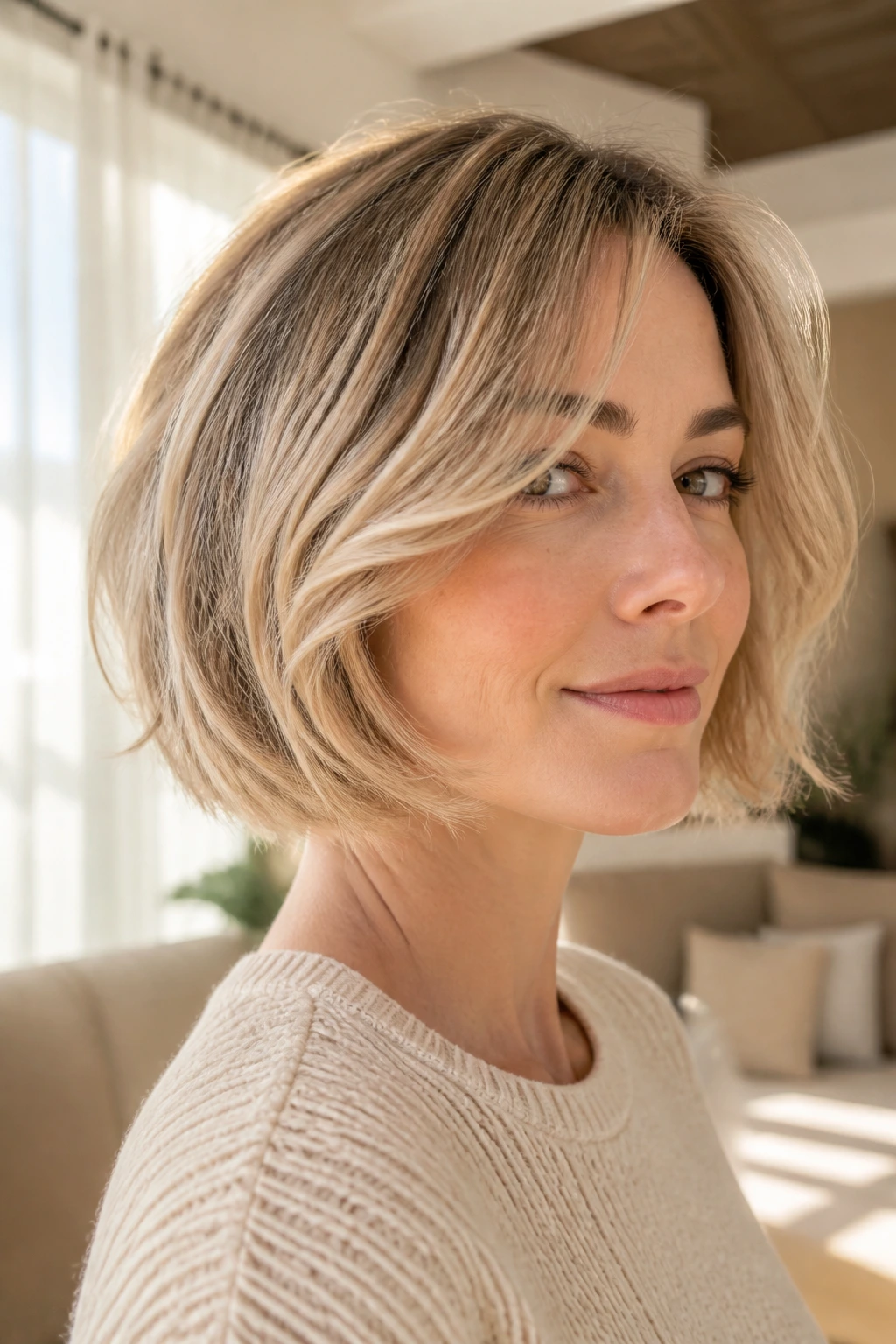
Feathering can be dangerous on fine hair if it’s overdone, but used sparingly, it can make a bob move without losing its shape. The goal is a little lift and softness around the face, not wisps that disappear when you blink. Thin hair needs suggestion, not demolition.
For round faces, keep the feathering low and the front pieces a little longer. You want a soft diagonal that starts near the cheek and falls away from it. If the layers hit right at the cheekbone, they can widen the face instead of slim it.
This style is good if your hair gets stiff when it’s cut blunt. The feathered edge relaxes the line a bit. It feels lighter, but it still needs a solid outline underneath.
18. Micro-Bob With a Deep Side Part
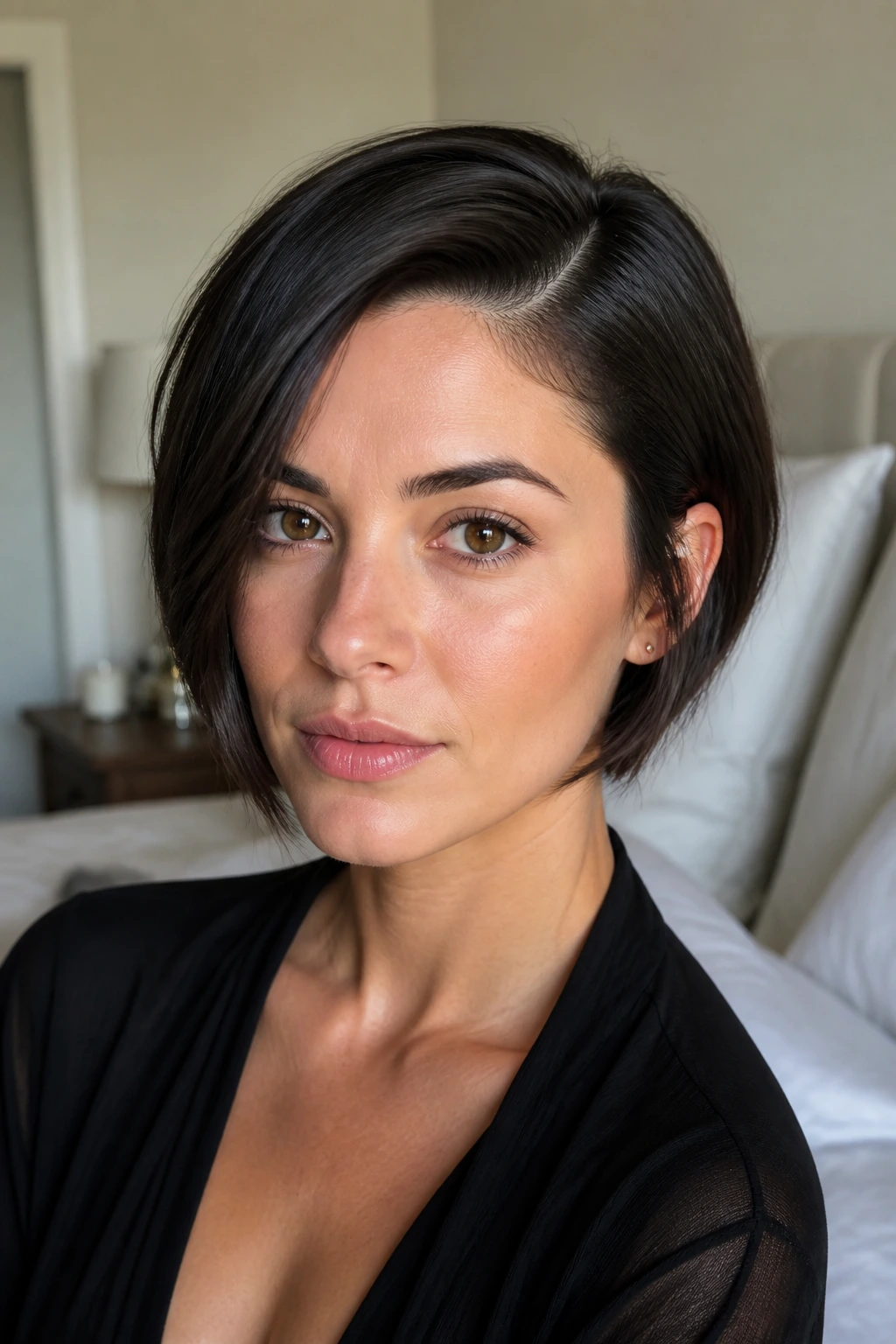
A micro-bob is a bold move, and I’m not going to pretend it’s the safest one on a round face. Still, with the right length and a deep side part, it can look crisp and very modern. The face-slimming effect comes from the part and the sharp shape, not from extra length.
For thin hair, this cut can actually be kind. Less length means less weight pulling down the root. The key is keeping the bob slightly angled forward so the front pieces skim past the cheek, instead of stopping right at the widest point of the face.
If your neck is long and you like clean lines, this can be a fun one. If you want softness, skip it. This is a style with opinions.
19. Swing Bob With Longer Front Pieces
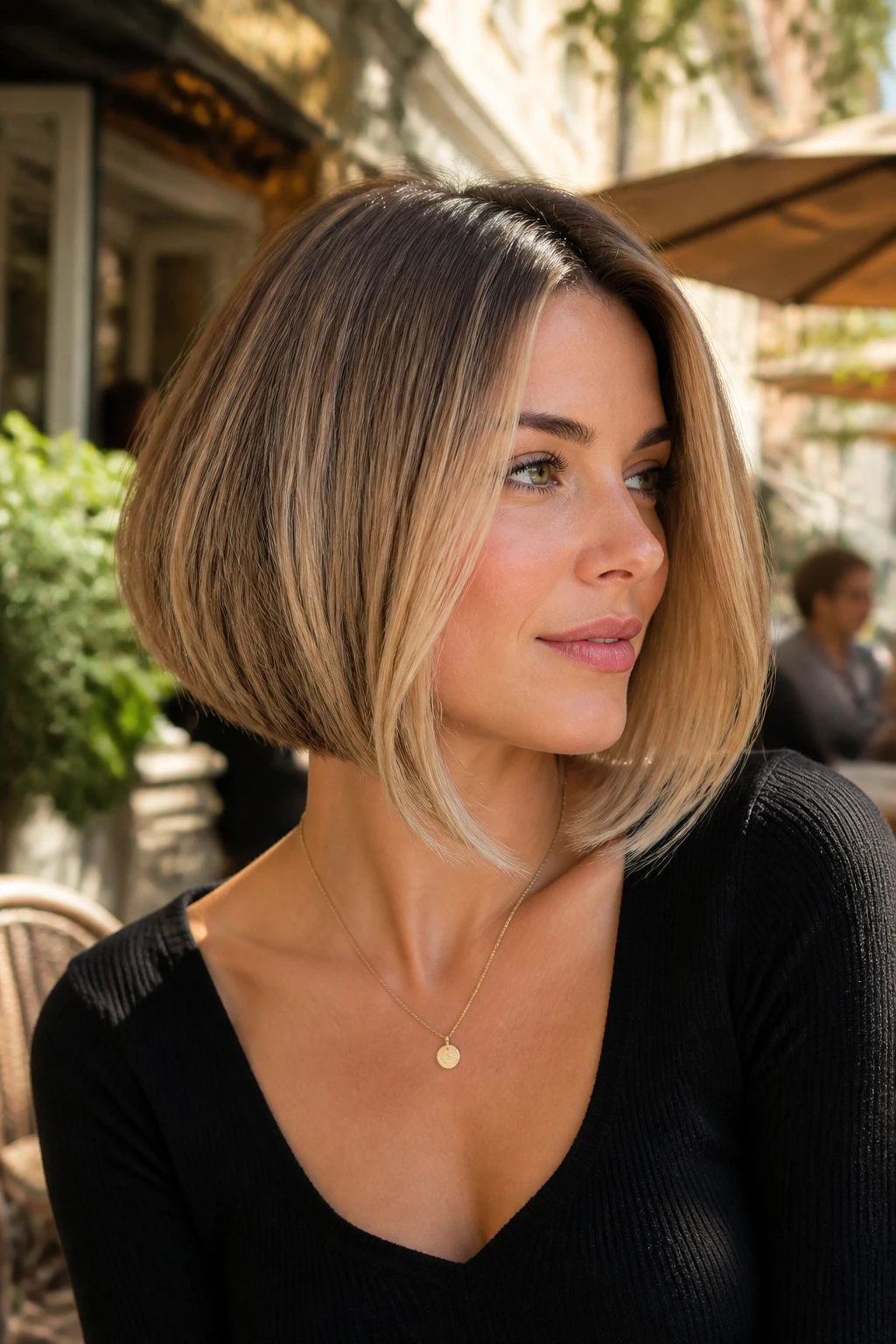
The swing bob has movement built in. The back sits shorter and lighter, while the front length creates a soft swing when you walk or turn your head. That motion keeps thin hair from feeling static, and it stops a round face from getting boxed in.
The front pieces should be long enough to pull the eye down, but not so long that the whole bob turns into a lob with commitment issues. The best versions have a little bend at the ends and enough internal structure to keep the shape from collapsing.
This is one of those cuts that looks better with a little air in it. Not perfectly smooth, not crunchy, just shaped. If you like a bob that moves instead of sitting there, start here.
20. Bixie-Bob Hybrid for Extra Lift
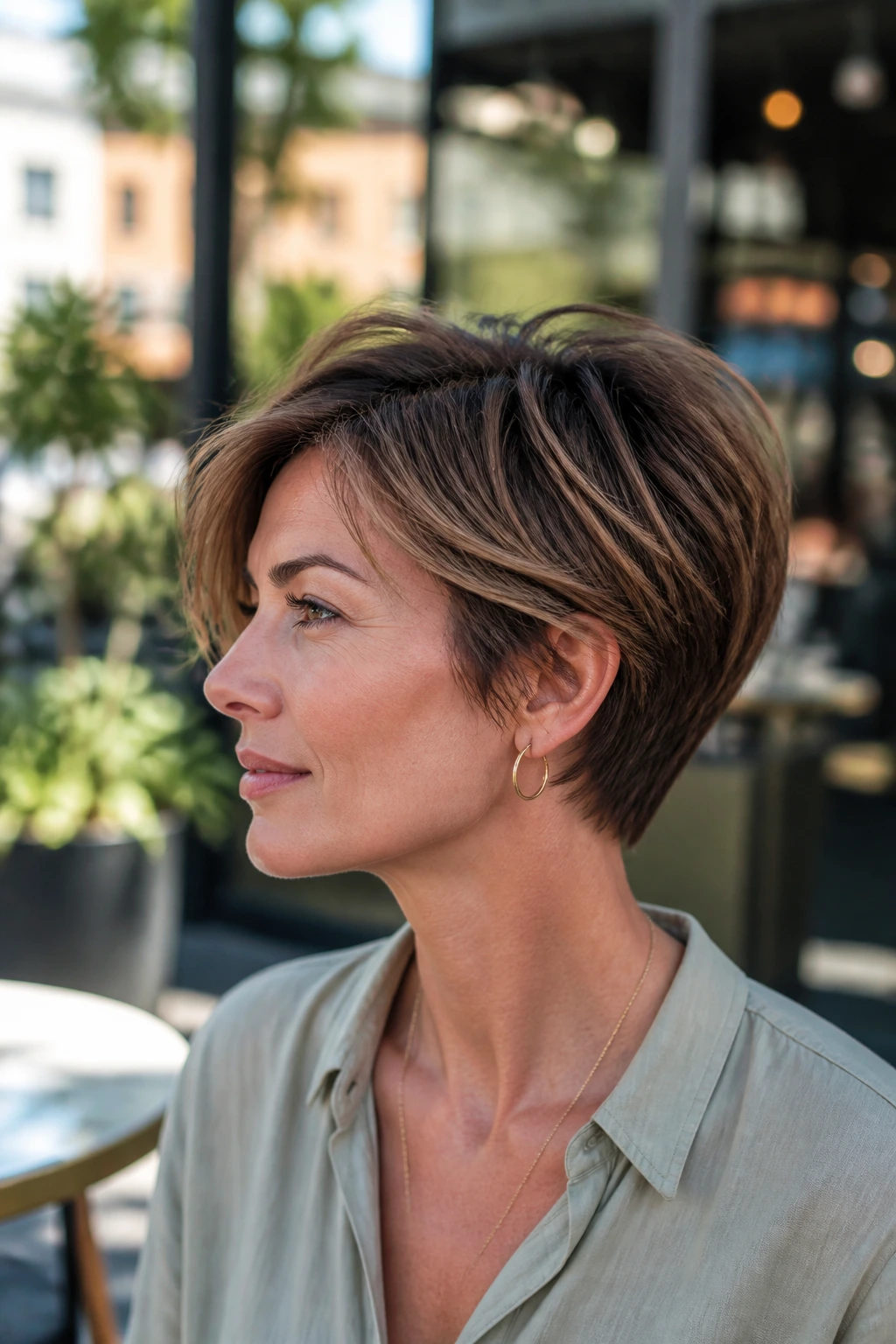
A bixie-bob hybrid lives between a bob and a pixie, and that in-between quality can be useful for very fine hair. The cropped nape keeps the back light, while the longer top gives you room to build height. That height is the part that helps a round face look a touch longer.
This is not the safest choice if you want heavy coverage around the jaw. It exposes more of the neck and ears, so the styling has to be intentional. A side sweep or a longer fringe keeps it from reading too short or too wide.
I like this one for people who want something airy and quick to style. It dries fast. It needs a trim schedule, though, because the shape loses its snap faster than a chin-length bob.
21. Rounded Lob With Soft Ends

A rounded lob is one of the most forgiving choices for fine hair and a round face. The extra length gives the face room to narrow visually, and the soft rounding at the ends keeps the hair from looking stringy. It’s a safe place to land if you’re nervous about going short.
The ends should curve, not puff. That means using a soft brush, a low heat setting, or a large iron to create just enough bend to support the shape. Keep the roots a bit lifted and the sides smooth.
This cut also grows out well. If you’re between salon visits, it usually keeps its line longer than a shorter bob. Not flashy. Very useful.
22. Air-Dried Bob With Root Clip Lift
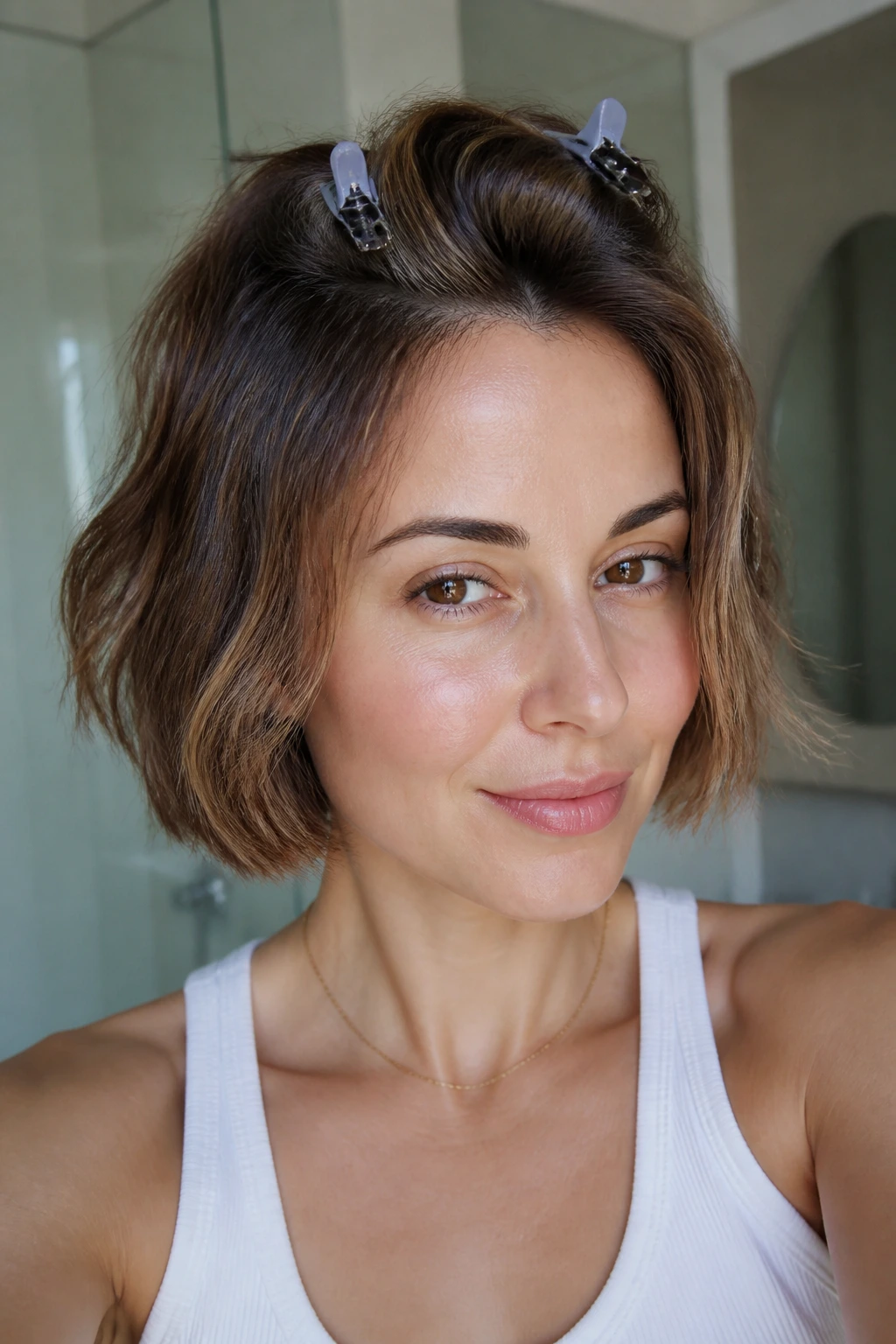
Some bobs look best after you’ve left them alone for half an hour. An air-dried bob with root clip lift uses small clips at the crown while the hair sets, which gives fine strands a bit of body without heat. It’s a quiet trick, but it works.
For a round face, the length should still sit below the chin if possible. That keeps the silhouette from stopping too high around the cheeks. A center part can work, but a soft off-center part often gives a little more shape.
This style is for the person who wants movement without a blowout. A little mousse, a few clips at the roots, and a rough dry with your fingers can leave the hair with enough bend to look intentional. I’d call that a win.
Why These Bobs Work on Fine Hair and Softer Face Shapes
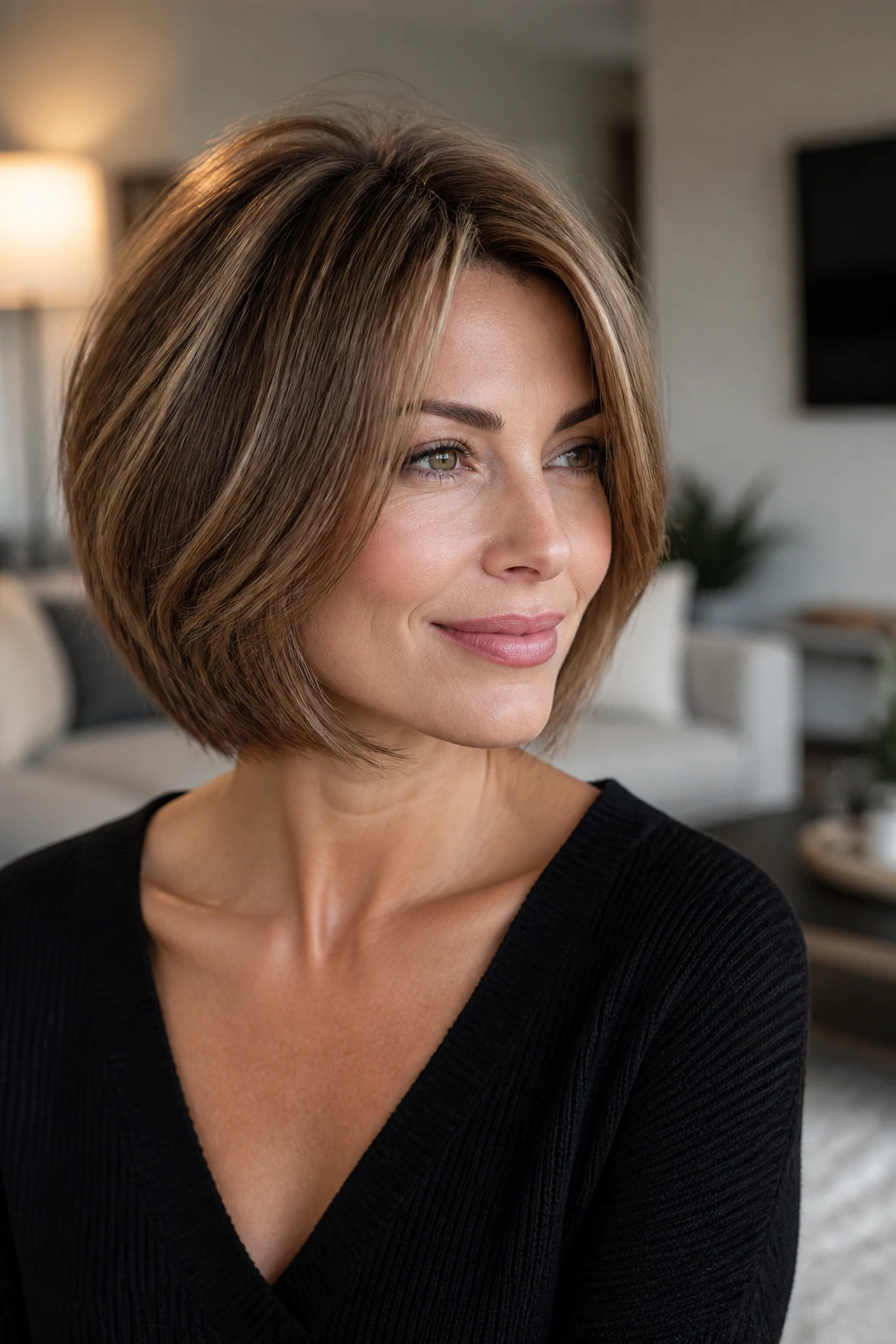
The best shapes here all do the same basic job: they keep the perimeter full and the sides controlled. Fine hair looks thicker when the ends sit together in one clean line. Round faces look longer when the haircut pulls the eye downward instead of spreading the width across the cheeks.
Keep the Width Below the Cheekbone
A lot of bob trouble starts when layers, curls, or bends flare out right at the widest part of the face. That’s the danger zone. If the style puts volume there, the face reads even rounder, even if the haircut is technically “balanced.”
The fix is simple in theory and annoyingly specific in practice. Keep the volume at the crown, the movement under the jaw, and the front pieces long enough to pass the cheekbone before they start turning in or out.
Use Height, Not Puffiness
Height at the crown changes the silhouette. Puffiness at the sides doesn’t. Those are not the same thing, and a lot of salon blowouts blur the line between the two.
If your hair is fine, root lift sprays, a side part, and clips at the crown will help more than extra layers. You want the top to rise a little and the sides to stay clean. That’s the whole dance.
Blunt Ends Beat Over-Texturizing
There’s a myth that fine hair always needs lots of layers. Sometimes it does. More often, it needs a stronger outline and fewer broken ends. A blunt edge creates visual mass, which is why so many of these cuts lean on blunt or softly beveled perimeters.
That doesn’t mean every bob has to look heavy. It means the outer line should stay intact while the interior gets just enough movement to keep it from falling flat.
How to Brief Your Stylist Without Getting a Bob You Don’t Want
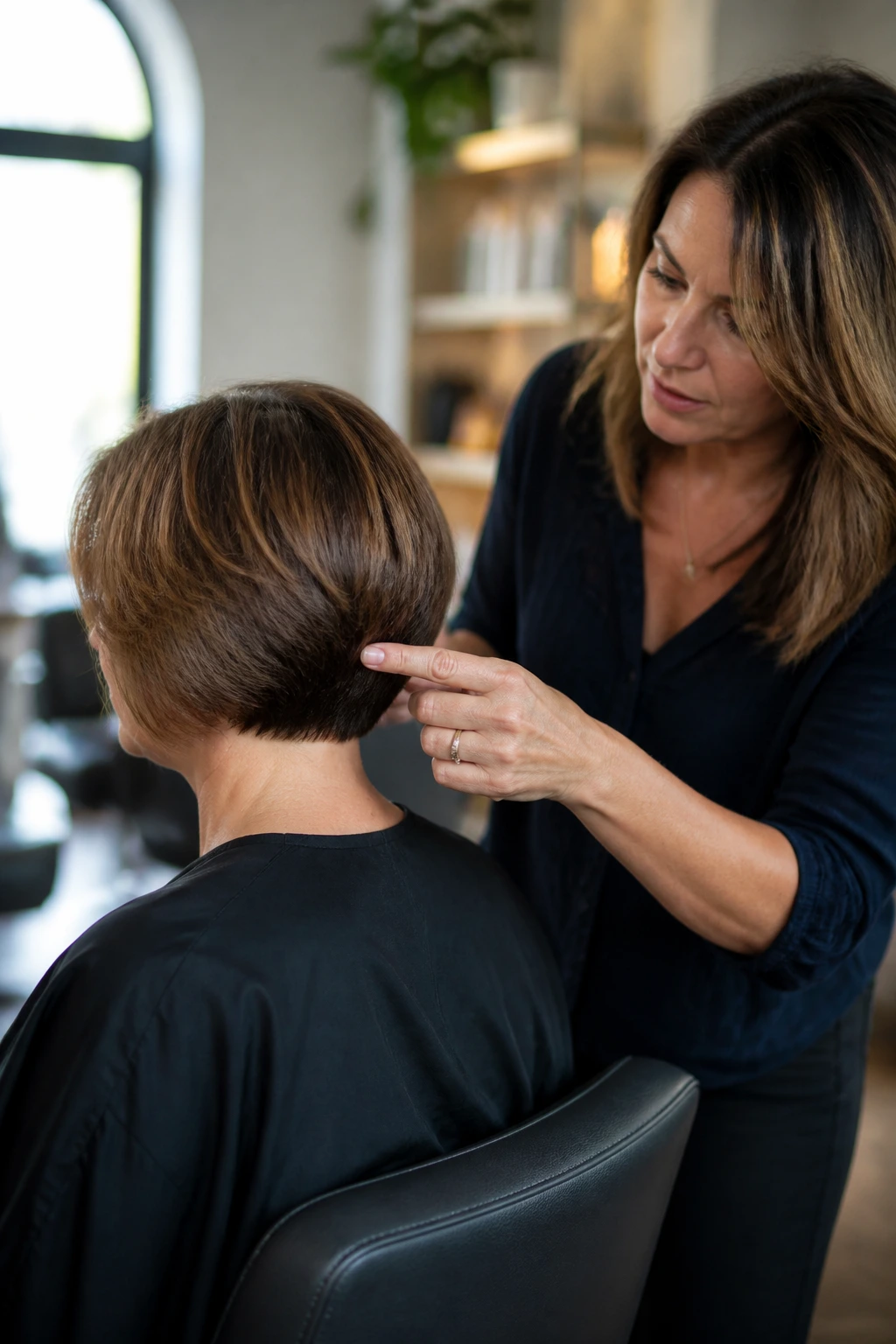
Bring photos, yes. But bring words too. Photos show shape; words explain what the shape should do on your head. That matters because two bob cuts can look similar in a chair and behave wildly differently after washing.
Tell your stylist where you want the shortest point to land. For a round face, that usually means below the cheekbone or at least below the widest part of the face. Say you want the crown to have lift without making the sides bulky. That one sentence saves a lot of trouble.
Phrases That Help at the Chair
- “Keep the perimeter blunt so the ends look fuller.”
- “I want the front pieces to go past my cheekbone.”
- “Please don’t over-thin the bottom.”
- “I want crown lift, not width at the sides.”
- “Let the part be a little off center.”
If you have fine hair, mention whether it falls flat, splits at the crown, or puffs at the ends. That tells the stylist where to keep weight and where to remove it. Good cuts are built from those little details.
Essential Tools for Styling These Looks
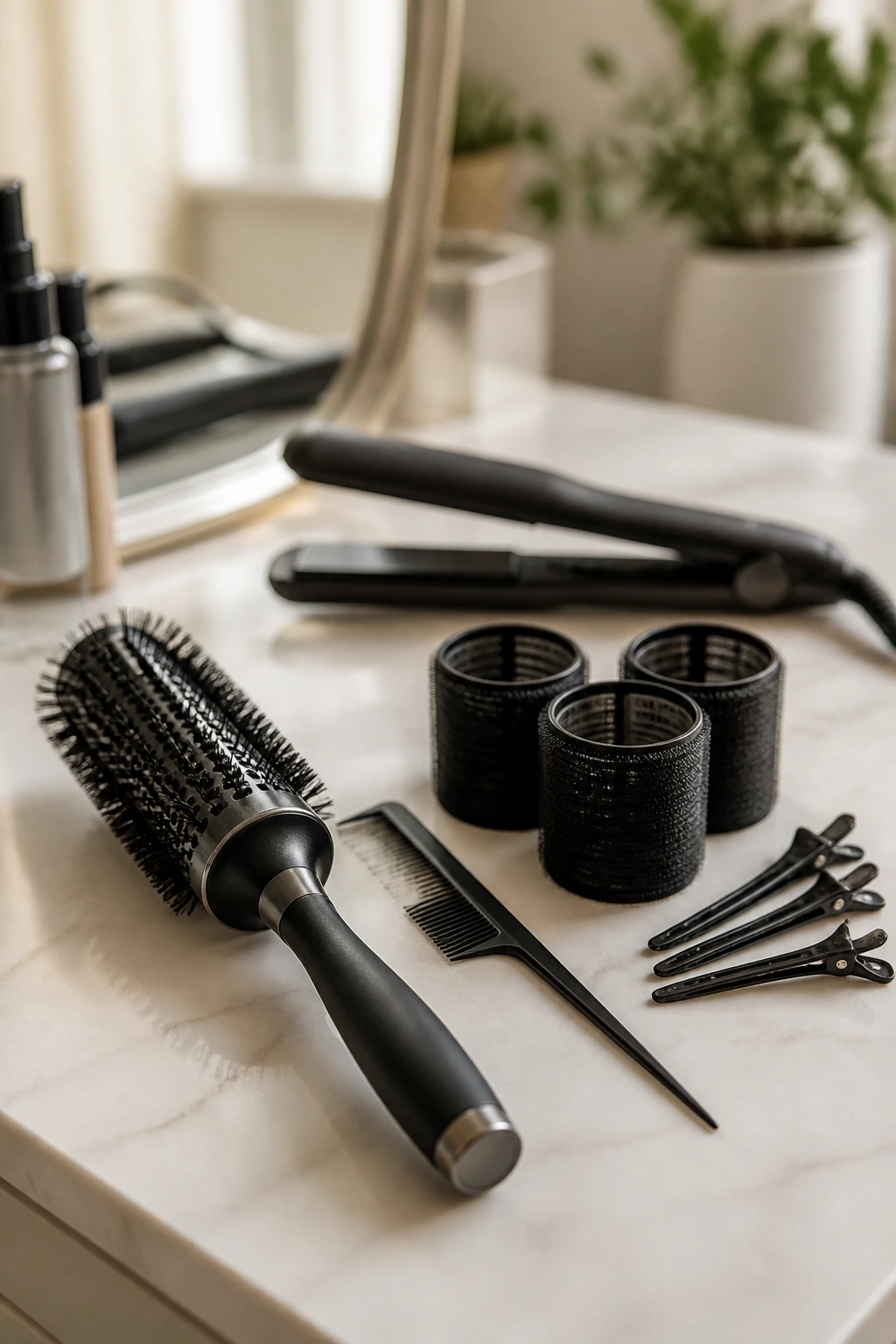
You do not need a drawer full of gadgets. You need a few things that help fine hair hold shape long enough to matter.
- Blow dryer with a concentrator nozzle: This keeps airflow pointed where you want it, which matters for smoothing the cuticle and lifting the root.
- 1-inch or 1.25-inch round brush: The smaller size gives you more control at the crown and under the ends.
- Tail comb: Useful for setting clean parts and lifting small sections at the root.
- Duckbill clips or root clips: These hold the crown up while the hair cools, which is where a lot of volume gets saved.
- Flat iron with rounded edges: Helpful for a soft bend or a tucked-under finish without creating a hard crease.
- Velcro rollers: Old-school, yes. Still useful for a quick crown boost while you finish makeup or get dressed.
- Lightweight paddle brush: Good for smoothing without stretching the hair too hard.
- Microfiber towel or T-shirt: Fine hair doesn’t love rough towel rubbing.
Products That Give Fine Hair Grip, Lift, and Shine
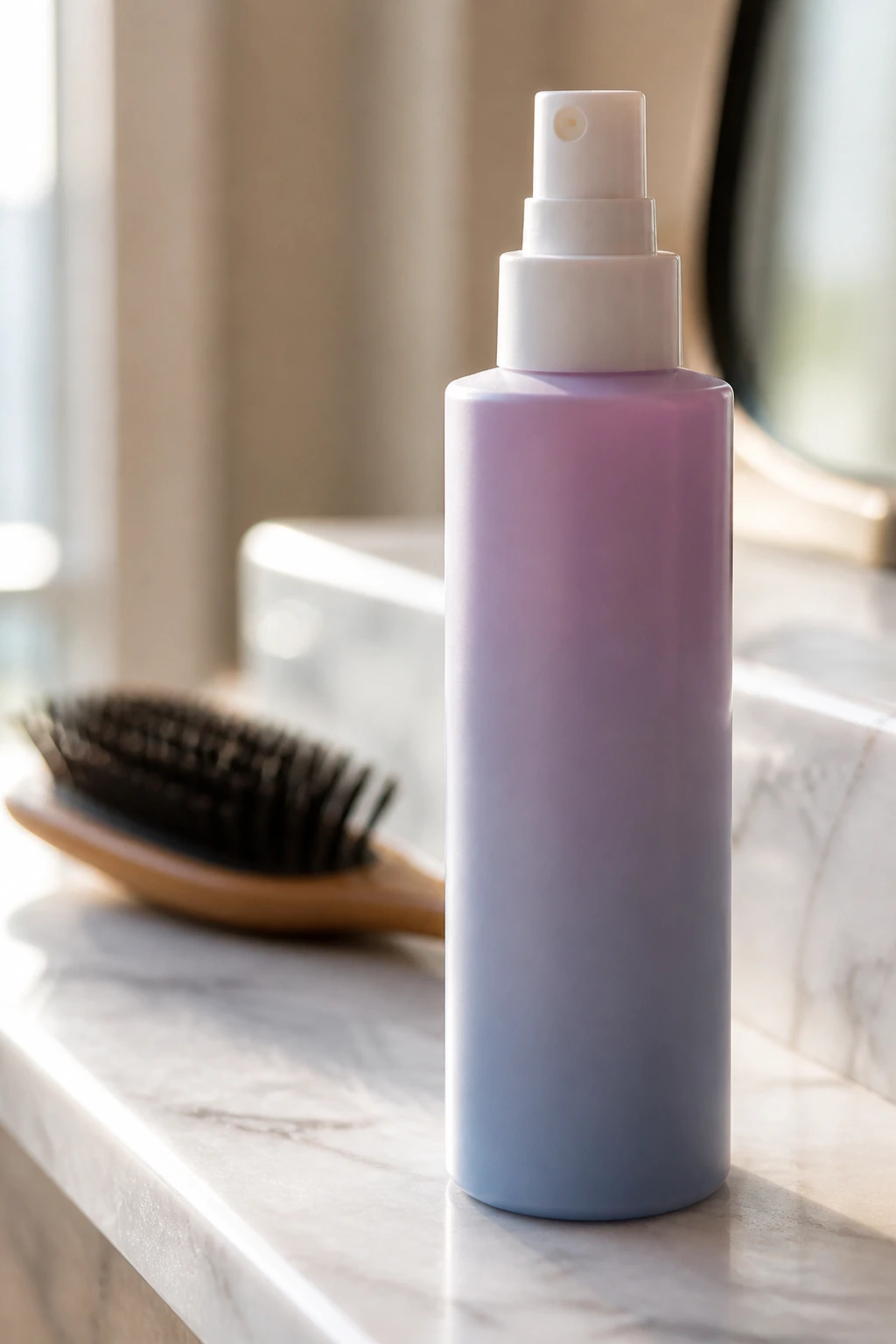
Fine hair gets weighed down fast, so the product shelf needs to be selective. A heavy cream can flatten a bob before it leaves the bathroom.
- Root-lifting spray: Best at the crown and along the part line on damp hair. Aim it at the roots, not the ends.
- Light mousse: Adds a little memory to the hair so the bob keeps shape after drying.
- Dry shampoo: Not only for oily hair. A small amount at the roots can add grip and lift on clean hair, which helps thin hair hold a style better.
- Texturizing spray: Use sparingly through the mid-lengths for separation and a little air between pieces.
- Light serum or oil: One drop, maybe two. Just on the ends if they frizz, never through the root area.
- Flexible hairspray: Better than a stiff lacquer if you want movement after the blowout.
- Heat protectant: Non-negotiable if you use a brush, iron, or wand more than once a week.
How to Style a Bob Without Flattening the Crown

Fine hair usually fails at the same point: the crown goes flat while the ends look puffed or bent. That’s fixable, but you have to start at the roots, not the ends.
Put mousse or root spray on damp hair, then blow-dry the roots in the opposite direction of your part for the first pass. That little bit of lift at the base matters more than an extra round brush flourish at the bottom. Once the roots are dry, shape the ends with a brush or iron.
The Part and the Cool-Down Matter
If you want volume that lasts, let the hair cool while it’s still lifted. Clips at the crown, a few velcro rollers, or even lifting the front section with your fingers for a minute can keep the shape from collapsing the second you move. Hair sets as it cools. That’s the whole trick.
For a round face, don’t build width with curls that start high on the cheek. Start your bend lower. Keep the front pieces moving downward, not outward. A bob should frame the face, not square it off.
Common Mistakes That Make a Bob Go Sideways
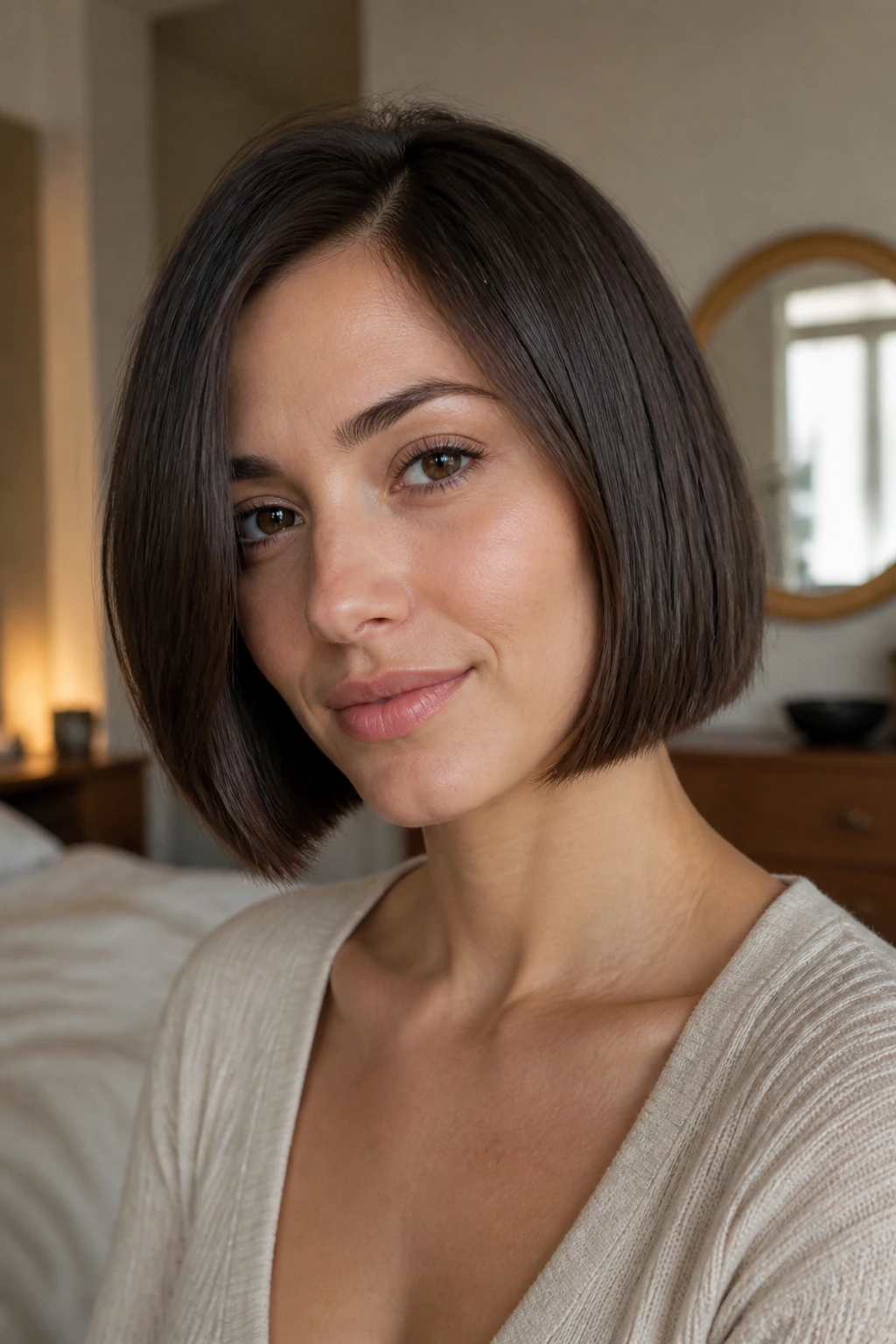
- Too much width at the cheekbone: The symptom is a haircut that looks fuller in the mirror and wider in every photo. The fix is longer front pieces and less volume at the sides.
- Over-thinning the ends: If the bottom looks wispy or transparent, the stylist took out too much weight. Fine hair usually needs a stronger line, not a shredded one.
- Curls that start too high: Tight bend around the cheeks makes the face look rounder. Start the wave lower, or keep the front straighter.
- Heavy product at the root: Creams and oils near the scalp flatten the top within an hour. Keep them off the crown and use lighter spray formulas instead.
- A part that fights your growth pattern: If the hair keeps splitting somewhere else, the style will look messy no matter how good the cut was. Work with the cowlick, not against it.
- Waiting too long between trims: A bob loses its shape fast when the ends start flipping in odd directions. Once the line breaks, the whole thing reads softer and wider.
Variations and Adaptations to Try

The Glossy Office Bob
Keep the perimeter blunt, the part slightly off center, and the finish smooth with a light serum on the ends only. This one looks sharp with minimal volume and pairs well with a tucked side.
The Air-Dry Texture Bob
Use mousse on damp hair, clip the roots, and let the mid-lengths dry with a soft bend. This is the version I like for wavy fine hair, because it avoids over-styling and still gives shape.
The Fringe-Free Face Slimmer
Skip bangs altogether and let the front pieces start around the chin or collarbone. That open forehead line can make a round face look longer without asking the hair to do too much.
The Curly-Friendly Bob
If your hair bends naturally, keep the length a touch longer and ask for curl-by-curl shaping only at the ends. The goal is to preserve the outline while letting the texture rise, not to cut the curl pattern to pieces.
The Grow-Out Lob
This is the safe middle ground if you want a bob but fear committing to short. It keeps the same vertical effect on the face while giving fine hair a little extra weight at the ends.
Keeping the Shape Sharp Between Haircuts
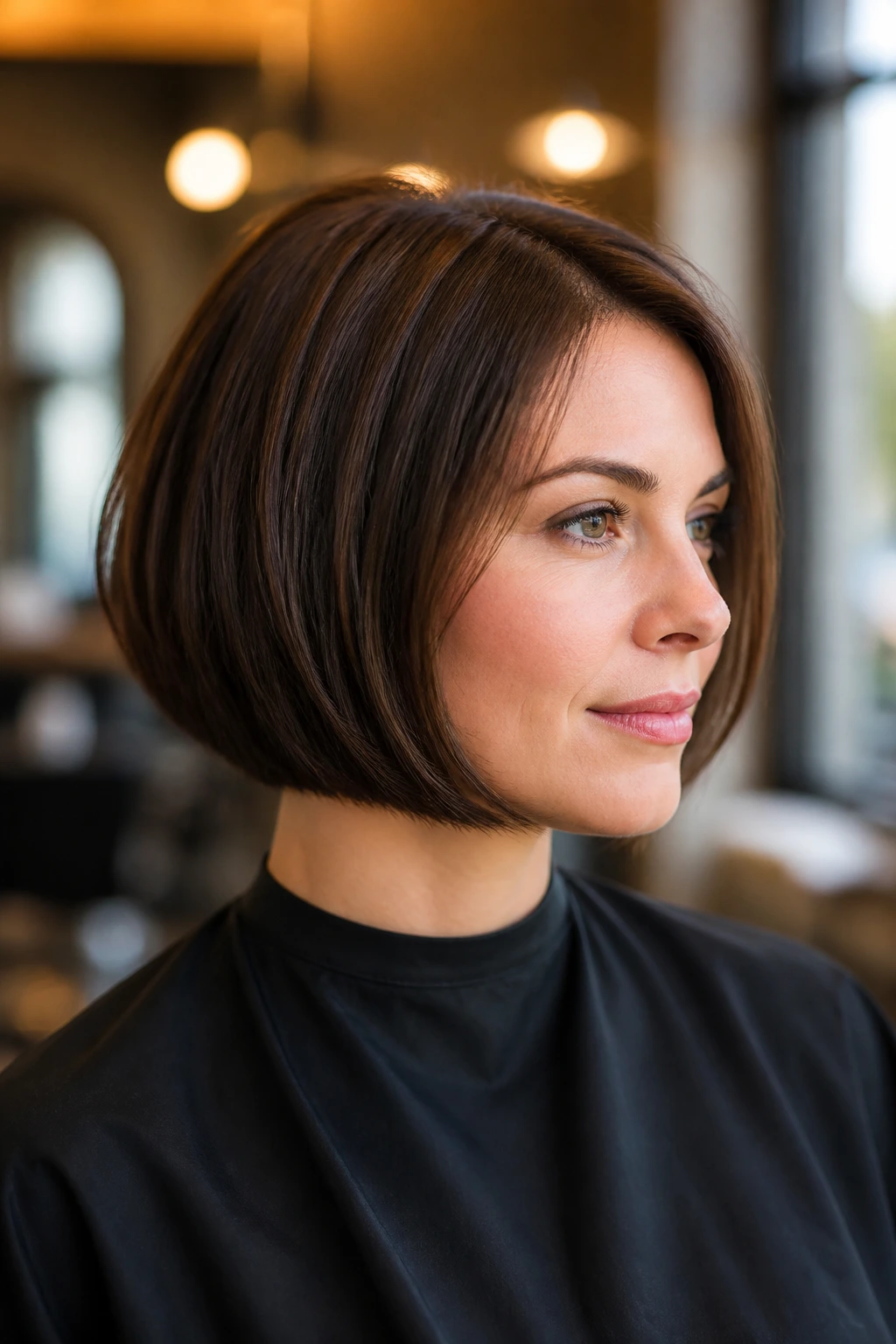
A good bob lives or dies by maintenance. Fine hair shows every uneven end, and round faces show every misplaced puff at the sides. That means trims matter sooner than they do with longer hair.
Most chin-length bobs need a trim every 6 to 8 weeks if you want the line to stay crisp. Lobs can stretch a little longer, around 8 to 10 weeks, but bangs usually need attention sooner. If you wear curtain bangs or a micro fringe, plan on a quick clean-up every 3 to 4 weeks.
At home, don’t pile heavy conditioner near the roots. Use it from the ears down, then rinse thoroughly so the hair doesn’t go limp by day two. Once a week, a clarifying shampoo can help remove product buildup that makes fine hair sag. That alone can change how the bob sits.
Sleeping on a satin or silk pillowcase helps the shape survive longer. So does re-setting the crown with a quick clip while you get dressed in the morning. Small habits. Big payoff.
Frequently Asked Questions
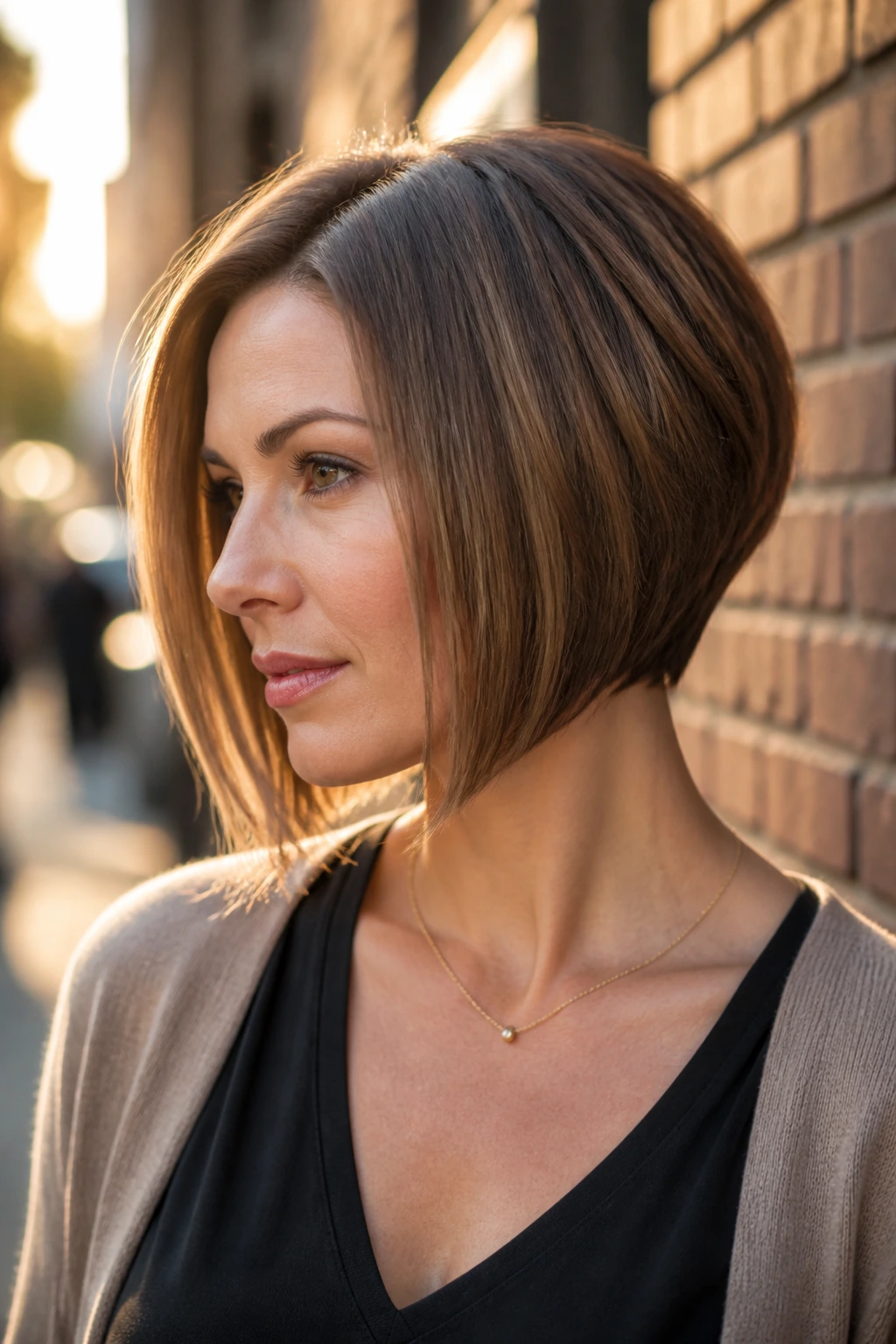
Will a bob make my round face look wider?
It can, if the cut stops exactly at the cheeks and the sides puff outward. The safer versions land below the jaw, use a side part, or keep the front pieces longer so the eye moves down instead of out.
Is a blunt bob good for thin hair?
Yes, usually better than a heavily layered one. A blunt edge makes the ends look denser, which is one of the quickest ways to give fine hair more presence.
Should thin hair have layers at all?
Sometimes, but they should be light and placed low. Too many short layers can make the ends look see-through and remove the little density the hair already has.
Can I wear bangs with a bob and still flatter a round face?
Absolutely, but the fringe needs to be airy or broken up. Curtain bangs and soft side-swept pieces usually work better than a thick, straight fringe that cuts the face in half.
What if my bob goes flat at the crown by noon?
Use root-lifting spray on damp hair, clip the crown while it cools, and keep heavy conditioner away from the scalp. A quick dry-shampoo mist at the roots can also bring the lift back without making the hair dusty.
Is a lob safer than a chin-length bob?
For many round faces, yes. The extra length gives the face more vertical line and gives fine hair a little more weight at the ends, which can help the cut hold shape.
How often should I style a bob with heat?
You do not need a full blowout every day. Many of these cuts can be refreshed with a round brush on the front pieces, a quick bend on the ends, or even a root clip set while the hair air-dries.
What should I avoid if my hair is very fine?
Heavy oils, aggressive razoring, and too much texture at the ends. Those things can make the style collapse fast and leave the perimeter looking stringy instead of full.
How do I know if the angle is too dramatic for my face?
If the front pieces feel much longer than the back and the cut starts to look like a wedge, it’s probably too steep. A softer angle usually flatters a round face better and grows out with less fuss.
The Shape That Does the Work

The nicest thing about a good bob is that it doesn’t ask your hair to be more than it is. It gives fine strands a stronger outline, then uses parting, angle, and crown lift to do the quiet work that makes the whole cut look intentional.
Round faces usually look best in bobs that move the eye downward, not outward. That can mean a blunt chin-length line, a longer lob, or a side-parted shape with just enough bend to keep the ends from going flat. The name matters less than the silhouette.
Pick the version that matches your texture, your routine, and how much styling you’ll actually do on a Tuesday morning. That’s the bob that will earn its spot.